To modify a section relating to limitation on use of funds appropriated to the Service.
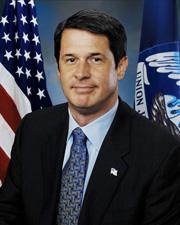 Sen. David Vitter (R-LA)
Legislative Activity
Stay on top of the latest movement without scrolling through every action
Senate amendment agreed to: Amendment SA 3896 agreed to in Senate by Yea-Nay Vote. 52 - 42. Record Vote Number: 30.
February 26, 2008
View full timeline
Senate amendment agreed to: Amendment SA 3896 agreed to in Senate by Yea-Nay Vote. 52 - 42. Record Vote Number: 30.
February 26, 2008
Roll call votes on amendments in Senate: Amendment SA 3896 agreed to in Senate by Yea-Nay Vote. 52 - 42. Record Vote Number: 30.
February 26, 2008
Considered by Senate. (consideration: CR S1150-1151)
February 26, 2008
Amendment SA 3896 agreed to in Senate by Yea-Nay Vote. 52 - 42. Record Vote Number: 30.
February 26, 2008
Amendment SA 3896, previously agreed to, was modified by Unanimous Consent. (consideration: CR S1208; text as modified: CR S1208)
February 26, 2008
Considered by Senate. (consideration: CR S1101, S1113-1114)
February 25, 2008
Considered by Senate. (consideration: CR S993)
February 14, 2008
Considered by Senate. (consideration: CR S957)
February 13, 2008
Considered by Senate. (consideration: CR S158)
January 23, 2008
Senate amendment submitted
January 22, 2008
Senate amendment proposed (on the floor): Amendment SA 3896 proposed by Senator Vitter to Amendment SA 3899.(consideration: CR S42-43; text: CR S42)
January 22, 2008
Amendment SA 3896 proposed by Senator Vitter to Amendment SA 3899. (consideration: CR S42-43; text: CR S42) To modify a section relating to limitation on use of funds appropriated to the Service.
January 22, 2008
Votes
1 roll call on this amendment
Text
Proposed
INDIAN HEALTH CARE IMPROVEMENT ACT AMENDMENTS OF 2007

The PRESIDING OFFICER. Under the previous order, the Senate will
proceed to the consideration of S. 1200, which the clerk will report.
The legislative clerk read as follows:

A bill (S. 1200) to amend the Indian Health Care
Improvement Act to revise and extend the act.

Mr. DORGAN. Madam President, this is a piece of legislation we have
reported out of the Committee on Indian Affairs in the Senate. Senator
Murkowski, the vice chair, and I have worked hard on these issues. We
have also made some changes since reporting the bill out of the
Committee on Indian Affairs and will offer a substitute that will be
cosponsored by both of us. We are now clearing that substitute, and I
will, at the appropriate time today, I hope, offer the substitute
version.
Some might wonder why there is a separate Indian health care bill,
and the answer is relatively simple: because this country has a trust
responsibility--a trust responsibility that has grown over a long
period of time and has been reaffirmed by the Supreme Court, affirmed
by treaties with various Indian tribes--a trust responsibility to
provide health care for Native Americans.
The last comprehensive reauthorization of the Indian Health Care
Improvement Act was 15 years ago in 1992. The act itself has been
expired for the last 7 years, and it is long past the time for this
Congress to reauthorize this program. Even though the act has expired,
the Indian Health Service continues to provide Indian health care,
despite not having a current authorization. But with advances in
medicine and in the delivery and in the administration of health care,
we need to finally pass this reauthorization and give the Indian
population of this country the advantage of the expansions we will do
in this reauthorization bill.
This legislation reflects the voices and the visions of Indian
Country. It also responds to a number of concerns that have been raised
by others, including the administration. The enactment of this
reauthorization has been the top priority of myself and the vice chair
of the committee, Senator Murkowski. I also wish to say the former vice
chair of the committee, the late Senator Craig Thomas from Wyoming, at
the start of this Congress, worked very hard on this legislation and
cared very deeply about it. We bring this to the floor, remembering the
work of Senator Thomas and recognizing his important work.
I wish to describe the need for the legislation as I begin before I
describe the legislation itself. I have in the past couple weeks done
some listening tours on Indian reservations, particularly in North
Dakota, and we heard and saw many examples of deplorable conditions in
Indian health care. It is true there are some health care providers in
the Indian Health Service that are making very strong efforts to do the
best they can, but they are overburdened and understaffed, underfunded.
I wish to give some examples of that.
I wish to show a picture--a photograph, rather--of someone I have
shown to the Senate before. This is a woman on the reservation in North
Dakota, the Three Affiliated Tribes near New Town, ND. Her name is
Ardel Hale Baker. Ardel Hale Baker has given me consent to use her
image. She had chest pains that wouldn't quit. Her blood pressure was
very high. So they went to the Indian health clinic, and she was
diagnosed as having a heart attack. The clinic staff determined she
needed to be sent immediately to the nearest hospital 80 miles away.
She told the staff she didn't want to go in an ambulance because she
knew she would end up being billed for the trip, and she didn't have
the money. So she

[[Page S27]]

signed a waiver declining the ambulance service, but the Indian Health
Service said you have to take it anyway. We have diagnosed a heart
attack happening here. You have to take the ambulance.
She arrived at the hospital and Ardel Hale Baker at the hospital was
being taken out of the ambulance and transferred to a hospital gurney.
As this woman, having a heart attack, was transferred to the hospital
gurney, a nurse saw a piece of paper taped to her thigh and the piece
of paper taped to her thigh was a piece of paper that was notifying the
health care provider there wasn't going to be any money for this
patient. The nurse asked this woman who was then having a heart attack
what the envelope was. She pulled the envelope that was taped to her
leg off her leg and asked: ``Mrs. Baker, is this yours?'' When they
looked at the paper, here was the document. The document was from the
Department of Health and Human Services, attached by the folks on the
Indian reservation, taped to her leg as she left to be put in the
ambulance, and it says:

Understand that Priority 1 care cannot be paid for at this
time due to funding issues. A formal denial letter has been
issued. If and when funds become available, the health
service will do everything possible to pay for Priority 1
care.

What this means is this--contract health care, which cannot be
delivered on the reservation. This reservation has a clinic. It is open
from 9 until 4 every day, 5 days a week. It is not a hospital, it is a
clinic. For health care that cannot be delivered at that clinic, you
have to refer the patient somewhere else. But that has to be paid for
with contract health care funds, and they run out very quickly.
We had one reservation tell us they were out of health care contract
money in January, 4 months into the fiscal year. On this reservation,
they say don't get sick after June because the contract health care
money is gone. This poor woman was loaded onto a hospital gurney with a
piece of paper taped to her leg, saying to the hospital that if you
admit her, understand that the Indian Health Service will not pay. This
woman must pay. Obviously, this woman had no money. It was a way to say
to the hospital that if you admit this patient, you are on your own.
Well, I visited a Sioux reservation at Standing Rock, the McLaughlin
Indian Health Center, a couple of weeks ago. The Standing Rock
Reservation clinic sees 10 patients in the morning and 10 in the
afternoon. I believe they only have a physician assistant there. The
reason given in the memorandum about the 10 and 10 was the clinic had
only one medical provider and patients signed up in the morning.
Anybody arriving after the quotas were made were turned away.
Harriet Archambault received her last prescription for serious
hypertension and stomach medication on October 25, 2007. As the
medicine ran out, she attempted five times to sign up at the clinic,
leaving home early in the morning, driving 18 miles to the clinic but
arriving too late each time. Her name was not on the top 10. She
couldn't wait at the clinic for a possible opening because she provided
day care for three of her grandchildren. So her medication ran out.
In a conversation with her sister prior to her death, she said: What
do I have to do, die first before I finally get my medication? She
tried five times to drive the nearly 20 miles to the clinic, and five
times failed and never got her medicine, and she died a month later,
November 27, 2007. Her husband told that story because he wants us to
understand that delivery of health care is about life and death.
I have shown a photograph to my colleagues. I wish to do so again. It
is a photo of a precious young lady who died, Ta'shon Rain Littlelight.
I was at the Crow Indian Reservation in Montana when I met the
grandmother of Ta'Shon Rain Littlelight. This was a beautiful 5-year-
old girl. She loved to dance. This was traditional dance regalia, and
she loved to go to dance contests. Ta'Shon Rain Littlelight died. Here
is how she died. Her grandmother and mother and aunt told me she died,
with the last 3 months of her life in unmedicated, severe pain. She
went back and back and back to the Crow Tribe's Indian Health Service
clinic for health problems. They began treating her for depression.
Depression. During one of the visits, one of the grandparents of
Ta'Shon said: Well, she has a bulbous condition on her fingertips and
toes. That suggests there may be a lack of oxygen to the body, or
something is going on. Can't you check that? Ta'Shon was treated for
depression.
Finally, one day, August 2006, she was rushed from the Crow clinic,
where she had gone once again to the St. Vincent Hospital in Billings,
MT. The next day she was airlifted to the Denver Children's Hospital
and was diagnosed with untreatable, incurable cancer. She lived for 3
more months after the tumor was discovered in what her grandmother said
was unmedicated pain. She died in September 2006. Her parents and
grandparents asked the question: If Ta'Shon's cancer had been detected
sooner, would this child perhaps have lived?
When diagnosed with terminal illness, the one thing Ta'shon Rain
Littlelight wanted to do was see Cinderella's castle, so Make-a-Wish
sent her to Orlando. But the night before she was to see the castle, in
the hotel room in Orlando, she died in her mother's arms.
The question is, for a young girl such as Ta'shon Rain Littlelight,
should she have had the same opportunity in health care others have? Is
this what we are willing to accept? Not me. This problem has a human
face. I could tell a dozen more stories similar to Ardel Hale Baker and
Ta'Shon Rain Littlelight.
I sat on Indian reservations for a total of probably 6 hours
listening to stories about Indian health care. Let me talk about the
statistics, if I might.
For tuberculosis, the mortality rate for American Indians and Alaskan
Natives is seven times higher than the American population as a whole.
For alcoholism, the mortality rate is six times higher.
For diabetes, it is not double but triple--three times higher.
Twenty percent of American Indians and Alaskan Natives over age 45
have diabetes. There are reservations in my State where they estimate
over 50 percent of the adults have diabetes.
American Indians and Alaskan Natives have higher rates of sudden
infant death syndrome than the rest of the Nation.
Injuries are the leading cause of death for Native Americans ages 1
to 44. Injuries include pedestrian accidents, vehicular accidents, and
suicides.
The cervical cancer rate for Indians and Alaskan Natives is four
times higher than the rest of the population.
The suicide rate for American Indians and Alaska Natives between ages
15 and 34 is triple the national average. For Indian teens in the
northern Great Plains, it is 10 times the national average.
I have shown my colleagues a photograph of Avis Little Wind. Avis
Little Wind is a young teen who died. Avis Little Wind's relatives gave
me permission to use her photograph. This is a 14-year-old girl who lay
in bed in a fetal position for 90 days and then killed herself. Her
sister had taken her life 2 years previous. Her dad had taken his life.
For 90 days, somehow, everybody missed little Avis. The school missed
wondering what happened. She lay in bed for 90 days and then took her
life because she felt there was no hope and no help.

On that reservation, I went and met with the tribal council, school
administrators, and her classmates to try to find out how does a kid,
age 14, fall out of everyone's memory and everyone's vision? What I
have discovered is there are a lot of issues, but there was not any
kind of health care treatment available for a young girl, age 14, who
had these kinds of problems. Even had there been health care available,
there would not have been a car to drive her there. There is a basic
lack of transportation. Aside from the fact they don't have the
capability to provide the necessary health care treatment that is
necessary to intervene, we have to do better. We have a responsibility
to do better.
I wish to address the question of why it is our responsibility. Why
is the plight of Native Americans a responsibility to the Federal
Government? The simple answer is we are bound to follow the law set
forth in the Constitution, in treaties, and in the laws of our land.

[[Page S28]]

We are bound to follow the trust responsibility that has been imposed
on us by the Constitution, the rulings of the Supreme Court, and by
treaties.
Now, our predecessors long ago negotiated treaties with Indian tribes
in which we received, as a Nation, hundreds and hundreds of millions of
acres of Indian homeland to help build this great Nation of ours. In
return for the enormous cessions of land by the Indians, our country
promised certain things. We promised to provide things such as health
care, education, and the general welfare of Native Americans.
This chart I am going to show you shows a provision from one of those
treaties, and there are a lot of them, most of them broken by our
country. This is with the northern Cheyenne and Arapaho. It says:

The U.S. hereby agrees to furnish annually to the Indians
who settle upon the reservation a physician.

It says we have your land and we are going to give you a reservation,
but we also understand our responsibility, and we will provide health
care. We have failed miserably to hold up our end of the bargain.
This bill doesn't provide health care for Native Americans simply
because it is the moral and right thing to do. It is, certainly. It is
a bill that requires us to keep our word. It is an active step to
fulfill our responsibility, our end of the bargain, struck by our
predecessors a long time ago.
In addition to the treaty obligations, the U.S. obligations to Indian
tribes are set forth in hundreds of U.S. Supreme Court cases and
Federal statutes.
I wish to especially refer to the next chart. In 1831, the U.S.
Supreme Court, in an opinion by Chief Justice John Marshall, recognized
a general trust relationship between the United States and Indian
tribes. He held that the United States assumed a trust responsibility
toward the tribes and their members. He explained the United States not
only has the authority to deal with Indian tribes and their members,
but also the responsibility and obligation to look after their well-
being.
In describing Indian tribes as ``domestic dependent nations,'' he
also established the relationship in that ruling between the United
States and tribes as similar to one between ``a ward to his guardian.''
Now, at the time, these Supreme Court decisions were used by the
United States to justify our actions toward the Indians, such as
forcing Indians from homelands and placing them on reservations. But we
cannot now ignore these court decisions merely because we are doing a
poor job of fulfilling our obligation.
At the time of the Supreme Court's decision I described, the United
States, through the Department of War, was already providing health
care services to Indians on reservations. That practice began in 1803
and the United States has been providing such health care for over 200
years.
One of the initial reasons for providing health care on reservations
was because we were the ones who were transmitting diseases to Indian
nations and forcing them into environments where diseases would
prevail. That became evident in 1912 when then-President Taft sent a
special message to Congress summarizing a report that documented the
deplorable health care conditions on Indian reservations.
In 1913, the Public Health Service reached a similarly distressing
conclusion about the health of Native Americans. The Snyder Act was
passed in 1921--I am providing the history so people understand what is
the context of health care for Indian nations--one of many laws passed
by the Congress over the last 100 years to try to address the health
disparities between American Indians and the rest of our society: The
Snyder Act of 1921, Indian Health Facilities Act of 1957, Indian Self-
Determination of 1975, and the Indian Health Care Improvement Act of
1976 as it was amended in 1992.
President Nixon, in 1970, said in a message to the Congress:

The special relationship between Indians and the Federal
Government is the result of solemn obligations which have
been entered into by the United States Government. Down
through the years through written treaties . . . our
Government has made specific commitments to the Indian
people. For their part, the Indians have often surrendered
claims to vast tracks of land. . . . In exchange, the
Government has agreed to provide community services such as
health, education and public safety, services which would
presumably allow Indian communities to enjoy a standard of
living comparable to that of other Americans. This goal, of
course, has never been achieved.

That is in 1970 from the President of the United States, describing
our responsibility.
Let me talk just for a moment about the proposed legislation, having
described the reason for us to bring a piece of legislation to the
floor of the Senate.
We know--and it has been like pulling teeth to find this out--we know
there is full-scale health care rationing on Indian reservations. It
should be front-page headline news in all the biggest newspapers in the
country, but it is not. If it was happening elsewhere, it would be
front-page headlines, but it is not now.
Forty percent of health care needs of Native Americans are not being
met. We meet 60 percent of the health care needs; 40 percent are unmet.
So it is rationed, and that is why Ardel Hale Baker, having a heart
attack, is wheeled in to a hospital with a piece of paper taped to her
leg saying: ``This isn't going to be paid for.'' It is health care
rationing, there is no other way to describe it, no soft way to put a
shine on it. It is health care rationing. It shouldn't happen, and I
think it is an outrage, because it is happening on Indian reservations.
It is seldom covered by the 24/7 news hour, but it should be, because
it is a scandal. I hope this is the first step to begin addressing it.
This legislation will be described by some who come to the floor of
the Senate as not enough. I agree with that assessment. This is a first
step, at last, at long last, that should have been done a decade ago.
It is a first step in the right direction, but it is a first step as a
precursor to real reform because we need reform.
This is a reauthorization 10 years after it should have been done. We
are reauthorizing and expanding programs that I will describe, but we
need to do much more. When we move this legislation through the Senate,
through the House, and it is signed by the President, I intend, with
the Indian Affairs Committee, to begin immediately with new and more
aggressive reforms, and it is urgent we do so.
This bill expands the types of cancer screenings that are available
to American Indians. It expands the types of communicable and
infectious diseases that health programs can monitor and prevent beyond
tuberculosis, which now is the emphasis, to include any disease. It
expands the recruitment and scholarship programs and authorizes nurses
currently serving in the Indian Health Service to spend time teaching
students in nursing programs. These are critical programs, given that
there is a 21-percent vacancy rate for physicians in the Indian Health
Service, and the entire Nation faces a shortage of nurses.
There is a new program in this legislation dealing with teen suicide
on Indian reservations. I held hearings on this subject. We have worked
for legislation that will provide screenings and mental health
treatment, and we begin to address those issues with this legislation.
Treatment for diabetes: We held a hearing to examine the threat of
diabetes to the health of American Indians. It is an unbelievable
threat. Diabetes emerges as the most serious and devastating health
problems of our time, and nowhere in this country is it worse than on
Indian reservations. It affects the Indian population in a dramatic
way.
I ask any of my colleagues, if they wonder about that, go to a
reservation and see if they have a dialysis unit, and watch the people
in the dialysis unit getting dialysis, some having lost limbs, having
one leg cut off, another leg cut off, still trying to stay alive. The
ravages of diabetes is an unbelievable scourge in Indian country. It is
a serious problem for our entire country, but nowhere is it worse than
among American Indians. In some communities, the prevalence reaches 60
percent of adults. In the 14-year period from 1990 to 2004, the
diabetes rate among Indian kids 15 to 19 years old increased 128
percent.
We expand and enhance the current diabetes screening program. We
direct the Secretary to establish an approach to monitor the disease,
provide continuing care among Native Americans,

[[Page S29]]

and authorize the Secretary to establish a dialysis program to treat
this threatening disease.

Health service to Native American veterans: It is well documented
that there is no population in this country that has participated with
greater distinction or in greater numbers per capita serving in this
Nation's military than Native Americans--none. Many Indians served in
World War I even before our Nation recognized Indians as citizens of
our country. Think of that, we had American Indians sign up to fight
for this country when they were not yet considered citizens of this
country.
I was checking recently, and 1962 was the last time when a State
finally passed legislation allowing Indians to vote in the State. Think
of that, go back to 1961 and understand, there were places in this
country where American Indians were not allowed to vote in State
elections. And until the early part of the last century, they were not
considered citizens. Yet they were signing up to go to war for this
country, to fight for this country.
I attended a ceremony on the Spirit Lake Reservation a few months ago
and passed out medals--Silver Stars, a lot of medals--to three soldiers
who are now elderly men who served this country in the Second World War
with unbelievable valor, had fought all around this world for this
country and earned these medals--Silver Star, Purple Heart, and various
others. They were enormously proud of their country.
Go to a reservation and find out what percent of the population of
eligible adults sign up to serve in the military on an Indian
reservation and you will be surprised. There is no group of Americans
who signs up in bigger numbers to serve this country in the military.
Senator Murkowski and I have a provision in this bill that deals with
health services to Native American veterans. More than 44,000 American
Indians out of a total Native American population of less than 350,000
at that point served in World War II. Think of that. Out of a
population of 350,000, 44,000 of them served in the Second World War.
We had a ceremony in this Capitol Building, honoring the Code Talkers
who played a significant role in intercepting and deciphering the codes
used by the Nazis. We gave the Congressional Gold Medal to those Native
American Code Talkers.
We direct the Secretary of Health and Human Services to provide for
the expenses incurred by any eligible Native American veteran who
receives any medical service that is authorized by the Department of
Veterans Affairs and administered at an Indian Health Service or tribal
facility. We want the Indian Health Service to be able to get the
funding to provide that health care.
This bill also provides a provision dealing with domestic violence.
My colleague, Senator Murkowski from Alaska, was particularly
instrumental in this provision. We held a hearing to examine the causes
of and solutions to stopping violence against Native American women.
We received testimony that more than one in three American Indian and
Alaska Native women will be raped or sexually assaulted during their
lifetime. That is pretty unbelievable. We received reports of rapes
that were not investigated. We received reports of circumstances where
there isn't even the basics, just a rape kit available to take
evidence.
We have included in this legislation some approaches that I think
will be very helpful: community education programs related to domestic
violence and sexual abuse, victim support services and medical
treatment, including examinations performed by sexual assault nurse
examiners, and a requirement for rape kits. I think we have made
significant progress. I thank Senator Murkowski for her special
interest in that section of the bill as well.
Finally, we have a section of the bill that deals with convenient
care service demonstration projects. The reason for that is I don't
want to see the rest of the country move toward convenient care, walk-
in clinics with long hours, 7 days a week, only to have Indian
reservations be out there with these clinics that serve at times that
are not very convenient.
I have a photograph of a clinic I visited last week on the New Town
Reservation. They are open, I believe, from 9 a.m. until 4 p.m., 5 days
a week. Good for them. They take an hour off for the noon hour, by the
way, and close it. I think it is 9 a.m., maybe 8. This is the Minne-
Tohe Health Center, of the Three Affiliated Tribes. I visited there
within the last week or so. They are open 6 or 8 hours a day, take an
hour off for lunch and close it down. If at 5 o'clock in the afternoon,
you are having a heart attack there, you are in trouble. If it is
Saturday and you have a bone fracture, you are in trouble, because you
are 80 miles from the hospital in Minot, ND.
My point is, why not develop a model care system of convenient care
clinics open long hours, 7 days a week? Let's extend the opportunity
for real health care on Indian reservations.
We have done a lot of other things in this legislation, including
establishing the framework for the next approach on reforming this
system completely, and that is the establishment of a bipartisan
commission on Indian health care which will study the delivery of this
system and recommend approaches that we will begin working on
immediately in the Indian health care area in our committee.
I have described a number of items that are not positive, and I will
later today describe some good news, because there are some positive
things going on. One of the Indian reservations I visited in the last
week has an Indian health care clinic that is dramatically underfunded.
The tribal council voted to take $500,000 of the funds that belong to
the tribal government and move it to try to support that clinic. That
is good news. Good for them. That takes a lot of courage and
commitment.
There are good things happening, and I am going to talk about that a
little later today.
The fact is, we have a desperate situation with respect to health
care in the Indian nation, and it cannot continue. We cannot allow it
to continue. In the name of children who should not have died--Avis
Little Wind or Ta'Shon Rain Littlelight or others--we cannot allow this
to continue to happen. This country is better than that.
I close by quoting Chief Joseph of the Nez Perce Tribe, located in
what is now Idaho. Chief Joseph, one of the great Indian leaders, was
pretty upset about a lot of things. Here is what he said about broken
promises:

Good words do not last long unless they amount to
something. Words do not pay for my dead people.
Good words cannot give me back my children. Good words will
not give my people good health and stop them from dying.
I am tired of talk that comes to nothing. It makes my heart
sick when I remember all the good words and all the broken
promises.

This legislation on the floor of the Senate is not just some other
bill. This is a step toward the completion of promises that have been
made, not ``we hope to help you,'' but promises--promises that have
been made in treaties, promises that have to be kept as a result of a
trust responsibility that exists with American Indians.
To make the case finally, let me say this: There is a chart that
shows how much we spend per person on health care, and that chart
describes something I think all need to know about the commitment of
Congresses and Presidents for a long period of time.
This chart shows we have a responsibility to provide health care for
Federal prisoners. We incarcerate them because they committed a crime,
and we stick them in prison. But in their prison cell, we have a
responsibility for their health care. That is our job, and we meet that
responsibility.

We also have a responsibility for health care for American Indians,
because of a trust responsibility and because of treaties we signed
after we expropriated massive amounts of their land. We don't meet that
responsibility. In fact, this chart shows that we spend almost twice as
much per person providing health care for incarcerated Federal
prisoners as we do providing health care for American Indians. That is
why little 5-year-old Ta'Shon Rain Littlelight dies, because she
doesn't have the same access to health care that the rest of us do. It
is why when a woman goes to the doctor, the doctor shows up at our
committee and testifies, saying: You know, a woman came to me who had
been to the Indian Health Service doctor. She had a knee

[[Page S30]]

so bad--it was bone on bone--it was unbelievably painful. He said it
was the kind of knee that, if it belonged to somebody in my family or
yours, we would get knee replacement surgery. We would have to get knee
replacement surgery because we wouldn't be able to live with it that
way. You can't live with that kind of pain. But she told me she went to
Indian Health Service, and they told her to wrap the knee in cabbage
leaves for 4 days and it would be okay. Wrap the knee in cabbage
leaves. This is a knee which we would get replaced, yet this Indian
woman is told to wrap it in cabbage leaves.
Are we meeting our responsibility? People are dying. Forty percent of
the health care need is unmet. I have described the conditions that
exist in these health clinics and on reservations. The answer is, we
are not meeting our responsibility, and at least from my standpoint,
and I believe I speak for the vice chair, though she will speak for
herself, it is past time, long past the time when this country should
keep its promise.
Chief Joseph is long gone, but that doesn't mean we don't have a
responsibility to keep our promise to the first Americans. They were
here first. To this point, we have had all kinds of circumstances over
many years of pushing them to reservations after we took their land,
then pushing them off the reservation and saying they had to go to the
city. So they got a one-way bus ticket and were told: By the way, we
want you to mainstream, to get you off this reservation. So they got a
ticket and were sent to the city, and then we decided that was wrong,
and we brought them back.
What has been happening in this country in public policy dealing with
American Indians is unbelievable, and it has to stop. Let us meet our
responsibility, keep our promises, and provide decent health care to
the people who were here first. That is what this bill does.
This bill is just a step in the right direction, and it will be
followed by significant reform. When we do that, I will feel that,
finally, at long last, this country has kept an important promise to
those who were here first.
Mr. President, I yield the floor.
Mr. GREGG. Mr. President, I ask unanimous consent to speak briefly at
this point. I ask unanimous consent that at the completion of the
remarks of the Senator from Alaska I be recognized for up to 10
minutes.
The PRESIDING OFFICER (Mr. Salazar). Without objection, it is so
ordered.
The Senator from Alaska.
Ms. MURKOWSKI. Mr. President, I so appreciate the passion and the
advocacy of my colleague, the Senator from North Dakota, and working
together on the Indian Affairs Committee on an issue in which I think
both of us believe very strongly. Both of us believe in the commitment
we have to the American Indians and the Alaska Natives, particularly
insofar as providing them with a level of access to health care. That
commitment is one that in far too many areas we have failed, and that
is why it is so important that we are able to advance, as the first
legislation of this new year, the Indian Health Care Improvement Act of
2007.
We just celebrated the birthday of Martin Luther King, and as a
nation we think about that time in our history when we were not proud
of how we treated one another based on color of skin and ethnicity. We
know that in many parts of this country, we still have far to go, but
we are making progress. Yet, as we look to how the American Indians,
the Alaska Natives, and so many in our Native communities have been
treated when it comes to the basics in health care, that is an area
where I think we need to look very critically and say we can and we
must do more.
When I first became the vice chair of this committee, Chairman Dorgan
and I sat down, and he said to me: Lisa, what are your priorities for
the Indian Affairs Committee? What is it that you would like to see
advanced? He told me what his priorities were. It is awfully nice being
able to walk into that new relationship and agree that the most
important thing we could do was to work together in a bipartisan effort
to advance legislation that has been working through the process for a
number of years, for a number of Congresses, and to successfully move
that through the Congress.
We have worked on this bill through three committees of
jurisdiction--the Indian Affairs Committee, the Finance Committee, and
the HELP Committee--before finally bringing this here to the Senate
Floor. I believe this legislation brings new hope for Indian health. It
represents a step forward, a step toward the goal of providing our
first Americans with health care that is on par with other Americans.
It is not the end-all and be-all, but it is a first step, and I am
encouraged that we have the opportunity to produce this legislation in
support of that goal.

As my colleague has noted, this day has been far too long in coming.
Efforts to enact comprehensive reform for the Indian Health Care
Improvement Act began in 1999. This act was extended for 1 year back in
2001 through legislation introduced by Senator Thune when he was a
Member of the House of Representatives. Since then, the Indian Affairs
Committee has shepherded several reauthorization bills through multiple
Congresses, through multiple hearings, through multiple markups, but it
has yet to be reauthorized despite the very good efforts of a great
many.
This bill would reauthorize and would amend the Indian Health Care
Improvement Act and applicable parts of the Indian Self-Determination
and Education Assistance Act, as well as the Social Security Act.
The Indian Health Care Improvement Act provides a basic framework for
delivery of health care services to American Indians and Alaska
Natives. As Senator Dorgan has indicated, this is a Federal
responsibility arising from the Constitution, arising from the treaties
and from Federal court cases.
The act itself, first enacted back in 1976, was last comprehensively
reauthorized in 1992. Think about the status of health care back in
1992 and what has changed. Certainly, in my State of Alaska, we have
been able to do so much more in our remote areas because of what we are
able to do through Telehealth. Well, back in 1992, I can guarantee you
we were not doing then what we are doing now. It is so vitally
important that we provide for this authorization to update a system by
passing this bill.
We recognize there are still some outstanding issues that need to be
resolved. I would like to think they are not central parts to this
bill, and I am very confident we can deal with them if our colleagues
work with us in the same very bipartisan way that we on the committee
have done to advance this.
Now, Chairman Dorgan has given good background in terms of an
overview, the need for reauthorization, and he has highlighted it with
stories that touch our hearts, as they should. I wish to elaborate a
little bit further on the legislation, how it developed, and give that
overview as well as some of the key improvements we have in S. 1200.
To really understand the framework of the Indian health care system
under this act, you have to keep in mind that there is very significant
interplay between this act and the Indian Self-Determination and
Education Assistance Act. The Indian Self-Determination and Education
Assistance Act provides the process whereby Indian tribes and the
tribal organizations contract or compact to take over administration of
programs from the Indian Health Service. It is the interplay between
these two statutes that provides a great deal of the backdrop for many
of the principles that underlie this reauthorization.
The act essentially governs programs for the recruitment and
retention of Indian health professionals, for health promotion and
disease prevention, for facilities, urban Indians, and a comprehensive
behavioral health system. The act also governs important authorizations
which increase access to care where there is third-party reimbursement.
It also sets forth the administrative organization for the Indian
Health Service. Finally, it contains reporting requirements and other
regulatory authority for the Secretary of the Department of Health and
Human Services.
The bill is intended to improve Indian health care in three areas:
First, by increasing access to health care; second, by updating the
authorized

[[Page S31]]

services and programs; and third, by facilitating innovative financing
systems to help support Indian health.
So let's talk about the increase in access to care. In Alaska, we are
talking about access to care all over the State. Geographically, as you
know, we are very large, populations are very small, and providers are
very limited. And this is throughout all systems, not necessarily just
the Indian Health Service. This legislation includes programs to
increase outreach and enrollment in Medicare, Medicaid, and SCHIP. We
need to have aggressive outreach in order to ensure that the Native
people who are eligible for these programs participate in them and so
that they can navigate through a relatively challenging enrollment
process.
We recognized the critical importance of the Medicare, the Medicaid,
and the SCHIP programs for Indian patients. There was an Indian woman
by the name of Ski who lives in southwestern Oklahoma. Along with her
husband, she takes care of her three grandchildren and her great-
granddaughter. About 4 years ago, Ski's doctor, after checking her x
rays, found a large spot on her lungs. They also diagnosed her with
thyroid cancer. Sadly, though, the IHS Contract Health Service, which
is intended to provide for the kind of specialty care Ski needed,
notified her that the funds aren't available to pay for it. This is
very similar to some of the stories my colleague has mentioned.
Without this additional care, Ski, who is the primary caregiver for
her grandchildren and great-grandchild, wondered if she would be around
to watch her children and great-grandchild grow up. Fortunately, Ski
won't have to face the prospect of living without health care because
she did receive it--not through the Contract Health Service but through
Medicare. It was these resources which allowed Ski to undergo the
biopsy which ruled out lung cancer and to see a pulmonologist and
receive testing on a regular basis for the pulmonary fibrosis she was
eventually diagnosed to have. She had complete removal of her cancerous
thyroid and since that time has been able to receive the follow-up
treatments, the testing, and the examinations, all of which we know are
very costly but which Medicare helped to cover so that Ski can continue
her life raising her family.
She is fortunate and, unfortunately, somewhat of a rarity. Many
Indian patients do not have Medicare or Medicaid to help them even
though they may be eligible. In the legislation we have, S. 1200, it
will help those Indian patients in accessing Medicare, Medicaid, and
SCHIP through the outreach and the enrollment programs as well as other
means.
Now, accessing third-party reimbursement also helps Indian health
providers. The Makah Tribe is a good example of why we should include
the provisions to assist tribes in participating in Medicare, Medicaid,
and SCHIP. The Makah Tribe is in Washington State, and they are located
on a very picturesque 44-square-mile Indian reservation filled with
rich forests, wildlife, birds, and plant life--a very beautiful area.
From their home, tribal members can cross the Strait of Juan de Fuca
and during the summers go fishing or boating in the Pacific. Although
their home is a place of amazing beauty, it is also a very remote part
of the State which presents some daunting challenges to the delivery of
health services to the tribal members.
It has been reported that the tribe operates a small ambulatory
clinic with over 2,000 users and only two doctors. Due to the
remoteness of the clinic, the tribe has difficulty recruiting health
care professionals, including dentists.
Over 70 miles away you have the nearest town with a full-service
hospital, Port Angeles. But those 70 miles can be treacherous to
negotiate. It is a winding road, a difficult road. There are several
instances when the road has been washed out by storms, leaving no
access to or from the reservation.
So there is no surprise that Port Angeles, being a larger town and a
more accessible town, has salaries that are more attractive than the
reservation.
The Makah Tribe administers the health care services through a self-
governance compact for which the tribe should receive contract support
costs. However, those contract support costs do not cover all of the
indirect costs of health care services. So this impacts the tribe's
ability to provide for competitive salaries and to provide for that
full array of health care services. But despite all of those
challenges, the Makah Tribe has remained resourceful. They are in the
process of improving their third-party reimbursements, in particular
the Medicare Part B access for eligible people on the reservation.
It is these additional reimbursements that assist the tribe in
essentially hedging against the insufficient contract support costs. So
when you hear of situations like what we are seeing with the Makah,
recognize this legislation will serve to benefit the tribal health
providers as well as the Indians who are served by allowing for, again,
the additional reimbursement for improving access to care.
The legislation will also improve access by removing barriers to such
enrollment such as the waivers of Medicaid copays and allowing the use
of tribal enrollment documentation for Medicaid enrollment. These are
very important to provisions in this legislation. I hope we will hear
more of the good stories, the stories like Ski's, rather than the very
damning stories we hear of the system currently.
Now, in updating health care services in Native communities, the bill
establishes permanent authority for home and community-based services,
and these are services which have been operating in the State of Alaska
with very impressive results.
I mentioned just a few minutes ago Alaska's size. Many know Alaska
Natives have to travel enormous distances away from their home
communities to obtain any level of specialized care. Some people think
we make this map up, just to show Alaska's shape over the continental
United States--but this is actually true to size--the State of Alaska
does stretch from just about Florida into Arizona and beyond, from
Canada down to the southern area. Geographically, we are huge.
We have another chart that indicates how the distances for an
individual coming from, let's say, Unalaska down here where Arizona is
on the map. Unalaska is not only our State's largest fishing port, it
is the largest, in terms of volume of fish, fishing community in the
United States of America.
For an individual who is coming from Unalaska, which just has a small
clinic, to come to Anchorage, which is where all of the points converge
in the middle of the map, it is the equivalent of essentially going
from Arizona to Kansas for your medical appointment to come to the
Alaska Native Medical Center where you can see a specialist.
To give another example, the residents of Barrow, at the northern
most part of the State, also have to travel to Anchorage to obtain
specialty medical services in the Alaska Native Medical Hospital. That
is the distance of coming from the Canadian border down to Kansas for
medical services.
If you are coming out of the southeastern part of our State, in many
of our island communities, again, you are moving from essentially
Alabama or Florida into Kansas. The distances we deal with to provide
access to care are realities for us in the State that other people
cannot relate to.
We are not talking 100 miles, we are talking several hundred miles.
When you put it in context that way, you recognize it is not just the
time and the distance traveled, but it is the expense and the distance
traveled.
Mr. President, as I was mentioning the distances that we deal with, I
mentioned the time to travel, the expense to travel, but think about
the situation if perhaps you are elderly, you are ill, or perhaps you
do not know what is wrong, and you have to leave your village to go to
our cities, our largest cities, which is very intimidating for many of
our Alaska Natives in the first place.
They are away from their family, they are away from their community
members, they are away from their traditional foods, they are away from
their traditional activities. Many of our elders do not speak English,
so they are coming into town where the language is different. Think
about how well you would heal or how well you would feel in truly a
strange and foreign place like this.
Well, the Yukon-Kuskokwim Health Corporation located out in Bethel,

[[Page S32]]

Alaska, in western Alaska, decided this is unacceptable, to have to
pull everybody from the villages so far away. And they developed a
village and a regional service structure to help the elders, to help
the Alaska Native patients with chronic diseases to continue living in
their homes or in their community rather than being sent hundreds of
miles away to receive special nursing care.
It was their pilot program to take over all home and community-based
care in their region, which resulted in a reduction in service waiting
time for the disabled and the elders in the region and truly improved
the patients' health status level. This legislation may enable other
tribal programs around the country to also engage in home and
community-based care which would allow Indian patients to remain in
their homes rather than face a lengthy hospital stay or nursing home
stay in a distant and, again, a strange location.
Our legislation also consolidates and coordinates the various tribal
health programs into a more comprehensive approach. As we well know,
alcohol and drug abuse among many of our Native communities, and
methamphetamine abuse, has reached epidemic proportions in some
communities.
We had a gentleman, the former chairman of the Northern Arapahoe, Mr.
Richard Brannan. He testified before our joint hearing before the 109th
Congress, and then again during the 110th, and told us truly a heart-
breaking story of the tragic and painful and terrible unnecessary death
of a beautiful little Indian girl at the hands of methamphetamine-
addicted individuals.
Chairman Brannan sought our help in providing both prevention and
treatment for the drug and alcohol addictions that ravage Native
communities. I am pleased that this bill will authorize such assistance
and more to help prevent these tragedies from happening to other Indian
children.
Now, also during the committee hearing on the methamphetamine plague,
we received testimony from tribal leaders about the devastation this
terrible drug has brought to their communities. Kathleen Kitcheyan, the
former tribal chairwoman of the San Carlos Apache Tribe in Arizona,
described a very personal loss, a tragic loss of a grandson to drugs.
And she stated that on her reservation, they have methamphetamine users
who are as young as 9 years old.
Think about what is happening to our children. Think about drug abuse
and the addictions. But to know that children as young as 9 years old
are being made the victims, we should all be alarmed when we hear
stories like this. And what is equally horrifying are the residual
effects of methamphetamine abuse on children. The former chairwoman
testified how babies were being born on the reservation, born addicted
to methamphetamine, with physical deformities. She stated that on her
reservation a 22-year-old methamphetamine user tried to commit suicide
by stabbing himself with a 10-inch knife. So many terrible stories.
There were 101 suicide attempts on her reservation during the year
2004, 101 attempts that were directly related to meth.
Now, I have described that we are seeing methamphetamine users as
young as 9, but it also afflicts the middle-aged as well as the
elderly. Once meth has taken hold, few can escape without considerable
help. The Indian Health Service estimates it takes well over 60 days in
treatment programs in order to overcome these addictions. So just
separating a methamphetamine addict from the drug for a period of a few
weeks or even a month is not nearly enough to provide effective
treatment, not nearly enough to break the addiction. The
methamphetamine addicts need the long-term treatment necessary to allow
their mental and their physical state to heal and to recover.
For the children, the IHS has 11 federally funded youth regional
treatment centers with 300 beds overall. In addition, there are an
estimated 47 or perhaps 48 tribal and urban residential programs for
adults. One program, the Native American Rehabilitation Association in
Portland, OR, which is an urban Indian facility, can also house the
patient's family so the patient can also receive the very necessary
family support during the recovery.
These programs authorized under the Indian Health Care Improvement
Act, and more importantly the Indian and Alaska Natives who are
suffering from meth addiction, will benefit from the updates to the
behavioral health program in this bill.
Now, we heard from Chairman Dorgan that the Indian health system is
funded at approximately 60 percent of the need. And with the new health
hazards, whether it is methamphetamine or whatever the hazard is, that
face our Native communities, we have to be innovative in finding
solutions and resources in building upon the foundations that are set
forth in the Indian Health Care Improvement Act.
This legislation will establish the Native American Wellness
Foundation, a federally chartered foundation to facilitate mechanisms
to support but not supplant the mission of the Indian Health
Service. It is modeled after legislation which passed the Senate in the
108th Congress. I am pleased to say we will have an opportunity to
advance it in this legislation as well.

I wish to mention two key provisions that have been briefly
mentioned. This is regarding the issue of violence against Native
women. In the substitute we hope to advance later, we will provide for
authorization of prevention and treatment programs for Indian victims
and the perpetrators of domestic and sexual violence. We will also
provide critical incentives for Indian health providers to obtain
certification and training as sexual assault nurse examiners or in
other areas to serve victims of violence. Both these provisions build
upon very important work this Congress did in the Violence Against
Women Act, by addressing some of the systematic shortcomings to improve
prosecutions, such as forensic examinations. I will speak on this a bit
later.
One of the things we heard in testimony before the committee was that
in many of our IHS facilities, they did not have rape kits available.
They could not collect the forensic evidence. If you don't have the
evidence, you cannot proceed with prosecution. When you hear stories
such as this and ask for confirmation that, in fact, this is the
situation, that we simply don't have the kits available--it is
confirmed--it is no wonder women feel helpless in even seeking
assistance after a violent act such as a rape. In addition, simply not
having the training for the nurses at the clinics, these are areas of
critical shortcomings and ways we can help to make a difference.
There are many good things in this bill, but I do wish to impress
upon Members this is truly a national bill. It works to benefit Indians
and Indian health programs in communities across the spectrum. I have
mentioned that it has been a product that has been in the works for
years, a very determined effort on the part of Native health leaders
truly from all corners of our Nation. There are over 560 Indian tribes
in this country, with 225 of those tribes in Alaska alone. Our Indian
tribes and Indian health care system span the Nation from Maine to
Florida, California to Washington, and, of course, to Alaska up North.
According to recent information from IHS, over 1.6 million American
Indians and Alaska Natives receive services in this system at over 600
facilities. These facilities are all over the board, in terms of what
they can provide, ranging from inpatient hospitals, general clinics,
and health stations.
There are some that look beautiful and there are some that you look
at and say: We can do far better.
I mentioned earlier many Natives in the State travel into Anchorage
from outlying areas to receive care at the Alaska Native Medical
Center. As you can see behind me, it is a large, beautiful facility. It
is designed to provide for that advanced level of care and specialty
for Alaska Natives from around the entire State. But as one travels
away from Anchorage, and you get off the road system out into the bush,
the facilities vary in size and certainly in service and are certainly
much more modest. We have a picture of the clinic in Atka, AK. It is a
little rough around the edges, certainly, but they are able to provide
for the basic needs in that region. I checked to identify some of the
other challenges the folks in Atka face, in terms of their costs. This
is a village where gas is selling for $5.09 a

[[Page S33]]

gallon, and home heating oil is going for $4.99 a gallon.
We have a picture of the clinic at Arctic Village which is located
more in the central or interior part of the State. I checked with them
this weekend on the price of gas per gallon. It is 7 bucks a gallon.
Their home heating oil costs are $6.36 a gallon. So it is expensive to
live out there. It is expensive to heat your home. When you are ill or
need help, this clinic is where you go in Arctic Village.
We know the need is extensive. The Indian health care system has to
provide everything from basic medical to dental to vision services and
medical support systems. It has to include the laboratory, nutrition,
pharmaceutical, diagnostic imagining, medical records. Obviously, they
are not providing that there at Arctic Village.
Senator Dorgan had mentioned the history of the Indian health care
system. I will not take the time today to speak to that. I do, before
taking a break, wish to take time to talk about some of the updates to
the current Indian health care system we have in this legislation. As I
mentioned, there have been enormous changes to the medical system since
the last reauthorization of the Indian Health Care Act in 1992. So in
order to update and provide for an improvement in the overall status of
the American Indian and Alaska Native health and well-being, we have to
make sure our facilities access is better.
Chairman Dorgan mentioned some of the health statistics and mortality
rates we see among American Indians and Alaska Natives. We know these
populations are dying at higher rates than others within the U.S.
population. On tuberculosis, for American Indians and Alaska Natives
the rate is 600 percent higher; alcoholism, 510 percent higher;
diabetes, 229 percent higher; unintentional injuries, 152 percent
higher; homicides, suicides higher. The statistics are all so troubling
as we look to what we are providing and whether we are seeing
improvement.
As I say that, we have seen some gains. With passage of the Indian
Health Care Improvement Act of 1976, there were some pieces of good
news insofar as decreases in mortality rates over the past 35 years.
The average death rate from all causes for the American Indian and
Alaska Native population dropped 28 percent between 1974 and 2002. We
have seen gastrointestinal disease mortality reduced. Even though the
death rate for Indians is 600 percent higher than the rest of the
United States, we have seen tuberculosis mortality reduced 80 percent,
and cervical cancer mortality has been reduced. Infant mortality has
been reduced 66 percent. We are seeing good news there. The problem is,
we started at such high levels. So, the statistics are still
unacceptable.

In addition, we have population growth and economic factors which are
creating strong pressure on American Indian and Alaska Native
communities and their health care facilities. From 1990 to 2000, the
population grew at a rate of 26 percent among the American Indian and
Alaska Native populations. Compared to the total U.S. population, it
grew by 13 percent. But we know the health care funding for Native
people simply has not kept up with the expanding population and
inflation.
This effective reduction in health care funding creates our current
health status level. We see the survival rate improving, but all we
need to do is look at the charts, look at the statistics. We know
Indians and Alaska Natives still suffer disproportionately from a
number of health problems. We know, for instance, in the area of
diabetes, the rates are unacceptably high. While we recognize the
Indian Health Service is trying to get this diabetes crisis under
control--they are providing diabetes care to greater numbers of Native
people than ever before, and we see some success--is it adequate? Is it
sufficient?
Another area where we are seeing some success is in the area of
vaccinations. We are getting higher vaccination rates for adults over
65. These have been instrumental in helping with some of our health
statistics. Screenings, such as for fetal alcohol syndrome, have been
helping to reduce the burden of preventable disease.
One of the aspects we face in increasing efficiencies within the
delivery of the health care system, we know we have to use new
technologies, new techniques, and these are contemplated and outlined
in many areas of the legislation before us. I will go back to Alaska as
an example of a State that faces very unique challenges in providing
for quality health care to the residents in rural Alaska. The majority
of the 200 rural Alaska Native villages are not connected to a road
system. We don't have the roads. We are 47 out of 50 in ranking of
States for the number of road miles, but we rank first out of 50 for
overall land mass. We simply don't have a road system to speak of in
much of Alaska. When you don't have a road system, you fly. We fly in
small bush planes. During the summer months, we rely on skiffs and
riverboats to get around. But for the most part, we fly. It is not
luxury travel. It is a basic need.
From the chart I have behind me, you can't see the names of all the
towns there, but it is there to demonstrate what we deal with as a
State. When you look at the IHS budget in Alaska, you may be surprised
to see the travel budgets are unusually large, oftentimes larger than
staff budgets. That gets people's attention. Are we going out to
conferences? No. This is how we get around in the State of Alaska and
how we move our patients, those who need to get to that medical
specialist. We move them by airplane. Up in the north there you see a
community of Barrow. Nuiqsut is a small village outside of Barrow. They
have a small clinic. Barrow has a larger one. But in order to receive
any level of specialty care, an Alaska Native would have to fly about
700 miles south to Anchorage to the Alaska Native Medical Center. The
cost of that particular flight is $1,100 for that person coming out of
Nuiqsut.
Over to the west, out on St. Lawrence Island, an individual who is
ill in Savoonga and needs to come into Anchorage for medical care is
going to pay about $1,000. This is round trip, not that that makes it
any better.
Down south of Anchorage, off of Kodiak Island--and if you look at the
red lines, it looks as if it must be much closer to Anchorage and
therefore less costly--if you are coming from Old Harbor on Kodiak
Island, your airfare is going to be about $1,350 round trip to get you
to and from.
So when we factor in the budgets of doing business, travel costs are
enormous. This is all about access. We also recognize it is not just
the cost. Oftentimes during the winter--this time of year--travel is
shut down completely. For some of our communities, because of weather
conditions, fuel barges have not been able to get into the community,
and they have had to fly fuel in to provide for the diesel generation
that provides the power in these villages.
Whether it is the ice, the wind, the snow, oftentimes it is just too
dangerous to make the trip into town. Blue Cross has estimated that it
is 300 times more expensive to operate a hospital or a clinic in Alaska
than it is in the continental United States. These are the expenses we
deal with.
In the last 10 years, we have seen access to medical specialists and
health care improve. Working with my colleague, Senator Stevens, we
have seen a revolution in terms of how health care is delivered to our
rural villages with the development of an advanced telehealth network.
With 99 percent of the telehealth initiative coming from IHS funding
and managed by the Alaska Native Tribal Health Care Consortium, the
Alaska Federal Health Care Partnership is a collaboration with the
Department of Veterans Affairs, the Department of Defense, and the U.S.
Coast Guard. They teamed up together to develop the Alaska Federal
Health Care Access Network. They developed a special telehealth cart,
and they deploy these carts to small villages in rural Alaska. They are
able to provide a very wide variety of clinical services, including
cardiology, community health aid training, dental and oral health,
dermatology, ear, nose and throat care, as well as emergency room
services.
They had a demonstration cart here a couple years back to just kind
of show us what it is they were doing. I had just come off a trip up
north, and I was due to fly again very soon. My ears were all plugged
up. I said: Well, show me how this works. Just standing right there,
they put a little monitor in my ear, and they were talking to a doctor
in Anchorage. He said: You just have a little inflammation there. You
are fine to fly.

[[Page S34]]

What we are able to do with telehealth is to connect many of our
Alaska Natives in a very cost-effective way for them to have access to
qualified health care specialists without necessarily leaving their
village.
We continue to evaluate the cost savings we are seeing as a
consequence of this telemedicine. The preliminary data suggests that 37
percent of the time, telemedicine prevented the need for a patient and
family escort to travel. That saved an estimated $4.4 million in travel
costs. So if you can save $4 million in travel, because we have the
technology in front of us, it is a savings for all of us.
Tribal health providers in Alaska with their Federal counterparts
have been extremely innovative in addressing the unique health care
challenges of our State. The Alaska Federal Health Care Access Network
has been working with the IHS service areas to expand quality and
affordable health care to American Indians across the United States.
The new opportunities, such as expanded telehealth, found in S. 1200
serve important purposes in promoting good investments. Indian tribes
and tribal organizations have performed admirably in developing their
health care services and facilities. These types of efforts should be
rewarded and encouraged by passage of this bill.
There are some other items I would like to speak to, and I may come
back to them at another point in time. But before I conclude for now, I
want to mention the importance of the program in the sanitation
facilities area.
I could probably stand all day justifying the need for the
reauthorization, but one area that has been demonstrated to be one of
those very important functions in reducing health disparities is the
Sanitation Facilities Program. This program governs the construction,
operations, and maintenance of sanitation facilities providing clean
water and sanitary disposal systems to Indian and Alaska Native
communities.
For us in Alaska, the issue of sanitation is one we have been
struggling with for far, far too many years. One in three families--one
in three families--in rural Alaska has no sanitation facilities. We are
not talking about upgraded sanitation facilities; we are saying no
sanitation facilities. What we have in many of our villages, still,
unfortunately, is a system we refer to as the honey-bucket system. It
is not a very refined system. In fact, it is a system that, for those
of us in the State, we look at with shame and say: For Alaska Natives,
for Alaskans to have to rely on this as their sanitation system is
offensive. It is close to Third World conditions, and here we are in
the United States of America, and you have a system where human waste
is collected in a bucket and hauled outside and dumped in a collection
facility. In some areas, it is less than a collection area; it is
dumped in a lagoon. You can walk through some of these communities, and
you have waste that is spilled along the wayside.
I have in the Chamber this picture of these two little Native boys.
It is like the equivalent of taking out the trash--taking out the honey
bucket. If you do not think this does not contribute to some of our
health issues in rural Alaska, you have not looked at the facts.
In testimony before the committee, we had Steven Weaver. He is from
the Alaska Native Tribal Health Consortium. Steve Weaver has been very
instrumental working with us in order to eliminate the honey bucket.
But he spoke at that hearing to the challenges families face in
communities without sanitation facilities. He said: Other folks in
America have the convenience of running water and inside flushing
toilets, but in too many of our Native communities we have to haul the
clean water into the homes and then haul the honey buckets out of the
homes as part of the household chores, part of the daily living.

I was in a community several years back and visited the health clinic
there. It was a very small health clinic. It was one of the villages
that still do not have running water. There was a honey bucket in the
corner of the health clinic. When you think about the need for
sanitation, particularly in your clinic, and you realize there is no
running water and the human waste must be discarded by walking it out
the door, the health consequences in communities without running water,
without sewer are very real.
The Alaska Native Tribal Health Consortium reported that infants in
communities without adequate sanitation are 11 times more likely to be
hospitalized for respiratory infections in comparison to all U.S.
infants and 5 times more likely to be hospitalized for skin infections
than those in communities with adequate sanitation.
We have about 6,000 homes without potable water, about 18,650 homes
that need improvements or upgrades for water, sewer, or solid waste.
This legislation, S. 1200, will maintain the Sanitation Facilities
Program. For us in a State such as Alaska, this is vitally important.
Mr. President, at this time I am prepared to defer to Senator Gregg.
He has been waiting some time. I do have additional comments I will
make throughout the day, but I yield the floor at this time.
The PRESIDING OFFICER. The Senator from New Hampshire.
Mr. GREGG. Mr. President, I ask unanimous consent that Senator
Stevens be recognized for up to 10 minutes following my remarks.
The PRESIDING OFFICER. The Senator from North Dakota.
Mr. DORGAN. Mr. President, is the request for a presentation on the
bill without amendment?
Mr. GREGG. Mr. President, I have no knowledge of what the request is
other than a request for 10 minutes of remarks.
Mr. DORGAN. Mr. President, I will agree to that request with the
understanding it is on the bill without an amendment. I would also like
to add to the request that Senator Bingaman be recognized to offer an
amendment immediately following the presentation by Senator Stevens.
The PRESIDING OFFICER. Is there objection to the request, as
modified?
Without objection, it is so ordered.
The Senator from New Hampshire.
Mr. GREGG. Mr. President, I wish to speak on a subject which is not
related to this bill. I congratulate the managers for bringing this
bill forward.

Stimulus Package

Mr. President, the subject I rise to speak about is one that is
fairly topical to today's events, obviously, with what is happening in
the international markets and in the stock market and with the Federal
Reserve System, and that is the issue of how we as a Congress should
proceed relative to what has been called a stimulus or growth proposal.
I want to put down what I would call a red flag of reason, let's call
it, as we move forward on this stimulus package. Let's first understand
what the problem is we are confronting.
The economy has a serious overextension of credit. This overextension
of credit occurred because, as often occurs, there was a period of
exuberance in the credit markets.
Now, I have had the good fortune to be involved in Government and in
the private sector for a number of years, and I have seen this type of
situation arise at least two major times during my career, once when I
was Governor of New Hampshire. What happens is people who make loans
suddenly find they have a lot of cash available to them to make loans,
and they go out and start making loans based on speculation that it can
be repaid rather than on the capacity of the individual they are
lending the money to to repay it or based on speculation that the
collateral for that loan will always maintain its value as originally
assessed when, in fact, that collateral may be overstated.
This usually comes at the end of what is known as a business cycle,
when basically you have a lot of people out there who probably have not
been through a downturn before in their lives who basically put out
credit at a rate that is irrationally exuberant--to use the terms of
Mr. Greenspan on another subject of the late 1990s bubble--and as a
result, credit is put out that, in this instance, was put out at a rate
and to individuals who basically did not have the capacity to repay it
under the terms of the credit, and with collateral that did not support
it.
This exuberant expenditure of credit or promotion of credit was
compounded by the fact that we had an inverted pyramid created. That
item of credit, that loan that was made, which was

[[Page S35]]

made on collateral which didn't support it and which was made to an
individual who probably didn't have the ability to repay it under the
terms that it was made on, that item was then sold and it was sold
again, and then it was turned into some sort of synthetic instrument
which was multiplied and created more sales of the item. So you have
basically an inverted pyramid, where that initial loan, which had
problems in and of itself on the repayment side and on the collateral
side, was compounded by a reselling of the loan over and over again in
a variety of different markets and through a number of different
instruments, which essentially exaggerated the implications that that
loan should not be repaid. So that is what has happened. The loans
can't be repaid, in many instances, or the collateral isn't there, in
many instances, so these loans start to get called and they start to be
foreclosed on. Because they can't be repaid, the lenders find
themselves in a situation where they have to obtain liquidity from
somewhere else. So they start to contract their lending to basically
people who can repay because they must maintain a strong balance sheet,
they must maintain their capital reserve, and as a result it feeds on
itself and you have a liquidity crisis.

That is a classic business cycle. It is a classic end to a business
cycle, and that is what we are in today. It is unfortunate and it
causes great personal harm and trauma and it obviously disrupts the
economy and people and it affects people's lives. People are damaged by
this. Its roots basically go to the fact that there were people lending
money to people who should not have been lent money under the terms
they were lent it without the collateral they needed for support.
So how do we react to that? How do we keep that from snowballing into
a massive slowdown in the economy or a possible potential recession?
Well, the discussion is to stimulate the economy through some sort of
fiscal policy and the Federal Government taking action--what is known
as fiscal policy. There is also, of course, the monetary side. Today
the Federal Reserve cut the rates by 75 basis points, and as a result,
the market reacted, although it was hugely down when they started. I
haven't looked at it recently. I don't know that it reacted in a
positive way to that cut in rates.
On the fiscal side, there is a lot of discussion about stimulating
the economy. I guess my red flag of reason I am putting out here is, if
we are going to stimulate the economy through fiscal policy, let's at
least do it correctly. Let's not do it in a way that damages the
economy or the future or that basically gets you a short-term political
headline but doesn't get you the impact you need, which is to help
people through a difficult economic period.
The proposals which are out there, most of which I have seen, have
fallen into two categories. One is stimulate the economy by giving
people money to spend and the other is to stimulate the economy through
energizing small business and large business to invest in economic
activity. The problem we have with a stimulative event, which is
basically giving people $100, $200, $300, $400, whether you give it to
them directly or whether you give it to them through the tax laws, is
that money will be spent, but does it stimulate our economy? I am not
so sure. So much of the product we buy in America today, that we
consume in America today is produced outside the United States: Maybe
it stimulates the Chinese economy, but I am not so sure it stimulates
our economy. What may be raising the Chinese economy may raise the
national economy and that helps us out, but as a practical matter, I am
not sure it gets a big bang for the bucks expended, and, most
importantly, what happens when you take that sort of action is you
borrow this money. This money doesn't appear from nowhere that you are
going to put out into the marketplace and say: Here, American citizen,
we are going to return you X dollars through a direct payment--probably
an inverted tax payment of some sort, for people of low income who
aren't basically paying taxes are going to get some sort of payment;
middle-income people will get a lesser payment or some marginal
payment. That money has to be borrowed. That money gets borrowed from
our children. The practical effect of borrowing that money, if it is a
$150 billion one-time event, is it compounds because there is interest
on top of that and it grows into a lot more money. Then our children
and our children's children end up having to pay it back. So do you get
the value? Is there a value there that is large enough to justify
putting this debt on our children's backs for this type of stimulus
event? I think we have to look at that very seriously.
There are proposals out there that we should essentially waive the
Social Security payment, for example; that we should say we are not
going to require people to make their Social Security withholding
payment for 1 month or 2 months or whatever the number would be that we
would settle on. That, as a policy matter, has very serious
implications for our children and our children's children. Essentially,
the Social Security system is supposed to be an insurance system, where
you as a working American pay into the system so when you retire, you
have paid into the system money which is then returned to you through
Social Security payments for your retirement. It is and historically
has been viewed as an insurance policy approach, with the Federal
Government managing the insurance. Yes, nobody is going to argue the
fact that the Social Security system in the outyears does not have the
resources to repay the liabilities that are on the books. That is a big
issue for us and it is a function of the retirement of the baby boom
generation. But you only radically, quite honestly, aggravate that
problem by borrowing from the Social Security Administration to
essentially fund the short-term fix of a stimulus package.
First, you have created a brandnew event, which has never happened in
my knowledge, of taking Social Security dollars and moving them over
for the purposes of an expenditure which is a day-to-day operation of
Government expenditure. You are basically formally saying the Social
Security dollars which are paid in, in taxes, can be used for something
other than the purposes of creating obligations which will be paid back
in the form of retirement payments. You are saying Social Security
dollars will go directly--without any obligation being shown on the
Social Security balance sheet--will be taken off the Social Security
balance sheet and put directly into the day-to-day operation of
Government for the purposes of paying people a stimulus event of $500
or $600. The implications of that are huge, from a public policy
standpoint.

We are basically totally readjusting our approach as a nation toward
Social Security. You are basically saying Social Security is a dollar
in, dollar out purpose, with absolutely no fund and that there is no
offsetting balance being set up for Social Security payments, which is
used later to pay down the Social Security responsibility. That is a
terrible precedent. It may be a theoretical debate, but it is one heck
of a big precedent to create that sort of new paradigm relative to
Social Security.
Again, what do you get for it? You get a momentary stimulus which may
or may not help our economy, because as we all know, most of that
consumer event is going to occur with the purchase of products produced
outside the country, to a large degree, and you don't get any long-term
action which is essentially going to improve the financial viability of
the Social Security system. In fact, you significantly aggravate it
because, again, you compound that event, and compounding interest has
an amazing effect in the area of what will end up as the total cost of
that one-time event. Ask the notch babies about that. So this is a
policy choice which I think would be truly destructive to the
historical role of Social Security in our Government and would be
equally probably nonproductive as a stimulus to our economy and
probably do more damage than good.
There is also the proposal that we extend unemployment insurance for
another 2 weeks, 3 weeks, 4 weeks. Well, that has some arguably
positive benefits if you are into a recession, but we are not in a
recession. We have essentially what has historically been deemed full
employment in this country, which is we are at about 5 percent of
unemployment. When you extend unemployment and you have full
employment, you are basically creating an atmosphere where people who
are on

[[Page S36]]

unemployment have no incentive to go out and find a job, even though
there may be a job available because you are at pretty much a full
economy. So are you being destructive to the system or are you actually
reducing productivity to the system when you make that choice? I would
say that is a very debatable issue and one which needs to be looked at
before we take this action.
I understand that politically it is a great press release: We are
going to extend unemployment for 2 weeks for people who are out of
work. Yes, that is a great press release, but if you have earned
literally at full employment, which is where we appear to be right now,
or pretty close to it, then to extend unemployment at this time could
be counterproductive, significantly counterproductive to keeping the
economy going, because it would not allow people to go out and find
jobs for whom jobs may be available.
Now, if we do move into recession, which is----
The PRESIDING OFFICER. The Senator from New Hampshire has used his
allotted 10 minutes.
Mr. GREGG. I ask unanimous consent for an additional 5 minutes.
Mr. DORGAN. Mr. President, Senator Stevens is to be recognized
following Senator Gregg and then Senator Bingaman, both of whom I
believe are here. Certainly, if the Senator wishes I would not object,
but both I think have been waiting for some period of time on the bill.
Mr. GREGG. I appreciate that, and I will try to make this brief and
wrap up in less than 5 minutes.
The PRESIDING OFFICER. Without objection, it is so ordered.
Mr. GREGG. So we have that issue, which is fairly significant. The
real goal of a stimulus package should be to create an atmosphere where
we actually improve the underlying pillars of the economy, and that
means we improve productivity, we improve the incentive of people to be
productive and go out and create jobs, and that can be done if we need
to do this, and that is very much an issue--that can be done through
initiatives which are productive, or which are on the productive side
of the ledger rather than just on the spending side of the ledger.
I know, historically, people have said: Well, inject money into the
economy and that will make it move. That was before we got to an
international economy, where essentially injecting money into the
economy so consumers can spend money basically moves the Chinese
economy, not necessarily ours. What makes much more sense is if we are
going to inject money into this economy through some sort of Federal
initiative, we should do it in a way where we create economic benefit
to our economy, by making it more productive and thus creating more
jobs and creating more incentive for entrepreneurs. There are a lot of
ways to do that. As we proceed down this road to discuss this issue of
stimulus, I will continue to discuss that point and get specific on
ways we could do that.
So I wished to raise this sort of red flag of reason before we step
on to this slippery slope of a stimulus package which could easily end
up being primarily a spending package, for the purposes of addressing
whatever anybody happens to deem to be a good political spending issue,
that before we step on that slope, we take a hard look at what we will
end up with in the way of producing benefit for people today versus
producing debt that our children will have to repay and maybe
undermining our economy generally for the long term.
I yield the floor at this time.
The PRESIDING OFFICER. The Senator from Alaska is recognized.
Mr. STEVENS. Mr. President, I am pleased to speak today in support of
my colleague, Senator Murkowski, and explain my strong support for the
passage of S. 1200 which will reauthorize the Indian Health Care
Improvement Act.
It has been 15 years since the Indian Health Care Act was
reauthorized and almost 10 years during which reauthorization bills
were introduced in the Congress but received no action. Great advances
in the models for the delivery of health care have occurred during this
time which need to be incorporated into the Indian health care system.
This bill does that. The health needs of Alaska Natives in our State
and American Indians throughout the country continue to grow. It is
important we pass this bill.
Ten years ago, we opened the Alaska Native Medical Center in
Anchorage. It is the only tertiary care hospital in the Indian health
care system. At the same time, we created the Alaska Native Tribal
Health Consortium, and Alaska Natives took over the management of the
entire Native health care system in our State.
I believe much has been done in the last decade. Alaska now has the
best health care system in the entire country. The reason, in my
judgment, is that the system is operated by the Alaska Native people,
who have shaped it to fit their own needs. But Alaska Native health
leaders across our State have told me again and again that they believe
this legislation needs to be passed because it contains new provisions
to aid delivery of health care to the Indian people. It is necessary to
continue their critically important work.
This Indian Health Care Improvement Act is a comprehensive bill.
Every aspect of what it takes to improve a true system of care to the
Alaska Natives and the American Indians is in this bill.
The health status of Alaska Natives and American Indians is poorer
than that of the average American. It is poorer than what the average
American receives. Many of our people live in remote communities with
little economic base, high unemployment rates, and low income levels.
These conditions create a ``perfect storm'' of health care obstacles
for Alaska Native people. These people must travel farther than others
throughout our country to receive health care services. They are less
healthy than the average American, and they have more medical issues
they face because of the circumstances under which they live.
In Alaska, many communities are not served by roads. For instance, a
pregnant woman living in Adak, way out on the Aleutian chain--almost
1,200 miles from Anchorage--must travel by air to deliver her child.
She must fly to Anchorage to do that. As she does, she will have flown
more than 5 hours, and she will be flying on a plane that is only
available 2 to 3 days a week. As it is almost everywhere in Alaska, the
weather conditions are really great problems and can delay the start of
such a trip for a week or more. Of course, all of these concepts
increase the cost of health care, but it is the availability of health
care that counts, and it is really difficult for our people to get to
the areas where health care can be provided to them.
The Alaska Native Tribal Health Consortium and the Native health
organizations in our State have worked hard to improve the health
status of our Native people. Rates for diseases, such as tuberculosis,
have dropped dramatically, and we have improved access to health care
and basic public health measures, such as childhood vaccinations, and
installation of water and sewer systems in rural Alaska has also
improved our health care. Between 1950 and 2007, Alaska Native life
expectancy rose from 46 years to 64 years of age. Those are
improvements brought about by health care.
However, in Alaska, as in other parts of the country with Indian
populations, many infectious diseases have increased, and other health
problems have taken the place of those we have eliminated. Respiratory
illness outbreaks threaten the lives of Native babies and toddlers and
fill our hospital beds in the Yukon-Kuskokwim area of our State every
winter. Noninfectious conditions, such as suicide, violent injury, and
intentional injury, still plague Alaska Natives at a very high rate. As
the population ages, rates of cancer, heart disease, and diabetes
threaten the gains we have made in life expectancy.
The Alaska Native health system has been innovative and pioneered
access to and delivery of health services to the Native people in
Alaska. Yet huge disparities continue to exist. This bill needs to be
passed and funding increased to address these health disparities to
save and improve lives in Alaska and to reduce the cost of health care
throughout our area and Indian Country.
Title I of this Indian health care bill provides support for Native
people to receive training as health workers. Each year, Alaska Natives
and American Indians complete their education,

[[Page S37]]

supported in part by programs authorized under title I, and return back
to their home to take positions as nurses, doctors, social workers,
behavioral health specialists, and administrators--all to improve the
health care system.
The Alaska Community Health Aide Program, which is an important
example, is an outstanding example of innovation in the delivery of
health care in remote communities.
When I came to the Senate, there was hardly any health care in our
Alaska villages. They received their health care by the wife or a
spouse of the superintendent of the Indian school or native school,
calling in to Anchorage, their one central hospital. There were no
health aides. We created and pioneered the concept of community health
aides.
Through the many years since that time, Alaska Native health leaders
worked with the Indian Health Service to train community members to
provide tuberculosis treatment during epidemics in Alaska, and the
program has provided more than 500 community health aides, with all
levels of health care in over 178 remote villages where there is no
other type of health care provider.
Recently, the Community Health Aide Program was expanded by the
Alaska Native health system, making specifically trained behavioral and
dental health aides available to people living in villages. Today,
Alaska's telemedicine system, with installations in 235 sites across
Alaska, allows the community health aides to have direct access to
physicians and dentists in regional hub hospitals in Anchorage and
Fairbanks. They can use telemedicine to contact outside specialists who
can assist them in the various clinics throughout the country. I will
speak of a few of these people.
Jennifer Kalmakof, a community health aide from Chignik Lake, is an
example of how important the aides are in their communities. Jennifer
won the 2007 Vaccine Alaska Coalition's Excellence in Immunization
Award, presented to her at the Alaska Public Health Summit this past
December. She made it her mission to increase and improve and maintain
immunizations at the local level. She started her own system to keep
track of infants, children, elders, and adults, using her own money to
buy tackle boxes in which she organized clinic vaccines and kept them
in her own refrigerator. She pioneered keeping track of the type of
assistance these people need in terms of immunizations and various
types of vaccinations.
Title II of the bill addresses the range of services authorized,
recognizing the change which has already occurred in our non-Native
health system, where the emphasis has shifted from health care to home-
and community-based care--such as provided by the young woman I
mentioned--especially for long-term care services. All Alaska Natives
need to have access to these home-based services, and the assisted
living and nursing homes that recognize the cultural needs of Alaska
Native elders need to also be available.
Title III of the bill addresses safe water and sanitation needs.
There continues to be enormous unmet needs for investment in safe water
and sanitation systems in Alaska Native communities. Currently, 26
percent of rural Alaska Native homes lack adequate water and wastewater
facilities.
For instance, Andrew Dock lives with his large family in Kipnuk, AK.
In his household, there are two adults, six boys, and three girls. The
youngest child is 1, and the oldest is 22. There is no piped-in water
in this village and not even a central watering point. In the winter,
water is obtained by chopping ice from tundra ponds with a steel ice
pick and hauling it to his home in three 30-gallon gray garbage cans in
a sled pulled by a snow machine. In the summer, he obtains water by
collecting rainwater from domestic rooftops. It is also possible to
haul water from a lake at Tern Mountain, which is a 13-mile boat trip.
Hauling water is a daily chore--one to three trips a day to support
drinking, cooking, and washing clothes. He hauls over 1,000 gallons of
water per week to just keep safe water for the Dock household.
In Kipnuk, sanitation is accomplished by 5-gallon honey buckets in
each home. I know Senator Murkowski talked about this. Buckets are
self-hauled twice a day through the living space of the family and
deposited in a collection hopper nearby. Buckets must be emptied into
another bucket when they become too full to carry without spilling in
the home.
Collection of the hoppers is often delayed, and there can be as many
as five buckets waiting next to the hopper to be emptied.
More than 6,000 homes in rural Alaska are without safe drinking
water, and nearly 14,000 homes require upgrades or improvements to
their water, sewer, or solid waste systems to meet minimum sanitation
standards.
There is also an immense unmet need for health care facilities
throughout the Indian Health Care system, including in remote parts of
Alaska. In Barrow, the northernmost point in the United States, $143
million is needed to build the only hospital in an area the size of
Idaho. And in Nome, $148.5 million is needed to build the only hospital
in an area the size of Virginia.
Other parts of the bill address the ability of native health
organizations to bill third parties for health care services delivered
to native beneficiaries also covered under public or private insurance
programs. These funds provide critical additional funds to make up for
shortfalls in Indian Health Service funding, including for emergency
care.
While the typical emergency response time from emergency 911 call to
hospital care is generally clocked in minutes, in Alaska it is clocked
in hours. In 2005, a young man in Bethel, Alaska, was stabbed in the
stomach during an early morning fight and needed to be air-ambulanced
to Anchorage, more than an hour away by jet. Due to weather and
mechanical issues, the patient finally arrived at the hospital in
anchorage about 7 hours after the first emergency call. A one-way air
ambulance flight from Bethel to Anchorage costs more than $13,000.
Finally, the bill addresses behavioral health needs of native people.
The life expectancy of people with mental health issues is 25 years
less than those without mental health issues. In Alaska that means that
while we continue to make strides towards improving life span, we have
not yet been able to adequately address this issue due to program and
funding limitations.
The combination of substance abuse and mental illness is associated
with much higher rates of multiple diseases and early death. One in
eleven Alaska native deaths is alcohol-induced, and alcohol was the
fourth leading cause of death from 1993 to 2002 in Alaska. Alcohol
contributed to 85 percent of reported domestic violence cases and 80%
of reported sexual assault cases between 2000 and 2003. Suicide among
Alaska natives remained steadily at two times the non-native rate in
Alaska from 1992 to 2000.
Integrated behavioral health programs can make a difference in this
picture. Maniilaq, the native health organization in northwest Alaska,
operates a very successful behavioral health program called the
Mapsivik Treatment Camp, which provides alcohol treatment for families
in a remote location. It is a year-round program that integrates the
family into cultural and behavioral health treatment models. The camp
has been successful in reducing recidivism and helping to heal whole
families. And the Raven's Way program operated by the Southeast Alaska
Regional Health Consortium for adolescents has now graduated more than
1,000 kids. Many of these graduates have gone on to lead healthier
lives, become hardworking adults, and some have even become native
leaders.
In conclusion, the need to pass this legislation now is clear, and I
urge my colleagues to support passage of the bill.
The PRESIDING OFFICER. The Senator from New Mexico is recognized.
Mr. BINGAMAN. Mr. President, the Indian Health Care Improvement Act
was first enacted in 1976. It has enabled us to develop programs and
facilities and services that are models of health care delivery with
community participation and with cultural relevance.
We have accomplished a substantial amount under the Indian Health
Care Improvement Act. American Indians and Alaska Natives today have
lower mortality rates from diseases, such as heart disease and
cerebrovascular disease, malignancy, and HIV infection,

[[Page S38]]

than they did before. Under the Indian Health Care Improvement Act, the
infant mortality rate has decreased since 1976 from 22 per 1,000 to 8
per 1,000.
In spite of the notable improvements, there are still shocking health
disparities that remain for Indian people. Let me give you some
examples from my home State of New Mexico.
First, let me say that over 10 percent of our population in New
Mexico is American Indians. We have the second highest percentage of
Native Americans of any State in the country.
Native American women in New Mexico are three times as likely to
receive late or no prenatal care compared to national rates. Native
American New Mexicans are more than three times more likely to die from
diabetes compared to other New Mexicans. Death rates for Native
American New Mexicans from motor vehicle crashes are more than double
those of non-Indians. That is largely explained because American
Indians on tribal lands have accidents that are far from trauma
centers, and therefore they do not have rapid access to lifesaving
care.
These disparities in mortality rates contribute to a shortened life
expectancy for Indians compared to other Americans. National statistics
show that Indians live, on average, 6 years less than do other
Americans. That discrepancy is as high as 11 years for some South
Dakota tribes.
The Indian Health Service is one of the primary sources of health
care for Native Americans. For years, the Indian Health Service has
struggled to meet the needs of the Indian population, but in doing so
they have faced enormous challenges. There are aging facilities, staff
shortages, funding shortfalls, and all of these present challenges to
the Indian Health Service. When facilities and staff are not sufficient
to meet the needs, contract health services need to be purchased at the
prevailing rates. Funds supporting contract health services generally
run out by about midyear, and that leaves the Indian Health Service
with no alternative but to ration care. Life-and-limb saving measures
are selected by necessity over such things as health promotion and
disease prevention.

So what resources would be adequate to meet these challenges? To
answer that question, I call my colleagues' attention to information
that has been provided by the Congressional Research Service.
Let me put up a chart that makes the comparison that I think is
useful. This is a graphic illustration of 10 years of health care
expenditures per person in various of the programs we support. The top
line, the red line, is Medicare, primarily individuals 65 or older in
this country. Medicaid is the level of funding per capita we provide
under Medicaid. The Indian Health Service number is this blue line
which is the lowest line on the chart. The sum of all public and
private sources of health care dollars divided by the number of users
nationally, or the average health care expenditure per American, is
depicted in the green line. So we can see that the average American
gets substantially more per recipient spent on them for health care
services than does the average Indian American.
In 2004, the U.S. Commission on Civil Rights produced a report
entitled ``Broken Promises: Evaluating the Native American Health Care
System.'' This report contained four important findings.
No. 1, they found annual per capita health expenditures for Native
Americans are far less than the amount spent on other Americans under
mainstream health plans. That is exactly what this chart says.
No. 2, they find annual per capita expenditures fall below the level
provided for every other Federal medical program. And, again, that is
demonstrated very well on this chart.
No. 3, they found annual increases in Indian Health Service funding
have failed to account for medical inflation rates or for increases in
Indian population.
And, No. 4, they found that annual increases in Indian health care
funding are less than those for other health and human services
components.
This 2004 report concluded:

Congress failed to provide the resources necessary to
create and maintain an effective health care system for
Native Americans. The Indian Health Care Improvement Act has
not been reauthorized since.

That report was done in 2004. Reauthorization of this legislation is
long overdue. As many of my colleagues have already said, we need to
act now to ensure its swift passage because of the very serious funding
shortages within the Indian Health Service.
Senator Thune and I are offering an amendment to provide for an
expansion of section 506 of the Medicare Modernization Act, which
protects Indian Health Service contract health services funding. This
contract health services funding is utilized by the Indian Health
Service and tribes to purchase health care services that are not
available through the IHS and tribal facilities. These are health
services such as critical medical care and speciality inpatient and
outpatient services.
Nationally, the Indian Health Service and tribes contract with more
than 2,000 private providers in order to get these services.
Unfortunately, because of the very low funding levels available for
contract health services, funding often runs out in midyear, as I
indicated before.
Making this problem even worse, prior to section 506 of the Medicare
Modernization Act, there was no limitation on the price that could be
charged for contract health services. In many instances, providers were
charged commercial rates or even higher rates for those services, far
in excess of the rates that were being paid by Medicare, by Medicaid,
by the Veterans' Administration, and by other Federal health care
programs.
Section 506 of the Medicare Modernization Act provided that Medicare
participating hospitals had to agree to accept contract health services
patients and had to agree that Medicare payment rates would serve as a
ceiling for contract health services payment rates to those hospitals.

Amendment No. 3894

Mr. President, I send a Bingaman-Thune amendment to the desk and ask
for its consideration.
The PRESIDING OFFICER. The clerk will report.
The legislative clerk read as follows:

The Senator from New Mexico [Mr. Bingaman], for himself and
Mr. Thune, proposes an amendment numbered 3894.

Mr. BINGAMAN. Mr. President, I ask unanimous consent that the reading
of the amendment be dispensed with.
The PRESIDING OFFICER. Without objection, it is so ordered.
The amendment is as follows:

(Purpose: To amend title XVIII of the Social Security Act to provide
for a limitation on the charges for contract health services provided
to Indians by Medicare providers)

At the end of title II, add the following:

SEC. ____. LIMITATION ON CHARGES FOR CONTRACT HEALTH SERVICES
PROVIDED TO INDIANS BY MEDICARE PROVIDERS.

(a) All Providers of Services.--
(1) In general.--Section 1866(a)(1)(U) of the Social
Security Act (42 U.S.C. 1395cc(a)(1)(U)) is amended by
striking ``in the case of hospitals which furnish inpatient
hospital services for which payment may be made under this
title,'' in the matter preceding clause (i).
(2) Effective date.--The amendment made by paragraph (1)
shall apply to Medicare participation agreements in effect
(or entered into) on or after the date that is 1 year after
the date of enactment of this Act.
(b) All Suppliers.--
(1) In general.--Section 1834 of the Social Security Act
(42 U.S.C. 1395m) is amended by adding at the end the
following new subsection:
``(n) Limitation on Charges for Contract Health Services
Provided to Indians by Suppliers.--No payment may be made
under this title for an item or service furnished by a
supplier (as defined in section 1861(d)) unless the supplier
agrees (pursuant to a process established by the Secretary)
to be a participating provider of medical care both--
``(1) under the contract health services program funded by
the Indian Health Service and operated by the Indian Health
Service, an Indian Tribe, or Tribal Organization (as those
terms are defined in section 4 of the Indian Health Care
Improvement Act), with respect to items and services that are
covered under such program and furnished to an individual
eligible for such items and services under such program; and
``(2) under any program funded by the Indian Health Service
and operated by an urban Indian Organization with respect to
the purchase of items and services for an eligible Urban
Indian (as those terms are defined in such section 4),
in accordance with regulations promulgated by the Secretary
regarding payment methodology and rates of payment (including
the acceptance of no more than such payment rate as payment
in full for such items and services.''.
(2) Effective date.--The amendment made by paragraph (1)
shall apply to items and services furnished on or after the
date

[[Page S39]]

that is 1 year after the date of enactment of this Act.

Mr. BINGAMAN. Mr. President, the Bingaman-Thune amendment would build
on section 506 to ensure that these requirements, the requirements that
506 apply to hospitals that were contracted with by the IHS, apply not
just to hospitals but to all participating Medicare providers and
suppliers. In other words, the amendment would ensure that scarce
contract health services dollars are used more efficiently, providers
would be ensured a greater likelihood of receiving contract health
services payments and would be provided continuity in the payment
levels with other Federal programs.
The Bingaman-Thune amendment is supported by a wide range of Indian
health advocates, including the National Indian Health Board, the
Navajo Nation, and First Nations Community Health Source in New Mexico.
I urge my fellow Senators to join Senator Thune and myself in
supporting this important amendment.
In conclusion, I underscore that passage of this overall legislation,
the Indian Health Care Improvement Act, is critically needed and long
overdue. I congratulate the Senator from North Dakota for his
persistence in getting this legislation brought to the floor, and I
congratulate and thank our majority leader, Senator Reid, for
scheduling this as the first item of business in this second session of
this Congress. It speaks volumes about the importance Senator Reid
attaches to this legislation.
I hope my fellow Senators will join me in strongly supporting passage
of the legislation once the Bingaman-Thune amendment has been adopted.
Mr. President, I yield the floor.
The PRESIDING OFFICER (Mr. Carper). The Senator from North Dakota.
Mr. DORGAN. Mr. President, I thank the Senator from New Mexico for
offering the amendment. I know he offers it on behalf of himself and
Senator Thune from South Dakota. I fully support the amendment. This
amendment will provide maximum opportunity to stretch the Indian health
care dollars. The amendment is a thoughtful amendment that will, in my
judgment, strengthen the underlying bill.
I am very interested in supporting it. We are working to see if we
can get a vote on this amendment today. I believe the majority leader
wishes to begin voting today, and I hope perhaps we can arrange consent
to have a vote on this amendment later this afternoon.
I also thank the majority leader for bringing this bill to the floor
of the Senate. When I was vice chairman of the Indian Affairs Committee
and Senator John McCain was chairman, we worked on this bill. We tried
very hard to get it to the floor, but we were not successful. This is
the culmination of lot of work and important work, in my judgment, to
get it to the floor. I appreciate the cooperation of the majority
leader for giving us the opportunity to get it to the floor.
My hope is we will have the cooperation of other Members of the
Senate. If there are amendments to be offered, we wish they would come
and offer those amendments. We would like to get amendments and time
agreements and try to find a way to complete this legislation.
I also failed to mention earlier that the Senate Finance Committee
had a referral on this bill. They did some very important work. Senator
Baucus, Senator Grassley, and other members of the Senate Finance
Committee were very helpful, as has been Senator Kennedy and Senator
Enzi on the HELP Committee, and Senator Kyl and others.
This bill is bipartisan. We are trying very hard to get this
legislation completed. As I indicated earlier, this is long past the
time when this should have been done. People are literally dying for
lack of decent health care that most of us take for granted, most of us
expect and receive. That is not the case with respect to Native
Americans. We desperately need to change this situation.
My hope is, if there are those who are intending to offer amendments
today, that they come to the floor and offer the amendments. We know of
a number of amendments. I appreciate the cooperation of Senator
Bingaman in offering his amendment now. If there are others, I hope we
can proceed.
Mr. President, I wish to briefly speak about another issue we have
been dealing with. My colleague from New Hampshire spoke briefly, and I
think in the absence of others being in the Chamber, I wish to speak as
in morning business for 5 minutes.
The PRESIDING OFFICER. Without objection, it is so ordered.

The Economy

Mr. DORGAN. Mr. President, some of my colleagues have spoken today
about the difficulty in the economy. I am concerned about it, as are
virtually all Americans at this point. The stock market seems to be
bouncing around like a yo-yo. The economy is slowing and consumer
spending is down. Recently, there was a substantial increase in
unemployment in a single month--and a whole series of items that
suggest there are real economic problems.
My colleague from New Hampshire said: I am concerned about a stimulus
package. So am I, but in my judgment, we need to err on the side of
taking action rather than err on the side of doing nothing. The Federal
Reserve Board this morning cut interest rates by 75 basis points. That
is a blunt instrument of monetary policy to try to address what is seen
as a serious weakness in this economy.
I want to say this: No matter what we do--and we almost certainly
will produce some sort of stimulus package--I believe a stimulus
package should provide some tax rebates to middle and lower income
people. It also ought to provide an extension of unemployment benefits.
We have done that during previous economic downturns. I think a
stimulus package should provide investment tax credits for businesses
with an end date and other temporary tax incentives to persuade
businesses to make capital investments now when the economy would
benefit most from it. So we should do two things: We should put money
in the hands of consumers, middle to lower income consumers, and we
also should stimulate businesses to make needed capital investments
earlier rather than later in order to prime the pump with respect to
the economy.
I also think it is important to consider, even as we talk about
stimulus, making investments in this country's infrastructure. There is
nothing that puts people back to work more quickly than money that goes
to building roads and bridges and making other improvements in this
country's infrastructure that are so desperately needed. Many of us are
working on and talking about that issue. But that ought to be a part of
a second phase of a stimulus package. To ignore that, in my judgment,
is to ignore significant job-creating opportunities at a time when we
desperately need those opportunities.
Having said all of that, I believe we need to act to provide
confidence to the American people about the future--after all, that is
what the business cycle is about. If people are confident about the
future, they manifest that confidence. They take the trip they wanted
to take. They buy the car they wanted to buy. They do the things that
manifest confidence in the future. That represents expansion.
If they feel as if the future has some troublesome aspects, they say:
I am going to defer taking the trip, I am going to defer buying that
car or piece of equipment, I am going to defer purchasing that piece of
furniture, and then the economy contracts.
There are some in Washington with an overinflated sense of self who
think this is a ship of state with an engine room. And you get out of
the engine room and you dial the knobs and the switches and the
levers--M-1 B, taxes and all of these things--and somehow the ship of
state just sails right on forward.
That is not the case at all. This ship of state moves or fails to
move based on the people's expectation about the future. If they are
optimistic, they do things that express that optimism, and the economy
expands.
I wish to talk for a moment about some of the fundamentals. We can
genuflect here and even do some dancing in the Senate Chamber about the
issue of stimulus packages, but if we don't address the fundamentals,
we are not going to get out of this problem.
Every single day, 7 days a week, all year long, we import $2 billion
more in goods than we export. So we run up a

[[Page S40]]

bill of $700 billion plus a year in trade deficits. Our trade situation
is an abysmal failure. Do you think the rest of the country doesn't
know that? Do you think that has no impact on the falling dollar? Of
course it does. It is one of the reasons the dollar is falling.
In addition to that, we have a fiscal policy that has been reckless.
Last year, we had a $196 billion request from the President in front of
us, none of it paid for--add it to the debt, he says--for Iraq and
Afghanistan and restoring military accounts. Well, that is $16 billion
a month, $4 billion a week, and none of it paid for. That is on top of
the yearly deficit, which is understated. It uses all the Social
Security money as if it were other revenue in order to show a lower
deficit.

The American people know better and so do the financial markets. They
see the combination of a reckless fiscal policy and a trade policy that
is deeply in debt. They see a country whose fundamentals are out of
line. These electronic herds, called the currency buyers or currency
traders, when they see these things and they run against the currency,
a country is in trouble. We have to get our fundamentals in order. We
need to fix our trade policy, stop these hemorrhaging deficits, and we
need to fix our fiscal policy.
We can't say yes to a President who says let's fight a war and do tax
cuts for wealthy Americans at the same time. Let's fight a war, spend a
lot of money doing it--two-thirds of a trillion at this point but
heading north--and none of it paid for; all of it borrowed. This from a
conservative President. This Congress has to stop saying yes to that.
This reckless fiscal policy has helped set the stage and table for part
of what we have seen the last couple of weeks, the jitters and concerns
about where this country is headed and the economic difficulty we are
now in.
Let me talk about something my colleague from New Hampshire talked
about, and that is the underlying issue of the so-called subprime loan
scandal. That is a fascinating thing. Someday somebody will do a book
about that and just about that issue. Here is what happened, and we
know better. Everybody knows better.
You wake up in the morning and go to brush your teeth and perhaps you
have a television set on. You are sort of getting ready for work and
you see a television ad. We see them every morning, and the ads say: Do
you have bad credit? Do you have trouble getting a loan? Have you been
missing payments on your home loan? Have you filed for bankruptcy? It
doesn't matter. Come to us; we will give you a loan.
We have all seen these ads, and you think to yourself: Well, how can
they do that? How can they advertise that if you have bad credit you
can borrow money from them? The fact is, you can't do that. But that is
what we were doing all across this country. Here is what was happening.
Mortgage brokers were making a fortune in big fees by selling subprime
mortgages. The companies that were writing these mortgages, the largest
of which was Countrywide Financial, were saying to people: You know
what, take our low-interest mortgage, with a teaser rate at 2 percent.
It won't reset for 3 years. By the way, if you have an existing home
loan, so you can get rid of that and we will lend you money you can pay
back at a 2-percent interest rate, and it will not reset for 3 years,
during which time the market is going to go up and you can flip it and
sell it. In any event, what we will do is decide that on your home loan
you don't have to make any principal payments at this point, just
interest. We will add the principal later on.
Or they will say, borrow this money from us, and we will make the
first 12 months' payments. For the first year, you make no payments at
all.
OK, that practice was totally, completely and thoroughly
irresponsible by a bunch of greedy folks. They are talking to people,
cold-calling them and saying, we would like to put you in a better
mortgage but not telling them, of course, there is a prepayment
penalty. They are telling you monthly mortgage payments that didn't
include real estate taxes, insurance costs, and so forth. So they were
quoting borrowers 2 percent teaser rates with prepayment penalties that
didn't include the escrow. So they put these people in these loans.
Now, were the victims partly at fault? Sure. By victims, I am talking
about those who took these loans out. But these were high-powered
salespeople working for big companies that were putting bad products in
the hands of a lot of unsuspecting people.
Then what do they do? They have these subprime loans packaged up with
other loans. It is sort of like the old days when they used to put
sawdust in sausage in the meat plants and mix it all up as filler. Then
they would cut it up and you would never know where the filler was and
where the sausage was. Well, similar to that, they would take the good
loans and the subprime loans and they would mix them all together and
put them in securities--securitize them. Then they would sell the
securities to these hedge funds, among others. So hedge funds were
buying securities. They didn't have the foggiest idea what they were
buying because the rating agency said it looked okay. These agencies
were dead from the neck up.
Everybody was greedy, and now the whole tent comes collapsing down.
Now, you say, how could that be? Well, it was because people were
loaning money to people who were never going to be able to repay it.
The CEO of Countrywide, the largest company doing this, made hundreds
of millions of dollars selling the stock back. It looks like
Countrywide is going to go belly up, so Bank of America comes in and
buys Countrywide. No idea why, but the big guys, they all waltz off
smiling ear to ear, sparkling teeth and big smiles. Why? Because they
made a lot of money--hundreds of millions of dollars. Meanwhile, all
these folks can't repay their mortgages and are left to try to pick up
the pieces and then we wonder what on Earth happened here.
In the midst of all this, this morning I was listening to a TV show
with a man named Jim Cramer, who talks about stock prices. He has a TV
show. Half the time he is yelling. I don't have the foggiest idea why
he thinks that is the approach to use to thoughtfully talk about stock
prices, but apparently it is successful. So he says this morning that
one of the ways we should deal with the problem in the economy is to
start trying to provide some recompense or some money to the insurers
of bonds and other things that are going to get hit--derivatives, he
said. And I thought, I understand that language. He is talking about
credit default swaps.

That sounds like a flatout foreign language, but it can't be because
I don't speak a foreign language. Credit default swaps. So what Jim
Cramer was talking about on the television this morning is that in
order to bail out this country, his approach is we ought to provide
about 50 percent of taxpayer money to the losses for those who have
credit default swaps. Let me talk a moment about what this means
because, as I said, it sounds completely foreign.
Hedge funds in this country are largely unregulated. I, Senator
Feinstein, and many others have tried for a long time to say that is
dangerous for this country. Hedge funds are somewhere around $1 to $1.5
trillion. Now, that is not so much, considering mutual funds are about
$9 trillion. The total of the stocks and bonds in the stock market and
bond funds are about $40 billion. So hedge funds are about $1 to $1.5
trillion. But hedge funds represent one-half of all the trades on the
stock market. Think of that--$1 trillion plus unregulated--and they
comprise half the trades on the stock market.
Now, because of the very heavy use of the leverage, it is a fact that
hedge funds can lose much more than they are worth. If somebody goes
into a casino in Las Vegas with a pocketful of money and grinning,
thinking they are going to win a lot of money but end up losing it all,
in most cases the only thing they lose is the money they have. That is
not the case with heavily leveraged hedge funds.
That is why the episode with Long-Term Capital Management, a hedge
fund that had the smartest people working for them, was so important
that over a decade ago the Federal Reserve Board had to try to save
Long-Term Capital Management. That hedge fund was unbelievably
leveraged, over $1 trillion. Its collapse would have affected the
entire American economy.
So here is what we have. We have this language now called credit
default

[[Page S41]]

swaps. The credit default swap is a derivative, and it is an insurance
policy on a bond or some other instrument. The person who sells the
swap is actually writing a policy that collects a premium, and it says
if nothing goes wrong with the underlying instrument, the person who
sold the swap gets the premium and looks like a genius. If, however,
the bond or the underlying instrument collapses, then the swap seller
has to make good. The notional amount--understand this--the notional
amount, the aggregate of bonds, loans, and other debt called by credit
default swaps in the United States, is now $26 trillion.
I have spoken before on the floor of the Senate about creating a
house of cards, every child has done it, and then pulled out a card on
the bottom. Everyone understands what happens to the house of cards. We
now have roughly $1-$1.5 trillion in hedge funds, as I understand it,
doing one-half of the stock trades on the stock exchanges. In most
cases, hedge funds have a notional value of $26 trillion in credit
default swaps, and the question is: Where is all this exposure? How
much exposure? We don't know. Most hedge funds are unregulated, and a
whole lot of folks in this Chamber have wanted to keep it that way,
despite the efforts of some of us who believe it is dangerous to our
economy to pretend this kind of risk does not exist.
It is interesting to me that we are in this situation and troubling
to me we are in a situation that all of us knew was going to be
difficult. You can't run a $2-billion-a-day trade deficit without
consequence. Warren Buffett always pointed out with the housing bubble
that every bubble bursts. It is one of the immutable laws. The question
isn't whether, it is when. He makes the same point about the trade
deficit. The trade deficit is unsustainable. The question isn't whether
we will see consequences, the question is when will those consequences
exist.
The consequences are beginning to exist now, with the declining value
of the dollar and the combination of all the other issues--the highest
deficits in human history, the trade deficit, a fiscal policy that is
completely and thoroughly reckless, combined with the scandal that
exists with respect to subprime loans and the massive amount of
unregulated hedge fund credit swap defaults. I mean it is staggering to
see what we have done. Again, the credit default swap is a notional
derivative whose value is dramatic and the consequences of which could
be dramatic for the entire economy.
Most regulators were looking the other way and doing so deliberately.
If ever one wonders whether thoughtful and effective regulation is
necessary, look at all this. If anyone has ever wondered whether you
can get by with a trade deficit of $2 billion a day, look at where we
find ourselves now. If anyone ever wonders if you can spend money you
don't have on things you don't need, look at this country's fiscal
policy and its consequences for the country.
Having said that, all of us want the same thing for this country's
future. We want a country that grows and provides economic opportunity.
We want a country where the fundamentals are fair and put in order.
That means a trade deficit that is eliminated, or at least close to
eliminated, and a trade policy that works for this country's interest.
It means a fiscal policy that pays our bills, and it means effective
regulation in areas where you have substantial potential risk for the
entire economy, and that means regulation of certain hedge funds'
transactions and derivatives now well outside the view of public
regulators.
So I think this is going to be a very difficult time for this
country. It is one thing for us to take a shower in the morning, put on
a suit and drive to work and talk about it, it is another thing for the
people who go home tonight and say: Sweetheart, I have lost my job, not
because I didn't do a good job, but they are laying people off where I
work. That is a consequence for that family in which unemployment is
100 percent.
We face some pretty daunting challenges. My hope with this President
and with Republicans and Democrats working together, as the Speaker of
the House and the majority leader of the Senate said last week, with
all of us working together, combined with the Federal Reserve's
monetary policy, that we can develop some thoughtful approaches in
fiscal policy that might lead us in a constructive direction to say to
the American people we believe you can honestly look at the future and
have a positive view. But they won't believe that if they feel we are
not serious about the fundamentals. The American people aren't going to
be fooled. If we don't fix our trade policies and get rid of these
unbelievable deficits, if we don't put our fiscal house in order and
stop doing what the administration suggests we do, we are in big
trouble.
We had a Treasury Secretary named Paul O'Neill--the first Treasury
Secretary under this President. If ever there was a straight shooter in
Government, it was Paul O'Neill. He came here as an executive from an
aluminum company. He was blunt-spoken, an interesting guy, and I
happened to like him a lot. Paul O'Neill got fired. In fact, Dick
Cheney is the one who fired him, at the request of the President. When
fired, he was told that deficits don't matter. Deficits don't matter.
Well, we now understand they do matter and we have to do something
about it. This fiscal policy is out of control. Our trade policy is
broken and we have had regulators who looked the other way while we had
grand theft in this area of the subprime scandal, and it is time we
tell the American people we are serious about addressing these issues
and we are going to do it now.
I yield the floor and I suggest the absence of a quorum.
The PRESIDING OFFICER. The clerk will call the roll.
The bill clerk proceeded to call the roll.
Ms. STABENOW. Mr. President, I ask unanimous consent that the order
for the quorum call be rescinded.
The PRESIDING OFFICER. Without objection, it is so ordered.
Ms. STABENOW. Mr. President, I rise today in strong support of the
Indian Health Care Improvement Act. I, first, wish to thank our
chairman, Senator Dorgan, for his passion and commitment. I have had
the opportunity to listen to some of the floor debate and opening
comments and very much appreciate the way you have laid out the
incredible need for this legislation and the fact it is long overdue.
It is a promise that has not been kept, and hopefully today we are
going to move forward in keeping that. Also, thank you to my friend and
ranking member, Senator Murkowski, for her eloquence as well in laying
out the legislation. It is wonderful to see the partnership that has
happened on this legislation.
I also wish to remember our colleague, former Senator Craig Thomas,
who I know was a wonderful friend to Indian Country and cared very
deeply about these issues. We certainly take a moment again to remember
him and send our best wishes to his family in remembrance of his
leadership on this issue as well.
Just over 31 years ago, this bill, the original bill, was signed into
law by the late President Gerald R. Ford, who I am proud to say resided
and represented the great State of Michigan. It had the purpose of
bringing the health status of Native Americans up to the level of other
Americans.
This program, the Indian Health Services Program, funds health
services to about 1.8 million Native Americans from our Nation's more
than 500 federally recognized American Indian and Alaskan Native
tribes. I am proud to have many of them in Michigan.
The Federal Government provides those health care services based on
our trust responsibility to Indian tribes derived from Federal
treaties, statutes, court rulings, Executive actions, and from our own
Constitution, which assigns authority over Indian relations to the
Congress.
Reauthorization of the various Indian health care programs has
languished for 15 years in this body, so our work today is vital. It is
a vital component, it is long overdue, as our chairman has reminded us
over and over again in bringing this issue forward for years.
It is a vital component in improving and updating health care
services in Indian Country. The Indian Health Care Improvement Act will
modernize and improve Indian health care services and delivery. We know
this is an incredibly important step. We know more

[[Page S42]]

needs to be done, but we know this is an incredibly important step.
The bill will also allow for in-home care for Indian elders and will
provide much-needed programs to address mental health and other issues
related to the well-being of Indian communities.
More importantly, the Indian Health Care Improvement Act will address
many health care disparities in Indian Country. For example, infant
mortality rates are 150 percent greater for Indians than for Caucasian
infants.
Those in the Indian communities are 2.6 times more likely to be
diagnosed with diabetes. Tuberculosis rates for Native Americans are
four times the national average. The life expectancy for Native
Americans is nearly 6 years less than the rest of the U.S. population.
What this bill, unfortunately, cannot do is mandate the necessary
funding from our budget every year to uphold our country's trust
responsibility to provide adequate health care to our tribal members.
But we intend to make sure that happens.
As it stands, the Indian Health Services annual funding does not
allow it to provide all the needed care for eligible Native Americans.
That is what we are speaking to today, that sense of urgency we have in
making that happen.
As of today, funding levels are only at 60 percent of the demand for
services each year, which requires IHS tribal health facilities,
organizations, and urban clinics to ration care so the most critical
care and the needs are funded first and foremost, which, in turn,
results in the tragic denial of needed services for too many men,
women, and children, old and young in Indian country.
As unbelievable as it may sound, health care expenditures to Native
Americans are less than half of what America spends on Federal
prisoners.
Preventative health care is so important for Indian Country due to
the high incidence of chronic diseases such as diabetes and obesity
within these communities. IHS funding shortfalls for medical personnel
have only further contributed to the severe gaps in health care
delivery in Indian Country. In 2005, there were job vacancy rates of 24
percent for dentists, 14 percent for nurses, 11 percent for physicians
and pharmacists, according to IHS data.
I am very pleased and proud to be a cosponsor of this important
legislation, as it establishes objectives to address these health
disparities between Native Americans and other members of the American
community. It will enhance IHS ability to attract and retain qualified
health care professionals for Indian Country.
As a government, I am also hopeful we will commit the additional
resources to Indian health care for this year and every year in the
future. The time has long passed for this reauthorization. I am very
proud our leader, Senator Reid, has determined this to be a priority
for the Senate. I am proud of the work that has been done. It is truly
time to get this done now.
I yield the floor and I suggest the absence of a quorum
The PRESIDING OFFICER. The clerk will call the roll.
The bill clerk proceeded to call the roll.
Mr. VITTER. Mr. President, I ask unanimous consent that the order for
the quorum call be rescinded.
The PRESIDING OFFICER. Without objection, it is so ordered.
Mr. VITTER. Mr. President, I ask unanimous consent to call up my
amendment at the desk, Vitter amendment No. 3896.
The PRESIDING OFFICER. Is there objection to setting aside the
pending amendment?
Mr. DORGAN. Mr. President, I have not had a chance to visit with the
Senator from Louisiana. I object.
The PRESIDING OFFICER. Objection is heard.
Mr. VITTER. Mr. President, I suggest the absence of a quorum.
The PRESIDING OFFICER. The clerk will call the roll.
The bill clerk proceeded to call the roll.
Mr. VITTER. I ask unanimous consent that the order for the quorum
call be rescinded.
The PRESIDING OFFICER (Mrs. McCaskill). Without objection, it is so
ordered.

Amendment No. 3896

Mr. VITTER. Madam President, I ask unanimous consent to call up
amendment No. 3896 at the desk.
The PRESIDING OFFICER. Is there objection to setting aside the
committee amendment?
Without objection, it is so ordered.
The clerk will report.
The bill clerk read as follows:

The Senator from Louisiana [Mr. Vitter] proposes an
amendment numbered 3896.

Mr. VITTER. I ask unanimous consent that reading of the amendment be
dispensed with.
The PRESIDING OFFICER. Without objection, it is so ordered.
The amendment is as follows:

(Purpose: To modify a section relating to limitation on use of funds
appropriated to the Service)

Strike section 805 of the Indian Health Care Improvement
Act (as amended by section 101(a)) and insert the following:

``SEC. 805. LIMITATION RELATING TO ABORTION.

``(a) Definition of Health Benefits Coverage.--In this
section, the term `health benefits coverage' means a health-
related service or group of services provided pursuant to a
contract, compact, grant, or other agreement.
``(b) Limitation.--
``(1) In general.--Except as provided in paragraph (2), no
funds or facilities of the Service may be used--
``(A) to provide any abortion; or
``(B) to provide, or pay any administrative cost of, any
health benefits coverage that includes coverage of an
abortion.
``(2) Exceptions.--The limitation described in paragraph
(1) shall not apply in any case in which--
``(A) a pregnancy is the result of an act of rape, or an
act of incest against a minor; or
``(B) the woman suffers from a physical disorder, physical
injury, or physical illness that, as certified by a
physician, would place the woman in danger of death unless an
abortion is performed, including a life-endangering physical
condition caused by or arising from the pregnancy itself.''.

Mr. VITTER. Madam President, I offer an important amendment with
regard to abortion and the pro-life cause. It is a very appropriate day
that we talk about this because as we speak tens of thousands upon tens
of thousands of people, particularly young people, from all around the
country are marching in Washington, on the Mall, at the Supreme Court,
in a positive, vibrant march for life. In offering this amendment, I
also want to thank all of my original amendment cosponsors: Senators
Allard, Brownback, Thune, and Inhofe.
This amendment is very simple. This amendment codifies, solidifies
the Hyde amendment policy in this important Indian Health Care
Improvement Act. It establishes, reasserts, the policy of the Hyde
amendment with regard to the Indian Health Care Improvement Act and
puts that Hyde amendment language in the authorization language for
this important part of Federal law.
Let me explain why it is necessary. For many years the Hyde amendment
has been honored, including in this Federal program, but in a very
roundabout and precarious way. For many years this program and this
authorization have included language that says: This program will be
governed by whatever abortion language is contained in the current
Health and Human Services appropriations bill. And for those years,
Congress has included Hyde amendment language in that appropriations
bill to which this program points. That has worked, sort of, in
accomplishing having the Hyde amendment in Federal law with regard to
Indian health care, but it puts it in a tenuous and precarious posture.
It puts it up for debate and possible change of policy every year,
every time we debate a new Health and Human Services appropriations
bill. Therefore, it doesn't make the policy very solid, very secure, or
very clear.
My amendment is very simple. It would simply place that Hyde
amendment language directly in the Indian health care language and say:
No Federal funds in this program will be used to perform abortions
except in the rare exceptions delineated in the original Hyde
amendment.
This is very appropriate. Why should we go to this in such a
roundabout and tenuous and precarious way? I think we should place that
clear policy, which has been accepted over many years, since the
original Hyde amendment debate, directly in the Indian Health Care
Improvement Act and not have it sort of get there maybe every year
through such a torturous and tenuous and precarious route.
It is very simple. On this day, where tens of thousands upon tens of
thousands of Americans, particularly young

[[Page S43]]

people--and that is so heartening--are marching on Washington in a
positive march for life, will we clearly reaffirm that Hyde amendment
language in the Indian Health Care Improvement Act? I suggest all of us
should do that. I suggest that would be a positive statement for life,
for positive values for the future. Voting for the amendment will
accomplish just that.
I have talked to the chairman of the committee, and he has indicated
that a vote will be forthcoming further on in the debate of this bill.
I welcome that. I welcome everyone on both sides of the aisle joining
together around this consensus amendment to make a positive statement
for life, to reaffirm what has been Federal policy for several years,
the Hyde amendment, and to move forward, hopefully together, in a
positive spirit, making that positive statement for life.
In closing, this is a very important issue and a very important
amendment, a very important vote to millions of people around the
country who care deeply about life. Because of that, this will be a
vote focused on and graded by several key national groups;
specifically, the National Right to Life Committee, Concerned Women of
America, and the Family Research Council.
I have letters from all three of these groups making clear their
strong support of the Vitter amendment and also making clear that this
vote on this amendment will be graded in their activity monitoring the
Congress. I ask unanimous consent that three letters be printed in the
Record.
There being no objection, the material was ordered to be printed in
the Record, as follows:

National Right

to Life Committee, Inc.,

Washington, DC, October 23, 2007.
Re Vitter Amendment to S. 1200 (abortion funding).

Dear Senator: The Senate is expected to soon consider S.
1200, the Indian Health Care Improvement Act Amendments of
2007. The National Right to Life Committee (NRLC) urges you
to vote for an amendment that Senator Vitter will offer,
which would codify a longstanding policy against funding of
abortions with federal Indian Health Service (IHS) funds
(except to save the life of the mother, or in cases of rape
or incest).
For Medicaid, federal funding of abortion was restricted
beginning in 1976 by enactment of the Hyde Amendment to the
annual HHS appropriations bill. However, because the IHS is
funded through the separate Interior appropriations bill,
which has never contained a ``Hyde Amendment,'' the IHS
continued to pay for abortion on demand long after the Hyde
Amendment was enacted. The Reagan Administration curbed the
practice administratively in 1982, as a temporary fix.
Subsequently, in an IHS reauthorization bill in 1988,
Congress enacted 25 U.S.C. Sec. 1676, which said that any
abortion funding limitations found in the HHS appropriations
measure in effect at any given time will also apply to the
IHS. That requirement, which would be continued by Section
805 of S. 1200 as reported, provides no real assurance that
federal IHS funds will not be used to pay for abortion on
demand in the future, because the language of future HHS
appropriations bills depends upon a host of legislative and
political contingencies. Rather than merely extending such a
convoluted arrangement, NRLC urges adoption of Senator
Vitter's amendment, which would simply codify the
longstanding policy: No federal funds for abortion, except to
save the life of the mother, or in cases of rape or incest.
The substance of Senator Vitter's amendment is based directly
on the version of the Hyde Amendment that has been in effect
since 1997, which appears as Section 508 in the current
Labor/HHS appropriations bill (H.R. 3043).
In short, if you are opposed to direct federal funding of
abortion on demand, you should support the Vitter Amendment.
Rejection of the Vitter Amendment would have the effect of
leaving the door open to future federal funding of abortion
on demand by the IHS.
We anticipate that the roll call on the Vitter Amendment
will be included in NRLC's scorecard of key pro-life votes of
the 110th Congress. Thank you for your consideration of
NRLC's position on this important issue.
Sincerely,
Douglas Johnson,
Legislative Director.
____

October 29, 2007.
Hon. David Vitter,
U.S. Senate,
Washington, DC.
Dear Senator Vitter: The 500,000 members of Concerned Women
for America are grateful for your continued commitment to the
sanctity of life. We appreciate your work to eliminate
federal funding of abortions through the Indian Health Care
Improvement Act (S. 1200). This amendment will benefit many
women and save innocent lives as Indian Health Services (IHS)
funds will be prohibited for use for abortions.
Thank you for your work to codify a longstanding policy and
ensure that despite the change in partisan politics, this
nation will stand for life. A permanent adoption of this
policy to the IHS program will be a positive step in the
direction of upholding our nation's claim to the sanctity of
life.
The Hyde amendment of 1976 restricted the federal funding
of abortion through Medicaid, but this policy did not apply
to the IHS due to its receiving funding through a separate
Interior Appropriations bill. The IHS continued to pay for
abortion on demand until 1982. This was six years too long.
Though the Reagan administration administratively curbed the
practice, future administrations have not been and will not
be barred from paying for abortion on demand using IHS funds.
Senator Vitter, that is why we are grateful for your pro-
life amendment to S. 1200. Legislative policies are needed to
ensure that the sanctity of life is not subject to partisan
politics. We appreciate your commitment to prohibit the
federal government from funding abortion on demand.
Sincerely,

Wendy Wright,

President,
Concerned Women for America.
____

Family Research Council,

Washington, DC, January 14, 2008.
U.S. Senate,
Washington, DC.
Dear Senator: On behalf of Family Research Council and the
families we represent, I want to urge you to vote for the
amendment offered by Senator David Vitter (R-LA) to the
Indian Health Care Improvement Act of 2007 (S. 1200) which
would prevent Indian Health Service funds from being used for
abortion. Exceptions would include cases where the life of
the mother is at risk, or in the case of rape or incest with
a minor. We strongly support this amendment.
Current federal law since the 1988 Indian Health Care
reauthorization limits Indian Health Service funds from being
used to perform abortion. It does so by referencing the Hyde
provision in the annual LHHS appropriations bill, which
prohibits such funding for abortion. S. 1200 in Section 805
reiterates this reference to the Hyde provision. However, if
the Hyde provision were removed from the LHHS appropriations
bill, funding of abortion under Indian Health Services would
ensue.
Senator Vitter's amendment language is similar to the Hyde
provision and would simply codify this long-standing policy
in the Indian Health Care Improvement Act. As such, federal
Indian Health Service funds would not be used for abortions,
no matter what happens with the Hyde provision in future
appropriations cycles.
Your support for the Vitter amendment will uphold the long-
standing policy that United States taxpayers should not
subsidize abortion. FRC reserves the right to score votes
surrounding this amendment in our scorecard for the Second
Session of the 110th Congress to be published this fall.
Sincerely,
Thomas McClusky,
Vice President for Government Affairs.

Mr. VITTER. Again, in closing, I welcome all of our colleagues to
support this commonsense, pro-life, positive amendment. I look forward
to any further debate on it, to answer any questions that might arise,
and to an important vote before we conclude consideration on this bill.
I yield the floor.
Mr. DORGAN. I suggest the absence of a quorum.
The PRESIDING OFFICER. The clerk will call the roll.
The bill clerk proceeded to call the roll.
Mr. SPECTER. I ask unanimous consent that the order for the quorum
call be rescinded.
The PRESIDING OFFICER. Without objection, it is so ordered.
(The remarks of Mr. Specter pertaining to the introduction of S. 2539
and S. 2540 are located in today's Record under ``Statements on
Introduced Bills and Joint Resolutions.'')
The PRESIDING OFFICER. The Senator from Minnesota is recognized.
Ms. KLOBUCHAR. Madam President, I come to the floor today to talk
about my support for the reauthorization of the Indian Health Care
Improvement Act. I am a cosponsor of this bill because there is a vital
need for our Native American communities to have access to modernized
health care.
Today, the health disparities between our tribal communities and the
rest of the country are shocking. According to the Indian Health
Service, the average life expectancy for Native Americans is almost
2\1/2\ years below any other group in the country. The incidence of
sudden death syndrome among tribal communities is more than three times
the rate of nontribal infants. If you are a Native American, you are
200 percent more likely to die of diabetes, you are 500 percent more
likely to die from tuberculosis, you are 550 percent more

[[Page S44]]

likely to die from alcoholism, and you are 60 percent more likely to
commit suicide.
These may seem like nothing but statistics, but behind them are real
people who are in real need of modernized health care services.
The suicide rate among Native American youth is the highest of any
racial group in the Nation. In fact, suicide is the third leading cause
of death among Native American youth. One of the country's most recent
victims is a 12-year-old Red Lake boy who hanged himself last October.
This young boy's suicide only added to the heartache of the Red Lake
Indian Reservation, which is located in my State of Minnesota. This
Indian reservation, the people there had already suffered a lot. Back
in March of 2005, at the Red Lake High School, a troubled teenager
named Jeff Weise went on a shooting rampage, killing nine people before
turning the gun on himself. Most of the news reports highlighted the
troubled teen's past, including a history of depression and suicide
attempts and the daunting socioeconomic conditions in his reservation
community. This calamity serves as a tragic reminder of the importance
of increasing efforts to effectively address mental health issues in
Indian Country and elsewhere. I know my colleague, Senator Dorgan, has
been leading this effort, this bipartisan effort, to make sure we
reauthorize this important act.
We know the negative impact mental health issues have on our
communities, but we also know access to modern mental health care
resources can make a difference. That is why it is so critical to
reauthorize the Indian Health Care and Improvement Act.
Reauthorizing this bill will provide tribal communities with the
tools needed to build comprehensive behavioral health prevention and
treatment programs--programs that emphasize collaboration among alcohol
and substance abuse, social services, and mental health programs, and
programs that will help communities such as Red Lake prevent further
tragedies.
Reauthorizing this bill will also help tribal communities attract and
retain qualified Indian health care professionals and address the
backlog in needed health care facilities on Indian reservations. I have
visited the facilities. I visited the reservations throughout my State,
and I know they are in need of this help. The lack of availability of
nearby health care facilities and specialized treatment is a major
concern for tribal communities, especially those with large
reservations.
On the Minnesota White Earth Indian Reservation, which is the largest
reservation in our State, spanning 200 miles and home to almost 10,000
people, elective surgeries are not even an option--in an area that
spans 200 miles--due to a lack of modernized health care resources and
facilities. Currently, these White Earth tribal members are unable to
undergo elective surgery on the reservation. These are people who need
a hip replacement or a knee replacement or a simple cataract surgery,
but they are unable to get the health care they deserve because there
is a lack of doctors, adequate medical facilities, and basic insurance
coverage.
The Federal Government has a trust responsibility to provide health
care for our tribal communities. I cosponsored the Indian Health Care
Improvement Act because we made a commitment to our tribal communities.
We must ensure our tribal communities have access to convenient,
preventive, and modern health care. I urge my colleagues to join me and
support reauthorizing this important bill.
I yield the floor, and I note the absence of a quorum.
The PRESIDING OFFICER. The clerk will call the roll.
The bill clerk proceeded to call the roll.
Mr. DORGAN. Madam President, I ask unanimous consent that the order
for the quorum call be rescinded.
The PRESIDING OFFICER. Without objection, it is so ordered.
Mr. DORGAN. Madam President, I believe Senator Nelson of Florida is
on his way. Before that, the legislation we brought to the floor from
the Committee on Indian Affairs has been worked on for a long while. It
is long past due to be considered by the Congress. It deals with the
urgent need for Indian health care.
I want to especially say we worked with the National Indian Health
Board on this legislation and Sally Smith, chair of the board; with the
Tribal Leaders Steering Committee on Indian Health, Buford Rollin,
cochair, and Rachel Joseph, cochair. We worked closely with the
National Congress of American Indians, Joe Garcia, president, and
Jackie Johnson, executive director. We held listening sessions at many
Indian reservations to talk about the challenges and what we need to do
to resolve these issues.
I wish to mention as well today we have from the White House a
statement of administration policy in which the White House is talking
about a potential veto of this legislation. That is not particularly
unusual. The White House has been talking about vetoing almost anything
and everything for the last several months. So I am not particularly
surprised. My hope is we can work with the White House. This is a
bipartisan piece of legislation. We expect to pass it through the
Congress, and my hope is the President will sign it.
I wish to address one of the issues the White House is concerned
about--the Indian urban health care program. The President has
requested we not have any funding for it, that we discontinue the urban
Indian health care program. My colleague, Senator Murkowski, and I and
many others have disagreed with that. We believe there is a need for
the urban Indian health care program.
I wish to describe that need by describing one person, a Native
American, the late Lyle Frechette. This is a photograph taken after he
finished high school. He was a member of the Menominee Tribe of Indians
in Wisconsin. He was a proud veteran, who went into the Marine Corps
right after high school, when this picture was taken. After serving his
country as a U.S. marine, he came home to the Indian reservation to
find life had significantly changed. That was at a time in this country
when we were going through what is called ``termination and
relocation.'' The policy in this country was to say to American Indians
that we want to get you off the reservation and to a city someplace.
In fact, the official policy of the Federal Government was to
terminate government-to-government relationships with 109 Indian tribes
during that period, the early 1950s. It was suggested, well, let's
terminate relationships with tribes and say to these Indians: Go to the
city and leave your reservation. So many did, and Lyle Frechette did.
The movement from a tribal reservation, where there was some Indian
health care, although inadequate, to the major cities meant that Lyle
Frechette was leaving an area that had vast forests and timber
resources that represented financial stability for the Menominee Tribe.
Yet the Federal Government thought this was a great candidate for
termination. So they took steps to terminate the tribal status.
That termination had catastrophic effects on the lives of many of the
tribal governments and the people who were members of the tribes. It
required many of the young tribal members, such as Lyle Frechette, to
either stay on the reservation and live in abject poverty, with no
further health or any benefits that had long been promised to them, or
participate in the Federal urban relocation program. Often, they were
given a one-way bus ticket and told good luck; they ended up in cities
with substantial limitations on what they could do.
Lyle Frechette had a young wife and a child and they relocated to
Milwaukee, WI, 3\1/2\ hours from the reservation. He no longer had
access to health care on the Indian reservation. There were very few
urban clinics and the relocated Indians only qualified for private
sector insurance for 6 months, and that was over. Health care is
essential. Many of these folks, including this young man, left the
reservation because of the termination and relocation program and
discovered they were not able to access health care programs.
Then, over a period of years, urban health care programs were
established to try to be helpful to those whom we had literally forced
off the reservations. The fact is it has been a lifesaving experience
for many urban Indians to be able to access that which was guaranteed
them as part of the trust responsibility of the Federal Government to
American Indians, even being

[[Page S45]]

able to access that in some of our urban areas. The President has
wanted to shut down that program. We have said we don't support that,
on a bipartisan basis. Congress has said the urban health care programs
for American Indians has worked very well.
I wished to describe that issue because the President indicated that
is one of the issues in his letter and the statement of administrative
policy today in which he suggests he may well veto this legislation. I
hope he will not and that we will work on a bipartisan basis to
convince the President doing this is the right thing to do.
I know my colleague from Florida is here ready to speak. At this
point, I yield the floor, and my colleague wishes to be recognized.
The PRESIDING OFFICER. The Senator from Florida is recognized.
Mr. NELSON of Florida. Madam President, I wish to say to the very
distinguished Senator from North Dakota he has always been one of the
foremost advocates for improving Indian health on the tribal lands, and
I intend to support him. I thank him for his advocacy.
In my State of Florida, we have a number of very prominent Indian
tribes, the Seminoles, the Mikasukis, and others. The good fortune is
they do not have the health problems other tribes have throughout other
parts of the country. Yet there are some problems in Florida as well.
This is a matter we cannot continue to close our eyes to. We need to
help them. I intend to support the Senator from North Dakota on this
bill. I look forward to its passage and, hopefully, working out the
problems with the White House so they will not veto this legislation.
Madam President, I wish to talk about this. We are now obviously in a
recession: the gyration of the stock market, the weakness of the
dollar, the roiling markets around the world, the emergency meeting of
the Federal Reserve, the cutting of the rate three-quarters of a
percent, from 4\1/4\ to 3\1/2\, the likelihood they will meet again
next week and cut the interest rate further. We are in a full-scale
recession.
I have returned from my State of Florida and this recess having done
town hall meetings all over the State, in which the town halls were
packed, with standing room only. They were out into the hallways. They
were hungry to be heard, and that is the way I conduct those town hall
meetings. I go in and say: This is your meeting, and I want to hear
what is on your mind, what your concerns are, and I want to know how
you are hurting, so we can try to help you. We pick up huge numbers of
cases for our caseworkers as a result of these outreach town hall
meetings all over my State.
Let me remind you my State is the fourth largest in the Union and by
2012 it will surpass New York and will be the third largest in the
Union. In that midst of 18 million people who are as diverse as
America, indeed becoming as diverse as the Western Hemisphere, people
are hurting. In addition to the global and national economies, our
people are triply hurting by getting the double whammy of increased
real estate taxes, as well as huge increases in homeowners insurance.
We talked about this crisis many times on the floor--about an
appropriate Federal role to assist the States with regard to insurance
markets that have gone out of control, jacking the rates to the Moon,
in the anticipation of another catastrophe following Katrina in New
Orleans and the previous year, 2004, four hurricanes that hit Florida
within a 6-week period.
All those things have come together, so that I can tell you in these
15 town hall meetings I did, from literally one end of Florida, Key
West, to the other, Pensacola, people are hurting. You take a very
upscale, increasingly hot economy, such as Fort Myers, Lee County, they
are in the economic doldrums. They are hurting. Go to your rural areas.
We always talk about rural health care. It is certainly true there. But
the rural areas are depressed. The jobs have diminished. Unemployment
has gone up. The people are concerned about their investments. The main
investment the average Florida family has is their home. If they need
cash and need to sell their home, now they cannot sell their home
because there is a complete flat market; and if they need cash, trying
to get an additional loan because of equity, the banks are not loaning.
So you get the picture of what is happening in Florida. Indeed, Florida
is the microcosm of America. This is happening all over America.
Now, what we have already voted on in the Senate is a first step. But
it is a small step. We have voted on, and I have supported, mortgage
forgiveness debt relief so if a bank were to forgive part of the loan,
we want to change the Tax Code so the homeowner doesn't have to pay
income tax on that reduction in the amount of the loan the bank grants
them, to try to keep them solvent so they can continue to pay off the
loan.
We are also supporting property tax relief, which is that 32 million
homeowners, or 70 percent of taxpayers, do not itemize their real
estate property taxes, and of that 70 percent, 32 million of those are
homeowners. What we are suggesting is that we give them a standard
deduction, so if you own real estate property and you don't itemize
your deductions, there will be a standard deduction that will be
available.
And then in December the Senate passed, and this Senator voted for,
the Federal Housing Administration Modernization Act. It was intended
to help homeowners in the risky subprime mortgages to be able to
refinance them through the FHA into more reliable mortgages. These are
all attempts at getting at the problem. But that was December and this
is now late January and the economy has slipped further and deeper into
recession. So we need to come out in a bipartisan way with a fix that
will help stimulate the economy and try to get us back on
track: increasing unemployment compensation perhaps from the 26 weeks
to as many as 46 weeks; the ability to go in and put money quickly in
somebody's pocket, such as a reduction of the payroll taxes, that in
those every 2-week paychecks, they will see an increase in that take-
home pay; perhaps for those who are hurting the most at the lower end
of the economic scale, additional food stamps; infrastructure support
that would get money into the economy, stimulating and turning over
those dollars into the economy if it is invested in items that can be
spent immediately in the much needed repair of roads and bridges.

Whatever the ideas are, there is going to be an ideological divide.
Let's hope it does not come down to this question of taxing the poor
and giving the tax breaks to the more well off. That is not going to
give the economic stimulus this country needs. And then approaching
this question of all these defaulted loans or the ones that are about
to be defaulted, over and above what we have already attempted to do in
December, is something that we must address. What is the appropriate
action, not to reward those who were gaming the system, but for those
who are genuinely hurting because they either did not know or they were
deceived into signing a mortgage that lulled them along with cheap
interest rates and then all of a sudden has an escalation of that
interest rate that they cannot pay.
A combination of all these actions is what we ought to think about
and come up with a stimulus package very soon in a bipartisan way.
Let's in the Senate rise above the petty partisan politics that has so
dominated this Chamber now for the last several years. Let's rise and
come together and help our people with a quick passage of a stimulus
package that will get America back on the economic track.

Florida Primary

I end by saying a word or two about a completely different subject.
It has been painful for this Senator to see the Democratic candidates
for President stay out of my State of Florida because they had to sign
a pledge that was insisted upon by the four first privileged States--
Iowa, New Hampshire, Nevada, and South Carolina--even though it was a
Republican State legislature, signed into law by a Republican Governor
of Florida, moving the primary 1 week before super Tuesday, February 5,
to the Florida primary date of January 29, those four privileged States
insisted that the candidates sign a pledge or else suffer the
consequences in those early four States.
The pledge was that they would not campaign in Florida, they would
not hire staff in Florida, they would not open an office, they would
not make telephone calls, they would not make advertisements, they
would not, can you believe, have press conferences.

[[Page S46]]

This Senator thinks that the first amendment protections have been
shredded. Nevertheless, that is what the Democratic candidates did, and
they have stayed out of Florida.
The Republican National Committee, not taking away all the delegates
as the Democratic National Committee did from Florida, took away half
the Republican delegates from Florida but did not extract such a
pledge. Thus, since the South Carolina primary was already held for the
Republicans, and it is still to be held this Saturday for the
Democrats, we see the Republicans en masse in Florida campaigning, much
to the chagrin of Florida Democrats who do not see their candidates.
What is going to happen is that next Tuesday, Florida is going to
vote; Florida, 18 million people, the first big State to vote, the
first State that is representative of the country as a whole in almost
any demographic that we line up with the country, it is going to vote,
and it is going to cast its ballots for President of both parties, and
it is going to be reported how Florida votes. It is definitely going to
have an effect 7 days going into super Tuesday when 22 States vote.
Senator Levin of Michigan and I have filed a bill that will bring
some order out of this chaos. There should not be a person in America
who thinks this is the way to nominate a President of the United States
for their party. If we continue to allow this kind of chaos going on,
the States will continue to leapfrog each other, and the first primary
will be at Halloween.
This is not a good way of selecting nominees. Senator Levin and I
have suggested a more orderly system that I will describe in detail at
a later time but that would have six primaries: the first in March, two
in April, two in May, and the last one in June, through which the
States, large and small, geographically distributed, would each,
according to the sequence of which they would draw out of a hat one to
six, proceed on that order. Four years later, they would rotate. The
ones second would go first, and the ones first would go to the last
primary in June, 4 years down the road in the next Presidential cycle.
We have to bring order out of this chaos. In the meantime, I am here
as Florida's senior Senator to say and to let all those Presidential
candidates know that Florida takes its vote very seriously. Florida
will express herself in both parties. Florida will have the influence
of the first big State, and by the time we get to the conventions in
August and September, the entire Florida delegation will be seated and
voted.
So I ask the Presidential candidates to consider the frustration and
the consternation on the Democratic side as we approach our Florida
Presidential primary on January 29.
Madam President, I yield the floor.
The PRESIDING OFFICER. The Senator from Kansas.

Amendment No. 3893

Mr. BROWNBACK. Madam President, I ask unanimous consent that the
pending business be set aside and that my amendment, No. 3893, be
called up.
The PRESIDING OFFICER. Without objection, it is so ordered. The clerk
will report the amendment.
The legislative clerk read as follows:

The Senator from Kansas [Mr. Brownback] proposes an
amendment numbered 3893.

Mr. BROWNBACK. Madam President, I ask unanimous consent that the
reading of the amendment be dispensed with.
The PRESIDING OFFICER. Without objection, it is so ordered.
The amendment is as follows:

(Purpose: To acknowledge a long history of official depredations and
ill-conceived policies by the Federal Government regarding Indian
tribes and offer an apology to all Native Peoples on behalf of the
United States)

At the end, add the following:

TITLE III--MISCELLANEOUS

SEC. 301. RESOLUTION OF APOLOGY TO NATIVE PEOPLES OF UNITED
STATES.

(a) Findings.--Congress finds that--
(1) the ancestors of today's Native Peoples inhabited the
land of the present-day United States since time immemorial
and for thousands of years before the arrival of people of
European descent;
(2) for millennia, Native Peoples have honored, protected,
and stewarded this land we cherish;
(3) Native Peoples are spiritual people with a deep and
abiding belief in the Creator, and for millennia Native
Peoples have maintained a powerful spiritual connection to
this land, as evidenced by their customs and legends;
(4) the arrival of Europeans in North America opened a new
chapter in the history of Native Peoples;
(5) while establishment of permanent European settlements
in North America did stir conflict with nearby Indian tribes,
peaceful and mutually beneficial interactions also took
place;
(6) the foundational English settlements in Jamestown,
Virginia, and Plymouth, Massachusetts, owed their survival in
large measure to the compassion and aid of Native Peoples in
the vicinities of the settlements;
(7) in the infancy of the United States, the founders of
the Republic expressed their desire for a just relationship
with the Indian tribes, as evidenced by the Northwest
Ordinance enacted by Congress in 1787, which begins with the
phrase, ``The utmost good faith shall always be observed
toward the Indians'';
(8) Indian tribes provided great assistance to the
fledgling Republic as it strengthened and grew, including
invaluable help to Meriwether Lewis and William Clark on
their epic journey from St. Louis, Missouri, to the Pacific
Coast;
(9) Native Peoples and non-Native settlers engaged in
numerous armed conflicts;
(10) the Federal Government violated many of the treaties
ratified by Congress and other diplomatic agreements with
Indian tribes;
(11) the United States should address the broken treaties
and many of the more ill-conceived Federal policies that
followed, such as extermination, termination, forced removal
and relocation, the outlawing of traditional religions, and
the destruction of sacred places;
(12) the United States forced Indian tribes and their
citizens to move away from their traditional homelands and
onto federally established and controlled reservations, in
accordance with such Acts as the Act of May 28, 1830 (4 Stat.
411, chapter 148) (commonly known as the ``Indian Removal
Act'');
(13) many Native Peoples suffered and perished--
(A) during the execution of the official Federal Government
policy of forced removal, including the infamous Trail of
Tears and Long Walk;
(B) during bloody armed confrontations and massacres, such
as the Sand Creek Massacre in 1864 and the Wounded Knee
Massacre in 1890; and
(C) on numerous Indian reservations;
(14) the Federal Government condemned the traditions,
beliefs, and customs of Native Peoples and endeavored to
assimilate them by such policies as the redistribution of
land under the Act of February 8, 1887 (25 U.S.C. 331; 24
Stat. 388, chapter 119) (commonly known as the ``General
Allotment Act''), and the forcible removal of Native children
from their families to faraway boarding schools where their
Native practices and languages were degraded and forbidden;
(15) officials of the Federal Government and private United
States citizens harmed Native Peoples by the unlawful
acquisition of recognized tribal land and the theft of tribal
resources and assets from recognized tribal land;
(16) the policies of the Federal Government toward Indian
tribes and the breaking of covenants with Indian tribes have
contributed to the severe social ills and economic troubles
in many Native communities today;
(17) despite the wrongs committed against Native Peoples by
the United States, Native Peoples have remained committed to
the protection of this great land, as evidenced by the fact
that, on a per capita basis, more Native Peoples have served
in the United States Armed Forces and placed themselves in
harm's way in defense of the United States in every major
military conflict than any other ethnic group;
(18) Indian tribes have actively influenced the public life
of the United States by continued cooperation with Congress
and the Department of the Interior, through the involvement
of Native individuals in official Federal Government
positions, and by leadership of their own sovereign Indian
tribes;
(19) Indian tribes are resilient and determined to
preserve, develop, and transmit to future generations their
unique cultural identities;
(20) the National Museum of the American Indian was
established within the Smithsonian Institution as a living
memorial to Native Peoples and their traditions; and
(21) Native Peoples are endowed by their Creator with
certain unalienable rights, and among those are life,
liberty, and the pursuit of happiness.
(b) Acknowledgment and Apology.--The United States, acting
through Congress--
(1) recognizes the special legal and political relationship
Indian tribes have with the United States and the solemn
covenant with the land we share;
(2) commends and honors Native Peoples for the thousands of
years that they have stewarded and protected this land;
(3) recognizes that there have been years of official
depredations, ill-conceived policies, and the breaking of
covenants by the Federal Government regarding Indian tribes;
(4) apologizes on behalf of the people of the United States
to all Native Peoples for the many instances of violence,
maltreatment, and neglect inflicted on Native Peoples by
citizens of the United States;
(5) expresses its regret for the ramifications of former
wrongs and its commitment to build on the positive
relationships of the

[[Page S47]]

past and present to move toward a brighter future where all
the people of this land live reconciled as brothers and
sisters, and harmoniously steward and protect this land
together;
(6) urges the President to acknowledge the wrongs of the
United States against Indian tribes in the history of the
United States in order to bring healing to this land by
providing a proper foundation for reconciliation between the
United States and Indian tribes; and
(7) commends the State governments that have begun
reconciliation efforts with recognized Indian tribes located
in their boundaries and encourages all State governments
similarly to work toward reconciling relationships with
Indian tribes within their boundaries.
(c) Disclaimer.--Nothing in this section--
(1) authorizes or supports any claim against the United
States; or
(2) serves as a settlement of any claim against the United
States.

Mr. BROWNBACK. Madam President, I thank my colleague from North
Dakota, the chairman of the Indian Affairs Committee, who has been a
sponsor of this bill that I put in amendment form and am calling up now
as an amendment, as an official apology to Native Americans in the
United States for past issues. It is an amendment with a lot of history
to it.
The bill has been brought up this Congress, the last Congress, and it
has passed the Indian Affairs Committee both Congresses. It is an
amendment with an issue of a lot of history to it. The chairman and
myself are from Plains States where there is a lot of Native American
history, as there is throughout the United States. It is a history that
is both beautiful, difficult, and sad at the same time.
I have four tribal lands in my State, four areas where there are
tribal lands, some that are tribal but don't have a resident tribe in
the State. This has been an issue that has been around for some time--
the relationship between the Federal Government and the tribes.
What we have crafted in this amendment, a previous bill that is now
in amendment form, is an official apology. It does not deal with
property issues whatsoever, but it recognizes some of the past
difficulty in the relationship.
It says that for those times the Federal Government was wrong, we
acknowledge that and apologize for it. Apologies are difficult and
tough to do, but I think this one is meritorious and, as I present my
case, I hope my colleagues will agree and support this amendment.
I rise today to speak about this issue that I believe is important to
the well-being of all who reside in the United States. It is an issue
that has lain unresolved for far too long, an issue of the United
States Government's relationship with the Native peoples of this land.
Native Americans have a vast and proud legacy on this continent. Long
before 1776 and the establishment of the United States of America,
Native peoples inhabited this land and maintained a powerful physical
and spiritual connection to it. In service to the Creator, Native
peoples sowed the land, journeyed it, and protected it. The people from
my State of Kansas have a similar strong attachment to the land.
Like many in my State, I was raised on the land. I grew up farming
and caring for the land. I and many in my State established a
connection to this land as well. We care for our Nation and the land of
our forefathers so greatly that we too are willing to serve and protect
it, as faithful stewards of the creation with which God has blessed us.
I believe without a doubt citizens across this great Nation share this
sentiment and know its unifying power. Americans have stood side by
side for centuries to defend this land we love.
Both the Founding Fathers of the United States and the indigenous
tribes that lived here were attached to this land. Both sought to
steward and protect it. There were several instances of collegiality
and cooperation between our forbears--for example, in Jamestown, VA,
Plymouth, MA, and in aid to explorers Lewis and Clark. Yet, sadly,
since the formation of the American Republic, numerous conflicts have
ensued between our Government, the Federal Government, and many of
these tribes, conflicts in which warriors on all sides fought
courageously and which all sides suffered. Even from the earliest days
of our Republic there existed a sentiment that honorable dealings and a
peaceful coexistence were clearly preferable to bloodshed. Indeed, our
predecessors in Congress in 1787 stated in the Northwest Ordinance:

The utmost good faith shall always be observed toward the
Indians.

Many treaties were made between the U.S. Government and Native
peoples, but treaties are far more than just words on a page. Treaties
represent our word, and they represent our bond. Treaties with other
governments are not to be regarded lightly. Unfortunately, again, too
often the United States did not uphold its responsibilities as stated
in its covenants with Native tribes.
I have read all of the treaties in my State between the tribes and
the Federal Government that apply to Kansas. They generally came in
tranches of three. First, there would be a big land grant to the tribe.
Then there would be a much smaller one associated with some equipment
and livestock, and then a much smaller one after that.
Too often, our Government broke its solemn oath to Native Americans.
For too long, relations between the United States and Native people of
this land have been in disrepair. For too much of our history, Federal
tribal relations have been marked by broken treaties, mistreatment, and
dishonorable dealings. I believe it is time to work to restore these
relationships to good health. While the record of the past cannot be
erased, I am confident the United States can acknowledge its past
failures, express sincere regrets, and work toward establishing a
brighter future for all Americans. It is in this spirit of hope for our
land that I am offering Senate Joint Resolution 4, the Native American
Apology Resolution, as an amendment to the bill currently before us.
This resolution will extend a formal apology from the United States to
tribal governments and Native peoples nationwide--something we have
never done; something we should have done years and years ago.

I want my fellow Senators to note this resolution does not--does
not--dismiss the valiance of our American soldiers who fought bravely
for their families in wars between the United States and a number of
the Indian tribes, nor does this resolution cast all the blame for the
various battles on one side or another.
Further, this resolution will not resolve the many challenges still
facing Native Americans, nor will it authorize, support or settle any
claims against the United States. It doesn't have anything to do with
any property claims against the United States. That is specifically set
aside and not in this bill. What this resolution does do is recognize
and honor the importance of Native Americans to this land and to the
United States in the past and today and offers an official apology for
the poor and painful choices the U.S. Government sometimes made to
disregard its solemn word to Native peoples. It recognizes the negative
impact of numerous destructive Federal acts and policies on Native
Americans and their culture, and it begins--begins--the effort of
reconciliation.
President Ronald Reagan spoke of the importance of reconciliation
many times throughout his Presidency. In a 1984 speech to mark the 40th
anniversary of the day when the Allied armies joined in battle to free
the European Continent from the grip of the Axis powers, Reagan
implored the United States and Europe to ``prepare to reach out in the
spirit of reconciliation.''
Martin Luther King, whom we recognized and celebrated yesterday, who
was a true reconciler, once said:

The end is reconciliation, the end is redemption, the end
is the creation of the beloved community.

This resolution is not the end, but perhaps it signals the beginning
of the end of division and a faint first light and first fruits of the
creation of beloved community. This is a resolution of apology and a
resolution of reconciliation. It is a step toward healing the wounds
that have divided our country for so long--a potential foundation for a
new era of positive relations between tribal governments and the
Federal Government.
It is time--as I have stated, it is way past time--for us to heal our
land of division, all divisions, and bring us together. There is
perhaps no better place than in the midst of the Senate's consideration
of the Indian Health Care Improvement Act reauthorization to do

[[Page S48]]

this. With this in mind, I hope my Senate colleagues will support this
amendment. I would ask their consideration on it. I would ask for their
positive vote for it.
I hope a number of my colleagues in the Senate will join me as a
cosponsor of the amendment itself so we can show a united front and
that it is time for us to heal. I ask they give us that consideration.
I simply ask my colleagues to look for this, and I hope they can vote
for it as well.
I yield the floor.
The PRESIDING OFFICER. The Senator from North Dakota.
Mr. DORGAN. Madam President, I thank the Senator from Kansas. I am a
cosponsor in support of the amendment he has offered.
If one studies the history in this country with respect to Indian
tribes, it is a tragedy. It is very hard for someone to study it,
understand it, and not wish our country to apologize for it. We entered
into treaties with the tribes; agreements, signed treaties, with the
tribes. We took tribal homelands and pushed them onto reservations and
made agreements, including trust agreements, to provide for their
health care and many other things.
Then we decided we wanted to push them off reservations and move them
into urban areas. Then we decided we would discontinue a government-to-
government relationship with 109 tribes. We terminated the tribal
status of 109 tribes, and we told these folks to leave the reservations
and here is a one-way ticket. We want you to go to the cities to be
assimilated into the cities. So we sent them off to the cities, far
away from families and health care facilities. Then we sent them off to
boarding schools and terminated their governmental status. We took
lands off protected trust status and then turned, once again, and began
to revitalize tribal language and culture and governments.
When you understand what this country has done, in terms of
abrogating agreements and treaties it has made, one can understand the
words of Chief Joseph. Here is what Chief Joseph said:

Good words do not last long unless they amount to
something. Good words do not pay for my dead people. Good
words cannot give me back my children. Good words will not
give my people good health and stop them from dying. I am
tired of talk that comes to nothing. It makes my heart sick
when I remember all of the good words and then all of the
broken promises.

Chief Joseph was an honorable Indian leader. He negotiated face-to-
face with the leaders of our country. And while he lived, he saw
promise after promise after promise broken. U.S. Supreme Court Justice
Hugo Black wrote:

Great nations, like great men, should keep their word.

That is all Chief Joseph and so many other Indian leaders asked, and
it was never granted. We are trying now, in some small and some
significant ways, to remedy and address these issues. The Indian Health
Care Improvement Act is one step in the right direction to say this
country will start to keep its promise, its promise, as a trust
responsibility, to provide health care for American Indians.
I say to my colleague from Kansas, I used a chart earlier today to
say the American people, the American Government, is responsible,
because of treaty obligations and a trust obligation, a trust
obligation we have for American Indians, to provide health care to two
groups of people. One group is incarcerated Federal prisoners. That is
our charge. We put them in prison for crimes, we are required to
provide for their health care in Federal prisons. We also have a
responsibility for health care for American Indians because of the
trust responsibility and treaties by which we made that promise.
Compare the two. We spend twice as much money providing health care
for incarcerated prisoners in Federal prisons as we do providing health
care to American Indians. And that is why today it is likely somewhere
on an Indian reservation someone is dying who shouldn't have to die.
Some young child is suffering who shouldn't have to suffer because the
health care we expect for our families is not available to them.
If I might, for another minute, say once again that I showed a
picture this morning of a young girl named Ta'Shon Rain Littlelight.
She died at the age of 5. Ta'Shon Rain Littlelight didn't get the
health care most of us would expect for our children. She was a
beautiful young child on the Crow reservation, and she spent the last 3
months of her life in unmedicated pain. Finally, she was diagnosed with
a terminal illness. And when she was, and I talked about this earlier,
she asked to go to see Cinderella's castle, and so the Make-A-Wish
Foundation sent her and her mother to Orlando. In the hotel, on the
night before she was to see Cinderella's castle, she died in her
mother's arms. As she lay in her mother's arms, she said: Mommy, I will
try not to be sick. Mommy, I will try to get better.

This young girl, time after time after time, had been taken to the
clinic and was diagnosed and treated for depression at the age of 5
when, in fact, she had terminal cancer and she is now dead. A beautiful
young girl--Ta'Shon Rain Littlelight. This is happening across our
country, and we have to stop it. It is our responsibility to stop it.
My colleague from Kansas offers a resolution that talks about past
abuses, and they are unbelievable. But some of them continue, and that
is the purpose of this bill and the reason I appreciate his support for
the underlying bill. But I did wish to say I am a cosponsor of the
amendment offered by Senator Brownback. It is the right thing for our
country to do. I am proud to cosponsor what he is suggesting to the
Senate today. He is offering it now as an amendment. I have previously
cosponsored it as a bill when he has introduced it in the Senate.
So my thanks to the Senator from Kansas. And after he speaks, Madam
President, I know the Senator from Ohio wishes to be recognized. But I
suspect the Senator from Kansas wishes to say a word, at which point I
am happy the Senator from Ohio is here and wishes to speak on this
bill.
The PRESIDING OFFICER. The Senator from Kansas.
Mr. BROWNBACK. Madam President, I wished to thank my colleague from
North Dakota, and I would ask the amendment be referred to as the
Brownback-Dorgan amendment, if that would be acceptable to my
colleague. We will put it forward that way because he has been lead
sponsor of this for the past several Congresses, and I appreciate his
hard work.
I appreciate his heart and his practicality on the current situation.
We do have to get better health care on the reservations and for the
Native tribes. I appreciate the effort to get that done, and I think
that is an important effort for us and a very practical and necessary
thing, so the examples he talks about, and unfortunately so many
others, don't continue to happen across this country.
The amendment put forward by my colleague from Louisiana, Senator
Vitter, is also important, his view about codifying a situation
regarding abortions with Native Americans. I would hope that would be
something we could see passed as something that is a hopeful sign in
pushing to the future, rather than a sign of despair and the killing of
children, which I think is completely wrong for us to see taking place
and for us to be funding it as well.
I am delighted this bill is coming up. I think this is an important
issue for us to debate, and I am glad to support it.
I yield the floor.
The PRESIDING OFFICER. The Senator from Ohio.
Mr. BROWN. Madam President, Wall Street and international markets are
clearly concerned or worse over a possible U.S. recession. Congress is
formulating, as we know--the President, both parties' leadership, the
Members of the House and Senate--an economic stimulus package, which is
the right thing to do, but there are several pieces to this puzzle. The
economy is faltering, to be sure, and we have those concerns about our
economy as a whole. Equally important, I would argue more importantly,
more Americans are losing access to basic necessities because of it.
A stimulus package should do two things. First of all, a stimulus
package needs to stimulate the economy so we can pull ourselves more
quickly and more vigorously, if you will, out of this recession. A
stimulus package also, equally or more importantly, needs to help those
people who have been most victimized by the recession.
I rise to urge this body to take responsibility for helping those who
are

[[Page S49]]

without food, without adequate heat, and without adequate housing;
those for whom the economic crisis is not just a source of anxiety, in
some sense it is a thief in the night who has robbed Americans of basic
human needs.
In December, I spoke about the crisis food banks across our Nation
face. It was the lead-up to Christmas, a time when the spirit of giving
is at its peak. The holidays are now over and we are deep into January.
Not surprisingly, food bank donations have fallen off precipitously.
Yet the need for food grows as the economic crisis deepens.
Across this country more Americans are in need of food assistance and
less food is available. The result is hunger. In the wealthiest Nation
in the world, people are waiting in line for a subsistence level of
food, food that runs out too often before the lines run out. People who
live in the communities we serve are facing increasing food insecurity.
In too many cases, people don't know from where their next meal will
come.
Increasingly, these are families with children. Food banks in Ohio
and Virginia and Arizona and California and in the Presiding Officer's
home State of Missouri, in Colorado and every State in the Union are
underfunded, overextended. The unemployed, the sick, the aged, the
homeless, the mentally ill--these are the individuals who typically
seek food banks and food pantries for assistance. And now more working
families are also being forced to seek food assistance as factories
close and as gas prices and transportation prices--the cost of
transportation goes up for people driving to work, wages stagnate, food
prices go up, and daily necessities become more expensive.
Five years ago, the Food Bank of Southeast Virginia reported serving
95,000 people--95,000 people in 2002. In 2007, that food bank served
203,000. Forty-two percent of their recipients are categorized as
working poor, a population that is on the rise.
In Warren County, OH, a generally affluent county northeast of
Cincinnati--the county seat is Lebanon, which I visited last week--in
that county, 90 percent of people who go to food pantries have jobs, 90
percent of them are working. They are working often in part-time jobs,
often in full-time jobs without benefits, always in jobs that cannot
pay their bills.
For many years, one of my constituents, Tim, and his wife donated
time and money to Cleveland-area food banks and soup kitchens. But over
time, cash for Tim and his wife became tight. They stopped giving money
to the food bank; they continued to donate their time to the food bank.
This year, after months of rationing food in their own household, Tim
and his wife were forced to use the food bank themselves. It took great
humility, Tim recalls. Tim says he used to be middle class, but he does
not see himself as middle class anymore. He says his wages have not
kept pace with subsistence expenses. What he gets from the food bank is
not enough either. The groceries he receives last his household about 1
week. Food distributions are limited to once a month.
In Ohio, 70 percent of food pantries do not have enough food to serve
everyone in need. This problem is not unique to Ohio. It is affecting
cities across the country, with Denver and Orlando and Phoenix
particularly hard-hit. American's Second Harvest, the nationwide food
bank network, projected a food shortage of 15 million pounds--11.7
million meals--by the end of 2007.
Congress must act swiftly to alleviate the current food shortage.
That is why I introduced last month legislation that would allocate $40
million in emergency assistance--$40 million is all. Just to put it in
perspective, we are spending $3 billion a week on the war in Iraq. We
are asking for $40 million in short-term emergency funding for the
Emergency Food Assistance Program, so-called TEFAP.
With legislators still negotiating the details of the farm bill,
critical TEFAP funding, which provides food at no cost to low-income
Americans in need of short-term hunger relief, has dried up at the
worst possible time. This bill will provide the funding necessary to
keep food banks funding intact until the farm bill is signed into law.
On a cold December morning about a month ago in southeast Ohio, in
the town of Logan, at 3:30 in the morning--3:30 in the morning--people
began to line up at a food bank at the Smith Chapel United Methodist
Church pantry. By 8 o'clock, about 4\1/2\ hours later, when volunteers
began distributing food, the line of cars stretched for more than a
mile and a half. By early afternoon of this cold December day, more
than 2,000 residents had received food. That is 7 percent of the local
population in a county where people drove 20 or 30 minutes to get
there. Seven percent of the local population in 1 day, in one church,
came to this food pantry for food. Just 8 years ago, that pantry served
17 families a month--17 families a month. One December day, 2,000
families, that is a crisis.
In the Los Angeles Times yesterday, a grateful recipient of scant
food donations said: I eat anything they give me.
In the Virginia Pilot in southeast Virginia yesterday, a recipient
admitted: What I get here lasts all month. I kind of stretch it.
Of the shortages at the food banks, Tim from Cleveland asked: How
hard is it to give a can of tuna?
In a nation as wealthy as ours, no one who works hard for a
lifetime--as most of these people who have gone to food banks do and
have worked a lifetime to provide for their families, to get along, try
to join the middle class--no one who works hard for a lifetime should
ever have to make statements like those statements.
This is a national crisis. In a faltering economy, more people
descend into crisis. It is inevitable. The need for economic stimulus
goes hand in hand with the need for a caring community. Again, the
economic stimulus package needs to stimulate the economy. It also
needs, equally, maybe more importantly, to help those who have been
victimized by this recession.
Our Nation has always been a caring community. More children are
hungry today. More elderly Americans cannot pay their heating bills.
More middle-class families now consider themselves among the working
poor. Americans do not turn their backs on fellow Americans in need. As
individuals, Americans do not; as a government, we should not.
The economic stimulus package should revive the economy and reaffirm
our bonds with each other. This economic stimulus package is an
opportunity to demonstrate our economic and moral strength. Let us take
that opportunity. Let us act immediately to prevent more Americans from
going to bed hungry.
The stimulus package needs to include food banks, food pantries,
extension of unemployment compensation, and help for those elderly
Americans who simply cannot pay their heating bills.
I yield the floor.
The PRESIDING OFFICER. The Senator from Massachusetts.
Mr. KENNEDY. Madam President, I wish to commend my friend and
colleague from Ohio for addressing this issue on the challenges we are
facing in terms of our economic situation here in the United States.
The world is aware of this, as is anyone who watches the early morning
programs. But most of all, we have been seeing this develop over a
period of time, as the Senator has pointed out, and it is really
shocking to me that it has really taken this long for the
administration to come up and develop its own program.
I join with him in urging early action. We cannot delay. We cannot
wait. The time is now on this issue. And I just thank him for telling
us how it was out in the State of Ohio because the conditions he has
described out in his State are very similar to the conditions in my
State of Massachusetts. We will hear from many of our colleagues that
they are feeling this as well. So we look forward to working with him
and others here in the Senate and helping to fashion this program that
is absolutely essential for the well-being of working families in this
country.
I am always reminded, as the Senator is, that the American people who
are so adversely affected did not do anything wrong. They have been
working hard, playing by the rules, and trying to provide for their
families. The responsibility to do something about it is right here
with the administration and with the Congress. So many Americans' lives
have been turned upside down, in many respects shattered. It adds a
very special responsibility for all of us. So I thank him for his very
useful and important contribution.

[[Page S50]]

In recent weeks, the headlines have been filled with bad economic
news. Two weeks ago, it was an alarming increase in the unemployment
rate. Last week, it was rising prices for basic essentials such as food
and gasoline. Week after week, there is more bad housing news.
Foreclosures are skyrocketing. Bankruptcies are rising. Yesterday, the
Washington Post discussed challenges facing the more than 1.3 million
Americans who have been actively looking for a job for more than 6
months--for more than 6 months without success. It is a tragic tale.
College-educated professionals and people who have worked for decades
are now forced to drain their retirement accounts and rely on charity
to make ends meet. It seems that every day there is new information
showing that the economy is headed in the wrong direction, that no one
will be spared.
These are not statistical trends or indicators. Every bad number
reflects a real hardship in real people's lives. When food prices
increase by 5 percent, that means average families will pay over $400
more next year to put meals on the table. When the unemployment rate
rises 1.5 percent, it pushes a typical family's wages down $2,400. Each
higher cost or lower paycheck adds up to big problems for working
Americans. Parents are giving up time with their families to work
longer hours or take a second job. Employees are struggling with credit
card debt and skyrocketing interest rates. Young couples are losing
their first homes because they cannot pay the mortgage, and parents are
pulling their children out of college because they cannot pay the
bills. For these families, a recession is not just part of the business
cycle; it is a life-changing event from which they may never fully
recover.
I have heard from many in Massachusetts who are struggling in these
tough times. There is Teresa in Everett. She is a single mom with three
children aged 10, 6, and 3. She is proud that she has worked her way
out of welfare, but her life as a working mother is increasingly hard.
Her bills are out of control, and each day she is faced with impossible
decisions: Do I feed myself or feed my children? Can I turn on the heat
or just put on an extra layer of clothing and try to get by? In
Teresa's household, a $4 gallon of milk has become a luxury she cannot
afford.
Teresa's family is not alone. A looming crisis is now facing tens of
millions of American families. Economists across the spectrum, from
former Treasury Secretary Larry Summers to Federal Reserve Chairman Ben
Bernanke, and even President Bush himself, all agree that we are facing
tough times to come and the Government must act.
But even more importantly than advice from these noted scholars is
the clear message of the American people. They are struggling. They
need our help now. They elected us to make their lives and their
children's lives better, and now is the time.
We need a simple, effective plan to stimulate the economy and also
put back in workers' pockets resources and money to give them the
support they need to weather the storm. This plan should be built on
one fundamental principle: People do not work for the economy; the
economy should work for the people. If we want an economic recovery
that works, if we want real opportunities and sustainable growth, that
effort must start and end with working families.
Putting people first means targeting our stimulus efforts to meet
three essential goals.
First, we must act quickly to provide immediate help for those in
crisis. The declining economy may be a current issue in the newspapers,
but working families have been suffering for some time; 7.7 million
Americans are already unemployed. There have been almost 2 million
foreclosure filings in the last year alone, including 225,000 last
month. The number of families facing bankruptcy has risen by 40 percent
in the past year. For these Americans, the recession is already here,
and they need help now to get back on their feet.
Second, we must do the most for those who need help the most.
Targeting families at the very bottom of the economic ladder is
essential because it also provides the biggest economic boost. Every
dollar a low-income household receives is spent on basic needs, putting
money back into the local economy right away. In regions with many
struggling families, such spending is critical to help keep entire
communities afloat.
Finally, we must find solutions that will make a real difference in
people's lives. It is not enough just to tinker at the margins. Our
economic problems are getting worse every day, and we need a strong
medicine to make things right.
There are a number of short-term steps we can take to achieve these
goals and restore hope and opportunity to families across the country.
They are simple. They build on existing programs. They are effective.
We should pass them, and we should pass them now.
For workers who are struggling to find a job, we must support them in
the difficult process of finding work. It becomes harder and harder to
find a good job in today's economy. The Nation is enduring profound
changes as we adapt to the global economy. Entire industries are
disappearing, leaving workers and communities devastated in their
wake. Madam President, 1.3 million workers have been getting up early
every morning, day in and day out, looking for a job for more than 6
months. That number will only rise as the recession deepens. Just last
week, Goldman Sachs economists predicted that the unemployment rate
would reach 6.5 percent by the beginning of 2009 compared to 5 percent
today.

This is a dual challenge. We now have projections about what we are
going to have in terms of unemployment. No matter what we do in terms
of stimulating the economy--we have to stimulate the economy--we also
have to be mindful that we are going to have significant unemployment
even in the outyear of 2009 as Goldman Sachs has predicted. We have
both challenges, the economy and the fact that people are going to be
unemployed.
To help these unemployed men and women weather the storm we need to
extend unemployment benefits and expand access to benefits. As workers,
they have paid into the system and they deserve help when they need it.
We should also provide transitional health care assistance. People who
receive unemployment compensation have paid into the fund. The problem
now is many of them, even though they paid into the fund, are unable to
benefit from it. That is wrong. We should address that. We have
legislation to do so. It passed the House of Representatives, and we
should pass it as part of a stimulus program at the present time.
Most importantly, we should do more to help unemployed workers find
good jobs they are seeking. We have open jobs, 93,000 in Massachusetts
alone. We certainly have jobs that are available, and we have more than
178,000 unemployed workers. So we have the jobs that are available, and
we have the unemployed workers. What is missing? Training programs. How
many applicants do we have for every training program? We have 21
applicants for every training program. We have good jobs with good
benefits, and we have the people who want them. The only ingredient
missing is training, and these workers want the training. They will
sacrifice for training. But they haven't got it because we have cut
back on training programs in recent years. We ought to be able to
address those issues, and we ought to do it now.
It is not just those who have lost their jobs and are facing a
crisis. Millions more families are living on the brink of disaster
because they are struggling to pay bills. Since President Bush took
office, the cost of health insurance has risen 38 percent. Housing
prices are up 39 percent. A tank of gas is up 78 percent; tuition, 43
percent; and wages are stagnant, up 6 percent. This is the pressure
families are feeling today, a sense of insecurity.
Security is an issue that is of major importance and consequence to
families. They are concerned about security overseas. They are
concerned about homeland security. But they are also concerned about
job security and health security and education security. They are also
concerned about energy security. They are concerned about their long-
term security, what is going to happen to pensions, as they see the
safety net for pensions increasingly fragmented. They are concerned
about unemployment insurance security as they have seen that safety net
fragment. They are deeply concerned. They are all worried deeply about
it.

[[Page S51]]

It is interesting. I don't know how many times during the course of
the debate on the stimulus that we will take a moment and think of what
is the cost of the anxiety that these families have, when they are
worried primarily about their children or grandparents. That doesn't
appear on the bottom line of any sheet we will have on the floor of the
Senate, but it is out there and being felt now, and it is very real. We
ought to understand that--real anxiety, real frustration, real
suffering, real worry every day, every night, primarily by parents as
they are concerned about their children. They worry about their loved
ones and their families, immediate family, and less about themselves.
They worry about others. We have the ability to deal with that, and we
must.
We need a boost in basic support programs to help working families
cope with the relentless pressure of everyday life during this time.
This means expanding home heating assistance. A typical household may
have to spend as much as $3,000 on heating oil this winter, probably
closer to $4,000 in Massachusetts. Fuel assistance will cover less than
a third of these costs. Of the 35 million households eligible for fuel
assistance nationwide, only 5 million receive such benefits. Six of
seven families in need receive no help at all because the States run
out of funds.
Last week, the White House released $450 million in emergency
assistance to States across the Nation, including $27 million for
Massachusetts. The reality is, when oil prices are surging past $3.30
per gallon, and households will need at least 800 gallons of heating
oil this winter, it is just not enough.
Bob Coard of Action for Boston Community Development, one of the
largest community action agencies in the Northeast, says the emergency
funds will barely cover enough to make a 100-gallon delivery to ABCD
clients, and the 100-gallon delivery will cost about $300 and will
provide a family with heat for about 2 to 3 weeks. Talk about something
that will have a direct impact. A week ago Massachusetts was notified
that it was going to receive approximately $30 million, and they were,
within a 2-week period, able to get the oil tankers up to find those
who are eligible for that program to deliver 100 gallons of fuel oil to
needy families. That will only last 2 weeks. It is out there. We know
what the need is. We know what these individuals suffer. So we can do
things that can have an immediate impact. Certainly this is something
to which we should be attentive.
The people who are receiving this fuel assistance are in danger of
this perfect storm that we refer to in New England where they have
extraordinary increases in prices generally. One part of the storm is
an increase in the cost of fuel oil to heat their homes. A second part
is their ability to afford to pay their mortgage. If they cannot pay
the mortgage, this is what happens. They make a judgment about whether
they are going to pay the fuel or pay the mortgage. With children in
the picture, they pay their fuel and they end up losing their home. So
the fact that they don't get maybe 100 gallons, 200 gallons, 300
gallons of oil means they lose their home.
The cost in Massachusetts of providing services to a homeless family
can be thousands of dollars a year. You can provide the oil for a
fraction of that and keep people in their homes.
These are the kinds of things that make a difference. We should give
focus and attention to them.
In our hearing this last week, I heard from Margaret Gilliam who
takes care of her grandchildren in Dorchester and has already spent
more on heating oil this heating season than she did all of last year.
We still have many weeks of cold weather ahead, and she wonders what is
going to happen to her grandchildren and to her home. Diane Colby, a
single mother of two in Lynn, MA, keeps the thermostat at only 62
degrees to stretch out the heating oil as long as possible. She has to
sit down and decide which bills get paid and which don't. Otherwise she
can't afford to keep the heat on. We must ensure that these families
have the help they need through the winter. This is part of the
challenge we are facing.
In the proposals we have had from the President, we find that he
proposes a tax break and a stimulus program that would completely leave
out the poorest Americans. That is bad policy. Not only are low-income
families the ones who suffer most in a recession, helping them is the
best way to be certain that any stimulus goes directly into the economy
and benefits our country the most. We can't keep repeating the mistakes
of the past. Any tax rebate we pass now should be for everyone so that
everyone can get back on their feet. The President's tax cuts for
business are ill-advised. Past experience shows that such corporate tax
breaks do not provide an effective stimulus. The problem with our
economy today is a lack of demand, not of capacity. Businesses will not
produce more until they know that customers are ready to buy. That is
extremely important.
We heard at our Joint Economic Committee hearing economists talk
about the lack of demand, not a lack of capacity. Since there is a lack
of demand, it doesn't make a lot of sense to increase capacity if there
is not demand for it. Yet that is what the administration is attempting
to do.
Personal tax cuts targeting middle- and low-income families and
funding boosts for programs such as unemployment insurance and food
stamps are a better stimulus than business tax cuts because they
encourage consumers to start spending. The economy is at a crossroads,
and we must act carefully to choose the right path for the future. I am
confident we can do that. I am certain we must do it to get America
back on track.
Finally, I want to review a few of the charts I have that spell out
exactly where we are globally on this issue. Americans are deeply
anxious about the economy. In a survey from just two weeks ago, Madam
President, 61 percent of Americans say the condition of the economy is
bad; one in five think things are very bad. This is an indication of
the attitude of the American people. Here is one of the reasons.
We see a significant increase in the unemployment rate in December,
going to 5 percent. Among unemployed workers, 17.5 percent are long-
term unemployed. If you look at 2001 as we approached the last
recession, it was only 11 percent. Now it is 17.5 percent, up 55
percent. These are individuals who are out there, workers who want a
job and have been spending month after month after month looking for
one, unable to get a job. That has a devastating impact, particularly
when you terminate the unemployment compensation for them which these
individuals should be eligible to receive and which they have paid
into.
This shows the prediction from economists that unemployment will
skyrocket next year. We heard this in testimony in the Joint Economic
Committee hearing last week. Assuming we have a stimulus program, they
say the economy can improve, but even with the economy improving, we
are going to have a continued increase in the numbers of unemployed.
That is something we have to be aware of.
We still have job openings that are here, but nearly 8 million
unemployed workers competing for 4 million jobs. It is a real problem.
Not being able to get these jobs is a result of administration cuts to
training programs all of these years. This is a pretty good indicator
of what happens with the limitations.

Americans cannot access job training programs. Opportunities are
limited for workers to improve their skills. In Massachusetts alone, as
I mentioned, for every available slot in a job training program, there
are 21 workers on a waiting list. I have in the Chamber a picture of
workers waiting on a waiting list. These people want to work. They want
to provide for their families. They have the skills, the training
programs to be able to get the job done, but they cannot afford that.
We have had training programs, the kind the administration has cut
back. Last year, it was close to half a billion dollars.
This chart shows what has been happening with the unemployment rate.
It has been going steadily up. High unemployment drives down wages. A
1.5-percent increase in the unemployment rate would decrease the
average family's income by $2,400 because of the downward pressure it
puts on wages. So for every family--we know from Goldman Sachs; this is
not our estimate, we have it from financial institutions--economic
indicators indicate we are still going to have high unemployment.

[[Page S52]]

What that means is a real reduction for average working families in
their purchasing power by $2,400. That is what is going on.
We have seen what is happening as to the kinds of products that
families are used to purchasing. The price of food is rising far faster
than the rate of inflation. We have milk going up 16 percent, eggs
going up 78 percent, and beef going up some 13 percent.
In our part of the country, still, about 75 percent of all the homes
are heated with home heating oil. Look what has happened. There has
been a 40-percent increase in the cost of home heating oil since last
year. And a great many of our people in my part of the country who own
their homes are living on fixed incomes. They are getting this kind of
increase. Social Security, for the average person, went up only 2.3
percent from last year. But here we have a 40-percent increase in the
cost of home heating oil, and it has been a cold winter.
So these charts indicate, in different ways, how the average family
is facing more and more difficulties. Too many middle-class families
could not pay the essential expenses in the event of a job loss or
other financial hardship. Seventy-seven percent of middle-class
families do not have enough assets to pay the essential expenses for 3
months.
What is happening is many people are relying on their credit cards to
do it, and then they are unable to meet their ends with their credit
cards. That directly affects their credit standing for the rest of
their lives--under the last bankruptcy bill we passed here, which was
such an unfortunate action that we took in the Senate.
We find out parents are listing credit cards in the names of their
children--young children--in order to be able to heat their homes. It
is affecting so many hard-working Americans who are facing that
whammy--the fact they are in danger of losing their homes because of
the mortgage challenge. They cannot afford heating oil, and then they
find out, when they resort to using credit cards, they lose all of
their potential for credit for years to come.
This chart is a reflection of what is happening with people losing
their homes. Foreclosures have gone up 181 percent from 2005. Millions
of American families face losing their homes. Make no mistake about it,
many who lose their homes have in the past paid their mortgages each
month, and yet now they lose their home. We have to ask: What are we
going to do about it?
Just a final two points I will make. There has been a 40-percent
increase in bankruptcies. This is a result of the kind of economic
squeeze these families have been under. There has been a 40-percent
increase in bankruptcies. With the way that last bankruptcy act was
enacted, they will find out, once the hooks get into these families,
they will never get free from them. Families are going to be indebted
for a very considerable period of time. That is now happening to
working Americans.
The final chart I will put up is that in looking at the stimulus
program we ought to look at what gets the biggest bang for the buck.
Targeted stimulus programs deliver far more bang for the buck. As to
unemployment benefits, for every $1 we invest, there is $1.73 in
economic growth; for aid to the States, $1.24; for income taxes, it is
only 59 cents. These are the areas the administration is talking about:
business write-offs, 24 cents; capital gains tax cuts, 9 cents.
If we are going to pass a stimulus package--which we should do--let's
look at the areas that will have the greatest impact, the greatest
stimulus that will help the working families of this country in the
most meaningful way. That is what we should do. That is what should be
the first order of business in the Senate. I hope we will get about the
business of helping working families in America.
I yield the floor and suggest the absence of a quorum.
The PRESIDING OFFICER (Mr. Cardin). The clerk will call the roll of
the Senate.
The assistant legislative clerk proceeded to call the roll.
Mr. DORGAN. Mr. President, I ask unanimous consent that the order for
the quorum call be rescinded.
The PRESIDING OFFICER. Without objection, it is so ordered.
Mr. DORGAN. Mr. President, I ask unanimous consent that the pending
amendment be set aside.
The PRESIDING OFFICER. Without objection, it is so ordered.

Amendment No. 3899

(Purpose: To provide a complete substitute.)

Mr. DORGAN. Mr. President, I have a substitute at the desk and ask
for its consideration.
The PRESIDING OFFICER. The clerk will report the amendment.
The assistant legislative clerk read as follows:

The Senator from North Dakota [Mr. Dorgan] for himself, Ms.
Murkowski, Mr. Baucus, Mr. Kennedy, Mr. Smith, Mr. Nelson of
Nebraska, and Mr. Salazar, proposes an amendment numbered
3899.

(The amendment is printed in today's Record under ``Text of
Amendments.'')
Mr. DORGAN. Mr. President, I ask unanimous consent that the
amendments previously considered be conformed to the substitute I have
just offered.
The PRESIDING OFFICER. Without objection, it is so ordered.
Mr. DORGAN. Mr. President, I suggest the absence of a quorum.
I withhold that suggestion.
The PRESIDING OFFICER. The assistant majority leader is recognized.
Mr. DURBIN. Mr. President, I ask unanimous consent to speak as in
morning business for 5 minutes.
The PRESIDING OFFICER. Without objection, it is so ordered.
(The remarks of Mr. Durbin are printed in today's Record under
``Morning Business.'')
Mr. DURBIN. I suggest the absence of a quorum.
The PRESIDING OFFICER. The clerk will call the roll.
The legislative clerk proceeded to call the roll.
Mr. DORGAN. Mr. President, I ask unanimous consent that the order for
the quorum call be rescinded.
The PRESIDING OFFICER. Without objection, it is so ordered.
Mr. DORGAN. Mr. President, we have had a lot of discussion and debate
today about the Indian Health Care Improvement Act. We, on behalf of
myself and Senator Murkowski, sent the substitute to the desk. The
substitute is something we worked on that amends and changes somewhat
what we had originally moved out of the committee. We have refined it,
improved it, and changed it a bit. The substitute was agreed to by
Senator Murkowski and myself and other Senators with whom we have
worked. So we have made some progress by laying down the substitute
which perfects this bill. We have a number of amendments pending.
What I would ask--and so would Senator Murkowski--is if there are
others who have amendments to this bill, they come to the floor and
offer them. We want to finish this piece of legislation. It is not as
if we haven't had a lot of discussion and debate. We have pretty much
filled the time today. But we do want additional amendments to be
offered. What we would like to see is if those Senators who have
amendments would contact us, we could schedule them and hopefully we
can get some time agreements, so when we finish this evening and come
back on this bill, we could get a list of amendments, work through
those amendments and finish the bill and send it along to the House.
Because there is an urgency here.
There are some things we do that are not particularly urgent. I
understand that. If anyone thinks the issue of Indian health care is
not urgent, I urge them to go to the nearest Indian reservation and
have a visit about what is happening with respect to the Indian Health
Service. I know there are a lot of good people working in the Indian
Health Service, but I am telling you, go sit and listen for awhile,
listen to a discussion about what happens when you ration health care,
when health care is not a right and not only not a right but when
health care is absolutely rationed. There are people dying. There are
people living in pain. There are people who don't have access to any
kind of health care facility. There are people who are having
emergencies at 5 in the afternoon, when their local clinic closed their
doors at 4, and they are 100 miles from the nearest hospital. That is
what is happening on Indian reservations across this country.
We have a responsibility, a trust responsibility to provide for that
health care. The Congress, this country has not owned up to that
responsibility, and we must. That is why we have brought this bill to
the floor of the

[[Page S53]]

Senate, and I am hoping very much for the cooperation of my colleagues.
Let's complete the amendments, raise them with us, let us work with you
on getting them up and getting votes on them so we can at least
indicate our support to do what we are required to do as American
citizens: honor our treaties, meet our trust responsibilities, and keep
the promises we have made to the first Americans.

Unanimous Consent Agreement--H.r. 4986

Mr. DORGAN. Mr. President, I ask unanimous consent that at 5:30 p.m.
today, the Senate proceed to the immediate consideration of H.R. 4986,
the Department of Defense authorization, with no amendments in order to
the bill; that the bill be read a third time, and without further
action, the Senate proceed to vote on passage; that upon passage, the
motion to reconsider be laid upon the table.
The PRESIDING OFFICER. Is there objection?
Without objection, it is so ordered.
Mr. DORGAN. Mr. President, I yield the floor and I make a point of
order that a quorum is not present.
The PRESIDING OFFICER. The clerk will call the roll.
The legislative clerk proceeded to call the roll.
Mr. LEVIN. Mr. President, I ask unanimous consent that the order for
the quorum call be rescinded.
The PRESIDING OFFICER. Without objection, it is so ordered.

____________________