S.Amdt. 4038Senate110th Congress (2007-2009)2nd degree
Of a perfecting nature.
Sponsored by 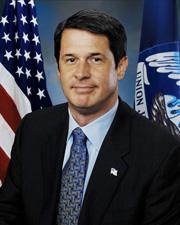 Sen. David Vitter (R-LA)
Sen. David Vitter (R-LA)Submitted February 14, 2008
Legislative Activity
Stay on top of the latest movement without scrolling through every action
Floor
Latest Action
Senate amendment submitted
February 14, 2008
View full timeline
Floor
Senate amendment submitted
February 14, 2008
Floor
Senate amendment proposed (on the floor): Amendment SA 4038 proposed by Senator Murkowski for Senator Vitter to Amendment SA 3899.(consideration: CR S1030-1032; text: CR S1030)
February 14, 2008
Floor
Senate amendment agreed to: Amendment SA 4038 agreed to in Senate by Unanimous Consent.
February 14, 2008
Floor
Amendment SA 4038 proposed by Senator Murkowski for Senator Vitter to Amendment SA 3899. (consideration: CR S1030-1032; text: CR S1030) Of a perfecting nature.
February 14, 2008
Floor
Amendment SA 4038 agreed to in Senate by Unanimous Consent.
February 14, 2008
Text
Proposed
INDIAN HEALTH CARE IMPROVEMENT ACT AMENDMENTS OF 2007

The ACTING PRESIDENT pro tempore. Under the previous order, the
Senate will resume consideration of S. 1200, which the clerk will
report.
The legislative clerk read as follows:

A bill (S. 1200) to amend the Indian Health Care
Improvement Act to revise and extend that Act.

Pending:

Bingaman/Thune amendment No. 3894 (to amendment No. 3899),
to amend title XVIII of the Social Security Act to provide
for a limitation on the charges for contract health services
provided to Indians by Medicare providers.
Vitter amendment No. 3896 (to amendment No. 3899), to
modify a section relating to limitation on use of funds
appropriated to the Service.

[[Page S994]]

Brownback amendment No. 3893 (to amendment No. 3899), to
acknowledge a long history of official depredations and ill-
conceived policies by the Federal Government regarding Indian
tribes and offer an apology to all Native peoples on behalf
of the United States.
Dorgan amendment No. 3899, in the nature of a substitute.
Sanders amendment No. 3900 (to amendment No. 3899), to
provide for payments under subsections (a) through (e) of
section 2604 of the Low-Income Home Energy Assistance Act of
1981.
Gregg amendment No. 4022 (to amendment No. 3900), to
provide funding for the Low Income Home Energy Assistance
Program in a fiscally responsible manner.
Barrasso amendment No. 3898 (to amendment No. 3899), to
require the Comptroller General to report on the
effectiveness of coordination of health care services
provided to Indians using Federal, State, local, and
tribal funds.

Mr. REID. I suggest the absence of a quorum.
The ACTING PRESIDENT pro tempore. The clerk will call the roll.
The legislative clerk proceeded to call the roll.
Mr. SESSIONS. Mr. President, I ask unanimous consent that the order
for the quorum call be rescinded.
The ACTING PRESIDENT pro tempore. Without objection, it is so
ordered.
Mr. SESSIONS. Mr. President, I ask unanimous consent that I be
allowed to speak as in morning business.
The ACTING PRESIDENT pro tempore. Without objection, it is so
ordered.

2-Year Budget Process

Mr. SESSIONS. Mr. President, the congressional budget process, which
we will begin again soon, is clearly broken. Since fiscal year 1980,
only three times has Congress enacted all its appropriations bills by
the start of the next fiscal year, which is October 1. During that same
time, 138 continuing resolutions have been needed to keep the
Government running. In other words, if Congress does not appropriate
money, it cannot be spent by the executive branch. It cannot be spent
by the Government, period. So when we do not pass an appropriations
bill to fund the Department of Defense or the Department of Housing and
Urban Development, they cannot operate. They shut down. As a result, we
come through with continuing resolutions to allow funding to continue
at the previous year's level while we debate and argue over the
appropriate appropriations for that next fiscal year.
Repeatedly, we have been late. On average, there have been 4.8
continuing resolutions each fiscal year. On average, we have been
almost 3 months late passing the appropriations bills, putting us well
into the next fiscal year. For fiscal year 1996, 10 years ago, the
final appropriations bill was signed almost 7 months late.
Over the past 13 budget cycles, Congress has passed 10 omnibus
spending bills. These omnibus bills occur when, instead of passing each
of the 12 appropriations bills separately, as we are set up and plan to
do, they cannot pass them individually. Because they are so far behind,
all the bills are cobbled together in an omnibus bill and moved at one
time, which creates so much momentum that it is difficult to stop a
bill such as that. It is certainly almost impossible to read and know
what is in it. On average, these spending packages have combined 7.6
regular appropriations bills. So the average omnibus bill is 7.6 of the
12 appropriations bills piled all together in 1 bill and passed,
basically rammed through the Senate and the House.
Last year, Congress enacted a $555 billion, 1,600-page omnibus
package that combined 11 of the 12 required appropriations bills in 1.
It was passed in late December, not long before Christmas, when people
were anxious to go home. I am sure that is part of the plan. It all
moved forward. Mr. President, 1,600 pages--it is unlikely many Members
of this Senate read it. Basically, what they would do is send out their
staff to determine if something they especially cared about was in it,
and if what they wanted was in it, they would vote for the bill. That
is the way things have gone around here. It is not a good policy. The
package we passed last December was the largest omnibus bill since
1988, when we enacted a $598 billion package that included all 13
bills.
Finally, this broken budget process has resulted in almost $1.7
trillion in deficit spending over the past 13 budget cycles.
There is no single cure, I will certainly admit, for all of what ails
Congress and the way Congress spends the people's money. However, a
biennial, 2-year budget, 2-year appropriations would be, I am convinced
and have been for quite a number of years, a tremendous step in the
right direction. It is a good-government reform. I wish to talk about
biennial budgeting a bit.
Biennial budgeting has been supported by the last four Presidents. It
is a very simple concept. Under current budget law, Congress must pass
the twelve 1-year appropriations bills each year to fund the Federal
Government. With biennial budgeting, twelve 2-year appropriations bills
would be enacted instead of 1-year bills. A change from a 1-year to 2-
year budget cycle would have many great benefits.
I emphasize, this is not a partisan matter. This is a matter that I
believe will strengthen the Congress and help us increase some of those
very poor ratings we have with the American people.
A change from a 1-year to 2-year budget would deal with this problem
that is a reality for us: that under the current system, the budget
process, the appropriations process is never-ending. We should have
completed this process last year before October 1, the start of the new
fiscal year, the appropriations funding for the next fiscal year. We
did not get that done until late December. Now we are going to be
starting soon trying another series of 12 appropriations bills to try
to pass them before October 1.
Last year, it took 325 days from the release of the President's
budget until the appropriations process was completed on December 26.
Now, only 40 days later, the process has begun again with the
submission of the President's new budget on February 5.
By limiting budget decisions to every other year, Congress would have
considerably more time to spend passing critical legislation. Whether
it be immigration reform, which we need to do, tax cuts, or legislation
addressing our Nation's housing problems, Congress could focus more on
important legislative matters rather than just always every year backed
up, jammed up with appropriations debates, arguing over pork and
earmarks, among others.
Some will argue that 2-year budgeting would increase the need for
enacting supplemental spending. They say we will have more supplemental
emergency spending. As such, we will not save a lot of time, and it
still will not be a healthy process.
I ask this: How much more supplemental emergency spending can
Congress do?
Over the last 10 budget cycles, even though we are passing regular
appropriations bills every single year, Congress has enacted at least
25 supplemental emergency appropriations packages. These packages have
approved almost $884 billion in additional emergency spending. That is
a shocking number.
But I will add this. When someone does bring up an emergency spending
bill--and there may be a number of times that it is quite legitimate--
and asks that it be brought up and spent above the budget--and that is
what emergency spending does; we approve a budget, we should stay
within the budget--we pass an emergency bill and it busts the budget.
It goes above the budget. We say it is emergency spending that is so
important that we don't adhere to the budget and we are going to spend
the money anyway. Of course, all of that goes straight to the debt,
since we are already in deficit. Any additional spending over our
budget is even more monies that go to our debt. But it takes 60 votes,
at least. A person is able to come to the floor and object and create a
discussion and demand a supermajority of 60 votes to have emergency
spending. I think that in itself should deter some frivolous use of
emergency spending, I really do.
I think we would be better off, even though I am sure we will have
emergency spending packages with a 2-year budget, because we certainly
have had them even with a 1-year budget cycle. I do think the taxpayers
won't be defenseless when those emergency bills come up.
Another big thing. All of us in the Congress, and I think all of us
in the Senate, know in our hearts, know in

[[Page S995]]

the deepest part of our being, that we are not doing a good job of
oversight over this massive Government we are supposed to be managing.
We don't do a good job of oversight. One reason we don't do oversight
in an effective way is because we have to pass the funding bills. We
are always arguing over how much should be spent on this or that
program, how much should be spent on this or that pet project, and we
spend our time doing that and not going out and looking at agencies and
departments with a fresh view.
The Office of Management and Budget has made a long list of agencies
that are poorly performing, that they question the legitimacy of. If we
would focus on that effectively, I think we could do a much better job.
Also, I would suggest that with a 2-year budget, Federal agencies
could focus more on their core missions. The Department of Defense, for
example, spends untold hours preparing their budget every year, and it
creates a lot of uncertainty because they are never sure whether this
or that program will be continued. It causes quite a bit of stress and
uncertainty. Agencies are spending thousands of hours on their annual
budget process.
Constituent groups and organizations could save a lot of money. They
come up every year. We see them. They are some of the best people we
know, and those people come up every year. They wouldn't have to come
up but every 2 years with biennial budgeting. Save some money for those
agencies and departments that are worried about their budgets and maybe
even save our constituents a little money on air travel.
Finally, a 2-year budget would create a more stable system of
government because Congress has proven it cannot complete its budget
process each year. It can't do it. Funding delays would surely occur
less often and less frequently with a 2-year budget, and the Federal
agencies could function more effectively.
Process often does drive policy. The current budget process, the
current appropriations process, we know, is not working. It is an
embarrassment to us. It embarrasses us every year, not just because the
Democrats failed last year in their first year in the majority, but
because Republicans failed too, consistently, to pass budgets in an
effective way. It is a bipartisan problem. We need to look no further
than the $400 billion deficit projected for this year, or our Nation's
$9 trillion debt to know we are not being effective in managing the
taxpayers' money.
By itself, a 2-year budget will not end the profligate spending of
Congress, that is for sure. But a 2-year budget cycle would be a huge
improvement. I have no doubt about it. Twenty-one States currently
operate with a 2-year budget cycle. I think it is time for Congress to
do the same.
When I was working on this the last several years, when the
Republicans had a majority in the Senate, I felt as though there might
be a slight advantage to the majority party because the majority party
has an agenda. They have items they feel obligated to effectively
promote. But they are not able to do it oftentimes because all the time
on the floor of the Senate is spent on trying to pass appropriations
bills. So whether it helps the majority or the minority party, I am not
sure, but it will help the taxpayers. It is good government reform.
It is not a partisan thing we are talking about. We are talking about
a historic change in the way we do business that will help every agency
and department of government because they will have at least 2 years of
a solid budget from which to work. They will only have to put together
their proposals every 2 years instead of every year. Congress will be
able to deal with it one time, and then during the off year, we would
be able to examine how we are spending money and make new proposals and
new ideas for improving the health care system of America, the savings
system of America, and the defense of America.
I thank the Chair, and I note my colleague Senator Alexander from
Tennessee is here. I know he strongly shares this view. We have both
worked with and met with Senator Pete Domenici, long-time former
chairman of the Budget Committee and a member of the Appropriations
Committee in the Senate, who has championed this battle. Frankly, I
think it would be a nice tribute to Senator Domenici if, when he
completes his tenure, distinguished as it has been in the Senate, we
were to pass a 2-year budget.
I thank the Chair, and I yield the floor.
The ACTING PRESIDENT pro tempore. The Senator from North Dakota.
Mr. DORGAN. Mr. President, Senator Alexander has not indicated to me
the purpose of his presence on the floor, but we are most anxious to
get started on the Indian Health Care Improvement Act. That was
scheduled for 9:30 this morning. I wish to begin an opening statement
at some point, and I know Senator Murkowski would, and we want to do a
managers' package.
Senator Coburn is here, because I asked if he would be here at 9:30,
and he has a number of amendments. I appreciate very much his work and
his efforts on Indian health care. I am hoping we can work with Senator
Coburn this morning to deal with some of his amendments. I know he has
filed a number of them, and he and I have had many discussions about
it. I appreciate his attendance. He has just walked into the Chamber.
Our interest is in getting a lot of work done this morning and this
afternoon in order to try to see if we can finish this bill. This will
be the third day that the Indian Health Care Improvement bill has been
on the floor, so I wish to begin on that. I know Senator Alexander has
appeared, though I don't know for what purpose, and perhaps I would be
happy to yield to him if he would tell us if he is wanting to do
something else on the floor.
Mr. ALEXANDER. Mr. President, I hope to take 5 minutes on the 2-year
budget and how I hope, and many of us hope, that it will be something
the Democrats and Republicans can agree on to change the way Washington
works.
I will be glad to defer that, knowing the importance of moving ahead
on Indian affairs.
Mr. DORGAN. If the statement is 5 minutes, I would not object to
that, but I do want, at the end of that 5 minutes, to begin the bill.
Again, Senator Coburn has arrived, and we have a lot of work to do. But
I know Senator Alexander has worked on budget issues for a long while,
so I ask unanimous consent that Senator Alexander be recognized for 5
minutes, and after that I will make some comments, Senator Murkowski
then will make some comments, and we will begin a discussion with
Senator Coburn.
The ACTING PRESIDENT pro tempore. Without objection, it is so
ordered.
The Senator from Tennessee is recognized for 5 minutes.
Mr. ALEXANDER. Mr. President, I greatly appreciate the courtesy of
the Senator from North Dakota. He himself is an expert on
appropriations and budget matters, both at the Federal level and at the
State level. It would be my hope that as this subject I am about to
talk about moves ahead, it would be something that would interest him
as well.

2-Year Appropriations

I can make my point quickly and simply. We have heard a lot this year
that the people of this country would like a change in the way we do
business in Washington, DC. One way to do that is change how we go
about our business. That means I would prefer, and I believe almost all
of us would prefer, and I know the people would prefer, that we focus
on big issues and we come up with good principled ideas. And then we
debate those principles, and then we reach across the aisle, because it
takes 60 votes to get anything done here to come to a result.
We did that on the economic stimulus, we did that on energy, we did
that on terrorism, and it didn't mean we didn't have debates. We had
big debates. That is why we are here. But we came to a result and the
result had to be bipartisan. I am not so interested in the
bipartisanship as I am interested in the result. I heard Rick Warren
speak the other day, and he said he wasn't so interested in interfaith
dialog as he was interested in good works.
I think that is what the people want to see from us. My suggestion
for good works and for results is that we adopt a 2-year appropriations
budget process, as described by the Senator from Alabama and as
advocated by the Senator from New Mexico, Senator Domenici. This is not
a Republican idea, this is

[[Page S996]]

not a Democrat idea, this is a good idea. It has the support of Senator
Feingold from the other side, and it has the support of the independent
Senator, Senator Lieberman, so I would hope it has strong support all
across the aisle here.
Let me give an example or two of why it would make a difference. When
we debate the higher education bill in a few weeks, I am going to ask
permission to bring on the floor several boxes containing all the rules
and regulations that 6,000 higher education institutions in this
country must wade through in order to accept students who receive a
Federal grant or a loan. The stack of boxes is about that high--that
many rules and regulations. But this new higher education bill that we
will likely pass doubles the number of rules and regulations. Maybe
some of them are needed, but what we haven't had time to do is go
through that stack of boxes as tall as I am to see if we can cut the
regulations in half. We don't have time to do that.
If we spent every other year drawing up a budget and our
appropriations bills, and then, in the odd year, going back through
rules, laws, and regulations already on the books, I think we would
have a strong force for fewer rules, fewer regulations, and fewer laws.
And also more effective, if not less, spending.
A second example. The State of Missouri has told the Department of
Transportation that with the Federal money we already give the State of
Missouri, they can repair every broken bridge they have in 5 years.
They can do this as long as we let them do it first under their rules
and regulations, without waiting for our appropriations process. In
other words, if we let them build the bridges and then we buy the
bridges to reimburse them, according to specifications, we don't have
to spend any more money to fix all the broken bridges in Missouri.
What that should indicate to us is the gross inefficiency of our
appropriations and budget processes when it comes to building roads,
when it comes to making contracts, when it comes to waging war. Our
process wastes billions of dollars a year. No wonder the people of this
country are upset with us.
Final action on appropriations measures has occurred, on average, 86
days after the start of the fiscal year. And our fiscal year starts
when? On October 1. I mean, who else begins their year on October 1?
That is not the Chinese calendar, it is not most Americans' calendar,
but it is our fiscal calendar. So everybody has to adjust their
business to a strange year, and then we never meet it.
My hope is that this year we can honor Senator Domenici and
ourselves. We can add a Democratic name right up there with his, as
prominently, and we can say to the country: We are going to change the
way Washington does business. We are going to do it in a bipartisan
way. We are going to adopt a 2-year budget for spending. We are going
to spend every other year revising and repealing laws and make the
Government run efficiently. And we are going to get our appropriations
and budgeting done on time. We can save the taxpayers dollars so that
States, cities, companies, and countries that deal with the United
States of America can do so in a timely and efficient way.
I thank the President, and I thank again the Senator from North
Dakota and the Senator from Alaska for allowing me this time.
Mr. DORGAN. Mr. President, we are going to turn now to the Indian
Health Care Improvement Act, and I am going to be very brief, and I
know my colleague will as well because we will have a chance later to
speak at greater length.
The Indian Health Care Improvement Act has been the subject of
reauthorization for many years, and the Congress has not been able to
do it. The fact is we have very serious problems with respect to Indian
health care. The Indian Health Service is a very important Federal
agency. We have some people who work in that area who do important work
and are good and dedicated people, but the fact is the system isn't
working very well. We have American Indians--the first Americans, by
the way--who are supposed to get health care as a result of treaties
and trust responsibilities who are not getting the health care they
deserve.
I will again, later today, describe the horrors of Indian health care
that does not work. People are dying, people are routinely being denied
the health care that every one of us would expect for ourselves and our
family. We are trying to reauthorize the Indian Health Care Improvement
Act after 8 years. Eight years ago, it was supposed to have been
reauthorized. Eight years later, we are still on the floor of the
Senate, struggling.
So my hope is, perhaps we will now succeed. Senator Murkowski and the
Indian Affairs Committee have worked on a piece of legislation that is
not giant reform, it is not a huge step forward, but it is a step
forward in the right direction.
Some of my colleagues--I believe my colleague, Senator Coburn--will
say we need much larger reform. I do not disagree with that. I am going
to be supporting much broader reform in Indian health care. But if you
cannot get a modest step in the right direction, how on Earth can you
get big, bold reform?
This is the first step in a two-step process to fix what is wrong. I
think this Indian Health Care Improvement Act will give us substantial
opportunity to improve the health care in the lives of American
Indians.
Let me make the point that is important. We owe this health care
through treaties, through a trust responsibility. We have made
commitments. We owe this health care to American Indians through
promises the Federal Government has made.
Regrettably, it has not been adequately delivered. So I am going to
talk a little bit later. I know my colleague, Senator Coburn, is on the
Senate floor, and he has amendments. I am going to give him an
opportunity to speak. I am as well, but I will have an opportunity
later this morning to describe in much greater detail why there is an
urgency and why this system must be improved. We cannot wait any
longer.
I yield the floor.
The ACTING PRESIDENT pro tempore. The Senator from Alaska is
recognized.
Ms. MURKOWSKI. Mr. President, I thank the chairman of the Indian
Affairs Committee for his leadership on this very importation
reauthorization bill. As he has indicated, this work is a long time in
coming, and it is a collaborative effort not only of those on the
committee, those of us who represent so many in Indian country across
the Nation, but truly for so many who have put so much work into this
reauthorization, this very important health care reform.
We do have amendments we have received and are looking forward to
having discussion on them. As Chairman Dorgan has noted, Senator Coburn
will have an opportunity to offer some of those this morning. But in
the spirit of focusing on what we have in front of us today, I think it
is important that we keep in mind we have an obligation to advance a
health care system that has been left behind the times in terms of any
updates, whether it is in the area of behavioral health or telemedicine
or substance abuse or what we are doing with diabetes treatment or how
we are moving forward with construction of facilities. We recognize
that we have a ways to go in updating the system. This is important and
is necessary.
Recognizing the limitations on Senator Coburn's time at this point, I
yield to the Senator so he can offer his amendments. We will continue
our conversation later in the morning.
The ACTING PRESIDENT pro tempore. The Senator from Oklahoma.
Mr. COBURN. Mr. President, first of all, let me thank the chairman
and ranking member, Senator Murkowski, for their work on this effort.

Amendments Nos. 4024 through 4037 to Amendment No. 3899

Oklahoma is the No. 1 State in the country as far as tribal members.
Indian health care is an issue on which we are struggling, and there
are all sorts of components for it. I am going to ask unanimous consent
now to bring up my amendments numbered 4024 through 4037 as if brought
up individually and ask that each be set aside so they will be
considered pending. I ask unanimous consent that be carried out at this
time.
Mr. DORGAN. I have no objection to that. The Senator and I have
talked about this. He wants to get all of his amendments pending. But
he will be

[[Page S997]]

asking for discussion and votes on a number of them.
Mr. COBURN. Far less than what I bring up.
Mr. DORGAN. I have no objection.
The ACTING PRESIDENT pro tempore. Without objection, it is so
ordered.
The amendments are as follows:

amendment no. 4024 to amendment no. 3899

(Purpose: To ensure that tribal members receive scientifically
effective health promotion services)

At the appropriate place in title VIII of the Indian Health
Care Improvement Act (as amended by section 101), insert the
following:

``SEC. 8__. SCIENTIFICALLY EFFECTIVE HEALTH PROMOTION
SERVICES.

``Notwithstanding any other provision of this Act, coverage
of health promotion services under this Act shall only be for
medical or preventive health services or activities--
``(1) for which scientific evidence demonstrates a direct
connection to improving health; and
``(2) that are provided in accordance with applicable
medical standards of care.

amendment no. 4025 to amendment no. 3899

(Purpose: To clarify the absence of authorization of racial preference
in employment)

At the appropriate place in title VIII of the Indian Health
Care Improvement Act (as amended by section 101), insert the
following:

``SEC. 8__. NO RACIAL PREFERENCE IN EMPLOYMENT.

``Notwithstanding any other provision of this Act, nothing
in this Act authorizes any racial preference in employment.

amendment no. 4026 to amendment no. 3899

(Purpose: To modify a provision relating to child sexual abuse and
prevention treatment programs)

Strike paragraph (5) of section 713(b) of the Indian Health
Care Improvement Act (as amended by section 101) and insert
the following:
``(5) To identify and provide behavioral health treatment
to Indian perpetrators and perpetrators who are members of an
Indian household making efforts to begin offender and
behavioral health treatment while the perpetrator is
incarcerated or at the earliest possible date if the
perpetrator is not incarcerated.
At the end of section 713 of the Indian Health Care
Improvement Act (as amended by section 101), add the
following:
``(d) Limitation on Funding.--Treatment shall be provided
for a perpetrator pursuant to this section only if the
treatment is scientifically demonstrated to reduce the
potential of the perpetrator to commit child sexual abuse
again, and shall not provide the basis to reduce any
applicable criminal punishment or civil liability for that
abuse.

amendment no. 4027 to amendment no. 3899

(Purpose: To clarify the effect of a title)

At the appropriate place in title VII of the Indian Health
Care Improvement Act (as amended by section 101), insert the
following:

``SEC. 7__. CRIMINAL CONDUCT.

``Nothing in this title--
``(1) establishes any defense, not otherwise applicable
under law, for any individual accused of any crime, including
physical or sexual abuse of children or family violence; or
``(2) preempts or otherwise affects any applicable
requirement for--
``(A) reporting of criminal conduct, including for child
abuse or family violence; or
``(B) creating any new privilege concerning disclosure.

amendment no. 4028 to amendment no. 3899

(Purpose: To provide a blood quantum requirement for Federal
recognition of Indian tribes)

On page 347, after line 24, add the following:

SEC. 104. BLOOD QUANTUM REQUIREMENT FOR FEDERAL RECOGNITION
OF INDIAN TRIBES.

Effective beginning on the date of enactment of this Act,
in determining whether to extend Federal recognition to an
Indian tribe or other Indian group under part 83 of title 25,
Code of Federal Regulations (or successor regulations), the
Secretary of the Interior shall require that each member of
the Indian tribe or group possess a degree of Indian blood of
not less than \1/512\.

amendment no. 4029 to amendment no. 3899

(Purpose: To require a study of membership criteria for federally
recognized Indian tribes)

On page 347, after line 24, add the following:

SEC. 104. GAO STUDY OF MEMBERSHIP CRITERIA FOR FEDERALLY
RECOGNIZED INDIAN TRIBES.

Not later than 1 year after the date of enactment of this
Act, the Comptroller General of the United States shall
conduct a study of membership criteria for federally
recognized Indian tribes, including--
(1) the number of federally recognized Indian tribes in
existence on the date on which the study is conducted;
(2) the number of those Indian tribes that use blood
quantum as a criterion for membership in the Indian tribe and
the importance assigned to that criterion;
(3) the percentage of members of federally recognized
Indian tribes that possesses degrees of Indian blood of--
(A) \1/4\;
(B) \1/8\; and
(C) \1/16\; and
(4) the variance in wait times and rationing of health care
services within the Service between federally recognized
Indian Tribes that use blood quantum as a criterion for
membership and those Indian Tribes that do not use blood
quantum as such a criterion.

amendment no. 4030 to amendment no. 3899

(Purpose: To ensure tribal members have access to the highest levels of
quality and safety in the Service)

Strike section 221 of the Indian Health Care Improvement
Act (as amended by section 101) and insert the following:

``SEC. 221. LICENSING.

``Nothing in this Act preempts any State requirement
regarding licensing of any health care personnel.

amendment no. 4031 to amendment no. 3899

(Purpose: To promote transparency and quality in the Service)

At the appropriate place in title VIII of the Indian Health
Care Improvement Act (as amended by section 101), insert the
following:

``SEC. 8__. GAO ASSESSMENT.

``Not later than 1 year after the date of enactment of the
Indian Health Care Improvement Act Amendments of 2008, the
Comptroller General of the United States shall conduct, and
submit to Congress a report describing the results of, an
assessment of--
``(1) the average wait time of patients in the Service;
``(2) the extent of rationing of health care services in
the Service;
``(3) the average per capita health care spending on
Indians eligible for health care services through the
Service;
``(4) the overall health outcomes in Indians, as compared
to the overall health outcomes of other residents of the
United States;
``(5) patient satisfaction of Indians receiving health care
services through the Service;
``(6) the total amount of funds of the Service expended
for--
``(A) direct medical care; and
``(B) administrative expenses;
``(7) the health care coverage options available to Indians
receiving health care services through the Service;
``(8) the health care services options available to
Indians; and
``(9) the health care provider options available to
Indians.

amendment no. 4032 to amendment no. 3899

(Purpose: To protect rape and sexual assault victims from HIV/AIDS and
other sexually transmitted diseases)

At the appropriate place in the Indian Health Care
Improvement Act (as amended by section 101), insert the
following:

``SEC. ___. TESTING FOR SEXUALLY TRANSMITTED DISEASES IN
CASES OF SEXUAL VIOLENCE.

``The Attorney General shall ensure that, with respect to
any Federal criminal action involving a sexual assault, rape,
or other incident of sexual violence against an Indian--
``(1)(A) at the request of the victim, a defendant is
tested for the human immunodeficiency virus (HIV) and such
other sexually transmitted diseases as are requested by the
victim not later than 48 hours after the date on which the
applicable information or indictment is presented;
``(B) a notification of the test results is provided to the
victim or the parent or guardian of the victim and the
defendant as soon as practicable after the results are
generated; and
``(C) such follow-up tests for HIV and other sexually
transmitted diseases are provided as are medically
appropriate, with the test results made available in
accordance with subparagraph (B); and
``(2) pursuant to section 714(a), HIV and other sexually
transmitted disease testing, treatment, and counseling is
provided for victims of sexual abuse.

amendment no. 4033 to amendment no. 3899

(Purpose: To allow tribal members to make their own health care
choices)

On page 336, between lines 13 and 14, insert the following:

``SEC. 817. TRIBAL MEMBER CHOICE DEMONSTRATION PROJECT.

``(a) In General.--The Secretary shall establish a
demonstration project in not less than 3 Service Areas
(chosen by the Secretary for optimal participation) under
which eligible participants shall be provided with a risk-
adjusted subsidy for the purchase of qualified health
insurance (as defined in subsection (f)) in order to--
``(1) improve Indian access to high quality health care
services;
``(2) provide incentives to Indian patients to seek
preventive health care services;
``(3) create opportunities for Indians to participate in
the health care decision process;
``(4) encourage effective use of health care services by
Indians; and
``(5) allow Indians to make health care coverage and
delivery decisions and choices.
``(b) Eligible Participant.--
``(1) Voluntary enrollment for 12-month periods.--
``(A) In general.--In this section, the term `eligible
participant' means an Indian who--
``(i) is a member of a federally-recognized Indian Tribe;
and
``(ii) voluntarily agrees to enroll in the project
conducted under this section (or in

[[Page S998]]

the case of a minor, is voluntarily enrolled on their behalf
by a parent or caretaker) for a period of not less than 12
months in lieu of obtaining items or services through any
Indian Health Program or any other federally-funded program
during any period in which the Indian is enrolled in the
project.
``(B) Voluntary extensions of enrollment.--An eligible
participant may voluntarily extend the participant's
enrollment in the project for additional 12-month periods.
``(2) Hardship exception.--The Secretary shall specify
criteria for permitting an eligible participant to disenroll
from the project before the end of any 12-month period of
enrollment to prevent undue hardship.
``(c) Subsidies Requirement.--The average amount of all
subsidies provided to eligible participants enrolled in the
demonstration project established under this section for each
12-month period during which the project is conducted shall
not exceed the amount equal to the average of the per capita
expenditures for providing Indians items or services from all
Indian Health Programs for the most recent fiscal year for
which data is available.
``(d) Special Rules.--
``(1) Treatment.--The amount of a subsidy provided to an
eligible participant in the project shall not be counted as
income or assets for purposes of determining eligibility for
benefits under any Federal public assistance program.
``(2) Budget neutrality.--In conducting the demonstration
project under this section, the Secretary shall ensure that
the aggregate payments made to carry out the project do not
exceed the amount of Federal expenditures which would have
been made for the provision of health care items and services
to eligible participants if the project had not been
implemented.
``(e) Demonstration Period; Reports to Congress.--
``(1) Demonstration period.--
``(A) Initial period.--The demonstration project
established under this section shall begin not later than the
date that is 1 year after the date of enactment of this
section and shall be conducted for a period of 5 years.
``(B) Extensions.--The Secretary may extend the project for
such additional periods as the Secretary determines
appropriate, unless the Secretary determines that the project
is unsuccessful in achieving the purposes described in
subsection (a), taking into account cost-effectiveness,
quality of care, and such other criteria as the Secretary may
specify.
``(2) Periodic reports to congress.--During the 5-year
period described in paragraph (1), the Secretary shall
periodically submit reports to Congress regarding the
progress of demonstration project conducted under this
section. Each report shall include information concerning the
populations participating in the project, participant
satisfaction (determined by indicators of satisfaction with
security, affordability, access, choice, and quality) as
compared with items and services that the participant would
have received from Indian Health Programs, and the impact of
the project on access to, and the availability of, high
quality health care services for Indians.
``(f) Qualified Health Insurance.--
``(1) In general.--In this section, the term `qualified
health insurance' means insurance which constitutes medical
care as defined in section 213(d) of the Internal Revenue
Code of 1986 without regard to--
``(A) paragraph (1)(C) thereof, and
``(B) so much of paragraph (1)(D) thereof as relates to
qualified long-term care insurance contracts.
``(2) Exclusion of certain other contracts.--Such term
shall not include insurance if a substantial portion of its
benefits are excepted benefits (as defined in section 9832(c)
of such Code).''.

amendment no. 4034 to amendment no. 3899

(Purpose: To allow tribal members to make their own health care
choices)

On page 336, between lines 13 and 14, insert the following:

``SEC. 817. TRIBAL MEMBER CHOICE PROGRAM.

``(a) In General.--The Secretary shall establish a program
in geographically feasible Service Areas (as determined by
the Secretary, taking into account those Service Areas that
are likely to have optimal participation) under which
eligible participants shall be provided with a risk-adjusted
subsidy for the purchase of qualified health insurance (as
defined in subsection (f)) in order to--
``(1) improve Indian access to high quality health care
services;
``(2) provide incentives to Indian patients to seek
preventive health care services;
``(3) create opportunities for Indians to participate in
the health care decision process;
``(4) encourage effective use of health care services by
Indians; and
``(5) allow Indians to make health care coverage and
delivery decisions and choices.
``(b) Eligible Participant.--
``(1) Voluntary enrollment for 12-month periods.--
``(A) In general.--In this section, the term `eligible
participant' means an Indian who--
``(i) is a member of a federally-recognized Indian Tribe;
and
``(ii) voluntarily agrees to enroll in the program
conducted under this section (or in the case of a minor, is
voluntarily enrolled on their behalf by a parent or
caretaker) for a period of not less than 12 months in lieu of
obtaining items or services through any Indian Health Program
or any other federally-funded program during any period in
which the Indian is enrolled in the program.
``(B) Voluntary extensions of enrollment.--An eligible
participant may voluntarily extend the participant's
enrollment in the program for additional 12-month periods.
``(2) Hardship exception.--The Secretary shall specify
criteria for permitting an eligible participant to disenroll
from the program before the end of any 12-month period of
enrollment to prevent undue hardship.
``(c) Subsidies Requirement.--The average amount of all
subsidies provided to eligible participants enrolled in the
program established under this section for each 12-month
period during which the program is conducted shall not exceed
the amount equal to the average of the per capita
expenditures for providing Indians items or services from all
Indian Health Programs for the most recent fiscal year for
which data is available.
``(d) Special Rules.--
``(1) Treatment.--The amount of a subsidy provided to an
eligible participant in the program shall not be counted as
income or assets for purposes of determining eligibility for
benefits under any Federal public assistance program.
``(2) Budget neutrality.--In conducting the program under
this section, the Secretary shall ensure that the aggregate
payments made to carry out the program do not exceed the
amount of Federal expenditures which would have been made for
the provision of health care items and services to eligible
participants if the program had not been implemented.
``(e) Implementation; Reports to Congress.--
``(1) Implementation.--
``(A) Initial period.--The program established under this
section shall begin not later than the date that is 1 year
after the date of enactment of this section and shall be
conducted for a period of at least 5 years.
``(B) Extensions.--The Secretary may extend the program for
such additional periods as the Secretary determines
appropriate, unless the Secretary determines that the program
is unsuccessful in achieving the purposes described in
subsection (a), taking into account cost-effectiveness,
quality of care, and such other criteria as the Secretary may
specify.
``(2) Reports to congress.--During the initial 5-year
period in which the program is conducted, and during any
period thereafter in which the program is extended, the
Secretary shall periodically submit reports to Congress
regarding the progress of program. Each report shall include
information concerning the populations participating in the
program, participant satisfaction (determined by indicators
of satisfaction with security, affordability, access, choice,
and quality) as compared with items and services that the
participant would have received from Indian Health Programs,
and the impact of the program on access to, and the
availability of, high quality health care services for
Indians.
``(f) Qualified Health Insurance.--
``(1) In general.--In this section, the term `qualified
health insurance' means insurance which constitutes medical
care as defined in section 213(d) of the Internal Revenue
Code of 1986 without regard to--
``(A) paragraph (1)(C) thereof, and
``(B) so much of paragraph (1)(D) thereof as relates to
qualified long-term care insurance contracts.
``(2) Exclusion of certain other contracts.--Such term
shall not include insurance if a substantial portion of its
benefits are excepted benefits (as defined in section 9832(c)
of such Code).''.

amendment no. 4035 to amendment no. 3899

(Purpose: To prioritize patient care over administrative overhead)

At the appropriate place in title VIII of the Indian Health
Care Improvement Act (as amended by section 101), insert the
following:

``SEC. 8__. REQUIREMENT.

``Not less than 85 percent of amounts made available to
carry out this Act shall be used to provide the medical
services authorized by this Act.

amendment no. 4036 to amendment no. 3899

(Purpose: To prioritize scarce resources to basic medical services for
Indians)

On page 121, strike line 15 and insert the following:
``(c) Prioritization.--Before providing any hospice care,
assisted living service, long-term care service, or home- or
community-based service pursuant to this section, the
Secretary shall give priority to the provision of basic
medical services to Indians.
``(d) Definitions.--For the purposes of this section,

amendment no. 4037 to amendment no. 3899

(Purpose: To prioritize scarce resources to basic medical services for
Indians)

On page 121, strike line 15 and insert the following:
``(c) Effective Date.--
``(1) Effective date.--This section takes effect on the
date on which the Secretary makes the certification described
in paragraph (2).
``(2) Certification.--The certification referred to in
paragraph (1) is a certification by the Secretary to Congress
that--
``(A) the service availability, rationing, and wait times
for existing health services within the Service are--

[[Page S999]]

``(i) acceptable to Indians; and
``(ii) comparable to the service availability and wait
times experienced by other residents of the United States;
and
``(B) the provision of services under this section will not
divert resources from or negatively affect the provision of
basic medical and dental services by the Service.
``(d) Definitions.--For the purposes of this section,

Mr. COBURN. Let me start by saying, improving the health care of
Indians in this country is a widely supported goal. Senator Dorgan's
heart is in the right place on this issue. He knows the problems we
have, and he spent countless hours trying to get to this point with
this bill. I do not want to be seen--I have told him, and I committed
to him my goal is not to block his progress on this bill.
However, I believe this legislation as drafted does not fix the
underlying problems. He and I have had several conversations about
that. It does not fix rationing that is going on today. It does not fix
waiting lines that are going on today. It does not fix the inferior
quality that is being applied to a lot of Native Americans and Alaskans
in this country. It does not fix any of those problems. In fact, it
authorizes more services without making sure the money is there to
follow it. The average Native American in this country has $2,100 per
year spent on them.
Now, let's put that in perspective. The average veteran we take care
of has $4,300. The average individual per person, per capita,
expenditure in our country is $7,000. Yet we are going to pass a bill
that does not fix anything. It does not fix the real problems about
addressing the No. 1 problem which is, we are not sending enough
dollars to meet the treaty obligations that we have with Native
Americans. So really what this bill is, it is called the Indian Health
Care Improvement Act, but it improves our position with tribes because
we have done something, but it does not improve health care. It is not
going to improve health care. It is going to increase the availability
of services without the money, without the control, without the
quality, without eliminating the waiting lines.
As a matter of fact, it is going to add to the waiting lines as I
read this bill, as somebody who is somewhat experienced in medicine.
Those who say a failure to reauthorize the Indian Health Care
Improvement Act is a violation of our trust obligations are correct.
However, I believe simply reauthorizing this system with minor
modifications is an even greater violation of that commitment. It is a
greater violation. Dozens of tribal leaders are not expressing
enthusiasm for the current structure.
Chuck Grim, an Oklahoman, head of this service, knows what is broken.
I have had lots of conversations with him. We know what is broken, we
know how to fix it, but we have to be bold in how we go about fixing
it. We are not bold in this. We are not changing it. We are not doing
the structural changes that have to happen for us to live up to the
commitment that we have made to Native Americans.
The myriad of problems facing Indian health care in Indian country
are many of the same issues that are facing health care delivery
throughout rural America. They are compounded, however, in this system
by a system that refuses to recognize its own role in holding back
health care delivery for Native Americans.
In designing health care reforms, markets work when they are allowed
to. They lower the price of all goods and services, and they attract
much needed outside investment. Many tribes in Oklahoma are at the
forefront of new and innovative health care delivery systems. They are
poised to become a model for delivery throughout the system.
Congress must ensure, however, that their efforts are not discouraged
or stopped altogether by the current system. Furthermore, there is no
good reason that forward-thinking tribal governments should not be
prevented from developing market-driven health care centers of
excellence that will attract researchers, physicians, and patients for
cutting edge lifesaving treatments. We do not do that in this bill.
Furthermore, this legislation fails to focus on empowering individual
tribal members. Individual patients tend to receive better care and
more effective care when they are empowered to make their own health
care decisions. Congress should explore ways to accomplish this
objective and give tribal citizens a reason to invest in their own
health. Long lines, bureaucratic headaches, and rationed substandard
care completely disallow this sort of investment. That is what we have.
Our Chairman has been on the Senate floor multiple times showing how
we are rationing care, how we have lines, how we do not give quality
care, how we take contract health care--it runs out in 4 or 5 months.
And so what happens? People who need care do not get it, and we have
not fixed that in this bill. Yet we are calling this health care
improvement.
The health care status of tribal members ranks below the general
population. The Federal Government has been providing health care to
tribal members for 175 years. The first time was to give them a
smallpox vaccine in 1807. That is when we started Indian health care.
And what we are doing today in comparison to what our treaty
obligations are--in comparison, it is the same thing we are doing to
the veterans when we tell the veterans: We are going to give you health
care and do not give it. It is the same thing we tell schools: We are
going to have an IDEA program and then not fund it. It is morally
bankrupt legislation that does not meet the commitments that we say we
have.
The Snyder Act of 1921 provided a broad and permanent authorization
for Federal Indian programs, including--and this is an important
thing--the conservation of health; in other words, the prevention of
disease, which Chuck Grim was just starting to get into, but we do not
have the funding to do it the way we need to do it. We know the
manifestation of diabetes and addiction and hypertension and heart
disease among our tribal members is higher than any other group in our
country. Yet the conservation of health has not been exploited, the
paradigm shift that has to happen in Native American care to where we
go to prevention instead of treatment of disease. It is not in here. We
are not doing it.
Last year, we spent $3.18 billion doing this. If we just funded it at
the level we fund per capita veterans care, we should be funding $6.5
billion in Native American health care. That is just on a per capita
basis, let alone any structural changes on how we might make
preventative care, quality care, timely care, and compassionate care a
part of Native American care. But we are not doing that. Indians in
comparison with the general population are 6.5 times more likely to die
from alcoholism. That is a disease we need to be preventing. That is a
health care problem. They are six times more likely to die from
tuberculosis, a preventable disease; three times more likely to die
from diabetes, a controllable and now preventable disease, it is a
preventable disease; 2.5 times more likely to die from an accident.
Now, how can we look those statistics in the face and say we have met
our treaty obligations? We have failed. We have absolutely failed. Only
71 percent of Native Americans receive prenatal care. That means one
out of four Native American moms who get pregnant do not have any
prenatal care. We ought to be ashamed. We have failed. We have failed.
Eighteen percent of Native Americans who are pregnant smoke. That is
twice the rate of others. Where is our prevention? Where is our
education? Where is the priority on what we can do something about?
American Indians suffer from a great death rate from chronic liver
disease and cirrhosis. It is 22.7 per 100,000. That is twice what it is
for Whites and three times what it is for African Americans in this
country. We know what causes it. We do not put the dollars there. We
have not put in a streamlined prevention program.
My words are harsh. They are not intended for either the chairman or
the ranking member. I passionately care that we meet our commitments,
and so I do not want you to take the words I say as directed toward you
because I know you care as well.
Where we have a difference is in the ``now.'' What do we do now
rather than what do we do later? I think we should be doing it all now.
I think we should radically change how we approach our obligations in
Native American health care in this country.
Rationing plagues Indian Health Services. It is rationed care. That
is

[[Page S1000]]

why it is not good care. That is why it is not consistent care. That is
why it is not preventative care, because we don't have the resources.
We haven't applied the resources to the need. Senator Dorgan has had
numerous hearings. He has spoken on the floor about this rationing
crisis. But if we don't radically change the system, if we don't change
incentives in the system, improving the old will just bring more
failure.
The job vacancy rate for dentists is 32 percent. They don't have 80
percent of the nurses they need. They don't have 85 percent of the
optometrists, and they only have 86 percent of the doctors, based on
the present system. I am proposing a better system with better care
based on prevention, a paradigm that says it is a whole lot cheaper to
prevent your illness than it is to treat it once you get it. It is
common to hear in Indian Country--and I have heard the chairman say
it--``don't get sick after June. Contract money is gone. If you get
sick after June, nothing will happen. You will not get the referral to
the center to take care of you because we don't have the money.
A quote from Dr. Charles Grim, who has been a stellar leader for the
IHS:

We're only able to provide a certain level of dental
services in certain populations. We're only able to refer a
certain level or number or types of referrals with our
contract health service budget into the private sector. . . .
But I guess one generalized statement would be that we have a
defined population and a defined budget. . . . But it has led
to rationing in some parts of our health care system.

Here is the former head of IHS admitting we are rationing the care.
When we ration care, we don't match up need with resources. We say:
Here are all the resources there are regardless of what the need is. We
don't get on the leading edge on prevention. We don't get on the
leading edge on treatment because we are scrambling to keep the doors
open. How can we have a coherent, fair health care system when we are
rationing because the demand is so far greater than we are willing to
supply the resources?
According to a GAO report in 2005, health care services are not
always available to Native Americans. There are wait times and
insufficient care. GAO visited 13 IHS-funded facilities in 2005 and
found waiting times at four range from 3 to 6 months to get in to see
anybody. Six months? That is worse than England. What happens when you
can't get in? The disease gets worse. The complications are worse. The
quality of the your health gets worse. Also, the cost to meet the need
explodes. So what we have done is raised the cost of care. But more
importantly, we have failed on our commitment to provide health to
Native Americans.
Three IHS facilities had 90-mile one-way visits to get into a clinic,
many without transportation available to them. Three of these, the
average was 90 miles to get to a clinic. Even if they have the
resources and there is no access because there is a distance to travel,
we are going to see the same problem. Nobody is going to go until they
absolutely have to. So we lose the benefit of prevention.
Most of the facilities in this GAO report did not have the staff or
equipment to offer services onsite so they resorted to contract care.
The contract care budget, of course, is small. So what happens? We
ration contract care at 12 of the 13 facilities. This idea of rationing
isn't a political statement; it is a reality. We are not doing what we
are committed by treaty to do. Now we are going to bring a bill to the
floor that doesn't meet that commitment. We are still not going to meet
the commitment. We will improve it, but we need to overhaul it. We need
a top-down, complete change in how we approach our commitment to Native
Americans as far as health care. If we did that, we could offer a whole
lot more care for a whole lot less money.
We have a bureaucracy that is stumbling all over itself. We are
spending money. I will get to the point on the number of bureaucratic
positions in IHS that don't deliver any care. Gaps in services result
in diagnoses and treatment delays which, of course, make the health of
the patient worse and raise the cost. IHS reports that their facilities
are required to pay for all priority one services but admit that many
of their facilities' available funds are expended before the end of the
fiscal year and the payment isn't made.
I experienced that in my own hometown. People come to Hastings
Hospital to deliver a baby. Our hospital hasn't been paid on contract
care for years. So those in the rest of the community are going to pay
for it. The problem is, there is no continuity in care. Prenatal care
was provided. Now all of a sudden you don't have a record and you have
somebody you have to take care of, let alone that the private hospital
that is there isn't going to get paid for the service. Somebody is
going to pay for the service, but contract health care isn't. So the
fact is, one in four Native Americans in Alaska aren't getting prenatal
care. And we know the risk. The average cost for a premature baby is
$250,000, let alone the consequence of the problems those kids have.
Why in the world would we ever allow that to happen? It is akin to
pouring money down the drain because we have not addressed prenatal
needs of Native Americans.
Twenty-one percent of those who do get care have less than three
prenatal visits on average. That is one in four has less than three
prenatal visits. That is like not having prenatal care. Yet we count
that as if they had prenatal care. What do we think the consequences
will be? The antenatal, postnatal, and perinatal consequences to the
Native American population are higher. The birth complications are
higher because we are not doing the prenatal care.
The average recommended prenatal visits by the American College of
Obstetrics and Gynecology is 14. We average six with Native Americans.
You can't call that care.
Under an overburdened system such as this, drastically expanded
services to four broad new areas--and this is the problem I have with
this bill--will only drain the resources available to the basic core
medical services. We are going to expand where we can offer new
services. Many of these people are already eligible under Medicaid or
Medicaid anyway, but we are going to expand it. What is going to happen
is, the tribal government is going to offer the service, and they are
going to take the money off the top. They are going to put that into
the rest of the tribal funds. So we are actually going to take money
out of dollars for health care for tribal members by expanding care and
not making sure there are adequate funds.
Making new promises, when we don't keep current ones, doesn't help
the Native American population. Let's keep the promises we have already
made before we expand services and not throw money at it. It sounds
good. The tribes like to hear what we are going to do. We are going to
add these four services, but we are not funding the services we are
supplying now. Why would we add services knowing that? If we do it, we
are going to do it on the cheap. But it feels good because they think
we are doing something, when, in fact, we are not fixing the problems.
It is kind of like taking a loan out on a brandnew car when you can't
buy food. It is the same thing. That is what we are doing with these
additional services.

The majority of the bill is more of the same. I have expressed to the
chairman that I think we need to radically overhaul the care of Native
Americans. I will have a lot more to say. I do have some complications
with other commitments in terms of markup. My staff e-mailed me a
moment ago that you have made some substantive changes in the managers'
amendment on some of the Medicaid and the tribal issues related to
urban Indians. I will get with you and try to discuss that because it
may affect some of my amendments. I wasn't aware of that until this
morning.
I will have an amendment I will talk about now. I don't know that I
will when I actually bring it back up. One way to meet our commitment
to Native Americans is to give them options. According to CBO, the
amendment I will be offering costs no money. It is a zero cost. But
what it allows Native Americans is an insurance policy that says you
can apply this and go to any Indian Health Service you want to or
anywhere else in the country you want to, but you get to choose. The
same dollars get spent, but the services will be far superior.
There are two results. One, when we do that, it makes the Indian
Health Service have to get more competitive. No. 2, and most
profoundly, when we do that, we finally live up to our commitment that
is embodied in every treaty

[[Page S1001]]

we have with Native Americans. Here is the real care. It is not
rationed. It is not limited to contract funds. You don't have to get in
line to wait in line. You don't have to get an appointment to get an
appointment. You don't have to travel 90 miles, if you don't want to.
You don't have to have your care rationed. And at no cost increase to
the Indian Health Service, we can give Native Americans their own
health insurance policy which gives them freedom, dignity, and choice.
I know that will be controversial. It is not controversial with any
Indian I have talked to. It is controversial with tribal leaders
because it takes the dominance of tribal leaders away and gives freedom
to members of the tribes to whom we have made a commitment for health
care.
So as we offer that amendment and look at it, I know there will be
objections, but it does--most importantly, with the same dollars--allow
us to fulfill a commitment we are not fulfilling today. It allows a
pregnant Native American to have 14 visits, allows her to have the same
care anybody else would have. It allows us to get better outcomes. It
allows us to get a patient into an endocrinologist, where they will
manage their diabetes so they will not have complications. Kidney
failure is twice as high in this population as anybody else. Why?
Because diabetes is not managed. How many of you have gone into a
dialysis center and watched people sit there for 8 hours a day, chained
to a machine to keep them alive, because we didn't keep our commitment
by having the dollars there to prevent the complications of diabetes?
This gives an equal ranking to a Native American as a Member of
Congress. You can have preventative care for your diabetes so you don't
end up on dialysis or with an amputation or losing your vision. It
offers them hope. It offers honor and integrity because we finally keep
our commitments.
I wanted to talk about a couple other things and then I will close
and come back. I appreciate the chairman giving me this time. As
Congress discusses Indian health care over the next several days,
America as a country should take note of what a single-payer system
means in terms of the quality of care we can expect. America should not
go the route of a single-payer system. That is what we are seeing. That
is what we have in IHS. It is a single-payer system. The promise sounds
alluring, but the reality is inevitably negative. It is negative in
terms of prevention. It is negative in terms of care. It is negative in
terms of complications. It is negative in terms of innovation. It is
negative in terms of the paradigm of prevention.

Second, fixing the system for our Native Americans demands more than
adding more new programs and services. We need a fundamental overhaul
of the system. The Members of federally recognized tribes whom we have
a trust obligation to provide health care for deserve better than is in
this bill. Actually, I believe Chairman Dorgan believes that too. He
believes this is a stepped process. They deserve a choice. They deserve
the security to know they can get health care when they need it. They
deserve quality. They deserve the health care outcomes the rest of this
country enjoys that they presently do not have.
Throughout this debate on this bill, you will hear the same
statistics on rationing, wait lines from both the Democrats and
Republicans. We see it. We know it is there. Some will argue it is a
solution that just involves passing this bill that has new programs.
Every time we pass an Indian Health Care Improvement Act bill, we cite
the same terrible statistics. We pass the bill because we need to do
something. But each time we pass the Indian Health Care Improvement
Act, Indian health care does not improve.
What does that mean? We pass an Indian Health Care Improvement Act,
but Indian health care does not improve. Indian health care never
improves because we never fix the inefficiency that plagues the IHS. We
just reauthorize and add new regulations, new obligations to the same
dinosaur.
Now, the statistics I was referring to earlier: The Indian Health
Service has 14,392 employees, including 2,192 commissioned officers;
the latter COs include 8 Assistant Attorneys General, 439 director
grade individuals, 601 senior grade individuals. The salaries for the
COs total $135 million. The salaries for all other IHS employees is
estimated at $655 million. The IHS spent $33.7 million on travel last
year. On travel? Think about what $33 million could do in terms of
prevention for the complications of diabetes for American Indians and
Native Alaskans.
The other significant thing is, IHS carried, in 2005--I do not have
the number for 2006 or 2007 yet--their obligated balance at the end of
the year was $162 million. Just efficiency in how we spend the money
could improve health care in Indian Country.
I say to the Senator, Mr. Chairman, I appreciate your efforts. I know
you are truly committed to trying to make a difference. I believe we
need to be bold. I believe we have an obligation to do better. I
believe this is short of the mark. So I am going to be voting against
this bill. I am going to be offering amendments to try to make it
better. I say to the Senator, I know in the long run you and I have a
lot of commonality in how we go about trying to solve this problem.
I do not think Indian Country can wait for us to come back. I do not
think the lady who gets on a dialysis machine today for the first time
thinks we can wait. I do not think the lady who pops into the delivery
room who has not had any prenatal care thinks we can wait. I do not
think the person who ends up with coronary artery disease at 40 years
of age, because their diabetes and their cholesterol and their
hypertension have not been managed, thinks we can wait.
The body will probably think we can wait. But I think we have a moral
obligation to meet our commitments, and that means radical change. When
you have a cancer, you do not treat it lightly. You go in, you cut it
out, you treat it, you follow it, and you aggressively change things so
you make an impact in the quality of that person's life.
I think we have to do better. I appreciate the efforts of the
chairman and ranking member. My hope is we will live up to our
obligations.
With that, I yield back the floor.
The ACTING PRESIDENT pro tempore. The Senator from North Dakota.
Mr. DORGAN. Mr. President, the Senator from Oklahoma cannot possibly
win a debate we are not having. I have given his speech 17 times on the
floor of the Senate. There is no disagreement between us. I am going to
give him a chance to be bold, however, as we go down the road on
appropriations because that is what he started talking about: the need
for the resources, the need for the money. We have to reform this
system. I agree with that. Then we have to fund it. The fact is, we are
going to have amendments that add sufficient money. You talk about the
fact that we are spending twice as much per person on Federal prisoners
for health care as we are to meet our responsibility for American
Indians--twice as much for those we have incarcerated because we have a
responsibility for their health care.
Now, we need additional money in this system, and we need an overhaul
of the system itself. The Senator will find no controversy with me with
respect to giving American Indians a card to show up at a health
facility and get the health care they need. He knows, and I know, there
are many American Indians who live far out on a reservation, 90 miles
away from the nearest hospital, and they do not have competition in the
health delivery system. They have one place to go when they are sick
that morning or their child is sick that afternoon.
So we are going to have a chance to be bold. This is an authorization
bill, not an appropriations bill. When appropriations come up, we will
have a chance to be bold. I hope the Senator will join me on that.
Let me make a couple comments about this issue.
Mr. COBURN. Mr. President, will the chairman yield for a couple
moments?
Mr. DORGAN. I am happy to.
Mr. COBURN. Mr. President, I wish to make a couple comments, and then
I have to go to a markup.

You will find me an ally on appropriations if we have the courage to
make priority choices on where we fund money. You know that. That has
been my history. But we do not have extra money, so that means we have
to take it from something else. My goal will be that we take from the
waste we

[[Page S1002]]

all know is there and we put it to the commitments.
So I look forward to that debate. I think you are right. I think we
need to up the ante, and we need to add the money. But there is plenty
of money for us to go get, and I hope the chairman will help me go get
it so we can put it there.
Thank you.
Mr. DORGAN. Mr. President, I certainly will do that.
It is interesting, we are spending $16 billion a month, $4 billion a
week to replenish the accounts for the war in Iraq and Afghanistan and
other issues. There are plenty of places for us to decide it is time to
fix things here at home.
But I wish to talk about a couple of issues. First of all, there are
waiting lines. There is rationing. The Senator from Oklahoma is
absolutely correct. Dr. Grim, by the way, came to the Committee in
support always of the President's request, saying that was enough
because he had a responsibility and a requirement to support the
President's budget. But get him off the dais at the hearing and ask him
the question, and he would admit there is rationing. About 40 percent
of the health care that is needed by American Indians is not available.
That is health care rationing. That would be scandalous if it were
happening in other parts of the country. It ought to be front page
headlines, but you will not hear and you will not read many stories
about it, regrettably.
But the fact is, we have a circumstance that brings tears to my eyes.
I disagree with the Senator from Oklahoma that this is not a worthy
bill. This is a step forward in the right direction. It is not the
reform we need, but this is a two-step process. If you cannot get this
kind of thing done for 10 years, how on Earth are you going to decide
to do something much bolder?
Now, we just faced a budget that came up last week that says not only
do we not have enough money for Indian health care, let's cut it. The
President says, let's cut what we do have, at a time when we have 40
percent rationing. So we are fighting a battle just to keep the money
we have. We need much more if we are going to do what we promised we
were going to do.
But let me show the Senator a photograph, if I might. Let me show him
a photograph of Ta'shon Rain Littlelight because he says the system
does not work. I showed the photograph before because her family has
given me permission. This beautiful young 5-year-old girl is dead. She
is dead, in my judgment, because of a system that does not work.
They took her again and again and again and again to the clinic. It
was on the Crow Reservation in Montana, where I held a hearing and her
grandmother stood up with this photograph. She told about little
Ta'shon Rain Littlelight. You can see she loved to dance.
Ta'shon Rain Littlelight got sick, and they took her to the health
clinic. They treated her for depression. Again and again, they treated
her for depression. Even her grandparents said: Well, the way her
fingers look, with the swelling of the fingertips, and so on, there
must be something else wrong.
Well, one day, of course, they had to fly her to Billings, MT, and
then immediately fly her to Denver, CO, where they discovered she had
terminal cancer and about 3 months to live.
She asked if she could go see Cinderella's Castle, so Make-A-Wish
gave her the opportunity, with her mother, to go to Orlando, FL, to see
Cinderella's Castle. This little girl with terminal cancer, the night
before she was to see Cinderella's Castle, in the motel room in
Orlando, FL, told her mother, ``I am so sorry. I am going to try to be
better, Mommy. I won't be sick anymore.'' And she died in her mother's
arms that night. This little 5-year-old died because the system did not
work.
I have shown a picture of Avis Littlewind. She was 14 years of age,
lying in a fetal position in a bed for 90 days and then finally took
her own life because there was no mental health treatment available on
that reservation--no mental health treatment available to try to help
that little girl who felt hopeless and helpless.
This is a photograph, by the way, of Avis Littlewind on the Spirit
Lake Nation Reservation. Avis was 14, and she took her life. Her sister
took her life. Avis took her life.
This is a photograph of Ardel Hale Baker. Ardel Hale Baker was having
a heart attack, diagnosed as having a heart attack on an Indian
reservation. They wanted to send her to a hospital an hour and a half
away. She did not want to go in the ambulance because she knew if it
did not get paid somehow, she would have to pay it, and she did not
have any money. They put her in an ambulance anyway and took her to the
hospital. As Ardel Hale Baker was being taken off the gurney in the
emergency room in the hospital, to be put on a hospital gurney, here is
what was taped to her thigh--a piece of paper taped to the thigh of
this Indian woman; and it was to the hospital from the Department of
Health and Human Services--it was saying, by the way, ``If you admit
this woman, understand there is no money in contract health care to pay
for her,'' warning the hospital: ``Admit this woman and it is very
likely you will not be paid.'' This woman is having a heart attack, and
shows up with a piece of paper taped to her leg, saying: ``There is no
money for you to be paid, if you admit this woman to your hospital,''
or the woman who goes to the Indian Health Service with a knee that is
so painful she cannot walk. It is bone on bone; an unbelievable problem
with her knee that you or I or our family would get fixed by having a
new knee joint put in. She goes to the Indian Health Service, and the
Indian Health Service doctor says: ``Wrap it in cabbage leaves for 4
days.'' That is Indian health care. That is unbelievable, just
unbelievable to me.
My colleague from Oklahoma says, well, he does not support this bill
because it is not bold. I have been on the floor of the Senate. I have
offered amendments to add $1 billion to Indian health care, and it gets
defeated. I have seen the budget that came last week from this
administration that says they want less money for Indian health care.
Let me put up something Chief Joseph said years and years ago. We
took all this Indian land, took all those millions and millions of
acres--hundreds of millions of acres--from the Indians, but we said to
them: Trust us. We will make you a promise. We will sign treaties. We
will tell you that we will provide for your health care. We believe we
have a trust responsibility. You can trust us.
Well, regrettably, that responsibility has not been met. Those
promises have not been kept. Here is Chief Joseph. He said:

Good words don't last long unless they amount to something.
Words don't pay for my dead people. . . .Good words cannot
give me back my children. Good words will not give my people
good health and stop them from dying.

I care a lot about this issue. In my State, we have four Indian
reservations. I have spent a lot of time with them. The fact is, we
have people living in the shadows. We have people living in abject,
desperate poverty.
I sat with a young girl once at a table with her grandfather. This
was a young girl who was put in a foster home at age 3. The woman who
put her in a foster home was working 150 cases--150 cases. She did not
have time to go check out the home, so she put a 3-year-old girl in a
foster home. And on a Saturday night, in a drunken party brawl, a young
3-year-old girl got her arm broken, her nose broken, and her hair
pulled out by the roots. That young girl will live forever with those
scars.
One hundred and fifty cases a social worker is dealing with? There is
such unbelievable difficulty because the resources do not exist. We
have people living in Third World conditions.
We had a tribal leader, a chairman of a tribe, say: ``My two
daughters live in used trailer houses that we moved from Michigan to
the reservation in South Dakota. They don't have indoor plumbing. They
have an outdoor rest room, outdoor toilet. One of them has a wood stove
in the living room of the trailer house vented out through the
window.'' I have seen all of these things. I have experienced all of
this. My colleague has seen the same in Alaska. We have people living
in Third World conditions in this country. There is a full-scale, bona
fide crisis in health care, housing, and education. This bill deals
with the question of health care. We have a special responsibility,
unlike other responsibilities, because this country has

[[Page S1003]]

promised. We have signed treaties. The Supreme Court says we have a
trust responsibility. We have not kept our promise, and we have not met
our responsibility. I am just flat tired of it.
My colleague says: Let's be bold. Nobody wants to be bolder than I
want to be, but we haven't been able to get a bill through here in 10
years, for God's sake. If you can't pass a bill in a decade, how on
Earth are you going to be bold? Let's at least take a step in the right
direction. I am going to follow that with step 2 on the Indian Affairs
Committee, and that is bold, dramatic reform, because this system is
not nearly as good as it can be.
He talks about: Why would you add new services? Well, services
dealing with diabetes, with cancer screening, with mental health--let's
add those services because they are needed, and then let's decide, when
the appropriations bill comes around, to add the funding. My colleague
knows this is an authorization bill, not a funding bill. We will have a
chance to be bold. Let's see who is going to be bold. Let's add the
funding to keep our promises, for a change.
My colleague talked a lot about Dr. Grim. I like Dr. Grim. He
retired--resigned, I should say--from the Indian Health Service. Dr.
Grim came every year, supporting the President's budget. He knew it was
not adequate. We know we are rationing health care. The fact is, we all
know it. We need to stop it. Are we rationing health care with
incarcerated prisoners in Federal prisons? No, we are not, because we
have a responsibility for them. We arrest them, we convict them, we
send them to prison, and then it is our responsibility to provide for
their health care in Federal prisons, and we do it. We spend twice as
much per person for them as we do for American Indians. Yet we have the
same responsibility for American Indians because we made the promise,
signed the treaties, and told them we would provide for these needs.
What gives us the right to continue to break our promises? We have done
it for decades and decades over almost 200 years. What gives us the
right to continue to do that in the face of little children who are
dying and in the face of elders who can't get health care? What gives
us that right?
I say to my colleague, if you want to be bold, we are going to have a
chance to be bold together, because this country ought to stare truth
in the face and look at what is happening on Indian reservations.
The other night, I was on an Indian reservation, having a listening
session with Indians. There were two sisters sitting in the front row.
One sister stood up to speak, and the other sister sobbed
uncontrollably--cried and sobbed. It was an unbelievable story about
the sister who desperately needed health care and couldn't get it and
couldn't find it. She finally had her heart surgery, and of course it
was charged back to her, because there was no contract health care. It
has completely ruined her credit rating because she doesn't have
anything to pay for it, and the Indian Health Service did not serve her
needs. She was also treated for depression. She had a heart valve
problem that needed surgery, and she was treated for depression. When
she finally found a way to get the surgery, it could not be paid for by
Indian contract health because they were out of funds. ``Don't get sick
after June.'' We had one reservation tell us, don't get sick after
January, because they didn't have the money. This poor woman sat there
in the chair sobbing as her sister recounted the details of her
desperate attempt to deal with a health care problem that was very
acute.
So, yes, I am a little bit emotional about these issues. When we have
people say, well, let's do much more, I say: Absolutely. Let's do much
more than we are now doing. Let's do that in appropriations. That is an
awfully good start.
This is an authorization bill which does a lot more than the current
Indian Health Care Improvement Act. It does a lot more in areas we know
are in urgent need.
We have teen suicide clusters on Indian reservations. In the northern
Great Plains, there is a 10 times greater rate of suicide among
teenagers--not double, triple, or quadruple, but 10 times the rate of
suicide. I went and sat and talked with kids on that reservation, the
one where we had a cluster recently. It was just me with some high
school kids, talking about what is going on, what is their life like.
It is unbelievable.
We need to address these things. That is what we try to do in this
Indian Health Care Improvement Act. It is not perfect, but it is
certainly a step in the right direction.
I have other things to say, and my colleague may wish to weigh in, as
well. My hope will be at the end of the day today that we will be able
to get the amendments up and get them voted on. Some of the amendments
my colleague described, I likely will support, because I think we can
improve this piece of legislation. I think at the end of the day, all
of us will hope we will have done something we are proud of, to say to
those who don't now have adequate health care or whom we promised
health care that we have made a step forward in trying to meet those
needs.
Mr. President, I yield the floor.
The ACTING PRESIDENT pro tempore. The Senator from Arizona is
recognized.
Mr. KYL. Mr. President, let me make just a few comments in response
to the Senator from North Dakota.
First of all, I commend him for his work on this bill, as well as the
Senator from Alaska, who has worked very hard to get this bill in a
position where it could be brought to the floor and considered by this
body--in particular, in helping to work out some very contentious
issues that have bedeviled people on both sides of the aisle for quite
a long time. In the best spirit of working to get legislation
accomplished in a bipartisan way, staffs from the committee itself and
the two Senators I mentioned and my staff and others rolled up their
sleeves, sat down, and have worked out very satisfactory resolutions to
three big problems that previously existed. As far as I know now, those
issues are totally resolved, language is ready to be substituted into
the bill, and it represents a real achievement to try to move this bill
forward. I appreciate their cooperation, and I commend the others who
have worked on it as well.
I must say also that I am looking forward to working with the Senator
from North Dakota when he comes to the State of Arizona to address
another issue dealing with Indian Country; that is, the deplorable
state of law enforcement, of facilities to deal with people who are
apprehended on Indian reservations, and the staff to deal with those.
Crime is a huge problem, as is health care, on our Indian reservations
throughout the country. It is neglected. It needs more attention. I
applaud the Senator from Alaska and the Senator from North Dakota for
their attention to this as well, and I look forward to working with
them.
Finally, I would note just on a personal basis that a very good thing
happened to me because of the Indian Health Service, even though there
are a lot of improvements which need to be made in that. Were it not
for the Indian Health Service, I probably wouldn't be married to my
wife right now. One might say: How on Earth did that happen? But it
happened because her father was a pharmacist with the Indian Health
Service, and I had the good fortune of being assigned to Tucson, AZ, to
work on what was then called the Papago Indian Reservation, now the
Tohono O'odham. As a result, his daughter--now my wife--attended the
University of Arizona, where we met, and the rest is history, as they
say. So I have had some knowledge and information about this for a long
time.
I wish to make the point that there are--and I know the Senator from
North Dakota and the Senator from Alaska agree with this--thousands of
dedicated personnel who are serving our Indian community throughout all
of our States under great difficulty. The working conditions are not
good, but the professionals are very professional. They are very good.
They are dedicated and really work hard on behalf of our Native
American citizens. It is as much to give them the resources they need
as well as to help those whom they serve to get this legislation
adopted and move the process forward.
So I compliment those who have been working on this important
legislation and hope that in the remainder of this day--and I will make
this point to my colleagues--that if you have amendments you think
would improve this

[[Page S1004]]

legislation, please bring them to the floor so that we can complete
work on this legislation, so that we can take the amendments up and we
can dispose of them. Based upon the work we have done in the past, I
think it is quite possible that a lot of good suggestions can be
considered by staff and eventually Members and perhaps adopted without
the need to take up the full Senate's time. But, in any event, bring
your amendments down here so we can move this legislation forward as
soon as possible to do so.
The ACTING PRESIDENT pro tempore. The Senator from North Dakota is
recognized.
Mr. DORGAN. Mr. President, let me thank the Senator from Arizona. He
has been working very hard with us to try to move this bill along. I
would say to my colleagues on this side of the aisle as well: If you
have amendments, please bring them. The majority leader has indicated
we are going to finish this bill this week, and that will be a
significant step forward. I thank the Senator from Alaska and the
Senator from Arizona for their work to help us move this bill. He is
correct that we had four or five very controversial issues that
provoked some opposition. We worked through those, negotiated, and I
think all of them are now resolved.
I think when the Senator from Alaska has completed any statement she
is going to make, we do have the managers' amendment that amends the
substitute we had offered, and that has been negotiated and agreed to
on both sides. So when Senator Murkowski has completed her statement,
we will ask that it be completed as well.
The ACTING PRESIDENT pro tempore. The Senator from Alaska is
recognized.
Ms. MURKOWSKI. Mr. President, I understand that the Senator from
Oregon, Mr. Smith, is on his way to the floor, so when he arrives, I
will yield such time to him as he needs. I know he wants to speak to an
amendment.
I wish to take just a couple of minutes this morning to respond to
some of the comments made by the Senator from Oklahoma. Clearly, he is
very passionate about Indian health care and making sure that we do
right by our treaty obligations and that we do right by all American
Indians and Alaska Natives when it comes to their health care needs. He
cited some of the obvious. Unfortunately, the statistics are real. In
fact, the statistics may be even more devastating than he has indicated
because we know that a lot of times our statistics aren't as reliable
as we may want, and, in fact, they are worse than what we have seen.
When he spoke to prenatal care, when he spoke to the incidence of
diabetes and substance abuse and suicides, we know they are horrific
statistics. We recognize we must do more. I, too, applaud him for bold
action, for reform in a system that has been unwieldy and bureaucratic
and stovepiped in so many areas.
Senator Barrasso yesterday brought forward an amendment that asks for
a GAO study to look to the efficiency. There are some other amendments
that have been introduced that also task us with evaluating to make
sure we are doing right by the programs that are put in place, how the
funding is directed to them, and are we doing what we need to be doing.
I think it is fair to say that we recognize it is not sufficient, it is
not enough. We do need to be doing more, and certainly, as the chairman
of the Indian Affairs Committee has mentioned, we have to put our money
where our mouth is. We have to put our money toward those programs. We
have to make sure we put the resources there to make the difference.
The Senator from Oklahoma spoke about the rationed care. It is not
rationed care because we just don't want to give it; it is rationed
care because of the lack of resources, and that is very real and
something that must be dealt with, and it must be dealt with in a very
strong way.
The Senator from Oklahoma really spoke as well to the issue of
prevention, and it was his opinion in his comments that this Indian
Health Care Improvement Act doesn't go far enough, that we need to be
doing more in the area of prevention. He speaks to a part of me that I
feel very strongly about. When we talk about health care in this
country, whether it is in Indian Country or in the United States as a
whole, it has been referred to as not a system of health care, it is a
system of sick care. We take care of you after you are sick. It is no
different within the Indian health system. That does have to change. We
must focus on the prevention. We know this. We are seeing this. We are
working here in the Congress to change those policies to help put
greater focus on prevention because we know for a fact that we can
reduce costs if we focus on prevention.
Now, the Senator from Oklahoma has indicated that there isn't enough
here in the Indian Health Care Improvement Act in the area of
prevention. I want to mention some of the initiatives that are included
in the legislation that will make a difference, that will reduce health
care costs, and that will provide for greater access. It is in the area
of prevention.
Diabetes--we have all listened to the stats. They are absolutely
unacceptable. We have to be doing more when it comes to diabetes
prevention. We must be doing more to keep the elderly woman whom he was
discussing off of the dialysis machine. We have to have the focus
there. So included within the legislation is a focus on diabetes
prevention.
We also look to the issue of domestic violence and sexual assault.
Again, in these areas, our statistics with our American Indians and our
Alaska Natives are absolutely unacceptable. Are we doing enough in the
area? No, we need to do more.

It has been mentioned we have not reauthorized the Indian Health Care
Improvement Act in some 10 years. Think about what has happened in this
country in terms of health care and how we provide health care, how we
focus on prevention in the last 10 years, the technologies that are
made available to us, and also the areas of focus. Behavioral health is
something about which in my State of Alaska we have been forced to be
innovative. We do not have the psychologists and the psychiatrists who
are available in all of our little communities. We have been forced to
utilize a telehealth system, and we are absolutely making some
remarkable progress. But through this Indian Health Care Improvement
Act and what we are allowing for, we can allow for expanded
opportunities to help, such as in the area of behavioral health.
I have a whole list of other programs that are also included--
programs to control blood pressure, immunizations, youth suicide
prevention, injury prevention, sudden infant death syndrome training,
tobacco cessation programs. These are all programs that go right to the
heart of prevention. These are initiatives that will help us reduce our
costs, that will help us keep people from becoming ill in the first
place, keep people from losing a limb due to diabetes, keep young
people from having to live a life afflicted with FAS or FASD.
There are initiatives contained within this legislation that need to
be authorized, need to be updated and included to allow American
Indians and Alaska Natives the same opportunity for preventive care
that we find wherever we go in the country in a community hospital or
in the clinic down the street. We have to make sure these programs are
included.
Mr. President, I see Senator Smith has arrived. In recognition of his
time limitations today, I yield to him so he can speak to an amendment
he is proposing.
The PRESIDING OFFICER (Mr. Kohl). The Chair recognizes Senator Smith.

Amendment No. 3897 to Amendment No. 3899

Mr. SMITH. Mr. President, I ask unanimous consent to call up for
consideration amendment No. 3897.
The PRESIDING OFFICER. Without objection, it is so ordered.
The clerk will report.
The assistant legislative clerk read as follows:

The Senator from Oregon [Mr. Smith], for himself, Ms.
Cantwell, Mr. Wyden, Mr. Crapo, and Mrs. Murray, proposes an
amendment numbered 3897 to amendment No. 3899.

Mr. SMITH. Mr. President, I ask unanimous consent that the reading of
the amendment be dispensed with.
The PRESIDING OFFICER. Without objection, it is so ordered.
The amendment is as follows:

(Purpose: To modify a provision relating to development of innovative
approaches)

Strike subsection (f) of section 301 of the Indian Health
Care Improvement Act (as

[[Page S1005]]

amended by section 101) and insert the following:
``(f) Development of Innovative Approaches.--The Secretary
shall consult and cooperate with Indian Tribes and Tribal
Organizations, and confer with Urban Indian Organizations, in
developing innovative approaches to address all or part of
the total unmet need for construction of health facilities,
that may include--
``(1) the establishment of an area distribution fund in
which a portion of health facility construction funding could
be devoted to all Service Areas;
``(2) approaches provided for in other provisions of this
title; and
``(3) other approaches, as the Secretary determines to be
appropriate.''.

Mr. SMITH. Mr. President, I rise today to speak in favor of
reauthorizing the Indian Health Care Improvement Act. I begin by
thanking Chairman Dorgan and Ranking Member Murkowski for their
leadership and for building on the momentum from the last Congress to
reauthorize this very important and overdue reauthorization of this
act.
Like most of my colleagues, I feel that passing this legislation is
critical and it is about time. Since passage of the act in 1976, this
legislation has provided the framework for carrying out responsibility
to provide Native Americans with adequate health care. As we know, the
act has not been updated in 16 years despite the growing needs among
Native Americans. We cannot allow the health of this population to
remain in jeopardy any longer.
Today, funding levels meet only 60 percent of the demand for services
each year which requires the Indian Health Services tribal health
facilities and urban Indian health care providers to ration care,
resulting in tragic denials of needed services.
Speaking of the urban Indian health programs, reauthorization of the
act will facilitate the modernization of the systems, such as
prevention and behavioral health programs, for approximately 1.8
million Native Americans. I sincerely hope we can pass this legislation
and send it to the President for his signature.
Although this bill makes vast and necessary improvements upon
existing law, it is not perfect. Currently, the vast majority of
Federal funding for construction and modernization of tribal health
care facilities goes to tribes in less than 10 States. Unfortunately,
this bill maintains that inequity among tribes by favoring construction
in those few States.
I offered today an amendment with Senator Cantwell that will correct
this problem and instill equity among all of the Native American
tribes.
This concern is particularly relevant in my home State of Oregon
which is 1 of over 40 States that have never--I repeat, never--received
funding to build an Indian Health Service hospital.
Since the beginning of last year, I have worked with my colleagues to
find a compromise to resolve this issue in a way that is not
detrimental to any region of the country. I believe my amendment is
just that: a good-faith compromise that will provide equity to the
health facility system. It does so by providing the Indian Health
Service the authority to use an area distribution fund which would
allocate a portion of health facility construction funds to all 12
Indian Health Service areas to improve, expand, or replace existing
health care facilities.
This area distribution fund is not the idea of a single Senator or a
single region of the country. It is the product of years of work and
compromise by the Indian Health Service and tribes and after Congress
recognized the need to create a more equitable facilities construction
system.
The current system has been locked into place since 1991, and it will
be over 20 or 30 years before funding will go to new projects. I do not
see how that is fair and equitable if we have an obligation to all.
Sadly, this has resulted in wide disparities in the level of health
services provided to tribal communities across the country. I believe
this amendment represents a rational middle ground on this issue.
I also want to highlight that this compromise language is supported
by regions of the country with nearly 400 of the 561 federally
recognized tribes that reside in 23 States. Those folks are out if this
does not pass.
I also want to add that it is not my intention to rob one IHS area to
pay another. I believe that an area distribution fund works best when
and if funding for IHS is expanded. We simply have to enlarge this pie
so we are not disadvantaging any tribes in the Southwest of our
country, but we must not abandon, as we have been, the tribes all over
the rest of the country. That is why I asked my colleagues to join me
in sending a letter to the administration seeking a 15 percent increase
in IHS funding for fiscal year 2009. I hope we are successful in this
effort. But regardless, we must take steps through this bill to
establish a fairer system--just a fairer system--to distribute Federal
funding.
If we are sincere about the title of the legislation at hand--of
better meeting our statutory, our treaty, and our moral obligations to
improve the health care of all Native Americans--then my amendment
should be adopted.
I ask my colleagues to support this amendment to ensure that all
Native American Indians receive the health care they need, they
deserve, and what we have promised.
I close with a quote from Morning Dove, the literary name of
Christine Quintasket, a Sa-lish tribal woman from the Pacific
Northwest, now recognized as the first Native American woman to publish
a novel. She wrote:

Everything on the earth has a purpose, every disease an
herb to cure it, and every person a mission . . . this is the
Indian theory of existence.

There are, indeed, cures and treatment for the maladies that
disproportionately affect Native Americans--diabetes, alcoholism,
suicides that result from mental disorders, and so many others. The
purpose and the mission of this bill is to connect those cures with
those who need it most, those who have sought it longest, and through
the dismal chapters of our Nation's history have a unique claim to
those cures and treatments.
I urge the adoption of this amendment.
I yield the floor. Mr. President, I suggest the absence of a quorum.
The PRESIDING OFFICER. The clerk will call the roll.
The legislative clerk proceeded to call the roll.
Mr. COLEMAN. Mr. President, I ask unanimous consent that the order
for the quorum call be rescinded.
The PRESIDING OFFICER. Without objection, it is so ordered.
Mr. COLEMAN. Mr. President, I rise in support of the Mikulski-
Coleman-Klobuchar amendment to place a moratorium on CMS's December 4
rule on Medicaid case management services. Last night, Senator
Mikulski--and I joined with her--and Senator Klobuchar offered this
case management legislation as an amendment to the Indian health bill
being debated on the floor.
I begin by saying I fully understand the fiscal challenges our
entitlement programs face, and I look forward to the day when we can
put politics aside and have an honest and productive discussion about
how to preserve these programs for future generations. I think we can
all agree that the goal of that conversation is to find a delicate
balance between fiscal responsibility and making sure our Nation's most
vulnerable populations still have access to the health care services
they so desperately need. Unfortunately, when it comes to the case
management rule, while I support CMS's intent to cut out wasteful
spending, it is clear to me that it fails to achieve this delicate
balance.
I cannot think of a better way to describe case management than to
say it is the glue that holds together our Nation's Medicaid system. In
my home State of Minnesota, I have consistently heard from social
workers, county supervisors, health care providers, and others about
how devastating this new regulation will be for at-risk individuals and
families.
Suffice it to say, when I travel throughout Minnesota and I meet with
county commissioners, one of the first things they say to me is
targeted case management and they raise the deep concern that the
proposed CMS rules will have on their ability to service needy
individuals in my State. I suspect if my colleagues across the country
talk with a county commissioner, this is what they are going to hear.
I hear that without comprehensive case management services, millions
of Americans with mental illness will not be able to access the
treatment medications they need to survive; that people living with
disabilities will find

[[Page S1006]]

themselves forced to remain in institutions instead of enjoying the
dignity of independent community-based living; that our most vulnerable
children, those in foster care, will be left alone to navigate a
complex and often overwhelming Medicaid system.
That is why I introduced the legislation this amendment is based on,
and that is why this legislation is not only cosponsored by 19 of our
Senate colleagues but also has the support of several advocacy groups
throughout the country, including the Child Welfare League, Muscular
Sclerosis Society, National Alliance on Mental Illness, National
Council for Community Behavioral Health, and many others.
All these groups recognize the devastating effect this regulation
will have on those most in need of important case management services.
Let me take a moment to highlight some of the fundamental problems
with this rule. This new regulation requires that case management
services must be delivered by a single case manager, which sounds
reasonable enough. However, we are talking about populations that can
have up to four or five or six chronic conditions. If this rule is
finalized, it would require that a single case manager provide quality
case management services to a person who may be suffering with HIV,
mental illness, and diabetes all at the same time. Should we not have a
health system that allows a team of specialized case managers to work
together to address each of these complex issues?
Isn't the kind of care, integrated care a key element of making sure
our health care system is keeping people healthy, not just treating
them when they get sick?
Another concern I have consistently heard is the new limitations on
moving people from an institutional setting to a less restrictive
community-based setting. Let me remind you that moving people to
community-based settings was a key recommendation of the President's
own New Freedom Commission on Mental Health. Yet under this new rule,
case managers would have significantly less time to prepare people to
move from an institution to a community. Let me also point out that the
administration has made ``home and community-based waivers'' a key
element of its Medicaid reform efforts. I could not be more supportive
of this initiative. We should, whenever possible, make every effort to
allow people to live with dignity and independence in the setting of
their choice. Unfortunately, this new rule will stand in the way of
these efforts and force many people to remain institutionalized.
Finally, this new rule eviscerates case management for some of our
Nation's most vulnerable children, those living in the foster care
system. By not allowing child welfare workers to provide case
management services, many children will be left to fend for themselves
when seeking medical services. As I said before, I am all for fiscal
responsibility, but I cannot support reforms that will have such a
destructive impact on America's foster care system. These children
already have enough obstacles to face. Let's not make their lives more
challenging by taking away these critical case management services.
I should note that this amendment is fully paid for. Actually, the
``paid for'' is a key step forward in preserving our entitlement
programs. My investigation, as ranking member of the Permanent
Subcommittee on Investigations, revealed that thousands of Medicare
providers who are supposed to be serving our Nation's elderly and
disabled are, instead, cheating American taxpayers in order to line
their own pockets. As a solution, a provision in this amendment will
save American taxpayers close to $160 million over the next 5 years by
ensuring that CMS participates in the Federal Payment Levy Program so
that Medicare payments to these tax cheats can be levied. The
administration supports this proposal, going so far as to include it in
the 2009 budget.
This amendment is simple. We recognize that we need to provide more
direction in case management services, but all we are asking CMS to do
is take another year and work with Congress and the relevant
stakeholders to develop a reasonable rule that clarifies the scope of
the case management program but still provides the critical services
our most vulnerable populations rely on.
My father was a carpenter by trade. He told me always that we should
measure twice and cut once. In this case management program, what we
have is individuals working as a system to deliver, in the most
effective way possible, services to the neediest. It makes sense. I
understand their concerns. CMS in my State--and I suspect in Wisconsin,
the State of the Presiding Officer--our folks do this well. CMS found
out that, in fact, we are doing it well. We are doing what the program
is supposed to do, with very little waste. If there is waste in other
areas of the country, let us have a conversation about it but don't
hurt the neediest and penalize the States that are doing a good job in
providing coordinated services to those at risk and those in need.
As I said before, this is an issue that each and every time I travel
and visit with my county commissioners, those involved in the
unheralded work of simply dealing with those in need--they don't get a
lot of credit being county commissioners, but they are all worried and
concerned. They tell me: Senator, we are doing it right and we are
about to be penalized.
We should be better than that. Let's step back and take a breath and
put a hold on the implementation of this rule, and let's figure out a
way to do it right. Let's measure twice and only cut once.
I yield the floor.
The PRESIDING OFFICER. The Senator from South Carolina is recognized.
Mr. DeMINT. Mr. President, I filed a number of technical improvements
to this bill, which I wish to work on with the chairman to see if we
can resolve these without a vote. These are very small wording
amendments, in some cases, that I would like the chairman and his staff
to look at before I call them up, because I think it is very unlikely
we will need votes on these particular amendments.

Amendment No. 4067 to Amendment No. 3894

Mr. DeMINT. Mr. President, I call for the regular order with respect
to the Bingaman amendment No. 3894 and I send a second-degree amendment
to the desk.
The PRESIDING OFFICER. The amendment is pending.
The clerk will report the second-degree amendment.
The legislative clerk read as follows:

The Senator from South Carolina [Mr. DeMint] proposes an
amendment numbered 4067 to amendment No. 3894.

Mr. DeMINT. Mr. President, I ask unanimous consent that reading of
the amendment be dispensed with.
The PRESIDING OFFICER. Without objection, it is so ordered.
The amendment is as follows:

(Purpose: To rescind funds appropriated by the Consolidated
Appropriations Act, 2008, for the City of Berkeley, California, and any
entities located in such city, and to provide that such funds shall be
transferred to the Operation and Maintenance, Marine Corps account of
the Department of Defense for the purposes of recruiting)

At the appropriate place, add the following:

SEC. __. RECISSION AND TRANSFER OF FUNDS.

(a) Recission of Certain Earmarks.--All of the amounts
appropriated by the Consolidated Appropriations Act, 2008
(Public Law 110-161) and the accompanying report for
congressional directed spending items for the City of
Berkeley, California, or entities located in such city are
hereby rescinded.
(b) Transfer of Funds to Operation and Maintenance, Marine
Corps.--The amounts rescinded under subsection (a) shall be
transferred to the ``Operation and Maintenance, Marine
Corps'' account of the Department of Defense for fiscal year
2008 to be used for recruiting purposes.
(c) Congressional Directed Spending Item Defined.--In this
section, the term ``congressional directed spending item''
has the meaning given such term in paragraph 5(a) of rule
XLIV of the Standing Rules of the Senate.

Mr. DeMINT. Mr. President, I ask for the yeas and nays on my
amendment and the Bingaman amendment.
The PRESIDING OFFICER. Is there objection to obtaining the yeas and
nays on both amendments in one request?
Mr. DORGAN. Mr. President, I object. I have not had a chance to visit
with my colleague. I wish to do so first.
The PRESIDING OFFICER. Objection is heard.
Mr. DeMINT. Mr. President, we will talk about it and get the vote
later on. I want to say a few words about this amendment.

[[Page S1007]]

My amendment is identical to the Semper Fi Act, which I introduced
along with Senators Allard, Bond, Burr, Chambliss, Coburn, Cornyn,
Inhofe, Martinez, McConnell, Vitter, and probably a number of other
Members. Since the bill that is pending now will probably be the last
vote before the recess, I think it is important that we vote on this
Semper Fi amendment. Last week, when I introduced the bill, the
majority leader did not recess so that we could not get this on the
calendar. This is an important bill, which I will explain in a minute.
We also tried to move it by unanimous consent through the hotline
process, and all of the Republicans approved the bill, but apparently
someone on the majority side is holding it. That is why it is important
that this amendment be part of the bill we are considering today.
The Semper Fi Act would rescind all earmarks, or specially designated
spending projects, contained in the fiscal year 2008 Consolidated
Omnibus Appropriations Act for the city of Berkeley and entities
located therein, and redirects those funds to the U.S. Marine Corps.
For those who have not been paying attention, the Berkeley City
Council recently voted to ask the U.S. Marine Corps to vacate their
recruiting office in town, and that if they chose to stay they did so
as ``uninvited and unwelcome intruders.''
During debate of the resolution, one council member called the
Marines ``the President's own gangsters'' and ``trained killers.''
Another said the Marines had given the country ``horrible karma'' and
said they had a history of ``death and destruction.'' In a document
drafted to support the resolution against the Marines, the council
stated: ``Military recruiters are sales people known to lie to and
seduce minors and young adults into contracting themselves into
military service with false promises regarding jobs, job training,
education and other benefits.''
After voting to insult the men and women who fight and bleed for
their freedom, the city council cast another ridiculous vote in favor
of giving the radical protest group Code Pink a parking space directly
in front of the Marine Corps recruiting station. They also voted to
give Code Pink a sound permit for protests in front of the Marine Corps
building. The city council stated in the resolution that they
``encourage all people to avoid cooperation with the Marine Corps
recruiting station'' and to ``applaud'' Code Pink for working to
``impede, passively or actively'' the work of the Marines Corps in
Berkeley.
Frankly, I just returned from a visit to Iraq, saw our marines on the
ground and what they were doing. It is inconceivable to me that any
governing body in this country would say such things to our marines.
Code Pink is a fringe organization that distinguishes itself by
attacking American policy, while defending dictator Hugo Chavez. The
group is so disrespectful that they have no problems demonstrating in
front of wounded soldiers at Walter Reed Medical Center with signs
reading ``Maimed for a lie.''
The council's resolution sparked an escalation of anti-Marine
protests. Code Pink organizer Zanne Joy points to the city council as
justification for the escalation. She said that ``anything legal is
justified if it succeeds in persuading the Marine Corps to move its
recruiting station out of Berkeley.'' According to the San Francisco
Chronicle, Code Pink protesters have been heard shouting at young men
who are trying to enter the recruiting station, ``You guys are just
cannon fodder!'' and ``They want to train you to kill babies!''
It is sad to see a city like Berkeley moving so far left. The city in
which the legendary World War II Pacific Theater Commander, Fleet
Admiral Chester W. Nimitz, established the Naval ROTC in the fall of
1926 is now sadly a shell of its former self, thanks to its elected
leadership.
This is disappointing, but in a republican form of government, it
must be up to local voters to change their leadership.
However, this particular case became the business of all Americans
when they insulted our troops and their constitutional mission to
defend our country; while coming to the Federal Government asking for
special taxpayer-funded handouts. Over $2 million was secretly tucked
away for Berkeley earmarks in the 2008 Omnibus appropriations bill,
projects that were never voted on or debated.
I do not believe a city that has turned its back on our country's
finest deserves $2 million worth of pork barrel projects. So my
amendment revokes these earmarks.
Included in the $2 million worth of pork are some particularly
wasteful projects.
One earmark provides gourmet organic lunches to schools in the
Berkeley School District. While our Marines are making due with MREs of
Sloppy Joe and chili with beans, Berkeley students will get Federal tax
dollars to design meals that promote ``environmental harmony.'' Chez
Panisse's menu features ``Comte cheese souffle with mache salad'',
``Meyer lemon eclairs with huckleberry coulis''; and ``Chicory salad
with creamy anchovy vinaigrette and olive toast''. That is
unacceptable.
Are we to understand that the city that has been home to many of the
country's most rich and famous cannot afford to pay for its own
designer school lunches?
Another $975,000 earmark is for the Matsui Center for Politics and
Public Service at U.C. Berkeley, which may include cataloging the
papers of the late Congressman Robert Matsui. Is it really necessary to
tax the paychecks of Marines so we can earmark nearly $1 million for a
school that is already sitting on a $3.5 billion endowment?
Let me be clear, my amendment does not cut off all Federal funds to
the city of Berkeley, though I am sure most Americans would feel that
is justified. It merely rescinds wasteful earmarks. Berkeley is free to
compete with other towns and cities across America for merit-based
Federal grants.
Actions have consequences. When the Berkeley City Council decided to
insult the Marines in a time of war, it was a $2 million decision.
Especially in a time of war, we cannot just allow cities to play
insulting games at our troops' expense while continuing to shower them
with congressional favors.
On Tuesday, the city council met to revisit its ridiculous actions.
Hundreds of military supporters and antiwar protesters gathered at
Berkeley City Hall. Berkeley police reported four arrests before the
meeting began, all misdemeanors. Police said there were minor scuffles
between the antiwar and promilitary camps. An American flag was set
aflame outside the city council chambers, damaging a pair of bicycles.
When the council meeting finally started, more than 100 speakers took
turns at the podium.

In a sense, what happened in Berkeley was a quintessential American
experience, a spirited exchange and protest followed by debate and
democratic action. And while I find some of the views and behavior of
many of the protestors repugnant, the exchange itself is a solemn
reminder of those who have sacrificed so much to preserve our freedom,
especially our freedom of speech.
Let me be clear. I do not question the sincerity of anyone on either
side of the issue. I think there is genuine concern among many in this
country about the war. But while we can respect the legitimate worries
about the war and can respect the sincerity of even the most radical
protestors, we must recognize that words have meaning and actions have
consequences. Some of the hateful words that have come out of Berkeley,
CA, have had real consequences on our troops, their families, and our
recruiting.
One of those who spoke at the city council meeting was Debbie Lee of
Arizona, whose son Marc was the first Navy SEAL to die in the Iraq war.
She demanded an apology from the council, and she said: My son gave up
his life for you. Lee told the council, as she clutched his framed
picture, ``I'm appalled at what you did,'' referring to the council's
vote on Marine recruiters.
Debbie Parrish, another military mom whose son Victor is currently
serving in Iraq, said to the Berkeley City Council:

It is despicable what you said about our military. It is
very, very sad. Shame on you.

After all the testimony from the military supporters and families,
the Berkeley City Council could only muster the votes to not send a
letter insulting the U.S. Marines by calling

[[Page S1008]]

them ``uninvited and unwelcomed intruders.'' Let's be clear. They did
not apologize for the letter. They just didn't mail it. Of course, the
sending of a letter at this point is inconsequential given that the
text of the letter has been running on national television for a week.
The city council also modified one of its past resolutions to
``recognize the recruiters' right to locate in our city and the right
of others to protest or support their presence.''
But the resolution also stated that the city council opposes ``the
recruitment of our young people into this war.''
The resolution proposing a formal apology to the Marines failed. The
city council also voted to let four additional items passed at last
week's meeting stand. One resolution encouraged all people to avoid
cooperation with the Marine Corps recruiting station. A second one
requested that the city attorney investigate if the Marines are in
violation of Berkeley's policy against discrimination based on sexual
orientation.
In addition, two resolutions giving the radical antiwar group Code
Pink a weekly parking space and a weekly sound permit to protest the
Marine recruiting station were upheld by the council's decision.
It was my hope that the city would apologize and revoke its previous
resolutions and move on. The council chose not to do that. We have no
choice but to acknowledge the reality of what they have done and to
defend our military recruiters who are doing the job we asked them to
do. If we don't take action, we will be sending a message to other
towns or cities that they can use their power to try to influence U.S.
foreign policy, thwarting our recruitment efforts.
This issue is not about free speech. It is about a city that has
shown total disdain for our Armed Forces and used its official
government powers to harass our military as they try to keep our
country safe. And this amendment is not about forcing the city to
change its mind. It is about whether we are going to shower the city
with favors, with special goodies that do not meet national needs. I
think the American people have spoken loudly and clearly that they do
not believe that should be the case.
There is a video with clips of the city council meeting on YouTube.
It has been viewed by over 200,000 people. It is the 70th most viewed
video this week and the 11th most viewed video in news and politics,
with 767 people posting comments overwhelmingly in support of the
legislation. People are paying attention.
I am amazed at the response received regarding my public outrage over
the city of Berkeley's behavior. My office has received thousands of
calls and letters from military supporters all over the country. On
Wednesday afternoon, I received a call from Sgt James Strowe of the
U.S. Marine Corps. Sergeant Strowe is currently fighting to protect our
freedom in Kuwait. Sergeant Strowe understands what the Marine
recruiters in Berkeley are going through quite well because he served
as a recruiter himself for 7 years. And he just told me his folks
serving with him wanted to thank those of us who were standing up for
them while they were fighting for our country.
After talking with the sergeant, I decided it would be a good idea to
call the marines at the Berkeley recruiting station to ask how they
were holding up amidst all the controversy. I talked to GSgt Rick
O'Frente, who seemed to be taking the events in stride. He even said a
number of citizens from Berkeley had come into the recruitment office,
brought them food, and some had apologized for the actions of the
council.
I guess I have said enough about all of what we are hearing. I have
pages and pages of comments from people who are asking us to stand up
for our marines while they are fighting for us, and we will be asking
again for votes as part of the deliberations on this package.
Mr. President, now that I think the chairman has had a chance to
understand in more detail what this bill is about, I will once again
ask for the yeas and nays on my amendment and the Bingaman amendment.
The PRESIDING OFFICER. Is there objection to obtaining the yeas and
nays on both amendments at the same time?
Mr. DORGAN. I object. I have not had a chance to visit with the
Senator, and I will be glad to do so at some point.
The PRESIDING OFFICER. Objection is heard.
Mr. DeMINT. Mr. President, I yield the floor.
The PRESIDING OFFICER. The Senator from Maryland is recognized.

Amendment No. 4023

Ms. MIKULSKI. Mr. President, I wish to speak on amendment No. 4023, a
very important amendment that affects over 200,000 people in my State.
I am not calling up the amendment right this moment, pending some other
parliamentary action, but I do wish to speak on the amendment.
This is a bipartisan amendment sponsored by Senator Klobuchar, who
has taken a very impressive lead, as well as Senator Coleman. This
bipartisan amendment is to stand up for constituents all over the
United States of America who are severely disabled and who are about to
lose their case managers.
Thousands and thousands and thousands of people--severely handicapped
or disabled, both children and adults--are about to lose either their
social workers or their nurses because of a new, harsh, punitive rule
put out by the Centers for Medicaid and Medicare. The amendment does
the same thing as Senate Bill 2578 that is sponsored by the Senators
from Minnesota and myself and 17 others and would simply do this: It
would stop the CMS from implementing the new rule by delaying its
implementation until April 2009, when we have a new President and a new
attitude.
Now, let me give the background. In December, CMS proposed this rule
that would cut Medicaid funding to something called ``targeted case
management'' services. The rule will go into effect March 3. That is
why we are offering it on this very important bill of Indian health,
and we thank the managers of the bill for their courtesy.
We hear all these government words, but I am going to talk today not
only as the Senator from Maryland standing up for my constituents, but
also as a professionally trained social worker. What is this? Well, a
Medicaid case manager is either a social worker or a nurse who helps
adults and children with very complicated problems. Children in foster
care and children with disabilities get the medical and social services
they need to be able to have a quality of life to be independent. But
what does that mean in real terms? Well, let me give you an example.
I have a constituent in Baltimore, a 2-year-old, who was diagnosed
with a genetic disorder that leads to significant feeding problems.
This disease causes very severe problems and without help in early
life. So what does the case manager do? If the case is a very
complicated medical situation, often the case manager is a nurse. If it
requires lots of complicated social intervention, it will be a social
worker. First of all, the case manager gets in there and does a family
assessment and works with the doctors, such as Johns Hopkins or the
University of Maryland, so we know what medical plan is in order for
this little child to have the ability to thrive. Then the case manager
works with the family, who is in acute distress, to make sure they know
someone is on their side and helps them comply with the treatment plan.
Now, what might that be? Well, in the genetic disorder case, it will
be very specialized nutrition services. That is a lot of coordination
to get the right people there to help that family. It will be also
speech and language and occupational therapy, so a lot of compliance to
make sure that child will be able to get what they need. Then, very
important, psychosocial help because when a child has this type of
disorder, there are other very severe psychosocial problems that
emerge. Then the case manager is working with the family to get the
child in the appropriate very specialized daycare. You can imagine the
kind of supervision this is. This is tough, hands-on, gritty work.
Let's also take a look at when there is a child born with cerebral
palsy. Again, you have a biomedical plan and the need to get the right
education for the child and also assistance for the family on how to do
it, then a lot of nitty-gritty work. In this case, the

[[Page S1009]]

child would be evaluated, say, at the fantastic Kennedy-Krieger
Institute, where some of the best neurosurgeons and neuroscientists
will be working with them. But the case manager helps get the family a
wheelchair, a ramp for the home, special education services, and
counseling for the parents because this is going to be a significant
responsibility for a long time.
Without case management, the whole thing falls apart. If you don't
get the right services for the family in the home and the educational
programs, you will not have the follow through on the biomedical plan
that helps them remain independent or able to grow up.
Now, CMS says they do not want to pay for that. They say they have
the authority from the Deficit Reduction Act and they can just slash
these services from Medicaid funding. Well, in my State, this affects
200,000 people. It means that over 1,400 social workers and nurses who
have devoted their life to helping these families will be impacted, and
it means a Governor will have to pick up the bill. In my State, these
services cost $150 million, with 50 percent paid by the feds and the
other 50 percent paid by the State.
CMS wants to eliminate the 50 percent, which means Maryland will lose
$75 million. I know Senator Klobuchar will tell us equally horrific
stories. Senator Coleman has spoken about this. We object to CMS. We
object to this rule. We want to delay the rule until sensible heads
prevail.
We have 20 Senators who have cosponsored the bill that is the same as
this Amendment. They have names such as Cardin, Corker, Domenici,
Bingaman, Alexander, Voinovich, Brown, Snowe, Wyden, Sanders, Kennedy--
the list goes on. Thirty States would be so affected they have taken it
upon themselves to write directly to CSM.
I must say to the distinguished chairman of the Indian Affairs
Committee, this also affects his State of North Dakota. It affects
severely handicapped Native American children.
This is not about who is your favorite bean counter at OMB or how can
we control runaway Medicaid costs; it is how do we in this country make
sure our constituents and our people get the services they need to be
able to have an independent life. I believe we can give help to those
who are practicing self-help. For those families who are out there
struggling to make sure a loved one with a handicap, a child, or an
adult is able to remain independent, they need a government on their
side.
So my amendment will delay the implementation. It is not my
amendment, it is our amendment. It is a bipartisan amendment. I say to
my colleagues from the other side of the aisle, let's be those
compassionate conservatives whom you once talked about. Join with us.
Let's do this.
At the appropriate time, I will call up this amendment officially,
and I will ask for a vote on it.
I yield the floor.
The PRESIDING OFFICER. The Senator from Minnesota.
Ms. KLOBUCHAR. Mr. President, I rise to speak in strong support of
amendment No. 4023. This is the amendment my friend, Senator Mikulski,
just spoke about. It is a bipartisan amendment. Cosponsors are myself,
Senator Mikulski, Senator Coleman, and many other Senators from across
this country.
This amendment would stop the administration from making drastic
changes to its targeted case management system that would hurt those in
our country who are most in need of assistance.
Targeted case management benefits children in foster care, kids and
adults battling mental illness, and seniors and disabled people
receiving institutional care. It exists to help those individuals to
navigate the complicated web of available services, to help these men,
women, and children overcome bureaucratic barriers in order to achieve
independence. These services include transporting people with
disabilities to and from doctor's appointments as well as managing
pharmacy services for individuals with severe mental illness. These
essential services are now threatened by a proposed rule change from
the Centers for Medicare and Medicaid Services.
For 8 years, I served as the chief prosecutor and top lawyer for
Minnesota's largest county, serving Minneapolis and 45 suburban
communities, with a population of over 1 million people. In that role,
I worked closely with our county child protection and adult protection
agencies, with our hospital, which was the biggest emergency hospital
in the State of Minnesota. So I saw firsthand what would happen if we
did not prevent people from getting in trouble, what would happen when
they would end up at the emergency room or when they would end up in
the jail because they were not getting the necessary mental health care
they needed. I know firsthand the vulnerability of these individuals,
young and old, and the responsibility of Government to help them
achieve as much independence, well-being, and dignity as possible.
When Congress passed the Deficit Reduction Act in 2005, it clarified
exactly what services are eligible for payment under the Targeted Case
Management Program. Senator Mikulski went through those important
services.
Unfortunately, the Centers for Medicare and Medicaid Services has
since come up with a rule that goes miles and miles beyond what
Congress intended. That rule is scheduled to be implemented next month.
This impending rule will have a devastating fiscal impact on States and
local communities. It will endanger the well-being of vulnerable people
who benefit the most from these crucial services.
Our States received over $2 billion in funding for targeted case
management in 2005. If this rule is put into effect, that funding will
be slashed in 2008.
I want to use one example; it is from a county in my State, Dakota
County. Now, this is not exactly a sort of wild-eyed county; it tends
to be a more conservative county in our State. But, like any other
county in our State, they have needs for case management services for
people who are mentally ill, seniors, young kids who need help. This
county has made a practice of developing a cost-effective, community-
based system of services that relies heavily on case management. Why
did they do it? Well, they did it to save money.

Medicaid funding has been key to developing service alternatives in
homes and in less expensive settings than in institutional settings.
This is the kind of innovative, cost-effective approach we want to
encourage from Government. Instead, with this sudden rule change, they
are being punished. Even worse, the vulnerable individuals they serve
are being punished.
I always believed this was a country where we wrapped our arms around
the people who need the help. That is what America is about. That is
what patriotism is about. But with this rule slash-and-burn of all
these services, they are not wrapping their arms around these people,
they are rejecting them for Dakota County, this suburban county in
Minnesota.
For States such as California, Colorado, Maryland, New Jersey, New
York, and North Dakota, pulling the plug on targeted case management
will disrupt the lives of those served by these cost-effective efforts.
Furthermore, in the end, it will just increase the total costs borne by
State, local and Federal governments, which means all of us as
taxpayers also pay more. It simply defies common sense.
Our amendment will postpone the Center for Medicaid and Medicare
Services' rulemaking by 1 year. We need a year to examine exactly how
badly this will hurt our States and local governments, especially the
children, the disabled, and the seniors who need these services most.
I occupy the Senate seat once held by Hubert Humphrey. Some of my
colleagues had the great privilege of serving in the Senate with him.
Hubert Humphrey was someone who, of course, was never at a loss for
words. Many of those words were memorable.
There is one statement in particular that I believe is very
appropriate for this topic. Senator Humphrey once said this:

The moral test of Government is how that Government treats
those who are in the dawn of life, the children; those who
are in the twilight of life, the elderly; and those who are
in the shadow of life, the needy, the sick, and the disabled.

I submit that this hasty, ill-considered action to cut essential
services for the most vulnerable people fails that moral test of
government. I believe we can and we must do better. That is why

[[Page S1010]]

I strongly support our bipartisan amendment, an amendment focused on
saving money in the long term by keeping people in settings that
actually save taxpayers money, by not slashing funds to the most
vulnerable in our society. That is why we support this amendment, and
we ask our colleagues to vote with us.
I yield the floor.
The PRESIDING OFFICER. The Senator from New Mexico.
Mr. BINGAMAN. Mr. President, what is the pending amendment?
The PRESIDING OFFICER. The second-degree DeMint amendment to the
Senator's amendment.

Amendment No. 3894 Withdrawn

Mr. BINGAMAN. Mr. President, if it is in order, I will withdraw my
underlying amendment.
The PRESIDING OFFICER. It is in order. The amendment is withdrawn.
The Senator from Maryland.
Ms. MIKULSKI. Mr. President, I ask unanimous consent that the pending
amendment be set aside.
The PRESIDING OFFICER. Without objection, it is so ordered.
Ms. MIKULSKI. I now call up amendment 4023.
The PRESIDING OFFICER. The clerk will report.
The legislative clerk read as follows:

The Senator from Maryland [Ms. Mikulski] for herself, Mr.
Coleman, and Ms. Klobuchar, proposes an amendment numbered
4023 to amendment No. 3899.

Ms. MIKULSKI. I ask unanimous consent that the reading of the
amendment be dispensed with.
The PRESIDING OFFICER. Without objection, it is so ordered.
The amendment is as follows:

(Purpose: To temporarily delay application of proposed changes to
Medicaid payment rules for case management and targeted case management
services)

On page 397, after line 2, add the following:

SEC. 213. MORATORIUM ON IMPLEMENTATION OF CHANGES TO CASE
MANAGEMENT AND TARGETED CASE MANAGEMENT PAYMENT
REQUIREMENTS UNDER MEDICAID.

(a) Moratorium.--
(1) Delayed implementation of december 4, 2007, interim
final rule.--The interim final rule published on December 4,
2007, at pages 68,077 through 68,093 of volume 72 of the
Federal Register (relating to parts 431, 440, and 441 of
title 42 of the Code of Federal Regulations) shall not take
effect before April 1, 2009.
(2) Continuation of 2007 payment policies and practices.--
Notwithstanding any other provision of law, the Secretary of
Health and Human Services shall not, prior to April 1, 2009,
take any action (through promulgation of regulation, issuance
of regulatory guidance, use of Federal payment audit
procedures, or other administrative action, policy or
practice, including a Medical Assistance Manual transmittal
or issuance of a letter to State Medicaid directors) to
restrict coverage or payment under title XIX of the Social
Security Act for case management and targeted case management
services if such action is more restrictive than the
administrative action, policy, or practice that applies to
coverage of, or payment for, such services under title XIX of
the Social Security Act on December 3, 2007. Any such action
taken by the Secretary of Health and Human Services during
the period that begins on December 4, 2007, and ends on March
31, 2009, that is based in whole or in part on the interim
final rule described in subsection (a) is null and void.
(b) Inclusion of Medicare Providers and Suppliers in
Federal Payment Levy and Administrative Offset Program.--
(1) In general.--Section 1874 of the Social Security Act
(42 U.S.C. 1395kk) is amended by adding at the end the
following new subsection:
``(d) Inclusion of Medicare Provider and Supplier Payments
in Federal Payment Levy Program.--
``(1) In general.--The Centers for Medicare & Medicaid
Services shall take all necessary steps to participate in the
Federal Payment Levy Program under section 6331(h) of the
Internal Revenue Code of 1986 as soon as possible and shall
ensure that--
``(A) at least 50 percent of all payments under parts A and
B are processed through such program beginning within 1 year
after the date of the enactment of this section;
``(B) at least 75 percent of all payments under parts A and
B are processed through such program beginning within 2 years
after such date; and
``(C) all payments under parts A and B are processed
through such program beginning not later than September 30,
2011.
``(2) Assistance.--The Financial Management Service and the
Internal Revenue Service shall provide assistance to the
Centers for Medicare & Medicaid Services to ensure that all
payments described in paragraph (1) are included in the
Federal Payment Levy Program by the deadlines specified in
that subsection.''.
(2) Application of administrative offset provisions to
medicare provider or supplier payments.--Section 3716 of
title 31, United States Code, is amended--
(A) by inserting ``the Department of Health and Human
Services,'' after ``United States Postal Service,'' in
subsection (c)(1)(A); and
(B) by adding at the end of subsection (c)(3) the following
new subparagraph:
``(D) This section shall apply to payments made after the
date which is 90 days after the enactment of this
subparagraph (or such earlier date as designated by the
Secretary of Health and Human Services) with respect to
claims or debts, and to amounts payable, under title XVIII of
the Social Security Act.''.
(3) Effective date.--The amendments made by this subsection
shall take effect on the date of the enactment of this Act.

Ms. MIKULSKI. Mr. President, I ask for the yeas and nays.
The PRESIDING OFFICER. Is there a sufficient second?
Ms. MIKULSKI. I ask for a vote at an appropriate time.
Mr. DORGAN. Mr. President, I suggest the absence of a quorum.
The PRESIDING OFFICER. The clerk will call the roll.
The legislative clerk proceeded to call the roll.
Mr. REID. Mr. President, I ask unanimous consent that the order for
the quorum be rescinded.
The PRESIDING OFFICER. Without objection, it is so ordered.
Mr. REID. Mr. President, if there were ever a time and a piece of
legislation where we should try to help the people whom this
legislation is directed to help, it is this--Native Americans Indians.
But that is not the case. For reasons I do not comprehend, we are not
able to legislate on this most vital piece of legislation to an
underclass in America that we created--Native Americans.
There is--I knew it--a stall going on in regard to this legislation.
I understood the direction of the minority on FISA legislation. They
wanted to stall it at the last minute so that the House would have no
time to work on it. They accomplished that. But why on this? Why now,
when we can legislate to try to help a group of people who badly need
help? And the place they need help more than any other place is their
ability to be taken care of when they are sick and injured.
Look what has happened in the State of Nevada. We used to have
hospitals for Native Americans in Nevada. They are gone. They have been
taken away over the years. The health care for Native Americans in
Nevada is extremely limited. They are not served well.
We have an obligation--an obligation as a country--to help these
people. This is our opportunity, after years, to legislate in that
regard, and we are not going to do it. I am saddened to hear about
this. I am saddened that the Republican minority is even filibustering
Indians. What is this place coming to? Why are they doing this? There
is no reason we cannot legislate here, offer amendments dealing with
Native Americans. But that is where we are. I am very disappointed.
I suggest the absence of a quorum.
The PRESIDING OFFICER. The clerk will call the roll.
The legislative clerk proceeded to call the roll.
Mr. SANDERS. Mr. President, I ask unanimous consent that the order
for the quorum call be rescinded.
Mr. DORGAN. I object.
The PRESIDING OFFICER. Objection is heard.
The clerk will continue the call of the roll.
The legislative clerk continued with the call of the roll.
Mr. SANDERS. I ask unanimous consent that the order for the quorum
call be rescinded.
The PRESIDING OFFICER (Mrs. McCaskill). Without objection, it is so
ordered.
Mr. SANDERS. Madam President, I rise in strong support of the Indian
health care package being put together by Senator Dorgan. As Senator
Reid indicated, these are a group of people who have been the most
neglected in our country, and it is imperative we move rapidly to
address longstanding concerns.
I have an amendment pending to provide $800 million in emergency
funding for the LIHEAP program. The reason I am offering this amendment
is simple and obvious. At a time when home heating fuel is
skyrocketing, millions of senior citizens on fixed incomes, millions of
low-income families with kids, and persons with disabilities are
desperately trying to keep their homes

[[Page S1011]]

warm this winter. Without this additional source of immediate funding,
there is a major risk that old people and lower income people all over
America will go cold. In the richest country on the face of the Earth,
we have a moral responsibility not to allow that.
Over the past week, as everybody knows, in many parts of America,
temperatures have been going well below zero. In my State of Vermont,
in Lincoln, VT, was 21 below zero. In Nome, AK, the high temperature
was 15 below; Grand Forks, ND, 12 below zero; Eureka, SD, 3 below zero.
On and on all across the country, temperatures are getting cold. The
cost of home heating oil is outrageously high. LIHEAP funding is being
depleted. People are unable to afford to keep their homes warm. That,
in a nutshell, is what we are discussing.
The amendment I am offering has been endorsed by many organizations
and many Members of the Senate. Some of the endorsees include the
National Governors Association, the AARP, the National Conference of
State Legislatures, many others. Let me briefly excerpt from a letter I
received from the National Governors Association in support of the
amendment:

Additional funding distributed equitably under this
amendment will support critically needed heating and cooling
assistance to millions of our most vulnerable, including the
elderly, disabled, and families that often have to choose
between paying their heating or cooling bills and food,
medicine and other essential needs.

That is from the National Governors Association. The AARP also has
come out in support of the amendment, indicating that some of the most
significant victims of what happens when it becomes cold are senior
citizens who suffer from hypothermia. They are very much in support of
this amendment, and we thank them for their support.
This bipartisan amendment is also cosponsored by many of my
colleagues, including: Senators Clinton, Obama, Snowe, Collins, Leahy,
Sununu, Kennedy, Gordon Smith, Coleman, Kerry, Stabenow, Schumer,
Lautenberg, Lincoln, Klobuchar, Murray, Cantwell, Menendez, Durbin, and
Whitehouse. I thank them.
Yesterday, Senator Gregg offered a second-degree amendment to my
amendment. In my view, his amendment is a poison pill which, if passed,
would either kill or slow down all our efforts to increase emergency
funding for LIHEAP. The Gregg amendment would pay for the $800 million
increase in LIHEAP by cutting overall discretionary nondefense spending
by about .2 of 1 percent. I am opposed to the Gregg amendment for a
number of reasons. First, it is an extremely irresponsible way to do
budgeting. There are some agencies that need to be cut a lot more than
.2 of 1 percent. And there are, in fact, programs and agencies that
need significantly more funding. An across-the-board cut, regardless of
the needs of a program or agency, is irresponsible.
Secondly, Senator Gregg excludes from his cuts the department that
receives over half the discretionary funding, and that is the
Department of Defense. If Senator Gregg thinks all of the $500 billion-
plus that goes to the Department of Defense is well spent and well
accounted for, he is mistaken. You cannot exclude the largest recipient
of discretionary funding from examination.
In the real world, what would be the impact of the Gregg amendment if
it were to pass? I know that .2 of 1 percent may not seem like a lot of
money at first blush, but let's take a look at what this cut would
mean. It would mean a $54 million cut for veterans medical care, and
overall veterans funding would be reduced by $86 million. I don't think
any Member of the Senate supports that. While we are trying to fight
and come up with an understanding of various cancers, Alzheimer's
disease, Parkinson's disease, the National Institutes of Health would
be cut by over $58 million by the Gregg amendment. The Gregg amendment
would cut special education by $22 million. People are paying higher
and higher property taxes because this Congress, for many years, has
not kept the promise it made by adequately funding special education.
The Gregg amendment would cut funding for special ed by some $22
million. Head Start would be cut by $14 million. We are grossly
underfunding Head Start right now. We have a major early education
crisis from one end of America to the other. This would only make that
problem worse. The Gregg amendment would cut community health centers
by over $4 million at a time when 47 million Americans have no health
insurance, creating a process by which even fewer Americans can access
primary health care. Homeland security would receive a cut of $70
million. Education would be cut by over $100 million.
I certainly share Senator Gregg's concerns about the national debt. I
look forward to working with him and other members of the Budget
Committee to discuss how we should reduce our $9.2 trillion national
debt, which increased by $3 trillion under President Bush. It is a real
issue, one we have to get a handle on. But maybe we will discuss in the
Budget Committee the absurdity of trying to eliminate the estate tax
which would add $1 trillion to our national debt over 20 years by
giving tax breaks exclusively to the wealthiest .3 of 1 percent.
We are debating whether we should help senior citizens who are going
cold this winter. But there are many, including the President, who say:
No problem, a trillion dollars in tax relief for the wealthiest .3 of 1
percent.
We should be discussing why we are providing other tax breaks to some
of the wealthiest people in this country. Perhaps we can discuss the
appropriateness of spending $12 billion a month on the war in Iraq,
with most of that sum being budgeted as emergency spending. It is not
an emergency. We know what is going on. Yet we are not prepared to pay
for the war. We are leaving that cost to our kids and grandchildren.
That is emergency spending. We can pass that $12 billion a month. Yet
there are those who balk at spending $800 million on a real emergency,
and that is keeping senior citizens and families all over America warm
this winter.
Providing a mere $800 million for LIHEAP would primarily benefit
senior citizens, families with children, and people with disabilities
earning between $10 and $15,000 a year. At a time when gasoline and
home heating oil prices in the State of Vermont and throughout the
country are well above $3 a gallon, we should not be forcing seniors
and others to make a choice about whether they are going to buy the
medicine or food they need--hunger is increasing--or keep warm this
winter.
There is no great secret that the American people are increasingly
disenchanted with what is going on in Washington, whether in the White
House or in Congress. They wonder what planet we are living on. They
are struggling, millions, every single day to keep their heads above
water to pay for the food they need, to fill up their gas tanks in
order to go to work, to keep warm in the winter. They wonder why we are
not responding to their needs. We have people here talking about more
tax breaks for billionaires, when workers are losing their jobs.
Passing the Sanders amendment certainly is not going to solve all
those problems.
But maybe at a time when people are going cold and others know that
people are going cold, maybe--maybe--it will make the American people
understand some of us are aware of the reality of American life as it
exists in cities and towns all across this country, that maybe we know
what is going on, and we are prepared to respond in a proper way.
Madam President, having said that, I ask unanimous consent that the
Senate now resume the Gregg amendment No. 4022 and that it be modified
to be a first-degree amendments and that the Senate then debate
concurrently amendments No. 3900 and No. 4022, as modified, with 40
minutes of debate prior to a vote in relation to each amendment, with
the time equally divided and controlled between Senator Sanders and
Senator Gregg or their designees; that each amendment be subject to a
60-affirmative vote threshold, and that if the amendment does not
achieve that threshold, it be withdrawn; that if either amendment
achieves 60 affirmative votes, then the amendment be agreed to and the
motion to reconsider be laid upon the table; that the vote in relation
to the Gregg amendment No. 4022, as modified, occur first in the
sequence and

[[Page S1012]]

that there be 2 minutes of debate, equally divided, prior to each vote;
provided further that no intervening amendment be in order to either
amendment; that upon the use or yielding back of time, the Senate
proceed to vote in relation to the Gregg amendment, to be followed by a
vote in relation to the Sanders amendment.
The PRESIDING OFFICER. Is there objection?
Ms. MURKOWSKI. Madam President, reserving the right to object--and I
will object--I am certainly a supporter of LIHEAP, but I object at this
time.
The PRESIDING OFFICER. Objection is heard.
The Senator from Vermont.
Mr. SANDERS. Madam President, I am kind of new to the Senate, but I
would ask my friend from Alaska or my friend from New Hampshire: Why?
Why the objection? If we are sympathetic to LIHEAP----
The PRESIDING OFFICER. To the Senator from Vermont, it is not in
order to propound questions to other Senators who do not have the
floor.
Mr. SANDERS. Madam President, I wonder why it would be that when we
face a dire crisis all across this country, we cannot move forward
vigorously in providing relief to seniors and low-income people who
need this help. I would love to have a response to that, Madam
President.
Mr. GREGG. Madam President, is the Senator yielding the floor?
Mr. SANDERS. Madam President, I yield to my friend from New
Hampshire.
The PRESIDING OFFICER. The Senator from New Hampshire.
Mr. GREGG. Madam President, obviously, I have an amendment which is
caught up in this effort. I would hope we could vote on it. I think it
is the right approach that we fund LIHEAP but that we also pay for that
funding so we do not pass the bill for LIHEAP on to our children, so we
do not put ourselves in a position where we are paying today's energy
bills with our children's dollars 10 years from now, plus interest.
But I understand, having heard the majority leader come to the floor
earlier and say he did not want this bill filibustered or slowed down,
that this is sort of part of an exercise by the leaders of this bill on
this bill--because this is the Indian health bill--to try to, I guess,
clear the table so amendments which are not directly relevant to Indian
health do not end up slowing down this bill.
I do not think this decision can be laid at the feet of either party.
It appears it is a joint decision by the leadership of the committee of
jurisdiction on Indian health. That is why this proposal, which Senator
Sanders has laid out, which I am perfectly amenable to--and I would
actually support the unanimous consent request that he propounded. It
has been objected to.
I understand an amendment from our side dealing with the fact that
the city of Berkeley has said the Marines there are unwelcome and has
offered protesters a free parking site in front of the Marine
recruiting headquarters, with a megaphone to yell at the marines--men
and woman who have served us in war in Iraq--that proposal, which would
have basically laid out the objection of the Senate to that despicable
act by the city council in Berkeley relative to the treatment of our
marines, is also not going to probably be offered because there is an
attempt to move this bill forward.
I guess I appreciate the fact that the Indian health bill is a good--
I don't know if it is a good bill; I don't know enough about it, but it
appears to be supported by both sides here, and they want to move it
forward. It is unfortunate the LIHEAP issue, which I think should be
addressed in the context I am proposing, which is that it be paid for,
will not be able to be addressed at this time. But I understand the
situation, and I understand why it has happened. But I do not think it
can be laid at the feet of either party.
Mr. SANDERS. Madam President, reclaiming my time, to the best of my
knowledge, I heard the objection coming from the Republican side, not
the Democratic side.
Mr. GREGG. Madam President, if I may seek the floor, I think it is
pretty obvious what is happening. I want the Record to show that prior
to the objection being made--it is not my fight--but as a practical
matter, the majority leader came to the floor and castigated the fact
that the bill was being slowed down by amendments, one of which would
be the LIHEAP amendment.
Mr. SANDERS. Madam President, reclaiming my time, it is absolutely
not my intention, as I indicated to Senator Dorgan, to slow this down.
This is important legislation we want to pass. I would limit my time to
20 minutes, to 10 minutes. I think most people here know what the issue
is. I would like an up-or-down vote, and let's move on to Indian
health.
Mr. GREGG. Madam President, if the Senator is going to allow the bill
to be open to LIHEAP, then I presume it should be open to all
extraneous amendments. I suspect the amendment of the Senator from
South Carolina relative to the city of Berkeley is an extraneous
amendment but one that is worth debating and should be discussed.
Mr. KYL. Madam President, will the Senator from Vermont yield?
Mr. SANDERS. Yes, I yield.
The PRESIDING OFFICER. The Senator from Vermont yields to the Senator
from Arizona.
Mr. KYL. I thank the Senator.
Madam President, if I could further explain, first of all, I
appreciate that the Senator from Vermont has offered an amendment that
is very important to his State. It is not germane to the Indian health
bill. I also understand how both Senators from New Hampshire are
supportive of the LIHEAP approach. Whether it is paid for or not paid
for is another question. But the point is, that amendment is not
germane to the Indian health bill, and if there is a vote on the LIHEAP
amendment, the amendment of the Senator from Vermont, there will be
requests, I know, from this side of the aisle and perhaps other
requests to consider other nongermane amendments to the bill.

I think what the majority leader was saying is something that I
subscribe to on this side, which is that the Indian health bill is an
important bill to get done. If we begin consideration of a lot of
extraneous or nongermane amendments to the Indian health bill, it may
well jeopardize our ability to conclude work on the Indian health bill.
That is the only reason for the objection, and I hope the Senator can
appreciate that.
Mr. SANDERS. Reclaiming my time, Madam President, I would ask my
friend from Arizona--and I understand that. We want to move to the
Indian health bill. There is a real solution to that in the real world
if we are serious; that is, limiting the amount of time and reaching a
unanimous consent agreement about a few amendments that might be
offered so we can vote on them and move on to Indian health.
Would the Senator from Arizona be prepared to do that?
Mr. KYL. Madam President, I would be happy to respond to the Senator
from Vermont but in this way: There are people on my side of the aisle
who have already attempted to propound nongermane amendments that they
would like to have a time agreement on as well. I suspect that before
we begin to get into that kind of a negotiation, the leaders will want
to consider what that is going to be doing to the time schedule for the
bill, and the managers of bill are going to want to do the same because
we would like to try to conclude the bill as soon as we can; and that
will open up a process that could delay matters.
Mr. SANDERS. Reclaiming my time, Madam President, I think, again, we
want to move and pass, I hope, the Indian health bill. But I think if
we are honest--obviously, if people want to bring up 30 amendments,
that would kill the Indian health bill, but if that is not the desire,
if there are very few amendments and leadership can agree on a time
limit on them, we can move forward on some serious amendments, have
votes, and pass--at least vote on--the Indian health bill.
Again, I ask my friend from Arizona if that is something he would
entertain. It does mean that not everybody can offer every amendment
they want. There would have to be a limitation and a time limitation.
Mr. KYL. Madam President, I will respond again to the Senator from
Vermont: There are nongermane amendments--at least one of which has
already been brought up--that I doubt the leaders and certainly the
managers of the bill would like to see embroiled

[[Page S1013]]

into the Indian health care debate. Once the process begins, it is hard
to control it. So it is not as simple as asking, would I be agreeable
to a time agreement on perhaps the amendment of the Senator from
Vermont and the amendment of the Senator from South Carolina--because
that would undoubtedly get brought into this. But there may be others
as well.
So it is not a question we can answer when one cannot see where the
end of it might be. I think that is the concern we have with beginning
this kind of process. But I suggest that the Senator from Vermont
continue to consult with his leader, with the managers of the bill, and
see if we can move the process forward.
The PRESIDING OFFICER. The Senator from Vermont.
Mr. SANDERS. I yield the floor.
The PRESIDING OFFICER. The Senator from North Dakota.
Mr. DORGAN. Madam President, it is more than a little frustrating. We
have been here for 3 hours this morning. We have amendments on this
bill dealing with Indian health care. We have nongermane amendments
that have been offered: Medicare, LIHEAP, earmarks for Berkeley,
abortion.
This is a very serious issue. We have people dying in this country
with respect to this health care question about American Indians. I
spoke earlier this morning that the U.S. Government has a
responsibility for health care for Indians. If you ask the question:
Why? Because we signed up for it. We signed the treaties. We said: We
promise, and we have a trust responsibility for it.
So we spend twice as much money to provide health care to Federal
prisoners as we do for American Indians. We are not meeting the needs.
We have people dying. So it takes 10 years to get a bill to the floor
of the Senate--10 years to get a bill to the floor--to try to improve
health care for Indians, and we get here, and we have unending
appetites for amendments that have nothing to do with Indian health.
Look, I support low-income energy assistance. I support that. I
support a lot of these issues. Many of them have nothing to do with
Indian health. We are just trying to get a bill passed here.
Let me describe something I heard about a month ago to describe the
urgency. I was at the Standing Rock Indian Reservation in North Dakota.
It straddles the North Dakota-South Dakota border. The husband of
Harriet Archambault came to a meeting I had--a listening session on
Indian health care--and he described his wife Harriet and her battle to
try to deal with this health care dilemma. They lived nearly 20 miles
from a clinic in South Dakota. It was an Indian health care clinic. She
would get up in the morning and drive 18 miles to the clinic because
that clinic can take only 10 people in the morning and 10 people in the
afternoon. So five times, she got up in the morning to drive to that
clinic. All five times she got there, there were 10 people ahead of
her.

Her medicine ran out on October 25, 2007, her husband said. Five
times for the next month, she got up and drove to that clinic. She
could not stay there, because she was also a day care provider for her
grandchildren. So this woman went, tried to sign up, but there were 10
people ahead of her--that is all they would take--and she had to go
home.
Five times she did that in a month. A month later, she died. Her
medicine ran out October 25. She died November 25. She had called her
sister about 3 weeks before, and she said: ``What do I have to do here
to get the medicine I need? Die?'' Well, she did die because she could
not get service in this Indian health system.
The fact is, people are dying. All we are asking is that we maybe
have somebody come over and offer an amendment on Indian health care
and start a debate on these amendments. If we have people who have
these amendments, come over and offer them. We have some that are
filed. Let's have some votes and try to get through this piece of
legislation.
This is the third day we are on the floor of the Senate with this
bill. I said earlier, it has taken 10 years to get here. Every single
year we have worked on this. Senator McCain, who was chairman of the
Indian Affairs Committee, worked on it with me--Senator Murkowski. We
work on it and never get it to the floor. We finally get it to the
floor of the Senate, and this is like a root canal, except a root canal
hurts less, because at least you are accomplishing something.
Here we come to the floor of the Senate, and we cannot get amendments
up. We cannot get amendments voted on. So my hope would be we can find
a way to move through this legislation.
Mr. SANDERS. Madam President, will the Senator yield?
Mr. DORGAN. Madam President, I am happy to yield for a question.
Mr. SANDERS. Madam President, I thank my friend from North Dakota.

Amendment No. 3900 Withdrawn

Madam President, I ask for the regular order with respect to the
Sanders amendment No. 3900.
The PRESIDING OFFICER. Does the Senator from North Dakota yield for
that purpose?
Mr. DORGAN. Madam President, I yield for that purpose. I believe I
understand what the Senator from Vermont is doing.
The PRESIDING OFFICER. The amendment is now pending.
Mr. SANDERS. Madam President, given the objection, I withdraw my
amendment.
The PRESIDING OFFICER. The amendment is withdrawn.
Mr. DORGAN. Madam President, let me say to the Senator from Vermont,
I understand his passion. He knows I have a lot of passion about this
bill, and I have expressed it this morning. I understand his passion
about LIHEAP. Somebody from Vermont does not have to tell somebody from
North Dakota about cold weather. I know about cold weather and my
constituents do. LIHEAP is unbelievably important, and we need to find
a way to get the money out for LIHEAP. I understand that. I am very
sorry he was unable to get the yeas and nays and so on. But he also
understands you have to try to offer amendments where you can to
authorization bills. I understand that. He is a supporter of this bill,
the underlying Indian health care bill we need to get done. It is also
the case, I am sure, that the Senator from Alaska knows a little about
cold weather. I have been to Alaska. So my hope is that working
together in this Chamber we will fund the LIHEAP program, because it is
very important. That also can be life or death for people, so my hope
is we can get that done.

But having said all of that, again let me say we have a managers'
package that perfects--after having negotiated now for several weeks on
about five or six very controversial issues, we have negotiated in a
way that we have reached a compromise on all of them, satisfactory to
all of the parties. We now have that in a managers' package which we
intend to offer next. It has not yet cleared. It has been a couple of
hours since we have been able to clear that. My hope is that in the
next 30 minutes or so we can clear that so at least we can get the
managers' package done.
I believe Senator Coburn will be here. He has some amendments filed.
I hope he will be here to call up amendments which I believe he will do
reasonably soon, and I think Senator Tester wishes to speak on the bill
generally.
I yield the floor.
The PRESIDING OFFICER. The Senator from Alaska is recognized.

Amendment No. 3906 to Amendment No. 3899

Ms. MURKOWSKI. Madam President, I ask unanimous consent to set aside
the pending amendment and call up amendment No. 3906. This is the
amendment of Senator Martinez of Florida. I ask that it be made the
pending amendment.
The PRESIDING OFFICER. Is there objection?
Without objection, it is so ordered.
The clerk will report.
The assistant legislative clerk read as follows:

The Senator from Alaska [Ms. Murkowski], for Mr. Martinez,
proposes an amendment numbered 3906.

Ms. MURKOWSKI. Madam President, I ask unanimous consent that the
reading of the amendment be dispensed with.
The PRESIDING OFFICER. Without objection, it is so ordered.
The amendment is as follows:

[[Page S1014]]

(Purpose: To amend titles XI and XVIII of the Social Security Act to
provide increased civil and criminal penalties for acts involving fraud
and abuse under the Medicare program and to increase the amount of the
surety bond required for suppliers of durable medical equipment)

At the end of title II, add the following:

SEC. ___. INCREASED CIVIL MONEY PENALTIES AND CRIMINAL FINES
FOR MEDICARE FRAUD AND ABUSE.

(a) Increased Civil Money Penalties.--Section 1128A of the
Social Security Act (42 U.S.C. 1320a-7a) is amended--
(1) in subsection (a), in the flush matter following
paragraph (7)--
(A) by striking ``$10,000'' each place it appears and
inserting ``$20,000'';
(B) by striking ``$15,000'' and inserting ``$30,000''; and
(C) by striking ``$50,000'' and inserting ``$100,000''; and
(2) in subsection (b)--
(A) in paragraph (1), in the flush matter following
subparagraph (B), by striking ``$2,000'' and inserting
``$4,000'';
(B) in paragraph (2), by striking ``$2,000'' and inserting
``$4,000''; and
(C) in paragraph (3)(A)(i), by striking ``$5,000'' and
inserting ``$10,000''.
(b) Increased Criminal Fines.--Section 1128B of the Social
Security Act (42 U.S.C. 1320a-7b) is amended--
(1) in subsection (a), in the flush matter following
paragraph (6)--
(A) by striking ``$25,000'' and inserting ``$100,000''; and
(B) by striking ``$10,000'' and inserting ``$20,000'';
(2) in subsection (b)--
(A) in paragraph (1), in the flush matter following
subparagraph (B), by striking ``$25,000'' and inserting
``$100,000''; and
(B) in paragraph (2), in the flush matter following
subparagraph (B), by striking ``$25,000'' and inserting
``$100,000'';
(3) in subsection (c), by striking ``$25,000'' and
inserting ``$100,000'';
(4) in subsection (d), in the second flush matter following
subparagraph (B), by striking ``$25,000'' and inserting
``$100,000''; and
(5) in subsection (e), by striking ``$2,000'' and inserting
``$4,000''.
(c) Effective Date.--The amendments made by this section
shall apply to civil money penalties and fines imposed for
actions taken on or after the date of enactment of this Act.

SEC. ____. INCREASED SENTENCES FOR FELONIES INVOLVING
MEDICARE FRAUD AND ABUSE.

(a) False Statements and Representations.--Section 1128B(a)
of the Social Security Act (42 U.S.C. 1320a-7b(a)) is
amended, in clause (i) of the flush matter following
paragraph (6), by striking ``not more than 5 years'' and
inserting ``not more than 10 years''.
(b) Anti-Kickback.--Section 1128B(b) of the Social Security
Act (42 U.S.C. 1320a-7b(b)) is amended--
(1) in paragraph (1), in the flush matter following
subparagraph (B), by striking ``not more than 5 years'' and
inserting ``not more than 10 years''; and
(2) in paragraph (2), in the flush matter following
subparagraph (B), by striking ``not more than 5 years'' and
inserting ``not more than 10 years''.
(c) False Statement or Representation With Respect to
Conditions or Operations of Facilities.--Section 1128B(c) of
the Social Security Act (42 U.S.C. 1320a-7b(c)) is amended by
striking ``not more than 5 years'' and inserting ``not more
than 10 years''.
(d) Excess Charges.--Section 1128B(d) of the Social
Security Act (42 U.S.C. 1320a-7b(d)) is amended, in the
second flush matter following subparagraph (B), by striking
``not more than 5 years'' and inserting ``not more than 10
years''.
(e) Effective Date.--The amendments made by this section
shall apply to criminal penalties imposed for actions taken
on or after the date of enactment of this Act.

SEC. ___. INCREASED SURETY BOND REQUIREMENT FOR SUPPLIERS OF
DME.

(a) In General.--Section 1834(a)(16)(B) of the Social
Security Act (42 U.S.C. 1395m(a)(16)(B)) is amended by
striking ``$50,000'' and inserting ``$500,000''.
(b) Effective Date.--The amendment made by this section
shall apply to the issuance (or renewal) of a provider number
for a supplier of durable medical equipment on or after the
date of enactment of this Act.

Ms. MURKOWSKI. Madam President, we understand that Senator Martinez
will come to the floor to speak to this amendment that relates to civil
and criminal penalties for Medicare fraud, but I did want to get that
rolling.
I understand Senator Tester has some comments he wishes to make at
this time regarding the Indian Health Care Improvement Act.
I yield the floor.
The PRESIDING OFFICER. The Senator from Montana is recognized.
Mr. TESTER. Madam President, I thank the ranking member of the
committee.
Today I rise in strong support of the Indian health care program. The
reason this bill is on the floor right now is due to the hard work of
our chairman and ranking member which has been exhibited here in the
last few minutes. They know how important this bill is. I express my
appreciation to Senator Dorgan and Senator Murkowski for all of their
hard work.
Since arriving in Washington a little more than a year ago, I have
been meeting with leaders throughout Indian country, and one aspect is
clear: The challenges that face Indian country are large. I tell tribal
leaders that despite all of the good intentions, there is no way
Congress can solve all of their problems this year.
As I began my tenure on the Indian Affairs Committee, I asked my
friends in Indian country to share with me their top priorities. I have
met with representatives and leaders from each of the seven
reservations in Montana multiple times, and every time they point out
to me that the most important issue is health care or the lack of it.
Why is it such a priority? Let's consider a few examples.
Now 5 years old, a small girl from the Crow tribe was diagnosed with
a rare form of cancer in her eye. The condition required that her right
eye be surgically removed. When doctors originally removed it in
October of 2001, they fitted her with a prosthetic eye with the
understanding that every few years, she would need a new prosthesis as
she grew. Because doctors had already taken her eye, and because the
wrong size prosthetic eye wouldn't immediately threaten her life when
she needed a new eye, her case failed to meet medical priority criteria
for contract Indian Health Services, which is life or limb. Her family
was left with two options: She goes without the new prosthesis, leading
to permanent disfigurement or raise $3,000, which is not an easy task
for a struggling family on Montana's economically depressed
reservations.
Here is another example of the critical needs of the Indian health
care system. A 35-year-old Montana woman was diagnosed with a heart
condition that led to dramatic heart failure. Her heart lost its
ability to pump blood adequately and she could hardly move without
becoming short of breath. She needed a new heart. She was referred to
the Mayo Clinic where she received special cardiology care and was put
on a list for a heart transplant. Thanks to close monitoring and the
use of many medications and a permanent pacemaker, her condition
stabilized and her ability to function improved a bit. However, due to
lack of funding in the Indian Health Service, her ongoing visits with
the cardiologist, not to mention the heart transplant, were no longer
covered. Without this followup, her prospects for survival are grim.
I could go on and on. There are thousands of examples of how the
Indian health care system has failed.
After I asked tribal folks about their priorities, I asked what we
can do in the Senate to improve Indian health care. The response is
unanimous and overwhelming. They tell me to start with the
reauthorization of the Indian Health Care Improvement Act, and do it
now.
This reauthorization is long overdue. The last comprehensive
authorization of the Indian Health Care Improvement Act was 16 years
ago, in 1992. The disparity in the quality of health care provided to
Native Americans is real, and it is disturbing. The Indian Health
Service, or IHS, reports that members of the 560 federally recognized
American Indian and Alaska Native tribes and their descendants are
eligible for IHS services. This agency, within the Department of Health
and Human Services, is supposed to provide comprehensive health care
for approximately 1.8 million of the Nation's estimated 3.3 million
American Indians and Alaska Natives. Its annual appropriation is $3
billion--$3 billion. Keep that number in mind as we consider the facts:
Approximately 55 percent of American Indians and Alaska Natives
living in the United States rely on IHS to provide access to health
services in 49 hospitals and nearly 600 other facilities. American
Indians and Alaska Natives die at higher rates from a myriad of things
more than regular Americans do: tuberculosis, 600 percent higher;
diabetes, nearly 200 percent higher; and the list goes on and on and
on.
American Indians and Alaska Natives born today have a life expectancy
that is lower than all other races in the

[[Page S1015]]

United States. This lower life expectancy is due, in part, to the
disproportionate disease burden that exists in Indian country.
It is suggested that the IHS-appropriated funding provides 55 percent
of the necessary Federal funding to assure mainstream personal health
care services to American Indians and Alaska Natives. Let me repeat
that: IHS provides only 55 percent of the funding necessary to meet the
health care needs of American Indians and Alaska Natives in that IHS
system. So now you can see why passing this bill is so critically
important to improving health care in Indian country.

This legislation will help the Indian Health Service facilities
become up to date. It will create programs to address behavioral and
mental health issues that have been severely neglected. It will begin
to address the disturbing disparities between the health status of
American Indians and the general U.S. population. This legislation
authorizes appropriations necessary to increase the availability of
health care, develop new approaches to health care delivery, improve
the flexibility of the Indian health care service, and promote the
sovereignty of American Indian tribes.
Now we must start funding Indian health care at levels authorized in
this bill. Don't think that failing to adequately fund Indian health
care is a budget savings. Without proper funding of this program, the
cost will shift to our emergency rooms and our already overburdened
hospitals. Make no mistake about it, we will all pay for the health
care of our citizens, but we will pay a premium if we choose not to do
the right thing today and fully fund this program.
There is another reason why we need to pass this bill. The Federal
Government has a trust responsibility to Native American Indians, a
legally binding trust responsibility. As many in this body know, this
bill has made it to the Senate floor in previous years and failed. The
managers of this bill this year have addressed a few remaining concerns
and we have another chance to pass it today. The bill before us is not
perfect, but it represents a good compromise bill. At the end of the
day, this legislation represents an historic opportunity to make an
incredible difference in the lives of Americans who need it most.
This problem will not go away without our action. The longer we wait,
the worse the problem becomes. The longer we wait, the more expensive
the problem becomes. By passing this important bill, we take a critical
step toward improving Indian health care and thus fulfilling our trust
responsibility to American Indians.
I hope this bill passes and passes quickly today. I hope it doesn't
get bogged down in amendments that are important but have no connection
to Indian health care. I ask my comrades here in the Senate to vote yes
for this critical legislation.
I yield the floor.
Mr. DORGAN. Madam President, I make a point of order that a quorum is
not present.
The PRESIDING OFFICER. The clerk will call the roll.
The assistant legislative clerk proceeded to call the roll.
Ms. MURKOWSKI. Madam President, I ask unanimous consent that the
order for the quorum call be rescinded.
The PRESIDING OFFICER. Without objection, it is so ordered.

Amendment No. 3906, As Modified

Ms. MURKOWSKI. Madam President, I ask unanimous consent to send to
the desk a modification to Martinez amendment No. 3906. With this
modification, the surety bond amount is reduced to better effectuate
the intent of the act.
The PRESIDING OFFICER. Without objection, it is so ordered.
The amendment is so modified.
The amendment, as modified, is as follows:

At the end of title II, add the following:

SEC. __. INCREASED CIVIL MONEY PENALTIES AND CRIMINAL FINES
FOR MEDICARE FRAUD AND ABUSE.

(a) Increased Civil Money Penalties.--Section 1128A of the
Social Security Act (42 U.S.C. 1320a-7a) is amended--
(1) in subsection (a), in the flush matter following
paragraph (7)--
(A) by striking ``$10,000'' each place it appears and
inserting ``$20,000'';
(B) by striking ``$15,000'' and inserting ``$30,000''; and
(C) by striking ``$50,000'' and inserting ``$100,000''; and
(2) in subsection (b)--
(A) in paragraph (1), in the flush matter following
subparagraph (B), by striking ``$2,000'' and inserting
``$4,000'';
(B) in paragraph (2), by striking ``$2,000'' and inserting
``$4,000''; and
(C) in paragraph (3)(A)(i), by striking ``$5,000'' and
inserting ``$10,000''.
(b) Increased Criminal Fines.--Section 1128B of the Social
Security Act (42 U.S.C. 1320a-7b) is amended--
(1) in subsection (a), in the flush matter following
paragraph (6)--
(A) by striking ``$25,000'' and inserting ``$100,000''; and
(B) by striking ``$10,000'' and inserting ``$20,000'';
(2) in subsection (b)--
(A) in paragraph (1), in the flush matter following
subparagraph (B), by striking ``$25,000'' and inserting
``$100,000''; and
(B) in paragraph (2), in the flush matter following
subparagraph (B), by striking ``$25,000'' and inserting
``$100,000'';
(3) in subsection (c), by striking ``$25,000'' and
inserting ``$100,000'';
(4) in subsection (d), in the second flush matter following
subparagraph (B), by striking ``$25,000'' and inserting
``$100,000''; and
(5) in subsection (e), by striking ``$2,000'' and inserting
``$4,000''.
(c) Effective Date.--The amendments made by this section
shall apply to civil money penalties and fines imposed for
actions taken on or after the date of enactment of this Act.

SEC. __. INCREASED SENTENCES FOR FELONIES INVOLVING MEDICARE
FRAUD AND ABUSE.

(a) False Statements and Representations.--Section 1128B(a)
of the Social Security Act (42 U.S.C. 1320a-7b(a)) is
amended, in clause (i) of the flush matter following
paragraph (6), by striking ``not more than 5 years'' and
inserting ``not more than 10 years''.
(b) Anti-Kickback.--Section 1128B(b) of the Social Security
Act (42 U.S.C. 1320a-7b(b)) is amended--
(1) in paragraph (1), in the flush matter following
subparagraph (B), by striking ``not more than 5 years'' and
inserting ``not more than 10 years''; and
(2) in paragraph (2), in the flush matter following
subparagraph (B), by striking ``not more than 5 years'' and
inserting ``not more than 10 years''.
(c) False Statement or Representation With Respect to
Conditions or Operations of Facilities.--Section 1128B(c) of
the Social Security Act (42 U.S.C. 1320a-7b(c)) is amended by
striking ``not more than 5 years'' and inserting ``not more
than 10 years''.
(d) Excess Charges.--Section 1128B(d) of the Social
Security Act (42 U.S.C. 1320a-7b(d)) is amended, in the
second flush matter following subparagraph (B), by striking
``not more than 5 years'' and inserting ``not more than 10
years''.
(e) Effective Date.--The amendments made by this section
shall apply to criminal penalties imposed for actions taken
on or after the date of enactment of this Act.

Ms. MURKOWSKI. Madam President, I suggest the absence of a quorum.
The PRESIDING OFFICER. The clerk will call the roll.
The assistant legislative clerk proceeded to call the roll.
Mr. CORNYN. Madam President, I ask unanimous consent that the order
for the quorum call be rescinded.
The PRESIDING OFFICER. Without objection, it is so ordered.
Mr. CORNYN. Madam President, I ask unanimous consent to speak as in
morning business for up to 10 minutes.
The PRESIDING OFFICER. Without objection, it is so ordered.

Foreign Intelligence Surveillance Act

Mr. CORNYN. Madam President, I come to the floor to express grave
concern at reports that I hear out of the House of Representatives that
they intend to adjourn and basically go on vacation for the next week
or so without taking action on the Foreign Intelligence Surveillance
Act reauthorization. That, of course, is the legislation we passed out
of the Senate that provides the eyes and the ears for the intelligence
community in the United States to detect and to deter future terrorist
attacks against the United States.
To me, it is unthinkable that the House of Representatives would
adjourn and be so irresponsible as to leave this unfinished business
undone and to leave America unprotected against future terrorist
attacks. I know there is an argument that existing surveillance could
be continued for up to a year. But what we are talking about is new
contacts, new information that the intelligence community gets that
would be impeded, impaired, and blocked by the failure of the House of
Representatives to act on this critical piece of legislation that will
expire on February 15 unless they act today or tomorrow. So it is the
height of irresponsibility. I find myself questioning whether it could
possibly be true that would happen.

[[Page S1016]]

Also, one important part of the Senate legislation was to provide
protection for the telecommunications carriers that may have cooperated
with the U.S. Government shortly after September 11, 2001, in providing
the means to listen in to al-Qaida and other foreign terrorists who
were plotting and planning attacks against the United States and its
citizens.
I think it is a terrible message from the House of Representatives,
if they are not going to act in a way that provides protection for
those citizens, whether they be individual citizens or corporate
citizens, who are asked by their country to come to the aid of the
American people and provide the means to protect them from terrorist
attacks. What kind of message does that send, that we are going to
basically leave them out twisting slowly in the wind and being left to
the litigation--some 40 different lawsuits that have been filed against
the telecommunications industry that may have cooperated with the
Federal Government in protecting the American people. This is on a
request at the highest levels, from the Commander in Chief, and upon a
certification by the chief law enforcement officer of the United
States, the Attorney General.
What they were being asked to do was entirely appropriate and within
the bounds of the law. But then, when the litigation ensues, to
basically leave them hanging out to dry would be wrong. The Senate
wisely addressed that issue. But if the House adjourns without passing
the Senate version of the reauthorization of the Foreign Intelligence
Surveillance Act, which includes protection for the telecommunications
industry that may have participated in this lawful exercise of our
powers to protect our country, it would again be the height of
irresponsibility and send the message that next time a citizen, whether
it is a corporate or individual citizen, is asked to come to the aid of
their country, you better think twice and consult your lawyers because
you are going to get sued and the Congress is not going to take
appropriate measures to make sure those who helped protect the safety
and security of the American public are protected.
Finally, I don't have the information in front of me right now, but
there are substantial news reports that indicate that a group of trial
lawyers who stand to make considerable amounts of money in terms of
legal fees off this litigation are substantial contributors to Members
of Congress. I hope the evidence does not develop that there are
decisions being made in the House of Representatives on the basis of
the interests of special interest groups such as trial lawyers who
stand to gain financially from continuing this litigation that should
be brought to an end here and now.
I am here primarily to voice my grave concern that while the Senate
has acted responsibly--I know not everybody is happy with the outcome--
to address this issue, if the House of Representatives leaves town and
leaves this matter undone, the security of the American people is in
peril, and it would be a tragedy indeed if something were to happen as
a result of our intelligence community being blind or deaf to the
dangers that do work both within our shores and beyond.
I yield the floor.
The PRESIDING OFFICER. The Senator from North Dakota is recognized.
Mr. DORGAN. Madam President, let me say, I don't think anybody in the
Congress, the Senate, or the House wishes our intelligence community to
be blind or deaf. Obviously, we have a process in this country with the
FISA Court that allows emergency actions. The opportunity to be able to
engage in surveillance and the appropriate surveillance to make sure we
are listening to terrorists and all of those things are available.
There is a debate about how wide should the drift net be, that the
administration might want to gather almost every communication
everywhere in the world and data mine to find out who is saying what.
That is an important conversation because it deals with the basic
rights in our Constitution. I think there is no one in this Chamber or
in the other who believes we want our intelligence community to be
blind or deaf and to not have the opportunity to do the kind of
surveillance necessary to protect our country. That is very important
to state.
Madam President, we are not in morning business, although we are
doing some morning business. We are on the piece of legislation that we
reported out of the Indian Affairs Committee, dealing with Indian
health care improvement. I have always been enormously proud to serve
in this body. I am privileged and proud to serve. I have occasionally
told friends that the Senate is 100 bad habits--that includes myself,
of course. We are not doing anything at the moment, I understand,
because one Senator is downtown someplace, giving speeches, and the
instruction is that nothing is to be done while that Senator is gone.
Good for that Senator, but I don't think this place ought to come to a
stop because somebody decides they are going to be gone for 2 or 3
hours, so they want others to object to everything on their behalf.
That is, in my judgment, discourteous, and my hope is that the Senate
could do a little business today on something that is urgent. That is
not too much to ask for the Senate to perhaps consider legislation that
is before it. We are now on the third day of the Indian Health Care
Improvement Act, a very urgent and serious matter. This is the third
day. We have been here for over 3 hours today, and we have had
amendments on all kinds of issues, except issues that deal with this
legislation.
Even just attempting to offer the managers' package, which has been
negotiated over the last month or so, in which we successfully
negotiated on about five or six very controversial issues--we
negotiated an agreement between the sides, and even being able to offer
that at this point is denied because someone who is not even on the
Hill told their staff to tell others that the leadership cannot allow
this. It is unbelievable to me.
One might expect, perhaps, that today we can make progress on this
legislation. Everybody puts on a blue suit and shined shoes and comes
to work, and one might expect we can get something done for a change.
We will have additional morning business, and we will see if those who
have left the Hill and want the entire world to stop and wait for their
whims will show up at some point and maybe we can consider some
amendments. I hope that will be the case.
I yield the floor.
The PRESIDING OFFICER. The Senator from Ohio is recognized.
Mr. BROWN. Madam President, I ask unanimous consent to address the
Senate up to 10 minutes in morning business.
The PRESIDING OFFICER. Without objection, it is so ordered.

Rural Report Card

Mr. BROWN. This past week, President Bush submitted to Congress his
last budget for the Federal Government. It is a revealing document that
pretty clearly demonstrates the priorities of this administration. It
used to be that budgets were designed to rein in the Federal deficit.
Under this administration, budget after budget has been submitted that
would, if enacted, widen the deficit.
We know 7 years ago, when President Bush took the oath of office in
January 2001, we had a huge Federal surplus. Today, we have a huge
Federal deficit that will be a burden on the backs of our children and
grandchildren.
While funding for programs to help middle-class families hard hit by
stagnant wages would be slashed by the President's budget, he gives
enormous tax cuts to people who don't need them--and generally didn't
ask for them--the wealthiest 1 percent of the population. They simply
don't need a tax cut.
In 2009, the President will give tax cuts of $51 billion to those
people making over $1 million a year--again, that is $51 billion for
those making over $1 million a year. Yet he is cutting $15 billion from
many of the programs that I am going to mention.
Perhaps most disconcerting are the President's cuts in Federal
programs that serve rural America. The President has failing grades on
his budget and what it does. He gets an F in health care, an F in
education, an F in law enforcement, and an F in economic development.
With faltering infrastructure, such as roads and bridges, disappearing
jobs, underfunded schools, and spotty access to health care, rural
areas in Ohio, southeast Ohio--and

[[Page S1017]]

northwest Ohio especially--and across our Nation, these areas are
fighting an uphill battle without anywhere near the Federal support
they used to get or that they need now.
More than one-half of Ohio's counties are rural as defined by the
U.S. Department of Agriculture. Of the top 10 counties in Ohio--and
there are 88 counties--with the highest unemployment, every 1 of them
is rural. Of the top 10 counties in Ohio with the highest proportion
below the poverty line, 9 out of 10 are rural. Of the top 10 counties
in Ohio with the highest percentage of residents eligible for Medicaid,
9 are rural.
Seven rural Ohio counties make all three of these lists: Vinton Pike,
Scioto, Adams, Meigs, Jackson, and Morgan--all counties in southeast
Ohio. Citizens of this counties need our help, and they need it today.
Yesterday, I spoke with about two dozen officials and activists in
those counties in southern Ohio--people from the chamber of commerce,
the county commissioners, the mayors, health department directors,
community development people--and the stories they told about the
President's failure on health care, education, law enforcement, and
economic development will be devastating and are devastating for
southeast Ohio.
Despite the alarming statistics and the crucial role rural America
plays in our Nation's self-sufficiency and in our cohesiveness and
culture, the President chose to slash funding for rural economic
programs, slash funding in rural health care, in rural law enforcement,
in rural education--all so that he could give a tax cut of $51 billion
in 2009 to people making over $1 million a year and look what happens
to health care, education, law enforcement, and economics development.

While communities in rural Ohio struggle to keep jobs, President Bush
proposes to wipe away established rural development programs that these
people with whom I talked yesterday--Republicans and Democrats alike,
conservatives and liberals alike, public health people, chamber of
commerce people, mayors, commissioners, community development people--
these programs matter to their well-being, to the economic vitality of
these rural areas. These housing programs, for instance, support the
construction, purchase, and rehabilitation of single-family homes,
giving struggling rural Ohioans a chance to own their own homes. With
all the problems we have with foreclosures, they are not just urban
problems, suburban problems, or rural problems; they are every year.
But the President takes special attention to wiping out rural programs
that can make a big difference in people's lives.
These programs encourage rural business expansion, job creation, and
grants to extend broadband access across Ohio.
These are critical programs that provide water and sewer
infrastructure. The EPA comes in and says to these communities: You
need major renovation--major replacement in some cases--of a lot of
these water and sewer systems, and then they simply do not help them do
that. It means higher sewer and water rates for unemployed people and
higher sewer and water rates for people struggling, middle-class
families who are proud and struggling to stay above water.
In places such as Vinton County in southeast Ohio, a third of the
people are on Medicaid. Medicaid is not a luxury; it is a crucial
support system for children, the disabled, and the elderly living in
poverty. Medicaid covers about one in every three nursing home
residents. What is to be become of seniors under the President's
Medicaid cuts? Medicaid cuts: F in health care. What is to become of
the seniors without this successful insurance program? The President's
budget cuts $18.2 billion from Medicaid over 5 years. These cuts touted
by the administration as ``savings'' will be primarily achieved by
shifting costs to States, regardless of whether States can actually
shoulder these costs. Again, these $18 billion cuts to Medicaid are to
pay for a tax cut for people making over $1 million a year.
The Bush budget slashes other programs designed to help rural
communities address unique health care challenges. People who have to
go to the emergency room have to drive 30 minutes, 45 minutes. A lot of
people go to emergency rooms in southeast Ohio because they cannot
afford any other care, and they go in hoping to get charity care. These
are not people who are lazy. These are not people without a decent work
ethic. These are people who work hard, have jobs, are barely making it,
they go to food banks, in too many cases, they are on Medicaid, and
they have to rely on the Government because they are struggling,
working hard, working a couple of jobs, and simply cannot make it.
Rural Ohio is experiencing unprecedented challenges in law
enforcement as meth labs multiply and threaten families and
communities. Yet, since 2001, President Bush has cut funding for State
and local law enforcement programs by over 50 percent. Law enforcement:
The President gets an F in rural Ohio for his budget. This year's
budget would slash funding 63 percent for all State and local law
enforcement programs in the Department of Justice. That is $1.6
billion, again, so the President can give tax cuts to people making
over $1 million a year.
The budget also eliminates funding for the COPS Program. Talk to
people in Windham, Athens, Gallipolis, Chillicothe or Blair,
communities that need the COPS Program to keep these communities safe.
It is a program that has worked for 10 years. So the President wants to
eliminate it so he can give tax breaks to people making over $1
million.
I sound like a broken record, but it is morally outrageous to do tax
cuts for people making over $1 million a year and then earn an F on
health care, F on education, F on law enforcement, and F on economic
development for these struggling communities, the same kind of rural
areas in the Preside Officer's State of Missouri, rural areas where I
know she has spent a lot of time, rural areas where I have spent a lot
of time, where people are struggling, trying to stay in the middle
class, trying to support their kids, and trying to just get along.
The President's proposal shortchanges overall education funding by
$826 million. This budget would cut or eliminate programs to support
educational opportunities for rural Ohio families, particularly
programs such as career and technical education, for elementary school
counseling, for Safe and Drug-Free Schools--the kinds of jobs many of
these people, young people in southeast Ohio, want to get--career
education, tech education, elementary school education. They want to
teach, they want to be nurses, they want to be occupational therapists,
they want to be physical therapists. They want to work in their
communities. They don't want to go off to big cities and leave home.
They want to raise their children where their parents are so their
parents can see their grandchildren. And they need jobs in Chillicothe,
in Zanesville, in Cambridge, and all over southern Ohio.
Our Nation's future depends on our actions now. We can either address
barriers to our children's success in education, we can address the
issues of law enforcement, we can address the needs of health care, or
we can abdicate responsibility and watch our rural areas continue to
decline. If our rural areas decline--and we know the strength of our
rural areas in building our country in the last 200 years--if they
decline in Missouri, Ohio, and around this country, it means our
country declines, and we cannot stand for that.
As my State's first Senator to serve on the Agriculture Committee in
four decades and a member of the HELP Committee, which has jurisdiction
over health and education programs, I will continue to fight to ensure
that our Nation invests in rural America. It is the smart thing to do
for our future. It is the right thing to do for our families.
I suggest the absence of a quorum.
The PRESIDING OFFICER. The clerk will call the roll.
The bill clerk proceeded to call the roll.
Ms. KLOBUCHAR. Madam President, I ask unanimous consent that the
order for the quorum call be rescinded.
The PRESIDING OFFICER. Without objection, it is so ordered.
Ms. KLOBUCHAR. Madam President, I ask unanimous consent to speak as
in morning business.
The PRESIDING OFFICER. Without objection, it is so ordered.
The Senator from Minnesota is recognized.

[[Page S1018]]

Ms. KLOBUCHAR. I thank the Chair.
(The remarks of Ms. Klobuchar pertaining to the submission of S. 2642
are located in today's Record under ``Submission of Concurrent and
Senate Resolutions.'')
Mr. GRASSLEY. Madam President, I ask unanimous consent that the order
for the quorum call be rescinded.
The PRESIDING OFFICER. Without objection, it is so ordered.
Mr. GRASSLEY. I ask unanimous consent to speak as in morning
business.
The PRESIDING OFFICER. Without objection, it is so ordered.
(The remarks of Senator Grassley pertaining to the introduction of S.
2641 are printed in today's Record under ``Statements on Introduced
Bills and Joint Resolutions.'')
Mr. DORGAN. I suggest the absence of a quorum.
The PRESIDING OFFICER. The clerk will call the roll.
The legislative clerk proceeded to call the roll.
Mr. DORGAN. Mr. President, I ask unanimous consent that the order for
the quorum call be rescinded.
The PRESIDING OFFICER. Without objection, it is so ordered.
Mr. DORGAN. I know my colleague, Senator Coburn, is here. He is going
to offer an amendment. I should tell you how pleased I am. Senator
Coburn indicated he would be here around 2 o'clock. He was good enough
to come this morning at 9:30 and engage in discussion on this bill.
But we have discussion about virtually everything about the bill on
the floor of the Senate, Indian health care. The fact is we have had
all kinds of amendments that have nothing to do with the bill. I hope
we can finally get this moving.
I had spoken this morning of some people whose experience with the
Indian health care system and the lack of health care for American
Indians has been devastating. Some people died as a result of not
having access to adequate care that we would take for granted in our
country.
Let me mention my colleague from Oklahoma is on the floor and is
going to discuss one of his amendments. You know, we have a trust
responsibility. We have a responsibility to keep a promise we have made
in treaty after treaty for Indian health care. I do not think there is
a disagreement on the floor of the Senate about that.
There is no disagreement that we have a responsibility, that
responsibility is in writing in all kinds of treaties. So we have made
the promise; we have not kept the promise.
Let me make one final point. There is no group of Americans who have
served this country in greater percentage of their population than
American Indians. You take a look at the percentage of veterans who
have served this country in wars and during peacetime, no population
has had a greater percentage of people who have gone to serve America
than American Indians.
I told my colleagues once previously about a Sunday morning in Fargo,
ND, at the veterans health care facility, veterans hospital, where a
veteran named Edmond Young Eagle was dying of lung cancer. I did not
know it that day, but he would die 7 days later of lung cancer.
He was a man who lived on an Indian reservation. When called by his
country, he served in Africa during the Second World War, at Normandy,
throughout Europe, served with great distinction.
He came back. He never had very much, lived a tough life, didn't have
many relatives. At the end of his life his sister asked if I could get
his medals he had earned but never received. I did. I took them on a
Sunday morning to the veterans hospital in Fargo, to this man who was
in his mid- to late-seventies, a World War II veteran, had a tough
life, never had very much, was dying of lung cancer. We cranked up his
hospital bed to a seated position. He was a very sick man but very well
aware of what was going on. I pinned a row of medals on his pajama top
at the veterans hospital. The doctors and nurses from the hospital
packed into his room. This proud man said to me, as I pinned his medals
on his pajama top: This is one of the proudest days of my life.
This is a man who had a difficult time in life. He never had very
much but served his country when asked in Africa, in Europe, fought for
his country. Many years later, just prior to his death, he was
recognized by his country, as I told him: A country that is grateful
for your service. There are so many who have provided so much service
from Indian reservations, from Indian nations.
We have made a solemn pledge to the Indians--we signed it into
treaties; we have it as a trust responsibility--we will provide for
your health care.
As my colleague from Oklahoma said this morning, take a look at
Medicare, Federal prisons, Indian health, a whole range of things. Just
to take Federal prisons as an example, we spend twice as much per
person providing health care for prisoners as we do meeting our
responsibility to provide health care for American Indians. That is a
disgrace. It has to change.
I can't tell you how pleased I am to see my colleague from Oklahoma
because we have had so many amendments that have so little to do with
the underlying bill. I know my colleagues have offered a number of
amendments that deal directly with it.
I yield the floor.
The PRESIDING OFFICER (Mr. Salazar). The Senator from Oklahoma.
Mr. COBURN. Mr. President, every amendment I have has something to do
with this bill. They are all germane, not meant to delay. I am happy to
vote for cloture right now to prove that I don't want to delay this
bill. What I am going to ask is unanimous consent for the regular order
and discuss my amendment No. 4034, after which I will ask for a vote.
Then if the leadership wants to stack votes, I am fine with that.
This is a simple amendment. I know the chairman is critical of it
because he thinks it is false in terms of its intent. During our budget
debate, I plan on adding $2 billion to Indian health care. I also plan
on making us make the tough decisions on where we take it from. We
don't have extra money, so it is about priorities, about keeping
commitments. I will be offering that when we get to the budget to make
sure there is an extra $2 billion for Native American care, and then we
will decide whether we think that is a priority as we vote on the
budget and on the appropriations bills.
This is a straightforward amendment. This allows tribal members to
get insurance. If they want to use the IHS service, great. But if they
have to wait in line to wait in line to get care, maybe they can go
somewhere else. Then we are keeping our commitment. If they know that
the care for a certain type of disease is terrible at IHS, they can go
where it is better. We are going to put the security of our promise in
real terms, and we are going to put choice, the same thing every Member
of this body has, and security in health care, into the hands of the
Native Americans. That is what the amendment does. The reason it
doesn't cost anything is because we are going to charge IHS for what it
costs. We have designed the amendment. We are waiting to see what the
budget chairman does with the budget and where we are going to find
this $2 billion. But I promise you, we are going to get a chance to
vote on my amendment to put in $2 billion. So it is not an empty
promise.
One of the things we know that improves everything is competition.
One of the ways to get rid of some of the waste that is in IHS and to
put a priority back in is to start competing.
Mr. DORGAN. Will the Senator yield for a question?
Mr. COBURN. I am happy to.
Mr. DORGAN. This is an authorization bill. The Senator is amending
it. Does his amendment anticipate an increase by $2 billion for the
authorized level because we are authorizing expenditures? The Senator
will perhaps offer a $2 billion appropriations measure. I will as well.
I hope we will be able to work together on that. But we will also have
to increase the authorization. Does the amendment increase the
authorization?
Mr. COBURN. It does not at this time. I will give a commitment to the
chairman. Under our rules, when I want to take money away from
something else, I have to deauthorize it. We don't have enough money in
Indian health so we have to deauthorize something else. If we get it
under the budget, I have every intention of making us make a choice. I
will vote for an increased authorization at this point in

[[Page S1019]]

time right now for $2 billion. But I will also come back and say we
have to find the money to pay for it.
Mr. DORGAN. Mr. President, why don't we do that, provide the
authorized room? The Senator this morning indicated--and I agreed--that
we are about $2 billion short of fully funding Indian health care. We
have full-scale rationing going on. The amendment has a restriction in
it. He limits the amount of funding in his amendment to the amount of
funding that currently exists in Indian health. The President has just
proposed a reduction in funding, even though we are only meeting 60
percent of current need. My question is, should we not then remove that
restriction and actually increase the authorization because he and I
have the same goal. Let's get the amount of money in the system that
provides health care for Indians that we have promised.

Mr. COBURN. I will happily vote for that. But what we have to do is
deauthorize something else. I know you disagree with my thoughts on
increased authorizations versus offsets. I believe we have a
commitment. I believe we have a treaty obligation. I believe we have a
moral obligation. But I also believe it has to be balanced with the
obligation that Members of Congress refuse to do, which is to make
judgments about priorities. An empty promise to authorize that is not
offsetting some authorization somewhere else without coming around and
doing it; tons of bills go through this place authorizing things so we
can send a signal out there that we did something, knowing that we
never intend to fund it.
Right now we have over $8 trillion a year in authorizations. It can't
be hard to find $2 billion to deauthorize to increase the authorization
for Indian health. We have to have a vote, and we have to decide what
that is.
I will commit to the chairman, I will vote for that, as long as we
are decreasing somewhere else. I am willing to go find where that is
for the chairman. I will commit that I will offer an amendment to
increase the spending for this in our budget. I also will commit that
when the appropriations come through, although I may not vote for the
whole appropriations bill because it is not going to just be for Indian
health care, I will vote for amendments that will increase the amount
of money that goes to Indian health care as long as it is within the
budget. That is why I said my goal is to do that within the budget
where we could have a debate about priorities.
Mr. DORGAN. If the Senator will yield further, one of the dilemmas in
providing Indian health care, not so much in the State of Oklahoma but
in other areas where there are reservations, is in many cases the only
health care that is available is the Indian Health Service clinic, and
you are 80 miles away from the nearest hospital. In many cases there
will never be competition in an area where someone is desperately sick
and needs to see a doctor quickly. I happen to agree the underlying
notion of this amendment of providing a card to someone to say, take
this card to a health care facility and get that need fixed, if you
must--I happen to think that has merit. I will be working with the
Senator on that with respect to the bolder approaches to Indian health
care. But on page 4, line 4, is where you have budget neutrality: In
conducting the program under this section, the Secretary shall ensure
the aggregate payments made to carry out the program do not exceed the
amount of Federal expenditures which have been made available. That is
saying that we want to do all of this, which would expand contract care
and so on but within the same amount of money that currently exists in
Indian health care. It is kind of a chicken and egg.
Mr. COBURN. I would like to reclaim my time if I might. The fact is,
we appropriate $280 billion a year in stuff that is not authorized
right now. So we will not have any problem appropriating this money if
we don't authorize it. A quarter of the discretionary budget is not
authorized right now. We will not have any problem with that. My
amendment says, on the areas the Senator just described, to do it only
if it is geographically feasible. I recognize there are some places
where we have isolated reservations and we have IHS. I am willing to
put the money behind it, but I also realize more of the same doesn't
get it done. So if we double Indian health care money, we are still
going to have an inefficient system that will deliver care at a lower
level than what you can get in the private sector.
What I am saying with my amendment is, let's have both. We ought to
do both. I am making a statement on the Senate floor--and the Senator
will recognize, I believe, that I usually keep my word about coming
back and doing what I say I will do--I will work to get the extra $2
billion, but an extra $2 billion in a broken system is not just money
that is broken with IHS. I believe the chairman will agree. What I
wanted to do is fix the system and increase the money, increase the
choice and security that Native Americans are entitled to that all the
rest of us have.
The fact is, if the only place a Native American can get care is IHS,
that is not freedom. That is not the promise kept in its fullest bloom.
It is saying, here is the only place you can get care. If the care
happens to be great, super. But if the care happens to be average and
they need better, they don't have that opportunity. If the care happens
to be--and sometimes we know it is, like some of the cases the chairman
has presented--when it is substandard and that is the only choice they
have, that is not acceptable.
Let me finish my deal, and I will let you go and you can hammer me. I
hope I can get you to come around. Maybe I would not get your vote. I
know I will get your commitment to work toward it in the future. But I
think just adding more money to IHS doesn't fix the problem. I
described that earlier when I talked about 30 or 45 minutes. What this
does is, it treats Native Americans like every other American. That is
what this amendment does. It gives them choice. It gets them out of the
prison we have placed them in that says: You only have one place you
can go. And, by the way, if we run out of contract funds, even if you
need to go somewhere else, you can't go.
Contract funds actually have run out on average in June. So for 5
months of the year, when we need to send Native Americans somewhere
else, we don't have the money to do it. So who suffers?
Under this system, you would not run out of contract money because
you bought an insurance policy. You have given them the average cost of
an individual insurance cost with what we are spending now on care.
By the way, I have another amendment where we describe what an Indian
is because, in my State, we have people who are \1/512\th stepping in
front of a full blood. And most people don't think somebody that is \5/
11\th out of \5/12\th ought to be getting full pay for their health
care. And in fact, there are .12 of 1 percent Native blood. We call
that light blood in Oklahoma. We have whole blood, mixed blood, and
light blood in our State. It actually is very complicated because what
is happening now, we have tribes that have quantums and say: If you are
not a quarter or an eighth, you are not eligible. But under the IHS
system, from some of the other tribes who have members who are \1/
512\th, they come down to their area and they get into IHS. So here is
somebody with \1/512\th taking Indian dollars away from somebody who is
a quarter or somebody who is a full blood.
What we have said is: Tribes, you have to decide who is an Indian. We
actually have some people who are a thousand and 24th that we are
giving full blown care to in Oklahoma. They have access to care
somewhere else, but they don't want to pay the deductible or the copay.
So they step in line in front of a full blood. We have to change that.
We have to fix that. We have to fix that because our obligation has to
be to the person with the most and then come down. So if we really have
restricted dollars, what we have to say is, if you are below a certain
level, you have to contribute something. That is the other way that we
solve this problem. That doesn't demean the heritage of our Native
Americans.
What that says is, the reality is, in 2016 in this country, we are
going to be cutting spending all over the place because that is the
year interest rises through the roof. That is the year we run out of
Social Security with which

[[Page S1020]]

to pay for Medicare. That is the year in which for the projected
spending, based on revenues, based on growth even at 4 percent, we
start running trillion-dollar deficits--trillion-dollar deficits.

Have we ever asked ourselves why gold is worth four times more
against the American dollar than it was 10 years ago? Do you think it
has anything to do with people thinking we cannot pay back our debt?
So this idea that we are going to have more money in the future to do
more things is not going to be there. We need to come to the reality of
the situation. We need to start making some of the hard choices. To me,
keeping our commitment to Native Americans has to be set up now;
otherwise, it is not going to happen, and the funding is not going to
get increased between now and 2016. Other than what we do this year, it
is going to be hard. The money is going to be hard to get, even if we
get out of Iraq.
We are going to get notice today on what I have been working on for 2
years, talking to the Census Bureau about that they are going to be out
of control and spend a whole lot more money. I am getting ready to get
notice by the Secretary of Commerce--I have a meeting with him this
afternoon--that there is going to be a close to $3 billion more pickup
to do something we have to do because it has been totally mismanaged--
totally mismanaged. We have been having hearings for 2\1/2\ years on
it, where they have been denying it, and now they are coming to say it
has been mismanaged. They are coming to agree.
It is why oversight matters. Had we gotten some of the amendments
through this body that we offered on the census, we would not be here.
But, instead, we are going to spend $2 billion to $3 billion more
because we did not pass the amendments offered based on oversight that
we did in my committee.
The whole goal--I am not perfect. I am not right, necessarily, on how
I want to do that. I will admit that to the chairman and ranking
member. But I know more money does not solve the problem on this, and
unless we create real freedom, real choice, and real health care
security for Native Americans, we will never have an efficient IHS
system, and we will never meet the commitments that we say we have.
So I will ask for the yeas and nays on this amendment. I will listen
to the chairman. I do have a meeting at 2 o'clock I have to be at.
Whenever the chairman would like to stack the votes, if we run others,
I will be happy to work with whatever is his pleasure.
Mr. President, I ask for the yeas and nays.
The PRESIDING OFFICER. The amendment is not currently pending.

Amendment No. 4034

Mr. COBURN. I ask that amendment be brought up, No. 4034 be made
pending, and ask for the yeas and nays.
The PRESIDING OFFICER. Is there objection?
Mr. COBURN. I inquire of the Chair, earlier this morning I made all
my amendments pending.
Mr. President, I ask for the regular order on amendment No. 4034.
The PRESIDING OFFICER. The amendment is pending.
Mr. COBURN. Mr. President, I ask for the yeas and nays on the
amendment.
The PRESIDING OFFICER. Is there a sufficient second?
There appears to be a sufficient second.
The yeas and nays were ordered.
The PRESIDING OFFICER. The Senator from North Dakota.
Mr. DORGAN. Mr. President, I thank my colleague for coming and
debating the amendment. I understand he has to leave.
The Senator from Oklahoma certainly is right, it is not more money
necessarily that is only going to solve the problem. But I guarantee
you that less money will not solve the problem. If we are 40 percent
short of money needed now, I guarantee you that the same amount of
money will not solve the problem. The amendment he has offered has a
provision that says we are going to do something different, we are
going to do something that is unique, and, by the way, you cannot spend
any more money than you are now spending in a system that is already 40
percent short of money.
How can we have an amendment that restricts the amount of funding?
When he says that--he started this morning by saying we are $2 billion
short. It is interesting, I do not necessarily disagree with the
proposition of trying to find choices, providing an insurance card, or
some other mechanism by which we create some competition with the
Indian Health Service. But this may be much better for Oklahoma than it
might be for other States.
If you have an Indian Health Service area where you are in an Indian
reservation 80 miles from the nearest hospital, and the only health
care capability you have is to go to the Indian Health Service, well,
you know what, we better have adequate funding for that, at least
current funding for that. If you add another program on top of this for
other Indians who can go somewhere else in a metropolitan area and be
able to present a card, because they have now taken money out of the
system and purchased their own insurance--you allow that to happen,
then the American Indian who is living on the reservation with the
current Indian Health Service clinic there has less money.
How does that work to help the folks who are stranded with no
competition? It seems to me the way this is written, with a restriction
that says there cannot be any additional resources beyond that which
currently exist--and, by the way, the President wants to cut that. We
have wide-scale health care rationing going on in this country, with
people dying because of it, and the President's budget cuts it.

My colleague says: I will support--quoting him--increased funding,
increased authorization. But the amendment he authors actually
restricts the amount of money available. In order to do something new,
if you are going to restrict the amount of money available to what is
available now--if you are going to do something new--it is going to
come from some place. I will tell you where it is going to come from.
It is going to come from clinics out in those reservations where there
is no choice.
There is only one opportunity for somebody who has broken an arm or
developed an illness or disease and needs to go someplace quickly to
find health care. They are going to go to the local Indian health
clinic. This money is going to come out of their hide because this
amendment offered provides a restriction that no additional resources
can exist.
I do not denigrate the idea offered by the Senator from Oklahoma. But
this clearly is not something that would be helpful to a lot of
American Indians. In fact, I believe it would be hurtful to a lot of
American Indians who are the ones who have no choice--who have no
choice at all--but must try to get their emergency care and must try to
get their basic health care met at those clinics.
I mentioned this morning a woman named Harriet Archambault whose
health care was in McLaughlin, SD, in a satellite clinic of the Indian
health care facility for the Standing Rock Tribe in Fort Yates, ND.
That was her health care: the McLaughlin, SD, satellite clinic. They
can handle 10 people in the morning and 10 people in the afternoon.
That is it. If you are not on the list of 10, that is it, and you
cannot make a reservation. You come and you sign in.
Well, she came five times, drove 18 miles one way each time. Five
times she came, and 5 times she was too late to be in the top 10. She
could not stay because she was taking care of her grandchildren. She
was the daycare provider for her grandchildren. Her medicine had run
out for hypertension and high blood pressure in mid-October. Five times
she got up early in the morning to drive nearly 20 miles, and she did
not get there in time. There were 10 people on the list ahead of her.
One month later she died. She tried five times and never got there, in
a remote satellite location.
The fact is, people are dying. Children are dying. Elders are dying.
There is not nearly enough money to keep the promise this country made
to American Indians. The amendment offered today is one I am very
interested in working with the Senator from Oklahoma on in a
significant reform package in which we dramatically increase the
resources to keep our promise, and then try to provide some competition
and some choice. I am interesting in doing that, frankly.
I am not interested in passing an amendment that says, let's do this
in a

[[Page S1021]]

way that restricts funding for others, which is what this amendment
does. There is a specific restriction on funding, and that means there
is going to be less funding for those clinics, including the satellite
clinics. That is not something I am willing to entertain.
But, again, I appreciate finally getting an amendment offered. My
colleague indicated he will be back. I indicated earlier we are at
parade rest because one of our colleagues apparently has an objection,
through his staff, through leadership, and he is off, apparently, at a
meeting downtown, and has a speech, and he will be back sometime around
3:30 maybe. But in the meantime, through his staff, we are told we are
not able to move on anything.
I have a managers' package that is agreed to, I believe, and I want
to send it to the desk in a moment. My understanding is, we cannot move
to embrace it despite the fact it would be a unanimous consent, because
one of our colleagues is downtown and will not be back for an hour and
a half. That will make him gone for 3 hours. In the meantime, we sit
here with our hands in our pockets trying to figure out how on Earth we
explain this is a body that is supposed to get something done.
I said this morning I have often called this place 100 bad habits,
despite the fact I feel enormously privileged to be here. I love the
Senate. But I am not very happy about the way this place works today
because we deal with an important issue that is life or death to some
people, and we are having a difficult time.
Senator Murkowski has worked on this bill with me for a long period
of time. Before her, Senator McCain worked on this legislation. We are
finally on the floor of the Senate, and because of things that have
nothing at all to do with this bill, we are standing here frozen
because somebody is gone, apparently.
Mr. DURBIN. Mr. President, will the Senator yield?
Mr. DORGAN. Mr. President, I am happy to.
Mr. DURBIN. Mr. President, I say to the Senator from North Dakota,
this is a critically important bill for a lot of very vulnerable
people, Native Americans, who have not been treated well throughout our
history. I thank the Senator from North Dakota for his leadership in
trying to bring this bill to the floor. But could I ask the Senator
from North Dakota, how many days have we been on the bill on the floor
of the Senate?
Mr. DORGAN. Mr. President, this is this third day we have been on the
floor of the Senate. Our hope was this would be the day in which we
complete action by late this afternoon. Obviously, it does not appear
that way.
Mr. DURBIN. Mr. President, is it my understanding that one Senator
has announced he is off for lunch and some meetings and would like to
stop the Senate from any further consideration of this bill until he
decides to return? Is that the situation?
Mr. DORGAN. Mr. President, I am told one of our colleagues, who is
upset about something, has gone off to give a speech downtown at a
meeting and will not return for a while. His staff indicates we are not
to move without his consent, and he won't provide consent until he
comes back, if then.

Mr. DURBIN. So the Senate is at a halt at this point until the
Senator's personal schedule accommodates his return?
Mr. DORGAN. Well, it sounds that way. But we will see. Again, it is
very frustrating. We have worked very hard to bring this legislation to
the floor of the Senate. I know a lot of people are counting on the
Congress to do the right thing. My hope is we can move forward. I think
we have about four amendments we have cleared. We have a managers'
package that is cleared. We will get votes on the Coburn amendment,
which is germane, right on target, on the bill. So there is no reason
we cannot move forward and get this piece of legislation done.
Mr. DURBIN. Mr. President, I would like, through the Chair, to ask
the Senator from North Dakota, why don't we go ahead and move the
package then, and we can preserve the right of that Senator to offer
his amendment when he returns. That is preserving his right as a
Senator if he wants to offer an amendment. But to stop the entire
amendment process and all the other possibilities--I hope we do not let
that happen.
Through the Chair, I ask the Senator from North Dakota, is that being
considered?
Mr. DORGAN. Yes. Let me do this. Let me say the managers' package is
something we have negotiated. I believe it has been agreed to
unanimously. I do not know of any objection to the package itself. I do
know of some objections to the process because one Senator who is not
here has staff objecting.
Let me suggest in about 5 minutes I am going to send the managers'
package to the desk and ask for its consideration. If there is someone
who feels a managers' package that has been unanimously agreed to and
worked on very hard--by the way, let me say--and my colleague Senator
Murkowski can add to it--we have about five or six areas in the
managers' package that are very controversial and had caused us a lot
of problems. We worked and worked and negotiated with all of those for
whom this controversy exists, and we negotiated something that is
agreeable to everybody. It was a good thing to have done. Finally, this
managers' package, I think, is now agreeable to everybody, and it is a
good piece of work. So in about 5 minutes I wish to send it to the desk
and ask for its consideration.
Mrs. BOXER. Mr. President, will the Senator yield, through the Chair,
for a question?
Mr. DORGAN. I would be happy to yield.
Mrs. BOXER. Thank you. In order to try to get my schedule and Senator
Byrd's schedule--I know Senator Byrd wishes to speak for about 20
minutes. I wish to ask unanimous consent if I could follow him because
there was an amendment that involved California. I was not able to be
here, and I wish to answer that. If I could follow Senator Byrd.
Mr. DORGAN. Mr. President, how much time is Senator Byrd requesting?
Mr. BYRD. Fifteen minutes.
Mr. DORGAN. Mr. President, Senator Murkowski may wish to add some
comments, at which point I believe I will send the managers' package to
the desk and ask for its consideration.
Mrs. BOXER. Mr. President, can I have an answer to my question?
Mr. DORGAN. I intend to answer the Senator.
Mrs. BOXER. Thank you.
Mr. DORGAN. Following that, I will be happy to yield the floor. As I
understand it, the Senator from California wishes to follow the Senator
from West Virginia.
Mrs. BOXER. If I might, yes.
Mr. DORGAN. The Senator from West Virginia wants 15 minutes. And the
Senator from California wants how much time?
Mrs. BOXER. I think if I have 15 minutes that would be fine.
Mr. DORGAN. Mr. President, let me defer on the managers' amendment
for a moment, and let us begin with Senator Byrd's request for 15
minutes, followed by Senator Boxer. Then my hope would be that we can
come back to this bill. We have amendments pending and it is very
important that we finish the bill itself this afternoon.

Does Senator Murkowski wish to comment at this point before Senator
Byrd takes the floor?
Ms. MURKOWSKI. I will defer to Senator Byrd.
Mr. DORGAN. Mr. President, I yield the floor.
The PRESIDING OFFICER. The Senator from West Virginia is recognized.

War Funds

Mr. BYRD. Mr. President, on February 11, 2008, the Congressional
Budget Office responded to an inquiry from Senator Kent Conrad, the
chairman of the Committee on the Budget, regarding the costs to date of
U.S. operations and involvement in Iraq and Afghanistan. Allow me to
quote in full the critical summary line of this letter:

If the administration's request for 2008 is funded in full,
appropriations for military operations and other war-related
activities in Iraq, Afghanistan, and elsewhere in the war on
terrorism will rise to $188 billion this year and to a
cumulative total of $752 billion since 2001.

It can be difficult to truly grasp how large a number is $752
billion. Let me offer some comparisons. According to Forbes Magazine,
the world's most expensive car, a 1930 Bugatti Type 41 Royale, is worth
an estimated $10 million. For $752 billion, one could own a

[[Page S1022]]

fleet--a fleet--of 75,200 Bugatti Type 41 Royales; that is, if more
than 6 had ever been made, or for $752 billion one could purchase 442
space shuttles at $1.7 billion each, according to NASA.
Here is one final comparison: According to the Bureau of the Census,
the average price of a home in the United States in 2007 was $311,600.
Let me repeat: According to the Bureau of the Census, the average price
of a home in the United States in 2007 was $311,600, assuming one could
still get a mortgage in today's real estate market. For $752 billion,
one could buy 2,413,000 homes--enough homes to house every family in a
city roughly the size of Jacksonville, FL or Indianapolis, IN.
That is $752 billion and counting, as the President's fiscal year
2009 budget request has come in, and Secretary Gates has suggested that
after the ``surge'' troops come home, troop levels in Iraq will not--
not--drop below 130,000 for at least--at least--the remainder of this
year. In Afghanistan, the 27,500 troops currently deployed will be
augmented by an additional 3,200 marines this spring. So I do not
believe that this budgetary comet will do anything but continue its
meteoric rise.
We all might still count this $752 billion as well spent if we
thought we were getting good value for our money, if both nations were
being rebuilt and showing signs of stability and recovery. However,
there is evidence that the vast sums of money being thrown at Iraq and
Afghanistan are not all being well spent. Far too much money is being
siphoned off to line the pockets of greedy contractors while the work
which they are being paid to do goes undone or is poorly done.
Alarmingly, money, weapons, and oil profits have apparently been
delivered directly to insurgents and militias that are not under
government control in Afghanistan and Iraq. That must be stopped.
In Afghanistan, one U.S. think tank recently estimated that only $1
of aid out of every $10 actually reaches an Afghan. In Iraq, a local
Iraqi businessman told a reporter that:

I'd say that about 10 percent of business was corrupt under
Saddam. Now, it's about 95 percent. We used to have one
Saddam, now we have 25 of them.

Despite the growing reports of corrupt practices and the rising
number of allegations of the fraud, waste, and abuse of Government
contracts, not enough is being done to apply diplomatic pressure on the
Governments in Iraq and Afghanistan to clean up their acts, and not
enough resources are being applied to efforts to investigate and
prosecute contract fraud. Congress has been watching, holding hearings,
and complaining on behalf of the taxpayers, but much more--much more--
needs to be done. After 7 years, we cannot continue to hide behind
feeble excuses. Too much money is being lost to continue to let the
systemic abuses persist.
After 7 long years, 7 long years of occupation and reconstruction
efforts, much, much remains undone that was supposed to be done long,
long ago. As long as in-country government officials and all of the
associated contractors continue to profit from corruption and an
unchecked ability to commit fraud, waste, and abuse, there is little--
little, I say--incentive for anyone to make the progress that would
assist the United States and the rest of the international community in
departing.
American taxpayers and the Committee on Appropriations have invested
$752 billion in Iraq and Afghanistan. We expect to see that treasure
treated with the same respect that we give to our troops. They too have
worked hard. They too have sacrificed much to provide the security for
reconstruction efforts to take place. None of that sacrifice--none of
that sacrifice--should be thrown away on cases of fraud, waste, abuse,
and through rampant corruption. I--the personal pronoun I--intend to
conduct a hearing on this matter as a first step, as a first step in
what will be a long, long, hard look at just where--just where--the
taxpayers' hard-earned money has been going.
I intend to invite Senator Dorgan, I intend to invite Senator Leahy,
and I intend to invite Representative Waxman to testify on the findings
of their earlier investigations. I will also invite other witnesses to
offer their expertise on issues concerning the abuse, misuse, and loss
of U.S. funds to corrupt practices. I appreciate the encouragement and
support of our Democratic leader, Senator Reid, in tackling this issue.
This is not a partisan issue. Good governance and the wise use of
taxpayer dollars are always nonpartisan goals. It is the responsibility
of all of us--and I mean all of us--to determine the scope and the
scale of the problems and then to devise the best--nothing but the
best, and only the best--and fastest solutions to fix them.
I yield the floor.
The PRESIDING OFFICER (Mr. Nelson of Nebraska). The Senator from
North Dakota is recognized.
Mr. DORGAN. Mr. President, the announcement by the Senator from West
Virginia, chairman of the Appropriations Committee is, I think, good
news. It is the case that the Appropriations Committee appropriates a
great deal of money, and the question about oversight is very
important. The Senator from West Virginia talks about understanding and
needing to know how the money is spent, where the money is spent.
With nearly three quarters of a trillion dollars having been spent on
the wars in Afghanistan and Iraq and the war on terror, there has been
so much waste, fraud, and abuse, and there has been too little
oversight. The Senator from West Virginia is showing great foresight
and courage in saying we are going to provide that oversight. I think
the Senate and the American people owe him a debt of gratitude for
launching this effort. I say thank you.
I know the Senator from California is going to speak. When we finish
the request, to be able to share with our colleagues, I may ask her to
yield so I might propound a unanimous consent request during her
presentation.
The PRESIDING OFFICER. The Senator from California is recognized.

Amendment No. 4067

Mrs. BOXER. Mr. President, I am speaking to an amendment that was
offered by Senator DeMint, which he said he wants to reoffer. I want to
address this amendment which unfairly targets and penalizes taxpaying
Americans by denying them some very important appropriations that were
approved by Congress in 2008.
Senator DeMint came to the floor to describe actions that the city of
Berkeley took last week in relation to the U.S. Marine Corps recruiting
office. Let me be completely clear about those actions. Three of the
members, in particular, wanted to send a letter expressing their
disapproval of the Marines having a recruiting center in Berkeley. The
language was offensive to many. I did not agree with anything they
said.
Now, on Tuesday, they explicitly stated that the ill-advised letter
they were planning to send to the Marines would no longer be sent.
Therefore, you would think Senator DeMint would then say, fine, I am
glad they changed their mind. In addition, the city said this in
writing.
I ask unanimous consent to have printed in the Record the statement
they made about the Marines, if I might.
There being no objection, the material was ordered to be printed in
the Record, as follows:

City of Berkeley,

City Clerk Department,

Berkeley, CA, February 13, 2008.
To: Senator Barbara Boxer, Jennifer Tang:
Per your request, below is an excerpt from the February 12,
2008 City Council meeting Annotated Agenda in reference to
Item 25.
25. Reiteration of Berkeley's Opposition to the Iraq War
and Clarification of the City's Support for the Men and Women
who Voluntarily Serve this Country in the Military.
From: Councilmembers Olds and Capitelli.
Recommendation:
(1) That the City Council through adoption of this item,
publicly differentiate between the City's documented
opposition to the unjust and illegal war in Iraq and our
respect and support for those serving in the armed forces.
(2) Rescind point 2 of Item 12, of the January 29, 2008
Berkeley City Council Agenda, ``Marine Recruiting Office in
Berkeley,'' regarding communications with the Marine
Recruiting Station in Berkeley.
Financial Implications: None.
Contact: Betty Olds, Councilmember, District 6, 981-7160.
Action: M/S/C (Mario/Moore) to--
1. Accept Councilmembers Olds and Capitelli's
recommendation to publicly differentiate between the City's
documented opposition to the unjust and illegal war in Iraq
and our respect and support for those serving in the armed
forces, and
2. Accept the following statement submitted by Mayor Bates
and Councilmembers Anderson, Maio and Moore:
Given the confusion about the Council's action on January
29, 2008, a strong statement of the Berkeley City Council's
position

[[Page S1023]]

regarding the Marine Recruiting Station is needed. The City
of Berkeley and the citizens are strongly opposed to the war
in Iraq. The war has resulted in over 4,000 soldiers killed,
tens of thousands wounded in body and spirit, hundreds of
soldier suicides, and millions of Iraqi people killed,
injured and displaced from their homes. In addition, the
hundreds of billions of dollars spent on this deeply immoral
war could have been spent to meet the needs of our people and
to strengthen our economy. We recognize the recruiter's right
to locate in our city and the right of others to protest or
support their presence. We deeply respect and support the men
and women in our armed forces. However, we strongly oppose
the war and the continued recruitment of our young people
into this war.
With the issuance of this statement there is no need to
send the letter to the Marine Corps that the City Council
approved on January 29, 2008.
Noes: Olds, Wozniak.

Mrs. BOXER. Mr. President, they said they ``deeply respect and
support the men and women of our Armed Forces.'' I think the council
did the right thing. They realized they should not mix up the Iraq war,
which was brought to us by this President, and the warriors who fight
it. There is a difference. They recognized that. I am very glad about
that. You would think Senator DeMint would be very glad about that. He
is not. He is still angry and he is still wanting to fight the battle
of a couple weeks ago and not recognize the fact that this letter he
was railing about, which offended him and many others, was never sent.
That aside, the DeMint amendment is an attack on the rights of
citizens to participate in free speech. There are a lot of things that
go on in this country that I think are terrible; I think they are
wrong, mean spirited, and hurtful. I think a lot of things, because we
all have our own opinions on what is said. If every time I heard about
some city councilman in some city in another State saying something I
thought was offensive, that hurt our military, our seniors, disabled
people, minorities or children, I came out here and said: Oh, my
goodness, let's withhold funds from that city because of that city
councilman, we would have quite a situation on our hands.
State and local governments all across this Nation pass resolutions
and measures that many of us don't agree with on a host of issues.
Disagreements are part of the political discourse. Why on Earth would
we punish good, decent citizens because some members of their local
government or the sewer district or mosquito abatement district or
water district or others say something that is offensive? Yes, we have
a right to come to the floor, as Senator DeMint did, and say it is
terrible and wrong and take it back. That is fine. I welcome that. But
I don't sit around waiting to hear what they are saying in South
Carolina, Georgia, Texas, and Oklahoma--those are the States of the
Senators who want to take away these funds from the good people of
northern California. I don't sit around waiting to see what they might
say, and then say I am going to punish everybody because I don't agree
with that speech.
The other thing I found interesting is that in a press release the
Senator from South Carolina, Senator DeMint, challenged the process by
which the funding requests were granted by the Appropriations
Committee. Today, he called them ``secret'' earmarks. Yet every one of
these projects was funded in the most open and transparent manner.
I will show you what those earmarks are. As a matter of fact, this is
an opportunity for me to celebrate those particular projects because
they are so important to the police, to the fire department, to the
children, to the disabled, to students, to the memory of a wonderful
Congressman Bob Matsui, and also to the environment. You will see what
I mean. Every document pertaining to those projects was made available
to the public. Every request was approved in the openness of the House
and Senate Appropriations Committees and the openness of the House and
Senate Chambers.
If the Senator from South Carolina, Senator DeMint, was so concerned
with these funding requests for our police, for our fire department,
for our children, the disabled community, for our environment, and for
our college students, he had the opportunity to challenge the funding
of those requests. He had that opportunity when the bill was on the
Senate floor. He didn't do that. Oh, no, he is going to challenge them
because someone in the city council--several members--said something
offensive that he didn't like and, therefore, as a result of that,
instead of standing up and talking to those people who made those
offensive comments and trying to change their mind, he tries to punish
all the people in the surrounding area. The reason, I would posit, that
the Senator didn't challenge these earmarks at the time they were made
is because they are excellent programs.
Congressional and executive funding requests, whether they are
earmarks from the President or Congress, should be awarded based on
merit, not based on what someone in a community said. It is just beyond
belief. They should be able to stand on their own merits and serve the
people we represent.
I am going to show you some photographs that talk about some of these
earmarks. The first is of these beautiful children standing in this
garden that is run for the benefit of public schools in the Berkeley
School District. These students learn how to plant and grow vegetables
and harvest the vegetables. They work the garden. They learn about
nutrition. They learn how to cook the food, serve the food, and clean
up. This is such a popular program that it is being replicated in
places as far away as Louisiana. We all know we have serious problems
with our kids with diabetes. We know our kids don't eat the way we want
them to because they are attracted to high-sugar foods and sodas and
all the things that are not good for them. Here is a program that
teaches them to love the whole notion of eating in a healthy way. That
is a program Senator DeMint went after, along with his friends who are
cosponsors. I wish to show you some other programs that are impacted.
This is unbelievable.
In this photo, we see a few of the most seriously disabled people you
can find in America today. They want to live independently. Here is Ed
Roberts, who needs oxygen every second, with a tube in his mouth. We
want these wonderful people--some of them who are veterans--to be able
to live independently. Here you see pictures of them doing that, with
paralyzed bodies--children, moms. He wants to take away the funding
because he disagreed with what some people said at the Berkeley City
Council, which they now have taken back. Outrageous. Outrageous.
Let's show you the other earmarks they are going after. Here are
students at UC Berkeley. There is a program named after Bob Matsui, the
beloved Congressman. They are going after that program as well.
Here is a picture of congestion in the San Francisco Bay area, where
you can see the Bay Bridge here; and you can barely tell it from where
you are sitting, Mr. President, but all these dots are cars. We have
the most congested areas in the country. We want to get funding for a
ferry boat to carry people and get them out of their cars and use the
waterways. This was Congresswoman Lee's earmark. He wants to cut this
because he didn't agree with members of the council who have now taken
back what they said.
Here are our heroes, the firefighters. They are part of the
recipients of an award that we said they deserve so there could be some
communication in our region between the fire and the police in the
jurisdiction, so that when we have a terror attack--and we hope we
never do--or when we have a fire--and we often do--or an earthquake,
which we often do, they have communications equipment. This is what
Senator DeMint wants to take away from law-abiding firefighters because
he didn't agree with something the city council said, which they took
back.
Here is the real point I have to make about all this. Senator
Chambliss is an original cosponsor of the DeMint amendment challenging
these earmarks. Let's look at an earmark he got in his State. It was
for the Daugherty County School System Healthy Lifestyle Program. Ours
is the Berkeley Unified School District School Lunch Initiative. I
don't see Senator Chambliss trying to give up his program. I would
never try to take that away from him because of something somebody said
in his State that I didn't agree with.
Here is Senator Cornyn, another proud sponsor of the DeMint amendment
to slash these earmarks: Ed Roberts Disability Services Campus in

[[Page S1024]]

Berkeley. I showed the people coming back from the war, paralyzed
veterans in wheelchairs. Senator Cornyn wants to cut that earmark
because the city council said something offensive which they have now
since taken back. I would never go after Senator Cornyn's paratransit
vehicle replacement in Abilene, TX.
Here we go: The Strom Thurmond Fitness and Wellness Center at the
University of South Carolina. We don't know who got that earmark
because it was secret. It was secret. But I would never try to take
away the Strom Thurmond Fitness and Wellness Center. Then let them
leave alone the Bob Matsui Center for Public Service at UC Berkeley.
Senator Inhofe, my friend, is a proud sponsor of this amendment, too.
He has the Oklahoma City River Ferry Boat Transportation Program. He
was proud to get that earmark. I would never go after that if someone
in Oklahoma said something that I did not like, a city councilman, a
mayor. Maybe I wouldn't like it and I might write them a letter and say
what they said was wrong, unpatriotic, I don't agree with it. But I
would never go after an earmark that helps move people from place to
place. So let him leave alone the San Francisco water ferry.
Here is Senator Vitter, another proud cosponsor of the DeMint
amendment. I cannot tell my colleagues how many times I have helped
Senator Vitter in my committee get help for the people of Louisiana. Do
I agree with what every city council member says in Louisiana? Probably
not. And if I did disagree with them, if they said something I found
unpatriotic or not caring about our troops, I would send them a letter,
but I wouldn't go after Senator Vitter's earmark for the Baton Rouge
Communication Technology Pilot Program because I think it is important
that police, fire, and emergency workers, who are our heroes, have the
funding they need.
The final item I want to show my colleagues is this: This move by
Senator DeMint to take away the funding was addressed by the chair of
the Military Affairs Department, Commanding Officer, ROTC, at the
University of California. I want to read what he said about the
University of California at Berkeley. I will just read certain
statements:

Given the recent spate of controversy surrounding the U.S.
Marine recruiting office . . . I feel it is my obligation to
inform members of Congress of the relationship we have with
the university and the outstanding support it provides not
just to the ROTC Program but to all military personnel, their
dependents and veterans as well.
UC Berkeley has been and continues to be a very big
supporter of all our ROTC programs here on campus. They
should in no way be associated with or linked to the actions
of the Berkeley City Council which has taken on a very
outspoken stance against the United States Marine Corps
Recruiting Station in the city. . . .
I would like to ensure that those in favor of the Semper Fi
Act understand that UC Berkeley is a tremendous supporter of
all the military programs on campus as well as all the
military personnel, their dependents and veterans who attend
this university. It would be a travesty of justice to . . .
punish UC Berkeley for the actions of the Berkeley City
Council.

When this was written, I don't know whether Captain Laird knew that
the Berkeley City Council did not send that letter and instead finally
realized their mistake and said how much they support our men and women
in uniform.
The fact is, this kind of a punishment for a community such as this,
a community of families who care about their country, who are taxpaying
citizens, because of actions of a few, is an outrage. It would be a
terrible precedent if we now started punishing children, policemen,
firemen, disabled veterans, and students. If that is what we are going
to become in this Senate, then we do not deserve to be here. That is
absolutely wrong.
The Marine Corps has given 232 years of exemplary service to our
Nation and, tragically, 974 of the marines who served in Iraq paid the
ultimate price. More than 440 of those were based at Twenty-nine Palms
and Camp Pendleton in my home State of California. The Marines deserve
our respect and our gratitude and our support.
Again, I am glad that the council realized there is a difference
between a war and a warrior.
Again, Senator DeMint seems to be making political points on an issue
that essentially was resolved. But if he wants to come here and debate
with me why it is right to take away money from students, if he wants
to debate with me why it is OK to take away money from disabled
veterans, why it is OK to take away money from firefighters, many of
whom are veterans, many of whom put their lives on the line every day,
if he wants to have that debate, I will be on my feet, and I will have
that debate.
I know Senator Dorgan wishes to have the floor. Mr. President, is
Senator Dorgan ready to make his UC request?
Mr. DORGAN. Mr. President, has the Senator from California completed?
Mrs. BOXER. I will yield to Senator Dorgan or I can complete in 2
minutes.
Mr. DORGAN. Mr. President, I ask the Senator from California to
complete her statement, after which I will be recognized.
Mrs. BOXER. The point I am making is, we all have our opinion on what
constitutes free speech. I support Senator DeMint's right to express
his opinion about what he thought of the proposed actions of the
Berkeley City Council. He has every right to do that. He has every
right to offer his amendment. But I have every right to come down here
and say I think not only is it mean-spirited, it is hurtful to the
wrong people. And I have every right to come down here and say: Senator
DeMint, they never sent that letter to the Marines, happily. They
rethought it.
If he wants to continue with this amendment, if he wants to offer it
to every bill we have, then I will be right down here with these
photographs and others that I have. I will be right down here with more
testimony from the military who will testify to how incredibly
welcoming UC Berkeley is to our men and women in uniform.
There will be wars in the future--we all hope there will not be, but
there may be--with which we do not agree, but we must never confuse our
anger at the people who would send our young people to a war of choice
or a wrongheaded war and the young people who are sent there. We must
come here every day to support those young men and women. Let's not use
this as a way to take cheap political shots because they do not deserve
it.
Mr. President, I yield the floor.
The PRESIDING OFFICER. The Senator from North Dakota.
Mr. DORGAN. Mr. President, we have been patiently waiting for some
hours now. It is pretty unbelievable to watch this process work. The
old saying about watching sausages being made or laws being made, it is
not a very attractive picture. That certainly is true today on the
floor of the Senate.
We have legislation we reported out from the Indian Affairs Committee
dealing with an obligation that this country has to provide Indian
health care. It is an obligation we promised in treaties. It is a trust
obligation reaffirmed by our courts, and it has been nearly 10 long
years getting to the floor to reauthorize the Indian Health Care
Improvement Act. It is not as if anybody is speeding around here.
We finally get to the floor of the Senate, we are on the third day,
and we have all kinds of amendments that have little to do with Indian
health care.
We have been standing at parade rest for 3 hours while one of our
colleagues has been giving speeches downtown and their staff has
indicated they must object to this request. I do not understand the 25
stages of approval required in this Chamber to say hello or goodbye.
Perhaps we can find a way to move on the issue that confronts the
Senate at this moment, and that is Indian health care. Even as we talk,
people die out there because there is full-scale rationing of health
care.
One part of this legislation that we have worked on is called the
managers' package. It is not a typical managers' package we see with
other legislation where there are a lot of additions. This managers'
package is a requirement we had to try to negotiate about five very
difficult and very controversial issues. We had great objections to
certain areas of the bill, so Senator Murkowski and I and our staffs
worked over the last month to negotiate, and we reached agreement on
five or six areas.
That agreement was pretty difficult to reach, but we did it with a
lot of people on both sides of the aisle. That is what is comprised of
this managers' package.

[[Page S1025]]

Amendment No. 4082 to Amendment No. 3899

Our managers' package is at the desk. I ask unanimous consent that
the pending amendment be set aside and that the managers' amendment,
which is at the desk, be considered.
The PRESIDING OFFICER. Without objection, it is so ordered. The clerk
will report.
The assistant legislative clerk read as follows:

The Senator from North Dakota [Mr. Dorgan], for himself and
Ms. Murkowski, proposes an amendment numbered 4082 to
amendment No. 3899.

Mr. DORGAN. Mr. President, I ask unanimous consent that the reading
of the amendment be dispensed with.
The PRESIDING OFFICER. Without objection, it is so ordered.
The amendment is as follows:

On page 139, strike lines 5 through 9 and insert the
following:

``(III) may include such health care facilities, and such
renovation or expansion needs of any health care facility, as
the Service may identify; and

On page 143, strike lines 15 through 17 and insert the
following:

wellness centers, and staff quarters, and the renovation and
expan-

On page 145, line 13, insert ``and'' after the semicolon.
On page 145, line 16, strike ``; and'' and insert a period.
On page 145, strike lines 17 and 18.
On page 146, line 9, strike ``hostels and''.
On page 147, strike lines 15 through 21 and insert the
following:
``(e) Funding Condition.--All funds appropriated under the
Act of November 2, 1921 (25 U.S.C. 13) (commonly known as the
`Snyder Act'), for the planning, design, construction, or
renovation of health facilities for the benefit of 1 or more
Indian Tribes shall be subject to the provisions of section
102 of the Indian Self-Determination and Education Assistance
Act (25 U.S.C. 450f) or sections 504 and 505 of that Act (25
U.S.C. 458aaa-3, 458aaa-4).
Beginning on page 159, strike line 12 and all that follows
through page 161, line 16, and insert the following:

``SEC. 303. PREFERENCE TO INDIANS AND INDIAN FIRMS.

``(a) Discretionary Authority; Covered Activities.--The
Secretary, acting through the Service, may utilize the
negotiating authority of section 23 of the Act of June 25,
1910 (25 U.S.C. 47), to give preference to any Indian or any
enterprise, partnership, corporation, or other type of
business organization owned and controlled by an Indian or
Indians including former or currently federally recognized
Indian Tribes in the State of New York (hereinafter referred
to as an `Indian firm') in the construction and renovation of
Service facilities pursuant to section 301 and in the
construction of safe water and sanitary waste disposal
facilities pursuant to section 302. Such preference may be
accorded by the Secretary unless the Secretary finds,
pursuant to rules and regulations promulgated by the
Secretary, that the project or function to be contracted for
will not be satisfactory or that the project or function
cannot be properly completed or maintained under the proposed
contract. The Secretary, in arriving at such a finding, shall
consider whether the Indian or Indian firm will be deficient
with respect to--
``(1) ownership and control by Indians;
``(2) equipment;
``(3) bookkeeping and accounting procedures;
``(4) substantive knowledge of the project or function to
be contracted for;
``(5) adequately trained personnel; or
``(6) other necessary components of contract performance.
``(b) Pay Rates.--For the purpose of implementing the
provisions of this title, the Secretary shall assure that the
rates of pay for personnel engaged in the construction or
renovation of facilities constructed or renovated in whole or
in part by funds made available pursuant to this title are
not less than the prevailing local wage rates for similar
work as determined in accordance with sections 3141 through
3144, 3146, and 3147 of title 40, United States Code.
On page 176, strike lines 12 through 15 and insert the
following:
``(3) staff quarters; and
``(4) specialized care facilities, such as behavioral
health and elder care facilities.
On page 196, line 15, insert ``, including programs to
provide outreach and enrollment through video, electronic
delivery methods, or telecommunication devices that allow
real-time or time-delayed communication between individual
Indians and the benefit program,'' after ``trust lands''.
On page 269, strike line 18 and insert the following:
``(d) Allocation of Certain Funds.--Twenty per-
On page 336, between lines 2 and 3, insert the following:

``SEC. 8__. TRIBAL HEALTH PROGRAM OPTION FOR COST SHARING.

``(a) In General.--Nothing in this Act limits the ability
of a Tribal Health Program operating any health program,
service, function, activity, or facility funded, in whole or
part, by the Service through, or provided for in, a compact
with the Service pursuant to title V of the Indian Self-
Determination and Education Assistance Act (25 U.S.C. 458aaa
et seq.) to charge an Indian for services provided by the
Tribal Health Program.
``(b) Service.--Nothing in this Act authorizes the
Service--
``(1) to charge an Indian for services; or
``(2) to require any Tribal Health Program to charge an
Indian for services.
On page 347, after line 24, add the following:

SEC. 104. MODIFICATION OF TERM.

(a) In General.--Except as provided in subsection (b), the
Indian Health Care Improvement Act (as amended by section
101) and each provision of the Social Security Act amended by
title II are amended (as applicable)--
(1) by striking ``Urban Indian Organizations'' each place
it appears and inserting ``urban Indian organizations'';
(2) by striking ``Urban Indian Organization'' each place it
appears and inserting ``urban Indian organization'';
(3) by striking ``Urban Indians'' each place it appears and
inserting ``urban Indians'';
(4) by striking ``Urban Indian'' each place it appears and
inserting ``urban Indian'';
(5) by striking ``Urban Centers'' each place it appears and
inserting ``urban centers''; and
(6) by striking ``Urban Center'' each place it appears and
inserting ``urban center''.
(b) Exception.--The amendments made by subsection (a) shall
not apply with respect to--
(1) the matter preceding paragraph (1) of section 510 of
the Indian Health Care Improvement Act (as amended by section
101); and
(2) ``Urban Indian'' the first place it appears in section
513(a) of the Indian Health Care Improvement Act (as amended
by section 101).
(c) Modification of Definition.--Section 4 of the Indian
Health Care Improvement Act (as amended by section 101) is
amended by striking paragraph (27) and inserting the
following:
``(27) The term `urban Indian' means any individual who
resides in an urban center and who meets 1 or more of the 4
criteria in subparagraphs (A) through (D) of paragraph
(12).''.
Beginning on page 358, strike line 23 and all that follows
through page 360, line 11, and insert the following:
(d) Satisfaction of Medicaid Documentation Requirements.--
Section 1903(x)(3)(B) of the Social Security Act (42 U.S.C.
1396b(x)(3)(B)) is amended--
(1) by redesignating clause (v) as clause (vii); and
(2) by inserting after clause (iv), the following new
clauses:
``(v) Except as provided in clause (vi), a document issued
by a federally recognized Indian tribe evidencing membership
or enrollment in, or affiliation with, such tribe (such as a
tribal enrollment card or certificate of degree of Indian
blood).
``(vi)(I) With respect to those federally recognized Indian
tribes located within States having an international border
whose membership includes individuals who are not citizens of
the United States documentation (including tribal
documentation, if appropriate) that the Secretary determines
to be satisfactory documentary evidence of United States
citizenship or nationality under the regulations adopted
pursuant to subclause (II).
``(II) Not later than 90 days after the date of enactment
of this subclause, the Secretary, in consultation with the
tribes referred to in subclause (I), shall promulgate interim
final regulations specifying the forms of documentation
(including tribal documentation, if appropriate) deemed to be
satisfactory evidence of the United States citizenship or
nationality of a member of any such Indian tribe for purposes
of satisfying the requirements of this subsection.
``(III) During the period that begins on the date of
enactment of this clause and ends on the effective date of
the interim final regulations promulgated under subclause
(II), a document issued by a federally recognized Indian
tribe referred to in subclause (I) evidencing membership or
enrollment in, or affiliation with, such tribe (such as a
tribal enrollment card or certificate of degree of Indian
blood) accompanied by a signed attestation that the
individual is a citizen of the United States and a
certification by the appropriate officer or agent of the
Indian tribe that the membership or other records maintained
by the Indian tribe indicate that the individual was born in
the United States is deemed to be a document described in
this subparagraph for purposes of satisfying the requirements
of this subsection.''.
On page 360, strike lines 21 and 22.
Beginning on page 361, strike line 19 and all that follows
through page 362, line 4, and insert the following:
``(1) No cost sharing for indians furnished items or
services directly by or through indian health programs.--
``(A) No enrollment fees, premiums, or copayments.--
``(i) In general.--No enrollment fee, premium, or similar
charge, and no deduction, copayment, cost sharing, or similar
charge shall be imposed against an Indian who is furnished an
item or service directly by the Indian Health Service, an
Indian Tribe, a Tribal Organization, or an urban Indian
organization, or by a health care provider through referral
under the contract health service for which payment may be
made under this title.
``(ii) Exception.--Clause (i) shall not apply to an
individual only eligible for the programs or services under
sections 102 and 103

[[Page S1026]]

or title V of the Indian Health Care Improvement Act.

Mr. DORGAN. Mr. President, about 5 hours ago, we were hoping to send
that amendment to the desk and have it considered. We hoped to have a
vote on it. What we are waiting for at the moment is the remainder of
the unanimous consent request. The remainder of the unanimous consent
request I will propound, when we determine who offers levels of
approval in the Chamber, will be that we have a vote--the way it is
constructed is at 3 o'clock, but that was 25 minutes ago--that we have
a vote on two amendments.
One will be the managers' amendment I sent to the desk on behalf of
myself and Senator Murkowski, bipartisan, I believe, an amendment that
does not have objections anywhere in the Chamber because we have
resolved those objections, but we will have a recorded vote on that,
and then we will have a recorded vote on the amendment that has been
offered by Senator Coburn, amendment No. 4034.
My hope is that we will be able to propound a unanimous consent
request that will be approved in a few minutes, with a couple-minute
debate prior to each vote, and then we will have two votes. Our hope is
to begin that at 3 o'clock. My hope remains that will be the case. I
will not propound the unanimous consent request at the moment because I
understand it has not yet been cleared.
I understand it has now just been cleared, which is great news.
I ask unanimous consent for the following: that the pending
amendment, which is the managers' amendment that I just filed on behalf
of myself and Senator Murkowski, be set aside and that at 3 p.m. today,
the Senate proceed to vote in relation to the amendment, the managers'
amendment; that the amendment not be divisible; and that upon
disposition of that amendment, the Senate resume the Coburn amendment
No. 4034; that there be 2 minutes of debate prior to a vote in
relationship to that amendment; and that no amendments be in order to
either amendment prior to the vote, with the second vote in sequence 10
minutes in duration.
The PRESIDING OFFICER. Without objection, it is so ordered.
Mr. DORGAN. Mr. President, for the information of Senators, the vote
will begin in about 3 minutes, and we will have two votes in sequence.
The PRESIDING OFFICER. The Senator from Florida.

Amendment No. 3906

Mr. MARTINEZ. Mr. President, I wish to speak on amendment No. 3906,
which has been pending. I believe I can do that between now and the
time of the vote. I ask to be recognized for the time remaining before
the vote.
The PRESIDING OFFICER. Without objection, it is so ordered.
Mr. MARTINEZ. Mr. President, after high tax rates, the thing that
disturbs Americans the most about their Government is that their tax
dollars are too often misspent. Nowhere is this problem more prevalent
than in the Medicare Program where fraud is concerned.
Currently, Medicare fraud consumes an estimated $60 billion a year.
That is as much as 20 percent of the program lost to criminals scamming
the Federal Government.
In South Florida, the region has only 8 percent of the Nation's AIDS
patients. Yet 73 percent of Federal AIDS medication payments are sent
there. That alone is an estimated $2 billion of fraud.
We have only recently begun to uncover some of the cases of
widespread fraud and abuse. An 82-year-old constituent of mine kept
getting $10,000 Medicare payment statements. If you looked at the
bills, it appeared this elderly woman had artificial knees, ankles, one
glass eye, was in a wheelchair, and suffered from diabetes and AIDS.
The truth is, she is completely healthy. She had not called on
Medicare, and someone else was using her stolen Medicare number.
Her case is typical of many in my State and far too many other States
where Medicare fraud abuse has been reported.
Hard-working Americans are outraged by seeing their tax dollars lost
to criminal fraud. My amendment to the Indian health bill will double
the jail time, double the penalties, and give judges greater discretion
in sentencing those who are guilty of Medicare fraud. The message needs
to be stronger than a slap on the wrist. It has to be hard time.

But tougher penalties are only a first step. There is a larger
problem. We need better oversight, more accountability, and fewer
dollars sent to organizations that can't prove they are anything more
than a P.O. box. So I call upon my colleagues to join with me in
addressing this situation. Help put a stop to the billions and billions
of taxpayer dollars padding the pockets of criminals each and every
year. We owe it to the American people to handle their money with
greater care, and I believe we can do this by just cutting wasteful
spending and stiffening the penalties that already exist for fraud
cases.
There are a number of cases I can point to in my State, and these are
just cases that have come to the attention of my office. Maggie of
Sunrise talks about a doctor she had never seen billing Medicare for
$2,590 worth of services in July of 2006. Leslie of Punta Gorda
reported a fraudulent claim filed using his deceased wife's claim
number after her death. The claim was filed in April of 2006, and his
wife passed away in March of 2005.
There are many other examples like these. For that reason, I urge
passage of my amendment, and I know it may be part of the managers'
package, which I think would be a great step forward in stemming the
waste, fraud, and abuse in this program.
I thank the Chair.
The PRESIDING OFFICER (Mrs. Lincoln). The Senator's time has expired.
The question is on agreeing to amendment No. 4082, the managers'
amendment.
Mr. DORGAN. I ask for the yeas and nays.
The PRESIDING OFFICER. Is there a sufficient second?
Mr. DORGAN. Have the yeas and nays been ordered on the Coburn
amendment?
The PRESIDING OFFICER. There is a sufficient second, and the yeas and
nays have been ordered on the Coburn amendment as well.
The clerk will call the roll.
The bill clerk proceeded to call the roll.
Mr. DURBIN. I announce that the Senator from New York (Mrs. Clinton),
the Senator from Hawaii (Mr. Inouye), and the Senator from Illinois
(Mr. Obama) are necessarily absent.
Mr. KYL. The following Senators are necessarily absent: the Senator
from South Carolina (Mr. Graham) and the Senator from Arizona (Mr.
McCain).
The PRESIDING OFFICER. Are there any other Senators in the Chamber
desiring to vote?
The result was announced--yeas 95, nays 0, as follows:

[Rollcall Vote No. 24 Leg.]

YEAS--95

Akaka
Alexander
Allard
Barrasso
Baucus
Bayh
Bennett
Biden
Bingaman
Bond
Boxer
Brown
Brownback
Bunning
Burr
Byrd
Cantwell
Cardin
Carper
Casey
Chambliss
Coburn
Cochran
Coleman
Collins
Conrad
Corker
Cornyn
Craig
Crapo
DeMint
Dodd
Dole
Domenici
Dorgan
Durbin
Ensign
Enzi
Feingold
Feinstein
Grassley
Gregg
Hagel
Harkin
Hatch
Hutchison
Inhofe
Isakson
Johnson
Kennedy
Kerry
Klobuchar
Kohl
Kyl
Landrieu
Lautenberg
Leahy
Levin
Lieberman
Lincoln
Lugar
Martinez
McCaskill
McConnell
Menendez
Mikulski
Murkowski
Murray
Nelson (FL)
Nelson (NE)
Pryor
Reed
Reid
Roberts
Rockefeller
Salazar
Sanders
Schumer
Sessions
Shelby
Smith
Snowe
Specter
Stabenow
Stevens
Sununu
Tester
Thune
Vitter
Voinovich
Warner
Webb
Whitehouse
Wicker
Wyden

NOT VOTING--5

Clinton
Graham
Inouye
McCain
Obama
The amendment (No. 4082) was agreed to.
Mr. LEVIN. Madam President, I move to reconsider the vote.
Mrs. MURRAY. I move to lay that motion on the table.
The motion to lay on the table was agreed to.

Amendment No. 4034

The PRESIDING OFFICER. There will now be 2 minutes of debate evenly
divided on the Coburn amendment, No. 4034.

[[Page S1027]]

The Senator from Oklahoma is recognized.
Mr. COBURN. Madam President, this is a pretty simple amendment. What
it says is we are going to give the Native Americans what we promised
them in our treaties. We are going to give it to them in the same way
we deliver security, choice, prosperity, and health care for Members of
Congress. We are going to give them an insurance policy. In basics, I
think my chairman agrees with it; he does not agree with the way we are
doing it at this time. I understand that. What you all should know is
three-quarters of the Native American population of this country lives
in urban areas; it does not live on the reservation. That is three-
quarters.
What this does is fulfill our commitment through giving them access
to quality choice and care--not substandard care, not rationed care,
but real care.
The PRESIDING OFFICER. The Senator from North Dakota.
Mr. DORGAN. Madam President, I oppose the amendment, as does my
colleague Senator Murkowski.
Senator Coburn offers some interesting ideas here, but he offers them
in the context of saying: We will do some different and additional
things with Indian health care, but we will explicitly restrict any
additional money that is in the bill itself. That means if you have
Indian reservations out in the country someplace, there is an Indian
health clinic, and that is the only health care available, I guarantee
you they will end up with less money to provide health care to those
Indians on those reservations given that restriction in the bill.
For that reason I do not support it, but I look forward to working
with my colleague from Oklahoma on ideas of this type.
The PRESIDING OFFICER. The question is on agreeing to the amendment.
The yeas and nays have been ordered.
The clerk will call the roll.
The legislative clerk called the roll.
Mr. DURBIN. I announce that the Senator from New York (Mrs. Clinton),
the Senator from Hawaii (Mr. Inouye), and the Senator from Illinois
(Mr. Obama) are necessarily absent.
Mr. KYL. The following Senators are necessarily absent: the Senator
from South Carolina (Mr. Graham) and the Senator from Arizona (Mr.
McCain).
The PRESIDING OFFICER. Are there any other Senators in the Chamber
desiring to vote?
The result was announced--yeas 28, nays 67, as follows:

[Rollcall Vote No. 25 Leg.]

YEAS--28

Alexander
Allard
Barrasso
Bond
Brownback
Bunning
Burr
Chambliss
Coburn
Corker
Cornyn
DeMint
Ensign
Enzi
Grassley
Gregg
Hutchison
Inhofe
Isakson
Kyl
Martinez
McConnell
Sessions
Shelby
Specter
Sununu
Vitter
Warner

NAYS--67

Akaka
Baucus
Bayh
Bennett
Biden
Bingaman
Boxer
Brown
Byrd
Cantwell
Cardin
Carper
Casey
Cochran
Coleman
Collins
Conrad
Craig
Crapo
Dodd
Dole
Domenici
Dorgan
Durbin
Feingold
Feinstein
Hagel
Harkin
Hatch
Johnson
Kennedy
Kerry
Klobuchar
Kohl
Landrieu
Lautenberg
Leahy
Levin
Lieberman
Lincoln
Lugar
McCaskill
Menendez
Mikulski
Murkowski
Murray
Nelson (FL)
Nelson (NE)
Pryor
Reed
Reid
Roberts
Rockefeller
Salazar
Sanders
Schumer
Smith
Snowe
Stabenow
Stevens
Tester
Thune
Voinovich
Webb
Whitehouse
Wicker
Wyden

NOT VOTING--5

Clinton
Graham
Inouye
McCain
Obama
The amendmemt (No. 4034) was rejected.
Mr. DURBIN. I move to reconsider the vote and to lay that motion on
the table.
The motion to lay on the table was agreed to.
Mr. NELSON of Florida. Madam President, I suggest the absence of a
quorum.
The PRESIDING OFFICER. The clerk will call the roll.
The legislative clerk proceeded to call the roll.
Mr. COBURN. Madam President, I ask unanimous consent that the order
for the quorum call be rescinded.
The PRESIDING OFFICER. Without objection, it is so ordered.

Amendment No. 4036

Mr. COBURN. Madam President, I now ask unanimous consent that we have
the regular order on Coburn amendment No. 4036.
The PRESIDING OFFICER. Without objection, the amendment is pending.
The Senator from North Dakota.
Mr. DORGAN. Madam President, if I might, the Senator from Oklahoma is
intending to debate and discuss amendment Nos. 4032 and 4036, and
requests recorded votes on both. First of all, I appreciate his
cooperation. I understand he is prepared to initiate that debate. What
I would like to suggest is whatever time he needs for that debate, we
could probably, by consent, with the consent of Senator Murkowski,
agree to a time for both those votes.
I might ask the Senator, how long would he like to debate both
amendments?
Mr. COBURN. Probably, Madam President, I will not use more than 30
minutes and probably less.
Mr. DORGAN. Madam President, would it be satisfactory to the Senator
from Oklahoma and Senator Murkowski if we set the two votes on
amendment No. 4032 and amendment No. 4036 no later than 4:20?
Mr. COBURN. That is 30 minutes for me and none for you.
Mr. DORGAN. Let's make it 4:30, Madam President.
Mr. COBURN. I do not have any problem with that.
The PRESIDING OFFICER. Without objection, it is so ordered.
Mr. COBURN. Madam President, amendment No. 4036 is a real simple
amendment. What it says is we are going to prioritize the funds that go
into the Indian Health Service. We have had debate all day on whether
we are improving Indian health care when we add services but do not add
money, and we have not done the structural reforms that need to happen
in the Indian Health Service.
We know the Indian Health Service is plagued by rationing on a life-
and-limb basis. As to the quality of care we are offering in IHS, for
some places it is great, but on average it is less than what we offer
other people. Instead of fixing the problem with basic medical
services, this bill includes new services. We are not funding the
services we do now, and the services we are funding are not at the
level they need to be in terms of their quality.
This bill expands the burden of IHS to fund things that in terms of
priority are not as important, No. 1, but, more importantly, most have
an eligibility avenue with which to get these services through some
other Government program. So by supporting this amendment, you are not
denying the four new services because they are already available, just
not through the IHS.
This amendment would require funding go to what has already been
promised to tribal members before we expand to new promises. In other
words, before we add new services, let's make sure we are funding the
services we are offering now and that we are funding them at a level of
quality that is acceptable.
So this would say IHS would have to prioritize basic medical services
before paying for new programs. We have talked a lot about the history
on this. We know where our problems are. The chairman is trying to move
in a direction to help solve some of the problems.
I disagree that we are making the major steps. I think we have to
totally reform IHS. I have said that to the chairman. He knows the
structural problems that are there. I think when we promise health
care, we ought to give it.
We talked earlier today that one in every four Native American women
have a baby without any prenatal care. The average number of visits for
those who have prenatal care is half what the national average is. So
just in prenatal care, in pediatrics, and diabetes we know we are
behind the curve. Yet we are going to add new services in the bill that
are already available in other ways.
We also know, as the chairman has said, that we spend half per capita
on Native Americans than we do on prisoners. We spend less than half
than we

[[Page S1028]]

do on veterans. We spend a third based on what we spend on Medicare. So
we are obviously not there, and a lot of it is money. There is no
question about it. But it is not all money. It is structural.
Obviously, that is the reason for my opposition to this bill because
I think we have an opportunity to go much further to totally change the
structure and quality and delivery and to get a lot of the bureaucracy
out. I think we also need to add money. We need to do all three.
This amendment is designed to make IHS prioritize the money. So even
though we authorize these programs--this does not eliminate the
authorization--it just says you cannot effectively do it until you have
funded adequately what you are already promising Native Americans.
What this bill will do, in my estimation, is drain resources
available to basic core medical services. It is also going to do
something else. Our tribes are getting to be pretty good businessmen.
What it is going to do is, it is going to put into individual tribes
businesses for these services.
So what is going to happen is, these services are going to be part of
the tribal organization business complex but not part of the service,
and so we are going to transfer funds outside IHS, transfer IHS moneys
into tribal organizations with no guarantees that the money that was
spent is going to come back into health care. So if we were to do this,
what I would rather is these be IHS services only, rather than out for
bid to be utilized that may be not at a competitive bid price so we
enhance private profitability rather than tribal health care. So there
is that other little problem. Again, if we make new promises, at a time
when we are not funding the promises we have, we are not helping the
Native American population.
This amendment is about priorities. It is not saying IHS cannot fund
these new programs. It is just saying we need to focus on basic medical
services first, such as prenatal care. When one in four Native
Americans do not have prenatal care, and we are going to add long-term
home health care, hospice, DME, and some of these other areas, when we
are not taking care of the women who walk in and deliver without
prenatal care, it does not make sense.
So I will put this amendment up. I am going to ask for the yeas and
nays on amendment 4036. I appreciate the consideration of the chairman
and his heart toward Native Americans. But a half promise fulfilled is
a promise not kept, and that is where we are on health care. Making us
prioritize--in some places we will be able to do this; where we have
effective, efficient care, they will have the money to offer these
services. In areas where we are not doing well, they should not be
expanding into new services when they are not taking care of the
services we have today.
So the flexibility is completely up to the IHS. Nothing limits it
other than you have to meet the core basic medical needs first before
you go into other areas.
With that, I yield the floor and await the response from my chairman.
Then I will talk about the other amendment in a moment.
The PRESIDING OFFICER. The Senator from North Dakota.
Mr. DORGAN. Madam President, with the permission of the Senator from
Oklahoma, let me ask if he might also discuss his second amendment.
Mr. COBURN. Madam President, I will be happy to.
Mr. DORGAN. Thank you very much.
The PRESIDING OFFICER. The Senator from Oklahoma.

Amendment No. 4032

Mr. COBURN. Madam President, amendment No. 4032, which the chairman
has graciously allowed me to discuss at this time, which I also would
like to call up and have as the pending order of business under the
regular order, is real simple. We do this in a lot of other places, but
we do not do it in IHS.
I ask unanimous consent for that.
The PRESIDING OFFICER. The unanimous consent has been granted.
Mr. COBURN. I thank the Chair.
This is a real straightforward amendment. It says if you are a tribal
member and you have been the victim of rape or sexual assault, the
right to have your assailant tested for HIV and AIDS and other sexually
transmitted diseases cannot be denied you. We have done this a lot of
times. Most of us agree with that. We think it is the right thing to do
when somebody is an assailant and we have people at risk, and not
putting those Native Americans into a period of a year waiting or
taking medicines they should not have to take because they do not know
the status of the person who committed an assault on them.
So it is very straightforward. I will not spend a lot of time on it.
I am not trying to inflame the issue. I think it is something Native
Americans ought to have that every other American today has.
I yield back and intend to ask for the yeas and nays at the
appropriate time.
The PRESIDING OFFICER. Who yields time?
The Senator from North Dakota.
Mr. DORGAN. Madam President, let me talk for a moment about amendment
No. 4032, the HIV mandatory testing issue. I support that, I think, at
the request of the victim. I think that is a thoughtful amendment and
would have accepted it. I understand the Senator wishes a recorded
vote. I understand why that is the case. But I do think it is an
amendment that has a lot of merit.

Amendment No. 4036

With respect to the other amendment, No. 4036, I understand what the
Senator is trying to do. I am going to oppose the amendment and vote
against the amendment. He is talking about using the funds for
essential medical services. Yes, I am all in favor of that. But let me
also say that the issue of hospice care and some long-term care issues
we have added to this bill--if you visited a hospice care setting, it
is pretty hard to take a look at what hospice care is offering dying
patients and suggest that is not essential as well.
That is a wonderful health care option that is available to many in
this country. What we have tried to do in the Indian Health Care
Improvement Act is to expand some services. That is correct. The
Senator and I talked a little bit about that this morning. But they are
in most cases services that many other Americans have available to them
that we would hope and expect would be made available to American
Indians as well. My colleague and I both described this morning our
interest in adequately funding Indian health care. He said--and I
agree, and I said earlier--that about 60 percent of Indian health care
is delivered to American Indians, and 40 percent is withheld. That
means you have full-scale health care rationing going on. It should be
front-page, scandalous headlines in this country. It ought to be
trumpeting the news in this country. But it is not. There is a giant
sleep going on about what is happening to people out there who are
living in the shadows, desperately poor, in many cases an hour, an hour
and a half, 2 hours away from the nearest large-scale health care
clinic, so their opportunity to get health care is through the Indian
Health Service, and we are trying very hard to improve that.

But I understand the purpose of the amendment offered by the Senator.
I would hope, however, when we finish doing what he said he is going to
do, and what I said I am going to do, and when we talk about what we
are really going to fund this year, that we will have sufficient funds;
A, that we will have a system we are proud of, that delivers health
care to people who are sick and who were promised health care; and B,
to fully fund the services that most people expect would be available
to them and their loved ones, and that would include hospice care.
Mr. COBURN. Madam President, will the Senator from North Dakota
yield?
Mr. DORGAN. I am happy to yield.
Mr. COBURN. Madam President, through the Chair, would the chairman
agree a large portion of people who are eligible for Indian health care
service today already have these services available to them through
another Federal Government program?
Mr. DORGAN. A large portion? I don't know that I would agree with
that. I don't believe I would at all.
Mr. COBURN. A large portion of them are Medicaid eligible. As a
matter of fact, 27 percent of the funds that go into IHS are people
from Medicaid. If they are Medicaid eligible, then they

[[Page S1029]]

are eligible for every one of these programs. A large portion are
Medicare eligible. A large portion of money that comes into IHS comes
from Medicare, and they are also eligible under that. So the majority
of our Native American population already have these services available
to them under two other programs.
The other question I would ask through the Chair of the chairman is--
there are other clinics and IHS facilities, I believe, and please
correct me, that are being run well and that will be able to utilize
these services for that smaller portion of Native Americans because
they will have the funds because they are meeting basic core medical
needs now. My amendment doesn't take that away. It just says if you are
in an IHS clinic and over half of them already have these services
available through another government program, why would we add that
when we are not taking care of the diabetes, the dialysis, and every
other thing we have?
My question to the chairman is--I would love for him to consider that
this is a better way to go rather than blanketly treating everybody the
same and that we have to prioritize, and that by having IHS Directors
make that priority--in different areas, that is true--in terms of what
goes through the tribal government, what we will get is better care.
Mr. DORGAN. Madam President, we look at this and, in many ways, see
the same side. I think the Senator from Oklahoma and I see a situation
in which gripping poverty exists in many areas, joblessness, inadequate
health care. The Senator from Oklahoma is correct there are
circumstances--I have been there, I have seen them--where the health
care is wonderful. I toured a clinic recently and the doctor--a
wonderful doctor at that clinic working for the Indian Health Service,
who is very dedicated and by all accounts a terrific doctor--said to
me: You know, we are waiting for this new x-ray equipment that is
supposed to come. The waiting room is full, by the way. The building is
in disrepair, it is an old building, but the doctor is giving me a
tour, and he says: We are waiting for this x-ray machine which is
really going to help us out.
I said: How long have you been waiting?
He said: Two years.
I said: What is the trouble?
He said: Well, I wish I knew. It is paperwork. Can't get it through
the regional office. The money is there. The money is there for it, but
we can't get the regional office to get the paperwork done to get the
x-ray machine.
So the Senator from Oklahoma and I both know there are circumstances
where there is unbelievable bureaucracy that is almost shameful, and
nothing gets done. There are other areas where there is sterling
medical care by men and women who, in that service, get up every
morning and say: I want to make a difference in the lives of people. So
all of that exists.
The point I have been trying to make most of today is when you have
40 percent of the health care needs unmet, we are in a desperate
situation. We need to fix that.
The Senator from Oklahoma has talked a lot about reform, and I am
very anxious, when we get this bill done--we will get it out of the
Senate, we will get it to conference, and hopefully get it signed into
law by the President. We will, for the first time in nearly a decade,
have advanced an improvement in Indian health care. I am very anxious
to turn immediately--and the Senator serves on our committee--to work
with him and Senator Murkowski from Alaska to say: All right, now,
let's put this on a different course with a much bolder, a much bigger
bite, to try to figure out how we dramatically improve health care.
That would not be done unless we have substantial additional income as
well. But income is not going to solve the problem by itself. You need
reform.
It is interesting. When the Senator talked earlier today about giving
American Indians the opportunity to go someplace with a card and say:
Here is my health care coverage--I am in favor of that. But that card
would not do much good for somebody who is sick and is living, for
example, in Fort Yates, ND, because the only option they have is to go
to that Indian Health Service or they can get in the car and drive a
fairly long way to find a hospital someplace. So we need to address
these issues.

I want the Indian Health Service to be better, to be more effective,
to provide better health care for American Indians, and I want to
reform the entire system to see if we can establish competition where
competition will work. I know Senator Coburn will readily agree there
are places in the country where you can't even talk about real
competition because you are living way out, way away from any other
facilities, and all that exists is the Indian health care facility.
If I might make one additional point I understand why--I quoted Chief
Joseph this morning. I understand why American Indians are a little
skeptical. They have been lied to, cheated. They have had their
agreements in writing, and they haven't been worth the paper on which
they are written. It is pretty unbelievable when you think about it. We
have all seen this, the promises that were made but never, ever kept.
The purpose of today and the purpose of our work is to say: You know
what. These were the first Americans and we have certain obligations to
them and we must do a better job of meeting those obligations.
So I don't know that I was particularly responsive to the Senator
from Oklahoma, but both of us want the same thing, we end up wanting
exactly the same goals out of this debate. And my hope is, working
together during the next couple of years we will take two steps, both
in the right direction and both in a constructive way to help American
Indians.
The PRESIDING OFFICER. The Senator from Oklahoma is recognized.
Mr. COBURN. Madam President, I just want a few more minutes and then
I am through.
The Senator from North Dakota makes a great point: that there are
people who are using reservation-based IHS facilities who are
essentially trapped. They are trapped. They don't get the option to go
somewhere else. What this bill does--and in many of those instances,
the core medical needs are not being met. What this bill does is makes
sure the core medical needs are going to be met because we are going to
add four new services for those people. So now they are trapped in a
system that doesn't deliver the quality, doesn't deliver the service,
and doesn't deliver the prevention, we are going to make it worse. We
are going to make it worse because we are going to add services that
are available to half of the Native American population right now
through another Government program, and we are going to dilute the
resources for the very people who are trapped on reservations.
But the very point is, three-quarters of Native Americans are in an
urban area. They are not limited to that. They are not limited at all.
They should have had the choice to be able to go wherever they wanted
to go today. We turned that down. We had 29 people vote for that--or 28
people vote for that.
I know the chairman is going to work with me to try to get there
someday. But that is when you give Native Americans their due and meet
our commitments. When they have the same choice, the same security, the
same health care that you and I have, then we will have met our
commitment under our treaties, and not until then would we have met it.
Mr. DORGAN. Madam President, if the Senator would yield on that point
just briefly.
Mr. COBURN. I will yield.
Mr. DORGAN. Do you know why in many cases the urban Indians are a
population that is exclusive? Because we went through a period of time
when we did these zigzags. At one point in this country we said to the
Indian community: You know what. Yes, you are on a reservation. Here is
a one-way bus ticket. We want you to leave. So we sent them to the
cities. Now we promised them health care back on the reservation. Now
we say: You have a bus ticket one way. Go to the city. In fact, the
budget request this year once again says: By the way, we don't intend
to fund any--we don't intend to fund any health care for urban Indians.
Well, we should, and I think we will say to the President that we don't
agree with that recommendation. But we have done a lot of egregious
things in this country, even with respect to preventing Indians the
right to vote for the majority of the history of this country. They
didn't

[[Page S1030]]

get the right to vote until about 90 years ago or so.
Mr. COBURN. Madam President, I would like to reclaim my time, if I
might.
Mr. DORGAN. Yes, of course.
Mr. COBURN. Madam President, I want to make a couple of points
because what we have heard is a lot of negative today. I want to say
how proud I am of the Cherokees, the Chickasaw, the Choctaw, and the
Creek in Oklahoma. I totally disagree with gaming. I think it
undermines virtue. I think it is destroying a lot of society. But
several of the tribes in my State have invested their dollars--not IHS
dollars, their dollars--in health care, and they need to be recognized.
Their facilities, most oftentimes, are fantastic, and their care is
fantastic. So I don't want us to leave the debate without recognizing
some of the vast improvements that where we have failed, the tribes
have actually picked it up and supplied it, and that means shame on us
because maybe there wouldn't be as much gaming if we were fulfilling
the needs. Gaming is not without its societal consequences, regardless
of how much we benefit in terms of dollars that come into the Treasury.
So I didn't want us to leave this without recognizing that we have
lots of great performance in lots of great areas. We also have lots of
great providers and doctors and workers in IHS, but we have some who
aren't. We also have some who couldn't get a job anywhere else, some
whom nobody else would hire. Yet we will hire them because we are so
short, both on funds and needs. That ought not to be there either. If
somebody is not competent to practice with the public, they shouldn't
be competent to practice at IHS and the same at the VA and the same in
our prisons and the same in other areas.

So it is my hope we will look straight forward. It is hard to run
against your own chairman on amendments on a bill, and we intentionally
did not put up these amendments at the request of the chairman when we
were doing the markup on the Indian health care bill.
Again, I will state in finality, and then sit down, these
``improvements'' in many areas will offer some improvement but in many
more areas will take away from core medical care that is offered to the
very people who aren't getting adequate care today. So it ought to be
flexible. It ought to be where the core medical needs are met, we are
offering these, and whether or not we shouldn't be offering them
because what we are doing is, we are taking that lady who is going to
be on dialysis, and we could have prevented it because we are not doing
the core medical things and we are looking at the wrong thing. We are
taking a gal who has early diabetic neuropathy and we are going to
condemn her to a life on dialysis or a kidney transplant, and most of
them would not get kidney transplants. They are going to get hooked up
to a machine for 8 hours a day because we are--but we are going to feel
good about ourselves saying we now have hospice and long-term care, and
all of these other things.
I think it is a mistake the way we have done that. It is my main
opposition to the bill. I think we have an opportunity to rigorously
and tremendously change the structure, the delivery of care. We have an
opportunity to change the paradigm under which we treat Native
Americans, to prevention. We have talked about suicide on all of the
reservations. The chairman and many have been concerned about
prevention of that. But we ought to be just as concerned about
prevention of all of the other diseases and change the paradigm under
which IHS works instead of more of the same.
So with that, I ask for the yeas and nays.
I yield the floor.
The PRESIDING OFFICER (Ms. Klobuchar). Without objection, the Senator
may seek the yeas and nays on both amendments with one show of hands.
Is there a sufficient second? There appears to be a sufficient
second. There is a sufficient second.
Mr. DORGAN. Madam President, I ask unanimous consent that when we do
vote at 4:30, we vote on amendment No. 4036 first and amendment No.
4032 second, and that there be 2 minutes between the votes, a minute on
each side, and that there be no intervening second-degree amendments.
The PRESIDING OFFICER. Without objection, it is so ordered.

Amendments Nos. 4070, 4073, 4066, and 4038 to Amendment No. 3899, and
Amendment No. 4015

Ms. MURKOWSKI. Madam President, I ask unanimous consent that the
pending amendments be set aside, and I call up these four amendments on
behalf of Senator DeMint: Nos. 4070, 4073, 4015, and 4066; and I call
up amendment No. 4038 on behalf of Mr. Vitter.
The PRESIDING OFFICER. Without objection, it is so ordered.
The clerk will report the amendments, en bloc.
The legislative clerk read as follows:

The Senator from Alaska [Ms. Murkowski], for Mr. DeMint,
proposes amendments Nos. 4070, 4073, 4015, and 4066, en bloc.
The Senator from Alaska [Ms. Murkowski, for Mr. Vitter,
proposes an amendment numbered 4038.

The amendments are as follows:

AMENDMENT NO. 4070

On page 309, between lines 19 and 20, insert the following:
``(c) Firearm Programs.--None of the funds made available
to carry out this Act may be used to carry out any
antifirearm program, gun buy-back program, or program to
discourage or stigmatize the private ownership of firearms
for collecting, hunting, or self-defense purposes.

AMENDMENT NO. 4073

At the end, add the following:

TITLE III--APPLICABILITY

SEC. 3__. INDIAN TRIBES OPERATING CLASS III GAMING
ACTIVITIES.

This Act and the amendments made by this Act shall not
apply to any Indian tribe carrying out any class III gaming
activity (as defined in section 4 of the Indian Gaming
Regulatory Act (25 U.S.C. 2703)).

AMENDMENT NO. 4066

On page 207, strike lines 4 and 5 and insert the following:

care organization;
``(4) a self-insured plan; or
``(5) a high deductible or health savings account plan.

AMENDMENT NO. 4038

On page 294, strike lines 11 through 15 and insert the
following:

grams involving treatment for victims of sexual abuse who are
Indian children or children in an Indian household.

AMENDMENT NO. 4015

(Purpose: To authorize the Secretary of Health and Human Services to
establish an Indian health savings account demonstration project)

On page __, between lines __ and __, insert the following
(at the end of title VIII of the Indian Health Care
Improvement Act, as amended by section 101(a) add the
following):

``SEC. 818. INDIAN HEALTH SAVINGS ACCOUNT DEMONSTRATION
PROJECT.

``(a) In General.--The Secretary shall establish a
demonstration project under which eligible participants shall
be provided with a subsidy for the purchase of a high
deductible health plan (as defined under section 223(c)(2) of
the Internal Revenue Code of 1986) and a contribution to a
health savings account (as defined in section 223(d) of such
Code) in order to--
``(1) improve Indian access to high quality health care
services;
``(2) provide incentives to Indian patients to seek
preventive medical care services;
``(3) create Indian patient awareness regarding the high
cost of medical care; and
``(4) encourage appropriate use of health care services by
Indians.
``(b) Eligible Participant.--
``(1) Voluntary enrollment for 12-month periods.--
``(A) In general.--In this section, the term `eligible
participant' means an Indian who--
``(i) is an eligible individual (as defined in section
223(c)(1) of the Internal Revenue Code of 1986); and
``(ii) voluntarily agrees to enroll in the project
conducted under this section (or in the case of a minor, is
voluntarily enrolled on their behalf by a parent or
caretaker) for a period of not less than 12 months in lieu of
obtaining items or services through any Indian Health Program
or any other federally-funded program during any period in
which the Indian is enrolled in the project.
``(B) Voluntary extensions of enrollment.--An eligible
participant may voluntarily extend the participant's
enrollment in the project for additional 12-month periods.
``(2) Hardship exception.--The Secretary shall specify
criteria for permitting an eligible participant to disenroll
from the project before the end of any 12-month period of
enrollment to prevent undue hardship.
``(c) Subsidy Amount.--The amount of a subsidy provided to
an eligible participant for a 12-month period shall not
exceed the amount equal to the average per capita expenditure
for an Indian obtaining items or services from any Indian
Health Program for the most recent fiscal year for which data
is available with respect to the same population category as
the eligible participant.
``(d) Special Rules.--
``(1) No deduction allowed for subsidy.--For purposes of
determining the amount allowable as a deduction with respect
to amounts contributed to a health savings account by an
eligible participant under section 223 of the Internal
Revenue Code of 1986,

[[Page S1031]]

the limitation which would (but for this paragraph) apply
under section 223(b) of such Code to such participant for any
taxable year shall be reduced (but not below zero) by the
amount of any subsidy provided to the participant under this
section for such taxable year.
``(2) Treatment.--The amount of a subsidy provided to an
eligible participant in the project shall not be counted as
income or assets for purposes of determining eligibility for
benefits under any Federal public assistance program.
``(3) Budget neutrality.--In conducting the demonstration
project under this section, the Secretary shall ensure that
the aggregate payments made to carry out the project do not
exceed the amount of Federal expenditures which would have
been made for the provision of health care items and services
to eligible participants if the project had not been
implemented.
``(e) Demonstration Period; Reports to Congress; Gao
Evaluation and Report.--
``(1) Demonstration period.--
``(A) Initial period.--The demonstration project
established under this section shall begin on January 1,
2007, and shall be conducted for a period of 5 years.
``(B) Extensions.--The Secretary may extend the project for
such additional periods as the Secretary determines
appropriate, unless the Secretary determines that the project
is unsuccessful in achieving the purposes described in
subsection (a), taking into account cost-effectiveness,
quality of care, and such other criteria as the Secretary may
specify.
``(2) Periodic reports to congress.--During the 5-year
period described in paragraph (1), the Secretary shall
periodically submit reports to Congress regarding the success
of demonstration project conducted under this section. Each
report shall include information concerning the populations
participating in the project and the impact of the project on
access to, and the availability of, high quality health care
services for Indians.
``(3) GAO evaluation and report.--
``(A) Evaluation.--The Comptroller General of the United
States shall enter into a contract with an organization with
expertise in health economics, health insurance markets, and
actuarial science for the purpose of conducting a
comprehensive study regarding the effects of high deductible
health plans and health savings accounts in the Indian
community. The evaluation shall include an analysis of the
following issues:
``(i) Selection of, access to, and availability of, high
quality health care services.
``(ii) The use of preventive health services.
``(iii) Consumer choice.
``(iv) The scope of coverage provided by high deductible
health plans purchased in conjunction with health savings
accounts under the project.
``(v) Such other issues as the Comptroller General
determines appropriate.
``(B) Report.--Not later than January 1, 2013, the
Comptroller General shall submit a report to Congress on the
evaluation of demonstration project conducted under this
section.''.

Ms. MURKOWSKI. Madam President, if I may take a few moments to speak
to some of the issues the Senator from Oklahoma has raised about the
prioritization, giving priority to the provision of those basic medical
services, medical needs.
I think we all agree that is the first requirement, to make sure
those services are provided for. In the State of Alaska, we hear from
those most vulnerable in our Alaska Native population, our elderly--the
elders in the village who have lived through some pretty incredible
times. At the end of their lives, they are certainly seeking basic
medical services. Yet we recognize that with the facilities we have
available to them, the services we have available to them, the medical
professionals we have available to them, it is very difficult to meet
all of those needs. So for them, the opportunity for hospice care,
assisted living service, long-term care service, or the home or
community-based service--that is singled out in the amendment. They are
looking at this not as a luxury, or an add-on, certainly, but something
that is basic, something that would be fundamental to a quality of life
in their final years.
This is a matter for many seniors, not just in the State of Alaska,
and for many who are looking to, again, provide for those services at a
level and in a manner that is culturally relevant and appropriate--the
community-based services, home-based services. I think it is important
that we recognize we are not without limitation when we are talking
about the services that are provided to American Indians and Alaska
Natives. You have heard time and time again on the Senate floor that we
are not meeting their needs; that we are funding at 60 percent; that
there is a curtailment or a shortage in services based on the
resources. So when we are able to enhance the quality of life, whether
it is through assistance, such as long-term care services or assisted
living or the community-based services, or whether it is enhancing the
end-of-life care, as we do throughout this Indian Health Care
Improvement Act, these are the things we ought to be encouraging, that
we ought to be moving forward with in a positive manner.
So I stand in opposition to the amendment of the Senator from
Oklahoma which says we cannot attend to any of these quality-of-life
issues--if it is in your final days--unless and until the Secretary has
given priority to the provision of these basic medical services to all
Indians.
It is, again, a situation where we want to attempt to do as much as
we possibly can. But I think if you were to tell the elder in the
community of Buckland that somehow or other services to help her in her
final years, to die gracefully and with dignity in her home, is
something she doesn't qualify for, is not eligible for, I think we
would all find that cuts to the quick.
Madam President, I understand that there are several Members who are
here and wish to speak briefly on FISA for a few minutes before we move
to our vote. I am prepared to yield to the Senator from Missouri.

FISA

Mr. BOND. Madam President, I will take a minute to update my
colleagues on some information we received from the Director of
National Intelligence in an open hearing that is going on in Hart 216
right now. I thought it was important to clarify some points that he
made in response to some very important questions raised by Chairman
Rockefeller.
Chairman Rockefeller asked what would happen if FISA expires--as it
does on February 15--without being renewed. He asked, could these
collections not continue? There is a very important ``yes, but''--for
acquisitions that have been ordered by the FISA Court which have years
in length; it is possible that those could continue. But the major
problem the Director sees and the attorneys with him see is that if
they needed to change targets, if they needed to change methods, if
they needed to change means by which they gathered the information,
they would not be able to do so.
Furthermore, he highlighted a very real problem having to do with the
private sector. As we have said on the floor before, the private sector
carriers are absolutely essential to the operation, not only of FISA,
foreign intelligence surveillance, but for work with the FBI and others
on criminal matters. The fact that we have left the telecom carriers,
that are alleged to have participated in the President's lawful terror
surveillance program without liability protection, they are being
advised by their general counsel of their responsibility under
Sarbanes-Oxley, and others, that they could only cooperate with a fresh
court order. Since there is no authority for additional court orders,
they have a grave question as to whether they are risking not only
their firm's reputation but under Sarbanes-Oxley certain duties to
shareholders. That is why he felt it was necessary to get this measure
that has passed the Senate implemented by the House.
I also noted in my comments that the House passed its bill almost as
long ago as the Senate passed its bill. At that time, the intelligence
community said it was not workable, that the Rockefeller-Bond proposal
that passed overwhelmingly 2 days ago was the only thing that was
workable; and the fact that the House says they don't have time to work
on it ignores the fact that they have known for a couple of months that
they were going to have to make significant revisions in their measure
if they wanted it to be passed and signed into law. So my sympathies
for the House. I understand they are pressed for time, but they knew
this was coming. They have a measure before them that could be passed,
which I hope they will pass.
One other thing. I asked the Director about some of the very
misdirected, improper, wrong and, in some instances, irresponsible
suggestions made on the floor about the tactics that the CIA may use in
questioning high-value detainees. The DNI made it clear, as I attempted
to make clear yesterday, all of the things banned by the Army Field
Manual, such as burning, electrocuting, beating, sexual harassment--all

[[Page S1032]]

those things are not only repugnant but they are not permitted to be
used by any of our intelligence agencies. He reiterated that
waterboarding is not permitted under the political guidelines that
include legislation and that we have passed here in direct orders.
So what was done yesterday does not prevent torture. That is
prevented already. It doesn't prevent cruel, degrading, and inhumane
interrogation techniques. It does not prevent other cruel, degrading,
or inhumane acts by the intelligence agencies. Those are already
prohibited.
What the measure that was passed yesterday does--were it to be signed
into law, and I certainly hope it will not be--would be to deny the
intelligence community the ability to use techniques that are similar
to but different from the techniques authorized in the Army Field
Manual. These enhanced techniques have been used only on roughly a
couple of dozen detainees in the custody of the CIA. They are lawful,
and they have produced some of the most important intelligence that the
intelligence community has gathered to identify high-level members of
al-Qaida and other terrorist organizations, and to interfere, impede,
and stop terror attacks directed not only at our troops abroad, our
allies, but the United States.
Unfortunately, some people were misled by comments that were
bordering on irresponsible on the floor yesterday, to say that we
banned torture, cruel, inhumane, and degrading conduct. That is not
what happened. We tied the hands of the CIA with the purported
provision that would severely limit their ability to gain information
using totally lawful techniques in questioning high-value detainees.
Rather than being a blow for freedom, reaffirming our values, it merely
proposed to cripple our intelligence collection.
I thank the Chair and yield the floor.
The PRESIDING OFFICER. The Senator from Texas is recognized.
Mr. CORNYN. Madam President, I commend the ranking member and
chairman of the Select Committee on Intelligence for the outstanding
work they have done on this critical piece of legislation, passing it
in the Intelligence Committee by a vote of 13 to 2, which was no easy
feat. This passed in the Senate by a strong bipartisan vote of 68 to
29, I believe. It is about as strong a bipartisan vote as you can
possibly get. This is a well-thought-out piece of legislation that,
once sent over to the House of Representatives, we were told the House
of Representatives, rather than to deal with this legislation, would
simply decide to fold their tent and go home. That is the height of
irresponsibility.
The Senator from Missouri described why it is so important for us to
be able to listen to our enemies: because, simply, it saves American
lives. We learned a harsh lesson on September 11, 2001, which is that
we are not safe even within our own shores.
There are those who believe in a radical ideology that celebrates the
murder of innocent men, women, and children, and who are willing to use
instruments of destruction, whether they be primitive tools such as
flying an airplane into a building, or chemical, biological, or nuclear
weapons--whatever they can get--to kill innocent civilians. We have to
do everything in our power to protect ourselves. Thank goodness, due to
the noble work of our men and women in uniform who are fighting in
places such as Afghanistan, Iraq, and elsewhere around the world, we
are keeping the enemies of the United States on the run.
The best way we can deter these terrorist attacks is to listen in on
conversations and communications. That is the only way we are going to
be able to continue to do it. For the House of Representatives to know
that they are causing our intelligence community to go deaf to the
communications of terrorists who are plotting attacks against the
United States is the height of irresponsibility. I hope it is not true
and that they reconsider.
My hope is they will come back and they will pass this important
legislation that will encourage our telecommunications industry to
cooperate with the lawful requests of the Commander in Chief as
certified by the chief law enforcement officer of the United States,
and that is the Attorney General, so we can continue to listen to these
communications in a lawful and legal way and protect the American
people. For the House of Representatives to refuse to take up this
matter and to vote on it is, again, I say, the height of
irresponsibility, and it endangers American lives.
I yield the floor.

Amendment No. 4036

The PRESIDING OFFICER. The question is on agreeing to amendment No.
4036.
The yeas and nays have been ordered.
The clerk will call the roll.
The assistant legislative clerk called the roll.
Mr. DURBIN. I announce that the Senator from California (Mrs. Boxer),
the Senator from New York (Mrs. Clinton), the Senator from Hawaii (Mr.
Inouye), and the Senator from Illinois (Mr. Obama) are necessarily
absent.
Mr. KYL. The following Senators are necessarily absent: the Senator
from South Carolina (Mr. Graham) and the Senator from Arizona (Mr.
McCain).
The result was announced--yeas 21, nays 73, as follows:

[Rollcall Vote No. 26 Leg.]

YEAS--21

Alexander
Allard
Barrasso
Brownback
Burr
Chambliss
Coburn
Cornyn
DeMint
Ensign
Enzi
Grassley
Gregg
Inhofe
Isakson
McConnell
Sessions
Shelby
Sununu
Vitter
Warner

NAYS--73

Akaka
Baucus
Bayh
Bennett
Biden
Bingaman
Bond
Brown
Bunning
Byrd
Cantwell
Cardin
Carper
Casey
Cochran
Coleman
Collins
Conrad
Corker
Craig
Crapo
Dodd
Dole
Domenici
Dorgan
Durbin
Feingold
Feinstein
Hagel
Harkin
Hatch
Hutchison
Johnson
Kennedy
Kerry
Klobuchar
Kohl
Kyl
Landrieu
Lautenberg
Leahy
Levin
Lieberman
Lincoln
Lugar
Martinez
McCaskill
Menendez
Mikulski
Murkowski
Murray
Nelson (FL)
Nelson (NE)
Pryor
Reed
Reid
Roberts
Rockefeller
Salazar
Sanders
Schumer
Smith
Snowe
Specter
Stabenow
Stevens
Tester
Thune
Voinovich
Webb
Whitehouse
Wicker
Wyden

NOT VOTING--6

Boxer
Clinton
Graham
Inouye
McCain
Obama
The amendment (No. 4036) was rejected.

Amendment No. 4032

The PRESIDING OFFICER. There is now 2 minutes of debate equally
divided on Coburn amendment No. 4032.
The Senator from Oklahoma is recognized.
Mr. COBURN. Madam President, this is a straightforward amendment that
says when somebody has been abused or sexually assaulted, they have the
right, postindictment, to have the person who assaulted them tested for
HIV and sexually transmitted diseases. It is current law in many other
areas, and I would appreciate your support.
The PRESIDING OFFICER. The Senator from North Dakota.
Mr. DORGAN. Madam President, I support the amendment.
The PRESIDING OFFICER. The yeas and nays have been ordered on
amendment No. 4032. The clerk will call the roll.
The legislative clerk called the roll.
Mr. DURBIN. I announce that the Senator from California (Mrs. Boxer),
the Senator from New York (Mrs. Clinton), the Senator from Hawaii (Mr.
Inouye), and the Senator from Illinois (Mr. Obama) are necessarily
absent.
Mr. KYL. The following Senators are necessarily absent: the Senator
from South Carolina (Mr. Graham) and the Senator from Arizona (Mr.
McCain).
The PRESIDING OFFICER (Mr. Webb). Are there any other Senators in the
Chamber desiring to vote?
The result was announced--yeas 94, nays 0, as follows:

[Rollcall Vote No. 27 Leg.]

YEAS--94

Akaka
Alexander
Allard
Barrasso
Baucus
Bayh
Bennett
Biden
Bingaman
Bond
Brown
Brownback
Bunning
Burr
Byrd
Cantwell
Cardin
Carper
Casey
Chambliss
Coburn
Cochran
Coleman
Collins
Conrad
Corker
Cornyn
Craig
Crapo
DeMint
Dodd
Dole
Domenici
Dorgan
Durbin
Ensign
Enzi
Feingold
Feinstein
Grassley
Gregg
Hagel
Harkin
Hatch
Hutchison

[[Page S1033]]

Inhofe
Isakson
Johnson
Kennedy
Kerry
Klobuchar
Kohl
Kyl
Landrieu
Lautenberg
Leahy
Levin
Lieberman
Lincoln
Lugar
Martinez
McCaskill
McConnell
Menendez
Mikulski
Murkowski
Murray
Nelson (FL)
Nelson (NE)
Pryor
Reed
Reid
Roberts
Rockefeller
Salazar
Sanders
Schumer
Sessions
Shelby
Smith
Snowe
Specter
Stabenow
Stevens
Sununu
Tester
Thune
Vitter
Voinovich
Warner
Webb
Whitehouse
Wicker
Wyden

NOT VOTING--6

Boxer
Clinton
Graham
Inouye
McCain
Obama
The amendment (No. 4032) was agreed to.
The PRESIDING OFFICER. The Republican leader.

fisa

Mr. McCONNELL. Mr. President, we have a serious crisis confronting
our country as a result of the House of Representatives' refusal to
take up the Senate-passed Foreign Intelligence Surveillance Act. We
know for a fact the following: We know that the Senate approved
yesterday, with 69 votes, a Foreign Intelligence Surveillance Act
crafted by Senator Rockefeller and Senator Bond that came out of the
Intelligence Committee 13 to 2. This is about as bipartisan as it ever
gets around here. We know in addition this bill is the only bill that
can pass the House of Representatives. They took up yesterday a 21-day
extension of existing law, and it was defeated. It was defeated because
there were 20 to 25 House Democrats who didn't want the bill at all,
want it to die, want to walk away from it and leave the American people
unprotected.
In fact, there is a bipartisan majority for the Senate-passed bill in
the House, and that is the only bill for which there is a bipartisan
majority in the House. Now we have all learned that the House of
Representatives is going to close up shop and simply leave town,
arguing that somehow allowing this law to expire will not harm America.
We know that at the heart of this struggle is retroactive liability
for communications companies that stepped up, in the wake of the 9/11
disaster, at the request of the Government, to help protect us from
terrorism. As a result, there are numerous lawsuits pending against
these companies, I assume largely by the American Civil Liberties
Union. The CEOs and the boards of directors of these companies have a
fiduciary responsibility to their shareholders. These lawsuits have the
potential to put them out of business. As a result of doing their duty
and responding to the request of the President of the United States to
help protect America, they run the risk of being put out of business.
That is what is before us. This retroactive liability problem
continues. It is not solved by continuation of existing law.
In addition, with the law expiring, it hampers opportunities
prospectively in the future to surveil new terrorist targets overseas.
So the notion that somehow no harm is done by allowing the law to
expire is simply incorrect. In fact, it borders on outrageous.
This was going to be another example of bipartisan cooperation on
behalf of the American people. We saw it at the end of the year last
year when we passed a bipartisan AMT fix without raising taxes on
anybody else. We passed an energy bill without a tax increase and
without a rate increase. We met the President's top line on the
appropriations bills. And, yes, we appropriated $70 billion for Iraq
and Afghanistan without any kind of micromanagement. At the beginning
of this year, we came together. It was a bit challenging in the Senate,
but we came together and passed a bipartisan stimulus bill to try to
deal with our slowing economy. We did it in record time. In fact, the
President had a signing ceremony 2 days ago.
I am wondering why this new bipartisan spirit we experienced in
December and again in January is breaking down on a matter that is
extraordinarily important to protecting the American people. It is
absolutely irresponsible for the House of Representatives to simply
throw up its hands and leave, particularly when the only measure that
enjoys a bipartisan majority in the House is exactly what enjoyed a
bipartisan majority in the Senate. It is the only measure that can pass
the House. So the refusal of the House leadership to take up and pass
the only bill that could possibly pass is an act of extraordinary
irresponsibility. Nothing else would pass over there.
I don't know why the House is even thinking about leaving town. They
have an important responsibility to help protect the American people.
The opportunity is right before them, and they will not take it.
Mr. CORNYN. Will the Senator yield for a question?
Mr. McCONNELL. I am happy to yield the Senator from Texas for a
question.
Mr. CORNYN. I ask the distinguished Republican leader whether the
voluntary cooperation of the telecommunications companies that have
cooperated at the request of the Government and upon certification by
the chief law enforcement agent of the country, the Attorney General,
is in jeopardy, if we merely continue the current law as opposed to
passing the bipartisan Senate bill? And if that is the case, doesn't
that just as effectively deny us access to terrorist communications as
if we did not pass the law itself?
Mr. McCONNELL. My understanding is the question suggests the answer.
The leadership of these companies has indeed a Hobson's choice, two bad
alternatives. They either continue to respond to the request of the
American Government to protect the homeland and then run the risk of
squandering all the assets of their companies and, thereby, generating
a lot of shareholder lawsuits against the directors for violating their
fiduciary responsibility. It is a terrible position to be put in. They
are entitled to be able to cooperate with the request of our Government
and not squander all the assets of their companies.
Mr. LEAHY. Will the Senator yield for a question?
Mr. CORNYN. Will the Senator yield for another question?
Mr. McCONNELL. I yield to my friend from Texas.
Mr. CORNYN. Mr. President, I would like to ask the distinguished
Republican leader if, in fact, because of the burden of these lawsuits,
some 40 different lawsuits against any telecommunications companies
that may have participated, if, in fact, they chose not to participate
in this program, is there any other option available to the
intelligence authorities to listen in on communications between
terrorists who are bent on wreaking havoc, death, and destruction on
the American people? Is there anywhere else to go?
Mr. McCONNELL. I don't think so, Mr. President. This is the only
solution to the problem. What is tragic, we know as a result of a
letter from the so-called blue dog Democrats, the more conservative
Democrats in the House, to Speaker Pelosi for sure that there is a
bipartisan majority in the House for passing the bill the Senate
passed. This is what the blue dog Democrats had to say to the Speaker.

Following the Senate's passage of a FISA bill, it will be
necessary for the House to quickly consider FISA legislation
to get a bill to the President before the Protect America Act
expires.

That, of course, will be Saturday.

We--

Referring to the blue dog Democrats----

fully support the Rockefeller-Bond FISA legislation, should
it reach the House floor without substantial change. We
believe these components will ensure a strong national
security apparatus that can thwart terrorism across the globe
and save American lives in our country.

The blue dog Democrats, coupled with House Republicans, make it
absolutely certain there is a bipartisan majority for our bill in the
House.

Further, the consequences of not passing such a measure
could place our national security at undue risk.

This is 21 blue dog Democrats in the House requesting the Speaker to
take up the bill that passed the Senate with 69 votes, obviously an
overwhelmingly bipartisan vote, pass it and send it to the President
for signature. This refusal to act is stunning, almost
incomprehensible.
Mr. CORNYN. Will the Senator yield for one final question?
Mr. McCONNELL. I will.
Mr. CORNYN. The Republican leader is aware that the House of
Representatives only recently had widely publicized hearings into the
use of steroids

[[Page S1034]]

and human growth hormone by baseball players. There has also been an
action taken recently to hold a former White House counsel and the
Chief of Staff of the President in contempt. Yet there appears to be no
time available on the House calendar to do things that actually would
protect the lives of the American people. Perhaps it is an obvious
answer, but it would seem to me to be clear that this ought to be a
high priority. Before we get to these kinds of political machinations
or perhaps publicity stunts, we ought to first protect the security of
the American people by passing this bipartisan legislation.
Mr. McCONNELL. Mr. President, it is my understanding that the House
was dealing with steroid use in baseball and trying to punish some
White House official over some internal dispute. It does strike me that
is a strange use of time, when we are 2 days from the expiration of
arguably the most important piece of legislation we have passed since
9/11 to protect us here at home. It is no accident that we haven't been
attacked again since 9/11. There are two reasons for it. One is, we
went on the offense and have had great success in Afghanistan and Iraq,
killing a lot of terrorists, many of them at Guantanamo, which I happen
to think is a good place for them. A lot of the rest of them are on the
run. I am often asked: We don't have Osama bin Laden. I say: Well, we
wish we did. But I can assure you, he is not staying at the Four
Seasons in Islamabad. He is in some cold cave somewhere looking over
his shoulder, wondering when the final shoe is going to drop. So going
on offense was an important part of protecting America and also this
extraordinarily significant legislation about which we have had
testimony from the highest officials that it has actually helped us
thwart attacks against our homeland. There isn't anything we are doing
that is more important than this, certainly not looking at steroid use
in baseball. As important as that may be, it certainly does not rise to
this level, or censoring White House officials.
Mr. LEAHY. Will the Senator yield for a question?
Mr. McCONNELL. I yield to my friend from Arizona for a question.
Mr. KYL. Mr. President, the first question I have is: Could the
intelligence community acquire new targets, if the Protect America Act
expires, without going to the FISA Court for some kind of an additional
warrant?
Mr. McCONNELL. Mr. President, it is my understanding they will not be
able to do that. So in addition to the retroactive liability issue,
which clearly is not solved by failing to act, we have this problem
that the Senator from Arizona has raised with regard to new targets. We
are clearly more vulnerable as a result of allowing this legislation to
expire, which will happen Saturday if the House of Representatives does
not act.
Mr. KYL. If the Senator will continue to yield, my recollection of
the words of Admiral McConnell, Director of National Intelligence, is
that--and I ask the leader to verify if I recall this correctly; I
think I am recalling it correctly--it doesn't matter whether the
Protect America Act expires or does not expire or is simply
reauthorized in its exiting form; the reality is, unless a new law is
passed that contains the retroactive liability protection feature, it
will become or is becoming increasingly difficult for the
telecommunications companies to provide the service the U.S. Government
needs them to provide to acquire this intelligence.
I wish to make sure I am not misstating this, that it is increasingly
difficult for these telecommunications companies to provide the service
our Government needs to collect this intelligence.
Mr. McCONNELL. My understanding is, the Senator from Arizona is
correct. It is not exactly that these public, spirited corporate
leaders do not want to help prevent terrorist attacks. It is that the
exposure to their companies as a result of these lawsuits runs the risk
of destroying the company and then opening them up to shareholders'
suits for irresponsible actions or violations of their fiduciary
responsibilities to their shareholders.
They are in an impossible position. We have, in effect, put them in
an impossible position by failing to provide for them the retroactive
immunity from liability they clearly deserve. These were public,
spirited Americans responding to a request from the Government to help
protect us at home. What they got for it was a couple of scores of
lawsuits.
Mr. KYL. I thank the leader.
Mr. REID addressed the Chair.
Mr. McCONNELL. Mr. President, I still have the floor.
Mr. REID. I am sorry about that.
Mr. McCONNELL. But I will be happy to yield.
Mr. REID. I did not want to interrupt the distinguished Republican
leader. Have you finished?
Mr. McCONNELL. I will be happy to yield the floor.
The PRESIDING OFFICER (Mr. Whitehouse). The majority leader is
recognized.
Mr. LEAHY. Mr. President, will the distinguished majority leader
yield for a question from me?
Mr. REID. Sure.
Mr. LEAHY. Mr. President, I tried to get the distinguished Republican
leader to yield, but he was unwilling.
Let me ask the distinguished majority leader, is it not a fact that
these public, spirited telephone company owners are threatening to turn
off wiretaps, according to the press accounts, that have been legally
ordered through search warrants because the U.S. Government has failed
to pay them millions of dollars, and does not pay them the millions of
dollars? I just wonder if any of the legislation we are talking about
might be mandating our own Government to pay the bills for the
wiretaps.
I ask that only because it seems this public spiritedness goes one
way if they want to be immunized or the administration wants to be
immunized from anybody asking them questions, but it goes a different
way if it comes down to the question of getting paid.
Mr. REID. My understanding is, there are millions of dollars owed to
the telephone companies, Mr. President.
Mr. LEAHY. Thank you, Mr. President.
Mr. REID. Mr. President, my friend from Texas talked about a
publicity stunt. That is what we have, but it is inverse. The publicity
stunt is all from the White House, supported by the people in the
Senate, the Republicans, who always walk lockstep with whatever
President Bush wants.
First of all, Mr. President, legal scholars are almost uniform in
saying that existing orders are broad enough and they would be broad
enough for the next year. Whatever is happening now is good for next
year. In fact, if someone disagrees with that, you have existing FISA
law that allows application for an emergency.
Mr. President, let me say this: I sent to the President of the United
States today a letter. Let me read this:

Dear Mr. President:
I regret your reckless attempt to manufacture a crisis over
the reauthorization of foreign surveillance laws. Instead of
needlessly frightening the country, you should work with
Congress in a calm, constructive way to provide our
intelligence professionals with all needed tools while
respecting the privacy of law-abiding Americans.
Both the House and the Senate have passed bills to
reauthorize and improve the Protect America Act. Democrats
stand ready to negotiate with Republicans to resolve the
differences between the House and Senate bills. That is how
the legislative process works. Your unrealistic demand that
the House simply acquiesce in the Senate version is
preventing that negotiation from moving forward.
Our bicameral system of government was designed to ensure
broad bipartisan consensus for important laws. A FISA bill
negotiated between the House and the Senate would have firmer
support in Congress and among the American people, which
would serve the intelligence community's interest in creating
stronger legal certainty for surveillance activities.
That negotiation should take place immediately. In the
meantime, we should extend the current Protect America Act.
Earlier this week you threatened to veto an extension, and at
your behest Senate Republicans have blocked such a bill.
Yesterday every House Republican voted against an extension.

So it is obvious the marching orders have come from the White House.
That was a paraphrase from me. That was not in the letter. I continue
the letter:

Your opposition to an extension is inexplicable. Just last
week, Director of National Intelligence McConnell and
Attorney General Mukasey wrote to Congress that ``it is
critical that the authorities contained in the Protect
America Act not be allowed to expire.''

[[Page S1035]]

In commentary, Mr. President, I say this is from the head of the
National Intelligence Agency, Director McConnell, and General Mukasey,
our Attorney General. They said:

[I]t is critical that the authorities contained in the
Protect America Act not be allowed to expire.
Similarly, House Minority Leader Boehner has said
``allowing the Protect America Act to expire would undermine
our national security and endanger American lives, and that
is unacceptable.'' And you yourself said at the White House
today--

That is today, Thursday--

``There is really no excuse for letting this critical
legislation expire.'' I agree.

I agree, Mr. President.

Nonetheless, you have chosen to let the Protect America Act
expire. You bear responsibility for any intelligence
collection gap that may result.
Fortunately, your decision to allow the Protect America Act
to expire does not, in reality, threaten the safety of
Americans. As you are well aware, existing surveillance
orders under the law remain in effect for an additional year,
and the 1978 FISA law itself remains available for new
surveillance orders. Your suggestion that the law's
expiration would prevent intelligence agents from listening
to the conversations of terrorists is utterly false.
In sum, there is no crisis that should lead you to cancel
your trip to Africa. But whether or not you cancel your trip,
Democrats stand ready to negotiate a final bill, and we
remain willing to extend existing law for as short a time
or as long a time as is needed to complete work on such a
bill.

I signed that ``Harry Reid.''
Mr. President, the President has created a crisis. As I have said on
the Senate floor, during the past 7 years he has become increasingly
proficient at scaring the American people. That is what he is trying to
do again today. Cancel his trip to Africa for this? But we, Mr.
President, are willing to work with him. The expiration of the law
stands on the shoulders of one person: George Bush. I am sure his ear
has been whispered in several times in the last week or so by the Vice
President. But the President is the one responsible ultimately. He has
instructed Republicans in the House not to agree to any extension, and
obviously the Senate Republicans also.

Unanimous Consent Request--S. 2615

So, Mr. President, I ask unanimous consent that the Senate proceed to
the consideration of Calendar No. 571, S. 2615; the bill be read a
third time and passed, and the motion to reconsider be laid upon the
table, with no intervening action or debate.
The PRESIDING OFFICER. Is there objection?
Mr. McCONNELL. Mr. President, reserving the right to object.
Mr. REID. This is a 15-day extension.
Mr. McCONNELL. Yes. Reserving the right to object, there is no need
for an extension. This current law expires Saturday. We know 68 Members
of the Senate have already voted for a Protect America Act that would
extend the law for 6 years. We know a majority of the House of
Representatives, on a bipartisan basis, thinks that law ought to be
taken up and passed. That is what we ought to be doing.
I am sure the Democrats in the House are grateful to their good
friend, the majority leader, for trying to protect them from their
actions. But the fact is, there is only one reason we have a crisis. It
is because the House Democratic leadership refuses to act on a bill
that enjoys bipartisan majority support in the House of Representatives
that we have already passed overwhelmingly. Therefore, I object.
The PRESIDING OFFICER. Objection is heard.

Unanimous Consent Request--H.R. 3773

Mr. REID. Mr. President, I ask unanimous consent that the Senate
request the House to return the papers of H.R. 3773, FISA legislation;
and that if the House agrees to the request, the Senate insist on its
amendment, request a conference with the House on the disagreeing votes
of the two Houses, and the Chair be authorized to appoint conferees on
the part of the Senate, with no intervening action or debate.
Is it my understanding the first request was objected to. Is that
right?
The PRESIDING OFFICER. There was objection. Objection was heard.
Is there objection?
Mr. McCONNELL. Mr. President, reserving the right to object, there is
no need for a conference when you have an overwhelming bipartisan
majority of the Senate in favor of the bill and a bipartisan majority
of the House in favor of the same bill that the Senate has already
passed. There is no need to go to conference because we know where the
majority of the Senate is and we know where the majority of the House
is. Why would we want to have a conference when the work the Senate has
done, the Rockefeller-Bond bill, is supported by a bipartisan majority
in the House? Therefore, I object.
The PRESIDING OFFICER. Objection is heard.
The majority whip.
Mr. DURBIN. Mr. President, what we are witnessing is not a crisis in
security. It is a crisis in logic. How can the Republican leader stand
here and argue how endangered America would be if we allowed this law
to expire and then object to extending the law? How can the minority
leader, Senator McConnell, stand here and argue that we should pass
this legislation and then object when the majority leader asks for a
conference committee?
This is not a crisis in security. It is a crisis in logic. This is a
manufactured political crisis by the White House and the Republican
leaders. If the Republican leader was so focused on giving this power
to the President, he could have said, ``I do not object,'' when the
majority leader asked for a 15-day extension.
But, no, they want a press release. They want something to put in
front of the American people to take their minds off the state of our
economy, to take their minds off the fact that we are just,
unfortunately, a few lives away from losing 4,000 soldiers in this war
in Iraq. They want to manufacture a security crisis.
The Senator from Kentucky should know--and I am sure he has able
staff to alert him--the law, as it currently exists, the FISA law--even
if we do not change it--gives ample authority to this President to
continue to monitor the conversations of those who endanger the United
States.
But, instead, as Senator Harry Reid has said repeatedly, this
President is trying to make America afraid--make America afraid. I
thought there was a great leader who said once: The only thing we have
to fear is fear itself. It turns out that it is fear itself that is
motivating this Republican leadership. If they would have provided 30
votes yesterday in the House of Representatives, this law would have
been extended. But they had their marching orders from the White House
to vote no, and they did. So the attempt to extend it failed. If only
30 Members on the Republican side in the House had stood up and voted
to extend the law, it would have happened.
If the Republican minority leader, Senator McConnell, had not
objected just moments ago to the unanimous consent request of Senator
Reid, the Democratic leader, this law would have been extended.
It is obvious to those following the debate, the crisis is in the
logic on the Republican side. You cannot have it both ways. You cannot
complain that the law is going to expire, and then object to an
extension. It does not work that way. Even at the University of
Louisville, it does not work that way. Their philosophy department
would tell you that does not track, it does not follow.
So I would urge the Senator from Kentucky, if you really are
concerned about whether this law is extended, please reconsider your
objection to extending this law, as Senator Reid has asked repeatedly.
I think the American people know what is going on here. This is not
about security. This is about political cover. This is about
manufacturing a political argument and manufacturing a crisis--a crisis
of the White House's own creation. The President and his party bear
full responsibility if any intelligence gaps result.
The PRESIDING OFFICER. The Republican leader.
Mr. McCONNELL. Now, Mr. President, facts are a stubborn thing--a very
stubborn thing--and I am sure the Democrat leadership over in the House
appreciates the efforts being made by the majority leader and the
majority whip to protect them from the obvious. The obvious is--and
they know this even at the University of Illinois--that the majority of
the Senate has spoken, an overwhelming majority of the Senate, not just
on final passage which was 68 to 29, and cloture, which was 69 to 29,
but also the Feingold amendment

[[Page S1036]]

was defeated 63 to 35, the Dodd amendment 67 to 31, the Feingold
amendment 60 to 37, the Specter-Whitehouse amendment 68 to 30. This is
not close. This bill went out of the Senate with a riproaring,
bipartisan majority. And we know for a fact--and facts are a stubborn
thing, I say to my good friend from Illinois--we know for a fact that
the Rockefeller-Bond bill is supported by a bipartisan majority in the
House of Representatives. We know that. It is a matter of simple
addition. So why would we want to have a short-term extension to
provide an opportunity to resolve a dispute that doesn't exist?

The majority has spoken in the Senate. The majority will speak in the
House if given the opportunity to speak. They are being denied the
opportunity to speak because the House runs in a different way from the
Senate, and the House leadership can simply refuse to take up a matter
that is supported by a bipartisan majority in the House. In this
particular instance--talk about a publicity stunt or creating a
crisis--what created the crisis was the refusal of the House of
Representatives to act. Now, the notion that somehow they didn't have
time--we have been dealing with this issue since last August--since
last August. The House had previously sent a bill over here that was
unacceptable. We are all familiar with the subject matter.
It is time to let a majority of the House of Representatives speak--
legislate. They are waiting there to be given permission to ratify the
fine work led by Senator Rockefeller and Senator Bond here in the
Senate and ratified by a total of 68 out of 100.
So we have a crisis, but the crisis is created by the majority in the
House and its refusal to accept the obvious, which is that a majority
of the Congress wishes to pass the legislation in the form that will
achieve a Presidential signature.
Mr. President, I yield to the Senator from Texas for a question.
Mr. CORNYN. Mr. President, I ask the distinguished Republican
leader--the majority whip has said there is some sort of crisis in
logic, but I ask the minority leader to respond. Isn't the crisis in
logic that the telecommunications carriers, whose cooperation is
absolutely essential to the continuation of our ability to listen in on
communications between terrorists, isn't that what is at risk here, by
merely extending the current law and finally to come to grips with the
bipartisan legislation that passed the Senate and is supported by a
bipartisan majority in the House?
Mr. McCONNELL. Mr. President, I say to my friend from Texas, he is
entirely correct. There are multiple lawsuits pending against the
companies. They are surely being pressured by their shareholders and
their boards of directors on the issue of whether continued cooperation
means the demise of the companies. The status quo, as the Senator from
Texas indicates, is not acceptable. Not only that, but we know for a
fact that the continuation of the status quo hampers the ability to go
up on new targets prospectively, so we not only have a deteriorating
situation in terms of continued cooperation from the communications
companies--not because they are not public-spirited citizens, not
because they don't want to help America, but because they run the risk
of squandering all the assets of their companies and enhanced exposure
to new actions that might occur by terrorists.
So the status quo is clearly not acceptable, I say to my friend from
Texas. I think his question suggests the answer.
This is a very serious matter and I regret that we are where we are.
We had gotten off, I thought, to a pretty good bipartisan start this
year. I had hoped--and frankly expected--that we would be having
another signing ceremony down at the White House on the Rockefeller-
Bond bill in the next few days and we could breathe easy that we had
done our job and had protected the American people to the maximum
extent possible for the foreseeable future.
I yield the floor.
The PRESIDING OFFICER. The majority leader is recognized.
Mr. REID. Mr. President, facts are stubborn. The facts are that
within the last few days, we received a communication from the Attorney
General of the United States and the man who is the Director of
National Intelligence saying: ``It is critical the authorities
contained in the Protect America Act not be allowed to expire.'' That
is a fact. That was followed up with a statement by the House minority
leader who said: ``Allowing the Protect America Act to expire would
undermine our national security and endanger American lives, and that
is unacceptable.'' And today, the President of the United States said:
``There is really no excuse for letting this critical legislation
expire.''
Those are the facts. So when we ask to accomplish what they want,
there is an objection.
It is very clear, this is not an effort by the White House to protect
the American people, it is an effort to protect the phone companies. It
is not the American people.
We heard from the Attorney General, we heard from the Director of
National Intelligence, the minority leader of the House, and the
President of the United States. We agreed to do what they want to do to
try to extend. The Republicans were given the orders not to do what
they wanted. Those are the facts.
Now another issue that is very important: The majority in the House
of Representatives and the majority in the Senate have both spoken. A
basic elementary rule of this Government is that we have a bicameral
legislature. We have the House and the Senate. In November, the House
passed by a majority what they thought should happen in the way of
extending this. We, a few days ago, decided what we thought we should
do. It is elementary that after that happens, there must be a
conference. They won't let us go to conference--``they'' meaning the
Republicans. So a majority of the House voted in November for a
different bill. That is why we need a negotiation. That is why we need
a conference. That is how a bill becomes law. That is the way it is.
That is the law. We have already decided that facts are stubborn.
Clearly, if we were arguing this case to a jury--and I think probably
as well the American people--they probably know that this is an effort
by the President to scare us and in exchange for that, he wants to try
to take care of the phone companies, not the American people.

The PRESIDING OFFICER. The Senator from West Virginia is recognized.
Mr. ROCKEFELLER. Mr. President, my name has been invoked frequently
here over the last several weeks as passing a bill which was not
favored by the majority of the people of my aisle, and the phrase
actually was used by the majority leader, who is never wrong, that we
did what the President wanted.
I didn't do what the President wanted. I did what I thought was the
right thing to do. I was joined by a variety of my colleagues,
including the Presiding Officer, who reserved the right to have other
views on the floor, which he did, but ended up voting for the bill.
What absolutely baffles me is that we are literally--we can do this
FISA bill. I am meeting tomorrow morning with the chairman of the House
Intelligence Committee, who may be the only House member in town--I
have no idea, but I don't care because he is the chairman--on what we
can do to save this. I am absolutely convinced that we can have--in the
hearing this afternoon, the Presiding Officer heard me put this to the
Director of National Intelligence, who couldn't answer it because it
was not a policy question, but more of a political question. I said:
You are going to get the majority of your information all the way
through August. The President praised our bill and then came out the
next day and said: Of course, if the House doesn't pass it, we are
going to lose our intelligence and we will be vulnerable to the
terrorists. That was a misstatement, I think an annoying misstatement.
I don't understand. I simply don't understand, if something is good
and if the President is willing to sign a bill which this Senator in
his conscience feels is right, and it takes 15 days to do it, what the
minority leader needs to understand--and he served in the House. I am
sure he understands that they have now been jammed twice. They have
been jammed. There is something called human nature, and it is not
illegal to talk about human nature on the floor of the Senate. They
have been jammed. They have been

[[Page S1037]]

pushed down to a 2-day period or a 3-day period when they had to make a
decision. They resent that. But if they were given a period of time,
they would come, in my judgment, to where we are, and the bill would go
to the President and he would sign it.
Now, let me say something more. What people have to understand around
here is that the quality of the intelligence we are going to be
receiving is going to be degraded. It is going to be degraded. It is
already going to be degraded as telecommunications companies lose
interest. Everybody tosses that around and says: Well, what do you
mean? I say: Well, what are they making out of this? What is the big
payoff for the telephone companies? They get paid a lot of money? No.
They get paid nothing. What do they get for this? They get $40 billion
worth of suits, grief, trashing, but they do it. But they don't have to
do it, because they do have shareholders to respond to, to answer to.
There is going to be a degrading of the nature of our intelligence in
some very crucial areas if we follow the path that the minority leader
is suggesting, because we will go right back to where we were last
August, and that will be a further jolt to the telecommunications
companies, because they will understand that you cannot count on the
Congress, you cannot count on us to make policy which will give
stability to their--not government agencies but to their corporations.
Fifteen days. We are off for a week, so maybe it has to be 25 days. I
don't know. I don't care about that. We could have the same bill on
this floor from the House. I am convinced of it. It is human nature.
Give them a chance to have a grudge. I am going to meet with the
chairman tomorrow. Let him rip into me for not giving the House an
adequate chance for the second time to discuss this matter. But I am
absolutely convinced that we could have that bill on the floor in this
body and pass it and send it to the President. Why they don't want to
do that, I do not know.
I yield the floor.
The PRESIDING OFFICER. The Senator from South Carolina.

Amendment No. 4080 to Amendment No. 4070

Mr. DeMINT. Mr. President, I call for the regular order with respect
to amendment No. 4070, and I call up amendment No. 4080 as a second-
degree amendment.
The PRESIDING OFFICER. The clerk will report the amendment.
The legislative clerk read as follows:

The Senator from South Carolina [Mr. DeMint] proposes an
amendment numbered 4080 to amendment No. 4070.

Mr. DeMINT. Mr. President, I ask unanimous consent that the reading
of the amendment be dispensed with.
The PRESIDING OFFICER. Without objection, it is so ordered.
The amendment is as follows:

(Purpose: To rescind funds appropriated by the Consolidated
Appropriations Act, 2008, for the City of Berkeley, California, and any
entities located in such city, and to provide that such funds shall be
transferred to the Operation and Maintenance, Marine Corps account of
the Department of Defense for the purposes of recruiting)

At the appropriate place, add the following:

SEC. __. RECISSION AND TRANSFER OF FUNDS.

(a) Recission of Certain Earmarks.--All of the amounts
appropriated by the Consolidated Appropriations Act, 2008
(Public Law 110-161) and the accompanying report for
congressional directed spending items for the City of
Berkeley, California, or entities located in such city are
hereby rescinded.
(b) Transfer of Funds to Operation and Maintenance, Marine
Corps.--The amounts rescinded under subsection (a) shall be
transferred to the ``Operation and Maintenance, Marine
Corps'' account of the Department of Defense for fiscal year
2008 to be used for recruiting purposes.
(c) Congressional Directed Spending Item Defined.--In this
section, the term ``congressional directed spending item''
has the meaning given such term in paragraph 5(a) of rule
XLIV of the Standing Rules of the Senate.

Mr. DeMINT. Mr. President, I yield the floor.
Mr. DORGAN. Mr. President, I make a point of order that a quorum is
not present.
The PRESIDING OFFICER. The clerk will call the roll.
The legislative clerk proceeded to call the roll.
Mr. BROWNBACK. Mr. President, I ask unanimous consent that the order
for the quorum call be rescinded.
The PRESIDING OFFICER (Mr. Nelson of Florida). Without objection, it
is so ordered.

Amendment No. 3893, as Modified

Mr. BROWNBACK. Mr. President, I ask for the regular order and call up
my amendment No. 3893. I send a modification to the desk.
The PRESIDING OFFICER. The amendment is pending.
The amendment is so modified.
The amendment, as modified, is as follows:

At the end, add the following:

TITLE III--MISCELLANEOUS

SEC. 301. RESOLUTION OF APOLOGY TO NATIVE PEOPLES OF UNITED
STATES.

(a) Findings.--Congress finds that--
(1) the ancestors of today's Native Peoples inhabited the
land of the present-day United States since time immemorial
and for thousands of years before the arrival of people of
European descent;
(2) for millennia, Native Peoples have honored, protected,
and stewarded this land we cherish;
(3) Native Peoples are spiritual people with a deep and
abiding belief in the Creator, and for millennia Native
Peoples have maintained a powerful spiritual connection to
this land, as evidenced by their customs and legends;
(4) the arrival of Europeans in North America opened a new
chapter in the history of Native Peoples;
(5) while establishment of permanent European settlements
in North America did stir conflict with nearby Indian tribes,
peaceful and mutually beneficial interactions also took
place;
(6) the foundational English settlements in Jamestown,
Virginia, and Plymouth, Massachusetts, owed their survival in
large measure to the compassion and aid of Native Peoples in
the vicinities of the settlements;
(7) in the infancy of the United States, the founders of
the Republic expressed their desire for a just relationship
with the Indian tribes, as evidenced by the Northwest
Ordinance enacted by Congress in 1787, which begins with the
phrase, ``The utmost good faith shall always be observed
toward the Indians'';
(8) Indian tribes provided great assistance to the
fledgling Republic as it strengthened and grew, including
invaluable help to Meriwether Lewis and William Clark on
their epic journey from St. Louis, Missouri, to the Pacific
Coast;
(9) Native Peoples and non-Native settlers engaged in
numerous armed conflicts in which unfortunately, both took
innocent lives, including those of women and children;
(10) the Federal Government violated many of the treaties
ratified by Congress and other diplomatic agreements with
Indian tribes;
(12) the United States forced Indian tribes and their
citizens to move away from their traditional homelands and
onto federally established and controlled reservations, in
accordance with such Acts as the Act of May 28, 1830 (4 Stat.
411, chapter 148) (commonly known as the ``Indian Removal
Act'');
(13) many Native Peoples suffered and perished--
(A) during the execution of the official Federal Government
policy of forced removal, including the infamous Trail of
Tears and Long Walk;
(B) during bloody armed confrontations and massacres, such
as the Sand Creek Massacre in 1864 and the Wounded Knee
Massacre in 1890; and
(C) on numerous Indian reservations;
(14) the Federal Government condemned the traditions,
beliefs, and customs of Native Peoples and endeavored to
assimilate them by such policies as the redistribution of
land under the Act of February 8, 1887 (25 U.S.C. 331; 24
Stat. 388, chapter 119) (commonly known as the ``General
Allotment Act''), and the forcible removal of Native children
from their families to faraway boarding schools where their
Native practices and languages were degraded and forbidden;
(15) officials of the Federal Government and private United
States citizens harmed Native Peoples by the unlawful
acquisition of recognized tribal land and the theft of tribal
resources and assets from recognized tribal land;
(16) the policies of the Federal Government toward Indian
tribes and the breaking of covenants with Indian tribes have
contributed to the severe social ills and economic troubles
in many Native communities today;
(17) despite the wrongs committed against Native Peoples by
the United States, Native Peoples have remained committed to
the protection of this great land, as evidenced by the fact
that, on a per capita basis, more Native Peoples have served
in the United States Armed Forces and placed themselves in
harm's way in defense of the United States in every major
military conflict than any other ethnic group;
(18) Indian tribes have actively influenced the public life
of the United States by continued cooperation with Congress
and the Department of the Interior, through the involvement
of Native individuals in official Federal Government
positions, and by leadership of their own sovereign Indian
tribes;
(19) Indian tribes are resilient and determined to
preserve, develop, and transmit to future generations their
unique cultural identities;

[[Page S1038]]

(20) the National Museum of the American Indian was
established within the Smithsonian Institution as a living
memorial to Native Peoples and their traditions; and
(21) Native Peoples are endowed by their Creator with
certain unalienable rights, and among those are life,
liberty, and the pursuit of happiness.
(b) Acknowledgment and Apology.--The United States, acting
through Congress--
(1) recognizes the special legal and political relationship
Indian tribes have with the United States and the solemn
covenant with the land we share;
(2) commends and honors Native Peoples for the thousands of
years that they have stewarded and protected this land;
(3) recognizes that there have been years of official
depredations, ill-conceived policies, and the breaking of
covenants by the Federal Government regarding Indian tribes;
(4) apologizes on behalf of the people of the United States
to all Native Peoples for the many instances of violence,
maltreatment, and neglect inflicted on Native Peoples by
citizens of the United States;
(5) expresses its regret for the ramifications of former
wrongs and its commitment to build on the positive
relationships of the past and present to move toward a
brighter future where all the people of this land live
reconciled as brothers and sisters, and harmoniously steward
and protect this land together;
(6) urges the President to acknowledge the wrongs of the
United States against Indian tribes in the history of the
United States in order to bring healing to this land; and
(7) commends the State governments that have begun
reconciliation efforts with recognized Indian tribes located
in their boundaries and encourages all State governments
similarly to work toward reconciling relationships with
Indian tribes within their boundaries.
(c) Disclaimer.--Nothing in this section--
(1) authorizes or supports any claim against the United
States; or
(2) serves as a settlement of any claim against the United
States.

Mr. BROWNBACK. Mr. President, this is an amendment brought up at the
very outset of this debate. I understand there has been an agreement
that we can move forward with this amendment. So I have worked with the
chairman of the committee and the ranking member, and the modifications
have been made.
I ask for the yeas and nays on this amendment.
Mr. DORGAN. Mr. President, my understanding is that we were going to
voice vote this amendment. Senator Mikulski is in the room, and she
will want to call up her amendment No. 4023. My hope is that we could
agree to these two amendments en bloc by voice vote.
Mr. BROWNBACK. We do not need a recorded vote. I will agree to a
voice vote.
First, I ask unanimous consent to add Senator Coburn as a cosponsor
of my amendment.
The PRESIDING OFFICER. Without objection, it is so ordered.

Amendment No. 4023

Ms. MIKULSKI. Mr. President, I ask unanimous consent that my
amendment No. 4023 be considered en bloc with Senator Brownback's
amendment. I do not need a recorded vote. I am more than happy to
accept a voice vote.
Mr. DORGAN. Mr. President, both amendments have been cleared. I ask
for a favorable consideration of the two amendments.
The PRESIDING OFFICER. The question is on agreeing to the Brownback
amendment No. 3893, as modified, and the Mikulski amendment No. 4023,
en bloc.
The amendments (Nos. 3893, as modified, and 4023) were agreed to en
bloc.
Mr. BROWNBACK. Mr. President, I move to reconsider the vote.
Ms. MIKULSKI. I move to lay that motion on the table.
The motion to lay on the table was agreed to.
Mr. DORGAN. Mr. President, I suggest the absence of a quorum.
The PRESIDING OFFICER. The clerk will call the roll.
The legislative clerk proceeded to call the roll.
Mr. DORGAN. Mr. President, I ask unanimous consent that the order for
the quorum call be rescinded.
The PRESIDING OFFICER. Without objection, it is so ordered.
Mr. DORGAN. Mr. President, I ask unanimous consent that the Senator
from Hawaii, Mr. Akaka, be recognized for 7 minutes as in morning
business.
The PRESIDING OFFICER. Without objection, it is so ordered.
The Senator from Hawaii is recognized.

veterans benefits enhancement act

Mr. AKAKA. Mr. President, I come to the floor today to speak--again--
about S. 1315, the Veterans Benefits Enhancement Act of 2007. This
critical legislation would affect real change in the treatment of our
Nation's veterans.
Provisions in S. 1315 would improve life insurance programs for
disabled veterans, expand the traumatic injury protection program for
active duty servicemembers, and provide individuals with severe burns
specially adapted housing benefits. These provisions are vital to
improve benefits and services for our veterans.
However, for many months now, S. 1315 has been blocked from debate by
Republican Members opposed to a provision in the bill that would extend
certain VA benefits to Filipino veterans, residing in the Philippines,
who fought alongside U.S. troops during World War II. These veterans
have been denied these benefits for over 50 years. I believe it is time
to give these elderly veterans the benefits that they earned and so
richly deserve.
In the 62 years since the end of the Second World War, Filipino
veterans have worked tirelessly to secure the veterans status they were
promised when they agreed to fight under U.S. command during World War
II. They were considered U.S. veterans until that status was taken from
them by an Act of Congress in 1946.
At the conclusion of my remarks, I will ask that a letter to Senator
Craig from General Delfin Lorenzana, the head of the Office of
Veterans' Affairs for the Embassy of the Philippines, be printed in the
Record. This letter presents a historical overview of Filipino
involvement during World War II and what has ensued since that time.
General Lorenzana notes that these veterans fought in a war between
the United States and Japan, under the U.S. flag as part of the U.S.
Army Forces in the Far East. He notes that out of the nearly half-a-
million Filipino veterans who served, only 18,000 survive today. In
another decade, only a few of them will remain.
I am happy to note that many Filipino veterans enjoy eligibility for
benefits and health care services on the same basis as other U.S.
veterans. However, there is still work to be done in order to extend
these eligibilities to all of those who served with the United States
military during World War II.
Last June the committee held a markup where the then ranking member,
Senator Craig, offered an amendment to reduce the amount of pension
that Filipino veterans residing in the Philippines would receive under
S. 1315. I stress that the amendment was not to strip pension benefits
from the bill entirely--merely to reduce the benefit in line with what
Senator Craig viewed as appropriate. I disagreed with Senator Craig's
assessment and his amendment was not adopted.
In the months that followed markup, consideration of S. 1315 was put
off while Republican leadership on the committee suddenly changed
hands.
In late fall, my efforts to seek a middle ground between the level of
pension benefits in the bill as reported, and the level former Ranking
Member Craig sought during markup, were rejected. When a counteroffer
was finally made by the committee's new ranking member, Senator Burr,
supported by Senator Craig, it proposed to entirely strip pension
benefits from Filipino veterans residing in the Philippines from the
bill. This is not acceptable to me. It is possible, however, that it
might be acceptable to some in the Senate. That is why I continue to
ask that we move forward with deliberation of this measure. Let us have
a real debate on this bill, and then have an up-or-down vote.
I again ask that the Senate be allowed to debate this important
measure. Our committee must be permitted to finish our work. America's
veterans deserve no less.
Mr. President, I ask unanimous consent that the letter from General
Lorenzana, which I mentioned earlier, be printed in the Record.
There being no objection, the material was ordered to be printed in
the Record, as follows:

[[Page S1039]]

Embassy of the Philippines,

Washington, DC, February 6, 2008.
Hon. Larry E. Craig,
Member, Senate Veterans' Affairs Committee, Hart Senate
Office Building, U.S. Senate, Washington, DC.
Dear Senator Craig: In November and December last year,
S1315, the Veterans Benefits Enhancement Act (which includes
benefits for surviving Filipino World War II veterans) was
brought to the Senate Floor for unanimous consent. On both
occasions, you strongly objected to the passage of the Bill,
specifically Title IV, the portion on Filipino WWII veterans,
citing reasons such as: the Filipino veterans are not U.S.
citizens; the proposed benefits are too generous; they would
have undue advantage over U.S. veterans residing in the U.S.;
we have treated them fairly by providing $620M in
reconstruction after the war ($6.7B in today's dollars); we
have a hospital in the Philippines; we are taking away money
from our veterans to give to a foreign veteran--a Filipino
(the Robin Hood in reverse effect).
It would be reasonable for such arguments to appeal to the
American public, especially those who are uninformed of the
complete facts of the issue. But in the interest of fairness,
it is necessary to see the entire picture.
First of all, Filipinos who served under the U.S. Army
pursuant to a military order by President Franklin D.
Roosevelt on July 26, 1941 were in fact U.S. veterans by U.S.
definition and the Rider to the Rescission Act of 1946 (PL
79-301) was, therefore, grossly discriminatory, unfair and
unjust.
The Filipino WWII Veterans claim is based on the
Philippines' status as a U.S. colony and a U.S. law, the
Tydings-McDuffie Act of 1934, also known as the Philippine
Independence Act. This law was passed by the U.S. Congress on
March 24, 1934 to provide self-government to the Philippines
leading to its eventual independence from America after a
transition period of 10 years. This law mandates that all
citizens of the Philippines shall owe allegiance to the
United States. Under this law, the United States of America
retains control and supervision of national defense and
foreign affairs. The President of the United States of
America was likewise granted power to call into service all
military forces located within the Philippine Commonwealth
Government. This power was invoked and exercised by President
Franklin D. Roosevelt on July 26, 1941 when war with Japan
became imminent.
Some have argued that the responsibility for taking care of
Filipino veterans rests upon the Philippine Government
because they fought for their country. Our Government has
been doing this within its resources for more than 60 years.
In fact the Philippine Congress is passing a law that would
allow these veterans to continue receiving their old-age
pensions even after the U.S. has passed a law that would give
them veterans benefits.
That they fought for their country's liberation cannot be
denied. But primarily, these veterans fought in a war between
U.S. and Japan, under the U.S. flag as part of the United
States Army Forces in the Far East (USAFFE). Japan invaded
the Philippines to defeat the American forces stationed
thereat which it considered an obstacle in its drive to the
resource-rich Dutch East Indies. Some historians have argued
that if the Philippines then had not been a colony of the
U.S., it could have been easily bypassed by Japan in its
southward drive. Because of the vagaries of history we will
never know this for sure, but the fact is, Thailand, a
country not under a colonial rule, was not invaded.
You claimed that the pension benefit is too generous ($375
for veterans with dependents, $300 for single veterans, and
$200 for widows of veterans). What is the price of the
services and sacrifices so generously given to America by
these veterans and the entire Filipino nation during that
Great War, Senator Craig? They were prepared to offer the
ultimate sacrifice for America. Their homeland was made a
battlefield in a war between Japan and the United States. An
estimated one million Filipinos, combatants and non-
combatants, died in that war. If at all, for so many of these
veterans, these benefits may be too little, too late.
And yet after the war, these veterans were denied their
benefits under U.S. laws by an Act of Congress (PL 79-301).
It was a discriminatory, unfair and unjust law because while
it barred these veterans from getting benefits it also
provided for widows and orphans of those who died in line of
duty and to those who had service-connected disabilities even
if only at 50 cents to the dollar. But were the services of
the survivors less important than those who were killed at
the onset of the war and later or those who were imprisoned,
wounded and incapacitated?
In reality, they were an indispensable part of the
underground Army that tied up large number of Japanese forces
otherwise deployed elsewhere. They aided and protected
American officers and soldiers who escaped capture. They
served in the underground units led by USAFFE officers. They
provided vital intelligence and forces-in-place that
facilitated the counter-invasion of the allied forces that
minimized allied casualties. They provided invaluable
intelligence and combat support in the rescue of 513 American
POWs in Cabanatuan in Central Luzon on January 28, 1945--
considered as the most successful rescue in the annals of the
U.S. Army. This rescue operation was later made into the
acclaimed book ``The Ghost Soldiers'' and eventually into a
movie ``The Great Raid''.
U.S. role in the Philippine postwar reconstruction and
rehabilitation was to be expected. The war, after all, was on
account of the United States. But these postwar
reconstruction and aid came at a great cost to the fledgling
Philippine Republic as this excerpt from a history book
states: ``The Philippines had gained independence in the
`ashes of victory'. Intense fighting, especially around
Manila in the last days of the Japanese retreat (February-
March 1945), had nearly destroyed the capital. The economy
generally was in disarray. Rehabilitation aid was
obviously needed, and President Roxas was willing to
accept some onerous conditions placed implicitly and
explicitly by the U.S. Congress. The Bell Act in the
United States extended free trade with the Philippines for
8 years, to be followed by 20 years of gradually
increasing tariffs. The United States demanded and
received a 99-year lease on a number of Philippine
military and naval bases in which U.S. authorities had
virtual territorial rights. And finally, as a specific
requirement for release of U.S. war-damage payments, the
Philippines had to amend its constitution to give U.S.
citizens equal rights with Filipinos in the exploitation
of its natural resources--the so-called Parity
Amendment.'' The aggressor nations were actually treated
better.
Your statement that granting these benefits to the Filipino
veterans is stealing money from U.S. veterans and giving it
to a foreign veteran--a Filipino (the Reverse Robin Hood
effect), is most unfair to all these veterans, Filipinos and
Americans. They served the United States faithfully and
selflessly and it is uncharacteristic that they should be
pitted against each other over benefits. These Filipinos are
U.S. veterans at the end of WWII as pointed out earlier. Our
research into U.S. Congressional records of early 1946
indicates that, in fact, it was the Filipino veterans who
were stripped of their rightful benefits under U.S. laws by
an act of Congress. During the deliberation of the Rescission
Act of 1946, the Head of the Veterans Administration
testified that the Filipino soldiers who served under the
U.S. Army during World War II pursuant to the military order'
of President Franklin Roosevelt satisfy the statutory
definition of a U.S. veteran and that it would cost the U.S.
$3.2B to pay them on equal terms as their U.S. counterpart.
Subsequently, the Rider to P.L. 79-301 was inserted to become
Sec. 107, Title 38 of the U.S. Code which S1315 aims to
amend. How much is $3.2B in today's dollars, Senator Craig?
Furthermore, the Rider to P.L. 79-301 provided an
appropriation of $200M to the Philippine Army to compensate
Filipino veterans. Immediately upon enactment of P.L. 79-301,
the Philippine Resident Commissioner to the U.S., the
Honorable Carlos P. Romulo, protested the Rider and rejected
the $200M appropriation to the Philippine Army. Our research
yields no record of the amount going into the Philippine Army
budget in the years 1946-48. Again, how much is this in
today's dollars? By all accounts, this measure has saved the
U.S. billions of dollars at the expense of the Filipino
veterans.
Mr. Senator, these Filipino WWII veterans were no different
from the more than 15 million American men and women who were
discharged from the military service at the end of WWII. They
came from all walks of life and cross-section of the country
the same as their U.S. counterparts: from cities, small
towns, farms and villages. But the similarity ends there.
After the war the U.S. veterans could go to school under the
GI Bill of Rights. They were eligible to generous housing
loans, medical and other benefits. Educated and trained, they
became a vital cog of postwar America that propelled this
great nation to its preeminent place in the world today. Two
of your esteemed Senate colleagues, Senators John Warner and
Frank Lautenberg, both WWII veterans, jumpstarted their
careers through the GI Bill. No such luck came for the
Filipino veterans.
Senator Craig, the 110th Congress is in a position to
redress a 62-year old injustice done to Filipino veterans by
the same institution that you now serve, by passing S1315.
Out of the original 470,000 listed after the war which the
U.S. Army trimmed down to 260,143 in 1948, barely 18,000
survive today. They are in their mid-80s and in about a
decade only a few of them would be left. They are not seeking
equal benefits as their American counterparts. The Veterans
Federation of the Philippines welcomes and fully supports the
Senate Veterans Affairs' Committee markup. Your statement
that it would give them undue advantage over U.S. veterans
residing in the U.S. vis-a-vis the difference in the cost of
living in both countries is not the case on closer scrutiny.
Whilst the U.S. veterans have access to VA medical facilities
& medicines, loan guarantees, low insurance premiums and food
stamps the Filipino veterans do not. Only those in Luzon have
easy access to the Veterans Memorial Medical Center in Manila
(a hospital built by the U.S. in 1950 and conveyed to the
Philippine Government in 1953) but they usually pay for their
own medicines. Whatever meager income they have is augmented
by a 5,000 pesos old-age pension from the Philippine
Government. Furthermore, the appreciation of the Peso against
the Dollar which was 55:1 a year ago is now 40: 1, thus
greatly diminishing the real value of the proposed pension
benefits.
We hope that the debate on the Filipino WWII veterans issue
would focus more on the merits of their claims and not their
being non-U.S. citizens. After all, this was not an issue in
1941 when the U.S. President ordered

[[Page S1040]]

them into the service of the U.S. Army to fight under the
U.S. flag. They were U.S. veterans under U.S. law after the
war and entitled to VA benefits until PL 79-301 was passed.
As we commemorate the Anniversary of the Rescission Act of
1946 on February 18, we pray that this 62-year old claim for
recognition and benefits of these remaining gallant men and
women who served America with utmost loyalty and devotion
during WWII be finally granted.
Lastly, the Philippines is one of the leading allies of the
U.S. in today's war against terror. In the same way that the
Filipino soldiers in WWII shed their blood with U.S. soldiers
in defense of freedom and democracy, today's Filipino
soldiers help make the world a safer and more secure place to
live. Would it be too much to ask, therefore, that if only in
tribute to their long lasting partnership, that a great
injustice be formally corrected and our WWII veterans given
the recognition and benefits they so richly deserve. That's
all that we ask.
With my best wishes for your continued success, I remain
Sincerely yours,

Delfin N. Lorenzana,

Special Presidential Representative/
Head, Office of Veterans' Affairs.

Mr. AKAKA. I yield the floor and suggest the absence of a quorum.
The PRESIDING OFFICER. The clerk will call the roll.
The legislative clerk proceeded to call the roll.
Mr. DORGAN. Mr. President, I ask unanimous consent that the order for
the quorum call be rescinded.
The PRESIDING OFFICER. Without objection, it is so ordered.

Amendments Nos. 4078, as Modified; to Amendment No. 3899, and 4083

Mr. DORGAN. Mr. President, I have a unanimous consent request that
has been cleared on both sides, to clear some amendments that are
agreed to.
I ask unanimous consent that the pending amendment be set aside so
that I may call up the following amendments en bloc: Coburn, No. 4078,
as modified; Vitter, No. 4038; Bingaman, No. 4083.
The PRESIDING OFFICER. Without objection, it is so ordered.
The clerk will report the amendments.
The legislative clerk read as follows:

The Senator from North Dakota [Mr. Dorgan], for Mr. Coburn
and Mr. Bingaman, proposes amendments numbered 4078, as
modified, and 4083, en bloc.

The amendments are as follows:

amendment no. 4078, as modified

At the appropriate place in title VIII of the Indian Health
Care Improvement Act (as amended by section 101), insert the
following:

``SEC. 8__. STUDY ON TOBACCO-RELATED DISEASE AND
DISPROPORTIONATE HEALTH EFFECTS ON TRIBAL
POPULATIONS.

``Not later than 180 days after the date of enactment of
the Indian Health Care Improvement Act Amendments of 2008,
the Secretary, in consultation with appropriate Federal
departments and agencies and acting through the epidemiology
centers established under section 209, shall solicit from
independent organizations bids to conduct, and shall submit
to Congress, no later than 5 years after enactment, a report
describing the results of, a study to determine possible
causes for the high prevalence of tobacco use among Indians.

amendment no. 4083

(Purpose: To require the Comptroller General of the United States to
conduct a study on payments for contract health services)

At the end of title I, add the following:

SEC. ___. GAO STUDY AND REPORT ON PAYMENTS FOR CONTRACT
HEALTH SERVICES.

(a) Study.--
(1) In general.--The Comptroller General of the United
States (in this section referred to as the ``Comptroller
General'') shall conduct a study on the utilization of health
care furnished by health care providers under the contract
health services program funded by the Indian Health Service
and operated by the Indian Health Service, an Indian Tribe,
or a Tribal Organization (as those terms are defined in
section 4 of the Indian Health Care Improvement Act).
(2) Analysis.--The study conducted under paragraph (1)
shall include an analysis of--
(A) the amounts reimbursed under the contract health
services program described in paragraph (1) for health care
furnished by entities, individual providers, and suppliers,
including a comparison of reimbursement for such health care
through other public programs and in the private sector;
(B) barriers to accessing care under such contract health
services program, including, but not limited to, barriers
relating to travel distances, cultural differences, and
public and private sector reluctance to furnish care to
patients under such program;
(C) the adequacy of existing Federal funding for health
care under such contract health services program; and
(D) any other items determined appropriate by the
Comptroller General.
(b) Report.--Not later than 18 months after the date of
enactment of this Act, the Comptroller General shall submit
to Congress a report on the study conducted under subsection
(a), together with recommendations regarding--
(1) the appropriate level of Federal funding that should be
established for health care under the contract health
services program described in subsection (a)(1); and
(2) how to most efficiently utilize such funding.
(c) Consultation.--In conducting the study under subsection
(a) and preparing the report under subsection (b), the
Comptroller General shall consult with the Indian Health
Service, Indian Tribes, and Tribal Organizations.

Mr. DORGAN. Mr. President, I ask unanimous consent that the following
amendments be agreed to en bloc: Martinez, No. 3906, as modified;
Bingaman, No. 4083; Barrasso, No. 3898; Coburn, No. 4078, as modified;
Coburn, No. 4029; and Vitter, No. 4038.
The PRESIDING OFFICER. Without objection, it is so ordered.
The amendments (Nos. 3906, as modified; 4083; 3898; 4078, as
modified; 4029; and 4038) were agreed to en bloc.
Mr. DORGAN. Mr. President, I suggest the absence of a quorum.
The PRESIDING OFFICER. The clerk will call the roll.
The legislative clerk proceeded to call the roll.
Mr. DORGAN. Mr. President, I ask unanimous consent that the order for
the quorum call be rescinded.
The PRESIDING OFFICER. Without objection, it is so ordered.

Amendment Nos. 4024, 4025, 4026, 4027, 4028, 4030, 4031, 4033, 4035,
and 4037 Withdrawn

Mr. DORGAN. Mr. President, Senator Coburn has indicated to me that
the pending Coburn amendments will not be dealt with further.
Therefore, on his behalf, I ask that the Coburn amendments be
withdrawn. I believe Senator Murkowski is with the same understanding.
He came to both of us. He offered some of his amendments. He got us to
accept other amendments without a vote. We appreciate very much his
cooperation. But the other pending amendments that were accepted
originally to be en bloc, we ask they be withdrawn.
Ms. MURKOWSKI. Mr. President, we have no objection on this side to
withdrawing the pending Coburn amendments.
The PRESIDING OFFICER. Without objection, it is so ordered. The
amendments are withdrawn.
The Senator from North Carolina.
Mr. BURR. Mr. President, I ask unanimous consent to address the
Senate for 10 minutes as in morning business.
The PRESIDING OFFICER. Without objection, it is so ordered.

section 303

Mr. KENNEDY. Mr. President, I would like to thank the senior Senator
from North Dakota for his leadership on the issue of Indian health
care. As he and the Senator from Alaska have emphasized during the
debate in recent days, our Government must ensure that Native Americans
have access to quality health care throughout our country.
Mr. DORGAN. I thank the Senator from Massachusetts for his support.
Mr. KENNEDY. I understand that in the managers' amendment, section
303(b) of the bill has been modified so that the language is now
identical to current law; is that correct?
Mr. DORGAN. Yes. The intent of the provision in the managers'
amendment to the bill is to maintain current law. Generally, when
Indian health facilities are constructed or renovated, Davis-Bacon
prevailing wage rates apply. However, pursuant to current Federal law
and longstanding policy of the Department of Labor, Indian Health
Service, and Bureau of Indian Affairs, when Indian tribes and tribal
organizations construct or renovate federally funded Indian health
facilities using their own employees, Davis-Bacon prevailing wage rates
do not apply. Our intention in the managers' amendment is to maintain
the status quo of current law and policy in these regards.
Mr. KENNEDY. So this language does not change the construction or
application of existing statutes?
Mr. DORGAN. Correct, it does not change current law. It is our intent
that the prevailing wage provisions in both the Indian Health Care
Improvement Act and the Indian Self-Determination and Education
Assistance Act will continue to apply when Federal funds are used for
the construction

[[Page S1041]]

and renovation of Indian health facilities, except where such work is
carried out by tribal or tribal organization employees.
Ms. MURKOWSKI. That is my understanding as well. The only reason that
the managers' amendment restates section 303, as opposed to simply
leaving section 303 in current law untouched, is a purely technical
matter arising from the difficulty, or awkwardness, of leaving only one
provision of the Indian Health Care Improvement Act in place while
restating or amending the rest of that act.
Mr. DORGAN. That is correct, that is why the managers' amendment
restates current section 303 verbatim.
Ms. MURKOWSKI. More specifically, it is my understanding that by
simply restating section 303 verbatim in this bill, Congress is not
superseding or altering the effect of the prevailing wage provisions of
the Indian Self-Determination and Education Assistance Act--including
the exception referred to by the Senator from North Dakota applicable
when construction or renovation work is carried out by employees of an
Indian tribe or tribal organization--the regulations promulgated under
that act.
Mr. KENNEDY. That is correct.
Mr. DORGAN. Yes, that is correct.
Mr. BROWN. Mr. President, I rise today in support of amendment No.
4023, which would halt draconian new rules that would hamstring cost-
effective case management services under the Medicaid Program.
In March of this year, the Centers for Medicare and Medicaid Services
plans to implement a regulation designed to limit case management
services: For children in foster care; for the elderly, who, if not for
case management, would be in nursing homes; for Americans with
disabilities; and or individuals with severe mental illness.
These are Americans who not only live with severe health or mental
disabilities, they live in poverty.
This administration is nothing if not consistent.
This administration consistently woos those with wealth and neglects
those in need.
Ohio has worked over the past 24 years to develop and fine tune an
effective system for providing case management to Medicaid
beneficiaries who meet a nursing home level of care but want to remain
in their homes.
Enabling these Ohioans, most of whom are elderly, to live
independently is not only right, it is smart.
Per capita nursing home care is more expensive than per capita home
health care.
And home and community-based care fosters independence, self-
determination, and rehabilitation.
Case managers are the foundation of this system of care. It cannot
work without them.
But case managers cannot do their jobs if they are hung up by rules
that just do not make sense.
CMS is attempting to chop the case management system into pieces,
wrap it in red tape, and sit back as it withers on the vine.
They are limiting case management, as if the lack of it is in some
way a reasonable solution to rising health care costs. Nothing could be
further from the truth.
At a time when our health care system is overburdened and our economy
is in a slump, why would we introduce chaos into cost-effective,
coordinated care?
If the administration hamstrings effective case management, Medicaid
costs will not drop, they will likely balloon. Without solid case
management grounded in seamless administration and service delivery,
state Medicaid Programs will lose ground.
They will forsake precious progress they have made toward eliminating
duplicative or unnecessary care, reducing hospitalizations, and
improving outcomes.
This rule is bad for Ohio and bad for the nation.
It is misguided, and frankly, it is cruel.
Whether your vote arises from compassion or common sense, I urge
every Member to support this amendment.
Ms. CANTWELL. Mr. President, I rise in strong support of the Indian
Health Care Improvement Act and the reauthorization we are considering
today.
Passage of this bill in the Senate is long overdue. We haven't passed
an update to the Indian Health Care Improvement Act since 1992, and the
law has now been expired for 8 years.
Since this time, we have seen the continuation of unacceptable trends
in the health of American Indians and Alaskan Natives. American Indians
and Alaskan Natives across the country are 400 percent more likely to
die from tuberculosis, 291 percent more likely to die from diabetes
complications, and 67 percent more likely to die from influenza and
pneumonia than other groups.
In my State of Washington, the average life expectancy of an American
Indian is estimated to be 4 years below that of the general population,
as reported by the Indian Health Service for the years 2000 through
2002. This is a troubling increase from the gap of 2.8 years reported
by the Indian Health Service for 1994.
These disparities must not continue. We owe it to Indian Country to
make good on our promise--a promise embedded in long-standing trust
agreements--to ensure that the health needs of American Indians and
Alaskan Natives are taken care of.
Enactment of this bill, of which I am a proud cosponsor, is a
necessary step that will help us fully realize our obligations. The
Indian Health Care Improvement Act must be reauthorized, and most
importantly, modernized to ensure that the services delivered under the
Indian Health Service reflect the advances made in health care
delivery.
This reauthorization makes much needed improvements to the way health
care is administered to American Indians. It makes new authorizations
for home and community based care, a cost-effective and much desired
alternative to traditional long-term care facilities. It expands
behavioral health services to address disorders beyond the traditional
focus on alcohol and substance abuse. And it requires that individuals
in need of mental help get access to a continuum of care such as
hospitalization and detoxification services.
Importantly, this bill includes long-term reauthorization of health
services for urban Indians. As my colleagues know, urban Indians
account for a vast majority of the American Indian population, with
nearly 7 out of 10 American Indians and Alaskan Natives living in or
near an urban area.
Such a large population cannot be left behind in this
reauthorization. Urban Indians face similar health disparities as their
counterparts who live on reservations, and they are not removed from
our Nation's trust obligation because of where they live.
Washington State is grateful for the efforts of two urban Indian
organizations working to provide critically needed health care to this
underserved population. The Seattle Indian Health Board and the
N.A.T.I.V.E. Project of Spokane have remained strong components of our
State's health and social safety net, providing over 15,000 unique
patients with comprehensive primary care, mental health, and social
services.
The Seattle Indian Health Board also serves as a vital health
research and surveillance center for the country under its Urban Indian
Health Institute program. There is much to be learned about the issues
and barriers facing urban Indians, making the comprehensive collection
and analysis of information from this program indispensible to our work
to improve the health of our communities.
Continuing Federal support for these and the other 32 entities
currently receiving Federal resources for urban Indian health care must
remain a top priority under this Government's strategy to address the
disparities facing all American Indians.
I am excited that we have come so close to passing this
reauthorization. I hope to work with Chairman Dorgan, Vice Chairman
Murkowski, and my colleagues on the Indian Affairs and Finance
Committees to seeing this through and getting a bill signed into law.
However, I want to also urge my colleagues to remember that our trust
responsibility does not end with reauthorization of the Indian Health
Care Improvement Act. It continues as we craft a budget for the coming
fiscal year and make the appropriations for the Indian Health Service.
The programs we are about to reauthorize are useless if we don't make
gains in the

[[Page S1042]]

paltry amount of funds for health services, urban Indian health, and
facilities construction. As my colleagues know, the Indian Health
Service is only funded at 60 percent of estimated need.
Today's actions should be the beginning of a renewed commitment to
our first Americans. I look forward to starting a new chapter in our
relationship with Indian Country.
Mr. WYDEN. Mr. President, today the Senate is considering the Indian
Health Care Improvement Act Amendments. American Indians and Alaska
Natives--along with all other Americans--should receive modern,
efficient, and quality health care. Unfortunately, too many of those in
the Indian health system do not receive that care today. This important
legislation will change that.
Reforming our Nation's broken health care system is one of my highest
priorities and I strongly support efforts to shore up Indian health
care services, such as those proposed in this important legislation.
Like all Americans, American Indians and Alaska Natives cannot prosper
without access to modern, efficient, and quality health care.
The most recent census information available indicates there are 2.3
million American Indian and Alaska Native people in the United States.
In my State of Oregon alone there are nine federally recognized tribes,
and a large urban Indian population. Less than 40 percent of their
people reside on reservations. It is a continuing failure of this
Nation that American Indian and Alaska Native people rank at or near
the bottom of so many social and economic indicators.
Most striking of these indicators are the health statistics involving
American Indian and Alaska Natives. Diabetes, tuberculosis, alcoholism,
fetal alcohol syndrome, and increasingly, AIDS, plague America's Native
communities at rates far and above those of other Americans. As of
2007, there is a $1 billion backlog in unmet needs for health
facilities, contributing to the degenerating health of Native
communities.
The plight of Native American health care in this country is the
result of one simple and tragic fact: The Federal Government has failed
to meet its promise to Native Americans.
Through treaties and statutes, the Federal Government has promised to
provide health care to American Indians and Alaska Natives. A critical
aspect of this promise is sufficient funding for the Indian Health
Service, IHS, part of the Department of Health and Human Services. IHS
arranges health care services for Native Americans and provides some
services through direct care at hospitals, health centers, and health
stations, which may be federally or tribally operated. When services
are not offered or accessible onsite, IHS offers them, as funds permit,
through contract care furnished by outside providers.
In addition, in the Indian Health Amendments of 1992, Congress
specifically pledged to ``assure the highest possible health status for
Indians and urban Indians and to provide all resources necessary to
effect that policy.'' These combined commitments are absolutely
essential to help the Federal Government meet its legal and moral
responsibilities to Native Americans.
Sadly, we haven't even come close to honoring these commitments.
Sufficient funding has not been provided. IHS is so underfunded and
understaffed that patients routinely are being denied care that most of
us would take for granted and, in many cases, would consider essential.
The resulting rationing of care means that all too often Indians are
forced to wait until their medical conditions become more serious--and
more difficult to treat--before they can even access necessary health
care. The chronic underfunding has only grown worse in recent years, as
Federal appropriations failed to keep up with the steep rise in public
and private health care costs and expenditures.
The results are startling and disturbing. While per capita health
care spending for the general U.S. population is about $7,000, the
Indian Health Service spends only about $2,100 per person on individual
health care services. The Government also spends considerably less on
health care for Indians than it spends for Medicare beneficiaries,
Medicaid recipients, and veterans.
It is appalling that we can live in one of the most prosperous
nations on Earth, where most--but by far not all--Americans have access
to health care services, yet we provide woefully inadequate health care
for our Native American population.
These resource shortcomings underscore the need to make the Indian
Health Service a priority in the Federal budget. It is also why I am
supporting an amendment offered by my colleague from the State of
Oregon, Senator Gordon Smith, along with my colleague from Washington
State, Senator Maria Cantwell. It would provide for innovative
approaches in funding health care facilities by providing a way to
distribute funds more equally with the establishment of an area
distribution fund.
Each year, I travel to every county in Oregon to learn firsthand the
challenges confronting my constituents. I often find that my most
enlightening visits occur when I travel to Indian Country, especially
when I hear or read compelling stories about Indian health care
afforded to my tribal constituents. But I am also pleased that the
northwest region has its share of success stories and examples of
medical care for Native Americans that have worked.
With the support of the Native American Rehabilitation Association's
Diabetes Prevention Program, made possible by the IHS Special Diabetes
Program for Indians, diabetes patients are losing weight and improving
their lifestyle. I am also pleased to note that the One Sky Center, a
National Native Resource Center for Substance Abuse and Mental Health
Services located at Oregon Health and Science University in Portland,
is the only National Resource Center of its kind in Indian Country.
Indian Country is in a crisis in combating alcohol, substance abuse,
and methamphetamine. There is a real need for such a center for not
only tribal people, but also for those who work and interface with
Indian Country to try to find solutions, leverage programs, and build
partnerships to address these key health issues.
In addition, on the national level, the recently reauthorized Special
Diabetes Program for Indians, SDPI, has had significant success and is
viewed as a model for improving preventive care and disease management
for this significant chronic illness. Tragically, Native Americans are
2.6 times more likely to be diagnosed with diabetes than the general
U.S. population and diabetes mortality is believed to be 4.3 times
higher in the Native American population than in the general U.S.
population. The combination of this special program and the legislation
before us today could help make significant strides against this
ongoing public health threat that disproportionately hits Native
Americans. Importantly, the SDPI has given Indian health programs and
tribal communities invaluable resources and tools to help prevent and
treat diabetes. And it has had real medically measurable results. In
just 10 years, the mean blood sugar level has decreased by 13 percent.
Scientific research demonstrates that such a decrease results in a 40-
percent decrease in diabetes-related complications, such as blindness
and amputations. Furthermore, on the prevention front, it has also
increased school-based prevention programs for children, such as
increased physical activity programs, better school lunches, and
removal of junk food-filled vending machines, and diabetes awareness
education. There are also more community-based wellness centers
offering exercise and nutrition programs for individuals at risk for
diabetes.

Yet, this program has been funded apart from the traditional sources
of funding for Indian health care, the IHS. It is imperative that
Congress pass the Indian Healthcare Improvement Act Amendments so that
our country can begin to fill the many gaps in Indian health care and
have more success stories like the ones I just described.
I want to just take a few moments to reiterate how important it is
for all Americans that the Federal Government move to reform our
nation's health care system. It is very clear, in my view, that our
Nation faces a health care crisis. In fact, I think when we get on the
floor debating any health program, the Senate will see and the

[[Page S1043]]

country will see that this debate illustrates how broken our health
care system is.
Native Americans are not the only Americans who believed they would
have health care when they would need it, only to find that faced with
a serious or life-threatening illness the care or coverage available
doesn't match their need. Despite paying more per person for health
care services than any nation on Earth, so many go without care or
coverage. For some Americans, this happens when they have lost a job,
and hence the coverage that went with it, or they had minimal insurance
that doesn't come close to providing them the financial security needed
to cover the costs of the health care services they need. For 47
million Americans, often through no fault of their own and despite
having tried to be able to afford or purchase health coverage, they
find themselves with no health coverage at all. These fellow citizens
are at the mercy of hospital emergency rooms should health care tragedy
strike them or their families. Plus, in an unconscionably large number
of cases, they are unable to pay for needed care without risking
personal bankruptcy, if at all.
Many people agree with the need for change, but have a healthy
skepticism about whether real, meaningful structural reform is possible
in our lifetimes. I understand these doubts, and I do not underestimate
the challenge. Yet, I do believe we have the possibility of a real
ideological truce now in health care. More and more Senators of both
political parties have come to understand that to fix health care we
must cover everybody. If we don't cover everybody, people who are
uninsured shift their bills to those who have insurance. So colleagues
on my side of the aisle who made the point about getting everybody
coverage, in my view, have been correct, and clearly the country and
citizens of all political persuasions have come around to that point of
view.
There is also strong support for something the Republicans feel
strongly about, and that is not having the government run everything in
health care. There can be a role for a healthy private sector in
universal health care, one where there is a fairer and more efficient
market. And there ought to be more choices; in fact, there can be an
abundance of choices in a system like Members of Congress enjoy today.
I am very pleased that I could join with Senator Bennett of Utah, a
member of the Republican leadership, in offering a bill based on just
those principles. It is S. 334, the Healthy Americans Act, and it is
the first bipartisan universal coverage bill in more than 13 years. The
last bipartisan, universal coverage health bill was offered by the late
Senator Chafee more than 13 years ago. Now we do have the opportunity
for the Senate to come together on a bipartisan basis and deal with the
premier challenge at home, and that is fixing American health care.
My fellow Senators, it is my hope that we pass the Indian Healthcare
Improvement Act Amendments as soon as possible and live up to our legal
and moral obligations to provide health care services to our Native
American population. I have been proud to join efforts to increase
funding for the Indian Health Service, and I will continue to fight for
more IHS funding because it benefits all people, Native and non-Native
people, in tribal and surrounding communities. I am pleased to support
these needed improvements and funding, which will move forward the
cause of improved Indian health care.

Life Insurance Benefits for Disabled Veterans

Mr. BURR. Mr. President, a few minutes ago the chairman of the
Veterans' Affairs Committee came to the floor and talked about the
history of a bill, S. 1315, the spirited debate we had in committee and
the continued negotiations that have gone on since that markup. I am
here to announce that today I introduced an alternative bill to S.
1315. I know I am joined by millions in America who also salute our
Nation's veterans. These brave men and women and their families have
sacrificed so much to defend our country and to protect our freedoms.
As the ranking Member of the Senate Committee on Veterans' Affairs, I
take very seriously my responsibilities to ensure that our veterans are
getting the respect and benefits they deserve.
This appreciation is the very reason why I wish to talk about the
substitute to S. 1315. My bill is a commonsense alternative to an
omnibus veterans bill that was reported out of the Senate Committee on
Veterans' Affairs last June contained over 35 provisions compiled from
other bills.
Unlike in past Congresses, S. 1315 does not enjoy the kind of
customary bipartisan support that such omnibus bills have received in
the past. Why is this? In addition to all the good things it would do
for the veterans, this bill also is a vehicle for a provision that
would take money away from helping veterans of the war on terror and
instead send the money overseas. I am talking about a provision that
would establish a flat rate special pension for World War II Filipino
veterans who did not suffer any wartime injuries, generally are not
U.S. citizens, and who do not even live in the United States. In a few
minutes, I will talk more about the Filipino provision benefits and why
it is wrong and the wrong priority at the wrong time.
First, I wish to share some good provisions of S. 1315 which I have
included in the alternative omnibus bill I have introduced today.
S. 1315 has some very important provisions to help our men and women
who have fought in the war on terror and should be passed as soon as
possible by this body.
It provides retroactive payments--between $25,000 and $100,000--to
all disabled veterans who sustained severe injuries since the war on
terror began. Currently, severely injured veterans can only receive
this retroactive payment if they sustained their injuries in Iraq or
Afghanistan. But if they were injured on the way to or returning from a
combat zone, they are not eligible. This provision would correct that
mistake.
It also increases the amount of insurance coverage available to
severely disabled veterans under the Veterans' Mortgage Life Insurance
Program.
Additionally, it provides adapted housing and auto grants to veterans
with severe burn injuries who require modifications to their homes or
their vehicles. And it provides severely injured service men and women
with housing grant assistance who temporarily live with family members
while still on Active Duty. My bill would keep these provisions and
other good provisions from S. 1315.
So what would my bill do that differs from S. 1315?
First, it would eliminate the provision that creates a special
pension for non-U.S. citizens, Filipino veterans who live in the
Philippines and do not have wartime injuries. This would free up over
$220 million to spend on benefits for veterans of Operation Enduring
Freedom and Operation Iraqi Freedom.
It is important to note it would still provide over $100 million to
grant full equity to Filipino veterans living in the United States and
full disability compensation for those living abroad who have service-
related injuries.
Also, my bill would create savings by changing how S. 1315 would fund
State approving agencies, the entities that accredit schools and
training programs for VA education benefits. My bill would begin to
transition these entities from entitlement funding to discretionary
appropriations. Subjecting these agencies to the annual appropriations
process would help make sure veterans are being well served by any
funds spent on this bureaucratic function.
My bill then takes these savings, the savings we have gained from
eliminating this pension fund for non-U.S. citizens and Filipinos not
injured in the conflict and it would provide funding to increase the
specially adapted housing grants for severely disabled veterans from
$50,000 to $55,000 and for less severely disabled veterans from $10,000
to $11,000. It would then annually adjust the amount of these grants
for inflation.
My bill would also increase the auto grant assistance for
traumatically injured veterans from $11,000 to $16,000, and then also
index that grant for inflation.
This benefit provides mobility and freedom to people such as SGT Eric
Edmundson--whom my colleague from North Carolina talks about
frequently--a young veteran from my State of North Carolina who lost
the use of his legs after being injured during combat. As a result,
Eric now uses

[[Page S1044]]

a motorized wheelchair. The expense to get a van that is wheelchair
accessible is enormous. This provision makes it financially possible
for others, such as Eric, to afford what most of us take for granted:
mobility.
My bill would also provide annual increases in the funeral assistance
and plot assistance benefits to families of deceased veterans to keep
up with inflation.
It would increase ``kickers'' for members of the Guard and Reserve
from $350 to $425 per month, providing extra monthly education benefits
that may be paid to members with certain critical skills.
It also allows Guard and Reserve personnel activated for a cumulative
2 years after the war on terror began to receive maximum education
benefits. The current requirement is either 3 cumulative years or 2
continuous years of service. This change will make it easier for our
men and women who have gone on multiple deployments, including many of
the Guard and Reserve from my home State of North Carolina, to earn the
highest level of education benefits.
With these changes to S. 1315, we have a well-balanced package of
benefit enhancements for our Nation's veterans which could garner the
support of the entire Senate.
Unfortunately, the same cannot be said about S. 1315 in its current
form. The problem with S. 1315 is the provision that creates a special
pension for World War II Filipino veterans. This is both wrong and it
is costly. It is wrong because it takes money from American veterans
and sends it to the Philippines to create a special pension for
noncitizen, nonresident Filipino veterans with no service-connected
disabilities.
Allow me to explain this provision in S. 1315 and what it would
actually do.
It proposes to send $328 million over 10 years in benefits for
Filipino veterans. Although I am supportive of the increased benefits
for Filipino veterans residing in the United States and even increasing
benefits for Filipinos with service-connected injuries residing
elsewhere, I cannot support sending $221 million to the Philippines to
create a special pension for noninjured Filipino veterans.
To some, this may sound like a nice thing to do, and I fully respect
their desire to recognize the valued service made by Filipino veterans
in defense of the Philippine islands. But I point out that our
Government has already done a great deal to provide for Filipinos who
fought in World War II.
For instance, after the war, the United States gave $620 million to
the Philippines for repair of public property and war damage claims;
provided partial-dollar VA disability compensation to Filipinos with
service-related disabilities, and provided benefits to the survivors of
Filipinos injured in the war.
The United States also provided $22.5 million for the construction
and equipping of a hospital in the Philippines for the care of Filipino
veterans and later donated that hospital to the Philippine Government.
On top of that, the United States continues to provide annual grants to
support the operation of that hospital in the Philippines.
For those Filipinos legally residing in the United States, the
benefits are even more robust. They are eligible for full-dollar
disability compensation, for cash burial benefits, access to our VA
health delivery clinics and medical centers, and burial in our national
cemeteries.
With these initiatives and others, our Government has taken a
significant step to recognize the service of Filipino veterans. More
importantly, the money that S. 1315 would send overseas to create a new
special pension for Filipinos is money that is needed in the United
States to support our men and women who have served our country,
especially in Iraq and Afghanistan. Simply put, with our Nation now at
war, this Filipino pension provision is the wrong priority at the wrong
time.

Since the committee's markup, we have tried to refocus this bill and
the priorities that so many of our colleagues share, such as enhancing
benefits for men and women fighting in the war on terror. Because those
efforts have not worked, I introduced today an alternative omnibus bill
to 1315. I kept most of the provisions found in 1315 because it is
generally a good bill. It would provide enhancements to a wide range of
benefits for our Nation's veterans.
In short, my bill serves as a fair and just compromise. It improves
benefits for Filipinos, but it also places the appropriate priority on
our returning OIF and OEF veterans. I believe it is a reasonable
alternative to S. 1315, and I believe it is one we can all embrace and
pass quickly. I ask my colleagues for their support.
I am ready to debate the contents of this bill against S. 1315. I am
sure, if the leadership sees fit, they will set the structure up to do
that. But it is important that every Member of the Senate and every
American understand we have done a tremendous job of supporting people
who have fought with us in battle, and the Filipinos are no different.
The reality is, at this time, we should focus on the needs of those who
are U.S. citizens, the needs of those who were injured in battle, but
not to create a special pension fund for individuals who had an
affiliation, and I might say that exceeds the annual income of most
Filipino residents.
I urge my colleagues to learn about this issue and to get ready to
engage in debate.
I yield the floor, Mr. President, and I suggest the absence of a
quorum.
The PRESIDING OFFICER. The clerk will call the roll.
The legislative clerk proceeded to call the roll.
Mr. McCONNELL. Mr. President, I ask unanimous consent that the order
for the quorum call be rescinded.
The PRESIDING OFFICER. Without objection, it is so ordered.

honoring our armed forces

Sergeant Edward O. Philpot

Mr. McCONNELL. Mr. President, I rise to speak on behalf of a fallen
soldier. On October 23, 2007, SGT Edward O. Philpot of Manchester, KY,
was on patrol with U.S. soldiers and members of the Afghan National
Army in Kandahar, Afghanistan, conducting tactical convoy operations in
hostile territory. Sergeant Philpot was killed in a tragic humvee
rollover accident. He was 38 years old.
Sergeant Philpot handled a number of jobs in his unit, from gunner to
driver to humvee commander. He was proud to wear the uniform and proud
to serve his country.
``Ed had found his calling with the military,'' says Renee Crockett,
his sister. ``He loved being a soldier and felt he was finally doing
exactly what he was supposed to do.''
For his bravery in uniform, Sergeant Philpot received numerous medals
and awards, including the Bronze Star Medal.
Military service ran in Ed's family, as his Uncle Willard Philpot of
Manchester served in Vietnam and, sadly, perished in Thailand. Family
members saw a lot of similarities between Ed and his uncle, who died
before Ed was born. ``Both were quiet, warm, and caring individuals,
and both gave the ultimate sacrifice while serving their country,''
says Renee.
Raised by his parents, Ottas and Willa Philpot, Ed grew up a student
of history. He soon amassed a personal library of books on many
historical figures. He was also a fan of mystery books, and enjoyed a
sharp political debate.
Ed was born in Farmington, MI, and grew up in that State. As a child,
he spent all his holidays and most of his summers in Kentucky, in
Manchester, with his paternal grandparents Walter and Lillie Philpot,
and would travel back and forth often between Kentucky and Michigan.
When Ed was only 8 or 9 years old, he began to learn how to play the
saxophone. One day he took out his horn to practice and found a perfect
audience in Sandy, the family dog, sitting on the patio. Young Ed began
playing with all the charisma and passion he could muster, but it
wasn't good enough for Sandy, who ran all the way to the backyard and
buried her head beneath her paws. Thus ended Ed's musical career.
Ed graduated from Garden City High School in Garden City, MI, in 1987
and Coastal Carolina University in Conway, SC, in 1992. After college,
Ed returned to Manchester, where he spent some of the happiest times of
his youth.
Ed went into law enforcement, becoming the director of a home
incarceration program. In 1995, he married Stephanie, and they raised
three beautiful daughters, Hollen, Lily, and Ella Grace. Eventually, Ed
and his family settled in South Carolina.

[[Page S1045]]

Ed's family was the most important thing to him. ``He would take his
daughters out to the coffee shop for cookies on Saturday mornings,''
his sister Renee said. Ed loved to take walks with them and ride them
on his shoulders. He would also take them for daddy-daughter dates to
celebrate their accomplishments.
Sergeant Philpot's family ``was clearly his life and his
motivation,'' says MAJ Bill Connor, who served with him in Afghanistan.
``He spent his little bit of off-duty time going to the nearest bazaar
to buy trinkets for his daughters and his family.''
Ed enlisted in 2001 and served with the South Carolina Army National
Guard's 1st Battalion, 263rd Armor Regiment in Afghanistan, where he
was promoted to sergeant. He enjoyed the simple pleasure of giving
candy to Afghan children.
``He was one of the most dedicated men you would ever see,'' said SGT
Kenneth Page, who served alongside Sergeant Philpot. ``He always liked
to hang around at the armory, even when it wasn't drill weekend. He
just liked to be there.''
The Philpot family is in my prayers today as I recount Ed's story. We
are thinking of his wife Stephanie; his daughters Hollen, Lily, and
Ella Grace; his father Ottas; his mother Willa; his sister Renee
Crockett; his nephew Trevor Crockett; his niece Taylor Crockett; and
many other beloved family members and friends.
Ed was predeceased by his grandparents Walter and Lillie Philpot and
Tom and Viola Hollen, all of Manchester.
His funeral service was held October 30 last year in Manchester at
the Horse Creek Baptist Church. After the service, the funeral
procession stopped for a moment of silence in front of Hacker
Elementary School, where the entire student body and staff assembled
outside. Ed's parents had both attended Hacker Elementary as children.
Thirty-eight young students each held a red, white, or blue balloon,
one for each year of Ed's life. At the same moment, they released the
balloons up into the air. The rest of the students held up American
flags, in honor of the soldier who had given his life for that same
flag.
``Ed was always quick with a smile and a positive attitude that was
remembered by all,'' says his sister Renee. ``He is definitely a
hero.''
I want the Philpot family to know that this Senate agrees, and today
we honor SGT Edward O. Philpot's life of honor and of service. His
immense sacrifice made on behalf of his Nation, State, and family
allows us all to live in freedom.

Important Mile Marker in War on Terror

Mr. President, an important mile marker in the war on terror was
passed late Tuesday night. A terrorist by the name of Imad Mugniyah,
one of the world's most wanted murderers and a top commander of
Hezbollah, was killed in Damascus. With his death, long-delayed justice
has finally been served.
News reports are still coming in, and so far no one has claimed
responsibility for his death. But we know one thing for certain: As
Sean McCormack, a spokesman for the State Department put it, ``The
world is a better place without this man in it.''
Let me describe for my colleagues just a few of this murderer's many
heinous crimes. American officials accuse him of plotting the 1983
bombing of a U.S. Marine compound in Beirut, killing 241 troops.
He is accused of masterminding a car bomb which exploded at an
American embassy in Beirut, also in 1983, killing 63 people.
American prosecutors charged him in the hijacking of a TWA jetliner
in 1985. He is also accused of shipping arms to violent, radical
terrorist groups.
And then there is one brutal act that struck deep in the heart of my
hometown of Louisville, KY. Imad Mugniyah was behind the brutal
kidnapping, torture and murder of U.S. Marine COL William Richard
Higgins.
Colonel Higgins was a Kentuckian, born in Danville. He graduated from
Southern High School in Louisville, participated in ROTC at Miami
University in Ohio, and served multiple tours in Vietnam.
Over a 20-year military career, he received numerous medals and
awards, including the Defense Distinguished Service Medal, the Defense
Superior Service Medal, the Legion of Merit, the Bronze Star with
combat ``V'' and the Purple Heart.
On February 17, 1988, Colonel Higgins was captured by armed
terrorists in Lebanon while serving on a U.N. peacekeeping mission. He
was held, interrogated and tortured.
A year and a half after his capture, terrorists released a grisly
videotape of Colonel Higgins's lifeless body, hung by the neck, which
played on television sets around the world.
In Louisville, we built a memorial to Colonel Higgins on the grounds
of his alma mater, Southern High School.
We were outraged then and we are still outraged now to see what
happened to this good and brave man at the hands of thugs.
Now, at long last, we know justice has been brought to his murderers.
In an essay titled ``My Credo,'' Colonel Higgins once wrote: ``As an
officer of Marines, I believe it is my charge to set the example.''
Well, Colonel, the high-school students in Louisville who pass by
your memorial every day will always remember the example you set. You
served your country with pride, and now may rest in peace.
Mr. President, I yield the floor.
The PRESIDING OFFICER. The majority leader.
Mr. REID. Mr. President, it is difficult to speak publicly or
privately expressing your views that you are glad someone is dead, but
I say, through the Chair to my friend, the distinguished Republican
leader, I join in his remarks. This was a vicious man.
There is nothing we can do to restore the lives of those he is
responsible for killing, the number of which we don't know.
But what happened yesterday will cause this man not to be involved in
killing other innocent people. So as difficult as it is to recognize
that someone's life has been snuffed out, it goes without saying that
for mankind this was the right thing to do. However it happened, it was
the right thing to do. This was a person who was waiting for the next
opportunity to see what he could do to act out his devilish ways.

cloture motion

Mr. REID. Mr. President, I send a cloture motion to the desk on the
substitute amendment.
The PRESIDING OFFICER. The cloture motion having been presented under
rule XXII, the clerk will report the motion.
The assistant legislative clerk read as follows:

Cloture Motion

We, the undersigned Senators, in accordance with the
provisions of rule XXII of the Standing Rules of the Senate,
hereby move to bring to a close debate on the Dorgan
substitute amendment No. 3899 to S. 1200, the Indian Health
Care Improvement Act Amendments.
Harry Reid, Russell D. Feingold, Kent Conrad, Richard
Durbin, Amy Klobuchar, Patty Murray, Maria Cantwell,
Jon Tester, Jeff Bingaman, Carl Levin, Max Baucus,
Byron L. Dorgan, Barbara Boxer, Dianne Feinstein,
Debbie Stabenow, Ken Salazar, Daniel K. Akaka.

cloture motion

Mr. REID. Mr. President, I send a second cloture motion to the desk
on the bill.
The PRESIDING OFFICER. The cloture motion having been presented under
rule XXII, the clerk will report the motion.
The assistant legislative clerk read as follows:

Cloture Motion

We, the undersigned Senators, in accordance with the
provisions of rule XXII of the Standing Rules of the Senate,
hereby move to bring to a close debate on S. 1200, the Indian
Health Care Improvement Act Amendments.
Harry Reid, Russell D. Feingold, Kent Conrad, Richard
Durbin, Amy Klobuchar, Patty Murray, Maria Cantwell,
Jon Tester, Jeff Bingaman, Carl Levin, Max Baucus,
Byron L. Dorgan, Barbara Boxer, Dianne Feinstein,
Debbie Stabenow, Ken Salazar, Daniel K. Akaka.

Mr. REID. Mr. President, I ask unanimous consent that the vote on the
motion to invoke cloture on the substitute amendment occur at 5:30
p.m., Monday, February 25; that if cloture is invoked on the
substitute, all postcloture time be yielded back except for the times
specified in this agreement, and that the managers each have 10 minutes
of debate for their use;

[[Page S1046]]

that all debate time be equally divided and controlled in the usual
form; that Senator DeMint be recognized for up to 1 hour to speak with
respect to any of his pending germane amendments; that with respect to
the Vitter amendment No. 3896 and a first-degree germane amendment from
the majority on the subject matter of Vitter, that debate time on these
two amendments be limited to 60 minutes each; that the Smith amendment
No. 3897 be limited to 20 minutes of debate; that no further amendments
be in order, and that upon the use of time with respect to the DeMint
amendments, the Senate then proceed to vote in relation to the
amendments; that the vote sequence occur in the order in which the
amendments are listed in this agreement except the majority amendment
with respect to the Vitter amendment would occur first; that there be 2
minutes of debate prior to each vote; further, that upon the
disposition of all pending amendments, the substitute, as amended be
agreed to, and the bill be read a third time, and the Senate then
proceed to vote on the motion to invoke cloture on the bill; that if
cloture is invoked, all postcloture time be yielded back, and without
further intervening action or debate, the Indian Affairs Committee be
discharged from further consideration of H.R. 1328, the House
companion, and the Senate then proceed to its consideration; that all
after the enacting clause be stricken, and the text of S. 1200, as
amended, be inserted in lieu thereof; that the bill be advanced to
third reading, passed, and the motion to reconsider be laid upon the
table; that upon passage of H.R. 1328, S. 1200 be returned to the
calendar; further, that the mandatory quorum be waived; provided
further that if cloture is not invoked, this agreement is null and
void.
I would further inform all Members that debate time utilized will be
utilized on Monday. We will have three votes on Monday beginning at
5:30, and we will have the other two votes Tuesday morning. Senator Kyl
asked for this. I think it is reasonable.
The PRESIDING OFFICER. Without objection, it is so ordered.
Mr. REID. Mr. President, let me say that I send my appreciation to
Chairman Dorgan and Ranking Member Murkowski. They worked very hard. Of
course, I want to express my appreciation to Senator Kyl who has been
involved in our getting to this point. He has been a big help to our
getting here. It has been a difficult road.
It is a bill that is long overdue but certainly is necessary to do. I
appreciate everyone's cooperation. I am going to confer briefly, in a
matter of minutes, with the distinguished Republican leader to
determine if there is any reason for us to be in session tomorrow. That
announcement will be made very quickly.
I suggest the absence of a quorum.
The PRESIDING OFFICER. The clerk will call the roll.
The assistant legislative clerk proceeded to call the roll.
Mr. REID. Mr. President, I ask unanimous consent that the order for
the quorum call be rescinded.
The PRESIDING OFFICER. Without objection, it is so ordered.

____________________