S.Amdt. 4826Senate110th Congress (2007-2009)2nd degree
To express the sense of the Senate that the United States should address global climate change through the negotiation of fair and effective international commitments.
Sponsored by 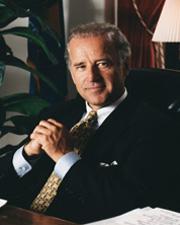 Sen. Joseph R. Biden Jr. (D-DE)
Sen. Joseph R. Biden Jr. (D-DE)Submitted June 4, 2008
Legislative Activity
Stay on top of the latest movement without scrolling through every action
Floor
Latest Action
Considered by Senate. (consideration: CR S5333)
June 6, 2008
View full timeline
Floor
Considered by Senate. (consideration: CR S5333)
June 6, 2008
Floor
Senate amendment submitted
June 4, 2008
Floor
Senate amendment proposed (on the floor): Amendment SA 4826 proposed by Senator Reid for Senator Biden to Amendment SA 4825.(consideration: CR S5017; text: CR S5017)
June 4, 2008
Floor
Amendment SA 4826 proposed by Senator Reid for Senator Biden to Amendment SA 4825. (consideration: CR S5017; text: CR S5017) To express the sense of the Senate that the United States should address global climate change through the negotiation of fair and effective international commitments.
June 4, 2008
Amendments
1 amendmentOffered to this amendment
Amendments
1 amendmentOffered to this amendment
Text
Proposed
LIEBERMAN-WARNER CLIMATE SECURITY ACT OF 2008

Mr. REID. Mr. President, I ask unanimous consent that the motion to
proceed to S. 3036 be agreed to, and the motion to reconsider be laid
on the table.
The PRESIDING OFFICER (Mr. Menendez). Is there objection?
Mr. McCONNELL. Reserving the right to object--I withhold.
The PRESIDING OFFICER. Without objection, it is so ordered.
The clerk will read the bill by title.
The assistant legislative clerk read as follows:

A bill (S. 3036) bill to direct the administrator of the
Environmental Protection Agency to establish programs to
decrease emissions of greenhouse gases, and for other
purposes.

Amendment No. 4825

(Purpose: In the nature of a substitute)

Mr. REID. Mr. President, I send the Boxer substitute amendment to the
desk.
The PRESIDING OFFICER. The clerk will report.
The assistant legislative clerk read as follows:

The Senator from Nevada [Mr. Reid], for Mrs. Boxer,
proposes an amendment numbered 4825.

Mr. REID. Mr. President, I ask unanimous consent that reading of the
amendment be dispensed with.
Mr. McCONNELL. I object.
The PRESIDING OFFICER. Objection is heard.
The clerk will continue to read.
The assistant legislative clerk continued with the reading of the
amendment.
Mr. REID. Mr. President, I ask unanimous consent that further reading
of the amendment be waived.
Mr. McCONNELL. I object.
The PRESIDING OFFICER. Objection is heard.
The clerk will continue to read.
The assistant legislative clerk continued with the reading of the
amendment.
Mrs. BOXER. Mr. President, I have a unanimous-consent request.
The PRESIDING OFFICER. The Senator from California.
Mrs. BOXER. Mr. President, in order to debate global warming
legislation to get us to lower gas prices, I ask unanimous consent that
reading of the amendment be dispensed with so we can get back to the
business of the Senate.
The PRESIDING OFFICER. Is there objection?
Mr. CORNYN. Reserving the right to object, this is a brand new
substitute bill comprised of 491 pages that very few people have even
had a chance to see. I think this is an opportunity for us to learn
what is actually in the legislation so that we can do our job and
consider it and vote accordingly.
I do object.
The PRESIDING OFFICER. Objection is heard.
Mrs. BOXER. I reiterate my request because the reason given by my
friend is wrong. We have had a summary available for 2 weeks.
I ask unanimous consent that reading of the amendment be dispensed
with.
Mr. CORNYN. Regular order, Mr. President.
The PRESIDING OFFICER. The clerk will continue the reading of the
amendment.
The assistant legislative clerk continued with the reading of the
amendment.
The PRESIDING OFFICER (Mrs. McCaskill). The Senator from Connecticut.
Mr. LIEBERMAN. Madam President, in order to proceed with this piece
of legislation which would reduce carbon pollution that causes global
warming, I ask unanimous consent to dispense with further reading of
the bill.
The PRESIDING OFFICER. Is there objection?
Mr. ALLARD. I object.
The PRESIDING OFFICER. Objection is heard.
The clerk will continue the reading of the amendment.
The journal clerk continued with the reading of the amendment.
The PRESIDING OFFICER. The Senator from California.
Mrs. BOXER. Madam President, in order to continue with this
tripartisan legislation which is agreed to by an Independent,
Republican, and a Democrat, which will save the planet from the ravages
of carbon pollution and global warming and make us energy independent,
I ask unanimous consent that further reading of the bill be dispensed
with.
The PRESIDING OFFICER (Mr. Schumer). Is there objection?
Mr. ALLARD. Mr. President, I object.
The PRESIDING OFFICER. Objection is heard.
The clerk will continue the reading of the amendment.
The assistant journal clerk continued with the reading of the
amendment.
(The amendment as read in full is printed in today's Record under
``Text of Amendments.'')
Mr. SALAZAR. Addressed the Chair.
The PRESIDING OFFICER (Ms. Cantwell). The Senator from Colorado.
Mr. SALAZAR. Madam President, given the lateness of the hour and the
hard work of all our staff today, I ask unanimous consent that further
reading of the amendment be waived.
The PRESIDING OFFICER. Is there objection?
Mr. CORKER. I object, Madam President.
The PRESIDING OFFICER. Objection is heard. The clerk will continue
reading.
Mr. SALAZAR. Madam President, parliamentary inquiry.
The PRESIDING OFFICER. The Senator from Colorado.
Mr. SALAZAR. Madam President, would it be in order for this Senator
from Colorado to ask a question of the Senator from Tennessee?
Mr. CORKER. Madam President, regular order, if we could.
The PRESIDING OFFICER. Regular order is the reading of the amendment.
The clerk will read the amendment.
The assistant Parliamentarian (Leigh Hildebrand) continued with the
reading of the amendment.
The PRESIDING OFFICER (Mr. Salazar). The Senator from Nevada, the
majority leader.
Mr. REID. Mr. President, the American public has had the opportunity
for the last 8 hours to watch what is wrong with the Republican
minority. No wonder an election in a heavily Republican House district,
the seat of the former Speaker of the House of Representatives, Dennis
Hastert, goes Democratic big time; a House seat in a special election
in Louisiana, which has been Republican for a long period of time, went
Democratic; and a seat in the State of Mississippi, in a special
election, went Democratic. All you have to do is look at the picture of
what has been going on here today to understand why.
It seems the Republican minority wants to do anything they can to
maintain the status quo. They do not want legislation, and they have
proven that time and time again. I want everyone to understand that
because of the Republicans, we are going to have to have a vote. In a
short time, I am going to call a live quorum and people are going to
have to take off their pajamas, turn off their TV sets and head for the
Capitol, and they should do that because that is what we are going to
have, as the terminology is here, in a few minutes.
Now, I want also people to kind of get the other picture. The
Thursday before our recess, 13 days ago, we were working on a package
of nominations. I worked with the Chief of Staff of the President of
the United States, Josh Bolten. We cleared a lot of names. The vast
majority of them, 80-some, were Republicans, Republican nominees. There
were a handful of Democrats, five--I don't know how many. It was all
done. I thought we had worked this out with the Chief of Staff, the
President's Chief of Staff. But lo and behold, at the last minute, no.
So I thought, well, we would start early this time. So a couple days
ago I started working again with Josh Bolten, and the last couple days,
in fact 3 days, we have been working. He has had somebody work with my
Chief of Staff and my appointments person, and I thought we

[[Page S5015]]

were making a lot of headway. We did another deal. We learned at the
last minute that the Republicans don't want it. They do not want their
own people, one of whom was a Secretary of the Cabinet.
So this is the stall that is taking place, for reasons that are--
well, the American people can see.
I suggest the absence of a quorum.
The PRESIDING OFFICER. The clerk will call the roll to ascertain the
presence of a quorum.
The assistant legislative clerk proceeded to call the roll, and the
following Senators entered the Chamber and answered to their names.

[Quorum No. 2 Leg.]

Boxer
Reid
Salazar
The PRESIDING OFFICER. A quorum is not present.
Mr. REID. Mr. President, I move to instruct the Sergeant at Arms to
request the presence of absent Senators, and I ask for the yeas and
nays.
The PRESIDING OFFICER. Is there a sufficient second?
There is a sufficient second.
The question is on agreeing to the motion. The yeas and nays have
been ordered, and the clerk will call the roll.
The legislative clerk called the roll.
Mr. DURBIN. I announce that the Senator from Hawaii (Mr. Akaka), the
Senator from Indiana (Mr. Bayh), the Senator from Delaware (Mr. Biden),
the Senator from New Mexico (Mr. Bingaman), the Senator from West
Virginia (Mr. Byrd), the Senator from Maryland (Mr. Cardin), the
Senator from Delaware (Mr. Carper), the Senator from New York (Mrs.
Clinton), the Senator from California (Mrs. Feinstein), the Senator
from Hawaii (Mr. Inouye), the Senator from Massachusetts (Mr. Kennedy),
the Senator from Louisiana (Ms. Landrieu), the Senator from New Jersey
(Mr. Lautenberg), the Senator from New Jersey (Mr. Menendez), the
Senator from Maryland (Ms. Mikulski), the Senator from Washington (Mrs.
Murray), the Senator from Florida (Mr. Nelson), the Senator from
Illinois (Mr. Obama), the Senator from West Virginia (Mr. Rockefeller),
the Senator from Michigan (Ms. Stabenow), the Senator from Virginia
(Mr. Webb), the Senator from Rhode Island (Mr. Whitehouse), and the
Senator from Oregon (Mr. Wyden) are necessarily absent.
Mr. McCONNELL. The following Senators are necessarily absent: the
Senator from Tennessee (Mr. Alexander), the Senator from Utah (Mr.
Bennett), the Senator from Missouri (Mr. Bond), the Senator from Kansas
(Mr. Brownback), the Senator from Kentucky (Mr. Bunning), the Senator
from Mississippi (Mr. Cochran), the Senator from Texas (Mr. Cornyn),
the Senator from Idaho (Mr. Crapo), the Senator from New Mexico (Mr.
Domenici), the Senator from Nevada (Mr. Ensign), the Senator from New
Hampshire (Mr. Gregg), the Senator from Nebraska (Mr. Hagel), the
Senator from Utah (Mr. Hatch), the Senator from Georgia (Mr. Isakson),
the Senator from Arizona (Mr. Kyl), the Senator from Arizona (Mr.
McCain), the Senator from Kansas (Mr. Roberts), the Senator from
Alabama (Mr. Shelby), the Senator from Oregon (Mr. Smith), the Senator
from Pennsylvania (Mr. Specter), and the Senator from Alaska (Mr.
Stevens).
Further, if present and voting, the Senator from Tennessee (Mr.
alexander) would have voted ``no.''
The PRESIDING OFFICER (Mr. Casey). Are there any other Senators in
the Chamber desiring to vote?
The result was announced--yeas 27, nays 28, as follows:

[Rollcall Vote No. 143 Leg.]

YEAS--27

Baucus
Boxer
Brown
Cantwell
Casey
Dodd
Dorgan
Durbin
Feingold
Harkin
Johnson
Kerry
Klobuchar
Kohl
Leahy
Levin
Lieberman
Lincoln
McCaskill
Nelson (NE)
Pryor
Reed
Reid
Salazar
Sanders
Schumer
Tester

NAYS--28

Allard
Barrasso
Burr
Chambliss
Coburn
Coleman
Collins
Corker
Craig
DeMint
Dole
Enzi
Graham
Grassley
Hutchison
Inhofe
Lugar
Martinez
McConnell
Murkowski
Sessions
Snowe
Sununu
Thune
Vitter
Voinovich
Warner
Wicker

NOT VOTING--45

Akaka
Alexander
Bayh
Bennett
Biden
Bingaman
Bond
Brownback
Bunning
Byrd
Cardin
Carper
Clinton
Cochran
Conrad
Cornyn
Crapo
Domenici
Ensign
Feinstein
Gregg
Hagel
Hatch
Inouye
Isakson
Kennedy
Kyl
Landrieu
Lautenberg
McCain
Menendez
Mikulski
Murray
Nelson (FL)
Obama
Roberts
Rockefeller
Shelby
Smith
Specter
Stabenow
Stevens
Webb
Whitehouse
Wyden
The motion was rejected.
The PRESIDING OFFICER. A quorum is present.
The majority leader is recognized.
Mr. REID. Mr. President, I ask my colleagues to be patient for a
short time.
First of all, these valiant people who are sitting in front of the
Presiding Officer have been required today to read for more than 8
hours--total, without any breaks, 8 hours--for no reason other than the
Republicans are trying to maintain the status quo in everything.
Talk about this picture: reading an amendment that is done extremely
rarely. We had our staff check, and it is done every decade or so. This
was a bill of some 500 pages. The bill has been available for people to
read long before today. The substitute amendment has been ready long
before today.
As I said earlier this week, manmade pollution is causing the Earth
to warm. The science is crystal clear. We have for more than 100 years
been taking carbon out of the Earth and putting it into the sky. It is
causing our Earth to have a fever. Our Earth is sick, and we must look
at the sickness and try to do something about it.
The warming is clear. It has already harmed our environment and our
economy. We know that. The scientists know that. You can see it all
around us. It is causing more frequent and more intense drought,
wildfires, and floods.
Western wildfires. I look around this room, and I see Senator Baucus,
I see the Senator from California and the Senator from Washington. In
the last 30 years, 72 more days of wildfire season--72 more days--
lightning striking in those 72 days. More fires. Fires are more
intense.
Floods, tornadoes. At least 110 people have been killed in the United
States so far this year by tornadoes, putting this year on track to be
by far the deadliest year in the history of tornado deaths. The average
for recent years is 62 tornado fatalities for the entire year. We are
just completing May, and we are already at 110 deaths. January had 84
tornadoes. The 3-year average for the month is 34. It is approximately
three times the average. February had 148 deaths compared to a 3-year
average of only 25. Multiply that, Mr. President. That does not include
the records that are unverified for March, April, and May. One tornado
season does not make a long-term climate trend. We understand that. But
it should give Senators pause and should make them want to limit these
kinds of global warming risks.
Global warming is easily the gravest long-term challenge that our
country and the world faces. It is the most critical issue of our time.
The American people have a right to expect their legislature, their
Congress to address this issue. That is why we decided a number of
months ago that the Senate should take up climate change on June 2. We
did so to let the American people know that the Senate was prepared to
act, and put all Members of this body on notice we were going to act.
Senators should begin preparing for this important debate, is what we
said, so we could hit the ground running and truly legislate on this
most important issue.
Late last month, I sought permission to proceed to the climate change
bill and was informed by the Republicans that they would object to this
request; and they objected. Had the minority, the Republicans, not
objected last month, the Senate could already be in its third day of
legislating on this important bill.
But where do we find ourselves? We find ourselves confronting an
orchestrated effort by the Republican leader to delay and obstruct. We
have seen this play a record number of times before this body. In 10
months we all know they broke the 2-year filibuster record.

[[Page S5016]]

We are now, I believe, at 72 filibusters for this Congress. There is
one difference in this instance. We have actually been provided with a
copy of a page from the Republican playbook and how they intend to
thwart this body from acting on this important legislation. This was
provided to us by a lobbyist involved in Republican strategy meetings.
Let me read verbatim what this e-mail says. It is too bad the press
galleries are bare because it is almost midnight:

The thinking now is to still use as much of the 30 hours
post-cloture on the motion to proceed for debate on
thematically-grouped amendments. The goal is for a theme
(example: climate bill equals higher gas prices) each day,
and the focus is much more on making political points than in
amending the bill, changing the baseline text for any future
debate or affecting policy.

Let me repeat the last sentence:

The goal is for a theme (example: climate bill equals
higher gas prices) each day, and the focus is much more on
making political points than in amending the bill. . . .

That is what they say. So this Republican strategy memo could not be
more clear. The Republican plan for dealing with the greatest challenge
facing this world and this Nation is more about making political points
than legislating. Those are not my words; that is what they say in
their memo.
But there is more to this cynical strategy that is completely out of
touch with this body's obligations and the American people's
expectations. Continuing from a Republican strategy memo, I will quote:

GOP anticipates a struggle over which amendments are
debated and eventually finger-pointing over blame for demise
of the bill. In the GOP view, this will take at least the
rest of this week, and hopefully into next week.

Mr. President, you could not make anything up more cynical. This is
the truth and they say truth is stranger than fiction, and this
certainly is. They go on to say:

At some point, Reid will have to move from the bill, and
GOP plans to oppose UC and potentially force debate on
debatable motions, and vote against cloture on any such
motion. While Reid will eventually be able to circumvent by
moving to a privileged vehicle or using some other
parliamentary maneuver, the bottom line is that the GOP--

The Grand Old Party--I bet President Abraham Lincoln would be happy
about this one--

very much wants to have this fight, engage in it for a
prolonged period, and then make it as difficult as possible
to move off the bill.

Again, as they say, they want to make political points. Anybody
watching this debate will know the Republicans have fully executed this
strategy. What did they do today to execute in making political points?
That is some political point. It is routine here to not read the
amendments, but they said ``we object.'' So we proceeded to have the
amendment read. They executed this strategy and they have done it well,
and they tried to make political points. I have no reason to doubt that
they are prepared to go the final mile to stretch out the final
consideration of this bill before finally killing it.
In case anybody needed more proof about their desire, I offered, with
our staffs, several consents that would have stopped the obstruction we
have witnessed in the past few days. My consents would have allowed the
Senate to move forward to complete action. Isn't that an interesting
concept? A bill is offered--and I have been around here a long time,
and some people have been here longer than I have, but I defy anyone to
say they have ever laid down a perfect piece of legislation.
That is why we have the amendment process. A bill was laid down and
we thought there should be an opportunity to try to make the bill
better. That certainly wasn't what they had in mind. In keeping with
the strategy spelled out in this Republican memo, their response was
that we are not going to allow this; we are going to object, object,
and object. Their obstructionism is disappointing to me personally and,
obviously, to the American people.
I repeat what I said earlier this evening. Is it any wonder that
Speaker Dennis Hastert's long-time Republican district, in a special
election, went Democratic? Is it any wonder a long-time Republican
district in Louisiana went Democratic? Is there any reason to not
understand why the special election in Mississippi went Democratic? Of
course not, because the American people are seeing what is going on
here. The American people want us to do things.
Do you know what the Republicans get glee out of doing? They are
happy that our approval rating is about the same as the President's.
Isn't it wonderful that they are a part of this body, 49 of them, and
there are 51 of us, and they are boasting about the fact that the
people don't think much of Congress. Why don't they? Look at this
Republican memo. That should give you some inclination as to why the
American people feel the way they do.
This important legislation has been worked on very hard on a
bipartisan basis. Is it perfect? Of course not. Shouldn't we be able to
move to try to amend this and have the old-fashioned debate to move
forward on it? I commend Senators Boxer, Warner, and Lieberman. They
have worked so hard, and I appreciate their caring about this issue.
At this point, I think we have some very serious problems here. I
will go through this. We have been told what the answer is going to be.
Specifically, to every request that we have given to staff as to how to
proceed on this bill, there is an objection.
I want everybody here to know what I have gone through a little bit.
Listen to this. The Thursday before we went out, I worked very long and
hard and spent hours working with the President's Chief of Staff, to
work out some way to move forward on these nominations. We had more
than 80 Republicans and a handful of Democrats. I thought if you have
the President's Chief of Staff working on something for several days,
that should be sufficient. But guess what happened. I am here late at
night with loyal Lula, and everybody else is gone. We asked unanimous
consent and there was an objection. I called the Chief of Staff and
said, ``What's this all about?'' Nothing happened. Remember, one of
them--I personally asked Chairman Dodd to do a special meeting to get
the Secretary of Housing out of the committee. He held a special
meeting in the President's room back there. We did that for the
President of the United States, so he would have a Cabinet officer in
Housing. Today was the culmination of 3 days of work with the
President's Chief of Staff on nominations. We added more people than
they requested. We only have 5; they are way over 80 now. I thought we
had it all worked out. We called Joe Biden, who had a hold on somebody.
Joe, the man that he is--always willing to go the extra mile to work
things out--said go ahead. The person was Jim Glassman. Some of us know
who Jim Glassman is--not exactly a bipartisan person who has been
around Washington. He was going to replace Karen Hughes in that
position in the State Department. We worked very hard to get that
completed and released. The reason we worked so hard is Mr. Bolten said
they would appreciate us doing this because if we don't do it tonight,
he is going to withdraw. We went the extra mile and worked for a couple
of hours getting him cleared. We thought we had a deal. I give it to
Lula Davis, the secretary of the majority, and she submits it to the
minority and we wait all day.
Listen to this. They have rejected it. Guess what. Out of nowhere,
they want three district court judges. I have not talked to the
chairman of the Judiciary Committee. Senator Leahy has always been good
on district court judges. But they want three district court judges,
and I had never even heard their names. How unfair could they be?
So again, Mr. President, wherever you are--probably sleeping, as you
should be--you are not going to have a Secretary of Housing because the
rules around here seem to be only for one side. I worked very hard to
try to get this done. We are going to continue to try for some basic
fairness. We have an obligation ourselves. All of the nominations don't
come from the White House. We have nominations ourselves to fill
various positions. We will have a new President in 7 months. I have the
obligation and the honor of submitting names to the White House. We
have some people we wish to get, too. It is not just a one-way street,
even though they may think it is.
I think that what we have seen here is outlandish, unfair,
unreasonable, and

[[Page S5017]]

not in keeping with this body. I have been here a while, and we work on
comity. We work together. That isn't the way it is now. I understand
how upset the Republicans were in November of 2006 when we got the
majority. Quite frankly, Senator Schumer and I worked closely, and we
thought we might be able to get the majority, but we weren't certain.
We got the majority and we were happy--but it is a slim majority. My
friends on the Republican side have to get over it. We are in the
majority, as slim as it might be. For the next 7 months, I am committed
and I will try to work with the President. It has been difficult to do
for 7 years and 5 months, but I am never one who is without patience. I
will continue to try to move forward on nominations and anything else
we can work on together.
Mr. President, I ask for the yeas and nays on the substitute.
The PRESIDING OFFICER (Mr. Tester). Is there a sufficient second?
There is a sufficient second.
The yeas and nays were ordered.

Amendment No. 4826 to Amendment No. 4825

Mr. REID. Mr. President, I have a perfecting amendment to the
substitute at the desk and I ask for its consideration.
The PRESIDING OFFICER. The clerk will report.
The legislative clerk read as follows:

The Senator from Nevada [Mr. Reid] proposes an amendment
numbered 4826 to amendment No. 4825.

Mr. REID. Mr. President, I ask unanimous consent that reading of the
amendment be dispensed with.
The PRESIDING OFFICER. Without objection, it is so ordered.
The amendment is as follows:

(Purpose: To express the sense of the Senate that the United States
should address global climate change through the negotiation of fair
and effective international commitments)

At the end of title XIII, insert the following:

SEC. 1334. SENSE OF SENATE REGARDING INTERNATIONAL
NEGOTIATIONS TO ADDRESS GLOBAL CLIMATE CHANGE.

(a) Findings.--The Senate makes the following findings:
(1) There is a scientific consensus, as established by the
Intergovernmental Panel on Climate Change and confirmed by
the National Academy of Sciences, that the continued buildup
of anthropogenic greenhouse gases in the atmosphere threatens
the stability of the global climate.
(2) The 2007 Fourth Assessment Report of the
Intergovernmental Panel on Climate Change concluded that most
of the global warming observed since the mid-20th century is
very likely due to anthropogenic greenhouse gas emissions and
that anthropogenic warming is strongly linked to many
observed physical and biological impacts.
(3) There are significant long-term risks to the economy
and the environment of the United States from the temperature
increases and climatic disruptions that are projected to
result from increased greenhouse gas concentrations.
(4) The potential impacts of global climate change,
including long-term drought, famine, mass migration, and
abrupt climatic shifts, may lead to international tensions
and instability in regions affected and, therefore, have
implications for the national security interests of the
United States.
(5) The United States has the largest economy in the world
and is also the largest historical emitter of greenhouse
gases.
(6) The greenhouse gas emissions of the United States are
projected to continue to rise.
(7) The greenhouse gas emissions of some developing
countries are rising more rapidly than the emissions of the
United States and will soon surpass the greenhouse gas
emissions of the United States and other developed countries.
(8) Reducing greenhouse gas emissions to the levels
necessary to avoid serious climatic disruption requires the
introduction of new energy technologies and other climate-
friendly technologies, the use of which results in low or no
emissions of greenhouse gases or in the capture and storage
of greenhouse gases.
(9) The 2006 Stern Review on the Economics of Climate
Change commissioned by the United Kingdom and the 2008 World
Economic Outlook from the International Monetary Fund each
concluded that the economic costs of addressing climate
change are limited.
(10) The development and sale of climate-friendly
technologies in the United States and internationally present
economic opportunities for workers and businesses in the
United States.
(11) Climate-friendly technologies can improve air quality
by reducing harmful pollutants from stationary and mobile
sources and can enhance energy security by reducing reliance
on imported oil, diversifying energy sources, and reducing
the vulnerability of energy delivery infrastructure.
(12) Other industrialized countries are undertaking
measures to reduce greenhouse gas emissions, which provides
the industries in those countries with a competitive
advantage in the growing global market for climate-friendly
technologies.
(13) Efforts to limit emissions growth in developing
countries in a manner that is consistent with the development
needs of those countries could establish significant markets
for climate-friendly technologies and contribute to
international efforts to address climate change.
(14) The national security of the United States will
increasingly depend on the deployment of diplomatic,
military, scientific, and economic resources for solving the
problem of the overreliance of the United States and the
world on high-carbon energy.
(15) The United States is a party to the United Nations
Framework Convention on Climate Change, done at New York May
9, 1992, and entered into force March 21, 1994 (in this
preamble referred to as the ``Convention'').
(16) The Convention sets a long-term objective of
stabilizing greenhouse gas concentrations in the atmosphere
at a level that would prevent dangerous anthropogenic
interference with the climate system.
(17) The Convention establishes that parties bear ``common
but differentiated responsibilities'' for efforts to achieve
the objective of stabilizing greenhouse gas concentrations.
(18) At the December 2007 United Nations Climate Change
Conference in Bali, the United States and other parties to
the Convention adopted the Bali Action Plan with the aim of
reaching a new global agreement in 2009.
(19) The Bali Action Plan calls for a shared vision on
long-term cooperative action, increased mitigation efforts
from developed and developing countries that are measurable,
reportable, and verifiable, and support for developing
countries in addressing technology transfers, adaptation,
financing, deforestation, and capacity-building.
(20) The Major Economies Process on Energy Security and
Climate Change, initiated by President George W. Bush, seeks
a consensus among the countries with the world's major
economies on how those countries can contribute to a new
agreement under the Convention.
(21) In April 2008, President Bush called for a ``binding
international agreement'' with participation by all countries
with major economies in ``goals and policies that reflect
their unique energy resources and economic circumstances''.
(22) An effective global effort to address climate change
must provide for commitments and actions by all countries
that are major emitters of greenhouse gases, developed and
developing alike, and the widely varying circumstances among
developed and developing countries may require that such
commitments and actions vary.
(23) The latest scientific evidence suggests that
anthropogenic climate change is increasing and the United
States has supported the goal of achieving a new
international agreement during 2009, both lending urgency to
the need for renewed United States leadership in the effort
to counter global climate change.
(b) Sense of the Senate.--It is the sense of the Senate
that--
(1) the United States should act to reduce the health,
environmental, economic, and national security risks posed by
global climate change and to foster sustained economic growth
through a new generation of technologies by participating in
negotiations under the United Nations Framework Convention on
Climate Change, done at New York May 9, 1992, and entered
into force March 21, 1994, and leading efforts in other
international fora, with the objective of securing United
States participation in binding agreements, consistent with
the Bali Action Plan, that--
(A) advance and protect the economic and national security
interests of the United States;
(B) establish mitigation commitments by all countries that
are major emitters of greenhouse gases, consistent with the
principle of common but differentiated responsibilities;
(C) establish flexible international mechanisms to minimize
the cost of efforts by participating countries; and
(D) achieve a significant long-term reduction in global
greenhouse gas emissions; and
(2) the President should support the establishment of a
bipartisan Senate observer group, the members of which should
be designated by the chairman and ranking member of the
Committee on Foreign Relations of the Senate, to--
(A) monitor any international negotiations on climate
change; and
(B) ensure that the responsibility of the Senate under
article II, section 2 of the Constitution of the United
States to provide advice and consent to the President with
respect to treaties be carried out in a manner to facilitate
timely consideration of any applicable treaty submitted to
the Senate.

Mr. REID. Mr. President, I ask for the yeas and nays.
The PRESIDING OFFICER. Is there a sufficient second?
There is a sufficient second.
The yeas and nays were ordered.

Amendment No. 4827 to Amendment No. 4826

Mr. REID. Mr. President, I have a second-degree amendment at the
desk, and I ask for its consideration.

[[Page S5018]]

The PRESIDING OFFICER. The clerk will report.
The legislative clerk read as follows:

The Senator from Nevada [Mr. Reid] proposes an amendment
numbered 4827 to amendment No. 4826.

Mr. REID. Mr. President, I ask unanimous consent that reading of the
amendment be dispensed with.
The PRESIDING OFFICER. Without objection, it is so ordered.
The amendment is as follows:

(Purpose: To express the sense of the Senate that the United States
should address global climate change through the negotiation of fair
and effective international commitments)

For the amendment, strike all after the word ``SEC'' on
line 2 and insert the following:

1334. SENSE OF SENATE REGARDING INTERNATIONAL NEGOTIATIONS TO
ADDRESS GLOBAL CLIMATE CHANGE.

(a) Findings.--The Senate makes the following findings:
(1) There is a scientific consensus, as established by the
Intergovernmental Panel on Climate Change and confirmed by
the National Academy of Sciences, that the continued buildup
of anthropogenic greenhouse gases in the atmosphere threatens
the stability of the global climate.
(2) The 2007 Fourth Assessment Report of the
Intergovernmental Panel on Climate Change concluded that most
of the global warming observed since the mid-20th century is
very likely due to anthropogenic greenhouse gas emissions and
that anthropogenic warming is strongly linked to many
observed physical and biological impacts.
(3) There are significant long-term risks to the economy
and the environment of the United States from the temperature
increases and climatic disruptions that are projected to
result from increased greenhouse gas concentrations.
(4) The potential impacts of global climate change,
including long-term drought, famine, mass migration, and
abrupt climatic shifts, may lead to international tensions
and instability in regions affected and, therefore, have
implications for the national security interests of the
United States.
(5) The United States has the largest economy in the world
and is also the largest historical emitter of greenhouse
gases.
(6) The greenhouse gas emissions of the United States are
projected to continue to rise.
(7) The greenhouse gas emissions of some developing
countries are rising more rapidly than the emissions of the
United States and will soon surpass the greenhouse gas
emissions of the United States and other developed countries.
(8) Reducing greenhouse gas emissions to the levels
necessary to avoid serious climatic disruption requires the
introduction of new energy technologies and other climate-
friendly technologies, the use of which results in low or no
emissions of greenhouse gases or in the capture and storage
of greenhouse gases.
(9) The 2006 Stern Review on the Economics of Climate
Change commissioned by the United Kingdom and the 2008 World
Economic Outlook from the International Monetary Fund each
concluded that the economic costs of addressing climate
change are limited.
(10) The development and sale of climate-friendly
technologies in the United States and internationally present
economic opportunities for workers and businesses in the
United States.
(11) Climate-friendly technologies can improve air quality
by reducing harmful pollutants from stationary and mobile
sources and can enhance energy security by reducing reliance
on imported oil, diversifying energy sources, and reducing
the vulnerability of energy delivery infrastructure.
(12) Other industrialized countries are undertaking
measures to reduce greenhouse gas emissions, which provides
the industries in those countries with a competitive
advantage in the growing global market for climate-friendly
technologies.
(13) Efforts to limit emissions growth in developing
countries in a manner that is consistent with the development
needs of those countries could establish significant markets
for climate-friendly technologies and contribute to
international efforts to address climate change.
(14) The national security of the United States will
increasingly depend on the deployment of diplomatic,
military, scientific, and economic resources for solving the
problem of the overreliance of the United States and the
world on high-carbon energy.
(15) The United States is a party to the United Nations
Framework Convention on Climate Change, done at New York May
9, 1992, and entered into force March 21, 1994 (in this
preamble referred to as the ``Convention'').
(16) The Convention sets a long-term objective of
stabilizing greenhouse gas concentrations in the atmosphere
at a level that would prevent dangerous anthropogenic
interference with the climate system.
(17) The Convention establishes that parties bear ``common
but differentiated responsibilities'' for efforts to achieve
the objective of stabilizing greenhouse gas concentrations.
(18) At the December 2007 United Nations Climate Change
Conference in Bali, the United States and other parties to
the Convention adopted the Bali Action Plan with the aim of
reaching a new global agreement in 2009.
(19) The Bali Action Plan calls for a shared vision on
long-term cooperative action, increased mitigation efforts
from developed and developing countries that are measurable,
reportable, and verifiable, and support for developing
countries in addressing technology transfers, adaptation,
financing, deforestation, and capacity-building.
(20) The Major Economies Process on Energy Security and
Climate Change, initiated by President George W. Bush, seeks
a consensus among the countries with the world's major
economies on how those countries can contribute to a new
agreement under the Convention.
(21) In April 2008, President Bush called for a ``binding
international agreement'' with participation by all countries
with major economies in ``goals and policies that reflect
their unique energy resources and economic circumstances''.
(22) An effective global effort to address climate change
must provide for commitments and actions by all countries
that are major emitters of greenhouse gases, developed and
developing alike, and the widely varying circumstances among
developed and developing countries may require that such
commitments and actions vary.
(23) The latest scientific evidence suggests that
anthropogenic climate change is increasing and the United
States has supported the goal of achieving a new
international agreement during 2009, both lending urgency to
the need for renewed United States leadership in the effort
to counter global climate change.
(b) Sense of the Senate.--It is the sense of the Senate
that--
(1) the United States should act to reduce the health,
environmental, economic, and national security risks posed by
global climate change and to foster sustained economic growth
through a new generation of technologies by participating in
negotiations under the United Nations Framework Convention on
Climate Change, done at New York May 9, 1992, and entered
into force March 21, 1994, and leading efforts in other
international fora, with the objective of securing United
States participation in binding agreements, consistent with
the Bali Action Plan, that--
(A) advance and protect the economic and national security
interests of the United States;
(B) establish mitigation commitments by all countries that
are major emitters of greenhouse gases, consistent with the
principle of common but differentiated responsibilities;
(C) establish flexible international mechanisms to minimize
the cost of efforts by participating countries; and
(D) achieve a significant long-term reduction in global
greenhouse gas emissions; and
(2) the President should support the establishment of a
bipartisan Senate observer group, the members of which should
be designated by the chairman and ranking member of the
Committee on Foreign Relations of the Senate, to--
(A) monitor any international negotiations on climate
change; and
(B) ensure that the responsibility of the Senate under
article II, section 2 of the Constitution of the United
States to provide advice and consent to the President with
respect to treaties be carried out in a manner to facilitate
timely consideration of any applicable treaty submitted to
the Senate.
The provisions of this section shall become effective in 7
days after enactment.

Amendment No. 4828

Mr. REID. Mr. President, I have an amendment at the desk and I ask
for its consideration.
The PRESIDING OFFICER. The clerk will report.
The legislative clerk read as follows:

The Senator from Nevada [Mr. Reid] proposes an amendment
numbered 4828 to the language proposed to be stricken by
amendment No. 4825.

Mr. REID. Mr. President, I ask unanimous consent that reading of the
amendment be dispensed with.
The PRESIDING OFFICER. Without objection, it is so ordered.
The amendment is as follows:

At the end of the bill, add the following:
The provision of this Act shall become effective 5 days
after enactment.

Mr. REID. Mr. President, I ask for the yeas and nays.
The PRESIDING OFFICER. Is there a sufficient second?
There is a sufficient second.
The yeas and nays were ordered.

Amendment No. 4829 to Amendment No. 4828

Mr. REID. Mr. President, I have a second-degree amendment at the
desk.
The PRESIDING OFFICER. The clerk will report.
The legislative clerk read as follows:

The Senator from Nevada [Mr. Reid] proposes an amendment
numbered 4829 to amendment No. 4828.

Mr. REID. I ask unanimous consent that reading of the amendment be
dispensed with.
The PRESIDING OFFICER. Without objection, it is so ordered.
The amendment is as follows:

In the amendment, strike ``5'' and insert ``4''.

[[Page S5019]]

Cloture Motion

Mr. REID. Mr. President, I have a cloture motion at the desk on the
substitute amendment, and I ask that it be stated.
The PRESIDING OFFICER. The cloture motion having been presented under
rule XXII, the Chair directs the clerk to read the motion.
The legislative clerk read as follows:

Cloture Motion

We, the undersigned Senators, in accordance with the
provisions of rule XXII of the Standing Rules of the Senate,
hereby move to bring to a close debate on the substitute
amendment No. 4825 to S. 3036, the Lieberman-Warner Climate
Security Act.
Barbara Boxer, John Warner, Joseph Lieberman, Tom Harkin,
Robert Menendez, Bill Nelson, Thomas R. Carper, Sheldon
Whitehouse, Charles E. Schumer, Frank R. Lautenberg,
Dianne Feinstein, Joseph R. Biden, Jr., John F. Kerry,
Robert P. Casey, Jr., Patrick J. Leahy, Richard Durbin,
Harry Reid.

Mr. REID. Mr. President, I ask that the mandatory quorum call be
waived.
The PRESIDING OFFICER. Without objection, it is so ordered.

Amendment No. 4830

Mr. REID. Mr. President, I move to commit the bill to the Environment
and Public Works Committee with instructions to report back forthwith
with an amendment.
The PRESIDING OFFICER. The clerk will report.
The legislative clerk read as follows:

The Senator from Nevada [Mr. Reid] moves to commit the bill
to the Environment and Public Works Committee, with
instructions to report back forthwith, with an amendment
numbered 4830.

Mr. REID. Mr. President, I ask unanimous consent that the reading of
the amendment be dispensed with.
The PRESIDING OFFICER. Without objection, it is so ordered.
The amendment is as follows:

At the end, insert the following:
This section shall become effective 3 days after enactment
of the bill.

Mr. REID. I ask for the yeas and nays.
The PRESIDING OFFICER. Is there a sufficient second?
There is a sufficient second.
The yeas and nays were ordered.

Amendment No. 4831

Mr. REID. Mr. President, I have an amendment to the instructions at
the desk and ask for its consideration.
The PRESIDING OFFICER. The clerk will report.
The legislative clerk read as follows:

The Senator from Nevada [Mr. Reid] proposes an amendment
numbered 4831 to the instructions of the motion to commit.

Mr. REID. I ask unanimous consent that the reading of the amendment
be dispensed with.
The PRESIDING OFFICER. Without objection, it is so ordered.
The amendment is as follows:

On line 1, strike ``3'' and insert ``2''.

Mr. REID. I ask for the yeas and nays.
The PRESIDING OFFICER. Is there a sufficient second?
There is a sufficient second.
The yeas and nays were ordered.

Amendment No. 4832 to Amendment No. 4831

Mr. REID. Mr. President, I have a second-degree amendment to the
instructions at the desk, and I ask for its consideration.
The PRESIDING OFFICER. The clerk will report.
The legislative clerk read as follows:

The Senator from Nevada [Mr. Reid] proposes an amendment
numbered 4832 to amendment No. 4831.

The amendment is as follows:

In the amendment strike ``2'' and insert ``1''.

Mr. FEINGOLD. Mr. President, I am pleased that the Senate is finally
debating legislation, S. 3036, addressing the serious problem of
climate change. For years, Congress and the White House have ignored or
downplayed the scientific consensus and failed to act on this pressing
issue. That delay is inexcusable.
The details of S. 3036 are as complicated as they are important, and,
given the potential implications for our economy, our energy policies
and our planet, we need to take the time to make sure we get them
right. A number of questions have been raised about elements of the
bill we are considering, and I look forward to considering amendments
to address some of these concerns. But one thing is clear, and that is
the need to establish a cap-and-trade program to reduce total domestic
greenhouse emissions.
To avoid the significant costs and consequences of climate change,
leading scientists inform us that we must stabilize global atmospheric
concentrations of greenhouse gases below 450 parts per million and
prevent the temperature from increasing above 3.6 degrees Fahrenheit
above pre-industrial levels. To achieve these reductions, I am a
cosponsor of legislation introduced by Senator Sanders, S. 309, that
would require that such emissions be reduced by 80 percent from 1990
levels by 2050.
I hope that this debate marks a new recognition of the need for
meaningful Federal action to address a threat that has been neglected
for far too long. Though the challenge before us is great, the cost of
inaction is even greater.
Mr. BAUCUS. Mr. President, the amendment I am filing to S. 3036, the
Lieberman-Warner Climate Security Act of 2008, is aimed at preserving
the legislative process. With an issue as complex and wide-ranging as
climate change, there are several committees within the Senate that not
only have an interest but a responsibility to deal with some aspects of
the cap-and-trade system we develop. This amendment will assure that
the appropriate committees of the Congress will have the opportunity to
consider those aspects of a cap-and-trade proposal within their
jurisdiction.
Mr. President, the amendment I am filing to S. 3036, the Lieberman-
Warner Climate Security Act of 2008, is designed to use the revenues
generated from the auctioning of the greenhouse gas allowances for tax
relief.
A cap-and-trade system proposed in this legislation will generate
billions of dollars. The Congressional Budget Office estimates that the
Boxer substitute will generate $902 billion in revenues during the
initial 10 years of the program.
As chairman of the Finance Committee, I have a responsibility to
direct Federal revenues to the purposes that the committee, initially,
and the Senate, ultimately, consider in the best interest of the
country.
Ms. COLLINS. Mr. President, I am proud to be an original cosponsor of
the Lieberman-Warner Climate Security Act. This bill addresses the most
significant environmental challenge facing our country. The scientific
evidence clearly demonstrates the human contribution to climate change.
According to recent reports from the Intergovernmental Panel on Climate
Change, increases in greenhouse gas emissions have already increased
global temperatures, and likely contributed to more extreme weather
events such as droughts and floods. These emissions will continue to
change the climate, causing warming in most regions of the world, and
likely causing more droughts, floods, and many other societal problems.
In the United States alone, emissions of the primary greenhouse gas,
carbon dioxide, have risen more than 20 percent since 1990. Climate
change is the most daunting environmental challenge we face and we must
develop reasonable solutions to reduce our greenhouse gas emissions.
I have observed in person the dramatic effects of climate change and
had the opportunity to be briefed by the preeminent experts. In 2006,
on a trip to Antarctica and New Zealand, for example, I learned more
about research by scientists at the University of Maine. Distinguished
National Academy of Sciences member George Denton took us to sites in
New Zealand that had been buried by massive glaciers at the beginning
of the 20th century, but are now ice free. Fifty percent of the
glaciers in New Zealand have melted since 1860--an event unprecedented
in the last 5,000 years. We could clearly see the glacial moraines,
where dirt and rocks had been pushed up in piles around the glacial
terminus in 1860. I thought it was remarkable to stand in a place where
some 140 years ago I would have been covered in tens or hundreds of
feet of ice, and then to look far up the mountainside and see how
distant the edge of the ice is today.
In Antarctica, I visited the Clean Air Station at the South Pole.
Being the farthest place on Earth from major emissions sources, the
South Pole has the cleanest air on Earth, and thus provides an
excellent place to measure the background quality of the Earth's air.

[[Page S5020]]

By analyzing carbon dioxide in ice cores, scientists have been able to
create reliable measurements of atmospheric carbon dioxide going back
over hundreds of thousands of years. The measurements of carbon dioxide
at Clean Air Station provide a reliable comparison to document the
impact of human activity on increasing carbon dioxide concentrations in
recent years compared to the last hundreds of thousands of years. The
melting is even more dramatic in the Northern Hemisphere. In the last
30 years, the Arctic has lost sea ice cover over an area 10 times as
large as the State of Maine, and at this rate will be ice free by 2050.
In 2005 in Barrow, AK, I witnessed a melting permafrost that is causing
telephone poles, planted years ago, to lean over for the first time
ever.
I also learned about the potential impact of sea level rise during my
trips to these regions. If the West Antarctica Ice Sheet were to
collapse, for example, sea level would rise 15 feet, flooding many
coastal cities. In their 2007 report, the IPCC found that due even just
to gradual melting of ice sheets, the average predicted sea level rise
by 2100 will be 1.6 feet, but could be as high as 1 meter, or almost 3
feet. In Maine a 1-meter rise in sea level will cause the loss of
20,000 acres of land, include 100 acres of downtown Portland--including
Commercial Street, a major business thoroughfare along the water.
Already in the past 94 years, a 7 inch rise in sea level has been
documented in Portland.
The time has come to take meaningful action to respond to climate
change. My colleagues worked tirelessly in recent months to develop
legislation that will preserve our environment for future generations
while providing reasonable emission reduction goals, offsets, and
incentives for the industries covered by the bill.
I applaud the leadership of my colleagues from Virginia, Connecticut,
and California in bringing this bill to the floor this week.

Rural Cooperatives

Mr. NELSON of Florida. Mr. President, I rise to engage in a colloquy
with my friend, the junior Senator from Connecticut. I was pleased to
cosponsor the Lieberman-Warner Climate Security Act shortly after it
was introduced last October, and I followed its progress through the
Environment and Public Works Committee with interest.
Today, the full Senate will begin considering that bill, and Senator
Boxer, the chairman of the Environment and Public Works Committee, will
offer a substitute amendment that she has worked out with Senators
Lieberman and Warner. I have a question for my friend from Connecticut
regarding this substitute amendment.
As the Senator from Connecticut knows, many rural electric
cooperatives in this country serve the role of local distribution
companies. The committee-reported version of the Climate Security Act
included rural electric cooperatives among the local distribution
companies that receive emission allowances over the entire 42-year life
of the program. In Florida, electric cooperatives serve more than
1,000,000 Floridians in 58 of our 67 counties. Most of these rural
electric cooperatives own fossil fuel-fired powerplants.
I was recently in Florida and held a series of town hall meetings
across the State and heard from rural cooperatives that are concerned
about the way emission allocations are distributed under the substitute
amendment.
Can my friend from Connecticut address their concern and explain how
allowances are available to rural cooperatives under the Boxer-
Lieberman-Warner substitute amendment?
Mr. LIEBERMAN. Mr. President, I thank my friend, the senior Senator
from Florida, for his question.
I would be glad to address the concern that rural electric
cooperatives in Florida have brought to him.
Let me reassure him, and them, that the substitute amendment does
include rural electric cooperatives among the local distribution
companies that receive free emission allowances over the entire 42-year
life of the program.
And let me reassure him, and them, that the substitute amendment does
include rural electric cooperatives among the fossil fuel-fired
powerplant owners that receive free emission allowances over a
transitional period that lasts from 2012 through 2030. As in the
committee-reported version of the bill, the separate allocation of free
emission allowances that is exclusive to rural electric cooperatives in
the substitute amendment is additional to the free emission allowances
that rural electric cooperatives receive as local distribution
companies and as fossil-fuel-powerplant owners. Under the substitute
amendment, as under the committee-reported bill, rural electric
cooperatives in Montana and Virginia are the only rural electric
cooperatives in the country that receive free emission allowances
solely from an exclusive allocation and not also from the bill's local-
distribution-company and fossil-fuel-powerplant allocations. Indeed,
there is a provision in the substitute amendment, section 552(c)(2)(C)
that would be mere surplussage if the case were otherwise.
Mr. NELSON of Florida. Mr. President, I thank my friend from
Connecticut for the clarification.

____________________