S.Amdt. 4908
What it does: Adds SEC. 1752. INTEGRATED AIR QUALITY PLANNING FOR THE ELECTRIC GENERATING SECTOR at the end of subtitle F of title XVII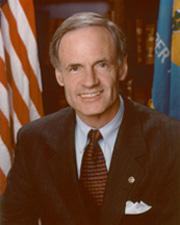 Sen. Thomas R. Carper (D-DE)
What it changes
1 change to S. 3036
Adds SEC. 1752. INTEGRATED AIR QUALITY PLANNING FOR THE ELECTRIC GENERATING SECTOR at the end of subtitle F of title XVII
Adds a sectionInserted: SEC. 1752. INTEGRATED AIR QUALITY PLANNING FOR THE ELECTRIC GENERATING SECTOR.
Inserted: The Clean Air Act (42 U.S.C. 7401 et seq.) is amended by adding at the end the following:
Inserted: "TITLE VII--INTEGRATED AIR QUALITY PLANNING FOR THE ELECTRIC GENERATING SECTOR
Inserted: "SEC. 701. DEFINITIONS.
Inserted: "In this title:
Inserted: "(1) Affected unit.--
Inserted: "(A) Mercury.--The term 'affected unit', with respect to mercury, means a coal-fired electric generating facility (including a cogeneration facility) that--
Inserted: "(i) on or after January 1, 1985, served as a generator with a nameplate capacity greater than 25 megawatts; and
Inserted: "(ii) produces electricity for sale.
Inserted: "(B) Nitrogen oxides.--The term 'affected unit', with respect to nitrogen oxides, means a fossil fuel-fired electric generating facility (including a cogeneration facility) that--
Inserted: "(i) on or after January 1, 1985, served as a generator with a nameplate capacity greater than 25 megawatts; and
Inserted: "(ii) produces electricity for sale.
Show 195 more inserted paragraphsShow less
Inserted: "(C) Sulfur dioxide.--The term 'affected unit', with respect to sulfur dioxide, has the meaning given the term in section 402.
Inserted: "(2) Cogeneration facility.--The term 'cogeneration facility' means a facility that--
Inserted: "(A) cogenerates--
Inserted: "(i) steam; and
Inserted: "(ii) electricity; and
Inserted: "(B) supplies, on a net annual basis, to any utility power distribution system for sale--
Inserted: "(i) more than \1/3\ of the potential electric output capacity of the facility; and
Inserted: "(ii) more than 219,000 megawatt-hours of electrical output.
Inserted: "(3) Fossil fuel-fired.--The term 'fossil fuel-fired', with respect to an electric generating facility, means the combustion of fossil fuel by the electric generating facility, alone or in combination with any other fuel, in any case in which the fossil fuel combusted comprises, or is projected to comprise, more than 20 percent of the annual heat input of the electric generating facility, on a Btu basis, during any calendar year.
Inserted: "(4) New unit.--The term 'new unit' means an affected unit that--
Inserted: "(A) has operated for not more than 3 years; and
Inserted: "(B) is not eligible to receive nitrogen oxide allowances under section 703(c)(2).
Inserted: "(5) Nitrogen oxide allowance.--The term 'nitrogen oxide allowance' means an authorization allocated by the Administrator under this title to emit 1 ton of nitrogen oxides during or after a specified calendar year.
Inserted: "SEC. 702. NATIONAL POLLUTANT TONNAGE LIMITATIONS.
Inserted: "(a) Sulfur Dioxide.--The annual tonnage limitation for emissions of sulfur dioxide from affected units in the United States shall be equal to--
Inserted: "(1) for each of calendar years 2012 through 2015, 3,500,000 tons; and
Inserted: "(2) for calendar year 2016 and each calendar year thereafter, 2,000,000 tons.
Inserted: "(b) Nitrogen Oxides.--
Inserted: "(1) Definitions.--In this subsection:
Inserted: "(A) Zone 1 state.--The term 'Zone 1 State' means the District of Columbia or any of the States of Alabama, Arkansas, Connecticut, Delaware, Florida, Georgia, Illinois, Indiana, Iowa, Kentucky, Louisiana, Maine, Maryland, Massachusetts, Michigan, Minnesota, Mississippi, Missouri, New Hampshire, New Jersey, New York, North Carolina, Ohio, Pennsylvania, Rhode Island, South Carolina, Tennessee, Texas, Vermont, Virginia, West Virginia, and Wisconsin.
Inserted: "(B) Zone 2 state.--The term 'Zone 2 State' means any State within the 48 contiguous States that is not a Zone 1 State.
Inserted: "(2) Applicability.--
Inserted: "(A) Zone 1 prohibition.--
Inserted: "(i) In general.--Beginning on January 1, 2012, it shall be unlawful for an affected unit in a Zone 1 State to emit a total quantity of nitrogen oxides during a year in excess of the number of nitrogen oxide allowances held for the affected unit for that year by the owner or operator of the affected unit.
Inserted: "(ii) Limitation.--Only nitrogen oxide allowances allocated under paragraph (3)(A) shall be used to meet the requirement of clause (i).
Inserted: "(B) Zone 2 prohibition.--
Inserted: "(i) In general.--Beginning on January 1, 2012, it shall be unlawful for an affected unit in a Zone 2 State to emit a total quantity of nitrogen oxides during a year in excess of the number of nitrogen oxide allowances held for the affected unit for that year by the owner or operator of the affected unit.
Inserted: "(ii) Limitation.--Only nitrogen oxide allowances allocated under paragraph (3)(B) shall be used to meet the requirement of clause (i).
Inserted: "(3) Limitations on total emissions.--
Inserted: "(A) Zone 1 limitations.--Not later than 330 days before the beginning of calendar year 2012 and each calendar year thereafter, the Administrator shall allocate allowances for emissions of nitrogen oxides from affected units in the Zone 1 States in an annual tonnage limitation equal to--
Inserted: "(i) for each of calendar years 2012 through 2015, 1,390,000 tons; and
Inserted: "(ii) for calendar year 2016 and each calendar year thereafter, 1,300,000 tons.
Inserted: "(B) Zone 2 limitations.--Not later than 330 days before the beginning of calendar year 2012 and each calendar year thereafter, the Administrator shall allocate allowances for emissions of nitrogen oxides from affected units in the Zone 2 States in an annual tonnage limitation equal to--
Inserted: "(i) for each of calendar years 2012 through 2015, 400,000 tons; and
Inserted: "(ii) for calendar year 2016 and each calendar year thereafter, 320,000 tons.
Inserted: "(c) Mercury.--The emission of mercury from affected units shall be limited in accordance with section 704.
Inserted: "(d) Review of Annual Tonnage Limitations and Mercury Emissions Requirements.--
Inserted: "(1) Determination by administrator.--Not later than 10 years after the date of enactment of this title and every 10 years thereafter, the Administrator shall determine--
Inserted: "(A) after considering impacts on human health, the environment, the economy, and costs, whether 1 or more of the annual tonnage limitations should be revised; and
Inserted: "(B) whether the mercury emission requirements under section 704 should be revised in accordance with the risk standards described in section 112(f)(2).
Inserted: "(2) Determination not to revise.--If the Administrator determines under paragraph (1) that no annual tonnage limitation or mercury emission requirement should be revised, the Administrator shall publish in the Federal Register--
Inserted: "(A) a notice of the determination; and
Inserted: "(B) the reasons for the determination.
Inserted: "(3) Determination to revise.--If the Administrator determines under paragraph (1) that 1 or more of the annual tonnage limitations or mercury emissions requirements should be revised, the Administrator shall publish in the Federal Register--
Inserted: "(A) not later than 10 years and 180 days after the date of enactment of this title, proposed regulations implementing the revisions; and
Inserted: "(B) not later than 11 years and 180 days after the date of enactment of this title, final regulations implementing the revisions.
Inserted: "(4) Administration.--The duty of the Administrator to make a determination under paragraph (1) shall be--
Inserted: "(A) considered to be a nondiscretionary duty;
Inserted: "(B) enforceable through a citizen suit under section 304; and
Inserted: "(C) subject to rulemaking procedures and judicial review under section 307.
Inserted: "(5) Requirement.--No revision of an annual tonnage limitation or mercury emission requirement under this subsection shall result in a limitation or emission requirement that is less stringent than an existing applicable requirement under this title.
Inserted: "(e) Reduction of Emissions From Specified Affected Units.--Notwithstanding the annual tonnage limitations and mercury emissions requirements established under this section, the Federal Government or a State government may require that emissions from a specified affected unit be reduced.
Inserted: "(f) General Enforcement.--
Inserted: "(1) In general.--It shall be unlawful for any individual or entity subject to this title to violate any requirement or prohibition under this title.
Inserted: "(2) Treatment of excess emissions.--In calculating any penalty for violation of this title, each ton of emissions of sulfur dioxide, nitrogen oxides, or mercury emitted by a covered unit during a calendar year in excess of the allowances held for use by the covered unit for the calendar year shall be considered to be a separate violation of the applicable limitation under this title.
Inserted: "(g) Effect on Existing Law and Regulations.--
Inserted: "(1) In general.--Except as expressly provided in this title, nothing in this title--
Inserted: "(A) limits or otherwise affects the application of any other provision of this Act or any regulation promulgated by the Administrator under this Act; or
Inserted: "(B) precludes a State from adopting and enforcing any requirement for the control of emissions of air pollutants that is more stringent than the requirements imposed under this title.
Inserted: "(2) Exception.--Notwithstanding paragraph (1)--
Inserted: "(A) the provisions of the rule promulgated by the Administrator known as the 'Clean Air Interstate Rule' (70 Fed. Reg. 25162 (May 12, 2005)) (or any successor regulation) providing for the establishment of an annual emissions cap and allowance trading program for oxides of nitrogen and sulfur dioxide shall terminate on January 1, 2012; but
Inserted: "(B) any provision of the rule described in subparagraph (A) (or a successor regulation) relating to the establishment of a seasonal ozone pollutant cap-and-trade program for nitrogen oxides shall remain in full force and effect.
Inserted: "SEC. 703. NITROGEN OXIDE TRADING PROGRAM.
Inserted: "(a) Regulations.--
Inserted: "(1) In general.--Not later than 2 years after the date of enactment of this title, the Administrator shall promulgate regulations to establish for affected units in the United States a nitrogen oxide allowance trading program.
Inserted: "(2) Requirements.--Regulations promulgated under paragraph (1) shall establish requirements for the allowance trading program under this section, including requirements concerning--
Inserted: "(A)(i) the generation, allocation, issuance, recording, tracking, transfer, and use of nitrogen oxide allowances; and
Inserted: "(ii) the public availability of all information concerning the activities described in clause (i) that is not confidential;
Inserted: "(B) compliance with subsection (e)(1);
Inserted: "(C) the monitoring and reporting of emissions under paragraphs (2) and (3) of subsection (e); and
Inserted: "(D) excess emission penalties under subsection (e)(4).
Inserted: "(3) Mixed fuel, cogeneration facilities and combined heat and power facilities.--The Administrator shall promulgate such regulations as the Administrator determines to be necessary to ensure the equitable issuance of allowances to--
Inserted: "(A) facilities that use more than 1 energy source to produce electricity; and
Inserted: "(B) facilities that produce electricity in addition to another service or product.
Inserted: "(b) New Unit Reserves.--
Inserted: "(1) Establishment.--For each calendar year, based on projections of electricity output from new units, the Administrator, in consultation with the Secretary of Energy, shall by regulation establish a reserve of nitrogen oxide allowances to be set aside for use by new units in Zone 1 States, and a reserve of nitrogen oxide allowances to be set aside for use by new units in Zone 2 States, that is not less than 5 percent of the total allowances allocated to affected units for the calendar year.
Inserted: "(2) Unused allowances.--Not later than 330 days before the beginning of calendar year 2012 and each calendar year thereafter, the Administrator shall reallocate, to all affected units, any unused nitrogen oxide allowances from the new unit reserve established under paragraph (1) in the proportion that--
Inserted: "(A) the number of allowances allocated to each affected unit for the calendar year; bears to
Inserted: "(B) the number of allowances allocated to all affected units for the calendar year.
Inserted: "(c) Nitrogen Oxide Allocations.--
Inserted: "(1) Timing of allocations.--Not later than 330 days before the beginning of calendar year 2012 and each calendar year thereafter, the Administrator shall allocate nitrogen oxide allowances to affected units.
Inserted: "(2) Allocations to affected units that are not new units.--Not later than 2 years after the date of enactment of this title, the Administrator shall promulgate regulations to establish a methodology for allocating nitrogen oxide allowances to--
Inserted: "(A) each affected unit in a Zone 1 State that is not a new unit; and
Inserted: "(B) each affected unit in a Zone 2 State that is not a new unit.
Inserted: "(3) Quantity to be allocated.--
Inserted: "(A) Zone 1 states.--For each calendar year, the quantity of nitrogen oxide allowances allocated under paragraph (2)(A) to affected units that are not new units shall be equal to the difference between--
Inserted: "(i) the annual tonnage limitation for emissions of nitrogen oxides from affected units specified in section 702(b)(3)(A) for the calendar year; and
Inserted: "(ii) the quantity of nitrogen oxide allowances placed in the new unit reserve established under subsection (b) for the calendar year.
Inserted: "(B) Zone 2 states.--For each calendar year, the quantity of nitrogen oxide allowances allocated under paragraph (2)(B) to affected units that are not new units shall be equal to the difference between--
Inserted: "(i) the annual tonnage limitation for emissions of nitrogen oxides from affected units specified in section 702(b)(3)(B) for the calendar year; and
Inserted: "(ii) the quantity of nitrogen oxide allowances placed in the new unit reserve established under subsection (b) for the calendar year.
Inserted: "(4) Adjustment of allocations.--If, for any calendar year, the total quantities of allowances allocated under paragraph (2) are not equal to the applicable quantities determined under paragraph (3), the Administrator shall adjust the quantities of allowances allocated to affected units that are not new units on a pro-rata basis so that the quantities are equal to the applicable quantities determined under paragraph (3).
Inserted: "(5) Allocation to new units.--
Inserted: "(A) Methodology.--Not later than 2 years after the date of enactment of this title, the Administrator shall promulgate regulations to establish a methodology for allocating nitrogen oxide allowances to new units.
Inserted: "(B) Quantity of nitrogen oxide allowances allocated.--The Administrator shall determine the quantity of nitrogen oxide allowances to be allocated to each new unit based on the projected emissions from the new unit.
Inserted: "(6) Allowance not a property right.--A nitrogen oxide allowance--
Inserted: "(A) is not a property right; and
Inserted: "(B) may be terminated or limited by the Administrator.
Inserted: "(7) No judicial review.--An allocation of nitrogen allowances by the Administrator under this subsection shall not be subject to judicial review.
Inserted: "(d) Nitrogen Oxide Allowance Transfer System.--
Inserted: "(1) Use of allowances.--The regulations promulgated under subsection (a)(1) shall--
Inserted: "(A) prohibit the use (but not the transfer in accordance with paragraph (3)) of any nitrogen oxide allowance before the calendar year for which the allowance is allocated;
Inserted: "(B) provide that unused nitrogen oxide allowances may be carried forward and added to nitrogen oxide allowances allocated for subsequent years; and
Inserted: "(C) provide that unused nitrogen oxide allowances may be transferred by--
Inserted: "(i) the person to which the allowances are allocated; or
Inserted: "(ii) any person to which the allowances are transferred.
Inserted: "(2) Use by persons to which allowances are transferred.--Any person to which nitrogen oxide allowances are transferred under paragraph (1)(C)--
Inserted: "(A) may use the nitrogen oxide allowances in the calendar year for which the nitrogen oxide allowances were allocated, or in a subsequent calendar year, to demonstrate compliance with subsection (e)(1); or
Inserted: "(B) may transfer the nitrogen oxide allowances to any other person for the purpose of demonstration of that compliance.
Inserted: "(3) Certification of transfer.--A transfer of a nitrogen oxide allowance shall not take effect until a written certification of the transfer, authorized by a responsible official of the person making the transfer, is received and recorded by the Administrator.
Inserted: "(4) Permit requirements.--An allocation or transfer of nitrogen oxide allowances to an affected unit shall, after recording by the Administrator, be considered to be part of the federally enforceable permit of the affected unit under this Act, without a requirement for any further review or revision of the permit.
Inserted: "(e) Compliance and Enforcement.--
Inserted: "(1) In general.--For calendar year 2012 and each calendar year thereafter, the operator of each affected unit shall surrender to the Administrator a quantity of nitrogen oxide allowances that is equal to the total tons of nitrogen oxides emitted by the affected unit during the calendar year.
Inserted: "(2) Monitoring system.--The Administrator shall promulgate regulations requiring--
Inserted: "(A) operation, reporting, and certification of continuous emissions monitoring systems to accurately measure the quantity of nitrogen oxides that is emitted from each affected unit; and
Inserted: "(B) verification and reporting of nitrogen oxides emissions at each affected unit.
Inserted: "(3) Reporting.--
Inserted: "(A) In general.--Not less often than quarterly, the owner or operator of an affected unit shall submit to the Administrator a report on the monitoring of emissions of nitrogen oxides carried out by the owner or operator in accordance with the regulations promulgated under paragraph (2).
Inserted: "(B) Authorization.--Each report submitted under subparagraph (A) shall be authorized by a responsible official of the affected unit, who shall certify the accuracy of the report.
Inserted: "(C) Public reporting.--The Administrator shall make available to the public, through 1 or more published reports and 1 or more forms of electronic media, data concerning the emissions of nitrogen oxides from each affected unit.
Inserted: "(4) Excess emissions.--
Inserted: "(A) In general.--The owner or operator of an affected unit that emits nitrogen oxides in excess of the nitrogen oxide allowances that the owner or operator holds for use for the affected unit for the calendar year shall--
Inserted: "(i) pay an excess emission penalty determined under subparagraph (B); and
Inserted: "(ii) offset the excess emissions by at least an equal quantity in the following calendar year or such other period as the Administrator shall prescribe.
Inserted: "(B) Determination of excess emission penalty.--The excess emission penalty for nitrogen oxides shall be equal to the product obtained by multiplying--
Inserted: "(i) the number of tons of nitrogen oxides emitted in excess of the total quantity of nitrogen oxide allowances held; and
Inserted: "(ii) 2 times the average price of a nitrogen oxide allowance for the Zone and calendar year in which the excess emissions occurred, as determined by the Administrator.
Inserted: "(C) Treatment.--An excess emission penalty under subparagraph (A)(i)--
Inserted: "(i) shall be due and payable without demand to the Administrator, in accordance with applicable regulations promulgated by the Administrator, by not later than 18 months after the date of enactment of the Lieberman-Warner Climate Security Act of 2008; and
Inserted: "(ii) shall not diminish the liability of the owner or operator of the affected unit with respect to any fine, penalty, or assessment applicable to the affected unit for the same violation under any other provision of this Act.
Inserted: "SEC. 704. MERCURY PROGRAM.
Inserted: "(a) Definition of Inlet Mercury.--In this section, the term 'inlet mercury' means the quantity of mercury found--
Inserted: "(1) in the as-fired coal of an affected unit; or
Inserted: "(2) for an affected unit using coal that is subjected to an advanced coal cleaning technology, in the as-mined coal of the affected unit.
Inserted: "(b) Annual Limitation for Certain Units.--On an annual average calendar year basis with respect to inlet mercury, an affected unit that commences operation on or after the date of enactment of this title shall be subject to the less stringent of the following emission limitations:
Inserted: "(1) 90 percent capture of inlet mercury.
Inserted: "(2) An emission rate of 0.0060 pounds per gigawatt-hour.
Inserted: "(c) Annual Limitation for Existing Units.--An affected unit in operation on the date of enactment of this title shall be subject to the following emission limitations on an annual average calendar year basis with respect to inlet mercury:
Inserted: "(1) Calendar years 2012 through 2015.--For the period beginning on January 1, 2012, and ending on December 31, 2015, the less stringent of the following emission limitations:
Inserted: "(A) 60 percent capture of inlet mercury.
Inserted: "(B) An emission rate of 0.02 pounds per gigawatt-hour.
Inserted: "(2) Calendar year 2016 and thereafter.--For calendar year 2016 and each calendar year thereafter, the less stringent of the following emission limitations:
Inserted: "(A) 90 percent capture of inlet mercury.
Inserted: "(B) An emission rate of 0.0060 pounds per gigawatt-hour.
Inserted: "(d) Averaging Across Units.--An owner or operator of an affected unit may demonstrate compliance with the annual average limitations under subsections (b) and (c) by averaging emissions from all affected units at a single facility.
Inserted: "(e) Monitoring System.--The Administrator shall promulgate regulations requiring--
Inserted: "(1) operation, reporting, and certification of continuous emission monitoring systems to accurately measure the quantity of mercury that is emitted from each affected unit; and
Inserted: "(2) verification and reporting of mercury emissions at each affected unit.
Inserted: "(f) Reporting.--
Inserted: "(1) In general.--Not less often than quarterly, the owner or operator of an affected unit shall submit to the Administrator a report on the monitoring of emissions of mercury carried out by the owner or operator in accordance with the regulations promulgated under subsection (e).
Inserted: "(2) Authorization.--Each report submitted under paragraph (1) shall be authorized by a responsible official of the affected unit, who shall certify the accuracy of the report.
Inserted: "(3) Public reporting.--The Administrator shall make available to the public, through 1 or more published reports and 1 or more forms of electronic media, data concerning the emission of mercury from each affected unit.
Inserted: "(g) Excess Emissions.--
Inserted: "(1) In general.--The owner or operator of an affected unit that emits mercury in excess of the emission limitation described in subsection (b) or (c) shall pay an excess emission penalty determined under paragraph (2).
Inserted: "(2) Determination of excess emission penalty.--The excess emission penalty for mercury shall be an amount equal to $50,000 for each pound of mercury emitted in excess of the emission limitation described in subsection (b) or (c), as pro-rated for each fraction of a pound.".
Inserted: SEC. 1753. REVISIONS TO SULFUR DIOXIDE ALLOWANCE PROGRAM.
Inserted: (a) In General.--Title IV of the Clean Air Act (relating to acid deposition control) (42 U.S.C. 7651 et seq.) is amended by adding at the end the following:
Inserted: "SEC. 417. REVISIONS TO SULFUR DIOXIDE ALLOWANCE PROGRAM.
Inserted: "(a) Definitions.--In this section, the terms 'affected unit' and 'new unit' have the meanings given the terms in section 701.
Inserted: "(b) Regulations.--Not later than 2 years after the date of enactment of this section, the Administrator shall promulgate such revisions to the regulations to implement this title as the Administrator determines to be necessary to implement section 702(a).
Inserted: "(c) New Unit Reserve.--
Inserted: "(1) Establishment.--Subject to the annual tonnage limitation for emissions of sulfur dioxide from affected units specified in section 702(a), the Administrator shall establish by regulation a reserve of allowances to be set aside for use by new units.
Inserted: "(2) Determination of quantity.--The Administrator, in consultation with the Secretary of Energy, shall determine, based on projections of electricity output for new units--
Inserted: "(A) not later than June 30, 2009, the quantity of allowances required to be held in reserve for new units for each of calendar years 2012 through 2015; and
Inserted: "(B) not later than June 30, 2015, and June 30 of each fifth calendar year thereafter, the quantity of allowances required to be held in reserve for new units for the following 5-calendar year period.
Inserted: "(3) Allocation.--
Inserted: "(A) Regulations.--The Administrator shall promulgate regulations to establish a methodology for allocating sulfur dioxide allowances to new units.
Inserted: "(B) No judicial review.--An allocation of sulfur dioxide allowances by the Administrator under this paragraph shall not be subject to judicial review.
Inserted: "(d) Existing Units.--
Inserted: "(1) Allocation.--
Inserted: "(A) Regulations.--Not later than 2 years after the date of enactment of this section, subject to the annual tonnage limitation for emissions of sulfur dioxide from affected units specified in section 702(a), and subject to the reserve of allowances for new units under subsection (c), the Administrator shall promulgate regulations to govern the allocation of allowances to affected units that are not new units.
Inserted: "(B) Required elements.--The regulations shall provide for--
Inserted: "(i) the allocation of allowances on a fair and equitable basis between affected units that received allowances under section 405 and affected units that are not new units and that did not receive allowances under that section, using for both categories of units the same or similar allocation methodology as was used under section 405; and
Inserted: "(ii) the pro-rata distribution of allowances to all units described in clause (i), subject to the annual tonnage limitation for emissions of sulfur dioxide from affected units specified in section 702(a).
Inserted: "(2) Timing of allocations.--Not later than 330 days before the beginning of calendar year 2012 and each calendar year thereafter, the Administrator shall allocate allowances to affected units.
Inserted: "(3) No judicial review.--An allocation of allowances by the Administrator under this subsection shall not be subject to judicial review.".
Inserted: (b) Definition of Allowance.--Section 402 of the Clean Air Act (relating to acid deposition control) (42 U.S.C. 7651a) is amended by striking paragraph (3) and inserting the following:
Inserted: "(3) Allowance.--The term 'allowance' means an authorization, allocated by the Administrator to an affected unit under this title, to emit, during or after a specified calendar year, a quantity of sulfur dioxide determined by the Administrator and specified in the regulations promulgated under section 417(b).".
Inserted: (c) Excess Emissions.--Section 411 of the Clean Air Act (relating to acid deposition control) (42 U.S.C. 7651j) is amended by striking subsections (a) and (b) and inserting the following:
Inserted: "(a) In General.--The owner or operator of a new unit or an affected unit that emits sulfur dioxide in excess of the sulfur dioxide allowances that the owner or operator holds for use for the new unit or affected unit for the calendar year shall--
Inserted: "(1) pay an excess emission penalty determined under subsection (b); and
Inserted: "(2) offset the excess emissions by at least an equal quantity in the following calendar year or such other period as the Administrator shall prescribe.
Inserted: "(b) Determination of Excess Emission Penalty.--
Inserted: "(1) In general.--The excess emission penalty for sulfur dioxide shall be equal to the product obtained by multiplying--
Inserted: "(A) the quantity of sulfur dioxide emitted in excess of the total quantity of sulfur dioxide allowances held; and
Inserted: "(B) 2 times the average price of a sulfur dioxide allowance for the calendar year in which the excess emissions occurred, as determined by the Administrator.
Inserted: "(2) Treatment.--An excess emission penalty under paragraph (1)--
Inserted: "(A) shall be due and payable without demand to the Administrator, in accordance with applicable regulations promulgated by the Administrator, by not later than 18 months after the date of enactment of the Lieberman-Warner Climate Security Act of 2008; and
Inserted: "(B) shall not diminish the liability of the owner or operator of the affected unit with respect to any fine, penalty, or assessment applicable to the affected unit for the same violation under any other provision of this Act.".
Inserted: (d) Technical Amendments.--
Inserted: (1) Title IV of the Clean Air Act (relating to noise pollution) (42 U.S.C. 7641 et seq.)--
Inserted: (A) is amended by redesignating sections 401 through 403 as sections 801 through 803, respectively; and
Inserted: (B) is redesignated as title VIII and moved to appear at the end of that Act.
Inserted: (2) The table of contents for title IV of the Clean Air Act (relating to acid deposition control) (42 U.S.C. prec. 7651) is amended by adding at the end the following:
Inserted: "Sec. 417. Revisions to sulfur dioxide allowance program.".
Original wording
At the end of subtitle F of title XVII, add the following:
Read automatically from the Congressional Record. Check the original before relying on it.
As printed
SA 4908. Mr. CARPER (for himself, Mr. Alexander, Mrs. Boxer, Mr. Collins, Mr. Biden, Mr. Gregg, Mr. Cardin, Mr. Sununu, and Mr. Lieberman) submitted an amendment intended to be proposed by him to the bill S. 3036, to direct the Administrator of the Environmental Protection Agency to establish a program to decrease emissions of greenhouse gases, and for other purposes; which was ordered to lie on the table; as follows:
At the end of subtitle F of title XVII, add the following:
SEC. 1752. INTEGRATED AIR QUALITY PLANNING FOR THE ELECTRIC GENERATING SECTOR.
The Clean Air Act (42 U.S.C. 7401 et seq.) is amended by adding at the end the following:
“TITLE VII--INTEGRATED AIR QUALITY PLANNING FOR THE ELECTRIC GENERATING SECTOR
“SEC. 701. DEFINITIONS.
“In this title:
“(1) Affected unit.--
“(A) Mercury.--The term ‘affected unit', with respect to mercury, means a coal-fired electric generating facility (including a cogeneration facility) that--
“(i) on or after January 1, 1985, served as a generator with a nameplate capacity greater than 25 megawatts; and
“(ii) produces electricity for sale.
“(B) Nitrogen oxides.--The term ‘affected unit', with respect to nitrogen oxides, means a fossil fuel-fired electric generating facility (including a cogeneration facility) that--
“(i) on or after January 1, 1985, served as a generator with a nameplate capacity greater than 25 megawatts; and
“(ii) produces electricity for sale.
“(C) Sulfur dioxide.--The term ‘affected unit', with respect to sulfur dioxide, has the meaning given the term in section 402.
“(2) Cogeneration facility.--The term ‘cogeneration facility' means a facility that--
“(A) cogenerates--
“(i) steam; and
“(ii) electricity; and
“(B) supplies, on a net annual basis, to any utility power distribution system for sale--
“(i) more than \1/3\ of the potential electric output capacity of the facility; and
“(ii) more than 219,000 megawatt-hours of electrical output.
“(3) Fossil fuel-fired.--The term ‘fossil fuel-fired', with respect to an electric generating facility, means the combustion of fossil fuel by the electric generating facility, alone or in combination with any other fuel, in any case in which the fossil fuel combusted comprises, or is projected to comprise, more than 20 percent of the annual heat input of the electric generating facility, on a Btu basis, during any calendar year.
“(4) New unit.--The term ‘new unit' means an affected unit that--
“(A) has operated for not more than 3 years; and
“(B) is not eligible to receive nitrogen oxide allowances under section 703(c)(2).
“(5) Nitrogen oxide allowance.--The term ‘nitrogen oxide allowance' means an authorization allocated by the Administrator under this title to emit 1 ton of nitrogen oxides during or after a specified calendar year.
“SEC. 702. NATIONAL POLLUTANT TONNAGE LIMITATIONS.
“(a) Sulfur Dioxide.--The annual tonnage limitation for emissions of sulfur dioxide from affected units in the United States shall be equal to--
“(1) for each of calendar years 2012 through 2015, 3,500,000 tons; and
“(2) for calendar year 2016 and each calendar year thereafter, 2,000,000 tons.
“(b) Nitrogen Oxides.--
“(1) Definitions.--In this subsection:
“(A) Zone 1 state.--The term ‘Zone 1 State' means the District of Columbia or any of the States of Alabama, Arkansas, Connecticut, Delaware, Florida, Georgia, Illinois, Indiana, Iowa, Kentucky, Louisiana, Maine, Maryland, Massachusetts, Michigan, Minnesota, Mississippi, Missouri, New Hampshire, New Jersey, New York, North Carolina, Ohio, Pennsylvania, Rhode Island, South Carolina, Tennessee, Texas, Vermont, Virginia, West Virginia, and Wisconsin.
“(B) Zone 2 state.--The term ‘Zone 2 State' means any State within the 48 contiguous States that is not a Zone 1 State.
“(2) Applicability.--
“(A) Zone 1 prohibition.--
“(i) In general.--Beginning on January 1, 2012, it shall be unlawful for an affected unit in a Zone 1 State to emit a total quantity of nitrogen oxides during a year in excess of the number of nitrogen oxide allowances held for the affected unit for that year by the owner or operator of the affected unit.
“(ii) Limitation.--Only nitrogen oxide allowances allocated under paragraph (3)(A) shall be used to meet the requirement of clause (i).
“(B) Zone 2 prohibition.--
“(i) In general.--Beginning on January 1, 2012, it shall be unlawful for an affected unit in a Zone 2 State to emit a total quantity of nitrogen oxides during a year in excess of the number of nitrogen oxide allowances held for the affected unit for that year by the owner or operator of the affected unit.
“(ii) Limitation.--Only nitrogen oxide allowances allocated under paragraph (3)(B) shall be used to meet the requirement of clause (i).
“(3) Limitations on total emissions.--
“(A) Zone 1 limitations.--Not later than 330 days before the beginning of calendar year 2012 and each calendar year thereafter, the Administrator shall allocate allowances for emissions of nitrogen oxides from affected units in the Zone 1 States in an annual tonnage limitation equal to--
“(i) for each of calendar years 2012 through 2015, 1,390,000 tons; and
“(ii) for calendar year 2016 and each calendar year thereafter, 1,300,000 tons.
“(B) Zone 2 limitations.--Not later than 330 days before the beginning of calendar year 2012 and each calendar year thereafter, the Administrator shall allocate allowances for emissions of nitrogen oxides from affected units in the Zone 2 States in an annual tonnage limitation equal to--
“(i) for each of calendar years 2012 through 2015, 400,000 tons; and
“(ii) for calendar year 2016 and each calendar year thereafter, 320,000 tons.
“(c) Mercury.--The emission of mercury from affected units shall be limited in accordance with section 704.
“(d) Review of Annual Tonnage Limitations and Mercury Emissions Requirements.--
“(1) Determination by administrator.--Not later than 10 years after the date of enactment of this title and every 10 years thereafter, the Administrator shall determine--
“(A) after considering impacts on human health, the environment, the economy, and costs, whether 1 or more of the annual tonnage limitations should be revised; and
“(B) whether the mercury emission requirements under section 704 should be revised in accordance with the risk standards described in section 112(f)(2).
“(2) Determination not to revise.--If the Administrator determines under paragraph (1) that no annual tonnage limitation or mercury emission requirement should be revised, the Administrator shall publish in the Federal Register--
“(A) a notice of the determination; and
“(B) the reasons for the determination.
“(3) Determination to revise.--If the Administrator determines under paragraph (1) that 1 or more of the annual tonnage limitations or mercury emissions requirements should be revised, the Administrator shall publish in the Federal Register--
“(A) not later than 10 years and 180 days after the date of enactment of this title, proposed regulations implementing the revisions; and
“(B) not later than 11 years and 180 days after the date of enactment of this title, final regulations implementing the revisions.
“(4) Administration.--The duty of the Administrator to make a determination under paragraph (1) shall be--
“(A) considered to be a nondiscretionary duty;
“(B) enforceable through a citizen suit under section 304; and
“(C) subject to rulemaking procedures and judicial review under section 307.
“(5) Requirement.--No revision of an annual tonnage limitation or mercury emission requirement under this subsection shall result in a limitation or emission requirement that is less stringent than an existing applicable requirement under this title.
“(e) Reduction of Emissions From Specified Affected Units.--Notwithstanding the annual tonnage limitations and mercury emissions requirements established under this section, the Federal Government or a State government may require that emissions from a specified affected unit be reduced.
“(f) General Enforcement.--
“(1) In general.--It shall be unlawful for any individual or entity subject to this title to violate any requirement or prohibition under this title.
“(2) Treatment of excess emissions.--In calculating any penalty for violation of this title, each ton of emissions of sulfur dioxide, nitrogen oxides, or mercury emitted by a covered unit during a calendar year in excess of the allowances held for use by the covered unit for the calendar year shall be considered to be a separate violation of the applicable limitation under this title.
“(g) Effect on Existing Law and Regulations.--
“(1) In general.--Except as expressly provided in this title, nothing in this title--
“(A) limits or otherwise affects the application of any other provision of this Act or any regulation promulgated by the Administrator under this Act; or
“(B) precludes a State from adopting and enforcing any requirement for the control of emissions of air pollutants that is more stringent than the requirements imposed under this title.
“(2) Exception.--Notwithstanding paragraph (1)--
“(A) the provisions of the rule promulgated by the Administrator known as the ‘Clean Air Interstate Rule' (70 Fed. Reg. 25162 (May 12, 2005)) (or any successor regulation) providing for the establishment of an annual emissions cap and allowance trading program for oxides of nitrogen and sulfur dioxide shall terminate on January 1, 2012; but
“(B) any provision of the rule described in subparagraph (A) (or a successor regulation) relating to the establishment of a seasonal ozone pollutant cap-and-trade program for nitrogen oxides shall remain in full force and effect.
“SEC. 703. NITROGEN OXIDE TRADING PROGRAM.
“(a) Regulations.--
“(1) In general.--Not later than 2 years after the date of enactment of this title, the Administrator shall promulgate regulations to establish for affected units in the United States a nitrogen oxide allowance trading program.
“(2) Requirements.--Regulations promulgated under paragraph (1) shall establish requirements for the allowance trading program under this section, including requirements concerning--
“(A)(i) the generation, allocation, issuance, recording, tracking, transfer, and use of nitrogen oxide allowances; and
“(ii) the public availability of all information concerning the activities described in clause (i) that is not confidential;
“(B) compliance with subsection (e)(1);
“(C) the monitoring and reporting of emissions under paragraphs (2) and (3) of subsection (e); and
“(D) excess emission penalties under subsection (e)(4).
“(3) Mixed fuel, cogeneration facilities and combined heat and power facilities.--The Administrator shall promulgate such regulations as the Administrator determines to be necessary to ensure the equitable issuance of allowances to--
“(A) facilities that use more than 1 energy source to produce electricity; and
“(B) facilities that produce electricity in addition to another service or product.
“(b) New Unit Reserves.--
“(1) Establishment.--For each calendar year, based on projections of electricity output from new units, the Administrator, in consultation with the Secretary of Energy, shall by regulation establish a reserve of nitrogen oxide allowances to be set aside for use by new units in Zone 1 States, and a reserve of nitrogen oxide allowances to be set aside for use by new units in Zone 2 States, that is not less than 5 percent of the total allowances allocated to affected units for the calendar year.
“(2) Unused allowances.--Not later than 330 days before the beginning of calendar year 2012 and each calendar year thereafter, the Administrator shall reallocate, to all affected units, any unused nitrogen oxide allowances from the new unit reserve established under paragraph (1) in the proportion that--
“(A) the number of allowances allocated to each affected unit for the calendar year; bears to
“(B) the number of allowances allocated to all affected units for the calendar year.
“(c) Nitrogen Oxide Allocations.--
“(1) Timing of allocations.--Not later than 330 days before the beginning of calendar year 2012 and each calendar year thereafter, the Administrator shall allocate nitrogen oxide allowances to affected units.
“(2) Allocations to affected units that are not new units.--Not later than 2 years after the date of enactment of this title, the Administrator shall promulgate regulations to establish a methodology for allocating nitrogen oxide allowances to--
“(A) each affected unit in a Zone 1 State that is not a new unit; and
“(B) each affected unit in a Zone 2 State that is not a new unit.
“(3) Quantity to be allocated.--
“(A) Zone 1 states.--For each calendar year, the quantity of nitrogen oxide allowances allocated under paragraph (2)(A) to affected units that are not new units shall be equal to the difference between--
“(i) the annual tonnage limitation for emissions of nitrogen oxides from affected units specified in section 702(b)(3)(A) for the calendar year; and
“(ii) the quantity of nitrogen oxide allowances placed in the new unit reserve established under subsection (b) for the calendar year.
“(B) Zone 2 states.--For each calendar year, the quantity of nitrogen oxide allowances allocated under paragraph (2)(B) to affected units that are not new units shall be equal to the difference between--
“(i) the annual tonnage limitation for emissions of nitrogen oxides from affected units specified in section 702(b)(3)(B) for the calendar year; and
“(ii) the quantity of nitrogen oxide allowances placed in the new unit reserve established under subsection (b) for the calendar year.
“(4) Adjustment of allocations.--If, for any calendar year, the total quantities of allowances allocated under paragraph (2) are not equal to the applicable quantities determined under paragraph (3), the Administrator shall adjust the quantities of allowances allocated to affected units that are not new units on a pro-rata basis so that the quantities are equal to the applicable quantities determined under paragraph (3).
“(5) Allocation to new units.--
“(A) Methodology.--Not later than 2 years after the date of enactment of this title, the Administrator shall promulgate regulations to establish a methodology for allocating nitrogen oxide allowances to new units.
“(B) Quantity of nitrogen oxide allowances allocated.--The Administrator shall determine the quantity of nitrogen oxide allowances to be allocated to each new unit based on the projected emissions from the new unit.
“(6) Allowance not a property right.--A nitrogen oxide allowance--
“(A) is not a property right; and
“(B) may be terminated or limited by the Administrator.
“(7) No judicial review.--An allocation of nitrogen allowances by the Administrator under this subsection shall not be subject to judicial review.
“(d) Nitrogen Oxide Allowance Transfer System.--
“(1) Use of allowances.--The regulations promulgated under subsection (a)(1) shall--
“(A) prohibit the use (but not the transfer in accordance with paragraph (3)) of any nitrogen oxide allowance before the calendar year for which the allowance is allocated;
“(B) provide that unused nitrogen oxide allowances may be carried forward and added to nitrogen oxide allowances allocated for subsequent years; and
“(C) provide that unused nitrogen oxide allowances may be transferred by--
“(i) the person to which the allowances are allocated; or
“(ii) any person to which the allowances are transferred.
“(2) Use by persons to which allowances are transferred.--Any person to which nitrogen oxide allowances are transferred under paragraph (1)(C)--
“(A) may use the nitrogen oxide allowances in the calendar year for which the nitrogen oxide allowances were allocated, or in a subsequent calendar year, to demonstrate compliance with subsection (e)(1); or
“(B) may transfer the nitrogen oxide allowances to any other person for the purpose of demonstration of that compliance.
“(3) Certification of transfer.--A transfer of a nitrogen oxide allowance shall not take effect until a written certification of the transfer, authorized by a responsible official of the person making the transfer, is received and recorded by the Administrator.
“(4) Permit requirements.--An allocation or transfer of nitrogen oxide allowances to an affected unit shall, after recording by the Administrator, be considered to be part of the federally enforceable permit of the affected unit under this Act, without a requirement for any further review or revision of the permit.
“(e) Compliance and Enforcement.--
“(1) In general.--For calendar year 2012 and each calendar year thereafter, the operator of each affected unit shall surrender to the Administrator a quantity of nitrogen oxide allowances that is equal to the total tons of nitrogen oxides emitted by the affected unit during the calendar year.
“(2) Monitoring system.--The Administrator shall promulgate regulations requiring--
“(A) operation, reporting, and certification of continuous emissions monitoring systems to accurately measure the quantity of nitrogen oxides that is emitted from each affected unit; and
“(B) verification and reporting of nitrogen oxides emissions at each affected unit.
“(3) Reporting.--
“(A) In general.--Not less often than quarterly, the owner or operator of an affected unit shall submit to the Administrator a report on the monitoring of emissions of nitrogen oxides carried out by the owner or operator in accordance with the regulations promulgated under paragraph (2).
“(B) Authorization.--Each report submitted under subparagraph (A) shall be authorized by a responsible official of the affected unit, who shall certify the accuracy of the report.
“(C) Public reporting.--The Administrator shall make available to the public, through 1 or more published reports and 1 or more forms of electronic media, data concerning the emissions of nitrogen oxides from each affected unit.
“(4) Excess emissions.--
“(A) In general.--The owner or operator of an affected unit that emits nitrogen oxides in excess of the nitrogen oxide allowances that the owner or operator holds for use for the affected unit for the calendar year shall--
“(i) pay an excess emission penalty determined under subparagraph (B); and
“(ii) offset the excess emissions by at least an equal quantity in the following calendar year or such other period as the Administrator shall prescribe.
“(B) Determination of excess emission penalty.--The excess emission penalty for nitrogen oxides shall be equal to the product obtained by multiplying--
“(i) the number of tons of nitrogen oxides emitted in excess of the total quantity of nitrogen oxide allowances held; and
“(ii) 2 times the average price of a nitrogen oxide allowance for the Zone and calendar year in which the excess emissions occurred, as determined by the Administrator.
“(C) Treatment.--An excess emission penalty under subparagraph (A)(i)--
“(i) shall be due and payable without demand to the Administrator, in accordance with applicable regulations promulgated by the Administrator, by not later than 18 months after the date of enactment of the Lieberman-Warner Climate Security Act of 2008; and
“(ii) shall not diminish the liability of the owner or operator of the affected unit with respect to any fine, penalty, or assessment applicable to the affected unit for the same violation under any other provision of this Act.
“SEC. 704. MERCURY PROGRAM.
“(a) Definition of Inlet Mercury.--In this section, the term ‘inlet mercury' means the quantity of mercury found--
“(1) in the as-fired coal of an affected unit; or
“(2) for an affected unit using coal that is subjected to an advanced coal cleaning technology, in the as-mined coal of the affected unit.
“(b) Annual Limitation for Certain Units.--On an annual average calendar year basis with respect to inlet mercury, an affected unit that commences operation on or after the date of enactment of this title shall be subject to the less stringent of the following emission limitations:
“(1) 90 percent capture of inlet mercury.
“(2) An emission rate of 0.0060 pounds per gigawatt-hour.
“(c) Annual Limitation for Existing Units.--An affected unit in operation on the date of enactment of this title shall be subject to the following emission limitations on an annual average calendar year basis with respect to inlet mercury:
“(1) Calendar years 2012 through 2015.--For the period beginning on January 1, 2012, and ending on December 31, 2015, the less stringent of the following emission limitations:
“(A) 60 percent capture of inlet mercury.
“(B) An emission rate of 0.02 pounds per gigawatt-hour.
“(2) Calendar year 2016 and thereafter.--For calendar year 2016 and each calendar year thereafter, the less stringent of the following emission limitations:
“(A) 90 percent capture of inlet mercury.
“(B) An emission rate of 0.0060 pounds per gigawatt-hour.
“(d) Averaging Across Units.--An owner or operator of an affected unit may demonstrate compliance with the annual average limitations under subsections (b) and (c) by averaging emissions from all affected units at a single facility.
“(e) Monitoring System.--The Administrator shall promulgate regulations requiring--
“(1) operation, reporting, and certification of continuous emission monitoring systems to accurately measure the quantity of mercury that is emitted from each affected unit; and
“(2) verification and reporting of mercury emissions at each affected unit.
“(f) Reporting.--
“(1) In general.--Not less often than quarterly, the owner or operator of an affected unit shall submit to the Administrator a report on the monitoring of emissions of mercury carried out by the owner or operator in accordance with the regulations promulgated under subsection (e).
“(2) Authorization.--Each report submitted under paragraph (1) shall be authorized by a responsible official of the affected unit, who shall certify the accuracy of the report.
“(3) Public reporting.--The Administrator shall make available to the public, through 1 or more published reports and 1 or more forms of electronic media, data concerning the emission of mercury from each affected unit.
“(g) Excess Emissions.--
“(1) In general.--The owner or operator of an affected unit that emits mercury in excess of the emission limitation described in subsection (b) or (c) shall pay an excess emission penalty determined under paragraph (2).
“(2) Determination of excess emission penalty.--The excess emission penalty for mercury shall be an amount equal to $50,000 for each pound of mercury emitted in excess of the emission limitation described in subsection (b) or (c), as pro-rated for each fraction of a pound.”.
SEC. 1753. REVISIONS TO SULFUR DIOXIDE ALLOWANCE PROGRAM.
(a) In General.--Title IV of the Clean Air Act (relating to acid deposition control) (42 U.S.C. 7651 et seq.) is amended by adding at the end the following:
“SEC. 417. REVISIONS TO SULFUR DIOXIDE ALLOWANCE PROGRAM.
“(a) Definitions.--In this section, the terms ‘affected unit' and ‘new unit' have the meanings given the terms in section 701.
“(b) Regulations.--Not later than 2 years after the date of enactment of this section, the Administrator shall promulgate such revisions to the regulations to implement this title as the Administrator determines to be necessary to implement section 702(a).
“(c) New Unit Reserve.--
“(1) Establishment.--Subject to the annual tonnage limitation for emissions of sulfur dioxide from affected units specified in section 702(a), the Administrator shall establish by regulation a reserve of allowances to be set aside for use by new units.
“(2) Determination of quantity.--The Administrator, in consultation with the Secretary of Energy, shall determine, based on projections of electricity output for new units--
“(A) not later than June 30, 2009, the quantity of allowances required to be held in reserve for new units for each of calendar years 2012 through 2015; and
“(B) not later than June 30, 2015, and June 30 of each fifth calendar year thereafter, the quantity of allowances required to be held in reserve for new units for the following 5-calendar year period.
“(3) Allocation.--
“(A) Regulations.--The Administrator shall promulgate regulations to establish a methodology for allocating sulfur dioxide allowances to new units.
“(B) No judicial review.--An allocation of sulfur dioxide allowances by the Administrator under this paragraph shall not be subject to judicial review.
“(d) Existing Units.--
“(1) Allocation.--
“(A) Regulations.--Not later than 2 years after the date of enactment of this section, subject to the annual tonnage limitation for emissions of sulfur dioxide from affected units specified in section 702(a), and subject to the reserve of allowances for new units under subsection (c), the Administrator shall promulgate regulations to govern the allocation of allowances to affected units that are not new units.
“(B) Required elements.--The regulations shall provide for--
“(i) the allocation of allowances on a fair and equitable basis between affected units that received allowances under section 405 and affected units that are not new units and that did not receive allowances under that section, using for both categories of units the same or similar allocation methodology as was used under section 405; and
“(ii) the pro-rata distribution of allowances to all units described in clause (i), subject to the annual tonnage limitation for emissions of sulfur dioxide from affected units specified in section 702(a).
“(2) Timing of allocations.--Not later than 330 days before the beginning of calendar year 2012 and each calendar year thereafter, the Administrator shall allocate allowances to affected units.
“(3) No judicial review.--An allocation of allowances by the Administrator under this subsection shall not be subject to judicial review.”.
(b) Definition of Allowance.--Section 402 of the Clean Air Act (relating to acid deposition control) (42 U.S.C. 7651a) is amended by striking paragraph (3) and inserting the following:
“(3) Allowance.--The term ‘allowance' means an authorization, allocated by the Administrator to an affected unit under this title, to emit, during or after a specified calendar year, a quantity of sulfur dioxide determined by the Administrator and specified in the regulations promulgated under section 417(b).”.
(c) Excess Emissions.--Section 411 of the Clean Air Act (relating to acid deposition control) (42 U.S.C. 7651j) is amended by striking subsections (a) and (b) and inserting the following:
“(a) In General.--The owner or operator of a new unit or an affected unit that emits sulfur dioxide in excess of the sulfur dioxide allowances that the owner or operator holds for use for the new unit or affected unit for the calendar year shall--
“(1) pay an excess emission penalty determined under subsection (b); and
“(2) offset the excess emissions by at least an equal quantity in the following calendar year or such other period as the Administrator shall prescribe.
“(b) Determination of Excess Emission Penalty.--
“(1) In general.--The excess emission penalty for sulfur dioxide shall be equal to the product obtained by multiplying--
“(A) the quantity of sulfur dioxide emitted in excess of the total quantity of sulfur dioxide allowances held; and
“(B) 2 times the average price of a sulfur dioxide allowance for the calendar year in which the excess emissions occurred, as determined by the Administrator.
“(2) Treatment.--An excess emission penalty under paragraph (1)--
“(A) shall be due and payable without demand to the Administrator, in accordance with applicable regulations promulgated by the Administrator, by not later than 18 months after the date of enactment of the Lieberman-Warner Climate Security Act of 2008; and
“(B) shall not diminish the liability of the owner or operator of the affected unit with respect to any fine, penalty, or assessment applicable to the affected unit for the same violation under any other provision of this Act.”.
(d) Technical Amendments.--
(1) Title IV of the Clean Air Act (relating to noise pollution) (42 U.S.C. 7641 et seq.)--
(A) is amended by redesignating sections 401 through 403 as sections 801 through 803, respectively; and
(B) is redesignated as title VIII and moved to appear at the end of that Act.
(2) The table of contents for title IV of the Clean Air Act (relating to acid deposition control) (42 U.S.C. prec. 7651) is amended by adding at the end the following:
“Sec. 417. Revisions to sulfur dioxide allowance program.”.
Legislative Activity
Stay on top of the latest movement without scrolling through every action
Senate amendment submitted
June 5, 2008