To affirm the Senate's commitment to the reauthorization of the State Children's Health Insurance Program.
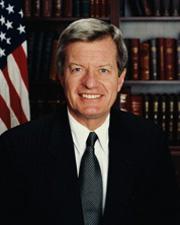 Sen. Max Baucus (D-MT)
Legislative Activity
Stay on top of the latest movement without scrolling through every action
Senate amendment agreed to: Amendment SA 504 as modified agreed to in Senate by Voice Vote.
March 22, 2007
View full timeline
Senate amendment agreed to: Amendment SA 504 as modified agreed to in Senate by Voice Vote.
March 22, 2007
Considered by Senate. (consideration: CR S3548, S3561-3562; text as modified: CR S3561-3562)
March 22, 2007
Amendment SA 504 as modified agreed to in Senate by Voice Vote.
March 22, 2007
Senate amendment submitted
March 21, 2007
Senate amendment proposed (on the floor): Amendment SA 504 proposed by Senator Baucus.(consideration: CR S3487-3494; text: CR S3487)
March 21, 2007
Amendment SA 504 proposed by Senator Baucus. (consideration: CR S3487-3494; text: CR S3487) To affirm the Senate's commitment to the reauthorization of the State Children's Health Insurance Program.
March 21, 2007
Text
Proposed
CONGRESSIONAL BUDGET FOR THE UNITED STATES GOVERNMENT FOR FISCAL YEAR
2008

The ACTING PRESIDENT pro tempore. Under the previous order, the
Senate will resume consideration of S. Con. Res. 21, which the clerk
will report.
The legislative clerk read as follows:

A concurrent resolution (S. Con. Res. 21) setting forth the
congressional budget for the United States Government for
fiscal year 2008 and including the appropriate budgetary
levels for fiscal years 2007 and 2009 through 2012.

Pending:

Sessions amendment No. 466, to exclude the extension of tax
relief provided in 2001 and 2003 from points of order
provided in the resolution and other budget points of order.
Cornyn amendment No. 477, to provide for a budget point of
order against legislation that increases income taxes on
taxpayers, including hard-working middle-income families,
entrepreneurs, and college students.

[[Page S3454]]

The ACTING PRESIDENT pro tempore. The Senator from Nevada is
recognized.
Mr. ENSIGN. First, I compliment Senator Conrad on his relationship
with Senator Gregg. The cooperation they have displayed over the past
several years should serve as an example to everyone in this body how
the Senate can, and should, work. They battle fiercely, battle for
their own ideas, but the collegiality they demonstrate and the respect
they show one another is a good example for the rest of us in the
Senate. One we should follow. It is really the way we should legislate
around here. I offer them my compliments.

Amendment No. 476

Mr. ENSIGN. Mr. President, I ask unanimous consent that the pending
amendment be laid aside so that I may call up amendment No. 476.
The ACTING PRESIDENT pro tempore. Without objection, it is so
ordered.
The clerk will report.
The legislative clerk read as follows:

The Senator from Nevada [Mr. Ensign] proposes an amendment
numbered 476.

Mr. ENSIGN. Mr. President, I ask unanimous consent that reading of
the amendment be dispensed with.
The ACTING PRESIDENT pro tempore. Without objection, it is so
ordered.
The amendment is as follows:

(Purpose: To ensure that our troops serving in harm's way remain
America's top budget priority by: ensuring full funding for the
Department of Defense within the regular appropriations process,
reducing reliance on supplemental appropriations bills, and by
improving the integrity of the Congressional budget process)

On page 41, strike lines 9 through 11 and insert the
following:
(2) for fiscal year 2008,
(A) for the national defense (050) function,
$498,844,000,000 in new budget authority and $507,394,000,000
in outlays; and
(B) for all other functions, $443,468,000,000 in new budget
authority and $514,013,000,000 in outlays.

Mr. ENSIGN. Mr. President, to briefly describe the amendment, it is a
defense firewall amendment. This is not a new idea. We have had defense
firewalls in the past. They have worked with some success. There have
been a few problems with them, but overall they worked with some
success.
We drafted the defense firewall in this amendment in a little
different way than previous firewalls. These changes, I believe, will
actually result in the firewall having its intended effect. That is, to
make sure that the defense money in the budget is actually spent on
defense.
In past years, a defense firewall has, frankly, been necessary. The
chairman of the Budget Committee can attest to the fact that, under
Republican control, this budget enforcement tool should have been in
place. I have been very critical of Republicans when we chose to
underfund defense purposely to shift money to other programs. Over the
last several years, we used a kind of sleight of hand and budget
gimmicks, and then restored defense spending later on in emergency
supplementals. In effect, this raises overall spending for the
Government.
Instead of honest budgeting and trying to increase certain non-
defense programs in the open, we hid our spending habits from the
American people. I have always said, that if you want to increase non-
defense spending, have an honest vote to do so rather than using a
gimmick. Fund defense honestly rather than what we have been doing,
which is dishonest budgeting. We have not had the transparency under
which I believe this institution should operate.
When the Democrats were campaigning last year, they criticized us in
a lot of ways for using budget gimmicks, and I think rightly so. It is
their time to keep what they have campaigned on--honest budgeting and
true transparency. That is what we need in this place.
I want to take a minute to demonstrate what I have talked about for
the last several years. Unfortunately, given how the new Democrat
majority has chosen to fund BRAC, this Congress is continuing the bad
habits of Congresses past.
What this chart shows is, in 2002, we added $1.9 billion in new
spending. We took away from defense, about $1.9 billion, and then added
that amount back in a supplemental. And this happens because everybody
knows that Congress is going to fund defense to add that spending back
later. We don't want to vote to actually cut defense, so we shift the
money in the regular appropriations process and put it back in during
an emergency supplemental. But what happens is that the $1.9 billion in
2002 gets added into the baseline for the next year. Then the next
year, we underfunded defense by $11.5 billion, we shifted the money to
other programs, and then added back the defense spending during the
supplemental. The effect of this is to add on to the previous year--all
of that in fiscal year 2004.
You can see the green bar at the bottom is the combination of the
previous 2 years; that is added into the baseline. Then you do this
again. Robbing from defense to once again add to the nondefense part of
the baseline. This continues each year all the way up, and then you see
what happens until we get to 2006. The cumulative effect of this is
shown on the next chart.
I know the chairman of the Budget Committee likes charts, so we
wanted to make sure we would have some of our own today. The cumulative
effect of doing this each year for 5 years is a total of $84 billion.
We don't have the new numbers for 2007 yet, but it is about an extra
$40 billion. So we are probably well over $125 billion for a 6-year
total in new spending. That really is the problem.
People are not being honest. If they want to increase spending, do it
honestly. What our defense firewall says is that if you want to adjust
defense spending, it cannot be done during the appropriations process;
it has to be done during the budget process so that we are being honest
with the American people. Since we assume a defense number in this
budget, this amendment puts a wall around that amount so that it cannot
be taken during the appropriations process. That wall says we will not
take any more money out of defense to put into the other appropriations
bills. This is transparency. This is honesty in budgeting.
When Republicans were in the majority, the Democrats claimed that we
were fiscally irresponsible. They promised that they were going to come
to power and be fiscally responsible. This is an amendment that will
give them the opportunity to do just that. It gives them the
opportunity to reject one of the budget gimmicks that has been used to
add new spending.
I call on my colleagues in the majority to join with me in putting
transparency into the budget process so we can help restrain Federal
spending. Why do I say that? It is because when the Defense bill comes
up as part of the process, no one, especially during a time of war, is
going to vote to cut defense. So knowing that the Defense bill has to
pass, the other bills get funded first. Defense comes up and it is
slightly underfunded, so they know they have to make that up during an
emergency bill. The emergency bill comes to the floor, and everybody
knows it is going to pass. That is how this whole budget gimmick ends
up increasing overall spending.
If you support fiscal responsibility, if you don't want to add a
burden of debt and higher taxes onto young people and future
generations, vote for this amendment. This is a fiscally responsible
way to budget and to bring transparency into the Senate. This is the
kind of amendment we need going forward. Both parties should operate
under this kind of honesty when it comes to budgeting. I encourage all
of my colleagues on both sides of the aisle to support this amendment.
I yield the floor.
The ACTING PRESIDENT pro tempore. The Senator from North Dakota is
recognized.
Mr. CONRAD. Mr. President, I thank my colleague for this amendment. I
don't favor this amendment, but it is a thoughtful, serious amendment,
and it deserves thoughtful, serious consideration.
Let me just indicate that the budget resolution, as it stands with
respect to funding for defense and funding for the war, is not affected
by this amendment. The budget resolution has the President's full
request for the war. So I wish to be clear that the Ensign amendment
doesn't affect that. What the Ensign amendment does provide is a 60-
vote point of order against any legislation that exceeds the budget
authority, which he sets for defense and

[[Page S3455]]

nondefense discretionary spending, which is in the resolution. So what
he is seeking to do is prevent money from going from defense to
nondefense or the other way, from nondefense to defense. That is
something we have done in the past.
My own analysis of it is that firewalls have not worked particularly
well. We had them under the 1990 budget agreement. I think what we
learned from that experience was they just didn't work as intended. Why
not? Because instead of preventing games, I am afraid it encouraged
games.
Let me say why I believe that is the case. No sooner were firewalls
created for defense and international spending and domestic spending in
the 1990s than our colleagues started to become very creative about how
to jump over the firewalls.
For example, Congress started to dramatically expand the amount of
medical research done by the Department of Defense. Instead of doing it
at the National Institutes of Health, they tried to, in effect, evade
the firewall--which, again, is absolutely well intended. But by doing
the medical research not at NIH over in the domestic discretionary
spending, they shifted the cost over into defense spending.
I am very strongly in favor of medical research, as I know my
colleague from Nevada is. But does anyone in this Chamber really
believe that we would have increased breast cancer research more
effectively by not having it done at NIH rather than by the United
States Army? And since firewalls were put in place, successive
administrations have now started putting FBI budget authority over in
the Defense Department. This is the kind of game that I think, in many
ways, the Senator is seeking to prevent but I am afraid may just be
encouraged.
Why has that been done? It has been done to evade the firewalls. It
is not clear to me what problem this amendment would actually solve. We
haven't had firewalls in the last several years. Yet defense spending
has grown rapidly.
Since 2001, defense, as a share of gross domestic product, has grown
very significantly. Here is a chart that shows what has occurred.
Defense, as a share of gross domestic product--which all the
economists say is the best way to measure--has gone from 3 percent in
1999 to 4.2 percent of GDP now.
Seen another way, defense spending--this is not a share of GDP, but
this chart is expressed in constant 2008 dollars so that we have a fair
apples-to-apples comparison.
We can see that defense spending has gone up very dramatically. In
fact, we are now past, in real terms, the spending at the President
Reagan defense buildup peak, and we are now set to go beyond the
Vietnam war spending peak.
The Ensign amendment will actually take away flexibility from
appropriators about how best to live within their overall total
allocation. They have a much closer perspective on the programmatic
needs of the various agencies, and I don't think we should be reducing
that flexibility.
If the Appropriations Committee were to move to eliminate $50 million
in wasteful spending at the Department of Defense--let's presume for a
moment that we found $50 million of waste at the Department of
Defense--I think those of us close to this know that is not a
theoretical possibility--that if $50 million of wasteful spending was
found at the Department of Defense, it couldn't be easily reallocated
to Homeland Security because it would face this defense firewall block.
I think that is a mistake.
Finally, I note for my colleagues on the other side that a vote for
the Ensign amendment is a vote to endorse and enforce not just defense,
but also the nondefense discretionary spending levels in the Democratic
budget resolution. My colleagues will be voting to endorse $443.5
billion in nondefense discretionary spending because this firewall
works both ways.
If my colleagues think money ought to be transferred from domestic
nondefense spending to defense spending, it would face this same
firewall. It would have the same 60-vote hurdle.
On that basis, while I absolutely respect the constructive intention
of the Senator from Nevada, I believe it would have precisely the
opposite effect that he intends.
I thank the Chair and yield the floor.
The ACTING PRESIDENT pro tempore. Who yields time?
Mr. GREGG. Mr. President, I yield myself such time as I will take.
The ACTING PRESIDENT pro tempore. The Senator from New Hampshire.
Mr. GREGG. Mr. President, I wish to speak in support of the amendment
of the Senator from Nevada. I think it is a critical amendment as we
look at the budget with which we are dealing.
We know the budget we received from the other side of the aisle is a
classic tax-and-spend budget. It raises taxes by $900 billion. It
raises spending $144 billion in nondefense discretionary. The practical
effect of that is very clear. The size of Government is going to grow
dramatically, and the American workers are going to have to pay a heck
of a lot more in taxes.
But there is something else we need to be sensitive to, and that is--
and I credit the Senator from North Dakota for doing this--the Senator
from North Dakota has put in place the numbers the President asked for
to fight the war--$145 billion I believe is the number; something like
that--for the 2008 budget. The problem is that unless that money is
secured in a way that it cannot be gamed or used or reallocated, it can
be used to grow the Government in nondefense discretionary activity. We
have seen that happen. We have seen that happen, regrettably, all too
often around here where money, which is defense money, is taken out of
the Defense Department, moved over to the social spending side of the
ledger because there is some account somebody wants to spend money on,
and then halfway through the year, the Defense Department starts to run
out of money and everybody is going to vote to replenish the Defense
Department with a supplemental. That is the way it works around here.

Regrettably, it happened last year that way. Regrettably, it happened
the year before last that way. Regrettably, it happened the year before
the year before last that way. That is exactly what happens around
here. Money is taken out of the Defense Department, put into the social
spending accounts, it grows the base of the social spending accounts,
and then the Defense Department is replenished through a supplemental
because everybody knows we have to fund the Defense Department,
especially during a time of war.
What the Senator from Nevada is trying to do is make sure that where
we have this massive amount of money sitting there, these warfighting
funds, and where we have increased the defense base by so much money,
we essentially protect that money from being raided for the purposes of
being used for everyday accounts around the operation of Government and
for building the base of the operation of Government.
When we look at the history of the Congress, that type of action is
needed. We need that type of protection. So a defense firewall is
absolutely critical to fiscal discipline, and, I would argue--and I
think history stands with me on this argument--if we don't have a
defense firewall, it is very clear that the social nondefense,
nondiscretionary spending number isn't going to increase by $144
billion, which is the number which is in this bill, which is a pretty
significant increase over the President's number, by the way--the
President jumped it up by a significant amount--it is going to increase
by a lot more because we know defense money is going to flow into those
accounts throughout the appropriations process in order to take care of
this issue or that issue that somebody believes is important to their
agenda.
We heard yesterday the Senator from Massachusetts talk about how No
Child Left Behind had to receive more money, how IDEA had to receive
more money, how Pell grants had to receive more money. The Senator from
North Dakota has put more money into those accounts, significantly more
money, and the President has put more money into those accounts,
significantly more money. But I can assure my colleagues that when that
appropriations bill hits the floor with those dollars in it, it is
going to go up even further because there is going to be money taken
out of the Defense Department and put into the Labor-HHS bill for the
purpose of expanding those programs because that

[[Page S3456]]

money is sitting there and the money is defenseless, to use a term of
art. The money is defenseless. It is going to be raided and taken over
to the social side of the ledger from the Defense Department.
The Senator from Nevada has the right approach to set up this
firewall and make it clear that we are going to have fiscal discipline.
That is what we need, fiscal discipline. This budget doesn't have much
fiscal discipline in it. In fact, it doesn't have any to speak of. But
as a practical matter, it shouldn't get worse. We should put in place
some limits that allow us to make sure even with this massive increase
in nondefense discretionary money, that is where it stops, and we don't
end up with the Defense Department being used as the piggy bank to fund
even more nondefense discretionary spending.
The Senator is on the right track. It has been done before. It was
actually quite effective before. I disagree with the characterization
of it by the Senator from North Dakota. It made life a little more
difficult with the appropriators and others who wanted to take
advantage of defense dollars in order to use them on the nondefense
discretionary side of the ledger, for social spending or whatever
projects were floating around they wanted to do.
It will also have a direct impact, quite honestly, on earmarks. It
will make it more difficult to earmark because there won't be money
available with which to earmark. If you are opposed to earmarks, for
fiscal discipline, if you think the Defense Department should get the
money we promised them to fight the war, you have to vote for the
Ensign amendment.
The ACTING PRESIDENT pro tempore. The Senator from North Dakota.
Mr. CONRAD. Mr. President, as the Senator from New Hampshire well
knows, the war funding is secure. It is absolutely secure. At his
urging, we put the war funding in a sidecar. Our cap adjustment for war
costs is available only for war costs. That is a red herring of an
issue, and he knows it.
Let's go back to this question of how things really work. I must say,
I am sympathetic to the basic notion of trying to exert discipline and
not having money that is appropriated for defense used for something
else. I am absolutely sympathetic to that. The problem is, I don't
think this works, and I am asking to have the list of earmarks that is
in the Defense appropriations bill brought to me because I will then
read that list. It will take me a good part of the day because we all
know what is really happening around here.
The Senator talked about somehow suppressing earmarks. Please, do I
really have to read the list of earmarks that has been put in the
Defense appropriations bill that have nothing----
Mr. GREGG. Will the Senator yield at that point?
Mr. CONRAD. Let me complete the thought. I will be happy to yield.
Don't we all know, haven't we all read the Defense appropriations bill
and seen earmark after earmark after earmark put into that Defense bill
that has nothing whatsoever to do with defense? I will be happy to
yield.
The ACTING PRESIDENT pro tempore. The Senator from New Hampshire.
Mr. GREGG. Mr. President, my point was that this will increase the
piggy bank available to nondefense discretionary to be used for
earmarking because it will take defense dollars and move them over to
nondefense discretionary accounts. I don't argue with the argument that
there is a significant number of earmarks in the defense budget. I hope
that as part of reading his Defense Department earmarks--which I will
be happy to agree exists--he will at the same time list the earmarks
that were added into the Labor-HHS bill over the last 4, 5, 6 years as
a result of literally billions of dollars being taken out of the
Defense Department to pump up the Labor-HHS bill. That is where the
earmarks occurred.
Mr. ENSIGN. Will the Senator yield?
Mr. CONRAD. I will be happy to yield in a minute, if I may just
respond to the Senator. I think we all know the truth of this
institution is that as soon as we create something such as a firewall,
very creative minds go to work in this institution to find a way around
it. That is the hard reality. I am happy to yield.
The ACTING PRESIDENT pro tempore. The Senator from Nevada.
Mr. ENSIGN. Mr. President, first of all, the Senator from North
Dakota made the point that defense funding is secure. We do not in any
way think we are going to underfund defense or the war funding. The
point we were making about defense spending is that because everybody
is going to make sure defense spending is secure, once the money for
defense is put in there, money is taken out and put into other spending
programs, then later in the year it is filled back in for defense.
Everybody knows we are going to fund the war. Everybody knows we are
going to do the critical needs of the Department of Defense. What we
are arguing is that other spending is going to be increased because of
the budget gimmicks because there is no transparency.
What my amendment does is put transparency back into the process.
That is why the Senator from New Hampshire and myself are arguing how
critical this amendment is if we want to actually have some fiscal
restraint, if we want to not just continue to blow up the deficits and
pass this huge debt on to future generations.
Without transparency, without all the budget gimmicks, the numbers
that my colleagues saw that I put up and the charts I put up for the
last 5 years--let's put those charts back up. For the last 5 years, $84
billion total has been added in nondefense, other types of social
spending programs. And it was done, in a way, with budget gimmicks,
where people, kind of sleight of hand over here, looked as though they
were being fiscally responsible, but they were not. They said they were
operating within the budget caps that were set out, but because then
the Defense spending was declared as emergency, that allowed people to
get around the Defense caps.

What we are trying to do is to install some fiscal discipline. That
is why we put a 60-vote, supermajority, point of order against this
kind of activity. There is still flexibility. If people wanted to
argue: let's take the money out, let's increase these accounts the way
it has been done in the past, at least there is a supermajority
required to do so.
I keep going back to last fall's election and before that, when the
Democrats accused Republicans in the majority of being fiscally
irresponsible. This is a chance to fulfill their campaign promise of
being fiscally responsible. It is time to step up, put mechanisms in
place that will put the discipline into this body to help hold down the
spending that goes on in this place.
I will not argue that games won't be played. What we are going to do,
though, is to make it more difficult to play the games. There will
always be people who will try to get around whatever budget discipline
we put in. The appropriators are famous for that. What we are trying to
do here is to put in budget discipline, to put in a steeper wall to
climb over to get around these sleight-of-hand budget tricks.
That is what this amendment is about, to say let's for once be
fiscally responsible around this place. Let's think about the children
and future generations as far as spending is concerned. I ask my
colleagues to support this amendment when it comes up to the full
Senate for a vote.
Mr. BYRD. Mr. President, at Andrews Air Force Base in 1990, I helped
to craft the first statutory firewalls as part of the budget summit
that resulted in
the Budget Enforcement Act of 1990. That act created three categories
of discretionary spending--defense, international, and domestic
discretionary.
At the time, the device of the three separate caps to protect each
category from being raided by another category made sense. There was a
definable military threat, and nondefense funds did not contribute
significantly to the defense of the Nation. That is not the case
anymore. The September 11 attacks blurred the line between defense and
nondefense spending. Military threats can no longer be viewed as
matters that are fought solely through the Defense Department. The
enemy may attack our troops overseas or civilians here at home. Within
a matter of weeks, the focus of our war against terrorism can shift
from military efforts abroad, to our homeland security efforts here at
home, and then back again.

[[Page S3457]]

To respond to this threat, the Congress should maintain maximum
flexibility to shift funds to where they are needed most--whether for
our homeland security needs here at home or for our troops overseas or
for our veterans who need health and medical care. With so much
uncertainty regarding the threat of terrorism and the war in Iraq, it
makes no sense to limit how those funds can be spent.
Senators should know that firewalls in the past have forced the
Congress to resort to all sorts of machinations to pass its annual
spending bills. Firewalls were used in past years, as part of a
partisan budget process, to hold nondefense discretionary spending at
unrealistically low levels. These spending levels were set early in the
year under different fiscal circumstances and at levels that neither
the administration nor the Congress expected to stay within. The result
was always unnecessary delays in the appropriations process and even
more spending as nearly all budgetary discipline evaporates in the push
to pass an end-of-the-year omnibus bill.
These kinds of budget gimmicks undermine the people's confidence in
the Congress to manage the Nation's spending priorities.
Mr. President, I yield the floor, and I suggest the absence of a
quorum.
The ACTING PRESIDENT pro tempore. The clerk will call the roll.
The legislative clerk proceeded to call the roll.
Mr. OBAMA. Mr. President, I ask unanimous consent that the order for
the quorum call be rescinded.
The ACTING PRESIDENT pro tempore. Without objection, it is so
ordered.
Who yields time?
Mr. CONRAD. Mr. President, how much time would the Senator like?
Mr. OBAMA. Mr. President, I was hoping for 10 minutes.
Mr. CONRAD. I will be happy to yield 10 minutes to the Senator off
the bill.
The ACTING PRESIDENT pro tempore. The Senator from Illinois is
recognized for 10 minutes.

The Iraq War

Mr. OBAMA. Mr. President, on Thursdays, Senator Durbin and I hold a
constituent coffee so we can hear from the folks back home. A young man
came a few months ago who was about 25, 26 years old. He had been back
from Iraq for a year. The first 6 months of that year he spent in a
coma. An explosion had shattered his face, blinded him in both eyes,
and has left him without the use of one arm.
He told us about how he was going through rehab, and he introduced us
to his family. He has a wife and two young daughters like I do, and his
wife talked for a bit about the adjustments they were making at home
since dad got hurt. I found myself looking at not just him, but at his
wife, who loves him so much, and I thought about how their lives were
forever changed because of the decision that was carried out 4 years
ago.
The sacrifices of war are immeasurable.
I first made this point in the fall of 2002, at the end of the speech
I gave opposing the invasion of Iraq. I said then that I certainly do
not oppose all wars, but dumb wars--rash wars. Because there is no
decision more profound than the one we make to send our brave men and
women into harm's way.
I have thought about these words from time to time since that speech,
but never so much as the day I saw that young man and his wife.
The sacrifices of war are immeasurable. Too many have returned from
Iraq with that soldier's story--with broken bodies and shattered nerves
and wounds that even the best care may not heal. Too many of our best
have come home shrouded in the flag they loved. Too many moms and dads
and husbands and wives have answered that knock on the door that is the
hardest for any loved one to hear.
And the rest of us have seen too many promises of swift victories,
and dying insurgencies, and budding democracy give way to the reality
of a brutal civil war that goes on and on and on to this day.
The sacrifices of war are immeasurable. It was not impossible to see
back then that we might arrive at the place we are at today.
I said then that a war based not on reason but on passion, not on
principle but on politics would lead to a U.S. occupation of
undetermined length, at undetermined cost, with undetermined
consequences. I believed that an invasion of Iraq without a clear
rationale or strong international support would only strengthen the
recruitment arm of al-Qaida and erode the good standing and moral
authority that took our country generations to build. There were other
experts, and leaders, and everyday Americans who believed this too.
I wish we had been wrong. I wish we weren't here talking about this
at the beginning of the war's fifth year. Because the consequences of
this war have been profound. And the sacrifices have been immeasurable.
Those who would have us continue this war in perpetuity like to say
that this is a matter of resolve on behalf of the American people. But
the American people have been extraordinarily resolved. They have seen
their sons and daughters killed or wounded on the streets of Fallujah.
They have spent hundreds of billions of dollars on this effort--money
that could have been devoted to strengthening our homeland security and
our competitive standing as a nation.
No, it has not been a failure of resolve that has led us to this
chaos, but a failure of strategy--a strategy that has only strengthened
Iran's strategic position; increased threats posed by terrorist
organizations; reduced U.S. credibility and influence around the world;
and placed Israel and other nations friendly to the United States in
the region in greater peril.
Iraq has not been a failure of resolve, it has been a failure of
strategy--and that strategy must change. It is time to bring a
responsible end to this conflict is now.
There is no military solution to this war. No amount of U.S. soldiers
not 10,000 more, not 20,000 more, not the almost 30,000 more that we
now know we are sending--can solve the grievances that lay at the heart
of someone else's civil war. Our troops cannot serve as their
diplomats, and we can no longer referee their civil war. We must begin
a phased withdrawal of our forces starting May 1, with the goal of
removing all combat forces by March 30, 2008.
We also must make sure that we are not as careless getting out of
this war as we were getting in, and that is why this withdrawal should
be gradual, and keep some U.S. troops in the region to prevent a wider
war and go after al Qaida and other terrorists.
But it must begin soon. Letting the Iraqis know that we will not be
there forever is our last, best hope to pressure the Iraqis to take
ownership of their country and bring an end to their conflict. It is
time for our troops to start coming home.
History will not judge the architects of this war kindly. But the
books have yet to be written on our efforts to right the wrongs we see
in Iraq. The story has yet to be told about how we turned from this
moment, found our way out of the desert, and took to heart the lessons
of war that too many refused to heed back then.
For it is of little use or comfort to recall past advice and warnings
if we do not allow them to guide us in the challenges that lie ahead.
Threats loom large in an age where terrorist networks thrive, and there
will certainly be times when we have to call on our brave servicemen
and women to risk their lives again.
But before we make that most profound of all decisions--before we
send our best off to battle, we must remember what led us to this day
and learn from the principles that follow.
We must remember that ideology is not a foreign policy. We must not
embark on war based on untested theories, political agendas or wishful
thinking that has little basis in fact or reality. We must focus our
efforts on the threats we know exist, and we must evaluate those
threats with sound intelligence that is never manipulated for political
reasons again.
We must remember that the cost of going it alone is immense. It is a
choice we sometimes have to make, but one that must be made rarely and
always reluctantly. That is because America's standing in the world is
a precious resource not easily rebuilt. We value the cooperation and
goodwill of other nations not because it makes us feel good, but
because it makes all the world safer--because the only way to battle
21st century threats that race across borders--threats like terror, and
disease, and nuclear proliferation--is

[[Page S3458]]

to enlist the resources and support of all nations. To win our wider
struggle, we must let people across this planet know that there is
another, more hopeful alternative to the hateful ideologies the
terrorists espouse--and a renewed America will reflect and champion
that vision
We must remember that planning for peace is just as critical as
planning for war. Iraq was not just a failure of conception, but a
failure of execution, and so when a conflict does arise that requires
our involvement, we must do our best to understand that country's
history, its politics, its ethnic and religious divisions before our
troops ever set foot on its soil.
We must understand that setting up ballot boxes does not a democracy
make--that real freedom and real stability come from doing the hard
work of helping to build a strong police force, and a legitimate
government, and ensuring that people have food, and water, and
electricity, and basic services. And we must be honest about how much
of that we can do ourselves and how much must come from the people
themselves.
Finally, we must remember that when we send our servicemen and women
to war, we make sure we have given them the training they need, and the
equipment that will keep them safe, and a mission they can accomplish.
We must respect our commanders' advice not just when its politically
convenient but even when it is not what we want to hear. And when our
troops come home, it is our most solemn responsibility to make sure
they come home to the services, and the benefits, and the care they
deserve.
As we stand at the beginning of the fifth year of this war, let us
remember that young man from Illinois, and his wife, and his daughters,
and the thousands upon thousands of families who are living the very
real consequences and immeasurable sacrifices that have come from our
decision to invade Iraq.
We are so blessed in this country to have so many men and women like
this--Americans willing to put on that uniform, and say the hard
goodbyes, and risk their lives in a far off land because they know that
such consequences and sacrifices are sometimes necessary to defend our
country and achieve a lasting peace.
That is why we have no greater responsibility than to ensure that the
decision to place them in harm's way is the right one. And that is why
we must learn the lessons of Iraq. It is what we owe our soldiers. It
is what we owe their families. And it is what we owe our country--now,
and in all the days and months to come.
Mr. President, I yield the floor.
Mr. CONRAD. Mr. President, I commend the Senator from Illinois,
Senator Obama, for the wisdom he has displayed with respect to the
conflict in Iraq. I read a speech he gave when he was a State Senator
warning about the dangers of going to war in Iraq. In many ways it
reflected many of the same feelings and analysis I had given in my
speech on the floor of the Senate.
I gave the last speech before that fateful vote to authorize going to
war in Iraq. I believed at the time it was a mistake to go to Iraq
before finishing business with Osama bin Laden. After all, it was
Saddam Hussein in Iraq whom this administration decided to go after.
But it was not Saddam Hussein or Iraq that attacked this country on 9/
11, it was Osama bin Laden and the al-Qaida network that had attacked
this country. We have still never held Osama bin Laden to account. I
have always felt that was an extremely serious mistake, a military
mistake for this country. I was so impressed that the Senator from
Illinois, who was a State senator at the time, had the wisdom and the
judgment to see that. I wish more had seen it.
I, again, thank the Senator from Illinois.
The ACTING PRESIDENT pro tempore. The Senator from New Hampshire is
recognized.
Mr. GREGG. Mr. President, so we can get the order, I understand we
are going to go to Senator Bunning next; is that the game plan? He is
on his way to the floor.
Mr. CONRAD. Yes. I thank the Senator very much for his continuing
courtesy as we try to move through this. Senator Bunning, we are told,
is on his way to the floor to offer an amendment. We are also asking
Senator Bingaman to come.
I see Senator Bunning is here now. We can go to his amendment.
Mr. BUNNING. Mr. President, what is the pending business?
The ACTING PRESIDENT pro tempore. The Ensign amendment is the pending
question.
Mr. BUNNING. I ask unanimous consent the pending amendment be set
aside.
The ACTING PRESIDENT pro tempore. Without objection, it is so
ordered.

Amendment No. 483

Mr. BUNNING. I send an amendment to the desk and ask for its
immediate consideration.
The ACTING PRESIDENT pro tempore. The clerk will report.
The legislative clerk read as follows.

The Senator from Kentucky [Mr. Bunning], for himself and
Mr. Enzi, proposes an amendment numbered 483.

Mr. BUNNING. I ask unanimous consent the reading of the amendment be
dispensed with.
The ACTING PRESIDENT pro tempore. Without objection, it is so
ordered.
The amendment is as follows:

(Purpose: To provide a point of order against any budget resolution
that fails to achieve an on-budget balance within 5 years)

At the end of title II, add the following:

SEC. __. CIRCUIT BREAKER TO PROTECT SOCIAL SECURITY.

(a) Circuit Breaker.--If in any year the Congressional
Budget Office, in its report pursuant to section 202(e)(1) of
the Congressional Budget Act of 1974 projects an on-budget
deficit (excluding Social Security) for the budget year or
any subsequent fiscal year covered by those projections, then
the concurrent resolution on the budget for the budget year
shall reduce on-budget deficits relative to the projections
of Congressional Budget Office and put the budget on a path
to achieve on-budget balance within 5 years, and shall
include such provisions as are necessary to protect Social
Security and facilitate deficit reduction, except it shall
not contain any reduction in Social Security benefits.
(b) Point of Order.--If in any year the Congressional
Budget Office, in its report pursuant to section 202(e)(1) of
the Congressional Budget Act of 1974 projects an on-budget
deficit for the budget year or any subsequent fiscal year
covered by those projections, it shall not be in order in the
Senate to consider a concurrent resolution on the budget for
the budget year or any conference report thereon that fails
to reduce on-budget deficits relative to the projections of
Congressional Budget Office and put the budget on a path to
achieve on-budget balance within 5 years.
(c) Amendments to Budget Resolution.--If in any year the
Congressional Budget Office, in its report pursuant to
section 202(e)(1) of the Congressional Budget Act of 1974
projects an on-budget deficit for the budget year or any
subsequent fiscal year covered by those projections, it shall
not be in order in the Senate to consider an amendment to a
concurrent resolution on the budget that would increase on-
budget deficits relative to the concurrent resolution on the
budget in any fiscal year covered by that concurrent
resolution on the budget or cause the budget to fail to
achieve on-budget balance within 5 years.
(d) Suspension of Requirement During War or Low Economic
Growth.--
(1) Low growth.--If the most recent of the Department of
Commerce's advance, preliminary, or final reports of actual
real economic growth indicate that the rate of real economic
growth (as measured by real GDP) for each of the most
recently reported quarter and the immediately preceding
quarter is less than 1 percent, this section is suspended.
(2) War.--If a declaration of war is in effect, this
section is suspended.
(e) Supermajority Waiver and Appeals.--
(1) Waiver.--Subsections (b) and (c) may be waived or
suspended in the Senate only by an affirmative vote of three-
fifths of the Members, duly chosen and sworn.
(2) Appeals.--Appeals in the Senate from the decisions of
the Chair relating to any provision of this subsection shall
be limited to 1 hour, to be equally divided between, and
controlled by, the appellant and the manager of the bill or
joint resolution, as the case may be. An affirmative vote of
three-fifths of the Members of the Senate, duly chosen and
sworn, shall be required to sustain an appeal of the ruling
of the Chair on a point of order raised under this
subsection.
(f) Budget Year.--In this section, the term ``budget year''
shall have the same meaning as in section 250(c)(12) of the
Balanced Budget and Emergency Deficit Control Act of 1985.

Mr. BUNNING. Mr. President, this amendment is almost identical to the
language that was included in the fiscal year 2003 budget resolution
that Chairman Conrad authored. This amendment provides that, starting
with the fiscal year 2009 budget, if

[[Page S3459]]

CBO's budget and economic outlook reports projections that the Social
Security surplus will be spent for non-Social Security programs during
any year covered by its projections, then the budget resolution must
present a plan to protect Social Security by reducing those deficits.
As you can see by this chart, in 2009, 2010, 2011, and 2012, these
are the Social Security dollars that are being used in this current
budget that has been proposed for other purposes. From $423 billion up
to $1.027 trillion. If the budget resolution fails to put the budget on
a glidepath to protecting the Social Security surplus within 5 years,
it will be subject to a point of order in the Senate. There is an
exception for times of war and low economic growth, and it can be
waived by a vote of three-fifths of the Senators.
The purpose of this circuit breaker is to put the budget on a path to
balance without spending the Social Security money that is needed for
the baby boomers' retirements. It ensures that Social Security trust
funds will be used for their intended purpose and that is for
retirement of the baby boomers and all after.
We all know the challenges the Social Security system faces as the
first of the baby boomers start to retire very shortly. The effects of
this demographic tidal wave will begin to grow rapidly as the years
progress. Chairman Conrad will point to a provision in this budget that
he calls the ``save Social Security first'' point of order. However,
this point of order does not--I say emphatically does--not protect the
Social Security surplus the way my amendment will do it. In fact, the
budget resolution before us spends, as I showed you, over $1 trillion
additional of the Social Security surplus. My amendment says that just
because we have been spending the Social Security surplus for decades
doesn't mean we should continue. We have dug ourselves into a big
ditch. The budget before us keeps digging.
My amendment says stop digging. It forces Congress to make a plan to
protect the Social Security surplus. I urge my colleagues to think
about the future of Social Security retirees and support this
amendment. We have this amendment before us. It is almost exactly like
the amendment the now chairman of the Budget Committee put in the 2003
budget resolution, and his rationale for knocking out the point of
order in the budget markup was: ``Well, we have been doing it for
years.''
Yes, we have been doing it for years, and it is time to stop. Stop
spending the Social Security surplus for other purposes--other purposes
being any other functions for which the Federal Government might need
money. What does that do to my grandchildren and the grandchildren of
everybody else in this body and those listening? It says to your
grandchildren: You have to fend for yourself. We are going to leave you
with this pile of debt, such that in 2017 we are not going to have
enough money in the trust funds to pay off your Social Security
benefits--in 2017, when we start spending this money out of the trust
funds--with the interest we are supposed to be getting from it. By
2040, we will have spent down all the trust funds and all the interest.
What does that mean? That means in 2041 those benefits in Social
Security will be 74 percent of what we promised our recipients. That is
the money that will be coming in, in Social Security taxes at that
time. We will only be able to pay out 74 percent of the benefits
because we have prespent the trust funds for other purposes.
My amendment says: Stop. Think about what you are doing, Members of
the Senate, Members of the Congress. Stop digging the hole. We are
going to bury our future generations in a massive debt situation where
their benefits will not be able to be paid.
I ask support for this amendment when it comes up for the vote.
I yield the floor.
The ACTING PRESIDENT pro tempore. Who yields time? The Senator from
North Dakota.
Mr. CONRAD. Mr. President, the Senator talks about Social Security
money being spent in the Democratic budget resolution--and he is right.
There is money spent, Social Security money, in the Democratic budget
resolution. Why? Because our friends on the other side, in the 6 years
they have controlled everything, have dug such a deep hole it is going
to take us a while to climb out. Look at the President's budget. That
is the only budget from the other side. The other side has not
presented a budget other than the President's budget.
Here is what the President's budget does in terms of spending Social
Security money. The President's budget spends $1.16 trillion of Social
Security money over the next 5 years--every dime that is available. We
use $1.03 trillion. So let's be clear. The only budget from the other
side uses more Social Security money than does our budget. Both budgets
use Social Security money because we are now in such a deep hole it is
going to take time to dig out.
Here is the record from the other side. The record from the other
side is they have so far spent $1.1 trillion of Social Security money
and, if the President's budget is followed, they will have spent $2.5
trillion by 2017. Every dime of Social Security money that is available
to spend will have been spent by our friends on the other side. That is
their record.
Look, we inherited this mess. We have to climb out and we are making
progress. Our budget balances by 2012, and over time we will end this
practice of using Social Security money. Let me indicate that in this
budget resolution, we have passed a ``save Social Security first''
amendment. It says there can be no new mandatory spending or tax cuts
until the 75-year Social Security solvency is restored, unless it is
paid for or gets a supermajority vote. That is in the underlying budget
resolution to protect Social Security.

I say to my colleague, he has offered an amendment I previously
offered. When I offered it, it was before we descended into this
deficit and debt ditch. It was designed to prevent us from going that
road, from going down the path of using Social Security money to fund
other things. Unfortunately, our colleagues on the other side opposed
it and defeated it. They prevented it from being put in force, which
would have hopefully prevented all this from happening. But that was
not the case. Now it is akin to closing the barn door after the cattle
are gone. Now the Senator from Kentucky offers this amendment.
The upshot of this amendment, if it were to pass, would be to create
a 60-vote hurdle against having a budget resolution next year. That is
what the effect of the Bunning amendment would be. If people want to
vote for it as a symbolic measure, that is fine with me. Members should
know they are free to vote however they think is the right way when we
vote on the Bunning amendment later this evening.
Ms. STABENOW. Will my colleague yield for a question?
Mr. CONRAD. I am happy to yield.
Ms. STABENOW. I thank you, as chairman of the Budget Committee, for
bringing forward the ``save Social Security first'' amendment in
committee. It makes it very clear in the budget resolution that we
intend to come out of this hole and are committed to making sure Social
Security moneys are restored.
Last night we heard from other colleagues on the other side of the
aisle. Senator Sessions offered an amendment that basically would fly
in the face of Senator Bunning's amendment, wouldn't you say, because
it essentially would take away the ability to have a 60-vote point of
order as it relates to extending the tax cuts that created the hole in
the first place. Because isn't it true that essentially the tax cuts
were paid for by using Social Security surplus funds?
Mr. CONRAD. The Senator is certainly right. Senator Sessions'
amendment would allow all of the tax cuts to be extended without having
to be paid for, without having to be offset. So it does directly
contradict at least the spirit of the Bunning amendment.
I must say, I am very much in sympathy with the spirit of the Bunning
amendment because, after all, it was my amendment back in 2002 when it
really would have done some good because that was before we went down
this path of using Social Security funds to pay all kinds of other
bills.
I have said many times that what is being done here in Washington is
a basic violation of any kind of the sense of the trust fund because
trust fund moneys that are in temporary surplus before the baby boomers
retire are

[[Page S3460]]

being used to pay other bills. You could not do that in any other
institution. You could not do that in any private business. You could
not do that in any other private sector institution. You could not take
the retirement funds of your employees and use them to pay your
operating expenses. If you did that, you would be in violation of
Federal law. You would be on your way to a Federal institution, but it
would not be the Congress of the United States, it would not be the
White House; you would be headed for the big house because that is a
violation of Federal law. But that is the practice that has grown up.
It has been, unfortunately, the case here for 30 years, with only 2
years of exception: The last 2 years of the Clinton administration, we
were able to stop using Social Security funds to pay other bills. That
was one of the greatest achievements of the Congress and the
administration. Unfortunately, under this new administration, they went
right back the other way, using every dime of Social Security money to
pay other bills. Now we are in such a deep hole that it is going to
continue for some period of time until we are able to dig out.
Ms. STABENOW. If I might ask a second question of my friend. Again, I
will start by congratulating the Senator. I remember, as a new member
of the Budget Committee, coming in in 2001 when there were record
surpluses, that the Senator was warning us about what could happen.
Actually, is it not true that at that time, the Senator was suggesting
a third of the surpluses go to prefunding the liability of Social
Security so we would not find ourselves in this mess? Would not that
have had a very different outcome on where we are today?
Mr. CONRAD. Yes. I thank the Senator for remembering that. I did have
a plan. Instead of giving the outsized tax cuts the President proposed,
I proposed giving a $900 billion tax cut, very large tax cuts, but to
use the rest of the money to strengthen Social Security, to either
prefund the liability or pay down the debt.
Instead, a different judgment was made. Social Security money that
really never was in what I would consider surplus--because it is all
needed when the baby boomers retire--has been taken and has been used,
every dime under the President's fiscal plan, to pay other bills and to
finance tax cuts. I think that was a profound mistake. That is why I
offered the amendment the Senator from Kentucky has now offered, an
amendment I offered back in 2002, to prevent us from ever going down
this path. Now we have gone down it. Both budgets, if we are to be
honest, use Social Security funds. We use somewhat less than the
President's budget. It is going to take time to dig out.
The PRESIDING OFFICER (Mr. Cardin). The Senator from Kentucky.
Mr. BUNNING. Mr. President, two wrongs do not make a right. The fact
is that the President's budget includes it, every President's budget
has included it since Ronald Reagan. That includes Bush 1, Bill
Clinton's budget for 8 years, and now George W. Bush's budget. They
have included spending the Social Security trust funds that are in
surplus in every budget for over 15 years that I know of.
Now that my good friends from the Democratic Party are in the
majority, they are doing the same thing. They are spending our trust
funds that the Social Security system must buy bonds with. That is the
law. We do not have another law that says you can take the Social
Security trust funds and you can put it in this little box and you must
keep it. No. The law says--and I was on the Ways and Means Committee
with the current chairman of the Senate when we tried to wall off
Social Security trust funds. It did not pass over in the House at that
time. So we have been spending them ever since. That does not make it
right. It is still wrong to spend it.
The other side said they are going to fix the surplus problem. Well,
they are not. I hope they do. This amendment gives some teeth to that
promise because it holds the majority--whoever is the majority--
accountable.
Now that they are in the majority, they do not want to hold
themselves responsible for the Social Security trust funds. They say:
Oh, because we have been doing this all this time, it is too late to
stop. We can save $1.027 trillion if we stop now and do not include
this in our 5-year projections.
I hate to tell you, if we moved this out to 10 years, what it would
look like. I am not going to do that because the budget is a 5-year
budget. But $1 trillion, to my grandkids and their retirement or
Senator Conrad's grandkids or anybody's kids, is a lot of money, and
the more we can save for their retirement, the less we are going to
have to borrow down the road.
So, please, when you are considering this amendment, consider the
consequences of what we are doing here. We are doing more of the same.
It is time we stopped doing it.
I ask for your support. This is a very important amendment. It is not
a feel-good amendment; it is a substantive amendment that we actually
are doing things to stop spending the Social Security trust funds.
I yield the floor.
The PRESIDING OFFICER. The Senator from New Hampshire.
Mr. GREGG. I thank the Senator from Kentucky, who may be one of the
most effective spokespersons in the Senate on the issue of protecting
the Social Security accounts and making sure that as we move forward,
we are responsible in that area.
This amendment accomplishes exactly that. It is a brilliantly drafted
amendment because it was, of course, drafted by the chairman of the
Budget Committee and offered by him.
Mr. Chairman, it reflects that the times have changed. Well, they
really have not; the numbers have changed. Instead of $2 trillion, we
are now talking $1 trillion of Social Security money that is going to
be used in this budget.
You know, the cattle are not out of the barn; they truly are in the
barn. And we figure each cow is worth a dollar. We should be protecting
them, and we should be at least addressing them. What I think the
amendment does is it highlights the essence of one of the most
significant problems with this budget; that is, although it spends a
lot of money and it raises a lot of taxes, it does nothing on the issue
of the long-term solvency of this Government, which is the most
significant threat we face.
The chairman of the Budget Committee has held numerous hearings on
this issue. I have congratulated him on being focused on this issue.
But, unfortunately, he brought forward a budget which does not address
this. We have created a government which is not going to be affordable
to our children because the costs of Social Security and the costs of
Medicare when the baby boomer generation retires is simply going to
overwhelm their fiscal ability to support that generation.
We should be getting on right now and doing things that correct this.
There were ideas put forward which would accomplish this that the
President put forward in the area of Medicare. There are things you can
do in the area of Social Security. For example, you can get the
reimbursements correct on the COLA.
But what this budget does is nothing. It does nothing to protect or
address this outyear problem. What it does do is aggravate the problem
by digging the hole deeper by using $1 trillion of Social Security
funds to operate the Federal Government over the 5 years of this
budget.
So when the chairman of the committee drafted the amendment, he was
thinking correctly. And when he said that--he was speaking here
relevant to the use of Social Security funds by the administration in
prior budgets--they included as the definition of a balanced budget one
that raided the Social Security trust fund of every dime. Then he
claimed that it was a balanced budget. That was no balanced budget;
that was a budget built on massive borrowing disguised as balancing the
budget.
Well, that is essentially a statement which could be applied exactly
to this budget. So the chairman was right with that statement. Then he
went on further and said: It threatens Social Security to take $180- to
$190 billion of Social Security money, to use it, instead of paying
down the debt or prepaying the liability, to use to it pay operating
expenses of the Government, it threatens Social Security. That again is
being done within this budget to the tune of $1 trillion.
So the Senator from Kentucky in his own way is once again
highlighting the issue effectively and has put forward language which
will accomplish the

[[Page S3461]]

goal. It was good language when it was offered by the Senator from
North Dakota, and it is good language offered by the Senator from
Kentucky. I certainly hope we support it.
The PRESIDING OFFICER. The Senator from North Dakota.
Mr. CONRAD. Mr. President, first of all, I want to say I have been
put at a disadvantage here because the Senator from Kentucky, whom I
like very much, whom I respect very much, has offered an amendment I
drafted.
Unfortunately, they did not support it when I offered it back in
2003. It really would have helped us avoid this disaster of using
Social Security money. So maybe we have here a coming around to support
an issue at least at a later point. I am going to recommend to my
colleagues that we vote for this amendment on the floor, as a symbolic
measure if for no other reason.
When I drafted this amendment and offered it back in 2002, what a
difference it would have made if it had been adopted. But,
unfortunately, our colleagues who have just spoken so eloquently in
favor of it now opposed it then. They opposed it when it actually would
have done something. Well, I still appreciate the fact that they now, 5
years later, appreciate the wisdom of my words then. I certainly will
not stand in the way of adopting this amendment tonight. In fact, my
vote will be cast in favor of this amendment.
The PRESIDING OFFICER. The Senator from New Hampshire.
Mr. GREGG. Mr. President, I don't want to prolong the debate because
the Senators from New Mexico and Tennessee have an amendment ready to
go. But I would note that the most recent inconsistency on this is not
our side, it would be on the Democratic side, in that the Senator from
North Dakota voted against this amendment in committee, which he now is
going to vote for on the floor. I wanted to make that point. So the
inconsistency is in the eye of the beholder.
The PRESIDING OFFICER. The Senator from North Dakota.
Mr. CONRAD. Let me say that I cast that vote in committee because the
practical effect of this amendment now is not going to protect Social
Security. The practical effect of this amendment is to create a 60-vote
hurdle to pass a budget resolution next year.
But, look, I am proud of the amendment I crafted 5 years ago. I think
we have to send every message we can that it is wrong to be using
Social Security trust funds to pay other bills. I believe that with
every fiber of my being. Senator Bunning has offered this amendment
unfortunately 5 years too late. I am going to support it even though it
is 5 years too late.
The PRESIDING OFFICER. The Senator from New Hampshire.
Mr. GREGG. Mr. President, I will conclude my comments by saying that
I hope the Senator from North Dakota is not cynical, because of his
rather negative view of what this amendment will do. I hope it does not
come to fruition.
I hope what the amendment does is force the people who bring the
budget next year to look at Social Security and figure out how we are
going to deal with it and thus put in place some entitlement reform
which addresses this issue and gets us into a position where we are
able to protect it.
The PRESIDING OFFICER. The Senator from North Dakota.
Mr. CONRAD. Mr. President, it is for that reason that I will support
the amendment, because it may, even at this late hour, help build
pressure for what the Senator from New Hampshire and I both want to do,
which is somehow find a path to addressing these long-term entitlement
challenges. It may help do that.
In that spirit, I will support the amendment tonight.
Now we have Senator Bingaman ready.
The PRESIDING OFFICER. The time yielded to the Senator from New
Mexico?
Mr. CONRAD. How much time does the Senator from New Mexico seek?
Mr. BINGAMAN. I need at most 15 minutes. I know my colleague from
Tennessee needs a comparable amount of time. I know there are others
who wish to speak, but I don't know if they will be able to come to the
floor at this point.
Mr. CONRAD. I yield 15 minutes to the Senator from New Mexico. And
then the Senator from Tennessee, how much would the Senator seek?
Mr. ALEXANDER. Up to 15 minutes, please.
Mr. CONRAD. Would the Senator from New Hampshire provide the Senator
from Tennessee with time off his side on this amendment?
Mr. GREGG. I would. I understand the Senator from South Carolina
wants to speak on the Bunning amendment. Should we complete that
debate?
Mr. CONRAD. I think in fairness to the other two Senators, we should
let them go forward with their amendment. Then we could come back to
the Senator from South Carolina for his comments on the Bunning
amendment.
Mr. GREGG. Sounds good.
The PRESIDING OFFICER. Is the Senator from North Dakota seeking
consent to set aside the Bunning amendment so we may proceed to this
amendment?
Mr. CONRAD. Yes, I think we should set aside the Bunning amendment so
that the Bingaman amendment may be offered. The Senator from Tennessee
could speak on that. We did ask them to come at this time to do so. I
apologize to Senator DeMint. We were not aware that he was on his way
to the floor. In fairness, that is what we should do.
The PRESIDING OFFICER. Without objection, it is so ordered.
The Senator from New Mexico is recognized.

Amendment No. 486

Mr. BINGAMAN. I send an amendment to the desk.
The PRESIDING OFFICER. The clerk will report.
The assistant legislative clerk read as follows:

The Senator from New Mexico [Mr. Bingaman], for himself,
Mr. Alexander, Mr. Lieberman, Mr. Domenici, Mr. Ensign, and
Mr. Reid, proposes amendment numbered 486.

Mr. BINGAMAN. I ask unanimous consent that reading of the amendment
be dispensed with.
The PRESIDING OFFICER. Without objection, it is so ordered.
The amendment is as follows:

(Purpose: To provide additional funding resources in FY2008 for
investments in innovation and education in order to improve the
competitiveness of the United States)

On page 10, line 9, increase the amount by $1,008,000,000.
On page 10, line 10, increase the amount by $428,000,000.
On page 10, line 14, increase the amount by $345,000,000.
On page 10, line 18, increase the amount by $179,000,000.
On page 10, line 22, increase the amount by $35,000,000.
On page 11, line 1, increase the amount by $18,000,000.
On page 14, line 9, increase the amount by $11,000,000.
On page 14, line 10, increase the amount by $9,000,000.
On page 14, line 14, increase the amount by $3,000,000.
On page 26, line 12, decrease the amount by $1,019,000,000.
On page 26, line 13, decrease the amount by $437,000,000.
On page 26, line 17, decrease the amount by $348,000,000.
On page 26, line 21, decrease the amount by $179,000,000.
On page 26, line 25, decrease the amount by $35,000,000.
On page 27, line 4, decrease the amount by $18,000,000.

Mr. BINGAMAN. Mr. President, I am offering this amendment on behalf
of myself and Senators Alexander, Lieberman, Domenici, Ensign, and
Reid. This is an amendment that I believe will go a long way toward
ensuring that the United States maintains its preeminent status in our
global economy.
On March 6, Senator Reid and Senator McConnell and many of the rest
of us held a press conference on the introduction of a bill we called
the America COMPETES Act. The bill represents recommendations from two
reports on the status of our Nation's ability to compete in the global
economy. Those reports are the National Academy of Sciences report on
``Rising Above the Gathering Storm,'' and the Council on
Competitiveness report entitled ``Innovate America.''
Obviously, this is not the right time to try to enact that
legislation. Let me make it clear to my colleagues that we are not
proposing that legislation as an amendment to the budget resolution.
What we are proposing, though, is an amendment that tries to make sure

[[Page S3462]]

that the budget ceilings, the overall amounts that are permitted for
the various agencies and functions of the Government, are as high as
possible so that there is room in this budget to actually go forward
and appropriate the funds called for in that authorizing legislation.
We hope we will bring up that authorizing legislation some time in the
next couple of months and get it passed and sent to the President.
Let me describe briefly what this amendment would do. It would
provide for the National Science Foundation to meet the President's
requested funding level of $6.4 billion for the Department of Energy.
It would allow the budget to meet the President's request for the
Office of Science at $4.4 billion, as well as provide funding that
would allow for a program similar to that administered by the Hertz
Foundation for training a new generation of Ph.D. students in the
physical sciences. For the National Institutes of Science and
Technology, it will provide necessary funding to meet the $704 million
authorization level in the bill, thereby strengthening programs such as
the Hollings Manufacturing Extension Partnership to help small and
medium-sized businesses compete in the global economy.
The reports I referred to were important in that they tapped into and
identified a growing uneasiness that is being experienced throughout
the country about our ability to remain competitive in world markets.
It is clear that we are slipping in our world leadership role in
science and engineering. We are losing site of the importance of long-
term investments in creating the conditions for prosperity.
In 1995, Alan Greenspan was quoted as saying:

Had the innovations of recent decades, especially in
information technologies, not come to fruition, productivity
growth would have continued to languish at the rate of the
preceding 20 years.

Recent work that has been done by the Federal Reserve bears out that
a broader category of such intangible investments now accounts for a
full 11 percent of our gross domestic product and that much of our
economic growth is attributable to these activities: research and
development and information technologies. The statistics that we have
bear out that while we are not yet at a point of crisis, we are
approaching one. At the macro level, the fastest growing economies
continue to increase their research and development investments at
nearly five times the rate of the United States. Collectively, we have
China and Ireland, Israel, Singapore, South Korea, and Taiwan
increasing their research and development investment rates by 214
percent between 1995, when Alan Greenspan made his statement, and 2004.
During that same period when they were increasing their investment by
over 200 percent, the United States was increasing its investment by 43
percent.
A recent survey of several industries in the United States and Europe
found that 48 of 235 recent or planned research and development
facilities would actually be located in this country; 55 were to be
located in China, 18 in India. Indeed, on a trip I took to India a
couple years ago, we learned that the Intel Design Center for Intel
Corporation in Bangalore is now designing chips that are fabricated by
a manufacturing plant in New Mexico. It used to be the other way
around. It used to be that we would do the design work, the high-end,
value-added work here, and the manufacturing would occur elsewhere.
The achievement and interest level of U.S. students in math and
science is a serious problem for all of us. In fact, the most recent
NAEP assessments of educational progress in math reveal that only 23
percent of 12th graders in this country performed at or above
proficient. That is in the year 2005. Unfortunately, this assessment in
science reveals that the scores for 12th graders have declined since
1996 in each of the science areas--in the earth sciences, physical
sciences, and life sciences. Only 18 percent of 12th graders scored at
or above proficient in science.
So the issues are serious. They are ones about which more and more of
the opinion leaders and thoughtful students of this subject have come
to be concerned. These reports have been a major contribution to the
dialog. Those of us in Congress are now called upon to actually put in
place some solutions to these problems.

I believe passing this amendment to the budget resolution to ensure
that there will be room in the budget for funding to meet these very
important needs is extremely important.
Let me also acknowledge--and this is something for which I commend
the chairman of the Budget Committee--the budget resolution before us
increases funding for education by more than $6 billion over what the
President proposed. Much of that increased funding is to allow for full
funding in the appropriations process of some of these math and science
education initiatives and also strengthening math and science teaching
skills for our Nation's teaching workforce. That is clearly intended by
the budget resolution. The amendment we are offering today does not
propose increases in funding in that area because, in fact, the budget
resolution itself does make room for the funding increases that America
COMPETES calls for.
Let me acknowledge the extremely impressive leadership of my
colleague from Tennessee, Senator Alexander, in focusing the attention
of the Congress on this issue. He has been the single most aggressive
Member of the Senate in making sure we continue to address this issue
at every stage. As I see it, our amendment is one step in that process.
I know it has the support of Senator Reid. I believe it also will have
the support of the managers of the legislation. I hope it has the
support of all Senators, Democratic and Republican.
I should point out that the offset that this legislation calls for is
essentially whatever change in funding the Appropriations Committee
chooses to make in so-called function 920. It gives them discretion to
either do a very modest across-the-board cut in other funds or find
some other way to locate the funds needed.
This legislation would add $1.9 billion that is currently not
permitted in the budget for these essential items. It is important that
we pass the amendment. I urge all my colleagues to do so.
I yield the floor.
The PRESIDING OFFICER. The Senator from Tennessee.
Mr. ALEXANDER. Mr. President, I congratulate the Senator from New
Mexico. He has been working at this a long time. He helped originate
the report by the National Academy of Sciences to which he referred,
``Rising Above the Gathering Storm.'' He has also performed a service
to the Senate and the country by doing some of the hard, less
glamourous work, because he has worked his way through the budget
process and, in his words, we are making sure with this amendment that
we have room in the budget to appropriate funds to support what I
believe is the single most important legislation before the Congress
this year; that is the America COMPETES Act which has been introduced
by the Democratic leader, Senator Reid, and by the Republican leader,
Senator McConnell.
At one stage in its development over the last 2 years it had 70
Senators, an equal number of both parties, supporting it and has been
vetted and worked on by at least a half dozen of our committees. I
thank Senator Bingaman for his long-time leadership on this effort,
especially for making sure there is room in the budget for it.
On this side of the aisle, we talk a lot about progrowth policies and
progrowth investments. We usually mean tax cuts when we talk about
that. I learned a long time ago that while low taxes and balanced
budgets are one important part of a progrowth strategy, they are not
the only important part.
When I was Governor of my State, the Senator from New Hampshire was
Governor of his State. That is a low-tax State. It was nearly as low a
tax State as Tennessee when we were both Governors. That was important.
But we also found out in Tennessee that if we wanted an auto industry,
we had to have good four-lane highways. If we wanted to grow new jobs,
we wanted to have a good banking. That was part of a progrowth
strategy.

But more than anything else, the most important part of a progrowth
strategy in my State was schools, colleges, and universities. We
learned that better schools, colleges, and universities meant better
jobs.
So this legislation we are talking about is about America's
brainpower advantage. It is the reason why we produce a third of all
the money for

[[Page S3463]]

about 5 percent of all the people in the world. It is because of the
big ideas that have come out of our country. From the automobile, to
the electric light bulb, to Google--they have been created here. The
jobs are here and the standard of living is higher here.
But the rest of the world has figured that out. They have the same
brains we do, and suddenly China is recruiting the most distinguished
Chinese professors from great American universities to come back to
China to build up China. You heard what Senator Bingaman said about
what is happening in India.
We are talking about a little money for progrowth investments here.
We would make room for $1 billion the President requested--that the
President requested--to restore funding for basic scientific research
in math and science education so we can keep our brainpower advantage.
This is the real way to keep our good jobs from going to China and
India and other countries in the world.
It is important to keep that $1 billion over the next year in
perspective. That is half what we spend in the war in Iraq in a week.
We spent $237 billion on debt last year, $378 billion on Medicare, $545
billion on Social Security, at least $70 billion on hurricanes. We are
going to be asked to pass a $100 billion supplemental request for the
war in Iraq.
We will not have enough money to pay all these important bills unless
we keep enough money in the budget for the investments that keep our
brainpower advantage so we can keep our jobs. That is where we get all
that money.
The Bingaman-Alexander amendment would help make room for the $1
billion requested by the President to fund basic research in math and
science education.
Specifically, one, it would restore $398 million for the National
Science Foundation, bringing the total to $6.429 billion, as requested
by the President.
Two, it restores $610 million for the Department of Energy's Office
of Science, bringing the total to $4.481 billion, which meets the
President's request, and then adds $70 million extra for three programs
that are part of the Reid-McConnell America COMPETES Act: Discovery
institutes, PACE Graduate Fellows, and Distinguished Scientists.
It adds $11 million for the National Institute of Standards and
Technology, as authorized for next year by the Reid-McConnell
legislation.
The majority leader and the minority leader, in the midst of some
contentious discussions in the Senate--which we have regularly--are
rising above that and putting this piece of legislation into play. I
know of no other piece of legislation that has that kind of bipartisan
support that is that important to the future of our country. It is
based on work Senator Bingaman, Senator Domenici, Senator Mikulski,
Senator Ensign, Senator Lieberman, Senator Hutchison, and many others
have been a part of. Senator Frist and Senator Reid put the bill in, in
the first place, toward the end of last year.
It began because Senator Bingaman and I and others walked down the
street to the National Academy of Sciences and said: Please tell us
exactly what we ought to do, in priority order, to keep our brainpower
advantage. Give us 10 specific things to do. They gave us 20, in
priority order. That was put together with other important work done by
the Council on Competitiveness. Then here we are today with the
``Rising Above the Gathering Storm'' report and with the Council on
Competitiveness' report.
The bill, the America COMPETES Act, to which this amendment relates,
authorizes $16 billion in new spending over 4 years. But this is a
significant savings over the original legislation, the one that was
sponsored by 70 Senators and reported by the committees. We took out $3
billion from the bills passed by Energy and Commerce. We avoided a
number of duplicative undergraduate scholarship programs. We wanted
progrowth investment, but we wanted to do it wisely and prudently.
I wish to conclude my remarks with some of the provisions of the
America COMPETES Act. I know the Senator from South Carolina is waiting
to speak, and others will be speaking, too, so I will conclude my
remarks quickly. But it includes such matters as doubling funding for
the National Science Foundation. It will set the Department of Energy's
Office of Science on track to double in funding over 10 years. It will
strengthen the skills of thousands of math and science teachers, and
others.
As I said, provisions of the America COMPETES Act include double
funding for the National Science Foundation, or NSF, from $5.6 billion
in fiscal year 2006 to $11.2 billion in fiscal year 2011; setting the
Department of Energy's Office of Science on track to double in funding
over 10 years, increasing from $3.6 billion in fiscal year 2006 to over
$5.2 billion in fiscal year 2011.
Another provision is to strengthen the skills of thousands of math
and science teachers by establishing training and education programs at
summer institutes hosted at the National Laboratories and by increasing
support for the Teacher Institutes for the 21st Century program at NSF.
Another provision is to expand the Robert Noyce Teacher Scholarship
Program at NSF to recruit and train individuals to become math and
science teachers in high-need schools.
Another provision is to assist States in establishing or expanding
statewide specialty schools in math and science that students from
across the State would be eligible to attend--as they do now in North
Carolina and other States.
Another provision is to expand Advanced Placement, AP, and
International Baccalaureate, IB, programs by increasing the number of
teachers prepared to teach these math, science, and foreign language
courses in high schools. This would allow thousands of new students to
take these outstanding college preparatory classes.
Another provision is to provide grants to universities to establish
programs modeled on the successful UTeach program at the University of
Texas--where students getting a bachelor's degree in math or science
can concurrently earn teaching credentials and become the new
generation of math and science teachers.
Another provision is to create partnerships between National
Laboratories and local high-need high schools to establish centers of
excellence in math and science education.
The challenge America faces today is really about brainpower and
jobs.
We Americans--who constitute just 5 percent of the world's
population--produced about 30 percent of the world's wealth last year.
Yet we worry that America may be losing its brainpower advantage. We
see what is happening in China and India and other countries, too, such
as Finland, Singapore, and Ireland. We face a new ``flat'' world where
more and more countries can compete with us, and we must rise to the
challenge. That is why we must fund this progrowth investment in our
economy and create the best new jobs here instead of shipping them
overseas. That is why I hope all my colleagues will join in supporting
this amendment.
One more point. We asked our National Academies what to do to keep
our brainpower advantage. We worked 2 years through various committees
and many changes to bring our legislation to this point. We still have
some way to go, although a parallel path is being pursued in a
bipartisan way in the House.
I believe we will get there, and get there soon, with this kind of
leadership. But we should realize President Hu of China walked over to
the National Academy of Sciences in China last July, and they do things
in a little different way. He announced to his joint academy meeting in
the Great Hall of the People exactly what China's innovation effort
would be over the next 10 years, how they are going to increase their
percentage investment in the gross domestic product, how they are going
to improve their universities and elementary and secondary schools, and
exactly what they would do to recruit distinguished Chinese leaders to
come back, because they know their brainpower advantage, to the extent
they can develop and improve on it, is the most important aspect of
creating good jobs and a higher standard of living here.
So this legislation is a step in that direction for us. We have much
more to do. We have the research and development tax credit to make
permanent. We have provisions in the immigration legislation which have
passed once,

[[Page S3464]]

which I hope pass again, to in-source brainpower, to give a preference
to people with high skills in science, technology, engineering, and
math. Let them stay here, create jobs here instead of in other
countries. We are going to continue to work on that.
But Senator Bingaman has, by his leadership and persistence, come up
with an amendment, which I join him in cosponsoring, which will make
room for funding. We need to properly support the America COMPETES Act
that Senator Reid and Senator McConnell have cosponsored, along with 40
of us right now. Hopefully, we will be keeping that brainpower
advantage and, therefore, keeping our good jobs.
Mr. President, I yield the floor.
The PRESIDING OFFICER. The Senator from South Carolina.
Mr. CONRAD. Mr. President, I ask the Senator to withhold for 1
minute.
The PRESIDING OFFICER. The Senator from North Dakota.
Mr. CONRAD. Mr. President, I wish to comment very briefly on the
amendment that was offered.
I commend Senator Bingaman and Senator Alexander for one of the most
thoughtful amendments I have seen being offered on the budget
resolution. It is bipartisan. It is something that has been very well
thought through. It is almost a model for how things ought to be done
in this Chamber. So I especially commend Senator Bingaman and Senator
Alexander for this effort, and many other colleagues who have been
involved in it. I hope it serves as an example for everybody about how
we do business around here. I thank the two Senators very much.
Mr. President, we now have Senator DeMint who wants to comment
briefly on the Bunning amendment and also lay down an amendment. We
have an understanding we have the potential of a side-by-side amendment
with the DeMint amendment, if that becomes necessary. Senator Gregg and
I have talked about that.

Importance of Education

Mr. BINGAMAN. As the chairman knows, strong math and science
education is critical if we, as a nation, are going to continue to have
a skilled and educated workforce that can compete in the global
economy.
Mr. CONRAD. Yes, I agree.
Mr. BINGAMAN. Does the chairman agree that we need to improve K-12
math and science education for all students in this country and do all
we can to strengthen the math and science teaching skills of the
teaching workforce?
Mr. CONRAD. Yes, these are both very important elements to
maintaining our economic edge.
Mr. BINGAMAN. I am very pleased that the chairman's mark increases
funding for education by more than $6 billion over the President's
proposed budget, and I ask, was it the chairman's assumption that this
increase should be used, in part, to fund provisions that will
strengthen K-12 math and science education and strengthen the math and
science teaching skills of the teaching workforce?
Mr. CONRAD. That is correct.
Mr. BINGAMAN. I thank the chairman and look forward to working with
him to ensure these critical programs receive funding.
Mr. DOMENICI. Mr. President, today I join Senator Bingaman and other
colleagues to offer an amendment to increase our investment in our
Nation's economic competivenes.
Our amendment will provide just over $1 billion for the coming fiscal
year to support world-class research in the physical sciences and for
educating our next generation of scientists.
Just over a year ago, the National Academy of Science report,
``Rising Above the Gathering Storm,'' focused national attention on a
challenge of enormous significance. We are not doing enough to harness,
and develop, our national brainpower.
Earlier this month, I joined a bipartisan group of Senators to
introduce the America COMPETES Act, S. 761. This act is the result of a
remarkable cooperative effort, involving three Senate committees and
valuable contributions from a number of Senators. We have the support
of the majority leader and the minority leader, and we are going to
make this happen.
All of us that worked to write this legislation are deeply concerned
about maintaining our Nation's ability to compete in the high-tech,
global marketplace.
Our bill increases our investments in science and mathematics
education at all levels--kindergarten through high school, college, and
graduate school. The America COMPETES Act will also build on
educational programs at Department of Energy laboratories. These
programs will strengthen the teaching skills of math and science
teachers throughout the country.
The America COMPETES Act authorizes a doubling of research dollars to
key research agencies, including the Department of Energy Office of
Science, the National Science Foundation, and the National Institute of
Standards and Technology.
The amendment we offer today will allow us to follow through on the
promise of the America COMPETES Act. We need to devote the resources
necessary to meet the goals of this important legislation.
We need to take action now to support our standard of living and
ensure we continue to grow and prosper. If we do not, we can expect
other nations to rival our global competitiveness--and one day to
surpass us.
The PRESIDING OFFICER. The Senator from South Carolina.
Mr. DeMINT. Mr. President, I ask unanimous consent that we set the
pending amendment aside.
The PRESIDING OFFICER. Without objection, it is so ordered.

Amendment No. 489

Mr. DeMINT. Mr. President, I send an amendment to the desk and ask
for its immediate consideration.
The PRESIDING OFFICER. The clerk will report the amendment.
The assistant legislative clerk read as follows:

The Senator from South Carolina [Mr. DeMint] proposes an
amendment numbered 489.

Mr. DeMINT. Mr. President, I ask unanimous consent that reading of
the amendment be dispensed with.
The PRESIDING OFFICER. Without objection, it is so ordered.
The amendment is as follows:

(Purpose: To establish a reserve fund for Social Security reform)

At the end of title III, insert the following:

SEC. __. RESERVE FUND FOR SOCIAL SECURITY REFORM.

If the Senate Committee on Finance reports a bill or joint
resolution, or an amendment is offered thereto, or a
conference report is submitted thereon, that provides changes
to the Federal Old Age, Survivors, and Disability Insurance
Benefits Program established under title II of the Social
Security Act (42 U.S.C. 401 et seq.) by--
(1) requiring that the Federal Old Age and Survivors Trust
Fund and the Federal Disability Insurance Trust Fund are to
be used only to finance expenditures to provide retirement
income of future beneficiaries of such program;
(2) ensuring that there is no change to current law
scheduled benefits for individuals born before January 1,
1951;
(3) providing participants with the benefits of savings and
investment while permitting the pre-funding of at least some
portion of future benefits; and
(4) ensuring that the funds made available to finance such
legislation do not exceed the amounts of the Chief Actuary of
the Social Security Administration's intermediate actuarial
estimates of the Federal Old Age and Survivors Trust Fund and
the Federal Disability Insurance Trust Fund, as published in
the most recent report of the Board of Trustees of such Trust
Funds;
the chairman of the Committee on the Budget of the Senate may
make the appropriate adjustments in allocations and
aggregates to the extent that such legislation would not
increase the deficit for fiscal year 2008 and for the period
of fiscal years 2008 through 2012.

Mr. DeMINT. Mr. President, as we all came into this debate on the
first Democrat budget, a lot of us had high hopes. If you think back to
the November elections, it seemed, at least for a few months, that
Republicans and Democrats, in many ways, were saying a lot of the same
things. We all decided it was very important we stop wasteful spending.
We talked about reducing the debt. We even talked about keeping some of
the tax relief that had gotten our economy going and created more jobs,
although there is certainly some disagreement as to which tax cuts
should be kept in place.
As we see the Democratic budget at this point, there are certainly a
number of us who are disappointed, particularly as we see this budget
allows crushing tax increases to hit Americans at every income level,
as well as tax increases on the businesses that provide us all our
jobs. Even more, there is nothing in this budget that does anything to
cut spending. We all know there is wasteful spending

[[Page S3465]]

throughout this Federal Government. We need to get about the task of
finding it and cutting it.
Perhaps the worst example of wasteful spending is when we take the
taxes people pay for Social Security and, instead of saving them, we
spend them on other things. For a number of years now, the amount of
taxes all Americans pay in every paycheck for their future Social
Security income--they have actually been more than we need to pay the
benefits of current retirees. It is what we refer to as the Social
Security surplus. But instead of saving this surplus over the years, we
take that money and put it in the general fund and spend it on all
kinds of things.
Even worse than spending Social Security on other things is we do not
count it as debt when we talk about the deficit every year. So using
the Social Security money is actually a way to hide even more wasteful
spending without counting it as debt.
Now, for everything we borrow from Social Security, we put an IOU in
this so-called trust fund, with this idea someday we are going to pay
it back. But we need to try to remind the American people there are no
plans in this Congress--and there never have been any plans--to pay
that money back. Unfortunately, the Democratic budget that has been
proposed over the next 5 years will spend over $1 trillion additionally
in Social Security taxes, as well as the interest that is supposed to
be paid on that money that has already been borrowed. So the money that
should be saved for the future of Americans in their retired days is
being spent every year, and it is being used to conceal more and more
wasteful spending.
A lot of us have heard the news reports over the last year or two
about the number of corporate pension plans that are going broke. The
reason for that is, over the years not enough money has been put in
those pensions to allow the companies to actually pay the benefits that
have been promised. We call that an underfunded pension plan. It is
creating huge problems for us throughout our country and for a number
of workers who are counting on those pensions in their retirement.
But as we consider Social Security, it is a pension plan. It is a
pension plan Americans pay into with the reasonable expectation that
one day they will be able to get their promised benefits. But Social
Security is not only an underfunded pension plan, it is a completely
unfunded pension plan. Not one dime of all the trillions of dollars
that have been put into Social Security over our lifetime is saved. As
I said before, it is actually being used to obscure a bigger debt and
to obscure more and more wasteful spending at the Federal level.
I commend Senator Bunning for his amendment that would require our
budgeting needs not budget these Social Security dollars for other
spending. I think it is very important that we take this a step
further. Not only should we not spend the Social Security surplus, but
we should take that money and put it in a reserve account so we
actually save it for the future instead of giving it to the general
fund to spend on anything we in Congress can come up with. Take the
Social Security surplus--the cash itself will be about $80 billion this
year; if you count the interest, it gets well more than that--put it in
a reserve account and not spend it.
The amendment I have offered would allow us, within the budgeting
process, to set this money aside and not spend it. Unless we support
this amendment as part of the budgeting process, when we bring this up
to actually get it done some time this year, there will be a point of
order against it and it will not be allowed to pass. So it has to be
done now. That is the purpose of this amendment.
Now, what will happen if we pass this amendment and we take this
money off the table and no longer allow Congress to spend it? Then we
are going to have to be honest about our debt, and we are probably
going to have to cut some wasteful spending because this money is not
going to be available for us to spend. It will put a lot of pressure on
both parties, Republicans and Democrats, to figure out how to cut
wasteful spending and how to save the Social Security money we promised
to future generations. If we put it in a reserve account, we will also
start the process to create a funded Social Security system, a Social
Security system that has real money so we can keep our promises to
future generations.

So I support Senator Bunning's amendment. I offer another that will
take it a step further, so that the money we take off the table cannot
be spent on anything else; it has to be in a reserve account and can
only be spent on Social Security in the future. I wish to thank the
Senator for allowing me to offer that amendment.
I yield the floor.
Mr. CONRAD. Mr. President, would the Senator be open to some
questions with respect to his amendment so we might clarify it so we
might have a floor understanding of the intention of the Senator?
Mr. DeMINT. Yes, I will.
Mr. CONRAD. Let me first say that in large measure, I am in agreement
with what I hear the Senator saying. I have always thought we are
engaged in ``funny money'' accounting around here, taking Social
Security money and using it to pay other bills. That is the object of
the Senator's amendment; is that correct?
Mr. DeMINT. Well, that is part of the goal. The goal is not to spend
it on other things but to actually set it aside so we don't spend it.
In the past, as the Senator knows, we talked about lockboxes, where we
don't spend it, but in effect we do spend it, even if it is paying down
the debt.
The goal of the amendment is to take money that is surplused for
Social Security and say it will only be spent for Social Security. This
amendment doesn't take it any further than that. It doesn't tell
Congress how the money should be saved or invested; it doesn't get into
the more controversial aspects of will it go into personal accounts. It
does not establish individual ownership at all. These are the things
that have divided us in the past.
But I think we agree with the basic concept: Let's take Social
Security off the table and somehow save it in a way that we can't spend
it so we can be more honest in our accounting.
Mr. CONRAD. That raises a whole series of questions, and that is
another thing I wanted to ask the Senator about. If it is set aside, if
it is not used to pay down the debt, how would those funds be invested
under the amendment from the Senator?
Mr. DeMINT. My amendment doesn't specify. Congress would have to
determine that. As the Senator knows, as part of the budget process,
this does not affect it happening. We would still have to perform the
act of taking the money off the table. I think, again, as a majority
Senator, you would have a greater determination of how that money is
saved. There is no intent in my amendment to direct how it is saved. It
could be T bills or something within the Federal Government. But the
hope is we will put it in some type of holding or savings that is not
part of the general fund anymore. It is not spent.
Mr. CONRAD. Mr. President, is there anything in this amendment that
would prevent it from being invested in some other securities other
than Government bonds?
Mr. DeMINT. There is nothing that allows for it or prevents it. So I
assume, again, with my colleagues in control of what comes to the
floor, there is no danger of it drifting into any controversial area. I
think we can certainly agree on some safe savings that would be risk
free for the American people.
Mr. CONRAD. Is there anything that would prevent the funds from going
to private accounts?
Mr. DeMINT. It does not allow for that in any way. That would have to
be a separate piece of legislation, so that would be determined by--
this legislation does not open the door for private accounts.
Mr. CONRAD. I thank the Senator for his answers to those questions.
Has the Senator sent the amendment to the desk?
Mr. DeMINT. Yes.
Mr. CONRAD. I appreciate that. We have an understanding that if there
is a desire to have a side-by-side amendment, that will be open to our
side. I thank the Senator for answering those questions and for
offering the amendment.
Mr. DeMINT. I thank the Senator.
Mr. CONRAD. Mr. President, I note the absence of a quorum.

[[Page S3466]]

The PRESIDING OFFICER. The clerk will call the roll.
The bill clerk proceeded to call the roll.
Mr. CONRAD. Mr. President, I ask unanimous consent that the order for
the quorum call be rescinded.
The PRESIDING OFFICER. Without objection, it is so ordered.
Mr. CONRAD. Mr. President, in the interest of trying to move things
along with some dispatch, we have now had a number of amendments
offered, including the Bunning amendment, the DeMint amendment, the
amendment by Senators Bingaman and Alexander. We now want to make
certain we are ready to go to the Allard amendment. We are told Senator
Allard will be here momentarily. That would be the next amendment in
order. We are trying then to go to the Baucus amendment. We are trying
to reach his staff to see if that would be accommodated within his
schedule. We also have Senator Collins. When would she be available?
Mr. GREGG. Mr. President, as I understand it, Senator Collins expects
to be here by 11:45 to present her amendment. Then, as I also
understand it, at 12:30, we go to an hour which is agreed to and under
the rule they have an hour certainly available to them on the Humphrey-
Hawkins, and that would be Senator Brownback and Senator Schumer, I
believe, who have that hour.
Mr. CONRAD. Let us check with Senator Baucus and see.
Mr. GREGG. We certainly want to accommodate Senator Baucus on our
side.
Mr. CONRAD. All right. Let's see if we can't work that out in the
next few moments. Until then, I note the absence of a quorum.
The PRESIDING OFFICER. The clerk will call the roll.
The bill clerk proceeded to call the roll.
Mr. CONRAD. Mr. President, I ask unanimous consent that the order for
the quorum call be rescinded.

The PRESIDING OFFICER. Without objection, it is so ordered.
Mr. CONRAD. I see Senator Allard has now come to the floor. We want
to thank him for helping expedite the consideration of the budget
resolution. We very much appreciate his coming on short notice to the
floor to offer his amendment.
Senator Allard's amendment is now in order.
The PRESIDING OFFICER. Does the Senator seek unanimous consent to set
aside the pending amendment?
Mr. CONRAD. Precisely so.
The PRESIDING OFFICER. Without objection, it is so ordered.
The Senator from Colorado is recognized.
Mr. ALLARD. Mr. President, while I am getting set up, I ask unanimous
consent to set aside the pending business. I have two amendments at the
desk, and I ask unanimous consent to call them up en bloc and send them
to the desk.
Mr. CONRAD. Reserving the right to object, we have only been noticed
on this side about one amendment.
Mr. ALLARD. Yes. I plan on calling it up--I wish to call up both
amendments so I have votes on them. The first amendment, and then the
second amendment I plan on putting in the group of amendments we will
vote on at the end, which we only allow a few minutes for debate. The
first amendment I was going to call up--this will be the one we will
debate and take up floor time.
Mr. CONRAD. All right. Fair enough.
Mr. ALLARD. Mr. President, I wish to send up----
Mr. CONRAD. Could we get the second amendment?
Mr. ALLARD. I will be glad to get those to my colleagues. Here is the
one on discretionary spending, the one we will be debating during this
time period. Would the Senator like the second amendment before I send
it up?
Mr. CONRAD. We have a procedure we try to follow so that we see
amendments before they are sent to the desk. That would be very helpful
to us. We were noticed on the Senator's first amendment. That is the
amendment the Senator offered in the committee; am I correct?
Mr. ALLARD. That is the one that was offered in committee dealing
with discretionary spending. The second amendment deals with mandatory
spending.
Mr. CONRAD. I appreciate that. If the Senator could send up the one
we have seen and withhold on the other until we have had a chance to
look at that.
Mr. ALLARD. That would be fine.
Mr. CONRAD. I appreciate it very much.
Mr. ALLARD. I wish to make sure we get an opportunity to vote on the
second amendment.
Mr. CONRAD. Yes, the Senator's right will be protected to have both
of these amendments voted on.
Mr. ALLARD. I thank the Senator very much.

Amendment No. 491

The PRESIDING OFFICER. The clerk will report the single amendment.
The bill clerk read as follows:

The Senator from Colorado [Mr. Allard] proposes an
amendment numbered 491.

Mr. ALLARD. Mr. President, I ask unanimous consent that the reading
of the amendment be dispensed with.
The PRESIDING OFFICER. Without objection, it is so ordered.
The amendment is as follows:

amendment no. 491

(Purpose: To pay down the Federal debt and eliminate government waste
by reducing spending on programs rated ineffective by the Program
Assessment Rating Tool)

On page 4, line 6, decrease the amount by $4,270,000,000.
On page 4, line 7, decrease the amount by $4,427,500,000.
On page 4, line 8, decrease the amount by $4,675,500,000.
On page 4, line 9, decrease the amount by $4,972,500,000.
On page 4, line 10, decrease the amount by $5,284,000,000.
On page 4, line 15, decrease the amount by $870,000,000.
On page 4, line 16, decrease the amount by $2,752,500,000.
On page 4, line 17, decrease the amount by $4,580,500,000.
On page 4, line 18, decrease the amount by $4,877,500,000.
On page 4, line 19, decrease the amount by $5,189,000,000.
On page 4, line 24, decrease the amount by $870,000,000.
On page 4, line 25, decrease the amount by $2,752,500,000.
On page 5, line 1, decrease the amount by $4,580,500,000.
On page 5, line 2, decrease the amount by $4,877,500,000.
On page 5, line 3, decrease the amount by $5,189,000,000.
On page 5, line 7, decrease the amount by $870,000,000.
On page 5, line 8, decrease the amount by $3,622,500,000.
On page 5, line 9, decrease the amount by $8,203,000,000.
On page 5, line 10, decrease the amount by $13,081,000,000.
On page 5, line 11, decrease the amount by $18,269,500,000.
On page 5, line 15, decrease the amount by $870,000,000.
On page 5, line 16, decrease the amount by $3,662,500,000.
On page 5, line 17, decrease the amount by $8,203,000,000.
On page 5, line 18, decrease the amount by $13,081,000,000.
On page 5, line 19, decrease the amount by $18,269,500,000.
On page 25, line 12, decrease the amount by $20,000,000.
On page 25, line 13, decrease the amount by $20,000,000.
On page 25, line 16, decrease the amount by $102,500,000.
On page 25, line 17, decrease the amount by $102,500,000.
On page 25, line 20, decrease the amount by $270,500,000.
On page 25, line 21, decrease the amount by $270,500,000.
On page 25, line 24, decrease the amount by $487,500,000.
On page 25, line 25, decrease the amount by $487,500,000.
On page 26, line 3, decrease the amount by $719,000,000.
On page 26, line 4, decrease the amount by $719,000,000.
On page 26, line 12, decrease the amount by $4,250,000,000.
On page 26, line 13, decrease the amount by $850,000,000.
On page 26, line 16, decrease the amount by $4,325,000,000.
On page 26, line 17, decrease the amount by $2,650,000,000.
On page 26, line 20, decrease the amount by $4,405,000,000.
On page 26, line 21, decrease the amount by $4,310,000,000.
On page 26, line 24, decrease the amount by $4,485,000,000.
On page 26, line 25, decrease the amount by $4,439,000,000.
On page 27, line 3, decrease the amount by $4,565,000,000.
On page 27, line 4, decrease the amount by $4,470,000,000.
On page 41, line 9, decrease the amount by $4,250,000,000.
On page 41, line 10, decrease the amount by $850,000,000.

[[Page S3467]]

Mr. ALLARD. Mr. President, I wish to make a few comments about the
PART program in general, which is a program that has been put in place
by the Congress through a piece of legislation that was passed more
than a decade ago. This program directs the agencies to set up
measurable goals and objectives, and then we go in later on and those
goals and objectives are evaluated to see if the agency is actually
meeting those goals and objectives.
The piece of legislation, which was passed more than a decade ago,
was called the Government Results and Procedures Act. So these agencies
have had time to work with this program for some time under the Clinton
administration as well as the Bush administration.
When making funding decisions, Members of Congress should consider
what they are buying for the taxpayer. Funded programs should be
effective and efficient. The Federal Government has completed
comprehensive assessments of the performance of almost 1,000 programs,
representing 96 percent of the total program funding using this Program
Assessment Rating Tool, which is referred to as PART. These detailed
program assessments and the evidence on which they are based are
available for the public to view at
www.expectmore.gov
. It is a very
good reference for the public to use--for, in fact, Members of Congress
or any agencies to know exactly where they stand as far as where their
performance standards are concerned.
These assessments represent the combined wisdom of career officials.
This is not a political process, these are objective evaluations done
by career officials at agencies and OMB--the Office of Management and
Budget--and are based on evidence of that program's performance.
Programs assessed with the PART receive an overall rating. The best
rating they can get is ``effective.'' Then it goes to ``moderately
effective,'' ``adequate,'' ``results not demonstrated'' or
``ineffective.'' While a program's overall rating should not be the
sole determinant of its funding, Congress should prioritize funding
programs that perform well. Ineffective programs, in particular, should
be scrutinized to determine if the resources they use could be better
spent elsewhere and if their goals could be achieved through another
means.
When determining where to invest resources, Members of Congress can
look to the PART for important information. No. 1: Does the program
address an existing problem, interest or need, and those that do not
should not be funded.
The other question to be asked is: Does the program have performance
goals that relate to the outcomes the American people want? Those that
do not may not be worthwhile investments of taxpayer dollars. Do
independent, rigorous evaluations demonstrate that the program is
effective? If not, Congress may want to reconsider whether to fund the
program.
If evaluations have not been conducted, Congress may want to consider
investing some money in an evaluation to determine if the program is
having its intended impact.
Is the program working to improve its performance is another question
we ask. A program that does not have an improvement plan in place or is
not working aggressively to improve may not be the best investment of
resources.
The other question: If an increase in funding is requested for a
program, has the program explained how the additional funding will
impact its performance? Programs that cannot articulate how they will
use their resources simply aren't the best candidates for investment.
So that is what the PART Program is all about. It is a good program,
and it is being implemented more and more throughout the agencies.
Some of the PART findings are programs that have been ineffective.
Let's look at a few of those.
PART found that actual additional natural gas reserves attributable
to technology developed by the Natural Gas Technology Program have been
relatively small. Moreover, as noted by the National Academy of
Sciences:

It is difficult to separate the contributions made by the
Department of Energy and contributions made by industry and
others.

Another program rated ineffective by PART is the Migrant and Seasonal
Farmworkers Program, which may not concentrate enough on providing
training and employment. Each year, more than 60 percent of the
program's approximately 30,000 participants receive only supportive
services, such as emergency cash assistance. They don't carry on with
the goal and objective, which is training and employment. Although
these services are important, they are not contributing significantly
to helping participants gain stable, year-round employment. If we want
to train them, we need to look at that program.
PART found the same thing with the Health Professions Program. One
study found that only 1.5 percent of the physicians trained by
institutions receiving the program's family medicine training grant
provided health care in areas with a physician shortage, compared to
1.1 percent of physicians trained by other institutions. There is only
a four-tenths of a percent performance difference. What is that program
accomplishing?
PART found no evidence that the Radiation and Exposure Screening and
Education Program reaches the maximum number of beneficiaries or the
beneficiaries who are at the greatest risk. There is not even an
estimate of the number of people potentially affected by uranium and
nuclear testing activities and where they might live.
Another program rated ineffective by PART is the Juvenile
Accountability Block Grants Program. It was found ineffective because
it has no measurable impact on either juvenile crime or the juvenile
justice system to date.
These are only a few of the programs that have been looked at by the
PART Program. I think they provide the information Members of Congress
need to evaluate whether programs are ineffective.
The amendment before us just addresses a portion of discretionary
spending. The full PART Program evaluates mandatory programs and
discretionary programs.
I put forward two amendments. The amendment before us is the
discretionary program where we will get a considerable amount of
debate. The mandatory amendment is one the chairman asked be reviewed,
and he assured me I will have an opportunity to offer that amendment at
a later time.
So I rise today asking Members to support this amendment where we
deal with the discretionary spending as the PART Program is being
applied. The overall purpose of the amendment is to pay down the
Federal debt and eliminate Government waste by reducing spending on
programs rated ``ineffective'' by the Office of Management and Budget's
PART program. This is through the career professionals in the agency.
This is not driven by any kind of political agenda. PART is a
Government-wide assessment of the performance of almost 1,000 programs,
again, representing 96 percent of total program funding.
If we look at programs in the discretionary spending area which are
rated ineffective, it amounts, over the time period of this budget,
which is 5 years, to $88 billion of program spending. My amendment says
we will reduce 25 percent of the spending in this area, which is about
$17 billion over the period of 5 years. We will say that those programs
are ineffective and we need to reduce spending for those so that we
motivate the agencies to redo their programs, so they truly are
accomplishing what was laid out for the original purpose of the
program.
What happens in our budget that is before us is we have $900 billion
in increasing taxes by default because we don't do anything to extend
those tax provisions which are expiring in 2010 and before. So my point
is this: We are forcing the taxpayers to pay more into the Federal
budget, and at the same time we are spending $88 billion on ineffective
programs.
My amendment says we are going to take a portion of the $88 billion--
about $18 billion--out of here for a strong signal from the Congress
that we want to support effective programs and we want the taxpayer
dollars spent in a responsible way. My amendment doesn't take all of
the $88 billion, realizing there may be points in time when another
program is not meeting its goals and needs more money. So that
flexibility is allowed in this particular amendment. It doesn't target
any specific program. Those programs which I

[[Page S3468]]

recounted to you are just representative of some of the efforts that
happen under the PART Program. It is a wonderful way for the Members of
Congress to begin to evaluate whether a program is effective, and then
not just leave it there but say, through the budget, to those agencies:
You have to get your act together; we don't tolerate using taxpayer
dollars--particularly when we are increasing your taxes--to allow those
programs to go on in an ineffective manner.
Almost worse than being rated ineffective, we have programs out there
that have made absolutely no effort at all to measure their results. I
believe these are the worst offenders. In the following years, I hope
Congress will look at those programs. They have absolutely refused to
do anything to create accountability so that the Members of Congress
can evaluate what is going on in those programs.
So that is what my amendment is all about. It is about saving
taxpayer dollars in a responsible way; it is about forcing managers of
these programs to put in effective goals and objectives so that they
accomplish what the legislation intended. The budget authority is about
$4.3 billion in each year, from 2008 to 2012. That comes close to about
$18 billion or so, which is used to pay down the Federal debt.
I ask my colleagues in the Senate to join me in trying to bring
forward more accountability in the programs we have passed. I think
this is a wonderful tool we have for whatever administration is in
control. This is a direct message to the agencies to get their act in
order, because we are concerned about how taxpayer dollars are being
spent. This is not an onerous amendment. It is trying to bring
accountability to Government programs that we pass.
I reserve the remainder of my time, Mr. President.
The PRESIDING OFFICER. The Senator from North Dakota is recognized.
Mr. CONRAD. Mr. President, I say to Senator Allard, as I expressed in
the committee, the only problem I have with this amendment is that,
unfortunately, a budget resolution cannot assure the right things would
be cut. As you know, we don't really have that power. We just give a
block of money to the Appropriations Committee and they decide how to
spend it.
Mr. President, does the Senator need more time or could we go to
Senator Baucus?
Mr. ALLARD. Mr. President, let me summarize my comments and respond.
I think if we look at our budget process, we hopefully--maybe not this
year but next year--will be able to put in some instructions to the
committees. I understand we cannot specifically tell them but, as
budgeteers, we have an opportunity to put in instructions to the
various committees to participate.
I hope this passes, and maybe we can deal with this in conference. If
not, maybe the chairman would look at it either in conference committee
or in future years and we can put in some kind of instructions and say:
Look at those programs under your jurisdiction and look at the ones
classified as ineffective and begin to demand more accountability on
those particular programs.
I hope we can get a ``yea'' vote on both of these amendments to send
a message, if nothing else, to the conference committee to get it
passed. If it doesn't work out this year, maybe we can work it out in
future years.
I ask unanimous consent that a letter from Citizens Against
Government Waste in support of both of my amendments be printed in the
Record.
There being no objection, the material was ordered to be printed in
the Record, as follows:

Council for Citizens Against

Government Waste,

Washington, DC, March 20, 2007.
U.S. Senate,
Washington, DC.
Dear Senator: Soon you will be voting on S. Con. Res. 21,
the Concurrent Resolution on the Budget for Fiscal Year 2008.
The Council for Citizens Against Government Waste (CCAGW)
believes there are serious fiscal problems with this budget
proposal. It spends more money than the president requested;
it raises taxes by allowing the tax cuts that have led to our
robust economy to expire; and it doesn't address the looming
financial crisis our Nation faces--the exploding costs of
Medicare, Medicaid, and Social Security. Furthermore, it does
not cut a single program, even those with questionable
results, or go after waste, fraud and abuse.
The budget proposal needs substantial improvements. Two
amendments, which will be offered by Sen. Wayne Allard (R-
Colo.), are a good place to start.
One amendment will help eliminate government waste by
reducing spending on programs that have been rated
ineffective by the Program Assessment Rating Tool or PART.
The amendment cuts discretionary spending by $4.3 billion in
the years 2008-2012 by simply reducing these ineffective
programs' annual funding by 25 percent.
The other amendment will reduce mandatory spending by
eliminating waste, fraud, and abuse by 1 percent. In a May
2004 Government Accountability Report (GAO), ``Opportunities
for Congressional Oversight and Improved Use of Taxpayer
Funds,'' several suggestions to find savings in mandatory
spending programs were provided to Congress. The amendment
saves $13 billion in the first year and $71 billion over 5
years.
In both instances, any savings from these amendments will
reduce the debt and cannot be used for new spending.
On behalf of the more than 1.2 million members and
supporters of CCAGW, I urge you to support these amendments.
All votes on S. Con. Res. 21 will be among those considered
in CCAGW's Congressional Ratings.
Sincerely,
Thomas Schatz,
President.

Mr. ALLARD. I yield back my time.
Mr. CONRAD. Mr. President, I think now would be a good time to go to
Senator Baucus. I apologize to the Senator from Montana for the
miscommunication that occurred this morning. I apologize to him for
that. As a result, he came at 10 o'clock seeking time, which we all
agreed was to be his time. Through a miscommunication, we wound up
going to another Senator. I very much thank the Senator for his
acceptance of the apology.
The PRESIDING OFFICER. Without objection, the Allard amendment is set
aside.
The Senator from Montana is recognized.
Mr. BAUCUS. Mr. President, I thank my good friend from North Dakota,
Senator Conrad. He has done a super job, almost impossible job putting
this budget together. It is tough enough to get agreements in this
body, and it is more difficult when it is a budget resolution. I
compliment my colleagues on both sides of the aisle for their excellent
and diligent work. I also say to him I appreciate his offer of an
apology with respect to the misunderstanding and miscommunication. This
Senator is probably as much a part of the miscommunication as anybody.

Amendment No. 492

Mr. BAUCUS. Mr. President, I send an amendment to the desk and.
The PRESIDING OFFICER. The clerk will report.
The bill clerk read as follows:

The Senator from Montana (Mr. Baucus], for himself, Ms.
Landrieu, Mr. Pryor, Mr. Bayh, Mr. Nelson of Nebraska, and
Mr. Nelson of Florida, proposes an amendment numbered 492.

Mr. BAUCUS. Mr. President, I ask unanimous consent that reading of
the amendment be dispensed with.
The PRESIDING OFFICER. Without objection, it is so ordered.
The amendment is as follows:

(Purpose: To provide tax relief to middle class families and small
businesses and to expand health insurance coverage for children)

On page 3, line 13, decrease the amount by $200,000,000.
On page 3, line 14, decrease the amount by $52,700,000,000.
On page 3, line 15, decrease the amount by
$126,916,000,000.
On page 3, line 22, decrease the amount by $200,000,000.
On page 3, line 23, decrease the amount by $52,700,000,000.
On page 4, line 1, further decrease the amount by
$126,916,000,000.
On page 4, line 8, increase the amount by $5,000,000,000.
On page 4, line 9, increase the amount by $5,000,000,000.
On page 4, line 10, increase the amount by $5,000,000,000.
On page 4, line 17, increase the amount by $5,000,000,000.
On page 4, line 18, increase the amount by $5,000,000,000.
On page 4, line 19, increase the amount by $5,000,000,000.
On page 5, line 1, increase the amount by $5,200,000,000.
On page 5, line 2, increase the amount by $57,700,000,000.
On page 5, line 3, increase the amount by $131,916,000,000.
On page 5, line 9, increase the amount by $5,200,000,000.
On page 5, line 10, increase the amount by $62,900,000,000.
On page 5, line 11, increase the amount by
$194,816,000,000.
On page 5, line 17, increase the amount by $5,200,000,000.

[[Page S3469]]

On page 5, line 18, increase the amount by $62,900,000,000.
On page 5, line 19, increase the amount by
$194,816,000,000.
On page 18, line 20, increase the amount by $5,000,000,000.
On page 18, line 21, increase the amount by $5,000,000,000.
On page 18, line 24, increase the amount by $5,000,000,000.
On page 18, line 25, increase the amount by $5,000,000,000.
On page 19, line 3, increase the amount by $5,000,000,000.
On page 19, line 4, increase the amount by $5,000,000,000.
On page 49, line 6, decrease the amount by $15,000,000,000.

Mr. BAUCUS. Mr. President, I again commend the chairman for his able
work in bringing this budget to the floor. He has done a superb job.
The budget resolution before us leaves a surplus of $132 billion in
the year 2012. The amendment I now offer on behalf of Senators
Landrieu, Pryor, Bayh, and Bill Nelson would state the Senate's will on
what we should do if that surplus materializes.
In sum, our amendment says that the Senate's highest priority for any
surplus should be American families. Our amendment would put children
first. It would take $15 billion out of that $132 billion and devote it
to improving children's health care coverage under CHIP, the Children's
Health Insurance Program. The budget resolution already recognizes this
priority in a deficit-neutral reserve fund.
Our amendment would also reduce the amount in that reserve fund. So
we are not increasing the net amount of spending on CHIP. It will be
the same. We are just making that work on CHIP more likely.
We are saying if we have a surplus in 2012, then we ought to spend
some part of that surplus on children's health, and we are saying if we
have a surplus in 2012, we should not raise taxes to pay for all of the
Children's Health Insurance Program. If we have a surplus in 2012, we
should not cut Medicare to pay for all of CHIP. Rather, we should use
some of that surplus to fund children's health; that is, put children
first.
Then our amendment takes the rest of the surplus and returns it to
the hard-working American families who created it. Our amendment
devotes the rest of the surplus to the extension and enhancement of tax
relief for hard-working American families.
Here are the types of tax relief about which we are talking. We are
talking about making the 10-percent tax bracket permanent. That is a
tax cut for all taxpayers. Obviously, if the 10-percent tax bracket is
made permanent--that is, for all years--all taxpayers who pay income
taxes, irrespective of their income, irrespective of their bracket, get
a tax break.
We are talking about extending the child tax credit. That provides a
$1,000 tax credit per child. This tax credit recognizes a family's
ability to pay taxes decreases as family size increases. Unless we act,
the child tax credit will fall to $500 per child. Currently, it is at
$1,000. The child tax credit should be made permanent. We need to
recognize the financial responsibilities of childbearing.
We are also talking about continuing the marriage penalty relief,
which is a tax cut on which the American family has come to rely. It is
going to continue. We know that. We should recognize that fact.
Marriage penalty relief makes sure a married couple filing a joint
return has the same combined tax liability as they would have if they
were not married.
We are also talking about enhancing the dependent care credit.
Clearly, this credit is very important to working families. It
recognizes the additional cost for raising children in this fast-paced
society.
We are talking about improving the adoption credit. The majority of
adoptions cost over $20,000. This provision offers a credit of $10,000
for those willing to give a home to a needy child.
We are talking about providing combat pay under the earned-income tax
credit, otherwise known as the EITC. Under current law, income earned
by a soldier in a combat zone is exempt from income tax. That is good.
This actually, however, hurts low-income military personnel under the
EITC. If not for the EITC combat pay exception, combat zone pay would
not count as earned income for purposes of determining the credit. This
amendment makes that exception permanent so that military families can
get the full benefit of the EITC.
We are talking about reforming the estate tax. We want to try to give
American families certainty. We want to support America's small farmers
and ranchers, and in this amendment, we have allowed room for estate
tax reform that will do that.
And we talk about returning surplus revenues to hard-working American
families.
That is what our amendment does. It is very simple, very
straightforward. It says we should put America's kids and families
first. It says if we have a surplus, these are the priorities it should
be used for. I urge my colleagues to join me in supporting this
amendment.
The PRESIDING OFFICER (Ms. Klobuchar). The Senator from North Dakota
is recognized.
Mr. CONRAD. Madam President, they have changed presiding officers on
me. It is good to have you in the chair.
Madam President, I thank very much Senator Baucus for his leadership
on this very important amendment. This amendment is to reassure all
those who have benefited from the middle-class tax cuts that those tax
cuts will go forward, that those children who are not now currently
covered under the SCHIP legislation will have the opportunity to be
covered.
The Senator has also provided for small business because we have a
number of provisions that are critically important to small business
and, of course, to prevent the estate tax from having this bizarre
outcome, which is now in the law, where the exemption would go down to
$1 million from $3.5 million just two years before. That makes no
sense. So the Senator provides for room in this amendment to deal with
estate tax reform.
The precise contours of that will be up to, obviously, the Finance
Committee. The Senator is providing the resources to provide for the
middle-class tax cuts, to have estate tax reform, to have SCHIP funded
so those kids will be funded, and to have critical elements of small
business covered as well.
I appreciate very much the leadership the Senator has provided in
putting this amendment together. All of us know if those provisions
came to the floor, they would enjoy broad bipartisan support. In fact,
they would probably get supermajorities. They might get 70 votes on the
Senate floor. So it makes sense to have them in the resolution.
I thank Senator Baucus. He has spent a lot of time energy, and effort
bringing colleagues together around this amendment. I, for one,
appreciate it. I hope my colleagues will support the Baucus amendment.
I know there have been dozens of colleagues--I think virtually every
member of our caucus--who have been involved in the discussions about
the elements of the amendment that the chairman of the Finance
Committee has offered.

Madam President, would the Senator like more time?
The PRESIDING OFFICER. The Senator from Montana is recognized.
Mr. BAUCUS. Madam President, I believe this amendment should be
adopted by every Senator because essentially it is saying if we have a
surplus in 2012, as contemplated by the budget resolution, these are
priorities all of us support. If these were before the Senate today as
actual tax provisions--and they will be, I am sure, at some future date
because the current tax cuts don't expire until 2010--that we will vote
for them anyway because it is the right thing to do.
Marriage penalty relief, child tax credit, the combat pay exception
for soldiers, adoption credit, the 10-percent bracket--these are all
provisions that are very important. The American public deserves them.
I hope very much this amendment will be adopted by all Members because
I think it is something all Members and all the citizens of our country
support.
I see the ranking member is on the floor. I would be interested in
knowing the degree to which he enthusiastically supports the amendment.
The PRESIDING OFFICER. The Senator from New Hampshire is recognized.
Mr. GREGG. Madam President, I suspect I will support it, although I
don't know, but I wish to ask the chairman

[[Page S3470]]

of the Finance Committee a few questions so I get more specifics on the
amendment.
What is the total cost of this amendment?
Mr. BAUCUS. It is approximately $195 billion. It allocates the
projected surplus that is in the budget resolution.
Mr. GREGG. If I might ask, Madam President, further, of the chairman,
the surplus, however, is in the year 2012. So what happens to these
rates in 2011 that will expire? Are those picked up?
Mr. BAUCUS. That is a good question. The answer to that is
essentially this is a 5-year budget resolution, so we want to balance
the budget in 5 years, in 2012. But because the tax cuts that are
mentioned in the amendment currently expire in 2010, the Senator raises
the question about 2011, 2012. If I understand the import of the
question of the ranking member of the Budget Committee, it is what
happens in 2011.
Mr. GREGG. Or 2010.
Mr. BAUCUS. In the earlier years, 2010, there would be a deficit, but
by the time we finish the 5 years, there would be a surplus. We have
written this amendment in a way to prevent a yo-yo, on-off effect of
the tax provisions. To make it perfectly perfect, so there is not a
deficit in any year, 2010, 2011, or 2012, we can have the tax cuts go
up or down, and so forth, but I think it is best for the American
people not to have a yo-yo effect, not go up and down, but to extend
across the board those provisions which are contained in the amendment
at the end of the day would not be a deficit.
Mr. GREGG. Would it be appropriate--if I can ask the chairman of the
Finance Committee or the chairman of the Budget Committee--I want to
get to what the tax cuts are specifically, but they would be extended
if they expired in 2010, 2011, or 2012, they would be extended through
that period. If that is the case, then the Senator must be using more
than the surplus in 2012. He must be using some number in 2010 by which
you increase the deficit and 2011 by which you increase the deficit.
My question is, what is the number the Senator is using for 2010 and
2011 to account for those extensions in those years?
Mr. BAUCUS. It is true, in those years there is deficit spending, but
it comes in balance in 2012.
Mr. GREGG. But how do they score in those 2 years?
Mr. BAUCUS. I think it is $194 billion for those 3 years 2010, 2011,
2012.
Mr. GREGG. So there is another $60 billion on top of the surplus that
is used; is that correct?
Mr. BAUCUS. Approximately.
Mr. ALLARD. I have a question, if the Senator will recognize me for a
question, if the Senator will allow me to ask a question of Senator
Baucus. I think the Senator from New Hampshire has the time.
Mr. GREGG. I think I have the time for the purpose of asking
questions.
The PRESIDING OFFICER. The question by the Senator from New Hampshire
is pending.
Mr. ALLARD. I have a question.
Mr. GREGG. I yield to the Senator to ask whatever questions he has. I
have additional questions.
Mr. ALLARD. In effect, this adds to the debt?
Mr. BAUCUS. Sorry?
Mr. ALLARD. In effect, this amendment adds to the total debt?
Mr. BAUCUS. No, we are back in balance by 2012 at the end of the 5-
year period contemplated by this amendment. In the meantime, we are in
deficit for the years 2010 and 2011.
Mr. GREGG. I think the answer to your question, if I might interject,
is it increases the debt by $195 billion.
Mr. ALLARD. I had $194 billion, but $195 billion. That seemed to me
it did increase the debt. Maybe we can check that out.
Mr. GREGG. That would have to be what it does.
May I ask a further question of the Senator. It costs $195 billion
over the 3 years to extend these tax cuts. Is the education tuition tax
credit presumed in that number?
Mr. BAUCUS. There is an underlying answer to all these questions;
namely, these are questions the Finance Committee is going to address
and find the appropriate offsets and deal with the pay-go when it comes
up at that time. But essentially, education tuition tax credits are not
provided for in this amendment, but are in the budget resolution.
Mr. GREGG. If I may ask further, Madam President, would the expensing
section 179 accounts be included in that number?
Mr. BAUCUS. Section 179 expensing is not contemplated.
Mr. GREGG. In this number. Is capital gains contemplated in this
number?
Mr. BAUCUS. It is not.
Mr. GREGG. Is continuing the dividend rate contemplated in this
number?
Mr. BAUCUS. It is not.
Mr. GREGG. I thank the Senator. I think that answers my questions. I
am presuming what is contemplated in this number then will be the
marriage tax penalty and the child credits; is that correct?
Mr. BAUCUS. Those two and some others, correct, including the 10-
percent bracket.
Mr. GREGG. And the 10-percent bracket. I am presuming I certainly
will be supportive of this amendment in its present form. However, I do
suspect we are going to have an amendment which picks up the other
extensions.
Mr. BAUCUS. I expect we will.
Mr. GREGG. It is the arbitrariness of the process around here that
the Senator from Montana is first to the surplus that was left, but the
practical effect of our amendment will be essentially the same as the
Senator's, which is to extend the tax credit rates. That is tax
deductions--tax rates. I also think the ones we are going to suggest we
extend--and we will get to this in our debate--are ones which are more
oriented toward economic activity, generating or creating economic
activity, than the extensions which are included in the chairman's
proposal, which are all good and appropriate but which don't translate
other than through maybe greater consumption directly into economic
activity, such as the capital gains and the dividend rate does, and the
expensing, obviously.

We will have that discussion when we offer ours, and I appreciate the
chairman's courtesy in allowing me to ask him these questions.
Mr. BAUCUS. If the Senator will yield.
Mr. GREGG. Madam President, I yield the floor.
Mr. BAUCUS. Madam President, I will say to the body, the world, and
also primarily to the Senate and the ranking member of the Budget
Committee, of course, these are all issues--that is, those issues
raised basically by the ranking member of the Budget Committee--that
the Finance Committee is going to work on over the next several years.
It is up to us, up to the committee, and up to this body to find the
offsets to pay for them. We will do the very best we can. I think we
don't want to get into a deficit situation.
Mr. GREGG. Madam President, if the Senator will yield for one further
question, what is the chairman, within his score, what is he
anticipating as to how the death tax treatment would be dealt with?
Mr. BAUCUS. The estate tax provision.
Mr. GREGG. The death tax.
Mr. BAUCUS. Some people call it the death tax. We all know what we
are talking about. This amendment contemplates extending the estate tax
provisions that are in effect in 2009 permanently.
Mr. GREGG. If the chairman will yield further, and through the
President, I would ask, in 2009, what is the exempted amount?
Mr. BAUCUS. Again, under current law I think the exempted amount is
$3.5 million.
Mr. GREGG. That would be the minimum in 2009 also?
Mr. BAUCUS. The 2009 extension. The point is that the resolution also
contemplates--well, it has an additional $4 billion that can be used
for other tax purposes, including changing the provisions of the
Federal estate tax.
Mr. GREGG. Madam President, I thank the chairman for his courtesy.
Mr. CONRAD. Madam President, I again want to thank very much Senator
Baucus for offering this amendment, which is to protect the middle-
class tax cuts and to make certain we don't have this anomaly of the
estate tax being at $3.5 million in 2009 and

[[Page S3471]]

then going down to $1 million. That makes no sense. The Senator has
said very well that the amendment he has provided would prevent that
from occurring, and there are some additional funds that would be used
to make those provisions even more attractive, or they could be used
for other tax provisions.
The truth is, the budget resolution doesn't cite that. We give
certain instruction to the Finance Committee and, ultimately, the
Finance Committee is going to make these judgments. What the chairman
of the Finance Committee has said is that it is his intention to have
estate tax reform to protect the middle-class tax cuts and also to have
the resources to extend children's health care coverage to every child
in America. Every single witness before our committee, and I think it
is fair to say virtually every witness before the Finance Committee,
has said that covering children, as the Senator from Montana has so
aggressively pursued--coverage for every child in America is the right
thing to do substantively for this country. Covering children is the
least expensive thing to do and has the greatest payoff as an
investment because a child's entire life is then improved if they catch
a health care problem when they are young.
I think the Senator from Montana has put together an amendment that
deserves the support of every Member of the body.
Mr. BAUCUS. I thank the Senator. I might ask the question, Madam
President: Basically, what are budgets? Budgets are an expression of
priorities. This budget is designed to express what this body thinks,
what so many of us think are the proper priorities for this country.
Since the resolution has about a $132 billion surplus, we think the
strong priority should be to use that to help middle-income Americans.
The provisions in this amendment provide for that and clearly help
kids get health insurance. A major problem in this country, clearly, is
health care. We spend so much on health care. Yet there is some
question what we get out of it. This country spends $6,300 per person--
that is per capita--on health care, which is almost twice as much as
the next most expensive country. Yet we are not twice as healthy. The
problem, clearly, is coverage; that is, not everybody has health
insurance. Everybody in America should have health insurance.
The other question is cost, but this amendment addresses the coverage
side of it; that is, trying to help more people get health insurance,
people who do not now have health insurance. Where do we begin? We
think we begin with kids. Currently, there are about 6 million children
who are covered under the Children's Health Insurance Program. There
are about 6 million others who are eligible but not covered. We
believe, and this amendment states, that if we begin providing health
insurance coverage for more Americans, we should certainly begin with
kids. When we begin with kids, let's help those kids who don't have the
same financial means that other kids have.
A lot of other kids, fortunate for them, their families, father and
mother, have a good job and health insurance is part of the job. But we
are talking about kids who don't have that. These are kids whose income
levels, or their parents' income level, is just above the qualifying
rate for Medicaid. Medicaid does provide health insurance for kids, but
there are a lot of kids who don't get health insurance because their
family's income is just above the Medicaid cutoff. That needs to be
covered under the Children's Health Insurance Program, on which this
amendment is designed to expand.
So I would summarize by saying that I think it is a proper set of
priorities, given the resources we have, and I hope every Senator
supports this amendment.
Madam President, I yield the floor.

Amendment No. 480

Ms. COLLINS. Madam President, I call up amendment No. 480, and I ask
for its immediate consideration.
The PRESIDING OFFICER. Without objection, the pending amendment is
set aside, and the clerk will report the amendment.
The bill clerk read as follows:

The Senator from Maine [Ms. Collins], for herself, Mr.
Warner, and Mr. Smith, proposes an amendment numbered 480.

Ms. COLLINS. Madam President, I ask unanimous consent that the
reading of the amendment be dispensed with.
The PRESIDING OFFICER. Without objection, it is so ordered.
The amendment is as follows:

(Purpose: To provide for a deficit-neutral reserve fund for permanently
extending and increasing the above-the-line deduction for teacher
classroom supplies and expanding such deduction to include qualified
professional development expenses)

At the end of title III, add the following:

SEC. ___. DEFICIT-NEUTRAL RESERVE FUND FOR EXPANSION OF
ABOVE-THE-LINE DEDUCTION FOR TEACHER CLASSROOM
SUPPLIES.

The Chairman of the Senate Committee on the Budget may
revise the allocations, aggregates, and other levels in this
resolution by the amounts provided by a bill, joint
resolution, amendment, motion, or conference report that
would permanently extend and increase to $400 the above-the-
line deduction for teacher classroom supplies and expand such
deduction to include qualified professional development
expenses, provided that such legislation would not increase
the deficit over the total of the period of fiscal years 2007
through 2012.

Ms. COLLINS. Madam President, the amendment that I have proposed,
with my colleagues, Senator Warner and Senator Smith, would establish a
deficit-neutral reserve fund to allow for the expansion of an existing
tax credit for schoolteachers and other educators who buy supplies for
their classroom. The reserve fund that our amendment creates would
allow for an increase in the current $250 deduction to $400, and it
would make it permanent. This tax deduction is available to educators
who incur out-of-pocket expenses in order to improve the educational
experience of their students.
The amendment would also allow this above-the-line tax deduction to
be claimed for expenses related to professional development.
This amendment builds upon a $250 tax deduction in the current law
that Senator Warner and I authored in 2001. It became law as part of
the tax relief package that passed that year. This tax relief was later
extended through the end of this year, and I would suggest that there
is no reason for us to have the uncertainty about the continuation of
this valuable tax deduction. We should move to make it permanent.
Teachers who buy classroom supplies in order to improve the
educational experience for their students deserve more than just our
gratitude. They deserve this modest tax incentive to thank them for
their commitment and their hard work. So often teachers across this
country, and certainly in the State of Maine, earn modest salaries. Yet
they dig deep into their own pockets to spend money to improve the
classroom experience of their students.
A survey by the National Education Association found that teachers
spend, on average, $443 a year on classroom materials. Other surveys
show that they are spending even more than that. In fact, a survey
conducted by the National School Supply and Equipment Association has
found that educators spend, on average, $826 to supplement classroom
supplies, plus an additional $926 for instructional materials on top of
that; in other words, a total of $1,700 out of their own pockets.
I have spoken with literally dozens of teachers in Maine who tell me
that they routinely spend far in excess of the $250 deduction limit
that is in current law. I have made a practice of visiting schools all
over Maine. In fact, I visited approximately 160 schools during the
past 10 years, and I have seen firsthand the dedication of our
schoolteachers to their students. At virtually every school that I have
visited, teachers are spending their own money to benefit their
students.
Year after year, teachers spend hundreds of dollars on books,
bulletin boards, computer software, construction paper, stamps, ink
pads, just about anything you can think of. Let me give a couple of
examples. There are two elementary school teachers in Augusta, ME,
Anita Hopkins and Kathy Toothacher, who purchased books for their
students so they could have a classroom library, as well as workbooks
and sight cards. They have also purchased special prizes to give to
their students as positive reinforcement. Mrs. Hopkins estimates that
she spends between $800 and $1,000 of her own money on extra materials
to make learning more enjoyable and to create

[[Page S3472]]

a more stimulating classroom environment.
In addition to increasing the amount of this deduction, I think we
should also expand it so that it can be used by educators who are
paying for their own professional development. We hear a lot of
discussion about the provisions of the No Child Left Behind Act and
about the need for highly qualified teachers. One of the best ways for
teachers to improve their qualifications is through professional
development. Yet in towns in my State, and I expect throughout the
country, school budgets are often very tight and money for professional
development is often very small or even nonexistent.
That is why I think we should allow this tax deduction to also be
claimed when a teacher takes a course or attends a workshop and has to
pay for it out of his or her own pocket. In my view, it is the students
who are the ultimate beneficiaries when teachers receive professional
development to sharpen their skills, or perhaps teach them a more
innovative way to teach the material and present it to their students.
Studies have consistently shown that other than involved parents, the
single greatest determinant of classroom success is the presence of a
well-qualified teacher. I know from talking to educators across Maine
that they are eager to take advantage of professional development
opportunities in order to make an even more positive impact on their
students.
The teacher tax relief that we have made available since 2001 is
certainly a positive step, and I am very proud, along with my
colleague, Senator Warner, to have authored that law. Today, we can set
the stage for making that deduction permanent, for expanding it to
include professional development, and to increase it to $400 to more
accurately reflect what educators really spend in the classroom.
This amendment is a small but appropriate means of recognizing the
many sacrifices that teachers make each and every day to benefit
children across America. I am very pleased that the National Education
Association has endorsed this amendment, and I ask unanimous consent
that a letter from the NEA supporting the amendment be printed in the
Record.
There being no objection, the material was ordered to be printed in
the Record, as follows:

National Education Association,

Washington, DC, March 21, 2007.
U.S. Senate,
Washington, DC.
Dear Senator: On behalf of the National Education
Association's (NEA) 3.2 million members, we urge your support
for an amendment (S. Amdt. 480) to be offered by Senators
Collins (R-ME), Warner (R-VA), and Smith (R-OR) to the Senate
Budget Resolution that would increase, expand, and make
permanent the tax deduction for educators' out-of-pocket
classroom supply expenses. Votes associated with this issue
may be included in the NEA Legislative Report Card for the
110th Congress.
The educator tax deduction helps recognize the financial
sacrifices made by teachers and paraprofessionals, who often
reach into their own pockets to purchase classroom supplies.
Studies show that teachers are spending more of their own
funds each year to supply their classrooms, including
purchasing essential items such as pencils, glue, scissors,
and facial tissues. For example, the National School Supply
and Equipment Association found that in 2005-2006, educators
spent out of their own pockets an average of $826.00 for
supplies and an additional $926 for instructional materials,
for a total of $1,752.
The amendment would add a deficit neutral reserve fund to
the Budget bill, directing funding sufficient to increase the
deduction to $400, make it permanent, and expand it to cover
professional development expenses. This expansion is critical
as teacher quality is the single most critical factor in
maximizing student achievement. Ongoing professional
development is essential to ensure that educators stay up-to-
date on the skills and knowledge necessary to prepare
students for the challenges of the 21st century.
The current deduction was extended at the end of 2006, but
will expire again at the end of this year absent additional
congressional action. Increasing, expanding, and making the
deduction permanent will acknowledge the sacrifices made by
those who have dedicated their lives to educating our
children and will alleviate the uncertainty they face as they
wait each year to see if the deduction will be extended.
We urge your support for this important amendment.
Sincerely,
Diane Shust,
Director of Government Relations.
Randall Moody,
Manager of Federal Policy and Politics.

Ms. COLLINS. Madam President, I hope the managers of the bill might
be willing to act on this amendment shortly.
Madam President, I yield the floor, and I suggest the absence of a
quorum.
The PRESIDING OFFICER. The clerk will call the roll.
The journal clerk proceeded to call the roll.
Mr. GREGG. Madam President, I ask unanimous consent the order for the
quorum call be rescinded.
The PRESIDING OFFICER. Without objection, it is so ordered.
Mr. CONRAD. Madam President, we have a unanimous consent request we
are working on. I do not yet have that printed version before us so
that Senator Gregg and I might be able to enter into that.
I would like to talk for a moment to the Senator from Maine about her
amendment. If the Senator from Maine could tell me, what is the cost of
her amendment and what is the proposed way of paying for it?
The PRESIDING OFFICER. The Senator from Maine is recognized.
Ms. COLLINS. Madam President, the way I have drafted the amendment is
to use a technique that has been commonly used in the budget resolution
of creating a deficit-neutral reserve fund. That means the committee of
jurisdiction, the Finance Committee in this case, would be required to
come up with an offset for the cost to avoid an impact on the budget. I
do not have a cost estimate from CBO yet on the proposal. It is not an
expensive tax incentive, but we have followed the wisdom and advice of
the leaders of the Budget Committee by drafting it in such a way that
it would not have a budget impact.
Mr. CONRAD. I thank the Senator. Does the Senator have a rough, even
back-of-the-envelope estimate of the cost?
The PRESIDING OFFICER. The Senator from Maine is recognized.
Ms. COLLINS. Madam President, I would say to the chairman of the
Budget Committee that we have requested an estimate, but we have not
yet received one. Because of that uncertainty, we did go the route of
the deficit-neutral reserve fund so that, regardless of the cost, it
would be offset by the decisions made by the Finance Committee.
Mr. CONRAD. I thank the Senator for the thoughtfulness of her
amendment. I thank her for doing it as a deficit-neutral reserve fund
so it does not impact the budget and says to the committee of
jurisdiction that, if they come forward with the proposal, they will
find a way to offset the costs. I certainly appreciate what the Senator
has done so as to not have an adverse impact on the budget. We do
appreciate that.
Madam President, does the Senator require a rollcall vote?
Ms. COLLINS. Madam President, I do not.
Mr. CONRAD. Madam President, we have to check with the Finance
Committee before we can take this on a voice vote, but it is my
intention, if we get clearance, to try to do that at the appropriate
time. I thank the Senator from Maine.
The PRESIDING OFFICER. The Senator from Maine.
Ms. COLLINS. Madam President, I thank the chairman and ranking member
for working with me on this issue. I think it is a modest approach that
can make a real difference to the thousands of teachers across this
country who dig deep into their own pockets in order to enrich the
classroom experience for their students. It is a modest but appropriate
way for us to recognize their financial sacrifice. I hope the two
managers of the bill will be able to clear the amendment.
Mr. CONRAD. Madam President, I suggest the absence of a quorum.
The PRESIDING OFFICER. The clerk will call the roll.
The assistant legislative clerk proceeded to call the roll.
Mr. GREGG. Madam President, I ask unanimous consent the order for the
quorum call be rescinded.
The PRESIDING OFFICER. Without objection, it is so ordered.
Mr. GREGG. Madam President, I have given an amendment, which I hope
to bring up at this time, to the majority as a courtesy. I am waiting
for them to take a look at it before I offer it.

[[Page S3473]]

Essentially, this amendment deals with reconciliation. Reconciliation
is a fairly arcane exercise, but it has significant impact around here.
Reconciliation is the tool the Budget Committee has, to put some teeth
into our efforts to try to control spending. There are no
reconciliation instructions in the majority proposal. I wish there
were. I wish there were reconciliation instructions on entitlements,
and I wish those reconciliation instructions had followed the
suggestions of the President, as I said in my opening statement, where
he made recommendations that were very reasonable and would not have
affected beneficiaries but would have saved $8 trillion over the 75-
year life of Medicare and would have helped move them toward balance by
getting the providers paid correctly and by having very high-income
individuals contributing to the cost of their insurance, especially
drug insurance.
But there is also another side to reconciliation, and that is, as
committees are given reconciliation instructions which save money,
sometimes they take that money and they spend it, which is not the
purpose of reconciliation. Reconciliation should not be used for a
cover event for the purposes of spending money.
The majority has put in place a point of order that would make it
very difficult to use reconciliation for the purposes of reducing
taxes. It is perfectly reasonable that we should also make it very
difficult for doing that for purposes of spending money. I didn't want
to eliminate the ability to spend money. Some money is going to be
needed, at least that these programs as they get adjusted in
reconciliation should have, maybe, some adjustment. For example, 2
years ago, when the HELP Committee received reconciliation instructions
on education accounts, they basically reduced the subsidy that went to
lenders by approximately $20-some-odd billion, I think $21 billion or
$22 billion. At the same time, they took some of that reduction in
subsidy and put it toward expanding the Pell Grant Program, especially
for people who were going into the math and science disciplines.
That was a good policy decision, and I don't want to tie the hands of
our authorizing committees excessively, but I think there has to be an
understanding that reconciliation is primarily an effort to control
spending and to discipline spending on the entitlement side of the
accounts. It doesn't deal with discretionary spending.
This amendment will essentially say that for every $10 you save under
reconciliation expense, no more than $2 could be actually spent. So it
says you can't spend more than 20 percent of the savings that are
generated in a reconciliation exercise. It is an attempt once again to
put some discipline in here.
Why is it relevant to a budget that doesn't have any reconciliation
at all? As I said, I wish this did have reconciliation. It is relevant
because the House has put reconciliation instructions in, a very small
amount. It appears to me the intention of the House honestly is to use
reconciliation as a cover for spending, not as a cover for controlling
spending--which would be, in my opinion, an inappropriate action. That
is why I brought forward this language. I hope others would agree with
me that that would be inappropriate and certainly inconsistent with
reconciliation as a concept.
I am handed a note to point out that when we did the reconciliation
instruction in 2005, we had net savings in that of approximately $40
billion, which was the most recent large reconciliation instruction we
pursued in this Congress and which was constructive and which actually,
in the outyears, turns into very significant savings.
This is basically to put in place a discipline which will allow us to
be sure the Budget Act's purposes are not abused and it is not used to
run interference and allow an easier path to greater spending on the
entitlement side of the account.
It is a very reasonable approach. It doesn't totally bind the hands
of the authorizing committees but makes it clear that a budget should
be for the purposes of a budget, which is to discipline the spending of
the Federal Government, and having this discipline in place is
appropriate.
I would like to offer that amendment, hopefully in the near term, so
we can get it in the queue here.
At this point, I yield the floor.
Mr. CONRAD. Madam President, I suggest the absence of a quorum.
The PRESIDING OFFICER. The clerk will call the roll.
The assistant legislative clerk proceeded to call the roll.
Ms. KLOBUCHAR. Mr. President, I ask unanimous consent that the order
for the quorum call be rescinded.
The PRESIDING OFFICER (Mr. Conrad). Without objection, it is so
ordered.
Ms. KLOBUCHAR. Mr. President, I rise today in support of the budget
resolution currently before the Senate. I particularly wanted to speak
in support of the additional funding that the resolution provides for
the Veterans' Administration, funding that will help one of the most
important challenges facing the Nation today.
That challenge is how do we repay our men and women in uniform who
have sacrificed for us on the frontlines, on the battlefield, when they
return home, and how do we ensure they have all the support and
services they need to resume their lives.
But before I turn to the VA funding, I want to first speak about the
current economic situation in America and how this resolution will help
to even the economic playing field for the people of this country. When
I would go around, especially in rural America, which I think you
understand, Mr. President, and start talking about economic issues, I
would be in a situation where I would think 10 people would come to a
small cafe and 100 people would show up.
When the price of gas goes up over $3 a gallon, such as it did last
summer, people who have a longer way to drive will feel it first. When
they have two kids they are trying to send to college, and tuition at
the University of Minnesota goes up 110 percent, they feel it first.
When their health care premiums go up 60 percent in 7 years, such as
they have been in our State, middle-class people feel it first. When it
is their kids who are going to war and their neighbors and their
cousins and their grandkids, they feel it first in their hearts.
That is what this is about, at the national level, the economic
policies that produce record deficits and ever-mounting debt. What was
a $128 billion Federal budget surplus in 2001 turned into a $258
billion deficit in 2006. A $5.6 trillion 10-year projected surplus in
2002 has turned into a $2 trillion projected deficit.
Federal deficits have gone up by $1.5 trillion, with most of it being
held by Government and companies in China and India and many of our
economic competitors. This resolution will begin the effort to restore
fiscal sanity and responsibility to our Government. It includes a
strong pay-as-you-go rule that requires that we pay for any new
mandatory spending or offsets or else get 60 votes to approve it. There
will be no more spend-as-you-like bills.
This does not mean there will be no new mandatory spending or tax
cuts to help working families. In fact, the resolution includes a
reserve fund for new tax relief measures but only if we find
appropriate offsets. It means we have to work to implement them in a
fiscally responsible way.
The resolution also makes it much harder to push through budget
reconciliation measures that are now used in the opposite way than they
were intended, to increase the budget deficit or decrease the budget
surplus. This resolution signals an end to the spend-as-you-like
policies that have created our current fiscal problems at the national
level.
My colleagues and I have, in the Budget Committee, started reversing
this trend and putting the interests of middle-class families front and
center. This budget resolution is a good start.
I would like to address the veterans provisions in the resolution,
which I think are also very important to the middle-class families in
our country.
In the past 4 years, American military service personnel and their
families have endured conditions that are unprecedented, including
repeated deployments. I cannot tell you how many families I speak to
where their kids have been asked to serve not once in the National
Guard but to be repeatedly called back, and every time they say
``yes.''
One and a half million American service men and women have served in

[[Page S3474]]

Iraq and Afghanistan. These wars are creating a new generation of
veterans who need their country to stand with them. These are men and
women who have served our country on the frontline, and when they come
back to the country, they are too often shunted to the end of the line
waiting for health care, waiting for education benefits, and now as the
shocking revelations from Walter Reed have shown us, some have been
left waiting in the most squalid of conditions.
I wish to commend you, Mr. President, and members of the Budget
Committee for recognizing that the President's request for fiscal year
2008 severely shortchanged the needs of veterans in this country.
Passage of this resolution, with $3.5 billion added to the President's
request for a total of $48.1 billion in discretionary veterans spending
should be our highest priority.
At a time when we are spending billions on awards of reconstruction
projects overseas, we can certainly afford this increase in veterans
funding at home.
In addition to providing billions more for veterans health care and
other support programs, this resolution rejects the President's
apparent belief that now is the time to increase mandatory fees that
veterans must pay under TRICARE. The President's budget called for an
increase in TRICARE pharmacy copayments from $8 to $15. It calls for an
annual enrollment fee based on a veteran's family income. It proposed
to require veterans to cover their entire copayment for nonservice-
connected disabilities. This budget resolution blocks those outrageous
proposals.
This administration has shockingly underestimated the number of
veterans who would require medical care. To give you an example, in
fiscal year 2005, the Department of Defense estimated it would have to
provide care for 23,500 veterans when they came home from Iraq and
Afghanistan. In reality, Mr. President, more than four times that
number required help.
Last year, the Pentagon underestimated the number of veterans who
would require care by 87,000. That this administration underestimated
and underfunded veterans programs should not come as a surprise. Ever
since the war in Afghanistan and Iraq began, the administration has
seemed oblivious to the fact that when you send hundreds of thousands
of solders into battle, you must have a plan to provide for the
hundreds of thousands of veterans whom you are creating and Active-Duty
soldiers who will require substantial support when they return home.
With this additional discretionary spending, we can begin to
seriously address the repair of traumatic brain injury and
polytraumatic injuries suffered by the soldiers in Iraq and Afghanistan
that have so tragically become the signature injuries of this war.
We can enhance and expand the recovery and rehabilitation centers for
the 30,000 wounded Iraq and Afghanistan veterans. We can provide
increased counseling and create greater awareness of the tens of
thousands of veterans suffering from post-traumatic stress disorder and
other mental illnesses. According to a Veterans Health Administration
report, roughly one-third of Iraq and Afghanistan veterans who sought
care through the VA have been diagnosed with potential symptoms of
post-traumatic stress, drug abuse or other mental disorders.

On an issue that is particularly important to Minnesotans, we can
increase benefits for National Guard members and Reservists who are
being asked to play the role of Active-Duty soldiers on the battlefield
but then are treated as second-class veterans when they return home.
This past weekend, I traveled to Iraq with three of my colleagues to
visit our troops in the field and assess the situation on the ground. I
was fortunate to have the opportunity to thank the brave men and women
from my State for their sacrifice. The sacrifices our troops are making
and the risks they are taking was driven home in a poignant and
powerful moment at the Baghdad airport, when I stood with nine Duluth
firefighters who are members of Minnesota's National Guard.
They were there to show their respect for fallen soldiers. They stood
there and saluted as six caskets were loaded onto an airplane, all of
them draped in the American flag. I watched these men stand stoically
but sadly, and then I saw them return to their task at hand.
With all the political noise in Washington about the war in Iraq, we
often lose touch with what the perspective is of the men and women on
the frontline. I went to Iraq to find that perspective. I met marines
in Fallujah from Roseville and Rochester. I met a Navy Seabee from
Appleton, MN. I met Army soldiers assigned to help train Iraqi troops
from Minneapolis and St. Paul. I met Army Reservists based out of Fort
Snelling. I met National Guardsmen attached to the fighter wing in
Duluth. These soldiers and National Guard members I met in Kuwait,
Baghdad, and Fallujah, they did not ask about the resolution the Senate
was debating, they did not ask me about what my plan was to bring them
home to their families; they did not ask about the shortages in
equipment and body armor; they did not ask about repeated tour
extensions. They only asked about two things: First, they wanted to
know what the results were of the Minnesota High School Hockey
Tournament.
But they asked one more thing. They asked that we take care of them
when they return home. I pledged to them, and I bring that point to the
Senate floor today, that their sacrifice will not be overlooked, that
their service will not be forgotten, and their debt will be repaid.
The VA funding in this resolution is the first in a series of
payments toward the debt we owe these soldiers on the frontlines who
have sacrificed for us. I have always believed when we ask our young
men and women to fight and to make the ultimate sacrifice for our
Nation, we make a promise we are going to give them the resources they
need.
This has always been a country that believed in patriotism, and
patriotism means wrapping our arms around those who have served us.
In his second inaugural address, President Lincoln reminded the
American people that in war, we must strive to finish the work we are
in, to bind up the Nation's wounds, to care for him who shall have
borne the battle and for his widow and his orphan.
Today, Americans are again called to bind up our Nation's wounds and
to care for those who have borne the battle, as well as their families
who have shouldered their own sacrifice.
Let us live up to this solemn obligation to bring our troops home
safely and to honor our returning soldiers and their families by giving
them the care and the benefits they have earned.
That is why I support the veterans funding included in this budget
resolution.
I yield the floor and suggest the absence of a quorum.
The PRESIDING OFFICER (Mr. Menendez). The clerk will call the roll.
The assistant legislative clerk proceeded to call the roll.
Mr. CONRAD. Mr. President, I ask unanimous consent that the order for
the quorum call be rescinded.
The PRESIDING OFFICER. Without objection, it is so ordered.
Mr. CONRAD. I ask unanimous consent that the time from 12:30 to 1:30
today be for debate only, equally divided and controlled between
Senators Schumer and Brownback--this is the Humphrey-Hawkins report
that is part of any consideration of a budget resolution; that at 1:30,
Senator Grassley be recognized to call up two amendments, one relating
to payment limits and one relating to the Smithsonian institution; that
there be a total of 60 minutes for debate with respect to the two
Grassley amendments, with the time controlled 30 minutes for Senator
Grassley and 30 minutes for the chairman of the Budget Committee; that
no amendments be in order to either amendment during this debate time.
The PRESIDING OFFICER. Without objection, it is so ordered.
Mr. CONRAD. I thank my colleagues for their continuing cooperation.
On the Collins amendment, we could accept that amendment at this
point.
The PRESIDING OFFICER. The Senator from New Hampshire.
Mr. GREGG. I can't speak for Senator Collins. I don't know if she
needs a vote or not.
Mr. CONRAD. I asked her the direct question if she would require a
rollcall vote. She said she did not.
Mr. GREGG. Then let's proceed.
Mr. CONRAD. Mr. President, I ask unanimous consent, on the Collins

[[Page S3475]]

amendment creating a deficit-neutral reserve fund for a teacher
classroom expense deduction, that that amendment be considered on a
voice vote.
The PRESIDING OFFICER. Without objection, it is so ordered.
The question is on agreeing to amendment No. 480.
The amendment (No. 480) was agreed to.
Mr. GREGG. I move to reconsider the vote and to lay that motion on
the table.
The motion to lay on the table was agreed to.
Mr. CONRAD. The 12:30 hour having arrived, this is time controlled by
Senators Schumer and Brownback.
Mr. GREGG. Mr. President, we hope to also, later this afternoon,
after Senator Grassley has proceeded with his two amendments, proceed
potentially to amendments from the other side of the aisle relative to
SCHIP and from our side of the aisle relative to SCHIP and then an
amendment in response to the amendment of the Senator from Montana, the
chairman of the Finance Committee. That would be the sequence I hope we
can get to later today. Those are all important amendments. We would
like to get them done. It would be constructive.
Mr. CONRAD. The Senator is correct. That is the intention. After the
amendments of Senator Grassley are discussed and debated, we would then
be able to turn to a discussion of SCHIP with both sides participating,
Senator Kyl thereafter to be recognized to offer an alternative to the
amendment offered by the Senator from Montana.
We await the Senators whose time has been reserved. I suggest the
absence of a quorum.
The PRESIDING OFFICER. The clerk will call the roll.
The assistant legislative clerk proceeded to call the roll.
Mr. SCHUMER. Mr. President, I ask unanimous consent that the order
for the quorum call be rescinded.
The PRESIDING OFFICER. Without objection, it is so ordered.
Mr. SCHUMER. Mr. President, I rise to speak as chairman of the Joint
Economic Committee in terms of our Humphrey-Hawkins budget debate time.
Today, we are going to begin putting the Nation's fiscal house back
in order and to get our economic policy priorities straight. I salute
the chairman of the Budget Committee, the indefatigable Kent Conrad,
for the great job he has done over the years in trying to get our
country back on the right fiscal track.
For the last 6 years, we have been governed by a shallow economic
strategy, guided by deep and indiscriminate tax cuts. The strategy has
produced burgeoning deficits, mediocre economic performance, and a
serious global trade imbalance. My colleagues and I on this side of the
aisle have a different policy vision. We believe the middle class is
the backbone of the country and that when we pursue policies to help
the middle class feel confident about their economic future, we produce
a strong economy, capable of meeting just about any challenge.
We have not had those kinds of policies or that kind of economy over
the past 6 years. The economy went through the most prolonged jobs
slump since the 1930s, as it struggled to recover from the 2001
recession. Then, while the economy was growing, it was not producing
enough jobs. In the summer of 2003, job creation began to turn upward
again but not as rapidly as we were used to in past economic
recoveries. Something was still missing--growth in real wages.
In the past, increased productivity meant real wages increased. In
recent years, American workers have continued to be remarkably
productive. However, while our output per hour grew 18 percent from
2001 through 2006, after adjusting for inflation, workers' pay and
benefits grew only by half as much--8.7 percent. That is serious stuff.
When output goes up and workers only retain less than half of it,
something is the matter.

Even that modest growth in compensation came much more from benefits
than from wages. It is not that employers were becoming more generous
in providing benefits. To the contrary, benefit costs have been
increasing because health care insurance costs are rising, and
employers have had to make contributions to restore the solvency of
their pension plans. Those higher benefit costs squeezed take-home pay,
but workers have not been getting more generous benefits in return.
They are shouldering more of the burden for their health insurance, and
their pensions remain in jeopardy.
So where have the benefits from economic growth been going? They have
been going to profits and salaries and bonuses of top executives.
Profits as a share of national income are at an alltime high, and
incomes at the very top of the economic scale have been soaring. At the
same time, middle-class families and families striving to get into the
middle class have been struggling to get ahead.
I wish I could say businesses have been investing their profits to
make the economy grow, but another remarkable feature of the current
economic recovery is how slowly business investment is growing relative
to profits. Business profits have been flush, yes, but business
investment spending has been weak. There hasn't been any real trickle
down from the President's huge tax cuts to the rest of the economy. We
had a small growth spurt for a couple of years, but the most recent
news paints a picture of an economy that is growing at a pace below its
long-term sustainable potential.
The main results of the President's tax cuts have been, A, larger
budget deficits, and B, reduced national savings. With less of our own
savings, we are borrowing more from the rest of the world to support
our current standard of living. The record current account deficit last
year--the amount we had to borrow from the rest of the world to finance
our trade deficit--was equal to a stunning 6.5 percent of the entire
GDP; 6.5 percent of the GDP goes to financing our trade deficit. We are
borrowing more than ever from the rest of the world. Those debts will
be paid back with interest from the income of our children. The Federal
Government is increasingly reliant on the rest of the world to buy our
public debt, and who knows what kind of financial crisis would ensue if
the rest of the world decided they no longer wanted to hold such vast
quantities of U.S. debt. Even if they don't, the idea that we are
saddling our children to repay this debt is not fair to them and not
good for the future of America.
To conclude, it is no wonder that middle-class families do not give
President Bush much credit for the economy. They are paying more for
gas and utility bills. Their health insurance and prescription drug
costs are rising much faster than their pay, and college tuition costs
are through the roof. They see good manufacturing jobs disappearing and
a wave of new competition from economies such as China and India. They
are also less likely to support expanded trade because they sense that
the Government is not on their side when it negotiates trade
agreements, and they see that some of our largest trading partners
regularly flout the rules of free trade. They see a Federal Government
that doesn't pay its bills and is building up foreign debt that will be
a burden on our children and our grandchildren.
I commend Senator Conrad for crafting a budget resolution that gets
us started on the road to recovery from these misguided policies. There
is much work to do, but we are off to a good start with this budget
resolution.
I yield the floor.
The PRESIDING OFFICER. The Senator from Kansas.
Mr. BROWNBACK. Mr. President, I thank my colleagues for having this
discussion on the budget.
I am ranking member on the Joint Economic Committee. I wish to
discuss some of the things Senator Schumer was talking about on
economic performance. What I would like to do in making this
presentation--I will speak for 10 minutes now and 20 minutes later--is
to talk first about what has taken place in the economy recently and
then to talk about human capital development that is important for us
to develop more and into the future.
I think we have a bit of a different presentation on the factual
setting of what has happened as a result of the tax cuts. I believe
there would be agreement that if the economy has not substantially
performed as well as some may suggest, as the Senator from New York
suggested, then the answer is certainly not a big tax increase. That
would clearly not be the case if what we want to do is stimulate
economic growth. I believe there would be

[[Page S3476]]

a broad basis of support and a realization of that from economists and
people around the world. If your economy is not performing well, the
answer is certainly not to put on a trillion-dollar tax increase to try
to stimulate that economy to perform better. That would be clearly the
wrong answer. Yet we are finding that in this budget.
I am here to discuss what has taken place in the economy. One of the
key questions the Senate will address during this debate is what
procedural rules to put in place to help instill budgetary discipline
on this institution. Unfortunately, those proposed fiscal discipline
measures which appear in this budget amount to a little more than a
guaranteed tax increase for the American public on the magnitude of
$900 billion to $1 trillion.
As my colleague from New Hampshire has noted, it is the largest tax
hike ever on American workers and their families--the largest ever.
That certainly would not be the prescription I would hear from most
economists as to how to get the economy performing better, to put on a
$1 trillion tax hike.
As part of the majority's rhetoric, we will hear much talk about how
the fiscal policies--most notably the pro-growth tax policies--of the
past 6 years have not benefitted everybody in this society. To
substantiate that assertion, one can only rely on bits and pieces of
data and not the full view and the big picture of what has happened in
the economy, which is what I would like to cover, and cover now, and
cover with charts, to let people see what the facts are and draw their
own conclusions.
It is undeniable our Nation was heading into recession during the
year 2000, the last year of President Clinton's administration. I was
in the Senate, and one could certainly see that in the economic data.
The dot-com bubble was bursting; economic growth turned negative in the
third quarter of 2000. The unemployment rate bottomed out in April of
2000 and began its rise. In the period from January 2001 to August
2001--the first year of the Bush administration--only 1 month
registered positive job growth. In that period, 700,000 jobs--nearly
three-quarters of a million--were lost.
Then came the horrors of 9/11, and the Nation's economy tumbled
further. It was like hitting a brick wall and falling. From September
to December more than a million jobs were lost. We all remember the
trauma to us as a country, and the trauma to the economy at that time.
I have a number of charts I will present today, and I hope they will
put some perspective on our debate. We can argue about the degree to
which pro-growth and pro-job tax relief enacted in 2003 caused the
economic turnaround. I think that is a legitimate debate. I would note,
however, that recent economic conditions display a striking contrast to
the conditions that prevailed prior to enactment of pro-growth tax
relief under the Jobs and Growth Tax Relief Reconciliation Act of 2003
that was passed in May of 2003.
Consider these charts and the data behind them, and then draw your
own conclusion.
Let's look at this chart on economic growth since 2000: inflation-
adjusted annualized GDP growth. You can see where we were prior to and
then in 2000 and 2001 with negative economic growth rates taking place.
You can see anemic growth rates taking place afterwards. You can see
what took place: tax relief enacted in May of 2003 and the strong
spike, continuous spike in growth that took place.
Since the enactment of tax relief in 2003, annualized growth in the
inflation-adjusted GDP, our gross domestic product--that is, the size
of the pie, the size of the economy in the country--has averaged a
robust 3.5 percent growth rate. That compares with the relatively tepid
average of 1.3 percent from the first quarter of 2001 to the second
quarter of 2003.
So you look at this period before tax relief: 1.3 percent; you look
at the period since the tax cut enactment: a 3.5-percent average growth
rate. I would much rather have a 3.5-percent growth rate than a 1.3-
percent growth rate.
What about investment? That is a key part of our growth, to make
productivity grow, to make wages grow. Business investment is a key
component of economic growth.
Since the enactment of tax relief in 2003, growth in real business
fixed investment has averaged 5.7 percent. With tax relief enacted. You
can see where we were beforehand, negative investment; afterwards,
positive investment at a nice rate, 5.7 percent.
Prior to the enactment of tax relief, from the first quarter of 2001
through the second quarter of 2003, business investment declined at an
average rate of 5.6 percent; but it increased 5.7 percent on average
afterwards--a direct mirror opposite with the investment and tax cuts
that took place.
Let's talk about unemployment rates. That is certainly a key. We want
to have people employed in this economy, and employed at an aggressive
growth rate. The unemployment rate has declined from a peak of 6.3
percent in June of 2003, when tax relief was implemented, to 4.5
percent in February of 2007.
So you can see again, with tax relief enacted, a decline in the
unemployment rate takes place. At 4.5 percent, the unemployment rate
stands below the average rate of the 1960s, the 1970s, the 1980s, and
the 1990s. Where we sit today stands below those average unemployment
rates.
Again, tax relief was enacted. We can argue about, did that cause it
or not, but I think you have to clearly say we have had a nice
improvement that has taken place in the time period following enactment
of tax relief.
What about payroll employment changes since 2000? There have been 42
months of consecutive gains in payroll employment. Close to 7.6 million
new payroll jobs have been created during the period since September
2003--again, that period when we did the tax relief.
From June of 2003 through February 2007, payroll employment gains
have averaged a healthy 169,000 per month. In contrast, 91,000 jobs
were lost on average in the period between January of 2001 and May of
2003.
Again, you get this mirror situation where you were losing jobs prior
to this time period, and you are growing them at a nice, strong, clip
and engagement rate which is taking place after the enactment of tax
relief. Good, positive rates have taken place.
With that, Mr. President, I believe in our time agreement I had until
12:50, and then I have 20 minutes at a later point. I will go through a
series of additional charts later, but my colleague from Pennsylvania,
I believe, was going to speak. I do not know if the manager would like
to take the time of Senator Casey at this point in time.
Mr. President, I ask the manager of the bill if her side desires to
have the floor at this point in time.
Ms. KLOBUCHAR. Yes, we would like to do that. We are awaiting the
arrival of Senator Casey. I thank the Senator.
Mr. BROWNBACK. Mr. President, if I could, I will yield to Senator
Casey as soon as he arrives on the Senate floor, if that would be
acceptable to the manager?
Ms. KLOBUCHAR. That would be acceptable. He is on his way.
Mr. BROWNBACK. I thank the Senator.
Mr. President, let's look at these numbers, the Institute for Supply
Management activity indexes. This indicates whether expansion or
contraction is taking place. The Institute for Supply Management
indexes of manufacturing and non-manufacturing activities signals
expansion or contraction taking place in the economy. When it is above
50, there is expansion. When it is below 50, there is contraction.
This, again, displays robust expansion following tax relief. In
contrast, it displays contraction or tepid growth prior to tax relief.

So you can see, again, the tax relief point that took place, as shown
on this chart. You had some growth. You had some decline taking place
at this 50-percent point. Where it is below that 50-percent point, you
have contraction. Where it is above that 50-percent point, you have
expansion. After tax relief, you have a strong expansion rate, which is
taking place in these numbers.
While correlations do not imply causality, there has been a clear and
striking turnaround in a wide array of economic indicators from signals
of contraction or tepid growth prior to enactment of the pro-growth tax
relief in 2003 to signals of strong expansion and robust growth
following tax relief taking place.
One final point. A key to increases in incomes, wages, and living
standards is

[[Page S3477]]

growth in productivity, as this chart clearly shows.
Again, we have a period where there is productivity growth and real
hourly compensation going up. Pro-growth tax relief, such as that
enacted in 2003, lays a solid foundation for continued strong growth in
the productivity of American workers. That growth is ultimately what
boosts the wages, salaries, benefits, and living standards of American
workers and their families--built on a solid economic basis. Raising
taxes--raising taxes--as some on the other side are suggesting--is not
a productive way to proceed in us increasing real wages, real incomes
for individuals to stimulate the economy. In fact, the other route is
the way to go: get the economy growing built on fundamentals and built
on cutting taxes.
With that, Mr. President, I know my colleague from Pennsylvania is in
the Chamber.
I yield the floor and reserve the remainder of my time.
The PRESIDING OFFICER. The Senator from Pennsylvania.
Mr. CASEY. Mr. President, I thank the Senator for yielding.
Mr. President, I would like to speak today about the budget we are
going to be debating and about our economic prospects as we go forward.
I also want to thank those who have been working so diligently to put
this budget package together. Senator Schumer has worked, especially as
the chairman of the Joint Economic Committee, to focus our attention on
some of the economic realities we face in the weeks ahead.
The fact is, when we look at the economic data, Wall Street has done
pretty well over the last 6 years, but the average American, however,
has not shared in that prosperity.
Since 2001, median household income is down after inflation. More
than 5 million more people--a total of 37 million Americans--live in
poverty today, including 1.3 million more children. So now we have some
12.9 million children in poverty.
Long-term unemployment is up 80 percent. Three million manufacturing
jobs have been lost in that time period, many from my home State of
Pennsylvania, like in manufacturing States across the country.
We also have to look beyond the data from where we are now and have
been in the past. We have to look to the future. We all know we face a
tremendous challenge when the retirement of the baby boom generation
begins in earnest. The coming retirement of those Americans means the
Social Security and Medicare obligations we owe them, because of their
decades of work, are coming due. At the same time, this administration
has been issuing debt, in my judgment, at an irresponsible and reckless
pace--most of it being purchased by governments across the world and by
individual countries we are competing against.
We hear a lot in the context of our energy policy about reducing our
dependence on foreign oil. There is tremendous agreement about that
goal. I think in the economic context we can use the same language. It
is about time the U.S. Government, especially this administration,
began to get on the road of reducing our dependence on foreign debt. We
need to have policies that will do that.
For the last 10 years, prior to coming to Washington as a Senator, I
was a public official in Pennsylvania--8 as auditor general and 2 as
treasurer. One of the jobs I had, especially as auditor general, was to
be one of the so-called issuing officials. We issued debt in State
government. As part of that, one of my responsibilities, one of my
basic requirements, by statute, was to certify that Pennsylvania was
not only staying within its constitutional debt limit but was assuring
it was not straining its borrowing capacity from an economic or fiscal
standpoint because doing so would undermine Pennsylvania's debt rating
and drive up the cost of future borrowing.
I do not think there is anyone in this administration, or in this
Congress for that matter, who could certify or would certify the
Federal Government is not straining its borrowing capacity today, and
certainly for the last several years. The fact is, our debt is not just
a piece of paper filed away in some cabinet. It is real. It represents
a lot of things. It represents, first of all, a dependence upon other
governments in terms of our foreign debt. It often represents a taking
away from investments in very important programs for people.
I say to the Presiding Officer, you understood that in your work in
the Congress and now in the Senate. You understand those critical
investments. If you drive up the cost of borrowing, you make it more
difficult for us to not only borrow money but to invest. All of our
families will be the losers in that scenario.
So I think in addition to gaining control of our fiscal house and
putting our fiscal house in order and beginning to reduce our
dependence on foreign debt, we must also, at the same time--and I think
it is obviously related--increase our investment in American families.
We need to start to do that by keeping our promises to those of our
families who rely upon good investments by the Federal Government.
We all know in a global economy--and certainly the newer global
economy--it is very clear that goods can be moved all over the world.
We are happy about that. It is amazing what technology and
transportation have done to bring that about. Money can move in a
matter of minutes now. We know that. But people, by and large, tend to
be much more stationary in the sense that they do not move nearly as
fast as money or goods.
America, in particular, has been able, over a long period of time, to
develop our own talent--the talents of our people--and to attract
talent from all over the world. But the only way we are going to
maintain that, to maintain our competitive edge, to be able to invest
in strategies that will work, is to actually focus our attention on the
skills and the education and the advancement of the American people. In
order to do that, we have to give the American people the tools they
need to compete in a global economy.

We all know if we do that and we meet our obligations and keep our
promises, we will ensure the global marketplace and trade are conducted
on a fair basis and that we don't put our workers at an unfair
disadvantage. But in order to do that, we have to invest. That is why,
as the Presiding Officer knows from listening to our colleagues in the
Democratic caucus, and certainly by analyzing the budget that was put
together by the Budget Committee, especially under the leadership of
Chairman Kent Conrad from North Dakota, what that budget has done, what
the proposal does is puts together a budget that makes sense, that
makes fiscal sense, that begins to reduce our deficit and brings us
into balance by 2012. In fact, it brings us beyond balance. It gives us
a $132 billion surplus.
Also, it realizes that right now we are in a hole because of how we
have been conducting fiscal business in this town for the last several
years. It realizes that when you are in a hole, as the old expression
goes, you should stop digging. It realizes people are our most valuable
resource. This budget invests in them in so many ways. One good example
of that, or two actually, is the State Children's Health Insurance
Program, the so-called SCHIP program, and the Presiding Officer knows
in the State of New Jersey the benefit that program has had in his
State and in the State of Pennsylvania and in so many others. We have
to make sure we get that right, not only to maintain the coverage for
the millions of children already enrolled and their families and their
communities and the economy as a whole benefit when they are enrolled,
so we have to keep them covered, but we also have to meet the larger
challenge of insuring the 9 million other children who have no health
insurance at all and won't even begin to be covered under the
President's budget. That is an important investment this budget
proposal makes.
It also increases education funding at the same time by funding No
Child Left Behind, making sure our families get help with higher
education and all the rest. This budget makes sure we are making the
right decisions on Medicare and Medicaid. The Presiding Officer knows
Medicaid increasingly and overwhelmingly is about making sure that
older citizens have the opportunity to get quality care in nursing
homes, and it is also ensuring we are covering poor children and poor
families.
This budget does all of this while also being fiscally responsible by
reducing the size of the deficit and by beginning

[[Page S3478]]

to lower our debt to foreign governments, and making sure we are doing
this in the context of both reducing debt and deficit, but also making
important investments. This budget focuses on the right priorities in
an economic sense, but it also bears in mind that we have obligations.
We have promises to keep. This budget goes a long way toward making
sure we are being fiscally responsible and keeping our promises.
Mr. President, I yield the floor.
The PRESIDING OFFICER. The Senator from Kansas is recognized.
Mr. BROWNBACK. Mr. President, I appreciate the chance to talk about
some of these economic issues, and I join my colleagues from Minnesota
and Pennsylvania in a discussion of these items.
I note from the discussion of my colleague from Pennsylvania that he
focuses on human capital, which I absolutely agree with. I have a few
charts I will cover in a few minutes about an investment in human
capital I hope we can all agree on, and that is trying to encourage and
rebuild the family structure in the country. This is something I have
worked on across the aisle with my colleagues, particularly in the
District of Columbia when last year I was chairman of the DC
Appropriations Subcommittee. We were deeply concerned about the lack of
family formation in the District of Columbia, so it became the key area
and the initial place to begin to develop human capital being within
the family structure.
We are finding in the District of Columbia and in many urban areas in
particular, and all across the country, but in the District of Columbia
in total we had 63 percent of our children born out of wedlock. This
puts a child in a situation where it is more difficult to develop human
capital. You can develop a child and a child can be raised well in that
setting, but it becomes much more difficult. I worked with the Mayor at
that time, Mayor Williams, and I worked with Delegate Eleanor Holmes
Norton, and we put together a program called the Marriage Development
Account. If you were at 85 percent of poverty or below and got married,
we would put in a Federal dollar, raise two private sector dollars, and
you as a couple would put in a dollar. We would match this 3 to 1 to
encourage the formation of married units--a family--around which to
build a family.
This has broad bipartisan support, left and right support this, and I
am hopeful we can look at ways in reforming welfare programs in
particular to encourage the formation of families as one of the key and
vital steps for human capital development and growth. This is something
we ought to be able to agree on across the aisle. We have agreed
previously, and I hope we can do that now, because we have to develop
human capital. We particularly have to do it now, and the best place to
start is the family and developing the human capital there. Clearly,
one of the best ways we can break the poverty cycle is forming more
family units. That shows up in all of the data. It is broadly supported
in a bipartisan fashion and it is something where we need to change the
welfare policies.
I wish to also look at this idea that tax policies since 2003 have
been more beneficial to upper income households and less beneficial to
lower income households in the United States. Here again, I have a
series of charts. I will first start with conditions under the Clinton
administration and look at impacts of Federal policies as far as a
share of the overall economy. This is an instructive chart when you
look at income, after-tax income, distribution data during the Clinton
years. Let's consider the distribution. The data for all of these
charts comes from CBO's December 2006 historical effective Federal tax
rates. The data are from 1979 to 2004. First, it is interesting to look
at what happened to after-tax income between 1992 and 2000. These would
be the Clinton administration years. The only group of households that
saw a share of the Nation's after-tax income increase was the top 20
percent. Their share during the 1992 to the 2000 time period--you see
these arrows all going down: the lowest 20 percent, the second lowest
20 percent, middle, second highest, everyone is down, down, down; up is
the top 20 percent. Their share of after-tax income went up during the
Clinton administration years and their tax policy.
Now let's postulate the same question--because the charge is often
made that the tax cuts have only benefitted--the wealthy in this
country. I have seen the charts repeatedly, and it is important to
discuss what the data have shown. What happened for 2000 through 2004
is the opposite of what happened during the Clinton years as far as who
grew what share of after-tax income that happened during 1992 to 2004.
It went the opposite. The only group that didn't see a share of after-
tax income increase was the top 20 percent. Everybody else saw their
share of the after-tax income grow: the lowest 20 percent, the second
lowest 20 percent, middle, the second highest. The only people who went
down were the top 20 percent.
It is important to point out, when we have talked about these things
in generic numbers and phrases--about only the upper income households
having benefitted--but we ought to look at the actual data we have
available to us.
Again, I will go back to what happened in 1992 and remind people
these are the Clinton years. The lower income all saw their share of
after-tax income decrease; the upper income group saw theirs go up. In
2000 to 2004, we saw a reversal of those arrows under these tax
policies that are being so castigated as being against lower income.
The share of after-tax income received by the top 1 percent of
households grew 42 percent, from 10.9 percent in 1992 to a peak of 15.5
percent at the end of the Clinton years. Again, we are talking about
the Clinton years, the share of after-tax income, the top 1 percent of
all households, up 42 percent during the Clinton era and the Clinton
years. That is what took place.
What happened from 2000 to 2004 is after-tax income received in the
top 1 percent of households actually declined. This declined at the end
of the first Bush term. They do not support the assertion that there
has been a massive shift of income to the highest income households
since 2000. The data don't support it. The critics of the pro-growth
tax policies enacted after 2000 assert that the highest income
households have disproportionately benefitted. That simply is not
supported by the data.
Let's look at the top 10 percent of households paying their share of
income taxes. Since 1984, the top 10 percent of households have paid an
increasing majority of all Federal income taxes. In 2004, the final
year of data available in CBO's report, the share of Federal income
taxes paid by the top 10 percent of households reached a high of 70.8
percent--70.8 percent. So you can see it was continuing to grow.
It is worth noting that in 2004, the bottom 40 percent of households
paid a negative share of Federal income taxes. I want to show that
chart. That is, they received resources from the income tax system. In
other words, they were paid by the income tax system--not paid into.
They received from the income tax system. Since 2000, the ``relative
Federal income tax burden,'' or the share of all Federal income taxes
paid compared to the group's share of all income, has declined for all
income groups except the top 20 percent--except the top 20 percent. So
again we have these tax lines going in a different direction.
Striking is the fact that the relative Federal income tax burden of
the top 1 percent of households declined for 1992 to 2000 during the
Clinton administration. So again we have this comparison of Clinton
policies to Bush policies. This is the relative Federal income tax
burden of the top 1 percent of family households income. That declined,
the percentage, their share that they paid of the overall tax burden,
and it went up in 2000 and 2004 in the Bush years. In 2004 it not only
increased but it was higher than in 1992 when President Clinton took
office.
The CBO's report also reveals that for the time period from 2000 to
2004, the effective total Federal tax rate reduction has been the
highest on a percentage basis for the lowest income groups. In other
words, you have the most decline as far as the Federal tax rates for
the lowest income groups. I think that is as it should be. We shouldn't
be critical of the tax policy saying it is harming low income and
benefitting disproportionately high income when the data don't support
that.

[[Page S3479]]

The same is true if you look at the income tax rate reductions.
Again, the lowest 40 percent of households have a negative effective
income tax rate and a negative income tax share. In other words, they
were paid back by the Federal income tax system.
Clearly the tax policies enacted since 2000 have benefitted all
income groups and have not resulted in a shift in income shares in
favor of high-income households or in tax burdens toward lower income
households. Indeed, the data say the opposite. The top 10 percent of
households are paying a bigger share of total Federal taxes and total
Federal income taxes than in any prior time covered by the report.
I appreciate my colleagues' indulgence, but the falsehoods about tax
cuts and a bigger share of the pie for the wealthy need to be
addressed. I think it is important that we do address these.
I also note in yesterday morning's Wall Street Journal in discussing
this budget, it says the Senate Budget Committee chairman is pulling
off a neat magic trick--and here I am quoting the Wall Street Journal:

. . . of claiming his budget includes ``no tax increase,''
even as it anticipates repeal of the Bush tax cuts after
2010.

These are the same tax cuts I have been discussing, the tax cuts that
have helped stimulate growth, that have helped stimulate employment,
that have helped reduce the tax burden on the lower income people in
the United States.
The Wall Street Journal goes on to say:

How does he pull that rabbit out of his hat? By positing
what amounts to a giant asterisk where the tax increase is
supposed to go and hoping no one will notice.

In other words, the taxes go up after 2010, since the tax reductions
put into place in the Bush tax cuts are not continued.
The article continues that the chairman has:

. . . no intention of extending the Bush tax cuts, which he
voted against and whose repeal would slap the economy in 2011
with the largest tax increase in U.S. history. But Senate
Democrats don't want anyone to know this, at least not before
the 2008 election. . . . All of this is really sleight-of-
hand to disguise that Democrats are intent on repealing the
Bush tax cuts.

What would the impact of that be? People talk about it in generic
terms, but let's unpack it a little bit. The Wall Street Journal
reports that:

This would raise the tax on capital gains to 20 percent
from 15 percent, more than double the tax rate on dividends
to 39.6 percent from 15 percent, and sharply increase
marginal tax rates at all levels of income.

This will hurt growth, this will hurt investment, this will hurt job
creation, and this will hurt wages. This backdoor tax increase sends a
bad signal to the economy. That bad news, if allowed to stand, will be
bad news for the economy throughout for the working men and women of
this country. This isn't fiscal responsibility; it is bad tax policy
that hurts people.
This budget will only increase the burden on families. We need to
step back and be willing to get control of entitlement spending and
across-the-board spending. We need policies that encourage the
formation of families, and support the preservation of traditional
families, as a way of developing human capital.
We need to help those who need a hand, but we are quickly reaching a
point where we are asking too few people to carry too much of a burden
on the tax rates. We are on the verge of killing incentive and
initiative.
We need to get serious about reforming a tax system that even the
most educated Americans cannot comprehend. We need to put in place an
alternative flat tax and let people choose a tax system. This current
tax system is unintelligible, burdensome, manipulative, and it needs to
be changed. We are in desperate need of a tax system that is simple,
efficient, and globally competitive. We need to just have a fair
system. Our tax system needs to treat everyone the same, not heap
dizzying layers of regulation on top of regulation or carve out
loopholes for the privileged who have the ability to hire lobbyists.
Despite the chairman's call for simplifying the Tax Code, there is
nothing in his budget that promotes greater simplicity. Despite the
chairman and his colleagues in the majority being fully aware of the
need for entitlement reform, they choose to totally ignore our looming
fiscal problem. They choose, in this budget, to completely ignore the
urgent need to address entitlement reform, especially as the first baby
boomers begin retiring next year. This budget does not contain any
proposals that, on net, would reduce mandatory spending or the debt.
The majority, evidently, wishes to simply wait for a fiscal train wreck
to happen.
If we sit on our hands and let this budget and its ``magic act''
budget enforcement provisions take effect, all we will do is impose the
largest tax increase in American history at the worst possible time--
when the fiscal train wreck begins as the baby boomers enter their
golden years of retirement. That is not a budget; that is recipe for
disaster.
I look forward to further debate on this budget, and I really hope we
can start working together on it in a bipartisan fashion to address the
clear problems we have. We can do that, and we need to do it. Now is
the time. The sooner we act, the more options we have.
I yield the floor.
The PRESIDING OFFICER. The Senator from Minnesota is recognized.
Ms. KLOBUCHAR. Mr. President, I am here to speak on behalf of the
budget resolution and to share some statistics about what has been
going on in this country for middle-class families. I have to tell you
this before I show the statistics. Having met with people all over our
State and having sat in living rooms and had meetings with people, they
could not really understand why their kids who just graduated from
college could not buy a house, and they could not understand why they
were struggling to send their kids to college and why they were
struggling to go on vacations because of the high gas prices.
While having meetings with these people, lightbulbs would go on in
their heads about these things. That is what is going on with a lot of
people in this country. That is what the statistics show. That is why
it is so important to have a budget that gets these families and kids
on a strong fiscal track. At least this budget brings us back to the
pay-as-you-go rule. At a time when the wealthiest have been getting
wealthier and wealthier, at least this budget says how can we help the
middle class going forward.
Let's look at the statistics.
First, look at the productivity. Typically, real compensation for
workers--the wages and benefits--tends to track productivity growth.
That is what it did in the late 1990s. This hasn't really happened
since the 2001 recession. Our productivity growth, as you can see, has
been strong, as the blue line on this chart represents, but
compensation growth has been relatively weak. That is the red line
there.
Recent gains in real compensation have not significantly narrowed the
gap that has been opened. Workers have a long way to go to catch up
with the gaps they have missed out on so far in this recovery. So it is
because of their work that we are seeing this productivity gain, but
they are not getting their piece of the pie. That is what we see in the
increasing gap every year.
We have to look at the next chart reflecting real earnings growth.
This looks complicated at first, but it makes sense when you look at
what the lines represent. The bluish-purplish bars are for the kinds of
real earnings growth we saw in the late 1990s. If we focus on usual
weekly earnings of full-time workers, we see only modest gains--and
that is the red here--in the distribution from 2000 to 2006. This
contrasts sharply with the gains you see in the late 1990s, which is
the blue part of the graph, when productivity first accelerated.
I note this marked difference between what you saw from 1996 to 2000
and from 2000 to 2006. This doesn't even include bonuses of highly paid
executives or capital gains and other nonwage income earned at the very
top of the income distribution. This chart shows how real earnings
growth has been weaker and more unequal than in the late 1990s. For me,
when I think about those people in the living rooms in Brooklyn Park,
MN, as they talk about how they could not afford health care, this is
what it is about, because their real earnings growth has been much
weaker and it has been harder for them to afford these important parts
of

[[Page S3480]]

their expenditures, such as health care, gas, and those things. Those
prices have gone up.
Now, at the same time we have this going on, we have this: CEO
compensation, right now, is 350 times average work pay. I think the
average person has to work an entire year to make up for what so many
of our top CEOs make in the first day of the year. In 1980, the average
CEO made about 50 times as much as the average worker. In 2004, that
ratio was nearly 350. The average CEO made 350 times the pay of the
average worker.
So you can see what has been going on with the share of wealth in
this country and why we have these people all over the country who are
working hard and who are the engine of the economy--the middle class--
and it is harder and harder for them to keep up and to get by. That is
what we are trying to do in this budget resolution--start the process
of getting the country back on track so that we respect the people
doing the work, the middle class, the hard-working men and women of
this country.
The last thing I wish to share with you is about the distribution of
wealth in this country. This is a similar way of looking at the CEO
distribution issue. In 2004, the wealthiest 1 percent of households had
more net worth than the bottom 90 percent of households. So here you
have the top 1 percent. This is their portion of the pie, 33 percent.
Here is the bottom 90 percent, the middle class people; 9 out of 10
people are here, and their wealth is actually less than this top 1
percent of the people in this country. Even when you go to the next 9
percent, which is about 36 percent of the wealth, when you include them
until you have the top 10 percent, the wealthiest 10 percent of people
in this country, they have more than two-thirds of the total wealth.
So statistics are important, but what really matters is the people in
this country. When you look at the statistics, you understand why, for
a student from the University of Minnesota, Jay Boler, it was hard to
get by day after day and to afford college tuition when it had gone up
110 percent at 4-year colleges in the last 2 years. He is not in that
top 1 percent. That is not where he is. You can understand why Jeanne
O'Hearn, who owns a drycleaner in Robbinsdale, MN, is trying to get by
with few employees. It is hard to afford health care for her employees.
You can understand because she is not in that top 1 percent. You can
understand why a mom in Mahnomen, MN, whose child had been called back
to Iraq for the third time, cannot sleep at night and why she is upset
because he is probably not going to get the benefits he needs when he
gets back. She is not in that top 1 percent.
What this budget resolution does is at least acknowledge the fiscal
issues of this country by putting back pay-as-you-go, because this
interest doesn't hurt the top 1 percent, but it hurts everybody else in
this country. It also says we are going to start helping the people who
have helped us; that is, the middle class.
Mr. President, I yield the floor, and I suggest the absence of a
quorum.
The PRESIDING OFFICER. The clerk will call the roll.
The bill clerk proceeded to call the roll.
Mr. GRASSLEY. Mr. President, I ask unanimous consent that the order
for the quorum call be rescinded.
The PRESIDING OFFICER. Without objection, it is so ordered.
Mr. GRASSLEY. Mr. President, I rise to offer an amendment on the
agricultural portion of the bill to provide payment limitations on
payment to farmers. The American people recognize the importance of
family farmers in our Nation and the need to provide an adequate safety
net for family farmers. That is what a farm program is all about.
In recent years, however, assistance to farmers has come under
increased scrutiny, and it should. Take a look at some of the headlines
that ran last year on the front page of the Washington Post. The first
headline reads:

Farm program pays $1.3 billion to people who don't farm.

That is going to make any taxpayer, rural or urban, mad because the
general assumption is that farm programs support family farmers and do
not go to people who don't farm.
A second headline reads:

Federal subsidies turn farms into big business.

In other words, the Federal taxpayers are paying to help big farmers
get yet bigger.
The article goes on to say:

The shift in subsidies to wealthier farmers is helping to
fuel this consolidation of farmland. The largest farm's share
of agriculture production has climbed from 32 percent to 45
percent, while the number of small- and medium-size farms has
tumbled from 42 percent to 27 percent.

These were just a couple of headlines from a series of articles from
the Washington Post on waste and abuse in farm program spending.
Critics of farm payments have argued that the largest corporate farms
reap most of the benefits of these payments. What is more, farm
payments that were originally designed to benefit small- and medium-
size family farms have contributed to their own demise. Unlimited farm
payments have placed upward pressure on land prices and have
contributed to overproduction and lower commodity prices driving many
family farmers off the farm.
The law creates a system that is out of balance. This is pointed out
in the chart I have, which shows that we have a system where 10 percent
of the farmers--10 percent of the farmers--maybe I should say just 10
percent of the farmers get 72 percent of the benefits, and the top 1
percent of the biggest farmers get almost 30 percent of the benefits. I
believe we need to correct our course and modify the farm programs
before those programs cause further concentration and consolidation in
agriculture and lose the support of urban taxpayers because without
their support, we could not have a farm safety net.
Today, most commodities are valued off demand. Markets dictate
profitability. When farmers overproduce by planning for, according to
the farm program, whether its a loan or the LDP Program or whatever it
might be, then markets are not functioning.
I mentioned earlier that the Federal farm programs are influencing
land prices across the country. Iowa land is now selling for between
$4,000 and $6,000 an acre in counties near my home of New Hartford, IA.
When I was chairman of the Senate Finance Committee, before the last
election, I was also a member of the Budget Committee and the
Agriculture Committee. I have used those committee positions as
opportunities to file amendments that I believe will help revitalize
the farm economy for young people across this country.
My amendment today will put a hard cap on farm payments at $250,000.
The average taxpayer listening to me might say: What planet did you
come from--$250,000 is an awful lot of support. But I am saying in
comparison to limits that are now in the bill of $360,000 and legal
subterfuge to get around the law to allow some farmers to get millions
of dollars. So this is a $250,000 hard cap--still too high for some
family farmers but a compromise that has gotten through this body in
the past and I am counting on getting through this time.
No less important, this will close those legal subterfuges or
loopholes--whatever you want to call them--that have allowed large
operations to evade even the $360,000 limit and, as a result, receive
benefits many times larger.
To remind everybody, I voted against the conference report of the
present farm bill in the year 2002, and this was one of my many
reasons, because it did not have this hard cap in there, even though it
passed the Senate. I have been fighting to reduce large-scale subsidies
for over 30 years. If one looks at the Congressional Record in the
1970s, it will show I was leading in that area. More recently, I worked
with the good Senator from North Dakota, Mr. Dorgan, on a similar
measure in the 2002 farm bill, and it passed with bipartisan support of
66 to 31. That amendment, as I said, was taken out in conference. So I
urge my colleagues to check their past votes on this issue during the
last farm bill debate.

One section that was added in the farm bill was section 1605, which
set up a Commission on the Application of Payment Limitations for
Agriculture. The purpose of the Commission, after the failure of our
legislation in 2002 in the farm bill because it didn't come out

[[Page S3481]]

of conference, was to set up this Commission. The purpose of the
Commission was to study this issue. The Commission also said that the
2007 farm bill is the time for these reforms to be made as part of the
change to permanent law. So that is why it is legitimate to have it as
part of this budget debate.
Congress enacted the Agricultural Reconciliation Act of 1987, called
the Farm Program Integrity Act, to establish eligibility conditions for
recipients and to ensure that only entities engaged actively in
agriculture receive farm payments. To be considered actively engaged in
farming, that act required an individual or entity to provide a
significant contribution of inputs--capital, land, equipment--as well
as significant contributions of services of personal labor or active
management to the farming operation. But people have been able to find
loopholes around this act, facilitating huge payments that our hard cap
is meant to overcome.
I held a hearing through the Finance Committee on a Government
Accountability Office report that was released about 3 years ago, April
24, 2004. The GAO report recommended that measurable standards and
clarified regulations would better assure that people who receive
payments are, in fact, engaged in farming.
Of the $17 billion in payments the USDA distributed to recipients in
2001, $5.9 billion went to just 149,000 entities. Corporations and
general partnerships represented 39 and 26 percent of these entities
respectively.
Here is an example from the March 2005 Washington Post article of
someone who qualified for payments. I quote from the newspaper:

If the purpose of farm subsidies is to make family farms
viable, it's hard to see why payments of more than $400,000 a
piece should have gone to 54 deceased farmers between 1995
and 2003, or why residents in Chicago should have collected
$24 million in farm support over that period.

This type of arrangement, and others such as that, raises questions
about the interpretation and enforcement of the 1987 act's requirements
that each partner be actively engaged in farming. This is why I wrote
the Government Accountability Office to conduct that study I referred
to on which we held a hearing in the Finance Committee. I encourage
Members of this body to take a look at that report as well.
During past markups of the Senate Budget Committee, I was able, with
the help of the current chairman, Mr. Conrad, to include a sense-of-
the-Senate amendment expressing support for stronger farm payment
limits. The proposed amendment would cap Farm Commodity Program
payments at $250,000 a year per person during any one year. This would
encompass direct payments, countercyclical payments, loan deficiency
payments, and marketing loan gains. Gains from commodity certificates
will be counted toward limitations, closing another very abusive
loophole, particularly those farming in cotton and rice.
By adopting this amendment, it could save the taxpayers over $500
million in savings over a 5-year period of time and more than $1
billion over 10 years. With these savings, the amendment that is being
presented by Senator Grassley and Senator Dorgan would put money toward
conservation, nutrition, research, value-added agriculture, and
renewable energy programs.
The budget resolution before us provides a very much needed reserve
fund for the farm bill of $15 billion. Every penny of this fund will be
needed if we are to adequately respond to the major needs and
opportunities to increase energy independence, restore cuts in
conservation, improve farm income through value-added grants, reduce
hunger, and invest in the future of food and agriculture through
cutting-edge research.
However, the reserve fund is conditioned on offsets. The amendment I
am offering is part of the solution to this reserve fund dilemma. A
vote for this amendment, then, will help us get a better farm bill
done, not just to help farmers but to help the entire society as it
includes so much that benefits people just beyond agriculture.
Not only has the Senate previously agreed to payment limit reform,
but the President, in his past budgets--I think at least the last 3
years--has supported a broad set of savings proposals recommending
reduction in subsidies for larger, more financially secure farmers and
promoting more efficient production decisions, although this year the
administration proposed that no one should get farm payments if they
have an adjusted gross income of over $200,000 a year. That is just
another way, and not a bad way, but another way of getting what I am
trying to get through this hard cap. So I don't find fault in what the
administration is proposing in that area. I think the administration is
proposing a very good bite and another bite at the apple.
I have been hearing directly from producers for years exactly what
the Secretary of Agriculture heard at his farm bill forums. We are
hearing that young producers are unable to carry on the tradition of
farming because they are financially unable to do so because of high
land values and cash rents.
Neil Harl, a distinguished agricultural economist at Iowa State
University and one of the contributors to the Payment Limitation
Commission, wrote this:

The evidence is convincing that a significant portion of
the subsidies is being bid into cash rents--

Making the cash rents higher--

and capitalized into land values.

All making it very difficult for new, young farmers to get started in
farming. If investors were to expect less Federal funding or none at
all, land values would likely decline, perhaps by 25 percent.
On March 20, 2005, the Atlanta Journal-Constitution printed this:

As time has gone by, smaller farmers most in need have
received less and less of the government's support and
corporate-like farms more and more.

By voting in favor of this amendment, we can restore the cuts that
were made to conservation, rural and renewable energy programs during
the markup of the Ag section of reconciliation. We can allow young
people to get into farming and lessen the dependence on Federal
subsidies. This will help restore public respectability for Federal
farm assistance by targeting this assistance to those who need it,
where it has traditionally been over the 70 years of the farm program.
Before I close, I wish to remind everyone who voted against a similar
amendment during the 2005 reconciliation vote, the argument that we
need to wait until the farm bill debate is not going to work anymore--
that was the argument some people who changed their vote used at that
particular time--because this is the year of farm bill debate. This is
the budget that contains the baseline for the farm bill that we are
going to pass this year.
Let's stop kicking the can down the road and say we have to wait
until the farm bill debate. The here and now is the here and now. How
can you say you are for conservation or you are for renewable energy or
you are for child nutrition--that you are for all those things and then
come to the floor and vote the opposite way? This is an opportunity to
show to the people of this country we are not going to subsidize the
biggest farmers getting bigger, wasting taxpayers' money, keeping young
people off the farms and out of the farming profession and bringing
ill-repute to a farm program that it takes city folk, represented in
the Congress, to vote for in order to sustain the safety net for
farmers.
The PRESIDING OFFICER. The Senator from North Dakota.
Mr. DORGAN. Mr. President, my understanding is the Senator from Iowa
has this half hour. I ask the Senator from Iowa if he will yield me 10
minutes?
Mr. GRASSLEY. I will yield 10 minutes, yes.
Mr. DORGAN. I am pleased to be a cosponsor, as I have been in the
past. The Senator from Iowa is offering a budget amendment. It is a
good amendment. The Senator from Iowa will join me in introducing some
legislation on this subject following this discussion. Some will say:
Let's have this during the farm bill. We will have this debate then,
too, I assume.
Let me say, I don't think there is a bigger supporter or stronger
supporter in this Chamber for family farmers than I am. I know my
colleague from Iowa is a family farmer. It goes without saying he has
been supportive. But I am not interested in supporting the corporate
agrifactories that have grown up this country. That is not the purpose
of a farm program.

[[Page S3482]]

I come from a rural State. I am proud to stand here and support
farmers who have names, in my State: Olsen, Larson, Christianson,
Johnson, Schmidt, Schmaltz, Cooper. I am proud to support them. They
are out there living under a yard light, struggling, trying to make a
living. They plant a seed and hope it will grow. If it grows, they hope
it doesn't hail. They hope it rains enough and it doesn't rain too
much. Finally, when they get in and get the seed off and the crop off
and after that seed has grown into a plant, they put it through a
combine, take it to the elevator, and then they hope and pray there is
a decent price, so in the end, if everything went right, maybe they
made a living for themselves and their families. It is a big struggle
for them.
What is the value of having these families living out there? A friend
of mine from North Dakota wrote a piece about that. He said: What is it
worth? What is it worth for a kid to know how to fix a tractor, to plow
a field, to hang a door, to butcher a hog, to pour cement, to weld a
seam? What is it worth for a kid to know all those things? That
university is on a family farm; that is where kids learn it. What is
that worth to our country?
We have on the floor of the Senate this issue of a farm program. A
farm program is a safety net, a bridge over troubled times when prices
collapse, when the crops are destroyed. This is a bridge over price
valleys, a bridge over difficult times. Regrettably, it has grown to
become a set of golden arches for some of the biggest enterprises in
the country, and we propose that we put some payment limits on here
that are reasonable payment limits. I am pleased to be a cosponsor
along with my colleague, Senator Grassley. I think this is common
sense.
Let me give some examples of what persuades us to come to the floor
of the Senate. Ten years ago, the top 10 percent of recipients of farm
program payments received just over half of all farm payments. Now, 10
to 11 years later, the top 10 percent get 72 percent. It has grown from
about half to about three-quarters for the top 10 percent. The top 1
percent receive nearly a quarter of all farm payments.
Mr. President, a 61,000-acre operation in a southern State got $38
million in farm payment programs over 5 years. I didn't come to fight
for that. I don't support that. The farm was organized into 66 separate
corporations so its 39 owners could avoid payment limits. That is not
farming the land. That is farming the farm program. I don't support
that.
A 12,000-acre cotton farm took in $2.1 million, a cotton factory in
California, $16 million over 8 years. This is not the farm program we
ought to be supporting.
The U.S. Department of Agriculture pointed out that they paid
$400,000 each to 55 farmers who were dead; 27 of the dead farmers
received payments every year for 9 years--$400,000 each for dead
people. That is unbelievable.
I support a farm program, one I can be proud of, one that says to
families living out there: We want to help you. We know you take
unbelievable risks, and when you run into trouble, into tough times, we
want to reach out our hand to say we are with you, we want to help you.
That is what the farm program is supposed to be about. But it is
becoming a perverse program when millions of dollars are taken from
taxpayers in the form of taxes and then transferred to big corporate
agrifactories who get millions of dollars.
From the Government Accountability Office: Eleven partners ran an
11,900-acre farm and collected a million dollars, and every single one
of the farmers lived outside the State where the farm was located. The
only engagement they had in the farm was a telephone conversation.
Six partners received $700,000 in farm payments for a 6,400-acre
farm. They said they provided daily management, living several hundred
miles away.
I don't think we need to say more. It does not take much more to
illustrate the absurdity of what is happening. My colleague and I are
offering--get this--a proposal that limits program payments to
$250,000. Let me say again, I come from farm country. No one here cares
more about family farmers than I do. I believe in the farm program. I
fought for a good farm program. But I have not fought for a program
that hands over millions of dollars to people who reorganize into farm
factories in order to farm the farm program and suck money out of what
we put aside to help people during tough times.

It is beyond me why we would not take this step quickly and easily,
to say payment limitations that would be effective are the right thing
for us to do. This should not be controversial at all. This ought to be
accepted by unanimous consent. That is what ought to happen. We ought
to have a unanimous consent request.
I will say this. If there are those who argue that multimillion
dollar operations need millions of dollars from the American taxpayer
to continue their operations, then there is something horribly wrong
with the farm program that accedes to that request. That is not why we
created a farm program in this country. We said we want America's
landscape to be dotted by yard lights that represent a farm. I
understand that big corporate agrifactories could farm from California
to Maine. I understand we have operations that milk 3,000 to 4,000 cows
a day, three times a day. That has nothing to do with family farming. I
understand you could farm from the west coast to the east coast and you
would not have to have people living out there.
But I also understand that there is value to this country, cultural
value to this country, where the seedbed of family values began, on the
farm and in small towns, and rose to our big cities as a set of family
values that this country has always appreciated.
That is the cultural value of having family farms. It is the economic
value of having family farms. The way we will keep family farms is to
have a decent farm program that says, when you are in trouble, when you
have prices collapse, you have a safety net. That is what we are trying
to do. We will try to save it. What will happen is we will lose the
farm program one day with stories that say this program gives millions
of dollars to people with millions of acres who do not need this help.
I am pleased be a cosponsor with my colleague, and I look forward to
working with him on these issues.
I yield the floor.
The PRESIDING OFFICER. The Senator from Iowa.
Mr. GRASSLEY. I thank the Senator from North Dakota for his support,
not only this year but over the long period of time we have been
fighting this battle.
I send this amendment to the desk, and I would then like to make a
unanimous consent request and also a request of some abeyance by my
colleagues--if I could have permission in the 5 minutes I have left--
to, first of all, set the amendment I sent up to the side and then to
call up another.

Amendment No. 464

The PRESIDING OFFICER. The Senator will suspend for a moment. The
clerk will report.
The bill clerk read as follows:

The Senator from Iowa [Mr. Grassley], for himself and Mr.
Dorgan, proposes an amendment numbered 464.

The amendment is as follows:

(Purpose: To limit farm payments to $250,000 per person per year and
apply the savings to renewable energy/rural development, conservation,
and nutrition)

On page 13, line 9, decrease the amount by $22,000,000.
On page 13, line 10, decrease the amount by $22,000,000.
On page 13, line 13, decrease the amount by $117,000,000.
On page 13, line 12, decrease the amount by $117,000,000.
On page 13, line 17, decrease the amount by $116,000,000.
On page 13, line 18, decrease the amount by $116,000,000.
On page 13, line 21, decrease the amount by $115,000,000.
On page 13, line 22, decrease the amount by $115,000,000.
On page 13, line 25, decrease the amount by $116,000,000.
On page 14, line 1, decrease the amount by $116,000,000.
On page 12, line 9, increase the amount by $8,000,000.
On page 12, line 10, increase the amount by $8,000,000.
On page 12, line 13, increase the amount by $39,000,000.
On page 12, line 14, increase the amount by $39,000,000.
On page 12, line 17, increase the amount by $39,000,000.
On page 12, line 18, increase the amount by $39,000,000.

[[Page S3483]]

On page 12, line 21, increase the amount by $39,000,000.
On page 12, line 22, increase the amount by $39,000,000.
On page 12, line 25, increase the amount by $39,000,000.
On page 13, line 1, increase the amount by $39,000,000.
On page 16, line 10, increase the amount by $7,000,000.
On page 16, line 11, increase the amount by $7,000,000.
On page 16, line 14, increase the amount by $39,000,000.
On page 16, line 15, increase the amount by $39,000,000.
On page 16, line 18, increase the amount by $39,000,000.
On page 16, line 19, increase the amount by $39,000,000.
On page 16, line 22, increase the amount by $38,000,000.
On page 16, line 23, increase the amount by $38,000,000.
On page 17, line 2, increase the amount by $39,000,000.
On page 17, line 3, increase the amount by $39,000,000.
On page 20, line 12, increase the amount by $7,000,000.
On page 20, line 13, increase the amount by $7,000,000.
On page 20, line 16, increase the amount by $39,000,000.
On page 20, line 17, increase the amount by $39,000,000.
On page 20, line 20, increase the amount by $38,000,000.
On page 20, line 21, increase the amount by $38,000,000.
On page 20, line 24, increase the amount by $38,000,000.
On page 20, line 25, increase the amount by $38,000,000.
On page 21, line 3, increase the amount by $38,000,000.
On page 21, line 4, increase the amount by $38,000,000.

Amendment No. 502

Mr. GRASSLEY. I ask unanimous consent to set that amendment aside for
the consideration of an amendment dealing with the Smithsonian.
The PRESIDING OFFICER. Without objection, it is so ordered.
The clerk will report the amendment.
The bill clerk read as follows:

The Senator from Iowa [Mr. Grassley] proposes an amendment
numbered 502.

The amendment is as follows:

(Purpose: To ensure the appropriate use of funds provided for the
Smithsonian Institution, and for other purposes)

On page 41, line 9, decrease the amount by $17,000,000.
On page 41, line 10, decrease the amount by $15,000,000.
At the appropriate place insert the following:

SEC. __. ADJUSTMENT FOR SMITHSONIAN INSTITUTION SALARIES AND
EXPENSES.

(a) In General.--The Chairman of the Senate Committee on
the Budget may revise the allocations, aggregates, and
discretionary spending limits for one or more bills, joint
resolutions, motions, amendments, or conference reports that
make discretionary appropriations for fiscal year 2008 for an
amount appropriated, but not to exceed $17,000,000 in
budgetary authority and outlays flowing therefrom, once the
Comptroller General of the United States has submitted a
certification to Congress that since April 1, 2007--
(1) the Smithsonian Institution does not provide total
annual compensation for any officer or employee of the
Smithsonian Institution greater than the total annual
compensation of the President of the United States;
(2) the Smithsonian Institution does not provide deferred
compensation for any such officer or employee greater than
the deferred compensation of the President of the United
States;
(3) all Smithsonian Institution travel expenditures conform
with Federal Government guidelines and limitations applicable
to the Smithsonian Institution; and,
(4) all Smithsonian Institution officers and employees are
subject to ethics rules similar to the ethics rules widely
applicable to Federal Government employees.
(b) Criteria for Certification.--In making the
certification described in subsection (a), the Comptroller
General of the United States should take into account the
following:
(1) The Smithsonian Institution is a premier educational,
historical, artistic, research, and cultural organization for
the American people.
(2) The Inspector General for the Smithsonian Institution
recently issued a report regarding an investigation of
unauthorized and excessive authorized compensation, benefits,
and expenditures by the Secretary of the Smithsonian
Institution.
(3) The Inspector General's findings indicate that the
actions of the Secretary of the Smithsonian Institution are
not in keeping with the public trust of the office of the
Secretary of the Smithsonian Institution.
(4) Priority should be given to funding for necessary
repairs to maintain and repair Smithsonian Institution
buildings and infrastructure and protect America's treasures.
(5) Priority should be given to full funding for the Office
of the Inspector General for the Smithsonian Institution so
that the American people and Congress have renewed confidence
that tax-preferred donations and Federal funds are being
spent appropriately and in keeping with the best practices of
the charitable sector.

Mr. GRASSLEY. Mr. President, this amendment, as I said, focuses on
the Federal Government's support for the Smithsonian Institution. The
American people, I believe, have been shocked and outraged to read in
newspapers and see on their TVs a story about the out-of-control
spending at the Smithsonian by the Secretary of the Institution: First-
class air travel for the Secretary and his wife, a palace for an
office, and hundreds of thousands of dollars spent on the Secretary's
own home for things such as chandelier cleaning and pool heaters are
impossible to justify. As my colleagues know, the Federal Government
provides over 70 percent of the Smithsonian's approximately $1 billion
budget. Most of the rest of the budget comes from tax-preferred
charitable donations. Directly or indirectly, the Federal taxpayers pay
for almost everything in the Smithsonian.
My amendment is very straightforward. The budget resolution provides
for a $17 million increase for the Smithsonian. I commend the chairman
of the Budget Committee for increasing the spending for the
Institution, and I support that action. As a report issued today from
the Smithsonian Arts External Review Committee made clear, there are
very significant problems at the Smithsonian in terms of maintaining
and protecting the Smithsonian infrastructure and exhibits. The
Smithsonian is the keeper of America's treasures, and we want a museum
we can all be proud of. So I support the additional $17 million.
But similar to many Americans, my reaction to the Secretary's
spending is I want to make sure we are not having new money used to
order another round of champagne. My amendment basically fences the $17
million increase but allows the chairman of the Senate Budget Committee
to revise the allocations--effectively to release the $17 million in
new spending--once and only after the General Accounting Office has
certified the following:
No. 1, that no one at the Smithsonian is getting paid more than the
President of the United States, as was proposed by the House
Appropriations Committee last year; no more paying for French doors at
the Secretary's home, in other words. There are many fine museums and
charities that receive the same amount of charitable donations as the
Smithsonian that are able to hire very able directors for what we pay
the President of the United States.
No. 2, the Smithsonian must follow the travel expenditure guidelines
of the Federal Government. No more first-class flights with wife and
Secretary to Hawaii to enjoy Thanksgiving.
No. 3, the Smithsonian must have ethics rules similar to the ethics
rules of Federal Government employees. No more sitting on corporate
boards, making big, big money--corporations that have contractual
relations with the Smithsonian and possible conflicts of interest.
The amendment also makes clear that the actions of the Secretary are
not in keeping with the public trust of the office.
Finally, the amendment states that a priority should be given to
funding for repairing and maintaining the Smithsonian and to fully fund
the Office of Inspector General at the Smithsonian so the American
people and the Congress can have renewed confidence that the $700
million-plus in Federal funds the Smithsonian has is used properly and
appropriately.
I am still working with the chairman and with Senator Gregg to make
certain this amendment is drafted in a manner that meets their
concerns. I am confident we can do that.
I yield the floor.
The PRESIDING OFFICER. The Senator from North Dakota.
Mr. CONRAD. Mr. President, very briefly--because I know Senator
Lincoln is waiting and we will be giving her 15 minutes and giving
Senator Chambliss 10 minutes to respond to this--on the most recent
amendment, I would say to Senator Grassley, do you need a rollcall vote
or is this something we can take on a voice vote?
Mr. GRASSLEY. We do not need a rollcall vote.

[[Page S3484]]

Mr. GRASSLEY. We do not need a rollcall vote.
Mr. CONRAD. That would be enormously helpful. If we could spend a
little time working together so we make sure we get this drafted so
this works with the larger resolution, I think it is something we can
take on a voice vote. But let's make sure we have it drafted in a way
all of us intend.
Mr. GRASSLEY. I am sure we will be able to work that out.
Mr. CONRAD. I thank the Senator from Iowa very much.
Now we are back to the question of payment limits. I yield 15 minutes
to the Senator from Arkansas.
The PRESIDING OFFICER (Mr. Cardin). The Senator from Arkansas.
Mrs. LINCOLN. I thank the chairman for his tireless work. He and his
staff are remarkable in the way they go at this budget. They do a
tremendous job of trying to balance so many different items of interest
to this diverse body, and certainly to the priorities of the American
people. I compliment him on the hard work he has put into this effort.
I know the Senator from Iowa knows the great respect I have for him.
He and I have worked together on the Finance Committee on multiple
things. Unfortunately we come today with a large disagreement. I rise
today in strong opposition to the amendment offered by the Senator from
Iowa regarding further payment restrictions, because we did deal with
this issue in the 2002 farm bill.
We came to a compromise, and a compromise is just that: It is where
two sides come together and figure out something that is reasonable for
everybody. But this amendment goes farther on payment restrictions on
the farm safety net offered by Senator Grassley and Senator Dorgan.
This issue of payment limitations is not a new topic of debate. Yet,
unfortunately, it will no doubt be a topic of much debate as we work to
craft a new farm bill this year. I have been here in the Congress
during two debates, two farm bills. We have produced two farm bills,
and I have been a part of that.
I realize that is an important avenue and the place where this debate
should be taken. In my view, it is within the context of our farm bill,
not the context of this budget debate, that this issue should be
debated. We do not need to be here talking within the context of the
budget about policy decisions that should be debated and decided in the
farm bill through the Agriculture Committee.
This issue remains largely misunderstood for many both inside and
outside the beltway. While I wish this were not the case, I gladly take
this opportunity to provide some clarity to this issue, hopefully some
passion as well, because as a farmer's daughter I take a tremendous
amount of pride in telling others about the farmers whom I represent
and what American farmers provide this Nation and this world.
Just as Senator Dorgan talked about the solidness of the names of his
farmers, guess what. The names of my farmers are not any less American
or any less solid. I have got to say, I am as proud of those farmers in
my State who plant seed in the ground and help to provide food and
fiber for this world and for our country as he is. It does not
necessarily mean how wholesome your name might be whether you are a
good American farmer.
They talk about 10 percent of our farmers get roughly 72 percent in
terms of these payments. Well, I will also let you know the other side
of that coin, and that is 10 percent of our producers out there
represent 90 percent of what is produced in this country.
Yes, we have some large farmers. We have farmers who are hardcore and
diligent and as red-blooded and as American as some of the smaller
farmers are. Yes, they do produce a tremendous amount, 90 percent of
the food and fiber we have in this country. It is critically important
to remember that. It is not size that is important. The dollars, these
dollars we talk about, do not go into their pockets, these dollars go
to the banker, the local seed dealers and the implement dealers to pay
off the notes it takes to farm, particularly in southern parts of this
country because of the capital-intensive crops we grow.
Senator Dorgan brings up dead individuals who get payments. I would
propose that that is illegal. That is not a problem this issue takes
care of. That is a problem for USDA, and it is one that should be taken
care of. But it misrepresents what the debate here today is all about.
That is what I want to bring people back to.
Above all else, our farm policy seeks to do one thing for all of our
farmers, whether you are in one region of the country or another. It
seeks to provide for those producers of commodities a strong level of
support, a safety net, not a hammock but a safety net, to protect these
producers against low prices brought on by factors that are completely
beyond their control, including but not limited to foreign tariffs and
subsidies some five or six times greater than the help that is provided
to farmers across this globe and what we provide our growers. Yet they
still provide us with the safest, most abundant, and affordable food
supply in the world.
One of the fatal flaws of the 1996 bill, which was called Freedom to
Farm, was its lack of an adequate safety net in the face of foreign
subsidies and tariffs that dwarf our support of U.S. producers.
I know Senator Grassley and Senator Dorgan and many of my colleagues
on both sides of the aisle recognize the challenges our U.S. producers
and industries face in an uncertain and often, quite frankly, unfair
global marketplace. I am proud to say the 2002 farm bill corrected that
mistake. It was a hard-fought compromise, as I mentioned. We came to
the table and we agreed each other had points to be made, and we came
up with something that was in the middle of the road, and would at
least be acceptable by both.

The amendment now before us would seek to further limit that very
support at a time the producers need help the most, creating a gaping
hole in the safety net for farmers. Furthermore, during hearings and
listening sessions on the proposals for a new farm bill, most farm
organizations support the compromises agreed to in the 2002 bill, and
they recognize that future arbitrary limits on farm payments only serve
to diminish our producers' ability to compete globally.
Proponents of tighter limits continue to sensationalize this issue by
citing misleading articles about large farm operations receiving very
large payments as a reason to target support to smaller farmers.
Because my farmers are larger does not mean they are not family farmers
or they are not young farmers; it means they are doing what they have
to do to compete.
Unfortunately, sensationalized stories only serve to cloud this
misunderstood issue further. Senators need to understand this amendment
has very serious implications. Let me attempt to provide a bit of
clarity on this issue of farm size.
First, payment limitations have disproportionate effects on different
regions of this country; there is no doubt about it. Simply put, the
size of farm operations is relative to your region. Put even more
simply, a small farm in Arkansas may be a huge farm in another area of
the country, which leads me to my next point. This amendment continues
to unfairly discriminate on a regional basis because it does not
differentiate between crops that are extremely cost intensive and those
that are not cost intensive. In Arkansas, we raise rice and cotton, two
of our largest commodities, and we do so because that is what we are
suited to grow; that is what any farmer would grow. These crops happen
to be the most expensive crops to produce in the entire country.
This amendment would lump cotton and rice into the same category with
crops that require half as much of an input in terms of cost.
Finally, on the issue of size, farmers of commodities are not getting
larger to receive more payments. They do not want to have to become
larger farmers; it creates more of a challenge and certainly more
obstacles for them. They get larger in an attempt to create an economy
of scale, to remain competitive internationally. You can see it in
business. How do they offer lower prices to their consumers? They
create an economy of scale that allows them to be able to do that. That
is exactly what our farmers are doing in the southern growing areas of
the country. At a time when we were telling our

[[Page S3485]]

farmers to compete on the global market, we now hear of in this budget
debate an amendment that would discourage farmers from acquiring the
very economies of scale they will need to compete in that global
marketplace.
If you limit the amount of support farmers may receive, you are
placing on them a substantial domestic disadvantage before sending them
out to compete in an international marketplace that is already unfair
for our producers. This is not the case in Europe and other foreign
markets where agricultural subsidies and tariffs are at a level far
higher than we see in the United States.
Finally, I say to those who feel farmers are getting rich at the
expense of the taxpayer, there is a reason why our sons and daughters
are not rushing back to the farm and their family's heritage. It is
because farming is a very tough business with a lot of challenges.
Senator Dorgan mentioned the challenges his farmers face. My farmers
face similar challenges, if not greater challenges, in terms of
demographics and climate, in terms of pests and all of the many
problems they face, as well as the international marketplace, trade
barriers, and a multitude of other things.
Farms that have been in families for generations are being sold
because farm income is insufficient to meet the rising input cost
associated with raising a crop, particularly in our area. I have to
tell you, I have a wonderful farm family farming 5,000 to 6,000 acres,
which in some places would seem to be a very large farm. It is a farmer
with two sons who farm the land of three widow women who live down the
lane from him, and several, yes, inheritants of farm land who want to
keep their farm in their family, perhaps for their children who do not
live there any longer.
Do they not have the right to maintain their farms to ensure that if
there is a farmer there who can increase his amount of land enough
through rental property and others, to be able to keep that land in
production, to keep his family farm alive and theirs as well? He
reaches to that economy of scale because it is the only way he can
survive, he and his two children.
I urge my colleagues to take this opportunity to send a strong
message to all of our farmers, not one region of the country or
another, one that tells them their Government will stand behind them
and their rural communities they support.

I have to say, we are coming dangerously close to a trade deficit in
agriculture. Do we want to see that happen? You know, it is unfortunate
the American people have become very accustomed to almost taking for
granted the fact we not only produce an abundant food supply but that
we produce a safe and affordable one, the lowest per capita of any
other developed nation in what we pay for food for our families, not to
mention our growers grow our crops in regard to all of the regulations,
whether it is the regulation of their chemical application and the
tests they have to take, whether it is making sure they are meeting the
guidelines of keeping wetlands conservation areas, making sure they are
not stripping the land or not using the land properly, but they are
doing it in the best sense of what it means to everybody involved to be
good conservationists.
We do that, and we do that at a small cost, a small cost, which is a
safety net program that is less than one-half of 1 percent of the
overall budget, the agriculture budget. What an investment for our
children to know they will be able to maintain not a trade deficit in
agriculture but maintain domestic production of crops, food, and fiber
that they know are going to be healthy and that are going to be grown
with the kind of regulations that produce a crop that is safe, not an
imported crop that is being grown with chemical applications that we
banned 10 years ago, or practices that are less than phytosanitary
conditions. We want to make sure--and this is the way we do it--to
provide the safety net for all farmers in a way that they can maintain
the economy of scale. They have to in order to be able to be
competitive.
I have to say, if we do not stand behind the farmers of this country,
the producers--all of them--and assure them their Government will
support the production of food and fiber in this country, recognizing
the regional differences and the challenges our producers face in the
global marketplace, making sure that for them we will appreciate the
safe and abundant food and fiber supply they provide, we will have made
a sorry mistake.
We have to make sure that we assure them that we are not going to
outsource our food production but, rather, that we are committed to
ensuring that production stays here where it belongs. I urge my
colleagues to think sensibly about this amendment, to vote against this
amendment, and not to unfairly disadvantage farmers in one region of
the country, in my State and elsewhere. Furthermore, the budget
resolution is not the appropriate venue for this debate.
I ask my colleagues to oppose the Grassley-Dorgan amendment. Let's
deal with this in the farm bill, the appropriate place. Let's come
together. If there needs to be a compromise, we will come to a
compromise as we did last time. We worked hard. We got a good one. I do
not think this amendment is necessary.
I thank my colleagues for their time and attention. I hope they will
thoughtfully review what we have presented today and not support the
Grassley-Dorgan amendment.
I yield the floor.
The PRESIDING OFFICER. Who yields time?
The Senator from Georgia.
Mr. CHAMBLISS. I think I have 10 minutes.
The PRESIDING OFFICER. The Senator from Georgia is recognized for 10
minutes.
Mr. CHAMBLISS. Mr. President, I commend my colleague from Arkansas
for a forceful, correct, and direct argument on this issue. Here we go
again. This is the annual debate we have over whether the farm bill
should be rewritten during budget resolution, which is what was tried
last time, when the appropriate place to write the farm bill is during
debate on the farm bill. That is going to take place later this year.
Once this budget is completed, we will have the numbers to move ahead
in deciding what the new 5-year farm bill will be like. We are in the
sixth year of the current farm bill that was written in 2002. Yet here
we are, in the last year of the farm bill, debating a major provision
of that legislation.
Frankly, if one goes to farmers all across America--and I say this
because I have done it. Senator Grassley, who is my dear friend, has
not. I held eight field hearings all across America last summer as
chairman of the Senate Ag Committee in which we asked farmers: What do
you think about the 2002 farm bill? We even got specific and talked
about payment limits: What do you think about the payment limit
provision?
There is a general, overwhelming consensus all across America that
the 2002 farm bill is working exactly the way farmers and ranchers
wanted it to work; that is, it has been a very market-oriented farm
bill. In years when prices have been low, there have been Government
payments to farmers. In years when prices have been high, there have
been a minimal number of payments going to farmers.
As a result of that farm bill being very market oriented, we have
saved $17 billion over the projected amount of the expenditure in the
farm bill from 2002. Nobody is talking about that. Nobody is talking
about the fact that our farmers have been very efficient. They have
done whatever is necessary to go back and rework their operations to
make sure they maximize efficiency. As a result, they have saved that
$17 billion.
What Senator Grassley has done today is to stand up and say: If you
make this change, and we limit these big payments to farmers, we are
going to save $486 million. The fact is, he is not going to save one
dime because what he does is, he takes that $486 million and spends it
elsewhere. So we are saving not one dime with the passage of this
amendment.
What does this amendment do? It takes the 2002 farm bill and
interrupts it during the last year of the farm bill so that farmers and
ranchers across America, and the bankers who have financed those
farmers and ranchers, now are going to be in a state of flux as to
whether what we decided in 2002 was going to be proposed for our
farmers and ranchers for a 6-year period of time will, in fact, be
lived up to by the U.S.

[[Page S3486]]

Congress. The appropriate time and place to debate any payment limit
proposal is during reauthorization. That is going to be coming up
shortly.
The Farm Security and Rural Investment Act of 2002 authorized a
commission on payment limitations for agriculture. That commission has
already been referred to by Senator Grassley. The purpose of this
commission was to conduct a study on the potential impact of further
payment limitations on direct payments, countercyclical payments, as
well as the marketing assistance loan benefits on farm income, land
values, rural communities, agribusiness infrastructure, planting
decisions of producers affected, and supply and prices of covered and
other agricultural commodities. In other words, this commission was to
look at all aspects of farming and decide what would be the effect of
changing payment limits on agriculture in general.
The first recommendation of the commission stated:

Any substantial changes should take place with
reauthorization of the next farm bill.

No other aspect of Federal farm policy has been studied as
extensively as payment limitations. The top recommendation of those who
studied this issue was not to make any change. I admit I come from a
State where we would be negatively impacted by tighter payment limits.
I want to take note of the commission members. This was a balanced
panel from all across the Nation. The commission consisted of 10
members. They were from Kansas, Texas, Mississippi, Illinois, North
Dakota, Iowa, Georgia, Arizona, and USDA. They agreed to recommend that
no substantial changes in payment limits should take place outside of
the reauthorization of the farm bill.

Another recommendation of the commission stated as follows:

Changes in payment limits should be sensitive to
differences in commodities, regions, and existing
agribusiness infrastructure.

We talk about where the major portion of the payment limits issue
comes from. It actually comes from all over the country. But farmers in
the Southeast will be negatively impacted, probably more so than most
others. Guess where the largest number of payments goes to farmers. It
doesn't go to my home State of Georgia. It goes to Senator Grassley's
State of Iowa. Do I have a problem with that? Absolutely not because I
know he has farmers who get dirt under their fingernails. They know how
to change oil in their tractors. They know how to farm their farms the
way they can most effectively derive an income from them, and they
deserve to have support when times are tough. I have no problem with
that. They are doing exactly what the farm bill allows them to do and
that is absolutely fine.
One common misconception in regard to farm program payments is that
10 percent of farmers--and this has been stated today--receive 80 to 90
percent of farm program payments. That is simply wrong. According to
Kansas State University Economics Professor Dr. Barry Flinchbaugh,
those numbers are far from the truth. It should be noted that Dr.
Flinchbaugh was chairman of the USDA Commission on the Application of
Payment Limits. Dr. Flinchbaugh makes the point that small farms, those
defined with gross sales of less than $100,000, make up 84 percent of
the farms in the United States. They receive 30.5 percent of the
payments while producing 21 percent of the food supply. Medium-sized
farms, which are defined as farms with sales between $100,000 and
$500,000, comprise 12.2 percent of total farms while producing 28
percent of the food supply and receive 42.7 percent of farm program
payments. Large farms that have sales in excess of $500,000 and consist
of 3.8 percent of the farms, receive 27 percent of farm program
payments and provide over 50 percent of the food supply.
In the words of Dr. Flinchbaugh:

These programs are designed for the medium-sized farmers.
They've done what they were supposed to do. So what's the
issue? It's a farce.

My point is that Senator Grassley's amendment is not simply a budget-
saving measure; it is a complex issue that deserves thorough discussion
when all farm policies are reviewed later this year, not during the
budget debate. The Grassley amendment substantially alters farm policy
rules that farmers and their bankers expect to be in place through the
life of this farm bill. His amendment fails to recognize differences in
commodities, regions, as well as agribusiness infrastructure. Senator
Grassley blatantly ignores the recommendations of the commission that
studied this issue extensively, an issue that has been studied more
than any other aspect of Federal farm policy.
Let me close by saying the Senator from North Dakota, who is also a
great friend of agriculture and a good friend of mine and I have great
respect for him, brought up the fact that dead farmers are receiving
payments. I agree with my colleague from Arkansas. If that is the case,
then that is the individual who ought to be gone after, not the payment
limits in the farm bill. But if somebody is getting a payment that
ought not to receive a payment, there ought to be a fraud charge filed
and pursued against that particular individual. That is easy enough to
do. If anybody has the names, if they get them to me, I will get them
in the right hands, and they are going to be pursued from a fraud
standpoint. That is the issue involved there, not whether payment
limits are a problem with those particular individuals.
The other issue, we talk about farm payments in general. I think all
of my farmers in the southern part of the United States would just as
soon not get farm payments. The fact is, though, the Europeans pay
subsidies, true subsidies in the amount of four times greater than the
payments that are made under the farm bill.
I urge a ``no'' vote on the Grassley amendment at the appropriate
time.
I yield the floor.
The PRESIDING OFFICER. The Senator from North Dakota.
Mr. CONRAD. I suggest the absence of a quorum.
The PRESIDING OFFICER. The clerk will call the roll.
The assistant legislative clerk proceeded to call the roll.
Mr. CONRAD. Mr. President, I ask unanimous consent that the order for
the quorum call be rescinded.
The PRESIDING OFFICER. Without objection, it is so ordered.
Mr. CONRAD. How much time remains?.
The PRESIDING OFFICER. There is 2 minutes.
Mr. CONRAD. I yield 2 minutes to the Senator from Georgia, Mr.
Isakson.
Mr. ISAKSON. Mr. President, I rise in full support of Senator
Chambliss, the farmers of Georgia, and farmers around the United States
of America. This amendment, while I am sure it is well-intended, has
the effect of destroying agriculture in the South and in particular in
Georgia. The cost of operations in Georgia is tremendous. To have an
arbitrary cap such as this will be absolutely destructive to our part
of the State and to the No. 1 industry in the State of Georgia.
Why are we trying to hurt farmers who only wish to provide a decent
living for their families? This is a diverse and distinguished Senate
with Members who have all kinds of experience. But I doubt anyone here
has ever bought a cotton picker--not one, not two. Many Georgians have
to have two. When they buy them, they buy them at a quarter of a
million apiece. That investment in infrastructure alone, added to the
trucks, the pickers, the bins, and all the other facilities one needs,
shows that this limitation would be absolutely punitive to the farmers
of the South.
While I respect greatly the Senator from Iowa and those who bring
this amendment forward, I strenuously object to it on behalf of the
farmers of Georgia. I concur with the other Senator from Georgia, Mr.
Chambliss, that we should join other Members of the Senate in ensuring
defeat of the Grassley amendment.
Passage of this amendment would result in many traditional family
farms going out of business in many, many States.
The Farm Service Agency is already going to be overwhelmed by many of
the new programs included in this bill. This amendment would result in
increased costs to the government and to farmers.
Supporters of this amendment say that these payments go to the few
and the big. I could not disagree more.
This amendment punishes the farmer whose livelihood depends solely on
the

[[Page S3487]]

farm. In my part of the country, a farmer must have a substantial
operation to make ends meet.
In the name of common sense, why should anyone want to punish family
farmers who have made large investments in order to become competitive
in an international marketplace?
Why are we trying to hurt farmers who only wish to provide a decent
living for their families even though they are facing soaring cost of
production?
As I have stated, this is a diverse and distinguished Senate with
Members that have all kinds of experience. But I doubt anyone here has
ever bought a cotton picker. You know what a cotton picker costs today?
The average price for a new one off the John Deere lot in Albany, GA,
is about a quarter million dollars.
If you're an average farmer in south Georgia, you're going to need
two of them. That's just the beginning of the equipment needs. There's
tractors, grain carts, trucks--are all needed to put a crop in.
By the way, you know where those cotton pickers are made? In a great
State: Iowa. I wonder if those employees at that manufacturing plant
support this amendment?
The cost of producing crops today costs several hundred dollars per
acre. Reduced payment limits and increased benefit targeting flies in
the face of skyrocketing production costs and record-low commodity
prices.
In fact, this amendment would give less support to Southern farmers
than the current farm bill does.
My colleagues, I will not stand witness to the demise of farming the
South. Therefore, I oppose this amendment and ask my colleagues to do
the same.
I yield the floor.
The PRESIDING OFFICER. The Senator from North Dakota.
Mr. CONRAD. Mr. President, I ask unanimous consent that the time
until 3:15 be on the subject of SCHIP and controlled by our side; from
3:15 to 4:15 be controlled by Senator Kyl, and that is equally divided.
Mr. GREGG. Do we equally divide the time? Why don't we give Senator
Kyl 40 minutes and your side 20 minutes.
Mr. CONRAD. All right, 40 minutes to Senator Kyl, 20 minutes to our
side. Then we have Senator Cornyn from 4:15 to 4:45.
Mr. GREGG. On SCHIP.
Mr. CONRAD. We may need 10 minutes in response to him. Then from
4:50, 5 minutes, to respond to Senator Cornyn, 4:50, Senator Dorgan,
and then we are going to go to votes.
The PRESIDING OFFICER. Let's make sure we have that correct. Would
the Senator repeat the unanimous consent request.
Mr. CONRAD. Mr. President, I would be happy to: that the time until
3:15 be controlled by our side on the subject of SCHIP; from 3:15 to
4:15 on the subject of the Kyl amendment, with 40 minutes for the
minority, 20 minutes for the majority; then from 4:15 to 4:45 the time
to be under the control of Senator Cornyn on SCHIP, with 10 minutes
after that reserved for a response by our side on the Cornyn amendment;
and then----
Mr. GREGG. The last 5 minutes.
Mr. CONRAD. The last 5 minutes under the control of Senator Dorgan.
The PRESIDING OFFICER. Is there objection?
Mr. CONRAD. Mr. President, we should also make clear we have not done
second degrees. We are not doing second degrees. That is an
understanding we have on both sides.
The PRESIDING OFFICER. Is there objection to the unanimous consent
request?
Without objection, it is so ordered.
The Senator from Montana is recognized.
Mr. BAUCUS. Mr. President, I ask unanimous consent that all the
pending amendments be temporarily laid aside.
The PRESIDING OFFICER. Without objection, it is so ordered.

Amendment No. 504

Mr. BAUCUS. Mr. President, I send an amendment to the desk and ask
for its immediate consideration.
The PRESIDING OFFICER. The clerk will report the amendment.
The assistant legislative clerk read as follows:

The Senator from Montana [Mr. Baucus], for himself, and Mr.
Rockefeller, proposes an amendment numbered 504.

Mr. BAUCUS. Mr. President, I ask unanimous consent that reading of
the amendment be dispensed with.
The PRESIDING OFFICER. Without objection, it is so ordered.
The amendment is as follows:

(Purpose: To affirm the Senate's commitment to the reauthorization of
the State Children's Health Insurance Program)

On page 48, line 19, before ``The'' insert the following:
(a) Priority.--The Senate establishes the following
priorities and makes the following findings:
(1) The Senate shall make the enactment of legislation to
reauthorize the State Children's Health Insurance Program
(SCHIP) its top health priority for the remainder of fiscal
year 2007, during the first session of the 110th Congress.
(2) Extending health care coverage to the Nation's
uninsured children is an urgent priority for the Senate.
(3) SCHIP has proven itself a successful program for
covering previously uninsured children.
(4) More than 6 million children are enrolled in this
landmark program, which has enjoyed broad bipartisan support
in Congress, among our Nation's governors, and within state
and local governments.
(5) SCHIP reduces the percentage of children with unmet
health care needs.
(6) Since SCHIP was created, enormous progress has been
made in reducing disparities in children's coverage rates.
(7) Uninsured children who gain coverage through SCHIP
receive more preventive care and their parents report better
access to providers and improved communications with their
children's doctors.
(8) Congress has a responsibility to reauthorize SCHIP
before the expiration of its current authorization.
(b) Reserve Fund.--

Mr. BAUCUS. Mr. President, I am offering an amendment that I hope
will garner unanimous support. The amendment simply puts children first
in America's budget.
The amendment I am offering today, along with Senator Rockefeller,
says reauthorization of the State Children's Health Insurance Plan,
otherwise known as SCHIP, is the top health priority of this Congress.
I applaud the work of Chairman Conrad and other members of the Budget
Committee for reporting out a budget that provides up to $50 billion
over 5 years for reauthorization of CHIP.
I am hopeful that the Senate will adopt the other amendment that I
offered earlier today. That amendment will move $15 billion of that
CHIP funding from the reserve fund into the numbers of the resolution.
It would make the funding even more likely to happen.
The $50 billion level of funding in the budget will ensure that CHIP
can meet the demand for services. This funding will ensure that CHIP
fulfills its promise of providing health coverage for children who are
eligible for CHIP and Medicaid but not enrolled.
Congress has a historic opportunity to help millions of children and
families this year. We must get this right.
As we look at CHIP's track record, we can be very proud of its
accomplishments over the past decade.
Since 1997, the share of children without health insurance has
dropped by one-fifth. Among the poorest children--those with family
incomes less than twice the poverty level--one-third fewer children are
uninsured today than in 1997. Just as Congress intended, the Children's
Health Insurance Program is making inroads to help more children get
health coverage.
The Children's Health Insurance Program has also helped to decrease
racial and ethnic disparities in children's coverage. Today, the
poorest African-American children are one-third more likely to have
health coverage, and Hispanic children are one-quarter more likely to
have health coverage than they were in 1997.
The Children's Health Insurance Program has also helped to improve
the quality of care children receive by increasing the likelihood
children have a ``medical home''--that is, a doctor, clinic, or HMO
they routinely visit for care. Research demonstrates that 97 percent of
children enrolled in CHIP and Medicaid have a ``medial home.'' That is
much better than the 72 percent of uninsured children.
We can all agree--CHIP is a great program that has had tremendous
benefit for millions of children. But we also know that we can do much
better.
Today, three-fourths of the 9 million uninsured children in our
Nation are eligible for--either Medicaid or CHIP; but they are not
enrolled. CHIP reauthorization holds the promise of helping us make a
difference in these children's lives.

[[Page S3488]]

CHIP provides a funding stream to help States provide health coverage
to children in need. But that funding stream is often unpredictable and
does not always track the demands for coverage in the State. We can do
better.
But we will not be able to address these problems unless we move
forward with reauthorization this year. And we must do so quickly.
If Congress does not enact a reauthorization bill before CHIP funding
expires on September 30, we will lose the $25 billion in CHIP funds
that are now in the Congressional Budget Office baseline.
We simply cannot afford to miss this deadline. We cannot tell States
that we just could not get it done. We cannot tell millions of children
that they will have to lose coverage. Failure is not an option.
CHIP is certainly not the only solution to the health care problems
facing our Nation. I share the concerns voiced by so many of my
colleagues about the need for broader health reforms. But CHIP can be a
first step toward this broader goal of health reform.
This amendment commits the Senate to move forward to reauthorize CHIP
before the deadline, this year. It is a simple statement about the
program's importance and of our will to put children first in our work
this year.
Let me be clear. CHIP is not a Democratic priority or a Republican
priority. This program was created in a bipartisan spirit fostered by
the late Senator John Chafee and Senator Hatch, working together with
Senators Kennedy and Rockefeller.
Reauthorization must also be a bipartisan priority. I intend to
continue in this spirit and work with my colleague, Senator Grassly,
and other members of the Finance Committee to get this done the way it
should be this year.
I urge my colleagues to join me in supporting this amendment to
reinforce our bipartisan commitment to reauthorize CHIP this year. Our
children are depending on us. We must not let them down.
I strongly urge adoption of this amendment at the appropriate time.
In conclusion, we can all agree this is a great program with
tremendous benefit for millions of children. We also know we can do
much better.
Mr. President, we have a list of cosponsors on this amendment which I
do not have with me at the moment. We will get that later for the
Record. But I strongly urge the adoption, at the appropriate time, of
this amendment because we then would be putting children first.
Mr. President, I ask unanimous consent that my colleague from Montana
be given 3 minutes at this time. He has been waiting very patiently.
The PRESIDING OFFICER. Without objection, it is so ordered.
The Senator from Montana is recognized.
Mr. TESTER. Mr. President, I thank Senator Baucus for allowing me to
speak. I also thank the good Senator from North Dakota.

Amendment No. 464

Mr. President, I rise to speak on amendment No. 464, the Grassley-
Dorgan amendment on farm payment limitations, making those limitations
max out at $250,000. That is a quarter of a million dollars. That is
how much money that is going to be maxed out for individual family
farmers to get. That is a reasonable request. I think it makes the farm
bill more defendable to the American people.
I am a family farmer. I understand family farmers are the backbone of
this country. They keep our food security there so we do not have
people going hungry. What the farm program has meant to do, and has
always been meant to be, is a safety net for farmers so when market
prices drop they have that safety net to depend upon. There is not one
farmer I know of who does not want to get their income from the
marketplace. So we need to keep it that way.
We need to encourage fair trade deals. We need to encourage more
competition in the marketplace. We need to make sure our freight rates
are, what I would call, not abusive, if we are going to keep family
farmers on the land.
Some 30 years ago, the student body in the high school I went to in a
farming community had 160 kids in it. Today, that same student body is
less than half that size because we have not had a farm bill that has
worked for the farmers.
This amendment makes sense because it puts a cap of $250,000 on the
benefits from farm program subsidies and eliminates those big
agribusinesses that have been taking money they do not need, quite
frankly. They do not need that safety net that the farm program
subsidies provide in our farm program.
So with that, Mr. President, I ask that all the Members of the Senate
support amendment No. 464, the Grassley-Dorgan amendment, because it is
the right thing to do.
The PRESIDING OFFICER. The Senator from West Virginia.

Amendment No. 504

Mr. ROCKEFELLER. Mr. President, I speak today in support of the
budget resolution. I have many highly complimentary things I could say
about Senator Conrad, who has probably the toughest job in the Senate.
He has proceeded brilliantly, fairly, calmly, and within the public
interest. The public interest is, to me, the most important. He has
shown that commitment by including $50 billion for the reauthorization
of the Children's Health Insurance Program.
I reserve a note of personal privilege. I first became aware of what
happens to children--in this case, in rural America--when I was a Vista
volunteer in West Virginia in 1964 and 1965. I saw children and their
families who had no concept of health care. Never in their lives did
they have health care or most anything else that really counted in
terms of giving them hope. So that has been kind of my moral compass
ever since. It is the way I vote, it is the way I feel, and it is who I
am.
I know this budget was not easy for the chairman of the Budget
Committee. But I am so proud the chairman and the Democrats are
standing up for children and making CHIP reauthorization the top health
priority of this year. This is not a Democratic program. This is not a
Republican program. If there is anything at all that was ever an
American program--Governors, everybody--nobody can disagree on the
power of this program, with the exception that it is now in deep
stress. It has been cut by two-thirds from its present inadequate
funding.
This amendment would not only restore the full 6 million children who
are not covered--and, again, I want you to contemplate a child not
covered, a child who develops a toothache, a child who develops a
stomachache, a child who is miles from a hospital and whose family may
not have a car to get that child there.
Children's health insurance means everything. Immunization,
preventive care--CHIP is the only program that has ever done this. We
did this with Medicare in 1965. We did it 30 years later with the
Children's Health Insurance Program. I think it is the single most
accepted Federal program in my State of West Virginia, with the
exception, obviously, of Medicare, Social Security, and Medicaid.
The problem is the budget was cut. So of the 6 million who originally
were covered, many are now not covered. We have many problems facing
us. The budget chairman, Senator Conrad, has corrected these problems.
He has included not only the 6 million who were on it but many of whom
were cut or would be cut, and then he has included the 6 million more
who are eligible because they qualify in every way except there is not
the money to cover them. There would now be the money to cover them.
I have never faced the problem, to be honest, could I make it in life
in some way or another, where was my next meal coming from, what would
happen if I had some kind of an illness. That is not the typical
experience in lots of rural America and urban America. That is where my
heart lies, with those people. I think we have a sacred responsibility
as a Senate, on the most bipartisan issue I can possibly think of, to
remedy this problem and to take care of it quickly by adopting this
piece of legislation.
We remember, in 1977, there were 10 million uninsured children. The
failure of health care reform in the early 1990s took away our will,
took the wind out of our sails. It turned us into incrementalists. So
we did not start thinking about the big picture, how to cover Americans
broadly.

[[Page S3489]]

I can remember standing on the floor of the Senate with the senior
Senator from Massachusetts. People were saying: Well, this is
nationalized health insurance. We were waving our Blue Cross-Blue
Shield cards. It did not make any difference, once it was labeled that
was it: dead on arrival. That was a tragedy and now is a particular
tragedy with respect to children.
So today we have almost 9 million children under the age of 18, and
they still have absolutely no health insurance. How does one walk into
this body, with the health insurance we have, with the people we
represent, and allow a situation like that to continue? It is a
profound moral issue. It takes the form of legislation, it takes the
form of goodwill and determination, but it is a profound moral
obligation of the richest country in the world.
So I am strongly for this Baucus legislation. I think we have an
obligation to adopt it. I hope we have the courage and the skill to do
so.
I thank the Presiding Officer and yield the floor.
The PRESIDING OFFICER. Who yields time?
Mr. CONRAD. Mr. President, I ask the Senator from Massachusetts, how
much time does he desire?
Mr. KENNEDY. Mr. President, 7, 8 minutes.
Mr. CONRAD. Mr. President, I yield 7\1/2\ minutes to the Senator from
Massachusetts.
The PRESIDING OFFICER. The Senator from Massachusetts is recognized.
Mr. KENNEDY. Mr. President, will the Chair let me know when there is
a minute and a half remaining?
Mr. President, first of all, I think all of America ought to
understand a basic and fundamental principle: this budget debate is
really about national priorities. It is about a national priority. That
is why we rise here.
Senator Baucus, Senator Rockefeller, myself--it is not just the
Democrats on this issue of the Children's Health Insurance Program, but
Republicans as well--but we have been around here for many years, and
what a difference a year makes because in this particular budget we are
putting children first. We are putting children first. We are putting
children's health care first, and we are putting children's education
first. What a difference it is from the recent years where all we had
is tax breaks, after tax breaks, after tax breaks. This budget is
different. This budget is very different. It says children are going to
be first.

Secondly, it says that we know there are probably 9 million children
who do not have any kind of health insurance, but about 6 million of
them are eligible for Medicaid and CHIP. We find that working Americans
are having more and more difficulty affording health insurance. One of
their great concerns is not just for themselves but for their children.
Help is on the way with this budget because with this budget makes a
commitment of $50 billion, to help those working families get health
insurance for their children. So if their child has an earache, if that
child is suffering from asthma, if that child has intestinal flu, the
parent will not have to stay awake all night and wonder whether that
child is $225 sick, because that is what it is going to cost that
working family to take that child down to the emergency room. They
won't have to worry about sending that child to school sick while they
go out to work. That day, the child will be able to get good, quality
health care. That is what we stand for on this side.
We see the success of this program. We have seen over the period of
these last years the growth of millions of enrolled children, up to 6
million children, and we know this program can work for an additional 6
million children.
But we are faced with a budget on the opposite side by the
Republicans, and what would that do? It would effectively drop almost
half of the children who are currently covered.
Here is a map which says 14 States will run out of SCHIP funds in
fiscal year 2007 under what the administration has proposed. Big
alternative. You asked about alternatives. Our budget would provide the
full coverage. This is what happened in the red States on the chart. If
you live in those red States and have children, you are in big trouble.
Here it is in 2008, an increasing number of States that are going to be
excluded.
Finally, by 2012, under the Republican budget--look at this--
virtually 80 percent of the States will see a drop in the coverage for
their children. With the program that has been put forward by Senator
Conrad and others, it will mean all of this will be white because we
will make sure all of those children are covered.
Now, what is the impact in terms of health disparities? Let's talk
now about the impact on children. We talked about the numbers. We
talked about the budget. Let's talk about what the health impact is on
the children.
The SCHIP program reduces health disparities. This chart shows the
disparities between the various groups before the enrollment--between
White, African American, and Hispanic--and after enrollment. Look at
this dramatic reduction in terms of the disparities.
Health disparities are one of the principal problems we are facing in
our health care system today. This is one of the best ways to resolve
the health disparities, with the Baucus amendment, to try to make sure
that there is coverage for every child in America, because of all of
the long-range implications of reducing the costs of health care, but
most of all because we care about the children.
This shows one particular disease: asthma. We have seen the rate of
asthma virtually double over the period of the last 5 years. The
principal reason for that is because this administration has relaxed
environmental protections and increased numbers of toxins that are in
the air. We have double the number of children who are dying from
asthma now, this year, than we had 9 years ago.
But look at what this does for those children who have asthma, before
enrollment and after enrollment--the dramatic reduction. Here are the
number of asthma attacks, the number of medical visits, and we see the
dramatic reduction of attacks in terms of the children of this country.
So it really comes down to this: This chart demonstrates the
alternatives, what is included in the Baucus-Rockefeller amendment and
what we have with the Republican proposal. Their proposal is less than
half than what is needed to maintain the current services--the current
services; not increasing and providing the health care coverage for
children but just for current services--and the Senate budget
resolution is the $50 billion to cover all eligible children. That is
the issue. This budget puts the children first, and the most dramatic
example of that is the strong commitment to ensure that all the 6
million children who are eligible for CHIP and Medicaid are covered.
Those who are basically the sons and daughters of working families in
this country will know that under this budget, help is on the way. This
will be true in every State across this country.
This has been a success, and it has been bipartisan. I take my hat
off to my colleagues and friends, Senator Hatch, Senator Snowe, and
Senator Smith--all Republicans. Republicans and Democrats have worked
together. But on this issue in terms of priorities, which is a key
element in this budget debate and a key difference between the two
views about the budget, this amendment is an essential aspect of the
budget proposal, and I commend Senator Conrad and those on the Budget
Committee for supporting it.
I yield back the floor.
The PRESIDING OFFICER. Who yields time?
Mr. CONRAD. Mr. President, let me thank the Senator from
Massachusetts and thank those who have spoken on SCHIP.
I note the absence of a quorum.
The PRESIDING OFFICER. The clerk will call the roll.
The assistant legislative clerk proceeded to call the roll.
The PRESIDING OFFICER. The Senator from Massachusetts is recognized.
Mr. KENNEDY. Mr. President, I ask unanimous consent that the order
for the quorum call be rescinded.
The PRESIDING OFFICER. Without objection, it is so ordered.
Who yields time?
Mr. CONRAD. Mr. President, could we do 5 minutes?
Mr. KENNEDY. Five minutes, yes.
Mr. CONRAD. I thank the Chair.

[[Page S3490]]

The PRESIDING OFFICER. The Senator from North Dakota yields 5 minutes
to the Senator from Massachusetts.
Mr. KENNEDY. Mr. President, if you would let me know when there is 1
minute left.
I would like to take a few minutes to respond to the points the
senior Senator from New Hampshire made yesterday regarding the track
record of the administration and the Republican Congress on education
funding.
Senator Gregg points to the historic increases in the No Child Left
Behind Act funding under President Bush, but what he doesn't point out
is that most of the increase happened after the first year of enactment
of the No Child Left Behind Act when Democrats controlled the Senate
and demanded a substantial increase. Since then, new funding for
elementary and secondary education has plummeted.
These are the figures. The President's budget for fiscal year 2002
contained virtually no increase in funding for No Child Left Behind. In
the two years following that, he actually proposed cuts in funding for
No Child Left Behind. The year after that saw a minimal increase and
then No Child Left Behind was actually cut. In fact, since President
Bush has been in office, most increases in funding for education have
come about due to pressure from Congressional Democrats.
No Child Left Behind is only half the story. Under Republican control
of the Senate, increases in funding for education programs overall have
gotten smaller year after year.
Two years ago, funding for education was actually cut by over half a
billion dollars. Last year, the President proposed the largest cut to
overall education funding in the history of the Department of
Education--$2.2 billion--and again this year, the President's proposal
is an overall cut of $1.3 billion.
So my colleague from New Hampshire is right. President Bush claims to
include an increase of $1 billion in No Child Left Behind funding in
his budget for this year, but that is not a real increase. First, it
does nothing more than fill the cut that was enacted in 2006, and
worse, as he has time and again, the President robs other education
programs to pay for it.
As I mentioned, he proposes a $1.3 billion cut to education programs
overall. That is not providing new resources for our schools; that is a
shell game. But even more important than these points is the fact that
the funding which has been secured is simply insufficient to fulfill
the bipartisan promise to leave no child behind. That was a promise,
not a political slogan. But year after year of broken promises by the
White House and the Republican Congress have left 3.7 million children
behind. Their budgets have meant larger, not smaller, class sizes.
They've meant fewer teachers trained. This irresponsible neglect comes
at a time when schools are being asked to do more.
We had the debate and the discussion yesterday, and my colleagues
listened to my friend and colleague from New Hampshire talk about all
the increases in education. Go ask any school board in this country, go
ask any superintendent in the country, go ask any teacher in this
country what has happened in their school and what has happened in
their district and what has happened in their community on education.
You will hear the answer: It has been cut, cut, cut, cut. That has been
the answer. You can make all the charts in the world. But go out and
ask the schoolteachers, go out and ask the superintendents of schools,
and they know what has been happening. It has been as we have described
here.
That has certainly been true as well in the Republican reconciliation
bill last year, which my colleague from New Hampshire claimed provided
$9 billion in student benefits and did not cut $12 billion from the
student loan programs. The facts are that $22 billion was cut from the
student loan programs. About $9 billion was spent by that bill more
than half of it on sweetners for the banks, such as increased loan
limits on federally subsidized loans and reduced origination fees which
translate to increased profits for banks.
A small grant program was included, but as my friend from New
Hampshire acknowledged yesterday, 90 percent of students are not
eligible for that program. 4.7 million Pell eligible students were left
out in the cold.
The Senate bill included $6 billion in grant aid for all Pell
eligible students, but the Republicans jettisoned that proposal in a
partisan conference. This program also wrongly limits eligibility to
students enrolled in school full time. So forget it if you're trying to
support a family and have to work while you're trying to get your
degree. This limitation and others related to curriculum also exclude
virtually all community college students.
But the most important fact is one conceded by the Senator from New
Hampshire. The vast majority of the cuts to student loan programs were
not dedicated to student aid. Instead, $12 billion was used to offset
tax giveaways for the wealthy.
Our schools, children and families deserve more than accounting
gimmicks. Our schools need new resources to make progress on reform,
and families need real help to afford a college education for their
children. Republican budgets have provided neither.
How much greed do those lending companies want? Has anybody read the
New York Times recently about what is happening with the investigations
of the student loan program, those billions of dollars going to the
student loan program? Sallie Mae--the value of its stock was $3.17 in
January 1995; it has traded above $50 per share for most of this year.
That is coming from students and from low- and middle-income families.
But when you talk about investing in children, don't listen to the
Senator from New Hampshire and don't listen to me; listen to your
superintendent of schools, listen to the schoolteachers, listen to
parents, and you will find out what has been happening and where the
cuts have been over the past years. If there is a question about what
has been happening in student loans, ask any middle-income or low-
income family. Ask any students who are going to our fine public and
private colleges. You will find out the tuitions have been going up
through the roof, and a substantial part of that is by the fact that we
have a student loan program that works for the banks and not for the
students.
The PRESIDING OFFICER (Mrs. McCaskill). Who yields time?
Mr. CONRAD. Madam President, unfortunately, we have two Senators and
we have about 12 minutes remaining. Senator Reed, how much time do you
need? Mr. REED. Five minutes.
Mr. CONRAD. Madam President, I yield 5 minutes to Senator Reed and
then the remaining time to Senator Murray.
The PRESIDING OFFICER. The Senator from Rhode Island is recognized.
Mr. REED. Madam President, I thank the Senator for his gracious
yielding of time and for his exceptional work on this budget.
I wish to speak particularly to the issue of SCHIP. Shortly, Senator
Cornyn will offer an amendment that was offered in the Budget Committee
and defeated there, and it should be defeated on the floor of the
Senate. His amendment seeks to tie the hands of the Finance Committee
and make policy determinations on a program that has direct impact on
millions of American families and children.
Millions of low-income Americans receive their health care under the
State Children's Health Insurance Program, SCHIP. This program is a
safety net for low-income families. Rhode Island has provided
extraordinary support to families working and struggling to provide
health care for their children. By most estimates, the number of
uninsured is going up in this country--most recently estimated at about
46 million. If we undermine the SCHIP program, those numbers will
increase and particularly, obviously, in the ranks of uninsured
children.
SCHIP provides approximately 20,000 Rhode Islanders with health
insurance coverage. My State worked hard on a bipartisan basis--
Republican Governors, Democratic Governors, and the Democratic
assembly--to build a health care system for children that works. A few
years ago, we had one of the lowest rates of uninsured children in the
Nation because of SCHIP and local efforts. In the last several years,
the rate of uninsured children, even in Rhode Island, has gone up.
We have to have the resources to keep this program going forward.

[[Page S3491]]

These dollars mean the difference between children getting access to
health care and being denied health care. It affects their ability to
learn in school and their long-term ability to be productive and
contributing citizens. This is a vital program.
We see these shortfalls perennially in some States that aggressively
support the SCHIP program. We have been able to make fixes in the past,
redistributing funds. This time, we need a budget--and Senator Conrad
has provided it--that will give us the resources and flexibility to
reauthorize SCHIP so it will work in the future.
Senators Boxer, Conrad, and Rockefeller have put forth responsible
amendments to deal with the SCHIP policy issue. Unlike the proposed
amendment of Senator Cornyn, the Baucus-Rockefeller amendment puts the
needs and interests of children first in the context of
reauthorization.
I believe this budget, including up to $50 billion to expand SCHIP,
is exactly the right direction. When you go to Rhode Island, or any
State, and you talk to particularly the working people who are
struggling to make ends meet, the No. 1 issue on their minds is: How
can I afford health care insurance?
I had a neighbor rush across the street last Friday morning, while I
was clearing the snow off my car, who said: I don't know what I can do;
my health insurance just went up 66 percent. That is the crisis real
Americans face every day. This is a response--a very important
response--but not a final answer to health care in the United States.
Goodness gracious, if we cannot take care of children and give them
health care, then what else should we do? What is more important than
that?
I think we have to recognize that some States, such as mine, have
been able to expand this program to include the parents of some of
these children. That is a positive step because it provides better
health care for the whole family. In fact, the statistics and analyses
show if you can have a family treated as a whole, you have a better
health outcome. Also, it provides, again, another way to stop the ever
increasing number of uninsured Americans, be they children or adults.
I congratulate Chairman Conrad for his work and commitment. I hope
when we leave this budget debate, we can proclaim loudly and proudly we
have expanded coverage health care coverage for children in this
country. That is something I think we can all take great pride and
claim satisfaction in doing. I urge us to reject the Cornyn amendment
and support this budget. I commend Senator Conrad for what he has done.
I will make several quick points about the budget. It restores fiscal
discipline. I commend the chairman for that. It adds important assets
and commitments to affordable housing funds. The language allows us to
go forward on that. Education and veterans are important priorities.
This budget is one of which the people can be proud. I know the people
of Rhode Island will be.
I yield the floor.
The PRESIDING OFFICER. The Senator from Washington is recognized.
Mrs. MURRAY. Madam President, I rise to support the Baucus amendment
as opposed to the Cornyn amendment. I am thrilled this budget before us
addresses health care in a responsible way in the amendment from this
side. We provide up to $50 billion for this critical Children's Health
Insurance Program over the next 15 years that will allow eligible
children, who are not today enrolled, to be able to get the coverage
they so necessarily need, and it is a critical step.
I commend the authors on this side and Senator Conrad for his
tremendous work on that amendment. I rise also to thank Senator Conrad
for his tremendous leadership in finally bringing us a budget that
redirects the priorities of America's working families. Our families
across the country want us to focus on strengthening our country from
within. That starts by investing at home in our schools, as Senator
Kennedy talked about, and in our infrastructure, and in our
communities. That is exactly what this budget does. It still provides
every dollar the President asked for for Defense spending over the next
5 years.
Americans want us to make investments in our future in a responsible
way. Every family knows the importance of fiscal discipline and the
importance of keeping a balanced budget. They expect the Federal
Government to share that responsibility. With this budget, we are
restoring an important pay-as-you-go rule that means we are being
responsible today, and we are not burdening our grandchildren with new
debt tomorrow.
American families, we know, also need relief from taxes that are too
much today squeezing the middle class, and the budget Senator Conrad
has put forward provides relief from the alternative minimum tax for 2
years and avoids any tax increases. I commend him for his responsible
approach.
With this budget, we are proving we can invest in our people and our
communities and our security without sacrificing the future. It is
important to note, as we debate the budget today, that it reflects a
new direction for our country. I recall last November when the American
people demanded a change, and this budget reflects that call. It says
across this country that we will no longer see our veterans
shortchanged on their medical care; we will no longer see our
communities facing very painful cuts in housing; we will no longer have
our ports having gaping security holes they have faced for too long; no
longer will our schools be so underfunded; no longer will community
health care be undermined continuously at the Federal level; and
importantly, no longer will we keep forcing more debt onto our children
and grandchildren, without a plan to bring this budget back into
balance.
On this side, we have said for a number of years there is a better
way, and this budget proves that. I recognize, as we all do, we cannot
fund everything everybody wants. No budget can. But this budget, I
believe, moves us in the right direction in a responsible way, and that
is a dramatic new start for this Senate. Last year, we were struggling
to protect critical needs. This year, we are investing in them.
I wish to highlight some of the national priorities in this budget.
We know the Bush administration has not adequately funded veterans
health care. Now, as we begin the fifth year of this war this week,
that becomes more and more evident across the country--whether it is
our veterans, who have been struggling to get mental health care, or
are waiting in long lines for benefit claims, or a lack of focus on the
signature issue of this war, traumatic brain injury, that we have seen
highlighted in the press over the last several weeks, or seeing that
veterans are shortchanged at medical facilities, as we saw with Walter
Reed.
This budget we are presenting to America increases our support for
veterans by $3.5 billion over the President's proposal. In fact, the
total $43.1 billion we are now investing in veterans' care represents a
full 98 percent of the independent budget. That is the budget that has
been devised by our veterans service organizations that, as we all
know, clearly have proven to be fairly accurate in what they have told
us they needed over the last years.
Our budget also, importantly, rejects the President's proposal that
would have imposed new fees and higher drug copayments on some of our
veterans. Those fees would force more than 100,000 of our veterans to
leave the VA health care system, and that was wrongheaded.
I have seen personally the detrimental effects of underfunding
veterans health care. As everybody knows, I have fought very hard on
this floor to fix the administration's funding blunders and had to work
hard here to increase veterans funding by $3 billion in 2005 and 2006.
By increasing funding for veterans, this budget finally does what the
administration has failed to do, and that is recognize the service and
sacrifice of those men and women who have paid the price of this war.
We heard Senator Kennedy a few minutes ago make a strong statement on
education. This budget begins to invest here at home in our schools. We
have seen years of painful cuts. After that time, we have produced a
budget today that addresses the needs of American families who worry so
much about finding and affording educational opportunities for their
children. This budget provides the largest increase in funding for
elementary and secondary education programs in 5 years. That is going
to make a real difference for families across this country. We increase
funding for the Department of

[[Page S3492]]

Education by $6.1 billion above the President's budget and restore all
of the painful cuts he proposed--in Perkins grants, Pell grants, Head
Start, No Child Left Behind, and the Individuals with Disabilities Act.
Those are not just names of programs; those are real children who are
impacted by the lack of funding we have seen, and this budget restores
that.
I can tell my colleagues that as a former educator and a parent, I
know the importance of having the full partnership of the Federal
Government in supporting our children and our students. I am so glad
this budget strengthens the partnership and eliminates harmful cuts.
I also wish to mention the important investment in this budget in
securing our ports. Last year, I worked with other Senators on both
sides of the aisle to pass the Safe Ports Act. Unfortunately, even with
the passage of that authorization, the President didn't adequately fund
this vital program for the security of our country. We, in this budget,
increased funding for the Safe Ports Act and provided $400 million for
the Port Security Grant Program. That funding means more radiation
detectors, more partners in safe trade, and more customs officials who
are needed in order to facilitate our trade.
I am very proud that this budget takes real steps, concrete steps to
improve port security, while also making sure we maintain and improve
our trade efficiency.
Finally, I give my personal thanks to Senator Conrad and his staff
for their tireless work in leading the fight on this budget. It has
been a privilege to stand at his side on the Budget Committee and to
work with him to right this fiscal ship.
This budget, once again, invests in the true priorities of the
American people while keeping the needs and aspirations of our future
generations in mind. I look forward to passing this budget so we can
move forward with the new direction the American people have demanded.
I thank the Chair. I yield the floor.
The PRESIDING OFFICER. The Senator from New Hampshire.
Mr. GREGG. Madam President, it is my understanding that under the
prior order, Senator Kyl is now recognized for an hour, with Senator
Kyl having 40 minutes under his control and the Democratic side having
20 minutes under their control.
The PRESIDING OFFICER. That is correct.
Mr. KYL. Madam President, I thank the Senator from New Hampshire, the
ranking member of the committee, for all his hard work and support for
those of us who have prepared amendments and would like to offer them.
This is actually the Kyl-Graham amendment. The Senator from South
Carolina will be offering this amendment and, incidentally, as soon as
we have the exact text typed, we will present that for actual formal
submission, but I can begin talking about it right now. Let me begin
doing that.
The purpose of this amendment is to demonstrate, I believe, that
there is sufficient ability in this budget to take care of a couple of
problems that are very important and which we believe should be
included within this budget before it gets passed: provisions that
provide for the education of American children, provide for capital
gains and dividend tax relief to continue to exist both for our
families and businesses and the competitiveness of our economy, as well
as other provisions which were not included in the underlying budget,
such as death tax reform, which I think most of us acknowledge needs to
occur and which we need to provide for in the budget.
This amendment Senator Graham and I will be offering in a moment is
designed to include these very important provisions which I think most
of us support in the budget. Not to do so would clearly represent a
very big hole, I suggest, in the budget.
There is a suggestion in the amendment that was offered by the
Senator from Montana and others that what Republicans have been saying
about this budget resolution--namely, that it raises taxes on every
American taxpayer--is, in fact, the case because as approved by the
Budget Committee on a party-line vote, I might add, this budget raises
taxes by $916 billion over the 5 years of the budget, which would be,
of course, the biggest tax increase in the history of the country.
The chairman of the Senate Finance Committee, the Senator from
Montana, well understood this, and I suggest probably is the reason for
his offering of the amendment to reduce the revenue that is projected
by the budget resolution and then, in his case, purports to dedicate
that revenue to middle-class tax relief. He wouldn't be offering this
amendment were it not for the recognition that there is a huge tax
increase in the budget that came from the Budget Committee.
So I submit, to begin this conversation, that Senator Baucus's
amendment is a good start, but it leaves in place the tax hikes on
millions and millions of Americans, and that is not something most
Republicans want to see.
If the Baucus amendment is adopted, then Democrats will be proposing
to raise taxes on hard-working Americans by $736 billion over 5 years,
rather than the $916 billion, still the biggest tax increase ever. We
don't think this is right.
Incidentally, on a technical note, according to the Republican Budget
Committee staff, the Baucus amendment increases the deficit in 2010 and
2011. This is important. When the interest is factored in, the Baucus
amendment would take the budget out of balance in 2012 by some $6
billion. In the past, the Budget Committee members have had an informal
agreement that interest would not be computed for amendments because it
would be too cumbersome.
While this amendment would take the budget further into deficit--
preventing tax increases is more important than worrying about a small,
manageable size deficit--it may be interesting to note that the Baucus
amendment would have this effect.
In addition to raising taxes, we are talking about increasing the
amount of deficit.
The Senator from Montana notes that his amendment would extend the
10-percent bracket, the child tax bracket, the marriage penalty relief,
the adoption tax credit, the earned-income tax credit for combat pay,
and provide modest estate tax relief. I agree with the Senator on all
these policies except with the modesty of the death tax relief.
Senator Baucus and some of his cosponsors, especially the two
Senators Nelson, have always supported repeal of the death tax, as have
I. So it is disappointing to many family businesses and farm owners
that we now have sponsors who had supported the repeal of the death tax
endorsing an amendment that would set the death tax rate at what I
believe is a confiscatory 45 percent and set the exemption at only $3.5
million, which most of us believe is too low. This leaves more than
22,000 families subject to the estate tax each and every year,
according to the Joint Tax Committee.
Another one of the cosponsors of the amendment of the Senator from
Montana, the Senator from Arkansas, says on his Senate Web site that he
supports a $5 million exemption and a 35-percent rate. I am
disappointed he would then be endorsing a proposal that would have a
45-percent rate. A 45-percent rate allows the Government--think about
this for a moment--to take almost half a family farm or business over
the $3.5 million exempted amount at the time of death.
There is a reason this particular policy has been supported by life
insurance companies. I think everybody can understand that. It keeps
the onerous death tax in place and would require these family
businesses and farms to continue to pay exorbitant premiums to
insurance companies.
One of the reasons we would like to eliminate the death tax is so we
don't have to pay the burden of trying to avoid the tax, which a lot of
these small businesses have to do.
As I said, the Kyl-Graham amendment we think substantially improves
the Baucus amendment by modifying the year-to-year revenue numbers so
that certain tax provisions that have been essential in helping
families pay education expenses essential to our economic recovery,
essential to savings for retirement, senior citizens, and families
facing the death tax are provided for in this budget. Let me quickly go
through them and then ask my colleague, Senator Graham, to make further
comments.

[[Page S3493]]

On the matter of education, the Baucus amendment fails to extend the
many education tax provisions that are scheduled to expire. Our
amendment, on the other hand, makes higher education more affordable
for middle-class Americans by extending the tuition deduction,
extending the modifications to the Coverdell education savings
accounts, extending certain provisions for the student loan interest
deduction, and for extending the exclusion for employer-provided
educational assistance.
These are important provisions to American families. They need to be
recognized in this budget.
Our amendment permanently extends the $250 deduction for expenses of
elementary and secondary school teachers who, on many occasions, are
required to pay for the very school supplies they feel are necessary
and are important for educating the kids for whom they are responsible.
These are the education provisions.
On capital gains and dividends, who can argue that the capital gains
and dividend tax rate reductions have been two of the most important
reasons for the strong economic recovery that our country has made. Yet
the Baucus amendment fails to prevent an increase in these two
important tax rates.
An extension of the current rates would allow our economic recovery
to continue. Allowing these rates to expire and to go back up to where
they were would be devastating for our economy and for the
competitiveness of our capital markets and, by the way, for the
retirement savings of many Americans.
So the Kyl-Graham amendment permanently extends the reduced tax rate
for qualified dividends and capital gains for nearly 18 million
families and individuals every year. That, too, is an important
component that should be in this budget.
Quickly on two items before I turn to the discussion of the death
tax, this goes to competitiveness. What our amendment would do is
prevent tax increases that would clearly hurt our competitive position
in the world economy. We talk about outsourcing of jobs and
competitiveness and the rest of it. If you want to know what will save
American jobs and will allow us to continue to grow, it is the tax
rates that Senator Graham and I preserve in this budget.
America cannot be the home for worldwide capital markets if it is
hostile to American investors. So the amendment makes the existing tax
rates for long-term capital gains and for qualified dividends permanent
tax policy. We understand that the lower tax rates that were
implemented in 2003 and extended again in 2006 have been a tremendous
success for our economy and have benefited a broad range of American
citizens.
Growth, since the 2003 tax relief, has averaged more than 3.5 percent
a year, while it averaged 1.3 percent from the first quarter of 2001
through the second quarter of 2003, before these tax rates were put
into effect.
The Dow Jones industrial average has risen by 40 percent since the
lower investment tax rates were enacted.
The average 401(k) balance has risen by about 65 percent since 2003,
very good news for American families and investors.
Why would we want to destroy this tremendous growth in the economic
wealth of Americans? All of this investment activity makes it easier
for entrepreneurs and businesses to raise funds to expand and grow
their businesses, create more jobs, and improve the standard of living
for all Americans.
By the way, to answer the question of who benefits by all this, some
of our colleagues are prone to suggest it is only the wealthy who
benefit. Not so. It is interesting to note that most Americans who are
benefiting from these lower tax rates are middle-income taxpayers.
Fully 43 percent of tax filers in 2004 reporting capital gains had
adjusted gross income of under $50,000. These are not the wealthy;
these are not the rich. Just 9.5 percent of filers reporting capital
gains had an adjusted gross income of $200,000 or above.
So the majority of Americans benefiting from these lower tax rates,
the rates we preserve in the budget if our amendment is adopted, are
average, middle-class Americans.
For lower income Americans, the current 5-percent rate for
investments, which drops to zero in 2008, is another important but
sometimes forgotten benefit, especially, important, I might add, to our
senior citizens.
According to statistics calculated by the Joint Committee on
Taxation, more than 75 percent of all elderly taxpayers' returns
reporting capital gains income have adjusted gross incomes of less than
$100,000; more than 40 percent have incomes of $50,000 or less. Again,
wealthy, the rich? No, we are trying to preserve lower tax rates for
middle-income Americans and for senior citizens who rely significantly
on their investment income in their retirement.
Madam President, 79 percent of all elderly taxpayers' returns
reporting dividend income have incomes of $100,000 or less, and 44
percent have incomes of $50,000 or less, adjusted gross income. So
clearly, continuing these lower tax rates is important for our senior
citizens and for middle-income Americans.
Incidentally, these lower tax rates, far from blowing a hole in the
budget, have actually helped increase revenues far beyond the
projections of CBO.
I note that since 2003, Treasury has collected $133 billion more in
capital gains revenue than was originally projected by CBO and exceeded
the official CBO projections by 68 percent.
In the meantime, all the additional tax revenue flowing into the
Treasury from our growing economy has caused our budget deficit to
shrink below 2 percent of GDP, which is below the historical average.
If we stay on this current path, we can see continued increase in
revenues, continued reduction in the deficit, and continued growth of
our economy, not to mention support for our families and retirees.
Last point. What happens if the budget is adopted without providing
for the continuation of these lower tax increases? Last fall, Goldman
Sachs conducted a very interesting analysis. They wanted to see how the
economy would react if taxes were increased in 2011, as the Democrats
advocate.
Their analysis showed that the tax increase, and I am now quoting,
``would almost surely mark the onset of a recession.'' Their analysis
assumed that the Federal Reserve would step in and cut interest rates
to boost the economy, and I am quoting here, ``In an effort to
resuscitate demand, the Fed immediately cuts the federal funds rate,
bringing it 250 basis points below the status quo level over the next
year and one-half. Despite this, output growth remains well below trend
over that period, putting downward pressure on inflation as slack in
the economy increases.''
That is a projection of what would occur if this were to happen. We
want to prevent this. We want to keep the economy strong and not allow
anything that would cause it to go into recession.
Just a final point having to do with the death tax reform. We can't
pass a budget that doesn't include an assumption that we are going to
reform the death tax. We ought to be repealing the death tax. But what
we have done in this amendment is to provide an amount of money that
would accommodate the kind of death tax reform that has been supported
by both Republicans and Democrats.
Last year, the senior Senator from Louisiana introduced a death tax
reform bill, S. 3626, which would provide for a $5 million exemption
per estate, indexed for inflation. It would provide for a family
business ``carve out,'' a 35-percent rate to taxable estates, and it
would begin in the year 2010. The Senator from Arkansas, Mr. Pryor, has
endorsed death tax reform that meets these specifics in a statement,
according to his Web site.
Now, our amendment provides room in the year-by-year revenue numbers
in the budget to accommodate death tax reforms such as those which were
proposed by Senator Landrieu and endorsed by Senator Pryor. There have
been other Members on the Democratic side of the aisle who have
supported proposals I have introduced on death tax reform.
What we are very much hoping is that all of the people, both
Republicans and Democrats, who have supported these proposals in the
past will remain true to their commitments to their constituents to
make sure small farms and small business owners aren't going

[[Page S3494]]

to have to prepare for or pay the death tax and that we would make room
for that in this budget. If we fail to do that, then clearly we are not
going to be able to provide the kind of relief our constituents demand
and deserve.
Our amendment provides room in the year-by-year revenue numbers to
accommodate death tax reform such as that which has been proposed by
our Democrat colleagues and, I would add, that I have proposed as well.
Now, of course, budget resolutions don't dictate policy to the
Finance Committee, so it would certainly be our intention to work with
a lot of different Senators. I worked with Senator Lincoln in the past,
and certainly we would want to work with Senators Landrieu and Pryor
and all of the others who have indicated they would be willing to
support a kind of death tax reform. As long as we have provided the
numbers in the budget as Senator Graham and I propose here, then we can
work to make those provisions law.
I would hope we could craft an estate tax proposal that would provide
an exemption of at least $5 million, indexed for inflation, that
provides workable relief for the smallest estates, and that provides
for a top death tax rate which is no higher than 35 percent--no higher
than 35 percent. Workable relief could mean a lower rate for the
smallest estates; it could also mean a family business carve-out as
long as it actually works for small businesses and farms and doesn't
drive up their administrative costs and leave them with planning
uncertainty.
All of these are goals both Democrats and Republicans have endorsed.
We hope our colleagues on both sides of the aisle will therefore agree
with us that it is important for us to accommodate in this budget room
to extend the important tax provisions for education, capital gains and
dividends, and for the estate tax.

Amendment No. 507

Madam President, I understand the amendment about which I have just
been speaking is actually at the desk. I would like to call it up at
this time, and I ask unanimous consent that Senator Graham be added as
an original cosponsor.
The PRESIDING OFFICER. Without objection, it is so ordered.
The clerk will report the amendment.
The legislative clerk read as follows:

The Senator from Arizona [Mr. Kyl], for himself and Mr.
Graham, proposes an amendment numbered 507.

Mr. KYL. Madam President, I ask unanimous consent that further
reading of the amendment be dispensed with.
The PRESIDING OFFICER. Without objection, it is so ordered.
The amendment is as follows:

(Purpose: To protect families, family farms and small businesses by
raising the death tax exemption to $5 million and reducing the maximum
death tax rate to no more than 35 percent, to extend college tuition
deduction, to extend the student loan interest deduction, to extend the
teacher classroom deduction, to protect senior citizens from higher
taxes on their retirement income, to maintain U.S. financial market
competitiveness, and to promote economic growth by extending the lower
tax rates on dividends and capital gains)

On page 3, line 11 increase the amount by $390,000,000.
On page 3 line 12, decrease the amount by $184,000,000.
On page 3, line 13, decrease the amount by $3,796,000,000.
On page 3, line 14, decrease the amount by $31,544,000,000.
On page 3, line 15, decrease the amount by $36,398,000,000.
On page 3, line 20 increase the amount by $390,000,000.
On page 3 line 21, decrease the amount by $184,000,000.
On page 3, line 22, decrease the amount by $3,796,000,000.
On page 3, line 23, decrease the amount by $31,544,000,000.
On page 4, line 1, decrease the amount by $36,398,000,000.
On page 4, line 6, decrease the amount by $9,000,000.
On page 4, line 7, decrease the amount by $14,000,000.
On page 4, line 8, increase the amount by $78,000,000.
On page 4, line 9, increase the amount by $912,000,000.
On page 4, line 10, increase the amount by $2,552,000,000.
On page 4, line 15, decrease the amount by $9,000,000.
On page 4, line 16, decrease the amount by $14,000,000.
On page 4, line 17, increase the amount by $78,000,000.
On page 4, line 18, increase the amount by $912,000,000.
On page 4, line 19, increase the amount by $2,552,000,000.
On page 4, line 24, decrease the amount by $399,000,000.
On page 4, line 25, increase the amount by $170,000,000.
On page 5, line 1, increase the amount by $3,874,000,000.
On page 5, line 2, increase the amount by $32,456,000,000.
On page 5, line 3, increase the amount by $38,950,000,000.
On page 5, line 7, decrease the amount by $399,000,000.
On page 5, line 8, decrease the amount by $230,000,000.
On page 5, line 9, increase the amount by $3,645,000,000.
On page 5, line 10, increase the amount by $36,101,000,000.
On page 5, line 11, increase the amount by $75,051,000,000
On page 5, line 15, decrease the amount by $399,000,000.
On page 5, line 16, decrease the amount by $230,000,000.
On page 5, line 17, increase the amount by $3,645,000,000.
On page 5, line 18, increase the amount by $36,101,000,000.
On page 5, line 19, increase the amount by $75,051,000,000
On page 25, line 12, decrease the amount by $9,000,000.
On page 25, line 13, decrease the amount by $9,000,000.
On page 25, line 16, decrease the amount by $14,000,000.
On page 25, line 17, decrease the amount by $14,000,000.
On page 25, line 20, increase the amount by $78,000,000.
On page 25, line 21, increase the amount by $78,000,000.
On page 25, line 24, increase the amount by $912,000,000.
On page 25, line 25, increase the amount by $912,000,000.
On page 26, line 3, increase the amount by $2,552,000,000.
On page 26, line 4, increase the amount by $2,552,000,000.

The PRESIDING OFFICER. Who yields time?
Mr. KYL. I yield to the Senator from South Carolina, Madam President.
The PRESIDING OFFICER. The Senator from South Carolina is recognized.
Mr. GRAHAM. If that is acceptable with my colleagues, I will speak
now, Madam President.
Ms. STABENOW. If I may inquire, Madam President, is the Senator
speaking on this amendment?
Mr. GRAHAM. Yes, I am.
Ms. STABENOW. I would ask to be recognized after that.
The PRESIDING OFFICER. Without objection, it is so ordered.
Mr. GRAHAM. Madam President, I really don't have much to add because
Senator Kyl has done an outstanding job in explaining our amendment and
the benefits to the country if we pass this amendment.
To the people in South Carolina who might, by chance, be listening,
the reason I am so passionate about trying to extend the tax cuts and
making sure this budget does not deal a death blow to tax cuts that
have been in place in some form or manner since 2003 is the evidence is
overwhelming that they have helped our economy.
Just to kind of build on what Senator Kyl has said, my belief is the
global economy of the 21st century is going to require America to
rethink across the board how we engage our global competitors.
Americans have to ask themselves these questions: Is our tax structure
going to be globally competitive? Are we going to have a tax structure
that will allow capital to be welcome in this country so that people
who take risk can be rewarded here or will we drive people somewhere
else?
The regulatory side of government, the litigation side of our
American experience here needs to be looked at anew out of a sense of a
need to fit into a global economy and to be fair to all our citizens.
In my opinion, the worst thing we can do is to create a tax structure
that drives jobs overseas.
In this economy, where anyone can do business anywhere in the world,
people do look at tax rates in making decisions about whether to invest
here or somewhere else. From the Government's point of view, the
evidence is overwhelming that the tax reductions in dividends and
capital gains, particularly capital gains, have generated revenue to
the Federal Government. As we have lowered the rate down to 15 percent,
in some cases to zero and other

[[Page S3495]]

cases 5 and 10 percent, with a maximum capital gains rate of 15
percent, people have generated a lot of capital gains transactions that
have been good for the economy and good for the Federal Treasury, and
they are due to expire.
This budget, the way it is drafted, is going to deal a death blow to
tax reductions that have been beneficial to the economy--and without a
good reason, in my opinion. There is no good reason. The question is,
Does this budget deal a death blow to tax cuts? The answer has to be
yes, simply because Senator Baucus is trying to extend tax cuts by an
amendment. And I wish to congratulate him. I am not here to play
``gotcha'' politics. What he is trying to do in his amendment is a
wonderful thing. He is trying to make sure the 10-percent tax bracket
is extended for a couple more years in this budget. He is trying to
make sure the $1,000 child tax credit is extended as far as this budget
applies and we don't revert back to a $500 per child tax credit. In
South Carolina, a $1,000 per child tax credit for the families who have
been eligible has made a world of difference to people.
My State, like every other State, has great success stories
economically and where you have people living paycheck to paycheck. The
marriage penalty relief has been good for families in my State. The
dependent care credit has been good for people trying to work and raise
kids. Adoption credits have been good, helping to create new families.
There is nothing more exciting as a lawyer than to be involved in an
adoption where you get a child who has no home and you marry them up
with a family that wants a child. It is just a wonderful experience.
There is combat pay and the EITC exemption.
None of us disagrees with those. Why not go forward into the other
areas where we have cut taxes that have benefited the Treasury and
benefited job creation? The only reason I can think of is there is a
view that there are some Americans who are entitled to tax relief and
some who are not. The ones to whom we don't want to give tax relief in
this budget have been labeled ``the rich'' and are somehow unworthy of
being included in this budget.
Class warfare is a time-tested political endeavor whose time has
passed. We are in this together. There are about 270,000 people in my
State who depend on capital gains income and dividend income. Senator
Kyl has gone through, in very detailed fashion, who benefits from
capital gains and dividend tax reductions, and there are a lot of
seniors.
At the end of the day, though, we have a choice to make as a
Congress. We can do what Senator Baucus wants, which I wholeheartedly
support, and we can stop believing that people on the other side of the
river, when it comes to taxes, just make too much money or they do not
need the help. I would argue that if you are in business today,
creating a product for sale in the global economy, you need help when
it comes to your taxes because some of your competitors have tax rates
a lot lower than the United States.

When it comes to lowering dividend tax rates, how does that help
America? People will invest in companies that pay dividends, they will
buy stock, which helps American corporations capitalize, if the tax
rates are lower. It is not just a theory; it is a fact. When you are
trying to grow your business, you can get investors from the private
sector or you can go to the bank and borrow money. It seems to me we
would want to create an environment so that corporate America, whatever
the size, could get money from the private sector to grow their
businesses without being so debt laden, and the people who are
receiving dividends, that would be income to help them in their retired
years, which would be a win-win situation.
We can't afford to divide America any longer based on how much one
makes or this concept that some of us are more worthy of protection
from the Tax Code than others. The Tax Code is not going to allow us as
a nation, in its current form, to survive in a global economy. But if
we extend the tax cuts in this budget, it would be a good signal to the
private sector in America that they are going to be able to count on--
for at least a couple more years--some tax cuts that have worked to
produce jobs.
The real challenge of this Congress lies ahead; that is, trying to
find a way to simplify the Tax Code. That is a debate for another day.
Our friends on the other side have been in charge of the Congress now
for a couple of months, and this is a test, in my opinion, of how the
Democratic Congress views the needs of America across the board in a
global economy. Again, the evidence is overwhelming. There is
overwhelming evidence that the dividend tax reductions and the capital
gains tax reductions have been beneficial to the Treasury.
The amendment of Senator Baucus to extend tax cuts for working
families, to extend marriage penalty relief, and the $1,000 child tax
credit, to make sure it doesn't go to $500, should be applauded. I see
the need, as a Senator from South Carolina, for what he is doing. It is
frustrating that I cannot convince my friends on the other side that
the need exists in abundance in South Carolina and everywhere else in
the country to keep our tax rates low when it comes to the
entrepreneurial spirit that has made us great, that the capital gains
rates need not go up. They need to stay where they are, as long as we
can keep them that low, until we find a new Tax Code. The dividend tax
rates need not go up or double in a few years. They need to stay low
because America needs jobs. The way you create jobs is you leave as
much money as reasonably possible in the private sector and you have a
tax structure that rewards people who decide to take risk and invest.
What America needs more than anything else is some certainty as to
the death tax dilemma we created. There is a great debate going on in
this country about the role of the death tax in the 21st century. It is
indefensible, apparently, to say that the current rates and the current
exemptions are fair. I think we have won the argument that the death
tax, without change, is going to put a lot of people at risk who have
made something of their lives, the family farm or the small business.
As Senator Kyl said, there is a lot of buy-in with our Democratic
colleagues that we need to increase the exemptions fairly dramatically
because people can be land-rich and cash-poor. I know in South Carolina
there are a lot of people who have inherited tracts of land, and the
death tax appraisal requires the family to break up the property and
sell it. About 70 percent of small businesses, they tell me, never make
it to the third generation--one of the reasons the business has to be
bought back from the Government.

I think we have all bought into that as a body, that the exemptions
need to change. I hope we have bought into the idea that the rates need
to be lower because they are oppressively high. But here is the dilemma
we have created for the country. It is my understanding, given the tax
packages we have passed over the last several years, the death tax
exemptions go up over time and eventually go to zero in 2010. In
January 2011, unless we do something as a body, they go back to the old
system.
I have been a lawyer for a long time. There are going to be a lot of
mysterious deaths on New Year's Eve 2010 because if you live the next
day there is going to be a big hit to the family when it comes to tax
rates. It is not right for us to put the American business community
and the family in that position. We need to help straighten this mess
out. I am very openminded to compromises, but it is not fair for
someone, if they live 1 day longer than they should, half of what they
have worked for all their life goes to someone they don't know. We can
do better than that. That is the place we find ourselves in America.
The Congress has created the dilemma that if you die on New Year's Eve
2010--I think that is the correct date--your family has absolutely no
estate tax liability. If you die the next day, almost half of what you
have worked for in your entire life is gone through taxation. We can do
better than that.
One way to start doing better is to pass a budget that would include
what Senator Kyl has described on the list of Senator Baucus.
I do believe the country is dying for us to come up with a rational
system of how we tax the American people, including low-income, middle-
income, and upper-income Americans. I am trying the best I can to
express to a lot of

[[Page S3496]]

people in South Carolina, who live paycheck to paycheck, that we are
all in this together. If I overtax the business owner, your job is
threatened because his business may move offshore. People back home in
South Carolina very much get that.
If you are in a manufacturing State, as I am, like Michigan, one of
the reasons our jobs are leaving this country is because you can go to
places such as China and other places and not have the burdens you have
here. I do not want to chase China to the bottom, don't get me wrong. I
want to put a floor on what China does. I think we will make a mistake
chasing China to the bottom. But I think we would make an even bigger
mistake if we do not address, in this budget, tax relief that has
worked for Americans across the board.
We have a chance in this amendment to do something about death taxes
that is extremely rational and would get America out of the dilemma of
dying on the wrong day. We have something in this amendment that would
allow the capital gains rate reductions to stay in place a couple of
years longer and keep the dividend taxes low because they more than
paid for themselves, and we have some education tax relief.
If we add this amendment with what Senator Baucus has done, I think
we could say this budget does a very good job of trying to extend for
the life of this budget tax relief across the board that has worked for
all Americans.
Finally, if we buy into the idea that there is a certain group of
Americans who are not worthy of tax relief, we are going to, over time,
make it very difficult for the American economy to survive globally,
and we are going to create a dynamic in the 21st century that I think
will come back to haunt us over time.
With that, I urge my colleagues to vote for the Kyl-Graham amendment
because when you marry it up with the Baucus amendment, we have done a
pretty good job of extending tax relief across the board in a way that
will help the American economy from top to bottom.
With that, I yield the floor.
The PRESIDING OFFICER. Who yields time?
Mr. CONRAD. Madam President, might I inquire of the Senator from
Arizona what the cost of his amendment is?
Mr. KYL. Madam President, may I say to the Senator, the chairman of
the committee, our amendment is some four pages long, and it has the
amounts increased and decreased stated. I am sorry I have not totaled
up the exact amount and then subtracted out the cuts. I will be happy
to try to do that for the Senator.
Mr. CONRAD. Does the Senator have some rough idea of what the
amendment costs?
Mr. KYL. All of the provisions that we have in this amendment are
accommodated by the budget that has been provided to us by the
committee. Let me get the exact number.
Mr. CONRAD. Could the Senator tell us how he pays for the amendment?
Mr. KYL. Madam President, the so-called payment for this is the same
as other things are paid for in this budget, by the assumption that
revenues will be available. As a result, there is no specific cost, if
that is what the Senator is asking.
Mr. CONRAD. That is the problem. I am told this amendment costs in
the range of $75 billion and has no offset. Here is our problem.
Senator Baucus has previously offered an amendment that extends the
middle-class tax relief and also addresses the problem that the Senator
from South Carolina addressed with the estate tax. We have this anomaly
in the estate tax where we go to a 3.5-million-dollar-per-person
exemption and then we drop down the next year to $1 million, going
backwards.

Senator Baucus, in the amendment he has offered, does a series of
things. The amendment addresses all the middle-class tax cuts--the 10-
percent rate, the marriage penalty, the childcare credit. It extends
those. It does it within the budget room that we have for 2012, so we
still are able to achieve balance in 2012. It also deals with the
problem of the estate tax going backwards, going from $3.5 million per
person as an exemption back to $1 million. The Baucus amendment deals
with that. It actually is a little better than that because the Baucus
amendment also contains $4 billion that is not accounted for that would
be available to the Finance Committee to improve the estate tax
provisions. He also deals with the SCHIP, the need for us to fund
SCHIP. He does that within the budget room that is available in 2012 so
we do not have a deficit.
As I understand the amendment of the Senator from Arizona, that would
take the budget into substantial deficit in 2012. And there is no pay-
for; there is no offset. The money that did exist in the budget
resolution, the money that was available, has been taken by the Baucus
amendment.
Mr. KYL. Madam President, I now have a number. The Senator from North
Dakota was very close in the estimate which he gave. I believe the
number is $72.3 billion for 5 years, which is very close to the number
that the Senator had. Of course, since the budget raises taxes by $916
billion, that more than accommodates what we provide.
Mr. CONRAD. The problem is, all the money is spoken for. So to add
the Kyl amendment would drive us back into deficit, substantial
deficit. I say to my colleagues, I think that would be a mistake.
Unless the Senator provides an offset--there are things that are in his
amendment for which I might have some sympathy. I personally believe we
ought to have a goal of keeping rates low and having a broad base to
our tax system so we can pay our bills and at the same time be a
strongly competitive economy. In fact, my own conclusion from all of
the debates on both sides is we need fundamental tax reform, and it is
that, in part, for which this budget resolution tries to create an
incentive.
We have some time because we do not face any of these tax measures
expiring for the next 3 years. But during that time, I think we have to
engage in a discussion of fundamental tax reform.
The bottom line is, I hope very much that colleagues will support the
Baucus amendment. I hope very much they will resist the Kyl amendment
at this point because it is not paid for, it is not offset, and it will
take us back to the deficit in a substantial way.
How much time do I have remaining?
The PRESIDING OFFICER. The Senator has 14 minutes.
Mr. CONRAD. How much time remains on the other side?
The PRESIDING OFFICER. They have 6 minutes.
Mr. CONRAD. Does the Senator from Michigan request some time?
Ms. STABENOW. Yes.
Mr. CONRAD. How much time?
Ms. STABENOW. I ask for 5 minutes.
Mr. CONRAD. I yield 5 minutes to the Senator from Michigan.
Ms. STABENOW. Madam President, to add to what the distinguished
Senator from North Dakota indicated, we have tax cuts built into this
budget. We are in a global economy. We need to be competitive. There
are a number of ways in which we need to be competitive.
My friend from South Carolina and I are working together on the
question of trade enforcement. That is a critical part of it--investing
in education, a skilled workforce, innovation. That is a very big part
of it. That is a big part of this budget, making education a top
priority.
Changing the way we fund health care, getting it off the back of
businesses, addressing health care costs is a big part of being
competitive and is addressed in this budget.
We say every child in a family where the folks are working ought to
have access to health insurance, and this budget finds a way to do
that. We address other issues. Health information technology, that
Senator Snowe and I and others are working on together, is addressed in
this budget. So we address a number of items, including tax cuts.
We address one of my biggest concerns, and I know my Democratic
colleagues share this concern, of what is happening with the
alternative minimum tax and how it is going to be shifted more and more
to middle-income taxpayers and is becoming the alternative middle-class
tax. We address that.
Through this Baucus amendment we say when we get into surplus, when
we get out of the hole that has been dug in the last 6 years and
actually begin to have a surplus, we are going to capture

[[Page S3497]]

that $132 billion, both to make sure that children's health care is
funded and to expand on investments in tax cuts, including what has
been talked about in terms of extending the exemptions on the estate
tax for a certainty.
We want folks to know that once you get to 2010, you can keep living
a healthy life, continue, and, in fact, the same rates, at a minimum,
will continue. So the Baucus amendment is about making sure we can do
that. We all come together around the education cuts and making sure
that we have the child tax credit and the 10-percent tax rate and other
areas that are very important to working families, middle-class
families. But we do this within the context of another very important
value that Americans hold, and that is we pay the bills. We do it
within a framework of fiscal responsibility.
In the last 6 years we have seen this tax policy, we have seen a war
that has not been paid for, we have seen other spending that has been
rolled over onto the national debt creating the largest deficit in the
history of the country. We are now trying--and with this budget we will
succeed--to dig our way out of that. But this amendment adds over $72
billion back into the hole. It keeps on digging. That is what this
budget resolution is committed to stop: fiscal responsibility, and to
invest in the priorities of American families and American businesses
and invest in middle-class tax cuts.
I have heard on the other side of the aisle over and over that we
should not pick who receives tax cuts. That is exactly what the current
policy has done. If you earned over $1 million last year, you received
at least $118,477 worth of a tax cut. That is more than the average
person in Michigan makes in a year, and that was the tax cut.
I suggest, looking at this chart, for someone earning less than
$100,000, it was $692. We can go on down. If someone was, in fact,
earning less than that, those numbers go all the way down to less than
$100.
I would suggest that the priority was set the previous Congress, the
administration deciding whom they wanted to get tax cuts--and they have
been getting them--adding to the deficit, taking away from our ability
to critically invest in those things that will allow us to be
competitive; investments in science and education and changing the way
we fund health care and doing the other kinds of things we need to do,
including balancing the budget, to be able to address the costs of
interest, et cetera.
So what we are saying is this picture of who receives tax cuts is not
ours. This is not ours. We reject that. This budget focuses on the
folks who have not been getting the tax cuts, it focuses on the folks
who not only have not been getting the tax cuts, but they have been
getting the wage cuts at the same time.
The average, the real median household income has declined by almost
$1,300 in the last 5 years. Folks are working harder, the gas prices
are going up, the cost of college is going up, health care costs are
going up, maybe they lose their pension and hope and pray that they
have a job, their income is going down, and to add insult to injury,
they have not received the tax cuts that have been offered.
What we are about is changing that picture. This budget resolution is
about a new direction, a new set of priorities, focusing on middle-
class families who are working hard every day, businesses who are
investing in America and want to keep the jobs here. That is what this
is about. I hope we will reject the Kyl amendment.
Mr. CONRAD. Can the chair inform us how much time remains on each
side?
The PRESIDING OFFICER. There is 6 minutes for the Senator from New
Hampshire, 7 minutes for the chairman of the Budget Committee.
The Senator from New Hampshire.
Mr. GREGG. Madam President, I think it is important to note what this
amendment does. First off, the chairman has said it is not paid for.
Well, actually, the Baucus amendment hasn't passed, so you can argue it
is paid for. If the Baucus amendment does not pass, this amendment
would have the same funds available to it.
But that is a specious argument. It is straw dogs because the issue
is the extension of the tax rates, which we have heard from the other
side of the aisle are not going to be affected, that they are in favor
of extending the tax rates.
Well, if that is the case, then they cannot make the case that the
tax rate can't be extended, which is the case they are making. I mean
it is a little inconsistent, to say the least. So I think that is
inside-the-park baseball but not even good baseball, by the way--bad
baseball.
But what is important to remember about these proposals which we have
in this group is that first it addresses educational funding, tax
breaks which benefit especially teachers who help out in their
classrooms--very important.
It puts the death tax in a better position than what was proposed by
the Senator from Montana, and it basically takes the language which I
believe was developed by the Senator from Louisiana, Ms. Landrieu, and
uses that as the basis for the death tax. It does not go to full
repeal, as occurs under the present law, in 2011, but sets the ceiling
much higher and makes it much more reasonable and I believe gives a
stepped-up basis and capital gains treatment, essentially, to death
taxes, so that people do not get wiped out when somebody who owns a
farm dies; if the primary owner dies, the family does not get wiped out
and have to sell the farm, or a small business does not get wiped out.
This mostly involves that issue, quite honestly, because high estates
are not affected by this. We are not talking about the founder of some
technology company who is worth hundreds of millions or potentially
billions of dollars avoiding estate taxes--just the opposite. That
person will still be subject to the estate tax.
We are talking about setting the threshold high enough so that the
family farm, the small business is not put out of business by the
untimely death of an individual. You know, why should somebody be taxed
for getting hit by a car? It makes no sense at all, but we try to
straighten that out.
The most important element of this proposal, in my opinion--although
I am sure others focus on education more than the death tax issue--is
the fact that it continues the very positive proposals which were put
in place relative to the formation of capital in this country and, as a
result, the creation of economic activity and the creation of jobs. The
dividend rate and the capital gains rate, as opposed to those which are
in place today, have had a massive impact on creating economic activity
in our society and as a result have created a huge number of jobs and
as a result has caused the revenues of the Federal Government to jump
dramatically.
The capital gains rate, for example, we have seen come in, and this
chart shows it, at exceptionally high levels compared to what the
estimates were going to be, dramatically high levels. We should have
expected this because this is human nature. What happens is someone has
an asset they have had significant appreciation in. Boom. What happens
if they have got to pay a high tax on that asset if they sell it? They
are not going to sell it, they are going to hold onto the asset. But if
the tax rate is a fair tax rate, which is what we have in place today,
then the person sells that asset. That has two very good effects.
First, it frees up the cash from that event, and the person ends up
paying taxes, which we would not have otherwise had because the person
would have held onto the asset. Second, they will take that money and
they reinvest it in a much more productive way. That is human nature.
Also, as a result those dollars are being more productively used,
creating more entrepreneurial activity, so it works well.
The capital gains rate has produced dramatic increases in revenues.
So we should keep it in place because it is doing what it is supposed
to do. It got the economy going, creating jobs. But something which
people do not focus on is that the cap disproportionately benefits
senior citizens. If you raise the capital gains rate, you are basically
raising the taxes on seniors in America because it is seniors who take
advantage of the capital gains rate, because that, again, is human
nature and logical.
Seniors basically are not earning money in the sense they are out
working daily. Most seniors or many seniors, the majority probably, a
vast majority are retired, but they have assets. As they take those
assets and they convert them, they pay capital gains.

[[Page S3498]]

Those assets are usually at a pretty low basis since they were acquired
when they were young or during their working years. So when you raise
the capital gains rate, you are focusing a tax rate right on top of the
seniors of this country. You have launched a torpedo at them. You are
going to basically say to those seniors: You are going to have less
money to use in order to make sure that your retired years work the way
you expected them. Not only does that work for captal gains rate, it
also works for dividends. The dividend rate is also disproportionately
used by senior citizens. Well, that is again human nature; it tells you
that seniors do not have earned income, what they have is dividend
income because they have invested or their 401(k) has been cashed out
or their IRA has been cashed out or their defined benefit plan is
suddenly getting them some revenue. They get dividend income.
When you raise the dividend income tax rate, you are taxing, again,
seniors. So it is totally reasonable, from a standpoint of continuing
strong economic activity and from a standpoint of maintaining a
reasonable tax burden on Americans, and especially seniors, that we
continue these tax rates as they are. That is why this is a good
proposal.
The PRESIDING OFFICER. The Senator from North Dakota.
Mr. CONRAD. I understand I have 7 minutes remaining?
The PRESIDING OFFICER. That is correct.
Mr. CONRAD. Madam President, let me say briefly on this, you can
extend all the tax breaks that have been described in this amendment if
you pay for them.
The problem with the Kyl amendment is he does not pay for it. Over
$70 billion is not paid for, goes on the deficit, which will drive this
budget, which now balances in 2012, right out of balance. We will be
going right back into the deficit ditch. Please, colleagues, let us
resist this amendment. People could support it if it was paid for, but
it is not.
I yield 3 minutes to Senator Schumer.

White House Proposal on U.S. Attorneys

Mr. SCHUMER. Thank you for yielding. I am going to talk a lit bit
about the U.S. attorneys in response to the comments that have been
made today from the White House.
The bottom line is very simple, to paraphrase ``The Godfather'': The
White House has made us an offer that we cannot accept. We cannot
accept it very simply because it is no way to get to the truth.
Mr. Snow said today that the White House wants to get to the truth.
Well, if they want to get to the truth, what is wrong with testimony
under oath? Do we not have oaths to ensure that truth is given?
Karl Rove was mentioned by Mr. Snow himself at one point, who stated
incorrectly Karl Rove's involvement and then corrected himself. No one
is saying there was any prevarication there. But with so many
misstatements that have been out there, so many corrections, doesn't it
make sense to interview witnesses with a transcript, under oath?
Because if we do not, we will never get to the bottom of this. We
Democrats want to resolve this issue quickly. We want to get the facts.
We want to find out what went wrong--it is clearer and clearer that
many things did--and correct them and move on.
But when the President gives an offer that does not allow the truth
to be gotten--no oaths, no transcript, no public testimony--it does not
serve the purpose of finding out what happened, resolving it quickly,
in a fair and nonpartisan way, and then moving on.
I hope the White House would reconsider its offer, would be willing
to negotiate--they have stated they have not--and then we can finally
get to the bottom of the matter.
I yield the floor.
The PRESIDING OFFICER. The Senator from North Dakota.
Mr. CONRAD. I wish to thank the Senator from New York. I wish to go
back, if I can, to the two amendments we will be considering soon, the
Baucus amendment and the Kyl amendment. Let me, if I can, reframe this
issue for my colleagues.
The Baucus amendment looked to the $132 billion surplus we had in
2012, I use that term ``surplus'' advisedly, but that is what our
budget resolution shows, $132 billion in 2012. Senator Baucus fashioned
on amendment to extend the middle-class tax cuts, addressed the problem
of the estate tax going from an exemption of $3.5 million per person
down to $1 million a person; in other words, going backward, and
prevents that from occurring, as well as having some additional moneys,
some $34 billion to be able to improve that package and perhaps provide
for other measures, education tax credits or others, that the Finance
Committee might decide.
It also provides funding for SCHIP, the proposal that will allow
every child in America to receive health insurance. That amendment
deserves our support.
Senator Kyl then comes with an amendment to extend all of the other
tax cuts, but unfortunately he does not pay for it. He does not have
any offset. That would drive our budget back into deficit. Please,
colleagues, let's not do that. Let's not take the country--after all
this work of getting out of the deficit ditch, which this budget
resolution does--right back into deficit. To me, it makes no sense.
That is going in the wrong direction. We could extend all the tax cuts
mentioned by Senator Kyl if we pay for them, if we provide offsets for
them.
I yield the floor.
THE PRESIDING OFFICER. The Senator from New Hampshire.
Mr. GREGG. Madam President, I understand at this time we go to
Senator Cornyn; is that correct?
The PRESIDING OFFICER. That is correct.
Mr. GREGG. I would ask Senator Cornyn to yield me 1 minute.
Mr. CORNYN. I yield 1 minute.
Mr. GREGG. What the Senator from North Dakota did was make a very
good case for the Kyl amendment or a very bad case against the Baucus
amendment.
The Baucus amendment was $195 billion, not $132 billion amendment--
$60 billion-plus is deficit spending. The allegation that the Kyl
amendment, under this present structure, is $70 billion of deficit
spending matches apples to apples. The two amendments are essentially
the same in the area of deficit spending, so you cannot argue that one
is not deficit and one is deficit. It is the opposite. They both have
the same practical effect on the deficit.
What the Kyl amendment does, however, is at least extend the tax cuts
or tax rates that actually create significant economic activity, which
we have shown through the capital gains rate have generated significant
revenues to the Treasury. Whereas, although I agree with the Baucus tax
rates, most of those taxes rates, in fact all of those tax rates, are
socially driven. They are good social policy, but they do not generate
economic activity.

Amendment No. 511

The PRESIDING OFFICER. The Senator from Texas.
Mr. CORNYN. Madam President, I have an amendment and I ask for its
immediate consideration.
The PRESIDING OFFICER. The clerk will report.
The assistant legislative clerk read as follows:

The Senator from Texas [Mr. Cornyn] proposes an amendment
numbered 511.

Mr. CORNYN. I ask unanimous consent that reading of the amendment be
dispensed with.
The PRESIDING OFFICER. Without objection, it is so ordered.
The amendment is as follows:

(Purpose: To provide a deficit-neutral reserve fund for the
reauthorization of the State Children's Health Insurance Program
(SCHIP) that will cover kids first)

At the appropriate place insert the following:

SEC. __. DEFICIT-NEUTRAL RESERVE FUND FOR THE REAUTHORIZATION
OF THE STATE CHILDREN'S HEALTH INSURANCE
PROGRAM (SCHIP) THAT WILL COVER KIDS FIRST.

In the Senate, if the Committee on Finance reports a bill
or joint resolution, if an amendment is offered thereto, or
if a conference report is submitted thereon, that--
(1) reauthorizes and improves the State Children's Health
Insurance Program (SCHIP);
(2) emphasizes providing health insurance to low-income
children below 200 percent of the Federal poverty level;
(3) limits the use of SCHIP funds for coverage of non-
pregnant adults unless States are covering their low-income
children;
(4) allows parents to cover their children on their own
health insurance plan with SCHIP funds;
(5) increases State flexibility so that States can use
innovative strategies to cover kids; and

[[Page S3499]]

(6) improves and strengthens oversight of Medicaid and
SCHIP to prevent waste, fraud and abuse,

then, provided that the Committee is within its allocation as
provided under section 302(a) of the Congressional Budget Act
of 1974, the Chairman of the Committee on the Budget may
revise allocations of new budget authority and outlays, the
revenue aggregates, and other appropriate aggregates to
reflect such legislation, to the extent that such legislation
would not increase the deficit for fiscal year 2007 and for
the period of fiscal years 2007 through 2012.

Mr. CORNYN. Madam President, this amendment establishes a deficit-
neutral reserve fund for the Finance Committee if it reports a bill
that reauthorizes the State Children's Health Insurance Program, better
known as SCHIP, but the important distinction is that this bill must
cover children.
One might ask: Why in the world would a program known as the State
Children's Health Insurance Program, why would it be necessary to offer
an amendment directing the Finance Committee to cover children? That is
because the current proposal does not limit Federal funding to pay for
health insurance for children. In fact, it creates a patchwork system
which allows States to spend money that should go to cover children to
cover adults and other individuals. While I certainly understand that,
it leaves many children uncovered.
The chairman's mark, the base bill that is on the floor, states the
SCHIP program of the budget is to expand coverage of the estimated 6
million children eligible but not enrolled in either SCHIP or Medicaid.
This is a more limited goal than covering every uninsured child, as has
been stated on the floor as the goal. It assumes $15 billion in new
SCHIP funding and includes an additional $35 billion in an allegedly
budget-neutral reserve fund for SCHIP authorization, for a total of $50
billion for SCHIP reauthorization. This triples the size of the current
program. There are no offsets outlined in the Democratic budget, and
they can either be from spending cuts or tax increases.
The Democratic reserve fund is for passage of legislation that meets
three conditions. Let me point out the problem. The original purpose of
the SCHIP program was to provide health insurance coverage for children
below 200 percent of the Federal poverty level. However, today some
States have expanded their programs using Federal taxpayer dollars to
include children up to 350 percent of poverty, not 200 percent and
lower, but up to 350 percent, which is currently about $70,000 for a
family of four. States have used this money without covering all their
children to cover adults, parents, and even childless adults. Nine
States cover children at 300 percent and above of poverty level. Here
again, it is not an effort any of us could necessarily criticize in the
abstract, but to take money that is designed for children at 200
percent of the poverty level and below and to cover children from
families with much greater income and to cover adults and other
individuals who are not part of the SCHIP purpose is off track.
Twelve States will spend almost $807 million of their SCHIP money on
more than 671,000 adults this year. The State Children's Health
Insurance Program will cover 671,000 adults this year. Three States
have more adults as enrollees than children. This is a matter of false
advertising by the Federal Government. We have passed legislation,
which I support, designed to cover low-income children, and the Federal
Government has authorized a situation where now 671,000 adults are
being covered, and people not from low-income families but middle-
income families are being covered.
Here again, I don't begrudge them the coverage, but to take a program
designed for low-income children and use it for a purpose other than
advertised is simply not honest, and it is not what Congress intended.
Several States spend half of their SCHIP allotment on adults, so it
is no surprise that more than one-third of the 14 States experiencing
shortfalls have expanded coverage to adults. The other problem with the
underlying SCHIP provision is, with more than 6 million SCHIP and
Medicaid-eligible children still uninsured, shouldn't States cover the
intended population before they expand their program? Why in the world
wouldn't Congress support an effort to cover low-income children before
we approve the use of that money to cover unintended and nontargeted
populations? The SCHIP match rate is more generous than Medicaid's
match rate. The children eligible for Medicaid and SCHIP should be
covered by their respective programs.
The other feature in the underlying bill this amendment would correct
is this underlying provision supports States in their efforts to move
forward in covering more children, but it has no income level cutoff.
In other words, the stated objective of Chairman Dingell and Senator
Clinton to cover children up to 400 percent of poverty level, which
would translate to an income of $80,000 for a family of three, simply
represents an unprecedented wealth transfer from the pockets of the
American taxpayers to these families who should be expected to pay a
portion of their own health coverage.
The SCHIP amendment which I offer would instead focus the
reauthorization of the SCHIP program on its original intent--low-income
kids--by creating a budget-neutral reserve fund for the passage of this
legislation. It would reauthorize and improve the State Children's
Health Insurance Program. It would emphasize providing health insurance
to low-income children below 200 percent of the Federal poverty level.
It would limit the use of SCHIP funds for coverage of nonpregnant
adults unless States are covering their low-income children first. It
would allow parents to cover their children on their own health
insurance plan with SCHIP funds. That is an important feature. Some
parents have no alternative but to basically drop their own health
insurance for their children in order to get them to be eligible under
their State SCHIP funds. This would allow parents to cover their
children on their own health insurance if, in fact, they have health
insurance, by allowing the additional cost to cover their children to
be paid from SCHIP funds. It is important flexibility that I would
think all Members would support.

It increases State flexibility so States can use innovative
strategies to cover kids, and it improves and strengthens oversight of
the Medicaid and SCHIP programs to prevent waste, fraud, and abuse.
I offered this same amendment in the Budget Committee last week, and
it was opposed unanimously by my colleagues on the other side of the
aisle. I think we need to make a clear statement that SCHIP is a
program for low-income children. Otherwise we ought to call it
something else. Let's be honest with the American people. Let's not
take something called the State Children's Health Insurance Program and
make it a program for adults. That is simply dishonest. I don't think
it is appropriate. I am concerned that using SCHIP dollars to provide
coverage for childless adults diverts limited resources from covering
children first, which is the original purpose of this program, a
laudable purpose which I support.
The fact is, more than 10 percent of those enrolled in SCHIP are now
adults, approximately 639,000, according to the Government
Accountability Office. These 639,000 adults are from nine States. The
GAO agrees covering adults is not the point of SCHIP, certainly not
what Congress said it intended to do. These State coverage expansions
mean funds are being diverted from the needs of low-income children who
go uncovered because those States choose to use it for other purposes.
Adults accounted for an average of 55 percent of enrollees in the
shortfall States compared to 24 percent in the nonshortfall States.
Congress needs to make a firm statement that SCHIP is for children.
If States focused on covering kids, it would have been much easier for
them to stay within their allotments. This amendment makes clear that
in the SCHIP program, our priority must be for low-income children.
In addition, as I noted a moment ago, my amendment would allow States
to continue to use innovative strategies to cover kids and will improve
and strengthen the oversight of the SCHIP program to weed out waste,
fraud, and abuse.
I hope my colleagues will vote in favor of this amendment. I know the
ranking member of the Senate Finance Committee, Senator Grassley, wants

[[Page S3500]]

to use a portion of the time we have remaining on the amendment. I
certainly reserve the remainder of the allotted time for him.
I thank the Chair and the managers of the bill.
Mr. GREGG. Will the Senator yield?
Mr. CORNYN. I am happy to yield to the ranking member of the Budget
Committee.

Amendment No. 466, As Modified

Mr. GREGG. Madam President, I send a modification of the Sessions
amendment to the desk.
The PRESIDING OFFICER. Is there objection to the modification?
Mr. GREGG. I ask unanimous consent that the amendment be so modified.
The PRESIDING OFFICER. Without objection, the amendment is so
modified.
The amendment, as modified, is as follows:
At the end of title II, insert the following:

SEC. __. EXCLUSION OF TAX RELIEF FROM POINTS OF ORDER.

Sections 201, 202, 203, and 209 of this resolution and
sections 302 and 311(a)(2)(B) of the Congressional Budget Act
of 1974 shall not apply to a bill, joint resolution,
amendment, motion, or conference report that would provide
for the extension of the tax relief provided in the Economic
Growth and Tax Relief Reconciliation Act of 2001, the Jobs
and Growth Tax Relief Reconciliation Act of 2003, and
sections 101 and 102 of the Tax Increase Prevention and
Reconciliation Act of 2005.

Amendment No. 511

Mr. GREGG. Madam President, I support the amendment of the Senator
from Texas. He is basically getting at the essence of the SCHIP issue.
SCHIP has become nomenclature. It has become a motherhood term. It is
being used as a smokescreen to dramatically expand the amount of money
we spend as a Federal Government on health care and basically take a
big bite out of what I would call the nationalization effort in health
care because it has been expanded well beyond its purpose. Its purpose
should to be take care of children in need and make sure they have
proper health insurance. We all agree on that. What the Senator from
Texas is proposing is to do exactly that, make sure this program is
directed at children. However, we have seen State after State and some
of our biggest States use this program for adults and for families up
to $68,000 of income. That is not about low-income kids being taken
care of. That is about trying to nationalize the health care system. If
we are going to spend all this new money on SCHIP--and I think we need
to spend some additional money on SCHIP--let's make sure it goes where
it is supposed to go, to needy kids. That is why the amendment of the
Senator from Texas is such a good amendment.
The PRESIDING OFFICER. The Senator from North Dakota.
Mr. CONRAD. Madam President, the Senator from Texas is retaining his
time. Perhaps we could modify our previous unanimous consent request so
we stay on this question until the votes. The Senator has approximately
15 minutes remaining and we would have 15 minutes on our side to
discuss it.
Mr. GREGG. I have no objection.
The PRESIDING OFFICER. Without objection, it is so ordered.
Mr. CONRAD. Madam President, I ask unanimous consent that the votes
in relation to the following amendments occur beginning at 5 p.m., with
the votes occurring in the order listed and that there be 2 minutes of
debate equally divided before each vote; and that after the first vote,
each succeeding vote be limited to 10 minutes; that no amendments be in
order to any of the amendments covered under this agreement: The first
amendment being the Baucus amendment No. 492; the second amendment
being the Kyl amendment No. 507; the third amendment being the Cornyn
amendment No. 477; the fourth amendment being the Sessions amendment
No. 466, as modified; the fifth amendment being the Ensign amendment
No. 476; the sixth amendment being the Bunning amendment No. 483; and
the final amendment being the Bingaman amendment No. 486.
The PRESIDING OFFICER. Without objection, it is so ordered.
Mr. CONRAD. I thank the Chair.

Amendment No. 511

Back to the issue of the most recent Cornyn amendment which is on the
question of SCHIP. Frankly, I have some sympathy for the argument
advanced by the Senator from Texas. There may be some policy reason to
have very low-income adults covered with some SCHIP money, but this is
supposed to be a program directed at children. Whatever the merits of
the Cornyn amendment, there is a very serious problem with the Cornyn
amendment that leads me to oppose it, and I ask colleagues to oppose
it. That is, this isn't the place for the Cornyn amendment.
The simple fact is, the budget resolution does not determine the
policy on SCHIP. It has nothing to do with the policy on SCHIP--
nothing, zero. This is a policy question that will be before the
Finance Committee.
Let us review what a budget resolution does and does not do. A budget
resolution gives an instruction to the Finance Committee of how much
money they need to raise to meet the budget. It tells them how much
money they have to spend in the various categories under their
jurisdiction. It does not tell them one word of what the policy is
related to those fundings. That is not the role of the budget
resolution. So as well meaning as this amendment is, it has nothing
whatever to do with the policy determination that is to be made by the
authorizing committee.
The Budget Committee is not the committee of jurisdiction. We are not
the committee that makes these policy judgments. We are not the
committee that makes these determinations. So this amendment is
eyewash. As well intended as it is, it simply will have no force and
effect on the deliberations of the Finance Committee with respect to
this policy. That is the fact. Sometimes I wish the Budget Committee
did have that kind of authority and that kind of power, but we simply
do not.
So let's be honest with our colleagues. Let's be honest with the
people who are watching. This amendment will do absolutely nothing
about the question of who gets covered under SCHIP--nothing, zero. That
is a determination that will be made by the Finance Committee.
At this point, Madam President, I recognize the Senator from Michigan
and ask her, how much time would she like on this amendment?
Ms. STABENOW. Madam President, 5 minutes.
Mr. CONRAD. Madam President, I am happy to yield 5 minutes to the
Senator from Michigan.
The PRESIDING OFFICER. The Senator from Michigan is recognized.
Ms. STABENOW. I thank the chairman.
Madam President, as a member of both the Budget Committee and Finance
Committee, I concur with our leader's comments in terms of the
jurisdiction of the Budget Committee. I look forward, frankly, to this
debate and working through all the specifics on children's health care
in the Finance Committee because there are very important issues we
need to address.
The spirit of the Cornyn amendment is what we have addressed in this
budget resolution, which is making sure we have the resources to be
able to cover every child. Right now, about 6 million children are
covered. There are another 6 to 7 million children who actually qualify
for the SCHIP program, for children's health care, but the funds are
not there. So this budget proposal will allow that to happen.
Now, in some States--such as my own State of Michigan, where Michigan
decided on its own to meet its moral obligation to cover children and
began to reach out creatively using other funds to cover children--when
they have received the children's health care funds, they have found
that being creative, using what they were already using, they could
stretch it a little farther to maybe cover moms and dads or very poor
adults.
In the law we passed regarding children's health care, there was a
waiver provision put in that the administration could use--used by this
administration and the former administration--to waive the rules to
allow a little more flexibility, if the States were able to work hard
and be creative and be able to stretch their dollars.
That is what has happened in Michigan. I am very proud of the hard
work that has gone on in Michigan and by our current Governor who is
very committed to extending health care coverage not only for every
child but for

[[Page S3501]]

every person in our State. I hope that is our goal, together, for our
country. We should not be talking about how we limit health care but
how we make sure it is available for every individual. I believe health
care should be a right and not a privilege in the greatest country in
the world.
But in our case, we cover an individual making $4,500 a year--$4,500
a year--certain individuals. So when we get to the Finance Committee
debate, I hope we are going to keep in there the ability and
flexibility for States to receive, if approved, waivers that allow them
to stretch their precious health care dollars a little bit farther.
This amendment would, in its policy--even though it has no effect
ultimately, it states we should not allow that flexibility for States,
we should not allow the ability for States to be creative. It also sets
a limit of 200 percent above poverty, which may sound--well, it may
sound as though it is OK, but you are talking about basically two
individuals in a family each earning the minimum wage. That is about
hitting that number of 200 percent of poverty. So if you get a minimum
wage increase or maybe you get a little bit more money, and you still
do not have health care coverage in your employment.
Again, we would be saying, through this kind of amendment, they
should not be able to cover their children with health care, not be
able to have access, even though they are working hard. The whole point
of SCHIP is to say to those who are working: If you are working hard
and in a low-income job, you should be able to know you can receive
health insurance for your children. If you are working hard, you don't
have to go to bed at night saying: Please God, don't let the kids get
sick--which is what happens every single night in America. So I hope we
reject this amendment. It is not appropriate for the Budget Committee.
I also look forward to the debate on the policy once we get to the
Finance Committee. We want to cover every child. The money in this
budget will allow us to cover those children who are currently eligible
but not covered. We will cover every child. That is our commitment.
That is part of the moral document we have put forward in this budget
resolution. But we also, I believe, need to figure out a way to make
sure in the process we are not taking away health care coverage from
anyone in the country.
Thank you.
The PRESIDING OFFICER. The Senator from New Hampshire.
Mr. GREGG. Madam President, in a brief response, because I see the
ranking member of the Finance Committee is here, the chairman of the
committee has made the case we should not vote for the Cornyn amendment
because it has policy in it. Well, actually the budget resolution has
policy in it. In its reserve fund, the budget resolution has three
specific policy directives relative to SCHIP which is just as specific,
just as policy driven as the proposals of Senator Cornyn. So either you
are pure or you are not pure. In this case, both sides are directing
policy. So I do not think that argument has a whole lot of credibility.
But the issue here is this: The Cornyn amendment tries to focus SCHIP
on kids. That is what it should be focused on. The problem we have
today is that SCHIP is being used as a stalking-horse to basically
ensure all sorts of people who do not qualify in the concept of kids at
200 percent of poverty. You have three States where they actually spend
more SCHIP money on adults than they do on children. You have 12 States
that are spending almost $1 billion annually of SCHIP money on adults.
You have nine States where they are covering up to 300 percent of
poverty. You have other States where you are going up to $68,000 of
personal income and still qualifying people for SCHIP.
That is not the way SCHIP is supposed to be structured. SCHIP is
supposed to be structured for kids. The Cornyn amendment gets us back
to the original purpose of SCHIP, thus giving probably more coverage to
more kids than the present program or even the expanded program which
has been put forward by the other side of the aisle.
Madam President, what is the time situation relative to the Members?
The PRESIDING OFFICER. The Senator from New Hampshire has 13\1/2\
minutes. The Senator from North Dakota has 7\1/2\ minutes.
Mr. GREGG. Madam President, I yield such time as he may desire to the
ranking member of the Finance Committee.
The PRESIDING OFFICER. The Senator from Iowa.
Mr. GRASSLEY. Madam President, I appreciate very much that the
Senator from Texas has offered his amendment. I support it. I supported
it during the Budget Committee's markup of the legislation that is
before us right now, and I am happy to support it on the floor.
This amendment adds a new reserve fund which identifies some very
important priorities that complement the reserve fund in the
legislation that has come out of the Budget Committee.
The reserve fund in the budget stipulates the legislation reported
out of the Finance Committee must ``maintain coverage for those
currently enrolled in [the State Children's Health Insurance
Program].''
As my colleagues in the Senate know, this current population includes
children, pregnant women, parents, and childless adults. The cost of
extending coverage to these populations has been roughly estimated by
the Congressional Budget Office to require a net increase of budget
authority of approximately $8 billion.
The Cornyn amendment would put kids first--after all, wouldn't you
think that is what the State Children's Health Insurance Program ought
to do, put children first--prioritizing lower income children and
limiting the use of State Children's Health Insurance Program funds for
nonpregnant adults unless States are covering those children.
We will have to make some very difficult choices when it comes to the
limited funds available for the SCHIP. The cost of covering children
who are uninsured but eligible for SCHIP continues to rise.
According to the Center on Budget and Policy Priorities and their
analysis--and this was in a recent memo from the Congressional Budget
Office--it will take $47.5 billion to cover the estimated 6 million
children who are uninsured but eligible for either SCHIP or the
Medicaid Program. To quote the center, even this figure is ``too
low''--those are their words: ``too low''--because it does not include
the cost of the policies necessary to increase enrollment in Medicaid
and SCHIP.
Given the priorities placed on pay-as-you-go and the limited offsets
available to pay for increased SCHIP spending, it appears some
priorities have to be set. We are faced with that every day--setting
priorities, that everybody cannot have everything they want.
Republicans have taken the position--and I emphasize that position--
we want to prioritize putting kids first. So I support Senator Cornyn's
emphasis upon this key principle.
I also agree with the language in the budget that would support
States in their efforts to move forward in covering more children.
However, this language can be improved by emphasizing that
reauthorization should make State flexibility a priority. With State
flexibility, we can get more bang with the State's money, we can get
more bang for the Federal dollars going into the program. We found that
in Medicaid last year when a bipartisan group of Governors came to me,
when I was chairman of the Finance Committee, and sat down and said: If
you can give us more flexibility in Medicaid, we can save State tax
dollars, we can save Federal tax dollars, and we can serve more kids
who have need--because States know what their local situation is, they
know better than we do in Washington to get the most bang for the
taxpayers' dollars. So we can do the same thing for the SCHIP program
by giving the States greater flexibility.
Much of the success we have seen relative to the SCHIP program is
because the Congress gave States the authority to manage the SCHIP
caseloads, to control costs, and to experiment with innovative
strategies to increase access to health care.
This country is so geographically vast, our population is so
heterogeneous that if you try to make all policy by pouring policy in
the same mold in Washington, DC, it is not going to fit New York City
the same way it might fit Des Moines, IA. But we ought to give those
States in the case of New York, Albany, and in the case of Iowa,

[[Page S3502]]

Des Moines, give those leaders, Governors and State legislatures, some
leeway so we get more bang for our buck.

Reauthorization then should build on the State flexibility that was
already there and should be a key feature of the priorities set in the
budget.
Finally, given my zeal for oversight, meaning congressional oversight
of what our bureaucracy does and how the taxpayers' money is spent, I
must also commend the Senator from Texas for including, as a priority
for the SCHIP reauthorization, improving and strengthening the
oversight of Medicaid and SCHIP to prevent waste, fraud, and abuse. We
have made improvements to preventing waste, fraud, and abuse, but we
can certainly do more. We can always do more.
I commend the Senator for his amendment. It builds on the language
already in the bill, and I urge my colleagues to vote in favor of it.
I reserve the balance of the time on our side.
Mr. CONRAD. Madam President, I am going to be yielding to the Senator
from New Jersey in a moment on this amendment, but we wish to enter
into a unanimous consent request for what happens after the votes
tonight. We have already entered into a unanimous consent request with
respect to the votes that will occur tonight. After those votes, there
will be a time for discussion and debate. I ask unanimous consent that
during that period, Senator Hutchison be allowed to offer an amendment
on sales and use tax, that Senator Sessions be able to offer an
amendment relating to the alternative minimum tax, that Senator Durbin
be permitted to speak, that Senator Sanders be permitted to speak, that
Senator Lieberman be permitted to introduce and withdraw an amendment
on war costs, and that Senator Wyden be permitted to speak.
Perhaps we should go a step further and give an amount of time for
each. Would the Senator have a thought with respect to wanting to give
them 10 minutes each?
Mr. GREGG. Why don't we give them 15 minutes.
Mr. CONRAD. Continuing, that each of the aforementioned Senators have
up to 15 minutes, and that they be in the order indicated: Senator
Hutchison, Senator Sessions, Senator Durbin, Senator Sanders, Senator
Lieberman, Senator Wyden.
Mr. GREGG. And, Madam President, that the majority has the right to
reserve an amendment in response to the Sessions amendment and in
response to the Hutchison amendment, and that the order of voting on
any amendments offered this evening as part of this unanimous consent
would be at the discretion of the chairman and the ranking member of
the Budget Committee.
Mr. CONRAD. That is correct.
The PRESIDING OFFICER. Is there objection?
Without objection, it is so ordered.
Mr. CONRAD. And, when the business of the Senate is concluded today,
that there be 25 hours left on the budget resolution.
The PRESIDING OFFICER. Is there objection?
Without objection, it is so ordered.
Mr. CONRAD. We thank all colleagues. To revisit, so everybody
understands what we will then face, after the votes tonight, Senator
Hutchison will be able to offer an amendment relating to sales and use
tax, Senator Sessions on the alternative minimum tax; that both of
those can have a side-by-side Democratic amendment offered tomorrow if
it is deemed necessary; that Senators Durbin, Sanders, Lieberman, and
Wyden all be recognized in that order, or if they seek to change the
order among themselves they are able to do that; that each of them be
limited to 15 minutes; that there be no further votes after the votes
that have already been approved; and that at the conclusion of the
Senate business tonight, there will be 25 hours remaining on the budget
resolution.
We thank the excellent staff who have helped us keep track of all
this through the day, and we thank very much the occupant of the Chair
as well for her attention and for her effort.
With that, I recognize the Senator from New Jersey.
How much time do I have remaining?
The PRESIDING OFFICER. There is 3 minutes 42 seconds.
Mr. CONRAD. I yield that time to the Senator from New Jersey.
Mr. MENENDEZ. Madam President, I thank the distinguished chairman of
the Budget Committee for yielding, and let me get right to it. Only in
Washington, with those who have some of the best health care coverage
in the Nation, would there be a proposal to cut coverage to America's
neediest children.
An example of what would happen if this were to be passed: In New
Jersey alone, more than a half million children depend upon our State's
successful SCHIP program. Providing less than what is required to keep
these children safe and healthy isn't only reckless, it is a
dereliction of our duty here in Congress.
The President is spending a lot of time this week talking about
Congress's role and responsibilities. The President had a
responsibility to send us a budget that took care of children in this
country, and we have had members of his administration cite the
successes of what we have done in New Jersey and, therefore, in other
places in the country.
Tom Scully, who is the CMS administrator, said:

Even in tight economic times New Jersey is setting an
example of how Federal waivers can help them cut into the
numbers of citizens with no health coverage.

That is what he said on January 31 of 2003.
If the Cornyn amendment is passed, as many as 30,000 children in New
Jersey could lose coverage for needed medical service. Worse still, it
would prevent another 75,000 children in New Jersey from even being
eligible for the critical health coverage they need. That is not only
bad policy, it is downright reckless and it is flatout wrong.
We live in the greatest country in the world, and there is no reason
our neediest children should go without the medical services they need.
No child in America should go to sleep at night in pain because they
don't have the health care coverage they need or, as we saw recently, a
young boy in Maryland who had a toothache, and it abscessed and it
ended up getting infected and he died. No child in America should face
that reality.
We know the success of covering parents, because when we cover
parents, we end up covering children. That is not because I say it, but
look at what the CMS administrator Mark McClellan said last year before
the Senate Finance Committee. He said:

Extending coverage to parents and caretaker relatives not
only serves to cover additional insured individuals, but it
may also increase the likelihood that they will take the
steps necessary to enroll their children. Extending coverage
to parents and caretakers may also increase the likelihood
that their children remain enrolled in SCHIP, and that is our
experience.

That is New Jersey's experience.
Who are we talking about, not only in New Jersey but across the
country? We are talking about some of the children in our Nation who
come from communities that already have great health disparities. Yet
when we see what SCHIP has done, we have seen those disparities narrow.
Here is a chart that shows before enrollment in SCHIP what many
children faced--White, African American, and Latino children--and after
the enrollment, the percentage of children lacking a regular source of
care dramatically reduces; dramatically reduces. Now, Latino and
African-American children in this country will represent over 40 to 45
percent of all of the Nation's schoolchildren. Would we leave 45
percent of any capital, human capital in this case, unhealthy,
uneducated? That is what this amendment seeks to do.
The PRESIDING OFFICER. The Senator's time has expired.
Mr. MENENDEZ. Madam President, we need to defeat the Cornyn
amendment. We need to keep the reality of where SCHIP is today:
insuring our children and their families and making sure we are
preserving that human capital.
The PRESIDING OFFICER. Who yields time?
Mr. GREGG. What is the time situation?
The PRESIDING OFFICER. The Senator has 6 minutes left.
Mr. GREGG. I yield to the Senator 6 minutes.
The PRESIDING OFFICER. The Senator from Arkansas is recognized.
Mr. PRYOR. Madam President, I thank the Senator. That is very
gracious and I appreciate it very much. I

[[Page S3503]]

wanted to come to the floor and say a few words. I will try to keep my
remarks to 90 seconds or 2 minutes, because I know some other Senators
wish to say a word.
First, let me thank my colleagues for working on a package of
legislation that includes the TRAC Act, making the TRAC Act permanent,
the tax relief for our soldiers in combat. We know we spotted this 3
years ago where for some soldiers in combat, when they take their
combat pay, they lose the ability to get the earned income tax credit,
the child tax credit. I have had soldiers all around my State and other
places tell me they appreciate the tax relief, and the last thing they
need to be worried about is their taxes and getting gypped out of some
tax relief. So this makes it permanent. Thank you very much.
Secondly, I have included in this package one of these amendments we
are going to vote on which is the daycare tax credit. In 2004, there
were 6.3 million taxpayers who used the child independent tax care
credit to cover daycare, afterschool care, summer day camp, elder care
facilities, and this is a tax that helps working families, middle-class
families, folks who are the bread and butter of our Nation and our
economy.
Also, I thank Senator Conrad and Senator Gregg for their great
leadership on this budget. I know it has been very hard. I know we are
getting to the time to vote. I want to thank them publicly for their
leadership.
I yield the floor.
Mr. GREGG. Madam President, if I still have time, I yield it back.
Mr. CONRAD. Madam President, we have a series of votes starting at 5
o'clock. We have the rest of the evening lined up. I apologize to the
desk crew who will be here late into the evening once again. I also
want to thank our staffs--my goodness, they have worked tirelessly--
Mary Naylor of my staff, Scott Gudes, and the staff director for
Senator Gregg, and all of their assistants who have done a spectacular
job of helping us to manage this difficult budget resolution.
Votes are to start at 5 o'clock. Why don't we start now. I think we
could begin the vote early. Is there a problem with that? I don't think
that hurts anything, because what that would allow us to do is we have
agreed there would be 10-minute votes after that. I don't think there
is any problem with that.
Does Senator Gregg have any other observations? Maybe one thing we
need to do is remind our colleagues--this may be a very good time to
remind colleagues of what it is we are going to face tomorrow. Tomorrow
we are going to come in and we are going to have 25 hours left on this
resolution. Then we go to vote-arama. We need to finish this by 4
o'clock on Friday. We have a number of our colleagues on both sides who
have other obligations, so we need to finish this. So we are calling on
colleagues--and I will speak for myself. I am calling on colleagues on
our side to please be disciplined about the amendments you insist on
getting votes on. We have had perhaps the most difficult year I can
ever remember, because we have some of our colleagues on Presidential
campaigns, and there have been so many other events we have had to
break for. It has made it very difficult to give colleagues the chance
to get the votes they desire. We are going to have to ask for continued
cooperation to get this done.
Senator Gregg, do you wish to say anything further?
Mr. GREGG. I appreciate the Senator's comments. First, I join him in
thanking the staff. We are about halfway through the timeframe here and
they are getting tired, but they are doing a great job and we very much
appreciate all they do; not only our staffs on the committee but
obviously the staff that operates the Senate itself, who end up being
here late into the night, and we very much appreciate their help.
As to amendments, we are going to have a lot of votes on Friday, and
it is going to be a very extensive day of voting and people need to
sort of get ready for that.
At this point I think we ought to start the votes.
Mr. CONRAD. Madam President, the hour of 5 o'clock having arrived, I
think it is the appropriate time to start the votes.
Mr. GREGG. I am not sure the yeas and nays have been ordered on all
of these amendments.
Mr. CONRAD. Madam President, I ask for the yeas and nays.
The PRESIDING OFFICER. The yeas and nays have been requested en bloc.
Is there a sufficient second?
There is a sufficient second.
Mr. GREGG. Madam President, I ask unanimous consent that there be 2
minutes evenly divided between each amendment.
The PRESIDING OFFICER. Under the previous order, there is 2 minutes
equally divided between the votes prior to the vote on the Baucus
amendment.
Mr. CONRAD. Madam President, nobody has used time on either side on
the first amendment; is that correct?
The PRESIDING OFFICER. That is correct.
Mr. CONRAD. Maybe I will take the time because I am advised Senator
Baucus will not be here until the vote has begun.
Let me recall for our colleagues that the Baucus amendment is to
provide for the middle-class tax cuts to also address this anomaly in
the estate tax, where it goes from $3.5 million per person of exemption
back down to $1 million. It also contains additional funding for the
Children's Health Care Program.
There are other elements to the Baucus amendment, as well, that were
enumerated by the Senator. I hope very much that our colleagues can
support the Baucus amendment. It still leaves us with a slight balance
in 2012 so that we are not back into deficit.
I thank the Chair.
The PRESIDING OFFICER. The Senator from New Hampshire is recognized.
Mr. GREGG. Madam President, claiming the minute on the Republican
side, the Baucus amendment makes sense, but it does so in the context
of also justifying the Kyl amendment. Both amendments basically make
the point that we should extend these tax rates, which have done so
much to help people and create an economic boom in this country. Both
amendments are essentially the same, as far as the impact on the
economy, but the Baucus amendment is about 2\1/2\ times the Kyl
amendment. Both of them create issues of deficit financing.
As a practical matter, the Kyl amendment specifically will generate
economic activity. It creates jobs and, therefore, more revenue to the
Federal Treasury. If you vote for one, you should vote for the other,
if you happen to believe we have a tax policy that is making sense in
this country today and is generating a lot of revenue, which it is.
The PRESIDING OFFICER. The question is on agreeing to amendment No.
492 by the Senator from Montana.
The yeas and nays have been ordered and the clerk will call the roll.
The assistant journal clerk called the roll.
Mr. DURBIN. I announce that the Senator from Connecticut (Mr. Dodd)
and the Senator from South Dakota (Mr. Johnson) are necessarily absent.
The PRESIDING OFFICER (Mr. Obama). Are there any other Senators in
the Chamber desiring to vote?
The result was announced--yeas 97, nays 1, as follows:

[Rollcall Vote No. 82 Leg.]

YEAS--97

Akaka
Alexander
Allard
Baucus
Bayh
Bennett
Biden
Bingaman
Bond
Boxer
Brown
Brownback
Bunning
Burr
Byrd
Cantwell
Cardin
Carper
Casey
Chambliss
Clinton
Coburn
Cochran
Coleman
Collins
Conrad
Corker
Cornyn
Craig
Crapo
DeMint
Dole
Domenici
Dorgan
Durbin
Ensign
Enzi
Feinstein
Graham
Grassley
Gregg
Hagel
Harkin
Hatch
Hutchison
Inhofe
Inouye
Isakson
Kennedy
Kerry
Klobuchar
Kohl
Kyl
Landrieu
Lautenberg
Leahy
Levin
Lieberman
Lincoln
Lott
Lugar
Martinez
McCain
McCaskill
McConnell
Menendez
Mikulski
Murkowski
Murray
Nelson (FL)
Nelson (NE)
Obama
Pryor
Reed
Reid
Roberts
Rockefeller
Salazar
Sanders
Schumer
Sessions
Shelby
Smith
Snowe
Specter
Stabenow
Stevens
Sununu
Tester
Thomas
Thune
Vitter
Voinovich
Warner
Webb
Whitehouse
Wyden

[[Page S3504]]

NAYS--1

Feingold

NOT VOTING--2

Dodd
Johnson

The amendment (No. 492) was agreed to.
The PRESIDING OFFICER. The majority leader.
Mr. REID. Mr. President, we have six votes that are going to be
called immediately; 10 minutes plus 5 minutes the roll will be called.
Everybody should understand that and not run back to their offices. Ten
minutes, fifteen minutes goes by very quickly. There will be six votes,
and we have 15 minutes on each one of them.

Amendment No. 507

The PRESIDING OFFICER. There is 2 minutes equally divided prior to
the next vote. Who yields time?
Mr. GREGG. Mr. President, could we have a little bit of order? A
touch, not too much. I don't want to get carried away.
The PRESIDING OFFICER. The Senate will be in order.
The Senator from New Hampshire.
Mr. GREGG. Mr. President, if my colleagues voted for the last
amendment, they should vote for this amendment. Procedurally, they are
essentially the same. They are treated the same, they have the same
impact, for all intents and purposes.
The last amendment, arguably, would increase the deficit by $60
billion. This one would increase it by $70 billion. Both amendments are
focused on continuing the tax policy that we have in place, which is
doing such a good job of generating jobs. In fact, this amendment
increases the death tax to 35 percent--it reduces it, doesn't allow it
to go over 35 percent. It allows the exemption to be applied to estates
of $5 million; it permanently extends the tuition tax credit; it
permanently extends the $250 deduction for teachers; it extends the
tuition tax credit; it extends the capital gains and dividend tax rates
which are so important to this economy and have had such a positive
impact on revenues to the Federal Treasury.
The PRESIDING OFFICER. The Senator from North Dakota.
Mr. CONRAD. Mr. President, however well intended the Kyl amendment
is, it spends $72.5 billion with no offset. The surplus is gone under
the amendment we just adopted. The surplus is gone. So the effect of
this amendment is to take us right back into deficit.
This amendment blows the budget. This amendment takes us from a
balance in 2012 right back into deficit.
My colleagues can extend those tax cuts if they pay for them, if they
offset them. The Kyl amendment does not pay for them; it does not
offset them; it takes us back into deficit. It ought to be defeated.
The PRESIDING OFFICER. Is all time yielded back?
Mr. GREGG. Do I still have time?
The PRESIDING OFFICER. The Senator has 6 seconds remaining.
Mr. GREGG. Six seconds.
The PRESIDING OFFICER. Go ahead, quick.
Mr. GREGG. The Senator from North Dakota is wrong. Vote for the Kyl
amendment.
The PRESIDING OFFICER. The question is on agreeing to amendment No.
507. On this question, the yeas and nays have been ordered. The clerk
will call the roll.
The assistant legislative clerk called the roll.
Mr. DURBIN. I announce that the Senator from Connecticut (Mr. Dodd)
and the Senator from South Dakota (Mr. Johnson) are necessarily absent.
The PRESIDING OFFICER. Are there any other Senators in the Chamber
desiring to vote?
The result was announced--yeas 47, nays 51, as follows:

[Rollcall Vote No. 83 Leg.]

YEAS--47

Alexander
Allard
Bennett
Bond
Brownback
Bunning
Burr
Chambliss
Coburn
Cochran
Coleman
Collins
Corker
Cornyn
Craig
Crapo
DeMint
Dole
Domenici
Ensign
Enzi
Graham
Grassley
Gregg
Hagel
Hatch
Hutchison
Inhofe
Isakson
Kyl
Lott
Lugar
Martinez
McCain
McConnell
Murkowski
Roberts
Sessions
Shelby
Smith
Specter
Stevens
Sununu
Thomas
Thune
Vitter
Warner

NAYS--51

Akaka
Baucus
Bayh
Biden
Bingaman
Boxer
Brown
Byrd
Cantwell
Cardin
Carper
Casey
Clinton
Conrad
Dorgan
Durbin
Feingold
Feinstein
Harkin
Inouye
Kennedy
Kerry
Klobuchar
Kohl
Landrieu
Lautenberg
Leahy
Levin
Lieberman
Lincoln
McCaskill
Menendez
Mikulski
Murray
Nelson (FL)
Nelson (NE)
Obama
Pryor
Reed
Reid
Rockefeller
Salazar
Sanders
Schumer
Snowe
Stabenow
Tester
Voinovich
Webb
Whitehouse
Wyden

NOT VOTING--2

Dodd
Johnson

The amendment (No. 507) was rejected.
Mrs. MURRAY. Mr. President, I move to reconsider the vote.
Mr. REID. I move to lay that motion on the table.
The motion to lay on the table was agreed to.

Amendment No. 477

The PRESIDING OFFICER. There are now 2 minutes equally divided on the
Cornyn amendment.
The Senator from Texas.
Mr. CORNYN. Mr. President, my amendment creates a 60-vote point of
order against legislation that would increase the income tax rates on
taxpayers.
Yesterday, the chairman of the Senate Budget Committee graciously
indicated his support for this amendment. I hope nothing has changed
overnight, and so I would hope my colleagues would support this
taxpayer-friendly amendment.
Mr. President, I yield back the remainder of my time.
Mr. CONRAD. Mr. President, I find myself conflicted on this amendment
in the following way: On the one hand, I don't think it is particularly
good tax policy to establish points of order on this matter. So as a
matter of tax policy, I don't think it is a particularly good idea. On
the other hand, I don't want to leave the impression that this
resolution contemplates an increase in tax rates because it doesn't.
So I would say to those on my side, vote your conscience on this
amendment. It certainly will not do any damage to this resolution if
this were to pass.
The PRESIDING OFFICER. The question is on agreeing to the amendment.
The yeas and nays have been ordered.
The clerk will call the roll.
The assistant journal clerk called the roll.
Mr. DURBIN. I announce that the Senator from Connecticut (Mr. Dodd)
and the Senator from South Dakota (Mr. Johnson) are necessarily absent.
The PRESIDING OFFICER. Are there any other Senators in the Chamber
desiring to vote?
The result was announced--yeas 63, nays 35, as follows:

[Rollcall Vote No. 84 Leg.]

YEAS--63

Alexander
Allard
Baucus
Bayh
Bennett
Bond
Brownback
Bunning
Burr
Cantwell
Casey
Chambliss
Coburn
Cochran
Coleman
Collins
Corker
Cornyn
Craig
Crapo
DeMint
Dole
Domenici
Ensign
Enzi
Graham
Grassley
Gregg
Hagel
Hatch
Hutchison
Inhofe
Isakson
Kohl
Kyl
Landrieu
Leahy
Lincoln
Lott
Lugar
Martinez
McCain
McCaskill
McConnell
Murkowski
Murray
Nelson (FL)
Nelson (NE)
Pryor
Roberts
Salazar
Sessions
Shelby
Smith
Snowe
Specter
Stevens
Sununu
Tester
Thomas
Thune
Vitter
Warner

NAYS--35

Akaka
Biden
Bingaman
Boxer
Brown
Byrd
Cardin
Carper
Clinton
Conrad
Dorgan
Durbin
Feingold
Feinstein
Harkin
Inouye
Kennedy
Kerry
Klobuchar
Lautenberg
Levin
Lieberman
Menendez
Mikulski
Obama
Reed
Reid
Rockefeller
Sanders
Schumer
Stabenow
Voinovich
Webb
Whitehouse
Wyden

NOT VOTING--2

Dodd
Johnson

The amendment (No. 477) was agreed to.

Amendment No. 466, as Modified

The PRESIDING OFFICER. Under the previous order, there will now be 2
minutes evenly divided on the Sessions amendment.
Mr. SESSIONS. Mr. President, just briefly on this next amendment, I

[[Page S3505]]

think it is a defining vote on the question of whether we intend to
extend the current lower tax rates. The budget resolution that is
before us has four points of order against tax cuts, but the way it is
written, it even includes continuing our current income tax rates
beyond 2010 because that would be defined under this budget as a
reduction in taxes. This means that this proposed budget resolution
would require 60 votes to extend the currently existing lower rates
beyond 2010. I believe that is a mistake. These reduced rates include
the $1,000 per child tax credit, the 10 percent bracket, the marriage
penalty, the adoption tax credit, capital gains and estate tax repeal.
I urge my colleagues, let's not put a burden on our economy and on
our constituents by allowing these current tax rates that are low now
to surge upward when they expire at the end of 2010. Do not put a 60-
vote requirement to extend current rates.
The PRESIDING OFFICER (Ms. Cantwell). The Senator from North Dakota.
Mr. CONRAD. Madam President, if you want to gut pay-go this is your
opportunity. This amendment would completely overturn the pay-go
discipline. The pay-go discipline, as all Members know, says: If you
are going to have new mandatory spending, you have got to pay for it.
If you want more tax cuts, you are going to have to offset them.
This amendment would completely strip all of the points of order that
exist under the pay-go discipline. This would be a return to deficits
and debt as far as the eye can see at the worst possible time, just
before the baby boomers retire.
This is a critical and defining amendment. I urge my colleagues to
vote no.
The PRESIDING OFFICER. The question is on agreeing to the amendment
No. 466, as modified, offered by the Senator from Alabama. The yeas and
nays have been ordered.
The clerk will call the roll.
The bill clerk called the roll.
Mr. DURBIN. I announce that the Senator from Connecticut (Mr. Dodd)
and the Senator from South Dakota (Mr. Johnson) are necessarily absent.
The PRESIDING OFFICER. Are there any other Senators in the Chamber
desiring to vote?
The result was announced--yeas 46, nays 52, as follows:

[Rollcall Vote No. 85 Leg.]

YEAS--46

Alexander
Allard
Bennett
Bond
Brownback
Bunning
Burr
Chambliss
Coburn
Cochran
Coleman
Corker
Cornyn
Craig
Crapo
DeMint
Dole
Domenici
Ensign
Enzi
Graham
Grassley
Gregg
Hagel
Hatch
Hutchison
Inhofe
Isakson
Kyl
Lott
Lugar
Martinez
McCain
McConnell
Murkowski
Roberts
Sessions
Shelby
Smith
Specter
Stevens
Sununu
Thomas
Thune
Vitter
Warner

NAYS--52

Akaka
Baucus
Bayh
Biden
Bingaman
Boxer
Brown
Byrd
Cantwell
Cardin
Carper
Casey
Clinton
Collins
Conrad
Dorgan
Durbin
Feingold
Feinstein
Harkin
Inouye
Kennedy
Kerry
Klobuchar
Kohl
Landrieu
Lautenberg
Leahy
Levin
Lieberman
Lincoln
McCaskill
Menendez
Mikulski
Murray
Nelson (FL)
Nelson (NE)
Obama
Pryor
Reed
Reid
Rockefeller
Salazar
Sanders
Schumer
Snowe
Stabenow
Tester
Voinovich
Webb
Whitehouse
Wyden

NOT VOTING--2

Dodd
Johnson

The amendment (No. 466), as modified, was rejected.
Mr. CONRAD. I move to reconsider the vote and to lay that motion on
the table.
The motion to lay on the table was agreed to.

Amendment No. 476

The PRESIDING OFFICER. Under the previous order, there will be 2
minutes of debate, equally divided, on the Ensign amendment No. 476.
The Senator from Nevada.
Mr. ENSIGN. Madam President, this amendment is very simply a Defense
firewall amendment. We have had these in the past. The chairman of the
Budget Committee will argue that they did not work very effectively in
the past. I would disagree. It made it more difficult to take money out
of Defense and to spend it on other programs.
Our amendment is a little different. It says if you are going to take
money out of Defense for social spending programs, then you must do it
during the budget process. It brings transparency into the budget
process. In the last several years, folks have taken money out of the
Defense Department during the appropriations process, put it in other
social spending, and then during the emergency supplemental process
they backfill the Defense Department. This has cost our country an
extra $84 billion over the last 5 years. The problem is the money gets
built into the baseline, which costs more money and more money and more
money every year; last year alone it was $40 billion.
If you want to be fiscally responsible, you should vote for this
amendment.
The PRESIDING OFFICER. The Senator from North Dakota.
Mr. CONRAD. Madam President and colleagues, I think this amendment is
well intended.
I believe it will actually make the situation worse with these
defense firewalls. What it means is that supposedly we are walling off
nondefense money and defense money. But here is what is happening. We
have had these firewalls in the past. Before we had them, we had three
medical research earmarks in the defense budget. This is what happened
after defense firewalls. Here are the number of earmarks in the defense
budget for medical research. Does anybody believe we are better off
doing medical research at the Department of the Army rather than at the
National Institutes of Health? That is what this amendment is about. It
will be a mistake to adopt this amendment. I urge a ``no'' vote.
The PRESIDING OFFICER. The question is on agreeing to the amendment
No. 476. The yeas and nays have been ordered.
The clerk will call the roll.
The legislative clerk called the roll.
Mr. DURBIN. I announce that the Senator from Connecticut (Mr. Dodd)
and the Senator from South Dakota (Mr. Johnson) are necessarily absent.
The PRESIDING OFFICER. Are there any other Senators in the Chamber
desiring to vote?
The result was announced--yeas 47, nays 51, as follows:

[Rollcall Vote No. 86 Leg.]

YEAS--47

Alexander
Allard
Bennett
Bond
Brownback
Bunning
Burr
Chambliss
Coburn
Cochran
Coleman
Collins
Corker
Cornyn
Craig
Crapo
DeMint
Dole
Domenici
Ensign
Enzi
Graham
Grassley
Gregg
Hagel
Hatch
Hutchison
Inhofe
Isakson
Kyl
Lott
Lugar
Martinez
McCain
McConnell
Murkowski
Roberts
Sessions
Shelby
Smith
Snowe
Stevens
Sununu
Thomas
Thune
Vitter
Warner

NAYS--51

Akaka
Baucus
Bayh
Biden
Bingaman
Boxer
Brown
Byrd
Cantwell
Cardin
Carper
Casey
Clinton
Conrad
Dorgan
Durbin
Feingold
Feinstein
Harkin
Inouye
Kennedy
Kerry
Klobuchar
Kohl
Landrieu
Lautenberg
Leahy
Levin
Lieberman
Lincoln
McCaskill
Menendez
Mikulski
Murray
Nelson (FL)
Nelson (NE)
Obama
Pryor
Reed
Reid
Rockefeller
Salazar
Sanders
Schumer
Specter
Stabenow
Tester
Voinovich
Webb
Whitehouse
Wyden

NOT VOTING--2

Dodd

Johnson
The amendment (No. 476) was rejected.
Mrs. MURRAY. I move to reconsider the vote.
Mr. NELSON of Florida. I move to lay that motion on the table.
The motion to lay on the table was agreed to.

Amendment No. 483

The PRESIDING OFFICER. Under the previous order, there will be 2
minutes evenly divided on the Bunning amendment No. 483.
Who yields time?
The Senator from Kentucky.
Mr. BUNNING. Madam President, this amendment is almost identical to
the language that was included in the fiscal year 2003 budget
resolution Chairman Conrad authored. There are many reasons for this
amendment, but basically the amendment says that just

[[Page S3506]]

because we have been spending the Social Security surplus for decades
does not mean we should continue to do so. That is why we have made a
budget point of order against continued spending of it.
We have dug ourselves into a big ditch. The budget before us just
keeps on digging. My amendment says: Stop digging. It forces Congress
to make a plan to protect the Social Security surplus.
I urge my colleagues to think about the future Social Security
retirees and support this amendment.
The PRESIDING OFFICER. The Senator from North Dakota.
Mr. CONRAD. Madam President, this is a happy moment. We can all vote
for this amendment. This is an amendment I offered a number of years
ago. I wish it would have passed then and been in effect because we
could have avoided some of the unpleasantness that has followed in
taking Social Security funds and using them for other purposes.
There is no reason not to support this amendment tonight to try to
once again impose the discipline that has been lacking, to prevent
Social Security funds from being used to pay other bills.
So I welcome colleagues voting for this amendment.
The PRESIDING OFFICER. The question is on agreeing to Bunning
amendment No. 483. The yeas and nays have been ordered. The clerk will
call the roll.
The bill clerk called the roll.
Mr. DURBIN. I announce that the Senator from Connecticut (Mr. Dodd)
and the Senator from South Dakota (Mr. Johnson) are necessarily absent.
The PRESIDING OFFICER. Are there any other Senators in the Chamber
desiring to vote?
The result was announced--yeas 98, nays 0, as follows:

[Rollcall Vote No. 87 Leg.]

YEAS--98

Akaka
Alexander
Allard
Baucus
Bayh
Bennett
Biden
Bingaman
Bond
Boxer
Brown
Brownback
Bunning
Burr
Byrd
Cantwell
Cardin
Carper
Casey
Chambliss
Clinton
Coburn
Cochran
Coleman
Collins
Conrad
Corker
Cornyn
Craig
Crapo
DeMint
Dole
Domenici
Dorgan
Durbin
Ensign
Enzi
Feingold
Feinstein
Graham
Grassley
Gregg
Hagel
Harkin
Hatch
Hutchison
Inhofe
Inouye
Isakson
Kennedy
Kerry
Klobuchar
Kohl
Kyl
Landrieu
Lautenberg
Leahy
Levin
Lieberman
Lincoln
Lott
Lugar
Martinez
McCain
McCaskill
McConnell
Menendez
Mikulski
Murkowski
Murray
Nelson (FL)
Nelson (NE)
Obama
Pryor
Reed
Reid
Roberts
Rockefeller
Salazar
Sanders
Schumer
Sessions
Shelby
Smith
Snowe
Specter
Stabenow
Stevens
Sununu
Tester
Thomas
Thune
Vitter
Voinovich
Warner
Webb
Whitehouse
Wyden

NOT VOTING--2

Dodd
Johnson

The amendment (No. 483) was agreed to.

Amendment No. 486

The PRESIDING OFFICER. Under the previous order, there will be 2
minutes evenly divided on the Bingaman amendment No. 486.
The Senator from New Mexico.
Mr. BINGAMAN. Madam President, this amendment is bipartisan. Senator
Alexander and I and many other Senators are cosponsoring this
amendment. It is to make room in this budget so we can fund what the
President has requested in the various agencies that are essential to
keeping this country competitive.
It is to allow the provisions of the America COMPETES Act, which
Senators Reid and McConnell earlier introduced, to actually be funded
later this year, if we can do that in the appropriations process. I
yield the remainder of my 1 minute to Senator Alexander and urge all
colleagues to support the amendment.
Mr. ALEXANDER. Madam President, I thank the Senator from New Mexico.
He is precisely correct. This is an amendment to help America keep its
brain power managed so we can keep our good jobs. It is necessary to
make room in the budget for the amount of money President Bush
recommended in connection with legislation that Senator Reid and
Senator McConnell have introduced.
The PRESIDING OFFICER. The Senator's time has expired.
Mr. ALEXANDER. I urge a ``yes'' vote.
Mr. CONRAD. Madam President, this is the last vote today. We would
urge all of our colleagues to vote yea on this bipartisan amendment. I
think this is one of the most thoughtful amendments that has been
offered throughout the process. It deserves all of our support.
The PRESIDING OFFICER. The question is on agreeing to amendment No.
486. The yeas and nays have been ordered.
The clerk will call the roll.
The legislative clerk called the roll.
Mr. DURBIN. I announce that the Senator from Connecticut (Mr. Dodd)
and the Senator from South Dakota (Mr. Johnson) are necessarily absent.
The PRESIDING OFFICER. Are there any other Senators in the Chamber
desiring to vote?
The result was announced--yeas 97, nays 1, as follows:

[Rollcall Vote No. 88 Leg.]

YEAS--97

Akaka
Alexander
Allard
Baucus
Bayh
Bennett
Biden
Bingaman
Bond
Boxer
Brown
Brownback
Bunning
Burr
Byrd
Cantwell
Cardin
Carper
Casey
Chambliss
Clinton
Coburn
Cochran
Coleman
Collins
Conrad
Corker
Cornyn
Craig
Crapo
DeMint
Dole
Domenici
Dorgan
Durbin
Ensign
Enzi
Feingold
Feinstein
Graham
Grassley
Hagel
Harkin
Hatch
Hutchison
Inhofe
Inouye
Isakson
Kennedy
Kerry
Klobuchar
Kohl
Kyl
Landrieu
Lautenberg
Leahy
Levin
Lieberman
Lincoln
Lott
Lugar
Martinez
McCain
McCaskill
McConnell
Menendez
Mikulski
Murkowski
Murray
Nelson (FL)
Nelson (NE)
Obama
Pryor
Reed
Reid
Roberts
Rockefeller
Salazar
Sanders
Schumer
Sessions
Shelby
Smith
Snowe
Specter
Stabenow
Stevens
Sununu
Tester
Thomas
Thune
Vitter
Voinovich
Warner
Webb
Whitehouse
Wyden

NAYS--1

Gregg

NOT VOTING--2

Dodd
Johnson

The amendment (No. 486) was agreed to.
Mr. CONRAD. Madam President, I move to reconsider the vote, and I
move to lay that motion on the table.
The motion to lay on the table was agreed to.
The PRESIDING OFFICER (Mr. CARDIN). Under the previous order, the
Senator from Texas is recognized.

Amendment No. 517

Mrs. HUTCHISON. Mr. President, I send an amendment to the desk.
The PRESIDING OFFICER. The clerk will report.
The legislative clerk read as follows:

The Senator from Texas [Mrs. Hutchison], for herself, Mr.
Cornyn, Ms. Cantwell, and Mr. Enzi, proposes an amendment
numbered 517.

Mrs. HUTCHISON. Mr. President, I ask unanimous consent that the
reading of the amendment be dispensed with.
The PRESIDING OFFICER. Without objection, it is so ordered.
The amendment is as follows:

amendment no. 517

(Purpose: To provide tax equity for citizens of states which do not
have a state income tax by providing for a permanent extension of the
state and local sales tax deduction from federal income taxes, now
scheduled to expire at the end of 2007)

On page 3, line 11, decrease the amount by $429,000,000.
On page 3, line 12, decrease the amount by $2,923,000,000.
On page 3, line 13, decrease the amount by $3,294,000,000.
On page 3, line 14, decrease the amount by $3,349,000,000.
On page 3, line 15, decrease the amount by $3,579,000,000.
On page 3, line 20, decrease the amount by $429,000,000.
On page 3, line 21, decrease the amount by $2,923,000,000,
On page 3, line 22, decrease the amount by $3,294,000,000.
On page 3, line 23, decrease the amount by $3,349,000,000.
On page 4, line 1, decrease the amount by $3,579,000,000.
On page 4, line 6, decrease the amount by $429,000,000.

[[Page S3507]]

On page 4, line 7, decrease the amount by $2,923,000,000.
On page 4, line 8, decrease the amount by $3,294,000,000.
On page 4, line 9, decrease the amount by $3,349,000,000.
On page 4, line 10, decrease the amount by $3,579,000,000.
On page 4, line 15, decrease the amount by $429,000,000.
On page 4, line 16, decrease the amount by $2,923,000,000.
On page 4, line 17, decrease the amount by $3,294,000,000.
On page 4, line 18, decrease the amount by $3,349,000,000.
On page 4, line 19, decrease the amount by $3,579,000,000.
On page 26, line 12, decrease the amount by $429,000,000.
On page 26, line 13, decrease the amount by $429,000,000.
On page 26, line 16, decrease the amount by $2,923,000,000.
On page 26, line 17, decrease the amount by $2,923,000,000.
On page 26, line 20, decrease the amount by $3,294,000,000.
On page 26, line 21, decrease the amount by $3,294,000,000.
On page 26, line 24, decrease the amount by $3,349,000,000.
On page 26, line 25, decrease the amount by $3,349,000,000.
On page 27, line 3, decrease the amount by $3,579,000,000.
On page 27, line 4, decrease the amount by $3,579,000,000.

Mrs. HUTCHISON. Mr. President, my amendment is cosponsored by Senator
Cornyn, Senator Cantwell, and Senator Enzi. This is an amendment that
also has sponsors of bills to legislatively produce the same result:
Senators Alexander, Ensign, Cornyn, Enzi, Corker, Martinez, Stevens,
Thune, Bill Nelson, Cantwell, Murray, and Reid. This is an amendment
that would extend the sales tax deduction in Federal income taxes for
the period of this budget. This would perpetuate the law that is today
but which expires at the end of this year. It is fully offset with the
920 budget function allowances. It would cost $13 billion over the 5-
year period, and this account will absorb that loss.
My amendment provides for the extension of the sales tax deduction
for States that do not have an income tax. It is an issue of fairness.
We have fought for this since 1986, until 2004, when we corrected the
inequity. I hope we will be able to correct this inequity on a
permanent basis.
State and local governments have various options for raising
revenues. Some levy income taxes, some use sales taxes, and some do
both. Citizens of States that levy income taxes have long been able to
offset some of what they pay by deducting their State income tax on
their Federal tax returns. In essence, we are not making people pay
taxes on their taxes, which is fair.
Before 1986, all taxpayers had that capability, whether they were
taxed with sales taxes or income taxes. From 1986 until 2004, the
residents of States that didn't have a State income tax but had a sales
tax were not allowed to deduct their State's revenue mechanism, thereby
penalizing them because of their State's choice to collect revenues
through sales taxes.
Eight States--Washington, Nevada, Wyoming, South Dakota, Alaska,
Florida, Tennessee, and Texas--have been penalized in those years for
exercising their independence in choosing their method of collecting
taxes. It was unfair.
Congress rectified this unequal treatment when we passed the America
Jobs Creation Act of 2004, providing taxpayers with the option of using
the sales tax for their deduction or the income tax. If someone lives
in an income tax State, they can also choose the sales tax instead of
their income tax deduction, so it is a benefit for every taxpayer in
America to have this option. But it especially affects these eight
States that have no option, without the ability to deduct their sales
taxes. Why should they have to pay taxes on their taxes, when people
who pay income taxes do not? Of course, they should not.
A family of four in Texas that itemizes will save $310 a year in
Federal income taxes, on average. This deduction, which we extended
through this year, 2007, will expire if we don't provide for this
extension in the budget.
Sales tax deductibility is not only an issue of fundamental tax
fairness but is also an economic stimulus. It can create jobs in the
States, where lowering taxes does make a difference in the investments
businesses make, which does create new jobs. Fifty-five million
Americans live in States which do not have income taxes but which have
hefty sales taxes. Last Congress, three-fourths of this body voted
overwhelmingly to make the sales tax deduction permanent.
My amendment is fully paid for through reductions in waste, fraud,
and abuse. I urge my colleagues to support this amendment so we can
have equity for all of our citizens and options for all of our citizens
to choose which of the State and local taxes they would prefer to
deduct.
Mr. President, I yield the floor and suggest the absence of a quorum.
The PRESIDING OFFICER. The clerk will call the roll.
The legislative clerk proceeded to call the roll.
Mr. CONRAD. Mr. President, I ask unanimous consent that the order for
the quorum call be rescinded.
The PRESIDING OFFICER. Without objection, it is so ordered.
Mr. CONRAD. Mr. President, if I may inquire of the Senator, for
clarification purposes on her amendment, the amendment, as I understand
it, on sales tax deductibility--what is the cost of that amendment?
Mrs. HUTCHISON. It is $13 billion over 5 years.
Mr. CONRAD. As I understand it, the Senator funds it out of section
920.
Mrs. HUTCHISON. That is correct.
Mr. CONRAD. Would it be out of the mandatory side of 920 or the
discretionary side?
Mrs. HUTCHISON. The discretionary side.
Mr. CONRAD. Let me say to colleagues that while I have great sympathy
for the purposes of the Senator's amendment, the funding source gives
me substantial heartburn. Let me explain why, if I may. The
discretionary side would include things such as law enforcement and
veterans. We already have, out of section 920, between $7.5 billion and
$8 billion taken from that pot. The problem with taking another $13
billion is it goes into an area where we don't have the resources in
terms of this magnitude.
Let me say why that is the case. The President just sent up a message
identifying $7.5 billion in this area that could be cut. Congress, in a
recent legislative enactment, took out $6 billion. So we can probably
do some more out of 920 but, honestly, to take that additional amount
out of 920 is going to have a real impact on these discretionary
accounts that it affects--veterans, law enforcement, parks, and all the
rest.
So I am going to be compelled to resist this amendment, not because I
don't favor the basic objective the Senator is trying to accomplish,
which is entirely reasonable, but the pay-for presents a problem to
this budget. That would take us well over $20 billion out of section
920, and I don't think there are sufficient resources there to
accommodate that amount.
I want to give colleagues a heads up, and perhaps overnight we can
find some other way. Perhaps we can work together and see if there is
another way to fund it.
I yield the floor.
The PRESIDING OFFICER. The Senator from Texas is recognized.
Mrs. HUTCHISON. Mr. President, I appreciate what the distinguished
chairman of the committee has said. Let me say three things: First, I
would be happy to work with the chairman to find another offset that
would be acceptable, because I certainly want it to be offset, and I
think the basic fairness of treating every taxpayer in America fairly
is one we should absolutely adhere to. I cannot imagine that we would
go forward next year and put eight States at such a disadvantage. So I
want to work with the chairman.
The second point is it doesn't have to be discretionary. The reason I
said discretionary--and it is not in the amendment that it would be
discretionary, and perhaps we can work in another area of spending that
would be acceptable. The reason I chose discretionary is my third
point, which is the OMB rating analysis--the PART assessment--working
with that PART assessment, Senator Allard said there was $88 billion in
program spending that was rated as ``ineffective'' over the next 5-year
period. So I thought the $88 billion provided plenty of leeway for
programs that were not fully operational to use what they have in the
budget.

[[Page S3508]]

I don't think anyone would take from the veterans account, of course,
because we have increased the veterans amount to make sure that
veterans' health care is fully covered. I am the ranking member of the
Veterans Appropriations Committee and I added $1.5 billion in emergency
funding last year to assure that the veterans accounts would be fully
funded. In the rating analysis of OMB, there are other funds that
cannot fully utilize their line items and, therefore, I think there
would be leeway in this discretionary account.
I would be pleased to work with the chairman. I hope we can provide
for this in the budget, because I think we have to treat every American
taxpayer fairly.
I yield the floor.
The PRESIDING OFFICER. The Senator from Illinois is recognized.

Campaign Financing

Mr. DURBIN. Mr. President, imagine a President coming before a joint
session of Congress and using his bully pulpit to call for a
fundamental change in the way we fund political campaigns in America.
Imagine a President saying we need to buy back our democracy by
replacing special-interest-funded elections with publicly funded
elections.
As hard as it may be to believe, that happened. An American President
did say that--100 years ago. His name was Teddy Roosevelt, and his call
for public financing of campaigns was the cornerstone of his 1907 State
of the Union Address.
I know the Senate moves slowly, but a century is long enough to wait.
Congress can pass all the lobbying and ethics reforms we want, but we
won't get to the heart of the problem when it comes to the confidence
of the American public until we address the issue of campaign
financing. Special interest money and influence will always find new
loopholes, until we change this political system fundamentally.
Just yesterday, Senator Specter and I introduced a plan to do that.
It is called the Fair Elections Now Act. Our bill will create a pool of
public, accountable funds that qualified Senate candidates can use to
fund their campaigns in place of special interest dollars and dollars
from wealthy donors. The program we propose is strictly voluntary, and
it is consistent with our Constitution.
For years, I have always resisted the idea of public financing of
political campaigns. I used to have this kind of quick response when
people asked me about public financing. It was a pretty good one. I
used to say I don't want a dime of Federal taxpayer dollars going to
some racist such as David Duke running for office. It was a pretty good
response, but frankly, as I reflect on it now, it ignores the obvious.
For every miscreant like David Duke, there are thousands of good men
and women in both political parties who were forced into a system that
is fundamentally corrupting.
The stakes right now are too high in America not to change. A lot of
people in America on both sides of the fence have a sneaky feeling that
our democracy is in real trouble. No wonder. Look around at all the
scandal and suspicion, the so-called ``culture of corruption.'' Take a
good look at the political money chase that consumes more of our time
every year. That is time a Senator and a Member of Congress doesn't
have to devote to being a Senator. We can use that time talking to
people we represent, people who might not have $2,000, $3,000, $4,000
to give to us but people who are even more important than those donors.
That is time we could use to study and try to solve some of the big
challenges facing this country, such as our reliance on foreign oil.

There are many good, honest people in politics, and this Senate is
guided by the best of intentions, but we are stuck in a terrible,
corrupting system.
Take a look, if you will, at the cost of running Senate campaigns.
This chart is an indication of what we are up against. This is the
average spent by candidates in the 10 most expensive Senate races
between 2002 and 2006. Mind you, this is the average of the 10 most
expensive races. Go back to 2002, and you see the number is somewhere
short of $20 million. Now go to 2004 and the number is up to $25
million. Now come to 2006 and the number happens to be $34 million.
That is $34 million on average spent by the 10 most expensive Senate
races by both candidates--$34 million, the average amount.
The cost of running for the Senate is out of control. To think that
the cost of running a Senate race between 2002 and 2006 in the 10 most
expensive races has more than doubled tells us this is unsustainable.
Let me show this chart as well. It is a little hard to read because
the charts are smaller. Here is another figure that is hard to imagine.
It takes a mountain of money to lose a Senate campaign today. On
average, to run and lose a campaign for the Senate costs $7 million.
That is to lose. That figure, too, has doubled since 2002. Who knows
what it is going to cost in 2008.
These figures are the averages spent by winners and losers for the
Senate in each of these years, and one can see from these charts what
is happening. Losers, $7 million to lose a Senate race; those running
and winning, $12 million.
Then take a look at the total amount spent in Senate races between
2002 and 2006. We have now broken through the $500 million barrier. We
are on our way to spending in total for about 33 races every election
$1 billion. We are on our way there. There is no doubt we are going to
hit that and soon. That is the reality of what it means to be elected
to this important body.
The costs increase dramatically with every election. I am up for
reelection in 2008. Candidates, if they are honest with you, will tell
you they spend too many waking moments worrying about raising money,
getting on the telephone, setting up fundraisers, traveling around the
country, where good people--I thank them for helping me--are asked to
give contributions. It becomes a consuming passion because you
understand you are going to need that money to be reelected.
Mr. President, do you know why I am raising money? I am raising money
to create a trust fund in Illinois for television stations. That is
right. I am begging money from everybody I can find in order to buy
television time next year. I need millions of dollars because the cost
of television is soaring.
Take a look at the amount spent on political TV advertising. To give
you a notion, political ad spending in millions of dollars, starting in
2002, $995 million; 2004, $1.6 billion; 2006, $1.7 billion; and 2008, I
can't even guess where that figure is going to go.
Does anyone think our democracy is stronger and healthier because of
this explosion in drive-by political TV ads? Have you ever met a voter
who said: You know what the problem is with political campaigns? They
are just too darn short. We need longer campaigns; we need to see more
of your ads. I have never heard that. But I have heard the opposite. I
have heard people beg for mercy: Are you going to have another week of
those television commercials going?
The candidates hate raising the money for it, the people hate
watching it, but the TV stations love it.
I visit TV stations in my State when it gets close to election time,
and I meet with the managers. I met with one in downstate Illinois in
this last election cycle. Nice fellow. I have seen him in Washington a
lot. He runs a nice little station downstate. He had this big smile on
his face.
I said: Things going OK here?
Yes, they sure are.
I said: Lots of political ads?
He said: Senator, I am the luckiest guy in southern Illinois. My TV
station plays into Missouri. You know what is going on. We may not have
a big Senate race in Illinois, but in Missouri, there is a big red hot
contest between an incumbent Senator and a challenger, and they are
buying every single minute I will sell them. To be honest with you, I
have no time to sell to other advertisers because these political
candidates are here.
Senators are spending more and more time each year when they are up
for reelection creating these trust funds for wealthy broadcasting
corporations instead of doing the work the voters sent us here to do.
This is not good for our democracy. Our democracy cannot afford to let
this system continue.

The plan Senator Specter and I have introduced is simple and
constitutional. In order to receive Fair Election funds, candidates
first have to prove they are real candidates. It isn't enough to think
you are going to run; you have to have some support. People

[[Page S3509]]

have to believe you are a real candidate. You prove that by, as a
candidate, collecting a minimum number of small contributions.
What does it mean? You have to be a fundraiser, and in my State of
Illinois, it would mean you would have to have 11,500 $5 contributions.
I think that a person who is not a serious candidate would have a tough
time raising 11,500 contributions in a State such as Illinois, but it
is worth the effort because if you can raise that to prove you are a
viable candidate, you can qualify for these funds to run your election
campaign.
What happens if you are running against a millionaire or a
billionaire? And believe me, a lot of political parties spend time
searching for these so-called self-funders, people who pay for their
own campaigns. Or what if you get caught in the crosshairs of some
shadowy attack group that has decided they are going to take you on by
running ads against you? In that case, the candidate who has agreed to
be part of the Fair Elections financing can receive additional funds to
level the playing field. All candidates who voluntarily agree to abide
by Fair Elections rules will receive vouchers for free TV time and
discounts on additional TV-radio time.
That is a major way in which our plan will help slow the explosive
growth of campaign spending. The only thing the Fair Elections
candidates cannot do is accept private, special interest or big-donor
funds. With the exception of those 11,500 contributions of $5, you are
not in the fundraising business. Maybe a few startup funds, but by and
large, the qualifying $5 contributions is the end of your campaign
fundraising.
This is not a naive, idealistic, over-the-Moon theory. Some of the
programs are already working in Maine and Arizona. They were enacted by
public referenda. They went to the voters of those two States and said:
Do you want a shorter, cleaner, and fairer campaign? And the voters
said ``yes.''
They were enacted by public referenda, and they have been sustained
through election cycles because they are producing shorter and better
campaigns. They are producing better debates in place of a terrible
avalanche of political ads that we see almost everywhere. Fair
Elections in Maine and Arizona are helping those States pass the kinds
of reforms Americans want, such as affordable health care.
Fair Elections are bringing new faces and new ideas into politics.
They are helping level the playing field between incumbents and
challengers because we see, under this system, the incumbent Senator
doesn't get any more money than the challenger. They get the same
amount of money, fair play.
Some may wonder why Senator Specter and I would support a system that
weakens the incumbent advantage. The answer is simple: We believe that
America needs a system that rewards candidates with the best ideas and
principles, not just the person who is the most talented in raising
special interest money.
Supporters of the current system who don't want to change say the
public will never support Fair Elections. They are wrong. Take a look
at these polling results when it comes to the idea of public financing
of elections. Support is increasing for the idea of public financing in
Fair Elections: Seventy-four percent of all voters support public
financing in Fair Elections; 80 percent of Democrats, 65 percent of
Republicans, and 78 percent of Independents.
This is an idea whose time has clearly come. These are the results of
a national survey conducted for Common Cause and a group called Public
Campaign. Three-quarters of Americans--Republicans and Democrats and
Independents--support Fair Elections and public financing. It cuts
across party lines, regional lines, and gender. Public financing will
only cost us a fraction of what the current system costs. Make no
mistake, if you are listening to this and saying: Why in the world
would we want any tax dollars to go to campaigns, let them pay for it
themselves, the harsh reality is America pays for the way we fund our
campaigns.
We are sustained on both sides of the aisle. Unless you are a self-
funding millionaire, we are sustained by special interest groups and
wealthy donors.
I ask for those contributions because I am not a wealthy person. I do
my best to come and vote my conscience, but the fact is, there is
always a suspicion that when I cast a vote, it is because I received a
contribution.
How much will it cost? About $1.4 billion a year, $2.8 billion per
election cycle. About as much as we spend in 1 week on the war in Iraq
is the amount it would cost us to publicly fund all House and Senate
campaigns.
People who say the public shouldn't have to pay for elections miss
the point. We are already paying for them in the hidden ways that favor
incumbents and special interests. We pay when special interests are
allowed to literally write their own bills. We pay every time a line is
slipped into a bill anonymously, a big bill, behind closed doors giving
some well-connected corporation tens of millions of dollars in tax
breaks.
Fair Elections aren't just better than what we have now, ultimately
they are less expensive to the taxpayers.
It has been a century since Teddy Roosevelt challenged Congress to
get to the heart of the problem and get the special interest money out
of the public elections 100 years ago. The American people do
understand what is at stake. They understand our democracy is in
trouble because special interests and big-donor money is choking the
system and preventing us from facing up to the big challenges of our
time.
I wish to say for the record what I said on the floor before in the
midst of corruption and scandals: I want to make it clear, the
overwhelming majority of men and women serving in Congress in both the
House and Senate, those serving today and those I have served with over
the years, are honest, good people trying to do the best in public
service.
I am not suggesting otherwise, but the way we finance our campaigns
is unfortunate, forcing many of us into compromising situations which
are becoming increasingly difficult.
The American people are ready for Fair Elections. Fair Elections are
already at work in several States. After a century, it is time for the
Senate to accept President Teddy Roosevelt's challenge: Buy back our
democracy from big donors and special interests and make Fair Elections
the law of the land.
Mr. President, how much time do I have remaining under the previous
order?
The PRESIDING OFFICER. The Senator's time has expired.
Mr. DURBIN. I thank the Presiding Officer. I see another Senator on
the floor, and I yield the floor.
The PRESIDING OFFICER. The Senator from Vermont is recognized.
Mr. SANDERS. Mr. President, let me begin by thanking Chairman Kent
Conrad and his staff for the very hard work they have done in crafting
the important budget resolution that is before us. I know of their work
because I am a member of that committee and have seen how much effort
it has taken.
Mr. President, as you know, a budget is more than a long list of
numbers and this budget certainly has many numbers and it adds up to a
huge sum of money. But after all is said and done, a budget is a
statement about our values, about our priorities, and what we as a
nation stand for. That is what a budget is about. In my view, the time
is long overdue for the Congress in its budget to get its priorities
right, and by that I mean to begin to stand up for the vast majority of
our people--the middle class, the working families of this country--
rather than just the large multinational corporations and the
wealthiest people in our Nation who year after year have had their way
on budget initiatives.
Mr. President, when we analyze the merits of a Federal budget, we
have to begin by taking a very serious look at the economic reality
which faces the American people. In other words, is the budget we are
working on now reflective of the needs of our people? Is that what we
are doing?
On many occasions, members of the Bush administration have come
before the Budget Committee, of which I am a member, and they have
given us their view of how our economy is doing. I am astounded each
and every time by their worldly view with regard to the budget. We have
heard members of the administration telling us how wonderful the
economy is doing, how marvelous it is,

[[Page S3510]]

and how the economy is booming. I sit there, and I think millions of
Americans sit there, and they begin to scratch their heads and they
say: What world are these people living in?
I know that in my own State of Vermont, when we do town meetings, we
always talk about the economy; how well the middle class is doing. I
always ask people: How do you think the middle class is doing right
now--doing well, not so well? With very few exceptions, people tell me
that the middle class in this country, in the State of Vermont, in
their own lives, that people are struggling economically to keep their
heads above water. I find it hard to understand how people from the
Bush administration can come forward and tell us just how great the
economy is doing. I really wonder what world they are living in.
In my view, and I think the facts substantiate my view, the economic
reality facing the vast majority of our working people is that the
middle class is shrinking, that people today all over our country are
working longer hours for lower wages.
When I was a kid growing up, the expectation was that one person in a
family--in those days, almost always the man--could work 40 hours a
week and earn enough money to pay the bills--one person, 40 hours a
week. How many middle-class families do we know today where one person
is working 40 hours a week? The answer is, likely not very many. Most
of the middle-class families we know are seeing husbands working very
long hours, wives working very long hours, and on occasion kids working
to help save some money for college. In fact, at the end of the day,
what we have to understand is that the American worker today is working
longer hours than the people of any other industrialized country. We
surpassed the Japanese a few years ago.
We also have to understand, when we talk about a shrinking middle
class, that many millions of American workers today are working longer
hours for lower wages than used to be the case. In Vermont, and
throughout this country, in fact, parents are wondering why, despite a
huge increase in technology, despite huge growth in worker
productivity, there is a strong likelihood that for the first time in
modern American history our children will have a lower standard of
living than we do. The American dream has always been about parents
working hard with the hope that their kids, the next generation, will
do better than they have done. That was the case with my parents and in
the case of millions of families in this country.
Unfortunately, now we are in a situation unique in modern history
where, unless we turn this economy around, what we will see is our
children having a lower standard of living than we do.
I wonder how the Bush administration can tell us how great the
economy is doing when more than 5 million Americans have slipped into
poverty since the President has been in office, including over 1
million children. That is not a booming economy.
How can the economy be doing well when median income for working-age
families has declined for 5 years in a row and when the personal
savings rate in this country now is below zero, something which has not
happened since the Great Depression?
How can our economy be doing well when almost 7 million Americans
have lost their health insurance since President Bush has been in
office and when, according to the U.S. Department of Agriculture, 35
million Americans struggled to put food on the table last year and
hunger in America is increasing? If hunger is increasing, that, to my
mind, does not sound like a booming economy.
How can people talk about our economy doing so well when college
students are graduating with about $20,000 in debt and some 400,000
qualified high school students don't go to college because they can't
afford it? We all talk about education, education, education. Hundreds
of thousands of young people cannot afford to go to college.
How can our economy be doing great when home foreclosures have
skyrocketed to the highest level in nearly four decades, according to
the Mortgage Bankers Association, and when we have lost over 3 million
good-paying manufacturing jobs since President Bush has been in office?
How can our economy be doing so great when 3 million fewer American
workers have pension coverage today than when President Bush took
office, and half of private sector American workers have no pension
coverage whatsoever?
When the President of the United States and his administration tell
us the economy is doing great, well, they are partially right. While
the economy is not doing well for the middle class or working families
of our country, it is doing very well for the wealthiest people in
America. That is the truth.
Today, the wealthiest people in our country are becoming much
wealthier. In fact, they have not had it so good since the 1920s. That
is the reality. The middle class is shrinking, poverty is increasing,
the people at the top have never had it so good since the 1920s, and we
have, as a nation, the dubious distinction of now having, by far, the
widest gap between the rich and the poor of any major country on earth.
Today, the upper 1 percent of families in America have not had it so
good since the 1920s. According to Forbes Magazine, the collective net
worth of the wealthiest 400 Americans increased by $120 billion last
year to $1.25 trillion. The 400 wealthiest Americans are now worth
$1.25 trillion at the same time that hunger in America is increasing
and 5 million more of our citizens have slipped into poverty.
I have given this broad overview of the economy in order to place the
discussion of our budget in what I think is a sensible context; that
is, if the wealthiest people in America are becoming wealthier while
the middle class is shrinking and poverty is increasing, what the
budget should be about is responding to that reality. That is the
reality to which the budget should be responding.
The President of the United States, in his budget proposal, told us
what he thought. He said in his budget that, despite the growing health
care crisis in our country, he was going to cut Medicare and Medicaid
by $280 billion over the next decade and that he was going to
inadequately fund the Children's Health Insurance Program. Today, the
United States is the only nation in the industrialized world that does
not guarantee health care to all its people. We have millions and
millions of children who have no health insurance, and this President
refuses to adequately fund the health insurance program for children.
Despite the reality that we have 23,000 wounded coming home from Iraq
and tens of thousands more who will be coming home with post-traumatic
stress disorder or traumatic brain injury, the President, in his
budget, once again inadequately funded the needs of our veterans, as he
has done year after year. In fact, since President Bush has been in
office, an estimated 1 million veterans have been denied access to
health services at the VA.
Despite a horrendous crisis in childcare access and affordability for
working families, so that all over this country working people are
desperately trying to locate quality, affordable childcare while they
are at work, the President, in his budget, reduced the number of
children receiving childcare assistance by 300,000 and he cut funding
for the Head Start Program.
Despite millions of homeowners paying outrageously high property
taxes, the President has, in his budget, further retreated from the
Federal commitment to special education and he has cut funding for that
program. This will result in a lowering of the quality of education for
all of our children, including those with disabilities, and an increase
in property taxes. This is a very serious problem in my State of
Vermont, where towns are divided every March when they go over the
budget.
People understand the needs of the schools. They understand the high
cost of mainstreaming kids with disabilities. Yet people cannot afford
higher and higher property taxes. We as a Congress have to fully fund
special education and keep the commitment we have made to school
districts all over this country. Yet the President, in his budget, cuts
funding for special education.
Interestingly enough, while cutting programs for the middle class and
working families of our country, while inadequately funding the needs
of our veterans, of our children, and of our senior citizens, the
President has

[[Page S3511]]

reached the conclusion in his budget that we do have enough money as a
government to provide enormous tax breaks to the wealthiest people in
our society--$739 billion in tax cuts for households earning more than
$1 million per year over the next decade. We can't fund the needs of
our kids, the President wants to eliminate a wonderful nutrition
program for low-income seniors, we can't fund special education, we
don't have enough money to put into sustainable energy, we can't take
care of our veterans--we just don't have enough money--but somehow the
President did manage to find in his budget $739 billion in tax cuts for
households earning more than $1 million per year over the next decade.
Part of the President's budget calls for a complete elimination of
the estate tax, a tax which now applies only to the wealthiest three-
tenths of 1 percent of our population. The elimination of this tax
would provide an estimated $1 trillion in tax breaks for millionaires
and billionaires between 2012 to 2021. One, just one multibillionaire
family, the Walton family, which owns Wal-Mart, would receive an
estimated $32 billion in tax relief--for one family. But we just don't
have the money to take care of hundreds of thousands of veterans or our
children or our seniors. Now, that may make sense to somebody, but that
is not my sense of what moral values are about.
While the budget resolution, introduced by Chairman Kent Conrad,
which we are debating now is far from perfect, it is much more
responsive to the needs of ordinary Americans than the President's.
Instead of cutting back on the educational needs of this country, this
budget resolution provides over $6 billion more than the President's
request for education, including significant increases for Pell grants,
Head Start, title I, and special education.
Instead of cutting back on health care, this budget resolution
provides an increase of $2.8 billion over the President's request for
health care, including strong funding for a program that I think is
enormously important for rural America and that is Community Health
Centers and the National Health Service. Instead of cutting back or
inadequately funding the needs of our veterans, this budget resolution
provides over $3 billion in increases over the President's budget for
our Nation's veterans--one of the priorities that I regard most
important as a member of the Committee on Veterans' Affairs.
But I think over the long run we can and must do much better in
establishing our budget priorities than this budget does. This budget
is much better than President Bush's budget, but in my view we have a
long way to go to create a budget which responds to the needs of
ordinary Americans.
As an example of where I think we should be going as a nation in
terms of our budget, last week I introduced the National Priorities Act
which would expand the middle class, reduce the gap between the rich
and the poor, and lower property taxes all over America as well as
reduce the level of poverty. The basic premise of this legislation is
pretty simple: We raise $130 billion in new revenue by rescinding the
tax breaks that President Bush gave to the most wealthy 1 percent.
I know a lot of my colleagues do not agree with me, but I think that
at a time when we have a $8.5 trillion national debt, at a time when
the middle class is being squeezed, at a time when the wealthiest
people in our country have never had it so good, I believe that it is
time to rescind the Bush tax breaks that have been given to the
wealthiest 1 percent.
What we also do is ask the Pentagon to take a hard look at their
budget and cut out the waste, the fraud, the unnecessary weapons
systems that currently exist. When you do that, you end up raising $130
billion of new revenue. We propose that $30 billion go to deficit
reduction and we propose the other $100 billion go to address the
longtime unmet needs of the middle class and working families of this
country.
If as a nation we are serious about addressing the long neglected
needs of the working people of America and creating a more just
society, we have to change our national priorities. The wealthiest
people in this country are doing just fine. They are doing really well.
It is time we pay attention to working families, to the middle class,
to the people who are struggling.
I appreciate very much the hard work that Senator Conrad has done and
I applaud his efforts. In the coming days I will be offering several
amendments that I think will make the budget bill a stronger bill. One
of the amendments is pretty simple. I hear a whole lot on the floor of
the Senate about the need for deficit reduction, and I share that
concern. The fact that we have a $8.5 trillion national debt should be
of concern to every Member of the Senate and every Member of the House.
So our proposal is going to be a pretty simple one--very simple.
What we are going to propose is that we rescind all of the tax breaks
given to people who earn $100 million or more--a tiny fraction of 1
percent--and that we use those savings for deficit reduction. That is
it. Pretty simple. If you are in favor of deficit reduction, I hope you
will support that amendment.
There is another amendment that we will also be offering. We have not
worked out all the details but again what this amendment would do is
rescind tax breaks for upper income people and use all of those savings
to start the process of fully funding special education. All over
America, people are paying higher and higher property taxes. It is
certainly true in Vermont; it is certainly true in many States. The
question is, Do we continue to maintain tax breaks for the most wealthy
people in this country while property taxes are soaring? I say no. I
say we lower property taxes, provide quality education for our kids
including the kids with disabilities, and we do that by rescinding tax
breaks for the wealthiest people in this country.
I think we are making some progress in terms of the budget, the
budget before us today, far better than what the President presented to
Congress. But we still have a long way to go. I ask my colleagues to
support amendments which will strengthen the middle class and working
families of our country.
I yield the floor.
Mr. AKAKA. Mr. President, before I address the proposed funding for
VA in the budget resolution for fiscal year 2008, I applaud Chairman
Conrad and his colleagues on the Budget Committee for their hard work
on this resolution. The measure before us today clearly reflects the
right priorities and directions for our Nation.
For a number of years, I have made the case for the President to
include funds for VA health care as part of the war supplemental
packages he has submitted to Congress, and every year, my colleagues
and I fought to get those funds included in the budget resolution to no
avail.
The pending budget resolution finally recognizes that caring for
returning service members and veterans is part of the cost of war and
in turn proposes to fund VA health care appropriately for this effort.
Right now, a great deal of attention is being paid to the needs of
our men and women in uniform--attention that Chairman Conrad, myself,
and other Members of this Chamber have been talking about for quite
some time. I am proud to stand with Chairman Conrad in support of our
service members and veterans.
One of the harshest realities of the wars in Iraq and Afghanistan is
the number of service members who have sustained complex and multiple
injuries in combat.
In stark contrast to past conflicts, significant improvements in
battlefield medicine have enabled very seriously wounded service
members to survive their injuries. Subsequently, these men and women
are coming home with extraordinarily complex health care needs.
We know that right now, there have been 1,882 identified and
registered cases of service members who have suffered from traumatic
brain injuries, or TBI, alone. This does not include those who have
suffered from a milder form of this injury and may not even be aware of
it. While TBI is becoming the signature wound of the current conflicts,
many of these soldiers also have been rendered blind or lost a limb as
a result of their injuries and the numbers of those who are coming back
with serious and multiple wounds continues to grow.
In recognition of the emerging medical and rehabilitative needs of
veterans with traumatic brain and other

[[Page S3512]]

injuries, Congress directed VA to establish specialized centers for
rehabilitative care. VA's four lead Polytrauma Rehabilitation Centers
are essential to meeting the needs of the most severely injured
veterans and their families.
In the budget before us today, Chairman Conrad and his colleagues
have provided over $300 million specifically for meeting the needs of
these veterans and service members who are in need of the comprehensive
health care and rehabilitative services VA delivers through their
Polytrauma Centers.

This level of funding will enable VA to conduct assessments and
screenings of troops for traumatic brain injury, provide veterans with
intensive comprehensive TBI/polytrauma rehabilitation, and most
importantly, support intensive case management for veterans with TBI
and other injuries when they return to their communities and continue
the rehabilitation process.
Recent reports by the VA inspector general and others have
illustrated that case management is a key element in the process of
assisting these veterans achieve the fullest possible recoveries.
Funding VA so that it can provide the continuum of care needed by the
most severely injured service members is imperative if we are to truly
fulfill our obligation to take care of our troops and veterans.
I am also very pleased that the budget resolution before us is making
a long-overdue investment in mental health care.
Studies published in some of the most prestigious journals have found
that a third of those seeking VA care are coming for mental health
concerns, including PTSD, anxiety, depression, and substance abuse. We
do not know the full magnitude of this need, as many returning service
members have yet to seek care from VA.
As chairman of the Veterans' Affairs Committee, my goal is to make
sure that VA is doing everything possible to guarantee that each and
every veteran who needs mental health care--whether in North Dakota,
Vermont, or Hawaii--can receive that care.
I remind my colleagues that so much of the time, battle wounds
manifest themselves as invisible wounds--wounds which cannot be seen
but are every bit as devastating as physical wounds. PTSD affects not
only a veteran's mental status, it affects his or her physical well-
being as well. It impacts the veteran's relationships, his or her
ability to work, and to interact in society. VA must catch readjustment
issues early before they turn into full-blown PTSD, and this budget
resolution would enable VA to take a serious approach towards making
this happen.
When we talk about the mental health needs of veterans, we cannot
deny the reality that substance abuse is prevalent among many veterans.
We know that many veterans with PTSD turn to drugs or alcohol in order
to self-medicate. Yet the administration does not seem to want to be in
the business of helping veterans with substance abuse problems. VA used
to provide an intensive month-long program to treat substance abuse.
Today, most VA substance abuse programs run for 2 weeks--not nearly
enough time to put a veteran truly on the road to recovery. Again, this
budget resolution provides funds for comprehensive inpatient substance
abuse care. This is a very real investment in VA mental health care.
On the benefits side, the current claims inventory and the time it
takes to process a claim is unacceptable. Veterans deserve a timely and
accurate response to their claims. It is obvious that Chairman Conrad
agrees, as this budget resolution takes a major step toward responding
to this very real problem by providing appropriate funding for VA to
use to employ additional claims adjudicators.
There are 30,000 more claims pending right now than last year this
time. This constitutes an 8 percent increase. As the veterans
population continues to age and new veterans come home from Iraq and
Afghanistan, this trend of increased claims will continue. Given that
it takes nearly 2 years for a new VA employee to start fully
contributing to the bottom line, now is the time for new staff to be
hired and trained to help reduce this caseload.
Just 2 weeks ago, the Committee on Veterans' Affairs held a hearing
on the VA claims adjudication process. During the hearing, VA witnesses
testified to the nearly 400,000 ratings claims inventory and the 175
days it takes to process a claim for benefits. We must insist that VA
have no more than 250,000 claims in the pipeline at once, and that it
take not more than 125 days to adjudicate a claim. VA clearly needs
additional resources to hire the employees needed to adjudicate claims
in a timely manner, which this budget resolution certainly provides.
Mr. President, I am very pleased with the investment in veterans
programs that is made in this budget resolution. I again commend
Chairman Conrad and the Budget Committee for sending the right message
to our Nation's veterans--that we are honoring our commitment to them
by making a real investment into their care. I urge my colleagues to
support swift passage of the resolution before us today.

____________________