An amendment numbered 5 printed in Part B of House Report 111-317 to prohibit the earmarking of grants made available through the Small Business Early-Stage Investment program.
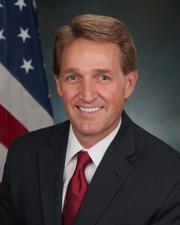 Rep. Jeff Flake (R-AZ)
Description
Amendment prohibits the earmarking of grants made available through the Small Business Early-Stage Investment program.
Legislative Activity
Stay on top of the latest movement without scrolling through every action
House amendment offered
October 29, 2009
View full timeline
House amendment offered
October 29, 2009
House amendment offered/reported by : Amendment (A005) offered by Mr. Flake.(consideration: CR H12103-12104, H12113-12114; text: CR H12103)
October 29, 2009 • 3:36 PM
House amendment agreed to: On agreeing to the Flake amendment (A005) Agreed to by recorded vote: 370 - 55 (Roll no. 828).
October 29, 2009 • 5:18 PM
Roll call votes on amendments in House
October 29, 2009 • 5:18 PM
Amendment agreed to Committee of the Whole
October 29, 2009 • 5:18 PM
Amendment (A005) offered by Mr. Flake. (consideration: CR H12103-12104, H12113-12114; text: CR H12103)
October 29, 2009 • 3:36 PM
On agreeing to the Flake amendment (A005) Agreed to by recorded vote: 370 - 55 (Roll no. 828).
October 29, 2009 • 5:18 PM
Votes
1 roll call on this amendment
Text
Offered
SMALL BUSINESS FINANCING AND INVESTMENT ACT OF 2009

The SPEAKER pro tempore. Pursuant to House Resolution 875 and rule
XVIII, the Chair declares the House in the Committee of the Whole House
on the State of the Union for the consideration of the bill, H.R. 3854.

{time}  1431

In the Committee of the Whole

Accordingly, the House resolved itself into the Committee of the
Whole House on the State of the Union for the consideration of the bill
(H.R. 3854) to amend the Small Business Act and the Small Business
Investment Act of 1958 to improve programs providing access to capital
under such Acts, and for other purposes, with Mr. Serrano in the chair.
The Clerk read the title of the bill.
The CHAIR. Pursuant to the rule, the bill is considered read the
first time.
The gentlewoman from New York (Ms. Velazquez) and the gentleman from
Missouri (Mr. Graves) each will control 30 minutes.
The Chair recognizes the gentlewoman from New York.
Ms. VELAZQUEZ. Mr. Chairman, I yield myself such time as I may
consume.
Mr. Chairman, I rise in support of this bill, which will enhance the
SBA's capital access programs. This bill is a bipartisan product. It
has the support of 48 stakeholder groups and could not have come
together without the contributions of eight different committee
members, including two from the minority. It addresses a key concern
for small firms and ensures they have the resources to help grow our
economy.
If history is any guide, small businesses will be the key to our
recovery. Since our Nation's founding, they have helped us bounce back
from countless downturns, including the recession of the mid-1990s. At
that time, start-up businesses generated 3.8 million new jobs. And
ultimately, Mr. Chairman, that is what our recovery efforts are all
about, putting Americans back to work.
Through innovation and ingenuity, small businesses have created
enormous wealth for our Nation. But America's economic engine doesn't
run on good ideas alone. Small firms need capital to not only get off
the ground, but to operate and grow. That is why H.R. 3854 delivers
better funding options to small firms at every stage of development.
For the aspiring entrepreneur, it opens new avenues for seed capital
and microloans. For the mid-market venture, it provides fresh funds for
investment. And for the established business, it creates room for
targeted risk and innovation. And it could not have come at a more
critical time.
Small business lending is declining at alarming rates. In July, a
survey by the Federal Reserve found that 35 percent of banks have
tightened lending to small businesses. In terms of credit cards, a
popular source of funding for entrepreneurs, 79 percent have seen their
lines cut radically. These are exceptional declines. And if we fail to
address them, we risk losing more than our most innovative businesses.
We risk losing hundreds of thousands of jobs.
Small businesses with tight profit margins do not have the luxury of
simply tightening the belt. When money is short, they are often forced
to lay off workers. But with unemployment at 9.8 percent, we just
cannot afford more losses. That is why this bill delivers critical
capital to new ventures.
To begin, it helps steer equity investment to start-ups in high-
growth fields like IT and clean energy. It also enhances SBA's
microloan program. Two weeks ago, my committee heard from an
entrepreneur who used microloans to grow his business from a fledgling
firm to a thriving enterprise with 30 employees. By improving the
microloan program, imagine how many more new businesses, and new jobs,
we can generate.
Ask any small business owner, and they will tell you that start-ups
are not the only firms that need capital. Established ventures in
fields like manufacturing, for example, need funding to adapt to the
changing marketplace. By improving the 504 program, this bill gives
them the flexibility to purchase new equipment and otherwise retool
operations. When paired with new initiatives like the New Markets
Venture Capital and Renewable Energy Capital Investment programs, these
efforts will help manufacturers emerge from the downturn stronger and
better poised to create new jobs.
Meanwhile, we are also delivering important lending options to our
Nation's veterans, offering reduced borrower fees and increased loan
guarantees. As our servicemen and -women return home from deployment
abroad, we need to be sure they have access to the economic
opportunities that entrepreneurship offers.
Mr. Chairman, this bill is about choices. It is about better options
for the small businesses that didn't get a bailout. H.R. 3854 provides
critical funding to small firms in every industry and, most
importantly, generates

[[Page H12075]]

jobs. In fact, it will create or sustain more than 1.3 million
positions nationwide.
In the 111th Congress, job creation is our number one priority. It
only makes sense to support legislation that gets us there.
Mr. Chairman, I reserve the balance of my time.
Mr. GRAVES. Mr. Chairman, I yield myself such time as I may consume.
Mr. Chairman, I rise today in support of H.R. 3854, the Small
Business Financing and Investment Act of 2009. Before we even get
started, I want to thank the chairwoman, the gentlelady from New York,
and Subcommittee Chairman Schrader for working in a very bipartisan
manner to craft this important legislation. This bill includes bills
introduced by Mr. Buchanan and Mr. Luetkemeyer of the committee, and I
think it is a good piece of legislation.
The bill before us today will significantly strengthen the ability of
small businesses to obtain needed capital for retaining and creating
new jobs. The committee has heard time and time and time again that
small businesses want to expand but can't find funds necessary to do
so. I am sure most of the Members of this Chamber have heard the same
thing from their small business constituents back home.
If small businesses create most of the new jobs in this country and
can't obtain capital, economic recovery is going to be a faint light at
the end of a very long and dark tunnel. Enactment of H.R. 3854 isn't
going to magically correct the flaws in the credit markets for small
businesses, nor will the programs in these bills increase the
confidence of small businesses while the President continues to push
initiatives such as capital-and-trade and health care reform that are
going to raise costs on small businesses. Nevertheless, the provisions
of this bill to improve the financing programs operated by the Small
Business Administration can play a vital role in relieving the existing
stress on the capital and credit markets for small businesses until
those markets return to more normal operations.
Title I of the bill reduces the barriers to utilization of the 7(a)
guaranteed loan program by community banks, particularly those in rural
areas.
Mr. Buchanan's bill, incorporated as title II, overhauls the
operation of the Certified Development Company loan program and will
make long-term fixed rate debt available to many small businesses,
particularly manufacturers seeking to retool and expand their
operations.
Title III makes modest, but important, changes to the microloan
program, which will give America's smallest entrepreneurs a greater
chance of success.
Title IV adopts Mr. Luetkemeyer's bill to enhance the Small Business
Investment Company program by enabling successful managers of such
companies to more easily expand their operations.
Title V's most significant change is to correct a flaw in the New
Market Venture Capital Company program that would spur greater
investment in poor rural areas of the country.
Title VI establishes a loan program which will enable physicians and
other providers of health care to make the necessary investment in the
efficiency of electronic health records.
Title VII provides the SBA with the opportunity to leverage Federal
funds with the best venture operators to promote investment in early
stage businesses, like the next Microsoft, Dell, Google or Federal
Express.
Title VIII makes additional modifications to the SBA's disaster loan
program in order to ensure that small businesses will quickly have
needed funds to help recover from a disaster.
In addition to amending key financing programs, this bill, including
title IX, makes concerted efforts at increasing the transparency of the
SBA's decision-making process. It would be foolish to make significant
improvements in these vital financial programs, yet have small
businesses' access to them curtailed by inefficient and opaque
administration by the SBA.
I would like to add one final point to my comments, Mr. Chairman.
Some may question the cost of this bill in a time of fiscal
constraints. However, I believe that it represents a vital investment
in a better future for our economy. For the past decade, this country's
biggest export has been risk. However, America was not built on
derivatives or credit default swaps. It was built by individuals
creating new products in new ways that the entire world demanded. This
bill will help us return to that America, one based on the hard work of
creating real and tangible products that are the envy of the entire
world.
Mr. Chairman, I reserve the balance of my time.
Mr. SCHRADER. Mr. Chairman, I yield myself such time as I may
consume.
I rise today in strong support of H.R. 3854, the Small Business
Financing and Investment Act of 2009. This bill represents the
culmination of work done by many hard-working members of the Small
Business Committee, Democrats and Republicans. They both understand how
critical small business growth is for communities throughout this
Nation and to our economy as a whole.
I specifically want to acknowledge Chairwoman Velazquez, Ranking
Member Graves, Representatives Halvorson, Kirkpatrick, Nye,
Luetkemeyer, Dahlkemper, Ellsworth and Griffith, and the ranking member
of my Subcommittee on Finance and Tax, Representative Buchanan, and
their expertise in crafting the various sections of the bill that the
ranking member referenced. These leaders recognize that small
businesses are the backbone of our economy and must be the driving
force in spurring economic growth.
Also, I want to thank personally my Small Business Advisory Board in
Oregon. They provided me critical information and thoughts about what
this Congress can be doing to truly aid small businesses.
Small businesses are the real job creators for most of our
communities, but unfortunately, the current recession has hit them
very, very hard. As a small business owner myself for over 30 years, I
understand all too well the difficulties they face accessing capital
during these tough economic times. Many small business owners literally
survive month-to-month. They rely on timely payment for their products
and services because they do not possess the deep reserves of some of
the larger companies. That is why a deep, prolonged recession is
particularly dangerous for small businesses.
In August, I held a hearing of my Finance and Tax Subcommittee in
Salem, Oregon, in the heart of my congressional district. We took
testimony from small business owners and learned firsthand about the
difficulties of accessing loans and how crippling the current situation
is for many small businesses. We also heard from banks and credit
unions who talked about their concerns with making loans, given the
recession environment, and the new regulatory burdens placed on them.
We talked about problems with the SBA and how we can improve their
programs to make them friendlier, more efficient and responsive to both
businesses and lenders, and we talked about many solutions to the
current credit freeze. I am pleased to say that many of these proposals
are in the legislation we are debating here today.
In our current environment, small businesses everywhere, in every
industry, face the same problem: They cannot access affordable capital.
Entrepreneurs who are looking to expand and hire workers, and companies
who want to borrow money to stay afloat, are unable to secure necessary
credit because of the economic downturn, despite their own past good
credit.

{time}  1445

The SBA's diverse catalog of lending and investment programs, as
approved here today, have the potential to increase access to capital
and provide the needed loans when the private sector is uncertain about
accepting more risk.
That is why passage of H.R. 3854 is so critical to create jobs and
build our economy right now. It increases the maximum loan sizes for
SBA 7(a), 504, microloan, and newly created ARC loan programs. It
increases efficiency at the SBA, something we have needed for a long
time, by reducing burdensome application loan times for the regular
loans, rural loans, cooperative loans and the ARC program. It allows
CDCs to do loan liquidation for the 504 program, helping pay for that
program. It includes closing costs on 7(a) and 504

[[Page H12076]]

loans in the loans. It approves the SBIC licensing protocol to make it
more attractive to our lenders and aligns definitions and program
opportunities with the U.S. Department of Agriculture with similar
programs.
It encourages banks to participate once again and loan by increasing
guarantees to 90 percent. It extends for a longer period of time the
American Recovery and Reinvestment Act so it's more attractive for
banks to gear up for those programs. It cuts lender fees, requires
prompt purchase of bad loans by the SBA within 45 days, and simplifies
the ARC loan application to one page.
Mr. Chairman, our American small businesses are comprised of
individuals who drive innovation, develop resources to meet the demands
of our changing world, and make a meaningful impact on our local
communities. In my State of Oregon, 98 percent of the businesses are
small businesses, and they employ almost 60 percent of our workforce.
At a time when our State and our country face high unemployment, it
makes perfect sense to do all we can to help small businesses do what
they do best, create jobs in our economy. That's what H.R. 3854 will
do, and why I urge a strong ``yes'' vote.
Mr. Chairman, I reserve the balance of my time.
Mr. GRAVES. Mr. Chairman, I yield such time as he may consume to my
colleague from Missouri, Mr. Luetkemeyer, the ranking member of the
Rural Development, Entrepreneurship and Trade Subcommittee.
Mr. LUETKEMEYER. Again, I would like to echo the sentiments of
Ranking Member Graves with regards to the fine bipartisanship and the
good, hard work of everybody on the committee to come up with, I think,
an outstanding bill to help our small business folks in this country.
Mr. Chairman, I rise today in support of H.R. 3854 and am pleased to
see that this bill includes my legislation, H.R. 3740, the Small
Business Investment Company Modernization and Improvement Act of 2009.
As a small businessman, I am proud to support a bill that would
assist many fellow small business owners and employees throughout my
district and Missouri and all throughout the country. Small businesses
have generated up to 80 percent of new net jobs annually over the last
decade and contribute 38 percent of the GDP. Like every recession
before, small business will lead us back to economic prosperity.
Most small business owners remain cautious in their economic outlook,
with more than two-thirds in recent polls saying the recession is not
over for them. Many people want to signal that their economy is on the
mend, but American small businesses and small business owners aren't
able to send that message yet.
Small businesses have never had a harder time getting a loan, as
access to credit is being denied at an increasing pace. Since the onset
of the credit crisis over 2 years ago, available credit to small
business consumers has contracted by billions of dollars. Without
access to credit, small businesses can't grow, can't hire, and too
often end up going out of business.
In recent hearings on the Small Business Administration's capital
access programs, we heard from two SBIC witnesses from my home State of
Missouri, Capital For Business and C3 Capital. Both testified that
despite having a 50-year record of growing American small businesses
and providing over $55 billion in financing to over 100,000 U.S.-based
businesses, the SBIC is being dramatically underutilized. When both
credit and investment have evaporated, it does not make sense to leave
an effective small business tool unused.
Additionally, this bill will halt the continued flight of SBICs that
participate in the program by establishing an expedited licensing
process. A broken licensing system for far too long has been cutting
off capital to good small businesses. I know of a successful SBIC in
Missouri that applied for a second license and it took over 1 year,
countless hours of paperwork and expensive legal bills.
This legislation would provide a transparent process with clear
standards and a reasonable timeline for applicants. This bill also
includes strong taxpayer protections. New background checks and proof
of raised capital would be required.
Funds that have major regulatory problems or are unable to raise
private funds would not be able to get an expedited repeat license.
Further, the administrator should have the authority to put the brakes
on any application that she thinks may pose a risk to the taxpayer.
At a time when small businesses are still struggling to keep their
doors open, I am pleased to see a bill working its way through the
legislative process that would improve initiatives already available to
small businesses. Perhaps more important, the bill we consider today
recognizes the ability here to create good private sector jobs in
Missouri and across the country.
Mr. Chairman, this bill is not an answer to what ails our economy. It
is a good start to help small business, the economic engine of our
economy, get back into the business of doing business.
I urge my colleagues to adopt the legislation.
Mr. SCHRADER. Mr. Chairman, I yield 3 minutes to the gentlewoman from
Illinois (Mrs. Halvorson).
Mrs. HALVORSON. Mr. Chairman, I rise today in support of H.R. 3854,
the Small Business Financing and Investment Act. I am proud to be an
original cosponsor of this bill, which includes language from
legislation I introduced, H.R. 3723, the Small Business Credit
Expansion and Loan Markets Stabilization Act.
I commend Chairwoman Velazquez, Ranking Member Graves, and Mr.
Schrader for his hard work on the bill before us today.
This year, the House has already passed several pieces of legislation
that will help our Nation's small business owners, but it's clear that
we still have much work to do. I also want to thank the small business
owners in my district for getting together regularly to let me know
what is going on with their small business. In fact, we are still
hearing from them every day about what's going on and especially the
difficulties in accessing credit, which continues to be a major
challenge.
Small businesses need capital to grow and create new jobs, but the
credit crunch has made it exceedingly difficult for them to obtain
loans, which we know firsthand, as my husband owns two small
businesses, and that also continually is a difficult time. In times
like this, small businesses turn to the SBA. The American Recovery and
Reinvestment Act includes several provisions that strengthen the Small
Business Administration's ability to help small businesses access
capital.
The legislation before us today will enhance the SBA's access to
capital programs and build on the progress made by the recovery bill.
H.R. 3854 will improve the SBA's flagship 7(a) loan program. It extends
provisions in the Recovery Act that reduce borrower fees and increase
SBA loan guarantees.
We will also extend the ARC loan program, simplify the application
process and increase the maximum loan. To increase lender
participation, the bill creates new rural and small lender outreach
programs of the SBA.
Finally, we are going to help veteran entrepreneurs by fully
implementing the SBA's Increased Veteran Participation Loan Program.
H.R. 3854 will help get credit flowing again for America's small
business owners so that they can create new jobs and jump-start our
economy.
I urge my colleagues to join me in supporting this legislation.
Mr. GRAVES. Mr. Chairman, I reserve the balance of my time.
Mr. SCHRADER. Mr. Chairman, I yield 3 minutes to the gentleman from
Indiana (Mr. Ellsworth).
Mr. ELLSWORTH. I thank the chairman and thank all of my colleagues on
the committee for their hard work on this bill, especially Chairwoman
Velazquez and Ranking Member Graves for their leadership and the
bipartisan spirit with which we wrote this bill.
Mr. Chairman, tough economic times like these we are in right now
have time and time again spurred the innovations to put us back on the
right track. The entrepreneurs who take on the risk of starting a new
business in these times, they are the ones who will transform our
economy and jump-start growth in our communities.
Unfortunately, entrepreneurs in my district and across the country
are

[[Page H12077]]

being turned away by lenders nervous about the risk of starting a new
business. That's why it's so important that we pass this bill today.
The Small Business Financing and Investment Act will provide much-
needed assistance to entrepreneurs who are just asking for a chance to
succeed.
The Small Business Administration's microloan program helps
entrepreneurs like these secure start-up capital to get their new
ventures off the ground. Unfortunately, the SBA's microloan program
remains underused.
Too many of these funds Congress has provided to help these small
businesses are being left on the table, despite the credit crunch in
the private marketplace. Clearly we need to bridge the gap so that more
aspiring business owners find the credit they need to get started.
The legislation before us includes a bill that I authored to improve
how the SBA's microloan program functions. The Small Business
Microlending Expansion Act makes a number of changes to improve this
program and expand its reach to more small businesses.
These changes will put unused loan funds toward making existing
microloans more affordable. It will get more lenders involved in the
program while expanding the amount existing lenders can provide to
their communities. It improves the ability of lenders to provide the
technical assistance entrepreneurs need to succeed.
Simply put, this bill will increase the capital flowing to
entrepreneurs, who can use those loans to build a business, employ
their neighbors, and improve their community. That is our goal today,
and it should be the goal every day.
Mr. GRAVES. Mr. Chairman, I continue to reserve the balance of my
time.
Mr. SCHRADER. Mr. Chairman, I yield 3 minutes to the gentlewoman from
Illinois (Ms. Bean).
Ms. BEAN. I thank the Chair for yielding.
Mr. Chairman, I rise in strong support of the manager's amendment and
the Small Business Financing and Investment Act of 2009.
I want to commend Chairwoman Velazquez and the subcommittee Chair,
Mr. Schrader, for their hard work on behalf of small businesses across
the country. As a former small business owner, I appreciate the
challenges entrepreneurs and small business owners face in gaining
access to the capital that they need to grow their businesses.
This summer, I held a roundtable with Illinois businesses and the SBA
to discuss these challenges. That's why I have long supported measures
to improve and expand SBA loan programs, which offer low interest,
long-term loans to creditworthy community business owners. In the last
Congress, I authored similar legislation, the Small Business Lending
Improvements Act, which passed the House in 2007.
The expedited consideration of H.R. 3854 underscores both the
importance and urgency of assuring access to capital for our small
business community. Simply put, the U.S. cannot promote economic
recovery without small businesses, as they are the engine of job
creation and innovation in our Nation.
The American Recovery and Reinvestment Act did a great deal to
provide lending and investment. Since the bill's enactment in February,
the SBA has supported $13.4 billion in small business lending, and
weekly loan approvals have increased by 75 percent.
That said, the SBA's capital access programs aren't equipped to meet
current needs. H.R. 3854 brings long-awaited updates and improvements
to SBA's lending initiatives, most importantly, preserving the original
intent of these programs to help make affordable sources of financing
accessible.
This legislation raises the cap on 7(a), 504 and ARC loans. It
directs the SBA to target capital towards communities hard-hit by the
recession and towards industries that hold the most promise for
American innovation and competitiveness. The measure also streamlines
the loan application process and makes it easier for small and
community lenders to participate in the programs.
I am particularly pleased that a provision that I authored enabling
staffing company franchises to qualify for SBA programs was included in
the manager's amendment. Supporting the temporary staffing industry is
important now more than ever as temporary positions provide a lifeline
to many workers in a constrained job market. Their market growth also
serves as an early indicator of emerging job markets towards broader
recovery.
My provision directs the SBA to continue applying its historically
considered affiliation factors when determining a business'
independence so that franchisees are not penalized.
I would like to thank Chairwoman Velazquez for including this
provision in the manager's amendment. H.R. 3854 provides the tools to
help small businesses access capital, create jobs and fuel our economy
as we move forward.
I urge my colleagues to support this important bill.

{time}  1500

The CHAIR. The Chair will note that the gentleman from Oregon has
12\1/2\ minutes remaining. The gentleman from Missouri has 22\1/2\
minutes remaining.
Mr. GRAVES. Mr. Chairman, I continue to reserve the balance of my
time.
Mr. SCHRADER. Mr. Chairman, I would like to yield 3 minutes to the
gentlelady from Pennsylvania (Mrs. Dahlkemper).
Mrs. DAHLKEMPER. Mr. Chairman, I rise today in support of the Small
Business Financing and Investment Act. I want to thank Subcommittee
Chair Schrader and Chairwoman Velazquez as well as so many members of
the committee who have worked so hard on this legislation.
As a member of the Small Business Committee and a former small
business owner, I know firsthand that small businesses are the driving
force of our economy, creating between 60 and 80 percent of our
Nation's new jobs every year. Small businesses create good jobs and
strengthen our communities. Not only do small businesses bring valuable
resources to our neighborhoods, but they bring prosperity as well. When
small businesses succeed, they benefit everyone in the community.
Small businesses have been among the hardest hit by the recession.
The Small Business Financing and Investment Act will help open tight
credit markets that have shut down small business owners during this
economic crisis so that small businesses can create jobs, particularly
in struggling regions and industries. In addition, this small business
legislation takes an important step to address another issue affecting
small businesses in the health care business sector.
My legislation, the Small Business Health Information Technology
Financing Act, which has been incorporated into this bill, makes cost-
saving information technology affordable for small group and individual
health care practitioners. Administrative burdens add dramatically to
the ever-rising price tag of health care, but the cost-saving
information, technologies which are ready available, are often too
expensive an investment for small group or individual health care
providers. That includes small group physicians, nurse practitioners,
community pharmacists and others.
My provision creates an affordable loan program for these providers
to make the investment in health information technologies that lower
the cost of health care for everyone.
The Small Business Health Information Technology Financing Act
creates a new loan guarantee program at the Small Business
Administration for the purchase of health information technology by
health care professionals in individual and small group practices,
those with 50 or fewer employees. The loan guarantee program provides a
90 percent guarantee and loan amounts up to $350,000 for an individual
practitioner and $2 million for a group.
Mr. Chairman, the Small Business Financing and Investment Act will
help grow small businesses, create good jobs for Americans and help
lower the administrative costs of health care. I urge my colleagues on
both sides of the aisle to support this small business legislation.

[[Page H12078]]

Mr. GRAVES. Mr. Chairman, may I inquire how many speakers the
majority has?
Mr. SCHRADER. We have no further speakers and are prepared to close.
Mr. GRAVES. Mr. Chairman, I will go ahead and yield back the balance
of my time.
Mr. SCHRADER. I yield the balance of my time to the gentlewoman from
New York (Ms. Velazquez).
The CHAIR. The gentlewoman is recognized for 10 minutes.
Ms. VELAZQUEZ. Mr. Chairman, I would like to take this opportunity to
thank the staff--from both sides of the aisle--that worked so hard on
this bill.
From the majority--Michael Day and Andy Jiminez; and Ethan Pittleman
from Mr. Schrader's staff.
From the minority--Barry Pineles and Karen Haas; and Max Goodman from
Mr. Buchanan's staff.
Their efforts to ensure the members' priorities are included in this
legislation are very much appreciated.
Mr. Chairman, the Small Business Committee is not alone in its
commitment to small firms. Since the downturn began, we have heard
countless calls from both sides of the aisle for a new economic
foundation--one that puts Main Street before Wall Street and that
values entrepreneurship over corporate greed. Well, this bill does
both. By empowering small businesses, it makes a direct investment in
the two things our economy needs most--innovation and job creation.
Capital is a fundamental building block for small business growth.
Without it, new ventures cannot get off the ground and existing
companies cannot hire workers. H.R. 3854 delivers the resources small
firms need to grow. For small medical practices, it makes health IT
more affordable. For entrepreneurs developing the next breakthrough in
clean energy, it buys time for R&D. And for veterans and rural
Americans seeking economic empowerment, it puts entrepreneurship within
reach. Most importantly, however, this bill keeps workers on payroll.
By allowing entrepreneurs to expand their ventures, H.R. 3854 will
create and sustain more than 1.3 million jobs. In other words, Mr.
Chairman, a vote for this bill is a vote for job creation. If you ask
me, that is something we can all get behind, Democrats and Republicans
alike, and I urge adoption of this bill.
Mr. VAN HOLLEN. Mr. Chair, small businesses are the backbone of the
American economy. They represent almost 8 out of every 10 new jobs
created in the country and are a key element of the Nation's efforts to
achieve a successful and complete economic recovery.
Last week I joined President Obama, Treasury Secretary Tim Geithner,
Small Business Administrator Karen Mills, Members of the Maryland
Delegation, Governor Martin O'Malley, County Executive Jack Johnson,
and Hyattsville Mayor William Gardner at Metropolitan Archives in
Largo, MD to discuss the work Congress and the Obama administration are
doing to create jobs and expand credit access to Maryland small
businesses. The bill we consider today, H.R. 3854, the Small Business
Financing and Investment Act of 2009, is a significant part of our
efforts.
H.R. 3854 reauthorizes and increases the resources of successful
programs such as the SBA 7(a), Business Stabilization Loans and the SBA
Microloan programs. The Small Business Administration 7(a) program
guarantees long-term loans for business startups and expansions. The
bill authorizes funds to guarantee $20 billion in 7(a) loans in 2010
and 2011. The bill extends until 2011 Business Stabilization Loans
which provide $50,000 each for qualifying small businesses to make
payments on existing loans. The bill also helps provide small
businesses with short-term, working capital through the SBA Microloan
program. Under the program, small businesses and not-for-profit child
care centers can qualify for loans up to $35,000 to use for equipment,
supplies, inventory and other business necessities.
The bill renews and expands the resources of the public/private
partnership programs that serve small businesses such as community
development programs, the Small Business Investment Company and the New
Markets Venture Capital Program.
The SBA works with certified development companies to contribute to
the economic development of communities. These public/private
partnerships provide community small businesses with long-term loans to
expand and modernize with the purpose of creating local jobs. This bill
authorizes the SBA to guarantee no less than $9 billion of these
community directed loans in 2010 and 2011.
The bill also continues Congress' commitment to the Small Business
Investment Company by authorizing the SBA to guarantee $5 billion in
loans in 2010 and $5.5 billion in 2011 for the program. The Small
Business Investment Company licenses private investment firms to borrow
Treasury money and make loans to small businesses. The loans are made
with the long-term growth in mind since such investments can take years
before becoming profitable. Since its creation in 1958, the Small
Business Investment Company has provided nearly 100,000 small
businesses with the capital they need to develop and grow.
The bill also reauthorizes the New Markets Venture Capital Program to
promote economic development and job creation in low-income areas with
$100 million in loans and loan guarantees for qualifying venture
capital companies engaged in small business and job creation and
economic development.
The latest reports and statistics catalogue the continued difficulty
small businesses are experiencing as they attempt to access credit. The
Nation's rising unemployment statistics emphasize the urgency of the
problem. The resources provided by this bill should help American small
businesses cope as the country struggles to right itself in the
aftermath of the greatest economic downturn the world has ever known. I
urge my colleagues to join me in support of the bill.
Mr. LANGEVIN. Mr. Chair, I rise in strong support of H.R. 3854, the
Small Business Financing and Investment Act. This legislation will
directly support small business jobs in Rhode Island by extending
certain small business American Recovery and Reinvestment Act
provisions and updating SBA programs to help meet the needs of
businesses.
Small businesses have borne the brunt of this economic crisis. I
continue to hear from many small business owners in Rhode Island that
accessing credit remains a significant problem. Remarkably, small
businesses make up 96 percent of all employers in Rhode Island, and
their inability to access credit to keep their businesses operating has
clearly added to our high unemployment rate of 13 percent.
It is imperative that our small businesses have access to the tools
they need to weather this economic downturn, as well as to keep and
create jobs. H.R. 3854 does this by extending Recovery Act provisions
that eliminated fees on SBA loans and guaranteeing these loans at 90
percent. This gives local banks and credit unions the confidence to
lend to small businesses. This bill also raises the cap level on 7(a)
loans from $2 million to $3 million, makes microloans more affordable
for budding entrepreneurs, and streamlines the cumbersome loan
application process.
Additionally, the legislation boosts programs that help small
manufacturers and improves a renewable energy investment program to
encourage small enterprises that are researching alternative and
renewable energy solutions. H.R. 3854 also provides tools for veterans
to start their own businesses and also makes permanent the Community
Express program, which promotes lending to small businesses owned by
women and economically disadvantaged individuals.
I encourage my colleagues to support H.R. 3854, which will help our
small businesses grow, keep people employed and create new jobs. A few
months ago, I had the chance to visit Jamiel's Shoe World, a small,
family-owned business and a Rhode Island institution, which was able to
take advantage of a loan guaranteed by the stimulus bill--a loan that
enabled them to keep their doors open and keep Rhode Islanders
employed. I look forward to seeing this legislation signed into law so
that other small Rhode Island businesses can access the capital they
need to flourish.
Ms. MATSUI. Mr. Chair, I rise today in strong support of the Small
Business Financing and Investment Act. I also want to congratulate
Chairwoman Velazquez and the Small Business Committee for bringing this
bill before us today.
We are all aware of the importance of small businesses in our
neighborhoods and communities.
While we rely on them to produce goods and services, we also depend
on them to create and sustain jobs. Small businesses are the engine of
economic growth and innovation.
Nationally they represent more than 90 percent of all business in our
country and have generated 70 percent of all new jobs over the past
decade.
In my home district of Sacramento, small businesses are an integral
part of our economy.
In fact, most Sacramentans obtain their first job through a small
business.
In today's economic recession, however, many small businesses are
struggling to make payroll, retain their employees, and expand their
operations.
Over the last few months I've held two, separate, ``Small Business
Workshops'' in Sacramento to help existing small business owners
understand the stimulus legislation, obtain

[[Page H12079]]

financing and find new opportunities through government programs.
These two workshops attracted more than 800 local small businesses in
Sacramento.
At these workshops, I heard from small business owners who were eager
to be connected to business counseling resources, learn more about
financing opportunities, SBA loan products, and government contracting
opportunities.
I also heard from local small engineering firms who expressed concern
that they did not qualify for an SBA loan because of their Standard
Size.
I thank Chairwoman Velazquez for joining me in writing to SBA
Administrator Karen Mills to move quickly to consider changing the size
standard applied to small engineering firms.
Mr. Chair, the failure to promptly adjust the standard could inflict
long-term damage to businesses within the engineering community and
reduce federal contract participation opportunities.
The American Recovery and Reinvestment Act that we passed earlier
this year included dozens of new opportunities for small businesses
through government contracts and grant programs totaling nearly $9
billion in lending since its enactment.
The bill before us today would build on these successes by infusing
more than $44 billion for new lending and investment for small
businesses.
It would also establish a new public-private partnership at the SBA
and improve access to capital by increasing loan sizes.
Finally, it would create a new program to help small health
practitioners adopt Health Information Technology, while increasing
investment in small companies that are researching alternative and
renewable energy solutions.
Mr. Chair, the federal government, in partnership with the private
sector, is taking demonstrative action today to strengthen small
businesses.
I commend our Leadership for bringing the Small Business Financing
and Investment Act to the floor, and for their ongoing efforts to
assist America's small businesses.
I urge my colleagues to support passage of the pending legislation.
Mr. REYES. Mr. Chair, I rise today in support of H.R. 3854, the Small
Business Financing and Investment Act of 2009. This bill will assist
small businesses across the country by increasing the amount of funding
that is available to them as well as streamlining many of the current
SBA application processes.
There is a vibrant business community in my district of El Paso,
Texas, with the Greater El Paso Chamber of Commerce, the El Paso
Hispanic Chamber of Commerce, and the El Paso Small Business Consortium
all playing a key role to open doors for many of our local
entrepreneurs. Small businesses are a vital part of El Paso's economy,
and I support this bill because it will help small firms access larger
amounts of capital which is critical during these difficult economic
times.
I am particularly pleased with the provisions of the bill that make
permanent the Community Express and the Veteran Participation Loan
Programs. These programs share a common goal of assisting borrowers who
have not accessed SBA programs in the past or who have traditionally
had limited access to capital. The Community Express Program is an
important tool used by the El Paso Hispanic Chamber of Commerce to
provide funding to local firms that are deemed un-bankable by
conventional lenders. El Paso's growing military community will also
benefit from the higher guarantees and lower cost loans available to
veterans interested in starting their own businesses.
Mr. Chair, I support this legislation because I believe it will
improve the efficiency and transparency of the SBA's programs as well
as provide essential capital to small firms. I urge my colleagues to
vote in favor of this bill.
Mr. THOMPSON of Mississippi. Mr. Chair, I rise in firm support of
H.R. 3854, the Small Business Financing and Investment Act.
As a vital part of our economy, small businesses account for at least
65 percent of American jobs.
The legislation we are considering today provides a much-needed
increase in loans for the nation's small businesses.
During a time of economic recession, it is increasingly important
that we provide access to start-up capital, long term financing, and
other forms of investment capital to small businesses.
Hit particularly hard by these rough economic times, small businesses
receive greater access to critical financing through this legislation.
The bill also provides financing opportunities for rural communities
through the Rural Lender Outreach Program.
Another critical provision in H.R. 3854 creates a grant program for
companies to begin recovery efforts after a natural disaster.
I am confident that the nation's underserved small businesses--
particularly minority owned businesses--will be better served because
of this important legislation.
Access to capital is one of the greatest challenges preventing fair
competition for small businesses.
H.R. 3854 addresses accessibility to financing and overall
investment.
I urge my colleagues to support this important legislation.
Mr. BOSWELL. Mr. Chair, I ask unanimous consent to revise and extend
my marks.
I rise today in support of the manager's amendment, and the
underlying bill, H.R. 3854, the Small Business Financing and Investment
Act of 2009.
Thank you Chairwoman Velazquez for including an amendment I submitted
to Rules.
This amendment will ensure that Small Business Administration loans
may be used to purchase facilities and equipment that have been left
behind by closed manufacturing plants.
Each of us has seen communities devastated by the loss of a factory--
from the closing of automotive businesses, to the buy-out of Maytag
Corporation in my own district.
On Tuesday, many of us read in the Washington Post that an electronic
car company will be taking over a GM building in Delaware.
I believe we must continue to incentivize this practice--but on a
broader scale.
In my own district I have seen companies from within and outside Iowa
purchase Maytag campus facilities, our own Iowa Telecom, Trinity Towers
wind energy, and a new and locally owned small business, Madhouse
Brewery.
The empty factory buildings scattered across our nation represent the
loss of jobs, tough times, and hard choices for families and community
leaders.
I believe these buildings can be used to better our districts and
states. By helping small businesses that are rooted in the community
purchase these buildings or equipment, we will help bring hope to our
towns that have suffered such losses.
This amendment and legislation will empower the financial stability
of America's small businesses. I urge my colleagues to support this
amendment and H.R. 3854.
Mr. ETHERIDGE. Mr. Chair, I rise in support of H.R. 3854, the Small
Business Financing and Investment Act of 2009.
While our economy has begun to show some signs of rebounding from the
recession, there is still a long way to go before we have returned to
full strength. Far too many Americans are looking for work and the
unemployment rate remains high, reaching into the double digits in my
State of North Carolina. Many businesses are finding it difficult to
obtain the credit they need to operate. H.R. 3854 will benefit the
small businesses that form the backbone of our economy and serve as our
biggest job creators.
H.R. 3854 contains several provisions that will help finance new
small businesses and allow them access to more capital. This bill
supports public and private partnerships that invest capital into new
startups, and makes microloans more affordable for budding
entrepreneurs. For existing small businesses, this bill improves the
Small Business Administration's 7(a) loan initiative by raising loan
amounts and maintaining the fee reductions and guarantee increases that
were included in the American Recovery and Reinvestment Act. I am also
pleased that his bill contains provisions that help rural businesses
and veteran-owned businesses obtain loans. H.R. 3854 is expected to
support $44 billion in small business lending, which could create or
save over 1 million jobs.
I support stronger lending tools for our nation's small businesses
and I support the Small Business Financing and Investment Act of 2009.
I urge my colleagues to join me in voting for its passage.
The CHAIR. All time for general debate has expired.
Pursuant to the rule, the amendment printed in part A of House Report
111-317 is adopted. The bill, as amended, shall be considered as an
original bill for the purpose of further amendment under the 5-minute
rule and shall be considered read.
The text of the bill, as amended, is as follows:

H.R. 3854

Be it enacted by the Senate and House of Representatives of
the United States of America in Congress assembled,

SECTION 1. SHORT TITLE; TABLE OF CONTENTS.

(a) Short Title.--This Act may be cited as the ``Small
Business Financing and Investment Act of 2009''.
(b) Table of Contents.--The table of contents for this Act
is as follows:

Sec. 1. Short title; table of contents.

TITLE I--SMALL BUSINESS LENDING ENHANCEMENTS

Sec. 101. Small lender outreach program.
Sec. 102. Rural lending outreach program.
Sec. 103. Community Express Program made permanent.
Sec. 104. Increased veteran participation program made permanent.
Sec. 105. Leasing policy.

[[Page H12080]]

Sec. 106. National lender training program.
Sec. 107. Applications for repurchase of loans.
Sec. 108. Alternative size standard.
Sec. 109. Pilot program authority.
Sec. 110. Loans to cooperatives.
Sec. 111. Capital backstop program.
Sec. 112. Loans to finance goodwill.
Sec. 113. Appellate process and ombudsman.
Sec. 114. Extension of recovery and relief loan benefits.
Sec. 115. Reduced documentation for business stabilization loans.
Sec. 116. Expanded eligibility for business stabilization loans.
Sec. 117. Increased amount of business stabilization loans.
Sec. 118. Extension of business stabilization loans.
Sec. 119. SBA secondary market lending authority made permanent.
Sec. 120. SBA secondary market lending authority expanded.
Sec. 121. Increased loan limits.
Sec. 122. Real estate appraisals.
Sec. 123. Additional support for Express Loan Program.
Sec. 124. Authorization of appropriations.

TITLE II--CDC ECONOMIC DEVELOPMENT LOAN PROGRAM

Subtitle A--General Provisions

Sec. 201. Program levels.
Sec. 202. Definitions.

Subtitle B--Certified Development Companies

Sec. 211. Certified development companies.
Sec. 212. Certified development company; operational requirements.
Sec. 213. Accredited lenders program.
Sec. 214. Premier certified lender program.
Sec. 215. Multi-State operations.
Sec. 216. Guaranty of debentures.
Sec. 217. Economic development through debentures.
Sec. 218. Project funding requirements.
Sec. 219. Private debenture sales and pooling of debentures.
Sec. 220. Foreclosure and liquidation of loans.
Sec. 221. Reports and regulations.
Sec. 222. Program name.

Subtitle C--Miscellaneous

Sec. 231. Report on standard operating procedures.
Sec. 232. Alternative size standard.

TITLE III--MICROLENDING EXPANSION

Sec. 301. Microloan credit building initiative.
Sec. 302. Flexible credit terms.
Sec. 303. Increased program participation.
Sec. 304. Increased limit on intermediary borrowing.
Sec. 305. Expanded borrower education assistance.
Sec. 306. Interest rates and loan size.
Sec. 307. Reporting requirement.
Sec. 308. Surplus interest rate subsidy for businesses.
Sec. 309. Authorization of appropriations.

TITLE IV--SMALL BUSINESS INVESTMENT COMPANY MODERNIZATION

Sec. 401. Increased investment from States.
Sec. 402. Expedited licensing for experienced applicants.
Sec. 403. Revised leverage limitations for successful SBICs.
Sec. 404. Consistency for cost control.
Sec. 405. Investment in veteran-owned small businesses.
Sec. 406. Limitations on prepayment.
Sec. 407. Investment with certain passive entities.
Sec. 408. Investment in smaller enterprises.
Sec. 409. Capital impairment.
Sec. 410. Tangible net worth.
Sec. 411. Development of agency record.
Sec. 412. Program levels.

TITLE V--INVESTMENT IN SMALL MANUFACTURERS AND RENEWABLE ENERGY SMALL
BUSINESSES

Subtitle A--Enhanced New Markets Venture Capital Program

Sec. 501. Expansion of New Markets Venture Capital Program.
Sec. 502. Improved nationwide distribution.
Sec. 503. Increased investment in small business concerns engaged
primarily in manufacturing.
Sec. 504. Expanded uses for operational assistance in manufacturing.
Sec. 505. Updating definition of low-income geographic area.
Sec. 506. Expanding operational assistance to conditionally approved
companies.
Sec. 507. Limitation on time for final approval.
Sec. 508. Streamlined application for New Markets Venture Capital
Program.
Sec. 509. Elimination of matching requirement.
Sec. 510. Simplified formula for operational assistance grants.
Sec. 511. Authorization of appropriations and enhanced allocation for
small manufacturing.

Subtitle B--Expanded Investment in Small Business Renewable Energy

Sec. 521. Expanded investment in renewable energy.
Sec. 522. Renewable Energy Capital Investment Program made permanent.
Sec. 523. Expanded eligibility for small businesses.
Sec. 524. Expanded uses for operational assistance in manufacturing and
small businesses.
Sec. 525. Expansion of Renewable Energy Capital Investment Program.
Sec. 526. Simplified fee structure to expedite implementation.
Sec. 527. Increased operational assistance grants.
Sec. 528. Authorizations of appropriations.

TITLE VI--SMALL BUSINESS HEALTH INFORMATION TECHNOLOGY FINANCING
PROGRAM

Sec. 601. Small business health information technology financing
program.

TITLE VII--SMALL BUSINESS EARLY-STAGE INVESTMENT PROGRAM

Sec. 701. Small business early-stage investment program.

TITLE VIII--SBA DISASTER PROGRAM REFORM

Sec. 801. Revised collateral requirements.
Sec. 802. Increased limits.
Sec. 803. Revised repayment terms.
Sec. 804. Revised disbursement process.
Sec. 805. Grant program.
Sec. 806. Regional disaster working groups.
Sec. 807. Outreach grants for loan applicant assistance.
Sec. 808. Authorization of appropriations.

TITLE IX--REGULATIONS

Sec. 901. Regulations.

TITLE I--SMALL BUSINESS LENDING ENHANCEMENTS

SEC. 101. SMALL LENDER OUTREACH PROGRAM.

Section 7(a) of the Small Business Act (15 U.S.C. 636(a))
is amended by adding at the end the following:
``(34) Small lender outreach program.--The Administrator
shall establish and carry out a program to provide support to
regional, district, and branch offices of the Administration
to assist small lenders, who do not participate in the
Preferred Lenders Program, to participate in the programs
under this subsection.''.

SEC. 102. RURAL LENDING OUTREACH PROGRAM.

Section 7(a) of the Small Business Act (15 U.S.C. 636(a)),
as amended by this Act, is further amended by adding at the
end the following:
``(35) Rural lending outreach program.--
``(A) In general.--The Administrator shall establish and
carry out a rural lending outreach program (hereinafter
referred to in this paragraph as the `program') to provide
loans under this subsection in accordance with this
paragraph.
``(B) Maximum participation.--A loan under the program
shall include the maximum participation levels by the
Administrator permitted for loans made under this subsection.
``(C) Maximum loan amount.--The maximum amount of a loan
under the program shall be $250,000.
``(D) Use of rural lenders.--The program shall be carried
out through lenders located in a rural area (as such term is
defined under subsection (m)(11)(C)) or, if a small business
concern located in a rural area does not have a lender
located within 30 miles of the principal place of business of
such concern, through any lender chosen by such concern that
provides loans under this subsection.
``(E) Time for approval.--The Administrator shall approve
or disapprove a loan under the program within 36 hours.
``(F) Documentation.--The program shall use abbreviated
application and documentation requirements.
``(G) Credit standards.--Minimum credit standards, as the
Administrator considers necessary to limit the rate of
default on loans made under the program, shall apply.''.

SEC. 103. COMMUNITY EXPRESS PROGRAM MADE PERMANENT.

Section 7(a) of the Small Business Act (15 U.S.C. 636(a)),
as amended by this Act, is further amended by adding at the
end the following:
``(36) Community express program.--
``(A) In general.--The Administrator shall carry out a
Community Express Program to provide loans under this
subsection in accordance with this paragraph.
``(B) Requirements.--For a loan made under the Community
Express Program, the following shall apply:
``(i) The loan shall be in an amount not exceeding
$250,000.
``(ii) The loan shall be made to a small business concern
the majority ownership interest of which is directly held by
individuals the Administrator determines are, without regard
to the geographic location of such individuals, women,
members of qualified Indian tribes, socially or economically
disadvantaged individuals, veterans, or members of the
reserve components of the Armed Forces.
``(iii) The loan shall comply with the collateral policy of
the Administration.
``(iv) The loan shall include terms requiring the lender to
provide, at the expense of the lender, technical assistance
to the borrower through the lender or a third-party provider.
``(v) The Administrator shall approve or disapprove the
loan within 36 hours.''.

SEC. 104. INCREASED VETERAN PARTICIPATION PROGRAM MADE
PERMANENT.

Section 7(a) of the Small Business Act (15 U.S.C. 636(a)),
as amended by this Act, is further amended--
(1) by redesignating the second paragraph (32), as added by
section 208 of the Military Reservist and Veteran Small
Business Reauthorization and Opportunity Act of 2008 (Public
Law 110-186; 122 Stat. 631), as paragraph (33); and

[[Page H12081]]

(2) in paragraph (33), as so redesignated by paragraph (1)
of this section--
(A) by striking ``pilot program'' each place it appears and
inserting ``program'';
(B) by striking subparagraphs (C) and (F); and
(C) by redesignating subparagraphs (D) and (E) as
subparagraphs (C) and (D), respectively.

SEC. 105. LEASING POLICY.

Section 7(a) of the Small Business Act (15 U.S.C. 636(a)),
as amended by this Act, is further amended by striking
paragraph (28) and inserting the following:
``(28) Leasing.--If a loan under this subsection is used to
acquire or construct a facility, the assisted small business
concern--
``(A) shall permanently occupy and use not less than 50
percent of the space in such facility; and
``(B) may, on a temporary or permanent basis, lease to
others not more than 50 percent of the space in such
facility.''.

SEC. 106. NATIONAL LENDER TRAINING PROGRAM.

(a) In General.--Section 7(a) of the Small Business Act (15
U.S.C. 636(a)), as amended by this Act, is further amended by
adding at the end the following:
``(37) National lender training program.--
``(A) In general.--The Administrator shall establish and
carry out, through the regional offices of the
Administration, a lender training program for new and
existing lenders under this subsection with respect to the
lending systems, policies, and procedures of the
Administration.
``(B) Fees.--The Administrator shall charge a fee for the
program established under subparagraph (A) to reduce the cost
of such program to zero.
``(C) Limitation.--The program established under
subparagraph (A) may not be carried out by contract with a
nongovernmental entity.''.
(b) Participation.--An entity may not be permitted to
participate in any program under the Small Business Act (15
U.S.C. 631 et seq.) or the Small Business Investment Act of
1958 (15 U.S.C. 661 et seq.) that is amended under this Act,
as a lending or investment entity or as an agent of the Small
Business Administration, unless such entity satisfies the
following:
(1) The entity has as the primary mission of the entity the
financing or development of small business concerns.
(2) The entity has a full-time staff dedicated to loan
making activities, investment activities, or entrepreneurial
development training.
(3) The entity does not significantly participate in
activities unrelated to the primary mission of the entity.

SEC. 107. APPLICATIONS FOR REPURCHASE OF LOANS.

Section 7(a) of the Small Business Act (15 U.S.C. 636(a)),
as amended by this Act, is further amended by adding at the
end the following:
``(38) Applications for repurchase of loans.--
``(A) In general.--Not later than 45 days after the date of
the receipt of a claim from a lender for proper payment of
the guaranteed portion of a loan under this subsection due to
default, the Administrator shall make a final determination
with respect to the approval or denial of such claim.
``(B) Late determinations.--If the Administrator does not
make a final determination under subparagraph (A) in the time
period specified in such subparagraph, the claim shall be
approved and paid promptly.''.

SEC. 108. ALTERNATIVE SIZE STANDARD.

(a) In General.--Section 3(a) of the Small Business Act (15
U.S.C. 632(a)) is amended by adding at the end the following:
``(5) In addition to any other size standard under this
subsection, the Administrator shall establish and permit a
lender making a loan under section 7(a) to use an alternative
size standard. The alternative size standard shall be based
on factors including the maximum tangible net worth and
average net income of a business concern.''.
(b) Applicability.--Until the Administrator establishes
under section 3(a)(5) of the Small Business Act, as added by
subsection (a) of this section, an alternative size standard
for use by a lender making a loan under section 7(a) of such
Act, the alternative size standard in section 121.301(b) of
title 13, Code of Federal Regulations, shall apply in such a
case.

SEC. 109. PILOT PROGRAM AUTHORITY.

Section 7(a) of the Small Business Act (15 U.S.C. 636(a)),
as amended by this Act, is further amended by striking
paragraph (25) and inserting the following:
``(25) Limitation on conducting pilot projects.--
``(A) Limitation on number.--Not more than 10 percent of
the total number of loans guaranteed in any fiscal year under
this subsection may be awarded as part of a pilot program.
``(B) Dollar limitations.--
``(i) In general.--With respect to any pilot program under
this subsection established on or after the date of the
enactment of the Small Business Financing and Investment Act
of 2009, no loan shall be made under such program if such
loan would result in the total amount of loans made during a
fiscal year under all such programs to be in excess of 5
percent of the total amount of loans guaranteed in such
fiscal year under this subsection.
``(ii) Certain pre-existing programs.--With respect to any
pilot program under this subsection established before the
date of the enactment of the Small Business Financing and
Investment Act of 2009, no loan shall be made under such
program if such loan would result in the total amount of
loans made during a fiscal year under all such programs to be
in excess of 10 percent of the total amount of loans
guaranteed in such fiscal year under this subsection.
``(C) Expiration.--
``(i) In general.--Except as provided in clause (iii), the
duration of any pilot program under this subsection may not
exceed 3 years.
``(ii) Designation as new program.--For purposes of this
subparagraph, a pilot program shall not be treated as a new
pilot program solely on the basis of a modification or change
in the pilot program, including the change of its name.
``(iii) Existing programs.--With respect to any pilot
program in existence on the date of the enactment of the
Small Business Financing and Investment Act of 2009, such
program may continue in effect for a period not exceeding 3
years after such date without regard to the duration of such
program before such date.
``(D) Regulations.--
``(i) In general.--With respect to each pilot program under
this subsection, including each pilot program in existence on
the date of the enactment of the Small Business Financing and
Investment Act of 2009, the Administrator shall--

``(I) issue regulations for such program after providing
notice in the Federal Register and an opportunity for
comment; and
``(II) ensure that such regulations are published in the
Code of Federal Regulations.

``(ii) Pilot programs established after date of
enactment.--With respect to any pilot program established
after the date of the enactment of the Small Business
Financing and Investment Act of 2009, such program shall not
take effect until the requirements under this subparagraph
are satisfied.
``(E) Repeal of authority to waive certain rules.--
``(i) In general.--Notwithstanding section 120.3 of title
13, Code of Federal Regulations, the Administrator may not
from time to time suspend, modify, or waive rules for a
limited period of time to test new programs or ideas with
respect to this subsection, unless such suspension,
modification, or waiver is explicitly authorized by Act of
Congress.
``(ii) Existing pilot programs.--Nothing under clause (i)
may be construed to affect a pilot program in existence on
the date of the enactment of the Small Business Financing and
Investment Act of 2009.
``(F) Pilot program.--For purposes of this paragraph, the
term `pilot program' means any lending program initiative,
project, innovation, or other activity not specifically
authorized by Act of Congress.''.

SEC. 110. LOANS TO COOPERATIVES.

Section 7(a) of the Small Business Act (15 U.S.C. 636(a)),
as amended by this Act, is further amended by adding at the
end the following:
``(39) Cooperatives.--The Administration may provide loans
under this subsection to any cooperative that--
``(A) is not organized as a tax-exempt entity;
``(B) is engaged in a legal business activity;
``(C) obtains financial benefits for the cooperative and
for the members of such cooperative; and
``(D) is eligible under applicable size standards of the
Administration, including that any business entity that is a
member of such cooperative is eligible under applicable size
standards of the Administration.''.

SEC. 111. CAPITAL BACKSTOP PROGRAM.

Section 7(a) of the Small Business Act (15 U.S.C. 636(a)),
as amended by this Act, is further amended by adding at the
end the following:
``(40) Capital backstop program.--
``(A) In general.--The Administrator shall establish a
process under which a small business concern may submit an
application to the Administrator for the purpose of securing
a loan under this subsection. With respect to such
application, the Administrator shall collect all information
necessary to determine the creditworthiness and repayment
ability of an applicant and shall determine if such
application meets basic eligibility and credit standards for
a loan under this subsection.
``(B) Participation of lenders.--
``(i) In general.--The Administrator shall establish a
process under which the Administrator makes available to
lenders each loan application submitted and determined to
meet basic eligibility and credit standards under
subparagraph (A) for the purpose of such lenders originating,
underwriting, closing, and servicing the loan for which the
applicant applied.
``(ii) Eligibility.--Lenders are eligible to receive a loan
application described in clause (i) if they participate in
the programs established under this subsection.
``(iii) Local lenders.--The Administrator shall first make
available a loan application described in clause (i) to
lenders within 100 miles of the principal office of the loan
applicant.
``(iv) Preferred lenders.--If a lender described in clause
(iii) does not agree to originate, underwrite, close, and
service the loan applied for within 5 business days of
receiving a loan application described in clause (i),

[[Page H12082]]

the Administrator shall subsequently make available such loan
application to lenders in the Preferred Lenders Program under
paragraph (2)(C)(ii) of this subsection.
``(v) Authority of administration to lend.--If a lender
described in clauses (iii) or (iv) does not agree to
originate, underwrite, close, and service the loan applied
for within 10 business days of receiving a loan application
described in clause (i), the Administrator shall originate,
underwrite, close, and service such loan.
``(C) Asset sales.--The Administrator shall offer to sell
loans made by the Administrator under this paragraph. Such
sales shall be made through the semi-annual public
solicitation (in the Federal Register and in other media) of
offers to purchase. The Administrator may contract with
vendors for due diligence, asset valuation, and other
services related to such sales. The Administrator may not
sell any loan under this subparagraph for less than 90
percent of the net present value of the loan, as determined
and certified by a qualified third party.
``(D) Loans not sold.--The Administrator shall maintain and
service loans made by the Administrator under this paragraph
that are not sold through the asset sales under this
paragraph.
``(E) Effective dates.--This paragraph shall have effect on
a date if--
``(i) such date occurs during a period that--

``(I) begins on the date the Bureau of Economic Analysis,
or any successor organization, makes a determination that the
gross domestic product of the United States has decreased for
three consecutive quarters; and
``(II) ends on the date the Bureau of Economic Analysis, or
any successor organization, makes a determination that the
gross domestic product of the United States has increased for
two consecutive quarters; and

``(ii) the number of loans provided under this subsection
prior to such date in the fiscal year including such date is
at least 30 percent less than the number of such loans
provided prior to the same point in the previous fiscal year.
``(F) Implementation.--The Administrator shall establish a
group of at least 250 individuals available to carry out
activities under this paragraph on any date on which this
paragraph has effect under subparagraph (E). The
Administrator shall provide to such group the training
necessary to carry out activities under this paragraph.
``(G) Application of other law.--Nothing in this paragraph
shall be construed to exempt any activity of the
Administrator under this paragraph from the Federal Credit
Reform Act of 1990 (2 U.S.C. 661 et seq.).
``(H) Authorization of appropriations.--
``(i) Program levels.--The Administrator is authorized to
make loans under this paragraph in an amount that is equal to
half the amount authorized for loans under this subsection
other than loans under this paragraph.
``(ii) Authorization of appropriations.--In addition to
amounts made available to carry out this subsection, there
are authorized to be appropriated such sums as may be
necessary to carry out this paragraph.''.

SEC. 112. LOANS TO FINANCE GOODWILL.

Section 7(a) of the Small Business Act (15 U.S.C. 636(a)),
as amended by this Act, is further amended by adding at the
end the following:
``(41) Goodwill.--The Administrator may not apply an
application, processing, or approval standard to a loan for
the purpose of financing goodwill under this subsection,
unless such standard applies to all loans under this
subsection.''.

SEC. 113. APPELLATE PROCESS AND OMBUDSMAN.

The Small Business Act (15 U.S.C. 631 et seq.) is amended--
(1) by redesignating section 44 as section 45; and
(2) by inserting after section 43 the following:

``SEC. 44. APPELLATE PROCESS AND OMBUDSMAN.

``(a) Appellate Process.--
``(1) In general.--Not later than 270 days after the date
of the enactment of the Small Business Financing and
Investment Act of 2009, the Administrator shall establish an
independent appellate process within the Administration. The
process shall be available to review material determinations
made by the Administration that affect a lender or investment
company that participates or is applying to participate in a
program administered by the Administration.
``(2) Review process.--In establishing the independent
appellate process under paragraph (1), the Administrator
shall ensure that--
``(A) any appeal of a material determination by the
Administration is heard and resulting recommendations are
provided expeditiously; and
``(B) appropriate safeguards exist for protecting the
appellant from retaliation by Administration employees.
``(3) Comment period.--Not later than 180 days after the
date of the enactment of the Small Business Financing and
Investment Act of 2009, the Administrator shall provide an
opportunity for notice and comment on proposed guidelines for
the establishment of an independent appellate process under
this section.
``(b) Agency Ombudsman.--
``(1) Establishment.--Not later than 180 days after the
date of the enactment of the Small Business Financing and
Investment Act of 2009, the Administrator shall appoint an
ombudsman.
``(2) Duties.--The ombudsman appointed in accordance with
paragraph (1) shall--
``(A) act as a liaison between the Administration and any
lender or investment company that participates or is applying
to participate in a program administered by the
Administration with respect to a problem such entity may have
in dealing with the Administration resulting from a material
determination made by the Administration; and
``(B) ensure that safeguards exist to encourage
complainants to come forward and preserve confidentiality.
``(c) Other Authority.--An individual carrying out the
independent appellate process established under subsection
(a) or the position of ombudsman established under subsection
(b) is authorized to--
``(1) examine records and documents relating to a matter
under review pursuant to such subsections; and
``(2) initiate the review of a matter under such
subsections if such individual believes that Administration
procedures have not been followed as intended with respect to
such matter, without regard to whether an appeal or complaint
has been made.
``(d) Limitations.--
``(1) In general.--An individual carrying out the
independent appellate process established under subsection
(a) or the position of ombudsman established under subsection
(b) may not, as a result of the authority provided under this
section--
``(A) make, change, or set aside a law, policy, or
administrative decision;
``(B) make binding decisions or determine rights;
``(C) directly compel an entity to implement the
recommendations of such individual; or
``(D) accept jurisdiction over an issue that is pending in
a legal forum.
``(2) Rule of construction.--Activities carried out under
this section may not be construed--
``(A) as a formal investigation, formal hearing, or binding
decision;
``(B) as limiting any remedy or right of appeal;
``(C) as affecting any procedure concerning grievances,
appeals, or administrative matters under law; or
``(D) as a substitute for an administrative or judicial
proceeding.
``(e) Report.--Not later than one year after the date of
the enactment of the Small Business Financing and Investment
Act of 2009 and annually thereafter, the Administrator shall
submit to the Committee on Small Business of the House of
Representatives and the Committee on Small Business and
Entrepreneurship of the Senate a report describing and
providing the status of appeals made under subsection (a) and
complaints made under subsection (b).
``(f) Definitions.--In this section, the following apply:
``(1) Material determination.--The term `material
determination' includes determinations relating to--
``(A) applications for payment relating to a loan
guarantee; and
``(B) the ability of an entity to participate in an
Administration loan or investing program.
``(2) Independent appellate process.--The term `independent
appellate process' means a review by an Administration
official who does not directly or indirectly report to the
Administration official who made the material determination
under review.''.

SEC. 114. EXTENSION OF RECOVERY AND RELIEF LOAN BENEFITS.

(a) Fee Reductions.--Section 501 of title V of division A
of the American Recovery and Reinvestment Act of 2009 (Public
Law 111-5) is amended--
(1) in subsection (a) by striking ``September 30, 2010''
and inserting ``September 30, 2011''; and
(2) in subsection (c) by striking paragraph (2).
(b) Economic Stimulus Lending Program for Small
Businesses.--Section 502(f) of title V of division A of the
American Recovery and Reinvestment Act of 2009 (Public Law
111-5) is amended by striking ``the date 12 months after the
date of enactment of this Act'' and inserting ``September 30,
2011''.

SEC. 115. REDUCED DOCUMENTATION FOR BUSINESS STABILIZATION
LOANS.

Section 506(a) of title V of division A of the American
Recovery and Reinvestment Act of 2009 (Public Law 111-5) is
amended by adding at the end the following: ``In carrying out
such program, the Administrator shall establish and utilize a
one-page application for loans under this section and shall
authorize lenders to utilize the same documentation and
procedural requirements for loans under this section as such
lenders utilize for other loans of a similar size and
type.''.

SEC. 116. EXPANDED ELIGIBILITY FOR BUSINESS STABILIZATION
LOANS.

Section 506(c) of title V of division A of the American
Recovery and Reinvestment Act of 2009 (Public Law 111-5) is
amended by striking ``but shall not include'' and all that
follows through ``enactment of this Act''.

SEC. 117. INCREASED AMOUNT OF BUSINESS STABILIZATION LOANS.

Section 506(d) of title V of division A of the American
Recovery and Reinvestment Act of 2009 (Public Law 111-5) is
amended by striking ``$35,000'' and inserting ``$50,000''.

[[Page H12083]]

SEC. 118. EXTENSION OF BUSINESS STABILIZATION LOANS.

Section 506(j) of title V of division A of the American
Recovery and Reinvestment Act of 2009 (Public Law 111-5) is
amended by striking ``September 30, 2010'' and inserting
``September 30, 2011''.

SEC. 119. SBA SECONDARY MARKET LENDING AUTHORITY MADE
PERMANENT.

Section 509 of title V of division A of the American
Recovery and Reinvestment Act of 2009 (Public Law 111-5) is
amended--
(1) by striking subsection (e); and
(2) by redesignating subsections (f), (h), and (i) as
subsections (e), (f), and (g), respectively.

SEC. 120. SBA SECONDARY MARKET LENDING AUTHORITY EXPANDED.

Section 509 of title V of division A of the American
Recovery and Reinvestment Act of 2009 (Public Law 111-5), as
amended by this Act, is further amended--
(1) in subsection (c)(1) by adding at the end the
following: ``Such process shall include the designation of
each lender participating in a program under section 7(a) of
the Small Business Act as a Systematically Important
Secondary Market Broker-Dealer for purposes of this
section.''; and
(2) in subsection (e), as so redesignated by section 20 of
this Act, by adding at the end the following: ``To the extent
that the cost of an elimination or reduction of fees is
offset by appropriations, the Administrator shall in lieu of
the fee otherwise applicable under this subsection collect no
fee or reduce fees to the maximum extent possible.''.

SEC. 121. INCREASED LOAN LIMITS.

Section 7(a) of the Small Business Act (15 U.S.C. 636(a)),
as amended by this Act, is further amended--
(1) in paragraph (2)(A)--
(A) in clause (i)--
(i) by inserting after ``$150,000'' the following: ``and is
less than or equal to $2,000,000''; and
(ii) by striking ``or'' at the end;
(B) in clause (ii) by striking the period at the end and
inserting ``; or''; and
(C) by adding at the end the following:
``(iii) 50 percent of the balance of the financing
outstanding at the time of disbursement of the loan, if such
balance exceeds $2,000,000.''; and
(2) in paragraph (3)(A) by striking ``$2,000,000'' and
inserting ``$3,000,000''.

SEC. 122. REAL ESTATE APPRAISALS.

Section 7(a)(29) of the Small Business Act (15 U.S.C.
636(a)(29)) is amended--
(1) in the matter preceding subparagraph (A) by striking
``a State licensed or certified appraiser'' and inserting
``an appraiser licensed or certified by the State in which
such property is located'';
(2) in subparagraph (A) by striking ``$250,000'' and
inserting ``$400,000''; and
(3) in subparagraph (B) by striking ``$250,000'' and
inserting ``$400,000''.

SEC. 123. ADDITIONAL SUPPORT FOR EXPRESS LOAN PROGRAM.

Section 7(a)(18)(B) of the Small Business Act (15 U.S.C.
636(a)(18)(B)) is amended by adding after ``under
subparagraph (A)(i)'' the following: ``, except that a lender
making a loan under paragraph (31) may not retain any
percentage of a fee collected under such subparagraph''.

SEC. 124. AUTHORIZATION OF APPROPRIATIONS.

Section 20 of the Small Business Act (15 U.S.C. 631 note)
is amended by inserting after subsection (e) the following:
``(f) Fiscal Years 2010 and 2011 With Respect to Section
7(a).--
``(1) Program levels.--For the programs authorized by this
Act, in each of fiscal years 2010 and 2011 commitments for
general business loans authorized under section 7(a) may not
exceed $20,000,000,000.
``(2) Authorization of appropriations.--There are
authorized to be appropriated such sums as may be necessary
to carry out paragraph (1).''.

TITLE II--CDC ECONOMIC DEVELOPMENT LOAN PROGRAM

Subtitle A--General Provisions

SEC. 201. PROGRAM LEVELS.

Section 20 of the Small Business Act (15 U.S.C. 631 note),
as amended by this Act, is further amended by inserting after
subsection (f) the following:
``(g) Program Levels With Respect to CDC Economic
Development Loan Program.--
``(1) Fiscal year 2010.--For financings authorized by
section 7(a)(13) of this Act and title V of the Small
Business Investment Act of 1958, the Administrator is
authorized to make $9,000,000,000 in guarantees of debentures
for fiscal year 2010.
``(2) Fiscal year 2011.--For financings authorized by
section 7(a)(13) of this Act and title V of the Small
Business Investment Act of 1958, the Administrator is
authorized to make $10,000,000,000 in guarantees of
debentures for fiscal year 2011.''.

SEC. 202. DEFINITIONS.

Section 103 of the Small Business Investment Act of 1958 (5
U.S.C. 662) is amended as follows:
(1) By amending paragraph (6) to read as follows:
``(6) the term `development company' means any corporation
organized in order to promote economic development and the
growth of small business concerns and includes companies
chartered under a special State law authorizing them to
operate on a statewide basis;''.
(2) By striking ``and'' at the end of paragraph (18), by
striking the period at the end of paragraph (19) and
inserting a semicolon, and by adding at the end the following
new paragraphs:
``(20) the term `certified development company' means a
development company that the Administrator has determined
meets the criteria set forth in section 501;
``(21) the term `local governmental entity' means--
``(A) a State or a political subdivision of a State; or
``(B) a combination of political subdivisions which--
``(i) has been formed to promote economic or community
development;
``(ii) is composed of representatives of the State or a
political subdivision acting in their official capacity; and
``(iii) includes an area in an adjacent State if it is part
of a local economic area, a rural area, or has a population
determined by the Administrator to be insufficient to support
the formation of a separate development company;

such term includes entities meeting the requirements of
clauses (i) through (iii), such as, but not limited to, a
council of governments, regional development corporation,
regional planning commission, or economic development
district;
``(22) the term `member' means any person authorized to
vote for a director of a corporation or the dissolution or
merger of a company (for purposes of this definition, a
shareholder of a for-profit corporation shall be considered a
member);
``(23) the terms `rural' and `rural area' shall have the
same meaning as those terms are given in section
1991(a)(13)(A) of title 7, United States Code; and
``(24) the term `small manufacturer' means a small business
concern--
``(A) the primary business of which is classified in sector
31, 32, or 33 of the North American Industrial Classification
System; and
``(B) all of the production facilities of which are located
in the United States.''.

Subtitle B--Certified Development Companies

SEC. 211. CERTIFIED DEVELOPMENT COMPANIES.

Section 501 of the Small Business Investment Act of 1958
(15 U.S.C. 695) is amended to read as follows:

``SEC. 501. CERTIFIED DEVELOPMENT COMPANIES.

``(a) Certified Development Company Debenture Authority.--
Only development companies certified by the Administrator
shall have the authority to issue debentures under this Act.
``(b) Certification Standards.--A development company shall
be certified for the purposes of issuing debentures if the
Administrator determines that it meets each of the following
criteria:
``(1) Small concern.--
``(A) In general.--Except as provided in subparagraph (C)
of paragraph (2), the company, including its affiliates,
shall have no more than 200 employees.
``(B) Control.--Except as provided in paragraph (2) (B) or
(C) the company shall not be under the control of any other
concern.
``(C) Not for profit.--The development company is organized
as a not-for-profit corporation.
``(2) Exceptions.--
``(A) For profit status.--If a development company was
chartered as a for-profit corporation and issued debentures
prior to January 1, 1987, the company shall not be required
to change its status to not-for-profit in order to be
certified.
``(B) Affiliation grandfather.--Any company that was
authorized by the Administrator to issue debentures before
December 31, 2005, shall be eligible for certification
without regard to its status as part of, or its affiliation
with, any other not-for-profit corporation or local
governmental entity unless that not-for-profit corporation or
local governmental entity is another entity that issues
debentures under this title.
``(C) Affiliation with local governmental entities.--Any
company that was organized after the date of enactment of the
Small Business Financing and Investment Act of 2009 shall be
eligible for certification without regard to its status as
part of or affiliation with any local governmental entity.
``(3) Good standing.--A development company shall be in
good standing and comply with all laws, in every State in
which it is incorporated or authorized to conduct business.
``(4) Membership.--
``(A) In general.--The development company shall have at
least 25 members.
``(B) Voting rights.--No member shall control more than 10
percent of the total voting power in the development company.
``(C) Residence.--Members must be residents of the State in
which the development company is chartered or authorized to
do business.
``(D) Diversity.--The development company must have at
least one member from each of the following:
``(i) A local governmental entity.
``(ii) A financial institution subject to regulation by a
Federal organization belonging to the Federal Financial
Institutions Examination Council and that provides long-term
fixed asset financing in the commercial market.
``(iii) A not-for-profit organization, other than a
development company, that is dedicated to promoting economic
growth.
``(iv) A for-profit business, other than a financial
institution described in clause (ii).

[[Page H12084]]

``(E) Employment status.--Membership in a development
company shall not be predicated on employment status and an
individual who retired from or was terminated (for reasons
other than fraud or the commission of a crime) from an entity
described in subparagraph (D) shall be deemed to be from the
organization described in that subparagraph.
``(5) Board of directors.--
``(A) In general.--The development company's board consists
of members and each director receives a majority vote of the
members unless the development company is a for-profit
corporation in which case the board need not consist entirely
of members.
``(B) Board representation.--There shall be at least one
director from not fewer than 3 of the 4 types of
organizations specified in paragraph (4)(D) but no single
type of organization shall have more than 50 percent
representation on the board of the development company. If
the development company is a for-profit corporation,
financial institution representatives may make up more than
50 percent of the board.
``(C) Affiliated entity representation restrictions.--A
development company that is described in paragraph (1)(C) may
have any or all of its board members appointed by entities
affiliated with the company and may include common members
who also serve on the affiliate's board of directors if the
appointment of board members was exercised by an affiliate
prior to December 31, 2005.
``(D) Special rule for certain development companies.--The
board of directors for any development company issuing
debentures before December 31, 2005, and incorporated under a
State law requiring, or which is interpreted by the State's
legal department as imposing specific requirements on, the
number and selection of members, board members, or both, and
the rights and privileges conferred by such State law, may
adhere to such provisions.
``(6) Professional management and staff.--
``(A) In general.--The development company shall have full-
time independent professional management, including a chief
executive officer to manage the daily operations and a full-
time professional staff qualified to carry out the functions
authorized under this title.
``(B) Utilization of staff from affiliated entities.--A
development company shall not be denied certification under
this section if its chief executive or full-time professional
staff is from an affiliated entity as described in paragraph
(1)(C).
``(C) Staff under contract.--The Administrator shall not
deny certification to a development company that contracts
for its full time staff if one of the following conditions is
met:
``(i) The development company is located in a rural area,
obtains its staff through contract from another development
company that is certified by the Administrator and that
development company operates in the same or a contiguous
State.
``(ii) The development company had issued debentures under
this title prior to December 31, 2005, and had contracted
with a for-profit business concern to provide staffing and
management services.
``(c) Applications.--
``(1) Development companies issuing debentures before
september 30, 2009.--
``(A) Short form application.--(i) For any development
company that issued debentures pursuant to this title before
September 30, 2009, the Administrator shall develop, after an
opportunity for notice and comment, no later than 90 days
after the date of enactment of the Small Business Financing
and Investment Act of 2009, a short-form application that
contains sufficient information for the Administrator to
determine that the development company currently meets the
standards set forth in subsection (b). In developing such
application, the Administrator shall be required to limit the
amount of paperwork necessary to determine whether the
development company meets the standards for certification and
may limit the application to the filing of reports previously
submitted to the Administrator.
``(ii) For those companies that obtain staff through
contracts, the application shall include a copy of the
contract.
``(B) Certification decision.--(i) The Administrator shall
certify the development company if the application
demonstrates that the applicant meets the standards in
subsection (b). The decision to certify or not approve the
request for certification shall be made within 7 business
days from the date the initial submission of the application
is received by the Administrator. If the Administrator takes
no action to approve or disapprove within 7 business days,
the application for certification is deemed approved and no
further action is required by the Administrator or the
development company to obtain certification. If the
Administrator disapproves the application, the Administrator
shall provide in writing within 3 business days the reasons
for the disapproval. If such document is not provided within
the time specified, the application is deemed approved and no
further action is required by the Administrator or the
development company to obtain certification.
``(ii) For those development companies that submit
contracts under subparagraph (A)(ii), the Administrator is
limited in rejecting the application only if the
Administrator finds that the entity servicing the applicant
is no longer able to provide the employees or services needed
by the applicant to perform the functions that would be
authorized under this title.
``(C) Application resubmittal.--If the Administrator
disapproves the application for certification and provides a
written statement as set forth in subparagraph (B), the
development company may file a new application limited solely
to addressing the concerns of the Administrator and the
certification procedures set forth in subparagraph (B) shall
recommence.
``(D) Appeals.--If the Administrator disapproves an
application in accordance with the procedures of
subparagraphs (B) or (C), the applicant may, within 10
calendar days after receipt of the disapproval, appeal such
disapproval. The Administrator shall conduct a hearing to
determine such appeal pursuant to sections 554, 556, and 557
of title 5, United States Code, and shall issue a decision
not later than 45 days after the appeal is filed. The
decision on appeal shall constitute final agency action for
purposes of chapter 7 of title 5, United States Code.
``(E) Grandfathering.--
``(i) In general.--For the period 2 years after date of
enactment of the Small Business Financing and Investment Act
of 2009, any development company that was issuing debentures
on or before the date set forth in this clause (i) shall be
deemed to be a certified development company.
``(ii) Completion of application process.--The procedures
set forth in this paragraph for determining certification
shall apply to any development company meeting the
qualifications of clause (i).
``(iii) Effect of denial.--The denial or rejection of an
application for certification as set forth in this subsection
shall have no effect on the ability of a development company
meeting the qualifications in clause (i) from continuing to
issue debentures during the entire two-year period
established in that clause.
``(iv) Failure to obtain certification.--Any development
company that fails to obtain certification in accordance with
the procedures set forth in this paragraph during the period
set forth in clause (i) shall be considered to be a new
development company and the procedures of paragraph (2) shall
apply. The authority to issue debentures shall cease for any
development company covered by this subparagraph that has
failed to obtain certification from the Administrator during
the time period set forth in clause (i).
``(F) Automatic qualification provision.--If the
Administrator fails to implement the certification process
set forth in this paragraph, any development company that was
issuing debentures before September 30, 2009, pursuant to
this title shall be considered certified until such time as
the Administrator develops the certification procedures set
forth in this paragraph.
``(G) Savings clause.--Any action taken by a development
company or the Administrator pursuant to this paragraph shall
have no impact on any guarantee of a debenture issued prior
to the date of enactment of the Small Business Financing and
Investment Act of 2009.
``(2) Application process for new development companies.--
``(A) In general.--For any development company that has not
issued debentures prior to September 30, 2009, the
Administrator shall develop no later than 180 days after the
date of enactment of the Small Business Financing and
Investment Act of 2009, after an opportunity for notice and
comment, an application form for certification that provides
the Administrator with sufficient information to insure that
the applicant meets the standards set forth in subsection
(b). The Administrator shall certify such development company
or reject the application within 60 calendar days from the
date the initial submission was received by the
Administrator. If the Administrator rejects the application,
the Administrator shall provide in writing within 7 business
days after the decision, the reason for rejecting the
application.
``(B) Appeals.--A development company shall be able to
appeal the disapproval of an application under the procedures
set forth in paragraph (1)(D).''.

SEC. 212. CERTIFIED DEVELOPMENT COMPANY; OPERATIONAL
REQUIREMENTS.

(a) Operational Requirements.--Section 502 of the Small
Business Investment Act of 1958 (15 U.S.C. 696) is amended to
read as follows:

``SEC. 502. OPERATIONAL REQUIREMENTS FOR CERTIFIED
DEVELOPMENT COMPANIES.

``(a) Maintenance of Standards for Certification.--Any
company certified pursuant to section 501 shall continue to
comply with the requirements of that section to remain
certified. The Administrator shall develop a reporting form,
which to the extent possible, incorporates other documents
and reports already kept by certified development companies,
demonstrating their continued compliance. The form shall be
developed in a manner that the estimated time for completion
shall take no more than 2 hours.
``(b) Ethics and Conflict of Interests.--
``(1) In general.--A certified development company, its
officers, employees, and contractors shall act ethically and
avoid activities which constitute a conflict of interest or
appear to constitute a conflict of interest. For purposes of
this subsection, conduct that is unethical includes, but is
not limited to, the actions specified in section 120.140 of

[[Page H12085]]

title 13, Code of Federal Regulations, as in effect on
January 1, 2009.
``(2) By associates.--An associate may not be an officer,
director, or manager of more than 1 certified development
company. The term `associate' shall have the same meaning
given the term `Associate of a CDC' in section 120.10 of
title 13, Code of Federal Regulations, as in effect on
January 1, 2009. For the purposes of this subsection, 10
percent shall be substituted wherever section 120.10 of title
13, Code of Federal Regulation uses 20 percent.
``(3) By entities.--Except as provided in sections
501(b)(5) and 501(b)(6), no person, sole proprietorship,
partnership, or corporation shall control or have managerial
control of more than one certified development company.
Control means any of the following:
``(A) The ability to appoint or remove a member of the
company or member of its board of directors.
``(B) The ability to modify or approve rate or fee changes
affecting revenues of the certified development company.
``(C) The ability to veto, overrule, or modify decisions of
the certified development company's body.
``(D) The ability, either directly or contractually, to
appoint, hire, reassign, or dismiss those managers and
employees responsible for the daily operations of the
certified development company.
``(E) The ability to access the certified development
company's resources or amend its budget.
``(F) The ability to control another certified development
company pursuant to provisions in a contract.
``(c) Meetings.--The board of directors of the certified
development company shall meet on a regular basis to make
policy decisions for the company.
``(d) Loan Committees.--The board of directors of a
certified development company may use a loan committee to
process loans in the State in which it operates as well as
adjacent local economic areas. Members of the loan committee
shall be residents of the certified development company's
State of operation or the adjacent local economic area. Such
loan committees shall meet on a periodic basis as set forth
by the board of directors.
``(e) Prohibited Conflict in Project Loans.--
``(1) In general.--Certified development companies shall
not recommend or approve a guarantee of a debenture that will
be collateralized by property being constructed or acquired
on which an institution, as provided in section 508(c)(1)(A),
will have a first lien position.
``(2) Exception.--The prohibition in paragraph (1) shall
not apply to any certified development company that was
affiliated with or part of any entity that took a first lien
position between October 1, 2003, and September 30, 2005.
``(f) Affiliation With Lenders Operating Under Section 7 of
the Small Business Act.--
``(1) Prohibition.--No certified development company may
invest in, or be an affiliate of, a lender who participates
in the loan programs authorized in sections 7(a) and 7(c) of
the Small Business Act (15 U.S.C. 636(a) and (c)).
``(2) Exception.--The prohibition in paragraph (1) shall
not apply to any certified development company that is
affiliated with an entity authorized by the Administrator to
operate under section 7(a) of the Small Business Act if such
affiliation occurred on or before November 6, 2003.
``(3) Credit union affiliation.--A certified development
company shall not lose its status due to an affiliation with
an institution regulated by the National Credit Union
Administration if the development company was affiliated with
such an institution prior to January 1, 2007.
``(g) Servicing and Packaging Guaranteed Loans.--A
certified development company is authorized to prepare
applications for loans under sections 7(a) or 7(c) of the
Small Business Act (15 U.S.C. 636(a) or (c)), to service such
loans, and to charge a reasonable fee for servicing such
loans.
``(h) Use of Excess Funds.--Any funds generated by a
certified development company from the issuance of debentures
under this title, the sale of debentures in the private
secondary market, or fees described in subsection (g) that
remain unexpended after payment of staff, operating, and
overhead expenses shall be used by the certified development
company for--
``(1) operating reserves;
``(2) expanding the area in which the certified development
company operates through the methods authorized in section
505 (relating to multi-State operation);
``(3) investment in other community and local economic
development activity or community development primarily in
the State from which such funds were generated; or
``(4) investment in small business investment companies
subject to the limitations in subsection (i).
``(i) Limitations With Respect to Small Business Investment
Companies.--A certified development company shall not--
``(1) invest excess funds in a small business investment
company that the Administrator determines to be capitally
impaired as set forth in section 107.1830 of title 13, Code
of Federal Regulations, as in effect on January 1, 2009, or
any successor regulation to that regulation, but may maintain
its investment in such company if such investment was made
prior to the determination of capital impairment; and
``(2) provide a debenture under this title to a small
business concern that has financing with a small business
investment company in which the certified development company
has invested excess funds.
``(j) Economic Development Activities.--A company certified
pursuant to this section shall carry out each of the
following economic development activities that create or
preserve jobs in urban and rural areas:
``(1) The company shall provide long-term financing to
small business concerns through debentures described in
section 506.
``(2) The company shall operate any other program to assist
small business concerns or communities that promote local
economic development and job creation or preservation.
``(k) Restrictions on Assistance.--
``(1) In general.--After the date of enactment of the Small
Business Financing and Investment Act of 2009, no certified
development company may accept funding from any source,
including any Federal agency (as that term is defined in
section 551 of title 5, United States Code) if the source
imposes--
``(A) conditions on the types of small business concerns
that a certified development company may provide assistance
to under this title; or
``(B) conditions or requirements, directly or indirectly,
upon any small business concern receiving assistance under
this title.
``(2) Exception.--The conditions of subparagraphs (A) and
(B) of paragraph (1) shall not apply if the source provides
all of the financing that will be provided by the certified
development company to the small business concern, provided
further that any conditions or restrictions are limited
solely to the financing provided by the source of funding.
``(l) Revocation and Suspension.--The Administrator may
suspend or revoke a certified development company's status if
the Administrator determines, after a hearing on the record
as set forth in sections 554, 556, and 557 of title 5, United
States Code, that the certified development company no
longer--
``(1) meets the eligibility criteria established under
section 501 of this title;
``(2) satisfies the operational standards in this section;
or
``(3) complies with the Administrator's rules, regulations,
or provisions of law.
``(m) Effect of Suspension or Revocation.--A suspension or
revocation under subsection (l) shall not affect any
outstanding debenture guarantee.''.

SEC. 213. ACCREDITED LENDERS PROGRAM.

Section 503 of the Small Business Investment of 1958 (15
U.S.C. 697) is amended to read as follows:

``SEC. 503. ACCREDITED LENDERS PROGRAM.

``(a) Establishment.--
``(1) In general.--A certified development company may
apply for status to become an accredited certified
development company if it meets the operational standards of
section 502 and the criteria in subsection (b).
``(2) Application.--The Administrator shall, after
opportunity for notice and comment, develop an application
for certified development companies seeking to become
accredited certified development companies.
``(3) Processing of application.--The Administrator shall
make a determination within 30 days after a complete
application has been filed by the certified development
company.
``(4) Reapplication.--If the Administrator rejects the
application, the Administrator shall provide in writing the
reasons for the rejection. Any certified development company
may reapply which will recommence the processing time limits
set forth in paragraph (3), and such reapplication shall be
limited to addressing the reasons for rejection. If the
Administrator rejects a second application, that shall be
considered final agency action for purposes of chapter 7 of
title 5, United States Code.
``(b) Standards for Accredited Certified Development
Company Program.--The Administrator shall designate a
certified development company as accredited if it meets the
following standards:
``(1) Has been a certified development company for not less
than the preceding 12 months and has issued debentures as
authorized under this title during that time period.
``(2) Has well-trained, qualified personnel who are
knowledgeable in the lending policies and procedures for
certified development companies.
``(3) Has the ability to process, close, and service the
loan issued under this title.
``(4) Has a loss rate on the company's debentures that is
reasonable and acceptable to the Administrator.
``(5) Has a history of submitting to the Administrator
complete and accurate debenture guaranty application
packages.
``(6) Has the ability to serve small business credit needs
for financing plant and equipment as a certified development
company.
``(c) Expedited Processing of Guarantee Applications.--The
Administrator shall develop an expedited procedure for
processing a guarantee application or servicing action
submitted by an accredited certified development company. For
purposes of this subsection, an expedited procedure is one
that takes at least two business days less than the
processing performed for certified development companies that
have not been accredited.
``(d) Suspension or Revocation of Accredited Status.--The
Administrator may suspend or revoke a certified development
company's accredited status if the Administrator

[[Page H12086]]

determines, after a hearing on the record as set forth in
sections 554, 556, and 557 of title 5, United States Code,
that the certified development company no longer meets the
eligibility criteria established under this section (which
shall not include a time limit on the term of the certified
development company's accredited status) or failed to adhere
to the Administrator's rules, regulations, or is violating
some other provision of law. Such suspension or revocation
shall have no effect on the development company's status as
certified.
``(e) Effect of Suspension or Revocation on Existing
Guarantees.--A suspension or revocation of accredited status
shall not affect any outstanding debenture guarantee.
``(f) Grandfather Provision.--Any certified development
company that was accredited by the date of enactment of the
Small Business Financing and Investment Act of 2009 shall
remain accredited for 24 months after that date. If the
certified development company does not have an application
for accreditation approved by the Administrator within the 24
months, its accreditation standard shall lapse.
``(g) Automatic Qualification.--
``(1) In general.--Until the Administrator develops
procedures for granting accredited status, any certified
development company that was accredited as of the date of
enactment of the Small Business Financing and Investment Act
of 2009 shall be deemed to be accredited.
``(2) Applications.--Any certified development company that
satisfies the provision of paragraph (1) shall have 24 months
in which to submit the application established by this
section for accredited status.
``(3) Effect while application pending.--The denial or
rejection of an application for accredited status as set
forth in this section shall have no effect on the ability of
a development company that meets the standard set forth in
paragraph (1) from maintaining its status during the 24
months specified in this subsection.
``(h) Promulgation of Accrediting Standards.--The
Administrator shall develop standards for accrediting,
suspension, and revocation under the program established by
this section only after notice and an opportunity for comment
as set forth in section 553(b) of title 5, United States
Code. After the development of such standards, the
Administrator shall publish such standards in the Code of
Federal Regulations.
``(i) Rule of Construction.--Any reference to the term
`accredited lender' in any provision of law enacted, or any
regulation adopted, prior to the enactment of the Small
Business Financing and Investment Act of 2009 shall be deemed
to be a reference to the term `accredited certified
development company'.''.

SEC. 214. PREMIER CERTIFIED LENDER PROGRAM.

Section 504 of the Small Business Investment Act of 1958
(15 U.S.C. 697a) is amended to read as follows:

``SEC. 504. PREMIER CERTIFIED LENDER PROGRAM.

``(a) Establishment.--
``(1) In general.--A certified development company
accredited under section 503 may apply for status to become a
premier certified development company.
``(2) Application.--The Administrator shall, after
opportunity for notice and comment, develop an application
for accredited certified development companies seeking to
become premier certified development companies.
``(3) Processing of application.--The Administrator shall
make a determination within 60 days after a complete
application has been filed by an accredited certified
development company.
``(4) Reapplication.--If the Administrator rejects the
application, the Administrator shall provide in writing the
reasons for the rejection. Any accredited certified
development company may reapply which will recommence the
processing time limits set forth in paragraph (3), and such
reapplication shall be limited to addressing the reasons for
rejection. If the Administrator rejects a second application,
that shall be considered final agency action for purposes of
chapter 7 of title 5, United States Code.
``(b) Standards for Obtaining Premier Certified Development
Company Status.--The Administrator shall designate an
accredited certified development company as a premier
certified development company if the application submitted
pursuant to subsection (a) demonstrates that the accredited
certified development company meets the following standards:
``(1) Has been an accredited certified development company
for at least 12 months.
``(2) Has submitted to the Administrator adequately
analyzed debenture guarantee applications.
``(3) Has closed, in a proper manner following the
Administrator regulations, loans under this title.
``(4) Has serviced its loan portfolio in accordance with
the standards set by the Administrator.
``(5) Has established a loan loss reserve established in
accordance with this section that the Administrator
determines is sufficient to meet its obligations to protect
the Federal Government from the risk of loss on each
debenture guaranteed under this section.
``(6) Has agreed, as part of the application and in order
to protect the Federal Government against the risk of loss,
to the following--
``(A) on account of a debenture, the proceeds of which were
used to fund a loan approved prior to the date of enactment
of the Small Business Financing and Investment Act of 2009,
agrees to reimburse the Administrator for 10 percent of any
loss sustained by the Administrator as a result of a default
by the company in the payment of principal or interest on a
debenture issued by such company and guaranteed by the
Administrator;
``(B) on account of a debenture, the proceeds of which were
used to fund a loan approved prior to the date of enactment
of the Small Business Financing and Investment Act of 2009
and which were issued during the period in which the company
had made a selection pursuant to section 508(c)(7) of the
Small Business Investment Act of 1958, as in effect on the
day before such date of enactment, agrees to reimburse the
Administrator for 15 percent of any loss sustained by the
Administrator as a result of a default by the company in the
payment of principal or interest on a debenture issued by
such company and guaranteed by the Administrator; or
``(C) on account of a debenture, the proceeds of which are
used to fund a loan approved on or after the date of
enactment of the Small Business Financing and Investment Act
of 2009, upon closing, pay to the Administrator a one-time
participation fee in the amount equal to the higher of the
following:
``(i) 0.25 percent of the amount of the debenture.
``(ii) A percent of the amount of the debenture equal to 10
percent of the amount of the company's historic loss rate on
debentures guaranteed under this section as determined by the
Administrator. The rate specified by this clause shall be
determined annually based upon the company's loan losses as
of close of business on June 30 and notice of the
determination shall be provided to each company not later
than August 31. Such rate shall be applicable to loans
approved during the fiscal year commencing after the
determination is made and shall expire and have no further
application after the end of such fiscal year. If no timely
determination has been made prior to the commencement of a
fiscal year, including the year of enactment of the Small
Business Financing and Investment Act of 2009, one may be
made after the commencement and it shall be applicable to
loans approved during the balance of such fiscal year
commencing 30 days after notification to the development
company involved.
``(c) Suspension or Revocation of Premier Status.--The
Administrator may suspend or revoke an accredited certified
development company's premier status if the Administrator
determines, after a hearing on the record as set forth in
sections 554, 556, and 557 of title 5, United States Code,
that the accredited certified development company no longer
meets the eligibility criteria for premier status as
established under this section or failed to adhere to the
Administrator's rules, regulations, or is violating some
other provision of law. Such revocation or suspension shall
have no effect on its status as an accredited certified
development company.
``(d) Loan Loss Reserve.--
``(1) Assets.--Each loan loss reserve maintained by the
premier certified development company for loans made pursuant
to the authority in subsection (g)(1) shall be comprised of--
``(A) segregated funds on deposit in an account or accounts
with a federally insured depository institution or
institutions selected by the company, subject to a collateral
assignment in favor of, and in a format acceptable to, the
Administrator that shall amount to 10 percent of the
company's exposure as determined pursuant to subsection
(b)(6);
``(B) irrevocable letter or letters of credit, with a
collateral assignment in favor of, and a commercially
reasonable format acceptable to, the Administrator; or
``(C) any combination of the assets described in
subparagraphs (A) and (B).
``(2) Contributions.--The company shall make contributions
to the loss reserve, either cash or letters of credit as
provided above, in the following amounts and at the following
intervals:
``(A) 50 percent when a debenture is closed.
``(B) 25 percent additional not later than 1 year after a
debenture is closed.
``(C) 25 percent additional not later than 2 years after a
debenture is closed.
``(3) Replenishment.--If a loss has been sustained by the
Administrator, any portion of the loss reserve, and other
funds provided by the premier certified development company
as necessary, may be used to reimburse the Administrator for
the premier certified development company's share of the loss
as provided for in subsection (b)(6). If the premier
certified development company utilizes the reserve, it shall,
within 30 calendar days, replace an equivalent amount of
funds.
``(4) Disbursements.--
``(A) In general.--The Administrator shall allow the
premier certified development company to withdraw from the
loss reserve amounts attributable to any debenture that has
been repaid.
``(B) Reduction.--The Administrator shall allow the premier
certified development company to withdraw from the loss
reserve such amounts as are in excess of 1 percent of the
aggregate outstanding balances of debentures to which such
loss reserve relates. The reduction authorized by this
subparagraph

[[Page H12087]]

shall not apply with respect to any debenture before 100
percent of the contribution described in paragraph (2) with
respect to such debenture has been made.
(5) Applicability.--This subsection shall apply only to a
premier certified development company designated as a premier
certified development company by the Administrator under this
section on or after the date of the enactment of the Small
Business Financing and Investment Act of 2009. The loan loss
reserve requirements relating to any premier certified
development company certified prior to the date of the
enactment of such Act shall continue to be governed by
regulations in effect on the date of the enactment of such
Act.
``(e) Bureau of Premier Certified Development Company
Lender Oversight.--
``(1) In general.--There is hereby established a Bureau of
Premier Certified Development Company Lender Oversight in the
Office of Lender Oversight at the Administration which shall
have responsibility and capability for carrying out oversight
of premier certified development companies and such other
responsibilities as the Administrator designates.
``(2) Annual review.--The Bureau established in paragraph
(1) annually shall review the financing made by each premier
certified development company. Such review shall include the
premier certified development company's credit decisions and
general compliance with the eligibility requirements for each
financing approved as a result of its status as a premier
certified development company.
``(3) Random audits.--The Bureau shall develop and
implement a method for sampling the debentures issued by
premier certified development companies. Such sampling shall
be similar to the random file audits of development companies
that utilize the Abridged Submission Method described in
chapter 4 of subpart C of Standard Operating Procedure 50 10
(5)(A) as was in effect on March 2, 2009.
``(4) Review of lenders providing senior financing.--
``(A) Calculation of loan loss rate.--The Bureau shall
periodically calculate the loss rate of all debentures
approved under this section and shall calculate a loss rate
on the basis of the total debentures attributable to projects
approved by premier certified development companies in which
each lender is a participating lender.
``(B) Notification.--If the Bureau determines that the loss
rate on debentures involving an individual lender exceeds the
average for all debentures approved under this section, it
shall advise the Administrator.
``(5) Use of reviews and audits.--The Administrator shall
consider the findings under paragraphs (2), (3), and (4) in
carrying out the responsibilities under subsection (h).
``(f) Sale of Certain Defaulted Loans.--
``(1) Notice.--If, upon default in repayment, the
Administrator acquires a debenture issued by a premier
certified development company and identifies such loan for
inclusion in a bulk asset sale of defaulted or repurchased
loans or other financing, the Administrator shall give prior
notice thereof to any premier certified development company
which has a contingent liability under this section. The
notice shall be given to the premier certified development
company as soon as possible after the financing is
identified, but not less than 90 days before the date the
Administrator first makes any records on such financing
available for examination by prospective purchasers prior to
its offering in a package of loans for bulk sale.
``(2) Limitations.--The Administrator shall not offer any
loan described in paragraph (1) as part of a bulk sale unless
the Administrator--
``(A) provides prospective purchasers with the opportunity
to examine the Administration's records with respect to such
loan; and
``(B) provides the notice required by paragraph (1).
``(g) Loan Approval Authority.--
``(1) In general.--A premier certified development company
may, under conditions determined by the Administrator in
regulations published in the Code of Federal Regulations,
issue guarantees on debentures, approve, authorize, close,
service, foreclose, litigate (except that the Administrator
may monitor conduct of any such litigation), and liquidate
loans that are funded with proceeds of a debenture issued by
a premier certified development company unless the
Administrator advises the company that loans involving a
specific institutional lender are to be submitted to the
Administrator for further consideration, and approval by the
Administrator.
``(2) Program goals.--Each premier certified development
company shall establish a goal of processing no less than 50
percent of the applications for assistance under this title
that the premier certified development company receives.
Failure to meet this goal shall have no affect on the
company's status as a premier certified development company
under this section.
``(3) Scope of review.--The approval of a loan and
guarantee of a debenture by a premier certified development
company shall be subject to final approval as to the
eligibility of any guarantee by the Administrator as set
forth in section 506, but such final approval shall not
include review of decisions by the premier certified
development company involving creditworthiness, loan closing,
or compliance with legal requirements imposed by law or
regulation.
``(h) Suspension or Revocation.--The Administrator may
suspend or revoke an accredited certified development
company's premier status if the Administrator determines,
after a hearing on the record as set forth in sections 554,
556, and 557 of title 5, United States Code, that the
accredited certified development company no longer meets the
eligibility criteria established under this section, fails to
maintain adequate loan loss reserves mandated in this section
even if it meets the other eligibility requirements for
premier status, or violates the Administrator's rules,
regulations, or some other provision of law. The
Administrator shall consider the review of the premier
certified development company conducted pursuant to
subsection (e) in determining whether to suspend or revoke an
accredited development company's premier status. Such
suspension or revocation shall have no effect on the
development company's status as an accredited certified
development company.
``(i) Effect of Suspension or Revocation.--A suspension or
revocation of premier status shall not affect any outstanding
debenture guarantee.
``(j) Rule of Construction.--Any reference to the term
`premier certified lender' or `PCL' in legislation enacted,
or regulations adopted, prior to the enactment of the Small
Business Financing and Investment Act of 2009 shall be deemed
to be a reference to the term `premier certified development
company'.''.

SEC. 215. MULTI-STATE OPERATIONS.

Section 505 of the Small Business Investment Act of 1958
(15 U.S.C. 697b) is amended to read as follows:

``SEC. 505. MULTI-STATE OPERATIONS.

``(a) Authorization.--The Administrator shall permit an
accredited or premier certified development company to make
loans or issue debentures in any State that is contiguous to
the State of incorporation of that company only if the
company--
``(1) has members, from each of the States in which it
operates with not fewer than 25 members who reside in such
States;
``(2) has a board of directors that contains not fewer than
2 members from each State in which the company makes loans
and issues debentures and are residents of that State;
``(3) maintains a separate loan committee to process loans
in each expansion State and the members of the loan committee
are solely residents of the expansion State; and
``(4) files an application developed by the Administrator
which provides--
``(A) notice of the intention to make loans in multiple
States;
``(B) a specification of the States in which the company
intends to make loans;
``(C) a list of members in each expansion State; and
``(D) a detailed statement on how the company will comply
with the requirements of this subsection.
``(b) Loan Committees.--The requirements of paragraph (3)
of subsection (a) shall not require a development company to
establish a loan committee in its State of incorporation or
in a local economic area outside the State of incorporation
unless such area is part of an expansion State.
``(c) Review.--
``(1) In general.--The Administrator shall review each
application for expansion under subsection (a), but such
review shall be limited to that information needed to
determine whether the company will comply with the
requirements of subsection (a).
``(2) Deadline for decision.--The Administrator shall make
a decision on each application under subsection (a) within 15
calendar days after the receipt of the application. If no
such decision is granted, the application is deemed to be
approved and no further action is required by the applicant
or the Administrator for the company to expand into the
States specified in the application.
``(3) Application resubmittal.--If the Administrator
rejects the application for expansion, the Administrator
shall provide in writing the reasons for denial within 10
calendar days of the decision. The applicant then may
resubmit the application but the review of such resubmitted
applications will be limited only to the areas in which the
Administrator found the original application deficient. The
deadlines in paragraph (2) shall apply to resubmitted
applications.
``(4) Appeal.--If a resubmitted application is denied, the
applicant may, within 10 calendar days after receipt of the
disapproval, appeal such disapproval. The Administrator shall
conduct a hearing to determine such appeal pursuant to
sections 554, 556, and 557 of title 5, United States Code,
and shall issue a decision not later than 45 days after the
appeal is filed. The decision on appeal shall constitute
final agency action for purposes of chapter 7 of title 5,
United States Code.
``(d) Failure To Develop Application.--If the Administrator
fails to develop an application as required in subsection
(a)(4) within 60 days of the enactment of the Small Business
Financing and Investment Act of 2009, an accredited or
premier certified development company only need submit the
information required in subsection (a) to the Administrator
to be deemed eligible to commence operations authorized by
this section. Such eligibility shall not be terminated if the
Administrator develops an application after the 60-day period
set forth in this subsection.
``(e) Aggregate Accounting.--An accredited or premier
certified development company authorized to operate in
multiple States pursuant to this section may maintain an
aggregate accounting of all revenue and expenses of the
company for purposes of this title.

[[Page H12088]]

``(f) Local Job Creation Requirements.--
``(1) In general.--Any company making loans in multiple
States as authorized in this section shall not count jobs
created or retained in one State towards any applicable job
creation or retention requirements mandated by this title in
another State.
``(2) Applicability.--Any company operating under the
authority of this section shall be required to meet any job
creation or retention requirement of this title on the date
that is 2 years after the certified development company
closed its first loan in its new State of operation.
``(g) Contiguous States.--For the purposes of this section,
the States of Alaska and Hawaii shall be deemed to be
contiguous to any State abutting the Pacific Ocean.
Territories of the United States located in the Pacific Ocean
shall be deemed to be contiguous to any State abutting the
Pacific Ocean, including Alaska and Hawaii, and territories
of the United States located in the Caribbean Sea shall be
deemed contiguous to any State abutting the Gulf of Mexico.
``(h) Exemption for Local Economic Areas.--Except as
provided in subsection (a)(3) with respect to loan
committees, any certified, accredited, or premier development
company or applicant operating in a local economic
development area that crosses the border of another State
shall not be considered to be operating under the provisions
of this section and shall not be required to comply with the
requirements of this section for multi-State operation.''.

SEC. 216. GUARANTY OF DEBENTURES.

Section 506 of the Small Business Investment Act of 1958
(15 U.S.C. 697c) is amended to read as follows:

``SEC. 506. GUARANTY OF DEBENTURES.

``(a) Authority To Guarantee.--Except as provided in
subsection (c), the Administrator may guarantee the timely
payment of all principal and interest as scheduled on any
debenture issued by a certified development company.
``(b) Terms and Conditions of the Guarantee.--Such
guarantees may be made on such terms and conditions as the
Administrator may by regulation, published in the Code of
Federal Regulations, determine to be appropriate, except that
the Administrator shall not decline to issue such guarantee
when the ownership interests of the small business concern
and the ownership interests of the property to be financed
with the proceeds of the loan made pursuant to subsection
(e)(1) are not identical because one or more of the following
classes of relatives have an ownership interest in either the
small business concern or the property: father, mother, son,
daughter, wife, husband, brother, or sister, if the
Administrator or his designee has determined on a case-by-
case basis that such ownership interest, such guarantee, and
the proceeds of such loan, will substantially benefit the
small business concern.
``(c) Full Faith and Credit.--The full faith and credit of
the United States is pledged to the payment of all amounts
guaranteed under this section.
``(d) Subordination.--Any debenture issued by a certified
development company with respect to which a guarantee is made
under this section may be subordinated by the Administrator
to any other debenture, promissory note, or other debt or
obligation of such company.
``(e) Standards for Administrator Guarantees.--No guarantee
may be made with respect to any debenture under this section
unless--
``(1) the debenture is issued for the purpose of making one
or more loans to small business concerns the proceeds of
which shall be used for the purposes set forth in section
507;
``(2) the interest rate on such debentures is not less than
the rate of interest determined by the Secretary of the
Treasury for purposes of section 303(b);
``(3) the aggregate amount of such debenture does not
exceed the amount of the loans to be made from the proceeds
of such debenture plus, at the election of the borrower,
other amounts attributable to the administrative and closing
costs of such loans, except for the attorney fees of the
borrower;
``(4) the amount of any loan to be made from such proceeds
does not exceed an amount equal to 50 percent of the cost of
the project with respect to which such loan is made;
``(5) the Administrator, except to the extent provided in
section 504 with respect to premier certified development
companies, approves each loan to be made from such proceeds;
and
``(6) with respect to each loan made from the proceeds of
such debenture, the Administrator--
``(A) assesses and collects a fee, which shall be payable
by the borrower, in an amount established annually by the
Administration, which amount shall not exceed--
``(i) the lesser of--

``(I) 0.9375 percent per year of the outstanding balance of
the loan; or
``(II) the minimum amount necessary to reduce the cost (as
defined in section 502 of the Federal Credit Reform Act of
1990) to the Administrator of purchasing and guaranteeing
debentures under this title to zero; and

``(ii) 50 percent of the amount established under clause
(i) in the case of a loan made during the 2-year period
beginning on October 1, 2002, for the life of the loan; and
``(B) uses the proceeds of such fee to offset the cost (as
such term is defined in section 502 of the Federal Credit
Reform Act of 1990) to the Administrator of making guarantees
under this section.
``(f) Interest Rates on Commercial Loans.--Notwithstanding
the provisions of the constitution or laws of any State
limiting the rate or amount of interest which may be charged,
taken, received, or reserved, the maximum legal rate of
interest on any commercial loan which funds any portion of
the cost of the project financed pursuant to this title which
is not funded by a debenture guaranteed under this section
shall be a rate which is established by the Administrator who
shall publish such rate quarterly in, at a minimum, the
Federal Register and on the Administration's website.
``(g) Debenture Repayment.--Any debenture that is issued
under this section shall provide for the payment of principal
and interest on a semiannual basis.
``(h) Charges for Administrator's Expenses.--The
Administrator may impose an additional charge for
administrative expenses with respect to each debenture for
which payment of principal and interest is guaranteed under
this section. Such administrative expenses may include--
``(1) development company fees for processing, closing,
servicing, late payment, or loan assumption;
``(2) agent or trustee fees for central servicing,
underwriters, or debenture funding; and
``(3) fees charged by the Administrator for the debenture
guaranty and from the certified development company to reduce
the subsidy cost.
``(i) Participation Fee.--The Administrator shall collect a
one-time fee in an amount equal to 50 basis points on the
total participation in any project of any State or local
government, bank, other financial institution, or foundation
or not-for-profit institution. Such fee shall be imposed only
when the participation of the entity described in the
previous sentence will occupy a senior credit position to
that of the development company. All proceeds of the fee
shall be used to offset the cost (as that term is defined in
section 502 of the Credit Reform Act of 1990) to the
Administrator of making guarantees under this section.
``(j) Certified Development Company Fee.--The Administrator
shall collect annually from each development company a fee of
0.125 percent of the outstanding principal balance of any
guaranteed debenture authorized by the Administrator after
September 30, 1996. Such fee shall be derived from the
servicing fees collected by the certified development company
pursuant to regulation, and shall not be derived from any
additional fees imposed on small business concerns. All
proceeds of the fee shall be used to offset the cost (as that
term is defined in section 502 of the Credit Reform Act of
1990) to the Administrator of making guarantees under this
section.
``(k) Effective Date.--The fees authorized by this section
shall apply to any financing approved under this title on or
after October 1, 1996.
``(l) Calculation of Subsidy Rate.--All fees, interest, and
profits received and retained by the Administrator under this
section shall be included in the calculations made by the
Director of the Office of Management and Budget to offset the
cost (as that term is defined in section 502 of the Federal
Credit Reform Act of 1990) to the Administrator of purchasing
and guaranteeing debentures under this title.
``(m) Actions Upon Default.--
``(1) Initial actions.--Not later than the 45th day after
the date on which a payment on a loan funded through a
debenture guaranteed under this section is due and not
received, the Administrator shall--
``(A) take all necessary steps to bring such loan current;
or
``(B) implement a formal written deferral agreement.
``(2) Purchase or acceleration of debenture.--Not later
than the 65th day after the date on which a payment on a loan
described in paragraph (1) is due and not received, and
absent a formal written deferral agreement, the Administrator
shall take all necessary steps to purchase or accelerate the
debenture.
``(3) Prepayment penalties.--With respect to the portion of
any project derived from funds not provided by a debenture
issued by a certified development company or borrower, the
Administrator--
``(A) shall negotiate the elimination of any prepayment
penalties or late fees on defaulted loans made prior to
September 30, 1996;
``(B) shall not pay any prepayment penalty or late fee on
the default based purchase of loans issued after September
30, 1996; and
``(C) shall not pay a default interest rate higher than the
interest rate on the note prior to the date of default for
any project financed after September 30, 1996.
``(4) Collection and servicing.--
``(A) In general.--In the event of the default of any loan
and the repurchase of a debenture guaranteed by the
Administrator under this title, the Administrator shall
continue to delegate to the central servicing agent that was
contracted for that service as of January 1, 2009, or
successor contractor the authority to collect and disburse
all funds or payments received on such defaulted loans,
including payments from guarantors or on notes in compromise
of the original note. The central servicing agent shall
continue to provide an accounting of income and expenses for
any such loan on the same basis it does for any other loan
issued under this title. The central servicing

[[Page H12089]]

agent shall make the accounting of income and expenses and
reports thereon available as requested by the certified
development company that issued the debenture or the
Administrator.
``(B) Effective date.--The requirements of subparagraph (A)
shall become effective 180 days after the date of enactment
of the Small Business Financing and Investment Act of
2009.''.

SEC. 217. ECONOMIC DEVELOPMENT THROUGH DEBENTURES.

Section 507 of the Small Business Investment Act of 1958
(15 U.S.C. 697d) is amended to read as follows:

``SEC. 507 ECONOMIC DEVELOPMENT AND DEBENTURES.

``(a) In General.--A certified development company shall be
prohibited from issuing a debenture under this title unless
the project funded with the debenture meets one of the
following economic development objectives:
``(1) The creation of job opportunities within two years of
the completion of the project or the preservation or
retention of jobs attributable to the project.
``(2) Improving the economy of the locality, such as
stimulating other business development in the community,
bringing new income into the area, or assisting the community
in diversifying and stabilizing its economy.
``(3) The achievement of one or more of the following
public policy goals:
``(A) Business district revitalization or expansion of
businesses in low-income communities which would be eligible
for a new markets tax credit under section 45D(a) of the
Internal Revenue Code of 1986, or implementing regulations
issued under that section.
``(B) Expansion of exports.
``(C) Expansion of minority business development or women-
owned business development.
``(D) Rural development.
``(E) Expansion of small business concerns owned and
controlled by veterans, as defined in section 3(q) of the
Small Business Act (15 U.S.C. 632(q)), especially service-
disabled veterans, as defined in such section.
``(F) Enhanced economic competition, including the
advancement of technology, plan retooling, conversion to
robotics, or competition with imports.
``(G) Changes necessitated by Federal budget cutbacks,
including defense related industries.
``(H) Business restructuring arising from federally
mandated standards or policies affecting the environment or
the safety and health of employees.
``(I) Reduction of energy consumption by at least 10
percent.
``(J) Increased use of sustainable design, including
designs that reduce the use of greenhouse gas emitting fossil
fuels, or low-impact design to produce buildings that reduce
the use of nonrenewable resources and minimize environmental
impact.
``(K) Plant, equipment, and process upgrades of renewable
energy sources such as the small-scale production of energy
for individual buildings or communities consumption, commonly
known as micropower, or renewable fuels producers including
biodiesel and ethanol producers.
``(4) Debt refinancing to the extent permitted by
subsection (d).
``(b) Job Creation and Retention Requirements.--
``(1) In general.--A project meets the job creation or
retention objective set forth in subsection (a)(1) if the
project creates or retains one job for every $65,000
guaranteed by the Administrator, except that the amount shall
be $100,000 in the case of a project of a small manufacturer.
``(2) Exceptions.--
``(A) Paragraph (1) shall not apply to a project for which
eligibility is based on the objectives set forth in
subsection (a)(2) or (a)(3) if the certified development
company's portfolio of outstanding debentures creates or
retains one job for every $65,000 guaranteed by the
Administrator.
``(B) For projects in Alaska, Hawaii, State-designated
enterprise zones, empowerment zones, enterprise communities,
or labor surplus areas designated by the Administrator, the
certified development company's portfolio may average not
more than $75,000 per job created or retained.
``(C) Loans for projects of small manufacturers shall be
excluded from the calculations in subparagraphs (A) and (B).
``(c) Combination of Certain Goals.--A small business
concern that is unconditionally owned by more than 1
individual, or a corporation, the stock of which is owned by
more than 1 individual, shall be deemed to have achieved a
goal under subsection (a)(3) if a combined ownership share of
not less than 51 percent is held by individuals who are in 1
of, or a combination of, the groups described in
subparagraphs (C) or (E) of subsection (a)(1).
``(d) Composition of the Project.--
``(1) In general.--The projects described in this section
shall include, but not be limited to, plant acquisition,
construction, conversion, expansion (including the
acquisition of land), equipment and related project costs, or
to acquire the stock of a corporation (as long as the value
of the loan for the acquisition of the stock does not exceed
the fixed asset value attributable to such assets as would be
eligible for financing under subsection (a)).
``(2) Debt refinancing.--Any financing approved under this
title may include a limited amount of debt refinancing if the
project involves the expansion of a small business concern.
``(3) Limitation.--The amount of the existing indebtedness
may be refinanced and added to the expansion cost if--
``(A) the existing indebtedness does not exceed 50 percent
of the project cost of the expansion;
``(B) the proceeds of the indebtedness were used to acquire
land, including a building situated thereon, to construct a
building thereon, or to purchase equipment;
``(C) the existing indebtedness is collateralized by fixed
assets;
``(D) the existing indebtedness was incurred for the
benefit of the small business concern;
``(E) the financing under this title will be used only for
refinancing existing indebtedness or costs relating to the
project financed under this title;
``(F) the financing under this title will provide a
substantial benefit to the borrower when prepayment
penalties, financing fees, and other financing costs are
accounted for;
``(G) the borrower has been current on all payments due on
the existing debt for not less than 1 year preceding the date
of refinancing; and
``(H) the financing under this title will provide better
terms or rate of interest than the existing indebtedness at
the time of refinancing.
``(e) Definition.--For purposes of subparagraphs (J) and
(K) of subsection (a)(3), the terms included have the
meanings given those terms under the Leadership in Energy and
Environmental Design (more generally referred to as LEED)
standard for green building certification, as determined by
the Administrator through regulation to be published in the
Code of Federal Regulations.''.

SEC. 218. PROJECT FUNDING REQUIREMENTS.

Section 508 of the Small Business Investment Act of 1958
(15 U.S.C. 697e) is amended to read as follows:

``SEC. 508. PROJECT FUNDING REQUIREMENTS.

``(a) In General.--Any project described in section 507
must meet the funding standards set forth in this section.
``(b) Size of Debenture.--The Administrator shall only be
permitted to guarantee debenture issued by a certified
development company up to the following amounts:
``(1) $3,000,000 for any project of a small business
concern.
``(2) $4,000,000 for any project that meets the public
policy goals set forth in section 507(a)(3).
``(3) $4,000,000 for any project to be located in a low-
income community as that term is described in section
507(a)(3)(A).
``(4) $8,000,000 for each project of a small manufacturer.
``(5) $8,000,000 for each project that reduces the
borrower's energy consumption by at least 10 percent.
``(6) $8,000,000 for each project that generates renewable
energy or renewable fuels, such as, but not limited to,
biodiesel or ethanol production.
``(7) $10,000,000 for each project for a small business
concern that constitutes a major source of employment as that
term is used in section 7(b)(3)(E) of the Small Business Act
(15 U.S.C. 636(b)(3)(E)).
``(c) Funding From Sources Other Than Debentures Issued by
Certified Development Companies.--
``(1) In general.--Any project financed pursuant to this
title must have the following contributions from parties
other than the debenture issued by the certified development
company:
``(A) Funding from institutions.--
``(i) If a small business concern provides--

``(I) the minimum contribution required by subparagraph
(B), not less than 50 percent of the total cost of any
project financed shall come from State or local governments,
banks or other financial institutions, or foundations or
other not-for-profit institutions; and
``(II) more than the minimum contribution required under
subparagraph (B), any excess contribution may be used to
reduce the amount required from institutions described in
subclause (I), except that the amount provided by such
institution may not be reduced to an amount that is less than
the amount of the loan made by the Administrator.

``(B) Funding from small business concerns.--The small
business concern (or its owners, stockholders, or affiliates)
that will have a project financed pursuant to this title
shall provide--
``(i) at least 15 percent of the total cost of the project
financed if the small business concern has been in operation
for a period of 2 years or less;
``(ii) at least 15 percent of the total cost of the project
financed if the project involves construction of a limited or
single purposed building or structure;
``(iii) at least 20 percent of the total cost of the
project financed if the project involves both of the
conditions in clauses (i) and (ii); or
``(iv) at least 10 percent of the total cost of the project
financed and not covered by clauses (i), (ii), or (iii), at
the discretion of the certified development company.
``(2) Seller financing.--Seller-provided financing may be
used to meet the requirements of paragraph (1)(B), if the
seller subordinates the interest of the seller in the
property to the debenture guaranteed by the Administrator.
``(3) Collateralization.--

[[Page H12090]]

``(A) In general.--The collateral provided by the small
business concern shall generally include a subordinate lien
position on the property being financed under this title, and
is only one of the factors to be evaluated in the credit
determination. Additional collateral shall be required only
if the Administrator determines, on a case-by-case basis,
that additional security is necessary to protect the interest
of the Government.
``(B) Appraisals.--With respect to commercial real property
provided by the small business concern as collateral, an
appraisal of the property by a State licensed or certified
appraiser--
``(i) shall be required by the Administrator before
disbursement of the loan if the estimated value of that
property is more than $400,000; or
``(ii) may be required by the Administrator or the lender
before disbursement of the loan if the estimated value of
that property is $400,000 or less, and such appraisal is
necessary for appropriate evaluation of creditworthiness.
``(C) Adjustment.--The Administrator shall periodically
adjust the amount under subparagraph (B) to account for the
effects of inflation, provided that no such adjustment shall
be less than $50,000.
``(4) Limitation on leasing.--
``(A) If the project funded under this section includes the
acquisition of a facility or the construction of a new
facility, the small business concern--
``(i) shall permanently occupy and use not less than 50
percent of the project property; and
``(ii) may, on a temporary or permanent basis, lease to
others not more than 50 percent of the project property.
``(B) For purposes of this paragraph, the term `project
property' means--
``(i) the building and any exterior areas used in
connection with the building or a part thereof and includes
all of the parcels of real property included in the project
in the aggregate; and
``(ii) occupancy and use of the project property by the
operating company shall be deemed to be occupancy and use by
the small business concern that received funding under this
section.
``(d) Regulations.--(1) The Administrator shall promulgate
regulations, after notice and comment, to implement the
provisions of this section within 60 days after enactment of
the Small Business Financing and Investment Act of 2009. The
Administrator may limit the comment period to 15 days to meet
this deadline.
``(2) If the Administrator fails to promulgate the
regulations as provided in paragraph (1), all leases entered
into, absent clear and convincing evidence of fraud, shall be
deemed to be in compliance with the limitations on leasing in
this subparagraph for purposes of honoring the guarantee on
the debenture issued by the certified development company.
``(3) Any regulation of the Administrator or interpretation
of any regulation by the Administrator or the Office of
Hearings and Appeals that restricts the use of proceeds for
leased projects that was in effect on the date of enactment
of the Small Business Financing and Investment Act of 2009
shall hereby cease to apply.
``(4) Any interpretation of the leasing provisions issued
by the Administrator prior to the issuance of regulations
required by paragraph (1) shall be considered null and void
and may be not be used in any court of competent
jurisdiction, be it Federal or State court, to dishonor any
guarantee of a debenture issued by a certified development
company for a project funded pursuant to this section.
``(e) Ownership Calculation.--Ownership requirements to
determine the eligibility of a small business concern that
applies for funding under this title shall be determined
without regard to any ownership interest of a spouse arising
solely from the application of the community property laws of
a State for purposes of determining marital interests.
``(f) Combination Financing.--Financing under this title
may be provided to a borrower in the maximum amount provided
in this section, and a loan guarantee under section 7(a) of
the Small Business Act (15 U.S.C. 636(a)) may be provided to
the same borrower in the maximum amount provided in section
7(a)(3)(A) of such Act, to the extent that the borrower
otherwise qualifies for such assistance.
``(g) Rules for Debentures Funding Projects in Low-Income
Areas.--
``(1) Size standards.--For purposes of determining the size
of a small business concern seeking funds for a project
described in subsection (b)(3), the size standard promulgated
by the Administrator in section 121.201 of title 13, Code of
Federal Regulations, as in effect on January, 1, 2009, or any
successor regulation, shall be increased by 25 percent.
``(2) Personal liquidity.--
``(A) In general.--The amount of personal resources of an
owner for a project described in subsection (b)(3) that are
excluded from the amount required to reduce the portion of
the project funded by the Administrator shall be not less
than 25 percent more than that required for funding of any
other project described in subsection (b).
``(B) Definition.--For purposes of subparagraph (A), the
term `owner' means any person that owns not less than 20
percent of the equity or has not less than 20 percent of
the voting rights (in the case of a small business
organized as a partnership) of a small business concern
seeking funds under this section.
``(h) Applicability of Credit Elsewhere and Personal
Resources Regulations.--Except as provided in subsection
(c)(1)(B) with respect to project funding, the Administrator
shall be prohibited from applying the regulations set forth
in sections 120.101 and 120.102 of title 13, Code of Federal
Regulations, as in effect on January 1, 2009, or any
successor regulation that applies a credit elsewhere or
personal resources test to any application for a loan under
this title pending or filed after the date of enactment of
the Small Business Financing and Investment Act of 2009.''.

SEC. 219. PRIVATE DEBENTURE SALES AND POOLING OF DEBENTURES.

Section 509 of the Small Business Investment Act of 1958
(15 U.S.C. 697f) is amended to read as follows:

``SEC. 509. PRIVATE DEBENTURE SALES AND POOLING OF
DEBENTURES.

``(a) Private Debenture Sales.--Notwithstanding any other
law, rule, or regulation, the Administrator shall sell to
investors, either publicly or by private placement,
debentures issued by certified development companies pursuant
to this title for the full amount of the program levels
authorized in each fiscal year and if there is not
authorization of a level, the amount of debentures actually
issued.
``(b) Federal Financing Bank.--Nothing in any provision of
law shall be construed to authorize the Federal Financing
Bank to acquire--
``(1) any obligation the payment of principal or interest
on which at any time has been guaranteed in whole or in part
under this title and which is being sold pursuant to the
provisions of this section;
``(2) any obligation which is an interest in any obligation
which is an interest in any obligation described in paragraph
(1); or
``(3) any obligation which is secured by, or substantially
all of the value of which is attributable to, any obligation
described in paragraph (1) or (2).
``(c) Pooling of Debentures.--
``(1) In general.--The Administrator is authorized to issue
trust certificates representing ownership of all or a
fractional part of debentures issued by certified development
companies and guaranteed under this title if such trust
certificates are based on and backed by a trust or pool
approved by the Administrator and composed solely of
guaranteed debentures.
``(2) Guarantee of trust certificates.--The Administrator
is authorized, upon such terms and conditions as are deemed
appropriate, to guarantee the timely payment of the principal
of and interest on trust certificates issued by the
Administrator or its agent for purposes of this section. Such
guarantee shall be limited to the extent of principal and
interest on the guaranteed debentures which compose the trust
or pool. In the event that a debenture in such trust or pool
is prepaid, either voluntarily or in the event of default,
the guarantee of timely payment of principal and interest on
the trust certificates shall be reduced in proportion to the
amount of principal and interest such prepaid debenture
represents in the trust or pool. Interest on prepaid or
defaulted debentures shall accrue and be guaranteed by the
Administrator only through the date of payment on the
guarantee. During the term of the trust certificate, it may
be called for redemption due to prepayment or default of all
debentures constituting the pool.
``(3) Full faith and credit.--The full faith and credit of
the United States is pledged to the payment of all amounts
which may be required to be paid under any guarantee of such
trust certificates issued by the Administrator or its agent
pursuant to this section.
``(4) Prohibition on guarantee fee for pools.--The
Administrator shall not collect any fee for any guarantee
under this section, provided that nothing herein shall
preclude any agent of the Administrator from collecting a fee
approved by the Administrator for the functions performed in
paragraph (6)(F).
``(5) Subrogation.--
``(A) In general.--In the event the Administrator pays a
claim under a guarantee issued under this section, it shall
be subrogated fully to the rights satisfied by such payment.
``(B) Administrator exercise of rights.--No Federal, State,
or local law shall preclude or limit the exercise by the
Administrator of its ownership rights in the debentures
constituting the trust or pool against which the trust
certificates are issued.
``(6) Central registration.--
``(A) In general.--The Administrator shall provide for a
central registration of all trust certificates sold pursuant
to this section.
``(B) Contract.--The Administrator shall contract with an
agent to carry out on behalf of the Administrator the central
registration functions of this section and the issuance of
trust certificates to facilitate pooling.
``(C) Bond.--The Administrator shall require the contractor
to provide a fidelity bond or insurance in such amounts as is
deemed necessary to fully protect the interests of the
Government.
``(D) Disclosure requirements.--The Administrator shall,
prior to any sale, require the seller to disclose to a
purchaser of a trust certificate issued pursuant to this
section, information on terms, conditions, and yield of such
instruments.
``(E) Authority to regulate.--The Administrator shall have
the authority to regulate

[[Page H12091]]

brokers and dealers in trust certificates sold pursuant to
this section.
``(F) Book entry permitted.--Nothing in this paragraph
shall prohibit the utilization of a book-entry or other
electronic form of registration for trust certificates.''.

SEC. 220. FORECLOSURE AND LIQUIDATION OF LOANS.

Section 510 of the Small Business Investment Act of 1958
(15 U.S.C. 697g) is amended to read as follows:

``SEC. 510. FORECLOSURE AND LIQUIDATION OF LOANS.

``(a) Delegation of Authority.--In accordance with this
section, the Administrator shall delegate to any certified
development company that meets the eligibility requirements
of subsection (b)(1), the authority to foreclose and
liquidate, or to otherwise treat in accordance with this
section, defaulted loans in its portfolio that are funded
with the proceeds of debentures guaranteed by the
Administrator pursuant to this title.
``(b) Eligibility for Delegation.--
``(1) Requirements.--A certified development company shall
be eligible for a delegation of authority under subsection
(a) if--
``(A) the certified development company--
``(i) has participated in the loan liquidation pilot
program established by the Small Business Programs
Improvement Act of 1996 (15 U.S.C. 695 note), before the
enactment of the Small Business Financing and Investment Act
of 2009;
``(ii) is an accredited or premier certified development
company; or
``(iii) during the 3 fiscal years immediately prior to
seeking such a delegation, has made an average of not less
than 10 loans per year that are funded with the proceeds of
debentures guaranteed under this title; and
``(B) the certified development company--
``(i) has one or more employees--

``(I) with not less than 2 years of substantive,
decisionmaking experience in administering the liquidation
and workout of problem loans secured in a manner
substantially similar to loans funded with the proceeds of
debentures guaranteed under this title; and
``(II) who have completed a training program on loan
liquidation developed by the Administrator in conjunction
with a certified development company that meet the
requirements of this paragraph; or

``(ii) submits to the Administrator documentation
demonstrating that the company has contracted with a
qualified third party to perform any liquidation activities
and secures the approval of the contract by the Administrator
with respect to the qualifications of the contractor and the
terms and conditions of liquidation activities.
``(2) Confirmation.--On the request, the Administrator
shall examine the qualifications of any certified development
company described in subsection (a) to determine if such
company is eligible for the delegation of authority under
this section. If the Administrator determines that a company
is not eligible, the Administrator shall provide the company,
in writing, with the reasons for such ineligibility. The
certified development company shall be entitled to request
delegated authority and the Administrator shall review the
request only to address whether the certified development
company has rectified the reasons for the Administrator's
original determination of ineligibility.
``(c) Scope of Delegated Authority.--
``(1) In general.--Each certified development company to
which the Administrator delegates authority under subsection
(a) may with respect to any loan described in subsection
(a)--
``(A) perform all liquidation and foreclosure functions,
including the purchase in accordance with this subsection of
any other indebtedness secured by the property securing the
loan, in a reasonable and sound manner according to
commercially accepted practices, pursuant to a liquidation
plan approved in advance by the Administrator under paragraph
(2)(A);
``(B) litigate any matter relating to the performance of
the functions described in subparagraph (A), except that the
Administrator may--
``(i) defend or bring any claim if--

``(I) the outcome of the litigation may adversely affect
the Administrator's management of the program established
under this title; or
``(II) the Administrator is entitled to legal remedies not
available to a certified development company and such
remedies will benefit either the Administrator or the
certified development company; and

``(ii) oversee the conduct of any such litigation; and
``(C) take other appropriate actions to mitigate loan
losses in lieu of total liquidation or foreclosures,
including the restructuring of a loan in accordance with
prudent loan servicing practices and pursuant to a workout
plan approved in advance by the Administrator under paragraph
(2).
``(2) Administrator approval of plans.--
``(A) Certified development company submission of plans.--
Before carrying out functions described in paragraph (1)(A)
or (1)(C), the certified development company shall submit to
the Administrator a proposed liquidation plan, any proposal
for the Administrator to the purchase of any other
indebtedness secured by the property securing a defaulted
loan, or a workout plan or any combination thereof.
``(B) Administrator approval procedures.--
``(i) Timing.--Not later than 15 business days after the
plans described in subparagraph (A) are received by the
Administrator, the Administrator shall approve or reject the
plan.
``(ii) Notice of no decision.--With respect to any plan
that cannot be approved or denied within the 15-day period
required by clause (i), the Administrator shall within such
period provide in accordance with subparagraph (E) notice to
the company that submitted the plan.
``(C) Routine actions.--In carrying out the functions
described in paragraph (1)(A), a certified development
company may undertake routine actions not addressed in a
liquidation or workout plan without obtaining additional
approval from the Administrator.
``(D) Compromise of indebtedness.--In carrying out
functions described in paragraph (1)(A), a certified
development company may--
``(i) consider an offer made by an obligor to compromise
the debt for less than the full amount owing; and
``(ii) pursuant to such offer, release any obligor or other
party contingently liable, if the company secures the written
approval of the Administrator.
``(E) Contents of notice of no decision.--Any notice
provided by the Administrator pursuant to subparagraph
(B)(ii) shall--
``(i) be in writing stating the specific reasons for which
the Administrator was unable to act on the request submitted
pursuant to subparagraph (A);
``(ii) provide an estimate of the additional time needed
for the Administrator to reach a decision on the request; and
``(iii) specify any additional information or documentation
that the Administrator needs to make a decision but was not
provided in the plan submitted by the certified development
company.
``(3) Conflict of interest.--In carrying out functions
described in paragraph (1), a certified development company
shall take no action that would result in an actual or
apparent conflict of interest between the company (or any
employee of the company) and any third-party lender,
associate of a third-party lender, or any other person
participating in a liquidation, foreclosure, or loss
mitigation action.
``(d) Suspension or Revocation of Authority.--
``(1) In general.--The Administrator may revoke or suspend
a delegation of authority under this section to a certified
development company if the Administrator determines that the
company--
``(A) does not meet the requirements of subsection (b)(1);
``(B) violated any applicable law or rule or regulation of
the Administrator that in the estimation of the Administrator
requires revocation; or
``(C) fails to comply with any reporting that may be
established by the Administrator relating to the
establishment of eligibility in subsection (b)(1) or carrying
out the functions described in subsection (c)(1).
``(2) Written notice.--The Administrator shall provide in
writing detailed reason why the delegation of authority was
suspended or revoked.
``(e) Participation in Liquidation.--
``(1) In general.--
``(A) Contract with qualified third party.--A certified
development company which elects not to apply for authority
to foreclose and liquidate defaulted loans under this
section, or which the Administrator determines to be
ineligible for such authority, shall contract with a
qualified third party to perform foreclosure and liquidation
of defaulted loans in its portfolio.
``(B) Contract approval.--The contract entered into by the
certified development company specified in subparagraph (A)
shall be contingent upon approval by the Administrator with
respect to the qualifications of the contractor and the terms
and conditions of liquidation activities. The Administrator
shall not unreasonably withhold such approval.
``(C) Notification of rejection.--If the Administrator
rejects the contract, the Administrator shall provide a
notice to the certified development company, in writing,
explaining the reasons for such rejection within ten business
days after submission of the contract.
``(D) Resubmittal.--The certified development company shall
be permitted to resubmit the contract and the Administrator's
review of any such resubmittal shall be limited to
insufficiencies described in the notification of rejection.
``(E) Regulations.--The Administrator shall promulgate
regulations, after notice and opportunity for comment,
adopting standards for the approval of qualified third-party
contractors within 90 days after the date of enactment of the
Small Business Financing and Investment Act of 2009.
``(F) Failure to promulgate regulations.--If the
Administrator fails to promulgate such regulations, any
contract for liquidation entered into by a certified
development company under this subsection shall be considered
valid for the purposes of this subsection and subsection (f).
``(G) Effect of administrator's promulgation of
regulations.--If the Administrator promulgates regulations
after the deadline specified in subparagraph (E), those
regulations shall not have any retroactive application with
respect to contracts that are described in subparagraph (F).

[[Page H12092]]

``(2) Commencement.--This subsection shall not require any
certified development company to liquidate defaulted loans
until the Administrator implements a system to compensate and
reimburse certified development companies for liquidation of
any defaulted loans.
``(f) Compensation and Reimbursement.--
``(1) Reimbursement of expenses.--The Administrator shall
reimburse each certified development company for all expenses
paid by such company as part of the foreclosure and
liquidation activities taken to carry out this section, if
the expenses--
``(A) were--
``(i) approved in advance by the Administrator, either
specifically in a plan submitted pursuant to subsection (c)
or generally, such as, but not limited to, actions approved
by the Administrator in regulations or other interpretative
issuances; or
``(ii) incurred by the development company on an emergency
basis without prior approval from the Administrator, if the
Administrator determines that the expenses were reasonable
and appropriate; and
``(B) are submitted by the certified development company to
the Administrator not later than 3 years after the date the
expense was incurred or the bill therefore is submitted to
the certified development company, whichever is later.
``(2) Alternative reimbursement.--As an alternative to the
procedure in paragraph (1), a certified development company
may elect to obtain reimbursement for all such expenses from
the proceeds of any collateral provided by the borrower that
was liquidated by the certified development company if the
expenses comply with the requirements of paragraph (1).
Within 6 months of the reimbursement, the certified
development company shall provide the Administrator with the
same information and documentation it would be required to
submit to obtain payment from the Administrator.
``(3) Regulations.--The Administrator shall promulgate
regulations, after notice and comment to carry out the
provisions of paragraphs (1) and (2). If the Administrator
does not promulgate such regulations within one year,
certified development companies shall be authorized,
notwithstanding the requirements of subsection (e)(2), to
liquidate defaulted loans and such costs and expenses
incurred, absent clear and convincing evidence of fraud,
shall be deemed to be approved.
``(4) Compensation for results.--
``(A) Development.--In regulations promulgated pursuant to
paragraph (3), the Administrator also shall develop a
schedule of compensation that provides monetary incentives
for certified development companies in order to increase
recoveries on defaulted loans.
``(B) Criteria.--The schedule shall--
``(i) be based on a percentage of the net amount recovered,
but shall not exceed a maximum amount; and
``(ii) not apply to any foreclosure which is conducted
under a contract between a certified development company and
a qualified third party to perform the foreclosure and
liquidation.
``(C) Payment.--The Administrator shall transmit the
compensation provided herein to the development company from
the proceeds of liquidated collateral, unless the
Administrator utilizes another source for funds, within 30
days from the date when the liquidation case has been closed
and documentation received.''.

SEC. 221. REPORTS AND REGULATIONS.

Title V of the Small Business Investment Act of 1958 (15
U.S.C. 695 et seq.) is amended by adding at the end the
following:

``SEC. 511. REPORTS.

``(a) Premier Certified Development Companies.--The
Administrator shall report annually to the Committee on Small
Business of the House of Representatives and the Committee on
Small Business and Entrepreneurship of the Senate on the
implementation of section 504. Each report shall include--
``(1) the number of premier certified development
companies;
``(2) the debenture volume of each premier certified
development company;
``(3) a comparison of the loss rate for premier certified
development companies to the loss rate for accredited or
certified development companies; and
``(4) such other information as the Administrator deems
appropriate.
``(b) Reports on Liquidation and Foreclosures.--
``(1) In general.--Based on information provided by
certified development companies and the Administrator, the
Administrator shall submit annually to the Committee on Small
Business and Entrepreneurship of the Senate and the Committee
on Small Business of the House of Representatives a report on
the results of delegation of authority under section 510.
``(2) Contents.--Each report submitted under paragraph (1)
shall include the following information:
``(A) With respect to each loan foreclosed or liquidated by
a certified development company, or for which losses were
otherwise mitigated by pursuant to a workout plan--
``(i) the total cost of the project financed with the loan;
``(ii) the total original dollar amount guaranteed by the
Administration;
``(iii) the total dollar amount of the loan at the time of
liquidation, foreclosure, or mitigation of loss;
``(iv) the total dollar losses resulting from the
liquidation, foreclosure, or mitigation of loss; and
``(v) the total recoveries resulting from the liquidation,
foreclosure, or mitigation of loss, both as a percentage of
the amount guaranteed and the total cost of the project
financed.
``(B) With respect to each certified development company to
which authority is delegated under section 510, the totals of
each of the amounts described in clauses (i) through (v) of
subparagraph (A).
``(C) With respect to each certified development company
that contracts with a qualified third-party contractor
pursuant to section 510(e), the total of each of the amounts
described in clauses (i) through (v) of subparagraph (A).
``(D) With respect to all loans subject to foreclosure,
liquidation, or mitigation under section 510, the totals of
each of the amounts described in clauses (i) through (v) of
subparagraph (A).
``(E) A comparison between--
``(i) the information provided under subparagraph (D) with
respect to the 12-month period preceding the date on which
the report is submitted; and
``(ii) the same information with respect to loans
foreclosed and liquidated, or otherwise treated, by the
Administrator during the same period.
``(F) The number of times that the Administrator has failed
to approve or reject a liquidation plan, workout plan,
request to purchase indebtedness, or failed to approve a
third-party contractor under section 510, including specific
information regarding the reasons for the Administrator's
failure and any delays that resulted.
``(c) Reports on Combination Financing.--
``(1) Reporting requirement.--Not later than 90 days after
the date of enactment of the Small Business Financing and
Investment Act of 2009, and annually thereafter, the
Administrator shall submit a report to the Committee on Small
Business and Entrepreneurship of the Senate and the Committee
on Small Business of the House of Representatives that--
``(A) includes the number of small business concerns that
have financing under both section 7(a) of the Small Business
Act (15 U.S.C. 636(a)) and title V of the Small Business
Investment Act of 1958 (15 U.S.C. 695 et seq.) during the
year before the year of that report; and
``(B) describes the total amount and general performance of
the financing described in subparagraph (A).
``(d) Report on Other Economic Development Activity.--The
Administrator shall compile and submit to the Committee on
Small Business of the House of Representatives and the
Committee on Small Business and Entrepreneurship of the
Senate on an annual basis, commencing in the year that the
Small Business Financing and Investment Act of 2009 is
enacted, a report that describes the economic and community
development activities, other than loan making under this
title, of each certified development company during the prior
fiscal year. The Administrator may contract with another
party, including non-governmental entities, to collect
information or otherwise assist in the preparation of the
report required by this subsection.

``SEC. 512. PROMULGATION OF REGULATIONS UNDER THIS TITLE.

``(a) Deadlines for Implementing Regulations.--Except as
expressly provided elsewhere in the Small Business Financing
and Investment Act of 2009, the Administrator shall
promulgate regulations under this title, after providing
notice and the opportunity for comment, within 180 days after
the date of enactment of that Act.
``(b) Notice and Comment Requirements in General.--Except
as otherwise provided elsewhere in this title, the
Administrator shall provide, after the date of enactment of
the Small Business Financing and Investment Act of 2009,
notice of any proposed change to a regulation implementing
this title (whether in existence on the date of enactment of
the Small Business Financing and Investment Act of 2009 or
subsequently adopted), publish such notification in the
Federal Register, and provide a comment period of not less
than 60 days.''.

SEC. 222. PROGRAM NAME.

Title V of the Small Business Investment Act of 1958 (15
U.S.C. 695 et seq.), as amended by this Act, is further
amended by adding at the end the following:

``SEC. 513 PROGRAM NAME.

``(a) In General.--The program created by this title shall
be referred to as the CDC Economic Development Loan Program.
``(b) Modification of Materials Used.--Not later than 60
days after the date of enactment of the Small Business
Financing and Investment Act of 2009, the Administrator shall
modify all documents and websites to conform to the name
change made by this section.''.

Subtitle C--Miscellaneous

SEC. 231. REPORT ON STANDARD OPERATING PROCEDURES.

(a) Report.--The Administrator of the Small Business
Administration shall submit to the Committee on Small
Business of the House of Representatives and the Committee on
Small Business and Entrepreneurship of the Senate a report
within 180 days after enactment of this Act identifying each
Standard Operating Procedure issued after January 1, 1996,
that relates to the operation of a development company (in
any manner) under

[[Page H12093]]

title V of the Small Business Investment Act of 1958, that is
still in effect on the date of enactment of this Act, and the
regulation codified in title 13 of the Code of Federal
Regulations that authorizes the issuance of the Standard
Operating Procedure and separately identifies the regulation
that the Standard Operating Procedure purports to interpret.
(b) Inapplicability.--If the Administrator fails to
complete the report by the time specified in subsection (a),
the Administrator shall, unless there is clear and convincing
evidence of fraud, honor the terms and conditions of any
debenture to the entity that issued the debenture pursuant to
title V of the Small Business Investment Act of 1958 without
regard to whether the entity complied with any of the
Standard Operating Procedures described in subsection (a)
until such time as the Administrator submits the report
required under subsection (a).
(c) Definition.--For purposes of this section, the term
``Standard Operating Procedure'' has the meaning given that
term in section 120.10 of title 13, Code of Federal
Regulations, as in effect on January 1, 2009, and includes
any reference to the acronym ``SOP''.

SEC. 232. ALTERNATIVE SIZE STANDARD.

(a) Review and Study.--
(1) In general.--The Administrator of the Small Business
Administration shall study and review the optional size
standard set forth in section 121.301(b) of title 13, Code of
Federal Regulations, as in effect on January 1, 2009, for
eligibility of a small business concern for financing under
title V of the Small Business Investment Act of 1958.
(2) Contents.--The review shall analyze whether the
alternative size standard includes the business concerns
defined in section 3(a)(1) of the Small Business Act and
what, if any, regulatory changes are needed in the
alternative size standard.
(3) Submission to congress.--The Administrator shall submit
its study and conclusions within 180 days after the date of
enactment of the Small Business Financing and Investment Act
of 2009 to the Committee on Small Business and
Entrepreneurship of the Senate and the Committee on Small
Business of the House of Representatives.
(b) Issuance of Regulations.--Any changes in the optional
size standard described in subsection (a)(1) shall be
promulgated within 180 days of the submission of the report
to committees referred to in paragraph (3) of subsection (a).
(c) Interim Alternative Size Standard.--Until the
Administrator promulgates regulations either readopting the
size standard referred to in subsection (a)(1) or adopts a
new alternative size standard, the alternative size standard
shall be a maximum tangible net worth of not more than
$15,000,000 and an average net income after the payment of
Federal taxes (but excluding any carryover losses) for the
preceding two fiscal years not more than $5,000,000.

TITLE III--MICROLENDING EXPANSION

SEC. 301. MICROLOAN CREDIT BUILDING INITIATIVE.

Section 7(m) of the Small Business Act (15 U.S.C. 636(m))
is amended by adding at the end the following:
``(14) Credit reporting information.--The Administrator
shall establish a process, for use by an intermediary making
a loan to a borrower under this subsection, under which the
intermediary shall provide to the major credit reporting
agencies the information about the borrower, both positive
and negative, that is relevant to credit reporting, such as
the payment activity of the borrower on the loan. Such
process shall allow an intermediary the option of providing
information to the major credit reporting agencies through
the Administration or independently.''.

SEC. 302. FLEXIBLE CREDIT TERMS.

Section 7(m) of the Small Business Act (15 U.S.C. 636(m)),
as amended by this Act, is further amended--
(1) in paragraph (1)(B)(i) by striking ``short-term,'';
(2) in paragraph (6)(A) by striking ``short-term,''; and
(3) in paragraph (11)(B) by striking ``short-term,''.

SEC. 303. INCREASED PROGRAM PARTICIPATION.

Section 7(m)(2) of the Small Business Act (15 U.S.C.
636(m)(2)) is amended--
(1) in subparagraph (A) by striking ``paragraph (10)'' and
inserting ``paragraph (11)''; and
(2) by amending subparagraph (B) to read as follows:
``(B) has--
``(i) at least--

``(I) 1 year of experience making microloans to startup,
newly established, or growing small business concerns; or
``(II) 1 full-time employee who has not less than 3 years
of experience making microloans to startup, newly
established, or growing small business concerns; and

``(ii) at least--

``(I) 1 year of experience providing, as an integral part
of its microloan program, intensive marketing, management,
and technical assistance to its borrowers; or
``(II) 1 full-time employee who has not less than 1 year of
experience providing intensive marketing, management, and
technical assistance to borrowers.''.

SEC. 304. INCREASED LIMIT ON INTERMEDIARY BORROWING.

Section 7(m)(3)(C) of the Small Business Act (15 U.S.C.
636(m)(3)(C)) is amended--
(1) by striking ``$750,000'' and inserting ``$1,000,000'';
(2) by striking ``$3,500,000'' and inserting
``$7,000,000''; and
(3) by adding at the end the following: ``The Administrator
may treat the amount of $7,000,000 in this subparagraph as if
such amount is $10,000,000 if the Administrator determines,
with respect to an intermediary, that such treatment is
appropriate.''.

SEC. 305. EXPANDED BORROWER EDUCATION ASSISTANCE.

Section 7(m)(4)(E) of the Small Business Act (15 U.S.C.
636(m)(4)(E)) is amended--
(1) in clause (i) by striking ``25 percent'' and inserting
``35 percent''; and
(2) in clause (ii) by striking ``25 percent'' and inserting
``35 percent''.

SEC. 306. INTEREST RATES AND LOAN SIZE.

Section 7(m) of the Small Business Act (15 U.S.C. 636(m)),
as amended by this Act, is further amended--
(1) in paragraph (3)(F)(iii) by striking ``$7,500'' and
inserting ``$10,000'';
(2) in paragraph (6)(C)(i) by striking ``$7,500'' and
inserting ``$10,000''; and
(3) in paragraph (6)(C)(ii) by striking ``$7,500'' and
inserting ``$10,000''.

SEC. 307. REPORTING REQUIREMENT.

Section 7(m) of the Small Business Act (15 U.S.C. 636(m)),
as amended by this Act, is further amended by adding at the
end the following:
``(15) Reporting requirement.--Not later than 90 days after
the end of each fiscal year, the Administrator shall submit
to the Committee on Small Business of the House of
Representatives and the Committee on Small Business and
Entrepreneurship of the Senate a report that includes, with
respect to such fiscal year of the microloan program, the
following:
``(A) The names and locations of each intermediary that
received funds to make microloans or provide marketing,
management, and technical assistance.
``(B) The amounts of each loan and each grant provided to
each such intermediary in such fiscal year and in prior
fiscal years.
``(C) A description of the contributions from non-Federal
sources of each such intermediary.
``(D) The number and amounts of microloans made by each
such intermediary to all borrowers and to each of the
following:
``(i) Women entrepreneurs and business owners.
``(ii) Low-income entrepreneurs and business owners.
``(iii) Veteran entrepreneurs and business owners.
``(iv) Disabled entrepreneurs and business owners.
``(v) Minority entrepreneurs and business owners.
``(E) A description of the marketing, management, and
technical assistance provided by each such intermediary to
all borrowers and to each of the following:
``(i) Women entrepreneurs and business owners.
``(ii) Low-income entrepreneurs and business owners.
``(iii) Veteran entrepreneurs and business owners.
``(iv) Disabled entrepreneurs and business owners.
``(v) Minority entrepreneurs and business owners.
``(F) The number of jobs created and retained as a result
of microloans and marketing, management, and technical
assistance provided by each such intermediary.
``(G) The repayment history of each such intermediary.
``(H) The number of businesses that achieved success after
receipt of a microloan.''.

SEC. 308. SURPLUS INTEREST RATE SUBSIDY FOR BUSINESSES.

Section 7(m) of the Small Business Act (15 U.S.C. 636(m)),
as amended by this Act, is further amended by adding at the
end the following:
``(16) Interest assistance.--The Administrator is
authorized to make grants to intermediaries for the purposes
of reducing interest rates charged to borrowers that receive
financing under this subsection.''.

SEC. 309. AUTHORIZATION OF APPROPRIATIONS.

Section 20 of the Small Business Act (15 U.S.C. 631 note),
as amended by this Act, is further amended by inserting after
subsection (g) the following:
``(h) Fiscal Years 2010 and 2011 With Respect to Section
7(m).--
``(1) Program levels.--For the programs authorized by this
Act, the Administration is authorized to make during each of
fiscal years 2010 and 2011--
``(A) $80,000,000 in technical assistance grants, as
provided in section 7(m); and
``(B) $110,000,000 in direct loans, as provided in section
7(m).
``(C) $10,000,000 in interest assistance grants, as
provided in section 7(m)(16).
``(2) Authorization of appropriations.--There is authorized
to be appropriated such sums as may be necessary to carry out
paragraph (1).''.

TITLE IV--SMALL BUSINESS INVESTMENT COMPANY MODERNIZATION

SEC. 401. INCREASED INVESTMENT FROM STATES.

Section 103(13)(C) of the Small Business Investment Act of
1958 (15 U.S.C. 662(13)(C)) is amended by striking ``33
percent'' and inserting ``45 percent''.

SEC. 402. EXPEDITED LICENSING FOR EXPERIENCED APPLICANTS.

Section 301 of the Small Business Investment Act of 1958
(15 U.S.C. 681) is amended by

[[Page H12094]]

inserting after subsection (c) the following new subsection:
``(d) Licenses for Experienced Applicants.--
``(1) In general.--Notwithstanding any other provision of
this section, not later than 60 days after the initial
receipt by the Administrator of any request (which shall be
deemed to be the application) for a license to operate as a
small business investment company under this Act, the
Administrator shall approve the request and issue such
license if each of the following requirements is satisfied:
``(A) At least 50 percent of the principal managers of the
applicant consist of at least two-thirds of the principal
managers of a small business investment company that has been
licensed under this Act.
``(B) The licensed small business investment company
specified under subparagraph (A) has operated under such
license for at least 3 years prior to the receipt of the
request specified in this paragraph.
``(C) The licensed small business investment company
specified under subparagraph (A)--
``(i) either has invested at least 70 percent of its
private capital and drawn at least 50 percent of its
projected leverage at the time of the receipt of the request
specified in this paragraph or reserved for investment and
expenses or some combination of both at least 70 percent of
its private capital in the one-year period prior to the date
on which the application referred to in this paragraph was
received by the Administrator;
``(ii) has maintained 6 consecutive quarters of profitable
net investment income; and
``(iii) has made at least 3 exits from investments in small
businesses that have realized profits from those respective
investments.
``(D) The applicant submits to the Administrator, in
writing, an application consisting of all of the following:
``(i) A certification, in the form prescribed by the
Administrator, that such applicant satisfies the requirements
of this subsection and that all information contained in the
application is true and complete.
``(ii) A copy of the organizational documents of the
applicant.
``(iii) A copy of the operating plan of the applicant
demonstrating that at least 50 percent of the amount of the
planned investments of the applicant will be in the same or
substantially similar investment stage and use the same or
substantially similar type of investment instruments as the
investments of the licensed small business investment company
specified under subparagraph (A).
``(iv) A certification, in a form prescribed by the
Administrator, that the applicant satisfies the requirements
of subsections (a) and (c) of section 302 of this Act.
``(E) The applicant is in good standing as set forth in
paragraph (2).
``(F) The applicant pays all fees prescribed by the
Administrator under subsection (e).
``(2) Good standing.--For purposes of this subsection, an
applicant is in good standing if--
``(A) a licensed leveraged debentured or non-leveraged
small business investment company specified under paragraph
(1)(A) is actively operating under this Act on the date of
the initial receipt of the application by the Administrator
to which this subsection applies;
``(B) no principal manager of the applicant has been found
liable in a civil action for fraud if the Administrator makes
a reasonable determination based on evidence in the agency
record that such liability has a material adverse effect on
the ability of the applicant to perform obligations required
by a license issued pursuant to this Act; and
``(C) no principal manager is under investigation by a
governmental agency or authority for, is under indictment
for, or has been convicted of a felony for a violation of
Federal or State securities laws, fraud, or another criminal
violation if such investigation, indictment, or conviction
has a material adverse effect on the ability of the applicant
to perform obligations under a license issued under this Act.
``(3) Limitation.--
``(A) In general.--The Administrator may remove an
application from the approval process under this subsection
if the Administrator determines based on evidence in the
agency record that the approval of the license would present
an unacceptable risk to the Federal Government.
``(B) In writing.--Such determination shall be made in
writing and provided to the applicant no later than 10
calendar days after such determination is made. Failure to
provide this determination to the applicant shall be deemed
to be a permanent waiver of the Administrator's authority to
remove an application pursuant to this subsection.
``(C) Non-delegability.--The Administrator may rely on
agency personnel to collect data or other material relevant
to establishing a record, but the decision to remove the
application may not be delegated by the Administrator to any
subordinate personnel in the agency.
``(4) Notice and opportunity to cure non-conformance.--
``(A) Notice of non-conformance.--Except for a
determination made pursuant to paragraph (3), the
Administrator shall provide an applicant described in
paragraph (1) within 60 days after receipt of the application
a written notice and description of any nonconformance with
any requirement of this subsection based on evidence in the
agency record.
``(B) Opportunity to cure.--The applicant shall have 30
days following the receipt of notice of nonconformance or the
receipt of removal as set forth in paragraph (3) to cure such
nonconformance.
``(C) Failure to provide notice.--Failure to provide the
notice within the time limit set forth in subparagraph (A)
shall be deemed to be acceptance by the Administrator of the
applicant's conformance with the requirements of this
subsection.
``(5) Background reviews.--The Administrator shall ensure
that a timely background check of the principal managers of
each applicant is completed with respect to paragraphs (2)(B)
and (2)(C).
``(6) Fees.--The Administrator may charge an applicant
additional fees for carrying out the background reviews
mandated by paragraph (5). Such fees shall not exceed
$10,000.
``(7) Effect of non-qualification.--The failure of an
applicant to qualify for expedited licensure under this
subsection shall have no effect on an existing license or the
ability for the applicant or any of its individual managers
to apply for or receive a license to operate a small business
investment company under the procedures established elsewhere
in this Act or its implementing regulations.
``(8) Regulations.--The Administrator shall develop forms
and promulgate regulations to implement this subsection after
providing an opportunity for notice and comment. Regulations
promulgated pursuant to this paragraph shall be published in
the Code of Federal Regulations.''.

SEC. 403. REVISED LEVERAGE LIMITATIONS FOR SUCCESSFUL SBICS.

(a) Maximum Leverage.--Section 303(b)(2) of the Small
Business Investment Act of 1958 (15 U.S.C. 683(b)(2)) is
amended by striking so much of paragraph (2) as precedes
subparagraph (C) and inserting the following:
``(2) Maximum leverage.--
``(A) In general.--(i) The maximum amount of outstanding
leverage made available to any one company licensed under
section 301(c) of this Act may not exceed the lesser of--

``(I) 300 percent of such company's private capital; or
``(II) $150,000,000.

``(ii) In applying clause (i)(I) in the case of a debenture
licensee which is in good standing without the imposition of
additional regulatory standards and whose financings at cost
are comprised of at least 50 percent of loans and debt
securities, such licensee may be leveraged as follows:
``(I) The first one-third of private capital to 300
percent.
``(II) The second one-third of private capital to 200
percent.
``(III) The last third of private capital to 100 percent.
``(iii) Notwithstanding clause (i), in the case of any
company operating as a business development company (as such
term is defined under section 2(a)(48) of the Investment
Company Act of 1940) or a majority-owned subsidiary of such a
company that is in good standing without the imposition of
additional regulatory requirements, the maximum amount of
outstanding leverage made available to such company shall be
$250,000,000.
``(B) Multiple licensees under common control.--The maximum
amount of outstanding leverage made available to two or more
debenture companies licensed under section 301(c) of this Act
that are commonly controlled (as determined by the
Administrator) and not under capital impairment may not
exceed $350,000,000.''.
(b) Regulations.--Section 303(b)(2) of the Small Business
Investment Act of 1958 (15 U.S.C. 683(b)(2)), as amended by
this Act, is further amended by adding at the end the
following:
``(E) Regulations.--The Administrator shall promulgate
regulations, after notice and opportunity for comment,
establishing quantifiable objective criteria under which a
licensee's private capital in its entirety may be leveraged
up to 300 percent. Such regulations shall be published in the
Code of Federal Regulations.''.
(c) Investments in Low-Income Geographic Areas.--Section
303(b)(2)(C)(ii) of the Small Business Investment Act of 1958
(15 U.S.C. 683(b)(2)(C)(ii)) is amended by striking
``$250,000,000'' in subclause (II) and inserting
``$400,000,000''.

SEC. 404. CONSISTENCY FOR COST CONTROL.

Section 305(c) of the Small Business Investment Act of 1958
(15 U.S.C. 685(c)) is amended by adding at the end the
following:
``In addition to the foregoing, with respect to a loan
made, or debt with equity features acquired, under this
section, the minimum coupon rate of interest (cost of money
ceiling) imposed by the Administrator shall not be less than
19 percent per annum for a loan or a debt security, except
that nothing herein shall alter or affect provisions
permitting higher coupon rates of interest (cost of money
ceilings) and a company may charge up to an additional 7
percent more than the interest rate set forth in the loan or
debt security in the event of a default. For purposes of this
subsection a default means the occurrence of any of the
following:
``(1) Failure to pay an amount when due.
``(2) Failure to provide in a timely manner material
information required under the applicable financing
documents.
``(3) Failure to observe any material term, covenant, or
other agreement contained in the applicable financing
documents.
``(4) A representation, warranty, certification, or
statement of fact made by or on

[[Page H12095]]

behalf of a borrower in any applicable financing document or
in any document delivered in connection therewith, that was
materially incorrect or misleading when made.
``(5) Any material event of default specified in the
applicable financing documents.''.

SEC. 405. INVESTMENT IN VETERAN-OWNED SMALL BUSINESSES.

Section 303(b)(2)(C) of the Small Business Investment Act
of 1958 (15 U.S.C. 683(b)(2)(C)) is amended as follows:
(1) In the heading, by inserting after ``areas'' the
following: ``and veterans''.
(2) In clause (i), by inserting after ``351)'' the
following: ``or in a small business concern owned and
controlled by veterans (as such term is defined in section
3(q)(3) of the Small Business Act)''.
(3) In clause (iii), by inserting after ``351)'' the
following: ``or in small business concerns owned and
controlled by veterans (as such term is defined in section
3(q)(3) of the Small Business Act)''.

SEC. 406. TANGIBLE NET WORTH.

Section 103 of the Small Business Investment Act of 1958
(15 U.S.C. 662), as amended by this Act, is further amended
by striking ``and'' at the end of paragraph (23), by striking
the period at the end of paragraph (24) and inserting ``;
and'', and by adding at the end the following:
``(25) for purposes of the terms `small-business concern'
in paragraph (5) and `smaller enterprise' in paragraph (12),
tangible net worth shall, to the extent used, mean the total
net worth of the small business, in accordance with General
Accepted Accounting Principles, minus all intangibles in
accordance with General Accepted Accounting Principles.''.

SEC. 407. DEVELOPMENT OF AGENCY RECORD.

Part A of title III of the Small Business Investment Act of
1958 (15 U.S.C. 681 et seq.), as amended by this Act, is
further amended by adding at the end the following:

``SEC. 321. AGENCY RECORD FOR LICENSING OF SMALL BUSINESS
INVESTMENT COMPANIES.

``(a) Record.--The Associate Administrator for Investment
shall establish an agency record of evidence referring or
relating to each application for a license to become a small
business investment company.
``(b) Written Notification.--The Administrator shall
provide a written explanation of any denial of a license
application based upon evidence in the agency record. Absent
an order by a Federal or State court of general jurisdiction,
access to applications and the agency record shall be limited
to the applicant and to the Administrator and subordinate
personnel of the Administrator.''.

SEC. 408. PROGRAM LEVELS.

Section 20 of the Small Business Act (15 U.S.C. 631 note),
as amended by this Act, is further amended by inserting after
subsection (h) the following:
``(i) Part A of Title III of the Small Business Investment
Act of 1958.--
``(1) Program levels 2010.--For fiscal year 2010, in
carrying out the program authorized by part A of title III of
the Small Business Investment Act of 1958, the Administrator
is authorized to make $5,000,000,000 in guarantees of
debentures.
``(2) Program levels 2011.--For fiscal year 2011, in
carrying out the program authorized by part A of title III of
the Small Business Investment Act of 1958, the Administrator
is authorized to make $5,5000,000,000 in guarantees of
debentures.''.

TITLE V--INVESTMENT IN SMALL MANUFACTURERS AND RENEWABLE ENERGY SMALL
BUSINESSES

Subtitle A--Enhanced New Markets Venture Capital Program

SEC. 501. EXPANSION OF NEW MARKETS VENTURE CAPITAL PROGRAM.

(a) Administration Participation Required.--Section 353 of
the Small Business Investment Act of 1958 (15 U.S.C. 689b) is
amended by striking ``under which the Administrator may'' and
inserting ``under which the Administrator shall''.
(b) Report to Congress.--Not later than 1 year after the
date of the enactment of this Act, the Administrator of the
Small Business Administration shall submit to Congress a
report describing any expansion of the New Markets Venture
Capital Program as a result of this section.

SEC. 502. IMPROVED NATIONWIDE DISTRIBUTION.

Section 354 of the Small Business Investment Act of 1958
(15 U.S.C. 689c) is amended by adding at the end the
following:
``(f) Geographic Expansion.--From among companies
submitting applications under subsection (b), the
Administrator shall consider the selection criteria and
promotion of nationwide distribution under subsection (c) and
shall, to the extent practicable, approve at least one
company from each geographic region of the Small Business
Administration.''.

SEC. 503. INCREASED INVESTMENT IN SMALL BUSINESS CONCERNS
ENGAGED PRIMARILY IN MANUFACTURING.

(a) Developmental Venture Capital and Participation
Agreements.--Section 351 of the Small Business Investment Act
of 1958 (15 U.S.C. 689) is amended--
(1) in paragraph (1) by inserting after ``geographic
areas'' the following: ``or encouraging the growth or
continuation of small business concerns located in low-income
geographic areas and engaged primarily in manufacturing'';
and
(2) in paragraph (6)(B) by inserting after ``geographic
areas'' the following: ``or in small business concerns
located in low-income geographic areas at least 80 percent of
which are engaged primarily in manufacturing''.
(b) Purposes.--Section 352(2) of the Small Business
Investment Act of 1958 (15 U.S.C. 689a(2)) is amended--
(1) in the matter preceding subparagraph (A) by inserting
after ``geographic areas'' the following: ``and small
business concerns located in low-income geographic areas and
engaged primarily in manufacturing'';
(2) in subparagraph (B) by inserting after ``geographic
areas'' the following: ``or in small business concerns
located in low-income geographic areas and engaged primarily
in manufacturing''; and
(3) in subparagraph (C) by inserting after ``smaller
enterprises'' the following: ``and small business concerns''.
(c) Eligibility, Applications, and Requirements for Final
Approval.--Section 354 of the Small Business Investment Act
of 1958 (15 U.S.C. 689c), as amended by this Act, is further
amended--
(1) in subsection (a)(3) by inserting after ``geographic
areas'' the following: ``or investing in small business
concerns located in low-income geographic areas and engaged
primarily in manufacturing'';
(2) in subsection (b)--
(A) in paragraph (1) by inserting after ``geographic
areas'' the following: ``or in small business concerns
located in low-income geographic areas and engaged primarily
in manufacturing''; and
(B) in paragraph (4) by inserting after ``smaller
enterprises'' the following: ``or small business concerns'';
and
(3) in subsection (d)--
(A) in paragraph (1)--
(i) by striking ``Each'' and inserting the following:
``(A) In general.--Except as provided in subparagraph (B),
each''; and
(ii) by adding at the end the following:
``(B) Small business concerns engaged primarily in
manufacturing.--Each conditionally approved company engaged
primarily in development of and investment in small business
concerns located in low-income geographic areas and engaged
primarily in manufacturing shall raise not less than
$3,000,000 of private capital or binding capital commitments
from one or more investors (other than agencies or
departments of the Federal Government) who met criteria
established by the Administrator.''; and
(B) in paragraph (2)(A) by inserting after ``smaller
enterprises'' the following: ``or small business concerns''.
(d) Operational Assistance Grants.--Section 358 of the
Small Business Investment Act of 1958 (15 U.S.C. 689g) is
amended--
(1) in subsection (a)(1) by inserting after ``smaller
enterprises'' the following: ``and small business concerns'';
and
(2) in subsection (b)(1) by inserting after ``smaller
enterprises'' the following: ``and small business concerns''.

SEC. 504. EXPANDED USES FOR OPERATIONAL ASSISTANCE IN
MANUFACTURING.

Section 351 of the Small Business Investment Act of 1958
(15 U.S.C. 689), as amended by this Act, is further amended
in paragraph (5) by inserting after ``business development''
the following: ``or assistance that assists a small business
concern located in a low-income geographic area and engaged
primarily in manufacturing with retooling, updating, or
replacing machinery or equipment''.

SEC. 505. UPDATING DEFINITION OF LOW-INCOME GEOGRAPHIC AREA.

Section 351 of the Small Business Investment Act of 1958
(15 U.S.C. 689), as amended by this Act, is further amended--
(1) by striking paragraphs (2) and (3);
(2) by inserting after paragraph (1) the following:
``(2) Low-income geographic area.--The term `low-income
geographic area' has the meaning given the term `low-income
community' in section 45D(e) of the Internal Revenue Code of
1986.''; and
(3) by redesignating paragraphs (4) through (8) as
paragraphs (3) through (7), respectively.

SEC. 506. EXPANDING OPERATIONAL ASSISTANCE TO CONDITIONALLY
APPROVED COMPANIES.

Section 358(a) of the Small Business Investment Act of 1958
(15 U.S.C. 689g(a)) is amended by adding at the end the
following:
``(6) Grants to conditionally approved companies.--
``(A) In general.--Subject to the provisions of this
paragraph, upon the request of a company conditionally
approved under section 354(c), the Administrator shall make a
grant to the company under this subsection.
``(B) Repayment by companies not approved.--If a company
receives a grant under this paragraph and does not receive
final approval under section 354(e), the company shall repay
the amount of the grant to the Administrator.
``(C) Deduction from grant to approved company.--If a
company receives a grant under this paragraph and receives
final approval under section 354(e), the Administrator shall
deduct the amount of such grant from the amount of any
immediately succeeding grant the company receives for
operational assistance.

[[Page H12096]]

``(D) Amount of grant.--No company may receive a grant of
more than $50,000 under this paragraph.''.

SEC. 507. LIMITATION ON TIME FOR FINAL APPROVAL.

Section 354(d) of the Small Business Investment Act of 1958
(15 U.S.C. 689c(d)) is amended in the matter preceding
paragraph (1) by striking ``a period of time, not to exceed 2
years,'' and inserting ``2 years''.

SEC. 508. STREAMLINED APPLICATION FOR NEW MARKETS VENTURE
CAPITAL PROGRAM.

Not later than 60 days after the date of the enactment of
this Act, the Administrator of the Small Business
Administration shall prescribe standard documents for a New
Markets Venture Capital company final approval application
under section 354(e) of the Small Business Investment Act of
1958 (15 U.S.C. 689c(e)). The Administrator shall ensure that
the standard documents are designed to substantially reduce
the cost burden of the application process for companies.

SEC. 509. ELIMINATION OF MATCHING REQUIREMENT.

Section 354(d)(2)(A)(i) of the Small Business Investment
Act of 1958 (15 U.S.C. 689c(d)(2)(A)(i)) is amended--
(1) in subclause (I) by adding ``and'' at the end;
(2) in subclause (II) by striking ``and'' at the end; and
(3) by striking subclause (III).

SEC. 510. SIMPLIFIED FORMULA FOR OPERATIONAL ASSISTANCE
GRANTS.

Section 358(a)(4)(A) of the Small Business Investment Act
of 1958 (15 U.S.C. 689g(a)(4)(A)) is amended--
(1) by striking ``shall be equal to'' and all that follows
through the period at the end and inserting ``shall be equal
to the lesser of--''; and
(2) by adding at the end the following:
``(i) 10 percent of the resources (in cash or in-kind)
raised by the company under section 354(d)(2); or
``(ii) $1,000,000.''.

SEC. 511. AUTHORIZATION OF APPROPRIATIONS AND ENHANCED
ALLOCATION FOR SMALL MANUFACTURING.

Section 368(a) of the Small Business Investment Act of 1958
(15 U.S.C. 689q(a)) is amended--
(1) in the matter preceding paragraph (1) by striking
``fiscal years 2001 through 2006'' and inserting ``fiscal
years 2010 and 2011'';
(2) in paragraph (1)--
(A) by striking ``$150,000,000'' and inserting
``$100,000,000''; and
(B) by inserting before the period at the end the
following: ``, of which not less than 50 percent shall be
used to guarantee debentures of companies engaged primarily
in development of and investment in small business concerns
located in low-income geographic areas and engaged primarily
in manufacturing''; and
(3) in paragraph (2)--
(A) by striking ``$30,000,000'' and inserting
``$20,000,000''; and
(B) by inserting before the period at the end the
following: ``, of which not less than 50 percent shall be
used to make grants to companies engaged primarily in
development of and investment in small business concerns
located in low-income geographic areas and engaged primarily
in manufacturing''.

Subtitle B--Expanded Investment in Small Business Renewable Energy

SEC. 521. EXPANDED INVESTMENT IN RENEWABLE ENERGY.

Part C of title III of the Small Business Investment Act of
1958 (15 U.S.C. 690 et seq.) is amended--
(1) in the heading by striking ``RENEWABLE FUEL CAPITAL
INVESTMENT'' and inserting ``RENEWABLE ENERGY CAPITAL
INVESTMENT'';
(2) in the heading of paragraph (4) of section 381 by
striking ``Renewable fuel capital investment'' and inserting
``Renewable energy capital investment'';
(3) in the heading of section 384 by striking ``RENEWABLE
FUEL CAPITAL INVESTMENT'' and inserting ``RENEWABLE ENERGY
CAPITAL INVESTMENT''; and
(4) by striking ``Renewable Fuel Capital Investment'' each
place it appears and inserting ``Renewable Energy Capital
Investment''.

SEC. 522. RENEWABLE ENERGY CAPITAL INVESTMENT PROGRAM MADE
PERMANENT.

Part C of title III of the Small Business Investment Act of
1958 (15 U.S.C. 690 et seq.), as amended by this Act, is
further amended--
(1) in the heading by striking ``PILOT''; and
(2) by striking section 398.

SEC. 523. EXPANDED ELIGIBILITY FOR SMALL BUSINESSES.

Part C of title III of the Small Business Investment Act of
1958 (15 U.S.C. 690 et seq.), as amended by this Act, is
further amended by striking ``smaller enterprises'' each
place it appears and inserting ``small business concerns''.

SEC. 524. EXPANDED USES FOR OPERATIONAL ASSISTANCE IN
MANUFACTURING AND SMALL BUSINESSES.

Section 381(1) of the Small Business Investment Act of 1958
(15 U.S.C. 690(1)) is amended by inserting after ``business
development'' the following: ``, assistance that assists a
small business concern to reduce energy consumption, or
assistance that assists a small business concern engaged
primarily in manufacturing with retooling, updating, or
replacing machinery or equipment''.

SEC. 525. EXPANSION OF RENEWABLE ENERGY CAPITAL INVESTMENT
PROGRAM.

(a) Administration Participation Required.--Section 383 of
the Small Business Investment Act of 1958 (15 U.S.C. 690b) is
amended by striking ``under which the Administrator may'' and
inserting ``under which the Administrator shall''.
(b) Report to Congress.--Not later than 1 year after the
date of the enactment of this Act, the Administrator of the
Small Business Administration shall submit to Congress a
report describing any expansion of the Renewable Energy
Capital Investment Program as a result of this section.

SEC. 526. SIMPLIFIED FEE STRUCTURE TO EXPEDITE
IMPLEMENTATION.

Section 387(a) of the Small Business Investment Act of 1958
(15 U.S.C. 690f(a)) is amended by striking ``or grant''.

SEC. 527. INCREASED OPERATIONAL ASSISTANCE GRANTS.

Section 397(a) of the Small Business Investment Act of 1958
(15 U.S.C. 690p(a)) is amended by inserting after ``and
2009'' the following: ``and $30,000,000 in such grants for
each of fiscal years 2010 and 2011''.

SEC. 528. AUTHORIZATIONS OF APPROPRIATIONS.

Section 397 of the Small Business Investment Act of 1958
(15 U.S.C. 690p) is amended--
(1) in the heading by inserting after ``APPROPRIATIONS''
the following: ``AND PROGRAM LEVELS''; and
(2) by adding at the end the following:
``(c) Program Levels.--For the programs authorized by this
part, the Administration is authorized to make $1,000,000,000
in guarantees of debentures for each of fiscal years 2010 and
2011.''.

TITLE VI--SMALL BUSINESS HEALTH INFORMATION TECHNOLOGY FINANCING
PROGRAM

SEC. 601. SMALL BUSINESS HEALTH INFORMATION TECHNOLOGY
FINANCING PROGRAM.

The Small Business Act (15 U.S.C. 631 et seq.), as amended
by this Act, is further amended by redesignating section 45
as section 46 and by inserting the following new section
after section 44:

``SEC. 45. LOAN GUARANTEES FOR HEALTH INFORMATION TECHNOLOGY.

``(a) Definitions.--As used in this section:
``(1) The term `health information technology' means
computer hardware, software, and related technology that
supports the meaningful EHR use requirements set forth in
section 1848(o)(2)(A) of the Social Security Act (42 U.S.C.
1395w-4(o)(2)(A)) and is purchased by an eligible
professional to aid in the provision of health care in a
health care setting, including, but not limited to,
electronic medical records, and that provides for--
``(A) enhancement of continuity of care for patients
through electronic storage, transmission, and exchange of
relevant personal health data and information, such that this
information is accessible at the times and places where
clinical decisions will be or are likely to be made;
``(B) enhancement of communication between patients and
health care providers;
``(C) improvement of quality measurement by eligible
professionals enabling them to collect, store, measure, and
report on the processes and outcomes of individual and
population performance and quality of care;
``(D) improvement of evidence-based decision support; or
``(E) enhancement of consumer and patient empowerment.

Such term shall not include information technology whose sole
use is financial management, maintenance of inventory of
basic supplies, or appointment scheduling.
``(2) The term `eligible professional' means any of the
following:
``(A) A physician (as defined in section 1861(r) of the
Social Security Act (42 U.S.C. 1395x(r)).
``(B) A practitioner described in section 1842(b)(18)(C) of
that Act.
``(C) A physical or occupational therapist or a qualified
speech-language pathologist.
``(D) A qualified audiologist (as defined in section
1861(ll)(3)(B)) of that Act.
``(E) A qualified medical transcriptionist who is either
certified by or registered with the Association for
Healthcare Documentation Integrity, or a successor
association thereto.
``(F) A State-licensed pharmacist.
``(G) A State-licensed supplier of durable medical
equipment, prosthetics, orthotics, or supplies.
``(3) The term `qualified eligible professional' means an
eligible professional whose office can be classified as a
small business concern by the Administrator for purposes of
this Act under size standards established under section 3 of
this Act.
``(4) The term `qualified medical transcriptionist' means a
specialist in medical language and the healthcare
documentation process who interprets and transcribes
dictation by physicians and other healthcare professionals to
ensure accurate, complete, and consistent documentation of
healthcare encounters.
``(b) Loan Guarantees for Qualified Eligible
Professionals.--
``(1) In general.--Subject to paragraph (2), the
Administrator may guarantee up to 90 percent of the amount of
a loan made to a qualified eligible professional to be used
for the acquisition of health information technology for use
in such eligible professional's medical practice and for the
costs associated with the installation of such technology.
Except as otherwise provided in this section, the terms and
conditions that apply to loans made under section 7(a) of
this Act shall apply to loan guarantees made under this
section.

[[Page H12097]]

``(2) Limitations on guarantee amounts.--The maximum amount
of loan principal guaranteed under this subsection may not
exceed--
``(A) $350,000 with respect to any single qualified
eligible professional; and
``(B) $2,000,000 with respect to a single group of
affiliated qualified eligible professionals.
``(c) Fees.--(1) The Administrator may impose a guarantee
fee on the borrower for the purpose of reducing the cost (as
defined in section 502(5) of the Federal Credit Reform Act of
1990) of the guarantee to zero in an amount not to exceed 2
percent of the total guaranteed portion of any loan
guaranteed under this section. The Administrator may also
impose annual servicing fees on lenders not to exceed 0.5
percent of the outstanding balance of the guarantees on
lenders' books.
``(2) No service fees, processing fees, origination fees,
application fees, points, brokerage fees, bonus points, or
other fees may be charged to a loan applicant or recipient by
a lender in the case of a loan guaranteed under this section.
``(d) Deferral Period.--Loans guaranteed under this section
shall carry a deferral period of not less than 1 year and not
more than 3 years. The Administrator shall have the authority
to subsidize interest during the deferral period.
``(e) Effective Date.--No loan may be guaranteed under this
section until the meaningful EHR use requirements have been
determined by the Secretary of Health and Human Services.
``(f) Sunset.--No loan may be guaranteed under this section
after the date that is 5 years after meaningful EHR use
requirements have been determined by the Secretary of Health
and Human Services.
``(g) Authorization of Appropriations.--There are
authorized to be appropriated such sums as are necessary for
the cost (as defined in section 502(5) of the Federal Credit
Reform Act of 1990) of guaranteeing $10,000,000,000 in loans
under this section. The Administrator shall determine such
program cost separately and distinctly from other programs
operated by the Administrator.''.

TITLE VII--SMALL BUSINESS EARLY-STAGE INVESTMENT PROGRAM

SEC. 701. SMALL BUSINESS EARLY-STAGE INVESTMENT PROGRAM.

Title III of the Small Business Investment Act of 1958 (15
U.S.C. 681 et seq.) is amended by adding at the end the
following:

``PART D--SMALL BUSINESS EARLY-STAGE INVESTMENT PROGRAM

``SEC. 399A. ESTABLISHMENT OF PROGRAM.

``The Administrator shall establish and carry out an early-
stage investment program (hereinafter referred to in this
part as the `program') to provide equity investment financing
to support early-stage small businesses in targeted
industries in accordance with this part.

``SEC. 399B. ADMINISTRATION OF PROGRAM.

``The program shall be administered by the Administrator
acting through the Associate Administrator described under
section 201.

``SEC. 399C. APPLICATIONS.

``(a) In General.--Any incorporated body, limited liability
company, or limited partnership organized and chartered or
otherwise existing under Federal or State law for the purpose
of performing the functions and conducting the activities
contemplated under the program and any small business
investment company may submit to the Administrator an
application to participate in the program.
``(b) Requirements for Application.--An application to
participate in the program shall include the following:
``(1) A business plan describing how the applicant intends
to make successful venture capital investments in early-stage
small businesses in targeted industries.
``(2) Information regarding the relevant venture capital
investment qualifications and backgrounds of the individuals
responsible for the management of the applicant.
``(3) A description of the extent to which the applicant
meets the selection criteria under section 399D.
``(c) Applications From Small Business Investment
Companies.--The Administrator shall establish an abbreviated
application process for small business investment companies
that have received a license under section 301 and that are
applying to participate in the program. Such abbreviated
process shall incorporate a presumption that such small
business investment companies satisfactorily meet the
selection criteria under paragraphs (3) and (5) of section
399D(b).

``SEC. 399D. SELECTION OF PARTICIPATING INVESTMENT COMPANIES.

``(a) In General.--Not later than 90 days after the date on
which the Administrator receives an application from an
applicant under section 399C, the Administrator shall make a
final determination to approve or disapprove such applicant
to participate in the program and shall transmit such
determination to the applicant in writing.
``(b) Selection Criteria.--In making a determination under
subsection (a), the Administrator shall consider each of the
following:
``(1) The likelihood that the applicant will meet the goals
specified in the business plan of the applicant.
``(2) The likelihood that the investments of the applicant
will create or preserve jobs, both directly and indirectly.
``(3) The character and fitness of the management of the
applicant.
``(4) The experience and background of the management of
the applicant.
``(5) The extent to which the applicant will concentrate
investment activities on early-stage small businesses in
targeted industries.
``(6) The likelihood that the applicant will achieve
profitability.
``(7) The experience of the management of the applicant
with respect to establishing a profitable investment track
record.

``SEC. 399E. GRANTS.

``(a) In General.--The Administrator may make one or more
grants to a participating investment company.
``(b) Grant Amounts.--
``(1) Non-federal capital.--A grant made to a participating
investment company under the program may not be in an amount
that exceeds the amount of the capital of such company that
is not from a Federal source and that is available for
investment on or before the date on which a grant is drawn
upon. Such capital may include legally binding commitments
with respect to capital for investment.
``(2) Limitation on aggregate amount.--The aggregate amount
of all grants made to a participating investment company
under the program may not exceed $100,000,000.
``(c) Grant Process.--In making a grant under the program,
the Administrator shall commit a grant amount to a
participating investment company and the amount of each such
commitment shall remain available to be drawn upon by such
company--
``(1) for new-named investments during the 5-year period
beginning on the date on which each such commitment is first
drawn upon; and
``(2) for follow-on investments and management fees during
the 10-year period beginning on the date on which each such
commitment is first drawn upon, with not more than 2
additional 1-year periods available at the discretion of the
Administrator.

``SEC. 399F. INVESTMENTS IN EARLY-STAGE SMALL BUSINESSES IN
TARGETED INDUSTRIES.

``(a) In General.--As a condition of receiving a grant
under the program, a participating investment company shall
make all of the investments of such company in small business
concerns, of which at least 50 percent shall be early-stage
small businesses in targeted industries.
``(b) Evaluation of Compliance.--With respect to a grant
amount committed to a participating investment company under
section 399E, the Administrator shall evaluate the compliance
of such company with the requirements under this section if
such company has drawn upon 50 percent of such commitment.

``SEC. 399G. PRO RATA INVESTMENT SHARES.

``Each investment made by a participating investment
company under the program shall be treated as comprised of
capital from grants under the program according to the ratio
that capital from grants under the program bears to all
capital available to such company for investment.

``SEC. 399H. GRANT INTEREST.

``(a) Grant Interest.--
``(1) In general.--As a condition of receiving a grant
under the program, a participating investment company shall
convey a grant interest to the Administrator in accordance
with paragraph (2).
``(2) Effect of conveyance.--The grant interest conveyed
under paragraph (1) shall have all the rights and attributes
of other investors attributable to their interests in the
participating investment company, but shall not denote
control or voting rights to the Administrator. The grant
interest shall entitle the Administrator to a pro rata
portion of any distributions made by the participating
investment company equal to the percentage of capital in the
participating investment company that the grant comprises.
The Administrator shall receive distributions from the
participating investment company at the same times and in the
same amounts as any other investor in the company with a
similar interest. The investment company shall make
allocations of income, gain, loss, deduction, and credit to
the Administrator with respect to the grant interest as if
the Administrator were an investor.
``(b) Manager Profits.--As a condition of receiving a grant
under the program, the manager profits interest payable to
the managers of a participating investment company under the
program shall not exceed 20 percent of profits, exclusive of
any profits that may accrue as a result of the capital
contributions of any such managers with respect to such
company. Any excess of this amount, less taxes payable
thereon, shall be returned by the managers and paid to the
investors and the Administrator in proportion to the capital
contributions and grants paid in. No manager profits interest
(other than a tax distribution) shall be paid prior to the
repayment to the investors and the Administrator of all
contributed capital and grants made.
``(c) Distribution Requirements.--As a condition of
receiving a grant under the program, a participating
investment company shall make all distributions to all
investors in cash and shall make distributions within a
reasonable time after exiting investments, including
following a public offering or market sale of underlying
investments.

``SEC. 399I. FUND.

``There is hereby created within the Treasury a separate
fund for grants which shall be available to the Administrator
subject to annual appropriations as a revolving fund to be

[[Page H12098]]

used for the purposes of the program. All amounts received by
the Administrator, including any moneys, property, or assets
derived by the Administrator from operations in connection
with the program, shall be deposited in the fund. All
expenses and payments, excluding administrative expenses,
pursuant to the operations of the Administrator under the
program shall be paid from the fund.

``SEC. 399J. APPLICATION OF OTHER SECTIONS.

``To the extent not inconsistent with requirements under
this part, the Administrator may apply sections 309, 311,
312, 313, and 314 to activities under this part and an
officer, director, employee, agent, or other participant in a
participating investment company shall be subject to the
requirements under such sections.

``SEC. 399K. DEFINITIONS.

``In this part, the following definitions apply:
``(1) Early-stage small business in a targeted industry.--
The term `early-stage small business in a targeted industry'
means a small business concern that--
``(A) is domiciled in a State;
``(B) has not generated gross annual sales revenues
exceeding $15,000,000 in any of the previous 3 years; and
``(C) is engaged primarily in researching, developing,
manufacturing, producing, or bringing to market goods,
products, or services with respect to any of the following
business sectors:
``(i) Agricultural technology.
``(ii) Energy technology.
``(iii) Environmental technology.
``(iv) Life science.
``(v) Information technology.
``(vi) Digital media.
``(vii) Clean technology.
``(viii) Defense technology.
``(2) Participating investment company.--The term
`participating investment company' means an applicant
approved under section 399D to participate in the program.
``(3) Small business concern.--The term `small business
concern' has the same meaning given such term under section
3(a) of the Small Business Act (15 U.S.C. 632(a)).

``SEC. 399L. AUTHORIZATION OF APPROPRIATIONS.

``There is authorized to be appropriated to carry out the
program $200,000,000 for the first full fiscal year beginning
after the date of the enactment of this part.''.

TITLE VIII--SBA DISASTER PROGRAM REFORM

SEC. 801. REVISED COLLATERAL REQUIREMENTS.

Section 7 of the Small Business Act (15 U.S.C. 636) is
amended--
(1) by striking ``(e) [RESERVED].'' and ``(f)
[RESERVED].''; and
(2) in subsection (f), as added by section 12068(a)(2) of
the Small Business Disaster Response and Loan Improvements
Act of 2008 (subtitle B of title XII of the Food,
Conservation, and Energy Act of 2008; Public Law 110-246), by
adding at the end the following:
``(2) Revised collateral requirements.--In making a loan
with respect to a business under subsection (b), if the total
approved amount of such loan is less than or equal to
$250,000, the Administrator may not require the borrower to
use the borrower's home as collateral.''.

SEC. 802. INCREASED LIMITS.

Section 7(b) of the Small Business Act (15 U.S.C. 636(b))
is amended--
(1) in paragraph (3)(E) by striking ``$1,500,000'' each
place it appears and inserting ``$3,000,000''; and
(2) in paragraph (8)(A) by striking ``$2,000,000'' and
inserting ``$3,000,000''.

SEC. 803. REVISED REPAYMENT TERMS.

Section 7(f) of the Small Business Act (15 U.S.C. 636(f))
is amended by adding at the end the following:
``(3) Revised repayment terms.--In making loans under
subsection (b), the Administrator--
``(A) may not require repayment to begin until the date
that is 12 months after the date on which the final
disbursement of approved amounts is made; and
``(B) shall calculate the amount of repayment based solely
on the amounts disbursed.''.

SEC. 804. REVISED DISBURSEMENT PROCESS.

Section 7(f) of the Small Business Act (15 U.S.C. 636(f)),
as amended by this Act, is further amended by adding at the
end the following:
``(4) Revised disbursement process.--In making a loan under
subsection (b), the Administrator shall disburse loan amounts
in accordance with the following:
``(A) If the total amount approved with respect to such
loan is less than or equal to $150,000--
``(i) the first disbursement with respect to such loan
shall consist of 40 percent of the total loan amount, or a
lesser percentage of the total loan amount if the
Administrator and the borrower agree on such a lesser
percentage;
``(ii) the second disbursement shall consist of 50 percent
of the loan amounts that remain after the first disbursement,
and shall be made when the borrower has produced satisfactory
receipts to demonstrate the proper use of 50 percent of the
first disbursement; and
``(iii) the third disbursement shall consist of the loan
amounts that remain after the preceding disbursements, and
shall be made when the borrower has produced satisfactory
receipts to demonstrate the proper use of the first
disbursement and 50 percent of the second disbursement.
``(B) If the total amount approved with respect to such
loan is more than $150,000 but less than or equal to
$500,000--
``(i) the first disbursement with respect to such loan
shall consist of 20 percent of the total loan amount, or a
lesser percentage of the total loan amount if the
Administrator and the borrower agree on such a lesser
percentage;
``(ii) the second disbursement shall consist of 30 percent
of the loan amounts that remain after the first disbursement,
and shall be made when the borrower has produced satisfactory
receipts to demonstrate the proper use of 50 percent of the
first disbursement;
``(iii) the third disbursement shall consist of 25 percent
of the loan amounts that remain after the first and second
disbursements, and shall be made when the borrower has
produced satisfactory receipts to demonstrate the proper use
of the first disbursement and 50 percent of the second
disbursement; and
``(iv) the fourth disbursement shall consist of the loan
amounts that remain after the preceding disbursements, and
shall be made when the borrower has produced satisfactory
receipts to demonstrate the proper use of the first and
second disbursements and 50 percent of the third
disbursement.
``(C) If the total amount approved with respect to such
loan is more than $500,000--
``(i) the first disbursement with respect to such loan
shall consist of at least $100,000, or a lesser amount if the
Administrator and the borrower agree on such a lesser amount;
and
``(ii) the number of disbursements after the first, and the
amount of each such disbursement, shall be in the discretion
of the Administrator, but the amount of each such
disbursement shall be at least $100,000.''.

SEC. 805. GRANT PROGRAM.

Section 7(b) of the Small Business Act (15 U.S.C. 636(b)),
as amended by this Act, is further amended by inserting after
paragraph (9) the following:
``(10) Grants to disaster-affected small businesses.--
``(A) In general.--If the Administrator declares
eligibility for additional disaster assistance under
paragraph (9), the Administrator may make a grant, in an
amount not exceeding $100,000, to a small business concern
that--
``(i) is located in an area affected by the applicable
major disaster;
``(ii) submits to the Administrator a certification by the
owner of the concern that such owner intends to reestablish
the concern in the same county in which the concern was
originally located;
``(iii) has applied for, and was rejected for, a
conventional disaster assistance loan under this subsection;
and
``(iv) was in existence for at least 2 years before the
date on which the applicable disaster declaration was made.
``(B) Priority.--In making grants under this paragraph, the
Administrator shall give priority to a small business concern
that the Administrator determines is economically viable but
unable to meet short-term financial obligations.
``(C) Program level and authorization of appropriations.--
``(i) Program level.--The Administrator is authorized to
make $100,000,000 in grants under this paragraph for each of
fiscal years 2010 and 2011.
``(ii) Authorization of appropriations.--There are
authorized to be appropriated to the Administrator such sums
as may be necessary to carry out this paragraph.''.

SEC. 806. REGIONAL DISASTER WORKING GROUPS.

Section 40 of the Small Business Act (15 U.S.C. 657l) is
amended--
(1) in subsection (a), in the matter preceding paragraph
(1), by striking ``or'' and inserting ``and'';
(2) by redesignating subsection (d) as subsection (e); and
(3) by inserting after subsection (c) the following:
``(d) Regional Disaster Working Groups.--In carrying out
subsection (a), the Administrator, acting through the
regional administrators of the regional offices of the
Administration, shall develop a disaster preparedness and
response plan for each region of the Administration. Each
such plan shall be developed in cooperation with Federal,
State, and local emergency response authorities and
representatives of businesses located in the region to which
such plan applies. Each such plan shall identify and include
a plan relating to the 3 disasters, natural or manmade, most
likely to occur in the region to which such plan applies.''.

SEC. 807. OUTREACH GRANTS FOR LOAN APPLICANT ASSISTANCE.

Section 7(b) of the Small Business Act (15 U.S.C. 636(b)),
as amended by this Act, is further amended by inserting after
paragraph (10) the following:
``(11) Outreach grants for loan applicant assistance.--
``(A) In general.--From amounts made available for
administrative expenses relating to activities under this
subsection, the Administrator is authorized to make grants to
the following:
``(i) A women's business center in an area affected by a
disaster.
``(ii) A small business development center in an area
affected by a disaster.
``(iii) A Veteran Business Outreach Center in an area
affected by a disaster.

[[Page H12099]]

``(iv) A chamber of commerce in an area affected by a
disaster.
``(B) Use of grant.--An entity specified under subparagraph
(A) shall use a grant received under this paragraph to
provide application preparation assistance to applicants for
a loan under this subsection.
``(C) Program level.--The Administrator is authorized to
make $50,000,000 in grants under this paragraph for each of
fiscal years 2010 and 2011.''.

SEC. 808. AUTHORIZATION OF APPROPRIATIONS.

Section 20 of the Small Business Act (15 U.S.C. 631 note),
as amended by this Act, is further amended--
(1) by redesignating subsection (j) as subsection (k); and
(2) by inserting after subsection (i) the following:
``(j) Fiscal Years 2010 and 2011 With Respect to Section
7(b).--There is authorized to be appropriated such sums as
may be necessary for administrative expenses and loans under
section 7(b).''.

TITLE IX--REGULATIONS

SEC. 901. REGULATIONS.

Except as otherwise provided in this Act or in amendments
made by this Act, after an opportunity for notice and
comment, but not later than 180 days after the date of the
enactment of this Act, the Administrator shall issue
regulations to carry out this Act and the amendments made by
this Act.

The CHAIR. No further amendment to the bill, as amended, is in order
except those printed in part B of the report. Each amendment may be
offered only in the order printed in the report, by a Member designated
in the report, shall be considered read, shall be debatable for the
time specified in the report, equally divided and controlled by the
proponent and an opponent, shall not be subject to amendment, and shall
not be subject to a demand for division of the question.

Amendment No. 1 Offered by Ms. Velazquez

The CHAIR. It is now in order to consider amendment No. 1 printed in
part B of House Report 111-317.
Ms. VELAZQUEZ. Mr. Chairman, I have an amendment at the desk.
The CHAIR. The Clerk will designate the amendment.
The text of the amendment is as follows:

Part B amendment No. 1 offered by Ms. Velazquez:
Page 11, line 10, insert after ``that is'' the following:
``established or''.
Page 11, line 13, insert after ``satisfies'' the following:
``at least one of''.
Page 11, strike lines 17 through 22 and insert the
following:
(2) The entity is primarily engaged in the business of
banking, investing, or entrepreneurial development and does
not engage in activities which are not incidental to the
business of banking, investing, or entrepreneurial
development.
Page 18, beginning line 17, strike ``meets basic'' and all
that follows through ``subsection.'' and insert ``meets the
eligibility and credit standards that a lender would be
required to apply to approve a loan under this subsection.''.
Page 28, line 10, strike ``by striking'' and insert ``by
repealing''.
Page 28, line 22, strike ``In carrying out'' and insert the
following: ``The Administrator shall give priority under such
program to small business concerns in a city with an
unemployment rate that is at least 125 percent of the
unemployment rate of the State that includes such city. In
carrying out''.
Page 29, after line 19, insert the following (and
redesignate succeeding sections accordingly):

SEC. 119. STUDY AND REPORT ON BUSINESS STABILIZATION LOANS.

(a) Study.--The Administrator of the Small Business
Administration shall conduct a study on the business
stabilization program established under section 506 of title
V of division A of the American Recovery and Reinvestment Act
of 2009 (Public Law 111-5), including--
(1) how the program has been implemented;
(2) the amount of time involved in processing applications;
(3) the volume of applications received and the effect on
application processing;
(4) impediments to participation in the program by small
business concerns and lenders;
(5) courses of action that might expedite action by the
Administrator on applications;
(6) courses of action that might expand participation by
such concerns and lenders; and
(7) a cost benefit analysis with regard to changes to the
program, including--
(A) increases in loan limits;
(B) expanding eligibility requirements;
(C) changes to interest rates to lenders; and
(D) any other change the Administrator determines
appropriate.
(b) Report.--Not later than 90 days after the date of
enactment of this Act, the Administrator of the Small
Business Administration shall submit to Congress a report
that includes--
(1) the results of the study under subsection (a); and
(2) recommendations on how to change the program--
(A) to expand participation by small business concerns and
lenders; and
(B) to decrease the amount of time involved in processing
applications.
(c) Outreach.--In conducting the study under subsection (a)
and preparing the report under subsection (b), the
Administrator of the Small Business Administration shall meet
with and solicit the views of relevant stakeholders,
including lenders.
Page 30, line 15, strike ``20 of'' and insert ``120 of''.
Page 32, after line 7, insert the following (and
redesignate succeeding sections accordingly):

SEC. 124. LOANS USED TO PURCHASE UNOCCUPIED MANUFACTURING
CENTERS OR EQUIPMENT.

Section 7(a) of the Small Business Act (15 U.S.C. 636(a)),
as amended by this Act, is further amended by adding at the
end the following:
``(42) Loans used to purchase unoccupied manufacturing
centers or equipment.--The Administration may provide loans
under this subsection for the purchase of what the
Administrator determines to be unoccupied manufacturing
centers or equipment.''.
Page 48, strike lines 14 through 18 and insert the
following:

SEC. 212. CERTIFIED DEVELOPMENT COMPANY; OPERATIONAL
REQUIREMENTS.

Section 502 of the Small Business Investment Act of 1958
(15 U.S.C. 696) is amended to read as follows:
Page 94, strike line 10 and all that follows through line 5
on page 95 and insert the following:
``(A) Funding from institutions.--If a small business
concern provides--
``(i) the minimum contribution required by subparagraph
(B), not less than 50 percent of the total cost of any
project financed shall come from State or local governments,
banks or other financial institutions, or foundations or
other not-for-profit institutions; and
``(ii) more than the minimum contribution required under
subparagraph (B), any excess contribution may be used to
reduce the amount required from institutions described in
clause (i), except that the amount provided by such
institution may not be reduced to an amount that is less than
the amount of the loan made by the Administrator.
Page 122, strike line 15 and all that follows through line
8 on page 123 and insert the following:
``(c) Reports on Combination Financing.--Not later than 90
days after the date of enactment of the Small Business
Financing and Investment Act of 2009, and annually
thereafter, the Administrator shall submit a report to the
Committee on Small Business and Entrepreneurship of the
Senate and the Committee on Small Business of the House of
Representatives that--
``(1) includes the number of small business concerns that
have financing under both section 7(a) of the Small Business
Act (15 U.S.C. 636(a)) and title V of the Small Business
Investment Act of 1958 (15 U.S.C. 695 et seq.) during the
year before the year of that report; and
``(2) describes the total amount and general performance of
the financing described in paragraph (1).
Page 135, line 19, strike ``new subsection''.
Page 138, line 17, strike ``debentured''.
Page 159, after line 8, insert the following (and
redesignate succeeding sections accordingly):

SEC. 511. FINANCING WITH RESPECT TO VETERANS.

Section 354 of the Small Business Investment Act of 1958
(15 U.S.C. 689c), as amended by this Act, is further amended
by adding at the end the following:
``(g) Financing With Respect to Veterans.--A New Markets
Venture Capital company shall, to the extent practicable,
provide financing to small business concerns owned and
controlled by veterans, as defined in section 3(q) of the
Small Business Act (15 U.S.C. 632(q)), located in low-income
geographic areas.''.
Page 165, line 24, strike ``1395x(r))'' and insert
``1395x(r)))''.
Page 166, after line 14, insert the following:
``(H) A State-licensed, a State-certified, or a nationally
accredited home health care provider.
Page 185, line 11, insert after ``carrying out'' the
following: ``the responsibilities pertaining to loan making
activities under''.
Add at the end of the bill the following:

TITLE X--TEMPORARY EMPLOYEE SERVICES FRANCHISES

SEC. 1001. TEMPORARY EMPLOYEE SERVICES FRANCHISES.

In determining whether a franchisee is affiliated with a
franchiser in the temporary employee services industry for
the purposes of Small Business Administration lending
programs, the Administrator of the Small Business
Administration shall--
(1) continue to apply its historically-considered
affiliation factors in determining whether a business is
affiliated with another business or the franchiser in the
temporary staffing industry;
(2) promulgate such other rules and regulations as
necessary to determine affiliation within the temporary
employee services industry as the Administrator determines
consistent with the Small Business Act; and
(3) consider the processing of payroll and billing by a
franchiser as customary and common practice in the temporary
employee services industry that does not provide probative
weight on affiliation, to the extent

[[Page H12100]]

that the temporary staffing personnel are interviewed, hired,
trained, assigned, and subject to discharge by the
franchisee.

TITLE XI--STUDY ON PRIVATE SECTOR LENDING

SEC. 1101. STUDY ON PRIVATE SECTOR LENDING.

(a) In General.--Not later than 90 days after the date of
the enactment of this Act, the Administrator of the Small
Business Administration shall submit to the Committee on
Small Business of the House of Representatives and the
Committee on Small Business and Entrepreneurship of the
Senate a report that describes lending to small business
concerns by the private sector, including the following:
(1) The total amount of lending to small business concerns
by private sector financial institutions during each of
fiscal years 2006 through 2009.
(2) The total amount of lending to small business concerns
by the 10 largest private sector financial institutions (as
determined by the Administrator in terms of amounts lent
during fiscal year 2006) during each of fiscal years 2006
through 2009.
(b) Coordination.--The Administrator of the Small Business
Administration shall, if necessary, coordinate with the heads
of other Federal departments and agencies to complete the
report under subsection (a).
(c) Small Business Concerns Defined.--In this section, the
term ``small business concern'' has the meaning given such
term under section 3(a) of the Small Business Act (15 U.S.C.
632(a)).

TITLE XII--STUDY ON INCREASES IN CERTAIN CAPS

SEC. 1201. STUDY ON INCREASES IN CERTAIN CAPS.

Not later than 90 days after the date of enactment of this
Act, the Administrator of the Small Business Administration
shall submit to Congress a report that describes the
anticipated effects of the following potential changes to
programs, including whether such changes adequately meet the
financing needs of small businesses:
(1) Increasing--
(A) the maximum amount of a loan that may be guaranteed
under section 7(a) of the Small Business Act (15 U.S.C.
636(a)) to $3,000,000; and
(B) participation by the Administrator with regard to such
a loan.
(2) Increasing--
(A) the maximum amount of a debenture that may be
guaranteed under title V of the Small Business Investment Act
of 1958 (15 U.S.C. 695 et seq.); and
(B) the maximum amount of a loan that may be made with the
proceeds of such debenture.
(3) Increasing the maximum amount of a microloan that may
be made under section 7(m) of the Small Business Act (15
U.S.C. 636(m)).

The CHAIR. Pursuant to House Resolution 875, the gentlewoman from New
York (Ms. Velazquez) and a Member opposed each will control 10 minutes.
The Chair recognizes the gentlewoman from New York.
Ms. VELAZQUEZ. Mr. Chairman, the manager's amendment to H.R. 3854
makes technical changes to the bill and clarifies the legislative
intent for several provisions contained in the legislation. More
importantly, the manager's amendment incorporates additional changes
that were suggested by Members of the House that will greatly improve
the working of the bill.
The amendment will improve the delivery of investment capital for
veteran-owned businesses through the New Markets Venture Capital
program. This language was suggested by Mr. Jason Altmire, a member of
the Small Business Committee, and I was happy to include it in the
amendment.
Another member of the committee, Representative Bean, also
contributed language to the amendment which will improve access to the
SBA's lending programs for franchise small businesses. This, too,
greatly improves the bill.
Representative Connolly contributed language to study the role that
the private sector has played in providing small business access to
capital over the past 4 years, and provisions that will study the
effect of the increased loan size limits contained in the underlying
legislation was suggested by Representative Pingree.
Additionally, Representative Baird has suggested the SBA conduct a
study to examine the efficacy of the ARC loan program that was
established under ARRA.
Together, these provisions will significantly improve our
understanding of the state of small business access to capital, and I
am grateful for their contributions.
I would also extend my thanks to Representative Boswell for his
suggestion to include language that will enhance the ability of small
firms to use 7(a) loans to purchase unoccupied manufacturing centers
and equipment. This will surely help revitalize communities that have
suffered from the loss of their manufacturing industries, as will
language contributed by Representative Costa which will make more loans
available for communities with unemployment that exceeds prevailing
State levels by 25 percent.
Together, these changes made by the manager's amendment will
significantly improve the ability of H.R. 3854 to deliver capital and
credit to small businesses. I thank the Members that contributed to it,
and I urge its adoption.
I reserve the balance of my time.
Mr. GRAVES. Mr. Chairman, I rise to claim time in opposition to the
gentlelady's amendment, though I do not oppose the amendment.
The CHAIR. Without objection, the gentleman from Missouri is
recognized for 10 minutes.
There was no objection.
Mr. GRAVES. Mr. Chairman, the gentlelady's amendment makes some
needed technical changes to the bill. In addition, the amendment
incorporates some suggestions from other House Members that will
improve the utilization of the SBA's capital access programs. Finally,
I would note that the amendment incorporates an important study that
hopefully will resolve the question of whether the current loan limits
for the 7(a) program are appropriate or whether or not they need to be
raised.
I want to thank the chairwoman for her thoughtful consideration in
developing this amendment.
I yield back the balance of my time.
Ms. VELAZQUEZ. Mr. Chairman, I yield 2 minutes to the gentleman from
Iowa (Mr. Loebsack).
Mr. LOEBSACK. Thank you, Madam Chairwoman. I rise in strong support
of the Small Business Financing and Investment Act and the manager's
amendment, and I thank Chairwoman Velazquez and the committee for their
excellent work.
Small businesses represent 97 percent of Iowa employers and over half
of our private sector employment. They are vital to our economic
recovery. This bill makes critical changes to increase their ability to
expand and create new jobs by extending lending provisions included in
the Recovery Act and ensuring applications are simpler.
Many Iowa businesses face another burden. In 2008, we experienced the
worst natural disaster in our State's history, leaving 85 of 99 total
counties disaster areas. Given our experience with this disaster, I am
especially pleased with the improvements included to SBA's Disaster
Loan program, such as raising disaster loan limits and the ceiling for
collateral requirements, and improving repayment terms.
Further, the bill creates a grant program to help the most severely
affected small businesses and will provide assistance to women and
veteran outreach centers, small business development centers, and local
chambers of commerce in reaching disaster victims for case management.
While these changes will be beneficial for future disaster victims,
probes are ongoing with the over $270 million in SBA disaster loans
already approved in Iowa. Many are facing a reduction in supplemental
assistance grants due to what is considered a duplication of benefits
with their SBA loans, even though these are loans that must be repaid,
not grants. Additionally, after a reduction in loan principal due to a
duplication of benefits, small loans' monthly payment structures are
not changed to reflect the decreased balance. These issues have delayed
and impeded the recovery efforts taking place in Iowa.
I look forward to working further to improve the SBA Disaster Loan
program, and I thank the committee for their work to help small
businesses.
I urge support for the manager's amendment.
Ms. VELAZQUEZ. Mr. Chairman, I yield back the balance of my time.
The CHAIR. The question is on the amendment offered by the
gentlewoman from New York (Ms. Velazquez).
The amendment was agreed to.

Amendment No. 2 Offered by Mr. Schock

The CHAIR. It is now in order to consider amendment No. 2 printed in
part B of House Report 111-317.
Mr. SCHOCK. Mr. Chairman, I have an amendment at the desk.
The CHAIR. The Clerk will designate the amendment.

[[Page H12101]]

The text of the amendment is as follows:

Part B amendment No. 2 offered by Mr. Schock:
Page 12, line 18, strike the closing quotation marks and
period.
Page 12, after line 18, insert:
``(C) If the lender demonstrates, with respect to a claim
for payment described in subparagraph (A), that it followed
the applicable requirements of the National Lender Training
Program as established under paragraph (37) of this section,
the Administrator shall pay the claim unless the
Administrator has clear and convincing evidence demonstrating
that the lender failed to comply with regulatory requirements
established by the Administrator.''.

The CHAIR. Pursuant to House Resolution 875, the gentleman from
Illinois (Mr. Schock) and a Member opposed each will control 5 minutes.
The Chair recognizes the gentleman from Illinois.
Mr. SCHOCK. Thank you, Mr. Chairman.
First, I would like to thank Chairwoman Velazquez for her work on
this very important bill and the bipartisan way in which she has
carried the work of this committee out. I am truly grateful for her
efforts, as well as Ranking Member Graves for his leadership on our
side of the aisle to incorporate Members' ideas into this bill.
This legislation here today is intended to increase credit options
for small business owners in America. I rise today to offer a simple
amendment to this important legislation which will help small
businesses across the country have greater access to necessary capital.
Such support is needed, not only to sustain their operations but also
for these small businesses to be able to expand their production
capabilities and profits, and ultimately to lead to more jobs and
opportunities for our citizens.
It is no secret that small businesses are the engine that drive the
American economy. Currently creating seven out of the 10 new jobs in
America, increasing lending options and capital for small business is
vital to leading our country out of this current economic downturn.
I am glad today that this body is taking the necessary steps to help
our small businesses grow, finally recognizing the significant role
that small businesses will play in any economic recovery. It is no
secret that one of the greatest disappointments my colleagues on this
side of the aisle had in the so-called ``stimulus'' legislation was
that it did not do enough for small businesses. Here today we are
trying to rectify that.

{time}  1515

That said, I am offering this simple amendment, which is backed by
both the American Banking Association as well as those small
independent community bankers, which I believe will help incentivize
increased SBA-backed lending to small businesses from more and more
banks across this country.
The legislation before us sets up important guidelines to the
National Lender Training Program for banks to follow if they would like
to be considered preferred lenders, thus obtaining easier access to
carry SBA-guaranteed loans.
While the significance of establishing such a unified training
program for lenders to follow cannot be understated, it is equally
important that we reward those who complete such training with the true
guarantee from the SBA on the loans that they offer to businesses. As
is, the SBA currently fails to pay on claims of somewhere between 5 and
10 percent of the loans they guarantee, therefore causing fear in the
minds of lenders who would otherwise offer a loan.
This amendment will ensure that the SBA will pay out on a guarantee
to any lender who can demonstrate that they followed the prescribed
training under the National Lender Training Program. If the SBA refuses
to pay on such a claim, they must present clear and convincing evidence
as to how the lender failed to meet any requirements of the training
program. With this type of assurance of lender compensation for SBA-
guaranteed loans in default, banks across this country will be more
likely to lend to small businesses, ultimately helping to loosen credit
markets, get capital flowing again, and put people back to work.
While I appreciate this legislation's efforts to extend loan
guarantees from the SBA, it is equally important that we ensure the SBA
pays out on those guarantees should such loans go into default.
Removing the ambiguity of the SBA to decide which lenders get paid on
guarantees and which do not will result in more banks being willing to
participate in these programs and, ultimately, more loans being made to
our Nation's small businesses.
I urge adoption of this amendment.
Mr. Chairman, I reserve the balance of my time.
Ms. VELAZQUEZ. Mr. Chairman, while not opposed to the amendment, I
ask unanimous consent to claim the time in opposition.
The CHAIR. Without objection, the gentlewoman from New York is
recognized for 5 minutes.
There was no objection.
Ms. VELAZQUEZ. Mr. Chairman, one of the greatest challenges small
firms are facing is banks' reluctance to lend. Liquidity issues are one
reason for this. But equally important are the regulatory burden and
capital reserves lenders are now expected to carry. As critical as it
is to get capital back into the markets, we also need to be sure banks
are properly regulated. At the same time, we need to increase lender
confidence in SBA.
Mr. Schock's amendment gets to the heart of both issues.
Increasingly, we have seen incidents in which lenders believe they are
following all the agency rules only to discover that SBA won't honor
its guarantees. When this happens, it compounds the chilling effect
already plaguing the markets.
This amendment will make it clear to lenders that if they make a
good-faith effort to perform due diligence on loans and complete SBA
training programs, their guarantees will be honored. In doing so, we
can increase lender confidence and open the door to improved small
business lending. And we can do so in a way that mitigates risk to the
taxpayers.
This is a valuable amendment, and I urge Members to support it.
I now yield to the gentleman from Missouri for any comments that he
might have.
Mr. GRAVES. I thank the chairwoman for yielding.
Mr. Chairman, I rise in support of the amendment from the gentleman
from Illinois.
The gentleman's amendment makes it more difficult for the SBA to use
technical errors to disregard 7(a) loans because the lenders are going
to be able to document that they followed all the instructions of the
SBA. This is going to bring greater certainty to the payment of
guarantees. It will encourage more banks to participate in this
program. And I thank the gentleman for his thoughtful addition to the
bill.
Ms. VELAZQUEZ. If the gentleman is prepared to yield back, we're
prepared to accept the amendment.
Mr. SCHOCK. Mr. Chairman, I yield back the balance of my time.
Ms. VELAZQUEZ. Mr. Chairman, I urge adoption of the amendment, and I
yield back the balance of my time.
The CHAIR. The question is on the amendment offered by the gentleman
from Illinois (Mr. Schock).
The amendment was agreed to.

Part B Amendment No. 3 Offered by Mr. Schock

The CHAIR. It is now in order to consider amendment No. 3 printed in
part B of House Report 111-317.
Mr. SCHOCK. Mr. Chairman, I have an amendment at the desk.
The CHAIR. The Clerk will designate the amendment.
The text of the amendment is as follows:

Part B amendment No. 3 offered by Mr. Schock:
Page 162, line 18, strike ``Report'' and insert ``Reports''
and strike ``Not later than one year'' and insert ``At
quarterly intervals''.
Page 162, line 21, strike ``any expansion of'' and insert
``the Administrator's progress towards the expansion of''.
Page 162, line 23, strike ``of this section'' and insert
``of amendments made by this title''.
Page 162, after line 23, insert:
(c) Regulations.--The Administrator of the Small Business
Administration shall promulgate such regulations as are
necessary to carry out the Renewable Energy Capital
Investment Program established pursuant to this title within
180 days after the enactment of this Act.

The CHAIR. Pursuant to House Resolution 875, the gentleman from
Illinois (Mr. Schock) and a Member opposed each will control 5 minutes.

[[Page H12102]]

The Chair recognizes the gentleman from Illinois.
Mr. SCHOCK. Mr. Chairman, I rise today to offer one more additional
change to this important legislation which I believe will help obtain
some of its intended goals.
While H.R. 3854 has several initiatives aimed at increasing capital
access for small businesses, it additionally makes several SBA
programmatic changes. One such change is intended to increase small
business and small manufacturer participation in renewable fuels and
green industries through an overhaul of the already established
Renewable Energy Capital Investment Program.
Less than 1 month ago, the Small Business Subcommittee on Contracting
and Technology held a hearing where one of my constituents from Peoria,
Illinois, Dr. Peter Johnsen, testified. Dr. Johnsen shared with that
committee the difficulty he was having in finding capital investments
or loans for the further development of the crop known as pennycress, a
winter cover crop which yields potentially as much as 115 gallons of
biodiesel per acre as compared to the current 59 gallons from
traditional soy-based diesel, nearly twice as much output. I'm
optimistic that operating at full potential, the Renewable Energy
Capital Investment Program with its matching grant contributions would
be of great assistance to agricultural entrepreneurs across our country
like Mr. Johnsen.
Established in 2007, the Renewable Energy Capital Investment Program,
formerly known as the Renewable Fuel Capital Investment Program, has
been a shadow of its promised self. In fact, to date, the SBA
Administrator has failed to even issue any rules or regulations for
small business participation in the program despite its establishment
nearly 2 years ago. This amendment would first place specific emphasis
on requiring the SBA to release regulations for program participation
within 180 days of enactment of this legislation.
Additionally, the underlying legislation allows for a yearly progress
report from the SBA concerning this important program. Unfortunately,
this program is too important and its potential too great for Congress
to simply sit by for a year and wait for the SBA to act. This amendment
will require quarterly progress reports concerning the status of the
Renewable Energy Capital Investment Program, what steps the SBA is
taking to encourage and promote participation, and, finally, how this
program is being utilized by the small business community.
No longer is the renewable fuels market dominated by those with deep
research and development pockets backed by larger corporations. This
important program will help ensure small businesses get equal
opportunity to participate in the effort to make our country more
energy efficient while also establishing new renewable fuel sources.
For these reasons, I urge adoption of this amendment.
Mr. Chairman, I reserve the balance of my time.
Ms. VELAZQUEZ. Mr. Chairman, while not opposed to the amendment, I
ask unanimous consent to claim the time in opposition.
The CHAIR. Without objection, the gentlewoman from New York is
recognized for 5 minutes.
There was no objection.
Ms. VELAZQUEZ. Mr. Chairman, green energy presents a world of
opportunity for our economy. In terms of job creation, it has already
generated millions of high-wage positions for workers in fields ranging
from engineering and IT to agriculture and construction. Small firms
make up the lion's share of this growing sector, and they will play a
key role in our Nation's efforts to reduce carbon emissions and break
free from foreign oil. But they cannot do it without the capital to
continue research and production.
H.R. 3854 delivers critical capital to the small businesses driving
the clean energy sector. Mr. Schock's amendment enhances those efforts
by adding an important element of transparency. By requiring SBA to
release quarterly reports on the Renewable Energy Capital Investment
Program, we can gauge the agency's progress in expanding the
initiative. We can also pinpoint areas that are working and identify
places in need of improvement. Meanwhile, this amendment mandates the
timely establishment of program regulations. That measure should
expedite the program's expansion and increase overall efficiency.
These are critical improvements, and I urge support of Mr. Schock's
amendment.
I will now yield to the gentleman from Missouri for any comments that
he might have.
Mr. GRAVES. Mr. Chairman, I rise in support of the amendment from the
gentleman from Illinois.
The amendment would require regular reports to Congress on progress
in establishing renewable energy investment companies so that this body
can take appropriate action if the agency continues to delay
implementing the will of Congress.
I thank the gentleman for his amendment.
Ms. VELAZQUEZ. Mr. Chairman, if the gentleman is prepared to yield
back, we're prepared to accept the amendment.
Mr. SCHOCK. Once again, I thank Chairman Velazquez for her bipartisan
work on this and her leadership, and I yield back the balance of my
time.
Ms. VELAZQUEZ. Mr. Chairman, I urge adoption of the amendment, and I
yield back the balance of my time.
The CHAIR. The question is on the amendment offered by the gentleman
from Illinois (Mr. Schock).
The amendment was agreed to.

Part B Amendment No. 4 Offered by Mr. Bright

The CHAIR. It is now in order to consider amendment No. 4 printed in
part B of House Report 111-317.
Mr. BRIGHT. Mr. Chairman, I have an amendment at the desk.
The CHAIR. The Clerk will designate the amendment.
The text of the amendment is as follows:

Part B amendment No. 4 offered by Mr. Bright:
Add at the end of the bill the following:

TITLE X--RURAL OUTREACH

SEC. 1001. RURAL OUTREACH.

The Small Business Act (15 U.S.C. 631 et seq.), as amended
by this Act, is further amended--
(1) by redesignating section 46 as section 47; and
(2) by inserting after section 45 the following:

``SEC. 46. RURAL OUTREACH.

``The Administrator shall ensure that each district office
of the Administration that includes a rural area--
``(1) establishes a plan to provide small business concerns
in rural areas with information on the financing and
investment programs of the Administration of use to such
concerns;
``(2) designates an employee of the office as a rural
business financing outreach specialist, who is responsible
for providing advice concerning the lending and investment
programs of the Administration to small business concerns;
and
``(3) hosts at least one outreach seminar in a rural area
each year to provide information described under paragraph
(1) to small business concerns in rural areas.''.

The CHAIR. Pursuant to House Resolution 875, the gentleman from
Alabama (Mr. Bright) and a Member opposed each will control 5 minutes.
The Chair recognizes the gentleman from Alabama.
Mr. BRIGHT. Mr. Chairman, I yield myself such time as I may consume.
Mr. Chairman, I rise today in support of my amendment to H.R. 3854,
the Small Business Financing and Investment Act.
This amendment requires SBA district offices servicing rural areas to
establish a plan for marketing, financing, and investment opportunities
for rural businesses. It also requires the offices to designate a rural
business financing outreach specialist and host at least one annual
outreach seminar in the rural areas of each of SBA's 70 district
offices.
When I speak to small businesses throughout my district--that's
southeast Alabama--I often hear about their problems accessing capital
through SBA programs. In fact, my office recently received a call from
a constituent in Equality, Alabama, who owns a garden and plant
nursery. This gentleman, like many other small businesses across the
country, they're struggling to make payroll. He needs access to capital
in order to prevent layoffs but was given the runaround at his local
SBA district office. He turned to my office because he didn't get the
help he needed from the local SBA office.

[[Page H12103]]

Our constituents and other constituents tell me they simply don't
know what opportunities are available to them, be it through the SBA or
other Federal agencies. By passing this amendment that I have proposed
today, I believe these situations could be avoided in the future. A
designated rural business outreach specialist could have helped the
small business owner which I just talked about to process his
application to access the capital he needed to stay in business. An
aggressive marketing campaign would have informed his business and
other business owners in my district and throughout the country of the
opportunities the SBA has to offer for them. I'm sure there are
hundreds of similar businesses throughout our country that have the
same story that my constituent posed to me.
This is why I have introduced this commonsense amendment which will
require the SBA to do a better job of reaching out to rural small
businesses that haven't previously participated in any of SBA's
important programs.

{time}  1530

My amendment will help small business owners throughout rural areas
and strengthen the underlying bill. SBA district offices should always
have business models, marketing plans and outreach specialists designed
to specifically help rural areas of our country. This amendment will
make the SBA user friendly for small business owners in rural parts of
our great Nation. I urge passage of this amendment and this bill.
I reserve the balance of my time.
Ms. VELAZQUEZ. Mr. Chairman, while not opposed to the amendment, I
ask unanimous consent to claim the time in opposition.
The CHAIR. Without objection, the gentlewoman from New York is
recognized for 5 minutes.
There was no objection.
Ms. VELAZQUEZ. Mr. Chairman, traditionally, the SBA has been vitally
important to rural businesses. For many years, rural lenders served as
the backbone of the Small Business Administration's lending programs,
delivering capital to areas of the country that don't have the same
options as other parts of our Nation.
For a range of reasons, over the last 8 years, we have seen many of
the SBA rural lenders disappear. This is a troubling trend. It means
that businesses on Main Street cannot find the credit they need to
expand a store, build a new plant, or simply upgrade their facilities.
Without a strong selection of rural lenders, we are beginning to see
the emergence of a credit gap. Rural areas have the same need for jobs
that the rest of America does, and it is important that they have a
chance to create them.
H.R. 3854 includes a provision targeted specifically at encouraging
lenders to provide credit to entrepreneurs in rural America. The Rural
Lender Outreach Program helps line up lenders in this part of America
to expand capital access options for businesses.
Mr. Bright's amendment addresses the other side of that coin,
ensuring that businesses know these rural lenders are out there. By
challenging the SBA to connect with rural businesses and requiring the
SBA's district offices to engage in outreach, we can put these
entrepreneurs in touch with local lenders.
Small firms' potential for job creation should not be limited to
certain parts of the country. This amendment will ensure that we
prevent this ``credit gap'' from growing, so that small businesses, no
matter where they are located, find financing options that work for
them. This is an important change to today's legislation, and I ask my
colleagues to support it.
I yield to the gentleman from Missouri (Mr. Graves) for any comments
he might have.
Mr. GRAVES. Mr. Chairman, I rise today in support of the amendment
from the gentleman from Alabama. It is important that small businesses
in rural areas can reach an employee at the SBA dedicated to
understanding the operation of capital access programs. In addition, by
having an outreach effort, businesses in rural areas will learn
directly from the SBA and lenders about options for obtaining necessary
capital to expand their businesses.
I would like to thank the gentleman for his very useful amendment on
this legislation.
Ms. VELAZQUEZ. Mr. Chairman, I now yield 1\1/2\ minutes to the
gentleman from Iowa (Mr. Boswell).
(Mr. BOSWELL asked and was given permission to revise and extend his
remarks.)
Mr. BOSWELL. Mr. Chairman, I appreciate the gentlewoman yielding me
this time, and I appreciate that you took into account the factories
and the equipment that has become available because of closings and so
on, like Maytag, for example, in my district. A lot of good things have
happened with the small businesses going in there, and you have really
taken measures that will benefit that and will help our country and
certainly help those communities that have been hit very hard.
So we compliment you for your work, and see that is happening other
places around the country as well. The need is there, and this will be
a big asset. Well done. Thank you very much.
Ms. VELAZQUEZ. Mr. Chairman, if the gentleman from Alabama is
prepared to yield back, we are prepared to accept the amendment.
Mr. BRIGHT. Mr. Chairman, in closing, I would like to thank our
chairwoman today for the service and the leadership she has given us on
the committee, and also the staff on the Small Business Committee for
their attention to this issue and for working with my staff to draft
this amendment.
I would also like to thank my colleagues for their continuing support
and commitment to this issue. I urge all of my colleagues to support my
amendment and this bill.
I yield back the balance of my time.
Ms. VELAZQUEZ. Mr. Chairman, I yield back the balance of my time.
The CHAIR. The question is on the amendment offered by the gentleman
from Alabama (Mr. Bright).
The amendment was agreed to.

Part B Amendment No. 5 Offered by Mr. Flake

The CHAIR. It is now in order to consider amendment No. 5 printed in
part B of House Report 111-317.
Mr. FLAKE. Mr. Chairman, I have an amendment at the desk designated
No. 5.
The CHAIR. The Clerk will designate the amendment.
The text of the amendment is as follows:

Part B amendment No. 5 offered by Mr. Flake:
Page 178, after line 18, insert the following:

SEC. 702. PROHIBITIONS ON EARMARKS.

None of the funds appropriated for the program established
under part D of title III of the Small Business Investment
Act of 1958, as added by this title, may be used for a
Congressional earmark as defined in clause 9(d) of rule XXI
of the Rules of the House of Representatives.

The CHAIR. Pursuant to House Resolution 875, the gentleman from
Arizona (Mr. Flake) and a Member opposed each will control 5 minutes.
The Chair recognizes the gentleman from Arizona.
Mr. FLAKE. Mr. Chairman, this amendment would simply prohibit the
grant program established in the Small Business Early Investment
Program from ever being used as a vehicle for earmarking.
As my colleagues are aware, I have offered this noncontroversial
amendment many times to legislation in both the 110th and 111th
Congresses. I would expect that this would be accepted by the majority.
This is noncontroversial.
There is language in the bill that says this is a competitive grant
program. Having said that, unfortunately, we have many programs that
are slated to be competitive, or there is language saying these grants
will be awarded on a competitive basis. And still, unless we have
language like this amendment provides for, they become a vehicle for
earmarking.
If we look at some of the FEMA grants in the Homeland Security bill,
some of those are competitive grant programs, and 100 percent of the
money in some of those accounts has been earmarked. So it behooves us
to opt for language like this that prevents that from happening.
Under the Small Business Early Investment Program, this is a little
different than others. Private investment companies can apply to
receive a grant from the SBA. These grants are to be used by approved
applicants for the purpose of making investments in new small
businesses, presumably with a goal of creating or preserving jobs.

[[Page H12104]]

Language contained in the committee report says applicants ``should
be judged by the merits of their application and should compete on
equal footing with other applicants for selection to participate in the
program.'' That is all we are trying to preserve, just with language to
make sure that happens.
I reserve the balance of my time.
Ms. VELAZQUEZ. Mr. Chairman, while not opposed to the amendment, I
ask unanimous consent to claim the time in opposition.
The CHAIR. Without objection, the gentlewoman from New York is
recognized for 5 minutes.
There was no objection.
Ms. VELAZQUEZ. Mr. Chairman, in the 111th Congress, this body has
made transparency a top priority. That is why we have adopted rule XI,
which requires quarterly hearings on fraud, waste, abuse and
mismanagement of Federal programs. But our commitment to good
government extends beyond the committee room, which is why I am glad to
accept Mr. Flake's amendment. That said, I want to point out that small
business programs are not vehicles for waste. They are important
avenues for economic growth, not earmarks.
I don't think there is a single person in this room who doesn't want
to see small businesses succeed. After all, they create the lion's
share of new American jobs, and we are counting on them to strengthen
our economy.
It would not be in the best interest of this body or of our great
Nation to compromise the integrity of SBA's programs. These initiatives
deliver the best bang for the taxpayer's buck, and ultimately return
more money to the economy than they take out. Mr. Flake's amendment is
a simple affirmation of that fact, and I am willing to accept.
I now yield to the gentleman from Missouri (Mr. Graves) for any
remarks he may have.
Mr. GRAVES. Mr. Chairman, I rise today in support of the amendment
from the gentleman from Arizona. If the purpose of the early-stage seed
capital program is to allow venture funds to identify the best possible
small business investments, it would be counterproductive to allow
Congress to override those decisions through earmarks. I thank the
gentleman for his very important additional protection to the early-
stage seed capital program.
Ms. VELAZQUEZ. Mr. Chairman, I urge everyone to support the
amendment. I reserve the balance of my time.
Mr. FLAKE. I thank the chairwoman and the ranking minority member on
the committee for accepting the amendment.
I yield back the balance of my time.
Ms. VELAZQUEZ. Mr. Chairman, I yield back the balance of my time.
The CHAIR. The question is on the amendment offered by the gentleman
from Arizona (Mr. Flake).
The question was taken; and the Chair announced that the ayes
appeared to have it.
Ms. VELAZQUEZ. Mr. Chairman, I demand a recorded vote.
The CHAIR. Pursuant to clause 6 of rule XVIII, further proceedings on
the amendment offered by the gentleman from Arizona will be postponed.

Part B Amendment No. 6 Offered by Ms. Kosmas

The CHAIR. It is now in order to consider amendment No. 6 printed in
part B of House Report 111-317.
Ms. KOSMAS. Mr. Chairman, I have an amendment at the desk.
The CHAIR. The Clerk will designate the amendment.
The text of the amendment is as follows:

Part B amendment No. 6 offered by Ms. Kosmas:
Page 178, after line 6, insert the following:
``(ix) Photonics technology.

The CHAIR. Pursuant to House Resolution 875, the gentlewoman from
Florida (Ms. Kosmas) and a Member opposed each will control 5 minutes.
The Chair recognizes the gentlewoman from Florida.
Ms. KOSMAS. Mr. Chairman, I yield myself such time as I may consume.
I would like to thank the chairwoman of the committee and the
committee for their hard work and leadership in introducing this
important bill that will give small businesses greater access to
capital.
H.R. 3854, the Small Business Financing and Investment Act of 2009,
establishes an early-stage investment program that will provide
financing to support small businesses in targeted business sectors. By
investing in fledgling companies, America's small businesses will be
able to grow and create jobs.
I rise today in support of my amendment to H.R. 3854, which would add
photonics technology to the list of targeted industries qualified to
receive grants under the new early-stage investment program.
Photonics technology, which includes fiber optic communications and
laser technology, is a key industry in central Florida and is a
supporting technology for almost every industry, including energy,
telecommunications, health care, robotics, astronomy, aerospace, and
defense.
According to the Opto-electronics Industry Development Association,
the fast-growing, global photonics market is estimated to be worth half
a trillion dollars today. In Florida alone, photonics provides over
27,000 jobs and brings billions of dollars to our State each year. We
must ensure that America remains competitive in this industry and that,
as the market expands, American small businesses and workers benefit.
Numerous small businesses in the photonics industry are at the very
early stages of development, and therefore, they need this support and
access to capital in order to grow and become profitable. By including
photonics in the list of targeted business sectors, we will ensure that
the photonics industry will continue to play a vital role in developing
new technologies for use in every area of our economy. And this bill
and my amendment will give small businesses in this industry the
opportunity to succeed.
Again, I commend the chairwoman and the committee for the bill. I ask
my colleagues for their support of this amendment.
I reserve the balance of my time.
Ms. VELAZQUEZ. Mr. Chairman, while not opposed to the amendment, I
ask unanimous consent to claim the time in opposition.
The CHAIR. Without objection, the gentlewoman from New York is
recognized for 5 minutes.
There was no objection.
Ms. VELAZQUEZ. Mr. Chairman, growth in our economy has long depended
on the progress of new industries. When our country bounced back from
the recession of the 1990s, it wasn't because we simply rebuilt jobs
where they once had been; it was because we created new ones entirely.
And we did so in emerging industries like information technology.
Today, we have a similar opportunity with growing fields like
photonics, the science that uses light energy to power and improve
everything from telecommunications to electrical systems.
Photonics technology touches virtually every industry. Through the
leverage of public-private partnerships like SBIR, it is already
sparking breakthroughs that impact our everyday lives, for example,
better bar codes for scanning groceries, or less invasive forms of
laser eye surgery. With new investments in this promising field, we can
build the kind of innovation America needs. That is why we will be
adding photonics to the roster of business sectors that can receive
early-stage investment grants.

{time}  1545

Ms. Kosmas' amendment is a valuable one, and I urge my colleagues to
support it.
I now yield to the gentleman from Missouri for any comments that he
might have.
Mr. GRAVES. Mr. Chairman, I rise today in support of the amendment
from the gentlelady from Florida. This is an area that I am very
familiar with. Without photonics, we would not be able to enjoy the
advancements in avionics, in aircraft that we have today or high-
definition television. Seeking the next great advancement in this field
is important, and I thank the gentlelady for her significant
improvement to the early-stage seed capital program.
Ms. VELAZQUEZ. Mr. Chairman, if the gentlelady is prepared to yield
back, we are prepared to accept the amendment.
Ms. KOSMAS. Thank you. I yield back the balance of my time.
Ms. VELAZQUEZ. I urge adoption of the amendment, and I yield back the
balance of my time.
The CHAIR. The question is on the amendment offered by the
gentlewoman from Florida (Ms. Kosmas).

[[Page H12105]]

The amendment was agreed to.

Amendment No. 7 Offered by Mr. Gingrey of Georgia

The CHAIR. It is now in order to consider amendment No. 7 printed in
part B of House Report 111-317.
Mr. GINGREY of Georgia. Mr. Chairman, I have an amendment at the
desk.
The CHAIR. The Clerk will designate the amendment.
The text of the amendment is as follows:

Part B amendment No. 7 offered by Mr. Gingrey of Georgia:
Page 168, line 23, strike ``5 years'' and insert ``7
years''.

The CHAIR. Pursuant to House Resolution 875, the gentleman from
Georgia (Mr. Gingrey) and a Member opposed each will control 5 minutes.
The Chair recognizes the gentleman from Georgia.
Mr. GINGREY of Georgia. Thank you, Mr. Chairman.
What I have offered is an important, yet straightforward, amendment.
It would simply extend the period in which a physician or a medical
group could participate in the Small Business Health Information
Technology Financing program from 5 years to 7 years.
Mr. Chairman, the promotion and advancement of health information
technology should be one aspect of the health care debate upon which
most Democrats, Republicans and Independents would agree. While a large
portion of the health care debate has been focused on how to extend
existing coverage and figuring out who pays for it, health information
technology will actually improve the underlying quality of health care,
and it also will lower the overall cost by reducing overhead and
medical errors. Mr. Chairman, health information technology will not
only save dollars but, more importantly, save lives.
For this reason, I have long been a proponent of health information
technology. Since the 109th Congress, I have introduced the Assisting
Doctors to Obtain Proficient and Transmissible Health Information
Technology Act, or ADOPT HIT Act, so that we can encourage medical care
providers to purchase and implement health information technology with
the assistance of an up to $250,000 tax deduction under section 179 of
the code.
Now the underlying bill provides for Small Business Administration
loan guarantees of up to 90 percent, with overall caps of $350,000 for
individual physicians or $2 million for physician groups. Even more
importantly, a physician or a group of physicians could defer repayment
of the loan for up to 3 years. Currently, there is a 5-year window in
which a physician could participate in this program.
Very simply, as I stated at the outset, my amendment will extend this
window from 5 years to 7 years in order to allow physicians more time
to see the benefits of HIT and make arrangements to invest in the
technology and to participate in this good program.
Mr. Chairman, I strongly encourage my colleagues to support my
amendment and show their support for health information technology and
the promise that it offers.
I reserve the balance of my time.
Ms. VELAZQUEZ. Mr. Chairman, while not opposed to the amendment, I
ask unanimous consent to claim the time in opposition.
The CHAIR. Without objection, the gentlewoman from New York is
recognized for 5 minutes.
There was no objection.
Ms. VELAZQUEZ. Mr. Chairman, the wide-scale adoption of medical
records is one of the most sweeping and most important elements of
health care reform. It will improve efficiency, reduce costs and
streamline communication. But like any other ground-breaking
technology, it isn't cheap. For your average small medical practice,
initial costs are roughly $100,000. When coupled with today's larger
legislation, Mr. Gingrey's amendment will help blunt those expenses. By
some estimates, the nationwide adoption of health IT will spur annual
savings of $77 billion. Already many major hospitals and medical
practices are enjoying these cost-cutting benefits. Small firms,
however, have been reluctant to adopt it. In fact, only 13 percent of
solo practitioners use the technology. The gentleman's amendment
recognizes the benefits of health IT and improves the bill, and that is
the reason why we are supporting this amendment.
I would now like to yield to the gentleman from Missouri for any
comments that he may have.
Mr. GRAVES. Mr. Chairman, I rise today in support of the amendment
from the gentleman from Georgia. The gentleman's amendment would extend
the time in which physicians and other health care providers could
access the new health information technology loan program. This would
give all providers sufficient time to obtain loans so that we can
increase efficiencies in health care and delivery.
I thank the gentleman for his very excellent contribution to this
bill.
Ms. VELAZQUEZ. Mr. Chairman, if the gentleman is prepared to yield
back, I am prepared to accept the amendment.
Mr. GINGREY of Georgia. Mr. Chairman, let me just say that I am
deeply appreciative to Chairwoman Velazquez and also to Ranking Member
Graves for their support of this amendment, and I thank them for that
support.
I yield back the balance of my time.
Ms. VELAZQUEZ. I yield back the balance of my time.
The CHAIR. The question is on the amendment offered by the gentleman
from Georgia (Mr. Gingrey).
The amendment was agreed to.

Amendment No. 8 Offered by Mr. Kratovil

The CHAIR. It is now in order to consider amendment No. 8 printed in
part B of House Report 111-317.
Mr. KRATOVIL. Mr. Chairman, I have an amendment at the desk.
The CHAIR. The Clerk will designate the amendment.
The text of the amendment is as follows:

Part B amendment No. 8 offered by Mr. Kratovil:
Page 32, after line 7, insert the following (and
redesignate succeeding sections accordingly):

SEC. 124. 100 PERCENT GUARANTEE FOR SMALL BUSINESS CONCERNS
OWNED AND CONTROLLED BY VETERANS.

Section 7(a) of the Small Business Act (15 U.S.C. 636(a)),
as amended by this Act, is further amended--
(1) in paragraph (3)(A) by striking the semicolon at the
end and inserting the following: ``or in paragraph (42);'';
and
(2) by adding at the end the following:
``(42) 100 percent guarantee for small business concerns
owned and controlled by veterans.--Notwithstanding paragraph
(2), in an agreement to participate in a loan on a deferred
basis under this subsection with respect to a small business
concern owned and controlled by veterans, participation by
the Administrator may be equal to 100 percent. The total
amount outstanding and committed (by participation or
otherwise) with respect to a loan to such a small business
concern from the business loan and investment fund
established by this Act may not exceed $3,000,000.''.

The CHAIR. Pursuant to House Resolution 875, the gentleman from
Maryland (Mr. Kratovil) and a Member opposed each will control 5
minutes.
The Chair recognizes the gentleman from Maryland.
Mr. KRATOVIL. I yield myself as much time as I may consume.
Mr. Chairman, I rise in support of my amendment to the Small Business
Financing and Investment Act of 2009 that would raise the maximum SBA
7(a) loan guarantee from 90 percent to 100 percent on qualifying loans
for veteran-owned small businesses. As we approach Veterans Day, I feel
we should be supporting our vets not only in words but also with our
actions. This amendment is a very simple and appropriate way to do so.
Raising the maximum loan guarantee will not only be a way of fulfilling
our commitment to veterans, but it will also serve to stimulate lending
and financing for the small businesses that are the backbone of local
economies and the number one source of new job creation.
Mr. Chairman, this bill frees up the often elusive credit that serves
as the lifeline of any established or startup small business; it honors
the service of our Nation's veterans; and it will stimulate the small
businesses at the heart of the U.S. economy. I urge my colleagues to
support it.
I reserve the balance of my time.
Ms. VELAZQUEZ. Mr. Chairman, while not opposed to the amendment, I
ask unanimous consent to claim the time in opposition.
The CHAIR. Without objection, the gentlewoman from New York is
recognized for 5 minutes.
There was no objection.
Ms. VELAZQUEZ. Mr. Chairman, entrepreneurship has long been a popular
option for America's veterans. After all, it requires many of the same
traits

[[Page H12106]]

that military service does--hard work, ingenuity and dedication to
something larger than yourself. So it is not surprising that veterans
own roughly 15 percent of our Nation's small businesses. What is
surprising, however, is the rate at which lending to these companies is
declining. Between fiscal year 2007 and fiscal year 2008, the number of
7(a) loans to veteran-owned businesses dropped more than 22 percent. In
other words, entrepreneurship is being pushed further and further out
of reach for our veterans.
Earlier this year, the House passed legislation establishing new
veteran entrepreneurial development programs at SBA. This legislation
will mean a range of new services for veterans. One of the most
important goals was helping meet veteran-owned businesses' capital
needs. The amendment offered by Mr. Kratovil builds on that earlier
work. His amendment will ensure that veterans not only access the
capital they need but lets them do so at affordable rates. By providing
higher guarantees on loans and lower costs, we can offer new
opportunities for veterans who own businesses as well as those who wish
to start one.
For our servicemen and -women, entrepreneurship is the tried and true
path to economic empowerment. This amendment will put more veterans on
that path. This is a positive change to the legislation, and I urge my
colleagues to support the amendment.
I yield to the gentleman from Missouri for any comments that he may
have.
Mr. GRAVES. Mr. Chairman, I rise today in support of the amendment
from my football teammate, the gentleman from Maryland (Mr. Kratovil).
Mr. Chairman, no one can deny the valuable role that veterans have
played in maintaining the economic freedoms we have in this country.
They certainly deserve our thanks and support. The gentleman's
amendment would provide that support though a 100 percent guarantee on
loans to veteran-owned small businesses. I thank the gentleman for his
vital addition to this bill.
Ms. VELAZQUEZ. Mr. Chairman, if the gentleman is ready to yield back,
we are prepared to accept the amendment.
Mr. KRATOVIL. Mr. Chairman, I yield back the balance of my time.
Ms. VELAZQUEZ. I yield back the balance of my time.
The CHAIR. The question is on the amendment offered by the gentleman
from Maryland (Mr. Kratovil).
The amendment was agreed to.

Amendment No. 9 Offered by Mr. Paulsen

The CHAIR. It is now in order to consider amendment No. 9 printed in
part B of House Report 111-317.
Mr. PAULSEN. I rise to offer an amendment, Mr. Chair.
The CHAIR. The Clerk will designate the amendment.
The text of the amendment is as follows:

Part B amendment No. 9 offered by Mr. Paulsen:
Add at the end of the bill the following:

TITLE X--STUDY RELATING TO MEDICAL TECHNOLOGY

SEC. 1001. STUDY RELATING TO MEDICAL TECHNOLOGY.

Not later than one year after the date of the enactment of
this Act, the Administrator of the Small Business
Administration shall submit to Congress a report describing
recommendations for and the feasibility of a program--
(1) to increase investment in the research, development,
and commercialization of medical technology by small business
concerns; and
(2) that is administered in a manner similar to the program
under part C of title III of the Small Business Investment
Act of 1958 (15 U.S.C. 690 et seq.).

The CHAIR. Pursuant to House Resolution 875, the gentleman from
Minnesota (Mr. Paulsen) and a Member opposed each will control 5
minutes.
The Chair recognizes the gentleman from Minnesota.
Mr. PAULSEN. Thank you, Mr. Chair. I yield myself as much time as I
may consume.
I rise today to offer an amendment that I am hopeful will help to
strengthen and accelerate advancements in medical technology. My
amendment would require the SBA to conduct a study that would determine
the feasibility of a program that would help bring funding to startup
medical technology firms. The amendment would also require the SBA to
report its suggestions on how to best structure such a program. It is
my hope with this information, Congress will be able to strategically
implement a program to help fund medical technology. Programs of this
nature are already in place and exist for renewable energy and for
rural manufacturing. This amendment would simply look at also expanding
this to medical technology. Medical device companies face startup costs
that are very steep, and a program under the SBA would help bring
funding to these companies and allow them to get their products to
market quicker.
Mr. Chair, we know very well that the development of these new cost-
saving technologies allow patients to lead longer, healthier and more
productive lives. These technologies also improve the quality of health
care in America while helping to fight rising health care costs.
Furthermore, the medical technology industry is a proven job-creator.
According to one study, the medical technology industry nationwide
employs more than 350,000 people. These are good, high-paying jobs. The
average salary of a med tech employee is higher than the State salary
average in 49 of the 50 states; and in some States, medical technology
jobs pay nearly 25 percent higher than the State average salary. Many
of these jobs are also often in the area of research and development,
which keeps America in the forefront of innovation. It should also be
noted that these companies are truly America's small businesses and
success stories. Of these companies, 71 percent have fewer than 10
employees. It fits right in with this bill, Mr. Chair.
A week ago, I held a field hearing in my district on the issue of
medical technology, and we heard firsthand from small businesses in my
district about the work that they are doing and the jobs they are
creating. As cochair of the Medical Technology Caucus, I would ask
support for this amendment so we can have Congress spur additional
advancement in medical technology.
I urge adoption of my amendment and reserve the balance of my time.
Ms. VELAZQUEZ. Mr. Chairman, while not opposed to the amendment, I
ask unanimous consent to claim the time in opposition.
The CHAIR. Without objection, the gentlewoman from New York is
recognized for 5 minutes.
There was no objection.
Ms. VELAZQUEZ. Mr. Chairman, small businesses are our Nation's most
prolific innovators. Time and time again, they have pioneered new
fields, developed new products and achieved important technological
breakthroughs.

{time}  1600

Today, small businesses are breaking new ground in the energy sector.
As our Nation undergoes a green revolution, small businesses are
leading the way in developing solar power. They are blazing the trail
in the development of wind power and biodiesel, and renewable fuel
industries are dominated by small businesses. Just as small firms are
on the leading edge of developments in the energy sector, they also
play an active role in the development of new medicines and medical
devices.
The gentleman from Minnesota is suggesting that the SBA look into the
feasibility of an initiative to help raise capital for entrepreneurs in
the medical field. Given the important role that small firms play in
this arena, at least exploring the possibility of an SBA program to
assist them in capital formation seems prudent.
I urge adoption of the amendment.
I yield to the gentleman from Missouri for any comments that he might
have.
Mr. GRAVES. Mr. Chairman, I rise today in support of the amendment
from the gentleman from Minnesota.
My district has a significant biotechnology industry, so I certainly
understand the gentleman's interest in investigating the viability of
having small business investment companies focus on medical
technologies. It certainly is a laudable goal, and I understand the
utility of a program before expanding it.
Mr. Chairman, I would urge the support of this.
Ms. VELAZQUEZ. Mr. Chairman, I reserve the balance of my time.
Mr. PAULSEN. Mr. Chairman, I yield 2 minutes to a gentleman who has a

[[Page H12107]]

great understanding of the importance of medical technology and who is
emerging as one of the more thoughtful members of the Financial
Services Committee, the gentleman from New Jersey (Mr. Lance).
Mr. LANCE. I rise today in support of the amendment offered by the
gentleman from Minnesota.
I thank the distinguished chairwoman of the committee and the ranking
member.
Mr. Chairman, throughout the United States, the medical technology
sector employs more than 350,000 workers, many of them in firms with
fewer than 100 employees. This includes more than 3,000 jobs in the
congressional district I have the honor of representing, the Seventh
Congressional District in New Jersey, which many believe to be the
medicine chest of the entire Nation and of, indeed, the world.
These jobs are tied heavily to research and development, helping to
keep the United States at the forefront of medical innovation. We must
consider the importance of these lifesaving technologies, especially as
we move forward with health care. It is vital that we do not forget the
valuable impact medical technology has on lowering the costs of health
care, on expanding access to lifesaving cures, and on creating jobs.
That is why I believe we should be making investments in this field.
I urge my colleagues to support the amendment sponsored by my friend,
the gentleman from Minnesota.
Ms. VELAZQUEZ. Madam Chair, if the gentleman is prepared to yield
back, we are prepared to accept the amendment.
Mr. PAULSEN. If I could just close by saying I appreciate the
leadership of the Chair and of the gentlewoman, and I extend my
appreciation for the support of this amendment.
I yield back the balance of my time.
Ms. VELAZQUEZ. Madam Chair, I urge adoption of the amendment.
I yield back the balance of my time.
The Acting CHAIR (Ms. Edwards of Maryland). The question is on the
amendment offered by the gentleman from Minnesota (Mr. Paulsen).
The amendment was agreed to.

Part B Amendment No. 10 Offered by Mr. Massa

The Acting CHAIR. It is now in order to consider amendment No. 10
printed in part B of House Report 111-317.
Mr. MASSA. Madam Chair, I have an amendment at the desk.
The Acting CHAIR. The Clerk will designate the amendment.
The text of the amendment is as follows:

Part B amendment No. 10 offered by Mr. Massa:
Page 131, after line 4, insert the following (and
redesignate succeeding sections accordingly):

SEC. 306. YOUNG ENTREPRENEURS PROGRAM.

Section 7(m)(4) of the Small Business Act (15 U.S.C.
636(m)(4)) is amended by adding at the end the following:
``(G) Young entrepreneurs program.--
``(i) In general.--An intermediary that receives a grant
under paragraph (1)(B)(ii) may establish a program for the
geographic area served by such intermediary that provides to
young entrepreneurs technical assistance regarding the
following:

``(I) Establishing or operating a small business concern in
the geographic area served by the intermediary.
``(II) Acquiring or securing financing to carry out the
activities described in subclause (I).

``(ii) Young entrepreneur defined.--For purposes of this
subparagraph, a young entrepreneur is an individual who--

``(I) is 25 years of age or younger; and
``(II) has resided in the geographic area served by the
intermediary for not less than 2 years.

``(iii) Good faith effort requirement.--If a young
entrepreneur who receives technical assistance under this
subparagraph from an intermediary establishes or operates a
small business concern, the young entrepreneur shall make a
good faith effort to establish or operate such concern in the
geographic area served by the intermediary.
``(iv) Deferred repayment.--If a small business concern
established or operated by a young entrepreneur receives a
loan under this subsection, such concern may defer repayment
on such loan for a period of not more than 6 months beginning
on the date that such concern receives the final disbursement
of such loan.''.

The Acting CHAIR. Pursuant to House Resolution 875, the gentleman
from New York (Mr. Massa) and a Member opposed each will control 5
minutes.
The Chair recognizes the gentleman from New York.
Mr. MASSA. Madam Chair, let me take this opportunity to thank Ms.
Velazquez and to commend Mr. Schrader and his colleagues on the Small
Business Committee for their efforts in crafting this landmark
legislation to expand opportunities for many new entrepreneurs and for
expanding business opportunities across the country.
Offering these business ventures this needed help in getting off the
ground is essential, especially right now, for the creation of jobs and
so as to boost economic activity in local communities, especially in
local rural communities, which are so important to my district.
With my amendment, we can focus on a very pressing concern from many
places across this country and on one of exceptional concern back home.
This is the brain drain, the loss of talent, caused by the outmigration
of so many young businesspeople.
As is a common trend for many regions in America, we have seen a
great loss of young people in my district, in western rural New York.
This is due to a longstanding scarcity of jobs and of many shrinking
opportunities for bright, young entrepreneurs. By creating programs in
the Small Business Administration which focus specifically on providing
business advice, technical assistance, and lowering eligibility to
younger entrepreneurs, we can give these young people who would like to
stay in our districts better opportunities to do so.
Year to year, we continue to see our children leave their communities
because they have limited opportunities to find good-paying jobs or to
find any attractive means to make livings and to raise families. Our
communities are shrinking in rural America, and the efforts of this
outmigration to many places around the country and throughout the
Nation are clear. With more and more young people forced to leave to
find careers elsewhere, local economies are facing even higher degrees
of challenges, and fewer jobs, therefore, are available. Many people
back home question how long this can continue.
For those young folks who want to start businesses, who may want to
earn steady paychecks, who may want to create jobs and hire others in
their communities, where will they go to grow up and raise their
families?
I believe we have an opportunity to help pave the way. Offering
programs that will help reinvigorate communities through new business
opportunities for younger entrepreneurs will both provide these
jobseekers with local opportunities and will hugely benefit the local
economies in the area. My amendment will do just this.
Madam Chair, I reserve the balance of my time.
Ms. VELAZQUEZ. Madam Chair, while not opposed to the amendment, I ask
unanimous consent to claim the time in opposition.
The Acting CHAIR. Without objection, the gentlewoman from New York is
recognized for 5 minutes.
There was no objection.
Ms. VELAZQUEZ. Madam Chair, young people have been acutely affected
by this recession.
Americans graduating from high school or college face one of the most
challenging job markets in decades. In some communities, this problem
is driving recent graduates to other parts of the country as they seek
economic opportunity. This means that communities which are hard hit by
the downturn will have even more difficulty as they are deprived of
their next generation of workers. This drain of young talent presents
additional challenges for local economies that are struggling to
recover.
Entrepreneurship can provide another option for young people who are
living in economically hard-hit areas. However, younger individuals
also face unique challenges in starting or launching their own
businesses. Finding affordable loans without an established credit
history can be an obstacle. Many young people may not have the large
reserves of capital that older, more established entrepreneurs have. In
addition, younger entrepreneurs may not have as much experience in the
job market. All of these factors present difficulties to young
Americans who want to go into business for themselves.

[[Page H12108]]

By creating an initiative through the SBA's Microloan Program, this
amendment will help overcome these problems. With appropriate guidance
and assistance, many young Americans can go into business for
themselves. This amendment also recognizes the capital constraints that
many young entrepreneurs face. It gives a younger entrepreneur who
qualifies for the Microloan more time for repayment.
Madam Chair, our Nation's greatest resource has always been our young
people. They will certainly play a vital role in lifting our Nation out
of the current downturn. This amendment will give more young Americans
the opportunity to launch their own ventures. This is a good amendment,
and I support its adoption.
I now yield to the gentleman from Missouri for any comments that he
may have.
Mr. GRAVES. Madam Chair, I rise today in support of the amendment
from the gentleman from New York.
Providing America's youth with entrepreneurial education will show
them that working for a large corporate entity is not the only way to
achieve success. In addition, it will give them sufficient ability to
stay in their local, often rural areas so they can use their ingenuity
to create new jobs.
I thank the gentleman for his important amendment in supporting the
future of America's entrepreneurs.
Mr. MASSA. I thank the gentleman from Missouri.
Madam Chairman, I ask that my colleagues support this amendment.
I yield back the balance of my time.
Ms. VELAZQUEZ. Madam Chair, we are prepared to accept this amendment,
and I urge its adoption and support.
I yield back the balance of my time.
The Acting CHAIR. The question is on the amendment offered by the
gentleman from New York (Mr. Massa).
The amendment was agreed to.

Part B Amendment No. 11 Offered by Ms. Foxx

The Acting CHAIR. It is now in order to consider amendment No. 11
printed in part B of House Report 111-317.
Ms. FOXX. Madam Chair, I have an amendment at the desk.
The Acting CHAIR. The Clerk will designate the amendment.
The text of the amendment is as follows:

Part B amendment No. 11 offered by Ms. Foxx:
Add at the end of the bill the following:

TITLE X--TERMINATION

SEC. 1001. TERMINATION OF PROGRAMS.

(a) In General.--Subject to subsection (b), each fiscal
year the Administrator of the Small Business Administration
may not carry out any program for which an authorization is
established or extended under this Act.
(b) Effective Date.--Subsection (a) shall take effect with
respect to a program referred to in such subsection on the
earlier of the following:
(1) The date that is 5 years after the date of enactment of
this Act.
(2) The date on which the authorization under this Act for
such program expires.
(c) Existing Obligations.--Subsection (a) does not affect
the ability of the Administrator to carry out
responsibilities with regard to loans, grants, or other
obligations made or in existence before an applicable
effective date under subsection (b).

The Acting CHAIR. Pursuant to House Resolution 875, the gentlewoman
from North Carolina (Ms. Foxx) and a Member opposed each will control 5
minutes.
The Chair recognizes the gentlewoman from North Carolina.
Ms. FOXX. Madam Chair, my intentions were to offer an amendment today
that would provide an opportunity to do what I think all of us on both
sides of the aisle want to do, which is to have effective programs
which help our citizens in this country. However, we've discovered that
there are problems with the amendment as it has been drafted, and so it
is my intention to withdraw the amendment at the end of my comments.
Multiple reports from the Government Accountability Office found
duplicative programs across the Federal Government. These programs
included 342 economic development programs; 130 programs serving the
disabled; 130 programs serving at-risk youth; 90 early childhood
development programs; 75 programs funding international education,
cultural, and training exchange activities; and 72 safe water programs.
These are noble goals with good intentions, but they are no excuse
for Congress to abrogate its responsibility to reexamine programs that
may have become wasteful or duplicative since their inception.
Just yesterday, there was an article in CongressDaily about a
situation that should not exist:
``Influential Senators raised fresh concerns about the $7.2 billion
broadband stimulus program during an oversight hearing Tuesday,
complaining that it is divided between two Federal agencies when only
one is necessary.''
`` `There shouldn't be two of you here. Only in the Federal
Government would we have two people doing the same thing,' said Senator
Claire McCaskill, Democrat of Missouri, in a blunt assessment of the
situation, which she described as `nonsense.' ''

[From Congress Daily, Oct. 28, 2009]

Red Tape Could Hurt Broadband Program, Senators Warn

(By David Hatch)

Referring to Rural Utilities Service Administrator Jonathan
Adelstein and NTIA Chief Larry Strickling, Senator Claire
McCaskill said, ``If I could, wave a magic wand I would morph
you into one person and combine your two agencies with the
snap of fingers.''
``I don't know why it was divided up the way it was, but
that's what happens with political power around here,''
echoed Senate Commerce Chairman John (Jay) Rockefeller. He
further complained that some applicants well-positioned to
aid their communities might be dissuaded by the cumbersome
process for obtaining the stimulus funds.
Their comments reflect concerns raised by companies and
other parties about the complexities of having requests for
loans and grants reviewed by two bureaucracies--and the risks
of ending up with loans even when grants are sought.
After being inundated, with close to 2,200 requests seeking
nearly $28 billion, both agencies have fallen behind schedule
and plan to begin issuing awards in mid-December--a month
later than intended.
Rockefeller and McCaskill were among the senators who
criticized criteria that could prevent some rural areas
within 50 miles of urban centers from being eligible for the
most generous grants.
They urged the regulators to address the matter, prompting
Adelstein to assure them that ``everything is on the table''
when it comes to making adjustments. He described Rural
Utilities Service as between a rock and a hard place because
it has been criticized for diverting too much assistance to
nonrural areas.
Senate Commerce ranking member Kay Bailey Hutchison
reiterated her view that the bulk of the funding should help
regions that are unserved or ``substantially'' underserved.
During his testimony, Mark Goldstein, director of physical
infrastructure issues at GAO, warned that both agencies lack
funding for oversight of the program beyond FY10.
Adelstein and Strickling said they're doing everything they
can to maximize the impact of the grants and loans. ``I want
to ensure you today that these funds will be well-spent,''
Strickling said, noting that there have been no turf battles.

That is why I am offering this amendment which would explicitly
sunset all programs contained in the bill at the end of their
authorizations or within 5 years, whichever is first, while granting
the administrator the authority to carry out responsibilities regarding
all outstanding loans, grants, and other outstanding commitments before
the authorization expiration.
As a member of the Sunset Caucus and as a cosponsor of H.R. 393, I
recognize the need for regular congressional review and oversight
needed to restore accountability to the multitude of Federal programs
that exist and that are created every day. The amendment I had planned
to offer is part of a broader effort to reaffirm the continued
relevance of Federal programs and to ensure they continue to operate as
intended.
With the current budget challenges facing the Federal Government and
a $1.4 trillion deficit, the need for provisions that would sunset
program authorizations is more pronounced now than ever. Congress
constantly creates new programs with little to no thought of the amount
of money that will be needed to finance what usually becomes their
eternal life. This is a commonsense, prudent, and simple step that can
be taken regularly to help

[[Page H12109]]

keep us honest and to sunset authorizations which will necessitate
evaluation.

{time}  1615

If a program is worth continuing, its purpose and effectiveness
should be dependable in the future. This gives committees an
opportunity to reevaluate and retool their functioning to help restore
accountability. I believe committee chairmen will wholeheartedly
support sunsetting provisions, as their inclusion would more regularly
work toward shaping policy under their purview.
Madam Chairman, again, I have learned just prior to coming here that
there is a problem with the language, but I also understand that there
is a belief on the part of the chairwoman and the ranking member that
this is something that should be done, and we will be able to work on
that in the future.
Madam Chairman, I ask unanimous consent to withdraw my amendment.
The SPEAKER pro tempore. Without objection, the amendment is
withdrawn.
There was no objection.

Part B Amendment No. 12 Offered by Mr. Kissell

The Acting CHAIR. It is now in order to consider amendment No. 12
printed in part B of House Report 111-317.
Mr. KISSELL. Madam Chair, I have an amendment at the desk.
The Acting CHAIR. The Clerk will designate the amendment.
The text of the amendment is as follows:

Part B amendment No. 12 offered by Mr. Kissell:
Page 32, after line 7, insert the following (and
redesignate succeeding sections accordingly):

SEC. 124. DEFERRED REPAYMENT FOR CERTAIN SMALL BUSINESS
CONCERNS.

Section 7(a)(7) of the Small Business Act (15 U.S.C.
636(a)(7)) is amended by adding at the end the following:
``If a small business concern classified in sector 23 of the
North American Industry Classification System receives a loan
under this subsection after the date of the enactment of the
Small Business Financing and Investment Act of 2009, such
concern may defer repayment on such loan for a period of not
more than 12 months beginning on the date that such concern
receives the final disbursement of such loan.''.

The SPEAKER pro tempore. Pursuant to House Resolution 875, the
gentleman from North Carolina (Mr. Kissell) and a Member opposed each
will control 5 minutes.
The Chair recognizes the gentleman from North Carolina.
Mr. KISSELL. Madam Chair, I yield myself such time as I may consume.
Madam Chair, this amendment is very simple and is directed directly
at the construction segment of our small business economy.
Madam Chair, the Bureau of Labor Statistics tells us that since our
economy has entered this downturn, we have lost nationwide almost 1.5
million jobs. In my State of North Carolina, almost 20 percent of the
jobs in construction have been lost during this time period. Clearly,
the construction segment of our economy has suffered.
Madam Chair, the SBA's 7(a) loans are the loans that are most
commonly used by those small businesses engaged in construction. They
are being used for many things. They can be used for day-to-day
capital, for purchasing new equipment that is needed to do the job,
construction itself, renovation or refinancing. Many things, many
aspects of maintaining a business are used in these SBA 7(a) loans.
The amendment that we offer is quite simple. Currently if a business
takes out a loan, then payments are due back immediately. The amendment
would offer that these payments be deferred for 1 year, that the small
businesses engaged in construction have 1 year to start their payments
back. This would help these businesses have just a little bit more help
towards being successful.
We oftentimes, Madam Chair, have relied upon construction to lead us
out of recessions. This opportunity will help small businesses that are
engaged in construction help lead us out of this recession.
Madam Chair, I reserve the balance of my time.
Ms. VELAZQUEZ. Madam Chair, while not opposed to the amendment, I ask
unanimous consent to claim the time in opposition.
The Acting CHAIR. Without objection, the gentlewoman from New York is
recognized for 5 minutes.
There was no objection.
Ms. VELAZQUEZ. Madam Chair, virtually every sector of the economy has
suffered at the hands of the downturn. The construction industry,
however, has seen some of the most significant declines. According to a
study by the Associated Equipment Distributors, two out of every 25
jobs lost in the recession were construction jobs. Nationwide, the
industry has shed 37 percent of its workforce. Those losses are larger
than either the automobile or financial sectors. Clearly, we need to be
addressing this issue.
By providing better terms for 7(a) loans, this amendment will give
small construction firms the flexibility to hire new workers. Allowing
these businesses to defer repayment for up to 12 months also means they
have greater capital for new investments. After all, equipment
purchased, items such as cement mixers and bulldozers, are expensive.
Most small firms rely on loans in order to buy these items.
With the housing market recovering and the new transportation bill
working its way through Congress, we should see new opportunities for
small construction firms. Mr. Kissell's amendment gives the resources
they need to take advantage of those opportunities, and I urge my
colleagues to support it.
I yield to the gentleman from Missouri for any comments that he might
have.
Mr. GRAVES. I thank the chairwoman for yielding.
Madam Chair, I rise in support of the amendment of the gentleman from
North Carolina. Everyone is aware that the construction industry is
facing some significant economic difficulty. The amendment takes a
sensible approach to authorizing new 7(a) loans for construction and to
defer repayment for up to 1 year, enabling them to better survive the
current economic conditions.
I thank the gentleman for his unique solution to a very real problem.
Ms. VELAZQUEZ. If the gentleman is prepared to yield back, we are
prepared to accept the amendment.
I yield back the balance of my time.
Mr. KISSELL. Madam Chair, I would like to thank the chairman and her
committee for their fine work here in helping us on this amendment, and
I urge all my colleagues to support this.
I yield back the balance of my time.
The Acting CHAIR. The question is on the amendment offered by the
gentleman from North Carolina (Mr. Kissell).
The amendment was agreed to.

Part B Amendment No. 13 Offered by Mr. Peters

The Acting CHAIR. It is now in order to consider amendment No. 13
printed in part B of House Report 111-317.
Mr. PETERS. Madam Chair, I have an amendment at the desk.
The Acting CHAIR. The Clerk will designate the amendment.
The text of the amendment is as follows:

Part B amendment No. 13 offered by Mr. Peters:
Page 29, line 14, strike ``$50,000'' and insert the
following ``$50,000 (except as provided under subsection
(l))''.
Page 29, after line 19, insert the following (and
redesignate succeeding sections accordingly):

SEC. 119. DELAYED REPAYMENT FOR SMALL BUSINESS CONCERNS IN
AREAS WITH HIGH UNEMPLOYMENT.

Section 506 of title V of division A of the American
Recovery and Reinvestment Act of 2009 (Public Law 111-5) is
amended by adding at the end the following:
``(l) Small Business Concerns in Areas With High
Unemployment.--
``(1) Increase loan limits.--Notwithstanding subsection
(d), a loan made under this section to a small business
concern in what the Administrator determines to be an area
with high unemployment may not exceed $75,000.
``(2) Delayed repayment.--Notwithstanding subsection (g),
repayment for a loan made under this section after the date
of the enactment of the Small Business Financing and
Investment Act of 2009 to a small business concern described
in paragraph (1) shall not begin until 18 months after the
final disbursement of funds is made.''.
Page 156, line 12, insert after ``of 1986'' the following:
``, except that, without regard to such meaning, such term
includes an area that the Administrator determines to be an
area with high unemployment''.

The Acting CHAIR. Pursuant to House Resolution 875, the gentleman
from Michigan (Mr. Peters) and a Member opposed each will control 5
minutes.
The Chair recognizes the gentleman from Michigan.

[[Page H12110]]

Mr. PETERS. I yield myself such time as I may consume.
Today we are considering important legislation that will provide
borrowers, lenders and the government with a number of important tools
to assist the survival and growth of small businesses. Small businesses
are the prime engine of innovation, economic expansion and job
creation, and supporting our small businesses should be the cornerstone
of any plan for economic recovery. For areas of high unemployment,
small businesses are particularly important, and the jobs they provide
are particularly valuable.
While the economy is beginning to show signs of improvement, there is
no doubt that in some areas unemployment remains at an extreme high
level. For example, the State of Michigan has the Nation's highest
unemployment rate at 15.3 percent, and in the city of Pontiac, which I
represent, the unemployment rate is a staggering 35.2 percent.
My amendment would ensure that businesses that want to invest in high
unemployment areas and create jobs can do so competitively at a time
when innovation and investment is needed most by making high
unemployment areas eligible for more expansive American Recovery
Capital, ARC, loans and the New Market Venture Capital program.
In order to assist these high unemployment areas, my amendment will
increase the maximum ARC loan amount from $50,000 to $75,000 and defer
repayment until 18 months after final disbursement of the loan is made.
This would give struggling firms room to breathe and help avoid further
layoffs and closures.
My amendment would also give entrepreneurs better access to private
capital by making eligibility for the New Market Venture Capital
program include high unemployment areas. This would target investment
and opportunity directly where it is needed most and encourage business
growth in hard-hit areas like the city of Pontiac. These simple changes
would ensure that hard-hit areas have the tools necessary to stop
hemorrhaging jobs and to invest in new operations that will create
jobs, bring new technologies to markets, and build a new foundation for
Michigan's economy and the country as a whole.
I urge my colleagues to support my amendment, and I would like to
thank Representative Schrader for bringing forth this important
legislation, as well as Chairwoman Velazquez and her staff for their
help on the amendment.
I reserve the balance of my time.
Ms. VELAZQUEZ. Madam Chair, while not opposed to the amendment, I ask
unanimous consent to claim the time in opposition.
The Acting CHAIR. Without objection, the gentlewoman from New York is
recognized for 5 minutes.
There was no objection.
Ms. VELAZQUEZ. Certainly times are tough and many Americans are
hurting because of the economic downturn. But, as they have done
before, American entrepreneurs will lead us out of this downturn and
begin rebuilding our economy. This amendment is about harnessing the
job-creating potential that exists in communities that are suffering
the worst of the downturn. It is about using the American
entrepreneurial spirit to deliver hope to places that need it most.
As part of the Recovery Act, we aimed to help small businesses with
short-term, interest-free loans. So far, this program has funneled $115
million to 3,500 businesses. With this amendment, we will make more of
these loans available to businesses in economically distressed areas.
By giving these businesses more time to start repayment, we will
provide them a better chance to stay afloat and ultimately grow and
create jobs.
This is a good amendment. I thank the gentleman from Michigan for
offering it. I urge its adoption.
I now yield to the gentleman from Missouri for any comments that he
may have.
Mr. GRAVES. Madam Chair, I rise today in support of the amendment
offered by the gentleman from Michigan. Certainly some areas in the
country are suffering more significantly in the current economic
climate than others. Allowing larger-size stabilization loans may help
retain an economic base in areas hard-hit by the loss of manufacturing
and real estate development jobs.
I thank the gentleman for his contribution to the bill.
Ms. VELAZQUEZ. Madam Chair, I yield 1 minute to the gentleman from
Michigan (Mr. Schauer).
Mr. SCHAUER. Madam Chair, I rise in strong support of the Peters
amendment.
The Small Business Administration has played a key role in the
current economic crisis by helping businesses and manufacturers
maintain access to credit, but we must do more.
Michigan's unemployment numbers are unacceptably high. Hillsdale
County in my district has an unemployment rate in excess of 17 percent.
Local companies tell me every day that they are ready to invest and
hire more employees, but they are having trouble getting the credit
they need to help put Michigan and America back to work.
Earlier this year, we passed the American Recovery and Reinvestment
Act that created new programs for small businesses and manufacturers.
These programs have helped. With just a $12,500 government-backed loan,
Diane Brabon was able to create 10 new jobs at the Trusting Heart Home
Health Services in Delta Township. Yet successful businesses are still
starved for credit. With this amendment, the SBA will be able to
guarantee loans that recognize the challenges small businesses are
facing in high unemployment areas.
I proudly support Mr. Peters' amendment and look forward to working
to find new ways to encourage more lenders to participate in these
important programs.
Ms. VELAZQUEZ. Madam Chair, I yield 1 minute to the gentleman from
Michigan (Mr. Kildee).
Mr. KILDEE. Madam Chair, I rise today in strong support of the Peters
amendment to H.R. 3854, the Small Business Financing and Investment
Act. Capital is what allows small firms to grow their businesses, hire
new employees and generate the economic activity that drives recovery.
But ever since the near collapse of the financial industry, small
business capital markets have been nearly frozen, making it more
difficult for businesses to expand and hire workers. These problems are
particularly pronounced in areas of high unemployment, which face
greater barriers to economic recovery.
The Peters amendment will make important changes to existing small
business programs in high unemployment areas. Firms in those areas
would qualify for an additional $25,000 in loans and an extra 6-month
loan deferment. For areas like my hometown of Flint, Michigan, which is
struggling with a nearly 30 percent unemployment rate, these changes
are crucial. Small firms have long been the engine that drives economic
recovery in our Nation, accounting for nearly two-thirds of all new
jobs.
I urge adoption of the amendment.

{time}  1630

Ms. VELAZQUEZ. Madam Chair, if the gentleman from Michigan is
prepared to yield back, we are prepared to accept the amendment.
Mr. PETERS. Madam Chairman, I yield back the balance of my time.
Ms. VELAZQUEZ. I urge adoption of the amendment, and I yield back the
balance of my time.
The Acting CHAIR. The question is on the amendment offered by the
gentleman from Michigan (Mr. Peters).
The amendment was agreed to.

Amendment No. 14 Offered by Mrs. Miller of Michigan

The Acting CHAIR. It is now in order to consider amendment No. 14
printed in part B of House Report 111-317.
Mrs. MILLER of Michigan. Madam Chair, I rise as the designee of the
gentlewoman from Florida (Ms. Ginny Brown-Waite) and I have an
amendment at the desk.
The Acting CHAIR. The Clerk will designate the amendment.
The text of the amendment is as follows:

Part B amendment No. 14 offered by Mrs. Miller of Michigan:
Page 22, line 5, add at the end the following: ``The
Administrator shall ensure that each individual in such group
with loan application evaluation and underwriting
responsibilities has at least 2 years experience with respect
to such responsibilities.''.

The Acting CHAIR. Pursuant to House Resolution 875, the gentlewoman

[[Page H12111]]

from Michigan (Mrs. Miller) and a Member opposed each will control 5
minutes.
The Chair recognizes the gentlewoman from Michigan.
Mrs. MILLER of Michigan. Madam Chair, let me start off with a simple
premise: The American economy cannot recover without small business. As
such, Congress has rightly taken steps to increase the guarantee amount
at the Small Business Administration. But as many business owners can
tell you, this has only had a modest effect. In fact, despite these
thoughtful measures, the volume of SBA loan guarantees is still only a
fraction of what it was last year.
As my colleagues know, the SBA only makes loan guarantees--it does
not make loans directly to small businesses. Therefore, if banks decide
that even with 90 percent guaranteed, it is still not in their best
interest to make a loan, then the small business is simply out of luck.
One credit union president recently pointed out that, in many cases,
banks won't seriously consider a small business loan if it is less than
$500,000. The interest income simply isn't worth the trouble--even with
the guarantee. In these cases, the viability of the business and the
value of the guarantee doesn't mean anything.
H.R. 3854 rightly introduces a new program--the Capital Backstop
Program--that will authorize the SBA to make loans directly to small
businesses as a last resort.
While we are deeply concerned about the Federal Government acting as
a bank, the fact of the matter is that Congress has spent $700 billion
to resuscitate the lending system, $800 billion trying to stimulate the
economy, and yet homeowners--and small businesses especially--still
can't get the loans that they need. It is very important that Congress
put standards in place to ensure that SBA direct loans are only made to
viable businesses.
This amendment establishes this same standard for individuals at the
SBA who are directly engaged in loan application evaluation and
underwriting. We can only imagine the bureaucratic nightmare that would
ensue if Congress actually tried to come up with a laundry list of
criteria for viable businesses. As any local banker can tell you, no
two businesses are exactly the same--the people matter, the models
matter, the market matters.
This amendment ensures that individuals who are evaluating businesses
have both the authority and the expertise to make the best decisions
for the taxpayer.
We want to thank the chairwoman and ranking member and all of their
colleagues on the Small Business Committee for their efforts on this
legislation. It is very important work.
Madam Chair, I urge the adoption of this amendment.
I reserve the balance of my time.
Ms. VELAZQUEZ. Madam Chair, we are prepared to accept the amendment
if the gentlelady from Michigan is prepared to yield back.
Mrs. MILLER of Michigan. Madam Chair, I yield back the balance of my
time.
Ms. VELAZQUEZ. I urge adoption of the amendment, and I yield back the
balance of my time.
The Acting CHAIR. The question is on the amendment offered by the
gentlewoman from Michigan (Mrs. Miller).
The amendment was agreed to.

Amendment No. 15 Offered by Mrs. Miller of Michigan

The Acting CHAIR. It is now in order to consider amendment No. 15
printed in part B of House Report 111-317.
Mrs. MILLER of Michigan. Madam Chair, I rise as the designee of the
gentlewoman from Florida (Ms. Ginny Brown-Waite) and I have an
amendment at the desk.
The Acting CHAIR. The Clerk will designate the amendment.
The text of the amendment is as follows:

Part B amendment No. 15 offered by Mrs. Miller of Michigan:
Page 20, line 25, strike ``on a date if'' and insert the
following: ``on each date during the period beginning on the
date of enactment of this paragraph and ending on September
30, 2011, and on any other date after such period if''.

The Acting CHAIR. Pursuant to House Resolution 875, the gentlewoman
from Michigan (Mrs. Miller) and a Member opposed each will control 5
minutes.
The Chair recognizes the gentlewoman from Michigan.
Mrs. MILLER of Michigan. Madam Chair, this amendment makes a simple
technical correction to the Capital Backstop Program, which we were
just talking about.
In short, this underlying bill wisely puts restrictions on when this
program can and cannot operate. The bill states two things: First of
all, that the National Bureau of Economic Research, the NBER, must have
declared the United States to be officially in recession. Second, the
SBA loan guarantee volume must be down 30 percent from the previous
year. And if these two criteria are not met, then the program is shut
down.
As you know, the Federal Reserve recently stated that the recession
is already likely over. The NBER is sure to follow suit soon. As well,
because SBA loan volume is already down so substantially, the
likelihood of another full 30 percent drop next year is very low.
This amendment simply says that the program being created in this
bill is authorized to begin operation immediately upon enactment and is
authorized to continue through September 2011, even if the recession
has been declared technically over.
I would note personally, being from Michigan, whatever they are
saying in the Nation, the recession is definitely not over in the State
of Michigan.
However, our concern, Madam Chair, is that if Congress is going to
take the extraordinary step of authorizing the SBA to make loans
directly to small businesses, then it ought to be making these loans
now, when they are needed the most.
After 2011, the restrictions that are in the underlying bill will
resume. Frankly, Madam Chair, at that time we certainly hope that even
stronger restrictions are in place.
Many of our colleagues are skeptical of having the SBA make loans
directly to small businesses. Nevertheless, taxpayers have spent nearly
$2 trillion trying to fix this situation. It hasn't worked.
If we are going to take the step of creating this program, let us at
least make sure that it is helping our constituents and the taxpayers
and small businesses now, when they truly need it most.
Madam Chair, I urge the adoption of this amendment.
I reserve the balance of my time.
Ms. VELAZQUEZ. Madam Chair, if the gentlelady from Michigan is
prepared to yield back, we are prepared to accept the amendment.
Mrs. MILLER of Michigan. Madam Chair, I yield back the balance of my
time.
Ms. VELAZQUEZ. I urge adoption of the amendment, and I yield back the
balance of my time.
The Acting CHAIR. The question is on the amendment offered by the
gentlewoman from Michigan (Mrs. Miller).
The amendment was agreed to.

Amendment No. 16 Offered by Mr. Nye

The Acting CHAIR. It is now in order to consider amendment No. 16
printed in part B of House Report 111-317.
Mr. NYE. Madam Chairman, I have an amendment at the desk.
The Acting CHAIR. The Clerk will designate the amendment.
The text of the amendment is as follows:

Part B amendment No. 16 offered by Mr. Nye:
Page 186, after line 24, insert the following (and
redesignate succeeding sections accordingly):

SEC. 808. HOMEOWNERS IMPACTED BY TOXIC DRYWALL.

Section 7(b) of the Small Business Act (15 U.S.C. 636(b)),
as amended by this Act, is further amended by inserting after
paragraph (11) the following:
``(12) Homeowners impacted by toxic drywall.--The
Administrator may make a loan under this subsection to any
homeowner if the primary residence of such homeowner has been
adversely impacted by the installation of toxic drywall
manufactured in China. A loan under this paragraph may be
used only for the repair or replacement of such toxic
drywall.''.

The Acting CHAIR. Pursuant to House Resolution 875, the gentleman
from Virginia (Mr. Nye) and a Member opposed each will control 5
minutes.
The Chair recognizes the gentleman from Virginia.
Mr. NYE. I yield myself such time as I may consume.

[[Page H12112]]

Madam Chairman, I'd like to thank Chairwoman Velazquez, Ranking
Member Graves, Mr. Schrader and all my other esteemed colleagues on the
Small Business Committee for their work to bring about the Small
Business Financing and Investment Act and bring it to the floor, and
for including my bill, the Small Business Early Stage Investment Act,
in this omnibus bill.
Small businesses are the engine of our economy and they are key to
our recovery. Any effort to create jobs must start with an investment
in small businesses. But the financial crisis and the economic downturn
have been hard on small businesses as the credit markets have dried up.
When I meet with my Small Business Advisory Board back in Virginia's
Second District, they tell me their number one concern is accessing the
capital they need to support their business. It is now more important
than ever to improve the flow of capital to our small businesses,
particularly for the early stage research that will lead to new
technologies--and the SBA programs outlined in this bill will do just
that.
I am also proud to bring to the floor an amendment--a very important
amendment to the underlying bill--together with my friend from Florida
(Mr. Buchanan) which addresses a serious problem facing homeowners
across the United States--imported toxic drywall.
In 30 States and the District of Columbia, thousands of homes have
been reported to have been built with toxic foreign drywall, mainly
from China. The drywall releases poisonous gases that can cause serious
health problems and can make a home uninhabitable. The fumes even
corrode metals--damaging electrical wiring, appliances, and piping
systems.
In my district, I have visited these homes and spoken with the
families. Many of them have been forced to move in with friends or
relatives; many others are now living in rental housing--paying for
both the cost of a mortgage and the cost of rent--or, even worse,
living in the home, unable to afford repairs.
The CPSC and the EPA have recognized toxic drywall as a serious
problem and they are conducting a detailed investigation. But many
families simply cannot afford to wait for the test results and there is
no guarantee anything will come of these efforts. We owe it to them to
try every means possible to provide them relief.
These homeowners are the victims of a calamity beyond their control--
just like any family whose home is damaged by a major disaster such as
a hurricane or tornado--and they deserve the same assistance.
This amendment allows these families to access low-interest disaster
loans from the Small Business Administration to repair or replace toxic
drywall in their homes. While it may take more time and legislation to
ultimately eradicate this problem, we can take immediate action today
for these struggling families.
I urge my colleagues to join me and my colleague in passing this
amendment to help these American families rebuild their homes and begin
rebuilding their lives.
With that, I reserve the balance of my time.
Ms. VELAZQUEZ. Madam Chair, while not opposed to the amendment, I ask
unanimous consent to claim the time in opposition.
The Acting CHAIR. Without objection, the gentlewoman from New York is
recognized for 5 minutes.
There was no objection.
Ms. VELAZQUEZ. Madam Chair, I strongly support this amendment and now
would like to yield 2 minutes to one of the cosponsors of this
amendment, the gentleman from Florida (Mr. Buchanan).
Mr. BUCHANAN. Thank you, Madam Chair. Thanks for your leadership. I'd
also like to thank my colleague, Mr. Nye, for working with me in a
bipartisan manner to address this issue that I believe is long overdue.
Our amendment will extend SBA loans to homeowners who have residences
that are suffering from toxic Chinese drywall. An estimated 36,000
residents in my home State of Florida are believed to have this
hazardous material.
For most families, their house is their biggest investment. I have
met with homeowners across my district who have seen their property
values plummet and their health care concerns grow. The American Dream
of home ownership has become a nightmare for these families.
The real life story of one of my constituents, Jim Silverblatt, comes
to mind. Jim bought a house in beautiful Venice, Florida, for $680,000
in 2006. He retired from UPS as a supervisor and invested another
$125,000 in his residence. He has over $800,000 in that house. However,
due to the damage caused by the toxic drywall, Jim's home is now
appraised at just $155,000, and is uninhabitable in the warm weather.
Jim's story is all too common in Florida in general. Many of my
constituents in our area that I have talked to, they have had to move
out of their homes and they're renting another place. They're paying
two mortgages at the same time. While this amendment doesn't fix
everything, it represents much-needed progress for all these families.
I urge passage.
Mr. NYE. At this time I yield 1\1/2\ minutes to my colleague from
Virginia (Mr. Wittman).
Mr. WITTMAN. I rise in support of this amendment and I would like to
thank my colleagues from Virginia and Florida for offering it. This
amendment will offer homeowners impacted by toxic drywall an option to
apply for Small Business Administration loans to be used for the repair
or replacement of toxic drywall manufactured in China.
Last week, I toured the homes of several constituents affected by the
toxic drywall in the Hollymeade subdivision of Newport News and saw
firsthand how toxic drywall has put the health and financial well-being
of numerous families at risk.
I extended an invitation to President Obama to tour these impacted
homes during his visit to Hampton Roads this week and I urged him to
put this issue at the top of the agenda for his meetings in China next
month.
Of particular concern is the significant military presence in Hampton
Roads and the impact on the military families who own homes where toxic
drywall is present. Many of these families are juggling the burdens of
having a deployed spouse or a spouse preparing for deployment, and an
additional financial burden such as a move out of an impacted home,
foreclosures, or loss of insurance coverage would be devastating.
I recently sent a letter to the chairman of the U.S. Consumer Product
Safety Commission to urge the expeditious resolution of the
commission's investigation into the scope and impact of toxic Chinese
drywall.
Homeowners across the Nation are waiting for the findings of the
commission's investigation, which may determine their eligibility for
State and Federal assistance, loan modification, insurance policy
changes, tax deductions, and other programs.
I urge my colleagues to support this amendment, which will provide
impacted homeowners with an opportunity to pursue some relief through
the SBA.
Ms. VELAZQUEZ. Madam Chair, I yield 1\1/2\ minutes to the gentleman
from Louisiana (Mr. Cao).

{time}  1645

Mr. CAO. Thank you very much, Madam Chair, for yielding me time.
I rise today in strong support of this amendment. Fifteen percent of
all drywall contamination cases are in Louisiana. Just imagine, Madam
Chair, that after Hurricane Katrina, many of these families had to
spend all of their savings in order to repair their home, just to find
out now that they replaced their drywall with Chinese contaminated
drywall.
I myself have repaired my home twice in the last 4 years, so I know
of the inconvenience and the suffering that the people of Louisiana
have to undergo in order to get this job done.
With respect to myself, I was fortunate in that my damages were
caused by the flooding of Katrina and Gustav. Therefore, my insurance
company paid for the repairs in my home.
But for many of these homeowners in Louisiana, their policy does not
cover the problems with Chinese drywall. After spending all of their
money repairing their homes because of Katrina,

[[Page H12113]]

now they have no money whatsoever to spend in order to repair their
homes due to the Chinese drywall.
Therefore, I believe that this amendment is extremely important, and
I urge that all of my colleagues vote for the passage of this
amendment.
Mr. NYE. Madam Chair, might I inquire as to how much time I have
remaining?
The Acting CHAIR. The gentleman from Virginia has 30 seconds
remaining.
Mr. NYE. I would like to ask unanimous consent to have an additional
minute added to my time.
The Acting CHAIR. Without objection, the gentleman from Virginia and
the gentlewoman from New York each will control 1 additional minute.
There was no objection.
Mr. NYE. Madam Chair, I yield 1 minute to my colleague from Florida
(Mr. Klein).
Mr. KLEIN of Florida. I thank the gentleman. I also thank Chairwoman
Velazquez, Mr. Nye, and Mr. Buchanan.
Madam Chair, I rise in support of this amendment.
This is a very important issue for obviously Florida, Louisiana and
other States--Virginia--that have been impacted. Chinese drywall has
affected many homeowners.
The defective material that has been described contains a sulfur
compound that causes corrosion in the walls, faults to plumbing and
electrical systems and has led to severe health problems, forcing
residents to spend thousands and sometimes even hundreds of thousands
of dollars to move or make repairs.
These homeowners had no reason to suspect that their homes were built
with defective drywall, and they need our help. Most of these problems
are not covered under standard homeowners' insurance. In some cases the
builders that built the buildings are insolvent or gone. Families are
now struggling to fix these problems or they risk losing insurance
coverage and potentially their homes.
A few days ago a number of us had a chance to meet with HUD Secretary
Shaun Donovan in south Florida so that we could all tour some of these
devastated homes. While it is imperative that we develop a
comprehensive solution, it is also vital that homeowners have access to
small business loans.
Ms. VELAZQUEZ. Madam Chair, I yield 1 minute to the gentleman from
Florida (Mr. Mario Diaz-Balart).
Mr. MARIO DIAZ-BALART of Florida. I thank the distinguished
gentlewoman and I want to thank Congressman Buchanan for bringing this
up.
Madam Chair, as you have heard before, this is a nightmare. This
Chinese drywall is a nightmare. These people can't live in their homes;
they can't sell their homes; they can't rent their homes. There are
potential health hazards while they are there. This amendment would
really provide immediate assistance to a number of homeowners to allow
them to repair their homes.
Again, Congress has to do everything we can to help these individuals
who are stuck in this horrible nightmare situation. This is a very,
very good, commonsense amendment. I encourage this Congress to adopt
this amendment.
Ms. VELAZQUEZ. Madam Chair, if the gentleman from Virginia is
prepared to yield back, we are prepared to accept the amendment.
Mr. NYE. Madam Chair, I yield back the balance of my time.
Ms. VELAZQUEZ. Madam Chair, I urge adoption of this very important
amendment, and I yield back the balance of my time.
The Acting CHAIR. The question is on the amendment offered by the
gentleman from Virginia (Mr. Nye).
The amendment was agreed to.

Amendment No. 5 Offered by Mr. Flake

The Acting CHAIR. Pursuant to clause 6 of rule XVIII, proceedings
will now resume on the amendment printed in part B of House Report 111-
317 on which further proceedings were postponed.
The unfinished business is the demand for a recorded vote on the
amendment offered by the gentleman from Arizona (Mr. Flake) on which
further proceedings were postponed and on which the ayes prevailed by
voice vote.
The Clerk will redesignate the amendment.
The Clerk redesignated the amendment.

Recorded Vote

The Acting CHAIR. A recorded vote has been demanded.
A recorded vote was ordered.
The vote was taken by electronic device, and there were--ayes 370,
noes 55, not voting 13, as follows:

[Roll No. 828]

AYES--370

Abercrombie
Ackerman
Aderholt
Adler (NJ)
Akin
Alexander
Altmire
Andrews
Arcuri
Austria
Baca
Bachmann
Bachus
Baird
Barrow
Bartlett
Barton (TX)
Bean
Becerra
Berry
Biggert
Bilbray
Bilirakis
Bishop (GA)
Bishop (NY)
Blackburn
Blumenauer
Blunt
Boccieri
Boehner
Bonner
Bono Mack
Boozman
Bordallo
Boren
Boswell
Boucher
Boustany
Boyd
Brady (TX)
Braley (IA)
Bright
Broun (GA)
Brown (SC)
Buchanan
Burgess
Burton (IN)
Calvert
Camp
Campbell
Cantor
Cao
Capito
Capps
Cardoza
Carnahan
Carney
Carson (IN)
Carter
Cassidy
Castle
Castor (FL)
Chaffetz
Chandler
Childers
Chu
Clarke
Clay
Cleaver
Coble
Coffman (CO)
Cohen
Cole
Connolly (VA)
Cooper
Costa
Courtney
Crenshaw
Cuellar
Culberson
Cummings
Dahlkemper
Davis (AL)
Davis (CA)
Davis (IL)
Davis (KY)
Davis (TN)
Deal (GA)
DeFazio
DeGette
DeLauro
Dent
Diaz-Balart, L.
Diaz-Balart, M.
Dicks
Dingell
Doggett
Donnelly (IN)
Dreier
Driehaus
Duncan
Edwards (TX)
Ehlers
Ellsworth
Emerson
Engel
Eshoo
Etheridge
Faleomavaega
Fallin
Farr
Fattah
Flake
Fleming
Forbes
Fortenberry
Foster
Foxx
Franks (AZ)
Frelinghuysen
Gallegly
Garrett (NJ)
Gerlach
Giffords
Gingrey (GA)
Gohmert
Gonzalez
Goodlatte
Gordon (TN)
Granger
Graves
Green, Al
Green, Gene
Griffith
Guthrie
Gutierrez
Hall (NY)
Hall (TX)
Halvorson
Hare
Harman
Harper
Hastings (WA)
Heinrich
Heller
Hensarling
Herger
Herseth Sandlin
Higgins
Hill
Himes
Hinojosa
Hirono
Hodes
Hoekstra
Holt
Honda
Hoyer
Hunter
Inglis
Inslee
Israel
Issa
Jackson (IL)
Jackson-Lee (TX)
Jenkins
Johnson (GA)
Johnson (IL)
Johnson, E. B.
Johnson, Sam
Jones
Jordan (OH)
Kagen
Kanjorski
Kaptur
Kennedy
Kilroy
Kind
King (IA)
King (NY)
Kingston
Kirk
Kirkpatrick (AZ)
Kissell
Klein (FL)
Kline (MN)
Kosmas
Kratovil
Lamborn
Lance
Langevin
Larsen (WA)
Latham
LaTourette
Latta
Lee (NY)
Levin
Lewis (CA)
Lipinski
LoBiondo
Loebsack
Lofgren, Zoe
Lowey
Lucas
Luetkemeyer
Lujan
Lummis
Lungren, Daniel E.
Lynch
Mack
Maffei
Maloney
Manzullo
Marchant
Markey (CO)
Markey (MA)
Marshall
Massa
Matheson
McCarthy (CA)
McCarthy (NY)
McCaul
McClintock
McCollum
McCotter
McGovern
McHenry
McIntyre
McKeon
McMahon
McMorris Rodgers
McNerney
Melancon
Mica
Michaud
Miller (FL)
Miller (MI)
Miller (NC)
Miller, Gary
Minnick
Mitchell
Mollohan
Moore (KS)
Moran (KS)
Murphy (CT)
Murphy (NY)
Myrick
Napolitano
Neugebauer
Norton
Nye
Oberstar
Obey
Olson
Olver
Ortiz
Pallone
Pastor (AZ)
Paulsen
Pence
Perlmutter
Perriello
Peters
Peterson
Petri
Pierluisi
Pingree (ME)
Pitts
Platts
Poe (TX)
Polis (CO)
Pomeroy
Posey
Price (GA)
Price (NC)
Putnam
Quigley
Radanovich
Rehberg
Reichert
Richardson
Rodriguez
Roe (TN)
Rogers (AL)
Rogers (KY)
Rogers (MI)
Rohrabacher
Rooney
Ros-Lehtinen
Roskam
Ross
Rothman (NJ)
Roybal-Allard
Royce
Ruppersberger
Rush
Ryan (OH)
Ryan (WI)
Sablan
Salazar
Sanchez, Linda T.
Sarbanes
Scalise
Schauer
Schiff
Schmidt
Schock
Schrader
Schwartz
Scott (GA)
Scott (VA)
Sensenbrenner
Sessions
Sestak
Shadegg
Shimkus
Shuler
Shuster
Simpson
Skelton
Slaughter
Smith (NE)
Smith (NJ)
Smith (TX)
Smith (WA)
Snyder
Souder
Space
Speier
Spratt
Stearns
Stupak
Sullivan
Sutton
Tanner
Taylor
Teague
Terry
Thompson (CA)
Thompson (PA)
Thornberry
Tiahrt
Tiberi
Tierney
Titus
Towns
Tsongas
Turner
Upton
Van Hollen
Velazquez
Visclosky
Walden
Walz
Wamp
Waters
Watson
Watt
Waxman
Weiner
Welch
Westmoreland
Whitfield
Wilson (OH)
Wilson (SC)
Wittman
Wolf
Wu
Yarmuth
Young (FL)

NOES--55

Baldwin
Berkley
Brady (PA)
Brown, Corrine
Butterfield
Christensen
Clyburn
Conyers
Costello
Delahunt
Doyle
Edwards (MD)

[[Page H12114]]

Ellison
Filner
Frank (MA)
Fudge
Grayson
Grijalva
Hastings (FL)
Hinchey
Holden
Kildee
Kilpatrick (MI)
Kucinich
Larson (CT)
Lee (CA)
Lewis (GA)
Matsui
McDermott
Meek (FL)
Meeks (NY)
Miller, George
Moore (WI)
Moran (VA)
Murtha
Nadler (NY)
Neal (MA)
Pascrell
Paul
Rahall
Rangel
Reyes
Sanchez, Loretta
Schakowsky
Serrano
Shea-Porter
Sherman
Sires
Stark
Thompson (MS)
Tonko
Wasserman Schultz
Wexler
Woolsey
Young (AK)

NOT VOTING--13

Barrett (SC)
Berman
Bishop (UT)
Brown-Waite, Ginny
Buyer
Capuano
Conaway
Crowley
Linder
Murphy, Patrick
Murphy, Tim
Nunes
Payne

{time}  1718

Ms. BERKLEY, Messrs. BUTTERFIELD, REYES, RANGEL, LARSON of
Connecticut, NADLER of New York, SHERMAN, MORAN of Virginia, MEEKS of
New York, and Ms. WASSERMAN SCHULTZ changed their vote from ``aye'' to
``no.''
Messrs. INSLEE, SCHAUER, GONZALEZ, KLEIN of Florida, WAXMAN,
RODRIGUEZ, BOREN, Ms. LINDA T. SANCHEZ of California, Mr. COHEN, Mrs.
MALONEY, Mr. CARNEY, Ms. EDDIE BERNICE JOHNSON of Texas, Ms. ROYBAL-
ALLARD, Messrs. TURNER, HALL of New York, BACA, McDERMOTT, Mrs.
EMERSON, Ms. DeGETTE, Messrs. STUPAK, BURGESS, HARE, HINOJOSA,
McINTYRE, Ms. McCOLLUM, and Ms. CLARKE changed their vote from ``no''
to ``aye.''
So the amendment was agreed to.
The result of the vote was announced as above recorded.

{time}  1715

The Acting CHAIR. There being no further amendments, under the rule
the Committee rises.
Accordingly, the Committee rose; and the Speaker pro tempore (Ms.
DeGette) having assumed the chair, Ms. Edwards of Maryland, Acting
Chair of the Committee of the Whole House on the State of the Union,
reported that that Committee, having had under consideration the bill
(H.R. 3854) to amend the Small Business Act and the Small Business
Investment Act of 1958 to improve programs providing access to capital
under such Acts, and for other purposes, pursuant to House Resolution
875, she reported the bill, as amended pursuant to that resolution,
back to the House with sundry further amendments adopted by the
Committee of the Whole.
The SPEAKER pro tempore. Under the rule, the previous question is
ordered.
Pursuant to House Resolution 875, the question on adoption of the
further amendments will be put en gros.
The question is on the amendments.
The amendments were agreed to.
The SPEAKER pro tempore. The question is on the engrossment and third
reading of the bill.
The bill was ordered to be engrossed and read a third time, and was
read the third time.

Motion to Recommit

Mr. CANTOR. Madam Speaker, I have a motion to recommit at the desk.
The SPEAKER pro tempore. Is the gentleman opposed to the bill?
Mr. CANTOR. In its current form, I am.
The SPEAKER pro tempore. The Clerk will report the motion to
recommit.
The Clerk read as follows:
Mr. Cantor moves to recommit the bill H.R. 3854 to the
Committee on Small Business with instructions to report the
same back to the House forthwith with the following
amendment:
Add at the end of the bill the following:

TITLE X--STUDY ON ADDITIONAL CREDIT RISK FACTORS

SEC. 1001. STUDY ON ADDITIONAL CREDIT RISK FACTORS.

(a) In General.--With respect to loans made under programs
established or amended under this Act, the Administrator of
the Small Business Administration shall conduct a study on
whether the failure of such loans to achieve one or more of
the public policy goals specified in subsection (b)
negatively impacts the ability of businesses receiving such
loans to make timely repayment of such loans.
(b) Public Policy Goals.--The public policy goals referred
to in subsection (a) are the provision of adequate access to
capital to assist small business concerns with one or more of
the following:
(1) Offsetting the costs to such concerns resulting from
the imposition of a surtax on the income of small business
owners.
(2) Offsetting the costs to such concerns resulting from
the enactment of a requirement that such concerns offer
health care of a minimum acceptable coverage level.
(3) Offsetting the costs to such concerns resulting from an
increase in the marginal tax rates of small business owners.
(4) Offsetting the reduction in capital available for such
concerns resulting from an increase in the tax on capital
gains.
(5) Offsetting the reduction in capital available for such
concerns resulting from an increase in the taxes on carried
interest.
(6) Offsetting the increased energy costs for such concerns
resulting from the enactment of a cap on carbon dioxide
emissions.
(7) Offsetting the increased costs to such concerns
resulting from a change in Federal law that allows unions to
be organized through a card check process.
(8) Offsetting the reduction in capital available for such
concerns resulting from new regulations on financial
products.
(9) Offsetting the increased costs to such concerns
resulting from the imposition of net neutrality rules on the
Internet.
(c) Use of Study.--Not later than 180 days after the date
of the enactment of this Act, the Administrator of the Small
Business Administration shall submit to Congress a report on
the results of the study conducted under subsection (a) and
shall use such results to evaluate and adjust, as
appropriate, the potential credit risk to the Government
through the provision of loans under programs established or
amended under this Act.

The SPEAKER pro tempore. The gentleman from Virginia is recognized
for 5 minutes.
Mr. CANTOR. Madam Speaker, providing about 70 percent of U.S. jobs,
small businesses are the lifeblood of our economy. When they struggle,
when they contract, when they fail to obtain credit and put capital to
work, America struggles. And right now our small businesses are
struggling like never before.
With such an ominous backdrop, it is only logical that we do
everything in our power to strengthen our small businesses and make it
easier for them to create jobs and put people back to work. But as
small business owners across this country have told us for months now,
Washington is doing the opposite. The wave of newly proposed tax
increases, health care mandates, and financial and energy regulations
are adding fresh gasoline to the fire. They have created a pervasive
state of fear about the future cost of doing business that is
enveloping reluctant job creators.
Madam Speaker, if the economy is going to be resurgent, small
business owners will have to provide the spark. I know many of us have
met with our small business owners over the last several months. I
have. I have conducted several small business forums in my district.
One of those, in Richmond, I heard the message loud and clear. Small
businesses want to expand. They want to hire more workers. They want to
invest. But they can barely afford to keep the lights on right now.
The message to me, Madam Speaker, was very clear. Of all times, now
is the wrong one for Washington to go and slap more taxes and
regulations on us. These small businesses asked me: Why is there such a
huge disconnect between what we in the small business community need
and what our government thinks we need? Why does Washington spend so
extravagantly and fund this spree by squeezing the very people who can
create and provide jobs?
The point was this: It was that the misguided policies being brought
forward either siphon capital away from small businesses or cause them
to hoard capital out of a grave concern. Talk of card check, surtaxes,
marginal tax hikes, minimum health coverage mandates, cap-and-trade, et
cetera, all of this adds new and unnecessary layers of concern. This
concern will harm small business employment, and has, and the number of
business establishments and the types of such establishments, such as
sole proprietorships, corporations, and partnerships.
Madam Speaker, we will see repercussions in the amount of capital
investment small businesses attract; in the number of business
formations and failures; and the amount of sales and new orders and
investment in plant and equipment because of the very actions being
proposed in this House and throughout Washington.
The bill before us today proposes to modify and expand a variety of
SBA loan programs. The SBA plays an important part in helping America's
small businesses. But let us be clear, Madam Speaker, the vast majority
of small businesses do not participate in SBA programs. They rely on
community banks, investment capital, and

[[Page H12115]]

other forms of credit to start and expand their business. In fact, the
Discovery Financial Services small business survey recently found that
90 percent of small businesses report that they have never even applied
for an SBA loan. Reports from banks confirm that most small business
credit is supplied outside of the SBA. In 2007--the most recent data--
banks reported through the CRA that they originated or purchased $329
billion in loans for small businesses. By comparison, Madam Speaker,
the SBA averages between $20 billion and $30 billion in lending a year.
Small businesses, whether they use SBA or other sources of financing,
will all be impacted by massive tax hikes, regulations, and mandates
being proposed currently by the Democratic majority.
Madam Speaker, the bottom line is this. The resulting loans being
called for under this bill by the Small Business Administration will
not even come close to offsetting the cost to small businesses caused
by the concerns businesses have over the majority's agenda in this
House. So, Madam Speaker, I suggest this. Abandon your proposals to
impose record-high taxes. Abandon the proposals for underfunded
mandates on our businesses and costly regulations.

{time}  1730

Provide our small business job creators with the certainty that
Washington isn't going to be saddling them with new penalties, with new
taxes and with new high costs. We take a first step towards that goal
today, Madam Speaker, by adopting this motion, and I urge the House to
do so.
I yield back the balance of my time.
Ms. VELAZQUEZ. Madam Speaker, while not opposed to the motion, I ask
unanimous consent to claim the time in opposition.
The SPEAKER pro tempore. Without objection, the gentlewoman from New
York is recognized for 5 minutes.
There was no objection.
Ms. VELAZQUEZ. While I am not opposed to the motion, I do want to
make some observations. While the gentleman is interested in studying
the problems, we are interested in real solutions, and the bill under
consideration does that. This bill provides $44 billion in capital for
our small businesses, helping address the number one issue facing small
firms right now. This bill will create 1.3 million jobs. Initiatives in
this legislation will be specifically targeted to veterans and
businesses located in rural communities. This legislation is supported
by over 50 business organizations, representing small businesses in the
health care, financial services, agriculture and technology industries.
What I would like to see the gentleman add to the study is how small
businesses have benefited from increased expensing limits for
purchasing equipment, extended bonus depreciation, reduced capital
gains rates on small business stock, and allowing businesses to carry
back 5 years of losses. Let's add that to the study.
It is interesting to see how the gentleman would like to study things
that haven't happened, like offsetting the reduction in capital
available for such concerns resulting from an increase in tax on
capital gains. Are we going to study things that haven't happened? Does
the gentleman have a crystal ball? Because if he does, I would like for
him to tell me who is going to win the World Series. This is a motion
that does nothing to provide loans to small businesses or create jobs.
But if the gentleman wants to do a study, so be it.
I yield back the balance of my time.
The SPEAKER pro tempore. Without objection, the previous question is
ordered on the motion to recommit.
There was no objection.
The SPEAKER pro tempore. The question is on the motion to recommit.
The question was taken; and the Speaker pro tempore announced that
the noes appeared to have it.

Recorded Vote

Mr. CANTOR. Madam Speaker, I demand a recorded vote.
A recorded vote was ordered.
The SPEAKER pro tempore. Pursuant to clause 8 and clause 9 of rule
XX, this 15-minute vote on the motion to recommit will be followed by
5-minute votes on passage of H.R. 3854, if ordered, and the motion to
suspend the rules and agree to House Resolution 729.
The vote was taken by electronic device, and there were--ayes 272,
noes 149, not voting 11, as follows:

[Roll No. 829]

AYES--272

Ackerman
Aderholt
Adler (NJ)
Akin
Alexander
Altmire
Arcuri
Austria
Bachmann
Bachus
Baird
Barrow
Bartlett
Barton (TX)
Berkley
Biggert
Bilbray
Bilirakis
Bishop (GA)
Bishop (UT)
Blackburn
Blunt
Boehner
Bonner
Bono Mack
Boozman
Boren
Boswell
Boucher
Boustany
Boyd
Brady (TX)
Bright
Broun (GA)
Brown (SC)
Buchanan
Burgess
Burton (IN)
Calvert
Camp
Campbell
Cantor
Cao
Capito
Cardoza
Carnahan
Carney
Carter
Cassidy
Castle
Chaffetz
Chandler
Childers
Cleaver
Coble
Coffman (CO)
Cole
Cooper
Costa
Crenshaw
Cuellar
Culberson
Cummings
Dahlkemper
Davis (AL)
Davis (KY)
Davis (TN)
Deal (GA)
DeGette
Dent
Diaz-Balart, L.
Diaz-Balart, M.
Donnelly (IN)
Dreier
Duncan
Ehlers
Ellsworth
Emerson
Etheridge
Fallin
Flake
Fleming
Forbes
Fortenberry
Foster
Foxx
Franks (AZ)
Frelinghuysen
Gallegly
Garrett (NJ)
Gerlach
Giffords
Gingrey (GA)
Gohmert
Goodlatte
Gordon (TN)
Granger
Graves
Griffith
Guthrie
Hall (TX)
Harper
Hastings (WA)
Heinrich
Heller
Hensarling
Herger
Herseth Sandlin
Higgins
Hill
Himes
Hoekstra
Hunter
Inglis
Israel
Issa
Jenkins
Johnson (IL)
Johnson, Sam
Jones
Jordan (OH)
Kilroy
Kind
King (IA)
King (NY)
Kingston
Kirk
Kirkpatrick (AZ)
Kissell
Klein (FL)
Kline (MN)
Kosmas
Lamborn
Lance
Latham
LaTourette
Latta
Lee (NY)
Lewis (CA)
Linder
Lipinski
LoBiondo
Lowey
Lucas
Luetkemeyer
Lujan
Lummis
Lungren, Daniel E.
Lynch
Mack
Maffei
Maloney
Manzullo
Marchant
Markey (CO)
Marshall
Massa
Matheson
McCarthy (CA)
McCaul
McClintock
McCotter
McHenry
McIntyre
McKeon
McMahon
McMorris Rodgers
McNerney
Melancon
Mica
Michaud
Miller (FL)
Miller (MI)
Miller (NC)
Miller, Gary
Minnick
Mitchell
Moore (KS)
Moran (KS)
Moran (VA)
Murphy (CT)
Murphy (NY)
Myrick
Neugebauer
Nye
Olson
Paul
Paulsen
Pence
Perlmutter
Perriello
Peters
Peterson
Petri
Pingree (ME)
Pitts
Platts
Poe (TX)
Polis (CO)
Pomeroy
Posey
Price (GA)
Putnam
Radanovich
Rehberg
Reichert
Richardson
Rodriguez
Roe (TN)
Rogers (AL)
Rogers (KY)
Rogers (MI)
Rohrabacher
Rooney
Ros-Lehtinen
Roskam
Ross
Rothman (NJ)
Royce
Ruppersberger
Rush
Ryan (WI)
Scalise
Schmidt
Schock
Schrader
Scott (VA)
Sensenbrenner
Sessions
Shadegg
Shea-Porter
Shimkus
Shuler
Shuster
Simpson
Sires
Skelton
Smith (NE)
Smith (NJ)
Smith (TX)
Snyder
Souder
Space
Spratt
Stearns
Sullivan
Tanner
Taylor
Teague
Terry
Thompson (PA)
Thornberry
Tiahrt
Tiberi
Titus
Tonko
Turner
Upton
Van Hollen
Velazquez
Walden
Wamp
Weiner
Westmoreland
Whitfield
Wilson (OH)
Wilson (SC)
Wittman
Wolf
Wu
Young (AK)
Young (FL)

NOES--149

Abercrombie
Andrews
Baca
Baldwin
Bean
Becerra
Berry
Bishop (NY)
Blumenauer
Boccieri
Brady (PA)
Braley (IA)
Brown, Corrine
Butterfield
Capps
Carson (IN)
Castor (FL)
Chu
Clarke
Clay
Clyburn
Cohen
Connolly (VA)
Conyers
Costello
Courtney
Davis (CA)
Davis (IL)
DeFazio
Delahunt
DeLauro
Dicks
Dingell
Doggett
Doyle
Driehaus
Edwards (MD)
Edwards (TX)
Ellison
Engel
Eshoo
Farr
Fattah
Filner
Frank (MA)
Fudge
Gonzalez
Grayson
Green, Al
Green, Gene
Grijalva
Gutierrez
Hall (NY)
Halvorson
Hare
Harman
Hastings (FL)
Hinchey
Hinojosa
Hirono
Hodes
Holden
Holt
Honda
Hoyer
Inslee
Jackson (IL)
Jackson-Lee (TX)
Johnson (GA)
Johnson, E. B.
Kagen
Kanjorski
Kaptur
Kennedy
Kildee
Kilpatrick (MI)
Kratovil
Kucinich
Langevin
Larsen (WA)
Larson (CT)
Lee (CA)
Levin
Lewis (GA)
Loebsack
Lofgren, Zoe
Markey (MA)
Matsui
McCarthy (NY)
McCollum
McDermott
McGovern
Meek (FL)
Meeks (NY)
Miller, George
Mollohan
Moore (WI)
Murtha
Nadler (NY)
Napolitano
Neal (MA)
Oberstar
Obey
Olver
Ortiz
Pallone
Pascrell
Pastor (AZ)
Price (NC)
Quigley
Rahall
Rangel
Reyes
Roybal-Allard
Ryan (OH)
Salazar
Sanchez, Linda T.
Sanchez, Loretta
Sarbanes
Schakowsky
Schauer
Schiff
Schwartz
Scott (GA)
Serrano
Sestak
Sherman
Slaughter
Smith (WA)
Speier

[[Page H12116]]

Stark
Stupak
Sutton
Thompson (CA)
Thompson (MS)
Tierney
Towns
Tsongas
Visclosky
Walz
Wasserman Schultz
Waters
Watson
Watt
Waxman
Welch
Wexler
Woolsey
Yarmuth

NOT VOTING--11

Barrett (SC)
Berman
Brown-Waite, Ginny
Buyer
Capuano
Conaway
Crowley
Murphy, Patrick
Murphy, Tim
Nunes
Payne

Announcement by the Speaker Pro Tempore

The SPEAKER pro tempore (during the vote). There are 2 minutes
remaining.

{time}  1756

Messrs. DELAHUNT, NEAL of Massachusetts, COSTELLO, Ms. HARMAN,
Messrs. FARR, MOLLOHAN, BOCCIERI, REYES, SESTAK, SHERMAN, VISCLOSKY,
BACA, ORTIZ, SALAZAR, Mrs. HALVORSON, Messrs. GENE GREEN of Texas,
SCHAUER, Mrs. DAVIS of California, Messrs. SCOTT of Georgia, GONZALEZ,
Mrs. McCARTHY of New York, Messrs. ENGEL, EDWARDS of Texas, DICKS,
MEEKS of New York, BISHOP of New York, KRATOVIL, and DRIEHAUS changed
their vote from ``aye'' to ``no.''
Mr. GORDON of Tennessee changed his vote from ``no'' to ``aye.''
So the motion to recommit was agreed to.
The result of the vote was announced as above recorded.
Ms. VELAZQUEZ. Madam Speaker, pursuant to the instructions of the
House in the motion to recommit, I report the bill, H.R. 3854, back to
the House with an amendment.
The SPEAKER pro tempore. The Clerk will report the amendment.
The Clerk read as follows:

Amendment offered by Ms. Velazquez:
Add at the end of the bill the following:

TITLE X--STUDY ON ADDITIONAL CREDIT RISK FACTORS

SEC. 1001. STUDY ON ADDITIONAL CREDIT RISK FACTORS.

(a) In General.--With respect to loans made under programs
established or amended under this Act, the Administrator of
the Small Business Administration shall conduct a study on
whether the failure of such loans to achieve one or more of
the public policy goals specified in subsection (b)
negatively impacts the ability of businesses receiving such
loans to make timely repayment of such loans.
(b) Public Policy Goals.--The public policy goals referred
to in subsection (a) are the provision of adequate access to
capital to assist small business concerns with one or more of
the following:
(1) Offsetting the costs to such concerns resulting from
the imposition of a surtax on the income of small business
owners.
(2) Offsetting the costs to such concerns resulting from
the enactment of a requirement that such concerns offer
health care of a minimum acceptable coverage level.
(3) Offsetting the costs to such concerns resulting from an
increase in the marginal tax rates of small business owners.
(4) Offsetting the reduction in capital available for such
concerns resulting from an increase in the tax on capital
gains.
(5) Offsetting the reduction in capital available for such
concerns resulting from an increase in the taxes on carried
interest.
(6) Offsetting the increased energy costs for such concerns
resulting from the enactment of a cap on carbon dioxide
emissions.
(7) Offsetting the increased costs to such concerns
resulting from a change in Federal law that allows unions to
be organized through a card check process.
(8) Offsetting the reduction in capital available for such
concerns resulting from new regulations on financial
products.
(9) Offsetting the increased costs to such concerns
resulting from the imposition of net neutrality rules on the
Internet.
(c) Use of Study.--Not later than 180 days after the date
of the enactment of this Act, the Administrator of the Small
Business Administration shall submit to Congress a report on
the results of the study conducted under subsection (a) and
shall use such results to evaluate and adjust, as
appropriate, the potential credit risk to the Government
through the provision of loans under programs established or
amended under this Act.

Ms. VELAZQUEZ (during the reading). Madam Speaker, I ask unanimous
consent to dispense with the reading.
The SPEAKER pro tempore. Is there objection to the request of the
gentlewoman from New York?
There was no objection.
The SPEAKER pro tempore. The question is on the amendment.
The amendment was agreed to.
The SPEAKER pro tempore. The question is on the engrossment and third
reading of the bill.
The bill was ordered to be engrossed and read a third time, and was
read the third time.
The SPEAKER pro tempore. The question is on the passage of the bill.
The question was taken; and the Speaker pro tempore announced that
the ayes appeared to have it.
Ms. VELAZQUEZ. Madam Speaker, on that I demand the yeas and nays.
The yeas and nays were ordered.
The SPEAKER pro tempore. This will be a 5-minute vote.
The vote was taken by electronic device, and there were--yeas 389,
nays 32, not voting 11, as follows:

[Roll No. 830]

YEAS--389

Abercrombie
Ackerman
Aderholt
Adler (NJ)
Alexander
Altmire
Andrews
Arcuri
Austria
Baca
Bachmann
Bachus
Baird
Baldwin
Barrow
Bartlett
Barton (TX)
Bean
Becerra
Berkley
Berry
Biggert
Bilbray
Bilirakis
Bishop (GA)
Bishop (NY)
Blackburn
Blumenauer
Blunt
Boccieri
Boehner
Bonner
Bono Mack
Boozman
Boren
Boswell
Boucher
Boustany
Boyd
Brady (PA)
Brady (TX)
Braley (IA)
Bright
Brown (SC)
Brown, Corrine
Buchanan
Butterfield
Calvert
Camp
Cantor
Cao
Capito
Capps
Cardoza
Carnahan
Carney
Carson (IN)
Cassidy
Castle
Castor (FL)
Chaffetz
Chandler
Childers
Chu
Clarke
Clay
Cleaver
Clyburn
Coble
Coffman (CO)
Cohen
Cole
Connolly (VA)
Conyers
Cooper
Costa
Costello
Courtney
Crenshaw
Cuellar
Cummings
Dahlkemper
Davis (AL)
Davis (CA)
Davis (IL)
Davis (KY)
Davis (TN)
Deal (GA)
DeFazio
DeGette
Delahunt
DeLauro
Dent
Diaz-Balart, L.
Diaz-Balart, M.
Dicks
Dingell
Doggett
Donnelly (IN)
Doyle
Dreier
Driehaus
Edwards (MD)
Edwards (TX)
Ehlers
Ellison
Ellsworth
Emerson
Engel
Eshoo
Etheridge
Fallin
Farr
Fattah
Filner
Fleming
Forbes
Fortenberry
Foster
Frank (MA)
Frelinghuysen
Fudge
Gallegly
Gerlach
Giffords
Gingrey (GA)
Gohmert
Gonzalez
Goodlatte
Gordon (TN)
Graves
Grayson
Green, Al
Green, Gene
Griffith
Grijalva
Guthrie
Gutierrez
Hall (NY)
Hall (TX)
Halvorson
Hare
Harman
Harper
Hastings (FL)
Hastings (WA)
Heinrich
Heller
Herger
Herseth Sandlin
Higgins
Hill
Himes
Hinchey
Hinojosa
Hirono
Hodes
Hoekstra
Holden
Holt
Honda
Hoyer
Hunter
Inglis
Inslee
Israel
Jackson (IL)
Jackson-Lee (TX)
Jenkins
Johnson (GA)
Johnson (IL)
Johnson, E. B.
Johnson, Sam
Jones
Kagen
Kanjorski
Kaptur
Kennedy
Kildee
Kilpatrick (MI)
Kilroy
Kind
King (IA)
King (NY)
Kirk
Kirkpatrick (AZ)
Kissell
Klein (FL)
Kline (MN)
Kosmas
Kratovil
Kucinich
Lance
Langevin
Larsen (WA)
Larson (CT)
Latham
LaTourette
Latta
Lee (CA)
Lee (NY)
Levin
Lewis (GA)
Linder
Lipinski
LoBiondo
Loebsack
Lofgren, Zoe
Lowey
Lucas
Luetkemeyer
Lujan
Lungren, Daniel E.
Lynch
Mack
Maffei
Maloney
Manzullo
Marchant
Markey (CO)
Markey (MA)
Marshall
Massa
Matheson
Matsui
McCarthy (CA)
McCarthy (NY)
McCaul
McCollum
McCotter
McDermott
McGovern
McIntyre
McKeon
McMahon
McMorris Rodgers
McNerney
Meek (FL)
Meeks (NY)
Melancon
Mica
Michaud
Miller (MI)
Miller (NC)
Miller, Gary
Miller, George
Minnick
Mitchell
Mollohan
Moore (KS)
Moore (WI)
Moran (KS)
Moran (VA)
Murphy (CT)
Murphy (NY)
Murtha
Myrick
Nadler (NY)
Napolitano
Neal (MA)
Nye
Oberstar
Obey
Olson
Olver
Ortiz
Pallone
Pascrell
Pastor (AZ)
Paulsen
Pence
Perlmutter
Perriello
Peters
Peterson
Petri
Pingree (ME)
Pitts
Platts
Poe (TX)
Polis (CO)
Pomeroy
Posey
Price (NC)
Putnam
Quigley
Radanovich
Rahall
Rangel
Rehberg
Reichert
Reyes
Richardson
Rodriguez
Roe (TN)
Rogers (AL)
Rogers (KY)
Rogers (MI)
Rohrabacher
Rooney
Ros-Lehtinen
Roskam
Ross
Rothman (NJ)
Roybal-Allard
Ruppersberger
Rush
Ryan (OH)
Salazar
Sanchez, Linda T.
Sanchez, Loretta
Sarbanes
Scalise
Schakowsky
Schauer
Schiff
Schmidt
Schock
Schrader
Schwartz
Scott (GA)
Scott (VA)
Serrano
Sessions
Sestak
Shea-Porter
Sherman
Shimkus
Shuler
Shuster
Simpson
Sires
Skelton
Slaughter
Smith (NE)
Smith (NJ)
Smith (TX)
Smith (WA)
Snyder
Souder
Space
Speier
Spratt
Stark
Stearns
Stupak
Sullivan
Sutton
Tanner
Taylor
Teague
Terry
Thompson (CA)
Thompson (MS)
Thompson (PA)
Tiahrt
Tiberi
Tierney
Titus
Tonko
Towns
Tsongas
Turner
Upton
Van Hollen
Velazquez
Visclosky
Walden
Walz
Wamp
Wasserman Schultz
Waters
Watson
Watt
Waxman
Weiner
Welch
Westmoreland
Wexler
Whitfield
Wilson (OH)
Wilson (SC)
Wittman

[[Page H12117]]

Wolf
Woolsey
Wu
Yarmuth
Young (AK)
Young (FL)

NAYS--32

Akin
Bishop (UT)
Broun (GA)
Burgess
Burton (IN)
Campbell
Carter
Culberson
Duncan
Flake
Foxx
Franks (AZ)
Garrett (NJ)
Granger
Hensarling
Issa
Jordan (OH)
Kingston
Lamborn
Lewis (CA)
Lummis
McClintock
McHenry
Miller (FL)
Neugebauer
Paul
Price (GA)
Royce
Ryan (WI)
Sensenbrenner
Shadegg
Thornberry

NOT VOTING--11

Barrett (SC)
Berman
Brown-Waite, Ginny
Buyer
Capuano
Conaway
Crowley
Murphy, Patrick
Murphy, Tim
Nunes
Payne

Announcement by the Speaker Pro Tempore

The SPEAKER pro tempore (during the vote). Two minutes remain in this
vote.

{time}  1804

Messrs. KINGSTON, BURGESS and CULBERSON and Ms. FOXX changed their
vote from ``yea'' to ``nay.''
So the bill was passed.
The result of the vote was announced as above recorded.
A motion to reconsider was laid on the table.

____________________