To end abuse, promote disclosure, and provide protections to small businesses that rely on credit cards.
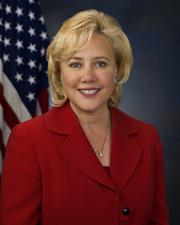 Sen. Mary L. Landrieu (D-LA)
Legislative Activity
Stay on top of the latest movement without scrolling through every action
Considered by Senate. (consideration: CR S5570)
May 19, 2009
View full timeline
Considered by Senate. (consideration: CR S5570)
May 19, 2009
Point of order raised in Senate with respect to amendment SA 1079.
May 19, 2009
Amendment SA 1079 ruled non-germane by the chair.
May 19, 2009
Considered by Senate. (consideration: CR S5468, S5471, S5488-5492; text as modified: CR S5471)
May 14, 2009
Senate amendment proposed (on the floor): Amendment SA 1079 proposed by Senator Landrieu to Amendment SA 1058.(consideration: CR S5425-5426; text: CR S5425)
May 13, 2009
Amendment SA 1079 proposed by Senator Landrieu to Amendment SA 1058. (consideration: CR S5425-5426; text: CR S5425) To end abuse, promote disclosure, and provide protections to small businesses that rely on credit cards.
May 13, 2009
Senate amendment submitted
May 12, 2009
Text
Modified
CREDIT CARDHOLDERS' BILL OF RIGHTS ACT OF 2009

The PRESIDING OFFICER. Under the previous order, the Senate will
resume consideration of H.R. 627, which the clerk will report.
The bill clerk read as follows:

A bill (H.R. 627) to amend the Truth in Lending Act to
establish fair and transparent practices relating to the
extension of credit under an open end consumer credit plan,
and for other purposes.

Pending:

Dodd/Shelby amendment No. 1058, in the nature of a
substitute.
Landrieu amendment No. 1079 (to amendment No. 1058), to end
abuse, promote disclosure, and provide protections to small
businesses that rely on credit cards.
Collins/Lieberman amendment No. 1107 (to amendment No.
1058), to address criminal and fraudulent monetary transfers
using stored value cards and other electronic devices.

Mr. DODD. Madam President, I suggest the absence of a quorum.
The PRESIDING OFFICER. The clerk will call the roll.
The bill clerk proceeded to call the roll.
Mr. DORGAN. Madam President, I ask unanimous consent the order for
the quorum call be rescinded.
The PRESIDING OFFICER. Without objection, it is so ordered.
Mr. DORGAN. Madam President, I have been on the floor often talking
about the subprime loan scandal that led to the financial crisis we are
involved in, in this country. I have held up charts on the floor that
describe the solicitations from the mortgage companies and others that
say: Come to us. If you have bad credit, if you have been bankrupt,
come to us. We want to give you a home loan.
I have shown all of those--from Zoom Credit, from Millennium
Mortgage, from the largest mortgage company in the country,
Countrywide--all of them saying to people: You know what, if you have
bad credit come to us. We want to loan you some money.
That subprime loan scandal was a tipping point for a significant
difficult time for this country's economy and that time includes right
now. I have talked about that at great length. But today we are talking
about credit cards. The same influence exists with respect to credit
cards. We have companies that just wallpaper this country with credit
cards. Go to a college campus and try to find out how many credit cards
they stick on those college campuses preapproved, saying to these kids:
Get our credit card, please. Walk through the concourse of an airport
and see how often you are accosted by someone who wants you to take
their credit card. It is all over.
Last year the economy tipped over, and we went right into a financial
crisis. But in that year, 2008, 4.2 billion credit card solicitations
were mailed to consumers. Let me say that again. In the middle of an
economic crisis, at a time when there was so much unbelievable leverage
and debt out there, companies in this country sent 4.2 billion credit
card solicitations to people.
Yes, some of them went to kids. The fact is, I spoke on the floor
years ago about my 10-year-old son getting a Diners Club card saying it
is preapproved, we want you to consider going to Paris, France. My son
wasn't going to France. As a matter of fact, he was 10 years old, for
God's sake. He had no money. He wasn't going to get a credit card. Was
it a mistake that they sent him a credit card solicitation? Probably.
But I went to the floor one day with a whole pile of them, saying you
are preapproved, please take this piece of plastic, spend it where you
want, as much as you want. Madam President, 4.2 billion new credit card
solicitations went out last year alone. They don't seem to care who
gets them, as I said with home mortgages, which are much larger than
most of the limits on credit cards. For home mortgages they solicited
people with bad credit. You have been bankrupt? Come to us. You do not
pay your bills? Come to us. That is a business model I never learned
about, by the way, but it is what happened. They created the house of
cards and the whole thing collapsed.
With credit cards, the big companies out there--and by the way it is
heavily concentrated--wallpaper this country with preapproved credit
card solicitations: Come to us, load up; come on, spend what you don't
have on things you don't need; come on, you can load up on my card.
Then when they got everybody with all these cards and substantial
balances on the cards, here is what happened. This is a person from
Minot.

My wife and I both have credit scores greater than 800 and
have never been late on any of our payments so it is odd that
Capital One just sent us a notice that our interest rate on
our credit card will almost triple.

There they are, using a plastic credit card, paying their bills on
time, and they are told we are going to triple your interest rate. At
least they know it. That is not an excuse, but a whole lot of folks
don't even know it.
Here is another constituent who wrote to me.

I just wanted to let you know how upset I am with my credit
card company--Citibank. They have decided to raise my
interest rate to 27 percent. I have always paid my bill on
time and have a good credit rating--820. Why would a company
who was bailed out by taxpayers because of bad practices then
decide to stick it to us by raising the interest rate so high
that it is competitive with the local Mafia rate?

There is no Mafia rate in Fairmont, I might say, but I get the point.
Williston, in my State:

Enough is enough. We shored up these banks with our hard
earned tax dollars just to have them raise the interest rates
on their credit cards to 28 percent and 26.3 percent--that's
Bank of America and Capital One--for absolutely no reason.
Something must be done.

One more:

I received a letter from my credit card company--

This person from North Dakota writes--

the Bank of America, that they are upping my interest rate
from 7.99 to 18.4 on my credit card and we have not been late
with a payment. We have been with them for 15 years. I want
you to know I am really angry over this. Billions have been
going to these banks and this is what we get for it.

Here is a solicitation for a bank debit card, Visa. You might look at
that and say what are they trying to solicit? Some 70-year-old codgers
who are retired, sitting around worrying about their teeth? No, they
are trying to solicit kids. That is the purpose of the bow. It is a
little like Joe Camel and cigarettes, except this is much more obvious,
a credit card for kids. It is pink with a beautiful little bow.
Here is a statement from Bruce Giuliano, a senior vice president with
a company that owned the Hello Kitty brand.

We think our target age group will be from 10 to 14
although it could certainly be younger.

How much younger than 10 years old can you get people to start using
credit cards? That is unbelievable.

We think our target age group will be 10 to 14.

Here, by the way, is the Hello Kitty brand I was describing. Does it
seem to you like they are targeting that 10-year-old to 14-year-old? It
is a nice little pink thing with a kitty, new Platinum Plus Visa credit
card with world

[[Page S5469]]

point rewards. If they could couple this with an airline and get 10-
year-old kids flying to France, they would have what my son
experienced, plus a pink credit card. It is unbelievable to me. We
wonder why people are upset. You have a bunch of companies out there
going after your kids to see if they can put plastic in their pockets,
kids who never had a job and will never get a job--at least not when
they are 10 years old--saying: Load up on debt.
Here, First Premium Card says:

Get our platinum credit card. We have a platinum card. Even
if your credit is less than perfect.

Once again, a solicitation to say if you don't do so well paying your
bills, we have a credit card for you.
Has anybody thought through that maybe this is what steered the
country into the ditch? Has anybody thought about that? By the way,
some of these financial companies are the ones that have gotten very
large bailouts from the Federal Government.
This is interesting. This is a credit card, presumably, for somebody
who does not pay their bills so well. So it is hard for them to get a
credit card. Here is what they are going to do. It looks pretty good.
It is actually a gold card with a $250 total credit limit. The problem
is the annual fee is $48, the setup fee is $29, the program fee is $95,
and the monthly servicing fee is $7. So if you pay all these fees to
that bank, you get to have a piece of plastic in your purse or your
wallet that allows you to charge up to $250. What an unbelievable
opportunity for people who are not thinking or do not know or at least
have been cheated by a company that suggests these terms.
This chart simply describes a college credit card. Everybody makes
money on credit cards. That is why they accost you when you are going
through the concourses at an airport--the airline is actually pushing
credit cards. They are all making money on credit cards--including some
colleges, by the way.
They wallpaper all of those college hallways with credit cards
because if you can get someone at that age to start using credit cards
with your company, then you have got them for a long period of time.
Now, 84 percent of undergraduates in college had at least one credit
card, up from 76 percent in 2004. Midwestern students continue to carry
the highest average number of credit cards, with more than half of the
students--think of this--more than half of these college students have
four or more credit cards. Again, a cultural lesson about debt? I don't
think that is a lesson we want college students to understand. I am not
suggesting college students should not have a credit card. I understand
the value of that. But they ought to have a limit.
By the way, here is the other thing that happens with credit cards
and college students. You cosign a credit card as a parent for the
college student who does not have a job, and it is not very long before
the credit card company ups the limit to the college student without
telling the cosigner. I know that is an interesting business practice,
to be pushing additional credit toward those who do not have income,
but it is part of the culture of this country, I guess.
Undergraduates are carrying record-high credit card balances. The
average balance grew to $3,100--the highest in the years the study has
been conducted--and 21 percent of undergraduates had balances between
$3,000 and $7,000.
My point is simple: This is some of the same culture and some of the
same difficulty that has tipped this country's economy over, beginning
with the subprime loan scandal in housing but very quickly going into
credit cards.
Someone said to me a while back: You know something, nobody spends
money like the Federal Government. I am talking about debt. The Federal
Government has run up all of this debt. Shame on the Federal
Government.
I said: I agree with you. This Government has to decide it can only
deliver Government to the American people that the American people are
willing to pay for. We cannot continue with these deficits.
But, I said, understand this: It is not just the Government. This
culture has had a dramatic runup in household debt, a dramatic runup in
corporate debt, you name it, all across the board, including trade
debt.
But we are here today because Senator Dodd has brought a bill to the
floor with his colleague, Senator Shelby, and they deserve great
credit. They deserve a lot of credit from the American people for doing
this. It is a piece of legislation that begins to put the brakes on,
puts a bridle on those who are engaged in practices I have just
described: aiming credit card solicitations at 10-, 12-, 14-year-old
kids, wallpapering college campuses so that kids came up with four or
more credit cards. The fact is many of these companies got involved in
all of these unbelievable instruments--credit default swaps, CDOs, and
shame on them. Shame on WaMu, shame on Wachovia, shame on the companies
that did it. They are supposed to be banks. Banking is supposed to be
reasonably conservative. Instead, they loaded up with unbelievable
debt.
Now some of the same companies, by the way, that are putting credit
cards out all over this country are saying to credit card customers:
You know, I understand you have never been late, never missed a
payment, been a customer for 20 years, but you know what, your 7.9
interest rate has now gone to 26 percent, and you are lucky we told you
because some people are not going to know it. By the way, we are going
to add some additional fees, and we do not care what you think about
this.
This legislation says: No more. You cannot do that. It says: If you
are going to go in this direction--way overboard, in many cases
cheating customers--then we are going to put the brakes on.
Some people say: Well, of what business is it of the Government?
Well, you know what, we have a responsibility, it seems to me, to
stand up for consumers. In this case, you have some very large
companies that have engaged in this business and now, in recent years,
have decided to impose very substantial fees and very high interest
rates, in a way that I believe takes advantage of the people. These
people are good citizens, pay their bills on time, are conscientious
about it, and now discover that the company they have had a
relationship with for a very long time has imposed all kinds of
dramatic penalties and fees that customer does not deserve.
So this legislation is legislation that I believe will pass the
Senate with a very wide margin. Why? Because I think those companies
that have done this have invited this today. They asked for it. This
Congress has a responsibility to stand up for the interests of the
American people.
I come from a State in which Teddy Roosevelt lived for a while, and
he always said: Had it not been for my time in North Dakota, I never
would have been President. He was a rugged guy, and he went out there
and ranched in North Dakota.
By the way, he was in the depths of despair because both his mother
and his wife died in his home on the same day in New York. Think of it,
losing your mother and your wife the same day on different floors of
the same home. He went out to try to renew his spirit in the Badlands
of North Dakota. He became a rancher and later became President of the
United States.
One of the things I remember him for and the country remembers him
for is as a ``trust buster,'' willing to take on the big interests,
willing to stand up to the big interests when they rip into the
interests of the American consumer, the American people. Thank God for
what Teddy Roosevelt did in so many areas in trust busting.
In many ways, this is a smaller piece of that larger issue, taking on
the bigger interests when they are taking on the American citizens in a
way we believe is unfair and untoward.
So I came today simply to say to my colleagues, Senator Dodd and
Senator Shelby, that I appreciate the work they have done. I am a
strong supporter of this legislation, and I know we have some
amendments back and forth. At some point, I am going to be proud to
cast a ``yes'' vote.
I am not suggesting credit cards are bad--far from it. Credit cards
are very helpful to the American people. I am suggesting there are some
practices that have occurred that go way beyond that which is
reasonable, and we are going to try to rein that in with this
legislation.
Mr. CARPER. Madam President, I rise to speak for several minutes on
the

[[Page S5470]]

legislation that is before us today dealing with credit cards,
something that most of us have a personal experience with--we use them;
we have had good experiences and bad experiences. In some respects,
those experiences guide our views with respect to how we should
legislate. That is understandable. It is true with me too.
Earlier today, I had a chance to participate in a number of call-in
radio shows, some specific to Delaware, one to the Delmarva Peninsula,
and one a national call-in show. People raised a variety of different
issues about the legislation we are debating. What I did with some of
the listeners, I took them back to the beginning and said: The reason
why this legislation is before us actually grew out of the work of the
Federal Reserve, which was begun over 2 years ago. The Federal Reserve
sought to use their authority under the--I think it was the Federal
Trade Commission law that says they have a responsibility to protect
consumers. That includes protecting consumers as they use credit cards.

For roughly 2 years the Federal Reserve held hearings, received input
from consumer groups, from individuals, from the industry, from other
regulators, as to how we might better protect consumers.
In the end, the Federal Reserve sought to strike a balance. They
sought to strike a balance that was fair to consumers and better
protected their interests, which need to be better protected, and at
the same time not to further disadvantage our financial institutions in
this country, many of which are struggling literally to survive. That
was the balance the Federal Reserve sought to strike. The Federal
Reserve promulgated regulations last December after literally receiving
tens of thousands of pages of comments on the draft regulations they
promulgated earlier, last year.
What we are doing now is, rather than simply waiting on the Federal
Reserve regulations to be implemented between now and July 1 of 2010,
Congress is seeking to codify, to literally turn into law those
regulations and in some cases to move the effective date of those
regulations up earlier and in some cases to add some provisions that
were not covered by the regulations.
One of the changes that is affected in this regulation was not raised
in the regulation. It deals with credit cards and kids. It is really
credit cards and people under the age of 21. My boys are 19 and 20.
They are in college. They have been receiving preapproved credit card
applications for a number of years, including when they were in high
school. I think Senator Dodd has talked about one of his girls, who I
think is 7 or 8 years old, having received a preapproved credit card
application at the tender age of 7 or 8.
The question is, do we need to do something differently? It is
interesting that the Federal Reserve, in their regulations, did not
think so. The legislation which comes out of the committee and comes to
us for consideration says, no; we should do something. What the
legislation calls for, for us to do differently in this country, is if
a young person, under the age of 21, wants to sign up for a credit
card, either, No. 1, their parent or guardian has to cosign for them,
with them, for that credit card, or, No. 2, the young person has to
demonstrate the ability to pay their debts.
For the most part it means have a job, have a source of income to pay
their debts. That is something that is in addition to the Federal
Reserve. I agree with that. I think it is a good change, and I think
most of my colleagues do, too.
In terms of being guided by your own personal experiences, I don't
know about the rest of you, but one person who called in today on a
call-in show said: Why don't we just let the marketplace make the
decisions for us? We are smart. We get these credit card solicitations
in the mail. There are a lot of choices. Let the marketplace work, and
let people choose what card they want.
As it turns out, we have a lot of smart people in the Senate, maybe
staff who are even smarter. There are a lot of people in this country
who, frankly, have not had the opportunity for an education that some
of us have had, and they lack, as do some of us, the financial literacy
that will enable them to make the right decision on a multitude of
options, choices; to understand them, read the fine print and
understand how it will impact them.
As a result, we are not going to just let the marketplace work as it
worked in the past because it didn't work perfectly. What we are trying
to do is correct some of the bad behavior, clean up some of the
behavior on the part of the credit card issuers, and that will get to a
point where the marketplace can work, and the market will actually work
on behalf of consumers. That is really what we want to see happen.
I will use a couple of examples from my own personal life. I have
three credit cards that I use. One of the credit cards I use is for my
personal use. Another credit card I use is for government-related
expenses, official business. A third is for campaign-related expenses.
The Presiding Officer may have a similar kind of arrangement. It helps
keep everything straight for me. That is a benefit, a real advantage,
and I believe it is an example of how our credit cards can be used for
our advantage.
I had a credit card several years ago for campaign-related expenses.
I lived in Wilmington, DE. The credit card bill had to be paid in New
Jersey. I was getting the bill about 10 days before it was due, and in
one instance I remember sending a check for that bill and it took 5
days for my check to actually get to the credit card company and be
credited as a payment--5 days, Wilmington, DE, to New Jersey. I could
have driven it in less than 5 hours, but it took 5 days to credit.
The other thing I noticed about the credit card company, the due
dates for my bill were always Saturdays or Sundays. They didn't process
on Saturdays or Sundays. I finally realized what was happening, and I
said we will not use that credit card again. I tore it up, paid it off,
and got another credit card that did not have that problem. That is an
example of letting market forces work.
Hopefully, a lot of us are smart enough to be able to do that sort of
thing, but honest to God, not everybody is as sophisticated as they
need to be to be able to lay that out for themselves.
Another issue that has come before us is the issue of caps, our
credit card limits. If Senator Grassley over here has a credit card
limit, and I am his credit card issuer, he has a limit on the credit
card he has from us, from our company, say, a $1,000 limit. Currently,
if he exceeds the $1,000 limit, we let him. My credit card company lets
him exceed it and he starts paying fees. If he continuously goes over
the limit, he pays more and more fees.
I don't think that is the way the system should work. The Presiding
Officer doesn't think that is the way the system should work. The
legislation before us says that is not the way this system should work.
Going forward, when a person signs up for a credit card, if there is
a limit--we will say there is a $1,000 limit--unless the cardholder
objects, that will be a limit. It will be a hard cap. If the
cardholders want to exceed that limit, they may do that, but they fully
acknowledge that they will accept fees in doing so. I think that is a
reasonable way to approach this.
There is another major issue that has been before us, the issue of
whether the credit card companies should be able to assess risk and
charge for that risk, the perceived higher risk on the part of the
cardholder. We worked with Senator Shelby, who is here today, to try to
strike a reasonable balance that says, again, I am a credit card
company, he is the credit card holder, and we send him his statement.
He doesn't pay within 30 days. What the Federal Reserve said is after
30 days, credit card companies should have to charge a higher interest
rate. We changed that a little bit, and we say we will give the
cardholder 60 days. If the cardholder has not paid a minimum payment
within that 60 days of it being due, the credit card company can raise
the interest rate; however, we give the holder of the card 6 months on-
time payments, minimum payments for 6 months, to earn back the lower
interest rate. To me, that seems like a fair balance, looking out for
the consumer, looking out for the company in addition.
I want to mention, yesterday we had the opportunity to debate the
question of a usury ceiling. The question was 15 percent--shouldn't we
have a 15-percent uniform usury ceiling on credit card rates. Maybe 33,
35 people voted

[[Page S5471]]

for it. I did not. I said to my colleagues wondering how they should
vote, there are actually two or three problems with the amendment
before us, or any usury ceiling rate.
If it is a 15-percent ceiling rate, the idea was we should limit
banks to charging 15 percent because credit unions are limited to 15
percent. As it turns out, credit unions do not operate under the same
rules of the road as banks. The banks complained the credit unions get
a break and the banks do not enjoy that in a number of ways. To simply
say because the credit unions are capping at 15 percent we ought to cap
the banks at 15 percent, frankly, it is not a logical argument in my
mind.
One thing I know is, if there were a limit of 15 percent, everybody
here, all the Senators, would be able to get credit. Most of our staff
would be able to get credit. The folks who would not be able to get
credit are lower income people. They wouldn't be able to get a credit
card because they may have a high risk, and if they do have a high risk
and it is proven by their payments scheduled over time, those people
are going to be cut off. That is not an intended consequence, it is an
unintended consequence, but by virtue of not adopting yesterday's
amendment we allow credit card companies to charge eventually for risk,
but at the same time to offer the credit card holder the opportunity to
earn back a lower rate of interest.
I compliment Senator Dodd. I commend Senator Shelby and their staffs.
They have worked very hard to get us to a point where all of us,
whether we happen to come from States where we have a lot of credit
card companies or we happen to come from States where we have a lot of
credit card holders, to try to get a right balance. I think you came
really close to doing that. I understand we may have one amendment
offered later today dealing with fees that are paid by, in some cases,
the merchants--the interchange fees. I understand there is language in
the underlying bill that says--this is not something on which we have
had hearings, I understand, in the Banking Committee. I understand
maybe other committees have had hearings on it years ago. We have not
had hearings on this in the Banking Committee. It is a lot more complex
than people would lead us to believe.
Why don't we give the appropriate agency, and I think in this case
the GAO, the Government Accountability Office, a year to come back to
us, study this, vet it, and tell us: This is what we think you should
do. To me, this makes a lot more sense on the Senate floor, without
having had the benefit of hearings, informed hearings from the Banking
Committee, to tell us what we should do. Let's take our time and let's
do this right.
I commend my colleagues. I thank them for giving my staff and me,
other Members who have had an interest, whether on the committee or
not, the opportunity to weigh in, express our concerns, and have the
opportunity to shape in a small way the outcome of this legislation.
The PRESIDING OFFICER. The Senator from Alabama is recognized.

Amendment No. 1107, as Modified

Mr. SHELBY. Madam President, I now ask unanimous consent the Collins
amendment, No. 1107, be modified with the changes at the desk.
The PRESIDING OFFICER. Is there objection? Without objection, it is
so ordered.
The amendment as modified, is as follows:

At the end of title V, add the following:

SEC. 511. STORED VALUE.

(a) In General.--Not later than 270 days after the date of
enactment of this Act, the Secretary of the Treasury, in
consultation with the Secretary of Homeland Security, shall
issue regulations in final form implementing the Bank Secrecy
Act, regarding the sale, issuance, redemption, or
international transport of stored value, including stored
value cards.
(b) Consideration of International Transport.--Regulations
under this section regarding international transport of
stored value may include reporting requirements pursuant to
section 5316 of title 31, United States Code.
(c) Emerging Methods for Transmittal and Storage in
Electronic Form.--Regulations under this section shall take
into consideration current and future needs and methodologies
for transmitting and storing value in electronic form.

Amendment No. 1079, as Modified

The PRESIDING OFFICER. The Senator from Louisiana is recognized.
Ms. LANDRIEU. I ask unanimous consent that the Landrieu-Snowe
amendment No. 1079 be modified as it is presently at the desk.
The PRESIDING OFFICER. Is there objection? Without objection, it is
so ordered.
The amendment, as modified, is as follows:

At the end of title V, add the following:

SEC. 503. EXTENDING TILA CREDIT CARD PROTECTIONS TO SMALL
BUSINESSES.

(a) Definition of Consumer.--Section 103(h) of the Truth in
Lending Act (15 U.S.C. 1602(h)) is amended--
(1) by inserting ``(1)'' after ``(h)''; and
(2) by adding at the end the following:
``(2) For purposes of any provision of this title relating
to a credit card account under an open end credit plan, the
term `consumer' includes any business concern having 50 or
fewer employees, whether or not the credit account is in the
name of the business entity or an individual, or whether or
not a subject credit transaction is for business or personal
purposes.''.
(b) Amendment to Exemptions.--
(1) In general.--Section 104 of the Truth in Lending Act
(15 U.S.C. 1603) is amended--
(A) in paragraph (1), by inserting after ``agricultural
purposes'' the following: ``(other than a credit transaction
under an open end credit plan in which the consumer is a
small business having 50 or fewer employees).''
(2) Business credit card provision.--Section 135 of the
Truth in Lending Act (15 U.S.C. 1645) is amended by inserting
after ``does not apply'' the following: ``with respect to any
provision of this title relating to a credit card account
under an open end credit plan in which the consumer is a
small business having 50 or fewer employees or''.

Ms. LANDRIEU. Madam President, I would like to speak for 3 or 4
minutes. I see my colleague from Iowa is here to speak, so I will not
take any more time.
I spoke briefly about this amendment when I introduced it on behalf
of Senator Snowe and others who joined us, from both sides of the
aisle. I have spoken at some length with the chairman and ranking
member as well. I am hoping we could have a positive outcome on this
amendment because it is so important to our small businesses in
America.
We have been trying with some degree of success to actually help
small businesses on Main Street in our communities. I say ``with some
success,'' because we all go home on the weekends and we continue to
hear very serious complaints from our grocery stores and our hardware
stores and our shoe repair shops and our cleaners and our business
owners saying: Senator when is any help coming our way? You are giving
all of these billions of dollars to Wall Street and to these big banks.
Yet we are here really struggling. Is anyone listening to us in
Washington?
Olympia Snowe and I, as chair and ranking member of the Small
Business Committee, are doing what we can, saying: Yes, we are
listening, and we want to be of some help. Every bill that comes to the
floor, we try to put a lens on it: How is this helping small business?
This bill is a good step to help consumers, individuals, persons, who
have a credit card. Unfortunately, the way the bill is currently
drafted, it leaves out small businesses.
My amendment with Senator Snowe will simply put them in this bill so
when this bill passes, we can have a real celebration about helping,
not just individual cardholders but small businesses that are
struggling to keep their doors open.
Madam President, you serve on the Small Business Committee. You have
heard the testimony, immediate past testimony, of, really, businesses
that have 500 employees that are struggling, to businesses that have 2
employees; from a conservative perspective, from a liberal perspective,
that have come before our committee. That is how this amendment came to
be.
As I reviewed the underlying bill and thought there were some
terrific things in this bill that will help credit card users, let me
just quickly say, it bans at any time, for any reason, increases in
rates. No more can credit card companies just raise your rate any time
for any reason. That is eliminated in this bill.
No longer can credit card companies charge you for a balance that you
paid. If you owe $1,000, you send them a check for $900, they can
still, under current law, charge you interest on the entire $1,000.
That is not fair. It is not fair to individuals. It is not fair to
small businesses. That will be corrected in this bill.

[[Page S5472]]

It simplifies disclosures. Yes, I believe in the free market, but I
believe in order to have a free market you need to be able to read the
print. Sometimes not only is the print small, but it is almost
difficult to understand. So it is more simple disclosures.
I think small business owners need that opportunity as well. It
prohibits credit card companies from charging interest on transaction
fees that they add to monthly bills. So small business will get that
benefit.
This is, in conclusion, not going to solve every challenge that small
businesses have, but at least they will know there are Members of the
Congress, Senators and House Members, who hear them, who are trying to
do what we can to respond, and this amendment will actually cover 26
million small businesses in America, in addition to the millions of
other credit cardholders, perhaps over 50 million, maybe more. This
will include small businesses with less than 50 employees.
I would like to help every business in America. I will continue to
work on that. But for this bill, because it was directed to
individuals, we thought by keeping it to relatively small businesses,
it would fit in the overall scope and framework of this bill.
Senator Snowe and I are going to continue to work to expand credit
opportunities for businesses with your help. This bill also is
supported by Senator Shaheen, as an original cosponsor, and Senator
Cardin. I wish to thank them very much for their support and help.
I see my colleague from Iowa and will reserve the remainder of my
remarks for Tuesday, when I hope we can vote on this amendment.
The PRESIDING OFFICER. The Senator from Iowa is recognized.

Government-Run Health Care

Mr. GRASSLEY. Madam President, for the benefit of my colleagues, I
will only be speaking about 11 minutes or so. I will proceed.
Yesterday--no, it was not yesterday, 2 days ago--the Medicare
trustees announced that Medicare's Part A hospital trust fund will be
insolvent in 2017. That is 2 years sooner than last year's estimate.
This announcement shines a spotlight on an issue Congress cannot
ignore. Our largest Federal health program is on an unsustainable
course.
Medicare, according to the trustees, is going broke. We have all
heard the reasons over and over: People are living longer, health care
costs are increasing, and most seniors are developing chronic and very
costly conditions.
All this leaves the Federal Government with a $35 trillion unfunded
liability over the next 75 years because the trustees always look ahead
75 years. That is updated annually.
Some in Congress recognize the financial black hole that is looming
before us. I hope my colleagues know I am working with Senator Baucus
and other members of the Finance Committee to reform the way the
Government pays for health care.
Our options for delivery reform will bring the Medicare Program into
the 21st century by improving quality and reducing costs. We
desperately need to retake control of the costs of the Medicare
Program, obviously, so it can be around for future generations. Yet in
the face of that reality, some people think the best way to accomplish
health care reform is to create another entitlement program.
In the face of Medicare's pending insolvency, some people want to
create a new public program, a government-run health insurance program.
I am one of the most vocal supporters of health care reform. We need to
improve quality, access, and affordability. But we need to understand
by adding another unsustainable government-run health insurance plan
into our health care system, it cannot be the answer.
We cannot afford what we already have, so let's add more. Put that
against the commonsense test. It does not make much sense. As the
saying goes: History is a vast early warning system. Today, debate over
health care reform is eerily similar to the debate in 1965, before
Medicare was created.
Let's look at that history. Before the bill became law, doctors,
hospitals, and other health care providers were concerned about this
new government-run health care program that was passed back then. We
call it Medicare.
Much like today, way back then, they were worried the Government
would use this program to ration care and cut payments. To deal with
these concerns, Congress and the President actually promised back then
to doctors and others that they would continue to be paid, as the law
says, the usual and customary rates.
That is why, to this very date, the Medicare legislation still states
this:

Nothing in this title shall authorize any Federal officer
or employee to exercise any supervision or control over the
practice of medicine or compensation of any person providing
health care services.

That was written in 1965. It is still in the law. But--and a big
``but''--we all know that the cost and the political pressure has
increased.
As a result, this section that I quoted, written in 1965, has become
meaningless. Time and time again, Congress has intervened in medical
decisions and cut reimbursement rates. Legislation in the late 1980s
placed limits on what doctors could charge and put in place a
government-mandated fee schedule.
One American Medical Association trustee recounted the AMA's original
concern about Medicare by stating it this way: ``Many of the things we
feared have come to pass.'' Surprise. Surprise. Despite the promise to
pay ``reasonable rates'' when Medicare was created, today the
Government pays between 60 and 70 percent of what private insurers pay.
By setting payment rates well below costs, it is becoming more and
more difficult for seniors to find a doctor who accepts Medicare.
Access issues for Medicaid, as we all know, are even worse. But some
say we can avoid these problems by putting the government-run plan on a
level playing field with private insurers.
They say Congress could set up a system so the government-run health
insurance plan has to follow the same rules as private insurers. They
say it would have to pay the same rates, form networks, be
independently solvent, all sounding good. My question is this: When
this new government-run health insurance plan starts to cost too much,
then following the pattern since 1965 with Medicare, is Congress going
to start breaking its promises? Will it change the rules?
A recent Wall Street Journal article tried to answer this question
this way:

Any policy guardrails built this year can be dismantled
once the basic public option architecture is in place . . .
That is what has always--

And ``always'' is emphasized--

That is what has always happened with Government health
programs.

Maybe at first Congress somehow repeals the requirement that the
government-run plan has to form a network. Next, Congress might allow
the Government plan to start paying lower rates than private insurers,
just like we have done with Medicare and Medicaid. At that point,
Congress might let the government-run plan dip into the Treasury from
time to time to keep the Government plan solvent.
This, of course, would increase costs for everyone. As the Government
takes more and more control over the plan, providers would get paid
less and taxpayers would end up paying more. Rates for government-run
health insurance plans would be lower than private insurers because
Government can impose lower rates by law, also known--can you believe
it--as price fixing.
This is a common talking point for supporters of the government-run
plan. They say the Government can use its numbers to lower costs. But
as the Government cuts payments to providers, costs will go up for
everyone who is left in the private market. Slowly but surely the
Government plan takes over the market. Eventually, all the promises
about creating a level playing field have been broken, and we would be
left with a single-payer, government-run health insurance plan, such as
Canada.

Canada brags about having a single plan. But Canada does not have
just a single plan. There is a second plan, and it is called the United
States of America. So if you do not want to wait around 3 months for an
MRI in Canada, you can come to the United States, if you have the money
to do it and the time to do it, and get it right away.
But what happens if you have such a plan in America? Where do
Americans go for what the plan does not provide

[[Page S5473]]

for our people when you have delay? Well, we will not go to Mexico,
surely. Eventually, all the promises about creating a level playing
field will have been broken, and we would be left with a single-payer,
government-run health insurance plan.
The simple truth is, supporters of a government plan absolutely
intend for this to be the outcome. Independent analysis by the Lewin
Group agrees. According to Lewin's work, 119 million people would lose
their private insurance. In other words, they would be crowded out.
They would end up where? On the Government plan.
It also breaks one of the most important promises that President
Obama made during his campaign, and I agree with this promise. What is
it? If you like what you have now in the way of health insurance, you
can keep it.
Independent analysis has shown that a government-run insurance plan
will drive up prices in the private market and force employees and
employers to drop that coverage. So the President does not get his plan
or his promise during the campaign kept.
This, of course, will make our emergency rooms more crowded than they
are today. It will limit access to high-quality care through rationing
and price fixing. It will increase waiting time for lab results and
lifesaving and life-enhancing procedures. It will add hundreds of
billions of dollars of new Government spending.
This is not the kind of change the American people are looking for.
Instead of creating a government-run plan and making a bunch of
promises Congress cannot keep, let's create stronger rules and
regulations for the private insurance market.
For instance, we should prohibit health plans from denying coverage
to people with preexisting conditions and provide tax credits to people
who cannot afford coverage.
Instead of introducing a government-run health insurance plan that
would cost too much, limit choices, and lower quality, let's clean up
the private market. Instead of introducing a government plan, let's
help President Obama keep his promise that if you like what you have in
the way of health insurance, you can keep it.
I yield the floor, and I suggest the absence of a quorum.
The PRESIDING OFFICER (Mr. Udall of New Mexico.) The clerk will call
the roll.
The legislative clerk proceeded to call the roll.
Mr. THUNE. Mr. President, I ask unanimous consent that the order for
the quorum call be rescinded.
The PRESIDING OFFICER. Is there objection?
Without objection, it is so ordered.
Mr. THUNE. Mr. President, I ask unanimous consent to speak in morning
business.
The PRESIDING OFFICER. Is there objection?
Without objection, it is so ordered.

Guantanamo Bay

Mr. THUNE. Mr. President, I have sought recognition to make a few
observations on President Obama's request in the emergency war
supplemental for $80 million in funding to close the detention facility
at Guantanamo Bay. Shortly after taking office in January, President
Obama announced, with much fanfare, the closure of the Guantanamo Bay
detention facility. At the same time, he also said he would work with
Congress on any legislation that might be appropriate.
But instead of consulting Congress, President Obama is asking for $80
million to close Guantanamo, with no justification or indication of a
plan. The House Appropriations Committee has already refused to provide
the funding because, in the words of the chairman of the committee, the
President has no plan in place on what to do about the detainees housed
there. We are now hearing reports that the Senate Appropriations
Committee will be providing funding for Guantanamo and its version in
the emergency war supplemental, but that it will be ``fenced off''
until the President provides a plan on disposition of the detainees
held at Guantanamo Bay. I believe any plan to close Guantanamo that
includes bringing these terrorists into the United States is a mistake.
We don't want the killers who are held there to be brought into this
country.
The administration is actively seeking to circumvent a Senate
resolution which passed by a vote of 94 to 3 in July of 2007. That
resolution stated the detainees housed at Guantanamo Bay should not be
released into American society and not transferred stateside into
facilities in American communities and neighborhoods.
In fact, not only does the Obama administration wish to hold open the
possibility that some of these detainees may be transferred to
facilities in American communities, it is even considering freeing some
of them into American society. These are the 17 Chinese Uighurs whose
combat status review tribunal records were deemed insufficient to
support the conclusion that they are enemy combatants but cannot be
returned to China because of fear that the Chinese Government will
torture or kill them. At a press conference on March 26, ADM Dennis
Blair, the Director of National Intelligence, went so far as to say:

If we are to release them [the Uighurs] in the United
States, we need some sort of assistance for them to start a
new life.

However, the Uighur detainees are not simply unfortunate souls who
happened to be scooped up on the battlefields of Afghanistan because
they were in the wrong place at the wrong time. They took firearms
training at camps run by the Eastern Turkistan Islamic Movement, which
has been designated as a terrorist organization by the United States.
They were at Tora Bora when we were heavily bombing that area and
seeking to capture Osama bin Laden. The leader and chief instructor at
these camps was Abdul Haq. In a Treasury Department advisory issued
only a few weeks ago, the Obama administration labeled this man a
``brutal terrorist'' with ties to al-Qaida.
It is hard to believe that this administration is seriously
considering freeing these men inside the United States, and, most
outrageous of all, paying them to live freely within American
communities and neighborhoods. The American people don't want these men
walking the streets of America's neighborhoods.
Aside from the issue of turning loose into the United States people
who have trained in terrorist camps, the American people don't want the
Guantanamo detainees to be transferred to the United States and held in
their backyards, either, whether at a military base or in a Federal
prison. That is easy to understand when one looks at the details of the
killers who are held at Guantanamo.
Guantanamo is home to some of the world's most dangerous terrorists.
There are 27 members of al-Qaida's leadership held there, along with 95
lower level al-Qaida operatives, 9 members of the Taliban's leadership,
92 foreign fighters, and 12 Taliban fighters. Americans don't want
these killers brought into the United States, but President Obama's
January 22 of 2009 Executive order reads, in relevant part, that a
review of all Guantanamo detentions:

Shall identify and consider legal, logistical, and security
issues relating to the potential transfer of individuals
currently detained at Guantanamo to facilities within the
United States.

In my view, President Obama is willfully ignoring the views of the
Senate and its resolution passed, as I said earlier, by a bipartisan
94-to-3 votes. The detainees housed at Guantanamo should not be
released into American society, nor should they be transferred to
facilities in American communities and neighborhoods.
Since President Obama seems set on a course to bring these terrorists
into the United States, I have worked with my colleague in the Senate,
Senator Inhofe from Oklahoma, to introduce a bill that would prevent
any taxpayer dollars from being used to transfer detainees held at
Guantanamo to any facility in the United States or construct, improve,
modify, or otherwise enhance any facility in the United States for the
purpose of housing any Guantanamo detainees.
Transferring these terrorists held at Guantanamo to facilities in or
near American communities could make those communities terrorist
targets. I had the opportunity to question ADM Dennis Blair, the
Director of National Intelligence, on the potential security threat of
relocating the Guantanamo detainees to facilities in the United States
during an Armed Services Committee hearing on current and future
worldwide threats to the national security of the United States.
Admiral

[[Page S5474]]

Blair acknowledged that moving those detainees to the United States
``does somewhat raise the threat level'' and ``does raise the concern
somewhat.'' That does not give me comfort. If we must close Guantanamo
Bay, it should not result in Americans being less safe.
Transferring these detainees would also stress the civilian
governments in the communities where these detainees would be placed.
These communities would be faced with overwhelming demand from
roadblocks to identification checks, along with having increased
security personnel necessary to deal with what is an obvious threat.
The value of homes and businesses would decline. South Dakotans
definitely don't want these detainees, and my support of the Guantanamo
Detention Facility Safe Closure Act will help to ensure that these
detainees will not be transferred to my home State of South Dakota or
other States in the United States.
In conclusion, my view is that no Guantanamo detainee should be
brought into the United States to be incarcerated, and certainly should
not be brought into the United States and freed. Americans don't want
these killers brought into their communities and neighborhoods, period.
The Senate has clearly spoken on that front by a 94-to-3 vote on a
resolution that we adopted in July of 2007 that detainees housed at
Guantanamo Bay should not be released into American society and not
transferred stateside to facilities in American communities and
neighborhoods.
These detainees are hardened, trained terrorists who are very smart
and extremely dangerous, who understand the strategic vulnerabilities
of this country, and who are capable of exploiting any situation and
any vulnerability to inflict death and destruction on the United
States. These are not common criminals locked up in State or Federal
prisons.
Guantanamo is secure. The facility is a $200 million, state-of-the-
art prison. No one has ever escaped, and its location makes it
extremely difficult to attack. Best of all, it is located hundreds of
miles away from American communities. If President Obama wishes to
close Guantanamo, he must do so in a way that keeps America safe.
In my view, America will be less safe if the Guantanamo detainees are
brought into the United States. I will do everything I can to make
certain that does not happen.
I yield the floor and suggest the absence of a quorum.
The PRESIDING OFFICER. The clerk will call the roll.
The assistant legislative clerk proceeded to call the roll.
Mr. BROWN. Mr. President, I ask unanimous consent that the order for
the quorum call be rescinded.
The PRESIDING OFFICER. Without objection, it is so ordered.
Mr. BROWN. Mr. President, I thank my friend from Arkansas, Senator
Lincoln, for her leadership on the credit card legislation and for her
work on this bill. I also thank Chairman Dodd for his work on the
Credit Card Act. We have worked so many months on this vital
legislation, and we are finally debating it on the floor. It is long
overdue. For too long, credit card companies simply were not content in
reporting record profit after record profit. They were not content
making reasonable money at reasonable rates. They wanted more, and they
wanted interest that was far above their cost for funds. They wanted
fees and more fees and more fees. Up against your credit card limit? No
problem. Instead of really being a limit, that ceiling served as a
license to charge additional fees. For too long, the credit card
companies convinced Washington to look the other way. No more.
While not all lenders that provide credit cards are engaging in the
exorbitant and unethical practices, a great number are, and that is why
this bill is crucial. It protects not only the consumer, but it
protects the credit card companies from themselves. Nickel-and-diming
doesn't begin to describe the billions of dollars out of which
Americans have been cheated.
The bill would protect consumers from random, at-will interest rate
increases and account changes. It would banish unfair application of
card payments, and it protects consumers who pay on time and follow the
rules. It would curtail fees and penalties and ensure that cardholders
are informed of the terms of their accounts. This bill would help
protect young people from credit card predators. We all know, if we
have ever had teenagers in the last 15 years or so, that a huge number
of solicitations keep coming at them. This legislation puts the well-
being of millions of hard-working middle-class families first.
I have heard some outrageous complaints from big, multinational banks
that claim this bill is unfair because to make the changes it requires
would take years to implement.
It is a pretty weak argument for the big, sophisticated, multibillion
dollar credit card companies, with armies of information technology
employees and lawyers. It certainly doesn't take them a year to
increase a fee or to figure out how to implement a universal default
policy or to work the mathematical magic needed to implement
retroactive pricing.
For too long, the big credit card companies didn't step up and do the
right thing, so there should be no surprise that they must do so now.
Millions of Americans--their customers--were left in the dark at the
mercy of whatever sleight of hand or shell game credit card companies
could contemplate. If there were a charge or policy imposed that
consumers didn't agree with or understand, they were forced to dial a
1-800 number on the bill. If they were lucky, they could talk to an
actual person who worked from a crib sheet on different ways to say no.
If they took it further, they could run into an army of lawyers.
No more. Consumers in my State of Ohio, and across this country, are
no longer alone. The Government is going to work for them. It is time
our laws were on the side of hard-working men and women. That is why we
are working on this comprehensive legislation protecting consumers from
multibillion dollar predators.
Young people, who often are a prime target of these predators, will
have heightened protections with this bill. I have spoken many times
about the questionable practices of credit card companies which
inundate our college campuses with their enticements and their
advertisements. With the escalating price of a college education, and
our Nation's financial problems, why would credit card companies dole
out credit to unemployed or underemployed students? Because they can,
and because no one has been willing to stand up to them, and no one--as
this bill does--has been willing to stand up for those students. Now
the Government is stepping in and will fairly regulate what was too
often the wild west of consumer lending.
College students should have access to credit cards. They should have
the ability to take out consumer loans. This is an important way to
develop good credit practices and good credit for those students. But
universities such as Ohio State--the Nation's largest university--tell
their students to avoid taking on large amounts of credit card debt.
Even so, many credit card companies flood campuses with deceptive
advertising and hidden fees and penalties and unscrupulous practices.
No more.
This bill shouldn't even be necessary. Credit card companies should
be responsible corporate citizens. Sadly, many have not been willing to
play fairly. Last November signaled a shift from large corporate
shareholders running this country to middle-class families taking back
the reins of government. This bill is one of the results of that
change, with a new President and a different Congress actually putting
the Government on the side of the middle class.
I am a cosponsor of the CARD Act, and because of that, I look forward
to its passage.
I yield the floor, and I thank the Senator from Arkansas, Mrs.
Lincoln.
The PRESIDING OFFICER. The Senator from Arkansas.
Mrs. LINCOLN. Mr. President, what is the pending business?
The PRESIDING OFFICER. The question is on the Collins amendment.

Amendment No. 1126 to Amendment No. 1107

Mrs. LINCOLN. Mr. President, I call up a second-degree amendment to
the pending Collins amendment.
The PRESIDING OFFICER. The clerk will report.
The bill clerk read as follows:

The Senator from Arkansas [Mrs. Lincoln] proposes an
amendment numbered 1126 to amendment No. 1107.

[[Page S5475]]

Mrs. LINCOLN. Mr. President, I ask unanimous consent that further
reading of my amendment be dispensed with.
The PRESIDING OFFICER. Without objection, it is so ordered.
The amendment is as follows:

(Purpose: To amend the Federal Deposit Insurance Act with respect to
the extension of certain limitations)

At the end of the amendment, add the following:

SEC. 504. EXTENSION OF LIMITATIONS.

(a) In General.--Section 44(f)(1) of the Federal Deposit
Insurance Act (12 U.S.C. 1831u(f)(1)) is amended--
(1) in subparagraph (B), by striking the period at the end
and inserting ``; and'';
(2) by redesignating subparagraphs (A) and (B) as clauses
(i) and (ii), respectively;
(3) by striking ``equal to not more than the greater of--''
and inserting the following: ``equal to--
``(A) not more than the greater of--''; and
(4) by adding at the end the following:
``(B) the State's maximum lawful annual percentage rate or
17 percent, to facilitate the uniform implementation of
federally mandated or federally established programs and
financings related thereto, including--
``(i) uniform accessibility of student loans, including the
issuance of qualified student loan bonds as set forth in
section 144(b) of the Internal Revenue Code of 1986;
``(ii) the uniform accessibility of mortgage loans,
including the issuance of qualified mortgage bonds and
qualified veterans' mortgage bonds as set forth in section
143 of such Code;
``(iii) the uniform accessibility of safe and affordable
housing programs administered or subject to review by the
Department of Housing and Urban Development, including--

``(I) the issuance of exempt facility bonds for qualified
residential rental property as set forth in section 142(d) of
such Code;
``(II) the issuance of low income housing tax credits as
set forth in section 42 of such Code, to facilitate the
uniform accessibility of provisions of the American Recovery
and Reinvestment Act of 2009; and
``(III) the issuance of bonds and obligations issued under
that Act, to facilitate economic development, higher
education, and improvements to infrastructure, and the
issuance of bonds and obligations issued under any provision
of law to further the same; and

``(iv) to facilitate interstate commerce generally,
including consumer loans, in the case of any person or
governmental entity (other than a depository institution
subject to subparagraph (A) and paragraph (2)).''.
(b) Effective Period.--The amendments made by subsection
(a) shall apply with respect to contracts consummated during
the period beginning on the date of enactment of this Act and
ending on December 31, 2010.

Mrs. LINCOLN. Mr. President, I begin by commending Chairman Dodd and
the ranking member, Senator Shelby, for putting together such an
important package of reforms to protect our consumers all across this
great Nation. Without a doubt, rampant credit card debt is a problem
facing a great and growing number of Americans. In my own home, my twin
12-year-old boys get preapproved credit card requests weekly--at the
age of 12.
Looking at how we can do a better job of both financial literacy and
helping people during this time of credit crisis to be able to do a
better job in terms of responsibility, the Federal Reserve's most
recent data estimates that the average American household now has about
$2,200 in credit card debt compared to an average of about $1,000 in
1992, and overall household debt has risen drastically, more than
doubling in this last decade.
Confusing terms, constantly changing interest rates, and high penalty
fees have all contributed to this trend, as many people struggle to
effectively manage their credit and their credit card use and the debt
they have.
While it is the responsibility, obviously, of consumers and borrowers
to manage their own financial affairs, it is also absolutely essential
that we ensure they have all the information they need, in an easily
understandable form, so that they are able to make fully informed
decisions about their credit and the amount of debt they might be
incurring and what it means to their families; what the long-term
implications might be. It is also important that credit card companies
provide stable, easy to predict interest rates, and reasonable penalty
fees that do not overly punish innocent mistakes that might be made.
This bill, on which Chairman Dodd and Ranking Member Shelby have
worked so tirelessly, has come together in a bipartisan way to improve
consumer protections regarding excessive fees, ever changing interest
rates, and complex contracts seemingly designed to do one thing above
all, and that is to keep people in debt. This bill will clean up the
fine print so consumers don't get blemished by their credit card
companies.
I am very pleased to be supporting the underlying bill, because
ultimately I believe it will help restore fairness and common sense in
our Nation's credit card practices.
On that note, talking about fairness and common sense, I wish to
discuss the second-degree amendment to Senator Collins' amendment I
have called up. This is an amendment I am offering on behalf of the
entire Arkansas delegation--the entire delegation as well as our State
officials, and others. This is a critical legislative proposal that
will provide temporary emergency relief for an Arkansas-specific
interest rate problem that is having a severe impact on Arkansas
students, our consumers, our businesses, as well as our municipalities
and our State government. We are all, in Arkansas, affected by this
situation.
Arkansas is the only State in the Nation with an artificially low
interest rate limit that is tied to the Federal discount rate. Under
current law, the interest rate on special revenue bonds and nonbank
consumer loans may not exceed 5 percent above the Federal discount
rate, which is currently set at one-half percent. So we are completely
uncompetitive. Other bonds are capped even lower, at 2 percent above
the Federal discount rate. As a result of this, Arkansas State and
local governments, our public universities and utilities--in search of
financing for construction and improvement projects--are severely
hampered by the current limit, as are our Arkansas consumers, who are
facing a lack of credit availability, as is everyone in this great
country during this economic crisis.
Practically speaking, the current interest rate limit--the top rate
that is legally allowable in Arkansas on all nonbank lending--is no
higher than 5\1/2\ percent. Not surprisingly, this low rate of interest
has contributed to bond investors looking to other States across the
country where their yields will be much higher, as well as credit
rationing by nonbank lenders that have been forced to restrict funds to
consumers--particularly now, when capital is so hard to come by
anywhere else.
The biggest frustration of all for people in my State is that the
Federal Government has continued to make this problem worse and worse
by lowering the Federal rate. This was done in an effort to improve the
economy, and we certainly understand that in Arkansas. The Fed took
those measures in order to try to improve the economy overall. But
since we are the only State that has that unusually low rate that is
tied to the Fed, we are actually suffering tremendously from what is
occurring. As I said, we do appreciate the Federal Reserve's actions in
these recent months to continue lowering the Federal discount rate
where necessary to combat the economic crisis and stave off a further
decline in our financial markets, but the lowering of that rate has
only exacerbated the economic challenges faced in our State, and in our
State alone, for that reason.
Additionally, many of the tools put into place in the American
Recovery and Reinvestment Act--the stimulus package that we offered
earlier this year to jump-start our economy, such as the Recovery Zone
bonds and the Build America bonds--are not available in our State
because of our lack of competitiveness in the bond market, due to those
abnormally low interest rates that are tied to the Fed. As stated in
the recent Arkansas Democrat-Gazette article on this issue:

The bond market has responded to the Build America program.
Since its introduction, investors have purchased $8 billion
in offerings, providing the bulk of activity in the taxable-
bond sector. Arkansas is not in a position to take part.

This is an issue that impacts our State of Arkansas alone. We
understand that, and Arkansas does intend to fix that problem. However,
we can't do so immediately because this archaic clause in the Arkansas
law must be rectified through a statewide ballot initiative. Therefore,
a proposal to permanently modify this outdated law will be voted on by
the people of Arkansas, but not until the next statewide ballot in
2010. Unfortunately, the economic challenges our Nation now faces are
magnified in our State and immediate emergency intervention is

[[Page S5476]]

essential; otherwise, our State's recovery will lag behind due to a
lack of capital in our State.
There is precedent for Federal action on this issue, as the Congress
enacted an Arkansas-specific provision to exclude Arkansas bank lenders
from this exact interest rate limit in 1999. The second-degree
amendment we are offering today is even more limited in scope, allowing
for a temporary relaxation of the current interest rate limit to a more
reasonable level of no more than 17 percent until the State ballot
initiative is considered.
This is temporary, it is an emergency for Arkansas, and it is only in
regard to the State of Arkansas. This is merely a temporary bridge to
get us through this immediate crisis. We are all part of this economic
crisis in this great country, and we are working hard together to pull
ourselves out of this ditch and to get the economy back on track. I
would hate to think that my State, and my State alone, was the only one
that could not access the stimulus dollars to help our universities,
our airport authorities, our municipalities, and others to access some
of those dollars, to help create jobs in our State, and to put people
who may have lost jobs back to work. We want to be sure we have the
resources as well in order to be a healthy part of reviving the economy
in this great country.
This is a matter of great urgency for our State. This is a matter
with broad consensus in our State. We have worked as an entire
delegation and in a bipartisan way. We have the State government, our
Governor, and others who have been working with us--just for Arkansas,
because it is Arkansas specific--to figure out a way to provide that
temporary bridge, that temporary assistance we need. Because if we wait
until that ballot initiative, the stimulus package will be over and we
will have missed that opportunity. So this is a matter we have been
working on, as I said, in a bipartisan way to try to solve.
We hope we can count on the support of our colleagues when this
amendment comes up later on today or whenever we vote on it. But I do
plead with my colleagues, this is an Arkansas-specific issue. It is one
that is detrimental to our State. We have an opportunity to help the
people of Arkansas, the communities of Arkansas, the student loan
authority, which can no longer issue new student loans because of that
bonding authority and the cap that exists there. The problems that
exist for us are monumental, and we want to ensure that over the next
18 months we too can be a part of reviving the economy of this great
country.
I thank the Chair, and I suggest the absence of a quorum.
The PRESIDING OFFICER. The clerk will call the roll.
The bill clerk proceeded to call the roll.
Mrs. LINCOLN. Mr. President, I ask unanimous consent the order for
the quorum call be rescinded.
The PRESIDING OFFICER. Without objection, it is so ordered.
Mrs. LINCOLN. Mr. President, I ask unanimous consent to have Senator
Pryor added as a cosponsor to my second-degree amendment.
The PRESIDING OFFICER. Without objection, it is so ordered.
Mrs. LINCOLN. Mr. President, I suggest the absence of a quorum.
The PRESIDING OFFICER. The clerk will call the roll.
The bill clerk proceeded to call the roll.
Mr. INHOFE. Mr. President, I ask unanimous consent that the order for
the quorum call be rescinded.
The PRESIDING OFFICER. Without objection, it is so ordered.
Mr. INHOFE. Mr. President, since there is some time, I ask unanimous
consent that I be acknowledged as in morning business for whatever time
I shall consume.
The PRESIDING OFFICER. Without objection, it is so ordered.

Guantanamo Bay

Mr. INHOFE. Mr. President, there are several things toward the end of
the week that I was wanting to elaborate a little bit on. They are kind
of unrelated subjects, but we do not get this opportunity very often.
The whole idea of Guantanamo Bay is something that I know a lot of
people have talked about. I was very proud at the inauguration when our
new President, President Obama, gave a lot of statements that were, I
thought, logical, and, frankly, a speech that I could very well
have made--not as eloquently as he but from a content perspective.

He said, in relationship to the problem of Gitmo, or Guantanamo Bay,
that, yes, we want to close that. However, we first must figure out
what we are going to do with the detainees, recognizing that there are
245 detainees, recognizing further that there will be more as there is
an escalation in activity in Afghanistan and that there is no place
else to put these people.
I felt pretty satisfied at that time that this great American
resource we have called Guantanamo Bay is something we need to keep. It
is one of the few good deals the Government has. We have had it since
1903. It is a resource unlike anything else, not only in our holdings
but anyplace in the world. It is a place where we have actually built a
courtroom that will handle tribunals, that will handle cases with rules
of evidence that would fit tribunals as opposed to our court system. I
felt pretty comfortable knowing there is nothing that can be done with
the 245 detainees. Many are very dangerous terrorists.
Since that time, he has changed his position. Now he is saying we
will close it regardless. He has already closed the courtroom. This
facility took 12 months to build. It cost $12 million. There is nothing
else quite like it. If we are going to ever adjudicate these
individuals, bring them to trial, we have to put them someplace. One of
the alternatives would be our court system. Obviously, that is not a
good idea. Most thinking people realize it is not a good idea because,
the rules of evidence being different from what they are in a normal
criminal case, most likely we would not get convictions. What happens
when you don't get convictions? You turn people loose. If there is
anything we don't want, it is terrorists being turned loose. The
politics of that is such that people who want to close Guantanamo Bay
are backing away from that issue, but they are still talking about
closing it.
I have had occasion to be down there several times. The last time I
was there, I used a new technology that I didn't understand too well:
YouTube. I did a program down there from Guantanamo. I commented at
that time: Here we are with about six levels of security for six levels
of detainees. There is no place else like it where we can do something
like this.
In terms of how they are treated, I have had them say, with a
translator, that it is probably the best food they have ever had in
their lives. There is one medical practitioner--in most cases, a
doctor--for each two detainees. Where else will you find that? There
are procedures that are offered to the detainees that they would never
have offered anywhere else. For instance, when they offered a
colonoscopy, which was described to the detainees in terms of what it
entailed, they decided they didn't want it. Nonetheless, these were
things that were offered in the way of health care.
In the case of torture, there has never been a documented case of
waterboarding or any severe torture taking place there. I can remember
the week after 9/11, when we had immediately a few people in there. I
went down and found that our own troops who were stationed down there
were not treated as well as the detainees.
Even if that were not true, there is no other place that we can put
them. There has been a proposal that there are some 17 detention
installations in the United States that would be suitable for these
people. One of them happens to be Fort Sill, which happens to be in
Oklahoma. I went to Fort Sill and talked to a young lady there who is a
sergeant major. This is in Lawton, OK. I talked to her about this. She
said: Senator, I have to ask you a question. Why is it that everyone is
so concerned about closing Guantanamo Bay? This facility here is not
nearly as suitable for detainees.
Then she went on to explain why this separation of people and of
classes of security problems. She said: Besides that, I spent 2 years--
this is Sergeant Major Carter, stationed at Fort Sill--at Guantanamo
Bay. That facility is better than any Federal facility we have.

[[Page S5477]]

Why is it we are so bent, just because of some ugly rumors that are
not true about treatment of detainees, on closing a resource we have
had and we are still paying $4,000 a year for, as we have been ever
since 1903? You don't get many bargains like that in government.
Anyway, they seem to be concerned about doing that.
I believe public pressure is going to come around on our side and
common sense will prevail and we will not close that resource. We will
need it in the future. We need it today. We have needed it in the past.
It has served us well.
As this moves along, I hope the public knows there are several of us
who are going to make sure we do not do anything that is going to allow
some of these detainees to be floating around in the continental United
States. If we are inclined to do this program where we put them in some
17 installations, we will have 17 magnets for terrorism in the United
States. That is not going to happen.

The First One Hundred Days

I also wish to talk about the striking similarities between what is
happening today and what happened back in 1993.
The first 100 days of President Obama's administration will be
remembered for its unprecedented level of new Federal spending--no
question about that; no Democrat or Republican can deny that--and the
return to big government. This, together with his advocacy of far-left,
liberal causes--everything from abortion rights, to gun control, to
universal health care--will put him on a track to repeat the
performance of 1993, when a very attractive, young Bill Clinton entered
the Oval Office under the banner of change. After Americans realized
that his so-called change was simply an extremely leftwing position,
the American people revolted and put Republicans back in charge of
Congress. If President Obama continues down this path, I would not be
surprised to see that happen again in 2010.
Nothing is more indicative of the stark contrast between
conservatives and liberals than the massive Government spending spree
now underway in Washington. In his first year in office, Bill Clinton
put forward what was then the largest budget to date in our history. It
was $1.5 trillion. It included domestic spending of some $123 billion.
Now in this 100th day of President Obama's administration, the Senate
is poised to vote on what would become the largest budget to date. This
budget, which highlights his priorities, is the most radical and
partisan budget we have ever seen. It includes $4.4 trillion in
additional deficits and $3.5 trillion in total spending. Let's compare
that to 1993. I was down on the floor complaining about a $1.5 trillion
budget. This is a $3.5 trillion budget.
When I go back to Oklahoma, sometimes I come to the conclusion that
there aren't any normal people in Washington, because they ask the
question: Senator, how can we afford all this spending when we had a
stimulus bill of $789 billion, increasing debt by $1.8 trillion in the
first year, and a $3.5 trillion budget? Where is the money going to
come from?
Here I am, the senior Senator from Oklahoma, and I can't answer the
question. We do have choices. We can borrow. We can print it. It will
have to be a combination of the above. We know all of the very damaging
effects: $1 trillion in taxes on individuals and businesses, a $634
billion downpayment for government-run health insurance. There is
another similarity. Remember, in 1993 it was called Hillary health
care. The concept was the Government can run a health care system
better than people can. I always invite people who believe that to go
spend some time in some of the hospitals up north; the Mayo Clinic and
some others come to mind. See the number of people who are there who
came over from Canada because they couldn't get treatment. Maybe their
age was right above the federal guideline for a particular type of
procedure, and they could no longer do it. Again, the similarities are
so similar, 1993 and what is happening today. Then, of course, we had
the Wall Street bailout and all of that.
I am very concerned about the direction this administration has
proposed to take us. Anyone who works hard, plays by the rules, pays
taxes, drives a car, turns on the lights, saves, invests, donates to
charity, or plans to be successful should also be concerned.

Defense cuts--I probably am more concerned about this than most
Members. I am the second ranking member of the Armed Services
Committee. I have watched what is going on. To me, it is deplorable.
I happened to be in Afghanistan when Secretary Gates came out with
Obama's defense cuts. They tried to claim they are not defense cuts.
They are. It is just that they are talking about the DOD appropriations
bill versus all the other funding sources that have been used before.
The best evidence that they are cuts is what has happened to our
platforms. Right now, the F-22 is the only platform we have that is
fifth-generation maturity. This is something he is stopping right now.
We were originally supposed to have 750 F-22s. Now we will stop at 187.
At the same time, you have China with its J-12, Russia with its SU
series, a fifth-generation airplane. That is going to put us in a
position where it will hurt and hurt bad.
The same thing is true with the Future Combat Systems. We have been
working on that for 8 years now since Shinseki helped to start it. It
is the first transition in ground capability in at least 50 years. This
is something we have been working on so that we don't send our kids
into battle against countries that might have a better artillery piece
and better equipment than we. He axed that program.
How long has it been since we started working with the Parliament of
Poland and the Czech Republic to get them to let us put a radar system
in the Czech Republic and interceptor capability in Poland so that when
Iran gets the capability of sending a nuclear missile over to western
Europe or the eastern United States, we would have the ability to shoot
it down? It didn't happen. The Parliaments that had to be politically
pretty strong to agree to do that. Now they are sitting back and
finding out that they are talking about axing that program too.
The airborne laser is the closest thing we have to knocking down a
missile in the boost phase. We were coming along with that program.
They axed that program too.
I am very concerned about what happens and what has happened in this
budget to our capability of defending ourselves. Then I go back to
1993. That is exactly what happened back then. If we look at the 8
years of the Clinton administration, we cut military spending from what
would be just a straight line by $412 billion in that period. Of
course, we ended up cutting our military by about 40 percent over that
period.
The bottom line is, all these programs were cut. I happened to be in
Afghanistan when that happened. We did a report from over there. We
could see the Bradleys driving by and the helicopters taking off, the
bad weather, soldiers coming back from patrols and turning on the tube
and finding out President Obama is going to gut the military. It is
totally unacceptable. But that is the same thing that happened in 1993.
It is deja vu all over again.
Gun control is the same. We see now that they are going to try to get
us to sign on to a treaty that is called CIFTA, a treaty in the Western
Hemisphere where we will all get together and we will allow Central
America and Mexico and South America and Canada to determine what gun
manufacturers can do. It is the first major step to gun control, in
violation of second amendment rights. People care about that. It is
exactly what happened with Bill Clinton in 1993.
Energy taxes--back when Bill Clinton was doing it, it was called the
Btu tax. That stands for British thermal unit. It was a massive tax
increase on energy and very similar to what they are trying to do right
now--which, incidentally, I have no doubt we will stop them from being
able to do--the cap-and-trade tax. One thing about the cap-and-trade
tax, that is something that is not just a one-shot deal like the
stimulus bill. That is every year. It would be somewhere around $350
billion a year in taxes on the American people, a regressive tax
because it is a tax on energy. People with lower incomes spend a larger
percentage of their expendable income on that kind of energy than rich
people do.
We are not going to let that happen. I tell all my friends, we have
been fighting that battle now for 8 years,

[[Page S5478]]

and it is over. We are not going to let that happen in America. But
that is what Bill Clinton tried to do in 1993. It is the same thing all
over again.
We went through the same thing on abortion. I think personally there
is no mission more important than standing up for the sanctity of human
life. Here again, President Obama, like President Clinton, quickly
moved to appease pro-abortion advocates.
Just a few days ago, the Senate confirmed Kathleen Sebelius for
Secretary of Health and Human Services. As Governor of Kansas since
2002, she has a clear record of supporting abortion and policies that I
believe impact the health and safety of women and parental rights.
Again, it is abortion. Either you are for it or against it. But this is
one of the strong pro-abortion positions in 1993 that now we are
getting again out of this administration.
So when you look at this, I cannot help but think that all the signs
are there, that we are seeing the same thing now that we saw back in
1993. I believe we are going to be positioned to keep a lot of these
things from happening, No. 1, and No. 2, let's remember what happened
in 1993. Young, attractive Bill Clinton went in as President of the
United States, and he had the House and he had the Senate, and he had
it all just as President Obama has it all. He has the House and the
Senate. Therefore, it is not someone else's fault for all these
programs. Consequently, we had a major turnover in the 1994 election.
Republicans took over the House and the Senate. So I just warn my
liberal friends from the other side of the aisle, be real careful.
Watch what you are doing because it could very well happen again.

EPA'S Endangerment Finding

Mr. President, I do have something that is a little heavier lifting
subject. I am the ranking member of the Environment and Public Works
Committee. When the Republicans were in the majority, I was chairman of
it.
Something is happening right now, and something happened Tuesday
morning. I want to make sure everybody understands, as this week is
coming to an end, that on April 17, the administration set in motion a
ticking timebomb with its release of a proposed endangerment finding
for carbon dioxide and five other greenhouse gases. This proposal
finds--this, incidentally, is what all the scientists do not agree
with--this proposal finds that carbon dioxide is a dangerous pollutant
that threatens the public health and welfare and therefore must be
regulated under the Clean Air Act.
This is interesting because they first tried to pass cap and trade.
They know there are not the votes for it. There are in the House.
Speaker Pelosi pretty much gets anything she wants through. It is a
simple majority vote over there. Over here, it would take 60 votes to
pass that massive tax increase, and we are not going to do it because
they do not have more than 34, maybe 35 votes, and it takes 60 votes.
But, nonetheless, since they cannot do it, they decided to do it under
the Clean Air Act and do it through regulation so it could be done from
the White House. This so-called endangerment finding sets the clock
ticking on a vast array of regulations and taxes, with little or no
political debate or congressional control.
On May 12, we learned of a White House document. This is significant.
We did not know it was there. I want to credit our committee, the
Environment and Public Works Committee--the minority side--for finding
this document. It is a White House document marked ``privileged and
confidential.'' It was buried deep within the docket of the proposed
rule. It outlines some of the very same concerns shared by me and many
of my colleagues, including Senator Barrasso. I could not be here for
that Tuesday morning meeting, and he was good enough to take this memo
and expose it and did an excellent job of it.
Keep in mind, we are talking about their proposal for new taxes, new
regulations--all these things they want to go through with because they
cannot legislatively pass a cap-and-trade--or cap-and-tax, as some call
it--proposal.
The document we found--allegedly a compilation of concerns from
unnamed officials within the White House, or the administration, as
part of an interagency review of the proposed regulation--raises some
questions, very serious criticisms of the endangerment proposal. Chief
among them are questions raised about the link between the EPA's
scientific argument for endangerment and its political summary.
I am going to quote from it. I have three quotes. Keep in mind, this
came from the administration. This report says:

The finding rests heavily on the precautionary principle,
but the amount of acknowledged lack of understanding about
basic facts surrounding greenhouse gases seems to stretch the
precautionary principle to providing for regulation in the
face of unprecedented uncertainty.

In other words, what they are saying there is that the science is not
there; we do not know yet; we know there are a lot of problems with
this, and we should not be rushing into it. This came from the White
House. I am glad we found it.
Here is a further quote. Additionally, it says:

There is a concern that EPA is making a finding based on
``harm'' from substances that have no demonstrated direct
health effects, such as respiratory or toxic effects, and
that available scientific data that purports to conclusively
establish the nature and the extent of the adverse public
health and welfare effects are almost exclusively from non-
EPA sources.

Again, this is not me talking, this is a quote from the White House
in a buried document we fortunately--but surprisingly--did find.
You can ask: What source is the EPA relying on if it is going to go
through all this? That source is the U.N.'s Intergovernmental Panel on
Climate Change. This is where it all started. It was the United Nations
that started this whole issue of greenhouse gases, of CO<inf>2</inf>,
anthropogenic gases, and methane causing global warming. When you look
at their ``Fourth Assessment Report'', which, as I have documented
before many times in speeches on this Senate floor, is a political and
not a science-based body, it has no accountability here in the United
States.
You keep hearing people say: What about the NAS, the National Academy
of Sciences? What about them? They are scientists.
The reports they give are not from the NAS, they are from the
political review or the summary for policymakers, which is a political
document, not another document.
In addition, this White House memo also warns of a cascade of
unintended regulatory consequences if the endangerment finding is
finalized. It states--and again, I am quoting from this report:

Making the decision to regulate CO<inf>2</inf> under the
Clean Air Act--

That is what they want to do, regulate CO<inf>2</inf> under the Clean
Air Act--

for the first time is likely to have serious economic
consequences for regulated entities throughout the U.S.
economy, including small business and small communities.

This report talks about the small businesses, the small communities,
churches, other groups that are going to be adversely affected by this.
Again, this is a document that came out of the White House.
Now, for one thing, I am glad to know we are not alone with our
concerns and that several in the Obama administration share views
similar to ours on the endangerment finding. I am hopeful more will
come forward.
So what was the administration's official response to the release of
this memo? Well, it depended on whom you asked. One source in the Obama
administration chose to again blame it on the Bush administration,
stating it was written by a holdover appointed by George W. Bush.
However, earlier in the day, Peter Orszag, who heads the White House
budget office, where the memo apparently came from, stated that the
quotations circulating in the press are from a document in which the
OMB simply ``collated and collected disparate comments from various
agencies during the interagency review process of the proposed finding.
These collected comments were not necessarily internally consistent,
since they came from multiple sources, and they do not necessarily
represent the views of either OMB or the Administration.'' Well, it is
fine to say this, but that is where it came from. It came from the
administration. It is very fortunate we found it.

It begs the question: Does this document reflect one rogue leftover
Bush appointee, who, based on followup news

[[Page S5479]]

reports, actually appears to be a Democrat or does it reflect a more
systematic summary of comments from various agencies that have serious
concerns with the proposed finding, as Orszag suggested? I am hoping
someone from the administration will come forth with a consistent
response.
In either case, I welcome the comments as an open and honest
discussion of the potential costs, benefits, and legal justifications
for such a finding.
Regardless of the Supreme Court decision, the EPA has the discretion
to carefully weight the science and the causes and effects in its
determination of endangerment, and, despite recent claims by
administration officials, it is under no court order to find in the
affirmative that such greenhouse gases endanger public health or
welfare or cause or contribute to air pollution.
If we are going to have a debate on this issue, let's have it here in
Congress, where the American people deserve an open and honest
discussion about the costs and alleged benefits, about the
effectiveness of such policies and what it will mean to the consumers
who ultimately pay the bill. As I said before, it is going to be the
poorer Americans who pay the larger percentage of their incomes who are
going to be punished.
By the way, we had the debate here. In the House, they have never had
the debate because it has never come up as an issue. Here we had the
debate during the ratification debate on the Kyoto treaty. And we had
the McCain-Lieberman bill, the Warner-Lieberman bill, the Boxer--there
is another bill that came up just in the last year. So we have had the
debate, a full and open debate, and we are going to have to debate this
issue because there is an effort to try to do through regulation what
they cannot do through open debate in the process on the floor.
The administration, and this EPA in particular, has claimed they will
usher in a new era of transparency. In April, Administrator Jackson
issued a sweeping memo to all EPA employees committing the agency to an
unprecedented level of transparency. I applaud her for it. She told me
this in my office. We also found that she made this statement in a
private memo to Members. So she is being very honest in what her effort
is. I have a feeling a lot of this stuff is happening, and she is not
even aware of it.
She says--and this is a quote; this is beautiful:

The success of our environmental efforts depends on earning
and maintaining the trust of the public we serve. The
American people will not trust us to protect their health or
their environment if they do not trust us to be transparent
and inclusive in our decision-making. To earn this trust, we
must conduct business with the public openly and fairly.

Again, this is Lisa Jackson, the new Administrator of the EPA. I
applaud her for saying this.

This requires not only that EPA remain open and accessible
to those representing all points of view, but also that EPA
offices responsible for decisions take affirmative steps to
solicit the views of those who will be affected by these
decisions.

She went on to say at her confirmation hearing--not only did she
reaffirm this statement, but she said she would be responsive to us on
the minority side, the same as she would be to the majority, and I
believe that.
Certainly, the allegations in this White House memo make one question
whether the EPA is open and accessible to all points of view. For one
thing, it was marked ``privileged and confidential,'' which tells me
that perhaps they knew about it, but then they did not want to use it
and they did not want people to find out about it. Nonetheless, the
document speaks for itself.
My colleagues may criticize the Bush administration for how it
handled the endangerment finding, but at least they did not try to bury
or hide these types of comments when it proposed its advance notice of
proposed rulemaking last summer. I know a lot of this sounds a little
confusing. This is a process you go through, an advance notice of
proposed rulemaking. In fact, the previous administration; that is, the
Bush administration, went so far as to lay all of these comments out in
public view so all sides could be represented. If this latest action is
any indication of how the EPA has begun to operate, then the American
public should have serious reason to be concerned.
On this CO<inf>2</inf> endangerment issue--potentially the largest
and most sweeping regulatory effort ever to be proposed--transparency
should be a cornerstone of every agency action. Opinions from all
sides, pro and con--and certainly from all other agencies--should be
weighed equally and fairly and, just as important, openly, in full view
of the American people. The American people deserve to know all sides,
all costs, and all benefits. This thing is so costly, and with the
questionable benefits, this is that much more important.
Because of these issues, I am hopeful the Administrator will commit
to a determination on endangerment that would be based on the record of
the scientific data and empirical evidence rather than political or
other nonscientific considerations. It is of the utmost importance that
regulatory matters of this scope and magnitude be based on the most
objective, balanced scientific and empirical data.
While I am still hopeful that ultimately Congress or the agency will
decide to take this option off the table, a full on-the-record
examination during any endangerment rulemaking should be a minimum
requirement of transparency.
But the administration has essentially politicized the issue by
presenting policymakers with a false choice. The choice is to use an
outdated, ill-equipped, and economically disastrous option under the
Clean Air Act or pick another bad option--cap and trade--that commits
us to requirements for unaffordable technology and would certainly be
the largest consistent annual tax increase in the history of
America. This isn't going to happen.

I would repeat we are fortunate in that we have had this debate, and
each time we have the debate, there are more and more people who come
down and say: Well, I didn't know it was going to cost that much money.
Back in the original Kyoto days, it appeared that a majority of the
people, in fact, in the Senate would support that type of an approach.
By the way, I have to say this: The Kyoto treaty was one thing. That
is a treaty that affects the whole world, a lot of developed nations
and some undeveloped nations. It was something you signed onto and
everyone signs onto and everyone agrees to. Since that didn't happen--
and even if you are one of those individuals who believes that
anthropogenic gases, CO<inf>2</inf>, and methane are causing global
warming--if you believe it, which isn't true, but if you did believe
it--then does it make sense for us to pass something unilaterally in
the Senate, making us less competitive than the rest of the world? What
is going to happen to our manufacturing base? What is left of it is
going to end up in places such as China, India, and Mexico, where they
don't have these emission requirements. What is going to happen then?
There will be a net increase in CO<inf>2</inf>.
Back to the memo, and I will conclude with this. I have to repeat
what the memo says. This was a memo that was advice to the process from
the White House.

The finding rests heavily on the precautionary principle,
but the amount of acknowledged lack of understanding about
basic facts surrounding greenhouse gases would seem to
stretch the precautionary principle to providing for
regulation in the face of unprecedented uncertainty.

In other words, it is uncertain.
Further, it states:

There is a concern that EPA is making a finding based on
harm from substances that have no demonstrated direct health
effects such as respiratory or toxic effects, and that
available scientific data that purports to conclusively
establish the nature and extent of the adverse public health
and welfare effects are almost exclusively from non-EPA
sources.

That is an admission.
Finally:

Making the decision--

Which I hope we will not make the decision to do, but we will oppose
that decision--

to regulate CO<inf>2</inf> under the Clean Air Act for the
first time is likely to have serious economic consequences
for regulated entities throughout the United States economy,
including small businesses and small communities.

In other words, nobody wins. Nobody wins.
So with that, I would say there is this effort that what they cannot
do

[[Page S5480]]

legislatively they want to do through regulations, and we are not going
to allow that to happen.
With that, I yield the floor.
The PRESIDING OFFICER. The Senator from New York.
Mr. SCHUMER. Mr. President, I thank my colleague from Oklahoma for
yielding. There are two issues I wish to address. The first will be
this bill, in particular, the gift card title in the Credit Card Act.
Secondly, I wish to speak a little bit about the NTSB hearings on
flight 3407 which, as my colleagues know, crashed outside Buffalo and
Clarence with a tragic result.
First, before I get into the substance on gift cards, I wish to
commend Senator Dodd, Senator Shelby, and all the members of the
Banking Committee for doing an excellent job on this bill. The bottom
line is we need good, strong, tough regulation on credit cards. The
days when disclosure was enough are over. I happened to believe that
once and worked hard for disclosure measures. There is something called
the ``Schumer box'' that is on all credit card solicitations
applications because it puts in large letters the interest rates. Back
in the old days, that worked. Every credit card, even though interest
rates were 6, 7, 8 percent, was at 19.8 percent, but you couldn't find
that out. So when people signed up for a credit card, they had no idea
what interest rate they were paying. Once the box got on the
solicitations, on the applications, interest rates came down. Good old-
fashioned American competition began to work.
But in recent years--maybe they just got smarter or maybe they got
more desperate for profits--credit card companies have found a way
around disclosure. A person believes they are signing up for one rate,
but then in the fine print, basically, if you wake up out of bed, the
rate goes higher--much higher. We have gotten letters and heard stories
from people who were on a 7-percent fixed rate and it went up to 23
percent overnight.
If it is on a future balance, that is fine. You can get another
credit card. But it isn't. These rates go up on existing balances.
Let's say you have a $4,000 balance, which is the average for American
families with credit cards. Calculate it. You go from 7 percent a month
on $4,000 to 23 percent on $4,000, and that is a difference of hundreds
of dollars a month. These days, with the economy the way it is, with
families struggling to make ends meet, a couple hundred dollars a month
is the difference between being able to survive and perhaps going
bankrupt; being able to survive and not being able to provide some of
the basic necessities.
The legislation before us stops all those practices. The frustration,
I must say, on both sides of the aisle, with the practices of the
credit card industry is mounting. I would say to those in the credit
card industry: Unless you get your act together, there may be other
amendments and bills you will not find to your liking. It is about time
to be responsible. I understand the banking industry is in tough times,
and we all hope they will recover, but to recover by taking advantage
of consumers is unfair, unwise, wrong, and we aim to stop it with this
legislation.
The provision I wish to address specifically is one that I worked on
with the Presiding Officer. We are both sponsors. The Senator from
Colorado has done great work on this legislation, and I wish to thank
him for his assistance as we move it forward. I also wish to thank, on
this particular issue, both Senator Dodd and Senator Shelby, who walked
the extra mile. I think it shows that if you work hard at legislating,
and you are willing to compromise, it pays off. The original bill the
Presiding Officer and I put in was tougher than the proposal here, but
the proposal here is good and strong. It makes a huge difference
between what exists now--which is virtually nothing--and what will
become law, and it is something I think everyone can be proud of.
I also wish to thank those in the consumer industry. As do I, as well
as the Presiding Officer, they wanted a stronger bill, but they
understood that when you legislate, you can't let the perfect be the
enemy of the good. Getting something strong is better than getting
nothing, even if you would have preferred something stronger.
Well, we are all familiar with gift cards. In many ways, they are the
perfect present. You get the opportunity to choose whatever you want
the most. When you get a gift card, it is great. You can think of 15
different things you want and decide which one you want to buy. You can
go to the store, pick out what you want, and get it without spending a
dime of your own money.
We have all opened that gift from Aunt Edna and wished she had spent
the money on a gift card instead of that sweater you are never going to
wear. I, for one, am not very good at picking out gifts. So gift cards
are a boon to me, not only as a recipient but as somebody who gives
gifts because I can buy the gift card, and I can breathe a sigh of
relief that my family member or friend will have something they want
instead of something I have chosen that they might not want at all,
which often happens when I choose gifts. I guess I am a little like
Aunt Edna.
Gift cards are a very good thing, and we don't want to snuff them out
or limit their extent.

But what most people do not realize is that these gift cards often
come with hidden fees and short expiration dates. After a period of
time that can be as short as 6 months, the issuer begins charging value
off the cards, reducing their value and depriving recipients of their
gifts. That means if your mom or aunt or friend did their holiday
shopping early, by the time April or May rolled around, you could be
slowly but surely giving your gift card back to the bank piece by piece
by piece.
Consumers usually pay a high fee when you buy the card, sometimes as
much as 20 percent of the value. Well, on top of that, the recipient of
the cards faces other charges such as monthly maintenance fees,
dormancy fees or even a separate fee for each time the card is used.
That is not fair. It is not fair when you get a gift card, say, at
Christmastime and you say: I will save it until June to buy something I
can use in the summer, and you go to the store and the gift card
doesn't have the whole value on the card. That is not right. It is not
fair. Frankly, it is not what the giver signed up for when he or she
bought that card and gave it to you in a gesture of friendship or love.
For years, issuers of these cards have used fees to make hefty
profits, largely on the backs of consumers, but with this legislation
we are going to ensure that recipients are protected and can use their
cards free of these duplicitous fees for a reasonable period of time.
First, the bill ensures that no fee can be charged unless there is no
activity on the card for 12 consecutive months from the date on which
the last charge is imposed. Let me explain. If you purchased the card
the week before Christmas and give it to your child, parent, spouse on
Christmas Day, for a whole year, until next Christmas, that card
doesn't decline in value one penny. That is a very good thing and very
much needed. During that year, if you use the card once but don't use
the whole value--let's say it is a $50 card and you buy something for
$22--the 12-month period starts again so you have plenty of time to use
the card.
Second, the bill will require the Federal Reserve to determine a fair
amount for the fees and set a minimum balance above which fees can't be
charged. So the issuers aren't charging people exorbitant rates to use
their cards and aren't taking up the entire value of the cards with
these fees. If, for instance, the gift card is for $50 and they charge
you $5 a month, within 10 months, the gift card is useless. It is my
view the fee will not be more than $1 or $1.50 when the regulator sets
it, and it will give the gift card a much longer life. Of course, we
are leaving it up to the Federal Reserve.
We are also letting them set a minimum balance. My guess is it will
be $15 or so, above which the fee doesn't bite in, so the gift card
will last a lot longer.
Fourth, the bill ensures that gift cards have expiration dates of at
least 5 years from the time they are issued. It is simply unfair to
cancel the gift totally after 6 months or even a year. So now the gift
card stays in existence for 5 years.
I believe this legislation makes gift cards fairer, better, and even
happier gifts to give during the holiday season, for birthdays or an
anniversary. I encourage people to use the gift card.

[[Page S5481]]

One other point I think is very important. This legislation, for the
first time, will make sure that so-called open loop cards--the kind
which can be used anywhere and that you get as a holiday present--will
be regulated at all. There has been no regulation before. Consumers
Union, U.S. PIRG, the National Consumer Law Center, and the Consumer
Federation of America all support the actions we are taking on this
issue. We have heard from one of the biggest gift card issuers that
they, too, are comfortable with this bill because we are making
commonsense changes to this business to ensure that consumers can get a
fair deal and that issuers can continue to offer these valuable
products. The bottom line: You get a gift card, you know it is going to
have its full value for at least a year, with no expiration date, no
monthly fee that takes a chunk off the gift card. It means what you are
giving the recipient is getting, nothing less.
At the end of the day, the reason this bill has been so important to
me and to the Senator from Colorado, who worked so hard on it with me
and others, is we want to protect consumers who purchase these products
as gifts for their friends and loved ones. Consumers who purchase or
receive a $50 gift card should get $50 in value without having to pay
excessive fees.

Continental Connection Flight 3407

Mr. President, I want to speak a little bit about the conclusion of
the NTSB hearings that occurred this week in reference to Continental
Connection Flight 3407.
We all know what happened on that flight. On February 12, 2009, the
lives of family members, many of whom live in western New York, changed
in a tragic and dramatic way when they lost their loved ones on a
Buffalo-bound flight from Newark Airport.
I met with some of these family members on Tuesday--nine family
members who lost loved ones on that flight. First, I have to express my
respect and admiration for these family members. It was a little less
than 3 months ago that they lost a husband, a wife, a child, a parent,
or a fiance, and there is a huge hole in their hearts. Yet they were
down in Washington making sure that a thorough investigation was done
to determine why flight 3407 crashed, and then to continue working to
see that corrective measures were taken on all other flights, so that
what befell their loved ones would not happen to others. It was an act
of bravery, courage, strength, fortitude, generosity, and compassion.
The people in that room--and we had some heartfelt moments together--
were saintly. They were trying to light a candle amidst the darkness
that enveloped their lives. I felt for them when we met, as I feel for
them today.
The crash of flight 3407 in Clarence, NY, claimed 50 lives and serves
as a tragic reminder that our Nation's aviation industry is not immune
to tragic incidents.
The 3-day-long hearings at NTSB have revealed some very disturbing
suggestions into what may have caused the crash of the Bombardier Dash
8 Q400 airplane.
First, I am troubled by the reports that the Colgan pilots of the
Dash 8 were not adequately trained in the operation of the ``stick-
pusher''--the instrument installed in aircraft like the Dash 8 that
prevents an aircraft from stalling. The stick-pusher is not
demonstrated in pilot flight training simulators, and experts believe
that the pilots are missing out on important hands-on training.
Suffice it to say that when the flight flew over Clarence, just
before it crashed, the pilots may not have been adequately trained to
deal with what was happening.
Colgan maintains that the FAA does not require this kind of simulator
training. Today, I have written to Secretary Ray LaHood and asked that
he reevaluate FAA's approval of airline training curricula.
We have also learned that the pilots of flight 3407 were not properly
rested before their flights. It is obvious why. The young copilot of
the flight lived in a suburb of Seattle, and her salary was $16,000 a
year. She flew across country, tired, sleeping in an empty pilot seat,
if she could--no stop, no rest, and then boarded the flight to Newark
that she was copilot of on its way to Buffalo. It seems that it may
be--I hope not, but it seems like it--that some commuter airlines both
underpay and overwork their pilots to save costs. There is an
unfortunate possibility that they could put safety second, with cost
cutting first. That just cannot be. That has to change.
The second thing I am doing is urging the FAA not only to look at the
number of hours that a pilot can fly--they have regulations for that--
but the conditions which a pilot who begins a flight has endured
previous to the flight, so that they are alert and rested as their
tenure for that day or that few days begins.
The airline industry is evolving. What we are seeing is more and more
smaller commuter airlines, and the FAA is not keeping up. The FAA needs
to crack down on issues of pilot rest, compensation, and training,
especially with these young airlines that seem to be prioritizing
issues of saving money. They should be making priority No. 1 the issue
of safety.
For the last 8 years, the FAA has had ineffective leadership with one
goal: to cut costs. The head of the FAA--I met her and had arguments
with her--seemed to take direction almost all the time from the OMB.
All of us believe we should cut costs in this Government--I certainly
do--but not when it comes to safety. I believe that the FAA, which
requires the small commuter airlines to observe the same regulations as
the larger airlines, hasn't kept up enforcing the rules with so many of
the commuter airlines out there.
The crash investigation also initially suggested that icing
conditions may have affected the aircraft. A bright light was shed on
the fact that the NTSB and the FAA have differing recommendations as to
how a pilot should handle an icing situation, and that the NTSB first
asked the FAA to adopt the NTSB's recommendations 12 years ago--to no
avail.
For this reason, I, along with my colleagues Senator Rockefeller and
Senator Dorgan, called for an official GAO investigation into what
specific roles the NTSB and the FAA should be playing in aircraft icing
prevention, and why such a lag exists between the time the NTSB makes a
recommendation and the FAA formally adopts it. It seems to me--these
are just my observations--that the NTSB does put safety first, and I
sometimes wonder if the FAA is always doing that.
The GAO has informed us that they are in the process of forming an
investigatory team for our request and will begin to pursue answers
soon.
In conclusion, I cannot say enough how humbled I am by the work of
all of flight 3407's family members. It is a tribute to their loved
ones' lives that they are in Washington to advocate for aviation
safety. I assured them, as we talked and prayed together, that I would
do everything I could to make sure we get to the bottom of what
happened on flight 3407, and then take whatever corrective action needs
to be taken to prevent future flights such as 3407 from crashing.
I yield the floor.
The PRESIDING OFFICER. The Senator from Arizona is recognized.

Aung San Suu Kyi

Mr. McCAIN. Mr. President, I briefly rise on the floor today to
discuss the latest outrage in the long-suffering country of Burma. I
speak of the imprisonment of Nobel Peace Prize laureate Aung San Suu
Kyi.
Aung San Suu Kyi is the leader of Burma's National League for
Democracy, the party that won the country's 1990 elections decisively--
elections that were quickly nullified by the Burmese military. She has
been imprisoned by the thuggish military junta that runs that country.
Ms. Suu Kyi has spent the majority of the past two decades under house
arrest. Now the Government has moved this remarkable woman to Insein
Prison compound and charged her with violating the terms of her house
arrest, which was illegal to start with. She faces a potential sentence
of 5 years in jail. Two other NLD members face similar charges.
While reports remain somewhat opaque, these charges appear to stem
from the uninvited visit of a United States individual who entered Ms.
Suu Kyi's home compound after swimming across a nearby lake. He then
reportedly stayed on her compound for 2 days, despite requests to
leave. Based on this occurrence, the regime appears now to allege that
Ms. Suu Kyi has broken the law by not requesting permission in advance
to have a visitor.

[[Page S5482]]

As a penalty, then, for an uninvited person showing up on her
doorstep--while she remained imprisoned inside--the Burmese regime
proposes to sentence her for up to 5 years in jail.
All of this represents, of course, the latest pretext dreamt up by
the Burmese junta in order to prevent the legitimately elected leader
of the country from interfering in its plans for dominance. The
generals who run the country are planning ``elections'' to be held next
year, and which they believe will legitimize their illegitimate rule.
They seek ways to ensure that Ms. Suu Kyi and other NLD members are not
free to participate in these elections, since it is the NLD--and not
the military junta--that has the support of the Burmese people. As
political prisoners, including Aung San Suu Kyi, fill Burmese jails,
the international community should see this process for the sham it
represents.

I once had the great honor of meeting Aung San Suu Kyi. She is a
woman of astonishing courage and incredible resolve. Her determination
in the face of tyranny inspires me and every individual who holds
democracy dear. Her resilience in the face of untold sufferings, her
courage at the hands of a cruel junta, and her composure despite years
of oppression inspire the world.
Because she stands for freedom, this heroic woman has endured
attacks, arrests, captivity, and untold sufferings at the hands of the
regime. Burma's rulers fear Aung San Suu Kyi because of what she
represents: peace, freedom, and justice for all Burmese people. The
thugs who run Burma have tried to stifle her voice, but they will never
extinguish her moral courage.
The world must now respond to the junta's latest outrage in a way
that demonstrates the inevitability of those values she so clearly
demonstrates. The work of Aung San Suu Kyi and members of the National
League for Democracy must be the world's work. We must continue to
press the junta until it is willing to negotiate an irreversible
transition to democratic rule. The Burmese people deserve no less. This
means renewing the sanctions that will expire this year, and it means
vigorous enforcement by our Treasury Department of the targeted
financial sanctions in place against regime leaders. It means being
perfectly clear that we stand on the side of freedom for the Burmese
people and against those who abridge it.
The message of solidarity with the Burmese people should come from
all quarters, and that includes their closest neighbors, the ASEAN
countries. The United States, European countries, and others have
condemned her arrest and call for her immediate release.
I ask unanimous consent to have printed in the Record at this time a
declaration of the Council of the European Union, and others by the
Federation of International Rights, and the International Federation of
Human Rights.
There being no objection, the material was ordered to be printed in
the Record, as follows:

Declaration of the Presidency on Behalf of the European Union on Daw
Aung San Suu Kyi

The European Union expresses its strong concern following
reports on the health of Daw Aung San Suu Kyi, leader of the
National League of Democracy and Nobel Peace Prize laureate,
and on the recent detention of her physician, Dr Tin Myo Win.
The EU calls on the authorities of Burma/Myanmar to
guarantee for Ms Suu Kyi immediate and proper medical care,
as well as access for her personal attorney. It furthermore
recalls that her house arrest, which has been imposed in
clear breach of international norms, will expire this month,
and therefore again urgently calls for her unconditional
release.
On the sad occasion of the anniversary of Ms Suu Kyi's
detention, the EU urges the authorities to halt systematic
torture and denial of health care to prisoners and to release
all political prisoners.
``The regime's fear of the widespread popularity of Daw
Aung San Suu Kyi remains, and they hope to keep her silent
and hidden before the 2010 elections. There is widespread
anger in Burma over the sham constitution the election is
based on, and the only way to bring peace and stability to
our country is by genuinely involving Daw Aung San Suu Kyi in
the process of national reconciliation. Otherwise, the
results could be disastrous'', said Mahkaw Khun Sa, General
Secretary of Ethnic Nationalities Council.
Daw Aung San Suu Kyi remains the world's only imprisoned
Nobel Peace Prize recipient.
____

International Community Must Ensure Release of Daw Aung San Suu Kyi and
Her Doctor

Seven leading alliances, representing all major ethnic and
political forces of Burma's democracy movement, today express
deep concern for the security and health of Daw Aung San Suu
Kyi and urgently call for her immediate and unconditional
release, as well as the release of her doctor Dr. Tin Myo
Win.
There is serious concern for the health of Daw Aung San Suu
Kyi. She is found with low blood pressure and dehydration and
must immediately receive thorough medical attention. Her
doctor, Dr. Tin Myo Win, who has been the only person allowed
to visit her for monthly check-ups, was detained by
authorities on May 7, and his whereabouts is unknown and it
is uncertain when he will be released.
Daw Aung San Suu Kyi has been under house arrest for 13 of
the past 19 years, and the UN Working Group on Arbitrary
Detention recently declared her continual detention illegal.
Her detention legally expired on May 24, 2008. While the
people of Burma and the world eagerly await for her release
as her year-long extension is set to expire, it is of grave
concern that the military regime may continue to hold her
without any charges.
Besides, they must not use false charges, such as the
incident of the intrusion of the foreigner into her home on
May 3rd, to try and further incarcerate her and Dr. Tin Myo
Win.
``From the beginning of her arrest, authorities declared
that they had to detain Daw Aung San Suu Kyi for the reason
of `protective custody' and thus the authorities are the ones
responsible for the intrusion,'' said Moe Zaw Oo, Foreign
Affairs Secretary, National League for Democracy--Liberated
Area.
The seven alliances, representing a broad-based democracy
and ethnic forces, urgently call on the United Nations
Secretary General, as well as ASEAN and key regional
countries to take urgent and firm measures to ensure the
immediate and unconditional release of Daw Aung San Suu Kyi
and Dr. Tin Myo Win.
``The continual detention and mistreatment of Daw Aung San
Suu Kyi and the other 2100 political prisoners in Burma
stands against international and regional laws and
principles, and there should be no hesitation by the
international community to guarantee their direct release,''
said Thin Thin Aung, Presidium Board member of Women's League
of Burma.
____

International Federation

for Human Rights,

Paris, May 14, 2009.
His Excellency Ban Ki Moon,
Secretary General of the United Nations, United Nations
Secretariat, New York, NY.
Dear Secretary General: The International Federation for
Human Rights is addressing to you in order to request your
urgent intervention in Burma/Myanmar in favor of the Nobel
Prize for Peace and leader of the National League for
Democracy, Daw Aung San Suu Kyi.
FIDH has already expressed its deep concern regarding the
health of Daw Suu Kyi, following information that her
situation had worsened in the past few days. Ms. Suu Kyi's
blood pressure was reportedly low, she was suffering from
dehydration and had stopped eating. In addition, her medical
doctor, the physician Tin Myo was arrested on May 7th,
following his visit to Ms. Suu Kyi and is still under
detention.
Unfortunately and despite the fragile state of health of
the Nobel Peace Prize, FIDH was informed that Daw Aung San
Suu Kyi has been transferred to Insein prison in Yangoon, and
appeared today before a special court, in order to hear the
charges against her, her two live-in party members Daw Khin
Khin Win and her daughter Win Ma Ma and an American man, John
William Yettaw. They are all charged under section 22 of the
State Protection Act (Law Safeguarding the State from the
Dangers of Subversive Elements). The charges relate to the
violations of the rules and regulations surrounding her house
arrest. If she is convicted of this offence, she will be
subject up to three years of imprisonment under this article.
During her appearance before the court today, Ms. Suu Kyi was
not asked any questions. The judge ordered the defendants to
return to court again on May 18, 2009.
According to the latest information, Daw Aung San Suu Kyi,
Daw Khin Khin Win and Daw Win Ma Ma were not sent back to
their residence. They are currently detained in Insein
prison.
The International Federation for Human Rights condemns in
the strongest possible terms this new campaign of
intimidation and harassment against the Nobel Peace Prize,
ahead of the 2010 elections and just some days before her
house arrest is due to expire at the end of May. This last
episode deprives the ``road-map to democracy'' and the
electoral process in Burma/Myanmar from any legitimacy.
The United Nations and you personally have been long
engaged for the reconciliation process of all parties in
Burma and the dialogue with the Burmese authorities. The
United Nations have received in the past harsh criticism for
the absence of concrete measures to improve the human rights
situation in Burma/Myanmar, despite the strong engagement of
the various United Nations mechanisms.
The intentions of the Burma/Myanmar authorities are
seriously questioned today worldwide, it is time for the
United Nations

[[Page S5483]]

Security Council and you personally to take urgent action for
the immediate and unconditional release of Ms. Suu Kyi. Daw
Aung San Suu Kyi has a crucial role to play in the
democratization process in Burma as a major political
interlocutor. The collective responsibility of the
international community and of the United Nations in
particular, to protect the Nobel Peace Prize is now even more
crucial than ever. FIDH is trustful that the United Nations
will step up to this duty and guarantee the safety, security
and freedom of Daw Aung San Suu Kyi.
I'm urging you personally to act as soon as possible to
protect her integrity. The urgency of the situation requests
coordinated and strong action.
Hoping that you will take the above considerations fully
into account, I remain,
Souhayr Belhassen,
FIDH President.

Mr. McCAIN. Mr. President, the country's of Southeast Asia should be
at the forefront of this call. ASEAN now has a human rights charter, in
which member countries have committed to protect and promote human
rights. Now is the time to live up to that commitment. ASEAN could
start by dispatching envoys to Rangoon in order to demand the immediate
and unconditional release of Aung San Suu Kyi. This courageous leader,
and all those Burmese who have followed her lead in pressing for their
own inalienable rights, should know all free people stand with you and
support you. The world is watching not only your brave actions but also
those of the military government whose cruelty and incompetence know no
bounds. Burma's future will be one of peace and freedom, not violence
and repression. We, as Americans, stand on the side of freedom, not
fear of peace, not violence, and with the millions in Burma who aspire
to a better life, not those who would keep them isolated and oppressed.

The United States has a critical role to play in Burma and throughout
the world as the chief voices for the rights and integrity of all
persons. It is a role we suppress at the world's peril and our own. A
strong public defense of the rights of oppressed people has been and
must remain an enduring element in American foreign policy. Nothing can
relieve us of the responsibility to stand for those whose human rights
are in peril or the knowledge that we stand for something in this world
greater than self-interest. Should we need inspiration to guide us, we
need look no further to that astonishingly courageous leader, Aung San
Suu Kyi.
The junta's latest actions are once again a desperate attempt by a
decaying regime to stall freedom's inevitable success in Burma and
across Asia. They will fail, as surely as Aung San Suu Kyi's campaign
for a free Burma will one day succeed.
Mr. President, I yield the floor.
The PRESIDING OFFICER. The Senator from North Carolina.
Mrs. HAGAN. Mr. President, I rise today in support of the Credit Card
Accountability and Disclosure Act of 2009 and the ways in which I
believe this measure is in the best interests of my constituents in
North Carolina.
Before I begin, I would like to thank my colleagues from Connecticut
and Alabama, Senators Dodd and Shelby, for bringing together concerns
and ideas from both sides of the aisle to craft a bipartisan
compromise. This bill could not come at a more critical time for North
Carolina's hardworking families.
More often than not, through no fault of their own, North Carolina
families are suffering tremendously during this time--the harshest
economic climate since the Great Depression. Our unemployment rate is
10.8 percent--the fourth highest in the Nation. Home values have
declined dramatically. Many families have lost nearly all their
savings. Nearly a half million jobs have been lost in North Carolina.
From banking to manufacturing, North Carolina is home to some of the
industries that have taken the biggest hit in this economic downturn.
To say the least, the situation is dire for many families in North
Carolina and around the country.
The people of my State are hardworking and honest. While they are
struggling to make this month's mortgage payment or put food on the
table for their families, they are troubled by next week's and next
month's bills. They are concerned about the unexpected expenses they
may have to bear--for example, an illness or their car breaking down.
With all the other issues these families are dealing with in this
economic downturn, imagine realizing that you are still paying interest
on a balance you thought you had already paid or watching that interest
rate double because times are tight and you fell just a little behind.
Unfair, yet all-too-common credit card practices, such as interest
charges on debt paid on time--a practice known as double-cycle
billing--arbitrary interest rate increases, and exorbitant and
unnecessary fees are only making matters worse for families who are
already struggling just to get by. Obviously, it costs money to borrow
money. Nobody is suggesting that credit card issuers shouldn't be able
to make a profit. But for consumers the rules should be fair,
transparent, and exactly the same from the beginning to the end.
I support the Dodd-Shelby amendment because it requires just that.
The bottom line is that this bill restores fairness and sensibility to
credit cards and a sense of security to families in North Carolina.
This bill ensures that credit card companies honor their promises and
specifies that the card companies can't change the rules in the middle
of the game. While North Carolina's families are struggling, they
shouldn't have to worry about hitting a moving target when it comes to
paying their bills.
The Dodd-Shelby amendment will also provide consumers with simple,
clear information that allows them to make informed decisions that make
the most sense for themselves and their families. One important step
which will provide consumers with the information they need to make
their choice is the payoff timing disclosure language included in this
bill. The legislation we are considering would require credit card
issuers to prominently display two important numbers on billing
statements: the amount of time it would take to pay off the bill if the
cardholder is paying only the minimum balance due each month, and the
minimum monthly payment required to pay off the entire bill in 36
months.
For example, it would take a cardholder with a $4,000 balance and an
18-percent interest rate, making the minimum payments, nearly 6 years
to pay off their credit card. It costs next to nothing for issuers to
provide borrowers with this information, but this information can be
extremely helpful as cardholders try to become more efficient in their
financial planning.
Ultimately, by keeping the rules fair, clear, and consistent, we can
save American families thousands of dollars each year. As we work to
right this ship and get our economy moving again, I cannot imagine this
relief coming at a better time for North Carolina's families.
I am proud to stand on the floor of the Senate and voice my support
for this measure. My constituents deserve progress, not lip service, on
this and so many other important issues that they are grappling with in
these hard economic times.
Mr. President, I yield the floor, and I suggest the absence of a
quorum.
The PRESIDING OFFICER. The clerk will call the roll.
The assistant legislative clerk proceeded to call the roll.
Mr. AKAKA. Mr. President, I ask unanimous consent that the order for
the quorum call be rescinded.
The PRESIDING OFFICER. Without objection, it is so ordered.
Mr. AKAKA. Mr. President, I support the Credit CARD Act of 2009. I
want to commend the chairman of the Banking Committee for his
outstanding efforts to craft this legislation. I also appreciate the
work done by Senator Shelby in developing a bill that should be able to
garner broad bipartisan support and become law.
Too many in our country are burdened by significant credit card debt.
Not enough has been done to protect consumers and ensure they are able
to properly manage their credit burden. We must do more to educate,
protect, and empower consumers. Although this comprehensive legislation
has numerous provisions that benefit consumers, my remarks will focus
on the portion of the legislation which is based on my legislation, the
Credit Card Minimum Payment Warning Act. I originally introduced the
act in the 108th Congress. I have greatly appreciated the efforts of
Senators Durbin, Schumer, and Leahy, who helped develop and support

[[Page S5484]]

the legislation. I also want to acknowledge Senator Feinstein for her
contributions on this issue.
We attempted to attach our legislation as an amendment to improve the
flawed minimum payment warning in the Bankruptcy Abuse Prevention Act.
On March 2, 2005, an editorial in the Washington Post criticized the
bankruptcy legislation then being considered. The editorial stated,
``at the very least, as Senator Daniel K. Akaka has proposed, credit
card issuers, who now send out five billion solicitations a year . . .
ought to be required to disclose to borrowers the true cost of making
only the minimum payments.'' Mr. President, I ask unanimous consent
that the text of the entire editorial be printed in the Record
following my remarks. Unfortunately, our amendment was defeated.
The PRESIDING OFFICER. Without objection, it is so ordered.
(See exhibit 1.)
Mr. AKAKA. Mr. President, although there have been some modifications
and additions, the Credit CARD Act contains the primary provisions of
my legislation. The legislation requires that consumers be told how
long it will take to repay their entire balance if they make only
minimum payments. The total cost if the consumer pays only the minimum
payment, would also have to be disclosed. These provisions will make
individuals much more aware of the true cost of credit card debt.
Consumers would have to be provided with the amount they need to pay to
eliminate their outstanding balance within 36 months, which is a
typical length of a debt management plan.
The personalized payment disclosures are important, but consumers
must be given opportunities to find reputable credit counseling
services. Section 201 also includes our requirement for creditors to
establish and maintain a toll-free number so that consumers can access
trustworthy credit counselors. The toll-free number will have to appear
on credit card billing statements along with the minimum payment
warning information. More working families are trying to survive
financially and meet their financial obligations. Consumers often seek
out help from credit counselors to better manage their debt burdens. It
is extremely troubling that unscrupulous credit counselors exploit
individuals who are trying to locate the assistance that they need. As
financial pressures increase for working families, credit counseling
becomes even more important. The CARD Act will assist working families
with finding credit counselors that will help, rather than exploit,
them.
Yesterday, I filed an amendment to the CARD Act to simplify the
administration of the credit counseling referral provision. The
amendment requires the Federal Reserve Board to issue the guidelines
for the development and maintenance by creditors of a toll-free number
to provide information about credit counseling and debt management
services. Referrals for credit counseling services via the toll-free
number could only go to nonprofit credit counseling agencies approved
by U.S. bankruptcy trustees. This modification will utilize an existing
approval process and list of reputable credit counselors rather than
creating a new approval process for the purposes of section 201. I
thank the chairman and ranking member for their willingness to accept
this amendment.
After many years, it appears that we may finally be enacting a bill
that will educate, protect, and empower credit card consumers. Once
again, I thank Chairman Dodd for all of his outstanding efforts to help
working families. The administration also deserves credit for their
efforts to help move this legislation closer to enactment. I look
forward to continuing to work with my colleagues and the administration
on this and other essential consumer protection legislation.

Exhibit 1

[From the Washington Post, Mar. 2, 2005]

Fixing the Bankruptcy System

Until this year, the seemingly perennial congressional
debate about overhauling the nation's bankruptcy laws was
something of an academic exercise: The measure wasn't going
to pass because Senate Democrats insisted on an abortion
amendment unacceptable to the House. Now, with a bolstered
Republican majority, it's not clear that Democrats can muster
enough votes for that amendment, which would prevent
antiabortion protesters from filing for bankruptcy to evade
damage awards. As a result, the underlying question about the
bankruptcy bill suddenly matters: Does it strike the right
balance between preserving the protections of bankruptcy and
preventing abuse by spendthrifts? The bill is neither as
draconian as its opponents protest nor as balanced as its
supporters proclaim. Its central tenet, that those who can
repay some of their debts ought to do so, is reasonable. But
the bill could be made fairer with a number of amendments set
to be considered.
The number of Americans filing for bankruptcy exploded in
the past quarter-century. In 1980, there was one personal
bankruptcy filing for every 336 households in the United
States; in 1993, one for every 144 households; and in 2003,
one for every 73 households. But there is little agreement on
the cause of this growth. Those who support tightening
bankruptcy laws say the system is abused by people who could
repay their debts but are no longer deterred by the stigma
once associated with bankruptcy. Those who oppose the change
say credit card companies entice borrowers to run up their
bills; they also cite the toll of medical debt among those
who lack adequate health insurance.
The Senate bill would tighten access to the most generous
and popular form of bankruptcy, Chapter 7. People filing for
Chapter 7 bankruptcy can wipe out their debts and get a
``fresh start.'' The bill would impose a means test: Debtors
who earn less than the median income in their state--about 80
percent of those who file for bankruptcy--still would be
entitled to file under Chapter 7. But those who earn more
than that--and who have the ability to repay at least $6,000
over five years--would have to file under Chapter 13, which
requires a repayment plan. Experts estimate that means
testing would affect no more than 10 percent of consumer
bankruptcy filers.
In theory a means test is reasonable, but the test in this
legislation is unnecessarily rigid. It considers the previous
six months of earnings, even if the bankruptcy filer is now
out of work. Moreover, once filers show that their income is
below the median, there's no reason to require them to
provide additional information. Sen. Edward M. Kennedy (D-
Mass.) has outlined amendments to address these issues, as
well as a sensible proposal that would provide a $150,000
homestead exemption to help the elderly and those driven to
bankruptcy by medical expenses keep their homes.
If the Senate tightens rules for those filing for
bankruptcy, it also should crack down on the corporate
practices that contribute to the problem. At the very least,
as Sen. Daniel K. Akaka (D-Hawaii) has proposed, credit card
issuers, who now send out 5 billion solicitations a year and
whose profits have soared, ought to be required to disclose
to borrowers the true cost of making only the minimum payment
on their balances.

Mr. AKAKA. Mr. President, I yield the floor and suggest the absence
of a quorum.
The PRESIDING OFFICER. The clerk will call the roll.
The assistant legislative clerk proceeded to call the roll.
Mr. BROWN. Madam President, I ask unanimous consent that the order
for the quorum call be rescinded.
The PRESIDING OFFICER (Mrs. Shaheen.) Without objection, it is so
ordered.
Mr. BROWN. Madam President, I ask unanimous consent to speak as in
morning business.
The PRESIDING OFFICER. Without objection, it is so ordered.

General Motors

Mr. BROWN. Madam President, it has come to my attention that General
Motors, one of America's largest corporations--that General Motors,
which is seeking Federal assistance to save their business--now has
plans to take that money and create jobs. That should be good news.
That is, after all, what Congress intended; that General Motors take
money the Government loans them and taxpayers send to them, that it
awarded a U.S. company--this company--more than $15 billion in Federal
loans earlier this year, that they would, in fact, create jobs.
But that is why I was in a state of disbelief last night when I
learned General Motors is not going to create those jobs in the United
States, not in my State of Ohio, not in Michigan, not in Indiana, not
in big auto States, not in Missouri, they are going to create jobs not
in the United States, those States which continue to hemorrhage auto
jobs.
In fact, what GM wants to do is take our tax dollars and create jobs
in China by building a new car, a car they will then export back into
the United States for Americans to purchase. Let me say that again. GM
is taking U.S. tax dollars, going to close American auto plants, open
new auto plants in China, then sell those cars it produces back into
the United States to Americans.

[[Page S5485]]

The audacity of such a plan cannot be emphasized enough. In short, it
is outrageous. It appears that what is good for GM is no longer good
for America. This is a slap in the face to American autoworkers, to
American taxpayers, to American communities. It is a slap in the face
to every autoworker in Ohio, in neighboring Michigan, in every State
where men and women work hard and play by the rules and pay their
taxes, not just States that produce autos, but the States--all 50 of
our States--that produce auto parts, components and tires and glass and
door locks and all the other kinds of things that go into cars.
These funds, those auto funds that came from taxpayers, were meant to
rebuild our Nation's middle class, not dismantle it, not dismantle the
middle class, not shut these plants and then send jobs overseas.
If GM officials think U.S. taxpayers will finance cars made in China
while American plants are closing, GM is either tone deaf or tunnel
visioned. I would urge GM not to betray the working men and women of
our Nation. We have the most talented labor force and qualified
autoworkers anywhere, bar none.
I would invite GM officials to travel with me across Ohio; to Lorain,
to Twinsburg, to Lordstown, all auto plants, all auto cities. That is
just in northeast Ohio alone. All across our State we have the
greatest, most talented labor force to build these cars. We have the
facilities to produce these cars.
The question is whether GM has any commitment to our Nation, a nation
whose taxpayers are working to rescue them. There is no excuse for GM
using taxpayer funds for Chinese imports, not when there are American
workers ready to build these cars, when there are shut down or idled
U.S. auto plants prepared to produce them.
Smaller, more fuel-efficient vehicles represent the future of the
auto industry, and American workers can produce and must produce those
vehicles in the United States. Ohio workers will not stand idly by
while GM sends these jobs and our tax dollars overseas to a nation with
little or no labor standards and woefully weak safety standards.
Interestingly, when you think about the safety of these cars that
may, in fact, be built by GM in China and sent back to the United
States, think about some of the practices in other consumer products.
Think about what happened with contaminated products, contaminated
ingredients that went into Heparin, a blood-thinning drug that came
back and killed some 100 Americans because of contaminated ingredients,
or think about Hasbro toys, which were outsourced to China, where those
Chinese subcontractors put lead-based paint on these toys. They came
back to the United States and had toxic parts-per-million amounts of
lead in the paint and on those toys.
If GM wants to receive more funds from U.S. taxpayers, it must commit
to using those tax dollars to maintain jobs and production at home.
Today, I wrote Secretary Geithner, the Secretary of the Treasury,
urging the Obama administration, as part of the terms of further
Government assistance, to require GM to invest in U.S. production.
The President's Auto Task Force has a difficult job. Its mission is
to guide GM toward long-term viability and toward success. Given the
number of auto manufacturing layoffs in my State, given the sacrifices
autoworkers and their families continue to make to facilitate the
restructuring of GM, I do not see how the administration can, in good
conscience, provide taxpayer funds to support General Motors'
offshoring of auto production.
I yield the floor and suggest the absence of a quorum.
The PRESIDING OFFICER. The clerk will call the roll.
The assistant legislative clerk proceeded to call the roll.
Ms. CANTWELL. I ask unanimous consent that the order for the quorum
call be rescinded.
The PRESIDING OFFICER. Without objection, it is so ordered.

Derivatives Regulation

Ms. CANTWELL. Madam President, I rise to discuss what I hope will be
a turning point on our road to economic recovery. The Obama
administration yesterday asked Congress to swiftly pass sweeping and
historic regulatory reforms on derivatives, credit default swaps,
commodities trading, and other sectors of the financial marketplace
that collapsed last year under the weight of unrestrained speculation.
The road to this point has not been easy. For months I have been urging
the administration to move quickly to propose strong regulatory
controls on these markets, require transparency in derivatives trading,
and restrict market manipulation. With the announcement yesterday by
Treasury Secretary Geithner in a letter he sent to Senate and House
leaders, the administration has come down decisively on the side of
imposing order on a marketplace whose collapse made this current
recession so much deeper and more painful for the average American than
it needed to be.
The administration clearly supported in writing bringing the
unregulated ``dark'' over-the-counter derivative markets under full
regulation for the very first time. The administration has correctly
identified the top three key goals of regulatory reform in the
unregulated over-the-counter derivatives market. First, transparency on
all dark markets. All derivative transaction dealers will be brought
under prudential regulation and supervision which means capital
adequacy requirements, antifraud and antimanipulation authority, and
very clear transparency and reporting requirements.
Second, all standardized trading of physical commodities and other
derivatives will finally be required to be traded on fully regulated
exchanges.
Third, imposing position limits on regulated markets to prevent any
market player from amassing large positions that can harm the market. I
have received in e-mail additional assurances from the administration
that they believe these position limits should be applied in the
aggregate across all contract markets to prevent fraud and
manipulation.
Mr. Geithner's announcement yesterday was truly historic. Americans
have suffered through an era of deregulation that is primarily the
cause of this economic crisis. How did we get here and why is this
historic?
A decade ago Congress passed, in the dark of night at the end of the
Congress in 2000, a law known as the Commodities Futures Modernization
Act that provided ironclad protections from regulation for financial
tools. One courageous regulator, then Commodities Futures Trading
Commission Chairwoman Brooksley Born, warned Congress and the financial
community that unregulated derivatives could cause potential serious
dangers to the economy. But some in Washington blocked her efforts,
including Wall Street and senior administration officials.
One high-ranking Treasury official charged with pushing this
deregulation bill through Congress was Gary Gensler, a former high-
ranking executive at Goldman Sachs. As Under Secretary of the Treasury,
Mr. Gensler testified before Congress that he ``unambiguously opposed''
regulating the derivatives market. Mr. Gensler was wrong. For Brooksley
Born's courage in standing up to powerful financial interests in
proposing tougher rules, she is being awarded the Profiles in Courage
award by the John F. Kennedy Foundation this year.
With yesterday's announcement, this administration embraces the
reforms that Brooksley Born argued we needed a decade ago. This was an
uphill battle. There were too many people with a financial stake in the
old, unrestrained trading system. But it was because of my concern that
the President's commitments to government reform and increased
transparency would be overshadowed by those willing to take a go-slow
approach to regulatory reform that I placed a hold on the President's
nomination of Gary Gensler to be Chairman of the Commodities Futures
Trading Commission. In my view, Mr. Gensler helped perpetuate the lax
regulation that contributed to our current economic crisis while he was
Under Secretary of Treasury during the latter years of the Clinton
administration.
While Mr. Gensler has recently stated he supports stronger regulatory
rules for financial markets, in 2000, he supported legislation that
provided ironclad protections against regulation of financial products
such as credit default swaps and derivatives. I hardly need to remind
my colleagues of the disastrous results of that course of action.

[[Page S5486]]

The world of derivatives and credit default swaps is foreign to most
Americans. The vulnerability of these markets to rampant speculation
and the complex set of regulatory structures needed to address the
problems are not easy to grasp, even for insiders of the financial
industry. But my constituents in Washington State know all too well the
consequences of inaction and lax oversight. To us, the financial
meltdown is not just an object lesson in greed and avarice playing out
on the other coast; it is an issue that has affected our daily lives.
We remember when the lights went out over the energy crisis brought on
by Enron's predatory speculation that threw the western power grid into
disarray. This perfect storm--a combination of drought, botched
regulation, and Enron's market manipulation--cost west coast consumers
more than $40 billion, and it took years to unravel the mess.
The rules of the financial game may be esoteric, but the consequences
of a financial meltdown are well understood by my constituents. It is
because of my involvement in bringing Enron's speculative schemes to
light and seeing the type of business abuse in the financial markets
that I am determined to take steps to ensure that such abuse does not
happen again. I am glad President Obama has listened to those on
Capitol Hill and those within his own administration who believed
strongly that bold and timely action was critical to ensure stability
of our financial markets. I continue to have concerns about Mr.
Gensler's appointment to head the agency responsible for regulating
swaps and other derivatives whose collapse amid unrestricted
speculation caused so much damage to the economy. But in light of the
administration's significant and potentially historic stand on new
controls over derivative markets, I am prepared to lift my hold on his
confirmation and, instead, focus on ensuring that the legislation we
pass includes the recommendations the administration has made.
I say that I hope the administration's new policy will become a
turning point, because we have more work to do to make sure these
concepts become law. The Treasury Department announcement was not a
piece of legislation but, rather, a policy outline, a statement of the
kind of bill the White House would support. It is now up to us in
Congress to turn this into law. I am committed to working with Senate
leadership to ensure that the resulting legislation closes loopholes
and that we get about making sure that the previously poorly designed
controls are eliminated.
Where necessary, we must be willing to go even further than the
administration in crafting a bill that puts an end to destructive and
predatory forms of speculation. But I applaud the bold position
outlined in the Treasury Secretary's letter to House and Senate
leadership yesterday.
The idea here is not to impose regulation for regulation's sake. The
idea is to protect the American people from the consequences of
unrestrained speculation. Our constituents are justifiably angry,
because they have seen millions of jobs and trillions of dollars in
savings evaporate while speculators who aggravated the crisis floated
away on golden parachutes.
Undoubtedly, in the weeks to come, Wall Street interests will have a
lot to say about regulatory reforms. They should say it to the average
American who has been taking a crash course in the financial crisis
over the past year. Our obligation is not to these speculators. It is
to the people who work hard, whose ingenuity and extraordinary
productivity have provided the lift that has made our economy the envy
of the world. It is now our time to do our job to put in the robust
reforms that will make their hard work pay off in the days ahead.
I ask unanimous consent that Treasury Secretary Timothy Geithner's
letter be printed in the Record.
There being no objection, the material was ordered to be printed in
the Record, as follows:

Department of the Treasury,

Washington, DC, May 13, 2009.
Hon. Harry Reid,
U.S. Senate,
Washington, DC.
Dear Senator Reid: In late March I laid out in
congressional testimony a broad framework for regulatory
reform. As I indicated then, one essential element of reform
is the establishment of a comprehensive regulatory framework
for over-the-counter (OTC) derivatives, which under current
law are largely excluded or exempted from regulation. Since
then, the Treasury Department has been consulting with the
Commodity Futures Trading Commission (CFTC), the Securities
and Exchange Commission (SEC), and other federal regulators
regarding the design of such a framework. Today I am writing
to follow up with further details on the amendments to the
Commodity Exchange Act (CEA), the securities laws, and other
relevant laws that I believe are needed to enable the
government to regulate the OTC derivatives markets
effectively for the first time.
Government regulation of the OTC derivatives markets should
be designed to achieve four broad objectives: (1) preventing
activities in those markets from posing risk to the financial
system; (2) promoting the efficiency and transparency of
those markets; (3) preventing market manipulation, fraud, and
other market abuses; and (4) ensuring that OTC derivatives
are not marketed inappropriately to unsophisticated parties.
To achieve these goals, it is critical that similar products
and activities be subject to similar regulations and
oversight.
To contain systemic risks, the CEA and the securities laws
should be amended to require clearing of all standardized OTC
derivatives through regulated central counterparties (CCPs).
To ensure that this measure is effective, regulators will
need to take steps to ensure that CCPs impose robust margin
requirements and other necessary risk controls and to ensure
that customized OTC derivatives are not used solely as a
means to avoid using a CCP. For example, if an OTC derivative
is accepted for clearing by one or more fully regulated CCPs,
it should create a presumption that it is a standardized
contract and thus required to be cleared.
All OTC derivatives dealers and all other firms whose
activities in those markets create large exposures to
counterparties should be subject to a robust and appropriate
regime of prudential supervision and regulation. Key elements
of that robust regulatory regime must include conservative
capital requirements, business conduct standards, reporting
requirements, and conservative requirements relating to
initial margins on counterparty credit exposures.
Counterparty risks associated with customized bilateral OTC
derivatives transactions that would not be accepted by a CCP
would be addressed by this robust regime covering derivative
dealers.
The OTC derivatives markets should be made more transparent
by amending the CEA and the securities laws to authorize the
CFTC and the SEC, consistent with their respective missions,
to impose recordkeeping and reporting requirements (including
an audit trail) on all OTC derivatives. Certain of those
requirements could be deemed to be satisfied by either
clearing standardized transactions through a CCP or by
reporting customized transactions to a regulated trade
repository. CCPs and trade repositories should be required
to, among other things, make aggregate data on open positions
and trading volumes available to the public and to make data
on any individual counterparty's trades and positions
available on a confidential basis to the CFTC, SEC, and the
institution's primary regulators.
Market efficiency and price transparency should be improved
in derivatives markets by requiring the clearing of
standardized contracts through regulated CCPs as discussed
earlier and by moving the standardized part of these markets
onto regulated exchanges and regulated transparent electronic
trade execution systems for OTC derivatives and by requiring
development of a system for timely reporting of trades and
prompt dissemination of prices and other trade information.
Furthermore, regulated financial institutions should be
encouraged to make greater use of regulated exchange-traded
derivatives. Competition between appropriately regulated OTC
derivatives markets and regulated exchanges will make both
sets of markets more efficient and thereby better serve end-
users of derivatives.
Market integrity concerns should be addressed by making
whatever amendments to the CEA and the securities laws which
are necessary to ensure that the CFTC and the SEC, consistent
with their respective missions, have clear, unimpeded
authority to police fraud, market manipulation, and other
market abuses involving all OTC derivatives. The CFTC also
should have authority to set position limits on OTC
derivatives that perform or affect a significant price
discovery function with respect to regulated markets.
Requiring CCPs, trade repositories, and other market
participants to provide the CFTC, SEC, and institutions'
primary regulators with a complete picture of activity in the
OTC derivatives markets will assist those regulators in
detecting and deterring all such market abuses.
Current law seeks to protect unsophisticated parties from
entering into inappropriate derivatives transactions by
limiting the types of counterparties that could participate
in those markets. But the limits are not sufficiently
stringent. The CFTC and SEC are reviewing the participation
limits in current law to recommend how the CEA and the
securities laws should be amended to tighten the limits or to
impose additional disclosure requirements or standards of
care with respect to the marketing of derivatives to less
sophisticated counterparties such as small municipalities.
I am confident that these amendments to the CEA and the
securities laws and related regulatory measures will allow
market participants to continue to realize the benefits

[[Page S5487]]

of using both standardized and customized derivatives while
achieving the key public policy objectives expressed in this
letter. I look forward to working with Congress to shape U.S.
legislation implementing these measures. We will need to take
care that in doing so we do not call into question the
enforceability of OTC derivatives contracts. We also will
need to work with authorities abroad to promote
implementation of complementary measures in other
jurisdictions, so that achievement of our objectives is not
undermined by the movement of derivatives activity to
jurisdictions without adequate regulatory safeguards.
Sincerely,
Timothy F. Geithner.

Ms. CANTWELL. I suggest the absence of a quorum.
The PRESIDING OFFICER. The clerk will call the roll.
The assistant bill clerk proceeded to call the roll.
Mr. LEVIN. Madam President, I ask unanimous consent that the order
for the quorum call be rescinded.
The PRESIDING OFFICER. Without objection, it is so ordered.
Mr. LEVIN. Madam President, it was my intention to call up two first-
degree amendments at this time: Amendment No. 1094, which is an
amendment that is cosponsored by Senator McCaskill and Senator Collins;
and then it was my intent to call up amendment No. 1095. Both of these
amendments are germane amendments. I understand that if I attempted to
call them up now and set them aside, there would be an objection. So I
will not do that at this time, but it is my intent to call up these,
either before cloture or postcloture, because they are germane
amendments. I just wish to alert our colleagues it is our intent to
call up these two amendments.
I note the absence of a quorum.
The PRESIDING OFFICER. The clerk will call the roll.
The legislative clerk proceeded to call the roll.
Mr. WHITEHOUSE. Madam President, I ask unanimous consent that the
order for the quorum call be rescinded.
The PRESIDING OFFICER. Without objection, it is so ordered.
Mr. WHITEHOUSE. Madam President, I rise to speak on an amendment that
I intend to offer, cosponsored by Senators Durbin and Sanders, which
would complement the Credit Card Act by restoring to each of the 50
States the power to enforce maximum interest rates against out-of-State
lenders. I urge my Republican colleagues to attend to this as well
because I know they have taken a particular interest over the years in
the sovereign power of the State, what a constitutional scholar would
call the Doctrine of Federalism, and this is certainly an important
step in that direction.
The bill we are debating this week will make enormous advances in
banning some of the most egregious credit card tricks and traps that
consumers face out there. I commend the distinguished chairman for his
heroic, patient, determined work in bringing us to this point. I
believe we also need to give State governments the ability to go after
the most dangerous trap of all: outrageous and unjustifiable interest
rates.
I have heard so many stories from countless Rhode Islanders: A missed
payment or a late payment turned a reasonable interest rate into a 25-
percent or 35-percent penalty rate, and a family suddenly finds itself
in a hole it can't climb back out of.
Professor Ronald Mann of Columbia University has called this credit
card business tactic the ``sweat box.'' Credit card companies have
found it profitable to hit their most distressed customers with penalty
rates and fees that are designed to sweat out of those customers the
maximum monthly payments before the inevitable bankruptcy filing.
Prior to 1978, all the way back to the founding of the Republic,
States had the ability to prohibit excessive interest rates and to
protect their citizens. It is part of our national history. That
changed following a U.S. Supreme Court decision in 1978: Marquette
National Bank of Minneapolis v. First of Omaha Service Corp.
Marquette did not seem like a big case at the time--not a case that
would, in practice, end one of the sovereign State's most basic and
ancient authorities--to protect their citizens. In Marquette, the
Supreme Court interpreted the word ``located''--one word--in the Civil
War-era National Bank Act as giving regulatory authority over a loan to
the States that was the primary place of business of the bank, as
opposed to the State that was the location of domicile of the consumer.
It seemed like a technical case, but the meaning of this one-century-
old word defined that way has had the effect of crippling the ability
of States to effectively police usurious lending practices by out-of-
State banks.
Following Marquette, credit card lenders realized they could avoid
State law consumer protections by reorganizing as national banks and
operating their businesses out of a handful of States that either
lacked meaningful interest rate restrictions or were willing to toss
out their consumer protection laws in order to attract this new
business. Thus began the proverbial race to the bottom. Today, it is
unusual to find a credit card lender not based in one of the two or
three States that have turned weak consumer protection into a
profitable industry.
My amendment and the bill on which it is based, S. 255, would amend
the Truth in Lending Act to legislatively reverse the Marquette
decision, restore the historic power of the States, and to make clear
that each State has the right to protect its citizens with interest
rate restrictions on consumer lending no matter where the lender
chooses to locate their physical office.
If enacted, Rhode Island, Connecticut, and other States could, once
again, as they did for decades--for centuries before Marquette--say
``enough'' to faraway credit card lenders gouging their citizens. As a
former State attorney general who was closely involved in consumer
protection issues, I feel strongly that States have an important role
to play in protecting their citizens from abusive and heavy-handed
business practices. This amendment would acknowledge and strengthen
that role.
Mr. DODD. Madam President, would the Senator yield for an
observation?
Mr. WHITEHOUSE. I gladly yield to the distinguished chairman of the
Banking Committee.
Mr. DODD. I thank the Senator for raising this issue, and I
appreciate the time he has put into this and the effort he has expended
for what he is trying to accomplish. I know his constituents and mine
suffer, as all of us do, from abusive interest rates and fees and
believe that broader interest rate reform is something we in the Senate
should carefully consider. In fact, a good part of this legislation is
designed to do exactly that.
The Senator's amendment goes beyond the credit card reform, however,
and would affect many varieties of consumer lending beyond just credit
cards. I, therefore, would inquire of the Senator from Rhode Island if
he would be willing to withhold his amendment and defer consideration
of the issue as we are preparing to take up broader financial
regulatory reform later this year; in fact, within the next few months.
In the interim, I wish to assure the Senator from Rhode Island, Mr.
Whitehouse, that he has my personal commitment that the Banking
Committee, which I chair, will take a careful look at his proposal. We
have held a major series of hearings on regulatory modernization, we
are planning a number of others, and this subject will be an
appropriate one for consideration in these hearings during the
committee's consideration of related legislation. Perhaps the Senator
from Rhode Island can recommend a witness or witnesses--I certainly
know of several--who would like to testify, including himself or other
Members who are cosponsors of his amendment, or like many of us who
share his concern about the Marquette decision and what it has done in
terms of usury laws.
I often point out that both in the Old Testament and the New
Testament, while I don't claim to be a Biblical scholar, there was
nothing that more outraged Jesus Christ than the money changers in the
New Testament. Certainly, there are plenty of examples in the Old
Testament of usurious lending practices. It is as old as Biblical
times, the admonition regarding charging outrageous interest rates. We
have rates today, as I have said before, that would make organized
crime blush if they were to see them.
Anyway, the Senator has proposed a reform of our system of banking
regulation with wide-reaching consequences, and the proposal deserves

[[Page S5488]]

the full vetting of the Banking Committee. I assure him we will have a
full vetting.
I ask my colleague and friend from Rhode Island whether he would be
willing to entertain this proposal and defer this matter until we deal
with a larger set of issues and to also confirm for him my similar
concern that he has raised and would have raised with this amendment.
Mr. WHITEHOUSE. Madam President, I thank the chairman of the Banking
Committee for his offer. With this understanding, I will agree to
withhold on my amendment on this particular piece of legislation.
I believe we need to look at broader interest rate reform, and I
appreciate the commitment of the distinguished Banking Committee
chairman to look at the Marquette issue in that context. I also wish to
applaud the chairman for developing the legislation we are debating.
This is one of those areas where wisdom accrued over years of
legislative experience allows us to expand the realm of the possible,
and of course legislation is the art of the possible. Through his
wisdom, through his experience, he has been able to get to the very
outermost bounds of the possible on this legislation and perhaps even
move those outermost bounds out a little bit. So I applaud the chairman
for this extraordinary accomplishment. The Credit Card Act will go a
long way in cleaning up the practices of unscrupulous credit card
lenders, and the Senators from Connecticut and Alabama deserve high
praise for their hard work in bringing us to this point.
I thank both my colleagues and I yield the floor.
Mrs. McCASKILL. Madam President, I congratulate the chairman of the
Banking Committee for daring to go where no one was willing to go for a
long time; that is, regulating the credit card industry. I have learned
about some of the tricks of the credit card industry the hard way. My
father had a significant and serious and protracted illness, and mom
was trying to get through it without burdening any of us. Without any
of us realizing it, she got in a hole with credit card companies. Once
I figured out that she had gotten into the hole, I set about the
business of trying to help.
I have a law degree. I am not a shy person. I am someone who is
willing to say what I think. I helped write law at the State level, and
I think I understand contract law. As I began to get through all the
fine print and deal with the credit card companies that she was
indebted to, I became more and more frustrated. I began to realize what
has happened with unsecured debt in America through credit card
companies. There is a lot of bait and switch that goes on. There is a
desire to get hold of the credit card customer who never pays the
principal. My mom was a dream customer. She paid like clockwork, in
terms of the minimum payment, but never quite had enough to get around
to the principal. The saddest part of the story is how hard it was for
me to pay off the cards. They didn't want me to pay them off. I
remember being on a phone call for 3 hours, and I had been to several
countries by the time the call was concluded. I was told that it was
impossible for me to send a payment to pay off the card the same month.
It had to be sent in a separate payment. We were trying to pay off the
card. They didn't want it. One of my favorites is that she made a
payment on a card, and I paid off the balance. Then a bill came, and it
was a negative balance. They owed us money. But you are not going to
believe it, but, again, they owed us money, and guess what they had
done. They charged us interest. I called this person on the phone and
said, ``I am trying to figure this out. You owe us money and there is a
charge for interest on the bill.'' That is when I began to learn the
reality of ``trailing'' interest. It was mind boggling to me, the
tricks and the traps that were embedded in these credit card
agreements.
We got an e-mail from a constituent. Actually, we have gotten
thousands of them, especially in the last 6 months. This letter says
the following:

The reason I am contacting you is because of a problem with
Bank Corp. I received several emails from Bank Corp [asking
me] to apply for a credit card. I eventually did. The credit
card interest rate was to be a fixed 7.99 percent. . . .
After the card was approved, the interest rate was 7.99
percent for several months. Then the rate was raised to 23
percent and, as of the July, 2008 statement, the interest
rate was raised to 35.49 percent. I called Bank Corp and
spoke with Erin, the representative that answered the phone.
After being put on hold for [a long period of time], I was
told that my account was in good standing. The payments had
been made on time. She said Bank Corp had changed their
lending practices and that was the reason for the interest
hike. I was told there was no lower rates available, even
though my account was in good standing. I was also told there
was nothing I could do to change this and there was no way to
protest the interest hike.

This man asked me, ``Is this legal?'' Sadly, we had to tell him that
it was every bit legal.
I understand the risk of unsecured debt. I understand that these
banks are trying to get credit to people. But one of my favorite parts
of the hearing we had on this subject was in Senator Levin's Permanent
Subcommittee on Investigations, when I asked one of the credit card
executives about the fact that they want to give these cards to college
students. I am not lying about this; this was actual testimony given in
this hearing. I asked him about the fact that they were sending cards
to college students. I was trying to get to the bottom of the practice
where they were doing kickbacks to colleges in return for their lists
so that they could solicit the students, give them credit cards. My
favorite response was when I asked, with as much sincerity as I could
muster, ``I guess you find these college students a good risk for all
these insecure debt.'' He said, ``Yes, they are very good risks.'' I
was thinking: what planet is he on? I have college students. They are
no more a good risk than someone who has a horrible credit rating. They
send these cards to kids because they know their parents, if they are
in college, don't want them to get into trouble and they will bail them
out if they get in too deep. They want to hook them into the pattern,
charging big, paying interest only, and being on line to them for the
principal for the rest of their lives.
We have work to do on this bill. I hope my colleagues on the other
side of the aisle join us quickly in getting to a point where we can
bring it to a final vote. It will stop many of these abusive
behaviors--the ability to raise the interest rate because maybe you
missed a utility bill by accident 1 month, or the practice of the
trailing interest, where you find the credit card company owes you
money and they still charge you interest. There are 3 amendments that I
worked on with Senators Levin and Collins. One is no over-the-limit
fee. If they let you go over the limit, they should not charge you a
fee. And no interest on fees. And a very important amendment that we
can do on credit card data collection so we have more information about
what the interest rates are we are paying in America.
The irony of these spikes in interest rates for good credit customers
is that this has occurred at a time when interest rates in our country
are at a historic low. Ben Bernanke used about all the leverage he
could to help our economy by lowering the interest rate, and lower the
interest rate, and lowering the interest rate, and these companies can
borrow money at very low rates. Yet, to the consumer right now, those
interest rates are getting hiked and hiked and hiked--even when the
person with the credit card has no indication that they present any
kind of financial risk to that credit card company.
We wring our hands here about what we can do to help the people we
work for. We know people are hurting now. I am not sure there is any
piece of legislation that is more important to the people at home than
this credit card bill, bringing to heel these companies who are taking
advantage of an unlevel playing field, which is strewn with all kinds
of information that is too difficult to even understand. Let's keep it
simple and straightforward and make sure the rules are available for
all people to understand, and let's make sure they are not engaged in
the kind of practices that caused my mother so many sleepless nights.
I yield the floor.
The PRESIDING OFFICER. The Senator from Louisiana is recognized.

Amendment No. 1079

Ms. LANDRIEU. Madam President, I come to the floor to speak about one
of the pending amendments, No. 1079. In a few minutes, I am going to
make a motion on that amendment.
I did not get to hear all of what the wonderful Senator and colleague
from

[[Page S5489]]

Missouri said, but I take it that she, like I, supports the underlying
bill. I can appreciate the need for this consumer protection. As
chairman of the Small Business Committee, I have been hearing literally
for months, as has the occupant of the chair, who has sat through
hearings with me--we have heard the tragic stories of small businesses
that have done everything right--businesses that had excellent business
models, people who have been in business for four decades or longer,
businesses that have never missed a credit card payment. You have heard
their pleas to us to give them some relief.
The consumers generally have said the same. The wonderful thing is
that this underlying bill gives some relief to consumers, to personal
credit cardholders. I commend Senator Dodd and Senator Shelby for
bringing this bill to the floor. It only got out of this Banking
Committee, which is tough to get any pro-consumer legislation out of,
unfortunately, by only one vote, I understand. But they got it to the
floor. It is a very important bill. People cannot have their interest
rates raised without notice. They cannot have their balances double
charged. In other words, right now, today, if you owed $5,000 on your
credit card and you cashed in your savings bonds and everything else
and paid $4,500 on that balance to get it down, under the current law,
credit card companies can still charge you the full interest on $5,000.
That is wrong. These same companies are receiving billions and billions
of taxpayer dollars so they can turn around and fleece the people who
are sending them the tax dollars to bail them out. It is
unconscionable, truly. So the committee acted. They did the right
thing. They extended these protections to consumers.

But there were some potential jurisdictional questions, or perhaps an
oversight, that the bill does not protect holders of business credit
cards. Twenty-five years ago, this wouldn't have been an issue, because
most people who were building a business, or financing one, had other
avenues of capital.
You can see on this chart the trend in credit card use. In 1993, 16
years ago, 16 percent of business owners said they used credit cards to
finance their operations. In that 16 years, it has gone to 60 percent--
from 16 percent to 60 percent. It has become a source of capital and
cashflow, a tool, for small business.
Here again is another chart. We have learned this in our hearings we
have had. Sources of small business financing in 2009: Credit cards, 59
percent, just about 60 percent; bank loans, 45 percent; vendor credit,
30 percent; used no financing--cash or savings--19 percent; private
loans through a friend or family, 19 percent; and SBA loans, 5 percent.
That is an important part, although it is small, which helps to
finance. It is long term, I might say; our loans are 20, 25, 30 years.
Some of these others are only 30- or 60-day loans. It is small, but it
is important. We hope with your leadership, Madam President, and that
of the Senator from Maine, we can get this number up.
The point of this discussion is this number--60 percent: Small
businesses in Louisiana, from New Orleans, to Alexandria, to
Shreveport--small business people I see when I am shopping at Costco or
at Sam's Club, standing in line, and I know it is not a family because
they have four dozen oranges. No family eats that many oranges in a
week, so you know they are buying for their small business or
restaurant or for their corner store. So we know that these small
businesses are relying more and more on credit cards.
In this bill we are voting on, there is no protection for them--zero.
This bill only protects personal credit cards, not business credit
cards. So the Landrieu-Snowe amendment, cosponsored by the occupant of
the chair--and I will get the list of others in a moment--it was
cosponsored by several Members of the Senate, and they are Senators
Cardin, Shaheen, Brown, Cantwell, Inouye, Klobuchar, Snowe, Collins,
and I think others will be joining in support of this amendment. We
have decided to offer an amendment that simply says the underlying
safeguards for holders of personal credit cards should simply extend to
businesses of 50 employees or less, up to $25,000 on their business
card, because there are many people who carry a personal card for
personal business. Of course, they may carry a business card for
business-related business.
I know we have to give consumers relief, but I am here to say, as the
chairman of the Small Business Committee, if we don't give our small
businesses some relief, we are not going to have an economy to depend
on because if we are looking for people to create jobs--which I think
is what the President is calling on us to do--those jobs are going to
be created by the small businesses of America. That is why in this
debate the National Federation of Independent Businesses--not a bastion
of liberalism by any means--is supporting this bill, and the American
Society of Travel Agents, the American Beverage Licensees, the Consumer
Federation of America, the Food Marketing Institute, the National
Association for the Self-Employed, representing tens of millions of
self-employed individuals--and they find it ironic that we say we are
trying to get help to the little guy and we say we are trying to get
help from Wall Street to Main Street. Yet every time there are
amendments on the floor to actually do that, they never seem to be able
to pass.
I know there are arguments that say: Well, we don't know what the
effect of this amendment will be. I can tell you what the effect will
be. The small businesses in America, the 20 million that will be
affected by this, will say: Thank you for not allowing my rates to go
up without notice. Thank you for not allowing them to double-charge me
if I am paying down $20,000 on my $25,000 balance. Thank you, because I
didn't get a penny from the TARP money, but at least I am getting some
help through this consumer relief bill.
As I said, the National Federation of Independent Business, the
National Small Business Association, the Petroleum Marketers
Association of America, the Service Employees International Union, the
Small Business Majority, and the Hispanic Chamber of Commerce, the
Women's Chamber of Commerce, and the Black Chamber of Commerce have all
endorsed this bill. We haven't heard yet from the U.S. Chamber, but I
am hoping they will step forward--at least the small business section
of the U.S. Chamber. I understand they represent large banks, credit
card-issuing companies, so it is tough for them. But somebody has to
speak up for small business, and I hope that right now my colleagues
will consider this amendment.
Again, I am going to have to call it up for action now and actually
move to table it, and when I do that, we will not be able to have any
discussion on this because that motion is not debatable. That is why I
am speaking about it now. But at least we will get on the record how
people feel about this, and I am hoping we can get a substantial vote.
I have decided that even if it is just my vote, and the cosponsors
and Senator Snowe, at least the small business people in America will
know there are some people here who understand they deserve the minimal
protections this bill provides, particularly at this time, and that in
the next year or two, or three, four, or five--until we get on safe
ground--we need to be doing everything we can to help small businesses
because without them, there will be no recovery. It is not the large
businesses that are going to create these jobs. They are going to
contract. They are going to redesign themselves. They are going to
contract until things are safe. They are going to poke their head out
of that shell when the way is clear. The people who are going to run
out in the line of fire are the small businesses these people
represent. They are the ones who are going to say: No, I am not going
down. I am going to hire. I am going to keep moving forward because I
know my idea is good or because I know when we come out of this
recession, I will be able to make it. These are the people on whom we
will build this recovery, and these are the people who need help today.
We don't need to study it for 10 years or look at it for 5 years. These
organizations represent the millions of businesses that need help
today. So on behalf of this coalition, I think the facts are on our
side.
This is not an anti-credit card company amendment, this is a pro-
small business amendment. I know people have to make money. Everybody
has to make money. And everybody is trying

[[Page S5490]]

to do what they can. But there is no excuse right now, when small
businesses have to rely--as I said, 60 percent of our small
businesses--and this is an average. In some States, it probably could
be up to 70 percent of small businesses. In some States, maybe it is
below 50 or 45. But it is still a significant number of businesses
using credit cards to help finance their business. Let's give them a
little help today.
So I move to call up and I ask for the yeas and nays on amendment No.
1079. I further move to table the amendment.
The PRESIDING OFFICER. Is there objection?
Ms. LANDRIEU. Madam President, I withdraw the request, and I ask for
regular order on amendment No. 1079.
The PRESIDING OFFICER. The amendment is now pending.
Ms. LANDRIEU. Madam President, in order for me to get a vote on this
amendment, I am going to have to ask for the amendment to be tabled. I
would like to ask for the amendment to be tabled. Of course, I will be
voting not to table it and will be asking for the yeas and nays.
The PRESIDING OFFICER. Is there a sufficient second on the motion to
table?
At the moment, there is not.
The motion to table is not debatable. Those in favor, say aye.
Ms. LANDRIEU. Madam President, I suggest the absence of a quorum.
The PRESIDING OFFICER. The clerk will call the roll.
The assistant legislative clerk proceeded to call the roll.
Ms. LANDRIEU. Madam President, I ask unanimous consent the order for
the quorum call be rescinded.
The PRESIDING OFFICER. Without objection, it is so ordered.
Ms. LANDRIEU. Madam President, at this time I would like to remove my
motion to table amendment No. 1079, but I would like it to remain
pending.
The PRESIDING OFFICER. The motion to table is withdrawn.
Ms. LANDRIEU. I understand the amendment will still be pending. But
when cloture is invoked, unfortunately, this amendment is going to fall
because it is not germane to the bill so we will not be able to have a
vote on this amendment, which was my hope. But because of time
constraints and because of the difficulty of getting Members to the
floor for the procedures that we would have to go through to have a
vote, I am happy to report that the chairman of the committee has
agreed to allow our committee, Small Business, to have jurisdiction
over this matter.
We will, in the next few weeks, be putting together a bill on the
Small Business Administration Reauthorization, which we have to do by
matter of course and responsibility. I appreciate Senator Dodd agreeing
to acquiesce to allow our committee to have jurisdiction over this
narrow matter. I intend, with the help of my ranking member, Senator
Snowe, and the help of, I hope, the vast majority of the members of our
committee, both Democrats and Republicans--I hope we will stand
together to present at that time legislation that can provide real
relief to small businesses that need all the help they can get.
We are not asking for artificially low rates to be set. We are not
asking to tie credit card companies' hands in the event that small
businesses renege on their payment plans or are late paying. We are
just saying, if you are a business operating out there and you have
paid your bills on time, you are paying your credit cards, you are
meeting your obligations, that your rates cannot arbitrarily be raised.
We understand transactions and contracts between business people.
This is not the Government stepping in to try to negotiate. This is
simply a level playing field between consumers and small businesses.
Again, because 69 percent of businesses in America today depend on
credit cards to finance their operations, I am here to say, and our
committee will be back saying to the Members of the Senate, we must get
our eyes on small business, on their access to credit, on their ability
to survive so this recovery can take root, and we can create the kinds
of jobs that will be necessary.
I am sorry because of the time constraints and the unwillingness of
some here to be cooperative. But I thank the chair of the committee,
Senator Dodd, for allowing our committee to have jurisdiction. I can
promise, as the chair of that committee, this amendment will be on the
bill when our bill comes to the floor for consideration and we will get
a vote. If people want to vote against our amendment--something may not
be exact--fine. Let them vote against it. But I want the record to be
clear that there are a number of Members of the Senate, hopefully a
majority, who believe the same protections extended to consumers for
their credit cards would be extended to businesses in America, small
businesses--those with 50 employees or less--with at least a $25,000
limit on their credit card. It is not going to be every business in
America that will get covered, but it is the small businesses that are
having the most difficult time.
I yield the floor.
Ms. SNOWE. Madam President, I rise today to join my good friend
Senator Landrieu, the chair of the Senate Committee on Small Business
and Entrepreneurship, on an amendment addressing a key deficiency in
the Dodd-Shelby substitute, or Credit Card Accountability
Responsibility and Disclosure--CARD--Act, currently pending before the
body.
I congratulate Senate Banking, Housing, and Urban Affairs Committee
Chairman Dodd and Ranking Member Shelby for their stalwart efforts to
bring this critical bill to the floor to protect consumers from credit
card abuses. However, as drafted, the measure would leave small
businesses out in the proverbial cold. Accordingly, the amendment we
are filing today would extend the protections in both the Truth in
Lending Act as well as the bill we are considering today to any credit
card used by the 26.6 million small businesses with 50 or fewer
employees. I would like to thank Senators Brown, Cantwell, Collins,
Cardin, Inouye, Klobuchar and Shaheen for cosponsoring our amendment.
Although we will undoubtedly debate how broadly they should be
written, the provisions the CARD Act contemplates would provide vital
safeguards to consumer credit cards. No longer could credit card
companies arbitrarily raise interest rates on outstanding balances at
any time for any reason or increase them on future purchases without
sufficient notice. Unbelievably, the Pew Charitable Trusts in its
report, Safe Credit Card Standards, found that ``93 percent of cards
allowed the issuer to raise any interest rate at any time by changing
the account agreement.'' Should they choose to carry a balance, once
this bill is enacted into law, people will have certainty with respect
to how much interest they will pay on their purchases and will not go
to bed one night thinking they have a 10-percent rate only to wake up
facing a 32-percent rate.
Additionally, this bill will prevent credit card companies from
engaging in other abusive practices, such as ``two-cycle'' billing
whereby a company assesses interest not only on the balance for the
current billing cycle, but also on the balance for days in the
preceding billing cycle. Moreover, the bill before the Senate will put
an end to schemes that allow credit card companies to apply the
entirety of a payment to balances with the lowest interest rates and,
thereby, help families, which today have an average credit card balance
of nearly $10,700 and are struggling to stay afloat, emerge from a
vicious cycle of debt. Finally, we will ensure that customers have 21
days to pay a bill once it is sent so that they have sufficient time to
make a payment.
While this legislation would take great strides to shield consumers
from abusive practices, it does not extend these safeguards to our
Nation's small business owners who use credit cards to purchase goods
and services, make payroll, and ultimately create 75 percent of this
Nation's net new jobs. The fact is according to the National Federation
of independent Business'--NFIB's--Access to Credit poll published in
2008, 85 percent of small business owners have one or more credit cards
that they use for business purposes. NFIB data also revealed that 74
percent of small business owners use at least one business credit card,
while 39 percent use at least one personal card.
Yet the bill before the Senate amends the Truth in Lending Act, which
applies only to ``consumer'' transactions

[[Page S5491]]

that are defined as ``one in which the party to whom credit is offered
or extended is a natural person, and the money, property, or services
which are the subject of the transaction are primarily for personal,
family, or household purposes.'' The measure does not protect our
Nation's small business owners--many of whom, as I just mentioned--
utilize credit cards to finance routine transactions.

First and foremost, the protections in the bill would not extend to
entrepreneurs who make purchases for their enterprises using a small
business credit card. Even more troubling is that, in many cases, the
small business credit cards are, like consumer cards, issued based on
the personal credit history of the card holder. Thus, although the two
types of cards are in many instances indistinguishable, two different
sets of rules and protections can apply.
Second, and although there is some debate among experts on this
point, there is concern that the safeguards in the CARD Act may not
apply if an individual made a significant amount of business purchases
on a consumer credit card. The reason is that the Truth in Lending Act
only protects purchases made on consumer cards primarily for personal,
family, or household purposes, and it is unclear at what point
businesses purchases would cease to qualify for protections if made on
consumer credit cards. To protect small businesses with 50 or fewer
employees, the Senate should clarify that purchases made on behalf of
an enterprise using a consumer card will receive the protections in
this bill.
Omitting 26.6 million of this Nation's job-creating small businesses
from credit card protections could have extremely serious consequences,
particularly at a time in which we are counting on our small employers
to lead us out of the most devastating economic recession since the
Great Depression. Indeed, as Todd McCracken, the president of the
National Small Business Administration, NSBA, testified on March 19
before the Senate Committee on Small Business and Entrepreneurship, on
which I serve as ranking member, the credit card companies are abusing
small firms. In fact, Mr. McCracken wrote in his testimony, ``Imagine
trying to run a business when one's carefully-constructed business plan
is upended by a retroactive interest rate hike. How can a small-
business owner be expected to maintain--let alone grow--her business
when the capital she has already used is no longer subject to the 12
percent interest rate she agreed to but an egregiously punitive 32
percent?''
These abuses are not just isolated incidents; they really do occur.
To quantify what small businesses are facing, the NFIB's Credit Card
survey found that excluding cases involving an introductory offer, 20
percent of small business owners saw the interest rate on their
outstanding balances increased at least once. Furthermore, 25 percent
of small businesses were given less than three weeks notice to make a
credit card payment on at least one occasion, providing compelling
evidence that action must be taken.
I would also like to mention that other survey results bolster the
NFIB's conclusions. For example, the NSBA's 2009 Small Business Credit
Card Survey found that 57 percent of small business owners reported
receiving their bill too close to the due date to mail it and have it
be received on time. Incredibly, 33 percent of respondents reported
receiving their credit card statement after its due date! That practice
is simply outrageous, and it must be stopped!
To ensure that small businesses are not shortchanged and are
adequately protected, the amendment Senator Landrieu and I are offering
today would amend the definition of ``consumer'' in the Truth in
Lending Act to include any small business having 50 or fewer employees.
Accordingly, our amendment would have two beneficial effects:
First, it would extend all of the safeguards in the bill before us to
small businesses with 50 or fewer employees regardless of whether they
use a consumer of business credit card to make purchases. Small
businesses would, therefore, be free from worries about any time
interest rate increases and other abuses from which Americans have
suffered from for far too long.
Second, the bill would extend protections already included in the
Truth in Lending Act to small businesses. As a result, irrespective of
whether they use a consumer or business card, our small firms would now
be entitled to receive meaningful disclosures that will enable them to
understand the terms of credit being offered and to compare one credit
product to another. Such required disclosures include the finance
charge, annual percentage rate, any charges that may be imposed, and a
statement of billing rights. Our entrepreneurs should be focused on
creating jobs instead of having to try to navigate very complicated
credit card terms that are buried in fine print.
America's small businesses--the engine that drives our Nation's
economy--deserve to be protected from potential credit card abuses that
could cripple their operations. Their business plans should no longer
be subject to the whims and arbitrary rate increases of the credit card
companies.
In closing, I am pleased to report that the following organizations
have endorsed the Landrieu-Snowe amendment: the National Federation of
independent Business, National Small Business Association, American
Beverage Licensees, American Society of Travel Agents, Center for
Responsible Lending, Consumer Action, Consumer Federation of America,
Demos: A Network for Ideas & Action, Food Marketing institute, National
Association of College Stores, National Association for the Self-
Employed, National Association of Theatre Owners, National Community
Reinvestment Coalition, National Consumer Law Center, on behalf of its
low income clients, Petroleum Marketers Association of America, Service
Employees International Union, U.S. Hispanic Chamber of Commerce, U.S.
PIRG, and the U.S. Women's Chamber of Commerce.
I ask my colleagues to join us and the groups I have just mentioned
to support this targeted and commonsense amendment that would allow
entrepreneurs to focus on what they do best; namely, creating new jobs.
The PRESIDING OFFICER. The Senator from New Mexico is recognized.
Mr. UDALL of New Mexico. Madam President, I thank Chairman Dodd for
his hard work on this legislation. He deserves a great deal of applause
and congratulations for putting the issue on Congress' agenda and for
producing a very strong bill.
Nobody in this body or in this country needs to be told about the
effect of subprime mortgages on America's families. We have seen the
impact that unsustainable mortgage debt has had on our economy, and we
know the pain it has caused. But while mortgage debt grew by 200
percent over a quarter century, credit card debt grew by more than 350
percent. Studies suggest that credit card debt plays an even larger
role than mortgages in causing personal bankruptcies.
Even the explosion in mortgage debt has a lot to do with credit
cards. Many Americans took predatory mortgages because they needed a
way out of the massive credit card debt. A mortgage might have done
them in, but their story started with a credit card.
Credit card debt is more than an economic issue, it is a families
issue and a children issue. The explosion in credit card debt has taken
a toll on all Americans, but children have been hit the hardest. In
2004, families with minor children were more than three times as likely
to file for bankruptcy as their childless friends, and more children
lived through their parents' bankruptcy than their parents' divorce.
We know bankruptcy has a devastating impact on families. Children in
bankrupt families lose the comfort of a stable home. They can lose
their ability to go to college. They might even lose more. Credit
counselors report that families struggling with excessive debt are more
likely to experience domestic abuse.
The explosion in credit card debt in this country was not the result
of reckless spending by American families. Family spending on luxuries
is roughly what it was 30 years ago. The face of debt in this country
is not an irresponsible teenager but is a mother in over her head. Nor
is our debt problem simply a matter of supply and demand. American
consumers have not suddenly decided they liked high fees, harsh
penalties, and skyrocketing interest rates. These expensive provisions
are hidden in the fine print of card applications mailed to vulnerable
communities.

[[Page S5492]]

Card companies call this outreach. I call it deception.
The reforms we are considering will not disrupt the system. They
cannot stop credit card companies from providing credit. Any company
that wants to help consumers live within their means has nothing to
fear from this legislation. Any company that wants to offer a service
to American consumers has nothing to fear. But if you are planning to
mislead consumers, this bill will stop you. If you are planning to
offer low rates and charge high ones, we will stop you. If you are
planning to trick customers into paying fees and penalties, we will
stop you. If you are planning to profit from the misery of American
families, we will stop you. Frankly, it is about time.
Before I close I wish to quickly address an amendment offered by the
senior Senator from Colorado. The amendment requires that Americans
requesting their credit report also receive their credit score. For 6
years, credit agencies have violated the intent of Congress by failing
to provide this information. Legislation passed 6 years ago required
them to provide one credit report each year for free, but these credit
reports do not have to include the one piece of information that is
crucial and easiest to understand--the customer's credit score. The
Mark Udall amendment will help Americans manage their credit without
burdening credit agencies or anybody else. It is a good idea. I support
it. I encourage all my colleagues to support it.
I yield the floor.
I suggest the absence of a quorum.
The PRESIDING OFFICER. The clerk will call the roll.
The bill clerk proceeded to call the roll.
Mr. PRYOR. Mr. President, I ask unanimous consent that the order for
the quorum call be rescinded.
The PRESIDING OFFICER (Mr. Begich.) Without objection, it is so
ordered.
Mr. PRYOR. Mr. President, I ask unanimous consent to speak for 10
minutes as in morning business.
The PRESIDING OFFICER. Without objection, it is so ordered.

Amendment No. 1124

Mr. PRYOR. Mr. President, I rise to offer my support for the
amendment on usury from my colleague from Arkansas, Senator Lincoln. As
some of you know--not all but some of you--Arkansas has a very strict
usury limit in its State constitution, and it is been there for a long
time. In fact, it used to be even more restrictive. Back in the 1980s,
the people went to the ballot box, and they changed the constitution
and made it much less restrictive than it was originally, but it is
still very restrictive by national standards. But what has happened
nationally has changed things in Arkansas and put Arkansas at a
disadvantage.
I know there have been bills here like the Gramm-Leach-Bliley
Financial Modernization Act in 1999. I know it was well intentioned. I
know there were good reasons, good national reasons and good financial
reasons and a lot of good reasons to do that. However, what that act
did is it preempted the Arkansas State Constitution by permitting in-
state banks to charge the same rate of interest as the home State of
any out-of-State bank that has a branch in that State. It was not
specifically designed for or against Arkansas, but it was in the bill,
it was in the law, and it has been the law since 1999. What that did is
it, in effect, nationalized the usury rate for banks. Arkansas banks
can now charge a higher interest rate than they could before Gramm-
Leach-Bliley.
The injustice occurs when you look at the lending institutions that
are not banks--maybe the State Student Loan Authority, maybe captive
finance companies, maybe other types of lenders that are not banks.
What has happened is it has worked a hardship, and some of those
lenders cannot do business in Arkansas; they cannot afford to. So many
small businesses, family-owned businesses such as car dealers and
furniture retailers, cannot finance their goods to Arkansas consumers.
The Arkansas consumer, if they can do it, maybe goes to a bank or a
credit union or some other lending institution, in many cases paying a
pretty high interest rate in order to get the money to do business.
This hurts the Arkansas business community. It hurts the Arkansas
economy.
Right now, what has happened is, given the stimulus bill--there are
many financing tools in the stimulus bill for constructing roads and
schools, for building renewable energy projects, the Build America
Bonds, et cetera. But Build America Bonds are not available in our
State because of the lack of competitiveness in the bond market. Again,
it is our interest rate.
Given the financial times we are in, we find we are put at a
disadvantage. No one intended this. Congress never did, the White House
never did, the Congress back in 1999 did not want this to happen. But
it is where we find ourselves today.
The people of Arkansas have once again decided to put this issue on
the ballot, and they are going to do it. It has been referred out to
the people. The legislature made that decision. It is on the ballot.
The problem is, it is not until November 2010. So we have a year and a
half to try to struggle through this economy with this very difficult,
very adverse usury limit in our State.
What we are asking, what Senator Lincoln and I are asking, given this
amendment, is that we get temporary relief only through November 2010.
This is just about an 18-month fix, to give us some relief during this
time, get the credit flowing in our State the way it has been able to
flow in other States, and let us take advantage of the stimulus bill,
the stimulus package, the America Recovery Act we have already passed,
that we all benefit in certain ways, to let us in the State of Arkansas
have the full benefit. The Governor supports this, and members of the
legislature support this. They have asked us to do this for the people
of the State of Arkansas.
People need to understand what this amendment will do. It will permit
the current interest rate not to exceed--once this is passed, the
interest rate cannot exceed 17 percent. We are not talking about taking
the usury rate completely out of our State law; we are talking about
giving us some temporary relief, up to 17 percent. Again, when it comes
to some of the financing vehicles, such as student loans and bonds of
various types, this is crucial to letting investment happen in our
State.
There is precedent for this. Congress enacted, several years ago,
laws that preempted Arkansas' usury provision for, as I mentioned
before, the banking industry and for some other businesses. So we have
done this before. Again, I am not sure those laws just affected
Arkansas; they probably affected a lot of States. But basically, right
now Arkansas is the only State left that needs some relief under the
current situation in which we find ourselves.
The way it works right now, to let you all know, in our State, the
limit for usury--an interest rate in our State is 5.5 percent. And 5.5
percent is a very low rate. It is a historically low rate. But it is
because the Fed rate and some of the other things have gone so low. Our
rate is tied to those Fed rates, those national rates. Again, in a good
economy, in most years that makes sense, but right now it does not.
So what Senator Lincoln and I are respectfully asking our colleagues
to do is support her amendment, allow it to become law, allow Arkansas
this temporary relief, not just to benefit from the stimulus bill we
have already passed but also to benefit from--or at least find some
relief in this very tight economy, to ease some credit in our State, to
help the recovery in our State as we are hoping to find in every other
State in the Union.
With that, I ask that when we do vote on the Lincoln amendment, we
would all support it and that we would help relief come to all 50
States, not just 49 States. Again, this is temporary. It caps the
interest rate at 17 percent, which by most standards is a very
reasonable cap. It is something that will allow the credit to flow in
our State and will allow student loans, the Build America Bond Program
to have the full effect they need to have here in Arkansas.
With that, I thank my colleagues for their attention.
Mrs. FEINSTEIN. Mr. President, I rise today on behalf of myself and
Senators Corker, Casey, Grassley, Kerry, Levin, Menendez, and Kohl, to
speak about our amendment to strengthen the underlying bill's
protections for young consumers, and help

[[Page S5493]]

address the growing problem of college student indebtedness.
During this severe economic crisis and credit crunch, many
Americans--especially college students with limited incomes--find
themselves relying on credit cards more than ever before.
Our amendment will place commonsense restrictions on credit card
marketing to college students; provide for increased transparency in
university marketing deals with credit card issuers; and, protect
students from some common credit traps.
This amendment achieves four essential objectives. It will: (1)
prohibit credit card companies from offering gifts to students in
exchange for completing credit card applications; (2) require
universities to publicly disclose marketing agreements made with credit
card issuers; (3) require credit card companies to report how much
money they are giving to schools and alumni associations through these
agreements, and what they receive from the universities in exchange;
and, (4) call upon the Government Accountability Office to study the
extent of these deals and their impact on student credit card debt.
The growing reliance of college students on credit cards, and the
staggering credit card debt that many students accumulate by the time
they graduate, underscores the need for this amendment.
According to a report released earlier this year by Sallie Mae: 84
percent of all undergraduates have at least one credit card; the
average student has more than four credit cards; 9 out of 10 college
students use credit cards for direct educational expenses, and 30
percent charge some tuition to their cards; the average balance for
these students is $3,173--and 82 percent of college students carry a
balance each month which requires them to pay finance charges. Nearly
one in five college seniors hold $7,000 or more in credit card debt.
A study by U.S. Public Interest Research Group found that college
students' credit card balances have soared 134 percent in the past 10
years.
The study also found that 76 percent of college students reported
stopping at a table on or near campus advertising credit cards, and
that nearly a third of students were offered a free gift in exchange
for signing up.
Credit card companies lure cash-strapped students with all kinds of
offers. Free food. T-shirts--the most-common inducement. Frisbees.
Candy. Even iPods. All for filling out a credit card application.
More than a dozen States currently restrict credit card marketing on
college campuses.
In California, credit-card marketers can't lure students with free
gifts; in Oklahoma, colleges can no longer sell student information for
credit-card marketing purposes; and, in Texas, on-campus credit-card
marketing may only occur on limited days in certain locations.
With credit card companies aiming their marketing more and more at
students, we are seeing colleges and universities increasingly entering
partnership agreements with these companies.
These agreements produce millions in revenue for colleges and
universities, while banks get exclusive marketing access and student
contact information.
As State funding shrinks for public universities, such deals grow.
We don't know much about the agreements between credit card companies
and universities. But we do know that schools often receive large cash
payments in exchange for providing students' personal information,
including permanent addresses, e-mail addresses and phone numbers.
This enables companies to target students with precision.
Some contracts even pay universities if students have a balance on
the card after 12 months, which suggests some universities stand to
profit from the debt carried by their students.
The sheer scale of these contracts is astounding: Michigan State has
an $8.4 million contract with Bank of America; and, the University of
Tennessee has a $10 million contract with Chase.
Bank of America has agreements with nearly 700 colleges and alumni
associations.
Virtually every major university boasts a multimillion-dollar
affinity relationship with a credit-card company.
It is vital that schools make these agreements public.
Colleges should not encourage their students to sign up for products
with high interest rates and fees that could get them bogged down in
debt.
These arrangements can get students, who are just starting out, into
deep trouble that can stay with them for decades.
This is shameful.
The underlying bill provides much-needed safeguards for young
consumers, who too often do not have the financial knowledge and
experience to manage their credit wisely.
I commend Chairman Dodd and Ranking Member Shelby for their
leadership in crafting this well-balanced legislation.
Under this bill, issuers are required to obtain a cosigner or income
verification for anyone under age 21 that applies for a credit card.
And, prescreened offers of credit to young consumers under age 21
will be limited.
Issuers also will not be allowed to increase the credit limit on
accounts where a cosigner--such as a parent or guardian--is liable
unless the cosigner authorizes the increase.
These provisions will play an important role in protecting college
students, and all young consumers, from deceptive practices.
Our amendment will enhance these protections.
Developing good credit is essential, and it is difficult to develop
good credit without holding credit cards.
When used responsibly, credit cards are convenient, and provide
purchasing power that otherwise may not be available.
But many students begin using credit cards with highly unfavorable
terms, and end up ruining their credit.
Shining a light on the agreements between universities and credit
card issuers not only makes good sense. It may also act as a deterrent
to deals with highly unfavorable terms for students.
Parents, students and the public should be aware of what kind of
deals are in place and why they exist.
Also, this amendment will address the incentive of the free gift for
signing up for a credit card. Too often, students sign up for credit
cards to receive a free gift, and then have difficulty canceling the
card, or may face hidden fees and charges.
I urge my colleagues to join us in putting in place these commonsense
restrictions to protect college students across this Nation.
Mr. President, I would like to say a word about the minimum payment
disclosure provisions in this bill.
When we considered the Bankruptcy Abuse Prevention and Consumer
Protection Act in 2005, we said that our goal was to balance fairness,
and responsibility. I agreed with this goal, but in the end, I voted
against the bill because I did not believe it achieved that balance.
Since that time, I have continued to say that we need to do more to
protect Americans from abusive credit practices and to ensure that
consumers have the information they need to make good, informed
financial decisions.
In every Congress since 2005, I have introduced a bill to require
credit card companies to disclose what the real financial effects are
when a consumer makes only the minimum monthly payment on her credit
card balance each month.
I am very pleased that Senators Dodd and Shelby have included similar
provisions in the credit card bill that we are considering today.
The bill requires that all credit card statements include a general
warning about the effects of making minimum payments, personalized
information showing a cardholder exactly how much it will cost and how
long it will take to pay off their balance if they make only the
minimum payment each month, and a phone number that consumers can call
to get a reliable credit counseling referral.
I am confident that these warnings will make a significant difference
for consumers.
I think we are all familiar with minimum monthly payments--this is
the amount listed at the top of your credit card statement that you
have to pay each month to avoid a fee.
What people are less familiar with though, is the effect of these
minimum payments.

[[Page S5494]]

Let me give you an example. In November 2008, according to USA Today,
the average American had $10,678 in credit card debt.
Now let's take a family holding that amount of debt at this week's
average interest rate of 10.78 percent. If that family consumer made
only a 2 percent minimum payment on their bill each month, it would
take them over 28 years and a total of $19,144 to pay that card off.
And that is assuming they didn't ever charge another penny to the
card--no cash advances, no gas purchases, no trips to the mall.
In the end, the consumer would have paid $8,466 in interest on
slightly over $10,000 in debt.
And 10.78 percent is a relatively low rate for many Americans.
Interest rates around 20 percent are not uncommon, and penalty interest
rates can reach as high as 32 percent.
Consumers need to know how these amounts add up.
Let me tell you one more troubling thing about minimum payments. In
December, the Economist reported on a study done on these requirements.
In the study, a psychologist at a British university gave 413 people
fake credit card bills. All of the bills said the person owed about
$650 total, but half of them listed a minimum payment of around $8. The
other half made no mention at all of a minimum payment.
What the study found was that when the minimum amount was listed,
people were inclined to pay less of their total bill. In fact, among
people who chose not to pay their full balance, people paid 43 percent
less when they saw a minimum payment amount on their bill.
Behavioral economists describe this as a ``nudge'': By showing the
minimum amount, the statement ``nudged'' the consumer to pay less than
he or she would have otherwise.
Now obviously, this is good for the credit card company--the consumer
ends up paying less each month but more in interest over time, and
that's how the credit card companies make their profits.
But this is terrible for consumers, who can end up underwater, with
huge balances owed, and not understand how they got there.
People need to know the effects of making minimum monthly payments,
and this bill will finally require credit card companies to show them.
I believe the disclosure requirements in the bill will go a long way
toward helping consumers make good financial decisions and helping them
to avoid ending up in bankruptcy. So I want to commend my colleagues,
Senator Dodd and Senator Shelby, for their hard work on the bill before
us today. These warnings have been a long time in coming, and I will be
very pleased to see them enacted into law.
I yield the floor, and I suggest the absence of a quorum.
The PRESIDING OFFICER. The clerk will call the roll.
The bill clerk proceeded to call the roll.
Mr. REID. Mr. President, I ask unanimous consent that the order for
the quorum call be rescinded.
The PRESIDING OFFICER. Without objection, it is so ordered.
Mr. REID. Mr. President, I ask unanimous consent that no further
amendments be in order, except a managers' amendment, which has been
cleared by the managers and leaders, and that at 10 a.m. Tuesday, May
19, the Senate resume consideration of H.R. 627, and proceed to vote on
the motion to invoke cloture on the Dodd-Shelby substitute amendment
No. 1058; that if cloture is invoked on the substitute amendment, then
the Senate proceed to consider any pending germane amendments; that
upon disposition of those amendments, all postcloture time be yielded
back; the substitute amendment, as amended, be agreed to, the bill, as
amended, be read a third time, and the Senate then proceed to vote on
passage of the bill; that the cloture motion with respect to H.R. 627
be withdrawn.
The PRESIDING OFFICER. Without objection, it is so ordered.

____________________