To end abuse, promote disclosure, and provide protections to small businesses that rely on credit cards.
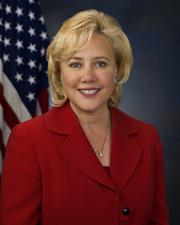 Sen. Mary L. Landrieu (D-LA)
Legislative Activity
Stay on top of the latest movement without scrolling through every action
Considered by Senate. (consideration: CR S5570)
May 19, 2009
View full timeline
Considered by Senate. (consideration: CR S5570)
May 19, 2009
Point of order raised in Senate with respect to amendment SA 1079.
May 19, 2009
Amendment SA 1079 ruled non-germane by the chair.
May 19, 2009
Considered by Senate. (consideration: CR S5468, S5471, S5488-5492; text as modified: CR S5471)
May 14, 2009
Senate amendment proposed (on the floor): Amendment SA 1079 proposed by Senator Landrieu to Amendment SA 1058.(consideration: CR S5425-5426; text: CR S5425)
May 13, 2009
Amendment SA 1079 proposed by Senator Landrieu to Amendment SA 1058. (consideration: CR S5425-5426; text: CR S5425) To end abuse, promote disclosure, and provide protections to small businesses that rely on credit cards.
May 13, 2009
Senate amendment submitted
May 12, 2009
Text
Proposed
CREDIT CARDHOLDERS' BILL OF RIGHTS ACT OF 2009--Continued

Mr. BAYH. I suggest the absence of a quorum.
The PRESIDING OFFICER. The clerk will call the roll.
The bill clerk proceeded to call the roll.
Mr. HARKIN. I ask unanimous consent that the order for the quorum
call be rescinded.
The PRESIDING OFFICER. Without objection, it is so ordered.
Mr. HARKIN. Madam President, I fully support the bill offered by the
distinguished chairman of the Banking Committee, Senator Dodd. It would
create a long overdue reform of the credit card industry whose
practices have been increasingly predatory and abusive. I have heard
from many hundreds of Iowans who have been victimized by credit card
companies. These are good people who, in the current economic downturn,
have had no choice but to resort to their credit cards in order to put
food on the table or to make a car payment or even help pay for college
tuition. As a result, they have found themselves on the receiving end
of a whole array of unfair and often outright abusive practices; things
such as double billing, unwanted fees, and arbitrary interest rate
increases. I applaud the Dodd-Shelby legislation for cracking down on
some of these abuses. I think the legislation is a good first step.
However, this bill still allows credit card companies to charge
excessive and, for millions of Americans, ruinous interest rates.
Currently one-third of all credit cardholders in the United States are
being forced to pay interest rates above 20 percent, sometimes as high
as 41 percent. These interest rates are grossly excessive. It is time
to set a reasonable limit on what credit card companies can charge.
In times past, an interest rate of 20 percent, 30 percent, or 40
percent would have been condemned by religious leaders of all faiths as
being the sin of usury. People daring to charge these interest rates
would have been prosecuted for loan sharking. But today the credit card
industry tells us that charging people these grossly excessive interest
rates is both fair and necessary. I totally disagree. It is not fair,
and it is not necessary. What is more, many Iowans have pointed out to
me the very financial institutions that are victimizing and squeezing
ordinary hard-working Americans have already received billions of
dollars from the taxpayers. Now these institutions are lending money
that came from taxpayers to people at interest rates as high as 41
percent. Someone tell me, what is the logic of that? No wonder people
are upset all over this country. We take their hard-earned tax dollars,
give it to the big institutions. They have a credit card and in hard
times they have to use that credit card for some necessities. Now they
are being charged 20, 25, 30 percent interest. It is a sweet deal for
the financial institution. It is nothing more than an old-fashioned
rip-off of consumers.
For these reasons, I have joined with Senators Sanders, Whitehouse,
Leahy, Durbin, and Levin to offer an amendment to cap credit card
interest rates at 15 percent. Yes, that is exactly what I am saying. No
credit card could charge more than 15 percent interest rates. Why did
we pick 15 percent as an appropriate top rate? Thanks to a law passed
by this Congress 30 years ago--I was here at the time--we put a cap of
15 percent on the maximum interest charges a credit union could charge
their customers. That was 30 years ago. We left a safety valve for
special circumstances. This rate cap of 15 percent has protected
millions of consumers at credit unions. I belong to a credit union
right here in the Senate. I have always belonged to a credit union. I
belonged to one in the House when I was there, and before that, in the
Navy, I belonged to the Navy Federal Credit Union. These credit unions
have performed a viable, good service for millions of Americans without
harming the safety or soundness of the institutions and without
negatively impacting access to credit for credit union members. I have
been a member of a credit union all my adult life. I have never once
seen them constrict the amount of credit involved to borrowers. If you
need a car, you have been able to get consumer loans from credit
unions.
I would also point out, not one single credit union--not one--had to
line up with the big banks begging for a bailout. Not one credit union.
Yet they are capped at 15-percent interest rates. Interesting, isn't
it?
Credit unions have remained strong and stable despite the meltdown in
much of our financial system.
Chris Coliver, a regulatory analyst for the California Credit Union
League, was recently asked about the effect of the interest rate cap on
his institutions--the 15-percent cap. He answered:

It hasn't been an issue. Credit unions are still able to
thrive.

Of course, there may be some special circumstances under which an
interest rate above 15 percent is temporarily necessary. Currently,
credit unions are allowed to charge higher interest rates if their
regulator--which is the National Credit Union Administration--
determines this is necessary to maintain the safety and soundness of
the institutions. At the present time, the NCUA, the National Credit
Union Administration, allows credit unions to charge interest rates as
high as--get this--as high as 18 percent, though most credit unions
continue to have a top rate that is actually much lower than that, and
some of them lower than 15 percent, some as low as 12 percent, 11
percent. Well, our amendment includes a similar, reasonable exception.
It would allow credit card companies to charge interest rates higher
than 15 percent in circumstances where Federal regulators determine
that higher rates are necessary to protect the safety and soundness of
financial institutions.
It seems as if this is deja vu all over again for me. I have been
advocating

[[Page S5416]]

for a 15-percent cap since I was an attorney for the Iowa Consumer
League in 1973, fresh out of law school. I was a lawyer for the Iowa
Consumer League, and we were trying to get the Iowa Legislature at that
time to put a cap of 15 percent on credit cards. So this issue has been
around for a long time. As a legal aid lawyer at that time, I saw
firsthand the devastation and hardship caused to Iowa families by
excessive interest rates charged by credit card companies and others.
Again, many of these Iowans turned to their credit cards in a time of
crisis--a medical emergency, for example--but because of the
prohibitive interest rates, they found themselves falling further and
further behind in their payments. Some were forced into bankruptcy.
Well, it is no different today. As I said, I have received many
hundreds of letters and e-mails from Iowans who have been victimized by
credit card companies' abusive practices. For example, Madam President,
let me share an all-too-common story from one of my Iowa constituents,
and I will read it verbatim as she wrote it:

I am a single mom with a pretty good job, [for] which I am
very thankful. I have 3 credit cards. Recently, I received
notices from 2 of them that they were raising my interest
rate due to the ``economic conditions.'' I don't mean a
little, I mean a LOT.

She capitalized ``LOT.''

Capital One--

We all know who Capital One is, and their credit cards--

Capital One sent me a notice that they were raising my rate
from 13.9 percent to 23.99 percent. I had the option of
cancelling my card and paying off the existing balance at my
current rate of 13.9 percent, which I did. The other one is
Washington Mutual. They were recently purchased by JP Morgan
Chase. I received a notice from them a couple of weeks ago
that my rate was going from--

Get this--

10.4 percent to 23.99 percent.

Now, you wonder: Here is JPMorgan Chase, operating through Washington
Mutual, increasing their interest rate to 23.99 percent. Capital One
increasing their interest rate to 23.99 percent. Why weren't they off
just 1 percent? Why are they both exactly the same? Well, it looks as
if they are all ganging up to charge the same high interest rate.
Anyway, let me continue to read from her letter. The rate was going
from 10.4 percent to 23.99 percent.

I have never missed a payment or been late on either one of
these. Tonight I called JP Morgan Chase and they told me I
missed the deadline to say I wanted to decline the changes in
my cardholder agreement. I said I wanted to close my account
and pay off the existing balance at the 10.4 percent. They
refused! . . . I could see it if I had missed any payments or
even paid a day late, but I have NOT. This is just WRONG.

End of her letter.
Imagine that. She actually had the wherewithal to pay it off at 10.4
percent, and JPMorgan said: No. You missed the deadline.
We all get this mail. We all get this junk mail and all that stuff
from credit card companies. I just throw them away. Well, maybe there
is some notice in there that, oh, if it is not a bill, maybe they have
sent you a notice that maybe you have to do something. Who reads all
that junk mail? Nine times out of ten, it is some kind of promotion
they are promoting: You can get a free airline pass or you can get a
cut rate on going to Cancun or something like that. You get all that
junk. Then they slip in there another little letter that says: Oh, by
the way, if you do not cancel your previous agreement, we are going to
do this, this, and this. Good luck in finding that out.
This constituent who wrote me would clearly benefit from the
provisions in the Dodd-Shelby bill that would prohibit retroactive rate
increases on existing balances in accounts with no late payments. But
the larger issue remains: Why should any bank be allowed to charge an
interest rate of 24 percent under any circumstances--under any
circumstances? Why should banks be allowed to charge other customers
interest rates as high as 41 percent--41 percent?
As I said, I support the underlying bill, but the bill will continue
to let them charge those kinds of interest rates. The bill does clean
up some of the other stuff, and that is why I am supporting it. But
this does not get really to the nub of the problem; that is, we are
allowing usurious interest rates to be charged for credit cards. We
know why they are charging these interest rates. They can get by with
it. It is legal. Well, the credit unions can survive and provide credit
and issue credit cards to their holders and survive on 15 percent. Are
you telling me these big companies cannot? Of course they can. But
guess what. They probably would not be able to pay their executives $50
million a year in salaries and bonuses or--$50 million; I am being a
piker--try $200 million or $300 million a year. That is what they are
paid. So to keep up this lavish lifestyle for their executives, for
their corporate offices, they charge 20, 30, 40 percent.
Well, as I said, take a lesson from the credit unions. Take a lesson.
That is what we have to put a limit on. That is why I cannot emphasize
enough that unless and until we cap interest rates, we are still going
to have these problems because people will get credit cards, they will
get into dire straits. This is their only way of paying a bill--to use
their credit card--and something else happens, and all of a sudden they
are racked up with these high interest rates.
The other thing credit card companies are doing is they are charging
these high interest rates in order to be able to give credit cards to
just about anyone. People get credit cards sent to them without any
kind of credit checks, whether they are really creditworthy. They get
all these kinds of credit cards out there. People who are like my
constituent, who are responsible and who pay their bills on time and
who have credit cards which they do pay on time and never get behind,
are penalized because credit card companies are so lax and so loose
with whom they give these credit cards to. So we all pay for it. Well,
the credit card companies ought to be a little bit more circumspect
about whom they give their credit cards to. Again, they should take a
lesson from the credit unions.
So, Madam President, as I said, I support the underlying bill. But we
must seize this opportunity to address the single most widespread and
destructive abuse in this industry; that is, grossly excessively high
interest rates. That is why I support this amendment. I urge my
colleagues to vote for the Sanders-Harkin-Leahy-Whitehouse-Durbin-Levin
amendment on this bill.
With that, Madam President, I yield the floor.
I suggest the absence of a quorum.
The PRESIDING OFFICER. The clerk will call the roll.
The bill clerk proceeded to call the roll.
Mr. ISAKSON. Mr. President, I ask unanimous consent that the order
for the quorum call be rescinded.
The PRESIDING OFFICER (Mr. Udall of New Mexico). Without objection,
it is so ordered.

Amendment No. 1084

Mr. ISAKSON. Mr. President, I ask unanimous consent that amendment
No. 1084, the Gillibrand amendment, be made pending.
The PRESIDING OFFICER. That amendment is pending.

Amendment No. 1104 to Amendment No. 1084

Mr. ISAKSON. Mr. President, I call up the second-degree amendment I
have at the desk.
The PRESIDING OFFICER. The clerk will report.
The bill clerk read as follows:

The Senator from Georgia [Mr. Isakson] proposes an
amendment numbered 1104 to amendment No. 1084.

Mr. ISAKSON. Mr. President, I ask unanimous consent that the reading
of the amendment be dispensed with.
The PRESIDING OFFICER. Without objection, it is so ordered.
The amendment is as follows:

(Purpose: To require the Comptroller General to conduct a study on the
relationship between fluency in the English language and financial
literacy)

Beginning on page 1, line 2, strike all through page 2,
line 9, and insert the following:

SEC. 503. GAO STUDY AND REPORT ON FLUENCY IN THE ENGLISH
LANGUAGE AND FINANCIAL LITERACY.

(a) Study.--The Comptroller General of the United States
shall conduct a study examining--
(1) the relationship between fluency in the English
language and financial literacy; and
(2) the extent, if any, to which individuals whose native
language is a language other than English are impeded in
their conduct of their financial affairs.
(b) Report.--Not later than 1 year after the date of
enactment of this Act, the Comptroller General of the United
States shall

[[Page S5417]]

submit a report to the Committee on Banking, Housing, and
Urban Affairs of the Senate and the Committee on Financial
Services of the House of Representatives that contains a
detailed summary of the findings and conclusions of the study
required under subsection (a).

Mr. ISAKSON. Mr. President, briefly, I have high regard for Senator
Gillibrand and the intent of the amendment. I also understand the
practical application of what could happen. I know in my home State of
Georgia, in one school system in Gwinnett County, there are 178
different languages spoken. The application of this amendment would
cause, for example, in Gwinnett County, 178 different credit reports in
178 different languages to meet the intent of the law.
I respect and understand the difficulty that fluency can make in
someone's ability to read and do their financial affairs. However,
before we were to require of all the credit reporting agencies that
they publish all credit reports and make them available in every
language that could be spoken in the United States, we should conduct a
study through GAO to ensure that we understand the relationship between
fluency and financial affairs on the part of an individual and we
understand exactly what the consequences of this amendment would be.
This gives us 1 year to study and make a final decision based on facts
rather than forcing an automatic imposition of credit reports being
published in a variety of different languages, which could be well in
excess of 100.
I, respectfully, appreciate the consideration of the Senate.
I yield back the remainder of my time and suggest the absence of a
quorum.
The PRESIDING OFFICER. The clerk will call the roll.
The bill clerk proceeded to call the roll.
Mrs. LINCOLN. Mr. President, I ask unanimous consent that the order
for the quorum call be rescinded.
The PRESIDING OFFICER. Without objection, it is so ordered.
Mrs. LINCOLN. Mr. President, I ask unanimous consent to speak as in
morning business.
The PRESIDING OFFICER. Without objection, it is so ordered.
(The remarks of Mrs. Lincoln pertaining to the introduction of S.
1030 are printed in today's Record under ``Statements on Introduced
Bills and Joint Resolutions.'')
Mr. BAYH. Mr. President, I ask unanimous consent the order for the
quorum call be rescinded.
The PRESIDING OFFICER. Without objection, it is so ordered.
Mr. BAYH. Mr. President, as you may have observed in our time
together in the Senate, I do not come to the floor of the Senate to
speak very often. I try to reserve my comments for matters of
particular importance and urgency, matters where I think we can make a
real difference and where the debate will matter. We are debating one
such issue today, when it comes to the important need, the critical
need to rein in the abusive practices of credit card companies that are
harming thousands of middle-class families across my State and millions
of middle-class families across America.
Just this last weekend I received more than 500 letters and e-mails
from my constituents, middle-class people across Indiana who are
outraged because they rightly believe they have been abused by the
predatory practices of credit card companies. These are decent hard-
working people who ask nothing more than for a fair shake in life and,
too often, they are not getting it because of the these abusive
practices.
I wish to take the opportunity to share with you a couple of these
stories. Many of them are heartfelt. I will give an example. This one
is from a single mother. She writes me:

Dear Senator Bayh, I am a single mother of a teenage boy,
and I work 50 hours per week--

She is not some deadbeat, she is a hard-working, middle American--

at a job I've had for 14 years. My ex-husband quit his job
out of the blue a couple of years ago and did not pay any
child support for over a year.
Unfortunately, I had to turn to using my credit cards for
things like groceries, gas and other bills just to keep up.
If you are even 1 or 2 days late in paying your bill, these
credit card companies increase your percentage rate to
astronomically high amounts. Because I was struggling and a
few days--not months, just a few days--late on some of my
credit card payments, the percentage rates on my credit cards
are now between 28 and 32 percent. I will never pay off these
bills with interest rates like this!
So many people out there, including myself, are at the
mercy of these unscrupulous credit card companies that can do
whatever they please. There needs to be laws regulating how
much these companies can charge. Americans are mired in
credit cards debt that will never be paid off, no matter how
hard they work and no matter how hard they try if the current
practices do not change.
My economic situation will be so much better if it were not
for my credit card bills. I owe probably $15,000 now on all
of my credit card bills combined, but it will take me a
lifetime to pay those off because of the practices to which I
have been subjected. Please fight for hard working people
everywhere who just want a chance to get out from under their
debt and better their financial circumstances.

I also heard from a woman in Carmel, IN, just north of Indianapolis,
a few weeks ago. She had an $8,000 balance on a closed--a closed credit
card account. She was not buying anything. She had always paid her bill
on time. And out of the blue one day--she had done nothing wrong--her
credit card company doubled her minimum payment. She is a woman of
modest means and she could not make the higher payment. She called the
bank and they would not work with her, even though she had never missed
a payment or been late, not once.
Soon the credit company started adding late fees and compounding her
interest. Over the course of 2 years, her balance tripled from $8,000
to $24,000, without making a single purchase. She had bought nothing.
She had done nothing wrong. And she is getting gouged like this. This
is the kind of thing that has to stop.
I heard from another constituent from Middlebury, IN, another basic
middle-class middle American, who received an offer from her credit
card company to consolidate her balance on all of her credit cards at 4
percent.
Well, that sounded like a pretty good rate, so she accepted the
offer. She never missed a payment. She had paid off half her debt, when
suddenly they raised the monthly minimum payment by 60 percent. So she
is paying on time, she is paying down her debt, and her monthly minimum
rate goes up by 60 percent without cause or any notice.
She called customer service to complain. They said they would lower
her monthly minimum payment if she would agree to have her interest
rate doubled. This woman from Middlebury is a mother. She is trying to
keep her head above water, and her credit card company is making life
more difficult with practices like that.
Those are the kinds of things we have to stop. And those are the
kinds of things I hope we will stop yet this week here in the Senate.
Here is what she wrote:

I don't know that our government can do a thing about this,
but I just wanted to be heard.

Well, here is the place where her voice can be heard. Here is the
place where thousands of middle-class families like hers can come for
some relief. Here is the place where over 500 people who wrote about
the abuses to which they have been subjected can come for some relief.
This recession has caused millions of middle-class families to resort
to using their credit cards a little bit more, not because they wanted
to but because they had to try to make ends meet. They are working
hard, trying to get out from under this situation, and it does not make
life any easier when they are running uphill because of these abusive
practices.
You know, bills are sent out so late. They arrive in our mailbox and
you have got 24 or 48 hours to pay the thing off or you are subjected
to a late fee. That is not right. Then they start charging interest on
the late fee. Interest rates can literally, because of the fine print
in these bills--you know, back in the day, you applied for a credit
card, it was about a one-page thing. Now it is 20 or 30 pages of fine
print. And buried in there in the fine print are the provisions where
companies can raise your interest rates any amount, anytime, for any
reason, or for no reason whatsoever. Those are the kinds of things that
need to be stopped.
Then, finally, when you are making your payments, they take the
payment

[[Page S5418]]

you make, and rather than applying it to the most expensive part of
your debt with the highest interest rate, they apply it to the lowest
interest rate. Why? Because it is more profitable for them, even though
it would be better to do it the other way around for you. Those are the
kinds of things we have to correct.
You know me pretty well, Mr. President. I am a free enterprise
person. I believe in the right of companies to make a profit, and
credit card companies are no exception. But they ought to make it the
legitimate, old-fashioned way, not on the backs of consumers through
abusive practices. That is what we are talking about here.
This also goes to something else I am concerned about, and that is
the deepening skepticism and cynicism about government in general, and
about Washington, DC, in particular. They think we are all under the
thumb of a bunch of special interests. Everybody sold out and nobody
cares about the average person or the middle-class family anymore. This
gives us an opportunity to show, to demonstrate that that is not true,
to stand up for millions of ordinary people, to do what is right, to
say that the free market should be allowed to operate, but you should
not scam people, you should not bury fees in fine print, you should not
do a bait and switch.
That is not the way you make a decent profit. That is something that
ought to be against the rules. That is what this legislation would
provide for. For the sake of middle-class families across States such
as Indiana and New Mexico and elsewhere across America, for the sake of
folks who are working hard trying to get out from under the
consequences of this recession, for the sake of trying to restore some
faith and trust in our system of self-government, it is important that
we pass this credit card bill, to restrain these abusive practices, to
stand up for middle-class families, to do right by our citizens, and to
let people know that when their voices are heard, we will answer.
That is why I have risen today on this bill. I urge my colleagues to
join with us in acting. I hope we will have an opportunity to do that
before the week is out.
I thank you for your leadership, as well as my colleagues.
Seeing none of our colleagues present, I suggest the absence of a
quorum.
The PRESIDING OFFICER (Mr. Merkley.) The clerk will call the roll.
The assistant bill clerk proceeded to call the roll.
Mr. DURBIN. I ask unanimous consent that the order for the quorum
call be rescinded.
The PRESIDING OFFICER. Without objection, it is so ordered.
Mr. DURBIN. I ask unanimous consent to speak as in morning business.
The PRESIDING OFFICER. Without objection, it is so ordered.

Guantanamo

Mr. DURBIN. Mr. President, for the last several weeks there has been
a hue and cry from the other side of the aisle, a steady procession of
Republican Senators, concerning the President's intention to close the
detention facility at Guantanamo Bay. I would like to remind colleagues
this is a problem President Obama inherited from the previous
administration, and it is worth a few moments to review the history.
After the September 11 terrorist attacks on the United States, the
Bush administration decided to set aside treaties that had served us in
past conflicts. They sent detainees to the Guantanamo facility and
claimed the right to seize anyone, including American citizens in the
United States, and to hold them indefinitely without legal rights.
GEN Colin Powell, then the Secretary of State to President George W.
Bush, objected. He said the administration's policy:

Will reverse over a century of U.S. policy and practice . .
. and undermine the protections of the law of war for our own
troops . . . It will undermine public support among critical
allies, making military cooperation more difficult to
sustain.

GEN Colin Powell, former Chairman of the Joint Chiefs of Staff, then
Secretary of State to George W. Bush. Secretary Powell's words were
prophetic. Guantanamo became an international embarrassment for the
United States and, sadly, tragically, a recruiting tool for terrorists
such as al-Qaida. The Supreme Court repeatedly held that the
administration's detention policies were illegal. As Justice Sandra Day
O'Connor famously wrote for the majority in the Hamdi difficult
decision:

A state of war is not a blank check for the President.

Today, nearly 8 years after the 9/11 attacks, none of the terrorists
who planned those attacks has been brought to justice.
After he left the Bush administration, Colin Powell spoke out
publicly again. He said:

Guantanamo has become a major, major problem . . . in the
way the world perceives America. . . . We don't need it and
it is causing us far more damage than any good we get for it.

That is not a quote from the ACLU. That came from GEN Colin Powell,
former chairman of the Joint Chiefs of Staff and former Secretary of
State. A lot of others agree. Four other former Secretaries of State,
Republican and Democratic, have weighed in: Henry Kissinger, Madeleine
Albright, James Baker, and Warren Christopher have all called for
Guantanamo to be closed. As Secretary Baker explained:

We all agreed one of the best things that could happen
would be to close Guantanamo, which is a very serious blot on
our reputation.

Former Navy general counsel Alberto Mora testified in the Senate
Armed Services Committee, saying:

There are serving U.S. flag-rank officers who maintain that
the first and second identifiable causes of U.S. combat
deaths in Iraq--as judged by their effectiveness in
recruiting insurgent fighters into combat--are respectively
the symbols of Abu Ghraib and Guantanamo.

This was not some leftwing columnist. This is the former Navy general
counsel, Alberto Mora.
Retired Air Force MAJ Matthew Alexander led the interrogation team
that tracked down Abu Mus'ab al-Zarqawi, the leader of al-Qaida in
Iraq. He used legal and traditional interrogation tactics which he
believes are more effective than torture. Here is what Major Alexander
said:

I listened time and time again to foreign fighters, and
Sunni Iraqis, state that the number one reason they decided
to pick up arms and join Al Qaeda was the abuses at Abu
Ghraib and the authorized torture and abuse at Guantanamo
Bay. . . . It's no exaggeration to say that at least half of
our losses and casualties in that country have come at the
hands of foreigners who joined the fray because of our
program of detainee abuse.

Let me remind those listening again, the source of this quote is not
some liberal-leaning columnist, angry at policies of the United States.
It is MAJ Matthew Alexander from the Air Force, a man who dedicated a
large part of his life to serving our country and risking his life in
its defense.
I visited Guantanamo in 2006. I left with a feeling of pride and
admiration for the soldiers and sailors serving there. They are great
Americans doing a tough job in a very bleak climate. But they are being
asked to carry a heavy burden created by the previous administration's
policies, which have turned Guantanamo, sadly, into a recruiting poster
for al-Qaida.
By 2006, even former President George W. Bush said he wanted to close
Guantanamo Bay. He acknowledged the problem. He didn't do anything to
solve it.
As an aside, it is interesting to note that there were no complaints
from the Republican side of the aisle when President Bush said he
wanted to close Guantanamo. The Republican leader of the Senate did not
come down to the floor to object when his President made the
suggestion. He started making a regular trip to the floor to object
when the suggestion was made by President Obama.
President Obama has shown courage in taking on this difficult
challenge. Within 48 hours of his inauguration, President Obama issued
executive orders prohibiting torture, stating that Guantanamo will be
closed within 1 year and setting up a review process for all detainees
who are currently held at Guantanamo.
Here is what President Obama said:

The United States intends to prosecute the ongoing struggle
against violence and terrorism and we are going to do so
vigilantly, we are going to do so effectively, and we are
going to do so in a manner that is consistent with our values
and our ideals.

At the signing of the Executive orders, the President was joined by
16 retired admirals and generals. These distinguished Americans issued
a statement saying:

[[Page S5419]]

President Obama's actions today will restore the moral
authority and strengthen the national security of the United
States. . . . President Obama has rejected the false choice
between national security and our ideals. Our Nation will be
stronger and safer for it.

In response to the Executive orders, Republican Senators John McCain
and Lindsey Graham said:

We support President Obama's decision to close the prison
at Guantanamo, reaffirm America's adherence to the Geneva
Conventions, and begin a process that will, we hope, lead to
the resolution of all cases of Guantanamo detainees.

Keep in mind, I have just read a quote from Senator John McCain, a
man who, of course, was President Obama's opponent in the last
election, but a man who had a personal life experience of over 5 years
of captivity during the Vietnam war, and a colleague of mine who has
shown extraordinary courage and political courage and leadership in
leading the effort to say, once and for all, that we were going to
prohibit torture as part of America's policy.
It was Senator McCain, along with his colleague Senator Graham, who
said these supportive things after President Obama's announcement. It
was a strong bipartisan statement, a strong day for our country.
But now things have changed, and I do not know why. The Republicans
are on the attack. They claim that the President does not have a plan
to close Guantanamo, and yet at the same time they are arguing that the
President does have a plan, which is to release terrorists into the
United States. Imagine that. These claims are not only contradictory,
they are preposterous.
The truth is, the President is taking the time to carefully plan for
the closure of Guantanamo, and he is going to do it in a way that is
consistent with America's security.
Here is how the Director of National Intelligence Dennis Blair
explained it:

[Guantanamo] is a rallying cry for terrorist recruitment
and harmful to our national security, so closing it is
important for our national security. The guiding principles
for closing the center should be protecting our national
security, respecting the Geneva Conventions and the rule of
law, and respecting the existing institutions of justice in
this country. Closing this center and satisfying these
principles will take time, and is the work of many
departments and agencies.

In recent weeks, Republicans have regularly come to the floor of the
Senate and the House to make dozens of statements criticizing President
Obama on Guantanamo. The distinguished minority leader, Senator
McConnell of Kentucky, alone, has spoken on this issue on 9 separate
occasions over the last 11 days the Senate has been in session. It is
interesting that the Republicans are spending so much time focused on
the fate of Guantanamo while President Obama and others in Congress are
focused on getting our economy back on track after 8 years of failed
economic policies.
What is the explanation? According to a recent story in Politico:

Congressional Republicans have stoked parochial fears of
releasing Guantanamo detainees to the U.S. mainland, and GOP
aides privately acknowledge that this issue is one of the few
on which they believe they have a real edge on the Obama
administration.

Somehow arguing on the floor of the Senate that President Barack
Obama cannot wait to close Guantanamo and turn terrorists loose in the
United States--incredible.
The Hill newspaper reported:

As polls show most Americans approve of the job Obama is
doing on issues like the economy, the wars in Iraq and
Afghanistan and others, Republicans are desperate to find an
issue on which they can come out ahead.

In other words, the Republicans are trying to turn Guantanamo into a
political issue. Richard Clarke was President George W. Bush's first
counterterrorism chief. Listen to what he said last week:

Recent Republican attacks on Guantanamo are more desperate
attempts from a demoralized party to politicize national
security and the safety of the American people.

Let's examine two of the specific claims from the other side of the
aisle. They argue that transferring Guantanamo detainees to U.S.
prisons will put Americans at risk.
Well, earlier today my colleague Sheldon Whitehouse--I serve on the
Judiciary Committee with him--had a very interesting hearing, which I
am sure will be noted by many people when they follow the news, where
he talked about the detention and interrogation policies and brought
some critical witnesses to testify who had dissented from President
Bush's policies during the course of his administration.
During his hearing in the Judiciary Committee today, one of the
witnesses was Phillip Zelikow. Phillip Zelikow was the Executive
Director of the 9/11 Commission, which has received high marks from
virtually everyone for the professional job they did under the
leadership of Governor Kean of New Jersey and former Congressman
Hamilton of Indiana. Mr. Zelikow also served as counselor to Secretary
of State Condoleezza Rice. He comes to this issue with ample
experience.
Mr. Zelikow was intimately involved with these issues during the Bush
administration, and he strongly supports closing Guantanamo. He told me
in the hearing it will be safe to transfer Guantanamo detainees to U.S.
prisons and facilities, and some of the most dangerous terrorists are
already incarcerated in the United States.
Here are a few examples: Ramzi Yousef, the mastermind of the 1993
World Trade Center bombings--he is being safely and securely held in an
American detention facility; 9/11 conspirator Zacarias Moussaoui;
Richard Reid, the so-called shoe bomber; and numerous al-Qaida
terrorists responsible for bombing United States Embassies in Kenya and
Tanzania.
If we can safely hold these individuals, I believe we can safely hold
any Guantanamo detainees who need to be held. I should note no prisoner
has ever escaped from a Federal supermaximum security facility in the
United States.
Republicans also claim the administration wants to release terrorists
into our communities. What an incredible charge, and patently false.
President Obama has made clear that Guantanamo will be closed in a
manner consistent with our national security.
Even the Bush administration acknowledged that there are people being
held at Guantanamo who were wrongly detained and who are not
terrorists. Let me give you one example.
There is an attorney in Chicago who is a friend of mine who
volunteered to represent one of the detainees at Guantanamo. At his own
expense, he flies down to Guantanamo and meets with this man
periodically. He tells me that the man is now 26 years old. He is
originally from Gaza. He has been held now for 7 years--7 years--
because at the time we were offering rewards to people in various parts
of the world who would turn in suspects. So the money was offered. This
man was turned in, eventually sent to Guantanamo.
The attorney tells me he was sent to Guantanamo at the age of 19. He
is now 26. Fifteen months ago, our Government sent a message to this
attorney saying: We have reviewed this case in detail--after 6 years--
reviewed this case in detail. We have no charges against this man being
held in detention.
This man is being held in Guantanamo, which is a very bleak setting
if you have been there, and he has now been held an additional 15
months with no pending charges. Our Government did not believe he is a
dangerous individual. What they were trying to do is to find a place
where he can go and, for 15 months, he has been sitting in detention in
Guantanamo.
Is that consistent with justice in America? Is that the kind of image
we want? Of course we want to be safe. But the rule of law suggests
that if the man has done nothing wrong, he should not be punished for
it and continue to be in this secure setting in Guantanamo, separated
from his family now for 7 years, with no charges brought against him.
Even the Bush administration, which started this Guantanamo
detention, realized after some time that literally hundreds of people
who were detained there were not in any way, shape, or form a threat to
the United States and they were released--many of them back to their
home countries.

Back in 2002, Defense Secretary Donald Rumsfeld described the
detainees at Guantanamo as ``the hardest of the hard core'' and ``among
the most dangerous, best trained, vicious killers on the face of the
Earth.'' Those are the words of Secretary Rumsfeld. However, since that
statement by Secretary

[[Page S5420]]

Rumsfeld, two out of three of the detainees in Guantanamo have been
released. They have also cleared dozens of additional detainees for
release but cannot return them to their home countries, much like the
one I described, because of the risk they may be tortured if they
return.
We need our allies to accept some of these detainees, but they have
made it clear they will not do so unless the United States admits a
small number of detainees who do not present any threat to our country.
As Senator Sessions, the ranking Republican on the Judiciary
Committee, has pointed out, it is illegal under U.S. law to resettle
terrorists in the United States--one of the charges being made on the
Republican side of the aisle. Unlike the previous administration,
President Obama does not believe that he can set aside any laws enacted
by Congress. No one can be admitted to this country to live freely
until they have been through a thorough background and security check
and cleared of wrongdoing.
President Obama inherited the Guantanamo mess from the previous
administration. Solving this problem is not easy. There will be
difficult choices, and it will take time. But the President has shown
he is willing to step up and lead and make hard decisions that are in
the best interests of the security of the United States.
I applaud the President for engaging in a careful and deliberative
process to close Guantanamo. As Colin Powell, James Baker, John McCain,
and many military officials have said, closing Guantanamo will make us
a safer nation.
I urge my Republican colleagues to take another look at this issue
and understand that this important national security issue is best
solved in a bipartisan way, and that we should continue the work of
closing Guantanamo, suggested by President George W. Bush, by doing it
in a fashion that is consistent with America's values.
Mr. President, I yield the floor.
I suggest the absence of a quorum.
The PRESIDING OFFICER. The clerk will call the roll.
The assistant legislative clerk proceeded to call the roll.
Mr. REID. Mr. President, I ask unanimous consent that the order for
the quorum call be rescinded.
The PRESIDING OFFICER. Without objection, it is so ordered.
Mr. REID. Mr. President, I ask unanimous consent that the Isakson
second-degree amendment No. 1104 be agreed to and the Gillibrand
amendment No. 1084, as amended, be agreed to and the motion to
reconsider be laid on the table; that the Senate then resume
consideration of the Sanders amendment No. 1062 and there be 4 minutes
of debate prior to a vote in relation to the amendment; that an
allocation Budget Act point of order be considered made against the
Sanders amendment and that Senator Sanders be recognized to waive the
relevant point of order, with the Senate then voting to waive the point
of order; that upon disposition of the Sanders amendment, the Senate
resume the Gregg amendment and there be 2 minutes of debate prior to a
vote in relation to the amendment; that upon disposition of the Gregg
amendment, there be 2 minutes of debate prior to the vote in relation
to the Vitter amendment No. 1066--I am wondering if there is any, if
Senator Vitter requests any time to speak on this; we will make sure
Senator Vitter has 5 minutes if he wants to speak on the amendment--
that no intervening amendments be in order during the pendency of this
agreement; and that all time be equally divided and controlled in the
usual form.
The PRESIDING OFFICER. Is there objection?
Without objection, it is so ordered.

Amendments Nos. 1104 and 1084

The PRESIDING OFFICER. Under the previous order, amendment No. 1104
is agreed to.
Amendment No. 1084, as amended, is agreed to.
The Senator from Illinois is recognized.
Mr. BURRIS. Mr. President, I ask unanimous consent to speak as in
morning business for up to 3 minutes.
The PRESIDING OFFICER. Without objection, it is so ordered.

Supreme Court Nominee

Mr. BURRIS. Mr. President, as I address this Chamber today,
politicians and pundits across the country are bracing for the spirited
tug-of-war which precedes the confirmation of any new Supreme Court
Justice. A list of names has appeared, seemingly out of thin air, and
the media is already beginning its speculative debate on who this
person will be.
Many seem eager to attack or defend potential nominees based on
ideological grounds or even specific issues. I see little value in this
overblown rhetoric and idle speculation. We must be careful in our
approach to such an important task. I call upon the White House to give
us a nominee who will provide diversity to the Court and ensure that
each ruling is informed by real-life experience as well as sound legal
reasoning. The greatest jurors in our history have been drawn from the
Federal bench, private life, academia, and even elected office. It is
these exceptional, independent leaders to whom our President must now
turn.
Some will warn that any Obama nominee will be prone to political bias
and judicial activism. We must be wary as we evaluate such claims.
Certainly, it is right to oppose any jurist who would attempt to
legislate from the bench. The Supreme Court must be bound by law and
the weight of precedent. Justices must respect our Constitution and
remain unbiased on all matters.
But too often, we mistake insensitivity for impartiality. We cannot
afford to choose a clear record at the expense of clear judgment.
Decisions such as Brown v. the Board of Education display compassion,
not activism. Roe v. Wade stood on principle, not on ideology. Some
call it activism; I call it courage. Our judicial history is full of
these independent decisions, and we should demand such strength and
integrity from every jurist we place on the bench. After all, without
any kind of courage, the Supreme Court itself would hardly exist as we
know it. Marbury v. Madison was a landmark ruling that forever altered
the role of the Court. It established judicial review and laid the
groundwork for almost every decision in the last two centuries.
We must oppose jurists who would overreach, but we would be well
served to find a candidate with the integrity to draw on his or her
God-given sense of empathy and personal life experiences.
Above all, we must ensure that he or she will bring diversity to the
Supreme Court. I encourage the President to give serious consideration
to naming a woman of color to the High Court. Diversity of race and
gender, diversity of background, diversity of thought, and diversity of
judicial philosophy--all of these qualities would bring new views and
experience to the Supreme Court and would encourage healthy debate
among its members, bringing new perspective to each ruling.
Any experienced attorney--and there are many of us in this Chamber--
knows that finding legal truth is not easy. Few issues are black and
white. Judges must sift through shades of gray to make informed
decisions. Legal truth arises from this dialog, from the collision of
different perspectives and opinions. In shaping the Supreme Court, we
seek to build debate, not consensus.
Justice David Souter, throughout his 18-year tenure on the Supreme
Court, has consistently given a thoughtful voice to the principles of
fairness, equality, and the importance of precedent. He has always been
a consistent advocate for ``a philosophy of all philosophies'' which
values fresh ideas, unique perspectives, and inclusive debate. As this
brilliant jurist moves into retirement, we must embrace his independent
legacy by confirming someone who will bring diversity, empathy, and a
powerful intellect to the bench. In short, we must ensure that he or
she is worthy to be placed among the highest legal minds in the United
States of America.
As a former attorney general of Illinois, I can speak to the awesome
impact the Supreme Court has on ordinary citizens. It is a testament to
the enduring strength of our democracy that nine individuals, appointed
and confirmed by representatives of the people, stand squarely at the
crossroads of justice. They are entrusted to navigate difficult legal
ground in order to distinguish right from wrong and to guard the
sanctity of the Constitution. When any five of these individuals

[[Page S5421]]

come together to hand out a ruling, it becomes the law of the land.
There is no implicit threat of violence to back up these decisions--
merely the quiet force of a written opinion. That is the wonder of this
thing called a democracy and the power of this Court.
This is a rare and remarkable opportunity for this body to have a
voice in shaping the highest court in the Nation--a court whose actions
will continue to reverberate across the legal landscape for future
generations of Americans. With the full weight of this serious task
resting on our shoulders, I ask my fellow Senators to ignore the
media's idle speculation. Now is the time to exercise our
constitutional powers of advise and consent. The urgent needs of the
American people demand that we think outside of the box. We must
confirm an individual whose unique perspective can bring fresh
diversity into the decisions of the U.S. Supreme Court. I urge my
colleagues to join with me in communicating to President Obama that we
will settle for nothing less.
Thank you, Mr. President. I yield the floor, and I note the absence
of a quorum.
The PRESIDING OFFICER. The clerk will call the roll.
The assistant legislative clerk proceeded to call the roll.
Mr. DODD. Mr. President, I ask unanimous consent that the order for
the quorum call be rescinded.
The PRESIDING OFFICER. Without objection, it is so ordered.
Mr. DODD. Mr. President, I wish to propound a unanimous consent
request. I will try to explain it in layman's terms.
I ask unanimous consent that the Sanders amendment move from first
place to second place and that the amendment offered by Senator Vitter,
from Louisiana, be offered first, under the same conditions.
The PRESIDING OFFICER. Is there objection?
Without objection, it is so ordered.

Amendment No. 1066

There is now 2 minutes of debate prior to the vote in relation to the
Vitter amendment. The Senator from Louisiana is recognized.
Mr. VITTER. Mr. President, my amendment is very simple. It simply
empowers the FDIC to come up with appropriate regulations to ensure
that credit cards are only issued to folks who are in the country
legally, to ensure that we don't empower and facilitate illegal aliens
and terrorists and keep them from getting credit cards, which can then
be used improperly. The 9/11 terrorists all did this successfully and
all used credit cards in planning and plotting and hatching their
scheme. It is also a boon to business for many banks that go after the
illegal alien market with credit cards. That is unacceptable, and my
amendment would stop that.
I reserve the remainder of my time.
The PRESIDING OFFICER. The Senator from Connecticut is recognized.
Mr. DODD. Mr. President, if my colleague wants to proceed a little
longer, this is a very important amendment. If he wants to spend
another minute or so talking about it, that is fine because I will need
probably more than a minute to respond. Would he like additional time?
Mr. VITTER. Not at this time.
Mr. DODD. Mr. President, I rise in opposition to the amendment. I
will explain why. The basic identity verification recordkeeping
requirement in this amendment is already included in section 326 of the
USA PATRIOT Act. It is redundant and not necessary on this amendment.
This bill is designed specifically to deal with credit card reform. A
matter such as this obviously belongs in a more appropriate place.
Also, the amendment would require card issuers to verify an applicant's
identity by obtaining a Social Security card, photo ID, driver's
license, and a card issued by a State in compliance with the REAL ID
Act.
There are legitimate issues about terrorism and illegal immigrants in
the country, but it seems to me when you already have provisions in the
law that are specifically designed to protect the issues being raised
by my friend--to add redundancy to a credit card bill, when we are
trying to make sure people can have credit, and make sure it is
provided in a way that is not abusive, with interest rate hikes,
penalties, fees, and the like.
I say, with respect, to my friend that, presently, applications for
credit cards are currently taken by mail, by telephone, and on the
Internet. This would force all applicants to physically go to the bank
and present the required documents, which would cause a huge
inconvenience to customers. I don't think that is in our best interest
at this time. We are not trying to make it more difficult for people to
have access to credit cards. We want adequate information so decisions
can be made about their ability to repay, but we don't want to burden
them with unfair fines, penalties, fees, and high interest rates. This
idea runs contrary to what we are trying to achieve with this bill.
I say, respectfully, that I oppose this amendment and ask my
colleagues to do so as well.
The PRESIDING OFFICER. The Senator from Louisiana is recognized.
Mr. VITTER. I have a few points, Mr. President. This amendment will
absolutely not require every applicant for a credit card to physically
go to the bank. That is absolutely, categorically not true.
Secondly, present law doesn't solve this problem. It is universally
recognized that illegal aliens, including terrorists, in this country,
can get a credit card. Present law isn't solving that problem.
I will submit for the Record this article from the Wall Street
Journal which talks about this. I ask unanimous consent that it be
printed in the Record.
There being no objection, the material was ordered to be printed in
the Record, as follows:

[From the Wall Street Journal, Feb. 13, 2007]

Bank of America Casts Wider Net for Hispanics

(By Miriam Jordan and Valerie Bauerlein)

Los Angeles.--In the latest sign of the U.S. banking
industry's aggressive pursuit of the Hispanic market, Bank of
America Corp. has quietly begun offering credit cards to
customers without Social Security numbers--typically illegal
immigrants.
In recent years, banks across the country have begun
offering checking accounts and, in some cases, mortgages to
the nation's fast-growing ranks of undocumented immigrants,
most of whom are Hispanic. But these immigrants generally
haven't been able to get major credit cards, making it hard
for them to develop a credit history and expand their
purchasing power.
The new Bank of America program is open to people who lack
both a Social Security number and a credit history, as long
as they have held a checking account with the bank for three
months without an overdraft. Most adults in the U.S. who
don't have a Social Security number are undocumented
immigrants.
The Charlotte, N.C., banking giant tested the program last
year at five branches in Los Angeles, and last week expanded
it to 51 branches in Los Angeles County, home to the largest
concentration of illegal immigrants in the U.S. The bank
hopes to roll out the program nationally later this year.
``We are willing to grant credit to someone with little or
no credit history,'' says Lance Weaver, Bank of America's
head of international card services, whose team designed the
program based in part on the bank's experience in markets
like Spain, which lack conventional credit bureaus to rate a
client's credit-worthiness.
The credit cards involved aren't cheap. They come with a
high interest rate and an upfront fee. And the idea of
catering to illegal immigrants is controversial.
Bank of America defends the program, saying it complies
with U.S. banking and antiterrorism laws. Company executives
say that the initiative isn't about politics, but rather
about meeting the needs of an untapped group of potential
customers.
``These people are coming here for quality of life, and
they deserve somebody to give them a chance to achieve that
quality of life,'' says Brian Tuite, the bank's director of
Latin America card operations and one of the architects of
the program.
Critics say Bank of America is knowingly making a product
available to people who are violating U.S. immigration law.
'They are clearly crossing the line; they are actually aiding
and abetting people who broke the law,'' says Ira Mehlman, a
spokesman for the Federation for American Immigration Reform,
a group that advocates a crackdown on illegal immigration.
Typical of the new card's customers is Antonio Sanchez, a
Mexican immigrant whose only major asset is a white 1996 Ford
Thunderbird, which he drives to the two restaurants where he
works each day on opposite sides of Los Angeles. Mr. Sanchez,
who says he sneaked across the border a decade ago, has been
a customer of Bank of America's East Hollywood branch for
nine years. He has no borrowing history and no Social
Security number.

Paying Balances

To obtain a Bank of America Visa card with a $500 line of
credit, Mr. Sanchez had to put down $99. If he stays within
his $500 limit and pays his balances in a timely fashion, he

[[Page S5422]]

will receive his $99 security payment back in three to six
months, and his credit limit might be increased.
* * *
David Robertson, publisher of the report, says a rate of
21.24% is ``unquestionably high.'' ``If that's the rate
you're offered, its a pretty safe bet you're in a high-risk
group,'' he said.
To assess an applicant, the bank employs ``judgmental
lending,'' a concept pioneered by MBNA Corp., the credit-card
company that Bank of America acquired in January 2006. In
essence, the bank bases its evaluation of a potential
client's credit-worthiness on a subjective review by its
employees, rather than on standardized financial data
crunched by a computer.
Unorthodox initiatives like the new credit-card program may
be crucial to Bank of America's long-term success. In the
past the bank, which operates in 31 states and the District
of Columbia, grew mostly by buying up other banks. Now,
however, it is bumping up against a regulatory cap that bars
any U.S. bank from an acquisition that would give it more
than 10% of the nation's total bank deposits. That means Bank
of America's only way to grow domestically is to sell more
products to existing customers and to attract new ones.

Opening Accounts

Bank of America, the second-largest U.S. bank after
Citigroup Inc. in terms of market capitalization, estimates
that there are 28 million Hispanics in its operating area and
that most of them, regardless of their immigration status,
don't have a bank. It hopes the allure of a credit card will
persuade hundreds of thousands more Latinos to open accounts.
``If we don't disproportionately grow in the Hispanic
[market] . . . we aren't going to grow'' as a bank, says Liam
McGee, Bank of America's consumer and small-business banking
chief.
Illegal immigrants have typically relied on loan sharks and
neighborhood finance shops for credit. But that has begun to
change. A few years ago, a handful of community banks in the
U.S. began offering mortgages to illegal immigrants, as long
as they could prove they had stable employment and paid U.S.
taxes with an individual tax identification number, or ITIN.
In December 2005, Wells Fargo & Co. began extending
mortgages to consumers with an ITIN. The bank is currently
evaluating a pilot program in Los Angeles and Orange counties
before deciding whether to expand it.
Department of Homeland Security spokesman Russ Knocke said
banking products aimed at illegal immigrants ``reinforce the
need for a temporary worker program'' that the Bush
administration has been promoting. That program would screen,
tax and otherwise regulate immigrant workers and, the
administration contends, would squeeze out illegal workers
who now use forged or stolen documents to get jobs, driver's
licenses and occasionally credit.
Anti-money-laundering regulations passed in the wake of the
Sept. 11, 2001, terror attacks put more pressure on banks to
verify customers' identity and watch for suspicious
transactions, but they don't require banks to ascertain
whether account holders are in the U.S. legally. Most banks
require a Social Security number or ITIN to open an account,
but regulations also allow them to accept other government-
issued forms of identification in some instances, including
passport numbers, alien identification numbers or any
government-issued document with photo showing nationality or
place of residence.
A handful of retailers, such as Los Angeles's closely held
La Curacao department store chain, have boosted their
business by cultivating illegal immigrants with store credit
cards. ``Once you capture them, they become very loyal,''
says Ron Azarkman, chief executive of La Curacao, which has
developed its own in-house credit-ratings system. ``This is a
promising market, as long as it is carefully managed,'' he
says, adding that the average APR charged by his company is
22.9%.

Word of Mouth

Bank of America hasn't launched an ad campaign for the new
card. For the time being, it is counting on word of mouth
that starts with its employees at each banking center. Many
of the Spanish-speaking account holders who come to teller
Luz Quintanilla's window at Bank of America's East Hollywood
branch, already have a Social Security number and regular
credit card with the bank. But she suggests in Spanish that
``maybe you have family or friends who don't have a Social
Security number, but wish to build their credit.''
In selling the card, a major challenge is to persuade
immigrants who are sometimes wary of plastic that holding a
credit card is an important step on the way to obtaining
loans for big-ticket items, such as a car or even a home.
Pictures of a check book, credit card, car and house in
ascending order illustrate this concept one pamphlet in
Spanish and English titled ``How to Build Your Credit, Step
by Step.''

Mr. VITTER. Mr. President, if this bill is about ending the problems
the credit card companies create, or take advantage of, certainly their
going after illegal aliens as a niche market and a profit center is an
offensive problem we need to address, particularly in a post-9/11
world.
Fourth, I ask unanimous consent to have printed in the Record this
letter from the Eagle Forum declaring that this will be a scored vote.
There being no objection, the material was ordered to be printed in
the Record, as follows:

May 12, 2009.
Dear Senator: On behalf of the thousands of Eagle Forum
members nationwide, I urge your strong support of Senator
David Vitter's amendment to H.R. 627, the Credit Cardholder's
Bill of Rights.
Sen. Vitter's amendment would grant rule-making authority
to the Federal Reserve to set forth a minimum standard for
credit card issuers to establish a consumer's identity in
order to prevent and deter illegal immigrants and terrorists
from obtaining credit cards.
The regulations would simply require financial institutions
to do the following:
Verify the identity of any person seeking a credit card
account through one of four acceptable forms of
identification, including a social security card, a driver's
license issued by a state in compliance with the Real ID Act,
a passport, or a photo ID card issued by the Dept. of
Homeland Security.
Maintain records of the information used to verify the
customer's identity.
Consult lists of known or suspected terrorists or terrorist
organizations provided by the appropriate government agency.
Current loopholes in federal law are often abused by
financial institutions. In February 2007, the Wall Street
Journal reported that Bank of America Corp, in an effort to
expand their Hispanic consumer base, had quietly begun
offering credit cards to customers without Social Security
numbers, typically, illegal aliens. In order to get around
the verification requirements, Bank of America rewarded the
unidentifiable consumer with a credit card as long as they
had held a checking account with any bank for three months
without an overdraft violation. This program quickly spread
as common practice to 51 Bank of America branches throughout
the Los Angeles, CA area.
Not only will this amendment help to close dangerous
loopholes, but by requiring the use of the four most secure
types of personal identification, all Americans will be
protected, as these types of ID are harder to forge or
duplicate. This simple requirement will ensure that all
future credit card accounts are opened solely by legal
residents in the United States, and it will help curb the
tide of taxpayer-draining illegal immigration by removing the
magnet of easily obtainable credit.
Congressional leaders simply cannot allow banks to continue
the very practices that so greatly contributed to the U.S.
credit markets' current state. With the shrinking
availability of credit today, the very least congressional
leaders can do is ensure that American citizens are being
placed before illegals, criminals, and terrorists.
I ask that you join us in supporting Sen. Vitter's
amendment by voting yes when it is brought to a vote, and by
opposing any efforts to kill it. Eagle Forum will score this
vote, which will be included on our scorecard for the 1st
session of the 111th Congress.
Faithfully,
Phyllis Schlafly,
President & Founder.

Mr. DODD. Mr. President, I ask unanimous consent for 15 more seconds.
The PRESIDING OFFICER. Is there objection?
Without objection, it is so ordered.
Mr. DODD. Mr. President, it is not my opinion that this would require
people to show up physically. This is the opinion of the Treasury
Department. We asked them to comment on this, and they told us that.
The elderly, the handicapped, and those in rural areas are going to be
adversely affected if this were to be adopted. It is duplicative,
redundant, and unnecessary. It adds tremendous burdens on certain
segments of this country. Credit cards are valuable instruments during
difficult economic times.
Mr. VITTER. Will the Senator yield?
Mr. DODD. I am happy to.
Mr. VITTER. The amendment is only 2\1/2\ pages long. What language
requires an applicant to physically show up before a bank or a credit
card issuer?
Mr. DODD. It is not the length of the amendment. Sometimes one or two
words can have huge implications. We asked Treasury how they would
interpret this, and they claim this would require the physical presence
of an applicant. That is one of their concerns.
As long as that is a concern and it raises that possibility, adopting
this, which could result in that, it seems to me would be an
irresponsible action for this body to take.
Mr. VITTER. Mr. President, this amendment is 2\1/2\ pages long, and
there is no language in it that requires their physical presence. I
know this administration is opposed to the amendment, but this is
simply a smokescreen. I invite Members to actually read the amendment.
I yield back my time.

[[Page S5423]]

Mr. DODD. I yield back my time.
The PRESIDING OFFICER. The question is on agreeing to the Vitter
amendment.
Mr. DODD. Mr. President, I ask for the yeas and nays.
The PRESIDING OFFICER. Is there a sufficient second? There is a
sufficient second.
The clerk will call the roll.
The bill clerk called the roll.
Mr. DURBIN. I announce that the Senator from Massachusetts (Mr.
Kennedy), the Senator from Vermont (Mr. Leahy), the Senator from
Maryland (Ms. Mikulski), the Senator from West Virginia (Mr.
Rockefeller), and the Senator from Rhode Island (Mr. Whitehouse) are
necessarily absent.
Mr. KYL. The following Senator is necessarily absent: the Senator
from Texas (Mrs. Hutchison).
The PRESIDING OFFICER (Mr. Burris). Are there any other Senators in
the Chamber desiring to vote?
The result was announced--yeas 28, nays 65, as follows:

[Rollcall Vote No. 190 Leg.]

YEAS--28

Barrasso
Bond
Brownback
Bunning
Burr
Chambliss
Coburn
Cochran
Cornyn
Crapo
DeMint
Enzi
Graham
Grassley
Inhofe
Isakson
Johanns
Kyl
McCain
McConnell
Risch
Roberts
Sessions
Shelby
Thune
Vitter
Voinovich
Wicker

NAYS--65

Akaka
Alexander
Baucus
Bayh
Begich
Bennet
Bennett
Bingaman
Boxer
Brown
Burris
Byrd
Cantwell
Cardin
Carper
Casey
Collins
Conrad
Corker
Dodd
Dorgan
Durbin
Ensign
Feingold
Feinstein
Gillibrand
Gregg
Hagan
Harkin
Hatch
Inouye
Johnson
Kaufman
Kerry
Klobuchar
Kohl
Landrieu
Lautenberg
Levin
Lieberman
Lincoln
Lugar
Martinez
McCaskill
Menendez
Merkley
Murkowski
Murray
Nelson (NE)
Nelson (FL)
Pryor
Reed
Reid
Sanders
Schumer
Shaheen
Snowe
Specter
Stabenow
Tester
Udall (CO)
Udall (NM)
Warner
Webb
Wyden

NOT VOTING--6

Hutchison
Kennedy
Leahy
Mikulski
Rockefeller
Whitehouse
The amendment (No. 1066) was rejected.
Mr. DODD. Mr. President, I move to reconsider that vote and move to
lay that motion on the table.
The motion to lay on the table was agreed to.

Amendment No. 1062

The PRESIDING OFFICER. Under the previous order, a 302(f) point of
order is considered made against Sanders amendment No. 1062.
There are 4 minutes equally divided prior to a vote in relation
thereto.
The Senator from Vermont is recognized.
Mr. SANDERS. Mr. President, I ask unanimous consent to modify
amendment No. 1062 and send to the desk the modification.
The PRESIDING OFFICER. Is there objection?
Mr. SHELBY. I object.
The PRESIDING OFFICER. Objection is heard.
Mr. SANDERS. This amendment is being cosponsored by Senators Harkin,
Durbin, Levin, Leahy, and Senator Whitehouse. It is not being supported
by the American Bankers Association and the other financial
institutions that have spent $5 billion in the last 10 years to push
their interests against the needs of the American people.
This amendment is, in fact, very simple. It says now is the time to
end usury in the United States of America. Now is the time to protect
the American people against 25, 30 percent or more interest rates on
their credit cards.
It says now, when the American taxpayer is spending hundreds of
billions of dollars bailing out Wall Street, they should not be lending
the American people their own money at usurious rates.
When banks are charging 30 percent interest rates, they are not
making credit available; they are engaged in loansharking. That is what
they are engaged in, and we should be very clear about that. Now is the
time to eliminate that behavior.
We picked a number, a maximum of 15 percent plus 3 percent, under
extraordinary circumstances, not because it came out of the top of my
head but because credit unions in this country have been operating
under that law for 30 years. And you know what. It has worked well.
It was not the credit unions coming in here for billions of dollars
in bailouts; they are doing very well. This law has worked for credit
unions; it should work for large financial institutions. Let's stand up
for the American people. Let's put a cap on interest rates, 15 percent
plus 3.
I ask my colleagues to support this amendment, once again supported
by Senators Harkin, Durbin, Levin, Leahy, and Whitehouse.
The PRESIDING OFFICER. The Senator from Alabama.
Mr. SHELBY. Mr. President, I raise a point of order it violates the
Budget Act.
Mr. SANDERS. I move to waive that.
The PRESIDING OFFICER. The point of order has been considered made.
There are 2 minutes under control of the opposition.
Mr. SHELBY. I yield back the remaining time.
Mr. SANDERS. I ask for the yeas and nays.
The PRESIDING OFFICER. The yeas and nays have been requested on the
motion to waive. Is there a sufficient second? There is a sufficient
second.
The question is on agreeing to the motion.
The clerk will call the roll.
The legislative clerk called the roll.
Mr. DURBIN. I announce that the Senator from Massachusetts (Mr.
Kennedy), the Senator from Vermont (Mr. Leahy), the Senator from
Maryland (Ms. Mikulski), the Senator from West Virginia (Mr.
Rockefeller), and the Senator from Rhode Island (Mr. Whitehouse) are
necessarily absent.
Mr. KYL. The following Senator is necessarily absent: the Senator
from Ohio (Mr. Voinovich).
The PRESIDING OFFICER. Are there any other Senators in the Chamber
desiring to vote?
The yeas and nays resulted--yeas 33, nays 60, as follows:

[Rollcall Vote No. 191 Leg.]

YEAS--33

Begich
Bennet
Boxer
Brown
Burris
Cardin
Casey
Conrad
Dodd
Dorgan
Durbin
Feingold
Feinstein
Gillibrand
Grassley
Harkin
Inouye
Kerry
Klobuchar
Kohl
Lautenberg
Levin
McCaskill
Menendez
Merkley
Reed
Reid
Sanders
Schumer
Udall (CO)
Udall (NM)
Webb
Wyden

NAYS--60

Akaka
Alexander
Barrasso
Baucus
Bayh
Bennett
Bingaman
Bond
Brownback
Bunning
Burr
Byrd
Cantwell
Carper
Chambliss
Coburn
Cochran
Collins
Corker
Cornyn
Crapo
DeMint
Ensign
Enzi
Graham
Gregg
Hagan
Hatch
Hutchison
Inhofe
Isakson
Johanns
Johnson
Kaufman
Kyl
Landrieu
Lieberman
Lincoln
Lugar
Martinez
McCain
McConnell
Murkowski
Murray
Nelson (NE)
Nelson (FL)
Pryor
Risch
Roberts
Sessions
Shaheen
Shelby
Snowe
Specter
Stabenow
Tester
Thune
Vitter
Warner
Wicker

NOT VOTING--6

Kennedy
Leahy
Mikulski
Rockefeller
Voinovich
Whitehouse
The PRESIDING OFFICER. On this vote, the yeas are 33, the nays are
60. Three-fifths of the Senators duly chosen and sworn not having voted
in the affirmative, the motion is rejected. The point of order is
sustained, and the amendment falls.
The Senator from Connecticut.
Mr. DODD. Mr. President, what is the business before the Senate?

Amendment No. 1085

The PRESIDING OFFICER. There is 2 minutes equally divided prior to a
vote in relation to the Gregg amendment No. 1085.
The Senator from New Hampshire.
Mr. GREGG. Mr. President, this amendment is appropriate to this bill
because, after all, we are talking about credit in this bill, and the
credit of the United States is obviously a severe issue for all of us,
and we need to address it.
This amendment simply gives the American people a better opportunity
to learn what is happening to their Government and how much debt is
being run up on them and their children. It is an issue of transparency
and

[[Page S5424]]

openness in our Government. The debt is the threat, and it is one of
those occasional, brilliant ideas that come along every so often, so
everybody should vote for it.
Thank you, Mr. President.
The PRESIDING OFFICER. Who yields time?
The Senator from Connecticut.
Mr. DODD. Mr. President, there are very few Members for whom I have
more affection or respect than Judd Gregg of New Hampshire. But I think
this amendment, first of all, has no place on this bill. It is
unnecessary and raises some very serious, legitimate issues. Let me
point them out.
First of all, it is going to be costly to do this: every agency to
report what the national debt is. The number is absolutely worthless by
the time you publish it because the national debt rises, of course,
every nanosecond. So to have that idea what it is also gives you a
false illusion of actually where we are.
The level of public cynicism about this issue is getting almost
insurmountable. It seems to me we need to be far more realistic. There
are other costs, as well, in addition to the debt that people care
about. Why not have a tuition cost clock? Why not have a health care
cost clock? These matters go up all the time as well. It seems to me
that by adding something such as this, we are just adding to that
illusion, adding to that cynicism at a time when there are plenty of
places where you can get this information--certainly the Congressional
Budget Office as well.
So while this amendment has been adopted in the past because it seems
relatively harmless, the fact is, I think it is an idea that can
actually raise costs and create false illusions. Certainly consumers
ought to have some idea about some of these other costs, which I would
object to. If you had a health care cost clock, a tuition cost clock,
an energy cost clock, it could contribute to those problems. So I urge
that the amendment be defeated.
Mr. SANDERS. Mr. President, I make a point of order that the pending
amendment violates section 302(f) of the Congressional Budget Act of
1974.
Mr. GREGG. Mr. President, I move to waive section 302(f) of the
Congressional Budget Act of 1974 and ask for the yeas and nays.
The PRESIDING OFFICER. Is there a sufficient second?
There is a sufficient second.
The question is on agreeing to the motion.
The clerk will call the roll.
The assistant legislative clerk called the roll.
Mr. DURBIN. I announce that the Senator from Massachusetts (Mr.
Kennedy), the Senator from Vermont (Mr. Leahy), the Senator from
Maryland (Ms. Mikulski), the Senator from West Virginia (Mr.
Rockefeller), and the Senator from Rhode Island (Mr. Whitehouse) are
necessarily absent.
The PRESIDING OFFICER. Are there any other Senators in the Chamber
desiring to vote?
The yeas and nays resulted--yeas 59, nays 35, as follows:

[Rollcall Vote No. 192 Leg.]

YEAS--59

Alexander
Barrasso
Bayh
Bennet
Bennett
Bond
Boxer
Brownback
Bunning
Burr
Cardin
Chambliss
Coburn
Cochran
Collins
Conrad
Corker
Cornyn
Crapo
DeMint
Dorgan
Ensign
Enzi
Feingold
Feinstein
Gillibrand
Graham
Grassley
Gregg
Hagan
Hatch
Hutchison
Inhofe
Isakson
Johanns
Klobuchar
Kohl
Kyl
Lincoln
Lugar
Martinez
McCain
McCaskill
McConnell
Murkowski
Nelson (NE)
Pryor
Risch
Roberts
Sessions
Shaheen
Shelby
Snowe
Specter
Thune
Udall (CO)
Vitter
Voinovich
Wicker

NAYS--35

Akaka
Baucus
Begich
Bingaman
Brown
Burris
Byrd
Cantwell
Carper
Casey
Dodd
Durbin
Harkin
Inouye
Johnson
Kaufman
Kerry
Landrieu
Lautenberg
Levin
Lieberman
Menendez
Merkley
Murray
Nelson (FL)
Reed
Reid
Sanders
Schumer
Stabenow
Tester
Udall (NM)
Warner
Webb
Wyden

NOT VOTING--5

Kennedy
Leahy
Mikulski
Rockefeller
Whitehouse
The PRESIDING OFFICER. On this vote, the yeas are 59, the nays are
35. Three-fifths of the Senators duly chosen and sworn not having voted
in the affirmative, the motion is rejected. The point of order is
sustained and the amendment falls.
The Senator from Connecticut is recognized.
Mr. DODD. Mr. President, let me make a couple of comments, if I can,
regarding previous debates.
Our colleague from Vermont offered an amendment to deal with caps on
interest rates and that failed on a point of order. I know there are
others who have various ideas about this issue. It is a legitimate
issue, and I want my colleagues to know this. It is a complicated
issue, because dealing with credit cards, dealing with payday lenders,
dealing with all sorts of different entities, the matter of what is an
excessive interest rate is one that many Americans care deeply about
and one where they wish to see some restraint.
It is legitimate to point out that there are interest rates being
imposed today that you would have gone to jail for imposing not many
years ago. In fact, it would make a loan shark blush, some of these
interest rates that are being charged. So what I intend to do at some
point, because I realize when you look at the votes, there were only
about 30 votes dealing with the point of order dealing with the motion
of the Senator from Vermont. But I think a lot of my colleagues do not
feel his desire was illegitimate; they were concerned about whether the
rate was too low or how it would apply.
So I am going to propose--I hope along with my friend and colleague
from Alabama--to ask either the Federal Reserve, or whatever else is
the appropriate place, to come back and give us a comprehensive review
of what national rates there ought to be.
This idea that you can end up charging in effect 200, 300, or 400
percent interest rates, which is what has happened in some cases, is
offensive, to put it mildly. It ought to be wrong and illegal, and
people ought not to be able to get away with it.
I think it is difficult for my colleagues to determine what is that
level and what institutions, and under what financial circumstances, do
you apply it to. I realize a payday lender lends money for a week or
two, not annually. So the interest rate will be different than on a
credit card, on a home mortgage, or what it is apt to be with a credit
union. With various institutions, under various circumstances, rates
can differ.
It is confusing, except that most constituents and millions of
Americans would like to see some restraint. I don't know how you can
possibly explain why some institutions can get away with rates that are
literally triple digits in some cases. I don't think we are going to
resolve that matter on this bill. But we ought to have some clear idea
of how to put some restraints on national usury laws. I am not a Bible
scholar, but for those who are, I am sure they can recite chapter and
verse in the Old and New Testaments when it comes to the usurious rates
that were being charged by money changers and the like.
At the appropriate time, I will propose an amendment that will allow
us to get back to people in a short period with some analysis of how to
impose some meaningful restraints on what is charged to consumers for
the privilege of borrowing money when they need it, as so many do, to
pay tuition, pay mortgages, keep the business operating and deal with
the health care crisis, or just to survive week to week. People have
been taken advantage of under circumstances that are deplorable, in my
view, when the rates are particularly beyond excessive.
I think one should not read the outcome of the Sanders vote as a
rejection of the idea that applying some standards of fairness is
unacceptable to this body. I believe a lot of Members voted against
waiving the budget point of order not because they disagreed with what
he is trying to do. I would not want that vote to reflect that. I
support Senator Sanders, as I did on the budget debate, not because I
necessarily agreed with the number he had in mind, but because it is an
important debate and he should have had the right to be able to proceed
with his amendment. I wanted to make that point overall. I think it
would be a false impression to walk away and say

[[Page S5425]]

the Senate rejected any idea of considering some sort of a national
usury rate because they rejected the waiver of the point of order that
Senator Sanders offered.
I see my colleague from Louisiana, who I think wants to speak.
I yield the floor.
The PRESIDING OFFICER. The Senator from Louisiana is recognized.

Amendment No. 1079

Ms. LANDRIEU. Mr. President, I want to speak for a few moments about
an amendment that I ask be called up, amendment No. 1079.
The PRESIDING OFFICER. The clerk will report.
The assistant legislative clerk read as follows:

The Senator from Louisiana [Ms. Landrieu], for herself, Ms.
Snowe, Mr. Cardin, and Mrs. Shaheen, proposes an amendment
numbered 1079 to amendment No. 1058.

The amendment is as follows:

(Purpose: To end abuse, promote disclosure, and provide protections to
small businesses that rely on credit cards)

At the end of title V, add the following:

SEC. 503. EXTENDING TILA CREDIT CARD PROTECTIONS TO SMALL
BUSINESSES.

(a) Definition of Consumer.--Section 103(h) of the Truth in
Lending Act (15 U.S.C. 1602(h)) is amended--
(1) by inserting ``(1)'' after ``(h)''; and
(2) by adding at the end the following:
``(2) For purposes of any provision of this title relating
to a credit card account under an open end credit plan, the
term `consumer' includes any business concern having 50 or
fewer employees, whether or not the credit account is in the
name of the business entity or an individual, or whether or
not a subject credit transaction is for business or personal
purposes.''.
(b) Amendment to Exemptions.--
(1) In general.--Section 104 of the Truth in Lending Act
(15 U.S.C. 1603) is amended--
(A) in paragraph (1), by inserting after ``agricultural
purposes'' the following: ``(other than a credit transaction
under an open end credit plan in which the consumer is a
small business having 50 or fewer employees)''; and
(B) in paragraph (4), by striking ``$25,000'' and inserting
``$50,000''.
(2) Business credit card provision.--Section 135 of the
Truth in Lending Act (15 U.S.C. 1645) is amended by inserting
after ``does not apply'' the following: ``with respect to any
provision of this title relating to a credit card account
under an open end credit plan in which the consumer is a
small business having 50 or fewer employees or''.

Ms. LANDRIEU. Mr. President, I call this amendment up for discussion
purposes. I am open to some modification. I want to explain, basically,
this amendment. I have spoken with the chairman of the committee that
has proposed the underlying bill. He sees merit in this proposal, and I
am grateful for that. I want to talk about what the issue is,
generally, and then as we proceed to a final vote, I may be open to
some modification of this amendment.
As chair of the Small Business Committee, I offer this amendment on
behalf of myself and my ranking member, Senator Snowe from Maine, who
served for many years as chair of this important committee. We have
committed to try to be the very best advocates we can for small
businesses in America. There are close to 30 million small businesses
that are actually feeling the brunt of this recession--in some ways
more than anybody, as the Chair knows. In Illinois, I am sure the
occupant of the chair hears on a regular basis from small mom-and-pop
operators who have been in business for decades, to the more
established but relatively small businesses, restaurants, shoe repair
shops, hardware stores--people who have said to me--and I am sure he
hears this--``Senator, we have never experienced this kind of
difficulty getting access to credit.'' They are angry, and they should
be. They are frustrated, because while they understand shared
sacrifice, like many hard-working Americans do, they are having trouble
understanding how we continue to send billions and billions of dollars
to the big banks, the Wall Street companies, to the international
companies, and they are having trouble seeing any of that actually hit
Main Street, where they are, where they have been, and where they want
to stay.
The small businesses are right around the corner and, in some
instances, on the same block as the constituents whom we represent--of
course, we represent them as well. It came to the attention of this
Chair and our ranking member that this bill, which has a lot of merit--
this amendment to consumer protection language is very important, but
it has a limit that we are not comfortable with. That limit is that
this credit card protection extends only to a natural person, what is
defined in the law as a natural person. So it is a personal credit card
that you would get that would get this benefit. I think, as chair of
the Small Business Committee, representing a broad coalition, that this
same benefit should extend at least to small businesses as well, to
businesses that are literally trying to keep their access to capital--
not just to keep themselves in business, to keep their communities
strong, but to lead our Nation's recovery. The President himself has
said he expects that in our recovery--and he is correct--job creation
is not going to come from the big businesses, the multinational
companies; they are going to be contracting for some time, I suspect.
What big business has to do to survive--I have some general
understanding of that, but the big risks are going to be taken by the
small entrepreneurs who, despite the gloom and doom, have decided their
ideas are worth pursuing, and they are going to build this recovery one
job at a time.
I don't know why we would even be considering only limiting this help
and support to private individuals and leaving small business out. I
don't think that is the intention of the chairman of the Banking
Committee, as he has indicated to me. So that is basically what our
amendment would do. It would simply include small businesses that have
$25,000 on their credit card, where they are trying to stay in
business, keep their lights on, keep that capital flowing, as other
sources dry up, as we have heard, and extend the same protections to
them.
I am open to some slight modifications because I understand there may
be some objections. I am not clear about where those objections would
come from. So right now, let me say again that I offered this in a
bipartisan amendment from Senator Snowe and myself. I am happy also
that we are joined by Senators Shaheen, Cardin, and others, who have
indicated they may want to cosponsor this amendment.
I have a long list of organizations that have endorsed this concept.
I will read them into the Record. The Consumer Action Group; Consumer
Federation of America; Food Marketing Institute; National Association
of College Stores; National Association of the Self Employed; National
Association of Theater Owners; American Beverage Licensees; American
Society of Travel Agents; National Small Business Association, which
brought this issue to my attention; Petroleum Marketers Association;
Service Employees International; U.S. Hispanic Chamber of Commerce;
U.S. Women's Chamber of Commerce; National Consumer Law Center on
Behalf of Low-Income Clients; National Community Reinvestment
Coalition. I understand that also the National Federation of
Independent Businesses, the largest organization of independent
businesses in the country, is poised to endorse this as well.
So we have a very credible group of organizations that think these
protections for credit cardholders should not go to persons but to
businesses that arguably need as much, if not more, protection as they
attempt to create jobs and keep their businesses open, which is a help
to all. So that is the nature of this amendment.
I understand that it is important to bring this debate to a close
and, hopefully, we can get there. I do know there are probably 30 other
amendments pending and this, of course, is one. I am sure we can find a
time that is appropriate for this vote.
I wanted to bring to the attention of the Senate that one of the
reasons this issue is becoming so important to small businesses is, if
you think about it, only 15 years ago, most people who started their
own business would either take out a home equity loan or they might
borrow money from a rich uncle or aunt or they would dip into their
savings, and this was sort of the traditional way. If they had some
status or credit in the community, they could go to their local bank
and they might get a loan for their business.
Those times have changed dramatically. I don't have the charts here,
but if I could show one, it would show that on the latest survey our
committee took, 59 percent of all businesses in

[[Page S5426]]

America are using credit cards to finance their business or for their
primary cash flow tool. Credit cards for businesses are different. We
just had American Express testify this morning. Of course, if you have
an American Express business card, their model is different. The good
news is that you have unlimited amounts of money that you can borrow.
The bad news is that you have to pay it off at the end of the month. So
it is more of a cash management tool than it is long-term
credit. However, they are useful. But there are Visas and Master Charge
and Discover cards and others that people are now putting $50,000 on
the card or $75,000 on the card or $100,000 on the card to finance
their restaurants and their printing shops and their hardware stores.

This was not true even 25 years ago. This was quite unheard of. So we
have to recognize that small businesses today are relying on the good
will of these credit card companies. Some of them are more reliable, in
my view, than others. But regardless of whether they are doing
excellent work or shoddy work--and some of them are doing shoddy work--
this Government has an obligation to say let's make sure the basic
consumer protections are there. You cannot raise rates without giving
notice. You cannot retroactively raise rates. What we are doing for
consumers is good. We need to extend it to small business.
That is the essence of this amendment. I am proud to be joined by
Members from both sides of the aisle. I am going to be talking with the
chair of the committee. There perhaps could be some modifications where
we could agree to this amendment and not have to have a vote, but I
don't know. Right now I am intending to have a vote on this amendment.
I appreciate the thousands of business owners who are supporting this
amendment through these very reputable organizations that are
supporting the extension of these benefits to the small businesses of
America that absolutely need our action on this, this week.
I yield the floor.

Cloture Motion

Mr. REID. Mr. President, I send a cloture motion to the desk.
The PRESIDING OFFICER. The cloture motion having been presented under
rule XXII, the Chair directs the clerk to read the motion.
The assistant legislative clerk read as follows:

Cloture Motion

We, the undersigned Senators, in accordance with the
provisions of rule XXII of the Standing Rules of the Senate,
hereby move to bring to a close debate on the Dodd-Shelby
substitute amendment No. 1058 to H.R. 627, the Credit
Cardholders' Bill of Rights Act of 2009.
Harry Reid, Christopher J. Dodd, Bill Nelson, Richard
Durbin, Debbie Stabenow, Patrick J. Leahy, Patty
Murray, Amy Klobuchar, Russell D. Feingold, Mark R.
Warner, Jon Tester, Mark Begich, Mark L. Pryor, Robert
P. Casey, Jr., Benjamin L. Cardin, Jack Reed, Sherrod
Brown.

Cloture Motion

Mr. REID. Mr. President, I send a cloture motion to the desk.
The PRESIDING OFFICER. The cloture motion having been presented under
rule XXII, the Chair directs the clerk to read the motion.
The assistant legislative clerk read as follows:

Cloture Motion

We, the undersigned Senators, in accordance with the
provisions of rule XXII of the Standing Rules of the Senate,
hereby move to bring to a close debate on H.R. 627, the
Credit Cardholders' Bill of Rights Act of 2009.
Harry Reid, Christopher J. Dodd, Richard Durbin, Bill
Nelson, Debbie Stabenow, Patrick J. Leahy, Patty
Murray, Amy Klobuchar, Russell D. Feingold, Mark R.
Warner, Jon Tester, Mark Begich, Mark L. Pryor, Robert
P. Casey, Jr., Benjamin L. Cardin, Jack Reed, Sherrod
Brown.

Mr. REID. Mr. President, I have spoken to the Republican leader. He
knew we were going to file these. It is no surprise to anyone.
The PRESIDING OFFICER. The Senator from Maine is recognized.
Ms. COLLINS. Mr. President, I ask unanimous consent that the pending
amendment be set aside.
The PRESIDING OFFICER. Without objection, it is so ordered.

Amendment No. 1107 to Amendment No. 1058

Ms. COLLINS. Mr. President, I call up amendment No. 1107.
The PRESIDING OFFICER. The clerk will report.
The assistant legislative clerk read as follows:

The Senator from Maine [Ms. Collins], for herself and Mr.
Lieberman, proposes an amendment numbered 1107 to amendment
No. 1058.

Ms. COLLINS. I ask unanimous consent the reading of the amendment be
dispensed with.
The PRESIDING OFFICER. Without objection, it is so ordered.
The amendment is as follows:

(Purpose: To address criminal and fraudulent monetary transfers using
stored value cards and other electronic devices)

At the end of title V, add the following:

SEC. 503. STORED VALUE CARDS.

(a) Definitions.--Section 5312(a) of title 31, United
States Code, is amended--
(1) in paragraph (2)(K), by inserting ``stored value
devices,'' after ``money orders,'';
(2) in paragraph (3)(B), by striking ``; and'' at the end
and inserting ``, and stored value devices and any other
similar money transmitting devices;'';
(3) in paragraph (3)(C), by striking the period at the end
and inserting ``; and'';
(4) by adding at the end the following:
``(D) as the Secretary of the Treasury shall provide by
regulation for purposes of sections 5316 and 5331 of this
title, stored value devices, or other similar money
transmitting devices (as defined by regulation of the
Secretary for such purposes), unless the Secretary, in
coordination with the Secretary of Homeland Security,
determines that a particular device, based on other
applicable laws, is subject to additional security measures
that obviate the need for such regulations as it relates to
that device.''; and
(5) by adding at the end the following new paragraph:
``(7) `Stored value' means funds or monetary value
represented in digital electronics format (whether or not
specially encrypted) and stored or capable of storage on
electronic media in such a way as to be retrievable and
transferable electronically.''.
(b) Criminal Penalties.--Title 18, United States Code, is
amended--
(1) in section 1956(c)(5)(i), by striking ``and money
orders, or'' and inserting ``money orders, stored value
devices, and any other similar money transmitting devices,
or''; and
(2) in section 1960(b)--
(A) in paragraph (1)(C), by inserting ``, including funds
on fraudulently issued stored value devices and funds on
stored value devices issued anonymously for the purpose of
evading monetary reporting requirements,'' after ``funds'';
and
(B) in paragraph (2), by striking ``or courier'' and
inserting ``courier, or issuance, redemption, or sale of
stored value devices or other similar instruments''.
(c) Money Transmitting Businesses.--Section 5330(d)(1)(A)
of title 31, United States Code, is amended by inserting
``stored value devices,'' after ``travelers checks,''.

Ms. COLLINS. Mr. President, I ask unanimous consent the Senator from
Connecticut, Mr. Lieberman, be added as a cosponsor of the amendment.
The PRESIDING OFFICER. Without objection, it is so ordered.
Ms. COLLINS. Mr. President, stored value cards have been used and are
being used by Mexican drug cartels to smuggle their drug revenues back
to Mexico. The Department of Justice estimates that up to $24 billion
in cash is smuggled into Mexico each year from the United States and
these stored value cards are one of the means by which the cash is
smuggled back into Mexico. Stored value cards can be loaded anonymously
by individuals who are involved in criminal enterprises, such as drug
trafficking. The cards are then physically smuggled across the border
and can be used to withdraw large quantities of cash from ATMs.
Under current law, cash and other monetary instruments that exceed
$10,000 must be declared at the border. For those of us who have
traveled to different countries, we are very familiar with the white
form you have to fill out in which you have to indicate if you have
cash that exceeds $10,000.
However, there is a loophole in the current law. Stored value cards,
either individually or collectively in excess of $10,000, do not have
to be reported because they are not considered to be monetary
instruments under the law. The amendment Senator Lieberman and I are
offering would require such reporting and make it a crime to launder
money using these stored value cards.
The Deputy Attorney General of the United States has pointed out that
large quantities of cash are put together and smuggled across the
border to the south. He has pointed out that there are various ways
this can be accomplished but that stored value cards are one of the
means for smuggling this cash.
Mr. President, as you know as a loyal and diligent member of the
Homeland

[[Page S5427]]

Security Committee, our committee has been investigating the problem of
drug trafficking from these Mexican cartels. What we found is the drugs
are coming north and cash and weapons are going south. By closing the
loophole on reporting for large quantities of cash that are being
smuggled back and forth using these stored value cards, we can help
give law enforcement another tool to crack down on the smuggling of
cash that is often the proceeds of criminal activity, including drug
smuggling.
This is not just theoretical. It is not only the Deputy Attorney
General who has pointed out that these cards can be a means of
smuggling large quantities of cash but also law enforcement agents
throughout the United States have been investigating criminal
enterprises that are using these cards. Let me give a couple of
examples.
Law enforcement agents in Dallas have been investigating a Colombian
narcotrafficking organization that wanted to launder narcotic proceeds
via stored value cards. The organization wanted to obtain 50 stored
value cards that would be used to launder $100,000 in proceeds. These
transactions would be structured in different increments per card for
the total of $100,000. The cards would then be exported out of the
United States to Colombia. The cards would be cashed out in Colombia
and the dollar value would be converted to Colombian pesos at the
official exchange rate.
In another example, law enforcement undercover operations have
revealed at least nine transnational criminal groups engaged in moving
criminal proceeds via stored value cards. These operations have
revealed the cross-border movement of stored value cards loaded with
millions of dollars of illicit proceeds. Numerous collateral
investigations and enforcement actions have been conducted as a result
of these undercover activities.
This is a loophole in our laws we need to plug and the Collins-
Lieberman amendment would do that. It would treat these cards as the
equivalent of cash because that is what they are. That is what they
are. It would require that, just as if you crossed the border with
$10,000 in cash or other monetary instruments you have to declare it,
so would you have to declare it if you have these stored value cards.
In addition, it would make a failure to report the amount of money on
these cards, if it is $10,000 or more, as a crime, and it would also
make it a crime to launder money using these cards.
This is a very concrete, needed action that we could take to help
crack down on the smuggling of money that fuels the drug trafficking
across the Mexican border. It is a very practical step we can take
right now to close a loophole in the law and to provide law enforcement
with a much-needed tool.
I know the managers of the bill are not on the floor at present so I
will withhold asking for a vote on this amendment. I do believe we are
in the process of clearing it on both sides, but I am uncertain whether
that has been completed. It may be that the acting manager of the bill
can inform me.
I yield the floor.
Ms. KLOBUCHAR. Mr. President, I appreciate that from the Senator from
Maine. The manager of the bill, the Senator from Connecticut, will be
returning shortly.
Ms. COLLINS. Mr. President, I suggest the absence of a quorum.
The PRESIDING OFFICER. The clerk will call the roll.
The assistant legislative clerk proceeded to call the roll.
Ms. COLLINS. Mr. President, I ask unanimous consent the order for the
quorum call be rescinded.
The PRESIDING OFFICER. Without objection, it is so ordered.
Ms. COLLINS. Mr. President, I ask unanimous consent that the Senator
from Illinois, the Presiding Officer, be added as a cosponsor of the
amendment, and I thank him very much for his support.
The PRESIDING OFFICER. Without objection, it is so ordered.
Ms. COLLINS. I suggest the absence of a quorum.
The PRESIDING OFFICER. The clerk will call the roll.
The assistant legislative clerk proceeded to call the roll.
Mr. BENNET. Mr. President, I ask unanimous consent that the order for
the quorum call be rescinded.
The PRESIDING OFFICER. Without objection, it is so ordered.
Mr. BENNET. Mr. President, l rise today to congratulate Chairman Dodd
and Senator Shelby for developing the legislation we have before us.
Pass this bill, and we will be able to go home and tell our
constituents with confidence that the Credit CARD Act of 2009 is a
groundbreaking consumer protection achievement. I am pleased that, as a
member of the Banking Committee, I was able to vote for the bill in
committee and help pave the way for floor consideration this week.
In my travels around Colorado, I have been struck by stories of
unfair, undeserved credit card practices, hitting consumers at exactly
the hardest time. Melissa Mosley of Durango, CO, told me about how
tough economic times forced her to use several credit cards for
purchasing supplies and day-to-day expenses for her small business.
After a stretch of making minimum payments, Melissa's interest rates
suddenly rose, one even reaching 32 percent. The company is refusing to
negotiate, making it even more difficult for Melissa and her husband to
make ends meet.
And in Cedaredge, Joy Beason is a small business owner who runs a
small herbal products business. Last fall, Joy's interest rates tripled
from 7.9 percent to 23 percent without notification of any kind. The
high interest rates prevent her from paying down more of the principal
on the card, leaving her in an endless cycle of debt.
And there's Garrett Mumma of Pueblo whose interest rate on his credit
card doubled from 7.9 percent to 13.65 percent despite his solid
history of payment. In a letter to me, Garrett wrote, ``I only want
what's fair. I want the credit card companies to honor their original
agreements and not to gouge the American people when they are already
suffering so much from the present economic crisis.''
These struggles paint an unacceptable picture. We need to rein in
abusive practices and create a new set of rules that works for Colorado
consumers.
According to a Pew Safe Credit Cards Project study, 87 percent of
cards allowed the issuer to impose automatic penalty interest rate
increases on all balances, even if the account is not 30 days or more
past due. And 93 percent of cards allowed the issuer to raise any
interest rate at any time by changing the account agreement.
I am voting for this bill because it protects consumers from
excessive fees, ever-changing interest rates where you do not even get
notice, and complex contracts intended to confuse you until you give up
even trying to understand.
It protects consumers by establishing fair and sensible rules for how
and when credit card companies can raise interest rates. Card companies
must give 45 days' notice before increasing rates, and can no longer do
so on existing balances.
It cracks down on abusive fees. Consumers no longer will have to pay
a fee just to pay a bill. And credit card companies must mail
statements 21 days before the bill is due, instead of the current 14
days, so cardholders can avoid hefty late fees. It also stops credit
card companies from raising rates on a consumer's existing balance
because of a payment issue with a separate credit card. These reforms
will save some families thousands of dollars a year. And all Americans
will be able to access better information to make important financial
decisions.
I also want to take one moment in particular to highlight the
importance of a new provision in the bill that connects the dots for
some of our younger borrowers. The bill provides for consumer literacy
education classes, so that when a young person does not have a parental
cosigner, and cannot show ability to repay, they can at the very least
approach the credit card system with some understanding of the
potential dangers they are facing. I am all for consumer choice, but we
need our young people making informed choices before they find
themselves in a world of debt.
I believe more educated young consumers will stay solvent, stay debt
free, learn the value of saving, and make better decisions for their
future.
At the same time, this legislation is not doing anything that the
industry has not known was coming. It builds on rules that the Bush
administration scheduled to go into effect in mid-2010.

[[Page S5428]]

The industry will adjust. In a few instances, it may not be seamless.
But this is one moment when we all need to band together and remember
that Main Street matters.
People in Colorado are struggling, they cannot afford a sudden hike
in their interest rates that they were not informed of and could not do
anything to avoid. No longer. I stand proudly with Senator Udall, who
has worked to protect consumers from credit card company excesses for
years, in urging the full Senate to stand together, break through the
partisan divide and come together and pass the Dodd-Shelby legislation.
The PRESIDING OFFICER. The Senator from Connecticut is recognized.
Mr. DODD. Mr. President, before our colleague from Colorado departs
the floor, I want to thank him. I mentioned Senator Bennet earlier
today in my comments about some new additional Members: Senator Merkley
and Senator Warner.
I say to the people of Colorado, as I did earlier about our colleague
from Oregon, we are so fortunate to have the Senator in the Chamber at
this time. I feel particularly fortunate to have the Senator as a
member of the Banking Committee. I served on the committee for some
years. I have never been chairman before 2007, the last Congress. I
have served under a lot of people on that committee over the years.
I hope not just the people of Colorado but the people of the country
understand how fortunate we are indeed to have someone of Michael
Bennet's talents and background to be a member of this committee. He is
a junior member of the committee, but his ideas, his thoughts, his
questions, and his participation qualify him as a senior member of that
committee because of the contribution he has already made in little
more than 100 days of being on the committee.
So I thank him for his involvement on this bill. He is thoughtful. We
have some major issues to grapple with in the coming weeks. The
modernization of our financial regulatory structure and the
architecture of that is going to be one of the largest and most
important debates this committee and maybe this Congress will have
engaged in in years, considering how important financial services are
to our economy and the world's financial stability.
Michael Bennet brings to that chair he sits in as a junior member of
the committee years of valuable experience in helping us decide what
steps we should take, the configuration that architecture should be, so
that we can move ahead with thoughtfulness and with a certain amount of
care and caution as we try to set up a system that will avoid the
pitfalls that created the problems we are in today.
So I am particularly grateful to him for his involvement on this
bill. But I would be remiss if I did not say to my colleague, Michael
Bennet, he has been a significant contributor to the work of this
committee since the moment he arrived. I thank him for that and
appreciate his continuing involvement. I am grateful to the Senator for
his support of this bill. I look forward to working with him for a long
time to come on these and other matters before the committee. I thank
the Senator.
I want to also kind of review the bidding a bit as to where we are
this evening. I will begin by thanking the majority leader, Senator
Harry Reid of Nevada, who has created the possibility for us to bring
up this important piece of legislation.
While my name and that of Senator Shelby are at the top of the page
as the authors of the substitute, that is an unfair characterization
because so many people have been involved on our committee, and others
in this Chamber, who care about these issues and have for a long time.
I am very grateful to Senator Shelby, with whom I work very closely
on the Banking Committee, and his staff and how well they work with
mine in helping to shape a bill like this, a substitute like this.
We are dealing with some very egregious violations of consumer
protection. They did not happen overnight; they have been growing over
the years; and they reached a point where I cannot think of anyone who
has not been either affected directly themselves or had family members
or children or their parents or neighbors and friends adversely
affected by these practices by the issuing community generally.
There are some who do a very good job. I probably should say this
more frequently. We talk about the credit card issuers, the credit card
companies. The behavior is not only unacceptable, it is not only
irresponsible, it is offensive. There are other ones that do a good
job.
Like all matters before us, when we talk about an industry, there are
those who perform admirably and well and care about the people they
serve, and there are others who could care less what happens as long as
they get money out of the pockets of those to whom they have lent some
money.
But we write laws to protect those people against those who would do
them harm. So we are trying to shut down a practice that goes on too
often: when there are 70 million accounts whose rates have gone up in
an 11-month period; when there are fees and penalties that have brought
in billions of dollars, exorbitant fees and penalties, way beyond any
proportionality to the offense committed--of being a day late, an hour
late, in some cases, for the first time ever.
Samantha and Don Moore from Guilford, CT, were here today to talk
about their experience. I have listened to them in the past. It showed
courage for them to step up. For 40 years--40 years--Don Moore has been
doing business with his credit card company, 40 years. Without any
violation, any late fees whatever, one time 3 days late, around the
Christmas season, the Moores found that their interest rate went from
12 percent to 27 percent; their credit limit from $32,000 to $4,000.
The Moores run a small business in my State. They use their credit
card as a way to function in their small business. They pay their
employees; they buy inventory. Without any real violation other than to
be a few days late for the first time in 40 years, the Moores watched
their rate double, more than double, from 12 percent to 27 percent and
watched their credit limit drop from $32,000 to $4,000.
That is the kind of behavior that is not the rare exception.
Virtually every one of my colleagues can tell similar stories about
people in their States.
I know the Presiding Officer could as well from the State of
Illinois. May 13, as we gather a day or so away from adopting
legislation that will prohibit those practices, that you cannot change
these rates arbitrarily. You get notice of 45 days. These introductory
rates have to be in place for at least 6 months before you can change
them. You must notify a person of late penalties or fees 21 days in
advance, giving people opportunity to respond; no charging higher
interest rates on existing balances the way they do today; no raising
rates because you may be late on a utility bill or a car payment having
nothing to do with your credit card; no continuing to charge rates when
you have paid off a substantial part of your balance and a small amount
remains and yet the card applies that interest payment on the entire
amount you owed earlier.
For example, you owe $1,000, you pay off $900, the credit card
companies were actually charging interest rates not based on the $100
that remains but on the full $1,000 until all of it is paid off. Those
are not isolated examples of abuses by credit card companies. They are
widespread. There are other such examples that go on that have been
very harmful to consumers.
In this legislation, we give the consumer the power to decide what
the circumstances are as to whether they want a credit limit or whether
they want that limit to be exceeded. I remember the days not long ago
when if you exceeded your credit limit, the clerk in that store or that
waiter in the restaurant might politely suggest the credit limit has
been exceeded and you might want to return the product. It is more
difficult in a restaurant since the bill usually arrives at the end of
the meal, but, nonetheless, I am sure many who may be listening can
recall similar instances. That is no longer the case because the
issuing companies have discovered they make a lot more money by
charging exorbitant fees and penalties because you might be $10 or $20
or $50 over your limit.
The point there is a legitimacy in their mind to absolutely load you
up with penalties and fees. In fact, they welcome the opportunity that
you may be a little bit over your credit limit,

[[Page S5429]]

rather than being responsible and giving you the opportunity to decide
whether you want to actually acquire that particular good or purchase.
Today we have changed that. We let the consumer decide. We begin by
saying there will be credit limits. If you want to opt out of that, you
can. But it gives you the opportunity to be notified when you are going
to exceed that limit so you don't find yourself behind the 8 ball and
paying penalties you would rather not pay and would like to be notified
when that is the case.
Imagine this: Here we are a decade into the 21st century. My 7-year-
old runs a computer at home. My 4-year-old is trying to figure it out.
Credit card companies want to charge fees if you pay your bills
electronically. You can file your income taxes, you can engage in all
sorts of economic behavior through the Internet today. But credit card
companies want to penalize you if you pay your bills electronically or
by phone or by some other means other than mail. Again, it is a further
egregious example of an industry that is more interested in trying to
trip you up, trying to make it more costly for you to use their cards
than they are trying to assist you economically.
I could go on for the entire rest of the evening citing story after
story in my State, as I am sure every other Member could, examples of
abusive, outrageous behavior.
We have spent a long time over these last number of weeks and months
talking about what needs to be done to get banks and other financial
institutions in shape. I don't regret that. That was the right thing to
do. But it is long overdue that we also try to do something on behalf
of the people who utilize these services, whether it is trying to
mitigate foreclosure of their homes or trying to see to it they don't
get ripped off by a credit card company. In the next 48 hours, we are
going to do that for the first time in the history of this body.
Twenty years ago, I started on this issue. I never got much more than
30 votes. When the bankruptcy reform bill was up, I tried to deal with
credit cards. It got 32 votes. I tried to do some of the things for
which I believe we will have an overwhelming vote in the next day or
so. I believe our constituents will welcome the fact that the Senate of
the United States, along with the other body which has acted on this
issue already, is responding to their concerns. They are talking about
it every day. They are wondering whether their interests will be part
of this debate. This bill may not do everything everyone would like,
but I believe it is a major step in the right direction. It addresses
many of the major concerns raised over these many weeks and months and
years that these matters have been growing in terms of their impact on
people and their ability to survive on a daily basis economically.
Again, I thank my colleagues from the Banking Committee, Democrats
and Republicans, Senator Shelby, former chairman of the committee. We
got it out of committee by one vote. The Presiding Officer is a member
of the committee. By a vote of 11 to 12 we happen to be here. We would
have lost this issue had we lost one other vote. But our colleagues in
the committee stood with us and, by the thinnest of margins, we were
given the right to be here tonight to talk about this.
The vote of this body will be far greater than a one-vote margin when
it comes to passing this legislation. We have an American President who
has been utilizing the Office of the Presidency to talk about this
issue. He has had press conferences, met with consumers. He talked
about it on his radio broadcast on Saturday. He is creating the kind of
environment where this legislation will become the law of the land.
I may not get many more opportunities, with the amendments to be
considered tomorrow, to address the overall consideration of this bill.
Let me say that to the card companies as well, I appreciate the fact
that they have been at the table as we have worked through this. I have
not isolated them. I allowed them to make their cases where we were
doing things that may have gone further in terms of serving the needs
of our consumers and constituents. This is a bipartisan bill. That is
something I try to achieve on every matter I am involved in directly. I
don't think you can do much in this Chamber without having to reach out
to each other and listen. We have done that.
To Senator Shelby's great credit, he has joined in this effort so we
have the bipartisanship our colleagues seek. I believe we will pass
this legislation and provide some relief for the people of our country
at a time when they need it desperately. There has never been a moment
in recent past history when constituents and the citizens of this
country needed more help from their Government, whether it is home
foreclosures, a loss of jobs, tuition, health care problems--all of
those issues are affecting millions of people. While this bill will not
solve all the problems, for the first time ever it will provide some
relief in a very important area--the availability of credit and the use
of credit cards and the need that people have on a daily basis to have
access to that credit to provide for themselves and their families.
I see my good friend and colleague from Nebraska.
I yield the floor.
The PRESIDING OFFICER. The Senator from Nebraska.
Mr. NELSON of Nebraska. I thank my colleague from Connecticut and
extend to him appreciation for an outstanding job with this credit card
bill. He has done outstanding work bringing the parties together,
putting together a bipartisan effort. I congratulate him on that and
look forward to having him move forward.

____________________