Of a perfecting nature.
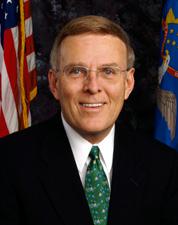 Sen. Byron L. Dorgan (D-ND)
Legislative Activity
Stay on top of the latest movement without scrolling through every action
Senate amendment agreed to: Amendment SA 1347 agreed to in Senate by Unanimous Consent.
September 9, 2009
View full timeline
Senate amendment agreed to: Amendment SA 1347 agreed to in Senate by Unanimous Consent.
September 9, 2009
Considered by Senate. (consideration: CR S9153, S9170)
September 9, 2009
Amendment SA 1347 agreed to in Senate by Unanimous Consent.
September 9, 2009
Roll call votes on amendments in Senate: Upon reconsideration, cloture on Amendment SA 1347 invoked in Senate by Yea-Nay Vote. 80 - 19. Record Vote Number: 271.(consideration: CR S9123; text: CR S9123)
September 8, 2009
Considered by Senate. (consideration: CR S9118)
September 8, 2009
Upon reconsideration, cloture on Amendment SA 1347 invoked in Senate by Yea-Nay Vote. 80 - 19. Record Vote Number: 271. (consideration: CR S9123; text: CR S9123)
September 8, 2009
Roll call votes on amendments in Senate: Cloture on amendment SA 1347 not invoked in Senate by Yea-Nay Vote. 53 - 34. Record Vote Number: 211.(consideration: CR S6880-6881)
June 22, 2009
Considered by Senate. (consideration: CR S6870, S6880-6881; text: CR S6880)
June 22, 2009
Cloture on amendment SA 1347 not invoked in Senate by Yea-Nay Vote. 53 - 34. Record Vote Number: 211. (consideration: CR S6880-6881)
June 22, 2009
Motion by Senator Reid to reconsider the vote by which cloture on amendment SA 1347 was not invoked (Record Vote Number 211) entered in Senate. (consideration: CR S6880-6881; text: CR S6880)
June 22, 2009
Cloture motion on the bill withdrawn by unanimous consent in Senate. (consideration: CR S6881)
June 22, 2009
Senate amendment submitted
June 19, 2009
Senate amendment proposed (on the floor): Amendment SA 1347 proposed by Senator Reid for Senator Dorgan.(consideration: CR S6870, S6880-6881; text: CR S6880)
June 19, 2009
Amendment SA 1347 proposed by Senator Reid for Senator Dorgan. (consideration: CR S6870, S6880-6881; text: CR S6880) Of a perfecting nature.
June 19, 2009
Cloture motion on amendment SA 1347 presented in Senate. (consideration: CR S6840; text: CR S6840)
June 19, 2009
Votes
2 roll calls on this amendment
SENATE
Roll Call AvailableSeptember 8, 2009 at 5:31 PM
On the Cloture Motion S.Amdt. 1347 to S. 1023 (Travel Promotion Act of 2009)
Majority required: 3/5 (60%)
80 - 19
SENATE
Roll Call AvailableJune 22, 2009 at 5:33 PM
On the Cloture Motion S.Amdt. 1347 to S. 1023 (Travel Promotion Act of 2009)
Majority required: 3/5 (60%)
53 - 34
Amendments
4 amendmentsOffered to this amendment
Amendments
4 amendmentsOffered to this amendment
No matches
To change the enactment date.
Proposed amendment SA 1348 withdrawn in Senate. (consideration: CR S9170) · Sponsored by Harry Reid · Amends S.Amdt. 1347
Sponsored by John Ensign · Amends S.Amdt. 1347
Sponsored by Joseph I. Lieberman · Amends S.Amdt. 1347
Sponsored by Dianne Feinstein · Amends S.Amdt. 1347
Text
Proposed
TRAVEL PROMOTION ACT OF 2009

The ACTING PRESIDENT pro tempore. Under the previous order, the
Senate will resume consideration of S. 1023, which the clerk will
report.
The assistant legislative clerk read as follows:

A bill (S. 1023) to establish a nonprofit corporation to
communicate United States entry policies and otherwise
promote leisure, business, and scholarly travel to the United
States.

Pending:

Reid (for Dorgan/Rockefeller) amendment No. 1347, of a
perfecting nature.
Reid amendment No. 1348 (to amendment No. 1347), to change
the enactment date.
Reid amendment No. 1349 (to the language proposed to be
stricken by amendment No. 1347), to change the enactment
date.
Reid amendment No. 1350 (to amendment No. 1349), of a
perfecting nature.
Reid motion to commit the bill to the Committee on
Commerce, Science, and Transportation, with instructions.
Reid amendment No. 1351 (to the instructions on the motion
to recommit), to change the enactment date.
Reid amendment No. 1352 (to amendment No. 1351), of a
perfecting nature.
Reid amendment No. 1353 (to amendment No. 1352), of a
perfecting nature.

The ACTING PRESIDENT pro tempore. The Senator from North Dakota is
recognized.
Mr. DORGAN. Mr. President, the legislation that is now the business
of the Senate, on which we will have a cloture vote at 5:30, is
legislation that probably demonstrates that agreement is near
impossible in this body.
If you cannot agree on tourism, what can you agree on? Tourism ought
not to be the subject of very substantial controversy. Yet it is.
Last week, in an article in Roll Call, it says ``Senate GOP still
saying no.'' The quote is:

When they bring bills up, we are going to extend the debate
as long as we can, block everything.

So this legislation is simple, and it is bipartisan. Republicans and
Democrats have both supported this legislation. I was the author of it.
We have Republican and Democratic cosponsors. It is the Travel
Promotion Act. Why should we promote travel?
If you watched the U.S. Open Golf Tournament today, you might have
seen the country of Turkey advertising during that golf tournament.
They were running an advertisement saying: Come to Turkey. We want you
to travel to Turkey and see the wonders of our great country.
Why would they do that? Most countries are now aggressively involved
in trying to attract international destination tourism to their
country. Why is that the case? We know on average that an international
traveler spends about $4,500 per trip, and that means they are
purchasing hotel rooms and car rentals and going to see exhibits and
parks and all kinds of things. The fact is, it is job creating in a
country where international travelers visit. So most countries are now
very active trying to attract people to their countries. Japan is, as
are Great Britain, Italy, Turkey, France--you name it.
I have some charts. Here is an example of what is happening out
there. This is an advertisement: ``Sweet secrets from Japan.'' To learn
about Japan and its culinary arts and traditions, this is an
advertisement saying: Come to Japan. Come and travel in the country of
Japan.
Here is an advertisement from France. Picasso, Normandy Landings.
Come and see France with the Eiffel Tower.
Here is one for Belgium. ``Travel to Belgium where fun is all in
fashion,'' they say.
Brussels, ``Sophisticated simplicity, the capital of cool.''
This one says: ``One special reason to visit India in 2009. Any time
is a good time to visit the land of Taj. But there's no time like
now.'' Come to India.
The list goes on and on.
Here is Ireland. ``The Emerald Island. Go where Ireland takes you.''
And here is a beautiful picture of Ireland saying: Come to our country.
Finally, we have Australia. ``Arrive for an experience to remember.
Depart with an adventure we'll never forget.'' Come to Australia.
I describe these and the fact that Turkey advertises on a golf
tournament because here is what happened to visitors to the United
States since 2000: Between 2000 and 2008, we have had a 3-percent
decrease in visitors to our country from other countries. Mr.
President, 633,000 fewer people have come to the United States to visit
per year that existed in 2000. Over 8 years, we have actually lost
ground and had fewer people visit the United States. Contrast that with
the number of international visitors around the world, which is up 40
percent. The United States is down 3 percent.
We have constructed--Republicans and Democrats together--a piece of
legislation, which I have brought to the floor, that attempts to get
our

[[Page S6871]]

country into the game to say let's compete with Australia, France,
Italy, Turkey, and Belgium and ask international visitors and travelers
to come to our country to see the wonders of our great country. Spend
some money here to create jobs here and create economic development
here. We are not doing that now. We are not even in the game.
So we suggest a private-public partnership we believe could be very
helpful in attempting to stimulate international visitors to our
country. The Travel Promotion Act will encourage visitors from all
around the world. We establish a corporation for travel promotion.
We fund it with a very small charge on international visitors coming
to our country, as most countries do, by the way, a $10 fee on those
who are coming from the countries that had the visa waiver provision
with our country.
Here is what has been said about our country recently, and here is
perhaps why fewer people are visiting the United States. The Sydney
Morning Herald said, ``Coming to America is not easy.'' I think there
was a feeling around the world post-9/11, we are very interested in
trying to keep some people out of here. Obviously we wanted to keep
terrorists out. But we made it pretty difficult for people to come
visit, get a visa, stand in line, wait for months. The Guardian said,
``America, more hassle than it's worth.'' The Sunday Times in London
says: ``Travel to America? No thanks.''
So a group of us, a large group, over 50 in the last Congress, put
legislation together saying: Let's find a unique way to promote our
country. We put together the Travel Promotion Act. And by the way,
unlike almost every other piece of legislation that comes to the floor
of the Senate, that costs money and would increase the deficit if not
paid for, the Congressional Budget Office says: Enacting this bill
would reduce budget deficits by $429 million--that is almost a half a
billion dollars--between 2010 and 2019. So this would reduce the budget
deficit. We are not talking about something that spends money. This
reduces the budget deficit over 10 years by nearly $500 million.
We fund this, in large part, with a small $10 fee from the visa
waiver countries in which visitors are traveling to our country. As I
have described, Australia has a $37 departure fee; Guatemala, $30; the
Philippines, $15; United Kingdom, $80 to $160. The fact is, this goes
on all around the world. We are proposing a very modest fee on visitors
from visa waiver countries.
Newspapers all across this country have supported this. Dallas
Morning News: The Travel Promotion Act is a sensible first step toward
putting the welcome mat back on America's doorstep.
The Detroit Free Press: Doesn't it make sense to encourage, at no
cost to taxpayers, foreign visitors to come here and leave us some of
their money? There is no good reason not to pass this bill.
The Los Angeles Times: Considering that the U.S. spends hundreds of
millions of dollars on public diplomacy with dubious results, and
nearly nothing promoting tourism, we might do well to invest a little
money in wooing travelers.
The Sacramento Bee: This country needs to reclaim its status as a
global magnet for visitors, even in the post-9/11 climate. And Congress
could help by passing the Travel Promotion Act by the end of this year.
This ought to be something that we bring up and almost pass by
unanimous consent. Guess what kind of a tortured journey this bill has
been on. First and foremost, the bill is reported to the floor--and you
have got to have a motion to proceed. You cannot just bring it to the
floor. If someone insists, no, no, you have got to have a debate and
then a vote on whether you should even proceed to the bill.
So we did. Not because we should have had to do that, just because
someone said: You know what, we are going to decide to be a human set
of brake pads and slow down everything that happens in the Senate and
prevent anybody from getting anything done.
So on a travel bill, the Travel Promotion Act, that actually reduces
the Federal budget deficit and tries to attract international visitors
to our country, which would be a good thing--there is a lot here to see
and experience, and almost everyone who leaves after visiting the
United States of America has an unbelievably good opinion of what we
are about. This is a great country, yes, with a lot of attractions, but
a country whose culture and character is something we need to exhibit
to everybody in this world to say: Here is who we are. Here is what
America is about. Here is the grand idea that is the most successful
democracy in history. Come here. Visit here. Become a part of what we
are experiencing on your international travels.
We are not doing that now. But we suggest we should. The bill that is
broadly bipartisan to do that is to be brought to the floor of the
Senate. We are told: No, you cannot do that. First you must have a
debate, and then a vote on the motion to proceed.
So we have to file what is called a cloture petition, which takes 2
days to ripen. You lose 2 days. Then we have a vote. And the vote is 90
to 3 in favor of it. The implication there is we should not have had to
have a vote and waste a couple of days. But we did.
Then, after the cloture vote, 90 to 3, we were told: No, you cannot
go to the bill yet, there is 30 hours postcloture, and we insist on
burning all 30 hours postcloture.
We had 2 days for the cloture petition, then a 90-to-3 vote, then we
had 30 hours wasted time postcloture. Why? Because someone insisted
upon it. And so now all of a sudden we are on the bill.
Well, last Thursday and Friday, I worked, Senator Reid worked, and
many others worked to see, all right, we are on the bill. Now can we
figure out what kind of amendments are going to be offered.
We had a discussion over there in the middle of the aisle with
Senators McConnell, Reid, Martinez, and others. We agreed we would
begin with amendments on each side. Perhaps we started with three and
two, then we said five amendments on the Republican side and three
amendments here at least to start the process.
Can you give us a list of your amendments? We got a list of the
amendments, five amendments on what is called the TARP program, the
Troubled Asset Relief Program, having nothing at all to do with this
bill. We said: That is fine. Okay. You want to have five debates and
votes on TARP. Okay.
Here are our three amendments, two of which had to do with the
studies. The other was an amendment by Senator Sanders that said to the
Commodity Futures Trading Commission that we want them to use all of
the authority they now have, plus any emergency authority, use the
authority you now have to start finding a way to shine the light on
these unbelievable speculators who are running up the price of
gasoline. Not a very controversial amendment. It does not give the CFTC
any new authority. It deals with the question of the runup in the price
of gasoline. It does not give anyone any new authority. But the
Republican side said: Nope, we are not going to allow you to offer that
amendment. We are going to tell you which amendments we intend to
offer. We said, okay, that is fine, whatever amendments you have, God
bless you, go ahead and offer them.
But they say, but you cannot describe to us a set of amendments,
three, five to three, and if the three includes an amendment to try to
see if you can shut down some of the excess speculation using the
authority that the Commodity Futures Trading Commission now has, we are
not willing to do that.
Most people would listen to all of this and say, it is the same old
thing. Nobody can agree on anything. But, you know, in every
circumstance where there is disagreement, there has to be someone who
is holding out. Right? We come to the floor today without an agreement
on amendments, so the majority leader had to file a cloture petition.
We have a cloture vote at 5:30 today.
This Congress cannot even agree on tourism, for God's sake.
Unbelievable to me. How dysfunctional can a legislative body become?
You cannot agree on tourism.
But let me at least talk for a minute, before I talk about the
importance now of having a cloture vote and requiring to have a cloture
vote on this, let me talk about what the other side objects

[[Page S6872]]

to with an amendment that my colleague wants to offer. I agree that the
amendment does not relate to the bill, but their first five amendments
had nothing to do with the bill either. So why should the minority be
telling the majority what kind of amendments they can offer?
But here is the amendment. People remember when the price of oil went
from about $40 up to $147 a barrel in day trading; went up like a Roman
candle, then came right back down. The same hotshots, the same
speculators, who made a fortune pushing up the price of oil, made a
fortune on the upside, the same folks made a fortune on the downside.
The victims are the people who drive up to the gas pump having to pay
$4, $4.50 for gasoline.

Let me show you what has happened. The Commodity Futures Trading
Commission--I mean nobody knows what that is much outside of
Washington, DC, CFTC. We have all of these acronyms. Well, it is a
group of people who have done their level best imitation of a potted
plant for a long time. They decided to do very little in areas where
much was needed.
The oil futures market is a very important market. You need to hedge,
we understand that. The futures market is established for a very
specific reason, and it is an important market. But speculators have
broken the back of that market. Here is what happened. Thirty-seven
percent of the trades in the oil futures market were by speculators in
2000. Now it is 80 percent. That is what caused the price of oil to go
up to $147 a barrel. They were speculating on the way up; they turned
it and were speculating on the way down and made money on both sides.
Before I show what has happened to the price of oil now--by the way,
it is starting again. Demand is down because of the recession, and the
supply of oil is up, and the price is going up.
What does that tell you? It tells you the same shenanigans are going
on. And the CFTC, which is supposed to be our agency, that is the
referee with the striped shirt and the whistle, supposed to be watching
what is going on and taking action to shut some of it down, once again,
not much going on. Senator Sanders says: We ought to ask them, at least
ask them, to use all of their authority to shut it down.
We have a government agency called the EIA, Environmental Information
Administration. It costs about $100 million a year, actually over $100
million a year. Their job is to know everything there is to know about
energy, and to make the best estimates they can make. I want to show a
chart that shows the runup to the $147 a barrel for oil.
This chart shows 2007-2008. The yellow line is the estimates by our
agency, the EIA, saying: Here is where we think the price of oil is
going. Each yellow line--this, for example, is January 2008. They said:
Here is where we think the price of oil is headed. March 2008: Here is
where we think it is headed. Of course, this was the price.
One would ask the question, and reasonably so: Who are these best
informed people at EIA who are supposed to give us an estimate of what
is going on? Well, what is going on now? What we see now is an EIA
projection made in January of this year, the yellow line.
The EIA says: Here is where we think oil is going to go now. But, of
course, anybody who drives a car and has stopped at a gas pump recently
understands what is happening to the price of oil. The price of oil is
something now over $70 a barrel, on the march from $37 a barrel. That
is happening at a time when demand is down and supply is up.
I taught economics in college ever so briefly. But the supply-demand
curve is something you can learn the first day. When supply is up and
demand is down, price is not supposed to go up. If it is going up,
there is something wrong. There is something happening. And that is
what is happening now.
Where will it go? Will it go to $90? I notice one of our big
investment banks thought it would go to $90. I would love, if I had
subpoena capability, to find the position that investment bank was
holding in oil futures as they made that announcement. But that is an
aside for another day.
The question is: Is it reasonable to have an amendment by Senator
Sanders to say: We want the Commodity Futures Trading Commission to use
all of their authority to try to understand what is going on? The other
side says: Absolutely not. We do not intend to allow you to offer that
amendment.
I mean, I do not understand why. Whose interests would they be
supporting or protecting? The speculators? Big investment banks? Those
who are holding oil offshore in ships? Those investment banks that
actually have bought oil storage for the first time in history to take
oil out of supply and store it, and wait as the price goes up and make
money? Is that whose interests are at stake here?
Let me come back to the point I was making. We tried very hard
Thursday and Friday to reach an agreement on amendments on both sides.
We said: Absolutely. You want amendments. You want all five amendments
on the TARP program? It has nothing to do with the bill. By all means,
feel free. Start offering. We are ready. And the other side said: Well,
you give us all we want, but we do not intend to agree to much of
anything you want, kind of a one-way agreement that they would have
known was destined to fail.
Again, I do not understand how we have gotten to a point on a piece
of legislation that should be so noncontroversial, sufficient so that
with a 90-to-3 vote on the motion to proceed, it is brought to the
floor of the Senate, a bill that had over 50 cosponsors last year here
in the Senate, a bill that deals with travel and promotion of travel
and tourism, that we now have this unbelievable impasse.
We had to have 2 days with a cloture motion on a motion to proceed
that passed 90 to 3 and then have 30 hours postcloture. Then we were
going on this merry-go-round last Thursday and Friday with an absurd
proposition that the minority wants to decide what amendments the
majority can have, despite the fact that the majority says: You can
have whatever amendments you want. They must have missed the last
couple of elections. They apparently think they run the Senate.
What runs the Senate is consensus--consensus by people who care about
getting things done on important issues. If you cannot do something on
tourism, how on Earth are you going to do something on health care and
energy and climate change and a lot of things that matter a lot about
this country and the future? If you cannot do a tourism bill, what can
you do? It is pretty unbelievable to me.
I know we can have people come and explain, even until they are
completely out of breath, why they object to everything. I just
described: Senate GOP still saying no. Democrats need to know when
bills are coming up, we are going to extend the debate as long as we
can--on and on and on.
How about just picking out one or two little issues--one or two
issues--that would advance the country's interests and say: Do you know
what, on this issue we will just park the politics at home. We have to
leave the politics back in the office. We will come to the floor and
say: What is good for the country?
I will tell you what is good for the country here on this issue; that
is, in a very troubled world, where a lot of people have looked askance
at this country and we have gotten some bad reputation around here and
there--and some bad information about America--I will tell you what is
good: to have people come to this country and just be around for a bit
and experience this great country of ours and understand when they hit
our shores this is a citadel of freedom. You can do everything you
want.
This is an unbelievable place, and we need people in the world to
understand it and to understand especially this: You are welcome to
come here. We want you here. We want you to come and see and sample and
understand what America is about. That is what this bill is. If we
cannot even agree on that, how on Earth will we agree on the big issues
of the day?
We will have a cloture vote at 5:30. My guess is, the minority will
say: We believe this vote needs to be a leadership vote. All of you
have to vote against cloture because we haven't offered the first
amendment. Do you know why you have not offered the first amendment?
Because you would not agree on anything. We tried Thursday. We tried
Friday. You would not agree on anything. We agreed on all your
amendments, and you would not agree on a thing. So here we are--I and

[[Page S6873]]

my Democratic and Republican cosponsors on this bill we have worked on
now for 2 years--coming now to a cloture vote in which some will say to
others: You can't vote for cloture because we haven't had any
amendments.
I hope perhaps between now--10 to 4 o'clock--and 5:30, if there are
well-meaning people in this Chamber who really wish to make progress
for our country, we could have an agreement on amendments and then just
go forward. Let's do that.
I was there when Senator Reid said to the minority leader: Look,
let's just at least start. We do not have to have a whole list of all
the amendments. Let's just start. If you want the first five
amendments--whatever it is you want--bring them on. We will have the
amendments. And we will give you three of ours. Let's just start the
process.
We could not even get that done Thursday and Friday.
The American people deserve better than that from all of us. They
deserve a Senate that works. And if the Senate cannot work on
bipartisan legislation dealing with tourism, can you name a subject
where it will work?
My hope is that in the next hour and a half, perhaps some will come
to the floor who have the interest and the ability to reach an
agreement, so we can begin the amendment process and finish the bill
this week. We can do that. We should not defeat this cloture motion. In
fact, we should vitiate the motion--if we could get the leadership of
the other side to come to the floor and say: We agree with what you
proposed last week.
Let's start. Let's start now. Let's have some amendments tonight and
have some votes. We can do that.
Mr. President, I yield the floor.
The ACTING PRESIDENT pro tempore. The Senator from Arizona.

Colombia Free Trade Agreement

Mr. KYL. Mr. President, next week President Uribe of Colombia will be
meeting with President Obama at the White House. I hope this meeting
will serve as an opportunity to get the Colombia Free Trade Agreement
back on track.
I support the Colombia Free Trade Agreement because of its importance
to Colombia but also because I think it is important for U.S. firms to
gain access to the markets of fast-growing developing nations abroad.
Our economy will revive only if we create jobs. Enacting this Colombia
Free Trade Agreement will help to do that.
America's two-way trade with Colombia reached $18 billion in 2007,
making Colombia our fourth largest trading partner in Latin America and
our largest export market for U.S. agricultural products in South
America.
Exports are the only major sector of the private economy actually
making positive contributions to U.S. economic growth. In my own State
of Arizona, nearly 80 percent of all of our manufactured goods were
exported. On average, net exports added more than 1 percentage point
overall to our economic growth last year, in part offsetting the
negative consequences of the housing downturn. So if U.S. manufacturers
and farmers were not able to sell their products abroad, the current
economic downturn would be much worse.
Enacting the Colombia Free Trade Agreement would help more than
10,000 U.S. companies that export to Colombia, 8,500 of which are small
and medium-sized firms, by opening a significant new export market.
America's market is already open to imports from Colombia. In 2008,
for example, over 90 percent of U.S. imports from Colombia entered the
United States duty free under our most-favored-nation tariff rates and
various preference programs, such as the Andean Trade Preference Act
and the Generalized System of Preferences. However, more than 97
percent of U.S. exports to Colombia are subject to duties that range
from 14 to 50 percent. Once the agreement is approved, over 80 percent
of U.S. consumer and industrial exports to Colombia will enter duty
free. So each day Congress does not approve the Colombia free-trade
deal, the U.S. exporters pay $2 million in unnecessary tariffs.
Let me review very briefly the events of the past 2 years to
understand the current state of affairs.
On May 10, 2007, Democrats and Republicans agreed to a framework that
modifies future trade agreements to include provisions improving labor
and environmental standards in order to move the Peru, Colombia, and
South Korea free-trade agreements.
After the Peru Trade Promotion Agreement was signed into law in
December 2007, Democrats broke the deal with us in order to extract
more concessions. This time, they said that in exchange for passing the
Colombia Free Trade Agreement, the Bush administration would need to
accept an expansion of TAA benefits by increasing the refundability of
the health care tax credit from 65 to 80 percent, expanding the TAA
eligibility to service workers, and doubling the mandatory funding for
worker retraining from $220 to $440 million.
When the Bush administration tried to jump-start the process last
year by introducing the Colombia Free Trade Agreement, Speaker Pelosi
responded by unilaterally rescinding Colombia's fast-track authority,
essentially killing any chance of moving the agreement.

We missed another opportunity to enact the Colombia Free Trade
Agreement on the stimulus bill. Although the majority did find room to
enact a multibillion-dollar trade adjustment assistance expansion--that
is what T-A-A stands for--which was considered a prerequisite to any
additional free-trade agreement, now that it is the law, we are not
moving forward on the Colombia Free Trade Agreement.
Interestingly, the President's budget would permanently extend trade
adjustment assistance at a cost of $4.6 billion over 10 years. But it
does not include one dollar to implement any of the pending trade
agreements such as those with Colombia, Panama, or South Korea.
I urge my colleagues to use President Uribe's visit as an opportunity
to move forward and renew this Nation's commitment to trade not only to
assist an important American ally that needs our help but to enact a
true stimulus bill that will promote American manufacturing exports and
create badly needed jobs. I ask that we get our staffs to begin working
together to develop a plan to ensure passage of the Colombia Free Trade
Agreement.
Finally, let me respond briefly to Democrats' charges that Colombia
has not done enough to protect human rights. The Colombian Government
has demobilized and brought to justice over 31,000 members from 35
paramilitary groups, principally from the AUC or the United Self-
Defense Forces of Colombia. In addition, more than 10,500 members of
the far-left insurgent groups FARC, the Revolutionary Armed Forces of
Colombia, and ELN, which is the National Liberation Army, have chosen
to demobilize, individually leaving their units and turning themselves
in to Colombian authorities. The Colombian Government is also providing
protection to over 10,600 individuals. The largest protection program
is run by the Ministry of Interior and Justice and provides protection
to more than 9,400 individuals, including 1,900 trade union members. Of
the program's $39.5 million budget, one-third--over $13 million--goes
to protect trade unionists. As a result, President Uribe has improved
the security situation in Colombia dramatically. Kidnappings are down
by 83 percent, terror attacks are down by 76 percent, homicides have
decreased by 40 percent, and homicides against trade unionists have
dropped by twice as much--over 80 percent.
This is important progress by the Government of Colombia. It is an
important ally of the United States. It deserves our support. And, as
importantly, exporters in the United States deserve congressional
support, enabling them to export their products without the kinds of
barriers that currently exist.
The trade agreement is in our best interest, and I hope my colleagues
will insist that very soon we get the Colombia Free Trade Agreement
back on track so this important legislation can pass the Congress, be
signed into law, and begin to help our economy generate jobs and
stimulate economic growth. It is an important agreement that has
languished far too long, and we need to get it moving again.
Mr. President, I suggest the absence of a quorum.
The ACTING PRESIDENT pro tempore. The clerk will call the roll.
The bill clerk proceeded to call the roll.

[[Page S6874]]

Mr. McCONNELL. Madam President, I ask unanimous consent that the
order for the quorum call be rescinded.
The PRESIDING OFFICER (Mrs. Hagan). Without objection, it is so
ordered.

Health Care

Mr. McCONNELL. Madam President, as the debate over health care reform
continues, a number of different approaches have now emerged. But one
thing unites us: All of us agree health care reform is needed. The
question is, what kind of reform--a reform that cuts costs and expands
access or a so-called reform that leads to a government takeover where
premiums are increased but health care is delayed, denied, and
rationed? The American people want reform, but they want reform that
allows them to keep their current insurance while preserving the
freedoms, choices, and quality of care they now enjoy. That is why
Republicans have proposed a series of reforms to lower costs and
improve access, without--without--destroying what people like about our
current health care system.
As it turns out, President Obama has said he is open to some of the
ideas Republicans have put forward, such as the need to reform our
medical liability laws to discourage junk lawsuits and the need to
encourage wellness and prevention programs that have proven to be
effective in cutting costs and improving care. In fact, during a speech
last week to the American Medical Association, the President discussed
one particular wellness and prevention program at the Safeway
supermarket chain, which has dramatically cut that company's health
care costs and employee premiums. The President even said he would be
open to helping businesses across the Nation adopt wellness and
prevention programs such as the Safeway plan. Yet the bill the
Democrats are trying to rush through the Senate would actually ban this
program from being copied and implemented by other companies. That
makes absolutely no sense.

All last week, we heard eye-popping cost estimates for health care
proposals coming out of Capitol Hill--proposals that wouldn't even
solve the entire problem but would bury us deeper and deeper in debt.
If the goal is to decrease costs, why wouldn't Democrats in Congress
support a plan we know has been effective in doing so--especially if
the President himself supports it? One would think this would be an
easy bipartisan feature of any Democratic plan.
According to Safeway CEO Steve Burd, Safeway's per capita health care
costs have remained flat even as the per capita health care costs of
most American companies have increased by nearly 30 percent since
Safeway implemented its wellness and prevention plan back in 2005.
Safeway's plan has also reduced the health care costs for employees
and their families by offering incentives for workers who adopt
healthier lifestyles. Those employees who choose to participate in the
plan are tested for tobacco usage, for a healthy weight, and for their
blood pressure and cholesterol levels. Employees who pass these tests
are given discounts on their premiums.
For example, if employees pass all four tests, their annual premiums
are reduced by $780 for individuals and $1,560 for families. If
employees miss their goals the first time, the company provides support
for improvement and financial incentives for those who make progress.
All of this makes health care more affordable, and it also helps to
improve the health and quality of life of Safeway's workers. The
company's obesity and smoking rates are now about 70 percent of the
national average, and employees like the plan so much that 76 percent
of them want more incentives that reward healthy behavior.
Safeway executives estimate if the United States had adopted its
approach in 2005--4 years ago--the country's direct health care bill
would be $550 billion less than it is now--if we had simply adopted the
Safeway approach 4 years ago.
The Safeway program has proven so successful that the company wants
to increase its incentives for rewarding healthy behavior.
Unfortunately, current laws restrict it from doing so, but instead of
offering legislation that corrects the problem, the so-called reform
bill being pushed through the HELP Committee would do the opposite. It
would actually prohibit companies from implementing the Safeway
program.
Let me repeat that: The bill that is currently being pushed through
the HELP Committee doesn't let companies consider an employee's health
status when providing insurance--meaning employers would be banned from
rewarding healthy behavior as Safeway does and offering lower premiums
to workers who manage their chronic diseases, eliminate high-risk
behaviors such as smoking, or lose weight. In other words, it would
prohibit companies from implementing programs that have been proven to
cut health care costs. I thought that was the point of health care
reform.
When it comes to making health care more affordable, we should all
support ideas that work. Americans want health care ideas that cut
costs and improve care. The Safeway model is an excellent place to
start. The President supports it, Republicans support it, and Safeway's
experience has shown that it works. If Democrats in Congress are
serious about making health care more affordable, they should support
it too. Instead of the rush-and-spend approach that has led to a
chaotic process and hugely expensive health care proposals that don't
even address the whole problem, Democrats should slow down and consider
ideas that have been shown to not only be effective in delivering care
but also effective in reducing costs.
I suggest the absence of a quorum.
The PRESIDING OFFICER. The clerk will call the roll.
The bill clerk proceeded to call the roll.
Mr. ALEXANDER. Mr. President, I ask unanimous consent that the order
for the quorum call be rescinded.
The PRESIDING OFFICER. Without objection, it is so ordered.
Mr. ALEXANDER. Madam President, in about an hour, we will be asked to
vote on whether the Senate can continue to do what the Senate is
supposed to do and that is to amend and debate. When I ran for the
Senate, the people of Tennessee sent me up here to represent them. They
expected that when I got here, I would have a chance to say what I had
to say on their behalf, and sometimes what I think may not be so
important but what they think is important. The people of Tennessee
know the history of the Senate--as Senator Byrd has so often said--is
distinguished only by a couple things. One is virtually an unlimited
right to amend, and another is a virtually unlimited right to debate.
What is going to happen at 5:30 is we are going to be asked to vote
to cut off amendments and cut off debate. A vote of yes will be a vote
to obstruct our right to amend, obstruct our right to debate and to
make it impossible for me to represent the people of Tennessee, who
voted for me with the idea that I might be able to do that.
Let me explain a little more what I mean by that. A great many people
write books about America, but unquestionably I think the best regarded
such book is a book by Alexis de Tocqueville, entitled ``Democracy in
America.'' When the young Frenchman came to this country, he ran across
Davy Crockett and all sorts of people. When he wrote about what he
thought might be, in the long term, the greatest danger to the American
democracy, he said he thought it might be the ``tyranny of the
majority.'' He was afraid that in our type of system, what might happen
is that the majority would get control and run over the minority.
The Senate was one of the institutions created to avoid that. So when
we get a situation where we have only 40 or 41 Republican Senators and
57 or 58 or 56 or more Democratic Senators, the minority always has a
right to make sure there is no tyranny of the majority. It has been the
other way and it will be again; when I first came here the Republicans
held the majority, and we had 55 Republicans at one point. So a vote of
yes at 5:30 is a vote to obstruct the right of Senators to represent
the people who hired them to come and offer amendments and speak for
them.
Ironically, this vote will give the majority the right to suppress a
majority view--because what is the issue that is attempting to be
suppressed? The issue is whether we ought to get the government in
Washington out of the automobile business. I think most people in

[[Page S6875]]

the country are thinking we are having too many Washington takeovers.
That is not the American way. We know we have had trouble in this
country economically, but taking over banks, insurance companies,
student loans, car companies, and now maybe taking over health care--
the American people don't like that.
We have a series of amendments to be offered--both Republican and
some with bipartisan support--which would say: Let's get the government
out of the automobile business and put it back in the hands of the
American people and the free enterprise system of America. That is a
majority view in this country.
According to an AutoPacific Survey in the Nashville Tennessean, 81
percent of Americans polled agree that the faster the government gets
out of the automotive business the better; 95 percent disagreed that
the government is a good overseer of corporations, such as General
Motors and Chrysler; 93 percent disagree that having the government in
charge of General Motors and Chrysler will result in cars and trucks
Americans want to buy. Most Americans don't want a car that a United
States Senator engineered, designed, and sold. That is not what we are
here for. They know better than that.
According to a Rasmussen Poll of June 13 and 14, 80 percent of those
polled believe the government should sell the government stake in the
auto companies to private investors ``as soon as possible.'' And 71
percent of those polled believe the government should sell their stake
to private investors as soon as possible.
According to the Wall Street Journal on June 18, nearly 70 percent of
those surveyed said they had concerns about Federal intervention into
the economy, including the President's decision to take an ownership
interest in General Motors, put limits on executive compensation, and
the prospect of more government involvement in health care. We have a
situation where the President is calling the mayor of Detroit to get
into the question of whether the headquarters of General Motors is
going to be there or in Warren, MI. We have the chairman of the House
bailout committee--the House Financial Services Committee--calling the
president of General Motors saying: Don't close the warehouse in my
district. And all of us in Congress are saying: Please build a car in
my district. We will have some Congressmen saying: Don't buy a battery
from South Korea; buy one made in my district. We have automobile
company executives driving to Washington in their congressionally
approved hybrid cars to spend 4 hours testifying and then drive home.
How many cars do they design, build, and make while doing this? The
American people know the car companies cannot compete if they have 435
congressional political meddlers, 100 senators, plus a whole
administration, trying to tell them how to compete in a very complex
business.
Senator Bennett of Utah and I, cosponsored by the Republican leader,
Senator Kyl, and others, have a bill called the Auto Stock for Every
Taxpayer Act. We would like to offer it as an amendment this week and
get a vote on it. The Auto Stock for every Taxpayer amendment would say
that the Treasury can't use any more TARP funds to bail out General
Motors or Chrysler. Also, while the government owns stock in these
companies, the Secretary of the Treasury, or his designee, has a
fiduciary responsibility to the taxpayer to maximize returns on that
investment. And most importantly, our amendment says that within a year
after General Motors comes out of bankruptcy, the government should
distribute its stock to the 120 million Americans who pay taxes on
April 15.

In other words, let's have a big stock distribution, the same way
Procter & Gamble did when it distributed stock in Clorox or the same
way other companies do every year. We have a core business, the car
company, that has nothing to do with the owner, the United States
government, and we should give the car company to the owners--the 120
million people who pay taxes. That is what we should do. And the
rationale is: I paid for it, I should own it. That is the first
amendment we want to offer.
Senator Corker, with a couple of cosponsors, including Senator Warner
from the other side of the aisle, has another idea, which I am glad to
support. It is a little different approach to the same idea. He would
create a limited-liability corporation to manage the government
ownership stake in companies in which the government owns at least 20
percent. By the fall of this year that will probably include AIG,
Citigroup, and General Motors. The government's assets would be placed
in a trust and managed by three independent, nonpolitical trustees. The
trustees would have to liquidate the government's interest by December
24, 2011. And there is a waiver process in case the trustees think
there is a problem with that deadline.
That is a responsible, interesting approach. Why shouldn't Senator
Corker and Senator Warner have a chance to offer that amendment? That
is what the majority of people in America would like to see done.
Senator Johanns, a distinguished former Governor of Nebraska, has his
Free Enterprise Act of 2009. He has 29 cosponsors. He would like to
require congressional approval before the Federal Government can use
TARP funds to acquire ownership of an entity through stock.
Senator Thune, a member of the Republican leadership, has the
Government Ownership Exit Plan Act of 2009. He would require the
Treasury to sell any ownership of a private entity by July 1, 2010, and
prohibit the government from acquiring any additional ownership stake
in private companies.
Well, I think you can get the drift, Madam President. We have a
number of Senators, mostly from this side but some cosponsored from the
other side, who say that the American people are tired of Washington
takeovers. They know cars aren't going to get better in this country if
the government is meddling with them and designing them and building
them and making them. I can just imagine what we will have if we
meddle. We will have a purple polka dot car that gets 50 miles per
gallon and will have a windmill on top and a solar panel on the side,
and it will have this part made in this Congressman's district and that
part made in that Senator's State, and it probably won't run 5 miles.
Then we will lower the price to get people to buy it, all the while
losing money, losing competition, and putting real competitors out of
business. And then we will have no American automobile industry left.
So we need to get the government out of the car business and stop the
Washington takeover. And over 80 percent of the American people agree.
So what are we doing in the Senate? We are going to vote at 5:30 to
say: No, Senators. No, Senator Corker. No, Senator Warner. No, Senator
Alexander. No, Senator Bennett. We are going to say no to the other
Senators, you can't continue to debate. You can't continue to offer
your amendments. We are going to obstruct your right to do that. We are
going to keep you from representing the people of Tennessee, the people
of Utah, or the other people you were sent here to represent. We are
going to stop the debate; stop the amendment.
That is the tyranny of the majority that Alexis de Tocqueville
envisioned. That is not the way the Senate has been running this year.
This year in the Senate, Senator Reid has made a good-faith effort, and
Republican Senators appreciate that, in saying we are going to have
some amendments. That means we are going to have some amendments
offered on which some of us don't really want to vote. There have been
some amendments I really didn't want to vote on, including some offered
by people on my side of the aisle, but that is what we do in the
Senate. So why are we doing this? Why are we saying suddenly, no
amendments?
So I would hope Senators would agree that at 5:30 we should vote no.
We should vote no. And by voting no, we would be saying: Let's continue
to debate. Let's continue to amend. A vote yes is a vote to obstruct. A
vote no is to continue to debate and continue to amend. And the issue
is, shall we take the government ownership of automobile companies and
put it, as soon as it is practicable, back in the hands of the American
people, where it belongs, in our free enterprise system? That is the
American way.
We have at least four different options. We have a whole menu here.
If you don't like the Alexander-Bennet

[[Page S6876]]

amendment, vote for the Corker amendment. If you don't like that, vote
for one of the other amendments. We have four ways to go about it, all
carefully thought out, all in front of everybody. Why don't we do that?
That is what the Senate does.
So I prefer the way the Senate has operated pretty much all the time,
up to today, which is to say: Senators, offer your amendments, take
your votes. Today is an aberration -a change away from the way the
Senate should function. My old friend, the late Alex Haley, author of
Roots, used to say: Find the good and praise it. Well, I can find
plenty of good in the way the majority leader has conducted the Senate
this year by allowing debate and amendments. I would consider this an
aberration.
I hope we will vote to continue to amend, to continue to debate, and
get the Senate back to the practice we had most of this year, which is
to say: If you have an amendment, Senator, bring it on over, call it
up, and we will vote on it, and then we will go on to the next thing.
Madam President, I ask unanimous consent to have printed in the
Record an article from the American Spectator entitled ``Are There
Obamashares in Your Future?''
There being no objection, the material was ordered to be printed in
the Record, as follows:

Are There Obamashares in Your Future?

(By Peter Hannaford)

As they were steering General Motors into bankruptcy at
early this month, the President Goodwrench team arranged for
the United Auto Workers' pension fund to get 30 percent of
the stock when the ``new'' company comes out at the other
end. Bond holders will get 10 percent and the U.S. Government
will keep 60 percent for itself.
If the ``new'' GM becomes profitable it may eventually pay
back the $50 billion the government has advanced to it, but
the term ``government ownership'' lacks the ring of
legitimacy that ``taxpayer ownership'' has.
U.S. Senator Lamar Alexander (R-T) wants to do something
about that. He is the lead sponsor for the Auto Stock for
Every Taxpayer bill which would distribute the government's
stock in GM (and Chrysler, too) to the 120 million Americans
who paid income taxes on April 15. He says, ``That is the
fastest way to get ownership of the auto companies out of the
hands of meddling Washington politicians and back into the
hands of Americans in the market place.''
This is no voice in the wilderness. A recent AutoPacific
poll reports that 81 percent of Americans agreed that ``the
faster the government gets out of the automotive business,
the better.'' Conversely, 95 percent of those polled
disagreed with the statement, ``. . . the government is a
good overseer of corporations such as General Motors and
Chrysler.'' And 93 percent disagreed that ``having the
government in charge [of the two automakers] will result in
cars and trucks that Americans will want to buy.'' So much
for the flimsy cars with which President Goodwrench wants to
fill the market.
To make sure his proposal to put automaker stock in the
hands of actual taxpayers gets the attention it deserves,
Sen. Alexander the other day began a program to draw
attention to the downsides of Washington management of auto
companies. He introduced on the floor of the Senate his ``Car
Czar'' awards. As he put it, ``It's a service to taxpayers
from America's new automotive headquarters, Washington,
D.C.''
The Car Czar awards, he adds, ``. . . will be conferred on
Washington meddlers who make it harder for the auto companies
your government owns to compete in the world marketplace.''
The first award went to Rep. Barney Frank (D-MA) ``for
interfering in the operation of General Motors.''
Rep. Frank is Chairman of the House Financial Services
Committee, well known for his oft-denied roll in pressuring
Fannie Mae and Freddie Mac to push banks to make risky home
loans.
Two weeks ago, it turns out, Mr. Frank learned that General
Motors, as part of its restructuring plan, would close a
parts distribution warehouse in Norton, Massachusetts by
year's end. Despite the President Goodwrench team's constant
pressing of GM to cut more and more, anything in Barney
Frank's district is out of bounds if he has anything to say
about it, and he did. He put in a call to GM CEO Frederick
``Fritz'' Henderson and--voila--the Norton warehouse was
saved. This warehouse has 90 employees. We can assume that
they and their spouses will show their gratitude to Mr. Frank
at the polls in November next year. That's 180 votes. He
should really think in larger terms. If he were to sponsor a
House version of Sen. Alexander's Auto Stock for Every
Taxpayer legislation, think of the thousands of grateful
citizens in his district who would support him. Indeed, they
might even demand that the local federal building be named
after him.

Mr. ALEXANDER. I thank the Chair, I yield the floor, and I suggest
the absence of a quorum.
The PRESIDING OFFICER. The clerk will call the roll.
The legislative clerk proceeded to call the roll.
Mr. BROWN. Madam President, I ask unanimous consent that the order
for the quorum call be rescinded.
The PRESIDING OFFICER. Without objection, it is so ordered.
Mr. BROWN. Madam President, I appreciate the comments of the Senator
from Tennessee. I don't know how the vote will come out at 5:30 today,
but I do know it is almost unanimous--perhaps it is unanimous on this
side and the other side of the aisle--that we all want the auto
industry to return wholly to the private sector; that this was an
extraordinary situation.
I represent, as the Senator from Tennessee represents, a lot of
autoworkers--in his case, union and nonunion alike. I have a good many
nonunion autoworkers in my State--union and nonunion alike--and I think
all those companies--certainly GM and Chrysler workers and people in
the community--want this industry back on its feet and want it run by
the private investors, as it should be.

Cuyahoga River

Madam President, today marks the 40th anniversary the Cuyahoga River
in Cleveland burned. The June 22, 1969, fire wasn't the first or the
biggest on the Cuyahoga or in rivers all over the country in those days
when rivers were full of chemicals and all kinds of discharge that
could catch fire from a spark from a railroad train passing through or
from something else passing over the river. But 40 years ago, that fire
in the Cuyahoga River was a catalyst that helped create the
Environmental Protection Agency and then the landmark Clean Water Act.
The fire helped push the government to recognized its responsibility to
safeguard our environment. When the EPA was established in July of
1970--as I said, in large part the impetus came from that fire on the
Cuyahoga in 1969--it marked a sustained effort by citizens to demand
that their government protect our health and sustain our environment.
Like so many times throughout our Nation's history, citizen activism
served as a vehicle for change.
Prior to that fire in 1969--I was born in 1952--I remember as a small
child and as a teenager going 60 miles north of where I grew up to the
shores of Lake Erie and seeing dead fish along the lake and seeing what
was left of a wonderful living lake--one of the Great Lakes. The
greatest natural resources of this country are the five Great Lakes. I
remember seeing the pollution and the damage that came from the
effluent that human beings, that individuals and farmers and industry
dumped into that lake and its rivers over many, many years.
Galvanized by Rachel Carson's 1962 ``Silent Spring,'' the
environmental movement engaged the public and educated elected
officials and industry leaders about threats to human safety and
environmental sustainability. That citizen call to action spurred
decades worth of environmental laws that have improved our quality of
life and improved the health of our Nation's streams, lakes, and
rivers.
When the Clean Water Act was passed in 1972, only about 30 percent of
the Nation's waters were safe for fishing and swimming. Think about
that. In 1972, fewer than a third of the Nation's waters were safe for
fishing and swimming. Two decades later, the EPA reported that 56
percent of rivers and lakes meet safety standards--much progress but
clearly not nearly enough.
As a result of the Clean Water Act, thousands of communities around
the Nation benefit from wastewater treatment plants, improved habitats,
increased fish stocks, and safer recreational waters. Just as the
health of our Nation's water has improved, so too has the river in my
community--the Cuyahoga River.
The Cuyahoga, which is a Native-American word meaning ``crooked
river,'' winds through northeast Ohio. In fact, when you land at the
Cleveland airport, you can see the river winding its way right through
downtown Cleveland. So there are banks of the river through several
miles as it goes into Cuyahoga County. It ultimately flows into Lake
Erie in the city of Cleveland.
When scientists began studying the fish populations of the Cuyahoga,
they found that only a few species were able to survive in the polluted
waters. Many

[[Page S6877]]

of the fish that remained were deformed. But after years of hard work
by the Cuyahoga River Community Planning Organization, by citizens, by
industry leaders, and by government agencies, more than 60 different
fishes species can now be found in the river.
That tells you what the efforts of government can do. It took more
than a few activists in the city of Cleveland, it took more than the
Cleveland city health department, it took more than the Cuyahoga County
health department, it took more than the State EPA, it took a strong
national government and the Environmental Protection Agency--created,
if you remember, during the Presidency of Richard Nixon, with a
Democratic Congress. Ultimately, the creation of the Environmental
Protection Agency, giving the Federal Government the ability to come
in, when necessary, and mandate that local officials and local industry
do what is needed to clean the water, to clean the air, is a lesson we
should all learn.
Today, as one of only 14 American Heritage Rivers, the Cuyahoga flows
through the Cuyahoga National Park where bald eagles now nest.
Throughout Ohio--something you would never have thought of happening 30
years ago--our clean and abundant water supplies, such as the Cuyahoga,
are critical to farming, clean energy development, and to regional
economic competitiveness. Water-related recreation and tourism provide
jobs and billions of dollars in revenues for communities and cities
such as Lorain, cities in Lake County, cities such as my wife's
hometown of Ashtabula, and cities such as Toledo.
Wildlife depends on clean water and on healthy wetlands. The Cuyahoga
will not burn anytime soon, but that doesn't really mean the hard work
is complete. We must continue to protect our wetlands and our streams,
to bolster our fisheries, to increase habitat restoration and
recreational opportunities throughout the Great Lakes. It will mean the
Federal Government will need to provide hundreds of millions of dollars
of assistance for all five of the Great Lakes. It will mean billions of
dollars of investment around the Great Lakes in recreation and fishing
and in economic development and in safe drinking water. These efforts
include reducing the number of combined sewage overflows into our
waterways and removing the toxic sediments that were dumped in the
rivers leading to the Great Lakes--the Maumee, the Cuyahoga, the
Ashtabula, and others--before the Clean Water Act.
After years of hard work, the continuing restoration of the Cuyahoga
is a symbol of progress and a symbol of success. The community
restoration effort on the Cuyahoga is an indication of the undeniable
importance of the EPA and the Clean Water Act. It is a testament to
what can be accomplished when citizens and government join to tackle a
problem.
In the communities that make up the Cuyahoga River watershed--among
them Beachwood, Hudson, Euclid, Akron, and Barberton--2009 is the year
of the Cuyahoga. But there is no reason we shouldn't dedicate every day
to cleaner water in a more sustainable environment.
I commend the thousands of citizens who for more than 40 years worked
to make the Cuyahoga a source of pride for our communities. Their
collective efforts made their government recognize its role in
protecting our health and preserving our environment. I am confident
that 40 years from now, my grandchildren and generations of Ohioans
will enjoy the clean waters of the Cuyahoga River and of Lake Erie.
Madam President, I yield the floor.
The PRESIDING OFFICER. The Senator from Delaware is recognized.
Mr. KAUFMAN. Madam President, I rise today to draw attention to our
efforts on the Tourism Promotion Act of 2009 and, specifically, to
focus on my small State of Delaware.
Coming to Delaware, the ``First State,'' one is treated to a myriad
range of great tourist attractions from arts and culture, to sports and
gaming, from marvelous recreation to dozens of fairs and festivals.
In the area of arts and culture, Delaware boasts such notable stops
as the Nemours Gardens and mansion, the home of Alfred I. DuPont and
the now world famous DuPont Children's Hospital.
Visitors can also tour the beautiful Bellevue State Park, the
Delaware Art Museum, or even see a show at the DuPont Theater at the
Hotel DuPont in Wilmington.
The State of Delaware, the first State to ratify the Constitution,
also has significant historical sites for tourists to enjoy.
Visitors can view the birthplace of the DuPont Company at Delaware's
Hagley Museum and Gardens. The luxurious, 100-room home of Henry
Francis DuPont is also open to the public at Winterthur Museums and
Gardens.
Since Delaware was one of the original 13 colonies, we are proud to
boast several pre-Revolutionary War historical sites. The Amstel House
and the John Dickinson Mansion and Plantation can offer visitors a rare
insight into life before the Revolution.
Our Constitution Park offers a tribute to our ratification of the
Constitution, made even more significant by the fact that Delaware was
the first State to do so.
Civil War buffs can visit Fort Delaware, where Confederate prisoners
of war were interned, while those interested in more contemporary
military history can visit the Dover Air Force Base's Air Mobility
Command Museum.
Delaware's sports and gaming opportunities are nearly limitless.
The Dover Downs Hotel and Casino combines luxury and entertainment
for its guests. The Delaware Park Race Track also offers excitement for
its customers with slots and horse racing.
NASCAR fans will love the Dover International Speedway, the famous
``Monster Mile,'' where official NASCAR races are held several times
each year.
Delaware may not boast any Major League sports teams but we are very
proud of our Minor League baseball team, the Wilmington Blue Rocks.
Our Blue Rocks fans are some of the most loyal in the country and a
night out to watch them play promises fun for the entire family. For
golf enthusiasts who do not want to lose their skills while on
vacation, Delaware has excellent golf courses where strokes can be
refined and perfected.
Delaware's outdoor attractions are also world class. Killen's Pond, a
State park since 1965, features a beautiful 66-acre millpond where
visitors can enjoy boating and fishing.
Delaware's greatest strength in the outdoors realm, however, is our
beautiful beaches. These beaches stretch for miles and offer ample
opportunity for fun on the shore and ocean. If you get enough of sand
and surf, the boardwalk presents a wide variety of shops, restaurants,
and entertainment to visitors. Some of Delaware's best, and tax-free,
shopping can be found on the boardwalk.
Our various fairs help celebrate who we are as Delawareans and also
offer entertainment.
The Delaware State Fair features concerts, with famous artists
alongside rising local bands. It also provides a carnival atmosphere
and numerous agricultural and livestock events.
The Saint Anthony's Italian Festival, which Vice President Biden and
I enjoyed just over a week ago, is a favorite among Delaware residents.
Its food and entertainment always draws large crowds, and it is
actually one of the largest ethnic festivals on the east coast.
Other ethnic festivals that Delaware celebrates include an African-
American festival, an Indian festival, and a Greek festival, and many
more.
In other words, something for just about everyone.
Those who enjoy theatrics can come to Delaware's Shakespeare
Festival, where talented actors show their appreciation for Shakespeare
by performing various scenes from his many plays.
The Rehoboth Beach Independent Film Festival offers movie lovers a
chance to view excellent films that they wouldn't get a chance to see
in theaters.
Delaware also boasts six wineries, including the award winning Nassau
Valley, where visitors can enjoy excellent wine in a pleasant
atmosphere.
So you can see Delaware is truly a place where folks from all across
the country can come for fun and excitement in a ``small but
plentiful'' tourist haven.
And I know that Delaware is not alone. All 50 States, and all the
territories, offer something special, and I

[[Page S6878]]

believe we should do everything we can to spread that message.
That is why I am glad to be a cosponsor of the Tourism Promotion Act.
Obviously, I hope it will help remind people across the world what
Delaware can offer, but I believe it will help promote travel across
the country.
We have heard the statistics. International travel is booming, 48
million more international trips last year than in 2000 but the United
States is not sharing in that bounty. In fact, we lost travelers over
that same time period.
An estimate I saw says that if we had merely kept pace with the
expansion of international travel, we would have seen 58 million more
travelers since 2000. That would mean nearly 250,000 more jobs.
In today's economy, we could sure use that help.
However, I cannot leave the floor without commenting on another great
State for tourism; that is, the State of the Presiding Officer, the
State of North Carolina. I spent this weekend in North Carolina. I
encourage North Carolina to anyone who is looking for a wonderful place
to go for a vacation.
I yield the floor, and I suggest the absence of a quorum and ask
unanimous consent that the time be equally divided.
The PRESIDING OFFICER. Without objection, it is so ordered. The clerk
will call the roll.
The legislative clerk proceeded to call the roll.
Mr. DORGAN. Madam President, I ask unanimous consent that the order
for the quorum call be rescinded.
The PRESIDING OFFICER. Without objection, it is so ordered.
Mr. DORGAN. Madam President, at 5:30 we will be having a cloture
vote, and the cloture vote deals with the underlying legislation called
the Travel Promotion Act. As I said earlier this afternoon, if the
Congress cannot agree on something such as tourism, what is to become
of the issues of health care, energy, climate change or so many other
significant controversial issues that come before us?
This underlying bill is very simple. It is bipartisan. Over 50
Members of the Senate have cosponsored this bill in the last Congress.
It actually reduces the Federal budget deficit by close to a half
billion dollars. As I indicated, it should bear no controversy at all.
It is simply the development of a public-private partnership that would
begin to market our country, as most other countries are doing, in
order to attract destination international tourism to our country.
All the other countries are doing this. If you watched the golf
tournament today--the U.S. Open--in the middle of the golf tournament,
they broke to a commercial. It was the country of Turkey saying: Come
to Turkey. Come and visit the wonders of Turkey.
Well, good for Turkey. They are out trying to promote international
tourism. But the same is true with France and Italy and Japan and India
and Great Britain--so many other countries.
Why are they doing that? They are doing it because it is unbelievably
job creating to have international tourism come to your country. On
average, an international tourist spends about $4,500 on hotels and
cars and tourist attractions and food. So it is unbelievably job
creating and boosting to the economy of the host country.
But even more important than that, our country needs to do this. From
2000 to 2008, we now have 633,000 fewer visitors per year from overseas
than we had 8 years ago.
Why is that the case? It is because some people believe we do not
want them to visit our country. Quite the opposite is true. So we
suggest, rather than to keep losing economic opportunities from
international tourism, let's at least join the discussion and get in
the game by promoting tourism to our country as a destination for
international tourism. Let's at least get in the game.
So our bill creates this public-private partnership and establishes
the capability to begin promoting our country. Why is that important?
Well, obviously economic development and jobs. But even more important,
at a time when there has been so much controversy about our country and
actions abroad, and so on, to invite people to our country and have
them come here and visit this country is to have them leave with a
wonderful impression about the United States of America. There just is
not any way to visit our country and leave with a bad attitude about
what the United States is and what it means.
This is a great place, the greatest democracy in all of history, with
unbelievable freedoms that many people in the world do not have. But it
is a wonderful country, full of natural resources and wonderful people.
To come here and visit is to leave and believe very positive things
about our country. That, it seems to me, makes a lot of sense these
days.
Madam President, a colleague was on the floor just a bit ago saying,
well, he could not vote for cloture at 5:30 because he was not allowed
to offer his TARP amendment. Of course, TARP has nothing to do with the
underlying bill. We said that he could offer the amendment. The rules
of the Senate allow somebody to offer a TARP amendment. He says,
however, that the majority--that is us--is saying: We are going to
obstruct your right to amend the bill.
This colleague must not have been around last Thursday and Friday
when we were negotiating to try to get an agreement. Their side would
offer the first five amendments. We said you can offer your first five
amendments. All of them were so-called TARP amendments--the troubled
asset relief program. Well, TARP amendments--having nothing to do with
tourism and travel, but that is fine. We said: OK, you can offer that.
So how is it somebody comes to the floor of the Senate now and says
they are being obstructed? We said: You can offer them. But then what
they said was: Well, we want five TARP amendments, and here are your
three amendments. One of your three amendments is one by Senator
Sanders that we will not allow you to offer. We object to that.
What was the Sanders amendment? It was pretty simple. The Sanders
amendment would require that the Commodity Futures Trading Commission
use existing authority to begin trying to tackle this question of what
is happening in the runup of oil prices. The Commodity Futures Trading
Commission has acted like a potted plant for a long time. Oil prices
went to $147 a barrel in mid-2008. Yet, the CFTC was explaining to us:
Well, that is just supply and demand.
That is total nonsense--total nonsense. It had nothing to do with
supply and demand. It had to do with speculators breaking that oil
futures market. So the CFTC did nothing about it.
Right now, the supply of oil is up; demand is down; and the price is
going up. Once again, there is something wrong. So the Senator from
Vermont wanted to offer an amendment. So I included it in the list of
the amendments we would offer to the Republicans last Thursday and
Friday, saying: OK, you want to offer five amendments that have nothing
to do with the bill. That is fine. You can do that. Here are the three
amendments we propose to start with.
They said: No, no, no. You cannot offer the Sanders amendment.
Wait a second. The minority is going to decide what the majority can
offer? We have just said to the minority: You can offer your five TARP
amendments that have nothing to do with this bill. That is fine. So now
we have somebody coming to the floor this afternoon saying he has to
vote against cloture because the majority says: We are going to
obstruct your right to amend? Nothing could be further from the truth.
In fact, the decision by the minority has put us in this position. So
apparently we will have people coming to the floor of the Senate with
the belief that somebody obstructed their right to amend the bill. But
the TARP amendments they proposed were agreed to by us, that we would
allow them, they were fine to be offered. Everyone thought that was the
case. We will have some people come to the floor apparently deciding to
vote against cloture on this bill because they say somebody obstructed
their right to amend. That is just totally without foundation. It is
Byzantine to me that here we are in the Senate on a piece of
legislation called the Travel Promotion Act, which is designed to
promote tourism, to create jobs and to promote this country's
interests. It is

[[Page S6879]]

widely bipartisan. It has been around now for 2\1/2\ years or so, with
no great controversy I know of. We have before us a bill for which we
were required to file cloture and wait 2 days for a cloture vote just
on the motion to proceed to it. Once we got to the motion to proceed,
we had a vote--and guess what. Ninety to three we said: Yes, let's
proceed to it.
Then the minority said: And, oh, by the way, no, you can't proceed
yet because we are going to insist on the 30 hours post-cloture. So you
have to wait 30 more hours. Total, complete, thorough delay.
So it does not sit well with me for anybody to come here to say that
somebody is being obstructed.
The PRESIDING OFFICER. The time controlled by the majority has
expired.
Mr. DORGAN. Madam President, I ask unanimous consent that unless a
member of the minority comes to claim time, that we be allowed to
continue, I be allowed to continue. If a member of the minority does
come to the Senate floor, I certainly would relinquish the time.
The PRESIDING OFFICER. Without objection, it is so ordered.
Mr. DORGAN. Madam President, it does not wash at all for somebody to
suggest somehow they have to vote against cloture because they are
denied their right.
Over in that aisle, on Thursday, we had a discussion--Senator Reid,
Senator McConnell, myself, Senator Martinez--and then back and forth in
the cloakrooms. We offered amendments back and forth just to get
started on the bill. It was not a final list of amendments. It was just
a way to try to get started. For all five of the amendments proposed to
be offered by the minority, we said: Fine, they have nothing to do with
the bill, but that is fine. If you want to offer them, offer them. But
don't come to the floor on Monday saying the majority is obstructing
your right to offer an amendment, which we said you could offer. How do
you explain that contradiction?
Again, my point: If this Congress cannot even agree on tourism, how
is it going to agree on anything. How are we going to make progress on
health care? How are we going to make progress on comprehensive energy
legislation or climate change or a range of difficult international
situations? How are we going to reach some sort of understanding that
we represent one interest in this country, and that ought to be the
public interest in the United States of America?

We all work for the same people. Not everything has to be partisan.
There is so much rancid partisanship these days. I was with the
majority leader when we stood there. I understood what he was saying.
He was saying to the minority: Let's get started. If you want
amendments, fine, offer amendments. There was nothing but agreement by
our majority leader to say to the Republicans, offer some amendments.
Give us some amendments you want to offer and then go ahead and offer
them.
Mr. SANDERS. Madam President, will the Senator yield?
Mr. DORGAN. I am happy to yield.
Mr. SANDERS. Madam President, first, I thank my friend from North
Dakota for his efforts on the very important issue of tourism but also
for consistently standing up for consumers who are sick and tired of
paying artificially high prices at the gas pumps. I wish to take this
moment, if I might, to explain what my amendment is.
Mr. DORGAN. Madam President, rather than yield for a question, let me
yield the floor so the Senator from Vermont can explain his amendment,
and then reclaim the floor if there is not a Member of the minority
present.
The PRESIDING OFFICER. Without objection, it is so ordered.

Amendment No. 1330

Mr. SANDERS. Madam President, I thank my friend.
Let me begin by saying this amendment enjoys widespread support from
a very diverse coalition of organizations throughout this country that
share the common concern that the price of gas and oil is soaring and
they do not understand why. What they do know is that it is hurting
consumers, especially in rural areas in North Dakota and Vermont and
throughout this country, and it is hurting business groups throughout
this country. These groups, among others, include the Petroleum
Marketers Association of America, Public Citizen, the Gasoline and
Automotive Service Dealers of America, the United Egg Producers, the
Western Peanut Growers, Friends of the Earth, and the New England Fuel
Institute. All of these organizations, for different reasons, are
worried about the impact of rapidly rising oil prices on consumers.
All of us took economics 101, and what they told us in economics 101
is when supply is low and demand is high, prices go up. When supply is
broad and demand is minimal, prices go down. Well, right now,
unfortunately, it seems we can throw economics 101 right out the
window, because at this moment the supply of oil in the United States
is as high today as it was 20 years ago and demand for oil in this
country is lower than it was a decade ago. So the question we are
wrestling with now is: If supply is high and demand is low, why are oil
prices soaring?
Up until today, as a matter of fact, gasoline prices increased for 54
straight days--the longest streak on record dating back to 1996. Today
the national average for a gallon of gasoline is $2.69 a gallon--up
more than $1 since late last year.
There is mounting evidence that the runup in oil and gas prices has
little to do with the fundamentals of supply and demand and has
everything to do with excessive speculation by some of the same Wall
Street firms that received the largest taxpayer bailout in the history
of the world. They are back again, not having caused enough damage by
driving our country and much of the world into a deep recession. Now
they are back into their speculation and driving up oil prices which
are having an enormously negative impact on consumers all over our
country.
Clearly, as a Congress, as a Senate, we have a responsibility to do
everything we can to prevent the manipulation of oil and gas prices so
that they reflect the basic economics supply and demand curve, not
excessive speculation. This would not only help Americans struggling to
fill up their gas tanks this summer, but it would have a positive
impact, by the way, in expanding the number of international travelers
visiting the United States, the fundamental purpose of the Travel
Promotion Act that our amendment is a part of--would like to be a part
of.
The amendment I am offering or wish to offer would simply require the
Commodity Futures Trading Commission to use its emergency authority to
prevent the manipulation of oil prices. What is so horrible about that?
What has caused our Republican friends to jump up in fear and say this
amendment can't be offered?
Let me mention to my Republican friends that last July the House of
Representatives passed an identical bill by a vote of 402 to 19--the
same bill. An overwhelming majority of Republicans in the House voted
for that bill, but for some reason our Republican colleagues here do
not want to give us the opportunity to vote for it today.
I thank Majority Leader Reid and Senator Dorgan for trying to work
out a compromise with the Republicans that would have enabled a vote on
this amendment. Under this agreement, as Senator Dorgan has said, the
Republicans would have been able to receive a vote on their top five
nongermane amendments. They had five and we had one major nongermane
amendment. It is very hard for me to understand--and maybe my friend
from North Dakota has some thoughts on this one--I have a very hard
time understanding what their fear is. What are they afraid of, if this
amendment passes? Are they afraid we would be able to take action
against the excessive speculation that is currently taking place on
Wall Street?
That is the only answer I can think of, and it is a pretty poor and
unfortunate answer. The American people are hurting. We are in a
recession. People have lost their jobs. People have seen a decline in
their income. The American people are sick and tired of paying
artificially high prices at the gas pump, and people in New England are
worried about what happens next winter when they have to heat their
homes with oil.
I wish to mention in conclusion, interestingly enough, just
yesterday--just yesterday--the Guardian, a British newspaper, reported:

Staff at Goldman Sachs can look forward to the biggest
bonus payouts in the firm's

[[Page S6880]]

140-year history after a spectacular first half of the year.

I don't mean to pick on Goldman Sachs. There are a number of other
financial outfits that may be engaged in excessive oil speculation as
well, but Goldman Sachs is the leading trader of oil and gas
derivatives. So here we are, Goldman Sachs, among others, now paying
out huge bonuses after having been bailed out by the taxpayers of this
country and they are back at their same old tricks of engaging in
excessive speculation, which is what my amendment begins to address.
I am amazed our Republican friends would refuse to allow an amendment
to come to the floor of the Senate that was passed overwhelmingly in
the House with very strong Republican support in that body.
With that, I yield the floor.
The PRESIDING OFFICER. The Senator from North Dakota.
Mr. DORGAN. Madam President, as I have indicated previously, the
underlying bill on which we are going to have a cloture vote is
bipartisan. There were over 50 cosponsors here in the Senate in the
last Congress. Republicans and Democrats alike have supported it. We
are apparently going to have a cloture vote that some--judging by what
one of my colleagues said earlier--will feel they have to vote against.
They will vote to stop this bill because they feel their right to amend
was obstructed, despite the fact that their right to amend was
explicitly agreed to. Working on bad information is not a great way to
vote, in my judgment.
Let me make an important point. I indicated earlier this is one of
the few pieces of legislation that will be brought to the floor of the
Senate that actually reduces the Federal budget deficit by $425
million. That is pretty unbelievable, but there are two other big
issues. One is at a time when we are seeing hundreds of thousands of
Americans a month losing their jobs, losing their homes, losing hope
because we are in a deep recession, at a time when we have all of this
unemployment, we should be voting to move forward with a piece of
legislation that tries to boost employment by increasing travel to our
country by overseas visitors. These visitors are going to spend a
substantial amount of money--$4,500 per tourist. And we know we now
have 633,000 fewer international tourists coming to America than we did
8 years ago. Why is that the case? The decline in tourism began after
the terrible, tragic attack on this country on September 11, 2001.
Following that, we obviously decided we wanted to try to keep
terrorists out of this country. But we also made it harder for regular
tourists. It was harder to get a visa. There were longer lines. Then
the Iraq war began and a lot of people were upset with our country for
unilateral actions in Iraq, and so on. We have gone through nearly a
decade now in which people are traveling around the world more and more
often, but they are going to Spain, France, Great Britain, Turkey,
India, and Japan--all of which are advertising aggressively
internationally to say, come to our country, be a part of our
experience. See the beauty of India or Japan or Australia. But our
country is not involved in that competition, and we should be, because
there is no better place on this Earth. I know I am not objective about
that, but to come here is to love this country and to understand the
great character and culture that exists here.

This piece of legislation will create jobs and opportunity in this
country, but even more important, it will create goodwill all across
this world from people who visit here and go home and have a better
understanding of what America is about. At a time when we are in a deep
recession, do we want to create jobs? I hope so. At a time when we care
about what the world thinks about us, do we want to improve our
standing in the world? I hope so.
We will have a cloture vote in 3 or 4 minutes. I am told now, some
who have cosponsored the bill, even, will probably come down and vote
against cloture because they will claim they don't have the right to
offer amendments. Well, they surely do. We agreed they could offer
their first five amendments last Thursday. It is just that they said we
can't offer our amendments because they object, for example, to the
Sanders amendment.
We said: You can offer five; we will offer three.
They said: That is fine, except we won't allow you to offer the
Sanders amendment. We won't agree to that.
Again, my question: If the Senate has come to the point where it
can't agree on tourism, what hope is there for big, controversial, and
important issues that we will confront later this year?
My hope is that perhaps some will understand the goodwill with which
the majority leader and I and others offered the minority the right to
offer the amendments they chose to offer. It was the minority that
decided they didn't want to agree. It would be difficult for me to see
some of those who were given the ability to offer the amendments come
to the floor and vote against a bill they support because they say they
weren't given an opportunity to offer amendments. It is pretty hard to
square that circle, and my hope is they will understand that before
they vote. It will be very nice if perhaps on this one vote, it
wouldn't be considered a leadership or a partisan vote and it wouldn't
be based on misinformation, but instead we decided that this is about
tourism, it is about promoting jobs and economic opportunity in our
country, and it is about boosting the reputation of this country around
the world by having people visit the United States and understanding
the full breadth of what the American experience is about.
I yield the floor, and I make a point of order that a quorum is not
present.
The PRESIDING OFFICER. The clerk will call the roll.
The assistant legislative clerk proceeded to call the roll.
Mr. DORGAN. Madam President, I ask unanimous consent that the order
for the quorum call be rescinded.
The PRESIDING OFFICER. Without objection, it is so ordered.

Cloture Motion

Under the previous order and pursuant to rule XXII, the clerk will
report the motion to invoke cloture.
The assistant legislative clerk read as follows:

Cloture Motion

We, the undersigned Senators, in accordance with the
provisions of rule XXII of the Standing Rules of the Senate,
hereby move to bring to a close the debate on the Dorgan
amendment, No. 1347, to S. 1023, the Travel Promotion Act of
2009.
Harry Reid, Byron L. Dorgan, Barbara Boxer, Ron Wyden,
Mark Begich, Evan Bayh, Charles Schumer, Max Baucus,
Jon Tester, Patty Murray, Jack Reed, Amy Klobuchar,
Patrick Leahy, Barbara Mikulski, Robert Menendez, Jeff
Bingaman, Joseph Lieberman.

The PRESIDING OFFICER. By unanimous consent, the mandatory quorum
call be waived.
The question is: Is it the sense of the Senate that debate on
amendment No. 1347 offered by the Senator from North Dakota, Mr.
Dorgan, to S. 1023, the Travel Promotion Act of 2009, shall be brought
to a close?
The yeas and nays are mandatory under the rule, and the clerk will
call the roll.
The assistant legislative clerk called the roll.
Mr. DURBIN. I announce that the Senator from Alaska (Mr. Begich), the
Senator from West Virginia (Mr. Byrd), the Senator from Massachusetts
(Mr. Kennedy), the Senator from Pennsylvania (Mr. Specter), the Senator
from Montana (Mr. Tester), the Senator from Colorado (Mr. Udall), and
the Senator from Oregon (Mr. Wyden) are necessarily absent.
Mr. KYL. The following Senators are necessarily absent: the Senator
from Texas (Mrs. Hutchison), the Senator from Alaska (Ms. Murkowski),
the Senator from Kansas (Mr. Roberts), the Senator from Louisiana (Mr.
Vitter), and the Senator from Ohio (Mr. Voinovich).
The PRESIDING OFFICER. Are there any other Senators in the Chamber
desiring to vote?
The result was announced--yeas 53, nays 34, as follows:

[Rollcall Vote No. 211 Leg.]

YEAS--53

Akaka
Baucus
Bayh
Bennet
Bingaman
Boxer
Brown
Burris
Cantwell
Cardin
Carper
Casey
Conrad
Dodd
Dorgan
Durbin
Ensign
Feingold
Feinstein
Gillibrand
Hagan
Harkin
Inouye
Johnson
Kaufman
Kerry
Klobuchar
Kohl
Landrieu
Lautenberg
Leahy
Levin
Lieberman
Lincoln
Martinez
McCaskill

[[Page S6881]]

Menendez
Merkley
Mikulski
Murray
Nelson (NE)
Nelson (FL)
Pryor
Reed
Rockefeller
Sanders
Schumer
Shaheen
Stabenow
Udall (NM)
Warner
Webb
Whitehouse

NAYS--34

Alexander
Barrasso
Bennett
Bond
Brownback
Bunning
Burr
Chambliss
Coburn
Cochran
Collins
Corker
Cornyn
Crapo
DeMint
Enzi
Graham
Grassley
Gregg
Hatch
Inhofe
Isakson
Johanns
Kyl
Lugar
McCain
McConnell
Reid
Risch
Sessions
Shelby
Snowe
Thune
Wicker

NOT VOTING--12

Begich
Byrd
Hutchison
Kennedy
Murkowski
Roberts
Specter
Tester
Udall (CO)
Vitter
Voinovich
Wyden
The PRESIDING OFFICER. On this vote the yeas are 53, the nays are 34.
Three-fifths of the Senators duly chosen and sworn not having voted in
the affirmative, the motion is rejected.
The majority leader is recognized.
Mr. REID. I enter a motion to reconsider the vote by which cloture
was not invoked on the Dorgan amendment.
The PRESIDING OFFICER. The motion is entered.
Mr. REID. I ask unanimous consent the cloture motion on the bill be
withdrawn.
The PRESIDING OFFICER. Without objection, it is so ordered.
Mr. REID. Madam President, I suggest the absence of a quorum.
The PRESIDING OFFICER. The clerk will call the roll.
The assistant legislative clerk proceeded to call the roll.
Mr. REID. Madam President, I ask unanimous consent the order for the
quorum call be rescinded.
The PRESIDING OFFICER. Without objection, it is so ordered.

____________________