To strike the earmarks for the Save America's Treasure program and to provide criteria for the distribution of grants under that program.
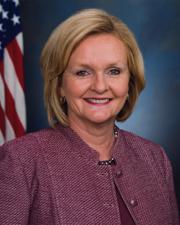 Sen. Claire McCaskill (D-MO)
Legislative Activity
Stay on top of the latest movement without scrolling through every action
Senate amendment submitted
September 23, 2009
View full timeline
Senate amendment submitted
September 23, 2009
Senate amendment proposed (on the floor): Amendment SA 2514 proposed by Senator Feinstein for Senator McCaskill.(consideration: CR S9723-9724, S9725; text: CR S9723)
September 23, 2009
Roll call votes on amendments in Senate: Motion to table amendment SA 2514 agreed to in Senate by Yea-Nay Vote. 72 - 26. Record Vote Number: 294.(consideration: CR S9725)
September 23, 2009
Amendment SA 2514 proposed by Senator Feinstein for Senator McCaskill. (consideration: CR S9723-9724, S9725; text: CR S9723) To strike the earmarks for the Save America's Treasure program and to provide criteria for the distribution of grants under that program.
September 23, 2009
Motion to table amendment SA 2514 agreed to in Senate by Yea-Nay Vote. 72 - 26. Record Vote Number: 294. (consideration: CR S9725)
September 23, 2009
Votes
1 roll call on this amendment
Text
Proposed
DEPARTMENT OF THE INTERIOR, ENVIRONMENT, AND RELATED AGENCIES
APPROPRIATIONS ACT, 2010

The PRESIDING OFFICER. Under the previous order, the Senate will
resume consideration of H.R. 2996, which the clerk will report.
The bill clerk read as follows:

A bill (H.R. 2996) making appropriations for the Department
of the Interior, Environment, and related agencies for the
fiscal year ending September 30, 2010, and for other
purposes.

Pending:

Carper amendment No. 2456, to require the Administrator of
the Environmental Protection Agency to conduct a study on
black carbon emissions.
Collins amendment No. 2498, to provide that no funds may be
used for the administrative expenses of any official
identified by the President to serve in a position without
express statutory authorization and which is responsible for
the interagency development or coordination of any rule,
regulation, or policy unless the President certifies to
Congress that such official will respond to all reasonable
requests to testify before, or provide information to, any
congressional committee with jurisdiction over such matters,
and such official submits certain reports biannually to
Congress.
Isakson modified amendment No. 2504, to encourage the
participation of the Smithsonian Institution in activities
preserving the papers and teachings of Dr. Martin Luther
King, Jr., under the Civil Rights History Project Act of
2009.
Vitter motion to commit the bill to the Committee on
Appropriations, with instructions to report the same back to
the Senate forthwith with Vitter amendment No. 2508 (to the
instructions on Vitter motion to commit the bill), to
prohibit the use of funds to delay the implementation of the
Draft Proposed Outer Continental Shelf Oil and Gas Leasing
Program 2010-2015.

The PRESIDING OFFICER. The Senator from California.
Mrs. FEINSTEIN. Mr. President, the floor is now open for amendments
to the Interior bill. I hope Senators will come to the floor if they
have an amendment. The filing deadline is 1 o'clock this afternoon.
I yield the floor.
The PRESIDING OFFICER. The Senator from Tennessee.
Mr. ALEXANDER. Mr. President, I say to the Senator from California
that I join her in urging our colleagues to come to the floor and offer
their amendments so we can move on through the bill. There is an
opportunity to offer them and to debate them.
Mr. President, if someone comes to the floor I will finish quickly so
they can take the floor and we can move on with the bill, but while we
are waiting for that, I ask unanimous consent to speak as in morning
business.
The PRESIDING OFFICER. Without objection, it is so ordered.

Climate Change

Mr. ALEXANDER. Mr. President, with great respect to the President of
the United States, I am still shaking my head a little bit in disbelief
at his speech yesterday on climate change at the Climate Change Summit
in New York. Here we had 100 leaders from around the world in our
country to talk about climate change and the President said what he has
said before, which is that we need to stop putting so much carbon in
the air because carbon is the principal greenhouse gas that contributes
to climate change, in the opinion of most scientists.
But in saying that, the President did not mention the one way we have
to create a lot of low-cost electricity without putting any carbon in
the air, and that is nuclear power--a process that the United States
invented; a process that the United States operates more efficiently
than any other country in the world. It produces 19 percent of our
electricity, and our plants operate 90 percent of the time. Even
France, which gets 80 percent of its electricity from nuclear power,
only operates its plants 80 percent of the time. He failed to mention
nuclear power even though it produces 70 percent of our carbon-free
electricity, and even though every one of the other top five carbon
emitting nations in the world are committed to a full-scale
construction program for nuclear power.
This is what the President said:

The developed nations that caused much of the damage to the
climate over the last century have the responsibility to
lead--and that includes the United States.

Well, according to the Wall Street Journal on Monday, September 21,
in its news pages, we know who produces the carbon: China is No. 1--6
million metric tons; the United States is No. 2--nearly 6 million
metric tons. So we produce about the same. Russia is next--1.7 million;
India is next; Japan is next. Those are the top five carbo emitting
nations.

[[Page S9707]]

President Obama lectured other countries when he said:

But those rapidly developing nations--

And here he means China and India--

that will produce nearly all the growth in global carbon
emissions in the decade ahead must do their part as well.

He is right about that. The President went on to say:

We cannot meet these challenges unless all the largest
emitters of greenhouse gas pollution act together. There's no
other way.

He is right about that. But then, to my great astonishment--and I am
sure to others--he stopped there and he basically was saying to China
and to Russia and to India, as well as Japan: You must do something
about carbon. We are going to take the lead. Yet they all are building
nuclear power plants that emit zero carbon and we haven't started one
new reactor in 30 years, even though we invented it. How can the
President of the United States lecture other countries about the carbon
they produce--the principal greenhouse gas--when they are expanding the
one technology that could do the most to solve the problem?
Let's be very elementary here. Coal and natural gas plants produce
nearly 40 percent of the carbon when they produce electricity. The
President did boast of how the United States is committed to building
windmills and solar panels. In fact, his administration wants to build
20 percent of our electricity from wind turbines. These aren't
grandma's windmills, these are the giant 50-story wind turbines that
they want to string along the Appalachian Mountain tops, from the
Smokey Mountains to the White Mountains, along the coastlines, and run
19,000 miles of transmission lines to get the power to our homes and
businesses. That is the plan. And to a point, that plan can help. I
mean, renewable energy--solar panels, wind turbines--is a supplement to
the electricity we need. But today, wind turbines and solar panels
produce about 3 to 4 percent of America's carbon-free electricity.
Nuclear power produces 70 percent of our carbon-free electricity. So
why not expand nuclear power? Yet we haven't built a new nuclear
powerplant in 30 years.
What is happening around the world? Well, they are not slowing down.
They are taking full advantage, as the world often has, of American
ingenuity. We invented nuclear power here. And after we invented the
atom bomb, President Eisenhower and other scientists in the 1950s said:
Let's have an atoms for peace program.
So we went off on two tracks. We used nuclear reactors to operate our
Navy, which we have done successfully, without incident ever since the
1950s. Admiral Rickover pioneered that. So today we have about 80 Navy
vessels operated by reactors and, during the 1970s and 1980s, we built
104 nuclear reactors. This was the Atoms for Peace Program. We took
what probably was the greatest scientific invention of the last
century, the reactor, and used it to produce a lot of low-cost,
reliable energy--which is the dream of the world, to have a lot of low-
cost, reliable energy for everyone in the world. That is the one of the
single best steps toward reducing poverty and increasing prosperity.
So here we are in the United States, using our 104 nuclear reactors--
not having built a new one in the last 30 years--to produce 19 percent
of our electricity and 70 percent of our carbon-free electricity. But
what is happening around the world? There are 44 new nuclear
powerplants under construction in the world. China has four under
construction. This was the first country the President would be
lecturing: Do something about carbon-free electricity. So China is
planning 132 nuclear powerplants and we are constructing zero. We have
not constructed one in 30 years. How can we lecture China about carbon
if they are building 132 nuclear powerplants, which would be enough to
produce one-fourth of all the electricity the United States uses? That
is more than we produce today through nuclear power.
Russia is building two a year. One reason Russia is doing it is
because they want to sell their natural gas to Europe at a lot more
expensive price, so they are taking advantage of nuclear power to raise
their standard of living. Japan is 36 percent nuclear power today.
Japan, as everyone knows, suffered under the two atom bombs that were
dropped. But they have come to terms with the safe use of atoms for
peace, nuclear-power-produced electricity--36 percent of their
electricity is nuclear. They are building two more plants. The United
States has not built a plant in 30 years.
South Korea, one of the most successful emerging countries--in
America, one of those countries that the President might be saying you
need to do something about climate change--they are. Forty percent of
their electricity is carbon-free nuclear power and they are building
eight more nuclear plants by 2015 and we have not built one in 30
years.
India, the largest democracy--we point our finger at them and say we
don't have to do anything about climate change until you do. They are.
They are considering a thorium reactor. They are committed to nuclear
power, partly because of the agreement between the United States and
the Bush administration and India, and we are helping them build
nuclear powerplants. We are helping China as well. But we have not
built one in 30 years.
The President even said Iran has the right to build a nuclear
powerplant; not a nuclear bomb but a nuclear powerplant. We have not
built one in 30 years.
France--we don't usually like to say the French are ahead of us. We
have a little love-hate relationship with France, but look what they
have done. They have taken our nuclear reactor invention and 80 percent
of the electricity in France comes from nuclear power. They have among
the lowest rates of carbon emissions in the entire European Union. They
have among the lowest electricity prices in the European Union. They
are selling electricity to Germany, which is the only one of the
European countries that has said they don't want any nuclear power. So
they are buying nuclear power from France.
There are many other countries in the world that are using nuclear
power. But as the Wall Street Journal said: China, the United States,
Russia, India, and Japan produce most of the carbon. Scientists believe
carbon produces 40 percent of the greenhouse gases that cause global
warming and the United States is the only one of those five countries
that is not committed to the construction of new nuclear powerplants.
The President's plan instead is an energy tax and renewable mandates
that would force us to build more giant wind turbines. Wind turbines
work some places. They don't work in my part of the country. The wind
doesn't blow enough, and we don't want to see them on our mountaintops.
I am a sponsor of Senator Cardin's mountaintop removal bill. We don't
want people blowing up our mountaintops and dumping the tops of the
mountains in our streams. We don't want them putting 50-story wind
turbines that don't turn more than 19 percent of the time up there
either. So there is a growing recognition that in addition to the
unreliability of renewable energy, the energy sprawl on our landscape
is something we should think about.
One thing we should think about is think about where to put renewable
energy installations, to make sure they are in appropriate places. The
other thing to think about is are there any alternatives to renewable
energy. The answer, of course, is, yes, there are alternatives to
renewable energy. The principal one is nuclear power.
Let me be specific. In order to make 20 percent of our electricity in
the United States from carbon-free sources, we could either build about
186,000 wind turbines--these are 50 stories tall--that would cover an
area about the size of West Virginia. Or we could build 100 new nuclear
reactors. We have 104 today. Remember, China is building 132. Today,
nuclear produces about 20 percent of all our electricity; wind provides
about 1.3 percent.
Nuclear power is baseload power because it operates 90 percent of the
time. That means we could have it on almost all the time. Wind power is
intermittent. It only works when and where the wind blows and there is
no way today to commercially store large amounts of that electricity.
Nuclear, as I mentioned earlier, operates 90 percent of the time.
Wind operates about 33 percent of the time.
When you read that you have 1,000 megawatts of electricity from
nuclear,

[[Page S9708]]

that means you have 900 megawatts because it operates 90 percent of the
time. When you read you have 1,000 megawatts of wind, that means you
probably have 300 or 350 megawatts because it only operates a third of
the time and, as they found in Denmark and other places, the wind often
blows at night when we don't need it. We have lots of unused
electricity at night.
As far as additional infrastructure, building 100 new nuclear
reactors would take very little new infrastructure because you could
locate them mostly on the existing sites where we now have the 104
nuclear reactors we have today. Wind turbines, on the other hand, as I
said, would take an area the size of West Virginia, plus 19,000 miles
of new transmission lines that would go from unpopulated areas, through
suburban areas, to populated areas where people need the electricity.
What about the Federal subsidy? Sometimes people say these big new
nuclear plants must have a big federal subsidy, but the fact is they do
not. To produce the first 100 plants that we have, they were built
without much federal subsidy. To build 100 more, the estimates are for
$17.5 billion over 10 years, including a capped nuclear production tax
credit--that would build the 100 nuclear plants. To build 186,000 wind
turbines the taxpayer would shell out about $170 billion.
We hear a lot of about green jobs, let's have renewable electricity
because that produces green jobs. Green jobs are good jobs. We have two
big new plants in Tennessee that the Governor recruited and they make
polysilicone, which is for the purpose of making solar panels. We hope
solar energy works and we believe it will. Today it costs four to five
times in our area what other electricity costs, but we hope the price
comes down and we are all for that. But the estimate for nuclear's
green jobs to build 100 reactors would be about 250,000 construction
jobs. To build 180,000 1.5 megawatt wind turbines would be about a
third of that, 73,000 construction jobs, and then 70,000 permanent jobs
for nuclear and 77,000 permanent jobs for the wind turbines. They would
be about the same.
The lifetime of a nuclear plant is about 60 to 80 years. The lifetime
of the wind turbines is about 20 to 25 years. At a recent hearing which
was chaired by the Senator from California, we talked with the Interior
Secretary about the possibility of bonds for the developers who are
putting up these 186,000 turbines. What if they wear out after 15 or 20
years, which is what they are expected to do? Or what if policies
change? Or what if subsidies disappear? Or what if we decide we prefer
other forms of energy? Who is going to take them down? We need to think
about that, just as we did not think about abandoned mines all over the
country--47,000 alone in California.

Then there is the visual impact I mentioned. If you build 100 big
nuclear powerplants, 100 reactors, they have tall cooling towers. There
is a visual impact there. But you do it mostly on the sites where the
104 are today, where they are well accepted by the people in those
communities and it is only 100 of them and it only takes about 100
square miles. Mr. President, 186,000 wind turbines would cover 25,000
square miles, which is an area the size of West Virginia.
I hope as we proceed, after health care, to our debate on energy and
climate change, that we will take a more realistic attitude. I am one
of those Senators who believe climate change is a problem. I believe
humans are contributing to it. I think it is time for us to stop
emitting so much carbon into the air. But I would like for us to do
that in a low-cost, sensible way that permits us to keep our jobs in
this country and not in a high-cost way that causes us to drive jobs
overseas, looking for cheap energy. Every single Republican Senator has
endorsed an energy plan that is, No. 1, 100 new nuclear powerplants in
20 years; No. 2, electrify half our cars and trucks in 20 years; No. 3,
offshore exploration for natural gas, which is low carbon and oil--we
should use our own while we use it; and, No. 4, doubling research and
development for alternative energy. How can we make solar cost-
competitive? How can we find a way to recapture carbon from coal
plants? How can we have advanced biofuels? How can we find the fourth
generation of nuclear energy that recycles used nuclear fuel in a way
that doesn't produce any plutonium?
It is not just the 40 Republican Senators who are interested in that.
I have had a number of Democratic Senators talk with me about that.
Many were far out in front of the issue before I began to speak so much
about it.
My hope would be that, as we look more seriously at the issue of
climate change and energy, that we adopt a low-cost energy strategy. We
don't need an energy tax that raises everybody's electric bill. We
don't need a renewable energy mandate that requires us to put up wind
turbines in the Southeast, where the wind doesn't blow, anymore than we
need a nuclear energy mandate that requires people to put up nuclear
plants where people don't want them or a hydroelectric mandate that
requires States to put up dams where there is no river. We need a low-
cost, clean energy policy. Almost every other major country in the
world is deciding that nuclear power is the key to the future.
Wind is a supplement. One day solar may be widely used as supplement.
But for baseload power for a prosperous country there is no choice, in
my view. So climate change may be the inconvenient problem, as my
friend and fellow Tennessean, Al Gore, says. But nuclear power, I am
afraid, is the inconvenient solution, and I hope we will move to the
day when the President of the United States will go to a summit on
climate and say: Yes, we are building wind turbines in appropriate
places; yes, we are having solar thermal panels in appropriate places;
yes, we have doubled and tripled our investment in research and
development for alternative energy. But as the country that invented
low-cost, reliable, clean, carbon-free nuclear energy, I, the President
of the United States, have set as a goal that we will double the amount
of electricity we will produce from nuclear power.
If the President went to Copenhagen and said we were committed to
build 100 new nuclear powerplants in 20 years and to electrify half our
cars and trucks in 20 years, just implementing those two goals would
get us close to the Kyoto Protocol standards in 2030; just implementing
those two goals--100 new nuclear plants and electrifying half our cars
and trucks--and we can do both. We already did both. Between 1970 and
1990 we built 104 reactors, not to mention the 81 U.S. Navy vessels
powered by nuclear reactors, so we have done that. Most experts,
including many in the Obama administration, agree we can electrify half
our cars and trucks, and probably without building one new powerplant
because we have so much unused electricity at night. We can plug them
in at night. We will be reducing imported oil, keeping the price of
fuel low, we will be cleaning the air, and we will be dealing with
global warming.
So why are we engaged in a 1,000-page energy tax, a cap-and-trade
system that doesn't effectively deal with fuel, that adds to taxes, and
it runs jobs overseas, when we have before us the technology we
invented that would lead us into the next century?
So I hope those issues evolve. I have seen that sometimes we do not
have the votes on this side of the aisle, but we have the right
message. Sometimes we find if we work with our colleagues on the other
side, we can have the same message.
So I believe there are many Democrats and all of the Republicans who
will join in setting a new national goal of 100 new nuclear plants in
the next 20 years. I believe we already have consensus on electrifying
half of our cars and trucks. So if that will help us reach the climate
change goals, why don't we do that instead of a national goal that
raises the price of energy, increases poverty, runs jobs overseas, and
causes all sorts of unanticipated problems?
I yield the floor.
The PRESIDING OFFICER. The Senator from California.
Mrs. FEINSTEIN. Mr. President, one of my delights has been to work
with the distinguished ranking member. I think anyone who was listening
to this does see his erudition and knowledge on this particular
subject. So I would like to thank him and commend him for his remarks.
Senator Alexander is correct. If we are going to address global
warming, all of the options have to

[[Page S9709]]

be on the table and we have to rethink and relook at nuclear power as
being a viable alternative as a clean fuel.
What has surprised me today is that so many people do not believe we
face an emergency. So I have spent quite a bit of time trying to go
back and look at global warming, look at books written by scientists,
talk with people who have knowledge, who have expertise. And I have
come to the conclusion that, unfortunately, it is real, that it is
happening, and that it is substantially impacting our Earth. So since
there is no one on the floor of the Senate wishing to offer an
amendment--and I would be very happy to cease and desist should there
be someone on the floor wishing to offer an amendment--I would like to
say a few words about what I see happening kind of as, not a
contretemps to what the Senator said but as a supporter of what he has
said.
I think the science, as I said, is overwhelming. Our climate is
changing. The Earth's climate has, in fact, warmed by 1.1 to 1.6
degrees Fahrenheit since the industrial revolution. People look at this
and say: Oh, that is not very much. In fact, it is very much, and it
changes the dynamic. It impacts species. It kills some. It diminishes
the carbon sink of the ocean. It does a number of things. But let me
read to you something that the Intergovernmental Panel on Climate
Change warned in 2007.

Warming of the climate system is unequivocal. Observational
evidence from all continents and most oceans show that many
natural systems are being affected by regional climate
change.

So I just pulled a few charts, and I would like to put them up and
show them to you, which is the evidence of the change in our climate.
This is the Greenland Ice Sheet. The year is 1979. Since 1979, 30
percent of the ice sheet has melted. Here is Greenland in 1979, both
the rust color as well as the interior. Here it is in 2007.
The source is the National Aeronautics and Space Administration. So
this is an actual rendering. It is pretty clear how much has melted.
Here is the Arctic at the end of the 2007 ice melt. The sea ice cover
was 23 percent smaller than it was in 2005 and 39 percent below the
long-term average from 1979 to the year 2000.
So here is the whole Arctic ice sheet. We now know the Northwest
Passage is open and is open for the first time in history all during
the year. You can see in 2005 the Arctic went all of the way out. 2007,
here it is. The source of this is the National Aeronautics and Space
Administration.
These are a couple of satellite photos from intelligence. We have
large satellites in the air. They have photographed, as part of a
project, some of the melt. This happens to be the Beaufort Sea, both in
August of 2001 and 2007.
This site near the edge of the ice pack in summer as shown here has
ponds of melted water forming on the surface. These dark pools absorb
more of the summertime solar radiation than does the surrounding ice,
enhancing melting.
So observations of sea ice conditions reveal considerable year-to-
year variability. But these images display the variability with regard
to the amount of melting and are an example of the long-term sequential
record needed to support and understand this dynamic system. So pond
coverage, monitored over time, contributes to the estimate. But this is
the Beaufort Sea in 2001, and here it is in 2007. The dark is all open
water. I think it is pretty clear.
This other satellite photo is of Barrow, AK. Here we see the Chukchi
Sea in 2006, and it is pretty clear. Here it is in July of 2007, as
photographed by a U.S. satellite. What they say is sea ice forms along
the coast in the winter and generally melts or is breaking away by mid-
July. Observation of sea ice reveals considerable year-to-year
variability.
This is similar to the other one, but I think this really shows the
difference in satellite photographs, and there is a project to continue
from the atmosphere to prove the change in the ice map and the breakup
of ice masses. So we know Greenland is melting at an extraordinary
pace.
This week NOAA's National Climatic Data Center announced that the
world's ocean surface temperature this summer was the warmest ever
recorded. These records date back to 1880.

In the Arctic, researchers have found that the widely
documented summer shrinking which I have just showed you
again resulted in the first ever opening of the Northwest
Passage.

In 2007, the winter thickness of that sea ice diminished by a record
19 percent in one winter, and scientists fear if the glaciers of
Antarctica and Greenland melt at the same time, sea levels could rise
by 20 feet. People say: Oh, that cannot possibly happen. I tell my
constituents when they come: If you live near a beach in California,
imagine what happens if the worldwide sea levels move up by 20 feet? In
fact, some of this movement is already being felt in some of the
Southern Pacific Islands, with people even making arrangements to move
from those islands.
In California we have seen a dramatic increase in catastrophic
wildfires. I have spoken about that on the Senate floor. I have spoken
about it to my ranking member. We have spoken about it in committee. We
believe this bill meets the challenge because for the first time it
funds the fire suppression needs of the Forest Service.
But in the last 5 years, wildfires have burned more than 10,000 homes
in California alone. Scientists now are predicting a 70- to 90-percent
diminution of the Sierra snow pack. This is important because the
Sierra Nevada Mountains provide the water for most of California. As a
matter of fact, it provides the water for two-thirds of the State. That
water could be lost due to climate change. At the same time annual
rainfalls are decreasing, and the State's forests are burning up like
never before. Here is the point: Can this warming be stopped? I have
read a lot about it. I have talked to many people. I have talked to
scientists I respect very much. What they tell me is it cannot be
diminished, but it might be able to be controlled.
The reason for this is that carbon released into the atmosphere does
not dissipate. It has remained in the atmosphere since the beginning of
the industrial revolution. So as carbon begins to pile up in the
atmosphere, it creates the warming, and it also creates the potential
catastrophe.
So what do we do? We need to begin by reducing emissions of carbon,
and that is pretty clear now. I have seen no serious science that
diminishes this at this point in time. Instead, what they tell me is
that we need to reduce emissions by 65 to 80 percent below 1990 levels,
and all by the middle of this century.
That translates to a goal of 450 parts per million of carbon dioxide
in the atmosphere. So I think, as Senator Alexander alluded to, there
is no single policy we can implement to curb our Nation's emissions, no
silver bullet. Rather, we need all the tools available, and this
includes laws designed to protect the public from dangerous air
pollution like the Clean Air Act.
Global warming is real. It is happening today. It is being charted by
our satellites. It is being charted by our scientists. It is being
charted by those of us in this body, and I think the real key is if we
are ready to admit that fact and take the action to make the necessary
conversion.
The Senator from Tennessee just spoke, I think eloquently, about the
merits of nuclear power. I am one who believed originally that the
human element and the waste element was such that it was not a viable
alternative source. I no longer believe that. I think it is a viable
alternative source, if we can fix the permit process that enables
state-of-the-art nuclear technology to be built in a relatively short
period of time.
The yield from a nuclear plant, as we know, of clean energy is very
large indeed. So that is a positive thing. We are debating now the
placement of solar facilities: where they should go, how big they
should be, and this is cutting edge for us. We have talked about it. I
have indicated my concern about projects that are too big, like 20
square miles in pristine areas of the California desert that we have
been trying to protect with public funds over time.
We have learned that the largest solar facilities are perhaps 250
megawatts. So if you have them way up to 800, 1,000, this is without
precedent. So we need to discuss if this is wise. If so, where should
they be? What is the upside? What is the downside? Do they require new
transmission corridors or are our existing transmission corridors
adequate?
So I think these are the kinds of discussions that are most fruitful,
how we

[[Page S9710]]

deal with the present circumstances. I hope that more Members of this
body recognize it is only a question of time.
I remember the days when there was never a funnel cloud off the coast
of California. Now people report that they see funnel clouds off the
coast of California. Of course, one of the results of global warming is
volatility increases of weather patterns. Raindrops are bigger, more
volatile. Hurricanes, tornadoes are more volatile. We have to begin to
deal with that.
There are people who believe the Earth is immutable, that the Earth
will not change. Again, as I go back and read the literature and go
back 255 million years, what is posited is that there was effectively
one land mass on Earth and, geologically, that can be shown today. Yet
various events have broken up the land masses. Volcanic activity that
produces some of the greatest mountain ranges in the world also is
believed to be responsible for the separation of the continents
millions of years ago. I don't know, but this is much of what we see as
we read some of the scientific material.
I do not believe the Earth is immutable. That is what has been so
interesting about foraging into Mars to try to see if Mars ever, in
fact, had water on it. Time is infinite. Therefore, one never knows
when the planet Earth was born, what it was like when it was born, how
it has changed over the millennia. One thing we know in the instant of
this millennia we share, we have a problem, and we have to solve it.
I thank the Senator from Tennessee for bringing to the debate what is
a valuable alternative source of energy that should be continued, just
as wind, just as solar, just as biofuels, and just as moving away from
the internal combustion engine into hydrogen, electricity, those things
which can guarantee our future.
The one thing that is frightening about all this is we will not do it
fast enough and we will not do it in a way that is able to stop the
climate change which is now taking place, halt it. We can't reverse it
but halt it. The time has come for the United States to take a
leadership role. We have a big conference at the end of the year, which
we have briefly discussed, where nations will come together and where
they will look at the United States and say: You are the wealthiest
country on Earth. You have 5 percent of the population, but you use 25
percent of the energy. Therefore, you have an obligation to lead.
Certainly, the Chinese will believe this, although, as the Senator has
pointed out, the Chinese have rapidly overtaken the United States in
their release of global warming gases. But certainly India looks to us
as well. So China, India, the big developing countries that so impact
the release of global warming gases, it is very important that our
President stand tall, that the United States stands tall and that we
are willing to offer real leadership to the world.
Whether this happens remains a cipher, but I very much hope and pray
it does.
I thank the Senator from Tennessee for his remarks. I am happy to
make this small addition.
The PRESIDING OFFICER. The Senator from Tennessee.
Mr. ALEXANDER. I congratulate the Senator from California. She is
characteristically balanced in her approach and passionate about it
which becomes a former mayor who is accustomed to making practical
decisions. We have all had to change our minds about some things as we
go along. There is in this body an entire range of views about climate
change. Some are about ready to jump off the cliff. Others believe it
is a complete hoax. That is probably the way it is in the country today
among a variety of views.
My own view is that if I had this much information about my house
probably catching on fire, I would buy some fire insurance. What we
need to do in the Senate is say: Yes, it is a problem, and we are
helping to cause it. What makes the most practical sense for dealing
with it in a rapid way without running our jobs overseas where they are
looking for cheap energy?
There are a variety of ways to do that. I totally agree that
renewable energies are an important new source, but we need to be smart
about it. One way to be smart is intensive research. We may find a way
to make solar power a fourth the cost of what it is today. Then we have
rooftops instead of thousands of square miles of thermal powerplants we
can use. We may find cost effective ways to recapture carbon from coal
plants. That would be a blessing not only for us but for the world
because it would mean low-cost energy without polluting the world. It
is important to recognize that the Obama administration's chief
scientist, Dr. Chu, the Nobel Prize-winning physicist, says
unequivocally that nuclear power is safe and used nuclear fuel can be
safely stored onsite for 40 to 60 years, while we have a mini Manhattan
project to find the best way to recycle that used nuclear fuel, most
likely in a way that doesn't produce highly enriched uranium of the
kind that causes proliferation concerns.
So the two questions often raised regarding nuclear power--what to do
with the waste and is it safe. The chief scientist in this
administration says those concerns aren't a problem. If that is the
case, then nuclear power has to be a big part of the solution.
I am delighted I had a chance to hear the Senator speak on climate
change. I hope, as we talk more about this over the next several
months, we can agree on a consensus and permit the President to go to
international summits and show the United States is actually leading.
Mrs. FEINSTEIN. Once again, Mr. President, I thank my colleague, the
ranking member, the distinguished Senator from Tennessee, for his
comments. I agree with him.
The floor is open. We are going back and forth using the time, but I
don't want Members to believe that if they come to the floor to offer
an amendment, we will not promptly hear their amendment. The floor is
open. So, please, if you have an amendment, come to the floor. The
filing deadline is in 36 minutes. Hopefully, we will know what we are
facing in about 36 minutes. We would like to move this bill and move on
to Defense appropriations.
I suggest the absence of a quorum.
The PRESIDING OFFICER. The clerk will call the roll.
The legislative clerk proceeded to call the roll.
Mr. CHAMBLISS. Madam President, I ask unanimous consent that the
order for the quorum call be rescinded.
The PRESIDING OFFICER (Mrs. Hagan). Without objection, it is so
ordered.
Mr. CHAMBLISS. I ask unanimous consent to speak as in morning
business.
The PRESIDING OFFICER. Without objection, it is so ordered.

Recognizing Angel Flight and Mack Secord

Mr. CHAMBLISS. Madam President, I rise today to recognize the great
work that is done by the Angel Flight organization and, in particular,
one of its Georgia members, Mack Secord. In the world of nonprofits,
Angel Flight stands out for its determination to bring those in need
lifesaving medical care. In a world of dedicated volunteers, Mack
Secord stands out for coupling his passion for flying with his passion
to help his fellow man.
Angel Flight's creed is that the cost of travel should never stand in
the way of patients receiving necessary medical care. Through a network
of volunteer pilots, Angel Flight specializes in flying those in need
to medical facilities at distant locations.
In Georgia, we are proud that the DeKalb Peachtree Airport in metro
Atlanta is home to Angel Flight, the original volunteer pilot
organization serving those who live in or traveling to or through
Georgia, Alabama, Mississippi, Tennessee, and the Carolinas.
Since the year 2000, Angel Flight's missions of hope have increased
more than 760 percent. Last year, these generous volunteer pilots flew
2,266 missions, serving patients with 167 different medical conditions
who ranged in age from newborn to 100 years old.
In some of our Nation's most trying hours, the pilots and
coordinators of Angel Flight were there. In the aftermath of 9/11, they
transported relief workers, firefighters, Red Cross personnel, and FBI
agents to New York and Washington when commercial air traffic was
grounded. They served as first responders during Hurricanes Katrina and
Rita, flying 450 relief missions that carried supplies, medical
equipment, and volunteers into disaster areas, and reunited families
separated by the storms.

[[Page S9711]]

In recognition of the service of its volunteers, Angel Flight
received awards from the Red Cross and the National Aeronautic
Association.
One of Angel Flight's dedicated volunteers is Mack Secord of Atlanta.
Simply put, Mack's life has always been about service. He is one of the
original 15 pilots of Angel Flight of Georgia. But before he found his
calling transporting adults and children to hospitals, burn centers,
and cancer treatment facilities, Mack had another calling: his country.
Mack spent 42 years as a pilot in the U.S. Air Force. For 5 of those
years, he served as the Air Force's senior spokesman at the Pentagon.
Flying and helping others have always been Mack's twin passions. In
1964, while in the Air Force, he participated in a daring humanitarian
airlift in the Congo that saved more than 2,000 people who had been
taken hostage. For his efforts, Mack and his colleagues received the
prestigious Mackay Trophy awarded by the Air Force for the most
meritorious flight of the year.
Since 1985, Mack has donated his time, his Cessna 180, and the cost
of his fuel to Angel Flight. On his first mission, he picked up a
little boy in Columbus, GA, who had terrible burns on his face and body
from pulling a frying pan off a stove. Mack says he didn't know burn
patients require continuing treatment. He said:

I realized during the first flight that this was an
important service and that I could make a difference.

Mack is a one-man cheering section for Angel Flight. He spreads the
word to the Lions Clubs, Kiwanis Clubs, Rotary Clubs, pilots
associations, schools, churches, and anyone who will listen. He jokes
that he will give his 20-minute PowerPoint presentation to any group of
people who will sit still. This remarkable man also volunteers at the
Hartsfield-Jackson Airport USO, works at the Atlanta Community Food
Bank, and participates in a program to read to the blind. But his first
love is flying.
Last August, Mack received the Wright Brothers Master Pilot Award
from the FAA to commemorate 50 years of flying without accidents,
incidents, or violations. In October, Mack was given the first-ever
Lifetime Achievement Award from Angel Flight, marking his 23 years of
service. Fittingly, it will be renamed the ``Mack Secord Award.'' Just
this month, Mack was honored with the National Aeronautical
Association's Public Benefit Flying Award for decades of going above
and beyond as a volunteer pilot, bringing lifesaving medical care to
families in need. This recognition couldn't come to a more deserving
organization than Angel Flight, nor to a more deserving individual than
Mack Secord.
On behalf of those who need help, thanks to Angel Flight, and to Mack
Secord, for letting your passion for service take flight and for making
hope soar.
With that, I yield the floor.
The PRESIDING OFFICER. The Senator from Alabama.
Mr. SESSIONS. Madam President, I wish to share a few thoughts about
the process we are going through and the impact it is having on
spending by the U.S. Government. We are at a rate that everyone agrees
is unsustainable.
Worse than that, I think it is irresponsible, and we do not need to
be doing the things we are doing now. I object. The ramp-up in
discretionary spending for the appropriations in fiscal year 2010 is
unprecedented. We know we have the biggest deficits we have ever had in
the history of the Republic. Now we are passing more appropriations
bills that will take effect next year that will have unprecedented
spending levels. For example, the agriculture bill; I have always tried
to support Agriculture Appropriations in the Senate. I have not always
been able to do so. It had an increase of 14.5 percent. At that rate,
spending on agriculture will double in 5 years. The average increase in
agricultural spending, compounded over the past 7 years, from 2003
through 2009, was just 2.1 percent. So we have 14 percent.
Now we have the Interior and EPA funding and their increases this
year in the bill before us today, which is 16.6 percent. What is
inflation? Two percent or less. That is a 16-percent spending increase
in 1 year. At that rate, spending for Interior and EPA would double
every 4 to 5 years. Within this bill, the increase for the EPA is 33
percent. I guess that would double in 2 to 3 years. Since EPA was added
to the Interior financing in 2006, it is difficult to compare--at least
prior to that. However, we have added EPA funding to the Interior
funding to get a comparison over previous years. The average annual
increase in Interior-EPA Appropriations, from 2001 to 2009, is 1
percent but this year 16.6 percent. And we have the largest deficit in
the history of the Republic this year.
When we pass a stimulus bill that is huge, in terms of additional
spending, that is not being counted in what I am making reference to
today.
We also passed the Transportation HUD bill, commonly called the THUD
bill. Looking at its configuration for the past 3 years, we are able to
conclude how that developed. From 1995 to 2009, we have seen a 5.2-
percent average increase in discretionary spending--5.2 over the last 8
years. This year, what do you think it is? It is 23 percent. At a 23-
percent rate, spending for highways in America would double in 3 to 4
years.
Why is this important? Let me back up one more time and mention the
stimulus package. We passed, this year--the President insisted on it,
and he was able to force it through--an $800 billion stimulus package.
It was supposed to be to fix our crumbling infrastructure, our highways
and bridges. Did you know only 4 percent or less of that $800 billion
went to highways and bridges? That was a flimflam. The number I am
talking about in the basic highway budget we passed, I guess, a few
weeks ago, that bill has a 23-percent increase, in addition to the
money they got out of the stimulus package.
To show you how large that $800 billion is--the stimulus package--
spending only 4 percent on highways increased the Federal highway
funding by about 40 percent. It may be more. You can say: Well, Jeff,
the economy isn't doing well, so we need to spend more money. I submit
that we are spending money to a degree that it is putting a cloud over
the future of our Nation, and people who are involved in finance and
investment and business are worried not about what is going to happen
in the next year but about what is going to happen in the next 5 to 10
years. How can we sustain something that is unsustainable? The
administration said this cannot be sustained and Democratic Senators
have said it. Certainly, I say it.
In 2008, the entire national debt from the beginning of the founding
of our Nation through 2008 was $5.8 trillion. According to our
Congressional Budget Office, which I believe is a fair and impartial
group, they calculated the President's budget and what it would mean to
the deficit. They concluded that in 5 years--and the President
submitted a 10-year budget--that would double to $11.8 trillion. That
which we took over 200 years to accumulate--$5.8 billion--would be
doubled in 5 years. By 2019, 10 years from now, it would triple to
$17.3 trillion in debt.
The road we are on today will triple the national debt. I am not
making up these numbers. These are the Congressional Budget Office
numbers. It is stunning. In fact, it is based on the assumption that
unemployment would top out at about 8 percent. What are we moving to
now? About 10 percent. It also assumed a vigorous bounce-back in
economic growth next year, which it doesn't look like we are going to
get. So the results of those numbers can be worse than it appears here
because the economy isn't coming back as rapidly as we would like it
to.
It is hard to figure this. Some might say: I am unable to understand
this, Sessions. How much money is this? A trillion dollars doesn't mean
much to me.
Well, we spend less than $100 billion a year on education now. We
spend about $40 billion on highways. Do you know how much we spend on
interest on the debt? People think you can just print the money, and
that is not what happens. We borrow. We sell Treasury bills and notes;
people buy them and we have to pay them interest. Right now, interest
rates are pretty low. It is expected those interest rates are going to
increase from the financial sector on Wall Street, and the CBO, which
calculates these numbers--everybody assumes the interest rates will go
up some. How much, we don't know. They took a moderate increase in
interest rates.

[[Page S9712]]

In 2009, this year, the interest on our debt is expected to be $170
billion. That is going to go up every year. Why? Because the deficit
this year is going to be about $1.8 trillion. We have never had such a
deficit in the history of the Republic. Last year, we had a $450
billion deficit, the largest deficit in the history of the Republic.
This year, it will be $1.8 trillion. What does that mean? We have to
borrow that money.
Over the 10-year budget window, as assumed by the CBO, the deficits
will never fall below $600 billion. In fact, it will average over $900
billion--almost $1 trillion a year. That is how you get to $17 trillion
after 10 years. So we have to borrow that money in the world
marketplace. Countries such as China bought huge amounts of our
Treasury. We pay them interest on that money. What does this mean over
the 10 years? I think this can help the American people understand how
sizable this debt is.
As I noted, we spend $100 billion on education federally and $40
billion on transportation. This year, 2009, we spent $170 billion on
interest. In 2009, under the red line here on the chart, it will be
$799 billion--$800 billion--money that we used to be in a position to
do things with, such as build roads and do other things the Nation
needs. That is now going to have to be spent every year--$800 billion--
to pay interest. That is why Alan Greenspan, Wall Street experts, Ben
Bernanke, and others have said this is unsustainable; we cannot
continue this course.
What do we get from the Appropriations Committee and the Senate
leadership? We get an Interior bill that increases funding 16.6
percent. That is not acceptable. That is simply too much spending. As I
indicated, a lot of money is being pumped into Interior and
environmental appropriations from this $800 billion stimulus. I am not
counting that. This is baseline spending. So next year, if somebody in
this Congress were to have an epiphany and become frugal, and we cut
the budget and don't increase it a bit, what will be the average
increase over 2 years? It would be 8 percent. That is totally
unacceptable.
In the last 3 years, spending for interior and the environment, 2007
had a 5.6-percent increase; in 2008, a 3.7-percent increase; last year,
minus 2.9. So you are averaging far less than that. This is a
thunderous increase in spending in this Appropriations bill. I cannot
support it. There are a lot of good things in this legislation, and I
would like to support it. But I will not vote for a bill that increases
discretionary spending by 16 percent.
Has anybody been in a townhall lately and talked to their
constituents? How concerned are they? They think we have lost our minds
up here. Have we not? Is the message not getting through? Look at this
highway bill--a 23-percent increase in HUD and highway spending. It is
23 percent, and that doesn't include the stimulus money, which amounts
to a 40-percent increase on top of that. This is baseline spending.
When you put it in the baseline and do not make it an emergency,
stimulus spending, you have created momentum for continuing increases
in the future. How many people think we are going to cut spending for
next year? How many people think we will have spending for HUD and
transportation that will be below or equal to the inflation rate?
Unless the American people get heard soon, we will have another
budget with a big increase. We have never seen 23 percent and those
kinds of baseline expenditures before. I don't want to go on anymore at
length. I don't want to vote against these bills. I would like to vote
for the good things in them. But we have to simply recognize what we
are doing is unacceptable. The American people are furious with us.
They are rightly furious with us. We need to get our act together. When
we had a shortage, one of the most significant votes I recall we took--
it was so irresponsible--was when Senator Vitter, from Louisiana,
offered an amendment that said the shortage in gas tax revenue that we
find with the highway bill, that should be made up by taking money from
the stimulus package. That had been unspent--$800 billion. If it only
takes $20 billion or something such as that, that is what the bill was
supposed to be for--crumbling infrastructure. He proposed that and it
was voted down. Why? Because they did not want to take a dime out of
the $800 billion stimulus bill, even if it was not spent, and they
wanted to fill that gap with more debt. Since we are already in
deficit, to find another $20 billion or so to complete the highway bill
over the next year or two, we just have to increase the debt. That is
what we have been doing. It is an unsustainable course.

I urge my colleagues to begin to say no. Let's vote no on this
legislation. Let's start sending the American people a message that we
hear their concerns, we know their concerns are legitimate and right,
and it is time for us to be responsible.
I yield the floor.
Mr. ALEXANDER. Madam President, I suggest the absence of a quorum.
The PRESIDING OFFICER. The clerk will call the roll.
The bill clerk proceeded to call the roll.
Mrs. McCASKILL. Madam President, I ask unanimous consent that the
order for the quorum call be rescinded.
The PRESIDING OFFICER. Without objection, it is so ordered.
Mrs. McCASKILL. Madam President, I understand I cannot call up an
amendment right now because of the rules that are currently in place,
but I wish to speak about an amendment I will be offering at a later
time when the rules permit.
The PRESIDING OFFICER. Without objection, it is so ordered.
Mrs. McCASKILL. Madam President, the amendment I will be offering
speaks to what I see as a very fundamentally flawed process in our
appropriations in Congress. I am not in the majority in this body as it
relates to the subject of earmarks. I realize I am one of very few in
my party and a few more but not a whole lot on the other side of the
aisle who do not participate in the earmarking process.
I hope my amendment is calling attention to how this process is
flawed and why we need to change the process. There are many problems
with the process, but two of them I am going to speak briefly about
today.
One, the process is fundamentally unfair. It is rather mysterious how
much money gets set aside for earmarks and who does it and where it
happens. It is even more mysterious as to how the decision is made as
to how the earmarks are distributed among the Members.
I point out that in looking at the appropriations bills that we have
handled so far, it is very clear that the process is heavily weighted
toward the Members who serve as appropriators. I get that. That is part
of the culture that has grown up around earmarking; that is, if you are
an appropriator, you are entitled to get more. I am not sure that is a
good way to spend public money, but I think it is important to point
out that is the process.
Fifty percent of all the earmarks in this bill are going to the
members of the committee. Last week, it was even more egregious. I
don't think most Members realized when we voted on the T-HUD bill, the
Transportation, Housing and Urban Development bill last week, that in
the Transportation part of the bill, there was $1.6 billion in
earmarks. Over 50 percent of that money went to four Members, four
States. So out of 50 States, four States got more than half of all the
money. Well, when I tell that to people in Missouri, they say: Huh? How
does that happen? How can that happen? And I frankly don't have a very
good answer for them.

The other problem I wish to call to the attention of my colleagues
today is not just the process as it relates to how earmarks are
distributed but where these earmarks come from. This money is not
growing on a secret tree somewhere that we are harvesting. It is coming
out of programs. It is coming out of budgets. One of the things I found
most troubling is that many of these earmarks are coming out of
competitive grant programs or formula grant programs.
Formula is a formula because there is a way that is predictable about
how the money is distributed--based on the size of the State, based on
population; depending on the program, based on geography. It is a
formula everybody understands. Taking money out of a formula to fund
earmarks takes it from a predictable process based on merit to a very
unpredictable process based on who you are.
The same thing with competitive grant programs. Competitive grant
programs are ones where merit is supposed to rule the day based on
criteria

[[Page S9713]]

set forth. The amendment I will offer basically wipes out the earmarks
in one of these competitive grant programs. The program I am referring
to is a great program--it is called Save America's Treasures. It was
created by executive order in 1998. It is a public-private partnership,
and there are specific criteria as to what a project has to have in
order to qualify for this money--$20 million.
This is a small example. I admit this is not going to change
anything, as we keep talking about bending the cost curve, but it is a
great example of what I am talking about. It began as a competitive
program and it has begun to morph into something more than a
competitive program because now half of the money this year will be
earmarked, leaving only $10 million for a competitive program.
So if your State doesn't get an earmark, either in the House or the
Senate, in the bill, then the chances of your State getting any money
out of this program have been cut in half. It is only $10 million for
the entire country for these grants which are to restore America's
historic treasures across the country. That is a problem.
Is this an isolated problem? No. No. In fairness to this
subcommittee, this is a little problem compared to some of the other
competitive grant programs that have been raided for earmarking. The
hijacking of public money for earmarking from the competitive grant bus
is going on everywhere, and let me give another couple of examples.
Last week, when we did the Transportation, Housing and Urban
Development Appropriations bill, there were two good examples. They are
programs that began to provide competition to valued programs across
the country. The first one is the Neighborhood Initiatives at HUD, the
Housing and Urban Development Department. In 1998, Congress created
this program. The interesting thing is it was created to help people
who were doing welfare-to-work projects. Great intentions; great
program.
Ironically, HUD began granting these awards to people based on the
competitive criterion that Congress had given them. Congress passes the
program, funds the program, and tells HUD these are the competitive
bases on which you should make these grants. There were no earmarks in
the program at all in 1999--none--after Congress created the program.
Beginning in 2001, however, every dime in this program under the
Neighborhood Initiatives Program has gone to earmarks. Once again, a
competitive merit process morphs over into a completely earmarked
process.
How about another example of a program--the Economic Development
Initiative, also in HUD. Congress introduced the program in 1994; once
again, a congressional program. Funds were to be awarded competitively,
and for the first couple of years they were. EDI funds were awarded
competitively. Congress started earmarking the account beginning in
1998. By 2001, the entire account was earmarked. So Congress began it
as a good idea, and said do it competitively. By 2001, competition was
gone.
Ironically, the statute that sets out the criteria for competitive
EDI is still on the books. It is still in the law, but we no longer
follow it because there has been a decision to morph that competitive
program into an earmark program. I think that competition is a good
thing, and this isn't about a bureaucrat somewhere sprinkling fairy
dust and supplementing their judgment for the judgment of Congress.
In fact, the examples I have given are programs that were designed to
be competitive, and in two or three instances they were designed to be
competitive by Congress itself and then somehow they have morphed over
into a pecking order of priorities based on someone's seniority or the
committee they serve on, or even if they are in some political trouble.
It seems to me a goofy way to spend money, especially the public's
money.
I ask my colleagues to consider this amendment. All it does is
restore the program to a competitive basis and allow every State to
compete on the same basis for the money in that competitive program.
When the time is right, I will call up the amendment, once the rules
allow me to do so.
I yield the floor.
Mrs. FEINSTEIN. Madam President, I suggest the absence of a quorum.
The PRESIDING OFFICER. The clerk will call the roll.
The bill clerk proceeded to call the roll.
Mr. DORGAN. Madam President, I ask unanimous consent that the order
for the quorum call be rescinded.
The PRESIDING OFFICER. Without objection, it is so ordered.
Mr. DORGAN. Madam President, I have consulted with the manager and
the ranking member, and I ask unanimous consent to speak as in morning
business for 10 minutes.
The PRESIDING OFFICER. Without objection, it is so ordered.

Health Care

Mr. DORGAN. Madam President, there is now underway--beginning
yesterday in the Finance Committee--a discussion about health care
reform. It is complicated, controversial, difficult, but important. I
know they are working hard to try to figure out what they might do to
see if they can put some downward pressure on health care costs and
also to extend coverage to those who don't have health coverage.
There has been a lot of generous discussion on the floor of the
Senate. We have had a so-called Gang of 6, now there is a gang--a
larger number--of the Finance Committee members, and soon there will be
a gang of 100 Senators who are trying to consider what to do about
health care issues. We have had people come to the floor of the Senate
to say there is a proposal for a government takeover of health care. I
don't support that. I don't believe anybody has proposed that but,
nonetheless, we have had people come to the floor of the Senate saying
that is what is being proposed. I don't support a health care reform
plan that lifts the ban on using Federal funding for abortion services.
I don't support government rationing of health care. I don't believe
that has been proposed, although it has been alleged it has been
proposed. I don't support providing health care benefits to those who
have come to this country illegally. And I don't support doing anything
that undermines Medicare for the elderly or in any way diminishes or
undermines VA health care.
All of these have been discussed by people who have trotted over to
the floor of the Senate to make allegations about thing one or another.
At some point we will consider and vote on the floor of the Senate on
legislation that I think meets the interests of this country, meets the
test of being in the public interest, and does not represent a
government takeover of health care. But having said that, let me make a
point that one of the things that has not been adequately discussed,
but will be, is the issue of price increases for health care--cost
increases--and especially that portion that relates to prescription
drugs.
Let me be quick to say with respect to prescription drugs that the
pharmaceutical industry plays a very important role in this country.
The development of prescription drugs some with private investment
funding in research and development by the pharmaceutical industry,
some is a result of what we spend in public funding through the
National Institutes of Health and then make what we have learned
available to these companies--all of these in my judgment benefit this
country and reflect the public interest.
The relentless march of increased costs of health care in virtually
all areas includes the increased cost of prescription drugs, and the
question is: What do we do about that? There is very little discussion
about it, but I want to talk about it for a couple of minutes today.
I have introduced--for some number of sessions of the Congress now,
along with my colleague on the other side of the aisle, Senator Snowe--
a piece of legislation that has had broad bipartisan support. It
includes the late Senator Ted Kennedy as a cosponsor during this
session of the Congress. It includes Senator Barack Obama as a
cosponsor in the last Congress. It includes Senator John McCain,
Senator John Thune, and Senator Grassley. It is bipartisan and has had
very broad support. Yet we have not been able to get it through the
Congress because it is controversial. Let me describe what it is. It is
legislation that tries to put some downward pressure on the escalating
prices of prescription drugs.

[[Page S9714]]

I understand it is legislation that causes great concern to the
pharmaceutical industry. I understand that because they price
prescription drugs in this country the way they want to price them, and
the way they want to price them is for brand-name prescription drugs we
pay the highest prices in the world by far, not even close.
I have a pretty good description of that in my desk. These are empty
bottles. Let me ask unanimous consent I be able to show them on the
floor of the Senate.
The PRESIDING OFFICER. Without objection, it is so ordered.
Mr. DORGAN. These are bottles in which Lipitor is deposited. It is
made in Ireland. The company which makes Lipitor, which is the highest
selling prescription drug for the control of cholesterol of any drug in
the world, I think--it is very popular.
As we can see this drug is made in a factory in Ireland and then sent
around the world. This is actually the same bottle--one is blue and one
is red. But this was sent to Canada and this was sent to the United
States. The only difference is that in the United States, if we buy a
tablet of Lipitor in this order, we pay $4.48, and the Canadian
consumer pays $1.83.
It is not just the U.S. versus Canada. It is the U.S. price versus
prices almost anywhere. Again, the same drug put in the same bottle in
a plant sends medicine around the world to Germany, Italy, Spain,
France, England and, yes, Canada and the United States, and what is the
difference? There is no difference. It is the same pill put in the same
bottle. The difference is price. We get to pay double what most other
people in the world pay for Lipitor. Fair? Not as far as I am
concerned. It does not make much sense to me.
How do we make that stick? We make that stick by saying to the
American people: You can't purchase that same FDA-approved drug when it
is sold in other parts of the world. You can't purchase that for half
the price because we will not allow you to bring it back into this
country because we are worried, the pharmaceutical industry says, that
counterfeit drugs would come into the country.
Let me talk just a bit about that. When I say this, I don't want
anybody to believe our drug supply is unsafe, but I do want to say
this: 40 percent of the active ingredients in U.S. prescription drugs
currently come from India and China. I am going to talk about that just
for a minute. I am saying this because the pharmaceutical industry
continues--including yesterday as a result of stories about this--
continues to say if we pass the legislation that a broad bipartisan
group of us want to pass, that gives the American people freedom--yes,
freedom; the freedom to purchase the identical FDA-approved drug from
wherever they choose to purchase it--they say if we do that we
undermine the safety of prescription drugs, there are counterfeits, and
so on--safety.
Forty percent of the active ingredients in prescription drugs come
from India and China. Last year the Wall Street Journal did a very
large story and did some first rate journalism, I might say.

More than half the world's heparin, the main ingredient in
a widely used anti-clotting medicine, gets its start in
China's poorly regulated supply chain.

So ingredients go into medicine that comes into this country, heparin
in this case. Let me describe the photographs in the Wall Street
Journal. They went to find out where the heparin came from.
Here is an example of a man using a tree branch to stir a caldron of
material coming from pig intestines that becomes heparin, from which
the ingredient for heparin is extracted. You can see the kind of
facility this is; uninspected, by the way. Never inspected. Pig
intestines coming out of this machine. These are Wall Street Journal
photographs, not mine, that describe heparin, the active ingredient,
heparin, originating in this sort of unregulated area in rural China.
The industry is saying to me if we pass legislation that requires
batch lots and pedigrees and controls, manufacturing controls on
anything that comes in, and chain of custody, somehow we would injure
the safety of the drug supply? Come on, that is not the case at all.
In fact, what we will do with the legislation that we have created is
dramatically improve the safety of all of our drug supply because of
what we provide for the FDA and what we require to be done to assure
the safety of the chain of custody for the drug supply.
Dr. David Kessler, former head of the FDA, says this about our
proposal. The Dorgan-Snowe bill ``provides a sound framework for
assuring that imported drugs are safe and effective. Most notably, it
provides additional resources to the agency to run such a program,
oversight by the FDA of the chain of custody of imported drugs back to
the FDA-inspected plants, a mechanism to review imported drugs to
ensure that they meet FDA's approval standards, and the registration
and oversight of importers and exporters to assure that imported drugs
meet these standards and are not counterfeit.''
The question is this: It is not whether the pharmaceutical industry
is a good industry--it is. It is not whether it does good things for
our country--it does. I have supported the pharmaceutical industry in
many ways. I support the research and development tax credit from which
they benefit. I have always supported that. I am very interested in
driving more research, so I support that. I have written that I would
even support an increase in the patent period in cases where it takes
them longer than it should take to get their product to market. They do
have a point about that. I am not interested in injuring anybody,
especially this industry.
I do think, however, if we are going to talk about how to deal with
the relentless march of increased health care costs, we cannot ignore
the increased costs of prescription drugs.
The pharmaceutical industry and the White House had announced a deal
by which the pharmaceutical industry would contribute $80 billion over
10 years to help pay for what they had described. Basically, it is
providing a benefit to help partially fill the so-called doughnut
hole--I know this is Washington jargon--for senior citizens in
Medicare; to partially fill that it provides rebates for purchases of
brand-named drugs.
I think that is fine. But that is not a proxy for trying to restrain
the relentless increase in the cost of prescription drugs in this
country.
In 2008, the average price increase for the most widely used brand-
name prescription drugs was 8.7 percent, more than twice the rate of
general inflation. The fact is, if we go back we see what has happened
to the cost of these prescription drugs in our country. It is up, up,
and way up, and too many people are having to determine whether they
purchase their medicine or buy their groceries, or purchase their
medicine or pay their rent. I think there are ways for us to address
it.
My colleagues and I are offering legislation when a health care bill
comes to the floor of the Senate. We are going to offer legislation
that will be the Dorgan-Snowe bill with, I think, somewhere around 30
cosponsors or so, that is very simple. It simply provides the freedom
for the American consumer to purchase the FDA-approved drug where they
choose to purchase the drug, and we outline the countries in which
there is a nearly identical chain of custody to the chain of custody we
have in our country for prescription drugs, then provide the resources
for the FDA to monitor and to deal with that.
Second and most important, we provide requirements for pedigrees and
batch numbers and lot numbers to be able to trace back prescription
drugs.
One of the things we discovered with the heparin issue is we couldn't
trace it back to find out where it came from. That does not make any
sense to me. We do need legislation, in my judgment.
I received a letter from a woman in North Dakota a while back. She is
suffering from fibromyalgia. She had the disease 20 years and tried
many different treatments. The disease impairs her cognitive skills and
causes her fatigue every day, and she is trying a new drug that she
says helps with the fatigue and her concentration. She said:

I have taken my first pill now and noticed improvement
immediately, but the drug costs $348 a month, $11.60 a pill,
so I am going to have to try to find a way to work despite
the fact I really can't work in order to pay this drug bill.

She says:

Byron, I am beat up but I ain't used up. This pill could be
the difference between

[[Page S9715]]

working and filing for Social Security disability. Is there
some way that people can afford this drug which doesn't yet
have a generic version? Is there some way to put some
downward pressure on prices?

The answer is yes, there is; legislation we introduced in the Senate.
The Congressional Budget Office says this saves $50 billion, I believe
it is, in 10 years, a $50 billion saving, and $10.6 billion of that is
savings to the National Government. The National Federation of
Independent Business--and I will ask unanimous consent to have this
printed in the Record--the NFIB has just written, September 21, 2009,
saying:

On behalf of the NFIB I would like to express our support
for S. 1232, the Pharmaceutical Market Access and Drug Safety
Act of 2009. . . .

It is signed by Susan Eckerly, the senior vice president of public
policy.
Madam President, I ask unanimous consent that a copy of the NFIB
letter dated September 21, 2009, be printed in the Record.
There being no objection, the material was ordered to be printed in
the Record, as follows:

National Federation

of Independent Business,

Washington, DC, September 21, 2009.
Hon. Byron Dorgan,
U.S. Senate,
Washington, DC.
Hon. Olympia Snowe,
U.S. Senate,
Washington, DC.
Dear Senators: On behalf of the National Federation of
Independent Business (NFIB), I would like to express our
support for S. 1232, the ``Pharmaceutical Market Access and
Drug Safety Act of 2009.'' This bill would allow for the
importation of prescription drugs while ensuring that
appropriate safeguards are in place to protect the integrity
of imported medications. Importation offers a means of
reducing one of the most rapidly rising healthcare costs
facing consumers today: spending on prescription drugs.
This much-needed bipartisan legislation comes at a critical
time for men and women in the small business community
struggling with the ever-increasing cost of healthcare. Small
firms pay an average of 18 percent more than their larger
counterparts for the same healthcare benefits and are
continually seeking out ways to lower their healthcare costs.
With U.S. prescription drug spending expected to increase
over the next decade, it is clear that the small business
community must pursue viable opportunities to improve
affordability and access to healthcare goods and services.
The Congressional Budget Office has estimated that this
legislation could result in a direct savings of $50 billion.
Those savings could provide some much-needed and long overdue
relief to small business.
The ``Pharmaceutical Market Access and Drug Safety Act of
2009'' secures a framework for the safe and legal importation
of prescription drugs. NFIB is pleased that your legislation
includes specific requirements to ensure that every imported
drug must meet U.S. safety standards. The benefits for small
business are also achieved by allowing licensed pharmacies
and drug wholesalers to import Food and Drug Administration-
approved medicines for commercial purposes.
Providing access for the importation of prescription drugs
enjoys broad support. Seventy-eight percent of NFIB members
favor allowing individuals to purchase drugs from other
countries--support that is affirmed by other public opinion
research including a Wall St. Journal poll indicating that
eighty percent of Americans support importation.
Thank you for your continued efforts to increase access to
affordable healthcare for the small business community. We
look forward to working with you on this important piece of
legislation.
Sincerely,

Susan Eckerly,

Senior Vice President,
Public Policy.

Mr. DORGAN. Many other organizations have supported this legislation.
The reason I wanted to visit about it today briefly is to say that
whatever is considered in the Finance Committee and then developed as
between the Finance and the HELP Committees and brought to the Senate
floor for debate when health care is debated on the Senate floor, I
will intend to be here with my colleagues. I know Senator McCain,
Senator Stabenow, Senator Snowe--many others will want to be here to
offer this amendment at the front end of a discussion and debate on
health care on the floor of the Senate.
This has been a long, tortured trail--too long, in my judgment--to
get this done. I understand, as will have been the case in the past and
likely will be the case this year, we will have people stand up on the
Senate floor and oppose us, saying it is going to undermine or somehow
compromise the safety of the drug supply. It is simply not true. All of
the experts who have looked at this have said we have created something
that will actually improve the safety of the drug supply coming into
this country.
Let me describe it in the easiest and best way I know, and that is
with a very popular prescription drug. Somebody once said so many
people take this they ought to put it in the water supply. I guess I
don't support that, but Lipitor is the most popular drug, medicine for
lowering cholesterol, by far. There are others as well. I should not
fail to name them, but I believe this is the biggest selling
cholesterol-lowering drug. The American people get to pay twice as much
for the same pill put in the same bottle as virtually everybody else in
the world. I think that is not fair. I think it is not fair that the
American people pay the highest prices in the world. It wouldn't happen
if the American people had a little bit of freedom, and that is the
freedom to purchase this prescription drug from a FDA-approved plant
with pedigreed lot numbers in a supply stream or chain of supply that
is judged safe by our FDA.
We will have this amendment, have debate, have a vote. My fervent
hope is that this is the time. There is a time and place for
everything. My hope is that at long last this is the time Congress will
pass this kind of legislation.
I yield the floor.
The PRESIDING OFFICER (Mr. Cardin). The Senator from Tennessee is
recognized.

Federal Student Loans

Mr. ALEXANDER. Mr. President, the pending business is the Interior
appropriations bill. I know several Senators have amendments. If they
would like to come and speak on those amendments, this is a good time
to do that. Then, working with the Senator from California, who is
chairman of the committee, we will try to move those amendments to a
vote as quickly as possible. If Senators do come to speak on
amendments, I will stop talking and give them the floor. But for the
time being, I would like to say a few words about Federal student
loans.
President Obama said the other day, in what I thought was a very
perceptive comment, that he understood the health care debate and all
its intensity is a proxy for a larger debate, and that is about the
role of government in our society. What I and many Republicans believe
and, I think, many Independents and Democrats, as well, in the State of
Tennessee, and I suspect across the country--is that we have suddenly
seen too many taxes, too much spending, too much debt, and too many
Washington takeovers. The President says, and he is correct to an
extent with this, that some of these Washington takeovers were not his
fault, were not his doing. I suppose he would say that about some of
the bank takeovers and the insurance company takeovers. I am not so
sure about the takeover of the automobile companies or the takeover of
the farm bonds or the proposal to take over health care. But here is a
voluntary takeover that is absolutely unnecessary, is unwise, and the
American people should pay attention to this.
This goes to the center of what the President said. If health care is
a proxy for a debate about the extent to which the American Government
ought to be involved in our society, then the proposal by the President
to take over the entire student loan program and move it from the
private sector into the government is a perfect example of what we
ought not to be doing.
Let me speak first to the dimensions of this program. The United
States has the best system of higher education in the world. One of the
greatest aspects of it, one of the greatest contributors to its
quality, is that we have a generous amount of Federal dollars which
permit about half or more of our students to either get a Federal
grant, which we usually call Pell grants, or a Federal student loan
which follows them to the institution of their choice. So unlike our
elementary and secondary schools, your Pell grant--your grant going all
of the way back to the GI bill in 1944--can follow you wherever you go.
That choice and that competition and that money have helped to create
not just some of the best colleges and universities in the world but
virtually all of them. Most observers agree on that.
The higher education system today is 6,000 institutions. These are
the universities of North Carolina and Tennessee. That is what we might
think of first, but there are also community colleges,

[[Page S9716]]

the 2-year schools. There are also nonprofit colleges. There are also
the religious institutions--Notre Dame and Brigham Young and many
others. So there are 6,000 institutions.
Last year, 4,400 of those 6,000 institutions used the regular student
loan program. That is the one where you go to the bank, usually your
community bank or local bank, and you get a student loan. And 1,600
schools, or about one-fourth, used the direct loan program, which was
put in at the time I was Secretary of Education about 20 years ago, and
you just go to the U.S. Department of Education and get your money. On
the private side of it, which is what 3 out of 4 students choose, there
are 2,000 lenders that participate in the program. This year, there are
nearly 18 million loans to students and parents--18 million--and 14
million of them are in the regular student loan program, 4.5 million
through the government. There was $86 billion of loans made. So the
regular student loan volume through the private lenders was about $64
billion; the direct loan volume was $22 billion.
So all in all outstanding, $617 billion of volume for both programs,
and the President has said we are going to take all of that and put it
in the U.S. Department of Education. So what his proposal is, if you
are one of the 14 million students today who are getting their student
loans from their local banks, starting in January you are out of luck.
You better line up outside the U.S. Department of Education with the
other 19 million people who want a student loan and hope they can
provide you with the same sort of service your community bank or
lending institution or nonprofit organization in your area provides you
today.
There is a lack of evidence to show that the U.S. Department of
Education can do a better job of making loans than banks can. I used to
work at the U.S. Department of Education. I was the Secretary. It is
one of the smaller departments in government. The people there know a
lot about education, but none of them really is running for banker of
the year.
Arne Duncan is President Obama's Education Secretary. He is one of
his best appointments. I would much prefer seeing him in Memphis
working on charter schools or in Denver trying to find ways to pay
outstanding teachers more or trying to help create a better system of
colleges and universities or community colleges instead of trying to
manage the problem of, how do I grant $100 billion in new loans to 19
million people every single year? How do I replace 2,000 private
lenders?
Let me give you an example of what a private lender might do. In
Tennessee, we have EdSouth. This is a nonprofit provider. Here is what
they do. They had five regional outreach counselors to canvass
Tennessee to provide college and career planning, financial aid
training, college admissions assistance, and financial aid literacy.
They made 443 presentations at Tennessee schools through college fairs,
guidance visits, and presentations. They worked with 12,000 Tennessee
students to improve their understanding of the college admissions and
financial aid process. They provided training to over 1,000 school
counselors so those counselors could work better with their students.
They distributed almost 1.5 million financial aid brochures to
Tennessee students and families. Will the U.S. Department of Education
start providing those services, or will the 19 million students who
want student loans simply line up outside the U.S. Department of
Education or one of its offices somewhere and apply for a loan? I think
I know the answer to that question.
According to the Department of Education, it costs them about $700
million a year to administer the loans they make today. That is for
one-quarter of all the students. They estimate they can make those same
loans to 19 million students at about the same amount of money. I doubt
if that is true, which brings me to the point of the savings--the
alleged savings of this program.
Senator Gregg and I--the Senator from New Hampshire, who is the
former chairman of the Budget Committee, ranking member now--talked
about the alleged savings in moving all of these loans from the lending
institutions that make them to 19 million students today, to the U.S.
Department of Education.
Senator Gregg received a letter from the Congressional Budget Office
on July 27. I ask unanimous consent to have that letter printed in the
Record.
There being no objection, the material was ordered to be printed in
the Record, as follows:
U.S. Congress,

Congressional Budget Office,

Washington, DC, July 27, 2009.
Hon. Judd Gregg,
Ranking Member, Committee on the Budget, U.S. Senate,
Washignton, DC.
Dear Senator: This letter responds to your request for an
estimate of the change in federal costs, adjusted for the
cost of market risk, that might result from enactment of the
President's proposal to prohibit new federal guarantees of
student loans and to replace those guarantees with direct
loans made by the Department of Education The Federal Family
Education Loan Program (FFELP) provides federal guarantees
for loans made to students by private lenders and is the
predominant source of loans for higher education; the
Congressional Budget Office (CBO) projects that, under
current law, guaranteed loans will account for 70 percent of
all new direct and guaranteed student loans made over the
next 10 years. Under the President's proposal, the Department
of Education, through the William D. Ford Direct Loan
Program, would provide federal support for student loans only
by lending money directly to students.
In its July 24, 2009, cost estimate for H.R. 3221 (the
Student Aid and Fiscal Responsibility Act of 2009, as
approved by the House Committee on Education and Labor),
which would incorporate the President's proposal, CBO
estimated that replacing new guarantees of student loans with
direct lending would yield gross savings in federal direct
(or mandatory) spending of about $87 billion over the 2010-
2019 period. (Mandatory spending is governed by existing
provisions of law and does not require future
appropriations.) About $7 billion of those savings would
represent a reduction in the administrative costs of the
guaranteed loan program, which are recorded in the budget as
mandatory spending. In contrast, most of the administrative
costs for the direct loan program are funded in appropriation
bills and recorded as discretionary spending. Thus, of the
$87 billion reduction in direct spending, roughly $7 billion
would be offset by an increase in future appropriations for
administrative costs, for an estimated net reduction in
federal costs from the President's proposal of about $80
billion over the 2010-2019 period.
Those estimates follow the standard loan-valuation
procedure called for in the Federal Credit Reform Act of 1990
(FCRA) The law specifies that the cost of federal loans and
loan guarantees be estimated as the net present value of the
federal government's cash flows, using the Treasury's
borrowing rates to discount those flows; that calculation
does not include administrative costs, which are recorded in
the budget year by year on a cash basis (that is,
undiscounted). The FCRA methodology, however, does not
include the cost to the government stemming from the risk
that the cash flows may be less than the amount projected
(that is, that defaults could be higher than projected). CBO
found that after accounting for the cost of such risk, as
discussed below, the proposal to replace new guaranteed loans
with direct loans would lead to estimated savings of about
$47 billion over the 2010-2019 period--about $33 billion less
than CBO's estimate under the standard credit reform
treatment.

estimating subsidy costs using credit reform procedures

To determine whether a proposal to change the federal
student loan programs would lead to budgetary savings
requires comparing the federal government's costs for the
subsidies that the two programs provide. Those subsidy costs
depend on the various cash flows of the direct loan and
guaranteed loan programs, the interest rates used to discount
those cash flows, and the programs' administrative costs.
FCRA calls for using a present-value subsidy concept--in
what is otherwise a largely cash budget--to better compare
the strikingly different patterns of federal cash flows under
the two programs. In the direct student loan program, the
federal government makes a large, one-time outlay for the
amount of the loan (net of various fees) and then receives a
stream of principal and interest payments over time. In the
guaranteed student loan program, the federal government faces
a more complicated set of payments. It does not disburse a
principal amount (loans are disbursed by private lenders) but
instead receives some up-front fees, makes a stream of
subsidy payments (known as special-allowance payments) to
lenders, partially compensates lenders for loans that go into
default, and pays certain borrower benefits, in addition to
various other receipts and payments.
FCRA facilitates the comparison of the budgetary effects of
direct loans and loan guarantees by converting the net
outlays for each program into a single lump-sum estimate of
net costs (that is, the discounted present value of all cash
flows). Those cash flows are discounted using the
government's costs of borrowing--that is, the interest rates
it pays on Treasury securities of comparable maturities. The
resulting subsidy estimate is recorded in the federal budget
in

[[Page S9717]]

the year of a loan's disbursement. Subsidies computed under
FCRA do not include the government's costs for administering
the loans; those administrative costs are recorded
separately, on a cash basis.
Under the FCRA accounting rules, the guaranteed loan and
direct loan programs have very different subsidy rates, and
thus different budgetary costs, even though the programs
result in very similar loans to borrowers. CBO estimates that
over the 2010-2019 period, the subsidy cost for each dollar
of a guaranteed loan will exceed the subsidy cost for each
dollar of a direct loan by between 10 cents and 20 cents.
Generally, in CBO's estimation, the direct loan program will
have a negative subsidy rate (that is, the net receipts to
the government on a present-value basis are projected to be
greater than its disbursements), whereas the guaranteed loan
program will have a positive subsidy rate (that is, a net
cost on a present-value basis). The difference in subsidy
rates under FCRA for direct and guaranteed loans occurs
primarily because of certain payments made for the latter--in
particular, interest payments made on behalf of borrowers for
subsidized loans and special-allowance payments to lenders.
The latter are made by the government to lenders in the
guaranteed loan program to ensure that they receive a
specified interest rate on their student lending. The
difference in the programs' subsidy rates led to CBO's
estimate that under the procedures specified in FCRA,
enactment of the President's proposal (as included in H.R.
3221) would yield net budgetary savings of approximately $80
billion (representing $87 billion in mandatory savings and $7
billion in discretionary costs) over the 2010-2019 period.

adjusting for risk

The full value of the subsidy provided by the government's
student loan programs depends on what students would have to
pay to obtain loans in the private market without federal
support. That cost depends on the riskiness of the loans.
Estimates of subsidies that are made using the techniques
specified by FCRA do not provide a comprehensive picture of
the costs of loan programs, mainly because they do not fully
account for the riskiness of the loans. That methodology,
which uses yields on Treasury securities as discount rates,
tends to understate the subsidy provided under each program;
but it generally understates the subsidy costs of the direct
loan program to a greater degree than it does those of the
guaranteed loan program. Alternative estimates of the value
of the programs' subsidies that might better reflect the
costs they represent for the government would incorporate the
estimated cost of the market risk that taxpayers bear through
such lending--a cost analogous to the higher returns that
private investors expect for making risky investments.
When conditions in the financial markets are relatively
benign, as CBO assumes will be the case after the first few
years of the 2010-2019 projection period, the private
sector's pricing of student loans that do not carry a federal
guarantee suggests that the cost of raising capital for such
loans will be 2 to 3 percentage points more per year than the
interest that the government pays on Treasury securities with
comparable maturities. That difference reflects the risk
involved in extending long-term, unsecured credit to an
individual consumer; participants in private-sector loan
markets generally demand a higher rate of return for bearing
that risk. (Put differently, the cost of capital for the
firms that make such loans will be higher than the rates on
Treasury securities.) A private entity that issued or insured
student loans would recognize that higher cost of capital by
discounting its expected cash flows from the loans at that
higher rate. (A private entity would also approach
administrative costs somewhat differently, but administrative
costs account for little of the difference between the costs
of the direct and guaranteed loan programs.)
Applying a set of risk-adjusted discount rates to the cash
flows from the government's student loans would raise the
subsidy rates for both student loan programs, but the rate
for the direct loan program would increase by more than the
rate for the guaranteed loan program because of differences
in the timing and riskiness of the estimated cash flows. CBO
estimates that if projected savings for the President's
proposal were calculated using risk-adjusted discount rates,
those savings would be $47 billion over the 2010-2019
period--a difference of $33 billion relative to CBO's cost
estimate for H.R. 3221 issued on July 24.
Although the use of subsidy rates that have been adjusted
for the cost of risk generally improves the ability to
compare the costs of financial programs, the approach does
raise some concerns. As the recent financial turmoil has
shown, risky assets, including student loans, can fluctuate
wildly in value. Those fluctuations can lead to large changes
in market-based estimates of subsidy rates for student loans
from one year to the next. Quite similar assets may trade at
widely divergent values for reasons that are difficult to
establish. Nevertheless, CBO believes that risk-adjusted
subsidy rates provide useful information about the cost of
federal programs in terms of the value of the economic
resources that are devoted to those programs. The Congress
adopted the approach of incorporating the cost of market risk
into budget estimates for the 2009 enactment of the Troubled
Asset Relief Program (TARP). That approach requires that the
costs of assets purchased under the program be estimated
using a present-value approach that, except for its
requirement of an adjustment for the cost of market risk, is
similar to the way loans and loan guarantees are evaluated
under the Federal Credit Reform Act.
I hope this information is helpful. If you have further
questions, we would be happy to address them. The CBO staff
contact for this analysis is Sam Papenfuss.
Sincerely,
Douglas W. Elmendorf,
Director.

Mr. ALEXANDER. Senator Gregg basically asked: Is it true that if we
stop making loans through private and nonprofit lenders whereby the
Federal Government guarantees the loans and pays a regulated subsidy to
the lender--if we stop that and start making all of them through the
government directly, will we save $87 billion? And the short answer--if
you want the long answer, the letter is available--the short answer is
no, you do not save $87 billion; you are likely to realize $47 billion
in savings over the next 10 years.
Then, in addition to that, we have to deduct for the--I see the
Senator from Oklahoma. Is he ready to speak on his amendments?
Mr. COBURN. In a moment after we are set up.
Mr. ALEXANDER. I will be through in about 4 or 5 minutes. I welcome
him and look forward to his comments.
Instead of saving $87 billion, we save $47 billion. Then we have to
deduct the administrative costs. Remember, instead of making some of
the loans, the Department of Education is going to make 19 million
loans. The Department estimates it might cost it $7 billion over the 10
years to do that. Others think it might cost $30 billion. So the real
savings--the real savings are either $47 billion or more like $20
billion or $23 billion in savings over 10 years.
In order to do that, of course, we are going to have to raise the
Federal debt. We are going to have to borrow $1 billion a year for the
next 5 years. So at a time when we are concerned that we are adding $9
trillion to the debt over the next 10 years, we are going to add
another half trillion over 5 years so we can make student loans instead
of doing it through private institutions.
Here is the real clincher. When you press and say: In order to make
these loans, what is the real reason you think you can do this if the
savings aren't really $87 billion but they are more like $47 billion or
more like $23 billion over 10 years?
They say: Well, the real reason is the government can borrow money
cheaper than the private banks can.
That is true. The government can borrow money at a quarter of a
percentage point, and then it loans it to the students at 6.8
percentage points.
Well, my first point would be that I don't think the government ought
to be making a profit by overcharging students for their student loans
and then turn around and take credit for starting new programs. What
the government is actually going to be doing is charging a student who
has a job and is trying to get a student loan--is going to say: OK, we
are going to borrow the money at one-quarter of 1 percent and loan it
to you at 6.8, and then we are going to take that money and pay for
your Pell grant or pay for someone else's Pell grant.
In other words, they are going to overcharge the student to make the
Congressman look good. That is what we are doing. We are going out and
announcing all of these programs. So we are spending $87 billion, when
it is really between $23 and $47 billion--that is the amount we really
have--and we make that money by overcharging the students.
At the very least, if we are going to take all of these loans into
the government, we ought to reduce the interest rate so we don't
overcharge the students.
I see the Senator from Oklahoma. I am going to defer to him and
welcome him to the floor. But I hope, as we think about the issue the
President so accurately described--he said: The health care debate is
really a proxy for the role of government in our society. He is exactly
right about that. And while some of the Washington takeovers may not
have been avoidable at the beginning of the year, there is no reason in
the world why Washington should take over 19 million student loans,
eliminate 2,000 lenders, stop students on 6,000 campuses from having a
choice in competition, and say: The

[[Page S9718]]

government is the best banker in America; line up outside the
Department of Education, all 19 million of you, in January and get your
student loan.
So I am thinking of introducing an amendment that is called a truth-
in-lending amendment if this legislation were to pass, and it would say
to every one of the 19 million students: Truth in lending--beware. Your
government is overcharging you so your Congressman and your Senator can
take credit for starting a new program.
I yield the floor.
The PRESIDING OFFICER. The Senator from Oklahoma.
Mr. COBURN. Mr. President, I wanted to spend a few minutes--I guess I
would inquire of the chairman and ranking member, we are not allowing
amendments to be brought up at this time; is that correct?
Mrs. FEINSTEIN. That is correct, through the Chair. There is a
disagreement with the Senator from Louisiana and there is a hold on
anything coming before this body.
Mr. COBURN. I have germane amendments, most of which will be germane
postcloture.
Mrs. FEINSTEIN. The Senator can certainly talk about his amendments.
Mr. COBURN. We cannot call them up and make them pending.
Mrs. FEINSTEIN. That is correct.
Mr. COBURN. I thank the Chair.
I wanted to spend a little time talking about the appropriations
process before I speak on the amendments. I have seven amendments,
maybe eight. All are commonsense amendments. Most people in America
would agree with them.
But this first chart I am showing shows that what we are doing this
year is, out of every dollar the Federal Government spends, we are
borrowing 43 cents against our kids, against our grandkids. That is
even true in this bill. This bill we have before us--a large portion of
the money to pay for this Interior appropriations bill is going to come
from our children.
So one of the things you say is, well, what is the inflation out
there in terms of what are the costs that are actually increasing and
how do we compare to what everyone else is facing in terms of spending
based on increased costs? And in 2008, 2009, during that fiscal year,
we actually had a minus three-tenths of 1 percent inflation. That is
called deflation. And so far this year, we have had 1.6 percent, and it
is probably going to go lower than that when we see the end of the
fiscal year. So let's say 1.6 percent is the cost we are seeing in
terms of inflation this year.
Well, one of the first bills we passed was the Legislative Branch
appropriations bill, and when we had a minus three-tenths of 1 percent
increase, we increased our expenses in the Congress by 10.88 percent.
This year, we have already passed the bill, and we increased it three
times what the rate of inflation is. So just even in our own budget,
running our own offices, running the Congress, we are increasing what
we spend three times faster than the rate of inflation.
If we look at the Homeland Security appropriations--all these
numbers, by the way, don't include the billions of dollars each of
these agencies received with the stimulus package--from 2008 to 2009,
Homeland Security was increased 9.97 percent. That is a number of
infinity in terms of inflation because we had no inflation. So a 9.97-
percent increase, almost 10 percent, as compared to no inflation, we
grew the government in this area. This year what we have passed already
is another 7.22 percent growth, despite tens of billions of dollars
going to the Department of Homeland Security with the stimulus package.
Then we had the Agriculture appropriations bill. For the 2008-2009
fiscal year, we increased it 13 percent. This year we are increasing it
12.68 percent. At this rate, we will double the size of Homeland
Security and the Agriculture Department in 4.75 years, if we take the
multiple of this, if we continue at this rate. The Transportation-HUD
appropriations, which we passed last week, 13.31 percent in the 2008-
2009 fiscal year. This year we have 22 percent we have increased it,
fully 15 times more than inflation. And in transportation, the costs
have actually gone down in terms of what it costs to build a road or to
repair a bridge because of the economy.
Then we have this bill. Last year we increased Interior 4.13 percent.
Now we are increasing it again 16.28 percent. Does anybody out there
have anything on which they are seeing those kinds of increases in
income in America? Remember, 43 percent of this is borrowed from our
children's futures.
To sum up, look at what we have done so far. Legislative branch,
increased 4.75 percent; Homeland Security, 7.2; Energy and Water,
1.41--we actually did one that is at inflation--Agriculture, 12.68;
Transportation and HUD, 22.54; Interior, 16.28--all the time when we
have an inflation rate of 1.6 percent. What is going on? The American
people ought to be highly concerned with the appropriations bills
flowing through here. It is all borrowed money. All the increases are
borrowed against our children and grandchildren.
Here is what we have done so far in the Senate. There is no question
the Interior bill will pass. The appropriators will make sure of that.
They have their earmarks in it. Whether they claim to be a fiscal
conservative or not doesn't matter. They will vote for the bill to
protect their earmarks. We can see what kind of growth we are
experiencing in the last 2 years in this country in expanding the size
of the Federal Government. These aren't small increases. They are
gigantic. Nothing in the 8 years preceding this came anywhere close to
it. We have this ballooning Federal Government that at the rate we are
going this year will double in less than 5 years. The size of the
Federal Government, if we continue this trend, will double in the next
5 years.
That doesn't count a health care bill that will add another 150,000
Federal employees and another $1 trillion of expenditure. We ought to
be worried about our future. We ought to be paying attention to what
the Chinese are saying, the biggest purchaser of our bonds and bills:
You are spending too much money.
They are right. They are absolutely right.
How is it, in a time of economic decline and almost nonexistent
inflation, we can justify rates of increase that will double the size
of the Federal Government in 5 years? I don't understand that. I don't
believe 80 or 90 percent of the American people understand that, unless
they are not paying any taxes and don't care. But their grandchildren
will care.
Let me translate what will happen. What is going to happen with this
kind of explosive government growth, with an almost $12 trillion debt
we have now that will double in the next 5 years and triple in the next
10 years, according to the budget plan passed by those on the other
side of the aisle, is that our children and grandchildren will see a
standard of living 30 percent below what we have today. That is the
consequence of borrowing 43 percent of everything we do. Interest rates
are not always going to be as low as they are. In 2013, this government
is going to pay over $1 trillion in interest costs per year. That is $1
trillion we are taking from the American people that is not going to
help anybody. It is just going to offset this terrible precedent we are
setting on spending. We can't afford it. If we want the dollar to sink
and we want inflation to come roaring back, all we have to do is keep
doing what we are doing.
Then the value of our homes, the value of retirements, although
already hit by the decline, will erode even further. We cannot create
wealth by trying to borrow our way out of trouble.
What I see, as I look at my five grandchildren, is we are acting
totally irresponsibly. There is no other thing we could do to describe
what we are going to do. Yet tomorrow, when we get into cloture on this
bill and we finally pass the bill, what are we going to do? We are
going to mortgage the future of this country.
Let me explain. That means stealing hope, the propensity to think
about tomorrow being better, when, in fact, we, the Members of
Congress, have ensured it will not be. We are taking away the hard-
earned assets, not only through taxes but through inflation, of the
American worker. We have a real problem in front of us. We have an
irresponsible Appropriations Committee that continues to send bills out
that are growing the government at a rate that is absolutely
unsustainable.
What is the answer? The answer is to ask Congress to start making
hard

[[Page S9719]]

choices. Just like every other family is doing out there today, make
the hard choice of prioritizing. What is most important? What is next
most important? What is superfluous? What is not absolutely necessary
now that we want to steal from our grandchildren to be able to have
today? The heritage of this country, the thing that created American
exceptionalism, the thing that built the most powerful, most successful
economic model in the history of the world was a heritage of one
generation saying: We will sacrifice to create opportunity for the next
generation. These bills and this one, in particular, abandon that
heritage. What we are saying is: We want for us now, and we don't care
about our children and grandchildren. These are indisputable numbers.
These are CBO numbers. At a minimum, this is what we are going to do.
At a maximum, it is going to be much worse.
Next year we are going to borrow more than 43 percent. We are going
to approach 50 percent of everything we spend based on the budget plan.
We are going to have another $1.6 trillion deficit. That is Washington
accounting, Enron accounting. The real deficit, when we take all the
money stolen from all the trust funds, will put it closer to $1.9
trillion. Do the math: 300 million people into $1.9 trillion; we are
spending $6,000 more for every man, woman, and child than we are taking
in.
I carry with me, based on last year's numbers, what the Federal
Government does per family, per household. The year that ends this
month, we will spend $34,000 of your money--not counting the States,
not counting municipalities--$34,000 per household through Federal
Government programs; 43 percent of which, which comes out to about
$15,000 per household, is borrowed. We will spend $9,000 on Medicare
and Social Security; $5,800 on defense; antipoverty programs, almost
$5,000; this year per family $1,210; in 3 years, $850 per family.
Federal employee retirement benefits per family, you are paying $1,000
per family for Federal employees' generous retirement benefits. We are
paying $800 for veterans benefits. For regulation and research, we are
paying $700 per family. For highways, we are paying $500 per family;
for justice administration, $452; and for unemployment benefits, $900
per family.
If we total all that--all the others count $1,361 per family--we come
up with $33,800 per family. That is going to be $40,000 next year per
family that comes through the Federal Government, of which almost 50
percent will be borrowed.
We can't continue to do what this bill purports to do. It is not only
unconscionable that we would not make the tough choices, and the reason
we don't make the tough choices is politicians don't want to offend
anybody. It is not only unconscionable that we will not make the tough
choices; what we are doing is immoral. We are stealing opportunity. We
are stealing the potential American dream of our children and
grandchildren because we are going to shackle them with a debt they
cannot get out of.
I delivered babies for a living before I came up here. I have
delivered thousands of babies. When I deliver a baby now, it is a mixed
blessing. It is a wonderful thing to see that new life come into the
world, to look at the parents' faces, to see the glow and to think
about all their hopes and dreams for that young child. But the downside
is, if you are born today, you have the responsibility to pay off the
interest of over $480,000 of expenditures that are coming that we
haven't provided the revenues for.
Now, think about your grandchildren and your children. Do you really
want to load them down with that kind of number? Just paying the
interest--if interest is 5 percent--you are talking about they have to
make up $20,000, at least, before they are even just carrying the debt
service on that kind of load.
We are destroying this country through the lack of discipline and the
cowardice of not making the hard choices that need to be made right
now--not tomorrow, not next week, right now.
For us to bring a bill to the Senate floor that increases the
Interior spending by 16 percent, in a time when we have 1.6 percent
inflation, and to not make the hard choices about priorities and
getting it to where we do not spend any more right now so we start
creating that hope of opportunity for our next generations, I do not
understand.
I walk off this floor and beat my head against the wall because I do
not think the Senate gets it. They do not understand what the average
family is doing today in terms of making these hard choices. They are
making the hard choices at home, only to see us not make the hard
choices, and to offset the tremendous difficulties you have in making
those hard choices by making sure your kids are going to have to make
even tougher ones.
Even when the economy turns around, this does not go away. America is
the longest surviving Republic in the history of the world. If we look
at the history of the republics--all of them that have ever been
created--what happened to them? They all collapsed. Do you know why
they collapsed? Some of them were defeated externally, but the reason
they were defeated externally is because they became a fiscal mess,
much like we are, and they all ultimately collapsed over the lack of
fiscal discipline and limiting the size of the government's take in
terms of the size of the economy.
It is projected that in America, in 10 years--if things keep going
the way they are--the Federal Government will consume 40 percent of our
GDP. When it gets to 50 percent, we are over, we are gone. What we have
today is a situation that is not irreversible. But all prophetic
indications would say, if we keep doing this, it is going to be
irreversible.
I know those are tough things, but let me tell you how Senators
think. Senators think in the short term because it seems too often the
most important thing is getting to the next election. So we do the
short-term, expedient things that make us look good to a group of
people in one State by sacrificing the greater good of the country.
What is needed today in America is people with long-term visionary
thought, combined with the courage to lose an election to do what is
best for the American public in the long run. What is best is for us to
get back to the roots and our oath that is outlined in the Constitution
of the United States.
This bill strays a long way from that, and my amendments will show
some of that. We no longer have a limited Federal Government. We have
an overly expansive Federal Government. It is not going to be long when
we will not need States because the Federal Government is going to be
involved in everything and telling the States what to do on everything
anyway--and there comes the collapse of our Republic.
These are just little warning symptoms that say we do not have our
eye on the ball, that we have our eye on the wrong ball, that we do not
believe in the oath we took to honor the Constitution and its
prescribed method of maintaining a limited Federal Government, with
everything else, as depicted in the 10th amendment, left and reserved
for the States and the people of this country.
When we are growing the Department of Interior by 16 percent, what we
are doing is abandoning that. There is no justification. If you read
this appropriations bill and the report that goes along with it--if the
American people were to read it, they would throw up. They would throw
up at the lack of priorities. They would throw up at the tremendous
parochialism that says we put our State ahead of our country. They
would throw up at the waste, and they would throw up at the earmarks.
They would be literally sick.
So we find ourselves with multiple appropriations bills that are
inexcusable, given the situation we find ourselves in, and, more
importantly, the sacrifices that American families are having to make
now in their own budgets. But, more importantly, it is inexcusable to
steal the hope and future from the next two generations, and this bill
does that, and so do the rest of them.
We are stealing. We are selfish. We are saying: I would rather be
reelected to the Senate than do what is best for America. I would
rather protect my parochial interests than do what is better for
America. I would rather not have to make the hard choices of
eliminating some things that are not a priority rather than do what is
in the best long-term vision for this country.

[[Page S9720]]

It is discouraging. It is disappointing. The only way it changes is
if the American people demand that it start changing. There should not
be 10 votes for this bill, but it will get 60 or 70 because there is no
backbone. There is no backbone to do the right, best thing for the
country, even if it costs us. Serving your country means sacrificing.
Service without sacrifice is not service at all. If it is not costing
you something, you are not doing anything, and we shun the
responsibility of doing the best and the right thing for America.
Let me talk for a minute, if I may, about the amendments I have. I
will preview those amendments and will not spend a lot more of the
chairman's and ranking member's time. I have a total of seven
amendments--actually eight. Let me talk about them since I cannot call
them up.
One amendment is on transparency. My friend, President Obama, wants
us to be a transparent government. Throughout this bill are tons of
reports that you, as American citizens, will never get to see. As a
matter of fact, I will not even get to see them because they are
directed only to the Appropriations Committee. What is that all about?
As a Member of the Senate I cannot see reports that are committed by
this bill in terms of reporting back from agencies. Yet only the
Appropriations Committee can see them? More importantly, you cannot see
them to be able to hold us accountable to see whether we are doing our
job? So one of the amendments just says, if there are reports required,
and they do not compromise national security interests, everybody in
America ought to get to see them.
In the last appropriations bill that amendment was accepted. But I
will tell you what will happen to it. They will take it out in
conference. They will say: Oh, it did not make it through conference.
The American people cannot see this. They will not come out and say it.
I will have to publicize it. But they will deny the ability for you to
see the very reports they are asking for in this bill.
There is an earmark in this bill for a building less than two blocks
from here called the Sewall-Belmont House. That house is used for a
multitude of things. They have $4 million cash in the bank right now,
and we are going to give them another $1 million. They have money in
the bank, but we are going to give it to them anyway. Mostly what
happens over there is fundraisers for Members of Congress, for which
they charge $5,000 to use. They make money. Yet we have decided we are
going to give them $1 million. Tell me that is a priority right now in
this country.
So what we do is we take that $1 million and send that $1 million to
the National Park Service because right now we have an $11 billion
backlog in our national parks, and they are falling down. But we refuse
to fund them because we are doing things like this.
There is another amendment I have. We now have a conflict between
agencies where the Fish and Wildlife Service and the Department of
Interior will not allow Homeland Security to protect our southern
border because they are afraid it will mess up the environment. So what
we have done is we have said protecting wilderness areas is more
important than protecting our border.
This amendment says none of the funds in this bill can be used to
prohibit or impede the Department of Homeland Security from protecting
us on the southern border. Yet it is happening every day. We have
testimony. We have internal documents that show the Department of
Interior is limiting the ability of Homeland Security to protect our
southern border. It makes sense that we should not do that. We should
protect the environment, but we will not have that environment if we do
not protect our southern border.
What we do know is, those areas where our Border Patrol cannot get to
are where all the infiltration is coming today. It is where the drug
trafficking is coming today. It is where multiple, multiple people are
being raped by the people who are transporting illegal aliens through
those wilderness and fish and wildlife areas.
So what this amendment says is, you cannot use money in the
Department of Interior to preclude Homeland Security and the Border
Patrol from doing their job, which is to protect us from the illegal
transport of people and drugs and weapons into this country.
I have another amendment. We want to try to become more energy
independent. We have all the renewable we are trying to do--whether it
is wind or solar--yet the Department of the Interior is blocking the
ability to create the transmission lines from where we have renewable
sources. They will not allow the transmission lines to go across those
areas. We want to get off foreign oil. We want to decrease our carbon
use. Now we have started to develop alternative, renewable sources, and
we have an agency that is blocking the ability to get that power to us.
It makes no sense.
We can do that in an environmentally friendly way. So we cannot allow
the Department of the Interior to block that and the ultra-
environmentalists, who say they want us to have renewable energy but,
by the way, they do not want us to be able to use it. So we will
develop it and not have a way to use it.
There is several hundred million dollars in this bill to be used for
the Federal Government to acquire more land. The Federal Government
owns about 35 percent of all the land in the country today, but we
cannot take care of the land we have. I mentioned earlier the backlog
at the national parks. The National Mall has a backlog. The Statue of
Liberty has a $600 million backlog. Some of our biggest and best
parks--the Grand Canyon, Mount Rushmore, several others--have hundreds
of millions of dollars in backlog.
All the national park backlog grew $400 million last year. In other
words, we are letting what we have crumble as we go and spend almost
$360 million more on buying more land. This amendment says: Do not buy
the land. Put the money in fixing our national parks, bringing them up.
They are falling down. We actually have testimony where we are putting
visitors at risk because our maintenance backlog is so great.
Third from the last is an amendment to require a report so we know
what we actually own. We don't know what we own. The last time we had
any estimate it was of 658 million acres and that was 2005. Nobody has
done anything to know what we own, prioritize what we own, or say what
is important. What do we need to protect the most? What do we need to
get the backlogs straight on? How do we manage what we own? You can't
manage what you own if you don't know what you own. All it does is
require a report on the total land owned by the Federal Government and
the cost to maintain the land so we can make coherent judgments about
how to make priorities of what is important and what is not. This
appropriations bill shoots from the hip, because they don't have the
facts with which to make the decisions on how to prioritize.
Finally, we have this idea of national heritage areas. We now have
four times more than was ever authorized in the original bill. What
happens is we create a national heritage area and pretty soon you are
out there on your farm or in your neighborhood and because it is a
national heritage declaration, we fund special interest groups that
come in to lobby to make sure what happens to your land is what they
want to happen, not what you want to happen with your land. So what we
say with this amendment is if we are going to create a national
heritage area, all the landowners ought to be notified. If they want to
be included in that, allow them to opt in. Allow them to choose to be
in the national heritage area. But if they don't want to be, their
property rights ought to be secure. So what we say is allow them to
decide whether they want in or out and they have to opt in if they want
in.
Our Bill of Rights guarantees our right to our property, an
unfettered right. The national heritage areas destroy that and allow
groups with an interest that is funded by the Federal Government--you
didn't get any of the money--to come in and have the power and the
money to lobby to change the restrictions and land codes against your
will. Most people who have found themselves in a heritage area don't
know it until they get ready to do something with their own land and
find out that: Oh, my goodness, the Federal Government has caused
somebody to change my ability to do what I want to do with my land. I
am not talking crazy; I am talking responsible action by a landowner.
So what we are doing

[[Page S9721]]

is denying a fundamental right guaranteed under the Bill of Rights as
we create all of these heritage areas.
It is fine if you want to be in one, but if you don't want to be in
one, you ought to have the ability to not be in it and it shouldn't be
assumed you are in it because we in Washington say you should. You
ought to be able to say you should and you ought to have the knowledge
with which to make that decision. That is called real transparency.
That is called protecting freedom. That is called letting people be
responsible for their property rather than us mandating from Washington
what will and won't happen with our property.
Then, finally, an amendment I offer on every appropriations bill. It
comes from what President Obama said he wanted to do, and that is to
mandate competitive bidding on everything we buy--no more well-
connected, well-heeled inside deals but competitively bid so that the
American taxpayers truly get value for the dollars they are sending
here and, even more importantly, the 43 percent our kids are going to
be paying for, that they get value. Since we are borrowing their money,
we are borrowing their future, at least when we borrow it, we ought
to--and we are going to do misguided priorities and we are going to
overspend and we are going to grow the government and double it in the
next 5 years--the least we could do is to get real value when we go to
spend your money and your kids' money.
As my colleagues can see, I am not a very big fan of this bill. As a
matter of fact, I am not a big fan of any of the appropriations bills,
because the whole premise under which they operate is: Here is what we
had last year and we are going to start from there, without ever
looking at: Here are how many billions we are spending and is it being
spent properly? Is there great oversight? No, there is not. There is
terrible oversight. Is there duplication? We don't even care; we don't
even look. We don't make the hard choices that the next two generations
need us to make.
The most powerful committee in the Senate and the most powerful
committee in the House is the Appropriations Committee, and $400
billion of your money will be appropriated this year that is not even
authorized. The appropriators don't even pay attention to the
authorizing language because they are going to appropriate $400 billion
of things that aren't authorized. So then we have this parliamentary
rule that says you can't legislate on an appropriations bill. Yet they
legislate all the time by funding things that have never been
authorized or have expired authorizations for spending. So we can
eliminate $400 billion tomorrow by following the rules of the Senate
and the rules of the Constitution, but we play the game and people come
to kiss the rings, to get what they want at home, to look good at home.
Consequently, we are extorted to pay with a vote for a bill that is
like this one--this big 16.28 percent increase--so we can look good at
home.
I want to tell my colleagues the American people are waking up. There
is a rumble out there like I have never seen. It is a rumble I have
been praying for. This country needs to be taken back by the people.
This country needs to hold the Members of this body absolutely
accountable. The only way that happens is if the citizens stay
informed.
I will end with this. There was a President named Ronald Reagan. My
little 3-year-old daughter at the time called him President Raisin
because she couldn't say Reagan. He said one of the most profound
things I have ever heard said. He said: Freedom is a precious thing. It
is not ours by inheritance. It is never guaranteed to us. It has to be
fought for and defended by each and every generation.
I am telling you in the last 20 years, our generations haven't come
up to defend it. He wasn't talking about our military; he was talking
about us being well informed citizens, holding us accountable, creating
the pressure for us to be transparent so that you can, in fact, know
and count on us doing the right, best thing every time and that we put
ourselves second and the country first. That is what he was talking
about.
The rumble that is occurring in this country can't come soon enough
or big enough to change both the Senate and the Congress. It is not
partisan. It is sick on both sides of the aisle. What we need is a real
revolt against the status quo and an engagement and an enlistment by
the average American to speak out, to come out and hold us accountable
to do what is best for the generations that follow and cause us to
reembrace what built this country, which is a heritage of sacrifice
today to create opportunity for the future.
Mr. President, I yield the floor.
The PRESIDING OFFICER. The Senator from Tennessee.
Mr. ALEXANDER. Mr. President, I note the absence of a quorum.
The PRESIDING OFFICER. The clerk will call the roll.
The assistant bill clerk proceeded to call the roll.
Mr. KAUFMAN. Mr. President, I ask unanimous consent that the order
for the quorum call be rescinded.
The PRESIDING OFFICER (Mr. Merkley). Without objection, it is so
ordered.
The Senate is on H.R. 2996.
Mr. KAUFMAN. Mr. President, I ask unanimous consent to speak in
morning business for up to 18 minutes.
The PRESIDING OFFICER. Without objection, it is so ordered.

Financial Market Innovation

Mr. KAUFMAN. Mr. President, Wall Street has undergone a radical
transformation in recent years. We saw the rise of high-frequency
trading where buy and sell orders move in milliseconds. We saw the
emergence of so-called dark pools which permit confidential trading in
growing volumes to take place away from the public eye. We now see some
trading firms' computer servers enjoying the advantage of onsite
location, a practice known as colocation. We have seen the creation of
flash orders which allow certain traders to see orders before anyone
else. There have been new developments in payments for order flow, a
practice that permits market centers to pay a broker to route a trade
its way. These and myriad other practices, almost too complicated to
describe, have fundamentally changed how our markets operate. We now
have a high-tech, profit-driven arms race, which continues to escalate
every day, that has transformed the ways and the places and the speeds
in which stocks and other securities are traded.
There are at least two questions that must be posed--questions we
must look to the markets' regulators to answer. First, have these
opaque, complex, increasingly sophisticated trading mechanisms been
beneficial for retail investors, helping them to buy at the lowest
possible price and sell at the highest price with the lowest possible
transaction costs or have they left them as second-class investors,
pushed aside by powerful trading companies able to take advantage of
small but statistically and financially significant advantages? And
second, do these high-tech practices and their ballooning daily volumes
pose a systemic risk? To take just one example, is anyone examining the
leverage these traders use in committing their capital in such huge
daily volumes? What do we really know about the cumulative effect of
all these changes on the stability of our capital markets?
The proponents of these technological developments tell us this
transformation has benefited all investors. But how can we know--truly,
how can we know that--when so much of the market is opaque to the
public and to the regulators? How can we be confident when the
measurement and enforcement techniques used by regulators for ensuring
best execution seem stuck in the past and when so many trade in
milliseconds across fragmented markets to take advantage of so-called
market latencies? And why should we assume it all operates in the
public interest when these changes have not been fully analyzed,
individually or collectively, to determine and protect the interests of
long-term investors?
That is why, on August 21, I wrote to SEC Chairman Mary Schapiro
calling for ``a comprehensive, independent, `zero-based regulatory
review' of a broad range of market structure issues, analyzing the
current market structure from the ground up before piecemeal changes
built on the current structure increase the potential for execution
unfairness.'' I told her then that ``we need a thorough review . . .

[[Page S9722]]

so that our laws and regulations can keep pace with market
developments.'' In a written response to me on September 10, Chairman
Schapiro announced that not only was the SEC reviewing dark pools and
flash orders, studies it had begun earlier this year, but that it would
broaden its review to include regulation ATS threshold levels, direct
market access, high-frequency trading, and colocation, which I
explained earlier.
Adding action to these words, last week the SEC unanimously approved
a proposal to ban the use of flash orders in our financial markets.
Flash orders undermine the credibility of our markets by giving a
select group of market participants a sneak peek at stock quotes. As
Chairman Schapiro noted, ``Flash orders provide a momentary head start
in the trading arena that can produce inequities in the market.'' I
applaud the SEC for this action. The proposal must be put out for
public comment which the SEC will review before making a final
decision.
I am hopeful that last week's action was a true beginning. Banning
flash orders is only a small, though significant--very significant--
step in the review of recent market developments.
Accordingly, I was also very pleased last week to hear Chairman
Schapiro, the Commissioners, and the SEC staff voice their support not
just for a flash order ban but also for the need for a comprehensive,
ground-up review at the Commission of current market structure issues.
Chairman Schapiro asserted last Thursday that ``other market
practices may have . . . opaque features'' and that she expects the
Commission to ``consider initiatives in the near future'' that address
``forms of dark trading that lack market transparency.''
James Brigagliano, Co-Acting Director, Division of Trading and
Markets, added:

I want to emphasize that today's recommended proposal is a
first step in an ongoing review of market structure issues.
The securities markets have experienced extraordinary changes
over the last few years in trading technology and practices.
Some of these changes have led to serious concerns about
whether the regulatory structure remains up to date. The
division is examining a wide range of market structure
issues, including certain practices with respect to
undisplayed or ``dark trading interests'' in addition to
flash orders that are the subject of today's proposal. We
anticipate making additional recommendations to the
Commission in the coming months for proposals to address
discreet issues, such as flash orders, that warrant prompt
attention. There is also a spectrum of broader market issues
and practices that affect the interests of investors and need
to be examined closely.

I cannot tell you how pleased I am to hear that the Commission is
taking the review seriously. I say bravo to the SEC. The agency tasked
with upholding the integrity of our markets should actively review the
rapid technological developments of the past few years and analyze
their costs and benefits to long-term investors.
Eugene Ludwig, former Comptroller of the Currency, recently reminded
us that each of the financial crises of the past 25 years--the collapse
of the savings and loan industry, the Internet stock bust a decade
later, and last year's credit market meltdown--was the result of
inadequate regulation.
Another former regulator, Brooksley Born, a former Chairman of the
CFTC, warned us of the opaqueness of the derivatives markets at a time
when they were becoming big enough to cause trouble. Earlier this year,
she recalled her warnings:

I was very concerned about the dark nature of these
markets.

And further:

I didn't think we knew enough about them. I was concerned
about the lack of transparency and the lack of any tools for
enforcement and the lack of prohibitions against fraud and
manipulation.

Unfortunately, history proved Brooksley Born right--unchecked,
unexamined innovation severely weakened our markets and, as we all
know, ultimately led to our financial disaster. Sometimes small,
apparently technical innovations in our vast and complicated financial
system can generate great benefits for all, and other times they can
generate disastrous unintended consequences.
It is also fair to say that well-intentioned regulation in a complex
market can also have unintended consequences. That is why we need
regulators on the job, undertaking a thoughtful and reasoned analysis
so we can have a clear view of where innovations may be taking us and
whether wise regulations can help curb abuses. Regulators must keep
pace with the latest market developments, and we in Congress must give
regulators the tools they need to observe and stay abreast of the
sophisticated financial players they are charged with regulating. I say
that again. We in the Congress must give regulators the tools they need
to observe and stay abreast of the sophisticated financial players they
are charged with regulating.
Three examples from the current debate are especially illustrative of
this need: colocation of servers at the exchanges, flash orders, and
direct market access.
When the exchanges first began to permit traders to place computers
onsite, giving these traders a few microseconds' advantage, the SEC did
not insist on regulatory approval. The Commission simply let it occur.
There was no active consideration then, as I have called for now, of
the means by which fair access can be preserved.
The same is true for flash orders. In May, the SEC permitted the
NASDAQ and BATS exchanges to introduce flash-order offerings even
though both admitted that the practice was of dubious value and that
they simply were being driven to adopt it by the loss of market share
to competitors. Both exchanges later reversed those decisions
voluntarily, which is commendable, but let's not forget that this was a
telling example of rote, piecemeal review by the SEC staff applying
outdated floor-based precedents to electronic-age developments.
Direct market access is another practice that deserves closer
examination. Such agreements allow high-frequency traders to use their
broker's market participant identification to interact directly with
market centers. In order to maximize speed of execution, many sponsored
access participants may neglect important pretrade credit and
compliance checks that ensure faulty algorithms cannot send out
erroneous trades.
According to John Jacobs, chief operations officer at Lime Brokerage,
this risk is quite significant. He says:

At 1,000 shares per order and an average price of $20 per
share, $2.4 billion of improper trades could be executed in
this short timeframe . . . The next long term capital
meltdown would happen in a five-minute time period.

When did direct access begin, and has the SEC ever considered its
ramifications from a comprehensive standpoint?
Some are now saying that colocation and flash orders are very old-
fashioned concepts and perhaps colocation, for its part, will
ultimately be practiced better in the automated environment than it has
been on the floors. I am sure some old hands can tell hair-raising
stories about the old days and floor space out of the Chicago pits.
But that is the point: Colocation and flash are two of many
transformational changes this decade that have been considered
piecemeal and only in the context of existing policies. Like direct
access, these changes may have been found equal or even superior to
their floor-based antecedents, but in an automated age these changes
need to be subjected to a holistic analysis of their collective impact
on the markets and our regulatory infrastructure.
The same is true for high-frequency trading, dark pools, payment for
order flow, liquidity rebates, and other market structure issues.
The rapid rise of high-frequency trading and dark execution venues
has quite simply left our regulatory agencies playing catch-up. High-
frequency traders can execute over 1,000 trades in a single second. Let
me say that again--1,000 trades in a single second. According to the
TAB Group, these traders are now responsible for over 70 percent of all
daily U.S. equity trades--70 percent; that is 7-0 percent.
We are learning more about high-frequency trading every day.
According to one industry expert:

Most high-frequency shops have huge volumes but few
transactions. About 95 to 97 percent of trades are orders
sent and canceled.

What does all this mean for the long-term investor? Trading is not
only faster, it is also quickly becoming less transparent. Twelve
percent of trades are now conducted in dark pools, compared to less
than 1 percent 6 years

[[Page S9723]]

ago, and substantial percentages of trades are internalized at broker-
dealers, never reaching a public exchange.
Maybe in the old days there were block trades happening in the dark
too. I don't doubt it. But many commentators have raised concerns about
whether the darkening trends today truly threaten to undermine public
price discovery. The strength of a free market is in its public display
of price quotes to all market participates.
These recent developments quite simply need to be better understood.
Yet still, after all the disasters, the billions of dollars lost, the
homes foreclosed, the jobs lost--after all the pain that has been
caused across this country--some on Wall Street reject even the notion
of regulatory scrutiny.
They become defensive about the politicization of the process when
Congress asks basic questions. They say Congress and the media can
never understand high-frequency trading. They point to the benefits of
high-frequency trading--narrowed spreads, added liquidity, and faster
executions--and ask everyone to trust there will be no side effects, no
unintended consequences. Some still argue that the market operates best
without any regulation; that changes in market structure are the
natural consequence of the innovative and competition and there is
nothing good to be gained from regulators or Congress studying possible
sources of inequity.
To their credit, not everyone on Wall Street has reacted this way.
Others have said that now is the right time for a comprehensive review
of market structure developments. These Wall Street leaders--true
leaders--acknowledge there are indeed many valid questions being raised
about dark pools, payment for order flow, other market innovations, and
enforcement of best execution.
Indeed, some high-frequency traders have said they welcome a
regulatory examination of high-frequency trading because they are
confident high-frequency trading will pass the test with flying colors.
That is the correct attitude. We need a regulatory review with Wall
Street's cooperation.
It is in the nature of our financial markets to push the envelope, to
take on more and more risk, and to exploit any crack in the wall when
there are profits to be won. There is nothing wrong with this. But to
have a full accounting, we also need to add up the costs to the long-
term investor, to financial stability, to innocent bystanders of each
new generation of innovation.
In years past, without a sufficient regulatory presence, an aura of
invincibility developed at many financial institutions. We failed to
ask questions, we failed to ensure regulators were on the field with
the tools they need to do their jobs, and the results are clear:
Millions of Americans have lost their jobs, their homes, and their
savings. We must not repeat that mistake. We must be sure that when
financial markets push the envelope, take on more and more risk, and
exploit any crack in the wall, they are monitored and regulated to
assure it is in the public good.
It is time for Congress and the regulators to ask questions and for
Wall Street to step forward responsibly and answer them with the data
to back up those answers. We cannot simply react to problems after they
have occurred. We need the information and resources to identify
problems before they arise and stop them in their tracks.
Our goal is not to stop high-frequency trading. We don't want to slow
it down. Liquidity, innovation, and competition are critical components
of our financial markets. But at the same time, we cannot allow
liquidity to trump fairness, and we cannot permit the need for speed to
blind us to the potentially devastating risks inherent in effectively
unregulated transactions.
We cannot forget that fair and transparent markets are the
cornerstones of our American system. As I have said before, fairness in
the financial markets may be an elusive and ever-evolving concept, but
it must be defined and then vigorously defended by our regulators. The
credibility of the markets and investor confidence simply demand that
regulators be ever watchful, sophisticated, and tough against those who
would breach the rules.
I am not demanding an immediate, wide-ranging regulatory overhaul. I
will not place symbolic action over prudent investigation. That would
be impulsive and irresponsible. But it is only prudent, given the risks
of the past, that I will not allow potentially risky market practices
to go on unexamined. I will ask questions and strive to improve my
understanding of these opaque market practices and, if necessary, push
appropriate reforms. I am very pleased the SEC has agreed to do the
same.
If we fail to learn from past mistakes, we can be sure history will
repeat itself.
Mr. President, I yield the floor, and I suggest the absence of a
quorum.
The PRESIDING OFFICER. The clerk will call the roll.
The bill clerk proceeded to call the roll.
Mrs. FEINSTEIN. Mr. President, I ask unanimous consent the order for
the quorum call be rescinded.
The PRESIDING OFFICER. Without objection, it is so ordered.
Mrs. FEINSTEIN. Mr. President, I ask unanimous consent that the time
until 4:15 p.m. be for debate with respect to the Vitter motion to
recommit and McCaskill amendment No. 2514, with the time divided as
follows: 5 minutes each, Senators Feinstein, Alexander, Vitter, and
McCaskill or their designees, with no amendments in order to the motion
or the amendment prior to the vote in relation thereto; that prior to
the second vote there be 2 minutes of debate, equally divided and
controlled; that once this consent is granted, the majority manager be
recognized to call up the McCaskill amendment; further, that the votes
occur in the order listed.
The PRESIDING OFFICER. Is there objection?
Mr. ALEXANDER. No objection.
The PRESIDING OFFICER. Without objection, it is so ordered.

Amendment No. 2514

Mrs. FEINSTEIN. Mr. President, I call up amendment No. 2514.
The PRESIDING OFFICER. The clerk will report.
The bill clerk read as follows:

The Senator from California [Mrs. Feinstein], for Mrs.
McCaskill, proposes an amendment numbered 2514.

Mrs. FEINSTEIN. I ask unanimous consent the reading of the amendment
be dispensed with.
The PRESIDING OFFICER. Without objection, it is so ordered.
The amendment is as follows:

(Purpose: To strike the earmarks for the Save America's Treasure
program and to provide criteria for the distribution of grants under
that program)

On page 135, line 2, before the period at the end, insert
the following: ``, of which, notwithstanding the chart under
the heading `Save America's Treasures' on page 30 of Senate
Report 111-38, the entire amount shall be distributed by the
Secretary of the Interior in the form of competitive grants
on the basis of the following criteria: (1) the collection or
historic property must be nationally significant; (2) the
collection or historic property must be threatened or
endangered; (3) the application must document the urgent
preservation or conservation need; (4) projects must
substantially mitigate the threat and must have a clear
public benefit; (5) the project must be feasible; and (6) the
application must document adequately the required non-Federal
match''.

Mrs. FEINSTEIN. Mr. President, I suggest the absence of a quorum.
The PRESIDING OFFICER. The clerk will call the roll.
The bill clerk proceeded to call the roll.
Mrs. FEINSTEIN. Mr. President, I ask unanimous consent the order for
the quorum call be rescinded.
The PRESIDING OFFICER. Without objection, it is so ordered.
Mrs. FEINSTEIN. Mr. President, I rise in opposition to the amendment
proposed by the distinguished Senator from Missouri, Mrs. McCaskill.
This amendment would eliminate 16 congressionally directed spending
items in the National Park Service's Save America's Treasures Program.
I would like to say what these are: in Alabama, Swayne Hall, Talladega;
in California, Mission Santa Barbara, Santa Barbara; in Florida,
Freedom Tower, Miami; Iowa, Des Moines Art Center, Des Moines; Kansas,
Colonial Fox Theater, Pittsburgh; Michigan, Big Sable Lighthouse,
Luddington; Madison County Courthouse, Mississippi; Mississippi, Medgar
Evers site, Jackson; Nevada, the Lincoln County Courthouse, Pioche; New
York, the Strand Theater, Plattsburgh; New York, the Richard Olmstead
Complex, Buffalo; Oregon,

[[Page S9724]]

the Wallowa County Courthouse, Enterprise; Rhode Island, the Warwick
City Hall, Warwick; the State Theater, Sioux Falls, SD; the Blount
Mansion, Knoxville, TN, and the Capitol Theater, Wheeling, WV.
Those are the 16 that would be eliminated.
The underlying argument is that this bill continues business as usual
when it comes to earmarking funds, and this is hardly the case. The
Senate leadership and the chairman and ranking member of the
Appropriations Committee have built on the reforms established by the
last Congress when it comes to congressionally directed spending. To
offer more opportunity for public scrutiny of Member requests, Members
are now required to post detailed information concerning their earmark
requests on their official Web sites at the time the request is made.
Each Senator must explain the purpose of the earmark and why it is a
valuable use of taxpayer funds.
A list of every congressionally directed spending item in this bill
has been on the Internet for public scrutiny since June 17, 2009, when
it was first marked up by the Interior Subcommittee. For every
congressionally directed spending item contained in this bill, the
Senator has certified that he or she or his or her immediate family has
no financial interest in the item requested. These letters of
certification are available to the public on the Internet.
These reforms are not the status quo. They represent significant
improvements in the transparency and accountability for the spending
decisions contained in the various appropriations measures being
brought before this body.
Let me now explain the process used to evaluate these specific Save
America's Treasures earmarks. As Senator Alexander and I have reviewed
each of the 128 funding requests the Interior Subcommittee has
received, we applied the same criteria that has been applied for the
past 10 years and that has been codified in the program's
authorization. When we did that, only 16 projects passed muster.
For example, if the project received funding in the past it was
ineligible for a grant this year. If the project was a building and the
building was not listed on the National Register of Historic Places,
then it was ineligible for a grant this year. If the local authorities
did not have the required one-to-one matching funding in hand, then it
was ineligible for a grant this year.
Then, even if the project cleared those hurdles, we still set aside
those requests that were not considered the highest priority by the
requesting Members.
When that process was complete, what we ended up with were the 16
very good and credible projects that I have just read. So I urge a
``no'' vote on the McCaskill amendment.
Mr. President, I move to table the amendment.
The PRESIDING OFFICER (Mr. Burris). The motion will be in order at
the appropriate time.
Who yields time?
Mrs. FEINSTEIN. Mr. President, I believe there is a time agreement so
I cannot move to table at this time. I withdraw my motion to table.
The PRESIDING OFFICER. The Senator is correct.
Who yields time?
Mrs. FEINSTEIN. Mr. President, I suggest the absence of a quorum and
ask unanimous consent that the time during the quorum call be equally
divided.
The PRESIDING OFFICER. Without objection, it is so ordered.
The clerk will call the roll.
The bill clerk proceeded to call the roll.
Mrs. FEINSTEIN. I ask unanimous consent that the order for the quorum
call be rescinded.
The PRESIDING OFFICER. Without objection, it is so ordered.

Motion to Recommit with Amendment No. 2508

Mrs. FEINSTEIN. Mr. President, it is my understanding that there is 2
minutes equally divided on the Vitter motion to recommit. I ask
unanimous consent to speak for 1\1/2\ minutes on the amendment.
Mr. VITTER. Reserving the right to object, I ask unanimous consent to
have equal time on the amendment.
Mrs. FEINSTEIN. I have no objection to equal time.
Mr. VITTER. I have no objection to the modified request.
The PRESIDING OFFICER. Without objection, it is so ordered.
Mrs. FEINSTEIN. Mr. President, I oppose this motion to recommit
because it would prevent the Obama administration from presenting its
oil and gas development plan in favor of a draft plan issued by the
Bush administration on its last business day in office. The amendment
would overturn Interior Secretary Salazar's decision to extend the
public comment period over a 5-year plan for oil and gas development on
the Outer Continental Shelf by 180 days. The amendment would make the
last-minute Bush draft binding. The Bush plan only allowed for a 60-day
deadline for public comment. That is not enough time. The Interior
Department received 350,000 public comments during the extended comment
period. The Department should not be prevented from studying these
comments and proposing the best plan it can.
In addition, there is currently insufficient data on available
resources for the Atlantic seaboard where the Bush plan would extend
drilling.
We should not make decisions to sell off taxpayer resources based on
old information.
The PRESIDING OFFICER. The Senator from Louisiana.
Mr. VITTER. Mr. President, of course, nothing in my amendment
prevents the Interior Department from reading all those comments, from
digesting them. My amendment is simple and straightforward. It says:
Remember last summer where almost all of America said this is
ridiculous, drill here, drill now, let's use our own resources and not
be held captive to foreign interests. Remember that. My amendment is
about whether we listen to that or whether we will ignore it. Right now
this administration and this Interior Department have pledged to ignore
that and have pledged to forestall and put off the OCS development plan
previously developed that is on the books and about to move forward.
This question is simple: Did we listen to the American people when they
spoke so loudly, so clearly, or is Congress going to ignore the clear
will of the American people yet again?
Mrs. FEINSTEIN. Mr. President, I move to table the motion to recommit
and ask for the yeas and nays.
The PRESIDING OFFICER. Is there a sufficient second?
There appears to be.
The question is on agreeing to the motion to table the motion to
recommit.
The clerk will call the roll.
The bill clerk called the roll.
Mr. DURBIN. I announce that the Senator from West Virginia (Mr. Byrd)
is necessarily absent.
The PRESIDING OFFICER. Are there any other Senators in the Chamber
desiring to vote?
The result was announced--yeas 56, nays 42, as follows:

[Rollcall Vote No. 293 Leg.]

YEAS--56

Akaka
Baucus
Bayh
Bennet
Bingaman
Boxer
Brown
Burris
Cantwell
Cardin
Carper
Casey
Conrad
Dodd
Dorgan
Durbin
Feingold
Feinstein
Franken
Gillibrand
Hagan
Harkin
Inouye
Johnson
Kaufman
Kerry
Klobuchar
Kohl
Landrieu
Lautenberg
Leahy
Levin
Lieberman
Lincoln
McCaskill
Menendez
Merkley
Mikulski
Murray
Nelson (FL)
Pryor
Reed
Reid
Rockefeller
Sanders
Schumer
Shaheen
Specter
Stabenow
Tester
Udall (CO)
Udall (NM)
Warner
Webb
Whitehouse
Wyden

NAYS--42

Alexander
Barrasso
Begich
Bennett
Bond
Brownback
Bunning
Burr
Chambliss
Coburn
Cochran
Collins
Corker
Cornyn
Crapo
DeMint
Ensign
Enzi
Graham
Grassley
Gregg
Hatch
Hutchison
Inhofe
Isakson
Johanns
Kyl
LeMieux
Lugar
McCain
McConnell
Murkowski
Nelson (NE)
Risch
Roberts
Sessions
Shelby
Snowe
Thune
Vitter
Voinovich
Wicker

NOT VOTING--1

Byrd

The motion to table was agreed to.
Mrs. FEINSTEIN. Mr. President, I move to reconsider the vote.
Mr. DURBIN. I move to lay that motion on the table.
The motion to lay on the table was agreed to.

[[Page S9725]]

Amendment No. 2514

The PRESIDING OFFICER. There will be 2 minutes of debate equally
divided between each side to discuss the McCaskill amendment No. 2514.
Who yields time? The Senator from Missouri.
Mrs. McCASKILL. Mr. President, this amendment is a very small step.
It restores a competitive grant program--a small competitive grant
program. Over the last decade, competitive and formula grant programs
have been decimated by earmarking. Earmarks have become more
transparent under reforms that have been made, and that is great. Is
the process still fair? No, probably not. The lion's share of the
earmarks in this bill, in this program, and in all of the
appropriations bills go to the very few Members who serve on one
committee. This will allow us to put this money back into a competitive
process so all the States in the Nation have an equal opportunity to
participate.
Thank you, Mr. President.
I ask for the yeas and nays.
The PRESIDING OFFICER. Is there a sufficient second?
The Senator from California is recognized.
Mrs. FEINSTEIN. Mr. President, regrettably, I wish to speak against
the amendment. There has been a rigorous vetting process of these
projects. We looked at 128 requests. Only 16 of those passed muster.
Earlier, I outlined the criteria which were strictly observed in
selecting these projects. I outlined what the projects are. We applied
the same criteria that is in the law. These are all excellent projects.
I urge my colleagues to support the committee bill and oppose this
amendment.
I move to table the McCaskill amendment, and I ask for the yeas and
nays.
The PRESIDING OFFICER. Is there a sufficient second?
There appears to be.
The question is on agreeing to the motion.
The clerk will call the roll.
The legislative clerk called the roll.
The PRESIDING OFFICER. Are there any other Senators in the Chamber
desiring to vote?
Mr. DURBIN. I announce that the Senator from West Virginia (Mr. Byrd)
is necessarily absent.
The result was announced--yeas 72, nays 26, as follows:

[Rollcall Vote No. 294 Leg.]

YEAS--72

Akaka
Alexander
Baucus
Begich
Bennet
Bennett
Bingaman
Bond
Boxer
Brown
Brownback
Burris
Cantwell
Cardin
Carper
Casey
Cochran
Collins
Conrad
Dodd
Dorgan
Durbin
Feinstein
Franken
Gillibrand
Graham
Gregg
Hagan
Harkin
Hatch
Inouye
Johnson
Kerry
Klobuchar
Kohl
Landrieu
Lautenberg
LeMieux
Leahy
Levin
Lieberman
Lincoln
Lugar
McConnell
Menendez
Merkley
Mikulski
Murkowski
Murray
Nelson (NE)
Nelson (FL)
Pryor
Reed
Reid
Roberts
Rockefeller
Sanders
Schumer
Shaheen
Shelby
Snowe
Specter
Stabenow
Tester
Udall (CO)
Udall (NM)
Voinovich
Warner
Webb
Whitehouse
Wicker
Wyden

NAYS--26

Barrasso
Bayh
Bunning
Burr
Chambliss
Coburn
Corker
Cornyn
Crapo
DeMint
Ensign
Enzi
Feingold
Grassley
Hutchison
Inhofe
Isakson
Johanns
Kaufman
Kyl
McCain
McCaskill
Risch
Sessions
Thune
Vitter

NOT VOTING--1

Byrd

The motion was agreed to.
Mr. REID. Mr. President, I suggest the absence of a quorum.
The PRESIDING OFFICER. The clerk will call the roll.
The assistant bill clerk proceeded to call the roll.
Mrs. FEINSTEIN. Mr. President, I ask unanimous consent that the order
for the quorum call be rescinded.
The PRESIDING OFFICER. Without objection, it is so ordered.
Mrs. FEINSTEIN. Mr. President, it is my understanding that we have to
vacate the Chamber at 5:30 p.m. so the room can be swept for the
ceremony. I know Senator Ensign wishes to speak. I have stated to him
that he could speak, so I would like to have the floor open to him to
speak for the remaining time.
The PRESIDING OFFICER. The Senator from Nevada.
Mr. ENSIGN. Mr. President, tomorrow, from what I understand, I will
have a motion to recommit this bill with instructions that hopefully
will be part of the unanimous consent agreement. Let me describe
exactly what my motion to recommit says.
Last week, I did a similar motion to recommit on the T-HUD
appropriations bill because that bill was dramatically increased. And
this week's appropriations bill on Interior has yet another huge
increase. In 2008 to 2009, the increase was 4 percent. This year, the
increase is 16.28 percent.
Every local government, State government, probably almost everyone in
the United States is cutting their budgets. Almost every business is
cutting its budget. Most households in America are cutting their
budgets because of these difficult economic times. But what do we do in
Washington, DC? We print money and we dramatically increase spending.
The National Taxpayers Union has agreed with me, and they are asking
the Senate to vote ``YES'' on my motion to recommit, which I will be
offering tomorrow. They are saying we need to have fiscal discipline at
this time. And we just cannot keep running up spending around here.
That is what we are doing.
If we look at each one of the appropriations bills so far this year,
Legislative Branch, last year was an 11-percent increase, this year it
is about a 5-percent increase; Homeland Security, almost 10-percent
last year, and it is going up by 7 percent this year; Energy and Water
had the smallest increase; Agriculture had about a 13-percent increase
last year and about the same percentage increase this year; T-HUD,
Transportation and Housing and Urban Development appropriations, had a
13-percent increase last year and almost a 23-percent increase this
year; and, of course, the bill we have before us now, which is
Interior, a 4-percent increase last year, and over a 16-percent
increase this year.
By the way, here is the inflation rate. Last year was negative
inflation. This year, there is almost no inflation. Yet around here we
keep running up our deficits.
So far this year we have $1.56 trillion in deficits. This says it
pretty well: 43 percent of every dollar we are spending this year is
deficit spending. We are borrowing from future generations so we can
give us what we want, so we can get reelected, so we can go back home
and pass out the goodies. That is what a lot of these appropriations
bills are--they are passing out the goodies, they are increasing
spending on the backs of future generations.
When are we going to get serious in this body about fiscal restraint?
The other side of the aisle criticized us during the last 7-8 years for
spending too much money. In some regards, they were right. But compared
to what they are doing right now, we were fiscal conservatives by a
large degree. What they are doing is dramatically raising Federal
spending.
The problem with this increase we have before us today in this
spending bill, over 16 percent, is if we keep these kinds of spending
increases up, it will double the spending within 5 to 6 years. What
happens this year is we spend more money. That gets put in the baseline
budget for next year, so any increase next year is on top of the
increase this year. And so each year is increased and increased and
then increased some more. We never seem to go backward or reduce
spending in this body. We only go higher and higher as far as spending
levels are concerned. It seems there is no limit to our appetite for
spending around here.
The American people have woken up. And I am actually the most
encouraged I have been, I think, in my entire political career,
watching people getting involved, hearing from them from all over my
State of Nevada, and seeing them all over the country getting involved,
saying: It is time that we think about the greater good in America;
that we do not think about pet projects or pet programs or any of these
massive spending increases. It is time we show fiscal responsibility
and we start getting back to what the Framers of our Constitution
envisioned when they saw a limited Federal Government, not this
expansive Federal Government.
Tomorrow, when we vote, I urge hope this Chamber will say: Now is the
time

[[Page S9726]]

that we are going to start showing some fiscal restraint. We are going
to say: Yes, we will tighten our belts. We will snug it up a little
bit. We will make some of the tougher votes. We will say NO to some of
the special interest groups around the country that come to our offices
every year for more and more money. Let's make priorities. Let's look
at things that are working and some that are not. Let's take the money
away from the ones that are not and reduce the deficit. That is what we
need to be thinking about in this body.
I hope my words do not fall on deaf ears. I hope people in this body
will actually start thinking about future generations instead of just
thinking about their favorite projects that they want to fund and their
special interest groups to whom they want to pay attention.
Mr. President, I have concluded my remarks. I yield the floor.
Mr. BEGICH. Mr. President, I rise to speak about 3 amendments. The
first provides funding of an environmental impact statement important
to the future of residents of my State.
On March 30, 2009, the President signed the Omnibus Public Lands Act,
Public Law 111-11. That bill enacted many important conservation
provisions including the first major new wilderness areas in many
years.
That bill also provides a path for a major land exchange in Alaska
which would lead to the designation of the first new wilderness in
Alaska in a generation. A part of the act directs the Secretary of
Interior, through the U.S. Fish and Wildlife Service, to perform an
environmental analysis and then for the Secretary to determine if the
land exchange tentatively approved in the Omnibus Public Lands Act
should be executed.
My amendment provides necessary funding, in the amount of $1 million,
for the EIS which this Congress has ordered. Because the bill was only
enacted in March, there was no time for the regular budget process to
take into account the requirements of this important study.
The Fish and Wildlife Service is also seeking funding in the fiscal
year 2010 budget process, but Alaskans have waited long enough for
resolution on this issue. Not only is the land exchange critical to
provide key new wilderness and refuge additions, it is the path for a
group of my Alaska Native constituents, 800 residents of the village of
King Cove, to get safe access to the Cold Bay Airport.
Because this issue was debated in the Halls of Congress for a number
of years, I will not go into great detail here. In short, however you
feel about this land exchange, whether you favor the interests of the
indigenous people with roots in the area going back 4,000 years or more
or if you do not approve of the land exchange and the road corridor it
facilitates, the people of King Cove deserve the answer that the
government has promised them.
They suffer from some of the worst weather on the planet. Anytime of
the year, residents with emergency medical needs can risk their lives
either flying over or crossing Cold Bay to get to Alaska's third
largest airport at Cold Bay, AK. Over the last 20 years, a number of my
constituents have been killed trying to make this trip. The only safe
alternative is a road.
The land exchange to be studied is of monumental importance. It
provides 61,723 acres of new wilderness and refuge lands for a mere 206
acres to be used as a road corridor.
Ultimately, the decision on whether this exchange is to be executed
rests with Secretary Salazar after completion of the EIS. All my
amendment does is fund that EIS and keep the Congress's promise to the
Aleut residents of King Cove that this process will move forward
expeditiously.
Mr. President, I have drafted this amendment so it will have no
budget impact. It will not add new spending. Instead, it provides that
funding should come from the overall bill. This should not be subject
to any budget point of order.
The next amendment would allow the Chugach National Forest, in the
Alaska region of the U.S. Forest Service, to retain receipts from a
proposed sale of gravel and other minerals further development of a
popular hiking and tourism enhancement program.
It has become a tired cliche to say that we should run government
like a business. But in the best sense of the phrase we imply that,
like the private sector, we should reward individual management
decisions that creatively solve problems and make good use of limited
resources. The amendment in front of you does just that.
The National Forest System is based on a theory of managing for
multiple uses. The gravel resource at Spencer Mountain is sought after
commodity for building projects around Southcentral Alaska and can be
easily developed and sent to market via the Alaska Railroad. This
amendment proposes to allow the Chugach National Forest System to
retain the revenue from that gravel operation to enhance the wildly
popular Chugach Whistle Stop Project, a joint initiative of the Forest
Service and the Alaska Railroad.
The Whistle Stop Partnership uses efficient self-propelled railcars
called DMUs--diesel multiple unit--to transport smaller groups of
passengers to track side destinations developed by the Chugach National
Forest. These destinations include hiking trails, picnic grounds,
rental cabins and no-fee campgrounds, and guided rafting and canoeing
operations run by private outfitters.
Begun in 2007, the program has proved overwhelming popular and
provides unique and appropriate access to backcountry destinations,
allowing residents and tourist alike to enjoy remote parts of the
Chugach National Forest. When complete, the experience will allow hut-
to-hut hiking and other personalized recreational opportunities. The
estimated remaining cost to complete the project is $13 million. This
includes an additional self-propelled rail car, 4 additional Whistle
Stop locations, 30 miles of trail with associated bridges, 6 public-use
cabins, and 24 backcountry campsites.
Despite the combination of mineral resource development and tourism
promotion into one project, the Whistle Stop Project and this budget
request have no significant opposition. At a time when the tourism
industry in Alaska is suffering a 25-percent drop in visitors, this
project would immediately provide an important, if targeted, shot in
the arm.
Mr. President, I ask for your assistance in rewarding good
management, allowing residents and visitors to enjoy the Alaska
backcountry, and promoting an important industry in Alaska.
The third amendment provides full and adequate funding for the
subsistence management budget for the Alaska region of the U.S. Forest
Service.
The United States settled its lands claims agreement with the Native
people of Alaska with the passing of the Alaska Native Claims
Settlement Act, ANCSA, by Congress in 1971. Through ANCSA, Congress
promised Alaska Natives that they would retain their right to
subsistence harvest of the fish and game in Alaska. Congress made good
on that promise through title VIII of the 1980 Alaska National Interest
Lands Conservation Act, ANILCA. Title VIII provides rural Alaskan
residents a subsistence priority to harvest fish and wildlife on
Federal lands over sport and commercial uses.
That Federal statute is now in direct conflict with the Alaska State
Constitution, which does not allow a priority based on residency. As a
result, the Federal Government assumed responsibility for subsistence
management on Federal public lands in 1990 and expanded its
responsibility to federally reserved navigable waters in 1999. Federal
subsistence is a joint effort of the Departments of the Interior and
Agriculture, with management on National Forest System lands the
responsibility of the Forest Service.
Three main aspects of the Federal program are regulatory, law
enforcement and education, and information gathering. The regulatory
program includes establishing the basic rules for fish and wildlife
harvest and seasonal and in-season adjustments to address immediate
conservation issues. Information gathering includes the fish and
wildlife monitoring necessary for regulatory purposes. This generally
consists of stock assessments that are often contracted out to local
groups, primarily Alaska tribal organizations. The final general
category is law enforcement and education to make subsistence hunters
and fishers aware of the regulations and enforce them.

[[Page S9727]]

In fiscal year 2009, the Alaska Region Forest Service funding level
for subsistence management activities in the two largest forests in the
National Forest System--the 17 million acre Tongass National Forest--an
area roughly the size of West Virginia--and the 5.6 million acre
Chugach National Forest--totaled $5 million. The current bill before
you would only fund half this amount, $2,582,000.
The need has not suddenly changed, and I hope Congress has not
suddenly forgotten its obligation to the Alaska Native people. I can
only hope that the fiscal year 2010 amount resulted from the innocent
ignorance of an incoming administration about the obligation the
Federal Government has to the Alaska Native people.
Subsistence hunting, fishing, and gathering is about more than simple
economics. It is about the survival of a way of life and identity of
Alaska's Native peoples. However, its economic importance is central to
rural Alaska life and cannot be overstated. Rural Alaska residents
harvest approximately 44 million pounds of fish and wildlife for food,
the replacement value of which is $220 million.
Subsistence is a major source of employment and sustenance for
families in rural Alaska; subsistence participants work to feed and
clothe their families. Wild foods supply one-third of the caloric
requirements of rural Alaskans, in many remote communities it can total
75 percent or more.
One in every five Alaskans lives in a rural area, about 125,000
people in more than 250 communities. Most rural settlements are off the
road network and are comprised of fewer than 500 people, the majority
made up of Native villages. In a State where approximately 15 percent
of the population is Alaska Native, nearly half of all rural Alaskans
are Alaska Native.
Of subsistence foods taken by Alaskans, 60 percent of the catch is
made up of fish, land mammals make up 20 percent, marine mammals make
up 14 percent, birds, shellfish, plants, and berries make up the
remaining 6 percent of the rural harvest of wild food.
Mr. President, I ask for your assistance in helping the Federal
Government honor its commitment to the Alaska Native people and fully
fund the Alaska Region Forest Service subsistence management budget.

____________________