To ensure that organizations promoting competitive and non-competitive sporting events involving individuals with disabilities may receive direct and indirect assistance to carry out national service programs.
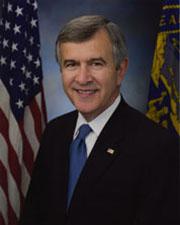 Sen. Mike Johanns (R-NE)
Legislative Activity
Stay on top of the latest movement without scrolling through every action
Senate amendment agreed to: Amendment SA 693 as modified agreed to in Senate by Unanimous Consent.(text as modified: CR S3772)
March 25, 2009
View full timeline
Senate amendment agreed to: Amendment SA 693 as modified agreed to in Senate by Unanimous Consent.(text as modified: CR S3772)
March 25, 2009
Considered by Senate. (consideration: CR S3745, S3772)
March 25, 2009
Amendment SA 693 as modified agreed to in Senate by Unanimous Consent. (text as modified: CR S3772)
March 25, 2009
Senate amendment submitted
March 24, 2009
Senate amendment proposed (on the floor): Amendment SA 693 proposed by Senator Johanns to Amendment SA 687.(consideration: CR S3648-3649; text: CR S3648)
March 24, 2009
Amendment SA 693 proposed by Senator Johanns to Amendment SA 687. (consideration: CR S3648-3649; text: CR S3648) To ensure that organizations promoting competitive and non-competitive sporting events involving individuals with disabilities may receive direct and indirect assistance to carry out national service programs.
March 24, 2009
Text
Proposed
NATIONAL SERVICE REAUTHORIZATION ACT

Ms. MIKULSKI. Mr. President, I ask unanimous consent that all
postcloture time be yielded back, the motion to proceed be agreed to,
and that after the bill is reported, I, Senator Mikulski, be recognized
to call up the substitute amendment.
The PRESIDING OFFICER. Without objection, it is so ordered.
The clerk will report.
The legislative clerk read as follows:

A bill (H.R. 1388) to reauthorize and reform the national
service laws.

amendment no. 687

(In the nature of a substitute)

The PRESIDING OFFICER. The Senator from Maryland.
Ms. MIKULSKI. I call up my amendment which is at the desk.
The PRESIDING OFFICER. The clerk will report.
The assistant legislative clerk read as follows:

The Senator from Maryland [Ms. Mikulski] proposes an
amendment numbered 687.

Ms. MIKULSKI. I ask unanimous consent that reading of the amendment
be dispensed with.
The PRESIDING OFFICER. Without objection, it is so ordered.
(The amendment is printed in today's Record under ``Text of
Amendments.''
Ms. MIKULSKI. I suggest the absence of a quorum.
The PRESIDING OFFICER. The clerk will call the roll.
The legislative clerk proceeded to call the roll.
Mr. CRAPO. I ask unanimous consent that the order for the quorum call
be dispensed with.

[[Page S3637]]

The PRESIDING OFFICER. Without objection, it is so ordered.

Amendment No. 688 to Amendment No. 687

Mr. CRAPO. I send an amendment to the desk.
The PRESIDING OFFICER. The clerk will report.
The legislative clerk read as follows:

The Senator from Idaho [Mr. Crapo], for himself and Mr.
Corker, proposes an amendment numbered 688 to amendment No.
687.

The amendment is as follows:

(Purpose: To increase the borrowing authority of the Federal Deposit
Insurance Corporation, and for other purposes)

At the appropriate place, add the following:

SEC. __. INCREASED BORROWING AUTHORITY OF THE FEDERAL DEPOSIT
INSURANCE CORPORATION.

Section 14(a) of the Federal Deposit Insurance Act (12
U.S.C. 1824(a)) is amended--
(1) by striking ``$30,000,000,000'' and inserting
``$100,000,000,000'';
(2) by striking ``The Corporation is authorized'' and
inserting the following:
``(1) In general.--The Corporation is authorized'';
(3) by striking ``There are hereby'' and inserting the
following:
``(2) Funding.--There are hereby''; and
(4) by adding at the end the following:
``(3) Temporary increases authorized.--
``(A) Recommendations for increase.--During the period
beginning on the date of enactment of this paragraph and
ending on December 31, 2010, if, upon the written
recommendation of the Board of Directors (upon a vote of not
less than two-thirds of the members of the Board of
Directors) and the Board of Governors of the Federal Reserve
System (upon a vote of not less than two-thirds of the
members of such Board), the Secretary of the Treasury (in
consultation with the President) determines that additional
amounts above the $100,000,000,000 amount specified in
paragraph (1) are necessary, such amount shall be increased
to the amount so determined to be necessary, not to exceed
$500,000,000,000.
``(B) Report required.--If the borrowing authority of the
Corporation is increased above $100,000,000,000 pursuant to
subparagraph (A), the Corporation shall promptly submit a
report to the Committee on Banking, Housing, and Urban
Affairs of the Senate and the Committee on Financial Services
of the House of Representatives describing the reasons and
need for the additional borrowing authority and its intended
uses.''.

Mr. CRAPO. Mr. President, today we face very difficult economic
threats in our financial industries. It is important that we consider
the possibility that our regulatory authorities do not have sufficient
authority necessary to deal with potential financial institution
failures. As a result, this is not an acknowledgment that anything like
that will happen, but there is certainly the threat and concern in our
financial markets as to whether we need to have additional protective
authorities.
The Federal Deposit Insurance Corporation protects against the loss
of insured deposits if a federally insured bank or savings institution
fails. It is important to note, though, that depositors who have
deposits at these institutions are protected by Federal guarantees, and
these guarantees are, in the event of a bank failure, immediately
protected by the FDIC. It is not the taxpayers but fees and assessments
paid by the depository institutions themselves that cover the cost of
this protection. However, the level of borrowing authority the FDIC has
to provide this protection has not increased since 1991. At that time,
the amount was set at $30 billion. The assets in the banking industry
under protection have tripled since that time from $4.5 trillion to
$13.6 trillion. Yet the borrowing authority of the FDIC has not been
increased.
This legislation does two significant things. It increases the
borrowing authority of the FDIC from $30 billion to $100 billion,
approximating the percentage increase of the assets under protection
and the growth in the assets under protection since the original level
was set in 1991. The bill also authorizes a temporary increase in
borrowing authority from that $100 billion increased level up to but
not to exceed $500 billion based on a process that would require the
concurrence of the FDIC, the Federal Reserve Board, and the Treasury
Department, in consultation with the President. The reason for this
additional authority is because of the extreme difficulties we are
facing in our economy now, and we need to ensure that the FDIC has the
necessary capacity to deal with any such threats.
This legislation is very important and urgent. The reason I bring it
forth on this national service legislation is because we don't have
time to wait to consider this legislation. It exists in a freestanding
bill form on a bipartisan basis, with Republicans and Democrats in
strong support of the legislation. I believe there is strong agreement
throughout the financial industries that this kind of increased
borrowing authority for the FDIC is helpful and an important piece of
the solution to the problems we face today.
As a matter of fact, one of the reasons it is urgent is not only
because we need to be sure the FDIC is properly protected or in a
position to properly protect depositors and financial institutions but
also because in order to deal with this needed fund, the FDIC is
currently considering significant increases in assessments to our
Nation's banks. These increased assessments in many cases, in some of
our smaller and midsize communities, are creating a terrific financial
threat to the banks, which, in turn, then reduces the potential of
these banks to engage in lending authority, the type of credit activity
we want to see happening. So while Congress waits, we see credit being
further restricted by the failure of Congress to take this action and
free up the FDIC authority.
Again, another one of the reasons I bring the amendment today is
because this legislation, even though it is supported on a broad,
bipartisan basis, is being caught up with other issues in the Senate
that could delay its consideration and result in the imposition of
significantly increased assessments on our Nation's banks. That is the
cram-down legislation in terms of bankruptcy proposals that have been
put forward.
Everyone in this body and throughout Congress and the country
recognizes that we are having a difficult time dealing with very
controversial proposals about our bankruptcy laws which have become
known as the cram-down provisions that may or may not gain support in
this Senate for passage. I personally think it is unlikely that the
cram-down legislation will ultimately gain sufficient support in the
Senate to be passed, but regardless of whether that happens, it is a
difficult, controversial issue. This legislation, which is not
difficult and not controversial, is being slowed down by being tied
with the bankruptcy cram-down provisions. Because of that, it is
imperative that we move forward as expeditiously as possible, consider
the amendment, and move forward with this piece of the important
reforms necessary for us to properly address the credit crisis and the
financial threats our Nation faces today.
I yield the floor.
The PRESIDING OFFICER. Who seeks recognition?
Ms. MIKULSKI. I suggest the absence of a quorum.
The PRESIDING OFFICER. The clerk will call the roll.
The legislative clerk proceeded to call the roll.
Mr. CARPER. Mr. President, I ask unanimous consent that the order for
the quorum call be rescinded.
The PRESIDING OFFICER (Mr. Kaufman). Without objection, it is so
ordered.
Mr. CARPER. I say to the Presiding Officer, it is kind of ironic that
both of us, who are from Delaware, are in the Chamber right now, and I
want to start off by telling a short story about the University of
Delaware and a visit I had there not long ago. I was invited, as my
colleague has been invited, to speak to students and to host and be a
part of a townhall meeting a month or two ago.
I opened up by talking to the students for a bit of the time, and
then I took questions or comments from the students. I felt one of the
most poignant questions was asked at the end of the session. Most of
the students there were freshmen, sophomores, and juniors.
One young lady, who asked a question at the end of the session, was a
senior. She is going to be graduating in a couple months. The question
on her mind is, frankly, on the minds of a lot of graduating seniors at
colleges and universities inside of Delaware and throughout our
country. I might also add, it is on the minds of a lot of folks who are
about to finish high school or who have finished and are still looking
for work.
The young lady who spoke recently at our forum at the University of
Delaware said: I am going to graduate in

[[Page S3638]]

May. I am not sure what I am going to do. She said: There used to be a
lot of employers who came to this campus and other campuses looking for
people to hire, to come and join them at their companies or at their
workplaces. She said: Not so much of that is going on this year, for
reasons I think we all understand.
While I am hopeful and encouraged this is not a permanent phenomenon
but one that will be short lived, relatively speaking, her concerns are
justified. I shared with her that when I graduated from Ohio State many
a moon ago I entered a life of service for about 4\1/2\ or 5 years with
the U.S. Navy. It was a deal I gladly entered into, Navy ROTC. The Navy
helped put me through school at Ohio State, and when it was over, I
owed the Navy some years of my life. I was very pleased to give that
time, even in the middle of a hot war in Southeast Asia.
What I suggested to the young woman that day at the University of
Delaware is that if she decided she did not find the job she wants with
a company she wants or some other employer she is excited about working
for, she should consider spending maybe not just a couple of months but
maybe a year or even two in serving.
There are any number of opportunities to serve in Delaware and
throughout the country. In fact, in some ways the need for people to
serve is greater than it has been in a long time because nonprofits and
others are cutting back and there is a need for those who will
volunteer and step forward and say: Here am I. Send me. Or what can I
do to help out?
I am not sure to what extent she internalized that message and is
going to go out and look for opportunities to serve, but I know there
is a great need for people who will serve.
For us, part of the challenge is trying to make sure those who want
to serve can identify the opportunities to serve, those who want to
make a difference in their lives are given some help and guidance in
getting to places where they can make a difference with their lives.
The thing I like most of all about this legislation--we talk a lot
here about that we ought to be more bipartisan. And God knows I believe
that. I know the Presiding Officer feels that way. But one of the great
things about this legislation is that it is about as bipartisan as it
gets.
I want to take a moment to commend a couple of folks who are on the
floor. I see Senator Hatch talking with Senator Dodd. Both of them have
been very instrumental in this legislation. I commend Senator Mikulski,
Senator Hatch, Senator Enzi, Senator McCain--I do not know if he is a
cosponsor of this bill. He has been a big champion of service over the
years. I commend Senator Kennedy, who I believe was here yesterday. He
is a huge champion of this legislation. This legislation enjoys broad
bipartisan support.
I say to my friend from Connecticut: Good going. Thank you for being
the wind under our wings on this issue for a long time and for
continuing to inspire us and encouraging us to go forward.
A couple years from now--maybe not even that long--I hope I run into
that young woman again who asked that question at the University of
Delaware a month or so ago. I hope she says to me: I took your advice.
I looked around and I found a couple of opportunities where I could
serve, and I decided to do that for a year or so. At the end of my year
or so, the job market improved, the economy improved, and I went to
work for some other employer and went on with the rest of my life.
One of the things I look for as an employer, one of the things I look
for when there is a downtime, like right now, a downtime in our
economy--when a lot of people are looking for employment opportunities
and maybe not finding them, and they have some space to fill in their
lives--how do they fill up that space? How do they fill up that dead
time?
I am always encouraged when I find someone who says: I decided to go
out and work with young people to help make sure they were going to be
successful in life. I worked with veterans. I worked with Boy Scouts or
Girl Scouts. I worked in Boys & Girls Clubs. I mentored. I did all
kinds of things.
The idea behind this legislation is to better ensure that those who
want to serve--maybe who do not have a lot to do in their lives right
now; they have some free time they have not had for a long time because
their studies are over--we want to make sure they will have some
opportunities, good opportunities, to serve.
I will close with this: These are the words I actually shared with
the University of Delaware students the other day. I talked about the
sources of joy. We always look for joy. Everybody wants to be happy.
Almost everybody I know wants to be happy. There are any number of
sources of joy people turn to from time to time.
In my own life, I have always found the best source of joy--the one
that never goes away, the one that never disappears, which always can
be counted on--the best source of joy in our lives is helping other
people, finding ways to give of ourselves to help other people.
For those young people in this country who decide to seize on the
opportunities that will be provided through this legislation's
enactment, they will have the opportunity to get something. Maybe it
will provide good letters of recommendation going forward. Maybe it
will provide for a stronger resume going forward. I think even more
importantly than that, they are going to do a lot of good for folks
with their own lives. They are going to do a lot of good for folks.
They are going to help those people who need to be helped, and maybe,
as important as anything, the one who serves will enjoy a sense of
satisfaction that, frankly, is sometimes hard to come by.

So I again applaud those who provided leadership on this bill, and I
look forward to supporting it as we go forward this week. Thank you
very much.
The PRESIDING OFFICER. The Senator from Connecticut.
Mr. DODD. Mr. President, let me begin by thanking my colleague from
Delaware for his generous comments. He has been an advocate and strong
supporter of the notion of service, and for that I thank him. I also
commend my colleague from Maryland, Senator Mikulski, as well as
Senator Hatch, Senator Ted Kennedy, and Senator Enzi, who have all been
strong supporters, over the years, of the idea of providing venues and
opportunities for people to serve our country in one capacity or
another.
I rise this afternoon to offer my support for the Kennedy-Hatch Serve
America Act. Four and a half decades ago, I was with my parents on a
very cold January 20, not very far from where I am standing today,
watching a young man by the name of John F. Kennedy, at the age of 43,
become the President of the United States on the east front of the
Capitol. It was a bitter cold day--we had a terrible snowstorm on the
day before that January 20, 1961. As a very young boy of 12 or 13 years
of age, I listened to the President excite a generation to get involved
in things larger than ourselves. I was so motivated by his remarks, as
were millions of others, that a few years later when I finished
college, I joined the Peace Corps. I traveled to the Dominican
Republic, not far from the Haitian border, where I spent 2 years in the
mountains of that country working with the people in the small village
of Benito Moncion in the province of Santiago Rodriguez. It was a life-
changing experience. I came back from that experience a very different
person than when I had left.
I was joined by millions of others, who went off and joined VISTA,
the military, and community action organizations all across the
country. I have been asked so many times over the years why I joined
the Peace Corps. Why did other people go into the Marine Corps, the
Justice Department, and serve their country? The reason I have given
over these last four and a half decades is, because an American
President asked me to. It's not any more complicated than that. Someone
asked me to serve, and the thought that someone believed I could do
something to make a difference was a form of flattery, I suppose, but
it also provided the opportunity for me to meet that challenge. It did
so by creating the structures that allowed us to step into a program
that gave us the opportunity to serve.
That is what we are doing again here today: providing the structure
that will allow for people today--who are no different from any other
generation of

[[Page S3639]]

Americans over our two centuries as a Republic--to be asked to serve.
People today want to serve, and they have the same desires and
ambitions to make a difference for our country in their local
communities, in our States, and in our Nation.
What Senator Mikulski, Senator Kennedy, Senator Hatch, and Senator
Enzi have done with this bill is to create the architecture by which
when we ask people to serve, they have a place to come. We have a spot
for you. We have a place where you can make a difference in our
country. That is the brilliance of this idea. This bill expands
opportunities not only to college graduates or to those out of graduate
school; we actually begin in this bill by offering you the opportunity
to serve as a middle school student, a high school student, or someone
who does want to go on to higher education. Maybe most exciting of all,
we offer these opportunities to people who perhaps have the most to
give--the retirees in our country. The individuals who have been at
work providing for their families, engaged in business practices by
which they developed their wisdom and expertise over the years, and who
have now reached a point in their lives where they would like to share
that. What a wonderful opportunity for our country to reach out to that
generation of retirees and say: Here is an opportunity for you to
continue to make a difference.
After I finished the Peace Corps, I came back and served for 6 years
in the Army Reserves, the National Guard. That was a good experience.
It was very different, obviously, to go off to basic training at Fort
Dix, NJ, but nonetheless a very worthwhile experience. So service
covers a wide range of activities. In my case, it was the Peace Corps,
then it was the Army Reserves, and then it was Big Brothers Big
Sisters. I was a Big Brother in my State of Connecticut. So service has
been a major part of my life.
I would like to think today that to the extent I have made a
difference in this job, it was affected certainly by my family, first
and foremost, but also by the people, whose names will never be known
by others, who had a huge influence on me. People in that small village
in the Dominican Republic, people in my community in Connecticut,
people I met in the military service--all have shaped me and taught me
the lessons of how serving each other, making a difference in each
other's lives, can make a significant difference for many more.
In Connecticut, community members, both young and old, are giving
their time.
In Hamden, CT, older Americans such as Mozelle Vann, a retired social
worker, are working to make sure elementary school students don't fall
through the cracks--one example, one woman, making a difference,
affecting the lives of students who are going to be enriched and lead
better lives because Mozelle Vann is giving something back.
High school students in Waterbury, CT, are giving back to their
communities by taking part in the Youth Health Service Corps created by
the Connecticut Area Health Education Center. This organization works
with disadvantaged high school students interested in pursuing health
careers. Lord knows we need people to move into professions relating to
health care. These students complete rigorous training and dedicate
their time to working with nursing home residents. So these high school
students, in the midst of determining what their futures will hold, are
being offered the opportunity to learn about health care services,
making a difference in a nursing home that is most likely shorthanded,
and serving people in that community.
This past year, residents worked with students to create a Martin
Luther King, Jr., commemorative quilt and together discussed Dr. King's
impact on our Nation.
There are as many examples as there are communities and individuals
whom we represent of people who want to serve and want to give
something back.
Senators Thad Cochran of Mississippi, my good friend, and I have
offered four ideas to this bill, and I am very grateful to Senator
Mikulski, Senator Hatch, Senator Kennedy, and Senator Enzi as well, for
their willingness to accept these ideas. Representative Rosa DeLauro,
the Congresswoman from New Haven, CT, is the author of these ideas in
the House of Representatives.
The first of these we call the semester of service, giving students a
chance to give something back, learning early the benefit and the value
of volunteering, of stepping up and serving your community. The
Semester of Service Act is one that will allow the opportunity for
children within the educational system to serve our communities. This
service-learning will take place right alongside math problems and book
reports. With a semester of service, we ask our students to not only
consider themselves residents in their communities but resources to
them. Just as mine did, I have no doubt that the younger generation
will respond to that call.
The Summer of Service Act is also a large part of the bill. The bill
provides our middle and high school students unique opportunities to
serve during the summer months. Already in Connecticut, more than 5,500
students take part in community service activities linked to academic
achievement. With this legislation, that is something we will be able
to do across the country.
The bill also includes many parts of the Encore Service Act, a bill
Senator Cochran and I authored to help harness the enormous experience
and wisdom older Americans have to offer in their communities, as I
mentioned a moment ago. We have all heard about the challenges posed by
the 78 million baby boomers nearing retirement age. Yet Americans are
living longer and healthier lives than at any time in our history, and
it is time to look at that growing population of experienced, capable
Americans of different professions and backgrounds as the asset it is,
and to realize what a difference it can make in our country.
Together, the programs included in this bill will encourage older
Americans to serve communities with the greatest need, whether through
AmeriCorps or through the Silver Scholars Program. The legislation also
offers Encore Fellowships for older Americans who have already had
full, successful careers to lend their professional expertise and
experience to the cause of community and public service. It expands the
capacity and builds on the success of current senior programs. So I
again commend my colleagues for including that language.
And finally, we can't talk about expanding service opportunities
without talking about the AmeriCorps program, which is the heart of
national service in our country. The Serve America Act will expand
AmeriCorps to include 250,000 members, allowing many more Americans to
serve each other. Last year alone, 75,000 AmeriCorps members gave back
to their communities, and they brought reinforcements. Those 75,000
members--and this statistic can't be repeated often enough--those
75,000 AmeriCorps members recruited 2.2 million community volunteers.
You talk about a ripple effect--having 75,000 people across our country
in AmeriCorps who then went out and recruited 2.2 million people in
their communities to get deeply involved and serve those communities.
That is the benefit. Some discuss the cost of the 75,000 AmeriCorps
members, but the fact that they were able to attract 2.2 million people
to also serve is tremendously worthwhile. Which is why I am pleased
that in this bill, we increase the AmeriCorps education award and peg
its increases to the Pell Grant.
I again thank the authors of this bill, of which I am proud to be a
leading cosponsor, for the accomplishments they have achieved. As I
said a moment ago, this bill is creating the opportunity for Americans
to serve. Just as when I was standing on the steps of the east front of
the Capitol, 45 or 46 years ago, and heard an American President not
only ask us to serve, but provided with opportunities to do so, today
we need to provide that same structure, that same ability for people to
serve. They want to. People are anxious to. It is something all
Americans take pride in, and it transcends party, partisanship,
politics and ideology. People want to serve our country. We are
benefitting from it in ways we can't even imagine. We need to see to it
that this generation is going to achieve or have the same opportunities
to fulfill that desire as well.

[[Page S3640]]

For all of the reasons I have mentioned, this bill is very worthy of
our unanimous support, and I hope it will enjoy that. This is one of
those moments when I think all of us, despite our political differences
from time to time, recognize the value of this. Whether it is in faith-
based organizations, whether it is in community organizations, we are a
richer, stronger, more vibrant nation because people have the
opportunity to serve each other. There is nothing more gratifying,
nothing you will ever do that will give you a greater sense of
gratification than knowing you have helped another human being.
Particularly in times such as these when people are struggling--losing
jobs, homes, savings--they want to know if anybody can help. Every
single one of us can make a difference in the life of somebody else.
Providing that opportunity today, with the structure that Senator
Mikulski, Senator Kennedy, Senator Hatch, and Senator Enzi have
created, is just what we need. So I commend them for it.
Let me mention as well that I know Mike Crapo, the Senator from
Idaho, my good friend and a very valuable member of the Banking
Committee, came to the floor and has offered an amendment, a proposal
to deal with the Federal Deposit Insurance Corporation. Let me say that
I support what Senator Crapo wants to do. This is an idea that I
believe is necessary. The problem here is twofold.
One is, obviously, for this bill, we are hoping to move through
without amendments. Members have worked very closely together to
construct this bipartisan bill. That in no way diminishes the point
Senator Crapo is making. In fact, we are working on another bill that
includes more than just the Crapo amendment, which will be an important
addition over the next number of days. We are trying to work it out. I
hear there are some differences. I would say respectfully to my
colleague from Idaho that I would hope he might reconsider offering the
amendment on this bill for the reasons I have mentioned, not because
his idea lacks merit--I support the idea--but if we add amendments to
this bill, then it is going to make it that much more difficult to get
it done.
Secondly, there is more to do than just what the Crapo amendment
would suggest, and that is going to require a little more time to put
that together. There is no immediate emergency here. I have been
guaranteed by the FDIC, that although they would like it to get done,
it is not something--I have been told--that in the next number of days
or so that unless we act, there is a catastrophic event that could
occur. But clearly we need to move on this. He and others have my
commitment that we are going to achieve that, but at this hour, at this
moment on this bill, I would respectfully urge my colleagues, if
required, to table this amendment and preferably to have the amendment
withdrawn so we wouldn't have to be in that situation.
With that, I yield the floor.
The PRESIDING OFFICER. The Senator from Maryland.
Ms. MIKULSKI. Mr. President, before the Senator from Connecticut
leaves, I wish to thank him for his contribution and remarks in two
areas, both on the Serve America Act and his comments on the Crapo
amendment.
First, on the Serve America Act, I wish to say on the Senate floor
that we really appreciate the contribution he has made to this bill.
When Senator Kennedy and Senator Hatch were working on it, I know they
had three goals: how we could reinvigorate national service, how we
could refocus it in a contemporary way, as well as how we could
reenergize it.
I think the Senator's ideas were some of the best, involving middle
school children and so on. They have been outstanding. That is no
surprise because the Senator has been involved with this not only in
his own personal life--walking his own talk as a Peace Corps volunteer.
I remember when we were putting the original national service bill
together, Senator Dodd was the Senator who reminded the committee that
the poor needed to serve as well. They are not just passive
beneficiaries. We always think maybe it is only the affluent and the
young who can serve. The Senator from Connecticut was the one who said:
Wait a minute. Everybody can serve. It doesn't matter what your age or
your income is.
I think the original bill was better because of the philosophy of the
Senator. Now we can see that here. It is a philosophy about the
empowerment of people. We thank the Senator for that.
On the banking bill, I, too, agree with the Senator. He can offer the
amendment, but this could sink the bill in the process. I hope he will
withdraw this amendment and offer it on a more appropriate vehicle.
Again, I thank the Senator for his work today and for his work as a
Senator.
The PRESIDING OFFICER (Mr. Udall of Colorado). The Senator from
Georgia is recognized.
Mr. ISAKSON. Mr. President, I am glad the Senator from Connecticut
and the Senator from Utah are on the Senate floor. I rise to speak in
favor of the National Service Act and to commend the Health, Education,
Labor and Pensions Committee for the diligent work they did on this
reauthorization.
There are a lot of people who will poke fun at voluntarism or at
programs or say we are always creating new things and spending more.
This bill, with a bipartisan effort by Senators Enzi, Dodd, Mikulski,
and others, is to ensure that the 40 programs we had under the National
Service Act are brought down to 24 programs and to see that meaningful,
good programs are empowered.
This bill doesn't pay people to volunteer. It provides capital for
the infrastructure for communities to develop the programs for
volunteers; for example, Hands on Georgia and Hands on Atlanta. Hands
on Atlanta is a program of volunteers that addresses the 52 percent of
the young children in Atlanta elementary schools who are not reading at
grade level. Volunteers have been mobilized over the last 4, 5 years to
give the greatest gift of all--the gift of literacy--and improve the
standing of our children.
It is no small secret that one of the reasons our school
superintendent in Atlanta was selected the superintendent of the year
recently by the national association was because of the dramatic
program of bringing people into the school system to help uplift our
students. So voluntarism is important to us in the United States, and
it is important to our reputation around the world.
Secondly, I support this legislation because I have an affinity for a
young lady named Michelle Nunn. A former U.S. Senator from Georgia, Sam
Nunn, was a distinguished leader here for 24 years and served our State
well. He is personally a good friend of mine. His daughter Michelle has
dedicated her life to the organization of volunteer efforts in this
country to improve the plight of other people. She now heads the Points
of Light Foundation, started by George Herbert Walker Bush, which helps
people around the country. For Michelle's everlasting support and
contribution to voluntarism, I give her credit.
I also want to take a minute--Senator Dodd served in the Peace Corps,
and I wanted him to hear this because I want to acknowledge his support
on this effort, along with Senators Hatch and Kennedy. This past
Saturday, I attended one of the most moving ceremonies of my life--
moving in a sad way but also in an uplifting way.
Unfortunately, a wonderful young lady, 24 years old, from Cumming,
GA, Kate Puzey, was killed in Benin, Africa, on March 11. She was a
Peace Corps worker who graduated first in her class in high school, was
an honors graduate from William and Mary, and she studied French in
Paris to learn the language that led her to be able to go to this part
of the world and teach this poor African nation about agriculture and
other skills. She served since July of 2007 and was in the last 2
months of her service in Benin.
I went to this service because I felt moved. I am ranking member of
the African Subcommittee on Foreign Relations. Paul Coverdell, who
served in the seat I now hold, was a director of the Peace Corps. I
felt moved that morning when I got to go to the service and sit in the
back of the room and pay my respects to a great American. I left having
listened to 12 eulogies by young people whose lives were changed by
Kate. The acting director of the Peace Corps, Ms. Jody Olsen, delivered
a beautiful eulogy.
I realized how much voluntarism means to the United States, not just
on

[[Page S3641]]

our shores but in Africa and on continents around the world. I commend
people such as Senator Dodd who have given time in the Peace Corps. I
ask the Senate to give its unanimous support to this legislation. I
dedicate this speech in honor of Kate Puzey, to her life, and what she
did as a Georgian and as a volunteer. She joined the Peace Corps and
changed the plight, the lives, the hopes, and in fact the future of
children in that small country on the west coast of Africa.
God bless the Peace Corps and the life of Kate Puzey. And thanks to
those who have volunteered and to the committee that has brought this
National Service Act reauthorization to the floor of the Senate.
Mr. DODD. If my colleague will yield.
Mr. ISAKSON. Yes.
Mr. DODD. I thank him for his gracious comments about this young
woman. My nephew graduated from college a few years ago and was in
Africa for approximately a year and a half. He spent 6 months in Guyana
working with the people there, increasing awareness on issues such as
HIV/AIDS. These are wonderful examples, like the young woman the
Senator described, of people who make a difference.
The great thing about the Peace Corps is not just helping people in a
struggling country get back on their feet but it is the experience of
returning home from service. It is the lessons learned that we bring
back to our communities. There are 180,000 of us who are returned
volunteers since the first group left from the south lawn of the White
House to go to Ethiopia, and how blessed we are with the richness of
opportunities here and the lessons learned.
I commend my colleague for being at that ceremony and reflecting on
the impact this one individual made, this young woman, in service of
our country. I can't think of a more compelling argument on why this
bill being offered by our colleagues deserves our unanimous support.
Again, I thank the Senator for his comments.
Mr. ISAKSON. Mr. President, the Senator and I are precisely the same
age, and he and I were both inspired by President Kennedy's inaugural
address and the establishment of the Peace Corps. It is ironic that the
next President who embraced voluntarism in his office happened to be
George Herbert Walker Bush. So we had a great Democrat and a great
Republican who encouraged us to volunteer to help the plight of others.
It is a great tribute to this bill and to America.
Mr. DODD. It is also not widely known--Senator Isakson mentioned
President Bush and the Thousand Points of Light Program, which he
sponsored--that President Ronald Reagan was a strong supported of the
Peace Corps, increasing the budget significantly. Loret Ruppe was the
director. I served with her husband, who was a Congressman from
Michigan. She was a magnificent director of the Peace Corps. Every year
of Ronald Reagan's Presidency, he supported the Peace Corps program. So
it is a joy to see the bipartisan support that my colleague has
mentioned.
Mr. ISAKSON. I thank the Chair and yield back my time.
The PRESIDING OFFICER. The Senator from Utah is recognized.
Mr. HATCH. Mr. President, I thank the distinguished Senator from
Georgia. He has been a prime sponsor of this legislation. There are
very few people around here I admire any more than I admire him. He is
a terrific addition to the Senate. I am honored that he would be on
this bill and be willing to speak for it. That means a lot to me, and
it is going to mean a lot to the folks in his home State and all over
this country. It is the right thing to do. I thank him personally for
being such a great Senator.
I suggest the absence of a quorum.
The PRESIDING OFFICER. The clerk will call the roll.
The assistant legislative clerk proceeded to call the roll.
Mr. HATCH. Mr. President, I ask unanimous consent that the order for
the quorum call be rescinded.
The PRESIDING OFFICER. Without objection, it is so ordered.
Mr. HATCH. Mr. President, I wish to take a moment to discuss the role
of the State service commissions under this bill and the existing
national service system. One of the things that was very important to
me when we drafted this legislation was to make sure the States were
given a primary role in the program so we would have 50 State
laboratories using this program. We didn't just want to add a level of
Federal bureaucracy. Time and time again, it has been shown that State
governments are more responsive and in tune with the needs of their
communities and, with this bill, we will put that resource to good use.
For those who do not know, State service commissions are Governor-
appointed public agencies or nonprofit organizations made up of more
than 1,110 commissioners--private citizens helping lead the Nation's
philanthropic movement. The Nation's 52 State service commissions
currently grant more than $220 million in AmeriCorps funds and $28
million in State-based initiatives with State or private funds to
support citizen service and voluntarism in America.
In Utah, this role is filled by the Utah Commission on Volunteers,
which is overseen by our Lieutenant Governor, a great Lieutenant
Governor named Gary Herbert. They oversee the work of more than 8,000
Utahans who participate in national service programs, including the
AmeriCorps, Learn and Serve, and, of course, Senior Corps programs, to
mention a few.
The Serve America Act will triple the oversight and programming for
commissions over the course of the next 5 years, increasing
participants from 75,000 to 250,000. Effective grants oversight and
planning by commissions is essential to the integrity of these new
programs. The State commissions will administer five new corps, five
grant competitions, and the Serve America fellows program, which is an
individual placement program that will be administratively intensive
but vital to get members to rural communities and small organizations.
Increasingly, State commissions take the lead role of managing
volunteers and donations in response to natural disasters, which has
been particularly important in the gulf coast hurricane recovery and
Midwest flood relief.
For example, the Iowa Commission on Volunteer Service last year set
up eight volunteer reception centers, staffed with AmeriCorps members,
that helped increase and better utilize traditional volunteers in
Iowa's historic flooding and tornadoes of last summer. Those centers
connected over 800,000 volunteer hours to families who called in for
help. These centers became the central points for deployment for faith-
based groups, schools, and businesses that sent volunteers to help.
AmeriCorps members often led teams of unaffiliated volunteers after
training them to gut and muck out houses, as well as clear the miles of
debris that littered the Iowa landscape. This effort was valued at over
$13 million by FEMA in savings to the taxpayers, and it is still going
on today. In fact, two of the centers are being run for the rebuilding
phase and over 1,000 AmeriCorps members will help support the massive
rebuilding efforts of this past summer.
I think it is clear the State service commissions are up to the task
of overseeing much of the work that will be done under the Serve
America Act. I certainly will be glad to see them take on this much
larger role that this bill gives them the opportunity to do.
I am a firm believer of one reason why our economy has run so well in
the past and one reason why we have a Federal Republic that has lasted
all these years is because we recognize that with these 50 States, we
have 50 State laboratories to test out these programs. Then we can pick
and choose which ones are the most successful and why. It is great to
have them competing against each other, having them setting examples
for each other, having them open doors for each other. There is a lot
to that. This bill basically turns over the effective running of all
these funds to State representatives and to State volunteer movements
and commissions, State service commissions, if you will.
We will learn a lot from this. We have already learned a lot, but we
will learn even more, and as we move toward 250,000 volunteers under
this program, that will be extended to probably at least 7 million or 8
million more volunteers, none of whom will be paid for giving this type
of service--at least these 7 million or 8 million. We do pay people a
small stipend that is less than

[[Page S3642]]

the minimum wage, less than the poverty level, but that extrapolates
into as many as 7 million people, maybe even more--we hope more--who
will actually volunteer at no cost to the Government and save trillions
of dollars over the years.
This is a conservative program in many respects and it is a liberal
program in the sense that it helps so many people. Conservatives want
to help all these people too. I guess the best thing to say is it is
neither conservative nor liberal, although it has the best instincts of
both sides who come together in the best interest of helping their
fellow men, women, and children in this great country.
I suggest the absence of a quorum.
The PRESIDING OFFICER. The clerk will call the roll.
The assistant legislative clerk proceeded to call the roll.
Mr. REID. Mr. President, I ask unanimous consent that the order for
the quorum call be rescinded.
The PRESIDING OFFICER. Without objection, it is so ordered.
Mr. REID. Mr. President, I am sure there are others who wish to speak
on the Crapo amendment. However, either speaking on the Crapo amendment
or the bill, we ask people to come over and talk on it. In the
meantime, we would be willing to set this amendment aside. If there are
other amendments the minority wishes to offer, we are certainly not
going to stop them from doing that. I think we should get all the
amendments we can on this legislation.
So if there are other amendments people have, there is no stopping
them from offering them.
I suggest the absence of a quorum.
The PRESIDING OFFICER. The clerk will call the roll.
The assistant legislative clerk proceeded to call the roll.
Mr. KAUFMAN. Mr. President, I ask unanimous consent the order for the
quorum call be rescinded.
The PRESIDING OFFICER. Without objection, it is so ordered.
Mr. KAUFMAN. Mr. President, I would like to begin by thanking my
distinguished colleague, Senator Mikulski, for her effective leadership
steering this bill through the HELP Committee while gaining bipartisan
support.
The strong support this bill enjoys is not surprising given her
stewardship and, of course, the hard work of Senator Kennedy who
brought us to this point.
I would also like to thank Senators Hatch and Enzi for their work on
this bill.
When we work together across the aisle, the end result is a better
bill and good governance.
I can think of no bill that better represents the values of America
than the Serve America Act.
It will expand the opportunities for Americans to serve their
communities and their Nation.
It makes me--and I think all of us here proud that each year over 60
million Americans volunteer, donating over 8 billion hours of their own
time, their own lives--to make our country--and the world--a better
place.
We are in a time of crisis. Right now, our country needs those
volunteers at our schools, hospitals, and shelters more than ever.
Nonprofits are doing all that they can to help those who have lost
their jobs, their houses, their savings, their retirement.
This bill recognizes the need to reinforce and strengthen this system
in a number of ways.
I recently spoke here in the Senate about the need for our country to
reset its focus on how best to change the culture of our economy away
from a Wall Street profit-first mentality to one that prioritizes jobs
and careers that will help our Nation tackle the challenges it
currently faces.
I believe that the vitality of our economy rests with our ability to
be the world's leader in innovation, and I believe this means that we
must do more to attract the best and the brightest to careers in
science and engineering.
Those who have dedicated themselves to these fields have much to
contribute beyond making our economy competitive; they also contribute
to our communities' well-being.
This bill, I am proud to say, recognizes the important role that
engineers can play in bettering our communities.
I would like to commend the HELP Committee for expanding the purpose
of the bill to include providing service opportunities for our Nation's
retiring professionals, including those retiring from the science,
technical, engineering, and mathematics professions--also known as
``STEM'' jobs.
Not only will this allow us to tap the unique skills and knowledge of
our retired STEM workforce, but it will allow us to strengthen the STEM
education pipeline.
This bill will send retired engineers into communities, classrooms,
and after school programs, allowing them to share their wisdom and
experience with students.
Ultimately, they will help these young people understand not only the
important role that science and math can play in their careers, but how
they can use their expertise in those fields to solve our country's--
and the world's--greatest challenges.
This bill also acknowledges that innovative, community-based service-
learning programs that integrate STEM are a successful strategy to
engage middle- and high-school students in meaningful hands-on learning
opportunities that also help them meet their community's needs.
It specifically allows funds to be used to integrate service-learning
programs into STEM curricula at the elementary, secondary, and
postsecondary schools levels and then draw on practicing or retired
STEM professionals to work in these programs.
In this case, electrical engineers might participate in a program
that helps students apply lessons from their math and science classes
to expand and improve broadband access in rural communities.
Linking the classroom to real-world applications will help students
better understand the role and responsibilities of engineers and
scientists in the workplace.
The third way that this bill draws on the expertise and knowledge of
engineers is that it allows ``Professional Corps'' programs to be
created. These ``Professional Corps'' programs will recruit and place
qualified professionals, like engineers, in communities that don't have
an adequate supply of these professionals.
For example, an employer would sponsor an individual and pay their
salary to be placed in an organization that works with the community to
conduct green energy audits of local public buildings or homes in
disadvantaged communities.
This would not only reduce a community's carbon footprint; it would
also help improve public awareness of engineering's critical role in
solving our Nation's greatest challenges--like energy efficiency and
energy dependence.
We must--once again--capture the attention of our students and let
them see the numerous ways that STEM contribute to our economy and can
improve the lives of their fellow citizens--in America and abroad.
Just as I decided to study engineering because I was inspired by
``Sputnik'' and the race to put a man on the Moon, we must inspire our
students to work on issues of critical need as well.
The underrepresentation of so many groups in STEM fields is
troubling, since diversity is widely acknowledged to spur innovation
and creativity.
Innovation and creativity in turn spur the development of new
products and new markets, which are essential to maintaining a
competitive economy.
Engineers and scientists can have a tremendous impact on the lives of
these traditionally underrepresented groups by serving as mentors in
their communities.
This bill will encourage our Nation's scientists and engineers to
work in and with economically disadvantaged communities to ensure that
these fields include rather than exclude, and encourage rather than
discourage, traditionally underrepresented groups from pursuing a STEM
education.
The Serve America Act will help our young people identify those
challenges and provide them with real opportunities to make a
difference--opportunities like improving energy efficiency, working
toward energy independence for America, bolstering disaster
preparedness and response, promoting environmental sustainability,
strengthening our education and health care infrastructure, and
improving opportunities for economically disadvantaged individuals.

[[Page S3643]]

These challenges are daunting, yet I know that if asked, a new
generation of engineers and scientists will rise to the occasion.
I stand in proud support of the Serve America Act, as it will inspire
multiple generations to volunteer and to engage in national service.
Their generosity will not only strengthen America--but the world. I
appreciate my colleagues' allowing me the opportunity to explain how
the service opportunities this bill creates are also opportunities for
our practicing and retired engineers to serve their fellow citizens--
ensuring that that our country's future STEM workforce is strong
enough, diverse enough, and motivated enough to tackle the greatest
challenges facing America.
I will close by once again thanking Senators Mikulski, Kennedy,
Hatch, and Enzi for their leadership.
Mr. President, I yield the floor and note the absence of a quorum.
The PRESIDING OFFICER. The clerk will call the roll.
The legislative clerk proceeded to call the roll.
Mr. DeMINT. I ask unanimous consent the order for the quorum call be
rescinded.
The PRESIDING OFFICER (Mr. Nelson of Nebraska). Without objection, it
is so ordered.
Mr. DeMINT. Mr. President, I wish to speak for few minutes on the
Serve America Act. I think this is a great opportunity to talk about
what is good about a lot of the Members of the Senate. I certainly
appreciate and applaud the sponsors of this bill for their good
intentions and know their hearts are in the right place. Some of my
best friends are supporting this bill. But I think, as we look at what
is good about the hearts of many Members of the Senate, we need to
recognize this bill does represent a lot of what is wrong with our
Federal Government today--a lot of our philosophies, and a lot of our
departures from a constitutional form of government.
What works in America today is our civil society--a lot of the
volunteer groups that many of us have been a part of. I know for years
I spent more time in United Way and a lot of the charity groups, being
on their boards back in my community, and I saw what the volunteer arts
groups and PTAs and health groups did to build a strong community.
Civil society works in America. They are small groups. They are the
true engines of character in our country. They promote service and
patriotism. In this time where we have seen some of our economic
institutions let us down, we have certainly seen our Government and our
policies let us down, civil society does not let us down. It works in
America today.
It is understandable why Congress would want to get involved. We see
that passion to serve, that desire to do something that is greater than
yourselves. We look at that working in our civil society and we want to
get involved and expand it.
Unfortunately, our history shows us when Government gets involved, it
tends to take something that is working and make it not work nearly as
well. Civil society works because it is everything Government is not.
It is small, it is personal, it is responsive, it is accountable. Civil
society must be protected from any effort to make it more like
Government.
That is what we are doing with this bill today. This bill centralizes
control of important functions of our civil society. There is a
downside to good intentions here in Government. The Founders created a
limited government and our oath to support and defend the Constitution
means that is our focus here. Our oath is to a limited government. The
Founders wanted the people to be free from our good intentions.
Government charity is anathema to what our Founders intended and what
our Constitution stands for. Despite our good intentions, where we try
to implement those good intentions and our compassion through the force
of Government, we are effectively violating our oath of office here.
Well-intended legislation has left more than half of all Americans
dependent on the Government. Today in America over half of Americans
get their income from the government or a government source. About 20
percent of the country works for the government or an entity that gets
its primary source of revenue from government. Another 20 percent gets
their income and health care from Medicare or Social Security. Once you
add in welfare and other subsidies, you make it so over half of all
Americans are already dependent on the Government. This bill proposes
to spend nearly $6 billion over 5 years, which means it will be
probably $10 billion, probably more, over a 10-year period. It will
have nearly a quarter of Americans working for it, which means it will
be the 14th largest company, as far as employees, in the entire world.
What have we done here that suggests we can manage anything like
that? Do you see anything in our history as a Federal Government that
shows we have the ability to effectively manage something like that
without extreme levels of waste and fraud and abuse? Look what we have
done recently with the stimulus plan and the bailout plans. As soon as
it comes to light what is actually happening with that money, people
are outraged at what is going on. Despite the good intentions of this
bill, we are creating a huge new government entity that will be
unmanageable and violates some of the core principles of our civil
society. Every time the Government steps in to solve a problem, it
creates three new problems in its place.
This bill is everything wrong with how Congress sees the world.
Government will make service organizations less effective, less
responsive, and less personal. When the French historian de Tocqueville
came to the United States not long after we were founded, one of the
things that amazed him about our country that was so different from
France was that in his home country when there was a problem, people
would say: Someone ought to do it and government should do it; but in
America we were different. When someone saw a problem, they went and
got a friend and formed a small group and solved the problem
themselves. Much of that was motivated by religious convictions that
our place in this world is not only to help ourselves but to love and
help those around us. That was key.
Jefferson called it little democracies, when he saw these little
groups all around America voluntarily doing things to solve problems
and make communities better. Burke called them little platoons. Most
people who understand America know that those voluntary groups are what
made our country great and what sustain us even today. Civil society
binds communities, not by its fruits, but by its motives--charity,
donations, giving without thought of getting anything in return. This
is the selfless sacrifice that happens throughout America today. This
is what works.
What does not work is what we are doing right here. The big
difference is private service organizations exist for the people who
receive the aid. Government service organizations exist for the people
who give it--in this case, for the people who are paid to do it. You
cannot pay people to volunteer and expect the organization to remain
focused on its mission. Charity is a private, moral impulse, not a
government program.
Government will not and, by definition, cannot strengthen and replace
the civil society. Volunteerism is something that works in America.
When we think of America, we do not think of Congress and Presidents,
we think of Little League games and PTA meetings and bake sales.
Civil society is America. It responds to needs, meets challenges, and
solves problems because it is free from Government. Because volunteers
donate their time and money, accountability is acute. I have seen it. I
have sat on a United Way board. Every year we evaluate every program
and every dollar we have given to someone, and we determine is it
working or can we make it more efficient.
If the program is not working, the money goes away immediately. That
does not happen here. If the program does not work here, we add more
money to it. That is going to happen with every program we start,
including the one we are talking about today.
Projects that do not work in a civil society get cut. Organizers who
lose or abuse funds are dismissed. It is voluntary. So everyone is
invested in its success. We know the large groups throughout America,
the Boy Scouts, the Girl Scouts, the United Way, the Salvation Army,
the YMCA, Catholic

[[Page S3644]]

Charities, fraternal orders, groups such as Kiwanis, Rotary, Knights of
Columbus. These are large organizations, but they work because they are
locally controlled.
Smaller groups, local arts councils and community theatres, PTAs,
youth sports leagues, the animal rescues, the book clubs, crisis
pregnancy centers, soup kitchens, food and other clothes drives that go
on, church service groups, they are everywhere.
Those are the little platoons, the little democracies that make this
country work. For us to presume, in the Congress, that somehow we are
going to reach out into all these groups and make it work better is
pretty presumptuous based on our history.
Why now? Why at a time in economic crisis with unimaginable debt and
spending do we come in and say: We need to spend another $10 billion
over the next 10 years to create another Government program to do
something that is already working.
At the same time, we are talking about creating this new bureaucracy
to replace private voluntarism with Government programming. We are
actually cutting some of the incentives for people to give to charity
and for the private sector to work. The President's budget actually
cuts the charitable donations of the people who give the most to
charity in this country. So look at what we are doing. We are making it
harder for the private sector to work.
You also look at what we have done over the years, forgetting that a
lot of private charity and the motivation to serve God and community is
a religious-based motivation. What have we done in this country?
We have essentially tried to purge that motivation from our country.
Most public schools, or at least a lot of them, used to sponsor Boy
Scout groups. But after being sued for years because the Boy Scouts
have God in their pledge and they set standards for their leaders that
some do not agree with, the threat of lawsuits essentially means our
Government schools have thrown out the Boy Scouts.
More than half our astronauts, half our FBI agents, a lot of the most
successful people in this country were trained in the Boy Scouts to
serve their community, where their character was developed. But this
Federal Government has forced them out of public places. For years we
purged religion from our society. Religion was the primary motivation
for a lot of civic groups, a lot of services, a lot of charities, a lot
of hospitals that were formed, a lot of schools.
But we have said that has no place. Because we have unleashed the
ACLU and other groups to constantly sue and intimidate groups, that
religious motivation has been moved, has been purged in many cases.
Now we are going to come in and help solve the problem we have
created. We want to promote voluntarism, we want to promote community
service, when what we have done over the last several decades is
essentially tried to destroy the motivation for people to serve a cause
that is greater than themselves.
We cannot replace private charity with Government programs. If we
try, a lot of people are going to miss meals, suffer cold winters, and
leaky roofs. I wish to go back to where I started. I appreciate the
motivation, the heartfelt sense of compassion and the patriotism that I
know my colleagues feel in sponsoring this legislation.
But I think we need to come to a point as a government that we
recognize we cannot do everything. That is why we take the oath to the
Constitution to defend and protect the very limited form of Government.
This Congress, this Government, does not need to start or expand an
organization to a quarter million people, when we are paying people to
do work that we decided needs to be done and take those decisions out
of the hands of millions of Americans who look around every day and see
what they can do to make their families, their communities, and their
country a better place to live.
These are not Government decisions. We need to focus on what we were
set up to do and do it much better than we are doing, instead of every
week coming in here, bringing our good intentions and our compassion
and every problem we see across the country we say something needs to
be done. Then we say: The Government needs to do it.
That is the fatal flaw of the Congress today, is we forget that
sacred oath of office that says: We will protect and defend the
Constitution which says this Federal Government has a very limited
function. And those functions that are not prescribed in the
Constitution are left to individuals and to the States.
This is a huge well-intended mistake we are making. It serves a point
that we need to realize this Government needs to stop spending and stop
borrowing, stop taxing, and let America work.
Mr. President, I yield the floor.
The PRESIDING OFFICER. The Senator from Utah is recognized.
Mr. HATCH. Mr. President, almost every group that the distinguished
Senator from South Carolina has mentioned is helped by this bill, and
every one of them wants this bill. This bill is basically run by the
States. I agree with the Senator, they do it better than anybody else.
As we close today's debate, I want to take this opportunity to focus
on the economic case for national and community service, to articulate
why the Serve America Act makes sense from an economic standpoint, and
to highlight why the bill will generate a good return on investment
right when the country and so many individuals need it most.
In today's environment, every bill we consider must be viewed through
an economic lens. What role does the legislation play in fueling our
economic recovery? How can we cost-efficiently make Government a
partner with the private and nonprofit sectors? How can we ensure we
support efforts that are effective and shut down those that are not?
What are the short- and long-term effects of what we do?
Unfortunately, the economic recession has had a dramatic effect on
our nonprofit sector and civil society. In the wake of the downturn,
senior centers, soup kitchens, nursing homes, nursery schools, and
other nonprofit organizations serving the vulnerable have seen a
threefold crisis. As the markets have fallen, wealth has evaporated and
decimated charitable donations. By the way, I do not agree with the
President's recommendation to cut back on tax benefits to those who
give to charity. The State and local budget crunch has hit the
nonprofit sector especially hard. And the human need for help from
community-serving institutions is skyrocketing right at a time when
their resources are shrinking. One report called it America's ``Quiet
Crisis.'' I believe that we here in the Senate should give this crisis
more public attention and ensure that our civil society and our
Nation's volunteers, which are the bedrock of efforts to meet needs in
our country, remain strong. We need to help give more Americans
opportunities to do good works in hard times.
Research has uncovered disturbing evidence of civil society's growing
troubles. Churches, which are typically our Nation's great engines of
compassion, deliver social services to the poor and needy. Our country
depends on faith-based institutions to meet needs that they are
uniquely equipped to meet, far better than distant Government
bureaucracies. Unfortunately, churches raised $3 to $5 billion less
than anticipated in the last quarter of 2008, crippling efforts to keep
pace with growing humanitarian needs. Other nonprofit budgets are
shrinking. Chicago's Meals on Wheels, which delivers hot meals to
homebound seniors, trimmed its budget by 35 percent; and half of all
Michigan nonprofits say their financial support has dropped.
Meals on Wheels is a Federal program. It would not exist without
support from the Federal Government. It is handled very well at the
local level.
These trends are occurring just as need for help is rising. United
Way call centers saw a 68-percent increase over the past year in the
number of calls for basic needs, such as securing food, shelter, and
warm clothing, and is receiving 10,000-15,000 more calls every month
than in 2007.
Lorna L. Koci, services director for the Utah Food Bank, recently
visited my office to talk about increasing needs in my home State. The
top three reasons people dial 2-1-1 in Utah to reach the United Way
call center is for emergency food assistance followed by health care
and housing needs. In the

[[Page S3645]]

past 6 months, calls requesting food assistance have doubled and food
pantry visits by Utah families are up at least 30 percent. Now you can
imagine what that is in other States. Utah takes care of our people. My
own church has a church welfare plan. No one in my faith should go
without food, shelter or clothing. Most of the people served are the
working poor, but many families are seeking assistance for the first
time. These people were contributors and are now recipients. At
alarming rates, needs are growing in Utah and across the Nation.
Addressing this quiet crisis in our civil society is a matter of
jobs, not just charity. The nonprofit sector accounts for 5 percent of
GDP and 11 percent of the American workforce, with 9.4 million
employees and 4.7 million volunteers nationwide. For perspective, the
nonprofit sector is greater than the auto and financial industries
combined. It contributes more than $322 billion in wages and its
workforce outnumbers the combined workforces of the utility, wholesale
trade, and construction industries. What happens to our nonprofit
sector will have a big effect on our country, both from the standpoint
of employment and meeting needs of the most vulnerable in our society.
We have spent a lot of time on the floor of this Senate discussing
ways to ``bailout'' industries and to get our economy moving again. I
certainly have not agreed with the levels of spending, and I worry
about the long-term effects of our actions on the Federal deficit and
the national debt. I don't think many of our actions have been wise, in
the short term and certainly not for the long term. Thomas Jefferson
warned of the moral problem of leaving a crippling debt to future
generations. With the changing demographics in this country and the
growth of entitlements, we are setting ourselves up for a fiscal crisis
of tremendous significance.
Yet the economic debate has almost completely ignored the platoons of
civil society, those individuals, volunteers and nonprofit institutions
in local neighborhoods and communities that do most of the social
service work in our country to meet vital needs and do it at low cost
to governments and society.
There also has been so much talk of ``bailouts'' in our debates,
let's just bail out this industry or that industry. We need to move
from talk of bailouts to a spirit of challenge in our country. Where is
the personal responsibility? Where is the support for efforts that
truly enlist Americans in local communities to step forward to lend a
hand? Our answers are not going to be found in the Federal Government.
Our Government can offer resources, but it cannot love a needy child,
offer the hand of compassion to help the elderly live independently in
their homes with dignity, or help provide the deft human touch that
gives hope in times of despair.

So our debates on this floor should no longer exclude our nonprofit
sector and civil society and the citizens who stand ready to help in
times of trouble. No sector, quite frankly, offers more bang for the
buck and generates a better return on investment than investments in
our Nation's most precious asset--the talents and skills and enterprise
of our people.
Let's first talk about the important task of getting Americans into
productive work. Community and national service efforts target two
populations that have been hit particularly hard by the economic
downturn--our Nation's young people, including college graduates, and
older Americans. While unemployment rose for all age groups during
2008, the increase was dramatic for America's young people. And we know
from research that youth unemployment rates are a good barometer of the
overall health of the economy, since young people typically face the
greatest difficulties in finding steady employment, due to their lack
of experience. By February 2008, the overall unemployment rate had
reached 8.1 percent. The youth unemployment rate for individuals 16 to
19 years old was nearly triple that at 21.6 percent. In particular,
African-American youth were the most likely to be unemployed at a rate
of more than 36 percent. Remember, during the Great Depression, we saw
rates of unemployment for the adult population hovering around 25
percent.
High rates of youth unemployment are detrimental not only to jobless
youth but to our economy as a whole. An individual who experiences
early unemployment is more likely to have lower future earnings as well
as repeated spells of joblessness. This is not the future we want for
our young people. The demoralizing effects of long-term unemployment
may lead to risky behaviors, such as crime and drug use.
Unemployment rates for college graduates are increasing. In fact, the
college graduate unemployment rate has broken the record for college
graduates, and some researchers predict the rate, which is at 4.1
percent, will exceed 5 percent in 2009.
Our economic troubles are not just affecting the young. Many older
Americans are quickly finding themselves out of work. In January 2009,
5.2 percent of workers 55 and older were unemployed, an increase of 63
percent from last year, with 1.5 million older workers now facing
joblessness. In October 2008, one out of every three jobless Americans
age 55 and older had been out of work for at least 27 weeks. A decline
in the value of retirement funds--nearly $3 trillion from America's
retirement accounts over the past 14 months, with the average American
losing 34 percent on retirement holdings--has forced many older
Americans to return to the job market.
Investing in community and national service to put America--
particularly younger and older Americans--into productive work is a
low-cost solution to fight unemployment and a vital bridge to
permanent, higher paying employment in the private sector. Since the
beginning of full-time and part-time national and community service in
1993, an initiative that began with the Commission on National and
Community Service under President George H.W. Bush, more than 540,000
Americans have tackled the Nation's most challenging problems, not
through Government, but through an extensive network of nonprofit
organizations working at the local level. Well known nonprofits such as
Habitat for Humanity that builds homes for low-income Americans, Teach
for America, which sends bright teachers to the highest need
communities, and City Year, which puts young Americans into productive
work meeting needs in our Nation's cities.
Every year since 2004, thanks to President George W. Bush's
commitment to ramp up national and community service through his USA
Freedom Corps after 9/11, our Government has offered 75,000
opportunities to adults of all ages to serve not through some
government bureaucracy, but through nonprofit organizations created by
the innovation of our people. These public-spirited Americans who give
a year of their lives in service to community and country are given a
below-poverty monthly living stipend and receive a small award to help
defray the costs of college at the end of their year of service.
In addition to creating jobs at lower cost to Government or the
private sector, national and community service programs and members
leverage impressive resources within their communities. These 75,000
national service participants leveraged 2.2 million traditional
volunteers who receive nothing from government to work on behalf of
meeting the needs of a nation. As I stated earlier, that is nearly a 1
to 30 ratio of national servicemembers to traditional volunteers. In
fact, this is the power of so many nonprofit partnerships today.
It bothers me when I hear comments such as those recently made on the
floor: We are forcing Government into everybody's lives. My gosh, we
are providing a means of support for people--without making it the
minimum wage or without giving them welfare--by helping them become
servants and servers to the community at a lower cost. Millions are
served without any pay at all because of these programs. How can
anybody find fault with these programs?
Imagine placing one national servicemember in a Habitat for Humanity
build. That individual, who organizes the building project, recruits,
trains and puts to work volunteers, dozens of them at no cost to
Government, to ensure home after home rises to meet the needs of low-
income Americans. It is a great model. And it is not only about
increasing the number of volunteers. In

[[Page S3646]]

2007, our national service programs leveraged an impressive $231
million in financial resources to meet local needs. It is a successful
model of a public-private partnership, where the private participation
in the form of resources and volunteers together outpaces the public.
National service programs also have been shown to meet critical needs
in communities. Independent evaluations have shown that teachers in
Teach for America have made greater gains in math among their students
compared to other teachers; participants in Citizen Schools show higher
school attendance, a significant predictor of whether a student will
stay on track to graduate from high school, and higher math and English
grades; and third graders working with Experience Corps members scored
higher in reading tests and exhibited better behavior in schools than
children in control schools. African-American men in Youth Corps
programs were more likely to have experienced more employment and
higher earnings, to have voted in the last election, and scored higher
on measures of personal and social responsibility than members in a
control group. And 75 percent of former participants in the YouthBuild
program, most of whom are high school dropouts, had found gainful
employment, were going to school, or were training for jobs. Research
has also shown that participants in Youth Corps programs were more
likely to secure better employment after completing their service and
that former members, particularly African-American and Hispanic males,
had higher wages than their peers not in the program.
These are the programs we are helping; programs that are doing all
this work for free and making a difference in the lives of children and
families. These are the programs that enlist seniors who would like to
give back to the community. How can the argument be made that these
programs should not be in effect?
The economic benefits of traditional volunteering are also
significant. In 2007, more than 60 million Americans--or more than 26
percent of the adult population over 16--gave 8.1 billion hours of
volunteer service. The cost of that service, had it been done by paid
workers, would have amounted to approximately $158 billion.
Volunteering in America rose significantly after 9/11, I believe thanks
in no small measure to the leadership of President George W. Bush, who
asked every American to give 2 years of service to the country over
their lifetimes. Volunteering rose from 59.8 million Americans the year
after 9/11, which was a very high baseline, given that we knew
volunteering would rise in this year, to 65.4 million Americans from
2004 to 2005. The story here is that America did respond to 9/11 and
sustained the wave of service and patriotism for which the President
and we in the Congress had hoped. The Mormon mission--which is often
for a period of 2 years in service abroad or domestically--was one of
the inspirations for the President's 2-year call to service. Almost
every young Mormon male serves, as do many adults and females. They
learn to care for people and give to communities. The spirit of service
remains strong today at around 61 million volunteers within the last
year.
We clearly have room to grow the pool of volunteers and the
ServiceNation coalition, consisting of more than 125 organizations from
the AARP to Colin Powell's America's Promise Alliance for Youth, has
endorsed this effort to increase our volunteer base from 61 million to
100 million every year. According to a recent report by AARP, entitled
``More to Give: Tapping the Talents of the Baby Boomer, Silent and
Greatest Generations,'' a majority of older Americans are healthy and
free of caregiving obligations, and tens of millions of them are
prepared to increase their volunteer service in a world they believe
they are leaving in worse condition than they inherited. This may be
the first generation to believe this and they want to make it right.
They have the capacity to do so. The 77 million baby boomers are the
longest-living, best educated, healthiest, and most highly skilled
generation in our history and represent enormous potential to meet
significant needs throughout our country. We should be more creative in
enabling more of them to serve.
As the Nation's economy continues to sputter and organizations
continue to operate on shrinking budgets, volunteers will become even
more essential to the Nation's work. We need to do all we can to
harness this productive capacity in these difficult times, and
Americans seem very willing to shoulder more responsibilities to get
the country moving again.
The Serve America Act gives our country a hat trick--it puts
Americans into productive work at low cost to Government, meeting the
needs of the Nation, and with no new bureaucracy, since volunteers work
through an established network of well-known and trusted nonprofit
organizations created by the social enterprise of innovative people.
The legislation also targets the two populations most in trouble from
the economic downturn--our young people and older Americans. A new
volunteer generation fund will tap, train and help deploy more
traditional volunteers to meet needs identified by local communities.
We saw the wellspring of American compassion in the aftermath of
Hurricane Katrina. We need more of those efforts every day, not just in
times of disaster.
The bill also creates 175,000 more opportunities for full-time and
part-time national and community service, mobilizing our people to
tackle problems like the high school dropout epidemic and growing
poverty. These 175,000 members, if current leverage ratios continue,
would mobilize approximately 5.25 million traditional volunteers to
help in these and other vital efforts. Together with the 75,000 who
already leverage 2.2 million Americans, we could have around 8 million
Americans participating every year in efforts to address specific
challenges in education, healthcare, poverty, energy, and the
environment. In hard times, we could use their good works.
The Serve America Act also fosters a culture of service among younger
and older Americans. Service-learning opportunities in our Nation's
schools have been shown to boost student attendance and engagement,
which in turn have a positive effect on keeping students on track to
graduate from high school. On the other end of the spectrum, the bill
also provides Encore Fellowships to older Americans who want to use
their lifetime of skills and talents to help meet the country's needs.
And national and community service programs will engage not just the
young, but older Americans in their full-time and part-time efforts.
Times of trial have always summoned the greatness of the American
people. These are such times. Putting millions of Americans into
productive work, not through the instrument of the government, but
through the innovation of nonprofit and other community serving
organizations, is a smart way to foster a spirit of challenge in the
country and tap the innovation and expertise of our people. Government
cannot stand on the sideline; it has an important role to play in
partnering with the private and nonprofit sectors to further enable
this innovation and release the energy of more Americans to give back
in times of trouble. By putting hundreds of thousands of Americans to
work in full-time and part-time national and community service;
leveraging millions of additional volunteers to help meet urgent
community needs; fostering innovation among the next generation of
social entrepreneurs; and engaging nonprofit institutions in helping to
meet challenges in key areas, we can help strengthen our economy and do
something this country has always done well since its founding--release
the energy of millions of Americans to do more good works in hard
times.
Mr. President, the distinguished Senator from Colorado is in the
Chamber. I know he wishes to speak, so I will turn the time over to the
distinguished Senator from Colorado.
The PRESIDING OFFICER. The Senator from Colorado.
Mr. INHOFE. Mr. President, will the Senator yield?
Mr. UDALL of Colorado. Mr. President, I am happy to yield to the
Senator from Oklahoma.
Mr. INHOFE. Mr. President, I have a unanimous consent request.
I ask unanimous consent that at the conclusion of the remarks of the
Senator from Colorado the Senator from Nebraska, Mr. Johanns, be
recognized,

[[Page S3647]]

then I be recognized, and then the Senator from Hawaii, Mr. Akaka, be
recognized.
The PRESIDING OFFICER. Is there objection?
Without objection, it is so ordered.
Mr. UDALL of Colorado. Mr. President, I presided over the last hour
and listened to the speeches about this important Serve America Act,
and I felt compelled to rise and express my strong support for the
legislation as well.
I am a proud cosponsor of this legislation, and I want to
particularly thank my colleagues--Senators Kennedy, Hatch, Mikulski,
and Enzi--for working in a bipartisan manner to bring this important
legislation to the Senate floor.
During these challenging times, we forget that every day millions of
volunteers give their time and energy to help others and to make their
communities more livable. Thousands of recent college graduates help
educate young people in poor and rural schools through the Teach for
America program. Millions of men and women join together to build
affordable homes or improve health services for those in need
throughout America through the AmeriCorps program. Tens of thousands of
seniors are foster grandparents to our young people or companions to
those who need help with everyday tasks through the Senior Corps
program.
These volunteers, as we have been hearing most of this afternoon, are
the best of what our country has to offer and the very essence of the
American spirit. By working together to pass this bill, we are doing
honor to their commitment to civic engagement and public service.
Service to community and country is something that has been an
important part of my life. Prior to my career in politics, I served as
the executive director of the Colorado Outward Bound School. Outward
Bound provides participants with opportunities to test themselves--both
physically and mentally--by confronting obstacles and surviving the
elements. At the same time, the school teaches participants to rely on
each other for support, assistance, and to work better as a team to
meet all the challenges that Mother Nature can throw at you.
As part of the Outward Bound program, we considered it important to
promote volunteering because we believed it helped strengthen our
communities.
Voluntarism also enables young people to develop personal confidence
and self-respect, to avoid the temptation to utilize violence to settle
differences by instead learning skills and helping others.
I also had the opportunity to work in the House of Representatives
with my fellow House Member Tom Udall, where we introduced legislation
to promote volunteer efforts on our public lands. The goal of our piece
of legislation called the SERVE Act was to enhance the stewardship of
the natural and cultural resources for the millions of people who visit
them for recreation and education every year.
We also worked together to give the Peace Corps the resources to
expand their ranks. After more than 40 years, the Peace Corps remains
one of the most admired and successful initiatives ever put in place.
The Peace Corps offers an avenue to better understand other cultures
and to do a better job of promoting an understanding of American values
by citizens abroad.
Many Coloradans have dedicated themselves to community and national
service. For example, Colorado has one of the highest levels of
recruitment of Peace Corps volunteers nationwide, including my mother,
who served in the Peace Corps in Nepal from the age of 56 to 61.
So we have a great volunteer spirit in this country, and we can do
more to expand the opportunities for people who would like to give
their time to help others in our communities. The bill before us today,
the Serve America Act, does that by building on the very strong
foundation built by AmeriCorps and other service programs.
Let me discuss a couple of the important elements of this important
piece of legislation.
First, it establishes the Youth Engagement Zone to Strengthen
Communities program and the Campus of Service program. By engaging high
school students and out-of-school youth in community opportunities, we
can instill a spirit of service in our young people that will stay with
them for a lifetime.
Secondly, the Campus of Service program recognizes colleges and
universities with outstanding service-learning programs, and provides
resources to support students who want to pursue careers in public
service. So many adults who work in Government, nonprofits, and other
public service careers got started because of opportunities they had
when they were in school. This program will expand the options
available to students, so more young people can find rewarding
volunteer experiences, and so we can increase the number of young
people who want to pursue careers in public service.
Third, the bill creates a set of focused corps: the Education Corps,
the Healthy Futures Corps, the Clean Energy Futures Corps, the Veterans
Corps, and the Opportunity Corps.
I wish to take a minute to address one, the Clean Energy Futures
Corps. In this program, the participants would do a variety of jobs to
help make our communities more energy efficient and to preserve our
country's natural beauty. These volunteers might help weatherize low-
income households to help residents save money or to help clean and
improve parks, trails, and rivers.
I was fortunate I was born into a family with a long tradition of
working to protect our country's majestic public lands so future
generations could enjoy the spectacular scenery and outdoor recreation
activities we appreciate today. So I am pleased that Senators Kennedy,
Hatch, Mikulski, and Enzi included preserving our national treasures as
a core principle of the Clean Energy Futures Corps.
I am also very pleased the corps will encourage energy efficiency and
weatherization efforts. Energy efficiency must play a key role in
helping us use energy in a more responsible and sustainable way. If you
think about it, the most affordable kilowatt of energy is the one that
is not used. This is important, especially for families struggling to
get by each week. Energy efficiency and weatherization efforts will
help ensure these families do not have to choose between paying their
heating bill and putting food on their table.
Community service enriches everyone who participates--those who are
being helped and those who are offering their service. Volunteers can
change a neighbor's life or transform our entire country.
I support the mission of this bill. I commend President Obama as the
driving force in promoting service opportunities for Americans of all
ages.
Mr. President, as I conclude, I want to offer some additional remarks
that amplify what my good friend from Utah, Senator Hatch, said in
response to our good friend from South Carolina.
The Senator from South Carolina came to the floor and expressed his
concerns about this important legislation. He suggested that civil
society is everything government is not. Well, with all due respect to
my friend from South Carolina, I could not disagree more. I think civil
society and government are not mutually exclusive. In fact, the
Founders designed our formal democratic government systems based on
what they learned in the civil society of the early days of our
country.
Lincoln--probably our greatest President, the founder of the
Republican Party--if I can paraphrase him--said: What we cannot do
alone, we do together in self-government to accomplish.
There is an increasing demand clearly in our society that Senator
Mikulski, Senator Kennedy, Senator Enzi, and Senator Hatch have heard
and want to tap into. Senator Isakson was on the floor earlier talking
about creating an infrastructure of volunteers that this bill would so
importantly promote. He talked about that the corps' participants are
only paid stipends and small, cover-your-expenses salaries. So this is
not an expensive program for the benefits that are generated.
The Senator from Utah talked about how this is the best of the
liberal and conservative philosophies combined. The Senator from South
Carolina talked about the great French historian de Tocqueville who
identified this

[[Page S3648]]

wonderful spirit in America of voluntarism way back in the 1820s and
suggested somehow that could only be pursued through what he called the
civil society. Well, that spirit is unique to America, I believe, and
it is alive and well, and it can be promoted by civil society, by
private society, as well as by this private-public partnership that is
envisioned in this important legislation.
In closing, I cannot help but think of my friend, a mentor, a leader,
the Senator from Arizona, Mr. McCain, who, in expressing the lessons he
had learned in his life, talked about why he joined the military. And
he put it simply. He said in order to build his self-respect, he wanted
to dedicate himself to a cause greater than his own self-interest. That
is what this important legislation will do, and it will allow millions
of Americans to have that opportunity, to dedicate themselves to causes
greater than their own self-interests.
I urge swift passage so we can go to work.
Mr. President, I thank you and yield the floor.
The PRESIDING OFFICER. The Senator from Nebraska.

Amendment No. 693 To Amendment No. 687

Mr. JOHANNS. Mr. President, I ask unanimous consent to send an
amendment to the desk.
The PRESIDING OFFICER. Without objection, it is so ordered.
The clerk will report.
The legislative clerk read as follows:

The Senator from Nebraska [Mr. Johanns] proposes an
amendment numbered 693 to amendment No. 687.

Mr. JOHANNS. Mr. President, I ask unanimous consent that the reading
of the amendment be dispensed with.
The PRESIDING OFFICER. Without objection, it is so ordered.
The amendment is as follows:

(Purpose: to ensure that organizations promoting competitive and non-
competitive sporting events involving individuals with disabilities may
receive direct and indirect assistance to carry out national service
programs)

On page 115, line 15, strike ``1 percent'' and insert ``2
percent''.
On page 115, line 20, strike ``$10,000,000'' and insert
``$20,000,000''.
On page 213, after line 21, insert the following:

SEC. 1613. AVAILABILITY OF ASSISTANCE.

(a) Findings.--Congress finds the following:
(1) Special Olympics is a nonprofit movement with the
mission to provide year-round sports training and athletic
competition in a variety of Olympic-type sports for children
and adults with intellectual disabilities, giving them
continuing opportunities to develop physical fitness,
demonstrate courage, experience joy, and participate in a
sharing of gifts, skills, and friendship with their families,
other Special Olympics athletes and the community.
(2) With sports at the core, Special Olympics is a leader
in the field of intellectual disability, and is making
impressive strides in the areas of health, education, family
support, research, and policy change for people with
intellectual disabilities.
(b) Amendment.--Subtitle F of title I is further amended by
inserting after section 184 the following:

``SEC. 184A. AVAILABILITY OF ASSISTANCE.

``Notwithstanding any other provision of this Act relating
to eligibility, a reference in subtitle C, D, E, or H of
title I regarding an entity eligible to receive direct or
indirect assistance to carry out a national service program
shall include an organization promoting competitive and non-
competitive sporting events involving individuals with
disabilities (including the Special Olympics), which promote
the quality of life for individuals with disabilities.''.

Mr. JOHANNS. Mr. President, I rise today to speak about the need to
support programs which help individuals with developmental disabilities
such as Special Olympics. The care and treatment of people with
developmental disabilities has always been a priority of mine. In fact,
it is probably the major reason I am in public service today.
When I was Governor of Nebraska, I made it a priority to reform a
piece of the system delivery in our State. Many of these citizens had
mental illness and developmental disabilities. One of my major
achievements was signing a bill into law which increased the use of
community-based services for these citizens.
In Nebraska today, these citizens are much more likely to receive
care at a specialized day treatment program or other local residential
facility. This legislation was a victory for those Nebraskans and their
loved ones who suffer from mental illness, giving them a chance to more
fully participate in everyday life and to make a contribution to their
communities.
Our efforts to aid the most vulnerable among us, though, must be a
national as well as a local goal. And Government is only a part of the
solution. There are many impressive private organizations which assist
people with disabilities, but perhaps none as impressive as the Special
Olympics.
Special Olympics is a nonprofit organization dedicated to helping
this population become physically fit and productive by participating
in sports training and competition. For over 40 years, Special Olympics
has used sports to help bring people together and provide a venue for
athletes with disabilities to compete with each other as equals.
But as anyone who has been involved with Special Olympics can tell
you, it is much more than just the competition. The camaraderie and the
sense of accomplishment felt by these very special citizens and
athletes gives them self-confidence in every aspect of their lives.
This is critically important work.
Special Olympics and similar organizations are vital to our
fundamental national principles of human equality and our basic common
dignity. It takes many volunteers to drive the success of an
organization such as Special Olympics. In fact, when the National Games
come to Nebraska next year, they are going to need 8,000 volunteers to
serve 3,000 athletes, 15,000 family and friends, and 30,000 fans who
will attend.
I am very proud our home State is taking on the challenges associated
with this sporting event. Special Olympics has raised $1.5 million in
private local funding for the 2010 National Games, which should
indicate the State's level of enthusiasm for the event. To encourage
the American volunteer spirit and help Special Olympics reach its goal
of 8,000 volunteers for the 2010 games, I am very pleased to introduce
an amendment which would increase the funding authorization for service
programs assisting people with disabilities. I can think of no more
worthwhile endeavor.

My amendment would double the amount of funding authorized under the
National and Community Service Act that is set aside for such purposes
and double the limit of such funding to $20 million. It must be the
task of all of us to care for those most at risk. Helping people with
developmental disabilities lead productive and fulfilling lives
benefits our entire Nation and should thus be a national priority. I
hope the Senate will agree with me on this and vote to pass my
amendment.
Thank you, and I yield the floor.
The PRESIDING OFFICER. The Senator from Maryland.
Ms. MIKULSKI. Mr. President, first of all, I say to the Senator from
Nebraska, I wish to thank him for his compassion. This side of the
aisle, and I know the other cosponsors of the Serve America Act, are
very much interested in working with him to accomplish the goal he so
eloquently stated in his very compassionate statement. I would ask
respectfully if we could--before I make a request--lay the amendment
aside, and the staff on both sides of the aisle would like to work with
the Senator to achieve these objectives. We want to be sure we don't
inadvertently negatively impact either senior programs or some other
programs for the disabled. Would the Senator be agreeable to that?
Mr. JOHANNS. Mr. President, may I inquire as to whether the esteemed
Senator from Maryland would be willing to guarantee a determination on
the amendment so we get a resolution of the issue?
Ms. MIKULSKI. Absolutely. The Senator will get a determination on his
amendment. I give him my word. Is that agreeable?
Mr. JOHANNS. Mr. President, that is agreeable. We will work together
and make sure we are not displacing another program and work toward a
determination.
Ms. MIKULSKI. Mr. President, I ask unanimous consent that the Johanns
amendment on the Special Olympics be temporarily laid aside.
The PRESIDING OFFICER. Is there objection? Without objection, it is
so ordered.
The Senator from Oklahoma is recognized.
Mr. INHOFE. I thank the Chair.

[[Page S3649]]

(The remarks of Mr. Inhofe pertaining to the introduction of S. 680
are printed in today's Record under ``Statements on Introduced Bills
and Joint Resolutions.'')
The PRESIDING OFFICER. The Senator from Hawaii is recognized.
Mr. AKAKA. Mr. President, it is my great honor and privilege to speak
in support of the Serve America Act. I want to thank my dear friend and
colleague Senator Kennedy, as well as Senators Hatch, Mikulski, and
Enzi, for their commitment and dedication to this legislation, which
celebrates our national legacy of service and volunteerism--a legacy
which has made this country great.
In my home State of Hawaii, children are taught from an early age the
importance of nurturing and strengthening bonds between people. Each
member of an `Ohana--or extended family--is expected to make a
contribution--no matter how great or small--and to use their unique
talents to benefit the community. Through this legislation we can
increase this same sense of community responsibility throughout the
Nation.
In my role as chairman of the Homeland Security Subcommittee on the
Oversight of Government Management, the Federal Workforce, and the
District of Columbia, I have advocated for programs and policies that
encourage talented young people to join the Federal workforce. As we
work to increase opportunities for national and community service, it
is worth emphasizing that Federal Government service is a valuable way
to contribute.
I am pleased that this bill includes language that encourages post-
secondary students to pursue careers in public service through the
Campuses of Service program. By supporting efforts to develop and
implement models of service-learning, the Campuses of Service programs
will help us build a new generation of public servants in the Federal
workforce. This will help us prevent a future leadership gap as more of
our Nation's long-serving, dedicated Federal employees become
retirement eligible.
As chairman of the Veterans Affairs Committee, I am supportive of the
provision in this Serve America Act that creates a Veterans Corps. This
program will help our nation's veterans--members of our Armed
Services--and their families through the creation of community-based
programs designed to address their unique needs. This is a great way to
give back to the community: to assist the men and women who have
bravely risked their lives in defense of our Nation, by providing
comfort to their families while their loved ones are deployed, or by
helping disabled veterans back home. I am also pleased that the
Veterans Corps will encourage our veterans to become volunteers
themselves. As former members of our military, these dedicated men and
women have gained experience and skills that can be used to benefit our
Nation through community service.
In Hawaii, we have a saying, 'a'ohe hana nui ke alu 'ia, which means
that no task is too big when done together by all. This bill helps
create opportunities for all of us to work together now and to teach
the value of collaboration to younger generations. Please join me in
voting in favor of passage of the Serve America Act. mahalo--Thank you.
I yield the floor.
The PRESIDING OFFICER. The Senator from Montana is recognized.
Mr. BAUCUS. Mr. President, in a few moments, I will ask that an
amendment be pending. First, I will speak on the amendment.
Mr. President, I rise today to offer an amendment that will
strengthen small charities around our country, especially in places
where resources are scarce.
My amendment will create a ``Nonprofit Capacity Building Program.'' I
am pleased to have worked with my colleague Senator Grassley to develop
this program. I have worked with Senator Grassley for several years on
oversight of tax-exempt organizations and efforts to strengthen the
nonprofit sector.
Our amendment will connect Government funds with private-sector funds
to provide education and training to small and midsize charities.
Small charities around our country serve people in need of food or
clothing, run afterschool programs, provide housing counseling, and
other services that are vital to our communities. But in many cases,
these small charities lack access to education opportunities where they
might learn how to manage the charity's finances, fundraise
effectively, accurately file tax forms, adopt new computer programs or
plan a long-term budget.
In nonprofit circles, folks would say these small nonprofits lack
``capacity,'' and training in these areas is called ``capacity-
building.''
Our amendment will add $5 million per year over 5 years to the budget
of the Corporation for National and Community Service to make matching
grants to larger organizations so they will, in turn, provide training
to small and midsize charities throughout their State or region.
These kinds of training opportunities are especially rare for
charities located in rural areas. Folks running a charity in a rural
area may never have the chance to attend a grant-writing training or a
class on nonprofit budget management.
That is why our amendment states that nonprofit training
opportunities should be targeted at charities in areas with these
resource challenges.
The amendment also requires the grants to be dollar-for-dollar
matching grants. The match must come from non-Federal sources, such as
private foundations or corporate giving programs. It is important that
both the Federal Government and the private sector pitch in to provide
this support.
Government and private giving must coordinate better in support of
people and communities. The underlying bill, the Serve America Act,
supports the development of public-private solutions to problems facing
our country. Some of my colleagues believe that the private sector must
solve every problem facing our communities. Many others believe that
Government is essential to solve the same problems. I believe that we
need a combination of the best ideas from both. That is the spirit
behind this amendment.
I hear from folks in my home State of Montana on a weekly basis in
support of this idea.
The National Council of Nonprofits, Independent Sector, and the
Alliance for Children and Families have voiced their strong support for
this amendment.
I urge my colleagues to vote in favor of the Baucus-Grassley
nonprofit capacity building amendment.

Amendment No. 692 to Amendment No. 687

Mr. President, I ask unanimous consent that the pending amendment be
temporarily set aside so I may call up my amendment No. 692.
The PRESIDING OFFICER. Without objection, it is so ordered.
The clerk will report.
The assistant legislative clerk read as follows:

The Senator from Montana [Mr. Baucus], for himself and Mr.
Grassley, proposes an amendment numbered 692 to amendment No.
687.

Mr. BAUCUS. Mr. President, I ask unanimous consent that reading of
the amendment be dispensed with.
The PRESIDING OFFICER. Without objection, it is so ordered.
The amendment is as follows:

(Purpose: To establish a Nonprofit Capacity Building Program)

On page 297, between lines 16 and 17, insert the following:

SEC. __. NONPROFIT CAPACITY BUILDING PROGRAM.

Subtitle H of title I (42 U.S.C. 12653 et seq.) is amended
by adding at the end the following:

``PART V--NONPROFIT CAPACITY BUILDING PROGRAM

``SEC. 198S. NONPROFIT CAPACITY BUILDING.

``(a) Definitions.--In this section:
``(1) Intermediary nonprofit grantee.--The term
`intermediary nonprofit grantee' means an intermediary
nonprofit organization that receives a grant under subsection
(b).
``(2) Intermediary nonprofit organization.--The term
`intermediary nonprofit organization' means an experienced
and capable nonprofit entity with meaningful prior experience
in providing organizational development assistance, or
capacity building assistance, focused on small and midsize
nonprofit organizations.
``(3) Nonprofit.--The term `nonprofit', used with respect
to an entity or organization, means--
``(A) an entity or organization described in section
501(c)(3) of the Internal Revenue Code of 1986 and exempt
from taxation under section 501(a) of such Code; and

[[Page S3650]]

``(B) an entity or organization described in paragraph (1)
or (2) of section 170(c) of such Code.
``(4) State.--The term `State' means each of the several
States, and the District of Columbia.
``(b) Grants.--The Corporation shall establish a Nonprofit
Capacity Building Program to make grants to intermediary
nonprofit organizations to serve as intermediary nonprofit
grantees. The Corporation shall make the grants to enable the
intermediary nonprofit grantees to pay for the Federal share
of the cost of delivering organizational development
assistance, including training on best practices, financial
planning, grantwriting, and compliance with the applicable
tax laws, for small and midsize nonprofit organizations,
especially those nonprofit organizations facing resource
hardship challenges. Each of the grantees shall match the
grant funds by providing a non-Federal share as described in
subsection (f).
``(c) Amount.--To the extent practicable, the Corporation
shall make such a grant to an intermediary nonprofit
organization in each State, and shall make such grant in an
amount of not less than $200,000.
``(d) Application.--To be eligible to receive a grant under
this section, an intermediary nonprofit organization shall
submit an application to the Corporation at such time, in
such manner, and containing such information as the
Corporation may require. The intermediary nonprofit
organization shall submit in the application information
demonstrating that the organization has secured sufficient
resources to meet the requirements of subsection (f).
``(e) Preference and Considerations.--
``(1) Preference.--In making such grants, the Corporation
shall give preference to intermediary nonprofit organizations
seeking to become intermediary nonprofit grantees in areas
where nonprofit organizations face significant resource
hardship challenges.
``(2) Considerations.--In determining whether to make a
grant the Corporation shall consider--
``(A) the number of small and midsize nonprofit
organizations that will be served by the grant;
``(B) the degree to which the activities proposed to be
provided through the grant will assist a wide number of
nonprofit organizations within a State, relative to the
proposed amount of the grant; and
``(C) the quality of the organizational development
assistance to be delivered by the intermediary nonprofit
grantee, including the qualifications of its administrators
and representatives, and its record in providing services to
small and midsize nonprofit organizations.
``(f) Federal Share.--
``(1) In general.--The Federal share of the cost as
referenced in subsection (b) shall be 50 percent.
``(2) Non-federal share.--
``(A) In general.--The non-Federal share of the cost as
referenced in subsection (b) shall be 50 percent and shall be
provided in cash.
``(B) Third party contributions.--
``(i) In general.--Except as provided in clause (ii), an
intermediary nonprofit grantee shall provide the non-Federal
share of the cost through contributions from third parties.
The third parties may include charitable grantmaking entities
and grantmaking vehicles within existing organizations,
entities of corporate philanthropy, corporations, individual
donors, and regional, State, or local government agencies, or
other non-Federal sources.
``(ii) Exception.--If the intermediary nonprofit grantee is
a private foundation (as defined in section 509(a) of the
Internal Revenue Code of 1986), a donor advised fund (as
defined in section 4966(d)(2) of such Code), an organization
which is described in section 4966(d)(4)(A)(i) of such Code,
or an organization which is described in section
4966(d)(4)(B) of such Code, the grantee shall provide the
non-Federal share from within that grantee's own funds.
``(iii) Maintenance of effort, prior year third-party
funding levels.--For purposes of maintaining private sector
support levels for the activities specified by this program,
a non-Federal share that includes donations by third parties
shall be composed in a way that does not decrease prior
levels of funding from the same third parties granted to the
nonprofit intermediary grantee in the preceding year.
``(g) Reservation.--Of the amount authorized to provide
financial assistance under this subtitle, there shall be made
available to carry out this section $5,000,000 for each of
fiscal years 2010 through 2014.''.

Mr. BAUCUS. Mr. President, I hope Senators will support this at the
appropriate time. Pending that moment, I yield the floor.
The PRESIDING OFFICER. The Senator from Maryland is recognized.
Ms. MIKULSKI. Mr. President, I compliment the Senator from Montana on
his amendment. I understand his amendment is also a bipartisan
amendment; is that correct?
Mr. BAUCUS. Yes, that is correct.
Ms. MIKULSKI. Both he and the Senator from Iowa, Mr. Grassley, are
cosponsors. I believe the Senator's amendment has identified a very
specific need, particularly for the small, primarily rural
organizations that sometimes are not looked at when we do a big
national framework. I want to be as supportive as I can of the
Senator's amendment. I want to examine it more closely. In order to
follow the framework, I need to discuss it with my colleague, Senator
Hatch, and also Senator Enzi of Wyoming. As many know, Senator Enzi has
been trapped in a snowstorm. He will be here tomorrow. We will have a
chance to review this and determine our ability to work with the
Senator from Montana and the Senator from Iowa to see whether we can
find some comity to adopt the amendment. I thank them for their spirit
of bipartisanship. We will continue to follow that same framework.
Mr. BAUCUS. I deeply thank the Senator from Maryland, who is a strong
advocate for Serve America, a wonderful program. I think this will make
it a little better. It is bipartisan, as she said. This helps more
people. I thank the Senator.
I yield the floor and suggest the absence of a quorum.
The PRESIDING OFFICER. The clerk will call the roll.
The assistant legislative clerk proceeded to call the roll.
Ms. MIKULSKI. Madam President, I ask unanimous consent that the order
for the quorum call be rescinded.
The PRESIDING OFFICER (Mrs. McCaskill). Without objection, it is so
ordered.

____________________