H.Con.Res. 249House108th Congress (2003-2005)In Committee
Expressing the sense of Congress that the United States should remain engaged in Iraq in order to ensure a peaceful, stable, unified Iraq with a representative government, and for other purposes.
Sponsored by 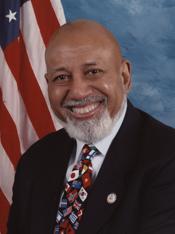 Rep. Alcee L. Hastings (D-FL)
Introduced July 22, 2003
Legislative Activity
Stay on top of the latest movement without scrolling through every action
HouseIntro Referral
Latest Action
Sponsor introductory remarks on measure. (CR E1681-1682)
September 3, 2003
View full timeline
HouseIntro Referral
Introduced in House
July 22, 2003
HouseIntro Referral
Referred to the House Committee on International Relations.
July 22, 2003
HouseIntro Referral
Sponsor introductory remarks on measure. (CR E1681-1682)
September 3, 2003
Floor Debate
1 memberWhat members said about H.Con.Res. 249 on the floor
Floor Debate
1 memberWhat members said about H.Con.Res. 249 on the floor
1 Democrat
Rep. Alcee L. HastingsD-FL-23 · Sep 4, 2003
Mr. Speaker, this is the second resolution concerning post-war Iraq that I have introduced this month. My Resolution is similar to an amendment that passed unanimously in the Senate on July 16, 2003.…
Bill Text
Latest available legislative text
Introduced in HouseIssued July 22, 2003
        [Congressional Bills 108th Congress]
[From the U.S. Government Publishing Office]
[H. Con. Res. 249 Introduced in House (IH)]

108th CONGRESS
1st Session
H. CON. RES. 249

Expressing the sense of Congress that the United States should remain
engaged in Iraq in order to ensure a peaceful, stable, unified Iraq
with a representative government, and for other purposes.

_______________________________________________________________________

IN THE HOUSE OF REPRESENTATIVES

July 22, 2003

Mr. Hastings of Florida submitted the following concurrent resolution;
which was referred to the Committee on International Relations

_______________________________________________________________________

CONCURRENT RESOLUTION

Expressing the sense of Congress that the United States should remain
engaged in Iraq in order to ensure a peaceful, stable, unified Iraq
with a representative government, and for other purposes.

Whereas the United States, with the support of Great Britain and other
countries, historically and courageously toppled the regime of Saddam
Hussein and the Baath party;
Whereas conditions on the ground in parts of Iraq continue to pose a grave
threat to United States troops, thereby complicating efforts to restore
law and order and essential public services for Iraqis, and these
efforts are further complicated by the absence of effective
communications with the Iraqi people;
Whereas ultimately, maintaining law and order in Iraq and preserving its
territorial integrity will require the creation of a professionally-
trained Iraqi police force and a reformed Iraqi military, but that will
take a significant amount of time and in the meantime international
armed forces and police must assume these responsibilities;
Whereas approximately 145,000 United States troops are currently deployed in
Iraq, meaning that United States Armed Forces comprise approximately 90
percent of Coalition forces, and even if, as the Department of Defense
has stated, an additional 10,000 international troops join the Coalition
effort in Iraq by September 2003, United States Armed Forces will still
comprise approximately 85 percent of Coalition forces;
Whereas maintaining the existing force level in Iraq currently requires at least
$3,900,000,000 each month;
Whereas the Department of Defense has stated that it will require one year to
train a new Iraqi Army of 12,000 soldiers and three years to train
40,000 soldiers;
Whereas the Coalition Provisional Authority has stated that it will require at
least one year to recruit and train a police force of 40,000 officers
capable of assuming minimal policy functions in Iraq, that it will
require five years to recruit and train a full force of 75,000 officers,
and that at least 5,500 additional international police are needed to
train, assist, and jointly patrol with the existing Iraqi police force;
Whereas President Bush has noted that ``[t]he rise of Iraq, as an example of
moderation and democracy and prosperity, is a massive and long-term
undertaking'', and it is clear that increasing the number of troops and
police from countries other than the United States will reduce risks to
American soldiers and the financial cost to the United States;
Whereas Secretary of Defense Rumsfeld testified that ``[w]e certainly want
assistance from NATO and from NATO countries'' and it is clear that
involving the North Atlantic Treaty Organization, as is being done in
Afghanistan and has been done in Kosovo and Bosnia, allows the Coalition
to maintain a robust military presence while decreasing the exposure and
risk to United States troops; and
Whereas rebuilding Iraq's neglected infrastructure and economy and administering
Iraq, including providing basic services and paying public sector
salaries, is likely to require tens of billions of dollars over several
years and projected Iraqi oil revenues will be insufficient to meet
these costs: Now, therefore, be it
Resolved by the House of Representatives (the Senate concurring),
That it is the sense of Congress that--
(1) it is in the interest of the United States to remain
engaged in Iraq in order to ensure a peaceful, stable, unified
Iraq with a representative government;
(2) the Organization for the Prohibition of Chemical
Weapons and other appropriate international and nongovernmental
organizations should provide assistance to the Coalition in
Iraq in order to contribute to international security and
stability, general and complete disarmament, and global
economic development;
(3) the President should request formally and expeditiously
that the North Atlantic Treaty Organization (NATO) raise a
force for deployment in post-war Iraq to assist in the
development and training of the new national Iraqi military and
civilian police force; and
(4) the President should call on the United Nations to urge
its member states to provide military forces and civilian
police to promote stability and security in Iraq and resources
to help rebuild and administer Iraq, and for the development
and training of the new national Iraqi military and civilian
police force.
<all>