Expressing the sense of Congress welcoming President Chen Shui-bian of Taiwan to the United States on October 31, 2003.
Legislative Activity
Stay on top of the latest movement without scrolling through every action
Received in the Senate and referred to the Committee on Foreign Relations.
November 4, 2003
View full timeline
Introduced in House
October 15, 2003
Referred to the House Committee on International Relations.
October 15, 2003
Mr. Chabot moved to suspend the rules and agree to the resolution.
October 29, 2003 • 3:29 PM
Considered under suspension of the rules. (consideration: CR H10074-10078)
October 29, 2003 • 3:29 PM
DEBATE - The House proceeded with forty minutes of debate on H. Con. Res. 302.
October 29, 2003 • 3:29 PM
At the conclusion of debate, the Yeas and Nays were demanded and ordered. Pursuant to the provisions of clause 8, rule XX, the Chair announced that further proceedings on the motion would be postponed.
October 29, 2003 • 3:55 PM
Considered as unfinished business. (consideration: CR 10/31/2003 H10205-10206)
October 30, 2003 • 8:37 PM
Passed/agreed to in House: On motion to suspend the rules and agree to the resolution Agreed to by the Yeas and Nays: (2/3 required): 416 - 0 (Roll no. 596).(text: CR 10/29/2003 H10074-10078)
October 30, 2003 • 8:45 PM
On motion to suspend the rules and agree to the resolution Agreed to by the Yeas and Nays: (2/3 required): 416 - 0 (Roll no. 596). (text: CR 10/29/2003 H10074-10078)
October 30, 2003 • 8:45 PM
Motion to reconsider laid on the table Agreed to without objection.
October 30, 2003 • 8:45 PM
Received in the Senate and referred to the Committee on Foreign Relations.
November 4, 2003
Voting History
1 vote recorded • Roll call available
Floor Debate
24 membersWhat members said about H.Con.Res. 302 on the floor
 MU
MU CHT
CHT JL
JL MES
MES TC+19
TC+19
Floor Debate
24 membersWhat members said about H.Con.Res. 302 on the floor
Mr. Speaker, I regret that I cannot vote for this conference report. The annual appropriations bill for the Interior Department and related agencies is important for the whole country, but…
Mr. Speaker, I regret that I cannot vote for this conference report.
The annual appropriations bill for the Interior Department and related agencies is important for the whole country, but particularly for Colorado and other states that include extensive tracts of Federal lands.
It benefits all Coloradans for the Interior Department and the Forest Service to have the funding they need to do their jobs. I also support many other things that are funded in this bill, such as energy conservation programs of the Department of Energy, the Smithsonian Institution, and the National Endowments for the Arts and the Humanities.
However, when the House first considered this bill, I found it so flawed that I could not support it. I voted against it in hopes that after the Senate acted and the bill came back to the House from conference it would be improved enough so that I could vote to send it to the President for signing into law.
To a degree, that hope has been realized. The conference report does include some definite improvements on the House-passed bill.
Perhaps most importantly, the bill would provide $400 million to repay the accounts from which the Forest Service, Bureau of Land Management, and other agencies had to take funds in order to fight forest fires. This is a very great improvement over the House-passed bill, as is the fact that the conference report restores $70 million for Forest Service wildfire preparedness to keep firefighter readiness at the 2003 level, and also would provide $2.5 billion for the National Fire Plan--$1.8 billion for the Forest Service and $694 million for the Department of the Interior--which is $126 million above the President's request and includes an increase of $289 million for wildfire suppression, $11 million for hazardous fuels reduction, and $9 million for State and community fire assistance.
Those are good provisions that deserve support. And, in addition the conference report also includes some items of special value to Colorado.
For example, I am particularly glad that the conference report-- unlike the House-passed bill--includes $2.5 million to enable the Forest Service to continue its acquisition of lands in the Beaver Brook watershed, in Clear Creek County, now owned by the city of Golden. Together with others in the Colorado delegation, I have been working to complete this multi-year project, and am pleased that the conference report would enable it to go forward.
Similarly, the conference report improves on the House-passed bill by providing $9 million for the acquisition of lands in the San Luis Valley--$7 million for the portion of the lands that will become a new National Wildlife Refuge and $2 million to round out the Great Sand Dunes National Park.
I strongly support this, as I also do the provisions of the conference report that would provide the Forest Service with $1 million for acquiring lands in an elk corridor in the White River National Forest and the same amount of needed work on the Continental Divide Trail, the National Park Service with funds for planning for a new curatorial facility at Mesa Verde cultural center, and the Bureau of Land Management with money for acquisitions in the Canyon of the Ancients National Monument.
But in other respects the conference report not only fails to improve on the House-passed bill, but actually is even more flawed--so flawed that I think it deserves to be rejected.
Two aspects of the conference report are particularly bad, in my opinion--one involving language that is included, and one involving a provision of the House bill that has been dropped.
The conference report includes a remarkable legislative rider that says--
nothing in the American Indian Trust Management Reform Act of
1994, Public Law 103-412, or in any other statute, and no
principle of common law, shall be construed or applied to
require the Department of Interior to commence or continue
historical accounting activities with respect to the
individual Indian Money Trust until the earlier of the
following shall have occurred:
(a) Congress shall have amended the American Indian Trust
Management Reform Act of 1994 to delineate the specific
historical accounting obligations of the Department of the
Interior with respect to the Individual Indian Money Trust;
or
(b) December 31, 2004.
I am not a lawyer, but it seems clear that this provision is intended to at least temporarily allow the Department of the Interior to refuse to comply with a recent decision in the pending Cobell v. Norton litigation dealing with the management of Indian trust accounts.
Whatever might be said in its favor, it is not the kind of thing that should be included in an appropriations bill. In fact, it would be subject to a point of order under the rules of the House except for the decision of the Republican leadership to waive the normal rules.
The subject matter of this provision is squarely within the jurisdiction of the Resources Committee. As a member of that committee, I share the view of Chairman Pombo that the inclusion of this language--which was not in either the House or Senate bill--in the conference report is ``an affront'' to our committee. I also share the Chairman's view that its enactment could make it even harder for our committee to play a constructive role in trying to resolve a situation that is a serious problem for both Native Americans and the Interior Department as well.
And at the same time this was being put into the conference report, section 337 of the House-passed bill was being deleted. That section was added when the House adopted a revised version of an amendment I had offered to protect not just Federal lands but also private property and the public interest.
It would have done that by preventing the Interior Department from going ahead with secret negotiations leading to back-room land deals under which the Interior Department would issue ``disclaimers of interest'' that would give away the government's claim to an interest in land.
For decades, the Interior Department issued such disclaimers to people who were on record as owning the lands involved. It was a legal technicality--important for the people involved but not a tool for changing the management of sensitive Federal lands or creating problems for private land owners. But that has changed because the Interior Department has changed its regulations. It has adopted new rules to claim broad authority to issue ``disclaimers'' to parties that wouldn't have been eligible under the old rules--and it has announced it is ready to give those `'disclaimers'' to parties seeking them in order to clear the way for building roads.
This involves the lingering ghost of the Mining Law of 1866. That was one of the 19th-century laws to promote settlement and development in the West. Among other things, it granted rights-of-way ``for the construction of highways'' on Federal lands. That provision later became section 2477 of the Revised Statutes--or RS 2477.
In 1976, RS 2477 was repealed. But the repealing law did not affect existing rights under RS 2477, and did not set a deadline for claiming those rights. So, there is no way of telling how many claims might be made or exactly what lands are affected.
But we do know that RS 2477 claims can involve not just Federal lands--lands that currently belong to the American people--but also lands that once were Federal but that now belong to other owners. That includes the
lands that were homesteaded, as well as patented mining claims and the lands that the Federal government gave to the states, the railroad companies, and other entities during the 19th and 20th Centuries.
Millions of acres of those lands now are ranches or farms, or residential subdivisions, or single-family homes, or private cabins in the mountains like ones owned by some of my constituents. And millions of acres of those lands now belong to the Native Corporations established under the Alaska Native Claims Settlement Act.
Also at risk are millions of acres that are still owned by the American people--including National Parks, National Forests, National Wildlife Refuges, National Monuments, Wild and Scenic Rivers, as well as wilderness areas and areas that deserve protection as wilderness areas. This problem is not new, but it is very serious. It needs to be resolved--but not the way the Interior Department wants to resolve it. What the Interior Department wants is to negotiate in secret and then issue ``disclaimers.'' They have already started that process with the State of Utah. And other parties--including the current state Administration in Colorado--are starting to ask for deals of their own. These backroom talks need to stop. Instead of making deals, the Bush administration needs to come to Congress for new legislation.
That was what Congress told the Clinton administration when Secretary Bruce Babbitt moved to change the Interior Department's RS 2477 regulations. To make sure that Secretary Babbitt got the message, Congress passed a law that says any new RS 2477 rules must be authorized by Congress. That law is still on the books. But the Bush administration says that is irrelevant because the new ``disclaimer'' regulations are not covered, even though they intend to use their new rules for RS 2477 claims. It's an interesting argument--but, frankly, it reminds me of the argument about defining the meaning of the word ``is.'' In other words, it may be clever, but it fails the test of common sense.
Of course, the administration also says they will only make deals that are in the public interest, so Congress doesn't need to get involved. But the best way to promote the public interest is to involve the public--not to make secret deals. And the best way to resolve this issue is by enacting new legislation, after public hearings and open debate. That's why I have introduced a bill--H.R. 1639--to do just that. My bill would set a deadline--four more years--for filing RS 2477 claims. It would establish a fair, open administrative process for handling those claims and would set another deadline for any lawsuit challenging the result of that administrative process. Maybe my bill could be improved, and some of our colleagues may want to propose their own ideas--that is the legislative process. And that is how this issue should be resolved, not by backroom deals or clever maneuvers to try to side-step Congress.
That is why I offered my amendment--to block the administration from trying to circumvent Congress. And while my original amendment was not adopted, the House did adopt a narrower version proposed by Chairman Taylor himself.
That part of the House bill would have barred implementation of the new ``disclaimer'' regulations with regard to any lands within a designated National Monument, Wilderness Study Area, National Park System unit, National Wildlife Refuge System unit, or lands within the National Wilderness Preservation System.
This did not go nearly far enough, in my opinion. It did not address and would not protect all lands that could be affected by the new regulations. However, it would have protected some of the most sensitive parts of America's public lands.
That was why last week more than 100 of our colleagues joined the gentleman from Michigan, Mr. Ehlers, and me in sending a letter urging the conferees to at least include the House language in the conference report. We thought that was a very reasonable request, especially since that part of the House bill had been written by the chairman of the relevant appropriations subcommittee and that the administration had not expressed any opposition to it during the debate on the House floor.
However, our request was not granted, and the House's provision on this subject was omitted from the conference report. As a result, nothing in the conference report will restrain the Interior Department from implementing its new ``disclaimer'' regulations in ways that could have serious consequences for the National Parks, National Monuments, National Wildlife Refuges, or the wilderness and wilderness-study areas.
Of course, I hope that won't happen. I hope that the administration will recognize that proceeding in that way will yield only unnecessary controversy and protracted litigation. I do have hope--but, frankly, I have little confidence. The administration seems determined to press ahead, and I expect that they are headed straight for the courts.
There are other things I dislike about this conference report--for example, the fact that it includes a provision to extend the recreation fee demonstration program for 15 months, which is another instance of a violation of the House's rule against including legislation in an appropriations measure. Even so, if the Indian trust provisions had been omitted and the House-passed restrictions on the new ``disclaimer'' rules had been included, I might still have been able to support it. However, I have concluded that I cannot vote for the conference report as it now stands.
Mr. Speaker, pursuant to House Resolution 418, I call up the conference report on the bill (H.R. 2691) making appropriations for the Department of the Interior and related agencies for the fiscal…
Mr. Speaker, pursuant to House Resolution 418, I call up the conference report on the bill (H.R. 2691) making appropriations for the Department of the Interior and related agencies for the fiscal year ending September 30, 2004, and for other purposes.
Mr. Speaker, I ask unanimous consent that all Members may have 5 legislative days within which to revise and extend their remarks on the conference report to accompany H.R. 2691, and that I may include tabular and extraneous material.
Mr. Speaker, I yield myself such time as I may consume.
Mr. Speaker, we bring to the House the conference agreement on H.R. 2691, the Interior and Related Agencies Appropriations Act for fiscal year 2004.
Let me take a moment to thank the members of the Interior subcommittees for their support and guidance this year. I want to especially and personally thank the ranking minority member, the gentleman from Washington (Mr. Dicks), for the extraordinary assistance that he has given in helping us to shape this bill.
This conference report balances many competing needs and stays within the 302(b) allocation for budget authority and outlays. It is fiscally responsible, providing $19.6 billion for our public lands, Indian programs, and critical science and energy research programs, and for cultural institutions like the Smithsonian Institution. It also provides $400 million as requested by the administration to repay partial funds borrowed from the program accounts to pay fire suppression. Also, another $289 million for wild fires and I will talk about that again.
You may hear that we are not doing enough for conservation programs in this bill. I disagree. Given the constraints allocated, we have provided over $1 billion for programs in the conservation spending category. But more to the point, there are a number of critically important conservation programs in this bill that have never been included in the conservation spending category, but are equally important. We provide increases of $65 million for national parks, $47 million for national wildlife refuges, $27 million for forest health, $10 million for hazardous fuel reduction. And I would like to argue that most of the funding of this bill is for conservation activities.
Some Members will argue that we need to buy a lot more Federal land. What we really need to do is a better job of taking care of the lands we have, and this bill does that by providing additional operation increases and funds for critically backlogged maintenance activities.
Firefighting needs are addressed in this bill as I mentioned before, $400 million in the President's requested amount and another $289 million above the enacted level for suppressing the wild fires. That is almost $700 million for the fire programs. We continue to provide support for the national fire plan with the investment of $2.5 billion. We support preparedness activities so that we have the people and the equipment in place to handle wild fires. We provide funding increases for hazardous fuel reduction, State fire assistance and forest health programs. And with the passage of that bill, I think we can stop many of the fires that we will have to contend with this past year.
We have provided substantial new resources to handle the Southern pine beetle and mountain pine beetle outbreaks in the West. I am proud of the balance we have achieved in these critical programs that are important to all Americans.
The bill ensures that energy research programs are appropriately funded and that we maintain a proper mix between research on improvements to existing technologies and longer-term higher risk on new technologies. We need to keep all of our options open and not fall into the trap of picking winners and losers.
When it comes to energy resources, ultimately the consumer, not the government, will determine what energy technologies will be successful in the marketplace.
The bill provides for the continued crux of critically needed schools and hospitals for American Indians and Alaskan natives. It also includes a 1-year limitation of funds for historical accounting.
The September 25, 2003, court order would require the Department of the Interior to spend an estimated $9 billion for an accounting that benefits attorneys and accountants. This subcommittee has maintained that this lawsuit continues to divert scarce resources away from critical programs that benefit Indian people and other programs in the bill. If we were to fund this court-required historical accounting, we would have to shut down one-third of the U.S. Department of the Interior. We would critically underfund education for Indians and health care for Indians. This is not worth the recommendation of the accountants and lawyers.
Finally, the bill takes care of our cultural agencies and provides the funding needed to ensure that the Smithsonian Institute maintains its responsibility for providing quality visitor services and world- renowned research. It provides increases above the enacted level for the National Gallery of Art and for the National Endowment for the Arts and the Humanities. The conference agreement for the interior and related agencies appropriations bill for fiscal year 2004 strikes an appropriate balance among competing funds needs, and I ask for support for this bill.
[GRAPHIC] [TIFF OMITTED] TH30OC03.001
[GRAPHIC] [TIFF OMITTED] TH30OC03.002
[GRAPHIC] [TIFF OMITTED] TH30OC03.003
[GRAPHIC] [TIFF OMITTED] TH30OC03.004
[GRAPHIC] [TIFF OMITTED] TH30OC03.005
Mr. Speaker, I yield 2 minutes to the gentleman from Ohio (Mr. Regula).
(Mr. REGULA asked and was given permission to revise and extend his remarks.)
Mr. Speaker, I yield 5 minutes to the gentleman from California (Mr. Lewis).
Mr. Speaker, I yield 2 minutes to the gentleman from Pennsylvania (Mr. Peterson).
Mr. Speaker, I yield 2 minutes to the gentleman from Pennsylvania (Mr. Sherwood).
Mr. Speaker, I reserve the balance of my time.
Mr. Speaker, I yield 4 minutes to the gentleman from Florida (Mr. Young), the chairman of the Committee on Appropriations.
Mr. Speaker, I yield myself such time as I may consume.
I share the frustration of many of those who have spoken on the Indian trust issue. I represent the eastern band of the Cherokee Indians. I have been taught and seen it over and over again, the old adage that government will mess up a one-car funeral.
The committee spent $20 million of the taxpayers' money to do a transaction-by-transaction accounting of five named plaintiffs in the Cobell v. Norton litigation and found that one check for $60 went to the wrong person; $20 million to find a $60 error. Can anyone argue that this is a good use of the American taxpayers' money? A Federal court ruling on September 25, 2003, in the class action lawsuit ordered an expanded transaction-by-transaction historical accounting from 1887 to the present. Initial estimates indicate that the accounting ordered by the court would cost between $9 billion and $12 billion. Nobody ever envisioned that we would be spending $12 billion on an accounting that does not provide one dollar to Indian country. We have included language that limits funds available to the Department of the Interior for historical accounting to those activities that need to be accomplished and can be accomplished in the short term. Beyond the funding limitation, language has been included protecting the Department from further court action during this 1-year time-out period. This gives the authorizing committees time to address the issue. The appropriations committee is not addressing this. We are putting this with the authorizing committee.
Without this language in our bill, the court would likely hold the Secretary in contempt and find for the plaintiffs' accounting that the government owes $176 billion in this matter without any further negotiation or findings. For the past 3 fiscal years, the Committee on Appropriations has stated that it will not appropriate hundreds of millions of dollars, now billions of dollars, for a historical accounting. There was no other option but to include the time-out provision in this bill. There is only one source of money available to the committee; and an accounting of this magnitude, $12 billion, would require that vast sums be diverted away from other programs in the bill. Without the time-out language, we would have to divert vast amounts of money from Indian education, health care, the National Park Service, as well as critical fire fighting funding; and that is just to name a few. There will be further court proceedings in this case based upon the government's appeal of this court ruling. We should not expend hundreds of millions of dollars while this case is under appeal.
We fully agree with the gentleman from California (Mr. Pombo) that the authorizing committees should address this issue, and we are not trying to do that. All the interior bill does is provide for a 1-year time-out, basically the remaining term of this Congress, to allow the Congress to provide, hopefully, a comprehensive solution to the Indian trust issue, or at least address
the scope of the historical accounting so the Congress will not be put in the position of cutting programs in this bill to fund a $12 billion accounting. If the language is struck from the bill without providing full funding for the court-mandated accounting, some $3 billion in 2004, the court will likely hold the Secretary of the Interior in contempt and find summary judgment for the plaintiffs' accounting which purports to show that the government owes $176 billion.
The gentleman from Wisconsin (Mr. Obey) pointed out that we were $400 million short in this bill. If we have to pay $3 billion just for an accounting next year or we are asked to pay $176 billion in the next year, or $12 billion maybe in a short period of time, imagine what will happen to this bill and the Department of the Interior, Forest Service, Energy and the critical funds that we provide for Indian health, education and other needs.
Mr. Speaker, I urge the adoption of this conference report.
Mr. Speaker, I yield back the balance of my time.
Mr. Speaker, I very much appreciate my colleague yielding me this time. The gentleman from Washington (Mr. Dicks), the distinguished ranking member, has referred to the fact that I am facing a rather…
Mr. Speaker, I very much appreciate my colleague yielding me this time.
The gentleman from Washington (Mr. Dicks), the distinguished ranking member, has referred to the fact that I am facing a rather tremendous challenge in California with the devastation that is impacting my District directly. In talking early this morning with one of my very dear friends that has great expertise in this arena of professional work, it was from him that I first heard the reality that there are two kinds of money that involve fire money. When we are talking about protecting the forest and trying to get the dollars that are necessary to clear the brushes, make sure we do not have too many trees go through, et cetera, et cetera, that kind of money is very, very difficult to come by, and then suddenly we have a disaster, a fire, and a green light goes on. The difference is red money, green money. A green light goes on, and whatever is available or required suddenly comes forth.
The deal with the challenges in my forest in recent years was we worked very hard to try to get some money to lay the foundation for a better management of the forests. Just in the last couple of years, we have finally gotten as much as $30 million. This evening, later, we will be considering the supplemental. After the fires had begun in the West, and within that package, there is a $500 million addition to the process that will help us deal with these problems in the West now, after the fire occurred.
So I have great empathy for the challenges of the people on this committee who struggle to get adequate dollars up front to make sure we are managing our forests well, and it takes the kind of challenge we are facing at this moment to really bring the point home.
I would have my colleagues know that I am very sensitive about my following remarks, and I would have the Chair be very careful with me, for it is a very unusual thing for me to do. Each of us has two U.S. Senators in each of our States. And in my case, there are two U.S. Senators and they are speaking about this general subject area, and I find great confusion here. I am going to be very careful as I refer to the other body and even Members in the other body to only use quotations from those individuals, but it makes it a very significant point as it relates to this bill.
So in an attempt to do that, I would speak of one of my Senators first. The gentlewoman speaking on the Senate floor about the healthy forest legislation currently under consideration has said, ``We have an open invitation to destroy our forests without getting anything back for it. There are no limits on old growth forest logging. Timber companies will pick the trees they want with no veto from the forest service and a complete change from what we have had before.''
My other colleague, another Senator from California, has been heard to say about this same proposal, speaking on the Senate floor and saying, ``This legislation is not a logging bill, as some would typify it, I think, falsely. This legislation would allow the brush to be cleared out, and it would also provide the first statutory protection for old growth stands and large trees ever in the history of this Nation. I want to be very clear. This is pro-environment legislation, and it seeks to reverse some of the damage we have done to our forests and restore their healthy condition.''
Two contrasting points of view that are difficult for me to understand from two Senators from the same State, but they make the point that unless we are able to recognize that there are very serious challenges here and recognize that this bill attempts to begin to deal with some of those challenges, we will never overcome the kind of tragedy that we are now experiencing in the West.
There are some 18 people who have died in southern California. Over 2,600 homes have been burned. Three-quarters of a million acres have been burned. At this very moment in regions in my District, literally thousands of families are trying to figure out what to do with the rest of their life because I think we have not in the past been able to give the kind of broadly-based support that we need to give to this subcommittee.
I think the report we have before us tonight is a reflection of very fine work between the ranking member and the chairman of our subcommittee. I very much appreciate their effort, but I want them to know from this Member's perspective, tonight's work is just another down payment. We will be making a down payment as it relates to the supplemental later. Indeed this down payment is very, very significant, and I want my colleagues to know that I appreciate the work they have done.
If the gentleman will continue to yield, I would like to respond that in the recent reorganization, we shifted FEMA from VA-HUD to the Subcommittee on Homeland Security. So there has been that change. And we have appropriated additional money there because in the middle of last year FEMA was running out of money. They were at least talking about the shortage. Suddenly we are going to add some money to that pool that they can draw from, and certainly that is a reflection of the challenges throughout the West.
Colorado, just today, has another new problem. But before another 6 months goes by, even FEMA is going to be stretched to the wall again, and that is why what the gentleman did last night was very important, and I appreciate my colleague's support.
Mr. Speaker, I rise with reluctance to oppose this bill. I have not opposed an appropriations bill for many years. I appreciate the difficulty the subcommittee chairman and the gentleman from Florida…
Mr. Speaker, I rise with reluctance to oppose this bill. I have not opposed an appropriations bill for many years. I appreciate the difficulty the subcommittee chairman and the gentleman from Florida have with the Senate, with the budget, and with all of the demands from Members, but I stand with the chairman of the Committee on Resources. I believe the administration committed an egregious process, a mistake, in going around the authorizing committee at the last minute without even telling the authorizing committee, and we cannot do business that way.
I have a second problem with the bill, but it would not have caused me to vote against the bill. I believe the provision by the gentleman from North Carolina (Mr. Taylor) on the National Park Service should have been left in the bill. It is the most successful outsourcing organization in the country, and instead of attacking the most successful and highly-rated government organization in the country, even with the guidelines of the gentleman from North Carolina (Mr. Taylor) which are very well written, basically guarantee that this money will be wasted.
This is the type of thing that when President Bush has made national parks a centerpiece, his staff did him a disservice by having this in the bill that is aggressively focused at the park service when they are already over a majority, one of the only organizations in the government that is over a majority already outsourced, it is not only wrong, wasteful, but it is politically stupid. I hope we can get this fixed with the administration as we work through. I know the committee understands my concerns, and we will continue to work with them, but we have to have some kind of process where the authorizing committees are respected, and I stand with the gentleman from California (Mr. Pombo).
It is with great reluctance that I rise to oppose this appropriations bill. I rarely vote against appropriations bills because I know how hard it is to reach the compromises necessary to pass these bills.
I rise partly in opposition to the imposed language, with no participation from the authorizing committee on the Tribal funds issue. We have clear conference guidelines to protect against this very thing and this was a blatant violation that threatens the committee system.
Secondly, I deeply believe that the provisions on outsourcing in the National Park Service is a terrible policy mistake. I have been a consistent supporter of competitive bidding, outsourcing and/or privatization. But the way OMB is approaching this issue endangers the process as a whole.
Employee work in our national parks is already under 50 percent. It is a serious story. Some outsourcing has been pulled back because, for example, private contractors found that it was hard to remove waste from remote mountain ranges. Or they only wanted to do it when economic times were hard. In other cases, bids were sought and none arrived.
In other words, the National Park Service is a success model. But if OMB won't distinguish between success and failure, if money must be wasted in a never-ending hunt, not only will organizations like the National Park Service become demoralized, there will be no voluntary efforts, even more resistance and bitterness, and eventually a revolt against all outsourcing.
Relatively mindless ``cookie-cutter'' approaches are an abdication of responsible government. The National Park Service rangers have among the highest, if not the highest, public approval ratings of any government or private sector employee. Even if the Park Service wasn't already 50 percent contracted out, why fix something that is not broken? We have enough problem areas on which to focus.
Furthermore, President George W. Bush fully understands the importance of our national parks, to our nation, and from his personal comments, to his family.
While the President favors outsourcing, as I do, it is poor staff work to further attack the National Park Service and waste more funds on outsourcing. Instead, the funds should be used to help eliminate the national parks maintenance backlog. Or it could be used to reduce the $30 million this bill is overbudget. Instead of staff attacking the National Park Service, the President should be told of its successes, and bragging about it.
The original House language exempted the National Park Service. By friends and colleagues, Congressman Tom Davis and Pete Sessions were going to introduce an amendment to remove the provision. After discussions, during which it was apparent the amendment would likely overwhelmingly lose, they withdrew their amendment. Later in the bill, Congressman Bereuter offered a specific exclusion amendment for the archaeological centers. He won overwhelmingly. Repeatedly this House has made it clear that the National Park Service is not like other agencies.
I do want to thank the Committee for definitive language forcing detailed guidelines on such studies. It means that, most likely, most of the outsourcing dollars being spent will be wasted money but at least it will be reasonably fair. As chairman of a subcommittee with National Parks oversight and as a member of the Resources full committee and National Parks subcommittee, I will be closely monitoring every threat to dangering our Park Service.
Mr. Speaker, I rise in opposition to the conference report on H.R. 2691. I am generally supportive of the bill's thrust and appreciate the good work of both the Committee on Appropriations chairman…
Mr. Speaker, I rise in opposition to the conference report on H.R. 2691. I am generally supportive of the bill's thrust and appreciate the good work of both the Committee on Appropriations chairman and subcommittee chairman. However, the provision inserted into this legislation relating to the Indian trust issue makes it personally unacceptable for a variety of reasons.
It is unacceptable, first, because it amounts to legislating in an appropriation bill, and I find that unfortunate.
Second, it was not included in either the original House or Senate bill, and consequently did not receive the scrutiny and debate that it deserved.
Finally, it is an effort, I think, inappropriately, to derail a judicial process that is already in progress. It is unfortunate that we are at this particular moment, and I regret having to vote against this bill. But I think had we operated through the Committee on Resources, let the processes in place work out, we could have arrived at a solution to the problem that was fair and equitable and trusted by all sides. It is with great reluctance that I rise in opposition.
Mr. Speaker, I rise today in opposition to the Conference Report on H.R. 2691, the Department of the Interior and Related Agencies Appropriations Act for fiscal year 2004. I am supportive of the general thrust of this bill, particularly the emergency funds to help fight the wildfires in the West. Moreover, I recognize the need to finish appropriation bills on a timely basis.
I respect the Appropriations Committee chairman and subcommittee chairman who laid out the broad framework for this generally laudable appropriations measure. I want to be clear that my criticisms of the substance of one part of this bill in no way are intended to reflect on the fine work and integrity of the chairman and the members of the committee.
However, I feel compelled to vote against H.R. 2691 because of one provision in the bill concerning the Indian Trust issue. This provision was inserted in language funding the Office of the Special Trustee for American Indians and would dictate the manner in which the Department of the Interior undertakes a complete historical accounting of individual Indian Trust accounts. It is clearly the first step in a process designed to impose rather than negotiate a settlement of Indian Trust account claims and to do so for as little money as possible regardless of the merits of individual cases or the historical culpability of the Federal Government in the mismanagement and theft of Native American assets held in trust.
This provision clearly violates the House Rule against legislating in an appropriations bill. Moreover, it undermines the excellent work of the Resources Committee, which has held two hearings on the Indian Trust issue and has been in the process of building a bipartisan framework to settle the Indian Trust issue in wake of the questions arising out of the so-called Corbel litigation. If this conference report is approved in its present form it will hinder the efforts of the Resources Committee to resolve this issue fairly and honorably for all concerned.
In addition to being legislatively and procedurally unsound, the provision in question is clearly designed to limit the ability of Native Americans to pursue their legitimate claims in court. Frankly, I predict that this effort will fail. However, it will cost the litigants and the Federal Government more rather than less money in the long run. Moreover, it will further poison the historically poor relations between Indian tribes and the Federal Government.
Frankly, I am appalled that this language was included in the conference report on H.R. 2691 since it was not part of either the original House of Senate Interior appropriation bills. It was added in the dead of night in order to avoid legislative scrutiny and open debate. This is a clear violation of the spirit if not the letter of the normal rules that govern the legislative process. It discredits the legislative process and should embarrass and disappoint every member of this body regardless of their position on the issue.
In my opinion, this language delays justice for half a million individual Indian Trust beneficiaries who have waited over 100 years for a full and fair accounting of the property which the Federal Government holds in trust for them. This is both reprehensible and unacceptable. I intend to work within the framework of this institution to see that the mischief done in this appropriations bill is ultimately undone.
Mr. Speaker, it is tragic that this provision was added to this otherwise praiseworthy and essential piece of legislation. Its inclusion makes it impossible for me or any other member who cares about the rights of Native Americans to support this bill. However, I take comfort in the fact that this issue will be dealt with again, both in the courts and in the halls of the Congress of this great republic.
Show 8 more
Mr. Speaker, I move to suspend the rules and agree to the concurrent resolution (H. Con. Res. 302) expressing the sense of Congress welcoming President Chen Shui-bian of Taiwan to the United States…
Mr. Speaker, I move to suspend the rules and agree to the concurrent resolution (H. Con. Res. 302) expressing the sense of Congress welcoming President Chen Shui-bian of Taiwan to the United States on October 31, 2003.
Mr. Speaker, I ask unanimous consent that all Members may have 5 legislative days within which to revise and extend their remarks and include extraneous material on H. Con. Res. 302.
Mr. Speaker, I yield myself such time as I may consume.
Mr. Speaker, I first of all want to thank the distinguished gentleman from California (Mr. Lantos) for his leadership on this issue. And I might add that I had the opportunity just to get back last night from a trip to Baghdad and Turkey and Jordan as well, and traveling with the gentleman from California (Mr. Lantos) is like travel basically in a seminar and listening to him talk about the situation. One learns a great deal, not only in committee but traveling with the gentleman from California (Mr. Lantos); and I want to thank him for his leadership and for educating many of us who were with him.
I also wanted to commend my colleague, the gentleman from Florida (Mr. Wexler), who is also a fellow co-chair of the Congressional Taiwan Caucus, for offering this resolution, as well as my colleagues, the gentleman from California (Mr. Rohrabacher) and the gentleman from Ohio (Mr. Brown), who are also founding co-chairs of the caucus.
Mr. Speaker, I rise today to express my enthusiastic support for H. Con. Res. 302, a resolution warmly welcoming the visit to the United States of Taiwan President Chen Shui-bian. I call upon all Members to join in supporting a resolution which affirms the American values of democracy and human rights, for there is no place in the world providing a clearer example of respect for these values than that of Taiwan.
President Chen was inaugurated after fair and free elections where the people of Taiwan, despite high-handed pressure from the outside, exercised their free choice in selecting their leadership. Taiwan stands out as a shining example, a beacon of these democratic values which reaches across the strait to the people of mainland China.
It is also fitting and proper that the Congress should welcome the visit of the leader of this flourishing democracy, a testament to the fact that Chinese culture is not inherently inconsistent with democratic values. The International League of Human Rights, which will present President Chen a human rights awards for its efforts in promoting tolerance, democracy and human rights, fully recognizes the fact that Taiwan and its democratically elected leader are sterling examples for not only Asia but for the entire world.
I note that despite his busy New York schedule, President Chen will take time to visit a memorial to mourn the passing of the former first lady of China and Taiwan, Madam Chiang Kai-shek, who died in Manhattan last week at the venerable age of 105 years old.
Madam Chiang's passing reminds us again of the long and enduring ties between the freedom-loving people of the United States and the freedom- loving people of Taiwan. Madam Chiang was the first Asian woman to address a joint session of this Congress during the World War II era when we were united in the ultimately successful struggle against international fascism during that war. She returned to the Congress in 1995 to commemorate the 50th anniversary of the conclusion of that historic conflict. We in the Congress join President Chen and the people of Taiwan in mourning Madam Chiang's passing.
Finally, I do not want to miss the opportunity provided by President Chen's visit to thank him and the people of Taiwan for their steadfast support for the campaign against international terrorism, the prevention of the spread of weapons of mass destruction, and the reconstruction of both Iraq and Afghanistan.
The recent interdiction by Taiwan port authorities of chemical cargo bound for North Korea is but one example of their continued support in the war against international terrorism.
With the passage of this resolution, the House warmly welcomes President Chen Shui-bian and congratulates him on receiving the Human Rights Award.
Mr. Speaker, I reserve the balance of my time.
Mr. Speaker, I yield 1 minute to the gentleman from Texas (Mr. DeLay), the distinguished majority leader.
Mr. Speaker, I yield 2 minutes to the gentleman from Florida (Mr. Stearns).
(Mr. STEARNS asked and was given permission to revise and extend his remarks.)
Mr. Speaker, I yield 2 minutes to the gentleman from Florida (Mr. Lincoln Diaz-Balart), who has been a tireless leader for speaking out on behalf of the people of Cuba.
Mr. Speaker, I have no further requests for time, and I yield back the balance of my time.
Mr. Speaker, I yield myself 3 minutes. (Mr. DICKS asked and was given permission to revise and extend his remarks.) Mr. Speaker, I want to commend the chairman and his staff. We had a very…
Mr. Speaker, I yield myself 3 minutes.
(Mr. DICKS asked and was given permission to revise and extend his remarks.)
Mr. Speaker, I want to commend the chairman and his staff. We had a very cooperative working relationship on this conference committee. I am pleased that we have very substantial funding in this bill for firefighting. I see my colleague, the gentleman from California (Mr. Lewis), whose district has been ravaged by these forest fires recently; and I know he has been working hard to make sure that the forest service and the BLM have adequate resources to deal with these issues.
I want to also mention that we had a nice vote here on the House floor to increase funding for the National Endowment for the Arts and Humanities. Both of those increased this year, $6.7 million for the National Endowment for the Arts; and I want to thank the chairman for his efforts on that in our conference committee.
We have had questions on privatization studies, as we have been debating all afternoon. I think the provision that we worked out in this bill is a good one and will protect government workers.
As was mentioned by the chairman, we had a very low figure in the House bill for lands and water conservation for acquisition of Federal lands for our Federal agencies. That number came up in conference committee. I, of course, with the gentleman from Wisconsin (Mr. Obey), we were two of the authors, along with the gentleman from Ohio (Mr. Regula) of the conservation spending amendment, we are disappointed that we have not been able to keep that funding level where it should have been under the agreement that was reached in 2000. But one of our problems is with the budget resolution; our committee has gotten a very low allocation; and the strategy of the majority has been to try to take care of the Forest Service, the Park Service the Fish and Wildlife Service, the major agencies and that is understandable, though I regret that we cannot do more on the Conservation Trust Fund.
So I think all in all this is a good bill. We are going to have a little debate here on other matters.
Mr. Speaker, I yield 12 minutes to the gentleman from West Virginia (Mr. Rahall), and I ask unanimous consent that he be allowed to control that time.
Mr. Speaker, I reserve the balance of my time.
Mr. Speaker, I yield 4 minutes to the distinguished gentleman from Wisconsin (Mr. Obey), the ranking Democratic member of the Committee on Appropriations.
Mr. Speaker, I yield myself 1 minute.
I wanted to say something to the distinguished chairman of the Subcommittee on Defense. The gentleman served as a chairman of the Subcommittee on VA, HUD and Independent Agencies, and FEMA was under my colleague's jurisdiction. When FEMA has an expenditure it gets reimbursed.
In our situation, with the Forest Service and the BLM, they take money from all of the accounts of the agency, go spend it fighting the fires, and then we do not reimburse it completely. It is not automatic. It has to be appropriated, and we do not do it as completely as we should. I think the FEMA example is a better way to go.
Mr. Speaker, I yield the gentleman from New Jersey (Mr. Pallone) 30 seconds.
Mr. Speaker, I yield 3 minutes to the gentleman from New York (Mr. Hinchey), a distinguished member of the subcommittee.
Mr. Speaker, I yield myself such time as I may consume.
I want to end the debate on our side by saying I strongly support the conference agreement, and I hope Members will vote for the conference agreement. I appreciate the comments made here tonight. We are going to work hard to resolve the problems on the trust account issues. We will work with the authorizers. The chairman and Mr. Rahall are acting in very good faith. I know there has been a hearing, and they are going to have another hearing.
We need a solution to this problem, and I pledge tonight to my constituents back in the State of Washington that I will work tirelessly for a solution to this problem, so we can do justice to the holders of these accounts.
Mr. Speaker, I yield back the balance of my time.
Mr. Speaker, I rise today to address the 26 votes I missed during the period October 29th through October 31st due to my participation in an official Congressional delegation to Iraq approved by you.…
Mr. Speaker, I rise today to address the 26 votes I missed during the period October 29th through October 31st due to my participation in an official Congressional delegation to Iraq approved by you. Although I regret these missed votes, there is no question that that trip was indispensable to a more complete understanding of our intervention in Iraq.
I wish to state for the Record how I would have voted on these 26 votes.
On rollcall votes 580, 584, 585, 588, 589, and 590, motions to adjourn, I would have voted ``no.''
On rollcall vote 581, approval of the journal, I would have voted ``aye.''
On rollcall vote 576, passage of H.R. 1720, the Veterans Health Care Facilities Capital Improvement Act, I would have voted ``aye.''
On rollcall vote 577, passage of H.R. 1516, the National Cemetery Expansion Act of 2003, I would have voted ``aye.''
On rollcall vote 578, passage of H.R. 3365, the Fallen Patriots Tax Relief Act, I would have voted ``aye.''
On rollcall vote 579, passage of H. Res. 414, to encourage the People's Republic of China to fulfill its commitments under international trade agreements, support the United States manufacturing sector, and establish monetary and financial market reforms, I would have voted ``aye.''
On rollcall vote 582, passage of H. Con. Res. 291, expressing deep gratitude for the valor and commitment of the members of the United States Armed Forces who were deployed in Operation Restore Hope to provide humanitarian assistance to the people of Somalia in 1993, I would have voted ``aye.''
On rollcall vote 583, passage of H.J. Res. 75, making further continuing appropriations for the fiscal year 2004, I would have voted ``aye.''
On rollcall 584, on ordering the previous question on H. Res. 422, providing for consideration of the conference report to accompany H.R. 2115, FAA Reauthorization Act, I would have voted ``no.''
On rollcall vote 587, on passage of H. Res. 422, providing for consideration of the conference report to accompany H.R. 2115, FAA Reauthorization Act, I would have voted ``no.''
On rollcall vote 591, motion to recommit the conference report to accompany H.R. 2115, FAA Reauthorization Act, I would have voted ``aye.''
On rollcall vote 592, passage of H.R. 2115, FAA Reauthorization Act, I would have voted ``no.''
On rollcall 593, passage of H. Res. 409, repudiating anti-Semitic remarks expressed by Dr. Mahathir Mohamad, I would have voted ``aye.''
On rollcall vote 594, motion to recommit the conference report to accompany H.R. 2691, the FY2004 Department of Interior Appropriations Act, I would have voted ``aye.''
On rollcall vote 595, passage of the conference report to accompany H.R. 2691, the FY2004 Department of Interior Appropriations Act, I would have voted ``no.''
On rollcall 596, passage of H. Con. Res 302, expressing a sense of Congress welcoming President Chen Shui-bian of Taiwan to the United States on October 31, 2003, I would have voted ``aye.''
On rollcall vote 597, on agreeing to H. Res. 421, waiving a requirement of clause 6(a) of rule XIII with respect to consideration of certain resolutions reported from the Committee on Rules (martial law for consideration of H.R. 3289, Emergency Supplemental Appropriations), I would have voted ``no.''
On rollcall vote 598, the Johnson motion to instruct conferees on H.R. 6, the Energy Policy Act of 2003, I would have voted ``aye.''
On rollcall vote 599, the Davis motion to instruct conferees on H.R. 1, the Medicare Prescription Drug and Modernization Act, I would have voted ``aye.''
On rollcall vote 600, motion to recommit with instructions H.R. 3289, the Emergency Supplemental Appropriations for Defense and for the Reconstruction of Iraq and Afghanistan for FY2004, I would have voted ``no.''
On rollcall vote 601, agreeing to the conference report to accompany H.R. 3289, the Emergency Supplemental Appropriations for Defense and Reconstruction of Iraq and Afghanistan, I would have voted ``aye.''
Mr. Speaker, thank you for the opportunity to confirm my position on these important votes during my necessary absence.
Mr. Speaker, I yield myself such time as I may consume. Mr. Speaker, I rise in strong support of this resolution. At the outset, let me thank my good friend, the gentleman from Ohio (Mr. Chabot), for…
Mr. Speaker, I yield myself such time as I may consume.
Mr. Speaker, I rise in strong support of this resolution. At the outset, let me thank my good friend, the gentleman from Ohio (Mr. Chabot), for his undeserved and very generous comments for which I am very deeply grateful.
Mr. Speaker, I want to commend my friend and distinguished colleague, the gentleman from Florida (Mr. Wexler), for introducing this significant resolution.
When I first visited Taiwan decades ago, it was a destitute dictatorship. It is now a thriving and prosperous free and democratic society. The political landscape in Taiwan has fundamentally changed over the past 2 decades. Authoritarian rule has been tossed aside, and Taiwan's leaders are now chosen by free and fair elections. Taiwan has become a vibrant democracy, serving as a beacon to those across the entire Asia Pacific region who yearn for freedom, showing that democracy can and does thrive in a Chinese context.
The resolution before us, Mr. Speaker, welcomes the elected President of Taiwan, Chen Shui-bian to the United States during a so-called transit visit.
Mr. Speaker, we are, of course, pleased that President Chen is transiting the United States and he will have the opportunity to meet with Members of Congress and other American leaders over the next few days. But if Taiwan were any other nation, Mr. Speaker, President Chen would be welcomed with a Rose Garden ceremony, a state dinner, and the opportunity to address a joint session of Congress. These honors, Mr. Speaker, would be commensurate with the increasingly close and mutually beneficial relationship between our two countries. Not only is Taiwan a bulwark of democracy in the Asia Pacific region, it is our eighth largest trading partner. We have an extremely close security relationship, and Taiwan has stepped up to provide humanitarian and medical assistance in both postconflict Afghanistan and postconflict Iraq.
In short, Mr. Speaker, Taiwan is one of our closest allies in the Asia Pacific region. Yet, due to the sensitivities of
the People's Republic of China, the executive branch refuses to give Taiwan the status and recognition it deserves.
Mr. Speaker, I support a strong and vibrant relationship between the PRC and the United States. Provocative steps which upset the peace across the Taiwan straits should be avoided; but we must find new ways to show the people of Taiwan that the United States recognize Taiwan's profound economic and Democratic transformation and that our Nation will work energetically to promote a greater role for Taiwan in the community.
Mr. Speaker, I look forward to meeting with President Chen this weekend and discussing with him ways in which we can strengthen the political, economic, and security ties between our two nations. I will tell President Chen that this Congress will not stop fighting until Taiwan can participate in the World Health Organization and many other international organizations in which Taiwan can and will make a significant contribution. I strongly urge all of my colleagues to support this resolution.
Mr. Speaker, I reserve the balance of my time.
Mr. Speaker, I yield such time as he may consume to the gentleman from Florida (Mr. Wexler), the distinguished author of this resolution.
Mr. Speaker, I am delighted to yield 3 minutes to the gentleman from Ohio (Mr. Brown), a distinguished member of the Committee on International Relations.
Mr. Speaker, I yield myself such time as I may consume.
We are all looking forward to the distinguished President's visit. It will further strengthen U.S.-Taiwan relations, and on behalf of all of us in Congress, we are honored to have him come again to the United States.
Mr. Speaker, we have no further speakers, and I yield back the balance of our time.
Mr. Speaker, on that I demand the yeas and nays.
Mr. Speaker, I yield myself 2 minutes. Mr. Speaker, the Interior appropriations conference report contains language which represents nothing less than a gag order on some 500,000 American Indians who…
Mr. Speaker, I yield myself 2 minutes.
Mr. Speaker, the Interior appropriations conference report contains language which represents nothing less than a gag order on some 500,000 American Indians who have waited over 100 years for an accounting of their trust funds accounts by the Federal Government.
On two occasions, we have fought similar provisions. Last year, I offered an amendment on the House floor to strip language with a similar intent from the Interior appropriations bill and it prevailed overwhelmingly. This year, our chairman, the gentleman from California (Mr. Pombo) took the same action and he was also successful.
Yet this language keeps rising from the dead in this conference report. In effect, it would destroy a Federal court's order to the Interior Department to fully account for amounts derived from royalties and other receipts from lands in Indian country. Going even further, this provision appears to shield officials of the Interior Department from judicial actions requiring compliance, such as contempt of court citations.
This is, simply put, appalling. It is an affront to the American system of government, especially our judiciary system, and it undermines the long-standing trust responsibility we have for Indian Nations and individuals. It is, in my view, unconstitutional and will most assuredly cause more litigation and more mistrust of Congress throughout Indian country.
The Committee on Resources is in the middle of hearings on a settlement process of the Cobell litigation, and this sneak attack only makes it harder for us to conduct our business with the trust of those involved.
How long will it take for the Interior Department to quit with the gimmicks and sleight of hand and legislative riders that are snuck into appropriation bills without any consultation with Indian tribes or representatives of the individual account holders or even the chairman of the appropriate committee? How long will it take for the Interior Department to step up to the plate and accept responsibility and act responsibly in fulfilling its commitment, statutory and moral commitment I might add, to these aggrieved parties? Apparently, we should not hold our breath waiting for that to happen.
I urge a vote for the motion to recommit so that this matter can be addressed, and that will be offered by the gentleman from New York (Mr. Hinchey), and pending that, I urge defeat of the conference report.
Mr. Speaker, I yield 2 minutes to the gentleman from Michigan (Mr. Kildee), a very valued member of the Committee on Resources and one of the strongest fighters for Native Americans in this body.
Mr. Speaker, I am very happy to yield 2 minutes to the gentleman from Arizona (Mr. Hayworth), who is cochair of the Native American Caucus.
Mr. Speaker, I am happy to yield 1 minute to the gentleman from New Jersey (Mr. Pallone), another valued member of our Committee on Resources and truly a strong fighter for Native Americans in this body.
Mr. Speaker, I yield 1 minute to the gentleman from Indiana (Mr. Souder).
(Mr. SOUDER asked and was given permission to revise and extend his remarks.)
Mr. Speaker, I yield 1 minute to the gentleman from Oklahoma (Mr. Cole).
(Mr. COLE asked and was given permission to revise and extend his remarks.)
Mr. Speaker, I yield 2\1/2\ minutes to the gentleman from California (Mr. Pombo), the chairman of the Committee on Resources who I have had the pleasure to work with, and who is very capable and fair.
Mr. Speaker, I yield the remainder of my time to a member of the Cherokee Indian Nation, the gentleman from Oklahoma (Mr. Carson).
(Mr. CARSON of Oklahoma asked and was given permission to revise and extend his remarks.)
Mr. Speaker, Ranking Member Dicks, I would like to draw the managers' attention to the Detroit River International Wildlife Refuge. In Fiscal year 2003, the Committee appropriated $3.5 million for…
Mr. Speaker, Ranking Member Dicks, I would like to draw the managers' attention to the Detroit River International Wildlife Refuge.
In Fiscal year 2003, the Committee appropriated $3.5 million for land acquisition in the Detroit Rive Refuge. For this I was grateful.
Mr. Speaker, the Trust for Public Land, recently acquired an ecologically significant tract of land known as Humbug Marsh and Island. This is a tract I have been working to acquire for many years. This funding in FY 03 made this acquisition possible. And this year I was seeking addition funds to complete this acquisition. The Humbug project is wired and ready to go.
Unfortunately, the conference report includes language, inserted by the other body, indicating that further appropriations for the Refuge have been delayed because additional funds could not be obligated in 2004. It also states that there are outstanding issues related to contaminants. In point of fact, Mr. Speaker, neither of these statements has any basis in fact.
I would ask, at this time, for unanimous consent to insert into the Record a letter from Mr. Eric Alvarez, Chief of the Reality Division of the Fish and Wildlife Service. Mr. Alverez writes to me, ``With adequate funding and no unforeseen problems...we anticipate a February or March 2004 closing date `for the Humbug property.''
I would also note to the Chairman and the committee that Secretary of the Interior Gale Norton was at the Detroit River Refuge for a centennial celbration event in September. I would like unanimous consent to insert into the Record a letter I have just received from Secretary Norton demonstrating her commitment to the conservation values of the Detroit River Rufuge.
Mr. Speaker, I would hope that we can work together to address this issue as the process moves forward.
Department of the Interior,
Fish and Wildlife Service,
Washington, DC.
Hon. John D. Dingell,
Rayburn House Office Building,
Washington, DC.
Dear Mr. Dingell: The Fish and Wildlife Service's Division
of Realty has been working on the Detroit River International
Wildlife Refuge since December 2001. Since that time we have
been evaluating a number of properties for inclusion into the
refuge while developing our land protection plan. Recently, a
key tract, known as the Humbug Marsh tract, was acquired by
the Trust for Public Lands. Until this acquisition the
Service did not have many viable tracts where the existing
funds would have been obligated.
Preliminary information indicates that the tract may be
worth around $4.9 million. The Service is currently working
on the contaminant survey and the appraisal that will
indicate the actual purchase price.
The contaminant survey has yet to be completed, therefore
we do not want to speculate on the presence or absence of
contaminants. conversations with TPL representatives indicate
that they believe that there
should not be significant contaminant issues.
An appraisal will indicate the purchase price and the
service has $3.4 million available for the acquisition. The
difference between the remaining amount and the original
appropriation ($3.5 million) has been used to pay for the
contaminant survey and the appraisal.
With adequate funding and no unforeseen problems, with
title or contaminants issues, we would anticipate a February
or March, 2004 closing date.
Please feel free to contact me at 703-358-1713 if you or
your staff require more information.
Sincerely,
Eric Alvarez,
Chief, Division of Realty.
Mr. Speaker, I thank the gentleman from California (Mr. Lantos) for his work and his managing of this bill and his incredible support for human rights around the world, for his entire service in…
Mr. Speaker, I thank the gentleman from California (Mr. Lantos) for his work and his managing of this bill and his incredible support for human rights around the world, for his entire service in Congress.
I also want to thank the sponsors of this resolution and the cochairs and founders of the Taiwan Caucus, the gentleman from Ohio (Mr. Chabot), my friend, the gentleman from California (Mr. Rohrabacher), and the gentleman from Florida (Mr. Wexler), and I join all of them in urging my colleagues to join me in welcoming President Chen Shui-bian as he visits the United States this weekend.
The United States and Taiwan are true democracies that share common ideals and share a clear vision for the future. Taiwan is a country where freedom and democracy have become the foundation for peace, for prosperity, for progress.
Taiwan shares common goals with the United States in supporting human rights and a commitment to the democratic ideals of freedom of speech, freedom of the press and free and fair elections that are the strength of any democracy, but with Taiwan, it has not always been that way.
My first trip to Taiwan was many years ago when Taiwan was still under marshall law. It was not anything close to a democracy. It was a country with one-party rule. Some used the word ``fascist.'' Others used other words to describe Taiwan, but one of the real miracles of the world in the last 2\1/2\ decades is what has happened to that country, a country that went from one-party totalitarian rule to a country that is democratic, that is prosperous, that shares the ideals of our country.
That miracle, that road to progress, that road to democracy was in large part because of the courage and the fervor for human rights exerted by people like Chen Shui-bian who sacrificed a great deal of his life, his family's life and much of his time on this earth to sacrifice that to bring Taiwan forward.
The move towards democracy, the miracle of Taiwan is partly because of Chen Shui-bian, partly because of his political party of the DPP and largely because of the commitment of Taiwanese in Taiwan and Taiwanese overseas in this country who have been a major part of that.
The effort for Taiwan to get into the World Health Organization, as the gentleman from Florida (Mr. Wexler) mentioned, as the gentleman from California (Mr. Lantos) mentioned has not yet reached fruition. That is so very very important.
On a personal level, I have met President Chen Shui-bian when he was mayor and when he was a candidate for the presidency of his country. He has done a terrific job in dealing with issues like SARS. He has done a terrific job in beginning to rebuild the economy in his country. He and his political party, the DPP, have done a miraculous job in helping to create the miracle that we know as Taiwan. It is a country that we should look to as a model for much of the rest of the world, for a developing country, that did not enjoy the fruits of democracy and has moved towards that and puts them in the community of nations. We owe it to that nation, that country to embrace them in the community of nations.
I think President Chen Shui-bian's visit to the United States will help do that this weekend.
Mr. Speaker, I want to express my appreciation to the gentleman from North Carolina (Mr. Taylor), and I also want to express my respect for the work the gentleman has done on this bill and the way it…
Mr. Speaker, I want to express my appreciation to the gentleman from North Carolina (Mr. Taylor), and I also want to express my respect for the work the gentleman has done on this bill and the way it has been done. But unfortunately, for reasons that are largely beyond his control, there are serious defects and deficiencies in this bill, so at the appropriate time I intend to offer a motion to recommit.
This conference report breaks the promise to maintain the fully funded Interior portion of the Conservation Trust Fund, and that would be at $1.56 billion. The Conservation Trust Fund was groundbreaking, bipartisan conservation legislation designed to protect the Nation's threatened natural resources. To abandon it after only a few years violates a commitment that this House and this Congress made to the American people. Instead of the promised $1.56 billion, the bill contains just over $1 billion, $447 million below the authorized level and $87 million even below that appropriated last year.
This funding level is an assault on the ability of the Nation to conserve lands and protect sensitive forests and parks. This funding is important because the American people value the programs in the Conservation Trust Fund for protecting open space and historic sites, conserving wildlife and wildlands, and creating opportunities for recreation for both body and soul. Because of these cuts, some threatened lands that would have otherwise been protected will now be lost forever.
Within the Conservation Trust Fund, the Land and Water Conservation Fund which funds land acquisition is especially hard hit with deep cuts. Land acquisition is funded at only $176 million, that is $137 million below last year. It is a 60 percent cut below 2002. So this conference report willfully walks away from our responsibilities to protect and conserve our precious land. And if we approve it, I predict next year we will be fighting even deeper cuts than we are experiencing this year.
And then there are a series of antienvironmental riders. This conference report includes damaging riders. Some of them, for example, would strike at the heart of the protection of the coastal lands. One Senate rider, for example, removes Alaska's Bristol Bay from protection, even though the House bill and the President's budget renewed the moratorium that put that protection in place.
Mr. Speaker, it could be our coastline next. Another Senate rider sets a dangerous precedent for interfering with the independence of the Federal judiciary by severely limiting the amount of time that the public has to challenge harmful logging projects in the Tongass National Forest in Alaska, and limiting the amount of time a Federal district court has to rule on those cases. People will be denied their time in court. There are a host of our damaging antienvironmental riders in this bill, and for those and other reasons, I will offer a motion to recommit.
Mr. Speaker, I offer a motion to recommit.
In its present form, I am, Mr. Speaker.
Mr. Speaker, on that I demand the yeas and nays.
Show 11 more
Mr. Speaker, due to my participation in a congressional delegation trip to Iraq, I missed several votes. I would like the record to reflect that had I been present, I would have voted in the…
Mr. Speaker, due to my participation in a congressional delegation trip to Iraq, I missed several votes. I would like the record to reflect that had I been present, I would have voted in the following manner:
On rollcall 576, on the motion to suspend the rules and
pass, as amended, H.R. 1720, the Veterans Health Care
Facilities Capital Improvement Act, I would have voted
``aye''.
On rollcall 577, on the motion to suspend the rules and
agree to the Senate amendments to H.R. 1516, the National
Cemetery Expansion Act, I would have voted ``aye''.
On rollcall 578, on the motion to suspend the rules and
agree to H.R. 3365, the Fallen Patriots Tax Relief Act, I
would have voted ``aye''.
On rollcall 579, on the motion to suspend the rules and
agree to H. Res. 414, to encourage the People's Republic of
China to fulfill its commitments under international trade
agreements, support the United States manufacturing sector,
and establish monetary and financial market reforms, I would
have voted ``aye''.
On rollcall 581, I would have voted ``aye''.
On rollcall 582, on expressing deep gratitude for the valor
and commitment of the members of the United States Armed
Forces who were deployed in Operation Restore Hope to provide
humanitarian assistance to the people of Somalia in 1993, I
would have voted ``aye''.
On rollcall 583, on making further continuing
appropriations for the fiscal year 2004, I would have voted
``aye''.
On rollcall 586, I would have voted ``aye''.
On rollcall 587, I would have voted ``aye''. On rollcall
592, agreeing to the conference report on the Flight 100--FAA
Reauthorization Act, I would have voted ``aye''.
On rollcall 593, on the motion to suspend the rules and
agree to H. Res. 409--Repudiating the Anti-Semetic Remarks
Expressed by Dr. Mahathir Mohamad, I would have voted
``aye''. On rollcall 595, agreeing to the conference report
on the Department of Interior and related agencies
Appropriations Act, I would have voted ``aye''.
On rollcall 596, on the motion to suspend the rules and
agree to H. Con. Res. 302, A Sense of Congress welcoming
President Chen Shui-bian of Taiwan to the United States on
October 31, I would have voted ``aye''.
On rollcall 597, I would have voted ``aye''.
On rollcall 598, I would have voted ``aye''.
On rollcall 601, agreeing to the conference report on the
Emergency Supplemental Appropriations for Defense and the
Reconstruction of Iraq and Afghanistan, I would have voted
``aye''.
On rollcall 580, I would have voted ``no''.
On rollcall 584, I would have voted ``no''.
On rollcall 585, I would have voted ``no''.
On rollcall 588, I would have voted ``no''.
On rollcall 589, I would have voted ``no''.
On rollcall 590, I would have voted ``no''.
On rollcall 591, I would have voted ``no''.
On rollcall 594, I would have voted ``no''.
On rollcall 599, I would have voted ``no''.
On rollcall 600, I would have voted ``no''.
Mr. Speaker, I thank the gentleman from California (Mr. Lantos) for yielding me time. Mr. Speaker, as co-chair of the Taiwan Caucus, I join my colleagues, the gentleman from California (Mr.…
Mr. Speaker, I thank the gentleman from California (Mr. Lantos) for yielding me time.
Mr. Speaker, as co-chair of the Taiwan Caucus, I join my colleagues, the gentleman from California (Mr. Rohrabacher), the gentleman from Ohio (Mr. Chabot), and the gentleman from Ohio (Mr. Brown), in strongly supporting this resolution welcoming the President of Taiwan, President Chen, to the United States.
Since assuming office in May 2000, President Chen has demonstrated his steadfast commitment to the ironclad relationship between the United States and Taiwan and the shared principles upon which our partnership has been formed, that of democracy, freedom, and the defense of human rights. In fact, during his visit to America, President Chen will be presented an award by the International League for Human Rights in recognition of his efforts to promote tolerance and freedom amongst the people of Taiwan. And I would like to express my most sincere congratulations to President Chen for receiving this highly esteemed award.
Mr. Speaker, in the past decades, Taiwan has blossomed into a strong and dynamic democracy. It has experienced unprecedented economic, political and social growth, culminating with its entry into the World Trade Organization in 2002.
Taiwan has demonstrated its unequivocal support for freedom of speech, freedom of the press and the rule of law and a commitment to democracy and its multifaceted alliance with the United States. In fact, under President Chen's leadership, Taiwan has joined the war against terror and contributed humanitarian and medical assistance to American-led peacekeeping efforts in Afghanistan and Iraq.
On behalf of the Congressional Taiwan Caucus, I wish to express our appreciation to President Chen and the Taiwanese people for this invaluable assistance and pledge America's continued commitment to the security and prosperity of Taiwan.
President Chen's visit to America serves as a reminder that Taiwan is one of America's most important allies in East Asia and a model of democracy and progress in the region. I applaud President Chen for his bold leadership, resolve, and vision and urge my colleagues to join me, to join us in welcoming him to the United States and thanking him for the deepening and historic, mutually beneficial relationship between America and Taiwan.
Finally, I would like to reiterate the comments by the gentleman from California (Mr. Lantos) suggesting in the most critical of terms that Taiwan be given the opportunity to enter the World Health Organization. The experience with respect to SARS this past year points out how important it is that Taiwan be given that opportunity, and the people of Taiwan should always know that the people of America will stand with them in their fight and defense of freedom.

Mr. Speaker, I thank the gentleman for yielding me this time. It is with regret and a certain reluctance that I come to the floor tonight in opposition to the Interior appropriations bill. I think…
Mr. Speaker, I thank the gentleman for yielding me this time.
It is with regret and a certain reluctance that I come to the floor tonight in opposition to the Interior appropriations bill. I think that the gentleman from North Carolina (Mr. Taylor) and the gentleman from Washington (Mr. Dicks) have done an excellent job with this bill, and it is probably one of the best Interior appropriation bills that I have seen during my time in Congress.
But having said that, the addition of language dealing with the Indian trust issue, the Cobell v. Norton decision has forced me to rise in opposition to the bill. I will say to my friends, my colleagues, this is the wrong thing to do. It is wrong to put this into an Interior appropriations bill. When the Interior appropriations was moving through the House of Representatives, there was a provision that dealt with Cobell. It was a different provision, very different than what is in this bill, and I want to make that clear. However, that provision was struck and part of the debate, part of the discussion that went on on this floor was that the authorizing committee would have the opportunity to sit down and work our way through a hundred year old problem, and we are doing it.
We have held a number of hearings in our committee. We have held a number of field hearings. As the gentleman from Arizona (Mr. Hayworth) said, he is holding a hearing on Monday dealing with this issue. The only way we are going to solve this problem is if we have the opportunity to sit down, to consult, to negotiate, and to ultimately reach a settlement. We are not going to do it by some rider put on in an appropriations bill. The only way we are going to solve this problem is if the authorizing committee, if the gentleman from West Virginia (Mr. Rahall), myself, the members of my committee, have the opportunity to sit down with those that are impacted by this and do what is the best thing possible for the American taxpayer and for the Native American community in this country. That is how we are going to solve this problem.
We are not going to do it on a rider. This is the wrong way to settle this problem. I appreciate that this is only good for a year and it is a cooling-off period as some of my colleagues have said. I am sorry, we do not do it on an appropriations bill, and I do not care who wants it. The only way we can solve this problem is to sit down and consult, negotiate, and ultimately lead to a settlement. That is what we are in the middle of doing, and I will pledge along with the ranking member, the gentleman from West Virginia (Mr. Rahall), that we will continue to work on that and we will get it done. But, Mr. Speaker, do not do it on an appropriations bill.
Mr. Speaker, I rise today in strong support of H. Con. Res. 302. I also want to urge my colleagues to join me in supporting this resolution that expresses the sense of Congress welcoming President…
Mr. Speaker, I rise today in strong support of H. Con. Res. 302. I also want to urge my colleagues to join me in supporting this resolution that expresses the sense of Congress welcoming President Chen Shui-bian of Taiwan to the United States on October 31, 2003.
Taiwan is a beacon of liberty and democracy in a region of the world where human rights and personal freedoms are routinely denied, and I believe that this Chamber should recognize Taiwan's achievements and congratulate President Chen on his outstanding leadership.
I ask my colleagues to consider the following facts: Taiwan has become one of the world's freest nations, and is now one of the most successful models of rapid reform in the region. Fifty years ago, Taiwan was a closed authoritarian society with no freedom of speech, no freedom of assembly, and no right to vote. Today, Taiwan is a full- fledged democracy. It has robust political parties, and virtually every office in Taiwan is contested through free and fair elections.
Taiwan supports the same democratic, economic and security values, which we as a Nation cherish. Taiwan shares our belief in free-market economics, which has resulted in Taiwan providing its people with one of the highest standards of living in Asia. Furthermore, U.S. strategic interests in the region are closely intertwined with Taiwan's security in the region. In addition, Taiwan and the U.S. share the same respect for human rights. In fact, I would like to take this opportunity to congratulate President Chen Shui-bian for receiving the Human Rights Award from the International League for Human Rights.
H. Con. Res. 302 provides us with a golden opportunity to affirm our friendship and support for the free people of Taiwan. Because Taiwan is such a steadfast ally of the U.S., I am a proud cosponsor of H. Con. Res. 302. I also wish to thank my colleague from Florida, Mr. Wexler, for introducing this resolution and the House Leadership for scheduling a vote on it. I believe that Congress should extend a warm and public welcome to President Chen of Taiwan upon his arrival in the United States on October 31, 2003. President Chen's visit will serve to broaden and deepen the strong alliance between the United States and Taiwan. Also, his visit is of tremendous importance to all Americans who join me in recognizing the value of a longstanding friendship between the U.S. and Taiwan.
Once again, Mr. Speaker, I ask that my colleagues join me in support of this resolution, and I offer a hearty welcome to President Chen and wish him great success upon his visit to the U.S.
Mr. Speaker, had I been present for the following votes on October 30, 2003, I would have voted as follows: Rollcall vote 594; I would have voted ``yea'' on a motion to recommit H.R. 2691, the…
Mr. Speaker, had I been present for the following votes on October 30, 2003, I would have voted as follows:
Rollcall vote 594; I would have voted ``yea'' on a motion to recommit H.R. 2691, the Interior Appropriations Conference Report.
Rollcall vote 595; I would have voted ``nay'' on final passage of H.R. 2691, the Interior Appropriations Conference Report. While I appreciate the hard work of the Committee and the funding in this bill that went to important projects in Oregon, I am disappointed that the bill contained significant cuts in the Conservation Trust Fund. I am also opposed to the anti-environmental riders in the bill, especially limits of judicial review in the Tongass and Chugach National Forests in Alaska.
Rollcall vote 596; I would have voted ``yea'' on H. Con. Res. 302, expressing the sense of Congress welcoming President Chen Shui-bian of Taiwan to the United States on October 31, 2003.
Rollcall vote 597; I would have voted ``nay'' on the martial law rule allowing for the same day consideration of the Iraq supplemental appropriations bill. House rules require a one day layover requirement so members have a minimum amount of time to review the final report before voting on it. It is a travesty that the Republican leadership put this Congress in a position to vote on a bill that spends $87 billion without adequate review.
Rollcall vote 598; I would have voted ``yea'' on this motion to instruct conferees on H.R. 6, the Energy Bill. The motion to instruct would call on the conferees to abandon a provision allowing the EPA to extend smog standard deadlines for cities beyond the extension already provided for under the Clean Air Act. This provision is outside of the scope of the Conference Report and will result in dirtier air for communities around the country.
Rollcall vote 599; I would have voted ``yea'' on this motion to instruct conferees on H.R. 1, the Medicare Prescription Drug Benefit Bill, to reject premium support.
Rollcall vote 600; I would have voted ``yea'' on the motion to recommit H.R. 3289, the Conference Report for the Iraq and Afghanistan Supplemental Appropriations Act.
Rollcall vote 601; I would have voted ``nay'' on final passage of H.R. 3289, the Conference Report for the Iraq and Afghanistan Supplemental Appropriations Act. I voted against this legislation when it first came before the House and this final conference report still does too little for our troops, too little for Afghanistan, and does not address the problems we are facing in Iraq.

Mr. Speaker, I think this bill is a mixed bag. There is much in it to commend it, and I especially want to express my appreciation to the gentleman from North Carolina (Mr. Taylor) for the way that…
Mr. Speaker, I think this bill is a mixed bag. There is much in it to commend it, and I especially want to express my appreciation to the gentleman from North Carolina (Mr. Taylor) for the way that he has fairly involved the majority and minority in the fashioning of this bill, and also for the fact that he has treated Members with great fairness in my judgment.
There are two problems that I see with the bill that I find troublesome. First, there are a number of what I consider to be antienvironmental riders involving Alaska and other areas. I would say, frankly, that these are not the worst antienvironmental riders I
have seen in an Interior bill, but I guess that is damning, by faint praise, from my perspective.
I think the basic problem is that the bill falls $447 million short of measuring up to the agreement that this committee signed on to 3 years ago. At that time, a majority of the House had signed on to what was known as the CARA bill which would have created land acquisition programs and land conservation programs as an entitlement. Those of us on the Committee on Appropriations thought institutionally that was the wrong thing to do, and so we tried to work out an alternative. And we did. That alternative said that funds for those programs would be first in line in this bill for the next 6 years, and we spelled out a specific funding schedule that was supposed to be met over that time period.
Unfortunately, the committee has now, in essence, walked away from that agreement. At the time that we entered into that agreement, because I was one of the parties to it, I pledged that if the committee at any time walked away from that agreement that I would vote against any legislation that was at variance with that agreement. And so I feel constrained to have to vote against the bill today. I am sorry about that, but I believe that we are making a long-term mistake, institutionally, by not living up to that agreement.
I recognize the committee is short of resources. I think that the House should have corrected that by making more resources available so we would have not been in this jackpot. Nonetheless we are, and so that is why I, despite many of the good things in the bill, feel constrained to vote against it when the rollcall is called.
Mr. Speaker, I first want to commend the chairman and the staff on both sides for working on what I think is a good bill and one that I think meets the needs of firefighting, an issue that has not…
Mr. Speaker, I first want to commend the chairman and the staff on both sides for working on what I think is a good bill and one that I think meets the needs of firefighting, an issue that has not always been treated appropriately.
I guess what a lot of people do not realize is that when we have these fires and do not fund them, the money is taken from all the other accounts. Now, think of running your business and the money for the new building you are halfway through building, money for other forest projects you are on, is suddenly snatched away from you and you just have to stop until the money comes back when it is restored. I do not think anybody realizes how we have had the bureaus managing our land working with these forest issues that have been hitting us year after year after year. So I am pleased that there has been a major effort this year, $3.2 billion, in different ways; some repayment of funds used, but money to prevent fires, money to fight fires, and money to replenish accounts.
I am also pleased to see some progress on PILT. But I want to challenge the body. Payment in lieu of taxes has been an undervalued account here. When we take millions of acres, we own a third of the country and we only spent $227 million. It is still a pittance nationwide for our payment of taxes. Because when we take all of this acreage out of the economy, it does not pay taxes. But those people living in those regions have to have roads and schools and services, and we need to continue to improve there.
I was pleased that we had a $61 million increase for national parks, $24 million for the National Wildlife Refuge, $30 million for geological survey, $29 million for the national forests, and $6 million for weatherization.
And I was really pleased to see that that fossil energy research was increased by $60 million. Now, there has been a lot of money here, not wanting to put money into fossil research, because we all want to use renewables. I want to use renewables. But the renewables have not taken the place of fossil fuels.
One final statement I would like to make. When we add up the energy used in the world today, geothermal, wind and solar are .56 of 1 percent. My colleagues, we have to have fossil fuel research.
Mr. Speaker, I just want to express my strong support for the appropriations conference report. I think the committee's done a great job. They have dealt with backlog maintenance which is extremely…
Mr. Speaker, I just want to express my strong support for the appropriations conference report. I think the committee's done a great job.
They have dealt with backlog maintenance which is extremely important in terms of maintaining our parks and giving the public the quality experience they expect.
I was also pleased to see they extended the fee program. We are working to pass permanent legislation authorizing the direct fee program, but I would point out that this program has produced over $1 billion in the past years. It has gone into improving the quality of the visitor experience, and the money has stayed largely in the park that has produced it. I believe the public, generally, has been very supportive because they recognize that they are the beneficiaries of the small fees for using the public lands.
Also, I was pleased to see that the Committee restored cuts in the USGS budget, restored the cuts made in the President's budget. This is an extremely important agency because it allows us to understand the science of the earth and to better manage the resources of our programs that are their responsibility.
Everglades, again, this bill continues our strong support for the restoration of the Everglades, provides $68 million toward the historic initiative, and it does have the assurance from the State of Florida that it will meet its obligations.
Energy programs, extremely important to our Nation's economy. We are a Nation of large consumers of energy, and this is essential to the quality of life that we enjoy. I am particularly interested in developing programs to develop vehicles that will use natural gas. I think this is one of the ways to save our petroleum reserves and make us less dependent on imports. It is something that we are moving toward. A lot of buses, if my colleagues notice, around the city are powered by natural gas. The technology is clearly workable. It is a matter of getting infrastructure, and I would hope that the committee that does the reform of the transportation bill will recognize that there should be some funds to develop infrastructure for the fueling of natural gas vehicles.
On balance this is a very good bill, given the limited resources available.
Mr. Speaker, I urge my colleagues to adopt this conference report on the interior appropriation bill. It is a reasonable and responsible measure to meet the natural resources, recreational, energy,…
Mr. Speaker, I urge my colleagues to adopt this conference report on the interior appropriation bill. It is a reasonable and responsible measure to meet the natural resources, recreational, energy, and cultural needs of our citizens.
The gentleman from North Carolina (Mr. Taylor), chairman of this subcommittee, has done an excellent job in working with the Senate to provide a balanced conference report that sets the right priorities, is fiscally responsible, and reflects the values of the majority in the House. One of these priorities, of course, is more money and resources to combat and control wildfires. The bill includes $2.5 billion for the national fire plan, as well as an additional $400 million to repay wildfire suppression expenses from last year.
In addition to providing these historic levels for firefighting, the bill recognizes that we must do more than fight fires once they have started. It takes an integrated fire plan approach which funds wildfire suppression and preparedness, hazardous fuels reduction, and forest health and rehabilitation activities.
I am very pleased that it includes money for new forest pest management in the initiatives, including funds for the wooly hemlock adelgids in the East and the Southern pine beetle and Western mountain bark beetles.
I think we need to address the Indian issue. No one wants, more than the members of this committee, to address this issue. But it does not make any common sense to spend between $9 billion and $12 billion over a 3-year period without a single dime going to the Indians. This gives us a cooling-off period that we can get this thing done, because if we spend $9 billion to $12 billion for an accounting system that gets us no result, there will not be money for wildland fire funding, Indian education and health care, national parks, PILT, and so on.
This bill should be passed. I commend Chairman Taylor and the ranking minority member, the gentleman from Washington (Mr. Dicks), for the outstanding job they did under tight budget constraints in meeting the stewardship responsibilities of the Congress. I urge adoption of the conference report.
Mr. Speaker, for centuries, American Indians were forced to give up their ancestral lands by this country's early settlers. It was one of the most shameful episodes in American history. The U.S.…
Mr. Speaker, for centuries, American Indians were forced to give up their ancestral lands by this country's early settlers. It was one of the most shameful episodes in American history.
The U.S. Government subsequently placed the Indian lands in trust. But the Department of the Interior has not met its trust responsibility and American Indians were forced to sue in court to protect their rights. Now, the court has made a decision in favor of the American Indians, and this conference report would essentially delay or reverse that court's decision.
I think it is wrong for this Congress to deny justice to over 500,000 of America's first citizens. Mr. Speaker, instead, we should reaffirm our commitment to Native Americans. That process begins here and now with this vote. By voting to recommit the interior appropriation bill, the antitrust reform language has a chance to be removed from the bill and a proper solution can be reached involving the Indian tribes.
Keep in mind, the tribes were not consulted in this process. This is something that is coming from the Department of the Interior to reverse a court decision. There is no input from the Indian nations.
Mr. Speaker, justice delayed is justice denied. Let us begin to rebuild the trust relationship with American Indians so that we can put this ugly stain on American history behind us. We cannot do that by unilaterally doing this in the interior appropriation bill conference report. The only way it can be done is through the hearings that the Committee on Resources is now having. They are having them around the country, and they are allowing the Indian tribes to be involved in whatever solution we come up with.
Now, I know that the authors here are well intentioned with this provision, but the bottom line is it delays or reverses the court's decision. What kind of signal does that send to Indian country? The wrong decision. Vote to recommit. And then if it does not pass, vote to turn this bill down. Vote against the bill.
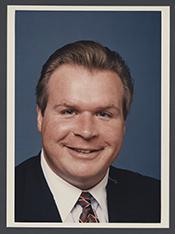
Mr. Speaker, I thank my colleague from West Virginia for yielding me this time. At the outset, let me say my affection and admiration for my colleague from North Carolina, the chairman of this…
Mr. Speaker, I thank my colleague from West Virginia for yielding me this time. At the outset, let me say my affection and admiration for my colleague from North Carolina, the chairman of this Subcommittee on Interior of the Committee on Appropriations, knows no bounds. There is much to praise in this bill; and yet as this legislation came together in conference, an indignity has been thrust upon this body and the legislative branch of government.
What we witness tonight, my colleagues, is the triumph of the unelected, where legislative staffers, along with staffers from the executive branch, presume to know more than the duly elected officials of this body. And so in a closed conference, in 15 minutes' time, a provision is added to this bill which passed neither the House nor the other body and is thrust upon us at the last nanoseconds of the 11th hour in a cynical attempt to say, Come on, we dare you. There is needed firefighting money in here. We dare you to vote against it.
Mr. Speaker, there may be some who interpret this as a turf battle. That would be a serious mistake. This is not a turf battle. This cuts to the core of our legislative branch and our system of coequal and separate branches of government.
We cannot allow the First Americans to remain the Forgotten Americans. This House has taken action time and again to reaffirm the rights of Native Americans on the trust fund accounts. I will grant every Member of this body it is a difficult issue. But, Mr. Speaker, the fact remains those of us on the Committee on Resources that have the jurisdiction, many of us will meet in my home State of Arizona Monday as I will chair a field hearing on this very topic. And now what we are seeing happen, if passage of this legislation takes place tonight, it renders those hearings a moot point. It silences the First Americans. It assures they remain the Forgotten Americans.
Vote ``no'' on this bill. It is the wrong thing to do.
Announcement by the Speaker Pro Tempore
Bill Text
3 versions available
        [Congressional Bills 108th Congress]
[From the U.S. Government Publishing Office]
[H. Con. Res. 302 Referred in Senate (RFS)]

1st Session
H. CON. RES. 302

_______________________________________________________________________

IN THE SENATE OF THE UNITED STATES

November 4, 2003

Received and referred to the Committee on Foreign Relations

_______________________________________________________________________

CONCURRENT RESOLUTION

Expressing the sense of Congress welcoming President Chen Shui-bian of
Taiwan to the United States on October 31, 2003.

Whereas for more than 50 years an iron-clad relationship has existed between the
United States and Taiwan which has been of enormous economic, cultural,
and strategic benefit to both nations;
Whereas the United States and Taiwan share common ideals and a clear vision for
the 21st century, where freedom and democracy are the foundations for
peace, prosperity, and progress;
Whereas Taiwan has demonstrated its unequivocal support for human rights and a
commitment to the democratic ideals of freedom of speech, freedom of the
press, rule of law, and free and fair elections routinely held in a
multiparty system;
Whereas the upcoming October 31, 2003, visit to the United States of Taiwan's
President Chen Shui-bian is another significant step in broadening and
deepening the friendship and cooperation between the United States and
Taiwan;
Whereas on October 31, 2003, Taiwan's President Chen Shui-bian will be presented
an award by the International League for Human Rights for his efforts in
promoting tolerance, democracy, and human rights; and
Whereas Taiwan's President Chen Shui-bian will bring a strong message from the
Taiwanese people that Taiwan will cooperate and support the United
States campaign against international terrorism and efforts to rebuild
and bring democracy and stability to Afghanistan and Iraq: Now,
therefore, be it
Resolved by the House of Representatives (the Senate concurring),
That Congress--
(1) offers its warmest welcome to President Chen Shui-bian
of Taiwan upon his visit to the United States on October 31,
2003;
(2) asks President Chen Shui-bian to communicate to the
people of Taiwan the support of Congress and of the American
people;
(3) recognizes that the visit of President Chen Shui-bian
of Taiwan to the United States is a significant step toward
broadening and deepening the friendship and cooperation between
the United States and Taiwan;
(4) congratulates President Chen Shui-bian on his receiving
the Human Rights Award from the International League for Human
Rights; and
(5) thanks President Chen Shui-bian and the government and
people of Taiwan for their humanitarian and medical assistance
in Afghanistan and post-war Iraq as well as for their
willingness to contribute to the peace, stability, and
prosperity of the Middle East.

Passed the House of Representatives October 30, 2003.

Attest:

JEFF TRANDAHL,

Clerk.