Mr. Speaker, I ask unanimous consent that all Members may have 5 legislative days within which to revise and extend their remarks on the topic of my 5-minute speech, and that I may include extraneous…
Mr. Speaker, I ask unanimous consent that all Members may have 5 legislative days within which to revise and extend their remarks on the topic of my 5-minute speech, and that I may include extraneous material on the same.
Mr. Speaker, I rise today to call the attention of my colleagues to my serious concern with the lack of the rule of law in Russia.
Fifteen years ago, all of us watched with great excitement and great optimism as the Communist system came to a resounding close while the Russian people and the government went through an historic transformation. We saw President Boris Yeltsin stand up against tanks in the streets of Moscow, and we watched as Russia moved to embrace Democratic change.
Mr. Speaker, unfortunately, in the last few years, we have watched as the government of Mr. Putin has slowly but surely pulled back from Democratic change. Freedom of the press has increasingly declined, particularly in the realm of television. Elections have been less open and less Democratic. The rule of law has been proscribed by government regulation. Increasingly, government control has restricted the freedoms that had just begun to blossom in post-Soviet Russia.
Mr. Speaker, the most recent, and in many ways the most dramatic, example of this decline of the rule of law in Russia has been the Russian government's political prosecution and persecution of Mikhail Khodorkovsky, the former chairman of Yuko Oil, one of Russia's largest companies, and the one that had gone the farthest in moving towards transparent western market-oriented business practices. It was the Russian company which had made the greatest progress in corporate transparency. The company was on the verge of an unprecedented business deal with Western oil companies.
The Russian prosecutors, clearly at the demand of the political leadership, initiated a political prosecution of Mr. Khodorkovsky. He was arrested last summer by a mob of armed security forces as his plane landed at a Siberian airfield. Since that time, he has been held in a Russian jail. He has been limited in his contact with his own attorneys, he is not permitted to communicate with the outside world, and he appears in court in a steel cage.
This treatment of an individual who at this point has a tax dispute with the Putin regime violates all principles of due process and the rule of law.
Mr. Speaker, I am calling attention today of our colleagues in the Congress to this decline of civil and human rights in Russia. Together with my distinguished colleague, the gentleman from California (Mr. Cox), we have established the Russia Democracy Caucus to work for the development of the rule of law and the consolidation of civil and human rights in Russia.
Mr. Speaker, a number of my colleagues will be submitting their statements joining me in deploring the rollback of freedom and civil rights in Russia during recent years.
Mr. Speaker, last month, on a visit to Moscow, I met with Ambassador Alexander Vershbow and other embassy officials to get an update on the political situation in that country. I also met with legal experts and human rights groups who provided a grim account of the recurring threats to individual and political freedoms that regrettably harkens back to the old Soviet days.
Respect for human rights is the cornerstone of a civilized society. Even the Russian constitution recognizes this fact, as provided in Article 2:
The individual and the individual's rights and freedoms
represent the highest value. It is the duty of the state to
recognize, respect, and protect the rights and freedoms of
the individual and the citizen.
Our own commitment to human rights as it relates to Russia and other former Communist countries is manifest in the Helsinki Final Act in 1975, in which we effectively utilized the so-called ``Basket Three'' of that document to publicly hold the Soviet Union accountable for its violations of human rights and civil liberties.
For a brief moment, during President Yeltsin's presidency, we thought indeed there would be freedom and liberty in Russia. It was during this time, the G-8 member nations allowed Russia to participate as an ad-hoc member, so long as it adhered to the principles of Constitutional democracy, rule of law and human rights. My colleague Chris Cox and Senator Joe Biden have spoken out recently about whether Russia, under President Vladimir Putin, deserves a place at the G-8 table and indeed if that country should host the next session in 2006.
I would also remind my colleagues that Resolution H. Con. Res. 336, which enumerates these shortfalls and recommends that Russia be denied participation in G-8 sessions until it demonstrates its worthiness as a Democratic state, recently passed the House International Relations Committee. A similar measure is cosponsored by Senators McCain and Lieberman.
Mr. Speaker, our own State Department has documented what we have learned from a variety of sources concerning the deteriorating situation as it relates to rule of law, freedom of expression, and human rights in Russia. Over the past year, reports from human rights groups, NGOs, the European Union, legal scholars, and wide spread media reporting of conditions in Russia bear out what our own government has reported. On Secretary of State's last trip to Russia, he made it a point to voice his concerns directly to President Putin and publicly expressed them through the limited media outlets that exist in Moscow.
There is much that concerns me about Russia today. In view of the time limitation I cannot address all of them, but I would like to mention a few that I believe deserve urgent attention.
First is the case against Mr. Mikhail Khodorkovsky, chairman of YUKOS Oil Company. This week Mr. Khodorkovsky goes to trail in a court that is hardly known for its integrity or independence. Virtually all of the legal entities and courts outside Russia have ruled against the Russian government, generally finding the cases lack in legal merit and being political in nature. Little wonder Mr. Khodorkovsky is already a condemned man. Hardly anyone inside or outside Russia seriously believes he will receive a fair and just trial.
Since his arbitrary arrest last fall by masked gunmen and detention, Mr. Khodorkovsky has been subjected to numerous violations of his due process rights. The Kremlin has directed the case against him for purposes that are widely seen as political, not criminal. Indeed the case is being held in the notoriously corrupt Basmanny Court, which is controlled by Kremlin and Russia security forces. His corporate and lawyers' offices, foundations, daughter's school have been repeatedly searched without warrant or warning.
The relentless attacks on the YUKOS Company and efforts to cripple the once prominent and Western-oriented company raises questions about the true motives by the authorities involved. It is one thing to bring a case against Mr. Khodorkovsky and other officers in the company, depending on the charges brought against them. But clearly the Kremlin has other motives as well, not the least of which is to bring about a stake takeover or ownership of the once thriving private company.
Mr. Speaker, I draw the attention of my colleagues to Senate Res. 258, which expresses concern about the circumstances surrounding Mr. Khodorkovsky's case, and which has passed the full Senate.
My second concern has to do with state ownership and control of the media in Russia. Under President Boris Yeltsin, privately owned and independently operated media began to take root and for the first time citizens of that country could read and view objectively reported news and even criticism of government officials, even the president himself.
The vanguard of this new era was Mr. Vladimir Gusinky, an entrepreneur who had the genius of a William Randolph Hearst and the resources to build a media empire worthy of any in the West. However, Boris Yeltsin's successor had no tolerance and certainly not the temperament to allow any criticism of him or his politics.
The result, as we have seen in subsequent events, was predictable. An angry Vladimir Putin, utilizing extralegal means, forced a shutdown of Mr. Gusinsky's media outlets, save one--the prominent and popular NTV television station, which was taken over by the
state-owned Gazprom and has been under Kremlin influence ever since. Just a few weeks ago, the one newscaster on NTV who dared to lightly criticize government officials was sacked on orders from intelligence agencies inside the Kremlin. Mr. Leonid Parfyonov, a popular host of a Sunday-night political news program and one of the most independent voices in Russia, apparently crossed over the line on the Kremlin- directed censorship.
I was personally well acquainted with Mr. Gusinsky, who today operates a media conglomerate in Israel. Not only did he lose his media businesses in Russia, but he suffered personal hardship and humiliation. President Putin ordered raids by masked gunmen on his business headquarters and the arrest and detention in Moscow's infamous Butyrskaya prison, and eventually forced him into exile. Since then Russian authorities have sought his extradition by way of requests to Interpol, and the courts of Spain and Greece. In every single case, the requests were denied for lacking in legal merit and being political in nature.
Finally, I would like to address the issue of expropriation of property. There is little secret that many of Russia's crown jewels, its natural resources, were acquired by individuals during the privatization that occurred in the early 1990s. Whatever the circumstances and the controversial amounts that were paid for these acquisitions, they were conducted within the laws that existed at the time. Yet there are recurring threats, some outright as in the case of YUKOS and others implied, that the government may renationalize these assets.
This poses several disturbing questions. One, of course, is the overall affect on direct foreign investment in the country. At the moment, Russia's economy is performing well only because of the sizable revenue that is pouring in from the exportation of energy, primarily oil and gas. Foreign investment and Western business cooperation, which is necessary if Russia is to truly develop its industrial and exporting sectors, will be jeopardized if the Kremlin-directed assaults on these enterprises is allowed to continue.
Other questions concern the Russian government's official position with regard to these privatized businesses, most of which are in the resource-based sectors. At the moment, the government policy is, if anything, arbitrary and unpredictable, if not outright threatening to the privatized companies involved. At best, President Putin has sent conflicting messages by making reassuring statements, on the one hand, while authorizing contrary actions on the other.
A case in point is the SPI Group, which acquired production and distribution rights to Russia's most famous vodka trademarks (including Stolichnaya). In 1997, a group of investors, headed by Mr. Yuri Shefler, bought the rights to 43 Russian vodka brands from the original investors who acquired the production and trademark rights during the privatization of this and other resource-based sectors. They assumed a $50 million debt and promptly invested another $20 million, and today it is a well managed and successful business.
SPI Group has registered the trademarks for its vodka brands in more than 150 countries. It has a 10 year distribution deal with Allied Domecq in the United States and equally well established distributors throughout Europe. Yet the Russian authorities, principally Rospatent and the Ministry of Agriculture, have aggressively challenged the SPI Groups rights inside Russia and elsewhere, and while court rulings have been mixed in Russia they have been uniformly in favor, of the SPI Group outside the country. Among the more prominent cases, ruling in favor of the SPI Group, occurred in Germany, a Rotterdam decision affecting the Benelux countries, France, and more recently in Kazakhstan.
Mr. speaker, what I have recounted here is limited simply because there is no time to go on further. But it underscores the disturbing trends in Russia today.
I have always counted myself as a friend of Russia and have expressed on many occasions my gratitude for the huge sacrifices made by the people of the country to halt the march of Nazism in Europe. It greatly saddens me, therefore, to witness the unraveling of democratic freedoms in that country today. The Russia democracy Caucus, cochaired by Christopher Cox and myself, is fully committed to helping guide Russia through this period so that it can be counted among the truly great democracies of the world.
Mr. Speaker, in conclusion to this discussion of concerns about the rule of law and related problems, there is an urgent humanitarian issue that I want to bring to your attention. That is the grave medical condition of Mr. Platon Lebedev, a prominent businessman who, along with his partner, Mr. Mikhail Khodorovosky, is in detention under rather inhuman conditions in Moscow. The gravity of Mr. Lebedev's deteriorating health and the absolute neglect of his condition by the Russian authorities demands international outrage and it underscores why I, along with many of our colleagues, have asked for this time on the floor today.
Last week, a dozen of the leading human rights activists in Russia representing major human rights groups issued a statement critical of the treatment by Russian authorities of Platon Lebedev, the head of Group Menatep, the parent company of YUKOS Oil.
Mr. Lebedev has been detained and jailed for nearly a year and has not been allowed to have an independent medical examination or treatment, despite the fact that credible Russian and foreign experts have confirmed that he has severe and life-threatening ailments. In fact Mr. Lebedev was originally taken into custody from a hospital bed and in December 2003 had to have an ambulance take him from a court hearing.
Russian human rights activists point out that the denial of appropriate medical attention violates several articles of Russian law that indicate that detainees may receive medical treatment at medical establishments should this be required by the detainees condition. It is clear that Russia is not only violating universal human rights and the rule of law but their own laws.
Let me read a quote from the recent statement:
It is out conviction that in order to protect the sacred
human rights--the right to live and the right to a fair
trial--the court must change the custodial restraint for
Platon Lebedev to a format that does not involve prison
detention so that an independent medical examination and
full-fledged treatment can be provided immediately.
Mr. Speaker, the treatment of Platon Lebedev is clear evidence that the Russian legal system is broken.
Mr. Speaker, I am submitting for the Record a series of articles and extraneous material on the lack of the rule of law in Russia. These articles are from the Washington Post, the Wall Street Journal, and the International Herald Tribune.
[From the Washington Post, July 13, 2004]
Same Old Ruthless Russia
(By Michael R. Caputo)
American journalist Paul Klebnikov was shot to death
outside my office building on Friday. At least it used to be
my office. I worked with Klebnikov, Forbes magazine's
maverick correspondent, several times in the past 10 years,
sometimes in Moscow, sometimes in New York. Out paths crossed
often through one of Russia's wildest decades.
Eight years after we first met as he covered Boris
Yeltsin's 1996 presidential election, his murder brings
clarity: Nothing has changed. Brutal criminals still run amok
in Russia, operating with impunity and no fear of
prosecution.
Klebnikov had high hopes for Russia and was determined to
urge democracy along. He grew up in the United Sates, cradled
in the close-knot Russian American community; his Russian
skills were perfect and his devotion to the culture ran deep.
He blossomed in journalism just as the communist bloc
crumbled, and his unique understanding of ``the story'' in
the region propelled his career.
As we toured the Russian countryside eight years ago, he
talked to peasants waiting in line to vote and grilled me
with questions, too. Had I run across billionaire Boris
Berezovsky in my work with the Yeltsin administration? I
hadn't. Klebnikov had recently been scratching the surface of
Berezovsky's brazen get-rich-quick schemes. He was convinced
there was much more to the oligarch. He was in town to
investigate him as well as to cover the elections.
Berezovsky was one of several super-wealthy men who had
back doors to Yeltsin's Kremlin. His popularity waxed and
waned, but as he amassed wealth he gained unparalleled power.
Experienced expatriates in Russia shared an essential rule:
Don't cross these brutal billionaires, ever, or you're likely
to go home in a box.
Klebnikov knew this well. In Russia the mafia kills every
day. He knew Paul Tatum, the Oklahoma entrepreneur who ran
afoul of Moscow's mafia and was shot dead just a few hundred
yards from a hotel he had founded and had fought against
Mayor Yuri Luzhkov to control. After Tatum's murder. Hizzoner
promised swift justice. We're still waiting.
Tatum had led a loud life in Moscow. Klebnikov told me he
knew Tatum's battle with city ``authorities'' was never a
sound strategy for survival. The Tatum murder shook him, but
he was determined to go forward with what grew into a series
of articles exposing Russian corruption. After all, he was a
reporter, not a businessman.
As a journalist, Klebnikov was the real deal. He was based
in New York through the 1990s but had more contacts in Moscow
than most reporters on the ground full time.
During his frequent trips to the region he accomplished
more meetings before lunch than many of us could pull off in
a week.
Klebnikov listened as intently to the griping of a
pensioner as he did to the drone of politicians. He was quick
to the point, wasted no time, and drove to the center of his
story like a tank. Some thought he was bold, others thought
him brash, but everyone was reading.
``Godfather of the Kremlin,'' his December 1996 Forbes
cover story on Berezovsky, threw new light on the doings of
Russia's oligarchs. The story grew into Klebnikov's first
book,
with the same title, published in 2001. The exiled
industrialist took the magazine to court in London, and
eventually Forbes recanted accusations of violence. Those of
us who lived in Moscow during Berezovsky's heyday still
believe.
His follow-up stories on Russian industrialists were always
fair and thorough, but he didn't make many friends in the
country. Soon after Vladimir Putin stepped into the
presidency, Klebnikov and I met in New York. I told him he
needed to watch his back with so much change afoot. He
shrugged and said he was uniquely positioned to get to the
heart of corruption in Russia. ``Who else is going to do
it?'' he asked. I had no answer.
When Forbes announced Klebnikov would lead its new Russian
publications and relocate to Moscow, I immediately feared for
his safety. A few months later he was dead. I think about
him, sprawled bleeding on the sidewalk, coughing his final
words to a reporter colleague who found him dying.
Russia hasn't changed in the past decade and at this
trajectory it won't be truly civilized for generations. Those
who killed Klebnikov are killing today, plan to kill
tomorrow, and know they'll roam free to kill for years to
come. Hellbent on getting rich, they have no boundaries.
Raised in a communist world devoid of morals, they have no
soul.
There is no valid reason why a nation so tolerant--even
complicit--in organized crime should stand on par with world
leaders in groups such as the World Trade Organization. Putin
must stand as the guarantor of media freedom. And the Bush
administration must demand results in this murder
investigation and require the assassins and their bosses be
detected, arrested, tried and punished to the fullest extent
of the law.
Or will it let Paul Klebnikov, like Paul Tatum, be just
another footnote in Russia's disingenuous flirtation with
world-class rule of law? We're waiting.
 Rep. Tom Lantos (D-CA)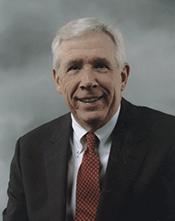
 +1
+1