Celebrating 10 years of majority rule in the Republic of South Africa and recognizing the momentous social and economic achievements of South Africa since the institution of democracy in that country.
Legislative Activity
Stay on top of the latest movement without scrolling through every action
Received in the Senate and referred to the Committee on Foreign Relations.
September 7, 2004
View full timeline
Introduced in House
May 20, 2004
Referred to the House Committee on International Relations.
May 20, 2004
Committee Agreed to Seek Consideration Under Suspension of the Rules, (Amended) by Unanimous Consent.
June 24, 2004
Mr. Leach moved to suspend the rules and agree to the resolution, as amended.
July 21, 2004 • 7:20 PM
Considered under suspension of the rules. (consideration: CR H6519-6521)
July 21, 2004 • 7:21 PM
DEBATE - The House proceeded with forty minutes of debate on H. Con. Res. 436.
July 21, 2004 • 7:21 PM
At the conclusion of debate, the Yeas and Nays were demanded and ordered. Pursuant to the provisions of clause 8, rule XX, the Chair announced that further proceedings on the motion would be postponed.
July 21, 2004 • 7:42 PM
Considered as unfinished business. (CR H6650-6651)
July 22, 2004 • 6:29 PM
Passed/agreed to in House: On motion to suspend the rules and agree to the resolution, as amended Agreed to by the Yeas and Nays: (2/3 required): 422 - 0 (Roll no. 414).(text: CR 7/21/2004 H6519)
July 22, 2004 • 6:38 PM
On motion to suspend the rules and agree to the resolution, as amended Agreed to by the Yeas and Nays: (2/3 required): 422 - 0 (Roll no. 414). (text: CR 7/21/2004 H6519)
July 22, 2004 • 6:38 PM
Motion to reconsider laid on the table Agreed to without objection.
July 22, 2004 • 6:38 PM
Received in the Senate and referred to the Committee on Foreign Relations.
September 7, 2004
Voting History
1 vote recorded • Roll call available
Floor Debate
24 membersWhat members said about H.Con.Res. 436 on the floor
 JRP
JRP SB
SB PMC
PMC FPS
FPS WMT+19
Floor Debate
24 membersWhat members said about H.Con.Res. 436 on the floor
Mr. Speaker, I would like to thank the gentleman from California (Chairman Thomas) as well for his leadership on the U.S.- Morocco Free Trade Agreement. I am a free trader and believe that free trade…
Mr. Speaker, I would like to thank the gentleman from California (Chairman Thomas) as well for his leadership on the U.S.- Morocco Free Trade Agreement. I am a free trader and believe that free trade helps our Nation and the nations of the world. However, I am deeply concerned about the issue of Western Sahara, and I have had concerns that the U.S. needed to make clear that this free trade agreement covers only the internationally- and the U.S.-recognized borders of Morocco and does not include the disputed territory of Western Sahara. It is my understanding that the language in the conference report makes clear that the free trade agreement does not cover resources, goods, services, or any other entity related to trade that originates in Western Sahara.
I would ask the gentleman, does the U.S.-Morocco Free Trade Agreement cover trade with the disputed territory of Western Sahara?
I yield to the gentleman from Illinois.
I thank the chairman for that clarification.
The following is a letter from USTR making clear that we do not support Morocco's claim over the Western Sahara and the FTA does not recognize or include the Western Sahara.
Executive Office of the President, the United States
Trade Representative,
Washington, DC, July 20, 2004.
Hon. Joseph R. Pitts,
House of Representatives,
Washington, DC.
Dear Congressman Pitts: Thank you for your letter of July
19, 2004, concerning our Free Trade Agreement (FTA) with
Morocco and the status of Western Sahara.
The Administration's position on Western Sahara is clear:
sovereignty of Western Sahara is in dispute, and the United
States fully supports the United Nations' effort to resolve
this issue. The United States and many other countries do not
recognize Moroccan sovereignty over Western Sahara and have
consistently urged the parties to work with the United
Nations to resolve the conflict by peaceful means.
The FTA will cover trade and investment in the territory of
Morocco as recognized internationally, and will not include
Western Sahara. As our Harmonized Tariff Schedule makes
clear, for U.S. Customs purposes, the United States treats
imports from Western Sahara and Morocco differently. Nothing
in the FTA will require us to change this practice. The
Administration will draft the proclamation authorized in the
legislation implementing the FTA (H.R. 4842) to provide
preferential tariff treatment for goods from the territory of
Morocco. Preferential tariff treatment will not be provided
to goods from Western Sahara.
I hope this letter addresses your question regarding the
FTA and the status of Western Sahara. I encourage you to
support the FTA. It will create economic opportunities for
U.S. manufacturing and service firms, workers, and farmers,
and will support economic reforms and foreign investment in
Morocco.
Thank you again for your letter. Please feel free to
contact me should you have further questions.
Sincerely,
Robert B. Zoellick.
Mr. Speaker, thank you for your leadership.
While trade is a vital component to strengthening with the greater Middle East, promoting the spread of democracy is even more so. The Sahrawi are a peaceful pro-Western, pro-democracy people. They want the international community, including the U.N. Security Council and the United States, to uphold its commitment to a free and transparent referendum for self-determination, and it is unacceptable that Morocco has been allowed to prevent that vote from taking place.
During his tenure the former Secretary of State Baker proposed a plan that both parties accepted at first, and the Moroccans accepted the plan, but as soon as the people of Western Sahara accepted they withdrew their support, and I am deeply concerned that the Moroccan government, as patterned, will use this agreement with help from friends in France and others to attempt to increase its exploitation of the resources.
I just want to clarify the statement about the people of Western Sahara. Earlier today someone said that the Sahrawis are terrorists. I take exception to this remark, as the people of Western Sahara, and like many others in North Africa and the Middle East, have actually tried to peacefully solve the conflict. The State Department does not consider the people of Western Sahara to be terrorists. It is a misstatement. It is wrong. It is unproductive in our fight against terrorism to suggest that they are, and our own State Department does not believe the people of Western Sahara are terrorists.
Secondly, I visited there. I visited the refugee camps. I know the people. They are not terrorists. Members of this House should go to the refugee camps. They should see the terrible malnutrition of the people, the lack of health care, the refugee camps. If they would visit the refugee camps they would know that the information fed to them by supporters is inaccurate.
Mr. Chairman, I am voting for the FTA because there is protection for the people and resources of Western Sahara and because I believe the free trade will help the people of Morocco and those of surrounding countries.
The following is a series of items that would make clear that this agreement should not be abused by Morocco to profit off of land that it has no legitimate claim to.
Western Sahara--Advisory Opinion of 16 October 1975
International Court of Justice
In its Advisory Opinion which the General Assembly of the
United Nations had requested on two questions concerning
Western Sahara, the Court,
With regard to Question I, ``Was Western Sahara (Rio de Oro
and Sakiet El Hamra) at the time of colonization by Spain a
territory belonging to no one (terra nullius)?'',
--decided by 13 votes to 3 to comply with the request for
an advisory opinion;
--was unanimously of opinion that Western Sahara (Rio de
Oro and Sakiet El Hamra) at the time of colonization by Spain
was not a territory belonging to no one (terra nullius).
With regard to Question II, ``What were the legal ties
between this territory and the Kingdom of Morocco and the
Mauritanian entity?'', the Court
--decided by 14 votes to 2 to comply with the request for
an advisory opinion;
--was of opinion, by 14 votes to 2, that there were legal
ties between this territory and the Kingdom of Morocco of the
kinds indicated in the penultimate paragraph of the Advisory
Opinion;
--was of opinion, by 15 votes to 1, that there were legal
ties between this territory
and the Mauritanian entity of the kinds indicated in the
penultimate paragraph of the Advisory Opinion.
The penultimate paragraph of the Advisory Opinion was to
the effect that:
The materials and information presented to the Court show
the existence, at the time of Spanish colonization, of legal
ties of allegiance between the Sultan of Morocco and some of
the tribes living in the territory of Western Sahara. They
equally show the existence of rights, including some rights
relating to the land, which constituted legal ties between
the Mauritanian entity, as understood by the Court, and the
territory of Western Sahara. On the other hand, the Court's
conclusion is that the materials and information presented to
it do not establish any tie of territorial sovereignty
between the territory of Western Sahara and the Kingdom of
Morocco or the Mauritanian entity. Thus the Court has not
found legal ties of such a nature as might affect the
application of General Assembly resolution 1514 (XV) in the
decolonization of Western Sahara and, in particular, of the
principle of self-determination through the free and genuine
expression of the will of the peoples of the Territory.
For these proceedings the Court was composed as follows:
President Lachs; Vice-President Ammoun; Judges Forster, Gros,
Bengzon, Petren, Onyeama, Dillard, Ignacio-Pinto, de Castro,
Morozov, Jimenez de Arechaga, Sir Humphrey Waldock, Nagendra
Singh and Ruda; Judge ad hoc Boni.
Judges Gros, Ignacio-Pinto and Nagendra Singh appended
declarations to the Advisory Opinion; Vice-President Ammoun
and Judges Forster, Petren, Dillard, de Castro and Boni
appended separate opinions, and Judge Ruda a dissenting
opinion.
In these declarations and opinions the judges concerned
make clear and explain their positions.
Course of the Proceedings
(paras. 1-13 of Advisory Opinion)
The Court first recalls that the General Assembly of the
United Nations decided to submit two questions for the
Court's advisory opinion by resolution 3292 (XXIX) adopted on
13 December 1974 and received in the Registry on 21 December.
It retraces the subsequent steps in the proceedings,
including the transmission of a dossier of documents by the
Secretary-General of the United Nations (Statute, Art. 65,
para. 2) and the presentation of written statements or
letters and/or oral statements by 14 States, including
Algeria, Mauritania, Morocco, Spain and Zaire (Statute, Art.
66).
Mauritania and Morocco each asked to be authorized to
choose a judge ad hoc to sit in the proceedings. By an Order
of 22 May 1975 (1.C.J. Reports 1975, p. 6), the Court found
that Morocco was entitled under Articles 31 and 68 of the
Statute and Article 89 of the Rules of Court to choose a
person to sit as judge ad hoc, but that, in the case of
Mauritania, the conditions for the application of those
Articles had not been satisfied. At the same time the Court
stated that those conclusions in no way prejudged its views
with regard to the questions referred to it or any other
question which might fall to be decided, including those of
its competence to give an advisory opinion and the propriety
of exercising that competence.
Competence of the Court
(paras. 14-22 of Advisory Opinion)
Under Article 65, paragraph 1, of the Statute, the Court
may give an advisory opinion on any legal question at the
request of any duly authorized body. The Court notes that the
General Assembly of the United Nations is suitably authorized
by Article 96, paragraph 1, of the Charter and that the two
questions submitted are framed in terms of law and raise
problems of international law. They are in principle
questions of a legal character, even if they also embody
questions of fact, and even if they do not call upon the
Court to pronounce on existing rights and obligations. The
Court is accordingly competent to entertain the request.
Propriety of Giving an Advisory Opinion
(paras. 23-74 of Advisory Opinion)
Spain put forward objections which in its view would render
the giving of an opinion incompatible with the Court's
judicial character. It referred in the first place to the
fact that it had not given its consent to the Court's
adjudicating upon the questions submitted. It maintained (a)
that the subject of the questions was substantially identical
to that of a dispute concerning Western Sahara which Morocco,
in September 1974, had invited it to submit jointly to the
Court, a proposal which it had refused: the advisory
jurisdiction was therefore being used to circumvent the
principle that the Court has no jurisdiction to settle a
dispute without the consent of the parties; (b) that the case
involved a dispute concerning the attribution of territorial
sovereignty over Western Sahara and that the consent of
States was always necessary for the adjudication of such
disputes; (c) that in the circumstances of the case the Court
could not fulfill the requirements of good administration of
justice with regard to the determination of the facts. The
Court considers (a) that the General Assembly, while noting
that a legal controversy over the status of Western Sahara
had arisen during its discussions, did not have the object of
bringing before the Court a dispute or legal controversy with
a view to its subsequent peaceful settlement, but sought an
advisory opinion which would be of assistance in the exercise
of its functions concerning the decolonization of the
territory, hence the legal position of Spain could not be
compromised by the Court's answers to the questions
submitted; (b) that those questions do not call upon the
Court to adjudicate on existing territorial rights; (c) that
it has been placed in possession of sufficient information
and evidence.
Spain suggested in the second place that the questions
submitted to the Court were academic and devoid of purpose or
practical effect, in that the United Nations had already
settled the method to be followed for the decolonization of
Western Sahara, namely a consultation of the indigenous
population by means of a referendum to be conducted by Spain
under United Nations auspices. The Court examines the
resolutions adopted by the General Assembly on the subject,
from resolution 1514 (XV) of 14 December 1960, the
Declaration on the Granting of Independence to Colonial
Countries and Peoples, to resolution 3292 (XXIX) on Western
Sahara, embodying the request for advisory opinion. It
concludes that the decolonization process envisaged by the
General Assembly is one which will respect the right of the
population of Western Sahara to determine their future
political status by their own freely expressed will. This
right to self-determination, which is not affected by the
request for advisory opinion and constitutes a basic
assumption of the questions put to the Court, leaves the
General Assembly a measure of discretion with respect to the
forms and procedures by which it is to be realized. The
Advisory Opinion will thus furnish the Assembly with elements
of a legal character relevant to that further discussion of
the problem to which resolution 3292 (XXIX) alludes.
Consequently the Court finds no compelling reason for
refusing to give a reply to the two questions submitted to it
in the request for advisory opinion.
Question I: ``Was Western Sahara (Rio de Oro and Sakiet El
Hamra) at the Time of Colonization by Spain a Territory
Belonging to No One (terra nullius)?''
(paras. 75-83 of Advisory Opinion)
For the purposes of the Advisory Opinion, the ``time of
colonization by Spain'' may be considered as the period
beginning in 1884, when Spain proclaimed its protectorate
over the Rio de Oro. It is therefore by reference to the law
in force at that period that the legal concept of terra
nullius must be interpreted. In law, ``occupation'' was a
means of peaceably acquiring sovereignty over territory
otherwise than by cession or succession; it was a cardinal
condition of a valid ``occupation'' that the territory should
be terra nullius. According to the State practice of that
period, territories inhabited by tribes or peoples having a
social and political organization were not regarded as terrae
nullius: in their case sovereignty was not generally
considered as effected through occupation, but through
agreements concluded with local rulers. The information
furnished to the Court shows (a) that at the time of
colonization Western Sahara was inhabited by peoples which,
if nomadic, were socially and politically organized in tribes
and under chiefs competent to represent them; (b) that Spain
did not proceed upon the basis that it was establishing its
sovereignty over terrae nullius: thus in his Order of 26
December 1884 the King of Spain proclaimed that he was
taking the Rio de Oro under his protection on the basis of
agreements entered into with the chiefs of local tribes.
The Court therefore gives a negative answer to Question I.
In accordance with the terms of the request for advisory
opinion, ``if the answer to the first question is in the
negative'', the Court is to reply to Question II.
Question II: ``What Were the Legal Ties of This Territory
with the Kingdom of Morocco and the Mauritanian Entity?''
(paras. 84-161 of Advisory Opinion)
The meaning of the words ``legal ties'' has to be sought in
the object and purpose of resolution 3292 (XXIX) of the
United Nations General Assembly. It appears to the Court that
they must be understood as referring to such legal ties as
may affect the policy to be followed in the decolonization of
Western Sahara. The Court cannot accept the view that the
ties in question could be limited to ties established
directly with the territory and without reference to the
people who may be found in it. At the time of its
colonization the territory had a sparse population that for
the most part consisted of nomadic tribes the members of
which traversed the desert on more or less regular routes,
sometimes reaching as far as southern Morocco or regions of
present-day Mauritania Algeria or other States. These tribes
were of the Islamic faith.
Morocco (paragraphs 90-129 of the Advisory Opinion)
presented its claim to legal ties with Western Sahara as a
claim to ties of sovereignty on the ground of an alleged
immemorial possession of the territory and an uninterrupted
exercise of authority. In the view of the Court, however,
what must be of decisive importance in determining its answer
to Question II must be evidence directly relating to
effective display of authority in Western Sahara at the time
of its colonization by Spain and in the period immediately
preceding. Morocco requests that the Court should take
account of the special structure of the Moroccan State. That
State was founded on the common religious bond of Islam and
on the allegiance of various tribes to the Sultan, through
their caids or sheiks, rather than on the notion of
territory. It consisted partly of what was called the Bled
Makhzen, areas actually subject to the Sultan, and partly of
what was called the Bled
Siba, areas in which the tribes were not submissive to him;
at the relevant period, the areas immediately to the north of
Western Sahara lay within the Bled Siba.
As evidence of its display of sovereignty in Western
Sahara, Morocco invoked alleged acts of internal display of
Moroccan authority, consisting principally of evidence said
to show the allegiance of Saharan caids to the Sultan,
including dahirs and other documents concerning the
appointment of caids, the alleged imposition of Koranic and
other taxes, and acts of military resistance to foreign
penetration of the territory. Morocco also relied on certain
international acts said to constitute recognition by other
States of its sovereignty over the whole or part of Western
Sahara, including (a) certain treaties concluded with Spain,
the United States and Great Britain and Spain between 1767
and 1861, provisions of which dealt inter alia with the
safety of persons shipwrecked on the coast of Wad Noun or its
vicinity, (b) certain bilateral treaties of the late
nineteenth and early twentieth centuries whereby Great
Britain, Spain, France and Germany were said to have
recognized that Moroccan sovereignty extended as far south as
Cape Bojador or the boundary of the Rio de Oro.
Having considered this evidence and the observations of the
other States which took part in the proceedings, the Court
finds that neither the internal nor the international acts
relied upon by Morocco indicate the existence at the relevant
period of either the existence or the international
recognition of legal ties of territorial sovereignty between
Western Sahara and the Moroccan State. Even taking account of
the specific structure of that State, they do not show that
Morocco displayed any effective and exclusive State activity
in Western Sahara. They do, however, provide indications that
a legal tie of allegiance existed at the relevant period
between the Sultan and some, but only some, of the nomadic
peoples of the territory, through Tekna caids of the Noun
region, and they show that the Sultan displayed, and was
recognized by other States to possess, some authority or
influence with respect to those tribes.
The term ``Mauritanian entity'' (paragraphs 139-152 of the
Advisory Opinion) was first employed during the session of
the General Assembly in 1974 at which resolution 3292 (XXIX),
requesting an advisory opinion of the Court, was adopted. It
denotes the cultural, geographical and social entity within
which the Islamic Republic of Mauritania was to be created.
According to Mauritania, that entity, at the relevant period,
was the Bilad Shinguitti or Shinguitti country, a distinct
human unit, characterized by a common language, way of life,
religion and system of laws, featuring two types of political
authority: emirates and tribal groups.
Expressly recognizing that these emirates and tribes did
not constitute a State, Mauritania suggested that the
concepts of ``nation'' and of ``people'' would be the most
appropriate to explain the position of the Shinguitti people
at the time of colonization. At that period, according to
Mauritania, the Mauritanian entity extended from the Senegal
river to the Wad Sakiet El Hamra. The territory at present
under Spanish administration and the present territory of the
Islamic Republic of Mauritania thus together constituted
indissociable parts of a single entity and had legal ties
with one another.
The information before the Court discloses that, while
there existed among them many ties of a racial, linguistic,
religious, cultural and economic nature, the emirates and
many of the tribes in the entity were independent in relation
to one another; they had no common institutions or organs.
The Mauritanian entity therefore did not have the character
of a personality or corporate entity distinct from the
several emirates or tribes which comprised it. The Court
concludes that at the time of colonization by Spain there did
not exist between the territory of Western Sahara and the
Mauritanian entity any tie of sovereignty, or of allegiance
of tribes, or of simple inclusion in the same legal entity.
Nevertheless, the General Assembly does not appear to have so
framed Question II as to confine the question exclusively to
those legal ties which imply territorial sovereignty, which
would be to disregard the possible relevance of other legal
ties to the decolonization process. The Court considers that,
in the relevant period, the nomadic peoples of the Shinguitti
country possessed rights, including some rights relating to
the lands through which they migrated. These rights
constituted legal ties between Western Sahara and the
Mauritanian entity. They were ties which knew no frontier
between the territories and were vital to the very
maintenance of life in the region.
Morocco and Mauritania both laid stress on the overlapping
character of the respective legal ties which they claimed
Western Sahara to have had with them at the time of
colonization (paragraphs 153-160 of the Advisory Opinion).
Although their views appeared to have evolved considerably in
that respect, the two States both stated at the end of the
proceedings that there was a north appertaining to Morocco
and a south appertaining to Mauritania without any
geographical void in between, but with some overlapping as a
result of the intersection of nomadic routes. The Court
confines itself to noting that this geographical overlapping
indicates the difficulty of disentangling the various
relationships existing in the Western Sahara region at the
time of colonization.
For these reasons, the Court (paragraphs 162 and 163 of the
Advisory Opinion) gives the replies indicated on pages 1 and
2 above.
[From Reuters News Service, Jan. 13, 2004]
Sardines and Sovereignty in Western Sahara
(By Eileen Byrne)
Laayoune, Western Sahara.--On trawlers at the quayside near
Laayoune, the main city in Moroccan-controlled Western
Sahara, the crew unload sardines in wicker baskets thrown
from hand to hand.
The traditional baskets are misleading, because the yield
of sardines, octopus and squid from the Western Saharan ports
of Laayoune, Boujdour and Dakhla has come to represent more
than 60 percent of Morocco's total annual fisheries yield of
almost one million tons. With sovereignty over the Western
Sahara still in dispute, this is a politically significant
catch.
The uncertainty about the future of this vast, mainly
desert territory in the northwest corner of Africa puts a
dampener, for now, on investment in tourism for winter sun-
seekers, officials in Laayoune admit.
But against the backdrop of diplomatic stalemate, as the
United Nations strives for a solution to the dispute between
Morocco and the Polisario separatist movement, Morocco is
keen to show that the regional economy is developing apace.
The fishing sector is one area where the authorities can
point to significant growth, always under the firm guiding
hand of the central government.
southern-most subjects
Claiming Western Sahara as its historic ``southern
provinces,'' Morocco controls most of the territory.
The Polisario movement, based across the border in Algeria,
sees the future of the area as an independent state, governed
by its Saharan Arab inhabitants, known as Sahrawis.
Since a 1991 cease-fire, successive U.N. initiatives aimed
at ending a dispute which dates from 1975, and asserting the
Sahrawis' right to ``self-determination,'' have failed.
Advocates of independence for Western Sahara stress the
territory's mineral wealth, with the phosphate mine at Boukra
near Laayoune, and possible offshore oil reserves.
But the Boukra mine is loss-making and subsidized by the
Office Cherifien des Phosphates' more important phosphate
production near Khouribga, according to officials. It is
fishing that generates new jobs and export earnings. Western
Sahara fish products now account for up to seven percent of
Morocco's total export earnings of 85.6 billion dirhams
($9.80 billion).
Morocco declined to renew a fishing accord with the
European Union which until the late 1990s had allowed foreign
boats into Moroccan waters. It has instead spent heavily
since then on port infrastructure in Western Sahara, as
though consolidating its hold on the territory.
Like all other businesses in Western Sahara, the sardine
canning businesses, and plants processing octopus for
Japanese dinner tables, pay no taxes except for payroll
contributions.
They also benefit from the subsidies in the prices of fuel,
power and water with which Morocco woos its southern-most
subjects, who account for less than two percent of the
kingdom's 29.6 million population.
Local investors are often Sahrawi notables who see the
territory's future with Rabat rather than the Polisario and
who play a prominent role in the local economy. A little over
a generation ago, the Sahrawis' lifestyle revolved around
camel and goat rearing. Fish did not figure at all in the
Sahrawi diet and even today few Sahrawis work directly with
fish.
But among new investors, the favorable conditions for
businesses can sometimes encourage over-hasty decisions.
octopus for the japanese
Lining the walls of the conference room in the Laayoune
governor's headquarters, photos showed a visit to Western
Sahara by Morocco's King Mohammed.
Some 40 men, and one woman wrapped in the colored veil worn
in Western Sahara, listened to Morocco's Fisheries Minister
Taieb Rhafes. He had flown down from Rabat to explain why he
was extending a ban on octopus fishing.
With him were representatives of Moroccan banks whose loans
to local investors had encouraged a proliferation of octopus-
freezing plants around Dakhla, from a handful in 1997 to 90
in 2003. The octopuses have been almost wiped out by over-
fishing, the minister explained. It takes only three months
to have an octopus-freezing plant up and running, said an
official.
At Laayoune port, the fishermen are not Sahrawis, but come
from Moroccan ports further north--Agadir, Essaouira and
Safi. A spontaneous movement of sardines southwards, traced
by Morocco's fisheries research institute, the INRH,
coincided with the development of infrastructure in the
Western Sahara. The fishermen followed the fish southwards,
bringing their expertise with them.
Moroccan officials have no separate figures for employment
among Sahrawis and non-Sahrawis. ``There are no two
communities here,'' only Moroccan citizens, Laayoune Governor
Mohamed Rharrabi told Reuters.
With the sea-faring culture far-removed from the
traditional Sahrawi lifestyle, it seems fishing will provide
only some of the jobs needed in the Laayoune region, where
unemployment at the last census was 40 percent among 20 to 24
year-olds.
Denmark Does Not Recognise Moroccan Sovereignty on Western Sahara
[From Sahara Press Service (SPS), June 22, 2004]
COPENHAGEN--Danish Government, does not ``recognise
Moroccan sovereignty on Western Sahara'', declared Danish
Minister for Foreign Affairs, Mr. Per Stig Mfller, in
response to a question he answered before of his Parliament,
according to close sources to the Saharawi representation to
Denmark.
Answering a question asked by Danish Member of the
Parliamentary group Enhedslisten (Union list, in English),
Mr. Soern Soendergaard, the Minister for Foreign Affairs
asserted that his Government ``does not recognise Moroccan
sovereignty on Western Sahara'', considering Moroccan
presence on the territory as illegal and unacceptable.
Regarding the peace plan, elaborated by UN Secretary
General's former Personal Envoy, James Baker, Mr. Mfller
affirmed that this plan remains applicable, recalling that it
``is accepted by Polisario Front and the neighbouring
countries and is unanimously adopted by Security Council in
its resolution 1495''.
Finally, the Head of Danish diplomacy reiterated ``the
support of Denmark of the efforts paid by UN's Secretary
General and his former Personal Envoy aimed at reaching a
just and lasting solution to the conflict'', in Western
Sahara conforming to international legality and by
implementing UN's resolutions.
[From Sahara Press Service (SPS), June 24, 2004]
German PDC/CSU Calls to Immediate Settlement of Western Sahara Conflict
Berlin.--The parliamentary group of German Christian
Democrat Party (PDC/CSU) in Bundestag (Parliament), called on
Thursday to an immediate settlement of Western Sahara's
conflict, exhorting international community to pay more
efforts in defending Saharawi people's ``right to self-
determination''.
In a communique publicised on Thursday, of which SPS
received a copy, PDC/CSU parliamentary Group's spokesperson,
Dr. Christian Ruck, asserted that ``Western Sahara conflict's
settlement tolerates no more delays'', calling international
community to pay more efforts in defending Saharawi people's
``right to self-determination''.
UN Secretary General's former Personal Envoy, James Baker's
resignation ``may push to failure'' the peace plan for self-
determination of Saharawi people, though this plan
constitutes ``a reasonable compromise to realise peace in
this region'', deplored the spokesperson.
Thus, the international community is called to ``prove to
the people of this region, who is still suffering this old
aging conflict, that its right to self-determination remains
a priority for the international community'', which should
also defend UN's principles and international law, so as to
reach a peaceful settlement to this problem, concluded the
communique.
[From Upstream Online & Hardcopy, July 2, 2004]
Svitzer Feels Heat in Western Sahara
(By Barry Morgan)
Fugro affiliate Svitzer has just completed a marine survey
on Kerr-McGee's Boujdour acreage off the disputed territory
of Western Sahara.
Based in Norfolk in the UK, Svitzer is the latest company
to attract brickbats from activists determined to persuade
industry players not to sign deals with Morocco, which
occupies the territory and claims its resources.
Following a one-year extension, KMG's reconnaissance permit
will expire on 29 October. However, its tenure is contested
by the Sahrawi independence militia, which has long fought
for sovereign control, stirring international controversy
over the licencing regime imposed by Rabat.
Fellow UK consultancy Robertson Research International
(RRI) is also poised to complete survey work in Western
Sahara, despite question marks over the legitimacy of UK
corporate involvement in what the UK government calls a
``non-self governing territory'' where it says sovereignty
remains to be determined under UN auspices. For its part, RRI
said it is not directly contracted to Rabat.
Confirmation of RRI's involvement comes hard on the heels
of a campaign launched by Western Sahara support groups
across Europe against exploration and production companies
doing business at the behest of Rabat.
Kerr-McGee, Total and TGS-Nopec were blasted for jumping
the gun on a fragile peace process in which the UN has sought
diplomatic consensus ahead of a referendum on self-
determination for the Sahrawi people.
Activists' primary target of late has been UK-registered
Wessex Exploration, which was recently invited to Rabat to
finalise a preliminary but open-ended deal to analyse onshore
data ahead of an exploration push outlined by Moroccan state
oil company managing director Amina Benkhadra.
Wessex has been warned that ``its reputation would suffer''
if it did not back off or negotiate with the Sahrawi
authorities.
In the meantime, several UK parliamentarians have moved to
seek clarification of the UK government's position on British
companies doing business in Western Sahara. Concerned MPs led
by the Labour Party's David Drew, want to pin down Whitehall
on its attitude.
Drew will shortly table a parliamentary question seeking
greater clarity. Drew now speaks for the Western Sahara
Support Group and two Conservative MPs are expected to join
existing members before they resurface as a parliamentary
force.
The UK Foreign Office insists sovereignty in Western Sahara
remains undetermined as long as UN calls to resolve the
crisis via the so-called Baker Peace Plan remain unheeded.
``We want to push the UK to promote the Plan so that Morocco
withdraws. It should also tell British companies that they
should not get involved in Western Sahara at this time while
the UN mandate remains unimplemented,'' said Drew.
The Foreign Office currently has no problem with companies
winning reconnaissance or E&P licences from Rabat, so long as
the practical effect complies with constraints laid down by
the UN Legal Office on ``disregarding the rights'' of the
Sahrawi people.
This means Kerr-McGee and Total can use TGS-Nopec and Fugro
to shoot seismic as long as rigs are not deployed to confirm
or produce oil finds.
Meanwhile, the acquisition of strategically important
seismic data for Rabat as the licensor remains legal under
the ``look but don't touch'' interpretation of both UK and US
governments. However, a UK official said that ``we'd have to
revisit this opinion if activity got this far. There is no
official endorsement''.
``Right now, our view is that UK companies going into
Western Sahara are on their own and we cannot link them to
the Department of Trade & Industry or offer the support of
any other government mechanisms,'' the source added.
Two UK-registered companies presently stand on both sides
of the fence. Sterling Resources has inherited an exclusive
offshore PSC from AIM-listed Fusion Oil & Gas following a
recent take-over, while Wessex is under increasing pressure
after retaining its exclusive study licence from Rabat.
After expending $600 million on peace-keeping efforts, the
UN system is tiring of the Western Sahara crisis, with UN
Special Envoy James Baker resigning in frustration last
month.
The UN's new representative, Alvaro de Soto, said this week
that he would pursue the same policy as Baker, suggesting no
new ideas to break the deadlock were on the table.
Mr. Speaker, I yield myself such time as I may consume. Mr. Speaker, while the Jordan Free Trade Agreement passed in the last year of the Clinton administration represented a step forward in free…
Mr. Speaker, I yield myself such time as I may consume.
Mr. Speaker, while the Jordan Free Trade Agreement passed in the last year of the Clinton administration represented a step forward in free trade policy, recent free trade agreements provide a template to purposely and purposefully circumvent labor and environmental laws.
To make matters worse, USTR and its pharmaceutical allies are now including language in each trade agreement in front of this body to ban reimportation in all agreements they negotiate. The Morocco Free Trade Agreement is the latest example of this trade, we call it, devolution.
Last week we voted on the U.S.-Australia FTA. While Australian workers, to be sure, enjoy the benefits of good labor laws and the enforcement of those laws, the precedent was the same. Labor and environmental protections were given short shrift in the core text of the agreement, while USTR focused on ensuring the gold standard for the pharmaceutical industry.
It is almost as if the U.S. Government dispatched the USTR again to protect the big drug companies in this country. It is no surprise, with the rest of the record in this body and in this administration in protecting the drug companies on every single issue possible.
But Morocco is not Australia, and I have significant concerns about labor and working conditions there. Like Singapore and Chile, the labor provisions in the Morocco FTA are intentionally unenforceable. Violations of core labor standards cannot be taken to dispute resolution. The commitment to enforce domestic labor laws is subject to remedies weaker than those available for commercial disputes. Again, the commercial part of the agreement is always better, if you will, than the labor part of the agreement, because of this body's and this administration's low regard for worker rights.
This violates the negotiating objective of Fast Track that equivalent remedies should exist for all parts of the agreement.
Further, the ``enforce your own laws'' standard allows countries the opportunity to rewrite and weaken their labor laws to attract investment and seems to be a magnet for corporate interests all over the world to lobby those legislatures and those congresses and parliaments to weaken their own labor law, because they are not international labor organization standards.
Today we will vote on the U.S.-Morocco Free Trade Agreement containing the same flawed policies on labor and on the environment and on reimportation. The same provisions in Morocco are in the Central America Free Trade Agreement. This agreement does not look much different from CAFTA. So for those of you, and I think it is pretty clear a majority of the Bush administration would have brought that agreement up this summer, those of you voting ``no'' on CAFTA, you are really voting for a pretty similar agreement on Morocco.
Every free trade template brought before this House is, as Yogi Berra used to say, like deja vu all over again.
First, the Medicare bill passed this year specifically prohibited the U.S. Government from negotiating lower drug prices for America's seniors and consumers. That was one this Congress and this Bush administration gave to the drug industry. Then the pharmaceutical industry punished American consumers by restricting the volume of drug inventories in Canada to prevent importation to the U.S. Then the U.S. Trade Representative and the administration included language in the Australia Free Trade Agreement that enables pharmaceutical companies to prevent prescription drug reimportation to the detriment of American consumers. Again, another bouquet from this Congress and the Bush administration to the drug industry.
I do not think the connection is anything but obvious when you look at the amount of money the drug industry has given to the Republican Party, given to Republican leadership, and given to President Bush.
Now similar provisions contained in last year's Singapore FTA and in the upcoming CAFTA are in the Morocco FTA bill that will be voted on. Though Morocco is not on the list of countries today covered by pending drug legislation, the importation provisions in this FTA prove this is a precedent, it was in Australia, now it is in this, that the USTR plans to extends this to all future trade agreements.
There is broad support in this House, there is even broader support among seniors and among consumers, because they are not getting campaign contributions from the drug industry, for lowering drug prices and for allowing Americans to purchase safe, affordable drugs from other developed nations.
I urge my colleagues to oppose the administration's back-door effort again to close drug reimportation through trade negotiations. It is important to overcome attempts by free trade proponents to reduce this debate to a choice between free trade and no trade, and frame the discussion around priorities affected by irresponsible trade policy, labor protections, the environment, and affordable pharmaceutical access for all nations.
This is not a debate on whether one supports trade; this is a debate on whether one supports responsible trade. I urge my colleagues to oppose this irresponsible trade agreement.
Mr. Speaker, I reserve the balance of my time.
Mr. Speaker, I yield 4 minutes to the gentleman from Vermont (Mr. Sanders).
Mr. Speaker, I yield 3\1/2\ minutes to the gentleman from Ohio (Mr. Strickland).
Mr. Speaker, I yield 4 minutes to the gentlewoman from Ohio (Ms. Kaptur).
Mr. Speaker, I yield myself such time as I may consume.
I am a little puzzled by this debate. I heard my friend from Texas talk about all the great promises of free trade and how these trade agreements are going to mean so much to our farmers and to our workers and to our businesses. I have heard the gentleman from Illinois (Mr. Crane) say some of the same kinds of things, but I guess I am puzzled because I have heard that throughout my entire 12 years in Congress.
I have heard every trade agreement that comes to the floor, so many speakers say over and over and over again that if we pass these trade agreements, we are going to have more jobs, we are going to do more exports, we are going to have our balance in trade; and look what has happened in the last 12 years.
Our trade deficit when I came to this Congress was about one-fourth of what it is today. We import $1.5 billion more every day than we export. George Bush, Senior, said for every $1 billion of trade, either export or import, it was equivalent to somewhere in the vicinity of 14 or 15 or 16,000 jobs. Well, we have almost a $500 billion trade deficit. Do the math. That is an awful lot of lost jobs.
When we pass these trade agreements, we continue to hemorrhage jobs. We continue to have job loss. We continue to lose manufacturing jobs. One out of six manufacturing jobs in my State has been lost since George Bush took office. We have lost 165 jobs every day of the Bush administration.
So the answer to that is let us do more of what we have already been doing, let us do more tax cuts for the wealthiest people in society, hoping that maybe some of it will trickle down to more jobs, and let us do more trade agreements which ship jobs overseas? People in our communities say these trade agreements are not working.
China, entry of China in WTO; NAFTA; Singapore, Chile, Australia, Morocco, these trade agreements are not translating into more jobs, and people at home know that. In spite of what people in this institution say, in spite of how people in this institution vote, the fact is we continue to lose manufacturing jobs in this country. We have lost millions of jobs in this Bush administration, and then we turn around and do the same thing over and over and over. We make the same promises over and over and over and the results are the same. When we will ever learn?
Mr. Speaker, I reserve the balance of my time.
Mr. Speaker, I yield 2 minutes to the gentleman from Ohio (Mr. Ryan).
Mr. Speaker, I yield myself the balance of my time.
Mr. Speaker, one of the things I have noticed in these debates on these trade issues is there is one common thread. There are many, but there is one really thick common thread that is woven through all these trade agreements, in not just these trade agreements but that is perhaps woven through much of what this Congress has done in the last 3 years, during the Bush years, and that is whatever the drug industry wants, whatever the pharmaceutical companies want.
We know the drug industry is the most profitable industry in America by a factor of three or four times in profitability over other Fortune 500 industries. We also know the drug industry has 600-plus lobbyists, more than one per Member. We also know the drug industry has given more money to President Bush, tens of millions of dollars, and to Republican leadership than any other industry. And we know they have gotten their way.
They wrote the Medicare bill, we know that, with the insurance industry. We know they have begun to try to dry up drug supplies in Canada, prescription drugs, so that Americans have more difficulty going to Canada to get drugs. We know that the FDA, once one of the best agencies in the Federal Government, has been co-opted by the drug industry so that on issue after issue they take the drug industry's side rather than the public safety or the consumers' side. And most importantly, I do not know that Members on the other side of the aisle are quite aware of this, but certainly the public is aware at how high drug prices, how much they have skyrocketed in the 3 years since President Bush has, I was going to say turned a blind eye to drug industry abuses but really actually fronted for and assisted in drug industry abuses.
One more example of that is all of these trade agreements, what happened with the Australia Free Trade Agreement, how it would for all intents and purposes block reimportation, that is, our ability, American consumers' ability to buy prescription drugs from another country, to get drugs at half or a third or a fourth of their price. We are now seeing the same in the Morocco bill.
But let us kind of scratch the surface a little and what you will find, Mr. Speaker, is in April, United States Trade Rep, Ambassador Zoellick, gave Assistant U.S. Trade Representative for Southeast Asian public affairs, Ralph Ives, additional responsibilities as the Assistant U.S. Trade Rep for pharmaceutical policy. He was the chief negotiator in the Australia FTA, which included these provisions we talked about which, of course, benefit the pharmaceutical industry.
Now, Mr. Speaker, we hear that this same Mr. Ives, who I said was the chief Australia FTA negotiator on pharmaceutical interests on behalf of the Bush administration, we find out next month he will leave USTR to become vice president of AdvaMed, a medical supply company. We have also learned that Claude Burke, another negotiator for U.S. taxpayers, paid by our government, a Bush appointee for intellectual property rights, has already left and now is working for another drug company, working for Abbott Labs.
So this revolving door of the drug industry where the drug industry gives money to President Bush, President Bush then helps the drug industry, then these people who are working for taxpayers negotiate a good deal for the drug company, then leave and come back and work for the drug industry. Is there no shame with this crowd, with my Republican friends who have fronted for this drug industry that is fleecing the American public and with the administration? That is one issue.
The other, Mr. Speaker, is why do we pass a trade agreement when we see the same story repeated over and over and over? We just turn the calendar back, rewind the clock, and we see it over and over again. We see speaker after speaker come to this floor and make all kinds of promises. We have a trade surplus in Morocco, so we ought to pass a trade agreement. Just like we had a trade surplus with Mexico, we passed NAFTA; and now we have a $25 billion a year, plus-plus-plus, trade deficit.
They promise more agricultural exports. They promise more American jobs. They promise more business for American companies. They promise more exports of American products. But look what happens. In my State in the last 3 years, we have lost one out of
six manufacturing jobs. Does that mean these trade agreements with Mexico, with WTO in China, with Morocco, with Australia, with Chile, with Singapore, does that mean these trade agreements are working? There is no evidence that they are working. We continue to hemorrhage jobs. We now have a $450 billion trade deficit, $1.5 billion trade deficit every day. So our answer is, boy, let's do more of the same because that must be working.
It is clearly not working. We have lost jobs during the Bush administration, the first President since Herbert Hoover to have a net loss of jobs. So what are we going to do? We are going to keep pursuing the same economic policy we have had the last 3 years, more tax cuts for the most privileged people in society, maybe some of it will trickle down into economic growth. Clearly that has not worked. More trade agreements, like Morocco, like Australia, like NAFTA, like China, more trade agreements. That has not worked because we continue to hemorrhage jobs. We continue to ship jobs overseas.
Maybe, just maybe, Mr. Speaker, since none of that seems to have worked, maybe we ought to try something different. Maybe we ought to have a trade agreement that does not sell out to the drug industry. Maybe we ought to have a trade agreement with enforceable labor and environmental standards, international labor organization standards. Maybe we ought to have a trade agreement that puts American workers first, that puts the environment first, that puts food safety first, that puts American consumers of prescription drugs first. Maybe, just maybe, we ought to put a hold on these trade agreements that continue to ship jobs overseas and, instead, pass something that works for American consumers, that works for American workers, that works for our communities, and that works for the United States of America.
Mr. Speaker, I yield back the balance of my time.
Mr. Speaker, I thank the chairman for yielding me time. Mr. Speaker, I am quite pleased that the United States and the Kingdom of Morocco have reached agreement on a bilateral free trade agreement.…
Mr. Speaker, I thank the chairman for yielding me time.
Mr. Speaker, I am quite pleased that the United States and the Kingdom of Morocco have reached agreement on a bilateral free trade agreement. Morocco has long been a key ally in the Middle East. As many have noted, Morocco was the first country to recognize our sovereignty; and in 1786 we signed the U.S.-Morocco treaty of peace and friendship, which remains the longest unbroken treaty in our Nation's history.
Once implemented, this treaty agreement will be the second of its kind between the U.S. and a moderate Muslim ally, following our trade agreement with the Kingdom of Jordan.
This is an important strategic agreement. While we have had a long- standing diplomatic relationship with Morocco, the U.S.-Morocco FTA cements the economic relationship between our countries. Two-way trade between the U.S. and Morocco is significant, at nearly $1 billion per year. The United States exported over $465 million to Morocco last year, with a trade surplus of over $79 million.
This FTA will eliminate trade barriers, lower tariffs, and provide increased market access for U.S. companies. By knocking down trade barriers in Morocco and in the rest of the world, we can help support even more American jobs. In fact, the International Trade Commission estimates that trade between our countries should double once this agreement is implemented.
This is a strong agreement for all sectors of the U.S. economy. Under its terms, over 95 percent of U.S. exports of consumer and industrial goods to Morocco will become duty free immediately. This follows the high standards set by recently passed trade agreements with Singapore, Chile, and Australia. This is important for U.S. manufacturers.
This is also a strong agreement for the services sector of our economy, whether it be telecommunications, e-commerce for digital commerce, or new opportunities for U.S. financial institutions. The agreement also contains state-of-the-art intellectual property provisions, including commitments in trademarks, copyrights and patents, as well as tough penalties for piracy and counterfeiting. Taken together, these provisions continue a trade policy that best helps U.S. business compete in a global marketplace.
Mr. Speaker, the Farm Bureau strongly supports this agreement, which covers all agricultural products, because for every $1 in increased imports from Morocco, U.S. farmers can expect $10 in increased exports to Morocco. In 2003, the United States had a trade surplus in agricultural products with Morocco of about $82 million, with exports of over $152 million. The Farm Bureau estimates that this agreement could increase U.S. agricultural exports to over $450 million by 2015, tripling our current exports. Furthermore, because Morocco's agreement with the European Union does not include agriculture, this FTA should give American farmers a competitive advantage over our EU counterparts.
Some have questioned whether labor laws in Morocco are adequate. To that end, I would like to point out that the U.S.-Morocco FTA, like all of our trade agreements, requires Morocco to enforce domestic labor laws in accordance with the bipartisan guidance provided by the Congress in Trade Promotion Authority.
Furthermore, in anticipation of a U.S.-Morocco FTA, the Moroccan government, business community, and labor force, working together in a tripartite manner, found consensus in passing a comprehensive new labor law earlier this year that is consistent with ILO standards. Accordingly, the agreement language creating an obligation to effectively enforce one's laws is, in essence, the same as an enforceable ILO standard in this agreement. I, for one, applaud Morocco for its efforts in overhauling its labor laws in anticipation of completing this important trade agreement.
Some on the other side, including the Subcommittee on Trade ranking member, the gentleman from Michigan (Mr. Levin), and the Committee on Ways and Means ranking member, the gentleman from New York (Mr. Rangel), have raised thoughtful questions with regard to various provisions contained in this agreement. I think we have worked well together to address these concerns, and I am pleased that we have their support. While we may continue to disagree on certain issues, there is a lot of common ground from which to work, and I look forward to continuing to work with them to pass important trade agreements.
Unfortunately, I am sure that a small group on the other side who do oppose free trade may come to the House floor today and argue that this agreement is inadequate in certain respects.
I would ask my colleagues to not be fooled by this rhetoric, which we hear every time when we contemplate trade agreements. We heard it last week during debate on our Australian Free Trade Agreement, a country with which we have a $9 billion trade surplus; we heard it during debate 1 year ago regarding Chile and Singapore; and I am sure we will hear it today with regard to Morocco, a country with which we have a trade surplus.
Please do not be fooled. This discomfort has less to do with the provisions of this agreement than it does their dislike of free trade generally.
Mr. Speaker, the vast majority of Members on both sides of the aisle think differently. The American people know that millions of American jobs are dependent upon free trade. U.S. products exported to Morocco currently face an average tariff of more than 20 percent. This FTA will give American businesses exporting to Morocco a leg up to compete as they compete with the European Union. That means better, higher-paying jobs here at home. Perhaps that is why the U.S.-Morocco FTA passed the Committee on Ways and Means by a 26 to 0 vote on Tuesday and passed the Senate by an overwhelming vote of 85 to 13 yesterday. I look forward to another strong, bipartisan vote today.
Mr. Speaker, I would like to emphasize my strong support for this agreement and my appreciation to the administration and Members on both sides of the aisle for their efforts in completing it.
Mr. Speaker, I yield myself such time as I may consume.
Mr. Speaker, concerns about the consistency of any future drug reimportation provisions with this free trade agreement are hypothetical. The agreement has no force under U.S. law except to the extent that Congress passes an implementing bill to change U.S. law.
Thus, even if Congress changes U.S. law and the new law were somehow inconsistent with the agreement, that new law would trump the agreement. The agreement cannot prevent Congress from allowing drug reimportation.
The drug reimportation debate in Congress has focused on changes to the Federal Food, Drug and Cosmetic Act that would be necessary to allow drug reimportation, such as changing its provision that only the original manufacturer may reimport a drug. There is nothing in the Morocco FTA or the implementing bill that addresses the Federal Food, Drug and Cosmetic Act for this requirement.
Mr. Speaker, I yield 2 minutes to our distinguished colleague, the gentleman from Florida (Mr. Shaw).
Mr. Speaker, I yield 4 minutes to the gentleman from Pennsylvania (Mr. English), who is cochair of the Morocco Caucus.
Mr. Speaker, I yield myself such time as I may consume.
The new Morocco labor law is a significant improvement over existing labor laws and regulations. The law raises the minimum employment age from 12 to 15 to combat child labor, reduces the work week from 48 to 44 hours with overtime rates payable for additional hours, and calls for a periodic review of the Moroccan minimum wage.
Effective July 1, 2004, the minimum wage in Morocco will increase by 10 percent. Morocco did this to make itself a more attractive FTA partner.
Mr. Speaker, I yield 2 minutes to the gentleman from Texas (Mr. Brady).
Mr. Speaker, let me first congratulate the former speaker for his presentation and what he had to say.
Mr. Speaker, I yield 3 minutes to the gentleman from Nebraska (Mr. Bereuter).
(Mr. BEREUTER asked and was given permission to revise and extend his remarks.)
Mr. Speaker, I yield to the gentleman from Pennsylvania (Mr. Pitts) for the purpose of engaging in a colloquy.
Mr. Speaker, will the gentleman yield?
The Committee on Ways and Means' report states the clear coverage of the free trade agreement. ``The committee notes that the FTA will cover trade with and investment in the territory of Morocco as recognized by the United States, which does not include the Western Sahara.''
Mr. Speaker, I yield 2 minutes to the gentleman from Pennsylvania (Mr. Pitts).
Mr. Speaker, I yield 2 minutes to the gentlewoman from Connecticut (Mrs. Johnson).
Mr. Speaker, I yield myself such time as I may consume.
Mr. Speaker, I appreciate the gentlewoman's comments, but we are discussing the U.S.-Morocco FTA, which passed the Committee on Ways and Means by a vote of 26 to nothing. In addition, we have a trade surplus with Morocco. Trade with Morocco creates jobs. The projections are right now that over the next decade our exports will triple in the agricultural sector alone, and the Trade Adjustment Assistance Program already provides benefits to anyone adversely effected by trade, and there is no need for a new program.
Mr. Speaker, I yield 3 minutes to the gentleman from Arizona (Mr. Kolbe).
Mr. Speaker, can the Chair tell me how much time we have remaining.
Mr. Speaker, I yield 3 minutes to the distinguished gentlewoman from Washington (Ms. Dunn), a member of the Committee on Ways and Means.
Mr. Speaker, I yield myself such time as I may consume.
I think it is important for everyone to understand that we have a trade surplus at the current time with Morocco. The projections are, though, that with
this free trade agreement we will have a very dramatic increase in our exports, especially our exports in the agricultural community with that dramatic drop in tariff barriers that have struck our access there, but we are making progress, dramatic progress.
Mr. Speaker, I yield 5 minutes to the gentleman from Wisconsin (Mr. Ryan), our distinguished colleague on the committee.
Mr. Speaker, I yield myself such time as I may consume.
Mr. Speaker, I commend the gentleman from New York (Mr. Crowley) for his outstanding commitment in this effort to advance our free trade relations and to advance the civilized values that free trade causes. He has done outstanding work in that effort, and I commend him. I thank his colleagues on his side of the aisle for their strong bipartisan support on this important bill.
Mr. Speaker, the administration strongly supports H.R. 4842, which will approve and implement the U.S.-Morocco Free Trade Agreement, as signed by the United States and Morocco on June 15, 2004.
The U.S.-Morocco FTA advances U.S. economic interests and meets the negotiating principles and objectives set out by the Congress in the Trade Act of 2002. The FTA will benefit the people of the United States and Morocco and illustrate to other developing countries the advantages of more open markets for trade and investment.
The FTA provides for increased access for American farmers, workers and businesses to Morocco's markets. Pursuant to the agreement, Morocco will provide strong protection for intellectual property, ensure that rules on electronic commerce are nondiscriminatory, and provide U.S. firms access to covered government procurement opportunities on the same basis that Moroccan firms enjoy.
The U.S.-Morocco FTA provides a significant opportunity to encourage economic reform and development in a moderate Muslim nation and is an important step in implementing the President's plan for a broader U.S.- Middle East Free Trade Area. It also sets a strong example of the benefits of open trade and democracy. Opening markets is part of the President's six-point plan for continuing to strengthen America's economy and to create more opportunities for American farmers, workers and businesses.
Mr. Speaker, I reserve the balance of my time.
Mr. Speaker, I yield myself such time as I may consume.
I want to first commend our colleagues on the other side of the aisle on the Committee on Ways and Means for guaranteeing unanimous commitment to passage of our Free Trade Agreement with Morocco and look forward to working with them in the future.
Mr. Speaker, I yield the balance of my time to the distinguished gentleman from California (Chairman Thomas).
(Mr. THOMAS asked and was given permission to revise and extend his remarks.)
Mr. Speaker, I object to the vote on the ground that a quorum is not present and make the point of order that a quorum is not present.
Mr. Speaker, time sure flies when you're having fun. Just last week I expressed serious misgivings about the U.S.-Australian Free Trade Agreement (FTA), noting, among other problems, that it set a…
Mr. Speaker, time sure flies when you're having fun. Just last week I expressed serious misgivings about the U.S.-Australian Free Trade Agreement (FTA), noting, among other problems, that it set a bad precedent for future trade bills. Those concerns are confirmed today by this bill. The U.S.-Morocco FTA is a bad agreement that protects U.S. pharmaceutical manufacturers while ignoring labor standards and the healthcare needs of Moroccan citizens.
I warned you last week that a vote for the Australian FTA was a vote against prescription drug reimportation, and it's true again today. We cannot continue to allow USTR to include intellectual property provisions in FTAs that undermine Congress's ability to provide affordable prescription drugs through reimportation. True, we aren't going to be importing drugs from Morocco any time soon, but what happens in the next FTA, and the one after that? It should be clear by now that the USTR is merely a shill for the pharmaceutical industry, engaged in nothing more than closing the door to drug reimportation at the request of the Administration.
Unfortunately, the Morocco agreement doesn't stop at undermining the debate over reimportation. In fact, it goes much further by limiting access to potentially life saving drugs in Morocco. Because the agreement limits parallel importation, if a pubic health emergency breaks out, Morocco cannot import affordable drugs from neighboring countries if a U.S. country manufacturers the drug.
Once again, the pharmaceutical industry has used the administration and a free trade agreement to protect its profits, without any concern for global health. If Morocco has a public health crisis, it would be forced to purchase drugs from U.S. manufacturers instead of getting immediate access to the same drugs from nearby countries. The U.S. pharmaceutical industry has been gouging prices here in America for years; just think what they can do to prices when a developing country is in crisis.
You would think one provision limiting access to drugs in Morocco would be victory enough for the pharmaceutical manufacturers, but this industry just does not stop. Also included in the FTA are limits on the use of test data and market exclusivity provisions that could raise the price of drugs in Morocco and further limit access.
Because the FTA limits test data usage and creates 5 years of market exclusivity, the introduction of generic drugs in the Moroccan market will be substantially delayed. When generics are not available, prices increase--along with manufacturers' profits--and poorer citizens have less purchasing power to obtain life saving drugs.
There is also the strong possibility that these data and exclusivity provisions will further tie the hands of the Moroccan government during a public health emergency. The FTA and side letter are amazingly vague on whether Morocco can engage in compulsory licensing of otherwise patented drugs during a
health crisis. Here again, the pharmaceutical manufacturers will do anything to make sure they are the monopoly power, even when lives are at stake.
Today we vote on nothing less than the future course of domestic and international pharmaceutical policies. USTR will continue to use trade agreements to limit our ability to import affordable pharmaceuticals from other countries. It is also clear that future negotiations are going to limit drug access in other countries so that U.S. pharmaceutical manufacturers can make even more money abroad. These are bad policies, and we should not let the Administration continue to implement them by slipping them into free trade agreements.
I am also concerned that USTR has once again failed to include core labor standard requirements in a free trade agreement. USTR should not continue to use the ``enforce your own laws'' standard in FTAs without developing countries. I understand Morocco is moving in the right direction in terms of labor rights, but there is no reason this FTA should not have held them to the core labor standards developed by the International Labour Organization (ILO). The ILO standards ensure workers' human rights and their right to organize and strike. We cannot have acceptable free trade without a level playing field, and these standards are the key to ensuring trade between the U.S. and other countries is both free and fair.
This is a bad free trade agreement that sets a bad precedent for all future trade negotiations. We cannot continue to let the administration make health policy without Congressional input, and we surely would not let the pharmaceutical industry have their way just because of their large campaign donor status. We also cannot ignore workers' rights by allowing trade partners to enforce their own laws when those laws do not meet international labor standards.
I urge my colleagues to vote against the U.S.-Morocco Free Trade Agreement.
Mr. JEFFERSON. Mr. Speaker, I strongly support the Morocco Free Trade Agreement and believe it will promote domestic growth in manufacturing and exports. I look forward to seeing this agreement enacted into law. I also support, thank and congratulate the United States Trade Representative and staff in negotiating the inclusion of full duty drawback and duty deferral rights for U.S. manufacturers, exporters and workers in this FTA. Free trade agreements should include no language that eliminates or otherwise restricts the application of duty drawback and duty deferral programs to U.S. manufacturers and exporters. The language in the Singapore, Australia, Israel and Jordan FTAs and in the CAFTA, for example, have no such restrictive language and we should continue to model future agreements after these FTAs. This issue is of significant importance to many U.S. manufacturers and exporters, including those in my home State of Louisiana.
Duty drawback and duty deferral programs reduce production and operating costs by allowing our manufacturers and exporters to recover duties that were paid on imported materials when the same or similar materials are exported either whole or as a component part of a finished product. Duty drawback positively affects nearly $16 billion of U.S. exports each year. Additionally, nearly 300,000 U.S. jobs are directly related to exported goods that benefit from drawback, and these high quality jobs could be adversely affected by eliminating or restricting drawback. In my own home State of Louisiana, drawback and duty deferral programs provide substantial benefits to local industries, allowing them to compete on a level playing field in the global market. Drawback and deferral prevents outsourcing and saves U.S. manufacturing and jobs. As long as the programs provide a competitive advantage in production and sales for U.S. manufacturers and exporters, they will assist in preventing U.S. jobs from moving offshore.
Drawback makes a significant difference to U.S. companies at the margin when exporting to our FTA partners where they compete against foreign producers that either have substantially lower costs of production or enjoy low or zero import duty rates. This export promotion program is one of the last WTO-sanctioned programs that provide a substantial advantage to U.S. companies participating in the export market. The application of these programs to U.S. manufacturers and exporters should not be restricted in future free trade agreements that we negotiate with our trading partners.
We need to work hard to complete free trade agreements that provide as many competitive advantages as we can to U.S. manufacturers competing in the global market, encourage growth in U.S. exports, and create U.S. jobs.
Mr. Speaker, pursuant to House Resolution 738, I call up the bill (H.R. 4842) to implement the United States-Morocco Free Trade Agreement, and ask for its immediate consideration. Mr. Speaker, I…
Mr. Speaker, pursuant to House Resolution 738, I call up the bill (H.R. 4842) to implement the United States-Morocco Free Trade Agreement, and ask for its immediate consideration.
Mr. Speaker, I yield myself such time as I may consume.
(Mr. THOMAS asked and was given permission to revise and extend his remarks.)
Mr. Speaker, it is with great pleasure that I rise today in strong support of H.R. 4842, which will implement the United States- Moroccan Free Trade Agreement. This Free Trade Agreement is comprehensive, it is solid, and it will benefit American workers across the spectrum, including farmers, consumers, businesses, and therefore the United States economy.
Morocco has been since the inception of this country and is today an important strategic partner of the United States. This agreement will enhance and in fact solidify our economic relationship. Not only will this agreement advance our relationship with Morocco, but it serves as a cornerstone to assist the President's broader initiative to create a Middle East free trade area by the year 2013.
The United States has entered into additional agreements, Morocco, Bahrain. We have entered into trade and investment framework agreements with Kuwait, Yemen, Qatar, the United Arab Emirates, Oman, and Saudi Arabia. Many of these countries have expressed interest in moving forward and negotiating a free trade agreement similar to the Moroccan agreement.
Mr. Speaker, this is a long overdue day, but it has arrived, and I am pleased to say that the Senate has already acted on this legislation, and when the House concludes its business on this bill it will be sent to the President for his signature, and this is a marvelous way to end this portion of the 108th Congress.
Mr. Speaker, I reserve the balance of my time.
Mr. Speaker, it is my pleasure to yield such time as he may consume to the gentleman from Illinois (Mr. Crane), the chairman of the Subcommittee on Trade.
Mr. Speaker, I yield the balance of my time to the gentleman from Illinois (Mr. Crane) and ask unanimous consent that he control the time.
Mr. Speaker, my assumption is that the closing remarks on the part of the ranking member of the Trade Subcommittee was an endorsement. It sounded as though we began with an extremely flawed product and, through their efforts, they were successful in righting the ship so that we could actually have a minimally decent document. I wonder where they were when President Clinton wanted fast track, their President, and three quarters of them voted against providing the President.
So when we listen to the remarks, we really have to put it, one, in context and then appreciate that intensity or outlandishness does not equal votes. And when I close shortly, take a look at the votes in terms of who is for and who is against.
But I do want to spend just 1 minute analyzing the level of the content and the direction of the debate. The ranking member from New York began this discussion by indicating that I stole the election in Florida. That certainly was an appropriate beginning on a debate on a Free Trade Agreement with Morocco. I would probably classify it as silly, but that is the level of debate that we often engage in. And it is just a pleasure to allow the rest of the country to understand the level at which exchanges are made not only in committee but on the floor when we try to engage in a serious discussion.
I heard an indication that people were interested in jobs, and, of course, I will talk about the gentleman from Ohio and his diatribe in a minute.
You missed the boat on the jobs issue. That was the jobs growth tax bill. It has had a major positive effect on jobs. You were ``no'' on that one as well. We have got 46 of the 50 States expanding. Unemployment is down in all regions of the country. This is the fastest growth in the last 20 years. And based upon your debating style, at that point I would pause and parenthetically say even including the Clinton years so that we can understand that the mention of Bush in every other sentence and in a negative way was clearly focused on the Free Trade Agreement and had nothing to do with attempting to influence an election. We have got 1.5 million jobs, continuing to grow, and they will continue to grow right through the election.
But I want to especially focus on the other gentleman from Ohio (Mr. Ryan) because at some point we cannot allow statements made on the floor of the House to stand when they are so outrageously false. The statement referred to legislation that we were considering earlier, and the statement was that what we did denied what the Constitution provides. I would urge everyone at some time, and especially certain Members, to look at the Constitution and turn to Article III, the judicial article, and look at Section 2. And I will just read it briefly, referring to the judicial branch: ``In all cases affecting Ambassadors, other public ministers
and consuls, and those in which a State shall be party, the Supreme Court shall have original jurisdiction. In all the other cases before mentioned, the Supreme Court shall have appellate jurisdiction, both as to law and fact, with such exceptions, and under such regulations as the Congress shall make.''
The Congress was exercising its constitutional function in indicating that areas of appellate jurisdiction were not to be examined by the court, and it absolutely floors me, well, I guess it does not based upon the other statements made by those on the other side of the aisle, that not only apparently they do not know the Constitution, but they actually invoke it in a totally false way on the floor of the House of Representatives.
So what I would really urge Members to do is not pay any attention to what was said necessarily on the other side of the aisle but take a look at the vote for this particular measure. H.R. 4842 certainly deserves the overwhelming majority support of this House. I believe it will be bipartisan. And, please, we will take away from this particular bill on the floor the fact that the vote was bipartisan even if the rhetoric is not and at times not just silly but downright, flat-out wrong.
Show 8 more
Mr. Speaker, this trade agreement that we are considering today contains provisions that essentially mimic the Digital Millennium Copyright Act, a law that is currently being litigated and whose…
Mr. Speaker, this trade agreement that we are considering today contains provisions that essentially mimic the Digital Millennium Copyright Act, a law that is currently being litigated and whose scope is as yet unclear. The DMCA, while intended to protect the interests of copyright holders, may also endanger the rights and expectations of consumers.
There is substantial reason to believe that the DMCA is having an adverse impact on technological innovation. There are a lot of cases on appeal, and I think ultimately this body is going to have to sort through the DMCA so that we do not kill and stifle technological innovation.
The FCC is now based on the DMCA, asserting the right to preapprove every product that moves data in the United States. It sounds a little bit like the old Stalinist regime. I think we are going to have to revisit that, and I am concerned about the provisions in this act.
However, I have been reassured by the Trade Representative as well as the Secretary of Commerce that the insertion of this provision in these types of trade agreements will not prevent the Congress from doing what ultimately we are going to have to do, which is to stop the technological stranglehold that we have placed on that sector of the economy, such as TiVo that we read about today, which the FCC is now asserting that they get to decide what TiVo gets to innovate.
So based on those representations, I am going to certainly vote for this agreement today. Certainly, my district in the heart of the Silicon Valley needs to export, especially at a time when 35 percent of the households say someone in their home has been out of work for more than 3 months since January of 2001, when Mr. Bush became President.
At the same time, I call on Congress to show some leadership to the rest of the world by amending the DMCA to make sure that we protect the rights of copyright holders, but that we also do not stifle innovation.
Mr. Speaker, I will insert into the Record the letters from the Trade Representative, the Secretary of Commerce, and an article I have written on this subject.
Executive Office of the President, The United States
Trade Representative,
Washington, DC, June 17, 2003.
Hon. Zoe Lofgren,
House of Representatives,
Washington, DC.
Dear Congresswoman Lofgren: Thank you for your recent
letter regarding the Singapore and Chile Free Trade
Agreements, specifically the provisions that reflect the U.S.
Digital Millennium Copyright Act (DMCA). I am pleased that my
staff had the opportunity to brief you on our FTA
negotiations, including on the provisions that address
copyright protection in the digital age. I would like to
address your remaining concerns.
In the Trade Act of 2002, Congress mandated that we seek
provisions that reflect a standard of protection similar to
that found in U.S. law and that provide strong protection for
new and emerging technologies and new methods of transmitting
and distributing products embodying intellectual property. To
that end, we have included provisions in our FTAs that
reflect the historic and precedent setting standards for
intellectual property protection set forth in the DMCA. We
firmly believe that this legislation is evidence of
Congressional leadership internationally and should be a
model for how governments strike the correct balance between
copyright holders and the interests of society in the digital
age.
Our FTA provisions that reflect the DMCA were developed in
close consultation with the same major domestic stakeholders
that worked with Congress to forge the balance in the DMCA.
As you may be aware, these groups have recently reiterated
their support for our FTAs to Members of Congress and to me.
While reflecting the balance in the DMCA, our FTA provisions
merely distill the key principles of U.S. legislation; they
do not replicate every detail. This is the approach we take
throughout the text of the Agreement when reflecting U.S.
standards. We take this approach, in part, because we
recognize and support, as with all provisions of U.S. law,
the Congressional prerogative to adopt further amendments as
may be deemed appropriate in the future.
I fully understand that the DMCA has stimulated a vigorous
debate in America as well as in Congress and that there are
legislative proposals to amend the DMCA to address what may
be unintended consequences arising from its implementation.
Although at this time there does not appear to be widespread
support in Congress, or the national community at large, for
substantially revising the existing, fundamental balance
struck by the DMCA, we are quite confident that our FTA
provisions are sufficiently broad to encompass amendments
that Congress may adopt in the future that remain within the
overall balance struck in the DMCA. Moreover, the DMCA
itself provides for a periodic administrative rule-making
procedure to review the effect of the DMCA on users'
ability to make certain non-infringing uses and to create
additional exemptions to allow for such uses--a carve-out
echoed in the FTA provisions.
As I believe my staff clarified during their briefing, we
have not had the opportunity to examine H.R. 1066 and H.R.
107 in detail and have not opined on the extent to which
these proposals are consistent with our FTAs. What my staff
did indicate, which I want to reiterate here, is that the
Administration has sought to reflect faithfully a standard of
protection for intellectual property similar to that
contained in U.S. law as instructed by Congress, but in no
way to require a change in U.S. law. Legislative proposals
that do not fundamentally alter the existing overall balance
struck in U.S. law, and that comply with all existing
international obligations regarding intellectual property,
will also comply with our FTAs.
I hope this information is helpful to you.
Sincerely,
Robert B. Zoellick.
Mr. Speaker, the President and his Trade Representative say that the U.S.-Morocco free trade agreement is a good idea because it will strengthen our economic ties with moderate, I emphasize moderate,…
Mr. Speaker, the President and his Trade Representative say that the U.S.-Morocco free trade agreement is a good idea because it will strengthen our economic ties with moderate, I emphasize moderate, Muslim countries.
Well, first of all, two-way trade flow between the United States and Morocco is around a billion dollars a year. Morocco is a tiny economy with little economic significance. The U.S. Commerce Department indicated the trade agreement will have a negligible impact on trade and negligible impact on our economies.
Furthermore, while I recognize that King Mohammed VI has made great strides recently, particularly with regard to the rights of women, we should not forget two very important issues. One, Morocco is a monarchy and the king is deemed the country's religious leader. This FTA is really about strengthening ties with moderate monarchies; Jordan, Bahrain and others have preceded it.
There are dozens of Muslim countries that are vibrant democracies, Egypt, that we should have chosen to pursue trade agreements before we chose Morocco.
But, two, the way in which Morocco has handled the Western Sahara is really a stain on their nation. In 1975, when the Western Sahara went free from Spain, the Moroccans moved in immediately and said this is our country. It is a very, very wealthy country in natural resources. Both oil is being drilled for by Kerr McGee and other American and British companies, and the fishing industry off the coast is very proficient.
So before signing an agreement with them, with a nation that has been occupying a territory to which it has no legal claim for 25 years, a nation that has erected a 2,000-kilometer wall to keep the inhabitants of Western Sahara from fleeing, with a country that has no respect for the right of self-determination, we should have ensured that the area of Western Sahara was justly and peacefully resolved. It would have been a lever we could have used to get them to resolve this.
The U.N. has said you should have an election and they just never quite get around to having it for 25 years.
I am really pleased, however, that the chairman of the House Committee on Ways and Means and the ranking member, the gentleman from New York (Mr. Rangel), have worked with me to insert language into the official committee documents to indicate that in no way does the free trade agreement cover trade investment in the Western Sahara.
The issue is this: If you drill oil in the Western Sahara and the Moroccans take it into Morocco, is it then eligible for tariff-free dealings with the United States? And the answer should be no, and there should really never have been a trade agreement until that legal claim was relinquished or we had some sort of agreement on all of this.
What we do have is a letter which the gentleman from Pennsylvania (Mr. Pitts) inserted in the Record. I suspect I have one very similar to his but he will insert it also in the Record. I will include a letter from the Trade Representatives saying that in dealing with Morocco we are dealing with Morocco as understood by the United Nations and the United States, and we are not using this as a kind of end- around to go out and get more oil.
One wonders why did we go to Morocco? What is it about Morocco? It is a little tiny country, very little trade with us. What is being done here that really needs to be done?
I think we need to protect the indigenous people of the Sahrawi who live in Western Sahara. They need to have the protection from this United States reaching in and taking their resources by the back door. I thank the chairman for bringing this issue to the floor.
Executive Office of the President, The United States
Trade Representative
Washington, DC, July 20, 2004.
Hon. Jim McDermott,
House of Representatives,
Washington, DC.
Dear Congressman McDermott: Thank you for your letter of
July 19, 2004, concerning our Free Trade Agreement (FTA) with
Morocco and the status of Western Sahara.
The Administration's position on Western Sahara is clear:
sovereignty of Western Sahara is in dispute, and the United
States fully supports the United Nations' efforts to resolve
this issue. The United States and many other countries do not
recognize Moroccan sovereignty over Western Sahara and have
consistently urged the parties to work with the United
Nations to resolve the conflict by peaceful means.
The FTA will cover trade and investment in the territory of
Morocco as recognized internationally, and will not include
Western Sahara. As our Harmonized Tariff Schedule makes
clear, for U.S. Customs purposes, the United States treats
imports from Western Sahara and Morocco differently. Nothing
in the FTA will require us to change this practice. The
Administration will draft the proclamation authorized in the
legislation implementing the FTA (H.R. 4842) to provide
preferential tariff treatment for goods from the territory of
Morocco. Preferential tariff treatment will not be provided
to goods from Western Sahara.
I hope this letter addresses your question regarding the
FTA and the status of Western Sahara. I encourage you to
support the FTA. It will create economic opportunities for
U.S. manufacturing and service firms, workers, and farmers,
and will support economic reforms and foreign investment in
Morocco.
Thank you again for your letter. Please feel free to
contact me should you have further questions.
Sincerely,
Robert B. Zoellick.
Mr. Speaker, I thank the gentleman for yielding me time. I will just briefly pause and say, having a surplus with Morocco actually helps us with our trade deficit surplus figure because it adds to…
Mr. Speaker, I thank the gentleman for yielding me time. I will just briefly pause and say, having a surplus with Morocco actually helps us with our trade deficit surplus figure because it adds to the surplus side of it.
Mr. Speaker, I would like to pause for a moment and thank those who made this possible. I would like to thank those negotiators at the U.S. Trade Representative who worked long and hard hours with the Moroccans to make this agreement possible. I would like to thank our committee chairman, the gentleman from California (Mr. Thomas); our subcommittee chairman, the gentleman from Illinois (Mr. Crane); and also I would like to thank the gentlewoman from Washington (Ms. Dunn), who spearheaded this through committee and here in Congress. This is a great product. This is a great thing.
Now, specifically, why is this beneficial to our constituents? Why is this good for America?
Well, number one, manufacturing, a very important sector to our economy especially in my home State of Wisconsin. This is a great deal for manufacturing. This gets rid of the tariffs on our manufacturing goods going to Morocco.
Number two, and even more important, agriculture. For every $1 of imports we take from Morocco in imports, we export $10. This is a great agreement for agriculture, especially since the Europeans, who enjoy a 50 percent higher trade flow advantage with Morocco than we have at the present time, do not have an agreement with Morocco on agriculture. Let me say it another way. Morocco and Europe trade a lot with each other, 50 percent more than we do with Morocco. That is going to change with this agreement, thankfully; but the Europeans do not have an agriculture agreement with Morocco. We will, and that means we will sell even more agricultural products to Morocco. That is a great thing.
We have a trade surplus with Morocco. They are a great trading partner. This is good for jobs. It is good for manufacturing. It is good for agriculture; but Mr. Speaker, there is a broader vision here. There is a broader purpose for all of this.
This is part of the President's MEFTI plan. This is part of the Middle Eastern Free Trade Initiative. What is that initiative? That initiative is to recognize we need to play a constructive role in the Middle East; that in the war on terror, the most important aspect, long-term vision of that war on terror is improving our understanding and our relations with moderate Muslim countries, with the Arab world. This accomplishes this.
We have 10 TIFAs in place, 10 trade and investment framework agreements in place, throughout the Gulf, throughout Northern Africa, to engage in discussion and dialogue with those countries to help bring them up to the rules of democracy, rules of free enterprise, enforceable contracts, the rule of law, women's right to vote, open societies.
This is what these trade agreements produce. So not only do we produce trade agreements like this Moroccan agreement, which is good for jobs in America, we produce political reforms by engaging in a partnership with those in the Middle East who want democracy and want openness. Because of these agreements and because of the role we play in the world, we serve as a catalyst to getting these countries to open their societies.
Here is one example with the Moroccan agreement. Because of this trade agreement, Morocco passed a great piece of legislation in their constitution and their law for labor standards. They have been trying to do this for 20 years. For 20 years labor groups in Morocco have been trying to get the right to collectively bargain, a shorter workweek, better laws to protect against child labor. Those things are the law of the land in Morocco because of this agreement.
So what we are doing with this broad initiative, through trade investment framework agreements, which lead to these free trade agreements like we have with Jordan and Bahrain and now Morocco, what this accomplishes is bringing these nations into a partnership of democracy, of freedom, of openness and prosperity. That is how we end up improving the lives of people in the Middle East, and that at the end of the day, and I am going to make this connection, is how we make sure that young men and women who are susceptible to the likes of al- Qaeda, who grow up in tyrannical countries with lives where they have no hope and no place to put their creative energies and turn to the likes of al-Qaeda, now have hope in the countries where they did not have them before.
Now young people in these countries who are opening up their systems, bringing democracy, bringing open societies, they have hope. They have a place to channel their energies. This will be one if we improve our relationship, our cultural understanding, our dialogue, and, yes, our trade with these countries.
The Moroccan trade agreement is a perfect example of this vision. I urge Members to pass this trade agreement. It is good for jobs, it is good for Americans, it is good for Moroccans, and it is good for our foreign policy in the Middle East. That is a very, very important goal.
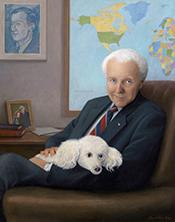
Mr. Speaker, I yield myself such time as I may consume. I strongly support this resolution, and I urge all of my colleagues to do so as well. When I first came to the Congress in 1981, the nation of…
Mr. Speaker, I yield myself such time as I may consume.
I strongly support this resolution, and I urge all of my colleagues to do so as well.
When I first came to the Congress in 1981, the nation of South Africa suffered under the yoke of the brutal apartheid system. Few things in modern history were as palpably evil as
apartheid, an appalling system of racial discrimination. Under apartheid policies, 3.5 million African people, let me repeat this, Mr. Speaker, 3.5 million African people were removed forcibly from their land and from their homes between 1960 and 1983. Under one removal program called the Black Spot Removal Policy, 475,000 blacks living on their own farms in rural communities were robbed of their land, forcibly relocated, and reconstituted as a vast cheap labor pool for commercial farms.
Mr. Speaker, what a difference 10 years make. Today, South Africa has made a truly historic transition from the hateful and racist apartheid regime to a multiracial and peaceful democracy. In South Africa today, citizens of all races, all cultures, and all religions live and work together in peace.
In 1994, thanks to decades of internal resistance and comprehensive sanctions by the responsible segments of the international community, the apartheid regime ended; and it was replaced by a vibrant and peaceful democracy. We in Congress fought for 2 decades to turn our government's policies away from supporting segregation in South Africa towards democracy and freedom.
Throughout the 1980s, many Members of this Congress introduced legislation denouncing apartheid and offering sanctuary to both its black victims and to white citizens of conscience who refused to serve in the military and security forces of an apartheid regime.
In 1986, Congress passed the apartheid sanctions bill and overrode the administration's veto of that critically important legislation. With this historic congressional override, we put our Nation on the side of freedom and justice for all the people of South Africa.
I am proud to have been a cosponsor of that legislation and many other bills that kept Congress focused on the travesty of racial discrimination.
Mr. Speaker, with the passage of our resolution, we recognize the difficult path to freedom taken by South Africa's people. Unlike today where terrorists seek to change political regimes and social order with barbaric attacks on civilians, South Africa's liberation movements condemn violence directed at civilians.
The African National Congress led by their imprisoned leader Nelson Mandela, Walter Sisulu, Helen Joseph, and others understood that a future of peace could not be built on a foundation of terror, hatred, and fear. Instead, they fought through the pain of apartheid, embraced the ideals and values of democracy, and in the end shook hands with the enemy whose founding ideology defined them as less than human beings.
Mr. Speaker, South Africa stands today as a strong democratic ally of the United States and is strategically important to Africa's political and economic future.
We must do all we can to solidify further relations between our two nations and to continue our joint quest to bring justice, prosperity, and freedom to all of Africa.
On a personal note, Mr. Speaker, my wife, Annette, and I had the privilege of visiting South Africa during the crucial weeks when the apartheid regime collapsed, and it was a joy to meet and work with and see the leaders on both sides who were ready to build a new, peaceful multiracial society.
I urge all of my colleagues to support this resolution. I want to congratulate my friend and colleague, the gentleman from New Jersey (Mr. Payne), for his leadership on this matter and our former colleague Ron Dellums, my neighbor in California, for his leadership on this issue.
Mr. Speaker, I yield such time as he may consume to the gentleman from New Jersey (Mr. Payne), the leader of this legislation and this whole concept, and my good friend.
(Mr. PAYNE asked and was given permission to revise and extend his remarks.)
Mr. Speaker, I yield 3 minutes to the gentleman from Illinois (Mr. Davis).
Mr. Speaker, I yield such time as he may consume to the gentleman from Michigan (Mr. Conyers), the distinguished ranking member of the Committee on the Judiciary. I want to pay tribute to the gentleman and his leadership on all these important issues.
Mr. Speaker, I yield myself such time as I may consume.
Mr. Speaker, I want to thank my good friend and distinguished colleague for his thoughtful observations. Let me just say that occasionally, when we are downcast with respect to international developments, we must remember that there are lots of things we were justly proud of in recent decades, one clearly is the ending of racial discrimination, of apartheid in South Africa. And the second is the collapse of the Soviet system and its replacement in large part by democratic and free societies.
Mr. Speaker, I have no additional requests for time, and I yield back the balance of my time.
Mr. Speaker, on that I demand the yeas and nays.
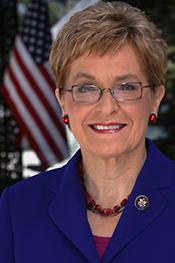
Mr. Speaker, I rise in opposition to this Moroccan so- called free trade agreement and ask the question, why has the United States as a result of these free trade agreements over the last 20 years…
Mr. Speaker, I rise in opposition to this Moroccan so- called free trade agreement and ask the question, why has the United States as a result of these free trade agreements
over the last 20 years amassed the largest trade deficit in the United States history? They have told us when NAFTA was passed we would have a trade balance. We would in fact have hundreds of thousands of new jobs in this country.
What have we got? We have got the largest trade deficit with Mexico we have ever had, the largest trade deficit with Canada we have ever had, and an outwash of jobs from the United States to Mexico, over 900,000 jobs and counting, nearly a million jobs. NAFTA did not work.
Then they said, well, let us sign the China Free Trade Agreement. Boy, that will really be great. We will bring democracy to China. What have we got? We have got the largest growing trade deficit in the history of the United States with China. Every day companies are closing in this country, moving more production to China where wages are what? Ten cents an hour, 20 cents an hour.
The gentleman from Vermont (Mr. Sanders) asked the opposition here, what is the minimum wage in Morocco? Nobody stood up. Do you know what it is? Eighty cents, 80 cents an hour in Morocco.
What makes you think if we pass another NAFTA-like trade agreement, this time with Morocco, are we going to make it any better? This is no different than what we have had. In fact, it is more of the same and even worse.
Our trade balance with Morocco is going down. Now, I think this agreement with Morocco has nothing to do with trade. It has everything to do with the Sahara and with oil relationships along the western side, and that is a whole other story not for this debate. But why would we want to sign a free trade agreement with a kingdom? Why would we want to empower a monarchy which this will do? You cannot have free trade with a country that is not free. Look at Saudi Arabia, where the majority of terrorists came from. That is a kingdom. Why would we want to empower those who hold assets in undemocratic countries? That is exactly what this agreement will do with Morocco.
This agreement is worse than NAFTA. NAFTA's labor and environmental provisions are a joke anyway. They are just side agreements with no teeth. This agreement has nothing, let me repeat, this has nothing to do with labor or environment. It does not have anything like the Jordanian trade agreement which made a step toward labor and the environment. Further, this agreement blocks the reimportation of prescription drugs as the Australian agreement did.
This agreement provides for the privatization of public services, more outsourcing of our service jobs in this country. There are no adjustment provisions in this agreement for workers who lose their jobs. In fact, in the old NAFTA agreement, they now do not even want to count how many American workers are losing jobs in this country so we can provide them with transitional assistance here at home. This agreement has no adjustment provisions.
One of the interesting provisions in this bill deals with Chapter 11. It guarantees that if investors get in trouble in Morocco--such as, what if terrorists do some things over there we do not like--this agreement protects their private risk through government. Even our own constitution does not do that on investment. Investors get a good deal in this agreement, workers do not.
Let me address one of the other unusual aspects of this agreement. It changes the wording of the provisions that deal with agriculture and food safety from being ``equal to'' to what is called ``equivalency''. Who is going to define equivalency on food safety and how it is different from ``equal to''? Or who is going to define equivalency on prescription drugs? What it does is it puts us on a downward path compared to the high standards we have set in this country for our own food and drug safety.
This is a bad deal. It is a bad deal economically. It is a bad deal politically. In view of our standing in the Muslim and Arab world, this is a bad deal. It does not promote democracy.
I encourage my colleagues in this body to vote no on this NAFTA-like expansion that now aims to include Morocco.
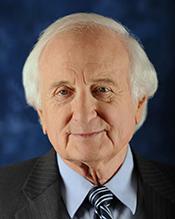
Mr. Speaker, it is my pleasure to yield 2 minutes to the gentlewoman from California (Ms. Lofgren). Mr. Speaker, I yield 3 minutes to the gentleman from New York (Mr. Meeks). Mr. Speaker, I yield 4…
Mr. Speaker, it is my pleasure to yield 2 minutes to the gentlewoman from California (Ms. Lofgren).
Mr. Speaker, I yield 3 minutes to the gentleman from New York (Mr. Meeks).
Mr. Speaker, I yield 4 minutes to the gentleman from Washington (Mr. McDermott), a colleague and friend from the Committee on Ways and Means.
(Mr. McDERMOTT asked and was given permission to revise and extend his remarks.)
Mr. Speaker, I yield 3 minutes to the gentleman from Massachusetts (Mr. Neal), another distinguished member of the Committee on Ways and Means.
(Mr. NEAL of Massachusetts asked and was given permission to revise and extend his remarks.)
Mr. Speaker, I yield 3 minutes to the gentleman from New York (Mr. Crowley).
Mr. Speaker, I yield 3 minutes to the distinguished gentlewoman from Texas (Ms. Jackson-Lee).
Mr. Speaker, I yield myself the balance of my time.
When we discussed the rule, I went over some of the benefits of this agreement, those relating to manufacturing goods, and we have been deeply hurt in the manufacturing area in the United States these last 3 years. This agreement should open up Morocco to more goods made in America. I referred to the agricultural area. This agreement does open up the Moroccan market to agricultural goods produced in the United States of America. It will also liberalize the service areas that are important for our development. And there is reference to intellectual property safeguards.
I want to spend a few minutes now talking about the broader perspective here, the perspective, I think, with which we must look at trade agreements and expanded trade.
First, there has been some reference here to bipartisanship, and it is true that this will pass with bipartisan support. Not complete. But I want it clear that there has been these last 3 years no basic bipartisan consensus on trade. That has been true of the big issues. We fought out TPA here, and it passed narrowly. CAFTA was negotiated on a narrow basis without adequate bipartisan participation. The same has been true today of the FTAA.
The failure of this administration to build a bipartisan consensus, a strong bipartisan foundation, to renew that foundation that once existed here, I think, has handicapped discussions within the WTO. We cannot make the tough decisions relating to negotiations in the WTO that affect American workers, businesses, farmers and others except on the basis of a strong bipartisan foundation. We do not have it.
Secondly, we on the Democratic side together, all of us, reject the use of one agreement as a model for others. For example, we have discussed core labor standards. Where labor laws in a country are essentially adequate, as was true of Jordan, the standard enforce-your- own-laws, which was the basic standard in Jordan, can work; but it will not work in cases where laws are very inadequate. So that is why we Dems essentially in unison reject the CAFTA that was negotiated. We support a Central American Free Trade Agreement, but one that is different than was negotiated.
So the basic issue, therefore, is not, as some in the majority have stated, whether one is for or against free trade, for or against expanded trade. It is whether the terms of expanded trade will be shaped to benefit all and not just a few. We do not assume that expanded trade is automatically positive all around.
That is why when this agreement came up, we raised two issues. One of them related to core labor standards. There was reform. We wanted to know the facts about those reforms. We wanted to know the realities within Morocco. We wanted to know whether it was more or less like Jordan and not more or less like Central America.
And so we dug into the facts. We made it clear to the Moroccan government that we cared, and I must say I think it is because Democrats have been raising these issues perhaps more than any other factor that the Moroccan government undertook some reforms, and we received back a communication from the government of Morocco. I submit for printing in the Record the letter that was sent to us and the three other letters referred to during the debate on the rule.
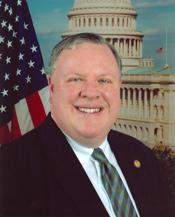
Mr. Speaker, I thank the gentleman for yielding me this time. Mr. Speaker, today we are considering landmark legislation to implement the U.S.-Morocco Free Trade Agreement, and delve deeper into the…
Mr. Speaker, I thank the gentleman for yielding me this time.
Mr. Speaker, today we are considering landmark legislation to implement the U.S.-Morocco Free Trade Agreement, and delve deeper into the bonds of friendship with the Kingdom of Morocco. Just 4 days ago, we marked exactly 217 years of official relations with Morocco, the longest unbroken diplomatic relationship in the existence of the United States. While the furthering of our positive ties with Morocco is certainly an important goal, this FTA really stands on its own as a benefit to our economy.
The U.S.-Morocco Free Trade Agreement was negotiated over a period of a year and a half and, once implemented, will be truly a win-win for both of our countries. This is, in my view, an FTA which contains the best market access package of any FTA that has been negotiated with a developing country.
I believe it has the potential to serve as a model for future free trade agreements with developing countries, particularly because of tough provisions to enforce intellectual property rights. The Morocco Free Trade Agreement contains the most advanced intellectual property chapter in any FTA negotiated thus far. It contains language that not only commits Morocco to fight piracy, but to fight piracy on products that are potentially coming through as transshipment.
Morocco is a natural market for many American companies, and a Free Trade Agreement will bring both countries closer together for mutual benefit.
The International Trade Commission has also determined that U.S. exports to Morocco are likely to increase dramatically, by $740 million, while imports from Morocco are likely to increase by nearly $200 million after full implementation of the Free Trade Agreement.
The major reason for the anticipated increase in U.S. exports is due to the fact that on day one of this agreement, 95 percent of tariffs on industrial and consumer goods will be eliminated. Morocco has demonstrated consistently its commitment to being a fair and responsible trading partner. They have taken steps to guarantee the security of foreign investment in Morocco, and have enacted sweeping labor laws to protect their workers and to improve women's rights. These negotiations were a catalyst for Morocco moving forward with a modernizing labor code.
Moreover, workers in Morocco have the right to associate, collectively bargain, and to strike. The new labor law also improved worker safety, raised the minimum wage, and created additional safeguards on child labor, all core obligations of the U.S.-Morocco Free Trade Agreement, including labor and environmental provisions, which are subject to the dispute settlement provisions of the agreement, and the agreement includes strong enforcement mechanisms, including the ability to suspend trade concessions or establish monetary assessments.
This agreement deepens America's dialogue with the Middle East and North Africa, and builds upon the free trade agreements already reached with Israel and Jordan.
The U.S.-Morocco Free Trade Agreement, in my view, is an essential part of the puzzle in moving forward to strengthen our trade relationships with our trading partners, establish stronger, more enforceable trade agreements, and establish over time a level playing field in which American companies and American workers can thrive.
Mr. Speaker, I believe the passage of this FTA will be a significant achievement in moving toward a stronger trade policy for the United States, and on the strength of that, I urge all of my colleagues to join me in supporting this FTA.
Mr. Speaker, I thank my friend from Ohio for yielding me this time. Let me begin by saying I am prepared to yield time to any proponent of this bill who can tell me what the minimum wage is in…
Mr. Speaker, I thank my friend from Ohio for yielding me this time.
Let me begin by saying I am prepared to yield time to any proponent of this bill who can tell me what the minimum wage is in Morocco. I heard that it has gone up. What is it, 20 cents an hour, 30 cents an hour? What is the minimum wage in Morocco?
I am prepared to yield time if anyone who is supporting this bill will tell me if Morocco is a democratic society. We heard about workers' rights. My understanding is that it is an hereditary monarchy where the legislature there could be abolished at any time by the King. Does anybody want to respond to that? I am waiting. I hear no response.
A few minutes ago, Mr. Speaker, we were told that gay marriage was going to destroy the fabric of American society. Well, I will tell my colleagues what is going to destroy the fabric of American society: pieces of legislation like this that are wiping out the middle class of this country, are lowering our standard of living, are making the gap between the rich and the poor grow wider.
I would yield again to my friends who are pushing this bill if they will tell me whether they agree with Thomas Donohue, the President of the U.S. Chamber of Commerce, who several weeks ago urged, urged American companies to outsource, urged American companies to throw our workers out on the street and go to China or Morocco.
Will any proponents of this legislation tell me that they disagree with Mr. Donohue? I yield time to anybody who says they disagree with Mr. Donohue, the chairman of the Chamber of Commerce. I do not hear it.
In other words, the proponents of this bill are telling us that they think it is a good idea that Americans workers are thrown out on the street, lose decent paying jobs, and are forced to compete in a race to the bottom against desperate people all over the world who are working for pennies an hour.
Mr. Speaker, what is happening in our society today is that while productivity increases, while technology expands, the reality is that the middle class is shrinking and the average American worker is working longer hours for lower wages. There are a lot of reasons for that, but certainly one of the reasons is that our working class, our middle class is being asked to compete against desperate people in Morocco, in China, all over this world. And American corporations are saying, why should I pay an American worker $10, $15 an hour, have unions, protect the environment, when I can go to Morocco, I can go to China, and big money interests in this country, with the help of the Republican leadership, is going to make it easier for me to go abroad.
What is happening to this economy is an outrage in terms of the needs of our kids. The U.S. Department of Labor has projected that 7 out of the 10 fastest-growing jobs in the next 10 years are going to pay low wages, require a high school degree, with minimal benefits. We are losing our manufacturing base. In the last 3 years, 2.7 million good- paying manufacturing jobs gone. Now they are taking our information technology jobs to India. Gone. And what is going to be left for our kids? Well, Wal-Mart is doing very well; Burger King is doing very well. Is that what we want for our kids? Why are we selling out the middle class of this country? Why are we allowing corporate America to go abroad?
Well, I would suggest that we should look at the campaign contributions that come in to this institution from corporate America. No, let us have trade that is fair, not this trade agreement.
Show 11 more

Mr. Speaker, I rise in strong support of this legislation. I thank the chairman for yielding me time. There are a number of economic reasons why this FTA is very much in the national interest of the…
Mr. Speaker, I rise in strong support of this legislation. I thank the chairman for yielding me time.
There are a number of economic reasons why this FTA is very much in the national interest of the United States, but I want to focus a few comments on the diplomatic or foreign policy reasons. The FTA with Morocco is in our Nation's interest because it will begin to implement the President's vision for a U.S.-Middle East free trade area. I also believe it is important to support the economic reform that is going on in Morocco, a nation where Islam has deep roots and which occupies a leadership position in the Arab world.
As mentioned frequently here, American friendship in Morocco extends back to the beginning of our Republic. We have the longest-standing friendship treaty with that country of any in the world. The enactment of the FTA legislation with Morocco is a vitally important part of the process of boosting economic reform inside the Kingdom of Morocco. In addition, this FTA helps further link the Middle East into the global economic system and spur economic growth and investment. These closer commercial links with our key allies such as Morocco are critically important to the region of the world. And hear this: this legislation makes it less likely, less likely that jobs and businesses will move to Morocco, not more likely.
It is also vital to point out that Morocco has recently undertaken a diplomatic offensive designed to improve its relations with its neighbors to settle a 3-decade-old Saharan conflict. It is also stepping up its antiterrorism cooperation with the U.S. and with Algeria. And recently, it was designated as a major non-NATO ally. That should enable it to get the requisite assistance and cooperation to strengthen our regional and bilateral relationship.
Mr. Speaker, for economic or export reasons, there are three primary reasons why this is a good step for us. This FTA is in the best agriculture interest of the United States. Number two, the FTA will give us market access for businesses. And, three, it meets the labor and environmental standards set out in the Trade Promotion Act.
In the area of agriculture, it means, for example, that we are going to have an estimated triple increase in our exports to Morocco. In the area of industrial products, it is suggested that our greater market access will be very important. More than 95 percent of the bilateral trade industrial products will become duty-free immediately upon entry into force of this agreement. And in the third area, as I mentioned, it does meet the labor and environmental standards.
Moreover, Morocco recently passed a comprehensive new labor law that meets international labor organizational core labor standards, including right of workers to strike.
In conclusion, this is a very good step for the United States. It is very good for our bilateral relations, and I would say finally that the Mediterranean Group of the NATO Parliamentary Assembly, I happen to be the president, recently visited Morocco, and as a result of that visit, by unanimous action in the standing committee, we decided to upgrade Morocco from observer status to an associate member status because of the significant progress they are making in democracy in their parliament.
For all of these reasons, I urge strong support of the legislation.
Mr. Speaker, I thank the gentleman from California (Mr. Lantos) for the outstanding work he has done as the ranking member of the Committee on International Relations. I stand very proudly today to…
Mr. Speaker, I thank the gentleman from California (Mr. Lantos) for the outstanding work he has done as the ranking member of the Committee on International Relations. I stand very proudly today to urge my colleagues to support H. Con. Res. 436, commending a decade of democracy and majority rule in the Republic of South Africa.
I did not believe when I visited South Africa in the 1970s that we would see a transformation of that apartheid-run racist government transformed by peaceful means. When the first elections were held 10 years ago, I recall the lines of people who waited for hours and hours in order to vote.
Let me say that South Africa has transformed from an apartheid state to a nonracial, peaceful and democratic form of government. The country successfully held democratic elections in 1994 to elect its first democratically elected president.
After being imprisoned for 27 years, Nelson Mandela became South Africa's first democratically elected president. As the first democratically elected president, Mr. Mandela laid the foundation for more reliable government and an economically viable country and is seen not only as a leader in Africa, but as we all know, as a world leader.
Before 1994, only 40 percent of the people in South Africa had electricity; now more than 70 percent of the households in South Africa have electricity. South Africa has made a significant advance in housing by constructing 1,600,000 houses for the poor in South Africa, a remarkable, remarkable feat.
From 1994 to 2004, secondary school enrollment in South Africa increased from 70 percent to 85 percent and students in South Africa now learn in a racially integrated school system. Also, during this time, 9 million people in South Africa have gained access to clean water. In addition, the Government of South Africa has established nutritional and educational programs to benefit the youngest and the poorest.
As the world's leading democracy, we should applaud the Government of South Africa for the reforms it has substituted to better serve its people. South Africa has served as an inspiration for other African nations striving for democracy and peaceful cooperation through their many ethnic groups in their individual countries and look to South Africa as the example.
The 1990s saw the spread of democracy across the continent of Africa, once dominated by military dictators and authoritarian leaders. Nigeria held its second multiparty election this month, and despite reported irregularities, the elections were largely peaceful. The world also witnessed the end of white minority rule and subsequent democratic elections in South Africa, as we talked about. And Mr. Mandela has taken his leadership to try to find prospects for peace in Burundi.
Now Mr. Thabo Mbeki is leading that cause. Mr. Mbeki has done an outstanding job as the president, following Mr. Mandela, and his leadership is second to none on the continent. So it is a pleasure for me to join with my colleagues to say that the example set by Mr. Nelson Mandela serving one term and stepping down, I think, is an example we are all proud of.
Mr. Speaker, I rise today to voice a significant concern with regard to the proposed Free Trade Agreement between the United States and Morocco. While this is a concern specific to Morocco, it…
Mr. Speaker, I rise today to voice a significant concern with regard to the proposed Free Trade Agreement between the United States and Morocco. While this is a concern specific to Morocco, it highlights a broader issue that I and many of my colleagues share in regard to the pace and ``individuality'' of the many bilateral FTAs being negotiated by the USTR.
Reviewing the February 25, 2004 State Department Country Report on Human Rights for Morocco, I came across several issues. The report highlights a series of human rights abuses in Morocco and I believe these unacceptable practices need to be a priority of the United States as it builds and strengthens its long-standing ties with Morocco.
I was greatly concerned with an issue that comes up several times in the report. To quote one sentence: ``The judiciary lacked independence and was subject to government influence and corruption.'' As I assume we can all agree, the lack of an independent judiciary and corruption are significant, fundamental barriers to the development of a sound, growing trade relationship.
As the Ways and Means Committee considered this agreement I asked representatives of the USTR about this fundamental issue. They had no comment and promised to follow-up with me. I want to thank Chairman Thomas for for seconding my concerns at the markup and also seeking a response. The USTR has made available to me the American Bar Association report on the state of Morocco's judicial system, citing some hope for reform.
My impression is that the state of the judiciary in the Kingdom of Morocco and corruption in commerce are issues that received little attention as the USTR negotiated this agreement. That should not be the case. Bilateral FTAs are a means to address issues such as these with key trade partners and strengthen the basis for trade relations. An independent judiciary is essential to sound, long-term trade relations. As well, corruption in many foreign nations has long been a concern of the United States; one where we have long set a high standard and required our businesspeople to operate on an ethical basis.
I understand the USTR's current interest in pursuing a large number of bilateral agreements to advance trade around the world--particularly as our more broad based talks and negotiations on global agreements have stalled. That being said, quantity should not supplant quality in agreements. Our goals in each of our trade agreements should remain high and be targeted to the situation in each nation. I am concerned in this agreement we have not met our highest goals and lost an opportunity.
Reluctantly, I intend to support this FTA because I believe the government of Morocco has demonstrated its commitment to working with us and raising its own standards; the new labor rights laws enacted last year are a good example. But I want to strongly urge the USTR to show more care and attention to the individuality of nations as we move forward, particularly as it relates to institutional reforms and the protection of human rights.
Mr. Speaker, I thank the gentleman for yielding me this time. I rise in support of this free trade agreement between the United States and Morocco. It has been a pleasure for me to work not only with…
Mr. Speaker, I thank the gentleman for yielding me this time.
I rise in support of this free trade agreement between the United States and Morocco. It has been a pleasure for me to work not only with the gentleman from Michigan (Mr. Levin), the gentleman from New York (Mr. Rangel), the gentleman from New York (Mr. Meeks), the gentleman from Washington (Mr. Smith), the gentleman from California (Mr. Dooley) and others from our side, but also with Members from the other side of the aisle, the gentleman from Pennsylvania (Mr. English), the gentleman from Missouri (Mr. Blunt), the gentleman from Virginia (Mr. Cantor), and the gentleman from California (Chairman Thomas) in making this bill a reality today on the floor.
As a Member who supports free trade and fair trade, and as a member of the Subcommittee on the Middle East and Central Asia on the Committee on International Relations, I was happy to work with Members to develop this legislation, which goes beyond being just a trade bill and morphing into a foreign policy tool.
Morocco has been a strong ally and friend of the United States since we declared our independence, and this agreement will continue to strengthen our long-standing relationship. This free trade agreement with Morocco will immediately eliminate duties on 95 percent of nontextile industrial imports, which will be the best market access the U.S. enjoys with a developing nation.
Besides the economic benefits from the implementation of this free trade agreement, it also has spurred our friends in Morocco to create a comprehensive new labor law which just went into effect this past June. The Moroccan new labor law raises the minimum employment age, reduces the workweek with overtime rates, improves worker health and safety regulations, addresses gender equity, and promotes employment of the disabled. This labor law also guarantees rights of association and collective bargaining. I believe we can credit this movement in terms of improvement of labor standards in Morocco to hopes by Morocco of agreement on this trade agreement.
Morocco has been a stabilizing force in the Middle East, and this agreement will help Morocco to continue on the path of moderation. In fact, Morocco has been a good friend to one of our strongest allies, Israel. Morocco has the largest population of Jews outside of Israel in the Middle East and has played an important role in trying to stabilize the current situation by continuing to play a role as a critical back channel for communications among
Israel, the Arab world, and the United States.
At the core of this trade initiative is the belief that through economic opportunity and partnership with the United States and Israel the goal of peace in this region can be furthered. I support this free trade agreement between the United States and Morocco, and I urge Members to vote for final passage.
Mr. Speaker, I rise today to announce my support for H.R. 4842, legislation implementing a free trade agreement with the nation of Morocco. For more than two centuries, Morocco has been a steadfast…
Mr. Speaker, I rise today to announce my support for H.R. 4842, legislation implementing a free trade agreement with the nation of Morocco.
For more than two centuries, Morocco has been a steadfast friend to the United States. Few Americans would guess that Morocco was the first nation to extend recognition to the new American nation on December 20, 1777. Morocco is also one of only six Muslim nations to be designated as a ``major non-NATO ally.'' So it is only fitting that we establish a free trade agreement with such a long-time friend and supporter.
Under this FTA, more than 95 percent of bilateral trade between our countries will be duty-free from the first day of implementation. North Carolina exports to Morocco are generally small, valued at just more than 8 million dollars. Morocco is my state's 80th biggest export market with tobacco products, chemical manufacturing, and transportation equipment being our top three exports.
However, North Carolina stands to gain much from increased access to this new market, especially in the field of agriculture. Tariffs on key North Carolina products like soybeans and processed poultry products will be cut significantly. One significant provision in this agreement is that Morocco has agreed to accept U.S. inspection standards for poultry. Phony sanitary and phytosanitary restrictions on U.S. exports have long been a hallmark of international trade. Having Morocco accept our inspection regime will go along way to improving access to that market.
According to an analysis by the American Farm Bureau Federation, this agreement is expected to result in a 10 to 1 gain for the U.S. agricultural sector. Within the next 10-11 years, the U.S. should expect to increase agricultural exports to Morocco by $225 million. What's more, the FTA includes a provision giving U.S. agriculture an ``automatic upgrade.'' Should Morocco negotiate another trade agreement providing another nation with more favorable market access for agriculture, our FTA automatically obtains the same level of access as the other nation. This will ensure America's competitiveness against other nations seeking to enter the Moroccan market.
I believe the geopolitical reasons for establishing this free trade agreement with another Muslim nation in a volatile region overcomes the few deficiencies inherent in the agreement, particularly with regard to textiles. Because of the small amount of trade between our two countries, any potential adverse impact should be minimized. However, this administration cannot continue to count on this Member's support for other trade agreements if it is not willing to stand up for even stronger labor and environmental standards and better protections for America's fragile textile industry.
I ask my colleagues to support this agreement.
Mr. Speaker, I move to suspend the rules and agree to the concurrent resolution (H. Con. Res. 436) celebrating 10 years of majority rule in the Republic of South Africa and recognizing the momentous…
Mr. Speaker, I move to suspend the rules and agree to the concurrent resolution (H. Con. Res. 436) celebrating 10 years of majority rule in the Republic of South Africa and recognizing the momentous social and economic achievements of South Africa since the institution of democracy in that country, as amended.
Mr. Speaker, I ask unanimous consent that all Members may have 5 legislative days within which to revise and extend their remarks and include extraneous material on H. Con. Res. 436.
Mr. Speaker, I yield myself such time as I may consume.
Mr. Speaker, I would like to thank the gentleman from New Jersey (Mr. Payne) for bringing before us this resolution, celebrating 10 years of majority rule in the Republic of South Africa and recognizing the momentous social and economic achievements of South Africa since the institution of democracy in that country.
In April 1994, nearly 19 million South Africans went to the polls to elect South Africa's first democratic government. The African National Congress, or ANC, which had led the struggle against white majority rule in the apartheid system of state-enforced racial segregation, won control of the national assembly and elected Nelson Mandela, who had been in prison for 27 years for the crime of advocating democracy, president.
President Mandela was succeeded by Deputy President Thabo Mbeki in June 1999, and Mr. Mbeki was re-elected in April 2004.
Since the end of apartheid, South African leaders have faced the daunting task of meeting the great expectations of the black electorate while fulfilling the economic potential of the country. Half a century of apartheid and years of sanctions have decimated the economy and left most black South Africans poor and undereducated. High rates of unemployment and crime, as well as the specter of HIV/AIDS, continue to pose significant challenges. Still, South Africa's transition has been remarkable and serves as an example to all nations striving for democracy, reconciliation, and development.
This is a bipartisan resolution which has been given full consideration during a hearing and a markup by the Committee on International Relations, and I urge the support of this body.
But, again, before yielding to the gentleman from California (Mr. Lantos), let me thank the gentleman from New Jersey (Mr. Payne) for his prominent leadership on this and so many other issues; and I would also like to recognize a former Member, Mr. Ron Dellums, for his leadership in Congress on antiapartheid efforts. And there are few Members in my career that I have been prouder to stand behind on an issue of such fundamental human rights significance.
Mr. Speaker, I reserve the balance of my time.
Mr. Speaker, I have no additional requests for time, and I yield back the balance of my time.
Mr. Speaker, just to correct the record, and I am sure the gentlewoman misspoke, the United States does not have a free trade agreement with China. We have normal trade relations but no free trade…
Mr. Speaker, just to correct the record, and I am sure the gentlewoman misspoke, the United States does not have a free trade agreement with China. We have normal trade relations but no free trade agreement with China.
Mr. Speaker, I do rise in support of this U.S.-Morocco free trade agreement and thank the gentleman from Illinois for his leadership on this.
Today, I am not going to talk about the merits of the agreement. I think there are plenty of them; but instead, I want to point out what I think this agreement means in the context of U.S. policy for the broader Middle East.
This agreement would be the second free trade agreement that we would have with a country in the Middle East, and it would be another cornerstone of U.S. free trade efforts in this region. Achieving free trade and integrating this region into the global economy is of critical concern to the United States.
Economically, socially, this region faces enormous problems, enormous dilemmas. Inequality in many Middle Eastern countries has grown. It has not diminished in recent decades.
Political, economic, and social systems are intertwined and appear closed to those in the outside world. For those who are not already a part of the system, improvement in their lives is only a distant dream.
In July 2002, the United Nations Development Program released a report with some discouraging statistics. Middle Eastern regional growth over the last 2 decades has been the lowest in the world except for sub-Saharan Africa. Labor productivity has been on the decline since 1960. 65 million people are illiterate. One of every two women can neither read nor write. Ten million children are not in school. Unemployment has reached 15 percent with many areas experiencing much higher rates.
The Middle East cannot be healthy socially or politically so long as its economies are in crisis. The United States has a strong interest in helping to stimulate the economies and promote stability in the region.
Now, the U.S.-Morocco free trade agreement cannot by itself solve the deep and widespread economic and social inequalities which permeate this region, but the U.S.-Morocco free trade agreement is a step in helping one country in this region deepen its integration into the world trading system and reach its aspirations for development.
Passing this agreement will help this North African country develop and practice a system of the rule of law that will have implications far beyond trade and the commercial sector.
I urge my colleagues to support this agreement. It is more than just an agreement. It symbolizes our efforts, the efforts of the United States, to integrate this country and this region in partnership with shared aspirations and expectations.
I thank the gentleman for yielding me time.
Mr. Speaker, here we go again contemplating the passage of another free trade agreement before we have done the basic reforms that we need to do to protect the American company, the American workers,…
Mr. Speaker, here we go again contemplating the passage of another free trade agreement before we have done the basic reforms that we need to do to protect the American company, the American workers, the American community.
The truth is we need a moratorium on any further trade agreements until we reach a political consensus in this country about what those agreements are going to be like.
For example, there is such inconsistency in the decisions we make in this body. Are people aware that we cannot go visit Cuba as free American citizens? And the administration has just recently decided that those who live in this country with relatives in Cuba can only go there every 10 years to visit their loved ones. Why? Well, because Cuba is a communist country. Fidel Castro is an authoritarian dictator. And, yet, we are encouraging free trade with China. We want our citizens to travel to China. We want our companies to invest in China.
The last time I knew or heard, China was a communist country, it was authoritarian, it was a country that routinely violates human rights, puts those of religious faith in prison. Why the inconsistency? Why the inconsistency?
Now, my friends talk about how we are going to sell all of the wheat, agricultural products to Morocco. Those who like these free trade agreements enjoy talking about all of the products we are going to export. They never talk about all the products that are being flooded, poured into this country. Every day that passes, this country has a $1.5 billion trade deficit, every day, $1.5 billion.
I have here a copy of the economic report of the President. He submitted this and transmitted it to Congress in February of this year. His signature is on this economic report. I think that makes him responsible for what is inside it.
On page 25 of that report under a section titled ``International Trade and Finance'' are these words: ``When a good or a service is produced at lower cost in another country, it makes sense to import it rather than to produce it domestically.''
I read it again for those who may have thought they were unable to believe their ears. In the President's economic report to the Nation are these words: ``When a good or a service is produced at lower cost in another country, it makes sense to import it rather than to produce it domestically.''
I ask Mr. Don Evans, Secretary of Commerce, reported to be one of the President's closest personal friends, if he would give me a list of the products that cannot be produced at lower cost in another country, a country like China where they use slave labor, where they violate human rights. We need to wake up in this country. The American people need to demand that the President and those of us who serve in this Chamber put their needs first.
Mr. Speaker, I want to commend the gentleman from Michigan (Mr. Levin). He does a terrific job with the gentleman from Illinois (Mr. Crane) on a bipartisan basis to ensure that every opinion is heard…
Mr. Speaker, I want to commend the gentleman from Michigan (Mr. Levin). He does a terrific job with the gentleman from Illinois (Mr. Crane) on a bipartisan basis to ensure that every opinion is heard on the Subcommittee on Trade over at the Committee on Ways and Means. I think oftentimes that is
why we have the final product that we do.
Let me use this opportunity, Mr. Speaker, to explain why I will be voting in favor of this bilateral free trade agreement between the United States and Morocco, even though there are several aspects of the agreement that trouble me.
My chief disappointment with the agreement is that, once again, the administration refused to specifically require our trading partner to abide by the five most basic internationally recognized labor standards.
The International Labor Organization has identified those principles as the right to associate and bargain collectively, and prohibitions on forced labor, discrimination and child labor.
Instead of assuring these minimal protections for foreign workers, our recent trade agreements have imposed a different standard. They require our partners to enforce whatever labor laws exist in that particular country, regardless of how lax those laws might be.
While I strongly believe that this is the wrong negotiating tack as a general matter, in the specific case of Morocco, the country's labor laws more than surpass international minimum standards; and by all accounts, it appears that the government is making a genuine and conscientious effort to work with unions, workers, and employers to bolster its worker protections even further, including the right to strike. The labor provisions of this agreement are not perfect, but they represent a workable starting point.
Although this agreement is not what I would ideally like to see, it represents an important first step. Fundamentally, I believe that the U.S. can improve its international standing and its national security by expanding trade and strengthening its relationships with moderate Muslim countries. Unfortunately, more and more Muslim voices are calling for boycotts of the United States and its products. That makes it all the more critical for us to reach out to those who are eager to form a partnership with us.
Over the long term, I believe that agreements with nations such as Morocco are mutually beneficial from an economic standpoint. They also represent an opportunity to help mend international relations that have endured a great deal of strain over the last several years.
Mr. Speaker, this agreement could be better. Certainly I would have negotiated it differently, but it will pave the way for progress in a region that is critically important to the United States, and so it does have my support.
Mr. Speaker, I want to thank the gentleman from Illinois (Chairman Crane) and the gentleman from California (Chairman Thomas) and our ranking members of the Committee on Ways and Means for moving…
Mr. Speaker, I want to thank the gentleman from Illinois (Chairman Crane) and the gentleman from California (Chairman Thomas) and our ranking members of the Committee on Ways and Means for moving this free trade agreement so effectively through the committee process and onto the floor so that before we break for August recess we can express our support for this agreement.
I do rise in support of the U.S.-Morocco free trade agreement, Mr. Speaker. This is our second trade agreement with an Arab country. With our trade agreement with Morocco, along with those of Israel, Jordan, and Bahrain, we are working to improve economic opportunities in North Africa and in the Middle East.
While the Moroccan economy is much smaller than ours, it remains a key export market for the United States and for my home State. In a State where approximately one in three jobs is now related to trade, it is not surprising that Washington State was the top exporter to Morocco with over $112 million in 2003.
By eliminating 95 percent of the tariffs immediately on United States manufactured goods, we are improving the competitiveness of our businesses in Morocco. Of the $465 million total United States exported from Morocco last year, nearly 29 percent, or $134 million, was due to aerospace products. It is very important to the Northwest, where so many jobs are directly or indirectly affected by our aerospace industry. In fact, Boeing aircraft dominate Royal Air Morac's fleet with a potential of 17 more planes on order.
This agreement will also strengthen intellectual property rights standards for patents, for trademarks and for copyrights so that our high-tech industries are protected in our digital economy. Higher standards, however, are not enough unless there is a commitment for better enforcement of these standards.
For this reason, I am very pleased with Morocco's commitment to better enforcement of intellectual property rights, such as increasing criminal penalties for piracy and for counterfeiting.
This is a very good agreement for our agricultural community. It eliminates duties on our products, and it liberalizes quotas on critical commodities. It also ensures that United States commodities will have equivalent access to any other trade agreements that Morocco negotiates with any other country. If Morocco gives another country better market access on agricultural products, our farmers get the same benefits.
Mr. Speaker, I ask my colleagues to support this trade agreement so that we can build an economic bridge with Morocco and the Middle East.
Mr. Speaker, like thousands of others across the world, I was involved actively in the efforts to free South Africa. I attended many rallies, participated in demonstrations, walked picket lines,…
Mr. Speaker, like thousands of others across the world, I was involved actively in the efforts to free South Africa. I attended many rallies, participated in demonstrations, walked picket lines, raised money and was very pleased as a member of the Chicago City Council to introduce the anti-apartheid ordinance that we passed, which prohibited the city from doing business with the Government of South Africa until such time as their policies changed.
So I am pleased to rise in strong support of H. Con. Res. 436, celebrating 10 years of majority rule in the Republic of South Africa and recognizing the momentous social and economic achievements of South Africa since the institution of democracy in that country.
Ten years ago the people of South Africa were given hope for the redresses of injustices in the past. When they held their first nonracial democratic elections to parliament in 1994, many South Africans were poor, hungry, sick and homeless. But today the people of South Africa and the world can say that progress has been made to improve the lives of South Africans and the conditions of the country.
Before 1994, 22 million South Africans did not have access to adequate sanitation. Now approximately 63 percent of
the households do. Also, more than 70 percent of households in South Africa now have electricity compared to 60 percent before 1994. Since 1994, 9 million people in South Africa have gained access to clean water, 1.6 million houses have been built for the poor people of South Africa, secondary school enrollment increased from 70 percent to 85 percent, and students now learn in a racially integrated school system.
Furthermore, to help the poor and to improve the educational system of the country, the Government of South Africa established nutritional and educational programs to benefit the youngest and poorest individuals in the country. And while we cannot say that all of the problems have been solved or all of the needs have been met, we can say with assurance that the quality of life for people in South Africa, for the masses of people, has indeed changed and that is a tribute to democracy. It is also a tribute to all of the struggles of the people who helped to make it happen.
I commend the gentleman from New Jersey (Mr. Payne) for his introduction of this resolution. I thank the gentleman from California (Mr. Lantos) for yielding me time.
Bill Text
3 versions available
        [Congressional Bills 108th Congress]
[From the U.S. Government Publishing Office]
[H. Con. Res. 436 Referred in Senate (RFS)]

2d Session
H. CON. RES. 436

_______________________________________________________________________

IN THE SENATE OF THE UNITED STATES

September 7, 2004

Received and referred to the Committee on Foreign Relations

_______________________________________________________________________

CONCURRENT RESOLUTION

Celebrating 10 years of majority rule in the Republic of South Africa
and recognizing the momentous social and economic achievements of South
Africa since the institution of democracy in that country.

Whereas the Republic of South Africa peacefully and successfully held democratic
elections and transitioned to a democratic, nonracial form of government
in 1994;
Whereas South Africa helped initiate and frame the New Partnership for Africa's
Development as a new partnership between Africa and the rest of the
world in order to place the continent of Africa on the path to

sustainable development and to further the values of democracy and economic
reform throughout Africa;

Whereas South Africa actively supports the South African Development Community,
which promotes regional economic cooperation and higher standards of
living in Southern Africa;
Whereas South Africa has made significant advances in housing by constructing
1,600,000 houses for the poor of South Africa;
Whereas, since 1994, 9,000,000 people in South Africa have gained access to
clean water;
Whereas, before 1994, 22,000,000 people in South Africa did not have access to
adequate sanitation, but 63 percent of households in South Africa now
have access to adequate sanitation;
Whereas, before 1994, 60 percent of people in South Africa did not have
electricity, but more than 70 percent of households in South Africa now
have electricity;
Whereas, from 1994 to 2004, secondary school enrollment in South Africa
increased from 70 percent to 85 percent, and students in South Africa
now learn in a racially integrated school system;
Whereas the Government of South Africa has established nutritional and
educational programs to benefit the youngest and poorest people in South
Africa;
Whereas South Africa is experiencing the longest period of consistent positive
growth, as measured by its gross domestic product (GDP), since growth in
GDP was properly recorded in the 1940s;
Whereas F.W. de Klerk and Nelson Mandela share a Nobel Peace Prize for their
work in ending apartheid in South Africa and establishing a
representative government;
Whereas Desmond Tutu led the Truth and Reconciliation Commission to repair
injustices among South Africans and improve race relations in the
country, and was awarded a Nobel Peace Prize for his efforts;
Whereas South Africa has contributed troops to peacekeeping efforts in Burundi,
Liberia, the Democratic Republic of the Congo, Ethiopia, and Eritrea;
Whereas South Africa President Thabo Mbeki has forged a relationship with
President George W. Bush, making three state visits to the United States
and hosting President Bush during his visit to Pretoria, South Africa;
Whereas South Africa has served as an inspiration for other African nations
striving for democracy and the peaceful cooperation of many ethnic
groups;
Whereas, after being isolated for many years because of the odious system of
apartheid, South Africa has since 1994 become a premier location for
large international conferences, a leading tourist destination, and the
locale for numerous films; and
Whereas, in 1993, the Government of South Africa voluntarily halted its
biological, chemical, and nuclear weapons programs and, in 1994, hosted
the first conference in Africa on the implementation of the Convention
on the Prohibition on the Development, Production, Stockpiling, and Use
of Chemical Weapons and On Their Destruction, with annexes, done at
Paris January 13, 1993, and entered into force April 29, 1997: Now,
therefore, be it
Resolved by the House of Representatives (the Senate concurring),
That Congress--
(1) applauds the Republic of South Africa for the
remarkable transition to a democratic government and the
tremendous progress achieved during 10 years of majority rule;
(2) looks forward to a continued partnership with South
Africa focused on a sustained commitment to the health of South
Africans; and
(3) anticipates continued social development and economic
growth in South Africa.

Passed the House of Representatives July 22, 2004.

Attest:

JEFF TRANDAHL,

Clerk.