Establishing the congressional budget for the United States Government for fiscal year 2004 and setting forth appropriate budgetary levels for fiscal years 2003 and 2005 through 2013.
 Rep. Jim Nussle (R-IA)
Legislative Activity
Stay on top of the latest movement without scrolling through every action
Message on Senate action sent to the House.
April 11, 2003
View full timeline
Introduced in House
March 17, 2003
The House Committee on The Budget reported an original measure, H. Rept. 108-37, by Mr. Nussle.
March 17, 2003
Placed on the Union Calendar, Calendar No. 25.
March 17, 2003
Rules Committee Resolution H. Res. 151 Reported to House. Rule provides for consideration of H. Con. Res. 95 with 3 hours of general debate. Previous question shall be considered as ordered without intervening motions except motion to recommit with or without instructions. Provides for three hours of general debate with two hours equally divided and controlled by the chairman and ranking minority member of the Committee on the Budget and one hour on economic goals and policies equally divided and controlled by Representative Saxton and Representative Stark. Specified amendments are in order. Provides that the amendment in the nature of a substitute specified in part A of the Rules Committee report accompanying the resolution shall be considered as adopted in the House and in the Committee of the Whole. Makes in order only those amendments printed in part B of the Rules Committee report which may be offered only in the order printed in the report, may be offer...
March 19, 2003 • 10:33 PM
Rule H. Res. 151 passed House.
March 20, 2003 • 1:35 PM
Considered under the provisions of rule H. Res. 151. (consideration: CR H2145-2170)
March 20, 2003 • 1:39 PM
Rule provides for consideration of H. Con. Res. 95 with 3 hours of general debate. Previous question shall be considered as ordered without intervening motions except motion to recommit with or without instructions. Provides for three hours of general debate with two hours equally divided and controlled by the chairman and ranking minority member of the Committee on the Budget and one hour on economic goals and policies equally divided and controlled by Representative Saxton and Representative Stark. Specified amendments are in order. Provides that the amendment in the nature of a substitute specified in part A of the Rules Committee report accompanying the resolution shall be considered as adopted in the House and in the Committee of the Whole. Makes in order only those amendments printed in part B of the Rules Committee report which may be offered only in the order printed in the report, may be offer...
March 20, 2003 • 1:39 PM
House resolved itself into the Committee of the Whole House on the state of the Union pursuant to H. Res. 151 and Rule XXIII.
March 20, 2003 • 1:39 PM
The Speaker designated the Honorable Paul E. Gillmor to act as Chairman of the Committee.
March 20, 2003 • 1:39 PM
GENERAL DEBATE - The Committee of the Whole proceeded with 3 hours of general debate on H. Con. Res. 95.
March 20, 2003 • 1:40 PM
DEBATE - Pursuant to the provisions of H. Res. 151, the Committee of the Whole proceeded with one hour of debate on the Hill amendment in the nature of a substitute.
March 20, 2003 • 5:16 PM
DEBATE - Pursuant to the provisions of H. Res. 151, the Committee of the Whole proceeded with one hour of debate on the Toomey amendment in the nature of a substitute.
March 20, 2003 • 6:38 PM
DEBATE - Pursuant to the provisions of H. Res. 151, the Committee of the Whole proceeded with one hour of debate on the Cummings amendment in the nature of a substitute.
March 20, 2003 • 8:16 PM
DEBATE - Pursuant to the provisions of H. Res. 151, the Committee of the Whole proceeded with one hour of debate on the Spratt amendment in the nature of a substitute.
March 20, 2003 • 9:32 PM
Committee of the Whole House on the state of the Union rises leaving H. Con. Res. 95 as unfinished business.
March 20, 2003 • 11:04 PM
Considered as unfinished business. (consideration: CR 3/20/2003 H2171-2227, H2251-2262)
March 21, 2003 • 2:09 AM
GENERAL DEBATE - The Committee of the Whole proceeded with twenty minutes of additional general debate on H. Con. Res. 95.
March 21, 2003 • 2:09 AM
The House rose from the Committee of the Whole House on the state of the Union to report H. Con. Res. 95.
March 21, 2003 • 2:25 AM
The previous question was ordered pursuant to the rule.
March 21, 2003 • 2:26 AM
Passed/agreed to in House: On agreeing to the resolution Agreed to by the Yeas and Nays: 215 - 212 (Roll no. 82).(text: CR 3/20/2003 H2171-2182)
March 21, 2003 • 2:54 AM
On agreeing to the resolution Agreed to by the Yeas and Nays: 215 - 212 (Roll no. 82). (text: CR 3/20/2003 H2171-2182)
March 21, 2003 • 2:54 AM
Motion to reconsider laid on the table Agreed to without objection.
March 21, 2003 • 2:54 AM
Received in the Senate. Placed on Senate Legislative Calendar under General Orders. Calendar No. 48.
March 21, 2003
Measure laid before Senate by unanimous consent. (consideration: CR S4422)
March 26, 2003
Senate struck all after the Resolving Clause and substituted the language of S.Con.Res. 23 amended.
March 26, 2003
Resolution agreed to in Senate in lieu of S.Con.Res.23 with an amendment by Unanimous Consent. (text: CR 3/31/2003 S4579-4589)
March 26, 2003
Senate insists on its amendment, asks for a conference, appoints conferees Nickles; Domenici; Grassley; Gregg; Conrad; Hollings; Sarbanes.
March 26, 2003
See also S.Con.Res. 23.
March 26, 2003
Message on Senate action sent to the House.
March 31, 2003
Mr. Nussle asked unanimous consent that the House disagree to the Senate amendment, and agree to a conference. (consideration: CR H2542-2553)
April 1, 2003 • 2:08 PM
On motion that the House disagree to the Senate amendment, and agree to a conference Agreed to without objection.
April 1, 2003 • 2:08 PM
Mr. Spratt moved that the House instruct conferees. (consideration: CR H2542-2553; text: CR H2542)
April 1, 2003 • 2:09 PM
DEBATE - The House proceeded with one hour of debate on the Spratt motion to instruct conferees on H. Con. Res. 95. The instructions contained in the motion seek to require the managers on the part of of the House to eliminate the reconciliation instruction to the Committee on Agriculture, the Committee on Education and the Workforce, the Committee on Energy and Commerce, the Committee on Transporation and Infrastructure, the Committee on Veterans' Affairs, and the Committee on Ways and Means contained in section 201(b) of the House resolution; (2) to recede to the Senate on section 319 (entitled "Reserve Fund to Strengthen Social Security") of the Senate amendment; and (3) to adjust the revenue levels by the amounts needed to offset the cost of the instructions set forth in paragraphs (1) and (2), without resulting in any increase in the deficit or reduction in surplus for any fiscal year covered by the resolution.
April 1, 2003 • 2:09 PM
The previous question was ordered without objection.
April 1, 2003 • 3:26 PM
On motion that the House instruct conferees Agreed to by the Yeas and Nays: 399 - 22 (Roll No. 95).
April 1, 2003 • 3:49 PM
Motion to reconsider laid on the table Agreed to without objection.
April 1, 2003 • 3:49 PM
The Speaker appointed conferees for consideration of the House concurrent resolution and the Senate amendment, and modifications committed to conference: Nussle, Shays, and Spratt.
April 1, 2003 • 3:50 PM
Conference report filed: Conference report H. Rept. 108-71 filed.(text of conference report: CR H3194-3230)
April 10, 2003 • 9:03 PM
Conference report H. Rept. 108-71 filed. (text of conference report: CR H3194-3230)
April 10, 2003 • 9:03 PM
Rules Committee Resolution H. Res. 191 Reported to House. Rule provides for consideration of the conference report to H. Con. Res. 95. All points of order against the conference report and against its consideration are waived. The conference report shall be considered as read and shall be debatable for one hour.
April 10, 2003 • 11:05 PM
Rule H. Res. 191 passed House.
April 11, 2003 • 1:04 AM
Mr. Nussle brought up conference report H. Rept. 108-71 for consideration under the provisions of H. Res. 191. (consideration: CR 4/10/2003 H3194-3230, H3268, H3291-3298)
April 11, 2003 • 1:05 AM
DEBATE - The House proceeded with one hour of debate on the Conference Report.
April 11, 2003 • 1:06 AM
The previous question was ordered without objection.
April 11, 2003 • 2:19 AM
Conference report agreed to in House: On agreeing to the conference report Agreed to by the Yeas and Nays: 216 - 211 (Roll no. 141).
April 11, 2003 • 2:37 AM
On agreeing to the conference report Agreed to by the Yeas and Nays: 216 - 211 (Roll no. 141).
April 11, 2003 • 2:37 AM
Conference papers: Senate report and manager's statement and message on House action held at the desk in Senate.
April 11, 2003
Conference report considered in Senate by Unanimous Consent. (consideration: CR S5266-5293, S5295-5316)
April 11, 2003
Conference report agreed to in Senate: Senate agreed to conference report by Yea-Nay Vote. 51 - 50. Record Vote Number: 134.
April 11, 2003
Senate agreed to conference report by Yea-Nay Vote. 51 - 50. Record Vote Number: 134.
April 11, 2003
Message on Senate action sent to the House.
April 11, 2003
Voting History
8 votes recorded • Roll call available
SENATE
Roll Call AvailableApril 11, 2003 at 5:15 PM
On the Conference Report H.Con.Res. 95
Majority required: 1/2 (50%)
Tie-breaker: Vice President cast a Yea vote
50 - 50
HOUSE
Roll Call AvailableApril 11, 2003 at 2:39 AM
On Agreeing to the Conference Report
Majority required: 1/2 (50%)
216 - 211
HOUSE
Roll Call AvailableApril 1, 2003 at 3:51 PM
On Motion to Instruct Conferees
Majority required: 1/2 (50%)
399 - 22
Show 5 more votes
HOUSE
Roll Call AvailableMarch 21, 2003 at 2:54 AM
On Agreeing to the Resolution
Majority required: 1/2 (50%)
215 - 212
HOUSE
Roll Call AvailableMarch 20, 2003 at 11:05 PM
On Agreeing to the Amendment
Majority required: 1/2 (50%)
192 - 236
HOUSE
Roll Call AvailableMarch 20, 2003 at 9:32 PM
On Agreeing to the Amendment
Majority required: 1/2 (50%)
85 - 340
HOUSE
Roll Call AvailableMarch 20, 2003 at 8:15 PM
On Agreeing to the Amendment
Majority required: 1/2 (50%)
80 - 342
HOUSE
Roll Call AvailableMarch 20, 2003 at 6:38 PM
On Agreeing to the Amendment
Majority required: 1/2 (50%)
174 - 254
Amendments
5 amendmentsOffered to this bill
Amendments
5 amendmentsOffered to this bill
No matches
An amendment in the nature of a substitute numbered 4 printed in part B of House Report 108-44 that projects a balanced budget in FY 2010 and adds $573 billion less to the public debt over ten years than the committee-reported resolution. Restores $98 billion of direct spending cuts contained in the resolution as reported. Increases funding for homeland security, education, and other priorities. Provides $528 billion for a Medicare prescription drug benefit.
On agreeing to the Spratt amendment (A005) as modified Failed by recorded vote: 192 - 236 (Roll no. 81). · Sponsored by John M. Spratt, Jr.
An amendment in the nature of a substitute numbered 3 printed in part B of House Report 108-44 would freeze the tax cut in order to generate greater revenue. Supports a level of funding for defense commensurate with the request of the President. Provides for more than $300 billion for an immediate economic stimulus; provides $528 billion for a Medicare Prescription Drug Benefit, most of which will be funded after 2004. Restores cuts in education and increases the education budget by $20 billion.
On agreeing to the Cummings amendment (A004) Failed by recorded vote: 85 - 340 (Roll no. 80). · Sponsored by Elijah E. Cummings
An amendment in the nature of a substitute numbered 2 printed in part B of House Report 108-44. Amendment achieves a balanced budget in 4 years and achieves balance excluding Social Security within 10 years. Provides $512 billion in tax relief over the next five years and $1.6 trillion over the next 10 years, all under reconciliation. Freezes total discretionary spending for one year and then permits growth at half of the approximate rate of inflation for two years and then at the rate of inflation for future years. Within the total level of discretionary spending, defense and homeland security are funded at the requested levels and non-defense is reduced to pay for these increases. Caps the mandatory spending increase (excluding Social Security) over last year's actual level at 1.5% for one year, then 3.1% annually for four years and then provides for growth at the annual baseline growth rates. Includes various budget enforcement mechanisms, including a definition of emergency spending. Includes a reserve fund for Social Security reform. Provides for real worldscoring of tax measures, and a prohibition on tax increases to offset spending increases.
On agreeing to the Toomey amendment (A003) Failed by recorded vote: 80 - 342 (Roll no. 79). · Sponsored by Patrick J. Toomey
An amendment in the nature of a substitute numbered 1 printed in part B of House Report 108-44. Amendment provides for spending at the levels contained in the President's budget as estimated by CBO. Includes reconciliation instructions for a tax package which would provide immediate tax relief for all taxpayers; incentives for business; immediate and permanent estate tax relief; and other items. Tax relief is offset by deferring a portion of additional tax cuts for upper income taxpayers if the budget remains in deficit because of the campaign in Iraq, the war on terrorism, or other factors. Directs the Ways and Means Committee and Energy and Commerce Committee to report reconciliation legislation providing a Medicare prescription drug benefit of $400 billion. Establishes discretionary spending limits, pay as you go rules, and other budget enforcement measures in the House of Representatives. Provides for an increase in the debt limit of $150 billion, which is projected to cover obligations through September 30, 2003, but prohibits any further increase in the debt limit of more than $100 billion until CBO certifies that the budget is on path to balance by 2009, except for any increase necessary to finance the costs of a war in Iraq.
On agreeing to the Hill amendment (A002) Failed by recorded vote: 174 - 254 (Roll no. 78). · Sponsored by Baron P. Hill
An amendment considered as adopted pursuant to the provisions of H. Res. 151. Amendment eliminates across-the- board savings that could be attributable to Medicare, which increases the BA and outlay totals for Medicare (Function 570) by $200 billion over 10 years, as well as the aggregate levels of BA and outlays. It also increases interest, debt, and the deficits relative to the Committee-reported bill. Reinstates a separate 10-year allocation for Medicare, which can accommodate a bill reported by either Ways and Means or Energy and Commerce. Reinstates a reserve fund for Medicare, which fences off $400 billion for Medicare modernization and prescription drug coverage. Gets to balance in 2012, with a surplus of $21 billion. Increases discretionary BA for veterans (Function 700) by $844 million in fiscal year 2004. Adds findings and purpose language to reconciliation instructions to emphasize the congressional intent that the savings are to come from eliminating waste, fraud, and abuse. Retains tax cuts in reported bill, and continues to reconcile growth package. Retains mandatory initiatives for veterans, welfare reform (still $1 billion above President), the Civil Service Retirement System, Medicaid and the Family Opportunity Act. Compensates Postal Service for overpayments to pension system for Postal employees. Reconciles sav.ngs to 13 committees. Modifies across-the-board reduction to correct for error in agriculture baseline (this correction lowers the amount of savings requiredof most committee to achieve a 1-percent reduction from fiscal year 2003). Reduces outlays levels in transportation (Function 400) because the Committee-reported resolution overstates the increase in outlays necessary to reach
On agreeing to the Rules amendment (A001) Agreed to without objection.
Floor Debate
23 membersWhat members said about H.Con.Res. 95 on the floor



 +18
+18
Floor Debate
23 membersWhat members said about H.Con.Res. 95 on the floor
Mr. Chairman, I yield myself such time as I may consume. I would like to begin by thanking our staff from the Committee on the Budget. They have worked enormously hard to bring us to this point in…
Mr. Chairman, I yield such time as I may consume. I respectfully claim the time in opposition. Mr. Chairman, obviously I support the work of the committee, the underlying resolution, the budget…
Mr. Chairman, I yield myself 7 minutes. Mr. Chairman, my colleague calls this a wartime budget, but everyone should understand there is nothing in this budget to pay for the war in Iraq that is now…
Mr. Chairman, I thank the gentleman for yielding me this time. Unfortunately, this Republican budget is likely to force the Committee on Transportation and Infrastructure to slash the pensions of…
Mr. Speaker, I yield myself such time as I may consume. Mr. Speaker, there is something in politics called having a tin ear. That means being totally oblivious to everything around you. Right now we…
Show 8 more
Mr. Speaker, I rise in strong support of this rule and of the budget which will come forward from the Committee on the Budget. This is a wartime budget. Our Nation has been at war since September 11…
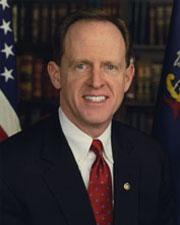
Mr. Chairman, I offer an amendment in the nature of a substitute. Mr. Chairman, I yield 5\1/2\ minutes to myself. Mr. Chairman, I would like to begin by commending the gentleman from Iowa (Chairman…
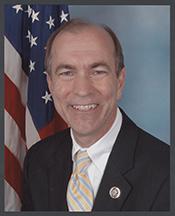
Mr. Chairman, I rise in support of this budget. The Committee on the Budget has passed a resolution that strikes the balance between the needs and the desires of this House and of the people of this…

Mr. Speaker, by direction of the Committee on Rules, I call up House Resolution 151 and ask for its immediate consideration. Mr. Speaker, for the purpose of debate only, I yield the customary 30…
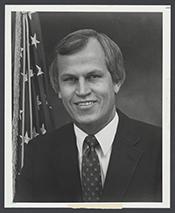
Mr. Chairman, will the gentleman yield? Mr. Chairman, I appreciate the gentleman's yielding, but I want to use a portion of my time commending him, but I wanted to ask the gentleman a question. I…

Mr. Chairman, the gentleman from Texas (Mr. Thornberry) and I have spoken about the fact that this budget protects our country, our national defense, and our homeland security. And nothing is more…

Mr. Chairman, I want to thank the gentleman from California (Mr. Stark) for giving me this opportunity to address the House in probably the saddest day that I have had in my career, to be a Member of…

Mr. Chairman, I yield myself 5 minutes. (Mr. STARK asked and was given permission to revise and extend his remarks.) Mr. Chairman, last night, President Bush started the war against Iraq, a war that…
Show 11 more

Mr. Chairman, I thank the gentleman for yielding me time. Mr. Chairman, I think if we were honest with each other, we would say we do not like any of our budgets, because we would like them to be…
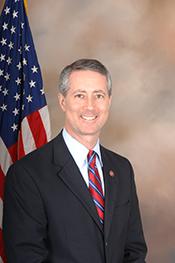
Mr. Chairman, I thank the chairman and commend him for the amazing job he is doing in a difficult situation. Mr. Chairman, today, of course, our thoughts and our prayers and our admiration are with…
Mr. Chairman, before anyone thinks that I am trying to impress upon them that I am a biblical scholar, I will tell my colleagues I am not, but I happened to listen to one Sunday evening. His name is…
Mr. Chairman, I yield myself such time as I may consume. I thank the gentleman from South Carolina (Mr. Spratt) for the time, and for his good work on this budget. It is a matter of economic…

Mr. Speaker, I thank the gentleman for yielding time to me. Mr. Speaker, indeed, I am a member of the Budget Committee. It is my first year on this committee and my ninth year on the Appropriations…
Mr. Chairman, I offer an amendment in the nature of a substitute. Mr. Chairman, I yield to myself as much time as I may consume. (Mr. HILL asked and was given permission to revise and extend his…
Mr. Chairman, the Blue Dog budget is based on a very simple premise that basically says that our generation needs to be willing to have the courage to pay the bills that we are incurring and not pass…
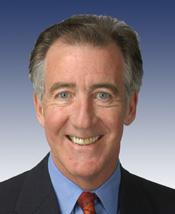
I thank the gentleman very much for yielding me this time. Mr. Chairman, today in Northampton, Massachusetts, they are having problems funding a homeless shelter for veterans. As we watched the…

Mr. Chairman, I certainly appreciate those kind words that the gentleman had to say. It is very important for us to understand exactly where we are right now, and let me start by setting the stage of…

Mr. Chairman, America is at war, and the Blue Dog budget reflects this new reality. Our plan strengthens national defense, improves homeland security, all in the context of a responsible budget. I…

Mr. Chairman, I thank the gentleman from Indiana for yielding me this time. I want to announce and show the audience here in the Chamber that the Concord Coalition, which is a national watchdog…
Bill Text
5 versions available
        [Congressional Bills 108th Congress]
[From the U.S. Government Publishing Office]
[H. Con. Res. 95 Enrolled Bill (ENR)]

H.Con.Res.95
Agreed to April 11, 2003

One Hundred Eighth Congress

of the

United States of America

AT THE FIRST SESSION

Begun and held at the City of Washington on Tuesday,
the seventh day of January, two thousand and three

Concurrent Resolution

Resolved by the House of Representatives (the Senate concurring),

SECTION 1. CONCURRENT RESOLUTION ON THE BUDGET FOR FISCAL YEAR 2004.

(a) Declaration.--The Congress declares that the concurrent
resolution on the budget for fiscal year 2004 is hereby established and
that the appropriate budgetary levels for fiscal years 2003 and 2005
through 2013 are hereby set forth.
(b) Table of Contents.--The table of contents for this concurrent
resolution is as follows:

Sec. 1. Concurrent resolution on the budget for fiscal year 2004.

TITLE I--RECOMMENDED LEVELS AND AMOUNTS

Sec. 101. Recommended levels and amounts.
Sec. 102. Social security.
Sec. 103. Major functional categories.

TITLE II--RECONCILIATION

Sec. 201. Reconciliation for economic growth and tax simplification and
fairness.
Sec. 202. Limit on Senate consideration of reconciliation.

TITLE III--SUBMISSIONS TO ELIMINATE WASTE, FRAUD, AND ABUSE

Sec. 301. Submissions of findings providing for the elimination of
waste, fraud, and abuse in mandatory programs.

TITLE IV--RESERVE FUNDS AND CONTINGENCY PROCEDURE

Subtitle A--Reserve Funds for Legislation Assumed in Budget Aggregates

Sec. 401. Reserve fund for medicare modernization and prescription
drugs.
Sec. 402. Reserve fund for medicaid reform.
Sec. 403. Reserve fund for State children's health insurance program.
Sec. 404. Reserve fund for project bioshield.
Sec. 405. Reserve fund for health insurance for the uninsured.
Sec. 406. Reserve fund for children with special needs.

Subtitle B--Contingency Procedure

Sec. 411. Contingency procedure for surface transportation.

Subtitle C--Adjustments to Fiscal Year 2003 Levels

Sec. 421. Supplemental appropriations for fiscal year 2003.

TITLE V--BUDGET ENFORCEMENT

Sec. 501. Restrictions on advance appropriations.
Sec. 502. Emergency legislation.
Sec. 503. Extension of supermajority enforcement.
Sec. 504. Discretionary spending limits in the Senate.
Sec. 505. Pay-as-you-go point of order in the Senate.
Sec. 506. Compliance with section 13301 of the Budget Enforcement Act of
1990.
Sec. 507. Application and effect of changes in allocations and
aggregates.
Sec. 508. Adjustments to reflect changes in concepts and definitions.

TITLE VI--SENSE OF THE SENATE

Sec. 601. Sense of the Senate on Federal employee pay.
Sec. 602. Sense of the Senate regarding Pell Grants.
Sec. 603. Sense of the Senate on emergency and disaster assistance for
livestock and agriculture producers.
Sec. 604. Social security restructuring.
Sec. 605. Sense of the Senate concerning State fiscal relief.
Sec. 606. Federal agency review commission.
Sec. 607. Sense of the Senate regarding highway spending.
Sec. 608. Sense of the Senate on reports on liabilities and future
costs.
Sec. 609. Sense of the Senate concerning an expansion in health care
coverage.
Sec. 610. Sense of the Senate concerning programs of the Corps of
Engineers.
Sec. 611. Sense of the Senate concerning Native American health.
Sec. 612. Sense of the Senate on providing tax and other incentives to
revitalize rural America.
Sec. 613. Sense of the Senate concerning children's graduate medical
education.
Sec. 614. Sense of the Senate on funding for criminal justice.
Sec. 615. Sense of the Senate concerning funding for drug treatment
programs.
Sec. 616. Sense of the Senate concerning free trade agreement with the
United Kingdom.

TITLE I--RECOMMENDED LEVELS AND AMOUNTS

SEC. 101. RECOMMENDED LEVELS AND AMOUNTS.

The following budgetary levels are appropriate for each of fiscal
years 2003 through 2013:
(1) Federal revenues.--For purposes of the enforcement of this
resolution:
(A) The recommended levels of Federal revenues are as
follows:
Fiscal year 2003: $1,303,111,000,000.
Fiscal year 2004: $1,325,452,000,000.
Fiscal year 2005: $1,493,875,000,000.
Fiscal year 2006: $1,657,511,000,000.
Fiscal year 2007: $1,790,251,000,000.
Fiscal year 2008: $1,901,844,000,000.
Fiscal year 2009: $2,053,762,000,000.
Fiscal year 2010: $2,167,937,000,000.
Fiscal year 2011: $2,270,540,000,000.
Fiscal year 2012: $2,409,572,000,000.
Fiscal year 2013: $2,553,985,000,000.
(B) The amounts by which the aggregate levels of Federal
revenues should be reduced are as follows:
Fiscal year 2003: $56,723,000,000.
Fiscal year 2004: $140,918,000,000.
Fiscal year 2005: $123,151,000,000.
Fiscal year 2006: $83,161,000,000.
Fiscal year 2007: $62,915,000,000.
Fiscal year 2008: $61,133,000,000.
Fiscal year 2009: $24,568,000,000.
Fiscal year 2010: $25,105,000,000.
Fiscal year 2011: $156,956,000,000.
Fiscal year 2012: $240,207,000,000.
Fiscal year 2013: $250,225,000,000.
(2) New budget authority.--For purposes of the enforcement of
this resolution, the appropriate levels of total new budget
authority are as follows:
Fiscal year 2003: $1,862,613,000,000.
Fiscal year 2004: $1,861,004,000,000.
Fiscal year 2005: $1,990,236,000,000.
Fiscal year 2006: $2,122,301,000,000.
Fiscal year 2007: $2,232,829,000,000.
Fiscal year 2008: $2,348,872,000,000.
Fiscal year 2009: $2,454,439,000,000.
Fiscal year 2010: $2,555,612,000,000.
Fiscal year 2011: $2,669,462,000,000.
Fiscal year 2012: $2,754,007,000,000.
Fiscal year 2013: $2,875,121,000,000.
(3) Budget outlays.--For purposes of the enforcement of this
resolution, the appropriate levels of total budget outlays are as
follows:
Fiscal year 2003: $1,815,395,000,000.
Fiscal year 2004: $1,883,834,000,000.
Fiscal year 2005: $1,981,402,000,000.
Fiscal year 2006: $2,089,299,000,000.
Fiscal year 2007: $2,190,576,000,000.
Fiscal year 2008: $2,307,259,000,000.
Fiscal year 2009: $2,419,846,000,000.
Fiscal year 2010: $2,527,898,000,000.
Fiscal year 2011: $2,651,220,000,000.
Fiscal year 2012: $2,723,935,000,000.
Fiscal year 2013: $2,855,491,000,000.
(4) Deficits (on-budget).--For purposes of the enforcement of
this resolution, the amounts of the deficits (on-budget) are as
follows:
Fiscal year 2003: $512,284,000,000.
Fiscal year 2004: $558,382,000,000.
Fiscal year 2005: $487,527,000,000.
Fiscal year 2006: $431,788,000,000.
Fiscal year 2007: $400,325,000,000.
Fiscal year 2008: $405,415,000,000.
Fiscal year 2009: $366,084,000,000.
Fiscal year 2010: $359,961,000,000.
Fiscal year 2011: $380,680,000,000.
Fiscal year 2012: $314,363,000,000.
Fiscal year 2013: $301,506,000,000.
(5) Debt subject to limit.--Pursuant to section 301(a)(5) of
the Congressional Budget Act of 1974, the appropriate levels of the
public debt are as follows:
Fiscal year 2003: $6,747,000,000,000.
Fiscal year 2004: $7,384,000,000,000.
Fiscal year 2005: $7,978,000,000,000.
Fiscal year 2006: $8,534,000,000,000.
Fiscal year 2007: $9,064,000,000,000.
Fiscal year 2008: $9,602,000,000,000.
Fiscal year 2009: $10,102,000,000,000.
Fiscal year 2010: $10,601,000,000,000.
Fiscal year 2011: $11,125,000,000,000.
Fiscal year 2012: $11,588,000,000,000.
Fiscal year 2013: $12,040,000,000,000.
(6) Debt held by the public.--The appropriate levels of debt
held by the public are as follows:
Fiscal year 2003: $3,917,000,000,000.
Fiscal year 2004: $4,299,000,000,000.
Fiscal year 2005: $4,599,000,000,000.
Fiscal year 2006: $4,829,000,000,000.
Fiscal year 2007: $5,007,000,000,000.
Fiscal year 2008: $5,169,000,000,000.
Fiscal year 2009: $5,272,000,000,000.
Fiscal year 2010: $5,349,000,000,000.
Fiscal year 2011: $5,428,000,000,000.
Fiscal year 2012: $5,424,000,000,000.
Fiscal year 2013: $5,394,000,000,000.

SEC. 102. SOCIAL SECURITY.

(a) Social Security Revenues.--For purposes of Senate enforcement
under sections 302 and 311 of the Congressional Budget Act of 1974, the
amounts of revenues of the Federal Old-Age and Survivors Insurance
Trust Fund and the Federal Disability Insurance Trust Fund are as
follows:
Fiscal year 2003: $531,607,000,000.
Fiscal year 2004: $557,821,000,000.
Fiscal year 2005: $587,775,000,000.
Fiscal year 2006: $619,062,000,000.
Fiscal year 2007: $651,148,000,000.
Fiscal year 2008: $684,429,000,000.
Fiscal year 2009: $719,132,000,000.
Fiscal year 2010: $755,754,000,000.
Fiscal year 2011: $792,152,000,000.
Fiscal year 2012: $829,568,000,000.
Fiscal year 2013: $869,690,000,000.
(b) Social Security Outlays.--For purposes of Senate enforcement
under sections 302 and 311 of the Congressional Budget Act of 1974, the
amounts of outlays of the Federal Old-Age and Survivors Insurance Trust
Fund and the Federal Disability Insurance Trust Fund are as follows:
Fiscal year 2003: $366,278,000,000.
Fiscal year 2004: $380,389,000,000.
Fiscal year 2005: $390,148,000,000.
Fiscal year 2006: $402,413,000,000.
Fiscal year 2007: $415,269,000,000.
Fiscal year 2008: $429,061,000,000.
Fiscal year 2009: $445,442,000,000.
Fiscal year 2010: $463,613,000,000.
Fiscal year 2011: $482,034,000,000.
Fiscal year 2012: $504,888,000,000.
Fiscal year 2013: $531,118,000,000.
(c) Social Security Administrative Expenses.--In the Senate, the
amounts of new budget authority and budget outlays of the Federal Old-
Age and Survivors Insurance Trust Fund and the Federal Disability
Insurance Trust Fund for administrative expenses are as follows:
Fiscal year 2003:
(A) New budget authority, $3,812,000,000.
(B) Outlays, $3,838,000,000.
Fiscal year 2004:
(A) New budget authority, $4,257,000,000.
(B) Outlays, $4,207,000,000.
Fiscal year 2005:
(A) New budget authority, $4,338,000,000.
(B) Outlays, $4,301,000,000.
Fiscal year 2006:
(A) New budget authority, $4,424,000,000.
(B) Outlays, $4,409,000,000.
Fiscal year 2007:
(A) New budget authority, $4,522,000,000.
(B) Outlays, $4,505,000,000.
Fiscal year 2008:
(A) New budget authority, $4,638,000,000.
(B) Outlays, $4,617,000,000.
Fiscal year 2009:
(A) New budget authority, $4,792,000,000.
(B) Outlays, $4,766,000,000.
Fiscal year 2010:
(A) New budget authority, $4,954,000,000.
(B) Outlays, $4,924,000,000.
Fiscal year 2011:
(A) New budget authority, $5,121,000,000.
(B) Outlays, $5,091,000,000.
Fiscal year 2012:
(A) New budget authority, $5,292,000,000.
(B) Outlays, $5,260,000,000.
Fiscal year 2013:
(A) New budget authority, $5,471,000,000.
(B) Outlays, $5,439,000,000.

SEC. 103. MAJOR FUNCTIONAL CATEGORIES.

The Congress determines and declares that the appropriate levels of
new budget authority and outlays for fiscal years 2003 through 2013 for
each major functional category are:
(1) National Defense (050):
Fiscal year 2003:
(A) New budget authority, $392,494,000,000.
(B) Outlays, $386,229,000,000.
Fiscal year 2004:
(A) New budget authority, $400,546,000,000.
(B) Outlays, $400,916,000,000.
Fiscal year 2005:
(A) New budget authority, $420,071,000,000.
(B) Outlays, $414,237,000,000.
Fiscal year 2006:
(A) New budget authority, $440,185,000,000.
(B) Outlays, $426,011,000,000.
Fiscal year 2007:
(A) New budget authority, $460,435,000,000.
(B) Outlays, $438,656,000,000.
Fiscal year 2008:
(A) New budget authority, $480,886,000,000.
(B) Outlays, $462,861,000,000.
Fiscal year 2009:
(A) New budget authority, $491,951,000,000.
(B) Outlays, $479,249,000,000.
Fiscal year 2010:
(A) New budget authority, $502,301,000,000.
(B) Outlays, $493,195,000,000.
Fiscal year 2011:
(A) New budget authority, $511,859,000,000.
(B) Outlays, $508,131,000,000.
Fiscal year 2012:
(A) New budget authority, $520,553,000,000.
(B) Outlays, $510,509,000,000.
Fiscal year 2013:
(A) New budget authority, $529,428,000,000.
(B) Outlays, $524,494,000,000.
(2) International Affairs (150):
Fiscal year 2003:
(A) New budget authority, $22,506,000,000.
(B) Outlays, $19,283,000,000.
Fiscal year 2004:
(A) New budget authority, $25,681,000,000.
(B) Outlays, $24,207,000,000.
Fiscal year 2005:
(A) New budget authority, $29,734,000,000.
(B) Outlays, $24,917,000,000.
Fiscal year 2006:
(A) New budget authority, $32,308,000,000.
(B) Outlays, $26,539,000,000.
Fiscal year 2007:
(A) New budget authority, $33,603,000,000.
(B) Outlays, $28,464,000,000.
Fiscal year 2008:
(A) New budget authority, $34,611,000,000.
(B) Outlays, $29,604,000,000.
Fiscal year 2009:
(A) New budget authority, $35,413,000,000.
(B) Outlays, $30,733,000,000.
Fiscal year 2010:
(A) New budget authority, $36,258,000,000.
(B) Outlays, $31,689,000,000.
Fiscal year 2011:
(A) New budget authority, $37,136,000,000.
(B) Outlays, $32,565,000,000.
Fiscal year 2012:
(A) New budget authority, $38,005,000,000.
(B) Outlays, $33,408,000,000.
Fiscal year 2013:
(A) New budget authority, $38,885,000,000.
(B) Outlays, $34,298,000,000.
(3) General Science, Space, and Technology (250):
Fiscal year 2003:
(A) New budget authority, $23,153,000,000.
(B) Outlays, $21,556,000,000.
Fiscal year 2004:
(A) New budget authority, $23,927,000,000.
(B) Outlays, $22,799,000,000.
Fiscal year 2005:
(A) New budget authority, $24,433,000,000.
(B) Outlays, $23,861,000,000.
Fiscal year 2006:
(A) New budget authority, $25,217,000,000.
(B) Outlays, $24,485,000,000.
Fiscal year 2007:
(A) New budget authority, $26,055,000,000.
(B) Outlays, $25,221,000,000.
Fiscal year 2008:
(A) New budget authority, $26,832,000,000.
(B) Outlays, $25,948,000,000.
Fiscal year 2009:
(A) New budget authority, $27,462,000,000.
(B) Outlays, $26,639,000,000.
Fiscal year 2010:
(A) New budget authority, $28,121,000,000.
(B) Outlays, $27,296,000,000.
Fiscal year 2011:
(A) New budget authority, $28,805,000,000.
(B) Outlays, $27,963,000,000.
Fiscal year 2012:
(A) New budget authority, $29,492,000,000.
(B) Outlays, $28,639,000,000.
Fiscal year 2013:
(A) New budget authority, $30,185,000,000.
(B) Outlays, $29,319,000,000.
(4) Energy (270):
Fiscal year 2003:
(A) New budget authority, $2,074,000,000.
(B) Outlays, $439,000,000.
Fiscal year 2004:
(A) New budget authority, $2,634,000,000.
(B) Outlays, $873,000,000.
Fiscal year 2005:
(A) New budget authority, $2,797,000,000.
(B) Outlays, $947,000,000.
Fiscal year 2006:
(A) New budget authority, $2,714,000,000.
(B) Outlays, $1,272,000,000.
Fiscal year 2007:
(A) New budget authority, $2,540,000,000.
(B) Outlays, $1,069,000,000.
Fiscal year 2008:
(A) New budget authority, $3,080,000,000.
(B) Outlays, $1,419,000,000.
Fiscal year 2009:
(A) New budget authority, $3,090,000,000.
(B) Outlays, $1,686,000,000.
Fiscal year 2010:
(A) New budget authority, $3,194,000,000.
(B) Outlays, $1,794,000,000.
Fiscal year 2011:
(A) New budget authority, $3,296,000,000.
(B) Outlays, $1,976,000,000.
Fiscal year 2012:
(A) New budget authority, $3,408,000,000.
(B) Outlays, $2,357,000,000.
Fiscal year 2013:
(A) New budget authority, $3,520,000,000.
(B) Outlays, $2,326,000,000.
(5) Natural Resources and Environment (300):
Fiscal year 2003:
(A) New budget authority, $30,816,000,000.
(B) Outlays, $28,940,000,000.
Fiscal year 2004:
(A) New budget authority, $31,623,000,000.
(B) Outlays, $30,782,000,000.
Fiscal year 2005:
(A) New budget authority, $32,504,000,000.
(B) Outlays, $31,654,000,000.
Fiscal year 2006:
(A) New budget authority, $32,962,000,000.
(B) Outlays, $32,830,000,000.
Fiscal year 2007:
(A) New budget authority, $33,386,000,000.
(B) Outlays, $33,127,000,000.
Fiscal year 2008:
(A) New budget authority, $34,064,000,000.
(B) Outlays, $33,527,000,000.
Fiscal year 2009:
(A) New budget authority, $35,183,000,000.
(B) Outlays, $34,544,000,000.
Fiscal year 2010:
(A) New budget authority, $36,021,000,000.
(B) Outlays, $35,360,000,000.
Fiscal year 2011:
(A) New budget authority, $36,829,000,000.
(B) Outlays, $36,163,000,000.
Fiscal year 2012:
(A) New budget authority, $37,529,000,000.
(B) Outlays, $36,836,000,000.
Fiscal year 2013:
(A) New budget authority, $38,214,000,000.
(B) Outlays, $37,600,000,000.
(6) Agriculture (350):
Fiscal year 2003:
(A) New budget authority, $24,418,000,000.
(B) Outlays, $23,365,000,000.
Fiscal year 2004:
(A) New budget authority, $24,583,000,000.
(B) Outlays, $23,656,000,000.
Fiscal year 2005:
(A) New budget authority, $27,003,000,000.
(B) Outlays, $25,763,000,000.
Fiscal year 2006:
(A) New budget authority, $26,828,000,000.
(B) Outlays, $25,593,000,000.
Fiscal year 2007:
(A) New budget authority, $26,299,000,000.
(B) Outlays, $25,107,000,000.
Fiscal year 2008:
(A) New budget authority, $25,507,000,000.
(B) Outlays, $24,381,000,000.
Fiscal year 2009:
(A) New budget authority, $26,092,000,000.
(B) Outlays, $25,128,000,000.
Fiscal year 2010:
(A) New budget authority, $25,545,000,000.
(B) Outlays, $24,716,000,000.
Fiscal year 2011:
(A) New budget authority, $24,991,000,000.
(B) Outlays, $24,180,000,000.
Fiscal year 2012:
(A) New budget authority, $24,573,000,000.
(B) Outlays, $23,778,000,000.
Fiscal year 2013:
(A) New budget authority, $24,297,000,000.
(B) Outlays, $23,498,000,000.
(7) Commerce and Housing Credit (370):
Fiscal year 2003:
(A) New budget authority, $8,812,000,000.
(B) Outlays, $5,881,000,000.
Fiscal year 2004:
(A) New budget authority, $7,516,000,000.
(B) Outlays, $3,574,000,000.
Fiscal year 2005:
(A) New budget authority, $8,743,000,000.
(B) Outlays, $4,050,000,000.
Fiscal year 2006:
(A) New budget authority, $8,280,000,000.
(B) Outlays, $3,116,000,000.
Fiscal year 2007:
(A) New budget authority, $8,626,000,000.
(B) Outlays, $2,651,000,000.
Fiscal year 2008:
(A) New budget authority, $8,743,000,000.
(B) Outlays, $2,243,000,000.
Fiscal year 2009:
(A) New budget authority, $8,526,000,000.
(B) Outlays, $2,019,000,000.
Fiscal year 2010:
(A) New budget authority, $8,407,000,000.
(B) Outlays, $1,538,000,000.
Fiscal year 2011:
(A) New budget authority, $8,386,000,000.
(B) Outlays, $934,000,000.
Fiscal year 2012:
(A) New budget authority, $8,489,000,000.
(B) Outlays, $642,000,000.
Fiscal year 2013:
(A) New budget authority, $8,563,000,000.
(B) Outlays, $756,000,000.
(8) Transportation (400):
Fiscal year 2003:
(A) New budget authority, $64,091,000,000.
(B) Outlays, $67,847,000,000.
Fiscal year 2004:
(A) New budget authority, $69,506,000,000.
(B) Outlays, $69,869,000,000.
Fiscal year 2005:
(A) New budget authority, $70,489,000,000.
(B) Outlays, $69,442,000,000.
Fiscal year 2006:
(A) New budget authority, $72,496,000,000.
(B) Outlays, $70,191,000,000.
Fiscal year 2007:
(A) New budget authority, $75,278,000,000.
(B) Outlays, $71,786,000,000.
Fiscal year 2008:
(A) New budget authority, $76,927,000,000.
(B) Outlays, $73,659,000,000.
Fiscal year 2009:
(A) New budget authority, $78,878,000,000.
(B) Outlays, $75,632,000,000.
Fiscal year 2010:
(A) New budget authority, $77,747,000,000.
(B) Outlays, $77,233,000,000.
Fiscal year 2011:
(A) New budget authority, $78,624,000,000.
(B) Outlays, $78,291,000,000.
Fiscal year 2012:
(A) New budget authority, $79,527,000,000.
(B) Outlays, $79,317,000,000.
Fiscal year 2013:
(A) New budget authority, $80,466,000,000.
(B) Outlays, $80,346,000,000.
(9) Community and Regional Development (450):
Fiscal year 2003:
(A) New budget authority, $12,251,000,000.
(B) Outlays, $15,994,000,000.
Fiscal year 2004:
(A) New budget authority, $14,063,000,000.
(B) Outlays, $15,823,000,000.
Fiscal year 2005:
(A) New budget authority, $14,138,000,000.
(B) Outlays, $15,872,000,000.
Fiscal year 2006:
(A) New budget authority, $14,321,000,000.
(B) Outlays, $14,961,000,000.
Fiscal year 2007:
(A) New budget authority, $14,536,000,000.
(B) Outlays, $14,664,000,000.
Fiscal year 2008:
(A) New budget authority, $14,745,000,000.
(B) Outlays, $14,123,000,000.
Fiscal year 2009:
(A) New budget authority, $14,980,000,000.
(B) Outlays, $14,298,000,000.
Fiscal year 2010:
(A) New budget authority, $15,233,000,000.
(B) Outlays, $14,501,000,000.
Fiscal year 2011:
(A) New budget authority, $15,492,000,000.
(B) Outlays, $14,750,000,000.
Fiscal year 2012:
(A) New budget authority, $15,755,000,000.
(B) Outlays, $14,992,000,000.
Fiscal year 2013:
(A) New budget authority, $16,023,000,000.
(B) Outlays, $15,259,000,000.
(10) Education, Training, Employment, and Social Services
(500):
Fiscal year 2003:
(A) New budget authority, $82,699,000,000.
(B) Outlays, $81,455,000,000.
Fiscal year 2004:
(A) New budget authority, $90,035,000,000.
(B) Outlays, $84,205,000,000.
Fiscal year 2005:
(A) New budget authority, $91,442,000,000.
(B) Outlays, $87,020,000,000.
Fiscal year 2006:
(A) New budget authority, $93,428,000,000.
(B) Outlays, $90,541,000,000.
Fiscal year 2007:
(A) New budget authority, $95,569,000,000.
(B) Outlays, $92,986,000,000.
Fiscal year 2008:
(A) New budget authority, $97,925,000,000.
(B) Outlays, $95,118,000,000.
Fiscal year 2009:
(A) New budget authority, $99,813,000,000.
(B) Outlays, $97,440,000,000.
Fiscal year 2010:
(A) New budget authority, $101,551,000,000.
(B) Outlays, $99,289,000,000.
Fiscal year 2011:
(A) New budget authority, $103,529,000,000.
(B) Outlays, $101,117,000,000.
Fiscal year 2012:
(A) New budget authority, $105,790,000,000.
(B) Outlays, $102,985,000,000.
Fiscal year 2013:
(A) New budget authority, $107,265,000,000.
(B) Outlays, $104,934,000,000.
(11) Health (550):
Fiscal year 2003:
(A) New budget authority, $222,913,000,000.
(B) Outlays, $217,881,000,000.
Fiscal year 2004:
(A) New budget authority, $240,554,000,000.
(B) Outlays, $238,785,000,000.
Fiscal year 2005:
(A) New budget authority, $259,701,000,000.
(B) Outlays, $259,403,000,000.
Fiscal year 2006:
(A) New budget authority, $279,236,000,000.
(B) Outlays, $279,024,000,000.
Fiscal year 2007:
(A) New budget authority, $299,614,000,000.
(B) Outlays, $298,681,000,000.
Fiscal year 2008:
(A) New budget authority, $322,061,000,000.
(B) Outlays, $320,731,000,000.
Fiscal year 2009:
(A) New budget authority, $345,548,000,000.
(B) Outlays, $344,059,000,000.
Fiscal year 2010:
(A) New budget authority, $370,626,000,000.
(B) Outlays, $369,097,000,000.
Fiscal year 2011:
(A) New budget authority, $396,818,000,000.
(B) Outlays, $395,280,000,000.
Fiscal year 2012:
(A) New budget authority, $415,790,000,000.
(B) Outlays, $414,384,000,000.
Fiscal year 2013:
(A) New budget authority, $445,484,000,000.
(B) Outlays, $444,082,000,000.
(12) Medicare (570):
Fiscal year 2003:
(A) New budget authority, $248,586,000,000.
(B) Outlays, $248,434,000,000.
Fiscal year 2004:
(A) New budget authority, $266,018,000,000.
(B) Outlays, $266,283,000,000.
Fiscal year 2005:
(A) New budget authority, $282,682,000,000.
(B) Outlays, $285,630,000,000.
Fiscal year 2006:
(A) New budget authority, $321,623,000,000.
(B) Outlays, $318,384,000,000.
Fiscal year 2007:
(A) New budget authority, $343,717,000,000.
(B) Outlays, $343,987,000,000.
Fiscal year 2008:
(A) New budget authority, $369,244,000,000.
(B) Outlays, $369,119,000,000.
Fiscal year 2009:
(A) New budget authority, $395,368,000,000.
(B) Outlays, $395,107,000,000.
Fiscal year 2010:
(A) New budget authority, $423,288,000,000.
(B) Outlays, $423,546,000,000.
Fiscal year 2011:
(A) New budget authority, $453,285,000,000.
(B) Outlays, $456,642,000,000.
Fiscal year 2012:
(A) New budget authority, $485,951,000,000.
(B) Outlays, $482,125,000,000.
Fiscal year 2013:
(A) New budget authority, $526,553,000,000.
(B) Outlays, $526,809,000,000.
(13) Income Security (600):
Fiscal year 2003:
(A) New budget authority, $326,390,000,000.
(B) Outlays, $334,177,000,000.
Fiscal year 2004:
(A) New budget authority, $319,518,000,000.
(B) Outlays, $324,840,000,000.
Fiscal year 2005:
(A) New budget authority, $333,821,000,000.
(B) Outlays, $337,123,000,000.
Fiscal year 2006:
(A) New budget authority, $341,816,000,000.
(B) Outlays, $344,292,000,000.
Fiscal year 2007:
(A) New budget authority, $349,199,000,000.
(B) Outlays, $350,945,000,000.
Fiscal year 2008:
(A) New budget authority, $361,697,000,000.
(B) Outlays, $362,808,000,000.
Fiscal year 2009:
(A) New budget authority, $373,372,000,000.
(B) Outlays, $374,083,000,000.
Fiscal year 2010:
(A) New budget authority, $384,844,000,000.
(B) Outlays, $385,347,000,000.
Fiscal year 2011:
(A) New budget authority, $400,266,000,000.
(B) Outlays, $400,688,000,000.
Fiscal year 2012:
(A) New budget authority, $403,738,000,000.
(B) Outlays, $404,146,000,000.
Fiscal year 2013:
(A) New budget authority, $418,672,000,000.
(B) Outlays, $419,245,000,000.
(14) Social Security (650):
Fiscal year 2003:
(A) New budget authority, $13,255,000,000.
(B) Outlays, $13,255,000,000.
Fiscal year 2004:
(A) New budget authority, $14,294,000,000.
(B) Outlays, $14,293,000,000.
Fiscal year 2005:
(A) New budget authority, $15,471,000,000.
(B) Outlays, $15,471,000,000.
Fiscal year 2006:
(A) New budget authority, $16,421,000,000.
(B) Outlays, $16,421,000,000.
Fiscal year 2007:
(A) New budget authority, $17,919,000,000.
(B) Outlays, $17,919,000,000.
Fiscal year 2008:
(A) New budget authority, $19,704,000,000.
(B) Outlays, $19,704,000,000.
Fiscal year 2009:
(A) New budget authority, $21,810,000,000.
(B) Outlays, $21,810,000,000.
Fiscal year 2010:
(A) New budget authority, $24,283,000,000.
(B) Outlays, $24,283,000,000.
Fiscal year 2011:
(A) New budget authority, $28,170,000,000.
(B) Outlays, $28,170,000,000.
Fiscal year 2012:
(A) New budget authority, $31,357,000,000.
(B) Outlays, $31,357,000,000.
Fiscal year 2013:
(A) New budget authority, $34,347,000,000.
(B) Outlays, $34,347,000,000.
(15) Veterans Benefits and Services (700):
Fiscal year 2003:
(A) New budget authority, $57,597,000,000.
(B) Outlays, $57,486,000,000.
Fiscal year 2004:
(A) New budget authority, $63,779,000,000.
(B) Outlays, $63,209,000,000.
Fiscal year 2005:
(A) New budget authority, $67,135,000,000.
(B) Outlays, $66,553,000,000.
Fiscal year 2006:
(A) New budget authority, $65,397,000,000.
(B) Outlays, $64,995,000,000.
Fiscal year 2007:
(A) New budget authority, $63,874,000,000.
(B) Outlays, $63,442,000,000.
Fiscal year 2008:
(A) New budget authority, $67,666,000,000.
(B) Outlays, $67,398,000,000.
Fiscal year 2009:
(A) New budget authority, $69,279,000,000.
(B) Outlays, $68,924,000,000.
Fiscal year 2010:
(A) New budget authority, $70,992,000,000.
(B) Outlays, $70,588,000,000.
Fiscal year 2011:
(A) New budget authority, $75,669,000,000.
(B) Outlays, $75,249,000,000.
Fiscal year 2012:
(A) New budget authority, $72,618,000,000.
(B) Outlays, $72,097,000,000.
Fiscal year 2013:
(A) New budget authority, $77,455,000,000.
(B) Outlays, $76,989,000,000.
(16) Administration of Justice (750):
Fiscal year 2003:
(A) New budget authority, $38,543,000,000.
(B) Outlays, $37,712,000,000.
Fiscal year 2004:
(A) New budget authority, $37,626,000,000.
(B) Outlays, $40,788,000,000.
Fiscal year 2005:
(A) New budget authority, $37,946,000,000.
(B) Outlays, $39,193,000,000.
Fiscal year 2006:
(A) New budget authority, $37,984,000,000.
(B) Outlays, $38,329,000,000.
Fiscal year 2007:
(A) New budget authority, $38,461,000,000.
(B) Outlays, $38,252,000,000.
Fiscal year 2008:
(A) New budget authority, $39,477,000,000.
(B) Outlays, $39,128,000,000.
Fiscal year 2009:
(A) New budget authority, $40,497,000,000.
(B) Outlays, $40,212,000,000.
Fiscal year 2010:
(A) New budget authority, $41,599,000,000.
(B) Outlays, $41,299,000,000.
Fiscal year 2011:
(A) New budget authority, $42,889,000,000.
(B) Outlays, $42,472,000,000.
Fiscal year 2012:
(A) New budget authority, $44,207,000,000.
(B) Outlays, $43,760,000,000.
Fiscal year 2013:
(A) New budget authority, $45,576,000,000.
(B) Outlays, $45,120,000,000.
(17) General Government (800):
Fiscal year 2003:
(A) New budget authority, $18,185,000,000.
(B) Outlays, $18,110,000,000.
Fiscal year 2004:
(A) New budget authority, $20,202,000,000.
(B) Outlays, $20,066,000,000.
Fiscal year 2005:
(A) New budget authority, $20,635,000,000.
(B) Outlays, $20,714,000,000.
Fiscal year 2006:
(A) New budget authority, $20,656,000,000.
(B) Outlays, $20,485,000,000.
Fiscal year 2007:
(A) New budget authority, $21,126,000,000.
(B) Outlays, $20,876,000,000.
Fiscal year 2008:
(A) New budget authority, $21,236,000,000.
(B) Outlays, $21,013,000,000.
Fiscal year 2009:
(A) New budget authority, $21,946,000,000.
(B) Outlays, $21,504,000,000.
Fiscal year 2010:
(A) New budget authority, $22,695,000,000.
(B) Outlays, $22,212,000,000.
Fiscal year 2011:
(A) New budget authority, $23,458,000,000.
(B) Outlays, $22,946,000,000.
Fiscal year 2012:
(A) New budget authority, $24,255,000,000.
(B) Outlays, $23,880,000,000.
Fiscal year 2013:
(A) New budget authority, $25,076,000,000.
(B) Outlays, $24,520,000,000.
(18) Net Interest (900):
Fiscal year 2003:
(A) New budget authority, $240,176,000,000.
(B) Outlays, $240,176,000,000.
Fiscal year 2004:
(A) New budget authority, $259,414,000,000.
(B) Outlays, $259,414,000,000.
Fiscal year 2005:
(A) New budget authority, $310,630,000,000.
(B) Outlays, $310,630,000,000.
Fiscal year 2006:
(A) New budget authority, $352,219,000,000.
(B) Outlays, $352,219,000,000.
Fiscal year 2007:
(A) New budget authority, $380,574,000,000.
(B) Outlays, $380,574,000,000.
Fiscal year 2008:
(A) New budget authority, $405,647,000,000.
(B) Outlays, $405,647,000,000.
Fiscal year 2009:
(A) New budget authority, $429,542,000,000.
(B) Outlays, $429,542,000,000.
Fiscal year 2010:
(A) New budget authority, $450,651,000,000.
(B) Outlays, $450,651,000,000.
Fiscal year 2011:
(A) New budget authority, $473,381,000,000.
(B) Outlays, $473,381,000,000.
Fiscal year 2012:
(A) New budget authority, $496,015,000,000.
(B) Outlays, $496,015,000,000.
Fiscal year 2013:
(A) New budget authority, $514,513,000,000.
(B) Outlays, $514,513,000,000.
(19) Allowances (920):
Fiscal year 2003:
(A) New budget authority, $74,758,000,000.
(B) Outlays, $38,279,000,000.
Fiscal year 2004:
(A) New budget authority, -$7,621,000,000.
(B) Outlays, $22,346,000,000.
Fiscal year 2005:
(A) New budget authority, -$6,541,000,000.
(B) Outlays, $1,520,000,000.
Fiscal year 2006:
(A) New budget authority, -$7,331,000,000.
(B) Outlays, -$5,930,000,000.
Fiscal year 2007:
(A) New budget authority, -$8,947,000,000.
(B) Outlays, -$8,796,000,000.
Fiscal year 2008:
(A) New budget authority, -$9,959,000,000.
(B) Outlays, -$9,951,000,000.
Fiscal year 2009:
(A) New budget authority, -$11,526,000,000.
(B) Outlays, -$9,978,000,000.
Fiscal year 2010:
(A) New budget authority, -$12,888,000,000.
(B) Outlays, -$10,880,000,000.
Fiscal year 2011:
(A) New budget authority, -$16,414,000,000.
(B) Outlays, -$12,671,000,000.
Fiscal year 2012:
(A) New budget authority, -$21,460,000,000.
(B) Outlays, -$15,707,000,000.
Fiscal year 2013:
(A) New budget authority, -$25,618,000,000.
(B) Outlays, -$19,181,000,000.
(20) Undistributed Offsetting Receipts (950):
Fiscal year 2003:
(A) New budget authority, -$41,104,000,000.
(B) Outlays, -$41,104,000,000.
Fiscal year 2004:
(A) New budget authority, -$42,894,000,000.
(B) Outlays, -$42,894,000,000.
Fiscal year 2005:
(A) New budget authority, -$52,598,000,000.
(B) Outlays, -$52,598,000,000.
Fiscal year 2006:
(A) New budget authority, -$54,459,000,000.
(B) Outlays, -$54,459,000,000.
Fiscal year 2007:
(A) New budget authority, -$49,035,000,000.
(B) Outlays, -$49,035,000,000.
Fiscal year 2008:
(A) New budget authority, -$51,221,000,000.
(B) Outlays, -$51,221,000,000.
Fiscal year 2009:
(A) New budget authority, -$52,785,000,000.
(B) Outlays, -$52,785,000,000.
Fiscal year 2010:
(A) New budget authority, -$54,856,000,000.
(B) Outlays, -$54,856,000,000.
Fiscal year 2011:
(A) New budget authority, -$57,007,000,000.
(B) Outlays, -$57,007,000,000.
Fiscal year 2012:
(A) New budget authority, -$61,585,000,000.
(B) Outlays, -$61,585,000,000.
Fiscal year 2013:
(A) New budget authority, -$63,783,000,000.
(B) Outlays, -$63,783,000,000.

TITLE II--RECONCILIATION

SEC. 201. RECONCILIATION FOR ECONOMIC GROWTH AND TAX SIMPLIFICATION AND
FAIRNESS.

(a) In the House.--The House Committee on Ways and Means shall
report a reconciliation bill not later than May 8, 2003, that consists
of changes in laws within its jurisdiction sufficient to reduce
revenues by not more than $535,000,000,000 for the period of fiscal
years 2003 through 2013 and increase the total level of outlays by not
more than $15,000,000,000 for the period of fiscal years 2003 through
2013.
(b) In the Senate.--The Senate Committee on Finance shall report a
reconciliation bill not later than May 8, 2003, that consists of
changes in laws within its jurisdiction sufficient to reduce revenues
by not more than $522,524,000,000 and increase the total level of
outlays by not more than $27,476,000,000 for the period of fiscal years
2003 through 2013.

SEC. 202. LIMIT ON SENATE CONSIDERATION OF RECONCILIATION.

(a) Point of Order.--It shall not be in order for the Senate to
consider a bill reported pursuant to section 201, or an amendment
thereto, which would cause the total revenue reduction to exceed
$322,524,000,000 or the total outlay increase to exceed $27,476,000,000
for the period of fiscal years 2003 through 2013, except for the
purpose of inserting the text of a Senate-passed measure and requesting
a conference with the House of Representatives.
(b) Waiver.--This section may be waived or suspended in the Senate
only by the affirmative vote of three-fifths of the Members, duly
chosen and sworn.
(c) Appeals.--An affirmative vote of three-fifths of the Members of
the Senate, duly chosen and sworn, shall be required to sustain an
appeal of the ruling of the Chair on the point of order raised under
this section.

TITLE III--SUBMISSIONS TO ELIMINATE WASTE, FRAUD, AND ABUSE

SEC. 301. SUBMISSIONS OF FINDINGS PROVIDING FOR THE ELIMINATION OF
WASTE, FRAUD, AND ABUSE IN MANDATORY PROGRAMS.

(a) Findings and purpose.--The Congress finds that--
(1) the Inspector General of the Department of Education has
found that nearly 23 percent of recipients whose loans were
discharged due to disability claims were gainfully employed;
(2) based on data provided by the Office of Management and
Budget, it is estimated that more than $8 billion in erroneous
earned income tax payments are made each year;
(3) the Office of Management and Budget estimates that
erroneous payments for food stamps account for almost 9 percent of
total benefits;
(4) mismanagement of more than $3 billion in trust funds
controlled by the Bureau of Indian Affairs led the Congress to take
extraordinary measures to regain control of these funds;
(5) in its semiannual reports to Congress, the Inspector
General of the Office of Personnel Management has documented
numerous instances of the Government continuing to make electronic
payments for retirement benefits through the Civil Service
Retirement System after the death of the eligible annuitants; and
(6) numerous other examples of waste, fraud, and abuse are
reported regularly by government watchdog agencies.
(b) Submissions Providing for the Elimination of Waste, Fraud, and
Abuse in Mandatory Programs.--Not later than September 2, 2003, the
House committees named in subsection (c) and the Senate committees
named in subsection (d) shall submit findings that identify changes in
law within their jurisdictions that would achieve the specified level
of savings through the elimination of waste, fraud, and abuse. After
receiving those recommendations, the Committees on the Budget may use
them in the development of future concurrent resolutions on the budget.
For purposes of this subsection, the specified level of savings for
each committee shall be inserted in the Congressional Record by the
chairmen of the Committee on the Budget by May 16, 2003.
(c) House Committees.--The following committees of the House of
Representatives shall submit findings to the House Committee on the
Budget pursuant to subsection (b): the Committee on Agriculture, the
Committee on Armed Services, the Committee on Education and the
Workforce, the Committee on Energy and Commerce, the Committee on
Financial Services, the Committee on Government Reform, the Committee
on House Administration, the Committee on International Relations, the
Committee on the Judiciary, the Committee on Resources, the Committee
on Science, the Committee on Small Business, the Committee on
Transportation and Infrastructure, the Committee on Veterans' Affairs,
and the Committee on Ways and Means.
(d) Senate Committees.--The following committees of the Senate
shall submit their findings to the Senate Committee on the Budget
pursuant to subsection (b): the Committee on Agriculture, Nutrition,
and Forestry, the Committee on Armed Services, the Committee Banking,
Housing, and Urban Affairs, the Committee Commerce, Science, and
Transportation, the Committee on Energy and Natural Resources, the
Committee on Environment and Public Works, the Committee on Finance,
the Committee on Foreign Relations, the Committee on Governmental
Affairs, the Committee on Health, Education, Labor, and Pensions, the
Committee on the Judiciary, and the Committee on Veterans' Affairs.
(e) GAO Report.--By August 1, 2003, the Comptroller General shall
submit to the Committees on the Budget a comprehensive report
identifying instances in which the committees of jurisdiction may make
legislative changes to improve the economy, efficiency, and
effectiveness of programs within their jurisdiction.

TITLE IV--RESERVE FUNDS AND CONTINGENCY PROCEDURE
Subtitle A--Reserve Funds for Legislation Assumed in Budget Aggregates

SEC. 401. RESERVE FUND FOR MEDICARE MODERNIZATION AND PRESCRIPTION
DRUGS.

(a) In the House.--(1) In the House, if the Committee on Ways and
Means or the Committee on Energy and Commerce reports a bill or joint
resolution, or if an amendment thereto is offered or a conference
report thereon is submitted, that provides a prescription drug benefit
and modernizes medicare, and provides adjustments to the medicare
program on a fee-for-service, capitated, or other basis, the chairman
of the Committee on the Budget may revise the appropriate allocations
described in paragraph (3) for such committees and other appropriate
levels in this resolution by the amount provided by that measure for
that purpose, but not to exceed $7,000,000,000 in new budget authority
and $7,000,000,000 in outlays for fiscal year 2004 and $400,000,000,000
in new budget authority and $400,000,000,000 in outlays for the period
of fiscal years 2004 through 2013.
(2) After the consideration of any measure for which an adjustment
is made pursuant to paragraph (1), the chairman of the Committee on the
Budget shall make any further appropriate adjustments in allocations
and budget aggregates.
(3) In the House, there shall be a separate section 302(a)
allocation to the appropriate committees for medicare. For purposes of
enforcing such separate allocation under section 302(f) of the
Congressional Budget Act of 1974, the ``first fiscal year'' and the
``total of fiscal years'' shall be deemed to refer to fiscal year 2004
and the total of fiscal years 2004 through 2013 included in the joint
explanatory statement of managers accompanying this resolution,
respectively. Such separate allocation shall be the exclusive
allocation for medicare under section 302(a) of such Act.
(b) In the Senate.--If the Committee on Finance of the Senate
reports a bill or joint resolution, or an amendment is offered thereto
or a conference report thereon is submitted, that strengthens and
enhances the Medicare Program under title XVIII of the Social Security
Act (42 U.S.C. 1395 et seq.) and improves the access of beneficiaries
under that program to prescription drugs or promotes geographic equity
payments, the chairman of the Committee on the Budget, may revise
appropriate budgetary aggregates and committee allocations of new
budget authority and outlays provided by that measure for that purpose,
but not to exceed $7,000,000,000 for fiscal year 2004 and
$400,000,000,000 for the period of fiscal years 2004 through 2013.

SEC. 402. RESERVE FUND FOR MEDICAID REFORM.

If the Committee on Energy and Commerce of the House or the
Committee on Finance of the Senate reports a bill or joint resolution,
or if an amendment thereto is offered or a conference report thereon is
submitted, that modernizes medicaid, the appropriate chairman of the
Committee on the Budget may revise appropriate budgetary aggregates and
committee allocations of new budget authority and outlays provided by
that measure for that purpose, but not to exceed $3,258,000,000 in new
budget authority and outlays for fiscal year 2004, $8,944,000,000 in
new budget authority and outlays for the period of fiscal years 2004
through 2008, and $12,782,000,000 in budget authority and outlays for
the period of fiscal years 2004 through 2010, if the legislation would
not increase the deficit over the period of fiscal years 2004 through
2013.

SEC. 403. RESERVE FUND FOR STATE CHILDREN'S HEALTH INSURANCE PROGRAM.

If the Committee on Energy and Commerce of the House or the
Committee on Finance of the Senate reports a bill or joint resolution,
or if an amendment thereto is offered or a conference report thereon is
submitted, that extends the availability of fiscal year 1998 and 1999
expired State Children's Health Insurance Program allotments and the
expiring fiscal year 2000 allotments, the appropriate chairman of the
Committee on the Budget may revise appropriate budgetary aggregates and
committee allocations of new budget authority and outlays by the amount
provided by that measure for that purpose, but not to exceed
$1,260,000,000 in new budget authority and $85,000,000 in outlays for
fiscal year 2003, $1,330,000,000 in new budget authority and
$85,000,000 in outlays for fiscal year 2004, $690,000,000 in new budget
authority and $760,000,000 in outlays for the period of fiscal years
2004 through 2008, and $565,000,000 in new budget authority and
$890,000,000 in outlays for the period of fiscal years 2004 through
2013.

SEC. 404. RESERVE FUND FOR PROJECT BIOSHIELD.

(a) In the House.--In the House, if the appropriate committee of
jurisdiction reports a bill or joint resolution, or if an amendment
thereto is offered or a conference report thereon is submitted, that
establishes a program to accelerate the research, development, and
purchase of biomedical threat countermeasures and--
(1) such measure provides new budget authority to carry out
such program; or
(2) such measure authorizes discretionary new budget authority
to carry out such program and the Committee on Appropriations
reports a bill or joint resolution that provides new budget
authority to carry out such program,
the chairman of the Committee on the Budget may revise the allocations
for the committee providing such new budget authority, and other
appropriate levels in this resolution, by the amount provided for that
purpose, but, in the case of a measure described in paragraph (1), not
to exceed $890,000,000 in new budget authority for fiscal year 2004 and
outlays flowing therefrom and $3,418,000,000 in new budget authority
for the period of fiscal years 2004 through 2008 and outlays flowing
therefrom or, in the case of a measure described in paragraph (2), not
to exceed $890,000,000 in new budget authority for fiscal year 2004 and
outlays flowing therefrom. Notwithstanding the preceding sentence, the
total such revision for fiscal year 2004 may not exceed $890,000,000 in
new budget authority and outlays flowing therefrom.
(b) In the Senate.--In the Senate, if the Committee on Health,
Education, Labor, and Pensions reports a bill or joint resolution, or
if an amendment thereto is offered or a conference report thereon is
submitted, that provides for the Department of Homeland Security to
procure countermeasures necessary to protect the public health from
current and emerging threats of chemical, biological, radiological, or
nuclear agents for inclusion by the Secretary of Health and Human
Services in the Strategic National Stockpile, the chairman of the
Committee on the Budget may revise appropriate budgetary aggregates and
committee allocations of new budget authority and outlays provided by
that measure for that purpose, but not to exceed $890,000,000 in new
budget authority and $575,000,000 in outlays for fiscal year 2004, and
$5,593,000,000 in new budget authority and $5,593,000,000 in outlays
for the period of fiscal years 2004 through 2013.

SEC. 405. RESERVE FUND FOR HEALTH INSURANCE FOR THE UNINSURED.

If the committee of jurisdiction in the House or the Committee on
Finance of the Senate reports a bill or joint resolution, or an
amendment thereto is offered or a conference report thereon is
submitted, that provides health insurance for the uninsured (including
a measure providing for tax deductions for the purchase of health
insurance for, among others, moderate income individuals not receiving
health insurance from their employers), the appropriate chairman of the
Committee on the Budget may revise allocations of new budget authority
and outlays, the revenue aggregates, and other appropriate aggregates
by the amount provided by that measure for that purpose, but not to
exceed $28,457,000,000 for the period of fiscal years 2004 through 2008
and $49,965,000,000 for the period of fiscal years 2004 through 2013.

SEC. 406. RESERVE FUND FOR CHILDREN WITH SPECIAL NEEDS.

If the Committee on Energy and Commerce of the House or the
Committee on Finance of the Senate reports a bill or joint resolution,
or if an amendment thereto is offered or a conference report thereon is
submitted, that provides States with the option to expand Medicaid
coverage for children with special needs, allowing families of disabled
children to purchase coverage under the Medicaid Program for such
children, the appropriate chairman of the Committee on the Budget may
revise committee allocations for that committee and other appropriate
budgetary aggregates and allocations of new budget authority and
outlays by the amount provided by that measure for that purpose, but
not to exceed $43,000,000 in new budget authority and $42,000,000 in
outlays for fiscal year 2004, $1,627,000,000 in new budget authority
and $1,566,000,000 in outlays for the period of fiscal years 2004
through 2008, and $7,462,000,000 in new budget authority and
$7,261,000,000 in outlays for the period of fiscal years 2004 through
2013.

Subtitle B--Contingency Procedure

SEC. 411. CONTINGENCY PROCEDURE FOR SURFACE TRANSPORTATION.

(a) In General.--If the Committee on Transportation and
Infrastructure of the House or the Committee on Environment and Public
Works, the Committee on Banking, Housing, and Urban Affairs, or the
Committee on Commerce, Science, and Transportation of the Senate
reports a bill or joint resolution, or if an amendment thereto is
offered or a conference report thereon is submitted, that provides new
budget authority for the budget accounts or portions thereof in the
highway and transit categories as defined in sections 250(c)(4)(B) and
(C) of the Balanced Budget and Emergency Deficit Control Act of 1985 in
excess of the following amounts:
(1) for fiscal year 2004: $41,740,000,000,
(2) for fiscal year 2005: $42,743,000,000,
(3) for fiscal year 2006: $43,721,000,000,
(4) for fiscal year 2007: $45,795,000,000,
(5) for fiscal year 2008: $47,031,000,000, or
(6) for fiscal year 2009: $47,818,000,000,
the chairman of the appropriate Committee on the Budget may adjust the
appropriate budget aggregates and increase the allocation of new budget
authority to such committee for fiscal year 2004 and for the period of
fiscal years 2004 through 2008 to the extent such excess is offset by a
reduction in mandatory outlays from the Highway Trust Fund or an
increase in receipts appropriated to such fund for the applicable
fiscal year caused by such legislation or any previously enacted
legislation. In the Senate, any increase in receipts must be reported
from the Committee on Finance.
(b) Adjustment for Outlays.--(1) For fiscal year 2004, in the House
and in the Senate, if a bill or joint resolution is reported, or if an
amendment thereto is offered or a conference report thereon is
submitted, that changes obligation limitations such that the total
limitations are in excess of $39,684,000,000 for fiscal year 2004, for
programs, projects, and activities within the highway and transit
categories as defined in sections 250(c)(4)(B) and (C) of the Balanced
Budget and Emergency Deficit Control Act of 1985 and if legislation has
been enacted that satisfies the conditions set forth in subsection (a)
for such fiscal year, the appropriate chairman of the Committee on the
Budget may increase the allocation of outlays and appropriate
aggregates for such fiscal year for the committee reporting such
measure by the amount of outlays that corresponds to such excess
obligation limitations, but not to exceed the amount of such excess
that was offset pursuant to subsection (a).
(2) For fiscal year 2005, in the Senate, if a bill or joint
resolution is reported, or if an amendment thereto is offered or a
conference report thereon is submitted, that changes obligation
limitations such that the total limitations are in excess of
$40,788,000,000 for fiscal year 2005, for programs, projects, and
activities within the highway and transit categories as defined in
sections 250(c)(4)(B) and (C) of the Balanced Budget and Emergency
Deficit Control Act of 1985 and if legislation has been enacted that
satisfies the conditions set forth in subsection (a) for such fiscal
year, the chairman of the Committee on the Budget may increase the
allocation of outlays and appropriate aggregates for such fiscal year
for the committee reporting such measure by the amount of outlays that
corresponds to such excess obligation limitations, but not to exceed
the amount of such excess that was offset pursuant to subsection (a).
(c) Statement of Intent.--It is the intent of Congress that the
increase in new budget authority and outlays above the baseline assumed
for highways and highway safety in section 103 of this resolution is
derived from the resources available to the Highway Trust Fund.

Subtitle C--Adjustments to Fiscal Year 2003 Levels

SEC. 421. SUPPLEMENTAL APPROPRIATIONS FOR FISCAL YEAR 2003.

If legislation making supplemental appropriations for fiscal year
2003 is enacted before May 1, 2003, the appropriate chairman of the
Committee on the Budget shall make the appropriate adjustments in the
appropriate allocations and aggregates of new budget authority and
outlays to reflect the difference between such measure and the
corresponding levels assumed in this resolution.

TITLE V--BUDGET ENFORCEMENT

SEC. 501. RESTRICTIONS ON ADVANCE APPROPRIATIONS.

(a) In the House.--(1)(A) In the House, except as provided in
paragraph (2), an advance appropriation may not be reported in a bill
or joint resolution making a general appropriation or continuing
appropriation, and may not be in order as an amendment thereto.
(B) Managers on the part of the House may not agree to a Senate
amendment that would violate subparagraph (A) unless specific authority
to agree to the amendment first is given by the House by a separate
vote with respect thereto.
(2) In the House, an advance appropriation may be provided for
fiscal year 2005 for programs, projects, activities or accounts
identified in the joint explanatory statement of managers accompanying
this resolution under the heading ``Accounts Identified for Advance
Appropriations, Part A'' in an aggregate amount not to exceed
$23,158,000,000 in new budget authority, and an advance appropriation
may be provided for fiscal year 2006 for any program identified in such
statement under the heading ``Accounts Identified for Advance
Appropriations, Part B''.
(3) In this subsection, the term ``advance appropriation'' means
any discretionary new budget authority in a bill or joint resolution
making general appropriations or continuing appropriations for fiscal
year 2004 that first becomes available for any fiscal year after 2004.
(b) In the Senate.--(1) Except as provided in paragraph (2), it
shall not be in order in the Senate to consider any bill, joint
resolution, motion, amendment, or conference report that would provide
an advance appropriation.
(2) An advance appropriation may be provided for fiscal years 2005
and 2006 for programs, projects, activities, or accounts identified in
the joint explanatory statement of managers accompanying this
resolution under the heading ``Accounts Identified for Advance
Appropriations'' in an aggregate amount not to exceed $23,158,000,000
in new budget authority in each year.
(3)(A) In the Senate, paragraph (1) may be waived or suspended only
by an affirmative vote of three-fifths of the Members, duly chosen and
sworn. An affirmative vote of three-fifths of the Members of the
Senate, duly chosen and sworn, shall be required to sustain an appeal
of the ruling of the Chair on a point of order raised under paragraph
(1).
(B) A point of order under paragraph (1) may be raised by a Senator
as provided in section 313(e) of the Congressional Budget Act of 1974.
(C) If a point of order is sustained under paragraph (1) against a
conference report in the Senate, the report shall be disposed of as
provided in section 313(d) of the Congressional Budget Act of 1974.
(4) In this subsection, the term ``advance appropriation'' means
any discretionary new budget authority in a bill or joint resolution
making general appropriations or continuing appropriations for fiscal
year 2004 that first becomes available for any fiscal year after 2004
or making general appropriations or continuing appropriations for
fiscal year 2005 that first becomes available for any fiscal year after
2005.

SEC. 502. EMERGENCY LEGISLATION.

(a) Purpose.--It is the purpose of this section, in the absence of
an extension of the discretionary spending limits and PAYGO
requirements under the Balanced Budget and Emergency Deficit Control
Act of 1985, to enable the Congress to designate provisions of
legislation as an emergency in order to exempt such measures from
enforcement of this resolution with respect to the new budget
authority, outlays, and receipts resulting from such provisions.
(b) In the House.--
(1) Exemption of emergency provisions.--In the House, any new
budget authority, new entitlement authority, outlays, and receipts
resulting from any provision designated in that provision as an
emergency requirement, pursuant to this section, in any bill, joint
resolution, amendment, or conference report shall not count for
purposes of sections 302, 303, 311, and 401 of the Congressional
Budget Act of 1974.
(2) Designations.--
(A) Guidance.--In the House, if a provision of legislation
is designated as an emergency requirement under this section,
the committee report and any statement of managers accompanying
that legislation shall include an explanation of the manner in
which the provision meets the criteria in subparagraph (B). If
such legislation is to be considered by the House without being
reported, then the committee shall cause the explanation to be
published in the Congressional Record in advance of floor
consideration.
(B) Criteria.--
(i) In general.--Any such provision is an emergency
requirement if the situation addressed by such provision
is--

(I) necessary, essential, or vital (not merely
useful or beneficial);
(II) sudden, quickly coming into being, and not
building up over time;
(III) an urgent, pressing, and compelling need
requiring immediate action;
(IV) subject to clause (ii), unforeseen,
unpredictable, and unanticipated; and
(V) not permanent, temporary in nature.

(ii) Unforeseen.--An emergency that is part of an
aggregate level of anticipated emergencies, particularly
when normally estimated in advance, is not unforeseen.
(c) In the Senate.--
(1) Authority to designate.--In the Senate, with respect to a
provision of direct spending or receipts legislation or
appropriations for discretionary accounts that the President
designates as an emergency requirement and that the Congress so
designates in such measure, the amounts of new budget authority,
outlays, and receipts in all fiscal years resulting from that
provision shall be treated as an emergency requirement for the
purpose of this section.
(2) Exemption of emergency provisions.--In the Senate, any new
budget authority, outlays, and receipts resulting from any
provision designated as an emergency requirement, pursuant to this
section, in any bill, joint resolution, amendment, or conference
report shall not count for purposes of sections 302, 303, 311, and
401 of the Congressional Budget Act of 1974 and sections 504
(relating to discretionary spending limits in the Senate) and 505
(relating to the paygo requirement in the Senate) of this
resolution.
(3) Designations.--
(A) Guidance.--In the Senate, if a provision of legislation
is designated as an emergency requirement under this section,
the committee report and any statement of managers accompanying
that legislation shall include an explanation of the manner in
which the provision meets the criteria in subparagraph (B).
(B) Criteria.--
(i) In general.--Any such provision is an emergency
requirement if the situation addressed by such provision
is--

(I) necessary, essential, or vital (not merely
useful or beneficial);
(II) sudden, quickly coming into being, and not
building up over time;
(III) an urgent, pressing, and compelling need
requiring immediate action;
(IV) subject to clause (ii), unforeseen,
unpredictable, and unanticipated; and
(V) not permanent, temporary in nature.

(ii) Unforeseen.--An emergency that is part of an
aggregate level of anticipated emergencies, particularly
when normally estimated in advance, is not unforeseen.
(4) Definitions.--In this subsection, the terms ``direct
spending'', ``receipts'', and ``appropriations for discretionary
accounts'' means any provision of a bill, joint resolution,
amendment, motion, or conference report that affects direct
spending, receipts, or appropriations as those terms have been
defined and interpreted for purposes of the Balanced Budget and
Emergency Deficit Control Act of 1985.
(5) Point of order.--When the Senate is considering a bill,
resolution, amendment, motion, or conference report, if a point of
order is made by a Senator against an emergency designation in that
measure, that provision making such a designation shall be stricken
from the measure and may not be offered as an amendment from the
floor.
(6) Waiver and Appeal.--Paragraph (5) may be waived or
suspended in the Senate only by an affirmative vote of three-fifths
of the Members, duly chosen and sworn. An affirmative vote of
three-fifths of the Members of the Senate, duly chosen and sworn,
shall be required to sustain an appeal of the ruling of the Chair
on a point of order raised under this section.
(7) Definition of an Emergency Designation.--For purposes of
paragraph (5), a provision shall be considered an emergency
designation if it designates any item as an emergency requirement
pursuant to this section.
(8) Form of the Point of Order.--A point of order under
paragraph (5) may be raised by a Senator as provided in section
313(e) of the Congressional Budget Act of 1974.
(9) Conference Reports.--If a point of order is sustained under
paragraph (5) against a conference report, the report shall be
disposed of as provided in section 313(d) of the Congressional
Budget Act of 1974.
(10) Exception for Defense Spending.--Paragraph (5) shall not
apply against an emergency designation for a provision making
discretionary appropriations in the defense category.

SEC. 503. EXTENSION OF SUPERMAJORITY ENFORCEMENT.

(a) In General.--Notwithstanding any provision of the Congressional
Budget Act of 1974, subsections (c)(2) and (d)(3) of section 904 of the
Congressional Budget Act of 1974 shall remain in effect for purposes of
Senate enforcement through September 30, 2008.
(b) Repeal.--Senate Resolution 304, agreed to October 16, 2002
(107th Congress), is repealed.

SEC. 504. DISCRETIONARY SPENDING LIMITS IN THE SENATE.

(a) Discretionary Spending Limits.--In the Senate and as used in
this section, the term ``discretionary spending limit'' means--
(1) for fiscal year 2003--
(A) $839,118,000,000 in new budget authority and
$805,146,000,000 in outlays for the discretionary category;
(B) for the highway category, $31,264,000,000 in outlays;
and
(C) for the mass transit category, $1,436,000,000 in new
budget authority, and $6,551,000,000 in outlays;
(2) for fiscal year 2004--
(A) $782,999,000,000 in new budget authority and
$822,563,000,000 in outlays for the discretionary category;
(B) for the highway category, $31,555,000,000 in outlays;
and
(C) for the mass transit category, $1,461,000,000 in new
budget authority, and $6,634,000,000 in outlays; and
(3) for fiscal year 2005--
(A) $812,598,000,000 in new budget authority, and
$817,883,000,000 in outlays for the discretionary category;
(B) for the highway category, $33,393,000,000 in outlays;
and
(C) for the mass transit category $1,488,000,000 in new
budget authority, and $6,726,000,000 in outlays;
as adjusted in conformance with subsection (c).
(b) Discretionary Spending Point of Order in the Senate.--
(1) In general.--Except as otherwise provided in this
subsection, it shall not be in order in the Senate to consider any
bill or resolution (or amendment, motion, or conference report on
that bill or resolution) that would exceed any of the discretionary
spending limits in this section.
(2) Waiver.--This subsection may be waived or suspended in the
Senate only by the affirmative vote of three-fifths of the Members,
duly chosen and sworn.
(3) Appeals.--Appeals in the Senate from the decisions of the
Chair relating to any provision of this subsection shall be limited
to 1 hour, to be equally divided between, and controlled by, the
appellant and the manager of the bill or joint resolution, as the
case may be. An affirmative vote of three-fifths of the Members of
the Senate, duly chosen and sworn, shall be required to sustain an
appeal of the ruling of the Chair on a point of order raised under
this subsection.
(c) Adjustments.--
(1) In general.--
(A) Chairman.--After the reporting of a bill or joint
resolution, or the offering of an amendment thereto or the
submission of a conference report thereon, the chairman of the
Committee on the Budget may make the adjustments set forth in
subparagraph (B) for the amount of new budget authority in that
measure (if that measure meets the requirements set forth in
paragraph (2)) and the outlays flowing from that budget
authority.
(B) Matters to be adjusted.--The adjustments referred to in
subparagraph (A) are to be made to--
(i) the discretionary spending limits, if any, set
forth in the appropriate concurrent resolution on the
budget;
(ii) the allocations made pursuant to the appropriate
concurrent resolution on the budget pursuant to section
302(a) of the Congressional Budget Act of 1974; and
(iii) the budgetary aggregates as set forth in the
appropriate concurrent resolution on the budget.
(2) Amounts of adjustments.--The adjustment referred to in
paragraph (1) shall be--
(A) an amount provided for transportation under section
411; and
(B) an amount provided for the fiscal year 2003
supplemental appropriation pursuant to section 421.
(3) Reporting revised suballocations.--Following any adjustment
made under paragraph (1), the Committee on Appropriations of the
Senate shall report appropriately revised suballocations under
section 302(b) to carry out this subsection.

SEC. 505. PAY-AS-YOU-GO POINT OF ORDER IN THE SENATE.

(a) Point of Order.--
(1) In general.--It shall not be in order in the Senate to
consider any direct spending or revenue legislation that would
increase the on-budget deficit or cause an on-budget deficit for
any one of the three applicable time periods as measured in
paragraphs (5) and (6).
(2) Applicable time periods.--For purposes of this subsection,
the term ``applicable time period'' means any 1 of the 3 following
periods:
(A) The first year covered by the most recently adopted
concurrent resolution on the budget.
(B) The period of the first 5 fiscal years covered by the
most recently adopted concurrent resolution on the budget.
(C) The period of the 5 fiscal years following the first 5
fiscal years covered in the most recently adopted concurrent
resolution on the budget.
(3) Direct-spending legislation.--For purposes of this
subsection and except as provided in paragraph (4), the term
``direct-spending legislation'' means any bill, joint resolution,
amendment, motion, or conference report that affects direct
spending as that term is defined by, and interpreted for purposes
of, the Balanced Budget and Emergency Deficit Control Act of 1985.
(4) Exclusion.--For purposes of this subsection, the terms
``direct-spending legislation'' and ``revenue legislation'' do not
include--
(A) any concurrent resolution on the budget; or
(B) any provision of legislation that affects the full
funding of, and continuation of, the deposit insurance
guarantee commitment in effect on the date of enactment of the
Budget Enforcement Act of 1990.
(5) Baseline.--Estimates prepared pursuant to this section
shall--
(A) use the baseline surplus or deficit used for the most
recently adopted concurrent resolution on the budget as
adjusted for any changes in revenues or direct spending assumed
by such resolution; and
(B) be calculated under the requirements of subsections (b)
through (d) of section 257 of the Balanced Budget and Emergency
Deficit Control Act of 1985 for fiscal years beyond those
covered by that concurrent resolution on the budget.
(6) Prior surplus.--If direct spending or revenue legislation
increases the on-budget deficit or causes an on-budget deficit when
taken individually, it must also increase the on-budget deficit or
cause an on-budget deficit when taken together with all direct
spending and revenue legislation enacted since the beginning of the
calendar year not accounted for in the baseline under paragraph
(5)(A), except that direct spending or revenue effects resulting in
net deficit reduction enacted pursuant to reconciliation
instructions since the beginning of that same calendar year shall
not be available.
(b) Waiver.--This section may be waived or suspended in the Senate
only by the affirmative vote of three-fifths of the Members, duly
chosen and sworn.
(c) Appeals.--Appeals in the Senate from the decisions of the Chair
relating to any provision of this section shall be limited to 1 hour,
to be equally divided between, and controlled by, the appellant and the
manager of the bill or joint resolution, as the case may be. An
affirmative vote of three-fifths of the Members of the Senate, duly
chosen and sworn, shall be required to sustain an appeal of the ruling
of the Chair on a point of order raised under this section.
(d) Determination of Budget Levels.--For purposes of this section,
the levels of new budget authority, outlays, and revenues for a fiscal
year shall be determined on the basis of estimates made by the
Committee on the Budget of the Senate.
(e) Sunset.--This section shall expire on September 30, 2008.

SEC. 506. COMPLIANCE WITH SECTION 13301 OF THE BUDGET ENFORCEMENT ACT
OF 1990.

(a) In General.--In the House, notwithstanding section 302(a)(1) of
the Congressional Budget Act of 1974 and section 13301 of the Budget
Enforcement Act of 1990, the joint explanatory statement accompanying
the conference report on any concurrent resolution on the budget shall
include in its allocation under section 302(a) of the Congressional
Budget Act of 1974 to the Committee on Appropriations amounts for the
discretionary administrative expenses of the Social Security
Administration.
(b) Special Rule.--In the House, except as provided by section
401(a), for purposes of applying section 302(f) of the Congressional
Budget Act of 1974, estimates of the level of total new budget
authority and total outlays provided by a measure shall include any
discretionary amounts provided for the Social Security Administration.

SEC. 507. APPLICATION AND EFFECT OF CHANGES IN ALLOCATIONS AND
AGGREGATES.

(a) Application.--Any adjustments of allocations and aggregates
made pursuant to this resolution shall--
(1) apply while that measure is under consideration;
(2) take effect upon the enactment of that measure; and
(3) be published in the Congressional Record as soon as
practicable.
(b) Effect of Changed Allocations and Aggregates.--Revised
allocations and aggregates resulting from these adjustments shall be
considered for the purposes of the Congressional Budget Act of 1974 as
allocations and aggregates contained in this resolution.
(c) Budget Committee Determinations.--For purposes of this
resolution--
(1) the levels of new budget authority, outlays, direct
spending, new entitlement authority, revenues, deficits, and
surpluses for a fiscal year or period of fiscal years shall be
determined on the basis of estimates made by the appropriate
Committee on the Budget; and
(2) such chairman may make any other necessary adjustments to
such levels to carry out this resolution.
(d) Enforcement in the House.--In the House, for the purpose of
enforcing this concurrent resolution, sections 302(f) and 311(a) of the
Congressional Budget Act of 1974 shall apply to fiscal year 2004 and
the total for fiscal year 2004 and the four ensuing fiscal years.

SEC. 508. ADJUSTMENTS TO REFLECT CHANGES IN CONCEPTS AND DEFINITIONS.

In the House or in the Senate, upon the enactment of a bill or
joint resolution providing for a change in concepts or definitions, the
appropriate chairman of the Committee on the Budget shall make
adjustments to the levels and allocations in this resolution in
accordance with section 251(b) of the Balanced Budget and Emergency
Deficit Control Act of 1985 (as in effect prior to September 30, 2002).

TITLE VI--SENSE OF THE SENATE

SEC. 601. SENSE OF THE SENATE ON FEDERAL EMPLOYEE PAY.

It is the sense of the Senate that rates of compensation for
civilian employees of the United States should be adjusted at the same
time, and in the same proportion, as are rates of compensation for
members of the uniformed services.

SEC. 602. SENSE OF THE SENATE REGARDING PELL GRANTS.

It is the sense of the Senate that the levels in this resolution
assume that within the discretionary allocation provided to the
Committee on Appropriations the maximum Pell Grant award should be
raised to the maximum extent practicable.

SEC. 603. SENSE OF THE SENATE ON EMERGENCY AND DISASTER ASSISTANCE FOR
LIVESTOCK AND AGRICULTURE PRODUCERS.

It is the sense of the Senate that the Senate develop a long-term
drought plan that effectively recognizes the recurring nature of
drought cycles and adequately supports emergency and disaster
assistance to livestock and agricultural producers hurt by drought and
that the Senate establish an agricultural reserve to fund these
activities.

SEC. 604. SOCIAL SECURITY RESTRUCTURING.

It is the sense of the Senate that--
(1) the President, the Congress and the American people
(including seniors, workers, women, minorities, and disabled
persons) should work together at the earliest opportunity to enact
legislation to achieve a solvent and permanently sustainable Social
Security system; and
(2) Social Security reform must--
(A) protect current and near retirees from any changes to
Social Security benefits;
(B) reduce the pressure on future taxpayers and on other
budgetary priorities;
(C) provide benefit levels that adequately reflect
individual contributions to the Social Security System; and
(D) preserve and strengthen the safety net for vulnerable
populations, including the disabled and survivors.

SEC. 605. SENSE OF THE SENATE CONCERNING STATE FISCAL RELIEF.

It is the Sense of the Senate that the functional totals in this
resolution assume that any legislation enacted to provide economic
growth for the United States should include not less than
$30,000,000,000 for State fiscal relief over the next 18 months (of
which at least half should be provided through a temporary increase in
the Federal medical assistance percentage (FMAP)).

SEC. 606. FEDERAL AGENCY REVIEW COMMISSION.

It is the sense of the Senate that a commission should be
established to review Federal domestic agencies, and programs within
such agencies, with the express purpose of providing Congress with
recommendations, and legislation to implement those recommendations, to
realign or eliminate government agencies and programs that are
duplicative, wasteful, inefficient, outdated, or irrelevant, or have
failed to accomplish their intended purpose.

SEC. 607. SENSE OF THE SENATE REGARDING HIGHWAY SPENDING.

(a) Findings.--The Senate makes the following findings:
(1) Highway construction funding should increase over current
levels.
(2) The Senate Budget Committee-passed budget resolution
increases highway funding above the President's request.
(3) All vehicles, whether they are operated by gasoline,
gasohol, or electricity, do damage to our highways.
(4) As set out in TEA-21, the direct relationship between
excise taxes and highway spending makes sense and should be
maintained.
(5) Highways should be funded through user fees such as excise
taxes and not through the General Fund of the Treasury.
(b) Sense of the Senate.--It is the sense of the Senate that the
Senate should only consider legislation that increases highway spending
if such legislation changes highway user fees to pay for such increased
spending.

SEC. 608. SENSE OF THE SENATE ON REPORTS ON LIABILITIES AND FUTURE
COSTS.

It is the sense of the Senate that the Congressional Budget Office
shall consult with the Committee on the Budget of the Senate in order
to prepare a report containing--
(1) an estimate of the unfunded liabilities of the Federal
Government;
(2) an estimate of the contingent liabilities of Federal
programs; and
(3) an accrual-based estimate of the current and future costs
of Federal programs.

SEC. 609. SENSE OF THE SENATE CONCERNING AN EXPANSION IN HEALTH CARE
COVERAGE.

It is the sense of the Senate that the functional totals in this
resolution assume that--
(1) expanded access to health care coverage throughout the
United States is a top priority for national policymaking; and
(2) to the extent that additional funds are made available, a
significant portion of such funds should be dedicated to expanding
access to health care coverage so that fewer individuals are
uninsured and fewer individuals are likely to become uninsured.

SEC. 610. SENSE OF THE SENATE CONCERNING PROGRAMS OF THE CORPS OF
ENGINEERS.

It is the sense of the Senate that the Corps of Engineers requires
additional funding to perform its vital functions and the budgetary
totals in this resolution assume that the level of funding provided for
programs of the Corps will not be reduced below current baseline
spending levels.

SEC. 611. SENSE OF THE SENATE CONCERNING NATIVE AMERICAN HEALTH.

It is the sense of the Senate that Congress has recognized the
importance of Native American health. In 1997, Congress enacted a
program to spend $30,000,000 a year on research and treatment on
diabetes in the Native American community. This amount was increased to
$100,000,000 a year in 2000 and further increased to $150,000,000 a
year in 2002. This is a 500 percent increase since 1997. This priority
focuses on prevention and treatment for a major disease in the Native
American community.

SEC. 612. SENSE OF THE SENATE ON PROVIDING TAX AND OTHER INCENTIVES TO
REVITALIZE RURAL AMERICA.

It is the sense of the Senate that if tax relief measures are
enacted in accordance with the assumptions in the budget resolution in
this session of Congress, such legislation should include incentives to
help rural communities attract individuals to live and work and start
and grow a business in those communities.

SEC. 613. SENSE OF THE SENATE CONCERNING CHILDREN'S GRADUATE MEDICAL
EDUCATION.

It is the sense of the Senate that, for fiscal year 2004,
children's graduate medical education should be funded at $305,000,000.

SEC. 614. SENSE OF THE SENATE ON FUNDING FOR CRIMINAL JUSTICE.

It is the sense of the Senate that the funding levels in this
resolution assume that the programs authorized under the Crime
Identification Technology Act of 1998 to improve the justice system
will be fully funded at the levels authorized for each of the fiscal
years 2004 through 2007.

SEC. 615. SENSE OF THE SENATE CONCERNING FUNDING FOR DRUG TREATMENT
PROGRAMS.

It is the sense of the Senate that the functional totals in this
resolution assume that up to $20,000,000 from funds designated, but not
obligated, for travel and administrative expenses, from drug
interdiction activities should be used for service-oriented targeted
grants for the utilization of substances that block the craving for
heroin and that are newly approved for such use by the Food and Drug
Administration.

SEC. 616. SENSE OF THE SENATE CONCERNING FREE TRADE AGREEMENT WITH THE
UNITED KINGDOM.

It is the sense of the Senate that the President should negotiate a
free trade agreement with the United Kingdom.
Attest:

Clerk of the House of Representatives.

Attest:

Secretary of the Senate.