Mr. Speaker, I had planned to talk about health care as a result of the Congressional Black Caucus' chairman, the gentleman from Maryland (Mr. Cummings), coming to Chicago on Sunday to participate in…
Mr. Speaker, I had planned to talk about health care as a result of the Congressional Black Caucus' chairman, the gentleman from Maryland (Mr. Cummings), coming to Chicago on Sunday to participate in a forum dealing with health care issues that is going to be held at the Illinois Institute of Technology.
But listening to much of the discussion this evening as special order speeches have been made talking about tax cuts and tax breaks and which groups got them and which groups did not, I could not help but be reminded of the fact that President Bush has been in office now for about 2 years after being selected by the Supreme Court, and has actually presided over one of the worst downturns in our Nation's history. We have lost 2.7 million jobs, as many as 500,000 in the last 2 months alone. The only answers that I have heard the Republicans give is, tax cuts, tax cuts, and more tax cuts as we have gone from a surplus to a $350 billion deficit, the largest deficit in the history of this country.
As I listen to all of the information about tax cuts and the inability to give certain groups a break, the top 1 percent of the tax cuts that we have made will receive on an average of $24,100 in 2003, this year. Those with incomes of more than $1 million will receive an average of $93,500.
I hear people talk about what will happen for small businesses, and 52 percent of small business owners will only get between zero and $500. Seventy-nine percent of the benefits will go to individuals who have incomes of over $100,000. Twenty-nine percent of the population will go or 29 percent of the breaks will go to individuals who make more than $1 million.
More than two-thirds of the tax cuts will go to the top 10 percent of the population, and over 50 percent of the tax cuts will go to the top 5 percent of the population. The bottom 60 percent of the taxpayers will only get 8.6 percent, averaging less than $100 a year for the next 4 years. The average reduction for the richest 1 percent will be $103,899 for 4 years. Thirty-nine percent will go to this tiny group. The best off 1 percent of the population will get 52 percent of the benefit.
I am not one that always pays a great deal of attention, but oftentimes
I do read them, to what newspapers have to say about these proposals and what we are doing. But as we talk about the need to stimulate the economy, I was reading the New York Times on May 9, and they indicated or they stated, they said, that lower-income families, of course, would be the quickest to spend the money to help provide some of the stimulus the Republicans claim is their first priority. Instead, the GOP remains fixated on high-income concerns. Framing the reconciliation talks is more than an exercise in dueling sugar plums.
So I guess, concerning this whole business of who gets what, a friend of mine told me the other day that there was a quote that said the history of the world, my friend, is relationships between where the money goes, and that after everything else is talked about, look and see where the money goes.
It seems to me that as we have dealt with the tax cut issue, most of the money continues to go to the wealthy. Most of the money continues to go to those who have the most.
At any rate, our health situation is still in bad shape. I am going to spend the rest of my time talking a little bit about that. Our health care system is unacceptable for the world's most powerful and wealthy country. I would say that the state of health care in this country is one of the top critical issues facing the Nation. I do not believe that it can be cured by putting too much of our resources in one population group.
Even as we come to an end of the war against Iraq, there will still be and still are individuals in need of health care. It is true that the state of education, the state of unemployment, and the state of housing are all in dire need of improvement, as well; but they all connect to the need to have a solid, concrete health care system that serves all people.
The state of one's health sets the precedent for everything else in our lives. If we are not in good health, we cannot perform our jobs well or do well in school. If we are not in good health and do not have insurance, we end up with an exorbitant amount of debt that will be virtually impossible for anyone to pay off, if we have been sick.
The numbers are absolutely startling. There are approximately 60 million people without health insurance at some point during the year in this country. Many people believe that it is only the unemployed or individuals with low incomes that cannot afford health insurance.
However, nearly 80 percent of the uninsured are individuals from working families who cannot afford health insurance or cannot access employer-provided health insurance plans. More than one out of every five families making $75,000 a year or more has at least one member without health insurance.
In Chicago, those making between $25,000 and $75,000 or 34 percent have at least one family member without health insurance, as do 41 percent of families making up to $25,000. In Illinois, almost 10 percent of those with at least a bachelor's degree and 20 percent of full time workers are uninsured. America needs to realize that the face of the uninsured has changed. The level of education or salary will not automatically guarantee an individual insurance anymore.
The health crisis is not only due to the number of uninsured in our Nation. There are millions more than the estimated 60 million uninsured at some point that have less comprehensive insurance than what they actually need, and, therefore, are under-insured. They are the families working for small firms or family-owned businesses that are being hit the hardest by the current state of the economy, forcing the employers to cut back and have the employee pay higher premiums. There are senior citizens on Medicare that are being denied care by physicians who can no longer afford to care for them. These are the components of a failing health care system. With State and the Federal Government slashing Medicaid, the safety net we once depended on is instead not a net at all.
Currently in Congress there are numerous resolutions that would help mend our Nation's health care crisis as a whole. The proposed solutions range from a refundable tax credit, to purchasing private insurance, to Congress enacting health care for every American, to amending the United States Constitution. There are also resolutions to help to resolve a single issue plaguing the health system, whether it is the cost of prescription drugs, the reimbursement amounts for a mammogram under Medicare, or a new formula for FMAP.
Although minor changes in health care may be easier for a Member to get passed, it allows many Americans to remain stuck, still unable to afford expensive health insurance. I believe that Congress must act sooner rather than later and reform our health care system as a whole.
One of my American Medical Student Associate fellows, Amanda Muellenberg, once explained the problem of fixing Medicare piece by piece with an old Dutch story. She said there was once a young boy walking down the road and realized that the town's dike had a hole in it. To save the town, the young boy put his thumb in the hole to stop the leaking. Soon another crack and a hole appeared and then another and another. It was not long until the young boy ran out of fingers to clog the holes, and still with all his efforts, he could not stop the dike from leaking. Instead of clogging each new hole in our health care system, we need to rebuild it.
The Kaiser Family Foundation found that uninsured Americans cost Federal, State, and local governments about $35 billion in 2001. Much of that money went to treating individuals who had become seriously ill due to a lack of medical attention. I believe this amount that is spent on helping the uninsured ill could be better used to give screenings and preventative care, leaving less of a financial burden on taxpayers and hospitals for admissions.
President Bush made the commitment to America to leave no child behind in education. Instead, we need to ensure that no American is left behind in preventative care, access to medical treatment, and affordable insurance. The way to accomplish this and the only real way is through enactment of a national health plan, where everyone is in and nobody is out. And as much of a problem that we have across the board with health care and health insurance, when it comes to some population groups, especially when it comes to minorities, nowhere are the divisions of race, ethnicity, and culture more sharply drawn than in the health of the people in the United States.
Despite recent progress in overall national health, there are continuing disparities in the incidents of illness and death among African-Americans, Latino/Hispanic-Americans, Native Americans, Asian- Americans, Alaskan Natives and Pacific Islanders as compared with the U.S. population as a whole. We can point to 6 areas in particular: One, cancer; two, cardiovascular disease; three, infant mortality; four, diabetes; five, HIV/AIDS; and six, child and adult immunizations, aggressively.
Cancer, for example, research shows in general that people of diverse racial, ethnic, and cultural heritage are less likely to get regular medical check-ups, receive immunizations, and be routinely tested for cancer when compared with the majority of the U.S. population. Cancer deaths are disproportionately high among Latino/Hispanic-Americans and African-Americans. Vietnamese women are 5 times more likely to have cervical cancer and Chinese-Americans are 5 times more likely to have liver cancer.
Cardiovascular disease. Disparities exist in the prevalence of risk factors for cardiovascular disease, coronary heart disease and stroke. Racial and ethnic groups have higher rates of hypertension, tend to develop hypertension at an earlier age, and are less likely to undergo treatment to control their high blood pressure.
Mexican-American men and women have elevated blood pressure rates. Obesity continues to be higher for African-American and Mexican- American women. Only 50 percent of Native American, 44 percent of Asian-Americans, and 38 percent of Mexican-Americans have had their cholesterol checked within the past 2 years. Coronary heart disease mortality is higher for African-Americans. Stroke is the only leading cause of death for which mortality is higher for Asian-American males.
We look at infant mortality, current studies document that despite advances, African-American and Native American babies still die at a rate that is 2 to 3 times higher than the rate for white Americans. Infant mortality is really a measure that health professionals use to measure quality of life. If infant mortality is high, it usually means that the quality of life is low. If infant mortality is low, it usually means that the quality of life is high.
Statistics revealed that among Native Americans and Alaskan Natives, the incidents of Sudden Infant Death Syndrome, SIDS, is more than 3 to 4 times the rate for white American babies. And while the overall infant mortality rate has declined, the gap between black and white infant mortality rates has widened.
Diabetes, studies indicate that diabetes is the 7th leading cause of death in the United States. Approximately 16 million people in the U.S. have diabetes. African Americans are 1.7 times more likely. Latino Hispanic Americans are 2.0 times more likely. The Alaskan natives and Native Americans are 2.8 times more likely to have diabetes than whites. The Pima tribe of Arizona has the highest known prevalence of diabetes of any population in the world. Native Americans and African Americans have higher rates of diabetes-related complications such as kidney disease and amputation as compared to the total population.
HIV/AIDS, recent data from prevalence surveys and from HIV/AIDS cases surveillance continue to reflect the disproportionate impact of the epidemic on racially, ethnic and linguistically diverse population groups, especially women, youth and children.
The African Americans and Hispanic Latino group accounted for 47 and 20 percent respectively of persons diagnosed with AIDS in 1997. Among African Americans, 56 percent of new HIV infection and AIDS cases are a result of intravenous drug usage. For Hispanic Latino groups, 20 percent of new HIV infections and AIDS cases results from intravenous drug use. Seventy-five percent of HIV/AIDS cases reported among women and children occur among diverse racial and ethnic groups.
Six, child and adult immunizations. Statistics from the President's Initiative on Race reveal that for the most critical childhood vaccines, vaccination levels for preschool children of all racial and ethnic groups are about the same. However, immunization levels for racial and ethnic groups are lower.
School age children and elder adults of diverse racial and ethnic backgrounds continue to lag when compared to the overall vaccination rates for the U.S. general population. While 79 percent of white preschoolers are fully immunized by 2 years of age, only 74 percent of African American and 71 percent of Hispanic Latino children, including preschoolers and school age children, are fully vaccinated against childhood diseases.
Annually, approximately 45,000 adults die of infections related to influenza, pneumonia infections and hepatitis B, despite the availability of preventive vaccine. Among the elderly, there is a disproportionate amount of vaccine preventable diseases in racial, ethnic and underserved populations.
Although the reasons for these disturbing gaps are not well understood, it appears that disproportionate poverty, discrimination in the delivery of health services and the failure of health care organizations and programs to provide culturally competent health care to diverse racial, ethnic and cultural populations are all contributing factors.
For people under 65, blacks and Hispanics have a higher percentage of being uninsured than whites; 12.7 percent of non-Hispanic whites are uninsured; 22.8 percent of blacks are uninsured; and 24 percent of Hispanics are uninsured.
Minorities face greater difficulty in communicating with physicians. Hispanics are more than twice as likely as whites, 33 percent versus 16 percent, to cite one or more communication problems, such as understanding the doctor, not feeling the doctor listens to them or that they had questions for the doctor but did not get asked. Twenty- seven percent of Asian Americans and 23 percent of blacks cite that they also have communication problems.
Minorities, of course, are more likely to be without a regular doctor. Hispanics are twice as likely to not have a regular doctor than whites, 41 percent versus 19 percent. Thirty-one percent of Asian Americans and 28 percent of blacks are without a regular doctor.
Compared with the rates for whites, coronary heart disease mortality was 40 percent more for Asian Americans but 40 percent higher for blacks in 1995. Stroke is the leading cause of death for which mortality is higher for Asian American males than for white males.
Racial and ethnic minorities have higher rates of hypertension, tend to develop hypertension at an earlier age, are less likely to undergo treatment to control their blood pressure. From 1988 to 1994, 35 percent of black males 20 to 74 had hypertension compared to 25 percent of all men.
Among adult women, the age-adjusted prevalence of overweight continues to be higher for black women, 53 percent, and Mexican American women, 52 percent, than for white women. Only 50 percent of American Indians, native Alaskans, 44 percent of Asian Americans and 38 percent of Mexican Americans have had their cholesterol checked in the last 2 years.
According to the 2001 Surgeon General's Report on Mental Health, the prevalence of mental disorders is believed to be higher among African Americans than whites, and African Americans are less likely to be treated for mental problems such as depression or anxiety.
Infant death rates among blacks, American Indians and Alaskan natives and Hispanics in 1995 and 1996 were all above the national average of 7.2 deaths to 1,000 births. The black infant death rate is 14.2 deaths per 1,000 births. This is nearly two-and-a-half times that of white infants, 6 deaths, 1,000 births. Puerto Ricans have a rate of 8.9 deaths, 1,000 births, and overall, American Indians have a rate of 9 deaths to 1,000 live births.
HIV/AIDS is the sixth leading cause of death for African American males and the 10th leading cause of death for African American females. In 2000, 47 percent of all cases reported in the United States were among African Americans. The rate of new AIDS cases among African Americans was almost 10 times higher than among whites.
Cancer is the second leading cause of death in the United States, accounting for more than 544,000 deaths each year. For men and women combined, blacks have a cancer death rate about 35 percent higher than that for whites, 171.6 versus 127 per 100,000. The death rate for cancer for black men is about 50 percent higher than that for white men, 226.8 versus 151.8 per 100,000. The prostate cancer mortality rate for black men is more than twice of that of white men, 55.5 versus 23.8 per 100,000. The death rate for lung cancer is about 27 percent higher for blacks than for whites, 49.9 versus 39.3.
Incident rates for lung cancer in black men is about 50 percent higher than in white men, 110.7 versus 72.6 per 100,000. Native Hawaiian men have also elevated rates of lung cancer compared with white men. Alaskan native men and women suffer disproportionately higher rates of cancer of the colon and rectum than do whites. Vietnamese women in the United States have a cervical cancer rate five times that of white women, 47.3 versus 8.7 per 100,000. Hispanic women also suffer elevated rates of cervical cancer. Black women have the highest death rate from cervical cancer. Stomach cancer mortality is substantially higher among Pacific Islanders, including Native Hawaiians, than other populations.
We mention these numbers because America, our country tis of thee, has a goal to create equal justice, equal opportunity, equal service. The idea that out of many can be one, and one not just in concept but also one in reality. And to make real these ideas, there is obviously a need for special programs and special activities, in addition to changing the way we provide treatment in some instances.
There is a need to increase the numbers of minorities in medical schools, in nursing schools, and to train more professionals. There is the need to put more ambulatory care programs in places where there are none. There is a need to increase accessibility. Of course we know that poverty plays a tremendous role. There is a need for
more education, more assistance for individuals to take control of their own health.
And that is why the Congressional Black Caucus has made health one of its top priority issues. That is why we are pleased that our chairman, the gentleman from Maryland (Mr. Cummings), will in fact be in Chicago on one of his stops as he and other members of the caucus go across the country trying to help raise the issue, trying to help people to understand what they can themselves do, and also continuing to suggest to America that we have to put our resources where our conversations are; that we have to make available quality comprehensive health care to all people in this great country without regard to their ability to pay.
So, Mr. Speaker, as I come to the close of my special order, I want to thank you for your indulgence. I want to thank the American people for watching and listening. And I hope that we can indeed let America be America again, the land that never has been and yet must be. The America that we all continue to dream about. The America that we all continue to hope for. The America that can ultimately crown its good with brotherhood from sea to shining sea. And the America that can have quality comprehensive health care for you and quality comprehensive health care for me.
Mr. Speaker, I yield back the balance of my time.
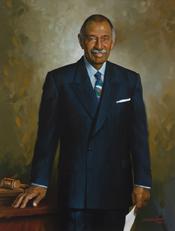 Rep. John Conyers, Jr. (D-MI)