Access to Capital for Haiti's Development Act

Legislative Activity
Stay on top of the latest movement without scrolling through every action
Referred to the Subcommittee on Domestic and International Monetary Policy, Trade, and Technology.
March 28, 2003
View full timeline
Introduced in House
March 5, 2003
Referred to the House Committee on Financial Services.
March 5, 2003
Referred to the Subcommittee on Domestic and International Monetary Policy, Trade, and Technology.
March 28, 2003
Floor Debate
10 membersWhat members said about H.R. 1108 on the floor
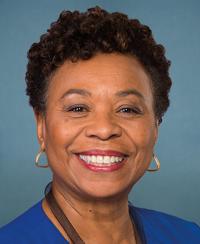 BL
BL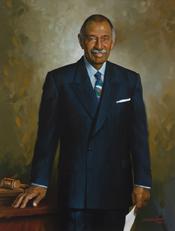 JCJ
JCJ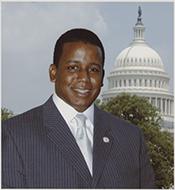 KBM
KBM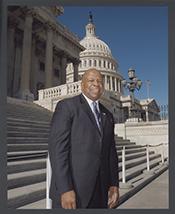 EEC
EEC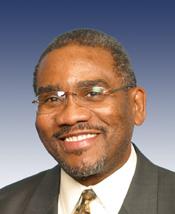 GWM+5
GWM+5
Floor Debate
10 membersWhat members said about H.R. 1108 on the floor
Mr. Speaker, I ask unanimous consent that all Members may have 5 legislative days within which to revise and extend their remarks and include extraneous material on the subject of my special order.…
Mr. Speaker, I ask unanimous consent that all Members may have 5 legislative days within which to revise and extend their remarks and include extraneous material on the subject of my special order.
Mr. Speaker, tonight is another opportunity to once again highlight the on-going humanitarian crisis in Haiti and the urgent need for action.
Many of us together have worked to send a message to this administration that it is time to revisit the United States policy toward Haiti. We have become increasingly aware of the humanitarian crisis which is brewing in Haiti. Much of this crisis can be directly pinned to the fact that the United States' eight financial institutions which we are part of are blocking social sector resources from reaching that small island nation. In fact, the United States representative to the Interamerican Development Bank directed the bank's president to block disbursal of four social sector loans to Haiti. These loans had already been approved by the bank's board of directors and were ratified by the Haitian parliament over 3 years ago.
Now, considering Haiti's current crisis, this action is inexcusable. While our government levies our political weight with the international financial institutions and the Organization of American States, Haitians continue to suffer. Further, this delayed delivery of international humanitarian aid to Haiti is fostering instability and anarchy in their struggling democracy.
Haiti's miserable poverty is indisputable. We can no longer bury our heads in the sand on this issue. Without strong leadership, the crisis will continue to spiral out of control. Already, the national rate of persons infected with HIV and AIDS in Haiti has risen to 300,000, or 4 percent of the entire population, leaving 163,000 children orphaned. Haiti makes up 90 percent of all HIV-AIDS cases in the Caribbean. And Haiti's health problems go well beyond HIV and AIDS. The infant mortality rate has increased to 74 deaths out of every 1,000 babies born, and now five mothers will die out of the same 1,000 babies born.
We must remember that many diseases know no boundaries, so it is in our strategic interest to help Haiti heal itself. The doctor-to-patient ratio has fallen to 1 to 11,000, leaving very little chance that sick persons in the rural areas will ever get even the basic health care. 125 Haitians die daily of illnesses. While most of the western world has eradicated diseases like polio, health officials report that many Haitians do not have the resources to pay for life-saving vaccinations for their children.
This is just morally unacceptable. Together, we must urge the President to do the right thing in Haiti. Jared Johnson, the IDB branch director for Haiti, said you cannot run a country through non- governmental organizations. What does this mean? It means we cannot continue to funnel money into USAID and then blame the government of Haiti for lack of resources and poor social services.
Our government and the international financial institutions should
not continue to raise the political bar in order for Haiti to receive basic humanitarian assistance. It is unacceptable to simply stand by and watch a season of misery inflict pain, suffering and death on human beings right here in our own neighborhood.
We must address this injustice. We must release the IDB funds to Haiti and direct the international financial institutions to reengage and reengage now. It is our moral imperative, and it is our commitment.
Mr. Speaker, I yield to the gentleman from Florida (Mr. Meek) a member of the Committee on Armed Services, a Member of the Haitian Task Force, and one who has led our efforts in terms of immigration issues and other issues that he so passionately cares for.
Mr. Speaker, reclaiming my time, I would like to thank the gentleman from Florida for his leadership and for participating tonight in highlighting the very discriminatory policies and the very inconsistent policies in terms of our immigration policies as they relate to Haiti, and also for his leadership on each and every issue that he is providing to this Congress during his first 2 years. I thank the gentleman for participating with us.
Mr. Speaker, I would like to yield to my good friend the gentleman from North Carolina (Mr. Ballance). The gentleman serves as a member of the Committee on Small Business and a member of the Committee on Agriculture and has been involved in many, many issues since he has been in Congress. He is a new Member who has hit the ground running.
Mr. Speaker, I would like to thank the gentleman for his very kind and generous and very humbling remarks, and also for his real leadership, and his real and honest commitment to those in need, whether here or abroad. I thank the gentleman for his comments.
Let me now yield to the gentleman from New York (Mr. Meeks) whose leadership on the Committee on International Relations and on the Committee on Financial Services is making quite a difference in terms of the reordering of our domestic and our foreign policies.
Mr. Speaker, I thank the gentleman from New York (Mr. Meeks) for his very eloquent statement and his kind remarks, and also for reminding us of the history in terms of the connection to our own country and the fact that we do have many Haitian Americans here in our own country who are concerned about their country and have such representatives as the gentleman from New York (Mr. Meeks) who so ably represents a diverse population of people.
Mr. Speaker, I yield to my colleague, the gentlewoman from Southern California (Ms. Watson), who has a wealth of experience as an ambassador, as a Chair of the Senate Health and Human Services Committee in the State of California, and one whose wisdom and counsel we all look to on so many issues.
Mr. Speaker, I thank the gentlewoman from California for her comprehensive statement, for her clarity on our government's policy as it relates to Haiti, and for bringing forth the facts of some very recent revelations with regard to the Attorney General which hopefully we will get some answers to.
Mr. Speaker, I yield to my colleague, the gentleman from Baltimore, Maryland (Mr. Cummings), the Chair of the Congressional Black Caucus who has demonstrated for many, many years prior to coming to Congress, and now here in the United States Congress, his leadership on a myriad of issues.
I thank the gentleman for pulling this Special Order together and for ensuring that the Congressional Black Caucus is central to all of the policy debates that we engage in here in the United States House.
Mr. Speaker, I thank the gentleman from Maryland once again for his leadership, but also for laying out the facts in terms of why we are here tonight. I thank the gentleman for putting his all into making sure that we understand that this is an emergency, that we should do the right thing, and that our policies are really resulting in the dire humanitarian crisis that we are seeing in Haiti.
I thank the gentleman again for his leadership. I appreciate his being here this evening.
I would say that $146 million is a mere drop in the bucket and would save many, many lives. It would get the country of Haiti back on track in terms of its development.
Mr. Speaker, I yield to my colleague, the gentlewoman from the Virgin Islands (Mrs. Christensen), a leader on many, many issues; a woman who is a physician who chairs our Congressional Black Caucus Health Brain Trust, and who is leading the charge for universal health care.
Mr. Speaker, I would like to thank the gentlewoman from the Virgin Islands (Mrs. Christensen) for her very passionate and very clear statement, and also for making sure that on all of our HIV/AIDS initiatives, that the Caribbean is part of that effort. And it is because of the gentlewoman that now we hear the President and others talk about sub-Saharan Africa and the Caribbean and other parts of the world as being in need in terms of our resources and our assistance. So I thank her again. And, yes, we have done something, just our small efforts. We are going to move forward. Hopefully we can do more. And I believe tonight with her help and with all of those here, with the CBC and other Members of Congress, sooner or later the administration is going to wake up and realize that this is a political fight that they really do not need to have.
Haitian-Americans care about this. All Americans care about this and we have got to get those loans released.
Now, I would like to yield to the gentleman from Detroit, our dean and the chair of the Haitian task force, one who has provided leadership on so many issues and who has beat the drum for so many years on Haiti and our very cruel policy towards that country, the gentleman from Detroit, Michigan (Mr. Conyers).
(Mr. CONYERS asked and was given permission to revise and extend his remarks.)
Mr. Speaker, I thank the gentleman very much for his statement and for providing this information with regard to another piece of legislation that we know will let Haiti live, and, hopefully, we will be able to build co-sponsorship and support for your legislation so we can have a hearing and move the bill to the floor and to the Senate and then to the White House.
Let me, in closing, just reiterate some of the facts we heard tonight and why members of the Congressional Black Caucus and other Members of Congress want to see Haiti live and want to see Haiti move forward into the 21st Century as a new democracy who we can support in a way that we know we should.
First of all, Haiti is the most impoverished nation in the Western Hemisphere. Haiti accounts for 90 percent of all HIV/AIDS cases in the Caribbean. HIV and AIDS infections have approached epidemic proportions. Over 300,000 infected people have been identified and deaths from HIV and AIDS have left 200,000 children orphaned. It is estimated that over 12,000 people in Haiti are living with HIV/AIDS. Between 150,000 to 350,000 children are AIDS orphans.
Haiti's infant mortality rate is staggering. It is 93 deaths per 1,000 live births. For every doctor in Haiti, there are 10,000 people. Tuberculosis remains a major cause of adult mortality. Cases of TB in Haiti are more than 10 times as high as those in other Latin American countries. Only 40 percent of Haitians have access to clean water, drinking water. The life expectancy rate which we heard earlier, I believe from the gentleman from Maryland (Mr. Cummings), is 49 years of age. More than 75 percent of the population lives in abject poverty. The unemployment rate is approximately 60 percent. The literacy rate is approximately 45 percent. And half of the population of Haiti earns $60 or less, that is $60 or less per year, not per day but per year. The total expenditure on health per person is about $54 compared to about $4,400 in the United States and $483 in Mexico.
So with those kind of statistics, there is no way that our country can morally do what it is doing in terms of blocking the release of the $146 million. There is no way with these kinds of numbers and this kind of data, this kind of human misery and tragedy right next to us, that our efforts should be about blocking the release of loans that had been negotiated 3 years ago. That is outrageous. I do not even understand how we can believe that could even be half way right to do.
I think I have a couple more minutes, Mr. Speaker, I would like to yield to my colleague from Maryland (Mr. Cummings) who has an additional statement he would like to make in the short time we have left.
Mr. Speaker, we are turning the heat up on this. We have been nice and we have played many, many roles in trying to let Haiti live. And we are going to become even more aggressive on this because I think after what we have heard tonight, I think the people in our country are going to begin to question our policies and why we are holding up $146 million. What that means in light of the fact that we are, yes, we should be doing this, building a universal health care system in Iraq and providing quality public education for people in Iraq. And yet, here in a country right next door and in our own country we cannot find the resources to help people of African decent. And that is a very important point, I think, that I want to leave tonight with in this body.
Mr. Speaker, I yield back the balance of my time.
Mr. Speaker, I would like to report a new bill that has been introduced by 16 Members of the House and the Senate to create employment in the Haitian textile industry by giving that country the…
Mr. Speaker, I would like to report a new bill that has been introduced by 16 Members of the House and the Senate to create employment in the Haitian textile industry by giving that country the opportunity to become a garment production center. It amends the Trade and Development Act of 2000 by granting duty free status to Haitian apparel articles that are assembled or knit to shape from countries with whom the United States has a free trade agreement or a regional agreement. And it departs from current law, which only allows duty free status to Haitian apparel articles if the articles are made from U.S. fabrics or yarn.
It would be a win/win proposition for our American workers because it would encourage the immigration of jobs from other parts of the world back to our hemisphere. I would like Members to know that this measure has been referred to our House Committee on Ways and Means. And at this point, Members should know that in addition to the junior Senator from Ohio, Mr. DeWine, the senior Senator from Florida, Mr. Graham, we have in the House the gentleman from California (Mr. Berman), myself, the gentleman from Florida (Mr. Jim Davis), the gentleman from Florida (Mr. Goss), the gentlewoman from Texas (Ms. Jackson-Lee), the gentleman from Florida (Mr. Meek), the gentlewoman from the District of Columbia (Ms. Norton), the gentleman from New York (Mr. Rangel), the gentlewoman from the Virgin Islands (Mrs. Christensen), the gentleman from Illinois (Mr. Crane), the gentleman from Florida (Mr. Foley), the gentleman from Florida (Mr. Hastings), the gentlewoman from California (Ms. Lee), the gentlewoman from California (Ms. Millender-
McDonald), the gentleman from New York (Mr. Owens) and the gentlewoman from California (Ms. Watson).
This is a positive piece of legislation. We will be conferring with the ranking member of the Committee on Ways and Means for its hearings promptly and hope that we can move it forward. It is sponsored in both bodies of the legislature and we feel very confident that this measure will be an important beginning economic legislative initiative of which there will be more to come.
Tonight, I also rise with the rest of the Congressional Black Caucus to encourage my colleagues in Congress to support the Haitian people as they struggle to rebuild their nation. Not only does Haiti play an important role in the world community, but it is also strategically significant to the United States; particularly because it is located only 410 miles from the nearest U.S. shores. Further, historically the Haitian people's fight for freedom has been an inspiration to oppressed people throughout the globe. In 1804, the people of Haiti triumphed over colonial powers by gaining their independence and establishing the first black nation in the Western Hemisphere.
Nearly two hundred years later, the people of Haiti are engaged in a battle to preserve their way of life and their nation. Haiti is one of the most impoverished nations in the Western Hemisphere and the fourth poorest country in the world, where life expectancy is only 49 years. The unemployment rate is approximately 60%, only 45% of the population is literate, and half of the population earns $60 or less per year. In addition, the country of Haiti has been devastated by the AIDS epidemic. 90% of all HIV and AIDS infections in the Caribbean are in Haiti, and due to the spread of the disease, 163,000 children have been left orphaned. Furthermore, the infant mortality rate is alarming, with 75 deaths per 1,000 births. Given the statistics I have mentioned, it is not surprising that tuberculosis remains a major cause of adult mortality and there is only one doctor for every 10,000 people in Haiti.
Although Haiti is located in our backyard, we continue to endorse a policy that prevents the return of economic stability and democracy of Haiti. Instead of supporting the flow of aid to Haiti in order to resolve the political impasse, the U.S. has adopted a policy of embargos to punish the Haitian government and people. The U.S. government has the power to veto the disbursement of loans to Haiti from financial institutions such as the World Bank, IMF, and Inter- American Development Bank. To the detriment of the people of Haiti, the U.S. government, specifically the Departments of Treasury and State, has exercised this authority. For example, the Inter-American Development Bank has not released $146 million in aid to Haiti, which was initially approved by the IDB Board of Directors. It is more distressing that in the interim, Haiti has been forced to pay arrears payments to maintain its status with the IDB.
The Congressional Black Caucus as well as many Members of Congress are concerned about the humanitarian crisis and political situation in Haiti. Particularly, the caucus has worked to assist the people of Haiti by introducing legislation such as the Haitian Economic Recovery Opportunity Act, the Haiti Aid in Transition Initiative, and the Access to Capitol for Haiti bill. We also met with officials from the World Bank, IMF, IDB, and the Departments of State and Treasury to advocate that these institutions release badly needed funds. Further, we have supported economic initiatives, such as the Harding Enterprises proposal for a Hilton Hotel in Haiti, and worked to modify the Millennium Account, so that more African and poor countries like Haiti can access it. Lastly, the caucus has hosted a variety of forums, briefings, and braintrusts on Haiti, and is working on other proposals to assist the people of Haiti.
The Congressional Black Caucus is committed to aiding the people of Haiti in their struggle for democracy, the rule of law, and economic stability. I ask that this Congress support realistic policies that will help the people of Haiti, instead of destabilizing their nation.
Mr. Speaker, I thank the chairperson of the Congressional Black Caucus Task Force on Haiti for yielding. Mr. Speaker, I must say that I concur with the gentlewoman's comments. I know that many of us…
Mr. Speaker, I thank the chairperson of the Congressional Black Caucus Task Force on Haiti for yielding.
Mr. Speaker, I must say that I concur with the gentlewoman's comments. I know that many of us in this Congress feel very strongly about U.S. involvement as it relates to the way of life in Haiti. What I can tell you is what this Bush administration has done is it has created an atmosphere of conflict.
What I mean by that is the fact that we are saying we want Haitians to stay in Haiti, but we are not creating an environment for Haitians to be in Haiti with a democracy that is functional because it has the resources to be able to work towards providing the kind of services that Haitians need.
I will say this: Haiti is the poorest country in the Western Hemisphere, and it is very disturbing to see this democracy in our hemisphere, the poorest country, and we are standing in front of dollars that were committed years ago to Haiti.
I would also say something else that is very disturbing, and that is why I cannot understand the policy. If we want Haitians to stay in Haiti, if we want to be able to have a strong government in Haiti, if we want to be able to provide drinking water and humanitarian efforts in Haiti, then we should not be standing in front of these dollars.
On the other hand, we should not have unfair immigration policies when Haitians are trying to seek political asylum due to the fact that Haiti is struggling right now, and we have conflict there, political conflict in Haiti.
General Ashcroft, the U.S. Attorney General, put forth a decision just this past week saying that when Haitians are migrating to the United States, that they would be indefinitely detained. This goes against decisions that have been made in the past. Immigration, the INS in Miami, has said we should detain Haitians, even though an immigration judge said they should be paroled while they are waiting for their political asylum case to be heard. But we decide to detain and incarcerate Haitians, thinking that that will stop a mass migration to Florida or to the United States under the auspices of homeland security.
I just want to share tonight with my colleagues that being on the Committee on Homeland Security, being on the Committee on Armed Services, I have not yet heard or seen an FBI report or a CIA report to show any level of or any indication of terrorism in Haiti, or any member of its government that condones terrorism in Haiti, or the Haitian people in general.
I can say that it is quite confusing, since we have a situation in South Florida that could very well, if we are going to live by that policy and use that policy to detain Haitians unfairly, this may very well set forth a policy as it relates to those that are trying to seek political asylum from the island of Cuba. If the Cuban Readjustment Act was brought onto this floor today I would vote for it, because it is the right thing to do. A dictatorship is in Cuba, and I think it is important that we should allow people who want to migrate towards liberation to be able to have that chance.
But Castro sided with Saddam Hussein. Cuba is also a communist country, and every day we have individuals that are migrating to South Florida.
We should be very careful as a country when we start using homeland security against individuals who cannot harm this government. I think it is very important for not only the Attorney General's office to hear this, but the Bush administration to hear this, that we cannot do nothing on both ends. We must do something on one of the ends, and provide aid now for Haiti, humanitarian efforts for Haiti.
I voted on a voice vote for the supplemental for Iraq. I feel that it is our obligation to go in and do the things we are doing in Iraq right now. But I think it is our obligation to do some of the same things in Haiti. And the Haitian people have had to hold off.
Mr. Speaker, I would just say to the gentlewoman from California (Chairman Lee), I just want to say representing the largest concentration of Haitians in the United States, I think it is so very, very important for this government to realize not only its humanitarian effort, but its effort towards fairness and equality. I think it is important that this administration stop standing in front of the dollars that have already been committed. These are not new dollars, the dollars that have already been committed to Haiti.
General Ashcroft's decision did more than stop those dollars that should have been going to Haiti years ago. He has also put questions in the minds of the humanitarian community that has been doing work there. They may feel Haiti is a terrorist state, which is not true. It is important that we fight against those forces.
So, I want to thank the gentlewoman from California (Ms. Lee) for yielding me time tonight, but I just want to say that our efforts have to continue. I want to commend the gentlewoman's efforts for being a stalwart in standing up on behalf of not only what America stands for, but being able to help those countries and individuals, those countries that are democracies, those countries in need, and Haiti is in need.
So the message tonight is to release the dollars to Haiti or the resources to Haiti that have already been committed, and, two, fairness in immigration policies.
Mr. Speaker, I thank the gentlewoman for yielding to me. I also thank her for consistently standing up. I thank the Congressional Black Caucus, a group of 39 men and women, as I have often said, who…
Mr. Speaker, I thank the gentlewoman for yielding to me. I also thank her for consistently standing up.
I thank the Congressional Black Caucus, a group of 39 men and women, as I have often said, who are ordinary people called to an extraordinary mission. In the process of doing the extraordinary, they have become extraordinary and have made it clear, Mr. Speaker, to God that the lives they live are not their own.
Consistent with that, we come here tonight to speak on behalf of Haiti. I thank the gentlewoman from California (Ms. Lee) for her leadership in initiating and organizing the Congressional Black Caucus's Special Order tonight urging the international community to let Haiti live.
Mr. Speaker, for several years now the Members of the Congressional Black Caucus have come to the floor of this great House to speak out on behalf of the 8.3 million people of Haiti, to draw attention to the unnecessary and horrible circumstances that they are forced to endure every day.
Mr. Speaker, the people of Haiti are suffering and dying. They are suffering and dying because of the seemingly sheer indifference to their plight. In just the last week, the United Nations reported that only 46 percent of Haiti's population has access to clean drinking water, and 56 percent of the Haitian population suffers from malnutrition in 2003. Fifty-six percent of 8.3 million people is 4,648,000 human beings, nearly as many people as the populations of Idaho, Mississippi, and the District of Columbia combined.
Mr. Speaker, denying the most basic human needs, such as food and water, is almost the equivalent of a death sentence by a judge or a jury. Unfortunately, for several years now the United States Government has made this situation worse. Our government, Mr. Speaker, has unfairly and unnecessarily linked humanitarian assistance to Haiti with trying to change and to pressure the current government in Haiti to make concessions to the opposition party as it relates to domestic politics.
How can we allow over 4 million people in that country to live in utter poverty while we play politics? Is not the argument about the suffering of the people the same argument that many of my colleagues on the other side of the aisle made as it relates to Iraq? It is imperative that we release the humanitarian assistance for the people of Haiti so they may simply just live another day.
Mr. Speaker, last week the United Nations also made a plea that I will second tonight and I know all the Members of the Congressional Black Caucus would second, too. The plea is that the international community immediately make funds available to help stem this humanitarian crisis in Haiti. Mr. Speaker, the United States of America is the richest country in the world and must answer that plea. We must help our neighbor, and we must help our neighbor now.
How will future generations judge our country when the history of our relationship with Haiti is written? We know the suffering. Members have heard a little bit about it already tonight. Think about the children, both here in America and in Haiti. What are we telling them by our actions?
The life expectancy in Haiti is 49 years. The unemployment rate is 60 percent. The infant mortality rate is 74 deaths for every 1,000 live births. Ninety percent of the HIV/AIDS infections in the Caribbean are in Haiti. There are
over 200,000 children orphaned by HIV/AIDS. I could go on and on and on.
The fact is, Mr. Speaker, we have to do better. We must release those humanitarian assistance loans, and we must begin a new relationship with the country and the people of Haiti. The Congressional Black Caucus will not rest until we do. We will continue to advocate for justice at home and abroad.
Mr. Speaker, if the gentlewoman would yield for one second further, we see the President talk about the urgent situation in Iraq and how he wanted to do all that he did. As the gentlewoman probably well knows, we just allocated some $80 billion.
Here we have a small country simply trying to survive, having drinking water and sanitation. It makes us wonder sometimes. As one author said, it makes me want to holler and throw up both my hands.
Mr. Speaker, I would like to again thank the gentlewoman and thank the caucus. It has been said over and over again that the Congressional Black Caucus is the conscience of the Congress. But I have often said that we are the conscience of the country and of the world. And what we are doing tonight is pleading with the President and those who control the purse strings of this country to reach out and lift up a small country that is merely trying to survive.
I have often said that the most powerful thing that we can do is help children become all that God meant for them to be. And we heard speeches from this floor over and over again coming from the Bible about what we should be doing for our brothers and our sisters throughout the world. And this is just a small part of our efforts to say to the world, we will not allow, we will not stand by and allow people, our neighbors, in fact, to simply perish and live in the way that they are living. And I do appreciate the gentlewoman's leadership on this issue, consistently standing up, and again I am very appreciative of the Congressional Black Caucus for standing up.
Mr. Speaker, today I want to thank my colleagues in the Congressional Black Caucus, the Chair, the gentleman from Maryland, (Mr. Cummings), for organizing today's Special Order on Haiti. I want to…
Mr. Speaker, today I want to thank my colleagues in the Congressional Black Caucus, the Chair, the gentleman from Maryland, (Mr. Cummings), for organizing today's Special Order on Haiti. I want to salute the members of the Haitian Task Force and my good friend and colleague who is from California and shares the Committee on International Relations and the Committee on Financial Services with me, the gentlewoman from California (Ms. Lee), for her outstanding leadership and tireless commitment to the people of the Nation of Haiti and in combating the HIV/AIDS pandemic wherever it raises its ugly head. The Nation indeed owes the gentlewoman from California (Ms. Lee) a debt of gratitude.
There is a saying that all politics are local. And for me, Haiti is a local political issue. I am proud to represent the constituents of the sixth congressional district of New York which has one of the largest Haitian American communities in America.
But that is not the only reason why the Haitian people are important to me and why the Nation of Haiti is important to America. Haiti is important to me because America cannot and should not continue to have a foreign policy towards Haiti, which is one of the poorest nations, if not the poorest nation, in our hemisphere, a foreign policy which, in many ways, fails to support the rights of the Haitian people for democracy, human rights, and economic opportunity. This administration cannot talk with credibility and moral clarity about willingness to use our political, economic, military, and diplomatic foreign policy instruments in the name of spreading America's universal values globally. Yet, we only apply it selectively when it is in our national interests.
Mr. Speaker, the people of Haiti are a proud people, a people who have a long history of being at the forefront of struggles against slavery and for independence against European colonialism in this hemisphere; a history which connects the people of Haiti with African Americans. In 1791, Haitian slaves initiated a successful slave revolt against France. The Haitian slaves ousted Napoleon and by 1804, the island became the first black independent nation. At first, our Nation did not recognize Haiti as an independent Nation out of fear that Haiti could serve as an example to others to fight against any country which practiced slavery. It was not until 1862 that the United States finally granted Haiti diplomatic recognition and sent noted abolitionist Frederick Douglass as America's Consular Minister to Haiti.
But as we know today, for many developing nations, political independence from their former colonial masters did not automatically translate into stable democracies, economic independence, and sustainable development. Haiti, like many post-colonial developing nations, has struggled with internal civil wars and political instability. The people of Haiti have been dripped in decades of structural violence, dictatorship, human degradation, and economic poverty the likes of which are an affront to humanity.
While the reasons for such sufferings are complex, the fact that it exists in today's world of wealth and technology right here in our hemisphere is something that we cannot ignore. We cannot ignore that our immigration policy treats Haitians differently from other immigrants seeking to escape political violence. We cannot ignore that our foreign policy regarding Haiti has become tied to partisan politics. We cannot ignore that Haiti faces an HIV/AIDS epidemic and this administration has played a role in hindering international economic assistance to Haiti because we cannot come up with a policy approach that balances the needs of the Haitian people with our requirement that assistance be used properly.
So, Mr. Speaker, I stand here today to say that if America can muster the political will and mobilize billions of dollars in resources to wage a war thousands of miles away from our shores, what about Haiti? When will America mobilize the same kind of resources and political will to wage a war against poverty, against disease, against human suffering right here in our hemisphere? If such rights and values are truly universal, Haitians deserve nothing less. We can do more to support the people of Haiti so that they can reclaim their human dignity. We can and we must.
Again, I thank the gentlewoman from California (Ms. Lee), my friend, for her tireless effort, commitment, and hard work.
Show 5 more
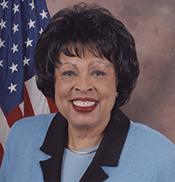
Mr. Speaker, I thank the gentlewoman from California. We are also very proud of the gentlewoman and her leadership. Mr. Speaker, I see next to her the gentlewoman from the Virgin Islands (Mrs.…
Mr. Speaker, I thank the gentlewoman from California. We are also very proud of the gentlewoman and her leadership.
Mr. Speaker, I see next to her the gentlewoman from the Virgin Islands (Mrs. Christensen), who was part of our entourage that went to Haiti, and had been there before. She helped to point out the problems and to analyze them while we were there.
I want to give another thanks, too, to the gentleman from California (Mr. Rohrabacher). I was sitting in my office listening to his presentation. He talked about American democracy and that we were not really ready yet, because we had to realize that we had some problems in this country. We had enslaved a large group of people who make up a tremendous part of our population today.
He also said that we are going to have to correct that which is broken. This is what we come together to talk about, a nation that is broken in our own hemisphere.
Mr. Speaker, I am appalled by the unsubstantiated allegations made by the United States Attorney General, John Ashcroft, with respect to Haiti. He claimed that the Pakistanis, the Palestinians, and others are using Haiti as a staging point for trying to get into the United States. What a ridiculous statement.
I would ask him, has he been there, Mr. Attorney General? If not, he needs to go. He needs to scour every single part of that island nation. After what he is going to see he will be declaring another war, and that is on poverty, on starvation, on the fact that the people there have nothing; and we are allowing that to continue in this hemisphere.
Even the State Department's consular officers and officials are puzzled by his remarks. Jorge Martinez, a spokesman for Ashcroft's office, could not immediately say where the Attorney General got the information. Martinez then directed inquiries to the Department of Homeland Security, and a Homeland Security spokeswoman redirected questions right back to Martinez.
Mr. Speaker, according to the State Department, Haiti is not on the United States' terrorist watch list. Why is, then, the Justice Department and the State Department, our Department of Homeland Security, amending this list?
Haiti, a nation of 8.3 million people, is one of the most impoverished nations in the Western Hemisphere and the fourth poorest country in the world. The unemployment rate is estimated to be around 60 percent, the literacy rate is approximately 45 percent, and 90 percent of all HIV and AIDS infections in the Caribbean are in Haiti.
The current U.S. policy towards Haiti is one that discourages travel between the two countries. There is a de facto embargo on loans and grants from the multilateral development banks. Assistance from the United States Government has been put on hold in order to leverage change in the present political structure of the Haitian Government.
I say to the Attorney General, he needs to go and talk to the President. He needs to understand why he sent his fiscal people over here to Washington, D.C. to explain how they have developed their budget. He needs to understand why he is working on getting a police force put together, and why he has not formulated a court.
Remember, the past regimes were corrupt and there are many corrupt people still lurking around, so he has to be careful who he gives power to. That, indeed, takes time.
In effect, our current policy towards Haiti in the name of humanity promotes poverty and inhumanity. For example, on July 21, 1998, the Haitian Government and the IDB signed a $22.5 million loan for phase 1 of a project to decentralize and reorganize the Haitian health care system. The funds would be used to construct low-cost community health centers, train community health agents, and purchase medical equipment and essential medicines. The ultimate objective of phase 1 was to reduce the high infant mortality rate, reduce the high juvenile death rate, and reduce birth rates.
This health loan, as well as close to $150 million in humanitarian loans, has been blocked by the United States-led embargo against Haiti. This in itself is an inhumane policy.
It is time to stop this war on Haiti. External aid is essential to the future economic development of this nation. Comparative social and economic indicators show Haiti falling behind other low-income developing countries since the 1980s. Mr. Speaker, we cannot let our neighbor continue in this downward spiral.
Mr. Speaker, I thank the gentlewoman [Representative Barbara Lee] for the time, and I applaud her efforts to draw attention to the needs of the Haitian people. Haiti is the fourth poorest country in…
Mr. Speaker, I thank the gentlewoman [Representative Barbara Lee] for the time, and I applaud her efforts to draw attention to the needs of the Haitian people.
Haiti is the fourth poorest country in the world. Half of the population of the country earns no more than $60 per year. Haiti has an
unemployment rate of about 60% and an illiteracy rate of only 45%. Only 40% of all Haitians have access to potable water. Tuberculosis cases in Haiti are ten times as high as those in other Latin American countries, and 90% of all HIV infections in the Caribbean are in Haiti.
The Inter-American Development Bank (IDB) is denying Haiti any access to loans for development assistance. Haiti has already had $145.9 million in development loans approved by the IDB. These loans include $50 million for rural road development, $22.5 million for reorganization of the health sector, $54 million for potable water and sanitation and $19.4 million for basic education programs. Haiti could also qualify for an additional $317 million in new loans for development projects, as well as a $50 million investment sector loan. However, the IDB is refusing to consider Haiti for any additional loans and has not even disbursed the loans that have been approved.
The IDB is effectively denying Haiti access to critical development assistance. Furthermore, Haiti is deeply in debt and has also been denied the opportunity to receive any debt relief for its existing debts.
The reasons provided by the IDB and the U.S. government concerning the suspension of lending and assistance to Haiti shift from day to day. None of the purported explanations provide any justification for withholding this vitally needed aid. While the IDB and the Administration dither, the people of Haiti suffer and continue to live in poverty.
On March 5, 2003, I introduced H.R. 1108, the Access to Capital for Haiti's Development Act. This bill would require the United States to use its voice, vote and influence to urge the Inter-American Development Bank to immediately resume lending to Haiti, disperse all previously approved loans, assist Haiti with the payment of its existing debts and consider providing Haiti debt relief. The Access to Capital for Haiti's Development Act would allow Haiti to build roads and infrastructure and provide basic education and health care services to the Haitian people. This bill currently has 24 cosponsors.
The United States is now spending billions of dollars to rebuild Iraq. Earlier this month, this Congress passed a Supplemental Appropriations Act that contained $1.7 billion to rebuild Iraq's infrastructure. That bill included funds for health care services for 13 million Iraqis and financed the repair or reconstruction of 25,000 schools, 20,000 houses and 3,000 miles of roads in Iraq. The bill also contained assistance for Colombia, Afghanistan, Israel, Jordan, Turkey, and the Eastern European countries of Poland, Hungary, the Czech Republic, Slovakia, Estonia, Latvia, Lithuania, Romania, Slovenia and Bulgaria.
Debt relief for Iraq is being discussed by officials of the Paris Club of creditor countries. Some Members of Congress have even suggested that France, Germany, and Russia can best contribute to the reconstruction of Iraq by the forgiveness of Iraq's debts.
Haiti is a deeply impoverished country on an island just off our shores. We cannot provide assistance to countries all over the world while ignoring the needs of people so close to our border. It is time for the United States and the Inter-American Development Bank to resume lending to Haiti and provide debt relief and development assistance to this impoverished country.
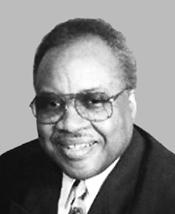
Mr. Speaker, HIV and AIDS infections represent a crippling medical crisis worldwide, and it is for that reason I want to sort of focus my remarks on that particular subject in the context of the…
Mr. Speaker, HIV and AIDS infections represent a crippling medical crisis worldwide, and it is for that reason I want to sort of focus my remarks on that particular subject in the context of the subject we are discussing this evening. This problem is so pervasive around the world, but as we focus the microscope on the tiny Nation of Haiti, it is indeed an epidemic. I regret very much that America has not done its share to address this issue. In fact, for so long, most of us have been missing in action.
But there is a soldier who has been standing and fighting this battle for so many years. She is the chair of the CBC Brain Trust on Global AIDS and HIV, and that is the distinguished gentlewoman from California (Ms. Lee). I say to the gentlewoman, I do not wear a hat this time of year, but I take my hat off to you for standing so tall.
A lot of people, as we look back on this issue, were afraid to even speak out, were afraid to get involved. As I look back on my own career and on my own life and the life of my fore parents, I recall that it is a long journey from Africa to America. It is a long journey from slavery to freedom. But history tells me that my ancestors got on a boat involuntarily somewhere on the West Coast of Africa. We have been so journeying in America now for more than 400 years. Is it not amazing that we, as ancestors of those who were taken, now find ourselves in a position to provide some help and, hopefully, to provide some financial assistance and,
hopefully, to lead our government to say that, in fact, we are compassionate beyond words, but we are compassionate in deeds. That is what it is going to take to address this issue.
So I have come today to add my voice to those who are crying aloud for attention and help on the subject of HIV and AIDS in this small, tiny Nation of about 8 million people in Africa.
We all have an obligation to make a contribution. Even though we may be healed of whatever ailment may have afflicted us, I believe we have the obligation to turn back and say ``thank you.''
We all remember the story from Luke, chapter 17 when the 10 lepers were passing by and Jesus was on the scene. And they asked for some help. And when they were healed, they went on their way, but one, and only one, turned back to say thank you. Jesus asked the question, what happened to the other nine?
As Members of this great body, in these historic halls of the United States, I am sure sometimes my colleague asks the question, where are the other 434? Well, there are a few of us here today to stand with the gentlewoman from California (Ms. Lee) to say, keep on fighting. To say that help is on the way, we believe, and we thank all who have joined in this recent struggle, including our President. I hope he is genuine in his assessment that he is going to try to make funds available. I hope we can convince some other nations who are concerned about our grain because of this very issue and the generic factor in our grain; a lot of times we can help others by helping ourselves. We can reach out to help this Nation and other nations. We can also help our farmers who have excess grain.
America is a great Nation. I am proud to be an American. But when we stand up to help others, our true greatness comes out. I believe on this issue, history will judge us harshly if we do not respond to this critical issue, not only in this country, but in particular, in a poor country where the income is so low, maybe $60 a year, that they have not the resources to address this problem. We must add our voice. We must turn back and say ``thank you'' by our actions and by our deeds.
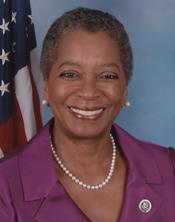
Mr. Speaker, I thank the gentlewoman for yielding to me. It is a pleasure to be here with her. I just had to come over and join the gentlewoman on the floor here tonight because the problems of Haiti…
Mr. Speaker, I thank the gentlewoman for yielding to me. It is a pleasure to be here with her.
I just had to come over and join the gentlewoman on the floor here tonight because the problems of Haiti and the obstacles that we have been facing together that the gentlewoman has led us through so steadfastly continue to plague that country and cause suffering to the millions of people who live there. So it is important for us as a caucus to stand here with the gentlewoman tonight and once again to call on our colleagues and the President of these United States to let Haiti live.
Last week I traveled to the eastern end of Hispaniola and there on that side, and it is so different, even when you just fly over the island. It turns from gray to green. There I found a struggling but overcoming people, where jobs were being created, standard of living was being raised, children were being educated, the health care system was ever improving.
It was my second time in the Dominican Republic but I have been to Haiti many times, and it troubles me deeply that this situation is so startling different compared to that of the neighbor on this same island in the Caribbean of which I am a part. And why should this be? Because the people of Haiti have accepted democracy that we helped to bring to their nation, and they have accepted its promise. Though imperfect, that democracy is new, and building democracies take time.
As I am sure this country will find out in Iraq, but perhaps we will be a bit more patient there than with the people of Haiti because we certainly have not been patient or supporting of their efforts to make democracy work. The reason for the difference is clearly that our country, the United States of America, has stood in the way of allowing the people of Haiti to grow, to thrive and to actually allow the democracy that we so are so honored to thrive in this country of poor but proud, hard-working and spirited people of African decent.
We are here tonight again to say let Haiti live, first, by releasing the loans that are needed to build their sanitation, transportation, health and educational infrastructure, and also by fully supporting the OAS mission there, whose responsibility it is to ensure the changes that we claim to seek in their judiciary and their police system and in their electoral process.
Mr. Speaker, I want to say thank you to the gentlewoman from California (Ms. Lee) and the gentleman from Michigan (Mr. Conyers) who have both led this fight for their faithfulness and steadfastness and the support of Haiti and their work on its behalf. We have under their leadership talked to people at Treasury. We have talked to leaders at USAID. We have talked to folks at the OAS. We have talked to the international lending institutions. I think we have done what we can. I guess we could do more. But we have done the things that have been open to us to do. There is no excuse for what this country is doing by holding back these so badly needed funds. As the gentlewoman said, 140 something million dollars is nothing to this country, but it means everything to the people of Haiti.
What Haiti is asking for is what has been done for every other country in this region that has been similarly situated. There is no reason for it to be treated different. Mr. President, our brothers and sisters are suffering, many are dying. And we are asking you once again to let that money go, to let our brothers and sisters go and to let Haiti live.
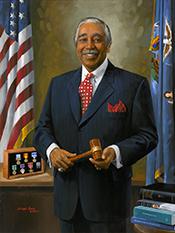
Mr. Speaker, today, like many members of the Congressional Black Caucus, I am moved to speak about the humanitarian and economic situation of the people of Haiti. It is no secret that the people…
Mr. Speaker, today, like many members of the Congressional Black Caucus, I am moved to speak about the humanitarian and economic situation of the people of Haiti. It is no secret that the people there are suffering greatly. Haiti is the poorest country in the Western Hemisphere with roughly 70 percent of its 7 million population unemployed and 80 percent living in poverty. HIV/AIDS is devastating the country, with roughly 1 in 12 Haitians infected with HIV and the Center for Disease Control predicting 44,000 new HIV/AIDS cases this year. Additionally, AIDS has orphaned over 200,000 children, and that number is expected to increase to 350,000 over the next ten years.
While there are many explanations for the current situation in Haiti, it is clear that the Haitian government and international community disagree as to the cause and the solution. Regardless of who is to blame, the people of Haiti continue to suffer and I believe that it is time for their suffering to end. We must provide assistance to provide jobs and hope for the people of Haiti.
It is for this reason that I, in conjunction with Congressman John Conyers, Jr., introduced the Haitian Economic Recovery (HERO) Act, which would help in moving Haiti towards economic stability by providing labor and trade opportunities through investment in the apparel and other assembly industries. For similar reasons, I cosponsored the Haiti Aid in Transition Initiative and Access to Capitol for Haiti bills offered by my colleagues Congresswomen Barbara Lee and Maxine Waters. Both of these bills urge that previously approved loans, totaling $146 million dollars in humanitarian assistance, be released to Haiti.
I sincerely believe that the opportunity for change is ripe in Haiti and that an opportunity still exists to overcome the obstacles that have blocked the economic assistance so desperately needed by Haiti to relieve its humanitarian crisis. I know that this requires that the Haitian government resolve the alienation of the international community by further demonstrating that it is on the road to resolving its political and human rights concerns. I believe that it is still possible for both the U.S. and Haitian governments to work together to meet these goals. I will continue to do what I can to support the delivery of food, medicines, and other essentials to the people of Haiti that I know are desperately needed.
Bill Text
Latest available legislative text
        [Congressional Bills 108th Congress]
[From the U.S. Government Publishing Office]
[H.R. 1108 Introduced in House (IH)]

108th CONGRESS
1st Session
H. R. 1108

To require the Secretary of the Treasury to direct the United States
Executive Director at the Inter-American Development Bank to use the
voice, vote, and influence of the United States to urge the immediate
resumption of lending to Haiti.

_______________________________________________________________________

IN THE HOUSE OF REPRESENTATIVES

March 5, 2003

Ms. Waters (for herself, Mr. Conyers, Ms. Lee, Mr. Jackson of Illinois,
Mr. Owens, Ms. Corrine Brown of Florida, Mr. Rush, and Mr. Meek of
Florida) introduced the following bill; which was referred to the
Committee on Financial Services

_______________________________________________________________________

A BILL

To require the Secretary of the Treasury to direct the United States
Executive Director at the Inter-American Development Bank to use the
voice, vote, and influence of the United States to urge the immediate
resumption of lending to Haiti.

Be it enacted by the Senate and House of Representatives of the
United States of America in Congress assembled,

SECTION 1. SHORT TITLE.

This Act may be cited as the ``Access to Capital for Haiti's
Development Act''.

SEC. 2. FINDINGS.

The Congress finds as follows:
(1) Haiti is being denied access to funding for development
projects from international financial institutions.
(2) The Inter-American Development Bank has approved
$145,900,000 in loans to Haiti, including $50,000,000 for rural
road development, $22,500,000 for reorganization of the health
sector, $54,000,000 for potable water and sanitation and
$19,400,000 million for basic education programs. However, the
Inter-American Development Bank has failed to disburse these
loans.
(3) Haiti could have access to an additional $317,000,000
in new Inter-American Development Bank loans for development
programs.
(4) Haiti could also have access to a $50,000,000 Inter-
American Development Bank loan for the investment sector.
(5) The Inter-American Development Bank is refusing to make
any loans to Haiti until Haiti pays the arrears on its existing
debts.
(6) Haiti cannot afford to pay the arrears on its existing
debts.
(7) Haiti has been denied the opportunity to participate in
the Enhanced Heavily Indebted Poor Countries (HIPC) Initiative,
which provides debt relief to heavily indebted poor countries
like Haiti.
(8) Haiti is one of the most impoverished nations in the
Western Hemisphere.
(9) Haiti desperately needs debt relief and new financing
for development purposes.

SEC. 3. REQUIREMENT THAT UNITED STATES URGE THE INTER-AMERICAN
DEVELOPMENT BANK TO RESUME LENDING TO HAITI.

The Secretary of the Treasury shall direct the United States
Executive Director at the Inter-American Development Bank to use the
voice, vote, and influence of the United States to urge the Inter-
American Development Bank to--
(1) immediately resume lending to Haiti, and disburse all
loans to Haiti that have been approved by the Inter-American
Development Bank; and
(2) assist Haiti with the payment of its arrears, and
consider providing debt relief to Haiti.
<all>