Don't Feed the Bears Act of 2003
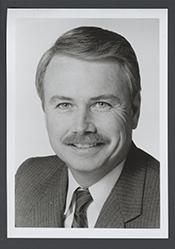 Rep. Elton Gallegly (R-CA)
Legislative Activity
Stay on top of the latest movement without scrolling through every action
Subcommittee Hearings Held.
June 12, 2003
View full timeline
Introduced in House
March 27, 2003
Referred to the House Committee on Resources.
March 27, 2003
Referred to the Subcommittee on National Parks, Recreation and Public Lands.
March 31, 2003
Referred to the Subcommittee on Fisheries Conservation, Wildlife and Oceans.
March 31, 2003
Referred to the Subcommittee on Forests and Forest Health.
March 31, 2003
Executive Comment Requested from USDA, Interior.
March 31, 2003
Floor Debate
23 membersWhat members said about H.R. 1472 on the floor
 +18
+18
Floor Debate
23 membersWhat members said about H.R. 1472 on the floor
Mr Speaker, I have, somewhat famously, opposed H.R. 1472, a bill which attempts to single out bears as a species to be managed by the House of Representatives instead of local wildlife experts. I…
Mr. Chairman, on Thursday, July 17, 2003, during rollcall 382 I mistakenly voted against House Amendment 263 to H.R. 2691, the FY 2004 Interior Department Appropriations Bill. The amendment,…
Mr. Chairman, on Thursday, July 17, 2003, during rollcall 382 I mistakenly voted against House Amendment 263 to H.R. 2691, the FY 2004 Interior Department Appropriations Bill. The amendment,…
Mr. Speaker, I rise today to ask that the Record show that on Thursday, July 17, 2003, during consideration of the FY04 Appropriations bill for the Department of the Interior, I inadvertently voted…
Mr. Speaker, I ask unanimous consent to have my name removed as a cosponsor of H.R. 1472. The SPEAKER pro tempore. Is there objection to the request of the gentleman from California?
Show 8 more
Mr. Speaker, I ask unanimous consent to be removed as a cosponsor of H.R. 1472, the Don't Feed the Bears Act of 2003.

Mr. Speaker, I ask unanimous consent that my name be removed as a cosponsor of H.R. 1472 and H.R. 20.
Mr. Speaker, I ask unanimous consent to have my name removed as a cosponsor of H.R. 1472.
Mr. Speaker, I ask unanimous consent to have my name removed as a cosponsor of H.R. 1472.
Mr. Speaker, I ask unanimous consent that my name be removed as a cosponsor of H.R. 1472.
Mr. Speaker, I ask unanimous consent to have my name removed as a cosponsor of H.R. 1472.
Mr. Speaker, I ask unanimous consent that my name be removed as a cosponsor of H.R. 1472.
Mr. Speaker, I ask unanimous consent to have my name removed as a cosponsor of H.R. 1472.
Show 11 more
Mr. Speaker, I ask unanimous consent to have my name removed as a cosponsor of H.R. 1472.
Mr. Speaker, I ask unanimous consent to have my name removed as a cosponsor of H.R. 1472.
Mr. Speaker, I ask unanimous consent to have my name removed as a cosponsor of H.R. 1472.
Mr. Speaker, I ask unanimous consent to have my name removed as a cosponsor of H.R. 1472.
Mr. Speaker, I ask unanimous consent to have my name removed as a cosponsor of H.R. 1472.
Mr. Speaker, I ask unanimous consent to have my name removed as a cosponsor of H.R. 1472.

Mr. Speaker, I ask unanimous consent to have my name removed as a cosponsor of H.R. 1472.
Mr. Speaker, I ask unanimous consent to have my name removed as a cosponsor of H.R. 1472.
Mr. Speaker, I ask unanimous consent to have my name removed as a cosponsor of H.R. 1472.

Mr. Speaker, I ask unanimous consent to have my name removed as a cosponsor of H.R. 1472.
Mr. Speaker, I ask unanimous consent to have my name removed as a cosponsor of H.R. 1472.
Bill Text
Latest available legislative text
        [Congressional Bills 108th Congress]
[From the U.S. Government Publishing Office]
[H.R. 1472 Introduced in House (IH)]

108th CONGRESS
1st Session
H. R. 1472

To require the adoption and enforcement of regulations to prohibit the
intentional feeding of bears on Federal public lands in order to end
the hunting practice known as ``bear baiting'' and reduce the number of
dangerous interactions between people and bears.

_______________________________________________________________________

IN THE HOUSE OF REPRESENTATIVES

March 27, 2003

Mr. Gallegly (for himself and Mr. Moran of Virginia) introduced the
following bill; which was referred to the Committee on Resources

_______________________________________________________________________

A BILL

To require the adoption and enforcement of regulations to prohibit the
intentional feeding of bears on Federal public lands in order to end
the hunting practice known as ``bear baiting'' and reduce the number of
dangerous interactions between people and bears.

Be it enacted by the Senate and House of Representatives of the
United States of America in Congress assembled,

SECTION 1. SHORT TITLE.

This Act may be cited as the ``Don't Feed the Bears Act of 2003''.

SEC. 2. PROHIBITION ON FEEDING BEARS ON FEDERAL PUBLIC LANDS.

(a) Findings.--Congress finds the following:
(1) Federal land management agencies, including the Forest
Service, National Park Service, United States Fish and Wildlife
Service, and Bureau of Land Management, publish and distribute
materials to the public discouraging any feeding of black
bears.
(2) Even though Federal land managers are in agreement that
private citizens should not provide food to bears, several
Federal land management agencies do not prohibit licensed
hunters from setting out food as bait for bears on Federal
lands in States where baiting is permitted by State law.
(3) A typical bait station consists of hundreds of pounds
of human-scented foods, often including parts of animal
carcasses, pastries, fruits, and grease, that are simply piled
on the forest floor or dumped in large drums.
(4) The foods used in a bait station are no different than
the human-scented foods that a bear might find in a garbage
can, dump, or campground, and after the bear hunting season
ends, bait stations are often not removed.
(5) The presence of bait stations on Federal lands allows
bears to increase their food intake and results in higher birth
rates, increasing bear populations.
(6) Wildlife scientists agree that black bears are
naturally wary of people, but that feeding bears human-scented
foods can cause bears to lose their wariness and become
emboldened in approaching people and property in search of
food.
(7) Human-fed bears cause millions of dollars in property
damage every year.
(8) Bears habituated to human food can pose a safety
threat, occasionally resulting in attacks on human beings.
(9) Bears that come into conflict with people are often
labeled as nuisance animals, and are often killed as a means of
protecting people and property.
(10) When the National Park Service adopted policies to ban
bear feeding and to end the practice of keeping garbage in
open-air dumps, units of the National Park System experienced a
dramatic decline in bear-human encounters.
(11) A majority of the States that allow bear hunting ban
baiting, and black bears can be hunted successfully by means
other than baiting.
(12) It is inconsistent for Federal land management
agencies to demand that visitors to the Federal lands not feed
bears, but to allow this practice by bear baiters.
(13) The United States already prohibits baiting of
migratory birds.
(b) Enforcement of Existing NPS Regulation.--The Secretary of the
Interior shall enforce the regulatory prohibition, contained in section
2.2(a)(2) of title 36, Code of Federal Regulations, against the feeding
of wildlife on National Park System lands to prohibit individuals from
intentionally feeding bears for the purpose of enticing bears to a
particular area to be hunted, a practice known as ``bear baiting''.
(c) Enforcement of Existing FWS Regulation.--The Secretary of the
Interior shall enforce the regulatory prohibition, contained in section
32.2(h) of title 50, Code of Federal Regulations, against bear baiting
and the baiting of other wildlife on wildlife refuge areas.
(d) Adoption of Regulations for Other Public Lands.--
(1) Regulation required.--The Secretary of the Interior,
with respect to lands administered by the Bureau of Land
Management, and the Secretary of Agriculture, with respect to
National Forest System lands, shall each adopt and enforce a
regulation to prohibit individuals from intentionally feeding
bears, including feeding for the purpose of enticing bears to a
particular area to be hunted, a practice known as ``bear
baiting''.
(2) Deadline for adoption.--The regulations required by
this subsection shall be issued in final form not later than
one year after the date of the enactment of this Act.
(e) Exception in Extraordinary Cases.--The regulations referred to
in subsections (b) and (c), and the regulations required by subsection
(d), shall provide an exception in extraordinary cases when the
Secretary concerned determines that bear feeding is required for the
welfare of the bear, preservation of public safety, or authorized
wildlife research.
<all>