Vietnam Human Rights Act of 2004
Legislative Activity
Stay on top of the latest movement without scrolling through every action
Read twice and referred to the Committee on Foreign Relations.
July 23, 2004
View full timeline
Introduced in House
April 3, 2003
Referred to the Committee on International Relations, and in addition to the Committee on Financial Services, for a period to be subsequently determined by the Speaker, in each case for consideration of such provisions as fall within the jurisdiction of the committee concerned.
April 3, 2003
Referred to the Subcommittee on Domestic and International Monetary Policy, Trade, and Technology, for a period to be subsequently determined by the Chairman.
April 11, 2003
Committee Agreed to Seek Consideration Under Suspension of the Rules, (Amended) by Unanimous Consent.
June 24, 2004
Mr. Smith (NJ) moved to suspend the rules and pass the bill, as amended.
July 14, 2004 • 6:59 PM
Considered under suspension of the rules. (consideration: CR H5741-5752)
July 14, 2004 • 6:59 PM
DEBATE - The House proceeded with forty minutes of debate on H.R. 1587.
July 14, 2004 • 6:59 PM
EXTENSION OF DEBATE - Mr. Smith (NJ) asked unanimous consent that debate on H.R. 1587 be extended by ten minutes to be equally divided and controlled. Agreed to without objection.
July 14, 2004 • 7:31 PM
At the conclusion of debate, the Yeas and Nays were demanded and ordered. Pursuant to the provisions of clause 8, rule XX, the Chair announced that further proceedings on the motion would be postponed until July 15.
July 14, 2004 • 7:49 PM
Considered as unfinished business. (CR H5947-5948)
July 19, 2004 • 6:31 PM
Passed/agreed to in House: On motion to suspend the rules and pass the bill, as amended Agreed to by the Yeas and Nays: (2/3 required): 323 - 45 (Roll no. 391).(text: CR 7/14/2004 CR H5741-5743)
July 19, 2004 • 6:55 PM
On motion to suspend the rules and pass the bill, as amended Agreed to by the Yeas and Nays: (2/3 required): 323 - 45 (Roll no. 391). (text: CR 7/14/2004 CR H5741-5743)
July 19, 2004 • 6:55 PM
Motion to reconsider laid on the table Agreed to without objection.
July 19, 2004 • 6:55 PM
Received in the Senate.
July 20, 2004
Read twice and referred to the Committee on Foreign Relations.
July 23, 2004
Voting History
1 vote recorded • Roll call available
Floor Debate
21 membersWhat members said about H.R. 1587 on the floor
CHS RS
RS SJL
SJL HJH
HJH TL+16
TL+16
Floor Debate
21 membersWhat members said about H.R. 1587 on the floor
Mr. Speaker, I move to suspend the rules and agree to the concurrent resolution (H. Con. Res. 378) calling on the Government of the Socialist Republic of Vietnam to immediately and unconditionally…
Mr. Speaker, I move to suspend the rules and agree to the concurrent resolution (H. Con. Res. 378) calling on the Government of the Socialist Republic of Vietnam to immediately and unconditionally release Father Thaddeus Nguyen Van Ly, and for other purposes, as amended.
Mr. Speaker, I yield myself such time as I may consume.
Mr. Speaker, the Government of Vietnam likes to say that Vietnam is a country, not a war. It is a catchy little self-evident phrase that some Members of Congress picked up during the bilateral trade agreement debate, as if to suggest that the debate was somehow about the Vietnam War, which it was not, instead of Vietnam's shameful present-day human rights record, which it was.
Of course Vietnam is a country, to which I respond: behave like an honorable country. Live up to their word as a signatory to numerous human rights covenants, including the international covenant on political and civil rights. Stop bringing dishonor and shame to their government by abusing their own people.
Mr. Speaker, according to the U.S. State Department report, the ``Report on Human Rights Practices for 2003'': ``The Government's human rights record remained poor, and it continued to commit serious abuses.'' Rather than repress and jail, harass, intimidate, and torture, the government should recognize and reflect the innate goodness of the Vietnamese people, a kind, gentle, compassionate people who deserve better, much better.
Take the case of Father Ly. In February 2001, Father Thaddeus Nguyen Van Ly submitted written testimony to the United States Commission on International Religious Freedom for a hearing at which he was invited to testify. He was not able to testify in person, but submitted written testimony which I will include in its entirety in the Record.
Because this brave Catholic priest told the truth, spoke the truth to power, the Government of Vietnam persecuted and cruelly mistreated him;
and he is now serving a 10-year prison sentence, and he has been in prison for 3 of those years. Amnesty International calls Father Ly a prisoner of conscience, and even the U.N. Working Group on Arbitrary Detention has condemned his detention.
I think it is worth focusing just for a moment on his testimony, which was incisive and compelling; and I quote it in part: ``Since their victory of April 30, 1975,'' Father Ly wrote, ``the Vietnamese Communists have extended its oppressive policy toward the different religions of South Vietnam. Laws and decrees have been promulgated to confine, restrict, or ban religious activities. The government has falsely accused clergy members and lay people as a pretext to detain and imprison those who protest its oppressive policy, or those who teach catechism, lead a church choir, or join a seminary. They have been banished to concentration camps for years. This policy has been ongoing,'' he writes, ``for nearly 50 years.
``The government has used many ruses,'' he continues to write, ``to divide and politicize the Cao Dai, Catholic and Protestant Churches; to split the Buddhist Church in two, the Unified Buddhist Church of Vietnam and the Buddhist Church of Vietnam; and to set up the puppet Hoa Hao Buddhist Committee of Representatives, which consists of mainly Communist cadres, to claim leadership over 5 million Hoa Hao Buddhists. The government has requisitioned for its arbitrary use numerous facilities and properties belonging to different Churches.''
Father Ly continues to write: ``With regard to the Catholic Church, the Communists have severely restricted her fundamental rights,'' and he points out and lays out some 10 different instances, including the fact that the government still keeps many priests, clergy members, and lay people in prison or under house arrest.
Father Ly continues to say: ``Faced with this extremely cruel policy of the Vietnamese Communist Government to strangle religions, the Churches in Vietnam have unceasingly demanded religious freedom. Their nonviolent and persistent campaign will continue until the Vietnamese people have full religious freedom, which anyone else in the civilized world has.''
This campaign has, as he points out, the following objectives. This is number one. This is Father Ly's testimony:
``Number one: the government must fully respect the right of all citizens to true religious freedom and the right of churches to select, train and appoint their own priests, clergy members and dignitaries. The government must stop its practice of listing the religious affiliation of citizens on their identity cards and personal documents so that no citizen be discriminated against and be able to freely practice his or her faith.
``Number two,'' Father Ly writes: ``The government must return all facilities and properties it has confiscated or requisitioned from the churches, even when the documentary evidence of ownership was lost in the war if local people can confirm the rightful ownership of these facilities.
``Number three: the government must abandon the ruses and schemes it has used to oppress and destroy religions. Its interference in church affairs must cease. Committees created by the government but dressed up as religious institutions in order to serve the government's anti- religion policy must be disbanded.
``Number four: the government must unconditionally release all clergy members, priests, officials and dignitaries of the churches and lay people who are currently in prison or under administrative detention because of their faith.
``Number five: the government must fully respect every and each article of the International Covenant on Civil and Political Rights, of which the Vietnamese Communist Government became a signatory on September 24, 1982.''
Finally, Father Ly writes, ``However, for as long as the Vietnamese Communists keep their dogmatic and totalitarian rule and disregard the fundamental freedoms of the people as I have presented above,'' he goes on to say, ``by trading with Vietnam the U.S. and other countries only strengthen the Communists' grips on power.''
Again, I would like his full statement read by Members, because it is a very strong and compelling bit of testimony.
These are the words of Father Ly. He is now in prison 3 years of a 10-year prison term.
The resolution we are considering today, Mr. Speaker, has over 100 cosponsors and I believe, we believe, will send a strong message to the leaders of Hanoi to free Father Ly and that the ongoing systematic abuses of human rights must cease and that they will not be tolerated.
H. Con. Res. 378 also condemns, and this amendment we are offering with the language today, the brutal crackdown against the Montagnard. Largely ignored by the American press, Vietnam crushed thousands of Montagnard in the Central Highlands on April 10 and 11. In classic dictatorship style and brutality, many Montagnard, who were protesting the confiscation of tribal lands and ongoing restrictions on religious activities, were beaten and there are reports that some were killed. This comes on the heels of another brutal crackdown against the Montagnard in December of 2001 that has resulted in the closing of over 400 churches.
I would just point out to my colleagues that there are also attempts to coerce people to renounce their faith, renunciation of faith. According to Ambassador John Hanford, our Ambassador At Large For Religious Freedom, there are approximately 100,000 Montagnards who were pressured to renounce their faith. I am happy to say that most resisted, but 100,000 within the last few months and years have been pressured to say ``no'' to their faith in Christ.
H. Con. Res. 378 also urges the government of Vietnam to allow unfettered access to the Central Highlands, where all of this is going on, by foreign diplomats, the international press and nongovernmental organizations, and condemns the extent of the violence used against, as I said, the Montagnard protestors.
Mr. Speaker, finally, human rights have gotten worse, not better, since the Bilateral Trade Agreement with Vietnam of 2001. We must not remain silent while the government of Vietnam continues to persecute religious and political dissidents and ethnic minorities. As a matter of fact, I believe strongly that Vietnam should be branded a Country of Particular Concern, a CPC country, pursuant to the provisions of the International Religious Freedom Act.
We care deeply, Democrats and Republicans, Mr. Speaker. We care deeply about the people of Vietnam and respect and honor their legitimate aspirations to be free. Why does not Hanoi?
Mr. Speaker, I include for the Record the written testimony of Reverend Thaddeus Nguyen Van Ly before the U.S. Commission on International Religious Freedom.
Testimony of Rev. Thaddeus Nguyen Van Ly
Ladies and gentlemen, it is a great honor to be perhaps the
first Vietnamese Roman Catholic priest living under a
communist regime to testify before your Commission at a
location that represents the ideals of democracy. I would
like to send my greetings of the New Millennium to you and to
the people of the United States.
In the opening statement of the Declaration of Independence
of the Democratic Republic of Vietnam on September 2, 1945,
Ho Chi Minh tried to win your nation's support by solemnly
quoting the second paragraph of Declaration of Independence
of the United States: ``All men are created equal. They are
endowed by their Creator with certain unalienable rights,
that among these are life, liberty, and the pursuit of
happiness.''
In less than 250 years since her independence, your country
has become the shining example of freedom and independence--
anyone who wants to know what freedom and independence are
only needs to visit your country and her people.
As an eyewitness living in Communist Vietnam for more than
25 years, I would like to boldly and frankly present my ideas
on three issues as your invitation letter has suggested.
i. the realities of the religions in vietnam in the new millennium
In order to achieve independence, liberty and happiness for
the Vietnamese people, Ho Chi Minh chose Communism. This is a
fundamental contradiction because Communism calls for a
dictatorial regime that does not tolerate the concept of true
liberty. Freedom of religion will be absent for as long as
the Vietnamese government hangs on to its Communist ideology.
Since their victory of April 30, 1975, the Vietnamese
Communists have extended its oppressive policy toward the
different religions
to South Vietnam. Laws and decrees have been promulgated to
confine, restrict, or ban religious activities. The
government has falsely accused clergy members and lay people
as a pretext to detain and imprison those who protest its
oppressive policy, or those who teach catechism, lead a
church choir, or join a seminary. They are banished to
concentration camps for years. This policy has been on-going
for nearly 50 years (from 1954 to 2001).
The government has used many ruses to divide and politicize
the Cao Dai, Catholic and Protestant Churches; to split the
Buddhist Church in two--the United Buddhist Church of Vietnam
(UBCV) and the Buddhist Church of Vietnam (BCV); and to set
up the puppet Hoa Hao Buddhist Committee of Representatives,
which consists of mainly Communist cadres, to claim
leadership over five million Hoa Hoa Buddhists. The
government has requisitioned for its arbitrary use numerous
facilities and properties belonging to the different
Churches.
With regard to the Catholic Church, the communists have
severely restricted her fundamental rights. The many
petitions issued by the Catholic Bishops Conference of
Vietnam (CBCV) since 1980 have unmasked the Government's
policy. This I have analyzed in my Ten-Point Proclamation
released on November 24, 1994 and the follow-up proclamation
dated November 24, 2000, which I have sent to your
Commission. Following is the summary of the points made in
those two statements.
1. The Vietnamese Communists have brutally interfered with
CBCV's authority to organize its annual Pastoral Assembly:
the Bishops must apply for permission to organize and the
Assembly's agenda must be pre-examined by the Government.
After the Assembly, the minutes must be submitted to the
Government. All reports from the Assembly must be vetted by
the Government before they can be released to the Catholic
community and the public.
2. The Vietnamese communists have brutally interfered with
CBCV's authority to appoint bishops and ordain of priests.
The Holy See had to negotiate with the Vietnamese Government
for years on each bishop appointment. The Government often
rejects candidates selected by the Church and only accepts
those they are pleased with. The Government counts on The
Vatican having to yield eventually so as to prevent excessive
harm to dioceses facing extended absence of a bishop. The
dioceses of Hung Hoa, Hai Phong, and Bui Chu . . . have not
had a bishop for more than eight years and The Vatican is not
allowed to appoint any.
Anyone intending to join a seminary of any candidate for
priesthood elected by the Church must have the approval of
and their background examined by the Public Security Police.
These candidates must prove their docility and show no sign
of resisting the regime. The police give special preference
to those agreeing to serve as informants for the Government
within the seminary. An applicant's chance would increase if
he can afford to bribe the authorities. Applicants having
family members who worked for defunct Republic of Vietnam or
holding nonconformist views stand no chance of being approved
for admission into a seminary or priesthood regardless of
their qualifications and moral virtues and regardless of the
Church's support. I know many young men who have repeatedly
passed the Church-administered entrance exam with top scores
but have not been approved for admission into any seminary.
Any bishop intending to ordain a seminarian into priesthood
or to assign a priest to a mission must ask for permission
and negotiate with the Government in a protracted process,
which in some cases has taken nearly 20 years without
results. The approval criteria imposed by the Government has
nothing to do with the moral quality that the Church requires
of candidates for priesthood. As a result, the number of
newly ordained priests has drastically decreased and is
currently insufficient to meet the Church's pastoral needs.
Aging priests die or retire without successors. Many priests
in rural regions have to minister more than ten parishes, all
distant from each other. There is hardly normal religious
life in these parishes. It is very difficult for priests to
change their residence for new assignments.
3. Groups of faithful in new economic zones or in remote
areas are anxious to have mass for Christmas and Easter each
year but their most basic spiritual need is rarely met. The
atheist Government wants these people not to think of
religion, which it considers harmful and dangerous.
4. A Mass that brings together the faithful from different
places and priests desiring to say mass in places other than
their usual assigned location must have prior government
permission.
5. The Government still keeps many priests, clergy members,
and lay people in prison or under house arrest. (Committee
for Religious Freedom in Vietnam has made this list available
to your Commission.)
6. The Government brutally violates the Church's freedom of
the press. No local or national publication of the Church is
allowed. As a result, The Church cannot fulfill
its evangelical duties. Before 1975, there were more than
a dozen Catholic newspapers and magazines in South
Vietnam. Today there are only two weekly magazines, Cong
Giao & Dan Toc (The Catholics & The People) and Nguoi Cong
Giao Viet Nam (The Vietnamese Catholics), which are
created and financed by the Government. CBCV's only
publication is the newsletter Ban Tin Hiep Thong (The
Communion News), of which the first six issues were
``illegal.'' The Government gave the Church temporary
permission to publish issues 7-9 from February to
September 2000. In October 2000, the government rescinded
its permission and discontinued this only publication of
The Church. There is no freedom of speech in my country.
Churches of course have none. This kind of statement that
I am presenting to you cannot be circulated in Vietnam
because no photocopying store or printing shop would dare
to reproduce it. Nobody dares to keep it, fearing for his
own life and the safety of his family. Those who dare must
be prepared for martyrdom. In fact, on February 7 the
public security police searched two of my assistants and
found a floppy disk containing a draft of this statement.
These two brave young men were detained overnight at the
police station for extensive questioning.
7. The Government forces all students from all grades and
in college to study and love Socialism while in fact nobody
likes to teach or study it. Only the three million communist
party members and the five million members of the Communist
League of Youth should study this ideology if they still
believe in it. Forcing the entire Vietnamese nation to study
a bankrupt ideology that has caused them so much suffering is
outright unconscionable.
8. The Communist Government has, since 1954 in North
Vietnam and since 1975 in South Vietnam, seized or
requisitioned thousands upon thousands of Church facilities
used for education, charity, and medical service.
Consequently the Church has no means to train seminarians,
providing education and human services to the poor, the sick,
the handicapped and the orphans, and it is extremely
difficult for Church members to deliver service in a
government facility. For example, the Pius X Papal Institute
in Da Lat, run by the Jesuits, had been an outstanding
college for priesthood formation until its confiscation in
1976 by the Government, which turned it into a training
school for Communist cadres. The Hoan Thien Minor Seminary at
11 Dong Da, Hue, offering high school-level training to
seminarians, was taken by force by the Government in December
1979; all three priests teaching at the seminary and more
than 80 seminarians were evicted. These are but a few
examples.
Faced with this extremely cruel policy of the Vietnamese
Communist Government to strangle religions, the Churches in
Vietnam have unceasingly demanded religious freedom. Their
non-violent and persistent campaign will continue until the
Vietnamese people have full religious freedom, which anyone
else in the civilized world has. This campaign has the
following objectives.
1. The Government must fully respect the right of all
citizens to true religious freedom and the right of Churches
to select, train, and appoint their own priests, clergy
members and dignitaries. The Government must stop its
practice of listing the religious affiliation of citizens on
their identity cards and personal documents so that no
citizen will be discriminated against and be able to freely
practice his or her faith.
2. The Government must return all facilities and properties
it has confiscated or requisitioned from the Churches, even
when documentary evidence of ownership was lost in the war if
local people can confirm the rightful owner of these
facilities and properties.
3. The Government must abandon the ruses and schemes it has
used to oppress and destroy religions. Its interference in
Church affairs must cease. Committees created by the
government but dressed up as religious institutions in order
to serve the Government's antireligion policy must be
disbanded.
4. The Government must unconditionally release all clergy
members, priests, officials and dignitaries of the Churches
and lay people who are currently in prison or under
administrative detention because of their faith.
5. The Government must fully respect every and each article
of the International Covenant on Civil and Political Rights,
of which the Vietnamese Communist Government became a
signatory on September 24, 1982.
ii. effects of the bilateral trade agreement on human rights and
religious freedom in vietnam
I am only a priest, not a specialist in economics and
politics. I speak as a Vietnamese citizen with a deep love
for my country and my people.
Vietnam needs the Bilateral Trade Agreement (BTA) for her
economic development. In principle I dearly want my country
to have the trust of other countries, among them the United
States, so that my country may achieve prosperity and my
people may have a better life and fully realize their
potentials.
However, for as long as the Vietnamese Communists keep
their dogmatic and totalitarian rule and disregard the
fundamental freedoms of the people as I have presented above,
by trading with Vietnam the United States and other countries
would only strengthen the Communists' grips on power; the BTA
may end up benefiting only the governing minority while
prolonging the suffering of the entire people; the vast
majority of the common people like us may at best receive
small crumbs trickling down from the top but in return must
endure our fate of the exploited and disenfranchised for so
much longer.
In regard to the ratification of the BTA, I urgently warn
the US Congress not to trust
the Vietnamese Communists' promise of good faith. The United
States and many other countries have had bitter experiences
dealing with their broken promises in the past.
The Vietnamese Communists have signed many international
accords and agreements on human rights but have never
intended to respect them. Their intention is to deceive the
international community. For example, Vietnam became
signatory to the International Covenant on Civil and
Political Rights in 1982 but does not abide by Articles 18
and 19 of this covenant which call for the respect for the
freedoms of thought, speech, and religion. If international
human rights institutions allow themselves to fall victim to
such deception, they will contribute to the following dire
consequences: (1) the Vietnamese Government will exploit
their signing the document to falsely claim that there are
human rights in Vietnam; (2) these international
institutions will lose their credibility as they prove to
be so easily deceived; and (3) these institutions
unknowingly prolong the Communist oppression of the
Vietnamese people--this in fact constitutes a major crime
against my people.
Therefore, if the United States and other countries truly
sympathize with my ill-fated people and truly care about
human rights, especially the right to religious freedom, of
the Vietnamese people, you must not help the Communist
Government prolong its totalitarian rule. Instead, the United
States and other countries should suspend all agreements
harmful to the Vietnamese people and do everything in your
capacity to put pressure on the Vietnamese Government to
allow freedom and democracy to dawn on our country.
iii. what can be done to help improve freedom of religion in Vietnam in
the near term, and in the long term?
The Vietnamese Communists have idolized Ho Chi Minh,
turning him into a ``god'' and creating a new religion
revolving around him. The Communist Government wants to
suppress all other religions and replace them with this new
religion in order to unify the Vietnamese people behind it.
In fact, Ho Chi Minh had made significant contributions to
our national struggle for independence but at the same time
had committed serious crimes against the Vietnamese people.
One basic endeavor that the international community needs to
undertake is to unravel the harmful myths woven by the
Communists around this historical figure.
In the short term, the United States and other countries
should help the Churches in Vietnam achieve greater
independence from the government, should show by example how
freedom of religion is respected in the free world, and
should expose the oppression that the Vietnamese Government
has imposed on the Churches. At first, the Vietnamese
Communists may feel that such independence would clash with
its totalitarian power but with time it may realize that the
power to control and interfere with Church affairs, such as
the appointment of priests, should have never been theirs to
start with.
The Vietnamese people will not enjoy religious freedom for
as long as the Communist regime remains in place. Therefore
if the United States and other countries truly desire to see
the return of religious freedom to the Vietnamese people,
they will need to create favorable conditions for the early
demise of the Communist regime.
Ladies and gentlemen,
This is a precious opportunity to speak on behalf of my
people, of the different Churches, and of the Catholic Church
in particular. I would like to extend my gratitude to you, to
the U.S. Congress, and the American people, including some
two million Vietnamese-Americans, for having given me such an
opportunity.
May God bless you, your families, your colleagues, the
American people, and your beautiful country. Thank you.
Mr. Speaker, I reserve the balance of my time.
Mr. Speaker, I yield such time as he may consume to the distinguished gentleman from California (Mr. Cox), the chairman of the Select Committee on Homeland Security.
Mr. Speaker, I yield such time as he may consume to the gentleman from Missouri (Mr. Akin), and I thank him for his support on human rights in general and human rights in Vietnam in particular.
Mr. Speaker, I yield back the balance of my time.
Mr. Chairman, I rise in support of an amendment to support human rights in Vietnam. This important amendment will impose a significant penalty on the dictators in Hanoi for their ongoing and…
Mr. Chairman, I rise in support of an amendment to support human rights in Vietnam. This important amendment will impose a significant penalty on the dictators in Hanoi for their ongoing and egregious persecution of their own people.
During the 107th Congress, I introduced H.R. 2833, legislation designed to address the human rights situation in Vietnam. It passed the House by an overwhelming 410-1 margin, but stalled in the Senate. This year, I introduced nearly identical legislation, H.R. 1587, with 30 original cosponsors.
Many felt that the ratification of the Bilateral Trade Agreement with Vietnam in 2001 would lead to an improvement in human rights. Unfortunately, the human rights situation in Vietnam has deteriorated dramatically since this agreement, especially for Montagnard Christians in the Central Highlands of Vietnam. Legislation to address the serious human rights situation is needed now more than ever.
In late 2002 the Government of Vietnam launched a fresh wave of arrests and crackdowns against peaceful critics of the Vietnamese government, its policy of repression, and its corrupt practices. Unfortunately, Dr. Nguyen Dan Que, one of the country's greatest human rights leaders who has already endured two lengthy prison sentences, was arrested on March 17. This is a government that consistently pursues a policy of harassment, discrimination, and intimidation, and, increasingly in the last three years, imprisonment and other forms of detention, against those who peacefully express dissent from government's extreme policies against religion and freedom. This is a government that punishes not just individuals who oppose them, but also often their family members.
At its Seventh Plenum in January 2003, the Communist Party's Central Committee issued a resolution calling for the establishment of cells of Communist Party members within each of Vietnam's six approved religions in order to foil ``hostile forces.'' All religious groups in Vietnam face great restrictions and suffer some form of persecution.
To address these and other abuses, my amendment, based on the text of H.R. 1587: requires the President to issue a certification each year on the progress of the regime towards respecting human rights; prohibits an increase in nonhumanitarian U.S. assistance unless the regime shows improvement; seeks to fund the efforts of NGOs who promote democracy in Vietnam and help to overcome the jamming of Radio Free Asia; helps ensure continued access of refugees to our refugee resettlement programs; and requires the State Department to give detailed reports about the status of human rights in Vietnam that include victims lists.
Unfortunately, the list of human rights abuses carried out by the regime goes on and on. Buddhists, Protestants, Catholics and members of indigenous Vietnamese religions are subject to persecutions that include detention and imprisonment of both religious leaders and believers, church closings, and confiscation of religious and personal property. One of the most courageous religious leaders imprisoned is Father Nguyen Van Ly, a Catholic priest.
Tens of thousands of children suffer exploitation as workers and many Vietnamese suffer
under the government's official export labor program, in which the government forces its own people to endure involuntary servitude and debt bondage.
As Chairman of the House Veterans Affairs Committee, I am particularly concerned about the continued persecution of the Montagnards, who were some of our greatest allies during the war. Many of our pilots are alive today and have families because they were rescued by Montagnards after bailing out of downed aircraft. We receive numerous and credible reports that allege that Montagnards are being imprisoned, tortured and systematically relocated to infertile lands by the Communist Party leaders in retaliation for their past loyalty to America. This past December, Vietnamese soldiers reportedly threatened to shoot Montagnard Christians if they celebrated Christmas, and several were arrested and tortured.
I would like to submit the findings of H.R. 1587, which lay out a more complete case of Human Rights in Vietnam, to the Congressional Record. They were kept out of this amendment because of their length, but they speak loudly with respect to the regime and the world about the egregious human rights abuses occurring in Vietnam.
Vietnam's continued policy of harassment, discrimination, intimidation, and persecution of religious and human rights leaders is shameful. The Vietnam Human Rights amendment in the State Department Authorization Bill sends as strong a message that this persecution and tyranny will not be tolerated.
Findings From H.R. 1587, ``The Vietnam Human Rights Act''
Congress finds the following:
(1) Viet Nam is a one-party state, ruled and controlled by
the Vietnamese Communist Party.
(2)(A) The Government of Viet Nam denies the people of Viet
Nam the right to change their government and prohibits
independent political, social, and labor organizations.
(B) The Government of Viet Nam prohibits and hinders the
formation of civil society in Viet Nam.
(3)(A) The Government of Viet Nam consistently pursues a
policy of harassment, discrimination, and intimidation, and
sometimes of imprisonment and other forms of detention,
against those who peacefully express dissent from government
or party policy. This policy includes collectively punishing
family members of individuals targeted for persecution. A
government decree allows detention without trial for 6 months
to 2 years.
(B) Following the United States ratification of the
Bilateral Trade Agreement with Viet Nam in 2001, the human
rights situation in Viet Nam has remained extremely poor. For
certain groups, such as the Montagnards, and other ethnic
minorities in Central and North Vietnam, conditions have
deteriorated dramatically. In late 2002, the Government of
Viet Nam launched a fresh wave of arrests and crackdowns
against peaceful critics of the Vietnamese Government, its
policy of repression, and its corrupt practices.
(C) Recent victims of such mistreatment, which violates the
rights to freedom of expression and association recognized in
the Universal Declaration of Human Rights, include Dr. Nguyen
Dan Que, a leading human rights activist who was arrested on
March 17, 2003, and has already served two lengthy prison
sentences, Dr. Nguyen Thanh Giang, Most Venerable Thich Huyen
Quang, Most Venerable Thich Quang Do, linguist Tran Khue,
businessman Nguyen Khac Toan, journalist Nguyen Vu Binh,
publicist Le Chi Quang, writer Hoang Tien, military historian
Pham Que Duong, Hoang Minh Chinh, Tran Dung Tien, Hoang Trong
Dung, Nguyen Vu Viet, Nguyen Truc Cuong, Nguyen Thi Hoa, Vu
Cao Quan, Nguyen The Dam, Nguyen Thi Thanh Xuan, Father Chan
Tin, author Duong Thu Huong, poet Bui Minh Quoc, Dr. Nguyen
Xuan Tu (Ha Si Phu), Dr. Pham Hong Son, Mai Thai Linh, Most
Venerable Thich Huyen Quang, Most Venerable Thich Quang Do,
Father Nguyen Van Ly, Pastor Nguyen Lap Ma, Father Phan Van
Loi, numerous leaders of the Hoa Hao Buddhist Church and of
independent Protestant churches, and an undetermined number
of members of the Montagnard ethnic minority groups who
participated in peaceful demonstrations in the Central
Highlands of Viet Nam during February 2001.
(4) The Government of Viet Nam systematically deprives its
citizens of the fundamental right or organized religious
activities outside the state's control. Although some freedom
of worship is permitted, believers are forbidden to
participate in religious activities except under
circumstances rigidly defined and controlled by the
Government:
(A)(i) In April, 1999 the Government issued a Decree
Concerning Religious Activities, which declared in pertinent
part that ``[a]ll activities using religious belief in order
to oppose the State of the Socialist Republic of Viet Nam, to
prevent the believers from carrying out civic
responsibilities, to sabotage the union of all the people,
and against the health culture of our nation, as well as
superstitious activities, will be punished in conformity with
the law''.
(ii) All public religious activities must be approved by
the Government in advance. The United States Commission on
International Religious Freedom in October 2002 recommended
that Viet Nam be classified as a country of particular
concern. At its Seventh Plenum in January 2003, the Communist
Party's Central Committee issued a resolution calling for the
establishment of cells of Communist Party members within each
of Vietnam's 6 approved religions in order to foil ``hostile
forces''.
(B)(i) The Unified Buddhist Church of Viet Nam (UBCV), the
largest religious denomination in the country, has been
declared illegal by the Government, and over the last 27
years its clergy have often been imprisoned and subjected to
other forms of persecution. The Patriarch of the Unified
Buddhist Church, 85-year-old Most Venerable Thich Huyen
Quang, has been detained for 25 years in a ruined temple in
an isolated area of central Viet Nam.
(ii) Most Venerable Thich Quang Do, the Executive President
of the Unified Buddhist Church, has also been in various
forms of detention since 1977, and was recently rearrested
and placed under house arrest after he had proposed to bring
Most Venerable Thich Huyen Quang to Saigon for medical
treatment.
(iii) Many other leading Buddhist figures, including Thich
Hai Tang, Thich Khong Tanh, Thich Thai Hoa, Thich Tue Si,
Thich Quang Hue, Thich Tam An, Thich Nguyen Ly, Thich Thanh
Huyen, Thich Thong Dat, Thich Chi Mau, Thich Chi Thang, Thich
Chon Niem, Thich Thanh Quang are under tight surveillance.
Several members of the UBCV have fled to Cambodia
(C)(i) The Hao Hoa Buddhist Church was also declared to be
illegal until 1999, when the Government established an
organization which purports to govern the Hao Hoa. According
to the United States Commission on International Religious
Freedom, ``[t]his organization is made up almost entirely of
Communist Party members and apparently is not recognized as
legitimate by the vast majority of Hao Hoas . . .
[n]evertheless, [this government-sponsored organization] has
sought to control all Hao Hoa religious activity,
particularly at the Hao Hoa village, which is the center of
Hao Hoa religious life''.
(ii)(I) Hao Hoa believers who do not recognize the
legitimacy of the government organization are denied the
right to visit the Hao Hoa village, to conduct traditional
religious celebrations, or to display Hao Hoa symbols. Many
have been arrested and subjected to administrative detention,
and several Hao Hoa have been sentenced to prison terms for
protesting these denials of religious freedom.
(II) The Government interferes with Hao Hoa efforts to
conduct charitable works, and prohibits public celebration to
commemorate the founder's disappearance as well as the
distribution of the founder's teachings. The Government
controls greatly the leadership selection process of the
Cao Dais, another indigenous Vietnamese religion.
(III) At least the following Hao Hoa believers are known to
be in prison or house detention: Ha Hai, Tran Van Be Cao,
Tran Nguyen Huon, Phan Thi Tiem, Le Quang Liem, Nguyen Van
Dien, Le Minh Triet, and Vo Van Thanh Liem.
(D)(i) Independent Protestants, most of whom are members of
ethnic minority groups, are subjected to particularly harsh
treatment by the Government of Viet Nam. According to the
United States Commission on International Religious Freedom,
such treatment includes ``police raids on homes and house
churches, detention, imprisonment, confiscation of religious
and personal property, physical and psychological abuse, and
fines for engaging in unapproved religious activities (such
as collective worship, public religious expression and
distribution of religious literature, and performing
baptisms, marriages, or funeral services) . . . [i]n
addition, it is reported that ethnic Hmong Protestants have
been forced by local officials to agree to abandon their
faith''.
(ii)(I) According to human rights activists in Viet Nam, 2
secret central plans--Plan 184A and 184B--issued in 1999 by
the Communist Party to combat Protestant believers were fully
implemented throughout the country, and led to a crackdown on
the Protestant movement, especially in the Central and
Northern Highland areas.
(II) An estimated 14,000 Christians fled from the North to
the Central Highlands in the past 5 years. According to the
Southern Evangelical Church of Viet Nam, the Government of
Viet Nam forcibly closed 354 of the 412 churches in Dak Lak
province, 56 pastors from the Central Highlands have
disappeared, and at least 43 evangelical Montagnards have
been sentenced to prison. Freedom House has reported on the
beating death of Hmong Christian Mua Bua Senh by police
authorities.
(E)(i) Other religious organizations, such as the Catholic
Church, are formally recognized by the Government but are
subjected to pervasive regulation which violates the right to
freedom of religion. For instance, the Catholic Church is
forbidden to appoint its own bishops without Government
consent, which is frequently denied, to accept seminarians
without specific official permission, and to profess Catholic
doctrines which are inconsistent with Government policy.
Government restrictions on the seminary process have caused a
severe shortage of priests.
(ii) A Catholic priest, Father Nguyen Van Ly, was arrested
in March 2001 and remains in detention after submitting
written testimony to the United States Commission on
International Religious Freedom. On October 19, 2001, he was
sentenced to a total of 20 years of imprisonment and house
arrest; the
trial in Hue took place closed to the public and without a
defense lawyer.
(iii) In October 2002, the Vietnamese Bishops Conference
took an unprecedented step when they protested to the
National Assembly about the persecutions endured by Catholic
ethnic minorities.
(F) The Government has also confiscated numerous churches,
temples, and other properties belonging to religious
organizations. The vast majority of these properties--even
those belonging to religious organizations formally
recognized by the Government--have never been returned.
(5)(A) Since 1975 the Government of Viet Nam has persecuted
veterans of the Army of the Republic of Viet Nam and other
Vietnamese who had opposed the Viet Cong insurgency and the
North Vietnamese invasion of South Viet Nam. Such persecution
typically included substantial terms in ``re-education
camps'', where detainees were often subjected to torture and
other forms of physical abuse, and in which many died.
(B) Re-education camp survivors and their families were
often forced into internal exile in ``New Economic Zones''.
Many of these former allies of the United States, as well as
members of their families, continue until the present day to
suffer various forms of harassment and discrimination,
including denial of basic social benefits and exclusion from
higher education and employment.
(6)(A) The Government of Viet Nam has been particularly
harsh in its treatment of members of the Montagnard ethnic
minority groups of the central Highlands of Viet Nam, who
were the first line in the defense of South Viet Nam against
invasion from the North and who fought courageously beside
members of the Special Forces of the United States, suffering
disproportionately heavy casualties, and saving the lives of
many of their American and Vietnamese comrades-in-arms.
(B) Since 1975 the Montagnard peoples have been singled out
for severe repression, in part because of their past
association with the United States and in part because their
strong commitment to their traditional way of life and to
their Christian religion is regarded as inconsistent with the
absolute loyalty and control demanded by the Communist
system. The Government employs a policy of assimilation and
oppression against the Montagnards, forcibly displacing them
from their ancestral lands to make way for North Vietnamese
settlers, coffee plantations, and logging operations.
(C) Between February and March 2001, several thousand
members of the mountain tribes Djarai, Bahnar, and Rhade from
the provinces of Pleiku, Gialai, and Daklak took part in a
series of peaceful demonstrations to demand the release of 2
Montagnard Christians, religious freedom and restoration of
their confiscated lands. The Government responded by closing
off the Central Highlands and sending in military forces,
tanks and helicopter gunships. Hundreds of demonstrators were
injured. Altogether, more than 200 people, among them 60
evangelical priests and tribal chieftains, were arrested.
Some regions of the Central Highlands remain closed to
journalists and foreign diplomats.
(D) Credible reports by refugees who have escaped to
Cambodia indicate that the Government has executed some
participants in the demonstrations and has subjected others
to imprisonment, torture, and other forms of physical abuse.
(E) The Government of Viet Nam has also taken steps to
prevent further Montagnards from escaping, and there are
credible reports that Vietnamese security forces in Cambodia
are offering bounties for the surrender of Montagnard asylum
seekers.
(F) According to Human Rights Watch, in December 2002 `[The
Government] arrested or detained dozens of highlanders and
banned Christmas church services in order to prevent minority
Christians from gathering. Six highlanders were detained
during the third week in December in Krong Ana and Cu Jut
districts, Dak Lak, during Christmas prayer services, while
another eight were taken into custody as they are attempting
to cross the border to Cambodia. Villagers throughout the
Central Highlands were warned they would face fines and even
imprisonment if they organized Christmas services. In many
areas authorities banned gatherings of four or more people'.
(7) The Government of Viet Nam has also persecuted members
of other ethnic minority groups, including the Khmer Kron
from the Mekong Delta, many of whom fought alongside United
States military personnel during the Viet Nam war and whose
Hinayana Buddhist religion is not among those recognized by
the Government.
(8) The Government of Viet Nam also engages in or condones
serious violations of the rights of workers. In August 1997,
the United Nations Children's Fund (UNICEF) reported that
child labor exploitation is on the rise in Viet Nam with tens
of thousands of children under 15 years of age being subject
to such exploitation. The government's official labor export
program also has subject workers, many of whom are women, to
involuntary servitude, debt bondage, and other forms of
abuse, and the reaction of government officials to worker
complaints of such abuse has been to threaten the workers
with punishment if they do not desist in their complaints.
The government of Viet Nam has made some minor efforts to
improve this situation, but enforcement of child labor laws
remains weak, and the child exploitation still persists.
(9)(A) United States refugee resettlement programs for
Vietnamese nationals, including the Orderly Departure Program
(ODR), the Resettlement Opportunities for Returning
Vietnamese (ROVR) program, and resettlement of boat people
from refugee camps throughout Southeast Asia, were authorized
by law in order to rescue Vietnamese nationals who have
suffered persecution on account of their wartime associations
with the United States, as well as those who currently have a
well-founded fear of persecution on account of race,
religion, nationality, political opinion, or membership in a
particular social group.
(B) In general, these programs have served their purposes
well. However, many refugees who were eligible for these
programs were unfairly denied or excluded, in some cases by
vindictive or corrupt Communist officials who controlled
access to the programs, and in others by United States
personnel who imposed unduly restrictive interpretations of
program criteria. These unfairly excluded refugees include
some of those with the most compelling cases, including many
Montagnard combat veterans and their families.
(C) The Department of State has agreed to extend the
September 30, 1994, registration deadline for former United
States employees, ``re-reduction'', survivors, and surviving
spouses spouses of those who did not survive ``re-education''
camps to sign for United States refugee programs.
(D) The Department of State has agreed to resume the
Vietnamese In-Country Priority One Program in Viet Nam to
provide protection to victims of persecution on account of
race, religion, nationality, political opinion, or membership
in a particular social group who otherwise have no access to
the Orderly Departure Program.
(E) The Bureau of Citizenship and Immigration Service in
the Department of Homeland Security has agreed to resume the
processing of former United States employees under the U11
program, which had been unilaterally suspended by the United
States Government.
(F) The Bureau of Citizenship and Immigration Service has
agreed to review the applications of Americans, children of
America servicemen left behind in Viet Nam after the war
ended in April 1975, for resettlement to the United States
under the Amerasian Homecoming Act of 1988..
(10) The Government of Viet Name systematically jams
broadcasts by Radio Free Asia, and indepdent broadcast
service funded by the United States in orderly to provide
news and entertainment to the people of countries in Asia
whose government deny the right to freedom of expression and
of the press.
(11) In 1995 the Governments of the United States and Viet
Nam announced the ``normalization'' of diplomatic relations.
In 1998 then-President Clinton waived the application of
section 402 of the Trade Act of 1974 (commonly) known as the
``Jackson-Vanik Amendments'', which restircts economic
assistance to countries with non-market economies whose
government also restrict freedom of emigration. In 1999 the
Governments of the United States and Viet Nam announced ``an
agreement in principle,'' on a bilateral trade agreement.
This agreement was signed in 2000 and came into effect on
December 10, 2001.
(12) The Congress and the American People are united in
their determination that the extension or expansion of trade
relations with a country whose Government engaged in serious
and systematic violations of fundamental human rights must be
considered as a statement of approval or complacency about
such practices. The promotion of freedom and democracy around
the world--and particularly for people who have suffered in
large part because of their past association with the United
States and because they share our values--is and must
continue to be a central objective of United States foreign
policy.
Mr. Speaker, I will place in the Record the text of U.S. Ambassador Raymond Burghardt's March 4 speech on U.S.-Vietnam relations, a letter from the American Chamber of Commerce Hanoi, and an article…
Mr. Speaker, I will place in the Record the text of U.S. Ambassador Raymond Burghardt's March 4 speech on U.S.-Vietnam relations, a letter from the American Chamber of Commerce Hanoi, and an article from the National Catholic Reporter following my remarks.
Mr. Speaker, I rise in opposition today to H.R. 1587, the Vietnam Human Rights Act of 2003, and I do so with the greatest amount of respect for my colleague, the gentleman from New Jersey (Mr. Smith), the chairman of the Committee on Veterans Affairs. I appreciate his tireless efforts on behalf of human rights and religious freedom around the world; and as a Vietnam veteran, I very much appreciate his courageous leadership on veterans issues.
My concern with taking up this legislation at this time regards several issues.
First, during this 108th Congress alone we have had already three House resolutions that address alleged human rights and religious freedom issues regarding Vietnam. I cannot think of any other country that has as much negative attention by this body as Vietnam. Surely, there are other countries around the world that deserve a little bit of attention from us. I do not think it is fair that we spend this amount of time and this number of resolutions on Vietnam.
Second, Mr. Speaker, I believe we are at an important crossroads in our relationship with Vietnam. As we approach the 10th anniversary of normal relations, I think it is time to examine some of the good things that have occurred between our two countries: tourism, trade, educational exchanges. I think it is time that we begin to send a positive, clear message to the Vietnamese people that we are serious about working together in a positive and constructive fashion on issues of mutual benefit.
I mentioned, Mr. Speaker, that I am a Vietnam veteran. I served there for 20 months. I spent almost 2 years there as a civilian, and I made a commitment as a Vietnam veteran to my fallen comrades and to their families to bring their remains home to their families.
I am holding in my hand a commemorative bracelet that commemorates Army Captain Arnold Edward Holm. Arnie Holm was born and raised in Waterford, Connecticut. He was an outstanding athlete in high school. He lost his life in June 1972 when his light observation helicopter was shot down in the central highlands. The family still lives in my district; and 2 years ago, they asked me to assist them in locating his remains.
A year ago, I traveled to Vietnam for the first time in 30 years in an effort to locate Arnie Holm's crash site. Working with both American and Vietnamese officials, we spent hundreds of man-hours in the sweltering jungle looking for Arnie. Although we failed at the time, the search goes on; and the only way we will ever be able to bring closure to the family of Arnie Holm is through the continued cooperation of the Vietnamese government.
I have seen firsthand their commitment to this important humanitarian recovery effort, and I thank them for it.
My colleagues may be surprised to learn that since the Joint POW-MIA Accounting Command, or JPAC, began recovering American remains in Vietnam, 16 U.S. and Vietnamese officers have died. Eight Americans and eight Vietnamese were killed when a helicopter crashed on April 7, 2001. That is right. Eight Vietnamese officials died while searching for the very men that were killing their own countrymen 30 years before.
Up to May of this year, the U.S. and Vietnam have conducted 93 joint missions, resulting in the recovery of 822 remains. They have identified and returned over 500 U.S. personnel remains to their loved ones. That is 500 American families in 43 States that have been provided closure thanks to the Vietnamese, and that includes the family of Major Peter M. Cleary who lives in Colchester, Connecticut, just a few miles from my home.
If this program, Mr. Speaker, does not reflect the humanitarian spirit of the Vietnamese people, I do not know what does; and given the long and bitter experience that they had with the American war in Vietnam, their willingness to cooperate in this program merits special attention.
Just this past month, Jerry Gennings, the Deputy Assistant Secretary for POW-MIA Affairs, returned and said that the outcome of his discussions in Vietnam is promising and the Vietnam government offers us the opportunity to achieve significant results.
Last November, the USS Vandergrift returned to Ho Chi Minh City, the first time in 30 years that a U.S. Navy ship has been to Vietnam, and another ship plans to visit Danang this year.
I would also remind my colleagues that President Bush announced just last month that Vietnam would be added as the 15th focus country of the emergency plan for HIV/AIDS. The President said, ``Now, after long analysis by our staff, we believe that Vietnam deserves this special help. We're putting a history of bitterness behind us.'' Then he continued, ``Together we'll fight the disease. You've got a friend in America.'' The President of the United States has said, ``You've got a friend in America.''
This resolution before us this evening conveys no such message. I realize, Mr. Speaker, that the intent of this legislation is to promote freedom and democracy in Vietnam; but the question is, does it do it in a useful manner?
The State Department has said this bill is a ``blunt instrument that risks inhibiting progress in bilateral trade, counterterrorism, POW-MIA accounting, counternarcotic and refugee processing/resettlement.'' They go on to say, ``Imposition of unilateral sanctions will not lead to an improved GVN human rights record.''
Mr. Speaker, I think we should be concerned that our own State Department does not support this legislation and is concerned that it will damage progress in our bilateral relations.
My friend, the gentleman from New Jersey (Mr. Smith), expresses his concern about the issue of human rights, and this is an important issue; but let us not forget the fact that for many years our country rained devastation upon the Vietnamese people and their country. Hundreds of thousands of Vietnamese lives were lost, many more wounded; and the countryside was devastated. Let us not forget that thousands of Vietnamese children are born today with birth defects, perhaps because of the millions of gallons of Agent Orange that we spread across their country, and let us not forget that the remains of tens of thousands of Vietnamese soldiers have not been recovered, even as the Vietnamese people help us to recover the remains of our own servicemen.
The issues of human rights cut in both directions. The United States itself must be held accountable for its own moral obligation to the Vietnamese people for our past policies and practices.
As the gospel of John says, ``He that is without sin among you, let him cast the first stone.'' I encourage my colleagues not to judge the Vietnamese too harshly in the realm of human rights lest they judge us harshly in return.
Mr. Speaker, I believe we are making progress in our relations with the Vietnamese people and with their government; and I believe this bill, in the words of our own State Department, is a blunt instrument that may do more harm than good. I urge my colleagues to vote ``no'' to show the people that the war is over. It is time to bind up the wounds of the war and to show them, in the words of our own President, that they have a friend in America.
Mr. Speaker, I submit for the Record the documentation I referred to earlier on this topic:
U.S. Embassy,
Hanoi, Vietnam, March 4, 2004.
U.S.-Vietnam Relations: 30 Years After the War, 10 Years After
Normalization
Yesterday afternoon I walked over to the Hong Kong Art
Museum and looked at the Asia Society's excellent exhibition
of ``Images from the War.'' The exhibition reminded me that
today in Vietnam, nearly 30 years after the war, the past
still permeates the present. The memory of the war certainly
remains among the half of the population that endured it.
But, I also was struck by how
much those pictures captured a past that most people in
Vietnam do not dwell on very much. The Vietnamese people and
leaders live in the present and look to the future. They
deserve a great deal of admiration for their ability to put
the past behind them.
I was in Vietnam during the war, not as a soldier, but as
a diplomat. I was in Saigon from 1970 to 1973. Now that I am
back in Vietnam 30 years later, I am conscious of that
history every day. But like the Vietnamese people and their
leaders, I keep my focus on the present and the future.
Talking about Vietnam while in Hong Kong also evokes
memories for me of the tough period in Vietnam's history that
immediately followed the war. In 1979, when war broke out
between China and Vietnam, I was working at our Consulate
here in Hong Kong. Afterwards, thousands of boat people
arrived from Vietnam and I spent the better part of a year
interviewing them to learn why they had come to Hong Kong or
Macau. I also worked with NGOs like Catholic Relief Service
to feed and clothe the refugees in the camps. During that
period, we came up with what became the Orderly Departure
Program as a way to stop the flow of refugees. The ODP was
modeled on and named after a program created by the Hong
Kong Government to bring ethnic Chinese from Haiphong and
Cholon, Saigon's Chinese quarter, to join family members
in this city.
In the last ten years, a new chapter has opened between the
United States and Vietnam. The U.S.-Vietnam relationship is
still young. President Clinton only lifted the embargo in
1994. We established a liaison office in January 1995, and we
normalized relations in July 1995. We opened our consulate in
Ho Chi Minh City in 1997. Our first Ambassador came in 1997
and I am only the second Ambassador to a unified Vietnam. Our
presence in Vietnam has grown rapidly, to a medium-sized
embassy in Hanoi and consulate in Ho Chi Minh City. And, we
will probably grow a little more in the future.
Our relationship began by building trust on issues left
over from the war, such as the accounting for MIAs, reuniting
families of refugees, and humanitarian programs. But then,
after normalization, we sought to widen the relationship with
strengthened commercial and economic ties that benefit both
countries. The fruits of that thinking, the Bilateral Trade
Agreement (BTA), took four years to negotiate and finally
took effect on December 10, 2001, five days before my
arrival.
During the past year, we have seen further remarkable
progress on a widening range of bilateral issues. A year ago,
the focus was almost exclusively on the commercial benefits
of our bilateral relations, while there was little progress
on other aspects of a normal relationship; In mid-year,
Vietnam's leadership decided to give greater priority and
attention to relations with the United States. The result has
been easier access to the leaders for Mission officers and
visitors from Washington and progress on many fronts.
Last year was a very good year for U.S.-Vietnam relations.
In the fall we had an important series of high-level
Vietnamese government visitors to the U.S. culminating with
Deputy Prime Minister Vu Khoan in December. These included
the Ministers of Foreign Affairs, Trade, and Planning and
Investment. The November visit to Washington by Defense
Minister Pham Van Tra represented the normalization of our
military ties and was followed a week later by the first U.S.
Navy ship visit to Vietnam in thirty years. My wife and I
traveled up the Saigon River on that ship and experienced the
excitement of the American sailors at what they knew was an
historic journey as well as the excitement of the crowds of
Vietnamese who greeted our arrival.
Breakthroughs in 2003 enabled us to conclude several
agreements that had been underway for years without apparent
progress. These were the civil aviation agreement that will
permit air service on U.S. or Vietnamese carriers between
Vietnam and the U.S. That could include between Hong Kong and
Ho Chi Minh City within the next year. Our new counter
narcotics agreement will enable the U.S. and Vietnam to work
together to stem the flow of illegal drugs through Vietnam,
as well as carry out other law enforcement and counter-
terrorism training. And our textile agreement established
parameters from the import of textiles to the U.S. We now
anticipate more dialogue and cooperation with Vietnam in
dealing with regional and transnational issues such as
fighting against narcotics, trafficking in persons, and
terrorism.
In the midst of this progress, we do still have differences
in our viewpoints on some important areas including human
rights and religious freedom. The Communist Party retains a
monopoly on political power in Vietnam. Advocacy of a multi-
party system is forbidden. Even basic freedoms of speech,
assembly, and religion guaranteed in Vietnam's own
Constitution are sometimes superseded in the interest of what
the Government calls ``national solidarity.'' We've seen
several cases over the past year in which people who did
nothing more than exchange critical e-mails received heavy
prison sentences. We also have raised with the Vietnamese
government our concerns about the harassment of ethnic
minority Protestants in the Central and Northwest Highlands.
This harassment includes cases of forced renunciation of
faith, the closing of house churches, and a very slow process
of allowing churches to legally register. The U.S. House of
Representatives has now twice passed versions of a Vietnam
Human Rights Act that would cap non-humanitarian assistance
from the USG at current levels. Although neither bill passed
the Senate, Congressional concerns remain strong. Senator
Brownback held Foreign Relation Committee Meetings just a
little over a week ago which focused on human rights. These
human rights issues certainly do affect the pace at which we
can develop bilateral relations. But I nonetheless remain
confident that we will be able to deal with those issues
while further developing our overall relationship. We speak
frankly about our disagreements while recognizing that the
longer-term trend since the beginning of Vietnam's economic
renovation policy in 1986 has in fact been a dramatic
expansion of personal freedoms.
The foreign community in Vietnam, both multilateral
agencies and bilateral donors like the U.S., are actively
involved in helping Vietnam carry out its economic reforms.
The U.S. assistance program in Vietnam predates our formal
diplomatic relations. The two largest parts of it today are
to counter the spread of HIV/AIDS--where we are the largest
bilateral donor--and to provide technical assistance in
helping Vietnam to implement the BTA and to prepare for
accession to the WTO. Our assistance programs promote civil
society development, rule of law, advocacy for persons with
disabilities and those living with HIV/AIDS, environmental
management, and trade reform.
In working with Vietnam to create a more genuine system of
rule by law, to train judges and lawyers, and to build new
standards of transparency and accountability, we are having a
major impact, not only on bringing Vietnam up to the level of
international trading norms, but also fundamentally changing,
for the better, the relations between the citizens and the
State.
As the scope of our relationship with Vietnam broadens,
mutual understanding becomes even more critical. Because of
the legacy of war and Vietnam's long period of isolation,
understanding can be particularly difficult for both
countries. Our cultural and educational exchanges have
grown dramatically. We have the largest U.S. Government-
funded Fulbright program in the world, training
economists, businessmen, public policy experts, English-
teachers, and professors in the Social Sciences and
Humanities. We now have a new program unique to Vietnam
called the Vietnam Educational Foundation, which is
focused on scientific training. The combined budgets of
the Fulbright Program and the Vietnam Education Foundation
total nearly $10 million per year--more than the U.S.
contributes towards higher education in any other country
in the world.
In our burgeoning economic relationship, the Bilateral
Trade Agreement--the (BTA)--is a key foundation and presents
enormous opportunities for expanded cooperation. This
agreement binds Vietnam to an unprecedented array of reform
commitments in its legal and regulatory structure and has
become an important catalyst for change. The BTA eliminates
non-tariff barriers, cuts tariffs on a number of U.S. exports
and gives Vietnam MFN access to the U.S. market. It also
provides for effective protection and enforcement of
intellectual property rights, opens Vietnam's market to U.S.
service providers, and creates fair and transparent rules and
regulations for U.S. investors.
Vietnam is lagging behind in some of its BTA commitments
and enforcement remains weak, but the country has made
progress in opening its markets to many U.S. products, such
as aircraft, machinery and cotton. Unfortunately, its market
still remains relatively closed to U.S. intellectual property
industry products despite some progress in revising
legislation related to intellectual property rights.
The BTA has had a significant impact on our bilateral
trade, which has grown sharply in the first two years. In
2003, two-way trade soared again by over 100%, reaching an
estimated $6 billion. As a result of our tariff reductions,
Vietnam's exports to the U.S. have risen by about 125% each
in the first two years, while our exports to Vietnam, boosted
by the sale of some Boeing aircraft, have also risen
markedly. Vietnam's official figures on U.S. investment in
Vietnam has also risen to a current total of just over $1
billion, but this seriously understates the true figure. This
data does not include investments by U.S. subsidiaries in
Singapore and elsewhere in the region, such as nearly over
$800 million by Conoco-Phillips alone.
Our deepening economic, commercial, and assistance
relationship with Vietnam promotes civil society, encourages
economic reform, draws the country further into the rules-
based international trading system, and promotes interests of
American workers, consumers, farmers, and business people.
We strongly support Vietnam's decision to adopt WTO
provisions as the basis for its trade regime. The Vietnamese
government must now demonstrate that it is prepared to
undertake the commitments that are necessary to become a WTO
member. Vietnam's implementation of a rules-based trading
system based on WTO principles of transparency and its
continued pursuit of structural economic reforms should
accelerate the development of the private sector, enhance the
rule of law, and improve the atmosphere for progress in
democracy and human rights.
So, let me conclude my comments on the past and the present
with a word about the future. Vietnam today is a dynamic,
rapidly developing economy, an increasingly popular tourist
destination, and an attractive site for foreign investment. I
expect that Vietnam will continue its journey towards a
more efficient economy with greater individual freedom and
that today's children will be better off than their parents.
And I hope--and fully expect--that U.S.-Vietnam relations
will continue to broaden and deepen mutual understanding to
the benefit of both of our nations.
Raymond F. Burghardt,
Ambassador, Asia Society,
Hong Kong Center.
Mr. Chairman and Ranking Member, I speak to you today regarding a pressing matter that deserves attention as we balance out the debate on H.R. 1950. While the stringent nature of the Rules governing…
Mr. Chairman and Ranking Member, I speak to you today regarding a pressing matter that deserves attention as we balance out the debate on H.R. 1950. While the stringent nature of the Rules governing the amendment process for this bill preclude my input by way of amendment, I submit that the issue of famine in Ethiopia is worthy of inclusion with the report language on this bill.
Unfortunately, even as we speak now, some 11-14 million people will go hungry in the coming months.
Effect of Famine on the Agriculture Industry
Severe drought conditions destroyed over 15 percent of the October- November 2002 harvest in Ethiopia. The resultant failure of root vegetables and green crops to grow has caused families that depend on subsistence farming to not only lack food, but also seeds for replanting next year. This situation makes the availability of genetically modified organism (GMO) seeds dangerously attractive to the hungry, inuring them to the host of side affects and ailments that have yet to be confirmed or denied by the Food and Drug Administration.
As a result of the poor arability of the land and other adverse conditions, not only are the people's crops suffering, but their livestock as well. With the mortality rate steadily rising, those remaining are experiencing a lowered body weight, which results in reduced traction, power and milk production, which again will lead to insecure food sources. Unless veterinary services improve, the death toll will continue to increase as the livestock's immune system grows weaker resulting from poor conditions and common diseases.
The combined effect of plummeting livestock prices and skyrocketing cereal prices, the poorer households face an even worse predicament in obtaining food. Their wage rate is reported to be 3 times lower in the current year than in the same period last year.
According to recent studies, there were 35,000 people in Ziquala, 34,920 people in Ambassel, 16,300 in Wadla, 17,455 in Kewet and 156,200 in the three words of South Gondar who were in need of external assistance through the upcoming months.
Ethiopian Economy in the Face of Famine
Ethiopia's poverty-stricken economy is based on agriculture, which accounts for half of GDP, 85% of exports, and 80% of total employment. The agricultural sector suffers from frequent drought and poor cultivation practices, and as many as 4.6 million people need food assistance annually. Coffee is critical to the Ethiopian economy with exports of some $260 million in 2000. Other important exports include live animals, hides, and gold.
The war with Eritrea in 1999-2000 and recurrent drought have buffeted the economy, in particular coffee production. In November 2001, Ethiopia qualified for debt relief from the Highly Indebted Poor Countries (HIPC) initiative. Under Ethiopia's land tenure system, the government owns all land and provides long-term leases to the tenants; the system continues to hamper growth in the industrial sector as entrepreneurs are unable to use land as collateral for loans. Despite this limitation, strong growth is expected to continue in the near term as good rainfall, the cessation of hostilities, and renewed foreign aid and debt relief push the economy forward.
short-term consequences of inaction or lack of timely remedial measures
An estimated six children die of drought-related conditions daily in Ethiopia, according to one estimate. Many of them have collapsed from disease or dehydration after walking for days with their families in search of nourishment. Thousands are fleeing remote villages where wells have dried up and agencies have yet to establish food stations.
who is at risk?
The U.N. warns that as many as 16 million people are at risk of starvation in 10 countries across East and central Africa, from Burundi to Eritrea on the Red Sea. The crisis is most severe in Ethiopia's perpetually dry Ogaden region, where wells have gone dry, crops have withered and the skeletons of cattle and sheep lay in barren fields. Camels in Ogaden have stopped lactating, leaving children without milk, a staple in the impoverished nation.
Some Ethiopians are fortunate enough to have access to feeding centers, which supply rehydration treatments and high protein biscuits. Relief agencies are struggling to set up more centers in remote regions before residents migrate elsewhere for food. Sometimes, lack of clean drinking water, which is needed to mix the children's food into gruel, makes it impossible for centers to be stationed in some areas.
a rich history of fighting hunger in the 18th congressional district
The late Honorable Mickey Leland established the House Select Committee on Hunger in 1984 and served as its chairman until his tragic death in 1989. The Select Committee was instrumental in drawing attention to the problem of hunger internationally and within the United States. On a humanitarian mission to Africa, Mickey experienced the death of a starving child in his arms. This eye-opening experience led him to redouble his efforts to fight hunger, resulting in 350,000 tons of food to aid famine victims in Ethiopia. Congressman Leland lost his life in Ethiopia trying to save more lives. I would like to work with this committee to include report language in this bill that encourages a greater emphasis on the ongoing famine and a solution to this deadly problem.
Mr. Chairman and Ranking Member, I speak to you today regarding a pressing matter that deserves attention as we balance out the debate on H.R. 1950. I appreciate the opportunity to discuss with you an issue, the relevance of which, will potentially merit inclusion into the House Reports on H.R. 1950, the State Department Authorization bill. The issue concerns the initiative of achieving international peace by way of the leadership of women.
women leaders as the universal Hub in the peace process
Mr. Chairman and Ranking Member, I propose that women play any and all roles that will give them an opportunity to use their leadership skills in the peace process. Therefore, this request would include diplomatic as well as formal organizational leadership roles. I support the International Leadership Act of 2003, co-authored by you and Representative David Dreier, Chairman of the House Committee on Rules and included in the bill provisions.
women's role in the international leadership act of 2003
I see women leading and adding important skills to the ``Democracy Caucus'' proposed in the Act. The Democracy Caucus would work as a very timely vehicle for women to lead the way, especially in the area of rebuilding democratic government in post-war Iraq. With the help of the United Nations, we can prevent rogue regimes from assuming dangerous amounts of influence and taking advantage of the vulnerabilities of rebuilding nations such as Iraq and even Liberia. I would posit that fashioning the proposed diplomacy program under the Act to give women particular attention will greatly enhance the multilateral character of our ambassador fleet.
The Oslo Summit: Women's Partnership for Peace
Mr. Chairman, I took advantage of a unique experience when I served as an Honorary Chair for the Women's Partnership for Peace in the Middle East in Oslo, Norway in June of this year. I shared a panel with an unprecedented group of more than 70 women from Israel, Palestine, the United States, Europe and Asia who met in Oslo, Norway at the Nobel Peace Institute to launch the Women's Partnership for Peace in the Middle East.
The objective of the Oslo Summit was to set clear goals and devise a plan of action for achieving a greater role for women in peace negotiations in the region and in the overall effort to achieve peace, a movement largely devoid of women's perspectives and participations. I would like to see women play a more pronounced role not only in the establishment of business opportunity but also in the peace process, and this kind of forum offers a platform that is both transnational as well as international. In training our diplomats to act as more efficient international ``joints,'' it is critical that we deputize our strong women leaders.
her excellency dr. inonge mbikusita-lewanika: an icon of peace
As a final remark and by way of example, I would like to highlight the experience and achievement of Her Excellency Dr. Inonge Mbikusita- Lewanika, Ambassador to Zambia. This woman, whom I had the honor and pleasure of presenting the Freedom Magazine Award for Human Rights Leadership on July 9, 2003 is an example of the impact a woman can have on international peace negotiations and efforts.
If I may chronicle a few of her accomplishments, she was appointed as a special envoy to the African Union and allowed to advance the movement of women in her nation in the effort for peace. Her various posts have decorated her career with great international breadth and astute conflict-resolution skill: UNICEF Regional Advisor for Families and Children in 19 countries; as stated above, a Peace Envoy convening numerous peace missions such as the Organization for African Unity; and the United Nations-sponsored peace mission to Rwanda amidst the period of human rights atrocity and genocide. In fact, Her Excellency Lewanika is one of the few prominent African women to serve in United Nations missions for war-torn African nations. Moreover, she understands the importance and the benefits of structuring and maintaining an organized democratic government and an effective electoral process. These initiatives are evidenced by her audacious efforts to lead a 1,000- member observe team from the Electoral Institute of Southern Africa to Zimbabwe's parliamentary elections and to spearhead the nine-member resignation from the Ruling Party in Zambia due to findings of corruption and lack of vision in 1993, whereupon she was elected Founding President of the Opposition National Party. Furthermore, her positions of leadership in organizations such as the Forum for Parliamentarians for Peace in Eastern and Southern Africa; the African Women Committee for Peace and Development; the Women Development Association; and the Federation of African Women's Peace Networks, heading the first delegation of women for peace to Ethiopia and Eritrea during the bloody and tumultuous border war Zambia's Opposition Party, Agenda for Zambia as President, exemplifies her tenacity and willingness to commit the time and effort that is required to follow through on organization mission statements rather than spewing forth rhetoric and flowery speeches absent any real action.
For the reasons stated above, I would hope that these concerns regarding women involved in international peace efforts can be included in report language during conference.
Mr. Chairman and Ranking Member, I speak to you today regarding a pressing matter that deserves attention as we balance out the debate on H.R. 1950. I appreciate the opportunity to discuss with you an issue, the relevance of which, will potentially merit inclusion into the House Reports on H.R. 1950, the State Department Authorization bill. The issue concerns a nation that was founded during the nineteenth century by freed American slaves. Once a nation founded on the premises of freedom and opportunity, the Liberia of today is wrought with political upheaval and social unrest.
Within the last twenty years, Liberia has been the site of intense devastation and profound loss due to almost two decades of civil war. The latest war has lasted for approximately three years and has caused immense disruption to the social and political fabric of the region.
The health infrastructure in Liberia has crumbled, schools have become refugee camps, and the people have taken the law into their own hands. Nearly half of the Liberian population has been forced to flee to neighboring countries or to internationally assisted camps in Liberia. Large numbers of innocent, young children are being made into
child soldiers. Those children that are fortunate enough to escape the life of forced military service are often left with little to no options aside from living on the streets. This conflict has brought about political destablization on a mass scale, increased economic disparity, and what can only be described as societal chaos. And although a ceasefire was recently agreed upon, fighting and civil disobedience within the country has yet to subside.
Charles Taylor has exacerbated the civil war in Liberia since 1989 when he led the armed military faction that initiated a seven-year civil war in Monrovia. Of the emerging military factions in Liberia during this unsettling time, the group led by Charles Taylor was arguably the most dangerous and recalcitrant. An attempted peace process in mid-1996 resulted in the unexpected election of Charles Taylor as president. Although Liberia appeared to have entered into a time of normalcy, the killing and harassment of notable opposition leaders and the censure of Liberia's print and radio media raised doubts among many observers and prompted immediate concern from the U.S. as well as the rest of the international community. In 1999, President Taylor was charged with aiding the Revolutionary Front (RUF) rebels fighting the Sierra Leonean government. The U.S. has subsequently pursued unilateral policies that directly target the Taylor government.
The U.S. has had a long historical relationship with Liberia dating back to its original founding. Views diverge on whether the U.S. should provide Liberia with any assistance and if so what type of how much. The extensive historical involvement between U.S. and Liberia obligates, in my opinion, our government to take special responsibility to answer Liberia's humanitarian and developmental needs, promote an effective democracy, and work diligently to stop human rights abuses. Liberia has served as an important ally for the U.S. particularly during the Cold War era; it is in recognition of this long-standing relationship that the U.S. should serve as a vigilant presence in the efforts to bring calm and civility to this war-ravaged country.
Of course this is not the first time that U.S. presence has been requested to aid in the restoration of civility in a nation. Our involvement with conflicts and civil strife in Haiti, Bosnia, and Kosovo are a few of the more recent examples of successful humanitarian interventions. We were certainly more than willing to involve ourselves in Iraq under the auspices of terrorism and global peace; if peace be our aim, then we should have no qualms about coming to the aid of Liberian citizens. The question we should ask is why there is any hesitation to become involved with Liberia when there are well- established historical ties to this country. It is vital that the U.S. send in U.S. peacekeeping and humanitarian aid to support the Economic Community of West African States.
We know that Charles Taylor needs to go. He has been negating the peace process for years and it is therefore high time that he make his exit, once and for all.
The rhetoric put forth by those on the other side of the table, on the surface, speak to the dangers and long-term global implications of external intervention. However, we are quite selective about the dangers we are willing to face and the implications we are willing to make in the name of peace. What determines this difference? I think that those on the other side simply view Liberia as a region of non- strategic importance for U.S. foreign policy interests. This type of biased selectivity is unproductive and ineffective in the global community in which we live.
A consistent supply of humanitarian aid in the form of shelter, food, water, and medical care should be supplied to the region as well. In essence, we must do all we can to ensure that peace and stability return to Liberia once and for all. I hope to monitor the debate on this need and would hope that report language could be included in the report of the bill on helping Liberia now!
Mr. Speaker, I move to suspend the rules and pass the bill (H.R. 1587) to promote freedom and democracy in Vietnam, as amended. Mr. Speaker, I yield myself such time as I may consume. Mr. Speaker, I…
Mr. Speaker, I move to suspend the rules and pass the bill (H.R. 1587) to promote freedom and democracy in Vietnam, as amended.
Mr. Speaker, I yield myself such time as I may consume.
Mr. Speaker, I am pleased to present to the House H.R. 1587, the Vietnam Human Rights Act, a bill designed to promote democracy and human rights in Vietnam and to give hope to those voices of freedom who today are systematically oppressed and silenced.
Mr. Speaker, the legislation we are considering today is almost identical to that which has cleared the House twice, one as a stand- alone bill which I sponsored a couple of years ago and a second time as an amendment to the State Department bill, the reauthorization bill.
The Vietnam Human Rights Act initially cleared the House by an overwhelming majority, 410 to 1, in September of 2001, coinciding with legislation to ratify the bilateral trade agreement with Vietnam. Despite the near unanimous vote, the Vietnam Human Rights Act was subsequently blocked and never voted on in the Senate.
The message then, Mr. Speaker, as it is today, is that human rights are central, are at the core of our relationship with governments and the people they purport to represent. The United States of America will not turn a blind eye to the oppression of a people, any people in any region of the world.
As the Vietnam Human Rights Act languished in the Senate a couple of years ago, many thought, and I would say naively but with good faith, that the bilateral trade agreement with Vietnam would lead to improved human rights conditions in Vietnam. Unfortunately, this has not been the case, and for many Vietnamese the situation is dramatically worse than it was just 3 years ago.
The government of Vietnam, Mr. Speaker, has scoffed at the Vietnam Human Rights Act and dismissed charges of human rights abuses, pleading the tired mantra of interference in the internal affairs of their government and that our struggle is some way related to the war in Vietnam. They say, Vietnam is a country, not a war. That is their protest, and I would say that is precisely the issue.
Today's debate is about the shameful human rights record of a country, more accurately, of a government, and it is not about the war. And, of course, Vietnam is a country with millions of wonderful people who yearn to breathe free and to enjoy the blessings of liberty. We say, behave like an honorable government, stop bringing dishonor and shame to your government by abusing your own people and start abiding by internationally recognized U.N. covenants that you have signed.
We know, Mr. Speaker, from the State Department Human Rights Reports and leading international human rights organizations that the government of Vietnam inflicts terrible suffering on countless people.
It is a regime that arrests and imprisons writers, scientists, academics, religious leaders and even veteran communists in their own homes and lately in Internet cafes for speaking out for freedom and against corruption.
It is a government that crushes thousands of Montagnard protestors, as they did in the Central Highlands during the Easter weekend, killing and beating many peaceful protestors.
They have, the government, forcibly closed over 400 Christian churches in the Central Highlands, and the government continues to force tens of thousands of Christians to renounce their faith. I am happy to say that many of these folks have resisted those pressures. One pastor put it at 90 percent
have refused to renounce their Christian faith, but the government is trying to compel them to renounce their faith.
This is a government that has detained the leadership of the Unified Buddhist Church of Vietnam and continues to attempt to control the leadership of the Catholic church.
This is a government that has imprisoned a Catholic priest by the name of Father Ly and meted out a 10-year prison sentence. Why? Because he submitted testimony to the International Religious Commission on Human Rights. For that, for writing a couple of pages of facts and his opinion, he got 10 years of prison.
My speech today, Mr. Speaker, on this floor would easily fetch me a 15-year prison sentence replete with torture if I were a Vietnamese national making these comments in Vietnam.
And in yet another Orwellian move, Vietnam on Monday, this past Monday, July 12, promulgated an Ordinance on Beliefs and Religions which goes into effect on November 15. This new anti-religious law will further worsen religious persecution in Vietnam.
Amazingly, it bans the so-called abuse of the right to religious freedom to undermine peace, independence, and national unity, whatever that is. This new law is the most capricious and arbitrary policy imaginable, designed to ensnare and incarcerate believers for undermining, again, peace, independence and national unity, whatever that means.
Moreover, Mr. Speaker, if a religious person ``disseminates information against the laws of the State,'' in other words, disagrees with anything that the Communist government enacts, such dissemination is a punishable crime.
When is enough, enough, Mr. Speaker? Vietnam needs to come out of the dark ages of repression, brutality and abuse and embrace freedom, the rule of law, and respect for fundamental human rights.
I respectfully submit that the legislation we are considering today offers a clear framework for improving human rights in Vietnam. It is a bipartisan piece of legislation, and I hope the membership will support it.
H.R. 1587 requires the President to certify each year on the progress or the lack of it of the regime towards respecting human rights based on an extensive report required by the law. Specifically, to avoid possible sanction against Vietnam, the President would have to certify substantial progress by Vietnam towards releasing all political prisoners and religious prisoners, respect for religious freedom in general, and return of confiscated property.
The bill requires substantial progress by the government towards allowing Vietnam nationals free and open access to U.S. refugee programs and calls for respect for the ethnic minority groups in the Central Highlands.
The bill seeks to ensure that the government is not complicit in human trafficking. Today Vietnam is on the State Department's Tier II Watch List due to the government's failure to provide evidence of efforts to combat severe forms of trafficking, particularly its inadequate control of two state-controlled labor companies that sent workers to American Samoa from 1999 to 2001.
Unless the regime shows improvement in human rights, they will be unable to receive an increase over 2004 levels in nonhumanitarian U.S. foreign assistance. This is a modest but not insignificant penalty to a government that is brutalizing its own people.
H.R. 1587 also authorizes funds for NGOs to promote democracy in Vietnam and to help to overcome the jamming of Radio Free Asia.
Mr. Speaker, I hope all Members will support this bill.
Mr. Speaker, I reserve the balance of my time.
Mr. Speaker, I yield 2 minutes to the gentleman from California (Mr. Rohrabacher).
Mr. Speaker, I yield 2 minutes to the distinguished gentlewoman from California (Ms. Lofgren).
(Ms. LOFGREN asked and was given permission to revise and extend her remarks.)
Mr. Speaker, I yield 4 minutes to the gentleman from California (Mr. Lantos), the distinguished ranking member on the Committee on International Relations, my good friend and colleague.
Mr. Speaker, I ask unanimous consent,
along with my friends on the other side of the aisle, because we have so many speakers, that we extend the debate 10 minutes equally divided on both sides.
Mr. Speaker, I yield myself 2 minutes to respond to my good friend from Connecticut that friends do not let friends commit human rights abuses.
Whatever present relationship we might have with Vietnam, when they are torturing and killing and maiming and forcing people to renounce their faith, these are egregious human rights abuses, and they should not be put under the rug and somehow brushed aside. We need to speak out against those abuses, and we need to do it forcefully.
Let me also say to my colleagues that the American Legion supports this bill wholeheartedly, and I will provide their letter for submission into the Record.
Mr. Speaker, the AID's funding announced by Ambassador Tobias and the President just a few days ago is totally exempt, as is all medicine, foodstuffs, and humanitarian aid. None of that can be used as a penalty in terms of its provision to the people of Vietnam. We are talking about nonhumanitarian aid. We are talking about capping it at the 2004 levels.
As I said in my opening, it is a very modest effort to say that we do not want this to go on anymore, to stop this abuse; and we have proven through the trafficking legislation and other legislation recently that modest smart penalties or sanctions do work. They do get the attention of offending governments.
Our solidarity is with the oppressed in Vietnam. It is not with the oppressor. We want to see progress. I want to stand on this floor, as does the gentleman from California (Mr. Lantos) and others, and sing the praises of the government, but we need to see progress. We are seeing significant deterioration with regard to human rights abuses.
Mr. Speaker, I reserve the balance of my time.
Mr. Speaker, I yield 2 minutes to my friend and colleague, the gentlewoman from California (Ms. Loretta Sanchez).
Mr. Speaker, I yield 3 minutes to the gentleman from California (Mr. Royce), the distinguished chairman of the Subcommittee on Africa of the Committee on International Relations.
Mr. Speaker, I yield 1 minute to the gentleman from Florida (Mr. Mario Diaz-Balart).
Mr. Speaker, I yield myself the balance of my time. Let me thank the gentleman from Florida (Mr. Mario Diaz- Balart) and all of the speakers, my good friend from California (Mr. Lantos) and all of those whom I think made very, very important points about why this bill ought to become law.
Let me just take a moment to speak on behalf of one of Vietnam's most courageous and renowned democracy activists, Dr. Que. Dr. Que has served two lengthy prison sentences and was arrested again for promoting democracy and human rights last year. He has been held incommunicado ever since, unable to see even his family. The Vietnamese government plans to put Dr. Que on trial next Monday. We do not know exactly what the charges are, and it appears that Dr. Que will be tried in secret without access to a lawyer. Unfortunately, this is par for the course for the government of Vietnam because they treat so many dissidents this way. The government of Vietnam should release Dr. Que, a peaceful man whose only crime is to speak out for freedom. Any adverse action against Dr. Que will only make our point as they have made our point regrettably over and over again.
Let me just say one brief point about the POW/MIA issue because I take a back seat to no one in my concerns for a full and thorough accounting about our POWs. As a matter of fact, my first human rights trip to Asia was to Vietnam in the early 1980s on behalf of POWs and MIAs trying to follow up on what we thought were live sightings and also to get a full and thorough accounting. But I would point out that Jerry Jennings, who was mentioned by my good friend from Connecticut, the Deputy Assistant Secretary of Defense for POW/MIA Affairs, has pointed out most recently that this is a mutual humanitarian effort between Vietnam and the United States; and, as he pointed out, the United States for its part has turned over hundreds of documents from U.S. national archives containing information about Vietnamese soldiers who died during the war.
It is to our mutual advantage to cooperate on that issue. I believe it is to the advantage of the people of Vietnam that this effort go forward with regards to the AIDS funding which is explicitly exempted by this legislation, as is other humanitarian aid as recounted in the bill.
This is all about human rights. This is about helping dissidents who are languishing in prisons. This is about religious believers who get that knock in the middle of the night and they are told, sorry, you are going to the gulag, where they are beaten, where they are repressed and where their families sometimes never hear from them again. These are modest, modest penalties; but we want to send a clear and unambiguous message to the government of Vietnam that human rights matter, they are important to us, they ought to be important to them.
I urge support. There are 35 cosponsors of this legislation equally divided between both sides of the aisle. It is truly a bipartisan piece of legislation. I urge support.
Mr. Speaker, I submit the following letter for the Record.
The American Legion,
Washington, DC, July 14, 2004.
Hon. Christopher H. Smith,
Rayburn House Office Building,
Washington, DC.
Dear Representative Smith: The American Legion applauds
your continuing leadership in fighting for the rights of the
abused
minorities in Vietnam. The United States must maintain
constant pressure on the Vietnamese government to honor the
rights of its citizens and our former allies. The Legion
stands in strong support of the Vietnam Human Rights Act of
2004.
The American Legion has grave concerns about the plight of
ethnic groups such as the Montagnards, as well as religious
minorities, including Buddhists and Catholics who are under
constant attack and persecution by Vietnamese authorities for
practicing their religion. The American Legion strongly
believes that successful passage of the Vietnam Human Rights
Act of 2004 will greatly benefit the future of minority
ethnic and religious populations in Vietnam. If the U.S. does
not have the tools that would be available through the
Vietnam Human Rights Act, we will lose the only remaining
leverage we have in persuading the Vietnamese to change their
egregious behavior.
As a nation at war, I think it is important that America's
allies know they serve beside a committed, loyal partner--one
that will not desert or betray them in their time of need.
Simply ignoring the current violations of human rights is not
an acceptable option for The American Legion's membership of
wartime veterans, many who served in Vietnam side-by-side
with these current victims of tyranny.
Sincerely,
John F. Sommer, Jr.,
Executive Director.
Mr. Speaker, I yield back the balance of my time.
The SPEAKER pro tempore (Mr. Mario Diaz-Balart of Florida.) The question is on the motion offered by the gentleman from New Jersey (Mr. Smith) that the House suspend the rules and pass the bill, H.R. 1587, as amended.
Show 8 more
Mr. Chairman, I yield 2 minutes to the gentleman from California (Mr. Lantos). Mr. Chairman, I yield myself such time as I may consume. Mr. Chairman, this is a tempting amendment to the bill, but…
Mr. Chairman, I yield 2 minutes to the gentleman from California (Mr. Lantos).
Mr. Chairman, I yield myself such time as I may consume.
Mr. Chairman, this is a tempting amendment to the bill, but more mature thought says no, it is not all that good of an idea. The fact is we still need the U.N. and its agencies to promote peacekeeping efforts in some parts of the world, to assist in the global anti-terrorist campaign to help rebuild Iraq and Afghanistan, to promote nuclear non- proliferation by rogue states such as Iran and North Korea, and help implement our legislation designed to fight against HIV/AIDS.
Without the World Food Program, there would be more starvation and suffering in the world. Without the Food and Agricultural Organization, there would be scant support for global food standards. And without the International Civil Aviation Organization, there would be no effective management of civilian airplane traffic around the world.
Finally, to the extent that we decide to commit any U.S. troops as part of a regional West African peacekeeping force in Liberia, we certainly should not be cutting off funding for U.N. peacekeeping when we will need those same peacekeepers to relieve our troops, providing us with an exit strategy, safeguarding our interests.
With great respect, I urge the defeat of this amendment.
Mr. Chairman, I reserve the balance of my time.
Mr. Chairman, I yield back the balance of my time.
Mr. Chairman, I rise to claim the time in opposition.
Mr. Chairman, I yield myself such time as I may consume.
The amendment offered by the gentleman from Arizona by way of Arizona does raise an important issue of how our dues to the U.N. regular budget are calculated. I would be glad to hold follow-up briefings and a hearing in the committee on our role at the U.N. and how our membership should promote our national interests and how our current assessment should reflect a fair share of all the other member states of the U.N.
There are, however, serious problems with the way this amendment is written insofar as it unilaterally alters our existing financial obligations to the United Nations. It will reduce our assessment from the current 22 percent to the level of 6.5 percent, thereby generating close to $250 million in new arrearages to the U.N. It would reduce our share of the funding of the regular budget of the U.N. far below the level currently being paid by Japan and Germany and would give those countries every reason to reduce their contributions accordingly.
The amendment mistakenly makes the assumption that the permanent members of the U.N. Security Council are assessed their dues on the basis of their inclusion in this body. The assessments are made instead on the basis of a member state's share of the world gross domestic product. In the case of the U.S., however, our share should actually be well over 22 percent.
In short, the amendment would have the same practical effect as that of the gentleman from Texas' (Mr. Paul) amendment, undercutting any role we would have in the U.N. and eventually leading to our withdrawal from the world body. If my colleagues voted against the Paul amendment, they should oppose this amendment as well.
In short, it takes a unilateral approach which could potentially harm U.S. interests and objectives around the world. Our contributions to the U.N. regular budget and to all other U.N. programs and agencies are agreed to by mutual consent of all U.N. members. If the U.S. were to unilaterally cut its assessment, we would start building arrears to the U.N. again just after completing a 3-year arrearage repayment effort under the Helms-Biden legislation where we obtained substantial management and administrative reforms in return for the payment of our back dues.
Adoption of this amendment would undercut those ongoing reform efforts, and I urge it be defeated.
Mr. Chairman, I reserve the balance of my time.
Mr. Chairman, I yield myself such time as I may consume.
I might just say that the gentleman is certainly making common sense, and the problem is we just cannot do it unilaterally. It might be wise for us to constantly review our dues and payments to the U.N., but there is a process that is not unilateral in getting them changed.
Mr. Chairman, I am pleased to yield such time as I have remaining to the gentleman from California (Mr. Lantos).
Mr. Chairman, may I claim time in opposition because I am reluctantly opposed to the gentlewoman's amendment?
Mr. Chairman, I am pleased to yield 2 minutes to the distinguished gentleman from California (Mr. Lantos).
Mr. Chairman, I am pleased to yield 2 minutes to the gentleman from California (Mr. Hunter), the learned chairman of the Committee on Armed Services.
Mr. Chairman, I yield myself such time as I may consume.
If there is no export license requirement, it is difficult if not impossible to prevent information from being retransferred to a third country. This is important since our European allies do not always have the same policies as we do in satellite cooperation with China and other countries. The practical effect would be to deregulate much information about satellites and satellite technology. Given the importance of space technology to our national security, I am persuaded that such a drastic step should be approached with an abundance of precaution and entertained, if at all, only after detailed analysis.
In sum, if this amendment were written to provide the President with discretion to not require licensing, that would be one thing. But this amendment prohibits the President from controlling information about satellites. I think that is a reach too far, and I respectfully, if painfully, suggest the gentlewoman's amendment be defeated.
Mr. Chairman, I yield back the balance of my time.
Mr. Chairman, will the gentleman yield?
Mr. Chairman, I have some reservations about this amendment. This points out a serious problem which is actually ongoing with not just India but some other countries as well. However, I am willing to accept this amendment and will do so with pleasure.
Mr. Chairman, I agree that foreign investment in countries of the former Soviet Union, such as Moldova, can carry significant risks for Americans and others. If the governments of these countries wish to enhance their economic prospects by encouraging foreign investment, then ensuring the security of those investments and honoring contractual agreements must be a top priority. I urge the government of Moldova to improve the transparency of its actions regarding foreign investment and to further develop the rule of law in this and other areas.
Mr. Chairman, by working together, I believe we will be able to resolve this matter in a manner that is satisfactory to all parties concerned.
Mr. Chairman, pursuant to section 2 of House Resolution 316, I offer amendments en bloc consisting of the following amendments printed in House Report 108-206: amendments numbered 12, 13, 14, 15, 16, 18, 19, 20, 21, 22, 23, 24, 25, 26, 27, 28, 29, 30, 31, 34, 35, 36, 38, 39, 40 and 42.
Mr. Chairman, I ask unanimous consent that Crane amendment No. 25, Burton of Indiana amendment No. 18 and Dreier amendment No. 38 be modified in the form I have caused to be placed at the desk.
Mr. Chairman, I yield such time as he may consume to the gentleman from Illinois (Mr. Manzullo).
Mr. Chairman, I yield 1 minute to the gentleman from California (Mr. Hunter).
Mr. Chairman, I yield 3 minutes to the gentleman from Nebraska (Mr. Bereuter).
(Mr. BEREUTER asked and was given permission to revise and extend his remarks.)
Mr. Chairman, increasingly, foreign governments have been lobbying localities in the United States to accept their consular cards as valid identification. At least two countries now issue consular cards in the U.S. for these purposes and many others are planning to do so. No standards govern those cards, and there is little information on which localities can rely in deciding whether to accept a country's consular card. All this amendment does is clarify the Secretary of State's power to ensure that issuance of these cards is rational and safe.
By authorizing the Secretary of State to regulate these cards and setting requirements that countries must meet in issuing the cards, this amendment will allow localities to make informed decisions on whether to accept such documents. Regulation of the cards will also protect the American people from the risks that unregulated and unreliable documents pose. Those risks were underscored recently by the FBI, which determined that because of their vulnerability to fraud and forgery, these cards pose criminal threats as well as a potential terrorist threat. The requirements in this amendment will address those threats by deterring fraud and improving the reliability of consular identification cards.
The amendment also provides an enforcement mechanism that empowers the Secretary of State to regulate consulates' compliance with these requirements. It is appropriate to vest this responsibility in the State Department. Not only does its Office of Foreign Missions currently regulate the activities of foreign consulates in the U.S. but the Department will also bring to this role its expertise in evaluating foreign documents. This amendment is needed to allow the State Department necessary authority to regulate foreign consulates in a changing environment. For this reason, I urge passage of this amendment.
Mr. Chairman, I just would like to respond to my friend from New Jersey who every time someone offers an amendment or a bill trying to get a handle on illegal immigration, known as undocumented, where we have God knows how many people in this country living in substandard style because of the illegality of their presence, and it could be in the millions, it does not mean there is some antipathy toward a racial group or an ethnic group at all. It is just a feeble attempt to get a handle on the borders of our country and who is here and who is not.
The problem is not getting better. It is getting worse. But trying to do something about it in good faith does not manifest the hostility at all. We are all immigrants sooner or later or back far enough, but I really resent the conclusion the gentleman draws that all Republicans do not like people of different ethnicity. I would say just the opposite.
Mr. Chairman, I just want to say no card is better than a misleading card.
Mr. Speaker, Easter is usually a joyous time for Christians throughout the world. Unfortunately, that was not the case this year for many Montagnards Christians, ethnic minorities in Vietnam's…
Mr. Speaker, Easter is usually a joyous time for Christians throughout the world. Unfortunately, that was not the case this year for many Montagnards Christians, ethnic minorities in Vietnam's Central Highlands. On Saturday April 10, more than a thousand ethnic minority Christians assembled in the streets of Buon Ma Thuot to protest ongoing religious repression and confiscation of tribal lands.
Their peaceful protests were met with brutal force by the Vietnamese police, who attacked and arrested the protesters and sealed off the area to foreigners--much like the Chinese Tiananmen Square massacre in 1989.
Numerous reports state that hundreds may be dead with many others arrested, injured, and or in hiding. This follows years of ongoing persecution and a brutal crackdown in December of 2001, when the government also forcibly suppressed mass protests in the region, after which the Vietnamese government closed hundreds of Christian Churches.
Religious persecution in Vietnam against Catholics, Christians, members of the Unified Buddhist Church, and members of Vietnam's indigenous religious groups has been well documented in the State Department's Country Reports on Human Rights and International Religious Freedom.
Last year, the Commission on International Religious Freedom recommended Vietnam should be designated as a Country of Particular Concern for ``systematic, egregious, and ongoing'' religious freedom abuses. As if there was any doubt, the Easter crackdown confirms the fact that Vietnam should be designated as a Country of Particular Concern for violations in religious freedom. Protections and
assistance for Montagnard asylum seekers should be provided also be provided by the Cambodian government and the UN High Commissioner for Refugees.
Congress will continue to keep up the pressure on the regime in Hanoi. We will work to pass H. Con. Res. 378, a resolution calling for the release of Father Nguyen Van Ly, a prominent and outspoken Catholic priest, that was reported out of the House International Relations Committee and has nearly 90 cosponsors.
And we will also work to pass H.R. 1587, ``The Vietnam Human Rights Act,'' which calls for careful monitoring of human rights in Vietnam. Similar legislation cleared the House 410-1 in the 107th Congress but stalled in the Senate.
Mr. Speaker, I would like to submit the following articles by Human Rights Watch detailing the events of the Easter crackdown, to the Congressional Record.
The United States and the world cannot turn a blind eye to this Easter crackdown and continual persecution of Montagnards and religious groups in Vietnam. We must take a stand.
[Article from Human Rights Watch]
Vietnam: Open Central Highlands to International Observers Reported
Killings of Montagnard Protesters Must Be Investigated Immediately
(New York, April 22, 2004)--Vietnamese security forces
appear to have coordinated with armed men in civilian
clothing to savagely attack Montagnard protesters at more
than a dozen mass demonstrations during Easter weekend, Human
Rights Watch said today.
``The international community must act now and insist that
Vietnam allow independent observers into the highlands to
conduct a thorough and impartial investigation,'' said Dinah
PoKempner, General Counsel for Human Rights Watch. ``We've
received alarming reports that scores of protesters were
wounded during the demonstrations, and that some protesters
were beaten to death.''
Large-scale unrest involving between 10,000 and 30,000
indigenous minority Montagnards occurred in the Central
Highland provinces of Dak Lak, Gia Lai, and Dak Nong on April
10 and 11, according to Vietnam's state media and independent
accounts. Montagnard activists in Vietnam and abroad say that
their movement seeks to peacefully press for religious
freedom and return of ancestral lands in the Central
Highlands. The Vietnamese government has charged that ``anti-
government'' and ``counter-revolutionary'' elements are
inciting the Montagnards to seek a separatist state.
Human Rights Watch has received firsthand reports that
security forces and men in civilian clothing, armed with
metal bars, shovels, clubs with nails attached to them,
machetes, and chains, confronted Montagnard protesters at
more than a dozen locations leading into Buon Ma Thuot, the
capital of Dak Lak province, on the morning of April 10.
According to witnesses, the demonstrators were not armed,
although some defended themselves when attacked by throwing
stones at the police.
In twelve eyewitness accounts obtained by Human Rights
Watch, sources from seven different locations in Dak Lak, Gia
Lai and Dak Nong provinces described seeing Vietnamese
police, and civilians working with the police, beating
protesters. Vietnam's state-controlled media reported that
two protesters were killed--one from rocks thrown by other
protesters and another who was run over by a tractor driven
by Montagnards. While it is impossible to confirm the numbers
of casualties because the government is barring outside
observers from the region, to date Human Rights Watch has
received credible eyewitness accounts that at least ten
Montagnards were killed--one from a gunshot wound to the head
and the others from beatings and hundreds were wounded.
Clashes broke out at more than a dozen locations when
security forces and ethnic Vietnamese in civilian clothes
blocked demonstrators on roadways leading into Buon Ma Thuot,
including Phan Chu Trinh Road northwest of the city; at Ea
Knir Bridge on the road from Ea Kao commune, which lies east
of the city; and at three locations along the road leading to
Krong Pak district town, which lies northeast of the city,
including the Ea Pak and Krong Ana bridges. Particularly hard
hit at Phan Chu Trinh Road were 3,000 protesters from several
villages in Cu Mgar district, northwest of Buon Ma Thuot.
``The security forces were well prepared for the
protesters,'' said PoKempner. ``They had set up ambushes at
key places such as bridges and the main roads into the city,
and assembled people dressed as civilians holding crude
weapons to block the roads and attack the protestors.''
Security officials confiscated and burned hundreds of the
farm tractors and makeshift trailers that many Montagnards
were traveling on, which had been packed with food and
supplies in preparation for several days of protests.
In Gia Lai province, Vietnamese state media reported that
demonstrators from Ayun Pa, Cu Se, Dak Doa, Duc Co and Chu
Prong districts gathered at the provincial administrative
offices in Pleiku provincial town on April 10. on April 11,
Montagnards gathered to demonstrate in numerous communes in
Ayun Pa, Cu Se, and Dak Doa districts of Gia Lai. Human
Rights Watch has received reports of clashes in at least
seventeen locations in Gia Lai, with the fiercest incidents
occurring in Ha Bau, A'Dok and Glar communes of Dak Doa
district and Ia Tiem commune of Cu Se district.
State media reported that the provincial hospital in Pleiku
received fifty-two injured people. The provincial hospital in
Dak Lak reported forty injured people on the night of April
10. Prior to a government-imposed news blackout on hospital
personnel, staff at Pleiku hospital told reporters that they
had received scores of wounded people on Sunday night, many
with deep gashes and head injuries, and that at least two
demonstrators died that night. Many other wounded
demonstrators, fearing arrest, have not gone to the hospitals
despite being in need of medical attention, Human Rights
Watch said.
Witnesses said authorities quickly collected wounded people
and dead bodies from the Phan Chu Trinh area, and that within
days, the blood on the roadway had been washed away.
Human Rights Watch stressed the urgency of an independent
investigation. ``We fear that a huge cover-up operation has
likely already taken place,'' said PoKempner. ``The
Vietnamese government needs to account for the large numbers
of people who never returned to their villages after the
demonstrations and are now feared to be dead or detained at
unknown locations.''
Hundreds of Montagnards have fled their villages and gone
into hiding, Human Rights Watch said. In violation of
Cambodia's obligations under international law, Cambodian
security forces have been instructed to deport any
Montagnards who try to cross the border.
Testimony: The Killings on Phan Chu Trinh Road
A twenty-six year old Ede woman described a deadly incident
she witnessed on Saturday morning, April 10 when several
thousand Montagnard protesters, some riding on their farm
tractors, arrived at Phan Chu Trinh road, an industrial area
of machine shops and welding supply stores on the outskirts
of Buon Ma Thuot. Police had lined up students and ethnic
Vietnamese men in civilian clothing holding metal bars,
shovels, and machetes along the roadway, she said.
``They suddenly rushed at the unarmed crowd, beating the
demonstrators until many were lying in the streets,'' she
said. ``They chased demonstrators who tried to flee,
including children and women.''
She and many other demonstrators fled to the coffee fields
behind the shops lining the roadway, chased by security
forces. She described what happened:
``A thousand people tried to get away from the slaughter by
the police and civilians. They were beating us with metal
bars and sticks. People were bleeding from their throats,
noses, mouths, and eyes. The villagers were crying as they
tried to get away from the slaughter by the police and
civilians. We were running helter-skelter. Those who tried to
hide in the coffee plantation were caught, beaten and killed
on the spot. Police, students, and Vietnamese threw rocks at
us. Many of us were bleeding from being hit on our heads with
rocks. Many people were injured and bleeding. We didn't have
any first-aid for their wounds. They were bleeding from their
throats, noses, mouths, and eyes. A blind woman sitting on
the farm tractor was killed on the road by a dozen Vietnamese
people, including police. They asked her to get down from the
tractor but she could not because she was blind. They rushed
at her and beat her until she fell from the tractor and died.
The police and Vietnamese civilians smashed and stepped on
our food, clothing and blankets we had prepared for a long-
term peaceful demonstration asking for freedom and the end to
harassment of our religion and our Montagnard life.''
Mr. Chairman, I thank the distinguished chairman of the committee for yielding me time. I rise, Mr. Chairman, in the strongest possible opposition to the Paul amendment which would cause great harm…
Mr. Chairman, I thank the distinguished chairman of the committee for yielding me time.
I rise, Mr. Chairman, in the strongest possible opposition to the Paul amendment which would cause great harm to our national interests. Mr. Chairman, I do not look upon the United Nations through rose- colored spectacles. It is obvious that for every criticism my good friend, the gentleman from Texas (Mr. Paul), has of the United Nations, I could probably cite a half dozen. But the fact remains that many of the activities of the United Nations are clearly in the U.S. national interest.
The International Atomic Agency monitors and exposes countries such as North Korea and Iran attempting to develop nuclear weapons. The World Health Organization works to prevent infectious diseases throughout the world, and it was critical recently in putting a stop to the spread of SARS. UNESCO, which the President wisely decided to rejoin, will provide us an opportunity to make our voice heard in the educational, cultural and scientific field of the international organization. UNICEF, the United Nations International Children's Fund, is providing invaluable assistance across the globe to millions of children in desperate need; and the U.N. itself, more often than not, is helpful in attaining our own foreign policy objectives.
The absurdity of the United States, the one remaining superpower, the most powerful civilizing force on the face of this planet in the 21st century, withdrawing from the United Nations is nothing short of absurd; and I strongly urge all of my colleagues to reject overwhelmingly this amendment.
Mr. Chairman, I demand a recorded vote.
Mr. Chairman, I want to thank the distinguished chairman of our committee for yielding me the time, and I want to identify my views with his and just add a few footnotes.
The United Nations was founded at the end of the Second World War when the United States was economically not only a superpower but had a vastly disproportionate share of global gross domestic product. At that time, our contribution to the U.N. was 40 percent. It is now 22 percent; and I think a legitimate case can be made for multilaterally, through negotiation, adjusting our contributions to the U.N. as gross domestic products of the various countries change. But to take unilateral action at this stage, when the United Nations is so badly needed, despite all of its flaws, would be a singularly ill-advised move; and I strongly urge all of my colleagues to reject this amendment.
Mr. Chairman, I thank my friend for yielding me this time, and I rise in opposition to this amendment loosening satellite export controls.
I am profoundly concerned, Mr. Chairman, that the language of the amendment would result in all satellite marketing information being exempted from any licensing requirement at all. Even if unclassified, some of the information transferred might well be sensitive. It is also possible that companies, without the government review of a license requirement, may unintentionally transfer more information than they should under the pressure of making a sale. The Departments of State and Defense would have no idea whatsoever what information is actually being transferred.
The Congress needs more time and information to consider the full and serious ramifications of this change in satellite licensing regime in order to ensure that our national security is not compromised. I would urge the sponsors of this amendment, for whom I have a great deal of respect, to include at a future time a provision making clear that companies must first obtain a license to transfer marketing information. Short of that, I reluctantly oppose the amendment and ask all of my colleagues to vote against it.
Mr. Chairman, will the gentleman yield?
Mr. Chairman, I thank my friend for yielding. I strongly support his amendment.
Mr. Chairman, it is outrageous that American businesses entering in good faith into commercial transactions in various countries should be subjected to provincial governmental abuse. This is not the government of India which is refusing to meet its obligation but a constituent state of India, Tamil Nadu.
I think the gentleman is bringing an important matter before us, and I urge all of my colleagues to support him.
Mr. Chairman, I yield myself such time as I may consume.
I rise in strong support of the Hyde en bloc amendments. This measure includes a number of critical amendments that were ruled in order by the Committee on Rules. They include initiatives in support of U.S. companies and U.S. workers obtaining procurement contracts from our foreign policy agencies, improvements in our visa processing system, tools to fight international child abduction, an important measure encouraging a greater role for the United Nations and for NATO in maintaining peace in Iraq, support for the women of Afghanistan, and an important plan to compel the agencies that use our diplomatic facilities to share the costs of building and protecting them.
A number of our colleagues contributed to this important package, and I would like to recognize them. I commend the gentleman from New York (Mr. Crowley), the gentleman from California (Mr. Schiff), the gentlewoman from Illinois (Ms. Schakowsky), the gentleman from New York (Mr. Ackerman), the gentleman from New Jersey (Mr. Andrews), the gentlewoman from Guam (Ms. Bordallo), and the gentlewoman from Connecticut (Mrs. Maloney) for their important work; and I urge all of my colleagues to support the Hyde en bloc amendments.
Mr. Chairman, I reserve the balance of my time.
Mr. Chairman, I yield 2 minutes to the gentlewoman from Guam (Ms. Bordallo).
Mr. Chairman, I am delighted to yield 1 minute to the gentleman from New Jersey (Mr. Menendez).
(Mr. MENENDEZ asked and was given permission to revise and extend his remarks.)
Mr. Chairman, I am delighted to yield 2 minutes to the distinguished gentlewoman from New York (Mrs. Maloney).
Mr. Chairman, I am pleased to yield 2 minutes to the distinguished gentleman from California (Mr. Filner).
Mr. Chairman, I yield back the balance of my time.
Mr. Chairman, will the gentlewoman yield?
Mr. Chairman, I strongly support the Rangel-Lee amendment. I think it is a very constructive contribution to our global fight against AIDS, and I urge all of our colleagues to do so.
Mr. Chairman, I congratulate the gentleman from California (Mr. Sherman) for introducing this important amendment.
The Iranian people continue to suffer under a theocratic, terror- supporting dictatorship. Those courageous enough to call for democratic change are regularly met by the regimes-supported security forces and vigilante groups. Just last month the Iranian government acknowledged they arrested some 4,000 peaceful demonstrators. What was their crime? They wanted freedom.
This amendment affirms that the view of this body is that Iranians deserve real freedom, that they should not suffer because of their religious or political beliefs or because of their gender. The Sherman amendment supports Iranians' right to choose their own system of government, rather than having to endure the theocracy that has been forced upon them.
Oppression in Iran is a humanitarian issue, but it is not only that. The existence of a dictatorial Iranian regime directly affects the security of the United States which now faces an enemy with a rigid ideology which it backs through an unlimited use of terrorism, and it may soon have nuclear weapons.
Freedom in Iran is a nonpartisan issue. I strongly support this amendment and urge my colleagues on both sides of the aisle to join me in voting in favor of it.
Mr. Chairman, I strongly support the gentlewoman's amendment. It is sorely needed. I could not think of a more noble project than to assist Buddhist countries with huge debts with debt relief. This is a measure that deserves bipartisan support. I ask all of my colleagues on both sides of the aisle to vote for it.
Mr. Chairman, I thank the gentleman from Illinois (Mr. Hyde) for an opportunity to talk about what has happened to manufacturing in our country and to thank the gentleman for including this amendment…
Mr. Chairman, I thank the gentleman from Illinois (Mr. Hyde) for an opportunity to talk about what has happened to manufacturing in our country and to thank the gentleman for including this amendment in the en bloc amendments.
In the latest report put out by the National Association for Manufacturing, the executive summary ends with this startling statement. ``If the U.S. manufacturing base continues to shrink at its present rate and its critical mass is lost, the manufacturing innovation process will shift to other global centers. Once that happens, a decline in U.S. living standards in the future is virtually assured.''
What this amendment does, it requires the State Department to increase the content of the articles, materials and supplies for construction, alteration or repair, to increase it from the 50 percent threshold to 65 percent. It is a modest amendment, but it takes the acquisitions that our government has and uses them to level the playing field so as to assure contracts to help out our precious manufacturing base.
We have lost nearly 3 million manufacturing jobs in the past 2 and a half years. Fifty-four thousand manufacturing jobs are lost every month, and that has been continuous for the past 34 months.
So we come to the United States Congress and the House of Representatives and we say something has to be done to stop the destruction of manufacturing in this country. This amendment helps out because it increases the content, which assures more manufacturing jobs for the manufacturers of America.
Securing America's Future: The Case for a Strong Manufacturing Base
U.S. manufacturing is the heart of a significant process
that generates economic growth and has produced the highest
living standards in history. But today this complex process
faces serious domestic and international challenges which, if
not overcome, will lead to reduced economic growth and
ultimately a decline in living standards for future
generations of Americans.
Manufacturing's innovation process is the key to past,
present and future prosperity and higher living standards.
The intricate process starts with an idea for a new product
or process, prompting investments in research and
development. R&D successes lead to investments in capital
equipment and workers, and to ``spillovers'' that benefit
manufacturing and other economic sectors. This process not
only generates new products and processes, but also leads to
well-paying jobs, increased productivity, and competitive
pricing. Yet while this process produces wealth and higher
living standards, most of it is hidden from view and poorly
understood.
Manufacturing's innovation process provides enormous
benefits for the entire U.S. economy:
Grows the Economy--Manufacturing growth spawns more
additional economic activities and jobs than any other
economic sector. Every $1 of final demand for manufactured
goods generates an additional $0.67 in other manufactured
products and $0.76 in products and services from
nonmanufacturing sectors.
Invents the Future--Manufacturers are responsible for
almost two-thirds of all private sector R&D--$127 billion in
2002. Spillovers from this R&D benefit other manufacturing
and nonmanufacturing firms. R&D spillovers are enhanced by
geographic proximity.
Generates Productivity Increases--Manufacturing
productivity gains are historically higher than those of any
other economic sector--over the past two decades,
manufacturing averaged twice the annual productivity gains of
the rest of the private sector. These gains enable Americans
to do more with less, increase our ability to compete, and
facilitates higher wages for all employees.
Provides More Rewarding Employment--Manufacturing salaries
and benefits average $54,000, higher than the average for the
total private sector. Two factors in particular attract
workers to manufacturing: higher pay and benefits, and
opportunities for advanced education and training.
Pays the Taxes--Manufacturing has been an important
contributor to regional economic growth and tax receipts at
all levels of government. During the 1990s, manufacturing
corporations paid 30-34 percent of all corporate taxes
collected by state and local governments, Social Security and
payroll taxes, excise taxes, import and tariff duties,
environmental taxes and license taxes.
Meanwhile, other nations, recognizing that a strong
manufacturing base is the proven path to a world-class
economy, have been learning from the American example and are
forging their own innovation processes to compete with ours.
America's manufacturing innovation process requires a
critical mass to generate wealth and higher standards of
living. If the U.S. manufacturing base continues to diminish
at its present rate that process may deteriorate beyond
repair and with it the seedbed
of our industrial strength and competitive edge.
The most serious challenges to the long-term viability of
the U.S. manufacturing base and the innovation process that
underlie it are:
Loss of Jobs--U.S. manufacturers historically lead the way
in an economic expansion, but are still struggling to recover
from the recent recession. Since July 2000, manufacturing has
lost 2.3 million jobs, many of which have been outsourced or
relocated overseas. Manufacturing output has shown no growth
since December 2001--the official end of the recession--in
the weakest manufacturing recovery since 1919.
Loss of Export Potential--Manufacturing exports as a share
of GDP have contracted since 1997, reflecting the strong
dollar overseas, the impact of the recession on our trading
partners, the terrorist attacks in the United States in
September 2001, and increased global competition. The U.S.
trade deficit has ballooned to historic highs--reflecting an
increase in purchases of foreign-made goods, especially from
countries which do not freely float their currencies.
Investments are Going Elsewhere--U.S. manufacturing's share
of capital investment and R&D expenditures, once a dominant
feature of our nation's commitment to progress, is
diminishing. While U.S. manufacturers conduct two-thirds of
private R&D, their R&D spending between 2000 and 2002 grew at
only half the pace of the previous decade.
Needs More Skilled Workers--Despite the loss of 2.3 million
jobs, manufacturing is facing a potential shortfall of highly
qualified employees with specific educational backgrounds and
skills, especially those specific skills needed to produce
manufactured goods. If the skills and knowledge of the
American workforce do not improve it will be detrimental to
manufacturing's competitive edge and to the prospect for
economic growth.
Facing Dramatically Rising Costs--The cost of doing
business in the United States is rising dramatically, in
large measure because of significant costs related to
healthcare, litigation, and regulation. As a result, many
U.S. manufacturers shut down or move production overseas to
countries where they do not face, to the same extent, those
kinds of impediments to reducing productions.
U.S. manufacturing's innovation process leads to
investments in equipment and people, to productivity gains,
to beneficial spillovers, and to new and improved products
and processes. This intricate process generates economic
growth and higher living standards superior to any other
economic sector. But serious challenges threaten to undermine
the critical mass of manufacturing necessary to maintain a
dynamic innovation process. If the U.S. manufacturing base
continues to shrink at its present rate and the critical mass
is lost, the manufacturing innovation process will shift to
other global centers. Once that happens, a decline in U.S.
living standards in the future is virtually assured.
Mr. Chairman, I offer an amendment. Mr. Chairman, I yield myself such time as I may consume. My amendment is premised on an unfortunate situation that has arisen in the state of Tamil Nadu, India,…
Mr. Chairman, I offer an amendment.
Mr. Chairman, I yield myself such time as I may consume.
My amendment is premised on an unfortunate situation that has arisen in the state of Tamil Nadu, India, involving several American companies that are currently attempting to conduct business there.
In seeking to provide additional electrical generating capacity, several years ago the Tamil Nadu government sought to induce foreign companies to design and build power plants there. Five American companies accepted this proposition and constructed four projects that generate approximately 800 megawatts of electricity in Tamil Nadu at a combined cost of about $1 billion. Each company entered into a long- term contract for the purchase of the electricity generated at these plants at an agreed-upon price.
After getting these plants up and running, the Tamil Nadu government then began a systematic underpayment of the contract terms, sufficient to keep them running but providing no return on the initial investment. Technically, the projects are in a state of default; and, as far as we know, the Tamil Nadu government owes these American companies approximately $150 million under the terms of these contracts.
Now, India has been a strategic ally and trading partner of the United States. Unfortunately, the state of Tamil Nadu has lagged behind the rest
of that country in terms of maintaining a strong commitment to the rule of law and providing for these types of open, transparent transactions. So we simply, through our amendment, seek to create an opportunity to ensure that, while we will not certainly affect India as a country, that the state of Tamil Nadu cannot have the good deal and resources of this country if it continues to unjustifiably hold American companies hostage in this way.
We do nothing to affect any foreign assistance that deals with human rights or nutrition or any of those things, but we do deal with all other issues that are not humanitarian, health-related, or justice sector relief initiatives designed to help those citizens of Tamil Nadu. So this is a way to stand up for U.S. companies who make legitimate investments and do the right thing and at the end of the day do not have the transparency and the opportunity to have their investments honored in a way in which we want to see throughout the world.
I yield to the gentleman from California.
Mr. Chairman, reclaiming my time, I thank the distinguished ranking member for his comments.
I yield to the gentleman from Illinois.
Reclaiming my time once again, Mr. Chairman, I thank the distinguished chairman for his support.
Hopefully, Mr. Chairman, we will have a resolution and will not have to pursue it much further than this. But I appreciate the opportunity to at least have these companies have their chance to have an opportunity for their investments to be upheld under international law.
Mr. Chairman, I yield back the balance of my time.
Mr. Chairman, I want to rise in support of the en bloc amendment and certainly recognize the wisdom that has now been included in the en bloc amendment of my original amendment in the Committee on International Relations calling for a conclusion of a migratory agreement between the United States and Mexico in the national interests of both countries. It certainly is in the national interest of the United States to regularize the border between Mexico and the United States, to make sure that the human capital that helps fuel our economy here at home can be had but in a way that is dignified on both sides.
And certainly I am happy to see the removal of the Mexican oil from the migration agreement that was not only offensive but outright wrong as far as our foreign policy is concerned. As the ranking Democrat on the Subcommittee on the Western Hemisphere, I am pleased to see that we are headed now in the right direction. I am very pleased that Democrats have led on this issue and that our Republican colleagues have joined us on it in this en bloc amendment.
Mr. Chairman, I yield myself such time as I may consume.
(Mr. MENENDEZ asked and was given permission to revise and extend his remarks.)
Mr. Chairman, this amendment may seem by the way it was just described rather innocuous, but it is rather outrageous. It is a thinly veiled attempt to end something called the matricula consular.
To start with, this amendment could create a negative boomerang effect on the United States. The amendment tells other countries' consulates what they can and cannot do above and beyond existing law. Do we want other countries to do the same to us? Do we want other countries to tell our consulates how we can relate to our own citizens abroad? This is an unprecedented attempt to change how a country can relate to its own nationals in a host country. I think it is a patently improper interpretation of the Foreign Missions Act and the Vienna Convention on Consular Affairs. The amendment would set a dangerous precedent for our embassies abroad.
But let me get to the core issue. This amendment is another anti- immigration tactic designed to get rid of the
matricula consular. Basically, they have loaded this amendment with requirements that are unreasonable for workers in this country to be able to achieve. How can migrant workers be expected to notify their own mission within 30 days every time they move? And we expect poor people from rural areas to produce all of the records that they suggest. This makes no sense. And then in a final attempt to completely get rid of the matricula consular, they included a punishment so strong that many countries might simply stop using it. If a country fails to comply with these onerous provisions, the United States would stop issuing immigrant and nonimmigrant visas. What country could take that risk?
I do not quite understand it. I thought we had a victory collectively in moving into the right way in our bilateral relations with Mexico. This amendment takes us another step back. Over and over again, Members on the other side of the aisle have shown their true feelings about some of the issues on the Hispanic community, the immigrant communities; and this amendment is no exception.
I strongly urge my colleagues to vote against this outrageous and dangerous amendment.
Mr. Chairman, I reserve the balance of my time.
Mr. Chairman, I yield myself such time as I may consume.
I appreciate the chairman's concern. I resent the constant surge of amendments that confront particularly a single community.
Mr. Chairman, I yield 1\1/2\ minutes to the distinguished gentleman from California (Mr. Berman), senior member of the Committee on International Relations who has worked on these issues.
(Mr. BERMAN asked and was given permission to revise and extend his remarks.)
Mr. Chairman, I yield the balance of my time to the distinguished gentleman from Texas (Mr. Hinojosa) who resides and deals with the border all the time.
(Mr. HINOJOSA asked and was given permission to revise and extend his remarks.)
Mr. Chairman, I demand a recorded vote.
Mr. Chairman, I thank the gentlewoman for yielding me this time. The gentlewoman has explained adequately the very limited number of circumstances under which licensing would not be required. In…
Mr. Chairman, I thank the gentlewoman for yielding me this time. The gentlewoman has explained adequately the very limited number of circumstances under which licensing would not be required. In fact, they have to require such licensing now. That is the point of this amendment.
But the U.S. market share in the commercial satellite industry generally has fallen from around 75 percent of the market now to 50. As U.S. sales have dropped, European commercial satellites have dramatically increased. Among the key concerns which commercial satellite customers cite as a concern when working with U.S. satellite producers is the delay frequently associated with licensing requirements. In some cases, a simple license to release unclassified information takes up to 60 days.
Furthermore, exempting from licensing the sharing of very limited type of nonclassified marketing information does in no way jeopardize the security interests of the United States. Amazingly, the competitiveness of U.S. satellite processors, however, if we damage it by continuing this unnecessary licensing, does damage the security interest of the United States.
I was a member of the Cox Commission which generated the concern about licensing information. I am very concerned about the transfer of classified information or something that would jeopardize our national security. This in no way does. There is no good argument why this nonclassified marketing information should not be shared, and I urge support for this amendment by the gentlewoman from California (Mrs. Tauscher).
Mr. Chairman, I rise in strong support of the en bloc amendments and appreciate the fact that it includes amendment No. 22, so I thank the chairman and the ranking member.
This amendment offered by this Member begins with a set of findings concerning the liberation of Iraq by U.S. coalition forces, the current situation on the ground and the challenges and demands facing American military forces and American taxpayers in bringing stability to Iraq.
Included in the findings is a statement by President Bush that, ``The rise of Iraq as an example of moderation and democracy and prosperity is a massive and long-term undertaking,'' and testimony by Defense Secretary Rumsfeld that, ``We certainly want assistance from NATO and from NATO countries.''
This amendment exactly parallels the amendment offered by Senator Biden, endorsed by Senator Lugar which passed the Senate recently by a 97-0 vote. In the operative section, the amendment expresses the sense of Congress that it is in the national security interest of the United States to remain engaged in Iraq in order to ensure a peaceful, stable, unified Iraq with a representative government.
The amendment goes on to suggest that the President should consider a formal request for NATO to assume a greater role in Iraq and that other NATO allies and other nations should provide troops and police to coalition efforts in Iraq. Finally, the amendment again, a sense of Congress amendment, asks the President to consider calling on the United Nations to urge its member states to provide personnel and resources to stabilize and rebuild Iraq.
Let me emphasize that the amendment text makes clear that sovereign member states should provide military forces and civilian police to promote security, not the U.N. itself. The situation in Iraq is far too dangerous for a U.N. peacekeeping operation. It deserves to have the first-rate one, NATO.
Mr. Chairman, this Member believes we have no option but to remain engaged in Iraq, but this Member believes that we should seek as much assistance in this effort as possible.
Mr. Chairman, I yield myself such time as I may consume.
I did claim the time in opposition, although I recognize the efforts and interests on the part of the gentleman from New York and the gentlewoman from California, and I respect the contribution just made by the ranking member of the committee. They want to focus more attention on HIV/AIDS in the Caribbean region. That is understandable. Actually, the authorizing legislation focuses not just on Africa, not sub-Saharan Africa only, but also specifically mentions the Caribbean, the only other part of the world mentioned beyond sub-Saharan Africa.
It is a growing problem in the island nations and the coastal countries of the Caribbean, no doubt about it; and this would add 13 countries to the list of two Caribbean countries already identified by the President as focus countries. Under PL 180-25, the United States Leadership Against HIV/AIDS Act, it provides the President with the authority to add additional countries to the list of countries under the purview of the coordinator.
I would have to say to the gentleman from New York that this does not expand the coverage because there are no
limits on the number of countries that may be assisted; but it does place those countries listed, illustrative countries, as being under the purview of the coordinator to give special attention. It actually puts more control by the White House through the coordinator on any of those that are listed. And if the gentleman expands that list, then we run the danger, I think, of diluting the focus of the HIV/AIDS. China could just as well be listed soon, unfortunately; Southeast Asia, certainly countries there.
I would say, Mr. Chairman, that since we have no adverse and negative, or very negative reaction from the White House, and since I think it does no damage, although we may well be adding all of the countries eventually we are going to work under this kind of theory, I would not express opposition to the gentleman and gentlewoman's amendment.
I yield to the gentlewoman from the Virgin Islands.
(Mrs. CHRISTENSEN asked and was given permission to revise and extend her remarks.)
Mr. Chairman, I urge support of the amendment, and I yield back the balance of my time.
Mr. Chairman, will the gentleman yield?
Mr. Chairman, we have no objection to the gentleman's amendment, and we hope he will take yes for an answer.
Mr. Chairman, this is an outstanding amendment, and we support it, and we are pleased the gentleman has offered it.
Mr. Chairman, will the gentlewoman yield?
Mr. Chairman, the amendment points to an important subject, the need for prompt implementation of the Act, and we certainly think that the Committee on International Relations and other relevant committees ought to receive periodic reports and hold hearings and briefings, if necessary.
The reporting provisions in the legislation require the Secretary of Treasury to inform the Congress of his progress in implementing the Act, but we have no objection to the amendment of the gentlewoman at this point. Unless we figure something differently, we are entirely supportive.
Mr. Chairman, I move that the Committee do now rise.
Mr. Chairman, I offer an amendment, and I am the designee of the gentleman from Arizona (Mr. Hayworth). Mr. Chairman, I yield myself such time as I may consume. As a cosponsor of H.R. 2303, sponsored…
Mr. Chairman, I offer an amendment, and I am the designee of the gentleman from Arizona (Mr. Hayworth).
Mr. Chairman, I yield myself such time as I may consume.
As a cosponsor of H.R. 2303, sponsored by the gentleman from Arizona (Mr. Hayworth), I am happy to offer this amendment, which is the first step in reforming the United Nations.
In the run-up to the war with Iraq, France was able to hold U.S. policy hostage by virtue of its status as a permanent member of the Security Council and the veto power that goes with it, but France was not alone. The other permanent Security Council Members, China, Russia, United Kingdom, of course, also the United States, they all have a veto power; and they regularly obstruct our foreign policy goals and vote the opposite of the United States.
According to the State Department's voting practices in the United Nations of 2002, on votes important to U.S. interests, France and the U.K. voted with us just 50 percent of the time, Russia 22 percent of the time and China, 20 percent.
Even though the U.S. has no more power on the Security Council than any of the other four permanent members, it pays the lion's share of the United Nations' budget. The United States pays $341 million a year, or 22 percent of the overall budget. China pays just $24 million, even though it has the world's second largest economy. Russia pays a paltry $19 million, which is less than Canada, Holland, Australia, or Switzerland.
This amendment would limit the U.S. contribution to the regular U.N. budget to no more than the highest amount paid by any other member of the Security Council. Our veto power should cost us no more than what China, France, Russia, or the U.K. pay for theirs.
This proposal would not affect U.S. payments to the U.N. for peacekeeping operations, voluntary programs, or membership organizations. It would only affect the U.N. regular budget. Even at this reduced amount, the U.S. would still contribute over $1.4 billion in various U.N. programs, far more than any other country.
So aside from simple equity, enactment of this amendment would hopefully lead to reconsideration of how U.N. dues are assessed among permanent members. China and Russia are now essentially getting a free ride at our expense. The solution would be for all permanent members to pay equal amounts of the regular budget because of their veto power, and I say this amendment is a first step in the direction of reforming the United Nations.
Mr. Chairman, I reserve the balance of my time.
Mr. Chairman, might I inquire as to the amount of time I have remaining.
Mr. Chairman, I yield myself the balance of my time.
I appreciate the gentleman from Illinois' remarks with regard to the United Nations and some of the implications of any change that we might make in how the dues are assessed against the United States, and I would point out that our gross domestic product is comparable to that of the balance of the Security Council and all the other priority members that are there; and even though it is indexed to the gross domestic product, it is certainly out of proportion.
Additionally, these members of the United Nations Security Council have exerted far more influence than their economy contributes to the world economy or to the United Nations dues or any type of forces that we might have out there, and so I would suggest that the United Nations has become a
Third World class envy debating society where the strongest and most powerful countries' foreign policy is dictated by countries who wish to undermine the United States. It is entirely inappropriate that the United States must contribute an inordinate amount to provide a democratic platform to dictators and tyrants, and that is a broad fellowship in the approach of the United Nations.
People tend to believe that because each country has a vote in the United Nations, and we set things up in kind of a proportional method as far as the dues are concerned in the Security Council, that somehow or another we have got a democratic debating society there; but we see dictators and tyrants at the United Nations, who give them full voice to utter their opinions, their tyrannical opinions, when they would not let a single one of their citizens do the same within their own country; and this is the flaw in the United Nations that we have lived with all of these years.
We have got to move down the path of reforming the United Nations, and this is the first good step to do so.
U.N. membership, structure, and policy aside, it is preposterous that the United States continues to pay for 22 percent of the entire U.N. regular budget. That 22 percent is $341 billion; and in fact, the U.N. votes against the United States 32 percent of the time on important issues. The United States contributes currently $115 million more to the regular budget than France, Germany, Russia, and China combined; but our veto power should cost no more than what France, Russia, or China pays for theirs. China only pays $24 million, even though it is the world's second largest economy. The Russians pay $19 million, which is less than Canada, Holland, Australia, or Switzerland. It is ridiculous to have this position. The United States is funding its political opposition.
I want to make it clear that this amendment would not affect U.S. payments to the U.N. for peacekeeping operations, voluntary programs, or membership organizations. If this amendment is adopted, the U.S. will still contribute more than $1.4 billion to various programs. In summary, this amendment would simply limit the U.S. contributions to the U.N. regular budget.
I urge my colleagues to vote ``yes'' on this amendment. A ``yes'' vote is not a vote against the U.S., but rather a vote to make it more accountable.
Mr. Chairman, I demand a recorded vote.
Mr. Chairman, I rise today in support of the Hayworth/ King Amendment that would limit what the U.S. pays in U.N. dues to an amount no more than the highest amount paid by any other permanent U.N.…
Mr. Chairman, I rise today in support of the Hayworth/ King Amendment that would limit what the U.S. pays in U.N. dues to an amount no more than the highest amount paid by any other permanent U.N. Security Council member.
Let's put this amendment in perspective. In the run-up to the war against Saddam Hussein, we saw all too clearly the real goal of France in obstructing and sabotaging U.S. policy--to challenge U.S. global leadership and set itself up as the leader of a competing coalition.
By itself, however, France is incapable of countering or competing with the U.S. militarily or economically, and that situation will only grow worse as France faces a demographically-driven decline. The key to France's strategic ambition is therefore based solely on its permanent membership on the UN Security Council, or UNSC, and, most importantly, the veto power that goes with it. Without its veto, France would lose its chief claim to geopolitical relevance.
I don't mean to pick on France, Mr. Chairman, but its actions leading up to the war with Iraq make it an easy target. The truth is, the entire Security Council regularly obstructs our foreign policy goals and permanent members--China, France, Russia, and the U.K.--regularly vote the opposite of the U.S.
According to the State Department's Voting Practices in the United Nations 2002, on votes important to U.S. interests, France and the U.K. voted with us just 50 percent of the time, Russia 22 percent, and China 20 percent. Overall, the General Assembly voted the U.S. position only 32 percent of the time on important issues. Areas of specific disagreement include the Middle East, nuclear disarmament, certain human rights issues, and the International Criminal Court.
What makes all this even more galling is that even though the U.S. has no more power on the Security Council than any of the other four permanent members, it pays the lion's share of the U.N. budget. Indeed, even though the aggregate GDP of the other permanent members nearly equals that of the U.S., the U.S. contributes about $115 million more to the U.N. regular budget than those four countries combined.
What's more, U.N. dues are supposed to be based on ability to pay. Yet there are a dozen countries that in 2003 will pay more in dues than China's $24 million even though it now has the world's second largest economy. The Chinese are clearly getting a lot of bang for their U.N. buck. So are the Russians. Their 2003 assessment is a paltry $19 million, less than Canada, Holland, Australia, and Switzerland.
The Hayworth/King Amendment would restore some balance to this picture. It would limit the U.S. contribution to the regular U.N. budget to no more than the highest amount paid by any other permanent UNSC member. The rationale is simple. Our veto power should cost us no more than what China, France, Russia, or the U.K. pay for theirs.
The U.S.'s 2003 assessment for the U.N. regular budget is $341 million. Under this amendment, we would pay no more than France, which has been assessed the second-highest amount, or $100 million. This proposal would not effect U.S. payments to the U.N. for peacekeeping operations, voluntary programs, or membership organizations. It would only affect the U.N. regular budget. Even at this reduced amount the U.S. would still contribute over $1.4 billion to various U.N. programs, far more than any other country.
Aside from simple equity, enactment of my bill would hopefully lead to a reconsideration of how U.N. dues are assessed among permanent members. China and Russia are now essentially getting a free ride at our expense. The solution would be for all permanent members to pay equal amounts of the regular budget because of their veto power. France and the U.K. would have to pay a little more, Russia and China a lot more, the U.S. a lot less.
A debate over dues could also prompt a broader discussion on U.N. reform. The outrages are not limited to the meltdown over Iraq. Cuba began its recent crackdown on dissidents as the U.N.'s Human Rights Commission was holding its annual meeting in Geneva. It promptly elected Cuba to another three-year term, an act author Carl Hiaasen wrote was ``a little like naming a necktie after the Boston Strangler.'' The commission is headed by Libya and includes some of the worst abusers of human rights in the world, including Vietnam, Syria, Saudi Arabia, Sudan, and Zimbabwe.
If the U.N. does not reform itself, it risks becoming, in the words of Mexican Foreign Minister Luis Ernesto Derbez, another ``Red Cross.'' The U.N. can become relevant again, but whether it does so will ultimately rest on the goodwill and magnanimity of the five permanent UNSC members who can block any reform with a veto.
As we have learned, U.N. reform takes time. Ronald Reagan pulled the U.S. out of UNESCO, the United Nations Educational, Scientific, and Cultural Organization, in 1984. It took 18 years for UNESCO to implement sufficient reforms for the U.S. to return. More fundamental reform could take even longer.
By approving this action today we will be sending a message that the U.S. is serious about reform at the U.N.
Support the Hayworth/King Amendment.
Mr. Chairman. As you know, I was absent today for medical reasons. If I had been in attendance, I would have voted ``no'' on rollcall vote No. 364; ``yes'' on rollcall vote No. 365; ``no'' on rollcall vote No. 366; and ``yes'' on rollcall vote No. 367.
Show 11 more
Mr. Chairman, my amendment is intended to highlight a troubling situation in Indonesia. On August 31, 2002, the staff of the International School in West Papua, Indonesia decided to take a picnic.…
Mr. Chairman, my amendment is intended to highlight a troubling situation in Indonesia.
On August 31, 2002, the staff of the International School in West Papua, Indonesia decided to take a picnic. The teachers lived and worked in Tembagapura, a company town located high in the mountains near the Grasberg gold and copper mine. The group of eleven people, including a six-year old child, drove in two vehicles to a picnic site about ten miles away on the road to Timika. Because it began to rain, they decided to return to town for lunch.
The road they were traveling on is not an ordinary road. The road is surrounded by the gold and copper mine, and is heavily guarded by the Indonesian military. At both ends of this mountain road are military check points, which seals the road and control access to Tembagapura.
As they returned home, the group was brutally attacked by a band of terrorists. Two Americans, Ted Burgon (from Oregon) and Rick Spier (from Colorado), and an Indonesian man were killed in the ambush. The attack, which occurred less than a half-mile away from an Indonesian military check point, went on for approximately 45 minutes. Hundreds of rounds were fired at the teachers and their vehicles. Most of the survivors, including the six-year old child, were shot. Several of the teachers were shot multiple times and suffered horrible injuries.
Ted Burgon of Sunriver, Oregon was killed and his wife Nancy suffered facial cuts and abrasions. Rick Spier of Littleton, Colorado was killed, and his wife Patsy was shot in the back and foot. Francine Goodfriend of Rockford, Illinois was shot and has a spinal cord injury. Steven Emma of Broward County, Florida was shot in the legs, buttocks, and suffered injuries to his back. Lynn Poston of Olga, Washington was shot in the shoulder and legs. Suandra Hopkins of Sunriver, Oregon was shot in the side, legs, and pellets around the eye and his wife Taia was shot in the buttocks.
Following the attack, the Indonesian Police promptly began in investigation. They collected evidence, interviewed witnesses and reconstructed the ambush. The Indonesian Police issued a report (that I ask for unanimous consent to submit for the record) concluding, ``there is a strong possibility that the Tembagapura case was perpetrated by members of the Indonesian National Army Force, however, it still needs to be investigated further.''
In early November 2002, the Sydney Morning Herald reported that ``United States intelligence agencies have intercepted messages between Indonesian army commanders indicating that they were involved in staging an ambush at the remote mine in which three school teachers, two of them Americans, were killed. . . .'' The Washington Post has reported these same intelligence intercepts.
Despite this intelligence, the investigation of the attack has faltered. The Indonesian Police have been effectively removed from the case due to their report that implicated the military. The two senior Indonesian police officers who uncovered evidence of the army's involvement have been transferred to new posts, and the investigation has now been handed over to a joint military police team. Not surprisingly, the Indonesian military has exonerated itself. American investigative teams, including the FBI, have not been able to complete their investigations due mainly to the Indonesian military's refusal to cooperate and its tampering of evidence.
The evasions and obstructions of the Indonesian military are wholly unacceptable, and it is incumbent upon this Congress to see that a thorough investigation is conducted. The victims of this brutal attack deserve no less. My amendment is, therefore, intended to ensure
that the perpetrators of this heinous crime against Americans are brought to justice. To the extent that the Indonesian military was involved, the United States should insist on criminal prosecution of all involved parties.
My amendment would limit Indonesia from receiving International Military Education and Training (IMET) funds until the President certifies to Congress that the Government of Indonesia and the Indonesian Armed Forces are taking effective measures, including cooperating with the Director of the FBI, in conducting a full investigation of the attack and to criminally prosecute the individuals responsible for the attack.
My amendment will not prohibit the United States from continuing to conduct programs or training with the Indonesian Armed Forces, including counter-terrorism training, officer visits, port visits, or educational exchanges that are being conducted on the date of enactment it would prevent future exchanges.
Mr. Chairman, this amendment is important. It gives voice to our commitment that the United States will hold accountable the perpetrators and protectors of terrorism. We will exhaust every means to protect our citizens. We will pursue terrorists wherever they may be and hold to account. We will demand justice for attacks against our citizens and withhold aid from those countries that do not cooperate in bringing terrorists to justice. As President Bush has stated, ``if you are not with us you are against us.'' It is time for Indonesia to choose who it will align itself with, the terrorists or the coalition of nations that bring them to justice.
Make no mistake, a vote against this amendment is a vote against holding nations accountable for terrorist attacks.

Mr. Chairman, I offer an amendment. Mr. Chairman, I yield myself such time as I may consume. Mr. Chairman, a few years ago, at the end of 20th century, the world community came together under the…
Mr. Chairman, I offer an amendment.
Mr. Chairman, I yield myself such time as I may consume.
Mr. Chairman, a few years ago, at the end of 20th century, the world community came together under the leadership of several of the world's most influential churches and created the Jubilee 2000 movement, a worldwide movement to cancel the debts of the world's poorest countries. The Jubilee 2000 movement included the Catholic Church, the Episcopalian Church, the World Council of Churches, Bread for the World, many other Christian, Jewish and other faith-based organizations. Student groups, HIV/AIDS activists, development specialists, business leaders and labor unions also joined this diverse movement.
In 1999, Jubilee 2000 convinced the G-8 group of industrialized countries to develop the Enhanced Heavily Indebted Poor Countries Initiative, known as HIPC, a program to significantly reduce poor country's debt. In 2000, Jubilee 2000 convinced the United States Government as well as the governments of other G-8 countries to authorize this debt relief program and appropriate the funds to carry it out.
Unfortunately, the Enhanced HIPC Initiative has failed to provide a lasting solution to poor country debts. At least 18 heavy indebted poor countries are still spending more money on debt payments than they are on health care.
The goal of Jubilee 2000 was to completely cancel the debts of the world's poorest countries. We must do more to accomplish this goal. We must do more to proclaim Jubilee for the poorest of the poor.
Earlier this year, I introduced H.R. 643, the Debt Cancellation for the New Millennium Act. This bill would urge the President to negotiate with the IMF and the World Bank to completely cancel 100 percent of the debts of the world's most impoverished countries who owe these institutions and give these countries a fresh start in the new millennium. This bill has 45 cosponsors.
H.R. 1298, the Global AIDS bill, included a debt relief provision, Title V, urging the administration to advocate deeper debt relief within the Enhanced HIPC Initiative. Title V states that the Secretary of the Treasury should immediately commence efforts with the IMF, the World Bank and other creditor countries to modify the Enhanced HIPC Initiative to reduce poor countries' debts to ensure that poor countries are not required to spend more than 10 percent of their annual current revenues on debt payments. For poor countries facing a public health crisis as a result of HIV/AIDS, the limit would be 5 percent. The Global AIDS bill was signed into law by the President on May 27, 2003, and is now Public Law 108-025.
Title V of the Global AIDS bill, which was added in the Senate by amendment and subsequently approved by the House, reflected provisions in H.R. 1376, a bipartisan debt relief bill introduced by the gentleman from New Jersey (Mr. Smith), the gentleman from Massachusetts (Mr. Frank), the gentleman from Iowa (Mr. Leach), the gentleman from California (Mr. Lantos), the gentleman from Connecticut (Mr. Shays), the gentleman from Alabama (Mr. Bachus) and the gentlewoman from Connecticut (Mrs. Maloney). H.R. 1376 would have required the Secretary of the Treasury to submit reports to Congress describing the efforts and progress made in negotiating improvements to the Enhanced HIPC Initiative. Unfortunately, Title V of the Global AIDS bill does not require the Secretary of the Treasury to report to Congress on the administration's effort.
My amendment would require the Secretary of the Treasury to report to Congress on the progress made in modifying the Enhanced HIPC Initiative as called for in Title V. This simple reporting requirement would enable Congress to monitor the administration's effort to achieve deeper debt relief for poor countries. A reporting requirement also could provide an incentive for multilateral development institutions and other creditor countries to support proposals for deeper debt relief.
Deeper debt relief for the world's heavily indebted poor countries will remove a major obstacle to HIV/AIDS treatment and prevention, poverty reduction and economic growth. I urge my colleagues to support my amendment.
I yield to the gentleman from California.
I yield to the gentleman from Nebraska.
Mr. Chairman, reclaiming my time, I thank the gentleman from Nebraska (Mr. Bereuter) for his words of support. I do not think there would be any other information which would lead to opposition to the amendment, and I thank the gentleman from California (Mr. Lantos) for his support and superb leadership on this committee.
Mr. Chairman, I yield back the balance of my time.
Mr. Chairman, I thank the gentleman for yielding me this time. I rise in very strong opposition to the amendment. I have to say to the chairman of the committee, if this amendment were to pass, there…
Mr. Chairman, I thank the gentleman for yielding me this time.
I rise in very strong opposition to the amendment. I have to say to the chairman of the committee, if this amendment were to pass, there will be no such card and the issue of finding out where the undocumented people are and who they are will not be enhanced one bit because no one who is here in undocumented status will give their accurate address if they know it is going to be turned over to the administration for enforcement. So the amendment totally undermines the goal of the chairman of the committee in his comments.
I have 20 seconds. Can I take it on the gentleman's time?
Mr. Chairman, that is where I believe where a card which truly reflects the identity of the person who is getting it, which this card does, helps the police. It helps banks know to open checking accounts, to stop loan sharks who are trying to put incredible surcharges on remittances.
Most of all, it is the sanction of this amendment where they have the gall to say that if the Mexican or any other government refuses to comply with the State Department's guidelines, we will penalize any employer in the United States who wanted to get specialized H-1B visa for a Mexican national, anyone who has stayed in Mexico and waited in line for 8 years, no nonimmigrant visas, no immigrant visas. What an outrageous sanction for people who are abiding by the law, for American employers and American families who are trying to reunite. The sanction has no relationship whatsoever to the conduct the author of the amendment is seeking to address.
I strongly urge the body to vote no.
Mr. Chairman, I rise in strong opposition to this amendment.
In recent weeks we have held a number of hearings on the issue of identity cards issued by foreign states to their nationals in the United States. In these hearings, representatives of the Departments of Justice, Homeland Security, and State have testified that they are participating in an interagency working group that is studying the issuance of these cards and developing a policy on their use. I look forward to seeing the result of their work.
In the meantime, we have been presented with this very troublesome amendment.
There are three very important reasons to oppose this amendment:
It will encourage fraud. This amendment lays out a policy for the State Department to implement and part of that policy would be require foreign states issuing these identity cards to provide the name and address of every cardholder to the State Department. Knowing as we do that many of these cards are held by undocumented aliens in the United States, we can be sure that if the cardholders know that their address is being sent to the United States government they will be less likely to provide an accurate address.
This would totally undermine the benefits of these cards to state and local law enforcement. We have to solve the problem of undocumented aliens in this country, but in the meantime, undocumented aliens are living in our states and cities.
Police Departments across the country have decided to accept this card when other identification is not available. Having some form of ID is better than having none.
This amendment tells the State Department to implement a policy on these cards and then requires State to order another sovereign nation to stop issuing cards to its own nationals if that foreign government does not comply with the policy. While it is certainly our business to decide what forms of identification we accept from foreign nationals, it is not the business of our government to order another government to stop issuing identification to its citizens.
Finally, under the Hostettler amendment, a foreign state's refusal to comply with a State Department order to stop issuing identification to its citizens would result in the State Department instituting a ban on visas for the offending country. This makes absolutely no sense. Under this logic, we would punish nationals of a country, refuse them visas for which they qualify--for family reunification or to accept a job. We would punish these lawful immigrants, their families, and U.S. employers because some nationals of their country might have a meaningless ID. This publishes those who follow the rule because there are some who might not.
Mr. Chairman, I strongly urge my colleagues to oppose this amendment. It is bad for foreign policy; it is bad for domestic policy; and we should reject it.
Mr. Speaker, I thank the gentleman for yielding me this time. I have been listening with interest to what I think is a very spirited and good debate that we have had, but I do rise in opposition to…
Mr. Speaker, I thank the gentleman for yielding me this time.
I have been listening with interest to what I think is a very spirited and good debate that we have had, but I do rise in opposition to H.R. 1587, the Viet Nam Human Rights Act of 2003.
At this point, I wish to congratulate my colleague, the gentleman from New Jersey, for the passion which he comes to the floor with and in which he expresses his views here. I know he holds these views very dearly and with great sincerity, and I do understand and respect the motivation for supporting human rights in Vietnam and other countries around the world. It is critically important we serve as a champion of human rights, just as we are in the case of Sudan, where tomorrow evening I and the gentleman from Illinois (Mr. Jackson) will go in an effort to try to take a look and to bring the attention of the world to the human rights violations which are taking place there today.
However, I would point out that, even as we act as a champion of human rights around the world, that does not provide us carte blanche to undertake bad policy. In 1995, we embarked on a new path with Vietnam. Many opposed that at the time. I supported it. I thought it was the right thing to do. We chose to take a direction towards better political, economic, and consular relations.
In making that decision, we recognized the need to encourage the development of Vietnam as a prosperous country and to encourage Vietnam to move on a path towards greater protection of human rights. We understood how important it was to integrate our former adversary into Asia's economic progress and ultimately into the global community.
Since we have started down that path, I think we have reaped important benefits. It secured Vietnam's cooperation on achieving the fullest possible accounting of the POW/MIAs from the Vietnam War era. It has helped to contribute to regional stability in Southeast Asia, and it has helped to open a new market for U.S. workers to the world's 13th most populous country.
Certainly the United States-Vietnam foreign policy relationship is one that still has many rocky moments to it. It is one that is still maturing. In some areas, we are certainly disappointed with the progress or lack of progress that the Vietnam government has made. I share the concerns about the human rights record, but I think this bill may actually retard our efforts in this regard, rather than accelerate them or help them.
While the House has passed this bill, or legislation similar to it, it has not passed the other body before; and just because it has passed the House before does not mean it is the right thing to do here today. The relationship has changed. It has changed in a way where passage and enactment of this bill could be harmful to the relationship of our two countries.
The bill's unprecedented definition of nonhumanitarian assistance is problematic in many ways, in ways that I am cognizant of as chairman of the Subcommittee on Foreign Operations, Export Financing and Related Programs. For example, it would purport to reach some aspects of assistance provided under the President's Emergency Plan for Aids Relief. Vietnam, as I think my colleagues know, was recently designated as the 15th focus country under the President's plan, the only one outside of the Caribbean and of Africa.
Generally, I think this human rights act is a blunt instrument. I believe it will risk inhibiting progress in bilateral trade and affect cooperation on issues of importance to the United States, issues that are vitally important to us right now, counterterrorism, the POW-MIA accounting, which is ongoing, and HIV/AIDS; and I do not mean just the actual process of providing drugs but the technical assistance that could be affected by this. Also counternarcotics, which is vitally important for us, and refugee processing and resettlement.
I know there is a waiver authority in this bill, but to use that as an argument is simply to say that the bill has no meaning, so I do not think the sponsors really intend that to be the case.
In short, I think the imposition of unilateral sanctions is not going to lead to an improved human rights record and might actually harm the United States' efforts in our fight against HIV/AIDS, which is accelerating very rapidly in Vietnam.
I urge my colleagues to vote ``no'' on this legislation.
Mr. Chairman, I offer an amendment. Mr. Chairman, I yield myself 2 minutes. Mr. Chairman, this amendment takes away the funding from the United Nations as well as any affiliated U.N. agency. Mr.…
Mr. Chairman, I offer an amendment.
Mr. Chairman, I yield myself 2 minutes.
Mr. Chairman, this amendment takes away the funding from the United Nations as well as any affiliated U.N. agency.
Mr. Chairman, last year we spent $3.25 billion on the U.N. as well as the other agencies at the U.N. I do not believe that is money worthwhile. It is not a good investment. I do not think the money is spent well. The amendment, as I said, defunds the United Nations as well as its agencies. We pay 21 percent of the budget, and on peacekeeping missions we pay over 27 percent. I think this is essentially wasted money.
We also lose our sovereignty when we look to the U.N. for guidance. When we
declared war or when we went to war without declaration of war last fall, we had a resolution on the floor which cited the U.N. 23 different times. I do not believe we should go to war under U.N. resolutions, and we have essentially been in Iraq under U.N. resolution because in the early 1990s it was under U.N. resolution that we went to war. The old-fashioned way of going to war was a declaration of war.
We went into Korea over 50 years ago under a U.N. resolution. We are still in Korea. We still have serious problems in Korea. There is still a confrontation that we have with the government of North Korea. I do not see where it is to our benefit, I do not see where it is a benefit to world peace to rely on the United Nations. Even though we rely on the United Nations for authority, when we want the United Nations to go along with our policy as our President asked earlier this year, it was refused. So in many ways we have a policy that does not make a whole lot of sense. We first rely on the United Nations, spend a lot of money, then they do not do our bidding.
It gets to be almost a joke around the world about some of the things the U.N. does. When you think about the Commission of Human Rights and who is appointed as the chairman of the Commission of Human Rights, nobody else other than Libya. And before the war it was actually Iraq who was supposed to chair the Disarmament Commission.
So this I think in many ways reflects the ineptness of the United Nations and its inability to pursue any policy that is in our interest. So it is for this reason, whether it is rejoining UNESCO and throwing more money down another on another useless program, we here are spending a lot of money giving up our sovereignty. Much of this money should be spent here at home.
Mr. Chairman, I yield 1\1/2\ minutes to the gentleman from Maryland (Mr. Bartlett).
Mr. Chairman, I yield myself the balance of my time.
Mr. Chairman, I once again urge a yes vote on this amendment to limit the funding to the United Nations and to all its agencies.
The gentleman from California (Mr. Lantos) mentioned that there were some programs under the United Nations which were sort of ``feel-good'' programs, social welfare programs, and I think I would grant that some of these programs have had some benefit. That in itself is not enough for me to endorse the concept of international welfare through the United Nations.
However, too often I think they leave doing these programs that are designed to help people who are truly suffering versus getting involved with what we call peacekeeping missions. The United Nations are not allowed to declare war. They never go to war, and yet too often we get involved in war. That is why they were called peacekeepers in Korea. That is why it is a peacekeeping mission when we go to Iraq. But, still, the armies are raised, and young men are called off, and people are killed on these peacekeeping missions. Therefore, I say that the United Nations has tended to take away the responsibilities of this Congress to make these very, very important decisions.
I believe in many ways that by joining the United Nations we have allowed our Constitution to be amended merely by U.N. vote. If the U.N. votes and says something and we go along with that, we do that by majority vote here in the Congress. Where if we look to the Constitution for the authorities that we
are allowed to do and what we are not permitted to do, we look to article I, section 8; and what the U.N. is doing is not permissible under the article.
Mr. Chairman, I yield back the balance of my time.

Mr. Speaker, I thank the chairman for yielding me time. Mr. Speaker, we are here on the floor to demand of the communist government of Vietnam that Father Ly immediately be released, unconditionally.…
Mr. Speaker, I thank the chairman for yielding me time.
Mr. Speaker, we are here on the floor to demand of the communist government of Vietnam that Father Ly immediately be released, unconditionally. Father Ly's only offense is that he is a Catholic priest who sought to minister to the spiritual needs of his countrymen and countrywomen in Vietnam. For this offense, he has been in prison for the last 3 years, and the communist government of Vietnam expects that he will serve the full decade of his sentence.
This is, of course, an affront to human rights. It is also an affront to the United States, because it was the U.S. Commission on International Religious Freedom that solicited Father Ly's testimony. They asked that Father Ly testify in person. He was willing to do so; but, of course, the communist government of Vietnam forbade him from doing so. So Father Ly then submitted written testimony, and it is on the basis of that written testimony that he was convicted. That is why he is now in jail.
Never has there been a clearer path from freedom to imprisonment than in this case. We can read the entirety of his offense. What he said, in response to questions from the United States, is that there is not religious freedom in Vietnam. He said that the government of Vietnam had stripped all churches of their independence and freedom. For speaking this truth, Father Ly is now expected to spend a decade in a communist prison.
It was 1 month after he wrote this testimony and sent it to the United States that he was arrested. Indeed, he was arrested while he was saying mass. He was on the alter before a congregation. Six hundred policemen of the Vietnamese communist government surrounded the church, stormed it, and dragged him off. Of course, the Vietnamese Government provided him no legal representation, no consultation whatsoever; and not surprisingly, on October 19 of that same year, Father Thaddeus Nguyen Van Ly was sentenced to this seemingly indefinite time in prison, 15 years originally. He has already spent 3 years. Now he is going to get a 10-year sentence.
Father Ly is no stranger to repression at the hands of the Vietnamese
dictatorship. Since 1977, the government has repeatedly harassed him, repeatedly arrested him, and repeatedly jailed him for his advocacy of religious freedom.
So the Congress today calls for the immediate and unconditional release of Father Ly. But we also recognize that he is not alone. He represents the struggle of all of those citizens of Vietnam who are fighting for freedom and for democracy.
Another piece of legislation to address that struggle is the Vietnam Human Rights Act, H.R. 1587, which I hope the House will soon consider. This legislation will prohibit nonhumanitarian assistance to the government of Vietnam, it will support the efforts of human rights and democracy advocates there, and it will help us work to overcome the government's jamming of Radio Free Asia and their Vietnamese broadcast. It will help resettle refugees and require an annual State Department report on the progress towards freedom and democracy in Vietnam, or the lack of it.
This resolution that is before us today, of which I am an initial cosponsor, is, therefore, a call to action. It is a call, of course, upon the Vietnamese Government to act; but it is also our call to action. The Vietnamese Government and other dictatorships around the globe must come to realize that oppression does not go unnoticed, that the Congress and the President will continue to fight for those like Father Ly who seek meaningful change in their country.
Mr. Speaker, I am very, very proud to join the gentleman from New Jersey (Chairman Smith) and the gentleman from California (Mr. Lantos) in supporting this resolution, and I am very proud of the stands for human rights that this Congress will soon take.

Mr. Speaker, I thank the gentleman for yielding me time. I rise in opposition to H.R. 1587 and urge a no vote by the House. There is no one in this House who does not wish to see improvements on…
Mr. Speaker, I thank the gentleman for yielding me time. I rise in opposition to H.R. 1587 and urge a no vote by the House.
There is no one in this House who does not wish to see improvements on Vietnam's policies on democracy and freedom. I have visited the nation on four occasions in the last 5 years, meeting with everyone from workers in shoe factories to high-level government ministers. There are many and I would say a growing number of Vietnamese who share the hope of a more open and democratic society and who are working to achieve these goals.
This legislation will not help them.
There are many in our own veterans' organizations who are working closely with the Vietnamese on the POW/MIA issue. I have gone to the excavation sites and seen the close cooperation that has resulted in the repatriation of over 500 remains of their loved ones here in the United States.
This legislation will not help in that effort.
Our government is working closely with the Vietnamese to address the issues of infectious disease control, including AIDS and SARS, which are real issues because of the heavy travel between our countries. We know that many Vietnamese acted quickly in the case of the SARS crisis and controlled what might have been a far more severe pandemic.
This legislation will not promote improved cooperation on health policy.
Throughout Vietnam, in the aftermath of the normalization of relationships, the passage of the Bilateral Trade Agreement, U.S. businesses are investing hundreds of millions of dollars to build a better trade, to provide jobs, and to improve the economic relations between our countries.
This legislation is not going to enhance those investments or those benefits.
I have been working with the international labor organizations and U.S. companies to improve Vietnam's compliance with basic labor rights and standards, and we have seen improvements in many areas, although much additional work remains to be done.
This bill is not going to provide or achieve those goals.
On these, and many other areas, we are working to improve our relationship and improve the nature of the society in Vietnam for the benefit of its residents, who include the family members of millions of U.S. residents and citizens.
This bill will set back those efforts. It provides the harshest elements in the Vietnamese government with the rationale for reacting to our pressure. Does anyone in this Chamber, after our long experience in Vietnam, seriously believe that the Congress ordering them to change an internal policy in the nation, however desirous we may be of seeing that change, is going to persuade the government in Hanoi to do it because we so order it?
We all share the hope that Vietnam will evolve into a freer and more open, democratic nation. We hold the same goals for other nations in the region and around the world where records of human, labor and religious rights are no better than in Vietnam and, in some cases, worse.
Just earlier today, prior to this legislation, we considered legislation criticizing China, whose record on religious freedom, political democracy, and labor rights is certainly as unacceptable as Vietnam's, but it would not withdraw the nonhumanitarian assistance as this bill does. It urges them to improve their record on intellectual property.
We know why this legislation periodically resurfaces. We understand that there are areas in this Nation with large concentrations of Vietnamese expatriates who remain embittered about the outcome of the war and the government in control in Hanoi. Many of those same expatriates send hundreds of millions of dollars back each year to Vietnam to assist their relatives who still live in that nation. I understand their viewpoint, and I was one of the Congressmen sent in the 1970s to inspect the refugee exodus from Vietnam.
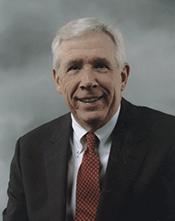
Mr. Speaker, I strongly support H.R. 1587, The Vietnam Human Rights Act of 2004 and commend Representative Chris Smith for his leadership on this issue. In 2001, the House of Representatives passed a…
Mr. Speaker, I strongly support H.R. 1587, The Vietnam Human Rights Act of 2004 and commend Representative Chris Smith for his leadership on this issue. In 2001, the House of Representatives passed a similar bill, but unfortunately the human rights situation in Vietnam continues to get worse.
The United States will soon ratify the U.S.-Vietnam bilateral trade agreement. We must send a strong message that trade with the United States should come with a responsibility to uphold basic human rights.
The Government of Vietnam continues to commit serious abuses in violation of the Universal Declaration of Human Rights. It continues to jail writers, scientists, journalists, and religious leaders.
This year's State Department human rights countries report on Vietnam is 24 pages long and cites numerous violations including:
The Government of Vietnam's human rights record remained
poor, and it continued to commit serious abuses. The
government continues to deny the right of citizens to change
their government . . . The government significantly
restricted freedom of speech, freedom of the press, freedom
of assembly, and freedom of association . . .
The government did not permit human rights organizations to
form or operate. Violence and societal discrimination against
women remained a problem. Child prostitution was a problem.
I am very concerned that religious activity is extremely restricted in Vietnam and reports that over 400 Christian churches in the Central Highlands have been forcibly closed. Imprisonment and harassment of Protestants and Catholics continue and many religious leaders are under house arrest. Many Christians have been forced to renounce their faith.
I also remain extremely concerned about the recent crackdown against Montagnard ethnic minorities in Vietnam, many of whom are Christians. Thousands of Montagnards who gathered to protest ongoing religious repression and confiscation of tribal lands last Easter were met with brutal force by Vietnamese agents and security forces.
Three years ago, Father Thaddeus Nguyen Ly, a Catholic priest, submitted testimony to the U.S. Commission on International Religious Freedom. On October 21, 2001, Father Ly was sentenced to 15 years in prison by the Vietnam government. Father Ly has done nothing more than call for religious freedom in Vietnam.
The U.S. House has repeatedly called for Father Ly's release and expressed growing concern about the poor human rights record of the Government of Vietnam. We have been met by silence from the Government of Vietnam.
I continue to ask the State Department to designate Vietnam as a ``country of particular concern'' (CPC) for its systematic and ongoing religious freedom abuses. The Commission on International and Religious Freedom recommended Vietnam be listed as a CPC last year. This latest incident in the Central Highlands, along with the Vietnamese government's relentless repression of ethnic minority religious groups, clearly supports the need for CPC this year. It is my hope that the State Department will act this year.
I support the Vietnam Human Rights Act. Hanoi must begin to make significant progress toward releasing political and religious prisoners and respecting human rights of all minorities. In closing, we in the United States must continue to speak out for the innocent wherever they are. This is our duty. Those suffering persecution are encouraged when the United States speaks out on their behalf.
Ridding the world of repressive dictators will take time, patience and persistence, and we must press on toward the goal of freedom for all people. We, as a country, and we, as individuals, must have the courage to take on tough issues. Human rights are God-given rights. We should not accept anything less.
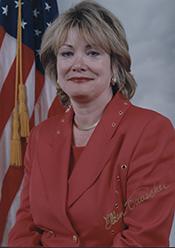
Mr. Chairman, I offer an amendment. Mr. Chairman, I yield myself 2 minutes. Mr. Chairman, the amendment I am offering with the gentleman from Nebraska (Mr. Bereuter) would provide a small, but vital,…
Mr. Chairman, I offer an amendment.
Mr. Chairman, I yield myself 2 minutes.
Mr. Chairman, the amendment I am offering with the gentleman from Nebraska (Mr. Bereuter) would provide a small, but vital, fix to the cumbersome process that governs the export of commercial communication satellites to our closest allies.
The amendment is identical to language that Senator Enzi offered and that was passed as part of the Senate foreign relations bill.
Under current law, satellite sellers must obtain a license from the State Department just to talk to a prospective buyer of a product. When a foreign buyer calls and asks for basic information, the company cannot immediately answer any questions. The current process means American companies have to wait for weeks or months to call back potential customers. This is undermining an industry we used to dominate at a time when our economy is in a major slump.
As the COMSAT market continues to shrink, we want to ensure that U.S. companies are left standing. This amendment levels the playing field between the U.S. satellite industry and its foreign competitors.
Under exception provided by our amendment, exporters of commercial communications satellites would be allowed to provide marketing information only to member countries of the North Atlantic Treaty Organization, and Japan, Australia and New Zealand. It would not affect any of the licensing requirements for countries like China and would keep in place all of the national security statutes put in place by Congress.
The amendment also improves the U.S. export control system. It enables the State Department to focus its resources on the transfer of truly sensitive data and allows U.S. companies to communicate with our allies internationally and friends in a timely and cost-effective manner about basic marketing information.
Our national security is closely linked to our technological leadership which guarantees the military advantage we have today, but our national security is being undermined by a sick industry that is falling behind its competition because of onerous bureaucracies that are doing nothing to protect our national security.
I urge my colleagues to support the Tauscher-Bereuter amendment.
Mr. Chairman, I reserve the balance of my time.
Mr. Chairman, I yield 2 minutes to the gentleman from Nebraska (Mr. Bereuter), the coauthor of this amendment.
(Mr. BEREUTER asked and was given permission to revise and extend his remarks.)
Mr. Chairman, I yield 1 minute to the gentleman from California (Mr. Blumenauer).
Mr. Chairman, I yield myself the balance of my time to simply remind my colleagues that, first and foremost, this is marketing information that is declassified. Second, this is information that would only be allowed to be transmitted to NATO allies, Australia, Japan, and New Zealand. I think it is very important that we keep the controls that we have in place for any kind of technology transfer for places like China, Russia, and others, but this is for our own allies.
While we have watched this business that we dominated at one time leave our shores and go to foreign competitors, I think it is very important that we keep our strict controls, that we keep the State Department involved in the licensing, but in these declassified marketing materials that everyone agrees are basically innocent, that we should allow them to be disseminated so that we can keep the small part of the business that we have left.
Mr. Chairman, I yield back the balance of my time.
Mr. Chairman, I demand a recorded vote.
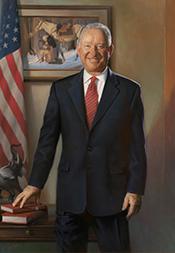
Mr. Chairman, I offer an amendment. Mr. Chairman, I yield myself such time as I may consume. Mr. Chairman, I rise today to offer an amendment to the Foreign Relations Authorization Act to address the…
Mr. Chairman, I offer an amendment.
Mr. Chairman, I yield myself such time as I may consume.
Mr. Chairman, I rise today to offer an amendment to the Foreign Relations Authorization Act to address the issue of extradition, specifically as it pertains to Mexico. The seriousness of this issue is best described by the following tragic story:
On April 29, 2002, over a year ago, Deputy David March, a 7-year veteran of the Los Angeles Sheriff's Department, was shot and killed in the line of duty. David March was 33 years old, a husband, a father, a son, a brother, a neighbor, a stalwart in our community. The suspect who took his life was a Mexican national, a convicted felon. He fled to Mexico to avoid prosecution.
Historically, the Mexican government has refused to extradite Mexican nationals who commit crimes and flee to Mexico unless there are assurances granted by the United States that the death penalty would not be sought. Then in October, 2001, the Mexican Supreme Court ruled, in addition to the death penalty, they would not extradite criminals who also face life imprisonment sentences in the United States. For the crime that was committed, one of those penalties would be required. As such, Deputy March's killer roams free in Mexico; and the United States is unable to threaten a sentence commensurate with this murderer's horrific crime.
It should be noted this is not an isolated case for it is estimated that more than 60 suspected killers from Los Angeles County alone are in Mexico, along with countless more individuals who are suspected of rape, child molestation, attempted murder and other serious, violent crimes.
Mr. Chairman, this is an outrage. We cannot allow the most heinous criminals to escape the bar of justice. They must pay the penalties for their crimes, and the victims and their families must have reprieve through a judicious process.
Just imagine the turmoil that these families feel. David's younger sister went to school with my youngest daughter, good friends growing up. It is a great family. Every day they have to get up knowing that their son, brother, husband, father, is no longer with them, and the person who committed the crime, that took his life, is free. It is just not fair.
As such, my amendment expresses the sense of Congress that the United States Government should work closely with and encourage the Mexican government to persuade its Supreme Court to reconsider this October, 2001, ruling so the possibility of life imprisonment will not have an effect on the timely extradition of criminal suspects from Mexico to the United States.
It also should be noted that, historically, the United States government and the Mexican government have cooperated on many issues of mutual concern to our bilateral relationship, including elements of extradition as it pertains to drug trafficking. I am confident that, with further cooperation between our two governments, we can continue in like manner to address all of the points of concern within the issue of extradition to the point of complete resolution.
I thank the chairman for his help in getting this bill to the floor. I thank the ranking member. I thank the gentleman from California (Mr. Dreier), the gentleman from California (Mr. Schiff), the gentleman from California (Mr. Berman), the gentleman from California (Mr. Calvert) and other Members who have been supportive in this important effort.
I yield to the gentleman from Nebraska.
Mr. Chairman, I yield back the balance of my time.
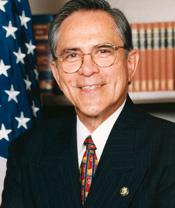
Mr. Chairman, I rise in strong opposition to the Hostettler-Gallegly amendment. It is a thinly veiled attack on the consular ID card that has been used by the Embassy of Mexico for over 130 years,…
Mr. Chairman, I rise in strong opposition to the Hostettler-Gallegly amendment. It is a thinly veiled attack on the consular ID card that has been used by the Embassy of Mexico for over 130 years, sometimes referred to as the Matricula Consular card.
Contrary to what the Hostettler-Gallegly amendment contends, Mexico and other foreign governments have been issuing consular identification cards to foreign nationals in the United States following precisely the guidelines established by the Vienna Convention on Consular Relations. This amendment would constitute a violation of that convention.
Under that convention, consular function is established as ``performing any other functions entrusted to a consular post which are not prohibited by the laws and regulations of the receiving state.'' There is no U.S. Federal law which forbids the issuance of consular ID cards. In fact, the Treasury Department has issued regulations under section 326 of the PATRIOT Act that would allow the financial institutions to accept consular ID cards as valid forms of ID for the purpose of opening accounts.
Mr. Chairman, I rise in strong opposition to the Hostettler/Gallegly amendment. It is a thinly veiled attack on the Consular ID Card that has been issued by the Embassy of Mexico for over 131 years, sometimes referred to as the Matricula Consular card.
Contrary to what the Hostettler-Gallegly amendment contends, Mexico and other foreign governments have been issuing consular identification cards to foreign nationals in the United States following precisely the guidelines established by the Vienna Convention on Consular Relations. This amendment would constitute a violation of that convention.
Under that convention, consular function is established as ``performing any other functions entrusted to a consular post which are not prohibited by the laws and regulations of the receiving State.'' There is no U.S. Federal law which forbids the issuance of Consular ID cards.
In fact, the Treasury Department has issued regulations under Section 326 of the PATRIOT Act that would allow financial institutions to accept Consular ID cards as valid forms of ID for the purpose of opening accounts. More than 100 financial institutions accept these cards as valid forms of ID. Police Departments across the United States praise the use of these cards, because they enable them to identify foreign nationals.
The State Department adamantly opposes this amendment because an Interagency Working Group is already working to address the issue of Consular ID cards. Consequently, this amendment prejudges the outcome of the Interagency Working Group's efforts.
The State Department also has reciprocity concerns. The U.S. does, in certain instances, issue Consular ID cards to American nationals overseas.
The State Department fears reciprocal retaliation from overseas if the amendment were to pass.
These Consular ID cards are simply identification cards. They do not legalize the status of any immigrant.
They cannot be used to obtain any immigration or citizenship benefits such as work authorization or to obtain public benefits.
Their continued use, with consultations between the U.S. and Mexican governments, will foster greater transparency and increase security in the United States.
For these reasons and many others, I strongly urge my colleagues to oppose this amendment.
Bill Text
3 versions available
        [Congressional Bills 108th Congress]
[From the U.S. Government Publishing Office]
[H.R. 1587 Referred in Senate (RFS)]

2d Session
H. R. 1587

_______________________________________________________________________

IN THE SENATE OF THE UNITED STATES

July 20, 2004

Received

July 22, 2004

Read twice and referred to the Committee on Foreign Relations

_______________________________________________________________________

AN ACT

To promote freedom and democracy in Vietnam.

Be it enacted by the Senate and House of Representatives of the
United States of America in Congress assembled,

SECTION 1. SHORT TITLE; TABLE OF CONTENTS.

(a) Short Title.--This Act may be cited as the ``Vietnam Human
Rights Act of 2004''.
(b) Table of Contents.--The table of contents for this Act is as
follows:

Sec. 1. Short title; table of contents.
Sec. 2. Findings.
TITLE I--CONDITIONS ON INCREASED NONHUMANITARIAN ASSISTANCE TO THE
GOVERNMENT OF VIETNAM

Sec. 101. Bilateral nonhumanitarian assistance.
TITLE II--ASSISTANCE TO SUPPORT HUMAN RIGHTS AND DEMOCRACY IN VIETNAM

Sec. 201. Assistance.
TITLE III--UNITED STATES PUBLIC DIPLOMACY

Sec. 301. Radio Free Asia transmissions to Vietnam.
Sec. 302. United states educational and cultural exchange programs with
Vietnam.
TITLE IV--ANNUAL REPORT ON PROGRESS TOWARD FREEDOM AND DEMOCRACY IN
VIETNAM

Sec. 401. Annual report.

SEC. 2. FINDINGS.

Congress finds the following:
(1) The Socialist Republic of Vietnam is a one-party State,
ruled and controlled by the Communist Party of Vietnam (CPV),
which continues to deny the right of citizens to change their
government. Although in recent years the National Assembly of
Vietnam has played an increasingly active role as a forum for
highlighting local concerns, corruption, and inefficiency, the
National Assembly remains subject to CPV direction. The CPV
maintains control over the selection of candidates in national
and local elections.
(2) The Government of Vietnam permits no public challenge
to the legitimacy of the one-party State. It prohibits
independent political, labor, and social organizations, and it
continues to detain and imprison persons for the peaceful
expression of dissenting religious and political views,
including Pham Hong Son, Tran Dung Tien, Father Nguyen Van Ly,
Dr. Nguyen Dan Que, Nguyen Vu Binh, Pham Que Duong, and Pastor
Nguyen Hong Quang, among others.
(3) The Government of Vietnam continues to commit serious
human rights abuses. In January 2004, the Department of State
reported to Congress that during the previous year the
Government of Vietnam had made ``no progress'' toward releasing
political and religious activists, ending official restrictions
on religious activity, or respecting the rights of indigenous
minorities in the Central and Northern Highlands of Vietnam.
(4)(A) The Government of Vietnam limits freedom of religion
and restricts the operation of religious organizations other
than those approved by the State. While officially sanctioned
religious organizations are able to operate with varying
degrees of autonomy, some of those organizations continue to
face restrictions on selecting, training, and ordaining
sufficient numbers of clergy and in conducting educational and
charitable activities. The Government has previously
confiscated numerous churches, temples, and other properties
belonging to religious organizations, most of which have never
been returned.
(B) Unregistered ethnic minority Protestant congregations
in the Northwest and Central Highlands of Vietnam suffer severe
abuses, which have included forced renunciations of faith, the
closure and destruction of churches, the arrest and harassment
of pastors, and, in a few cases, there have been credible
reports that minority religious leaders have been beaten and
killed.
(C) The Unified Buddhist Church of Vietnam (UBCV), one of
the largest religious denominations in Vietnam, was declared
illegal in 1981. The Government of Vietnam confiscated its
temples and persecuted its clergy for refusing to join the
state-sponsored Buddhist organizations. For more than 2
decades, the Government has detained and confined senior UBCV
clergy, including the Most Venerable Thich Huyen Quang, the
Most Venerable Thich Quang Do, the Venerable Thich Tue Sy, and
others.
(D) The Catholic Church continues to face significant
restrictions on the training and ordination of priests and
bishops, resulting in numbers insufficient to support the
growing Catholic population in Vietnam. Although recent years
have brought a modest easing of government control in some
dioceses, officials in other areas strictly limit the conduct
of religious education classes and charitable activities.
Father Thaddeus Nguyen Van Ly, who was convicted in a closed
trial in 2001 after publicly criticizing religious repression
by the Government of Vietnam, remains in prison.
(E) The Government of Vietnam continues to suppress the
activities of other religious adherents, including Cao Dai,
Baha'i, and Hoa Hao who lack official recognition or have
chosen not to affiliate with the State-sanctioned groups,
including through the use of detention and imprisonment.
(5) The Government of Vietnam significantly restricts the
freedoms of speech and the press, particularly with respect to
political and religious speech. Government and Party-related
organizations control all print and electronic media, including
access to the Internet. The Government blocks web sites that it
deems politically or culturally inappropriate, and it jams some
foreign radio stations, including Radio Free Asia. The
Government has detained, convicted, and imprisoned individuals
who have posted or sent democracy-related materials via the
Internet.
(6)(A) Indigenous Montagnards in the Central Highlands of
Vietnam continue to face significant repression. The Government
of Vietnam restricts the practice of Christianity by those
populations, and more than 100 Montagnards have been sentenced
to prison terms of up to 13 years for claiming land rights,
organizing Christian gatherings, or attempting to seek asylum
in Cambodia.
(B) The Government of Vietnam uses the separatist agenda of
a relatively small number of ethnic minority leaders as a
rationale for violating civil and political rights in ethnic
minority regions.
(C) The Government of Vietnam arrested or detained nearly
300 Montagnards during 2003 and since then many hundreds of
Montagnards have gone into hiding, fearing arrest,
interrogation, or physical abuse by government authorities.
(D) During Easter weekend in April 2004, thousands of
Montagnards gathered to protest their treatment by the
Government of Vietnam, including the confiscation of tribal
lands and ongoing restrictions on religious activities.
Credible reports indicate that the protests were met with a
violent response and that many demonstrators were arrested,
injured, or are in hiding, and that others were killed.
(E) Government officials continue to restrict access to the
Central and Northwest Highlands of Vietnam by diplomats,
nongovernmental organizations, journalists, and other
foreigners, making it difficult to verify conditions in those
areas.
(7)(A) United States refugee resettlement programs for
Vietnamese nationals, including the Orderly Departure Program
(ODP), the Resettlement Opportunities for Returning Vietnamese
(ROVR) program, the Priority One (P1) program and the
resettlement of boat people from refugee camps throughout
Southeast Asia, were authorized by law in order to rescue
Vietnamese nationals who have suffered persecution on account
of their wartime associations with the United States, as well
as those who currently have a well-founded fear of persecution
on account of race, religion, nationality, political opinion,
or membership in a particular social group.
(B) While those programs have served their purposes well, a
significant number of eligible refugees were unfairly denied or
excluded, in some cases by vindictive or corrupt Vietnamese
officials who controlled access to the programs, and in others
by United States personnel who imposed unduly restrictive
interpretations of program criteria.
(C) The Department of State has agreed to extend the
September 30, 1994, registration deadline for former United
States employees, ``re-education'' survivors, and surviving
spouses of those who did not survive ``re-education'' camps to
sign up for United States refugee programs, as well as to
resume the Vietnamese In-Country Priority One Program in
Vietnam to provide protection to victims of persecution on
account of race, religion, nationality, political opinion, or
membership in a particular social group who otherwise have no
access to the Orderly Departure Program.
(D) The former U.S. Immigration and Naturalization Service
agreed to resume the processing of former United States
employees under the U11 program, which had been unilaterally
suspended by the United States Government, as well as to review
the applications of Amerasians, children of American servicemen
left behind in Vietnam after the war ended in April 1975, for
resettlement to the United States under the Amerasian
Homecoming Act of 1988.
(8) Congress and people of the United States are united in
their determination that the expansion of relations with
Vietnam, a country whose government engages in serious
violations of fundamental human rights, should not be construed
as approval of or complacency about such practices. The
promotion of freedom and democracy around the world is and must
continue to be a central objective of United States foreign
policy. Congress remains willing and hopeful to recognize
improvement in the future human rights practices of the
Government of Vietnam, which is the motivating purpose behind
this Act.

TITLE I--CONDITIONS ON INCREASED NONHUMANITARIAN ASSISTANCE TO THE
GOVERNMENT OF VIETNAM

SEC. 101. BILATERAL NONHUMANITARIAN ASSISTANCE.

(a) Assistance.--
(1) In general.--United States nonhumanitarian assistance
may not be provided to the Government of Vietnam in an amount
exceeding the amount so provided for fiscal year 2004--
(A) for fiscal year 2005 unless not later than 30
days after the date of the enactment of this Act the
President determines and certifies to Congress that the
requirements of subparagraphs (A) through (D) of
paragraph (2) have been met during the 12-month period
ending on the date of the certification; and
(B) for each subsequent fiscal year unless the
President determines and certifies to Congress in the
most recent annual report submitted pursuant to section
401 that the requirements of subparagraphs (A) through
(E) of paragraph (2) have been met during the 12-month
period covered by the report.
(2) Requirements.--The requirements of this paragraph are
that--
(A) the Government of Vietnam has made substantial
progress toward releasing all political and religious
prisoners from imprisonment, house arrest, and other
forms of detention;
(B)(i) the Government of Vietnam has made
substantial progress toward respecting the right to
freedom of religion, including the right to participate
in religious activities and institutions without
interference by or involvement of the Government; and
(ii) has made substantial progress toward returning
estates and properties confiscated from the churches;
(C) the Government of Vietnam has made substantial
progress toward allowing Vietnamese nationals free and
open access to United States refugee programs;
(D) the Government of Vietnam has made substantial
progress toward respecting the human rights of members
of ethnic minority groups in the Central Highlands and
elsewhere in Vietnam; and
(E)(i) neither any official of the Government of
Vietnam nor any agency or entity wholly or partly owned
by the Government of Vietnam was complicit in a severe
form of trafficking in persons; or
(ii) the Government of Vietnam took all appropriate
steps to end any such complicity and hold such
official, agency, or entity fully accountable for its
conduct.
(b) Exception.--
(1) Continuation of assistance in the national interest.--
Notwithstanding the failure of the Government of Vietnam to
meet the requirements of subsection (a)(2), the President may
waive the application of subsection (a) for any fiscal year if
the President determines that the provision to the Government
of Vietnam of increased United States nonhumanitarian
assistance would promote the purposes of this Act or is
otherwise in the national interest of the United States.
(2) Exercise of waiver authority.--The President may
exercise the authority under paragraph (2) with respect to--
(A) all United States nonhumanitarian assistance to
Vietnam; or
(B) one or more programs, projects, or activities
of such assistance.
(c) Definitions.--In this section:
(1) Severe form of trafficking in persons.--The term
``severe form of trafficking in persons'' means any activity
described in section 103(8) of the Trafficking Victims
Protection Act of 2000 (Public Law 106-386 (114 Stat. 1470); 22
U.S.C. 7102(8)).
(2) United states nonhumanitarian assistance.--The term
``United States nonhumanitarian assistance'' means--
(A) any assistance under the Foreign Assistance Act
of 1961 (including programs under title IV of chapter 2
of part I of that Act, relating to the Overseas Private
Investment Corporation), other than--
(i) disaster relief assistance, including
any assistance under chapter 9 of part I of
that Act;
(ii) assistance which involves the
provision of food (including monetization of
food) or medicine;
(iii) assistance for refugees; and
(iv) assistance to combat HIV/AIDS,
including any assistance under section 104A of
that Act; and
(B) sales, or financing on any terms, under the
Arms Export Control Act.

TITLE II--ASSISTANCE TO SUPPORT HUMAN RIGHTS AND DEMOCRACY IN VIETNAM

SEC. 201. ASSISTANCE.

(a) In General.--The President is authorized to provide assistance,
through appropriate nongovernmental organizations, for the support of
individuals and organizations to promote democracy and internationally
recognized human rights in Vietnam.
(b) Authorization of Appropriations.--There are authorized to be
appropriated to the President to carry out subsection (a) $2,000,000
for each of the fiscal years 2005 and 2006.

TITLE III--UNITED STATES PUBLIC DIPLOMACY

SEC. 301. RADIO FREE ASIA TRANSMISSIONS TO VIETNAM.

(a) Policy of the United States.--It is the policy of the United
States to take such measures as are necessary to overcome the jamming
of Radio Free Asia by the Government of Vietnam, including the active
pursuit of broadcast facilities in close geographic proximity to
Vietnam.
(b) Authorization of Appropriations.--In addition to such amounts
as are otherwise authorized to be appropriated for the Broadcasting
Board of Governors, there are authorized to be appropriated to carry
out the policy under subsection (a) $9,100,000 for the fiscal year 2005
and $1,100,000 for the fiscal year 2006.

SEC. 302. UNITED STATES EDUCATIONAL AND CULTURAL EXCHANGE PROGRAMS WITH
VIETNAM.

It is the policy of the United States that programs of educational
and cultural exchange with Vietnam should actively promote progress
toward freedom and democracy in Vietnam by providing opportunities to
Vietnamese nationals from a wide range of occupations and perspectives
to see freedom and democracy in action and, also, by ensuring that
Vietnamese nationals who have already demonstrated a commitment to
these values are included in such programs.

TITLE IV--ANNUAL REPORT ON PROGRESS TOWARD FREEDOM AND DEMOCRACY IN
VIETNAM

SEC. 401. ANNUAL REPORT.

(a) In General.--Not later than 6 months after the date of the
enactment of this Act and every 12 months thereafter, the Secretary of
State shall submit to the Congress a report on the following:
(1)(A) The determination and certification of the President
that the requirements of section 101(a)(2) have been met, if
applicable.
(B) The determination of the President under section
101(b)(2), if applicable.
(2) Efforts by the United States Government to secure
transmission sites for Radio Free Asia in countries in close
geographical proximity to Vietnam in accordance with section
301.
(3) Efforts to ensure that programs with Vietnam promote
the policy set forth in section 302 and with section 102 of the
Human Rights, Refugee, and Other Foreign Relations Provisions
Act of 1996 (Public Law 104-319) regarding participation in
programs of educational and cultural exchange.
(4) Lists of persons believed to be imprisoned, detained,
or placed under house arrest, tortured, or otherwise persecuted
by the Government of Vietnam due to their pursuit of
internationally recognized human rights. In compiling such
lists, the Secretary shall exercise appropriate discretion,
including concerns regarding the safety and security of, and
benefit to, the persons who may be included on the lists and
their families. In addition, the Secretary shall include a list
of such persons and their families who may qualify for
protection under United States refugee programs.
(5) A description of the development of the rule of law in
Vietnam, including, but not limited to--
(A) progress toward the development of institutions
of democratic governance;
(B) processes by which statutes, regulations,
rules, and other legal acts of the Government of
Vietnam are developed and become binding within
Vietnam;
(C) the extent to which statutes, regulations,
rules, administrative and judicial decisions, and other
legal acts of the Government of Vietnam are published
and are made accessible to the public;
(D) the extent to which administrative and judicial
decisions are supported by statements of reasons that
are based upon written statutes, regulations, rules,
and other legal acts of the Government of Vietnam;
(E) the extent to which individuals are treated
equally under the laws of Vietnam without regard to
citizenship, race, religion, political opinion, or
current or former associations;
(F) the extent to which administrative and judicial
decisions are independent of political pressure or
governmental interference and are reviewed by entities
of appellate jurisdiction; and
(G) the extent to which laws in Vietnam are written
and administered in ways that are consistent with
international human rights standards, including the
requirements of the International Covenant on Civil and
Political Rights.
(b) Contacts With Other Organizations.--In preparing the report
under subsection (a), the Secretary shall, as appropriate, consult with
and seek input from nongovernmental organizations, human rights
advocates (including Vietnamese-Americans and human rights advocates in
Vietnam), and the United States Commission on Religious Freedom.

Passed the House of Representatives July 19, 2004.

Attest:

JEFF TRANDAHL,

Clerk.