Private Economy Protection Act of 2003
Legislative Activity
Stay on top of the latest movement without scrolling through every action
Referred to the Subcommittee on Domestic and International Monetary Policy, Trade, and Technology.
February 27, 2003
View full timeline
Introduced in House
January 7, 2003
Referred to the House Committee on Financial Services.
January 7, 2003
Referred to the Subcommittee on Domestic and International Monetary Policy, Trade, and Technology.
February 27, 2003
Floor Debate
10 membersWhat members said about H.R. 165 on the floor
 DB
DB BS
BS JC
JC IR
IR CBM+5
CBM+5
Floor Debate
10 membersWhat members said about H.R. 165 on the floor
Mr. Speaker, I move to suspend the rules and agree to the resolution (H. Res. 165) expressing support for a renewed effort to find a peaceful, just, and lasting settlement to the Cyprus problem, as…
Mr. Speaker, I move to suspend the rules and agree to the resolution (H. Res. 165) expressing support for a renewed effort to find a peaceful, just, and lasting settlement to the Cyprus problem, as amended.
Mr. Speaker, I ask unanimous consent that all Members may have 5 legislative days within which to revise and extend their remarks and include extraneous material on the resolution under consideration.
Mr. Speaker, I yield myself such time as I may consume.
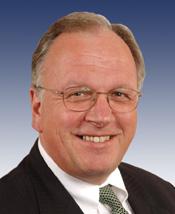
(Mr. BEREUTER asked and was given permission to revise and extend his remarks.)
Mr. Speaker, I rise in support of House Resolution 165, a resolution offered by this Member regarding the political situation in Cyprus. The Subcommittee on Europe adopted this measure unanimously last week, because an historic moment in the history of Cyprus was about to be lost if the momentum which had been building over the past 2 years to bring about a resolution of the Cyprus problem was allowed to slip away.
I want to express my appreciation to the ranking member on the Subcommittee on Europe, the gentleman from Florida (Mr. Wexler), for his support on this issue and his willingness to see this resolution move forward. I believe the resolution represents an important statement by the House on the need for a solution for the Cyprus problem.
I also want to express my appreciation to the chairman of the committee, the gentleman from Illinois (Mr. Hyde), and the ranking Democrat, the gentleman from California (Mr. Lantos), for their help in moving this legislation to the floor; and to the gentleman from California (Mr. Sherman) for managing the legislation tonight.
I also want to particularly acknowledge the work of our distinguished colleague, the gentleman from Florida (Mr. Bilirakis), who has long been a leader in keeping this House informed of the situation in Cyprus and the status of the peace process.
It is interesting and very salutary, I think, that we have as supporters of this resolution, indeed, as cosponsors of the resolution, some of the Members that are strongest in support of Greece and are strongest in support of Turkey.
House Resolution 165 commends the United Nations Secretary General, Kofi Annan, for his tireless efforts to seek a resolution to the Cyprus problem, a problem which has been on the agenda of the Security Council for almost 40 years. In fact, it is the oldest item continuously on the Secretary General's peacemaking agenda.
In addition, this resolution expresses the disappointment of the House that the recent United Nations plan for a comprehensive settlement of the Cyprus problem could not be agreed to by the two Cypriot sides, despite the effort of many and, in particular, the United Nations Secretary General.
Referenda put before both Greek Cypriots and Turkish Cypriots would be approved to create a confederation to bring peace and unity to Cyprus, if only they were given that opportunity.
In a report that the Security Council issued on Saturday on the Secretary General's effort to achieve a comprehensive settlement of the Cyprus problem, U.N. Secretary General Kofi Annan made it clear that ``a unique set of circumstances, including the membership of Cyprus in the European Union, offering a framework of incentives to reach a settlement, as well as deadlines within which to reach it'' was emerging and that the potential existed to make a true impact on peace.
Finally, the resolution urges both the Greek and Turkish Cypriots to quickly resume negotiations to resolve this problem. It expresses the view of the House of Representatives that we want and appreciate continued efforts by Greece and Turkey to maximize their influence to prevent this opportunity to bring peace and economic prosperity to the entire Cypriot community from being lost.
The resolution urges the United Nations and the Bush administration to redouble their efforts to encourage the talks to begin again in order to seek a solution.
Mr. Speaker, since 1974, the island of Cyprus has been politically divided in what has been often a bitter and violent dispute. Consequently and regrettably, the people of Cyprus have been culturally and socially isolated from each other by a heavily fortified green line in what today represents something akin to the Berlin Wall of the last century.
This Member has personally walked that green line through Nicosia on two occasions. The commander of one of the four national peacekeeping forces, the British commander, told this Member that in his capacity, he has men in his unit whose fathers have served in that unit at that location.
For the past 29 years, various attempts and numerous proposals have been put forward to bring Greek and Turkish Cypriots together to resolve what has become known as ``the Cyprus problem.''
None of these attempts to bring about reconciliation has been so close to achieving success than the effort which is before us now has had as an opportunity during this past 5 months. Last November, with the entry of a divided Cyprus into the European Union
looming, U.N. Secretary General Kofi Annan proposed a comprehensive framework for a just and lasting settlement of the Cyprus problem. His plan was hailed as a positive attempt to resolve the problem.
In presenting his framework, the Secretary General asked Greek and Turkish Cypriot leaders to accept the plan by February 28. When neither side resolved their differences with the proposal by the end of the February, the Secretary General asked the two leaders to meet him in The Hague on March 10 and to sign an agreement that would put the framework to simultaneous referenda on the island.
On March 10 both the Greek and Turkish Cypriot leaders did meet with Annan in The Hague. However, we learned with great disappointment that the Secretary General's framework was rejected when the Turkish Cypriot leader announced he could not accept the settlement plan, and would not agree to put the referenda to the Turkish Cypriots.
This decision was disappointing because informal polls indicated that a majority of Turkish Cypriots were prepared to support the plan and bring the longstanding division and suffering of the island to an end.
Despite our uncertainty over the future of the island, last week, as our subcommittee prepared to adopt this resolution, we were informed that several measures were being initiated by the various parties which seemed to us to be very positive.
The first was the announcement by Turkish Prime Minister Erdogan that he would bring a new effort to unite the Greek and Turkish Cypriot areas of Cyprus forward.
The second was the announcement that Turkish Foreign Minister Gul would travel to Northern Cypress to discuss the peace process with Turkish Cypriot leaders and then would travel to Belgrade to meet with Greek leaders to discuss how to resume the peace negotiations. Both of these announcements were very welcome, and this Member commends the Turkish leadership for their willingness to address the issue.
A third announcement was that the Turkish Cypriot leader, Denktash, had sent a letter to the Cypriot President, Mr. Papadopoulos, suggesting several measures which the Turkish leader was offering as a way to begin rebuilding confidence between the two sides in advance of resuming the negotiation.
Mr. Speaker, this Member felt that the gestures may have been positive because one of the biggest obstacles which had plagued the peace process for all these years has been the lack of confidence and trust on both sides. Unfortunately and very quickly, we saw just how much distrust actually does exist today on that island because some people thought there was a hidden agenda, and maybe there was, but I hope that was not the case.
Whatever the real motivation of the proposal, a little bit of trust and confidence is something both sides could use right now. This Member wonders what is wrong with lifting current restrictions on crossborder trade, tourism, education and culture exchanges, even if for only 1 day a week just as a way for both sides to see if they really are prepared to live as a united island. This Member also wonders why some of the measures could not be agreed to outside of a more comprehensive agreement based upon the U.N. peace plan.
Mr. Speaker, in just 12 days the Government of Cypress will sign the accession papers paving the way for the southern part of the island to enter the European Union. The economic benefits of this membership to the southern half of the island will be significant. On the other hand, it would be a terribly damaging blow to the potential economic prospects for the Turkish Cypriots. The current differences between the income levels of the two communities would continue to widen dramatically.
Now is the time for both sides to put aside their past differences and to make a serious commitment to resolve this problem of a divided Cypress. We are never going to have a better opportunity.
As Secretary General Kofi Annan has stated, his settlement proposal is still on the table; and I believe resumption of the negotiations should continue to use the Secretary General's plan as a basis for an agreement.
Mr. Speaker, the people of Cypress have endured 29 years of separation. They are ready, it is clear, to see and support referenda. Therefore, it is a sincere hope of this Member that the leaders of both sides will return to the negotiating table and resolve this important problem so that next year, in 2004, we will be celebrating the first anniversary of a united Cypress and not the 30th anniversary of a divided one.
Mr. Speaker, this Member urges Members of the House to speak with one strong voice in support of a resolution on the Cypress problem and thus urges support for the resolution.
Mr. Speaker, I reserve the balance of my time.
Mr. Speaker, I yield such time as he may consume to the distinguished gentleman from Florida (Mr. Bilirakis), who I would say is among the House's most outstanding experts on Cypress.
Mr. Speaker, I yield myself the remaining amount of time.
Mr. Speaker, I thank the gentleman for his concluding comments, and all of these speakers this evening have had a very positive outlook on the opportunity, a rare opportunity, for us to really bring peace and unity to the island of Cyprus.
This is an opportunity we cannot avoid trying our best on. This is an opportunity with a maximum amount of leverage. I urge, therefore, my colleagues to support the resolution.
Mr. Speaker, I yield back the balance of my time.
Mr. Speaker, I yield myself such time as I may consume. Mr. Speaker, I rise in strong support of House Resolution 165. Mr. Speaker, let me first provide some background. On July 20, 1974, thousands…
Mr. Speaker, I yield myself such time as I may consume.
Mr. Speaker, I rise in strong support of House Resolution 165.
Mr. Speaker, let me first provide some background. On July 20, 1974, thousands of Turkish troops invaded and occupied 37 percent of the island, which since that time has been separated by a green line, actually a line of barbwire, analogized by the gentleman from Nebraska (Mr. Bereuter) to the Berlin Wall. They created the Northern Republic of Cypress in 1975 and, indeed, recognized only by Ankara. Nicosia today is the only divided capital in the world.
Today Turkey maintains 35,000 troops in Northern Cypress and that area is one of the most highly militarized areas of the world, according to former U.N. Secretary General Boutros Boutros Ghali.
Eighty thousand Turkish settlers were installed after that invasion and occupy properties forcibly vacated by Greek Cypriot refugees, people who had lived there for generations. And now we have 200,000 refugees and over 1,600 people missing since that long-ago invasion, including five American citizens. In Northern Cypress there are a few Greek Cypriots. They are, in effect, locked into enclaves. They are denied basic human rights such as freedom of movement, access to education, religious freedom, or political rights.
The deterioration of the situation in northern Cypress must be contrasted to the prosperity of the southern part of that island ruled by the official government of the Republic of Cypress. That government has done so well that they have met the EU's strict standards for administration and will soon be admitted. Those standards include tough limits on the amounts of public debt, limits that, after this budget resolution comes to the floor tomorrow, the United States will not be able to meet. The economic hardship on the northern part of the island and the competition with settlers from Turkey has caused the exodus of the majority of the Turkish Cypriot population.
On September 30, 2002, the EU's enlargement commissioner stated that Cypress complies with all political and economic conditions for membership and that the government-controlled areas of Cypress enjoy an atmosphere of economic prosperity and political freedom, allowing its people to enjoy one of the highest standards of living in the world.
Cypress will become a member of the EU in a few weeks, and the Cypriot government will sign an accession agreement and formally join, I believe, on April 16 of this year.
The recent failure of the U.N.'s peace talks must be blamed on Turkish Cypriot leader Rauf Denktash. The U.N. plan offered a wide range of autonomy, a weak central government, a demilitarized Cypriot state, and a continuing, if greatly reduced, Turkish and Greek presence to guarantee the safety of the respective communities. But Denktash was not willing to put this plan to a referendum. Notwithstanding the fact that his own people, the Turkish Cypriots would have overwhelmingly supported this plan, a great opportunity was lost.
Mr. Speaker, I fully endorse this resolution and in later comments would want to detail its terms.
Mr. Speaker, I reserve the balance of my time.
Mr. Speaker, I yield 2 minutes to the gentleman from New Jersey (Mr. Pallone), a gentleman who has been a leader on issues of foreign policy and human rights.
Mr. Speaker, I yield 2 minutes to the gentlewoman from California (Ms. Watson), a distinguished former ambassador who is also a congressional Representative.
Mr. Speaker, it is my pleasure to yield 2\1/2\ minutes to the gentlewoman from New York (Mrs. Maloney) who has shown her dedication to human rights and impressed us all with her expertise on Hellenic issues.
Mr. Speaker, I yield 2 minutes to the gentleman from New Jersey (Mr. Holt), my favorite rocket scientist.
(Mr. HOLT asked and was given permission to revise and extend his remarks.)
Mr. Speaker, I yield myself so much time as I may consume.
Mr. Speaker, this is an important resolution. It expresses our support for a peaceful, just and lasting resolution of the Cyprus problem. I would like to take this opportunity to thank the gentleman from Nebraska (Mr. Bereuter), the chairman, for sponsoring this resolution and to commend the gentleman from Florida (Mr. Wexler), the ranking Democratic member, for his leadership on foreign policy issues. I am pleased to be an original cosponsor of the resolution.
I fully endorse the sentiment expressed in this resolution that Greek Cypriot and Turkish Cypriot parties should renew their efforts to find a settlement to the Cyprus problem on the basis of the U.N. Secretary General's framework for a comprehensive settlement, notwithstanding the lamentable failure of the most recent round of diplomacy.
It is also important that this body reaffirm its own commitment to giving any necessary assistance to help achieve a just and durable settlement of the Cyprus problem, and that is, again, called for by this resolution.
In particular, this resolution expresses the Congress' very strong regret that Turkish Cypriot leader Mr. Denktash rejected the comprehensive settlement offered by the Secretary General and denied the Turkish Cypriots the opportunity to determine their own future, because he refused to offer the settlement proposal as a referendum. I urge the parties to return to the table at the earliest possible time and to complete negotiations on the Secretary General's plan.
Mr. Speaker, the U.S. has a clear and direct interest in solving the Cyprus problem. Its resolution would offer peace and prosperity to all of the peoples of Cyprus and would bring lasting stability to Greek- Turkish relations on NATO's southern flank.
It is, therefore, vital, Mr. Speaker, that this body go on record uncompromisingly in support of this resolution.
Mr. Speaker, I see that I have no other requests for time, and I yield back the balance of my time.
Mr. Speaker, on that I demand the yeas and nays.
Mr. Speaker, I rise today in strong support of House Resolution 165. This resolution is directed at renewed endeavors to find a peaceful, just, and durable solution to the Cyprus conflict. With the…
Mr. Speaker, I rise today in strong support of House Resolution 165. This resolution is directed at renewed endeavors to find a peaceful, just, and durable solution to the Cyprus conflict. With the failure of the recent UN-brokered peace negotiations and with Cyprus going to join the EU, a solution to the problem is more needed than ever.
The Eastern Mediterranean is a region of vital U.S. interests. Endeavors to promote greater stability in the area by bringing the two conflicting parties together, must thus remain high on our agenda. In fact, stability in this region serves to advance many key policy objectives.
I thus wish to applaud the tireless efforts of the Secretary General of the United Nations to have prudently worked out an acceptable peace plan for both the Greek Cypriots and the Turkish Cypriots. Kofi Annan crafted a compromise plan that sought to reunite Cyprus as a single bicommunal federation. The plan would have satisfied both communities. The plan also enjoyed broad bipartisan support in the U.S. and was strongly supported by the wider international community. I therefore commend the Cypriot President Tapas Papadopolous who was eager to finally solve this long-lasting dispute. He accepted the UN proposal and was willing to submit the plan to a separate referendum last month. Immediately after the failure of the negotiations, Papadopolous further stated that the Greek Cypriot side will continue its endeavors for reaching a solution to the Cypriot issue within the UN framework.
Parallel, I voice my disappointment at the Turkish Cypriot leader Rauf Denktash's decision not to accept the UN proposal and his ultimate rejection of the peace deal. This is an unacceptable situation and hurts everyone involved: the Turkish and Greek Cypriot communities, the United Nations, the U.S., the EU and Turkey's own desire to become a EU member, now is the time to act. Indeed, the Turkish intransigence hurts first and foremost Turkey and the Turkish Cypriots themselves. The failure of the unification endeavors complicates Ankara's own efforts to join the EU. The European Commission warned Turkey after the breakdown of the talks that the Greek Cypriot part of the island is going to join the EU in May 2004 with or without the Turkish Cypriots. But without an agreement on the Cyprus issue, Turkey will be in a position of not recognizing a member of the European Union.
Public demonstrations by the Turkish-Cypriot opposition in favor of the peace plan further explicitly show who will be the major losers of the failed negotiations: the Turkish Cypriots who will not enjoy the benefits of EU membership.
The United States will remain committed to finding a just and permanent solution to the Cyprus issue. This solution must be achieved within the UN framework. The Turkish Cypriot leader must thus clearly show his willingness to constructively work with the United Nations and to settle for a compromise, a fair compromise like the one that was just presented to him.
Yet, a permanent solution that involves compromise, tolerance, and understanding is not merely achieved via multilateral institutions or intergovernmental interactions, however crucial they are. More than ever, confidence-building measures to re-integrate the two communities on the island are crucial, and the U.S. must continue to support these biocommunal initiatives.
A constructive dialogue between the Greek and the Cypriot leader under the UN auspices as well as reintegration efforts between the two communities represent the best and the only way to settle the Cyprus conflict.
Mr. Speaker, today I want to thank Mr. Bereuter for his leadership in introducing H. Con. Res. 165, expressing support for a renewed effort to find a peaceful, just, and lasting settlement to the…
Mr. Speaker, today I want to thank Mr. Bereuter for his leadership in introducing H. Con. Res. 165, expressing support for a renewed effort to find a peaceful, just, and lasting settlement to the Cyprus problem, and I want to take this opportunity to voice my strong support for this resolution.
In today's uncertain world, where conflict and instability abound, one such long-standing dispute was quietly moving toward a resolution.
However, while the world has been focused on Iraq and deadlines on the Hussein regime came and went, another deadline, one vitally important to a resolution to the conflict on Cyprus, passed with little fanfare.
The stakes in Cyprus are high, and while the United States is rightly focusing on more pressing foreign policy problems like the war on terrorism, the war in Iraq and other issues in the Middle East, we should also devote attention to bringing an end to this conflict.
The outcome of a peaceful resolution to the division of Cyprus will have a significant impact on Turkey and Greece, two key NATO players whose antagonistic relationship has too often roiled the alliance.
It would benefit U.S. interests in the eastern Mediterranean, would strengthen NATO by improving relations between our two key allies, and defuse an ongoing regional arms race.
Just as they are standing shoulder-to-shoulder with the United States in the war against terror, so too must they play a constructive role in resolving this longstanding dispute.
The European Commission clearly and unequivocally has linked Turkey's ambitions to join the EU to a solution to the conflict. Turkey is eager to join the EU, and the Turks of Cyprus, isolated and living in poverty, look forward to sharing the benefits of EU membership. One only has to look to the massive rallies recently held by Turkish Cypriots in support of a resolution.
Just today, the Greek and Turkish Prime Ministers met in Belgrade and agreed on the need to reach a solution to the political problem in Cyprus. The moment of truth is at hand, and time is running short. The two communities should play an important role in the efforts toward a solution and move their leadership to the negotiating table.
They must show genuine commitment to forge an agreement on the terms of reunification. As the President of the Republic of Cyprus recently stated: ``Non-solution is not a solution. It is not even the conclusion of the Cyprus problem. On the contrary, it will mean the beginning of new dangers and new problems. The eventual solution to the Cyprus problem will be a compromise. . . .''
However, ``If the solution is not functional it cannot be viable. If it is not viable it will not be permanent.'' A solution cannot include the possibility of the permanence of division. After nearly 30 years, it is time for the bitter division of Cyprus to come to an end. It is time for a peaceful, just, and lasting settlement to the Cyprus problem. I am confident my colleagues share this hope and I ask them to vote for this resolution.
Mr. Speaker, I rise in support of H.R. 165 and thank my friends and colleagues, the gentleman from Nebraska (Mr. Bereuter) and the gentleman from California (Mr. Sherman), for their work on this…
Mr. Speaker, I rise in support of H.R. 165 and thank my friends and colleagues, the gentleman from Nebraska (Mr. Bereuter) and the gentleman from California (Mr. Sherman), for their work on this important resolution.
However, I do have some reservations. As Democratic cochair of the Hellenic Caucus, along with my Republican colleague, the gentleman from Florida (Mr. Bilirakis), we have been working with the U.N. and the State Department on the reunification of Cyprus, which has been divided since 1974. The peaceful, lasting and just settlement of Cyprus has been a priority of the United Nations and the caucus.
The Republic of Cyprus will sign the EU treaty in Athens on April 16. We had all hoped a united Cyprus would enter the European Union. Unfortunately, the latest round of talks ended without an agreement. According to the report of the United Nations Secretary General, Kofi Annan, released on April 7, and I would like to put his testimony into the record, ``In the case
of the failure of this latest effort, I believe that Mr. Denktash, the Turkish Cypriot leader, bears prime responsibility.''
Despite my concerns and disappointment, I appreciate the comments of President Papadopoulos, who has stated that the Greek Cypriot side will ``continue the efforts for reaching a solution to the Cyprus question both before and after Cyprus joins the EU.''
I am pleased that this resolution addresses these issues and appreciate the work the subcommittee has done.
One area that concerns me about this amended resolution is that it has deleted references to the people of Cyprus and, instead, only refers to Greek and Turkish Cypriots. There are Armenians, Maronites and Latins in addition to Greek and Turkish Cypriots, living in Cyprus. I believe the new references that identify only Greek Cypriots and Turkish Cypriots is inaccurate and works to divide the people of Cyprus into two main groups. For this reason, the use of the term ``people of Cyprus'' is much more preferable and accurate, reflecting the unity of the country and the people.
Again, I thank the gentleman from California (Mr. Sherman) and the gentleman from Nebraska (Mr. Bereuter) for their work on this very important resolution. I am hopeful that there will be new initiatives and new opportunities to work toward solving the problem as all sides will benefit. I am hopeful that even between now and April 16 there is an opportunity for them to get back on board, and I am hopeful that Cyprus will go to the EU as a united country.
I appreciate very much the gentleman from Nebraska's (Mr. Bereuter) leadership. He has really worked to bring both sides together. It has been very helpful. I appreciate it very much.
Show 5 more
Mr. Speaker, I want to thank my colleague from California (Mr. Sherman) for those kind remarks. Mr. Speaker, as an original co-sponsor of House Resolution 165, I come to the floor this afternoon to…
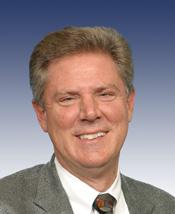
Mr. Speaker, I want to thank my colleague from California (Mr. Sherman) for those kind remarks.
Mr. Speaker, as an original co-sponsor of House Resolution 165, I come to the floor this afternoon to voice my strong support for the gentleman from Nebraska's (Mr. Bereuter) resolution calling for a renewed effort to find a peaceful and lasting settlement to the Cypress problem. Tomorrow the U.N. Security Council is expected to adopt a resolution on the Cypress peace process. This follows the issuance of a report last Saturday by Secretary General Kofi Annan on the reasons behind last month's breakdown of U.N.-sponsored negotiations. While it remains to be seen what the council will do, the Secretary General was clear in his report regarding reasons for the breakdown. Mr. Annan's report blamed Turkish Cypriot Leader Raul Denktash and Turkey for the failure of the Secretary General's plan to reunify this divided island.
Mr. Speaker, despite the lack of a settlement, Cypress's European Union ascension is going forward. Next Wednesday, April 15, is the date of the signing ceremony of the ascension treaty in Athens. The Republic of Cypress will join with nine other nations in signing the treaty. Sadly, however, the residents of the Turkish-occupied areas will be left out, due to the obstinate Mr. Denktash and his short-sighted supporters in Ankara.
Mr. Speaker, I am encouraged that the statements coming out of the State Department have expressed regard over Mr. Denktash's refusal to let the Turkish Cypriots vote on a referendum. I would be further encouraged if the administration put the necessary pressure on Turkey to be part of the solution and not just part of the problem. Mr. Annan stressed that ``my plan is still on the table,'' and I am sure that the Security Council will suggest that we go forward with the U.N. plan. But Mr. Denktash and the Government of Turkey must understand that there are costs for walking away from the table and benefits to be derived if they cooperate with the U.N. process.
I still believe that the U.S. and this administration can do a lot more to put pressure on Turkey to go ahead with the U.N. plan and try to come to some sort of settlement. I am hopeful and I know that this resolution will help in that regard, and that is why we should all support it.
Mr. Speaker, a crucial opportunity was missed this spring to bring peace to Cypress. Almost 3 decades of illegal occupation have kept the Cypriot nation divided and its people, both Greek and Turkish…
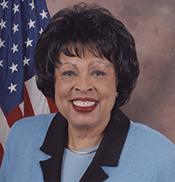
Mr. Speaker, a crucial opportunity was missed this spring to bring peace to Cypress. Almost 3 decades of illegal occupation have kept the Cypriot nation divided and its people, both Greek and Turkish Cypriots, in a dangerous limbo. Cypress has a rich tradition as the crossroads of trade and culture in the Eastern Mediterranean. Yet, in spite of history and geography, those living in the occupied zone have been isolated from the rest of the world for close to 30 years because of the intransigence of their leaders. While unoccupied Cypress has fared better, the fact of the division of Cypress still leaves fear, doubt, and uncertainty in the minds of all Cypriots.
This month Cypress will join the European Union. This act is a testament to the will and the industry of the Cypriot people, building an economy which is the envy of many of its neighbors. But the celebration of the EU membership will be bittersweet for many Cypriots, knowing that their country will not join the EU as a whole, but still as a nation illegally divided.
This fact was not inevitable. The Cypriot people, both Greek and Turkish, have repeatedly demonstrated their desire to end the division of their nation and integrate themselves into modern Europe, but the old men that hold power in northern Cyprus refuse to free their people to join the 21st century. The Secretary General, as my colleagues know, of the United Nations, Kofi Annan, who worked tirelessly to bring peace to Cyprus, left no doubt this week as to who was to blame for the failure of the talks.
Rauf Denktash, the self-styled head of the Cypriot separatists, refused to negotiate in good faith to resolve this 30-year-old dispute. In fact, Denktash went so far as to refuse to put a Cyprus peace agreement to his people in a referendum. His refusal is likely because he knows full well that even the Turkish Cypriots he purports to represent would embrace peace if given the opportunity.
Mr. Speaker, it is time to end this illegal and artificial division of the Cypriot nation, and I urge my colleagues to support this resolution, and I urge the President to apply renewed energy to convince the Turkish Government that ending its occupation of Cyprus and supporting peace there could be the most crucial thing Turkey could do to right a wrong.
Mr. Speaker, I share the hopes of Mr. Bereuter for a peaceful, just and lasting settlement to the long-standing Cyprus issue. Like many of my colleagues, I was disappointed that a comprehensive…
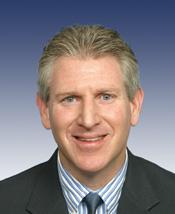
Mr. Speaker, I share the hopes of Mr. Bereuter for a peaceful, just and lasting settlement to the long-standing Cyprus issue.
Like many of my colleagues, I was disappointed that a comprehensive agreement to support the United Nation's proposal was not reached in March.
We must not allow the recent setback to get in the way of future negotiations and a lasting settlement of this issue. I hope that both Greek and Turkish Cypriot leaders will renew their commitment to bridge the divide that separates their people.
In this vein, I was very pleased to hear that Turkish Cypriot leader Mr. Denktas has taken positive steps to initiate a new process of dialogue and consultation. Last week, in a detailed letter to Greek Cypriot Leader Papadopoulos, Mr. Dentkas proposed lifting all overseas trade, transport, travel and cultural activities from or to both parts of Cyprus. He also expressed his willingness to meet with Mr. Papadopoulos to discuss the core issues of a comprehensive settlement.
It is my understanding that Mr. Denktas' proposal was not accepted by the Greek Cypriots. I agree with the Greek Cypriot sentiment that talks should be concluded under the U.N. framework. However, I am hopeful that Mr. Denktas' letter can be a catalyst to restart dialogue and to achieve a comprehensive settlement.
As for Turkey's role, which I know has been criticized by some in Washington and Europe, I am optimistic that Prime Minister Erdogan and his government are truly committed to a fair settlement on the issue. Mr. Erdogan has offered to bring Turkish and Greek Cypriots together ``with the three guarantor countries, Turkey, Greece and Britain.'' Furthermore, Mr. Erdogan and Foreign Minister Gul will be attending a Balkans summit in Belgrade this week, where they will meet with Greek leaders to discuss steps to resolve the Cyprus issue.
Mr. Speaker, it is going to take an even greater commitment from the United States and the international community to a achieve lasting settlement of the Cyprus issue. I believe the debate we are engaged in today is a clear signal that Congress will remain firmly engaged on this issue, and that we are serious about achieving a comprehensive settlement that benefits both Greek and Turkish Cypriots as well as the entire region.
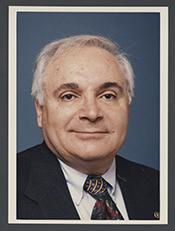
Mr. Speaker, I thank the gentleman from Nebraska (Mr. Bereuter) for writing this bill and for yielding me time. I also rise in strong support of H. Res. 165, a bill which expresses support for a…
Mr. Speaker, I thank the gentleman from Nebraska
(Mr. Bereuter) for writing this bill and for yielding me time.
I also rise in strong support of H. Res. 165, a bill which expresses support for a renewed effort to find a peaceful and lasting settlement to the Cypress problem by declaring appreciation for the efforts of Kofi Annan, the United Nations' Secretary General.
Mr. Speaker, the U.N. peace process, which is strongly supported by the United States and the entire international community, has sought to reunite Cypress as a single, sovereign bi-communal federation.
With Cypress poised to join the European Union in May 2004, Secretary General Annan chose to get personally involved in bringing the two sides together, asking the two community leaders to put the U.N. plan before their people in a referendum. President Papadopoulos of Cypress said he was prepared to do so. Unfortunately, Mr. Denktash, the Turkish Cypriot leader, was not prepared to agree to put the plan to a referendum.
It is a shame that the Secretary General's personal diplomacy was met by this kind of flat-out rejection. The bill expresses strong disappointment that the Turkish Cypriot leader, Mr. Denktash, rejected the comprehensive settlement offered by Secretary General Annan, thereby denying the Turkish Cypriot people the opportunity to determine their own future.
This legislation also indicates that we in the House of Representatives remain committed to giving any assistance needed to find a just and durable settlement for the Cypress problem.
H. Res. 165 urges the United States Government and others to redouble their efforts to seek a fair solution to the Cypress problem. And finally, H. Res. 165 urges the governments, the governments of Turkey and Greece to do everything possible to support the search for a settlement, including actions by the Government of Turkey, helping to persuade Mr. Denktash to reach an agreement which would reunite the island.
Mr. Speaker, again I want to thank the gentleman from Nebraska (Mr. Bereuter) for his commitment and perseverance in resolving the 29-year- old problem in Cypress, and I urge my colleagues to support the legislation.

Mr. Speaker, I thank my friend from California for yielding to me, and I rise in support of H. Res. 165 to draw this Chamber's attention to this opportunity that is not yet lost in Cyprus. Cyprus has…
Mr. Speaker, I thank my friend from California for yielding to me, and I rise in support of H. Res. 165 to draw this Chamber's attention to this opportunity that is not yet lost in Cyprus.
Cyprus has suffered from ethnic strife among the people of Cyprus, and I thank my colleague, the gentlewoman from New York, for using that phrasing, among the people of Cyprus for decades and has been physically divided since Turkish armed forces invaded and occupied the northern third of the island in 1974 after a Greek-led coup.
There have been efforts by the Greek Cypriots over the last year. There have been encouraging words from Turkey. Turkey's new ruling party suggested a change in Turkish policy toward Cyprus, but no agreement has been reached. Tens of thousands of Cypriots have taken to the streets in recent months, particularly in the Turkish areas, in support of this settlement, but Denktash ultimately imperiled the recent round of talks by refusing to take the plan directly to the Turkish Cypriot people for a referendum. As a result, Secretary General Annan has ended official U.N. efforts to broker a settlement.
This is a severe disappointment to me, to my Greek and my Turkish American constituents in New Jersey, and to all the people of Cyprus, but we must not accept the end of this latest round of talks as the end of the road. Peace rarely comes easily.
Peace in Cyprus is still possible, and as Cyprus prepares to enter the European Union, let us do our part to get the peace process back on track.
I commend the gentleman from Nebraska (Mr. Bereuter). His resolution would help. Let us pass it promptly.
Bill Text
Latest available legislative text
        [Congressional Bills 108th Congress]
[From the U.S. Government Publishing Office]
[H.R. 165 Introduced in House (IH)]

108th CONGRESS
1st Session
H. R. 165

To prohibit the Secretary of the Treasury from using surplus funds to
make any investment in securities, other than government and municipal
securities.

_______________________________________________________________________

IN THE HOUSE OF REPRESENTATIVES

January 7, 2003

Mr. Reynolds (for himself, Mr. Doolittle, and Mr. Flake) introduced the
following bill; which was referred to the Committee on Financial
Services

_______________________________________________________________________

A BILL

To prohibit the Secretary of the Treasury from using surplus funds to
make any investment in securities, other than government and municipal
securities.

Be it enacted by the Senate and House of Representatives of the
United States of America in Congress assembled,

SECTION 1. SHORT TITLE.

This Act may be cited as the ``Private Economy Protection Act of
2003''.

SEC. 2. PROHIBITION ON USING FEDERAL SURPLUS FUNDS TO INVEST IN PRIVATE
SECURITIES.

Notwithstanding any other provision of law, the Secretary of the
Treasury may not use surplus funds to make any investment in securities
(within the meaning of the securities laws of the United States) other
than government and municipal securities. For purposes of the preceding
sentence, the term `surplus' shall have the meaning given to such term
by section 3(7) of the Congressional Budget Act of 1974 (2 U.S.C.
622(7)).
<all>