Small Business Expensing Improvement Act of 2003
Legislative Activity
Stay on top of the latest movement without scrolling through every action
Referred to the House Committee on Ways and Means.
January 7, 2003
View full timeline
Introduced in House
January 7, 2003
Sponsor introductory remarks on measure. (CR E28)
January 7, 2003
Referred to the House Committee on Ways and Means.
January 7, 2003
Floor Debate
18 membersWhat members said about H.R. 179 on the floor
 IR
IR CBR
CBR FPJ
FPJ TL
TL BD+13
BD+13
Floor Debate
18 membersWhat members said about H.R. 179 on the floor
Mr. Speaker, I move to suspend the rules and agree to the resolution (H. Res. 179) expressing the sense of the House of Representatives regarding the systematic human rights violations in Cuba…
Mr. Speaker, I move to suspend the rules and agree to the resolution (H. Res. 179) expressing the sense of the House of Representatives regarding the systematic human rights violations in Cuba committed by the Castro regime, calling for the immediate release of all political prisoners, and supporting respect for basic human rights and free elections in Cuba.
Mr. Speaker, I ask unanimous consent that all Members may have 5 legislative days within which to revise and extend their remarks on the resolution under consideration.
Mr. Speaker, I yield myself such time as I may consume.
Nobel peace laureate Eli Wiesel has said: ``. . . to remain silent and indifferent is the greatest sin of all . . .''
Indifference breeds evil. Indifference is the enemy of freedom. Indifference helps cloak the deplorable actions of tyrants.
Cuba's ruthless dictator counts on this indifference. Taking advantage of global attention being focused on Iraq and noting the worldwide tendency to ignore or minimize the deplorable human rights condition in Cuba, the Castro regime has launched a full-scale assault on those who are struggling to bring freedom and democracy to this enslaved nation. Courageous men and women such as Marta Beatriz Roque, an independent economist and leading pro-democracy advocate, are being sentenced to harsh prison terms of 20 years. Marta Beatriz had previously spent nearly 3 years in prison for publishing, along with three other colleagues, a paper calling for democratic reforms. Independent journalists such as Raul Rivero, who is highlighted in the resolution before us, as the dean of the independent dissident Cuban journalists, was sentenced to 20 years. Fellow journalists such as Ricardo Gonzalez Alfonso and Hector Maseda Gutierrez also received 20- year sentences.
Other victims of this wave of repression include Jose Daniel Ferrer, a member of the Christian Liberation Movement, whose penalty was increased to death per a special request by the puppet whom the regime has as the presiding judge. There is also independent union labor leader Oscar Espinosa Chepe, and Manuel Vazquez Portal, Nelson Molinet Espino and Nelson Alberto Aguiar.
I enter into the Record their names and their sentences.
Pinar del Rio
Victor Rolando Arroyo Carmona, Periodista Independiente--
Life in prison.
Horacio Julio Pina Borrego, Periodista Independiente--12
years.
Eduardo Diaz Fleitas, opositor--15 years.
Fidel Suarez Cruz, opositor--12 years.
Ciudad Habana
Raul Rivero Castaneda, Periodista Independiente--Life in
prison.
Jorge Olivera Castillo, Periodista Independiente--Life in
prison.
Ricardo Gonzales Alfonso, Periodista Independiente--Life in
prison.
Hector Maceda Gutierrez, Periodista Independiente--Life in
prison.
Manuel Vazquez Portal, Periodista Independiente--16 years.
Osvaldo Alfonso Valdez, opositor--Life in prison.
Pedro Pablo Alvarez Ramos, opositor--Life in prison.
Hector Palacio Ruiz, opositor--Life in prison.
La Habana
Miguel Galvan Gutierrez, Periodista Independiente--Life in
prison.
Jose Ubaldo Izquierdo Hernandez, Periodista Independiente--
20 years.
Hector Raul Valle Hernandez, opositor--15 years.
Villa Clara
Librado Linares Garcia, Periodista Independiente--20 years.
Lester Gonzalez Penton, Periodista Independiente--20 years.
Omar Ruiz Hernandez, Periodista Independiente--18 years.
Margarito Broche Espinosa, opositor--25 years.
Omar Pernet Hernandez, opositor--25 years.
Isla de Pino
Favio Prieto Llorente, Periodista Independiente--20 years.
The list seems endless as the daunting reality of what the dictatorship has done sinks into our consciousness. Since March 18, Mr. Speaker, Castro's security agents have been storming into the homes of dissidents and other opposition leaders across the island, confiscating typewriters, books, papers, and other professional and personal belongings. And what have been their so-called crimes? Engaging in such ``threatening'' activities such as possessing and lending books by authors such as Vaclac Havel, Ghandi and Martin Luther King. Hector Palacios Ruiz, for example, was engaged in such ``treasonous'' behavior, to quote the regime, as helping to draft the document in December of last year which called for ``free hiring of employees.'' He was also found in possession of books such as ``Castro's Final Hours'' and ``A Manual for Education in Human Rights'' as well as children's games.
Every day more and more opposition leaders are sentenced to languish in squalid jail cells and subjected to the most inhumane and degrading treatment. We cannot and must not be silent. We cannot and must not be indifferent to the anguish and misery endured by the Cuban people just 90 miles off our shores at the hands of the depraved and cruel dictator and his agents of terror.
The European Union has issued statements condemning the arrests and demanding that these prisoners of conscience be immediately released. Amnesty International urged Cuba to release all of its prisoners of conscience and reform the laws which make such detentions possible. Human Rights Watch called on the United Nations Commission on Human Rights to condemn these abuses and do so strongly and unequivocally. Human Rights International, the American Society of Newspaper Editors, and the Inter-American Press Association have all denounced this incredible Stalinist crackdown. Newspapers such as the Houston Chronicle, the San Diego Union Tribune, the Pittsburgh Post-Gazette have run editorials with headlines underscoring that: ``Saddam and Fidel are Birds of a Feather''; ``Crackdown in Cuba: A Reminder that Castro is Still a Tyrant''; and ``Castro's Regime as Repressive as Ever.''
The Los Angeles Times led its editorials by saying: ``After years of calling for liberalized relations with Cuba, this editorial page must now urge American policymakers to hit the brakes.''
Just today the Washington Post ran an editorial by Richard Cohen which said: ``I would like to hear some moral outrage about Castro . . . Fidel Castro is a thug and a fool.''
But it is our turn now to speak. It is our time for the U.S. Congress to stand behind the Cuban people, side by side, as it has done for so many times before and is so doing with the Iraqi people.
This resolution is a strong first step. House Resolution 179 details the sequence of events which have transpired in recent weeks and places particular emphasis on the plight of these political prisoners such as Juan Carlos Gonzalez Leyva, a blind human rights dissident imprisoned for over a year who is gravely ill and has yet to receive medical attention.
Mr. Speaker, I reserve the balance of my time.
Mr. Speaker, I yield 5 minutes to the gentleman from Florida (Mr. Lincoln Diaz-Balart), the author of this resolution.
Mr. Speaker, I yield myself 1 minute to explain what this bill actually does. I have had some Members ask.
House Resolution 179 establishes the nexus which exists between the current wave of repression and the 59th session of the United Nations Commission on Human Rights which is currently being held in Geneva. And in doing so, it takes into account the dictatorship's systematic and gross human rights violations and its repeated demonstrations of contempt for the mandates issued by the U.N. Commission on Human Rights.
Further, it calls for a resolution to be offered and passed at the Human Rights Commission, which accurately reflects this grim reality. It seizes the opportunity which presents itself in May of this year when Cuba's membership on the commission expires. It does so by calling on the Nation of Latin America and the Caribbean group to oppose and deny the regime a seat on this human rights body. More importantly, this resolution calls for the immediate release of all Cuban prisoners of conscience. It sends a strong, definitive message that the United States Congress stands with the dissidents, the independent journalists, and all pro-democracy activists, and not with their oppressor.
Mr. Speaker, I reserve the balance of my time.
Mr. Speaker, I thank the gentleman from New York for his statement of support.
Mr. Speaker, I yield 1\1/2\ minutes to my good friend, the gentleman from Arizona (Mr. Flake), a member of our Committee on International Relations
Mr. Speaker, I yield 2 minutes to the gentleman from Missouri (Mr. Blunt), the distinguished majority whip.
Mr. Speaker, I ask unanimous consent that each side be granted an additional 5 minutes.
Mr. Speaker, I yield 30 seconds to the gentleman from Michigan (Mr. McCotter), a member of our Committee on International Relations.
Mr. Speaker, I yield 3 minutes to the gentleman from New Jersey (Mr. Smith), the vice chairman of our Committee on International Relations.
Mr. Speaker, I yield 1 minute to my colleague, the gentleman from Florida (Mr. Feeney).
Mr. Speaker, I yield myself 1 minute. After speaking, I will yield to the gentleman from Florida (Mr. Mario Diaz- Balart) to close.
Mr. Speaker, I started my remarks quoting Eli Wiesel, and I would like to end the remarks that I have on this resolution by this same gentleman who has meant so much for freedom and human rights and free expression of ideas throughout the world.
Eli Wiesel said, ``Just as despair can come to one only from other human beings, hope too can be given to one only by other human beings.''
Let us be that beacon of hope for the Cuban people. Let us support this resolution. Let us support those freedom fighters, those valiant fighters for free thought who are actually given sentences for possession of typewriters, for possession of books, for possession of computers, for giving interviews to foreign journalists. Let us be that beacon of hope that Eli Wiesel spoke about.
Mr. Speaker, I yield the remaining time to the gentleman from Florida (Mr. Mario Diaz-Balart).
Mr. Speaker, on that I demand the yeas and nays.
Mr. Speaker, I rise in support of this legislation without any hesitation. Most all Americans, and certainly those in this House, are strong advocates for democracy all over the world, and we had…
Mr. Speaker, I rise in support of this legislation without any hesitation.
Most all Americans, and certainly those in this House, are strong advocates for democracy all over the world, and we had hoped that the seeds of democracy would have grown in Cuba. Many of us have taken different approaches how we would want to do this, but one thing is abundantly clear: It has taken too long for Castro to recognize the importance of open elections and, certainly, no Americans can find any justification of the wanton and massive arrests of people, many of whom who were advocates of normalization, all of whom were advocates of democracy, to have been arrested with closed and secret trials and without any evidence that their conduct was a threat to the security of the people in Cuba.
While we also are reminded that some of us are old enough to have supported the July 26 resolution against Batista and recognize that we do not want those days ever to return, still we are not satisfied with the progress that has been made in terms of moving toward democracy, and it is hard for us to believe that the Cuban Government wants us to believe that these people were arrested because they were involved in a conspiracy with the United States of America to overthrow their government. If they truly believe that the United States intended to overthrow their government, they should have exercised their right to have kicked out the chief of the U.S. Interests Section there, and then not to hold their people hostage and subject
to the painful sentences that have been imposed upon them.
I join in urging the Cuban Government to release these people, to open up these courthouses, and to whatever complaints they have about the conduct of any Americans that are in Cuba, to let the whole world see it. But I am glad to stand with my colleagues and ask for an immediate response to the call of this House, and that is to release the prisoners forthwith.
Mr. Speaker, I rise in support of the resolution introduced by my colleague, Congressman Lincoln Diaz-Balart condemning the actions of the government of Cuba in violation of the rights of its citizens. It is not the resolution that I would have drafted, but it comes close enough in reflecting my objections to these actions.
Representatives of the Cuban government want us to believe that their actions in arresting and prosecuting Cuban citizens were based on evidence of their involvement in a conspiracy with the United States to overthrow their government. The Cuban citizens being prosecuted--many of them journalists and advocates of open elections and supporters of normalization of relations with the United States--allegedly consorted with the Chief of the U.S. Interests Section in Havana in this conspiracy at private meetings, including visits to each others' homes.
The so-called evidence is that the United States government provided the Cuban activists with millions of dollars with which to carry out the conspiracy and that these Cuban citizens, therefore, were in violation of Cuban law.
It is hard to believe that the Cuban government feels so insecure that these mass arrests had to be carried out, that the trials had to be held in secret, without any evidence exposed to the Cuban people or to the international community, or that the God-given right of Cuban citizens would be so violated. It is even harder to believe that if this conspiracy theory held water, the person who was at the center of the conspiracy--the Chief of the U.S. Interests Section in Havana-- would be allowed to remain in Cuba.
Hardly anyone could disagree that Castro-led revolution of 1959 had improved the lives of the great majority of Cuban citizens. But we've waited too long for the revolution to take the next step in offering true democracy to all Cubans. Some Americans believe that the best way to bring democracy to Cuba is a policy of embargo, cutting off all food, medicines, travel, trade and social and family contacts.
Some of us believe that--as with other communist countries, such as China and North Vietnam--a better way is to tear down barriers and allow the Cuban people to see the benefits of democracy. In my view, such a policy of engagement is far better than the use of propaganda and the distribution of radios and pamphlets. U.S. citizens are the most effective ambassadors of democracy.
Despite the ability of supporters the embargo to sustain that failed policy for over 40 years, there has been a great deal of progress in the movement toward normalization of relations between our countries. Just as in February 1996, when the Cuban government shot down two unarmed private aircraft piloted by Cuban-Americans based in Miami, this time there was no threat to the security of the Cuban government. Just as the shooting incident set back the development of our relationship for several years, that unwarranted violation of the rights of ordinary Cubans, in my humble opinion, has further set back the efforts of the Cuban and American people to move toward democracy and free trade.
For 30 years, I have been part of a sometimes unpopular effort to improve relations between our countries. I would be less than honest if I did not say now that the response of the Cuban government to concerns raised from many quarters has been less than adequate. I will continue to support any effort by our two countries to improve that relationship, but I cannot support this action taken by the Cuban government. Indeed, I am forced to condemn it.
I know that this view is shared by many of my colleagues, and I hope that the Cuban government will seek ways to undo this unfortunate setback to relations between our countries.
I hope that they will reconsider this action against people who were seeking to demonstrate their political differences with their government. I hope that the government will take the most drastic action for any government to take, to reverse itself and release the prisoners.
Mr. Speaker, I rise today in support of H.R. 179 that condemns the brutal crackdown of the Cuban Government on the island's peaceful pro-democracy movement and calls for the immediate release of all…
Mr. Speaker, I rise today in support of H.R. 179 that condemns the brutal crackdown of the Cuban Government on the island's peaceful pro-democracy movement and calls for the immediate release of all Cuban political prisoners.
Mr. Speaker, I have addressed this House on several occasions regarding Castro's continued assault on and disregard for human rights and democracy. I and several of my colleagues have spoken recently of Castro's decision to arrest and try over 80 nonviolent human rights advocates, pro-democracy leaders, and independent journalists in what has become a campaign by the regime to silence all voices of peaceful opposition on the island.
Inside of a month Castro has arrested, arraigned, tried, and sentenced many of the dissidents, some receiving prison terms as long as 27 years.
Mr. Speaker, there is an article in today's New York Times that I would like to enter into the record, and it mentions James Cason, the U.S. diplomat that has been spoken of, and it says that the reason this is happening is because they have become such effective advocates that the government attacks them.
The reason this is happening is these dissidents are having an impact. People believe in them in Cuba. They are having an impact on basically changing and reforming the government ultimately. They have become voices of change. That is why it is so important that we here in the United States basically condemn what Castro is doing, because otherwise people like them will not continue.
Mr. Speaker, I strongly urge my colleagues to support this resolution. These recent actions by the Castro regime are simply the next step in the systematic denial of even the most basic human rights for the citizens of Cuba. Congress must send a strong message to Castro that despite his hopes that the world would be looking the other way, that his actions have not gone unnoticed and will not be allowed to continue.
[From the New York Times, April 8, 2003]
Cuban dissidents Get Prison Terms as Long as 27 Years
(By David Gonzalez)
Miami, Apr. 7.--Cuban courts today began handing out prison
terms of up to 27 years to dozens of dissidents, including
journalists and librarians, who had been advocating
democratic reforms, according to human rights groups and news
reports from Havana.
The harsh sentences capped five days of trials in which
state security agents who had infiltrated dissident groups
testified against their supposed colleagues on charges of
subversion and collaborating with American diplomats. Almost
80 people were arrested in an islandwide sweep that started
last month and that has been condemned by numerous human
rights advocates, the European Union and foreign leaders.
Hector Palacios, a key organizer of the Varela Project,
which seeks democratic reforms, was sentenced to 25 years.
Marta Beatriz Roque, an independent economist who angered
authorities when she invited the chief American diplomat in
Cuba to her home in February, received a 20-year sentence.
Omar Rodriguez Saludes, an independent journalist who
covered the news scooting around Havana on a battered
bicycle, was handed the longest sentence: 27 years.
Cuban authorities said the dissidents had conspired with
James Cason, the United States diplomat, and they brought
charges against them under a law that makes illegal any
support of measures like the American trade embargo that
would harm the island's economy or sovereignty. During an
appearance at the University of Miami today, Mr. Cason had a
one-word reply when asked if he thought--as the Cuban
government had suggested--that he provoked the crackdown by
his repeated meetings with dissidents.
``Lies,'' he said.
He defended his contacts with the dissidents as a normal
part of his work, saying that the American mission in Havana
provided people with books, Internet access and newspaper
clippings, among other services. They did not, he said, pay
the groups or give them their marching orders, but supported
their call for a quick and peaceful transition to democracy.
``We should be clear, the opposition is not a shadow
government waiting to move into power,'' Mr. Cason said in
his speech. ``They are simply among the few who openly say
what so many others believe, that it is time for change.
Because they have become effective advocates, the
government attacks them, labeling them subversive
traitors.''
International groups condemned the sentences, saying those
arrested were exercising fundamental freedoms protected by
the Universal Declaration on Human Rights, of which Cuba is a
signer. Several Latin nations have introduced a proposal to
censure Cuba at the current session of the United Nations
Commission on Human Rights in Geneva.
``It's perverse that there's a massive crackdown in Cuba
just at the moment that the United Nations is examining
Cuba's human rights record,'' said Jose Miguel Vivanco, the
Americas director of Human Rights Watch. ``The commission
must condemn these abuses, and do so strongly and
unequivocally.''
Relatives of some dissidents denounced the lengthy prison
terms as effective life sentences. Raul Rivero, a poet and
the dean of the island's independent journalists, who was
given a 20-year sentence, suffers from phlebitis and other
illnesses.
``This is so arbitrary for a man whose only crime is to
write what he thinks,'' said Mr. Rivero's wife, Blanca Reyes.
``What they found on him was a tape recorder, not a
grenade.''
Mr. Cason said that the United States would offer moral
support to those who would assume the work of those now in
jail.
The Cuban government put limits on Mr. Cason's movements
after he traveled some 6,000 miles around the island in his
first six months. Some have speculated the government might
decide to keep him out of the country, a possibility he
accepted.
``They can shoot the messenger if they want,'' Mr. Cason
said. ``There will be more messengers coming.''
Mr. Speaker, I yield myself such time as I may consume and rise in strong support of this resolution. Mr. Speaker, first I would like to thank my friend, the gentleman from Illinois (Chairman Hyde),…
Mr. Speaker, I yield myself such time as I may consume and rise in strong support of this resolution.
Mr. Speaker, first I would like to thank my friend, the gentleman from Illinois (Chairman Hyde), for expediting consideration of this resolution; and I want to congratulate my good friend, the gentlewoman from Florida (Ms. Ros-Lehtinen), for her powerful and eloquent statement and for her leadership on this resolution, as well as my colleagues, the gentleman from New Jersey (Mr. Menendez) and the gentleman from Florida (Mr. Lincoln Diaz-Balart).
Mr. Speaker, after several years of masquerading as a liberalizing regime, the brutal and deplorable nature of Fidel Castro's sickening communist state has manifested itself once again.
In the last couple of weeks, Castro's thugs have arrested and detained approximately 80 Cubans. Their crime? They sought to express their disagreement with their government, provide an independent media voice, stock their shelves with banned literature that reports the interests of independent labor, and otherwise improve the lot of their fellow citizens.
Among those arrested, Mr. Speaker, were prominent political dissidents, such as Marta Beatriz Roque; independent journalists, such as Raul Rivero and Ricardo Gonzalez; independent labor advocates, like Pedro Pablo Alvarez; and civil society activists, such as Antonio Diaz Sanchez of the Varela Project.
The Castro regime intends to place these and other individuals on trial in what have been called kangaroo courts for allegedly collaborating with the United States to harm Cuba and its economy.
Just yesterday, a sham court sentenced Marta Beatriz Roque, Antonio Diaz Sanchez and Ricardo Gonzalez Alfonso, among others, to 20 years in prison for ``acts of conspiracy.'' Neither representatives of the diplomatic corps nor the international press were permitted to witness the summary trials, which does not surprise those of us who have experienced the tactics of the Gestapo in Hitler's time and the KGB under Stalin. Fidel Castro is a worthy follower of both of these outrageous dictators.
Not only are the trumped-up charges against these political dissidents indefensible; Castro and his henchmen are convicting individuals for practicing their profession and exercising their fundamental political and civil liberties.
Accordingly, Mr. Speaker, our resolution calls upon the international community to recognize these outrageous violations of human rights and to exclude Cuba from the United Nations Commission on Human Rights after its term expires at the end of this year.
Mr. Speaker, while Castro and his henchmen seem intent to break the backs of many political dissidents and their growing organizations in a manner not seen since the 1960s, the regime has concentrated much of its fury against the Varela Project. Founded and led by Oswaldo Paya, the Varela Project asks Cubans to sign a petition calling for a referendum on open elections, freedom of speech, freedom for political prisoners, and free enterprise. Despite gigantic risks, over 30,000 courageous Cubans have penned their names to the petition in the hope for change.
Mr. Speaker, we have had many contentious disagreements, both in committee and on this floor, on how best to bring about change in Cuba; but today this body stands united in solidarity with those who endure torture, incarceration, and deprivation of all types because they dare to strive for freedom.
We stand together in strong condemnation of these cowardly arrests and the outrageous prosecution and persecution of those 80 individuals, and we demand their immediate release and the release of all political prisoners in Castro's jails. We stand together in our conviction that, despite the Castro regime, democracy will prevail in Cuba.
Mr. Speaker, I strongly urge all of my colleagues to support this resolution.
Mr. Speaker, I reserve the balance of my time.
Mr. Speaker, I am very pleased to yield 5 minutes to my good friend, the gentleman from New Jersey (Mr. Menendez), the ranking member on the Subcommittee on the Western Hemisphere, the chairman of the Democratic Caucus and an indefatigable fighter for freedom in Cuba.
Mr. Speaker, I am delighted to yield 2 minutes to the gentleman from New York (Mr. Rangel), the distinguished ranking member of the Committee on Ways and Means, and an indefatigable fighter for human rights across the globe.
(Mr. RANGEL asked and was given permission to revise and extend his remarks.)
Mr. Speaker, I am delighted to yield 6 minutes to the gentleman from Massachusetts (Mr. Delahunt), one of the leaders on the House Committee on International Relations, and our acknowledged expert on Latin America.
Mr. Speaker, I ask unanimous consent that each side may have an additional 10 minutes so all of our colleagues may be heard.
Mr. Speaker, I would like to request my colleague to reconsider his objection. This is a matter of great principle. Several colleagues would like to speak on this subject, and I think it is singularly unfair to deny them the opportunity to do so.
Mr. Speaker, would my friend agree to 5 minutes on each side?
Mr. Speaker, I yield 2 minutes to the gentleman from Massachusetts (Mr. McGovern).
Mr. Speaker, I yield 2 minutes to my good friend, the gentleman from New Jersey (Mr. Pallone).
Mr. Speaker, I have no additional speakers, and I yield back the balance of my time.
Mr. Speaker, I thank the gentleman for yielding me this time. As others have stated, this for me, too, is a day of disappointment and sadness, profound sadness, of human rights violated, and of…
Mr. Speaker, I thank the gentleman for yielding me this time.
As others have stated, this for me, too, is a day of disappointment and sadness, profound sadness, of human rights violated, and of diplomatic opportunities squandered. As a sovereign nation, only Cuba can decide how to attend to its own national security. But over the last 3 weeks, decisions have been made in Havana that seriously undermine efforts to normalize relationships with the United States.
I come to the floor today as part of a group, the so-called Cuba Working Group. It is bipartisan in nature, 25 Republicans, 25 Democrats. We have spent considerable time and effort to tear the wall down that has divided our people for some 40 years. This has put us at odds with the White House. It has put us at odds with many of our colleagues that are sitting here today. But we are not at odds today.
At this moment, we stand together. In the past I have called on President Bush to lift the U.S. restrictions on travel by Americans to Cuba, to let our people go. Well, today, I call on President Fidel Castro to let his people go.
For me, this issue is more than political, it is personal, because some of those who have been arrested are my friends. I want to speak about 2 of them. My colleagues have heard their names here. Hector Palacios, a Varela Project organizer, and Oscar Dhepe, an independent journalist. Their arrests and convictions pain me more than anyone in this Chamber can comprehend. They are men of exceptional character and integrity who seek peaceful change. They are not agents of violence or insurrection. Far from it. They acknowledge Cuba's advances in health and education brought about by the revolution, and they want to accelerate that progress in other areas, so they work through modest, small, yet courageous acts within the Cuban Constitution. They create and have made every effort to create political space.
Hector's apartment houses one of the first so-called independent libraries in Cuba, a few shelves devoted to old medical encyclopedias and geography texts, some children's books donated by members of my office. But when Hector was arrested, these books were taken away. Doctor Seuss is not a threat to the Cuban revolution.
During our visits, we talk about how to hasten a climate of mutual respect between the people of our 2 countries, between our governments. Ironically,
they argued persuasively for an end to the embargo and travel restrictions on Americans to Cuba. Let me quote from Oscar Chepe, who presently is incarcerated for 20 years in a Cuban jail. This is his quote. These are his words: ``Experience demonstrates that isolation breathes life into totalitarianism. On the other hand, contact between peoples free individuals from falsehoods and from the lives without dignity that they are forced to lead.''
As the gentleman from New York (Mr. Rangel) indicated, we are told that these arrests had nothing to do with the content of their words. Rather, they are intended to send a message to the United States in response to a perceived pattern of illegal provocations from our own State Department.
Well, I submit that the message we have received is very different and deeply disturbing. It is that diversity of thought is not welcome in Cuba, even at the expense of jeopardizing progress toward normalization. How else can we explain 20- and 25-year sentences for Hector and Oscar and dozens of others after only cursory consultations with their lawyers and quick trials, closed to the public, foreign diplomats, and the international media.
It is inconceivable, if one knows these men, that they were conspiring with the United States. Like dozens of other detainees, they were working in behalf of the Cuban people. Nobody else. They posed no threat to the Cuban Government.
As I said, I disagree with some of my colleagues in Cuba. For example, I have chosen to travel there, to visit with people like Hector Palacios and Oscar Chepe. And unlike my friends from Florida, some of my friends, I oppose U.S. policies which prevent ordinary Americans from offering the same solidarity to those seeking change in our relationship with Cuba, a relationship that has been stated so eloquently by another prominent Cuban dissident who was recently released from serving 5 years in a Cuban jail. His name is Vladimiro Roca, and he said that the relationship ought to be characterized by dialogue, negotiation, and reconciliation. Again, those are his words.
But that is a debate for another day. I might have written this resolution somewhat differently, but I commend my colleagues for bringing it to the floor of the House; and I urge my colleagues all of my colleagues to support it; and I ask the Cuban Government to release these people.
Show 8 more
Mr. Speaker, I thank the distinguished gentleman for yielding me time and for his statement before as well. Mr. Speaker, where is the outrage? Where is the outrage regarding the latest barbarity from…
Mr. Speaker, I thank the distinguished gentleman for yielding me time and for his statement before as well.
Mr. Speaker, where is the outrage? Where is the outrage regarding the latest barbarity from the dictatorship of Fidel Castro?
Where is the outrage that a blind dissident, Juan Carlos Gonzalez Leiva, is detained in the harshest of political prisons and that the Castro regime denies him his needed medication; that Leonardo Bruzon, an Amnesty International prisoner of conscience who suffers from the ill-effects of a hunger strike, is denied needed medical attention?
Where is the outrage, that three of the four brave authors of the pro-democracy essay, ``La Patria Es De Todos,'' the nation belongs to everyone, Marta Beatriz Roque, Rene Gomez Manzano and Felix Bonne, have been mercilessly thrown in jail and face sentences raging from 20 years to life?
Ms. Roque, who had the audacity to call herself an independent economist and criticized Cuba's economy, has already been sentenced to 20 years. The fourth author, the Afro-Cuban leader, Dr. Oscar Elias Biscet, who already served 3 years for displaying national flags upside down in an act of civil disobedience, will also be sentenced. His three colleagues having the audacity to fast peacefully to protest his detention.
Where is the outrage, that the independent journalists movement in Cuba, led by journalist and poet Raul Rivero, have been rounded up, had their houses ransacked by state security thugs, and their professional personal belongings taken from them?
We learned this morning that Raul Rivero was sentenced to 20 years. Among the dangerous materials that Rivero possessed was a collection of Martin Luther King's speeches autographed by former President Jimmy Carter on his recent trip to the island.
It was taken as evidence of subversive thought.
Where is the outrage, that those who gathered the signatures of 30,000 brave men and women who, much like our Founding Fathers, with the stroke of a pen, had the courage to peacefully demand a referendum calling for democratic changes, were unceremoniously rounded up and are being sentenced in show trials reminiscent of Hitler and Stalin?
Where is the outrage that independent union activists have been rounded up, that this crackdown occurs when the U.N. Human Rights Commission meets in its annual session in Geneva? The Castro dictatorship's membership of that commission is itself a mockery and a travesty.
The show trials have begun, with the same coerced confessions and the same betrayal of dissident organizations by Castro's security agents who infiltrated these groups.
And what are the verdicts? Guilty. Guilty of criminal association. Guilty of enemy propaganda. Guilty of dangerousness. Guilty of contempt for authority, of resisting authority. Guilty of seeking democracy and a respect for human rights. That is Castro's socialism.
So far, 47 peaceful dissidents have been sentenced to between 12 and 27 years in prison in what the State Department calls ``Kangaroo courts'' that began proceedings last Thursday.
Let me just mention a few of those sentenced.
Omar Rodriguez Saludes, an independent journalist known to ride his bicycle to news conferences with a camera dangling by a strap from his neck: 27 years, the hardest sentence so far. Hector Palacios, one of the key figures promoting the Varela Project: 25 years. Oscar Espinosa Chepe, who wrote critical articles about the Cuban economy for the Internet: 25 years. Ricardo Gonzalez Alfonso, Raul Rivero's editor at ``De Cuba'' magazine: 20 years.
And it goes on and on.
So to all who go sip wine with Castro, smoke his cigars and are regaled by his soliloquies, where is the outrage?
Mr. Speaker, the expression of international outrage has begun from European governments to Jimmy Carter to the AFL-CIO. May we all raise our voices to join the growing chorus of outrage and condemnation of this dictatorship heard around the world, heard everywhere, except for these hallowed halls. May this Congress not sit silent now as the show trials proceed. May this Congress stand in solidarity with those dissidents and human rights activists who heeded Pope John Paul's words during his visit to Cuba: ``Do not be afraid.'' ``Do not be afraid.''
Let us in this bastion of democracy also not be afraid to vote for this resolution.
Mr. Speaker, I rise today in strong support of this resolution. I also thank my South Florida colleagues, Lincoln Diaz-Balart, Ileana Ros-Lehtinen and Mario Diaz-Balart for bringing this resolution…
Mr. Speaker, I rise today in strong support of this resolution. I also thank my South Florida colleagues, Lincoln Diaz-Balart, Ileana Ros-Lehtinen and Mario Diaz-Balart for bringing this resolution to the floor. I stand with them today to condemn the brutal and inhumane attacks by Fidel Castro on innocent human rights activists, trade union leaders, journalists and ordinary citizens in Cuba.
Fidel Castro has taken advantage of the power he has in his country and over his citizens for years. Today, he is taking advantage of the world's focus on the war in Iraq to once again suppress Cuban dissidents who are trying to exercise basic rights of freedom of expression, seeking a peaceful evolution towards a democracy he so obviously deplores.
Mr. Speaker, here in the United States, protesters are using their First Amendment rights to speak their minds on the war in Iraq. Whether they support the Bush administration or not and whether we agree with them or not, people in this country rally to voice their concerns over the war, and other issues, without the fear of being brutally attacked and imprisoned for the rest of their lives.
In Cuba however, the freedom to express your mind is nonexistent. The imprisoned dissidents in Cuba are part of a growing movement who are continuously followed, harassed, phone-tapped and detained.
For merely stating their opinions, signing petitions and writing articles advocating the end of the dictatorship in Cuba, these activists are charged as criminals. They are threatened for gathering in each other's private homes to talk about the resurrection of a better life in Cuba for themselves and for future generations to come.
Mr. Speaker, these callous and repressive acts by Castro's regime are nothing new. They have been occurring long before my colleagues and I came to Congress. Many of the prisoners will probably face years of imprisonment, joining several hundred political prisoners who have been previously sentenced for similar harmless acts. For decades now, Castro has repeatedly used the repression of his citizens as a means of retaining authority and control over his country and over his people.
It is for these reasons I stand in strong support of this resolution and ask my fellow colleagues to join me to condemn the arrests of these individuals and insist the immediate release of all political prisoners in Cuba.
Mr. Delay. Mr. Speaker, on March 17th of this year, Fidel Castro initiated his most draconian crack-down on political dissidents in recent years.
He has ordered the arrest of more than 80 pro-democracy activists. He has tried them in proceedings the State Department called a ``kangaroo court.'' And he has sentenced them to decades in prison on illegitimate charges.
Castro was wrong to think he could tighten his choke-hold on the human rights of his people under the radar of the civilized world.
The United States may be engaged in armed conflict on the other side of the world, but no fog of war can conceal Castro's barbarism.
And no freedom-loving nation can reward such behavior with trade policies that, however well-intentioned, would enrich a terrorist regime 90 miles off our shores.
If Castro cared about the Cuban people, he would stop brutalizing members of the pro-democracy movement. He would release all his political prisoners, and restore individual liberties to his people.
He would recognize the human rights of all Cubans, especially those with the courage to speak the truth about his goon squad of a government.
This resolution calls on the Cuban dictator to do all of these things, and it puts the House of Representatives once again on the side of our oppressed neighbors and against their oppressor.
I urge all Members to support it.
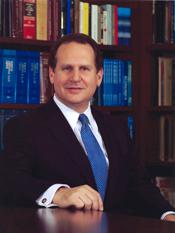
Mr. Speaker, I thank the gentlewoman for yielding me time. Mr. Speaker, I wish to also thank the gentleman from Illinois (Chairman Hyde) and the gentleman from North Carolina (Chairman Ballenger), as…
Mr. Speaker, I thank the gentlewoman for yielding me time.
Mr. Speaker, I wish to also thank the gentleman from Illinois (Chairman Hyde) and the gentleman from North Carolina (Chairman Ballenger), as well as the ranking members, the gentleman from California (Mr. Lantos) and the gentleman from New Jersey (Mr. Menendez), for expediting this important resolution. It is important it be considered today because the dictatorship is in the midst of a brutal crackdown on the peaceful pro-democracy movement in Cuba.
Since the world's attention has been focused on Iraq for some weeks, the Cuban tyrant decided to crack down on the peaceful pro-democracy movement, including independent librarians, independent journalists, independent physicians, and many others; rounded them up and has thrown them in dungeons.
Some of the so-called summary trials have already taken place. Perhaps the best known independent journalist in Cuba, Raul Rivero, was already sentenced in one of those sham Roman circus trials, sentenced for having a typewriter, for having some articles published. For having articles published in Spain and in the United States and for other such ``crimes,'' Raul Rivero has been sentenced to 20 years.
Marta Beatriz Roque, mentioned by the distinguished gentleman from California, perhaps one of the best known of the political prisoners rounded up in this totalitarian crackdown, was sentenced to 20 years. Her indictment makes interesting reading, if it can be called an indictment.
The dictatorship charged her with having created a Web page, with having a computer in her home, with utilizing a server in the United States for her Web page, for having spoken on Radio Marti, for having published articles in an independent publication known as ``Encuentro,'' for having in her possession in her home a fax machine of the mark Panasonic, and for having a copy machine, a Canon copy machine.
That is in the so-called indictment in the year 2003, in this hemisphere, by the Cuban tyrant, the indictment prepared by the Cuban tyrant of Marta Beatriz Roque, who has been sentenced to 20 years.
I think that much of the responsibility for what is going on in Cuba today, unfortunately, lies with the fact that the international media does not report sufficiently with regard to what happens in Cuba.
A distinguished new colleague of ours recently actually told me she had witnessed a Special Order that we did precisely on this crackdown, a number of us last week, the distinguished new gentlewoman from Michigan (Mrs. Miller of Michigan). She asked me, ``Where can we read about what is going on? Why don't we read in our major newspapers about the details of this totalitarian brutal crackdown in a country 90 miles away?'' I think she has a very legitimate point. I think the media has a responsibility to report about such things in a neighboring country 90 miles away.
So today is the day, Mr. Speaker, when we need to as a Congress of the United States set our differences aside and concentrate on the brutal totalitarian crackdown that is taking place in Cuba and speak with one voice that this Congress, as it has so many times in the past, stands for human rights and demands human rights, starting
with the cessation of the brutal crackdown being perpetrated on the Cuban people. And as the resolution continues to state, we call for the respect of all elemental human rights, including the right of self- determination, which can be manifested only through free and fair multiparty elections.
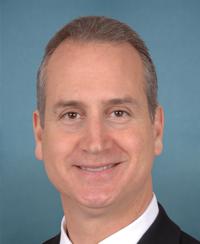
Mr. Speaker, I thank the gentlewoman for yielding the time to me, and I also want to thank the gentleman from Florida (Mr. Lincoln Diaz-Balart) for bringing this resolution to the floor. We have…
Mr. Speaker, I thank the gentlewoman for yielding the time to me, and I also want to thank the gentleman from Florida (Mr. Lincoln Diaz-Balart) for bringing this resolution to the floor.
We have heard about this horrible thing that is going on just 90 miles away from the United States coast, these people getting arrested. What are they getting arrested for? What have they gotten convicted for? Let me just mention Raul Ramon Rivero, an independent journalist and leader of the Cuba press newspapers service who, by the way, has been sentenced to 20 years, Mr. Speaker, 20 years in prison for the following reasons:
Because he created an independent press organization, 20 years for that. Because he is circulating materials published by human rights groups, 20 years for that, Mr. Speaker. Because he is a member of the Cuban Society of Independent Journalists, 20 years in prison for that, Mr. Speaker. Because, the audacity, he has a Sony tape recorder. Mr. Speaker, furthermore, he has the audacity of having a Samsung computer; and if that was not enough to deserve 20 years in prison, it is because he has had meetings in his home with other independent journalists.
That is the reason, Mr. Speaker, why he is serving 20 years, why the tyranny has sentenced him for 20 years in prison. It is not a joke. It is not a cruel joke. Those are the reasons, and like reasons for why these people are being sentenced to 20 years or life imprisonment just 90 miles away from our coast.
Mr. Speaker, some still do business with that tyrant, with Castro; and some want to do business with Castro, with the Castro regime. Doing business with the Castro regime, Mr. Speaker, which is Castro's will, that is what he wants, he says it every single day, doing business with that tyrant, Mr. Speaker, and let us make it very clear, is doing business with a criminal. It is doing business with an international terrorist. It is doing business with a thug, with a tyrant. Mr. Speaker, it is doing business with a murderer; and yes, just listen to him, what he says, it is doing business with a mortal enemy of the United States of America and the American people.
Let us remember what Marta Beatriz Roque, who now has been sentenced to prison for these same types of issues, what she has been saying time and time again. One of the reasons that she is going to prison is because she has said that we must keep the sanctions on the tyranny; we must keep the pressure on until finally there are free elections in Cuba.
That is the goal, Mr. Speaker. That is what we need to do. That is what we need to succeed in achieving for the Cuban people, and that is why it is important. That is a step to free elections. That is a step to freedom in Cuba.
We overwhelmingly support this resolution and want to make sure that the world sees that everybody understands that we will not tolerate, we will not tolerate this type of behavior; and we are not going to do business with that kind of anti-American thug, criminal, assassin and terrorist just 90 miles away from our shores.
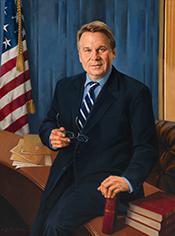
Mr. Speaker, I thank the gentlewoman for yielding me time. Mr. Speaker, since mid-March the Castro dictatorship has carried out a massive crackdown on human rights defenders, independent journalists,…
Mr. Speaker, I thank the gentlewoman for yielding me time.
Mr. Speaker, since mid-March the Castro dictatorship has carried out a massive crackdown on human rights defenders, independent journalists, and trade unionists and other brave and noble pro-democracy activists throughout Cuba.
Not satisfied with the ongoing torture and mistreatment and incarceration of approximately 400 political prisoners, Castro has begun a new, ominous, and shameful attack on another 80 of the best and brightest and most courageous of Cuba. Now, as we meet here today, his people and his thugs are beating, victimizing, and sentencing to very long prison sentences those who are the cream of the crop in Cuba, who believe in freedom and democracy.
Castro, with all eyes diverted on Iraq and the war in Iraq, is trying to silence dissent with violence, ``show'' trials, and incarceration. This latest manifestation, Mr. Speaker, of cruelty by the Castro dictatorship is but another, but a highly significant other, reminder of the true character of this regime. It is cruel, brutal and an egregious violator of human rights.
Mr. Speaker, Castro's brutal actions hopefully will serve as a wake- up call to those in the United States, especially those in the United States Congress who argue that it is time to lift the travel ban and sanctions against Cuba. I especially want to focus, Mr. Speaker, on those in the European Union who have been trading with the island country of Cuba for so many years without any linkage whatsoever to human rights. Trade, trade, trade, while this barbaric dictatorship gets worse and worse and worse.
In previous Congresses, Mr. Speaker, I have offered an amendment to lift the travel ban, if and only if political prisoners are freed and felons who have committed acts of violence in the United States against U.S. police, including a trooper from the State of New Jersey, are brought to the U.S. in order to be held accountable. That amendment, sadly, lost.
Now, today on the floor we are united in rhetoric and sentiment for those who are being incarcerated and mistreated. But we also need linkage, Mr. Speaker. We need to recognize that actions, and particularly those that are linked to trade and travel bans, can be very efficacious--actions always speak louder than our words. I call upon the European Union, Mr. Speaker, to engage the human rights abuses of Castro with something more than rhetoric. Members of the EU have been trading, as has Canada, for so many years. What have they gotten for it? Maybe they made a few bucks or a few Euros or a few Canadian dollars, but they have,
however unwittingly, aided and abetted this brutal tyrant in horrific repression against his people.
I urge strong support for the gentlewoman from Florida's (Ms. Ros- Lehtinen) resolution, and I hope this is a wake-up call about what this regime is all about.

Mr. Speaker, I thank the gentleman for yielding me time. Mr. Speaker, I rise in support of this resolution. All voices must condemn the recent crackdown by the Government of Cuba against political…
Mr. Speaker, I thank the gentleman for yielding me time.
Mr. Speaker, I rise in support of this resolution. All voices must condemn the recent crackdown by the Government of Cuba against political dissent. Those arrested include two dozen independent journalists, leaders of independent trade unions and opposition political parties, and pro-democracy activists involved in the countrywide reform effort known as the Varela project.
It makes no difference whether you are for or against change in U.S. policy towards Cuba. On this matter we speak with one voice. These arrests are unacceptable. The summary trials and harsh sentences merit universal condemnation.
Mr. Speaker, I have had the privilege of traveling to Cuba many times and have met directly with Cuban independent journalists and members of the dissident community. Many of these individuals were arrested in the latest crackdown. They are receiving harsh sentences for actions we take for granted here in the United States: the right to hold meetings, have discussions, and express opinions different from those held by our government.
The Cuban Government has said that these arrests are in response to actions by U.S. Ambassador Cason and the U.S. Interests Section that are perceived as deliberate attempts to foment subversion in Cuba.
Mr. Speaker, those grievances should be raised and resolved between the two governments, but no action of the United States Interests Section justifies in any way these recent arrests. The right of diplomats to meet with people who represent a range of views, including people who peaceably dissent from the policies and priorities of their own governments, should not be impeded. In fact, Mr. Speaker, I believe the restrictions on U.S. diplomats in Cuba and Cuban diplomats in the United States are just plain wrong.
Mr. Speaker, I am seriously concerned about the increased tensions and hardening of positions in U.S. Cuban relations. They do little to advance human rights or open political space in Cuba; in fact, quite the opposite. I fear that without a concerted effort to change our policies towards one another for the better, it will only lead to greater restrictions in both countries and fewer opportunities for moderate voices in both countries to engage directly with one another. I will conclude by urging the Cuban Government to release immediately all these prisoners and all prisoners of conscience.
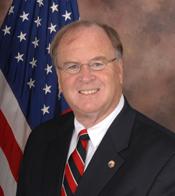
Mr. Speaker, I rise today to offer my strong support for H. Res. 179. The recent crackdown by the Cuban government on political dissidents is without reason or measure. The Cuban government must…
Mr. Speaker, I rise today to offer my strong support for H. Res. 179. The recent crackdown by the Cuban government on political dissidents is without reason or measure. The Cuban government must recognize that if it wants to become a full member of the family of democratic nations, and re-establish ties with the United States, it must abide by the fundamental rules of a democracy. At the very top of that list is freedom of expression.
I believe that the United States can assist Cuba in its move towards greater freedom and openness. The American Congress and the Administration can lead by example, by lifting the travel ban, and lifting the trade embargo. How can we advocate for greater freedom when we prevent American companies and consumers from benefiting from trade with Cuba? How can we call for greater openness when we do not let American citizens exercise
their constitutional right to travel freely, to Cuba if they so desire. America can also lead by example by avoiding needless antagonization of Cuba. Wherever they are, our diplomatic community must always act diplomatically.
Current U.S. policy towards Cuba has proved a failure. It makes no sense to continue down the path of isolation. The recent actions by the Cuban government, while reprehensible, do not change that central fact. U.S. policy should be based on U.S. national interests, not a system of rewards and punishments for good or bad behavior. In this instance, the Cuban government has behaved badly and they should be properly sanctioned for it, in America and in the world community. This resolution is an appropriate measure. I do not think, however, that it should affect policy. This should not lead to greater restrictions. To the contrary, the response should be greater exchange between the U.S. and Cuba. Greater freedom and openness will lead to a more free and open Cuban society. As we call on Cuba now to change its policy, we must also ask ourselves what we can do to have a more free and open policy. Lifting the travel and trade ban on Cuba would be a good start.

Mr. Speaker, I rise in strong support of this resolution. The world has condemned Cuba's recent crackdown on human rights and democracy activists. What is most troubling is that this is nothing new.…
Mr. Speaker, I rise in strong support of this resolution.
The world has condemned Cuba's recent crackdown on human rights and democracy activists. What is most troubling is that this is nothing new. The recent crackdown is merely a continuation of the systematic human rights violations in Cuba committed by the Castro regime.
Today I was most discouraged to learn of the prison sentences that have been handed down to dozens of these dissidents, who have been charged with ``subversion'' and collaborating with American diplomats, among other charges. Hector Palacious is but one I'll mention. Along with Oswaldo Paya Sardinas, Mr. Palacios has been a key organizer of the Varela Project, an effort to win Cuban popular support for a referendum on open elections, freedom of speech, freedom for political prisoners, and free enterprise. Yesterday he was sentenced to 25 years in prison for advocating democratic reforms.
Today I join my colleagues in condemning Cuba's crackdown on democracy, in calling for the release of all Cuba's political prisoners, in supporting the right of the Cuban people to exercise their political and civil liberties, and in calling on the world to insist in the strongest terms that the Government of Cuba adhere to international human rights standards.
I enclose for the record a letter to me from former Secretary of State Madeleine Albright, now Chairman of the National Democratic Institute for International Affairs. NDI has worked with organizers of the Varela Project to promote the movement internationally, and last year NDI honored Oswaldo Paya Sardinas for his courageous efforts to promote democracy. Enclosed also is a statement from him calling for the immediate release of the activists. Mr. Paya calls this moment the ``Spring of Cuba'' because for the first time, a peaceful movement is flourishing there. We must do all we can to help it take root.
Show 5 more
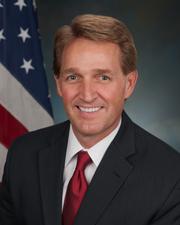
Mr. Speaker, I thank the gentlewoman for yielding me this time, and I thank the gentlewoman and the gentleman from Florida for authoring this important resolution. It is important to all of us. For…
Mr. Speaker, I thank the gentlewoman for yielding me this time, and I thank the gentlewoman and the gentleman from Florida for authoring this important resolution. It is important to all of us.
For those of us who have followed the situation in Cuba, we have been saddened and sickened by the events that have happened over the last month, although I do not believe any of us have been surprised. This latest crackdown typifies the last 43 years now that Fidel Castro has been in power. It is all too typical.
Let us look at what is going on here. I had the opportunity to be in Cuba just less than a month ago and we met with several of the dissidents at that time. Hector Palacios, director of the Independent Center for Social Studies and the key organizer of the Varela Project, was just sentenced to 25 years. Oswaldo Alfonsa, also an organizer for the Varela Project, 18 years. Oscar Espinosa Chepe, an economist, former diplomat and independent journalist, 20 years.
As the gentleman from New York noted, I do not think anybody, anybody, believes that these people are guilty of the crimes that they have been charged with. They are simply guilty of voicing ideas and ideas that this regime is too afraid of.
This resolution is important because it allows us to let people across the country and across the world, and particularly those who sit on boards and commissions of the United Nations, to understand that a regime like this does not deserve to sit in judgment of others on human rights after what is going on right now, and after a record like this.
Mr. Speaker, I urge support of the resolution.
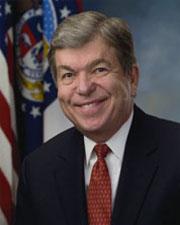
Mr. Speaker, I am glad to rise in support of this resolution and in opposition to the deplorable behavior we see in Cuba today as evidenced by these so-called desires. That people whose only desire…
Mr. Speaker, I am glad to rise in support of this resolution and in opposition to the deplorable behavior we see in Cuba today as evidenced by these so-called desires. That people whose only desire is freedom would be swooped up in these kinds of numbers and brought to trial at a time when it is clear in the mind of the dictator that we are looking at other things, shows just how wrong he is.
Once again this regime is showing its true colors. These actions continue to be proof of Castro's horrific record of repression, that no matter how much we argue and no matter which side we are on in other debates, people agree on this floor today, it continues to be the kind of commitment that Castro makes to his people, a commitment to repress them.
The Castro regime has chosen this particular time because they thought we were looking elsewhere. We show on the House floor today that we are not looking elsewhere, that we continue to look at Cuba, we continue to hope for the liberation of Cuba, we continue to hope for the greater freedom for the Cuban people. The civilized world cannot stand quietly by and tolerate these terrible abuses of individual rights. As we try to bring freedom to another country, we have to continue to stand for freedom in this hemisphere. And today we join the President of the United States, the European Union, and many others, including the Catholic Church, who have condemned these actions.
I urge the huge vote on this resolution as we send an important message to Castro.
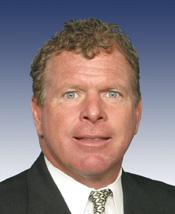
Mr. Speaker, I want to thank all of the sponsors of this resolution, especially my friends from Florida. Mr. Speaker, there is an old saying that people do not miss fresh air until they live without…
Mr. Speaker, I want to thank all of the sponsors of this resolution, especially my friends from Florida.
Mr. Speaker, there is an old saying that people do not miss fresh air until they live without it. My friends from south Florida understand what it is like to live without freedom and without fresh air.
While American men and women are halfway around the world fighting for freedom and democracy, we are finding out who our friends are. We are also finding out throughout the world who the really bad actors are. You can judge bad guys because while the cat is away, the rats are playing just 90 miles off the Florida border. And I will say that the roundup of these individual freedom fighters, who remind me of the original founders of our Republic, who pledged in the Declaration their lives, their fortunes, and their sacred honor to stand up for what is right, the most recent roundup by Castro and his evil regime is nothing but a modern-day Stalinist purge.
I will say as we are fighting to free the Iraqi people, so we should stay the course and fight to free the Cuban people. I urge a unanimous vote by this House of Representatives and, once again, I want to thank all of my colleagues who are sponsors of this resolution.
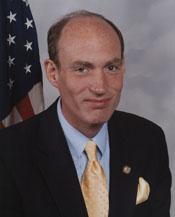
Mr. Speaker, I rise in support of the resolution. We in America inhabit the bosom of freedom. Yet, scant miles, though a lifetime away from our shores, suffering and dying under an antiquated…
Mr. Speaker, I rise in support of the resolution.
We in America inhabit the bosom of freedom. Yet, scant miles, though a lifetime away from our shores, suffering and dying under an antiquated Communist tyrant, the Cuban people yearn to breathe free. By passing this resolution, we in the citadel of freedom
say to the Cuban people, we hear you and we will help you. For if we do not, we will betray our own cherished democratic principles and our refusal will constitute a mute chorus of deafening silence in the face of human suffering. I urge adoption of the resolution.
Mr. Speaker, I object. I object, Mr. Speaker. Mr. Speaker, I withdraw my objection. I will agree to 5 minutes each side.
Mr. Speaker, I object.
I object, Mr. Speaker.
Mr. Speaker, I withdraw my objection. I will agree to 5 minutes each side.
Bill Text
Latest available legislative text
        [Congressional Bills 108th Congress]
[From the U.S. Government Publishing Office]
[H.R. 179 Introduced in House (IH)]

108th CONGRESS
1st Session
H. R. 179

To amend the Internal Revenue Code of 1986 to expand the depreciation
benefits available to small businesses, and for other purposes.

_______________________________________________________________________

IN THE HOUSE OF REPRESENTATIVES

January 7, 2003

Mr. Herger (for himself, Mr. Weller, Mrs. Johnson of Connecticut, Mr.
Crane, Mr. Lewis of Kentucky, Mr. Foley, and Mr. Manzullo) introduced
the following bill; which was referred to the Committee on Ways and
Means

_______________________________________________________________________

A BILL

To amend the Internal Revenue Code of 1986 to expand the depreciation
benefits available to small businesses, and for other purposes.

Be it enacted by the Senate and House of Representatives of the
United States of America in Congress assembled,

SECTION 1. SHORT TITLE.

This Act may be cited as the ``Small Business Expensing Improvement
Act of 2003''.

SEC. 2. MODIFICATIONS TO EXPENSING UNDER SECTION 179.

(a) Increase of Amount Which May Be Expensed.--
(1) In general.--Paragraph (1) of section 179(b) of the
Internal Revenue Code of 1986 (relating to dollar limitation)
is amended to read as follows:
``(1) Dollar limitation.--The aggregate cost which may be
taken into account under subsection (a) for any taxable year
shall not exceed $75,000.''
(2) Increase in phaseout threshold.--Paragraph (2) of
section 179(b) of such Code is amended by striking ``$200,000''
and inserting ``$325,000''.
(3) Inflation adjustment of dollar amounts.--Subsection (b)
of section 179 of such Code is amended by adding at the end the
following new paragraph:
``(5) Inflation adjustment.--In the case of any taxable
year beginning in a calendar year after 2003, each dollar
amount contained in paragraph (1) or (2) shall be increased by
an amount equal to--
``(A) such dollar amount, multiplied by
``(B) the cost-of-living adjustment determined
under section 1(f)(3) for the calendar year in which
the taxable year begins by substituting `calendar year
2002' for `calendar year 1992' in subparagraph (B)
thereof.
If any amount, as adjusted under the preceding sentence, is not
a multiple of $1,000 ($10,000 in the case of the dollar amount
contained in paragraph (2)), such amount shall be rounded to
the nearest multiple of $1,000 or $10,000, as the case may
be.''
(b) Effective Date.--The amendments made by this section shall
apply to property placed in service in taxable years beginning after
December 31, 2002.
<all>