Missile Threat Reduction Act of 2003

Legislative Activity
Stay on top of the latest movement without scrolling through every action
Referred to the House Committee on International Relations.
April 30, 2003
View full timeline
Introduced in House
April 30, 2003
Referred to the House Committee on International Relations.
April 30, 2003
Floor Debate
22 membersWhat members said about H.R. 1875 on the floor
 PJL
PJL OGH
OGH CJD
CJD RJD
RJD RCB+17
Floor Debate
22 membersWhat members said about H.R. 1875 on the floor
Mr. President, I ask unanimous consent that the order for the quorum call be rescinded. Mr. President, we have heard discussion of the so-called Class Action Fairness Act. I oppose the Class Action…
Mr. President, I ask unanimous consent that the order for the quorum call be rescinded.
Mr. President, we have heard discussion of the so-called Class Action Fairness Act. I oppose the Class Action Fairness Act for the simple reason that it is not fair. Actually, the legislation makes it more difficult for citizens to protect themselves against violations of State civil rights, consumer, health, and environmental protection laws. The way it would hurt them is it would force these cases out of convenient State courts, which have experience with the legal facts and issues involved in such cases; instead, it would push them into Federal courts with new barriers to lawsuits, with new burdens on plaintiffs.
For the many Americans who are watching this debate, we have to at least mention the first, basic question that scheduling this debate right now raises. Here we are, 3 weeks beyond October 1. October 1, of course, is the beginning of the new fiscal year. It is a deadline for passing the appropriations bills that fund the basic work of the Federal Government. It is the law that the House and the Senate must pass the 14 appropriations bills that fund our Nation and do it by October 1. We have not done that. The Congress has not lived up to the responsibility the law mandates. We are in the final few weeks, if not days, of this congressional session, but here we are, 3 weeks past the legal deadline to do what we are required to do, and what we are paid to do, and instead we are devoting these precious days not to acting on the people's priorities, but we will spend several days debating a bill which is a priority of some special interests.
Over the past several weeks, I have received call after call from Vermonters who are more and more anxious over Congress's ability--in fact, Congress's willingness--to finish appropriations for fiscal year 2004. I know other Senators, both Republicans and Democrats, are getting similar calls. I have told those Vermonters who call me to hang in there. I assure them that Congress will eventually get around to doing its work.
Then the Republican leadership decides to have us consider controversial special interest legislation such as this bill. Apparently the special interests can go to the front of the line. The people's interests go to the back of the line. I suggest we have it the wrong way around. Do the people's legislation first; do the appropriations bills first;
do the things we are required to do by law. Do the work that we go back home and tell everybody we are going to do, and if there is time left over for the special interests, let them come up then; don't put them ahead of the people.
My colleagues and I who serve on the Appropriations Committee worked long and hard to get the fiscal year 2004 bills voted out of our committee. We got them all out. They could go anytime they wanted. The Republican leadership has decided not to. The House has passed all 13 of the regular appropriations bills. They are waiting for the Senate to act. We are not acting. Instead, we are bringing up special interest legislation.
The new fiscal year began 3 weeks ago, but the Senate has not even bothered to take up the appropriations bills that fund Agriculture or Commerce, Justice, State, and, our Federal law enforcement, the FBI, the Department of Justice, the actions we take to counter terrorism.
As for Commerce, we might do that, so we might actually get us some jobs in this country at a time when we are losing a million a year.
Foreign operations? That hasn't been brought up.
Transportation? We all know our roads and bridges and rail system are falling apart. We ought at least to be voting. We may vote not to give any money to fix any of the problems of the Nation. We did vote, incidentally, to send $87 billion to Iraq and we will fix their roads; we will fix their electrical system; we will fix their communication system; we will fix their postal system; we will even give them a new ZIP Code. But maybe we could take a few minutes and bring up those things that might actually pay for roads and transportation and electrical grids and ZIP Codes in the United States.
Veterans Affairs is in there. The administration is cutting veterans benefits all over the country. They are cutting our veterans hospitals. They are cutting out what is available to our veterans. At the same time we are asking our men and women to serve in Iraq, we are cutting out their money. We ought at least to bring that up. Let's vote on it.
We voted to send money to the veterans of the Iraqi army. We voted to send money there. We ought to spend some time here voting on veterans in the United States.
We have the Housing and Urban Development appropriations bills. We have a great housing shortage in this country. We just spent billions. We had plenty of time to vote billions of dollars to build houses in Iraq. We can't even bring up the housing bill for the United States, but this special interest legislation we do make time to address.
What I would say is: OK, we voted to do all these things now for the Iraqi people. Can we at least spend a day or two voting on the same bills that might help the American people at the national, State, and local levels?
Let me tell you about a few of these programs that are being pushed aside so we can take up this special interest legislation.
In the area of agriculture, there is more than $1 billion in conservation assistance for farmers to help them improve water quality and stop sprawling development. Last year, the aid was delayed by more than 4 months. Each month is critical. The men and women who farm in this country are just barely getting by.
They stalled the Justice spending bill so we could get money as quickly as we possibly could to the police forces of Iraq. But because we stalled it, there is no money for the Bulletproof Vests Partnership Program which helps State and local police agencies buy armored vests to protect the lives of their officers. This is a good bipartisan program that Senator Ben Nighthorse Campbell and I put together.
I have had police officers come up to me all over the country, people I have never met, who want to shake hands and say, We really want to thank you and Senator Campbell and those who joined you to help us get this money. Now I am going to have to tell them it is stalled. We had to wait to get the money for Iraq, that is fine, but now we have to stall again because we have special interest legislation that comes up.
Take the COPS Program; this puts new police officers on the community streets and in our schools; the Violence Against Women Act programs that provide services for victims of domestic violence, sexual assault and stalking. Those were all set aside so we could bring up this special interest legislation.
All funding for transportation and critical infrastructure projects was bottled up. In fact, the Senate has failed to pass the transportation reauthorization bill. We don't have time to bring that up. We can bring up special interest legislation, we can bring up highways in Iraq, but we can't bring up the highway transportation bill here in the United States. And what is the cost to us? It is 90,000 jobs here in America.
All foreign assistance to nations other than Iraq and Afghanistan are on hold. In fact, all the funding to combat HIV/AIDS and other infectious diseases is also on hold.
We have another group of Americans awaiting action by Congress. Those are our veterans. They need Congress to make basic decisions about their medical care and benefits, decisions that are being held in limbo, and they have no idea where we are going to go.
These are priorities. American priorities are being set aside, and we will take care of Iraq. We will take care of the special interest legislation. In fact, the special interest legislation is going to do more harm than help.
I think the American people are entitled to ask why we are bogged down considering this controversial and unfair class action bill when the Senate has yet to take up and debate five important appropriations bills amounting to $301 billion.
I hope the Senate gets down to the business of the people and carries out the responsibilities given to us by the Constitution: taking up, debating, and passing the remaining appropriations bills. And we can pass them. There will be a bipartisan majority of both Republicans and Democrats working together to pass them, if we are even allowed to vote on them. We were allowed to vote on Iraq and special interest legislation. Can we take a little bit of time to vote on legislation that actually helps the people of America?
The American people and the people around the world depend upon the funds and services supplied through the spending measures that are now held hostage. Let us do our job. Let us move these bills. Let us spend a couple of weeks on the floor of the Senate legislating for the people of America. It would be a nice refreshing time. We could pass these bills.
Earlier this year, I joined with Senators Kennedy, Biden, Feingold, Durbin, and Edwards in requesting a hearing on class action litigation in order to help the Judiciary Committee develop consensus reforms-- something that we could have done. Republicans and Democrats could have joined on it. But our request was ignored. Actually, our letter went unanswered.
I ask unanimous consent that the letter be printed in the Record.
Mr. President, I had hoped that the Judiciary Committee would undertake a deliberate and careful review of information from parties
actually involved in class action litigation to provide a realistic picture of the benefits and problems with class actions. But instead of doing the work for America, we are proceeding with a special interest piece of legislation which has repeatedly failed to pass the Senate in recent years. Our Judiciary Committee did not carry out the kind of thorough and thoughtful legal analysis of this difficult issue it should have. The committee did not provide our fellow Senators with the assistance that they may want and need in this complex area.
I acknowledge the hard work and dedication of my friend, the senior Senator from California, Mrs. Feinstein, who took on an enormous task, attempting with her amendment to rectify some of the harms created by this bill. I appreciate the sincerity of her concern. I appreciate the genuine effort she made. But her amendment touches on only a sliver of the class action cases which this bill would affect--only when plaintiffs and primary defendants are from the same State--and even then it could cause harm.
At its core, this bill deprives citizens of the right to sue on State law claims in their own State courts if the principal defendant is a citizen of another State, even if that defendant has a substantial presence in the plaintiff's home State, and even if the harm done was in the plaintiff's home State. The amendment does not remedy that problem. It burdens the plaintiff even more.
I also want to recognize the sincere efforts made by my friend from Wisconsin, Senator Kohl. I may disagree with him about the nature of the problem. I may disagree with the appropriate solution in this area. But I do so respectfully. He has worked very hard, and I appreciate his efforts.
I would like to note the significant changes in the bill since it passed out of committee.
As originally drafted, this bill included mass tort claims along with class actions. It actually treated them like they were class actions.
One improvement the Judiciary Committee did manage to make to the bill was to strike that provision. We struck it. We voted on that, and we struck it. But somehow, mysteriously, after the bill left the committee with nobody voting, that was reversed. Now mass tort actions are again included in this bill.
Just in case anybody says this is what we voted out of committee, it is not. We changed that.
Now we find out how we actually get things changed in the committee because, apparently, our friends on the other side of the aisle could care less about what we actually did in committee. They just change it in the draft on the way over here. It is fascinating. I have never seen that in 29 years here. But I guess we live under new rules.
In the old days, we just lived under the Senator rules. But now we have rules outside the Senate rules. In fact, this bill is not the bill reported by the Judiciary Committee, S. 274. It is another bill--S. 1751--which was introduced last week. We didn't have hearings on that. We didn't have votes on that. I guess the special interest says, OK, as soon as you finish with the roads in Iraq, as soon as you finish the schools in Iraq, as soon as you finish giving the power grid to Iraq, as soon as you finish paying for the police officers in Iraq, as soon as you are finished with veterans' benefits for Iraq, before you do anything for American citizens, give us our special interest legislation, and we can just drop it in and go forward.
The special interest legislation will be subjected to the same shunting to a Federal court, and plaintiffs will endure the same unnecessary difficulties in making their claims and pursuing their remedies. But these mass tort cases are not class actions. They have not been analyzed under rule 23 standards or State law.
Mass tort actions have entirely different procedural vehicles to reach justice than class actions. They shouldn't be lumped in with class actions in any kind of class action bill, either this misguided attempt or a better wrought piece of legislation.
Some special interest groups are distorting the state of class action litigation by relying on a few anecdotes and an ends-oriented attempt to impede plaintiffs bringing class action cases. If we really want to correct things, we can and should take necessary steps to correct the problems in class action litigation. But simply shoving most suits into Federal court with the new one-sided rules isn't going to correct the real problems faced by plaintiffs and defendants. It will clog up the Federal courts, but it won't accomplish anything.
We forget that our State-based tort system remains one of the greatest and post powerful vehicles for justice anywhere in the world-- no doubt around the world--as a vehicle for justice. It lets ordinary people ban together to take on powerful corporations--sometimes even their own government.
Defrauded investors, deceived consumers, victims of defective products, and environmental torts, and thousands of other ordinary people have been able to rely on class action lawsuits in their State court systems to seek and receive justice.
I remember when the Soviet Union broke up. A group of legislators from the Duma came in to see me, as they did several other Senators. One of them asked a question. They said: We have heard it is actually possible that citizens in your country can ban together and sue the government. I said that is true.
They said: We have heard further that not only do they sometimes sue the government, but there are times the government loses. They win.
I said: Oh, yes.
They said: You mean you don't fire the judge and make him do it over again?
I said: You don't understand our system. It is not the Soviet Union. Here in the United States, we are able to ban together to take on the government. If the government is wrong, the government is going to lose.
It was an eye-opener to them. Actually, it was a bit of an eye-opener to me because I realized those things we take for granted other countries haven't had the opportunity to have.
I am old enough to remember the civil rights battles of the 1950s and the 1960s and the impact of class actions in vindicating basic rights through our courts. When Congress sat back and did nothing, when Presidents sat back and did nothing, it was class action lawsuits that won.
The landmark Supreme Court decision of Brown v. Board of Education was a culmination of appeals from four class action cases, three from Federal court decisions in Kansas, South Carolina, and Virginia, and one from a decision of the Supreme Court of Delaware.
Only the Supreme Court of Delaware, the State court, got the case right by deciding for the African-American plaintiffs.
The State court justices understood they were constrained by the existing Supreme Court law but nonetheless held that the segregated schools of Delaware violated the 14th amendment. The Federal courts did not get it right; before any Federal court did so, a State court rejected separate and unequal schools. The U.S. Supreme Court, to their credit, joined in a unanimous decision in Brown v. Board of Education and closed down the highly discredited separate but equal idea, Plessie v. Ferguson. There was no separate but equal in the schools and they knew it--separate and unequal. The State courts realized that first in a class action suit and then the U.S. Supreme Court followed.
Many civil rights advocates, including the Lawyers' Committee for Civil Rights Under Law, Leadership Council on Civil Rights, Mexican American Legal Defense and Education, and the National Asian Pacific Legal Consortium have written to Senators in opposition to this legislation. The civil rights advocates conclude this legislation ``would discourage civil rights class actions, impose substantial barriers to settling class actions and render federal courts unable to provide swift and effective administration of justice.''
I ask their letter, dated September 16, 2003, be printed in the Record.
We all know without consolidating procedures, such as class action lawsuits, it might be impossible for plaintiffs to receive effective legal representation. Lawyers tend to be paid by the hour. They are well paid. But lawyers usually hope they get a portion of the proceedings to take on either the governmental or culprit defendants. They have to do so on a case-by-case individual basis. Sometimes that is what cheaters count on. That is how the cheaters get by on their schemes. If you cheat thousands of people just a little bit, you still cheat; if you only cheat them by $3 or $4, nobody will sue them. But if you are cheating a million people of $3 or $4 each, it adds up.
Class actions allow the little guys to band together and get a competent lawyer and address wrongdoing. The best class action made it possible for individual tobacco victims to take on the powerful tobacco conglomerates in ways individuals could not. It allows stockholders and small investors to join together and go after investment scams.
Another example of a class action litigation serving the public interest is the Firestone tire debacle. The national tire recall was started in part by the disclosure of internal corporate documents on consumer complaints of tire defects and design errors that were discovered in the litigation against Bridgestone/Firestone, Inc. Then the plaintiff's attorneys turned this information over to the National Highway Safety Administration. That started a Government investigation.
Months later, because some people had banded together, Bridgestone/ Firestone finally did what they should have done right from the beginning: They recalled 6.5 million tires--but not until after there were 101 fatalities, 400 injuries, and 2,026 consumer complaints.
As reported by Time magazine at the time, it is doubtful that the internal corporate consumer complaint information would have ever seen the light of day absent the civil rights justice discovery process.
The bill before the Senate creates unique risks and obstacles to plaintiffs that are not in the current system. A particularly troubling aspect of S. 1751 is it allows the removal of a case at any time. Anybody who has ever practiced law, anybody who has ever litigated cases--and I, as many other Senators, have--knows the possibilities for abusing this provision are obvious.
As more than 100 legal experts, law professors, noted in a letter to the distinguished Republican leader and the distinguished Democratic leader, Senators Frist and Daschle, they said:
This would give a defendant the power to yank a case away
from a state-court judge who has properly issued pretrial
rulings the defendant does not like, and would encourage a
level of forum-shopping never before seen in this country.
Moreover, this provision would allow an unscrupulous
defendant, anxious to put off the day of judgment so that
more assets could be hidden, to remove a case on the eve of a
state-court trial, resulting in automatic delay of months or
even years before the case would be tried in Federal courts.
I ask unanimous consent that the letter of the 100 law professors be printed in the Record.
Added to the ``removal-at-any-time'' problems in the legislation are the hurdles established by Senator Feinstein's amendment adopted in committee. I know it is well intentioned, but the amendment does set up cumbersome requirements for determining whether an action is to be heard in State or Federal court. It provides that a Federal judge may use five factors in deciding jurisdiction of a class action where between one-third and two-thirds of the plaintiffs are from the same State as primary defendants; and if two-thirds of the plaintiffs are from the same State as the primary defendants, then the case will stay in State court.
The bill fails to determine when this measurement takes place during the litigation. It has been my experience that membership in class actions frequently changes. So the two-thirds provision or the middle- third provision which is subject to judicial discretion could open up easily to judicial gamesmanship. The defendant could try to remove a case from State court at the discovery stage. Someone takes a deposition and finds, oops, this is going against us, let's get it out of here. Or the judge has made a ruling they do not like and they know they can never win on appeal, let's get it out of here, even after all the evidence is presented, or after closing arguments.
Actually, the way the bill is currently written, it could be done while the jury is deliberating. Considering the vast resources of defendants in many class actions as compared to plaintiffs, it will make it more difficult for class members to ever have a final ruling, where the bill will cause unnecessary and expensive litigation. It favors corporate defendants.
I like to think the scale of justice is even. This tilts the scale of justice and it will bounce right off the stand.
If there were ever a time to think about protecting the consumers, the investors, and the employees, think of Enron, WorldCom, and other corporate scandals. Think of the employees who worked so hard and were told to put their money in the corporate pension program. Look what has happened. Look at the employee investors. I am not too concerned about some of the leaders of a company like that. They might have to sell one of the $50 million homes or they no longer will have several billions of dollars but rather several hundred million, but I am worried about the people who truly had their lifesavings or their pension destroyed or their company destroyed.
This bill does nothing to make the Enrons of the world more accountable for their actions. Actually, the bill undercuts Congress's other efforts to make the companies more responsible or accountable for their misdeeds or more susceptible to penalties when they do wrong. The legislation makes it more difficult for the victims of corporate wrongdoing to join to make those companies accountable. It seems to me that is the exact opposite to the approach we should be taking.
Now, not surprisingly, consumers and those representing consumers object strongly to the enactment of this legislation.
I ask unanimous consent to have printed in the Record letters from numerous consumer advocates in opposition to this bill.
Last year a group of investors recovered millions of dollars in lost investments under State corporate fraud laws and a State class action case in Baptist Foundation of Arizona v. Arthur Andersen. These investors, mostly elderly, banded together to successfully recoup $217 million from Arthur Andersen. Why? Because of questionable accounting practices surrounding an investment trust. The case is just one example of how a State-based class action litigation holds corporate wrongdoers accountable and helps defrauded investors recoup their losses.
Like most Vermonters, I am a strong supporter of the environment. But I look at this bill and I think, what a green light for polluters and others responsible for environmental damages to avoid accountability in court. So many polluters, who would fear class action suits if they were to violate the law, now know they could get caught. With this legislation, they might take the old idea of: Go ahead and pollute; nobody gives a hoot. They are going to get away with it.
This legislation removes almost all important environmental class actions from State to Federal court. Not only does this deny State courts the opportunity to interpret their own State's environmental protection laws, but it also hampers and deters plaintiffs in pursuing important environmental litigation. It means we Vermonters would not have a say in our own courts--or those in Utah or in any other State.
Under this bill, environmental class action suits may not get litigated, reducing the incentive to keep our environment clean. Plaintiffs' attorneys may not be willing to take these high-risk, high- cost, and time-consuming cases, particularly when what they are looking for is injunctive relief. That is an injunction to stop the polluter from polluting. Intentionally or not, this bill protects polluters and ignores innocent victims of their negligence.
Just a few months ago, as I recall, we read about a horrible toxic dumping situation in Alabama and a monumental settlement in State court to clean up an entire community. It was in State court, though--in State court.
In Anniston, AL, the Monsanto Company manufactured PCBs-- carcinogens--from 1929 to 1971. For more than 40 years, in arrogant-- arrogant--disgusting disregard of people's health and the environment, Monsanto dumped untreated, unfiltered waste from its PCB plant into the streams and landfills of Anniston. They never let the residents--many of whom actually worked, and worked very hard, for Monsanto--they never let them know of the horrific risk to their environment and their health.
When the undeniable truth of Monsanto's malfeasance became clear, several thousand residents of Anniston sued in State court. They recently won a liability jury verdict. When the case moved into the damages phase, Monsanto was not out there defending and saying: Well, we did not do something bad. They knew they did something terrible. They did not start arguing about: Well, people were not injured by it. They knew they were injured by it.
So what did they do? They tried to get the judge removed. That is what they tried to do. Although the Alabama Supreme Court, a conservative supreme court, had already held that the trial judge was acting properly, Monsanto continued to oppose his participation. They tried everything they possibly could do to confuse people and escape facing up to the issues. They then had to focus on the merits of the case and settled with the local residents for $600 million and pledged to pay additional cleanup costs for the town.
The Alabama Supreme Court, the Alabama State court, did this very well. Not under this bill. Under this bill, it would have been yanked away from those courts, yanked away from the Alabama State court, yanked away from the Alabama Supreme Court, and stuck into Federal court.
Why? More than 100 people lived in Anniston. Even though all the people
suffered, they lived just a block or a driveway from each other. We, those of us who say we really care about States having their rights, would reach down and yank it right out of the State and say: You are not good enough to handle the case that involves your own people.
Cases such as this one would provide hard evidence that our State- based civil justice system is working--it is working--to protect the environment and to protect victims of polluters, and there is no reason to prefer a Federal reform for resolution of their claims. State courts, unlike the Federal courts, have a sound understanding of evolving local law and the open dockets to resolve conflicts in a manner that would protect our society from polluters.
In fact, we ought to at least ask, Do the Federal courts want this? The Judicial Conference, headed by Chief Justice William Rehnquist, wrote a letter in March of this year opposing this bill because its ``provisions would add substantially to the workload of the federal courts and are inconsistent with principles of federalism.''
They singled out serious environmental disasters as an example of class actions that should remain in State courts.
Chief Justice Rehnquist and the Judicial Conference said: What are you doing to us? Why are you sending these cases over there? State courts can handle them better.
I would be a very wealthy person if I had a couple dollars for every time I heard speeches or statements from my fellow Senators about how we have to better respect our individual States. After all, that is why we have a Senate. Each one of the 50 States has equal representation here to make sure the States are not subsumed in the Federal system. Those who would support this bill are giving the back of their hand to their States and saying: You are not smart enough, you are not good enough to take care of the laws of your own State.
Numerous organizations devoted to the protection of the environment oppose this bill, including Clean Water Action, Earthjustice, the Environmental Working Group, Friends of the Earth, Greenpeace, the Mineral Policy Center, the Natural Resources Defense Council, the Sierra Club, and the U.S. Public Interest Research Group.
These advocates conclude, in a letter, this bill ``would benefit polluters at the expense of people and communities harmed by public health and environmental disasters.'' I ask unanimous consent their letter be printed in the Record.
Mr. President, as colleagues may have gathered, I am not in favor of this piece of legislation, the Class Action Fairness Act. Man, I have heard things. There ought to be a law against misleading labels on legislation we pass because this would break the law. These many injured parties who have valid claims would have no effective way to seek relief. Class action suits have helped win justice and expose wrongdoing by the polluters, the big tobacco companies, and the civil rights violators, and brought about Brown v. Board of Education, as I said earlier. It gives average Americans at least a chance for justice. We should not take that chance for justice away from the American people.
So I hope Senators will consider the harm this bill would do the American people and to their constituents and join me in opposition.
Lastly, Mr. President, as I said, we found time to get highway money for Iraq, but we do not have time to pass the highway bill for America. We had time to get money to improve police departments and law enforcement in Iraq, but we do not have time to pass a bill to do the same here for Americans.
We had time to pass legislation to help military veterans in Iraq, but we can't find time to pass legislation for veterans in the United States.
Of course, I yield to my friend from Nevada.
Did the Senator say omnibus or ominous?
I appreciate the comments of my friend from Nevada. I can't think of any person who has worked harder to help get legislation through. The senior Senator from Nevada has a good reputation of working with both Republicans and Democrats. There are two primary reasons. One is the fact that he knows legislation better than anybody else around here. Secondly, he is totally honest and truthful to everybody.
It is frustrating because, again, there is legislation for highways in Iraq, but not in the United States, all these other things. We passed a transportation bill. That would mean 90,000 jobs right there that we could put Americans back to work.
I thank him for saying that. I don't care if people want to spend time on this bill. It is a terrible bill. If they want to spend time on it, let's at least get the appropriations bills done. Let's answer the questions of our veterans, whether the benefits will be there or not; answer the questions police officers have about benefits; answer the questions those in education have, whether the money will be there.
I see my good friend, the senior Senator from Illinois. I yield the floor.
What is the parliamentary situation? Mr. President, I would like to take a moment to address a few remarks made by my colleagues on the other side of the aisle during yesterday's debate on the class…
What is the parliamentary situation?
Mr. President, I would like to take a moment to address a few remarks made by my colleagues on the other side of the aisle during yesterday's debate on the class action bill. First, they repeatedly accused the leader of jeopardizing the chances of getting this bill passed by filling in the amendment tree. Give me a break. That is the phoniest argument I have ever heard. The fact is, they are trying to kill this bill, and they are probably going to be effective in doing so.
I hate to give up--and I haven't given up yet--but that is what is happening. I have been through it so many times around here that I know when there is a real desire to kill a bill. The way you do it is with nongermane amendments that are called killer amendments or poison pills, because they are political amendments one side or the other does not want. The leader filled the tree because he wanted to protect the bill from extraneous amendments that would eliminate any chances of this measure becoming law. Anybody who argues otherwise is being deceptive.
Everyone here knows the class action bill was an extremely attractive vehicle for extraneous amendments, especially those amendments that were sure to be offered for the sole purpose of scoring political points during an election year. But what my Democratic colleagues conveniently overlook is this bill will find itself in the recycle bin if it is saddled with a host of irrelevant amendments. While this is certainly a win/win situation for those on the other side of the aisle who oppose this bill, apparently including some of the Democratic leadership, I find it a truly puzzling outcome for those who say they support class action reform. Not only does a loaded bill risk peeling away Senate votes from the underlying class action measure, it will, in all certainty, undergo changes when it goes through the House. And what happens then? Do we have a conference to resolve our differences? I think the answer is a resounding no. I don't think the other side is going to permit this because this bill flies in the face of the demands of one of their greatest hard money constituent givers, and that is the trial lawyers of America.
We all know there is little time left in this Congress to go through the motion of doing a conference. I think the chances of getting a conference done in this election year with two conventions and with all the problems we have to address. The appointment of conferees is further cast into doubt by virtue of the minority leader's threat earlier in the year to the appointment of conferees for the rest of the year. So if you add these poison amendments to this bill, these extraneous amendments that have nothing to do with the bill, you are basically killing the bill. Everybody knows that. The majority leader had no choice other than to do what he did.
I certainly did not hear any assurances from the minority leader yesterday on whether he would consent to the appointment of conferees to this bill. As such, I am led to believe his position remains unchanged. But even if he did consent, I don't think there would be enough time to do a conference. We have 62 people who said they would support this bill. That means all 62 should vote for cloture so we can actually pass this bill. But unfortunately, we have some who agreed they would vote for cloture--that was the whole reason for the agreement last November--and are now changing their minds and saying, well, this is something I can't support because we want our colleagues to have their right to put poison pills on this bill.
(Mr. TALENT assumed the Chair.)
Well, they cannot have it both ways. Let me be clear. It is because of the potential feeding frenzy that the leader moved to safeguard the bill from an open season on nongermane, nonrelevant, extraneous amendments. He did it to advance the ball on this legislation so it can be considered without the same initiatives we saw with other measures that were considered by the Senate this year. He did it with the hope of reaching a time agreement on amendments. He was not being unreasonable. He even allowed one nongermane amendment the Democrats have tried to get an up or down vote on all year, which members on this side feel is a terrible amendment. But probably it would pass, who knows. At least some think it would probably pass. I think there needs to be a substitute amendment to it that would probably pass.
I want to remind my Democratic colleagues the majority leader made three extremely generous offers regarding the consideration of germane and nongermane amendments.
First, he asked unanimous consent that amendments be limited to five related amendments to be offered by each side. So nobody would be foreclosed from offering the amendments they might think are important. When the minority leader objected to the offer, he expanded the request to include 10 related amendments on each side. I don't know how he could have been more fair. When the minority leader rejected this even more generous counterproposal, the majority
leader yet again expanded the agreement to include an unlimited number of related amendments. In other words, amendments that are pertinent to the bill, that are at least germane. Again, the minority leader rejected this third offer. Of course, let us not forget each offer included an up-or-down vote on a nongermane amendment that the Democrats demanded, which is an amendment by Senator Kennedy on the minimum wage.
We also heard yesterday that filling the amendment tree was unprecedented, and we are somehow committing a terrible wrong against the institution of the Senate. How soon we forget the past. I remind my colleagues that the minority leader filled the tree in October of 2002 on the homeland security bill, which was even a more important bill than this one, although this is an extremely important bill for this country. Mind you, he filled the tree after promising at the beginning of his tenure as then-majority leader he would never fill the tree. But he did so, anyway. To be sure, we even saw Senator Byrd do it when he was the majority leader. Unprecedented? Come on, give me a break. Terrible wrong?
Let us not hide behind Senate process in order to play both sides of the fence on class action reform. I said it yesterday, and I will say it again today: S. 2062 represents a bipartisan agreement we reached in good faith with key Democrats who say they support class action reform. We agreed to a number of their amendments in order to get them to agree to vote for cloture. That was the agreement. And implied in that agreement was to vote down poison pill amendments that would kill the bill. Otherwise, they weren't sincere; we know they must have been at the time, but they would not have been sincere in the bipartisan agreement we reached. We reached a compromise because I thought the ultimate goal was to get class action enacted into law.
Let me be clear when I say my agreement to further moderate this bill was in no way predicated on letting this legislation become a ``Christmas tree'' for unrelated measures. This is never the way we have done business around here. Our agreement was about getting class action reform enacted, and that is the very direction our leader is moving us toward. I can only hope my colleagues on the other side of the aisle who say they support this bill can see that. A deal is a deal. They should not break it because politically it might be in their best interest to do so. That works both ways. We should not break it because politically it might be in our best interest to bring up extraneous, nongermane amendments and make them vote on them.
Another argument my colleagues on the other side raised repeatedly yesterday was the Judicial Conference and the Chief Justice of the United States are somehow opposed to this bill. I have heard this point made over and over. I think it is about time to set the record straight.
Let me start by saying Chief Justice Rehnquist has never written a letter, issued a statement, nor published an opinion that comes out in opposition to this bill. Rather, my colleagues who make this claim rely on outdated letters from the Federal Judicial Conference espousing opinions on prior iterations of this bill--prior iterations, not the same language of this bill.
On two prior occasions, the Judicial Conference expressed opposition to earlier bills, as offered in the 106th and 107th Congresses that would have expanded Federal diversity jurisdictions over purported class actions. But in March of last year, a substantial shift in position occurred. In a March 26, 2003, letter to the Judiciary Committee, the Judicial Conference expressed its position on the bill by stating:
That Congress may decide to base a statutory approach to
remedy current problems with class action litigation by using
minimal diversity litigation. The Conference position
recognizes that the use of minimal diversity may be
appropriate to the maintenance of significant multi-State
class action litigation in the Federal courts.
The Judicial Conference also suggested employing provisions to raise the jurisdictional threshold and fashioning exceptions that would preserve a role for the State courts in the handling of in-State class actions.
Senator Feinstein offered an amendment during the ensuing markup that was directly responsive to these suggestions. Those changes were reflected in the version of the bill reported favorably by the Judiciary Committee in early April 2003.
Perhaps more important than what was said is what was not said. Nowhere in the letter does the Judicial Conference express opposition to the bill now in consideration. I think this silence is deafening and speaks for itself on where the Judicial Conference stands.
I ask unanimous consent that the March 26 Judicial Conference letter be printed in the Record.
To be sure, on the very day the bill was reported from committee, the ranking member sent letters to the Judicial Conference requesting comments on the revised version of S. 274 as reported out of committee and further urging that the Judicial Conference propose alternative legislative language reflecting its views on how the jurisdictional provisions should be structured.
I ask unanimous consent that the letter of April 11, 2003, from Senator Leahy be printed in the Record.
In its April 25 response, the Judicial Conference noted that the markup changes to S. 274 were responsive to its previous comments about changing the jurisdictional threshold and preserving the role of the State courts in handling State class actions. Indeed, the Judicial Conference expressed no opposition to the revised version of S. 274 reported favorably by the Judiciary Committee.
The Judicial Conference explicitly declined Senator Leahy's invitation to propose alternative language. The Judicial Conference's resolution deliberately avoided specific legislative language out of deference to Congress' judgment and the political process. The letter further noted that:
[T]hese issues implicate fundamental interests and
relationships that are political in nature and are peculiarly
within Congress' province.
I ask unanimous consent that the letter of April 25, the Judicial Conference response, be printed in the Record.
The Judicial Conference concluded its letter by stating:
We are grateful that Congress is working to resolve the
serious problems generated by overlapping and competing class
actions.
Finally, another piece of evidence that counters the Judicial Conference's purported opposition to the class action bill is Chief Justice Rehnquist's 2003 year-end report on the Federal judiciary. While this report criticizes various legislative measures considered by the Congress, absolutely no mention is made of class action reform efforts.
I suppose this begs the question then, if the Judicial Conference and Chief Justice Rehnquist stand opposed to this bill, why is there no reference to such a measure in their year-end report?
Again, I think the silence speaks for itself. I ask my colleagues to refer to the 2003 Year-End Report on the Federal Judiciary which can be found easily enough on the Supreme Court's website.
With all of this said, is it credible to suggest that the Judicial Conference, much less the Chief Justice of the United States, stands somehow opposed to the class action bill? I think not.
I will refer to this ``myth'' chart. The myth is that the Federal Judicial Conference opposes the Class Action Fairness Act.
These are the facts: The Conference's opposition was directed at class action bills in previous Congresses. In March 2003, the Conference strongly criticized the current class action system and suggested several areas to modify the Class Action Fairness Act.
After the Class Action Fairness Act was modified during markup, the Conference declined an invitation to criticize or revise the version favorably reported by the Judiciary Committee and thanked the Senate for its efforts to clean up the State court class action mess.
That certainly rebuts everything that was said on the floor yesterday and today by those who are looking for any excuse they can to scuttle this bill. Unfortunately, some of them are people who have agreed to support the bill. That seems apparent to me. I hope it is apparent to all of those in the various States who have relied on these agreements, and at least this agreement made last November, that we would at least vote for cloture. That was the whole issue. Then, of course, they could still have any amendment they wanted to bring up that would be germane, and they might even be able to bring up nongermane amendments if they could get a supermajority vote on them. So nothing would stop them from at least an attempt to bring up nongermane amendments.
I would like to also reply to comments made yesterday in defense--can anyone believe it?--of Madison County, IL. I heard suggestions that the Madison County court is not as renegade as we have portrayed it. After all, the number of certifications has not escalated at the same rate as the number of cases brought.
Now, this fact may have some appeal on its surface but when one looks at why the certifications are so low, I think they will find themselves right back to the inescapable conclusion that this court is a downright embarrassment to our civil justice system. Any attempt to defend Madison County's record on class certification must account for the number of class actions that were not certified because the defendants, knowing that the judicial deck was stacked against them, simply conceded defeat and settled rather than go through the motion of defending their lawsuit in this court.
As I said yesterday, the plaintiffs' lawyers who descend on this small rural courthouse in southwestern Illinois know class certification is a sure thing and that all they need to do is come up with a complaint in order to extort a settlement from the unfortunate defendants. These settlements come well before the class certification phase of the lawsuit and is exactly why this court is so attractive to greedy, dishonest lawyers--greedy, flagrantly dishonest lawyers-- looking to make a quick buck, money hungry lawyers looking to buy their next Gulfstream at the expense of everyday Americans such as Hilda Bankston, dishonorable lawyers looking to pay off their next multimillion-dollar mansion in Palm Beach, FL, at the expense of shattering public confidence in our civil justice system, and unscrupulous lawyers seeking to fund the next campaign of a State court judge who can tilt the playing field for them in yet another magnet jurisdiction.
There is something clearly rotten in middle America, and when it comes to Madison County, there is only one way to describe it: If you go there, they will pay. If someone is brought in as a defendant there, even though they do minimal business in that State, they are going to pay.
Finally, I would like to respond to the wild accusations from the other side of the aisle that the Republicans are trying to kill this bill because the measure does not go far enough to achieve class action reform. Give me a break. I do not think this accusation merits a real response, other than to observe that my colleagues on the other side of the aisle will resort to just about anything in order to justify their vote against this bill, in order to justify this filibuster against this bill.
Despite all the rhetoric we have heard from the other side about how they support class action reform, about how terrible this system has become and about how we have a modest bill that fixes the problem, we will know their true colors when we vote on cloture either tonight or tomorrow.
It makes absolutely no difference whether Senators vote no because they oppose the bill or because they want to preserve the sanctity of the Senate process. A vote against cloture is a vote against class action reform. It does not get any simpler than that.
By the way, how can they make that argument when they have a right to bring up any amendment they want to after cloture is invoked? True, nongermane amendments will have to have a supermajority vote to pass, but all germane amendments only have to have a majority vote to pass. How can they make these types of clownish arguments?
To make a long story short, it is apparent that sometimes money does count around here, and the only reason this thing is fought so hard is because the major funding institution in this country happens to be the trial lawyers for those on the other side of the aisle.
Now, what galls me is that last November, when we had 59 votes for cloture, 1 less than was necessary to end the debate, we then made all kinds of concessions to three more Democrats--and I think the business community knows who they are--that are now in this bill to get their agreement that they would vote for cloture when the time came. There was no misunderstanding. Everybody knew there would be an attempt to load this bill up with poison pill amendments or killer amendments, if one wants to call them that. It meant that we at least go to cloture and get 62 votes for cloture, and I believe it meant more than that.
I think when we make a deal, those who enter into that deal agree to support the bill, against all amendments, unless we can agree otherwise. Unfortunately, that is not the interpretation of some who agreed to the deal last November. But there could be no misunderstanding. Their agreement last November was to vote for cloture. The whole issue was we lacked one vote in putting this bill before the Senate as a whole and letting it have its day in court, so to speak, in a court that is much more fair, much more balanced, and much more considerate than the courts in Madison County, IL.
There is no excuse for the arguments that have been made by the other side. If this bill goes down because we cannot get 60 votes for cloture, then shame on those who entered into the agreement with us. It was not an easy agreement for some of us because we had to make changes that literally some of us would not have made otherwise. So anybody who says this side does not want this bill to go forward is being less than candid, and I will put it in those terms, although I think probably more stark terms would be acceptable.
This is an important bill. This bill will correct some of the major wrongs in our society from a litigation standpoint. This bill is fair. It is not going to stop truly in-State lawsuits from being tried, even in Madison County, but this bill does correct some tremendously rotten situations in our country. It also would be supported by decent, honest lawyers throughout the country, at least lawyers who do not always think of the almighty dollar as the only reason they are practicing law.
This is a very important bill. There are a lot of great trial lawyers out there who I believe are embarrassed by some of the arguments that have been made by my Democratic colleagues. There are a lot of great trial lawyers who do not need phony courts, or dishonest courts, or courts that go way beyond reasonability, or courts that favor them, or magnet courts to win their cases. Great lawyers are going to be able to win their cases whether they are in State court or Federal court. In fact, I suggest they probably have an easier chance in Federal court because people automatically think those courts are more august and the cases more serious.
But here we have a case where true advantage is being taken of the class action system by a limited number of lawyers in our society who are getting fabulously wealthy and rich because of forum shopping to courts like the Madison County court that are going to find for the plaintiffs no matter what the law or the facts say. That is wrong. When plaintiffs are right, they ought to recover, but when they are not right, they should not recover. The courts ought to be the bulwark of standing for what is right and not what is wrong. In the political system that exists in Madison County, IL, it is a system that, if it is not corrupt, it is the closest thing to it.
Mr. President, I suggest the absence of a quorum.
Mr. President, this afternoon, I have listened to my colleagues speak courageously about their family members they have lost to suicide. My heart goes out to all of them, especially, my colleague and dear friend, Senator Gordon Smith. By speaking openly about the circumstances of his son, Garrett's death, he has raised awareness to the serious matter of youth suicide. I am proud to be an original cosponsor of the Garrett Lee Smith Memorial Act. I believe the Senate will approve this legislation today due primarily to Senator Smith's courage to speak openly about his own family's experience.
This legislation is necessary because it raises awareness of the alarmingly high rate of youth suicide--it is much higher than most would believe. Suicide is the third leading cause of death for young people aged 15 to 24, and the fourth leading cause of death for children between 10 and 14. My own State of Utah is ranked among the top 10 states in the nation for suicide.
I cosponsored this bill because it provides grant funding to states so each may develop a youth suicide and intervention strategy through the administrator of the Substance Abuse and Mental Health Services Administration in order to prevent teen suicide. This money may be used to develop statewide early prevention and suicide intervention strategies in schools, educational institutions, juvenile justice
systems, substance abuse programs, mental health programs, foster care programs and other child and youth support organizations.
The bill also creates a federal Suicide Technical Assistance Center to provide guidance to state and local grantees on establishing standards for data collection and the evaluation of this data. Finally, this legislation provides grant funding to colleges and universities to establish or enhance their mental health outreach and treatment centers and improve their youth suicide prevention and intervention programs.
I became deeply interested in this issue when I found out that my home State of Utah suicide rates for those ages 15 to 19 have increased almost 150 percent in the last 20 years. According to the CDC, in the mid-1990s, Utah had the tenth highest suicide rate in the country and was 30 percent above the U.S. rate. This is one statistical measure on which I want to see my state at the bottom.
Teen suicide is an issue that is rapidly becoming a crisis not only in my State of Utah but throughout the entire country. Young people in the United States are taking their own lives at alarming rates. The trend of teen suicide is seeing suicide at younger ages, with the United States suicide rate for individuals under 15 years of age increasing 121 percent from 1980 to 1992.
Suicide is the second leading cause of death among college students. In a 1997 study, 21 percent of the nation's high school students reported serious thoughts about attempting suicide, with 15.7 percent making a specific plan. Although numerous symptoms, diagnoses, traits, and characteristics have been investigated, no single fact or set of factors has ever come close to predicting suicide with any accuracy.
We need to understand what the barriers are that prevent youth from receiving treatment so that we can facilitate the development of model treatment programs and public education and awareness efforts. This bill provides the funding to get these types of initiatives started.
Again, I am proud to be an original cosponsor of this legislation and I commend my colleague, Senator Gordon Smith for his commitment and dedication on this matter. I know it is such a difficult subject for him but his openness today will make a difference tomorrow.
In fact, I believe our floor discussion today on the Garrett Lee Smith Memorial Act has already made a difference because families who have lost someone to suicide now know that they are not alone. And, if one life is saved because of our consideration of this bill today, we have done our job.
Mr. President, I ask unanimous consent that the order for the quorum call be dispensed with.
Mr. President, I would like to be standing here today to debate the merits of why we should be voting for cloture on this bill. But since we all know how this vote will turn out, I just want to congratulate in advance some of my colleagues on the other side of the aisle for killing yet another civil justice reform measure this Congress.
The constituents that they serve--the powerful and well financed plaintiffs bar--owe them a deep debt of gratitude for not only killing class action reform but also derailing the asbestos trust fund bill, the medical malpractice reform bill, and gun liability reform bill, to name a few. Their truly special interest constituent has survived yet another year devoid of tort reform, and as a result, will continue raking in millions of dollars in cash to help finance the Democratic party in the coming months.
I am hoping the 62 people who committed to vote for cloture last November will vote for it. We can even lose two of them as long as we have 60 to vote for cloture. If we have 60, then I will feel a lot better than I do in giving these remarks.
But unlike the caution chorus that they rolled out to kill the asbestos bill, the tactics used by my Democratic colleagues to defeat class action reform have been disappointing at best, and downright disingenuous, at worst. We tried to proceed on this bill last year and were led to believe that we would command enough votes to overcome a Democratic filibuster. Indeed, before the cloture vote, we had certain members declare their support publicly for the bill. But when the moment of truth came, there was at least one member from the other side who voted against proceeding on the bill despite statements to the contrary. And what happened? We fell one vote shy of invoking cloture.
After the vote, we had three additional Democratic members come to us just days before our Thanksgiving recess eager to strike a deal on class action reform. So we listened, and we negotiated, and then we compromised. And at the end of the day, we reached an agreement on a more modest version of the class action bill. But the honeymoon certainly did not last long as the supporters of the measure started demanding extraneous labor-oriented amendments that included a measure to raise the minimum wage; a measure to extend unemployment insurance; and a measure to overturn the administration's overtime regulations.
We gave them votes on two of the three and then offered yesterday to give them a vote on the third. But of course, we all know that three was not enough.
We heard the stories of how the Senate must work its will, and how the hallmark of this institution's procedures cannot be compromised; that we must take on more extraneous amendments that have absolutely nothing to do with the business at hand. But what these colleagues know very well is that the more amendments this bill takes on, the less likely it will become law.
We have a bipartisan deal on class action reform that now stands on the verge of collapse--a broken deal that will forever stain the honor of this hallowed institution the minute the supporters of this bill cast a no vote on cloture. In a court of law, we would call it a breach of contract, but in the Senate we are not governed by common law principles when we legislate. Rather, we are governed by honor and credibility--attributes that will lose stock the minute this bill fails.
Let me just finish by saying that a vote against cloture means that you are not committed to class action reform. Let us not dance around the issue any further, and just call a spade a spade.
A vote against cloture means that you care more about helping certain unscrupulous plaintiffs' lawyers rather than every day consumers like Martha Preston, Irene Taylor and Hilda Bankston. These are the real victims whose horror stories will fall on deaf ears.
And a vote against cloture means that a deal will never be a deal unless strings are attached. That true bipartisanship will always come at a price to be disclosed later.
I have been here 28 years. I have never seen, when we finally put a deal together, people who have not been willing to live up to their commitment.
Everybody knew back in November of last year that we needed one more vote to get cloture. We compromised. We accepted amendments which we probably wouldn't have accepted because we had--we had 59 who would have voted for the bill as it was--to get those extra votes. Now there is some indication that those three votes will not be there, and we will probably lose on cloture again. I am hoping that is not true. I am hoping all three votes will be there, or at least one that will be there so that we can invoke cloture and proceed on this bill. If we can't, then I have to say this is one of the few times that I have seen where commitments are made that have not been honored that should have been honored, and it is a disgrace to this institution, in my humble opinion.
Keep in mind that if we invoke cloture, that doesn't mean those who want to bring up extraneous, nongermane amendments or nonrelevant amendments can't do it. They can bring them up after cloture, but they are going to have to get a supermajority vote to win. That doesn't foreclose them.
Anybody who argues that they ought to be able to bring up any amendments they want when it is hurting the Senate, is not shooting straight. The fact is, they can bring up any amendments they want. They just have to get the votes to win. Maybe they will postcloture. I don't know.
But in all honesty, we all know the game. It is either we are going to get cloture and people are going to live up to their commitment or not, and bipartisanship is even hurt more than it has been up until now. It has been in shambles as far as I can see almost all year long. This has been one of the worst years in my Senate career because of the lack of partisanship, the lack of comity that normally exists in this body in the desire to make everything political and the effectiveness of making everything political as well.
This is one bill that does not deserve that kind of unfair treatment, especially since we compromised last year and took amendments we would not have taken and changed the bill we would not have changed, all for the purpose of getting enough votes to vote for cloture. And now we are here again this year--another year, 6 years in a row--whereby the same people who said they were for this bill and talked us into all these amendments on the basis that they would vote for cloture may not. I personally hope they will. If they will, it will do more for comity in this body, more for bipartisanship than we have seen all year. It would be a ray of hope to everybody in this body that maybe there is a chance of us getting together on things that are important, the things that are right, things that we promised, things that will benefit the business community, things that will correct the ills which literally have been wrecking this institution and hurting our country immeasurably and will put the screws to these jurisdictions, these magnet jurisdictions, that do not seem to care about the law or anything else.
Cloture Motion
Mr. President, first of all, let me thank both of my colleagues from Nevada and Oklahoma as well. Their remarks were very moving today. In the midst of all these other matters we debate and…
Mr. President, first of all, let me thank both of my colleagues from Nevada and Oklahoma as well. Their remarks were very moving today. In the midst of all these other matters we debate and discuss--matters we think are of such great and global and national importance--I don't think anything we have listened to has been as important as the comments that have been made by our good friend and colleague from Oregon, Gordon Smith, and my good friends and colleagues, Harry Reid and Don Nickles. I was aware of the circumstance of my friend from Nevada. I was not aware of the circumstance of my friend from Oklahoma. I appreciate both of them adding their voices today to this discussion. Particularly, though, I think we all feel a special bond with Senator Smith and what he and his lovely wife Sharon have gone through. I commend him for his courage and determination to share his story with us and the country today.
Time does heal wounds. I suspect my friend from Nevada and friend from Oklahoma still feel tremendous pain, and I suppose that time does remove some of the bitterness. But we know that our friend from Oregon lost his son only a matter of months ago, and we know the fact that he came to me, to Mike DeWine and Senator Reed, to others, asking with great determination if there was a way to clear the legislation before us this year. I am so glad that he came to us. I will forever remember the hour or so we spent--not many weeks ago--talking about this legislation in my office and trying to find a way to clear it. Gordon, it is because of you that we are here today.
I commend the majority leader and the Democratic leader and others for insisting that we find some time here to allow this legislation to be considered and, I believe, adopted unanimously by our colleagues. I know the other body is considering legislation as well.
If I could, I would like to spend a couple of minutes speaking about this important issue, and I hope this time maybe there are people listening. I know occasionally people follow C-SPAN. There are probably times when they wonder why they are watching us at all, but maybe today, as a result of our conversation and the tremendous remarks by our colleagues who have talked about this issue in very personal terms, in addition to the underlying legislation, there will be people listening whose lives might be transformed. My admiration for the three of our colleagues who have spoken today, particularly our colleague from Oregon, is unlimited. He has done a great service, if nothing else, by sharing his story with America. That has great value.
There are people listening to this who I know full well are going through similar circumstances and wondering how to cope, or a child out there who may be wondering whether anyone can pay any attention to his or her needs, or trying to find a place he or she can go to try and resolve these conflicts. I think this discussion is a worthy one for this historic Chamber to be engaged in.
Adolescent years are the most difficult in many ways. We spend a lot of time talking about early childhood development, and rightfully so. Those are formative years in a child's life. There is much more we could do to try and assist parents and young children beginning the journey of life to get it right from the beginning. And we spend a great deal of time talking about higher education, talking about the cost and getting jobs and the like. Certainly that has great value as well. However, we don't spend enough time talking about those adolescent years, those middle years from age six to 24. I can think of only a few instances where we have actually had hearings and talked about the problems of adolescents, those tremendously changing years that can be so terribly complex for an individual of that age.
I hope that as a result this discussion, the legislation we are introducing will have some ability, some impact, maybe, in focusing our attention on those questions. Let me go back and, first of all, again thank my colleague Senator Mike DeWine, with whom I have worked on this issue, Jack Reed of Rhode Island, who has done a tremendous job as well on this legislation, and my colleague Richard Durbin of Illinois, who wants to be added as a cosponsor. I ask unanimous consent that he be added as a cosponsor to this legislation.
As has been pointed out by our friend from Oregon, suicide among our Nation's young people is an acute crisis that knows no socioeconomic boundaries. My State of Connecticut, as well as all other states in the nation, suffer from this tragedy. In fact, my hometown of East Haddam, Connecticut--a small rural community of 8,000 people--has not been immune.
In 2001, I chaired the first Congressional hearing on youth suicide, and I was alarmed at the disturbing statistics that were read at that hearing. Well, those statistics have not changed and they are worth repeating again today. According to the most recent data from the Centers for Disease Control and Prevention, almost 3,000 young people-- 10 percent of all suicides--take their lives in the United States every year. It is the third overall cause of death between the ages of 10 and 24. Young people under the age of 25 account for 15 percent of all suicides completed. In fact, more children and young adults die from their own hand than from cancer, heart disease, AIDS, birth defects, stroke, and chronic lung disease combined.
Equally alarming are the numbers of young people who consider taking or attempt to take their own lives. Again, recent CDC figures estimate almost 3 million high school students or 20 percent of young adults between the ages of 15 to 19 consider suicide each year, and over 2 million children and young adults actually attempt suicide. Simply put, these figures are totally unacceptable and of a crisis proportion.
Sadly, we rarely find these facts disseminated widely among public audiences. We rarely read them in newspapers or hear them on television. Individual cases, yes, but not the national numbers.
We know youth suicide is integrally linked to mental health issues such as depression and substance abuse. Yet we also know all too well that both youth suicide and children's mental health continue to carry an unfortunate stigma, a stigma that all too often keeps these crucial issues unspoken and discourages children and young adults from seeking the help they so desperately need.
We have a societal obligation to break through this stigma attached to youth suicide and children's mental health. Again, the comments of our colleagues this afternoon have taken a major step in that direction. When people in public life can address these issues in public forums and talk about them in personal terms, then they help us break down the barriers and stigmas that exist. That is why I feel so strongly about the willingness of our colleagues today, particularly Senator Smith, to share their personal thoughts with us.
We also have a societal obligation to instill in our young people a sense of value, of self-worth and resilience. All too often children and young adults considering suicide lose sight of themselves, their talents, their potential in life, and all too often they lose sight of the love their families, friends, and communities have for them, as our friend from Oregon so eloquently described.
I am pleased our Nation has already taken positive steps toward better understanding the tragedy of youth suicide and its emotional and behavioral risk factors. Several recent reports like the President's New Freedom Commission on Mental Health, the National Strategy for Suicide Prevention, and the Surgeon General's Call to Action to Prevent Suicide have made youth suicide a top national public and mental health priority.
Today hundreds of community-based programs across the country offer a variety of early intervention and prevention services to thousands of children and young adults--services that include comprehensive screening, assessment, and individualized counseling. Every State and many tribal nations have begun developing or already have implemented a youth suicide early intervention and prevention strategy that coordinates appropriate services in schools, juvenile justice systems, foster care systems, mental health programs, substance abuse programs, and other youth-oriented settings.
Furthermore, the Federal Government has stepped up in its role in both supporting these community-based activities and conducting relevant research and data collection. Several mental health and public health agencies have shown a great interest in youth suicide, including the Substance Abuse and Mental Health Services Administration, the Health Resources and Services Administration, the Centers for Disease Control and Prevention, and the National Institutes of Health. However, despite these important gains, we still face significant challenges.
Today a large number of States, localities, tribes, and service providers are finding themselves with unprecedented budget deficits, making the establishment of new services and the retention of existing services increasingly more difficult.
Furthermore, youth suicide early intervention and prevention strategies are often underfunded or understaffed to be properly effective. And while a number of Federal agencies have supported youth suicide activities, there have been no comprehensive interagency strategies implemented to share data, disseminate research, or evaluate the efficacy of youth suicide early intervention and prevention programs.
Today I am introducing bipartisan legislation with my colleagues Senators Mike DeWine, Jack Reed, Gordon Smith, Harry Reid, and Dick Durbin, named in memory of Garrett Lee Smith. This legislation further supports the good work being done at the community level, the State level, and the Federal level with regard to youth suicide, early intervention and prevention in four principal ways.
First, it establishes new grant initiatives for the further development and expansion of youth suicide early intervention and prevention strategies and the community-based services they seek to coordinate.
Second, it authorizes a dedicated technical assistance center to assist States, localities, tribes, and community service providers with planning, implementation, and evaluation of these strategies and services.
Third, it establishes a new grant initiative to enhance and improve early intervention and prevention services specifically designed for college-age students.
And last, it creates a new interagency collaboration to focus on policy development and the dissemination of data specifically pertaining to youth suicide. I continue to believe that funding for concrete, comprehensive, and effective remedies for the epidemic of youth suicide cannot be done by lawmakers on Capitol Hill alone. They must also come from individuals, such as doctors, psychiatrists, psychologists, counselors, nurses, teachers, advocates, clergymen, survivors, and affected families who are dedicated to this issue or spend each day with children and young adults who suffer from illnesses related to youth suicide.
I believe we have made an important first step with this legislation today. That step has been implemented by the comments of my colleagues on the floor of the Senate. However, I also know that our work is not done. I sincerely hope that as a society we can continue to work collectively both to understand better the tragedy of this incredible problem of youth suicide and to develop innovative and effective and public mental health initiatives that reach every child and young adult in this great Nation of ours, compassionate initiatives to give them encouragement, hope, and love, and most important, life.
I yield the floor.
Will the Senator yield?
Mr. President, I was going to ask my colleague to yield, but he has spoken eloquently enough. I was
just going to once again thank him and Nancy, his lovely spouse, as well, who have been real champions on this issue for as long as I have been here, almost a quarter of a century.
I was thinking of the number of times, in my own public service of now almost 30 years, that I have been with audiences--50 people, 100 people, 200 people--talking about this subject matter. I oftentimes will turn to the audience and say to the audience: I want any of you here who have not been affected by this issue to raise your hand. If there is someone in the audience out here who has not had a father or a mother or a sister or a best friend or a cousin who has been affected by one form of mental illness or another, just raise your hand. I am curious to know if there is anybody here who has not been touched by this issue. I have never, in my 30 years of public service, in my home State of Connecticut, when I have ever raised this issue, ever had anybody raise their hand--in 30 years. Everyone--every single American--has been touched by this issue.
You would think, in this kind of environment, when we all understand this issue--and we have gone through one of the most moving moments of my 24 years in the Senate today, listening to the eloquent comments of my colleagues from Oregon and Nevada and Oklahoma speaking about their own personal experiences--you might think at a moment like this we would be able to come together to not only deal with the legislation that we have authored together to deal specifically with teenage suicide and related issues, but we might also find some time, right now, in the midst of this, to bring up and vote on a bill that enjoys overwhelming support in this body.
It would be one thing if the Senator from New Mexico and others who have joined him in this matter were in a minority, but there is a majority of us who believe exactly as does the Senator from New Mexico, that it is the 21st century--we are not in the 17th, 18th, 19th, or even 20th century--and we are still treating this issue as if somehow it belongs in the recesses and shadows and darkness of some corner, despite the fact that almost every single one of our fellow citizens understands this issue because they have confronted it very directly in their own homes and in their own neighborhoods. Yet we can't seem to find, as the Senator from Nevada has suggested, the 15, 20, 30 minutes or an hour to give us a chance to vote. Maybe people will want to vote against it. If they do, that is their business. But I believe there is a majority of us who would like to see this get done.
So I want to say to my friend from New Mexico, who I have worked with on this issue--and I appreciate our colleague from Nevada raising the name of Paul Wellstone, who was a great champion of this issue as well during his service in the Senate--that I don't know when this is going to happen--I hope sooner rather than later--but I want my friend from New Mexico to know: Don't you ever doubt for a single second this is not going to get done. It may not be today and it may not be tomorrow or next week, but I promise you that before long--hopefully before this session ends, if not sooner--we are going to get this legislation passed, and we are going to give the President an opportunity to sign it into law to begin to make a difference for the people in this country. So then I can not only ask the question to those audiences in my own State, ``Is there anyone who has not been affected by this?'' but I can ask, ``Is there anybody who cannot get help?'' because we have insisted the insurance companies and others start treating this condition as if it were any other ailment people can get coverage for and their families get protection.
Once again, I thank my friend from Oregon, and I thank his lovely wife Sharon and their family for their courage and their willingness to share with the country their feelings.
There have been many moments of pride when you watch a piece of legislation become law. There are very few that will equal the moment we are going to have this evening. My hope is that we will adopt this legislation named after Garrett.
Mr. President, I might add, I think Senator Kennedy as well wants to be added as a cosponsor. I ask unanimous consent that Senator Kennedy be added as a cosponsor.
Mr. President, I do not know if there is any further discussion on this subject matter. If not, I want to move back to the subject matter of the bill.
I see my colleague from New Mexico.
Mr. President, I am glad to yield to my colleague.
I am happy to yield.
Mr. President, I want to let my colleagues know what I am going to do at the end of these remarks. So that there will be no surprises, I am going to ask unanimous consent that the anticipated vote on cloture that is going to occur later today or tomorrow morning be vitiated indefinitely. I am not making that motion yet, but I am going to make the motion. I want to give them notice so they can find someone here who may want to object. I am going to make the motion because my view is that we have worked long and hard on getting this class action reform bill done. This bill is not perfect, but it is a reasonable bipartisan compromise that will reform the nation's class action system.
Having worked on this legislation last fall with a number of my colleagues, we now find ourselves in the middle of July dealing with this issue. I still have never received an adequate explanation of why this matter was not brought to the floor in January, February, March, April, or any point earlier. Why we waited until as late as we have to bring up an issue that has been as important as this makes little sense.
But my plea to the leadership, particularly the majority leader, is to not insist upon this cloture vote right now. Instead, I would like to give the leadership some ample time over the weekend to see if they can't fashion a compromise which would allow for the consideration of a number of amendments, both relevant and nonrelevant, as is the normal course of Senate business. Then we would come to a final vote and go to conference on the class action reform act.
I thought the decision to invoke cloture was one that was made last evening out of frustration because we were not getting very far with the class action reform bill. We began Tuesday night, but there were no votes that evening. On Wednesday morning, before any amendments were offered at all, the majority leader filled the amendment tree, precluding any amendments from being offered without getting his approval. Then Wednesday night, the decision was made to file cloture.
I am looking at a piece of correspondence dated July 6, the day before the decision to invoke cloture, from the National Association of Manufacturers. In his letter to all 100 Senators--dated July 6, not July 7--he notes a cloture vote will occur and that it is going to be considered a vote that will be scored on their annual legislative report card.
I ask unanimous consent to print the letter in the Record.
My point is, I would have thought this letter might have been dated on July 7, not the day before the decision to invoke cloture. It raises some suspicion that maybe the intention was all along to file cloture and not to give us a chance to go through the normal processes of debate and amendments.
Apparently the fix was in even before we started, which indicates to this Senator that the intention was never to get to this bill. There were numerous meetings over the last several. One of the things we talked about was the importance of setting aside an adequate amount of time for the full consideration of this bill.
The Democratic leader offered a proposal of limiting several nongermane amendments and a limited number of relevant amendments. The majority leader countered and offered to have even fewer nongermane amendments and an unlimited amount of germane or relevant amendments. I was mystified by that offer because had it been accepted, we could have spent weeks on this bill without ever invoking cloture if we had had hundreds of amendments filed that were germane to the underlying bill.
I am convinced there is still a formulation of germane/nongermane amendments that would allow us to consider those in a relatively expedited fashion and then get to final passage of the class action reform bill. My plea will be at the appropriate time that we vitiate the cloture vote, let the leaders over the weekend see if they can't come up with some formulation on amendments, and then next week or so to return to the legislation.
It is a great travesty that we are going to abandon this bill many of us have worked long and hard on because a small minority are unhappy over the possibility that we might consider as amendments several proposals that enjoy broad support in this institution. I realize that can be difficult. But nonetheless, it seems to me you don't shut down the underlying bill entirely because there are some proposals that may be offered that are unappealing to only a handful. Yet that is the situation in which we find ourselves.
For those who have worked on this, we are about to miss this opportunity, maybe not only for this Congress but for many years to come. That can happen. I have been around here long enough to know if you don't strike when the iron is hot, you may lose the opportunity for a long time down the road.
I appeal to the majority leader, who filed the cloture petition last evening, to vitiate that cloture motion. Give himself, the Democratic leader, and others who are interested a chance over the next several days to see if they can't come up with a formulation that will allow for the consideration of several amendments under time agreements. That ought to be the way we proceed, rather than abandoning this effort.
I am told the next two issues to be brought up--and the minority whip can correct me if I am wrong--are a constitutional amendment on gay marriage and a flag-burning constitutional amendment, neither of which have any chance of passage in this body. I don't believe anyone agrees there is any chance of them becoming the law of the land. Yet we are going to shove class action reform, based on the decision of the majority leader, off the table, maybe permanently, in order to consider two matters that have no chance of being adopted whatsoever.
If that is in fact the situation, then those who have been such strong supporters of this proposal outside of this Chamber ought to understand what the game is. As I have often said, I was born at night, but not last night. I think I understand what is going on here. Maybe all this time was only a game to bring the issue up with the full knowledge that once you close the opportunity for further amendments, you are then guaranteeing the outcome we are about to have.
I am terribly disappointed, after a lot of time being spent on this effort, that we have come to this particular moment. We just listened to the eloquent comments of our colleague from Oregon on legislation that will be adopted later this evening or next week dealing with teenage suicide. We have listened to the Senator from New Mexico, Mr. Domenici, who has worked for 15 years on trying to achieve parity in the provisions providing coverage for people with mental illnesses. There is a significant majority of us in this body who believe that legislation ought to be adopted and then sent to the House for their consideration. They may reject it. It may not be adopted in conference, but we owe those who have fought long and hard a chance to vote on these measures. Certainly the American public might be more impressed with the Senate if we were to deal with the issue of mental health rather than with the issue of gay marriage or flag burning.
Literally thousands of cases, I am told, by people out there are being filed in State courts when they belong in Federal courts. I am a strong supporter of that effort. Are people here to tell me the flag- burning amendment and a gay marriage constitutional amendment are more important than dealing with reforming the class action system or the issue of mental health parity? I hate to see what the outcome would be if I polled the American public what they felt about the priorities of the Senate so close to the election.
What issues would America like to see us address? We have the issue of the minimum wage. Senator Craig of Idaho has an issue dealing with immigration and joblessness which enjoys the cosponsorship of three- quarters of the Members of this body and the support of the White House. We can't get it to the floor of the Senate. We have the provisions offered by our colleagues from Hawaii who are seeking some support for legislation that is critically important to their State. I mentioned the minimum wage. I mentioned mental health parity. These are only some of the issues.
On the question of importation of drugs, we are constantly being told that matter is going to come to the Senate floor for debate. Yet we are finding all of these issues being scuttled, including class action reform, to the sidelines so we can deal with a couple of issues that have limited support in this Chamber and I think marginal support if people thought about them out across the country.
So I am disappointed by the priorities here. I realize the majority has the right to set the agenda; it is their business to set the agenda. The majority party controls this Chamber, they control the other body, and they control the White House. They set the agenda. They have decided that the agenda--America's agenda--ought not to be class action reform, ought not to be mental health parity, ought not to be the minimum wage, ought not to be immigration reforms, which the Latino and Hispanic community and agribusinesses care about so much, and ought not to be the legislation offered by my colleague from Hawaii. Instead, it ought to be gay marriage and flag burning, neither of which have any chance of being adopted by this body.
My colleagues know full well constitutional amendments require supermajorities in order to leave here for consideration by the various States.
I see the presence of a colleague on the other side. I wanted to make sure someone was here before I make a unanimous consent request.
I ask unanimous consent that the motion to invoke cloture, scheduled for tomorrow morning, be vitiated indefinitely, and that the reason for doing it is to give the leadership an opportunity to try to formulate a structure that will allow for the consideration of the class action reform bill in some manner that we can all endorse, support, and allow us to get to that issue. I make that request.
Mr. President, I thank the ranking Democrat in the Senate Judiciary Committee, Senator Leahy, as well as Senator Reid of Nevada, for coming to the floor today to discuss the agenda of Congress. It is…
Mr. President, I thank the ranking Democrat in the Senate Judiciary Committee, Senator Leahy, as well as Senator Reid of Nevada, for coming to the floor today to discuss the agenda of Congress. It is worthy of reflection.
Some of us went home last week after the vote dispirited because this administration was afraid to offer the Iraq reconstruction package as an up-or-down vote. They believed--and I think they were right--they couldn't pass it. So many Members of Congress had so many questions and reservations, the only way it could pass was to combine it with the money for our troops. Many of us, looking at this terrible Faustian bargain, had to vote for the bill to support the troops, believing that, frankly, if it were my child, someone near or dear to my family, as it is for so many people in Illinois, I wouldn't want to shortchange the troops one penny. So we ended up passing about $15 or $16 billion in reconstruction for Iraq.
Trust me, stories are already pouring in about some of the questionable contracting that is going on over there. There is real doubt among some as to whether this money will achieve the goal we are seeking. We want peace in Iraq. We want stability. We want our troops to come home. But we want to do it in the right way.
So far, this administration, since the declaration of the military victory, has seen a long string of embarrassments and defeats and setbacks. There have been pretty pictures painted by some on the other side who have gone there, but they can't overcome the reality of every morning's newscast which tells about another soldier being killed or another 10 soldiers being maimed.
I have visited with some of those soldiers who have returned from Iraq. Their lives will never be the same. To say they got by because they were simply wounded is to overlook the obvious. Many of them will carry scars for the rest of their lives because of a policy of this administration which, frankly, has not stood the test of time.
The reason I think it is important to reflect on that is to consider where we are today. Now that we have moved from the issue of Iraq, we are back on an issue which is near and dear to the Republican leadership in Congress as well as to the White House. Take a look at the agenda of this Congress and particularly what we are discussing today. It is an agenda which attempts to slow down the legitimate responsibilities of government directly through Executive orders and indirectly with historic deficits.
Yes, this fiscal conservative, compassionate Republican President has stood by and watched as we have reached record depths in terms of debt in America. Although he can point to a recession which he blames on the previous President, which is fair game in Washington, he can point to a war on terrorism, the fact is, most of this deficit is his own creation.
President Bush's tax policy, his economic plan has been a failure for America's economy. But it has been a dramatic success for those who were praying for a bigger deficit. I don't know who that might be, but if you were looking for a President to deliver the biggest deficit in the history of the United States, this President has done it. That deficit, of course, shortchanges us when we need to really pursue the valuable and vital functions of government.
There are some things which only government can do. I know my friends from the conservative side of the political spectrum hate to concede this point, but there are certain things only government can do. Certainly military defense is one. Defense against terrorism is another. But there are others, and they will come to our attention as we consider the debate before us on a bill related to class action lawsuits.
The agenda of the Republicans in Congress and the President is one that is guided by the naive belief that the balance of power within our Government is outdated. It is an agenda which would close the courthouse doors to ordinary Americans in the name of penalizing trial lawyers but continue to protect the most politically powerful. This is nothing new in government. The people who have the power to line the Halls of Congress with their lobbyists in their three-piece suits and fancy shoes are well represented. They are the voices you hear when you come to vote for a bill.
The voices that are not heard are those of consumers and families and working people who are disadvantaged time and again by these special interests. The Class Action Fairness Act is a special interest piece of legislation designed exclusively to protect those who are wealthy and powerful from even being held accountable in court.
When you look at the options available to us, if you have a President who really doesn't care to work for consumers and working families, and a Government which is unresponsive because of that President or the lack of funds, and a Congress unwilling to address these same issues, there is only one place for an American to turn. That is the court system. So what this Congress tries to do time and time again is to close the doors of the courthouse so that that family, that consumer, that small business, that individual doesn't have a chance to go into the courthouse and ask for justice. They are doing that with this class action bill.
Whether the agenda is driven by the White House, the leadership of the House of Representatives, the committees on the floor of the Senate, the not
so invisible hand of the right-wing agenda is busily at work. We see it in the nominees sent up for lifetime appointments to the Federal judiciary, men and women who are not even close to the center stripe of political thinking, in the hopes that if you cannot close the courthouse door, make sure there is a judge on the bench who will rule consistently on behalf of the wealthy and powerful in America.
Some will say what I am saying sounds a lot like class warfare. I can recall what Warren Buffet, one of the wealthiest men in America, told us a few weeks ago. He came to a luncheon on Capitol Hill and spoke to a group of Senators and talked about President Bush's tax cuts for the wealthy. This wealthy man from Omaha, NE, said, ``Some people say this is class warfare.'' He said, ``I want to tell you something. It is true, and my class is winning the war.''
That is a fact. They have won the war with the President's tax cuts. They will continue to win the war when it comes to closing the courthouse doors. The agenda is being driven by President Bush and his gang of compassionate conservatives. It is not just this issue of litigation and tort reform. It stretches in so many directions. This is an administration that wants to drill for oil in the Arctic National Wildlife Refuge rather than to demand that automobile manufacturers in Detroit make more fuel-efficient cars, which they can do. The technology is available. But this administration would much rather invade a pristine wildlife refuge set aside by President Eisenhower 50 years ago than pick up the phone and say to the Big Three in Detroit that you have to do better. We need more fuel-efficient cars and we are going to support legislation to make it happen.
That shows you where they are coming from. They would much rather drill in a wildlife refuge than to ask for more fuel efficiency from the automobile manufacturers. This is an administration that cuts education funding for schoolchildren to pay for tax benefits for the wealthiest people in America. It is an administration that would restrict background checks on gun purchasers while protecting gun manufacturers from liabilities. Rather than to make certain that we keep guns out of the hands of people with criminal records or a history of mental illness, they say instead, in the name of a second amendment, we cannot ask those questions and, if we do, we cannot keep the records long enough for law enforcement to use them. It is a constitutional right as far as they are concerned under the second amendment.
Yet when it comes to gun manufacturers making defective products and dangerous products and selling them, this administration falls over backward in an effort to protect them from any liability in court, this administration which would cap the compensation of injured victims of medical negligence, medical malpractice, and never question the insurance companies that continually make mistakes and charge the most outrageous premiums. Now we are forced to debate a bill that divides instead of unifies us.
It is especially troubling at a time when so many appropriations bills have not even been considered in the Senate and we are going to work on this bill for special interest groups. The majority leader brought this bill before us instead of an appropriations bill. Here we are after October 1, at a time when we should have passed all of our appropriations bills, but instead of addressing the immediate needs of Government, we are going to address the immediate needs of the special interest groups.
I find it interesting that the bill before us is not the bill that passed the Judiciary Committee, which I served on a little earlier this year. There is a provision back in the bill called a mass tort provision. I will not go into all the details of it other than to tell you the special interests have won again. There was a bipartisan motion in the Judiciary Committee--I am not sure there was debate--to delete a section of the bill for so-called mass tort actions. It was a motion by Senator Specter, a Republican, and Senator Feinstein, a Democrat. It was removed without controversy.
Guess what happened. That bill was thrown away. The bill before us today reinstates this prohibition against mass tort actions. That is fundamentally unfair, and we knew that. The special interest groups prevailed again.
How fair is the Class Action Fairness Act before us? It is not about fairness or justice. It is about protecting the powerful against legal challenges from the little guy. Who wants this bill? Who wants this class action bill? I will tell you those who line up on the side of this bill. It is the major tobacco companies, including Philip Morris, which is sick and tired of being sued by those who have been damaged by their deadly tobacco products. They have come to the Republican Congress and prevailed on them to make it more difficult for the victims of those tobacco products to come to court. So the tobacco companies want this bill to pass. Gun manufacturers, understanding their exposure to liability by selling defective guns, selling them in quantities where they knew or should have known they would fall in the hands of criminals, don't want to be sued in court anymore. Even though the death rate in America--on the streets of Chicago, New York, and Washington--continues to climb from gun murders, this bill says the victims are going to have a tougher time suing the gun manufacturers.
Those who pollute want this bill. Those involved in environmental pollution are less likely to be sued because of this bill.
Others include the pharmaceutical companies, every insurance company in America that I know of, the National Association of Manufacturers, and Financial Services Roundtable. The list of special interest groups is very lengthy.
There is another group on the other side who oppose this bill--an interesting coalition. Listen to those who have come out in opposition to the bill. The first name on the list may be the most curious. It is Chief Justice of the U.S. Supreme Court, William Rehnquist. Why? Because this bill shifts a lot of class action lawsuits from State courts to Federal courts. Chief Justice Rehnquist understands that the Federal courts are not in a position to deal with these lawsuits. He said this is a bad bill; it is bad for the administration of justice in America. He is not a bleeding heart when it comes to consumer cases. His precedents and rulings will speak for themselves. But he says this bill is bad, and he is right.
Then the list of organizations--which I will not read--is two pages long. These groups are a clear indication of why it should not be passed. I will say generically that many of the leading medical groups, including the American Cancer Society, the Heart and Lung Society, many leading environmental groups in America, and almost every one of the major consumer groups in America, say this is a bad bill. It will keep ordinary Americans from having their day in court.
I ask unanimous consent that the list be printed in the Record.
National Organizations Opposed to Federal Class Action Legislation
This is a classic battle between the biggest companies in America, that don't want to face legal responsibilities, and the most vulnerable people in America, who have no other recourse but the courts. Consumers, environmentalists, gun control advocates, and civil rights champions often turn to the class action process of our civil justice system because the Government--beholden to the special interest groups and the corporate agenda--simply is unwilling to take on these same big corporations.
Unfortunately, when you pit these two sides together on Capitol Hill, consumers don't have a chance. This bill is a clear indication of that.
The bill is fundamentally unfair and unnecessary. How can you be sure it is only the plaintiffs who are guilty of abusing forum shopping but never the defendant? That is the argument being made. They say we have to restrict the people who can bring lawsuits in court.
The argument on the other side is that there are so many frivolous lawsuits. The honest answer is that there are some frivolous lawsuits, and there always will be in a system open for any individual to file a lawsuit. On the other hand, we know many of these lawsuits--and I will recount several later on--give clear indications and evidence of the fact that many people who are sued in class action lawsuits have a real responsibility to the consumers and the American people that they don't meet.
I am concerned when they tell me the bill will restrict their ability to fight for rights of consumers and victims of corporate malfeasance, and I hope the sponsors can carry their burden in explaining to the American people why they believe this bill will not tilt the advantage to the corporate defendants.
To the extent there are abuses in the class action process, it should be addressed with a scalpel, not a sledgehammer, which this bill does. If the problem is concentrated only in a handful of State courts, the solution isn't to remove every case to Federal court. That is what this bill does.
The American Tort Reform Association, which represents all of the special interest groups that would close the courthouse doors, obviously championed this bill. They released a study recently which I find amazing and, in a way, offensive.
In their report, entitled, ``Bringing Justice to Judicial Hellholes 2002,'' this organization identified 13 counties or cities that they define as ``judicial hellholes,'' because they supposedly attract lawsuits from around the Nation to plaintiff-friendly courts.
What does that mean? If you are a lawyer in some part of the country and want to file a class action suit, this association argues that you can shop around to find the friendliest judges who will certify your class. That is the first step in a class action suit. The court has to basically certify under State law whether you can gather together the individuals you call your ``plaintiffs' class'' to sue a defendant. They argue that in some parts of America it is more likely to be certified than not. They characterize those as judicial hellholes. One of them is near and dear to me because it is in my home State, in Madison County, IL. I was born in St. Clair County, the adjoining county. I am familiar with Madison County and most of the people who practice law there and the judges on the bench.
Well, with all of their valiant and well-funded national research, the American Tort Reform Association came up with about a dozen ``hellhole'' counties, and a few more they call ``honorable mentions.''
That is about a total of 20 counties they have identified out of over 3,000 counties in the United States and more than 18,000 cities, villages, and towns--20 problem counties out of 21,000 cities and counties. That is fewer than .0001 percent of all the counties and cities in the country.
Clearly, if that is where the problem lies, with 20 places, why would we pass Federal legislation to affect every county and every city in America? Yet the solution the sponsors seek is exactly that.
Let me speak for a moment about the real story of Madison County because it has been recounted over and over by the advocates of tort reform as an outrageous, out-of-control situation.
It is said there have been hundreds of consumer class action cases filed in the last few years and rarely are any not certified for trial. That is what the American Tort Reform Association says. Yet while the number of filings increased, the number of consumer class action certifications in that county has actually declined over the last 2 years.
State judges, including those in Madison County, are disposing of frivolous consumer class action cases by refusing to certify them for trial. Moving them to Federal court simply transfers the responsibility for making that determination.
Let me give some numbers so we can get a feel for one of these judicial ``hellholes'' from the groups that advocate this legislation.
Madison County, IL: Consumer class actions filed--1999, 12; 2000, 39; 2001, 60; 2002, 76; 2003, 44 as of July 2.
Let's go back for each of those years and find out how many were actually certified to go forward and be tried. In 1999, 12 were filed, 6 were certified; in 2000, 39 filed, 14 certified; in 2001, 60 filed, 2 certified; in 2002, 76 filed, 1 certified; in 2003 so far, 44 filed, none certified.
Does this sound like a situation out of control? The sum total of all the class action lawsuits for these 5 years so far is 23 over 5 years-- 23 class action lawsuits in Madison County, IL, the so-called judicial ``hellhole.'' Frankly, the arguments made on the floor just are not borne by the facts.
Additionally, of 166 verdicts that were reached in all cases filed in Madison County, 55 resulted in no monetary verdicts to plaintiffs. Only 11 verdicts in the 166 cases tried resulted in verdicts in excess of $1 million. The median verdict for all cases in Madison County, IL, is $28,649.
If there are problems in any jurisdiction or any State, they can be solved there. In Alabama, for example, one of the favorite targets for criticism by tort reformers, the State supreme court reprimanded a few State judges who had certified numerous classes.
In Mississippi, another jurisdiction frequently mentioned by supporters of class action reform, the State legislature recently repealed Mississippi's venue and joinder statutes, making it more difficult to bring mass tort claims.
Removing these cases to Federal court does not solve the problem. In fact, it is going to heap more of a burden and demand for more specialization and responsibility on our Federal courts, many of which are already overburdened.
I see my colleagues are on the floor. I am going to take a few minutes to point out the kinds of lawsuits about which we are talking.
When the average person hears ``class action lawsuit,'' they may not have an idea of what it is about. I would like to give a few examples of class action lawsuits and understand, I hope, for a moment that those who are coming to the floor trying to restrict the rights of plaintiffs to come into a class and file
a lawsuit have to face the reality of the history of class action legislation. We will find in these cases some recurring themes, but the most recurring theme is this:
The plaintiffs in a class action lawsuit were usually damaged a very slight amount or in a very limited way individually or as families, but when you take together the sum total of all the damage done by the defendant, it becomes substantial. If someone--Senator Leahy used this example in committee--if someone overcharges a person 2 cents a gallon for gasoline so that each time they fill up they lose 40 cents, there is not a great loss to an individual. But when you put that together in terms of the millions of people buying gasoline, one can understand that if the defendant corporation has been guilty of fraud or wrong dealing, they have made millions of dollars at the expense of 40 cents a fill-up of individual consumers. So class action lawsuits bring all these consumers in one group against a corporation that may have harmed them only a slight amount individually.
Let me give some examples. Foodmaker, Inc., the parent company of Jack-in-the-Box restaurants, agreed to pay $14 million in a class action settlement in the State of Washington. The class included 500 people, mostly children, who became sick in early 1993 after eating undercooked hamburgers tainted with E. coli. The victims suffered from a wide range of illnesses, from more benign sicknesses to those that required kidney dialysis. Three children died. The settlement was approved in 1996. So 500 individual families, instead of suing Jack-in- the-Box and its parent company Foodmaker, came together as a class because that corporation was selling products so tainted and adulterated that it led to death and serious illness--500 people, $14 million, but deaths were involved in the process.
Let me give another example. General Chemical of Richmond, CA. On July 26, 1993, the chemical oleum, a sulfuric acid compound, leaked from a railroad tank car. The leak caused a cloud to spread directly over North Richmond, CA, a heavily populated community. Over 24,000 people sought medical treatment because of that leak. General Chemical entered into a $180 million settlement with 60,000 northern California residents who were injured and sought treatment for the effects of that pollution. Individual plaintiffs received up to $3,500.
What is the likelihood that if you personally or a member of your family ended up going to a hospital or a doctor and had $500 or $600 or $1,000 in medical bills that you would turn around and hire a lawyer and sue General Chemical responsible for that illness in your family? I don't think the likelihood is very strong. But when they brought together the 60,000 people who were damaged because of this environmental leak of a sulfuric acid compound, the company agreed to pay $180 million to some 60,000 people.
Let me give another example. Beech-Nut Corporation, and its parent company Nestle, were accused of deceptive business practices, guilty of selling--listen to this--Beech-Nut and Nestle were found guilty of selling sugar water labeled as pure apple juice for infants. After passing blame back and forth between companies and suppliers, they eventually agreed to settlements of $3.5 million to reimburse consumers who unknowingly fed their babies sugar water instead of apple juice. Is that the kind of thing that merits a lawsuit? In an individual situation you may ask, How sick is the baby?
The bottom line is, these companies were trying to make money by deceiving parents into believing they were selling a nutritious product and ended up paying $3.5 million because of it.
Class action lawsuits by consumers who as individuals would never have a day in court, but coming together finally found justice in their State courts, a justice which is threatened by the so-called class action fairness bill which is before us today.
There was a class action lawsuit brought against Ford Motor Company for defective ignition systems in millions of cars that stalled on highways, and Mobile Corporation paid a $14 million settlement because of a class of residents in New Orleans who, after a fire at a Mobile Oil refinery and scattered debris sent volatile and hazardous compounds in the air, were forced to evacuate. The settlement was $13.4 million to those exposed to this pollution from the Mobil Oil refinery.
It was a class action lawsuit against a corporate giant. How many of those individual families would stand together seeking justice? In this case, they did stand together successfully. Individually would they have gone to court? Highly unlikely.
Blue Cross and Blue Shield of Iowa paid a $14.6 million settlement in three class action lawsuits because of fraudulent billing practices. Blue Cross apparently negotiated secret discounts with hospital and providers and failed to pass those along to those who should have received them--their customers. The list goes on and on.
I see several of my colleagues on the floor. I will close and say I am sure we are going to return to this issue in a short time. I ask my colleagues in the Senate who may not have practiced law, who may not be familiar with class action lawsuits to please do the following: Read these cases. Understand class action lawsuits are not always frivolous ideas.
I can recall some that were. There was a lawsuit brought by a class, not certified, for all the people who bought Milli Vanilli records, and then came later to learn that those two people were not even singing on the records. To me, that is a joke, a bad one. It is a fraud on the public but certainly not deserving of a class action suit.
How can one compare that to companies that sell tainted and adulterated food, to companies that deceive parents about the nutritious value of the foods they sell, or companies that are engaged in pollution that endangers the lives of individuals? Those companies need to be held accountable.
This bill tries to absolve them from liability, to move the cases to Federal court, to make it more difficult to push the classes together, and make it more difficult to recover. These are real live stories of ordinary families and people who will ultimately lose if this bill passes.
I hope the Senate has the good sense to stop this in its tracks, stand up for consumers and working families who need a voice in this Chamber even if they cannot afford a lobbyist in the hallway.
I yield the floor.
Mr. President, I ask unanimous consent that the order for the quorum call be rescinded. Mr. President, what is the current business before the Senate? I thank the Chair. The Chair has indicated that…
Mr. President, I ask unanimous consent that the order for the quorum call be rescinded.
Mr. President, what is the current business before the Senate?
I thank the Chair.
The Chair has indicated that the Senate is presently considering the class action bill; therefore, I would think it appropriate for me to add a title to the remarks I am about to make, a title which would be as follows: ``Protecting the People's Interests Instead of the Campaign Interests.''
This morning, Homeland Security Secretary Tom Ridge and FBI Director Mueller briefed Senators, and I am told that he indicated that al-Qaida cells are operating in the United States and that multiple and simultaneous attacks are possible before the November elections.
Now, I have been listening, as I sat home with my sick wife, to talk about an amendment to the Constitution. I have been married now more than 67 years to a coal miner's daughter, and I have been listening to all of the wrangling that has been going on on this floor. I therefore felt it appropriate to make these few remarks, especially in the light of what I am told Secretary
Ridge said; namely, credible reporting now indicates that al-Qaida is moving forward with its plans to carry out a large-scale attack in the United States in an effort to disrupt our Democratic process.
Just a month ago, the Attorney General announced that he had credible intelligence from multiple sources that al-Qaida plans to hit the United States hard in the next few months.
In the weeks following the Madrid railway bombing, the Washington Post reported that the President informed the Republican congressional leadership that he was all but certain that terrorists would attempt a major attack on the United States before the November elections.
Why are we wrangling over this political bill? Why not be talking about protecting the people of the United States and their properties against such an al-Qaida attack? It would seem to me that should have priority over politics.
Your lives, the people out there who are watching this Senate floor through those electronic lenses, your lives, we are told, are at stake. Then why do we have before this Senate this class action bill? Why not talk about the people's lives that are at stake? The administration says the people's lives are at stake and that we may expect multiple attacks. What a sinister threat we are obviously facing in this country. What are we doing on this floor? Wrangling, wrangling, wrangling over a class action bill. That is not going to sit very well with the American people, I don't believe, once they stop and think about it.
It would also be appropriate at this point, although it isn't very common that it is done on this floor--the Holy Bible is probably not something that one should carry onto the floor of the Senate, but I am going to read just two verses of Scripture from the book of St. Luke, chapter 13. These two verses are the sixth and seventh verses:
He [meaning Jesus] spake also this parable; A certain man
had a fig tree planted in his vineyard; and he came and
sought fruit thereon, and found none.
Then said he unto the dresser of his vineyard, Behold,
these three years I come seeking fruit on this fig tree, and
find none: cut it down;--
Cut it down--
why cumbereth it the ground?
I believe there is a day of reckoning coming and it isn't afar off, when the American people are going to look at this fig tree and say: These 3 years I come looking for fruit on this fig tree and I found none, cut it down. They are going to say that to this administration, to this White House. These 3 years--these 3 years--behold, these 3 years I come seeking fruit on this fig tree and find none.
Where are all the wranglers? The people of this country are going to render a reckoning to those who are in the leadership in this country and they are going to say: Behold, these 3 years I came here seeking fruit on this tree and found none: cut it down; why cumbereth it the ground?
Just a few weeks ago, the 9/11 Commission released interim reports concluding that the terrorists who are intent on doing us harm are cunning and agile. These reports also indicate that our Government agencies were not prepared to deter or respond to such attacks. I fear that we are still not prepared to deter or respond to such attacks. Despite the threats, despite the dangers, despite even today's warnings from Secretary Ridge, the Senate this afternoon continues to debate legislation to reform the class action lawsuit process.
The Senate has spent 3 days on the bill without a single rollcall vote. Next week it is expected that the Senate will debate a proposed constitutional amendment on marriage.
Now, hear me, listen to that, a proposed constitutional amendment on marriage. There are few people in this Chamber who know as much about that subject as I do. My wife and I having been married now 67 years, going on toward 70, if it is the Lord's will.
It is expected that the Senate will debate a proposed constitutional amendment on marriage. Well, these are important matters. Nobody would say otherwise. But, frankly, they are not that urgent. They are not life or death issues, but they are the priority for the Senate majority leadership.
I believe there are other, more urgent matters that we should be considering. The Senate Appropriations Committee unanimously reported the Homeland Security appropriations bill 3 weeks ago, on June 17. Since June 17, the bill has sat collecting dust. Why are we not debating that bill? I say to the leadership: Why are we not debating that bill?
In response to the Madrid train bombings, both the Senate Banking Committee and the Senate Commerce Committee reported bills authorizing new Federal programs to secure our mass transit systems and our rail systems. The Governmental Affairs Committee has reported a bill authorizing first responders grants. The Senate has passed an authorization bill to increase resources for the Coast Guard. But where is the bill? The bill is mired in conference.
Why are we not moving forward on these bills? Why are we piddling around here, talking about a political bill, class action suits--class action suits? In the face of all the dire warnings that this administration, this White House, this Secretary of the Department of Homeland Security, this President--all of the dire warnings that we have heard, in the face of that yet we are here piddling around, dawdling, arguing, wrangling over a class action bill. How about that, those of you people out there in the prairies, out there on the rivers and the river valleys, out there in the Rocky Mountains, those of you in Appalachia? How about that? Your life, the lives of your children are at stake.
They say these terrorists are prepared to strike in multiple places and yet the Senate is dawdling, talking about a class action bill.
We only have 2 weeks left after this one. We need to act. Are we going to wait until we go home? Are we going to wait until after the conventions meet? Are we going to wait another 6 weeks and then come back and bring up the appropriations bill making appropriations for the Department of Homeland Security? Is that what we propose to do, daudle? Fiddle-faddle? What is wrong with the Senate?
The Senate is a do-nothing place these days, a far cry from what the Senate has been in the years I have seen go by.
While the Bush administration has consistently promised the American people that they are making this country safe, the facts show the administration has consistently put homeland security on the back burner. Time after time after time, the distinguished Democratic whip who sits on the Appropriations Committee of the Senate, not only a highly respected member of that committee but a very able member of that committee, knows that we have tried time and time and time again to add moneys for homeland security in that committee and here on the Senate floor. And time and time and time again, we have been turned down by a Republican administration and by the Republican leadership of this body. Deny that, if you may. I can furnish chapter and verse regarding the amendments that we have called up trying to bring greater safety to the American people against a terrorist attack, and time and time again those amendments have been defeated on the floor of the Senate.
For this administration, homeland security can wait and wait and wait and then wait. What do they want to do, wait another 6 weeks now until we come back after the August recess and then take up the Homeland Security appropriations bill? Is that the game? What might happen in the meantime?
This administration created a new Department of Homeland Security that rearranges the deck chairs, but it cannot energize that Department with the financial resources that it needs to make America and the American people safer, and many of the resources that are provided to the Department have yet to be spent. Get that. Many of the moneys are still in the pipeline. They have been in the pipeline. They have yet to be spent.
What a dawdling White House.
In response to the terrorist threat, one might have anticipated that the President would have requested the supplemental appropriations for securing our mass transit systems, for inspecting more containers coming into our ports, for increasing inspections of air cargo, or for increasing the number of Federal air marshals. One might have expected that the President would have amended his 2005 budget request
to increase his anemic, 3-percent proposed increase for the Department of Homeland Security. What a shame. What a sad commentary on a White House that plays Russian roulette with the lives of the American people.
Instead, the White House did nothing. Instead, the Department seems satisfied with a go-slow, business-as-usual approach to homeland security.
The Department issued advice to mass transit systems for improving security but provided no funding to increase law enforcement presence or to deploy K-9 teams.
Despite the approach of a busy summer season for airline passengers, the Department of Homeland Security has allowed the number of Federal air marshals to shrink precipitously, and the President's budget would result in even deeper reductions next year.
I have worked with the distinguished chairman of the Appropriations Committee, Senator Stevens of Alaska, year after year, month after month, time after time to increase appropriations for the Department of Homeland Security. Senator Stevens and his committee have brought out bill after bill, and we brought bill after bill to the Senate floor over these years. We have joined together hand in hand on many occasions to seek the administration's help and have asked the administration to send up Tom Ridge before the Senate Appropriations Committee to testify back before he became a Secretary and subject to the confirmation of the Senate. Our requests fell upon deaf ears.
Despite concerns about the safety of our borders, the Department, in March, imposed a hiring freeze on Customs officers and Immigration inspectors. Millions of dollars that Congress approved for port security, for bus security, for hazardous materials grants 9 months ago have not been awarded. Millions of dollars that Congress approved in February of 2003, 17 months ago, for the purchase of additional emergency equipment for the 28 urban search and rescue teams have not been spent. Millions of dollars have not been spent.
Having this money sit in Washington, DC, does not make any American citizen any safer.
As a result of the President's decision not to seek supplemental appropriations, the Transportation Security Administration was forced to cut funding for training passenger and baggage screeners and for purchasing equipment for airport checkpoints.
You who listen today, it is your life and the lives of your family members and your neighbors and your friends that are at stake.
As the lines at our airports get longer and longer this summer, our citizens will wonder who is responsible. Who is responsible for this lackadaisical, careless attitude on the part of our government? Where are our government leaders? Where is the Senate? Why is the Senate so mute? That great deliberative body, where is it? Why is it so mute? Why are we today debating a class action bill when our lives are at stake?
It has been 2\1/2\ years since Richard Reid, the so-called shoe bomber, tried to blow up an aircraft in flight over the ocean with explosives that he carried onto the aircraft. Are we any closer to deploying systems that could check passengers for explosives? Sadly, sadly, the answer is no, no, no.
It has been over 2\1/2\ years since the Congress passed the USA Patriot Act and set a goal of tripling the Border Patrol and Customs officers on the northern border. Have we met the goal? Sadly, we are 1,428 officers short of the goal.
It has been nearly 3 years since 9/11 when police and firemen in the World Trade Center could not talk to one another on their radios and tragically hundreds of them perished never to rise in this world again.
Are we any closer to providing police and firemen across the Nation with interoperable communications equipment? Sadly, the answer is no.
The EPA has estimated that there are 100 chemical plants in this country--several of them down in southern West Virginia, where one of the greatest chemical complexes in the Western Hemisphere exists. The EPA has estimated that there are 100 chemical plants in this country, each of which if attacked could harm over 1 million people. In February of 2003, the National Infrastructure Protection Center, which is now part of the Department of Homeland Security, issued a threat warning that al-Qaida may attempt to launch conventional attacks on nuclear or chemical plants. A year and a half later, has the Department actually hardened the security of the chemical plants? Sadly, that same old refrain: No.
More than 95 percent of the Nation's overseas cargo moves through our ports. The U.S. Coast Guard estimates that a 1-month closure of a major U.S. port would cost our national economy $60 billion. We inspect only 9 percent of the cargo containers that come into our ports. There are 361 ports.
In order to help secure the ports, the Coast Guard estimates $1.1 billion is required to implement the Maritime Transportation Security Act in the first year and $5.4 billion over 10 years. How much did the President request? The President requested only $46 million for port security grants, a cut of 62 percent.
We need to do more than that. The American people expect more than that. The American people have a right to expect more than that. The American people have a right to expect from this administration, this White House, better consideration, better safety, greater concern.
There is a day of reckoning coming, and it is not far off.
Let me turn to this old book our fathers and mothers read.
A certain man had a fig tree planted in his vineyard; and
he came and sought fruit thereon, and found none.
He found none.
Then, said he unto the dresser of his vineyard, Behold,
these three years I come seeking fruit on this fig tree and
find none; cut it down. Why cumbereth it the ground?
The owner of that vineyard is coming soon, just a few more months. The American people are coming to that vineyard seeking fruit thereon and they are going to say these 3 years we have come seeking fruit on this fig tree and found none. Cut it down.
Listen to that, White House. Cut it down.
On March 11 of this year, terrorists attacked commuter trains in Madrid, Spain, killing nearly 200 innocent passengers. The President of the United States has not requested a dime for mass transit security. No one is suggesting we set up a passenger screening system at our train stations like we have at airports, but we should be investing in additional guards, better training, additional K-9 teams, better surveillance. Americans use public transportation over 32 million times per workday. The Senate Banking Committee has reported a bill authorizing over $3.5 billion for fiscal year 2005 for mass transit security and the Senate Commerce Committee has reported a bill authorizing $1 billion for rail and Amtrak security. Our citizens deserve to be secure as they travel to work and back home again.
Time and time again over the last 3 years I have offered amendments to provide funding for securing our mass transit systems and the White House consistently called the amendments wasteful or unnecessary spending. We need to do more.
The Hart-Rudman report on the terrorist threat in this country recommended a $98 billion investment in equipping and training for our first responders over the next 5 years, yet the President did not request an increase in first responder funding. Instead, the President has proposed to cut first responder funding in the Department by over $700 million, including a $246 million cut in fire grants, and governmentwide the President is proposing cuts of $1.5 billion. We need to do more, not less. We are living in perilous times. Perilous times. We are a country that faces increasing threats from terrorists right here at home.
As Secretary Ridge was said to have explained to the country this morning, there is a growing concern about a potential terrorist attack before the November election. We are vulnerable, and the continual warnings and calls for vigilance only magnify that vulnerability.
What is our response to the Secretary's warnings in this Senate, in this dear old body which has been my home for almost 46 years? We give whistles to staff in the Capitol and we hope for the best. We sit back and wait and wait and wait on an appropriations bill that is right here that could have been called up days ago. We sit back
and wait and wait on this appropriations bill that would improve Homeland Security. Instead of action, we delay. Instead of action, we call up a class action bill. Instead of action, we get wrangled in political arguing. We delay Homeland Security funds for police officers and firefighters. We delay immediate investments in border security and port security. We say loudly for all the country to hear, Homeland Security can wait.
No, it cannot wait. Homeland Security cannot wait. And remember, there will be a day of reckoning. It will come as surely as I stand here in this place, as sure as the sparks fly upward. That day of reckoning is coming ever near around the corner.
Indeed, the majority leader could have scheduled the Homeland Security appropriations bill this week, but rather than bring up that critical legislation this week the majority chose to go to the class action bill. And once the Senate began consideration of the class action bill, then it was decided that Senators could only offer those amendments the leadership deemed appropriate. Now, how is that? How is that for filling the tree?
Here we are in the middle of July, with 11 more legislative days left before the Senate recesses for the respective party conventions; and that is going to be for 45 days we will recess, take or give a little. So the Senate has acted on exactly one appropriations bill, the Defense Appropriations bill.
Now that is not the fault of the Senate Appropriations Committee. No, you can bet on that. That is not the fault of the Senate Appropriations Committee.
It is said that actions speak louder than words, and I believe that to be true in this case. Given all of the priorities facing this country, the majority leader has said, I am told, the most urgent need the Senate should consider is the class action bill and has further indicated that next week the Senate will consider a constitutional amendment that no one believes has the number of votes needed for adoption. Amend the Constitution of the United States--here it is, folks. I hold it in my hand. Let's just amend it one more time.
Homeland security funding will sit on the sidelines. Is that what the Senate should be about, I ask you, the people out there? This Senate should step back from this folly and put the people's interests first-- the people's business, the people's lives.
I simply do not understand why the Senate is twiddling its thumbs on legislation that could be considered at some other time rather than addressing homeland security issues when it matters most.
I watched them tear the building down,
A gang of men in a busy town;
With a ho-heave-ho, and a lusty yell,
They swung a beam and a sidewall fell.
I asked the foreman, ``Are these men skilled,
And the men you would hire if you had to build?''
He gave a laugh and said, ``No, indeed;
Just common labor is all you need.
I could easily wreck in a day or two
What builders have taken years to do.''
I thought to myself as I went away,
Which of these roles have I tried to play:
Am I a builder who works with care,
Measuring life by the rule and square,
Am I shaping my deeds to a well-made plan,
Patiently doing the best I can?
Or am I a wrecker who walks the town,
Content with the labor of tearing down?
Think about it.
Now, I had not been told about my dear friend's, the chairman's, proposal about taking this up, even though I am the ranking member, actually the senior member of the committee, the only person on that committee who has been on it for 46 years, the senior Democrat in this whole creation here. I was not told about any proposal that my chairman was about to make.
I would be happy to consider any proposal. I want to work with the chairman. I say, why not take up this bill on Monday of next week? Why not? Why not bring this bill up on Monday, and let's have at it? I will leave that question for the leadership. I hope it will receive some consideration.
A certain man had a fig tree planted in his vineyard; and
he came and sought fruit thereon, and found none.
Then said he unto the dresser of his vineyard, Behold,
these three years I come seeking fruit on this fig tree, and
find none: cut it down; why cumbereth it the ground?
Mr. President, I yield the floor.
I suggest the absence of a quorum.
Show 8 more
Mr. President, I note that Senator Cornyn is here. I ask unanimous consent he be permitted to speak, and then I be granted the floor thereafter. Mr. President, I ask unanimous consent that Senator…
Mr. President, I note that Senator Cornyn is here. I ask unanimous consent he be permitted to
speak, and then I be granted the floor thereafter.
Mr. President, I ask unanimous consent that Senator Breaux be recognized and then I be recognized immediately following his remarks.
Mr. President, I thank my colleague for his kind remarks. We will certainly look at whatever he has to offer in this matter. We will keep an open mind and see if we can get together.
I rise in strong support of S. 1751, Class Action Fairness Act of 2003. It used to be S. 274, but now it is renumbered to S. 1751. This bill represents a carefully balanced legislative solution in response to the widespread abuse of the class action lawsuits in our State courts. Over the past decade, it has become painfully obvious that class action abuses have reached epidemic proportions. What began as occasional outrageous class action settlements, drawing light humor, has now become a routine occurrence that is just not funny anymore. It has become equally clear that the true victims of this epidemic have been every-day consumers who represent the silent majority of unnamed class members throughout the country.
It has become too common where plaintiff class members are not adequately informed of their rights or the terms and practical implications of a proposed class action settlement. Making matters worse, judges too often approve settlements that primarily benefit class counsel, the attorneys, rather than the class members or the victims. That is turning the law on its head.
In the coming days, we will hear numerous examples of egregious State court settlements, where class members habitually receive little or nothing of value, while their attorneys receive millions of dollars in fees. The cases are numerous, but just too extensive to list.
To put these settlements in perspective, allow me to share a recent class action settlement that one of my own staff members recently actually received in the mail. This settlement notice comes from a State court in Jefferson County, TX. It involves the settlement of a class action lawsuit brought on behalf of purchasers of Bridgestone and Firestone tires. This technical legal document informs my staffer--an apparent class member by virtue of owning a set of Firestone tires--of a proposed class action lawsuit settlement that will award the lawyers $19 million in fees and costs. That is not a bad payday for lawyers when compared to what the clients get: a promise from defendants that they will make safer tires and initiate a safety program.
It strikes me these class members are getting a so-called benefit they should be getting, anyway. It seems to me they should try to have safer tires and the benefit of a safety program.
But the laughable settlement terms don't end there. Unlike the unnamed class members who do not stand to gain a single penny, those lucky enough to be named plaintiffs get to walk away with a $2,500 cash bounty. This proposed settlement, which will likely be approved by the State court, represents everything wrong with the class action system today and underscores the importance of reform--$19 million, where no one really gets any benefits except a few they choose to be named plaintiffs, who get $2,500. The attorneys walk off wealthy, happy, fat, and laughing.
The need to reform our class action system is not a new issue to the Senate. The Judiciary Committee conducted hearings in the 105th, 106th, and 107th Congresses, reporting a similar bill out of committee in the 106th Congress on a bipartisan basis. We have received mountains of evidence demonstrating the drastically increasing injustices caused by class action abuses.
After working extensively with numerous legislative proposals throughout the various Congresses, the committee reported a bill--again with bipartisan support--which I believe provides a measured response to the underlying class action problem.
This being said, I would not be surprised to hear somebody deny the existence of any problem at all. Others will try to confuse the issue with dubious claims that proposed reforms would somehow disadvantage victims with legitimate claims or further worsen class action abuses. Others may even contend past legislative reforms have contributed to recent financial debacles and that the proposed reforms will encourage more. Rest assured, Mr. President, such claims are nothing more than red herrings intended to divert the debate from the real issues.
In this regard, let me emphasize a few points regarding this bill. First, this bill doesn't eliminate all State court class action litigation. Class action suits brought in State courts have proven in many contexts to be an effective and desirable tool for protecting consumer interests and rights. Nor do the reforms we will discuss today in any way diminish the rights or practical ability of victims to band together to pursue claims against large corporations. In fact, we have included several consumer protection provisions in our legislation that I believe will substantially improve plaintiffs' chances of achieving a fair result in any settlement proposal.
There are three key components to our legislation. First, the bill implements consumer protections against abusive settlements by:
No. 1, requiring simplified notices that explain to class members the terms of proposed class action settlements and their rights with respect to the proposed settlement in ``plain English.''
No. 2, enhancing judicial scrutiny of the abhorrent coupon settlements.
No. 3, providing a standard for judicial approval of settlements that would result in a net monetary loss to plaintiffs.
No. 4, prohibiting bounties to class representatives.
No. 5, prohibiting settlements that favor class members based upon geographic proximity to the courthouse.
And No. 6, requiring notice of class action settlements be sent to appropriate State and Federal authorities to provide them with sufficient information to determine whether the settlement is in the best interest of the citizens they represent.
Second, the bill corrects a flaw in the current diversity jurisdiction statute that now prevents most interstate class actions from being adjudicated in Federal courts. Specifically, the Class Action Fairness Act amends the diversity-of-citizenship jurisdiction statute to allow larger interstate class actions to be adjudicated in Federal court by granting original jurisdiction in class actions where there is ``minimal diversity'' and the aggregate amount in controversy among all class members exceeds $5 million.
The bill balances the State's interest in local disputes by providing that class actions filed in the home State of the primary defendants would remain in State court subject to a triple-tiered formula that looks at the composition of the plaintiffs' class membership. This formula has become known as the Feinstein Compromise.
To enforce the jurisdictional changes, the bill modifies the Federal removal statutes to ensure that qualifying interstate class actions initially brought in State courts may be heard by Federal courts if any of the real parties in interest so desire.
Although some critics have argued this amendment to diversity jurisdiction somehow violates the principles of federalism or is inconsistent with the Constitution, I think their concerns miss wide of their mark. I fully agree with Mr. Walter Dellinger, former Solicitor General, who previously testified at one of our Judiciary Committee hearings that it is ``difficult to understand any objection to the goal of bringing to the Federal court cases of genuine national importance that fall clearly within the jurisdiction conferred on those courts by article III of the Constitution.''
Finally, I wish to express my appreciation to the many individuals who have shared with me the details of their experiences of class action litigation. In particular, I am grateful to those victims of various abuses of the current system who have come forward and told their stories in the hope that something positive might come out of their terrible experiences.
Among those who have come forward is Irene Taylor of Tyler, TX, who was bilked out of approximately $20,000 in a telemarketing scam that defrauded senior citizens out of more than $200 million. In a class action brought in Madison County, IL, a notorious county for these cases, a forum shop county where attorneys forum shop to get these big verdicts and these favorable court rulings, the attorneys purportedly representing Mrs. Taylor negotiated a proposed settlement which will exclude her from any recovery whatsoever.
Martha Preston of Baraboo, WI, provides another excellent example. Ms. Preston was involved in the famous BancBoston case brought in Alabama State court which involved the bank's alleged failure to post interest to mortgage escrow accounts in a prompt manner.
Although Ms. Preston received a settlement of about $4, approximately $95 was deducted from her account to help pay the class action counsel's legal fees of $8.5 million. Notably, Ms. Preston testified before my committee 5 years ago asking us to stop these abusive class action lawsuits, but it appears that at least thus far her plea has not been heard. So I urge my colleagues to support this modest effort to reform the abuses in the current system, abuses that are actually hurting those the system is supposed to help.
Mr. President, I wish to take a minute or two with some charts to show how bad the system is. Under current law, in many State class action lawsuits, all of the money--every stinkin' dime--goes to the attorneys. I am not against attorneys. I am one myself. I think they deserve to be paid reasonable fees, but in these class action suits every bit of the money goes to attorneys.
In the BancBoston case, lawyers got $8.5 million. In the case I just mentioned, some of the plaintiffs had to pay the attorneys additional moneys, getting nothing out of it, but the attorneys got $8.5 million.
I don't know, but that just smells to me a little bit. Maybe I am just too critical, but when the attorneys who represent the clients get $8.5 million and the clients have to again pay the attorneys even more, there is something wrong with that.
Take the second one, the Blockbuster case. The lawyers got $9.25 million. What did the plaintiffs get? One dollar off their next movie. Come on. Doesn't that seem a little disproportionate to you, $9.25 million for attorneys and $1 for the client? Now, true, there are many clients, but it doesn't seem too right to me.
Take the frequent flier case. The lawyers got $25 million. The plaintiffs got a coupon worth $25 to $75. Again, now I understand in that particular case--I may have it mixed up with another case--after getting a huge settlement, they then turned around and sued the plaintiffs for more money.
Take the Coca Cola sweetener case. The lawyers got $1.5 million and the plaintiffs get a 50-cent, a 50-penny coupon. I don't know about you, but that also smells to me. Again, I am not against attorneys getting reasonable fees, but it seems to me these are scams more than anything else. They will say they are correcting societal wrongs, but why then do they get all the money and the plaintiffs who have to put their names on the line get relatively nothing? Talk about class action abuse.
Let's go to that Blockbuster Video case. After being named in 23 class action lawsuits, Blockbuster agreed to provide class members with only $1-off coupons, ``buy one get one free'' coupons, and free Blockbuster favorites video rentals . . . while attorneys are reported to receive around $9.2 million in fees. That is according to the RockyMountainNews.com. It just does not seem right. But that is the way it is.
The class action abuse I mentioned in the BancBoston settlement over disputed accounting practices produced $8.5 million in attorneys fees and actually cost class members around $80 each. Later plaintiffs' attorneys in this case also sued the class members--the individuals who they brought the suit for--they sued them for an additional $25 million. There is something wrong with that. I don't care what anybody says.
Take this one. This is a class action abuse, something this bill would correct. There was a settlement with Cheerios over food additives that produced $2 million in attorneys fees while class members only received coupons for more Cheerios, something they complained about to begin with. I happen to like Cheerios. I have nothing against Cheerios. I eat them. But why would attorneys get $2 million while class members get a coupon for another box of Cheerios? It does not seem right to me.
As my colleagues can see, this is a policy that is being abused, and we are only mentioning a few of the abuses. I have no problems with legitimate, honest class action suits where attorneys are acting in the best interests of their clients. But I do have problems with some of these phony approaches that it seems to me are blatantly wrong on their face, where the attorneys get huge fees and the class members get virtually nothing. That is what is happening in these particular cases.
This bill will correct some of those ills without taking away the right to pursue class actions, and in certain cases they will have to be pursued in Federal court. I remember when I practiced law--that was a long time ago, before I became a Senator--we would die to get into Federal court because everybody knew it was a more important case, that the Federal courts handle more important cases, people thought, and still do think that.
For some reason, these class action lawyers do not want to go to Federal courts. Now, why is that? Because they can forum shop into Madison County, IL, where they get judges and jurors to hammer the defendants with outrageous verdicts that benefit basically only the attorneys. Now, that is wrong.
There are at least five States in this Nation where they forum shop class action cases. Grisham wrote a book about this. He is a great storyteller, but I can almost name every fictionalized attorney in that book.
Some of them are great lawyers. Some of them are leaders in bringing litigation to correct societal wrongs. Some of them deserve credit for doing that. But this is a system that is out of control. This bill will help to straighten it out, and I think resuscitate the respect for my profession because attorneys who bring these actions will have to do so pursuant to fairness and rules that make sense rather than forum shop to areas where they can get big verdicts and big legal fees but do injustice.
Now I will speak about ``Let's Play Class Action Monopoly.'' Go. Come up with an idea for a lawsuit, it states on the top of the board. Find a plaintiff to pay off, or a set of plaintiffs. Make allegations. You do not need any proof to make allegations. Get out of rule 23 free. So you get out of the rule. Convince your magnet State court judge to certify the class, which is also another scam in some of these jurisdictions where the judges do not seem to appreciate the law or abide by the law.
File copycat lawsuits in State courts all over the country. Sue as many companies in as many States as possible even if they have no connection to the State.
It states in the bottom right: Who gets the money? Go left on the bottom. Columbia House case, $5 million for lawyers, discount coupons for plaintiffs; Blockbuster case, $9.25 million for lawyers, free movie coupons for plaintiffs, and not too many of them; BancBoston case, $8.5 million for lawyers. Some plaintiffs pay more fees rather than get anything out of it.
So in the bottom left, what happens to me? Your employer takes a hit, maybe lays you off. Next one, your health and car insurance premiums go up. The lawyers win. You lose.
I have tried cases on both sides of the table. I started out as a defense lawyer, and I defended these types of cases. Then in the latter years of my practice, I became primarily a plaintiff's lawyer where I brought cases for and on behalf of individuals who were injured. I brought cases for injured people and got them big verdicts they deserved. They walked away with the bulk of the money, which is only right. Yes, they were happy to pay my fees because they always came out well.
In some of these cases, this is a scam. Now, there are legitimate class action cases, but there are many of them out there today that are not. It is a disgrace to our profession. This bill will clarify and straighten out some of the wrongs that are going on. It is high time we do this. The only reason we might not do it is because there is a filibuster on the motion to proceed. Normally, we never have a filibuster on a motion to proceed. Normally, we just go to the bill, and then if somebody wants to filibuster, they filibuster the bill, especially if they have the votes. Why not?
But a filibuster is happening even on the motion to proceed. Why is that? Why a filibuster to begin with, on something that really makes sense? Because there are trial lawyers in this country who pay big premiums. That is why they make a lot of this money, so they can pay big premium dollars to politicians who will vote for them no matter what the rules are.
I want to make it clear, not all class action lawyers are bad. Some of them do what is right, and they are not afraid to go to Federal court. They know they can get their big verdicts in Federal courts as well because they have cases where they should get verdicts. When we have these forum shop cases, something is wrong.
Why is it that we have to have a filibuster on the motion to proceed, or require a cloture vote on the motion to proceed to a bill? Why do they not just let us bring the bill up, and then if they want to filibuster, filibuster the bill? Because we are at the end of a session where every minute counts, every second counts, every hour counts, every day counts. By delaying, those who do not want this bill can help their trial lawyer friends who are very involved in the political process because they have millions of dollars that, in many cases, they do not deserve; that they can give for political purposes to keep these types of injustices going. That is why this bill is important. That is why there is a huge bipartisan vote for this bill.
The question is: Can we get 60 votes? I personally believe we can. I believe it would be a disgrace for this body to not overwhelmingly vote for this bill. It is a bipartisan bill. It has been well thought out. We have worked hard to accommodate various members on both sides of the aisle. I think it will redeem our profession from those fly-by-nights who are just in it for the money, without regard to helping their real clients.
I would like to see that happen because the law profession is a great profession, but in recent years it has been steadily eroded by people who are not doing what is right in the profession. These are just some egregious cases that are all too often happening because some lawyers do not do what is right.
I am for the good lawyers. But I am against those who are just in it for the money and not really helping their clients. This bill will not stop them from bringing litigation, but it will even up the situation so at least there will not be the same amount of forum shopping, and better, more honest judges will be deciding these cases along with better and more honest juries.
I suggest the absence of a quorum.

Mr. President, will the Senator yield for a question? Is the Senator from California saying that we should be engaged on the Senate floor today on issues relating to homeland security; that is, the…
Mr. President, will the Senator yield for a question?
Is the Senator from California saying that we should be engaged on the Senate floor today on issues relating to homeland security; that is, the security of the State of California, the State of Nevada, and the other 48 States, and that we should not be wasting our time on class action? Next we are going to go to a gay marriage amendment. Would the Senator acknowledge no matter how strongly people feel about this gay marriage amendment, it has no--zero--I am from Nevada; I do not gamble personally, but I know a little bit about it, having been chairman of the Gaming Commission--it has zero chance of passing. None. It won't pass. And we are going to spend valuable Senate floor time on an amendment that stands absolutely no chance of passing when we have at the desk the homeland security appropriations bill, and I have been told today we are not going to go to that until September.
Now, is the Senator saying we should not be doing class action, we should not be doing gay marriage, we should be doing things that make my family and your family and the rest of America safe from these evil terrorists?
Ships coming into the United States today have on them transponders. The purpose of that is so those people ashore can find out where the ship is and have a better idea of where they are. As we speak, there are about 43,000 very large ships on our oceans--43,000. For them to come to the United States, one of the requirements is they have a transponder on them, like an airplane has, like the situation we had a few weeks ago where the plane was coming into National and the transponder was not working.
I say to my friend from New York, even though those ships have transponders----
I am sorry?
We have only known each other 22 years.
So I say to my friend, there is a transponder on every ship coming into the United States, but we do not have the equipment on shore to have the transponders picked up on shore. Why? Because we have not spent the money to do it.
The distinguished Senator from South Carolina has fought to have money placed in these bills so we can have the transponders on shore so we can do what they do with airplanes, with ships.
Is the Senator aware we don't even do that?
Will the Senator yield?
I say through the Chair to the distinguished Senator from New York, there is no question the citizens from your State, more than any State in the Union, are troubled every day because every day there is a story that something bad is going to happen, and New York, as the Senator indicated, is always mentioned.
I heard the Senator from New York state today that we, the Senate, are wasting our time. Class action is important, but is it as important to my family as having better security for my family? I have family members in the Washington, DC area, in Nevada, and one of my sons moved to Utah. I would rather we were working on this bill, Homeland Security, to make my family members more secure.
To top this off, when we leave class action--and the majority has decided they simply cannot allow a vote on immigration, or certainly they cannot allow a vote on drug reimportation--we are going to move off this legislation and are going to the gay marriage amendment. I know people have strong emotions about that one way or the other. However, I am willing to say the people for New York and the people of Nevada, if we weigh on one side the gay marriage amendment and on the other side the Homeland Security appropriations bill, this scale would tip 95 to 5. Does the Senator agree we have our priorities mixed?
And let me ask one other question. I went to my luncheon today and one of my friends in the press said, do you realize what the Republicans are doing? They are going to say you are obstructing everything.
Does the Senator from New York understand that is their game? They will say we are the ones obstructing these bills, when, in fact, they do not want to address these issues because they do not want to take a vote on overtime, they do not want to vote on extending unemployment benefits, they do not want to have a debate on immigration and drug reimportation.
Would the Senator agree when a government is controlled by one party--President, the House, the Senate and, I am sad to say, the Supreme Court--it is a little hard to blame the other party for obstructing? Does the Senator agree?
Will the Senator yield for a question?
Mr. President, the Senator from Alaska--and we all care deeply about him; he is our President pro tempore--said he wanted to bring up the bill--that was objected to--the Homeland Security bill, but under specific conditions, limiting debate and amendments. Does the Senator from South Dakota believe every bill that comes up we want to create a new Senate? We never want to do things the way the Senate has acted for 200-plus years. We want to do things the way the House does it. We want to have a rule on every piece of legislation.
This is my second question. Doesn't the Senator believe we could take this bill up and do it in the ordinary course of business, as we used to do things? We could finish this bill in a couple of days?
Mr. President, will the Senator yield for one more question?
We have completed on this floor--and we did it in expedited fashion--the Defense Appropriations bill. The Senator from South Dakota consented to going to conference. We agreed to do it the day after the bill passed. The conferees were appointed. I have here the Senate calendar. The conferees were appointed June 24.
Is the Senator from South Dakota, our minority leader, aware of the fact that since this important bill passed the Senate, the House of Representatives--and now it is July 8--has simply never even appointed conferees? So all this about having to do it by 5 o'clock so we can go to conference is yelling out words that mean nothing. The House hasn't appointed conferees on the Defense Appropriations bill since June 24.
Mr. President, I think we also have to project ourselves into next week. I have read in the press that the majority, when we get off of the bill we have been dealing with all week, class action, is going to go to a constitutional amendment dealing with gay marriage. Now is there anybody who believes that amendment, which is doomed to failure no matter how you feel about it--how do the people in South Dakota feel about going to an amendment dealing with gay marriage instead of doing an appropriations bill dealing with homeland security?
As my friend from Oregon knows, my father committed suicide. My situation was totally different than that experienced by my friend from Oregon. With my dad there was nothing that had happened that suggested a problem.
I went to watch Muhammad Ali work out, spent the morning with Muhammad Ali. I had a wonderful time. I took somebody who was working with me. Two of us were alone with Muhammad Ali for a long time. I returned to my office and walked in the door. Joan was the receptionist. I can still see her. This was many years ago. She said: Your mother is on the phone. I picked up the phone and she said: Your pop shot himself.
My dad had killed himself at home in Searchlight. For a long time, I was embarrassed; I did not know how to handle that. I, of course, acknowledged my dad was dead but like most people who deal with suicide, it takes a while to accept that.
My acceptance came many years later when I was part of the Aging Committee in the Senate. Bill Cohen was the chairman. We had a hearing on senior depression. Mike Wallace, a reporter on ``60 Minutes,'' testified before the committee. He said: A lot of times I wanted to die. I did the most dangerous things I could do, hoping that maybe something would happen that I would not return. He said: But you know, I now take a little bit of medication; I had the opportunity to talk to someone and I no longer feel that way.
So I shared, for the first time ever publicly, what happened to my dad. My dad was 56 or 57 years old, much younger than most members in the Senate. I said at that time to Chairman Cohen that I thought we should have a hearing on senior suicide. I shared, for the first time, the story of my dad's death.
I didn't know Garrett. Gordon didn't know my dad. My dad was a person who, as we look back, had been depressed his whole life. I cannot give a long dialog about my dear dad other than to say he was a very strong, physical person, bigger than I am, bigger than his four sons. He never lifted a weight, but with his shirt off at the age he was, people would think he had lifted weights. He had big arms, a big chest. He was very strong.
He didn't like to be around people, only his family. About a week before he killed himself, we came out to visit him in Searchlight. My dad did not have much in the way of material possessions, but he had one thing for which he was very proud. It was a specimen.
My dad worked hard all of his life, never made any money doing anything, but he worked like a dog. One time he had a lease on a mine and he found some very rich ore at the Blossom. The vein was very small. It was in a talc-like formation, and it assayed at $18,000 a ton. He got a few sacks of this. It was in such small quantities you could not even fill up a truck with it.
He saved a specimen. All he had left was a specimen; that was valuable to him, at least. Approximately a week before he died, he gave it to me. It was unlike my dad. But, of course, as I look back, he had been planning what he was going to do for some time. His health was not good and he had miner's consumption, and I am sure other problems. He smoked like a chimney all of his life. He coughed every night when I was a little boy. I thought all kids' dads coughed like my dad.
But had this legislation, introduced by my friend, been in effect, my dad may not have had all the problems he had as he proceeded through life. Suicide is an American tragedy. We know that at least 31,000 Americans every year kill themselves. We know that because those are the deaths that we can say: This was a suicide. But there are, I believe, thousands of others--automobile accidents, hiking accidents-- that are really suicides.
So we have done a few things since my work with Senator Cohen. We are now studying, for the first time--it is hard to comprehend this--but for first time in the history of this country, we are trying to figure out why people kill themselves. We do not know for sure. One of the phenomenons is that most of the suicides are in the western part of the United States. We do not know why. You would think just the opposite, with the Sun shining and the wide open spaces. But we are studying that. The Surgeon General of the United States has stated it is a national problem.
I want my friend from Oregon to understand how important it is that he is stepping forward on this issue. Landra and I attended Garrett's funeral. We were so impressed because no one--no one--tried to mask what happened to Garrett Smith. Every speaker talked about this fine young man. Some of the speakers had known him his whole life. But there was not a single speaker who tried to make an excuse or cover up the fact that this young man had taken his own life.
You see, we have come a long way. After my dad died, killed himself, I bought a book on suicide. It was not long ago that you could not bury someone who committed suicide in a cemetery. Most religions would not accept and allow the normal religious ceremonies to take place if somebody had killed themselves. We have gone beyond that in most every instance, and that is good.
I want the Senator from Oregon to know how I appreciate his moving forward on this national problem. Nevada leads the Nation in suicide. I believe that anything we can do to focus attention on this problem is going to be of benefit to so many people.
Since this situation with my dad in the committee, we now have a national organization. They have a full-time lobbyist now. SCAN is the name of the organization. Their whole existence is based on dealing with the suicide problem that faces this country.
I appreciate very much the Senator from Oregon, I say for the third time, moving forward on this issue. It is a happy day and a sad day because, as life is, I do not focus on that day when my dad--I went out and saw my dad on the bed where he had killed himself. I do not focus on that, but I did today, and it is good for me that I did focus on it.
It is good for us that we focus on this. I used to think suicides happened to other people, but they happen to us. There are so many people who I come in contact with who have had a father, a mother--I had a wonderful TV reporter in Las Vegas--and you know it is all business with these journalists--who said to me once: Could I talk to you sometime alone? I said: Sure. She told me about the fact that her brother committed suicide, her father committed suicide. This story did not end there. She called me later, after we had our private conversation; her own sister then killed herself.
Suicide is an illness of which we have to get ahold. It is something that does not happen to others; it happens to us.
I am so glad I was able to hear the heartfelt remarks of the Senator from Oregon today.
Mr. President, the leadership on the majority side asked if we could move the vote to an earlier time tonight, rather than have the cloture vote in the morning. I am sorry to report that the Senator from Delaware, Senator Carper, has indicated he will not agree with that. All other Members on our side have agreed to the vote tonight. It is now set for the morning.
I apologize to all my colleagues that we cannot do this tonight. There are a lot of things Members have to do tonight, and especially tomorrow. It would save everyone a lot of time.
I want the record to reflect that I think it is unwise that that is the case. I told my friend from Delaware I would indicate he is the problem with our having the vote earlier.
I apologize, because I have had a number of calls from Senators on this side of the aisle. We thought we were going to be able to work that out, but we have been unable to do that.
On our side, as the Senator knows, we have pushed very hard for this bill authored by you and the late Senator Paul Wellstone. It was an odd couple, Wellstone-Domenici, but it was one bound with friendship. The two Senators found a place where they agreed and they went to all ends to make sure that legislation passed.
As the Senator told me when I was talking a few minutes ago, we need to do this for a lot of reasons, but one is to respect the memory of Paul Wellstone.
On our side, we would be willing to take up that bill and spend 1 hour. We will do it at midnight, 6 o'clock in the morning. One hour is all we want. We will only take 30 minutes of that hour. I want everyone to understand, on our side, we want 30 minutes. If that is too much time, we will cut it down.
Does the Senator understand we will do everything? Everyone knows we have worked closely together for so many years on appropriations. What the Senator has done on this mental health parity will go down in the history books. We need to make sure it passes, and the history books have something definitive, not a matter only initiated.
Mr. President, one of our very able Senate staff brought to me something I need to share with everyone here today. This is a report from the New York Times, dated today. Among other things, it says:
Congressional investigators--
This was a House committee, which I am sure does competent work--
said Wednesday that 15,000 children with psychiatric
disorders were improperly incarcerated last year because no
mental health services were available.
This was a report. This came out yesterday. The study:
. . . found that children as young as 7 were incarcerated
because of a lack of access to mental health care. More than
340 detention centers, two-thirds of those that responded to
the survey, said youths with mental disorders were being
locked up because there was no place else for them to go
while awaiting treatment. Seventy-one centers in 33 states
said they were holding mentally ill youngsters with no
charges.
The 15,000 youths awaiting mental health services accounted
for 8 percent of all youngsters in the responding detention
centers.
Dr. Ken Martinez of the New Mexico Department of Children,
Youth and Families said the data showed ``the criminalization
of mental illness'' as ``juvenile detention centers have
become de facto psychiatric hospitals for mentally ill
youth.''
Mental health advocates, prison officials, and juvenile
court judges all testified and recommended three types of
solutions. . . .
The main one is ``more extensive insurance coverage.''
Just a couple more things from this same report.
In Tennessee, a juvenile detention center administrator said:
Those with depression are locked up alone to contemplate
suicide. I guess you get the picture.
That is a direct quote.
Carol Carothers, who directs the Maine chapter of the National Alliance for the Mentally Ill, says:
Surely we would not dream of placing a child with another
serious illness, like cancer for example, in a juvenile
detention center to await a hospital bed or community based
treatment. It is outrageous that we do this to children with
mental illness.
So I say to my distinguished friend from New Mexico, thank you for coming down today and enlarging this debate. It needs to be enlarged. We so believe that we need to pass Senator Smith's legislation that I proudly cosponsor. But we also have to move to the next step because the next step is just as important, if not more so, because it includes so many more people.
The Senator from New Mexico is known for a lot of things, but his resume will never have anything on it more important. I repeat, we need to get it passed.
We have had a signoff--people heard me a little earlier today say we had an objection to having a vote on the cloture motion that the majority leader has filed. We can now do that. I understand the majority wants that to take place. I ask unanimous consent that the cloture vote on the matter now scheduled for tomorrow occur tonight at 6:30.
I announce that the Senator from Delaware (Mr. Biden), the Senator from California (Mrs. Boxer), the Senator from West Virginia (Mr. Byrd), the Senator from New York (Mrs. Clinton), the Senator from North Carolina (Mr. Edwards), the Senator from Massachusetts (Mr. Kerry), and the Senator from Maryland (Ms. Mikulski) are necessarily absent.
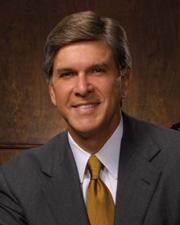
Mr. President, I ask unanimous consent the order for the quorum call be rescinded. Mr. President, there are many arguments hot and heavy being made today about the important issues that confront our…
Mr. President, I ask unanimous consent the order for the quorum call be rescinded.
Mr. President, there are many arguments hot and heavy being made today about the important issues that confront our country, issues about our security, about our troops, about the hot summer that is threatened by terrorists, about our economy and its recovery, and I know there are strong feelings on both sides of the aisle. But I hope today to show the American people that we are bigger than just partisans, that there are times when our Nation's elected officials can come together, put aside political and party differences, and actually debate and pass legislation.
My bill that I am talking about now in the company of Mike DeWine, the Senator from Ohio--and I believe Senator Dodd of Connecticut will soon join us--is a bill, I suppose, on a smaller subject than war and peace and economic recovery, but it is nevertheless a bill about life and death, so it is important. It is not a far-reaching bill. It is not even all that expensive, certainly not in relationship to all that our Congress will consider, but it represents an important milestone in our country's battle against mental illness and specifically youth suicide.
Later tonight, this bill will be introduced by the majority leader. I thank him for his sensitivity and willingness to proceed on this bill. He has been of enormous help to my wife and me in this struggle. I thank also Senator Daschle for truly making this a bipartisan issue. See, what Senator Frist and Senator Daschle understand is that mental illnesses do not register by party; they afflict Republican and Democratic families alike.
I would like to thank Senator Gregg, the chairman of the committee, and his staff for their willingness to proceed with this legislation. It would not have happened without him.
I would like to thank Senator DeWine. He and his wife Fran know something about family suffering, having lost a child of their own, so he has been unusually sensitive to Sharon and me on this issue. He has championed one of the bills, the major part of this bill we will take up today.
I thank you, Senator DeWine.
I want to show further how we as partisans, as Republicans and Democrats, are first Americans. During the hearing we had on this bill, it was Senator Dodd, who is the ranking member of the committee, who suggested that if we accomplish little else in this Congress, we at least ought to do this much. Senator Dodd is one of the nicest and most decent Members of this Chamber.
There are other Senators of whom I want to take note.
Senator Jack Reed has been especially sensitive and has helped to write a big portion of this bill as it relates to campus suicide.
Senator Harry Reid, the Democratic whip--his family also having suffered with a suicide--has been a champion of mental health issues and specifically on the issue of how to intervene, interdict, and to stop suicide when it is at all possible.
Finally, I would like to speak of Senator Kennedy. I have looked at him often in this Chamber. I have thought of him as a lion in winter. He certainly has a lion's roar in this Chamber. Yet underlying the lion's roar, Senator Kennedy has a heart that is filled with compassion for people. No one on either side of the aisle should ever question his motive, and his motive is as good as gold even though you can reasonably disagree with his method. He has been of unusual help to me and to Sharon as we suffer the loss of our son. He has known much suffering in his days, and I thank Senator Kennedy.
Finally, I must mention Arlen Specter, the subcommittee chairman of the Appropriations Committee that helps fund the mental health issues. For a long time, he has found ways to fund programs to help with mental illnesses. And he has been helpful in a tight year with a tight budget trying to find the resources that can be utilized for the authorization of funds this bill will provide.
Enough of those things, and now to the substantial.
Most of you can probably discern by now that my emotions are still somewhat tender. I didn't volunteer to be a champion of this issue. But it arose out of the personal experience of being a parent who lost a child to mental illness through suicide.
Last September, Sharon and I lost our son Garrett Lee Smith to a long battle that he suffered from mental illness. He suffered emotional pain that I cannot begin to comprehend, and he ultimately sought relief by taking his life. While Sharon and I think about Garrett every day and mourn his loss, we take solace in the time we had with Garrett and say to all those who suffer the loss of loved ones that the very best antedote for grief is the gratitude you had for your loved one for a time on Earth. Sharon and I have committed ourselves each in our own way to preserving Garrett's memory by trying to help others so that other families and children do not suffer a similar fate.
Sharon and I adopted Garrett a few days after his birth. He was a beautiful child, a handsome baby boy.
Forgive me.
He was thoughtful of everyone around him as he grew older. His life, however, began to dim in his elementary years. He struggled to spell. His reading and writing were stuck in the rudiments. We had him tested and were surprised to learn that he had an unusually high IQ, but he struggled with a severe overlay of learning disabilities, including dyslexia.
However, it would be many years later until we learned how extensive his true illness was because of his diagnosis, which was a bipolar condition. Bipolar disorder, also known as manic-depressive illness, is a brain disorder that causes unusual shifts in a person's mood, energy, and ability to function. Different from normal ups and downs that we all experience, the symptoms of bipolar disorder are severe. People who suffer from bipolar experience swings from manic highs where sleep and eating are not desired, to deep catastrophic depressions where simply getting out of bed can be too much of a challenge.
In the United States, more than 2 million American adults suffer from bipolar disorder. This illness typically develops in late adolescence or early childhood. However, some people have their first symptoms during childhood, while others develop them late in life. It can be a debilitating illness. And, as in Garrett's case, it can lead to worse tragedies.
As his parents, we knew how long and how desperately Garrett had suffered from his condition and his very dark depression. While we knew intuitively that suicide was possible in his case, there are simply no parental preparations adequate for this crisis in one's own child, no owner's manual to help one in burying a child, especially when the cause is suicide.
So I have committed myself to trying to find meaning in Garrett's life by helping to pass, with the help of my colleagues, an important first step to ending the epidemic of youth suicide. It is no small task, but one that I believe should be a top priority of this Congress because every year approximately 30,000 Americans commit suicide in the United States--a number that is almost twice as high as the number of homicides in our country. Almost 700,000 Americans are treated in hospitals every year for self-inflicted wounds and attempted suicides. But keep in mind these figures don't tell the whole story. They do not account for the families, the friends, the coworkers who are affected by each suicide. Suicide and attempts do not simply leave an impression on the individual's life, it leaves a deep impact on everyone who knows the person or a family member of that person.
America's youth are committing suicide at staggering rates. Suicide is the third leading cause of death for people age 10 to 24 years--the third leading cause. That is why this bill, at Mike DeWine's suggestion, named the Garrett Lee Smith Memorial Act, is so vitally important. It takes the first significant step toward creating and funding an organized effort at the Federal and State levels to prevent and intervene when youth are at risk for mental and behavioral conditions that can lead to suicide.
The loss of life to suicide at any age is tragic and traumatic. But when it happens to someone who has just begun life, has just begun to fulfill their potential, the impact somehow seems harsher, sadder, more out of season, more tragic.
Garrett had just begun to reach his potential. His big smile and generous spirit allowed him to befriend everyone, popular or not. Wisely or not, his mother and I showered him with creature comforts as yet another way to show him that we loved him and that we valued him. But as a testament to his character, we later found out that much of what we gave him in a material way he readily gave to others less fortunate.
He also wanted to accomplish three things in life. He wanted to be an Eagle Scout, he wanted to graduate from high school, and he wanted to serve his church on a mission. He accomplished those three things, largely because of the efforts of his angel mother. He loved his mission companions, he loved his church, he deeply loved his Savior, and a chance of serving others in his name. Unfortunately, his struggle against his periods of deep depression became too much. We sought out help from school and church counselors, psychologists, and ultimately a psychiatrist. But words of encouragement, prayers earnestly offered, and the latest medical prescriptions could not repair our son's hard- wiring defects.
Garrett's bipolar condition was a cancer to him, as lethal as leukemia to anyone else. It filled his spirit with hopelessness and clouded his future in darkness. He saw only despair ahead and felt only pain in the present, pain and despair so potent that he sought suicide as a refuge, a release. The bill I offer today with these great colleagues, Republican and Democrat alike, is intended to help other people who suffer from mental illnesses that are so devastating it places them at risk for taking their own lives. No family should experience the pain we have suffered and no child should face the challenges of mental illness alone.
When signed into law, this bill will authorize $60 million over 3 years to create a system focused on establishing in each State a statewide early intervention and prevention strategy. It ensures that 85 percent of the funding will be provided to the entities focused on identifying and preventing suicide at the State and community levels. Entities apply to the State for funding and can utilize a variety of options to implement the tenets of statewide strategy.
One option that Sharon and I have recently championed in our own hometown is the Columbia University Teen Screen Program. We have chosen to endow this program in our community in our son's memory, in the town of Pendleton, OR, from which I hail.
All sixth graders who have their parents' consent will be screened each year for mental illnesses that can lead to suicide and they will receive referrals for treatment. Our hope in sponsoring this program is to help as many children as possible at as early an age, as young as possible, because if we identify mental illness early, we may be able to prevent thousands upon thousands of youth suicides.
The bill also authorizes the Suicide Prevention Resource Centers that will provide technical assistance to States and local grantees to ensure they are able to implement their statewide early intervention and prevention strategies. It also will collect the data related to the programs, evaluate the effectiveness of the program, and identify and distribute best practices to other States around the country. Sharing technical data and program best practices is necessary to ensure that Federal funding is being utilized in the best manner possible. That information is being circulated among participants.
Finally, the bill will provide funding to help colleges and universities establish mental health programs or enhance existing mental health programs focused on increasing access to and enhancing the range of mental and behavioral health services for students.
Entering college can be one of the most disruptive and demanding times of a young person's life, but for persons with mental illnesses the challenges can be overwhelming. Loss of their parental support system, familiar and easily accessible health care providers can often become too much of a burden to bear. That is why we have, for the first time, focused Federal funding on improving the support structures available at our colleges and universities.
I simply say with emphasis to my colleagues, we have a suicide epidemic on American university campuses because kids leave their homes and need support structures. As in the case of our son, when you are not there and they do not have someone to fall back on, sometimes the most innocent kinds of disappointments for you and me can be life ending to them. These are the kinds of situations which we hope to better predict.
I say in conclusion, the components of this bill will ensure that we begin to address the staggering problem of youth suicide. I am pleased to be a champion of this cause, not because I volunteered for it but because I have suffered over it. This bill, with the support of my colleagues, will be a marvelous beginning to say to the American mothers and fathers, we care about you, we know your struggles, we know your suffering, and we are trying to help.
Where you cannot be there, we are going to do our level best to make sure there are professionals, there are people to help, so we can put an end to this epidemic and let our youth know that mental illness is not something from which they should shrink but something about which they should seek help.
If we do this, my colleagues, I assure you, whatever else we may or may not accomplish in this Congress, we can leave here with pride that we did a very good thing for the young men and women of the United States of America. I urge the passage of this bill.
I yield the floor.
Mr. President, I ask unanimous consent that Senator Domenici be added as an original cosponsor of the Garrett Lee Smith Memorial Act, along with Senator Corzine and my colleague Senator Wyden, from Oregon, and Senator Hatch, who have also requested they be added as original cosponsors.
Mr. President, I say to my friend, the Senator from New Mexico, in the darkest of hours after my son's death, his call was one of the most important that I received because he has struggled with his daughter. He has now spoken here with a passion on mental health issues so that I think all America better understands, if they listened to him.
Pete Domenici of New Mexico was the first person who said to me that my son had an illness that I could not fix. My son had an illness not unlike leukemia or cancer or congestive heart failure; that it was, in fact, a lethal illness and not to beat myself up about it. I beat myself up, anyway--I still do--wondering, would have, could have, should have, but Pete Domenici helped this Senator to go back to work, to find joy again in living, and to share with him the passion that comes from suffering and the understanding that comes from a loved one who is beyond rational reach.
I have come to believe that it is true, what Pete Domenici taught me in my darkest hour; that is, that mental health is just as real a problem as physical health and that we need to learn more about it. We need more professionals trained about it; we need more focus on it. It has ramifications for business that result in lost worktime, no-shows, layoffs, family tragedies.
With a little bit of intervention, a little more compassion, we can get ahead of this and begin to treat it as we might other diseases.
I admit, we have a lot more to learn. My bill, our bill, does not include parity. My bill is a start. My bill is a slice of the problem. The Senator from New Mexico is right. His bill takes on the whole problem in a way that ultimately we need to resolve as a Congress and as a country.
I thank Senator Domenici for listening to me, for putting his clothes back on, for coming back on down here, sharing with me, with all of America who care about this issue, that this problem is bigger than my bill addresses, our bill addresses, but it is legislating within the realm of the possible.
It is a good beginning, an important beginning. Perhaps it is aimed at just the most vulnerable among us, and that is our youth who need a little more help than we have been giving as a country.
I thank the Senator. I turn back his time to him.
Mr. President, I received a note from Senator Hillary Clinton asking that she be added as an original cosponsor to the Garrett Lee Smith Memorial Act. So on her behalf, I ask unanimous consent that she be added as a cosponsor.

Madam President, I ask unanimous consent the order for the quorum call be rescinded. Madam President, this is a very difficult time for our Nation. A few hours ago, the Secretary of the Department of…
Madam President, I ask unanimous consent the order for the quorum call be rescinded.
Madam President, this is a very difficult time for our Nation. A few hours ago, the Secretary of the Department of Homeland Security appeared at a press conference to discuss in some detail what he could say publicly about the continuing threats our Nation confronts because of the diabolical plots of the terrorists to undermine our way of life, to destroy American life, to disrupt American life. Earlier today there was a closed door hearing for the Senate that went into even greater detail.
A few weeks ago I personally was briefed by representatives of the Department of Homeland Security, the FBI, the CIA, others within our Government who follow the terrorist threats on a daily, even hourly basis. I believe it is fair to say there has been, ever since September 11 and I think one can argue even before, a concerted effort by those who subscribe to the nihilistic philosophy or theology that underlies the fundamentalist Islamic terrorists that whatever they could do to strike against our country or American interests or American allies anywhere in the world somehow furthered their perverted cause, their sense of purpose to try to strike against freedom and democracy, against women's rights and roles, against what the United States represents as a beacon of opportunity for so many around the world.
Representing the State of New York, I saw firsthand the horrific damage the terrorists caused because of their attacks on the World Trade Center and of course at the Pentagon, and then the crash in Pennsylvania of a plane thought to be headed toward either this building or the White House.
I have met recently, about 2 hours ago, with a group of interns who came to my office. I love meeting with the young people who work here in Washington during the summer. They come with such energy and enthusiasm. They were asking me a variety of questions. One of them said: Senator, what do you spend most of your time doing?
I told them that certainly, because of September 11, I have spent the bulk of my time worrying about and working on behalf of New York to help us recover from the attacks, to help us rebuild, to help us try to repair, so far as possible, the shattered lives and lost dreams of so many thousands of people. Then, once having become a member of the Armed Services Committee in January, a year and a half ago, I have been immersed in the details and challenges of how we defend our country, how we best protect our interests, how we take care of the young men and women in uniform.
Running through all of that work has been a commitment to do everything I could do as a U.S. Senator to ensure that we were vigilant, we took every step necessary and possible to protect our fellow men, women, and children.
I have taken that responsibility very seriously. I have introduced legislation to try to put both more resources into homeland security and to allocate those more effectively to ensure that our first responders, our police and our firefighters and our emergency workers, had the resources necessary to do the job we expected them to do because, in effect, they are our frontline homeland soldiers.
I have worked to protect our rail lines and our courts, to ensure that our critical infrastructure has been given whatever help can be offered so we are prepared, so we are vigilant, because none of us can predict whether there will be an attack or where one might occur. I am well aware of that. That is not something that we can stand here today and say we know is going to happen, but we can say with confidence there are people right now, meeting throughout the world in cafes in Europe, in tents in North Africa, in caves in Afghanistan, who wish us ill and who will do everything they possibly can to kill as many Americans, to injure as many Americans, and to destroy as much of America as possible.
I don't think we have a higher priority in the Senate than to work together in a bipartisan--frankly, a nonpartisan--way to provide the resources and to do what is necessary to protect the people we represent.
That is why it grieves me to come to the floor of this Senate having watched now for several weeks as we have done nearly everything but focus on the real business of America. We have an appropriations bill standing in line for homeland security that we cannot get to the floor. Instead, we are engaged in these nonsensical, futile, parliamentary, politically partisan games. It is a shame, and it reflects on all of us, but it reflects most on the majority leadership of this body.
It is one thing not to know exactly all we should be doing to protect our homeland. It is something altogether different not to be doing the business we are expected to do to provide as many resources effectively deployed as possible to try to ensure that so far as humanly possible we have done our job.
Look at what we are doing today.
One can argue about whether dealing with class action is a priority given everything else going on in our world, but we can't even deal with that.
The majority leader comes to the floor, and in a parliamentary move makes it impossible to present any other issue, whether that issue is to try to raise the minimum wage for people who haven't had a raise in years or whether it is to try to bring about the reimportation of drugs from Canada so that people can pay an affordable price for the drugs they should be able to use for their prescriptions.
Some issues we hear about all the time. It is indeed frustrating that we are not even dealing with what is allegedly on the Senate floor.
But what really frustrates and disappoints me is that this impasse, this games playing, this pure, unadulterated partisan politics, is preventing us from dealing with the urgent business, the threats, and the dangers that confront our country. The Homeland Security appropriations bill just sits there. We can't get it to the floor. We have passed out of our requisite committees not once but several times steps to make our ports safer, to make our rail lines safer. For heaven's sake, we saw what happened in Madrid. How can we in good conscience act as though we don't have an obligation and a responsibility to protect our rail lines and our ports, our critical infrastructure?
We have just appropriated some additional funds to make sure we have more security in Boston and New York which will be the home of the Democratic and Republican Conventions, part of our great political democratic tradition in our country.
What about the people who do their job every day? What about the police officers in New York who walk the streets every day picking up information and conveying it to the intelligence-gathering operations of our New York Police Department and detectives coordinating with the FBI? What are we doing for them? We are cutting the COPS Program. That is what we are doing. We are not even adding additional money to homeland security. We are cutting the very lifeblood of what keeps the police on the streets in a city such as New York and so many other great cities around our country.
What about our firefighters? With budget cuts and cutbacks, we are not fulfilling the needs they confront for interoperable communications for hazardous materials, both training and equipment for the personnel that are needed with the highly developed skills to deal with chemical, biological, and radiological attacks.
I feel as if I am living in some kind of fantasy world, some parallel area.
We have the Department of Homeland Security Secretary standing before our Nation talking about the danger and threats we face. We have closed-door briefings for Members of the Senate and the House. Yet we don't get about the business of doing all we can to make sure we are prepared. It is bewildering.
When Secretary Ridge announced this morning that we have credible reporting that al-Qaida is moving forward with its plan to carry out a large-scale attack on the United States, then I think we act as though we have nothing better to do, at our peril. Shame on us. Yet here we are. We have a person in our Government responsible for giving us this information based on credible reports, and we are ground to a halt in the Senate.
This is one of those times when I think history is watching and will judge us harshly.
We are 4 days after our Independence Day, 4 months before the November elections, nearly 5 months after the President submitted his budget request to Congress, and the U.S. Congress has yet to send a single appropriations bill to fund the U.S. Government to the President for his signature.
The Department of Defense, Homeland Security, Department of Justice, Federal Bureau of Investigation, Secret Service, responsible for coordinating security at both conventions, Federal Emergency Management Agency, and a host of others charged with the solemn responsibility of protecting our country have not yet been funded. As is so painfully clear, we haven't even taken up the Homeland Security appropriations yet.
We could be right now debating on the floor of the Senate how much money our first responders need and whether we are going to take seriously the obvious threat to rail lines. And what about those ports with those thousands of containers that come in?
Last week, I was privileged to be in Seattle, WA, with my good friend and colleague, Senator Murray, who is the No. 1 champion of port security in this body. In fact, she was named Port Person of the Year because of her advocacy for our ports.
We went out across the water from downtown Seattle with the skyline spread before us to an island that processes a lot of the container traffic. We talked to the Coast Guard, Immigration, and other personnel who run that operation. It is an overwhelming task. You think about this, one of our ports--we have so many of them. The biggest are Los Angeles and Long Beach, Seattle-Takoma, and of course, New York-New Jersey. We have made some progress. I am proud of that progress. But we haven't done what we know needs to be done.
We have had report after report after report by distinguished Americans, by experts in security and intelligence, by people who understand the perverse mentality of our enemies, and they have said over and over again that we are not ready, we are not prepared, we have not done our part.
Let us get back to business. Let us get serious around here. Elections take care of themselves. That comes and goes. Our job is to do the people's work right now, today, in July, to deal with important pressing matters, and there isn't any that is more critical than homeland security.
We still have time, although it is a little hard to believe, but we only have about 2 more weeks, which usually translates around here into 6 days of work, and a day like today when nothing happens. It is discouraging.
There are 100 very smart, energetic, able people in this body who know how to work and how to get things done. They might as well be on a beach somewhere for all their efforts amount to
with respect to the important issues facing us and the one I am most concerned about; namely, the security in our country.
Every intelligence report, every briefing, always mentions New York. It mentions other places, too, but it always mentions New York. The people I represent, who have already gone through so much--the firefighters and police officers I represent, who have already set the world class standard for courage and class--I don't want to have to look them in the face and say, We could not get around to giving you the funds you needed to be sure you got those additional pieces of equipment that were required. We could not figure out how we were going to have the Senate deal with the business as to whether you live or die.
I am proud and honored to serve in the Senate. I am especially proud and honored to represent New York. But it is hard to understand how we could be turning our collective backs on the most pressing need confronting our country.
In 2 weeks we are going to be recessing--Democrats will go to Boston; the Republicans, later in August, will go to New York--and I guess everyone hopes and crosses their fingers and prays to God Almighty that nothing bad happens.
I was raised in a faith tradition that believed God helps those who help themselves; that we were given a soul, a heart, and head, and we were expected to use all three. I can only hope we will get a signal from our majority leader that we are going to go back to business, we are going to get this process moving again, we are going to bring the appropriations for the Department of Homeland Security to this Senate and we are going to act--not that we can prevent every bad thing from happening but that we will have done our duty. There is still time. I hope, for all our sakes, we act.
Certainly.
Certainly, I agree with my good friend and my distinguished leader who makes some excellent points.
Even more than that, as the Senator from Nevada knows so well, in the face of a disaster or another attack, all of this becomes unimportant, trivial, even frivolous.
I have enough respect for all of my colleagues that I hope we are not putting ourselves in a position where in the event what has been predicted, and given voice to today by Secretary Ridge, comes to pass, and people rightly can turn and ask, Where were our elected representatives?
This goes way beyond politics. This is not about Democrats and Republicans. This is about us as Americans. What are our priorities? What do we think is important? What are we willing to fight for, stand up for?
As my good friend points out, the majority has made a different set of choices. They have decided they want to create an atmosphere of gridlock and obstructionism which means we go so far as not even to take up the Homeland Security appropriations.
It is profoundly sad. It would be sad any time, but it is extraordinarily disheartening that on a day when the Senate was briefed behind closed doors about the threats, when the Secretary of the Department of Homeland Security went before the world to talk about the threats, that we cannot get a debate on the appropriations for the Department of Homeland Security.
I have no doubt my good friend is right, there must be some political machinations going on in some back room, there must be some pollster whispering in someone's ear and saying, If you do this, that, and the other, you can come. Maybe people will be fooled into believing--even though you are in charge, and as my friend points out, you are in charge of the White House, the House, and the Senate--that somehow the fact that nothing has happened has to be the other side's fault.
I am sure people are saying that, but how pathetic is that. What does that say about our values and priorities as a nation? If that is what they care about, trying to score cheap political, partisan points at the expense of bringing up the Department of Homeland Security appropriations in the face of the warnings we received today, then it is going to be clear for all to see the responsibility rests on their shoulders.
It is not too late. There are a lot of Members who have worked day and night to deal with the real business of America. I am sure my good friend, our deputy leader on this side of the aisle who is literally here every waking hour, would be here even more in order to deal with the people's business. And what is the people's business? No. 1, keeping the people safe.
Again, I hope we get about what is important, that our majority leadership decide they want to put aside these petty, partisan, political games dealing with scoring cheap points at somebody's advantage, and work for the good of all of our people.
Certainly.
Unanimous Consent Request--S. 2537 and H.R. 4567
I so yield.
I thank my good friend from Illinois and I yield the floor.

Mr. President, I know that most in the Chamber, and those who are in their offices, went home to their home States over the Fourth of July break. It is always a treat for me to do that because,…
Mr. President, I know that most in the Chamber, and those who are in their offices, went home to their home States over the Fourth of July break. It is always a treat for me to do that because, frankly, I think I come from one of the most beautiful places in the world. For me to go to California and get ``rooted'' in why I want this job, to protect that beautiful place, and to protect the people who live there and to work for them, it is always a joy.
Constituents asked me: What are you going to be doing when you come back? They had asked me about a number of issues they cared about. They are worried about this economy. They say it is uneven. They point out that college tuition is going up more than 20 percent. They are squeezed. They point out that gasoline prices in our State are raging. It is costing them more. They point out that their health care premiums are going up. They are worried about even keeping health insurance. Some of them do not have any.
Those on Medicare are very worried about what they view as a false promise of the administration's Medicare proposal which was supposed to be so great for them in terms of prescription drugs. It turns out the thing is so bureaucratic and such a nightmare they cannot figure it out.
Not only that, they express shock when I tell them in that bill we do
something outrageous, saying to Medicare, you cannot negotiate for lower prices for the people on Medicare. Constituents say: Wait a minute. Why does that make sense? If you are sitting across the table from someone and you represent 40 million senior citizens, you have a good card in your hand that you can play. You can say, if you want to have your high blood pressure medicine on our formulary, if you want to have your heart medicine on our formulary, if you want to have an arthritis drug on our formulary, you have to give us a better deal.
No, this administration and the majority in this body decided to tell Medicare they could not negotiate for lower drug prices for our seniors.
When I go home, people are flooding me with these questions. They are very worried about Iraq. What is the plan? What is the plan to get more help there? Why are we spending so much there? Why aren't we focusing on our problems at home? This is what I heard all over my State.
They ask: Senator, what is on the agenda when you get back? Which one of these issues are you going to take up? What about rail security? We are worried about that because we have a lot of Amtrak ridership in California. What about nuclear plant security? When are you doing more about that? I have to tell them the truth; that is, I am not in charge. My party is not in charge of the Senate. The Republican leadership has chosen, instead of putting any of those issues you have mentioned on the agenda, they are taking up class action reform because there is too much forum shopping--at which point they look at me and ask, What?--and we have to protect business from these consumer complaints.
They kind of look at me quizzically and say: There are other things that mean a lot more to my family. Then they ask: What are you going to take up after you take up class action reform? We are going to talk about gay marriage. And they say: Well, wait a minute. Every day in my life I have all these pressing issues; I thought the States handled that issue. Well, I say, you are right; the States have always handled that issue.
I find it amazing, given the Republicans are in charge of this Senate and they always believe in States rights and local control, they are now going to bring up the issue of gay marriage, and not only take it up--it was taken up once before; Bob Barr in the House wrote the Defense of Marriage Act, and Bob Barr said that would take care of everything and still says it takes care of everything--but, no, they are going it take the most precious document known to human kind, the Constitution of the United States, and they are going to now talk about marriage in the Constitution. In fact, marriage has been sacred in the various religions, along with the rules surrounding marriage, and the States have handled marriage for years.
My constituents are completely confused. They have many worries. They have many concerns. They are worried about the fact they are not respected abroad. They are worried about this recovery that they see as very wobbly. They see better corporate profits--although those seem not to be going as well--and they do not see the increases in their standard of living.
If we look at the numbers, the increase in the take-home pay, when you include inflation and the high cost of living, has only gone up about 1 percent, while all the other issues have gone up over 20 percent, the issues people deal with every day.
Now I come back to Washington and I am called to a meeting in a secret room in the Capitol. The press knows all about this. We are called to a secret room in the Capitol. We have to discuss the threats to our country. This is very serious stuff. Of course, I cannot go into everything that was said, but I can state what has been reported in the press, which is not classified. And that is, we need to be on the alert at home. We have known since September 11 that al-Qaida has cells in our country and that they never give up. If they fail, they go back again. We know all this. We need to stay ahead of the threat.
That is why I am so proud to be on the Commerce Committee. I am so proud to have as part of the portfolio of the Commerce Committee, rail security, aviation security, and port security. These are key issues. Since Madrid, for example, and the horrible bombing of the train there, we need to be on our toes. That means we need to pass rail security legislation.
This is the great news I have for my constituents and for all Americans. At a time when we are in the middle of an election, where there is a lot of disagreement, where we have even seen language that is prohibited to be used in the Senate being used by the Vice President of the United States--in other words, a time where emotions are running high politically--guess what happened on rail security. Every single member of the committee voted for that bill--every single member. From liberal to conservative, to moderate, everybody voted for that bill. That means we could easily take up that bill. That means we could easily pass that bill.
But what do we have before the Senate? Class action. The people who want us to pass this bill say there is a lot of abuse and that we need to make sure we take these cases away from the States and put them more into the Federal courts. Again, I find it unbelievable that we have a Republican majority that keeps saying, States rights, States take care of it, States do it, but when they are not happy with the way it goes-- oops, forget that. As Roseanne Rosanna-Dana used to say, ``Never mind.'' Take it to the Federal court. Everyone knows what will happen there.
A lot of these cases are very important. We remember Dalkon Shield was one of those class action cases where women were dying. Not until there was a class action lawsuit was that fixed. That does not mean there aren't abuses. It does not mean that we cannot have reforms.
It does say to me that there is no crying need to take this up when we are called to room 407 for a secret briefing about the threats that face this country before the election. It is extraordinary to me. And I believe the American people who are watching what we do here are thinking: What is the Senate doing about my life, about my family, about what I need for my kids?
I went to a press conference on the minimum wage. Do you know the minimum wage has not been raised in 8 years? Every colleague here has had a pay raise. For 8 years the minimum wage has not been raised. People are living below the poverty line. Mr. President, 61 percent of those people happen to be women, many single moms. All we want is a chance to do that. We should do that by unanimous consent today. Why do we need to debate it? Eight years long and no increase in the minimum wage, zero.
These are people who work hard. These are not mostly teenagers; these are grownups who are working hard to support their families on the minimum wage. The cost of living has gone up 14 percent in those 8 years. The minimum wage has stayed stagnant. These people are falling, falling, falling, falling--and we talk about family values here? And we are rushing to do a marriage amendment when the States are taking care of that?
My State has decided what it wants to do. They have a law. It is not perfect. It says there are domestic partnerships and they have rights and responsibilities. We could make it better. But do you know what. My State has taken care of this, thank you very much.
It is all about politics, folks, let's face it. For 5 minutes, why don't we put aside politics and pass the minimum wage and help the millions of people who need it to be done? What are we talking about? We are talking about an increase, over a couple years, of $3,800 a year for these people, who will still be below the poverty line. I bet if you had a vote in this Senate, the way it is made up, to give more tax breaks to the people making a million bucks a year, it would fly through here, it would fly through this place, even though those in the million-dollar range are already getting back hundreds of thousands of dollars a year. Imagine.
So every once in a while I come down to this Senate floor and I say: Why am I here? What are we doing? Are we meeting the needs of the people? And this is a perfect time to do it because there is a bill on the Senate floor that not one person in my State, except
high-paid lobbyists in very fancy suits, want to take up. This is true. The things we should take up, the things we talk about in that room, that secret room in the Capitol--making our rail systems safe, making our ports safe, making our buses safe--oh, no, we do not have time for that because after we do this for the big businesses in this country, oh, we are going to go on to gay marriage before the Democratic Convention so some people can cast a vote that might hurt them in their election. Shame on us. We should be better than that as Senators. We should be better. So I am going to give us a chance to be better.
Unanimous Consent Request--S. 2273
Mr. President, I ask unanimous consent that the Senate proceed to calendar No. 536, S. 2273, the Rail Transportation Security Act, that the bill be read a third time and passed, and that the motion to reconsider be laid upon the table.
I understand.
I will yield for a question.
Mr. President, I thank my friend. It is obvious he sees it the way I see it.
We were called up to a secret meeting today to hear about all the threats on our Nation. That is not an idle trip up to that room. If it is to mean anything, we better get busy. I meet with my local police and fire. Do you know what? When there is a terrorist attack, the White House does not get the call; the Senate does not get the call; the House does not get the call. They dial 911, and our local people--be they in Nevada, be they in New Mexico, be they in California--get the call. They are hurting.
The bill I wanted to get us to vote on today--and I have a couple of others I am going to ask since we got objection to this one. The Rail Transportation Security Act--this is one that passed out of the Commerce Committee, I say to the assistant Democratic leader, unanimously. It is very important. I will tell my friend what it does. The bill authorizes grants to all of our railroads and to hazardous material shippers for freight and passenger rail security. It is a critical bill.
We saw what happened in Madrid. You do not have to haul me up to any secret room. The minute we saw that happen in Madrid, the Commerce Committee, which the Presiding Officer of the Senate is on and participated in this, we for the second time voted in a unanimous fashion--100 percent of the committee--for this rail security bill. Unfortunately, there has been objection to it because the Republicans, who control the Senate, are not interested in moving this bill.
Unanimous Consent Request--S. 2279
So I am going to give them a chance to move another bill, and that is the port security bill. Port security is another bill that passed out of our committee without one dissenting vote. We know the problem at our ports. We have containers coming into them. They are not checking them. We do not know who is going to be putting something in one of those containers. We are doing better, but we are not giving it the attention it deserves.
Mr. President, I ask unanimous consent that the Senate proceed to calendar No. 530, S. 2279, the Maritime Security Act of 2004.
I will be happy to yield.
I am from California. I was born in New York, but I am from California.
You said: I say to my friend from New York. I was born there, but I am from California and have been since I was 25 years old.
I know. When we have known each other 23 years, you will get it right, I know.
I am quite aware we have not done what Senator Hollings has long asked us to do. We have not done the work of homeland security. There is a lot of talk. There are a lot of meetings. There is a lot of yack-yack about it. But when it comes down to where we are putting the dollars and where we are putting the emphasis, we are on some bill here I can honest to God tell you, not one person except a highly paid lobbyist has ever talked to me about, class action. I can honestly tell you, on the gay marriage, people have a lot of views in my State, but they believe our State is handling that issue in a good way. So there is no reason to go to this.
In Madrid, 200 people died, 1,400 people were injured in that rail accident. And we go up to 407 up here and we hear all the talk about what we need to do. I am suggesting as a result of my unanimous consent requests today, both being objected to, when you have this majority party, it is very clear: there is a lot of talk, but there is no action.
That is a reason why people are disenchanted. It is the reason why people want change around here. They want us to be strong at home. They want us to be respected in the world. And it is time for many changes to occur. I am looking forward to those changes, to the day when we can vote these bills out of the Commerce Committee without one single objection, and no one on the floor here would then object to taking them up.
I yield the floor.

Mr. President, I ask unanimous consent the order for the quorum call be rescinded. Mr. President, I thank my friend from Utah for being willing to assume the chair for a few minutes so I could make a…
Mr. President, I ask unanimous consent the order for the quorum call be rescinded.
Mr. President, I thank my friend from Utah for being willing to assume the chair for a few minutes so I could make a brief statement about the bill pending before us. I want to say, as I listened when I was in the chair, I appreciated his eloquence on behalf of the bill.
The Senate will realize pretty soon that I have a bit of a cold. If I pause to take a sip of water now and then, it is not for the dramatic effect but so I can finish the statement.
I had originally not intended to say anything about the legislation, although I support it. Anybody who has gotten around their States and heard about the destructive impact of abusive lawsuits on jobs and economic growth has to support doing something. I was not planning to speak on it, but the other night I was presiding when this debate began, and I was fortunate to hear Senator Carper from Delaware give one of his initial remarks. I don't think he realized I was listening as I was presiding because I was doing a little paperwork, but I did listen.
I heard him give examples of abuses of class actions that have occurred around the country, items such as a class action lawsuit in Illinois against a bottled water giant named Poland Spring which claimed that the company's water wasn't pure and wasn't from a spring. Under the settlement the consumers received coupons for discounts on the water. The company didn't agree they had done anything wrong, didn't agree to change the water, and all the plaintiffs got were coupons to buy more of the water they were complaining about. But their attorneys got $1.35 million.
In a Texas class action settlement with Blockbuster over late fees on movie rentals, class members received coupons for more movie rentals. The attorneys received $9.25 million. I don't know how my family missed out on those coupons--I guess because we didn't live in Texas.
I could go on, but Senator Carper made the point that there was obviously a need to remedy these abuses and a need to do that without undermining the efficacy of the class action lawsuit in principle. In other words, we need to be able to have class action lawsuits because sometimes a whole lot of people will be done a small wrong. Each of them will experience some wrong that is so small it is not worthwhile for any one individual to sue, so if they can get together in a class we can remedy that wrong and the attorneys can get reasonable attorney's fees.
But when there is, in fact, no remedy for the plaintiffs, when there may have been no wrong, and when there are these outside attorneys' fees, it is obviously something unjust because it is unjust to make people pay when they have not done anything wrong and it is not very good for the rest of us.
We all know how it works. Those awards are paid and then it is passed along in the form of higher prices or fewer jobs. Senator Carper's point was it should not be all or nothing at all. We should not have to have a system where either we have no class action remedies or we allow these abuses to continue year after year. There is no reason in principle why we should not be able to fix the abuses while keeping the remedy.
He is right. There is no reason in principle we should not be able to do that. There are people of good will on both sides of the aisle who want to do that. There is obviously a solid majority of the Senate who wants to do that. Yet year after year, we do not do that. Why?
It was his speech and my thinking about it that led me to decide to come down here and make a statement because I think I know the reason why. It is because of the filibuster, or more precisely it is because of the way the Senate allows the filibuster to be conducted.
This principle of filibusters is actually a pretty good thing. I think if a determined minority in any legislative body believes something is really bad, it makes sense to give them some remedy to stop that legislation from passing. In fact, I submit to you that the filibuster has been consistently abused in the Senate. Why has that happened? Because the discipline on the filibuster is public accountability. The public doesn't like obstructionism for its own sake. If they see that happening, they will not like it; and if the American people do not like something happening here and focus on it, it tends to stop. I have been around here long enough to see that.
But because of the way the filibuster is conducted in this body, it is almost invisible. Therefore, the people do not know it is happening, and therefore there is no accountability. That is why we have the abuses of it. Why is it invisible? In the Senate, in the first place, as you know, the passage of a bill requires many different steps: the introduction of the bill, assignment to a committee, first and second readings, and all of that.
In most legislative bodies, those steps are pro forma. In the Senate, many of those steps are debatable. And anything that can be debated can be filibustered.
The classic idea of a filibuster, as in ``Mr. Smith Goes to Washington,'' with final passage of some bill, people speaking all night to prevent it from being voted on doesn't have to happen in the Senate. You can filibuster a bill on any number of points. You can filibuster it after it has passed to keep it from going to conference. The public doesn't know what is happening.
The second and bigger reason is that in the Senate, as all of us here know--and I think the public may be beginning to realize--you don't have to talk to filibuster.
I have served now in my third legislative body. It is a tremendous honor to serve here. The pinnacle of the legislative career is to serve in the Senate. In most legislative bodies, when people are finished talking about the proposition that is pending, you vote on the proposition.
Many times I have sat in the Chair where the distinguished Senator from Utah is now sitting. When the last speaker has finished some eloquent set of remarks, I have asked, Who seeks recognition? And nobody seeks recognition. It doesn't mean we vote. It means we go to a quorum call, as we did a little while ago. You don't have to speak
to filibuster. You don't have to debate. You just have to decline to agree that debate will end. Unless everybody here either agrees to a unanimous consent agreement, or vote by a 60-vote majority to end debate on a cloture motion, which itself is a rather clumsy way to end debate, the debate goes on and on.
To allow a filibuster in that way, and make it so invisible, tends to empower the extremes in a legislative body in any given proposition.
In most legislative bodies the power in any given proposition, once it reaches the floor of that body, belongs in the middle. It makes sense, doesn't it? Because to pass it you have to have the middle with you, typically. But here the filibuster empowers those folks who like confrontation most. I am not running them down. Every legislative body has to have people whose instinct is to say: I am not going to give in. I am going to stand up for this. I believe in this, or I think it is wrong, or I think it is right, and I am not going to give in much. It is important to have those folks in a legislative body. But you can't have them running the whole show all the time. It empowers those people. It tends to educate people to the temper of partisanship.
It is so tempting when you are in the minority to stop everything through the invisible filibuster and then blame the majority for not being able to pass something. That happens in this whole Congress. I don't blame my friends on the other side of the aisle.
It is so tempting it would require almost a heroic effort, particularly given how divided the country is on a partisan and philosophical standpoint, for them not to have done that.
The way the Senate does it makes interest groups more militant. This bill is a classic example of that. Everybody who looks at this issue knows that we have problems with litigation, at least in certain areas. We have problems in State class action abuses. We have problems with the whole asbestosis system which is driving dozens of big companies into bankruptcy and reducing the number of deep pockets that are available to pay for people who really are sick and have asbestosis. We clearly need reform in these areas.
What would happen if the process was healthier is that our friends in the personal injury bar would know that something was going to happen and would sit down and negotiate, and we would come up with a moderate bill, I think, probably pretty similar to what we have before us today. We would pass it more or less by consensus. But what do you do when you have this filibuster? You can just say no. You can say it doesn't matter how bad it gets, we are going to pressure and lean on those in the Senate who are generally with us philosophically, and we will stop everything from happening. We are empowering the tactically more extreme in this body. We are educating people to the temper of partisanship. We are driving interest groups, which are pretty militant anyway, to be even more extreme. Then we are gumming up the few bills that do pass because now, if you are sitting here and you have some constructive measure you are trying to pass, and you know the only legislation that is going to get through this body this year is the defense authorization, let us say, or the tax relief bill for manufacturers that we have to pass--because if we don't pass it we are going to get increasing trade sanctions all over the world--if these are the two or three bills you know you are going to pass, what do you do? You take your constructive measure which you have wanted to pass for months but can't because nothing else is going through the Senate, and you say: Well, that train is leaving the station and maybe none of the others are, so I am going to put my bill on that.
You use the opportunity to offer nongermane amendments, which personally I like and support. So you offer all kinds of amendments that are completely unrelated to the bill before you just because you know it is the only opportunity you are going to have to pass anything.
Then the public wonders how we get immigration bills on class action reform bills, or how I did this: I put a bill that I believe in very strongly to help fight sickle cell disease on a tax relief bill for manufacturing, and I would do it again. But that is because of the way we are running this place.
What is the effect? It affects everything that gets filibustered. We have seen filibusterss so far in this Senate and in this Congress on the Energy bill, medical malpractice reform, the welfare bill, a number of judges, the asbestosis bill, the class action bill, and a number of other bills which are slow-walked through--the highway bill, the JOBS bill, the faith-based bill. And that doesn't even count all the bills that aren't even brought up because the leadership knows they are going to be filibustered.
Nobody is ever held accountable. The public wonders why the Senate doesn't work.
I am going to say something. I get around this town and I get around Missouri. I am afraid that we are being held in increasingly low regard. I am afraid the Senate is being reduced to its constitutional minimum of authority and effectiveness in this town. We are like a big roadblock. Ideas don't come out of here and go places. It is like the commercial about the roach motel. They check in but they don't check out. That is what happens here. The legislative ideas check in and they never check out.
I know some people say that is a good thing. We don't want anything to pass.
I just sat down this morning preparing these remarks and I made a list of the things which I think we are going to have to address. This is a top 10 list: Keep America strong; a long-term solvency issue involving Social Security and Medicare--I am on the Aging Committee. I will go into that more in a moment. The Senator from Idaho, Mr. Craig, has spoken eloquently on those issues.
The rising cost of health care is a problem, shortage of oil and natural gas, need for alternative energy sources to protect our energy independence and security, the failing electricity transmission grid in all parts of the country, the need to renew the distressed and urban neighborhoods, a burgeoning immigration system, a crumbling transportation infrastructure system, shortages of water in parts of the country, contamination of water resources, management of federally owned natural resources, and a policy we are going to take regarding defense both in the war on terror and also the potential rising power of competitors, such as England and China.
This is the top 10 list. I am not even counting the more divisive issues or the cultural issues on which it would be nice if we could work them out and be able to act. Some of these problems may go away on their own. I am a believer in that.
America is a great country. Maybe if we do not do anything, some of them are going to go away. But they are not all going to go away. Some of them are going to get worse. We cannot solve any of them without some element of participation by the Federal Government. Maybe it is just reform of regulations to allow people in the country to solve the problem.
We are going to have to have Federal participation. That will require, at some point, a Senate that works better than the Senate is working now. We have reached the point where the paralysis in this body is threatening the welfare of the people. Some may say--and I heard it said with response to the motion for cloture--respect for the traditions of the Senate means we cannot do anything about this. Everyone who has been here a while, and I have not been here a while, tells me that never before has the filibuster been taken to this degree.
If we were to apply a corrective, we would be restoring rather than overturning the traditions of this great body. And it is a great body. It is a privilege to be here. I don't know that I have ever worked with as motivated and passionate and intelligent a group of people. I call on Members on both sides of the aisle to consider carefully whether it is not time to change our practices in a way that permits us to work together, that encourages those who seek compromise solutions to the problems facing the country. Not to do so would be a historic abdication of the responsibilities of this Senate.
I yield the floor.

Mr. President, I ask unanimous consent that the order for the quorum call be rescinded. Mr. President, I will speak in a moment about this class action bill and why I oppose it. I want to start by…
Mr. President, I ask unanimous consent that the order for the quorum call be rescinded.
Mr. President, I will speak in a moment about this class action bill and why I oppose it. I want to start by noting my strong disagreement with the procedural tactics used by the majority to block amendments to the bill. I have some familiarity with the strategy of filling the amendment tree. This was done time after time, year after year, when campaign finance reform legislation was brought to the Senate floor. This is the procedure that is used to block the Senate from working its will on a bill.
The Senate has a long tradition of an open process for amendments. Any Senator has the right under our rules to offer any amendment to any bill. That is how the Senate works. It is amazing to me that the majority leader would engage in this tactic when he has not only majority support for the bill, but a supermajority in support.
Democratic supporters of the bill thankfully are not prepared to block their colleagues from offering amendments. So I guess it appears that this bill is going to be sacrificed in order to prevent amendments from being offered. I commend my Democratic colleagues who support this bill for not being intimidated by the arguments made on the Senate floor that they somehow are breaking their agreement by standing up for the rights of their colleagues to offer amendments. From the very start, it was clear that these Senators had agreed to support the motion to proceed in order to get the bill to the floor of the Senate and to vote for cloture, if that motion was again filibustered. They never agreed to vote against all amendments or to block all amendments.
Turning to the bill itself, I oppose the Class Action Fairness Act, S. 2062, and I will vote against the bill.
The main reason for my opposition is that notwithstanding its title, I do not think this bill is fair. I do not think it is fair to citizens who are injured by corporate wrongdoers and are entitled to prompt and fair resolution of their claims in a court of law. I do not think it is fair to our State courts, which are treated by this bill as if they cannot be trusted to issue fair judgments in cases brought before them. I do not think it is fair to State legislatures, which are entitled to have the laws that they pass to protect their citizens interpreted and applied by their own courts. This bill is not only misnamed, it is bad policy. It should be defeated.
Make no mistake, by loosening the requirements for Federal diversity jurisdiction over class actions, S. 2062 will result in nearly all class actions being removed to Federal court. This is a radical change in our Federal system of justice. We have 50 States in this country with their own laws and courts. State courts are an integral part of our system of justice. They have worked well for our entire history. It is hard to imagine why this Senate, which includes many professed defenders of federalism and the prerogatives of State courts and State lawmakers, would support such a wholesale stripping of jurisdiction from the States over class actions. By removing these actions to State court, Congress would shift adjudication away from State lawmakers and State judges towards Federal judges, who are often unfamiliar with the nuances of State law. In my opinion, the need for such a radical step has not been demonstrated.
Class actions are an extremely important tool in our justice system. They allow plaintiffs with very small claims to band together to seek redress. Lawsuits are expensive. Without the opportunity to pursue a class action, an individual plaintiff often simply cannot afford his or her day in court. But through a class action, justice can be done and compensation for real injuries can be obtained.
Yes, there are abuses in some class actions suits. Some of the most disturbing have to do with class action settlements that offer only discount coupons to the members of the class and a big payoff to the plaintiffs' lawyers. I am pleased that the issue of discount coupons is addressed in the bill, because the bill we considered in October 2003 did nothing about that problem. The bill now requires that contingency fees in coupon settlements will be based on coupons redeemed, not coupons issued. Attorney's fees will also be determined by reasonable time spent on a case and will be subject to court approval. The bill also allows a court to require that a portion of unclaimed coupons be given to one or more charitable organization agreed to by the parties. These are all good changes, but they do not change my view that the bill, as a whole, unfairly interferes with the States' administration of justice.
There are three possible outcomes of this bill being enacted. Either the State courts will be deluged with individual claims, since class actions can no longer be maintained there, or there will be a huge increase in the workload of the Federal courts, resulting in delays and lengthy litigation over procedural issues rather than the substance of the claims, or many injured people will never get redress for their injuries.
I don't believe any of these three choices is acceptable.
I appreciate that the supporters of S. 2062 modified the new diversity jurisdiction rules for class actions in an effort to allow plaintiffs in class actions more opportunities to remain in State court. Under the new bill, a district court must decline jurisdiction if two-thirds of the plaintiffs and the primary defendants are from the state where the action was filed, there is at least one defendant who is a citizen of that State from whom significant relief is sought and whose alleged conduct forms a significant basis for the claims asserted by the proposed class. In addition, the principal injuries resulting from the alleged conduct of each defendant must have occurred in the State in which the action was originally filed. Finally, the new bill provides that district court can only decline jurisdiction if during the 3-year period preceding the filing of the action, no other similar class action has been filed against any of the defendants even if the case is filed on behalf of other plaintiffs.
These criteria are an improvement on the underlying bill. But the jurisdictional requirements for class actions to remain in State courts are still too burdensome. Under the new language, for example, a class action brought by Wisconsin citizens against a Delaware-based company for selling a bad insurance policy would probably be removed to Federal court even if Wisconsin-based agents were involved in selling the policies. And the filing of a class action in one State court may lead to the successful removal of a similar case filed in another State on behalf of plaintiffs in that State. The bottom line is that this bill will continue to send the majority of class actions to Federal court. The proponents of this bill have chosen a remedy that goes far beyond the alleged problem.
Furthermore, under S. 2062, many cases that are not class actions at all are included in the definition of ``mass action,'' a new term coined by this bill. S. 2062 simply requires that the plaintiff must be seeking damages of more than $75,000 for the case to be considered a mass action and removable to Federal court. This provision unfairly limits State court authority to manage its docket and to consolidate claims in order to more efficiently dispense justice.
A particularly troubling result of this bill will be an increase in the workload of the Federal courts. These courts are already overloaded. The Congress has led the way in bringing more and more litigation to the Federal courts, particularly criminal cases. Criminal cases, of course, take precedence in the Federal courts because of the Speedy Trial Act. So the net result of removing virtually all class actions to Federal court will be to delay those cases.
There is an old saying with which I'm sure we are all familiar: ``justice delayed is justice denied.'' I hope my colleagues will think about that aphorism before voting for this bill. Think about the real world of Federal court litigation and the very real possibilities that long procedural delays in overloaded Federal courts will mean that legitimate claims may never be heard.
One little-noticed aspect of this bill illustrates the possibilities for delay that this bill provides, even to defendants who are not entitled to have a
case removed to Federal court under the bill's relaxed diversity jurisdiction standards. Under current law, if a Federal court decides that a removed case should be remanded to State court, that decision is not appealable. The only exception is for civil rights cases removed under the special authority of 28 U.S.C. Sec. 1443. The original version of this bill allowed defendants to immediately appeal a decision by a Federal district court that a case does not qualify for removal.
Fortunately, the revised bill now requires such appeals to be decided promptly. It does not, however, do anything about the fact that the lower court may take months or even years to make a decision on the motion to remand. That means that a plaintiff class that is entitled, even under this bill, to have a case heard by a State court may still have to endure years of delay while its remand motion is pending in the Federal district court. Where is the ``fairness'' in that? I plan to offer an amendment, if I even get the chance to address that problem and I hope the bill's sponsors and supporters will give it serious consideration.
It is important to remember that this debate is not about resolving questions of Federal law in the Federal courts. Federal question jurisdiction already exists for that. Any case involving a Federal statute can be removed to Federal court under current law. This bill takes cases that are brought in State court solely under State laws passed by State legislatures and throws them into Federal court. This bill is about making it more time-consuming and more costly for citizens of a State to get the redress that their elected representatives have decided they are entitled to if the laws of their state are violated.
Diversity jurisdiction in cases between citizens of different States has been with us for our entire history as a Nation. Article III, section 2 of the Constitution provides: ``The judicial Power shall extend . . . to Controversies between Citizens of different States.'' This is the constitutional basis for giving the Federal courts diversity jurisdiction over cases that involved only questions of State law.
The very first Judiciary Act, passed in 1789, gave the Federal courts jurisdiction over civil suits between citizens of different States where over $500 was at issue. In 1806, in the case of Strawbridge v. Curtiss, the Supreme Court held that this act required complete diversity between the parties--in all other instances, the Court said, a case based on State law should be heard by the State courts. So this bill changes a nearly 200-year-old practice in this country of preserving the Federal courts for cases involving Federal law or where no defendant is from the State of any plaintiff in a case involving only State law.
Why is such a drastic step necessary? Why do we need to prevent State courts from interpreting and applying their own State laws in cases of any size or significance? One argument we hear is that the trial lawyers are extracting huge and unjustified settlements in State courts, which has become a drag on the economy. We also hear that plaintiffs' lawyers are taking the lion's share of judgments or settlements to the detriment of consumers. But a recent empirical study contradicts these arguments. Theodore Eisenberg of Cornell Law School and Geoffrey Miller of NYU Law School recently published the first empirical study of class action settlements. Their conclusions, which are based on data from 1993-2002, may surprise some of the supporters of this bill.
First, the study found that attorneys' fees in class action settlements are significantly below the standard 33 percent contingency fee charged in personal injury cases. The average class action attorney's fee is actually 21.9 percent. In addition, the attorneys' fees awarded in class action settlements in Federal court are actually higher than in State court settlements. Attorney fees as a percent of class recovery were found to be between 1 and 6 percentage points higher in Federal court class actions than in State court class actions.
A final finding of the study is that there has been no appreciable increase in either the amount of settlements or the amount of attorneys' fees awarded in class actions over the past ten years. The study indicates that there is no crisis here. No explosion of huge judgments. No huge fleecing of consumers by their lawyers. This bill is a solution in search of a problem. It is a great piece of legislation for wrongdoers who would like to put off their day of reckoning by moving cases to courts that are less convenient, slower, and more expensive for those who have been wronged. It is a bad bill for consumers, for State legislatures, and for State courts.
This bill seems not to be about class action abuses, but about getting cases into Federal court where it takes longer and is more expensive for plaintiffs to get a judgment. The cumulative effect of this bill is to severely limit State court authority and ultimately limit victims' access to prompt justice. Despite improvements made since the last time the Senate considered this bill, the bill will still place significant barriers for consumers who want to have their cases heard in State court. Remand orders are still appealable, and the mass tort definition does not protect State courts' authority to consolidate cases and manage their dockets more efficiently. All the elements outlined in the bill before us will result in the erosion of State court authority and the delay of justice for our citizens. Therefore, I cannot support this unfair ``Class Action Fairness Act'' bill, and I will vote no.
I yield the floor and suggest the absence of a quorum.

Mr. President, I first want to say to Senator Smith, I want you to know that since we weren't going to do anything today, I had gone home. I don't live very far, so it is not a terrible sacrifice.…
Mr. President, I first want to say to Senator Smith, I want you to know that since we weren't going to do anything today, I had gone home. I don't live very far, so it is not a terrible sacrifice. But I was in less than good clothes, starting a restful evening a little early when I heard what was going on and I decided to quickly--maybe I look that way--dress up and come over here, after I heard you speak.
Let me say to you, I am very proud of you. I am not totally familiar with the bill, but I hope you will make me a cosponsor. I ask consent that Senator Hutchison be made a cosponsor.
I want to talk to the Senate today about a very sad situation. I want to address these remarks at a couple of Republicans, whose names I don't know, but I will soon, who have holds on the most important bill that has to do with mental illness in America. I am very hopeful we can carve out a niche as you desire, to try to give some help to those who are suffering so much that they commit suicide, and all of the various participants in that activity from mothers and fathers to doctors to counselors--everyone. I am hopeful we will get that done.
Second, I didn't hear anyone mention, but I will mention to you, Senator, the doctors, the general practitioners who see thousands and thousands of our young teenage men and women who are most vulnerable. Maybe we need an annual crash course for them because they are not seeing the basic signals of mental illness in their patients. I tell you, I am not a doctor and I am not a genius, but I can tell you, because I have already learned, what I would look for in a patient who came to me for anything so I could rule out whether they had depression; so I could rule out whether they were manic depressive, or one of the other serious mental illnesses. But I am afraid we are going to have to start with some system of insisting that our doctors find out about it as the first and biggest clearance mechanism in the United States.
Having said that, I want to discuss a little bit about the worst thing happening in the United States about mental illness. First, Senator Smith, you are speaking of the effect of mental illness. Because someone is a depressive, they have an illness, and the illness may or may not lead to suicide. But there are five major illnesses that are mental, and any of them might cause suicide. But the most important thing is all of them cause tremendous sorrow and tremendous grief and tremendous misunderstanding on the part of parents and friends of those who have the disease.
I might say, Senators, we have at least moved away from the stigma and everybody is at least willing to talk about these as illnesses. Everyone is talking about how do we help rather than how do we hide.
Everyone is talking about getting these people who have symptoms to a good doctor so they can get both discussions going and medicines that are so helpful. Everybody is talking about that. But, my friends, the real problem is all children with these diseases are not the fortunate children of that Senator. They are the unfortunate children of poor people, of people who make a little bit of money, with a loving mother and father and a schizophrenic child who perhaps are living on $25,000 a year. The problem is they don't have enough money to have caregivers help them. Guess what. The insurance companies don't help them either because we have a definition of sick and illness in the insurance policies that is 50 years old. They did not know anything about mental illness. So they ruled it out.
I don't know if you know this, but almost every group insurance policy in America writes coverage for cancer, coverage for tuberculosis, and coverage for every major disease. But when it comes to mental illness, it is either stricken or it has an asterisk down at the bottom. It gets significantly less coverage, or none.
There are parents who have given up on their children because they cannot pay the bills anymore. They go look for their children in the slums; they go look for their children in jails, because there are more children with mental illness in the jails of America than in the hospitals to take care of the mentally ill people. Why are they there? Because nobody takes care of them. Why doesn't anybody take care of them? Because most people went broke trying to take care of them.
Sitting up there at that desk is a bill called parity--equal--parity of insurance coverage for the mentally ill. It has been cleared on that side. It came out of committee. And somehow or other a couple of Republican Senators have a hold on it. I will try to find out who they are and I will go beg them to let us pass the parity bill. But I tell you: If it doesn't work, we are going to take it up. I know the leader wants to get bills through expeditiously. But I am going to tell him tonight, patience has run thin and we have to get it done. It has been worked through the committee chaired by Judd Gregg. He has one amendment. That is great. He has at least told us he wants one hour. But others are not even letting us know who they are, and they are holding up this bill.
Let me tell you what happened to America. America has the greatest medicine, the greatest services, and the greatest caretaking machine for the hearts of our people. If you have something wrong with your heart, they know how to take care of it. They will put you in a hospital. There is coverage by insurance if you have group insurance.
In the meantime, the tests, the knowledge, the information about heart conditions gets a lot of resources. Clinics are built and hospitals are built because there are resources because heart is covered by insurance.
We take care of our hearts and we fail to take care of our heads, our brains. We take care of our heart and spend money on it, and we will not spend anything on mental illnesses. It is no longer a joke. It is no longer a stigma. Everybody around knows. Our President, as recently as 6 months ago, said, Don't bother me. I already know it is a disease. Let us find some way to help. That is what I say. If your bill does it, let's pass it. I am on it. I would like to pass it.
But we are ready to pass the most significant bill to help anyone who has any of the major illnesses and be sure that the group insurance policy covers them. Thus, their parents can take them to doctors, parents can see to it their children get medical care rather than the asterisk on the policy that says you get less or nothing if the disease or illness is mental illness.
I came down here not because I wanted to set aside or argue or contend that I have the most important bill. There were 80 Senators on this bill at one time--79, bipartisan, the bill for parity.
I submit to my friend Gordon Smith, who came to the floor and told us from his heart what this is all about, that you would agree and probably would agree wholeheartedly that all of the medicines and doctors you called upon to help your son did something good. You probably are not bashful or regretful of what you paid. But how much worse would you be in your heart if you couldn't afford it and you had an insurance policy from your business group and you took them to a doctor and they said schizophrenia isn't covered because it wasn't covered when we knew nothing about it, so we are going to leave it uncovered, even when we know something about it. It is still exempt.
This bill at the desk for parity is not a big cost. People say it is going to break business, and insurance companies are going to have to raise rates. We think we know what that is going to be. We are prepared to answer it.
But let me tell you, I am as capitalist as anyone here. I am as concerned about business and business men and women as anyone here. But this society has a real problem when it exempts insurance companies from having to pay the cost of mental illness while they pay the cost of all other illnesses. That isn't right.
I saw my friend Senator Reid on the floor speaking about his family and his father. I saw the great Senator, Senator Smith. I saw Senator Nickles also. I don't have to tell you about my daughter. You all know about my daughter. I have eight children and I have one who has been sick since she was 13. So I know all about this. I am glad we can afford to pay for what she needs. But I would feel bad if I had an insurance policy and it covered everybody else in my family for diabetes and a heart condition and didn't cover her.
I think we have to pass the bill. I am really tired. When it comes to pushing, I am probably as easy a pushover as anyone around, so I just let it go by. It will come up someday. But I am saying it is going to get passed in this Senate before we get out of here.
I am going to tell our leader he has been patient with me. We weren't going to do anything until it got out of committee. We told you that. We worked
hard and long to get it out of committee. It took a long time.
Now it is sitting at that desk. We are taking up all kinds of things while we are not able to send a signal to the 7\1/2\ million or 8 million parents who need this bill, who need some indication that we care, that we are not going to have an insurance policy that covers our heart and not an insurance policy that covers our brain.
That is what the issue is about. Can you imagine a country as great as ours saying, Well, when we first started writing health insurance policies we didn't know that schizophrenia was a disease. We did not know manic depression was a disease. We did not know severe depression was a disease.
We go through the years and we find out these illnesses are diseases, but since they weren't originally known to be a disease, we are going to let group insurance policies continue to exempt them.
Now we know. There is no one, I say to my friend Senator Dodd, who has been a greater help on discussing the issue of whether these dread mental illnesses I have just enumerated are illnesses or diseases. Yet we let insurance companies continue to write policies as if we did not know it was a disease.
From my standpoint, I will do anything in any area that will help us help those with mental illness. If you have a bill that will help prevent suicide, I am for it. But I can state that if we do not have a bill that forces group insurance policies to cover mental illness as other illnesses, the effect of the suicide bill is going to be minimized to the extent that parents cannot afford what they need.
I would be pleased to yield.
I yield to the Senator from Oregon.
Let me make an observation and I will yield.
When one is involved in an issue such as this for 15 years, as I have, you go to a lot of meetings. You go to a lot of meetings with mothers and fathers, with groups of those who are mentally ill. We hear the saddest stories one could ever imagine.
I remember a gentleman and his wife came up to me and said: We have two children.
I asked: Where are they?
She looked up at him as if, Should we tell him? He was a CPA, very proud. She said: Tell him. He said: Senator, we don't know where our two children are. Well, we think they are in the slums of some city or in the jails of some city.
I said: What are you talking about?
He said: Well, they are both sick with schizophrenia and we don't have any more money to pay for them. We are broke.
I said: Do you have insurance?
He said: Oh, we have a lot of insurance, but the insurance doesn't cover our kids' illnesses. So we spent everything we had and then they got arrested because they did not act right. They don't act right. They do everything strange. They steal; if they see these little carts, they steal hotdogs. Maybe somebody arrested them for that and put them in jail.
When people start telling these stories, it is not an accident, they did not tell of a one-time event. You know there has to be a lot more, right? You run into one in your own constituency--if you start running into one, two, or three problems that had to do with your mail, you would come home and ask: What is wrong with the mail? You don't say: What is wrong with the letter that came from Harry Reid that you didn't answer, but you know something is wrong when you have two or three people telling you, for a couple of days, about this thing that I just described.
It is a big problem. I can tell you there is no reason it has to be.
Last, there are no shelters. There is nobody in the business of providing facilities because there is no money to pay for anything, right? If money flows from the back of a mentally ill person--there is a little knapsack on him that says ``insurance''--if it flows from him, it will flow to businessmen who might build these kinds of facilities. But nobody is going to do that because there are no resources.
So with that, instead of yielding to my wonderful friend, Senator Dodd, I am just going to yield the floor.
I yield the floor.
Mr. President, I ask if I might speak for a minute.
Mr. President, I want to say that the parity bill, which is now at the desk, had to go through a standing committee. Senator Kennedy is the ranking member of that committee, I say to Senator Dodd. I thank him because he was pushing very hard for a long time that we get that bill taken care of. It took a long time, but it is out now, and it is in a form that very few can object to.
So I say thank you to Senator Dodd and Senator Reid for giving me the reassurance that we are going to get it done. I cannot believe we are so inept that we cannot. I will, because of tonight, reinstate my dedication, and we will get it done before the session is over for sure.
Show 11 more

Mr. President, I thank the distinguished chairman of the Judiciary Committee, the Senator from Utah. It is because of his leadership on this issue, that of class action fairness, it has reached this…
Mr. President, I thank the distinguished chairman of the Judiciary Committee, the Senator from Utah. It is because of his leadership on this issue, that of class action fairness, it has reached this stage in the proceedings. He is a true gentleman in the finest traditions of the Senate. He also happens to be the iron fist and the velvet glove who helps make things happen in the Senate Judiciary Committee, a place where, unfortunately, things do not always happen the way they should, notwithstanding his heroic, Herculean efforts.
Mr. President, I ask unanimous consent I be added as a cosponsor to the Class Action Fairness Act of 2003.
Mr. President, this bill is important for so many reasons. I will generally lay out what I believe to be some of the important reasons the Senate should take up this bill that was voted out of the Senate Judiciary Committee on a bipartisan basis, why the Senate should take this bill up, vote it out, and do everything in our power to see it is enacted into law.
My colleague, the Senator from Iowa, Mr. Grassley, deserves a great deal of credit for his hard work on this issue and for promoting this important legislation. I publicly acknowledge his leadership on the issue as well.
Like a number of the Members of this body, I have been a member of the bar, a lawyer, for a number of years. I have seen the ways in which the law and lawyers have contributed in a tremendous fashion both to the public administration of justice and to that maxim, that saying, that is engraved into the edifice of the U.S. Supreme Court, which is really a national value and ideal: Equal justice under law.
That is indeed one of the fundamental values upon which this Nation was founded. But I do not think it is news to anyone that that aspiration, that value, that we all agree is important, has suffered in the administration when it comes to class action lawsuits.
I wish to make clear, I believe class actions do have an important role in the administration of justice. In other words, the class action was created so that individuals with relatively small claims and who would not be able to bring those claims forward in an economical way-- indeed, the economics would discourage them from doing so--would not be denied access to the courts and access to justice simply because their claims were rather small because, indeed, if in fact that were the case and there were no mechanism to bring those small claims forward, there would be those who would abuse individuals and who would know they could continue in that posture because individuals would not be able to economically bring those claims forward.
So the class action mechanism provides a means for aggregating or collecting those claims so that it can be done in an economical fashion, in a way that will not deny those individuals who are aggrieved access to the courts so they may have access to that justice that I mentioned a moment ago.
So the intent of the class action mechanism was to provide consumers with access to the courts. The problem is, today, the reality is that our system has turned into one that now benefits the few at the expense of the many. In other words, the people who benefit from class actions today, too often, are the lawyers who bring those lawsuits rather than the consumers for whose benefit this whole procedure was first conceived.
I think it ought to be our goal in the policy of the U.S. Government and our courts to see that those with valid claims have a means to vindicate those claims, but it should not be a means by which the few can be enriched at the expense of consumers who may not even know they are involved in a class action lawsuit, where they receive token compensation whereas the class action lawyer receives millions, literally, in attorney's fees.
Modern class action litigation has brought forward what we have now come to recognize as the entrepreneurial lawyer. That is a lawyer who may not have a client but if they are smart enough to try to figure out a way to create a claim or find somebody who arguably has a claim, then they can go out and seek a class representative; that is, somebody whose claim is representative of perhaps hundreds or thousands or even millions of other people who might be in a similar situation and, thus, seek certification of a class action and settle the case because, frankly, class action lawsuits are almost never tried because the consequences of a trial and the loss are so devastating that the person who has been sued or the company that has been sued does not really want to risk an adversarial proceeding in a court of law.
So class action lawsuits are filed to be settled and to use the economic pressure that is created thereby because the number of claims that are aggregated and the amount of money that is at stake is literally a bet-the-ranch lawsuit or, I should say, bet-the-company or bet-your-life-savings lawsuit.
The problem is, our system of class action litigation is not just broken; it is falling apart. That is not right, and that is not justice, and that cries out for reform. I believe this bill is an important step forward in providing that reform.
Now, the truth is, as great as I believe this bill is that has passed out of the Judiciary Committee, it, frankly, is not all we should strive for when it comes to class action fairness.
For example, many people find out only after they receive a coupon or something in the mail that they were, indeed, a member of a class; in other words, they were a party to a lawsuit, and they did not know it until they received some token compensation, whether it be a coupon or perhaps a few pennies.
I think if we were to engage in the sort of class action reform that I think would genuinely address part of the problem, we would have a system not where people are asked to opt out of a class but literally where consumers are given an opportunity to opt in; that is, I do not think we ought to presume somebody wants to be a party to a lawsuit unless they say: Count me in.
I do not think that is too much to ask. But that is not what this bill does yet. But that is where I think we need to go ultimately.
What this bill does is provide a means of access to a court and the kind of careful review of a legal claim that I think is important in order to preserve the goal of class action litigation; that is, to serve the interests of consumers and not the interests of entrepreneurial class lawyers.
I want to give just one or two examples from my own experience. As I said, like many in this body, I have been a practicing lawyer. I also happen to have been a judge in my earlier life and exposed to some of the abuses of class action litigation. And of one I will never forget, I want to just mention a few of those details.
Well, it seems that General Motors created a sidesaddle gasoline tank pickup truck, one that was the subject of or involved in a rather spectacular explosion and terrible injury and death in Georgia, which was obviously a personal injury and a wrongful death claim.
What happened in Texas, and elsewhere, was we saw that some lawyers realized this was perhaps a product design over which consumers may have a potential claim. So they brought a lawsuit, not for personal injury or death but for the economic loss incurred by consumers who owned sidesaddle gasoline tank pickup trucks.
Of course, they had a couple of problems. One, they had the problem of being able to establish a true measure of loss as a result of merely owning them because, in fact, the evidence seemed to be that there was no actual loss in value just by driving a truck that had a sidesaddle gasoline tank. But, moreover, what ultimately happened in this case was that the consumers got a coupon, redeemable upon the purchase of a new General Motors pickup truck, and the lawyers who filed the lawsuit got nearly $10 million in cash.
As it turned out, the court on which I served, the Texas Supreme Court, unanimously reversed that decision--
that settlement really, the approval of that settlement, saying: Look, we have gotten this exactly backward. Class action lawsuits are brought for the benefit of consumers, not for the benefit of the lawyers who file them.
So in order to correct this abuse represented by the settlement, we said: Look, the consumers have to get something of value, and it has to be more than a coupon redeemable upon the purchase of a new General Motors pickup truck.
Now, frankly, what happened was, it looked as though the class lawyers, the class counsel, cut a deal that was good for them, and General Motors agreed to a deal that was pretty good for them under the circumstances, although I am sure they would have rather not been there. But they were able to basically effectuate a marketing scheme for the sale of more GM pickup trucks; in other words, make lemonade out of this lemon. The problem was, consumers in the process got nothing. Indeed, many consumers, because they were constrained by bidding requirements--for example, trucks owned in a motor pool by a municipality or otherwise constrained by those requirements--could not even take advantage of the coupon. Of course, others didn't have the money to buy a new pickup truck and so they couldn't use the coupon which gave them some money as against the purchase of another truck.
We can all testify, based on our own experience, how we have perhaps received a notice in the mail. I remember not too long ago when my wife and I went to a Blockbuster video rental store. We got an extra long tape when we rented our video that had a notification of a class action settlement attached to it. Of course, after reading the fine print, we found out that we had, unbeknownst to us, been involved in a lawsuit and had some nominal claim we could make to a few pennies, while the lawyers in the case received $9 million in cash. The consumers got a coupon for about a buck, and the lawyers got $9 million in cash.
I don't want to take long today because the chairman of the committee has graciously allowed me to say a few words now. I know we will be continuing to talk about this issue for some time this week, as well we should. But there is another part of class actions that we need to be careful about. It is not just the entrepreneurial lawyers who settle for cash while consumers get a coupon. Class actions can also be used by defendants--that is, people being sued for various claims--to preempt or to stop future claims by those who have them because there is what we lawyers call res judicata. That is, no one else can bring another claim if, in fact, they were notified they had a potential claim and failed to object and thus were included in the class. So some defendants will potentially go out and collude with an entrepreneurial lawyer in order to get a final class action settlement which meets their bottom line but which basically precludes future claims by others who genuinely are aggrieved and harmed and whose rights are totally cut off.
This is not lawyer bashing, I assure you, as a lawyer myself. People need to have access to the courts. Consumers need to have a means to vindicate their just claims. But it cannot be through a method which rewards entrepreneurial lawyers with millions in cash and consumers with a coupon. It cries out for reform. I believe the class action liability reform bill Chairman Hatch has navigated through the Judiciary Committee, which enjoys bipartisan support in that committee, is a big step in the direction of reform.
With that, I thank the Senator from Utah for allowing me to say a few words. I will relinquish the floor from whence it came.

Mr. President, let me first congratulate my colleagues from Nevada and Oklahoma for their very moving statements in regard to their dads. Let me also say to my colleague from Oregon that his…
Mr. President, let me first congratulate my colleagues from Nevada and Oklahoma for their very moving statements in regard to their dads. Let me also say to my colleague from Oregon that his statement was certainly one of the most moving statements I think any of us have ever heard in this Senate Chamber. Our hearts, collectively as Senators, continue to go out to our colleague and Sharon for the loss of Garrett.
Senator Smith and Sharon have taken their tragedy, the pain of this tragedy, the loss of Garrett and there is nothing in the world worse than the loss of a child--and focused it on trying to do good. We see it today with this legislation for which Senator Smith has been such a strong advocate. We are on the Senate floor, frankly, because of him. We would not have been to this point without him, without his advocacy. We saw it in the testimony when Senator Smith and Sharon came to our committee hearing that Senator Dodd and I held several months ago. They publicly talked about Garrett's death; they talked about him and talked about the issue. Senator Smith described earlier the community teen screening with sixth graders in Pendleton that they have established. So they are courageous. They have taken this immense pain and, in spite of that, in the face of that, they are doing something very positive.
Those of us in the Senate are blessed and we are burdened with the opportunity to use the bully pulpit of the Senate to focus public attention on issues. I say to my colleague that there are many parents, tragically, as he knows, who have suffered as he and Sharon have this year. He has the unique opportunity--and has taken that, as he is in a public spotlight; it is a burden he has, but he has taken that burden and done something with it. What he has done with it is he has taken that spotlight and used the bully pulpit of the Senate to talk to the American people about this issue. Many people today will watch this and many more will read about it tomorrow. There are many people who read about the committee hearing we held, and they heard when Senator Smith and his wife talked about this issue. Many people they will never know have been impacted, or maybe they were alerted to a problem they might have with their child, and maybe parents
were given inspiration and encouragement to seek help. These are things that individuals don't ever know about. But I know, and we all know, that what they have done has truly made a difference. This bill will truly make a difference.
I thank Senator Dodd and Senator Jack Reed for their work. This bill we are introducing today is a combination of two bills. One was introduced by Senator Reed as the lead sponsor. It was his idea; he took the lead. I was the Republican cosponsor. We introduced a bill. The other bill was Senator Dodd's bill. He was the lead on that, and I was the cosponsor. We worked on that bill together. This is a combination of those two bills that we bring to the floor today.
I also thank Senator Harry Reid for his great support and his work. I thank the majority leader. I thank Senator Daschle and I thank Senator Gregg. They all have been very supportive. We thank them for allowing us to bring this bill to the floor today.
We have held hearings on the mental health concerns of youth and children. As chairman of the Subcommittee on Substance Abuse and Mental Health Services, I have been able to do this. The one hearing we talked about, Senator Dodd cochaired with me. At the hearing on youth suicide, it became clear that thorough and actionable plans are needed to deal with this issue affecting our children and young adults.
At that hearing, as I indicated, Senator Smith, supported by his wife Sharon, courageously shared the story of their son Garrett. They told of his struggle, their family's brave struggle with his depression, and Garrett's struggle with that depression, a battle that he tragically lost this past September. In honor of their son, Gordon and Sharon are dedicated to helping other youth and their families who are struggling with mental illness.
At that same hearing in March, the Reverend Dr. Paul Tunkle courageously spoke of the loss of his daughter. Reverend Tunkle is an Episcopal priest now serving in Baltimore. His wife Judy is a psychotherapist. Their daughter Althea, or Lea to those close to her, began to exhibit symptoms of psychological problems when she was in grade school. She began to experience additional problems as she began her university studies. Her grades began to suffer. Exacerbating her mental health problems, Lea was raped while away at school. After attempting suicide twice, Lea killed herself on her third attempt at the age of 22.
Tragically, these stories that we have heard are not uncommon. Statistics tell us that approximately every 2 hours a person under the age of 25 commits suicide. We also know that from 1952 to 1995 the rate of suicide in children and young adults in this country tripled, and that between 1980 and 1997 the rate of suicide in 15- to 19-year-olds increased by 11 percent.
According to the National Institute of Mental Health, suicide was the 11th leading overall cause of death in the United States in the year 2001; however, it was the third leading cause of death for youths aged 15 to 24. Shockingly, we also know that suicides outnumber homicides 3 to 2 for the overall population. These alarming numbers emphasize the need for early intervention or prevention efforts. Too often, the signs may be subtle or hidden until it is too late. While research has created improved medications and methods for helping those with mental health problems to recover, there is still much work to be done in identifying those who need help.
Study has been done in identifying and categorizing the risk factors related to suicide. In children and youth, these are known to include depression, alcohol or drug use, physical or sexual abuse, and disruptive behavior. Of people who die from and who attempt suicide, many suffer from co-occurring mental health and substance abuse disorders. Children with these risk factors, as well as children who are known to be in situations at risk for acquiring them, should be included in comprehensive State plans.
Children and youth specifically addressed in State plans should include those who attend school, including colleges and universities, those already receiving substance abuse and mental health services, and those involved in the juvenile justice system, as well as those in foster care.
We also learned at our hearing that our colleges and universities are suffering under an ever-growing caseload and they need additional resources to help students in these critical years. We know that suicide is the second leading cause of death in college students today, and reports indicate there has been a dramatic increase in college students seeking care at campus counseling centers.
From 1992 to the year 2002, Big Ten Schools, for example, noticed a 42-percent increase in the number of students seen at these counseling centers. Surveys conducted over the past decade suggest the prevalence of depression among college students is growing and eclipses the rate of the general public. Many public and private schools have been dealing with budget crises recently which do not allow them to respond adequately for this growth in need. In fact, last year 27 percent of counseling centers reported cuts to their budgets.
The accreditation standards for university and college counseling centers recommend that the counselor-to-student ratio be 1 counselor per 1,000 to 1,500 students; however, alarmingly, the 2003 ratio in schools with over 15,000 students is instead 1 counselor per 2,500 students, and that is a problem. Due to these numbers, schools are reporting that students are forced to wait, sometimes days, to see a counselor. In the year 2002, 116 college students committed suicide; however, only 20 of these students had been seen by a college counselor before the suicide.
As a result of the need for increased attention to the problem of suicide and the need for increased access to help, Senators Dodd, Smith, Jack Reed, Harry Reid, and I are introducing the Garrett Lee Smith Memorial Act. This bill will provide grants to States, tribes, and State-designated nonprofit organizations to create statewide plans for early intervention and prevention efforts in schools, juvenile justice systems, substance abuse programs, mental health programs, foster care systems, and other child and youth support organizations. These plans will seek to serve the children where the children are. This bill will help ensure that States with youth suicide rates that are higher than the national average are given preference so they are better equipped to combat this tragic problem.
This act also will authorize a suicide prevention resource center. This center will provide information, training, and technical assistance to States, tribes, and nonprofit organizations involved in suicide prevention and intervention for a number of purposes, including the development of suicide prevention strategies, studying the costs, effectiveness of statewide strategies, analyzing how well new and existing suicide intervention techniques and technologies work, and promoting the sharing of data.
Further, the Garrett Lee Smith Memorial Act would provide competitive grants to institutions of higher education to create or expand mental and behavioral health services to students. These grants will help financially strapped college and university mental health centers obtain the necessary resources to serve the mental and behavioral health needs of the students.
Let me again thank my colleagues for their support of this very important legislation. Our children are simply too important to not properly address their mental health needs. This is a good bill, and it is the right thing to do.
I add one final comment. I think this bill will be signed into law. This bill will save lives. This bill will make a difference. I thank everyone who has worked so hard on it. I thank my colleague again for being the spark behind this. He has been the person who has been talking to Members, getting their support, making the plea. I thank him so very much for doing it.
We are going to pass this bill and it is going to make a difference, but there is something else we should be doing, and that is the Mental Health Parity Act. This Senate, this Congress, must get around to this bill. That bill also will save lives. It will make a difference. It will make mental health services available to people.
I see my colleague from New Mexico, who just walked into the Chamber. He has been an advocate for this bill. The time is ripe for the Mental Health Parity Act to come to the Senate floor, to
be voted on, and to be passed. I thank my colleagues. I thank the Chair.
I yield the floor.
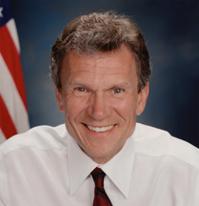
Mr. President, I would object, but I would ask the distinguished chair of the Appropriations Committee, who has worked harder than anyone I know in this Chamber to try to move the appropriations…
Mr. President, I would object, but I would ask the distinguished chair of the Appropriations Committee, who has worked harder than anyone I know in this Chamber to try to move the appropriations process forward, if we could not simply do what he is suggesting; that is, bring up the Homeland Security bill this afternoon. We can get agreement to go to the bill. No one has seen this bill. To be limited to a time limit without having had the opportunity to see it--we could even work out an agreement on relevant amendments. We could certainly work out a time agreement on amendments themselves. But there is no question that we could resolve these procedural issues immediately.
I ask unanimous consent that we set aside the pending business and take up the Homeland Security bill at 3 o'clock this afternoon.
Actually, I objected to that, and I have offered a counterproposal.
Mr. President, again, I think we are very close to reaching an agreement here. That is probably the good news that comes in this colloquy. I would object only because I am not sure I understand the implications of the final provision within his unanimous consent request having to do with the budget. There is no budget. We don't have a budget resolution. So I don't know how we can be guided by a budget resolution that doesn't exist. If anybody offers an amendment, my guess is it would be declared out of order, as the distinguished chairman is currently proposing. I don't think that is his intent, but I think that would be the interpretation. And that would, therefore, nullify any opportunity to make any alteration to the bill itself. If a 60-vote point of order is required on any amendment, it negates whatever opportunity there is to amend the bill.
I would hope perhaps within the hour we could work through that concern and come back and take up the bill this afternoon and, as the distinguished chairman suggests, finish the bill by early next week.
I will talk, of course, with our distinguished ranking member who would certainly need to be consulted before we agreed to do anything on the Senate floor. The distinguished ranking member has also expressed concern about our inability to move forward on this legislation, as well as the ranking member of the subcommittee. But I am pleased that the chairman has responded to our desire to move this legislation. Let's hope before the end of the afternoon we can have an agreement in place and take up the Homeland Security bill. No one could have been upstairs and heard what we heard and not want as much as possible to deal with all of the issues that are confronting us right now. The very least we need to do is to provide the funding necessary for the infrastructure that is already in place, and we have not even done that. So it is time we do it. It is time we recognize the concerns that are out there and deal with the responsibilities we have to fund the Homeland Security Department and all the related departments and not let this legislation languish as we tie ourselves up in procedural knots on legislation that has no place, at least right now, given our circumstances.
I will work with the chairman, work with the ranking member. Hopefully, we can come back to the floor sometime this afternoon and reach agreement.
Let me again respond to the distinguished Senator from Alaska, chairman of the committee. I don't know why we have to have all these conditions for taking up an important bill like this. What is wrong with coming to the floor, working through the bill, dealing with amendments. I am frustrated, I suppose, by the extraordinary demands put before the Senate. Here it is Thursday afternoon. One of the most important appropriations bills we will confront and we must deal with, the Senator from Alaska, as well intended as I know he is, is asking the Senate to take it up on a Friday, when he knows most people travel, and then resolve it before the end of Monday which is also a travel day. We can argue how productive Fridays and Mondays are. And yes, we ought to be able to work here 5 days a week.
That has not been the practice. And certainly if we gave Senators warning, those who have already made travel arrangements could probably cancel those travel arrangements. But here we are. He can't really mean what he has suggested, that he is going to finish an important bill like this over 2 travel days and a weekend. That doesn't work. That certainly wouldn't be recognized by any standard as a good-faith offer.
Let's work this bill. Let's get it done. Let's have a debate. Let's have amendments. But let's recognize if we are going to do this, showcasing and posturing for purposes of trying to make it appear as if we are getting the work done is not going to satisfy the Senate. We need to lay this bill down. We need to work through it. We need to get it done. We ought to be doing it rather than playing all these political games with class action and all the other things that are contemplated now by the majority.
Yes.
The Senator from Nevada is absolutely right. There are too many on the other side who want the House rules but the 6-year term. If they want the House rules, I would advise them to run for the House. We have rules in the Senate that allow for debate. One of the advantages of being a Senator is, you have an opportunity to offer amendments and have a good debate about issues. That doesn't mean they have to be extended indefinitely. These issues can be resolved and have been. But issues as important as homeland defense and appropriations ought
to have an opportunity to be debated, to be vetted, to be discussed, and considered in a thoughtful way.
What the Senator has suggested, that somehow we take up the bill this afternoon and, with 2 travel days and a weekend, resolve all of these questions is not reasonable and certainly not realistic.
I am happy to.
Mr. President, I acknowledge the Senator from Nevada is absolutely correct. It is mystifying that they would allow a bill as important as this to languish and not appoint the conferees we had every expectation would have been appointed the same day we did it in the Senate. Again, it is another illustration of the hyperbolic rhetoric we get about concern for conference and process, but when given the opportunity, no action is taken. That has been true on Defense, as well as many other bills. It is regrettable.
Clearly, this is another illustration of how unfortunate this whole schedule has been. We have wasted another week. We wasted a week with the Defense Appropriations conference report. We could have completed our work on the Homeland Security bill this week. Instead, I don't think we have had a vote. If we have had a vote, except for the nomination, I don't recall it. We had one vote on a nominee and no votes on any legislative substance. We have wasted this week.
We will waste next week, and as we continue to languish with all of this legislative work before us, we inexplicably have no opportunity to offer amendments and consider the legislative agenda that would make this a secure country. That is very unfortunate.
The Senator from Illinois is exactly correct. We would be prepared to accept virtually the same conditions we have agreed to in the past on Defense Appropriations and other legislation. If that is what it takes to expedite consideration of Homeland Security, I think it is critical that we attempt to accommodate the Senate and try to work through this very important legislative priority in an expeditious way. So the Senator from Illinois makes a very good suggestion. This is yet another approach. Let's decide to pick it up on Tuesday and move through the legislation. We can probably finish by the middle or certainly the end of the next week, and get to conference, even though they have not appointed conferees in the House.
My hope is when it comes to Homeland Security, given what we have heard today at the briefing, it would be imperative for us to deal with both of these bills in the most expeditious manner.
Mr. President, that will be, once again, the topic of discussion as I discuss the schedule with the majority leader. There cannot be a higher priority for our country and the Senate than dealing with homeland security issues.
Why we have not taken up the railroad security issue is another matter that is troubling to many of us. There are a number of bills related to our security that ought to be addressed, ought to have the highest priority. Certainly, Homeland Security Appropriations, railroad security, a number of other issues continue to sit without consideration. I cannot think of a better time to take it up than this afternoon and tomorrow, but no later than Tuesday; and I think the suggestion made by the Senator from Illinois is a good one. I will make it to the majority leader.
Yes, I will.
I am sure the people of South Dakota share the same feeling as the people in Nevada, Illinois and across the country. They want us to do our work and they want us to recognize there are very serious obligations we have that ought to be met. I cannot think of a more serious obligation than to provide for the security of this country. The longer we ignore it, the more we put our country at peril. I think it is critical we address these issues in a bipartisan way, a nonpoliticized way, an expeditious way; and certainly by taking this legislation up next week, we would be doing that.
I yield the floor and I suggest the absence of a quorum.
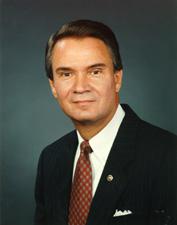
Mr. President, I thank the chairman of the Judiciary Committee for yielding to me. I will take a few moments to explain my position on this important legislative effort and point to the fact that I…
Mr. President, I thank the chairman of the Judiciary Committee for yielding to me.
I will take a few moments to explain my position on this important legislative effort and point to the fact that I have worked on a substitute amendment that has the ability to bring both sides together in a way we have not yet achieved.
It is clear that in all difficult legislative areas, when you have a very closely divided Senate, the only way we will actually get legislation adopted and passed and sent to the President for his signature is if we aggressively work together to limit our differences and maximize the things we have in common in order to produce a legislative package that can sustain the rules of the Senate and allow a bill to actually pass and become law.
There is room for reform in class action litigation. I do not think it is as bad as some portray the situation to be, but it is probably a problem that does need to be addressed. For those who think we should do nothing in this area, I would say there are some things we can do that improve the situation and, most importantly, get us a product that can actually become law.
Many times we in the Senate are faced with the question of, do I want to try to do everything I would like to do and risk getting nothing done, or would I like to try to reach a legitimate compromise and actually get something passed that may not be everything I would like but would be far superior to doing nothing at all. That is the situation we face with regard to the question of class action litigation.
My substitute bill, which would be offered, hopefully, as an amendment, does the following: It builds on the committee report in the sense that what we do is say to those plaintiffs who file a class action case in a particular State, where one-third or less of the plaintiffs, the people who are injured in a State, happen to be from that State, that like the committee bill, that case would clearly be a matter of Federal jurisdiction. Where two-thirds or more of the plaintiffs who are injured or alleged to be injured reside in a particular State--say Louisiana--where the injuries were alleged to have occurred, if two-thirds or more of those injured citizens who have filed a case, two-thirds or more, happen to be from my State of Louisiana, then it is a State court in which the action should be brought.
As the committee bill, my bill also says that when you have a situation between one-third and two-thirds of the plaintiffs coming from a State, a particular State where the injury occurred, then the Federal judge would look at the circumstances, as the committee bill, and make a determination of whether that case more appropriately belongs in the Federal court or belongs in the State court.
What is the difference between the two approaches? One big difference is that in the committee bill it says, that even if two-thirds or three-fourths or 98 percent of the injured people reside in Louisiana, where the alleged injury occurred, if the defendant happens to be a citizen of some other State, as so many corporations are, then the case goes automatically to the Federal court to interpret as best they can the State laws, such as my State of Louisiana.
That is incorrect. If the majority of the injuries are in the State of Louisiana--say it is a meatpacking company that has sales in Louisiana and it has caused injuries in my State of Louisiana by selling tainted products of meat that cause real injuries in Louisiana--and 75 percent of the injured people are in Louisiana but because the company may be domiciled or a citizen of the State of Delaware, that all of a sudden the Federal court is better situated to handle that case. That defies logic. If the injured people are in my State, two-thirds or more, then logic says the case can best be handled and interpreted by the State courts and the State supreme court which would be interpreting the State tort law that the State legislature passed.
Why should we say merely because one defendant's cause for alleged injuries happened to be in Delaware, where so many companies are incorporated, that automatically means it should be in the Federal court? The Federal court does a great job of interpreting Federal law, but I suggest when it comes to interpreting State law, on which these plaintiffs would be judged, the State court is better situated to make those determinations. I will have more to say about that particular aspect.
Let me mention briefly when it comes to the so-called coupon settlements the distinguished Senator from Texas mentioned, our legislation addresses that, to the extent that we can, by saying where coupons are issued to many plaintiffs who may have bought a defective product, the situation in the past has been many plaintiffs' attorneys would have their fees set not on the number of coupons that were actually redeemed, but only on the number of coupons that were actually issued in terms of the settlement.
For instance, people buy a defective product and many times the resolution of the case is based on each plaintiff getting a coupon or discount on a future purchase. The problem was many attorneys were getting paid on the total number of coupons issued rather than the ones redeemed. Our legislation says their fees would only be based on the number of coupons actually redeemed, and I think that makes a great deal of sense as well. It also says you cannot run a merry-go-round and continue trying to take cases from one court to the next. Under our legislation, we say defendants have a right to try to remove a case to the Federal court, but they cannot do it an unlimited amount of times. Our legislation simply says such removal would occur in a timely fashion, and we suggest within 30 days after filing of the complaint. Surely the defendants know whether they want to be in Federal court or State court. They cannot wait up until the end of the case in the State court, after years of litigation, and say, oops, we want to move it to Federal court and have that as an absolute right. They ought to do it in a timely fashion. Our legislation addresses that as well.
Mr. President, I will conclude my remarks by saying the good Senator from Utah is a very respected chairman of the committee. I think he wants legislation to pass. My fear is, unless we sit down and work together, we are going to have a stalemate. Both sides will have an argument. Democrats will have one argument and Republicans will have another argument, but the result will be nothing will pass.
My approach is simply that we can say don't proceed to this bill until we have had serious discussions between both sides, such as we have done on asbestos. I think those asbestos cases have made progress. It is not quite there yet, but they have made progress. Why? Because they have been willing to sit and talk among all the parties. I think we should do the same thing with the class action litigation. We can say we are not going to proceed to this bill until we have had an opportunity to sit down and have good, legitimate discussions.
I think we can come to an agreement so that we will not have the bill passed by just one vote or lose by one vote, but rather have it pass by 75 or more votes in this body. I think that is possible, but it is going to take, first of all, saying we are not going to proceed to the legislation until we have had those discussions. We are going to share what we have just outlined with my good friend, the chairman of the Judiciary Committee. Hopefully, they can look at it and see if there is room for legitimate talks and legitimate compromise. I think there is. The alternative is to do nothing. I think that is unacceptable.
I thank the chairman for yielding me a few moments to make some comments. I yield back my time.

Mr. President, I thank my colleague from Illinois for yielding the floor for a few moments. The Senator may wish to resume debate following my remarks. I want to present a counterpoint, I guess, to…
Mr. President, I thank my colleague from Illinois for yielding the floor for a few moments. The Senator may wish to resume debate following my remarks.
I want to present a counterpoint, I guess, to the opinions of my distinguished colleague. I think he made a very eloquent case in favor of why we should have class action lawsuits in this country, and I would simply point out to my colleagues that this bill does not in any way diminish our ability to have worthwhile class action lawsuits. In fact, I think the intent of the bill that is passed out of the Judiciary Committee and which Senator Hatch spoke about earlier this afternoon is, in fact, to make the process for class action suits better, fairer, and more beneficial to the plaintiffs.
One of the things the bill would do is create a consumer bill of rights to protect the class action plaintiffs, the actual clients of the class action lawyers. We have all heard about cases in which a class action lawsuit is filed, and in the end, the defendant corporation settles for millions of dollars paid to the lawyer and all the clients, or the plaintiffs get a coupon or something of insignificant value. So contrary to the impression created by Senator Durbin, I want to make it clear to my colleagues that this bill does not in any way seek to do away with class action lawsuits. In fact, we seek to make them better and more beneficial to the plaintiffs, the clients themselves, and cut down on some of the abuses.
I rise to support S. 1751, the Class Action Fairness Act of 2003, and I do so today with a special interest in the commonsense fairness of this legislation. There is, in my State of Illinois, as mentioned by Senator Durbin, one of the infamous venues that have come to be commonly described as ``judicial hellholes,'' State courts where plaintiffs' lawyers know they can file abusive, frivolous, and even extortionate class action lawsuits against defendant companies operating nationwide and
get results they could not get in the vast majority of fair jurisdictions elsewhere in the United States.
It is an abuse that must stop. Under S. 1751, every person's right to file a lawsuit is preserved. Every current legal theory for relief may still be advanced. Under S. 1751, a class action lawsuit can be filed just as easily as it can be today. S. 1751 is a limited and commonsense approach to a widely recognized abuse in our judicial system. It simply makes truly national lawsuits easier to hear in Federal court, and it simply requires judges to take a close look before approving some of the greedier and more abusive features of class action litigation, such as coupon settlements that I mentioned at the outset, where lawyers get millions of dollars and class action members get virtually worthless coupons.
My State has the dubious distinction of hosting one of the judicial hellholes to which Senator Durbin was referring. In fact, if anyone has been following the editorial page in the Wall Street Journal, they have written several editorials about this county. It is Madison County, IL. It is in southwestern Illinois, across the Mississippi River from St. Louis. If my colleagues have never been to Madison County, it is a suburban county with a surge in shuttered plants and steel mills and a new cottage industry in abusive class action litigation.
Several recent studies have looked at class actions in the Madison County courts, and here is what they found: Over a 2-year period, the number of class actions in the county increased by 1,850 percent. In 1998, there were only two class actions filed in Madison County, a number consistent with a community with Madison County's size and economic base.
During 2000, the number rose to 39. During 2001, 43 new class action lawsuits were filed, another 10-percent increase, and the upward trend is increasing.
As of the middle of this year, Madison County was already up to 39--I think Senator Durbin said 43 cases--as of July of this year. That puts it on pace to break its own record.
These findings suggest that Madison County has one of the highest class action filing rates in the country. Indeed, according to an article in the St. Louis Post Dispatch, Madison County has developed a nationwide reputation as the place to file nationwide class actions, even though it only has one-tenth of 1 percent of the U.S. population. It has about 259,000 people.
Here is another troubling statistic: In recent years, only a few thousand class actions were filed annually in the entire Federal court system. That amounts to a per capita rate of about 7.6 class actions for every million residents. In Madison County in 1999, the per capita rate of State court class actions was nearly 9 times higher, with about 61 class actions filed per million people.
These are not local disputes. The vast majority of class actions in Madison County were brought on behalf of nationwide classes. The percentage seeking nationwide class action status is a whopping 81 percent. In Madison County, lawyers have sought to certify classes over the last 3 years that included all Sprint customers nationwide who have ever been disconnected on a cell phone call--I am sure that has happened to all of us--all RotoRooter customers nationwide whose drains were repaired by allegedly unlicensed plumbers, and all consumers in the Nation who purchased limited edition Barbie dolls that were later allegedly offered for a lower price elsewhere.
Why were all these suits filed in Madison County? Why were they not filed in Utah, Idaho, Arizona, or State courts elsewhere in Illinois? Well, because a few lawyers have figured out that the judges in Madison County are very friendly to plaintiffs. It is no surprise that the same five firms appeared as counsel in approximately 45 percent of the cases filed during the 1999-to-2000 period, and that most of these firms are not located in Madison County.
Of the 66 plaintiffs' firms that appeared in the Madison County cases filed during 1999 and 2000, 56, or 85 percent, listed office addresses outside of Madison County.
These studies present a real mystery. Lawyers from all over the country are flocking to Madison County, IL, to file class actions on behalf of people who do not live in Madison County, against companies that do not reside in Madison County, concerning events that did not occur in Madison County.
What is wrong with this picture? Does anybody really think that it is just an accident that these lawyers from all over the country are flocking into Madison County with their cases?
As the Washington Post recently noted in an editorial criticizing class action abuses, having invented a client, the lawyers also get to choose a court. Under the current absurd rules, national class actions can be filed in just about any court in the country.
Large, nationwide class actions should be in Federal court, not in some small county court in some remote location that has nothing to do with the parties or the case. This is an abuse of the system, plain and simple. We are nowhere near the outer perimeter of tort reform here. This is an easy one. This is common sense, a simple, honest, straightforward reform narrowly tailored to achieve fairer results in cases of truly national significance.
I urge you, Mr. President, and all my colleagues, to support S. 1751.
I yield the floor.
If none of my other colleagues wishes to speak at this time, I suggest the absence of a quorum.
If the Senator from New York would yield for a question. Madam President, I would like to ask the Senator from New York if she would allow me to make a unanimous consent request at this time that the…
If the Senator from New York would yield for a question.
Madam President, I would like to ask the Senator from New York if she would allow me to make a unanimous consent request at this time that the appropriations bills for homeland security be brought for immediate consideration on the floor of the Senate.
These bills--S. 2537 and H.R. 4567--are currently on the Senate calendar. After the warnings we received today from Secretary Ridge, could there be anything more important for us to do at this moment in time but to move to these bills so that units of government in New York, in Illinois, in Alaska, in Nevada are provided with the funds they need immediately, so we can move this process beyond all the political rhetoric and debate on so many issues that take a distant second place to the security of this Nation.
I wonder if it would be appropriate for the Senator to yield to me to make that request, and then I would return the floor to her.
Madam President, I ask unanimous consent that the Senate take up for immediate consideration S. 2537, the Homeland Security Act of 2005.
Madam President, I ask unanimous consent that the Senate take up for immediate consideration H.R. 4567, the Homeland Security Act of 2005.
Madam President, I am disappointed with that decision based on what we have seen today and heard. I hope and I pray nothing happens in this country between now and the time we take these bills up. It reflects so badly on the U.S. Senate that we have been given fair warning by this administration that we face one of the most serious security threats since 9/11 and the Senate is unwilling--there has been an objection to even considering the Homeland Security bills at this moment when, in fact, we have nothing else to do here. I hope that history proves that this was not a wrong decision, but it is a decision which, sadly, we will have to live with until the leadership of this Senate decides to return.
At this point, I yield the floor.
Mr. President, what those who are following the Senate debate just witnessed is, sadly, a commentary on what has happened to the Senate. We are embroiled in debate on a class action bill relative to reforming the laws of America about how lawsuits can be filed. Many Members, in frustration, have wanted to consider many other issues: Should America now, after almost 6 years-plus of not increasing the minimum wage, finally increase the minimum wage for American workers? The Senator from Idaho has joined the Senator from Massachusetts in addressing a very important issue about agricultural workers and immigration. They would like to offer an amendment for that purpose, and it has broken down. There can be no agreement reached--at least there has not appeared to be an agreement reached.
Now we are just at rest, at ease, standing and doing nothing. It is hard to imagine that any of us were elected to the Senate for that purpose and particularly as many Members of the Senate, myself included, were called to a secret meeting, classified meeting this morning, with the Secretary of the Department of Homeland Security, Tom Ridge, as well as the Director of the Federal Bureau of Investigation, Robert Mueller, and were told at that briefing that we face an extraordinary threat to America's security. I am not saying anything out of school because I can tell you that Secretary Ridge had a press conference immediately after that private meeting and said as much to the American people.
It strikes me that under those circumstances we should be moving to consider issues relative to homeland security, not just the appropriations bills but issues relative to port security and railroad security. There are bills on this calendar which have just been languishing. At this moment in time, when we have nothing else going on on the floor of the Senate, why are we not moving as quickly as possible to consider those important appropriations bills?
I will yield in just a minute. I will be happy to yield after I make my statement.
I just pray that we can reach a point where we can get to these bills before anything serious happens in America. But I know in my State of Illinois and in every other State there are units of local government as well as law enforcement units and those who are looking for the resources to be able to respond to a national emergency.
If something serious should occur, God forbid, it is not likely that people will be calling the Senate switchboard. They are going to be dialing 911. They are going to be hoping that on the other end of the line there will be a police department, a fire department, an ambulance, or a hospital that can respond extremely quickly. And the question is, obviously: Are we doing all we should do on a timely basis to provide the resources to these units of local government?
Secretary Ridge said today--and I have the highest respect for him; he is an old friend. I came to Congress with him over 20 years ago. He was an excellent appointment by the President. But he said how much we rely on State and local first responders. If that is the case, wouldn't we want to move as quickly as possible to make resources available for them so they can be prepared to defend America? That is why we should consider this legislation.
The Senator from California, Mrs. Boxer, came to the Senate floor today and made the same unanimous consent request to go to these issues. Again, the majority said no, we are not going to consider these issues. There is nothing more important. I would hope we would move to them quickly.
I yield to the Senator from Alaska for a question.
All right. I would just say, in conclusion, then, at a time and place, I hope we can find this bipartisan agreement to move to these issues. The sooner the better. Once having moved to these issues, I think the Senate can dispatch them quickly, on a bipartisan basis, as it should.
I yield the floor.
Will the Senator yield for a question?
Does the Senator from South Dakota, our minority leader, see any objection to our considering this appropriation bill first thing Tuesday, taking this up on the same type of expedited schedule by which we took up the Defense Appropriations bill, subject to the same basic rules and completing it next week? This could be done quickly, could it not, if we follow the precedence and rules of the Senate, and there would not be a necessity for some of the conditions the Senator from Alaska has asked for?
Mr. President, I am not going to make a unanimous consent request. The Senator from Alaska doesn't care for that from a member of the committee. I would like to suggest to the Senator from South Dakota that I hope there could be a conversation involving our leader on the Appropriations Committee, Senator Byrd, and Senator Stevens, as well as Senator Frist. I hope we can propose specifically to begin consideration of the Department of Homeland Security Appropriations bill on Tuesday morning and bring it to a conclusion and completion as quickly as possible.
I ask the Senator from South Dakota if he would consider trying to convene such a conversation with his fellow Senators.
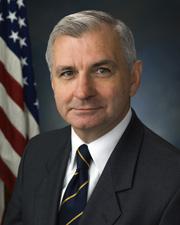
Mr. President, I join my colleagues, Senators Smith, Dodd, DeWine, and Reid, to discuss the Garrett Lee Smith Memorial Act which will be introduced today. I thank and commend them. I particularly…
Mr. President, I join my colleagues, Senators Smith, Dodd, DeWine, and Reid, to discuss the Garrett Lee Smith Memorial Act which will be introduced today. I thank and commend them.
I particularly commend Senator Gordon Smith. We are here today literally because he has worked tirelessly to bring this legislation to the Senate floor, to work with us and to advocate strenuously that this legislation come to the floor of the Senate today. It is rightfully designated the Garrett Lee Smith Memorial Act.
Garrett, unfortunately, struggled for years and sadly took his own life last September. We heard this afternoon the heartfelt words of his father talking about this wonderful young man. We all sense that as Garrett struggled, he did it with loving and caring parents.
As my colleague Senator DeWine pointed out, the Smiths have taken their pain and transformed it into purposeful action to ensure that other families and other young people do not have to suffer and endure even today the pain that lingers at the loss of this fine young man, and I thank the Senator for his leadership and for his decent and gallant heart.
We are here today because we are responding to an extraordinary problem, a problem that seems to many of us to be difficult to comprehend: why a young person, in the prime of life, with so much ahead, would take their own life.
Sadly, suicide takes the lives of over 4,000 children and young adults each year. It is now the third leading cause of death among 10 to 24 year olds in America. The rate of suicide has tripled from 1952 to 1995. Yet despite the astounding statistics, we still do not fully understand what is driving so many young people to the extreme of taking their own life.
What we hope to achieve with this legislation is to show them that there is an answer, that suicide is not the way out, that there is help for whatever is troubling them, and that they can live lives that are full, happy, and complete.
A Chronicle of Higher Education survey found that rates for depression in college freshmen are on the rise. Without treatment, the Chronicle points out, depressed adolescents are at risk for social failure, social isolation, promiscuity, self-medication with drugs and alcohol, and suicide. That is a description of failure, not a description of successful living.
A 2003 Gallagher's Survey of Counseling Center Directors found that 85 percent of counseling centers on college campuses are reporting an increase in the number of students in need of services.
Mr. President, 81 percent were concerned that increasing numbers of students are there with severe psychological problems; 67 percent reported a need for more psychiatric services, and 63 percent reported problems with growing demand for services without an appropriate increase in resources. That is why, working with Senator DeWine, working with my colleagues Senator Dodd and Senator Smith, we have incorporated in this act support for college counseling centers. It is not coincidental that Garrett was beginning his first year at the University of Utah, had left home, was in a new environment, was struggling with all of the powerful forces of independence and of change young people experience when they go off to school. That is a particularly vulnerable time.
We understand college is a time of great intellectual development, but it is also a time of extraordinary personal and interpersonal growth and change. When children go off to college, we need to make sure they have the support they need during this critical transitional period.
Additionally, there are many adults going to college and they have a particular dilemma of balancing their studies with their family responsibilities. Yet campus after campus lacks the resources to support their counseling staffs to deal with these real issues, these real psychological issues.
Part of what we seek to do through the Garrett Lee Smith Memorial Act is ensure colleges and universities around the country have the resources to reach out to students, to provide essential mental and behavioral health services, and to educate families about potential signs of trouble.
Part of this process is not only treating the youngster, it is making parents aware of these signs so they can intervene successfully and in a timely fashion. Our colleges and universities are struggling to address the wide range of problems experienced by students--drug and alcohol problems, eating disorders, depression, schizophrenia, suicide attempts. With insufficient resources, many schools offer limited or very cursory services to students. We hope to begin to change that with this legislation.
We hope through this legislation to begin to shine a light on the growing problem of youth suicide. This legislation provides resources and technical assistance to States to develop and implement robust early intervention and suicide prevention strategies across the Nation. It also seeks to address the overwhelming need for mental and behavioral health services on college campuses, as I have discussed. This is an important bipartisan measure and a tribute, a fitting tribute to Garrett and to the faith and dedication and decency of the Smith family, Gordon and Sharon.
I again express my thanks to Senator Dodd and Senator DeWine. When you look at legislation in this body that attempts to provide practical support and help to young people, you usually find two names on the legislation--Dodd and DeWine. It is always a privilege to join these gentlemen.
I also want to thank Senator Harry Reid, who spoke movingly of his own experience, the death of his father through suicide. Senator Don Nickles similarly gave a moving tribute to Sharon and Gordon. Let me also thank Dr. Harsh Trivedi, a fellow in my office, a psychiatrist who is now on a fellowship up in Boston. He did most of the work on the Campus Care and Counseling Act, which is the legislation incorporated in this act. I also thank Lisa German of my staff, who does so much to help us on these issues, and also Catherine Finley on Senator Smith's staff, who has been of remarkable help and assistance.
Let me thank the leadership, Senator Daschle, Senator Frist, Senator Reid, Senator Nickles, because they let us bring this bill to the floor today to move forward to pass it.
This is an example of the kind of work we can do when we work together, the kind of work the American people demand of us. It is, as I said, a fitting tribute to Garrett and I hope an enduring tribute to his father who worked so hard to get it to the floor today and to pass it.
I yield the floor.
Mr. President, I respectfully object. Mr. President, I ask unanimous consent that the order for the quorum call be rescinded. Mr. President, I rise today in support of S. 2062. I am sorry the Senator…
Mr. President, I respectfully object.
Mr. President, I ask unanimous consent that the order for the quorum call be rescinded.
Mr. President, I rise today in support of S. 2062. I am sorry the Senator from Connecticut is not in the Chamber.
Certainly.
Mr. President, as I was saying, I am sorry the Senator from Connecticut is not in the Chamber because I have such great respect for his opinion, particularly his opinion regarding this bill. I know what a keen interest he has in this bill, and when he talks about the fact that we ought to delay this for 1 more week because the majority has set the agenda and the agenda next week calls for matters that might not be relevant to this particular issue, I simply remind the Senator from Connecticut, who is my dear friend, that this bill has not just come to the floor.
As a member of the Judiciary Committee, I was there in April of 2003 when this particular bill was voted out of the Judiciary Committee. We were all here in November of 2003 when we had a cloture vote on this bill. So this is not something new that has just come about. This bill has been under negotiation actually since the 105th Congress.
In 1996, the negotiations began on a class action bill. I think to now ask for another delay for another week on the cloture vote is just simply not called for, and that is the reason we need to go ahead with the vote tonight. My colleagues are either for class action reform, they are either for a bill that is a bipartisan bill, or they are against it. It is that simple at this point in the negotiations.
There was a proposal made by this side of the aisle to the other side of the aisle that when this bill came to the floor that we allow only germane amendments, amendments that are relevant to the issue of class action, to be brought to the floor as legitimate amendments that would be debated and voted on. The other side of the aisle would not agree to that. So therefore we have evolved into a different format on the floor today.
I do rise in strong support of S. 2062, the Class Action Fairness Act of 2004. It is a product of negotiations between Senators on both sides of the aisle in an effort to gain the 60 votes needed to invoke cloture and proceed to an up-or-down vote on the merits of the bill. To a great extent, the bulk of the tort reform needed in this country will be handled on the State court level, where most civil complaints are filed.
That is a very significant point. As a trial lawyer, I remember that I usually wanted to file my cases in State court, and they ought to still have that right to do so. But there are times when it was dictated to you as a lawyer that you had to go to Federal court. It is because we have had a handful of State court jurisdictions in the United States where a grossly disproportionate number of class action suits are filed, and that is just not right. That is why these negotiations were instituted in 1996. That is why over the last 8 years we have been going back and forth with Members on both sides of the aisle being involved and have come up with a fair bill that does allow for certain exceptions that I am going to talk about in just a minute.
People have referred to these jurisdictions where a majority of the class actions have been filed as magnet courts because they draw in class action suits with their soft juries and their pro-plaintiff judges. That is just a matter of fact. Under the Class Action Fairness Act, businesses can break loose from these magnet State courts and get a fair trial in a Federal jurisdiction.
S. 2062 differs from the previous versions of the class action bill in several ways, and those changes have been negotiated on both sides of the aisle over the period not from just last April or November, but from 1996, over the last 8 years. I am going to focus my remarks on one change I think makes a lot of sense, and that is the addition of a local class action exception.
Under the provisions of S. 2062, class action cases will remain in State court if the following conditions are met: First, more than two- thirds of class members have to be citizens of the forum State. Second, there has to be at least one in-State defendant from whom significant relief is sought by members of the class and whose conduct forms a significant basis of the plaintiffs' claims. Third, the principal injuries resulting from the alleged conduct or related conduct of each defendant have to have been incurred in the State where the action was originally filed. Finally, there cannot be any other class action cases asserting the same or similar factual allegations against any of the defendants on behalf of the same or other persons filed in the preceding 3 years.
Those are pretty fair and reasonable exceptions. You are still going to have probably most of the class action suits filed in State court with this exception being in place.
Under the local class action exception, a limited group of local class action cases would be allowed to stay in State court where the facts of the case warrant this treatment. Some examples would be a plant explosion or an
oil spill, where one or more of the defendants are in the same State as the catastrophe and a supermajority of the plaintiffs are there as well. These are truly local actions and ought to be treated as such because they do not lend themselves to the egregious forum shopping that lands cases which should be filed in Federal court in one of these so-called magnet courts around the country.
Despite all of the progress we have made in our negotiations on S. 2062, it seems we have some Senators who plan to offer amendments that would weaken this bipartisan legislation or weight it down with nongermane issues that will lead to the bill's defeat. The passage of nongermane amendments to this class action reform bill will probably doom its passage. For this reason, I will vote against all nongermane amendments, and I plan to vote against any germane amendments that would weaken S. 2062 in its present form.
In summary, we now have a class action bill which is supported by both sides of the aisle. Despite the misinformation that has been spread around, this bill will actually promote the proper assignment of class action cases between State court and Federal court dockets. I urge my colleagues to vote against any amendments that would weaken or kill S. 2062 and then to vote in favor of this bill as a first step in restoring fairness and balance to our Nation's tort system.
Mr. President, I yield the floor and suggest the absence of a quorum.
Mr. President, I rise to speak about a case that I think perfectly illustrates some of the problems produced by our current class action system. This case is, unfortunately, not unique. These…
Mr. President, I rise to speak about a case that I think perfectly illustrates some of the problems produced by our current class action system. This case is, unfortunately, not unique. These outrageous decisions happen all too frequently. The bill currently under consideration will help fix some of these problems.
Reproduced on this poster beside me is an actual settlement check from a recently settled class action lawsuit. This check is made payable to a member of my staff who received it in the mail earlier this year. You will notice that on the check's ``pay to the order of'' line, I have covered the name of my staffer so that she may remain anonymous.
I have also obscured the name of the defendant in this case. Plaintiff's lawyers have soaked them once already. I would hate to see others sue this company just because they heard the company settled one class action suit.
Along with this settlement check, my staffer received a letter, which says in part:
You have been identified as a member of the class of . . .
customers who are eligible
for a refund under the terms of a settlement agreement
reached in a class action lawsuit . . . The enclosed check
includes any refunds for which you were eligible.
Now as you know, Senate staffers are certainly not the highest paid people in this town. So this woman on my staff reports she was excited about receiving some unexpected money.
And then she looked at the enclosed check to see just how big her windfall was. It was a whopping 32 cents. That is right, she received a check made out to her in the amount of 32 cents.
I guess it goes without saying that she was a bit disappointed in her newfound riches.
Now, don't misunderstand me. I am not suggesting my staffer deserved a bigger settlement check. In fact, she tells me she had no complaint whatsoever against the defendant. And she never even asked to be part of this lawsuit.
Apparently, she just happened to be a customer of a defendant who was sued, and it was determined that she theoretically could bring a claim against the defendant, and so she became a member of ``a class'' that was due a settlement.
If this doesn't precisely illustrate the absurdity of the current class action epidemic in this country, I don't know what does.
To demonstrate just how far out of whack the system is, let's start with the letter notifying my staffer that she was a member of a class action lawsuit, and had been awarded a settlement. This letter and check arrived via the U.S. mail. The last I knew, it cost 37 cents to mail an envelope. The settlement check is for 32 cents.
You can probably see where I'm going with this.
It cost the defendant in this class action suit, 37 cents to send a settlement check worth 32 cents. That sure makes you pause and think about the absurdity of our class action system.
Now, I don't claim to have the economic expertise of some--like my good friend, the distinguished former Senator Gramm of Texas--but I can tell you that forcing a defendant to spend 37 cents to send someone a 32-cent check doesn't make much economic sense. And it certainly defies common sense.
But let me point out the most disturbing element about this lawsuit. My staff researched this case and it may interest my colleagues to know that while the unwitting plaintiff received just 32 cents in compensation from this class action lawsuit, her attorneys pocketed in excess of $7 million.
All in all, not a bad settlement--if you happen to be a plaintiff's lawyer rather than a plaintiff.
And in case you think this plaintiff received an unusually low settlement in this litigation, let me quote from the letter accompanying the settlement check:
At the time of the settlement, we estimated that the
average [refund] would be less than $1 for each eligible
[plaintiff]. That estimate proved correct.
So, you see, even before the settlement, it was clear that each plaintiff would on average receive less than $1. Yet the attorneys still got more than $7 million.
My colleagues may also be interested to know how much the defendant was forced to spend defending this lawsuit.
Knowing the extent of the defendant's defense costs is instructive in demonstrating how unjust these abusive suits can be. So we asked the defendant how much it spent defending this suit that provided a plaintiff with pennies and her lawyers with millions. But perhaps not surprisingly, the defendant was not willing to discuss that matter.
You see, the defendant told us that if it were readily known just how much they spent defending these types of suits, then that information would almost certainly be used against them in the future.
This defendant feared that if their defense costs were known, then another opportunistic plaintiff's lawyer would file another one of these suits. And then that lawyer would offer to settle for just slightly less than the millions he knew it would cost the defendant to defend the action.
That perfectly illustrates how plaintiff's lawyers exploit and abuse defendants under the current system.
Can there be any doubt that the current class action system is in need of repair? When the lawyers get more than $7 million and a plaintiff gets a check for 32 cents, something is terribly wrong. When defendants fear disclosing how much they spend fighting these ridiculous suits because to do so would invite more litigation, something is terribly wrong.
Justice is supposed to be distributed fairly. This is clearly not a fair way to distribute justice.
Let's try to correct some of the abuses in class action litigation by passing this legislation.
We are not going to end every 32-cent award to plaintiffs and multimillion dollar award to attorneys, but surely we can curb some of this nonsense.
I announce that the Senator from Colorado (Mr. Campbell), the Senator from Nevada (Mr. Ensign), the Senator from Wyoming (Mr. Enzi), the Senator from Illinois (Mr. Fitzgerald), the Senator from Nebraska (Mr. Hagel), and the Senator from Pennsylvania (Mr. Santorum) are necessarily absent.

Mr. President, I ask unanimous consent that the order for the quorum call be dispensed with. Mr. President, I, like others of my colleagues, would like to see closure on this issue. Before I got into…
Mr. President, I ask unanimous consent that the order for the quorum call be dispensed with.
Mr. President, I, like others of my colleagues, would like to see closure on this issue. Before I got into politics, I was a lawyer. I admire our legal system. In many ways, people have their chance to be judged by their neighbors. I am very respectful of the jury trial. However, in the class action arena of the law, I find more abuses than solutions. I don't believe the Constitution ever envisioned the class action litigation model that we have come up with where you can create your own false diversity and you can run everybody to Illinois or Mississippi because business is involved.
I believe the removal process in this bill where the judge has discretion to remove cases from State court to Federal court will correct some abuses. I believe the coupon cases were never what the law was meant to be about.
The legal reforms in this bill I support. I have an amendment. I hope we can get to it. It would allow a procedure to be had in terms of pursuing settlement. Consumers need to be told about the Pinto case and need to be informed when products are dangerous, but companies need not be required to give proprietary information without having their say.
I have an amendment that would allow the judge in a particular case to rule on whether documents would be subject to seal. I think the South Carolina rule is a very reasonable rule. But whether we get to this, I believe this bill's time has come, and it is now time for the Senate to act. The abuses that are going on in class action are not about treating people fairly, they are about simple greed. These abuses need to be stopped for the betterment of us all. Claimants and businesses find themselves subject to this.
I urge my colleagues to vote in favor of cloture on S. 2062, the Class Action Fairness Act of 2004. As a member of the Judiciary Committee, I supported the bill during committee consideration and I will be voting in favor of cloture and final passage as well.
The need for this bill is pointed out daily by stories of abuse. We hear of attempts to sue McDonald's because people who eat there are getting fat. We hear of lawyers negotiating coupon settlements for their clients, while they receive millions of dollars in fees. We hear of class members actually losing money on settlements.
I am a lawyer and I am not happy with that state of affairs. I don't think anyone is more in favor of a strong legal system than I am. And I define a strong legal system as one where all parties are treated fairly, wrongs are redressed, and justice is afforded equally and without bias.
The Class Action Fairness Bill of 2004 does not weaken our legal system. It rectifies the current imbalance in some areas where some parties are not treated fairly; new wrongs are committed, not redressed; and justice is overlooked, if not outright disregarded.
I say to my friends who oppose this bill that, just as it is important to make sure that victims have an opportunity to be heard in our courts, it is just as important to insure that the defendant is treated fairly. And I don't believe anyone can credibly claim that that is the case today in many areas of our country. Justice requires that we act to remedy that.
Although I may not believe this bill is perfect, and actually have an amendment or two of my own, I do not believe we should delay this bill one moment longer. My amendment is slightly technical, but very simple.
It would merely provide for uniform judicial scrutiny of sealed documents. I have based my amendment on the South Carolina district rule for how to obtain a protective order for trade secrets or other proprietary information. I haven't heard from one person in South Carolina who doesn't like the way it works.
It puts all parties on equal footing and preserves judicial discretion. However, though I firmly believe my amendment would improve the bill, I will be voting for cloture because this bill is more important.
I firmly believe that the Class Action Fairness Act of 2004 is exactly that, fair to all parties.
It is narrowly aimed at some of the most egregious abuses of the class action system. In fact, I have heard from some folds that the bill does not go far enough. However, in my opinion, it is a reasonable first step in the effort to control what are clearly abuses of the system.
It is reasonable because I don't think anyone in the chamber can complain about judges taking a look at settlements to make sure the class members are not being victimized further. I don't think anyone can complain about giving federal judges the power to block worthless settlements based on coupons or other gimmicks.
We have even had some firms sanctioned for filing cases just to settle with no damages for the class, but significant attorneys' fees for them. We have had other lawsuits end with the lead plaintiffs and their lawyers receiving large sums and other class members receiving nothing, but losing their right to legal action in the future.
When the very people class actions are supposed to help are being hurt, it is time to do something different.
This bill is a reasonable step in the right direction. While some of my friends on the other side of the aisle may not like some provisions, they have to admit that there is a problem that needs to be addressed.
In closing, I would just like to urge my colleagues to help us move this bill to conclusion. File your amendments, I have one myself, but don't let your personal desire to offer your amendment get in the way of this much needed legislation.

Mr. President, I ask unanimous consent that the order for the quorum call be rescinded. Mr. President, it was my privilege to be in the chair during the exchange of views between the two Senators…
Mr. President, I ask unanimous consent that the order for the quorum call be rescinded.
Mr. President, it was my privilege to be in the chair during the exchange of views between the two Senators from Illinois. I could not resist the opportunity to take the floor now and add my experience to that which has been referred to.
The senior Senator from Illinois spoke of those who did not have a legal background, and I fit into that category. I have never been in court, except as a juror and occasionally as a witness. I have never been to law school. However, I would just share this one experience with the Senate with respect to class action lawsuits and how they can be abused.
When my father left the Senate, he was invited, as is often the case for those who have senior experience in business, to serve on a number of boards of directors. He went on one particular board, thinking it was a relatively safe kind of activity for him, only to be distressed at the beginning of the next calendar year when he was served with this pile of papers. There was a lawsuit being filed on behalf of the shareholders of that particular company, and my father was named as the principal defendant.
Somewhat disturbed by this, he called the general counsel of the firm and asked what was going on.
Oh, said the general counsel, nothing to worry about. You are named because members of the board of directors are listed alphabetically and Bennett comes ahead of any other name. So you are named: Bennett et al. Don't worry, we will take care of this.
He said: Of what am I being accused? Of what is the board being accused?
Well, said the general counsel, this happens every year. He said: The members of the board have a compensation plan that is tied to the profitability of the company. Whenever the company increases its profitability by formula, the directors' pay increases by a similar formula amount.
My father said: That's very clear. It's outlined. What is the cause of this class action lawsuit being brought on behalf of all of the shareholders of the company?
Well, said the general counsel, this lawyer every year files a lawsuit on behalf of the shareholders, claiming that the board of directors is looting the company for its own purposes. That is, members of the board are trying to enrich themselves on the basis of this increase in compensation at the expense of the shareholders.
My father said: What do we do? Do you go to court and prove that this is a legitimate activity?
No, said the general counsel, that costs too much money. For us to go to court would cost us more in legal fees than the amount the lawyer will settle for.
What amounts are we talking about, my father asked.
He was told by the general counsel: The lawyer who files this suit will settle for $100,000. It would cost us more
than $100,000 to defend our position, so every year when the formula kicks in and the directors' compensation is increased, the lawyer files his lawsuit, we send him a check for $100,000, the lawsuit goes away, and we forget this until the next year.
That is extortion, plain and simple. Yet the general counsel would say, with some accuracy, the shareholders are better served if we simply pay him his $100,000 than if we go to court and defend ourselves. Even though we would win, we would end up paying $200,000 or $250,000 or some number like that. So, he said, we have come to the conclusion the best thing to do for the shareholders is simply settle this class action lawsuit every year for $100,000. The lawyer knows we will do that. So every year he files the lawsuit, we send him the check, the plaintiffs in whose behalf he is suing get nothing because his legal fee for filing the suit is $100,000, and we simply go through this charade every year.
I am happy to report that this particular lawyer, as I understand it, decided to do this in some other instances and Merrill Lynch, the large brokerage firm, took him to court. They spent close to $1 million in legal fees proving he was wrong and, furthermore, proving he had acted in a frivolous manner and ultimately put him out of business. The shareholders of Merrill Lynch were paying for an action that benefited the shareholders of the company on whose board my father sat, and many others.
We can be grateful that Merrill Lynch was willing to accept that financial burden in order to put a stop to this practice. But it demonstrates that standing on the floor of the Senate and deciding how valuable class action lawsuits are does not properly address the problem that this, and similar legislation, has sought to solve.
I wanted to add that personal experience to the debate that has been going on here so anybody who is following the debate will understand that it is not a question of whether one should allow class action lawsuits. It is not a question of whether plaintiffs are entitled to relief as a result of joining a class. It is a question of cleaning up abuses that are carried on by lawyers who say, in the words of one of them: I have a perfect law practice. I have no clients.
They file class action lawsuits on behalf of classes, but they are not in fact real clients. The lawyers benefit, ultimately to the detriment of the shareholders of the companies that are being sued. These shareholders are individuals. We are not talking about companies as if they were abstract entities. They are individuals who are being hurt by improper practices. Those are the kinds of practices this legislation seeks to resolve.
I yield the floor.
Mr. President, I suggest the absence of a quorum.
Bill Text
Latest available legislative text
        [Congressional Bills 108th Congress]
[From the U.S. Government Publishing Office]
[H.R. 1875 Introduced in House (IH)]

108th CONGRESS
1st Session
H. R. 1875

To strengthen the missile proliferation laws of the United States, and
for other purposes.

_______________________________________________________________________

IN THE HOUSE OF REPRESENTATIVES

April 30, 2003

Mr. Lantos (for himself, Mr. Hyde, Mr. Berman, Mr. Bereuter, and Mr.
Ackerman) introduced the following bill; which was referred to the
Committee on International Relations

_______________________________________________________________________

A BILL

To strengthen the missile proliferation laws of the United States, and
for other purposes.

Be it enacted by the Senate and House of Representatives of the
United States of America in Congress assembled,

SECTION 1. SHORT TITLE.

This Act may be cited as the ``Missile Threat Reduction Act of
2003''.

TITLE I--STRENGTHENING INTERNATIONAL MISSILE NONPROLIFERATION LAW

SEC. 101. FINDINGS.

Congress makes the following findings:
(1) The spread of offensive ballistic missiles suitable for
launching nuclear, chemical, and biological warheads is
accelerating across the globe.
(2) According to the Carnegie Endowment for International
Peace, more than 25 countries possess missiles with ranges in
excess of 300 kilometers and capable of delivering a nuclear
warhead.
(3)(A) Many of the countries now possessing such missiles,
and engaging in the sale and transfer of such missiles and
their production technology to other countries, are directly
hostile to the United States, its interests, and its allies.
(B) Of particular concern in this regard is North Korea,
which regularly sells ballistic missiles and technology to
countries in regions of instability and concern to the United
States.
(4) The Central Intelligence Agency has stated in its most
recent report on the foreign ballistic missile threat the
following:
``Emerging ballistic missile states continue to
increase the range, reliability, and accuracy of the
missile systems in their inventories--posing ever
greater risks to U.S. forces, interests, and allies
throughout the world. A decade ago, U.S. and allied
forces abroad faced threats from SRBM's [Short Range
Ballistic Missiles]--primarily the Scud and its
variants. Today, countries have deployed or are on the
verge of deploying MRBM's [Medium Range Ballistic
Missiles], placing greater numbers of targets at risk.
``Proliferation of ballistic missile-related
technologies, materials, and expertise--especially by
Russian, Chinese, and North Korean entities--has
enabled emerging missile states to accelerate the
development timelines for their existing programs,
acquire turnkey systems to gain previously non-existent
capabilities--in the case of the Chinese sale of the M-
11 SRBM to Pakistan--and lay the groundwork for the
expansion of domestic infrastructures to potentially
accommodate even more capable and longer range future
systems.''.
(5) The same CIA report also noted the following: ``North
Korea has assumed the role as the missile and manufacturing
technology source for many programs. North Korean willingness
to sell complete systems and components has enabled other
states to acquire longer range capabilities earlier than
otherwise would have been possible--notably the sale of the No
Dong MRBM to Pakistan. The North also has helped countries to
acquire technologies to serve as the basis for domestic
development efforts--as with Iran's reverse-engineering of the
No Dong in the Shahab-3 program. Meanwhile, Iran is expanding
its efforts to sell missile technology.''.
(6) Since 1987, 33 countries have committed to abide by a
voluntary set of guidelines known as the Missile Technology
Control Regime (MTCR), whereby adherents agreed to refrain from
the transfer to nonadherents of certain categories of whole
missiles, their constituent parts, and the facilities to
manufacture them, especially ``Category I'' missiles, which at
a range of 300 kilometers or more and a payload capacity of 500
kilograms or more are especially suited for delivering nuclear
weapons.
(7) In October 2002, 93 countries committed to observe a
nonbinding code of conduct derived from, but less restrictive
than, the nonbinding MTCR. While this is a welcome achievement,
it does not provide a legal obligation on its adherents to
refrain from the trade in missiles or missile technology.
(8) On December 10, 2002, the White House released its
``National Strategy to Combat Weapons of Mass Destruction'',
wherein it is stated that strengthening international
nonproliferation controls on weapons of mass destruction (WMD)
and upon the missiles that can deliver them is the second of
three principal pillars of the National Strategy. The National
Strategy also states that ``effective interdiction is a
critical part of the U.S. strategy to combat WMD and their
delivery means''.
(9) On December 11, 2002, the United States took control of
an unflagged freighter that was attempting clandestinely to
ship, from North Korea to Yemen, SCUD missiles of a type that
would be generally prohibited from transfer as Category I
missiles.
(10) Neither North Korea nor Yemen is an adherent to the
MTCR guidelines, which in any case are not legally binding, and
there is no binding international legal instrument that would
prohibit shipments of the missiles referred to in paragraph
(9).
(11) At Yemen's request, the United States released the
shipment of North Korean Scud missiles to Yemen.
(12) Also on December 11, 2002, the White House press
spokesman stated that existing international law regarding
halting the spread of missile proliferation could be
strengthened. The new National Strategy to Combat Weapons of
Mass Destruction also commits the United States to support
those regimes that are currently in force, and to work to
improve the effectiveness of, and compliance with, those
regimes, and identifies the MTCR as a regime that the United
States will seek to strengthen.
(13) Secretary of Defense Donald Rumsfeld, testifying on
February 12, 2003, before the Committee on Armed Services of
the Senate, stated the following: ``. . . [I]t's pretty clear
that the proliferation regimes that exist in the world worked
pretty well before, [but] they're not working very well right
now. . . . [U]nless the world wakes up and says this is a
dangerous thing and creates a set of regimes that will in fact
get cooperation to stop those weapons, we're going to be facing
a very serious situation in the next five years.''.
(14) The MTCR has made an invaluable contribution to
restraint in the international trade of offensive ballistic
missiles. Strengthening international controls on ballistic
missiles, however, will require a dramatic expansion of
adherents that rigorously abide by the MTCR's guidelines, and a
binding legal basis for the United Nations and countries
devoted to nonproliferation to prevent, and when necessary act
to prevent, further proliferation of offensive ballistic
missiles around the world.
(15) Therefore, it should be the policy of the United
States to promote the creation of new international mechanisms
that would, in all future circumstances, allow the peace-loving
and law-abiding nations of the world the authority to interdict
and prevent the transfer of such missiles.

SEC. 102. POLICY OF THE UNITED STATES.

It shall be the policy of the United States to seek a binding
international instrument or instruments to restrict the trade in
offensive ballistic missiles with ranges of 300 kilometers or more that
have a payload capacity of 500 kilograms or more. Such a binding
international instrument may take the form of a multilateral treaty, a
United Nations Security Council resolution, or other instrument of
international law, and should provide for enforcement measures
including interdiction, seizure, and impoundment of illicit shipments
of offensive ballistic missiles and related technology, equipment, and
components.

SEC. 103. SENSE OF CONGRESS.

It is the sense of the Congress that the United States should
immediately introduce a resolution in the United Nations Security
Council to prohibit all members of the United Nations from purchasing,
receiving, assisting or allowing the transfer of, and to authorize the
subsequent interdiction, seizure, and impoundment of, any missile,
missile-related equipment, means of producing missiles, or missile-
related technology from North Korea.

TITLE II--STRENGTHENING UNITED STATES MISSILE NONPROLIFERATION LAW

SEC. 201. PROBATIONARY PERIOD FOR FOREIGN PERSONS.

(a) In General.--Notwithstanding any other provision of law, upon
the expiration, or the granting of a waiver, on or after January 1,
2003, of sanctions against a foreign person imposed under section 73(a)
of the Arms Export Control Act (22 U.S.C. 2797b(a)) or under section
11B(b)(1) of the Export Administration Act of 1979 (50 U.S.C. App.
2410b(b)(1)), as continued in effect under the International Emergency
Economic Powers Act, a license shall be required, for a period of not
less than 3 years, for the export to that foreign person of all items
controlled for export under section 5 or 6 of the Export Administration
Act of 1979 (50 U.S.C. App. 2404, 2405), as continued in effect under
the International Emergency Economic Powers Act, in accordance with the
Export Administration Regulations.
(b) Termination.--Subsection (a) shall not apply to a foreign
person 30 days after the President notifies the Committee on
International Relations of the House of Representatives and the
Committee on Banking, Housing, and Urban Affairs and the Committee on
Foreign Relations of the Senate that he has determined that--
(1) the foreign person has--
(A) ceased all activity related to the original
imposition of sanctions under section 73(a) of the Arms
Export Control Act or section 11B(b)(A) of the Export
Administration Act of 1979, as the case may be; and
(B) has instituted a program of transparency
measures whereby the United States will be able to
verify for at least a period of 3 years that the
foreign person is not engaging in prohibited activities
under those provisions of law referred to in paragraph (1); and
(2) there has been an appropriate resolution of the
original violation or violations, such as financial penalties,
incarceration, destruction of prohibited items, or other
appropriate measures taken to prevent a recurrence of the
violation or violations.

SEC. 202. STRENGTHENING UNITED STATES MISSILE PROLIFERATION SANCTIONS
ON FOREIGN PERSONS.

(a) Arms Export Control Act.--Section 73(a)(2) of the Arms Export
Control Act (22 U.S.C. 2797b(a)(2)) is amended by striking ``2 years''
each place it appears and inserting ``4 years''.
(b) Public Information.--Section 73(e)(2) of the Arms Export
Control Act (22 U.S.C. 2797b(e)(2)) is amended by adding at the end the
following new sentence: ``Such report may be classified only to the
extent necessary to protect intelligence sources and methods. If the
report is so classified, the President shall make every effort to
acquire sufficient alternative information that would allow a
subsequent unclassified version of the report to be issued.''.
(c) Export Administration Act of 1979.--Any sanction imposed on a
foreign person under section 11B(b)(1) of the Export Administration Act
of 1979 (50 U.S.C. App. 2410b(b)(1)), as continued in effect under the
International Emergency Economic Powers Act, shall be in effect for a
period of 4 years beginning on the date on which the sanction was
imposed.
(d) Applicability.--The amendments made by subsections (a) and (b)
and the provisions of subsection (c) shall apply to all sanctions
imposed under section 73(a) of the Arms Export Control Act or section
11B(b)(1) of the Export Administration Act of 1979, as continued in
effect under the International Emergency Economic Powers Act, by reason
of acts giving rise to such sanctions that were committed by foreign
persons on or after January 1, 2003.

SEC. 203. COMPREHENSIVE UNITED STATES MISSILE PROLIFERATION SANCTIONS
ON ALL RESPONSIBLE PERSONS.

(a) Arms Export Control Act.--Section 73(a) of the Arms Export
Control Act (22 U.S.C. 2797b(a)) is amended by adding at the end the
following new paragraph:
``(3)(A) Sanctions imposed upon a foreign person under paragraph
(2) shall also be imposed on any governmental entity that the President
determines exercises effective control over, benefits from, or directly
or indirectly facilitates the activities of that foreign person.
``(B) When a sanction is imposed on a foreign person under
paragraph (2), the President may also impose that sanction on any other
person or entity that the President has reason to believe has or may
acquire items that may not be exported to that foreign person on
account of the sanction imposed on that foreign person, with the intent
to transfer to that foreign person, or provide to that foreign person
access to, such items.
``(C) The President may also prohibit, for such period of time as
he may determine, any transaction or dealing, by a United States person
or within the United States, with any foreign person on whom sanctions
have been imposed under this subsection.
``(D) The President shall report on an annual basis to the
Committee on International Relations of the House of Representatives
and the Committee on Foreign Relations of the Senate the identity of
any foreign person that engages in any transaction or activity with a
foreign person on whom sanctions have been imposed under this
subsection that either--
``(i) would be the basis for imposing sanctions under
subparagraph (B) but for which sanctions have not been imposed;
or
``(ii) would be the basis for imposing sanctions under
subparagraph (C) if the transaction or activity had been
carried out by a United States person or by a person in the
United States.
Such report shall be unclassified to the maximum extent feasible, but
may include a classified annex.''.
(b) Definition of Person.--Section 74(a)(8)(A) of the Arms Export
Control Act (22 U.S.C. 2797c(a)(8)(A)) is amended to read as follows:
``(8)(A) the term `person' means--
``(i) a natural person;
``(ii) a corporation, business association,
partnership, society, trust, transnational corporation,
or transnational joint venture, any other
nongovernmental entity, organization, or group, and any
governmental entity;
``(iii) any subsidiary, subunit, or parent entity
of any business enterprise or other organization or
entity listed in clause (ii); and
``(iv) any successor of any business enterprise or
other organization or entity listed in clause (ii) or
(iii); and''.
(c) Export Administration Act of 1979.--
(1) Sanctions imposed on government entities.--Any sanction
imposed on a foreign person under section 11B(b)(1)(B) of the
Export Administration Act of 1979 (50 U.S.C. App.
2410b(b)(1)(B)), as continued in effect under the International
Emergency Economic Powers Act (in this subsection referred to
as a ``dual use sanction''), shall also be imposed on any
governmental entity that the President determines exercises
effective control over, benefits from, or directly or
indirectly facilitates the activities of that foreign person.
(2) Other entities.--When a dual use sanction is imposed on
a foreign person, the President may also impose that sanction
on any other person or entity that the President has reason to
believe has or may acquire items that may not be exported to
that foreign person on account of the dual use sanction imposed
on that foreign person, with the intent to transfer to that
foreign person, or provide to that foreign person access to,
such items.
(3) Transactions by third parties.--The President may also
prohibit, for such period of time as he may determine, any
transaction or dealing, by a United States person or within the
United States, with any foreign person on whom dual use
sanctions have been imposed.
(4) Report.--The President shall submit on an annual basis
to the appropriate congressional committees a report that
contains the identity of any foreign person that engages in any
transaction or activity with a foreign person on whom dual use
sanctions have been imposed that either--
(A) would be the basis for imposing dual use
sanctions under paragraph (2) but for which such
sanctions have not been imposed; or
(B) would be the basis for imposing dual use
sanctions under paragraph (3) if the transaction or
activity had been carried out by a United States person
or by a person in the United States.
Such report shall be unclassified to the maximum extent
feasible, but may include a classified annex.
(5) Definitions.--In this subsection:
(A) Person.--The term ``person'' means--
(i) a natural person;
(ii) a corporation, business association,
partnership, society, trust, transnational
corporation, or transnational joint venture,
any other nongovernmental entity, organization,
or group, and any governmental entity;
(iii) any subsidiary, subunit, or parent
entity of any business enterprise or other
organization or entity listed in clause (ii);
and
(iv) any successor of any business
enterprise or other organization or entity
listed in clause (ii) or (iii).
(B) In the case of countries where it may be
impossible to identify a specific governmental entity
referred to in subparagraph (A), the term ``person''
means--
(i) all activities of that government
relating to the development or production of
any missile equipment or technology; and
(ii) all activities of that government
affecting the development or production of
aircraft, electronics, and space systems or
equipment.
(B) United states person.--The term ``United States
person'' has the meaning given that term in section
16(2) of the Export Administration Act of 1979 (50
U.S.C. App. 2415(2)).
(C) Missile equipment or technology.--The term
``missile equipment or technology'' has the meaning
given that term in section 11B(c) of the Export
Administration Act of 1979 (50 U.S.C. App. 2410b(c)).
(d) Effective Date.--The amendments made by subsections (a) and (b)
shall apply with respect to sanctions imposed on or after January 1,
2003, on foreign persons under section 73(a)(2) of the Arms Export
Control Act, and the provisions of subsection (c) shall apply with
respect to sanctions imposed on or after January 1, 2003, on foreign
persons under section 11B(b) of the Export Administration Act of 1979
(50 U.S.C. App. 2410b(b)), as continued in effect under the
International Emergency Economic Powers Act.

TITLE III--Incentives for Missile Threat Reduction

SEC. 301. FOREIGN ASSISTANCE.

(a) Types of Assistance.--The President is authorized to provide,
on such terms as the President deems appropriate, the following
assistance to countries that agree to destroy their ballistic missiles,
and their facilities for producing ballistic missiles, that have a
payload capacity of 500 kilograms or more over a distance of 300
kilometers or more:
(1) Assistance under section 23 of the Arms Export Control
Act (22 U.S.C. 2763).
(2) Assistance under chapter 4 of part II of the Foreign
Assistance Act of 1961 (22 U.S.C. 2346 et seq.),
notwithstanding section 531(e) or 660(a) of that Act (22 U.S.C.
2346(e) or 2420(a)).
(3) Drawdown of defense articles, defense services, and
military education and training under section 506 of the
Foreign Assistance Act of 1961 (22 U.S.C. 2318).
(b) Congressional Notification.--Assistance authorized under
subsection (a) may not be provided until 30 days after the date on
which the President has provided notice thereof to the appropriate
congressional committees in accordance with the procedures applicable
to reprogramming notifications under section 634A(a) of the Foreign
Assistance Act of 1961 (22 U.S.C. 2394-1(a)).
(c) Limitation.--Any assistance provided to a country under
subsection (a) may not be provided in more than 3 fiscal years.

SEC. 302. AUTHORIZATION OF APPROPRIATIONS.

(a) Authorization.--There is authorized to be appropriated to the
President to carry out section 301 the sum of $250,000,000.
(b) Availability.--Amounts appropriated pursuant to the
authorization of appropriations under subsection (a) are authorized to
remain available until expended.

SEC. 303. AUTHORIZATION OF TECHNICAL ASSISTANCE IN MISSILE DISARMAMENT.

The President is authorized to provide technical assistance in the
destruction of any missile or facility for producing ballistic
missiles, in any country that requests such assistance.
<all>