Stop Tuberculosis (TB) Now Act
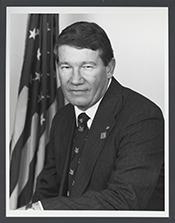
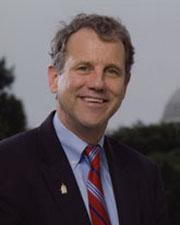 Rep. Sherrod Brown (D-OH)
Legislative Activity
Stay on top of the latest movement without scrolling through every action
View full timeline
Introduced in House
May 13, 2003
Referred to the Committee on International Relations, and in addition to the Committee on Energy and Commerce, for a period to be subsequently determined by the Speaker, in each case for consideration of such provisions as fall within the jurisdiction of the committee concerned.
May 13, 2003
Floor Debate
8 membersWhat members said about H.R. 2069 on the floor
 +3
+3
Floor Debate
8 membersWhat members said about H.R. 2069 on the floor
Mr. Speaker, tonight's Congressional Black Caucus special order on the global HIV/AIDS pandemic is particularly timely given our current discussions on an authorization bill by the House Committee on…
I want to thank the gentlewoman for yielding. I also want to take a moment to thank her for consistently standing up for so many people who cannot stand up for themselves. I also thank her for…
Mr. Speaker, I thank my colleague for yielding. We will take the gentleman up on that offer. The gentleman and I co- chaired a briefing here on the Hill back a few years ago. It was a pleasure to…
Mr. Speaker, I thank the gentlewoman from California (Ms. Lee) for continuing to be in the forefront of this issue. God loves her for it; and as we work together to build a better world, this is…
Mr. Speaker, I thank the gentlewoman for yielding to me. I would like to thank the chairman of the caucus, the gentleman from Maryland (Mr. Cummings), as well as the gentlewoman from California (Ms.…
Show 3 more
Mr. Speaker, I rise today to express concern with the President's $15 billion over 5 years proposal on HIV/AIDS funding for Africa. I commend the gentlewoman from California (Ms. Lee), the CBC and my…
Mr. Speaker, quickly, I want to thank the gentlewoman for her sustained leadership on this issue. I want to focus on one issue and that is the failure to use multilateralism when it comes to AIDS…
Mr. Speaker, I thank the gentlewoman for yielding. Mr. Speaker, sometimes we talk about millions and billions of dollars and we lose the faces that are connected with AIDS. I want to just put a face…
Bill Text
Latest available legislative text
        [Congressional Bills 108th Congress]
[From the U.S. Government Publishing Office]
[H.R. 2069 Introduced in House (IH)]

108th CONGRESS
1st Session
H. R. 2069

To amend the Foreign Assistance Act of 1961 to provide increased
foreign assistance for tuberculosis prevention, treatment, and control,
and for other purposes.

_______________________________________________________________________

IN THE HOUSE OF REPRESENTATIVES

May 13, 2003

Mr. Brown of Ohio (for himself and Mrs. Wilson of New Mexico)
introduced the following bill; which was referred to the Committee on
International Relations, and in addition to the Committee on Energy and
Commerce, for a period to be subsequently determined by the Speaker, in
each case for consideration of such provisions as fall within the
jurisdiction of the committee concerned

_______________________________________________________________________

A BILL

To amend the Foreign Assistance Act of 1961 to provide increased
foreign assistance for tuberculosis prevention, treatment, and control,
and for other purposes.

Be it enacted by the Senate and House of Representatives of the
United States of America in Congress assembled,

SECTION 1. SHORT TITLE.

This Act may be cited as the ``Stop Tuberculosis (TB) Now Act''.

SEC. 2. FINDINGS.

Congress finds the following:
(1)(A) Tuberculosis is a great health and economic burden
to impoverished nations and a health and security threat to the
United States and other industrialized countries.
(B) Tuberculosis is one of the greatest infectious causes
of death of adults worldwide, killing nearly 2,000,000 people
per year--one person every 15 seconds.
(2) An estimated 8,000,000 individuals develop active
tuberculosis each year.
(3) Today, tuberculosis is the leading killer of women of
reproductive age and of people who are HIV-positive.
(4) Tuberculosis is spreading as a result of inadequate
treatment and is a disease that knows no national borders.
(5) With over 50 percent of tuberculosis cases in the
United States attributable to foreign-born individuals and with
the increase in international travel, commerce, and migration,
elimination of tuberculosis in the United States depends on
efforts to control the disease in developing countries.
(6) The threat that tuberculosis poses for Americans
derives from the global spread of tuberculosis and the
emergence and spread of strains of multi-drug resistant
tuberculosis (MDR-TB).
(7) Up to 50,000,000 individuals may be infected with
multi-drug resistant tuberculosis.
(8) In the United States, tuberculosis treatment, normally
about $2,000 per patient, increases to as much as $1,000,000
per patient to treat multi-drug resistant tuberculosis, and
treatment may not even be successful.
(9) Without access to treatment, multi-drug resistant
tuberculosis is a virtual death sentence.
(10) There is a highly effective and inexpensive treatment
for standard tuberculosis. Recommended by the World Health
Organization (WHO) as the best curative method for
tuberculosis, this strategy, known as DOTS (Directly Observed
Treatment Short-course), includes low-cost effective diagnosis,
treatment, monitoring, and record keeping, as well as a
reliable drug supply. A centerpiece of DOTS is observing
patients to ensure that they take their medication and complete
treatment.
(11) DOTS is one of the most cost-effective health
interventions available today. A full course of DOTS drugs
costs as little as $10 in low-income countries.
(12) Proper DOTS treatment is imperative to prevent the
development of dangerous multi-drug resistant tuberculosis that
arises through improper or incomplete tuberculosis treatment.
(13) Building upon the DOTS strategy, DOTS-Plus is a
comprehensive tuberculosis management strategy that works as a
supplement to the standard DOTS strategy to address areas where
there is high prevalence of multi-drug resistant tuberculosis.
(14) The Global Fund to Fight AIDS, Tuberculosis and
Malaria is an important new global partnership established to
combat these 3 infectious diseases that together kill 6,000,000
people a year. Expansion of effective tuberculosis treatment
programs constitutes a major component of Global Fund
investment, along with integrated efforts to address HIV and
tuberculosis in areas of high prevalence.
(15) The Centers for Disease Control and Prevention (CDC)
is actively involved with global tuberculosis control efforts
since the global tuberculosis epidemic directly impacts
tuberculosis in the United States, and because Congress has
strongly urged the CDC each year to increase its involvement
with international tuberculosis control efforts.
(16) The CDC is assisting countries with a high burden of
tuberculosis--
(A) to implement the World Health Organization-
recommended control strategies, DOTS and DOTS-Plus;
(B) to identify and treat persons with multi-drug
resistant tuberculosis; and
(C) to conduct research to identify new
diagnostics, treatments, and interventions to control
tuberculosis.

SEC. 3. FOREIGN ASSISTANCE FOR TUBERCULOSIS PREVENTION, TREATMENT, AND
CONTROL.

(a) Amendment to Foreign Assistance Act of 1961.--Chapter 1 of part
I of the Foreign Assistance Act of 1961 (22 U.S.C. 2151 et seq.) is
amended by inserting after section 104 the following new section:

``SEC. 104A. ASSISTANCE FOR TUBERCULOSIS PREVENTION, TREATMENT, AND
CONTROL.

``(a) Statement of Policy.--Congress recognizes the growing
international problem of tuberculosis and the impact its continued
existence has on those nations that had previously largely controlled
the disease. Congress further recognizes that the means exist to
control and treat tuberculosis, and that it is therefore a major
objective of the foreign assistance program to control the disease.
``(b) Assistance.--
``(1) In general.--In meeting the objective described in
subsection (a), the President shall provide assistance for the
prevention, treatment, and control of tuberculosis.
``(2) Additional requirements.--In carrying out paragraph
(1), the President shall--
``(A) coordinate with the World Health Organization
(WHO), the Global Fund to Fight AIDS, Tuberculosis and
Malaria, the Department of Health and Human Services
(including Centers for Disease Control and Prevention
and the National Institutes of Health), and other
organizations with respect to the development and
implementation of a comprehensive tuberculosis control
program;
``(B) set as a goal the detection of at least 70
percent of the cases of infectious tuberculosis, the
cure of at least 85 percent of the cases detected by
focusing efforts on the use of the Directly Observed
Treatment Short-course (DOTS) strategy or other
internationally accepted primary tuberculosis control
strategies, in those countries in which the United
States Agency for International Development has
established development programs, by December 31, 2010,
and the reduction of tuberculosis-related deaths by 50
percent, by December 31, 2010; and
``(C) give priority to activities that increase
Directly Observed Treatment Short-course (DOTS)
coverage and treatment of multi-drug resistant
tuberculosis where needed using DOTS-Plus, including
funding for the Global Tuberculosis Drug Facility, the
Stop Tuberculosis Partnership, and the Global Alliance
for TB Drug Development.
``(c) Allocation of Funds.--In carrying out subsection (b), the
President shall ensure that--
``(1) not less than 75 percent of the amount made available
to carry out this section for a fiscal year shall be expended
for antituberculosis drugs, supplies, direct patient services,
and training in diagnosis and treatment for Directly Observed
Treatment Short-course (DOTS) coverage and treatment of multi-
drug resistant tuberculosis using DOTS-Plus; and
``(2) not less than 10 percent of the amount made available
to carry out this section for a fiscal year shall be expended
to provide a United States contribution to the Global
Tuberculosis Drug Facility.
``(d) Annual Report.--Not later than January 31 of each year, the
President shall transmit to the appropriate congressional committees a
report that contains a summary of all programs, projects, and
activities carried out under this section for the preceding fiscal
year, including a description of the increase in the number of
individuals treated and cured through each program, project, and
activity.
``(e) Authorization of Appropriations.--
``(1) In general.--There are authorized to be appropriated
to the President to carry out this section $200,000,000 for
each of the fiscal years 2004 and 2005.
``(2) Availability.--Amounts appropriated pursuant to the
authorization of appropriations under paragraph (1) are
authorized to remain available until expended.
``(f) Definitions.--In this section:
``(1) Appropriate congressional committees.--The term
`appropriate congressional committees' means the Committee on
International Relations of the House of Representatives and the
Committee on Foreign Relations of the Senate.
``(2) DOTS.--The term `DOTS' or `Directly Observed
Treatment Short-course' means the World Health Organization-
recommended strategy for treating tuberculosis.
``(3) DOTS-plus.--The term `DOTS-Plus' means a
comprehensive tuberculosis management strategy that is built
upon and works as a supplement to the standard DOTS strategy,
and which takes into account specific issues (such as use of
second line anti-tuberculosis drugs) that need to be addressed
in areas where there is high prevalence of multi-drug resistant
tuberculosis.
``(4) Global alliance for tuberculosis drug development.--
The term `Global Alliance for Tuberculosis Drug Development'
means the public-private partnership that brings together
leaders in health, science, philanthropy, and private industry
to ensure that new medications are available and affordable in
high tuberculosis burden countries and other affected
countries.
``(5) Global tuberculosis drug facility.--The term `Global
Tuberculosis Drug Facility (GDF)' means the new initiative of
the Stop Tuberculosis Partnership to increase access to high-
quality tuberculosis drugs to facilitate DOTS expansion.
``(6) Stop tuberculosis partnership.--The term `Stop
Tuberculosis Partnership' means the partnership of the World
Health Organization, donors including the United States, high
tuberculosis burden countries, multilateral agencies, and
nongovernmental and technical agencies committed to short- and
long-term measures required to control and eventually eliminate
tuberculosis as a public health problem in the world.''.
(b) Conforming Amendment.--Section 104(c) of the Foreign Assistance
Act of 1961 (22 U.S.C. 2151b(c)) is amended by striking paragraph (7).
(c) Effective Date.--The amendments made by this section shall take
effect on October 1, 2003, or the date of the enactment of this Act,
whichever occurs later.

SEC. 4. AUTHORIZATION OF APPROPRIATIONS FOR GLOBAL TUBERCULOSIS
ACTIVITIES OF THE CENTERS FOR DISEASE CONTROL AND
PREVENTION.

For the purpose of carrying out global tuberculosis activities
through the Centers for Disease Control and Prevention, there are
authorized to be appropriated $30,000,000 for fiscal year 2004, and
such sums as may be necessary for fiscal year 2005. Such authorization
is in addition to other authorizations of appropriations that are
available for such purpose. Amounts appropriated under this section
shall remain available until expended.
<all>