Unlawful Internet Gambling Funding Prohibition Act
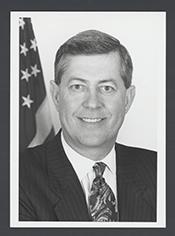
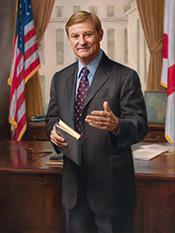 Rep. Spencer Bachus (R-AL)
Legislative Activity
Stay on top of the latest movement without scrolling through every action
Received in the Senate and Read twice and referred to the Committee on Banking, Housing, and Urban Affairs.
June 11, 2003
View full timeline
Introduced in House
May 19, 2003
Referred to the House Committee on Financial Services.
May 19, 2003
Committee Consideration and Mark-up Session Held.
May 21, 2003
Reported by the Committee on Financial Services. H. Rept. 108-133, Part I.
June 2, 2003
Placed on the Union Calendar, Calendar No. 68.
June 2, 2003
Supplemental report filed by the Committee on Financial Services, H. Rept. 108-133, Part II.
June 3, 2003
Rules Committee Resolution H. Res. 263 Reported to House. Rule provides for consideration of H.R. 2143 with 1 hour of general debate. Previous question shall be considered as ordered without intervening motions except motion to recommit with or without instructions. After general debate, the bill shall be considered for amendment under the five-minute rule.
June 9, 2003 • 7:22 PM
Rule H. Res. 263 passed House.
June 10, 2003 • 4:23 PM
Considered under the provisions of rule H. Res. 263. (consideration: CR H5136-5153; text of measure as reported in House: CR H5145-5146)
June 10, 2003 • 4:23 PM
Rule provides for consideration of H.R. 2143 with 1 hour of general debate. Previous question shall be considered as ordered without intervening motions except motion to recommit with or without instructions. After general debate, the bill shall be considered for amendment under the five-minute rule. Makes in order only those amendments printed in House Report 108-145. Provides that the amendments may be considered only in the order printed, offered only by a Member designated in the report, considered as read, debatable for the time specified, equally divided and controlled by the proponent and an opponent, not be subject to amendment, and not be subject to a demand for a division of the question in the House or in the Committee of the Whole. Waives all points of order against the amendments.
June 10, 2003 • 4:23 PM
House resolved itself into the Committee of the Whole House on the state of the Union pursuant to H. Res. 263 and Rule XXIII.
June 10, 2003 • 4:24 PM
The Speaker designated the Honorable Lee Terry to act as Chairman of the Committee.
June 10, 2003 • 4:24 PM
GENERAL DEBATE - The Committee of the Whole proceeded with one hour of general debate on H.R. 2143.
June 10, 2003 • 4:24 PM
DEBATE - Pursuant to H. Res. 263 the Committee of the Whole proceeded with 10 minutes of debate on the Kelly amendment.
June 10, 2003 • 5:36 PM
DEBATE - Pursuant to H. Res. 263 the Committee of the Whole proceeded with ten minutes of debate on the Jackson-Lee (TX) amendment.
June 10, 2003 • 5:39 PM
POSTPONED VOTE - At the conclusion of debate on the Jackson-Lee, (TX) amendment, the Chair put the question on adoption of the amendment and by voice vote, announced that the noes had prevailed. Ms. Jackson-Lee, (TX) demanded a recorded vote and the Chair postponed further proceedings until later in the legislative day.
June 10, 2003 • 5:48 PM
Subsequently, Ms. Jackson-Lee asked unanimous consent to withdraw her request for a recorded vote. Without objection her request is agreed to and the Chair announced that the amendment failed by voice vote.
June 10, 2003 • 5:48 PM
DEBATE - Pursuant to H. Res. 263, the Committee of the Whole proceeded with twenty minutes of debate on the Sensenbrenner amendment.
June 10, 2003 • 5:51 PM
The House rose from the Committee of the Whole House on the state of the Union to report H.R. 2143.
June 10, 2003 • 6:47 PM
The previous question was ordered pursuant to the rule.
June 10, 2003 • 6:48 PM
Passed/agreed to in House: On passage Passed by the Yeas and Nays: 319 - 104 (Roll no. 255).
June 10, 2003 • 7:05 PM
On passage Passed by the Yeas and Nays: 319 - 104 (Roll no. 255).
June 10, 2003 • 7:05 PM
Motion to reconsider laid on the table Agreed to without objection.
June 10, 2003 • 7:05 PM
The Clerk was authorized to correct section numbers, punctuation, and cross references, and to make other necessary technical and conforming corrections in the engrossment of H.R. 2143.
June 10, 2003 • 7:14 PM
Received in the Senate and Read twice and referred to the Committee on Banking, Housing, and Urban Affairs.
June 11, 2003
Voting History
2 votes recorded • Roll call available
Floor Debate
22 membersWhat members said about H.R. 2143 on the floor



 +17
+17
Floor Debate
22 membersWhat members said about H.R. 2143 on the floor
Mr. Chairman, I yield such time as he may consume to the gentleman from Virginia (Mr. Wolf). (Mr. WOLF asked and was given permission to revise and extend his remarks.) Mr. Chairman, I am happy to…
Mr. Speaker, the previous gentleman who spoke indicated that the estate tax is immoral. Do Members know what is more immoral? Giving this tax relief to the wealthiest individuals in this country and…
Mr. Speaker, pursuant to House Resolution 281, I call up the bill (H.R. 8) to make the repeal of the estate tax permanent, and ask for its immediate consideration. Mr. Speaker, I yield myself such…
Mr. Chairman, I rise in strong support of this bill today. There are going to be several amendments offered. One amendment will be offered as if it is an antigambling amendment. In essence, the…
Mr. Speaker, I thank the gentleman for yielding time to me. Mr. Speaker, illegal Internet gambling, that is something that many Americans do not know much about. They have not heard much about it…
Show 8 more
Mr. Chairman, I yield myself such time as I may consume. Mr. Chairman, I rise in support of H.R. 2143, the unlawful Internet Gambling Funding Prohibition Act. I thank the gentleman from Alabama (Mr.…
Mr. Chairman, I would like to enter into a colloquy with the gentleman from Alabama. Mr. Chairman, I would like to clarify the intention of this legislation. Section 4, subsection 2(E)(ix), exempts…
Mr. Chairman, where are the libertarians when we need them? What we have before us is the Inconsistency Act of 2003. Rarely has a bill come forward which is in conflict with as many principles as…

Mr. Speaker, I yield myself 6 minutes. I rise today to oppose this repeal of the estate tax. In the very same week that the Republicans are willing, as they did last night, to shortchange seniors on…
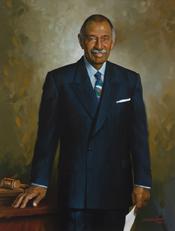
Mr. Chairman, you might remember a failed experiment the U.S. government tried in the 1920s called Prohibition. Today, Congress is rushing to pass a similar ill-conceived prohibition of Internet…
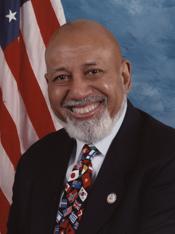
Mr. Speaker, I yield myself such time as I may consume. Mr. Speaker, first, let me thank the gentleman from Georgia (Mr. Linder) for yielding me this time. The Unlawful Internet Gambling Funding…

Mr. Chairman, the bill we are considering today, H.R. 2143, the Unlawful Internet Funding Prohibition Act, represents the culmination of many hours of deliberation and hard work on the part of…
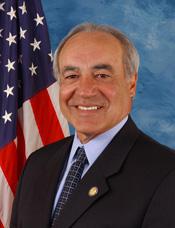
Mr. Speaker, I rise in opposition to this unlawful Internet funding prohibition act and in support of the Sensenbrenner-Conyers amendment. I oppose this bill as a strong defender of tribal…
Show 11 more

Mr. Chairman, I want to thank the gentleman from Alabama (Mr. Bachus) for his leadership on this issue. He has been fighting this for a long time, and I appreciate his efforts to bring forth this…

Mr. Chairman, I feel somewhat like a skunk at the church picnic, but I rise today to urge my colleagues to vote against this senseless and useless piece of legislation. I know something about gaming…
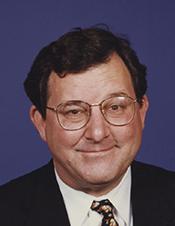
I want to thank the chairman of the Committee on the Judiciary for his work on this matter. Mr. Chairman, I would like to begin by expressing my great esteem for the proponents of this bill. I…
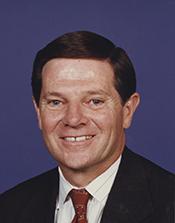
Mr. Speaker, I thank the gentleman from Maryland (Mr. Hoyer) for yielding to me. Mr. Speaker, the House will convene on Monday at 12:30 p.m. for morning hour debates and 2 p.m. for legislative…
Mr. Speaker, I am the ranking minority member on the committee of jurisdiction, and I am pleased that we forestalled a suspension proposal here and that we do have a chance to debate some of the…

Mr. Speaker, I yield to my friend, and I am glad to see him on the floor, the gentleman from Texas (Mr. DeLay), the leader, for the purpose of inquiring about the schedule for next week. I thank the…
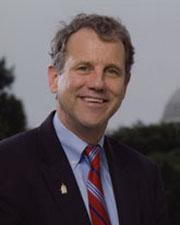
Mr. Speaker, I thank my friend from Florida for yielding time to me. Mr. Speaker, I urge my colleagues to vote ``no'' on the previous question so we can take the Senate tax bill off the Speaker's…
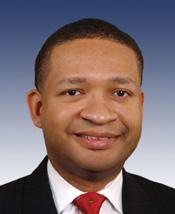
Mr. Chairman, let me first of all compliment my good friend, the gentleman from the other half of Birmingham, Alabama (Mr. Bachus), for his leadership on this issue. I take up where the gentleman…
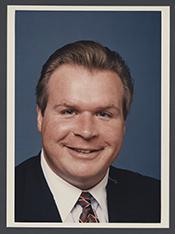
Mr. Speaker, I thank my colleague from Washington State for yielding me this time and for the recognition. It is interesting to hear the rhetoric so far and the lectures that come from the left and…
Mr. Speaker, by direction of the Committee on Rules, I call up House Resolution 263 and ask for its immediate consideration. Mr. Speaker, for the purposes of debate only, I yield the customary 30…

Well, so let us look at the facts, Mr. Speaker. The latest year for which we have exact data shows this: Of all of the taxable estates, only 1 percent would be considered family farms, not the…
Bill Text
4 versions available
        [Congressional Bills 108th Congress]
[From the U.S. Government Publishing Office]
[H.R. 2143 Referred in Senate (RFS)]

1st Session
H. R. 2143

_______________________________________________________________________

IN THE SENATE OF THE UNITED STATES

June 11, 2003

Received; read twice and referred to the Committee on Banking, Housing,
and Urban Affairs

_______________________________________________________________________

AN ACT

To prevent the use of certain bank instruments for unlawful Internet
gambling, and for other purposes.

Be it enacted by the Senate and House of Representatives of the
United States of America in Congress assembled,

SECTION 1. SHORT TITLE.

This Act may be cited as the ``Unlawful Internet Gambling Funding
Prohibition Act''.

SEC. 2. FINDINGS.

The Congress finds as follows:
(1) Internet gambling is primarily funded through personal
use of bank instruments, including credit cards and wire
transfers.
(2) The National Gambling Impact Study Commission in 1999
recommended the passage of legislation to prohibit wire
transfers to Internet gambling sites or the banks which
represent them.
(3) Internet gambling is a major cause of debt collection
problems for insured depository institutions and the consumer
credit industry.
(4) Internet gambling conducted through offshore
jurisdictions has been identified by United States law
enforcement officials as a significant money laundering
vulnerability.

SEC. 3. POLICIES AND PROCEDURES REQUIRED TO PREVENT PAYMENTS FOR
UNLAWFUL INTERNET GAMBLING.

(a) Regulations.--Before the end of the 6-month period beginning on
the date of the enactment of this Act, the Federal functional
regulators shall prescribe regulations requiring any designated payment
system to establish policies and procedures reasonably designed to
identify and prevent restricted transactions in any of the following
ways:
(1) The establishment of policies and procedures that--
(A) allow the payment system and any person
involved in the payment system to identify restricted
transactions by means of codes in authorization
messages or by other means; and
(B) block restricted transactions identified as a
result of the policies and procedures developed
pursuant to subparagraph (A).
(2) The establishment of policies and procedures that
prevent the acceptance of the products or services of the
payment system in connection with a restricted transaction.
(b) Requirements for Policies and Procedures.--In prescribing
regulations pursuant to subsection (a), the Federal functional
regulators shall--
(1) identify types of policies and procedures, including
nonexclusive examples, which would be deemed to be ``reasonably
designed to identify'' and ``reasonably designed to block'' or
to ``prevent the acceptance of the products or services'' with
respect to each type of transaction, such as, should credit
card transactions be so designated, identifying transactions by
a code or codes in the authorization message and denying
authorization of a credit card transaction in response to an
authorization message;
(2) to the extent practical, permit any participant in a
payment system to choose among alternative means of identifying
and blocking, or otherwise preventing the acceptance of the
products or services of the payment system or participant in
connection with, restricted transactions; and
(3) consider exempting restricted transactions from any
requirement under subsection (a) if the Federal functional
regulators find that it is not reasonably practical to identify
and block, or otherwise prevent, such transactions.
(c) Compliance With Payment System Policies and Procedures.--A
creditor, credit card issuer, financial institution, operator of a
terminal at which an electronic fund transfer may be initiated, money
transmitting business, or international, national, regional, or local
network utilized to effect a credit transaction, electronic fund
transfer, or money transmitting service, or a participant in such
network, meets the requirement of subsection (a) if--
(1) such person relies on and complies with the policies
and procedures of a designated payment system of which it is a
member or participant to--
(A) identify and block restricted transactions; or
(B) otherwise prevent the acceptance of the
products or services of the payment system, member, or
participant in connection with restricted transactions;
and
(2) such policies and procedures of the designated payment
system comply with the requirements of regulations prescribed
under subsection (a).
(d) Enforcement.--
(1) In general.--This section shall be enforced by the
Federal functional regulators and the Federal Trade Commission
under applicable law in the manner provided in section 505(a)
of the Gramm-Leach-Bliley Act.
(2) Factors to be considered.--In considering any
enforcement action under this subsection against any payment
system, or any participant in a payment system that is a
creditor, credit card issuer, financial institution, operator
of a terminal at which an electronic fund transfer may be
initiated, money transmitting business, or international,
national, regional, or local network utilized to effect a
credit transaction, electronic fund transfer, or money
transmitting service, or a participant in such network, the
Federal functional regulators and the Federal Trade Commission
shall consider the following factors:
(A) The extent to which such person is extending
credit or transmitting funds knowing the transaction is
in connection with unlawful Internet gambling.
(B) The history of such person in extending credit
or transmitting funds knowing the transaction is in
connection with unlawful Internet gambling.
(C) The extent to which such person has established
and is maintaining policies and procedures in
compliance with regulations prescribed under this
subsection.
(D) The feasibility that any specific remedy
prescribed can be implemented by such person without
substantial deviation from normal business practice.
(E) The costs and burdens the specific remedy will
have on such person.

SEC. 4. DEFINITIONS.

For purposes of this Act, the following definitions shall apply:
(1) Restricted transaction.--The term ``restricted
transaction'' means any transaction or transmittal to any
person engaged in the business of betting or wagering, in
connection with the participation of another person in unlawful
Internet gambling, of--
(A) credit, or the proceeds of credit, extended to
or on behalf of such other person (including credit
extended through the use of a credit card);
(B) an electronic fund transfer or funds
transmitted by or through a money transmitting
business, or the proceeds of an electronic fund
transfer or money transmitting service, from or on
behalf of the other person;
(C) any check, draft, or similar instrument which
is drawn by or on behalf of the other person and is
drawn on or payable at or through any financial
institution; or
(D) the proceeds of any other form of financial
transaction as the Federal functional regulators may
prescribe by regulation which involves a financial
institution as a payor or financial intermediary on
behalf of or for the benefit of the other person.
(2) Bets or wagers.--The term ``bets or wagers''--
(A) means the staking or risking by any person of
something of value upon the outcome of a contest of
others, a sporting event, or a game subject to chance,
upon an agreement or understanding that the person or
another person will receive something of greater value
than the amount staked or risked in the event of a
certain outcome;
(B) includes the purchase of a chance or
opportunity to win a lottery or other prize (which
opportunity to win is predominantly subject to chance);
(C) includes any scheme of a type described in
section 3702 of title 28, United States Code;
(D) includes any instructions or information
pertaining to the establishment or movement of funds in
an account by the bettor or customer with the business
of betting or wagering; and
(E) does not include--
(i) any activity governed by the securities
laws (as that term is defined in section
3(a)(47) of the Securities Exchange Act of
1934) for the purchase or sale of securities
(as that term is defined in section 3(a)(10) of
such Act);
(ii) any transaction conducted on or
subject to the rules of a registered entity or
exempt board of trade pursuant to the Commodity
Exchange Act;
(iii) any over-the-counter derivative
instrument;
(iv) any other transaction that--
(I) is excluded or exempt from
regulation under the Commodity Exchange
Act; or
(II) is exempt from State gaming or
bucket shop laws under section 12(e) of
the Commodity Exchange Act or section
28(a) of the Securities Exchange Act of
1934;
(v) any contract of indemnity or guarantee;
(vi) any contract for insurance;
(vii) any deposit or other transaction with
a depository institution (as defined in section
3(c) of the Federal Deposit Insurance Act);
(viii) any participation in a simulation
sports game or an educational game or contest
that--
(I) is not dependent solely on the
outcome of any single sporting event or
nonparticipant's singular individual
performance in any single sporting
event;
(II) has an outcome that reflects
the relative knowledge and skill of the
participants with such outcome
determined predominantly by accumulated
statistical results of sporting events;
and
(III) offers a prize or award to a
participant that is established in
advance of the game or contest and is
not determined by the number of
participants or the amount of any fees
paid by those participants; and
(ix) any lawful transaction with a business
licensed or authorized by a State.
(3) Designated payment system defined.--The term
``designated payment system'' means any system utilized by any
creditor, credit card issuer, financial institution, operator
of a terminal at which an electronic fund transfer may be
initiated, money transmitting business, or international,
national, regional, or local network utilized to effect a
credit transaction, electronic fund transfer, or money
transmitting service, or any participant in such network, that
the Federal functional regulators determine, by regulation or
order, could be utilized in connection with, or to facilitate,
any restricted transaction.
(4) Federal functional regulator.--The term ``Federal
functional regulator'' has the same meaning as in section
509(2) of the Gramm-Leach-Bliley Act.
(5) Internet.--The term ``Internet'' means the
international computer network of interoperable packet switched
data networks.
(6) Unlawful internet gambling.--The term ``unlawful
Internet gambling'' means to place, receive, or otherwise
transmit a bet or wager by any means which involves the use, at
least in part, of the Internet where such bet or wager is
unlawful under any applicable Federal or State law in the State
in which the bet or wager is initiated, received, or otherwise
made.
(7) Other terms.--
(A) Credit; creditor; and credit card.--The terms
``credit'', ``creditor'', and ``credit card'' have the
meanings given such terms in section 103 of the Truth
in Lending Act.
(B) Electronic fund transfer.--The term
``electronic fund transfer''--
(i) has the meaning given such term in
section 903 of the Electronic Fund Transfer
Act; and
(ii) includes any fund transfer covered by
Article 4A of the Uniform Commercial Code, as
in effect in any State.
(C) Financial institution.--The term ``financial
institution''--
(i) has the meaning given such term in
section 903 of the Electronic Fund Transfer
Act; and
(ii) includes any financial institution, as
defined in section 509(3) of the Gramm-Leach-
Bliley Act.
(D) Money transmitting business and money
transmitting service.--The terms ``money transmitting
business'' and ``money transmitting service'' have the
meanings given such terms in section 5330(d) of title
31, United States Code.

SEC. 5. COMMON SENSE RULE OF CONSTRUCTION.

No provision of this Act shall be construed as altering, limiting,
extending, changing the status of, or otherwise affecting any law
relating to, affecting, or regulating gambling within the United
States.

Passed the House of Representatives June 10, 2003.

Attest:

JEFF TRANDAHL,

Clerk.