Hybrid Vehicle Incentive Act
Legislative Activity
Stay on top of the latest movement without scrolling through every action
Referred to the Subcommittee on Highways and Transit.
January 9, 2003
View full timeline
Introduced in House
January 8, 2003
Referred to the House Committee on Transportation and Infrastructure.
January 8, 2003
Referred to the Subcommittee on Highways and Transit.
January 9, 2003
Floor Debate
20 membersWhat members said about H.R. 243 on the floor
 JLO
JLO DY
DY EBJ
EBJ CC
CC JF+15
JF+15
Floor Debate
20 membersWhat members said about H.R. 243 on the floor
Mr. Chairman, I yield myself such time as I may consume. Mr. Chairman, the gentleman from Alaska has adequately explained the manager's amendment. It needs no further elaboration, and I support the…
Mr. Chairman, I yield myself such time as I may consume.
Mr. Chairman, the gentleman from Alaska has adequately explained the manager's amendment. It needs no further elaboration, and I support the amendment.
Mr. Chairman, will the gentlewoman yield?
Mr. Chairman, we have reviewed the gentlewoman's amendment, we have been discussing it for quite some time in committee. This will make it possible to put that information that is already required to be reported on the Internet, and we have agreed on our side to accept the amendment.
Mr. Chairman, I rise in opposition to the amendment.
Mr. Chairman, I yield myself such time as I may consume.
The thrust of this amendment is to adversely affect States, and Members in States, who put priority on transit projects, bus-related projects by deducting dollar for dollar from their apportionments the funds that Members have decided their State needs, their district needs, that is in the interest of their constituents and deducting that from the core surface transportation program apportionment to the individual State, and then it would redistribute those dollars elsewhere in the country. That is totally contrary to the basic principle of Member high-priority projects.
As former Chairman Bud Shuster used to say, Members of Congress are not potted plants. We know our districts. We know what the needs are. Chairman Young has reiterated that principle, that Members understand the needs of their State, and when they are bypassed, when the State DOT does not address the needs in their districts, then we give them an opportunity once every 6 years to do that in the transportation bill, to designate projects according to the needs that Members see best.
The pending amendment would undermine that principle, would redistribute dollars, would take money away from some States, give it to others, punish some because they think transit is more important than a highway project in their State, Member projects.
In addition to that, a Member that has designated a project for interstate maintenance, for congestion mitigation and air quality improvement, for a bridge project, for a national highway system, will be adversely affected by this amendment. Members that have highway priorities as well will find their project simply thrown to the wind and redistributed around the country. That is not adhering to the principle that we have established. It may be very well intentioned, but its effect is highly adverse, undermines the principle that Members of Congress know their districts, are responding to the needs of their constituents, are recommending investments and, in many cases, giving States flexibility as we do in Minnesota. If they are not ready to move ahead with a project I have designated, they can use that dollar amount for a project elsewhere in the State. Its effect is severely adverse.
I will be happy to yield to the gentleman from Alaska.
Mr. Chairman, I reserve the balance of my time.
Mr. Chairman, I yield myself the balance of my time.
I just want to point out to the gentleman from Indiana, whom I greatly respect, that the total for Indiana under TEA LU would be $4.96 billion, a substantial increase of funding over TEA 21.
The point again is that we have distributed these dollars according to a percentage of the total funding available under TEA LU to give Members the authority to designate projects to address transportation needs that they see by their best lights from their constituents in their districts and not be bypassed and run over by State DOTs. It has worked in TEA 21, and it is going to work here.
I thank the gentleman for yielding me this time.
I respect the gentlewoman's good intention. As we heard on a previous amendment, there was a good intention but an unfortunate result, and there would be a similar unfortunate result here. I have never been supportive of toll roads. Current law allows toll credits only when that toll road has been built without Federal aid. This amendment would extend an already, in my view, unacceptable principle further. It would extend to roads built with Federal assistance the credit that then could be applied to other projects. I just think that that is not a good policy direction.
I do not think we ought to be encouraging more toll road developments. It is not going to expand the universe of roads. Toll roads are just kind of a one-time hit. We are establishing in this legislation a national program of continuing existence with the Highway Trust Fund.
The only problem with it is we are not putting enough money into it for the next 6 years, and we will do that after the next year after we get through this election. So we really ought not to be moving in this direction, and I assume the chairman agrees with me on this.
Mr. Chairman, I yield myself such time as I may consume.
I compliment the gentleman on raising a very important issue. I also want to point out to the House that this is a complex aspect of transportation law involving Congestion Mitigation and Air Quality Improvement issues. It involves a very technical aspect of the particulate standards, the air quality standards, for coarse particulate matter or fine particulate matter, those that are 10 or 2.5.
In principle, I think I would be in favor of what the gentleman is trying to accomplish, but the language of the wording gives us some trouble yet. And if the gentleman would bear with us through the bill and into conference, I think we can get this matter worked out in a manner that is acceptable to achieve the objective he is seeking.
I yield to the gentleman from Arizona.
Mr. Chairman, that is essentially, broadly stated, the issue.
I yield to the gentleman from Arizona, with further comment in how that issue would be interpreted and how it would be applied.
Mr. Chairman, exactly. The question is, How will the funds be allocated? And I think we need to just understand that better and have it spelled out more clearly so that we understand what is happening and we do not run into something we did not anticipate.
I yield further to the gentleman from Arizona.
Mr. Chairman, exactly. I think what we would like to do is exchange some language and refine that language and refer to the original CMAQ and look at the distribution tables, allocation of funds; and I think we will be able to find a way to accommodate the gentleman's objective.
I yield to the gentleman from Wisconsin.
Mr. Chairman, I yield myself the balance of my time.
I thank the gentleman for a very dignified discussion and outcome. I think it is in the best interest of good policy, and we will work with the gentleman in the coming weeks as we go forward.
Mr. Chairman, I yield back the balance of my time.
Mr. Chairman, will the gentleman yield?
Mr. Chairman, I thank the chairman for yielding.
Mr. Chairman, I want to frame this issue here carefully. The purpose of the HOV lanes is to encourage more people to ride in a car than to continue encouraging single-occupancy vehicle travel. Now, the idea of an exemption for hybrid vehicles was to encourage their development, their production, and that is happening in California, to the great credit of that State. So now we are seeing sort of the hybrid vehicle production take off. But in that process, the principle of HOV lanes seems to be falling behind, with more single-passenger vehicles traveling.
So the language of the gentleman's amendment is not perfectly clear. We would be willing to accept language that makes it clear that the State can choose to exempt a hybrid vehicle, not that they are required to exempt. Is that the intent of the gentleman's amendment, that the State will have the choice, not that they are required to exempt from paying a toll on an HOV toll lane?
Mr. Chairman, I agree with the chairman, we could accept the amendment, with the understanding as we get into conference, this language needs to be tightened up.
Mr. Chairman, I thank the gentleman for yielding me time.
Mr. Chairman, very simply stated, this amendment would bypass the determination of the Secretary to make decisions on corridors and substitute judgment in this body for that of the Secretary looking at a national picture, and that is the wrong way to proceed. We should not do that.
Mr. Chairman, I claim the time in opposition to the amendment.
Mr. Chairman, I yield myself such time as I may consume.
Mr. Chairman, the gentleman from Missouri has been quite persistent and thoughtful in his pursuit of this amendment and very genuine, and I think one of the adversely affected companies is located in the State of Missouri and has expressed their concerns about the effects of current law.
The gentleman has sought a way to provide some relief. I rise in very strong opposition to the language, with great respect for the gentleman, a member of our committee.
It would supersede State law in 15 States that have already adopted laws to apply vicarious liability to car rental companies. The reason they have done so is that if a car rental company rents to a person who has no insurance, the rental company is the one that is best suited to assume the responsibility. They have done this action in their judgment in the best interest of the consumer.
Now, we have not had hearings in depth that would explore all aspects of this issue. It is a very complex issue of State law, and it varies from one part of the country to another. But States, as far as we can ascertain, that have adopted such a policy have concluded that, without it, harm to innocent children, to bystanders would go totally uncompensated, even if the rental car company had leased, say, to an obvious drug abuser or someone with a very bad driving record.
States, including mine of Minnesota, have reached an independent policy determination on this matter. I do not think Congress should weigh in to supersede the State judgment on this matter.
Mr. Chairman, I reserve the balance of my time.
Mr. Chairman, I yield 2 minutes to the gentleman from New York (Mr. Nadler).
How much time is remaining on both sides, Mr. Chairman?
Mr. Chairman, I yield 30 seconds to the gentleman from Virginia (Mr. Scott).
Mr. Chairman, I yield myself such time as I may consume.
If I allow another person to use my car and that person has an accident, I am liable. Why should rental car companies be different? If States choose to make them liable under these circumstances, as our State of Minnesota does, then why should the Congress substitute a different judgment for that of the States?
Without extensive hearings, without a deep inquiry into this subject matter, this is an inappropriate time, inappropriate amendment, inappropriate place to do it, and the amendment preferably should be withdrawn and we could work on it, perhaps through conference, otherwise defeated.
Mr. Chairman, I claim the time in opposition, and I yield myself such time as I may consume.
Mr. Chairman, again, this is like, as so often we will see on these amendments on the floor, an amendment that is well intentioned but has adverse consequences. I support the environmental benefits that can be achieved with clean air technologies. In the manager's amendment, the chairman and I have worked on it and our staff have worked on congestion mitigation, air quality improvement, and surface transportation program funds, the largest of the core programs, to assure that these funds may be used to support stand-alone truck electrification technologies, because we saw in testimony in hearings that there are such technologies that are very, very low-weight, with high benefits.
This issue came up in the House-Senate Energy Conference, and I addressed this issue in the Conference and raised objections. Mr. Chairman, 400 pounds may seem insignificant, but it will have serious consequences on safety of our driving public and on the roads. Bigger trucks, more road damage. If all trucks had that extra 400 pounds, $600 million a year in extra road damage. Over the life of this bill, that will add up to over $3.5 billion in road damage.
The point is, why are we picking, or why pick 400 pounds? There is a wide range of technologies that have far less weight that have very significant improvements that show idling reduction technologies do, in fact, pay for themselves and reduce costs in less than 2 years. There are other technologies that will provide the same clean air benefits as the one addressed in this amendment.
So I think rather than just pick out one particular technology, one that weighs 400 pounds or less, whatever, this is not the right way to approach the issue.
Mr. Chairman, I reserve the balance of my time.
Mr. Chairman, I yield such time as he may consume to the gentleman from Alaska (Mr. Young), the chairman of the committee.
Mr. Chairman, I yield such time as he may consume to the gentleman from Indiana (Mr. Chocola).
Mr. Chairman, I yield such time as he may consume to the gentleman from Alaska (Mr. Young).
Mr. Chairman, I yield myself such time as I may consume.
Mr. Chairman, very simply, trucks come to a truck stop. They want to use this 400-pound technology to run their Air King unit. There is better technology, does not have the weight, they can plug it in and not put that added weight on the roadway. We should not accept this amendment.
Mr. Chairman, I thank the chairman for yielding me this time.
I appreciate the intent of the gentleman from Washington (Mr. Baird). It is a sense of Congress amendment to clarify that the Buy America Act applies to overall projects and not just to component parts. It is in keeping with the purpose, the thrust of our intent to keep more jobs in America, not let them go overseas, keep products that go into our highway and bridge program built in America, not built overseas.
And I can speak from personal experience. In the harbor between Duluth and Lake Superior, when a new bridge was being built 22 years ago and the bridge had been bid and the State of Wisconsin was the one responsible for building that bridge, they allowed $1 million of Japanese steel to go into the center arch span.
That is when I sprang to the defense of American steel and got the amendment that has now been in law for all these years that we have American steel in U.S. Federal-aid highway programs. So I am in accord with the purpose of the gentleman.
Mr. Chairman, reserving the right to object, under my reservation may I inquire of our Chair whether the majority has seen the language.
I yield to the gentleman from Alaska.
Further reserving the right to object, I yield to the gentleman from Wisconsin.
Mr. Chairman, I withdraw my reservation of objection.
Mr. Chairman, I offer an amendment. Mr. Chairman, I yield myself such time as I may consume. Mr. Chairman, the amendment under consideration would make improvements to H.R. 3550 as well as to make…
Mr. Chairman, I offer an amendment.
Mr. Chairman, I yield myself such time as I may consume.
Mr. Chairman, the amendment under consideration would make improvements to H.R. 3550 as well as to make some technical corrections. More specifically, it would require more oversight of the use of Federal funds for transportation projects.
It allows funds to be used for additional planning activities under a pilot program. It would allow new activities under the Federal lands highway program to improve how projects are developed in conjunction with wildlife along the highways.
It would allow the Secretary to let States assume the responsibility of the Secretary for transportation enhancements, recreational trails and ITS projects.
It would require the Secretary to conduct a rulemaking to ensure that States are repairing or replacing damaged features on the National Highway System with highway features that have been tested, evaluated, and found to be acceptable under certain guidelines.
It makes a technical change to ensure that only new interstate facilities are eligible under the interstate system for construction of toll pilot programs.
It designates new highways for high-priority corridors on the National Highway System. It would require the Secretary to conduct a pavement-marking system evaluation study to improve safety on the highways.
It creates a national clearinghouse for the purpose of assembling and disassembling information relating to improvement of roadway work-zone safety.
It makes procedural improvements to the planning requirements for metropolitan areas in States regarding the Clean Air Act.
It directs the Secretary to create a model statute for the States to use when developing drunk-driving detection, prevention, and enforcement programs.
The budget title sets discretionary spending limits on outlays for the highway and mass transit budget categories and for new budget authority for the mass transit category and continues the budgetary fire walls for highway and transit programs.
It would improve the calculation of revenue-aligned budget authority, or RABA, to provide more accurate information of revenue to the Highway Trust Fund.
Finally, it sets the annual obligation limitations for the highway and transit programs for the fiscal years 2004 to 2009.
Mr. Chairman, I reserve the balance of my time.
Mr. Chairman, I ask unanimous consent that the amendment be modified in the form at the desk.
Mr. Chairman, will the gentlewoman yield?
First, Mr. Chairman, let me congratulate the gentlewoman from Texas (Ms. Eddie Bernice Johnson) for this amendment, and more than that for being able to communicate with the ranking member and myself on your wishes in your district, and being so kind to me when I was in your district this last year. I do thank you for that.
I have reviewed this amendment with the gentleman from Minnesota (Mr. Oberstar), and we are willing to accept the amendment.
Mr. Chairman, I also rise in opposition.
I understand what the gentleman from Arizona is trying to do, and I want to compliment the gentleman. He is one of the few people in this body who did not ask me for any earmarks. I do thank him for that. I understand what he is trying to say.
But I have to remind everybody about earmarks in this legislation. It is, in fact, a request from Members, and it is the one time they might have an opportunity to represent their district. That is very true. I have some Members in this body that get no money out of DOT in their district because they are sparsely populated and all the money goes to the large urban areas. This is one time there is a fairness doctrine. Every nickel that is earmarked in this bill goes to a form of transportation. No dollars go outside that for any other purpose, regardless of what you might read. It goes to a form of transportation.
I know what the gentleman is trying to do. He is right about what the appropriators have done in the past and will probably continue to do. This is an amendment that has good thought but does not have great merit. Because I do think it, in fact, will impede those States that have had projects of national significance or projects of high priority. They will be penalized from getting those projects accomplished.
I thank the gentleman for his presentation. I understand what the gentleman from Arizona is trying to do, but I do believe that the amendment is inappropriate at this time.
Mr. Chairman, I reluctantly rise in opposition to the amendment.
Mr. Chairman, I yield such time as he may consume to the gentleman from Minnesota (Mr. Oberstar).
Mr. Chairman, I yield myself such time as I may consume.
I will say that to the gentleman I do think the amendment has some merit; but as the gentleman mentioned, now with the shortage of dollars, et cetera, I would suggest that we continue to work with the gentlewoman as we go through this process and see if we cannot reach a solution to it. And I think that can be achieved. But at this time I would oppose the amendment.
Mr. Chairman, I reserve the balance of my time.
Mr. Chairman, I yield back the balance of my time.
Mr. Chairman, I claim the time in opposition.
Mr. Chairman, we have reviewed this amendment, and I believe, with consultation, we have agreed to the amendment.
I yield to the gentleman from Minnesota.
Mr. Chairman, I yield myself such time as I may consume.
Mr. Chairman, I will agree with that. I think it should be tightened up. It is something that both the author and, of course, the gentleman from California have spoken on; and we will continue working with you to see if we cannot make it adaptable to everybody.
Mr. Chairman, I yield back the balance of my time.
Mr. Chairman, I rise in opposition to the amendment.
Mr. Chairman, I yield 1 minute to the gentleman from Wisconsin (Mr. Petri).
Mr. Chairman, I would like to offer the gentleman from Louisiana (Mr. Vitter) my support for this route. I have had the privilege of speaking to the gentleman from Louisiana (Mr. McCrery), the gentleman from Louisiana (Mr. Vitter), the gentleman from Louisiana (Mr. John), everybody involved in this area; and my attention as time goes by as we go to the conference, this will be one of the routes that is considered as a high priority, because it is badly needed, not only for the State of Louisiana, but for the other States in proximity too.
I would like to say that we had enough money to do everything, but I am not going to say we do. But this is one of the areas that I am very strongly in support of, and I will do everything I can to see that we achieve those goals.
Mr. Chairman, I deeply respect my good friend that has offered this amendment, but I have a couple questions.
One, I have had the privilege of visiting a private company; it has developed a truck stop process whereby the trucks do have the same thing my colleague wants. What I understand his amendment does is he wants to raise the weight of the truck 400 pounds of added equipment to the truck so they do not have to stop at a truck stop. Is that correct?
I yield to the gentleman from Indiana.
Mr. Chairman, well, I am just concerned about that because this company called Idle Air, it has done an outstanding job, and they are trying to do the job right without any government money or support. And they are doing exactly what my colleague wants to do, but the truck does have to go and they have their waiting time that they have to rest, refuel their trucks, et cetera.
And it seems to me if we add this extra 400 pounds for additional equipment, it would be detrimental to that individual company. That concerns me somewhat. I am sort of taking sides on that issue is what I am saying. With your proposal, would that hurt the company?
Mr. Chairman, we do have some problems with weight limitation on these trucks. Four hundred pounds does not sound like much; but if you add all the trucks up, we do not know the ramifications of the weight factor on the roads. And I really think the gentleman is on the right track, but I think we have to consider what that would do if, in fact, we raise that limitation to 400 pounds, do we raise the limitation on other aspects of the trucks such as a new engine which adds 3,000 pounds to the truck. We have not done that yet.
So I think we need to look at the total wear and tear on the road.
Mr. Chairman, I yield myself such time as I may consume.
I am going to ask for a voice vote, and I really am not in opposition to it; but I do not have anybody else speaking on this amendment.
Mr. Chairman, I yield back my time.
Mr. Chairman, will the gentleman yield?
Mr. Chairman, we have not seen the language yet as far as the amendment. It is my indication I do not think we are going to object, but I would like to be able to read the language first. I do not think we have any objections to it.
Mr. Chairman, I offer an amendment. Mr. Chairman, I yield myself as much time as I might consume. Mr. Chairman, this amendment would dramatically improve an existing law provision, section 104(j),…
Mr. Chairman, I offer an amendment.
Mr. Chairman, I yield myself as much time as I might consume.
Mr. Chairman, this amendment would dramatically improve an existing law provision, section 104(j), that was enacted as part of TEA 21.
Currently, the U.S. Department of Transportation produces an annual report to Congress on the use of Federal transportation funds by program, by type of investment, and by location within the States. My amendment would simply require that this information be provided to the public as well as via the Internet.
This is a nonpartisan amendment. It is broadly supported by a wide array of program partners, county officials, cities, mayors, metropolitan planning organizations, planners, architects and others.
Consider the current state of practice. Today, if you search the U.S. DOT's Web site for a section 104(j) report, you get ``no documents match.''
Now, the first question that will be asked is: Will this impose a burden on my State? No, absolutely not. This amendment would not impose any additional burden on the States.
I yield to the gentleman from Minnesota.
I yield to the gentleman from Alaska.
Mr. Chairman, reclaiming my time, I want to thank the chairman and the ranking member for their cooperation.
Mr. Chairman, I might add that this is not a heavy burden on the FHWA or U.S. DOT bureaucracy. This information is already collected, processed, and provided for the use of State Departments of Transportation, in a use-friendly format for those users. This amendment simply requires that the same information already being processed be provided to the taxpayers and their representatives.
Why ``user-friendly''? Lack of ease of Congressional oversight on this report led to a $5 billion discrepancy between Table 1 and Table 4(e) in this report in fiscal year 2000.
Because it is not electronically available as a manipulatable table, any summation that is not presented in the table must be done by hand, which is very difficult.
So, Federal Highway and the public would have a better product as a result of this amendment and the improved access to this information would improve the accuracy of the reporting. It is my belief that better reporting will lend much greater confidence to us as lawmakers as we fight to increase future spending through FHWA.
Federal funds for public transportation have long operated under much more stringent reporting measures.
My amendment is a simple change that would provide our constituents with some information about how their transportation taxes are being invested. They deserve to know if their tax dollars are being invested back into their community, or if the State is spending them elsewhere, and better understand how and where these resources are being invested on their behalf.
After all, we are talking about how more than $200 billion in the taxpayers' money will be spent over the next 6 years.
By adopting my amendment, this Congress can provide some very basic transparency and accountability with Americans' tax dollars in the Federal surface transportation program.
The time has come for FHWA to deliver us and the public a report that is more than a small stack of computer runs that can only be understood by a handful of financial experts at Federal Highway and U.S. DOT.
Let me close by simply urging my colleagues to accept this modest improvement to current law. It is one of the small things we can do to provide for more transparency and accountability to this process.
Taxpayers pay for this bill, and they deserve to understand more about how their tax dollars are spent on transportation infrastructure.
Mr. Chairman, I ask for all of my colleagues to join me in supporting this simple amendment.
Mr. Chairman, I yield back the balance of my time.
Mr. Chairman, I know that this is an amendment that the State of Texas would like to have. I am happy to support my friend from Texas. In fact, I offered the same amendment in committee.
The amendment would change the calculation of toll credits by basing them on the proportion of non-Federal investment in toll projects. Support of this amendment does not mean that we promote or support toll roads per se, but supporting this amendment does recognize that State legislators that have chosen to pursue tolling should be able to have access to toll credits to invest in transportation options such as transit, bicycle, rail, and pedestrian infrastructure as well as road maintenance.
Toll credits create flexibility in the Federal-aid programs. Similar to the Programmatic Match provisions of the Surface Transportation Program, toll credits allow the expenditure of non-Federal funds on one project to serve as the match on another project. The benefit of having toll credits is to enable either a highway or a transit project to exchange a toll credit for non-Federal share of a project's cost.
Mr. Chairman, I include my statement for the Record.
Mr. Chairman, I'm happy to support my friend from Texas' amendment. In fact I offered this same amendment in Committee. The amendment would change the calculation of toll credits by basing them on the proportion of non-federal investment in toll projects.
Support of this amendment does not mean that you promote or support toll roads per se. But supporting this amendment does recognize that State Legislatures that have chosen to pursue tolling should be able to have access to toll credits to invest in transportation options, such as transit, bicycles, rail, and pedestrian infrastructure, as well as road maintenance.
Toll credits create flexibility in the federal aid program. Similar to the Programmatic Match provisions of the Surface Transportation Program, toll credits allow the expenditure of non-federal funds on one project to serve as the match on another project. The benefit of having toll credits is to enable either a highway or transit project to exchange a toll credit for non-federal share of a project's cost.
This amendment does not provide any additional money. It simply provides greater financial flexibility by allowing the use of federal funds in a state's apportionment. Without this flexibility, State DOT's will have a significantly diminished number of toll credits and will likely only focus on the growing demands for road maintenance.
My fellow members, if your state does tolling, you will benefit from this amendment. In my state, I have broad support from the Texas Department of Transportation, MPOs, local and state officials, and transit organizations.
Mr. Chairman, I urge you to support this amendment so that we can give States that have decided to toll more flexibility with toll credits so that they can invest in all transportation options.
Mr. Chairman, I offer an amendment. The Chairman pro tempore. The Clerk will designate the amendment. Mr. Chairman, I yield myself such time as I may consume. Mr. Chairman, my amendment is simple,…
Mr. Chairman, I offer an amendment.
The Chairman pro tempore. The Clerk will designate the amendment.
Mr. Chairman, I yield myself such time as I may consume.
Mr. Chairman, my amendment is simple, straightforward, and based on common sense. I think we have all driven down the highway and have seen trucks parked at night at rest areas and truck stops and we have seen that they are idling or running. The reason that they are doing that is because the drivers inside require electric power to run their heat or cooling or microwave or whatever other electronics they may have in their cab.
The problem with the trucks idling or running all night is that they use fuel and they emit pollutions into the environment. So my amendment simply would allow a 400-pound exemption to encourage trucks to utilize on-board independent power systems.
According to studies by the EPA and others, long-haul trucks, they idle up to 8 hours per day over 300 days per year. They consume about .8 gallons of diesel fuel each hour that they idle, and that adds up to over 1,900 gallons per year, and they emit 19 metric tons of carbon dioxide into the atmosphere while they are idling. So by reducing the unnecessary truck idling, we can save fuel, we can reduce greenhouse gases, we can cut air pollution, and we can save money.
For the past 6 years, the companies in the country that have worked on these independent, on-board power systems, they have worked with the EPA and they have worked with the Department of Transportation to come up with systems that provide the power necessary to run the heating, air-conditioning, and other electronic needs. The tests that they have run on these systems have yielded a 65.5 percent reduction in the idle time of trucks that use them and a 59.6 percent reduction in fuel consumption.
According to the EPA, we would reduce greenhouse gases, we would reduce nitrogen oxides, we would reduce particulate matter emissions, and save nearly $3,000 a year in fuel costs and lower engine maintenance costs as well.
I think my home State of Indiana is a great example. Indiana alone has 17,000 truck parking spaces; and if you drive down the highway at night, every one of them is filled.
So, Mr. Chairman, I believe that by offering this exemption we can encourage the use of this technology, resulting in reduced truck emissions, reduced fuel consumption. It would be very beneficial to the United States, and I think that everyone can agree that this is a very beneficial amendment.
The amendment is supported by the American Lung Association, the American Trucking Association, the National Association of Truck Stop Operators, and the EPA, and Schneider International, the Nation's largest trucking fleet.
Mr. Chairman, the bottom line is we are asking for a one-half of 1 percent weight exemption to implement a very common-sense solution that helps our environment, helps our energy needs, and certainly I think we should pass this amendment.
Mr. Chairman, I reserve the balance of my time.
Mr. Chairman, I yield myself such time as I may consume.
This is a very commonsense approach to a real problem that we have in our Nation's highways and Nation's environment; 400 pounds is one-half of 1 percent weight exemption on an 80,000 pound rig. So adding 400 pounds is a relatively lightweight solution. So I think it is very much based on common sense.
It is a simple approach to a real need we have. It is a specific solution that I think that we can implement today by passing this amendment that will not only help our environment; it will help our Nation's reliance on foreign energy.
Over $3,000 a year, as the price of fuel goes up and savings goes up, that will be beneficial to every single American. I do not think when you take the risk-reward analysis that the risk is too great when we add \1/2\ of 1 percent to an 80,000 pound rig, as compared to the reward that really every American is going to benefit.
Mr. Chairman, I reserve the balance of my time.
Mr. Chairman, will the gentleman yield?
Mr. Chairman, that is correct.
Mr. Chairman, this solution gives all options available. Certainly the Idle Air technology is still very valid. It is very beneficial. And trucks that travel routes where Idle Air technology is available, they certainly can avail themselves of that. But the technology that I am promoting is portable. It can be installed on any truck in the Nation. So it makes the benefits of the Idle Air technology available nationwide.
And so by adding this exemption, every truck has the opportunity to enjoy the reduced idling benefits even if the Idle Air technology is not available in their region.
Mr. Chairman, I yield myself such time as I may consume.
Mr. Chairman, I do think it is a commonsense approach to a problem that we have. There are different ways to approach this problem that have benefits. But the one I am suggesting makes available to every truck on the Nation's highways the opportunity to incorporate reduced idling technology anywhere in the country in that they can have the opportunity to shut their engine off at night, quit polluting our air, quit using fuel unnecessarily. And I think everyone will benefit from that.
We can continue to look for new solutions, but this is something we can do today to help our trucking industry, help our economy, create jobs, and help our environment all at the same time.
Mr. Chairman, I yield back the balance of my time.
Mr. Chairman, I demand a recorded vote.
Mr. Chairman, I offer an amendment. Mr. Chairman, I yield myself such time as I may consume. Mr. Chairman, growing up in a family of 11 kids, 10 brothers and sisters, I learned the economic principle…
Mr. Chairman, I offer an amendment.
Mr. Chairman, I yield myself such time as I may consume.
Mr. Chairman, growing up in a family of 11 kids, 10 brothers and sisters, I learned the economic principle of scarcity pretty early. We always had enough food, meat and potatoes, to go around but there was rarely enough dessert. Every Sunday, no matter how large the family got, we had one half gallon of ice cream to split amongst us. One particular Sunday, as the ice cream was being scooped by one brother, we always had at least two monitors to make sure each portion was equal, I noticed that my brother made the scoops, the monitors were distracted for a minute, and he carefully slid the half gallon that was supposed to be empty under the kitchen sink. I rushed over there and found that he had left about a quarter of the carton full and he was going to retrieve it later.
I have discovered that things like that happen all the time around here in Congress, in one area in particular, the highway bill, where, instead of leaving a portion at the bottom not to be distributed equally, it is taken right off
the top. The process is called earmarking. It is a process that is getting worse and worse and worse around here.
In 1982, there were a total of 10 earmarks in the highway authorization bill. In 1987, President Reagan vetoed the bill because there were 152 earmarks, something he thought was way out of line. Six years later, there were 500 earmarks in the bill; six years later, 1,800; and now we are up to, I think, just north of 3,000 earmarks in the bill and climbing. What that means is that portions are taken off the top and not distributed to the other States, like Arizona, like Georgia, like Florida, like Texas, like California. For years, we have been shorted from what we ought to receive in the formula.
Let me just give an example. I should say that this is just in the authorization process. We have not even gotten to appropriations this year. There will likely be hundreds, perhaps more than a thousand more transportation earmarks in the appropriation bill. Last year, for example, in the omnibus bill that was passed in December, there were over 600 earmarks relating to transportation, a total of $1.4 billion. That is $1.4 billion that comes off the top, that is not distributed by formula to the States, one of those States being Arizona. Mr. Chairman, we cannot continue to do business like this. We cannot.
My amendment is simple. It simply says that the amount the States received in high-priority programs would be subtracted from their formula totals of the surface transportation program. This prevents the minimum guarantee program from backfilling what comes out. What it does essentially is says that if you want an earmark, that is fine, but that earmark should come out of your own State's formula, not everyone else's.
I am not saying at all that nobody ought to get earmarks. A lot of people complain legitimately that some governors or some State officials do not fund what they ought to fund, that they ignore Republican districts, they ignore Democrat districts and do not spread the money equally around.
This is not saying that Members cannot get earmarks. All it is saying is that you ought to discuss that among your own delegation from your State and decide, do we want to put money here or there or should we give the State more flexibility to spend money on its priorities. That, in essence, is the amendment.
Mr. Chairman, I reserve the balance of my time.
Mr. Chairman, I yield 1 minute to the gentleman from Indiana (Mr. Pence).
(Mr. PENCE asked and was given permission to revise and extend his remarks.)
Mr. Chairman, who has the right to close?
Mr. Chairman, I yield myself the balance of my time.
I respect the chairman and the ranking member. I would simply say that we are not potted plants here; and as a Member who is not a potted plant, I know when my State is not being dealt with fairly. My State, the State of Florida, the State of Texas, the State of California, many other donor States are not being dealt with fairly.
I am not saying that no Member should be able to earmark, and so this notion that Members cannot designate projects is not what I am saying. I am simply saying, if you do, then take that out of your own State's formula. Do not take it from other States. If you have the right to earmark, you should not have the right to earmark funds for Arizona to be spent elsewhere.
Mr. Chairman, I demand a recorded vote.
Show 8 more
Mr. Chairman, I offer an amendment. Mr. Chairman, I yield myself such time as I may consume. I rise in support of this amendment. It is largely a technical amendment. In our Nation we face a serious…
Mr. Chairman, I offer an amendment.
Mr. Chairman, I yield myself such time as I may consume.
I rise in support of this amendment. It is largely a technical amendment.
In our Nation we face a serious air quality problem with tiny particles of dust and chemicals. This particulate matter is a health hazard because people breathe it in, and it irritates their lungs and can cause severe respiratory problems, and we have tried to deal with it.
There are two types of particulate matter considered by the EPA. One is PM-10, which is a fairly fine particulate matter, and the second is PM-2.5, an extremely fine particulate matter. Both are produced by vehicles driving on both paved and unpaved roads. Current law allows States to obligate funds under the Congestion Management and Air Quality Improvement Act, referred to as CMAQ, to areas which are not in attainment for either, but it does not distinguish between PM-10 and PM-2.5. The other body has passed legislation which would allow funds to be allocated to achieve attainment on PM-2.5. My amendment ensures that States will be able to use these funds to achieve attainment on both, particularly PM-10, and also on PM-2.5, which is the language which the Senate has adopted.
This language is absolutely essential because areas which are not in attainment for PM-10 incur significant costs in order to clean up their air and meet the standards for them and to curb emissions, particularly emissions of these pollutants from roads. Measures which States and counties and cities have to take include purchasing specially designed streetsweepers, curbing, paving, and stabilizing the shoulders of paved roads; paving, vegetating, and chemically stabilizing access points on unpaved roads; timing traffic lights; and using reformulated gasoline.
Vehicles on both paved and unpaved roads are significant sources of PM-10. And for example, in my State of Arizona in my hometown of Phoenix, PM-10 is estimated to be produced from traffic on both paved and unpaved roads.
In addition, my amendment would strengthen the position of the House in going into conference, as the House version of the bill currently does not have any language similar to that in the provision.
Mr. Chairman, I reserve the balance of my time.
Mr. Chairman, will the gentleman yield?
Mr. Chairman, as I understand from discussions with the gentleman's staff, the concern he has is, I guess, two points. One is not with PM-10, which I think the gentleman would agree with me that funds be used under CMAQ to mitigate PM-10 pollution at this point; but as I understand it, the gentleman has some concern with whether or not PM-2.5 can be mitigated with these funds as the Senate is trying to do. Is that correct?
Mr. Chairman, will the gentleman continue to yield?
Mr. Chairman, I understand that there is a second concern with an impact on the formula were the language of the current amendment, in fact, adopted. Is that also correct?
Mr. Chairman, as I understand the offer that is being made by the ranking member, the gentleman agrees to work in conference to address the importance of being able to fund the cleanup of PM-10 particulate matter and ensure that the law continues to allow CMAQ funds to be used to clean up PM-10 materials.
Mr. Chairman, with that understanding, and I have always had a good working relationship with the gentleman, if the majority will also commit to work on the PM-10 issue and to work with me to ensure that funds can be used to clean up PM-10, I would be amenable to withdrawing that amendment with the understanding that it will be worked on in
conference so that we can ensure CMAQ funds can be used to clean up PM- 10 materials, because that is an important issue to my constituents and, quite frankly, to all the States of the West.
Mr. Chairman, I yield myself such time as I may consume.
With the understanding I have just reached with the ranking member and the spokesman on behalf of the majority, it is my understanding that we will all work together to assure that CMAQ funds can be used to address PM-10 pollutants as they currently can, as they would be then in the future under the legislation. That is extremely important to me and to the States I represent and to the States of the West.
Mr. Chairman, I ask unanimous consent to withdraw my amendment.
Mr. Chairman, I offer an amendment. The Chairman pro tempore. The Clerk will designate the amendment. Mr. Chairman, I yield myself such time as I may consume. Mr. Chairman, I support the underlying…
Mr. Chairman, I offer an amendment.
The Chairman pro tempore. The Clerk will designate the amendment.
Mr. Chairman, I yield myself such time as I may consume.
Mr. Chairman, I support the underlying transportation bill that will put America back to work, relieve congestion on our roadways, and streamline the permitting process.
I appreciate the opportunity to speak on behalf of my amendment that will strengthen the Buy America Act. The Nation's unemployment rate continues to hover around 5.6 percent. In a district such as mine, that number is considerably higher.
As we all know, the intent of the Buy America law was to ensure that when taxpayer money is spent on direct Federal Government procurement and infrastructure projects, those expenditures will stimulate U.S. production and U.S. job creation.
My sense of the Congress resolution is intended to reinforce that commitment. This resolution does not cost the Federal Government any money, but it will help the working men and women in my district and others around this Nation keep their steel jobs and earn a decent living.
My resolution will also strengthen our domestic steel industry, which is critical to our national security and ultimately to the future economic success of our country. Simply put, highway project managers have identified a way to circumvent the Buy America law as it applies to bridge projects that use Federal funds. My resolution is needed to clarify that law and close the loophole before it completely subverts the intent of Congress when the original Buy America provisions were enacted as part of the highway bill more than 20 years ago.
The original Buy America provision provided that domestic iron and steel would be used in Federal transportation projects unless its use increased the overall project contract by more than 25 percent. The problem that is emerging in the highway bridge industry is that project managers have begun to attempt to circumvent the Buy America Act by breaking bridge projects into component parts and applying the 25 percent test individually rather than to the entire project as required under law.
As it turns out, by breaking the project into smaller components, foreign steel providers are advantaged because it is possible to create situations where the 25 percent test is exceeded on smaller components, even though the test, if it were applied to the overall project, would be required.
The steel bridge fabricating industry increasingly is being forced to fight this misinterpretation of the law which, left unchallenged, could devastate the steel bridge industry. Most recently, on the Wilson Bridge project between Maryland and Virginia, the bridge industry argued successfully that the original bid process developed by the Maryland Department of Transportation, which initially called for dividing the project into smaller component projects, violated the Buy America Act. Maryland revised its procedures and now domestic mills and fabricators are building that bridge.
Congress needs to deliver a clear message to the Federal Highway Administration and to bridge managers across the country that Buy America provisions apply to the overall bridge project and we must, end any confusion or misinterpretation of the law.
Mr. Chairman, I urge my colleagues to support this important resolution.
Mr. Chairman, I reserve the balance of my time.
Mr. Chairman, I yield myself such time as I may consume. I thank my distinguished chairman and ranking member for their prior leadership on this and their continuing and steadfast support of Buy America provisions.
This is not only a jobs issue, this is not only a safety issue, it is a homeland security issue. We must maintain a vibrant and strong domestic steel fabrication industry. We must not allow entities to circumvent the intent of the Buy America provision.
This resolution helps the sense of the Congress clarify that intent, and I urge its passage.
Mr. Chairman, I yield back the balance of my time.
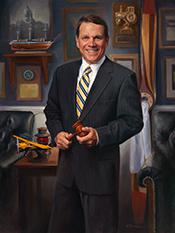
Mr. Chairman, I offer an amendment. Mr. Chairman, I yield myself such time as I may consume. Mr. Chairman, I am here today to correct an inequity as I see it in the car and truck renting and leasing…
Mr. Chairman, I offer an amendment.
Mr. Chairman, I yield myself such time as I may consume.
Mr. Chairman, I am here today to correct an inequity as I see it in the car and truck renting and leasing industry. By reforming vicarious liability to establish a national standard that all but a small handful of States already follow, we will restore fair competition to the car and truck renting and leasing industry and lower costs and increase choices for all consumers.
Currently, a small number of States impose vicarious liability, or liability without fault, on companies simply because they own a vehicle involved in an accident. Whether or not the vehicle is at fault is irrelevant. These vicarious liability lawsuits cost consumers nationwide over $100 million annually.
These laws apply to where the accident occurs. It does not matter where the car or truck was rented or leased. Since companies cannot prevent their vehicles from being driven to a vicarious liability State, they cannot prevent their exposure from these laws and then raise their rates accordingly. These higher costs have driven many small companies out of business, reducing the consumer choice and competition that keeps costs down.
While this amendment seeks to level the playing field, I want to emphasize that the provisioning will not allow car and truck renting and leasing companies to escape liability if they are at fault. Accident victims will continue to be compensated according to individual State law.
Mr. Chairman, I reserve the balance of my time.
Mr. Chairman, I yield 1 minute to the gentleman from Virginia (Mr. Boucher), the amendment cosponsor.
Mr. Chairman, I yield myself such time as I may consume. The amendment requires that vehicles be covered, still be covered by the State-established minimum insurance levels for vicarious liability.
The bottom line is, if we limit vicarious liabilities, they are still going to be covered by the minimum standard. There is never going to be an instance where the vehicle goes out there and is not insured.
Mr. Chairman, I reserve the balance of my time.
Mr. Chairman, I yield myself such time as I may consume.
I had several and, unfortunately, due to the speed in which amendments were moving this morning, we are not going to get to all of them. We have the House majority whip, the gentleman from Missouri (Mr. Blunt) who wanted to speak on this, and also the gentleman from Georgia (Mr. Burns).
Mr. Chairman, this amendment I think makes sense. It is a consumer amendment. It is going to save consumers $100 million annually.
The fact that a company can be liable simply because they own the vehicle even though they were not involved I think is ridiculous.
The bottom line is that this is still going to require that vehicles be covered by the State-established minimum levels for insurance. There is never going to be a situation where a vehicle goes out there or someone goes out there that there is not a lease to State minimum standard. That is still going to be in place.
What this simply says, there is unlimited liability in this situation where we have a vicarious liability law in a State. We are trying to put together some sort of a national standard. I think it makes sense. I think it is good for the consumer, and it is going to make a big difference.
Mr. Chairman, I yield back the balance of my time.
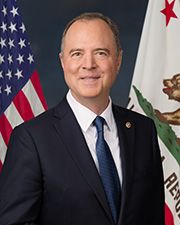
Mr. Chairman, I offer an amendment. Mr. Chairman, I yield myself such time as I may consume. The car pool lane has been a tremendous success at reducing air pollution and alleviating traffic jams…
Mr. Chairman, I offer an amendment.
Mr. Chairman, I yield myself such time as I may consume.
The car pool lane has been a tremendous success at reducing air pollution and alleviating traffic jams since it was introduced 3 decades ago. The idea works because it is a simple trade-off, more choice for more responsibility. We can use this powerful trade-off to encourage more than just car pooling. Hybrid gas electric cars have doubled the gas mileage of standard cars, which means they fight air pollution as surely as car pooling does; and unlike other clean car technologies, they are also now available in meaningful numbers.
This fledgling technology has great potential, but we need to help it get off the ground further. There is a small tax deduction for purchasing a hybrid car, but expanding this deduction would cost money at a time when we are tightening our fiscal belts.
Instead, we can use the incentive of the car pool lanes to encourage drivers to purchase hybrid cars without affecting the U.S. Treasury's bottom line. Both the administration and the Senate have recognized the potential of this approach. Their versions of the transportation bill permits State and local jurisdictions to allow hybrids in the car pool lane, even if the driver is alone. For cities with heavy air pollution, this could be an effective tool to coax drivers into cleaner cars. It also takes decisions about this issue out of Washington and puts them in the hands of local communities.
My amendment would accomplish the same goal by removing a mandate for a toll requirement. This lets States and local governments decide for themselves whether to allow hybrids in the car pool lane, whether to charge a toll or not.
Some say this risks overcrowding the car pool lane, but my amendment requires local governments to monitor the effect of letting in hybrids and impose restrictions, if necessary. Thus, if a toll became necessary, one could be charged.
More to the point, hybrid cars are less than \1/2\ of 1 percent of the cars on the road today, and a car pool lane crowded with hybrids is a problem many governments would love to have.
Mr. Chairman, I yield 2 minutes to my colleague, the gentleman from California (Mr. Issa), and thank him for his work on this issue.
Mr. Chairman, I reserve the balance of my time.
Mr. Chairman, I yield myself such time as I may consume.
Mr. Chairman, the intent is to give States the option, not the mandate, to charge a toll. If the States choose, they may allow hybrids; if they chose to allow hybrids under the condition of a toll, they would have that capability as well. We do not want to mandate that. Hopefully, I hope it would not be necessary.
If at some point down the road there were so many hybrids on the road that it was creating a clogging of the HOV lanes, States would be able to uninvite them to the HOV lanes or charge a toll.
So, yes, that is the intention of the amendment.
I yield to the gentleman from Minnesota.
Mr. Chairman, I yield myself such time as I may consume.
Mr. Chairman, as I understand it, the amendment is acceptable, and in conference there will be additional language added to further clarify that the States may charge a toll if they so choose, but are not required.
Mr. Chairman, I yield back the balance of my time.
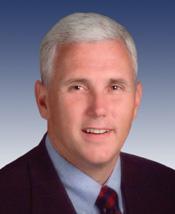
I thank the gentleman for yielding me this time. Mr. Chairman, with great respect to the chairman and the ranking member of the Committee on Transportation and Infrastructure, I rise in strong…
I thank the gentleman for yielding me this time.
Mr. Chairman, with great respect to the chairman and the ranking member of the Committee on Transportation and Infrastructure, I rise in strong support of the Flake fair amendment because it is simply that. It is only fair that we would deduct, as the gentleman from Arizona suggests, the amount that has been earmarked specifically by Members of those States from the formula for distributing assets under the transportation bill rather than excluding them and then allowing the formula to only be placed on those which have not been designated as being of particular national significance. It seems to me the money is spent in those States, it is spent on infrastructure projects that the Members of those States can point to with pride and appreciation because of their significance, but it ought not to work a detriment, as it so distinctly does to States like Indiana, that I have the privilege of serving, States like Arizona and so many States in the Union that have to wait until after the special projects to divide up what is left.
I support the Flake fair amendment strongly.
Mr. Chairman, I want to commend the gentleman from Arizona for his hard work on this fair and sensible amendment.
The Flake amendment would solve inequities in TEA-LU by ensuring that the apportion formula can function as intended. Currently, earmarks secured by each member stand apart from the Minimum Guarantee formula. This drastically changes the actual rate of return, as some states perform far worse in this process, losing hundreds of millions of dollars.
Mr. Chairman, this is unacceptable. If we are truly concerned about, and fighting for, equity, why do we not subtract these earmarks
from the formula totals in the Surface Transportation Program, thus ensuring equity? Why create an environment in which states must fight one another for extra projects, when instead the formula could be allowed to function as designed?
Mr. Chairman, we cannot allow some of our states to experience a reduction in core programs. The great highway infrastructure of each state serves more than just the citizens in that state. In fact, my home state of Indiana is affectionately known as the Crossroads of America for that very reason. Hoosier Highways serve the whole country through interstate commerce, personal and business travel, and military mobility. For this reason, I am in strong support of Mr. Flake's amendment, subtracting the amount of earmarks from state formula totals, and furthering equity between all states.
I urge my colleagues to support the Flake amendment.
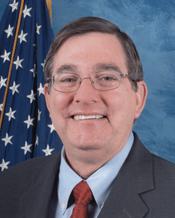
Mr. Chairman, I thank the gentlewoman from Texas for yielding me this time. Mr. Chairman, I rise today in support of the Jackson-Lee amendment that would simply change the calculation of toll credits…
Mr. Chairman, I thank the gentlewoman from Texas for yielding me this time.
Mr. Chairman, I rise today in support of the Jackson-Lee amendment that would simply change the calculation of toll credits by basing them on the proportion of non-Federal investment in toll projects made by respective States. The amendment recognizes that if a State legislature has chosen to pursue tolling, then it should be able to have access to toll credits to invest in another transportation options such as transit, rail, pedestrian or cycle paths.
My State's legislature, the Texas State legislature, passed a bill that created a revolution in the way Texas funds transportation projects. I believe that States should be granted more authority to deliver corridors faster, and in exchange we will give them enhanced accountability. Texas is a leader in bringing private enterprise and local control back into the transportation funding equation. I believe this amendment would allow my State to continue that option.
The amendment concerning toll credits helps create the needed flexibility in the Federal-aid program. The amendment will allow the expenditure of non-Federal funds as to one project to serve as the local match on another project in the form of toll credits. The benefit of having toll credits is to enable a highway or transit project to exchange a toll credit for the non-Federal share of the project's cost made by that State. The Jackson-Lee amendment will not cost the Federal Government a single dollar. Currently, any highway or transit project that uses even one dollar of Federal funding is ineligible for toll credits even though the greatest majority of the funding may be non- Federal. The Jackson-Lee amendment will apply toll credits only to the non-Federal funding portion of any transit or highway project.
Costs of heavy congestion, pollution, and, in fact, safety and the loss of lives are too great in all States. We must do more to respond to our exploding transportation needs. Budgets are getting increasingly tighter. We need to find different ways to get resources necessary to respond to those transportation needs.
Mr. Chairman, I believe it is our responsibility to get in the hands of the President a bill that he can sign, and I believe this helps facilitate that process.
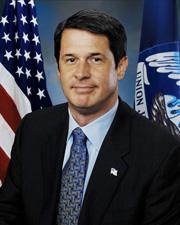
Mr. Chairman, I offer an amendment. Mr. Chairman, I yield myself such time as I may consume. Mr. Chairman, this is an amendment to officially represent a vitally important corridor, I-49, and…
Mr. Chairman, I offer an amendment.
Mr. Chairman, I yield myself such time as I may consume.
Mr. Chairman, this is an amendment to officially represent a vitally important corridor, I-49, and specifically recognize it as qualifying under the new National Corridor Infrastructure Improvement program. I think everyone will agree that this is exactly the sort of crucial corridor for economic purposes, military uses, the movement of agricultural products, all sorts of key uses, that this program is about. So the purpose of the amendment would be to formally recognize in the bill, to make sure that it qualifies. There is no specific amount of money associated with I-49 through this amendment, just to ensure that it fully qualifies under that improvement program.
Again, I-49 is such a corridor of national significance because of the movement of ag products from the heartland of the country to our ports in the south and across the globe; because of defense and security issues, I-49 links so many of our military bases; because of trade, again, agriculture is perhaps the biggest example of that, but it is an enormous trade corridor into the heartland of the country; because of energy, moving energy from Louisiana and the Gulf of Mexico into the country; and because of safety concerns.
That is the reason, that is the purpose behind that amendment. I intend to withdraw the amendment in a few moments after engaging in a short colloquy with the chairman.
Mr. Chairman, I reserve the balance of my time.
Mr. Chairman, I yield such time as he may consume to the gentleman from Louisiana (Mr. John).
Mr. Chairman, I yield 1 minute to the gentleman from Alaska (Mr. Young), to have a conversation in the form of a colloquy.
Mr. Chairman, I yield myself such time as I may consume.
Mr. Chairman, I thank the gentleman very much for that pledge of support, and I look forward to working with the gentleman proactively as the process moves along.
Mr. Chairman, I ask unanimous consent to withdraw my amendment.
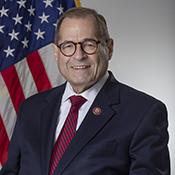
Mr. Chairman, my own State of New York is one of the most active car rental markets in the country. We also have a huge number of uninsured drivers who rent cars because, in New York City, a lot of…
Mr. Chairman, my own State of New York is one of the most active car rental markets in the country. We also have a huge number of uninsured drivers who rent cars because, in New York City, a lot of people do not own cars. New York has forbidden car rental companies to ask their customers if they own automobile insurance in order to allow the largest number of people access to rent the cars.
Since New York has made the policy decision to mandate car rental companies to rent to uninsured drivers, New York needs vicarious liability to protect innocent bystanders who are injured by these uninsured drivers. Why should not New York and other States have the ability to make that policy determination? Why should we arrogate to ourselves to tell the 15 States that have chosen to have vicarious liability but not to limit car rentals to only people who can prove that they have their own personal insurance, that is the trade-off; why should we tell them that is the wrong policy decision? That should be left to the States.
There is nothing wrong with a State deciding that it is in the interests of the people of that State for uninsured drivers, who may be uninsured because they do not own their own cars, to be able to rent cars, but to be able to say to the car rental companies, you must take vicarious liability so that you do not shift the burden of paying for an accident to the pedestrian or the hospital or the taxpayers. This is a perfectly reasonable thing to do. Fifteen States have chosen to do it.
To pass this amendment is to say that we are going to obviate the policy choices that those States have made and shift the burden on to innocent victims of accidents in those States. We should not do it. Let the States decide this question, as they have.
Mr. Chairman, I urge opposition to this amendment.
Show 7 more
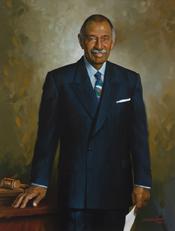
Mr. Chairman, I submit the following letter for the Record. National Conference of State Legislatures, Washington, DC, April 1, 2004. Hon. Dennis Hastert, Speaker, House of Representatives,…
Mr. Chairman, I submit the following letter for the Record.
National Conference of
State Legislatures,
Washington, DC, April 1, 2004.
Hon. Dennis Hastert,
Speaker, House of Representatives, Washington, DC.
Hon. Nancy Pelosi,
Minority Leader, House of Representatives, Washington, DC.
Subject: Amendment 8 to H.R. 3550.
Dear Speaker Hastert and Representative Pelosi: On behalf
of the National Conference of State Legislatures, I am
writing to express strong, bipartisan opposition to the
passage of Amendment Number 8 to H.R. 3550, ``The
Transportation Equity Act: A Legacy For Users.'' This
amendment is a blatant attempt by the U.S. Congress to
preempt existing state laws regarding vicarious liability for
rental car owners. This amendment has been introduced without
the benefit of a hearing or debate on how this amendment
would impact existing state laws.
Tort reform and liability are areas of law that have been
traditionally regulated by the states. NCSL supports state
efforts to reform or not to reform their own vicarious
liability statutes. Perhaps even more egregious is the fact
that this federal effort to preempt state laws has been
orchestrated without the benefit of input from the states. At
the very least, Congress should have held a hearing and
discussion of this very important issue.
If you need any additional information, please contact NCSL
Senior Committee Director for the Law and Criminal Justice
Committee Susan Parnas Frederick at (202) 624-3566
Respectfully,
Denton Darrington,
Idaho State Senate, Chair NCSL Standing
Committee on Law & Criminal Justice.
Mr. Chairman, I thank the gentleman for yielding me time. Mr. Chairman, of course I fully support funding of I-49, which runs right through the Seventh District of Louisiana, right through the…
Mr. Chairman, I thank the gentleman for yielding me time.
Mr. Chairman, of course I fully support funding of I-49, which runs right through the Seventh District of Louisiana, right through the heartland of Louisiana. Completion of this very important interstate system from Canada to New Orleans is an incredibly important corridor, from the Midwest of America down to the coast and for the economics of trade, and it is an incredibly important program.
I have worked very hard over the last few years to make sure that I- 49 South was given a high priority designation in TEA 21, and also I-49 North, as a high priority corridor. This amendment today I think reinstates the importance of I-49 as a priority for Congress, and I fully support it.
However, there is a larger issue at hand. I think we need more funding for this bill to accelerate funding for I-49 and other projects across the Nation. Each Member in this body believes that highways running through their district are a priority, and they are correct. Improved transportation infrastructure means economic development; it means good American jobs. But the only way that we can see these priorities met is to increase the funding for this bill in Congress.
The I-49 Congressional Caucus is working with the chairman and the ranking member on a way to complete the funding for this project, and many other projects; and I pledge to create new jobs and expand economic development for the full funding of I-49 and other high- significant and regional priorities.

Mr. Chairman, I offer an amendment. The Chairman pro tempore. The Clerk will designate the amendment. Mr. Chairman, I ask unanimous consent to modify my amendment at the desk with an amendment. Mr.…
Mr. Chairman, I offer an amendment.
The Chairman pro tempore. The Clerk will designate the amendment.
Mr. Chairman, I ask unanimous consent to modify my amendment at the desk with an amendment.
Mr. Chairman, I yield myself such time as I may consume.
I appreciate the courtesy so we can at least consider the perfected form of this amendment.
The need for my amendment is precipitated by a recent court decision that would lift a ban that has been in effect in the State of New Jersey since 1999 that restricts the roads on which the very wide 102- inch or wider trucks travel.
And this amendment would uphold current restrictions and current policy, maintain current policy and, thus, by extension, affirm the right of States to regulate the super-sized trucks on roads that are not part of the national network.
In 1999 the then Secretary of Transportation and his associate at the Federal Highway Administration, the administrator, in writing and in person with Members of Congress and concerned State and local officials, categorically affirmed that, quote, ``nothing in Federal law or regulation would prevent New Jersey from banning large single or twin-trailer combinations from the subject routes unless they were traveling to a terminal or making pick ups or deliveries on these routes.''
And with that clarification, the State of New Jersey, the former Governor, Governor Whitman, subsequently adopted new limitations on what roads large trucks may and may not use.
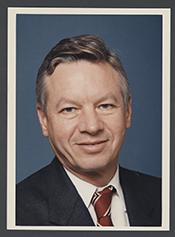
Mr. Chairman, will the gentleman yield? Mr. Chairman, I can state for the majority that we will work with the gentleman and with the minority leader on this matter. Mr. Chairman, I think the…
Mr. Chairman, will the gentleman yield?
Mr. Chairman, I can state for the majority that we will work with the gentleman and with the minority leader on this matter.
Mr. Chairman, I think the gentleman from Louisiana knows that this Member, at least, has met on a number of occasions both here in Washington and down in New Orleans and other places in Louisiana with groups who are supporting this high-priority project. It is an important project. But there are a lot of important projects in our country. Our committee is trying to come up with the resources to meet a variety of needs.
I would urge the gentleman to work with the committee and the process, rather than attempting to single out his particular project in this way, because it is not going to work politically here in the House, given all the other regions and their concerns.
But what the gentleman is saying is important. He does have an important project, and we are eager to work with the gentleman to try to come up with the resources necessary to help move it forward.
Mr. Chairman, it is my understanding that the gentleman did misdraft the original amendment. We are still going to oppose the amendment as redrafted on the merits, but extend him the courtesy of correcting his drafting error.
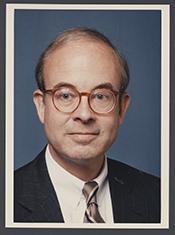
Mr. Chairman, I thank the gentleman for yielding me this time, and today I rise to join with him in support of a common sense reform that will eliminate antiquated vicarious liability statutes,…
Mr. Chairman, I thank the gentleman for yielding me this time, and today I rise to join with him in support of a common sense reform that will eliminate antiquated vicarious liability statutes, benefit consumers, and protect the victims of accidents.
Vicarious liability laws for rental cars in a handful of States drive up costs for consumers nationwide by an average of $100 million annually. These laws prevent unlimited damages against companies that rent or lease vehicles solely because they own a vehicle that is involved in an accident, not because they have done anything wrong. These companies are not negligent, not at fault, and could do nothing to have prevented the accident.
Consumers pay $100 million annually resulting from these unfair laws because companies must build the costs of arbitrary damage awards into their rental and lease rates. Regardless of where a car or truck rental company is headquartered or where the vehicle is rented or leased, the company is subject to vicarious liability, even if its vehicle is driven to a vicarious liability State and is involved in an accident. Therefore, the laws of a mere handful of States drive up rental rates nationwide for all rental consumers.
I urge approval of this common sense reform.
Mr. Chairman, I thank the gentleman for yielding me time. Mr. Chairman, as you perhaps know, H.R. 243, the Hybrid Vehicle Incentive Act, which I authored in the previous Congress and again in this…
Mr. Chairman, I thank the gentleman for yielding me time.
Mr. Chairman, as you perhaps know, H.R. 243, the Hybrid Vehicle Incentive Act, which I authored in the previous Congress and again in this Congress, serves to do a similar incentive program for HOV use by hybrid vehicles. Since it is tied up in the energy bill and since the transportation language was at best vague as to whether or not charges must occur, I thank my colleague for his leadership in seeing that there was an easy remedy to ensure that municipalities and States could charge zero, thus eliminating the requirement to put a toll on these efficient vehicles that are leading the way toward ending or at least reducing our dependence on foreign oil.
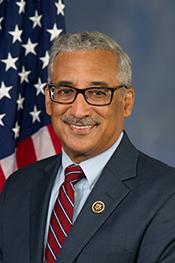
Mr. Chairman, I just think this is an unfortunate situation to have 5 minutes to debate this important issue. The question is, who will take the risk? If the rental car agency is not going to provide…
Mr. Chairman, I just think this is an unfortunate situation to have 5 minutes to debate this important issue.
The question is, who will take the risk? If the rental car agency is not going to provide the insurance for the drivers, who will? Are they responsible or required to have insurance? Will the victims of negligence have to pay their own bills?
This is just unfortunate. We have 50 different States, 50 different laws. They have all dealt with this situation individually. It is unconscionable to try to decide this in a 5-minute debate. I hope we defeat the amendment.
Bill Text
Latest available legislative text
        [Congressional Bills 108th Congress]
[From the U.S. Government Publishing Office]
[H.R. 243 Introduced in House (IH)]

108th CONGRESS
1st Session
H. R. 243

To amend title 23, United States Code, relating to the use of high
occupancy vehicle lanes by hybrid vehicles.

_______________________________________________________________________

IN THE HOUSE OF REPRESENTATIVES

January 8, 2003

Mr. Issa (for himself, Mr. Baird, Mr. Lewis of California, Ms. Lofgren,
Mr. McDermott, Mr. English, and Mr. Inslee) introduced the following
bill; which was referred to the Committee on Transportation and
Infrastructure

_______________________________________________________________________

A BILL

To amend title 23, United States Code, relating to the use of high
occupancy vehicle lanes by hybrid vehicles.

Be it enacted by the Senate and House of Representatives of the
United States of America in Congress assembled,

SECTION 1. SHORT TITLE.

This Act may be cited as the ``Hybrid Vehicle Incentive Act''.

SEC. 2. HYBRID VEHICLE EXCEPTION.

Section 102(a) of title 23, United States Code, is amended by
adding at the end the following:
``(3) Exception for hybrid vehicles.--Notwithstanding
paragraph (1), a State shall permit a vehicle with fewer than 2
occupants to operate in high occupancy vehicle lanes if such
vehicle is a hybrid vehicle.
``(4) Hybrid vehicle defined.--For purposes of this
subsection, the term `hybrid vehicle' means a motor vehicle (as
such term is defined in section 164(a))--
``(A) which draws propulsion energy from onboard
sources of stored energy which are both--
``(i) an internal combustion or heat engine
using combustible fuel; and
``(ii) a rechargeable energy storage
system;
``(B) which, in the case of a passenger automobile
or light truck--
``(i) for 2002 and later model vehicles,
has received a certificate of conformity under
the Clean Air Act (42 U.S.C. 7401 et seq.) and
meets or exceeds the equivalent qualifying
California low emission vehicle standard under
section 243(e)(2) of the Clean Air Act (42
U.S.C. 7583(c)(2)) for that make and model
year; and
``(ii) for 2004 and later model vehicles,
has received a certificate that such vehicle
meets or exceeds the Bin 5 Tier II emission
level established in regulations prescribed by
the Administrator of the Environmental
Protection Agency under section 202(i) of the
Clean Air Act (42 U.S.C. 7521(i)) for that make
and model year vehicle; and
``(C) which is made by a manufacturer.''.

SEC. 3. TERMINATION.

Effective December 31, 2010, paragraphs (3) and (4) of section
102(a) of title 23, United States, is repealed.
<all>