Compact-Impact Reimbursement Act
Legislative Activity
Stay on top of the latest movement without scrolling through every action
Referred to the Subcommittee on Total Force.
August 15, 2003
View full timeline
Introduced in House
July 14, 2003
Sponsor introductory remarks on measure. (CR E1475-1476)
July 14, 2003
Referred to the Committee on Resources, and in addition to the Committees on International Relations, Energy and Commerce, Agriculture, and Armed Services, for a period to be subsequently determined by the Speaker, in each case for consideration of such provisions as fall within the jurisdiction of the committee concerned.
July 14, 2003
Referred to the Subcommittee on Department Operations, Oversight, Nutrition and Forestry.
July 17, 2003
Referred to the Subcommittee on Total Force.
August 15, 2003
Floor Debate
23 membersWhat members said about H.R. 2716 on the floor
 CSB
CSB JMI
JMI JMJ
JMJ TADMZB+18
Floor Debate
23 membersWhat members said about H.R. 2716 on the floor
Will my friend from Nevada yield for a question? Mr. President, I appreciate very much my distinguished copartner on the Transportation Subcommittee talking about the need to get this bill through…
Will my friend from Nevada yield for a question?
Mr. President, I appreciate very much my distinguished copartner on the Transportation Subcommittee talking about the need to get this bill through quickly. He was discussing the difference between the bill we have now and the original bill.
I was wondering if it is correct that the original highway bill really didn't have any formulas; it was what one would have to call pork because it had various projects in it. It was an effort by the Congress to outline where money is needed. Is that not basically the form of the original highway bill?
Mr. President, if the Senator from Nevada will yield for another question, isn't it true that the scope of this bill, the size of it, reflects programs that Congresses in previous years decided are good for the national transportation policy? In other words, we are not creating a new formula; we have taken the formula, the apportionment that existed. Is it not true that we have attempted to construct this bill so that, working with the formula, every State gets up to 95 cents?
My State of Missouri was one of those States, when I got here in 1987, that was only getting back 77 cents. Every State will get up to 95 cents on the dollar. Every State, at a minimum, will get a 10- percent increase. Some States that would be getting much more money will only get a 40-percent or 40-plus-percent increase, which some may object to and say is not enough. But in this day and age, with a tight budget, it seems to me a 40-percent increase is not bad to take home from a compromise bill. Is that a fair assessment?
I thank the Senator.
Mr. President, I ask my colleague to yield about a matter.
We have a number of technical amendments. There is a question about whether we want to move to that. We are preparing a technical amendment. I have discussed this with both sides. Basically, this is a technical amendment that accomplishes a number of things. In essence, it achieves the original goal of an amendment offered by Senator Warner, which was to increase the metropolitan planning share or takedown from 1 percent to 1.5 percent. We are getting a technical amendment copied, and as soon as we get the copies, if there is no objection from the managers, I thought we would do that.
Mr. President, might we inquire of the managers on the Democratic side if they are ready to take this up?
I will be happy to withhold on that.
Mr. President, I ask unanimous consent that the order for the quorum call be rescinded.
Mr. President, I am very pleased to announce there is an amendment at the desk. I ask for its immediate consideration.
I ask unanimous consent that the reading of the amendment be dispensed with.
Mr. President, I offer this amendment on behalf of Senators Inhofe, Jeffords, and Reid. This is one small step for mankind toward a highway bill.
There had been some concern about offering amendments. This is a technical amendment. This changes a number of items that, when crafting the bill, were erroneous. Normally we would adopt these technical amendments without objection. But there may be some discussion on it. I wish to explain the one perhaps significant change in this technical amendment so everybody knows what we are doing.
In the previous bill, TEA-21, the metropolitan planning organizations received 1 percent from the Surface Transportation Program to do the work that these agencies are required to do in approving transportation plans, conforming them to air quality plans. This 1 percent takedown, as it is called, amounted to about $1.7 billion over the life of the bill.
In drafting the underlying bill, we increased spending on planning for metropolitan planning organizations by $800 million, almost a 50 percent increase.
When Senator Warner proposed making the takedown of the share for the metropolitan planning organizations 1.5 percent rather than 1 percent,
it was on the assumption that the total of the previous amount plus what we did in committee would amount to 1.5 percent. But as it was drafted and printed in the committee report, it wound up adding what we had previously put in the equity bonus on top of the 1.5 percent.
I believe this amendment restores the MPO portion to that originally proposed and adopted, i.e., a 1.5 percent share, which is what we have all agreed is needed for metropolitan planning organizations.
We have a letter that I will submit, signed by the executive director of the American Association of State Highway and Transportation Officials, the president and chief executive officer of the American Highway Users Alliance, the chief executive officer of Associated General Contractors of America, the executive director of American Road and Transportation Builders Association, and the executive director of the National Conference of State Legislatures.
The letter says, in substance--and I will submit the full letter-- that we write on behalf of the organizations to express concerns over the size of the total, the 1.5 percent-plus, the additional equity bonus. Their point is that the large increase results from a combination of adjustments, growth in the overall highway program, an increase in the percentage set-aside, and broadening of the program base subject to the metropolitan planning set-aside.
They believed that adding an additional $2.2 billion for planning would make that much less available for improving, constructing, maintaining, and operating a safe and efficient highway system.
They come out strongly in support--as we all are--of increasing the metropolitan planning funds. The number of MPOs has increased 340 to 378, and many more are looking at the prospect of being designated as nonattainment for the new ozone and fine particulate standards. They recommend an increase more comparable to the growth in MPOs, but they do not think tripling it is wise. So they have asked us to reconsider.
The purpose of this technical amendment, among other things, is to bring it back to the 1.5 percent increase, upon which we have previously agreed.
I ask unanimous consent that the letter be printed in the Record.
Mr. President, I see the majority leader is in the Chamber. We will not act on this amendment at this time. If somebody wishes to object to it after the majority leader speaks, we would ask that they come to the floor and make an objection. Otherwise, I propose that at 3 o'clock we ask that the amendment be adopted or, if we need a recorded vote, we will be happy to do that. One way or another, I hope we can have action on this by 3 o'clock.
With that, I yield the floor.
Mr. President, might I ask the Senator from New Hampshire what his substitute does?
Mr. President, this obviously is a very important issue the Senator has raised. Having this as an amendment to a technical amendment raises questions that I think perhaps should be answered.
First, I point out to my friends who are concerned about it that the number we have chosen for the highway portion of the bill was a number adopted by a 79-21 vote on the floor of this body. In addition, we understand the need to provide funding for highways. The Finance Committee has worked very hard to come up with the funding measures. I don't serve on the Finance Committee, but they have adopted fuel tax compliance measures. They have reformed the provisions for the ethanol exemption. It is a very valuable agricultural fuel that improves the environment. They will not charge the highway trust fund with that. They will pay down the existing interest owed to the highway trust fund and spend down the balance. They will clarify mobile machinery exemptions and transportation taxes, and discontinue refunds going from the trust fund into the general revenue fund for fuel tax exemptions. These are generally related to the highway trust fund.
Further, I will point out for those of us who said we want the trust fund used for highways, the trust fund right now is being used for other things that are not highway related, such as automobile, bus, and truck drivers. Some $36 billion will go to mass transit, a very valuable adjunct to the transportation system but not something that
people who pay highway trust fund taxes are using because they are putting the gas and diesel in their own vehicles.
There are also valuable environmental benefits in there such as CMAQ--congestion mitigation for air quality. There are also rails and trails and other easements in there that are a significant diversion of highway trust fund dollars from the direct highway trust fund purposes.
I hope my colleagues who have problems with strict application of highway funds being raised on highway uses deal with that in an amendment that is directly related to the highway bill transportation which is before us.
Obviously, one of the things one can do in the Senate is to offer amendments that are more properly the jurisdiction of other committees, which certainly collective bargaining is, I would say, such an effort. But this bill is so important to the United States, to our economy, and the safety and well-being of the people who use our highways and use our bridges in the United States that I hope we can get back to the main purpose of this measure, which is to continue the highway program, which builds better roads, better bridges, and provides jobs--47,000 jobs for each $1 billion of highway contracts--and provides the future for economic growth in our States.
As I have said on many occasions on this floor, I can tell you jobs are going to be located in the States where they have good transportation systems, and good highways are essential for that.
Finally, in my State it is a matter of saving lives. So I hope we can get back to dealing with the important measures in this bill. I hope we can deal with the specific needs, make the technical amendments that are normally permitted on such a bill, and debate the major provisions.
With that, I yield the floor.
Mr. President, picking up with the description of this bill, which we think is extremely important, I am going to share some other views. But I want to continue with this description of the bill.
Under the current law, there is a general prohibition against placing commercial establishments in recreation and safety rest areas on interstate rights-of-way. This bill creates a small exception to this prohibition by allowing States to place either electrification or other idling facilities that can be used for heating, air-conditioning, electricity, and communication. This will enable truck operators to receive services without continuing to run their engines, thereby reducing vehicle emissions. States, other public agencies, and private entities are already allowed to operate on the interstate system and may charge for the services provided under this new authority.
Why is this important? This is tremendously important. If you travel in your State along an interstate, you will find now that the new hours-of-service regulations require truckers to take more frequent breaks. There are rest areas in my State which are crowded with trucks. There are entrances to and exits from interstate highways where significant numbers of trucks are parked. This is to make sure that the drivers get the rest they need. There has been some controversy over it, but this is the rule and they are abiding by that rule. But when they are shut down and idling, particularly in bitter cold weather so they can get heat in their cab while they get the necessary rest, No. 1, it is causing dangerous situations along the roadway, on the exit and entrance ramps to interstate highways, and they are needlessly burning fuel, polluting the atmosphere, and causing excessive use of imported petroleum at a time when we face a real energy crisis.
So while this is a small part of the bill, it is one which responds to very significant needs to maintain safety for the traveling public, especially the truckers, and also to eliminate air pollution that comes from idling trucks.
Another program that I think is vitally important to empower the improvements in tolling, section 1609, deals with tools for toll programs. One of the effective things that has been used in many highway locations for raising revenue and regulating the flow of traffic is tolling. This bill modifies the Interstate System Reconstruction and Rehabilitation Program, the ISRRP, and establishes a new variable toll pricing program. This variable pricing program replaces the pilot program which was authorized in the previous TEA-21.
The new variable toll pricing program enables the use of variable toll pricing on congested facilities in order to increase mobility and improve air quality. This says that the Secretary can permit a State or public authority to toll any highway, bridge, or tunnel, including facilities on the interstate system, to manage high levels of congestion or reduce emissions in a nonattainment area or maintenance area.
This is extremely important when you look at the kinds of congestion we have in many areas during high traffic time. If there are tolls imposed when there would otherwise be heavy congestion, then those who must necessarily travel at that time can continue to do so by paying a toll. This is the ultimate market-based system for assuring that people who do not have to travel at high congestion times will not. Obviously, this means better traffic flow, this means less congestion, and therefore less pollution. So I think this is extremely important.
The Secretary may permit a State or public authority to manage the levels. The States must provide the Secretary with a description of the congestion and air quality problems, and the goals. Any State or public authority already operating under a cooperative agreement under the existing pricing pilot program of TEA-21 can continue under the existing laws.
We also have included some changes in the tolling requirements because in some States there are interstates which are badly out of date and in need of substantial rehabilitation. In the current laws, the provision for establishing tolls on existing interstates has been limited to replacement. If you have ever traveled I-70 in the State of Missouri, which is the lifeline for our State and for much of the Nation for east-west traffic going from coast to coast, certainly traveling between Kansas City and St. Louis, you will find that there are tremendous delays occasioned because the roads are inadequate. They are two-lane roads that are like driving in city traffic, they are so filled with cars and congestion.
In addition, when there are accidents on these roads, it is not uncommon for us to experience an hour or 2-hour delay. In one instance, I managed to miss a 7-hour delay by taking some back roads which I knew about to get around a major disaster.
This measure expands the ability to say if it is substantial rehabilitation or reconstruction, the State, if it chooses, could use tolls to improve an interstate.
Right now, Interstate 70 has the distinction of being the first toll road in the United States. But it also means it is a half a century old and it is at least 20 years out of date. The total cost for repairing it and replacing it is about $3 billion.
Some of my colleagues will be surprised to know that I have not asked in this bill for $3 billion to replace this vital national link. But I do believe we need to provide options for States to deal with problems such as this one. Whether they do it is going to be up to them. In the State of Missouri, there would have to be a vote of the people.
They would have to authorize the issuance of bonds and a tolling authority. This does not by any means say we are going to put tolls on it. It provides an option for the legislature, the Governor, the Department of Transportation to consider as they look at how they want to deal with one of these very significant highway corridors, which has become far too often a parking lot rather than a means of facilitating transportation between our two major cities and for people traveling from far beyond, going east to west through the heartland of the Nation, through the State of Missouri.
I think this is a very important provision and one which will provide States reasonable flexibility, not allowing them, willy-nilly, to take roads already financed through the interstate program, to impose tolls on them to finance other activities, but to make sure that we continue to realize the dream of those who initially formulated the interstate highway program to make sure that we can see traffic continue to proceed.
Let me move to another provision in the bill. It is section 1610, which merely directs the EPA to study the ability to monitor differentiation between fine and coarse particulate matter.
As we find out more about the dangers of pollutants, we find they are greater risks in the fine particulates in many instances which can cause far more significant harm than a coarse particulate because of the impact on the lungs.
Section 1611 adds particulate matter areas to the Congestion, Mitigation, and Air Quality Program. The funds under this provision are apportioned on the basis of a ratio of total weighted population of a State's nonattainment or maintenance areas to the total weighted population of all nonattainment or maintenance areas in the Nation.
If you didn't follow me on that, if a State has air quality problems in an area which is one-twentieth of all of the areas in the Nation, then they would get one-twentieth of the total funds available.
It sounds convoluted, but it really targets the CMAQ funds to the areas with greatest needs. Since many areas will need assistance to meet the new 8-hour ozone standard and the new fine particulate matter standard, the CMAQ formula is modified to include those areas. Adjustment factors are used to account for the number of pollutants for areas in nonattainment or maintenance. Section 1611 says CMAQ funds can be used for alternative fuel infrastructure under TEA-21. This bill goes further and encourages the use of CMAQ funds by listing the purchase of alternative fuel and the purchase of biodiesel fuel as eligible activities under CMAQ.
Due to some confusion in some DOT and EPA field and regional offices, we have also clarified that projects to control the extended idling of vehicles are indeed eligible for funding under the CMAQ program.
The bill also fixes oversight under current law that prevents States that do not have any nonattainment or maintenance areas from using CMAQ funds for CMAQ projects. Frankly, this allows us to get more homegrown clean fuels used with the assistance of CMAQ funds.
I happen to know something about soy diesel and about biodiesel. I am a great champion of it, because if you have followed a bus or a truck down the road that is burning straight diesel, you know what an unpleasant smell that can cause and what damage that can do to the environment. Biodiesel is a soybean-based or other biomass-based fuel which operates in a much cleaner burning environment. Several years ago we started a pilot project at the great training facility at Fort Leonard Wood, MO that needed to train soldiers to fight in smoke conditions on the battlefield. They had been burning diesel to provide that smoke. We felt that was not necessarily a good idea to be burning diesel and exposing our finest troops to the diesel pollution and the smoke that was caused. We worked with the Department of Defense to switch that to soy diesel. There was smoke. I asked them after they implemented what the byproducts were. They said, Obviously, we are not polluting the environment with petroleum-based diesel. We are burning a much cleaner soy-based fuel. It is much less harmful to the soldiers. The only problem is it smells like French fries and they get hungry. But given the alternative, that seems to be a good idea.
To the extent we get more buses and trucks using biodiesel, we are going to have greater benefits.
Let me give you two areas where soy diesel or any biodiesel can be a great improvement.
No. 1, firehouses: The fire men and women who live and stay in firehouses have complained for years. When they fire up the firetrucks, they get the diesel fumes coming up into the rest area. Sometimes, our valiant firefighters have to live and sleep in heavily polluted diesel- fuel-soaked areas. This is not only unhealthy, but it is very unpleasant. Fire stations have been some of the first places where we have used biodiesel. It has been extremely popular. Certainly when we are trying to talk about taking care of our first responders and the valiant firefighters who are on the line making sure the engines and the firetrucks below them are burning a clean-burning feel, it is a step in the right direction.
Another important area we have talked a lot about is school bus safety. When you have kids on school buses, the fumes from petroleum- based diesel come into that school bus. Do you know where they are the most dangerous? They are most dangerous when they are at low levels-- where the small children are. The smallest children are likely to be exposed to petroleum-based diesel fumes.
We are working to encourage more and more school buses to use soy diesel, and put aside the fact that kids are going to get hungry when they smell something that smells like french fries. But it is vitally important that we lessen the danger to our schoolchildren as well as lessening the use of diesel fuel and providing a significant benefit to those who produce soybean and other biomass.
I see a couple of our colleagues are here. Senator Thomas wishes to speak. We have lots more to talk about, but I will discontinue at this point and thank the Chair and thank my colleagues for coming to the floor.
Mr. President, we are checking with our colleagues on the possibility of setting a judicial nomination. As soon as we find out whether that is acceptable, we will ask consent.
Mr. President, we have heard lots of reasons why this bill is not a good bill, why we don't want to go to this bill, why we shouldn't be moving a highway bill. I have talked about some of those reasons, but let me share with you some information that indicates how the people of America think.
The Zogby International Survey Group did a broad-based survey of American voters. Nearly 70 percent of the voters contacted, in February 2003, said they believe America is facing a transportation capacity crisis, that our Nation's roads, airports, and mass transit systems are struggling to handle a growing population and economy.
Fifty-six percent overall and 79 percent of young women with children said traffic congestion is depriving them of more time with their families or for leisure activities today than just 5 years ago.
I don't think these answers should surprise any of us.
Since 1982, the U.S. population has grown by almost 19 percent, the number of registered motor vehicles has increased by 36 percent, and the vehicle miles traveled has ballooned by 72 percent. And--surprise-- over the past 20 years we have added less than 5 percent to road capacity, and even less than that to public transit.
What are the conditions of roads in local communities?
Forty-eight percent of those surveyed by Zogby said they were either fair or poor. When you move to Hispanic Americans, 75 percent said their communities have either fair or poor road conditions.
This is a problem in communities. This is a problem particularly for citizens who are maybe at a disadvantage in their community.
This survey's results come from a poll of over 1,000 voters nationwide, with a margin of error of plus or minus 3.2 percent.
I think some of the other findings are pretty important.
Eighty percent of the people polled think the Nation's highways and public transit networks are extremely important or very important to the U.S. economy. That is why we are here. Eighty percent of our constituents think highways and transportation networks are important. That is what this bill is all about. That is why we want to get everybody together to move this bill.
I urge my colleagues, if you have problems with particular portions of the bill, offer amendments. That is how this body functions. We would like to have good-faith amendments that seek to make changes which are necessary so we can move forward in a reasonable manner.
I think the people of America, particularly the 80 percent who say it is important, deserve to see us vote on issues that are of importance to them.
Eight in 10 of the people surveyed agree that an investment in highways, bridges, and public transit should be considered an important element in homeland security and national defense.
Ninety percent believe it is important that their representatives in Congress fight to ensure sufficient Federal
funding for transportation improvement projects in their local areas. I think some States must be lower than that because I think in my State it is higher than 90 percent. So some may have only 80 percent who think it is important.
Two-thirds of Americans say roads and public transit play a vitally important role in their life.
These are scientific surveys that merely confirm what I and many of my colleagues already know: If you go back to your home State and have a meeting about highway and transportation funding, you better get a big hall. I have had people come out to fill any hall that I have scheduled a meeting in to talk about it because they want to know more. They know it is important. I think this is vitally important.
I know there are some who may take a different view. Some people claim building more roads just causes more traffic. They even say you can't build your way out of traffic congestion. They are the zero sum game people, the ones who say there will just be more congestion.
Well, congestion is getting worse at a frightening pace in America. I believe the primary reason is a lack of adequate highway and public transportation capacity, not only in our major urban and suburban areas but in rural areas as well. As I have said several times, that is why we are killing people in Missouri. We don't have adequate highway transportation, particularly in rural areas.
Even as we spend more wasted time sitting in gridlocked traffic, many well-intentioned Americans, spurred on by the rhetoric of some of the extreme advocacy groups who want us all to ride bicycles--and I love to ride bicycles, but those won't get me to work and back, particularly when we have icy roads, as we do here, or when we have to take more people with us--are convinced that adding road capacity only causes more traffic congestion, more air pollution, more waste of precious fuels.
I think the answer to that is very clear: Research data from the U.S. Environmental Protection Agency, U.S. Department of Transportation, and the Texas Transportation Institute and common sense, if you and I just sit back and think about it, proves just about the opposite. The real problem is our lack of resolve to provide meaningful solutions to traffic congestion through new capital and operational investments. The failure to do so actually results in tons of unnecessary air pollution and billions of gallons of wasted motor fuel.
The Zogby poll found that 70 percent of America is facing a transportation capacity crisis, and all of these people realize we need, as a nation, the investment in transportation.
Talk about a drag on the economy, according to the Texas Transportation Urban Mobility Report, absent substantial new investments in highway and public transportation capacity, transportation operations across the Nation, the economic cost of traffic congestion in the Nation, lost productivity, wasted motor fuel will grow from about $67.5 billion in 2000 to almost $100 billion by 2009. That is one of the reasons we seek to have the investment. Yes, $255 billion is a large amount. It is not all going to highways. It comes from highway user taxes, but it goes to mass transit; it goes to congestion mitigation; it goes to scenic easements, to other things that improve the environment in which we live.
If we don't make these investments, the Texas Transportation Institute forecasts that over this period the average road speed in America's 675 largest urban communities will fall from about 42.3 miles per hour to 40.3 miles per hour. If you believe, as I do, that time is money, that reduction will continue to grow what is really a hidden tax levied on American consumers as transportation labor productivity decreases and costs increase.
Another one of the problems we have with congestion is pollution. The good news, according to the U.S. Environmental Protection Agency data, is that motor vehicle emissions have declined dramatically since the 1970s, thanks in part to the developments in new automotive and motor fuels technology. Emissions of carbon monoxide are down 45 percent since 1970, volatile organic compound emissions are down 60 percent, particulate matter emissions are down 47 percent, nitrogen oxide emissions are down 5 percent, and lead emissions have been eliminated.
The bad stuff is being reduced. We are getting the bad stuff out. This remarkable environmental achievement, which is responsible for most of the air quality improvement in the United States over the past three decades, was accomplished at the same time the number of licensed motor vehicles in the United States grew 87 percent and total vehicle miles traveled soared by 125 percent. Unfortunately, traffic congestion is retarding clean air progress just as it is retarding American productivity and economic growth.
Unanimous Consent Agreement--Executive Calendar
Mr. President, as in executive session, I ask unanimous consent that at 3:55 today, the Senate proceed to executive session to consider the following nomination on today's Executive Calendar: Calendar No. 457, the nomination of Mark Filip to be U.S. District Judge for the Northern District of Illinois.
I further ask unanimous consent that following 5 minutes for debate equally divided between the chairman and ranking member or their designees, the Senate proceed to a vote on the confirmation of the nomination; further, that following the vote, the President be immediately notified of the Senate's action and the Senate then return to legislative session.
Reserving the right to object, there is some question on this side about the amendment being an amendment to the commerce title, and at this point we are not prepared to give consent to that. We want to work with the Senator who has been working in good faith, but I have been asked, since this is a matter that relates to a different section of the bill, to hold off. We can work through this if we can go with the original consent.
Mr. President, on this side I am not authorized to enter into that type of UC. I assure the Senator and my colleagues on the other side we will work with them. There is a concern about moving into the commerce title. We will work with him if we can move forward on the consent for the judge vote; then we will work on this, if we can get consent for that.
I believe at this point it is necessary to revise the unanimous consent. First, I say to my friend from North Dakota that the title he wants to amend has not been offered. That is a problem on which we are going to have to work. We have only offered the EPW portion.
I asked unanimous consent that there be 5 minutes equally divided between the chairman and the ranking member and, thereafter, there be a vote on the nomination of Mark R. Filip, of Illinois, to be U.S. District Judge for the Northern District of Illinois.
I renew my request. Following the 5 minutes, I ask unanimous consent that the Senate proceed to a vote on the confirmation and, following the vote, the President be immediately notified of the Senate's action and the Senate return to legislative session.
Yesterday, we had several occasions where we were trying to stay on the bill, and we kept saying: All right, one more person, one more person, one more person. As manager of the bill, I am going to…
Yesterday, we had several occasions where we were trying to stay on the bill, and we kept saying: All right, one more person, one more person, one more person.
As manager of the bill, I am going to do everything I can parliamentarily to stay on the bill and not get into other subjects.
At 2:30.
To do everything to accommodate the Senator from Florida, what I would like to do is stay on the bill until later on this afternoon, and at that time I am sure we are going to come to a point where, because of other things that are happening, there are not going to be Senators who want to speak on the bill, and then we could go to this so the Senator would have the time he requested.
I have no objection if he changes his 3:30 to 5 o'clock. There are some things happening that affect every Senator in here tonight having to do with the National Prayer Breakfast, and I would like to accommodate them as well.
The majority leader will have to get in on this, but I would say even earlier than that. We are going to have amendments. In fact, we have some amendments that will be ready today. We need to get to those and get this bill moving.
Mr. President, I yield to the Senator from Nevada.
Yes. I have a letter I read yesterday. It is dated February 2, 2004. I have not heard anything either way about whether or not they are supporting this legislation. But they outlined a set of principles yesterday to which our bill complies. I think the minority leader covered the three criteria that were used that would keep them from opposing the bill, and I believe they have been met. We talked about it yesterday. One is to not increase gas taxes. Second, it would not have any kind of bonding arrangement. Third, that it would not get in the general fund.
The third one is where there is some debate. I trust the Senate Finance Committee. I talked to both sides, Democrats and Republicans, and they came up with something I think meets the criteria. I am satisfied it does.
Mr. President, if the Senator will yield, let me make an observation. We talked about this bill for several hours. Almost everyone who came down was objecting to what their State would get from this formula. When you compare this, starting with the same basic structure of a formula as we did in TEA-21--and remember, in TEA-21, we had the minimum guarantee.
What that did was take arbitrary political percentages and apply them in order to get votes. We have done far more. This takes into consideration the streamlining provisions about which we haven't even talked. We spent months on this in the committee, as our committee members know.
Safety and freight areas have not really been addressed before. This is something of which we can be proud. I have to say, when we put together the charts of all 50 States, there isn't one State that is not treated fairly, doesn't have an increase and doesn't have some kind of logic balancing the donee-donor, balancing the fast-growing States and the low-population States.
All these points are considered, and I think it is a very good bill. I agree with all on the committee.
Mr. President, yesterday we started through this bill. It is a rather lengthy bill. It covers a lot of provisions that haven't even been discussed, and I think a lot of Members are not really aware of some parts of this bill.
As the chairman of the committee, I thought it an obligation to go through this section by section, and I did go through sections 1104 through 1204, where we talked about how this was put together, how the formulas were put together. I also spent about an hour talking about the environmental improvements that are made in this bill.
I confess there are many things in this bill that I would rather have done in a different way, and I am sure Senator Reid and Senator Jeffords would say the same thing. In fact, they have said the same thing. Since we will have to get through this today at some point, I would like to go ahead and start with section 1205 and finish what we started yesterday. I hope any Members who are interested in making comments or offering amendments will come and do so, because I will be doing this in order to get through the bill.
Section 1205 is one in which I was particularly interested. Senator Reid yesterday talked about Daniel Patrick Moynihan and the contributions he made over the years. I felt compelled to stand up and remind him that Daniel Patrick Moynihan was a Tulsa boy. He was from Tulsa, OK, and was one of my very favorite people.
I think it is very appropriate that section 1205 is the designation of the Daniel Patrick Moynihan Interstate Highway as a part of the bill. Interstate Highway 86 in the State of New York is specifically designated as the Daniel Patrick Moynihan Interstate Highway in memory of our late colleague.
There are several others who have said good things about him. In fact, in the years I have been in the Senate, Senator Moynihan is the only Senator
about whom I have never heard one negative thing.
Section 1301 is the Federal share section. It continues the statutory provisions that lay out what the Federal share for the highway project will be for different States based on the amount of Federal land within their State. The Federal share provisions of current law use a sliding scale. This scale permits States with large portions of Federal land to match Federal funds with fewer State dollars. That is only reasonable because they are not collecting taxes off of these lands and they should not have to pay the same match.
Due to the decreased taxing ability of the States with a higher percentage of Federal lands, these States are given access to a higher Federal contribution for highway projects within their State. The bill before us today modifies this provision slightly to simplify the calculation used to determine the Federal share rates that apply to each individual State.
I might add that in this bill there are certain things my colleagues will see consistently throughout. One is simplification. One is to put it in language that we can all understand, that the public can understand, that our people back home can understand, and so that the departments of transportation in the various States will have a clear understanding as well, and they will take all of these complicated interpretations.
Another thing my colleagues will find all the way through is a streamlining effort to try to get more roads for the dollar. I think we have successfully done that, reaching a lot of compromises. So this is what my colleagues will see as we go through the bill section by section.
Section 1302 is the transfer of highway and transit funds. There is a technical fix that was requested by the Federal Highway Administration that clarifies that title 23 funds, that is the highway dollars, can be transferred to the transit administration from State to State or from State to another Federal agency as long as the project to be funded is eligible under title 23. I think that is a very reasonable approach.
An example of when this authority could be used is a State that has a congestion problem at or near a border crossing. They may determine that the problem is caused in part by inadequate parking facilities for the Customs Service to conduct truck inspections. To solve their larger congestion problem, it makes sense to provide money to the Customs Service to build parking lot facilities for truck inspections. This has been done administratively in the past, but section 1302 provides very clear guidance so they do not have to sit around and guess what in fact is going to come up.
Section 1303, the Transportation Infrastructure Finance and Innovation Act, which is referred to as TIFIA, was established for the first time in TEA-21 to provide Federal credit assistance to major transportation investments. The TIFIA program has proven to be an innovative and successful addition to the conventional grant and reimbursement highway program.
After watching the TIFIA program succeed as a funding device for a few large projects during TEA-21 and after receiving input from stakeholders and recommendations from the administration, the committee bill has made a few changes to the TIFIA program to expand its scope and increase its usability.
The amount of the Federal credit assistance cannot exceed 33 percent of a total project cost. TIFIA offers three different types of financial assistance to the large projects: One, direct loans; two, loan guarantees; and, three, standby lines of credit. The bill also lowers the threshold cost for eligible projects from the TEA-21 level of $100 million down to $50 million to make it available to more people and more projects, making TIFIA accessible to a greater number of large highway projects.
Projects are also eligible for TIFIA assistance when costs are anticipated to equal or exceed 20 percent of Federal highway funds apportioned to that particular State. With the increased emphasis this bill places on freight mobility, the definition of eligible freight- related projects is expanded.
I think the Senator was out of the Chamber when I said I eventually wanted to get through this section by section, but I can do this at any time. As soon as the Senator has anything ready, certainly I am interested in taking that up.
Reclaiming my time, I think he had stated he was not prepared to do that right now, but perhaps one will be coming along in a short while.
I have no objection to that. I think it is a good idea, and we will so inform Senator Bond.
I suggest the absence of a quorum.
Mr. President, I suggest the absence of a quorum.
Mr. President, I ask unanimous consent that the order for the quorum call be rescinded.
Mr. President, we have been trying to get through the explanation of this bill section by section. We have done so now all the way up to section 1304. It seems most people were concerned yesterday about the formula. Now we are addressing another problem. But we have not gotten into the full explanation of the bill. We have gone from section 1104 through section 1303.
I am going to go ahead and proceed. If anyone either has an amendment or wants to be heard on the bill, of course, I will give them that opportunity.
Section 1304 is in regard to the facilitation of international registration plans and international fuel tax agreements.
In response to issues surrounding commerce from Mexico, S. 1072 gives the Secretary of Transportation discretion to provide financial assistance to States participating in the International Registration Plan and the International Fuel Tax Agreement. These States incur certain administrative costs resulting from their service as a home jurisdiction for motor carriers from Mexico.
The International Fuel Tax Agreement and the International Regional Plan are agreements among various U.S. States and Canadian Provinces that facilitate the efficient collection and distribution of fuel taxes and apportioned registration fees among each member jurisdiction.
Under both programs, each motor carrier designates its home State or Province as the jurisdiction responsible for collecting fuel use taxes and fees. Since the implementation of NAFTA, the Mexican Government imposes and collects fuel taxes and registration fees differently from the United States and Canada. The National Governors Association is currently evaluating Mexico and its participation in the IFTA and IRP programs. In the interim, Mexican motor carriers may use individual U.S. States or Canadian Provinces as their home jurisdiction. So we are talking about something that is in the interim until the problem is resolved but is necessary.
Section 1305 is in regard to the National Commission on Future Revenue Sources to Support the Highway Trust Fund and finance the needs of the surface transportation system.
As many of you know, I am personally not one to support expansions of bureaucracy or the creation of innumerable review boards, committees, and commissions. However, this bill creates, and I have found good reason to support, a new temporary--temporary--national commission on future revenue sources to support the highway trust fund and finance the needs of the surface transportation system.
Funding the highway program has already become increasingly more challenging. Even as we debate the funding of this bill, we are confronted with the task of finding innovative and efficient funding methods to capture user fees lost to the fuel tax evasion and a host of other issues that the Finance Committee has done a great job in addressing.
However, one issue that has not been addressed, but must be before the next reauthorization cycle, is Federal incentives for the purchase of hybrid and other fuel-efficient vehicles. Fuel efficiency is a goal I support, but I do not believe it should come at the expense of the highway trust fund. So we have these exemptions, which has the result of reducing the revenues that would otherwise come in, even though the goal or the policy we are trying to establish is, perhaps, an inevitable policy.
We run the risk of making economic and environmental advances at the cost of jeopardizing our primary funding source for the highway trust fund--gas taxes. In recent years, the highway trust fund has seen a decrease in revenues. Constant changes in the automotive industry and the economy as a whole impact user fee revenues. We must continue to identify new and reliable revenue sources to sustain the program.
Most recently, we have seen the increase in the cost of fuel and the spiking that has been going on. That has a direct effect on the amount of revenues that are generated from fuel taxes.
In response to these changing and growing challenges, the new commission created in this bill is established to conduct a comprehensive study of the alternatives available to replace or supplement the existing fuel tax as the principal source of supporting the highway trust fund. We may find that this is going to still remain the principal source, but we do not know because we have never had any central place where we were trying to put together something this creative to replace it.
Specific factors which the commission will examine include, one, the effects of each major tax that goes into the highway trust fund; two, the ability to increase taxes if there are future revenue shortfalls; and, three, potential new sources of revenue to support highway, transit, and other surface transportation programs.
In regard to the scope of the study, the commission is charged with suggesting new or alternative revenue sources to fund the needs of the surface transportation system over the next 30 years or the next 40 years--the next long period of time. It is something we should have done before. This bill might have been easier if we had addressed this in TEA-21.
Now we have, in section 1306, the State infrastructure banks. TEA-21 established a State infrastructure bank pilot program that authorized participation among the States of Missouri, Rhode Island, California, and Florida. This bill reauthorizes the program to allow all States to enter into cooperative agreements with the Secretary of Transportation to set up infrastructure-revolving funds eligible for capitalization with Federal transportation dollars.
The SIB program gives States the capacity to increase the efficiency of their transportation investment and to significantly leverage Federal resources by attracting non-Federal public and private investment.
The program provides greater flexibility to the States by allowing other types of project assistance in addition to the traditional reimbursement grant. States utilizing SIBs are able to provide various forms of nongrant assistance to eligible projects, including at or below market rate subordinate
loans, interest rate buydowns on third party loans, and guarantees and other forms of credit enhancements. Any debt that the SIB issues or guarantees must be of investment grade caliber. The SIB program represents one more innovative financing option. We believe, after having done this with three or four States, that it is something that should be expanded to other States. This is a very positive thing.
Section 1401 is the Highway Safety Improvement Program.
Along with the new equity bonus program, the bill's new core Safety program is one of the crowning pillars of this legislation. It is both devastating and deplorable that motor vehicle crashes are the leading cause of death among American's between the age of 1 and 34-years-old. In 2002 alone, nearly 43,000 people died on our Nation's highways. Although the fatality rate has decreased when compared to the growing number of vehicle miles traveled, the total number of fatal crashes has gradually increased over the life of TEA-21. Through a reorganization of existing safety programs and a significantly increased Federal investment, S. 1072, appropriately referred to as SAFETEA, strives to combat one of the greatest threats faced on our roads today. Not only is the loss of life to unsafe roads and conditions tragic, but vehicle crashes have a huge economic effect manifested in medical costs, property damage, insurance, and the effects of congestion.
In response to the need for safer roads and road conditions, this bill gives heightened attention to improving traffic safety by creating a new core Highway Safety Improvement Program. Under TEA-21 States were required to set-aside 10 percent of their funds apportioned under the Surface Transportation Program for safety projects to eliminate hazardous locations and improve safety at highway-railway crossings. The new Highway Safety Improvement Program preserves the ability of States to continue funding these important projects, while giving the States even greater flexibility to identify and address other traffic safety issues such as work zone safety, traffic enforcement activities, lane and shoulder widening, use of safety warning devices, safety- conscious planning, and improved traffic data collection.
This is just one more effort to recognize that the States are all different. The same shoe does not fit all. We are giving them an expanded role to determine the best way to handle the problems in Vermont as opposed to Oklahoma or any other State.
Recognizing the various and changing safety needs in each State, the bill provides significant flexibility to the States in order to determine how the Federal safety dollars can best be spent to address the areas of greatest need. These are not always the same in each State.
Section 1402 is Operation Lifesaver. Among the existing safety programs that this bill reauthorizes is Operation Lifesaver. This program has proven effective as a national education and awareness campaign dedicated to reducing fatalities and injuries at highway- railway crossings. Operation Lifesaver has utilized various means to educate both drivers and pedestrians about making safe decisions at railroad crossings and has encouraged better engineering to improve safety at rail crossings. Due to the valuable service this program renders and the cost-benefit effectiveness it has sustained, this bill increases funding for the program from $500,000 per year to $600,000 per year and moves the source of funding for Operation Lifesaver from the Surface Transportation Program, STP, to the new Highway Safety Improvement Program.
Section 1403 is license suspension. Another area of concern in regards to highway safety is the intoxicated driver and especial repeat offenders. Current law imposes penalties on States that have not enacted statutes punishing repeat intoxicated drivers with a hard one- year driver's license suspension. However, as the States have reviewed data and adapted their sentencing structures for repeat offenders in this area, they have found that habitual drunk drivers whose license has already been suspended frequently choose to drive without a license, minimizing the effectiveness of the current State of the law. In the interest of public safety, some States have actually accepted the consequences of the Federal sanction and foregoing available Federal funding in order to impose more effective sentencing of these repeat offenders. This bill recognizes the reality of repeat drunk drivers driving on roads with a suspended license and the wisdom of more effective alternative sentencing schemes. Thus, the bill updates the ``repeat offender'' sanction in title 23 of the code to allow States to incorporate ignition interlock or similar devices when sentencing repeat intoxicated drivers.
At this point we have come through all the way to section 1404. I would like to see if the minority leader of the committee, who has been so great to work with, the ranking minority member, Senator Jeffords from Vermont, has any comments to make about these sections.
First, I agree with the ranking member of the committee. We have come a long way. We are ready shortly and will be prepared to deal with some amendments. In the meantime, let's wade through this thing a little bit more.
Section 1404. Bus axle weight exemption. SAFETEA holds over-the-road buses and intrastate public transit buses to the same standards that inner-city transit buses must meet with regard to axle weight, air quality, and requirements under the Americans with Disabilities Act. Specifically, the bill exempts any over-the-road buses or intrastate public transit bus from the maximum gross weight limitations imposed by the State.
Section 1405 is the Safe Routes to School Act. This was a provision that handled a number of compromises. It is one we are all concerned about. It has a continuing emphasis on safety. The bill introduces a new program that directly deals with safe routes to school, a safety improvement program established in SAFETEA. Projects eligible under the Safe Routes to School Program are already eligible under the larger Highway Safety Improvement Program.
However, Safe Routes to School provides a dedicated and protected funding source for pedestrian and bicycle safety projects near schools. The program is limited to projects and activities that will impose safety within 2 miles of primary and secondary schools. It sets aside $70 million per year for infrastructure and behavioral activities, such as sidewalk improvements, traffic-calming measures, speed reduction,
bicycle facilities, pedestrian crossings, traffic signal improvements, public awareness campaigns, and traffic education and enforcement.
I think that is significant. We have noticed, between the time we have been dealing with ISTEA and TEA-21, there have been increased fatalities in our young kids. We expanded this program during the course of our committee consideration. I think it was a good compromise to make on the purchase of equipment.
When conducting projects under the Federal program's authorization under this bill, some States will occasionally find the equipment necessary to complete the project may be cheaper to purchase than it would be to rent for the duration of the project. In such cases, this bill instructs them to conduct a cost-benefit analysis for the purchase of expensive equipment above specified levels in order to evaluate the savings associated with purchasing the equipment compared to renting the equipment for the duration of the project.
Everything we are doing here is trying to get the very most out of the dollars we are spending in terms of safety and equipment and road construction and the other things we are dealing with in S. 1072.
Section 1407 is work zone safety. Over a thousand deaths occurred in work zones during 2002 due to traffic crashes alone. There has been a lot of awareness in the public about this fact and States are trying to deal with it. We felt it appropriate to have some language in this bill. Although work zones represent a critical component of infrastructure development, they also pose a unique safety challenge for those on the road, and to road workers in particular.
S. 1072 attempts to minimize the injuries and fatalities in work zones by imposing insurance requirements, requiring the use of ITS technologies and safety budgeting in construction and contracting. The Secretary of Transportation is directed to encourage States to choose contractors that carry general liability insurance of at least $15 million. Transportation projects costing more than $15 million are encouraged to include continuously monitored work zone intelligent transportation systems, or ITS systems.
Section 1408. Worker injury prevention and free flow of vehicular traffic. In addition to the provision relating to the safety of workers in work zones just mentioned, SAFETEA also directs the Secretary to promulgate regulations requiring road workers to wear high-visibility clothing, with the goal of decreasing worker injury and maintaining a free flow of traffic.
In section 1501, regarding the integration of natural resource concerns into State and metropolitan transportation planning, my counterpart, the ranking minority member, was very interested in a lot of the parts of the bill that deal with natural resource concerns and State and metropolitan transportation planning. If the Senator from Vermont would like to go over some of these sections, starting with section 1501, it might be appropriate since he had a lot to do with these particular areas.
(Mr. SUNUNU assumed the Chair.)
I thank the chairman. As has been pointed out already by one of our members, the bill we are talking about is rather extensive. But it was not done quickly or without the tremendous work of staff and…
I thank the chairman. As has been pointed out already by one of our members, the bill we are talking about is rather extensive. But it was not done quickly or without the tremendous work of staff and many people who have contributed outside of the staff in listening to people from all over the country before we put the final touch on the bill.
The highway bill provides us with an opportunity every 6 years to give our communities, our businesses and our citizens a real boost by renewing our commitment to the world's most extensive transportation system. I am proud to be a leader in that effort this year.
Through the bill before us today, we will improve the condition and the performance of our roads and bridges, thousands and millions of them. That means both safer travel today and lower maintenance costs tomorrow.
I am particularly pleased that our work continues the transportation partnership established under President Eisenhower during the Interstate period and expanded with passage of ISTEA 12 years ago. That means that local leaders, stakeholders and citizens will continue to work with State and Federal officials to set spending priorities and define project scope.
I am also proud that we have maintained the linkage between transportation and the environment in our bill. Investments in transportation must build strong, healthy communities. Through advanced planning and early coordination we can ensure better results.
I urge my colleagues to work with those of us responsible for this bill so that we may complete our work in a timely way. America's communities are relying on us. The States are relying upon us. All people using the transportation system are depending upon us. I am sure we will produce this document in a way that will make us all very proud.
Mr. President, I am most pleased to assist in this regard.
The environmental provisions contained in this bill reflect a bipartisan compromise reached among the members of the Environment and Public Works Committee. Although there are a number of additional changes I would like to have made in these provisions, I believe the bill deals fairly in regard to these sections, given the variety of strong opinions on environmental subjects.
Several stakeholders have argued any early identification of potential environmental concerns may help reduce or avoid delays during the environmental review. Therefore, this bill specifies factors that may be considered during the transportation planning process.
Current law already requires transportation planners to consider projects and strategies that will protect and enhance the environment and improve quality of life.
The items added by this bill simply provide more direction as to what these concepts mean. These items do not constitute a checklist of items, whereby every item listed must be considered by each State and metropolitan planning organization, or MPO.
Section 1502. As another means of providing for early consideration of environmental concerns, this bill requires transportation planners to consult with appropriate resource agencies.
Interagency consultation should facilitate comparison of transportation plans to conservation plans or maps and inventories of natural or historic resources, where those plans or maps and inventories already exist and are in use.
The long-range transportation plan will also include a discussion of potential mitigation activities and sites that may help compensation for issues due to the transportation plan. This requirement is intended to get States to think strategically about mitigation. It is not to add new mitigation requirements or to require a level of detail better handled at the individual project review stage.
Section 1503. Integration of natural resource concerns into transportation project planning. Additionally, the highway bill contains provisions to incorporate the principles of context-sensitive design into current design standards. These principles involve consideration of the environmental context of a project and encouragement of design that minimizes impact on the project's surroundings. These provisions aim to integrate natural resource concerns into the transportation project planning process.
Section 1504. Public investment in transportation planning and projects. Current law provides an opportunity for the public to be involved to some degree in the development of transportation plans. This bill includes specific ideas for making public involvement opportunities more meaningful, such as making publicly available documents available on the Internet.
Section 1506. Federal and State laws often require habitat, stream, or wetland mitigation to compensate for direct adverse environmental impact caused by transportation projects. To provide additional flexibility and certainty in meeting these requirements, this bill authorizes the establishment of State mitigation funds, using moneys received from the Surface Transportation Program and National Highway System programs.
The State mitigation fund operates as a planning and project management tool available to the States. States can even use the mitigation funds to undertake larger mitigation efforts based on the total impact of a multitude of projects combined rather than project- by-project mitigation. This enables the States to more effectively plan for and provide the mitigation that is or likely will be required for transportation projects under other environmental laws.
The next section, 1511, transportation project development process. TEA-21 directed the Department of Transportation, DOT to ``develop and implement a coordinated environmental review process for highway construction and mass transit projects.'' Unfortunately, this was never achieved. It took almost 2 years for DOT to even propose rules, and those proposed rules were roundly criticized by many interested stakeholders and many in this Chamber.
That proposal has since been withdrawn. So it was necessary for us, obviously, to take the next step legislatively.
This bill sets up a process for complying with current environmental laws. In establishing a process for compliance, the bill does not venture to amend any current environmental laws. It does not venture to amend any current environmental laws.
Under this process, DOT is the lead agency with authority to set work plans and schedules, determine the purpose and need for a project, and determine which alternatives must be considered. This process also includes more public participation than currently required and continues to authorize DOT to provide funds to resource agencies to assist them in expediting project environmental reviews.
Section 1512. Assumption of responsibility for categorical exclusions. Under the National Environmental Policy Act, NEPA, some types of projects can be categorically excluded from lengthy analysis. Qualifying projects are those projects that ``do not individually or cumulatively have a significant impact on the human environment.''
Approximately 90 percent of all surface transportation projects are processed as categorical exclusions, or CEs, under NEPA. Since this is such an overwhelming percentage of the projects, even a small improvement in processing time for each CE can result in a large improvement systemwide.
The bill before us today attempts to make that improvement by allowing States to assume the Secretary's responsibility for completing the environmental review process for projects classified as CE under current regulations.
This assumption of responsibility will be limited to those States that have adequate capabilities and would remain subject to Federal oversight to maintain proper accountability.
Section 1513. Surface Transportation Project Delivery Pilot Program. Often a State will do much of the work involved with the preparing and environmental review of a surface transportation project. Then the Federal Department of Transportation must review and approve the State's work, the applicable documentation. Some stakeholders have argued that allowing States to complete the NEPA review, regardless of whether the project requires a categorical exclusion, environmental assessment, or even an environmental impact statement, could result in significant time savings and speed up project delivery.
The highway bill sets out to explore this idea by establishing a pilot program that allows up to five States to assume the Secretary's responsibility for the environmental review of a transportation project.
Under this pilot program, States will have to meet several criteria before and after selection to participate. These requirements include soliciting public comment prior to applying for participation, verifying adequate capabilities to carry out the responsibilities to be assumed, entering into a written agreement with the Secretary, submitting to the jurisdiction of the Federal courts, submitting to periodic compliance audits, and complying with the same procedural and subsequent requirements under Federal environmental law as would apply if the Secretary were conducting reviews.
Section 1514. In keeping with the new environmental changes, the bill directs the Department of Transportation to promulgate new regulations within 1 year to implement the planning and project delivery sections of the bill.
Section 1521. Critical real property acquisition. The committee bill enables States to use Federal funds to expeditiously acquire a limited number of parcels of land that may be needed for future transportation development but are threatened by imminent economic development.
The early acquisition of property keeps future transportation options open and provides States with an important opportunity to reserve future alignment alternatives while allowing timely and cost-saving acquisitions.
In limited circumstances and with the Secretary's approval, States can use the Federal funds to cover the cost incurred in acquiring parcels of land that are considered to be critical for any transportation project under title 23. Federal land may be used to acquire property prior to the completion of the environmental reviews for proper acquisition. Environmental reviews and approvals are still required before physical construction, demolition, or clearing is commenced. If a parcel is later sold or leased, States cannot retain the Federal share of the proceeds.
Section 1522. Planning capacity building initiative. Focusing on the importance of comprehensive and integrated planning, S. 1072 establishes a planning capacity building initiative to strengthen metropolitan and statewide transportation planning and to enhance tribal capacity to conduct joint transportation planning.
The bill gives priority to planning practices that support the transportation elements of homeland security planning, performance- based planning, safety planning, operations planning, freight planning, and the integration of environment and planning. The planning capacity building initiative will be administered by the DOT's Federal Highway Administration in cooperation with the Federal Transit Administration.
Section 1601. Environmental restoration and pollution abatement control of invasive plant species and establishment of native species. Storm water runoff from highways has a direct impact on the Nation's waterways, carrying with it pollutions such as brake linings, oils, heavy metals, road salts, nutrients, et cetera. To address these waterborne pollutants, current law already allows States to use STP funds to address water pollution or environmental degradation caused or contributed to by transportation facilities currently undergoing reconstruction, rehabilitation, resurfacing, or restoration so long as the environmental project does not exceed 20 percent of the overall project cost.
This bill extends eligibility for those types of mitigation projects from the States' STP funds to include their funds under the NHS program as well. It further allows the funds to be used for environmental restoration projects not associated with an active construction project.
The stormwater project must address runoff from an existing Federal- aid highway but not necessarily one undergoing reconstruction, rehabilitation, resurfacing, or restoration.
Invasive species are a growing problem both economically and environmentally. These harmful plants plague thousands of areas of rangelands and croplands and have been cited as a staggering problem by such organizations such as the National Cattlemen's Beef Association and the American Farm Bureau Federation. By making both NHS and STP funds available to mitigate invasive species along roadways, we provide States with the flexibility to minimize the impact of vehicles as vectors of these problematic plants.
Section 1602 relates to the National Scenic Byways Program. TEA-21 continues the National Scenic Byways Program authorizing the Secretary of Transportation to designate roads that have outstanding scenic, historic, cultural, natural, recreational, and architectural qualities as all-American roads, or national scenic highways.
This bill amends the current program to recognize that the Secretary already is promoting the collection of ``national scenic byways'' and ``all-American roads'' under the designation of ``America's byways.'' If State and Federal representatives reach consensus on establishing a single designation category, then these amendments will provide the Secretary with the authority to use any of the three terms, national scenic byways, all-American roads, or America's byways, as the single designation.
The bill also authorizes the Secretary for the first time to form public/private partnerships to carry out technical assistance, marketing, market research, and promotion with respect to national scenic byways.
Section 1603 is the Recreational Trails Program. This bill continues the Recreational Trails Program allowing Federal funds to be used to provide and maintain recreational trails for motorized and nonmotorized recreational trail uses. New eligible uses of funds permit trail assessment for accessibility and maintenance, and to hire trail crews or youth conservation or service corps to perform recreational trails activities. Current activities eligible under the program educational funding already include nonlaw enforcement trail safety, trail use monitoring patrols, and trail-related training.
Since projects under the Recreational Trails Program are much smaller than typical highway projects, this program is relieved of several normal requirements which, although appropriate for large highway projects, would be excessively burdensome for small trail projects.
Section 1604 covers exemption of interstate systems. SAFETEA establishes an exemption for the interstate system from consideration as a ``historic site'' regardless of whether the interstate system or portions of the interstate system may be eligible for listing on the National Registry of Historic Places. However, a portion of the interstate system that possesses an independent feature of historic significance, such as a bridge or a uniquely significant architectural feature, may still be considered a historic site individually.
Section 1605 of this bill changes current law to place greater emphasis on the need to consider the preservation of human and natural resources in the
decisionmaking process of developing highway projects. Consideration of a variety of highway project impacts has been part of the design process for many years. However, the transportation community has demanded improvements in project delivery and in the makeup of the product that is delivered. Compatibility with the surrounding environment and improved safety for the motorist and the pedestrian are critical.
The bill also directs the Secretary to ensure that the plans and specifications for proposed highway projects have considered preservation, historic, scenic, natural environment, and community values. However, States can use existing processes for demonstrating that they have considered these subject factors.
Section 1606 covers use of high-occupancy vehicle lanes which has been a topic of great interest to both States and stakeholders. This reauthorization bill clarifies existing law and provides more flexibility to State and local agencies for effective management of high-occupancy vehicle, or HOV, facilities. Certain types of vehicles are exempt from meeting the general occupancy requirements for HOV facilities. The bill further identifies the possible operational strategies that responsible agencies may select from to maximize the use of HOV facilities, manage highway capacity, mitigate congestion, and reduce fuel consumption.
Motorcycles continue to be allowed use of HOV facilities. Responsible Government agencies choosing to meet additional requirements may also allow low-emission and energy-efficient vehicles, such as hybrid vehicles, to use HOV facilities. These agencies are also given the authority to toll the use of an HOV facility by vehicles that do not otherwise meet the normal minimum capacity or other exemption requirements.
Section 1607 relates to bicycle transportation and pedestrian walkways. The highway authorization bill makes minor changes regarding pedestrian walkways, specifically allowing the use of the Surface Transportation Program, STP, funds and congestion mitigation and air quality improvement programs, CMAQs, funds for the nonconstruction pedestrian safety programs where current law only mentions bicycle safety.
We also explicitly mention the pedestrian use on bridges, whereas current law only mentions safety programs for bicycle use. The practice of charging user fees for shared-use paths is also permitted so long as the fees collected by a State are used for maintaining and operating the shared-use paths within the State.
User fees may not be collected on shared-use paths that are not within a highway right-of-way nor make user fees be charged for the use of sidewalks or bicycle paths.
I would like to stop at this point and pass the description to my good friend, Senator Bond. Thank you.
Mr. President, if we have an impasse about scheduling this afternoon, I wonder if it would be appropriate to ask consent that we have morning business tomorrow immediately after we commence Senate…
Mr. President, if we have an impasse about scheduling this afternoon, I wonder if it would be appropriate to ask consent that we have morning business tomorrow immediately after we commence Senate business to accommodate the request made by the distinguished Senator from Florida and the Senator from California. Could we do that?
That is a matter to be determined by the majority leader, but I would suggest that normally we have Senate business in the morning. We could either come in a little bit earlier or figure out our schedule. But it would not then interfere with the understandable desire on the part of the manager to stay on the bill once we are on the bill. Technically we are on the highway bill right now. Tomorrow morning we could certainly accommodate the Senator's request with the time allotted for his comments and those of the Senator from California.
That would be up to the majority leader.
Mr. President, I would say to the Senator from Florida that I will talk to the majority leader. I would be surprised if he would have any difficulty coming in prior to 9:30.
I will use my leader time prior to the time we move to the bill itself. I wish to comment on a couple of things this afternoon.
The majority leader had made a unanimous consent request. On his behalf, I make it again. I don't think there will be an objection.
Mr. President, I was criticized by some Members of the House yesterday or today with regard to the pension bill. Their criticism was that I was holding the bill. Let me make sure people understand: I have not held the bill. I have no desire to hold the pension bill. I would like to get on with it. I would like to complete our work on the pension bill.
It is, of course, the prerogative of the majority leader and the majority to send the bill to the House once we have completed our work. That has not been done. They are certainly within their rights to make decisions with regard to the disposition of the bill, but it would be in error to say that in any way I am holding the bill.
I am withholding our consent to go to conference on the bill, which is a different matter. I will talk about that in a moment. Obviously, Senator Frist and I have had some conversations about how we proceed with regard to conferences this year.
We are unwilling to commit to a process that brought about the unacceptable circumstances in conference last year, especially on the energy bill as well as the Medicare bill. But there are three approaches.
First, of course, on any bill, we are certainly within our rights to ask for a conference with the House. What we have simply asked is that if there is a conference, all the conferees be present when deliberations take place. That isn't too much to ask. That is all we are asking--our presence at conference meetings once those conference meetings have been called. We don't think a conference can truly be a conference if only one party is represented. That is my simple request. Until I have the assurance that that request is be granted, we are unable to provide consent to go to conference.
We are not asking for any predetermined outcome. We are not asking for a certain set of expectations with regard to the legislation itself. We are simply saying: If you are going to have a conference, don't call it a conference unless you have the conferees present.
There are two other approaches. I have just alluded to the second approach, which is to send the bill to the House. We have done that on a number of occasions. There is nothing that precludes us from sending the pension bill to the House, allowing them to work their will. Perhaps they will accept the changes made by the Senate. That certainly is within their right.
There is a third option. This is a tested, tried and true option that I can say with some authority has happened on countless occasions in past years and conferences. Last year we preconferenced the forest health bill. And once successfully preconferenced,
we agreed in conference to the provisions and the bill passed almost unanimously. In the 108th Congress, we passed 19 bills by preconferencing them first, including the AIDS Assistance Act, the Military Family Relief Act, the Veterans Benefits Act. And in the 107th Congress, we passed 51 bills by preconferencing the agreements: Railroad Retirement Survivors Improvement Act, the Veterans Benefit Act, Nurses Reinvestment Act, the Homeland Security Act, the Native American Settlements and Indian Financing Act Amendments. Those and 40- plus more bills were preconferenced.
I ask unanimous consent that the list of bills preconferenced and agreed to successfully in the 108th Congress to date and the 107th Congress be printed in the Record.
Mr. President, we have three options. First, whether it is the pension bill or any bill, we can go to conference and do what the institution requires, and that is have Members of the Senate and House, Republicans and Democrats, present at conferences and resolve our differences in the traditional manner.
Second, we can certainly pass the bill over to the House, send it over to the House at any time. We can do that on the pension bill this afternoon.
The third thing we can do is what I have just suggested has been done successfully on 19 occasions so far in the 108th Congress and 51 occasions in the 107th Congress; that is, to preconference and ultimately then to confirm our agreements in a formal conference once the negotiations have been completed.
We stand ready, once again, to do whatever it takes to pass the pension bill and ultimately put it on the President's desk. There is an urgency to this legislation. We will not, on any legislation this year, tolerate the unacceptable experience we had on several occasions in the first session of this Congress.
Mr. President, I wish to take a moment to talk further about the transportation bill. As I said yesterday, getting this bill to the floor has been too long a process. I won't dwell on that other than to say the Congress and the administration have not been successful in bringing this bill to conclusion, and because of that we have already lost 90,000 jobs.
For too long our economy has been slowed by outdated and inadequate transportation infrastructure. Nothing expresses the urgency of this bill better than the fact that we have lost 3 million private sector jobs over the last 3 years. It is time to get this bill done.
Make no mistake, not only will this bill create jobs all across the country but it will address our Nation's infrastructure deficit as well.
If passed, this bill will improve the more than 30 percent of our roads and highways that are in poor and substandard condition today. It will help improve the more than 30 percent of our Nation's bridges that are functionally obsolete or structurally deficient.
As I said yesterday, the managers of the bill, Chairman Inhofe and Senators Jeffords, Bond, and Reid, have done a remarkable job in bringing us a fine product to the Senate floor. This is a difficult, complicated issue, with an extraordinary number of different interests to balance.
The Finance Committee, led by Chairman Grassley and Senator Baucus, has also done a fine job of ensuring that there is symmetry in how we deal with highways and transit.
Senator Frist and I met on Monday to discuss the bill and we had a very productive conversation. In essence, we both agreed that now the Senate has begun debate on the transportation bill, we need to ensure it goes forward in a cooperative, bipartisan fashion. That is how the Environment and Public Works Committee has approached this bill, and we have a fine work product because of that bipartisan, cooperative approach. That is how the Finance Committee has approached this bill, and we have a fine work product because of the bipartisan, cooperative approach there as well.
That is how the Banking Committee has approached the bill as it relates to transit issues, and this morning the Banking Committee reported, by a voice vote, a fine work product because of the work Chairman Shelby and Senator Sarbanes have demonstrated in their cooperative approach.
That is why I find it so troubling that the administration appears to be lagging behind--why they seem to be putting up roadblocks to the highway bill instead of paving the way for improved infrastructure and more jobs.
As I said, the Finance Committee reported a bill on Monday. Then Tuesday, yesterday, Transportation Secretary Mineta and Treasury Secretary Snow sent a letter about those very same financing provisions.
First of all, it would have been helpful to have had such a letter before the Finance Committee met, not a day
after. Second, based on the letter, many have claimed the Finance Committee does not meet the administration's test with regard to the financing provision and have suggested the President may even veto the bill.
Now some of my colleagues disagree. They say the Finance Committee bill does meet the administration's test, and I hope they are correct. But at this point, we simply don't know the administration's position on the bill we are now considering on the floor.
It is important that the administration make its position clear. This bill deserves their unequivocal support. Chairman Grassley and Senator Baucus and the other committee members put together an excellent and balanced package and showed courage in taking on corporate tax loopholes. Most importantly, this bill makes real investments in our future in a fiscally responsible way. Every dollar in this bill is paid for with a crackdown on corporate tax shelters, which has been a bipartisan priority in the Senate for years.
The package is a rare accomplishment--a bipartisan, fiscally responsible one that invests in our future and creates jobs today. It is a win for highways, a win for transit, a win for fiscal responsibility, and a win for honest taxpayers. The only losers are tax cheaters.
It is inexplicable to me why there is even discussion about the administration threatening to veto this bipartisan package. Opposing the financing provisions would raise troubling questions about the administration's priorities.
Would they rather protect corporate tax cheaters than repair our roads and bridges and provide jobs?
Would they rather help wealthy people renounce their citizenship and avoid paying their fair share of taxes than cut down on the traffic and congestion that puts a drag on our economy and inconveniences our citizens?
Would they rather protect corporations that engage in shady manipulations than create a modern transportation system for America's future?
I hope those who say yesterday's administration letter is a veto threat are wrong. The Finance Committee has done an exceptional job of providing for the needs of our economy, while cracking down on tax cheats.
With a $521 billion deficit this year, we cannot afford to let corporate tax cheaters continue to pass along their bills to the rest of us. We have an opportunity to bring new life to our economy, and old-fashioned accountability to our Tax Code. I urge the President to make their position clear on this bill soon.
If we do what the Environment and Public Works Committee has done, if we do what the Finance Committee has done, if we do what the Banking Committee has done, if we do what Leader Frist and I have agreed to do and go forward in a bipartisan, cooperative fashion, if we go forward as soon as possible to get this long overdue bill done, we will make progress not only for our Nation's infrastructure, but for our Nation as a whole.
This legislation will impact people all across our country every day. It will provide jobs. It will make us more competitive in the world. Let's get on with passing the bill, and let's do it as thoroughly, as completely, but as much in keeping with the bipartisan spirit already established in three committees, as has been demonstrated thus far.
I yield the floor.
Mr. President, I thank the majority leader for his report and for the announcement regarding the opening of offices. He also ought to be commended for his work and leadership in expediting the opening of the offices themselves. This has been a difficult matter because his office has been directly affected, but this is a very good piece of news that we should be back and up and running with all cylinders by the early part of next week.
I share, as well, his expressions of gratitude for all of those who have been involved in this effort to date, having recalled very vividly the nightmares of 2 years ago. It is fair to say we have come a long way in our ability to deal effectively with matters such as these. While this one is different, it is also indicative of the progress we have made in allowing the institution to respond more quickly and successfully and, hopefully, that will be in evidence as we continue our work.
Again, I thank the majority leader for his report. I know this will be good news for all Members.
I yield the floor.
Madam Speaker, 56 years ago the United States assumed an international obligation to protect and promote the development of two island groups that straddle much of the vast Pacific Ocean: The…
Madam Speaker, 56 years ago the United States assumed an international obligation to protect and promote the development of two island groups that straddle much of the vast Pacific Ocean: The Federated States of Micronesia and the Republic of the Marshall Islands.
As strategic battle grounds in World War II, these islands were liberated from enemy occupation by U.S. forces. In the aftermath of that pivotal period in world history, they emerged from a League of Nations mandate administered by Japan to become a United Nations' Trust Territory with the United States as trustee. Over the next 40 years their socio-economic status improved and their developing economies would begin to take root.
Then, in 1986, Congress passed, and President Reagan signed, a Compact of Free Association with them. The compact allowed for a new relationship to be cultivated, and it afforded the FSM and the RMI the ability to become sovereign nation states in their own right. In the years since, they have been welcome to the international table in their own name and their alliance with the United States today could not be stronger.
While other nations who receive foreign aid consistently oppose us in the United Nations, the FSM and the RMI have been among our most steadfast of allies. Seventeen years after the original agreement, we are here today, Madam Speaker, to renew the compact. It is in the spirit of friendship that we renew an agreement that seeks to honor and build upon the benefits our respective countries have derived from the original compact.
So I rise today to support H.J. Res. 63 for four principal reasons: first, because it advances U.S. defense interests by providing a 50- year lease extension for U.S. access to Kwajalein Atoll in the RMI, home of the Ronald Reagan Missile Testing Facility and grants the U.S. the right of strategic denial.
Second, because it reaffirms the right of FSM and RMI citizens to migrate freely to the United States for work, education, and residence and improves the means by which the Federal Government addresses the impact of migration in affected U.S. jurisdictions, including Guam, the Commonwealth of the Northern Mariana Islands, and the State of Hawaii.
Third, because it continues for the next 20 years critical financial assistance to facilitate capacity-building and self-sufficiency in the FSM and the RMI while ensuring greater accountability oversight and effectiveness, as well as it be continuous Pell grant eligibility.
Finally, and most importantly, because it fulfills our moral obligation to the people of Micronesia and the Marshalls.
Guam is the closest American neighbor to the FSM and RMI, and we have seen the progress that they have made under the original compact. Guam has welcomed and embraced those FSM and RMI citizens who have availed themselves of their compact-provided right to migrate freely to the United States for the pursuit out of educational and other opportunities. This migration has come at a financial cost to the Government of Guam. As in many cases, migrating FSM and RMI citizens do not directly contribute to the local revenue base that sustains the education, the health, housing and other social services which they have sought.
Guam has been impacted significantly more than any other jurisdictions by this federally negotiated and internationally implemented agreement. As impact costs have increased, Guam has sought greater and improved assistance from the Federal Government. And that is why I am pleased that H.J. Res. 63 includes provisions based upon legislation that I introduced, namely H.R. 2522, and H.R. 2716 to address compact impact needs.
Madam Speaker, I want to go on record this afternoon to commend the gentleman from Illinois (Mr. Hyde), the gentleman from Iowa (Mr. Leach), the gentleman from California (Mr. Lantos), and my friend, the gentleman from American Samoa (Mr. Faleomavaega), for shepherding this legislation through this challenging process. I also want to express my gratitude to our chairman of the Committee on Resources, the gentleman from California (Mr. Pombo), and the ranking member, the gentleman from West Virginia (Mr. Rahall), for their bipartisan leadership in addressing those matters important to myself and other members of the Committee on Resources. I also want to thank all of the staff in all the different offices who worked so hard so that we could realize this day today.
Madam Speaker, I urge my colleagues to vote for H.J. Res. 63, vote ``yes'' for our national defense, vote ``yes'' to fulfill our moral obligations to the people of the Pacific, vote ``yes'' to help develop their economies, and vote ``yes'' to advance our relationship in this new century.
Guam is the closest American neighbor to the FSM and the RMI, and we have seen the progress that they have made under the original Compact. Guam has welcomed and embraced those FSM and RMI citizens who have availed themselves of their Compact-provided right to migrate freely to the United States for the pursuit of educational and other opportunities. This migration has come at a financial cost to the Government of Guam, as in many cases, migrating FSM and RMI citizens do not directly contribute to the local revenue base that sustains the educational, health, and other social services on Guam. Guam has been impacted more significantly than any other jurisdiction by this Federally-negotiated and internationally-implemented agreement. As impact costs have increased, Guam has sought greater and improved assistance from the Federal Government. Congress has responded with some assistance, termed Compact-impact aid, and appropriated such aid from time to time over the past seventeen years in varying amounts, but never at levels to cover the costs actually realized or with the consistency to adequately help shoulder the adverse financial consequences. This is why I strongly advocated for amending the Compact law (Public Law 99-239) during this reauthorization process to ensure the immigration policy goes hand-in-hand with an adequate reimbursement policy for Compact-impact costs.
Among the first pieces of legislation I introduced as a new Member of Congress was H.R. 2522, a bill that would authorize the reduction, release, or waiving of amounts owed by the Government of Guam to the United States to offset past unreimbursed Compact-impact expenses, and H.R. 2716, a bill that proposes new methods and more reliable means to provide for adequate Compact-impact aid in the future. H.R. 2522 was heard in the Resources Committee in July, and the Governor of Guam, Felix Camacho, and the Speaker of the Guam Legislature, Ben Pangelinan, traveled to Washington, D.C. to testify about the Compact-impact costs in Guam.
In enacting the original Compact law in 1986, Congress stated that these adverse consequences would be reimbursed by Compact-impact aid. The General Accounting Office and a previous report by Ernst and Young indicate that the unreimbursed costs accrued to date in Guam are approximately $187 million. I am pleased that H.R. 2522, in a modified form, has been agreed to by the Resources Committee and has been incorporated into H.J. Res. 63. Section 104(e)(1) of this legislation would provide for a process by which the President could use debt relief as a means to reconcile past unreimbursed impact expenses for Guam and the Commonwealth of the Northern Mariana Islands.
I believe that such authority could be exercised by the President in the public interest. One of the examples of debts owed by Guam which was brought to my attention is the amounts owed by the Guam Telephone Authority (GTA) for infrastructure improvements to Guam's telephone system in the 1970s and 1980s. GTA currently owes $105 million to the Rural Utilities Service. This debt has been an impediment to recent efforts by Guam to privatize the telephone authority, which now has the distinction of being the last government-owned telephone utility in the nation. The existing debt has caused potential buyers to avoid GTA due to its debt service ratio of 0.70 to 1, a ratio well below the 1 to 1 ratio preferred by investors. Furthermore, the annual debt service costs for GTA's loans make it difficult to attract buyers.
The reforms passed by Congress in the 1996 Telecommunications Reform Act eroded GTA's ability to compete in the marketplace. Telephone deregulation opened up the industry to competition, and in Guam, GTA was constrained by local and federal laws from competing while losing its own advantages as a local monopoly.
Debt relief for GTA to offset unreimbursed impact expenses would make it possible to privatize the utility and to end further Federal subsidies. The Federal investment in infrastructure has already paid off in debt service payments by Guam and in minimal Federal reconstruction costs for GTA after typhoons in the past two decades. Moreover, without the debt relief that Guam seeks, it may be more difficult to privatize the utility because the net return from the sale of GTA may not be substantial enough to make it an attractive option. Due to the economic recession in Guam, some opponents of privatization have already likened this effort to unloading GTA at fire sale prices and have argued that the Guam taxpayers have invested too much in this utility to
let it go for too little, irrespective of the actual market value of this depreciated telephone utility.
The authority for debt relief contained within H.J. Res. 63 may be prudently exercised by the President to set appropriate conditions for the relief in order to make the previous Federal investment and the Federal relief sought worthwhile. In this regard, the relief for GTA's debts could be made contingent on the Government of Guam's commitment to privatize the utility and use the proceeds from the sale of GTA for other capital improvement needs on Guam such as schools, water and power infrastructure, and health facilities. The debt relief contemplated by this provision is not intended to exacerbate the economic situation of Guam rather it is intended to promote good public policy and stimulate the economy.
Guam has suffered from a series of typhoons dating back to 1997. Any amounts owed by the Government of Guam to the Federal Government for Federal Emergency Management Agency (FEMA) assistance can be considered an offset for unreimbursed Compact-impact costs. In addition, the Government of Guam continues to request a reconciliation of FEMA assistance for Supertyphoon Paka, which struck Guam in December 1997, and for which the Government of Guam believes a significant amount of money is owed to cover debris collection, removal and disposal work in the aftermath of the storm.
Examples of other debts that could be retired or reduced to offset unreimbursed impact expenses for Guam are the $9 million owed by the Guam Waterworks Authority to the Department of the Navy for water consumption and $3 million owed by the Guam Community College to the Department of Education for construction of a student housing facility.
Beyond this reconciliation provision, I am also pleased that the Resources Committee agreed to provisions contained within H.R. 2716, and incorporated them into H.J. Res. 63, so that for the next twenty years we avoid the great disparity between impact costs and realized reimbursement. Providing for $30 million in annual mandatory Compact- impact aid for the affected jurisdictions is a significant improvement over the current mechanism for Compact-impact reimbursement. Although I continue to question the Federal obligation to the affected jurisdictions, I am pleased that H.J. Res. 63 includes authorizing language that would allow for additional Compact-impact aid, above and beyond the $30 million, in future years to address reimbursement needs. Further, to help Congress accurately assess actual Compact-impact costs, I am pleased the Resources Committee restored a reporting requirement. I am equally pleased the Resources Committee retained referral authority for medical facilities of the Department of Defense. Together, these provisions should set us on the right course for the next twenty years.
My colleagues, Mr. Abercrombie, Mr. Case, Mr. Gallegly, Mr. Rehberg, Mr. Acevedo-Vila, Mr. Grijalva, and Mr. Pallone, along with Mr. Faleomavaega, were also there for Guam throughout this process and helped me to ensure the Guam Compact-impact reconciliation provision was included. I thank them as well for their support.
Show 8 more

Mr. President, if the Senator will yield, I think we could probably work this out. Why don't we go ahead and get rid of the Bond amendment--all they want is a time certain--and have them come and…
Mr. President, if the Senator will yield, I think we could probably work this out. Why don't we go ahead and get rid of the Bond amendment--all they want is a time certain--and have them come and talk after that?
I say to Senator Inhofe, through the majority leader--we are anxious to have an amendment on this bill--maybe Senator Bond could lay down his amendment. We could finish the debate on that, and I assume the leader wants a vote on it today. When that vote is completed, they could be recognized.
It is my understanding Senator Warner is not going to be here today.
Maybe we could lay the amendment down and vote on it at some subsequent time.
How much time would the Senator from Florida need?
So there is an hour here being requested. I have an idea what they are going to talk about, and that means there will be time requested on the other side to respond to it.
Mr. Leader, if I could interrupt, I wonder if the majority leader's request could now be granted, the committees meeting and all that.
I thank the Senator.
Mr. President, first of all, I appreciate the statement of the Democratic leader. We have worked hard on this bill. As I have said before, it is an imperfect piece of legislation, but we have done the best we can and we have been as fair to everybody as we could. We will certainly be responsive to requests people have that will improve the bill.
I hope people who want to offer amendments will do so. We are going to have a mad rush next week. We are going to either finish this bill next week or go off the bill next week. It would be a terrible disservice to the country if we don't finish the bill next week. I hope people, even though it is inconvenient and they are not in their offices, would do what they can to offer amendments if they want to change the bill.
Also, I direct this to Senator Inhofe. It is my understanding the statements from the administration yesterday regarding highways did not deal with our bill but, rather, what is contemplated in the House. I believe everyone should understand that the administration has signed off on the bill reported out of the committee. They support what they have done in financing this bill. The tax provisions that make up about $30 billion of the $255 billion have been supported by the administration. My personal feeling--and I have said this before--is I wish we had more money. We are not going to get more. The President said if there is a bigger bill than what we have, he is going to veto it. The reason I asked the chairman to yield is to say it is my understanding the President supports our legislation.
Mr. President, the other thing I wanted to say is, there has been a statement made, and at least two statements made on this floor, about the ``pork'' in this bill. First of all, pork is not a bad term with me. I think the things we do for our States, whether a new bridge or repairing a road, has nothing to do with anything that connotes being bad when it needs to be done in the State. If they are referring to that, there is no pork in a negative sense in this bill.
The vast majority of money in this bill comes from the highway trust fund. People, when they buy gas for their car, pay into a trust fund we use every 5 or 6 years to fund highway projects around the country. That is what we are doing today. People who talk about this bloated bill with too much money--this bill is paid for. There are no new taxes, and the vast majority of the moneys coming out of the highway trust fund is to fund the most important projects around the country.
I hope people understand this bill, as the Democratic leader said, is not a bill for Democrats or Republicans; it is a bipartisan bill that has the foundation of the programs of President Dwight D. Eisenhower. He, with a Democratic Congress, passed this legislation. We have to work together to pass this bill. This is important legislation.
I repeat to everyone within the sound of my voice, the majority leader said we are going to finish this bill a week from Friday. Finishing doesn't mean we complete this bill. I hope we do that. It would be a disservice to the people of this country if we did not finish this bill.
We are here waiting to do business. If anyone doesn't like the bill, let them come and try to change it. If they change it, more power to them. But waiting around is not going to help whatever concerns people have with this legislation.
I will be happy to yield to my friend from Missouri.
Yes. I outlined, as the Senator knows, when we took this matter
up Monday, the history of the last 20 years with these highway bills. This bill is so much more fair to all 50 States than the bill in 1982, and the three subsequent bills. Some States prior to 1982 didn't even get 80 cents of every dollar they paid into the trust fund. This bill took a gigantic step, and now every State gets a minimum of 95 cents on every dollar they pay into the fund. This is a very fair program. It is imperfect, as I said before, but we are doing much better.
Mr. President, I respond to my friend, he is exactly right. This bill is not some new invention. We have worked over the last several years to develop different programs. One is interstate maintenance, which is self-explanatory. We have an interstate system that has been completed, and we want to make sure that system is in a good state of repair. It is a never-ending job to keep it up the best we can. A large amount of this $255 billion goes to interstate maintenance. We also have something called the National Highway System. We have to make sure there is funding in the bill to take care of that program. It is what we have done in the past.
We also have other programs, such as the Bridge Maintenance Program, which is so important. One Senator came to the floor and said that 29 percent of the bridges are in a state of disrepair. We know that. That is why we are working in this bill to try to keep up with this never- ending system.
Also in this bill, rather than just building roads and pouring more asphalt--and this is something we focus too much attention on, but certainly everyone in the country is concerned about the environment and the air we breathe--we have a program dealing with congestion mitigation and air quality. This is basically the brainchild of Senator Moynihan and Senator Chafee. Those are programs in this bill that we have found work well.
The directors of the transportation departments in every State like the program we have. We are not, as I said before, sending a new set of blueprints to all the Governors saying: Try to figure this out. They already figured this out, and we are trying the best we can to fund these programs.
Mr. President, 90.5 percent.
Mr. President, if I may respond to my friend, I don't carry with me a card that includes what happens to the States that are all Republican, but I am carrying with me during consideration of this bill a card that lists every State that has a Democratic Senator representing it and what they get. It is right here. It is hard to find anything that is wrong with it.
I recognize there are some States that for many years have been getting--I want to say this in a way that I will still be a gentleman-- far more than what they are entitled to under the formula. When you go to the gas pump and you fill your tank, so much money goes into the fund. There are some States getting far more than they are putting in. There are a few States still getting more than they are putting in. We are balancing this out. As the Senator from Oklahoma said, when we did this in the past--this is my fourth highway bill--we put the numbers together, found out where the votes were, and jammed it through. We have not done that this time.
This is a fair bill. You could take this to a high school civics class and explain what we have done and they would say this is fair. We have been as fair as possible. There are some people, who were driving around in a Lincoln they couldn't afford, who are upset because maybe they are going to have to drop back to a Lexus or something such as that.
The point is, we have tried to be fair. You can't have the program going on the way it was in the past and still recognize basic fairness. I repeat, what happened in decades past was we would find out where the votes were and just jam the bill through: If Missouri was getting 77 percent, there are only two Senators from Missouri, we don't need their votes. We haven't done that this time.
I think the American public will see this legislation is fair and reasonable. I am dumbfounded by some of the people who have come to this floor and complained about what they have gotten in the bill because they have really done extremely well.
I yield the floor, Mr. President.
If the Senator would withhold offering that for just a few minutes.
I think probably the best thing to do is to have the Senator lay down the amendment. It is my understanding from the majority and minority that there are a couple of Senators with whom we have to clear it, and we should be able to do that shortly.
Mr. President, reserving the right to object, I ask my friend if he would be willing to modify this. We have been asking people to come over and offer amendments. Senator Dorgan is here to offer a germane amendment. He only wants 8 minutes to speak to offer his amendment. I ask that the consent request be modified to have the pending amendment set aside and that Senator Dorgan be allowed to offer his amendment and speak for up to 8 minutes, and then we adopt the Senator's consent as indicated.
I would also say that I am not sure anybody is going to use any time on our side on the nomination anyway. I think adequate time will be preserved.
The Dorgan amendment deals with farmers' transportation of hazardous products. I have just glanced at it. It appears there is an inordinate burden placed upon farmers to transfer a load of gas to their farms.
We are just laying what is pending aside. His would be a separate, independent amendment to the substitute that is now pending.
That is right.
Reserving the right to object, I will go along with what the Senator from Missouri requests. It is kind of unfair to the Senator from North Dakota. We have been begging people to offer amendments. He shows up to offer one and now we cannot do it. It doesn't seem very fair. We may be waiting a long time based upon statements by the chairman in the Chamber. I am happy--
Mr. President, when are we going to have the vote? It is past 4 o'clock.
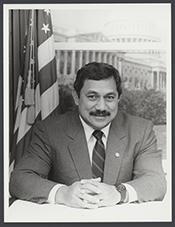
Madam Speaker, I yield myself such time as I may consume. (Mr. FALEOMAVAEGA asked and was given permission to revise and extend his remarks.) Madam Speaker, I would like to extend my gratitude to the…
Madam Speaker, I yield myself such time as I may consume.
(Mr. FALEOMAVAEGA asked and was given permission to revise and extend his remarks.)
Madam Speaker, I would like to extend my gratitude to the chairman of the Committee on International Relations, the gentleman from Illinois (Mr. Hyde), and the senior ranking member of the Committee on International Relations, the gentleman from California (Mr. Lantos), my good friend, the chairman of the Committee on Resources, the gentleman from California (Mr. Pombo), and our senior ranking member of the Committee on Resources, the gentleman from West Virginia (Mr. Rahall), and the chairman of Committee on International Relations Subcommittee on Asia and the Pacific, the gentleman from Iowa (Mr. Leach), my good friend, for working so diligently these past several months to address some of the very important concerns raised by the leaders of the Republic of the Marshall Islands and the Federated States of Micronesia as it relates to the proposed Compact of Free Association or H.J. Res. 63.
Madam Speaker, the Compacts of Free Association commenced in 1986 between the Federated States of Micronesia and the Republic of the Marshall Islands and the United States. In brief, the United States agrees to provide Federal funding to the FSM and the RMI and, in turn, both agree to provide the United States with certain defense rights, now including use of 11 defense sites on Kwajalein Atoll, where the U.S. Department of Defense has established a multibillion dollar antiballistic missile testing facility.
In October 2001, portions of the Compact expired and representatives from the FSM, the RMI, and the Department of the Interior began negotiating an extension of these provisions, including also the Department of State. Earlier this year, the Department of the Interior sent Congress a negotiated product to be considered as a reauthorization of the Compact of Free Association. However, key provisions, including the funding of the Pell Grants and FEMA assistance, were excluded from the agreement. And over the last several months, my colleagues and I have been working closely with representatives from both the FSM and RMI to address these concerns.
Madam Speaker, the good people of the Federated States of Micronesia and the Republic of the Marshall Islands are in need of, and indeed deserve, U.S. support in assistance in building local capacity. As my colleagues know, education is invaluable to building self-sufficiency and local capacity, and, ultimately, will contribute to bolstering the economy of these developing nations. This is why I am pleased that the bill before us today now provides the Freely Associated States with Pell Grant assistance, hopefully, and also to recognize the importance of FEMA assistance to these islands.
The truth is, Madam Speaker, the Freely Associated States have made many sacrifices and contributions on behalf of the United States. In fact, the U.S. used the Marshall Islands as a nuclear testing ground and detonated more than 67 nuclear bombs, including the first hydrogen bomb which was one thousand times more powerful than the bombs dropped in Hiroshima and Nagasaki during World War II. The results were, and continue to be, devastating to the residents of the Marshall Islands.
As a Pacific Islander, I am pleased that H.J. Res. 63 acknowledges the contributions and sacrifices made by the Federated Associated States and also addresses the needs and concerns of the people of Federated States of Micronesia and the Republic of the Marshall Islands. I am also pleased that my colleagues have worked closely with me to make sure that American Samoa's tuna industry was protected in the process of these negotiations.
The outcome of H.J. Res. 63 will determine our relationship with the FSM and RMI for the next 20 years and will also affect American Samoa's tuna industry for generations to come.
With the approval of these Compacts, the United States will further solidify our relationship with these Western Pacific nations, both of which are close allies, and make an ongoing contribution to America's national defense.
To understand the importance of renewing the Compacts we must remember our Nation's history in the region. During World War II, American soldiers liberated the Pacific island by island in brutal and bloody battles. After the war, the United States administered Micronesia, and we have maintained a vitally important military installation on Kwajalein Atoll.
In the 1940s and 1950s, the United States conducted both underwater and atmospheric nuclear tests in the Marshalls. And as I indicated earlier, some 67 nuclear detonations were held during that period. I remember distinctly, in 1954, when we detonated the first hydrogen bomb, I indicated earlier that that nuclear detonation was a thousand times more powerful than the nuclear bombs that we dropped in Hiroshima and Nagasaki.
One of the serious issues that we still have not properly addressed, and, hopefully, in the coming months, that we will address seriously, the needs of some several hundred Marshallese men, women, and children who were directly exposed to nuclear contamination at the time of detonation of this hydrogen bomb in the 1950s.
Madam Speaker, since the independence of the Marshalls and Micronesia in 1986, the ties between our nations have grown even stronger. When Congress approved the Compact of Free Association in 1986, we received a good bargain. Funds would flow to the island nations in return for a ``strategic denial'' and a ``defense veto.'' The Kwajalein Army Base is vitally important to America's missile tests and as a listening post to the world.
Hundreds of Marshallese and Micronesians are currently defending American interests even in Iraq. I believe approximately 1,000 of our fellow Micronesians are in the military. Several have sacrificed their lives in the war in Iraq, even at this point in time as I speak. Just the other day Mr. Hilario Bermanis, a Micronesian, became an American citizen after losing a left arm and both legs while serving in the Army in Iraq.
While we undoubtedly furthered our national security interests with approval of the Compact, the United States insufficiently monitored expenditure of funds and did little to promote economic development in the islands.
The Compacts before the House today ensure that funds will be better spent in the future, will promote sound economic development and will focus on education and health care. They also establish trust funds for both nations to ensure that they can become self-sufficient in 20 years.
Madam Speaker, H.J. Res. 63 promotes our Nation's national security interests and furthers our relationship with the Marshalls and Micronesia. This is a bipartisan effort. And, again, I extend my gratitude and appreciation to the gentleman from Iowa (Mr. Leach), my good friend, for his tremendous support and leadership in bringing this piece of legislation to the floor.
Madam Speaker, I yield such time she might consume to the gentlewoman from Guam (Ms. Bordallo), my good friend.
(Ms. BORDALLO asked and was given permission to revise and extend her remarks.)
Madam Speaker, I yield myself such time as I may consume.
Madam Speaker, as I do not have any further speakers, I would like to express a few sentiments. It is very easy for those of us managing pieces of legislation and somewhat proclaiming our own sense of expertise by commenting or making speeches. As my good friend, the gentleman from Iowa (Mr. Leach), had given an indication earlier, there has been tremendous support from members of the professional staff of the two committees who have done an outstanding job in helping putting this piece of legislation together. Again, I would be remiss if I do not express my sense of appreciation to Mr. Doug Anderson and also Mr. Jamie McCormick on the majority side on the Committee on International Relations, as well as Mr. Peter Yeo and Dr. Lisa Williams, and also Dr. Bob King. Also on the Committee on Resources we have Mr. Tony Babauta and Mr. Chris Fluhr of the Committee on Resources, and also Mr. Chris Foster from the gentleman from California's (Mr. Pombo) office, and the outstanding contributions they have made as professional members of both committees in putting this legislation and certainly giving us positive advice now that we find ourselves agreeing to some of the important elements of this bill that is now before us.
We sincerely hope that our colleagues will lend their support to this important legislation.
Madam Speaker, I yield back the balance of my time.
Madam Speaker, will the gentleman yield?
Madam Speaker, I also want to note to the benefit of our colleagues that just this last weekend our President visited the State of Hawaii and he had an opportunity to meet with the leaders of these island nations at the East-West Center and the concerns expressed collectively by these leaders regarding homeland security. The security issues now of terrorism and issues of this nature are vitally important to this region of the world; and, again, this is all in concert with the efforts that we are making to make sure that we continue to establish good relations with our friends from Micronesia. I again thank my good friend, the gentleman from Iowa (Mr. Leach), for his tremendous support and leadership in bringing this legislation to the floor, again, sincerely hoping our colleagues will support this legislation.
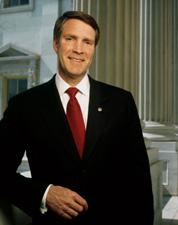
Mr. President, this morning the Senate and House were privileged to conduct a joint meeting--a wonderful meeting--to hear a powerful address by President Aznar of Spain. I again thank President…
Mr. President, this morning the Senate and House were privileged to conduct a joint meeting--a wonderful meeting--to hear a powerful address by President Aznar of Spain. I again thank President Aznar, who left here just moments ago, for his visit and for his remarks today.
Spain, through this President, has been a true ally in every sense of the word. He did a wonderful job in articulating the great friendship that our two countries have demonstrated, as he said, over the last two administrations of this country.
schedule
Mr. President, this afternoon we have resumed consideration of S. 1072, the highway bill. We notified Senators last night that it is our intention to work to complete action on this bill before the February recess. We have made some progress on the bill thus far this week. The chairman modified the committee substitute yesterday and is ready to work with Senators on their amendments today. Rollcall votes should be anticipated during today's session as we begin the amendment process. I, once again, encourage Senators to come to the floor and to work with the bill managers to schedule floor time.
In addition to the highway bill amendments, the Senate may act on available judicial nominations today. We will alert all Members of these votes as they are scheduled.
unanimous consent agreement--committee meetings
Mr. President, I have three unanimous consent requests for committees to meet during today's session of the Senate. They all have been approved by the majority and minority leadership. I ask unanimous consent that these requests be agreed to, en bloc, and that these requests be printed in the Record.
Mr. President, the managers are here. I know we had not locked in any time. I would like to defer to the managers for that because, as we had said before, we would like to proceed with the consideration of the bill itself.
Mr. President, we will proceed with the regular order here then.
ricin update
Mr. President, let me just say, in reference to the incident, the criminal investigation that is underway because of the attack here with ricin now 2
days ago, I will, sometime in the next hour, be coming back to the floor for a very brief announcement so our colleagues will know of a proposed schedule for the reopening of the Senate office buildings. I will be working on that over the course of the next 40 minutes or so. I mentioned to the Democratic leader that I will plan to come back.
I know there is a lot of concern and anticipation, and some frustration, not knowing exactly when Senators will have access to their offices and to their records. We are working on that. We have been working on it over the course of the morning. We made real progress yesterday. It was a very successful day in terms of laboratory testing.
But again, let me come back and say that it is the safety and welfare of our employees and our staff that is fundamental. The science of this particular agent is uncertain and new, but we have a lot of certainty that we are gaining with each minute. So I plan on coming back to the floor in about 30 minutes.
order of procedure
Mr. President, for several minutes I want to give our colleagues an update and make several announcements which will have a direct impact on their schedules for the next several days. I begin by thanking my colleagues for their patience as we work through these uncertain times. I assure them, we are progressing as rapidly as we can, as rapidly as is humanly possible. We are on course to be back in complete functioning operation here. That plan I will lay out shortly.
I do want to make a couple of quick points though. First, everybody is doing well. There are a number of people who have been in very close contact to the poisonous substance which was identified in my office. They are all doing well. The emergency responders are all doing well. That is my primary focus; that is, the safety and well-being of our extended Senate family here. We are continuing to monitor the health of all people who were potentially exposed and we have identified and spoken with each of those. They have had the appropriate counseling. Everybody is doing well.
As the world knows by now, the impact of inhaled ricin, to the best of our knowledge, is over a very short period of time and we are well beyond that window, now 48 hours after the time of exposure. I do commend and applaud my staff because they were astute in noting the powder and responded appropriately and quickly, and that could have, and in fact I am sure did, avert a serious and potentially life- threatening matter for others.
The incident, as I mentioned, is 48 hours old. We were able to move aggressively and rapidly to isolate that affected area in my mailroom. The monitoring of health effects has gone very smoothly. I appreciate the Capitol Physician's Office, as I mentioned this morning and last night, being with all people exposed and have counseled people since that point in time.
We were able to implement plans which had been carefully laid out and coordinated among many different groups, agencies here on the Capitol Grounds, and that results in protection of Members and protection of staff and the reaction in a very sophisticated way to this discovery.
After consultation with appropriate officials and reflecting upon the excellent coordination with the Sergeant at Arms and the Capitol Hill police, I have made a decision this morning, in consultation with the Democratic leader and others, that we can accelerate our efforts to open our Senate office buildings. It is still not going to be as quickly as most people would like, but we can accelerate the initial proposal and plans. This proposal is consistent with safely removing mail and continuing to review data, which literally comes back every 30 minutes to an hour, as teams move through the complex, the very large complex of the Senate office buildings, but also a response on the House side and in the Capitol itself.
Thus, barring any unforeseen discoveries--and I put that provision in there because you don't know an hour later that something may be discovered. But barring any unforeseen discoveries, the time schedule for opening the buildings will be the following:
The Russell Senate Office Building, tomorrow, Thursday, at noon, February 5. We will be able to open that office building at 12 noon. Again, Thursday noon, February 5, Russell Senate
office building. Friday at 9 a.m., February 6, we will reopen the Hart Senate office building. The Dirksen Senate office building, which is the crime scene itself, will open on Monday at 7 a.m., February 9.
A lot of people thought it would be days and days to reopen. Initially we did not know how long. People pointed out with the anthrax, the buildings were closed for weeks and weeks. We made a decision to accelerate this schedule based on increased manpower that has been offered by various agencies, our continued understanding about the exposure to ricin, the understanding and information that has placed this in one room at this juncture based on the findings to date, and that in all of the monitoring equipment, the HEPA filters throughout the area that have been examined, and we continue to examine them throughout the complex, of all the monitoring and filtering equipment employed, the filters have all been demonstrated to be clean and therefore there has not been aerosolization of this agent.
I do also want to tell Members they can have access to their offices--they, themselves--after assessing the risk, and our counseling will be directly to them. If they want to go to their office and remove essential papers or documents--not mail; mail should not be touched-- they can do that. We do ask that they talk to the Secretary of the Senate's office where the control room is--they have that telephone number--if they plan on going into their office building to access important information to allow them to carry out the essential functions of their office.
We will continue to work with all the Members to ensure a smooth and safe reopening of the Senate complex consistent with this schedule.
Again, Thursday noon, February 5, the Russell Senate office building will open. Friday, 9 a.m., February 6, the Hart Senate office building will reopen. Monday, 7 a.m., February 9, the Dirksen Senate office building will reopen.
Let me close and simply again thank the Capitol police, Chief Gainer, who has done a tremendous job, the EPA, the United States Marines, the FBI, the Department of Homeland Security, the Attending Physician's office, the CDC, the Sergeant at Arms, the Secretary of the Senate, and so many others involved in response to this incident.
Mr. President, I appreciate the Democratic leader's comments and will turn the floor back to the managers. We will have continued announcements. One of the real efforts we have tried to fulfill and missions we put forward is to stay in touch and communicate as best we can. We will continue to do that. There will be a press conference by the Capitol police with an update later this afternoon and they will sit down and announce more about that to give a technical update in terms of the progress that has been made.
I yield the floor.
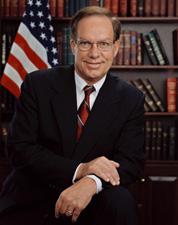
Mr. President, I thank the Senator from Wyoming for his statement. I have worked with him on the Environment and Public Works Committee on this important piece of legislation. The fact is there are a…
Mr. President, I thank the Senator from Wyoming for his statement. I have worked with him on the Environment and Public Works Committee on this important piece of legislation. The fact is there are a lot of committees involved in this legislation. I am thankful the majority leader brought it to the floor.
We had a cloture vote to move forward with the bill. This bill has been before the Banking, Housing, and Urban Affairs Committee, with Chairman Shelby, and also before the Environment and Public Works Committee, with Chairman Inhofe. Senators Bond, Jeffords, and Reid have all had input into this particular piece of legislation. I appreciate all of them for the work they put into this bill. It is not easy with input from the Budget Committee, from Don Nickles, chairman of the Budget Committee. We had input from the Finance Committee, Chairman Grassley, and also input from the Commerce, Science, and Transportation Committee, which has a small section involving transportation.
This is a transportation bill, not just a highway bill. It is a transportation bill. It takes a good deal of cooperation, working together, to put together any piece of legislation like this. It is not simple.
Most Members experienced the same thing I have experienced in the State of Colorado. The demand and the transportation needs have increased in each of our States. Over time, the demand for transportation mechanisms has grown throughout the country. The States have had to work harder to make their dollars stretch further every year. Transportation projects, whether they are building roads or laying rail, are simply not cheap. They are getting more expensive with each passing year, and the funds required for transportation projects are simply staggering.
The Finance Committee has produced funding mechanisms they believe will be able to fund this bill. We must use the moneys intended for use in building roads and mass transit projects. That is the money in the highway trust fund.
Some time ago, this Congress decided we need to dedicate a stream of revenue into the construction of highways. We need to make sure we maintain the integrity of that process because it is important. It sends a message that highways and this type of infrastructure are important in America. We have told the American people we will use the tax they pay on each gallon of gas they buy directly for funding transportation projects. We must do that. However, it is not appropriate to use moneys from the general fund. We have to stay true to the fiscally conservative obligations we have made for ourselves. We must not add to our country's deficit as we have an increased demand for transportation projects.
That is why I am excited about the potential of an amendment on which I am working. This amendment will allow States to build additional capacity. It is called Fast Lanes. On roads that currently experience problems with congestion, you toll only those lanes. It brings forth a user-pay concept. In other words, if you use these lanes, you will pay for them. I worked hard to get this amendment adopted in committee. It just barely lost by one vote. I hope we can go ahead and get it adopted in the Senate. It gives another mechanism to provide infrastructure in this country, badly needed infrastructure, and has a user-pay concept.
We say on interstate highways you can build additional lanes on to existing highways and toll the highways, toll them with a mechanism. We use our high technology so there are no toll booths. As the trucks and cars go down the toll lanes, commonly referred to as fast lanes, they will receive a bill later for the use they put on the highway. That helps pay for those fast lanes. It is intended to relieve much of the congestion problem we are seeing throughout the United States.
The toll would be paid with electronic technology. There would be no need for a toll booth. The process can happen quickly, without requiring a decrease in speed.
If you wish to use the ``fast lane,'' you pay the toll and do so. However, if you do not wish to pay the toll, you simply drive in the regular lanes, and that means just sit over in the regular lanes for an hour or two on some highly congested roads. It is your choice. But if you decide it is worth your time to go over and pay a toll to go on the toll lanes, then you can do that.
So this is the advantage of having toll lanes. I emphasize that when we talk about ``fast lanes,'' we are not taking existing Federal highway lanes and putting a toll on them. These are new lanes we are putting on the side of some of our interstate highways.
One study found that if every State participates, this ability for States to put in these kinds of lanes could raise close to $50 billion to go toward increasing road capacity.
I realize that it is unlikely all States will use this funding mechanism, but if a tiny fraction of that is raised, that is still additional funding for road capacity that does not put an additional financial burden on those who are not willing and able to pay it.
I see this ability as simply another tool in the ``toolbox'' that State departments of transportation can carry around. My staff continues to work with Senator Bond's staff to see that these provisions are included in the bill, and I appreciate the assistance they have given and their willingness to work with us on this particular provision.
Because this is a transportation bill, and not just a highways bill, as so many incorrectly term it, I would also like to make a few remarks on the mass transit title of the bill. I went through the Environment and Public Works Committee. I served on that committee, so I had some input there. I serve on the Banking Committee. In fact, I am chairman of the Subcommittee on Housing and Transportation, so I had some input there. I am also on the Budget Committee. So I want to make a few comments about the mass transit side.
Before I turn to the specifics of the Banking Committee's bill, I would like to acknowledge the efforts of Senator Shelby. As chairman of the Banking Committee, he has worked diligently to make sure the committee's jurisdiction was protected, while moving forward as quickly as possible with a positive bill. I also thank him for his willingness to work closely with me as chairman of the Subcommittee on Housing and Transportation.
Finally, I also thank Senator Sarbanes, the ranking member of the Banking Committee, and Senator Reed, the ranking member of the subcommittee of which I chair, for their work on this particular piece of legislation. Along with their staff members, they have spent a considerable number of hours working to achieve consensus on many issues in the bill, and I appreciate their efforts.
I was pleased to support the Banking Committee's bill during our markup earlier today. I believe it makes important progress in a number of areas.
First, I am especially supportive of the new growing States formula. For far too long, the transit formulas have sent the lion's share of transit dollars to a small number of cities, primarily located in the Northeast. While we can all agree that transit is important to larger, east coast cities, there is no denying the need for transit services in a number of rapidly growing cities in the South and the West.
While I believe we still need further adjustments to the formula to even better address the growing States, I believe this new formula will finally help growing States begin to address their transportation needs.
I am also extremely pleased to see that the bill places a strong emphasis on rural transit. While many would consider ``rural transit'' to be an oxymoron, in fact, rural areas can often face even more acute transportation needs than large cities.
Last year, one of my constituents, Larry Worth, testified before the Housing and Transportation Subcommittee regarding the need for transit in rural areas. He described how rural citizens may not have any other alternatives to access medical care, jobs, and vital services. With 40 percent of American counties having no public transportation, this investment is long overdue.
There are a number of other very good provisions in the transit title, but I will not take the considerable time that would be necessary to enumerate them all. Suffice it to say that I believe the transit provisions will be of great benefit to public transportation in America. I am pleased to support the transit title, and I look forward to passage of the bill, preserving the provisions, and staying within our budget.
Mr. President, I yield the floor.

Madam Speaker, I move to suspend the rules and pass the joint resolution (H.J. Res. 63) to approve the ``Compact of Free Association, as amended between the Government of the United States of America…
Madam Speaker, I move to suspend the rules and pass the joint resolution (H.J. Res. 63) to approve the ``Compact of Free Association, as amended between the Government of the United States of America and the Government of the Federated States of Micronesia'', and the ``Compact of Free Association, as amended between the Government of the United States of America and the Government of the Republic of the Marshall Islands'', and otherwise to amend Public Law 99-239, and to appropriate for the purposes of amended Public Law 99-239 for fiscal years ending on or before September 30, 2023, and for other purposes, as amended.
Madam Speaker, I ask unanimous consent that all Members may have 5 legislative days within which to revise and extend their remarks and include extraneous material on this joint resolution.
Madam Speaker, I yield myself such time as I may consume.
I rise today to present to the House joint resolution 63, legislation that reauthorizes the Compacts of Free Association with the Federated States of Micronesia and the Republic of the Marshall Islands.
Because of the unique relationship between the United States and the Freely Associated States, the legislation before us today involves an extraordinary array of Federal programs, agencies, and policies.
As a consequence, this joint resolution is the product of intensive bipartisan consultations between a panoply of different committees of jurisdictions, all of which have contributed to making this a compelling legislative product.
In this regard, I would like to thank, in particular, the leadership of the chairman of the Committee on International Relations, the gentleman from Illinois (Mr. Hyde) and our ranking member, the gentleman from California (Mr. Lantos), as well as the distinguished ranking member of the Committee on International Relations Subcommittee on Asia and the Pacific, the gentleman from American Samoa (Mr. Faleomavaega) whose expertise in island affairs has been invaluable to this Member and to our entire committee.
Let me also acknowledge the exceptional leadership of the Committee on Resources, specifically the chairman, the gentleman from California (Mr. Pombo) and the ranking member, the gentleman from West Virginia (Mr. Rahall) and their staff for working so closely with us to ensure that the amended compacts would not only be considered on an expeditious basis, but enjoy the support of Members as well as the administration and the Freely Associated States.
We also are appreciative of the prompt consideration of this bill by the Committee on the Judiciary, as well as the input of the Committee on Ways and Means.
In addition, we are most appreciative of the cooperation of the Committee on Education and the Workforce, as well as the Committee on Appropriations working closely with us on education funding issues of keen interest and concern to many Members as well as the people of the FSM and RMI.
Madam Speaker, here I note that under general leave, the gentleman from Illinois (Mr. Hyde) intends to insert into the record a letter to the Committee on International Relations from the Subcommittee on Appropriations for Labor, Health, and Human Services regarding funding for certain supplemental education programs as well as an exchange of letters confirming certain understandings on this joint resolution with the Committee on Ways and Means.
Madam Chairman, as my colleagues may be aware, the economic assistance provisions of the current Compact with Micronesia and the Marshall Islands expired in 2001, but were extended for 2 years while the United States renegotiated the expiring provisions with these island countries, also known as the Freely Associated States.
H.J. Res. 63, which is before us, is the authorizing and implementing legislation for the Amended Compacts of Free Association. Unless this resolution becomes law, critical portions of the original Compact of Free Association will expire with serious consequences for those nations and for United States' interests in the Pacific.
By background, the United States has shared a uniquely close and mutually beneficial relationship with the people of the Marshall Islands, as well as Micronesia, for the past half-century. For nearly 40 years after the Second World War, the United States administered both islands as United Nations Trust Territories. In 1986, Micronesia and the Marshall Islands chose to become sovereign states and entered into a Compact of Free Association with the United States. The Compact was intended to ensure self-government for the new island nations, to assist them in their economic development towards self-sufficiency, and to advance mutual security objectives.
It is my strong view that the interests of the people of the U.S. and these specific islands have been well-served by the Compact. Our former Trust Territories have emerged as sovereign democracies; America's strategic interest in the Western Pacific has been protected; and the bonds of friendship forged during World War II have only strengthened with the passage of time. Indeed, a significant number of Compact citizens have served honorably in the United States Armed Forces, including in the war on Iraq.
Among other things H.J. Res. 63: one, secures expiring U.S. defense interests and extends U.S. access to the geographically unique Kwajalein Atoll Range, the key U.S. missile and missile defense testing site for up to an additional 70 years; two, it continues U.S. assistance to the FSM and RMI for 20 years, but fundamentally restructures the way it is provided to increase fiscal accountability and move it towards budgetary self-sufficiency; three, it prepares for the end of U.S. grant assistance in 2023 by capitalizing a U.S.- controlled trust fund for each nation; and, four, it modifies the unique U.S. immigration status enjoyed by FSM and RMI citizens, to address concerns primarily related to the United States homeland security.
With respect to FEMA, the bill before us provides Compact countries continued access to FEMA programs through 2013, including essential public infrastructure rehabilitation programs. The Office of Foreign Disaster Assistance, which is part of U.S. Agency for International Development, is also authorized to provide emergency assistance to the
Madam Speaker, I yield myself such time as I may consume.
First, I want to concur in the sentiments of my good friend, the gentleman from American Samoa (Mr. Faleomavaega) with regard to the professionalism of the staff on Capitol Hill.
Prior to yielding back my time, I would like to specifically recognize the exceptional contribution of the chairman of the Committee on Resources, the gentleman from California (Mr. Pombo). The cooperation of his committee was crucial to our putting together this resolution.
Madam Speaker, finally, consideration of this resolution is historically significant for the Pacific region. It provides a moment for the people of the United States and the Freely Associated States to celebrate our warm friendship and look to an enhanced and mutually respectful relationship.
I yield to the gentleman from American Samoa.
Reclaiming my time, Madam Speaker, let me stress again the importance of this resolution. It has strong bipartisan support, I urge our colleagues to give this their unanimous support. This renewed compact is critical to the region.
Madam Speaker, I have no further requests for time, and I yield back the balance of my time.
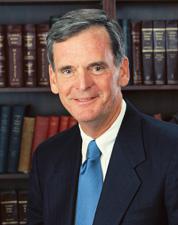
Mr. President, I rise again as we proceed on the bill to present my concerns about where we are in the process relative to the highway bill and relative to the management of the Federal budget. The…
Mr. President, I rise again as we proceed on the bill to present my concerns about where we are in the process relative to the highway bill and relative to the management of the Federal budget.
The bill before the Senate with the proposed amendment which I believe has been offered, the substitute, creates a significant increase in funding and spending in the area of highways. Many Members support transportation improvements. I have always supported having a strong transportation program because it is critical to our infrastructure. But in doing that, we have to do it within the context of managing the budget correctly. We cannot simply put money into programs because we like them without doing it in the context of what the budget limitations are and what the various income is in the trust fund that would pay for these activities.
The highway bill has always been a trust fund--not always--a trust fund-generated event, where the gas tax and other taxes that are highway related and transportation related are collected and spent for the purposes of building infrastructure. That is the way it should be. That is the way most States do it, too, by the way. I don't think any States use general fund revenues for the purposes of managing their highways, although I am not aware of that. As Governor of New Hampshire, when I had the honor and privilege to serve in that position, this was a very big issue that we not use the general funds for the purposes of managing our highways.
However, what is happening in this bill, unfortunately, is that we are, through a series of accounting mechanisms which are, in my opinion, illusory in some ways and inappropriate in other ways, basically raiding the general fund for the purposes of funding highway construction activity and at the same time we are dramatically expanding the spending levels above what the levels are that are part of the budget process for the highway fund. That is inappropriate. It is inappropriate that we should be going outside the highway fund for the purposes of funding highways and that we should be exceeding the budget levels for the purposes of funding highways. Rather, we should have the fiscal discipline to recognize when you are in a difficult fiscal situation, as we are as a country, when you are running deficits, which we are, unfortunately, as a country, you must, in all accounts, including those which you are strongly committed to, have fiscal discipline. That involves staying within the budget and that involves being sure that in something where you are using a trust fund, you have the funds in place in that trust fund before you spend it.
That is why I am concerned about this bill. It is my opinion if we allow this bill to go forward in its present form we will be significantly aggravating the deficit, we will be dramatically adding to the deficit, and we will be creating a precedent of using the general fund for the purposes of funding the highway accounts. That is bad policy. The underlying policy and having a strong transportation program can still be accomplished, but we should do it within the context of staying within the budget and staying within the highway bill. I have spoken on this before. This is not one item that stands alone on this issue. I suppose if we were running a surplus, or a deficit which was not so large or was not growing, I would probably tolerate this type of spending. This is, rather, an additional straw on the camel's back, and specifically our children. Our children have to pay the debt which we run up in the Government. It is passed on to the next generation. If we are going to be fair to our children and our children's children so they can have the quality of life we have, then we have to give them a government and a fiscal house that is in order.
Unfortunately, within the last 2 years we have not necessarily followed that course of action as a Congress. We have passed a series of bills which have dramatically aggravated the situation relative to the budget, deficit spending, and long-term structural deficits--mostly on the entitlement side, and mostly in the area of programmatic activity that has to be spent, or programmatic activity that is locked in place on a flight path of expenditure. It occurs in the Medicare accounts and it occurs in the agricultural accounts. There is an attempt to do it in the energy accounts. It could potentially
occur in this account, if it passes in its present form.
That is why I have such reservations about this bill. I especially have reservations about the substance of it. I am not absolutely sure how it is structured because I haven't had time to look at it yet. But it appears to me that in its present form it does take money out of the general fund and move it into the highway fund through a variety of mechanisms which at best would be called playing fast and loose with the budget rules of this Congress. It is probably, therefore, subject to a budget point of order and is, therefore, inappropriate.
In addition, if we are going to take up this bill, it is our first opportunity to have a bill which could address a variety of other issues we have concerns about as a government.
There is a bill that was passed out of my committee which I had the good fortune to chair, the Health, Education, Labor and Pension Committee, which deals with the rights of public safety officers, specifically firemen and police officers, who work in one of the most dangerous jobs in our country. It deals with fair treatment of them in the area of how they protect their rights in employment. It is a bill which has passed my committee a couple of times. It was being brought to the floor last year, and regrettably it didn't come through the entire process. But it does create an opportunity for fire and police personnel, and public safety personnel--who are very important, and who obviously use our transportation system rather aggressively--to protect the transportation system when there are violations of law relative to the operation on roads, or protecting it when there are hazardous events on the road, or when people are injured and fire rescue personnel respond, or even if there are fires involving transportation vehicles. So it is tied into this whole bill--the protection of police and fire personnel and their rights to have a reasonable workplace and a workplace where they feel they are getting what they need.
It is something which I have been greatly involved in and committed to for many years.
Thus, it is my intention at this time to send an amendment to the desk in the nature of a second degree to the amendment which is the pending substitute.
I send an amendment to the desk.
Amendment No. 2266 to Amendment No. 2265
Mr. President, I ask unanimous consent that reading of the amendment be dispensed with.
Mr. President, I yield the floor.
This amendment deals with the rights of police officers to have the right to collective bargaining and firemen to have the right to collective bargaining.
I would ask what the Durbin amendment does and does not do.
What would the amendment of the Senator from North Dakota be to? Mine was a second-degree amendment, I believe.
And after his was disposed of, mine would be properly in order; is that not correct, Mr. President?
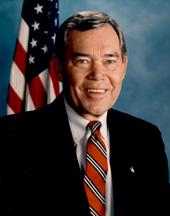
Mr. President, I thank my friend from Missouri. I am glad this conversation is going on. Certainly there isn't anything before us that is more immediate in need and more important than this highway…
Mr. President, I thank my friend from Missouri. I am glad this conversation is going on. Certainly there isn't anything before us that is more immediate in need and more important than this highway bill. Not only is it a matter of infrastructure, of course, that we necessarily need, but it is also a matter of providing more jobs more quickly than anything we can possibly do.
Someone said this morning at one of our meetings that they will wait until next year to use the money. Not at all. I think many of the highway departments similar to Wyoming where I am from are ready to go. They are ready to contract. They can move very quickly.
I think it is terribly important that we move forward on this. I hope before we are through that we have a thorough discussion of the bill. But I hope we don't get off into a bunch of irrelevant amendments that really do not belong in here but are simply trying to be used as a carrot and a stick. That is not the way it ought to be.
In any event, this is a very large bill and it is very detailed. We have talked a lot about the details. I want to talk a little more generally about it.
This bill, of course, has gone through several committees. The EPW Committee, of which I am a member, is the basic committee where a great deal of work was done. This is the same committee that dealt with the previous bill 6 years ago, a bill, as it turned out, that worked very well. There is a great deal of detail here, but the detail has to be done in committee, and we need to now talk about the principles and to move forward with it.
The bill as reported by the Environment and Public Works Committee would authorize $255 billion over 6 years beginning in 2004 to fund the Federal aid for highways, highway safety programs, and other transportation projects. The last surface transportation authorization was the Transportation Equity Act, called ISTEA. We are moving forward one more time. As I said, it replaces an older one, and indeed actually even before that in the early 1990s, we had this same kind of approach with a gas tax. Each of us pays 18.5 cents a gallon of Federal gas tax when we buy gas. That goes into
the fund for the purpose of upkeep of the infrastructure.
This bill makes significant progress in streamlining the environmental review and delivery process which, as always, is part of the problem.
It encourages communities and project sponsors to consider environmental concerns earlier so things can go together and it comes out as a manageable package.
It increases the oversight on the expenditure side. There is a great deal of money here. The highway funds are spent by requiring project management plans and annual financial plans of Federal programs. That is as it should be. Accountability is necessary.
Actually, when the Finance Committee then received the bill, the funding from the gas tax was not complete enough to cover what we hoped to do. It happened to be about a 6 percent reduction that had to be filled after it came to the Finance Committee. So we have heard a great deal about that, and I understand most want to fund the highway bill with funds that come from related sources instead of the general fund.
I will say a few words about how we are paying with that in the highway bill. The Finance Committee reported out a mechanism for paying for this bill. This mechanism retains the integrity of the highway trust fund. These are truly transportation-related taxes that are now deposited in the highway trust fund. Some of the taxes were previously deposited in the general fund. In other words, the general fund was getting support for transportation-oriented taxes. The Finance Committee finally righted the wrongs. The taxes should have been funding this trust fund for years. Now they will be.
In addition, there are exemptions enjoyed by certain taxpayers that diminish the taxes that would otherwise be deposited in the trust fund. These are exemptions that are subsidies that have nothing to do with highway policy. The impetus behind the exemptions was energy policy and tax policy. Since they are not highway policy, why should they have the trust fund bear the burden?
No one is taking issue with these exemptions of subsidies but rather the funding structure behind them and who pays. The Finance Committee made changes that the exemptions are allowed, allowing for the highway trust fund to legitimately receive the taxes that have been due for a very long time. The exemptions of subsidies will stay in place but now appropriately become the burden of the general fund.
In addition, the Finance Committee went a step further to authorize new taxes to take up the slack in the general fund. The result is that the tax necessary for the highway fund is there and those funds are replaced by new ones in the general fund so there is an equity.
I heard several Senators talk about funny money and shell games when describing this mechanism. The fact is that all highway tax money will be paid in full into the highway trust fund--no exemptions; no gimmicks.
Any subsidy that certain taxpayers enjoy will stay in place but will be paid from the general fund. Any losses to the general fund will be covered by new offsets that have been identified by the Finance Committee. We are taking some things that should have been going for years into the highway fund--gasohol, gas guzzlers, interest on the trust fund balance, these kind of things that should have been going there--now we put those in the highway trust fund. The general fund does not receive them.
To make up for that, we have certain other changes, including the corporation governances, Enron tax shelters, that have been going into the general fund will now be an offset. We are still, then, as a matter of fact, funding this highway fund from those kinds of taxes that were set in to do the job for highways.
Certainly nothing is more important than highway and transportation infrastructure in this country. It is very important to everyone. Each State has a little different approach to it. Smaller population States, such as mine, that have large areas, have fewer people per mile and therefore the cost per person is higher to keep up the infrastructure. But it is a Federal and national system so it needs to go across to Wyoming, Nevada, as well as across Pennsylvania and any other State.
These are the kinds of tasks that we have undertaken and that have been resolved in a reasonable manner. Obviously, not everyone has the same view.
I mention again, certainly in terms of jobs inspiring more development in States and having the jobs come about quickly, nothing could happen more quickly than in the highway fund.
These are some of the details that will be talked about here. The fact is, as I mentioned, they have gone through three committees and have been given a great deal of attention. Now we should take a look at where we want to be when this highway bill is through to see if we can move forward in our States to strengthen this infrastructure.
I yield to my friend from Colorado.
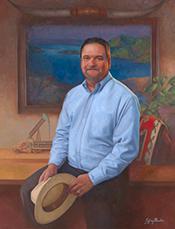
Madam Speaker, I rise in support of H.J. Res. 63, the ``Compact of Free Association Amendments Act of 2003.'' The House Resources Committee has a unique understanding of the issues that affect the…
Madam Speaker, I rise in support of H.J. Res. 63, the ``Compact of Free Association Amendments Act of 2003.'' The House Resources Committee has a unique understanding of the issues that affect the insular areas, and this legislation received strong support within our Committee.
For over 50 years, the United States has enjoyed a very unique relationship with citizens of Micronesia and the Marshall Islands. In 1984, President Ronald Reagan proposed a new status for the trust territories of the Pacific through negotiated Compacts of Free Association. After having status as a United Nations Trust Territory for many years, in 1986, these islands chose to become sovereign states.
Starting in 1986, when Congress passed ``The Compact Act,'' we made the agreement to strive to continue to maintain both economic and political stability in this region, including working to advance economic self-reliance in these islands.
With the passage of time and implementation of the original Compact, it is very encouraging to see the results achieved that were aided by this legislation. We can now consider the connection we have with the Federated States of Micronesia (FSM) and the Republic of the Marshall Islands (RMI) to be one of the United States' closest bilateral relationships.
The administration submitted to Congress a large agreement that reflected many hours of hard work from individuals primarily within the U.S. State Department and the U.S. Department of the Interior. These individuals deserve recognition for the time which they dedicated to the people and governments of the Freely Associated States. Multiple Committees have an interest in this legislation, as the Compacts cover everything from immigration to health care and continuing education programs. It is encouraging to see how closely so many Members were able to work closely over the last few months to ensure bipartisan support and passage of this legislation.
I wanted to thank the Members of the House Resources Committee for their thoughtful input throughout the process of amending this legislation. The openness with which our Committee was able to work with the Chairmen and Ranking Members of the House International Relations Committee, the House Education and Workforce Committee, and the House Judiciary Committee was also essential to bringing H.J. Res. 63 to the floor today.
Through the work of multiple Members, the House has been able to make numerous changes that should create more beneficial results for not only those living in the FSM and
RMI, but also for those citizens from the Freely Associated States living in areas like American Samoa, the Commonwealth of the Northern Mariana Islands, Guam, and Hawaii.
We were able to craft legislation that incorporates components such as the strong accountability reforms agreed upon by the Administration, the FSM, and the RMI, while pushing to empower these citizens to maintain strong health care advances, education programs and general infrastructure. Chairman Boehner was particularly helpful in working with multiple Committees to ensure we worked to address the issue of funding education programs in the FSM and the RMI to a necessary level, and it is important to note that Congress will now ensure that this funding can be provided within the Compact for the next 20 years.
Further, through the direct input of Members from those areas affected by the migration of FAS citizens, we doubled the level of what is commonly referred to as ``Compact Impact'' funding. This will greatly assist areas in their ability to allow FAS citizens to continue to migrate to their islands while also fortifying the spending by their own respective governments on students and others that utilize the social resources of these areas.
Finally, the hard work over numerous years put into what is now H.J. Res. 63 should not be ignored and this legislation needs to move forward as quickly as possible. The timing is critical for these islands, and important to maintaining a relationship that has brought us the strong U.S. defense and strategic interests that exist in this area of the Pacific Ocean.
The ability for Congress to act thoughtfully and expeditiously is shown in the interest of multiple Members working to ensure we got this legislation to the Floor for a vote today. I appreciate again the leadership of Mr. Hyde and Mr. Leach, as well as Mr. Lantos from the International Relations Committee. My colleague from West Virginia, Mr. Rahall, was also very engaged throughout the process of moving this legislation, which helped to allow the Resources Committee to move forward with a unified voice concerning this legislation.
I thus strongly support the passage of H.J. Res. 63 and encourage the bipartisan support of this measure by my colleagues.
Show 11 more
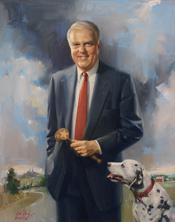
Madam Speaker, H.J. Res. 63 amends the Compacts of Free Association between the United States and the Federated States of Micronesia and the Marshall Islands. The Compacts, agreed to in the 1980s,…
Madam Speaker, H.J. Res. 63 amends the Compacts of Free Association between the United States and the Federated States of Micronesia and the Marshall Islands. The Compacts, agreed to in the 1980s, provide that the United States will support the new island nations economically and that we can establish, by agreement, military bases in their territories and foreclose access to the nations by military personnel of third countries. As to the Marshall Islands, a major subsidiary agreement allows the United States continued use of the Kwajalein missile test range. Deputy Assistant Secretary of Defense for Asian and Pacific Affairs Peter Brookes testified last year that ``it is in our best interest to maintain the full range of military access, use, and security cooperation options and rights that the Compact[s] provide[ ].''
The Compacts grant citizens of the Federated States of Micronesia and the Marshall Islands the right to enter the U.S. without passports or visas, as nonimmigrants and lawfully engage in occupations. In recent years, the U.S. government has expressed a number of concerns regarding these immigration provisions.
First, the ability of aliens claiming to be citizens of the two nations without having to have passports is an open invitation for abuse by terrorists. In addition, the government of the Marshall Islands has in the past been found to have sold passports.
Second, some Americans have taken advantage of the ability of islanders to enter the U.S. to bring in adopted children without having to meet the requirements of the Immigration and Nationality Act regarding foreign adoptions that are designed to safeguard the interests of the adopted children and their biological parents.
Finally, labor recruiters who arrange jobs in the United States for islanders have been abusing these unsophisticated workers, such as by not revealing the real nature of the jobs to be performed and charging prohibitive liquidated damages should the workers leave employment prematurely.
The State Department utilized the looming expiration of the economic assistance provisions of the Compacts to persuade the nations to agree to needed modifications to the Compacts addressing these immigration concerns and other matters. These changes are contained in H.J. Res. 63.
In order to address our security concerns, a number of changes have been made including barring entry to the U.S. under the Compacts of persons who were sold passports, limiting those naturalized citizens who can enter the U.S. pursuant to the Compacts, and requiring passports for entry to the U.S.
As to adoptions, any child who is coming to the U.S. pursuant to an adoption outside the country or for the purpose of adoption in the United States, is ineligible for admission as a nonimmigrant under the Compacts. The child must be brought to the U.S. pursuant to the applicable provisions of the Immigration and Nationality Act.
Separate agreements, which shall come into effect simultaneously with the Compacts, shall incorporate minimum obligations that labor recruiters will have to meet in order to protect Micronesians and Marshall Islanders who are recruited for work in the U.S.
H.J. Res. 63 also includes a number of provisions within the claims, courts, criminal law and administrative law jurisdiction of the Committee. For instance, the Compacts are amended to provide that the governments of the nations are immune from the jurisdiction of U.S. courts and that the U.S. shall not be liable in their courts, and federal agencies are authorized to settle and pay tort claims arising from acts or omissions of their employees within the two nations.
As to criminal law jurisdiction, provisions of the amended Compacts allow the United States to provide technical and training assistance to the governments of the Federated States of Micronesia and the Republic of the Marshall Islands. This assistance will facilitate the development and enforcement of their respective laws and allow for cooperation with the United States in the enforcement of U.S. laws. The postal inspection of contraband, extradition of fugitives, and the transfer of prisoners are among the mutual assistance in law enforcement matters addressed by the Compact. These issues are important not only in addressing the reality of the increased translational nature of general crime, but also are vitally important when confronting the issue of global terrorism.
H.J. Res. 63 contains numerous beneficial changes to the Compacts of Free Association. I urge my colleagues to support this legislation.

Mr. President, it is after Labor Day so the campaign rhetoric is in full bloom. One thing we have already heard and continue to hear is this charge of a ``do-nothing'' Congress. And in yet another…
Mr. President, it is after Labor Day so the campaign rhetoric is in full bloom. One thing we have already heard and continue to hear is this charge of a ``do-nothing'' Congress. And in yet another great paradox unique to this town, we find those who complain that the Senate is not driving ahead and are themselves the roadblock to progress.
For a year and a half we have seen a stall ballgame for the ages, an effort to run out the clock on this session practically before it began. We have seen unprecedented obstruction by a determined minority. Sadly, tactics not employed since the founding of the Republic have become commonplace in this body. We have seen tactics employed not only against highly controversial items but against noncontroversial, broadly supported items, too.
The CARE Act, which provides numerous tax improvements to assist and empower those who run, contribute, and benefit from our charitable organizations passed the Senate 95 to 5. No Democratic Senator voted no. Yet our colleagues on the other side of the aisle refuse to let this bill go to conference and, therefore, it lies near death.
Fortunately, I understand that the IDEA bill, which reforms and enhances the funding of education for disabled children--which passed the Senate 95 to 3--may well be going to conference tonight. If so, that is excellent movement in the right direction.
The Workforce Investment Act, which authorizes the worker training programs for young people, dislocated adults, veterans, Native Americans, seasonal workers, and migrant workers, passed the Senate last year by unanimous consent. No one objected. Yet this bill also has not been able to go forward. Think about it. Bills virtually with no voiced opposition are being stopped by a silent and shadowy force, and the American people are being denied better jobs, better education, and a more compassionate society all because of a pattern of obstruction.
I think the practitioners of this obstruction owe an explanation to the American people as to why they are blocking these widely supported bills that they previously voted for on the Senate floor.
Fortunately, the majority leader's extraordinary effort and patience has enabled much to be done in spite of the obstruction. We have passed tax cuts to get the economy going again, and it sure is going again. We have passed a Medicare prescription drug benefit that is giving seniors an immediate helping hand with a full comprehensive benefit to start in about 15 months. We have passed a Do-Not-Call Registry and the Healthy Forest Act, the partial-birth abortion bill, and the NATO enlargement treaty. But that was last year. What about this year?
We passed into law a pension relief and stabilization plan for private sector businesses, workers, and their retirees. We passed into law a BioShield Act to improve countermeasures from biological, chemical, and other terrorist attacks. We passed into law the Unborn Victims of Violence Act and also a Defense appropriations bill, as well as a supplemental for operations in Iraq.
So much has been accomplished, but much more can and should be done. I call on our colleagues to allow us to move forward on the Workforce Investment Act and CARE right now so we can have an America with workers trained for the modern workplace, a better educational environment for our children, and a more compassionate safety net for our citizens.
I yield the floor.
Mr. President, let me say briefly to my good friend from Nevada, I remain hopeful, as I know he does, that we will indeed be able to pass the FSC bill before we leave this year. I am optimistic that will be the case.
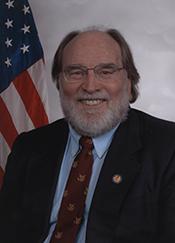
Madam Speaker, I would like to express my wholehearted support for this legislation being considered today. For the past 17 years, the United States has had a successful relationship with the Freely…
Madam Speaker, I would like to express my wholehearted support for this legislation being considered today. For the past 17 years, the United States has had a successful relationship with the Freely Associated States (FAS). The Federated States of Micronesia (FSM) and the Republic of the Marshall Islands (RMI) have been able to transition from a United Nations trusteeship to sovereign governments. At the same time, the United States has had its security and defense interests in the Pacific fulfilled. H.J. Res. 63 will improve this vital economic and military relationship by allowing our nations to continue the successes in our agreement while helping to resolve some of our differences.
One of the issues which required a resolution is the impact that the Compacts of Free Association has had on U.S. areas in the Pacific. The Compacts allow FSM and RMI citizens to freely enter the U.S. and its territories to live, seek an education, obtain healthcare and find employment. For the State of Hawaii alone, more than $32 million was expended in 2002 in order to support Compact migrants and help ensure their health and well-being. These costs have been borne by Hawaii since the Compacts were first implemented in 1986. For the past seventeen years, the state has provided Compact migrants with the care and benefits that were promised to them by the first Compact, expending more than $140 million. In that time, the federal government has reimbursed a mere five percent of that amount. As a signatory to the Compacts of Free Association, I believe it is the United States, not the State of Hawaii that should bear its costs.
For the first time ever, the Administration recognized this hardship and proposed a mandatory funding stream of $15 million a year for Hawaii, Guam, the Commonwealth of the Northern Mariana Islands, and American Samoa. H.J. Res. 63 has been amended to go even further to address this vast shortcoming by increasing the mandatory appropriations to $30 million a year. Although these funds will be divided among the four jurisdictions, it will be the largest compensation any of these jurisdictions has received to date. While these funds will surely cover only a portion of the total impact cost, its yearly distribution will undoubtedly have a great effect on the state departments and agencies that have spent untold resources and labor in providing for the compact migrants.
The legislation has also been amended to include many other improvements. The inclusion of language authorizing discretionary appropriations, the extension of Pell Grant eligibility, the inclusion of a trigger for full inflation adjustment, and the restoration of language authorizing compensation for health institutions are a few of these changes. I am also gratified to see these provisions, as they will help the Federated States of Micronesia and the Republic of the Marshall Islands in their quest to become fully independent countries.
At this time I would also like to thank Chairman Richard Pombo, Chairman Henry Hyde, Chairman Jim Nussle, and Chairman John Boehner for all of their hard work in bringing this bill to the floor. Thanks to their efforts, I have no doubt that our relationship with these Pacific nations will continue to be productive and mutually beneficial. I urge my colleagues to support this important measure.
Madam Speaker, I rise in support of H.J. Res. 63, the Compacts of Free Association Amendments Act of 2003. These amendments to the existing Compact, extends and refines the official relationship…
Madam Speaker, I rise in support of H.J. Res. 63, the Compacts of Free Association Amendments Act of 2003. These amendments to the existing Compact, extends and refines the official relationship between the United States and our friends and allies, the Republic of the Marshall Islands (RMI) and the Federated States of Micronesia (FSM).
For the next 20 years, we can only hope that these changes will result in continuing economic opportunity, social development, and improvements to the quality of life of these island nations as well as serve the interests of the United States.
The RMI and FSM's contribution to our Nation's history is unique. Beginning in the mid-1940s, after World War II, their people sacrificed both land and culture to help preserve peace.
Then under U.S. Trusteeship, atolls in the RMI were used as sites to test the effectiveness and power of U.S. nuclear weaponry. Islands comprising the FSM and also the Republic of Palau became our ``line in the sand''
in the middle of the Pacific Ocean from which we staved off the spread of communism.
Though their role has largely gone unnoticed by the American public, the relationship we have since established with them to become emerging self-governing and self-sufficient democracies reflects how important we view their contributions to our Nation.
Seventeen years have passed since the RMI and FSM became freely associated with the United States. The relationship has been successful and yet imperfect.
The Compact amendments we are considering today will not make the relationship perfect, or guarantee success. There is no clear legislative path to accomplish such goals. However, all the tools are within this legislation for both the RMI and FSM to continue developing, as well as for the United States to continue to foster their growth.
H.J. Res. 63 preserves education opportunities, advances economic activity, safeguards infrastructure investments, and adequately addressed the consequences of immigration to Hawaii, Guam and the Northern Marianas from the freely associated states.
In that regard, I want to make note of the great amount of work Neil Abercrombie and Madeleine Bordallo put into this issue. With justification, they should be proud of their work on behalf of Hawaii and Guam as it relates to the matter of impact aid.
Let me state that this legislation is the product of bipartisan support and multiple Committee collaboration. Bringing this legislation to the floor would not have been possible without the leadership of International Relations Chairman Henry Hyde and the Ranking Democrat Tom Lantos, as well as Chairman Leach and our colleague from American Samoa, from the Subcommittee on East Asia and the Pacific.
Finally, I also want to thank Resources Chairman Richard Pombo for the bipartisan manner to which he worked with us on the Committee. His willingness to address important Compact issues in a meaningful and responsive manner gave us the opportunity to move this legislation expeditiously.
I urge my colleagues to favorably pass H.J. Res. 63.

Madam Speaker, this Member rises in strong support for H.J. Res. 63, the Compacts of Free Association Amendments Act of 2003. Additionally, this Member would like to extend thanks to the very…
Madam Speaker, this Member rises in strong support for H.J. Res. 63, the Compacts of Free Association Amendments Act of 2003. Additionally, this Member would like to extend thanks to the very distinguished gentleman from Iowa, the Chairman of the International Relations Subcommittee on Asia and the Pacific, (Mr. Leach) for his efforts to conduct oversight of the Compact negotiations and ultimately to bring this measure
to the Floor today. Both the gentleman and his staff on the Subcommittee are to be commended for their vigilance. Furthermore, this Member would like to thank the distinguished gentleman from California (Mr. Pombo), the Chairman of the Resources Committee, which also has jurisdiction over the Compacts of Free Association for his efforts in guiding this resolution through the legislative process.
When this Member served as Chairman of the International Relations Subcommittee on Asia and the Pacific, he requested a Government Accounting Office (GAO) investigation into the use of Compact of Free Association funds. Indeed, this Member traveled to the Republic of the Marshall Islands (RMI) and the Federated States of Micronesia (FSM) many years ago and was disturbed by the conditions of schools, roads, and public buildings despite the infusion of U.S. aid. Unfortunately, the GAO reports certainly corroborated this Member's grave concerns about pervasive fraud, corruption, and waste of funds by the RMI Government and the poor planning and construction of infrastructure in both the RMI and the FSM.
This resolution would approve the amended Compact of Free Association, the agreement through which the United States provides assistance to the people of the RMI and the FSM. Overall, the revised Compact addresses many of the concerns which this Member has expressed for many years about this assistance and development programs for these two island groups which are two of the four Trust Territories for which the United States assumed responsibility after World War II. Of course, Congress must continue its oversight role to ensure that the people of RMI and FSM get the aid and services which they deserve and that the funds are not diverted for misuse by government officials in those countries.
In closing, Madam Speaker, this Member encourages his colleagues to vote for H.J. Res. 63.
Madam Speaker, I rise in support of H.J. Res. 63 which will renew the Compact of Free Association with both the Federated States of Micronesia (FSM) and the Republic of the Marshall Islands (RMI). I…
Madam Speaker, I rise in support of H.J. Res. 63 which will renew the Compact of Free Association with both the Federated States of Micronesia (FSM) and the Republic of the Marshall Islands (RMI). I am pleased that Chairman Hyde and Chairman Pombo worked with me to find a solution to continue funding for education programs in the Federated States of Micronesia and the Republic of the Marshall Islands.
H.J. Res. 63 provides a new supplemental education discretionary grant for the FSM and the RMI to receive funding from one source. This supplemental education grant provides funds for the FSM and RMI to use for education programs under Title 1 of the Elementary and Secondary Education Act, part B of IDEA, Title 1 of the Workforce Investment Act, the Adult Education and Family Literacy Act, Title 1 of the Carl D. Perkins Vocational and Technical Education Act and the Head Start Act. These funds will be subject to the Fiscal Procedures Act negotiated by the U.S. government and the FSM and the RMI. Specifically, the U.S. Department of Education, as a member of the Joint Economic Management Team, will ensure that academic performance measures are developed for standards and assessments appropriate for the FSM and RMI in order to increase academic achievement for the children receiving educational services under this grant. H.J. Res. 63 also continues eligibility for the FSM and RMI under the Pell Grant program and continues to allow the FSM and RMI to compete for competitive grants at the U.S. Department of Education.
Madam Speaker, I want to be clear. This new discretionary supplemental education grant is the source, and only source, for funds for education programs for the FSM and RMI. They are no longer eligible to receive separate funding from any formula grant run by the Department of Education, the Department of Labor or the Head Start Act administered by the Department of Health and Human Services. In my view, this new supplemental education grant is a signal that funds for the FSM and RMI should be addressed within the Compact, rather than through a disjointed system of domestic formula grants. The United States owes an enormous debt to these nations and efforts to improve their educational system should be a top priority.
I urge my colleagues to support this Compact.
Mr. President, I want to make a brief statement. I have already spoken today on the issue Senator McConnell has presented to the body. It was done earlier today by the distinguished junior Senator…
Mr. President, I want to make a brief statement. I have already spoken today on the issue Senator McConnell has presented to the body. It was done earlier today by the distinguished junior Senator from Pennsylvania on the CARE Act, a bill that the minority wants to become law. But as I said to the Senator from Pennsylvania through the Chair, there are other ways of doing this than to conference. I have a list of a series of bills that have passed in this body, have been negotiated between the House and the Senate, and that did not go to conference. I don't know the exact number, but scores of bills passed. The same thing could be done with the CARE Act. The same could be done with the Workforce Investment Act.
I say to my distinguished counterpart, the senior Senator from Kentucky, that the risk for Republicans is
that their strategy may just be too obvious. The majority has become so unyielding at times that it seems more devoted to tagging Democrats with the obstructionist label than getting legislation passed. Bills have been abandoned rather than let Democrats have the votes on amendments they demand, such as a minimum wage increase or rules protecting workers' rights to overtime. The complaints about Democrats ignore the fact that internal Republican differences also cause delays.
I have on a pair of Allen Edmonds shoes today. They are shoes that are made in the United States. President Bush wears these shoes. So does Senator Kerry. They are one of the few shoe manufacturers left in America. The reason I mention that is that the chief executive of the company, John Stollenwerk, is upset because, as a result of our doing nothing on the FSC bill, he is now paying 19-percent penalties. And to this day, even though we agreed to go to conference, the House has not appointed conferees.
I say to my friend with all sincerity, we need not find fault. Let's find a way to work together. Let's impose our goodwill upon the Speaker of the House and have him appoint conferees to the FSC bill so that we can still have shoes made in America.
I ask unanimous consent that the list of bills to which I referred be printed in the Record.
Madam Speaker, President Clinton gave me the privilege to represent the American people as Ambassador to the Federated States of Micronesia. I have a deep respect for the Island nations, and I am…
Madam Speaker, President Clinton gave me the privilege to represent the American people as Ambassador to the Federated States of Micronesia. I have a deep respect for the Island nations, and I am pleased that we have passed the new compact legislation out of the House.
Although most of the contentious issues in the compact have been addressed, the funding allocated for education concerns me. The RMI and FSM children have only just begun to benefit from the establishment of an integrated education system. I urge Congress to monitor education appropriations for the compact and stay intent on our obligations.
In my former profession of teaching I have witnessed the impact of early structured education. Young students are much better equipped to enter the educational system when they are exposed to education at an early age. The educational funding that Chairman Regula has offered to support is critical to keep effective programs in place.
I strongly support those provisions in this compact that provide for continued Pell Grant eligibility for the FAS. It will bolster the ability of the FAS to cultivate education. The elimination of Pell Grant assistance would have decimated the college system in the FAS altogether. A large portion of the operating funds for the College of Micronesia are obtained through Pell Grants.
One other important area that I would like to point out is the reinstatement of FEMA assistance. It has been placed back into the Compact for infrastructure purposes and major catastrophes. USAID is not equipped to deal with all of the problems that arise on small islands nor do they have the ready response to help in a timely fashion. As we move forward with our unique relationship with the FAS I hope the United States Congress will be supportive and receptive to the needs of our friends.
In conclusion, with a few minor adjustments, this Congress will produce long lasting legislation to be proud of. I urge my colleagues to understand the importance of the FAS. I support this bill and look to endorse the final product as the other body considers the Compact.
Madam Speaker, I submit for printing in the Congressional Record the following correspondence concerning H.J. Res. 63: (1) an exchange of letters between Chairman Thomas and myself; (2) a letter from…
Madam Speaker, I submit for printing in the Congressional Record the following correspondence concerning H.J. Res. 63: (1) an exchange of letters between Chairman Thomas and myself; (2) a letter from Chairman Regula to me; (3) a letter from Chairman Pombo to Chairman Nussle; and (4) a letter from me to Chairman Nussle.
House of Representatives,
Committee on Ways and Means,
Washington, DC, September 24, 2003.
Hon. Henry J. Hyde,
Chairman, Committee on International Relations, Rayburn House
Office Building, Washington, DC.
Dear Chairman Hyde: I am writing concerning H.J. Res. 63,
the ``Compact of Free Association Amendments Act of 2003,''
which was referred to the Committees on International
Relations, Resources and Judiciary. I understand that a
short-term extension of the compacts may be included in a
Continuing Resolution to be considered by the House.
As you know, the Committee on Ways and Means has
jurisdiction over matters concerning trade. H.J. Res. 63,
which incorporates Article IV of the agreements with the
Federated States of Micronesia and the Republic of the
Marshall Islands, contains several provisions involving
tariffs and imports, which fall squarely within the
jurisdiction of the Committee on Ways and Means.
However, in order to expedite this legislation for floor
consideration, the Committee will forgo action on this bill.
This is being done with the understanding that it does not in
any way prejudice the Committee with respect to the
appointment of conferees or its jurisdictional prerogatives
on this or similar legislation.
I would appreciate your response to this letter, confirming
this understanding with respect to H.J. Res. 63, and would
ask that a copy of our exchange of letters on this matter be
included in the Congressional Record during floor
consideration.
Best regards,
Bill Thomas,
Chairman.
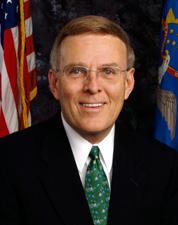
Reserving the right to object, if I might be recognized following the vote to offer the amendment, that is fine. You may want to work on this amendment some. It is not an amendment of great moment…
Reserving the right to object, if I might be recognized following the vote to offer the amendment, that is fine. You may want to work on this amendment some. It is not an amendment of great moment except to family farmers who are concerned about this. I would like to be able to offer the amendment. I have been down in the capital office hearing the Senator talk about the need for people to come up and offer amendments. This is a germane amendment. I would love to offer it and be able to debate it. In any event, if we go ahead
with this vote, which is fine with me, if I could be recognized following this vote to offer my amendment, I would very much appreciate that.
I would ask the Senator from Missouri whether I might be recognized following the vote.
Mr. President, reserving the right to object--and I will not object--if you want Members to come to the floor with germane amendments, I am here. I have been hearing that a lot today. I have one and it is not a big amendment. What I hear being said at the moment is perhaps you want to go through this bill by title, which is something I have not heard before. It should be open to amendment at any point. That is the reason that, for the last hour or so, I put this amendment together.
My hope is that the Senator from Missouri and those managing will understand, when we are ready to offer an amendment, you ought to welcome it. I hope when I seek recognition, you will allow me to offer it. I expect to speak 8 or 10 minutes. If you want to lay it aside then and work on it, I am happy to do that. I shall not object.
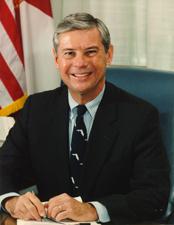
Reserving the right to object, I would like to ask a question. I was under the impression that I had an opportunity today to complete a series of statements I was making on intelligence reform, and…
Reserving the right to object, I would like to ask a question. I was under the impression that I had an opportunity today to complete a series of statements I was making on intelligence reform, and that was to begin at 1 o'clock.
If I could add to your unanimous consent request a time certain that I could present my third statement on intelligence reform; and Senator Feinstein also wishes to make a statement on the same subject.
Well then, I would have to object to the unanimous consent request.
Thirty minutes. I would like to have it commence no later than 3:30 because I have previous commitments.
I wish I could do that, but I have a request that it be no later than 3:30. Frankly, if I had started when we began this debate over parliamentary procedure, I would have been a third of the way through the speech.
If I may ask, when will we commence the session tomorrow?
Mr. Leader, may I make one request, that morning business begin no later than 9:30 in the morning?
I withdraw my request.
Bill Text
Latest available legislative text
        [Congressional Bills 108th Congress]
[From the U.S. Government Publishing Office]
[H.R. 2716 Introduced in House (IH)]

108th CONGRESS
1st Session
H. R. 2716

To amend the Compact of Free Association of 1985 to provide for
adequate Compact-impact aid.

_______________________________________________________________________

IN THE HOUSE OF REPRESENTATIVES

July 14, 2003

Ms. Bordallo (for herself, Mr. Abercrombie, Mr. Case, and Mr.
Faleomavaega) introduced the following bill; which was referred to the
Committee on Resources, and in addition to the Committees on
International Relations, Energy and Commerce, Agriculture, and Armed
Services, for a period to be subsequently determined by the Speaker, in
each case for consideration of such provisions as fall within the
jurisdiction of the committee concerned

_______________________________________________________________________

A BILL

To amend the Compact of Free Association of 1985 to provide for
adequate Compact-impact aid.

Be it enacted by the Senate and House of Representatives of the
United States of America in Congress assembled,

SECTION 1. SHORT TITLE; FINDINGS; PURPOSE.

(a) Short Title.--This Act may be cited as the ``Compact-Impact
Reimbursement Act''.
(b) Findings.--Congress finds the following:
(1) In approving the Compact of Free Association it was not
the intent of Congress to cause adverse consequences for Guam,
American Samoa, the Commonwealth of the Northern Mariana
Islands, or the State of Hawaii.
(2) Congress declared that if any adverse consequences to
Guam, American Samoa, the Commonwealth of the Northern Mariana
Islands, or the State of Hawaii resulted from implementation of
the Compact of Free Association, Congress would act
sympathetically and expeditiously to redress those adverse
consequences.
(3) The General Accounting Office has reported that
migration from the Freely Associated States has had a
significant impact on Guam, the Commonwealth of the Northern
Mariana Islands, and the State of Hawaii.
(4) By placing demands on local governments for health,
educational, and other social services, migration under the
Compact has adversely affected the budgetary resources of Guam,
the Commonwealth of the Northern Mariana Islands, and the State
of Hawaii.
(5) Insufficient sums have been appropriated to cover the
costs incurred by Guam, the Commonwealth of the Northern
Mariana Islands, and the State of Hawaii, resulting from
increased demands placed on health, educational, and other
social services by individuals from the Federated States of
Micronesia, the Republic of the Marshall Islands, and the
Republic of Palau.
(c) Purpose.--It is the purpose of this Act to address the unfunded
Federal mandate and adverse financial consequences resulting from the
Compact by meeting the obligations set forth in the Compact.

SEC. 2. ENSURING MANDATORY APPROPRIATIONS AND HEALTH SERVICES
REIMBURSEMENT AS PART OF COMPACT-IMPACT AID.

(a) In General.--Section 104(e)(6) of the Compact of Free
Association Act of 1985 (48 U.S.C. 1904(e)(6)) is amended to read as
follows:
``(6) Impact costs.--
``(A) Authorization and continuing
appropriations.--
``(i) In general.--There is hereby
authorized and appropriated to the Secretary of
the Interior, for each fiscal year from 2004
through 2023, $35,000,000 for grants to Guam,
the State of Hawaii, the Commonwealth of the
Northern Mariana Islands, and American Samoa to
aid in defraying costs incurred by their
governments as a result of increased demands
placed on health, educational, social, or
public safety services or infrastructure
related to such services due to the residence
of qualified nonimmigrants.
``(ii) Awarding.--The grants under clause
(i) shall be--
``(I) awarded and administered by
the Department of the Interior, Office
of Insular Affairs, or any successor
thereto, in accordance with
regulations, policies and procedures
applicable to grants so awarded and
administered; and
``(II) used only for health,
educational, social, or public safety
services, or infrastructure related to
such services, specifically affected by
qualified nonimmigrants.
``(iii) Enumeration.--For purposes of
carrying out this subparagraph, the Secretary
of the Interior shall provide for periodic
enumerations of qualified nonimmigrants in
Guam, the State of Hawaii, the Commonwealth of
the Northern Mariana Islands, and American
Samoa. The enumerations--
``(I) shall be conducted at such
intervals as the Secretary of the
Interior shall determine, but no less
frequently than every five years,
beginning in fiscal year 2004; and
``(II) shall be supervised by the
United States Bureau of the Census or
other organization as the Secretary of
the Interior may select.
``(iv) Allocation.--The Secretary of the
Interior shall allocate to each of the
governments of Guam, the State of Hawaii, the
Commonwealth of the Northern Mariana Islands,
and American Samoa, grants under clause (i) for
a fiscal year on the basis of the ratio of the
number of qualified nonimmigrants (as most
recently enumerated under clause (iii)) in the
respective jurisdiction to the total of such
numbers for all the jurisdictions.
``(B) Treatment of certain health care impact
costs.--Notwithstanding any other provision of law, for
purposes of providing medical assistance for qualified
nonimmigrants under title XIX of the Social Security
Act in the case of a State or territory referred to in
subparagraph (A)(i)--
``(i) such individuals shall be treated in
the same manner as an individual described in
section 402(a)(2)(G) of Public Law 104-193, as
amended;
``(ii) the Federal medical assistance
percentage shall be the same percentage as is
applied to medical assistance for services
which are received through an Indian Health
Service facility; and
``(iii) payments under such title for
medical assistance for such individuals shall
not be taken into account in applying any
limitations under section 1108 of the Social
Security Act.
``(C) Qualified nonimmigrant defined.--In this
paragraph, term `qualified nonimmigrant' means a person
admitted to the United States pursuant to--
``(i) section 141 of the Compact of Free
Association set forth in title II; or
``(ii) section 141 of the Compact of Free
Association between the United States and the
Government of Palau.''.
(b) Effective Date.--Section 104(e)(6)(B) of the Compact of Free
Association Act of 1985, as amended by subsection (a), shall apply to
medical assistance for items and services furnished on or after October
1, 2003.

SEC. 3. ENSURING FOOD STAMPS ELIGIBILITY AS PART OF COMPACT-IMPACT AID.

(a) In General.--Section 104(e)(6) of the Compact of Free
Association Act of 1985 (48 U.S.C. 1904(e)(6)), as amended by section
2, is further amended--
(1) by redesignating subparagraph (C) as subparagraph (D);
and
(2) by inserting after subparagraph (B) the following new
subparagraph:
``(C) Treatment of certain social impact costs.--
Notwithstanding any other provision of law, with
respect to the food stamp program as defined in section
3(h) of the Food Stamp Act of 1977--
``(i) sections 401(a) and 402(a)(1) of the
Personal Responsibility and Work Opportunity
Reconciliation Act of 1996 shall not apply to a
qualified nonimmigrant to the same extent that
such sections 401(a) and 402(a)(1) do not apply
to the individuals described in section
402(a)(2)(G) of the Personal Responsibility and
Work Opportunity Reconciliation Act of 1996 by
reason of such section 402(a)(2)(G); and
``(ii) section 16(e)(1) of the Food Stamp
Act of 1977 shall not apply to a qualified
nonimmigrant.''.
(b) Effective Date.--Section 104(e)(6)(C) of the Compact of Free
Association Act of 1985, as inserted by subsection (a), shall apply on
and after October 1, 2003.

SEC. 4. ENSURING THE CONTROL AND PREVENTION OF COMMUNICABLE DISEASES AS
PART OF COMPACT-IMPACT AID.

Section 105(o) of the Compact of Free Association Act of 1985 (48
U.S.C. 1905(o)) is amended to read as follows:
``(o) Communicable Disease Control Programs.--There are authorized
to be appropriated for grants to the Governments of the Federated
States of Micronesia, the Republic of the Marshall Islands, the
Republic of Palau, Guam, the State of Hawaii, the Commonwealth of the
Northern Mariana Islands, and American Samoa such sums as may be
necessary for purposes of establishing or continuing programs for the
control and prevention of communicable diseases, including (but not
limited to) cholera and Hansen's Disease. The Secretary of the Interior
shall assist the Governments of the Federated States of Micronesia, the
Republic of the Marshall Islands, the Republic of Palau, Guam, the
State of Hawaii, the Commonwealth of the Northern Mariana Islands, and
American Samoa in designing and implementing such programs.''.

SEC. 5. ENSURING AVAILABILITY OF DEPARTMENT OF DEFENSE MEDICAL
FACILITIES AND NATIONAL HEALTH SERVICE CORPS SERVICES AS
PART OF COMPACT-IMPACT AID.

Section 105(k) of the Compact of Free Association Act of 1985 (48
U.S.C. 1905(k)) is amended to read as follows:
``(k) Availability of Defense Medical Facilities and National
Health Service Corps Services.--
``(1) Department of defense facilities.--The Secretary of
Defense shall make available the medical facilities of the
Department of Defense for use by individuals from the Federated
States of Micronesia, the Republic of the Marshall Islands, and
the Republic of Palau who are properly referred to such
facilities by government authorities responsible for provision
of medical services in the Federated States of Micronesia, the
Republic of the Marshall Islands, the Republic of Palau, Guam,
the State of Hawaii, the Commonwealth of the Northern Mariana
Islands, and American Samoa.
``(2) National health service corps services.--The
Secretary of Health and Human Services shall continue to make
the services of the National Health Service Corps available to
the residents of the Federated States of Micronesia, the
Republic of the Marshall Islands, and the Republic of Palau, to
the same extent and for long as such services are authorized to
be provided to persons residing in any other areas within or
outside the United States.''.

SEC. 6. ENSURING RETIREMENT OF MEDICAL REFERRAL DEBTS AS PART OF
COMPACT-IMPACT AID.

Section 105(d) of the Compact of Free Association Act of 1985 (48
U.S.C. 1905(d)) is amended--
(1) by striking paragraphs (1) and (2) and inserting the
following:
``(1) In general.--In addition to the funds provided in
Title Two, Article II, section 221(b) of the Compact, the
United States shall make available to the Governments of the
Federated States of Micronesia, the Republic of the Marshall
Islands, and the Republic of Palau such sums as may be
necessary for the payment of the obligations incurred for the
use of medical facilities in the United States, including any
territories and commonwealths, by individuals from the
Federated States of Micronesia, the Republic of the Marshall
Islands, and the Republic of Palau, before October 1, 2003.'';
(2) by redesignating paragraphs (3) and (4) as paragraphs
(2) and (3), respectively; and
(3) in paragraph (2), as so redesignated, by striking ``or
(2) of this subsection, as the case may be''.
<all>