H.R. 3151House108th Congress (2003-2005)In Committee
HBCU Expansion Act of 2003
To amend part B of title III of the Higher Education Act of 1965 to expand the eligibility requirement to include Predominantly Black Institutions of higher education.
Sponsored by 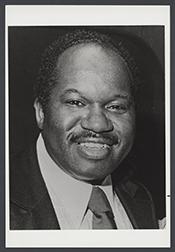 Rep. Major R. Owens (D-NY)
Introduced September 23, 2003
Legislative Activity
Stay on top of the latest movement without scrolling through every action
HouseCommittee
Latest Action
Referred to the Subcommittee on 21st Century Competitiveness.
October 6, 2003
View full timeline
HouseIntro Referral
Introduced in House
September 23, 2003
HouseIntro Referral
Referred to the House Committee on Education and the Workforce.
September 23, 2003
HouseCommittee
Referred to the Subcommittee on 21st Century Competitiveness.
October 6, 2003
Floor Debate
1 memberWhat members said about H.R. 3151 on the floor
Floor Debate
1 memberWhat members said about H.R. 3151 on the floor
1 Democrat
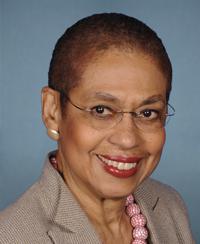
Rep. Eleanor Holmes NortonD-DC · Dec 8, 2003
Mr. Speaker, I ask unanimous consent to have my name removed as a cosponsor of H.R. 3151 and H.R. 3583.
Bill Text
Latest available legislative text
Introduced in HouseIssued September 23, 2003
        [Congressional Bills 108th Congress]
[From the U.S. Government Publishing Office]
[H.R. 3151 Introduced in House (IH)]

108th CONGRESS
1st Session
H. R. 3151

To amend part B of title III of the Higher Education Act of 1965 to
expand the eligibility requirement to include Predominantly Black
Institutions of higher education.

_______________________________________________________________________

IN THE HOUSE OF REPRESENTATIVES

September 23, 2003

Mr. Owens (for himself, Mr. Cummings, Mr. Towns, Mr. Rush, Mr. Fattah,
Mr. Davis of Illinois, Ms. Norton, Ms. Kilpatrick, Mrs. Jones of Ohio,
Mr. Wynn, Mr. Payne, and Mr. Meeks of New York) introduced the
following bill; which was referred to the Committee on Education and
the Workforce

_______________________________________________________________________

A BILL

To amend part B of title III of the Higher Education Act of 1965 to
expand the eligibility requirement to include Predominantly Black
Institutions of higher education.

Be it enacted by the Senate and House of Representatives of the
United States of America in Congress assembled,

SECTION 1. SHORT TITLE.

This Act may be cited as the ``HBCU Expansion Act of 2003''.

SEC. 2. FINDINGS.

The Congress finds the following:
(1) Over the last several years post-secondary institutions
have faced a dramatic increase in the number of non-traditional
students. Predominantly Black Institutions, following the
pattern of historically Black colleges and universities
(referred to as ``HBCU's''), have helped ease the influx by
offering an affordable quality education.
(2) Currently, more than 100,000 students attend
Predominantly Black Institutions. Similar to HBCU's the
majority of these students depend heavily on Federal financial
aid to graduate from college.
(3) Predominantly Black Institutions, like HBCU's, provide
opportunities for minority students to pursue post-secondary
degrees.
(4) Predominantly Black Institutions, like HBCU's, have
produced a cadre of leaders who make up a significant number of
the Nation's minority doctors, lawyers and other professionals.
(5) Predominantly Black Institutions, like HBCU's, provide
students from under-served communities with academic and
emotional support which translates to high retention and
graduation rates.

SEC. 3. QUALIFYING PREDOMINANTLY BLACK INSTITUTIONS.

Section 322 of the Higher Education Act of 1965 (20 U.S.C. 1061) is
amended--
(1) in paragraph (2)--
(A) by striking ``means any'' and inserting ``means
(A) any''; and
(B) by inserting before the period at the end the
following: ``or (B) any Predominantly Black
Institution''; and
(2) by adding at the end the following new paragraph:
``(6) The term `Predominantly Black Institution' means any
institution of higher education that--
``(A) is an eligible institution under section
312(b) that complies with paragraph (1)(C)(i) of such
section; and
``(B) at the time of application, has a student
enrollment of at least 500 full-time students, at least
51 percent of whom are African Americans.''.
<all>