Child Nutrition Improvement Act of 2003
Legislative Activity
Stay on top of the latest movement without scrolling through every action
Referred to the Subcommittee on Education Reform.
October 20, 2003
View full timeline
Introduced in House
October 7, 2003
Referred to the House Committee on Education and the Workforce.
October 7, 2003
Referred to the Subcommittee on Education Reform.
October 20, 2003
Floor Debate
17 membersWhat members said about H.R. 3250 on the floor
 GM
GM JAB
JAB RK
RK LCW
LCW MNC+12
Floor Debate
17 membersWhat members said about H.R. 3250 on the floor
Mr. Speaker, reserving the right to object, although I do not intend to object, I ask the gentleman to offer an explanation of his request. I yield to the gentleman from Ohio. Mr. Speaker, I thank…
Mr. Speaker, reserving the right to object, although I do not intend to object, I ask the gentleman to offer an explanation of his request.
I yield to the gentleman from Ohio.
Mr. Speaker, I thank the gentleman for his explanation.
Continuing under my reservation of objection, I yield to the gentlewoman from California (Ms. Woolsey), ranking member of the committee.
Mr. Speaker, I thank the gentlewoman for her explanation. And also I want to thank her for all of her hard work and her advocacy on behalf of children in this program and families in this program. She has very much made a difference in the outcome of this legislation by her efforts.
Mr. Speaker, continuing under my reservation of objection, I yield to the gentleman from Delaware (Mr. Castle) for his remarks.
Mr. Speaker, I thank the gentleman from Delaware for his explanation. I also want to thank him for all of his work and his participation. He is one of those individuals in this institution that makes a bipartisan agreement like this able to be brought up on unanimous consent because of his cooperation and his advocacy on behalf of our children. So I thank the gentleman from Delaware (Mr. Castle).
Mr. Speaker, continuing under my reservation of objection, I yield to the gentleman from New Jersey (Mr. Andrews), a member of the committee.
Mr. Speaker, continuing my reservation, I thank the gentleman for his remarks.
Mr. Speaker, I yield to my colleague the gentlewoman from California (Ms. Lee), and thank her for her participation in this legislation.
Mr. Speaker, continuing to reserve the right to object, I thank the gentlewoman for her remarks.
Mr. Speaker, I yield to the gentlewoman from Los Angeles, California (Ms. Waters).
Mr. Speaker, continuing my reservation of objection, I thank the gentlewoman for her comments and participation in the resolution of the issue concerning the WIC-only stores.
Mr. Speaker, I yield to the gentleman from Illinois (Mr. Davis).
Mr. Speaker, continuing my reservation, I thank the gentleman for his comments.
Mr. Speaker, I again want to support this legislation. I want to thank the gentleman from Ohio (Chairman Boehner); the subcommittee chairman, the gentleman from Delaware (Mr. Castle); and the gentlewoman from California (Ms. Woolsey) for all of their work and cooperation. I know it continues to mystify some people in the House how the gentleman from Ohio (Mr. Boehner) and I can continue to work together, and that the gentleman from Delaware (Mr. Castle) can come to these bipartisan agreements with the gentlewoman from California (Ms. Woolsey) on my side.
We have serious philosophical differences on many issues, but we have been able to put them aside from time to time on behalf of the children of this Nation, and here I think we have made major improvements in this legislation to the benefit of the 27 million children who participate in this program every school day, to the 2 million children who will participate in the summer feeding and the child care programs in this country, and nearly 7.5 million poor women and children who participate in the Women, Infants and Children program, a program that has demonstrated that we get many, many, many times the return on the money we invest in the WIC program in the reduction of health care costs to the mother and the newborn child because we are able to interact with them and give them good advice about their pregnancy, about the birth of their child and about the care of their child in the early moments of life.
It was almost 30 years ago this year in this Congress when I stood here on a similar unanimous consent request to extend and make permanent the Women, Infants and Children program. It has returned billions of dollars in savings to this country, and, more importantly, it has provided for millions of newborn babies to be born healthy, to avoid the problems of low birth weight and their mothers the problems of troubled pregnancies and premature births.
For that, we are very grateful to the people who work so hard in this program to develop its nutritional benefits and its healthcare benefits.
I also want to thank my colleagues for working so hard to try to expand the efforts to eliminate and reduce paperwork and to make sure that we are coordinating these programs with other programs, such as the Medicaid agencies and food stamp offices, to make sure they know of the accessibility to these programs, to remove the barriers to migrant children and homeless and runaway youth and to expand the opportunities to military families.
It is unfortunate that in this country we have so many people in poverty or have such low wages, many of whom work the year-round, that are eligible for this program, but it is also very fortunate for those individuals and good for our country that we have this program to extend these nutritional and health benefits to them.
I wish we would have been able to make a better statement, a greater statement, and a better direction for this country on the problems of childhood obesity. These rates have doubled in children and tripled in adolescents in the last two decades. We cannot ignore the opportunity we have to work with these children on a whole range of solutions to the problems of obesity while we have them in school. One which is very important to be transmitted to them is the benefit of a good and healthy diet. This program should be compatible with those goals. I hope we have sent a message to the program that we want them to develop a healthier diet, a better diet, but we also want to send the message of exercise, of healthy living outside of school by those young people.
Finally, we have all thanked one another, but this is a rare moment in this session of Congress, in these 2 years, that stand here reporting under unanimous consent a bipartisan piece of legislation of this significance. So I do want to thank again the gentleman from Ohio (Chairman Boehner) for all of his cooperation in moving this legislation in a timely fashion, so we would have an opportunity to work with the Senate; to the gentleman from Delaware (Mr. Castle) and the gentlewoman from California (Ms. Woolsey) for developing the substance of this legislation, the changes in this legislation, the reforms in this legislation and the expansion of opportunity for these children and for their families.
I certainly want to thank Senator Harkin, who I came to Congress with, for all of his hard and continuing work on child nutrition and food programs in this Nation and internationally, and Chairman Cochran, who I have had an opportunity to work with on so many programs affecting children in literacy and nutrition and other benefits such as that.
Finally, I want to thank the staff members of our committee. On our side of the aisle, Lynda Theil, Denise Forte and Joe Novotny; the people from CRS, Joe Richardson and Donna Porter, who provided us so much technical assistance and expertise; to Tyson Redpath on the staff of the gentleman from Ohio (Mr. Boehner), and Sarah Rittling on the staff of the gentleman from Delaware (Mr. Castle); and the Republican staff in the House, Kate Houston, Stephanie Milburn, Sally Lovejoy, Krisann Pearce and Julian Baer, for all of their work, for their consistence.
The fact of the matter is, it was the cooperation among the staffs that allowed this bill to be reported on a timely basis as we come toward the end of this session of Congress.
I would also like to thank Derek Miller of Senator Harkin's staff and Dave Johnson of Senator Cochran's staff.
Mr. Speaker, I think the House and the Senate can be very proud of this legislation, and I know that those individuals, the American School Food Service Association, the Food Research and Action Center, the WIC directors, the United Fresh Fruit and Vegetable Association, the Center for Budget and Policy Priorities, and so many others that I will submit for the Record, were great advocates of the improvements made in this legislation and the expansion of nutritional and health opportunities for the participants.
Mr. Speaker, I include for the Record the list of supporters of this legislation.
American Association of School Administrators.
American Commodity Distribution Association.
American Dietetic Association.
American Federation of State, County, and Municipal
Employees (AFSCME).
American School Food Service Association (ASFSA).
America's Second Harvest.
Anti Hunger Action Committee.
Association of Farmworker Opportunity Programs.
Bread for the World.
Catholic Charities USA.
Central Coast Hunger Coalition.
Chicago Jobs Council.
Children's Defense Fund.
Children's Foundation.
Coalition of Labor Union Women.
Coalition of Religious Communities (Utah).
Coalition on Human Needs.
Colorado Anti-Hunger Network.
Colorado Center on Law and Policy.
Community Food Security Coalition.
Congressional Hunger Center.
Connecticut Association for Human Services.
Crossroads Urban Center.
Denver Urban Ministries.
EBT Industry Council of the Electronic Funds Transfer
Association.
Evangelical Lutheran Church in America.
Food and Allied Service Trades Department (FAST), AFL-CIO.
Food Research and Action Center (FRAC).
FOOD Share, Inc.
Greater Upstate Law Project, NY.
Green Consulting Services, Miami, FL.
Hudson Valley Poverty Law Center, NY.
Human Services Coalition of Dade County.
Hunger Action Network of New York State.
I Am Your Child Foundation.
Indiana Coalition on Housing and Homeless Issues, Inc.
Institute Justice Team, Sisters of Mercy of the Americas.
Jewish Council for Public Affairs.
Just Harvest, Pittsburgh, PA.
Lutheran Advocacy Ministry--Colorado.
Migrant Legal Action Program.
Monterey County Farm to School Partnership.
National Advocacy Center of the Sisters of the Good
Shepherd.
National Association for the Education of Young Children
(NAEYC).
National Association of Protection and Advocacy Systems.
National Association of State Boards of Education.
National Coalition for the Homeless.
National Council of Churches of Christ in the USA.
National Council of Jewish Women.
National Farmers Union.
National Grange.
National Head Start Association.
National Priorities Project.
National PTA.
National Student Campaign Against Hunger and Homelessness.
National WIC Association (NWA).
National Women's Law Center.
Northeast Missouri Client Council for Human Needs, Inc.
Presbyterian Church (U.S.A.) Washington Office.
Public Children Services Association of Ohio.
Public Interest Law Office of Rochester, NY.
Public Justice Center.
Mr. Speaker, I withdraw my reservation of objection.
Mr. Speaker, I ask unanimous consent to take from the Speaker's table the Senate bill (S. 2507) to amend the Richard B. Russell National School Lunch Act and the Child Nutrition Act of 1966 to…
Mr. Speaker, I ask unanimous consent to take from the Speaker's table the Senate bill (S. 2507) to amend the Richard B. Russell National School Lunch Act and the Child Nutrition Act of 1966 to provide children with increased access to food and nutrition assistance, to simplify program operations and improve program management, to reauthorize child nutrition programs, and for other purposes, and ask for its immediate consideration in the House.
Mr. Speaker, will the gentleman yield?
Mr. Speaker, I appreciate the gentleman yielding to me.
Mr. Speaker, I rise in support of this measure, which represents months of hard work and commitment to bipartisan cooperation.
In that spirit we have before us a bill that will extend the life of the Federal child nutrition programs while strengthening program integrity, ensuring effective use of Federal resources, and providing continued nutritional services for millions of American children. And I am pleased to have reached a bipartisan, bicameral consensus that finally will allow the President to sign these important reforms into law.
First and foremost, I want to recognize the gentleman from Delaware (Mr. Castle), chairman; and the gentlewoman from California (Ms. Woolsey), ranking member of the Education Reform Subcommittee, who deserve a great deal of credit for their hard work and cooperation that have brought this bill before us today. I also want to thank the gentleman from California (Mr. George Miller), the ranking member of the committee, for his continued commitment to a bipartisan, cooperative process.
The Federal child nutrition programs ensure millions of needy children have access to nutritious meals. While we all know that a healthful diet is necessary for children to achieve full physical development and long-term health and is critical for academic success as well in school, for this reason the investment in these programs is considerable. And so is our obligation to ensure our Federal resources are being used effectively and efficiently. Children and families depend on Federal child nutrition programs, and they depend on us to ensure that these programs are being administered with integrity.
The Child Nutrition and WIC Reauthorization Act extends the National School Lunch and Breakfast programs; Child and Adult Care Food Program; After-School Snack Program; the Summer Food Service Program; and the Special Supplemental Nutrition Program for Women, Infants, and Children, the WIC program. Taken together, the reforms in this bill will help ensure we are making the most of Federal resources to improve the nutritional health of children while being mindful of program quality and integrity.
The bill before us strikes an important balance between our desire to promote healthy nutritional choices and physical activity among children and the need to preserve local control for our schools. The gentleman from Delaware (Mr. Castle), the author of the House version of this legislation, has been a leader in our efforts to reduce the epidemic of child obesity by promoting a comprehensive approach that includes nutrition education and physical activity. In particular, the establishment of a local wellness policy, written at the local level to reflect local needs, marks significant progress that will promote nutrition education and increased physical activity in schools while maintaining local control.
To improve integrity in the Federal child nutrition programs and ensure access for eligible children, the legislation makes a number of positive reforms. The bill allows children whose parents who are in the Armed Forces and living in privatized military housing to continue to receive free or reduced-price meals at school if they meet the eligibility requirements. It also helps parents by allowing them to submit a single application for multiple children and ensures enrollment of eligible children through the use of direct certification of school lunch eligibility for those children and families receiving food stamps.
The Child Nutrition and WIC Reauthorization Act also takes steps to reduce paperwork by allowing school lunch certifications to be valid for 1 full year, preventing situations in which schools are forced to repeatedly certify children within a single school year. The bill also includes a provision originally proposed by the gentleman from Florida (Mr. Keller) to help reduce the stigma amongst children receiving free and reduced-priced lunches by helping schools make technological improvements, such as automated meal card systems that keep students' financial status confidential to increase the efficiency of program operations.
In recognition of the success and popularity of the Fruit and Vegetable Pilot program, which currently provides fresh and dried fruits and fresh vegetables to children in 25 schools in each of four States and one Indian reservation, I am pleased that the bill before us authorizes the continuation and expansion of this valuable pilot program.
And since this measure originally passed the House, we have worked closely with Members on both sides of the aisle and in both legislative bodies to reach a consensus, which is embodied in the bill that we have before us today. And through that process, we have reached an agreement on additional reforms that will further strengthen and improve child nutrition programs. We have included a demonstration program that will allow us to evaluate the impact of eliminating the reduced-price meal category, an initiative many of us are interested in exploring, and authorize six additional States, including my home State of Ohio, to participate in the Lugar pilot program under the Summer Feeding Program.
Additionally, I am pleased to have reached a commonsense solution to address concerns about the most efficient use of taxpayer resources particularly within the WIC program. The bill includes strong cost- containment measures to ensure that WIC food costs and voucher payments are consistent with competitive retail prices for supplemental foods. And this will ensure efficient use of taxpayer dollars while protecting our ability to serve the greatest number of eligible women, infants, and children.
The Child Nutrition and WIC Reauthorization Act will prevent important nutritional programs from expiring while ensuring that they continue to operate effectively and efficiently. And I am pleased to support this measure and would encourage my colleagues to do so.
There are a number of staff members from our committee who I believe deserve special recognition and thanks. And they include Stephanie Milburn, Krisann Pearce, Cindy Herrle, Julian Baer, Denise Forte, Linda Theif. And I also want to thank Tyson Redpath on my staff and Sarah Rittling on the gentleman from Delaware's (Mr. Castle) staff. And Kate Houston, she wrote it. Kate Houston spent hundreds and hundreds and hundreds of hours over this last year shepherding this and working with staff on both sides of the aisle. And I think all of our colleagues realize that we could not do the job that we do as Members without having terrific staff, and on our committee we have got terrific staff on both sides of the aisle. I want to thank all of them.
I include letters for the Record.
U.S. House of Representatives,
Committee on Agriculture,
Washington, DC, June 21, 2004.
Hon. John Boehner,
Chairman, House Committee on Education and the Workforce,
Rayburn House Office Building, Washington, DC.
Dear Chairman Boehner: As you are aware, the Senate
Committee on Agriculture, Nutrition and Forestry reported S.
2507, the Child Nutrition and WIC Reauthorization Act of
2004, on June 7. As reported, S. 2507 contains matters within
the jurisdiction of the Committee on Agriculture.
Section 104(b)(2) amends the Food Stamp Act of 1977, and
section 301 amends the Commodity Distribution Reform Act and
WIC Amendments of 1987. Both the Food Stamp Act and the
Commodity Distribution Act are within the jurisdiction of the
Committee on Agriculture. In the interest of expediting this
matter, however, our committee will not seek referral of S.
2507. I do so with the understanding that by discharging the
bill the Committee on Agriculture does not waive any future
jurisdictional claim over this or similar measures. In
addition, in the event a conference with the Senate is
requested on this matter, the Committee on Agriculture
reserves the right to seek appointment of conferees, if one
should become necessary.
I also ask that you insert a copy of our exchange of
letters in the Congressional Record during consideration of
S. 2507 on the Floor.
Sincerely,
Bob Goodlatte,
Chairman.
Mr. Speaker, I move to suspend the rules and pass the bill (H.R. 3873) to amend the Richard B. Russell National School Lunch Act and the Child Nutrition Act of 1966 to provide children with access to…
Mr. Speaker, I move to suspend the rules and pass the bill (H.R. 3873) to amend the Richard B. Russell National School Lunch Act and the Child Nutrition Act of 1966 to provide children with access to food and nutrition assistance, to simplify program operations, to improve children's nutritional health, and to restore the integrity of child nutrition programs, and for other purposes, as amended.
Mr. Speaker, I ask unanimous consent that all Members may have 5 legislative days within which to revise and extend their remarks and include extraneous material on H.R. 3873.
Mr. Speaker, I yield myself such time as I may consume.
Mr. Speaker, I rise in support of this measure, which represents months of hard work and commitment to bipartisan cooperation. In that spirit, we have before us a bill that will extend the life of the Federal child nutrition programs while strengthening program integrity, ensuring effective use of Federal resources, and providing continued nutrition services for millions of American children.
First and foremost, I would like to thank the author of this bill and those who have worked closely with him to reach our shared goal of strengthening Federal child nutrition programs. The chairman and ranking member of the Subcommittee on Education Reform, the gentleman from Delaware (Mr. Castle) and the gentlewoman from California (Ms. Woolsey), deserve a great deal of credit for their hard work and cooperation that have brought this bill before us today. I would also like to thank the gentleman from California (Mr. George Miller), the ranking member of the committee, for his continued commitment to a bipartisan, cooperative process.
The Federal child nutrition programs ensure millions of needy children have access to healthy and nutritious meals. The investment in these programs is considerable, and so is our obligation to ensure our Federal resources are being used effectively and efficiently. Children and families depend on the Federal child nutrition programs, and they depend on us to ensure that these programs are being administered with integrity.
The Child Nutrition Improvement and Integrity Act reauthorizes the National School Lunch and Breakfast programs, Child and Adult Care Food program, After-School Snack program, the Summer Food Service program, the Special Supplemental Nutrition Program for Women, Infants and Children. Taken together, the reforms in this bill will help ensure we are making the most of Federal child nutrition resources, while being mindful of program quality and integrity.
The bill before us strikes, I think, an important balance between our desire to promote healthy nutritional choices and physical activity among children, and the need to preserve local control for schools, communities, and States. The gentleman from Delaware (Mr. Castle), the author of this bill, has been a leader in our efforts to reduce the epidemic of child obesity by promoting a comprehensive approach that includes nutrition education and physical activity. In particular, the establishment of local wellness policies, written at the local level to reflect local needs, marks significant progress that will promote nutrition education and increase physical activity in schools while maintaining local control.
To improve program integrity within the Federal child nutrition programs and ensure access for eligible children, the legislation makes a number of positive reforms. The bill allows children whose parents are in the Armed Forces and living in privatized military housing to continue to receive free or reduced-price meals in school if they meet the eligibility requirements. It also helps the parents by allowing them to submit a single application for multiple children and ensures enrollment of eligible children through the use of direct certification of school lunch eligibility for those children in families receiving food stamps.
Importantly, the Child Nutrition Improvement and Integrity Act also takes steps to reduce paperwork by allowing school lunch certifications to be valid for one full year, preventing situations in which schools are forced to repeatedly certify children within a single school year. The bill also includes a provision originally proposed by the gentleman from Florida (Mr. Keller) to help reduce the stigma amongst children receiving free and reduced-price lunches by helping schools make technological improvements such as automated meal card systems that keep students' financial status confidential. That, in fact, will also increase the efficiency of program operations.
These are just a few of the numerous reforms that will ensure eligible children and families access to services and Federal resources that are being effectively leveraged to serve children in need.
I would also like to recognize the gentleman from Michigan (Mr. Upton) and the gentleman from Wisconsin (Mr. Kind) for their commitment to encouraging partnerships that allow fresh and local produce to go from farms to schools. In recognizing the success and popularity of the fruit and vegetable pilot program, which provides free fresh and dried fruits and fresh vegetables to children in 25 schools in each of four States and on one Indian reservation, I am pleased that the bill before us authorizes the continuation and expansion of this valuable program.
The act before us will prevent important nutritional programs from expiring, while ensuring that they continue to operate effectively and efficiently. I am pleased to support this measure and encourage my colleagues to join me in voting ``yes'' and ensuring the availability of nutritional services for millions of vulnerable children and their families.
Mr. Speaker, I reserve the balance of my time.
Mr. Speaker, I yield 4 minutes to the gentleman from Delaware (Mr. Castle), the author of the bill and the chairman of the Subcommittee on Education Reform.
Mr. Speaker, I am pleased to yield 2 minutes to the gentlewoman from Texas (Ms. Granger).
Mr. Speaker, I yield myself the balance of our time.
As we have seen during the debate today, this has been a very cooperative process, very bipartisan process, both sides of the aisle coming together to do what we can do to improve the nutrition services and nutrition programs that the Federal Government operates for millions of American children.
There is a lot more that a lot of people would want to do in the bill that we have before us, many things, unfortunately, that we cannot afford under the current budget to do, but I think it has been demonstrated that there is broad bipartisan support for this bill, and I would encourage Members to not let the perfect become the enemy of the good.
We have a good, sound bill before us that will, in fact, ensure that millions of needy children are served either through the school lunch program, the WIC program or the breakfast program. For many of these children, it may be the only meal that they get all day.
Mr. Speaker, I would ask Members to support the bill. I also thank all of the staff, including Kate Houston on my staff, Stephanie Milburn, Krisann Pearce, Cindy Herrle, Julian Baer, Tyson Redpath who works in my personal office, and Sarah Rittling who works with the gentleman from Delaware (Mr. Castle), and all of our staff, Denise and others on the Democrat side for all of their hard work because they went through months and months of discussions and negotiations.
I also thank all of the groups, the outside groups from the food service administrators to all of those involved in helping us forge this bipartisan agreement. This was not a very easy bill, but it did become easy because there was good cooperation between both sides of the aisle, good understanding of the issues of what we could and could not do. And in the end, bipartisanship does work when Members put their minds together and try to come up with a product that is in the best interest of American children. I would encourage Members to vote for the bill.
Mr. Speaker, I yield back the balance of my time.
Mr. Speaker, on that I demand the yeas and nays.
Mr. Speaker, I rise today in strong support of H.R. 3873, the Child Nutritional Improvement and Integrity Act. As a member of the Education and the Workforce Committee, I am pleased with the process…
Mr. Speaker, I rise today in strong support of H.R. 3873, the Child Nutritional Improvement and Integrity Act. As a member of the Education and the Workforce Committee, I am pleased with the process in which this bill moved through the Committee; it is a critical bill that will greatly benefit our nation's children as well as family farmers.
Specifically, I am pleased that several provisions were included in the base bill, which I coauthored in previous legislation, H.R. 3250, the Child Nutrition Improvement Act of 2003, with Representatives Bennie Thompson, Gil Gutknecht, and tom Petri, that will combat the increasing problem of child obesity through increased child milk consumption by preventing commercial beverage companies from pressuring schools to remove milk vending machines.
With 90 percent of teenage girls and 70 percent of teenage boys currently not getting enough calcium, it is imperative to provide increased availability of milk products in schools. This provision is necessary in light of recent stories about school districts being pressured to remove milk vending machines at a time when kids need milk more than ever. This amendment will ensure milk vending has a chance and that machines are not ripped out of schools; yet at the same time it does not force soda companies to sell milk. Wise choices can only be made when choice is provided and real milk vending is a logical part of a healthy school environment.
Another provision included in the base bill, from H.R. 3250, will improve child nutrition by making it easier for schools to offer milk in a
variety of flavors and fat contents to better meet students' varying tastes and needs, thereby increasing milk consumption by children. It is important to maintain milk's unique role in the reimbursable school milk programs. Since 1946, schools have offered milk with each school meal. The natural calcium found in milk plays a vital role in minimizing the risk of students developing calcium deficiency--which is already a serious problem, especially for our teenage girls, as I mentioned earlier.
During Committee consideration, I also offered an amendment that would have augmented the reimbursement rate for school meals in schools implementing a plan to increase milk consumption. Under this amendment schools would have been allowed to use various measures to enhance milk products sold in schools. The National Dairy Council and the American School Food Service Association conducted a school milk pilot test to specifically measure the impact of an enhanced milk product on milk consumption and student attitudes towards milk in schools.
The milk enhancements included: Plastic packaging and various sizes; a third flavor; improved storage and refrigeration; and better milk product merchandising.
The results of this pilot were significant in that they showed milk sales increased 18 percent in all participating schools and milk consumption increased 28 percent in elementary schools. I withdrew this amendment, however, with the Chairman's agreement to continue working on it between now and conference. I hope we will be able to work out a compromise and include it in reauthorization.
Numerous studies have proven how important milk is in young people's diets. A study published in 2002 in the Journal of the American Dietetic Association showed that teens who drink flavored milk drink fewer soft drinks and juice drinks, and have an overall better nutritional profile. Another study released recently found that children with the lowest intakes of dairy products gained much more body fat over an 8-year period and that a diet low in calcium may increase the levels of certain circulating hormones that in turn promote the storage of energy in fat cells.
Additionally, H.R. 3873 includes legislation that I sponsored with Representative Upton, H.R. 2626, the Farm-to-Cafeteria Projects Act of 2003. This provision focuses on connecting local agriculture to schools in every State, through a competitive, one-time matching grant directly to local communities. This allows each locality to design a farm-to- cafeteria project tailored to specific farm and school community needs. Experience has shown that kids' food choices can be improved by connecting farms to the lunchroom. This program directly benefits the food and health needs of our Nation's children. At the same time, the program will help family farms, and provide markets and community support for agriculture.
A final amendment I offered in Committee authorized a 3-year pilot project in elementary schools that links the school breakfast program with morning educational activities, similar to those authorized in the 21st Century Community Learning Centers. The goal is to increase participation by removing the stigma that accompanies the current school breakfast program. If the school breakfast program is perceived as an enrichment program that will benefit all students, it is suggested that more students will participate.
Mr. Speaker, again, I am pleased to support this bill on the floor today and I look forward to continuing to working on it as we move towards conference. Our goal in the 21st century should be to ensure that every child receives proper nutrition needed to succeed in school. It is a simple fact: good nutrition is an educational tool that improves children's performances in school.
Mr. Speaker, I yield such time as he may consume to the gentleman from California (Mr. George Miller), the ranking member of the Committee on Education and the Workforce. Mr. Speaker, I yield myself…
Mr. Speaker, I yield such time as he may consume to the gentleman from California (Mr. George Miller), the ranking member of the Committee on Education and the Workforce.
Mr. Speaker, I yield myself such time as I may consume.
Mr. Speaker, I rise in support of H.R. 3873, the Child Nutrition Improvement and Integrity Act, which reauthorizes the Federal Child Nutrition programs. This is a bipartisan bill. It was unanimously reported out of the Committee on Education and the Workforce, and I thank the chairman of the full committee and the gentleman from Delaware (Mr. Castle), chairman of the Subcommittee on Education Reform, for working in good faith with the ranking member, the gentleman from California (Mr. George Miller) and myself in getting to this point.
But I want to say that we would not be here without the great staffs on both sides of the aisle. I thank the staffs so much.
While there is more that I would have liked to do in this reauthorization such as a full expansion of the free breakfast program for all kids, no matter their economic status, and tighter restrictions on the junk food that is sold in schools, the Child Nutrition and Improvement and Integrity Act does improve the Federal Child Nutrition programs in many important ways.
H.R. 3873 improves accuracy in school meals programs without dropping eligible children; makes it easier for eligible students to get free and reduced-price meals by making the application process easier; makes homeless and migrant youth and children, whose families receive food stamps, automatically eligible for free meals; allows youth up to age 18 to participate in meal programs if they are living in domestic violence or homeless shelters; increases start-up and expansion grants for school breakfast programs; and includes a study for the best ways to overcome common barriers to offering breakfast at schools; helps students make better food choices, and fight obesity with Team Nutrition which provides nutrition education to students and training and support to improve the nutrition of foods sold in school; requires school districts to develop a local ``wellness policy'' which addresses both what students eat at school and the role that physical activity plays in good health.
This bill creates greater opportunities for schools to include fresh and dried fruits and fresh vegetables in school meals, gets our very youngest children off to a healthy start with the new WIC Fruit and Vegetable pilot program that will study the benefits of including fruits and vegetables in the WIC food package.
In conclusion, Mr. Speaker, the Child Nutrition Improvement and Integrity Act improves the nutritional well-being of low-income children by improving the Federal child nutrition programs. H.R. 3873 proves that child nutrition truly is bipartisan and it is a priority of this Congress. I urge my colleagues to support it.
Mr. Speaker, I reserve the balance of my time.
Mr. Speaker, I yield 1 minute to the gentlewoman from California (Ms. Lee), who has very effectively added the irradiation part of this bill.
Mr. Speaker, how much time remains on both sides?
Mr. Speaker, I yield 1 minute to the gentleman from Ohio (Mr. Ryan), a member of the committee.
Mr. Speaker, I yield 2 minutes to the gentleman from Ohio (Mr. Kucinich).
Mr. Speaker, I yield 2 minutes to the gentleman from New Jersey (Mr. Andrews), a very important member of the committee.
(Mr. ANDREWS asked and was given permission to revise and extend his remarks.)
Mr. Speaker, I yield 2 minutes to the gentleman from Mississippi (Mr. Thompson).
Mr. Speaker, I yield myself as much time as I may consume.
Again, I thank the staff for a bipartisan bill that was unanimously reported out of the Committee on Education and the Workforce.
I also thank ASFSA, FRAC, NEA, AFT, the Hispanic Education Coalition, the Food Policy Working Group, the National Association of State WIC Directors, who all played a major role. And to name the staff, Kate Houston, Stephanie Milburn, Krisann Pearce, Julian Baer and Sara Rittling on our side of the aisle; Lynda Theil, Denise Forte and Joe Novotny, on the other side of the aisle. They worked really hard to represent us well, and I thank them so very much.
There is something missing in this bill. We all know that if a child enters the classroom having had a nourishing breakfast, that child learns better, has better attendance and better discipline and tests better. But we have not ensured in this bill that every child will enter the classroom having had a nutritious breakfast. We have expanded the breakfast program by making it easier for those who are eligible or who want to participate in the program, making it easier for them to do that.
But, Mr. Speaker, some day this country's going to have to step up to the plate, understand children are 25 percent of our population. They are 100 percent of the future of this country, and unless they learn to the best of their ability, we are not going to have the country we want in the future.
So, in the future, and my colleagues can count on me, I am going to continue to talk about a universal school breakfast program for every single child in this Nation.
Mr. Speaker, I yield back my time.
Show 8 more
Mr. Speaker, I thank the gentlewoman for yielding me such time as I may consume, as long as I do not go on and on. Mr. Speaker, I want to thank the majority for working with us and for bringing this…
Mr. Speaker, I thank the gentlewoman for yielding me such time as I may consume, as long as I do not go on and on.
Mr. Speaker, I want to thank the majority for working with us and for bringing this bill to the floor today. I want to thank the chairman, the gentleman from Ohio (Mr. Boehner), and the gentleman from Delaware (Mr. Castle), the chairman of the subcommittee, for their efforts, as well as the ranking member of the subcommittee, the gentlewoman from California (Ms. Woolsey), for her participation and effort in arriving at this compromise, which I think is a very good bill on child nutrition. I also want to thank the American School Food Service Association for all of their years of effort to improve the quality of this program, to expand its coverage of this program, and for continuously looking after the nutritional state of our schoolchildren, especially since we now so clearly understand the link between nutrition and school performance among children.
Over 27 million schoolchildren take advantage of the school meals program every day. More than 2 million children receive meals during the summer, and the Child and Adult Care Food program provides over 1.5 million meals to children in child care programs. The Women, Infants and Children program provides information on healthy eating and nutritious foods for nearly 7.5 million poor women and their children. Clearly, families still struggle to provide their children with healthy meals, and the need for quality nutrition continues to exist in this country.
Mr. Speaker, H.R. 3873 acknowledges these needs, and it contains significant program improvements to allow more and more low-income children to access these programs in schools, after-school programs, child care centers, and through the Women, Infants and Children program. These policies reflect common sense in these programs. If a child is deemed to be eligible for both the Federal assistance programs, they should be eligible for free and reduced-price meals. The bill removes barriers for migrant children and homeless and runaway youth by making them automatically eligible for school meal programs. It continues a provision to allow children in low-income and military families to participate in these programs.
While many of us would have liked to go further to eliminate the reduced-price category of meals so that more children could eat for free, this bill makes headway in assuring that children who are eligible for these programs are, in fact, receiving the meals. These program improvements are laudable, and I support the bill for all of these reasons.
I am, however, disappointed that at a time when the trends in childhood obesity rates reveal a disturbing health crisis, we did not take the opportunity presented to us to improve the quality of foods available to children in the school meals program.
Obesity rates have doubled for children and tripled for adolescents in just for over the last two decades. More children are experiencing adults' health problems such as high blood cholesterol, high blood pressure, Type II diabetes, all of which is contributed to the threefold increase in annual hospital costs for obesity-related diseases in children over the past 20 years. This Nation can no longer ignore the cost of this problem to our children and to the health care system in this country.
We can all agree that there are no simple solutions to the issue of childhood obesity. The local wellness policy that will now be required of schools is a good start, as is a new emphasis on physical activity. However, this is not an adequate response to the health problems facing millions of children and youth.
The Federal Government can and should address the nutritional quality of food available in schools. Without Federal guidelines on this issue, the overall quality of the school meal programs is significantly undermined and children will continue to be surrounded by unhealthy food choices in schools. I will continue to press for action on this area, and I hope that the chairman will
join me, as will the members of the committee.
This is a significant reauthorization. It is a substantial improvement in the existing programs and I urge all of my colleagues to support this legislation.
Mr. Speaker, I thank the gentleman for yielding me time. The bill before us today represents several months of hard work, cooperation and dedication to strengthening nutritional services for…
Mr. Speaker, I thank the gentleman for yielding me time.
The bill before us today represents several months of hard work, cooperation and dedication to strengthening nutritional services for vulnerable children. I am pleased to have this bill before us and to have the support of so many members of committee, including the gentleman from California (Mr. George Miller) and gentlewoman of California (Ms. Woolsey) and obviously the great help of the gentleman from Ohio (Mr. Boehner) and all the work that he did.
The fact that this is on a 40-minute calendar situation does not show the kind of work that went into getting it ready for the floor here today. I thank all those people.
The Child Nutrition Improvement and Integrity Act makes a number of positive reforms focusing on reaching three main goals: ensuring eligible children have access to services, promoting comprehensive solutions to the health and nutrition of children, and strengthening program integrity to ensure Federal resources are being effectively leveraged to serve children who qualify.
The bill reauthorizes the National School Lunch and Breakfast programs, Child and Adult Care Food program, After-School Snack program, Summer Food Service program, and the Special Supplemental Nutrition Program For Women, Infants and Children, which we know as WIC, and I think it goes a long way in strengthening these programs on behalf of disadvantaged children and their families.
While the bill includes a variety of important reforms, there are a few I would like to mention specifically. With little money to work with, we were able to increase access to child nutrition programs for eligible children. For example, the bill extends participation for eligible children whose parents are in the Armed Forces and living in privatized military housing so these children may continue receiving free or reduced-price meals. This provision alone would benefit 250 children in my home State of Delaware and up to 100,000 children nationwide.
The Federal Government invests roughly $16 billion annually in child nutrition programs. Ensuring the effective use of these resources by enhancing program integrity has been a top priority for me during the reauthorization process to ensure that children who deserve these services are receiving them and those who do not are not. To this end, we have taken steps to reduce administrative error, improve accuracy, and enhance accountability for program administration.
Finally, I would like to highlight an issue of particular concern to me, childhood obesity. During visits to schools over the past several years, I have noticed a growing number of obese children. We all recognize the fact that obesity has reached epidemic proportions in our Nation. Defeating this crisis will require the work of many, including schools, parents, government, the health community, and industry.
The bill before us today also includes important steps to promote comprehensive solutions to child health and nutrition, including provisions to promote nutritional education and physical activity at the State and local level.
H.R. 3873 also asks that local educational agencies have a local wellness policy. The policy will include goals for nutrition education and physical activity and include nutrition guidelines for foods sold in schools. Developed in consultation with parents, students, school food service professionals, school boards and administrators, and the public, the wellness policies will serve as a catalyst for encouraging a larger dialogue on how to combat obesity.
The Child Nutrition Improvement and Integrity Act is the result of cooperative efforts to strengthen nutritional services provided to needy children and families through the various child nutrition programs. I would like to thank my colleagues for their cooperation in bringing this bill forward, and I urge its passage.
Mr. Speaker, I yield 2 minutes to the gentleman from Texas (Mr. Carter).
(Mr. CARTER asked and was given permission to revise and extend his remarks.)
Mr. Speaker, I yield 2 minutes to the gentleman from Florida (Mr. Keller).
Mr. Speaker, I yield 2 minutes to the gentleman from Nebraska (Mr. Osborne).

Mr. Speaker, I rise in support of this Child Nutrition Act and I ask permission to revise and extend my remarks. This bill is a step in the right direction of important reforms in federal child…
Mr. Speaker, I rise in support of this Child Nutrition Act and I ask permission to revise and extend my remarks. This bill is a step in the right direction of important reforms in federal child nutrition programs. I would like to thank Chairman Boehner, Mr. Castle and Ranking Member Mr. Miller and Ms. Woolsey for their hard work on the bill. I would also like to take this opportunity to thank the Chairman for taking my amendment eliminating the cost-accounting requirement for severe need breakfast programs in the manager amendment in the committee markup.
This paperwork problem was brought to my attention by the director of the New Jersey Child Nutrition Programs, Kathy Kuser. Many States, including New Jersey as well as Wisconsin and Illinois, are making significant efforts to improve their school breakfast participation rate, and reducing the paperwork requirements would help these efforts.
Under current law, schools in which at least 40 percent of the lunches served during the second preceding school year were free or reduced price qualify for severe need breakfast assistance. They have to calculate their costs per breakfast by prorating their labor costs, and figuring out their food, supplies and other costs associated with the school breakfast program. They have to save their receipts and calculations and submit them in order to get the severe need reimbursement. Removing the cost-accounting requirement would be a significant paperwork reduction for the schools without significantly increasing cost for the government.
I also want to commend the committee for including direct certification for children from food stamp households for free school meals. Many schools are not aware of this method to determine eligibility for free meals. Direct certification improves access to eligible children for free school lunch meals and improves program integrity according to a study done by Mathematica.
I am also pleased to see the bill authorizes grants for ``farm-to- cafeteria'' projects that include nutrition education activities that incorporate the participation of school children in farm and agricultural education projects and that procure local foods from small- and medium-sized farms for school meals.
Finally, the expansion of eligibility for Child and Adult Care Food Program (CACFP) for children in shelters from age 13 to 18 who live in domestic violence shelters and homeless shelters is a wonderful improvement to the previous child nutrition legislation. My constituents who participate in Mercer Street Friends, Anchor House, Triad House, Family Preservation Center (Homefront) and the Family Preservation House would benefit from this change to CACFP eligibility. These organizations depend on food donations to feed their clients who are nutritionally at risk and should be eligible for this important nutrition support program.
I do want to point out two provisions of the bill I wish had been improved. While there are federal dietary guidelines for meals served that are reimbursed through the Federal meals program, Federal nutrition standards for foods that are not offered through the Federal meals program are lacking. As a result, children are faced with numerous food choices during the school day with little nutritional value. Our colleague, Representative Tim Ryan (D-OH) offered an amendment in Committee that would have resulted in enormous improvements in the school nutrition environment for children for foods sold on campus.
We also should have eliminated the reduced price school meals category. Such action would make the school meal programs more accessible to low-income families; better prepare students to learn; and make the programs easier to administer.
Mr. Speaker, once again I want to thank my colleagues and their staffs for their hard work and I ask my colleague to support this bill that will eliminate barriers to participation for low-income children and families and ensure greater access to these critical nutrition programs.
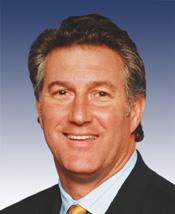
Mr. Speaker, I would like to thank Chairman John Boehner of the Education and Workforce Committee for his leadership in the effort to reauthorize and improve Federal nutrition programs. Since our…
Mr. Speaker, I would like to thank Chairman John Boehner of the Education and Workforce Committee for his leadership in the effort to reauthorize and improve Federal nutrition programs. Since our Nation's youth are facing increased problems of obesity, high cholesterol, diabetes, and malnutrition, these programs are vital. H.R. 3783, the Child Nutrition Improvement and Integrity Act, includes provisions to promote healthy choices among children, strengthen nutrition service programs, and ensure eligible children have access to services.
Of particular interest to my State of Arizona are the important provisions that will increase the availability of fruits and vegetables in Federal child nutrition programs. Most notably, section 307 expands the Fruit and Vegetable Pilot Program to additional States and Native American reservations. I strongly favor efforts to expand this program. In just a short span of time, the results of the original pilot program appear overwhelmingly positive, as reports from the original participating schools indicate increased consumption and demand for healthy fruits and vegetables.
I urge Secretary of Agriculture Ann M. Veneman to strongly consider expanding the Fruit and Vegetable Pilot Program to Arizona and its Native American reservations.
Arizona, and Indian reservations within the State, are perfect candidates for the program's expansion for a number of reasons. Arizona has great diversity in its student profile, both in race and national origin, that span from the rural areas to its inner city sections, to its Native American reservations. Having the State of Arizona as a participant would enable the United States Department of Agriculture to better determine how such a program would perform on a national basis.
Also, the need for fresh fruits and vegetables, and better overall nutrition, is especially acute in rural areas of Arizona, including Native American reservations. In general, these areas suffer from an aging transportation system, making it difficult and costly for distributors to deliver fruits and vegetables. If these items are available, they are often too expensive for many low income residents.
I have seen how a lack of proper nutrition impacts children in these areas, most notably on tribal lands. It is not uncommon for children in these areas to suffer from dysentery and other illnesses either complicated or caused by poor diets.
In addition, including Arizona and Native American reservations as participants would be money well spent. I have met with child nutrition advocates from Arizona and they are dedicated to providing school age children nutritious meals and are enthusiastic about the possibility of participating in this most important program. I will work to foster cooperation among school administrators, food service directors, and private sector participants to ensure that this program would be administered efficiently.
Arizona and its tribal lands are also prime candidates because the State boasts a thriving produce industry that specializes in a wide range of specialty crops. Because of strong agricultural industry within the state, Arizona schools will be able to secure private/public partnerships with the produce industry. This is a key factor in that section 307 of H.R. 3873 requires participating schools to secure at least 15 percent of operation funding from private industry, either through in-kind donations or monies. Arizona growers and farmers are willing participants and economically viable partners who are eager to form a partnership with Arizona's schools to provide the benefits of healthy fruits and vegetables to school age children.
Again, I thank you, as well as the bill's sponsor, Representative Castle, for your efforts in writing this legislation and promoting expansion of the Fresh Fruit and Vegetable Pilot Program. I hope that Arizona and its Native American reservations will be selected by the USDA as a participant under this most important program.
Mr. Speaker, I thank the distinguished gentleman from California for yielding to me. I also want to thank him for all of his help and cooperation on this legislation; as well as the distinguished…
Mr. Speaker, I thank the distinguished gentleman from California for yielding to me. I also want to thank him for all of his help and cooperation on this legislation; as well as the distinguished gentleman in Ohio (Mr. Boehner) for his work; and obviously my ranking member, with whom I worked closely on this; and particularly the staff, Kate Houston, and Sarah on my staff, as well as all the other staff people.
Obviously I rise in support of the legislation as well. The bill before us today does represent several months of hard work, cooperation, and dedication to strengthening nutritional services for vulnerable children. I am pleased to have the bill before us and to have an agreement that spans both sides of the aisle in addition to both sides of the Capitol.
The Child Nutrition and WIC Reauthorization Act of 2004 makes a number of positive reforms focusing on reaching three main goals: ensuring eligible children have access to services, promoting comprehensive solutions to the health and nutrition of children, and strengthening program integrity to ensure Federal resources are being effectively leveraged to serve children who qualify. The bill reauthorizes the National School Lunch and Breakfast programs, Child and Adult Care Food Program, After-School Snack Program,
Summer Food Service Program, and the Special Supplemental Nutrition Program for Women, Infants, and Children. I believe that in this bill we have gone a long way in strengthening these programs on behalf of disadvantaged children and their families.
While the bill includes a variety of important reforms, there are a few I would like to mention specifically. With little money to work with, we were able to increase access to child nutrition programs for eligible children. For example, the bill extends participation for eligible children whose parents are in the Armed Forces and living in privatized military housing so these children may continue receiving free or reduced-priced meals. This provision alone would benefit 250 children in my home State of Delaware and up to 100,000 children nationwide.
The Federal Government invests roughly $16 billion annually in child nutrition programs. Ensuring the effective use of these resources by enhancing program integrity has been a top priority during the reauthorization process. We have moved to ensure that children who deserve these services are receiving them and not being excluded by those who are not eligible. To this end, we have taken steps to reduce administrative error, improve accuracy, and enhance accountability for program administration.
Finally, I would like to highlight an issue of particular concern to me, the growing problem of childhood obesity. During visits to schools over the past several years, I have noticed a growing number of obese children. We all recognize the fact that obesity has reached epidemic proportions in our Nation. Defeating this crisis will require the work of many, including schools, parents, government, the health community, and industry.
The bill before us today also includes important steps to promote comprehensive solutions to child health and nutrition, including provisions to promote nutritional education and physical activity at the State and local level.
The Child Nutrition and WIC Reauthorization Act of 2004 is a result of cooperative bipartisan and bicameral efforts to strengthen nutritional services provided to needy children and families through the various child nutrition programs. I would like to thank my colleagues for their cooperation in bringing this bill forward, and I urge its passage.
Mr. Speaker, I rise in support of this Child Nutrition Act. This bill is a step in the right direction of important reforms in federal child nutrition programs. I would like to thank Chairmen…
Mr. Speaker, I rise in support of this Child Nutrition Act. This bill is a step in the right direction of important reforms in federal child nutrition programs. I would like to thank Chairmen Boehner, and Castle and Ranking Members Miller and Woolsey for their hard work on the bill. I would also like to thank the Chairman for taking my amendment during the committee process eliminating the cost- accounting requirement for severe need breakfast programs.
This paperwork problem was brought to my attention by the Director of the New Jersey Child Nutrition Programs, Kathy Kuser. Many states, such as New Jersey, Wisconsin and Illinois, are making significant efforts to improve their school breakfast participation rate, and reducing the paperwork requirements would help these efforts.
Under current law, schools would qualify for severe-need breakfast assistance if at least 40 percent of the lunches served during the second preceding school year were free or reduced price. They calculate their cost per breakfast by prorating their labor costs, and figuring out their food, supplies and other costs associated with the school breakfast program. They have to save their receipts and calculations and submit them in order to get the severe-need reimbursement. Removing the cost-accounting requirement would be a significant paperwork reduction for the schools without significantly increasing cost for the government.
I also want to commend the committee for including direct certification for children from food stamp households for free school meals. Many schools are not aware of this method to determine eligibility for free meals. Direct certification improves access to free school lunches and improves program integrity, according to a study done by Mathematica.
I am also pleased to see a bill authorizing grants for ``farm-to- cafeteria'' projects, including nutrition education activities. These activities incorporate the participation of school children in farm and agricultural education projects and procure local foods from small- and medium-sized farms for school meals.
The expansion of eligibility for Child and Adult Care Food Program (CACFP) for children in shelters from age 13 to 18 who live in domestic violence shelters and homeless shelters is a wonderful improvement to the previous child nutrition legislation. My constituents who participate in Mercer Street Friends, Anchor House, Triad House, Family Preservation Center (Homefront) and the Family Preservation House would benefit from this change to CACFP eligibility. These organizations depend on food donations to feed their clients who are nutritionally at risk and should be eligible for this important nutrition support program.
Finally, I am pleased to see that the bill we are considering today has some positive improvements to the bill that first passed in March. The bill now authorizes grants to states for comprehensive nutrition education and physical activity programs.
It also authorizes grants to schools for nutrition and physical activity projects. Today's bill provides training and technical assistance to schools to develop healthy school nutrition environments and local wellness policies.
The bill also expands from 5 to 8 the number of states participating in the successful Fruit and Vegetable Pilot.
Mr. Speaker, once again I want to thank my colleagues and their staffs on the for their hard work. I ask my colleagues to support this bill, which will eliminate barriers to participation for low-income children and families and ensure greater access to these critical nutrition programs.
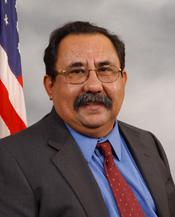
Mr. Speaker, I would like to thank Mr. Boehner, Mr. Castle, Mr. Miller, and Ms. Woolsey for working on this reauthorization in a bipartisan fashion. I am very pleased to see a number of provisions in…
Mr. Speaker, I would like to thank Mr. Boehner, Mr. Castle, Mr. Miller, and Ms. Woolsey for working on this reauthorization in a bipartisan fashion. I am very pleased to see a number of provisions in this bill that will help the Hispanic community, and specifically the migrant and seasonal farm working community to access the services they are entitled to.
The average farm worker earns just $7,500 a year--leaving most of their families well below poverty level. The hardships that the children in these families face are only amplified by their migratory lifestyle. Their parents, who are poor, uneducated, and often with limited literacy in their native language, face many barriers in helping their children apply for services every time they move. These are the families that put food on our tables and these barriers are leaving their own children hungry. It is our responsibility to help them overcome these barriers because all children suffering from poverty deserve a nutritious lunch through this program.
This bill includes a number of provisions that will help these eligible children gain access to free or reduced price lunches. It requires that materials sent to the parents be in an understandable and uniform format, and to the extent practicable, in a language that the parents can understand. By dismantling literacy and language barriers many more eligible families will be able to access information and be empowered to better make sound choices regarding healthful diet and lifestyle.
Significant improvements have been made to the certification and verification process. Children will now be certified for one full year--helping migrant children in maintaining access through the school year, wherever they are. It will extend automatic eligibility to children who qualify for migrant educational services under the Elementary and Secondary Education Act. It allows for the direct certification of such children if they are identified by the district's migrant education coordinator. Schools will have the option to verify income data through Medicaid and the Food Distribution Program on Indian Reservations, FDPIR, in addition to TNF and Food Stamps. Schools will have the option of substituting applications under criteria established by the Secretary when they have independent knowledge that the household selected for verification is eligible, and they know that certain barriers will prevent them from responding.
In addition to improvements to the certification and verification process, the bill encourages schools to consider the needs of ethnic minorities, who are at higher risk for obesity and diabetes, in the development of their nutrition education programs.
These program improvements are significant, and as indicated in the bill title, they will certainly improve the program as well as increase the program's integrity. I recently decided to become a cosponsor of this bill, and I urge my colleagues to support its passage.
Again, I would like to thank the leaders of the Committee on Education and the Workforce for considering these provisions a priority and for moving forward in a cooperative and bipartisan fashion during this reauthorization. Additionally, I would like to thank Mr. Ehlers for his commitment to migrant children during this reauthorization. I would also like to thank the staff on both sides of the aisle for their
persistence and dedication to working cooperatively during this reauthorization. I urge my colleagues to support this reauthorization bill.
Mr. Speaker, I rise today in support of S. 2507, the bipartisan bill to reauthorize the Child Nutrition and WIC Programs. In this hot political climate, I am pleased to see that members crossed the…
Mr. Speaker, I rise today in support of S. 2507, the bipartisan bill to reauthorize the Child Nutrition and WIC Programs. In this hot political climate, I am pleased to see that members crossed the aisle to compromise in the interests of hungry children. There are a number of provisions in this bill which will improve the program through increased access and innovative programs.
Migrant and seasonal farm working families, the families that put food on our tables, face unique challenges in accessing this program. The average farm worker earns just $7,500 a year--leaving most of their families well below poverty level. The hardships that the children in these families face are only amplified by their migratory lifestyle. Their parents, who are poor, uneducated, and often with limited literacy in their native language, face many barriers helping their children apply for services every time they move. S. 2507 would make homeless, runaway and migrant children automatically eligible for free lunch and breakfast. It will extend automatic eligibility to children who qualify for migrant educational services under the Elementary and Secondary Education Act.
It will be easier for parents to apply for free or reduced price meals by requiring only one application for the household and making that application valid for the full school year. Additionally, children in Food Stamp and TANF households will be directly certified to participate in the program.
Common sense and scientific knowledge tells us that eating breakfast improves school performance. Yet a number of barriers keep schools from offering this service, ranging from cost, stigma, and transportation. This bill would encourage more schools to serve breakfast by studying the logistical impediments that make it difficult, and finding ways to reduce those impediments.
Children who are hungry during the school day suffer even more during the summer when the appropriate resources are not available. S. 2507 authorizes a new pilot project to examine ways to reduce transportation barriers and increase access to summer feeding programs in rural areas.
Childhood obesity has become a national epidemic. Nearly a quarter of Hispanic children are overweight, and at high risk for Type II Diabetes. This program is in the position to significantly impact this national health crisis. In addition to requiring schools to create a wellness policy, this bill would authorize grants for outreach and education on obesity prevention activities to communities with high Limited English Proficiency populations.
This bill would expand the Fruit and Vegetable Pilot program, allowing it to target high poverty areas. Additionally, it authorizes an evaluation of the impact of fruits and vegetables on childhood obesity through pilot programs in WIC.
I stand today in support of this reauthorization bill because it offers real solutions to families and children who are most in need of our help. S. 2507 is a comprehensive piece of legislation that increases access, simplifies the application process, offers outreach, creates innovative pilot programs for targeted communities, and promotes the health and well being of all children served in the program. I encourage my colleagues to support this important bipartisan reauthorization.
Show 11 more
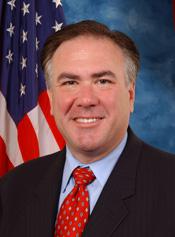
Mr. Speaker, I rise today as Congress considers the H.R. 3873 Child Nutrition Improvement and Integrity Act to continue to advocate for achieving greater nutritional benefits for the children and…
Mr. Speaker, I rise today as Congress considers the H.R. 3873 Child Nutrition Improvement and Integrity Act to continue to advocate for achieving greater nutritional benefits for the children and needy of the United States.
However, first I must commend the Committee on Education and the Workforce for making important structural improvements in federal child nutrition programs in the bill we are considering on the floor today. H.R. 3873 will eliminate barriers to participation for low-income children and families in Federal feeding programs and will ensure greater access to critical nutrition programs. This bill also provides for an important pilot program to be implemented within the Women, Infant, and Children's (WIC) program to allow participants greater access to nutritionally valuable fruits and vegetables.
Unfortunately, I believe that the Committee has missed an important opportunity to address a national health epidemic facing our nation's children: the dramatic rise in childhood obesity. Obesity has recently become the leading cause of death among Americans. Furthermore, commitment to a healthy lifestyle begins at a young age and particularly among disadvantaged Americans. School feeding and other nutrition programs, often provide the only opportunities for the consumption of healthy foods. Quite simply, our Federal feeding programs have failed to keep pace with modern nutritional standards and have not provided full access to healthy choices critical to combating chronic diseases and obesity.
The are many bills currently pending before Congress, including one authored by myself and my colleague Representative Adam Putnam from Florida, which mandates the use of scientifically proven nutritional guidelines such as the 5-A-Day program in school breakfast and lunch programs. As only 15 percent of elementary school students are currently consuming the required 5 servings a day of fruits and vegetables, stronger language in H.R. 3873 could have ensured that the foods available to children are nutritious, healthy and provide children with choices necessary to achieve a healthy lifestyle.
Additionally I believe that all WIC participants, not just those participating in the pilot program outlined in H.R. 3873, should have complete access to fruits and vegetables. It is unfortunate that since its inception almost 30 years ago, the WIC program has changed little in its dietary science. Consuming nutritionally rich foods has been proven time and again to combat disease and obesity we should be encouraging not discouraging WIC mothers to purchase these items for their families.
Again, I commend the legislation under consideration today for reducing barriers to accessing Federal nutrition programs, but I also strongly urge my Colleagues and the U.S. Department of Agriculture to remain vigilant in the challenge we face in providing America's children and needy individuals healthy nutritional choices.
Mr. Speaker, I rise today in strong support of the Child Nutrition and WIC Reauthorization Act. As a member of the Education and the Workforce or Committee, I am pleased with the process in which…
Mr. Speaker, I rise today in strong support of the Child Nutrition and WIC Reauthorization Act. As a member of the Education and the Workforce or Committee, I am pleased with the process in which this bill has been considered; it is a critical bill that will greatly benefit our nation's children as well as family farmers.
Ensuring that our youth receive proper nutrition is a top priority for me in Congress. I have traveled across western Wisconsin, meeting with people both in and out of the schools who are active in administering child nutrition programs, and consistently I hear how important these programs are for our youth. I have also met with parents and children who participate, and I hear how many of these families depend on federal child nutrition programs for a healthy start in life and healthy meals as their children grow. Sadly, too often, a federally subsidized meal is the only complete meal some children eat in a day. This reality underscores the importance of this bill that will improve access to such important programs while also increasing the nutritional value of federal food programs.
Specifically, I am pleased that several provisions were included in the base bill, which I coauthored in previous legislation. H.R. 3250, the Child Nutrition Improvement Act of 2003, which I sponsored with Representatives Bennie Thompson, Gil Gutknecht, and Tom Petri, will combat the increasing problem of child obesity through increased child milk consumption by preventing commercial beverage companies from pressuring schools to remove milk vending machines. Another provision included in the base bill from H.R. 3250 will improve child nutrition by making it easier for schools to offer milk in a variety of flavors and fat contents to better meet students' varying tastes and needs. With 90 percent of teenage girls and 70 percent of teenage boys currently not getting enough calcium, it is imperative to provide increased availability of milk products in schools.
Additionally, S. 2507 includes legislation that I sponsored with Representative Upton, H.R. 2626, The Farm-to-Cafeteria Projects Act of 2003. This provision focuses on connecting local agriculture to schools in every state through a competitive, one-time matching grant directly to local communities. This allows each locality to design a farm-to- cafeteria project tailored to specific farm and school community needs. Experience has shown that kids' food choices can be improved by connecting farms to the lunchroom.
Mr. Speaker, again, I am proud to support this bill on the Floor today. Our goal in the 21st century should be to ensure that every child receives proper nutrition needed to succeed in school. It is a simple fact: good nutrition is an educational tool that improves children's performance in school.
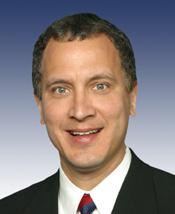
Mr. Speaker, I rise today in strong support of S. 2507, the Child Nutrition and WIC Reauthorization Act. Federal child nutrition programs were conceived to offer wholesome meals and snacks to…
Mr. Speaker, I rise today in strong support of S. 2507, the Child Nutrition and WIC Reauthorization Act. Federal child nutrition programs were conceived to offer wholesome meals and snacks to children in need, and to support the health of lower-income pregnant women, new mothers, and their young children. Federal child nutrition programs touch the lives of countless children. The National School Lunch Program alone serves an average of 29 million children each school day. Fifty-eight percent of these children receive a nutritious lunch each school day for free or at a reduced price. Nearly eleven million children also take part in school breakfast, after- school snacks, and summer meals. These programs provide an extraordinary opportunity to send a strong, consistent message to children about maintaining a healthy, active lifestyle.
Along with nutritional provisions, this legislation works to streamline the eligibility criteria and paperwork parents and guardians need to participate. For schools, lunch certifications will now be valid for a full year. Additionally, parents will be allowed to submit a single application for multiple children, and to file school lunch applications electronically. And, eligible children whose parents live in privatized military housing will continue to receive free- or reduced-price meals.
This bill also addresses the Women, Infant and Children program commonly know as WIC. This important program helps safeguard the health of nutritionally at-risk pregnant women and new mothers, infants, and children up to age five. It provides vital nutrient-dense foods to supplement diets, along with nutrition education and referrals for health care and other social services. WIC is based on the premise that early intervention programs can prevent future medical and developmental problems in at-risk individuals. The success of WIC is well documented. Participation in WIC has led to better pregnancy outcomes--fewer infant deaths, fewer premature births, and increased birth weights. Through this legislation, WIC is authorized through 2009 and a number of enhancements are made to program access and operations.
Finally, this bill also ensures that supplemental foods available through WIC are consistent with current nutritional science, a key link in fighting youth obesity. Mr. Speaker, The Child Nutrition and WIC Reauthorization Act will help strengthen and improve all these programs which are so valuable to children and their families. I urge my colleagues to support this important legislation and yield back the balance of my time.
Mr. Speaker, I rise today in support of H.R. 3873. I thank Chairman Boehner and Mr. Castle for their work on this legislation. I particularly thank them for their willingness to include direct…
Mr. Speaker, I rise today in support of H.R. 3873. I thank Chairman Boehner and Mr. Castle for their work on this legislation. I particularly thank them for their willingness to include direct certification of migrant children under the Richard B. Russell National School Lunch Act. I also commend Mr. Hinojosa and Mr. Grijalva for their persistent efforts to assist migrant children.
Migrant families are among the poorest of the working poor, and are largely eligible for the child nutrition programs. Unfortunately, the mobility of migrant children often complicates their access to the child nutrition programs. Migrant families face significant barriers in accessing federal, state, and local resources due to issues associated with mobility, language and literacy. Currently, migrant children are forced to reapply each time they enroll in a new school district. In addition, literacy and language are a problem at the application phase of the child nutrition program.
I am pleased that this legislation provides direct certification for migrant children. This legislation works to protect eligible children's access to the child nutrition programs by extending automatic eligibility to children who qualify for migrant educational services under Title 1, part C of the No Child Left Behind Act. It allows for direct certification of migrant children if they are identified by the district's migrant education coordinator. Such a change makes it easier for migrant children to receive school meals as soon as they enter a new school.
In addition to migrant provisions, I support promoting nutritional education and physical activity. I am very pleased that this legislation promotes such education and physical activity at the state and local levels to prevent childhood obesity. I am hopeful that local school wellness policies will be established by schools participating in the school nutrition programs will promote health and prevent childhood obesity throughout schools in Michigan.
Finally, I support strengthening partnerships between local agriculture and schools. I cosponsored Representative Upton and Representative Kind's Farm-To-Cafeteria Projects Act, and I am pleased to see these provisions included. This legislation will promote partnerships between local Michigan farms and the child nutrition programs to ensure that children receive fresh and local produce.
In closing, I urge my colleagues to vote in favor of the Child Nutrition Improvement and Integrity Act.
Mr. Speaker, today we are talking about a bill that requires schools to develop nutritional guidelines for all foods sold in schools. I support this bill, and I believe it is very important for…
Mr. Speaker, today we are talking about a bill that requires schools to develop nutritional guidelines for all foods sold in schools. I support this bill, and I believe it is very important for schools to have specific nutritional guidelines in place so healthy food is served in our school cafeterias, but I also want to make sure that everyone realizes that nutritional guidelines are only one piece of the childhood obesity puzzle.
What we could overlook in this debate is that government-imposed guidelines can only do so much to prevent childhood obesity. If we really want to make a difference, we must focus on educating youth and their parents about the need to eat right and be physically active. Parents and their children must be acutely aware of the dangers of being overweight or obese.
We now know that being overweight can lead to diabetes, heart disease, stroke, hypertension, uterine cancer, breast cancer, kidney cancer, gall bladder cancer, pregnancy complications, psychological disorders, and that is not the entire list.
I say to parents and the Members today, do they know that people who are obese have a three times greater chance of dying in surgery due to complications? Did my colleagues know that obesity is costing this Nation almost as much as cigarette smoking? Did my colleagues know that over 40 million workdays are being lost each year to obesity?
Do I have all the answers to the problem? No, but I do know that educating our youth and their parents is the necessary first step. Education is knowledge and knowledge is empowerment.
This pamphlet, Healthy Habits for Healthy Kids, developed by experts from the American Dietetic Association is being passed out to 500,000 elementary age children in Texas, free of charge, in the coming weeks. It gives easy-to-understand hints and suggestions that help youth and their parents make better choices in their diets, like one appropriate serving of meat is about the size of a deck of cards and one appropriate serving of pasta or rice looks like a tennis ball. It also lays out a physical activity game plan that an entire plan can adhere to.
Efforts like these are going to make a dint in childhood obesity, one child and one parent at a time. As Members of Congress, we owe it to our constituents to educate them about the dangers of obesity.
School nutritional guidelines are only one piece of this puzzle. Americans have to make the right choices.
Mr. Speaker, I thank the ranking member for yielding to me. Mr. Speaker, I rise in support of S. 2507, the Child Nutrition and WIC Reauthorization Act of 2004. This reauthorizes the Federal child…
Mr. Speaker, I thank the ranking member for yielding to me.
Mr. Speaker, I rise in support of S. 2507, the Child Nutrition and WIC Reauthorization Act of 2004. This reauthorizes the Federal child nutrition programs, one of the most important bills I think that we consider here in the House of Representatives. This has become, through considerable effort on all sides, a bipartisan, bicameral bill. And I thank my colleagues and staff on both sides of the aisle and in both Chambers who have worked so hard and in such good faith.
A lot of positive compromises were made to get to this point. I think that every Member who was involved in the negotiations, and even some who were not, gave up something while gaining in the long run. But we were determined all through the effort that the Federal child nutrition programs would continue to provide nutritious food for low-income infants and children at home, in child care centers, in family day care homes, at school, and when school is out for the day or the year. And that is what this bill before us today does.
While I would have liked to include a full expansion of the Free Breakfast Program for all kids and tighter restrictions on the junk food that is sold in schools, the Child Nutrition and WIC Reauthorization Act does improve the Federal child nutrition programs in many ways, and I am not going to list all those ways because we have other people that would like to speak. But I want the Members to know that those of us that are here support exactly what is in this bill, and we are glad that we are able to support it. What I hope and what I expect is that one of the most significant benefits to hungry children since the first Federal school lunch, and that is the pilot program that will allow five States to examine the impact of eliminating the reduced/free category in school meals, that this will be a huge success supported around the Nation so we will prove that children who have a nutritious meal, a nutritious breakfast learn better, they have better attendance, they have better scores on their tests, and they behave better in school. So that we will have learned something very significant by the end of this reauthorization. Our children will get nutritious meals. They will get snacks. They will develop better eating habits as a result of the Child Nutrition and WIC Reauthorization, and I urge all my colleagues to support it.
Mr. Speaker, I thank my good friend for yielding me the time. I want to thank the gentleman from Ohio (Mr. Boehner), the gentleman from Delaware (Mr. Castle), the gentleman from California (Mr.…
Mr. Speaker, I thank my good friend for yielding me the time.
I want to thank the gentleman from Ohio (Mr. Boehner), the gentleman from Delaware (Mr. Castle), the gentleman from California (Mr. George Miller) and the gentlewoman from California (Ms. Woolsey) for their terrific leadership on this very important bill that helps a lot of children. I am honored to have had the chance to work with the committee on this bill and on four areas in particular that I think are a great step forward.
The first is children who are in WIC-eligible families that are eligible for the Women, Infants and Children Program. Some of these children were not enrolled in the school lunch program, even though they were legally entitled to, because the right forms were not filed. This bill gives States the option of automatically enrolling children who are in the WIC program in the school lunch program, which is an excellent idea.
The second thing we had the chance to work on was to make sure that children who attend for-profit schools and preschool centers will have a fair opportunity on a continuing basis to receive the benefits of this program. We think that every child, irrespective of the educational setting, ought to have that opportunity.
The third group of children that this helps are children in summer schools. We are learning through our research in education that many children benefit from year-round schooling, summer school in particular. This bill extends more school nutrition to more summer school students, and I was proud to help make that a reality.
Finally, there are a lot of children who for health or cultural or religious reasons prefer soy milk. The chairman deserves great credit for brokering a very good compromise on this issue, a very contentious issue, where under this bill if a parent sends a note to school with the child, expressing the desire that the child wishes to have soy milk, then the child gets it. That is a significant improvement over present law which requires a doctor's note, and I thank the chairman and the ranking member and the leaders of the subcommittee for making that very fine compromise a reality.
A lot of children will be helped by this bill. I am proud to support it. I congratulate its authors.
Mr. Speaker, first let me thank the chairman of the subcommittee, the gentleman from Delaware (Mr. Castle); the chairman of the full committee, the gentleman from Ohio (Mr. Boehner); my colleague,…
Mr. Speaker, first let me thank the chairman of the subcommittee, the gentleman from Delaware (Mr. Castle); the chairman of the full committee, the gentleman from Ohio (Mr. Boehner); my colleague, our ranking member, the gentleman from California (Mr. George Miller); and the gentlewoman from California (Ms. Woolsey) for making sure that this is a bipartisan bill and for incorporating many of our new policies and ideas into this bill, and ensuring that one provision is included in the bill that I introduced actually back in September of 2003, the Right to Know School Nutrition Act.
Basically, today over 27 million low-income children throughout the nation have come to rely on the national school lunch program and the national breakfast program for a healthy and nutritious meal. Oftentimes this is the only source of nutrition that these kids will receive all day, so it is incredibly important that we provide healthy, nutritious meals to these students and we make sure we notify their parents about what they are eating.
But, believe it or not, when it comes to the issue of irradiated food, food that is bombarded with gamma rays or electrons, there is no requirement in law that schools must notify their parents or their children about what they are eating, or even that the irradiated food was being served in school. This provision of the bill basically notifies parents and children about irradiated food, while providing a possible alternative, if the schools can so provide for that.
So I am very delighted that both the House and the other body have seen fit to include a large part of my bill in this bill. I think it is very important for the health and safety of our children. It is very important that parents and children know that their food is irradiated and have some alternatives for their health. That is basically what it is about.
I just want to thank the chairman of the full committee, the chairman of the subcommittee, our ranking member and the gentlewoman from California (Ms. Woolsey), our ranking subcommittee member, for all of their assistance in this. I fully support the bill, and hope we have a bipartisan vote.
Mr. Speaker, I would like to thank the gentleman from Ohio (Chairman Boehner), the gentleman from Delaware (Chairman Castle), the gentleman from California (Mr. George Miller), the gentlewoman from…
Mr. Speaker, I would like to thank the gentleman from Ohio (Chairman Boehner), the gentleman from Delaware (Chairman Castle), the gentleman from California (Mr. George Miller), the gentlewoman from California (Ms. Woolsey) and, of course, their staffs.
I think this is a good bill. I am certainly in full support of it. It is a bipartisan bill and makes several needed changes to child nutrition. I would like to mention two of those that have particularly caught my attention.
Number one, it creates a grant program to educate students about wellness through a teen nutrition program. I guess it has been my experience that so few young people really understand what a balanced diet looks like, and so I think the educational component is very important.
Number two, it requires nutrition and physical education programs to be based on dietary and physical fitness guidelines issued by the Secretary of Health and Human Services. So we need some science-based standards because there are so many fad diets, fad exercises out there. Unless we have some uniform system, some uniform science-based standard, we are not going to do very well, and that bill does address that issue.
As has been mentioned over and over again, childhood obesity has doubled over the last 2 decades. This is due to two factors, one, poor nutrition, and number two, lack of exercise. The average child spends 6 hours a day watching television, playing with the computer or doing video games. So we see arteriosclerosis, we see diabetes occurring at earlier and earlier ages.
Obesity currently costs the United States $117 billion annually, and this figure is only going to continue to escalate, as has been pointed out previously, unless we curb childhood obesity. The best way to combat child obesity, the epidemic, is through education at an early age and promotion of physical activity. This bill takes steps to do that.
I certainly support it. I urge support of H.R. 3873.
Mr. Speaker, I rise in strong support of S. 2507, The Child Nutrition and WIC Reauthorization Act of 2004. I would like to commend the leadership of the Education and the Workforce Committee and the…
Mr. Speaker, I rise in strong support of S. 2507, The Child Nutrition and WIC Reauthorization Act of 2004. I would like to commend the leadership of the Education and the Workforce Committee and the Senate Agriculture Committee for negotiating a bipartisan bill that will improve access to the child nutrition programs.
I am pleased that this compromise bill contains a number of provisions that were supported by the Congressional Hispanic Caucus and national Hispanic organizations. S. 2507 will make a difference for Hispanic children and families.
Measures to allow for the direct certification of migrant students and the direct verification of eligibility will protect our most at risk students from being dropped from the program, not for lack of eligibility but for lack of understanding or fear.
The provisions to ensure that school lunch information--throughout the entire process--is in a language and form that the parents can understand will go a long way to building understanding and trust. These are significant improvements to the program.
Additionally, the bill strengthens nutrition education. Childhood obesity and diabetes are reaching epidemic proportions in the Hispanic community and across the Nation. We must do more to help young people develop healthy lifestyles. This legislation is a step in the right direction.
S. 2507 provides important resources to expand access through innovative programs. The bill expands the Lugar summer food program, establishes a pilot program for rural areas, and allows 5 states to examine the impact of replacing the reduced priced lunches with free lunches--a goal that has strong bipartisan support.
This legislation also takes steps to safeguard the integrity of the WIC program, ensuring that WIC food packages reach the maximum number of women, infants, and children.
I urge my colleagues to vote yes on S. 2507.
Mr. Speaker, while I support the passage of H.R. 3873 today, I cannot support the budget that constrained, limited and ultimately stunted its final form. In the Committee on Education and the…
Mr. Speaker, while I support the passage of H.R. 3873 today, I cannot support the budget that constrained, limited and ultimately stunted its final form.
In the Committee on Education and the Workforce, we were told that funding was not available to eliminate the
reduced-price category to allow more low-income children to receive school meals, often their only meals, for free. We were also told that the budget resolution did not allow for any expansion of school breakfasts and other programs.
H.R. 3873 now comes before this House on a suspension calendar, perhaps to ensure that Members cannot offer amendments that might add additional costs to this bill. I had planned to offer an amendment that would have allowed schools to offer free breakfasts to students on the mornings they are scheduled to take a No Child Left Behind assessment.
The NEA, the Ohio PTA, the National Farm Organization, the National Family Farm Coalition, the Community Food Security Coalition and others supported this amendment. Millions of parents, teachers, students and school administrators would have also supported it, along with other positive changes, but all further improvements and expansions are blocked in this bill.
In contrast, later today we will debate a budget bill that allocates $10.2 billion, a 13 percent increase from last year, on a missile defense system that does not work, while this morning we restrict to $16 billion a nutrition bill we all know does work but could work even better.
There is money to improve and expand education and nutrition, but situations like this force us to recognize lost opportunities that come about from tax cuts for the wealthiest and from unacccountable defense spending
I urge my colleagues to vote for H.R. 3873, but I also urge them to remember those left behind and left hungry by the administration's misguided agenda.
Bill Text
Latest available legislative text
        [Congressional Bills 108th Congress]
[From the U.S. Government Publishing Office]
[H.R. 3250 Introduced in House (IH)]

108th CONGRESS
1st Session
H. R. 3250

To amend the Richard B. Russell National School Lunch Act to establish
programs to promote increased consumption of milk in schools and to
improve the nutrition and health of children.

_______________________________________________________________________

IN THE HOUSE OF REPRESENTATIVES

October 7, 2003

Mr. Thompson of Mississippi (for himself, Mr. Petri, Mr. Gutknecht, and
Mr. Kind) introduced the following bill; which was referred to the
Committee on Education and the Workforce

_______________________________________________________________________

A BILL

To amend the Richard B. Russell National School Lunch Act to establish
programs to promote increased consumption of milk in schools and to
improve the nutrition and health of children.

Be it enacted by the Senate and House of Representatives of the
United States of America in Congress assembled,

SECTION 1. SHORT TITLE.

This Act may be cited as the ``Child Nutrition Improvement Act of
2003''.

SEC. 2. CONSUMPTION OF MILK IN SCHOOLS.

(a) Fluid Milk.--
(1) In general.--Section 9(a) of the Richard B. Russell
National School Lunch Act (42 U.S.C. 1758(a)) is amended by
striking paragraph (2) and inserting the following:
``(2) Fluid milk.--
``(A) In general.--Lunches served by schools
participating in the school lunch program under this
Act--
``(i) shall offer students fluid milk; and
``(ii) shall offer students a variety of
flavored and unflavored milk, as determined by
the school.
``(B) Fluid milk products.--A school or institution
that participates in the school lunch program under
this Act--
``(i) may offer a la carte fluid milk
products to be sold in addition to and, at the
option of the school, adjacent to fluid milk
offered as part of a reimbursable meal; and
``(ii) shall not directly or indirectly
restrict the sale or marketing of fluid milk
products by the school (or by a person approved
by the school) at any time or any place--
``(I) on the school premises; or
``(II) at any school-sponsored
event.''.
(2) Application.--The amendment made by paragraph (1)
applies to an agreement or contract entered into on or after
the date of enactment of this Act.
(b) Increased Consumption of Milk in Schools.--Section 12 of the
Richard B. Russell National School Lunch Act (42 U.S.C. 1760) is
amended by adding at the end the following:
``(q) Increased Consumption of Milk in Schools.--
``(1) In general.--To encourage healthier nutritional
environments in schools and institutions receiving funds under
this Act and the Child Nutrition Act of 1966 (42 U.S.C. 1771 et
seq.) (other than section 17 of that Act (42 U.S.C. 1786)), the
Secretary shall establish a program under which any such school
or institution may (in accordance with paragraph (3)) receive
an increase in the reimbursement rate for free and reduced
price meals otherwise payable under this Act and the Child
Nutrition Act of 1966, if the school or institution implements
a plan for improving the nutritional value of meals consumed in
the school or institution by increasing the consumption of
fluid milk in the school, as approved by the Secretary in
accordance with criteria established by the Secretary.
``(2) Plans.--
``(A) In general.--For purposes of the program
established under paragraph (1), the Secretary shall
establish criteria for the approval of plans of schools
and institutions for increasing consumption of fluid
milk.
``(B) Criteria.--An approved plan may--
``(i) establish targeted goals for
increasing fluid milk consumption throughout
the school or institution or at school or
institution activities;
``(ii) improve the accessibility,
presentation, positioning, or promotion of
fluid milk throughout the school or institution
or at school or institution activities;
``(iii) improve the ability of a school or
institution to tailor the plan to the customs
and demographic characteristics of--
``(I) the population of the school
or institution; and
``(II) the area in which the school
or institution is located; and
``(iv) provide--
``(I) packaging, flavor variety,
merchandising, refrigeration, and
handling requirements that promote the
consumption of fluid milk; and
``(II) increased standard serving
sizes for fluid milk consumed in middle
and high schools.
``(C) Administration.--In establishing criteria for
plans under this subsection, the Secretary shall--
``(i) take into account relevant research;
and
``(ii) consult with school food service
professionals, nutrition professionals, food
processors, agricultural producers, and other
groups, as appropriate.
``(3) Reimbursement rates and incentives.--
``(A) In general.--For purposes of administering
the program established under paragraph (1), the
Secretary shall annually provide reimbursement rates
and incentives for free and reduced price meals
otherwise payable under this Act and the Child
Nutrition Act of 1966 of not less than 2 cents and not
more than 10 cents per meal, to reflect the additional
costs incurred by schools and institutions in
increasing the consumption of fluid milk under the
program.
``(B) Criteria.--The Secretary may vary the
increase in reimbursement rates and incentives for free
and reduced price meals based on the degree to which
the school or institution adopts the criteria
established by the Secretary under paragraph (2).''.

SEC. 3. IMPROVED NUTRITION AND PHYSICAL ACTIVITY LEVEL OF CHILDREN.

Section 12 of the Richard B. Russell National School Lunch Act (42
U.S.C. 1760) (as amended by section 2(b)) is amended by adding at the
end the following:
``(r) Improved Nutrition and Physical Activity Level of Children.--
``(1) Definition of healthy school environment program.--In
this subsection, the term `healthy school environment program'
means a program that--
``(A) is designed to improve the environment of a
school with respect to the nutrition and physical
activity level of children enrolled in the school; and
``(B) includes steps to improve and make available
healthy food choices (including fruits, vegetables, and
dairy products).
``(2) Program.--The Secretary shall carry out a program to
provide grants to schools that implement healthy school
environment programs.
``(3) Administration.--In carrying out the program, the
Secretary may enter into cooperative agreements with--
``(A) nonprofit organizations;
``(B) educational and scientific institutions;
``(C) Federal, State, and local agencies; and
``(D) other entities that contribute funds or in-
kind services for the program.
``(4) Acceptance of funds.--Notwithstanding any other
provision of law, the Secretary may accept funds from an entity
referred to in paragraph (3) solely for use in carrying out the
program under this subsection.''.
<all>