Western Reserve Heritage Areas Study Act
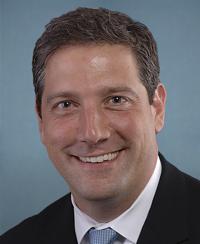 Rep. Tim Ryan (D-OH)
Legislative Activity
Stay on top of the latest movement without scrolling through every action
Received in the Senate and Read twice and referred to the Committee on Energy and Natural Resources.
September 22, 2004
View full timeline
Introduced in House
October 7, 2003
Referred to the House Committee on Resources.
October 7, 2003
Referred to the Subcommittee on National Parks, Recreation and Public Lands.
October 9, 2003
Committee Consideration and Mark-up Session Held.
July 14, 2004
Ordered to be Reported (Amended) by Unanimous Consent.
July 14, 2004
Subcommittee on National Parks, Recreation and Public Lands Discharged.
July 14, 2004
Reported (Amended) by the Committee on Resources. H. Rept. 108-642.
September 7, 2004
Placed on the Union Calendar, Calendar No. 386.
September 7, 2004
Mr. Pearce moved to suspend the rules and pass the bill, as amended.
September 21, 2004 • 2:42 PM
Considered under suspension of the rules. (consideration: CR H7262-7263)
September 21, 2004 • 2:42 PM
DEBATE - The House proceeded with forty minutes of debate on H.R. 3257.
September 21, 2004 • 2:42 PM
Passed/agreed to in House: On motion to suspend the rules and pass the bill, as amended Agreed to by voice vote.(text: CR H7262)
September 21, 2004 • 2:50 PM
On motion to suspend the rules and pass the bill, as amended Agreed to by voice vote. (text: CR H7262)
September 21, 2004 • 2:50 PM
Motion to reconsider laid on the table Agreed to without objection.
September 21, 2004 • 2:50 PM
Received in the Senate and Read twice and referred to the Committee on Energy and Natural Resources.
September 22, 2004
Floor Debate
4 membersWhat members said about H.R. 3257 on the floor

Floor Debate
4 membersWhat members said about H.R. 3257 on the floor
Mr. Speaker, I thank the gentlewoman for yielding me this time. And I would also like to take this opportunity to thank the gentleman from California (Chairman Pombo) for the opportunity to do this…
Mr. Speaker, I move to suspend the rules and pass the bill (H.R. 3257) to authorize the Secretary of the Interior to conduct a study to determine the suitability and feasibility of establishing the…
Mr. Speaker, I yield myself such time as I may consume. Mr. Speaker, our system of national heritage areas, created over the last two decades, has been enormously successful. These are grassroots…
Mr. Speaker, as the Ranking Democratic Member of the Resources Committee, it is a pleasure and privilege to have H.R. 3257, sponsored by our esteemed colleague from Ohio, Tim Ryan, be considered on…
Bill Text
4 versions available
        [Congressional Bills 108th Congress]
[From the U.S. Government Publishing Office]
[H.R. 3257 Referred in Senate (RFS)]

2d Session
H. R. 3257

_______________________________________________________________________

IN THE SENATE OF THE UNITED STATES

September 22, 2004

Received; read twice and referred to the Committee on Energy and
Natural Resources

_______________________________________________________________________

AN ACT

To authorize the Secretary of the Interior to conduct a study to
determine the suitability and feasibility of establishing the Western
Reserve Heritage Area.

Be it enacted by the Senate and House of Representatives of the
United States of America in Congress assembled,

SECTION 1. SHORT TITLE.

This Act may be cited as the ``Western Reserve Heritage Areas Study
Act''.

SEC. 2. NATIONAL PARK SERVICE STUDY REGARDING THE WESTERN RESERVE,
OHIO.

(a) Findings.--The Congress finds the following:
(1) The area that encompasses the modern-day counties of
Trumbull, Mahoning, Ashtabula, Portage, Geagua, Lake, Cuyahoga,
Summit, Medina, Huron, Lorain, Erie, Ottawa, and Ashland in
Ohio with the rich history in what was once the Western
Reserve, has made a unique contribution to the cultural,
political and industrial development of the United States.
(2) The Western Reserve is distinctive as the land settled
by the people of Connecticut after the Revolutionary War. The
Western Reserve holds a unique mark as the original wilderness
land of the West that many settlers migrated to in order to
begin life outside of the original 13 colonies.
(3) The Western Reserve played a significant role in
providing land to the people of Connecticut whose property and
land was destroyed during the Revolution. These settlers were
descendants of the brave immigrants who came to the Americas in
the 17th century.
(4) The Western Reserve offered a new destination for those
who moved west in search of land and prosperity. The
agricultural and industrial base that began in the Western
Reserve still lives strong in these prosperous and historical
counties.
(5) The heritage of the Western Reserve remains transfixed
in the counties of Trumbull, Mahoning, Ashtabula, Portage,
Geagua, Lake, Cuyahoga, Summit, Medina, Huron, Lorain, Erie,
Ottawa, and Ashland in Ohio. The people of these counties are
proud of their heritage as shown through the unwavering
attempts to preserve agricultural land and the industrial
foundation that has been embedded in this region since the
establishment of the Western Reserve. Throughout these
counties, historical sites, and markers preserve the unique
traditions and customs of its original heritage.
(6) The counties that encompass the Western Reserve
continue to maintain a strong connection to its historic past
as seen through its preservation of its local heritage,
including historic homes, buildings, and centers of public
gatherings.
(7) There is a need for assistance for the preservation and
promotion of the significance of the Western Reserve as the
natural, historic and cultural heritage of the counties of
Trumbull, Mahoning, Ashtabula, Portage, Geagua, Lake, Cuyahoga,
Summit, Medina, Huron, Lorain, Erie, Ottawa and Ashland in
Ohio.
(8) The Department of the Interior is responsible for
protecting the Nation's cultural and historical resources.
There are significant examples of such resources within these
counties and what was once the Western Reserve to merit the
involvement of the Federal Government in the development of
programs and projects, in cooperation with the State of Ohio
and other local governmental entities, to adequately conserve,
protect, and interpret this heritage for future generations,
while providing opportunities for education and revitalization.
(b) Study.--
(1) In general.--The Secretary shall, in consultation with
the State of Ohio, the counties of Trumbull, Mahoning,
Ashtabula, Portage, Geagua, Lake, Cuyahoga, Summit, Medina,
Huron, Lorain, Erie, Ottawa, and Ashland, and other appropriate
organizations, carry out a study regarding the suitability and
feasibility of establishing the Western Reserve Heritage Area
in these counties in Ohio.
(2) Contents.--The study shall include analysis and
documentation regarding whether the Study Area--
(A) has an assemblage of natural, historic, and
cultural resources that together represent distinctive
aspects of American heritage worthy of recognition,
conservation, interpretation, and continuing use, and
are best managed through partnerships among public and
private entities and by combining diverse and sometimes
noncontiguous resources and active communities;
(B) reflects traditions, customs, beliefs, and
folklife that are a valuable part of the national
story;
(C) provides outstanding opportunities to conserve
natural, historic, cultural, or scenic features;
(D) provides outstanding recreational and
educational opportunities;
(E) contains resources important to the identified
theme or themes of the Study Area that retain a degree
of integrity capable of supporting interpretation;
(F) includes residents, business interests,
nonprofit organizations, and local and State
governments that are involved in the planning, have
developed a conceptual financial plan that outlines the
roles for all participants, including the Federal
Government, and have demonstrated support for the
concept of a national heritage area;
(G) has a potential management entity to work in
partnership with residents, business interests,
nonprofit organizations, and local and State
governments to develop a national heritage area
consistent with continued local and State economic
activity;
(H) has a conceptual boundary map that is supported
by the public; and
(I) has potential or actual impact on private
property located within or abutting the Study Area.
(c) Boundaries of the Study Area.--The Study Area shall be
comprised of the counties of Trumbull, Mahoning, Ashtabula, Portage,
Geagua, Lake, Cuyahoga,

Summit, Medina, Huron, Lorain, Erie, Ottawa, and Ashland in Ohio.

Passed the House of Representatives September 21, 2004.

Attest:

JEFF TRANDAHL,

Clerk.