Personal Responsibility in Food Consumption Act
Legislative Activity
Stay on top of the latest movement without scrolling through every action
Read the second time. Placed on Senate Legislative Calendar under General Orders. Calendar No. 463.
March 26, 2004
View full timeline
Introduced in House
January 27, 2003
Referred to the House Committee on the Judiciary.
January 27, 2003
Referred to the Subcommittee on Commercial and Administrative Law for purposes of hearing only (jurisdiction retained at Full Committee).
May 19, 2003
Subcommittee Hearings Held.
June 19, 2003
Mr. DeLay asked unanimous consent that the Committee on Judiciary have until midnight on March 5 to file a report on H.R. 339. Agreed to without objection.
March 4, 2004
Reported (Amended) by the Committee on Judiciary. H. Rept. 108-432.
March 5, 2004
Placed on the Union Calendar, Calendar No. 248.
March 5, 2004
Rules Committee Resolution H. Res. 552 Reported to House. Rule provides for consideration of H.R. 339 with 1 hour of general debate. Previous question shall be considered as ordered without intervening motions except motion to recommit with or without instructions. It shall be in order to consider as an original bill for the purpose of amendment under the five-minute rule the amendment in the nature of a substitute recommended by the Committee on the Judiciary now printed in the bill. Measure will be considered read. Specified amendments are in order.
March 9, 2004 • 7:34 PM
Rule H. Res. 552 passed House.
March 10, 2004 • 11:57 AM
Considered under the provisions of rule H. Res. 552. (consideration: CR H946-982; text of measure as reported in House: CR H953-954)
March 10, 2004 • 12:22 PM
Rule provides for consideration of H.R. 339 with 1 hour of general debate. Previous question shall be considered as ordered without intervening motions except motion to recommit with or without instructions. It shall be in order to consider as an original bill for the purpose of amendment under the five-minute rule the amendment in the nature of a substitute recommended by the Committee on the Judiciary now printed in the bill. Measure will be considered read. Specified amendments are in order.
March 10, 2004 • 12:22 PM
The Speaker designated the Honorable John Abney Culberson to act as Chairman of the Committee.
March 10, 2004 • 12:22 PM
House resolved itself into the Committee of the Whole House on the state of the Union pursuant to H. Res. 552 and Rule XVIII.
March 10, 2004 • 12:22 PM
GENERAL DEBATE - The Committee of the Whole proceeded with one hour of general debate on H.R. 339.
March 10, 2004 • 12:22 PM
DEBATE - The Committee of the Whole proceeded with debate on the Sensenbrenner amendment under the five-minute rule.
March 10, 2004 • 1:11 PM
DEBATE - The Committee of the Whole proceeded with debate on the Scott (VA) amendment under the five-minute rule.
March 10, 2004 • 1:23 PM
POSTPONED VOTE - At the conclusion of debate on the Scott (VA) amendment, the Chair put the question on adoption of the amendment and by voice vote, announced that the ayes had prevailed. Mr. Sensenbrenner demanded a recorded vote and the Chair postponed further proceedings on the question of adoption of the amendment until later in the legislative day.
March 10, 2004 • 1:38 PM
DEBATE - The Committee of the Whole proceeded with debate on the Watt amendment under the five-minute rule.
March 10, 2004 • 1:39 PM
DEBATE - The Committee of the Whole proceeded with debate on the Andrews amendment under the five-minute rule.
March 10, 2004 • 2:03 PM
POSTPONED VOTE - At the conclusion of debate on the Andrews amendment, the Chair put the question on adoption of the amendment and by voice vote, announced that the noes had prevailed. Mr. Andrews demanded a recorded vote and the Chair postponed further proceedings on the question of adoption of the amendment until later in the legislative day.
March 10, 2004 • 2:21 PM
DEBATE - The Committee of the Whole proceeded with debate on the Inslee amendment under the five-minute rule.
March 10, 2004 • 2:26 PM
DEBATE - The Committee of the Whole proceeded with debate on the Ackerman amendment under the five-minute rule.
March 10, 2004 • 2:46 PM
POSTPONED VOTE - At the conclusion of debate on the Ackerman amendment, the Chair put the question on adoption of the amendment and by voice vote, announced that the noes had prevailed. Mr. Ackerman demanded a recorded vote and the Chair postponed further proceedings on the question of adoption of the amendment until later in the legislative day.
March 10, 2004 • 3:23 PM
DEBATE - The Committee of the Whole proceeded with debate on the Lampson amendment under the five-minute rule.
March 10, 2004 • 4:11 PM
DEBATE - The Committee of the Whole proceeded with debate on the Jackson-Lee amendment under the five-minute rule.
March 10, 2004 • 4:27 PM
POSTPONED VOTE - At the conclusion of debate on the Jackson-Lee amendment, the Chair put the question on adoption of the amendment and by voice vote, announced that the noes had prevailed. Ms. Jackson-Lee demanded a recorded vote and the Chair postponed further proceedings on the question of adoption of the amendment until later in the legislative day.
March 10, 2004 • 4:54 PM
POSTPONED VOTE - At the conclusion of debate on the Watt amendment, the Chair put the question on adoption of the amendment and by voice vote, announced that the noes had prevailed. Mr Watt demanded a recorded vote and the Chair postponed further proceedings on the question of adoption of the amendment until later in the legislative day.
March 10, 2004 • 5:11 PM
The House rose from the Committee of the Whole House on the state of the Union to report H.R. 339.
March 10, 2004 • 5:42 PM
The previous question was ordered pursuant to the rule.
March 10, 2004 • 5:43 PM
The House adopted the amendment in the nature of a substitute as agreed to by the Committee of the Whole House on the state of the Union.
March 10, 2004 • 5:43 PM
Passed/agreed to in House: On passage Passed by the Yeas and Nays: 276 - 139 (Roll no. 54).
March 10, 2004 • 6:00 PM
On passage Passed by the Yeas and Nays: 276 - 139 (Roll no. 54).
March 10, 2004 • 6:00 PM
Motion to reconsider laid on the table Agreed to without objection.
March 10, 2004 • 6:00 PM
The title of the measure was amended. Agreed to without objection.
March 10, 2004 • 6:00 PM
Received in the Senate.
March 11, 2004
Read the first time. Placed on Senate Legislative Calendar under Read the First Time.
March 25, 2004
Read the second time. Placed on Senate Legislative Calendar under General Orders. Calendar No. 463.
March 26, 2004
Voting History
7 votes recorded • Roll call available
HOUSE
Roll Call AvailableMarch 10, 2004 at 6:03 PM
On Passage
Majority required: 1/2 (50%)
276 - 139
HOUSE
Roll Call AvailableMarch 10, 2004 at 5:45 PM
On Agreeing to the Amendment
Majority required: 1/2 (50%)
164 - 249
HOUSE
Roll Call AvailableMarch 10, 2004 at 5:38 PM
On Agreeing to the Amendment
Majority required: 1/2 (50%)
166 - 250
Show 4 more votes
HOUSE
Roll Call AvailableMarch 10, 2004 at 4:12 PM
On Agreeing to the Amendment
Majority required: 1/2 (50%)
141 - 276
HOUSE
Roll Call AvailableMarch 10, 2004 at 4:04 PM
On Agreeing to the Amendment
Majority required: 1/2 (50%)
129 - 285
HOUSE
Roll Call AvailableMarch 10, 2004 at 3:57 PM
On Agreeing to the Amendment
Majority required: 1/2 (50%)
158 - 261
HOUSE
Roll Call AvailableMarch 10, 2004 at 3:50 PM
On Agreeing to the Amendment
Majority required: 1/2 (50%)
177 - 241
Floor Debate
23 membersWhat members said about H.R. 339 on the floor
 MLW
MLW JPM
JPM PS
PS FJSRK+18
Floor Debate
23 membersWhat members said about H.R. 339 on the floor
Mr. Chairman, I ask unanimous consent to substitute myself for the gentleman from Virginia (Mr. Scott) and control the time in opposition to the bill. Mr. Chairman, I yield myself such time as I may…
Mr. Chairman, I ask unanimous consent to substitute myself for the gentleman from Virginia (Mr. Scott) and control the time in opposition to the bill.
Mr. Chairman, I yield myself such time as I may consume.
I want to start by putting a couple of things in perspective. First of all, I agree with a lot of what the gentleman from Wisconsin (Chairman Sensenbrenner) has said about personal responsibility, so I want to go on record as saying that. I personally like fast food on some occasions, but I also take personal responsibility for my own fitness. So I am not here about personal responsibility. People do have personal responsibility. Let me put that on record.
I am here as the ranking member of the Subcommittee on Commercial and Administrative Law, a subcommittee of the Committee on the Judiciary and, for that reason, I have the responsibility to control the disposition of time on this bill. And because I am standing
in the middle of it, I suspect there will be a number of things said that I need to clarify in advance to position myself.
First of all, I suspect that my colleagues are going to hear that I am somehow a defender of fat, irresponsible people today. I suspect that at some time during the course of this debate, I am going to be characterized as the defender of irresponsible litigation. I suspect at some point during the course of this debate today I am going to be characterized as the defender of trial lawyers, the hated trial lawyers that many of my Republican colleagues just despise so much.
Let me make it clear at the outset of this debate that I am not here as any of those things. I personally do not think much of these kinds of lawsuits, and I want to go on record as saying that. But that is not the criteria in which I can evaluate this proposed legislation.
As a member of the Committee on the Judiciary, I have some other responsibilities. I have a responsibility to defend the federalist system that has been set up under which we operate and which is a constitutional framework over which States and local governments have certain responsibilities and over which the Federal Government has certain responsibilities. And too often, what we hear in this body is lip service to that federalist system and lip service to the proposition that people support States' rights and, yet, when the rubber meets the road, they walk away from any commitment to it. I think that is what is happening with this legislation that we are debating today, because this has been an area that has been uniquely within the province of States and State judiciaries and State legislatures.
I also want to warn us against this notion that somehow or another, our court system is run amok and that we should take responsibility as Members of Congress in trying to correct every aspect of our court system. Now, I want to tell my colleagues, I suspect that if there was anybody here who ought to be suspicious and concerned about State courts and State courts running amok, it would be me. I grew up in the era of the civil rights movement, and many of the State court judges during that era were not especially sensitive to people who looked like me and had the racial characteristics that I do. But one of the things that I learned during that process is that I do not always like the result that a court comes out with, but the system of justice and judicial responsibility and the division of responsibilities between the legislative branch and the judicial branch, between the Federal, State, and local governments is a pristine, wonderful system that we should honor, and sometimes we have to be patient and let this work itself out in a way over time, and that is exactly what has happened in this case. From the dropping of this bill to the time that we have come to the floor to debate it today, every single lawsuit that has been filed dealing with this issue, every single lawsuit has been dismissed by the courts.
So when I say this is a solution in search of a problem, understand that there is no problem out there. The court system has already addressed this perceived problem that we have. This, I say to my colleagues, is an effort to take this politicized notion of personal responsibility and try to rub people's faces in it without regard to the federalist system in which we are operating.
This bill would insulate an entire industry from liability and would undermine and insult, insult our State judiciaries in the various States around the country, and the State legislatures and the whole concept of Federalism. The growing trend in this body to attempt to preempt by legislation litigation that is deemed ``undesirable'' or ``frivolous'' is very troublesome. It gets us to a legislation by anecdote, a legislation by result, rather than any kind of honoring of the process that we should be working within.
I believe it is arrogant and disrespectful of our system of government. This bill and others like it presume that State courts, State legislatures, and the citizens of the States themselves are woefully incompetent to address burdens on their systems of government and that, somehow, we, as Members of Congress, have some great intellectual capacity and responsibility up here to control everything that exists in our country. It is a wrong-headed approach that we have set upon.
There is absolutely no evidence in support of the proposition that our States cannot handle these matters. The details of this bill drafted in haste will be aptly debated throughout the amendment process. But my major concern, and one that I will reflect in the amendments to the bill that I offer, is what we should be doing as national policymakers. I do not believe that overreacting to every headline constitutes responsible legislating. I hope that this body will get back to the business of evaluating the serious problems confronting the American people and developing some solutions to those problems: employment, the economy, deficits, war. And this bill does not do that. Simply put, as I indicated before, this is a solution in search of a problem, and it would not even be on the floor, I think, today if we were dealing with some of the problems that we really ought to be confronting.
Mr. Chairman, with that, having set the framework, I will reserve the balance of my time.
Mr. Chairman, I yield myself 1 minute simply to respond to the prior speaker.
Here we go, exactly what I said was about to happen is happening. 89 percent of the public support does not support these kinds of lawsuits, but that does not mean that we need a Federal statute to deal with this issue. In fact, it probably means exactly the opposite of that.
Second, there have been a number of suits filed and every single one of them has been dismissed up to this point. So the process is working. And you are already beginning to see that this is really about having this opportunity in an official context to beat up on trial lawyers. We ought to be trying to do some serious legislating rather than just politicking with this bill.
Mr. Chairman, I yield 3 minutes to the gentleman from Virginia, Mr. Scott.
Mr. Chairman, I yield 5 minutes to the gentlewoman from the District of Columbia (Ms. Norton).
Mr. Chairman, I yield myself such time as I may consume.
Mr. Chairman and Members, I would just reiterate a couple of points. It strikes me that given what has transpired since this bill was introduced, even if it was originally a good idea and even if you accepted the notion that State courts were going to be irresponsible and not do what they are supposed to be doing, now that we have seen the passage of time and had the proof that State courts will dismiss these lawsuits, even if this bill was a good idea, it seems to me that we have proven with the passage of time that it is now definitely a solution in search of a problem. The lawsuits have been dismissed.
So, in effect, the system has worked exactly like we would like it to work. That is the way our system is set up. If an individual believes that he has a cause of action and they believe that they have been wronged, or somebody has failed in meeting a standard that is applicable, they have the right to file a lawsuit, go to court, and have that court make a determination on their lawsuit. And that is exactly what has happened.
Now, quite often people make those judgments in different ways and you end up with lawsuits being filed that get dismissed. And that happens to probably well over 90 percent of the cases that get filed in court--they get dismissed before they come to trial.
Does that mean that they are all frivolous? Well, some of them probably are frivolous. And there are rules in place that allow the courts to sanction people and fine them and charge them attorneys fees of the opposing party when they file frivolous lawsuits. But people still file frivolous lawsuits, and those rules then are triggered and the courts handle that.
Does it mean that even the frivolous lawsuits should not have been dismissed? Well, there is another category of cases where there is not enough law to support filing a lawsuit. Whether you have a good lawsuit is a function of whether you have got the facts and a function of whether you have got the law on your side. But our system is set up to allow courts to make that determination, and I would submit that State courts have as much expertise, probably more expertise, in making these determinations than our Federal judiciary.
The next point I would draw from this is that as these lawsuits have been dismissed, it strikes me that it is less and less and less likely that subsequent lawsuits will be filed because then you have got a backdrop against which people can go into court and say, well, this issue has been determined by a court adversely and so it should not be here. There is an increased possibility, probability that courts will find that subsequent lawsuits are frivolous in this area. But all of those things argue for our staying out of this and not building a whole new Federal framework for dealing with a problem that does not exist because our system is working.
Now, the next point I want to make that I have heard come out of this general debate up to this point is this job loss notion. I have heard some really interesting explanations by this administration about why we are losing jobs in this country. But this about takes all I have heard. Here we are now with some of my colleagues saying, well, if we allow these lawsuits to be filed against McDonalds or whatever the fast food chains are, we are going to result in job loss, and that is what is causing the big job loss in this country.
Give me a break. We ought to know better. And there are a bunch of reasons that I could go into about why we are losing jobs, but this would be about the 999,000th reason that I would get to before I would be identifying a source for job loss in this country. So we are kind of grasping at straws here, from my perspective, on that argument.
Finally, it amazes me how the same people who, over and over and over, had campaigned saying they believe in local control and States' rights. When they do not get the result that they want at the State level or even in this case when they do get the result that they want at the State level because all of these cases have been resolved adversely that have been filed, it is amazing to me why we think in our arrogance in this body that we ought to just take over because we do not like the result or we think State legislators are incompetent or local elected officials are incompetent, we ought to take it over at the Federal level and forget about the constitutional framework that we are operating in. And it is more inexcusable to me when these bills come out of the Committee on the Judiciary, where there should be the highest of respect for the constitutional parameters in which we operate.
This is not something that we should be doing from a number of different perspectives. And I just beg my colleagues, I guess it is a good debate. It is a good way to get us out here on the floor and take up some time when we really ought to be talking about the things that are really causing job loss. We are out here grasping at straws looking for some something to do today. Do we not have something else that we could be doing on the floor today that really honors our constitutional framework? Surely there must be something better.
Mr. Chairman, I yield back the balance of my time.
Mr. Chairman, I move to strike the last word, and I am going to ask the gentleman from Michigan if I can ask him a question or two, if he will go back to the microphone because he touched on a subject that I talked about in the general debate here, and he at least has tried to put this in perspective for me.
I could not quite figure out what it was that the argument was that this bill was about job creation. Is the gentleman now saying that the production of hamburgers is a manufacturing job?
I yield to the gentleman from Michigan.
Mr. Chairman, I appreciate the gentleman giving me that enlightenment because I had been trying to stretch my imagination to figure out how this debate was about jobs, and I think the gentleman has put his finger on it. I do not necessarily agree with him, but at least that gives the argument some plausibility if one is trying to argue that the processing of hamburgers is manufacturing jobs and it is a manufacturing process and that we have got to protect manufacturing jobs in this country, then we want to do everything we can, but I think it is a stretch.
As I said before the gentleman arrived on the floor, I have heard some pretty interesting explanations for job loss in this country, but this would be way, way, way down the list, like 999,000 on my list of the problems that is creating job loss in this country. I am surprised that the sponsors of this bill have couched it in terms of job creation, but the gentleman has certainly, with the years of experience he has been here, given me some framework within which to evaluate that. I am most appreciative to him.
I yield to the gentleman.
Mr. Chairman, reclaiming my time, I am going to join my colleague from Michigan in supporting the amendment. I am not sure whether it was tongue-in-cheek that he was supporting the whole concept, but I cannot join him in supporting the bill if he is supporting the bill. I doubt that that is what he is doing. I think that was kind of tongue-in-cheek that he was proceeding, but I certainly support this amendment. It makes a terrible bill less terrible. We could not make it any worse, I do not think, and more importantly, from the sponsor's perspective, it keeps the bill from having to go to the Committee on Energy and Commerce.
But this is such a critical piece of legislation that it must be considered on the floor today and anything that would delay the consideration of it on the floor today, even if it went to the Committee on Energy and Commerce, which has jurisdiction over most food issues and matters of commerce of this kind, would surely be counterproductive.
Mr. Chairman, I move to strike the requisite number of words.
Mr. Chairman, I rise in support of the gentleman from Virginia's (Mr. Scott) amendment. It seems to me to be absolutely consistent with the manager's amendment which said that this legislation was not going to be construed to include an action brought under the Federal Trade Commission Act.
State consumer protection laws are characteristically State counterparts to the Federal Trade Commission Act. They are States' efforts to protect the same kind of things at the State level that the Federal Trade Commission has jurisdiction over at the Federal level.
Now, this kind of takes me back to the argument before, I had the notion that the reason that they really were striking the Federal Trade Commission Act from the applicability of this proposed law was because they really did not want this legislation to have to go to the Committee on Energy and Commerce, so it was more about them not wanting to delay today's proceedings and not wanting them to let the Committee on Energy and Commerce, for which there has been a long-standing tension on many issues between the Committee on the Judiciary and the Committee on Energy and Commerce, they did not want them to have any jurisdiction over this.
But if we are going to exclude actions brought under the Federal Trade Commission Act at the Federal level, in fairness, unless we are saying to the States that somehow or other they are less attentive to these issues or less intelligent or have less of an interest in protecting your citizens than your big brother Federal Government has, then it seems to me that we ought to be following the same process at the State level, and it is the State consumer protection laws that are the equivalent of the Federal Trade Commission Act on the Federal basis.
So if we are going to be parallel or consistent in our evaluation of these things, it seems to me that the amendment of the gentleman from Virginia (Mr. Scott) makes patently good sense. And of course I am not sure that any of this is designed to make patently good sense, but I think it is our obligation in this body to at least try to bring some consistency to it.
Now I am assuming that under the Federal Trade Commission Act, if there are any individual causes of action, those things would be protected also. I do not know that. We have not had any hearings on this to make that kind of determination, but certainly the word ``person,'' as it is defined, would exclude State consumer protection laws that are typically administered by the attorney general for the protection of the citizens in that particular State, and perhaps that is the reason that the State attorneys general are so vigorously opposed to this legislation. They do not view us or the Federal Trade Commission as being their big brothers, and more brilliant, sometimes more arrogant, they would tell you. They think that they serve a pretty valuable role in this Federal system that we have. Again, we are dishonoring that role. I urge support for the gentleman's amendment.
Mr. Chairman, I offer an amendment.
Mr. Chairman, the amendment that is being offered simply strikes two words from the bill. Those words are ``or State.''
This is an opportunity for those of us who really believe in the Federalist system in which we operate. Those of us who believe truly in the rights of States to control what happens in their States and in their communities, those who believe truly in States' rights to get it right, I am giving you the opportunity.
If there is a rationale for our involvement in this and if there is something that we should be exercising jurisdiction over, it is what comes into the Federal courts, and not what goes into the State courts. So the effect of this amendment is simply to take out the State court component of this.
I want to confess up front that I think this is a bad idea, whether it is in the Federal court or the State court; so I am going to vote against the bill even if this amendment passes. But for those who believe that this is a good bill, that this is a worthy cause, if you have any belief in the Federalist form of government in which we operate, that States and State judiciaries and legislators have certain powers, then you should be supporting this amendment.
State courts and legislatures are perfectly capable of determining which lawsuits are appropriate and which lawsuits constitute an undesired drain on their resources. Right now, 11 State legislatures, including California, Colorado, Florida, Idaho, Louisiana, Missouri, Nebraska, Ohio, South Dakota, Washington and Wisconsin, the chairman's own State, have introduced or passed legislation to ban some form of obesity-related lawsuits. Some of those States have banned a broader range of cases than this proposed legislation would ban.
H.R. 339, this legislation that we are considering, would displace and disrespect the actions of those State legislatures that have acted and impose a ban on those States that have not perceived a need to enact legislation banning obesity suits.
The bill arrogantly presumes that State court judges are incapable; and I am going to keep saying that over, and over and over again. I have said it a million times; I may say it a million more times before this debate is over. It is arrogant for us to assume that State court judges are incapable of carrying out their judicial responsibilities. Should State court judges determine that any lawsuit lacks merit or appropriate proof, they can dismiss it. If they determine that a case is frivolous, they can dismiss it and sanction the attorneys involved.
The proponents of this bill seek to prevent cases that have already gone through the system and have been dismissed. This bill is a solution in search of a problem, believe me.
If there is a rationale for this bill, and I do not believe there is, we at least ought to respect the Federalist form in which we are operating and limit the application of the bill to cases filed in the Federal court. We are not Big Brother here in this body, and my colleagues have reminded us of that many, many times rhetorically. They say they believe in States' rights. If they do, if you do, my colleagues, please support the Watt amendment.
Mr. Chairman, will the gentleman yield?
Mr. Chairman, I thank the gentleman for yielding. The gentleman puts it a lot milder than I do.
I am not surprised, but I am extremely insulted, that this piece of crap, this bill, would be put on the same level that our civil rights laws in this country have been put on.
Now, I am not surprised. I knew that was coming, because we have had this discussion with my chairman on several occasions on this floor. But I want you to know that the notion that there are basic constitutional rights that the civil rights laws had to enact to enforce was based on rights that were articulated in the Constitution. The right to vote, and it is a shame that we had to have legislation at the Federal level to make it clear that the right to vote applied to all of our citizens in this country, there is no comparison between this bill and that.
The right to travel on a bus and sit where you want, it is a shame that we had to have Federal legislation to tell the States that they had to enforce that basic human constitutional right.
I am insulted that this piece of legislation, and if I went too far in calling it a piece of crap, I apologize to the Chair. I knew he shuddered when I said that, so maybe that is going too far. But it is an abomination for us to be trying to compare this statute to the civil rights laws.
I am really disappointed that this kind of expansive, unprecedented interpretation of the Commerce Clause would be articulated by the chairman of our committee on the floor of the House of Representatives. Under the theory that has just been advanced, to tie it back to the Commerce Clause, to tie this legislation back to the Commerce Clause, anything could be taken over by the Federal Government. There would not be any State legislatures or State courts. Anything in commerce of any kind could be taken over.
That is not what the Commerce Clause says. And with all due respect, I went to law school too. I took my constitutional law under a guy named Robert Bork. I do not think he would say that is what the Commerce Clause says.
I am flabbergasted that we would be told on this floor that this proposed legislation is sanctioned by the Commerce Clause and that it is anywhere in the ball park close to what the civil rights laws were designed to do.
We ought be ashamed of ourselves. And we ought be ashamed of ourselves for destroying the Federal concept that our Founding Fathers made for us. It would be something else if we were doing it about something that is real. There is not a single pending lawsuit now involved that has not already been dismissed. The States are already acting on this. It is not as if they are ignoring it.
If you were in the State legislature, if you want to go vote on stuff like this, go to the State legislature. Many of us came out of the State legislatures. There are people there that are just as smart, just as intelligent as we are here in this body. For us to insult our State legislators and our State judiciary for some political purpose is unforgivable, in my opinion.
announcement by the chairman pro tempore
Mr. Chairman, I demand a recorded vote.
Mr. Chairman, I move to strike the requisite number of words.
Mr. Chairman, I rise in support of the Andrews amendment, and I would say that this is one of the areas, one of several areas, in fact, that the processing of this bill without really letting it go through the Committee on Commerce or without really a whole heck of a lot of deliberation in the Committee on the Judiciary, and hearings, this is just one of those areas that might have been dealt with if the bill were being considered in a serious legislative process, rather than just a political vehicle.
I yield to the gentleman from New Jersey.
Mr. Chairman, reclaiming my time, I would just say that the gentleman need not worry about whether there is a definition of obesity. If they do not like the definition of ``obesity'' that the courts give, I guarantee my colleagues we will be back here next year or the year after next with a Federal piece of legislation that is designed to solve that problem. That is the way this bill is being processed and the spirit in which it is being processed. Unfortunately, nobody has any good ideas or can protect their own States, other than this Congress or my colleagues on this committee, and that is the way they proceeded.
Mr. Chairman, I move to strike the requisite number of words.
Mr. Chairman, I rise in support of the gentleman from Washington's (Mr. Inslee) amendment; and I want to yield to him, but I want to make one comment before I do so.
My colleague, the sponsor of this bill, has on several occasions told us a persuasive, powerful reason for doing something related to this bill is something that we did related to H.R. 1036. First of all, many of us voted against H.R. 1036. It did pass this body, but then it went to the Senate and the Senate jettisoned the bill. So to use as some powerful reason that something is in a bill that had not even gone through the legislative process, was not even worthy of sending to the President's desk for signature, strikes me as being about as far a stretch as saying that this bill is about employment rather than politics.
Mr. Chairman, I yield to the gentleman from Washington (Mr. Inslee).
Reclaiming my time, I would just reiterate the points that the gentleman from Washington (Mr. Inslee) has made and suggest to him and the body and the chairman that it is unfortunate that the Committee on the Judiciary in the House has become the repository of everything essentially political. And so two things quite often result from that: number one, just about every vote is a party-line vote because we know that there is a political reason, not a substantive reason that the legislation is being put forward.
Number two, it quite often puts us in a position of thinking, well, this legislation is not serious and it is not going anywhere anyway, and as happened with the legislation that has been referred to on several occasions here, well, the United States Senate, the more deliberative body, will bail us out and save us from ourselves.
I think that is a dangerous slippery slope that our committee has gotten on, and I wish there was some way to pull us back from that so that we would in our committee anticipate, have hearings, and deal with the kind of serious problem that has been identified by the gentleman from Washington (Mr. Inslee) here; and it would not be just a question of whether the sponsor of the bill thinks that this does not apply or may not apply. Maybe under those circumstances the committee and its members would look at what this stuff really says, the bill, look at the drafting of the bill. That is part of our responsibility as legislators, and it is even more a part of our responsibility as members of the Committee on the Judiciary; and I fear that we have failed in that responsibility.
Mr. Chairman, I move to strike the last word.
The chairman of our committee may be correct about that part of the bill, but only if the manager's amendment passes, I think would he be correct in what he has said, and at this point, while all of us are in support of the manager's amendment, I guess until this bill passes, I mean, we are still here.
I yield to the gentleman from New York.
Mr. Chairman, reclaiming my time just for a second, because when we are in the middle of a debate and we are trying to figure out the impact of amendments and coordinate them, it becomes a little unclear what is happening.
The original bill did say that an action regarding the sale of a qualified product which is adulterated, as described in section 402 of the Federal Food, Drug and Cosmetic Act was one of the things that was not covered under the base bill. The manager's amendment, however, struck that language and inserted instead, such terms shall not be construed to include an action brought under the Federal Trade Commission Act. It makes no reference to adulterated, I believe. Maybe I am misreading this, but this is one of those things where I think we should take absolutely no chance.
Even if it is redundant in some way, it clearly was not intended and I would hope that my colleagues would just accept the amendment. If it turns out to be redundant, then there are a whole bunch of things in the law that are redundant. That has never been something that we have shied away from. If we want to make something patently clear, we quite often make it redundant. We might say it three, four or five times in the same statute, and this is a point that I think needs to be made patently clear.
I yield back to the gentleman from New York (Mr. Ackerman).
Reclaiming my time, the gentleman seems to be shaking his head yes. Maybe that means he is going to accede to the argument. If he is, I am happy to yield to him for that purpose.
The gentleman is not there yet. In that case, I hope he will get there, because if there is any ambiguity in this, we need to make sure that it is cleared up, and I think it is very ambiguous at this point. I would rather have a redundant provision in the bill than to have an ambiguous or no provision in the bill.
Mr. Chairman, I am just wondering whether we have the right manager's amendment, because I do not for the life of me see any of what the gentleman just described as being in the manager's amendment, or in the amendment that I have. Perhaps I have the wrong one.
The manager's amendment I have substitute language that says nothing about adulteration.
Mr. Chairman, if the gentleman will continue to yield, is it not true that only the government could bring an action there? It would not be an individual action. And would that not be the exact point that the gentleman from New York (Mr. Ackerman) is making?
Mr. Speaker, I thank the gentleman from Texas (Mr. Sessions) for yielding me the customary 30 minutes, and I yield myself 8 minutes. (Mr. McGOVERN asked and was given permission to revise and extend…
Mr. Speaker, I thank the gentleman from Texas (Mr. Sessions) for yielding me the customary 30 minutes, and I yield myself 8 minutes.
(Mr. McGOVERN asked and was given permission to revise and extend his remarks.)
Mr. Speaker, despite the rhetoric coming from the other side, this is not an open rule. This rule requires that any Member who wants to improve this bill must have already preprinted their amendment in yesterday's Congressional Record. Now, it is interesting to note that when they were in the minority, the Republicans condemned preprinting requirements, but now that they are in power, they find this and other procedures to close the process completely acceptable. In fact, even the very distinguished chairman of the Committee on Rules, the gentleman from California (Mr. Dreier) agrees that preprinting requirements are wrong, or at least he used to.
On July 20, 1993, the very distinguished chairman of the Committee on Rules said this about a Democratic rule requiring that all amendments be preprinted: ``This rule also requires amendments to be printed in the Congressional Record. Now, that might not sound like much, but it is another bad policy that belittles the traditions of House debate. If amendments must be preprinted, then it is impossible to listen to the debate on the floor, come up with a new idea to improve the bill, and then offer an amendment to incorporate that idea. Why do we need this burdensome preprinting process? Shouldn't the committees that report these bills have a grasp of the issues affecting the legislation under their jurisdiction? Again, Mr. Speaker, I think we can do better.''
Well, I agree completely with my friend from California. We can do better. Unfortunately, in this Congress, we are actually doing worse. This year, of the nine rules this body considered, only one has been a truly open rule. That is a batting average of 111, which will get you kicked off of my son's T-ball team. According to the Republicans' own definition, eight out of nine rules have been restrictive, and that one open rule brought a bill to the floor that was approved by a voice vote.
Now, Mr. Speaker, as for the underlying bill, this is an unnecessary distraction from the real problems facing the American people. In August 2002, two children brought suit against McDonald's, claiming the corporation bore legal responsibility for their obesity and health problems. The case got a great deal of media attention which is, I am sure, part of why we are doing this thing today. The judge working on the case quickly recognized that this lawsuit was clearly frivolous and dismissed the case.
In other words, Mr. Speaker, the system worked. But that is not good enough for the Republicans. Now they want to radically change the rules, not just so Americans cannot bring forth so-called frivolous lawsuits, but so that almost any case of negligence against these types of companies is banned. This bill is retroactive: any case currently pending before a judge would be subject to the new law. Mr. Speaker, you do not change the rules during the middle of the game, but that is just what this bill does.
This bill has many, many, many problems, and my colleagues on the Committee on the Judiciary will talk more about the merits or lack of merits of the bill during general debate. But there are bigger issues here.
Mr. Speaker, obesity is a problem, and this week we learned that obesity will soon pass smoking as the leading cause of preventable deaths. Americans, especially children, are gaining weight at alarming rates. In fact, according to the National Alliance for Nutrition and Activity, obesity is the Nation's fastest rising public health problem. According to the Department of Health and Human Services,
unhealthy eating and inactivity cause about 1,200 deaths every day. That is five times more than the number of people killed by guns, HIV, and drug use combined.
Now, adding to this is the fact that it just does not affect the obese person; it puts a burden on the entire system, from hospitals to the workplace to the home. And, according to the U.S. Department of Agriculture, healthier diets could prevent at least $71 billion per year in medical costs, lost productivity, and lost lives. The Centers for Disease Control estimates that if all physically inactive Americans became active, we would save $77 billion in annual medical costs. And this does not even begin to discuss the issue of hunger in America.
Unfortunately, there are many people in this country who suffer from hunger and yet, paradoxically, are obese because the little food they do get is not nutritious. Low-income families face a real need to stretch their food dollars to maximize the number of calories they consume. We are finding that low-income families may eat foods that may cost less, but that have relatively higher levels of calories per dollar to stave off hunger when they lack the money or other resources like food stamps to purchase a healthier balance of more nutritious foods. Simply put, it becomes a trade-off between food quantity and food quality.
Now, it is obvious to everyone, everyone but the House Republican leadership, apparently, that obesity and hunger are serious public health issues that need to be dealt with in serious ways.
But instead of bringing legislation before this body that will help feed the hungry, provide families with information on how to prepare and eat nutritious meals, encourage the food and restaurant industry to be more responsible and help raise the standard of living, we are here today considering a fake bill that pretends to fix a fake problem.
Now, I would like to tell the American public that we are actually having a real substantive debate about obesity in ways to address this national problem but we are not. And although today's bill would undoubtedly restrict lawsuits against restaurants, food manufacturers, and food distributors, what it really does is highlight the priorities, actually the lack of priorities, of this Republican-controlled Congress.
For example, over 760,000 Americans sit at home, jobless and without any income because the Republicans in Congress will not extend them unemployment benefits. But the majority party all of a sudden can find the time to take up this legislation.
While the European Union adds tariffs to American goods because of a trade dispute, the Republican majority continues to let a bipartisan compromise sit and gather dust; but the leadership can find the time to try to ram another partisan corporate tax cut through the House that will not address any real problem.
And while over 40 million Americans woke up this morning without health insurance, last week the majority took precious time out of their limited legislative schedule to set the rules for commercial space flight, which does not even exist yet.
With all the challenges facing this country, and with the limited schedule set by the Republicans this year, is this the best bill to consider? Is this the best use of the House's time? The answer is no. And, unfortunately, the Republican Party continues to ignore the real issues facing this country.
And it just goes to show you how misguided and out of touch the majority party continues to be.
Mr. Speaker, the United States House of Representatives is supposed to be a serious place. This is where the great issues are supposed to be debated. But under this Republican leadership, this House has become a place where trivial issues are debated passionately and serious ones not at all.
We should have a debate about the problem of obesity. And that debate should include serious discussions about the ways we can effectively deal with that issue. But that is not what we are doing here today. What we are doing here today, quite frankly, is, once again, concocting a way to avoid doing the people's business.
Mr. Speaker, I reserve the balance of my time.
Mr. Speaker, would the gentleman yield for a question?
Mr. Speaker, I thought the gentleman from California was going to yield to me.
Mr. Speaker, I yield myself such time as I may consume.
Mr. Speaker, let me ask the question to the gentleman from California (Mr.
Dreier) that I wanted to ask, which was he says this is an open rule, but if a Member is watching this debate right now, either a Democrat or Republican, and comes up with a great idea for an amendment, will that Member be allowed to offer his or her amendment on the floor right now? It is a simple yes or no answer.
Mr. Speaker, I reclaim my time.
I also point out again the gentleman (Mr. Dreier) talks about the openness of the Committee on Rules, but let me use his definitions, the definitions of the Republicans when they were in the minority. Under those definitions, this year of the nine rules we have had, one has been open, one has been closed, one was procedural, and there were six restrictive rules. This is hardly any kind of an example.
Mr. Speaker, I will not. Mr. Speaker, I control the time.
Mr. Speaker, I will extend the same courtesy to the gentleman that he extended to me.
Mr. Speaker, I yield 5 minutes to the distinguished gentlewoman from Connecticut (Ms. DeLauro), who has been a champion on the issue of nutrition issues.
Mr. Speaker, I yield myself such time as I may consume.
Mr. Speaker, all these insane, crazy lawsuits that people are referring to are getting dismissed and the system seems to be working.
We have a real problem and this bill does not address that problem in any way, shape, or form. If anything, this bill says to the restaurant industry and the food industry, you do not have any responsibility, you do not have any responsibility to our kids and the type of products that you try to peddle to them. I think that is the wrong message.
Mr. Speaker, I include in the Record an article that appeared in today's Washington Post entitled ``Obesity Passing Smoking As Top Avoidable Cause of Death.''
[From the Washington Post, Mar. 10, 2004]
Obesity Passing Smoking as Top Avoidable Cause of Death
(By Rob Stein)
America's weight problem is rapidly overtaking cigarette
smoking as the leading cause of preventable deaths, federal
health officials reported yesterday.
Although tobacco is still the top cause of avoidable
deaths, the widespread pattern of physical inactivity
combined with unhealthful diets is poised to become No. 1
because of the resulting epidemic of obesity, officials said.
``Obesity is catching up to tobacco as the leading cause of
death in America. If this trend continues it will soon
overtake tobacco,'' said Julie L. Gerberding, director of the
federal Centers for Disease Control and Prevention, which
conducted the study.
If current trends continue, obesity will become the leading
cause by next year, with the toll surpassing 500,000 deaths
annually, rivaling the number of annual deaths from cancer,
the researchers found.
``This is a tragedy,'' Gerberding said. ``We are looking at
this as a wake-up call.''
Being overweight or obese makes people much more likely to
develop a variety of deadly health problems, including
diabetes, heart disease and cancer.
In response, the Bush administration announced a new public
education program yesterday, including a humorous advertising
campaign that encourages Americans to take small steps to
lose weight. In addition, the National Institutes of Health
proposed an anti-obesity research agenda. Tomorrow, a special
task force will present the Food and Drug Administration with
recommendations on what that agency can do to help reverse
the cresting public health crisis.
``Americans need to understand that overweight and obesity
are literally killing us,'' said Health and Human Services
Secretary Tommy G. Thompson. ``To know that poor eating
habits and inactivity are on the verge of surpassing tobacco
use as the leading cause of preventable death in America
should motivate all Americans to take action to protect their
health.''
Critics, however, immediately denounced the moves as
inadequate, saying the administration should take more
aggressive steps to encourage more healthful diets, and force
the food industry to improve its products and stop
advertising junk food to children.
``The government should have been much more aggressive
about this much earlier,'' said Kelly Brownell, director of
Yale University's Center for Eating and Weight Disorders.
``Even now, the administration defaults to explaining the
problem away by individual responsibility and lack of
physical activity rather than focusing on the toxic food
environment.''
The new estimates of the rising toll of obesity come in the
first update of a landmark paper that ranked the nation's
preventable causes of death in 1990.
Cigarette smoking, which increases the risk of a host of
illnesses including lung cancer, emphysema and heart disease,
topped that list. But antismoking campaigns have led to a
steady decline in the number of Americans who use tobacco,
slowing the rise in the resulting toll of illness and death.
In the new analysis, published in today's Journal of the
American Medical Association, Gerberding and her colleagues
conducted a comprehensive review of the medical literature to
calculate the most precise estimate possible of the risk of
dying from all the leading causes of preventable death,
including being obese or overweight. They then multiplied
that risk by the number of Americans known to be overweight
or obese, based on long-term, ongoing national surveys used
to track the nation's health, which are the most accurate
data available. The result, the researchers said, is the most
reliable such estimate to date.
Tobacco still ranked No. 1, accounting for about 435,000
deaths, or 18.1 percent of the total. But poor diet and
physical inactivity were close behind and rapidly increasing,
causing 400,000 deaths, or 16.6 percent. That represented a
dramatic change from 10 years earlier, when tobacco killed
400,000 Americans (19 percent) and poor diet and physical
inactivity killed 300,000 (14 percent).
``There's been a big narrowing of the gap,'' said Ali H.
Mokdad, who heads the CDC's behavioral research branch. It is
particularly striking because the toll of every other leading
cause of preventable death--including alcohol, infections,
accidents, guns and drugs--steadily decreased over the same
period, Mokdad said.
Despite intense public concern, the number of overweight or
obese Americans has continued to climb to epidemic
proportions. In 1990, about 60 percent of adult Americans
were either overweight or obese, including about 20 percent
who were obese. By 2000, that number had climbed to 64
percent being obese or overweight, including about 30 percent
who were obese.
``Physical inactivity and poor diet is still on the rise.
So the mortality will still go up. That's the alarming part--
the behavior is still going in the wrong direction,'' Mokdad
said.
Experts praised the government for highlighting the
worrisome trend and taking countermeasures. But several said
the severity of the problem warrants a much more intensive,
innovative response.
``If we just count on the American population to change
their eating habits and exercise habits, we're going to
continue to have obesity,'' said Richard L. Atkinson,
president of the American Obesity Association. ``What we're
doing is not working.''
The government should consider more innovative strategies
than simply encouraging people to eat better and exercise,
such as subsidizing the cost of healthful foods such as fresh
fruits and vegetables to make it more affordable to eat well.
``Let's start looking at things that make a difference,''
Atkinson said.
The federal government could take much more dramatic
action, said Yale's Brownell. The Department of Agriculture
``has the power to get rid of soft drinks and snack foods
in the schools, and they're not. The [Federal Trade
Commission] could deal with the tidal wave of unhealthy
food advertising aimed at children. The government could
change agriculture policy to subsidize the industry making
healthy foods instead of unhealthy ones,'' he said.
Officials rejected suggestions that the administration take
more dramatic steps, such
as requiring food labeling at fast-food restaurants or
prohibiting certain sugary, fatty products in schools.
``I don't want to start banning things,'' Thompson said.
``Prohibition has never worked.''
Officials have ``been elated by the response'' of the
private sector to promote more healthful lifestyles, Surgeon
General Richard H. Carmona said. ``Everything we've seen from
the industry has been positive.''
Thompson urged Congress to pass legislation granting tax
credits to people who lose weight, and said he has been
lobbying health insurers to cut rates for those who lose
weight or exercise.
Mr. Speaker, I yield 3 minutes to the gentleman from Oregon (Mr. DeFazio).
Mr. Speaker, I yield myself such time as I may consume.
Mr. Speaker, I appreciate the gentleman's comments, but I would just say that what his bill does is it protects an industry that does not need to be protected at this particular point. We are dealing with a problem that does not exist. The problem that does exist is that we do have a problem with obesity in this country. This bill does nothing to deal with that issue. If anything, what it does is it tells the fast- food industry, you have no responsibility to our kids. You can do whatever you want to do. And that is the wrong message we want to be sending at this particular point.
I also want to correct the gentleman on one other thing. He referred a couple of times to this rule as an open rule. This is not an open rule. This is not an open rule. And by the definition taken by the Republicans when they were in the minority, they said any rule that is not considered under a completely open process is considered restrictive, and this is not a completely open process. They further said that these rules are the rules that limit the number of amendments that can be offered and include the so-called modified open and modified closed, as well as completely closed, rules.
This is not an open rule. The Republican majority when they came into power said they were committed to an open process. They have given us anything but an open process. And the question that I asked the distinguished chairman of the Committee on Rules still stands. If a Member is watching this debate and scratching their head, why are we debating such a trivial matter when we have so many other issues to deal with that really do impact the American people very directly, and they wanted to come down here right now and offer an amendment, they would be unable to under this restrictive process that the Republicans on the Committee on Rules have given us today.
Mr. Speaker, I yield 3 minutes to the gentlewoman from California (Ms. Eshoo).
Mr. Speaker, I will close the debate on our side, and I yield myself such time as I may consume.
(Mr. McGOVERN asked and was given permission to revise and extend his remarks, and include extraneous material.)
Mr. Speaker, first, I will enter into the Record a letter from the Center for Science in the Public Interest opposing H.R. 339.
Center for Science in the
Public Interest,
Washington, DC, June 18, 2003.
Re hearing on H.R. 339.
Hon. Chris Cannon,
Chairman, Subcommittee on Commercial and Administrative Law
Committee on the Judiciary, Rayburn House Office
Building, Washington, DC.
Dear Chairman Cannon: On behalf of our 700,000 members in
the United States, I request that you make this letter part
of the record of the June 19, 2003 hearing on H.R. 339, The
Personal Responsibility in Food Consumption Act.
The Center for Science in the Public Interest (``CSPI'')
strongly opposes H.R. 339. Despite its stated purpose of
banning frivolous lawsuits, H.R. 339 bans any lawsuit against
a manufacturer, distributor, or seller of a food or a non-
alcoholic beverage ``unless the plaintiff proves that, at the
time of sale, the product was not in compliance with
applicable statutory and regulatory requirements.''
H.R. 339 ignores the fact that both legislatures and
administrative agencies frequently are too busy to enact
specific standards dealing with a particular food safety or
nutrition problem, and so the victims must turn to the courts
for help. Meritorious lawsuits can, of course, spur the food
industry to improve its practices.
Both Congress and state legislatures, recognizing their
inability to deal with the myriad of food safety and
nutrition problems, have delegated regulatory
responsibilities to specific agencies. Congress, for example,
has delegated regulatory responsibility over food to the Food
and Drug Administration (``FDA''), the Department of
Agriculture, and the Environmental Protection Agency.
However, these agencies, like their state counterparts, do
not have enough resources to promptly address all the new
concerns about food safety and nutrition. For example, in
February 1994 CSPI petitioned the FDA to require the
disclosure of trans fatty acids on packaged foods. More than
five years later, in November 1999, the FDA published a
proposed regulation in response to our petition. The FDA
still has not issued a final rule, although FDA Commissioner
Mark McClellan has said that a final rule, requiring the
disclosure of the amount of trans in packaged foods, will be
announced in the near future.
In conclusion, H.R. 339 should be rejected because lawsuits
can play a valuable role in
protecting consumers by filling the interstices in
legislative and regulatory requirements.
Sincerely,
Michael F. Jacobson, Ph.D.,
Executive Director.
Let me conclude my remarks by again expressing my concern, first of all, over the rule because this is a restrictive rule, and what I have been trying to find out from the chairman of the Committee on Rules, and maybe the gentleman from Texas may be able to enlighten me on this, is the wave of the future, no more completely open rules? Are we now going to be forced to deal with restrictive rules on every bill that we now deal with?
I yield to the gentleman from Texas.
We have had one open rule out of, I think, nine, but I mean, it seems that now we are being required to preprint all our amendments in advance, which by my colleagues' own definition is a restrictive rule. Is that the wave of the future?
Mr. Speaker, reclaiming my time, I appreciate the answer. I guess the question that I asked to the chairman of the Committee on Rules, and I will ask the gentleman from Texas, if a Member of either party is watching this debate and would like to offer an amendment based on something that they have heard here today, do they have the right to come to the floor and offer an amendment at this particular point?
Okay. So, again, it kind of makes my point of the restrictive nature of this process, and I raise this issue because I hope that this is not going to be a trend where Members are going to be restricted.
Again, it is not just something the Democrats feel passionately about. Again, I have been reading quotes from Republicans over the years who feel very passionately about the importance of not having preprinting requirements because they believe that that constitutes a restrictive rule. So I think that there is a bipartisan consensus here that we should move away from restricting debate and restricting what can be offered and opening up this process on controversial bills and on noncontroversial bills. That is the only point I would make to the gentleman.
With regard to the bill that we are talking about here today, I will again say that I regret that we are dealing with this particular bill today because it does not address any real problem. This is a bill that corrects a problem that does not exist. These lawsuits that people are complaining about with regard to obesity and the fast food industry are being routinely dismissed. This is not a problem.
The problem is obesity. The problem we should be talking about here is how to make sure that our kids get more nutritious foods. The issue that we need to be dealing with here is how to make sure that the Federal programs that provide breakfasts and lunches to our children in schools meet proper nutrition guidelines.
The issue we should be talking about is better labeling, informing the public in a better way about what, in fact, they are eating. We should be encouraging more corporate responsibility by the fast food industry, and that is not being debated here. In fact, what we are trying to do is we are sending the exact opposite signal to the fast food industry.
We should be encouraging more physical fitness programs in our schools and so that our young people can take advantage of them, and we should also be having a discussion on this floor about the issue of hunger, which is relevant to this issue of obesity.
As I pointed out in my opening statement, people who have precious little resources tend to buy things that are high in calories, that are not nutritious, and there is a relationship between hunger and obesity, and it is something we never even talk about on the floor of this House.
But then we bring this bill to the floor. We bring this bill to the floor, and we are telling the people who are watching here today that we are addressing a huge problem out there, a problem that does not exist, and we are bringing this bill up today and we are only in for a couple of days, notwithstanding the fact that we are not dealing with the issue of extending unemployment benefits to those workers who are unemployed, which is a national disgrace.
I do not know how people can come here and appear on the House floor with a straight face having not dealt with that issue. I know the gentleman from Texas' (Mr. Sessions) district, like my district, includes a number of people who are out of work, who have run out of their unemployment benefits, who are desperately trying to figure out how to make ends meet, put food on their table and pay their bills, and they are looking to us to help them out, to provide them a bridge until they can get a job. We are not doing anything here, and we should be ashamed of that fact.
The gentleman from Oregon mentioned the transportation bill that is kind of languishing in committee. That will put people to work, but we are not dealing with that. We are not dealing with the issue of those who do not have health insurance. We are not dealing with anything that matters to anybody, and here we are again dealing with an issue that really is trivial. This place is becoming a Congress where trivial issues are debated passionately and important ones not at all.
So, for a whole bunch of reasons, I oppose the rule because it is restrictive, and I oppose this bill because it is silly. We should not be dealing with this today. We should be dealing with something important.
Mr. Speaker, I yield back the balance of my time.
Mr. Speaker, by direction of the Committee on Rules, I call up House Resolution 552 and ask for its immediate consideration. Mr. Speaker, for the purpose of debate only, I yield the customary 30…
Mr. Speaker, by direction of the Committee on Rules, I call up House Resolution 552 and ask for its immediate consideration.
Mr. Speaker, for the purpose of debate only, I yield the customary 30 minutes to my friend, the gentleman from Massachusetts (Mr. McGovern), pending which I yield myself such time as I may consume.
During consideration of this resolution, all time is yielded for the purposes of debate only.
Mr. Speaker, the resolution before us is a fair and open rule that allowed every single Member of this body to offer any amendment that they wished to debate after simply having it preprinted in the Congressional Record. On March 4, the Committee on Rules publicly notified Members of the possibility that it may report a rule to give every Member of Congress an opportunity to have their amendment heard on the House Floor, giving Members ample time to draft and submit their amendments for consideration.
The rule also provides one hour of general debate, equally divided and controlled by the chairman and ranking member of the Committee on the Judiciary, and allows the amendment in the nature of a substitute to be considered an original bill for the purpose of amendment, and that it shall be considered as read.
The rule waives all points of order against the committee amendment in the nature of a substitute and provides that only the authoring Member or a designee may offer a preprinted amendment. Finally, the rule provides the minority with one motion to recommit either with or without instructions.
Mr. Speaker, I rise today to introduce the rule for H.R. 339, the Personal Responsibility and Food Consumption Act. This bill is common sense legislation that requires courts to dismiss frivolous lawsuits seeking damages for injuries resulting from obesity and its attendant health problems that are filed against the manufacturers, distributors, sellers, marketers, and advertisers of any food product by a claimant or their spouse, parent, or child. That is, simply put, what this bill does, and I would like to congratulate our chairman of the Committee on the Judiciary, the gentleman from Wisconsin (Mr. Sensenbrenner) and the bill's sponsor, the gentleman from Florida (Mr. Keller) for their hard work in bringing this legislation to the floor for its consideration today.
Despite its opponents' claims to the contrary, what this bill does not do is to relieve manufacturers of their existing Federal and State responsibilities for manufacturing, marketing, distributing, advertising, labeling, or selling their products, nor does it affect existing State laws against deceptive trade practices or lawsuits filed for the relief of claimants who become sick from tainted food products. This bill is a carefully crafted bill to address a specific problem: to put an end to frivolous lawsuits that have been filed against the lawful and productive food services industry, an industry that provides 12 million Americans with jobs and is the Nation's largest private sector employer. And, it accomplishes this while protecting all of the other rights currently given to consumers.
This bill simply codifies the current tort law of every State in America that already has preventive injury claims based on obesity and makes permanent what a recent Gallup poll has shown that 89 percent of Americans already knew: that lawsuits against the food industry are an attempt by the trial bar to make an end-run around our Nation's established democratic process through litigation. H.R. 339 creates a narrow, national solution to the problem of these costly and wasteful lawsuits, and establishes in Federal law
the simple concept that consumers, not the plaintiffs' bar or a government agency, shall have the right to choose what they eat.
Every Member of this Chamber understands that obesity and the greater health problems that it causes, such as heart disease and diabetes, is a dangerous and growing problem to America. Over the last 20 years, obesity rates have increased by more than 60 percent among adults, and the rate of increase in obesity among young people has risen even more rapidly. To address this problem, President Bush has demonstrated his leadership by providing funds in his budget for general health promotion activities, including efforts to educate the public on preventing diabetes and obesity. President Bush has also outlined a fitness challenge to all Americans by asking adults all across America to get at least 30 minutes of physical activity each day, for children and teenagers to get at least 60 minutes of physical activity each day, and for parents to commit to family activities that revolve around physical activity.
But the American people understand that fitness, health, and well- being is not something that can be legislated, nor something that lawyers can sue for. A commitment to a healthy lifestyle is something that everyone must make for themselves, and it is a matter of personal responsibility. People all across this country understand that since 2002, trial lawyers have been sizing up the deep pockets of the food industry and are ready to pounce upon them when they see a golden opportunity to reap billions of dollars for themselves by filing these lawsuits against the productive food industry.
John Bahnzaf, one of the lead litigators of these frivolous suits, has publicly announced that his goal is to ``open the floodgates'' of the litigation against the food industry because, he says, ``Somewhere there is going to be a judge and a jury that will buy this, and once we get the first verdict, as we did with tobacco, it will open up the floodgates.'' All it will take to do irreparable harm to consumers, the economy, and millions of jobs is just one judge making a nonsense opinion by falling victim to what the trial lawyers wish to do. I believe it is Congress's obligation to allow commerce to proceed by preventing these suits from wasting the time of our courts and the resources of a lawful industry.
By passing this legislation today, the House will tell consumers, investors, and countless employees of local Mom and Pop burger joints all across America that we care about them and their jobs, and that we will make sure that we will protect them. We will be telling Americans we think that they are smart enough to decide what they choose to put in their own mouth, and we will be helping those everyday working Americans who rely on fast, affordable nutrition in their hectic lives, not by allowing the courts to increase the price of food that they freely choose to eat.
If the House fails to pass this legislation, where will the madness end? Will sit-down restaurants, which some studies have shown often, serve food with a nutritional and caloric content similar to fast food? Will they be next on the trial lawyers' hit list? Will trial lawyers target chicken producers who supply countless moms across America with the raw materials for homemade fried chicken, or the beef producers who conspire to provide them with raw ingredients for fattening homemade meatloaf? Or will they simply wait for the next fad diet trend to come along and go after whoever is producing the unfashionable food of the moment?
Mr. Speaker, there is a cure to the obesity problem in America. By taking the road to reducing the medical costs associated with obesity is the right way to do it, not in the courtroom. It begins when Americans decide to leave a little bit on their dinner plate and to run that extra mile. It begins when a parent decides to take an active role in their child's life and coaches their son or their daughter's Little League team. It begins the next time you or I step up to the counter and order the salad, not the extra cheese pizza. But that should be our choice as Americans, because we know best that we make better decisions than the government or than trial lawyers can make for us. These are decisions that Americans can and should make for themselves. Unlike the opponents of this bill, I trust the American people and believe that Americans are smart enough to make these decisions for themselves.
Mr. Speaker, I support this rule, and I support the well-crafted underlying bill of the gentleman from Florida (Mr. Keller).
Mr. Speaker, I reserve the balance of my time.
Mr. Speaker, a good number of Members of Congress spend a lot of time trying to promote health and fitness and worthiness, and one of those Members is with us today. He is the chairman of the Committee on Rules, from San Dimas, California.
Mr. Speaker, I yield such time as he may consume to the gentleman from California (Mr. Dreier).
(Mr. DREIER asked and was given permission to revise and extend his remarks.)
Mr. Speaker, I yield such time as he may consume to the gentleman from Ohio (Mr. Ney), the chairman of the Committee on House Administration.
Mr. Speaker, I yield such time as he may consume to the gentleman from Orlando, Florida (Mr. Keller), the original sponsor of the bill.
Mr. Speaker, I would like to notify my colleague that we do not have any further speakers at this time, and I would entertain him to please feel free to run down that time and then I will choose to close.
Mr. Speaker, will the gentleman yield?
Mr. Speaker, I believe we had an open rule last week.
I thank the gentleman for allowing me to respond. The Committee on Rules, when we file the rule and when we prepare these documents ahead of time, we notify every Member of Congress of our intent to have a meeting at the Committee on Rules to consider a subject. We ask them to please preprint those things that would be necessary. We ask every Member to please work with legislative staff who would help in preparing those documents to make sure that they are in order, would be made in order under the rule, under the rules of this House, and we believe we are trying to do things to move legislation forward, allow time just as we have done here, notify people ahead of time.
One of the things about this process is that for years and years the House has worked off Jeffersonian rules. We have a Speaker who is up here. We have a parliamentarian. We have people who make decisions about what is right and what is wrong and what is fair and what is not, and we believe what we have done here today from March 4 was said here on the floor of the House, all Members of Congress----
Mr. Speaker, if the gentleman would yield, the answer is no.
Mr. Speaker, I yield myself such time as I may consume.
(Mr. SESSIONS asked and was given permission to revise and extend his remarks, and include extraneous material.)
Mr. Speaker, this House has, in the 8 years I have served in it had debate after debate, hours on the floor, to make sure that we discuss the issues that are of relevance and important to the American public, but these same things also take place, the debates, in our committee system, and committees hold hearings. Committees go around the country to hear testimony from people about issues like obesity, like prescription drugs, like health care, that are important to the American public and to our health and to our safety.
Mr. Speaker, these issues about obesity and about what the answer would be, we hear from the trial lawyers that they want to open up the floodgates, and we hear from people who are engaged from the nutritional side talking about how better labeling would be good or how food that is served to our children should be leaner and have less fat. We have heard from people like Dr. Kenneth Cooper from Dallas, Texas, talk about how our children need more physical fitness and to be more active. All of these things have contributed to a part of what this bill is about.
Mr. Speaker, I will include in the Record at this point the testimony of Dr. Gerard Musante, who is the founder of the Structure House, before the Senate Subcommittee on Administrative Oversight and the Courts on October 16.
Testimony of Dr. Gerard Musante
Good afternoon, Chairman Sessions and Honorable members of
the Subcommittee on Administrative Oversight and the Courts.
I am Dr. Gerard J. Musante and I appreciate the opportunity
to appear before you today. I have been called here to share
my expertise and educated opinion on the importance of
personal responsibility in food consumption in the United
States. This lesson is one I have been learning about and
teaching for more than 30 years to those who battle moderate
to morbid obesity--a lesson that emphasizes the criticality
of taking responsibility for one's own food choices. I am
testifying before you today because I am concerned about the
direction in which today's obesity discourse is headed. We
cannot continue to blame any one industry or any one
restaurant for the nation's obesity epidemic. Instead, we
must work together as a nation to address this complex issue,
and the first step is to put the responsibility back into the
hands of individuals.
As a clinical psychologist with training at Duke University
Medical Center and The University of Tennessee, I have worked
for more than 30 years with thousands of obese patients. I
have dedicated my career to helping Americans fight obesity.
My personal road, which included the loss and maintenance of
50 of my own pounds, began when I undertook the study of
obesity as a faculty member in the Department of Psychiatry
at Duke University Medical Center. There, I began developing
an evidenced-based, cognitive-behavioral approach to weight
loss and lifestyle change. I continue to serve Duke
University Medical Center as a Consulting Professor in the
Department of Psychiatry. Since the early 1970's, I have
published research studies on obesity and have made
presentations at conferences regarding obesity and the
psychological aspects of weight management. Today, I continue
my work at Structure House--a residential weight loss
facility in Durham, North Carolina--where participants come
from around the country and the world to learn about managing
their relationship with food. Participants lose significant
amounts of weight while both improving various medical
parameters and learning how to control and take
responsibility for their own food choices. Our significant
experience at Structure House has provided us with a unique
understanding of the national obesity epidemic.
Some of the lessons I teach my patients are examples of how
we can encourage Americans to take personal responsibility
for health and weight maintenance. As I tell my participants,
managing a healthy lifestyle and a healthy weight certainly
are not easy to do. Controlling an obesity or weight problem
takes steadfast dedication, training and self-awareness.
Therefore, I give my patients the tools they need to
eventually make healthy food choices as we best know it.
Nutrition classes, psychological understanding of their
relationship with food, physical fitness training and
education are tools that Structure House participants learn,
enabling them to make sensible food choices. As you know, the
obesity rates in this country are alarming. The Centers for
Disease Control and Prevention have recognized obesity and
general lack of physical fitness as the nation's fastest-
growing health threat. Approximately 127 million adults in
the United States are overweight, 60 million are obese and 9
million are severely obese. The country's childhood obesity
rates are on a similar course to its adult rates, as well as
increases in type II diabetes. Fortunately Americans are
finally recognizing the problem. Unfortunately, many are
taking the wrong approaches to combating this issue.
Lawsuits are pointing fingers at the food industry in an
attempt to curb the nation's obesity epidemic. These lawsuits
do nothing but enable consumers to feel powerless in a battle
for maintaining one's own personal health. The truth is, we
as consumers have control over the food choices we make, and
we must issue our better judgment when making these
decisions. Negative lifestyle choices cause obesity, not a
trip to a fast food restaurant or a cookie high in trans fat.
Certainly we live in a litigious society. Our understanding
of psychological issues tells us that when people feel
frustrated and powerless, they lash out and seek reasons for
their perceived failure. They feel the victim and look for
the deep pockets to pay. Unfortunately, this has become part
of our culture, but the issue is far too comprehensive to lay
blame on any single food marketer or manufacturer. These
industries should not be demonized for providing goods and
services demanded by our society.
Rather than assigning blame, we need to work together
toward dealing effectively with obesity on a national level.
Furthermore, if we were to start with one industry, where
would we stop? For example, a recent article in the Harvard
Law Review suggests that there is a link between obesity and
``preference manipulation,'' which means advertising. Should
we consider suing the field of advertising next? Should we do
away with all advertising and all food commercials at half
time? We need to understand that this is a multi-faceted
problem and there are many influences that play a part. While
our parents, our environment, social and psychological
factors all impact our food choices, can we blame them for
our own poor decisions as it relates to our personal health
and weight? For example, a recent study presented at the
American Psychological Association conference showed that
when parents change how the whole family eats and offer
children wholesome rewards for not being couch potatoes,
obese children shed pounds quickly. Should we bring lawsuits
against parents that don't provide this proper direction?
Similarly, Brigham and Women's Hospital in Boston recently
reported in ``Pediatrics'' that children who diet may
actually gain weight in the long run, perhaps because of
metabolic changes, but also likely because they resort to
binge eating as a result of the dieting. Do we sue the parent
for permitting their children to diet?
From an environmental standpoint, there are still more
outside influences that could be erroneously blamed for the
nation's obesity epidemic. The Center for Disease Control has
found that there is a direct correlation between television
watching and obesity among children. The more TV watched, the
more likely the children would be overweight. Should we sue
the television industry, the networks, cable, the television
manufacturers or the parents that permit this? And now we
have internet surfing and computer games. Where does it stop?
School systems are eliminating required physical education--
are we to also sue the school systems that do not require
these courses?
Throw social influences into the mix and we have a whole
new set of causes for obesity. Another recent study in
``Appetite'' indicated that social norms can affect
quantitative ratings of internal states such as hunger. This
means that other people's hunger levels around us can affect
our own eating habits. Are we to blame the individuals who
are eating in our presence for our own weight problems? As
evidenced in these studies, we cannot blame any one
influencing factor for the obesity epidemic that plagues our
nation. Through working with obese patients, I have learned
that the worst thing one can do is to blame an outside force
to get themselves ``off the hook,'' to say it's not their
fault, and that they are a victim. To do this can bring about
feelings of helplessness and then resignation. Directing
blame or causality outside of oneself allows the individual
not to accept responsibility and perhaps even to feel
helpless and hopeless. ``The dog ate my homework'' and ``the
devil made me do it'' allows the individual not to take
serious steps toward correction because they believe these
steps are not within their power. We must take personal
responsibility for our choices.
What does it mean to take personal responsibility for food
consumption? it means making food choices that are not
detrimental to your health, and not blaming others for the
choices we make. Ultimately, Americans generally become obese
by taking in more calories than they expend. But certainly
there are an increasing number of reasons why Americans are
doing so producing rising obesity rates. Some individuals
lack self-awareness and overindulge in food ever more so
because of psychological reasons. Others do not devote enough
time to physical activity, which becomes increasingly
difficult to do in our society. Others lack education or
awareness as it relates to nutrition and/or physical activity
particularly in view of lessened exposure to this
information. And still others may have a more efficient
metabolism or hormonal deficiencies. In short, honorable
members of the Subcommittee, there is yet much to learn about
this problem.
Congress has rightly recognized the danger of allowing
Americans to continue blaming others for the obesity
epidemic. It is imperative that we prevent lawsuits from
being filed against any industry for answering consumer
demands. The fact that we are addressing the issue here today
is a step in the right direction. No industry is to blame and
should not be charged with solving America's obesity problem.
Rather than pointing fingers, we should be working together
on a national level to address the importance of personal
responsibility in food consumption. The people who come to
Structure House have a unique opportunity to learn these
lessons, but they are only a select few. These lessons need
to be encouraged on a national level, from an early age--in
schools, homes and through national legislation that prevents
passing this responsibility onto the food or other related
industries. In closing, I'd like to highlight the fact that
personal responsibility is one of the key components that I
teach my patients in their battle against obesity. This
approach has allowed me to empower more than 10,000 Americans
to embrace improved health. I urge you to consider how this
type of approach could affect the obesity epidemic on a
national level. By encouraging Americans to take personal
responsibility for their health by limiting frivolous
lawsuits against the food industry, we can put the power back
into the hands of the consumers. This is a critical first
step on the road toward addressing our nation's complex
obesity epidemic.
For years, I have seen presidents call for ``economic
summits.'' I urge that we consider an ``obesity summit.'' Let
me suggest instead of demonizing industries that we bring
everyone to the table--representatives in the health care
industry, advertising, restaurants, Hollywood, school
systems, parent groups, the soft drink industry, and the
bottling industry. Instead of squandering resources in
defending needless lawsuits by pointing fingers, let's make
everyone part of the solution. Let us encourage a national
obesity summit where all the players are asked to come to the
table and pledge their considerable resources toward creating
a national mind set toward solving this problem.
That would be in the interest of the American people.
I feel privileged to be a part of the Subcommittee's
efforts. I want to thank you for allowing me to testify here
before you today and I will now be glad to answer any
questions.
Mr. Speaker, let me tell my colleagues what he said. He is a gentleman who has worked for 30 years on obesity in this country, and he said, ``Through working with obese patients, I have learned that the worst thing one can do is to blame an outside force to get themselves `off the hook,' to say it's not their fault, and that they are a victim. Congress has rightly recognized the danger of allowing Americans to continue blaming others for the obesity epidemic. It is imperative that we prevent lawsuits from being filed against any industry for answering consumer demands. The fact that we are addressing the issue here today is a step in the right direction.''
Mr. Speaker, I will tell my colleagues that the Republican House and the Republican Senate are addressing the issues. We are doing those things that not only Members find of interest to people back home, but also in the interest of what is the right thing for America to do.
I feel like what we are doing today is right in line with what all 50 States have and that is a law that says we will not take these fast food restaurants to task, to go and have a lawsuit against them, and the Federal Government, we, as members of Congress, are going to affirm that, to avoid a problem before it becomes one. We have been warned about the problems. We are trying to do aggressive things and the right thing for it.
I support this rule. I support this underlying legislation, and I think that it will win overwhelmingly because this is the best answer.
Mr. Speaker, I yield back the balance of my time, and I move the previous question on the resolution.
The previous question was ordered.
Mr. Chairman, I yield myself such time as I may consume. Mr. Chairman, the food industry is our Nation's largest private sector employer, providing jobs to some 12 million Americans. Today, that…
Mr. Chairman, I yield myself such time as I may consume.
Mr. Chairman, the food industry is our Nation's largest private sector employer, providing jobs to some 12 million Americans. Today, that industry is threatened by an array of legal claims alleging that it should be liable to pay damages for the overconsumption of its legal products by others. H.R. 339, the Personal Responsibility in Food Consumption Act, is designed to foreclose frivolous obesity-related lawsuits against the food industry.
From June 20 to the 22nd of last year, personal injury lawyers from across the country gathered at a conference designed to ``encourage and support litigation against the food industry.'' Attendees were required to sign an affidavit in which they agreed to keep the information they learned confidential and to refrain from consulting with or working for the food industry before December 31, 2006, apparently setting a deadline for bringing that vital industry to its knees in a nationally coordinated legal attack.
The hatred of some lawyers for the food industry is stark. Ralph Nader, for example, has compared food companies to terrorists, saying that the double cheeseburger is ``a weapon of mass destruction.''
H.R. 339 prohibits obesity or weight-gain-related claims against the food industry, with reasonable exceptions, including those in which a State or Federal law was broken and as a result the person gained weight, and those in which a company violates an expressed contract or warranty. Also, because this bill only applies to claims based on ``weight gain'' or ``obesity,'' lawsuits could go forward under the bill, if, for example, someone gets sick from a tainted hamburger.
The bill also contains essential provisions governing the conduct of legal proceedings. H.R. 339 includes the very same discovery provisions designed to prevent fishing expeditions that are already a part of our Federal securities laws. It also contains provisions that appropriately require that a complaint set out the fact as to why the case should be allowed to proceed.
Some trial lawyers are mounting an attack on personal responsibility
against the advice of the Nation's leading weight-loss experts. Listen to the insightful words of Dr. Gerard Musante, a clinical psychologist with training at Duke University Medical Center, who has worked for more than 30 years with thousands of obese patients. He is the founder of Structure House, a residential weight-loss facility in Durham, North Carolina. Dr. Musante said the following at a Senate hearing on this legislation:
``Through working with obese patients, I have learned that the worst thing one can do is to blame an outside force to get themselves `off the hook,' to say it's not their fault and that they are a victim. Congress has rightly recognized the danger of allowing Americans to continue blaming others for the obesity epidemic. It is imperative that we prevent lawsuits from being filed against any industry for answering consumer demands. The fact that we are addressing the issue here today is a step in the right direction.''
The chairman of the American Council for Fitness and Nutrition, Susan Finn, has also written that ``if you are obese, you don't need a lawyer; you need to see your doctor, a nutritionist and a physical trainer. Playing the courtroom blame game won't make anyone thinner or healthier.''
Even the Los Angeles Times, which rarely agrees with people on this side of the aisle, has editorialized against such lawsuits, stating, ``People shouldn't get stuffed, but this line of litigation should.''
On the other hand, the lobbying organization for personal injury attorneys, the Association of Trial Lawyers of America, which opposes this legislation, has published a litigation instruction manual that openly belittles jurors who believe in ``personal responsibility.'' According to that instruction manual, ``Often a juror with a high need for personal responsibility fixates on the responsibility of the plaintiff. According to these jurors, a plaintiff must be accountable for his or her own conduct. The personal responsibility jurors tend to espouse traditional family values. Often these jurors have strong religious beliefs. The only solution is to identify these jurors and exclude them from the jury.''
Besides threatening to erode values of personal responsibility, the legal campaign against the food industry threatens the separation of powers.
Nationally coordinated lawsuits seek to accomplish through litigation that which has not been achieved by legislation and the democratic process. As one mastermind behind lawsuits against the food industry has stated, ``If the legislatures won't legislate, then the trial lawyers will litigate.'' In order to preserve the separation of powers and support the principle of personal responsibility and to protect the largest private sector employer of the United States, let us pass H.R. 339.
Mr. Chairman, at this time, I will insert in the Record jurisdictional letters the gentleman from Texas (Chairman Barton) and I have exchanged regarding this legislation.
Congress of the United States,
House of Representatives,
Washington, DC, March 4, 2004.
Hon. F. James Sensenbrenner, Jr.,
Chairman, Committee on the Judiciary, House of
Representatives, Washington, DC.
Dear Chairman Sensenbrenner: On January 28, 2004, the
Committee on the Judiciary ordered reported H.R. 339, the
Personal Responsibility in Food Consumption Act. As ordered
reported by your Committee, this legislation contains a
number of provisions that could fall within the jurisdiction
of the Committee on Energy and Commerce.
Specifically, I believe that H.R. 339 would impose a new
scienter requirement with respect to certain enforcement
actions taken by agencies and statutes within our
jurisdiction. This requirement could fundamentally alters how
agencies, such as the Federal Trade Commission and the Food
and Drug Administration, enforce violations of laws they
administer.
Recognizing your interest in bringing this legislation
before the House expeditiously, the Committee on Energy and
Commerce agrees not to seek a sequential referral of the
bill. In exchange, you have agreed to eliminate our
jurisdictional concerns with a floor amendment that expressly
eliminates lawsuits brought under the Federal Trade
Commission Act and the Federal Food, Drug, and Cosmetic Act
from the definition of ``qualified civil liability action''
under the legislation.
By agreeing not to seek a sequential referral, the
Committee on Energy and Commerce does not waive its
jurisdiction over the bill as your committee ordered it
reported. In addition, the Committee on Energy and Commerce
reserves its right to seek conferees on any provisions within
its jurisdiction which are considered in any House-Senate
conference.
I request that you include this letter and your response as
part of the Congressional Record during consideration of this
bill by the House.
Sincerely,
Joe Barton,
Chairman.
Mr. Chairman, I yield 5 minutes to the gentleman from Florida (Mr. Keller), the author of the bill.
Mr. Chairman, I yield 2 minutes to the gentlewoman from Texas (Ms. Granger).
Mr. Chairman, I yield myself the balance of my time.
Mr. Chairman, I have been listening to this debate since it began and until the gentleman from North Carolina (Mr. Watt) got up and brought in the whole subject of job loss, I did not hear anything about job loss at all.
Well, this bill is about preventing job loss because if a franchisee of a major national fast food chain ends up getting sued, he will be out of business, even if he wins his lawsuits because of all the legal fees and deposition fees and expert witness fees that he is going to have to pay.
So it seems to me that for once, Congress is getting ahead of the curve on this because we do have the evidence that a bunch of plaintiffs lawyers got together and they required everybody who went to this conference to sign an affidavit of confidentiality and a promise that they would not consult with or represent the food industry until the end of 2006.
Now, let us get back to what this bill consists of. This bill consists of imposing personal responsibility. And in my part of the general debate, I quoted Susan Finn, who is the head of the American Council on Fitness and Nutrition. She said, ``If you are obese, do not get a lawyer. See your doctor. See a nutritionist and see a personal trainer, because you made yourself obese. It was not the system that did it or the local fast food chain that did it. You did it yourself.''
And then I quoted the doctor who runs the residential facility in Durham, North Carolina, and he said, ``The worst thing in the world you can do for an obese person is to give them a way out, to let them blame somebody else. They are going to have to look in the mirror if they want to get better and they want to prevent themselves from having all the health problems and lowered life expectancy as a result of eating too much and eating too much of bad stuff.''
So, let us talk about saving jobs before they go. Let us talk about not giving people who are in denial a reason to get themselves off the hook. And let us talk about putting some sense in our legal system because it is not the food industry or those who sell a legal product that make people obese. It is people buying too much and consuming too much of that legal product. That is what this bill attempts to address and that is why it ought to pass.
Mr. Chairman, I yield back the balance of my time.
Mr. Chairman, I offer an amendment.
Mr. Chairman, my amendment does not alter the substance of the bill, it simply clarifies it further. First, to clarify and ensure consistency in interpretation, it simply amends one phrase in the bill's stay provisions in Sec. 3(c) to track language used in the bill's pleading requirements in Sec. 3(d). Second, it replaces Sec. 4(5)(c) with language making it clear that the term ``qualified civil liability action'' does not include an action brought under the Federal Trade Commission Act or the Federal Food, Drug and Cosmetic Act.
I believe that this change satisfies the objections that the Committee on Energy and Commerce levied against the bill.
I would urge the Members to support my clarifying amendment.
Mr. Chairman, I rise in opposition to the amendment.
Mr. Chairman, the gentleman from North Carolina and I have a little bit different view of the role of federalism in our country. All I can say is I am happy that his view did not prevail during the great debates on civil rights that occurred in this Chamber and down the hall in the Senate Chamber during the sixties, seventies and eighties, because the notion of States' rights would not have been agreed to by the gentleman from North Carolina.
I think this amendment must be defeated because it would gut the bill and also fail to protect the decisions of State legislatures regarding food policy. I do not think we want to see a single judge in a single State court deciding to establish national policy. We have seen far too much of that, and the Watt amendment would allow that type of judicial misinterpretation to occur in a State court somewhere in this country.
This bill is also about protecting the separation of powers and the legislative prerogatives of the elected representatives at the State level. The amendment would gut those provisions.
The drive by overeaters' personal injuries attorneys to blame those who serve them food and to collect unlimited monetary damages is an attempt to accomplish through litigation that which has not been achieved by legislation and the democratic process.
John Banzhaf, a law professor at George Washington University who helped spearhead lawsuits against tobacco companies, has said, ``If the legislatures won't legislate, then the trial lawyers will litigate.'' National Public Radio, August 8, 2002.
Various courts have described similar lawsuits against the firearms industry for harm caused by the misuse of its products by others as an attempt to ``regulate through the medium of the judiciary'' and ``improper attempts to have the court substitute its judgment for that of the legislature, something which the court is neither inclined to
nor empowered to do.'' Such lawsuits break down the separation of powers between the branches of government.
Large damage awards and requests for injunctive relief have the potential to force the judiciary to intrude into the decision-making process properly within the sphere of another branch of government, namely, State legislatures. That is the intent behind these fast-food lawsuits, to circumvent legislatures, to circumvent the Congress and the popular will of the people who elect us.
Further, Congress has the clear constitutional authority and the responsibility to enact H.R. 339. The lawsuits against the food industry H.R. 339 addresses directly implicate core federalism principles articulated by the United States Supreme Court, which has made clear that ``one State's powers to impose burdens on the interstate market is not only subordinate to the Federal power over interstate commerce, but is also constrained by the need to respect the interests of other States.''
Congress can, of course, exercise its authority under the Commerce Clause to prevent a few State courts from bankrupting the food industry.
In fast-food lawsuits, personal injury lawyers seek to obtain through the court stringent limits on the sale and distribution of food beyond the court's jurisdictional boundaries. By virtue of the enormous compensatory and punitive damages sought, and because of the types of injunctive relief requested, these complaints in practical effect would require manufacturers of lawfully produced food to curtail or cease all lawful commercial trade in that food in the jurisdictions within which they reside, almost always outside of the States within which the States are brought, to prevent potentially limitless liability. Insofar as these complaints have the practical effect of halting or burdening interstate commerce in food, they seek remedies in violation of the Constitution.
Such personal injury attorneys' claims directly implicate core federalism principles articulated by the Supreme Court in BMW of North America v. Gore, 1996. The Gore case makes clear that ``one State's power to impose burdens on the interstate market is not only subordinate to the Federal power over interstate commerce, but is also constrained by the need to respect the interests of other States.''
Mr. Chairman, the Supreme Court in Healy v. Beer Institute, 1989, elaborated on these principles concerning the extraterritorial effects as follows: ``The critical inquiry is whether the practical effect of the regulation is to control conduct beyond the boundaries of the State. The practical effect of the statute must be evaluated not only by considering the consequences of the law itself, but also by considering how the challenged law may interact with the legitimate regulatory regimes of other States and what effect would arise if one, but many or every, State adopted similar laws. Generally speaking, the Commerce Clause protects against inconsistent laws arising from the projection of one State regulatory regime into the jurisdiction of another State.''
So this bill is supported by sound federalism principles, there is a national interest involved, and that is why the amendment should be defeated.
Mr. Chairman, I move to strike the requisite number of words.
Mr. Chairman, I am very supportive of food labeling requirements, including labeling requirements for a genetically-modified food, and would support such legislation if it were coming as an amendment to the Pure Food, Drug and Cosmetic Act. However, the amendment of the gentleman from New Jersey is the wrong way to do it, and here is why.
If the amendment of the gentleman from New Jersey passes and the bill is enacted into law with his amendment, then all someone needs to do to defeat the immunity that is given to the food industry under this bill is to simply allege that there was not the proper notice that was given. This allegation, at least in terms of the preliminary motions in court, is taken as true, and that sets up a question of fact. All of the expenses that are needed in terms of defending a lawsuit, such as depositions and the like, are going to have to be incurred in order to prove that there was the proper notice given or that there were no genetically-modified organisms that were supplied in the food that the plaintiff consumed.
So as a result, in the name of better labeling rather than attacking this issue as an amendment to the Pure Food, Drug and Cosmetic Act, which is where I think it belongs, the gentleman attempts to have what is in the jurisdiction of another committee and which deals with another enactment on the statute books of the United States of America through this method.
I would support the gentleman from New Jersey if he was doing it the proper way through an amendment to the Food, Drug and Cosmetic Act, but this is not the way to do it.
Now, secondly, there is nothing in the gentleman's amendment that says what constitutes an adequate notification. Does an adequate notification consist of the nutritional sign on the wall of a fast food restaurant that talks about ingredients and that nobody stands and stares at unless the line is so long that they have to do it? Does it require that there be this kind of a label on every package that is handed to the customer with the food contained in it? These are the types of things that really should not be left up to the courts to, in their infinite imagination, determine what is adequate and what is not; it should be done in the proper way by the proper committee, and that is why this amendment ought to be rejected.
Mr. Chairman, I move to strike the requisite number of words.
Mr. Chairman, listening to the gentleman from Washington (Mr. Inslee) I think shows the differences between those of us who support this legislation and those of us who oppose this legislation.
First, the example that he used relative to the professional baseball player who unfortunately passed away, this bill does not apply to. It is a complete unrelated argument and the gentleman from Florida (Mr. Keller) has pointed that out. But the gentleman from Washington (Mr. Inslee) persists on using this as an example. And then the gentleman from Washington (Mr. Inslee) quotes the story of the press conference that was held yesterday relative to obesity catching up to tobacco as the number one killer of people in the United States of preventable conditions.
Now, the problem with that attitude is that those who espouse it expect the government to take over personal responsibility. The victim always finds someone else to blame for his or her own behavior. And what this bill does is that it says, do not run off and file a lawsuit if you are too fat and you end up getting the diseases associated with obesity. It says, look in the mirror, because you are the one who is to blame. And I have referred twice to a doctor in North Carolina and to the woman who is the president of the American Council on Fitness and Nutrition in saying that if you are obese, do not get a lawyer. See your doctor. See a nutritionist. See a personal trainer. And what this bill does is it will pin the responsibility of those whose job it is to correct the problem to begin with and that is the person who caused the condition which could have been preventable.
Mr. Chairman, I yield to the gentleman from Florida (Mr. Keller).
Mr. Chairman, I rise in opposition to the amendment.
Mr. Chairman, this bill provides for a specific exemption for adulterated food, and anybody who eats meat which may have been infected with mad cow disease and comes down with the human variant of mad cow disease under this bill will have a cause of action against those who are responsible.
Secondly, if a person eats an adulterated hamburger and becomes seriously ill or perhaps dies of salmonella infection, this bill does not apply. The survivors will have a cause of action against those who provided the adulterated meat in the food chain.
What this bill does apply to is lawsuits that currently can be filed as a result of people eating too much, becoming obese and coming down with the diseases that are associated with obesity. That has nothing to do with downer cattle. It has nothing to do with mad cow disease. It merely means that people who have eaten too much cannot go back at those who have sold or provided a legal product in legal commerce.
Now, I wish that this debate would concentrate on the issues that are posed in this bill. The issue that the gentleman from New York (Mr. Ackerman) has brought up is a very serious issue, but that issue is not presented in this bill, and if the gentleman from New York would look at page 6, lines 9 through 12 inclusive of the bill as reported by the Committee on the Judiciary, he would see that exemption there plain as day.
Mr. Chairman, I thank the gentleman for yielding me this time. Mr. Chairman, the food industry is the largest private sector employer in the United States, providing jobs for 12 million American…
Mr. Chairman, I thank the gentleman for yielding me this time.
Mr. Chairman, the food industry is the largest private sector employer in the United States, providing jobs for 12 million American citizens. The consequences of these obesity lawsuits against the food industry is that consumers will pay a higher price for food in restaurants. Mom and pop restaurants would face unaffordable insurance rate hikes, and jobs could be cut as a result.
This legislation, in essence, provides that a seller or maker of a lawful food product shall not be subject to civil liability where the claim is premised upon an individual's weight gain relating to the consumption of that food. This is a narrowly-drawn, measured piece of legislation. It does not immunize the food industry. This legislation does not preclude suits from false advertising, mislabeling of food, adulterated foods, or injuries from eating tainted food. The gist of this legislation is that there should be common sense in the food court, not blaming other people in the legal court.
Most people have enough common sense to realize that if they eat an unlimited amount of french fries, milk shakes, and cheeseburgers without exercising, it can possibly lead to obesity. But in a country like the United States where freedom of choice is cherished, nobody is forced to supersize their fast food meals or to choose less healthy options on the menu. Similarly, no one is forced to sit in front of their TV all day and play video games, instead of walking or bike riding.
Richard Simmons, the famous exercise guru, recently said that people who bring these lawsuits against the food industry do not need a lawyer, they need a psychiatrist, and the American public seems to agree. In a recent objective Gallup poll, nearly nine out of 10 Americans, 89 percent, oppose holding the fast food industry legally responsible for the diet-related health problems of people who eat that kind of food. Interestingly, overweight people agreed with skinny people that the fast food industry should not be held responsible for these types of claims.
Which brings me to the subject of lawyers. And, while we are here, some of the same lawyers who went after the tobacco industry now have a goal of suing the food industry for $117 billion, which is the amount the Surgeon General estimates as the public health costs attributable to being overweight.
Now, based on a standard contingency fee of 40 percent, that means these selfless lawyers interested in public good would be recovering $47 billion for themselves in attorneys' fees, and that is, ultimately, what this is about. In fact, in June of 2003, lawyers from all across the United States gathered in Boston for what they called the first annual conference on legal approaches to the obesity epidemic. To attend each work shop, the people had to sign an affidavit to attend the legal work shop in which it said, ``This is intended to encourage and support litigation against the food industry.''
One of the ringleaders of this litigation conference is a lawyer named John Banzhaf. Mr. Banzhaf freely admits that his goal is to open the floodgates of litigation against our Nation's largest private sector employer: the food industry.
Specifically, Mr. Banzhaf said this: ``Somewhere there is going to be a judge and a jury that will buy this. And once we get the first verdict, as we did with tobacco, it will open the flood gates.''
Now, the Democrats could have called anybody they wanted to. We had a hearing on this. But they chose to call this man who says it will open the flood gates. He wants to open the flood gates. That is what they said then. Then they come here today and it is, What do you mean? There is no intent to sue the food industry. Well, indeed, lawsuits have been filed against McDonald's, Burger King, Wendy's, KFC, Kraft/Nabisco with new suits now threatened by Mr. Banzhaf and others against the makers of ice cream.
The New York suits included one with a man named Caesar Barber, who went on ``60 Minutes'' and told them, ``I want compensation for pain and suffering.'' ``60 Minutes'' said, ``How much money do you want?'' Caesar Barber: ``Maybe $1 million. That is not a lot of money right now.''
We must think of what this is about. The litigation against the food industry is not going to make a single person any skinnier; it is only going to serve to make the trial attorneys' bank accounts a lot fatter.
In summary, we need to make it tougher for lawyers to file frivolous lawsuits. We need to care about each other more and sue each other less. We need to get back to the old-fashioned principles of common sense, of personal responsibility and get away from this new culture where everybody plays the victim and sues others for their problem.
This legislation is a step in the right direction. I urge my colleagues to vote ``yes'' on H.R. 339.
Mr. Chairman, I move to strike the last word.
I am not going to support this amendment, and I would ask all of my colleagues to vote no on this amendment on two grounds.
The first ground is that the bill only precludes lawsuits in which the injury claimed is obesity and weight gain. State consumer protection statutes are not lawsuits in which the injury claimed is obesity or weight gain. Rather, in the State consumer protection cases, the injuries claimed are unfair and deceptive trade practices or misleading labeling.
However, because the amendment implies that the State consumer protection laws somehow do allow lawsuits in which the injury claim is obesity or weight gain, Courts may well read it to grant all State agencies new power to use their State consumer protection laws to seek damages against the food industry for obesity-related claims. In other words, this would essentially gut the bill by allowing State Attorneys General to bring the very same claims that we are trying to get rid of.
I cannot think of a single State consumer protection law right now that allows a State agency to sue because someone got fat from eating too much.
The second ground I object to this amendment on is the gentleman from Virginia (Mr. Scott) said he does not like the fact we have the knowing and willful standard. The knowing and willful standard is exactly the same standard used in H.R. 1036, the Protection of Lawful Commerce and Arms Act that overwhelmingly passed this House in a bipartisan fashion. It got 285 votes, and so anyone who voted for H.R. 1036 and who votes for this amendment will literally be voting for stronger protection for gun manufacturers than for the food industry, which is the largest private sector employer, providing jobs to some 12 million Americans.
I urge my colleagues to vote no on this amendment.
Mr. Chairman, I demand a recorded vote.
Mr. Chairman, I move to strike the last word.
Mr. Chairman, I appreciate the enthusiasm of the gentleman from North Carolina (Mr. Watt), and as the author of the bill that was described that way, I can assure you that I take no offense. Sometimes in the heat of passion things come out, so there is no need to apologize to me.
Let me just say this with respect to the gentleman from North Carolina (Mr. Watt), he is at least consistent. He offered this same amendment in committee, made the same arguments, it was rejected in committee. I urge my colleagues to reject it once again here on the House floor and for the very same reason.
This amendment would essentially gut the bill and encourage venue shopping among very creative trial lawyers. Let me just give you one example.
The Louisiana legislature, which, by the way, is a Democrat legislature, both the House and the Senate, passed a very similar bill to mine after I filed mine with 94 percent of the legislators voting ``yes,'' broad bipartisan support.
So, yes, you cannot bring an obesity lawsuit in Louisiana.
So if you are an ambitious trial lawyer, what about Mississippi? Well, they do not have such a law, and that is exactly where the suit would be filed, or some other State that is a nice haven for tourists.
We do not have to guess about this, because we had a hearing on this matter; and the Democrats could have chosen anyone to appear, and they chose a man named Mr. Banzhaf, who says it is his goal to open the flood gates of litigation against our major employers such as McDonald's.
This is what he said. Keep in mind the potential Mississippi lawsuit: ``Somewhere there is going to be a judge and a jury that will buy this, and once we get the first verdict, as we did with tobacco, it will open the flood gates.'' We do not have to guess what their theories are; they have already told us.
So Congress, of course, can exercise its authority under the Commerce Clause to prevent a few States from bankrupting the food industry, which is the largest nongovernmental employer in the United States. Congress, of course, has the authority under the Commerce Clause. That is not just the opinion of the gentleman from Wisconsin (Chairman Sensenbrenner) or myself. The U.S. Supreme Court in Healy v. Beer Institute said, ``Generally speaking, the Commerce Clause protects against inconsistent laws arising from the projection of one State regulatory regime into the jurisdiction of another State.''
I urge my colleagues to vote ``no'' on the Watt amendment.
Mr. Chairman, I move to strike the last word.
Mr. Chairman, I am going to ask my colleagues to vote ``no'' on the Andrews amendment on several grounds. This amendment opposes additional regulations on the food industry, increasing their cost of doing business and threatening additional jobs in the food industry, our Nation's largest private sector employer. But more problematic, the amendment contains no definitions of what would constitute a proper label and, therefore, it would expose even those companies who could afford to comply with the new regulations to lawsuits that would cost yet more jobs.
This amendment is an attempt to regulate an entire industry with one clause, and that is a recipe for confusion and disaster. Even companies who labeled, in an attempt to gain the benefits of the bill, might not get such protections because some judge somewhere will deem their attempt to label inadequate, and the amendment provides no standards to guide either the private sector or judges. Additionally, there is no definition in the amendment of genetically engineered, so people will not even know if their products have to comply with these additional regulations.
Essentially where the gentleman from New Jersey (Mr. Andrews) should have his day is trying to amend the Federal Food, Drug and Cosmetic Act and make his changes there, but not here where it is so vague that it does not have those definitions that would be needed.
Also I would point out that if there is some State statute dealing with genetically-altered foods and it requires certain labeling and so on and so forth or advertisement requirements, and if that State statute is violated, under the provisions of this bill, the claims could go forward.
So I would ask my colleagues to vote ``no'' on the Andrews amendment for the reasons suggested earlier.
Mr. Chairman, will the gentleman yield?
Mr. Chairman, that scenario you just posed about someone taking some kind of improperly labeled diet drug has nothing to do with this legislation. That claim would still go forward and be unimpacted.
This legislation specifically is narrowly targeted to claims based on weight-gain or obesity.
Mr. Chairman, I move to strike the last word.
Mr. Chairman, at the committee there was an attempt to strike the knowing and willful standard from the bill. That was unsuccessful. I would ask my colleagues to vote ``no'' on this amendment as well, which is kind of a new twist there, keeping the knowing and willful, but then they also add ``negligently,'' which in effect does the same thing, strike it. So all you have to do is prove negligence.
This bill already allows a case to go forward any time a Federal or State statute has been knowingly and willfully violated and that violation is a proximate cause of the injury.
Let me tell you why it is important to have this knowing, willful standard and what the precedent is.
The knowing and willful standard is the exact same standard used in H.R. 1036, the Protection of Law Commerce and Arms Act that overwhelmingly passed this House in a bipartisan fashion. In fact, it received 285 votes. Therefore, anyone who voted for H.R. 1036 and who votes for this amendment will be voting for stronger protections for firearms manufacturers than for the food industry, which is the largest private sector employer in the country providing 12 million jobs.
The claim that it is too burdensome to require a person to knowingly violate a law before they can be said to meet the exceptions to this bill, fails to understand the flexible nature of the requirements. Let me give you an example. A typical jury instruction regarding what the so-called mens rea requirement for knowing means states as follows: ``Knowledge may be proved by all the facts and circumstances surrounding the case. You, the jury, may infer knowledge from a combination of suspicion and indifference to the truth. If you find a person had a strong suspicion that things were not what they seemed or that someone had withheld important facts yet shut his eyes for fear of what he may learn, you may conclude that he acted knowingly.''
Therefore, the knowing standard is certainly flexible enough to produce justice in our courts in all circumstances. There is precedent for it, and it should be used here as well. I also would point out that under the bill, claims can go forward for breach of contract, or breach of warranty as well.
I ask my colleagues to vote ``no.''
Mr. Chairman, to go back to the gentleman from Washington's (Mr. Inslee) question about the diet drug, I have explained it does not apply. It talks about ``a person's consumption of a qualified product.'' What is that? That is food under the definition. Food means articles used for food or drink, chewing gum and articles used or components of such article.
The second part of it is of a weight gain, obesity or any health condition that is associated with a person's weight gain. What are the health conditions associated with a person's weight gain? High cholesterol, for example, diabetes, for example, cardiovascular disease. This has nothing to do with diet drugs or labeling of diet drugs or mislabeling. Whatever that person's claim under State law for negligence can go forward and is completely and totally unrelated to this bill.
Mr. Chairman, it is not worth yielding then. I am not going to accede to this.
Mr. Chairman, I move to strike the requisite number of words.
Mr. Chairman, I am going to ask that my colleagues vote ``no'' on the Ackerman amendment on three separate grounds.
First, the concept of adulterated food claims are specifically allowed, both under the base bill, where it specifically says adulterated in section 402 of the Federal Food, Drug and Cosmetic Act, and under the manager's amendment, which specifically says that the term ``qualified civil liability action'' does not include an action brought under the Federal Trade Commission Act or the Federal Food, Drug and Cosmetic Act.
Under the Federal Food, Drug and Cosmetic Act, it specifically defines adulterated food in section 342. A food shall not be deemed to be adulterated if it is considered in whole or part of any filthy, putrid or decomposed substance, which, clearly, mad cow disease or e- coli or anything else would be considered.
The second reason to reject this that it does not apply is the language of this particular bill expressly says that we are talking about claims relating to weight gain, obesity or any health condition that is associated with weight gain or obesity: diabetes, high cholesterol, heart disease. It does not have anything to do with mad cow disease. If a person eats a mad cow burger, their claim goes forward. If a person eats an e-coli burger, their claim goes forward.
A final reason. The gentleman says, well, if that is the case, why does the gentleman care about my amendment? Well, let me address that as well.
This amendment would exclude from the protections of the bill any company that uses particular methods to slaughter perfectly healthy animals. For example, if a company during the slaughtering process places cattle in positions, like in a coral, in which they cannot walk unassisted, then these perfectly law-abiding companies that make meat from perfectly healthy animals would be unfairly excluded from the bill. That is wrong.
Perfectly healthy animals may be unable to stand or walk unassisted during the production process, so this amendment unfairly excludes many law-abiding sellers or perfectly healthy meat from perfectly healthy animals.
For the aforementioned reasons, that it is not needed; and even if it was, it is inappropriate.
I yield to the gentleman from North Carolina.
Reclaiming my time, Mr. Chairman. The manager's amendment specifically says, ``Such terms shall not be construed to exclude an action brought under the Federal Trade Commission Act or the Federal Food, Drug and Cosmetic Act.'' I read the gentleman a section under the Federal, Food, Drug and Cosmetic Act dealing with adulterated products.
Reclaiming my time once again, Mr. Chairman, I still, on the other grounds I mentioned earlier, it is still not needed because we are not talking about a claim based on weight gain or obesity.
I yield to the gentleman from New York.
Mr. Chairman, reclaiming my time, and I respect the gentleman's enthusiasm, but his claim that that would be barred is patently
untrue. Brain damage or death as a result of eating meat from an animal with mad cow disease is not a claim for weight gain or obesity. It is just totally not. It has nothing to do with this.
Why do people allow mad cow burgers to be sold? I do not know that any company does knowingly allow mad cow burgers to be served.
Well, that is for another day and another forum. It has nothing to do with this particular bill.
Show 8 more
Mr. Chairman, I move to strike the requisite number of words. I would like to speak in favor of the Scott amendment. The wisdom of the common law has evolved and worked for centuries. It is older…
Mr. Chairman, I move to strike the requisite number of words.
I would like to speak in favor of the Scott amendment. The wisdom of the common law has evolved and worked for centuries. It is older than the United States of America. It is bizarre that this House created one exception to the common law in the case of gun manufacturers, now it is trying to create another one in the case of certain food purveyors.
If you can sum up the history of the western jurisprudential system, it is that common law is usually right and statutory interferences with common law is usually wrong.
I yield to the gentleman from Virginia.
Mr. Chairman, I rise in support of the Watt amendment.
Mr. Chairman, I must say with respect to the issue of federalism and the proper role, I think the comparison of this issue to civil rights is completely inapposite. The principle of civil rights is when State legislation or State action violates a fundamental constitutional right, it cannot stand. There is no fundamental constitutional right involved here. This is the power the 10th amendment expressly meant to be reserved to the States, either through their legislatures or their courts.
I yield to the gentleman from North Carolina.
Mr. Chairman, I offer an amendment.
Mr. Chairman, the rationale of the underlying bill, with which I disagree, but the rationale of the underlying bill is that educated and knowing consumers who make a choice as to what they eat are responsible for the consequences of what they eat. So that if someone eats a lot of food that is high in saturated fat and suffers heart disease or other health-related problems as a result, that they are responsible for that result, and it should not be the person who sold them the food. Frankly, I think that the judicial system of the country is reaching the same answer and does not need our interference to push them toward that answer, but that is the underlying premise of the bill. Informed consumer choice trumps litigation.
My amendment is designed to provide an informed consumer choice, and here is what it says. It says that if a seller of food is selling genetically-altered food, it can only receive the immunity granted by this bill if the seller of the genetically-altered food fully discloses to the person buying and eating the food the fact that it has been genetically-altered and the nature of the genetic alteration that took place. Let me explain.
We have had instances where, for example, the cornmeal that is used for taco shells has been found to be genetically-altered. People have three objections to this. The first is that they are fearful it will make them sick. The jury is out on this. There are people who will say that these foods are dangerous. There are people who will say that the foods are not dangerous. But there are people who want to make that choice for themselves as to whether or not they eat genetically-altered food.
The second problem is that people may have allergies to genetically- altered food, but if they are not aware of the fact that the food has been altered in such a way, they may be subjecting themselves to the health hazards associated with an allergic reaction.
Thirdly, there are people who, for religious or cultural reasons, do not wish to eat genetically-altered food, particularly if the genes that are used for that genetic alteration come from a food product that they do not ordinarily eat as part of their religious or cultural practices.
So what this bill says is that we offer the food purveyor a choice. If the food purveyor discloses fully to the consumer the fact that the food has been genetically-altered and is precise in disclosing the nature of the genetic alteration, then that food purveyor will enjoy the immunity granted by this bill. But if the food purveyor chooses not to make that disclosure, if it chooses not to disclose the fact that the food has been genetically-altered and chooses not to disclose the nature of the genetic alteration, well then, under those circumstances, that food purveyor would not enjoy the immunities granted by this bill.
Mr. Chairman, between 1987 and 2000, the United States Department of Agriculture authorized 14 field tests of crops engineered with animal or human genes. An example of some of the combinations being done are chicken genes in corn, wheat, and Creeping Bent Grass. Human genes in barley, corn, tobacco, rice, and sugarcane. Mouse genes in corn, along with human genes. Cow genes in tobacco, carp genes in safflower, pig genes in corn, Simian Immunodeficiency Virus, or SIV and Hepatitis B genes in corn.
Now, as I said a minute ago, Mr. Chairman, the jury is out as to whether there are deleterious health effects with respect to genetically-altered food. We are going to have scientific evaluation and come to a conclusion on that question. But I would certainly think the majority, which believes so strongly in informed choice by consumers, would extend that principle to this case and would want consumers to be fully informed that they are choosing genetically- altered food and they would want them to know the nature of the genetic alteration. The idea behind this amendment is to encourage that disclosure, not require it, but to encourage that disclosure by granting the underlying immunity that is granted in the bill to food purveyors who make the disclosure and denying the underlying immunity in the bill to those who fail to make that disclosure.
The argument for this bill, as I understand it, is that personal responsibility should trump litigation. If you know what you are eating and you choose to eat it, and you get sick as a result of eating it, you live with the consequences and you cannot visit those consequences through civil litigation on the person who sold you the food.
Well, if you accept that underlying principle, then you ought to accept the argument that in the case of genetically-altered food, the consumer has the right to know, because if the consumer does not have the right to know, then the consumer is not making a knowing and intelligent choice as to what he or she is eating. That has consequences for potential health risks, it has consequences for exposure to allergic reaction, and it has consequences for the religious and cultural practices that many of our fellow citizens and many other residents of America follow in their dietary practices.
I disagree with the underlying premise of this bill, but I would implore those who disagree with me on that point to embrace this amendment, because if you want to support knowing and voluntary choice in the food you are eating, then let us really make it a knowing and voluntary choice when it comes to the very controversial question of genetically-altered foods.
There are many Members of this Chamber who believe that genetically- altered foods are appropriate. They oppose legislation that would limit or prohibit the use of genetically-altered foods. There are other Members who
feel strongly that genetically-altered foods should be limited or prohibited. Irrespective of where one comes down on that debate, it seems to me one ought to embrace the position that the consumer has the right to make that choice.
Mr. Chairman, I urge the adoption of the amendment.
Mr. Chairman, will the gentleman yield?
Mr. Chairman, I thank my friend for yielding, and I would say to my friend, the gentleman from Florida, who just spoke, that I respectfully believe that he is in error in two points in criticizing the amendment. First, he says that my amendment imposes regulation on the food industry; that is not the case. It provides the industry with a choice. If it chooses to reach for the immunity granted by the underlying bill, yes, then it is subject to this disclosure requirement. But if it chooses not to reach for that immunity, then it is not subject to the disclosure requirement.
Second, the gentleman is critical of the lack of definitions in the amendment. I would submit that this amendment will be defined and interpreted in the same way his underlying bill is, which is to say there will be litigation over the meaning of ambiguous terms and the courts will determine what they mean. Unless I am missing something, I notice that the underlying bill does not define the word ``obesity,'' for example, and there could be a spate of litigation as to whether a suit is over a product associated with obesity or not, because you claim it is associated with diabetes or it is associated with heart disease or it is associated with mental illness. I mean, one could make a lot of different claims to work one's way around the bill.
As the gentleman knows, and I know he is a skilled attorney, as the gentleman knows, one of the functions of our judiciary is to provide case law that defines terms not specifically defined in statute. So no one should oppose this amendment if they believe that it imposes regulations on the food industry, because it does not.
I would conclude by saying that when the gentleman says that this subject matter is best dealt with through the Committee on Commerce and the Food and Drug Administration, he is right, which is one of the reasons why we should defeat the underlying bill on the floor.
Mr. Chairman, I demand a recorded vote.
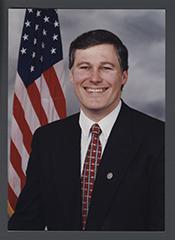
Mr. Chairman, I offer an amendment. Mr. Chairman, I think there is a bipartisan consensus here today that educated and informed consumers regarding what is in their food should not have a claim…
Mr. Chairman, I offer an amendment.
Mr. Chairman, I think there is a bipartisan consensus here today that educated and informed consumers regarding what is in their food should not have a claim relating to obesity and that we would all attempt to write a law that will effectuate that goal. But as Mark Twain said, the difference between the right word and almost the right word is the difference between lightening and a lightning bug. And the difference between a well-crafted bill and one that misses the mark a little bit is the difference between a radical restructuring of civil
liability law in the United States and a bill that we want to produce. And, unfortunately, this bill lacks two words. And our amendment would cure that defect.
Mr. Chairman, it is a very well-accepted principle, if I can compare this scenario, it is a very well-accepted principle that in America if a person is inattentive for a few moments and violated a law by going through a stop sign, they are responsible to the injured party for the wreck. It is a very well-accepted principle that if a person who manufactures jet airplanes is inattentive for a moment, and they fail to put a bolt on an engine and the engine falls off and 250 people are killed, they are legally, or their corporation is legally, responsible for that violation of the law.
It is clear at this moment that if an employee of a company is inattentive and puts the wrong information on the box of a food or a bench or a medical product and someone dies as a result, that corporation is liable for their inattention.
But because of the absence of the word ``negligence'' in this bill, we would have removed liability for that very, very well-accepted principle. Let me tell you why that is important. Take the case of Steve Beckler, former pitcher for the Baltimore Orioles who took a product called Xenadrine RFA-1. It is a dietary supplement, and it appears to be covered under the definition of food of this statute or proposal. It was sold and Mr. Beckler died. It was advertised as having the quality of a rapid fat-loss catalyst. The medical examiner concluded that his death was a proximate result of this medication.
Now, I do not know exactly about the circumstances of the warnings or lack of warning on that product; but under this bill as currently drafted without the Inslee amendment, if the clear testimony was that the label that said do not take this if you have high blood pressure was left off due to inattention, there would not be a responsibility. And the widow of this gentleman would be out of luck.
If, in fact, someone violated the clear mandate of Congress or a State legislative body to give a specific warning that is identified in law, and if that warning did not get on the product, the victim would still be out of luck.
And I want to make sure people understand this. By inserting the word ``negligence'' into this bill, we will not be giving jurors the right to determine what warnings or information should be on the product. That is not giving jurors that ambit. All this will say is if my good friend, the gentleman from Wisconsin (Mr. Sensenbrenner), the gentleman from North Carolina (Mr. Watt), and all of us get together and we pass a law that certain information has to be on the box, like do not take this weight loss supplement if you have high blood pressure, or do not take it if you have evidence of stroke or previous history of stroke, and due to someone's inattention or the fact that they were asleep at the switch or they just were not doing their job, the victim will not have a claim under law. And I do not think that is what the majority of us ought to be about if we are imposing this obligation.
I ask the majority party, let me just pose this as a friendly question to my friends, if indeed we pass a bill here that requires, for instance, that a warning be on a weight-loss product that says do not take this weight loss product if you have an evidence of high blood pressure, and if an employee is asleep at the switch or is inattentive at the brief moment and the product goes out without the label and somebody dies, I am asking the majority party why the widow or family of such a victim who died as a result of an obligation we voted to impose in United States Congress, why do you intend to deny that person a remedy? That is an open question to anyone in the majority.
I yield to the gentleman from Florida.
Mr. Chairman, I reclaim my time.
Mr. Chairman, I want to again reiterate I think there is a mutual desire to try to find the right language that will accomplish our mutual end, but this bill does not use the right language to do it.
I want to respond to the gentleman from Florida's (Mr. Keller) statement that my situation was inappropriate. I think I would refer the gentleman to the language of section 5 which cuts off claims for a whole host of injuries including ``any health condition that is associated with a person's weight gain or obesity.''
Any health condition that is associated with a person's weight gain or obesity. The fact of the matter is if someone forgets to put the label on that says do not take this if you have high blood pressure, and you gain weight and your high blood pressure
goes through the roof, you have a claim associated to your obesity. There is no reason to have to include that language. And if you are going to include that language, you ought to at least include the well- accepted principle of American jurisprudence in 50 States which is this:
If someone refuses to honor the legal mandate for conduct that the U.S. Congress imposed due to inattention or negligence, there is legal responsibility for that. And for the first time as I know it, and I think the gun law is not applicable because that applied to creating an obligation through the obligation of exercising reasonable care, what this amendment does is say if Congress imposes an obligation to say X, Y or Z, it is not the jurors coming up with that obligation to say something on the label. We are simply saying if you do not follow the law, there is a responsibility.
I am asking my colleagues to consider this closely for an additional reason. Yesterday, Julie Gerberding, the director of the Federal Center of Disease Control and Prevention said, ``Obesity is catching up to tobacco as the leading cause of death in America. If this trend continues, it will soon overtake tobacco. This is a tragedy,'' Gerberding said. ``We are looking at this as a wake-up call,'' suggesting that over 500,000 deaths annually will occur due to obesity.
Now, in light of this scientific information, what is the first thing the House of Representatives does? It rushes to immunity for corporations, which may be appropriate in this particular case; but let us show a little care how we define which cases, so the people who die as a result of negligence and people asleep at the switch and their refusal to do what Congress told them to do are not swept up in this bill.
Mr. Chairman, I want to respond to my friend, the gentleman from Wisconsin's (Mr. Sensenbrenner) appropriate reference to the idea of accountability because, as I said, we on a bipartisan basis ought to be able to craft a bill that appropriately says if a person has information about their food and they are not personally responsible and become obese due to their own lack of personal responsibility, they should not have a claim. And I am first to say that, or second or third. But there is another personal accountability that the way this bill is drafted ignores. And that is that if the gentleman from Wisconsin (Mr. Sensenbrenner) and I both voted for a bill that imposed a personal legal responsibility to put on every package of phenadrine or any other product that you can think of that says do not take this if you have history of a stroke, and they do not do this, and this is not a jury-imposed obligation, it is one imposed by the gentleman from Wisconsin (Mr. Sensenbrenner) and myself, together, and they fail to do it, they ought to be held accountable because accountability and personal responsibility work two ways in our society.
Hold the person who has information about fatty products and they get fat because they are irresponsible, hold them accountable and they have no claim, and this bill should accomplish that end. But for the person who refuses to abide by the mandate of this Congress what to put on food products, they should be held accountable for their lack of responsibility; and this bill clearly obviates that in the language that says ``any health condition that is associated with a person's weight gain or obesity.'' You are cutting off, perhaps unintentionally, claims for injury due to high blood pressure, stroke, cardiac arrest and a whole other group of diseases associated with weight gain.
Frankly, I do not think you are intending to do that. Because if I think that you think your constituents, if somebody fouls up a label and they die due to a stroke, I do not think you intend to cut that off; but you are doing
it. And it is unfortunate, and I wish you would help me fix it.
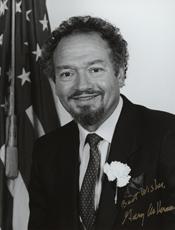
Mr. Chairman, I offer an amendment. Mr. Chairman, this amendment has nothing to do with trial lawyers or any other issue that has been basically discussed here today, but it is merely to correct what…
Mr. Chairman, I offer an amendment.
Mr. Chairman, this amendment has nothing to do with trial lawyers or any other issue that has been basically discussed here today, but it is merely to correct what I think is an inadvertent omission in the bill.
My amendment would expand the definitions in the act to exclude any establishment that manufactures or sells meat from downed animals for human consumption from the protections of the bill.
Mr. Chairman, nearly 3 months have passed since the first mad cow was discovered in the United States and the very first food-related bill has reached the House floor. It is not a bill to protect the American people from mad cow disease and to safeguard the food chain, but it is instead a bill to protect lawsuits against food manufacturers for injuries related to weight gain.
With America's food and meat supply at risk, it is embarrassing that this special interest legislation is our first response to reforming food safety in the United States.
The USDA banned downers from the food supply noting that a non- ambulatory animal was 49 times more likely to have mad cow disease, and they issued a regulation banning it. Those who oppose this amendment will tell us that the amendment is not necessary because the bill before us already says companies that knowingly violate Federal or State law get no protection in the bill and that the USDA banned downers, but the USDA is not the Congress and a USDA ban on downers is not the law. It is merely a regulation.
So this amendment is needed to make it a law, as was, I believe, intended. Otherwise, slaughterers who knowingly violate the regulation, not a law, get protection from legal action for selling diseased meat from mad cows to someone whose brain may rot some 8 years from now.
In the aftermath of our first discovery of mad cow disease, Americans deserve more from Congress than just a bill preventing frivolous lawsuits which have already been successfully defeated in U.S. courts. Instead, we should be working to assure our constituents that the meat they are eating and feeding to their children is safe and free of mad cow disease.
Personal responsibility, yes, add me to the long line of people who have already said that they believe in it, but people should take personal responsibility from acts that they knowingly take and knowingly violate and voluntarily take.
A person cannot know that they are eating the meat of a sick animal because it is not labeled, and that is another issue. What about personal responsibilities of companies that knowingly sell meat from downers, from diseased animals, too sick to walk to the slaughter? We could take personal responsibility if the corporations took personal responsibility and put labels that said the meat we are eating is from a diseased downed cow or that the meat we are about to eat had a 99 percent chance of never being inspected.
According to a Consumers Union poll, seven in 10 Americans who eat meat say they would pay more for beef to support increased testing in the cattle, and in a Zogby poll, three out of four Americans find it unacceptable to have downed animals in our food system. In fact, the USDA tells us that it was a downed animal from Washington State that proved positive for mad cow disease this past December, and early last year in Canada, the infected mad cow was also a downed animal. That is not a coincidence.
The USDA ban on slaughtering downed animals for human consumption is based on sound science and is nearly identical to the Ackerman- LaTourette amendment that failed just three votes short of passage in this House in the past summer, and that was before the discovery of mad cow disease in the United States. Surely there are three more people in this House who now better understand this issue.
Mr. Chairman, we should not be passing bills to protect the irresponsible establishments that may knowingly sell meat from sick and fallen animals. This amendment would ensure that manufacturers and sellers who ignore the proven health risks from downed animals who ignore the USDA ban, not a law, and sell tainted meat from downed animals to the American public, are not protected from lawsuits under this Act. I do not believe that was the intention.
Mr. Chairman, the time is long overdue for this issue. This issue is so ripe it is beginning to get rotten. The American people deserve better than that, Mr. Chairman, and this Congress has the opportunity to act right now to do the right and proper thing to protect all of our constituents from an inadvertency that occurs within this bill.
Mr. Chairman, will the gentleman yield?
Mr. Chairman, I thank the gentleman for yielding, and then again, the distinguished Chairman of the committee, although very knowledgeable, may very well be wrong.
I am holding the page with the very lines that he asked me to refer to, and what it basically does is it refers to
government action, government action against those companies, not individual actions of those people. The government is not getting sick or certainly not getting sicker from eating the meat of diseased animals, but human beings are denied under this, not the government. Human beings who have eaten diseased meat from downed animals have no recourse under the law the way this is written.
Yes, if a person gains weight, and some of us have done that, from eating wrong and indulging a little bit too much, sometimes that evidence is all too evident, but when a person eats the meat of a diseased animal, they have already eaten the evidence, and the case is difficult enough to prove.
People have no protection, no ability to sue, and the gentleman, what he sought to do, if he rereads what he has asked me to do, he will see very, very clearly that they are not exempted from government action, but they are still protected from private citizens bringing private courses of action.
Mr. Chairman, the distinguished chairman assured us at the outset of his remarks that private citizens would not be precluded from bringing private actions. It is very clear, to at least some of us who read the language of what is in the actual bill, that that is what happens, but given the chairman's genuine assurance that citizens would not be precluded, I fail to see what harm would be done if we specifically say that people have a right to bring action against those companies that knowingly and willfully sell meat from diseased fallen animals to the consuming public.
Mr. Chairman, I think the gentleman is overlooking something. The government brings lawsuits for violation of the FDA act. Individuals cannot bring actions under the FDA act. Individuals bring civil cases under the tort laws, and that is what we are talking here.
This bill allows the government to bring a lawsuit. I want Mrs. Jones to be able to bring a lawsuit because her 8-year-old son was just made brain damaged and is going to die in 3 months because he ate a hamburger that somebody knowingly sold him that came from a downed animal that had mad cow disease. They cannot do that under this act because they are not the government.
Mr. Chairman, if the gentleman will continue to yield, I would then ask, Why is the gentleman protecting companies that allow that?
We do not prevent it.
It certainly does. That is exactly the point of this amendment the gentleman is speaking on.
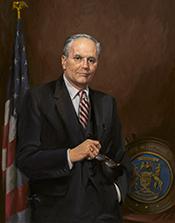
Mr. Chairman, I rise in support of the amendment. (Mr. DINGELL asked and was given permission to revise and extend his remarks.) Mr. Chairman, I rise in support of this amendment. I rise in support…
Mr. Chairman, I rise in support of the amendment.
(Mr. DINGELL asked and was given permission to revise and extend his remarks.)
Mr. Chairman, I rise in support of this amendment. I rise in support of the thesis that we should be considering these matters.
This legislation is a very important part of the administration's program. Just think what it does for this Nation. It says that civility liabilities actions in Federal, State courts against food manufacturers, distributors or sellers that are based on a claim that the person's food consumption resulted in weight gain, obesity or a health condition that is associated with weight gain or obesity is terminated. A very important step.
Now let me give you the history of what we are talking about here, because the administration has an economic program and it is an important economic program and the American people need to know what it is.
First, the Chairman of the Council of Economic Advisors said that the transportation of American jobs abroad or outsourcing is a normal part of trade and he supports it. Second, the administration has come forward with a serious attempt to expand the definition of manufacturing in this country, something which is very important, especially if you are sending manufacturing jobs overseas. And this administration has sent 2.7 million manufacturing jobs overseas. They have also lost 3.3 million jobs in the United States. So there is a serious attempt on the part of this administration to grapple with that problem.
They seek to see to it that we can change the definition of manufacturing jobs now so that they cover fast food handling. Just think of what this means in terms of jobs for the American people. Jobs in manufacturing that paid $27 an hour will now pay minimum wages at McDonalds or Wendy's or Burger King or somebody like that. But just think of the number of new jobs that they can create.
Now, this bill is going to protect those new manufacturing jobs against the prospect of lawsuits which might, in some way, jeopardize the expansion of the American economy and the creation of new jobs in manufacturing.
I think that this tells us many things. First of all, it says they no longer care about autos or steel or aircraft or other important manufacturing concerns and interests that mean jobs, real jobs for the American people, but at least it means that they are paying attention to the fact that we have got to have something done for job creation in this country. It means that they are finally recognizing that we have to protect some portion of the American economy.
The fact that they are beginning with fast food, and food should not be a source of condemnation but rather one of praise, because it means that after a long slumber, they have come alert to a significant problem, the fact that they are not competent to come forward with a real solution, which puts Americans back to work in real jobs, which would enable Americans to have jobs, which will enable them to feed their families, to house them properly, to see to it that they are properly educated or go to college is only a beginning.
We must hope that with the assistance of this body and the passage of this important legislation that perhaps, just perhaps, we will begin down the road towards doing something about protecting American manufacturing, about protecting American manufacturing jobs and about seeing to it that Americans go back to work.
I do not want my colleagues to denigrate the administration. It is not funny. It is sad, and what I want to say to my colleagues is, it is time we do something more than just pass this kind of legislation.
Let us address the problem of the sanctions that the Europeans are getting ready to put on American manufacturers and American industry and the American economy. There is a discharge petition down here at the clerk's desk. My colleagues can sign on it if they want. We can begin to address the fact that this administration does not care about manufacturing, that they have lost millions of manufacturing jobs, that they are not able to be truthful about it.
Last month, we got 22,000 jobs through. In these jobs, 21,000 of them were government jobs, State and local. They were not manufacturing. They were not jobs that put people to work, and they were not jobs that increase productivity for the economy. They were just jobs in the service industry.
If my colleagues look, they will find that there are hundreds of thousands of Americans every month who are falling off the unemployment rolls. If my colleagues look, they will find that there are millions of Americans looking for jobs. They will find that the real unemployment level is around 7.4 million instead of the 5.6 percent that they are
talking about. This is a serious problem. It needs to be addressed. This kind of legislation will not do it.
Mr. Chairman, will the gentleman yield?
Mr. Chairman, that is what the administration would tell us, but I would say to my friend, that I am as confused on what the administration's policy is as the administration is and as my good friend is, because they do not seem to know what they are doing, what they are standing for or what they are about. They like jobs going overseas. They think that manufacturing jobs should be flipping hamburgers or handling trays or dealing with mopping the floor in a McDonald's. Those, to this administration, are massive manufacturing jobs.
At the same time, they are not giving tax cuts to the people who would buy those hamburgers or who would buy American automobiles or do other things to make the economy really move and go as it should.
Mr. Chairman, I thank the gentleman. I will observe that the creation of jobs is one of the major functions of government and seeing to it that we have the prosperity that is needed, that people can work, they can raise their families well, that they can heighten expectation of this generation and the next generation for the future of this country.
I would say that sending jobs to India or China is not a function of which the administration could be proud. I would say that the administration's got to start functioning and focusing on those questions. I would say they are not. I would say this body, with this legislation, is not focusing on those questions either.
It is time we get down to the serious business of addressing jobs, manufacturing, opportunities for Americans and stop all of this piddling around with nonsense that accomplishes nothing in the broad public interest.
Mr. Chairman, if the gentleman would yield, we will receive this bill most kindly in the Committee on Energy and Commerce, and we would have some splendid questions for the sponsors of this legislation about jobs and job creation.
Mr. Chairman, it would be helpful, I believe.
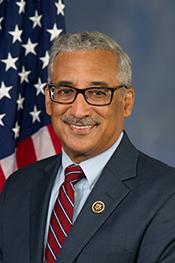
Mr. Chairman, I thank the gentleman for yielding. Whatever the merits of the lawsuits which provoke this legislation are, we ought to focus on the fact that lawsuits ought to be tried in court, where…
Mr. Chairman, I thank the gentleman for yielding.
Whatever the merits of the lawsuits which provoke this legislation are, we ought to focus on the fact that lawsuits ought to be tried in court, where evidence can be heard and objective law applied.
Today, we are allowing one industry to have the privilege of trying its lawsuit with politicians who will take politics and polls into consideration instead of being treated the same as other citizens who have to try their cases in court. If the case on behalf of the food industry is strong, then courts will know what to do; they can dismiss the cases.
Furthermore, if based on the evidence and the law the court finds that the law suit is frivolous, the court may assess sanctions against the plaintiffs and lawyers who file the suits. In fact, it is my understanding that all of the lawsuits have in fact been dismissed. So what is wrong with the food industry being treated the same as other industries when it comes to courts deciding whether or not there is responsibility for injuries to others? And what is wrong with trying cases in court with unbiased judges and juries hearing both sides of the case according to rules which allow both sides to produce all relevant witnesses who will be heard and cross-examined?
This process is in stark contrast to the congressional procedure where committee chairmen invite the witnesses they want and cross- examination of witnesses is severely constrained both in time and by the fact that the interested parties are not able to cross-examine anyone.
Mr. Chairman, in a democracy it is fundamentally wrong for some industries to have the privilege of trying their cases in a forum where their political allies will decide the merits of the case while everyone else is relegated to the court system where evidence is heard and the law applied by judges and juries without political considerations. This bill sets a bad precedent. I therefore hope my colleagues will oppose this bill.
Mr. Chairman, as the designee of the gentleman from North Carolina (Mr. Watt), I offer an amendment.
Mr. Chairman, this amendment reads simply: ``Notwithstanding any other provision to the contrary in this Act, this Act does not apply to an action brought by a State agency to enforce a State consumer protection law concerning mislabeling or other unfair and deceptive trade practices.''
Mr. Chairman, if the House is going to decide that we will try some cases instead of letting them be tried in court, we ought to at least limit that to the fast food rhetoric that we have heard on the floor. This bill, in fact, covers not only fast food lawsuits, but also litigation involving consumer protection when obesity may be one of the elements of the case.
Every single State has laws in the books to protect its consumers. Each State has laws to protect its consumers from misleading practices. As written, the bill will prevent States' Attorneys General from enforcing these laws. It will not just stop the fast food suits that my colleagues have discussed, but because a person is defined in section 4(3) of the bill to include governmental entities, it will prevent States from getting injunctions, cease and desist orders, or imposing fines against those who endanger consumers.
The exception for a willful and knowing violation is not just enough. State deceptive practices are just like the Federal Trade Commission Act. They allow civil enforcement actions whether or not the defendant knowingly or willfully violated the law. In fact, food labeling and deceptive practices often have exacted strict liability, that is, that the government can get an injunction whether or not the person was intentionally or knowingly in violation.
Mr. Chairman, my State of Virginia has a Consumer Protection Act which prohibits, and I quote, representing that goods and services have characteristics, ingredients, uses, benefits or qualities that they do not have or any other conduct which similarly creates a likelihood of confusion or misunderstanding. A court may order an injunction or restitution to injured parties, even if the violation was unintentional.
The fact is Virginia is not alone. Twelve States have adopted the Uniform Deceptive Trade Practices Act section 3 which says intentional deception is not necessary to get injunctive relief, and at least 23 other States have similar standards.
So, Mr. Chairman, the amendment I present today will fix the problem. It will ensure that States can still put an end to mislabeling, deceptive practices and false advertising within their borders. Whatever we think of the fast food suits, please do not prevent States Attorneys General from protecting their citizens.
Mr. Chairman, will the gentleman yield?
Mr. Chairman, I think we need to review what the amendment actually is. In section 4.3, they define person who can bring these lawsuits as individuals, corporations, companies, but it includes any governmental entity.
The lawsuits we are talking about are lawsuits arising out of, related to, or resulting in injury or potential injury resulting from person's consumption of a qualified product and weight gain, obesity or any health condition that is associated with a person's weight gain or obesity, including, and it goes on. This is overly broad.
Let us just read what the amendment says. It says that the Act does not apply to an action brought by a State agency to enforce a State consumer protection law concerning mislabeling or other unfair or deceptive trade practice. We do not need protection from State attorneys general enforcing our consumer protection laws. I would hope that we adopt the amendment.
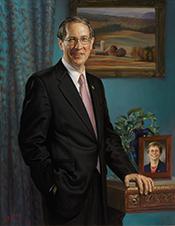
Mr. Chairman, I move to strike the requisite number of words. Mr. Chairman, I rise in strong support of H.R. 339, the Personal Responsibility in Food Consumption Act and in strong opposition to the…
Mr. Chairman, I move to strike the requisite number of words.
Mr. Chairman, I rise in strong support of H.R. 339, the Personal Responsibility in Food Consumption Act and in strong opposition to the amendment offered by the gentleman from New Jersey (Mr. Andrews).
The food service industry employs some 11.7 million people, making it the Nation's largest employer outside of the government. However, this vital industry has recently come under attack by waves of lawsuits arguing it should be liable for the misuse or overconsumption of its legal products by others.
Frivolous lawsuits require businesses to devote crucial resources to litigate unmerited claims. In order to help ensure that America continues to be an advantageous place to do business, and to help create and maintain American jobs, it is important that we not allow opportunistic trial lawyers to extort money from legitimate companies.
Simply put, businesses in the food industry should not be held responsible for the bad eating habits of consumers. The people of America agree. According to a recent poll, approximately 89 percent of Americans oppose holding the fast-food industry legally responsible for the diet-related health problems of people who eat fast food on a regular basis.
H.R. 339 will help prevent frivolous lawsuits against the foods industry while preserving State and Federal laws. Specifically, the bill would prevent frivolous lawsuits that claim that the consumption of lawful food products cause injuries resulting from obesity or weight gain.
While the bill would prohibit frivolous lawsuits, it would protect legitimate ones. For example, the bill would not protect businesses that knowingly or willfully violate a State or Federal statute when the violation is a proximate cause of an injury. In addition, the bill would not protect those that violate State or Federal food labeling laws or those that offer adulterated food products.
H.R. 339 is a commonsense bill that will protect legitimate businesses from frivolous lawsuits. I urge my colleagues to support this important legislation. But the amendment offered by the gentleman from New Jersey (Mr. Andrews) runs the risk, if it is passed, of gutting this legislation.
The reasons set forth by the gentleman from Wisconsin (Mr. Sensenbrenner), who has done an outstanding job bringing this legislation to this point, are all valid reasons for opposing this amendment; but in addition there are more. There is absolutely no reason why we have to draw a distinction between two different types of perfectly legitimate products that the appropriate regulatory agencies have found to have no ill effect upon consumers. There would be no difference whether it was a natural product or whether it was one that had been changed through hybridization and all the other ways that we have improved food through the decades, in fact through the centuries, or through biotech-enhanced foods either.
And so for that reason, I strongly oppose this. If the amendment were to pass, it is a back-door way to try to impose labeling in this country. We have opposed this for a long time because there is no distinction between foods that contain biotech crops and those that do not. And the issue is very clear that if you will require it, virtually every product produced in this country made with corn, virtually every product made in this country using soy beans, virtually every product grown in this country with any kind of livestock that have been enhanced, and virtually any kind of product that may be developed in the future, there would become a disincentive to produce these improved products, as the gentleman from California (Mr. Dooley) just correctly noted.
This is a huge problem. It would effectively gut this important legislation. H.R. 339 generally prohibits obesity or weight-gain- related claims against the foods industry. This amendment would require manufacturers to label genetically engineered material before being afforded the protections of the underlying bill. The irony is that, as the gentleman from California (Mr. Dooley) noted, the opportunity exists with genetically modified food to improve the problem for people who have obesity, not to make the problem worse.
So I do not understand how this amendment relates to H.R. 339. Biotech crops do not lead to obesity. In fact, biotech research may lead to food products that help combat the obesity problem in America and nutrition problems in the developing world.
Farmers have been growing hybrid and other genetically engineered crops safely for decades. Biotechnology is as safe as conventionally bred crops, according to numerous studies by the National Academy of Sciences, the American Medical Association, and other scientific bodies.
Furthermore, before biotech foods can be sold to consumers, their safety is reviewed by three government agencies: the U.S. Department of Agriculture, the Environmental Protection Agency, and the Food and Drug Administration.
The Andrews amendment runs counter to long-standing U.S. Government food labels policy which preserves food labels for help safety and nutritional information. This amendment is just another ill considered attempt to discourage consumption of biotech foods, which every American, every American consumes on a daily basis and encourages frivolous lawsuits.
I urge my colleagues to oppose this amendment.
Mr. Speaker, I thank the gentleman for yielding me time. I support the rule, and I support the bill as well. I wanted to briefly just touch on three issues. First, a little bit about the bill's…
Mr. Speaker, I thank the gentleman for yielding me time.
I support the rule, and I support the bill as well. I wanted to briefly just touch on three issues. First, a little bit about the bill's substance; second, I want to talk about the process which led up to this fair rule; and, third, just to touch on the childhood obesity issue which recently has been raised by my colleagues on the other side of the aisle.
First, in terms of the bill's substance, the gist of this legislation is that there should be common sense in the food court, not blaming other people in the legal court. We need to get back to the old- fashioned principles of common sense and personal responsibility and get away from this new culture where everybody plays the victim and tries to blame others for their problems.
Now, I have heard from some of the other speakers that this is a frolic; this is just a waste of time. We should be talking about jobs. Well, it is interesting to me because we are talking about protecting the single largest private sector employer in the United States that provides 12 million jobs. Why do these people pretend to love jobs yet hate the employers who create these jobs? It defies common sense as much as their opposition to this bill.
Now, let us talk about the process a little bit. I support this rule, an open modified rule; and let me tell you a little bit about the background here. It is true based on an independent Gallup poll that nearly nine in 10 Americans oppose holding the fast-food industry legally responsible for the diet-related health problems of people who eat that kind of food on a regular basis. Interestingly, overweight people oppose this just like skinny people do; Republicans just like Democrats do. The country overwhelmingly, 89 percent, opposes these types of lawsuits.
Yet, nevertheless, every step of the way we have given this small percent of the people and their representatives who think it is a good idea the opportunity to have their fair say. We had a hearing on this bill and allowed the minority to call witnesses that they wanted. What witness did they call? What guy did they think most helped them? They called a man named John Banzhaf who said, ``Somewhere there is going to be a judge and a jury that will buy this, and once we get the first verdict as we did with tobacco, it will open up the flood gates.'' That is who they called.
So when we talk about opening up the flood gates, that this is a problem, and then they come today and say, it is not a problem, what are we doing here? There is no problem. Yet their own witnesses tell us they want to open up the flood gates. But they had their hearing. We then had a mark-up. We let them offer any amendments they wanted to. The amendments were shot down.
After the mark-up, we then moved it to the floor. I appeared before the Committee on Rules. I did not say I wanted a closed ruled or anything. I said, I trust the Committee on Rules to fashion the appropriate rule, and they gave them this open rule that any Member of 435 can offer something provided it is preprinted in the Record. So we have been pretty fair about the process here, especially given the fact that their opposition has so little support among the American people.
Third, let me address the issue of childhood obesity. Childhood obesity is a very serious problem in this country. In the past 30 years the childhood obesity rates have doubled. Why is that? Well, I do not stand before you in the well of Congress and hold myself out as the world's leading expert in fitness and health. But I did have the happy privilege of questioning Dr. Kenneth Cooper on February 12 of this year, who appeared before the Committee on Education and the Workforce who is the father of the aerobics movement, and nobody is more well respected. This is what he said: ``Thirty years ago did kids come home from school and eat potato chips and cup cakes and cookies? They absolutely did, just like they do today. The difference is they then went out and rode their bikes and played with their friends and did all other sorts of things.'' Nowadays, he said, those same kids come home from
school and sit on the couch and play video games and watch TV. He told us the average child spends only 900 hours a year in school and 1,023 hours in front of that TV set playing video games or watching TV.
Meanwhile, we now have only one State in the country, Illinois, that mandates physical education programs. I asked Dr. Kenneth Cooper, Do you think these lawsuits against the fast-food companies are going to make anyone skinnier? He said, absolutely not. Is it going to help to put a tax on Twinkies? Is that going to make people skinnier? Absolutely not. What is the answer? He told us the answer is personal responsibility and getting young people involved in daily physical activity. That is the kind of commonsense approach that most people in this country can relate to.
I urge my colleagues to support the rule and support the bill. They are both very fair.
Mr. Speaker, I thank my colleague from Texas (Mr. Sessions), who has done such a good job on framing the proper type of debate on this rule today and has done a good job on the rule. Mr. Speaker, I…
Mr. Speaker, I thank my colleague from Texas (Mr. Sessions), who has done such a good job on framing the proper type of debate on this rule today and has done a good job on the rule.
Mr. Speaker, I rise today in strong support of House Resolution 552 and the underlying bill itself, H.R. 339, the Personal Responsibility and Food Consumption Act.
As original cosponsor of H.R. 339, I commend the gentleman from Florida (Mr. Keller) for introducing, I think, a very important piece of legislation and the distinguished chairman of the Committee on the Judiciary, the gentleman from Wisconsin (Mr. Sensenbrenner), for working towards its passage.
When this situation occurred, I think it was the first time in New York, and as a parent I can relate to this, it clearly pointed to the fact that a parent could not control their child, could not control how many times they went to a restaurant per day or where they went to, no form of responsibility. So they just ended up going with some plaintiffs' lawyers and they filed a lawsuit.
Now, there are serious issues that have been discussed by both sides of the aisle about obesity and what, in fact, should happen, and exercise. And we can get into those issues. But I believe, Mr. Speaker, firmly, and I said it at the time the day those lawyers ran around and started this with the lawsuits, our judicial system that day was hijacked.
It has been hijacked by greedy, blood-sucking, immoral plaintiffs' attorneys. They have made a ridiculous situation, and they have made the ridiculous the reality. What was once thought of as a hilarity on late-night comedy shows has been brought into mainstream media by absurd frivolous lawsuits.
The situation really is not laughable, though it is scary. These actions are clogging our courts, driving our doctors out of practice, and are killing business growth in our great Nation, if we want to talk about jobs today.
What is the purpose, you may ask? Will they promote social justice or make America safer? The answer is no. These suits are to line the pockets of America's trial bar. Contingency fees
of 40 percent plus court costs leave lawyers enriched and their clients baffled. In big-time class actions, lawyers are hauling in fees that range as high as $30,000 per hour. I guarantee you that their clients are not receiving awards at that same rate.
Now, Mr. Speaker, the same class-action lawyers that have sued other industries are turning towards our restaurant industry, pure and simple. They have held strategy sessions and seminars to hatch their schemes estimating they could reap hundreds of billions of dollars in settlements from the so-called obesity lawsuits.
The lawsuits charge that children are overweight because of cheap fast food and aggressive food marketing by restaurants. But when you look at the underlying fact, it is clear that the American tort system is being exploited once again, pure and simple. Statistics from the National Bureau of Economic Research show that 60 percent of Americans' weight gain over the past 2 decade is attributable to increases in sedentary life-styles.
The American Academy of Pediatrics has found that only 20 percent of children participated in daily physical education programs in 1999, compared to 80 percent in 1969. Nutritional data shows that teen obesity rose 10 percent in 1980 and the year 2000. Teens' caloric intake rose only 1 percent during that time, while their levels of physical activity dropped by 13 percent.
Mr. Speaker, the judicial system is being used by industrious law firms and plaintiffs' lawyers who sue without repercussion. Their strategy is simple: sue until the defendants concede; once the restaurant company settles, the flood gates will open.
As you can tell, I am not an attorney myself, I am a teacher by degree, but I have been around long enough to know that opening the flood gates of litigation is bad news. It is bad news for our courts. It is bad news for our doctors. It is bad news for business. It is ultimately bad news for America.
The restaurant industry employs more than 12 million Americans. Restaurant companies lose just by being forced to defend these types of crazy lawsuits. They are forced to shift precious resources away from expanding their business and creating jobs and towards defending lawsuits solely filed to satisfy the insatiable appetites of the plaintiffs' bar.
Mr. Speaker, it is the Congress's obligation to give American businesses the tools necessary to defend themselves from this type of litigation. There are proper times for lawsuits; I know that. There is a way to work at this. We have to look at exercise and education and responsibility within the restaurant industry and within the American population, period. But these insane and crazy lawsuits are absolutely not the way. I think the gentleman from Florida (Mr. Keller) has a responsible approach to this problem.
Show 11 more
Mr. Speaker, only with this Republican leadership would an effort to promote personal responsibility begin with allowing companies to be irresponsible without accountability. Unless the public be…
Mr. Speaker, only with this Republican leadership would an effort to promote personal responsibility begin with allowing companies to be irresponsible without accountability. Unless the public be confused that the Republicans are actually concerned with doing something about the obesity epidemic in this country that we have heard so much about, this legislation has little to do with preventing what the Centers for Disease Control yesterday said will be this Nation's leading cause of preventable deaths by next year.
Rather, by shielding manufacturers, distributors, and food sellers from liability, this bill is the next installment in the majority's series of tort reform bills in disguise, attempting to give yet another industry open-ended protection so irresponsible conduct is not punished or held accountable.
But that should not distract us from discussing the very real problem of obesity in this country. Obesity affects nearly 65 percent of adults. The rates are rising. The problem is even more pressing for teens, teenage obesity rates tripling in the last 20 years. All told, obesity costs the Nation $117 billion a year in health care and related costs, the single largest drain or our Nation's health care system.
Obesity leads to diabetes, high blood pressure, coronary heart disease, stroke and arthritis, conditions the CDC says will kill a half million people every year by 2005.
No one here is under the illusion that there is a one-step solution to reducing obesity. With ads encouraging us to eat too much of the wrong kinds of foods, neighborhoods designed for driving and not walking, restaurants serving ever-increasing portion sizes, McDonalds' announcement this week notwithstanding, slowing the obesity epidemic will take a multifaceted effort.
And Congress has an obligation to engage itself in that effort. There are countless other steps we could take that would support Americans' efforts to eat well, maintain a healthy weight, such as getting junk food out of schools, strengthening the Centers for Disease Control nutrition and physical activity division, fully funding CDC's VERB campaign, which promotes physical activity in young people.
With legislation I have introduced, the Meal Education and Labeling Act, we could strike a real blow at frivolous litigation aimed at restaurants and at the same time we can actually do something about obesity. It addresses one of leading causes of the rise in obesity rates and that is the fact that people are eating out more frequently.
Today, we spend about half of our food dollars at restaurants. In 1970, Americans spent just 26 percent of their food dollars on restaurant meals. Children eat almost twice as many calories when they eat at a restaurant as they do when they eat at home.
The Meal Education Labeling Act would extend nutrition labeling beyond packaged foods that you find at your grocery store to include foods at fast-food and other chain restaurants. It would do it by requiring fast-food and chain restaurants, that is, companies with 20 or more restaurants under the same trade name, not mom and pop restaurants, they would have to list calories, saturated plus trans fats, and sodium on printed menus and calories on menu boards. But most importantly, it would give consumers the necessary nutritional information to make healthy choices for themselves.
You might think that Americans do not want to be bothered with additional information they supposedly already know, but the evidence suggests otherwise. Not only do three-quarters of American adults report using the food labels on a regular basis that they find on packaged foods in the grocery stores, but 48 percent say the nutrition information on those labels has caused them to change their minds about what they buy.
Giving people the information that they need to make informed decisions about what they eat is the kind of approach that this body should be taking today in addressing obesity.
We may avoid litigation if we move in this direction. That is a real step toward helping encourage personal responsibility in food consumption. It can be done in a way that protects industry, does not hurt our mom and pop restaurants. Instead, as we have seen countless times before, this majority has chosen again to use a very important public health issue to pursue a narrow and a completely unrelated political agenda.
Mr. Speaker, we should do something about obesity in this country, but this bill is not the way to go about it.
Mr. Chairman, I thank the gentleman from North Carolina (Mr. Watt), the subcommittee chair, for yielding and for his very sensible approach to this issue. I do not know if my good friends on the…
Mr. Chairman, I thank the gentleman from North Carolina (Mr. Watt), the subcommittee chair, for yielding and for his very sensible approach to this issue.
I do not know if my good friends on the other side of the aisle are trying to change their political identity, but I thought they stood for federalism and local control. They are, however, developing a pattern of coming to the floor in response to interest groups to knock out lawsuits even when they are winning in the courts. What a waste of time.
Fast-food suits can hardly be the American answer to obesity, a public health problem; but they may be part of a revolution that is occurring in the fast-food industry. And I say to the fast-food industry, keep bringing on those changes at McDonald's and all the rest of these fast-food places that are hearing us one way or the other.
We all believe you have to take responsibility for what goes into your own mouth. I come to the floor because I think there is a great audacity in coming to the floor, as the other side is, to talk about personal responsibility when we are talking about a public health problem for which our government has not taken responsibility.
I worked with Chairman Porter, who, a couple years ago, retired from the House, on an appropriation that started at $125 million. He started with children. I had a bill called Lifetime Improvement in Food and Exercise, LIFE; and we joined forces. He came to the Congress to a reception just to press the notion once again last year.
Secretary Thompson had the audacity to go on television yesterday talking about some penny ante things that the administration is going to do. After having reduced this amount from $125 million this year to $5 million, they tried in the last 2 years to get it to zero. This is money that was going into reducing obesity among children.
In today's Washington Times, the front page says, and I quote, ``Inactive Americans are Eating Themselves to Death at an Alarming Rate. Their unhealthy habits are approaching tobacco as the top underlying preventable cause of death, a government study found.''
What is the government going to do about its government study? I hope it does more than stop the trial litigation in the States, obviously not the answer to this problem when 60 percent of our people are overweight or obese.
An ad campaign as described by the Secretary himself consists of humor when they say you should get off your duff and walk your children around the block. Mr. Chairman, this is far more serious than that. This is the major health problem second only to smoking.
I am grateful to the Committee on Appropriations that instead of zeroing out public health money for the last 2 years, the appropriation has put in money. We are going to be trying to get money again this year so we do more than talk about obesity or try to stop litigation.
When you look at the amount of money that we have put into this problem ourselves, we started with a good Republican Chair of the HHS subcommittee, starting at $125 million. Then he retires and the administration, his administration tries to zero it out.
This Congress says, no, we will not put 125. If the President wants it gone, we will put 68, then the third year 51, last year $35.8 million. Well, we are going down, not up; but people rush to the floor, the Committee on the Judiciary regards it as a priority to stop some lawsuits that are stopping themselves. That is my concern.
My bill, Lifetime Improvement in Food and Exercise, which I joined with Chairman Porter in producing this first, first significant public health money, is now being eroded by the administration. And I now find myself with only $5 million in the administration's budget this time rather than zero; $5 million reduced from $125 million means they want public health money to combat obesity gone.
I am going to ask the Members of this House to help me in restoring money to face this public health problem so that people who are bringing lawsuits out there know that we can do more than try to knock out lawsuits that are knocking themselves out, but that we are taking public health responsibility for a public health crisis, just as we expect them to take personal responsibility for what they eat every day.
Mr. Chairman, I move to strike the requisite number of words. I rise in opposition to this amendment. Recently, the food industry has been targeted by a variety of legal claims which allege…
Mr. Chairman, I move to strike the requisite number of words.
I rise in opposition to this amendment. Recently, the food industry has been targeted by a variety of legal claims which allege businesses should pay monetary damages and be subject to equitable remedies based on legal theories of liability for the overconsumption of its legal products.
In our subcommittee hearings last year, we explored the threat the food industry faces from frivolous litigation, the threat to personal responsibility posed by the proliferation of such litigation, and the need for H.R. 339, the Personal Responsibility in Food Consumption Act.
H.R. 339 currently has 119 cosponsors. A similar bill was signed into law by Louisiana Governor Mike Foster on June 2, 2003, with huge bipartisan support. Every Republican in both legislative Chambers voted for the measure, as did 93 percent of Democrats in the Louisiana House and 83 percent of Democrats in the Louisiana Senate.
Recent history shows why similar legislation is necessary at the Federal level. We have seen industries brought to the verge of bankruptcy by frivolous lawsuits seeking billions of dollars. Today we have Ralph Nader comparing fast food companies to terrorists by telling The New York Times that the double cheeseburger is ``a weapon of mass destruction.'' In a hearing before our subcommittee last year, a law professor who helped spearhead lawsuits against the tobacco companies has said of fast food litigation, ``If the legislatures won't legislate, then the trial lawyers will litigate.''
It is clear that obesity is a problem in America. Equally clear, however, is the simple availability of high-fat food is not a singular or even a primary cause. For example, recent findings drawing on government databases and presented at a scientific conference of the Federation of American Societies for Experimental Biology biological showed that over the past 20 years, teenagers have, on average, increased their caloric intake by 1 percent. During that same time period, the percentage of teenagers who said they engaged in some sort of physical activity for 30 minutes a day dropped by 13 percent. Not surprisingly, teenage obesity over that same 20-year period increased by 10 percent, indicating it is not junk food that is making teenagers overweight, but rather a lack of activity.
In short, it is unlikely that lawsuits against food establishments over their menu offerings will do much, if anything, to make us healthier. On the other hand, such lawsuits will threaten thousands of jobs that are today available to teenagers and other entry-level workers who need those jobs. Further, such lawsuits send the wrong message regarding personal choices and responsibility. Do we want our kids growing up believing it is a restaurant's fault that they are eating too many cheeseburgers?
Besides threatening to erode values of personal responsibility, the legal campaign against the food industry threatens our notion of government. Nationally coordinated lawsuits seek to accomplish through litigation what has not been, and will likely not be, achieved through legislation.
Last year, the House passed H.R. 1036, the Protection of Lawful Commerce in Arms Act by a large, bipartisan vote. That bill bars frivolous lawsuits against the firearms industry for the misuse of legal products by others. H.R. 339 similarly seeks to bar frivolous lawsuits against the food industry for overconsumption of its legal products by others. It is appropriate for Congress to respond to this growing legal assault on the concept of personal responsibility.
Mr. Chairman, it is not only important, but also fundamental that Americans have access to courts to redress legitimate wrongs and the harms they cause. The trial bar serves an invaluable purpose in helping average Americans gain rightful and proportionate compensation when harm is done. However, frivolous lawsuits such as the ones this legislation seeks to prevent serve only to undermine our legal system and those who truly need its protections.
Mr. Chairman, I urge my colleagues to oppose this amendment and support the underlying bill, H.R. 339.
Mr. Speaker, I rise for the purpose of inquiring of the majority leader the schedule for the week to come. I yield to the gentleman from Texas. Mr. Speaker, I thank the gentleman for that…
Mr. Speaker, I rise for the purpose of inquiring of the majority leader the schedule for the week to come.
I yield to the gentleman from Texas.
Mr. Speaker, I thank the gentleman for that information, and also for planning purposes that assurance for March 12.
We talked last week and we know that the highway reauthorization extension for 2 months was worked out. When can we expect the committees to mark up the reauthorization bill, and when do you expect to see it on the floor.
I thank the gentleman for that answer. Can the leader tell me whether or not there is an expectation that this will be, as we have had in the past, a 6-year reauthorization, or is it possible that there would be a shorter reauthorization, say, of 2 years, obviously focused on trying to build jobs and create jobs in the country?
I thank the gentleman. As we, as well, also discussed last week, can the leader bring us up to date on the progress of the budget resolution and when he expects it to be marked up in committee and when we can expect to have that bill on the floor?
I know this is preliminary and it is early, but my presumption would be that as we did in years past, that the minority would have its rights to submit such substitutes as it deemed appropriate?
Reclaiming my time, if I may say, somewhat, I know, facetiously, but we are pleased that the leader is encouraging us to do so. As a matter of fact, we are as pleased about that as we were last year when the gentleman from Texas urged everybody to support our motion to instruct, that we follow the House Democratic substitute as opposed to the one that we actually passed. So we are encouraged by the gentleman's encouragement.
Last, if I can, the FSC bill. We talked about this last week. Obviously, the Europeans have started to impose some penalties. Can the gentleman tell us the status of legislation to deal with the FSC issue?
I presume, as well, that when and if that is brought to the floor, because there has been some real disagreement on who that bill ought to advantage and focus on as the gentleman knows in terms of domestic manufacturers as opposed to manufacturers who do a lot of work overseas, and hopefully we will be able to offer alternatives to certainly the bill that was reported out last year, if it is the same bill. As the gentleman knows, we would have an alternative to that. Can the leader give us assurance that we will have that option?
I thank the gentleman for that observation. One additional observation. That is obviously an important option. I think the gentleman states correctly the practice of the House under both Democrats and Republicans.
I yield to the gentleman from Massachusetts.
I thought of that question, Mr. Leader, but I thought it was probably not worth asking because I knew the answer. But to the other question, with respect to offering substitutes, very frankly, what happens is you can offer a substitute, but if it is not germane and you do not receive a waiver when you are granted the right to offer the substitute, obviously on the one hand you have the ability to offer a substitute, but you do not really have the ability to offer an alternative. There is a very substantial difference.
I do not necessarily expect an answer today, but I really would hope, because we are talking about very significant, important issues, where there are differences in a bipartisan fashion on either alternative, that alternatives should be allowed that are consistent with the objective, although, as the leader well knows, from time to time because of what is or is not included in the committee product may or may not be germane even though it is pointed to the subject. I offer that as food for thought because I think it is fair and I think it would be good for the American public to have a broader spectrum of options than is sometimes allowed to us, notwithstanding the fact that theoretically a substitute is made available.
I think the gentleman understands my point, and I thank the gentleman for the information.
Mr. Chairman, Congress is once again using abusive litigation at the state level as a justification nationalizing tort law. In this case, the Personal Responsibility in Food Consumption Act (H.R.…
Mr. Chairman, Congress is once again using abusive litigation at the state level as a justification nationalizing tort law. In this case, the Personal Responsibility in Food Consumption Act (H.R. 339) usurps state jurisdiction over lawsuits related to obesity against food manufactures.
Of course, I share the outrage at the obesity lawsuits. The idea that a fast food restaurant should be held legally liable because some of its customers over indulged in the restaurants products, and thus are suffering from obesity-related health problems, is the latest blow to the ethos of personal responsibility that is fundamental in a free society. After all, McDonalds does not force anyone to eat at its restaurants. Whether to make Big Macs or salads the staple of one's diet is totally up to the individual. Furthermore, it is common knowledge that a diet centering on super-sized cheeseburgers, french fires, and sugar-filled colas is not healthy. Therefore, there is no rational basis for these suits. Some proponents of lawsuits claim that the fast food industry is ``preying'' on children. But isn't making sure that children limit their consumption of fast foods the responsibility of parents, not trial lawyers? Will trial lawyers next try to blame the manufactures of cars that go above 65 miles per hour for speeding tickets?
Congress bears some responsibility for the decline of personal responsibility that led to the obesity lawsuits. After all, Congress created the welfare state that popularized the notion that people should not bear the costs of their mistakes. Thanks to the welfare state, too many Americans believe they are entitled to pass the costs of their mistakes on to a third party--such as the taxpayers or a corporation with ``deep pockets.''
While I oppose the idea of holding food manufactures responsible for their customers' misuse of their products, I cannot support addressing this problem by nationalizing tort law. It is long past time for Congress to recognize that not every problem requires a federal solution. This country's founders recognized the genius of separating power among federal, state, and local governments as a means to maximize individual liberty and make government most responsive to those persons who might most responsibly influence it. This separation of powers strictly limits the role of the federal government in dealing with civil liability matters; and reserves jurisdiction over matters of civil tort, such as food related negligence suits, to the state legislatures.
Finally, Mr. Chairman, I would remind the food industry that using unconstitutional federal powers to restrict state lawsuits makes it more likely those same powers will be used to impose additional federal control over the food industry. Despite these lawsuits, the number one threat to business remains a federal government freed of its Constitutional restraints. After all, the federal government imposes numerous taxes and regulations on the food industry, often using the same phony ``pro-consumer'' justifications used by the trial lawyers. Furthermore, while small businesses, such as fast-food franchises, can move to another state to escape flawed state tax, regulatory, or legal policies, they cannot as easily escape destructive federal regulations. Unconstitutional expansions of federal power, no matter how just the cause may seem, are not in the interests of the food industry or of lovers of liberty.
In conclusion, while I share the concern over the lawsuits against the food industry that inspired H.R. 339, this bill continues the disturbing trend of federalizing tort law. Enhancing the power of the federal government is in no way in the long-term interests of defenders of the free market and Constitutional liberties. Therefore, I must oppose this bill.
Mr. Speaker, let me just say in responding to my friend from Massachusetts that this is clearly an open rule in the modern House that we have today. We are criticized over the fact that we have not…
Mr. Speaker, let me just say in responding to my friend from Massachusetts that this is clearly an open rule in the modern House that we have today. We are criticized over the fact that we have not been able move things; and then, Mr. Speaker, when we proceed with moving legislation forward, we do it under a procedure that does allow every single Member, every single Member who wants to offer a germane amendment the right to do that. That is exactly what this rule does.
Mr. Speaker, no. The gentlemen spoke for a nice long period of time. When I get done with my statement, I look forward to engaging with the gentleman. I never hesitate to do that.
Let me say that, Mr. Speaker, I have to ask somewhat rhetorically, Was there a power surge last night or was it a full Moon? Someone has awakened the Franken-Food Monster. The amendments that have been filed last night appear to be nothing more than an all-out embrace of Ralph Naderism. Who has been in the sauce too much? Or maybe they need a little Hamburger Helper.
Last night I thought that the minority was very serious when they said to us that they wanted to have an open amendment process for unlimited debate on this bill. I thought we were going to have a serious debate, a debate on how to stop the economically debilitating effect of frivolous lawsuits concerning obesity. But the amendments that were filed last night are making a mockery of what is a serious issue.
Americans, Mr. Speaker, are eating themselves to death and looking for someone to blame. Obesity and weight control are very serious subjects, very, very serious subjects. I am reminded regularly by Arnold Schwarzenegger about that. And, of course, we have the great model of President Bush, who is probably the fittest President we have ever had. They talk about the fact that there are many factors to weight control and food consumption and health. And, obviously, fitness is numero uno, very, very important.
Suing Burger King is not going to improve anyone's health. Personal responsibility and accountability are what are most important. We cannot have a serious debate, Mr. Speaker, on real issues, one about those who can use the court system for political purposes on whether it is right or wrong to force concessions or financial gain through legal harassment. We are clogging the judicial system with frivolous lawsuits, we are hurting business, we are putting American jobs in jeopardy, and at the same time we are clogging our arteries without considering the consequences. These are real issues that affect Americans' everyday lives.
So I have to ask, Why are these frivolous amendments being filed by the minority? The majority is trying to govern and get the people's business done. And I must ask the minority why is there this fraudulent frolic of frivolous fluff. Is it intended to highlight frivolous lawsuits, or is it merely intended to change the subject?
Let us get the people's work done, unburden businesses so they can create more jobs, and stop this bumper-sticker gamesmanship. I believe that we should withdraw the silliness and we should see those amendments, if they are offered, resoundly defeated.
Mr. Speaker, I would be happy to yield to the gentleman from Massachusetts (Mr. McGovern) if he would like to pose a question to me.
Mr. Speaker, the answer is no, not at this moment. Let me say, if the gentleman would continue to yield, let me say that any Member had the opportunity last night to file an amendment.
Mr. Speaker, would the gentleman yield for a question?
Mr. Speaker, I thank the gentleman for yielding me time. I have been intimidated to follow the chairman to the well since he does have impeccable credentials in the area of nutrition. He is the…
Mr. Speaker, I thank the gentleman for yielding me time.
I have been intimidated to follow the chairman to the well since he does have impeccable credentials in the area of nutrition. He is the gentleman responsible for renaming French fries and French toast, although, of course, that did not do much for the caloric content of those food items.
But we do have a serious problem in this country; and, unfortunately, this bill and this debate will not rise to that issue. The statistics show an alarming increase in obesity among adults and, most alarmingly, an extraordinary increase in our youth. This can and will lead to real health problems. Those were talked about previously.
So we have a real problem. This could become a crisis and the question is, Why are we here today? Is there a crisis in litigation? Yes, there have been a few flaky lawsuits filed that have been dismissed, including one being dismissed with prejudice, something judges do not do routinely.
I think the majority is demeaning the intelligence of our juries, of the Americans who will sit there and cast judgment on their peers and say, no, have a little self-control; they did not make you eat that food. That is what the juries and judges have said so far, and I think they will continue to say.
But beyond that, they have said fitness and health cannot be legislated. Well, they might remember a former Republican who had a little more productive idea about this, Dwight David Eisenhower. He brought about the Presidential Fitness Program in the 1950s, mandatory physical education in all the schools in America because of concerns of so many males failing the physical for the draft in World War II and Korea. That was mandated when I was a kid growing up, and then sports were free.
What do we have today? Most States, many States no longer have mandatory physical education. They say they cannot afford it. In my State, kids have to pay to play sports. So many of them do not do it.
What we could do a lot more productively here today on the floor would be to consider legislation to add a little amendment to the so- called No Child Left Behind bill that would help our States, our local school districts reinstate or mandate that they reinstate physical education; but since it will be a Federal mandate, give them some help with the Federal mandate, something that the majority party has failed to do with No Child Left Behind and other mandates here in the Congress.
But let us send down a rule: we will have physical fitness. It will be mandatory. We will have kids able to play sports without having to pay and the Federal Government seeing that being in the national interest to avoid a crisis in health care caused by preventable illness, caused by obesity, we are going to take those steps. But that is not an amendment that would be allowed to this bill; that is not the subject here today. Instead, we will hear little funny speeches on that side where people will link together alliterations, as did the esteemed chairman of the committee, not dealing with the real problem.
Here we are. We will be done early today. Do not have a highway bill. Do not have extended unemployment benefits. We cannot even get labels on our food that are meaningful for country of origin. Congress is being defied by the administration. Do we have time for those real issues? No, but we have time for this little frolic.
This is a pretty sad day in the House of Representatives. Let us deal with this real problem and deal with it seriously and appropriately.
Mr. Speaker, will the gentleman yield? Mr. Speaker, the House will convene on Tuesday at 12:30 for morning hour debates and 2 p.m. for legislative business. We will consider several measures under…
Mr. Speaker, will the gentleman yield?
Mr. Speaker, the House will convene on Tuesday at 12:30 for morning hour debates and 2 p.m. for legislative business. We will consider several measures under suspension of the rules, and a final list of those bills will be sent to Members' offices by the end of the week. Any votes called on these measures will be rolled until 6:30 p.m.
On Wednesday, the House will convene at 10 a.m. We plan to consider H.R. 339, the Personal Responsibility in Food Consumption Act. In addition, we plan to consider H.R. 3717, the Broadcast Decency Enforcement Act.
Finally, I would like to remind all Members that we do not plan to have votes next Friday, March 12. I will be happy to answer any questions that the gentleman from Maryland has.
Mr. Speaker, if the gentleman will continue to yield, I believe the gentleman from Alaska (Mr. Young) is in the process of working with the gentleman from Minnesota (Mr. Oberstar), the ranking member, and members of the Committee on Transportation and Infrastructure to develop a product that can move through this House before the Easter recess and be signed into law as quickly as possible. So if we back away from our Easter recess, I would hope that the committee would, within the next couple of weeks, be marking up a bill so we can get it to the floor before the Easter recess.
It is a jobs bill, a very important jobs bill to all of us here in the House. We want to do what we can to create these jobs and get them going as fast as possible. To answer the gentleman's question about whether it is a 2-year bill, a 6-year bill, what is the amount here or there, I am not advised, quite frankly. There are discussions about all of that. I do not think any decision has been made along those lines. The gentleman from Minnesota (Mr. Oberstar) and the gentleman from Alaska (Mr. Young) are still discussing that, but I am sure they soon will come to some sort of understanding as to how we will proceed.
It is my understanding after a lot of discussion that Chairman Nussle and his Budget Committee members are working furiously to complete all their hearings and be prepared to mark it up possibly as early as next week. I would imagine moving the budget resolution to the floor the week after the committee reports its resolution out of the committee.
I am encouraging the minority to present substitutes so that we can have a very healthy debate about the future of this country and how we would as a House decide that the importance of the budget is such that we can come to some sort of agreement as a House to move a budget along.
As the gentleman knows, the Committee on Ways and Means has reported a bill out, H.R. 2896, the American Jobs Creation Act. This was reported last year. But we continue to work with the committee and the other body and the administration to bring that bill to the floor in a form that not only meets our obligations to the WTO but also ensures the
continued competitive position of all U.S. companies. I anticipate that we will bring such a bill to the floor in the very near future.
The gentleman knows that it is the tradition of the House to keep Ways and Means tax bills very tight. We have always as a tradition discouraged amendments, but we have encouraged substitutes. I cannot speak for the Committee on Rules; but if there are alternatives in the form of substitutes, then they will be taken into consideration.
That tradition remains the same, I would say to my friend from Massachusetts.
Mr. Speaker, we are fat. America is the fattest nation on the planet and getting fatter all the time. It is estimated that as many as one in five Americans is obese, a condition defined as being more…
Mr. Speaker, we are fat. America is the fattest nation on the planet and getting fatter all the time. It is estimated that as many as one in five Americans is obese, a condition defined as being more than 30 percent above the ideal weight based on height.
Being overweight and obese in the United States occurs at higher rates in racial and ethnic minority populations, such as African Americans and Hispanic Americans, compared with White Americans. Persons of low socioeconomic status within minority populations appear to be particularly affected by being overweight and obese. Also, according to the surgeon general, women of lower socioeconomic status are about 50 percent more likely to be obese than their better-off counterparts.
Obesity is fast becoming our most serious public health problem. Indeed, obesity is linked to disease such as type-2 diabetes, heart disease and certain types of cancer. An estimated 300,000 Americans die each year from fat-related causes, and we spent $117 billion in obesity-related economic costs just last year, according to U.S. Surgeon General David Satcher.
Congress should consider comprehensive legislation aimed at America's obesity epidemic. Instead, Mr. Speaker, here I stand debating a closed rule for a bill that pre-determines that in no plausible circumstance do food companies bear responsibility for their acts.
This bill is so overbroad that it provides immunity even where most would think liability is appropriate.
For instance, as an observant Hindu, Mr. Sharma considers cows sacred. Not surprisingly, Brij Sharma did not eat at fast food restaurants. But in 1990, when McDonald's announced that it was switching from beef fat to ``100 percent vegetable oil'' to cook its French fries, Mr. Sharma began going to the fast food chain to eat what he believed were vegetarian fries.
Imagine Mr. Sharma's terror when he read in a newspaper the following heading, ``Where's the beef? It's in your french fries.'' He was outraged to learn that McDonald's french fries are seasoned in the factory with beef flavoring before they are sent to the restaurants to be cooked in vegetable oil.
McDonald's has apologized, admitted wrongdoing and agreed to pay more than $10 million to charities chosen by vegetarian and Hindus plaintiffs. Is it not preposterous that this bill would bail out the fast food industry from liability for wrongdoing such as this? Of course it is.
In addition, this bill is an unnecessary, premature, overly broad affront to our judicial system and to our system of federalism. Congress is preemptively taking away the ability of judges and jurors to consider the particular facts and evidence of cases, and a plaintiff's ability to have his or her day in court.
Mr. Speaker, regardless of one's position on the merits of lawsuits against the industry, the line drawn between the responsibility of an individual end and society's start should be answered by judges and juries, and not by legislators in the pockets of campaign contributors.
This incredibly large portion of legislative junk food, being served to feed Republican special interests, is as unhealthy as the industry it attempts to protect.
I urge my colleagues to oppose this ill-conceived legislation.
Mr. Chairman, I move to strike the requisite number of words. I want to begin by acknowledging the tenacity of my friend from New York in continuing to attempt to pass what is basically an animal…
Mr. Chairman, I move to strike the requisite number of words.
I want to begin by acknowledging the tenacity of my friend from New York in continuing to attempt to pass what is basically an animal rights question. We have had this discussion many times. It is interesting listening to the debate on this, because as a cosponsor of this base legislation today, I am opposed to frivolous lawsuits. But we make a mistake when we leave the impression with our colleagues that there is a connection between a downed animal and a diseased animal. That in itself is grounds for a frivolous lawsuit, because a downed animal is not necessarily a sick animal. And a downed animal is not necessarily a BSE animal. That is what, if this amendment shall pass, is intended to do, is to make a tie between the two.
Now, I am sure the gentleman knows that a lot has transpired since we had this discussion on the floor last summer. USDA has already banned all downer cattle from the human food supply, period. His amendment, though, includes all livestock; and this would provide the grounds for a lawsuit under the general argument I have heard from too many of my colleagues over here today, that any firm that could be accused of slaughtering a hog that could not walk, and if you have ever raised hogs you know that many times something happens to their body physique that will cause them to just drop and you cannot get them up for any other reason other than just pick them up and carry them. Now, what that would have to do with adulterated food, I do not know; but if this legislation should pass with this amendment in it, that would be grounds for a lawsuit.
It is not fair or just to exclude some manufacturers from these legal protections who are processing food legally and in accordance with USDA regulations simply because some folks have an unrelated animal welfare concern about downer animals. That needs to be thoroughly understood by my colleagues on the floor. There is no connection whatsoever between a downed animal and a food safety concern, it is only after examination of a downed animal that shows that it is, in fact, a sick animal and should and must be excluded.
And as I said this last summer, any firm that puts a diseased animal knowingly into our food chain should be hung to the nearest tree. That, as the chairman has explained, is what this legislation is all about. It does not take away the right to sue for those things that are so clear.
I conclude by again saying, please, please do not continue to attempt on this bill or any other bill to associate downed animals with diseased animals with BSE. That is not a fair comparison. It is not. There is plenty of attention being given to the issue of animal health and welfare in other arenas. The House Committee on Agriculture has held one hearing on BSE, a field hearing on animal identification was held last Friday in Houston; and we will be holding more hearings on these issues in the months ahead.
No one is more interested in seeing that our food supply remain as safe as it is today. We are making progress. We will continue to make progress. But it is not in the best interest of anyone to continue to make the tie between downers and food safety.
Mr. Chairman, I move to strike the requisite number of words. Mr. Chairman, I stand here on the floor of this Congress, and I sometimes think I have passed through the looking glass. I wonder what…
Mr. Chairman, I move to strike the requisite number of words.
Mr. Chairman, I stand here on the floor of this Congress, and I sometimes think I have passed through the looking glass. I wonder what our Founding Fathers would think if 200-some years later we would be standing here with a piece of legislation on the floor debating about someone ordering a super-sized order of french fries and not being able to push themselves away from the table soon enough so that that personal responsibility, so ingrained in the American character, is being pushed off across the entire American society. We might have to add on to every order of french fries if we are not able to protect these food suppliers.
I declined to sign onto this bill, although I support it, for that reason, that if we have to go down the path of protecting individuals and individual professions, we will never get done. I would like to see some blanket reform. But I stand in opposition to the Ackerman amendment.
A couple of points I would make. The Department of Agriculture, on balance, even though they have been more aggressive on downer livestock than I would have cared for, has done an excellent job in response to the BSE. The beef supply in the United States of America is the safest in the world, and the credibility that is there with our producers and the quality of that beef has been established by the confidence, as has been demonstrated by our consumers. That is what has held this market up.
The system we have in place does not need to be shaken up, nor does it need to have the safety of our food supply challenged on the floor of Congress when it has got such an outstanding record. I urge my colleagues to vote ``no'' on the Ackerman amendment. The purpose of H.R. 339 is to protect the food industry from having to defend themselves from frivolous lawsuits. Baseless lawsuits drain away our economic productivity and interfere with economic growth.
It is important to point out that this bill does not change the fact that anyone legitimately injured by substandard food can sue. However, the Ackerman amendment would open the door for countless groundless suits that could potentially bankrupt our agra businesses and our farmers.
I believe this amendment is a schematic way to gut the purpose of the entire bill, allowing Americans to continue to avoid taking responsibility for food choices.
With that said, I am opposed to the amendment that defines a downer animal. I am from western Iowa. In my State, we raise about 25 percent of the pork. This amendment would put market hogs in the same category as older cows that are to be tested for BSE; but as clearly stated by the gentleman from Texas, there is no linkage there between a downer animal and a diseased animal.
Market hogs can suffer unintended injuries on the way to market that cause walking problems and thus subject them to this amendment. But these injuries have nothing to do with the safety and quality of the meat we eat. It is also important to note that hogs are not subject to neurological diseases like BSE. So I urge the body to oppose the Ackerman amendment.
Bill Text
4 versions available
        [Congressional Bills 108th Congress]
[From the U.S. Government Publishing Office]
[H.R. 339 Placed on Calendar Senate (PCS)]

Calendar No. 463
108th CONGRESS
2d Session
H. R. 339

_______________________________________________________________________

IN THE SENATE OF THE UNITED STATES

March 11, 2004

Received

March 25, 2004

Read the first time

March 26, 2004

Read the second time and placed on the calendar

_______________________________________________________________________

AN ACT

To prevent legislative and regulatory functions from being usurped by
civil liability actions brought or continued against food
manufacturers, marketers, distributors, advertisers, sellers, and trade
associations for claims of injury relating to a person's weight gain,
obesity, or any health condition associated with weight gain or
obesity.

Be it enacted by the Senate and House of Representatives of the
United States of America in Congress assembled,

SECTION 1. SHORT TITLE.

This Act may be cited as the ``Personal Responsibility in Food
Consumption Act''.

SEC. 2. PURPOSE.

The purpose of this Act is to allow Congress, State legislatures,
and regulatory agencies to determine appropriate laws, rules, and
regulations to address the problems of weight gain, obesity, and health
conditions associated with weight gain or obesity.

SEC. 3. PRESERVATION OF SEPARATION OF POWERS.

(a) In General.--A qualified civil liability action may not be
brought in any Federal or State court.
(b) Dismissal of Pending Actions.--A qualified civil liability
action that is pending on the date of the enactment of this Act shall
be dismissed immediately by the court in which the action was brought
or is currently pending.
(c) Discovery.--
(1) Stay.--In any action of the type described in clause
(i) or (ii) of section 4(5)(B), all discovery and other
proceedings shall be stayed during the pendency of any motion
to dismiss unless the court finds upon motion of any party that
particularized discovery is necessary to preserve evidence or
to prevent undue prejudice to that party.
(2) Responsibility of parties.--During the pendency of any
stay of discovery under paragraph (1), unless otherwise ordered
by the court, any party to the action with actual notice of the
allegations contained in the complaint shall treat all
documents, data compilations (including electronically recorded
or stored data), and tangible objects that are in the custody
or control of such person and that are relevant to the
allegations, as if they were the subject of a continuing
request for production of documents from an opposing party
under applicable Federal or State rules of civil procedure, as
the case may be. A party aggrieved by the willful failure of an
opposing party to comply with this paragraph may apply to the
court for an order awarding appropriate sanctions.
(d) Pleadings.--In any action of the type described in section
4(5)(B)(i), the complaint initiating such action shall state with
particularity the Federal and State statutes that were allegedly
violated and the facts that are alleged to have proximately caused the
injury claimed.

SEC. 4. DEFINITIONS.

In this Act:
(1) Engaged in the business.--The term ``engaged in the
business'' means a person who manufactures, markets,
distributes, advertises, or sells a qualified product in the
person's regular course of trade or business.
(2) Manufacturer.--The term ``manufacturer'' means, with
respect to a qualified product, a person who is lawfully
engaged in the business of manufacturing the product in
interstate or foreign commerce.
(3) Person.--The term ``person'' means any individual,
corporation, company, association, firm, partnership, society,
joint stock company, or any other entity, including any
governmental entity.
(4) Qualified product.--The term ``qualified product''
means a food (as defined in section 201(f) of the Federal Food,
Drug, and Cosmetic Act (21 U.S.C. 321(f))).
(5) Qualified civil liability action.--(A) Subject to
subparagraphs (B) and (C), the term ``qualified civil liability
action'' means a civil action brought by any person against a
manufacturer or seller of a qualified product, or a trade
association, for damages, penalties, declaratory judgment,
injunctive or declaratory relief, restitution, or other relief
arising out of, related to, or resulting in injury or potential
injury resulting from a person's consumption of a qualified
product and weight gain, obesity, or any health condition that
is associated with a person's weight gain or obesity, including
an action brought by a person other than the person on whose
weight gain, obesity, or health condition the action is based,
and any derivative action brought by or on behalf of any person
or any representative, spouse, parent, child, or other relative
of any person.
(B) Such term shall not include--
(i) an action in which a manufacturer or seller of
a qualified product knowingly and willfully violated a
Federal or State statute applicable to the
manufacturing, marketing, distribution, advertisement,
labeling, or sale of the product, and the violation was
a proximate cause of injury related to a person's
weight gain, obesity, or any health condition
associated with a person's weight gain or obesity; or
(ii) an action for breach of express contract or
express warranty in connection with the purchase of a
qualified product.
(C) Such term shall not be construed to include an action
brought under the Federal Trade Commission Act (15 U.S.C. 41 et
seq.) or the Federal Food, Drug, and Cosmetic Act (21 U.S.C.
301 et seq.).
(6) Seller.--The term ``seller'' means, with respect to a
qualified product, a person lawfully engaged in the business of
marketing, distributing, advertising, or selling a qualified
product in interstate or foreign commerce.
(7) State.--The term ``State'' includes each of the several
States of the United States, the District of Columbia, the
Commonwealth of Puerto Rico, the Virgin Islands, Guam, American
Samoa, and the Commonwealth of the Northern Mariana Islands,
and any other territory or possession of the United States, and
any political subdivision of any such place.
(8) Trade association.--The term ``trade association''
means any association or business organization (whether or not
incorporated under Federal or State law) that is not operated
for profit, and 2 or more members of which are manufacturers,
mar-

keters, distributors, advertisers, or sellers of a qualified
product.

Passed the House of Representatives March 10, 2004.

Attest:

JEFF TRANDAHL,

Clerk.

Calendar No. 463

108th CONGRESS

2d Session

H. R. 339

_______________________________________________________________________

AN ACT

To prevent legislative and regulatory functions from being usurped by
civil liability actions brought or continued against food
manufacturers, marketers, distributors, advertisers, sellers, and trade
associations for claims of injury relating to a person's weight gain,
obesity, or any health condition associated with weight gain or
obesity.

_______________________________________________________________________

March 26, 2004

Read the second time and placed on the calendar