Surface Transportation Research and Development Act of 2004
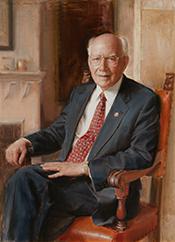 Rep. Vernon J. Ehlers (R-MI)
Legislative Activity
Stay on top of the latest movement without scrolling through every action
House Committee on Transportation Granted an extension for further consideration ending not later than Dec. 10, 2004.
November 22, 2004
View full timeline
Introduced in House
November 20, 2003
Sponsor introductory remarks on measure. (CR E2375-2376)
November 20, 2003
Referred to the Committee on Science, and in addition to the Committee on Transportation and Infrastructure, for a period to be subsequently determined by the Speaker, in each case for consideration of such provisions as fall within the jurisdiction of the committee concerned.
November 20, 2003
Referred to the Subcommittee on Highways, Transit and Pipelines.
November 21, 2003
Referred to the Subcommittee on Environment, Technology, and Standards.
December 10, 2003
Subcommittee Consideration and Mark-up Session Held.
January 28, 2004
Forwarded by Subcommittee to Full Committee (Amended) by Voice Vote.
January 28, 2004
Committee Consideration and Mark-up Session Held.
February 4, 2004
Ordered to be Reported (Amended) by Voice Vote.
February 4, 2004
Mr. Boehlert asked unanimous consent that the Committee on Science have until 5:00 p.m. on Feb. 18 to file a report on H.R. 3551. Agreed to without objection.
February 11, 2004
Mr. Boehlert asked unanimous consent that the Committee on Science, Space and Technology have until 5:00 p.m. on Aug. 27 to file a report on H.R. 3551. Agreed to without objection.
July 22, 2004
Reported (Amended) by the Committee on Science. H. Rept. 108-662, Part I.
September 7, 2004
House Committee on Transportation Granted an extension for further consideration ending not later than Oct. 1, 2004.
September 7, 2004
House Committee on Transportation Granted an extension for further consideration ending not later than Nov. 19, 2004.
October 1, 2004
House Committee on Transportation Granted an extension for further consideration ending not later than Nov. 22, 2004.
November 19, 2004
House Committee on Transportation Granted an extension for further consideration ending not later than Dec. 10, 2004.
November 22, 2004
Floor Debate
24 membersWhat members said about H.R. 3551 on the floor


 +19
Floor Debate
24 membersWhat members said about H.R. 3551 on the floor
Mr. Chairman, this Member rises in strong support of H.R. 3550, the Transportation Equity Act: A Legacy for Users. This Member would like to begin by thanking the distinguished gentleman from Alaska…
Mr. Chairman, I yield myself such time as I may consume. Mr. Chairman, I feel somewhat like the sinner appearing before the bishop when Your Honorable is in the Chair; but with all due respect, I do…
Mr. Chairman, I yield myself 6 minutes. Mr. Chairman, I am very deeply touched by the words of the gentleman from Alaska (Mr. Young), our committee chairman. We have worked closely together on…
Mr. Chairman, I thank the gentleman for yielding me time. Our transportation system continues to face tremendous challenges. Tens of thousands of lives are lost each year on our highways. More…
Mr. Chairman, I want to thank the gentleman from Minnesota (Mr. Oberstar), my partner in this endeavor, very much for those extremely kind words and for yielding me this time. It is always a pleasure…
Show 8 more
Mr. Chairman, I rise in strong support of this very important legislation, which will improve our transportation infrastructure and create millions of jobs, and I want to thank the gentleman from…
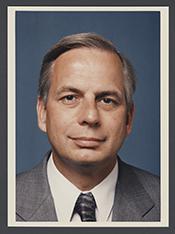
Mr. Chairman, I thank my colleague for yielding me this time. I rise in support of H.R. 3550, a bill that is bipartisanly crafted by both the gentleman from Alaska (Chairman Young) and the gentleman…

Mr. Chairman, I rise today in strong support of H.R. 3550, the Transportation Equity Act: A Legacy For Users, or affectionately known as TEA LU. I want to begin by extending my appreciation to the…
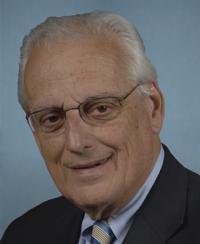
Mr. Chairman, I thank the gentleman from Alaska (Chairman Young), the gentleman from Wisconsin (Mr. Petri), the gentleman from Minnesota (Ranking Member Oberstar), and the gentleman from Illinois…
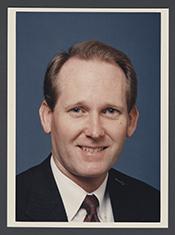
Mr. Chairman, I thank the gentleman for yielding me time. It is a pleasure to be on the floor this morning to talk about some of the advantages that are in the 6-year reauthorization of our…

Mr. Chairman, I would first like to salute the chairman of our committee for bringing us to this day and to the gentleman from Minnesota (Mr. Oberstar) and my colleague, the gentleman from Illinois…

Mr. Chairman, I yield myself such time as I may consume. Mr. Chairman, included in this bill is a provision drawn from H.R. 3119, the ``Renewable Fuels and Transportation Infrastructure Enhancement…

Mr. Chairman, I rise today to quote the words of President Dwight Eisenhower, the father of our, Highway Trust Fund, who rightly said ``A network of modern roads is as necessary to defense as it is…
Show 11 more

Mr. Chairman, I want to thank my colleague, the gentleman from North Dakota (Mr. Pomeroy), for yielding me this time. I want to add my condolences also to our colleague, the gentleman from Missouri…
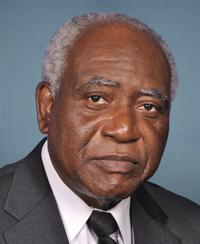
Mr. Chairman, I want to thank the gentleman for yielding me this time. I rise in strong support of this legislation. First of all, I want to commend the gentleman from Alaska (Mr. Young), the…

Mr. Chairman, the gentleman from Alaska has dedicated years to this bill. I applaud him for that. I know it is less dollars than he would like to see because he does understand the problems we face…

Mr. Chairman, I stand in support of H.R. 3550, the Transportation Equity Act: A Legacy for Users (TEA-LU). In my congressional district, the rural highways that served our Nation for decades can no…
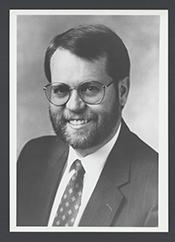
Mr. Chairman, I want to give a piece of praise this morning to the gentleman from Alaska (Mr. Young), the gentleman from Wisconsin (Mr. Petri), the gentleman from Minnesota (Mr. Oberstar) and the…
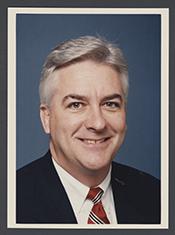
Mr. Chairman, I want to join the others associating myself with the remarks of the gentleman from Ohio (Mr. LaTourette) in thanking the gentleman from Alaska (Mr. Young), the gentleman from Wisconsin…
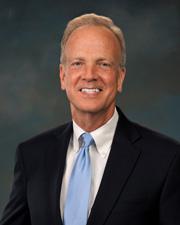
Mr. Chairman, I am delighted to rise in support of a piece of legislation that I think is very important not only to the folks back home in Kansas but to the folks of this country, and I am here to…
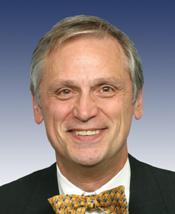
Mr. Chairman, I appreciate the gentleman's courtesy in permitting me to speak in support of what is the most important jobs and environmental bill of this session. Because of the structure that has…
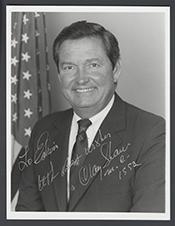
Mr. Chairman, I thank the gentleman for yielding me this time. There are many good things in this highway bill. One that I would like to highlight at this particular point came out of the Committee…

Mr. Chairman, let me rise to thank the chairman and the ranking member for their leadership and also the subcommittee chair and ranking member. I am talking about the gentleman from Alaska (Mr.…
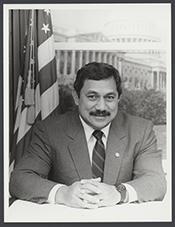
Mr. Chairman, I rise today in support of H.R. 3550, the Transportation Act--A Legacy for Users (TEA-LU). I am pleased that my good friends Chairman Don Young and Ranking Member Jim Oberstar of the…
Bill Text
Latest available legislative text
        [Congressional Bills 108th Congress]
[From the U.S. Government Publishing Office]
[H.R. 3551 Introduced in House (IH)]

108th CONGRESS
1st Session
H. R. 3551

To authorize appropriations to the Department of Transportation for
surface transportation research and development, and for other
purposes.

_______________________________________________________________________

IN THE HOUSE OF REPRESENTATIVES

November 20, 2003

Mr. Ehlers introduced the following bill; which was referred to the
Committee on Science, and in addition to the Committee on
Transportation and Infrastructure, for a period to be subsequently
determined by the Speaker, in each case for consideration of such
provisions as fall within the jurisdiction of the committee concerned

_______________________________________________________________________

A BILL

To authorize appropriations to the Department of Transportation for
surface transportation research and development, and for other
purposes.

Be it enacted by the Senate and House of Representatives of the
United States of America in Congress assembled,

SECTION 1. SHORT TITLE; TABLE OF CONTENTS.

(a) Short Title.--This Act may be cited as the ``Surface
Transportation Research and Development Act of 2003''.
(b) Table of Contents.--The table of contents for this Act is as
follows:

Sec. 1. Short title; table of contents.
Sec. 2. Findings.
TITLE I--SURFACE TRANSPORTATION RESEARCH

Sec. 101. Authorization of appropriations.
Sec. 102. Goals, principles, and processes.
Sec. 103. Transportation research and development strategic planning
and annual reporting.
Sec. 104. Surface transportation research and development.
Sec. 105. Technology deployment.
Sec. 106. Training and education.
Sec. 107. Bureau of Transportation Statistics.
Sec. 108. State planning and research.
Sec. 109. Future Strategic Highway Research Program.
Sec. 110. University Transportation Centers.
Sec. 111. Intelligent Transportation systems.
Sec. 112. National Multimodal Trends Research Program.
TITLE II--MISCELLANEOUS

Sec. 201. Authorization of appropriations.
Sec. 202. Transit research.
Sec. 203. National Transit Institute.
Sec. 204. Human resource programs.
Sec. 205. Highway safety research and development.
Sec. 206. Motor carrier research and technology program.
Sec. 207. Transportation, energy, and environment.
Sec. 208. National Cooperative Freight Transportation Research Program.
Sec. 209. Next Generation National Transportation Policy Study
Commission.
Sec. 210. Real-time system management information program.
Sec. 211. Planning capacity building initiative.

SEC. 2. FINDINGS.

The Congress finds the following:
(1) Research and development is critical to developing and
maintaining a transportation system that meets the goals of
safety, mobility, economic vitality, efficiency, equity, and
environmental protection.
(2) Federally sponsored surface transportation research and
development has produced many successes. The development of
rumble strips has increased safety; research on materials has
increased the lifespan of pavements, saving money and reducing
the disruption caused by construction; and Geographic
Information Systems have improved the management and efficiency
of transit fleets.
(3) Despite these important successes, the Federal surface
transportation research and development investment represents
only about 0.5 percent of overall government spending on
surface transportation.
(4) While Congress increased funding for overall
transportation programs by about 40 percent in the
Transportation Equity Act for the 21st Century, funding for
transportation research and development remained relatively
flat.
(5) The Federal investment in research and development
should be balanced between short-term applied and long-term
fundamental research and development. The investment should
also cover a wide range of research areas, including research
on materials and construction, research on operations, research
on transportation trends and human factors, and research
addressing the institutional barriers to deployment of new
technologies.
(6) Therefore, Congress finds that it is in the United
States interest to increase the Federal investment in
transportation research and development, and to conduct
research in critical research gaps, in order to ensure that the
transportation system meets the goals of safety, mobility,
economic vitality, efficiency, equity, and environmental
protection.

TITLE I--SURFACE TRANSPORTATION RESEARCH

SEC. 101. AUTHORIZATION OF APPROPRIATIONS.

(a) In General.--
(1) Surface transportation research, development, and
deployment.--To carry out sections 502, 503, 506, 507, and 509
of title 23, United States Code, and section 112 of this Act,
relating to research and development, there are authorized to
be appropriated to the Secretary of Transportation the
following:
(A) $228,000,000 for fiscal year 2004, of which--
(i) $15,000,000 shall be set aside to carry
out the Surface Transportation Environment and
Planning Cooperative Research Program under
section 507 of title 23, United States Code;
(ii) $7,000,000 shall be set aside to carry
out advanced exploratory research under section
502(d) of title 23, United States Code; and
(iii) $5,000,000 shall be set aside to
carry out the National Multimodal Trends
Research Progam under section 112 of this Act.
(B) $272,000,000 for fiscal year 2005, of which--
(i) $15,000,000 shall be set aside to carry
out the Surface Transportation Environment and
Planning Cooperative Research Program under
section 507 of title 23, United States Code;
(ii) $10,000,000 shall be set aside to
carry out research under section 502(d) of
title 23, United States Code; and
(iii) $5,000,000 shall be set aside to
carry out research under section 112 of this
Act.
(C) $316,000,000 for fiscal year 2006, of which--
(i) $20,000,000 shall be set aside to carry
out the Surface Transportation Environment and
Planning Cooperative Research Program under
section 507 of title 23, United States Code;
(ii) $15,000,000 shall be set aside to
carry out research under section 502(d) of
title 23, United States Code; and
(iii) $5,000,000 shall be set aside to
carry out research under section 112 of this
Act.
(D) $367,000,000 for fiscal year 2007, of which--
(i) $20,000,000 shall be set aside to carry
out the Surface Transportation Environment and
Planning Cooperative Research Program under
section 507 of title 23, United States Code;
(ii) $15,000,000 shall be set aside to
carry out research under section 502(d) of
title 23, United States Code; and
(iii) $5,000,000 shall be set aside to
carry out research under section 112 of this
Act.
(E) $423,000,000 for fiscal year 2008, of which--
(i) $30,000,000 shall be set aside to carry
out the Surface Transportation Environment and
Planning Cooperative Research Program under
section 507 of title 23, United States Code;
(ii) $15,000,000 shall be set aside to
carry out research under section 502(d) of
title 23, United States Code; and
(iii) $5,000,000 shall be set aside to
carry out research under section 112 of this
Act.
(F) $490,000,000 for fiscal year 2009, of which--
(i) $30,000,000 shall be set aside to carry
out the Surface Transportation Environment and
Planning Cooperative Research Program under
section 507 of title 23, United States Code;
(ii) $15,000,000 shall be set aside to
carry out research under section 502(d) of
title 23, United States Code; and
(iii) $5,000,000 shall be set aside to
carry out research under section 112 of this
Act.
(2) Training and education.--To carry out section 504 of
title 23, United States Code, there are authorized to be
appropriated to the Secretary of Transportation the following:
(A) $50,000,000 for fiscal year 2004.
(B) $60,000,000 for fiscal year 2005.
(C) $70,000,000 for fiscal year 2006.
(D) $70,000,000 for fiscal year 2007.
(E) $75,000,000 for fiscal year 2008.
(F) $75,000,000 for fiscal year 2009.
(3) Bureau of transportation statistics.--For the Bureau of
Transportation Statistics to carry out section 111 of title 49,
United States Code, there are authorized to be appropriated to
the Secretary of Transportation the following:
(A) $36,000,000 for fiscal year 2004, of which
$5,000,000 shall be set aside for research and
development grants under subsection (k)(1)(B) of such
section.
(B) $37,000,000 for fiscal year 2005, of which
$5,000,000 shall be set aside for research and
development grants under subsection (k)(1)(B) of such
section.
(C) $38,000,000 for fiscal year 2006, of which
$5,000,000 shall be set aside for research and
development grants under subsection (k)(1)(B) of such
section.
(D) $43,000,000 for fiscal year 2007, of which
$5,000,000 shall be set aside for research and
development grants under subsection (k)(1)(B) of such
section.
(E) $47,000,000 for fiscal year 2008, of which
$5,000,000 shall be set aside for research and
development grants under subsection (k)(1)(B) of such
section.
(F) $50,000,000 for fiscal year 2009, of which
$5,000,000 shall be set aside for research and
development grants under subsection (k)(1)(B) of such
section.
(4) University transportation research.--For carrying out
section 5505 of title 49, United States Code, there are
authorized to be appropriated to the Secretary of
Transportation the following:
(A) $56,000,000 for fiscal year 2004.
(B) $66,000,000 for fiscal year 2005.
(C) $76,000,000 for fiscal year 2006.
(D) $90,000,000 for fiscal year 2007.
(E) $90,000,000 for fiscal year 2008.
(F) $90,000,000 for fiscal year 2009.
(5) Intelligent transportation systems research.--For
carrying out the Intelligent Transportation Systems Act of
2003, there are authorized to be appropriated to the Secretary
of Transportation the following:
(A) $130,000,000 for fiscal year 2004.
(B) $135,000,000 for fiscal year 2005.
(C) $140,000,000 for fiscal year 2006.
(D) $140,000,000 for fiscal year 2007.
(E) $145,000,000 for fiscal year 2008.
(F) $145,000,000 for fiscal year 2009.
(b) Collaborative Research and Development.--Section 502(b) of
title 23, United States Code, is amended--
(1) by striking paragraph (3); and
(2) by redesignating paragraphs (4) and (5) as paragraphs
(3) and (4), respectively.

SEC. 102. GOALS, PRINCIPLES, AND PROCESSES.

(a) Goals.--The Federal Government shall support surface
transportation research in order to support the goals established for
the surface transportation system as set forth in the Transportation
Equity Act for the 21st Century, including supporting economic
vitality, improving safety and security, increasing mobility,
protecting and enhancing the environment, improving integration between
modes of transportation, promoting efficiency, and emphasizing the
preservation of the existing transportation system.
(b) Basic Principles Governing Research and Development.--
(1) Federal responsibility.--Funding and conducting surface
transportation research and development and technology transfer
activities shall be the responsibility of the Federal
Government when--
(A) the work is of national significance;
(B) it supports research in which there is a clear
public benefit, and private sector investment is less
than optimal due to market failure;
(C) it supports critical research that is not
otherwise being conducted by the public or private
sector;
(D) it supports a Federal stewardship role in
ensuring that State and local governments use national
resources efficiently; or
(E) it presents the best means to support Federal
policy goals compared to other policy alternatives.
(2) Role.--Consistent with these Federal responsibilities,
the Secretary of Transportation shall--
(A) conduct research;
(B) support and facilitate research and development
and technology transfer activities by State highway
agencies, metropolitan planning organizations, and
local governments;
(C) share results of completed research; and
(D) support and facilitate technology and
innovation deployment.
(3) Program content.--The surface transportation research
and development program shall include--
(A) fundamental, long-term research;
(B) research aimed at significant research gaps,
and emerging issues with national implications; and
(C) research related to policy and planning.
(c) Processes.--
(1) Stakeholder input.--Federally sponsored surface
transportation research and development activities shall
address the needs of partners and stakeholders. Stakeholders
include users of research (such as States, metropolitan
planning organizations, local governments, and the private
sector), researchers, research sponsors, and other affected
parties, including public interest groups. Stakeholders shall
be included at every level of research including strategic
planning, agenda setting, and program evaluation. The Secretary
shall expand the range and diversity of stakeholders engaged in
the process.
(2) Competition and peer review.--All parties entering into
contracts or cooperative agreements with the Secretary, or
receiving grants, to perform research and development
activities or provide technical assistance under this Act shall
be selected on a competitive basis, and on the basis of the
results of peer review of proposals submitted to the Secretary.
(3) Performance review and evaluation.--All surface
transportation research and development projects shall include
a component of performance measurement and evaluation.
Performance measures shall be established during the proposal
stage of a research project and shall, to the maximum extent
possible, be outcome-based. All evaluations shall be made
readily available to the public. The results of all surface
transportation research and development funded under this Act
shall be peer reviewed.

SEC. 103. TRANSPORTATION RESEARCH AND DEVELOPMENT STRATEGIC PLANNING
AND ANNUAL REPORTING.

(a) Amendment.--Section 508 of title 23, United States Code, is
amended to read as follows:
``Sec. 508. Transportation research and development strategic planning
and annual reporting
``(a) In General.--The Secretary shall--
``(1) establish a strategic planning process, consistent
with section 306 of title 5 for the Department of
Transportation to determine national transportation research
and development priorities;
``(2) set national transportation strategic goals and
research and development priorities;
``(3) coordinate Federal transportation research and
development activities;
``(4) measure the results of those activities and how they
impact the performance of the transportation systems of the
United States; and
``(5) ensure that planning and reporting activities carried
out under this section are coordinated with all other
transportation planning and reporting requirements.
``(b) Implementation.--The Secretary shall--
``(1) provide for the integrated planning, coordination,
and consultation among the operating administrations of the
Department of Transportation, including the aviation, transit,
and rail operating administrations, all other Federal agencies
with responsibility for surface transportation research and
technology development, State and local governments,
institutions of higher education, industry, and other private
and public sector organizations engaged in surface
transportation-related research and development activities;
``(2) ensure that the transportation research and
development programs of the Department do not duplicate other
Federal, State, or private sector research and development
programs; and
``(3) provide for independent validation of the scientific
and technical assumptions underlying the transportation
research and development programs of the Department.
``(c) Transportation Research and Development Strategic Plan.--
``(1) Development.--Not later than 1 year after the date of
enactment of the Surface Transportation Research and
Development Act of 2003 the Secretary shall develop an
integrated transportation research and development strategic
plan. The Secretary shall periodically revise such plan.
``(2) Contents.--The plan shall--
``(A) include the general goals and principles of
the Department of Transportation for transportation
research and development program set forth in section
102 of the Surface Transportation Research and
Development Act of 2003;
``(B) define the roles of the Department and other
Federal agencies in achieving the goals and principles
identified under subparagraph (A), in order to avoid
unnecessary duplication of effort;
``(C) define the Department's overall strategy and
research and development priorities, and for each
research area specified in section 502, set out--
``(i) specific research strategies;
``(ii) research objectives and priorities;
``(iii) projects to be carried out;
``(iv) recommended technology transfer
activities to promote the deployment of
research results; and
``(v) short-term, medium-term, and long-
term technology development and deployment
activities;
``(D) define the role of each of the operating
administrations of the Department in carrying out the
plan over the next 5 years, including a description of
procedures for coordination of the efforts of the
Secretary with the efforts of the operating
administrations of the Department and other Federal
agencies;
``(E) assess how State and local research and
development activities are contributing to the
achievement of the goals identified under subparagraph
(A) and priorities identified under subparagraph (C);
``(F) provide details of the transportation
research and development programs of the Department,
including performance goals, resources needed to
achieve those goals, and performance indicators as
described in section 1115(a) of title 31 for the next 5
years for each area of research and development;
``(G) incorporate input from a wide range of
interests in the transportation community, including
State transportation officials, metropolitan planning
organizations, local governments, business,
environmental and community organizations, academia,
and other relevant Federal agencies, and summarize
significant comments on the plan obtained from these
interests; and
``(H) incorporate the input of the National Academy
of Sciences and include responses to significant
comments obtained from the Academy and other advisory
bodies, and describe any corrective actions taken
pursuant to such comments.
``(3) National academy of sciences review.--The Secretary
shall enter into an agreement for the review by the National
Academy of Sciences of the details of each--
``(A) strategic plan or revision required under
section 306 of title 5;
``(B) performance plan required under section 1115
of title 31; and
``(C) program performance report required under
section 1116 of title 31--
with respect to transportation research and development.
``(4) Performance plans and reports.--In reports submitted
under sections 1115 and 1116 of title 31, the Secretary shall
include--
``(A) a summary of the results for the previous
fiscal year of transportation research and development
programs to which the Department of Transportation
contributes, along with--
``(i) an analysis of the relationship
between those results and the goals identified
under paragraph (2)(A); and
``(ii) a description of the methodology
used for assessing the results; and
``(B) a description of significant transportation
research and development initiatives, if any,
undertaken during the previous fiscal year that were
not in the plan developed under paragraph (1), and any
significant changes in the plan from the previous
year's plan.
``(d) Merit Review and Performance Measurement.--Not later than 1
year after the date of enactment of the Surface Transportation Research
and Development Act of 2003, the Secretary shall transmit to Congress a
report describing competitive merit review procedures for use in
selecting grantees and contractors in the programs covered by the plan
developed under subsection (c) and performance measurement procedures
for evaluating the programs.
``(e) Procurement Procedures.--The Secretary shall--
``(1) develop model procurement procedures that encourage
the use of advanced technologies; and
``(2) develop model transactions for carrying out and
coordinating Federal and State transportation research and
development activities.
``(f) Annual Project Reports.--The Secretary shall publish and make
publicly available an annual report documenting all transportation
research and development activities of the Department. The report shall
include detailed accounting of how Federal funds were expended.
``(g) Consistency With Government Performance and Results Act of
1993.--The plans and reports developed under this section shall be
consistent with and incorporated as part of the plans developed under
section 306 of title 5 and sections 1115 and 1116 of title 31.''.
(b) Conforming Amendment.--The analysis for chapter 5 of title 23,
United States Code, is amended by striking the item related to section
508 and inserting the following:

``508. Transportation research and development strategic planning and
annual reporting.''.

SEC. 104. SURFACE TRANSPORTATION RESEARCH AND DEVELOPMENT.

(a) Surface Transportation Research and Development.--Section 502
of title 23, United States Code, is amended--
(1) in subsection (a)--
(A) by striking subparagraphs (B) and (C) of
paragraph (1) and inserting the following:
``(B) all phases of transportation planning and
development (including construction, transportation
system management and operation, modernization,
development, design, maintenance, safety, data
collection, performance analysis, multimodal
assessment, financing, demand forecasting, and traffic
conditions);
``(C) institutional arrangements and support; and
``(D) the effect of State laws on the activities
described in subparagraphs (A), (B), and (C).''; and
(B) in paragraph (3)(C), by inserting ``academic
researcher,'' after ``association, institution,'';
(2) in subsection (c)--
(A) in paragraph (1), by inserting ``accessibility,
connectivity,'' after ``United States, including'';
(B) by redesignating paragraphs (4) through (11) as
paragraphs (5) through (12), respectively;
(C) by inserting after paragraph (3) the following
new paragraph:
``(4) Methods and testing to determine the impacts, both
positive and negative, to communities from major transportation
investments.'';
(D) in paragraph (6), as so redesignated by
subparagraph (B) of this paragraph--
(i) by striking ``research project'' and
inserting ``improvements against policy
objectives'' in subparagraph (B); and
(ii) by inserting ``and management'' after
``transportation operations'' in subparagraph
(C);
(E) in paragraph (12), as so redesignated by
subparagraph (B) of this paragraph, by striking ``,
including unobtrusive eyetracking technology''; and
(F) by adding at the end the following new
paragraphs:
``(13) Environmental research, including research described
in the Transportation Research Board Special Report 268,
entitled `Surface Transportation Environmental Research: A
Long-Term Strategy', published in 2002.
``(14) Assessment of planning strategies that link land use
and transportation in metropolitan areas.
``(15) Exploratory advanced research under subsection (d).
``(16) Research aimed at understanding how emerging trends
(including demographic, economic, and social trends) will
affect and are affected by surface transportation usage and
needs.
``(17) Research on the link between transportation and
health (including asthma and obesity).
``(18) Research on, and dissemination of recommendations
and best practices aimed at addressing, nontechnical barriers
to technology deployment (which include fragmented local
authority, rigid procurement rules, and privacy and liability
considerations).
``(19) Research on the effects of climate conditions (such
as freezing, thawing, and precipitation) on highway
construction and maintenance, including research to reduce or
repair damage caused by climatic conditions, development of
materials that can withstand climatic conditions, and research
on the effects of climatic conditions on the costs of highway
construction and maintenance.
``(20) Research to improve the infrastructure investment
needs report under subsection (g) through new methods of
collecting better quality data, monitoring in a system-wide
manner, the determination of critical metrics to assess
condition and performance, and new methods of statistical
analysis and computer models to improve the prediction of
future needs.
``(21) Research, development, and technology transfer
related to asset management.
``(22) Any other surface transportation research topics
that the Secretary determines, in accordance with the strategic
planning process under section 508, to be critical.'';
(3) in subsection (d)--
(A) in paragraph (1)--
(i) by inserting ``exploratory'' after
``shall establish an''; and
(ii) by inserting ``fundamental'' after
``508, that addresses''; and
(B) by striking paragraph (2) and inserting the
following new paragraphs:
``(2) Goal.--The goal of the research program under this
subsection shall be to achieve breakthroughs in understanding
transportation phenomena. Exploratory advanced research should
have a broader objective, longer time frame, multidisciplinary
nature, and have both a higher risk and a higher potential
payoff than for problem-solving research.
``(3) Agenda.--Not later than 15 months after that date of
enactment of this paragraph, the Secretary shall develop an
agenda for exploratory advanced research. The agenda shall
outline key questions to be addressed and proposed areas of
research to address these questions. The agenda shall also
document the best way to accomplish this research (such as
through Federal laboratories or academic researchers). Upon
completion, the agenda shall be transmitted to the Committee on
Transportation and Infrastructure and the Committee on Science
of the House of Representatives, and the Committee on
Environment and Public Works of the Senate, and made available
to the general public.
``(4) Consultation.--The Secretary shall consult with the
National Science Foundation in reviewing fundamental research
proposals, and to obtain advice on peer review protocols.
``(5) Workshop.--In order to develop the agenda for
exploratory advanced research under paragraph (3), the
Secretary shall convene a workshop with appropriate researchers
and policymakers from Federal and State agencies, as well as
academic researchers, to gather recommendations. The goal of
the workshop shall be to determine priority areas of
exploratory advanced research for Federal investment. Emphasis
shall be placed on hearing from a diverse group of
stakeholders. The Secretary shall make the results of the
workshop widely available to the public. The workshop shall be
held within 9 months after the date of the enactment of this
paragraph.
``(6) Use of funds.--In any fiscal year with respect to
which $5,000,000 or more is appropriated for carrying out this
subsection, at least \1/2\ of the funds in excess of $5,000,000
shall be used to carry out the grant program described in
paragraph (7). Funds appropriated for carrying out this
subsection not used for the grant program described in
paragraph (7) shall be used to carry out the agenda developed
under paragraph (3). All exploratory advanced research
proposals and results under this subsection shall be peer
reviewed.
``(7) Grant program.--If funds are available under
paragraph (6), the Secretary shall administer a competitive,
merit-reviewed and peer-reviewed grant program to support
fundamental research outside of the Federal Government.
Eligible applicants include academic researchers, and for-
profit and not-for-profit research institutions. Under this
grant program, research solicitations shall be open and broad
in order to spur creativity and innovation. Funds may be used
under this paragraph to support research in a range of topics,
including materials, operations, and social science. Proposals
with the greatest merit shall be funded, and projects may
receive funding for multiple years.'';
(4) in subsection (e), by striking ``(105 Stat.'' and all
that follows through ``performance program'' and inserting
``and the Transportation Equity Act for the 21st Century'';
(5) by amending subsection (f) to read as follows:
``(f) Long-Term Bridge Performance Program.--
``(1) Authority.--The Secretary shall establish a 20 year
long-term bridge performance program.
``(2) Grants, cooperative agreements, and contracts.--Under
the program, the Secretary shall make grants and enter into
cooperative agreements and contracts to--
``(A) monitor, material-test, and evaluate test
bridges;
``(B) analyze the data obtained in carrying out
subparagraph (A); and
``(C) prepare products to fulfill program
objectives and meet future bridge technology needs.'';
(6) in subsection (g)--
(A) in paragraph (1)--
(i) by striking ``1999'' and inserting
``2005''; and
(ii) by striking ``highway and bridge''
each place it appears and inserting ``surface
transportation''; and
(B) in paragraph (2), by striking ``biannual
reports'' and all that follows through ``21st Century''
and inserting ``previous reports under this
subsection''; and
(7) by adding at the end the following new subsection:
``(h) Turner-Fairbank Highway Research Center.--
``(1) In general.--The Secretary shall operate in the
Federal Highway Administration a Turner-Fairbank Highway
Research Center.
``(2) Uses of the center.--The Turner-Fairbank Highway
Research Center shall support the--
``(A) conduct of highway research and development
related to new highway technology;
``(B) development of understandings, tools, and
techniques that provide solutions to complex technical
problems through the development of economical and
environmentally sensitive designs, efficient and
quality controlled construction practices, and durable
materials; and
``(C) development of innovative highway products
and practices.''.
(b) Geospatial Information Systems.--Section 5113 of the
Transportation Equity Act of the 21st Century (23 U.S.C. 502 note) is
amended by revising subsection (b) to read as follows:
``(b) Program.--
``(1) National policy.--The Secretary shall establish and
maintain a national policy for the use of commercial remote
sensing products and geospatial information technologies in
national transportation infrastructure development and
construction.
``(2) Policy implementation.--The Secretary shall develop
new applications of commercial remote sensing products and
geospatial information technologies for the implementation of
the national policy established and maintained under (b)(1) of
this section.''.
(c) Environment and Planning.--
(1) Amendment.--Section 507 of title 23, United States
Code, is amended to read as follows:
``Sec. 507. Surface transportation environment and planning cooperative
research program-
``(a) Establishment.--The Secretary shall establish and support a
collaborative, public-private, multimodal surface transportation
environment and planning cooperative research program.
``(b) Agreement.--The Secretary shall make grants to or enter into
cooperative agreements with the National Academy of Sciences, or
another nonprofit research organization established for this purpose,
to support, administer, and manage the surface transportation
environment and planning cooperative research program.
``(c) Advisory Board.--
``(1) Establishment.--The organization described in
subsection (b) shall establish an independent advisory board
drawn from core partners that represent environment,
transportation, scientific, and other interests, including the
Department of Transportation, the Environmental Protection
Agency, the National Science Foundation, other Federal
agencies, the States, regional and local governments, nonprofit
organizations, academia, foundations, and the private sector.
``(2) Responsibilities.--The Advisory Board shall have the
responsibility for--
``(A) development of a research agenda, which shall
be published annually, shall serve as the basis of the
annual project solicitation, and shall be based on the
multiyear strategy described in subsection (e), as
revised under subparagraph (D) of this paragraph;
``(B) annual solicitation of project proposals,
including open competition and peer review of research
proposals;
``(C) development of project selection criteria,
through an open and public consultation process with
stakeholders, that emphasize--
``(i) the development of fundamental
knowledge; and
``(ii) collaborative research and funding;
and
``(D) revision of the contents of the multiyear
strategy described in subsection (e), through an open
and public consultation process, with the first
revision to be completed 3 years after the first grants
are awarded under this section and subsequent revisions
biennially thereafter.
``(d) Dissemination of Research Findings.--The organization
described in subsection (b) and the Department of Transportation shall
proactively disseminate research findings under this section to
researchers, practitioners, and decisionmakers, through conferences and
seminars, field demonstrations, workshops, training programs,
presentations, testimony to government officials, the Internet, and
publications for the general public.
``(e) Contents.--The national research agenda for the surface
transportation environment and planning cooperative research program
required under subsection (c)(2)(C) shall be based on Transportation
Research Board Special Report 268, entitled `Surface Transportation
Environmental Research: A Long-Term Strategy', published in 2002, which
included the following research areas:
``(1) Human Health.
``(2) Ecology and Natural Systems.
``(3) Environmental and Social Justice.
``(4) Emerging Technologies.
``(5) Land Use.
``(6) Planning and Performance Measures.
``(f) Project Funding.--
``(1) Multiyear funding.--Projects may receive funding for
multiple years under this section.
``(2) Joint project funding.--In addition to using funds
authorized for this section, the organization that administers
this program may seek and accept additional funding sources
from public and private entities capable of attracting and
accepting funding from Federal agencies, States, local
governments, nonprofit foundations, and the private sector.
``(g) Programmatic Evaluations.--(1) Not later than 2 years after
the first research project grants or contracts are awarded under this
section, the Secretary shall enter into an arrangement with the
National Academy of Public Administration to review the program under
this section, and recommend improvements.
``(2) The National Academy of Public Administration review shall--
``(A) assess the degree to which the projects funded under
this section have addressed the research topics identified in
the strategy established in the Transportation Research Board
Special Report 268, including identifying those topics which
have not yet been addressed;
``(B) assess the peer review process for project proposals,
and assess research project results; and
``(C) assess the extent of stakeholder involvement in all
facets of the program.
``(h) Annual Report.--The organization described in subsection (b)
shall prepare and transmit to the Secretary an annual report that
includes a project summary for every project funded under this section.
Each summary shall characterize the project, summarize its status, and
identify sponsors.''.
(2) Conforming amendment.--The analysis for chapter 5 of
title 23, United States Code, is amended by striking the item
related to section 507 and inserting the following:

``507. Surface transportation environment and planning cooperative
research program.''.

SEC. 105. TECHNOLOGY DEPLOYMENT.

Section 503 of title 23, United States Code, is amended--
(1) in subsection (a)--
(A) by amending paragraph (7) to read as follows:
``(7) Grants, cooperative agreements, and contracts.--
``(A) In general.--Under the program, the Secretary
may make grants and enter into cooperative agreements
and contracts with States, metropolitan planning
organizations, local governments, other Federal
agencies, universities and colleges, private sector
entities, and nonprofit organizations to foster
alliances and support efforts to stimulate advances in
transportation technology, and to pay the Federal share
of the costs of research, development, and technology
transfer concerning innovative technologies.
``(B) Applications.--To receive a grant,
cooperative agreement, or contract, under this
paragraph, an entity described in subparagraph (A)
shall submit an application to the Secretary. The
application shall be in such form and contain such
information as the Secretary may require. The Secretary
shall select and approve the applications based on the
applications' merit and on whether the project that is
the subject of the grant, cooperative agreement, or
contract meets the goals of the program described in
paragraph (3).'';
(B) in paragraph (8), by inserting ``and the
Committee on Science'' after ``Transportation and
Infrastructure'';
(C) by redesignating paragraph (9) as paragraph
(11); and
(D) by inserting after paragraph (8) the following
new paragraphs:
``(9) Technology and information transfer.--The Secretary
shall ensure that the information and technology resulting from
research conducted under this subsection is made available to
State and local transportation departments, metropolitan
planning organizations, and other interested parties.
``(10) Federal share.--The Federal share of the cost of a
project under this subsection shall be determined by the
Secretary.''; and
(2) in subsection (b)--
(A) by striking ``Bridge Research and
Construction'' and inserting ``Research and
Deployment'' in the subsection heading;
(B) by amending paragraphs (1) and (2) to read as
follows:
``(1) In general.--The Secretary shall establish and carry
out a program to demonstrate the application of innovative
technology in surface transportation infrastructure
construction (such as bridges, pavements, and other structures)
and safety.
``(2) Goals.--The goals of the program shall include--
``(A) the development of new, cost-effective
innovative material for surface transportation
infrastructure applications;
``(B) the deployment and evaluation of safety
technologies and innovations at the State and local
levels, and the deployment of best practices in
training, management, design, and planning;
``(C) the reduction of life-cycle costs of surface
transportation infrastructure, including the costs of
new construction, replacement, maintenance, and
rehabilitation of deficient highway infrastructure;
``(D) the development and deployment of
construction techniques to increase safety and reduce
construction time and traffic congestion;
``(E) the development of engineering design
criteria for innovative products and materials for use
in surface transportation infrastructure;
``(F) the development of cost-effective and
innovative techniques to separate vehicle and
pedestrian traffic from railroad traffic;
``(G) the evaluation and documentation of the
performance and benefits of innovative technologies
deployed to improve life, performance, cost
effectiveness, safety, and customer satisfaction;
``(H) the refinement of innovative technologies
based on the evaluation described in subparagraph (G);
``(I) the wide dissemination of information
developed under subparagraph (G);
``(J) the development of surface transportation
infrastructure, including alternative processes for the
seismic retrofit of bridges, that will withstand
natural disasters and terrorist attacks;
``(K) for pavements, the development of designs and
materials to reduce impacts of storm water runoff;
``(L) the development of new nondestructive
infrastructure evaluation technologies and techniques;
and
``(M) effective technology transfer and information
dissemination to accelerate implementation of
innovative technologies.'';
(C) in paragraph (5), by striking ``section'' and
inserting ``subsection''; and
(D) by adding at the end the following new
subsection:
``(c) Research on the Nontechnical Barriers to Technology
Deployment.--In order to support the deployment goals established under
subsection (a)(3), the Secretary shall carry out a research program
addressing the nontechnical barriers to technology deployment,
including fragmented authority at the local and regional level and
rigid procurement rules. The goal of this research shall be to generate
proposals for how to overcome these nontechnical barriers.

SEC. 106. TRAINING AND EDUCATION.

(a) National Highway Institute.--Section 504(a) of title 23, United
States Code, is amended by striking paragraph (3) and inserting the
following:
``(3) Courses.--
``(A) In general.--The Institute shall develop or
update existing courses in asset management,
application of emerging technologies, including
intelligent transportation systems, and in techniques,
methods, regulations, information technology, general
management, environmental stewardship, engineering,
safety, transportation system management and
operations, construction, maintenance, contract
administration, inspection, and finance.
``(B) Additional courses.--In addition to the
courses developed under subparagraph (A), the
Institute, in consultation with State transportation
departments and the American Association of State
Highway and Transportation Officials, may develop other
courses as it considers necessary.
``(C) Revision of courses offered.--The Institute
shall periodically--
``(i) review the course inventory of the
Institute; and
``(ii) revise or cease to offer courses
based on course content, applicability, and
need.''.
(b) Federal Share.--Section 504(b) of title 23, United States Code,
is amended by adding at the end the following:
``(3) Federal share.--
``(A) Grants.--The grant funds authorized to carry
out this subsection may be used to cover up to 50
percent of the program costs relating to local
technical assistance. Funds available for technology
transfer and training purposes under this title and
title 49 may be used to cover the remaining 50 percent
of the program costs.
``(B) Tribal technical assistance centers.--The
Federal share of the cost of activities carried out by
the tribal technical assistance centers under paragraph
(2)(D)(ii) of this subsection shall be 100 percent.''.
(c) Definitions and Declaration of Policy.--Section 101(a) of title
23, United States Code, is amended--
(1) in paragraph (3), by--
(A) striking ``and'' at the end of subparagraph
(G);
(B) striking the period at the end of subparagraph
(H) and inserting ``; and''; and
(C) adding after subparagraph (H) the following:
``(I) surface transportation workforce development,
training, and education.'';
(2) by redesignating paragraphs (35) through (37) as
paragraphs (36) through (38) respectively; and
(3) by adding after paragraph (34) the following:
``(35) Surface transportation workforce development,
training, and education.--The term `surface transportation
workforce development, training, and education' means
activities associated with surface transportation career
awareness, student transportation career preparation, and
training and professional development for surface
transportation workers.''.

SEC. 107. BUREAU OF TRANSPORTATION STATISTICS.

Section 111 of title 49, United States Code, is amended to read as
follows:
``Sec. 111. Bureau of Transportation Statistics
``(a) Establishment.--There is established in the Department of
Transportation a Bureau of Transportation Statistics to provide
information to public decisionmakers, private industry, research
organizations, and the public on the extent, use, condition,
performance, and consequences of the Nation's transportation system.
``(b) Director.--
``(1) Appointment.--The Bureau shall be headed by a
Director who shall be appointed by the President, by and with
the advice and consent of the Senate.
``(2) Qualifications.--The Director shall be appointed from
among individuals who are qualified to serve as the Director by
virtue of their training and experience in the collection,
analysis, and use of transportation statistics.
``(3) Reporting.--The Director shall report directly to the
Secretary.
``(4) Term.--The term of the Director shall be 5 years. The
Director may continue to serve after the expiration of the term
until a successor is appointed and confirmed.
``(c) Responsibilities.--The Director of the Bureau shall be
responsible for carrying out the following duties:
``(1) Secretary's senior advisor.--Serving as the
Secretary's senior advisor on data and statistics.
``(2) Providing data, statistics, and analysis to
transportation decisionmakers.--Ensuring that the statistics
compiled under paragraph (6) support transportation
decisionmaking by the Federal Government, State and local
governments, metropolitan planning organizations,
transportation-related associations, private businesses
(including the freight community), and consumers.
``(3) Coordinating collection of information.--Coordinating
the collection of information by the Department of
Transportation required for statistics to be compiled under
paragraph (6) with related information gathering activities
conducted by other Federal departments and agencies and
collecting appropriate data not elsewhere gathered.
``(4) Data modernization.--Implement a data modernization
program to improve surveys and data collection methods to
ensure that nationally collected data accurately characterize
all modes of transportation and transportation users and are
useful for decisionmakers throughout the transportation
community.
``(5) Encouraging data standardization.--Encouraging
standardization of data, data collection methods, and data
management and storage technologies for data collected by the
Bureau, the operating administrations of the Department of
Transportation, States, local governments, metropolitan
planning organizations, and private sector entities.
``(6) Compiling transportation statistics.--Compiling,
analyzing, and publishing a comprehensive set of transportation
statistics on--
``(A) productivity in various parts of the
transportation sector;
``(B) traffic flows for all modes of
transportation;
``(C) other elements of the Intermodal
Transportation Database established under subsection
(g);
``(D) travel times and measures of congestion;
``(E) vehicle weights and other vehicle
characteristics;
``(F) demographic, economic, and other variables
influencing--
``(i) travel;
``(ii) traveling behavior, including choice
of transportation mode; and
``(iii) goods movement;
``(G) transportation costs for passenger travel and
goods movement;
``(H) performance and impacts of the national
transportation system;
``(I) availability and use of mass transit
(including the number of passengers served by each mass
transit authority) and other forms of for-hire
passenger travel;
``(J) frequency of vehicle and transportation
facility repairs and other interruptions of
transportation service;
``(K) safety and security for travelers, vehicles,
and transportation systems;
``(L) consequences of transportation for the human
and natural environment;
``(M) the extent, connectivity, and condition of
the transportation system, including elements of the
National Transportation Atlas Database developed under
subsection (i); and
``(N) transportation-related variables that
influence the domestic economy and global
competitiveness.
``(7) National spatial data infrastructure.--Building and
disseminating the transportation layer of the National Spatial
Data Infrastructure, including coordinating the development of
transportation geospatial data standards, compiling intermodal
geospatial data, and collecting geospatial data that is not
being collected by others.
``(8) Implementing long-term data collection program.--
Establishing and implementing, in cooperation with the heads of
the operating administrations of the Department of
Transportation, the States, metropolitan planning
organizations, the national statistical organizations of the
United States, and other Federal officials, a comprehensive,
long-term program for the collection and analysis of data to
support the statistics compiled, analyzed, and published under
paragraph (6) and other data on the performance of the
transportation systems of the United States. Such program
shall--
``(A) be coordinated with efforts to measure
outputs and outcomes of the Department of
Transportation and the transportation systems of the
United States under the Government Performance and
Results Act of 1993 (107 Stat. 285 et seq.) and the
amendments made by such Act;
``(B) ensure that data is collected under this
subsection in a manner which will maximize the ability
to compare data from different regions and for
different time periods; and
``(C) ensure that data collected under this
subsection is controlled for accuracy, made relevant to
the States and metropolitan planning organizations, and
disseminated to the States and other interested
parties.
``(9) Issuing guidelines.--Issuing guidelines for the
collection and publication of information by the Department of
Transportation required for statistics to be compiled under
paragraph (6) in order to ensure that such information is
accurate, reliable, relevant, and in a form that permits
systematic analysis. The Bureau shall review and report to the
Secretary of Transportation on the sources and reliability of
the statistics proposed by the heads of the operating
administrations of the Department to measure outputs and
outcomes as required by the Government Performance and Results
Act of 1993, and the amendments made by such Act, and shall
carry out such other reviews of the sources and reliability of
other data collected or statistical information published by
the heads of the operating administrations of the Department as
shall be requested by the Secretary.
``(10) Making statistics accessible.--Making the statistics
published under this subsection readily accessible.
``(d) Information Needs Assessment.--
``(1) In general.--Within 60 days after the date of the
enactment of the Surface Transportation Research and
Development Act of 2003, the Secretary shall enter into an
arrangement with the National Academy of Sciences to develop
and publish a National Transportation Information Needs
Assessment. The Assessment shall be published not later than 24
months after such arrangement is entered into.
``(2) Content.--The Assessment shall--
``(A) identify the major data needs of the
transportation community, including all levels of
government, the private and nonprofit sectors, and
academia, through a statistically valid needs survey,
the results of which shall be published;
``(B) identify critical gaps, shortcomings, and
lack of standardization in existing data collection and
survey methods;
``(C) identify data collection required under
subsection (c)(6) that is not currently being carried
out; and
``(D) recommend data modernization goals, specific
improvements, and the estimated funding levels needed
to accomplish those improvements.
``(3) Consultation.--In developing the Assessment, the
National Academy of Sciences shall consult with the
Department's Advisory Council on Transportation Statistics and
a representative cross-section of the transportation community,
including business, the freight community, State and local
governments, metropolitan planning organizations, transit,
environmental, and community organizations, academia, and other
Federal agencies, including the Environmental Protection
Agency, the Department of Energy, and the Department of Housing
and Urban Development.
``(e) Strategic Plan.--
``(1) Development and revision.--The Director shall develop
an integrated, multimodal data strategic plan within 3 years
after the date of the enactment of the Surface Transportation
Research and Development Act of 2003, and revise it every 3
years thereafter.
``(2) Content.--The strategic plan shall include--
``(A) national goals for developing high quality
national, State, local, and metropolitan transportation
data;
``(B) national goals for encouraging improvements
in non-Federal transportation data collection and
management to improve quality, reliability, and
comparability;
``(C) detailed strategies for--
``(i) addressing the needs and gaps
identified in the Assessment conducted under
subsection (d);
``(ii) integrating federally collected
transportation data collection and systems, and
coordinating data collection; and
``(iii) encouraging improvements in data
collected by entities other than the Federal
Government;
``(D) a plan to strengthen the Intermodal
Transportation Data Base required under subsection (g)
and the National Transportation Library under
subsection (h);
``(E) an assessment of how data collection by
entities other than the Federal Government is
contributing to the achievement of the goals of this
section;
``(F) responses to significant comments received
through the consultation required under subsection
(d)(2);
``(G) provision for the integrated planning,
coordination, and consultation among the operating
administrations of the Department of Transportation,
all other Federal agencies with responsibilities
related to transportation data, State and local
governments, metropolitan planning organizations,
institutions of higher education, industry, and other
private and public sector organizations engaged in
transportation-related data activities and
decisionmaking; and
``(H) details of the Department of Transportation's
data programs, including performance goals, resources
needed to achieve those goals, and performance
indicators as described in section 1115(a) of title 31,
United States Code, for the next 5 years for each area
data collection and management.
``(3) Consultation.--In developing the strategic plan, the
Director shall consult with the National Academy of Sciences,
the Advisory Council on Transportation Statistics, the
Department's operating administrations, other Federal agencies,
State and local governments, metropolitan planning
organizations, business, and the public.
``(f) Review.--The Comptroller General shall assess the
Department's progress addressing the gaps identified in the Assessment
required under subsection (d) and in preparing and implementing the
strategic plan required under subsection (e). The assessment under this
subsection shall be completed not later than 4 years after the date of
the enactment of the Surface Transportation Research and Development
Act of 2003.
``(g) Intermodal Transportation Data Base.--
``(1) In general.--In consultation with the Associate
Deputy Secretary, the Assistant Secretaries, and the heads of
the operating administrations of the Department of
Transportation, the Director shall establish and maintain a
transportation data base for all modes of transportation.
``(2) Use.--The data base shall be suitable for analyses
carried out by the Federal Government, the States, and
metropolitan planning organizations.
``(3) Contents.--The data base shall include--
``(A) information on the volumes and patterns of
movement of goods, including local, interregional, and
international movement, by all modes of transportation
and intermodal combinations, and by relevant
classification;
``(B) information on the volumes and patterns of
movement of people, including local, interregional, and
international movements, by all modes of transportation
(including bicycle and pedestrian modes) and intermodal combinations,
and by relevant classification;
``(C) information on the location and connectivity
of transportation facilities and services; and
``(D) a national accounting of expenditures and
capital stocks on each mode of transportation and
intermodal combination.
``(h) National Transportation Library.--
``(1) In general.--The Director shall establish and
maintain a National Transportation Library, which shall contain
a collection of statistical and other information needed for
transportation decisionmaking at the Federal, State, and local
levels.
``(2) Access.--The Director shall facilitate and promote
access to the Library, with the goal of improving the ability
of the transportation community to share information and the
ability of the Director to make statistics readily accessible
under subsection (c)(10).
``(3) Coordination.--The Director shall work with other
transportation libraries and other transportation information
providers, both public and private, to achieve the goal
specified in paragraph (2).
``(i) National Transportation Atlas Data Base.--
``(1) In general.--The Director shall develop and maintain
geospatial data bases that depict--
``(A) transportation networks;
``(B) flows of people, goods, vehicles, and craft
over the networks; and
``(C) social, economic, and environmental
conditions that affect or are affected by the networks.
``(2) Intermodal network analysis.--The data bases shall be
able to support intermodal network analysis.
``(j) Mandatory Response Authority for Freight Data Collection.--
Whoever, being the owner, official, agent, person in charge, or
assistant to the person in charge, of any corporation, company,
business, institution, establishment, or organization of any nature
whatsoever, neglects or refuses, when requested by the Director or
other authorized officer, employee or contractor of the Bureau, to
answer completely and correctly to the best of his/her knowledge all
questions relating to the corporation, company, business, institution,
establishment, or other organization, or to records or statistics in
his/her official custody, contained in a data collection request
prepared and submitted under the authority of subsection (c)(6), shall
be fined not more than $500; and if the individual willfully gives a
false answer to a question, shall be fined not more than $10,000.
``(k) Research and Development Grants.--The Secretary may make
grants to, or enter into cooperative agreements or contracts with,
public and nonprofit private entities (including State transportation
departments, metropolitan planning organizations, and institutions of
higher education) for--
``(1) investigation of the subjects specified in subsection
(c)(6) and research and development of new methods of data
collection, standardization, management, integration,
dissemination, interpretation, and analysis;
``(2) demonstration programs by States, local governments,
and metropolitan planning organizations to harmonize data
collection, reporting, management, storage, and archiving to
simplify data comparisons across jurisdictions;
``(3) development of electronic clearinghouses of
transportation data and related information, as part of the
National Transportation Library under subsection (h); and
``(4) development and improvement of methods for sharing
geographic data, in support of the national transportation
atlas data base under subsection (i) and the National Spatial
Data Infrastructure developed under Executive Order No. 12906.
``(l) Research and Guidelines on Statistical Methods.--The
Secretary shall conduct or support research relating to methods of
gathering or analyzing transportation statistics and issuing guidelines
for the collection of information by the Department in order to ensure
that such information is accurate, relevant, comparable, accessible,
and in a form that permits systematic analysis.
``(m) Limitations on Statutory Construction.--Nothing in this
section shall be construed--
``(1) to authorize the Bureau to require any other
department or agency to collect data; or
``(2) to reduce the authority of any other officer of the
Department of Transportation to collect and disseminate data
independently.
``(n) Prohibition on Certain Disclosures.--
``(1) In general.--An officer or employee of the Bureau may
not--
``(A) make any disclosure in which the data
provided by an individual or organization under
subsection (c)(8) can be identified;
``(B) use the information provided under subsection
(c)(8) for a nonstatistical purpose; or
``(C) permit anyone other than an individual
authorized by the Director to examine any individual
report provided under subsection (c)(8).
``(2) Prohibition on requests for certain data.--
``(A) Government agencies.--No department, bureau,
agency, officer, or employee of the United States
(except the Director in carrying out this section) may
require, for any reason, a copy of any report that has
been filed under subsection (c)(8) with the Bureau or
retained by an individual respondent.
``(B) Courts.--Any copy of a report described in
subparagraph (A) that has been retained by an
individual respondent or filed with the Bureau or any
of its employees, contractors, or agents--
``(i) shall be immune from legal process;
and
``(ii) shall not, without the consent of
the individual concerned, be admitted as
evidence or used for any purpose in any action,
suit, or other judicial or administrative
proceeding.
``(C) Applicability.--This paragraph shall apply
only to reports that permit information concerning an
individual or organization to be reasonably inferred by
direct or indirect means.
``(3) Data collected for nonstatistical purposes.--In a
case in which the Bureau is authorized by statute to collect
data or information for a nonstatistical purpose, the Director
shall clearly distinguish the collection of the data or
information, by rule and on the collection instrument, so as to
inform a respondent that is requested or required to supply the
data or information of the nonstatistical purpose.
``(o) Transportation Statistics Annual Report.--The Director shall
transmit to the President and Congress a Transportation Statistics
Annual Report which shall include information on items referred to in
subsection (c)(6), documentation of methods used to obtain and ensure
the quality of the statistics presented in the report, and
recommendations for improving transportation statistical information.
``(p) Implementation Annual Report.--The Secretary shall prepare an
annual report summarizing the Department's progress in implementing the
requirements of this section. The reports shall be submitted to
Secretary of Transportation, to the Committee on Transportation and
Infrastructure and the Committee on Science of the House of
Representatives, and to Committee on Environment and Public Works of
the Senate.
``(q) Proceeds of Data Product Sales.--Notwithstanding section 3302
of title 31, United States Code, funds received by the Bureau from the
sale of data products, for necessary expenses incurred, may be credited
to the Highway Trust Fund (other than the Mass Transit Account) for the
purpose of reimbursing the Bureau for the expenses.
``(r) Advisory Council on Transportation Statistics.--
``(1) Establishment.--The Director of the Bureau of
Transportation Statistics shall establish an Advisory Council
on Transportation Statistics.
``(2) Function.--It shall be the function of the Advisory
Council established under this subsection to--
``(A) advise the Director of the Bureau of
Transportation Statistics on the quality, reliability,
consistency, objectiveness, and relevance of
transportation statistics and analyses collected,
supported, or disseminated by the Bureau of
Transportation Statistics and the Department of
Transportation;
``(B) provide input to and review the Department's
Assessment under subsection (d) and annual data
strategic plan required under subsection (e); and
``(C) advise the Director on methods to encourage
harmonization and interoperability of transportation
data collected by the Bureau, the operating
administrations of the Department of Transportation,
States, local governments, metropolitan planning
organizations, and private sector entities.
``(3) Membership.--The Advisory Council established under
this subsection shall be composed of not less than 15 members
appointed by the Director, who are not officers or employees of
the United States, including--
``(A) 2 members with specific expertise in
economics;
``(B) 3 members with expertise in statistics; and
``(C) additional members with expertise in
transportation statistics, analysis, and policy.
Members shall include representatives of a cross-section of the
transportation community, including business, the freight
community, State and local governments, metropolitan planning
organizations, transit, environmental, and community
organizations, and academia.
``(4) Terms of appointment.--Members shall be appointed to
staggered terms not to exceed 3 years. A member may be
renominated for one additional 3-year term.
``(5) Applicability of federal advisory committee act.--The
Federal Advisory Committee Act shall apply to the Advisory
Council established under this subsection, except that section
14 of the Federal Advisory Committee Act shall not apply to
such Advisory Council.''.

SEC. 108. STATE PLANNING AND RESEARCH.

Section 505 of title 23, United States Code, is amended to read as
follows:
``Sec. 505. State planning and research
``(a) In General.--There are authorized to be appropriated
$1,073,000,000 to States for each fiscal year for expenditure by the
States, in consultation with the Secretary, only for the following
purposes:
``(1) Engineering and economic surveys and investigations.
``(2) The planning of future highway programs and local
public transportation systems, the planning of the financing of
such programs and systems, including metropolitan and Statewide
planning under sections 134 and 135, freight planning, safety
planning, transportation systems management and operations
planning, transportation-related land use planning, and
transportation-related growth management activities within
these planning processes, and planning capacity building
activities.
``(3) Studies of the economy, safety, and convenience of
highway, local public transportation, bicycle, and pedestrian
systems and the desirable regulation and equitable taxation of
their use.
``(4) Research, development, and technology transfer
activities necessary in connection with the planning, design,
construction, management, maintenance, regulation, and taxation of the
use of highway, local public transportation, and intermodal
transportation systems.
``(5) Research on the effects of design standards on
intermodal coordination, such as the highway-rail interface,
and on safe pedestrian access to transit on arterial roads and
urban highways.
``(6) Study, research, and training on the engineering
standards and construction materials, including accreditation
of inspection and testing, for highway, local public
transportation, bicycle, pedestrian, and intermodal
transportation systems.
``(b) Minimum Expenditures on Research, Development, and Technology
Transfer Activities.--
``(1) In general.--Subject to paragraph (2), not less than
25 percent of the funds appropriated pursuant to subsection (a)
to a State for a fiscal year shall be expended by the State for
research, development, and technology transfer activities
described in subsection (a), relating to highway, public
transportation, bicycle, pedestrian, and intermodal
transportation systems.
``(2) Waivers.--The Secretary may waive the application of
paragraph (1) with respect to a State for a fiscal year if the
State certifies to the Secretary for the fiscal year that the
funds described in paragraph (1) are not needed for research,
development, and technology transfer and the Secretary accepts
such certification.
``(3) Nonapplicability of assessment.--Funds expended under
paragraph (1) shall not be considered to be part of the
extramural budget of the agency for the purpose of section 9 of
the Small Business Act (15 U.S.C. 638).
``(c) Minimum Expenditures for Improving the Quality of Collection
and Reporting of Strategic Surface Transportation Data.--
``(1) In general.--Subject to paragraph (2), not less than
10 percent of the funds appropriated pursuant to subsection (a)
for a fiscal year to a State shall be expended by the State to
improve the collection and reporting of strategic surface
transportation data to provide critical information about the
extent, condition, use, performance, and financing of the
Nation's surface transportation system (including intermodal
connectors) for passenger and freight movement.
``(2) Waivers.--The Secretary may waive the application of
paragraph (1) with respect to a State for a fiscal year if the
State certifies to the Secretary for the fiscal year that the
State is collecting and reporting strategic data consistent
with quality assurance guidelines developed cooperatively with
the States and the Secretary approves such certification.
``(d) Federal Share.--The Federal share of the cost of a project
carried out using funds subject to subsection (a) shall be matched in
accordance with section 120(b) unless the Secretary determines that the
interests of the surface transportation program would be best served
without such matching.''.

SEC. 109. FUTURE STRATEGIC HIGHWAY RESEARCH PROGRAM.

(a) Amendment.--Chapter 5 of title 23, United States Code, is
amended by adding at the end the following new section:
``Sec. 509. Future strategic highway research program
``(a) Establishment.--The Secretary, in consultation with the
American Association of State Highway and Transportation Officials,
shall enter into an arrangement with the National Academy of Sciences
for the establishment of a Future Strategic Highway Research Program.
``(b) Grants, Cooperative Agreements, and Contracts.--The Secretary
may make grants to, and enter into cooperative agreements and contracts
with, the American Association of State Highway and Transportation
Officials and the National Academy of Sciences to carry out activities
under this section. Advance payments may be made as necessary to carry
out the program under this section. Although no matching funds are
required for this program, collaborative research projects with
multiple sources of funding shall be encouraged.
``(c) Period of Availability.--Funds set aside to carry out this
section shall remain available for the fiscal year for which such funds
are made available and the three succeeding fiscal years.
``(d) Set Aside.--There are authorized to be appropriated to the
Secretary of Transportation for each of fiscal years 2004 through 2009,
to carry out this section, $75,000,000.
``(e) Program Administration.--In carrying out the program under
this section, the National Academy of Sciences shall ensure that--
``(1) the selection of projects and researchers shall be
based on the open solicitation of proposals and be reviewed by
panels of appropriate experts; and
``(2) State transportation officials and other
stakeholders, including business, local governments,
metropolitan planning organizations, environmental and
community organizations, academia, other relevant Federal
agencies, and other members of the transportation community are
involved in the governance of the program at the executive, the
overall program, and the technical levels, through the use of
expert panels and committees.
``(f) Contents.--The program established under this section shall
be based on Transportation Research Board Special Report 260, entitled
`Strategic Highway Research: Saving Lives, Reducing Congestion,
Improving Quality of Life'. It shall include the following research
areas:
``(1) Accelerating the renewal of America's highways.
``(2) Making a significant improvement in highway safety.
``(3) Providing a highway system with reliable travel
times.
``(4) Providing highway capacity in support of the Nation's
economic, environmental, multi-modal transportation, and social
goals.
``(g) Project Evaluation.--The products of all research grants,
cooperative agreements, and contracts awarded under this section shall
be subject to peer review.
``(h) Programmatic Evaluations.--Within 2 years after the first
research project grants, cooperative agreements, or contracts are
awarded under this section, the Secretary shall enter into an
arrangement with the National Academy of Public Administration to
review the program under this section, and to recommend improvements.
The review shall--
``(1) assess the degree to which projects funded under this
section have addressed the research topics identified in the
research agenda established in Transportation Research Board
Special Report 260, including identifying those topics which
have not yet been addressed;
``(2) assess the merit and peer review process for project
proposals, and assess research project results; and
``(3) assess the extent of stakeholder involvement in all
facets of the program.
``(i) Annual Progress and Performance Report.--The National Academy
of Sciences shall produce an annual progress and performance report for
the program under this section. The report shall summarize the status,
funding, and sponsors of all funded projects by the research areas
specified in subsection (f). It shall document the progress of each
project relative to milestones included in the project proposal. The
report shall identify research areas and projects remaining unfunded,
and anticipated funding needs for completing that research. The report
shall be submitted to the Secretary, to the Committee on Transportation
and Infrastructure and the Committee on Science of the House of
Representatives, and to the Committee on Environment and Public Works
of the Senate.''.
(b) Conforming Amendment.--The analysis of chapter 5 of title 23,
United States Code, is amended by adding at the end the following new
item:

``509. Future strategic highway research program.''.

SEC. 110. UNIVERSITY TRANSPORTATION CENTERS.

Section 5505 of title 49, United States Code, is amended to read as
follows:
``Sec. 5505. University transportation research
``(a) Regional Centers.--The Secretary of Transportation shall make
grants to nonprofit institutions of higher learning to establish and
operate 1 university transportation center in each of the 10 United
States Government regions that comprise the Standard Federal Regional
Boundary System.
``(b) Other Centers.--The Secretary shall make grants to nonprofit
institutions of higher learning to establish and operate university
transportation centers, in addition to the centers receiving grants
under subsection (a), to address transportation management and research
and development matters, with special attention to increasing the
number of highly skilled individuals entering the field of
transportation.
``(c) Selection of Grant Recipients.--
``(1) Applications.--In order to be eligible to receive a
grant under this section, a nonprofit institution of higher
learning shall submit to the Secretary an application that is
in such form and contains such information as the Secretary may
require.
``(2) Selection criteria.--Except as otherwise provided by
this section, the Secretary shall select each recipient of a
grant under this section through a competitive, peer-reviewed
process on the basis of the following:
``(A) For regional centers, the location of the
center within the Federal region to be served.
``(B) The demonstrated research and extension
resources available to the recipient to carry out this
section.
``(C) The capability of the recipient to provide
leadership in making national and regional
contributions to the solution of immediate and long-
range transportation problems.
``(D) The recipient's establishment of a surface
transportation program encompassing several modes of
transportation.
``(E) The recipient's demonstrated commitment of at
least $200,000 in regularly budgeted institutional
amounts each year to support ongoing transportation
research and education programs.
``(F) The recipient's demonstrated ability to
disseminate results of transportation research and
education programs through a statewide or regionwide
continuing education program.
``(G) The strategic plan the recipient proposes to
carry out under the grant.
``(d) Objectives.--Each university transportation center receiving
a grant under this section shall conduct the following programs and
activities:
``(1) Basic and applied research that supports the
Department's research agenda consistent with section 508 of
title 23, the products of which are peer-reviewed by other
experts in the field to advance the body of knowledge in
transportation.
``(2) An education program that includes multidisciplinary
course work, faculty and student participation in research, and
an opportunity for practical experience.
``(3) An ongoing program of technology transfer that makes
research results available to potential users in a form that
can be implemented, utilized, or otherwise applied.
``(e) Maintenance of Effort.--To be eligible to receive a grant
under this section, an applicant shall--
``(1) enter into an agreement with the Secretary to ensure
that the applicant will maintain total expenditures from all
other sources to establish and operate a university
transportation center and related educational and research
activities at a level that is at least equal to the average
level of those expenditures during the 2 fiscal years before
the date on which the grant is provided;
``(2) provide the annual institutional contribution
required under subsection (c)(2);
``(3) submit to the Secretary, in a timely manner, for use
by the Secretary in the preparation of the annual research
report under section 508(c)(5) of title 23, an annual report on
the projects and activities of the university transportation
center for which funds are made available for the fiscal year
covered by the report, a description of--
``(A) the goals of the center;
``(B) the educational activities carried out by the
center (including a detailed summary of the budget for
those educational activities);
``(C) teaching activities of faculty at the center;
``(D) each research project carried out by the
center, including--
``(i) the identity and location of each
investigator working on a research project;
``(ii) the overall funding amount for each
research project (including the amounts
expended for the project as of the date of the
report);
``(iii) the current schedule for each
research project; and
``(iv) the results of each research project
through the date of submission of the report,
with particular emphasis on results for the
fiscal year covered by the report; and
``(E) overall technology transfer and
implementation efforts of the center;
``(4) make use of National Research Council, Transportation
Research Board, and Transportation Research Information
Services online databases for--
``(A) program development and strategic planning;
``(B) reporting of activities funded under this
section; and
``(C) input and dissemination of results and
reports from completed research; and
``(5) recommend a representative to serve as liaison to the
Transportation Research Board.
``(f) Federal Share.--The Federal share of the costs of activities
carried out using a grant made under subsection (a) is 80 percent of
costs, and under subsection (b) is 50 percent of costs. The non-Federal
share may include funds provided to a recipient under section 503,
504(b), or 505 of title 23, United States Code.
``(g) Program Coordination.--
``(1) Coordination.--The Secretary shall coordinate the
research, education, training, and technology transfer
activities that grant recipients carry out under this section,
disseminate the results of the research, and establish and operate a
clearinghouse.
``(2) Annual review and evaluation.--At least annually and
consistent with the plan developed under section 508 of title
23, United States Code, the Secretary shall review and evaluate
programs the grant recipients carry out.
``(3) Funding limitation.--The Secretary may use not more
than 1 percent of amounts made available from Government
sources to carry out this subsection.
``(h) Limitation on Availability of Funds.--Funds made available to
carry out this program shall remain available for obligation for a
period of 2 years after the last day of the fiscal year for which such
funds are authorized.
``(i) Grants.--The Secretary may make grants under this section as
follows:
``(1) For grants under subsection (a)--
``(A) $2,000,000 for fiscal year 2004;
``(B) $3,000,000 for fiscal year 2005;
``(C) $4,000,000 for fiscal year 2006;
``(D) $4,000,000 for fiscal year 2007;
``(E) $4,000,000 for fiscal year 2008; and
``(F) $4,000,000 for fiscal year 2009.
``(2) For grants under subsection (b) to centers that
received funding for fiscal years 2002 and 2003 under this
section--
``(A) $2,000,000 for fiscal year 2004;
``(B) $2,000,000 for fiscal year 2005; and
``(C) $2,000,000 for fiscal year 2006.
``(3) For 6 additional grants under subsection (b)--
``(A) $2,000,000 for fiscal year 2004;
``(B) $2,000,000 for fiscal year 2005; and
``(C) $2,000,000 for fiscal year 2006.
``(4) For 16 grants under subsection (b), which may include
grants to centers described in paragraph (2)--
``(A) $3,000,000 for fiscal year 2007;
``(B) $3,000,000 for fiscal year 2008; and
``(C) $3,000,000 for fiscal year 2009.
``(j) Transportation Education Development Pilot Program.--
``(1) Establishment.--The Secretary shall establish a
program to make grants to State Departments of Transportation,
who in conjunction with nonprofit institutions of higher
education, will develop and test new curricula to educate the
transportation workforce.
``(2) Selection of grant recipients.--In selecting
applications for awards under this subsection, the Secretary
shall consider--
``(A) the degree to which the new curricula will
address the specific workforce needs of the State,
evaluated on the basis of a State's development of a
strategic human resources plan and how the new
curricula will help fulfill the plan;
``(B) the degree to which the new curricula will
provide expertise in areas other than engineering, such
as business administration, economics, information
technology, environmental science, and law, as
determined necessary by the State; and
``(C) a State's commitment to continuing the
program beyond the pilot effort.
``(3) Number and amount of grants.--For fiscal years 2004,
2005, and 2006, the Secretary shall make 4 grants under this
subsection, each in the amount of $1,000,000. For fiscal years
2007, 2008, and 2009, the Secretary shall make 4 grants under
this subsection, each in the amount of $500,000.''.

SEC. 111. INTELLIGENT TRANSPORTATION SYSTEMS.

(a) Amendment.--Subtitle C of title V of the Transportation Equity
Act for the 21st Century is amended to read as follows:

``Subtitle C--Intelligent Transportation Systems

``SEC. 5201. SHORT TITLE.

``This subtitle may be cited as the `Intelligent Transportation
Systems Act of 2003'.

``SEC. 5202. GOALS AND PURPOSES.

``(a) Goals.--The goals of the intelligent transportation system
program include--
``(1) enhancement of surface transportation efficiency and
facilitation of intermodalism and international trade to enable
existing facilities to meet a significant portion of future
transportation needs, including public access to employment,
goods, and services, and to reduce regulatory, financial, and
other transaction costs to public agencies and system users;
``(2) achievement of national transportation safety goals,
including the enhancement of safe operation of motor vehicles
and nonmotorized vehicles, with particular emphasis on
decreasing the number and severity of collisions;
``(3) protection and enhancement of the natural environment
and communities affected by surface transportation, with
particular emphasis on assisting State and local governments to
achieve national environmental goals;
``(4) accommodation of the needs of all users of surface
transportation systems, including operators of commercial
vehicles, passenger vehicles, motorcycles, and bicycles, and
including pedestrians and individuals with disabilities; and
``(5) improvement of the Nation's ability to respond to
security related or other man made emergencies and natural
disasters, and enhancement of national defense mobility.
``(b) Purposes.--The Secretary shall implement activities under the
intelligent transportation system program to, at a minimum--
``(1) develop and test new and emerging technologies to
meet the goals described in subsection (a);
``(2) expedite deployment, in both metropolitan and rural
areas, and ensure integration and interoperability of proven
intelligent transportation systems;
``(3) ensure that Federal, State, and local transportation
officials have adequate knowledge of intelligent transportation
systems for full consideration in the transportation planning
process;
``(4) improve regional cooperation and operations planning
for effective intelligent transportation system deployment;
``(5) promote the innovative use of private resources;
``(6) develop a workforce capable of developing, operating,
and maintaining intelligent transportation systems; and
``(7) evaluate costs and benefits of intelligent
transportation systems projects.

``SEC. 5203. GENERAL AUTHORITIES AND REQUIREMENTS.

``(a) Scope.--Subject to the provisions of this subtitle, the
Secretary shall conduct an ongoing intelligent transportation system
program to research, develop, and operationally test intelligent
transportation systems and advance nationwide deployment of proven
systems through research on barriers to deployment as a component of
the surface transportation systems of the United States.
``(b) Policy.--Intelligent transportation system research,
development, operational tests, and deployment projects funded pursuant
to this subtitle shall encourage and not displace public-private
partnerships or private sector investment in such research and
development tests and projects.
``(c) Cooperation With Governmental, Private, and Educational
Entities.--The Secretary shall carry out the intelligent transportation
system program in cooperation with State and local governments and
other public entities, the United States private sector, the Federal
laboratories, and colleges and universities, including historically
black colleges and universities and other minority institutions of
higher education.
``(d) Consultation With Federal Officials.--In carrying out the
intelligent transportation system program, the Secretary, as
appropriate, shall consult with the Secretary of Commerce, the
Secretary of the Treasury, the Secretary of Homeland Security, the
Administrator of the Environmental Protection Agency, the Director of
the National Science Foundation, and the heads of other Federal
departments and agencies.
``(e) Technical Assistance, Training, and Information.--The
Secretary shall provide technical assistance, training, and information
to State and local governments seeking to implement, operate, maintain,
or evaluate intelligent transportation system technologies and
services.
``(f) Transportation planning.--The Secretary may provide funding
to support adequate consideration of transportation system management
and operations, including intelligent transportation systems, within
metropolitan and statewide transportation planning processes.
``(g) Information Clearinghouse.--
``(1) In general.--The Secretary shall--
``(A) maintain a repository for technical and
safety data collected as a result of federally
sponsored projects carried out under this subtitle; and
``(B) make that information (except for proprietary
information and data) readily available to all users of
the repository at an appropriate cost.
``(2) Delegation of authority.--
``(A) In general.--The Secretary may delegate the
responsibility of the Secretary under this subsection,
with continuing oversight by the Secretary, to an
appropriate entity not within the Department of
Transportation.
``(B) Federal assistance.--If the Secretary
delegates the responsibility, the entity to which the
responsibility is delegated shall be eligible for
Federal assistance under this section.
``(h) Advisory Committee.--
``(1) In general.--The Secretary shall establish an
Advisory Committee to advise the Secretary on carrying out this
subtitle.
``(2) Membership.--The Advisory Committee shall have no
more than 20 members and include, at a minimum--
``(A) a representative from a State highway
department;
``(B) a representative from a local highway
department;
``(C) a representative from a State, local, or
regional transit agency;
``(D) a representative from a metropolitan planning
organization;
``(E) a private sector vendor of intelligent
transportation system technologies;
``(F) a private sector user of intelligent
transportation system technologies;
``(G) an academic researcher who is a civil
engineer;
``(H) an academic researcher who is a social
scientist;
``(I) a representative from the Intelligent
Transportation Society of America;
``(J) a representative from a public interest group
concerned with safety;
``(K) a representative from a public interest group
concerned with community development; and
``(L) members with expertise in planning, safety,
and operations.
``(3) Duties.--The Advisory Committee shall, at a minimum,
perform the following duties--
``(A) Provide input into the development of the
National ITS Program Plan, and the Intelligent
Transportation System portion of each strategic plan
under section 508 of title 23, United States Code.
``(B) Review the National ITS Program Plan and the
Intelligent Transportation System portion of each
strategic plan under section 508 of title 23, United
States Code, and transmit the Advisory Committee's
views on the plans to Congress.
``(C) Analyze intelligent transportation systems
technologies, for which a plan or budget proposal has
recommended funding for research and development
activities or operational tests, to advise the
Department on--
``(i) whether the intelligent
transportation system technologies are likely
to be deployed by users, and, if not, to
determine the barriers to deployment;
``(ii) the appropriate roles for government
and the private sector in investing in specific
intelligent transportation system technologies;
and
``(iii) whether these activities are likely
to advance either the state-of-the-practice or
state-of-the-art in intelligent transportation
systems.
``(4) Applicability of federal advisory committee act.--The
Advisory Committee shall be subject to the Federal Advisory
Committee Act (5 U.S.C. App.).
``(i) Procurement Methods.--
``(1) Technical assistance.--The Secretary shall develop
appropriate technical assistance and guidance to assist State
and local agencies in evaluating and selecting appropriate
methods of procurement for intelligent transportation system
projects carried out using funds made available from the
Highway Trust Fund, including innovative and nontraditional
methods such as the Information Technology Omnibus Procurement.
``(2) Intelligent transportation system software.--To the
maximum extent practicable, contracting officials shall use as
a critical evaluation criterion the Software Engineering
Institute's Capability Maturity Model, or another similar
recognized software design and development methodology, to
reduce the cost, schedule, and performance risks associated
with the development, management, and integration of
intelligent transportation system software.
``(j) Evaluations.--
``(1) Guidelines and requirements.--
``(A) In general.--The Secretary shall issue
guidelines and requirements for the evaluation of
operational tests and model deployment projects carried
out under this subtitle.
``(B) Content.--Such evaluations shall include
specific, quantitative measures to determine whether a
technology is meeting its intended goal. To the maximum
extent practicable, these measures shall evaluate the
outcome of the technology (such as accidents avoided or
decreased travel times or travel time variability).
``(C) Objectivity and independence.--The guidelines
and requirements issued under subparagraph (A) shall
include provisions to ensure the objectivity and
independence of the evaluator so as to avoid any real
or apparent conflict of interest or potential influence
on the outcome by parties to any such test or
deployment project or by any other formal evaluation
carried out under this subtitle.
``(D) Funding.--The guidelines and requirements
issued under subparagraph (A) shall establish
evaluation funding levels, based on the size and scope
of each test or project, that ensure adequate
evaluation of the results of the test or project.
``(E) Dissemination.--The Secretary shall make
readily available through the Internet all information
collected through evaluations carried out under this
subtitle.
``(2) Special rule.--Any survey, questionnaire, or
interview that the Secretary considers necessary to carry out
the evaluation of any test, deployment project, or program
assessment activity under this subtitle shall not be subject to
chapter 35 of title 44, United States Code.
``(k) Use of Rights-of-Way.--Intelligent transportation system
projects specified in section 5117(b)(3) and 5117(b)(6) and involving
privately owned intelligent transportation system components that are
carried out using funds made available from the Highway Trust Fund
shall not be subject to any law or regulation of a State or political
subdivision of a State prohibiting or regulating commercial activities
in the rights-of-way of a highway for which Federal-aid highway funds
have been utilized for planning, design, construction, or maintenance,
if the Secretary of Transportation determines that such use is in the
public interest. Nothing in this subsection shall affect the authority
of a State or political subdivision of a State to regulate highway
safety.

``SEC. 5204. NATIONAL ITS PROGRAM PLAN.

``(a) In General.--
``(1) Updates.--The Secretary shall publish an update of
the `National Intelligent Transportation Systems Program Plan
Five-Year Horizon', published in August, 2000. The Secretary
shall consult with the Advisory Committee established under
section 5203(h) in carrying out this section.
``(2) Scope.--The National ITS Program Plan update shall--
``(A) specify the goals, objectives, and milestones
for the research and deployment of intelligent
transportation systems in the context of major
metropolitan areas, smaller metropolitan and rural
areas, and commercial vehicle operations;
``(B) evaluate how the intelligent transportation
systems program has progressed in achieving the goals,
objectives, and milestones referred to in subparagraph
(A);
``(C) compare actual outcomes of the intelligent
transportation systems program over the last 5 years to
projections from the 2000 Plan referred to in paragraph
(1);
``(D) for each goal, objective, milestone, or
projection found under subparagraph (B) or (C) not to
have been achieved, document the barriers to
achievement;
``(E) specify how specific programs and projects
will achieve the goals, objectives, and milestones
referred to in subparagraph (A), in the next 5 years;
``(F) specify necessary and realistically
achievable timeframes and funding levels to conduct the
programs and projects referred to in subparagraph (E)
in order to achieve the goals, objectives, and
milestones referred to in subparagraph (A);
``(G) develop a plan for addressing barriers
documented under subparagraph (D);
``(H) identify activities that provide for the
dynamic development of standards and protocols to
promote and ensure interoperability in the
implementation of intelligent transportation system
technologies, including actions taken to establish
critical standards; and
``(I) establish a cooperative process with State
and local governments for determining desired surface
transportation system performance levels and developing
plans for incorporation of specific intelligent
transportation system capabilities into surface
transportation systems.
``(b) Reporting.--The National ITS Program Plan shall be
transmitted to the Congress not later than August 31, 2005.
``(c) Advisory Committee Review.--The Advisory Committee
established under section 5203(h) shall review the National ITS Program
Plan that is transmitted to Congress under this section, and shall
transmit the Advisory Committee's views on the Plan to Congress.

``SEC. 5205. INFORMATION STRATEGY.

``(a) Development and Implementation.--The Secretary shall develop
and implement a strategy to use information collected from intelligent
transportation system technologies (including technologies used in
roadway, transit, and in-vehicle applications) for traffic management
and for planning, performance monitoring, program assessment, and
policy applications. The Secretary shall ensure that the Bureau of
Transportation Statistics plays a significant role in the development
of the strategy under this section.
``(b) Considerations.--The strategy developed under this section
shall--
``(1) consider current data sources and propose future data
sources, as well as proposing strategies for both real-time use
and archived use of data;
``(2) determine what data should be centralized nationally
in support of national planning and goals, what information
should be aggregated regionally, and what information should be
kept locally, and for nationally centralized data, identify how
to ensure that data is collected and reported consistently;
``(3) assess the need for data standards;
``(4) outline how transportation decision processes can
make best use of real-time data;
``(5) outline a vision for the future linkages between
intelligent transportation system technologies and data;
``(6) identify public and private data sources other than
intelligent transportation system data sources (such as roadway
characteristics inventories and incident information) that,
combined with intelligent transportation system data, would
enhance the utility of intelligent transportation system data
to decisionmakers, and how these data sources can be merged;
``(7) identify how to make data most accessible and useful
to users; and
``(8) identify what information would be useful to
stakeholders at the local, State, regional, and national
levels.
``(c) Stakeholder Involvement.--In developing the strategy under
this section, the Secretary shall involve developers and users of
intelligent transportation system technologies, including State and
local highway departments, metropolitan planning organizations, transit
agencies, travelers, the private sector, not-for-profit organizations,
and representatives from the planning, safety, operations, and research
communities.
``(d) Incorporation into National Architecture.--The strategy
developed under this section shall, to the extent practicable, be
incorporated into the national architecture.
``(e) Report to Congress.--Not later than 1 year after the date of
the enactment of this subsection, the Secretary shall transmit to the
Congress a report outlining the strategy developed under this section.

``SEC. 5206. NATIONAL ARCHITECTURE AND STANDARDS.

``(a) In General.--
``(1) Development, implementation, and maintenance.--
Consistent with section 12(d) of the National Technology
Transfer and Advancement Act of 1995 (15 U.S.C. 272 note; 110
Stat. 783), the Secretary shall develop, implement, and
maintain a national architecture and supporting standards and
protocols to promote the widespread use and evaluation of
intelligent transportation system technology as a component of
the surface transportation systems of the United States.
``(2) Goal.--The goal of the national architecture and
standards shall be to ensure interoperability among, and
efficiency of, intelligent transportation system technologies
implemented throughout the United States.
``(3) Use of standards development organizations.--In
carrying out this section, the Secretary may use the services
of such standards development organizations as the Secretary
determines to be appropriate.
``(4) Standard validation.--The Secretary shall ensure that
new standards promulgated for intelligent transportation system
technologies are tested and validated, and shall ensure that
the results of such testing and validation are made publicly
available.
``(b) Provisional Standards.--
``(1) In general.--If the Secretary finds that the
development or balloting of an intelligent transportation
system standard jeopardizes the timely achievement of the
objectives identified in subsection (a)(1) and (2), the
Secretary may establish a provisional standard after
consultation with affected parties, and using, to the extent
practicable, the work product of appropriate standards
development organizations.
``(2) Period of effectiveness.--A provisional standard
established under paragraph (1) shall be published in the
Federal Register and remain in effect until the appropriate
standards development organization adopts and publishes a
standard.
``(c) Conformity With National Architecture.--
``(1) In general.--Except as provided in paragraphs (2) and
(3), the Secretary shall ensure that intelligent transportation
system projects carried out using funds made available from the
Highway Trust Fund, including funds made available to deploy
intelligent transportation system technologies, conform to the
national architecture, applicable standards or provisional
standards, and protocols developed under subsection (a).
``(2) Secretary's discretion.--The Secretary may authorize
exceptions to paragraph (1) for--
``(A) projects designed to achieve specific
research objectives outlined in the National ITS
Program Plan under section 5204 or the Surface
Transportation Research and Development Strategic Plan
developed under section 508 of title 23, United States
Code; or
``(B) the upgrade or expansion of an intelligent
transportation system in existence on the date of
enactment of the Transportation Equity Act for the 21st
Century, if the Secretary determines that the upgrade
or expansion--
``(i) would not adversely affect the goals
or purposes of this subtitle;
``(ii) is carried out before the end of the
useful life of such system; and
``(iii) is cost-effective as compared to
alternatives that would meet the conformity
requirement of paragraph (1).
``(3) Exceptions.--Paragraph (1) shall not apply to funds
used for operation or maintenance of an intelligent
transportation system in existence on the date of enactment of
the Transportation Equity Act for the 21st Century.

``SEC. 5207. RESEARCH AND DEVELOPMENT.

``(a) In General.--The Secretary shall carry out a comprehensive
program of research, development, and operational tests of intelligent
vehicles and intelligent infrastructure systems, as well as research
into barriers to their deployment, and other similar activities that
are necessary to carry out this subtitle.
``(b) Priority Areas.--Under the program, the Secretary shall give
higher priority to funding projects that--
``(1) reduce congestion in metropolitan regions;
``(2) improve mobility and efficiency by addressing traffic
management, incident management, transit management, toll
collection, traveler information, or highway operations
systems;
``(3) improve safety by focusing on crash-avoidance and
integration of in-vehicle crash protection technologies with
other onboard safety systems, including the interaction of air
bags and safety belts;
``(4) improve security by focusing on responding to
security-related emergencies, and preventing such emergencies,
through tracking the movement of goods;
``(5) incorporate human factors research, including the
science of the driving process;
``(6) improve deployment of proven technologies by
addressing nontechnical barriers to the deployment of
intelligent transportation system technologies, including
institutional barriers such as fragmented authority at the
local level, privacy considerations, and rigid procurement
rules, and the best ways to develop partnerships to
successfully deploy intelligent transportation system
technologies;
``(7) facilitate the integration of intelligent
infrastructure, vehicle, and control technologies, including
magnetic guidance control systems or other materials or
magnetics research;
``(8) incorporate research on the impact of environmental,
weather, and natural conditions on intelligent transportation
systems, including the effects of cold climates; or
``(9) facilitate high-performance transportation systems,
through methods such as congestion pricing, real-time facility
management, rapid emergency response, and just-in-time transit.
``(c) Operational Tests.--Operational tests shall be used to
evaluate promising technologies that have not yet been demonstrated.
Operational tests conducted under this section shall be designed for
the collection of data to permit objective evaluation of the results of
the tests, derivation of cost-benefit information that is useful to
others contemplating deployment of similar systems, and development and
implementation of standards.
``(d) Federal Share.--The Federal share of the cost of operational
tests and demonstrations under subsection (a) shall not exceed 80
percent.

``SEC. 5208. USE OF FUNDS.

``(a) Congestion Reduction.--At least \1/3\ of funds spent under
section 5207 for intelligent transportation systems research and
development shall be used to research, develop, and operationally test
technologies whose primary purpose is to reduce congestion.
``(b) Outreach and Public Relations Limitation.--
``(1) In general.--For each fiscal year, not more than
$5,000,000 of the funds made available to carry out this
subtitle shall be used for intelligent transportation system
outreach, public relations, displays, scholarships, tours, and
brochures.
``(2) Applicability.--Paragraph (1) shall not apply to
intelligent transportation system training or the publication
or distribution of research findings, technical guidance, or
similar documents.
``(c) Infrastructure Development.--Funds made available to carry
out this subtitle for operational tests--
``(1) shall be used primarily for the development of
intelligent transportation system infrastructure; and
``(2) to the maximum extent practicable, shall not be used
for the construction of physical highway and transit
infrastructure unless the construction is incidental and
critically necessary to the implementation of an intelligent
transportation system project.
``(d) Use of Innovative Financing.--
``(1) In general.--The Secretary may use up to 25 percent
of the funds made available to carry out this subtitle to make
available loans, lines of credit, and loan guarantees for
projects that are eligible for assistance under this subtitle
and that have significant intelligent transportation system
elements.
``(2) Consistency with other law.--Credit assistance
described in paragraph (1) shall be made available in a manner
consistent with the Transportation Infrastructure Finance and
Innovation Act of 1998.

``SEC. 5209. PROGRAM EVALUATION.

``The Secretary shall enter into an arrangement with the National
Academy of Sciences, or another independent institution, to evaluate
the Department of Transportation's intelligent transportation system
program. The evaluation shall assess, at a minimum--
``(1) how well the intelligent transportation system
program has achieved its goals as set forth in the 2000 5-year
plan referred to in section 5204(a)(1), including--
``(A) expediting integrated intelligent
transportation system deployment in metropolitan and
rural areas for both passenger and freight
transportation;
``(B) ensuring that Federal, State, and local
transportation officials consider intelligent
transportation systems in the transportation planning
process and have adequate knowledge to do so;
``(C) improving regional cooperation and operations
planning for effective intelligent transportation
system deployment;
``(D) promoting the innovative use of private
resources; and
``(E) developing a workforce capable of deploying,
operating, and maintaining intelligent transportation
systems; and
``(2) in areas where the intelligent transportation system
program has not met its goals, assess the barriers to meeting
those goals, and make recommendations for how those barriers
may be overcome.

``SEC. 5210. DEFINITIONS.

``In this subtitle, the following definitions apply:
``(1) Intelligent transportation infrastructure.--The term
`intelligent transportation infrastructure' means fully
integrated public sector intelligent transportation system
components, as defined by the Secretary.
``(2) Intelligent transportation system.--The term
`intelligent transportation system' means electronics,
communications, or information processing used singly or in
combination to improve the efficiency or safety of a surface
transportation system.
``(3) National architecture.--The term `national
architecture' means the common framework for interoperability
adopted by the Secretary that defines--
``(A) the functions associated with intelligent
transportation system user services;
``(B) the physical entities or subsystems within
which the functions reside;
``(C) the data interfaces and information flows
between physical subsystems; and
``(D) the communications requirements associated
with the information flows.
``(4) National its program plan.--The term `National ITS
Program Plan' means the plan update required under section
5204(a).
``(5) Standard.--The term `standard' means a document
that--
``(A) contains technical specifications or other
precise criteria for intelligent transportation systems
that are to be used consistently as rules, guidelines,
or definitions of characteristics so as to ensure that
materials, products, processes, and services are fit
for their purposes; and
``(B) may support the national architecture and
promote--
``(i) the widespread use and adoption of
intelligent transportation system technology as
a component of the surface transportation
systems of the United States; and
``(ii) interoperability among intelligent
transportation system technologies implemented
throughout the States.
``(6) State.--The term `State' has the meaning given the
term under section 101 of title 23, United States Code.''.
(b) Table of Contents Amendment.--The items relating to subtitle C
of title V in the table of contents of the Transportation Equity Act
for the 21st Century are amended to read as follows:

``Subtitle C--Intelligent Transportation Systems

``Sec. 5201. Short title.
``Sec. 5202. Goals and purposes.
``Sec. 5203. General authorities and requirements.
``Sec. 5204. National ITS Program Plan.
``Sec. 5205. Information strategy.
``Sec. 5206. National architecture and standards.
``Sec. 5207. Research and development.
``Sec. 5208. Use of funds.
``Sec. 5209. Program evaluation.
``Sec. 5210. Definitions.''.
(c) Repeal.--The Intermodal Surface Transportation Efficiency Act
of 1991 is amended by striking part B of title VI (23 U.S.C. 307 note;
105 Stat. 2189).

SEC. 112. NATIONAL MULTIMODAL TRENDS POLICY RESEARCH PROGRAM.

(a) In General.--The Secretary shall establish and carry out a
National Multimodal Trends Policy Research Program that systematically
addresses critical short-term, medium-term, and long-term social
science issues affecting and affected by the transportation system.
(b) Contents.--The program to be carried out under this section
shall include--
(1) research on--
(A) the critical factors and major trends affecting
the success and performance of the Nation's
transportation system, as well as how such information
can be incorporated into national, State, and local
decisionmaking;
(B) the short-term, medium-term, and especially
long-term economic, demographic, and social trends that
are affecting and are affected by the transportation
system, including topics such as--
(i) economic trends, including
globalization and it effects on the
transportation of people and goods, rapidly
changing information technology, the growing
importance of metropolitan economies,
diversification of employment sites,
innovations in goods movement, and larger
capacity and faster goods movement;
(ii) demographic trends, including
population growth, increasing minority
populations, increasing urbanization, and the
aging of the population; and
(iii) social trends and issues, including
increasing income disparity and its implication
for mobility and access to jobs, services and
health care, the unique needs of rural
populations, and the link between human factors
and driver behavior;
(C) improvements in evaluation methodologies and
performance measures, and the evaluation of project and
transportation system performance relative to the goals
set forth in section 102;
(D) how institutional factors within and among the
public and private sectors affect the development and
successful deployment of new technologies;
(E) links between public health and the
transportation system; and
(F) other critical issues identified by the
Advisory Board established under subsection (e); and
(2) research on and the development of policy analysis
tools and methods.
(c) Establishment.--Not later than 120 days after the date of
enactment of this Act, the Secretary shall enter into an arrangement
with the National Academy of Sciences to establish an advisory board
under subsection (e) and, except as provided in subsection (e), to
support, administer, and manage the program.
(d) Strategic Plan.--Not later than 2 years after entering into the
arrangement under subsection (c) and upon each update thereafter, the
National Academy of Sciences shall transmit the strategic plan
developed by the advisory board under subsection (e) to the Secretary,
to the Committee on Transportation and Infrastructure and the Committee
on Science of the House of Representatives, and to the Committee on
Environment and Public Works of the Senate.
(e) Advisory Board.--
(1) Establishment.--The National Academy of Sciences shall
establish an independent advisory board.
(2) Membership.--
(A) In general.--A majority of members of the
advisory board shall be experts in--
(i) transportation social science research;
or
(ii) other social science fields with
important or potentially important
relationships to transportation, selected after
consultation with the Consortium of Social
Science Associations.
Members selected under this subparagraph shall, to the
extent practicable, be evenly divided between experts
described in clause (i) and experts described in clause
(ii).
(B) Additional members.--Additional members of the
advisory board shall be evenly balanced among
representatives of Federal, State, and local
transportation agencies, other agencies with
appropriate expertise, metropolitan planning
organizations, transit operating agencies, and
environmental and other nonprofit organizations.
(3) Responsibilities.--The advisory board shall be
responsible for--
(A) the development of a strategic plan which shall
specify at a minimum the goals, research priorities,
and fiscal needs of the program, and which shall be
updated periodically;
(B) overseeing the awarding of grants and contracts
to carry out the research strategy;
(C) the development of the annual request for
proposals and the solicitation of proposals through
open competition with peer review; and
(D) the development of project selection criteria,
through an open and public consultation process with
stakeholders.
(4) Evaluation of research.--Research contracts and grants
under this section shall require peer review of the research
results.
(5) Eligible research.--At least 75 percent of funds made
available for research under this section shall support
research directed to the priorities in the strategic plan, and
up to 25 percent of such funds may support appropriate sponsor
directed research.
(f) Dissemination of Research Findings.--The National Academy of
Sciences and the Department of Transportation shall disseminate
research findings under this section to researchers, practitioners, and
decisionmakers, through conferences and seminars, field demonstrations,
workshops, training programs, presentations, testimony to government
officials, the Internet, and publications for the general public.

TITLE II--MISCELLANEOUS

SEC. 201. AUTHORIZATION OF APPROPRIATIONS.

(a) Transit Research and Development.--There are authorized to be
appropriated to the Secretary of Transportation to carry out sections
5312, 5313, 5314, 5315, and 5322 of title 49, United States Code, and
section 202 of this Act, relating to research and development,
$75,000,000 for each of the fiscal years 2004 through 2009.
(b) Highway Safety Research and Development.--There are authorized
to be appropriated to the Secretary of Transportation to carry out
section 403 of title 23, United States Code, relating to research and
development, such sums as may be necessary for each of the fiscal years
2004 through 2009.
(c) Motor Carrier Research and Development.--There are authorized
to be appropriated to the Secretary of Transportation to carry out
section 31108 of title 49, United States Code, relating to research and
development, such sums as may be necessary for each of the fiscal years
2004 through 2009.

SEC. 202. TRANSIT RESEARCH.

(a) Amendment.--Chapter 5 of title 23, United States Code, as
amended by this Act, is further amended by adding at the end the
following new section:
``Sec. 510. Innovative Practices and Technologies Demonstration and
Deployment Program
``(a) Establishment.--The Secretary shall establish an Innovative
Practices and Technologies Demonstration and Deployment Program.
``(b) Program Goals.--The goals of the program are to--
``(1) demonstrate promising new transit practices and
technologies, including new business models for managing and
operating transit systems, that may increase ridership,
increase accessibility, reduce cost, improve customer
satisfaction, and improve safety;
``(2) evaluate, refine, and document the performance,
benefits, and costs of innovative practices and technologies;
and
``(3) effectively disseminate information to accelerate
deployment of innovative practices and technologies.
``(c) Grants, Cooperative Agreements, and Contracts.--The Secretary
may make grants to, or enter into cooperative agreements or contracts
with, transit agencies, States, other Federal agencies, universities
and colleges, private sector entities, and nonprofit organizations to
pay the Federal share of the cost of demonstration and deployment
projects concerning innovative practices and technologies.
``(d) Applications.--To receive a grant, cooperative agreement, or
contract under this section, an entity described in subsection (c)
shall submit an application to the Secretary. The application shall be
in such form and contain such information as the Secretary may require.
The Secretary shall select and approve the applications based on the
following criteria:
``(1) Whether the project meets the goals of the program.
``(2) Merit review.
``(3) The likelihood that the project will result in more
widespread deployment of the practice or technology being
proposed.
``(4) Preference shall be given to an application that
represents a public-private partnership.
``(e) Technology and Information Transfer.--The Secretary shall
ensure that information about innovative practices and technologies
supported under this section is made available to transit agencies,
State and local transportation departments, and other interested
parties. Information disseminated under this subsection shall include
both the costs and benefits of deploying an innovative practice or
technology, and shall document--
``(1) best practices for adopting successful practices or
technologies; and
``(2) the transferability of these practices and
technologies.
``(f) Federal Share.--The Federal share of the cost of a project
under this section shall be determined by the Secretary.''.
(b) Conforming Amendment.--The analysis of chapter 5 of title 23,
United States Code, as amended by this Act, is further amended by
adding at the end the following new item:

``510. Innovative Practices and Technologies Demonstration and
Deployment Program.''.

SEC. 203. NATIONAL TRANSIT INSTITUTE.

Section 5315 is amended--
(1) in subsection (a)--
(A) by striking ``public mass transportation'' and
inserting ``public transportation'' each place it
appears;
(B) by striking ``mass'' after ``Government-aid''
and inserting ``public''; and
(C) in paragraphs (1), (6), (7), and (10) by
striking ``mass'' each place it appears before
``transportation'' and inserting ``public''; and
(2) in subsection (d) by striking ``mass'' each place it
appears.

SEC. 204. HUMAN RESOURCE PROGRAMS.

(a) In General.--Section 5322 is amended--
(1) by inserting ``(a) In General.--'' before the beginning
of the first sentence of the section; and
(2) by adding the following at the end:
``(b) Grants to Higher Learning Institutions.--
``(1) The Secretary (or the Secretary of Housing and Urban
Development when required by section 5334(i) of this title) may
make grants to nonprofit institutions of higher learning--
``(A) to conduct competent research and
investigations into the theoretical or practical
problems of urban transportation; and
``(B) to train individuals to conduct further
research or obtain employment in an organization that
plans, builds, operates, or manages an urban
transportation system.
``(2) Research and investigations under this subsection
include--
``(A) the design and use of urban public
transportation systems and urban roads and highways;
``(B) the interrelationship between various modes
of urban and interurban transportation;
``(C) the role of transportation planning in
overall urban planning;
``(D) public preferences in transportation;
``(E) the economic allocation of transportation
resources; and
``(F) the legal, financial, engineering, and
esthetic aspects of urban transportation.
``(3) When making a grant under this subsection, the
Secretary shall give preference to an institution that brings
together knowledge and expertise in the various social science
and technical disciplines related to urban transportation
problems.
``(c) Fellowships.--
``(1) The Secretary may make grants to States, local
governmental authorities, and operators of public
transportation systems to provide fellowships to train
personnel employed in managerial, technical, and professional
positions in the mass transportation field.
``(2) A fellowship under this subsection may be for not
more than one year of training in an institution that offers a
program applicable to the public transportation industry. The
recipient of the grant shall select an individual on the basis
of demonstrated ability and for the contribution the individual
reasonably can be expected to make to an efficient public
transportation operation. A grant for a fellowship may not be
more than the lesser of $65,000 or 75 percent of--
``(A) tuition and other charges to the fellowship
recipient;
``(B) additional costs incurred by the training
institution and billed to the grant recipient; and
``(C) the regular salary of the fellowship
recipient for the period of the fellowship to the
extent the salary is actually paid or reimbursed by the
grant recipient.
``(d) Other Grants.--The Secretary may make grants to State and
local governmental authorities for projects that will use innovative
techniques and methods in managing and providing public
transportation.''.

SEC. 205. HIGHWAY SAFETY RESEARCH AND DEVELOPMENT.

Section 403(a) (Authority of the Secretary) of title 23, United
States Code, is amended by adding the following paragraphs at the end:
``(4) Emergency medical services.--In addition to the
authority provided under this subsection, the Secretary is
authorized to use funds appropriated to carry out this section
to enhance coordination among Federal agencies involved with
State, local, tribal, and community-based emergency medical
services. In exercising this authority, the Secretary may
coordinate with State and local governments, the Bureau of
Indian Affairs on behalf of Indian tribes, private industry,
and other interested parties; collect and exchange emergency
medical services data and information; examine emergency
medical services needs, best practices, and related technology;
and develop emergency medical services standards and
guidelines, and plans for the assessment of emergency medical
services systems.
``(5) International cooperation.--In addition to the
authority provided under this subsection, the Secretary is
authorized to use funds appropriated to carry out this section
to participate and cooperate in international activities to
enhance highway safety by such means as exchanging safety
information; conducting safety research; and examining safety
needs, best practices, and new technology.
``(6) National motor vehicle crash causation survey.--In
addition to the authority provided under this subsection, the
Secretary is authorized to use funds appropriated to carry out
this section to develop and conduct a nationally representative
survey to collect on-scene motor vehicle crash causation
data.''.

SEC. 206. MOTOR CARRIER RESEARCH AND TECHNOLOGY PROGRAM.

(a) In General.--Title 49, United States Code, is amended by
repealing section 31108 and inserting the following new section, to
read as follows:
``Sec. 31108. Motor carrier research and technology program
``(a) Research, Technology and Technology Transfer Activities.--
``(1) The Secretary of Transportation shall establish and
carry out a motor carrier research and technology program. The
Secretary may carry out research, development, technology, and
technology transfer activities with respect to--
``(A) the causes of accidents, injuries and
fatalities involving commercial motor vehicles; and
``(B) means of reducing the number and severity of
accidents, injuries and fatalities involving commercial
motor vehicles.
``(2) The Secretary may test, develop, or assist in testing
and developing any material, invention, patented article, or
process related to the research and technology program.
``(3) The Secretary may use the funds appropriated to carry
out this section for training or education of commercial motor
vehicle safety personnel, including, but not limited to,
training in accident reconstruction and detection of controlled
substances or other contraband, and stolen cargo or vehicles.
``(4) The Secretary may carry out this section--
``(A) independently;
``(B) in cooperation with other Federal
departments, agencies, and instrumentalities and
Federal laboratories; or
``(C) by making grants to, or entering into
contracts or cooperative agreements with, any Federal
laboratory, State agency, authority, association,
institution, for-profit or non-profit corporation,
organization, foreign country, or person.
``(5) The Secretary shall use funds made available to carry
out this section to develop, administer, communicate, and
promote the use of products of research, technology, and
technology transfer programs under this section.
``(b) Collaborative Research and Development.--
``(1) To advance innovative solutions to problems involving
commercial motor vehicle and motor carrier safety, security,
and efficiency, and to stimulate the deployment of emerging
technology, the Secretary may carry out, on a cost-shared
basis, collaborative research and development with--
``(A) non-Federal entities, including State and
local governments, foreign governments, colleges and
universities, corporations, institutions, partnerships,
and sole proprietorships that are incorporated or
established under the laws of any State; and
``(B) Federal laboratories.
``(2) In carrying out this subsection, the Secretary may
enter into cooperative research and development agreements (as
defined in section 12 of the Stevenson-Wydler Technology
Innovation Act of 1980 (15 U.S.C. 3710a)).
``(3)(A) The Federal share of the cost of activities
carried out under a cooperative research and development
agreement entered into under this subsection shall not exceed
50 percent, except that if there is substantial public interest
or benefit, the Secretary may approve a greater Federal share.
``(B) All costs directly incurred by the non-Federal
partners, including personnel, travel, and hardware or software
development costs, shall be credited toward the non-Federal
share of the cost of the activities described in subparagraph
(A).
``(4) The research, development, or use of a technology
under a cooperative research and development agreement entered
into under this subsection, including the terms under which the
technology may be licensed and the resulting royalties may be
distributed, shall be subject to the Stevenson-Wydler
Technology Innovation Act of 1980 (15 U.S.C. 3701 et seq.).
``(5) Section 3705 of title 41, United States Code, shall
not apply to a contract or agreement entered into under this
section.''.
(b) Conforming Amendment.--The table of sections at the beginning
of chapter 311 of title 49, United States Code, is amended by revising
the item relating to section 31108 to read as follows:

``31108. Motor carrier research and technology program.''.

SEC. 207. TRANSPORTATION, ENERGY, AND ENVIRONMENT.

(a) In General.--As part of the National Climate Change Technology
Initiative and the Climate Change Research Initiative, the Secretary
shall establish and carry out a multimodal energy and climate change
program to study the relationship of transportation, energy, and
climate change.
(b) Contents.--The program to be carried out under this section
shall include, but not be limited to, research designed to--
(1) identify, develop and evaluate strategies to improve
energy efficiency and reduce greenhouse gas emissions from
transportation sources; and
(2) identify and evaluate the potential effects of climate
changes on the nation's transportation systems, and strategies
to address these effects.
(c) Project Selection.--Activities to be undertaken in this program
will be determined by an internal steering committee established by the
Secretary of Transportation. This intermodal committee shall include
representatives from the Office of the Secretary and operating
administrations within the Department of Transportation as designated
by the Secretary.
(d) Grants, Cooperative Agreements and Contracts.--The Secretary
may carry out this program independently or by making grants to, or
entering into contracts and cooperative agreements with, a Federal
agency, State agency, local agency, authority, association, nonprofit
or for-profit corporation, or institution of higher education.

SEC. 208. NATIONAL COOPERATIVE FREIGHT TRANSPORTATION RESEARCH PROGRAM.

(a) Authorization.--To carry out a national cooperative freight
transportation research program, there is authorized the following
sums:
(1) $8,000,000 for each of fiscal years 2004 and 2005.
(2) $10,000,000 for each of fiscal years 2006 and 2007.
(3) $12,000,000 for each of fiscal years 2008 and 2009.
(b) In General.--Chapter 5 of title 23, United States Code, is
amended by adding at the end the following:
``Sec. 509. National Cooperative Freight Transportation Research
Program
``(a) Establishment.--The Secretary shall establish and support a
national cooperative freight transportation research program.
``(b) Agreement.--The Secretary shall enter into an agreement with
the National Academy of Sciences to support and carry out
administrative and management activities relating to the governance of
the national cooperative freight transportation research program.
``(c) Advisory Committee.--The National Academy of Sciences shall
select an advisory committee consisting of a representative cross-
section of freight stakeholders, including the Department of
Transportation, other Federal agencies, State transportation
departments, local governments, the American Association of State
Highway and Transportation Officials and other nonprofit entities
(including environmental groups), academia, and the private sector.
``(d) Governance.--The national cooperative freight transportation
research program established under this section shall include the
following administrative and management elements:
``(1) National research agenda.--The advisory committee, in
consultation with stakeholders, shall recommend a national
research agenda for the national cooperative freight
transportation research program. The national research agenda
shall include a multi-year strategic plan.
``(2) Stakeholder involvement.--Stakeholders may--
``(A) submit research proposals to the advisory
committee;
``(B) participate in merit reviews of research
proposals and peer reviews of research products; and
``(C) receive research results.
``(3) Open competition and peer review of research
proposals.--The National Academy of Sciences shall award
research contracts and grants through open competition and
merit review conducted on a regular basis.
``(4) Evaluation of research.--
``(A) Peer review.--Research contracts and grants
shall allow peer review of the research results.
``(B) Programmatic evaluations.--The National
Academy of Sciences may conduct periodic programmatic
evaluations on a regular basis.
``(5) Dissemination of research findings.--The National
Academy of Sciences shall disseminate research findings to
researchers, practitioners, and decision-makers, through
conferences and seminars, field demonstrations, workshops,
training programs, presentations, testimony to government
officials, world wide web, publications for the general public,
and other appropriate means.
``(e) Contents.--The national research agenda for the national
cooperative freight transportation research program required under
subsection (d)(1) shall include research in the following areas:
``(1) Techniques for estimating and quantifying public
benefits derived from freight transportation projects.
``(2) Alternative approaches to calculating the
contribution of truck traffic to congestion on specific highway
segments.
``(3) The feasibility of freight villages as a means of
consolidating origins and destinations for freight movement.
``(4) Methods for incorporating estimates of international
trade into landside transportation planning.
``(5) The use of technology applications to increase
capacity of highway lanes dedicated to truck-only traffic.
``(6) Development of physical and policy alternatives for
separating car and truck traffic.
``(7) Ways to synchronize infrastructure improvements with
freight transportation demand.
``(8) The effect of changing patterns of freight movement
on transportation planning decisions relating to rest areas.
``(9) Additional priorities to identify and address the
emerging and future research needs related to freight
transportation.
``(f) Funding.--
``(1) Federal share.--The Federal share of the cost of an
activity carried out using such funds shall be up to 100
percent, and such funds shall remain available until expended.
``(2) Use of non-federal funds.--In addition to using funds
authorized for this section, the National Academy of Sciences
may seek and accept additional funding sources from public and
private entities capable of accepting funding from the United
States Department of Transportation (Federal Highway
Administration, Federal Transit Administration, Federal
Railroad Administration, Research and Special Programs
Administration, and the National Highway Traffic Safety
Administration), states, local governments, nonprofit
foundations, and the private sector.''.
(c) Conforming Amendment.--The analysis for chapter 5 of title 23,
United States Code, is amended by redesignating section 509 as follows:

``509. National cooperative freight transportation research program.''.

SEC. 209. NEXT GENERATION NATIONAL TRANSPORTATION POLICY STUDY
COMMISSION.

(a) Establishment of Commission.--(1) The President shall
established a Commission to be known as the Next Generation National
Transportation Policy Study Commission, in this section referred to as
the ``Commission''.
(2) The Commission shall make a full and complete investigation and
study of the transportation needs and of the resources, requirements,
and policies of the United States to meet such expected needs. It shall
take into consideration all reports on national transportation policy
which have been submitted to Congress in the last decade, including all
reports referenced in the Intermodal Surface Transportation Efficiency
Act of 1991 and the Transportation Equity Act of the 21st Century. It
shall also take into consideration the changes in global trade and its
impact on the Nation's economy. It shall evaluate the relative merits
of all modes of transportation in meeting our Nation's transportation
needs. It shall take into account the link between transportation and
the natural environment. Based on such study, it shall recommend
changes to existing policies and any new policies that are most likely
to ensure that adequate multimodal transportation systems are in place
which will meet the needs for a safe and efficient movement of people
and goods and also support and grow the national economy.
(b) Membership.--The Commission shall be comprised of 16 members
appointed by the President from among individuals who are knowledgeable
in transportation activities, including individuals representing State
and local governments, metropolitan planning organizations,
transportation-related industries, academic and technical institutions,
and public interest organizations involved with scientific, regulatory,
economic, and environmental transportation activities. The membership
of the Commission shall be balanced geographically to the extent
consistent with maintaining the highest level of expertise on the
Commission. Members shall be appointed for the life of the Commission
as follows:
(1) 4 shall be appointed from a list of 8 individuals who
shall be recommended by the majority leader of the Senate in
consultation with the Chairman of the Committee on Environment
and Public Works, and the Chairman of the Committee on
Commerce, Science and Transportation, and the Chairman of the
Committee on Banking, Housing and Urban Affairs of the Senate.
(2) 4 shall be appointed from a list of 8 individuals who
shall be recommended by the minority leader of the Senate in
consultation with the ranking member of the Committee on
Environment and Public Works, the ranking member of the
Committee on Commerce, Science and Transportation, and the
ranking member of the Committee on Banking, Housing and Urban
Affairs of the Senate.
(3) 4 shall be appointed from a list of 8 individuals who
shall be recommended by the Speaker of the House of
Representatives in consultation with the Chairman of the
Committee on Transportation and Infrastructure, the Chairman of
the Committee on Energy and Commerce, and the Chairman of the
Committee on Science of the House of Representatives.
(4) 4 shall be appointed from a list of 8 individuals who
shall be recommended by the minority leader of the House of
Representatives in consultation with the ranking member of the
Committee on Transportation and Infrastructure, the ranking
member of the Committee on Energy and Commerce, and the ranking
member of the Committee on Science of the House of
Representatives.
(5) Any vacancy which may occur on the Commission shall not
affect its powers or functions but shall be filled in the same
manner in which the original appointment was made.
(c) Final Report.--The Commission shall not later than December 31,
2005, submit to the President and Congress its final report including
its findings and recommendations. The Commission shall cease to exist
six months after submission of such report. All records and papers of
the Commission shall thereupon be delivered to the Administrator of
General Services for deposit in the Archives of the United States.
(d) Findings and Recommendations.--The final report shall include
the Commission's findings and recommendations with respect to the
following:
(1) The Nation's transportation needs, both national and
regional, through the year 2025.
(2) The ability of our current transportation systems to
meet the projected needs.
(3) The proper mix of transportation modes and necessary
linkages between modes to meet anticipated needs.
(4) Necessary measures and policies to ensure enhancement
and protection of the natural environment in transportation
decisionmaking.
(5) Short-term, medium-term, and long-term research,
development, and deployment to meet expected needs.
(6) The roles of the public and private sectors relative to
each mode and the balance between public and private
investment.
(7) The existing policies and programs of the Federal
Government which affect the development of our national
transportation system.
(8) The new policies required to develop a balanced
national transportation system which meets projected needs,
accommodates international trade and supports the national
economy.
(9) The adequacy of existing methods to finance
transportation and alternative new methods of financing.
(e) Specific Factors To Consider.--In developing its findings and
recommendations, the Commission shall address the following specific
factors:
(1) The role of transportation as a critical link to the
global economy and trade.
(2) A balance between the transportation of people and
goods.
(3) Improving operations and management of the
transportation system to improve efficiency, including asset
and information management.
(4) The need to address aging infrastructure.
(5) The need to address the enhancement and protection of
the natural environment.
(6) The need to address congestion in all modes.
(7) The need to improve environmental decisionmaking.
(8) A balance between the demand for transportation
reliability with new threats to security.
(9) Ways to eliminate barriers to transportation investment
created by the current modal structure of transportation
funding.
(10) Existing barriers to private investment in
transportation facilities including tax inequities between
modes.
(11) The adequacy of the Federal transportation trust funds
to finance future transportation needs.
(12) Appropriate measures of transportation need.
(13) The adequacy of integration among Federal programs
affecting transportation.
(14) The relationship between land use and transportation
infrastructure investment.
(15) The role that transportation plays in promoting
economic growth, improving the environment and sustaining the
quality of life.
(f) Recommendations on the Roles of Government.--The Commission
shall also make recommendations on the roles of the Federal and State
governments in--
(1) environmental review of transportation projects;
(2) the provision of intercity passenger rail services;
(3) financing transportation at international border
crossings;
(4) facilitating international goods movement to, from and
within the United States;
(5) ensuring consistency in data and communications links
for and between all modes;
(6) financing for each mode of transportation; and
(7) effectively using transportation networks to enhance
the quality of life, protect natural resources and promote
sustainable economic growth.
(g) Participation in Commission Activities.--
(1) Participation of federal agencies..--The Chairman of
the Commission shall request the head of each Federal
department or agency with an interest in or a responsibility
for national transportation policy to appoint a liaison who
shall work closely with the Committee and its staff. Such
departments and agencies shall include, but not be limited to,
the Department of Transportation, and each of its modal
administrations, Office of Management and Budget, Department of
Energy, Department of Homeland Security, Environmental
Protection Agency, Department of Health and Human Services,
Department of Commerce, Department of the Treasury, Department
of Defense, Department of Agriculture, National Transportation
Safety Board, Surface Transportation Board, and Army Corps of
Engineers.
(2) Advice from public and private organizations.--In
carrying out its duties, the Commission shall seek the advice
of various groups interested in national transportation policy
including State and local governments, public and private
organizations in the fields of transportation and safety,
business, education, environment and labor, and the public.
(h) Hearings.--The Commission or, on the authorization of the
Commission, any Committee of two or more members may, for the purpose
of carrying out the provisions of this section, hold such hearings at
such times and places as the Commission or such authorized committee
may deem advisable.
(i) Compensation.--Members of Congress or other governmental
employees shall serve without compensation, but shall be reimbursed for
travel, per diem in accordance of the rules of the House of
Representatives and Senate, accordingly, or subsistence and other
necessary expenses incurred in the performance of the duties vested in
the Commission.
(j) Commission Staff.--The Commission is authorized to appoint and
fix the compensation of a staff director and such additional personnel
as may be necessary to enable it to carry out its functions.
(k) Contracts.--The Commission is authorized to enter into
contracts or agreements for studies and surveys with public and private
organizations and, if necessary, to transfer funds to Federal agencies
from sums appropriated pursuant to this section to carry out such of
its duties as the Commission determines can best be carried our in the
that manner.
(l) Authorization of Appropriations.--(1) There are authorized to
be appropriated to carry out this section such sums as may be
necessary.
(2) Funds authorized by this subsection shall remain available
until expended.

SEC. 210. REAL-TIME SYSTEM MANAGEMENT INFORMATION PROGRAM.

(a) Goals and Purposes.--
(1) Goals.--The goals of the real-time system management
information program are to provide the nationwide capability to
monitor, in real-time, the traffic and travel conditions of our
nation's major highways and to widely share that information to improve
the security of the surface transportation system, address congestion
problems, support improved response to weather events, and facilitate
national and regional traveler information.
(2) Purposes.--The purposes of the real-time system
management information program are to--
(A) establish a nationwide system of basic real-
time information for managing and operating our surface
transportation system;
(B) identify longer range real-time highway and
transit monitoring needs and develop plans and
strategies for meeting those needs; and
(C) provide the capability and means to share that
data with state and local governments, and the
traveling public.
(b) Data Exchange Formats.--Within one year of enactment of this
Act, the Secretary shall establish data exchange formats to ensure that
the data provided by highway and transit monitoring systems, including
statewide incident reporting systems can readily be exchanged across
jurisdictional boundaries, facilitating nationwide availability of
information.
(c) Statewide Incident Reporting System.--Within 2 years of
enactment of this legislation, each State shall establish a statewide
incident reporting system.
(d) Regional Intelligent Transportation System Architecture.--
(1) As State and local governments develop or update their
regional ITS architectures, as specified in section 940.9 of
title 23, Code of Federal Regulations (Regional ITS
Architecture), they shall explicitly address their real-time
highway and transit information needs and the systems needed to
meet those needs. This specific incorporation of information
needs should address coverage, monitoring systems, data fusion
and archiving, and methods of exchanging or sharing this
information.
(2) States are encouraged to incorporate the data exchange
formats developed by the Secretary to ensure that the data
provided by highway and transit monitoring systems can readily
be exchanged across state and local governments, and with the
traveling public.
(e) Definition.--In this section, the term ``statewide incident
reporting system'' means a statewide system for facilitating the real-
time electronic reporting of incidents to a central location for use in
monitoring the event, providing accurate traveler information, and
responding to the incident as appropriate.

SEC. 211. PLANNING CAPACITY BUILDING INITIATIVE.

Section 104 of title 23, United States Code, is amended by
inserting after subsection (i), as added by this Act, the following:
``(j) Planning Capacity Building Initiative.--
``(1) In general.--The Secretary shall establish a planning
capacity building initiative to support enhancements in
transportation planning, in order to--
``(A) strengthen metropolitan and statewide
transportation planning under chapter 52 of title 49;
``(B) enhance tribal capacity to conduct joint
transportation planning under Chapter 2 of this title;
and
``(C) participate in the metropolitan and statewide
transportation planning programs under chapter 52 of
title 49.
``(2) Priority.--The Secretary shall give priority to
planning practices and processes that support homeland security
planning, performance based planning, safety planning,
operations planning, freight planning, and integration of
environment and planning.
``(3) Use of funds.--Funds authorized for this program may
be used for research, program development, information
collection and dissemination, and technical assistance. The
Secretary may use these funds independently or make grants to,
or enter into contracts and cooperative agreements with, a
Federal agency, State agency, local agency, federally
recognized Indian tribal government or tribal consortium,
authority, association, nonprofit or for-profit corporation, or
institution of higher education, to carry out the purposes of
this subsection.
``(4) Federal share.--The Federal share of the cost of an
activity carried out using such funds shall be up to 100
percent, and such funds shall remain available until expended.
``(5) Administration.--This initiative shall be
administered by the Federal Highway Administration in
cooperation with the Federal Transit Administration.''.
<all>