Mr. Speaker, let me thank the distinguished gentleman from Texas (Mr. Bell) and the distinguished gentleman from Virginia (Mr. Tom Davis) for their input on this important bill. I would also like to…
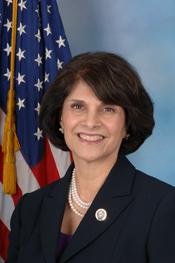
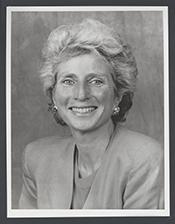
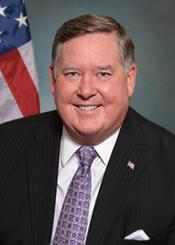
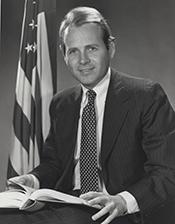
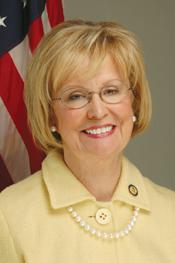
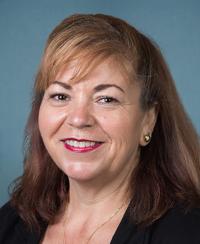
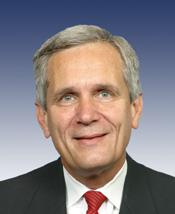
Mr. Speaker, let me thank the distinguished gentleman from Texas (Mr. Bell) and the distinguished gentleman from Virginia (Mr. Tom Davis) for their input on this important bill. I would also like to recognize my colleague and friend who represents Long Beach with me, the gentleman from California (Mr. Rohrabacher), and my dear friend who served with me as co-chair of the Congressional Caucus for Women's Issues, the gentlewoman from Illinois (Mrs. Biggert). All of us have come to honor Steve Horn.
Before I do that, let me congratulate also and be a part of the voices to congratulate Lance Armstrong who represents the best of America and has won his second championship in the Tour de France. We are all very honored that he is an American who represents us very well.
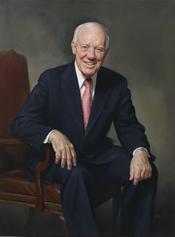
Mr. Speaker, it is an honor for me to offer the Stephen Horn Post Office Building Designation Act, H.R. 2309, today. The post office is located at 2300 Redondo Avenue in the city of Long Beach, in my district, in honor of our distinguished former colleague Steve Horn.
Before being elected to Congress, Steve Horn served in the world of academics. From 1970 to 1988, he served as the President of Cal State University Long Beach, and remained as a trustee and professor of political science at the university from 1988 to 1992. His distinguished academic career reads as follows: A Bachelor of Arts degree from Stanford University and an M.P.A. degree from Harvard University in Cambridge, and a Ph.D. from Stanford University as well.
From 1960 to 1966, Steve Horn first began to mix his academic prowess with his politically inclusive sensibilities, serving as a legislative assistant to former California Senator Thomas H. Kuchel. From 1966 to 1969 he continued his academic pursuits as a senior fellow at the prestigious Brookings Institute in Washington, D.C.
From 1992 until his retirement in 2002, Steve Horn was a colleague and friend to many of us in Congress, and he remains a friend to us. His pursuit of good public policy and fairness consistently crossed party lines. As a colleague on the Committee on Transportation and Infrastructure, it was my pleasure to serve with Steve Horn for 7 years, during which time we grappled with many challenges together, especially the 1998 transportation reauthorization bill, TEA-21.
I believe that I can speak safely for the members of the Committee on Transportation and Infrastructure in saying that his voice and perspective will be missed on our committee. The naming of this post office is a combination of Steve Horn's contribution as Congressman, former president of the Cal State University Long Beach, and as an honorable private citizen.
Specifically, the naming of this post office highlights Steve Horn's efforts to secure a separate ZIP Code for the city of Signal Hill. For years, Signal Hill city manager Ken Farfsing said the city and its 9,000 residents had had problems with higher insurance rates, misreported sales taxes affecting the city's revenue, and misapplied utility taxes by long-distance companies. Thanks to Steve Horn's tireless efforts, the city of Signal Hill finally received a separate ZIP Code in early 2002.
The length that Steve Horn went to secure a separate ZIP Code for Signal Hill is indicative of the passion and persistence he brought to his job as a Member of Congress. It is a great story. Some in Signal Hill might call it a great epic. It is worth repeating.
When Steve Horn came to Congress as Signal Hill's Representative in 1993, he made securing a ZIP Code for the city one of his top priorities. He met with city and Postal Service officials to try to address concerns raised by postal officials. In 1994, the Signal Hill City Council requested that the Long Beach postmaster place the Signal Hill Post Office on the 5-year capital improvement plan and that he complete the ZIP Code survey.
Early the next year, the Long Beach postmaster rejected Signal Hill's request, stating none of the existing facilities have the ability to house additional routes for Signal Hill. The city filed an appeal with regional headquarters, which was sent to the Postal Service Washington headquarters. A few months later, Postmaster General Runyon upheld the denial.
Postmaster General Runyon wrote Congressman Horn in June of 1995 stating, ``ZIP Code analysis for 20 years for code 908O4, 90806, and 90807 indicates that no additional ZIP Codes are required before 2014. The growth rate remains stable and the resultant density and mail volume will not require new ZIP Codes in the foreseeable future.'' However, Congressman Steve Horn met with the postmaster, who would not change his position.
This continued into 1996, as Postmaster General Runyon wrote letters to both Congressman Horn and Senator Barbara Boxer denying their request on behalf of the city of Signal Hill. In 1997, the Signal Hill City Council authorized a postal survey and retained the Economics Department of California State University Long Beach to review the Postal Service model. The completed survey found that 85.1 percent of residents supported a single ZIP Code. The survey was then sent to the postmaster and Congressman Horn wrote him as well, but again to no avail.
Frustrated with the lack of responsiveness on the part of the Postal Service, Steve Horn in 1998 introduced H.R. 4429, legislation requiring ZIP Codes for communities with 5,000 or more in population. In 2000, he introduced another bill, H.R. 3739, requiring single ZIP Codes for small cities split by multiple ZIP Codes. In that same year, he amended the Postal Service appropriation bill to require that the Postal Service report back by August 1 on the Signal Hill ZIP Code.
Finally, the Postal Service began to demonstrate some awareness of the problems created by the city of Signal Hill in being split into three Zip Codes. It began a study of the situation, and in August of 2000 began researching for a vacant property for the West Carrier Annex in the city. The next month, Congressman Horn, along with Signal Hill's mayor, Mike Noll, and City Manager Ken Farfsingm met with Long Beach Postmaster Jenkins and District Supervisor Shapiro to discuss the status of the annex.
In October, the Postal Service selected a site for the annex. Unfortunately, in March 2001, postal officials placed a hold on all capital projects. Six months later they indicated that all Postal Service projects would be indefinitely delayed due to the anthrax attacks that took place that fall.
At this point Congressman Horn met with the new Postmaster General to discuss the idea of using the existing postal facility in Signal Hill for the Signal Hill ZIP Code. In November 2001, the Postal Service mailed out a survey to residents completed the next January. Finally, in January 2002, with the completed survey showing two-thirds of the residents wanted a unified Signal Hill ZIP Code, the city got the good news it would receive the recognition desired for so long, its own ZIP Code.
This was vintage Congressman Steve Horn, passionate and persistent in making sure that this city, which deserved its ZIP Code, got it. Steve Horn's refusal to take no for an answer, his commitment to his constituents,
and his persuasiveness in pressing the argument with postal officials had enabled the city of Signal Hill to prevail.
I can think of no other appropriate recognition for Steve Horn than to name that post office after him. He is a rarity, Mr. Speaker, a bipartisan public servant. That is why I ask that this legislation receive prompt consideration and passage. I thank all of the gentlemen and gentlewomen who spoke on behalf of the Steve Horn Post Office designation.