PRIDE Act
 Rep. Deborah Pryce (R-OH)
Legislative Activity
Stay on top of the latest movement without scrolling through every action
Cloture motion on the committee substitute amendment not invoked in Senate by Yea-Nay Vote. 51 - 47. Record Vote Number: 65. (consideration: CR S3538)
April 1, 2004
View full timeline
Introduced in House
February 4, 2003
Sponsor introductory remarks on measure. (CR E188-189)
February 4, 2003
Referred to the Committee on Ways and Means, and in addition to the Committees on Energy and Commerce, Education and the Workforce, Agriculture, and Financial Services, for a period to be subsequently determined by the Speaker, in each case for consideration of such provisions as fall within the jurisdiction of the committee concerned.
February 7, 2003
Referred to the Subcommittee on Department Operations, Oversight, Nutrition and Forestry.
February 10, 2003
Referred to the Subcommittee on Health, for a period to be subsequently determined by the Chairman.
February 12, 2003
Rules Committee Resolution H. Res. 69 Reported to House. Rule provides for consideration of H.R. 4 with 2 hours of general debate. Previous question shall be considered as ordered without intervening motions except motion to recommit with or without instructions. Measure will be considered read. Specified amendments are in order.
February 12, 2003 • 5:32 PM
Rule H. Res. 69 passed House.
February 13, 2003 • 10:56 AM
Considered under the provisions of rule H. Res. 69. (consideration: CR H471-546, H547-552)
February 13, 2003 • 10:56 AM
Rule provides for consideration of H.R. 4 with 2 hours of general debate. Previous question shall be considered as ordered without intervening motions except motion to recommit with or without instructions. Measure will be considered read. Specified amendments are in order.
February 13, 2003 • 10:57 AM
House resolved itself into the Committee of the Whole House on the state of the Union pursuant to H. Res. 69 and Rule XXIII.
February 13, 2003 • 10:57 AM
The Speaker designated the Honorable Michael K. Simpson to act as Chairman of the Committee.
February 13, 2003 • 10:57 AM
GENERAL DEBATE - The Committee of the Whole proceeded with two hours of general debate on H.R. 4.
February 13, 2003 • 10:57 AM
DEBATE - Pursuant to the provisions of H. Res. 69, the Committee of the Whole proceeded with 40 minutes of debate on the Kucinich amendment in the nature of a substitute.
February 13, 2003 • 1:24 PM
DEBATE - Pursuant to the provisions of H. Res. 69, the Committee of the Whole proceeded with 40 minutes of debate on the Cardin amendment in the nature of a substitute.
February 13, 2003 • 2:39 PM
Mr. Cardin moved to recommit with instructions to Ways and Means. (consideration: CR H550-552; text: CR H550)
February 13, 2003 • 3:50 PM
DEBATE - The House proceeded with 10 minutes of debate on the Cardin motion to recommit with instructions.
February 13, 2003 • 3:51 PM
On motion to recommit with instructions Failed by the Yeas and Nays: 197 - 221 (Roll no. 29).
February 13, 2003 • 4:15 PM
Passed/agreed to in House: On passage Passed by the Yeas and Nays: 230 - 192 (Roll no. 30).(text: CR H499-513)
February 13, 2003 • 4:21 PM
On passage Passed by the Yeas and Nays: 230 - 192 (Roll no. 30). (text: CR H499-513)
February 13, 2003 • 4:21 PM
Motion to reconsider laid on the table Agreed to without objection.
February 13, 2003 • 4:21 PM
Received in the Senate and Read twice and referred to the Committee on Finance.
February 13, 2003
Committee on Finance. Ordered to be reported with an amendment in the nature of a substitute favorably.
September 10, 2003
Committee on Finance. Reported by Senator Grassley with an amendment in the nature of a substitute. With written report No. 108-162. Minority views filed.
October 3, 2003
Placed on Senate Legislative Calendar under General Orders. Calendar No. 305.
October 3, 2003
Measure laid before Senate. (consideration: CR S3219-3254, S3256-3278; text of measure as reported in Senate: CR S3219-3254)
March 29, 2004
Considered by Senate. (consideration: CR S3324-3345)
March 30, 2004
Cloture motion on the committee substitute amendment presented in Senate. (consideration: CR S3359; text: CR S3359)
March 30, 2004
Considered by Senate. (consideration: CR S3407-3448)
March 31, 2004
Considered by Senate. (consideration: CR S3529-3538, S3544-3557)
April 1, 2004
Cloture motion on the committee substitute amendment not invoked in Senate by Yea-Nay Vote. 51 - 47. Record Vote Number: 65. (consideration: CR S3538)
April 1, 2004
Voting History
5 votes recorded • Roll call available
SENATE
Roll Call AvailableApril 1, 2004 at 12:12 PM
On the Motion (Motion To Invoke Cloture On The Committee Substitute To H. R. 4)
Majority required: 3/5 (60%)
51 - 47
HOUSE
Roll Call AvailableFebruary 13, 2003 at 4:23 PM
On Passage
Majority required: 1/2 (50%)
230 - 192
HOUSE
Roll Call AvailableFebruary 13, 2003 at 4:16 PM
On Motion to Recommit with Instructions
Majority required: 1/2 (50%)
197 - 221
Floor Debate
23 membersWhat members said about H.R. 4 on the floor



 +18
+18
Floor Debate
23 membersWhat members said about H.R. 4 on the floor
Parliamentary inquiry. Mr. President, parliamentary inquiry: First, I recognize that the Senator has time. But I didn't know if we were going to alternate speakers. Does the Senator from Wyoming…
I move to lay that motion on the table. The motion to lay on the table was agreed to. Mr. President, I move to reconsider the vote, and I move to lay that motion on the table. The motion to lay on…
Mr. President, I have two amendments at the desk that are intended to address a critical shortage in nutrition funding for schools, food banks and soup kitchens brought about by the Bush…
I thank the Chair. Mr. President, I wish to use a few moments of morning business to talk about and describe two amendments I have proposed to the pending legislation. I hope these are amendments…
Mr. President, the amendment is at the desk. I ask unanimous consent that the reading of the amendment be dispensed with. Mr. President, this is a second-degree amendment to the underlying amendment.…
Show 8 more

Mr. President, I strongly support the amendment offered by Senator Mikulski that would prevent Federal agencies from establishing, applying, or enforcing any numerical goal, target, or quota for the…

Mr. President, if the Senator from Alaska will yield, I think there is an understanding that I am going to modify the amendment I have at the desk. I thank the manager. Amendments Nos. 6, 83, 85,…

Mr. President, I thank the Senator from Wyoming for his leadership. I rise in support of his amendment, and, as the Senator from Ohio said, in opposition to the amendment of the Senator from…

Mr. President, I strongly support Senator Mikulski's amendment to prohibit arbitrary, ``one-size-fits-all'' privatization quotas for Federal agencies. Under the amendment, agencies would still be…
I would like to associate myself with the remarks of Senator Leahy regarding the restoration of Section 32 funds that were depleted to finance the Administration's ad-hoc program to provide emergency…

Mr. President, I think the Senator from Maryland has raised a very legitimate point about the use of arbitrary quotas or numerical targets to guide the contracting-out activities of Federal agencies.…

That is correct. Mr. President, I send an amendment to the desk, and I ask unanimous consent that it be considered in lieu of my motion to instruct the conferees that is already at the desk. Mr.…
Mr. President, the 2002 farm bill authorized the Grants for Youth Program, an initiative to develop pilot programs and expand outreach to youth in rural communities and small towns across the Nation.…
Show 11 more

Mr. President, I rise today to engage in a colloquy with the distinguished junior Senator from Maine, the distinguished junior Senator from Maine, the distinguished ranking member of the Agriculture…

Mr. President, I rise in opposition to the Lautenberg amendment. I look over and see both Senators from Louisiana here. I can assure you that money is not just the answer. I remember at Bossier City…
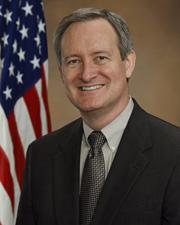
Mr. President, would the distinguished Chairman of the Subcommittee yield for a colloquy regarding Land and Water Conservation Funds for Idaho? First allow me to commend the Chairman and Ranking…
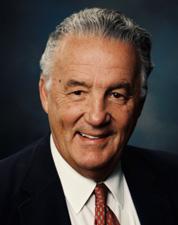
Mr. President, I rise today in support of an amendment offered by Senator Mikulski regarding the use of quotas in contracting out Government jobs. The administration has put forth proposals requiring…

Mr. President, parliamentary inquiry. I announce that the Senator from Iowa (Mr. Harkin) and the Senator from Hawaii (Mr. Inouye) are necessarily absent. I ask to be made a cosponsor. Have the yeas…

Mr. President, will the distinguished chairman of the Transportation Subcommittee, my good friend, the Senator from Alabama, yield for a question? My office was recently visited by the mayor of…

Mr. President, I---- Mr. President, how much time do we have on this side? I thank the Chair. First, I share the concerns of the Senator from Maryland about this problem, and I want to do everything…

I appreciate the efforts of my friend from Wisconsin. I agree that the Summer Food Service Program is important for several reasons. Not only does it provide children with a healthy meal, but many of…
Mr. President, could I just ask---- Not wishing to object, I ask if any disposition has been made on amendment 126. I will wait for the remaining package. If not, I will ask for a vote on it. Mr.…

You are correct Senator. Four million dollars is in the report for this purpose which originated from a request to the Interior Appropriation Subcommittee in the form of a Dear Colleague letter dated…

One minute. The superfund site in Coeur d'Alene, ID, that the Senator from New Jersey referred to, 3 years ago was touted to cost $1 billion to clean up. As a result of a cooperative State plan, in…
Bill Text
4 versions available
        [Congressional Bills 108th Congress]
[From the U.S. Government Publishing Office]
[H.R. 4 Reported in Senate (RS)]

Calendar No. 305
108th CONGRESS
1st Session
H. R. 4

[Report No. 108-162]

_______________________________________________________________________

IN THE HOUSE OF REPRESENTATIVES

February 13, 2003

Received; read twice and referred to the Committee on Finance

October 3, 2003

Reported by Mr. Grassley, with an amendment
[Strike out all after the enacting clause and insert the part printed
in italic]

_______________________________________________________________________

AN ACT

To reauthorize and improve the program of block grants to States for
temporary assistance for needy families, improve access to quality
child care, and for other purposes.

Be it enacted by the Senate and House of Representatives of the
United States of America in Congress assembled,

<DELETED>SECTION 1. SHORT TITLE.</DELETED>

<DELETED>    This Act may be cited as the ``Personal Responsibility,
Work, and Family Promotion Act of 2003''.</DELETED>

<DELETED>SEC. 2. TABLE OF CONTENTS.</DELETED>

<DELETED>    The table of contents of this Act is as follows:</DELETED>

<DELETED>Sec. 1. Short title.
<DELETED>Sec. 2. Table of contents.
<DELETED>Sec. 3. References.
<DELETED>Sec. 4. Findings.
<DELETED>TITLE I--TANF

<DELETED>Sec. 101. Purposes.
<DELETED>Sec. 102. Family assistance grants.
<DELETED>Sec. 103. Promotion of family formation and healthy marriage.
<DELETED>Sec. 104. Supplemental grant for population increases in
certain States.
<DELETED>Sec. 105. Bonus to reward employment achievement.
<DELETED>Sec. 106. Contingency fund.
<DELETED>Sec. 107. Use of funds.
<DELETED>Sec. 108. Repeal of Federal loan for State welfare programs.
<DELETED>Sec. 109. Universal engagement and family self-sufficiency
plan requirements.
<DELETED>Sec. 110. Work participation requirements.
<DELETED>Sec. 111. Maintenance of effort.
<DELETED>Sec. 112. Performance improvement.
<DELETED>Sec. 113. Data collection and reporting.
<DELETED>Sec. 114. Direct funding and administration by Indian tribes.
<DELETED>Sec. 115. Research, evaluations, and national studies.
<DELETED>Sec. 116. Studies by the Census Bureau and the General
Accounting Office.
<DELETED>Sec. 117. Definition of assistance.
<DELETED>Sec. 118. Technical corrections.
<DELETED>Sec. 119. Fatherhood program.
<DELETED>Sec. 120. State option to make TANF programs mandatory
partners with one-stop employment training
centers.
<DELETED>Sec. 121. Sense of the Congress.
<DELETED>Sec. 122. Extension through fiscal year 2003.
<DELETED>TITLE II--CHILD CARE

<DELETED>Sec. 201. Short title.
<DELETED>Sec. 202. Goals.
<DELETED>Sec. 203. Authorization of appropriations.
<DELETED>Sec. 204. Application and plan.
<DELETED>Sec. 205. Activities to improve the quality of child care.
<DELETED>Sec. 206. Report by secretary.
<DELETED>Sec. 207. Definitions.
<DELETED>Sec. 208. Entitlement funding.
<DELETED>TITLE III--CHILD SUPPORT

<DELETED>Sec. 301. Federal matching funds for limited pass through of
child support payments to families
receiving TANF.
<DELETED>Sec. 302. State option to pass through all child support
payments to families that formerly received
TANF.
<DELETED>Sec. 303. Mandatory review and adjustment of child support
orders for families receiving TANF.
<DELETED>Sec. 304. Mandatory fee for successful child support
collection for family that has never
received TANF.
<DELETED>Sec. 305. Report on undistributed child support payments.
<DELETED>Sec. 306. Use of new hire information to assist in
administration of unemployment compensation
programs.
<DELETED>Sec. 307. Decrease in amount of child support arrearage
triggering passport denial.
<DELETED>Sec. 308. Use of tax refund intercept program to collect past-
due child support on behalf of children who
are not minors.
<DELETED>Sec. 309. Garnishment of compensation paid to veterans for
service-connected disabilities in order to
enforce child support obligations.
<DELETED>Sec. 310. Improving Federal debt collection practices.
<DELETED>Sec. 311. Maintenance of technical assistance funding.
<DELETED>Sec. 312. Maintenance of Federal Parent Locator Service
funding.
<DELETED>TITLE IV--CHILD WELFARE

<DELETED>Sec. 401. Extension of authority to approve demonstration
projects.
<DELETED>Sec. 402. Elimination of limitation on number of waivers.
<DELETED>Sec. 403. Elimination of limitation on number of States that
may be granted waivers to conduct
demonstration projects on same topic.
<DELETED>Sec. 404. Elimination of limitation on number of waivers that
may be granted to a single State for
demonstration projects.
<DELETED>Sec. 405. Streamlined process for consideration of amendments
to and extensions of demonstration projects
requiring waivers.
<DELETED>Sec. 406. Availability of reports.
<DELETED>Sec. 407. Technical correction.
<DELETED>TITLE V--SUPPLEMENTAL SECURITY INCOME

<DELETED>Sec. 501. Review of State agency blindness and disability
determinations.
<DELETED>TITLE VI--STATE AND LOCAL FLEXIBILITY

<DELETED>Sec. 601. Program coordination demonstration projects.
<DELETED>Sec. 602. State food assistance block grant demonstration
project.
<DELETED>TITLE VII--ABSTINENCE EDUCATION

<DELETED>Sec. 701. Extension of abstinence education program.
<DELETED>TITLE VIII--TRANSITIONAL MEDICAL ASSISTANCE

<DELETED>Sec. 801. Extension of medicaid transitional medical
assistance program through fiscal year
2004.
<DELETED>Sec. 802. Adjustment to payments for medicaid administrative
costs to prevent duplicative payments and
to fund extension of transitional medical
assistance.
<DELETED>TITLE IX--EFFECTIVE DATE

<DELETED>Sec. 901. Effective date.

<DELETED>SEC. 3. REFERENCES.</DELETED>

<DELETED>    Except as otherwise expressly provided, wherever in this
Act an amendment or repeal is expressed in terms of an amendment to, or
repeal of, a section or other provision, the amendment or repeal shall
be considered to be made to a section or other provision of the Social
Security Act.</DELETED>

<DELETED>SEC. 4. FINDINGS.</DELETED>

<DELETED>    The Congress makes the following findings:</DELETED>
<DELETED>    (1) The Temporary Assistance for Needy Families
(TANF) Program established by the Personal Responsibility and
Work Opportunity Reconciliation Act of 1996 (Public Law 104-
193) has succeeded in moving families from welfare to work and
reducing child poverty.</DELETED>
<DELETED>    (A) There has been a dramatic increase in
the employment of current and former welfare
recipients. The percentage of working recipients
reached an all-time high in fiscal year 1999 and
continued steady in fiscal years 2000 and 2001. In
fiscal year 2001, 33 percent of adult recipients were
working, compared to less than 7 percent in fiscal year
1992, and 11 percent in fiscal year 1996. All States
met the overall participation rate standard in fiscal
year 2001, as did the District of Columbia and Puerto
Rico.</DELETED>
<DELETED>    (B) Earnings for welfare recipients
remaining on the rolls have also increased
significantly, as have earnings for female-headed
households. The increases have been particularly large
for the bottom 2 income quintiles, that is, those women
who are most likely to be former or present welfare
recipients.</DELETED>
<DELETED>    (C) Welfare dependency has plummeted. As
of June 2002, 2,025,000 families and 5,008,000
individuals were receiving assistance. Accordingly, the
number of families in the welfare caseload and the
number of individuals receiving cash assistance
declined 54 percent and 58 percent, respectively, since
the enactment of TANF. These declines have persisted
even as unemployment rates have increased: unemployment
rates nationwide rose 50 percent, from 3.9 percent in
September 2000 to 6 percent in November 2002, while
welfare caseloads continued to decline.</DELETED>
<DELETED>    (D) The child poverty rate continued to
decline between 1996 and 2001, falling 20 percent from
20.5 to 16.3 percent. The 2001 child poverty rate
remains at the lowest level since 1979. Child poverty
rates for African-American and Hispanic children have
also fallen dramatically during the past 6 years.
African-American child poverty is at the lowest rate on
record and Hispanic child poverty is at the lowest
level reported in over 20 years.</DELETED>
<DELETED>    (E) Despite these gains, States have had
mixed success in fully engaging welfare recipients in
work activities. While all States have met the overall
work participation rates required by law, in 2001, in
an average month, only just over </DELETED>\<DELETED>1/
3</DELETED>\ <DELETED>of all families with an adult
participated in work activities that were countable
toward the State's participation rate. Five
jurisdictions failed to meet the more rigorous 2-parent
work requirements, and 19 jurisdictions (States and
territories) are not subject to the 2-parent
requirements, most because they moved their 2-parent
cases to separate State programs where they are not
subject to a penalty for failing the 2-parent
rates.</DELETED>
<DELETED>    (2) As a Nation, we have made substantial progress
in reducing teen pregnancies and births, slowing increases in
nonmarital childbearing, and improving child support
collections and paternity establishment.</DELETED>
<DELETED>    (A) The teen birth rate has fallen
continuously since 1991, down a dramatic 22 percent by
2000. During the period of 1991-2000, teenage birth
rates fell in all States and the District of Columbia,
Puerto Rico, and the Virgin Islands. Declines also have
spanned age, racial, and ethnic groups. There has been
success in lowering the birth rate for both younger and
older teens. The birth rate for those 15-17 years of
age is down 29 percent since 1991, and the rate for
those 18 and 19 is down 16 percent. Between 1991 and
2000, teen birth rates declined for all women ages 15-
19--white, African American, American Indian, Asian or
Pacific Islander, and Hispanic women ages 15-19. The
rate for African American teens--until recently the
highest--experienced the largest decline, down 31
percent from 1991 to 2000, to reach the lowest rate
ever reported for this group. Most births to teens are
nonmarital; in 2000, about 73 percent of the births to
teens aged 15-19 occurred outside of
marriage.</DELETED>
<DELETED>    (B) Nonmarital childbearing continued to
increase slightly in 2001, however not at the sharp
rates of increase seen in recent decades. The birth
rate among unmarried women in 2001 was 4 percent lower
than its peak reached in 1994, while the proportion of
births occurring outside of marriage has remained at
approximately 33 percent since 1998.</DELETED>
<DELETED>    (C) The negative consequences of out-of-
wedlock birth on the mother, the child, the family, and
society are well documented. These include increased
likelihood of welfare dependency, increased risks of
low birth weight, poor cognitive development, child
abuse and neglect, and teen parenthood, and decreased
likelihood of having an intact marriage during
adulthood.</DELETED>
<DELETED>    (D) An estimated 24,500,000 children do
not live with their biological fathers, and 7,100,000
children do not live with their biological mothers.
These facts are attributable largely to declining
marriage rates, increasing divorce rates, and
increasing rates of nonmarital births during the latter
part of the 20th century.</DELETED>
<DELETED>    (E) There has been a dramatic rise in
cohabitation as marriages have declined. Only 40
percent of children of cohabiting couples will see
their parents marry. Those who do marry experience a 50
percent higher divorce rate. Children in single-parent households and
cohabiting households are at much higher risk of child abuse than
children in intact married and stepparent families.</DELETED>
<DELETED>    (F) Children who live apart from their
biological fathers, on average, are more likely to be
poor, experience educational, health, emotional, and
psychological problems, be victims of child abuse,
engage in criminal behavior, and become involved with
the juvenile justice system than their peers who live
with their married, biological mother and father. A
child living in a single-parent family is nearly 5
times as likely to be poor as a child living in a
married-couple family. In 2001, in married-couple
families, the child poverty rate was 8 percent, and in
households headed by a single mother, the poverty rate
was 39.3 percent.</DELETED>
<DELETED>    (G) Since the enactment of the Personal
Responsibility and Work Opportunity Reconciliation Act
of 1996, child support collections within the child
support enforcement system have grown every year,
increasing from $12,000,000,000 in fiscal year 1996 to
nearly $19,000,000,000 in fiscal year 2001. The number
of paternities established or acknowledged in fiscal
year 2002 reached an historic high of over 1,500,000--
which includes more than a 100 percent increase through
in-hospital acknowledgement programs to 790,595 in 2001
from 324,652 in 1996. Child support collections were
made in well over 7,000,000 cases in fiscal year 2000,
significantly more than the almost 4,000,000 cases
having a collection in 1996.</DELETED>
<DELETED>    (3) The Personal Responsibility and Work
Opportunity Reconciliation Act of 1996 gave States great
flexibility in the use of Federal funds to develop innovative
programs to help families leave welfare and begin employment
and to encourage the formation of 2-parent families.</DELETED>
<DELETED>    (A) Total Federal and State TANF
expenditures in fiscal year 2001 were $25,500,000,000,
up from $24,000,000,000 in fiscal year 2000 and
$22,600,000,000 in fiscal year 1999. This increased
spending is attributable to significant new investments
in supportive services in the TANF program, such as
child care and activities to support work.</DELETED>
<DELETED>    (B) Since the welfare reform effort began
there has been a dramatic increase in work
participation (including employment, community service,
and work experience) among welfare recipients, as well
as an unprecedented reduction in the caseload because
recipients have left welfare for work.</DELETED>
<DELETED>    (C) States are making policy choices and
investment decisions best suited to the needs of their
citizens.</DELETED>
<DELETED>    (i) To expand aid to working
families, all States disregard a portion of a
family's earned income when determining benefit
levels.</DELETED>
<DELETED>    (ii) Most States increased the
limits on countable assets above the former Aid
to Families with Dependent Children (AFDC)
program. Every State has increased the vehicle
asset level above the prior AFDC limit for a
family's primary automobile.</DELETED>
<DELETED>    (iii) States are experimenting
with programs to promote marriage and father
involvement. Over half the States have
eliminated restrictions on 2-parent families.
Many States use TANF, child support, or State
funds to support community-based activities to
help fathers become more involved in their
children's lives or strengthen relationships
between mothers and fathers.</DELETED>
<DELETED>    (4) Therefore, it is the sense of the Congress
that increasing success in moving families from welfare to
work, as well as in promoting healthy marriage and other means
of improving child well-being, are very important Government
interests and the policy contained in part A of title IV of the
Social Security Act (as amended by this Act) is intended to
serve these ends.</DELETED>

<DELETED>TITLE I--TANF</DELETED>

<DELETED>SEC. 101. PURPOSES.</DELETED>

<DELETED>    Section 401(a) (42 U.S.C. 601(a)) is amended--</DELETED>
<DELETED>    (1) in the matter preceding paragraph (1), by
striking ``increase'' and inserting ``improve child well-being
by increasing'';</DELETED>
<DELETED>    (2) in paragraph (1), by inserting ``and
services'' after ``assistance'';</DELETED>
<DELETED>    (3) in paragraph (2), by striking ``parents on
government benefits'' and inserting ``families on government
benefits and reduce poverty''; and</DELETED>
<DELETED>    (4) in paragraph (4), by striking ``two-parent
families'' and inserting ``healthy, 2-parent married families,
and encourage responsible fatherhood''.</DELETED>

<DELETED>SEC. 102. FAMILY ASSISTANCE GRANTS.</DELETED>

<DELETED>    (a) Extension of Authority.--Section 403(a)(1)(A) (42
U.S.C. 603(a)(1)(A)) is amended--</DELETED>
<DELETED>    (1) by striking ``1996, 1997, 1998, 1999, 2000,
2001, and 2002'' and inserting ``2004 through 2008'';
and</DELETED>
<DELETED>    (2) by inserting ``payable to the State for the
fiscal year'' before the period.</DELETED>
<DELETED>    (b) State Family Assistance Grant.--Section 403(a)(1) (42
U.S.C. 603(a)(1)) is amended by striking subparagraphs (B) through (E)
and inserting the following:</DELETED>
<DELETED>    ``(B) State family assistance grant.--The
State family assistance grant payable to a State for a
fiscal year shall be the amount that bears the same
ratio to the amount specified in subparagraph (C) of
this paragraph as the amount required to be paid to the
State under this paragraph for fiscal year 2002
(determined without regard to any reduction pursuant to
section 409 or 412(a)(1)) bears to the total amount
required to be paid under this paragraph for fiscal
year 2002 (as so determined).</DELETED>
<DELETED>    ``(C) Appropriation.--Out of any money in
the Treasury of the United States not otherwise
appropriated, there are appropriated for each of fiscal
years 2004 through 2008 $16,566,542,000 for grants
under this paragraph.''.</DELETED>
<DELETED>    (c) Matching Grants for the Territories.--Section
1108(b)(2) (42 U.S.C. 1308(b)(2)) is amended by striking ``1997 through
2002'' and inserting ``2004 through 2008''.</DELETED>

<DELETED>SEC. 103. PROMOTION OF FAMILY FORMATION AND HEALTHY
MARRIAGE.</DELETED>

<DELETED>    (a) State Plans.--Section 402(a)(1)(A) (42 U.S.C.
602(a)(1)(A)) is amended by adding at the end the following:</DELETED>
<DELETED>    ``(vii) Encourage equitable
treatment of married, 2-parent families under
the program referred to in clause
(i).''.</DELETED>
<DELETED>    (b) Healthy Marriage Promotion Grants; Repeal of Bonus for
Reduction of Illegitimacy Ratio.--Section 403(a)(2) (42 U.S.C.
603(a)(2)) is amended to read as follows:</DELETED>
<DELETED>    ``(2) Healthy marriage promotion grants.--
</DELETED>
<DELETED>    ``(A) Authority.--The Secretary shall
award competitive grants to States, territories, and
tribal organizations for not more than 50 percent of
the cost of developing and implementing innovative
programs to promote and support healthy, married, 2-
parent families.</DELETED>
<DELETED>    ``(B) Healthy marriage promotion
activities.--Funds provided under subparagraph (A)
shall be used to support any of the following programs
or activities:</DELETED>
<DELETED>    ``(i) Public advertising campaigns
on the value of marriage and the skills needed
to increase marital stability and
health.</DELETED>
<DELETED>    ``(ii) Education in high schools
on the value of marriage, relationship skills,
and budgeting.</DELETED>
<DELETED>    ``(iii) Marriage education,
marriage skills, and relationship skills
programs, that may include parenting skills,
financial management, conflict resolution, and
job and career advancement, for non-married
pregnant women and non-married expectant
fathers.</DELETED>
<DELETED>    ``(iv) Pre-marital education and
marriage skills training for engaged couples
and for couples or individuals interested in
marriage.</DELETED>
<DELETED>    ``(v) Marriage enhancement and
marriage skills training programs for married
couples.</DELETED>
<DELETED>    ``(vi) Divorce reduction programs
that teach relationship skills.</DELETED>
<DELETED>    ``(vii) Marriage mentoring
programs which use married couples as role
models and mentors in at-risk
communities.</DELETED>
<DELETED>    ``(viii) Programs to reduce the
disincentives to marriage in means-tested aid
programs, if offered in conjunction with any
activity described in this
subparagraph.</DELETED>
<DELETED>    ``(C) Appropriation.--</DELETED>
<DELETED>    ``(i) In general.--Out of any
money in the Treasury of the United States not
otherwise appropriated, there are appropriated
for each of fiscal years 2003 through 2008
$100,000,000 for grants under this
paragraph.</DELETED>
<DELETED>    ``(ii) Extended availability of
fy2003 funds.--Funds appropriated under clause
(i) for fiscal year 2003 shall remain available
to the Secretary through fiscal year 2004, for
grants under this paragraph for fiscal year
2003.''.</DELETED>
<DELETED>    (c) Counting of Spending on Non-Eligible Families to
Prevent and Reduce Incidence of Out-of-Wedlock Births, Encourage
Formation and Maintenance of Healthy, 2-Parent Married Families, or
Encourage Responsible Fatherhood.--Section 409(a)(7)(B)(i) (42 U.S.C.
609(a)(7)(B)(i)) is amended by adding at the end the
following:</DELETED>
<DELETED>    ``(V) Counting of spending
on non-eligible families to prevent and
reduce incidence of out-of-wedlock
births, encourage formation and
maintenance of healthy, 2-parent
married families, or encourage
responsible fatherhood.--The term
`qualified State expenditures' includes
the total expenditures by the State
during the fiscal year under all State
programs for a purpose described in
paragraph (3) or (4) of section
401(a).''.</DELETED>

<DELETED>SEC. 104. SUPPLEMENTAL GRANT FOR POPULATION INCREASES IN
CERTAIN STATES.</DELETED>

<DELETED>    Section 403(a)(3)(H) (42 U.S.C. 603(a)(3)(H)) is amended--
</DELETED>
<DELETED>    (1) in the subparagraph heading, by striking ``of
grants for fiscal year 2002'';</DELETED>
<DELETED>    (2) in clause (i), by striking ``fiscal year
2002'' and inserting ``each of fiscal years 2004 through
2007'';</DELETED>
<DELETED>    (3) in clause (ii), by striking ``2002'' and
inserting ``2007''; and</DELETED>
<DELETED>    (4) in clause (iii), by striking ``fiscal year
2002'' and inserting ``each of fiscal years 2004 through
2007''.</DELETED>

<DELETED>SEC. 105. BONUS TO REWARD EMPLOYMENT ACHIEVEMENT.</DELETED>

<DELETED>    (a) Reallocation of Funding.--</DELETED>
<DELETED>    (1) In general.--Section 403(a)(4) (42 U.S.C.
603(a)(4)) is amended--</DELETED>
<DELETED>    (A) in the paragraph heading, by striking
``high performance states'' and inserting ``employment
achievement'';</DELETED>
<DELETED>    (B) in subparagraph (D)(ii)--</DELETED>
<DELETED>    (i) in subclause (I), by striking
``equals $200,000,000'' and inserting ``(other
than 2003) equals $200,000,000, and for bonus
year 2003 equals $100,000,000''; and</DELETED>
<DELETED>    (ii) in subclause (II), by
striking ``$1,000,000,000'' and inserting
``$900,000,000''; and</DELETED>
<DELETED>    (C) in subparagraph (F), by striking
``$1,000,000,000'' and inserting
``$900,000,000''.</DELETED>
<DELETED>    (2) Effective date.--The amendments made by
paragraph (1) shall take effect on the date of the enactment of
this Act, or September 30, 2003, whichever is
earlier.</DELETED>
<DELETED>    (b) Bonus to Reward Employment Achievement.--</DELETED>
<DELETED>    (1) In general.--Section 403(a)(4) (42 U.S.C.
603(a)(4)) is amended by striking subparagraphs (A) through (F)
and inserting the following:</DELETED>
<DELETED>    ``(A) In general.--The Secretary shall
make a grant pursuant to this paragraph to each State
for each bonus year for which the State is an
employment achievement State.</DELETED>
<DELETED>    ``(B) Amount of grant.--</DELETED>
<DELETED>    ``(i) In general.--Subject to
clause (ii) of this subparagraph, the Secretary
shall determine the amount of the grant payable
under this paragraph to an employment
achievement State for a bonus year, which shall
be based on the performance of the State as
determined under subparagraph (D)(i) for the
fiscal year that immediately precedes the bonus
year.</DELETED>
<DELETED>    ``(ii) Limitation.--The amount
payable to a State under this paragraph for a
bonus year shall not exceed 5 percent of the
State family assistance grant.</DELETED>
<DELETED>    ``(C) Formula for measuring state
performance.--</DELETED>
<DELETED>    ``(i) In general.--Subject to
clause (ii), not later than October 1, 2003,
the Secretary, in consultation with the States,
shall develop a formula for measuring State
performance in operating the State program
funded under this part so as to achieve the
goals of employment entry, job retention, and
increased earnings from employment for families
receiving assistance under the program, as
measured on an absolute basis and on the basis of improvement in State
performance.</DELETED>
<DELETED>    ``(ii) Special rule for bonus year
2004.--For the purposes of awarding a bonus
under this paragraph for bonus year 2004, the
Secretary may measure the performance of a
State in fiscal year 2003 using the job entry
rate, job retention rate, and earnings gain
rate components of the formula developed under
section 403(a)(4)(C) as in effect immediately
before the effective date of this
paragraph.</DELETED>
<DELETED>    ``(D) Determination of state
performance.--For each bonus year, the Secretary
shall--</DELETED>
<DELETED>    ``(i) use the formula developed
under subparagraph (C) to determine the
performance of each eligible State for the
fiscal year that precedes the bonus year;
and</DELETED>
<DELETED>    ``(ii) prescribe performance
standards in such a manner so as to ensure
that--</DELETED>
<DELETED>    ``(I) the average annual
total amount of grants to be made under
this paragraph for each bonus year
equals $100,000,000; and</DELETED>
<DELETED>    ``(II) the total amount of
grants to be made under this paragraph
for all bonus years equals
$600,000,000.</DELETED>
<DELETED>    ``(E) Definitions.--In this
paragraph:</DELETED>
<DELETED>    ``(i) Bonus year.--The term `bonus
year' means each of fiscal years 2004 through
2009.</DELETED>
<DELETED>    ``(ii) Employment achievement
state.--The term `employment achievement State'
means, with respect to a bonus year, an
eligible State whose performance determined
pursuant to subparagraph (D)(i) for the fiscal
year preceding the bonus year equals or exceeds
the performance standards prescribed under
subparagraph (D)(ii) for such preceding fiscal
year.</DELETED>
<DELETED>    ``(F) Appropriation.--</DELETED>
<DELETED>    ``(i) In general.--Out of any
money in the Treasury of the United States not
otherwise appropriated, there are appropriated
for fiscal years 2004 through 2009 $600,000,000
for grants under this paragraph.</DELETED>
<DELETED>    ``(ii) Extended availability of
prior appropriation.--Amounts appropriated
under section 403(a)(4)(F) of the Social
Security Act (as in effect before the date of
the enactment of this clause) that have not
been expended as of such date of enactment
shall remain available through fiscal year 2004
for grants under section 403(a)(4) of such Act
(as in effect before such date of enactment)
for bonus year 2003.</DELETED>
<DELETED>    ``(G) Grants for tribal organizations.--
This paragraph shall apply with respect to tribal
organizations in the same manner in which this
paragraph applies with respect to States. In
determining the criteria under which to make grants to
tribal organizations under this paragraph, the
Secretary shall consult with tribal
organizations.''.</DELETED>
<DELETED>    (2) Effective date.--The amendment made by
paragraph (1), except for section 403(a)(4)(F)(ii) of the
Social Security Act as inserted by the amendment, shall take
effect on October 1, 2003.</DELETED>

<DELETED>SEC. 106. CONTINGENCY FUND.</DELETED>

<DELETED>    (a) Deposits Into Fund.--Section 403(b)(2) (42 U.S.C.
603(b)(2)) is amended--</DELETED>
<DELETED>    (1) by striking ``1997, 1998, 1999, 2000, 2001,
and 2002'' and inserting ``2004 through 2008''; and</DELETED>
<DELETED>    (2) by striking all that follows
``$2,000,000,000'' and inserting a period.</DELETED>
<DELETED>    (b) Grants.--Section 403(b)(3)(C)(ii) (42 U.S.C.
603(b)(3)(C)(ii)) is amended by striking ``fiscal years 1997 through
2002'' and inserting ``fiscal years 2004 through 2008''.</DELETED>
<DELETED>    (c) Definition of Needy State.--Clauses (i) and (ii) of
section 403(b)(5)(B) (42 U.S.C. 603(b)(5)(B)) are amended by inserting
after ``1996'' the following: ``, and the Food Stamp Act of 1977 as in
effect during the corresponding 3-month period in the fiscal year
preceding such most recently concluded 3-month period,''.</DELETED>
<DELETED>    (d) Annual Reconciliation: Federal Matching of State
Expenditures Above ``Maintenance of Effort'' Level.--Section 403(b)(6)
(42 U.S.C. 603(b)(6)) is amended--</DELETED>
<DELETED>    (1) in subparagraph (A)(ii)--</DELETED>
<DELETED>    (A) by adding ``and'' at the end of
subclause (I);</DELETED>
<DELETED>    (B) by striking ``; and'' at the end of
subclause (II) and inserting a period; and</DELETED>
<DELETED>    (C) by striking subclause (III);</DELETED>
<DELETED>    (2) in subparagraph (B)(i)(II), by striking all
that follows ``section 409(a)(7)(B)(iii))'' and inserting a
period;</DELETED>
<DELETED>    (3) by amending subparagraph (B)(ii)(I) to read as
follows:</DELETED>
<DELETED>    ``(I) the qualified State
expenditures (as defined in section
409(a)(7)(B)(i)) for the fiscal year;
plus''; and</DELETED>
<DELETED>    (4) by striking subparagraph (C).</DELETED>
<DELETED>    (e) Consideration of Certain Child Care Expenditures in
Determining State Compliance With Contingency Fund Maintenance of
Effort Requirement.--Section 409(a)(10) (42 U.S.C. 609(a)(10)) is
amended--</DELETED>
<DELETED>    (1) by striking ``(other than the expenditures
described in subclause (I)(bb) of that paragraph)) under the
State program funded under this part'' and inserting a close
parenthesis; and</DELETED>
<DELETED>    (2) by striking ``excluding any amount expended by
the State for child care under subsection (g) or (i) of section
402 (as in effect during fiscal year 1994) for fiscal year
1994,''.</DELETED>
<DELETED>    (f) Effective Date.--The amendments made by this section
shall take effect on October 1, 2003.</DELETED>

<DELETED>SEC. 107. USE OF FUNDS.</DELETED>

<DELETED>    (a) General Rules.--Section 404(a)(2) (42 U.S.C.
604(a)(2)) is amended by striking ``in any manner that'' and inserting
``for any purposes or activities for which''.</DELETED>
<DELETED>    (b) Treatment of Interstate Immigrants.--</DELETED>
<DELETED>    (1) State plan provision.--Section 402(a)(1)(B)
(42 U.S.C. 602(a)(1)(B)) is amended by striking clause (i) and
redesignating clauses (ii) through (iv) as clauses (i) through
(iii), respectively.</DELETED>
<DELETED>    (2) Use of funds.--Section 404 (42 U.S.C. 604) is
amended by striking subsection (c).</DELETED>
<DELETED>    (c) Increase in Amount Transferable to Child Care.--
Section 404(d)(1) (42 U.S.C. 604(d)(1)) is amended by striking ``30''
and inserting ``50''.</DELETED>
<DELETED>    (d) Increase in Amount Transferable to Title XX
Programs.--Section 404(d)(2)(B) (42 U.S.C. 604(d)(2)(B)) is amended to
read as follows:</DELETED>
<DELETED>    ``(B) Applicable percent.--For purposes of
subparagraph (A), the applicable percent is 10 percent
for fiscal year 2004 and each succeeding fiscal
year.''.</DELETED>
<DELETED>    (e) Clarification of Authority of States To Use TANF Funds
Carried Over From Prior Years To Provide TANF Benefits and Services.--
Section 404(e) (42 U.S.C. 604(e)) is amended to read as
follows:</DELETED>
<DELETED>    ``(e) Authority To Carryover or Reserve Certain Amounts
for Benefits or Services or for Future Contingencies.--</DELETED>
<DELETED>    ``(1) Carryover.--A State or tribe may use a grant
made to the State or tribe under this part for any fiscal year
to provide, without fiscal year limitation, any benefit or
service that may be provided under the State or tribal program
funded under this part.</DELETED>
<DELETED>    ``(2) Contingency reserve.--A State or tribe may
designate any portion of a grant made to the State or tribe
under this part as a contingency reserve for future needs, and
may use any amount so designated to provide, without fiscal
year limitation, any benefit or service that may be provided
under the State or tribal program funded under this part. If a
State or tribe so designates a portion of such a grant, the
State shall, on an annual basis, include in its report under
section 411(a) the amount so designated.''.</DELETED>

<DELETED>SEC. 108. REPEAL OF FEDERAL LOAN FOR STATE WELFARE
PROGRAMS.</DELETED>

<DELETED>    (a) Repeal.--Section 406 (42 U.S.C. 606) is
repealed.</DELETED>
<DELETED>    (b) Conforming Amendments.--</DELETED>
<DELETED>    (1) Section 409(a) (42 U.S.C. 609(a)) is amended
by striking paragraph (6).</DELETED>
<DELETED>    (2) Section 412 (42 U.S.C. 612) is amended by
striking subsection (f) and redesignating subsections (g)
through (i) as subsections (f) through (h),
respectively.</DELETED>
<DELETED>    (3) Section 1108(a)(2) (42 U.S.C. 1308(a)(2)) is
amended by striking ``406,''.</DELETED>

<DELETED>SEC. 109. UNIVERSAL ENGAGEMENT AND FAMILY SELF-SUFFICIENCY
PLAN REQUIREMENTS.</DELETED>

<DELETED>    (a) Modification of State Plan Requirements.--Section
402(a)(1)(A) (42 U.S.C. 602(a)(1)(A)) is amended by striking clauses
(ii) and (iii) and inserting the following:</DELETED>
<DELETED>    ``(ii) Require a parent or
caretaker receiving assistance under the
program to engage in work or alternative self-
sufficiency activities (as defined by the
State), consistent with section
407(e)(2).</DELETED>
<DELETED>    ``(iii) Require families receiving
assistance under the program to engage in
activities in accordance with family self-
sufficiency plans developed pursuant to section
408(b).''.</DELETED>
<DELETED>    (b) Establishment of Family Self-Sufficiency Plans.--
</DELETED>
<DELETED>    (1) In general.--Section 408(b) (42 U.S.C. 608(b))
is amended to read as follows:</DELETED>
<DELETED>    ``(b) Family Self-Sufficiency Plans.--</DELETED>
<DELETED>    ``(1) In general.--A State to which a grant is
made under section 403 shall--</DELETED>
<DELETED>    ``(A) assess, in the manner deemed
appropriate by the State, the skills, prior work
experience, and employability of each work-eligible
individual (as defined in section 407(b)(2)(C))
receiving assistance under the State program funded
under this part;</DELETED>
<DELETED>    ``(B) establish for each family that
includes such an individual, in consultation as the
State deems appropriate with the individual, a self-
sufficiency plan that specifies appropriate activities
described in the State plan submitted pursuant to
section 402, including direct work activities as
appropriate designed to assist the family in achieving
their maximum degree of self-sufficiency, and that
provides for the ongoing participation of the
individual in the activities;</DELETED>
<DELETED>    ``(C) require, at a minimum, each such
individual to participate in activities in accordance
with the self-sufficiency plan;</DELETED>
<DELETED>    ``(D) monitor the participation of each
such individual in the activities specified in the self
sufficiency plan, and regularly review the progress of
the family toward self-sufficiency;</DELETED>
<DELETED>    ``(E) upon such a review, revise the self-
sufficiency plan and activities as the State deems
appropriate.</DELETED>
<DELETED>    ``(2) Timing.--The State shall comply with
paragraph (1) with respect to a family--</DELETED>
<DELETED>    ``(A) in the case of a family that, as of
October 1, 2003, is not receiving assistance from the
State program funded under this part, not later than 60
days after the family first receives assistance on the
basis of the most recent application for the
assistance; or</DELETED>
<DELETED>    ``(B) in the case of a family that, as of
such date, is receiving the assistance, not later than
12 months after the date of enactment of this
subsection.</DELETED>
<DELETED>    ``(3) State discretion.--A State shall have sole
discretion, consistent with section 407, to define and design
activities for families for purposes of this subsection, to
develop methods for monitoring and reviewing progress pursuant
to this subsection, and to make modifications to the plan as
the State deems appropriate to assist the individual in
increasing their degree of self-sufficiency.</DELETED>
<DELETED>    ``(4) Rule of interpretation.--Nothing in this
part shall preclude a State from requiring participation in
work and any other activities the State deems appropriate for
helping families achieve self-sufficiency and improving child
well-being.''.</DELETED>
<DELETED>    (2) Penalty for failure to establish family self-
sufficiency plan.--Section 409(a)(3) (42 U.S.C. 609(a)(3)) is
amended--</DELETED>
<DELETED>    (A) in the paragraph heading, by inserting
``or establish family self-sufficiency plan'' after
``rates''; and</DELETED>
<DELETED>    (B) in subparagraph (A), by inserting ``or
408(b)'' after ``407(a)''.</DELETED>

<DELETED>SEC. 110. WORK PARTICIPATION REQUIREMENTS.</DELETED>

<DELETED>    (a) Elimination of Separate Participation Rate
Requirements for 2-Parent Families.--</DELETED>
<DELETED>    (1) In general.--</DELETED>
<DELETED>    (A) Section 407 (42 U.S.C. 607) is amended
in each of subsections (a) and (b) by striking
paragraph (2).</DELETED>
<DELETED>    (B) Section 407(b)(4) (42 U.S.C.
607(b)(4)) is amended by striking ``paragraphs (1)(B)
and (2)(B)'' and inserting ``paragraph
(1)(B)''.</DELETED>
<DELETED>    (C) Section 407(c)(1) (42 U.S.C.
607(c)(1)) is amended by striking subparagraph
(B).</DELETED>
<DELETED>    (D) Section 407(c)(2)(D) (42 U.S.C.
607(c)(2)(D)) is amended by striking ``paragraphs
(1)(B)(i) and (2)(B) of subsection (b)'' and inserting
``subsection (b)(1)(B)(i)''.</DELETED>
<DELETED>    (2) Effective date.--The amendments made by
paragraph (1) shall take effect on October 1, 2002.</DELETED>
<DELETED>    (b) Work Participation Requirements.--Section 407 (42
U.S.C. 607) is amended by striking all that precedes subsection (b)(3)
and inserting the following:</DELETED>

<DELETED>``SEC. 407. WORK PARTICIPATION REQUIREMENTS.</DELETED>

<DELETED>    ``(a) Participation Rate Requirements.--A State to which a
grant is made under section 403 for a fiscal year shall achieve a
minimum participation rate equal to not less than--</DELETED>
<DELETED>    ``(1) 50 percent for fiscal year 2004;</DELETED>
<DELETED>    ``(2) 55 percent for fiscal year 2005;</DELETED>
<DELETED>    ``(3) 60 percent for fiscal year 2006;</DELETED>
<DELETED>    ``(4) 65 percent for fiscal year 2007;
and</DELETED>
<DELETED>    ``(5) 70 percent for fiscal year 2008 and each
succeeding fiscal year.</DELETED>
<DELETED>    ``(b) Calculation of Participation Rates.--</DELETED>
<DELETED>    ``(1) Average monthly rate.--For purposes of
subsection (a), the participation rate of a State for a fiscal
year is the average of the participation rates of the State for
each month in the fiscal year.</DELETED>
<DELETED>    ``(2) Monthly participation rates; incorporation
of 40-hour work week standard.--</DELETED>
<DELETED>    ``(A) In general.--For purposes of
paragraph (1), the participation rate of a State for a
month is--</DELETED>
<DELETED>    ``(i) the total number of
countable hours (as defined in subsection (c))
with respect to the counted families for the
State for the month; divided by</DELETED>
<DELETED>    ``(ii) 160 multiplied by the
number of counted families for the State for
the month.</DELETED>
<DELETED>    ``(B) Counted families defined.--
</DELETED>
<DELETED>    ``(i) In general.--In subparagraph
(A), the term `counted family' means, with
respect to a State and a month, a family that
includes a work-eligible individual and that
receives assistance in the month under the
State program funded under this part, subject
to clause (ii).</DELETED>
<DELETED>    ``(ii) State option to exclude
certain families.--At the option of a State,
the term `counted family' shall not include--
</DELETED>
<DELETED>    ``(I) a family in the
first month for which the family
receives assistance from a State
program funded under this part on the
basis of the most recent application
for such assistance; or</DELETED>
<DELETED>    ``(II) on a case-by-case
basis, a family in which the youngest
child has not attained 12 months of
age.</DELETED>
<DELETED>    ``(iii) State option to include
individuals receiving assistance under a tribal
family assistance plan or tribal work
program.--At the option of a State, the term
`counted family' may include families in the
State that are receiving assistance under a
tribal family assistance plan approved under
section 412 or under a tribal work program to
which funds are provided under this
part.</DELETED>
<DELETED>    ``(C) Work-eligible individual defined.--
In this section, the term `work-eligible individual'
means an individual--</DELETED>
<DELETED>    ``(i) who is married or a single
head of household; and</DELETED>
<DELETED>    ``(ii) whose needs are (or, but
for sanctions under this part that have been in
effect for more than 3 months (whether or not
consecutive) in the preceding 12 months or
under part D, would be) included in determining
the amount of cash assistance to be provided to
the family under the State program funded under
this part.''.</DELETED>
<DELETED>    (c) Recalibration of Caseload Reduction Credit.--
</DELETED>
<DELETED>    (1) In general.--Section 407(b)(3)(A)(ii) (42
U.S.C. 607(b)(3)(A)(ii)) is amended to read as
follows:</DELETED>
<DELETED>    ``(ii) the average monthly number
of families that received assistance under the
State program funded under this part during the
base year.''.</DELETED>
<DELETED>    (2) Conforming amendment.--Section 407(b)(3)(B)
(42 U.S.C. 607(b)(3)(B)) is amended by striking ``and
eligibility criteria'' and all that follows through the close
parenthesis and inserting ``and the eligibility criteria in
effect during the then applicable base year''.</DELETED>
<DELETED>    (3) Base year defined.--Section 407(b)(3) (42
U.S.C. 607(b)(3)) is amended by adding at the end the
following:</DELETED>
<DELETED>    ``(C) Base year defined.--In this
paragraph, the term `base year' means, with respect to
a fiscal year--</DELETED>
<DELETED>    ``(I) if the fiscal year
is fiscal year 2004, fiscal year
1996;</DELETED>
<DELETED>    ``(II) if the fiscal year
is fiscal year 2005, fiscal year
1998;</DELETED>
<DELETED>    ``(III) if the fiscal year
is fiscal year 2006, fiscal year 2001;
or</DELETED>
<DELETED>    ``(IV) if the fiscal year
is fiscal year 2007 or any succeeding
fiscal year, the then 4th preceding
fiscal year.''.</DELETED>
<DELETED>    (d) Superachiever Credit.--Section 407(b) (42 U.S.C.
607(b)) is amended by striking paragraphs (4) and (5) and inserting the
following:</DELETED>
<DELETED>    ``(4) Superachiever credit.--</DELETED>
<DELETED>    ``(A) In general.--The participation rate,
determined under paragraphs (1) and (2) of this
subsection, of a superachiever State for a fiscal year
shall be increased by the lesser of--</DELETED>
<DELETED>    ``(i) the amount (if any) of the
superachiever credit applicable to the State;
or</DELETED>
<DELETED>    ``(ii) the number of percentage
points (if any) by which the minimum
participation rate required by subsection (a)
for the fiscal year exceeds 50
percent.</DELETED>
<DELETED>    ``(B) Superachiever state.--For purposes
of subparagraph (A), a State is a superachiever State
if the State caseload for fiscal year 2001 has declined
by at least 60 percent from the State caseload for
fiscal year 1995.</DELETED>
<DELETED>    ``(C) Amount of credit.--The superachiever
credit applicable to a State is the number of
percentage points (if any) by which the decline
referred to in subparagraph (B) exceeds 60
percent.</DELETED>
<DELETED>    ``(D) Definitions.--In this
paragraph:</DELETED>
<DELETED>    ``(i) State caseload for fiscal
year 2001.--The term `State caseload for fiscal
year 2001' means the average monthly number of
families that received assistance during fiscal
year 2001 under the State program funded under
this part.</DELETED>
<DELETED>    ``(ii) State caseload for fiscal
year 1995.--The term `State caseload for fiscal
year 1995' means the average monthly number of
families that received aid under the State plan
approved under part A (as in effect on
September 30, 1995) during fiscal year
1995.''.</DELETED>
<DELETED>    (e) Countable Hours.--Section 407 of such Act (42 U.S.C.
607) is amended by striking subsections (c) and (d) and inserting the
following:</DELETED>
<DELETED>    ``(c) Countable Hours.--</DELETED>
<DELETED>    ``(1) Definition.--In subsection (b)(2), the term
`countable hours' means, with respect to a family for a month,
the total number of hours in the month in which any member of
the family who is a work-eligible individual is engaged in a
direct work activity or other activities specified by the State
(excluding an activity that does not address a purpose
specified in section 401(a)), subject to the other provisions
of this subsection.</DELETED>
<DELETED>    ``(2) Limitations.--Subject to such regulations as
the Secretary may prescribe:</DELETED>
<DELETED>    ``(A) Minimum weekly average of 24 hours
of direct work activities required.--If the work-
eligible individuals in a family are engaged in a
direct work activity for an average total of fewer than
24 hours per week in a month, then the number of
countable hours with respect to the family for the
month shall be zero.</DELETED>
<DELETED>    ``(B) Maximum weekly average of 16 hours
of other activities.--An average of not more than 16
hours per week of activities specified by the State
(subject to the exclusion described in paragraph (1))
may be considered countable hours in a month with
respect to a family.</DELETED>
<DELETED>    ``(3) Special rules.--For purposes of paragraph
(1):</DELETED>
<DELETED>    ``(A) Participation in qualified
activities.--</DELETED>
<DELETED>    ``(i) In general.--If, with the
approval of the State, the work-eligible
individuals in a family are engaged in 1 or
more qualified activities for an average total
of at least 24 hours per week in a month, then
all such engagement in the month shall be
considered engagement in a direct work
activity, subject to clause (iii).</DELETED>
<DELETED>    ``(ii) Qualified activity
defined.--The term `qualified activity' means
an activity specified by the State (subject to
the exclusion described in paragraph (1)) that
meets such standards and criteria as the State
may specify, including--</DELETED>
<DELETED>    ``(I) substance abuse
counseling or treatment;</DELETED>
<DELETED>    ``(II) rehabilitation
treatment and services;</DELETED>
<DELETED>    ``(III) work-related
education or training directed at
enabling the family member to
work;</DELETED>
<DELETED>    ``(IV) job search or job
readiness assistance; and</DELETED>
<DELETED>    ``(V) any other activity
that addresses a purpose specified in
section 401(a).</DELETED>
<DELETED>    ``(iii) Limitation.--</DELETED>
<DELETED>    ``(I) In general.--Except
as provided in subclause (II), clause
(i) shall not apply to a family for
more than 3 months in any period of 24
consecutive months.</DELETED>
<DELETED>    ``(II) Special rule
applicable to education and training.--
A State may, on a case-by-case basis,
apply clause (i) to a work-eligible
individual so that participation by the
individual in education or training, if
needed to permit the individual to
complete a certificate program or other
work-related education or training
directed at enabling the individual to
fill a known job need in a local area,
may be considered countable hours with
respect to the family of the individual
for not more than 4 months in any
period of 24 consecutive
months.</DELETED>
<DELETED>    ``(B) School attendance by teen head of
household.--The work-eligible members of a family shall
be considered to be engaged in a direct work activity
for an average of 40 hours per week in a month if the
family includes an individual who is married, or is a
single head of household, who has not attained 20 years
of age, and the individual--</DELETED>
<DELETED>    ``(i) maintains satisfactory
attendance at secondary school or the
equivalent in the month; or</DELETED>
<DELETED>    ``(ii) participates in education
directly related to employment for an average
of at least 20 hours per week in the
month.</DELETED>
<DELETED>    ``(d) Direct Work Activity.--In this section, the term
`direct work activity' means--</DELETED>
<DELETED>    ``(1) unsubsidized employment;</DELETED>
<DELETED>    ``(2) subsidized private sector
employment;</DELETED>
<DELETED>    ``(3) subsidized public sector
employment;</DELETED>
<DELETED>    ``(4) on-the-job training;</DELETED>
<DELETED>    ``(5) supervised work experience; or</DELETED>
<DELETED>    ``(6) supervised community service.''.</DELETED>
<DELETED>    (f) Penalties Against Individuals.--Section 407(e)(1) (42
U.S.C. 607(e)(1)) is amended to read as follows:</DELETED>
<DELETED>    ``(1) Reduction or termination of assistance.--
</DELETED>
<DELETED>    ``(A) In general.--Except as provided in
paragraph (2), if an individual in a family receiving
assistance under a State program funded under this part
fails to engage in activities required in accordance
with this section, or other activities required by the
State under the program, and the family does not
otherwise engage in activities in accordance with the
self-sufficiency plan established for the family
pursuant to section 408(b), the State shall--</DELETED>
<DELETED>    ``(i) if the failure is partial or
persists for not more than 1 month--</DELETED>
<DELETED>    ``(I) reduce the amount of
assistance otherwise payable to the
family pro rata (or more, at the option
of the State) with respect to any
period during a month in which the
failure occurs; or</DELETED>
<DELETED>    ``(II) terminate all
assistance to the family, subject to
such good cause exceptions as the State
may establish; or</DELETED>
<DELETED>    ``(ii) if the failure is total and
persists for at least 2 consecutive months,
terminate all cash payments to the family
including qualified State expenditures (as
defined in section 409(a)(7)(B)(i)) for at
least 1 month and thereafter until the State
determines that the individual has resumed full
participation in the activities, subject to
such good cause exceptions as the State may
establish.</DELETED>
<DELETED>    ``(B) Special rule.--</DELETED>
<DELETED>    ``(i) In general.--In the event of
a conflict between a requirement of clause
(i)(II) or (ii) of subparagraph (A) and a
requirement of a State constitution, or of a
State statute that, before 1966, obligated
local government to provide assistance to needy
parents and children, the State constitutional
or statutory requirement shall
control.</DELETED>
<DELETED>    ``(ii) Limitation.--Clause (i) of
this subparagraph shall not apply after the 1-
year period that begins with the date of the
enactment of this subparagraph.''.</DELETED>
<DELETED>    (g) Conforming Amendments.--</DELETED>
<DELETED>    (1) Section 407(f) (42 U.S.C. 607(f)) is amended
in each of paragraphs (1) and (2) by striking ``work activity
described in subsection (d)'' and inserting ``direct work
activity''.</DELETED>
<DELETED>    (2) The heading of section 409(a)(14) (42 U.S.C.
609(a)(14)) is amended by inserting ``or refusing to engage in
activities under a family self-sufficiency plan'' after
``work''.</DELETED>
<DELETED>    (h) Effective Date.--The amendments made by this section
(other than subsection (a)) shall take effect on October 1,
2003.</DELETED>

<DELETED>SEC. 111. MAINTENANCE OF EFFORT.</DELETED>

<DELETED>    (a) In General.--Section 409(a)(7) (42 U.S.C. 609(a)(7))
is amended--</DELETED>
<DELETED>    (1) in subparagraph (A) by striking ``fiscal year
1998, 1999, 2000, 2001, 2002, or 2003'' and inserting ``fiscal
year 2003, 2004, 2005, 2006, 2007, 2008, or 2009'';
and</DELETED>
<DELETED>    (2) in subparagraph (B)(ii)--</DELETED>
<DELETED>    (A) by inserting ``preceding'' before
``fiscal year''; and</DELETED>
<DELETED>    (B) by striking ``for fiscal years 1997
through 2002,''.</DELETED>
<DELETED>    (b) State Spending on Promoting Healthy Marriage.--
</DELETED>
<DELETED>    (1) In general.--Section 404 (42 U.S.C. 604) is
amended by adding at the end the following:</DELETED>
<DELETED>    ``(l) Marriage Promotion.--A State, territory, or tribal
organization to which a grant is made under section 403(a)(2) may use a
grant made to the State, territory, or tribal organization under any
other provision of section 403 for marriage promotion activities, and
the amount of any such grant so used shall be considered State funds
for purposes of section 403(a)(2).''.</DELETED>
<DELETED>    (2) Federal tanf funds used for marriage promotion
disregarded for purposes of maintenance of effort
requirement.--Section 409(a)(7)(B)(i) (42 U.S.C.
609(a)(7)(B)(i)), as amended by section 103(c) of this Act, is
amended by adding at the end the following:</DELETED>
<DELETED>    ``(VI) Exclusion of
federal tanf funds used for marriage
promotion activities.--Such term does
not include the amount of any grant
made to the State under section 403
that is expended for a marriage
promotion activity.''.</DELETED>

<DELETED>SEC. 112. PERFORMANCE IMPROVEMENT.</DELETED>

<DELETED>    (a) State Plans.--Section 402(a) (42 U.S.C. 602(a)) is
amended--</DELETED>
<DELETED>    (1) in paragraph (1)--</DELETED>
<DELETED>    (A) in subparagraph (A)--</DELETED>
<DELETED>    (i) by redesignating clause (vi)
and clause (vii) (as added by section 103(a) of
this Act) as clauses (vii) and (viii),
respectively; and</DELETED>
<DELETED>    (ii) by striking clause (v) and
inserting the following:</DELETED>
<DELETED>    ``(v) The document shall--
</DELETED>
<DELETED>    ``(I) describe how the
State will pursue ending dependence of
needy families on government benefits
and reducing poverty by promoting job
preparation and work;</DELETED>
<DELETED>    ``(II) describe how the
State will encourage the formation and
maintenance of healthy 2-parent married
families, encourage responsible
fatherhood, and prevent and reduce the
incidence of out-of-wedlock
pregnancies;</DELETED>
<DELETED>    ``(III) include specific,
numerical, and measurable performance
objectives for accomplishing subclauses
(I) and (II), and with respect to
subclause (I), include objectives
consistent with the criteria used by
the Secretary in establishing
performance targets under section
403(a)(4)(B) if available;
and</DELETED>
<DELETED>    ``(IV) describe the
methodology that the State will use to
measure State performance in relation
to each such objective.</DELETED>
<DELETED>    ``(vi) Describe any strategies and
programs the State may be undertaking to
address--</DELETED>
<DELETED>    ``(I) employment retention
and advancement for recipients of
assistance under the program, including
placement into high-demand jobs, and
whether the jobs are identified using
labor market information;</DELETED>
<DELETED>    ``(II) efforts to reduce
teen pregnancy;</DELETED>
<DELETED>    ``(III) services for
struggling and noncompliant families,
and for clients with special problems;
and</DELETED>
<DELETED>    ``(IV) program
integration, including the extent to
which employment and training services
under the program are provided through
the One-Stop delivery system created under the Workforce Investment Act
of 1998, and the extent to which former recipients of such assistance
have access to additional core, intensive, or training services funded
through such Act.''; and</DELETED>
<DELETED>    (B) in subparagraph (B), by striking
clause (iii) (as so redesignated by section 107(b)(1)
of this Act) and inserting the following:</DELETED>
<DELETED>    ``(iii) The document shall
describe strategies and programs the State is
undertaking to engage religious organizations
in the provision of services funded under this
part and efforts related to section 104 of the
Personal Responsibility and Work Opportunity
Reconciliation Act of 1996.</DELETED>
<DELETED>    ``(iv) The document shall describe
strategies to improve program management and
performance.''; and</DELETED>
<DELETED>    (2) in paragraph (4), by inserting ``and tribal''
after ``that local''.</DELETED>
<DELETED>    (b) Consultation With State Regarding Plan and Design of
Tribal Programs.--Section 412(b)(1) (42 U.S.C. 612(b)(1)) is amended--
</DELETED>
<DELETED>    (1) by striking ``and'' at the end of subparagraph
(E);</DELETED>
<DELETED>    (2) by striking the period at the end of
subparagraph (F) and inserting ``; and''; and</DELETED>
<DELETED>    (3) by adding at the end the following:</DELETED>
<DELETED>    ``(G) provides an assurance that the State
in which the tribe is located has been consulted
regarding the plan and its design.''.</DELETED>
<DELETED>    (c) Performance Measures.--Section 413 (42 U.S.C. 613) is
amended by adding at the end the following:</DELETED>
<DELETED>    ``(k) Performance Improvement.--The Secretary, in
consultation with the States, shall develop uniform performance
measures designed to assess the degree of effectiveness, and the degree
of improvement, of State programs funded under this part in
accomplishing the purposes of this part.''.</DELETED>
<DELETED>    (d) Annual Ranking of States.--Section 413(d)(1) (42
U.S.C. 613(d)(1)) is amended by striking ``long-term private sector
jobs'' and inserting ``private sector jobs, the success of the
recipients in retaining employment, the ability of the recipients to
increase their wages''.</DELETED>

<DELETED>SEC. 113. DATA COLLECTION AND REPORTING.</DELETED>

<DELETED>    (a) Contents of Report.--Section 411(a)(1)(A) (42 U.S.C.
611(a)(1)(A)) is amended--</DELETED>
<DELETED>    (1) in the matter preceding clause (i), by
inserting ``and on families receiving assistance under State
programs funded with other qualified State expenditures (as
defined in section 409(a)(7)(B))'' before the colon;</DELETED>
<DELETED>    (2) in clause (vii), by inserting ``and minor
parent'' after ``of each adult'';</DELETED>
<DELETED>    (3) in clause (viii), by striking ``and
educational level'';</DELETED>
<DELETED>    (4) in clause (ix), by striking ``, and if the
latter 2, the amount received'';</DELETED>
<DELETED>    (5) in clause (x)--</DELETED>
<DELETED>    (A) by striking ``each type of'';
and</DELETED>
<DELETED>    (B) by inserting before the period ``and,
if applicable, the reason for receipt of the assistance
for a total of more than 60 months'';</DELETED>
<DELETED>    (6) in clause (xi), by striking the subclauses and
inserting the following:</DELETED>
<DELETED>    ``(I) Subsidized private
sector employment.</DELETED>
<DELETED>    ``(II) Unsubsidized
employment.</DELETED>
<DELETED>    ``(III) Public sector
employment, supervised work experience,
or supervised community
service.</DELETED>
<DELETED>    ``(IV) On-the-job
training.</DELETED>
<DELETED>    ``(V) Job search and
placement.</DELETED>
<DELETED>    ``(VI) Training.</DELETED>
<DELETED>    ``(VII)
Education.</DELETED>
<DELETED>    ``(VIII) Other activities
directed at the purposes of this part,
as specified in the State plan
submitted pursuant to section
402.'';</DELETED>
<DELETED>    (7) in clause (xii), by inserting ``and progress
toward universal engagement'' after ``participation
rates'';</DELETED>
<DELETED>    (8) in clause (xiii), by striking ``type and''
before ``amount of assistance'';</DELETED>
<DELETED>    (9) in clause (xvi), by striking subclause (II)
and redesignating subclauses (III) through (V) as subclauses
(II) through (IV), respectively; and</DELETED>
<DELETED>    (10) by adding at the end the following:</DELETED>
<DELETED>    ``(xviii) The date the family
first received assistance from the State
program on the basis of the most recent
application for such assistance.</DELETED>
<DELETED>    ``(xix) Whether a self-sufficiency
plan is established for the family in
accordance with section 408(b).</DELETED>
<DELETED>    ``(xx) With respect to any child
in the family, the marital status of the
parents at the birth of the child, and if the
parents were not then married, whether the
paternity of the child has been
established.''.</DELETED>
<DELETED>    (b) Use of Samples.--Section 411(a)(1)(B) (42 U.S.C.
611(a)(1)(B)) is amended--</DELETED>
<DELETED>    (1) in clause (i)--</DELETED>
<DELETED>    (A) by striking ``a sample'' and inserting
``samples''; and</DELETED>
<DELETED>    (B) by inserting before the period ``,
except that the Secretary may designate core data
elements that must be reported on all families'';
and</DELETED>
<DELETED>    (2) in clause (ii), by striking ``funded under
this part'' and inserting ``described in subparagraph
(A)''.</DELETED>
<DELETED>    (c) Report on Families That Become Ineligible To Receive
Assistance.--Section 411(a) (42 U.S.C. 611(a)) is amended--</DELETED>
<DELETED>    (1) by striking paragraph (5);</DELETED>
<DELETED>    (2) by redesignating paragraph (6) as paragraph
(5); and</DELETED>
<DELETED>    (3) by inserting after paragraph (5) (as so
redesignated) the following:</DELETED>
<DELETED>    ``(6) Report on families that become ineligible to
receive assistance.--The report required by paragraph (1) for a
fiscal quarter shall include for each month in the quarter the
number of families and total number of individuals that, during
the month, became ineligible to receive assistance under the
State program funded under this part (broken down by the number
of families that become so ineligible due to earnings, changes
in family composition that result in increased earnings,
sanctions, time limits, or other specified
reasons).''.</DELETED>
<DELETED>    (d) Regulations.--Section 411(a)(7) (42 U.S.C. 611(a)(7))
is amended--</DELETED>
<DELETED>    (1) by inserting ``and to collect the necessary
data'' before ``with respect to which reports'';</DELETED>
<DELETED>    (2) by striking ``subsection'' and inserting
``section''; and</DELETED>
<DELETED>    (3) by striking ``in defining the data elements''
and all that follows and inserting ``, the National Governors'
Association, the American Public Human Services Association,
the National Conference of State Legislatures, and others in
defining the data elements.''.</DELETED>
<DELETED>    (e) Additional Reports by States.--Section 411 (42 U.S.C.
611) is amended--</DELETED>
<DELETED>    (1) by redesignating subsection (b) as subsection
(e); and</DELETED>
<DELETED>    (2) by inserting after subsection (a) the
following:</DELETED>
<DELETED>    ``(b) Annual Reports on Program Characteristics.--Not
later than 90 days after the end of fiscal year 2004 and each
succeeding fiscal year, each eligible State shall submit to the
Secretary a report on the characteristics of the State program funded
under this part and other State programs funded with qualified State
expenditures (as defined in section 409(a)(7)(B)(i)). The report shall
include, with respect to each such program, the program name, a
description of program activities, the program purpose, the program
eligibility criteria, the sources of program funding, the number of
program beneficiaries, sanction policies, and any program work
requirements.</DELETED>
<DELETED>    ``(c) Monthly Reports on Caseload.--Not later than 3
months after the end of a calendar month that begins 1 year or more
after the enactment of this subsection, each eligible State shall
submit to the Secretary a report on the number of families and total
number of individuals receiving assistance in the calendar month under
the State program funded under this part.</DELETED>
<DELETED>    ``(d) Annual Report on Performance Improvement.--Beginning
with fiscal year 2005, not later than January 1 of each fiscal year,
each eligible State shall submit to the Secretary a report on
achievement and improvement during the preceding fiscal year under the
numerical performance goals and measures under the State program funded
under this part with respect to each of the matters described in
section 402(a)(1)(A)(v).''.</DELETED>
<DELETED>    (f) Annual Reports to Congress by the Secretary.--Section
411(e), as so redesignated by subsection (e) of this section, is
amended--</DELETED>
<DELETED>    (1) in the matter preceding paragraph (1), by
striking ``and each fiscal year thereafter'' and inserting
``and by July 1 of each fiscal year thereafter'';</DELETED>
<DELETED>    (2) in paragraph (2), by striking ``families
applying for assistance,'' and by striking the last comma;
and</DELETED>
<DELETED>    (3) in paragraph (3), by inserting ``and other
programs funded with qualified State expenditures (as defined
in section 409(a)(7)(B)(i))'' before the semicolon.</DELETED>
<DELETED>    (g) Increased Analysis of State Single Audit Reports.--
Section 411 (42 U.S.C. 611) is amended by adding at the end the
following:</DELETED>
<DELETED>    ``(f) Increased Analysis of State Single Audit Reports.--
</DELETED>
<DELETED>    ``(1) In general.--Within 3 months after a State
submits to the Secretary a report pursuant to section
7502(a)(1)(A) of title 31, United States Code, the Secretary
shall analyze the report for the purpose of identifying the
extent and nature of problems related to the oversight by the
State of nongovernmental entities with respect to contracts
entered into by such entities with the State program funded
under this part, and determining what additional actions may be
appropriate to help prevent and correct the problems.</DELETED>
<DELETED>    ``(2) Inclusion of program oversight section in
annual report to the congress.--The Secretary shall include in
each report under subsection (e) a section on oversight of
State programs funded under this part, including findings on
the extent and nature of the problems referred to in paragraph
(1), actions taken to resolve the problems, and to the extent
the Secretary deems appropriate make recommendations on changes
needed to resolve the problems.''.</DELETED>

<DELETED>SEC. 114. DIRECT FUNDING AND ADMINISTRATION BY INDIAN
TRIBES.</DELETED>

<DELETED>    (a) Tribal Family Assistance Grant.--Section 412(a)(1)(A)
(42 U.S.C. 612(a)(1)(A)) is amended by striking ``1997, 1998, 1999,
2000, 2001, and 2002'' and inserting ``2004 through 2008''.</DELETED>
<DELETED>    (b) Grants for Indian Tribes That Received JOBS Funds.--
Section 412(a)(2)(A) (42 U.S.C. 612(a)(2)(A)) is amended by striking
``1997, 1998, 1999, 2000, 2001, and 2002'' and inserting ``2004 through
2008''.</DELETED>

<DELETED>SEC. 115. RESEARCH, EVALUATIONS, AND NATIONAL
STUDIES.</DELETED>

<DELETED>    (a) Secretary's Fund for Research, Demonstrations, and
Technical Assistance.--Section 413 (42 U.S.C. 613), as amended by
section 112(c) of this Act, is further amended by adding at the end the
following:</DELETED>
<DELETED>    ``(l) Funding for Research, Demonstrations, and Technical
Assistance.--</DELETED>
<DELETED>    ``(1) Appropriation.--</DELETED>
<DELETED>    ``(A) In general.--Out of any money in the
Treasury of the United States not otherwise
appropriated, there are appropriated $102,000,000 for
each of fiscal years 2003 through 2008, which shall be
available to the Secretary for the purpose of
conducting and supporting research and demonstration
projects by public or private entities, and providing
technical assistance to States, Indian tribal
organizations, and such other entities as the Secretary
may specify that are receiving a grant under this part,
which shall be expended primarily on activities
described in section 403(a)(2)(B), and which shall be
in addition to any other funds made available under
this part.</DELETED>
<DELETED>    ``(B) Extended availability of fy 2003
funds.--Funds appropriated under this paragraph for
fiscal year 2003 shall remain available to the
Secretary through fiscal year 2004, for use in
accordance with this paragraph for fiscal year
2003.</DELETED>
<DELETED>    ``(2) Set aside for demonstration projects for
coordination of provision of child welfare and tanf services to
tribal families at risk of child abuse or neglect.--</DELETED>
<DELETED>    ``(A) In general.--Of the amounts made
available under paragraph (1) for a fiscal year,
$2,000,000 shall be awarded on a competitive basis to
fund demonstration projects designed to test the
effectiveness of tribal governments or tribal consortia
in coordinating the provision to tribal families at
risk of child abuse or neglect of child welfare
services and services under tribal programs funded
under this part.</DELETED>
<DELETED>    ``(B) Use of funds.--A grant made to such
a project shall be used--</DELETED>
<DELETED>    ``(i) to improve case management
for families eligible for assistance from such
a tribal program;</DELETED>
<DELETED>    ``(ii) for supportive services and
assistance to tribal children in out-of-home
placements and the tribal families caring for
such children, including families who adopt
such children; and</DELETED>
<DELETED>    ``(iii) for prevention services
and assistance to tribal families at risk of
child abuse and neglect.</DELETED>
<DELETED>    ``(C) Reports.--The Secretary may require
a recipient of funds awarded under this paragraph to
provide the Secretary with such information as the
Secretary deems relevant to enable the Secretary to
facilitate and oversee the administration of any
project for which funds are provided under this paragraph.''.</DELETED>
<DELETED>    (b) Funding of Studies and Demonstrations.--Section
413(h)(1) (42 U.S.C. 613(h)(1)) is amended in the matter preceding
subparagraph (A) by striking ``1997 through 2002'' and inserting ``2004
through 2008''.</DELETED>
<DELETED>    (c) Report on Enforcement of Certain Affidavits of Support
and Sponsor Deeming.--Not later than March 31, 2004, the Secretary of
Health and Human Services, in consultation with the Attorney General,
shall submit to the Congress a report on the enforcement of affidavits
of support and sponsor deeming as required by section 421, 422, and 432
of the Personal Responsibility and Work Opportunity Reconciliation Act
of 1996.</DELETED>
<DELETED>    (d) Report on Coordination.--Not later than 6 months after
the date of the enactment of this Act, the Secretary of Health and
Human Services and the Secretary of Labor shall jointly submit a report
to the Congress describing common or conflicting data elements,
definitions, performance measures, and reporting requirements in the
Workforce Investment Act of 1998 and part A of title IV of the Social
Security Act, and, to the degree each Secretary deems appropriate, at
the discretion of either Secretary, any other program administered by
the respective Secretary, to allow greater coordination between the
welfare and workforce development systems.</DELETED>

<DELETED>SEC. 116. STUDIES BY THE CENSUS BUREAU AND THE GENERAL
ACCOUNTING OFFICE.</DELETED>

<DELETED>    (a) Census Bureau Study.--</DELETED>
<DELETED>    (1) In general.--Section 414(a) (42 U.S.C. 614(a))
is amended to read as follows:</DELETED>
<DELETED>    ``(a) In General.--The Bureau of the Census shall
implement or enhance a longitudinal survey of program participation,
developed in consultation with the Secretary and made available to
interested parties, to allow for the assessment of the outcomes of
continued welfare reform on the economic and child well-being of low-
income families with children, including those who received assistance
or services from a State program funded under this part, and, to the
extent possible, shall provide State representative samples. The
content of the survey should include such information as may be
necessary to examine the issues of out-of-wedlock childbearing,
marriage, welfare dependency and compliance with work requirements, the
beginning and ending of spells of assistance, work, earnings and
employment stability, and the well-being of children.''.</DELETED>
<DELETED>    (2) Appropriation.--Section 414(b) (42 U.S.C.
614(b)) is amended--</DELETED>
<DELETED>    (A) by striking ``1996,'' and all that
follows through ``2002'' and inserting ``2004 through
2008''; and</DELETED>
<DELETED>    (B) by adding at the end the following:
``Funds appropriated under this subsection shall remain
available through fiscal year 2008 to carry out
subsection (a).''.</DELETED>
<DELETED>    (b) GAO Study.--</DELETED>
<DELETED>    (1) In general.--The Comptroller General of the
United States shall conduct a study to determine the combined
effect of the phase-out rates for Federal programs and policies
which provide support to low-income families and individuals as
they move from welfare to work, at all earning levels up to
$35,000 per year, for at least 5 States including Wisconsin and
California, and any potential disincentives the combined phase-
out rates create for families to achieve independence or to
marry.</DELETED>
<DELETED>    (2) Report.--Not later than 1 year after the date
of the enactment of this subsection, the Comptroller General
shall submit a report to Congress containing the results of the
study conducted under this section and, as appropriate, any
recommendations consistent with the results.</DELETED>

<DELETED>SEC. 117. DEFINITION OF ASSISTANCE.</DELETED>

<DELETED>    (a) In General.--Section 419 (42 U.S.C. 619) is amended by
adding at the end the following:</DELETED>
<DELETED>    ``(6) Assistance.--</DELETED>
<DELETED>    ``(A) In general.--The term `assistance'
means payment, by cash, voucher, or other means, to or
for an individual or family for the purpose of meeting
a subsistence need of the individual or family
(including food, clothing, shelter, and related items,
but not including costs of transportation or child
care).</DELETED>
<DELETED>    ``(B) Exception.--The term `assistance'
does not include a payment described in subparagraph
(A) to or for an individual or family on a short-term,
nonrecurring basis (as defined by the State in
accordance with regulations prescribed by the
Secretary).''.</DELETED>
<DELETED>    (b) Conforming Amendments.--</DELETED>
<DELETED>    (1) Section 404(a)(1) (42 U.S.C. 604(a)(1)) is
amended by striking ``assistance'' and inserting
``aid''.</DELETED>
<DELETED>    (2) Section 404(f) (42 U.S.C. 604(f)) is amended
by striking ``assistance'' and inserting ``benefits or
services''.</DELETED>
<DELETED>    (3) Section 408(a)(5)(B)(i) (42 U.S.C.
608(a)(5)(B)(i)) is amended in the heading by striking
``assistance'' and inserting ``aid''.</DELETED>
<DELETED>    (4) Section 413(d)(2) (42 U.S.C. 613(d)(2)) is
amended by striking ``assistance'' and inserting
``aid''.</DELETED>

<DELETED>SEC. 118. TECHNICAL CORRECTIONS.</DELETED>

<DELETED>    (a) Section 409(c)(2) (42 U.S.C. 609(c)(2)) is amended by
inserting a comma after ``appropriate''.</DELETED>
<DELETED>    (b) Section 411(a)(1)(A)(ii)(III) (42 U.S.C.
611(a)(1)(A)(ii)(III)) is amended by striking the last close
parenthesis.</DELETED>
<DELETED>    (c) Section 413(j)(2)(A) (42 U.S.C. 613(j)(2)(A)) is
amended by striking ``section'' and inserting ``sections''.</DELETED>
<DELETED>    (d)(1) Section 413 (42 U.S.C. 613) is amended by striking
subsection (g) and redesignating subsections (h) through (j) and
subsections (k) and (l) (as added by sections 112(c) and 115(a) of this
Act, respectively) as subsections (g) through (k),
respectively.</DELETED>
<DELETED>    (2) Each of the following provisions is amended by
striking ``413(j)'' and inserting ``413(i)'':</DELETED>
<DELETED>    (A) Section 403(a)(5)(A)(ii)(III) (42 U.S.C.
603(a)(5)(A)(ii)(III)).</DELETED>
<DELETED>    (B) Section 403(a)(5)(F) (42 U.S.C.
603(a)(5)(F)).</DELETED>
<DELETED>    (C) Section 403(a)(5)(G)(ii) (42 U.S.C.
603(a)(5)(G)(ii)).</DELETED>
<DELETED>    (D) Section 412(a)(3)(B)(iv) (42 U.S.C.
612(a)(3)(B)(iv)).</DELETED>

<DELETED>SEC. 119. FATHERHOOD PROGRAM.</DELETED>

<DELETED>    (a) Short Title.--This section may be cited as the
``Promotion and Support of Responsible Fatherhood and Healthy Marriage
Act of 2003''.</DELETED>
<DELETED>    (b) Fatherhood Program.--</DELETED>
<DELETED>    (1) In general.--Title I of the Personal
Responsibility and Work Opportunity Reconciliation Act of 1996
(Public Law 104-193) is amended by adding at the end the
following:</DELETED>

<DELETED>``SEC. 117. FATHERHOOD PROGRAM.</DELETED>

<DELETED>    ``(a) In General.--Title IV (42 U.S.C. 601-679b) is
amended by inserting after part B the following:</DELETED>

<DELETED>```PART C--FATHERHOOD PROGRAM</DELETED>

<DELETED>```SEC. 441. FINDINGS AND PURPOSES.</DELETED>

<DELETED>    ```(a) Findings.--The Congress finds that there is
substantial evidence strongly indicating the urgent need to promote and
support involved, committed, and responsible fatherhood, and to
encourage and support healthy marriages between parents raising
children, including data demonstrating the following:</DELETED>
<DELETED>    ```(1) In approximately 90 percent of cases where
a parent is absent, that parent is the father.</DELETED>
<DELETED>    ```(2) By some estimates, 60 percent of children
born in the 1990's will spend a significant portion of their
childhood in a home without a father.</DELETED>
<DELETED>    ```(3) Nearly 75 percent of children in single-
parent homes will experience poverty before they are 11 years
old, compared with only 20 percent of children in 2-parent
families.</DELETED>
<DELETED>    ```(4) Low income is positively correlated with
children's difficulties with education, social adjustment, and
delinquency, and single-parent households constitute a
disproportionate share of low-income households.</DELETED>
<DELETED>    ```(5) Where families (whether intact or with a
parent absent) are living in poverty, a significant factor is
the father's lack of job skills.</DELETED>
<DELETED>    ```(6) Children raised in 2-parent married
families, on average, fare better as a group in key areas,
including better school performance, reduced rates of substance
abuse, crime, and delinquency, fewer health, emotional, and
behavioral problems, lower rates of teenage sexual activity,
less risk of abuse or neglect, and lower risk of teen
suicide.</DELETED>
<DELETED>    ```(7) Committed and responsible fathering during
infancy and early childhood contributes to the development of
emotional security, curiosity, and math and verbal
skills.</DELETED>
<DELETED>    ```(8) An estimated 24,000,000 children (33.5
percent) live apart from their biological father.</DELETED>
<DELETED>    ```(9) A recent national survey indicates that of
children under age 18 not living with their biological father,
37 percent had not seen their father even once in the last 12
months.</DELETED>
<DELETED>    ```(b) Purposes.--The purposes of this part are:</DELETED>
<DELETED>    ```(1) To provide for projects and activities by
public entities and by nonprofit community entities, including
religious organizations, designed to test promising approaches
to accomplishing the following objectives:</DELETED>
<DELETED>    ```(A) Promoting responsible, caring, and
effective parenting through counseling, mentoring, and
parenting education, dissemination of educational
materials and information on parenting skills,
encouragement of positive father involvement, including
the positive involvement of nonresident fathers, and
other methods.</DELETED>
<DELETED>    ```(B) Enhancing the abilities and
commitment of unemployed or low-income fathers to
provide material support for their families and to
avoid or leave welfare programs by assisting them to
take full advantage of education, job training, and job
search programs, to improve work habits and work
skills, to secure career advancement by activities such
as outreach and information dissemination,
coordination, as appropriate, with employment services
and job training programs, including the One-Stop
delivery system established under title I of the
Workforce Investment Act of 1998, encouragement and
support of timely payment of current child support and
regular payment toward past due child support
obligations in appropriate cases, and other
methods.</DELETED>
<DELETED>    ```(C) Improving fathers' ability to
effectively manage family business affairs by means
such as education, counseling, and mentoring in matters
including household management, budgeting, banking, and
handling of financial transactions, time management,
and home maintenance.</DELETED>
<DELETED>    ```(D) Encouraging and supporting healthy
marriages and married fatherhood through such
activities as premarital education, including the use
of premarital inventories, marriage preparation
programs, skills-based marriage education programs,
marital therapy, couples counseling, divorce education
and reduction programs, divorce mediation and
counseling, relationship skills enhancement programs,
including those designed to reduce child abuse and
domestic violence, and dissemination of information
about the benefits of marriage for both parents and
children.</DELETED>
<DELETED>    ```(2) Through the projects and activities
described in paragraph (1), to improve outcomes for children
with respect to measures such as increased family income and
economic security, improved school performance, better health,
improved emotional and behavioral stability and social
adjustment, and reduced risk of delinquency, crime, substance
abuse, child abuse and neglect, teen sexual activity, and teen
suicide.</DELETED>
<DELETED>    ```(3) To evaluate the effectiveness of various
approaches and to disseminate findings concerning outcomes and
other information in order to encourage and facilitate the
replication of effective approaches to accomplishing these
objectives.</DELETED>

<DELETED>```SEC. 442. DEFINITIONS.</DELETED>

<DELETED>    ```In this part, the terms ``Indian tribe'' and ``tribal
organization'' have the meanings given them in subsections (e) and (l),
respectively, of section 4 of the Indian Self-Determination and
Education Assistance Act.</DELETED>

<DELETED>```SEC. 443. COMPETITIVE GRANTS FOR SERVICE
PROJECTS.</DELETED>

<DELETED>    ```(a) In General.--The Secretary may make grants for
fiscal years 2004 through 2008 to public and nonprofit community
entities, including religious organizations, and to Indian tribes and
tribal organizations, for demonstration service projects and activities
designed to test the effectiveness of various approaches to accomplish
the objectives specified in section 441(b)(1).</DELETED>
<DELETED>    ```(b) Eligibility Criteria for Full Service Grants.--In
order to be eligible for a grant under this section, except as
specified in subsection (c), an entity shall submit an application to
the Secretary containing the following:</DELETED>
<DELETED>    ```(1) Project description.--A statement
including--</DELETED>
<DELETED>    ```(A) a description of the project and
how it will be carried out, including the geographical
area to be covered and the number and characteristics
of clients to be served, and how it will address each
of the 4 objectives specified in section 441(b)(1);
and</DELETED>
<DELETED>    ```(B) a description of the methods to be
used by the entity or its contractor to assess the
extent to which the project was successful in
accomplishing its specific objectives and the general
objectives specified in section 441(b)(1).</DELETED>
<DELETED>    ```(2) Experience and qualifications.--A
demonstration of ability to carry out the project, by means
such as demonstration of experience in successfully carrying
out projects of similar design and scope, and such other
information as the Secretary may find necessary to demonstrate
the entity's capacity to carry out the project, including the
entity's ability to provide the non-Federal share of project
resources.</DELETED>
<DELETED>    ```(3) Addressing child abuse and neglect and
domestic violence.--A description of how the entity will assess
for the presence of, and intervene to resolve, domestic
violence and child abuse and neglect, including how the entity
will coordinate with State and local child protective service
and domestic violence programs.</DELETED>
<DELETED>    ```(4) Addressing concerns relating to substance
abuse and sexual activity.--A commitment to make available to
each individual participating in the project education about
alcohol, tobacco, and other drugs, and about the health risks
associated with abusing such substances, and information about
diseases and conditions transmitted through substance abuse and
sexual contact, including HIV/AIDS, and to coordinate with
providers of services addressing such problems, as
appropriate.</DELETED>
<DELETED>    ```(5) Coordination with specified programs.--An
undertaking to coordinate, as appropriate, with State and local
entities responsible for the programs under parts A, B, and D
of this title, including programs under title I of the
Workforce Investment Act of 1998 (including the One-Stop
delivery system), and such other programs as the Secretary may
require.</DELETED>
<DELETED>    ```(6) Records, reports, and audits.--An agreement
to maintain such records, make such reports, and cooperate with
such reviews or audits as the Secretary may find necessary for
purposes of oversight of project activities and
expenditures.</DELETED>
<DELETED>    ```(7) Self-initiated evaluation.--If the entity
elects to contract for independent evaluation of the project
(part or all of the cost of which may be paid for using grant
funds), a commitment to submit to the Secretary a copy of the
evaluation report within 30 days after completion of the report
and not more than 1 year after completion of the
project.</DELETED>
<DELETED>    ```(8) Cooperation with secretary's oversight and
evaluation.--An agreement to cooperate with the Secretary's
evaluation of projects assisted under this section, by means
including random assignment of clients to service recipient and
control groups, if determined by the Secretary to be
appropriate, and affording the Secretary access to the project
and to project-related records and documents, staff, and
clients.</DELETED>
<DELETED>    ```(c) Eligibility Criteria for Limited Purpose Grants.--
In order to be eligible for a grant under this section in an amount
under $25,000 per fiscal year, an entity shall submit an application to
the Secretary containing the following:</DELETED>
<DELETED>    ```(1) Project description.--A description of the
project and how it will be carried out, including the number
and characteristics of clients to be served, the proposed
duration of the project, and how it will address at least 1 of
the 4 objectives specified in section 441(b)(1).</DELETED>
<DELETED>    ```(2) Qualifications.--Such information as the
Secretary may require as to the capacity of the entity to carry
out the project, including any previous experience with similar
activities.</DELETED>
<DELETED>    ```(3) Coordination with related programs.--As
required by the Secretary in appropriate cases, an undertaking
to coordinate and cooperate with State and local entities
responsible for specific programs relating to the objectives of
the project including, as appropriate, jobs programs and
programs serving children and families.</DELETED>
<DELETED>    ```(4) Records, reports, and audits.--An agreement
to maintain such records, make such reports, and cooperate with
such reviews or audits as the Secretary may find necessary for
purposes of oversight of project activities and
expenditures.</DELETED>
<DELETED>    ```(5) Cooperation with secretary's oversight and
evaluation.--An agreement to cooperate with the Secretary's
evaluation of projects assisted under this section, by means
including affording the Secretary access to the project and to
project-related records and documents, staff, and
clients.</DELETED>
<DELETED>    ```(d) Considerations in Awarding Grants.--</DELETED>
<DELETED>    ```(1) Diversity of projects.--In awarding grants
under this section, the Secretary shall seek to achieve a
balance among entities of differing sizes, entities in
differing geographic areas, entities in urban and in rural
areas, and entities employing differing methods of achieving
the purposes of this section, including working with the State
agency responsible for the administration of part D to help
fathers satisfy child support arrearage obligations.</DELETED>
<DELETED>    ```(2) Preference for projects serving low-income
fathers.--In awarding grants under this section, the Secretary
may give preference to applications for projects in which a
majority of the clients to be served are low-income
fathers.</DELETED>
<DELETED>    ```(e) Federal Share.--</DELETED>
<DELETED>    ```(1) In general.--Grants for a project under
this section for a fiscal year shall be available for a share
of the cost of such project in such fiscal year equal to--
</DELETED>
<DELETED>    ```(A) up to 80 percent (or up to 90
percent, if the entity demonstrates to the Secretary's
satisfaction circumstances limiting the entity's
ability to secure non-Federal resources) in the case of
a project under subsection (b); and</DELETED>
<DELETED>    ```(B) up to 100 percent, in the case of a
project under subsection (c).</DELETED>
<DELETED>    ```(2) Non-federal share.--The non-Federal share
may be in cash or in kind. In determining the amount of the
non-Federal share, the Secretary may attribute fair market
value to goods, services, and facilities contributed from non-
Federal sources.</DELETED>

<DELETED>```SEC. 444. MULTICITY, MULTISTATE DEMONSTRATION
PROJECTS.</DELETED>

<DELETED>    ```(a) In General.--The Secretary may make grants under
this section for fiscal years 2004 through 2008 to eligible entities
(as specified in subsection (b)) for 2 multicity, multistate projects
demonstrating approaches to achieving the objectives specified in
section 441(b)(1). One of the projects shall test the use of married
couples to deliver program services.</DELETED>
<DELETED>    ```(b) Eligible Entities.--An entity eligible for a grant
under this section must be a national nonprofit fatherhood promotion
organization that meets the following requirements:</DELETED>
<DELETED>    ```(1) Experience with fatherhood programs.--The
organization must have substantial experience in designing and
successfully conducting programs that meet the purposes
described in section 441.</DELETED>
<DELETED>    ```(2) Experience with multicity, multistate
programs and government coordination.--The organization must
have experience in simultaneously conducting such programs in
more than 1 major metropolitan area in more than 1 State and in
coordinating such programs, where appropriate, with State and
local government agencies and private, nonprofit agencies
(including community-based and religious organizations),
including State or local agencies responsible for child support
enforcement and workforce development.</DELETED>
<DELETED>    ```(c) Application Requirements.--In order to be eligible
for a grant under this section, an entity must submit to the Secretary
an application that includes the following:</DELETED>
<DELETED>    ```(1) Qualifications.--</DELETED>
<DELETED>    ```(A) Eligible entity.--A demonstration
that the entity meets the requirements of subsection
(b).</DELETED>
<DELETED>    ```(B) Other.--Such other information as
the Secretary may find necessary to demonstrate the
entity's capacity to carry out the project, including
the entity's ability to provide the non-Federal share
of project resources.</DELETED>
<DELETED>    ```(2) Project description.--A description of and
commitments concerning the project design, including the
following:</DELETED>
<DELETED>    ```(A) In general.--A detailed description
of the proposed project design and how it will be
carried out, which shall--</DELETED>
<DELETED>    ```(i) provide for the project to
be conducted in at least 3 major metropolitan
areas;</DELETED>
<DELETED>    ```(ii) state how it will address
each of the 4 objectives specified in section
441(b)(1);</DELETED>
<DELETED>    ```(iii) demonstrate that there is
a sufficient number of potential clients to
allow for the random selection of individuals
to participate in the project and for
comparisons with appropriate control groups
composed of individuals who have not
participated in such projects; and</DELETED>
<DELETED>    ```(iv) demonstrate that the
project is designed to direct a majority of
project resources to activities serving low-
income fathers (but the project need not make
services available on a means-tested
basis).</DELETED>
<DELETED>    ```(B) Oversight, evaluation, and
adjustment component.--An agreement that the entity--
</DELETED>
<DELETED>    ```(i) in consultation with the
evaluator selected pursuant to section 445, and
as required by the Secretary, will modify the
project design, initially and (if necessary)
subsequently throughout the duration of the
project, in order to facilitate ongoing and
final oversight and evaluation of project
operation and outcomes (by means including, to
the maximum extent feasible, random assignment
of clients to service recipient and control
groups), and to provide for mid-course
adjustments in project design indicated by
interim evaluations;</DELETED>
<DELETED>    ```(ii) will submit to the
Secretary revised descriptions of the project
design as modified in accordance with clause
(i); and</DELETED>
<DELETED>    ```(iii) will cooperate fully with
the Secretary's ongoing oversight and ongoing
and final evaluation of the project, by means
including affording the Secretary access to the
project and to project-related records and
documents, staff, and clients.</DELETED>
<DELETED>    ```(3) Addressing child abuse and neglect and
domestic violence.--A description of how the entity will assess
for the presence of, and intervene to resolve, domestic
violence and child abuse and neglect, including how the entity
will coordinate with State and local child protective service
and domestic violence programs.</DELETED>
<DELETED>    ```(4) Addressing concerns relating to substance
abuse and sexual activity.--A commitment to make available to
each individual participating in the project education about
alcohol, tobacco, and other drugs, and about the health risks
associated with abusing such substances, and information about
diseases and conditions transmitted through substance abuse and
sexual contact, including HIV/AIDS, and to coordinate with
providers of services addressing such problems, as
appropriate.</DELETED>
<DELETED>    ```(5) Coordination with specified programs.--An
undertaking to coordinate, as appropriate, with State and local
entities responsible for the programs funded under parts A, B,
and D of this title, programs under title I of the Workforce
Investment Act of 1998 (including the One-Stop delivery
system), and such other programs as the Secretary may
require.</DELETED>
<DELETED>    ```(6) Records, reports, and audits.--An agreement
to maintain such records, make such reports, and cooperate with
such reviews or audits (in addition to those required under the
preceding provisions of paragraph (2)) as the Secretary may
find necessary for purposes of oversight of project activities
and expenditures.</DELETED>
<DELETED>    ```(d) Federal Share.--</DELETED>
<DELETED>    ```(1) In general.--Grants for a project under
this section for a fiscal year shall be available for up to 80
percent of the cost of such project in such fiscal
year.</DELETED>
<DELETED>    ```(2) Non-federal share.--The non-Federal share
may be in cash or in kind. In determining the amount of the
non-Federal share, the Secretary may attribute fair market
value to goods, services, and facilities contributed from non-
Federal sources.</DELETED>

<DELETED>```SEC. 445. EVALUATION.</DELETED>

<DELETED>    ```(a) In General.--The Secretary, directly or by contract
or cooperative agreement, shall evaluate the effectiveness of service
projects funded under sections 443 and 444 from the standpoint of the
purposes specified in section 441(b)(1).</DELETED>
<DELETED>    ```(b) Evaluation Methodology.--Evaluations under this
section shall--</DELETED>
<DELETED>    ```(1) include, to the maximum extent feasible,
random assignment of clients to service delivery and control
groups and other appropriate comparisons of groups of
individuals receiving and not receiving services;</DELETED>
<DELETED>    ```(2) describe and measure the effectiveness of
the projects in achieving their specific project goals;
and</DELETED>
<DELETED>    ```(3) describe and assess, as appropriate, the
impact of such projects on marriage, parenting, domestic
violence, child abuse and neglect, money management, employment
and earnings, payment of child support, and child well-being,
health, and education.</DELETED>
<DELETED>    ```(c) Evaluation Reports.--The Secretary shall publish
the following reports on the results of the evaluation:</DELETED>
<DELETED>    ```(1) An implementation evaluation report
covering the first 24 months of the activities under this part
to be completed by 36 months after initiation of such
activities.</DELETED>
<DELETED>    ```(2) A final report on the evaluation to be
completed by September 30, 2011.</DELETED>

<DELETED>```SEC. 446. PROJECTS OF NATIONAL SIGNIFICANCE.</DELETED>

<DELETED>    ```The Secretary is authorized, by grant, contract, or
cooperative agreement, to carry out projects and activities of national
significance relating to fatherhood promotion, including--</DELETED>
<DELETED>    ```(1) Collection and dissemination of
information.--Assisting States, communities, and private
entities, including religious organizations, in efforts to
promote and support marriage and responsible fatherhood by
collecting, evaluating, developing, and making available
(through the Internet and by other means) to all interested
parties information regarding approaches to accomplishing the
objectives specified in section 441(b)(1).</DELETED>
<DELETED>    ```(2) Media campaign.--Developing, promoting, and
distributing to interested States, local governments, public
agencies, and private nonprofit organizations, including
charitable and religious organizations, a media campaign that
promotes and encourages involved, committed, and responsible
fatherhood and married fatherhood.</DELETED>
<DELETED>    ```(3) Technical assistance.--Providing technical
assistance, including consultation and training, to public and
private entities, including community organizations and faith-
based organizations, in the implementation of local fatherhood
promotion programs.</DELETED>
<DELETED>    ```(4) Research.--Conducting research related to
the purposes of this part.</DELETED>

<DELETED>```SEC. 447. NONDISCRIMINATION.</DELETED>

<DELETED>    ```The projects and activities assisted under this part
shall be available on the same basis to all fathers and expectant
fathers able to benefit from such projects and activities, including
married and unmarried fathers and custodial and noncustodial fathers,
with particular attention to low-income fathers, and to mothers and
expectant mothers on the same basis as to fathers.</DELETED>

<DELETED>```SEC. 448. AUTHORIZATION OF APPROPRIATIONS; RESERVATION FOR
CERTAIN PURPOSE.</DELETED>

<DELETED>    ```(a) Authorization.--There are authorized to be
appropriated $20,000,000 for each of fiscal years 2004 through 2008 to
carry out the provisions of this part.</DELETED>
<DELETED>    ```(b) Reservation.--Of the amount appropriated under this
section for each fiscal year, not more than 15 percent shall be
available for the costs of the multicity, multicounty, multistate
demonstration projects under section 444, evaluations under section
445, and projects of national significance under section
446.'.</DELETED>
<DELETED>    ``(b) Inapplicability of Effective Date Provisions.--
Section 116 shall not apply to the amendment made by subsection (a) of
this section.''.</DELETED>
<DELETED>    (2) Clerical amendment.--Section 2 of such Act is
amended in the table of contents by inserting after the item
relating to section 116 the following new item:</DELETED>

<DELETED>``Sec. 117. Fatherhood program.''.

<DELETED>SEC. 120. STATE OPTION TO MAKE TANF PROGRAMS MANDATORY
PARTNERS WITH ONE-STOP EMPLOYMENT TRAINING
CENTERS.</DELETED>

<DELETED>    Section 408 of the Social Security Act (42 U.S.C. 608) is
amended by adding at the end the following:</DELETED>
<DELETED>    ``(h) State Option to Make TANF Programs Mandatory
Partners With One-Stop Employment Training Centers.--For purposes of
section 121(b) of the Workforce Investment Act of 1998, a State program
funded under part A of title IV of the Social Security Act shall be
considered a program referred to in paragraph (1)(B) of such section,
unless, after the date of the enactment of this subsection, the
Governor of the State notifies the Secretaries of Health and Human
Services and Labor in writing of the decision of the Governor not to
make the State program a mandatory partner.''.</DELETED>

<DELETED>SEC. 121. SENSE OF THE CONGRESS.</DELETED>

<DELETED>    It is the sense of the Congress that a State welfare-to-
work program should include a mentoring program.</DELETED>

<DELETED>SEC. 122. EXTENSION THROUGH FISCAL YEAR 2003.</DELETED>

<DELETED>    Except as otherwise provided in this Act and the
amendments made by this Act, activities authorized by part A of title
IV of the Social Security Act, and by section 1108(b) of the Social
Security Act, shall continue through September 30, 2003, in the manner
authorized, and at the level provided, for fiscal year 2002.</DELETED>

<DELETED>TITLE II--CHILD CARE</DELETED>

<DELETED>SEC. 201. SHORT TITLE.</DELETED>

<DELETED>    This title may be cited as the ``Caring for Children Act
of 2003''.</DELETED>

<DELETED>SEC. 202. GOALS.</DELETED>

<DELETED>    (a) Goals.--Section 658A(b) of the Child Care and
Development Block Grant Act of 1990 (42 U.S.C. 9801 note) is amended--
</DELETED>
<DELETED>    (1) in paragraph (3) by striking ``encourage'' and
inserting ``assist'',</DELETED>
<DELETED>    (2) by amending paragraph (4) to read as
follows:</DELETED>
<DELETED>    ``(4) to assist States to provide child care to
low-income parents;'',</DELETED>
<DELETED>    (3) by redesignating paragraph (5) as paragraph
(7), and</DELETED>
<DELETED>    (4) by inserting after paragraph (4) the
following:</DELETED>
<DELETED>    ``(5) to encourage States to improve the quality
of child care available to families;</DELETED>
<DELETED>    ``(6) to promote school readiness by encouraging
the exposure of young children in child care to nurturing
environments and developmentally-appropriate activities,
including activities to foster early cognitive and literacy
development; and''.</DELETED>
<DELETED>    (b) Conforming Amendment.--Section 658E(c)(3)(B) of the
Child Care and Development Block Grant Act of 1990 (42 U.S.C.
9858c(c)(3)(B)) is amended by striking ``through (5)'' and inserting
``through (7)''.</DELETED>

<DELETED>SEC. 203. AUTHORIZATION OF APPROPRIATIONS.</DELETED>

<DELETED>    Section 658B of the Child Care and Development Block Grant
Act of 1990 (42 U.S.C. 9858) is amended--</DELETED>
<DELETED>    (1) by striking ``is'' and inserting ``are'',
and</DELETED>
<DELETED>    (2) by striking ``$1,000,000,000 for each of the
fiscal years 1996 through 2002'' and inserting ``$2,100,000,000
for fiscal year 2003, $2,300,000,000 for fiscal year 2004,
$2,500,000,000 for fiscal year 2005, $2,700,000,000 for fiscal
year 2006, $2,900,000,000 for fiscal year 2007, and
$3,100,000,000 for fiscal year 2008''.</DELETED>

<DELETED>SEC. 204. APPLICATION AND PLAN.</DELETED>

<DELETED>    Section 658E(c)(2) of the Child Care and Development Block
Grant Act of 1990 (42 U.S.C. 9858C(c)(2)) is amended--</DELETED>
<DELETED>    (1) by amending subparagraph (D) to read as
follows:</DELETED>
<DELETED>    ``(D) Consumer and child care provider
education information.--Certify that the State will
collect and disseminate, through resource and referral
services and other means as determined by the State, to
parents of eligible children, child care providers, and
the general public, information regarding--</DELETED>
<DELETED>    ``(i) the promotion of informed
child care choices, including information about
the quality and availability of child care
services;</DELETED>
<DELETED>    ``(ii) research and best practices
on children's development, including early
cognitive development;</DELETED>
<DELETED>    ``(iii) the availability of
assistance to obtain child care services;
and</DELETED>
<DELETED>    ``(iv) other programs for which
families that receive child care services for
which financial assistance is provided under
this subchapter may be eligible, including the
food stamp program, the WIC program under
section 17 of the Child Nutrition Act of 1966,
the child and adult care food program under
section 17 of the Richard B. Russell National
School Lunch Act, and the medicaid and SCHIP
programs under titles XIX and XXI of the Social
Security Act.'', and</DELETED>
<DELETED>    (2) by inserting after subparagraph (H) the
following:</DELETED>
<DELETED>    ``(I) Coordination with other early child
care services and early childhood education programs.--
Demonstrate how the State is coordinating child care
services provided under this subchapter with Head
Start, Early Reading First, Even Start, Ready-To-Learn
Television, State pre-kindergarten programs, and other
early childhood education programs to expand
accessibility to and continuity of care and early
education without displacing services provided by the
current early care and education delivery
system.</DELETED>
<DELETED>    ``(J) Public-private partnerships.--
Demonstrate how the State encourages partnerships with
private and other public entities to leverage existing
service delivery systems of early childhood education
and increase the supply and quality of child care
services.</DELETED>
<DELETED>    ``(K) Child care service quality.--
</DELETED>
<DELETED>    ``(i) Certification.--For each
fiscal year after fiscal year 2004, certify
that during the then preceding fiscal year the
State was in compliance with section 658G and
describe how funds were used to comply with
such section during such preceding fiscal
year.</DELETED>
<DELETED>    ``(ii) Strategy.--For each fiscal
year after fiscal year 2004, contain an outline
of the strategy the State will implement during
such fiscal year for which the State plan is
submitted, to address the quality of child care
services in the State available to low-income
parents from eligible child care providers, and
include in such strategy--</DELETED>
<DELETED>    ``(I) a statement
specifying how the State will address
the activities described in paragraphs
(1), (2), and (3) of section
658G;</DELETED>
<DELETED>    ``(II) a description of
quantifiable, objective measures for
evaluating the quality of child care
services separately with respect to the
activities listed in each of such
paragraphs that the State will use to
evaluate its progress in improving the
quality of such child care
services;</DELETED>
<DELETED>    ``(III) a list of State-
developed child care service quality
targets for such fiscal year quantified
on the basis of such measures;
and</DELETED>
<DELETED>    ``(IV) for each fiscal
year after fiscal year 2004, a report
on the progress made to achieve such
targets during the then preceding
fiscal year.</DELETED>
<DELETED>    ``(iii) Rule of construction.--
Nothing in this subparagraph shall be construed
to require that the State apply measures for
evaluating quality to specific types of child
care providers.</DELETED>
<DELETED>    ``(L) Access to care for certain
populations.--Demonstrate how the State is addressing
the child care needs of parents eligible for child care
services for which financial assistance is provided
under this subchapter who have children with special
needs, work nontraditional hours, or require child care
services for infants or toddlers.''.</DELETED>

<DELETED>SEC. 205. ACTIVITIES TO IMPROVE THE QUALITY OF CHILD
CARE.</DELETED>

<DELETED>    Section 658G of the Child Care and Development Block Grant
Act of 1990 (42 U.S.C. 9858e) is amended to read as follows:</DELETED>

<DELETED>``SEC. 658G. ACTIVITIES TO IMPROVE THE QUALITY OF CHILD CARE
SERVICES.</DELETED>

<DELETED>    ``A State that receives funds to carry out this subchapter
for a fiscal year, shall use not less than 6 percent of the amount of
such funds for activities provided through resource and referral
services or other means, that are designed to improve the quality of
child care services in the State available to low-income parents from
eligible child care providers. Such activities include--</DELETED>
<DELETED>    ``(1) programs that provide training, education,
and other professional development activities to enhance the
skills of the child care workforce, including training
opportunities for caregivers in informal care
settings;</DELETED>
<DELETED>    ``(2) activities within child care settings to
enhance early learning for young children, to promote early
literacy, and to foster school readiness;</DELETED>
<DELETED>    ``(3) initiatives to increase the retention and
compensation of child care providers, including tiered
reimbursement rates for providers that meet quality standards
as defined by the State; or</DELETED>
<DELETED>    ``(4) other activities deemed by the State to
improve the quality of child care services provided in such
State.''.</DELETED>

<DELETED>SEC. 206. REPORT BY SECRETARY.</DELETED>

<DELETED>    Section 658L of the Child Care and Development Block Grant
Act of 1990 (42 U.S.C. 9858j) is amended to read as follows:</DELETED>

<DELETED>``SEC. 658L. REPORT BY SECRETARY.</DELETED>

<DELETED>    ``(a) Report Required.--Not later than October 1, 2005,
and biennially thereafter, the Secretary shall prepare and submit to
the Committee on Education and the Workforce of the House of
Representatives and the Committee on Health, Education, Labor and
Pensions of the Senate a report that contains the following:</DELETED>
<DELETED>    ``(1) A summary and analysis of the data and
information provided to the Secretary in the State reports
submitted under section 658K.</DELETED>
<DELETED>    ``(2) Aggregated statistics on the supply of,
demand for, and quality of child care, early education, and
non-school-hours programs.</DELETED>
<DELETED>    ``(3) An assessment, and where appropriate,
recommendations for the Congress concerning efforts that should
be undertaken to improve the access of the public to quality
and affordable child care in the United States.</DELETED>
<DELETED>    ``(b) Collection of Information.--The Secretary may
utilize the national child care data system available through resource
and referral organizations at the local, State, and national level to
collect the information required by subsection (a)(2).</DELETED>

<DELETED>SEC. 207. DEFINITIONS.</DELETED>

<DELETED>    Section 658P(4)(B) of the Child Care and Development Block
Grant Act of 1990 (42 U.S.C. 9858N(4)(B)) is amended by striking ``85
percent of the State median income'' and inserting ``income levels as
established by the State, prioritized by need,''.</DELETED>

<DELETED>SEC. 208. ENTITLEMENT FUNDING.</DELETED>

<DELETED>    Section 418(a)(3) (42 U.S.C. 618(a)(3)) is amended--
</DELETED>
<DELETED>    (1) by striking ``and'' at the end of subparagraph
(E);</DELETED>
<DELETED>    (2) by striking the period at the end of
subparagraph (F) and inserting ``; and''; and</DELETED>
<DELETED>    (3) by adding at the end the following:</DELETED>
<DELETED>    ``(G) $2,917,000,000 for each of fiscal
years 2004 through 2008.''.</DELETED>

<DELETED>TITLE III--CHILD SUPPORT</DELETED>

<DELETED>SEC. 301. FEDERAL MATCHING FUNDS FOR LIMITED PASS THROUGH OF
CHILD SUPPORT PAYMENTS TO FAMILIES RECEIVING
TANF.</DELETED>

<DELETED>    (a) In General.--Section 457(a) (42 U.S.C. 657(a)) is
amended--</DELETED>
<DELETED>    (1) in paragraph (1)(A), by inserting ``subject to
paragraph (7)'' before the semicolon; and</DELETED>
<DELETED>    (2) by adding at the end the following:</DELETED>
<DELETED>    ``(7) Federal matching funds for limited pass
through of child support payments to families receiving tanf.--
Notwithstanding paragraph (1), a State shall not be required to
pay to the Federal Government the Federal share of an amount
collected during a month on behalf of a family that is a
recipient of assistance under the State program funded under
part A, to the extent that--</DELETED>
<DELETED>    ``(A) the State distributes the amount to
the family;</DELETED>
<DELETED>    ``(B) the total of the amounts so
distributed to the family during the month--</DELETED>
<DELETED>    ``(i) exceeds the amount (if any)
that, as of December 31, 2001, was required
under State law to be distributed to a family
under paragraph (1)(B); and</DELETED>
<DELETED>    ``(ii) does not exceed the greater
of--</DELETED>
<DELETED>    ``(I) $100; or</DELETED>
<DELETED>    ``(II) $50 plus the amount
described in clause (i); and</DELETED>
<DELETED>    ``(C) the amount is disregarded in
determining the amount and type of assistance provided
to the family under the State program funded under part
A.''.</DELETED>
<DELETED>    (b) Effective Date.--The amendments made by subsection (a)
shall apply to amounts distributed on or after October 1,
2005.</DELETED>

<DELETED>SEC. 302. STATE OPTION TO PASS THROUGH ALL CHILD SUPPORT
PAYMENTS TO FAMILIES THAT FORMERLY RECEIVED
TANF.</DELETED>

<DELETED>    (a) In General.--Section 457(a) (42 U.S.C. 657(a)), as
amended by section 301(a) of this Act, is amended--</DELETED>
<DELETED>    (1) in paragraph (2)(B), in the matter preceding
clause (i), by inserting ``, except as provided in paragraph
(8),'' after ``shall''; and</DELETED>
<DELETED>    (2) by adding at the end the following:</DELETED>
<DELETED>    ``(8) State option to pass through all child
support payments to families that formerly received tanf.--In
lieu of applying paragraph (2) to any family described in
paragraph (2), a State may distribute to the family any amount
collected during a month on behalf of the family.''.</DELETED>
<DELETED>    (b) Effective Date.--The amendments made by subsection (a)
shall apply to amounts distributed on or after October 1,
2005.</DELETED>

<DELETED>SEC. 303. MANDATORY REVIEW AND ADJUSTMENT OF CHILD SUPPORT
ORDERS FOR FAMILIES RECEIVING TANF.</DELETED>

<DELETED>    (a) In General.--Section 466(a)(10)(A)(i) (42 U.S.C.
666(a)(10)(A)(i)) is amended--</DELETED>
<DELETED>    (1) by striking ``parent, or,'' and inserting
``parent or''; and</DELETED>
<DELETED>    (2) by striking ``upon the request of the State
agency under the State plan or of either parent,''.</DELETED>
<DELETED>    (b) Effective Date.--The amendment made by subsection (a)
shall take effect on October 1, 2005.</DELETED>

<DELETED>SEC. 304. MANDATORY FEE FOR SUCCESSFUL CHILD SUPPORT
COLLECTION FOR FAMILY THAT HAS NEVER RECEIVED
TANF.</DELETED>

<DELETED>    (a) In General.--Section 454(6)(B) (42 U.S.C. 654(6)(B))
is amended--</DELETED>
<DELETED>    (1) by inserting ``(i)'' after ``(B)'';</DELETED>
<DELETED>    (2) by redesignating clauses (i) and (ii) as
subclauses (I) and (II), respectively;</DELETED>
<DELETED>    (3) by adding ``and'' after the semicolon;
and</DELETED>
<DELETED>    (4) by adding after and below the end the
following new clause:</DELETED>
<DELETED>    ``(ii) in the case of an individual who
has never received assistance under a State program
funded under part A and for whom the State has
collected at least $500 of support, the State shall
impose an annual fee of $25 for each case in which
services are furnished, which shall be retained by the
State from support collected on behalf of the
individual (but not from the 1st $500 so collected),
paid by the individual applying for the services,
recovered from the absent parent, or paid by the State
out of its own funds (the payment of which from State
funds shall not be considered as an administrative cost
of the State for the operation of the plan, and such
fees shall be considered income to the
program);''.</DELETED>
<DELETED>    (b) Conforming Amendment.--Section 457(a)(3) (42 U.S.C.
657(a)(3)) is amended to read as follows:</DELETED>
<DELETED>    ``(3) Families that never received assistance.--In
the case of any other family, the State shall distribute to the
family the portion of the amount so collected that remains
after withholding any fee pursuant to section
454(6)(B)(ii).''.</DELETED>
<DELETED>    (c) Effective Date.--The amendments made by this section
shall take effect on October 1, 2004.</DELETED>

<DELETED>SEC. 305. REPORT ON UNDISTRIBUTED CHILD SUPPORT
PAYMENTS.</DELETED>

<DELETED>    Not later than 6 months after the date of the enactment of
this Act, the Secretary of Health and Human Services shall submit to
the Committee on Ways and Means of the House of Representatives and the
Committee on Finance of the Senate a report on the procedures that the
States use generally to locate custodial parents for whom child support
has been collected but not yet distributed. The report shall include an
estimate of the total amount of undistributed child support and the
average length of time it takes undistributed child support to be
distributed. To the extent the Secretary deems appropriate, the
Secretary shall include in the report recommendations as to whether
additional procedures should be established at the State or Federal
level to expedite the payment of undistributed child support.</DELETED>

<DELETED>SEC. 306. USE OF NEW HIRE INFORMATION TO ASSIST IN
ADMINISTRATION OF UNEMPLOYMENT COMPENSATION
PROGRAMS.</DELETED>

<DELETED>    (a) In General.--Section 453(j) (42 U.S.C. 653(j)) is
amended by adding at the end the following:</DELETED>
<DELETED>    ``(7) Information comparisons and disclosure to
assist in administration of unemployment compensation
programs.--</DELETED>
<DELETED>    ``(A) In general.--If a State agency
responsible for the administration of an unemployment
compensation program under Federal or State law
transmits to the Secretary the name and social security
account number of an individual, the Secretary shall,
if the information in the National Directory of New
Hires indicates that the individual may be employed,
disclose to the State agency the name, address, and
employer identification number of any putative employer
of the individual, subject to this paragraph.</DELETED>
<DELETED>    ``(B) Condition on disclosure.--The
Secretary shall make a disclosure under subparagraph
(A) only to the extent that the Secretary determines
that the disclosure would not interfere with the
effective operation of the program under this
part.</DELETED>
<DELETED>    ``(C) Use of information.--A State agency
may use information provided under this paragraph only
for purposes of administering a program referred to in
subparagraph (A).''.</DELETED>
<DELETED>    (b) Effective Date.--The amendment made by subsection (a)
shall take effect on October 1, 2004.</DELETED>

<DELETED>SEC. 307. DECREASE IN AMOUNT OF CHILD SUPPORT ARREARAGE
TRIGGERING PASSPORT DENIAL.</DELETED>

<DELETED>    (a) In General.--Section 452(k)(1) (42 U.S.C. 652(k)(1))
is amended by striking ``$5,000'' and inserting ``$2,500''.</DELETED>
<DELETED>    (b) Conforming Amendment.--Section 454(31) (42 U.S.C.
654(31)) is amended by striking ``$5,000'' and inserting
``$2,500''.</DELETED>
<DELETED>    (c) Effective Date.--The amendments made by this section
shall take effect on October 1, 2004.</DELETED>

<DELETED>SEC. 308. USE OF TAX REFUND INTERCEPT PROGRAM TO COLLECT PAST-
DUE CHILD SUPPORT ON BEHALF OF CHILDREN WHO ARE NOT
MINORS.</DELETED>

<DELETED>    (a) In General.--Section 464 (42 U.S.C. 664) is amended--
</DELETED>
<DELETED>    (1) in subsection (a)(2)(A), by striking ``(as
that term is defined for purposes of this paragraph under
subsection (c))''; and</DELETED>
<DELETED>    (2) in subsection (c)--</DELETED>
<DELETED>    (A) in paragraph (1)--</DELETED>
<DELETED>    (i) by striking ``(1) Except as
provided in paragraph (2), as used in'' and
inserting ``In''; and</DELETED>
<DELETED>    (ii) by inserting ``(whether or
not a minor)'' after ``a child'' each place it
appears; and</DELETED>
<DELETED>    (B) by striking paragraphs (2) and
(3).</DELETED>
<DELETED>    (b) Effective Date.--The amendments made by subsection (a)
shall take effect on October 1, 2005.</DELETED>

<DELETED>SEC. 309. GARNISHMENT OF COMPENSATION PAID TO VETERANS FOR
SERVICE-CONNECTED DISABILITIES IN ORDER TO ENFORCE CHILD
SUPPORT OBLIGATIONS.</DELETED>

<DELETED>    (a) In General.--Section 459(h) (42 U.S.C. 659(h)) is
amended--</DELETED>
<DELETED>    (1) in paragraph (1)(A)(ii)(V), by striking all
that follows ``Armed Forces'' and inserting a semicolon;
and</DELETED>
<DELETED>    (2) by adding at the end the following:</DELETED>
<DELETED>    ``(3) Limitations with respect to compensation
paid to veterans for service-connected disabilities.--
Notwithstanding any other provision of this section:</DELETED>
<DELETED>    ``(A) Compensation described in paragraph
(1)(A)(ii)(V) shall not be subject to withholding
pursuant to this section--</DELETED>
<DELETED>    ``(i) for payment of alimony;
or</DELETED>
<DELETED>    ``(ii) for payment of child
support if the individual is fewer than 60 days
in arrears in payment of the support.</DELETED>
<DELETED>    ``(B) Not more than 50 percent of any
payment of compensation described in paragraph
(1)(A)(ii)(V) may be withheld pursuant to this
section.''.</DELETED>
<DELETED>    (b) Effective Date.--The amendments made by subsection (a)
shall take effect on October 1, 2005.</DELETED>

<DELETED>SEC. 310. IMPROVING FEDERAL DEBT COLLECTION
PRACTICES.</DELETED>

<DELETED>    (a) In General.--Section 3716(h)(3) of title 31, United
States Code, is amended to read as follows:</DELETED>
<DELETED>    ``(3) In applying this subsection with respect to any debt
owed to a State, other than past due support being enforced by the
State, subsection (c)(3)(A) shall not apply. Subsection (c)(3)(A) shall
apply with respect to past due support being enforced by the State
notwithstanding any other provision of law, including sections 207 and
1631(d)(1) of the Social Security Act (42 U.S.C. 407 and 1383(d)(1)),
section 413(b) of Public law 91-173 (30 U.S.C. 923(b)), and section 14
of the Act of August 29, 1935 (45 U.S.C. 231m).''.</DELETED>
<DELETED>    (b) Effective Date.--The amendment made by subsection (a)
shall take effect on October 1, 2004.</DELETED>

<DELETED>SEC. 311. MAINTENANCE OF TECHNICAL ASSISTANCE
FUNDING.</DELETED>

<DELETED>    Section 452(j) (42 U.S.C. 652(j)) is amended by inserting
``or the amount appropriated under this paragraph for fiscal year 2002,
whichever is greater,'' before ``which shall be available''.</DELETED>

<DELETED>SEC. 312. MAINTENANCE OF FEDERAL PARENT LOCATOR SERVICE
FUNDING.</DELETED>

<DELETED>    Section 453(o) (42 U.S.C. 653(o)) is amended--</DELETED>
<DELETED>    (1) in the 1st sentence, by inserting ``or the
amount appropriated under this paragraph for fiscal year 2002,
whichever is greater,'' before ``which shall be available'';
and</DELETED>
<DELETED>    (2) in the 2nd sentence, by striking ``for each of
fiscal years 1997 through 2001''.</DELETED>

<DELETED>TITLE IV--CHILD WELFARE</DELETED>

<DELETED>SEC. 401. EXTENSION OF AUTHORITY TO APPROVE DEMONSTRATION
PROJECTS.</DELETED>

<DELETED>    Section 1130(a)(2) (42 U.S.C. 1320a-9(a)(2)) is amended by
striking ``2002'' and inserting ``2008''.</DELETED>

<DELETED>SEC. 402. ELIMINATION OF LIMITATION ON NUMBER OF
WAIVERS.</DELETED>

<DELETED>    Section 1130(a)(2) (42 U.S.C. 1320a-9(a)(2)) is amended by
striking ``not more than 10''.</DELETED>

<DELETED>SEC. 403. ELIMINATION OF LIMITATION ON NUMBER OF STATES THAT
MAY BE GRANTED WAIVERS TO CONDUCT DEMONSTRATION PROJECTS
ON SAME TOPIC.</DELETED>

<DELETED>    Section 1130 (42 U.S.C. 1320a-9) is amended by adding at
the end the following:</DELETED>
<DELETED>    ``(h) No Limit on Number of States That May Be Granted
Waivers To Conduct Same or Similar Demonstration Projects.--The
Secretary shall not refuse to grant a waiver to a State under this
section on the grounds that a purpose of the waiver or of the
demonstration project for which the waiver is necessary would be the
same as or similar to a purpose of another waiver or project that is or
may be conducted under this section.''.</DELETED>

<DELETED>SEC. 404. ELIMINATION OF LIMITATION ON NUMBER OF WAIVERS THAT
MAY BE GRANTED TO A SINGLE STATE FOR DEMONSTRATION
PROJECTS.</DELETED>

<DELETED>    Section 1130 (42 U.S.C. 1320a-9) is further amended by
adding at the end the following:</DELETED>
<DELETED>    ``(i) No Limit on Number of Waivers Granted to, or
Demonstration Projects That May Be Conducted by, a Single State.--The
Secretary shall not impose any limit on the number of waivers that may
be granted to a State, or the number of demonstration projects that a
State may be authorized to conduct, under this section.''.</DELETED>

<DELETED>SEC. 405. STREAMLINED PROCESS FOR CONSIDERATION OF AMENDMENTS
TO AND EXTENSIONS OF DEMONSTRATION PROJECTS REQUIRING
WAIVERS.</DELETED>

<DELETED>    Section 1130 (42 U.S.C. 1320a-9) is further amended by
adding at the end the following:</DELETED>
<DELETED>    ``(j) Streamlined Process for Consideration of Amendments
and Extensions.--The Secretary shall develop a streamlined process for
consideration of amendments and extensions proposed by States to
demonstration projects conducted under this section.''.</DELETED>

<DELETED>SEC. 406. AVAILABILITY OF REPORTS.</DELETED>

<DELETED>    Section 1130 (42 U.S.C. 1320a-9) is further amended by
adding at the end the following:</DELETED>
<DELETED>    ``(k) Availability of Reports.--The Secretary shall make
available to any State or other interested party any report provided to
the Secretary under subsection (f)(2), and any evaluation or report
made by the Secretary with respect to a demonstration project conducted
under this section, with a focus on information that may promote best
practices and program improvements.''.</DELETED>

<DELETED>SEC. 407. TECHNICAL CORRECTION.</DELETED>

<DELETED>    Section 1130(b)(1) (42 U.S.C. 1320a-9(b)(1)) is amended by
striking ``422(b)(9)'' and inserting ``422(b)(10)''.</DELETED>

<DELETED>TITLE V--SUPPLEMENTAL SECURITY INCOME</DELETED>

<DELETED>SEC. 501. REVIEW OF STATE AGENCY BLINDNESS AND DISABILITY
DETERMINATIONS.</DELETED>

<DELETED>    Section 1633 (42 U.S.C. 1383b) is amended by adding at the
end the following:</DELETED>
<DELETED>    ``(e)(1) The Commissioner of Social Security shall review
determinations, made by State agencies pursuant to subsection (a) in
connection with applications for benefits under this title on the basis
of blindness or disability, that individuals who have attained 18 years
of age are blind or disabled as of a specified onset date. The
Commissioner of Social Security shall review such a determination
before any action is taken to implement the determination.</DELETED>
<DELETED>    ``(2)(A) In carrying out paragraph (1), the Commissioner
of Social Security shall review--</DELETED>
<DELETED>    ``(i) at least 20 percent of all determinations
referred to in paragraph (1) that are made in fiscal year
2004;</DELETED>
<DELETED>    ``(ii) at least 40 percent of all such
determinations that are made in fiscal year 2005; and</DELETED>
<DELETED>    ``(iii) at least 50 percent of all such
determinations that are made in fiscal year 2006 or
thereafter.</DELETED>
<DELETED>    ``(B) In carrying out subparagraph (A), the Commissioner
of Social Security shall, to the extent feasible, select for review the
determinations which the Commissioner of Social Security identifies as
being the most likely to be incorrect.''.</DELETED>

<DELETED>TITLE VI--STATE AND LOCAL FLEXIBILITY</DELETED>

<DELETED>SEC. 601. PROGRAM COORDINATION DEMONSTRATION
PROJECTS.</DELETED>

<DELETED>    (a) Purpose.--The purpose of this section is to establish
a program of demonstration projects in a State or portion of a State to
coordinate multiple public assistance, workforce development, and other
programs, for the purpose of supporting working individuals and
families, helping families escape welfare dependency, promoting child
well-being, or helping build stronger families, using innovative
approaches to strengthen service systems and provide more coordinated
and effective service delivery.</DELETED>
<DELETED>    (b) Definitions.--In this section:</DELETED>
<DELETED>    (1) Administering secretary.--The term
``administering Secretary'' means, with respect to a qualified
program, the head of the Federal agency responsible for
administering the program.</DELETED>
<DELETED>    (2) Qualified program.--The term ``qualified
program'' means--</DELETED>
<DELETED>    (A) a program under part A of title IV of
the Social Security Act;</DELETED>
<DELETED>    (B) the program under title XX of such
Act;</DELETED>
<DELETED>    (C) activities funded under title I of the
Workforce Investment Act of 1998, except subtitle C of
such title;</DELETED>
<DELETED>    (D) a demonstration project authorized
under section 505 of the Family Support Act of
1988;</DELETED>
<DELETED>    (E) activities funded under the Wagner-
Peyser Act;</DELETED>
<DELETED>    (F) activities funded under the Adult
Education and Family Literacy Act;</DELETED>
<DELETED>    (G) activities funded under the Child Care
and Development Block Grant Act of 1990;</DELETED>
<DELETED>    (H) activities funded under the United
States Housing Act of 1937 (42 U.S.C. 1437 et seq.),
except that such term shall not include--</DELETED>
<DELETED>    (i) any program for rental
assistance under section 8 of such Act (42
U.S.C. 1437f); and</DELETED>
<DELETED>    (ii) the program under section 7
of such Act (42 U.S.C. 1437e) for designating
public housing for occupancy by certain
populations;</DELETED>
<DELETED>    (I) activities funded under title I, II,
III, or IV of the McKinney-Vento Homeless Assistance
Act (42 U.S.C. 11301 et seq.); or</DELETED>
<DELETED>    (J) the food stamp program as defined in
section 3(h) of the Food Stamp Act of 1977 (7 U.S.C.
2012(h)).</DELETED>
<DELETED>    (c) Application Requirements.--The head of a State entity
or of a sub-State entity administering 2 or more qualified programs
proposed to be included in a demonstration project under this section
shall (or, if the project is proposed to include qualified programs
administered by 2 or more such entities, the heads of the administering
entities (each of whom shall be considered an applicant for purposes of
this section) shall jointly) submit to the administering Secretary of
each such program an application that contains the following:</DELETED>
<DELETED>    (1) Programs included.--A statement identifying
each qualified program to be included in the project, and
describing how the purposes of each such program will be
achieved by the project.</DELETED>
<DELETED>    (2) Population served.--A statement identifying
the population to be served by the project and specifying the
eligibility criteria to be used.</DELETED>
<DELETED>    (3) Description and justification.--A detailed
description of the project, including--</DELETED>
<DELETED>    (A) a description of how the project is
expected to improve or enhance achievement of the
purposes of the programs to be included in the project,
from the standpoint of quality, of cost-effectiveness,
or of both; and</DELETED>
<DELETED>    (B) a description of the performance
objectives for the project, including any proposed
modifications to the performance measures and reporting
requirements used in the programs.</DELETED>
<DELETED>    (4) Waivers requested.--A description of the
statutory and regulatory requirements with respect to which a
waiver is requested in order to carry out the project, and a
justification of the need for each such waiver.</DELETED>
<DELETED>    (5) Cost neutrality.--Such information and
assurances as necessary to establish to the satisfaction of the
administering Secretary, in consultation with the Director of
the Office of Management and Budget, that the proposed project
is reasonably expected to meet the applicable cost neutrality
requirements of subsection (d)(4).</DELETED>
<DELETED>    (6) Evaluation and reports.--An assurance that the
applicant will conduct ongoing and final evaluations of the
project, and make interim and final reports to the
administering Secretary, at such times and in such manner as
the administering Secretary may require.</DELETED>
<DELETED>    (7) Public housing agency plan.--In the case of an
application proposing a demonstration project that includes
activities referred to in subsection (b)(2)(H) of this
section--</DELETED>
<DELETED>    (A) a certification that the applicable
annual public housing agency plan of any agency
affected by the project that is approved under section
5A of the United States Housing Act of 1937 (42 U.S.C.
1437c-1) by the Secretary includes the information
specified in paragraphs (1) through (4) of this
subsection; and</DELETED>
<DELETED>    (B) any resident advisory board
recommendations, and other information, relating to the
project that, pursuant to section 5A(e)(2) of the
United States Housing Act of 1937 (42 U.S.C. 1437c-
1(e)(2), is required to be included in the public
housing agency plan of any public housing agency
affected by the project.</DELETED>
<DELETED>    (8) Other information and assurances.--Such other
information and assurances as the administering Secretary may
require.</DELETED>
<DELETED>    (d) Approval of Applications.--</DELETED>
<DELETED>    (1) In general.--The administering Secretary with
respect to a qualified program that is identified in an
application submitted pursuant to subsection (c) may approve
the application and, except as provided in paragraph (2), waive
any requirement applicable to the program, to the extent
consistent with this section and necessary and appropriate for
the conduct of the demonstration project proposed in the
application, if the administering Secretary determines that the
project--</DELETED>
<DELETED>    (A) has a reasonable likelihood of
achieving the objectives of the programs to be included
in the project;</DELETED>
<DELETED>    (B) may reasonably be expected to meet the
applicable cost neutrality requirements of paragraph
(4), as determined by the Director of the Office of
Management and Budget; and</DELETED>
<DELETED>    (C) includes the coordination of 2 or more
qualified programs.</DELETED>
<DELETED>    (2) Provisions excluded from waiver authority.--A
waiver shall not be granted under paragraph (1)--</DELETED>
<DELETED>    (A) with respect to any provision of law
relating to--</DELETED>
<DELETED>    (i) civil rights or prohibition of
discrimination;</DELETED>
<DELETED>    (ii) purposes or goals of any
program;</DELETED>
<DELETED>    (iii) maintenance of effort
requirements;</DELETED>
<DELETED>    (iv) health or safety;</DELETED>
<DELETED>    (v) labor standards under the Fair
Labor Standards Act of 1938; or</DELETED>
<DELETED>    (vi) environmental
protection;</DELETED>
<DELETED>    (B) with respect to section 241(a) of the
Adult Education and Family Literacy Act;</DELETED>
<DELETED>    (C) in the case of a program under the
United States Housing Act of 1937 (42 U.S.C. 1437 et
seq.), with respect to any requirement under section 5A
of such Act (42 U.S.C. 1437c-1; relating to public
housing agency plans and resident advisory
boards);</DELETED>
<DELETED>    (D) in the case of a program under the
Workforce Investment Act, with respect to any
requirement the waiver of which would violate section
189(i)(4)(A)(i) of such Act;</DELETED>
<DELETED>    (E) in the case of the food stamp program
(as defined in section 3(h) of the Food Stamp Act of
1977 (7 U.S.C. 2012(h)), with respect to any
requirement under--</DELETED>
<DELETED>    (i) section 6 (if waiving a
requirement under such section would have the
effect of expanding eligibility for the
program), 7(b) or 16(c) of the Food Stamp Act
of 1977 (7 U.S.C. 2011 et seq.); or</DELETED>
<DELETED>    (ii) title IV of the Personal
Responsibility and Work Opportunity
Reconciliation Act of 1996 (8 U.S.C. 1601 et
seq.);</DELETED>
<DELETED>    (F) with respect to any requirement that a
State pass through to a sub-State entity part or all of
an amount paid to the State;</DELETED>
<DELETED>    (G) if the waiver would waive any funding
restriction or limitation provided in an appropriations
Act, or would have the effect of transferring
appropriated funds from 1 appropriations account to
another; or</DELETED>
<DELETED>    (H) except as otherwise provided by
statute, if the waiver would waive any funding
restriction applicable to a program authorized under an
Act which is not an appropriations Act (but not
including program requirements such as application
procedures, performance standards, reporting
requirements, or eligibility standards), or would have
the effect of transferring funds from a program for
which there is direct spending (as defined in section
250(c)(8) of the Balanced Budget and Emergency Deficit
Control Act of 1985) to another program.</DELETED>
<DELETED>    (3) Agreement of each administering secretary
required.--</DELETED>
<DELETED>    (A) In general.--An applicant may not
conduct a demonstration project under this section
unless each administering Secretary with respect to any
program proposed to be included in the project has
approved the application to conduct the
project.</DELETED>
<DELETED>    (B) Agreement with respect to funding and
implementation.--Before approving an application to
conduct a demonstration project under this section, an
administering Secretary shall have in place an
agreement with the applicant with respect to the
payment of funds and responsibilities required of the
administering Secretary with respect to the
project.</DELETED>
<DELETED>    (4) Cost-neutrality requirement.--</DELETED>
<DELETED>    (A) General rule.--Notwithstanding any
other provision of law (except subparagraph (B)), the
total of the amounts that may be paid by the Federal
Government for a fiscal year with respect to the
programs in the State in which an entity conducting a
demonstration project under this section is located
that are affected by the project shall not exceed the
estimated total amount that the Federal Government
would have paid for the fiscal year with respect to the
programs if the project had not been conducted, as
determined by the Director of the Office of Management
and Budget.</DELETED>
<DELETED>    (B) Special rule.--If an applicant submits
to the Director of the Office of Management and Budget
a request to apply the rules of this subparagraph to
the programs in the State in which the applicant is
located that are affected by a demonstration project
proposed in an application submitted by the applicant
pursuant to this section, during such period of not
more than 5 consecutive fiscal years in which the
project is in effect, and the Director determines, on
the basis of supporting information provided by the
applicant, to grant the request, then, notwithstanding
any other provision of law, the total of the amounts
that may be paid by the Federal Government for the
period with respect to the programs shall not exceed
the estimated total amount that the Federal Government
would have paid for the period with respect to the
programs if the project had not been
conducted.</DELETED>
<DELETED>    (5) 90-day approval deadline.--</DELETED>
<DELETED>    (A) In general.--If an administering
Secretary receives an application to conduct a
demonstration project under this section and does not
disapprove the application within 90 days after the
receipt, then--</DELETED>
<DELETED>    (i) the administering Secretary is
deemed to have approved the application for
such period as is requested in the application,
except to the extent inconsistent with
subsection (e); and</DELETED>
<DELETED>    (ii) any waiver requested in the
application which applies to a qualified
program that is identified in the application
and is administered by the administering
Secretary is deemed to be granted, except to
the extent inconsistent with paragraph (2) or
(4) of this subsection.</DELETED>
<DELETED>    (B) Deadline extended if additional
information is sought.--The 90-day period referred to
in subparagraph (A) shall not include any period that
begins with the date the Secretary requests the
applicant to provide additional information with
respect to the application and ends with the date the
additional information is provided.</DELETED>
<DELETED>    (e) Duration of Projects.--A demonstration project under
this section may be approved for a term of not more than 5
years.</DELETED>
<DELETED>    (f) Reports to Congress.--</DELETED>
<DELETED>    (1) Report on disposition of applications.--Within
90 days after an administering Secretary receives an
application submitted pursuant to this section, the
administering Secretary shall submit to each Committee of the
Congress which has jurisdiction over a qualified program
identified in the application notice of the receipt, a
description of the decision of the administering Secretary with respect
to the application, and the reasons for approving or disapproving the
application.</DELETED>
<DELETED>    (2) Reports on projects.--Each administering
Secretary shall provide annually to the Congress a report
concerning demonstration projects approved under this section,
including--</DELETED>
<DELETED>    (A) the projects approved for each
applicant;</DELETED>
<DELETED>    (B) the number of waivers granted under
this section, and the specific statutory provisions
waived;</DELETED>
<DELETED>    (C) how well each project for which a
waiver is granted is improving or enhancing program
achievement from the standpoint of quality, cost-
effectiveness, or both;</DELETED>
<DELETED>    (D) how well each project for which a
waiver is granted is meeting the performance objectives
specified in subsection (c)(3)(B);</DELETED>
<DELETED>    (E) how each project for which a waiver is
granted is conforming with the cost-neutrality
requirements of subsection (d)(4); and</DELETED>
<DELETED>    (F) to the extent the administering
Secretary deems appropriate, recommendations for
modification of programs based on outcomes of the
projects.</DELETED>
<DELETED>    (g) Amendment to United States Housing Act of 1937.--
Section 5A(d) of the United States Housing Act of 1937 (42 U.S.C.
1437c-1(d)) is amended--</DELETED>
<DELETED>    (1) by redesignating paragraph (18) as paragraph
(19); and</DELETED>
<DELETED>    (2) by inserting after paragraph (17) the
following new paragraph:</DELETED>
<DELETED>    ``(18) Program coordination demonstration
projects.--In the case of an agency that administers an
activity referred to in section 701(b)(2)(H) of the Personal
Responsibility, Work, and Family Promotion Act of 2003 that,
during such fiscal year, will be included in a demonstration
project under section 701 of such Act, the information that is
required to be included in the application for the project
pursuant to paragraphs (1) through (4) of section 701(b) of
such Act.''.</DELETED>

<DELETED>SEC. 602. STATE FOOD ASSISTANCE BLOCK GRANT DEMONSTRATION
PROJECT.</DELETED>

<DELETED>    The Food Stamp Act of 1977 (7 U.S.C. 2011 et seq.) is
amended by adding at the end the following:</DELETED>

<DELETED>``SEC. 28. STATE FOOD ASSISTANCE BLOCK GRANT DEMONSTRATION
PROJECT.</DELETED>

<DELETED>    ``(a) Establishment.--The Secretary shall establish a
program to make grants to States in accordance with this section to
provide--</DELETED>
<DELETED>    ``(1) food assistance to needy individuals and
families residing in the State;</DELETED>
<DELETED>    ``(2) funds to operate an employment and training
program under subsection (g) for needy individuals under the
program; and</DELETED>
<DELETED>    ``(3) funds for administrative costs incurred in
providing the assistance.</DELETED>
<DELETED>    ``(b) Election.--</DELETED>
<DELETED>    ``(1) In general.--A State may elect to
participate in the program established under subsection
(a).</DELETED>
<DELETED>    ``(2) Election revocable.--A State that elects to
participate in the program established under subsection (a) may
subsequently reverse the election of the State only once
thereafter. Following the reversal, the State shall only be
eligible to participate in the food stamp program in accordance
with the other sections of this Act and shall not receive a
block grant under this section.</DELETED>
<DELETED>    ``(3) Program exclusive.--A State that is
participating in the program established under subsection (a)
shall not be subject to, or receive any benefit under, this Act
except as provided in this section.</DELETED>
<DELETED>    ``(c) Lead Agency.--</DELETED>
<DELETED>    ``(1) Designation.--A State desiring to
participate in the program established under subsection (a)
shall designate, in an application submitted to the Secretary
under subsection (d)(1), an appropriate State agency that
complies with paragraph (2) to act as the lead agency for the
State.</DELETED>
<DELETED>    ``(2) Duties.--The lead agency shall--</DELETED>
<DELETED>    ``(A) administer, either directly, through
other State agencies, or through local agencies, the
assistance received under this section by the
State;</DELETED>
<DELETED>    ``(B) develop the State plan to be
submitted to the Secretary under subsection (d)(1);
and</DELETED>
<DELETED>    ``(C) coordinate the provision of food
assistance under this section with other Federal,
State, and local programs.</DELETED>
<DELETED>    ``(d) Application and Plan.--</DELETED>
<DELETED>    ``(1) Application.--To be eligible to receive
assistance under this section, a State shall prepare and submit
to the Secretary an application at such time, in such manner,
and containing such information as the Secretary shall by regulation
require, including--</DELETED>
<DELETED>    ``(A) an assurance that the State will
comply with the requirements of this section;</DELETED>
<DELETED>    ``(B) a State plan that meets the
requirements of paragraph (2); and</DELETED>
<DELETED>    ``(C) an assurance that the State will
comply with the requirements of the State plan under
paragraph (2).</DELETED>
<DELETED>    ``(2) Requirements of plan.--</DELETED>
<DELETED>    ``(A) Lead agency.--The State plan shall
identify the lead agency.</DELETED>
<DELETED>    ``(B) Use of block grant funds.--The State
plan shall provide that the State shall use the amounts
provided to the State for each fiscal year under this
section--</DELETED>
<DELETED>    ``(i) to provide food assistance
to needy individuals and families residing in
the State, other than residents of institutions
who are ineligible for food stamps under
section 3(i);</DELETED>
<DELETED>    ``(ii) to administer an employment
and training program under subsection (g) for
needy individuals under the program and to
provide reimbursements to needy individuals and
families as would be allowed under section
16(h)(3); and</DELETED>
<DELETED>    ``(iii) to pay administrative
costs incurred in providing the
assistance.</DELETED>
<DELETED>    ``(C) Assistance for entire state.--The
State plan shall provide that benefits under this
section shall be available throughout the entire
State.</DELETED>
<DELETED>    ``(D) Notice and hearings.--The State plan
shall provide that an individual or family who applies
for, or receives, assistance under this section shall
be provided with notice of, and an opportunity for a
hearing on, any action under this section that
adversely affects the individual or family.</DELETED>
<DELETED>    ``(E) Other assistance.--</DELETED>
<DELETED>    ``(i) Coordination.--The State
plan may coordinate assistance received under
this section with assistance provided under the
State program funded under part A of title IV
of the Social Security Act (42 U.S.C. 601 et
seq.).</DELETED>
<DELETED>    ``(ii) Penalties.--If an
individual or family is penalized for violating
part A of title IV of the Act, the State plan
may reduce the amount of assistance provided
under this section or otherwise penalize the
individual or family.</DELETED>
<DELETED>    ``(F) Eligibility limitations.--The State
plan shall describe the income and resource eligibility
limitations that are established for the receipt of
assistance under this section.</DELETED>
<DELETED>    ``(G) Receiving benefits in more than 1
jurisdiction.--The State plan shall establish a system
to verify and otherwise ensure that no individual or
family shall receive benefits under this section in
more than 1 jurisdiction within the State.</DELETED>
<DELETED>    ``(H) Privacy.--The State plan shall
provide for safeguarding and restricting the use and
disclosure of information about any individual or
family receiving assistance under this
section.</DELETED>
<DELETED>    ``(I) Other information.--The State plan
shall contain such other information as may be required
by the Secretary.</DELETED>
<DELETED>    ``(3) Approval of application and plan.--During
fiscal years 2004 through 2008, the Secretary may approve the
applications and State plans that satisfy the requirements of
this section of not more than 5 States for a term of not more
than 5 years.</DELETED>
<DELETED>    ``(e) Construction of Facilities.--No funds made available
under this section shall be expended for the purchase or improvement of
land, or for the purchase, construction, or permanent improvement of
any building or facility.</DELETED>
<DELETED>    ``(f) Benefits for Aliens.--No individual shall be
eligible to receive benefits under a State plan approved under
subsection (d)(3) if the individual is not eligible to participate in
the food stamp program under title IV of the Personal Responsibility
and Work Opportunity Reconciliation Act of 1996 (8 U.S.C. 1601 et
seq.).</DELETED>
<DELETED>    ``(g) Employment and Training.--Each State shall implement
an employment and training program for needy individuals under the
program.</DELETED>
<DELETED>    ``(h) Enforcement.--</DELETED>
<DELETED>    ``(1) Review of compliance with state plan.--The
Secretary shall review and monitor State compliance with this
section and the State plan approved under subsection
(d)(3).</DELETED>
<DELETED>    ``(2) Noncompliance.--</DELETED>
<DELETED>    ``(A) In general.--If the Secretary, after
reasonable notice to a State and opportunity for a
hearing, finds that--</DELETED>
<DELETED>    ``(i) there has been a failure by
the State to comply substantially with any
provision or requirement set forth in the State
plan approved under subsection (d)(3);
or</DELETED>
<DELETED>    ``(ii) in the operation of any
program or activity for which assistance is
provided under this section, there is a failure
by the State to comply substantially with any
provision of this section, the Secretary shall
notify the State of the finding and that no
further payments will be made to the State
under this section (or, in the case of
noncompliance in the operation of a program or
activity, that no further payments to the State
will be made with respect to the program or
activity) until the Secretary is satisfied that
there is no longer any failure to comply or
that the noncompliance will be promptly
corrected.</DELETED>
<DELETED>    ``(B) Other sanctions.--In the case of a
finding of noncompliance made pursuant to subparagraph
(A), the Secretary may, in addition to, or in lieu of,
imposing the sanctions described in subparagraph (A),
impose other appropriate sanctions, including
recoupment of money improperly expended for purposes
prohibited or not authorized by this section and
disqualification from the receipt of financial
assistance under this section.</DELETED>
<DELETED>    ``(C) Notice.--The notice required under
subparagraph (A) shall include a specific
identification of any additional sanction being imposed
under subparagraph (B).</DELETED>
<DELETED>    ``(3) Issuance of regulations.--The Secretary
shall establish by regulation procedures for--</DELETED>
<DELETED>    ``(A) receiving, processing, and
determining the validity of complaints concerning any
failure of a State to comply with the State plan or any
requirement of this section; and</DELETED>
<DELETED>    ``(B) imposing sanctions under this
section.</DELETED>
<DELETED>    ``(i) Payments.--</DELETED>
<DELETED>    ``(1) In general.--For each fiscal year, the
Secretary shall pay to a State that has an application approved
by the Secretary under subsection (d)(3) an amount that is
equal to the allotment of the State under subsection (l)(2) for
the fiscal year.</DELETED>
<DELETED>    ``(2) Method of payment.--The Secretary shall make
payments to a State for a fiscal year under this section by
issuing 1 or more letters of credit for the fiscal year, with
necessary adjustments on account of overpayments or
underpayments, as determined by the Secretary.</DELETED>
<DELETED>    ``(3) Spending of funds by state.--</DELETED>
<DELETED>    ``(A) In general.--Except as provided in
subparagraph (B), payments to a State from an allotment
under subsection (l)(2) for a fiscal year may be
expended by the State only in the fiscal
year.</DELETED>
<DELETED>    ``(B) Carryover.--The State may reserve up
to 10 percent of an allotment under subsection (l)(2)
for a fiscal year to provide assistance under this
section in subsequent fiscal years, except that the
reserved funds may not exceed 30 percent of the total
allotment received under this section for a fiscal
year.</DELETED>
<DELETED>    ``(4) Provision of food assistance.--A State may
provide food assistance under this section in any manner
determined appropriate by the State to provide food assistance
to needy individuals and families in the State, such as
electronic benefits transfer limited to food purchases, coupons
limited to food purchases, or direct provision of
commodities.</DELETED>
<DELETED>    ``(5) Definition of food assistance.--In this
section, the term `food assistance' means assistance that may
be used only to obtain food, as defined in section
3(g).</DELETED>
<DELETED>    ``(j) Audits.--</DELETED>
<DELETED>    ``(1) Requirement.--After the close of each fiscal
year, a State shall arrange for an audit of the expenditures of
the State during the program period from amounts received under
this section.</DELETED>
<DELETED>    ``(2) Independent auditor.--An audit under this
section shall be conducted by an entity that is independent of
any agency administering activities that receive assistance
under this section and be in accordance with generally accepted
auditing principles.</DELETED>
<DELETED>    ``(3) Payment accuracy.--Each annual audit under
this section shall include an audit of payment accuracy under
this section that shall be based on a statistically valid
sample of the caseload in the State.</DELETED>
<DELETED>    ``(4) Submission.--Not later than 30 days after
the completion of an audit under this section, the State shall
submit a copy of the audit to the legislature of the State and to the
Secretary.</DELETED>
<DELETED>    ``(5) Repayment of amounts.--Each State shall
repay to the United States any amounts determined through an
audit under this section to have not been expended in
accordance with this section or to have not been expended in
accordance with the State plan, or the Secretary may offset the
amounts against any other amount paid to the State under this
section.</DELETED>
<DELETED>    ``(k) Nondiscrimination.--</DELETED>
<DELETED>    ``(1) In general.--The Secretary shall not provide
financial assistance for any program, project, or activity
under this section if any person with responsibilities for the
operation of the program, project, or activity discriminates
with respect to the program, project, or activity because of
race, religion, color, national origin, sex, or
disability.</DELETED>
<DELETED>    ``(2) Enforcement.--The powers, remedies, and
procedures set forth in title VI of the Civil Rights Act of
1964 (42 U.S.C. 2000d et seq.) may be used by the Secretary to
enforce paragraph (1).</DELETED>
<DELETED>    ``(l) Allotments.--</DELETED>
<DELETED>    ``(1) Definition of state.--In this section, the
term 'State' means each of the 50 States, the District of
Columbia, Guam, and the Virgin Islands of the United
States.</DELETED>
<DELETED>    ``(2) State allotment.--</DELETED>
<DELETED>    ``(A) In general.--Except as provided in
subparagraph (B), from the amounts made available under
section 18 of this Act for each fiscal year, the
Secretary shall allot to each State participating in
the program established under subsection (a) an amount
that is equal to the sum of--</DELETED>
<DELETED>    ``(i) the greater of, as
determined by the Secretary--</DELETED>
<DELETED>    ``(I) the total dollar
value of all benefits issued under the
food stamp program established under
this Act by the State during fiscal
year 2003; or</DELETED>
<DELETED>    ``(II) the average per
fiscal year of the total dollar value
of all benefits issued under the food
stamp program by the State during each
of fiscal years 2001 through 2003;
and</DELETED>
<DELETED>    ``(ii) the greater of, as
determined by the Secretary--</DELETED>
<DELETED>    ``(I) the total amount
received by the State for
administrative costs and the employment
and training program under subsections
(a) and (h), respectively, of section
16 of this Act for fiscal year 2003;
or</DELETED>
<DELETED>    ``(II) the average per
fiscal year of the total amount
received by the State for
administrative costs and the employment
and training program under subsections
(a) and (h), respectively, of section
16 of this Act for each of fiscal years
2001 through 2003.</DELETED>
<DELETED>    ``(B) Insufficient funds.--If the
Secretary finds that the total amount of allotments to
which States would otherwise be entitled for a fiscal
year under subparagraph (A) will exceed the amount of
funds that will be made available to provide the
allotments for the fiscal year, the Secretary shall
reduce the allotments made to States under this
subsection, on a pro rata basis, to the extent
necessary to allot under this subsection a total amount
that is equal to the funds that will be made
available.''.</DELETED>

<DELETED>TITLE VII--ABSTINENCE EDUCATION</DELETED>

<DELETED>SEC. 701. EXTENSION OF ABSTINENCE EDUCATION PROGRAM.</DELETED>

<DELETED>    (a) Extension of Appropriations.--Section 510(d) (42
U.S.C. 710(d)) is amended by striking ``2002'' and inserting
``2008''.</DELETED>
<DELETED>    (b) Allotment of Funds.--Section 510(a) (42 U.S.C. 710(a))
is amended--</DELETED>
<DELETED>    (1) in the matter preceding paragraph (1), by
striking ``an application for the fiscal year under section
505(a)'' and inserting ``, for the fiscal year, an application
under section 505(a), and an application under this section (in
such form and meeting such terms and conditions as determined
appropriate by the Secretary),''; and</DELETED>
<DELETED>    (2) in paragraph (2), to read as
follows:</DELETED>
<DELETED>    ``(2) the percentage that would be determined for
the State under section 502(c)(1)(B)(ii) if the calculation
under such section took into consideration only those States
that transmitted both such applications for such fiscal
year.''.</DELETED>
<DELETED>    (c) Reallotment of Funds.--Section 510 (42 U.S.C. 710(a))
is amended by adding at the end the following new subsection:</DELETED>
<DELETED>    ``(e)(1) With respect to allotments under subsection (a)
for fiscal year 2004 and subsequent fiscal years, the amount of any
allotment to a State for a fiscal year that the Secretary determines
will not be required to carry out a program under this section during
such fiscal year or the succeeding fiscal year shall be available for
reallotment from time to time during such fiscal years on such dates as
the Secretary may fix, to other States that the Secretary determines--
</DELETED>
<DELETED>    ``(A) require amounts in excess of amounts
previously allotted under subsection (a) to carry out a program
under this section; and</DELETED>
<DELETED>    ``(B) will use such excess amounts during such
fiscal years.</DELETED>
<DELETED>    ``(2) Reallotments under paragraph (1) shall be made on
the basis of such States' applications under this section, after taking
into consideration the population of low-income children in each such
State as compared with the population of low-income children in all
such States with respect to which a determination under paragraph (1)
has been made by the Secretary.</DELETED>
<DELETED>    ``(3) Any amount reallotted under paragraph (1) to a State
is deemed to be part of its allotment under subsection
(a).''.</DELETED>
<DELETED>    (d) Effective Date.--The amendments made by this section
shall be effective with respect to the program under section 510 for
fiscal years 2004 and succeeding fiscal years.</DELETED>

<DELETED>TITLE VIII--TRANSITIONAL MEDICAL ASSISTANCE</DELETED>

<DELETED>SEC. 801. EXTENSION OF MEDICAID TRANSITIONAL MEDICAL
ASSISTANCE PROGRAM THROUGH FISCAL YEAR 2004.</DELETED>

<DELETED>    (a) In General.--Section 1925(f) (42 U.S.C. 1396r-6(f)) is
amended by striking ``2002'' and inserting ``2004''.</DELETED>
<DELETED>    (b) Conforming Amendment.--Section 1902(e)(1)(B) (42
U.S.C. 1396a(e)(1)(B)) is amended by striking ``September 30, 2002''
and inserting ``the last date (if any) on which section 1925 applies
under subsection (f) of that section''.</DELETED>
<DELETED>    (c) Effective Date.--The amendments made by this section
shall take effect October 1, 2003.</DELETED>

<DELETED>SEC. 802. ADJUSTMENT TO PAYMENTS FOR MEDICAID ADMINISTRATIVE
COSTS TO PREVENT DUPLICATIVE PAYMENTS AND TO FUND
EXTENSION OF TRANSITIONAL MEDICAL ASSISTANCE.</DELETED>

<DELETED>    Section 1903 (42 U.S.C. 1396b) is amended--</DELETED>
<DELETED>    (1) in subsection (a)(7), by striking ``section
1919(g)(3)(B)'' and inserting ``subsection (x) and section
1919(g)(3)(C)''; and</DELETED>
<DELETED>    (2) by adding at the end the following:</DELETED>
<DELETED>    ``(x) Adjustments to Payments for Administrative Costs To
Fund Extension of Transitional Medical Assistance.--</DELETED>
<DELETED>    ``(1) Reductions in payments for administrative
costs.--Effective for each calendar quarter in fiscal year 2004
and fiscal year 2005, the Secretary shall reduce the amount
paid under subsection (a)(7) to each State by an amount equal
to 45 percent for fiscal year 2004, and 80 percent for fiscal
year 2005, of one-quarter of the annualized amount determined
for the medicaid program under section 16(k)(2)(B) of the Food
Stamp Act of 1977 (7 U.S.C. 2025(k)(2)(B)).</DELETED>
<DELETED>    ``(2) Allocation of administrative costs.--None of
the funds or expenditures described in section 16(k)(5)(B) of
the Food Stamp Act of 1977 (7 U.S.C. 2025(k)(5)(B)) may be used
to pay for costs--</DELETED>
<DELETED>    ``(A) eligible for reimbursement under
subsection (a)(7) (or costs that would have been
eligible for reimbursement but for this subsection);
and</DELETED>
<DELETED>    ``(B) allocated for reimbursement to the
program under this title under a plan submitted by a
State to the Secretary to allocate administrative costs
for public assistance programs;</DELETED>
<DELETED>except that, for purposes of subparagraph (A), the
reference in clause (iii) of that section to `subsection (a)'
is deemed a reference to subsection (a)(7) and clause (iv)(II)
of that section shall be applied as if `medicaid program' were
substituted for `food stamp program'.''.</DELETED>

<DELETED>TITLE IX--EFFECTIVE DATE</DELETED>

<DELETED>SEC. 901. EFFECTIVE DATE.</DELETED>

<DELETED>    (a) In General.--Except as otherwise provided, the
amendments made by this Act shall take effect on the date of the
enactment of this Act.</DELETED>
<DELETED>    (b) Exception.--In the case of a State plan under part A
or D of title IV of the Social Security Act which the Secretary
determines requires State legislation in order for the plan to meet the
additional requirements imposed by the amendments made by this Act, the
effective date of the amendments imposing the additional requirements
shall be 3 months after the first day of the first calendar quarter
beginning after the close of the first regular session of the State
legislature that begins after the date of the enactment of this Act.
For purposes of the preceding sentence, in the case of a State that has
a 2-year legislative session, each year of the session shall be
considered to be a separate regular session of the State
legislature.</DELETED>

SECTION 1. SHORT TITLE.

This Act may be cited as the ``Personal Responsibility and
Individual Development for Everyone Act'' or the ``PRIDE Act''.

SEC. 2. TABLE OF CONTENTS.

The table of contents of this Act is as follows:

Sec. 1. Short title.
Sec. 2. Table of contents.
Sec. 3. References.

TITLE I--TANF

Sec. 101. State plan.
Sec. 102. Family assistance grants.
Sec. 103. Promotion of family formation and healthy marriage.
Sec. 104. Supplemental grant for population increases in certain
States.
Sec. 105. Bonus to reward employment achievement.
Sec. 106. Contingency fund.
Sec. 107. Use of funds.
Sec. 108. Repeal of Federal loan for State welfare programs.
Sec. 109. Work participation requirements.
Sec. 110. Universal engagement and family self-sufficiency plan
requirements; other prohibitions and
requirements.
Sec. 111. Penalties.
Sec. 112. Data collection and reporting.
Sec. 113. Direct funding and administration by Indian tribes.
Sec. 114. Research, evaluations, and national studies.
Sec. 115. Study by the Census Bureau.
Sec. 116. Funding for child care.
Sec. 117. Definitions.
Sec. 118. Responsible fatherhood program.
Sec. 119. Additional grants.
Sec. 120. Technical corrections.

TITLE II--ABSTINENCE EDUCATION

Sec. 201. Extension of abstinence education program.

TITLE III--CHILD SUPPORT

Sec. 301. Distribution of child support collected by States on behalf
of children receiving certain welfare
benefits.
Sec. 302. Mandatory review and adjustment of child support orders for
families receiving TANF.
Sec. 303. Report on undistributed child support payments.
Sec. 304. Use of new hire information to assist in administration of
unemployment compensation programs.
Sec. 305. Decrease in amount of child support arrearage triggering
passport denial.
Sec. 306. Use of tax refund intercept program to collect past-due child
support on behalf of children who are not
minors.
Sec. 307. Garnishment of compensation paid to veterans for service-
connected disabilities in order to enforce
obligations.
Sec. 308. Improving Federal debt collection practices.
Sec. 309. Maintenance of technical assistance funding.
Sec. 310. Maintenance of Federal parent locator service funding.
Sec. 311. Identification and seizure of assets held by multistate
financial institutions.
Sec. 312. Information comparisons with insurance data.
Sec. 313. Tribal access to the Federal parent locator service.
Sec. 314. Reimbursement of Secretary's costs of information comparisons
and disclosure for enforcement of
obligations on Higher Education Act loans
and grants.
Sec. 315. Technical amendment relating to cooperative agreements
between States and Indian tribes.
Sec. 316. Claims upon longshore and harbor workers' compensation for
child support.
Sec. 317. State option to use statewide automated data processing and
information retrieval system for interstate
cases.
Sec. 318. Interception of gambling winnings for child support.
Sec. 319. State law requirement concerning the Uniform Interstate
Family Support Act (UIFSA).
Sec. 320. Grants to States for access and visitation programs.
Sec. 321. Timing of corrective action year for State noncompliance with
child support enforcement program
requirements.

TITLE IV--CHILD WELFARE

Sec. 401. Extension of authority to approve demonstration projects.
Sec. 402. Removal of Commonwealth of Puerto Rico foster care funds from
limitation on payments.
Sec. 403. Technical correction.

TITLE V--SUPPLEMENTAL SECURITY INCOME

Sec. 501. Review of State agency blindness and disability
determinations.

TITLE VI--TRANSITIONAL MEDICAL ASSISTANCE

Sec. 601. Extension and simplification of the transitional medical
assistance program (TMA).
Sec. 602. Prohibition against covering childless adults with SCHIP
funds.

TITLE VII--EFFECTIVE DATE

Sec. 701. Effective date.

SEC. 3. REFERENCES.

Except as otherwise expressly provided, wherever in this Act an
amendment or repeal is expressed in terms of an amendment to, or repeal
of, a section or other provision, the amendment or repeal shall be
considered to be made to a section or other provision of the Social
Security Act.

TITLE I--TANF

SEC. 101. STATE PLAN.

(a) Performance Improvement.--Section 402(a) (42 U.S.C. 602(a)) is
amended--
(1) in paragraph (1)--
(A) in subparagraph (A)--
(i) by redesignating clause (vi) as clause
(vii); and
(ii) by striking clause (v) and inserting
the following:
``(v) Establish specific measurable
performance objectives for pursuing the
purposes of the program under this part as
described in section 401(a), including by--
``(I) establishing objectives
consistent (as determined by the State)
with the criteria used by the Secretary
in establishing performance targets
under section 403(a)(4)(C) (including
with respect to workplace attachment
and advancement), and with such
additional criteria related to other
purposes of the program under this part
as described in section 401(a) as the
Secretary, in consultation with the
National Governors' Association and the
American Public Human Services
Association, shall establish; and
``(II) describing the methodology
that the State will use to measure
State performance in relation to each
such objective.
``(vi) Describe any strategies and programs
the State plans to use to address--
``(I) employment retention and
advancement for recipients of
assistance under the program, including
placement into high-demand jobs, and
whether the jobs are identified using
labor market information;
``(II) efforts to reduce teen
pregnancy;
``(III) services for struggling and
noncompliant families, and for clients
with special problems; and
``(IV) program integration,
including the extent to which
employment and training services under
the program are provided through the
One-Stop delivery system created under
the Workforce Investment Act of 1998,
and the extent to which former
recipients of such assistance have
access to additional core, intensive,
or training services funded through
such Act.''; and
(B) in subparagraph (B)--
(i) by striking clauses (i) and (iv);
(ii) by redesignating clauses (ii) and
(iii) as clauses (i) and (ii), respectively;
and
(iii) by inserting after clause (ii) (as so
redesignated by clause (ii)) the following:
``(iii) If the State is undertaking any
strategies or programs to engage faith-based
organizations in the provision of services
funded under this part, or that otherwise
relate to section 104 of the Personal
Responsibility and Work Opportunity
Reconciliation Act of 1996, the document shall
describe such strategies and programs.
``(iv) The document shall describe
strategies to improve program management and
performance.
``(v) The document shall include a
performance report which details State progress
toward full engagement for all adult or minor
child head of household recipients of
assistance.'';
(2) in paragraph (4), by inserting ``and tribal'' after
``that local''; and
(3) by adding at the end the following:
``(8) Certification of consultation on provision of
transportation aid.--In the case of a State that provides
transportation aid under the State program, a certification by
the chief executive officer of the State that State and local
transportation agencies and planning bodies have been consulted
in the development of the plan.''.
(b) Procedures for Submitting and Amending State Plans.--
(1) In general.--Subsection (b) of section 402 (42 U.S.C.
602(b)) is amended to read as follows:
``(b) Procedures for Submitting and Amending State Plans.--
``(1) Standard state plan format.--The Secretary shall,
after notice and public comment, develop a proposed Standard
State Plan Form to be used by States under subsection (a). Such
form shall be finalized by the Secretary for use by States not
later than 9 months after the date of enactment of the Personal
Responsibility and Individual Development for Everyone Act.
``(2) Requirement for completed plan using standard state
plan format by fiscal year 2005.--Notwithstanding any other
provision of law, each State shall submit a complete State
plan, using the Standard State Plan Form developed under
paragraph (1), not later than October 1, 2004.
``(3) Public notice and comment.--Prior to submitting a
State plan to the Secretary under this section, the State
shall--
``(A) make the proposed State plan available to the
public through an appropriate State maintained Internet
website and through other means as the State determines
appropriate;
``(B) allow for a reasonable public comment period
of not less than 45 days; and
``(C) make comments received concerning such plan
or, at the discretion of the State, a summary of the
comments received available to the public through such
website and through other means as the State determines
appropriate.
``(4) Public availability of state plan.--A State shall
ensure that the State plan that is in effect for any fiscal
year is available to the public through an appropriate State
maintained Internet website and through other means as the
State determines appropriate.
``(5) Amending the state plan.--A State shall file an
amendment to the State plan with the Secretary if the State
determines that there has been a material change in any
information required to be included in the State plan or any
other information that the State has included in the plan,
including substantial changes in the use of funding. Prior to
submitting an amendment to the State plan to the Secretary, the
State shall--
``(A) make the proposed amendment available to the
public as provided for in paragraph (3)(A);
``(B) allow for a reasonable public comment period
of not less than 45 days; and
``(C) make the comments available as provided for
in paragraph (3)(C).''.
(2) Conforming amendment.--Section 402 (42 U.S.C. 602) is
amended by striking subsection (c).
(c) Consultation With State Regarding Plan and Design of Tribal
Programs.--Section 412(b)(1) (42 U.S.C. 612(b)(1)) is amended--
(1) in subparagraph (E), by striking ``and'' at the end;
(2) in subparagraph (F), by striking the period at the end
and inserting ``; and''; and
(3) by adding at the end the following:
``(G) provides an assurance that the State in which
the tribe is located has been consulted regarding the
plan and its design.''.
(d) Performance Measures.--Section 413 (42 U.S.C. 613) is amended
by adding at the end the following:
``(k) Performance Improvement.--The Secretary, in consultation with
the States, shall develop uniform performance measures designed to
assess the degree of effectiveness, and the degree of improvement, of
State programs funded under this part in accomplishing the purposes of
this part.''.
(e) Annual Ranking of States.--Section 413(d)(1) (42 U.S.C.
613(d)(1)) is amended to read as follows:
``(1) Annual ranking of states.--
``(A) In general.--The Secretary shall rank
annually the States to which grants are paid under
section 403 in the order of their success in--
``(i) placing recipients of assistance
under the State program funded under this part
into private sector jobs;
``(ii) the success of the recipients in
retaining employment;
``(iii) the ability of the recipients to
increase their wages;
``(iv) the degree to which recipients have
workplace attachment and advancement;
``(v) reducing the overall welfare
caseload; and
``(vi) when a practicable method for
calculating this information becomes available,
diverting individuals from formally applying to
the State program and receiving assistance.
``(B) Consideration of other factors.--In ranking
States under this paragraph, the Secretary shall take
into account the average number of minor children
living at home in families in the State that have
incomes below the poverty line and the amount of
funding provided each State under this part for such
families.''.

SEC. 102. FAMILY ASSISTANCE GRANTS.

(a) Extension of Authority.--Section 403(a)(1) (42 U.S.C.
603(a)(1)(A)), as amended by section 3(a) of the Welfare Reform
Extension Act of 2003 (Public Law 108-040, 117 Stat. 836), is amended--
(1) in subparagraph (A)--
(A) by striking ``1996, 1997, 1998, 1999, 2000,
2001, 2002, and 2003'' and inserting ``2004 through
2008''; and
(B) by inserting ``payable to the State for the
fiscal year'' before the period; and
(2) in subparagraph (C), by striking ``for fiscal year
2003'' and all that follows through the period, and inserting
``for each of fiscal years 2004 through 2008, $16,566,542,000
for grants under this paragraph.''.
(b) Matching Grants for the Territories.--Section 1108(b)(2) (42
U.S.C. 1308(b)(2)), as amended by section 3(b) of the Welfare Reform
Extension Act of 2003 (Public Law 108-040, 117 Stat. 836), is amended
by striking ``1997 through 2003'' and inserting ``2004 through 2008''.

SEC. 103. PROMOTION OF FAMILY FORMATION AND HEALTHY MARRIAGE.

(a) State Plans.--Section 402(a)(1)(A) (42 U.S.C. 602(a)(1)(A)), as
amended by section 101(a), is amended by adding at the end the
following:
``(viii) Encourage equitable treatment of
healthy 2-parent married families under the
program referred to in clause (i).''.
(b) Healthy Marriage Promotion Grants; Repeal of Bonus for
Reduction of Illegitimacy Ratio.--Section 403(a)(2) (42 U.S.C.
603(a)(2)) is amended to read as follows:
``(2) Healthy marriage promotion grants.--
``(A) Authority.--
``(i) In general.--The Secretary shall
award competitive grants to States,
territories, and Indian tribes and tribal
organizations for not more than 50 percent of
the cost of developing and implementing
innovative programs to promote and support
healthy 2-parent married families.
``(ii) Use of other tanf funds.--A State or
Indian tribe with an approved tribal family
assistance plan may use funds provided under
other grants made under this part for all or
part of the expenditures incurred for the
remainder of the costs described in clause (i).
In the case of a State, any such funds expended
shall not be considered qualified State
expenditures for purposes of section 409(a)(7).
``(B) Healthy marriage promotion activities.--Funds
provided under subparagraph (A) shall be used to
support any of the following programs or activities:
``(i) Public advertising campaigns on the
value of marriage and the skills needed to
increase marital stability and health.
``(ii) Education in high schools on the
value of marriage, relationship skills, and
budgeting.
``(iii) Marriage education, marriage
skills, and relationship skills programs, that
may include parenting skills, financial
management, conflict resolution, and job and
career advancement, for non-married pregnant
women, non-married expectant fathers, and non-
married recent parents.
``(iv) Pre-marital education and marriage
skills training for engaged couples and for
couples or individuals interested in marriage.
``(v) Marriage enhancement and marriage
skills training programs for married couples.
``(vi) Divorce reduction programs that
teach relationship skills.
``(vii) Marriage mentoring programs which
use married couples as role models and mentors.
``(viii) Programs to reduce the
disincentives to marriage in means-tested aid
programs, if offered in conjunction with any
activity described in this subparagraph.
``(C) Voluntary participation.--Participation in
programs or activities described in any of clauses
(iii) through (vii) shall be voluntary.
``(D) General rules governing use of funds.--The
rules of section 404, other than subsection (b) of that
section, shall not apply to a grant made under this
paragraph.
``(E) Requirements for receipt of funds.--A State,
territory, or Indian tribe or tribal organization may
not be awarded a grant under this paragraph unless the
State, territory, Indian tribe or tribal organization,
as a condition of receiving funds under such a grant--
``(i) consults with experts in domestic
violence or with relevant community domestic
violence coalitions in developing such programs
or activities; and
``(ii) describes in the application for a
grant under this paragraph--
``(I) how the programs or
activities proposed to be conducted
will address, as appropriate, issues of
domestic violence; and
``(II) what the State, territory,
or Indian tribe or tribal organization,
will do, to the extent relevant, to
ensure that participation in such
programs or activities is voluntary,
and to inform potential participants
that their involvement is voluntary.
``(F) Appropriation.--
``(i) In general.--Out of any money in the
Treasury of the United States not otherwise
appropriated, there are appropriated for each
of fiscal years 2004 through 2008, $100,000,000
for grants under this paragraph.
``(ii) Extended availability of funds.--
``(I) In general.--Funds
appropriated under clause (i) for each
of fiscal years 2004 through 2008 shall
remain available to the Secretary until
expended.
``(II) Authority for grant
recipients.--A State, territory, or
Indian tribe or tribal organization may
use funds made available under a grant
awarded under this paragraph without
fiscal year limitation pursuant to the
terms of the grant.''.
(c) Counting of Spending on Non-Eligible Families To Prevent and
Reduce Incidence of Out-of-Wedlock Births, Encourage Formation and
Maintenance of Healthy 2-Parent Married Families, or Encourage
Responsible Fatherhood.--Section 409(a)(7)(B)(i) (42 U.S.C.
609(a)(7)(B)(i)) is amended by adding at the end the following:
``(V) Counting of spending on non-
eligible families to prevent and reduce
incidence of out-of-wedlock births,
encourage formation and maintenance of
healthy 2-parent married families, or
encourage responsible fatherhood.--
Subject to subclauses (II) and (III),
the term `qualified State expenditures'
includes the total expenditures by the
State during the fiscal year under all
State programs for a purpose described
in paragraph (3) or (4) of section
401(a).''.
(d) Purposes.--Section 401(a)(4) (42 U.S.C. 601(a)(4)) is amended
by striking ``two-parent families'' and inserting ``healthy 2-parent
married families, and encourage responsible fatherhood''.

SEC. 104. SUPPLEMENTAL GRANT FOR POPULATION INCREASES IN CERTAIN
STATES.

Section 403(a)(3)(H) (42 U.S.C. 603(a)(3)(H)), as amended by
section 3(d) of the Welfare Reform Extension Act of 2003 (Public Law
108-040), 117 Stat. 837), is amended--
(1) in clause (i), by striking ``2002 and 2003'' and
inserting ``2004 through 2007'';
(2) in clause (ii), by striking ``2003'' and inserting
``2007''; and
(3) in clause (iii), by striking ``2002 and 2003'' and
inserting ``2004 through 2007''.

SEC. 105. BONUS TO REWARD EMPLOYMENT ACHIEVEMENT.

(a) Bonus To Reward Employment Achievement.--Section 403(a)(4) (42
U.S.C. 603(a)(4)) is amended to read as follows:
``(4) Bonus to reward employment achievement.--
``(A) In general.--The Secretary shall make a grant
pursuant to this paragraph to each State for each bonus
year for which the State is an employment achievement
State.
``(B) Amount of grant.--
``(i) In general.--Subject to clause (ii),
the Secretary shall determine the amount of the
grant payable under this paragraph to an
employment achievement State for a bonus year,
which shall be based on the performance of the
State as determined under subparagraph (D)(i)
for the fiscal year that immediately precedes
the bonus year.
``(ii) Limitation.--The amount payable to a
State under this paragraph for a bonus year
shall not exceed 5 percent of the State family
assistance grant.
``(C) Formula for measuring state performance.--
``(i) In general.--Subject to clause (ii),
not later than October 1, 2004, the Secretary,
in consultation with the States, shall develop
a formula for measuring State performance in
operating the State program funded under this
part so as to achieve the goals of employment
entry, job retention, increased earnings from
employment, and workplace attachment and
advancement for families receiving assistance
under the program, as measured on an absolute
basis and on the basis of improvement in State
performance.
``(ii) Special rule for bonus years 2004
and 2005.--For the purposes of awarding a bonus
under this paragraph for bonus year 2004 or
2005, the Secretary may measure the performance
of a State in fiscal year 2003 or 2004 (as the
case may be) using the job entry rate, job
retention rate, and earnings gain rate
components of the formula developed under
section 403(a)(4)(C) as in effect immediately
before the effective date of this paragraph.
``(D) Determination of state performance.--For each
bonus year, the Secretary shall--
``(i) use the formula developed under
subparagraph (C) to determine the performance
of each eligible State for the fiscal year that
precedes the bonus year; and
``(ii) prescribe performance standards in
such a manner so as to ensure that--
``(I) the average annual total
amount of grants to be made under this
paragraph for each bonus year equals
$100,000,000; and
``(II) the total amount of grants
to be made under this paragraph for all
bonus years equals $600,000,000.
``(E) Definitions.--In this paragraph:
``(i) Bonus year.--The term `bonus year'
means each of fiscal years 2004 through 2009.
``(ii) Employment achievement state.--The
term `employment achievement State' means, with
respect to a bonus year, an eligible State
whose performance determined pursuant to
subparagraph (D)(i) for the fiscal year
preceding the bonus year equals or exceeds the
performance standards prescribed under
subparagraph (D)(ii) for such preceding fiscal
year.
``(F) Appropriation.--Out of any money in the
Treasury of the United States not otherwise
appropriated, there are appropriated for the period of
fiscal years 2004 through 2009, $600,000,000 for grants
under this paragraph.
``(G) Grants for tribal organizations.--This
paragraph shall apply with respect to tribal
organizations in the same manner in which this
paragraph applies with respect to States. In
determining the criteria under which to make grants to
tribal organizations under this paragraph, the
Secretary shall consult with tribal organizations.''.
(b) Effective Date.--The amendment made by subsection (a) shall
take effect on October 1, 2003.

SEC. 106. CONTINGENCY FUND.

(a) Contingency Funding Available to Needy States.--Section 403(b)
(42 U.S.C. 603(b)) is amended--
(1) by striking paragraphs (1) through (3) and inserting
the following:
``(1) Contingency fund grants.--
``(A) Payments.--Subject to subparagraph (C), and
out of funds appropriated under subparagraph (E), each
State shall receive a contingency fund grant for each
eligible month in which the State is a needy State
under paragraph (3).
``(B) Monthly contingency fund grant amount.--For
each eligible month in which a State is a needy State,
the State shall receive a contingency fund grant equal
to the product of--
``(i) the applicable percentage (as defined
under subparagraph (D)(i)) of the applicable
benefit level (as defined in subparagraph
(D)(ii)); and
``(ii) the amount by which the total number
of families that received assistance under the
State program funded under this part in the
most recently concluded 3-month period for
which data are available from the State exceeds
a 5-percent increase in the number of such
families in the corresponding 3-month period in
either of the 2 most recent preceding fiscal
years and that was due, in large measure, to
economic conditions rather than State policy
changes.
``(C) Limitation.--The total amount paid to a
single State under subparagraph (A) during a fiscal
year shall not exceed the amount equal to 10 percent of
the State family assistance grant (as defined under
subparagraph (B) of subsection (a)(1)).
``(D) Definitions.--In this paragraph:
``(i) Applicable percentage.--The term
`applicable percentage' means the Federal
medical assistance percentage for the State (as
defined in section 1905(b)).
``(ii) Applicable benefit level.--
``(I) In general.--Subject to
subclause (II), the term `applicable
benefit level' means the amount equal
to the maximum cash assistance grant
for a family consisting of 3
individuals under the State program
funded under this part.
``(II) Rule for states with more
than 1 maximum level.--In the case of a
State that has more than 1 maximum cash
assistance grant level for families
consisting of 3 individuals, the basic
assistance cost shall be the amount
equal to the maximum cash assistance
grant level applicable to the largest
number of families consisting of 3
individuals receiving assistance under
the State program funded under this
part.
``(E) Appropriation.--Out of any money in the
Treasury of the United States not otherwise
appropriated, there is appropriated for the period of
fiscal years 2004 through 2008, such sums as are
necessary for making contingency fund grants under this
subsection in a total amount not to exceed
$2,000,000,000.'';
(2) by redesignating paragraph (4) as paragraph (2); and
(3) in paragraph (2), as so redesignated--
(A) by striking ``(3)(A)'' and inserting ``(1)'';
and
(B) by striking ``2-month period that begins with
any'' and inserting ``fiscal year quarter that includes
a''.
(b) Modification of Definition of Needy State.--Section 403(b), as
amended by subsection (a), (42 U.S.C. 603(b)) is further amended--
(1) by striking paragraphs (5) and (6);
(2) by redesignating paragraphs (7) and (8) as paragraphs
(5) and (6), respectively; and
(3) by inserting after paragraph (2) (as redesignated by
subsection (a)(2)) the following:
``(3) Initial determination of whether a state qualifies as
a needy state.--
``(A) In general.--For purposes of paragraph (1),
subject to paragraph (4), a State will be initially
determined to be a needy State for a month if, as
determined by the Secretary--
``(i) the monthly average of the
unduplicated number of families that received
assistance under the State program funded under
this part in the most recently concluded 3-
month period for which data are available from
the State increased by at least 5 percent over
the number of such families that received such
benefits in the corresponding 3-month period in
either of the 2 most recent preceding fiscal
years;
``(ii) the increase in the number of such
families for the State was due, in large
measure, to economic conditions rather than
State policy changes; and
``(iii) the State satisfies any of the
following criteria:
``(I) The average rate of total
unemployment in the State (seasonally
adjusted) for the period consisting of
the most recent 3 months for which data
are available has increased by the
lesser of 1.5 percentage points or by
50 percent over the corresponding 3-
month period in either of the 2 most
recent preceding fiscal years.
``(II) The average insured
unemployment rate for the most recent
13 weeks for which data are available
has increased by 1 percentage point
over the corresponding 13-week period
in either of the 2 most recent
preceding fiscal years.
``(III) As determined by the
Secretary of Agriculture, the monthly
average number of households (as of the
last day of each month) that
participated in the food stamp program
in the State in the then most recently
concluded 3-month period for which data
are available exceeds by at least 15
percent the monthly average number of
households (as of the last day of each
month) in the State that participated
in the food stamp program in the
corresponding 3-month period in either
of the 2 most recent preceding fiscal
years, but only if the Secretary and
the Secretary of Agriculture concur in
the determination that the State's
increased caseload was due, in large
measure, to economic conditions rather
than changes in Federal or State
policies related to the food stamp
program.
``(B) Duration.--A State that qualifies as a needy
State--
``(i) under subclause (I) or (II) of
subparagraph (A)(iii), shall be considered a
needy State until the State's average rate of
total unemployment or the State's insured
unemployment rate, respectively, falls below
the level attained in the applicable period
that was first used to determine that the State
qualified as a needy State under that
subparagraph (and in the case of the insured
unemployment rate, without regard to any
declines in the rate that are the result of
seasonal variation); and
``(ii) under subclause (III) of
subparagraph (A)(iii), shall be considered a
needy State so long as the State meets the
criteria for being considered a needy State
under that subparagraph.
``(4) Exceptions.--
``(A) Unexpended balances.--
``(i) In general.--Notwithstanding
paragraph (3), a State that has unexpended TANF
balances in an amount that exceeds 30 percent
of the total amount of grants received by the
State under subsection (a) for the most
recently completed fiscal year (other than
welfare-to-work grants made under paragraph (5)
of that subsection prior to fiscal year 2000),
shall not be a needy State under this
subsection.
``(ii) Definition of unexpended tanf
balances.--In clause (i), the term `unexpended
TANF balances' means the lessor of--
``(I) the total amount of grants
made to the State (regardless of the
fiscal year in which such funds were
awarded) under subsection (a) (other
than welfare-to-work grants made under
paragraph (5) of that subsection prior
to fiscal year 2000) but not yet
expended as of the end of the fiscal
year preceding the fiscal year for
which the State would, in the absence
of this subparagraph, be considered a
needy State under this subsection; and
``(II) the total amount of grants
made to the State under subsection (a)
(other than welfare-to-work grants made
under paragraph (5) of that subsection
prior to fiscal year 2000) but not yet
expended as of the end of such
preceding fiscal year, plus the
difference between--
``(aa) the pro rata share
of the current fiscal year
grant to be made under
subsection (a) to the State;
and
``(bb) current year
expenditures of the total
amount of grants made to the
State under subsection (a)
(regardless of the fiscal year
in which such funds were
awarded) (other than such
welfare-to-work grants) through
the end of the most recent
calendar quarter.
``(B) Failure to satisfy maintenance of effort
requirement.--Notwithstanding paragraph (3), a State
that fails to satisfy the requirement of section
409(a)(7) with respect to a fiscal year shall not be a
needy State under this subsection for that fiscal
year.''.
(c) Clarification of Reporting Requirements.--Paragraph (6) of
section 403(b) (42 U.S.C. 603(b)), as redesignated by subsection
(b)(2), is amended by striking ``on the status of the Fund'' and
inserting ``on the States that qualified for contingency funds and the
amount of funding awarded under this subsection''.
(d) Elimination of Penalty for Failure To Maintain 100 Percent
Maintenance of Effort.--
(1) In general.--Section 409(a) (42 U.S.C. 609(a)) is
amended--
(A) by striking paragraph (10); and
(B) by redesignating paragraphs (11) through (14)
as paragraphs (10) through (13), respectively.
(2) Conforming amendments.--Section 409 (42 U.S.C. 609) is
amended--
(A) in subsection (a)(7)(B)(i)(III), by striking
``(12)'' and inserting ``(11)'';
(B) in subsection (b)(2), by striking ``(10), (12),
or (13)'' and inserting ``(11), or (12)''; and
(C) in subsection (c)(4), by striking ``(10), (12),
or (13)'' and inserting ``(11), or (12)''.

SEC. 107. USE OF FUNDS.

(a) Treatment of Interstate Immigrants.--Section 404 (42 U.S.C.
604) is amended by striking subsection (c).
(b) Restoration of Authority To Transfer Up to 10 Percent of TANF
Funds to the Social Services Block Grant.--Section 404(d)(2) (42 U.S.C.
604(d)(2)) is amended to read as follows:
``(2) Limitation on amount transferable to title xx
programs.--A State may use not more than 10 percent of the
amount of any grant made to the State under section 403(a) for
a fiscal year to carry out State programs pursuant to title
XX.''.
(c) Clarification of Authority of States To Use TANF Funds Carried
Over From Prior Years To Provide TANF Benefits and Services.--Section
404(e) (42 U.S.C. 604(e)) is amended to read as follows:
``(e) Authority To Carryover or Reserve Certain Amounts for
Benefits or Services or for Future Contingencies.--
``(1) Carryover.--A State or tribe may use a grant made to
the State or tribe under this part for any fiscal year to
provide, without fiscal year limitation, any benefit or service
that may be provided under the State or tribal program funded
under this part.
``(2) Contingency reserve.--A State or tribe may designate
any portion of a grant made to the State or tribe under this
part as a contingency reserve for future needs, and may use any
amount so designated to provide, without fiscal year
limitation, any benefit or service that may be provided under
the State or tribal program funded under this part. If a State
or tribe so designates a portion of such a grant, the State or
tribe shall include in its report under section 411(a) the
amount so designated.''.
(d) State Option To Establish Undergraduate Postsecondary or
Vocational Educational Program.--
(1) In general.--Section 404 (42 U.S.C. 604) is amended by
adding at the end the following:
``(l) Authority To Establish Undergraduate Postsecondary or
Vocational Educational Program.--
``(1) In general.--Subject to the succeeding paragraphs of
this subsection, a State to which a grant is made under section
403 may use the grant to establish a program under which an
eligible participant (as defined in paragraph (5)) may be
provided support services described in paragraph (7) and,
subject to paragraph (8), may have hours of participation in
such program counted as being engaged in work for purposes of
determining monthly participation rates under section
407(b)(1)(B)(i).
``(2) State plan requirement.--In order to establish a
program under this subsection, a State shall describe (in an
addendum to the State plan submitted under section 402) the
applicable eligibility criteria that is designed to limit
participation in the program to only those individuals--
``(A) whose past earnings indicate that the
individuals cannot qualify for employment that pays
enough to allow them to obtain self-sufficiency (as
determined by the State); and
``(B) for whom enrollment in the program will
prepare the individuals for higher-paying occupations
in demand in the State.
``(3) Limitation on enrollment.--The number of eligible
participants in a program established under this subsection may
not exceed 10 percent of the total number of families receiving
assistance under the State program funded under this part.
``(4) No federal funds for tuition.--A State may not use
Federal funds provided under a grant made under section 403 to
pay tuition for an eligible participant.
``(5) Definition of eligible participant.--In this
subsection, the term `eligible participant' means an individual
who receives assistance under the State program funded under
this part and satisfies the following requirements:
``(i) The individual is enrolled in a
postsecondary 2- or 4-year degree program or in
a vocational educational training program.
``(ii) During the period the individual
participates in the program, the individual
maintains satisfactory academic progress, as
defined by the institution operating the
undergraduate postsecondary or vocational
educational program in which the individual is
enrolled.
``(6) Required time periods for completion of degree or
vocational educational training program.--
``(A) In general.--Subject to subparagraph (B), an
eligible participant participating in a program
established under this subsection shall be required to
complete the requirements of a degree or vocational
educational training program within the normal
timeframe for full-time students seeking the particular
degree or completing the vocational educational
training program.
``(B) Exception.--For good cause, the State may
allow an eligible participant to complete their degree
requirements or vocational educational training program
within a period not to exceed 1\1/2\ times the normal
timeframe established under subparagraph (A) (unless
further modification is required by the Americans with
Disabilities Act of 1990 (42 U.S.C. 12101 et seq.), or
section 504 of the Rehabilitation Act of 1973 (29
U.S.C. 794)) and may modify the requirements applicable
to an individual participating in the program. For
purposes of the preceding sentence, good cause includes
the case of an eligible participant with 1 or more
significant barriers to normal participation, as
determined by the State, such as the need to care for a
family member with special needs.
``(7) Support services described.--For purposes of
paragraph (1), the support services described in this paragraph
include any or all of the following during the period the
eligible participant is in the program established under this
subsection:
``(A) Child care.
``(B) Transportation services.
``(C) Payment for books and supplies.
``(D) Other services provided under policies
determined by the State to ensure coordination and lack
of duplication with other programs available to provide
support services.
``(8) Rules for inclusion in monthly work participation
rates.--
``(A) Families counted as participating if they
meet the requirements of subparagraphs (b) or (c).--For
each eligible participant, a State may elect, for
purposes of determining monthly participation rates
under section 407(b)(1)(B)(i), to include such
participant in the determination of such rates in
accordance with subparagraph (B) or (C).
``(B) Full or partial credit for hours of
participation in educational or related activities.--
``(i) In general.--Subject to clause (iv),
an eligible participant who participates in
educational or related activities (as
determined by the State) under a program
established under this subsection shall be
given credit for the number of hours of such
participation to the extent that an adult
recipient or minor child head of household
would be given credit under section 407(c) for
being engaged in the same number of hours of
work activities described in paragraph (1),
(2), (3), (4), (5), (6), (7), (8), or (12) of
section 407(d).
``(ii) Related activities.--For purposes of
clause (i), related activities shall include--
``(I) work activities described in
paragraph (1), (2), (3), (4), (5), (6),
(7), (8), or (12) of section 407(d);
``(II) work study, practicums,
internships, clinical placements,
laboratory or field work, or such other
activities as will enhance the eligible
participant's employability in the
participant's field of study, as
determined by the State; or
``(III) subject to clause (iii),
study time.
``(iii) Limitation on inclusion of study
time.--For purposes of determining hours per
week of participation by an eligible
participant under a program established under
this subsection, a State may not count study
time of less than 1 hour for every hour of
class time or more than 2 hours for every hour
of class time.
``(iv) Total number of hours limited to
being counted as 1 family.--In no event may
hours per week of participation by an eligible
participant under a program established under
this subsection be counted as more than 1
family for purposes of determining monthly
participation rates under section
407(b)(1)(B)(i).
``(C) Full credit for being engaged in direct work
activities for certain hours per week.--
``(i) In general.--A family that includes
an eligible participant who, in addition to
complying with the full-time educational
participation requirements of the degree or
vocational educational training program they
are enrolled in, participates in an activity
described in subclause (I), (II), or (III) of
subparagraph (B)(ii) for not less than the
number of hours required per week under clause
(ii) shall be counted as 1 family.
``(ii) Required hours per week.--For
purposes of clause (i), subject to clause
(iii), the number of hours per week are--
``(I) 6 hours per week during the
first 12-month period that an eligible
participant participates in a program
established under this subsection;
``(II) 8 hours per week during the
second 12-month period of such
participation;
``(II) 10 hours per week during the
third 12-month period of such
participation; and
``(II) 12 hours per week during the
fourth or any other succeeding 12-
month period of such participation.
``(iii) Modification of requirements for
good cause.--A State may modify the number of
hours per week required under clause (ii) for
good cause. For purposes of the preceding
sentence, good cause includes the case of an
eligible participant with 1 or more significant
barriers to normal participation, as determined
by the State, such as the need to care for a
family member with special needs.''.
(2) Conforming amendment.--Section 407(d)(8) (42 U.S.C.
607(d)(8)) is amended by inserting ``other than an individual
participating in a program established under section 404(l)''
after ``individual''.

SEC. 108. REPEAL OF FEDERAL LOAN FOR STATE WELFARE PROGRAMS.

(a) Repeal.--Section 406 (42 U.S.C. 606) is repealed.
(b) Conforming Amendments.--
(1) Section 409 (42 U.S.C. 609), as amended by section
106(d)(2), is amended--
(A) in subsection (a), by striking paragraph (6);
(B) in subsection (b)(2), by striking ``(6),''; and
(C) in subsection (c)(4), by striking ``(6),''.
(2) Section 412 (42 U.S.C. 612) is amended by striking
subsection (f) and redesignating subsections (g) through (i) as
subsections (f) through (h), respectively.
(3) Section 1108(a)(2) (42 U.S.C. 1308(a)(2)) is amended by
striking ``406,''.

SEC. 109. WORK PARTICIPATION REQUIREMENTS.

(a) Elimination of Separate Work Participation Rate for 2-Parent
Families Beginning With Fiscal Year 2003.--
(1) In general.--Section 407 (42 U.S.C. 607) is amended--
(A) in subsection (a)--
(i) in the heading, by striking
``Participation Rate Requirements'' and all
that follows through ``A State'' and inserting
``Participation Rate Requirements.--A State'';
and
(ii) by striking paragraph (2);
(B) in subsection (b)--
(i) by striking paragraph (2);
(ii) in paragraph (4), by striking
``paragraphs (1)(B) and (2)(B)'' and inserting
``determining monthly participation rates under
paragraph (1)(B)''; and
(iii) in paragraph (5), by striking
``rates'' and inserting ``rate''; and
(C) in subsection (c)--
(i) in paragraph (1)--
(I) by striking ``General rules.--
'' and all that follows through ``For
purposes'' in subparagraph (A) and
inserting ``General rule.--For
purposes''; and
(II) by striking subparagraph (B);
and
(ii) in paragraph (2)(D)--
(I) by striking ``paragraphs
(1)(B)(i) and (2)(B) of subsection
(b)'' and inserting ``subsection
(b)(1)(B)(i)''; and
(II) by striking ``and in 2-parent
families, respectively,''.
(2) Effective date.--The amendments made by paragraph (1)
shall take effect as if enacted on October 1, 2002.
(b) Minimum Participation Rates.--Section 407(a) (42 U.S.C.
607(a)), as amended by subsection (a)(1)(A), is amended to read as
follows:
``(a) Participation Rate Requirements.--
``(1) In general.--A State to which a grant is made under
section 403 for a fiscal year shall achieve a minimum
participation rate with respect to all families receiving
assistance under the State program funded under this part that
is equal to not less than--
``(A) 50 percent for fiscal year 2004;
``(B) 55 percent for fiscal year 2005;
``(C) 60 percent for fiscal year 2006;
``(D) 65 percent for fiscal year 2007; and
``(E) 70 percent for fiscal year 2008 and each
succeeding fiscal year.''.
(c) Limitation on Reduction of Participation Rate Through
Application of Credits.--Section 407(a) (42 U.S.C. 607(b)), as amended
by subsection (b), is amended by adding at the end the following:
``(2) Limitation on reduction of participation rate through
application of credits.--Notwithstanding any other provision of
this part, the net effect of any percentage reduction in the
minimum participation rate otherwise required under this
section with respect to families receiving assistance under the
State program funded under this part as a result of the
application of any employment credit, caseload reduction
credit, or other credit against such rate for a fiscal year,
shall not exceed--
``(A) 40 percentage points, in the case of fiscal
year 2004;
``(B) 35 percentage points, in the case of fiscal
year 2005;
``(C) 30 percentage points, in the case of fiscal
year 2006;
``(D) 25 percentage points, in the case of fiscal
year 2007; or
``(E) 20 percentage points, in the case of fiscal
year 2008 or any fiscal year thereafter.''.
(d) Replacement of Caseload Reduction Credit With Employment
Credit.--
(1) Employment credit to reward states in which families
leave welfare for work; additional credit for families with
higher earnings.--
(A) In general.--Section 407(b) (42 U.S.C. 607(b)),
as amended by subsection (a)(1)(B)(i), is amended by
inserting after paragraph (1) the following:
``(2) Employment credit.--
``(A) In general.--Subject to subsection (a)(2),
the Secretary shall, by regulation, reduce the minimum
participation rate otherwise applicable to a State
under this subsection for a fiscal year by the number
of percentage points in the employment credit for the
State for the fiscal year, as determined by the
Secretary--
``(i) using information in the National
Directory of New Hires;
``(ii) with respect to a recipient of
assistance or former recipient of assistance
under the State program funded under this part
who is placed with an employer whose hiring
information is not reported to the National
Directory of New Hires, using quarterly wage
information submitted by the State to the
Secretary not later than such date as the
Secretary shall prescribe in regulations; or
``(iii) with respect to families described
in subclause (II) or (III) of subparagraph
(B)(ii), using such other data as the Secretary
may require in order to determine the
employment credit for a State under this
paragraph.
``(B) Calculation of credit.--
``(i) In general.--The employment credit
for a State for a fiscal year is an amount
equal to the sum of the amounts determined
under clause (ii), divided by the amount
determined under clause (iii).
``(ii) Numerator.--For purposes of clause
(i), the amounts determined under this clause
are the following:
``(I) Twice the quarterly average
unduplicated number of families that
include an adult or minor child head of
household recipient of assistance under
the State program funded under this
part, that ceased to receive such
assistance for at least 2 consecutive
months following the date of the case
closure for the family during the
applicable period (as defined in clause
(v)), that did not receive assistance
under a separate State-funded program
during such 2-month period, and that
were employed during the calendar
quarter immediately succeeding the
quarter in which the assistance under
the State program funded under this
part ceased.
``(II) At the option of the State,
twice the quarterly average number of
families that received a nonrecurring
short-term benefit under the State
program funded under this part during
the applicable period (as so defined),
that were employed during the calendar
quarter immediately succeeding the
quarter in which the nonrecurring
short-term benefit was so received, and
that earned at least $1,000 during the
applicable period (as so defined).
``(III) At the option of the State,
twice the quarterly average number of
families that includes an adult who is
receiving substantial child care or
transportation assistance (as defined
by the Secretary, in consultation with
directors of State programs funded
under this part, which definition shall
specify for each type of assistance a
threshold which is a dollar value or a
length of time over which the
assistance is received, and which takes
account of large one-time transition
payments)) during the applicable period
(as so defined).
``(iii) Denominator.--For purposes of
clause (i), the amount determined under this
clause is the amount equal to the sum of the
following:
``(I) The average monthly number of
families that include an adult or minor
child head of household who received
assistance under the State program
funded under this part during the
applicable period (as defined under
clause (v)).
``(II) If the State elected the
option under clause (ii)(II), twice the
quarterly average number of families
that received a nonrecurring short-term
benefit under the State program funded
under this part during the applicable
period (as so defined).
``(III) If the State elected the
option under clause (ii)(III), twice
the quarterly average number of
families that includes an adult who is
receiving substantial child care or
transportation assistance during the
applicable period (as so defined).
``(iv) Special rule for former recipients
with higher earnings.--In calculating the
employment credit for a State for a fiscal
year, in the case of a family that includes an
adult or a minor child head of household that
is to be included in the amount determined
under clause (ii)(I) and that, with respect to
the quarter in which the family's earnings was
examined during the applicable period, earned
at least 33 percent of the average quarterly
earnings in the State (determined on the basis
of State unemployment data), the family shall
be considered to be 1.5 families.
``(v) Definition of applicable period.--For
purposes of this paragraph, the term
`applicable period' means, with respect to a
fiscal year, the most recent 4 quarters for
which data are available to the Secretary
providing information on the work status of--
``(I) individuals in the quarter
after the individuals ceased receiving
assistance under the State program
funded under this part;
``(II) at State option, individuals
in the quarter after the individuals
received a short-term, nonrecurring
benefit; and
``(III) at State option,
individuals in the quarter after the
individuals ceased receiving
substantial child care or
transportation assistance.
``(C) Notification to state.--Not later than August
30 of each fiscal year, the Secretary shall--
``(i) determine, on the basis of the
applicable period, the amount of the employment
credit that will be used in determining the
minimum participation rate for a State under
subsection (a) for the immediately succeeding
fiscal year; and
``(ii) notify each State conducting a State
program funded under this part of the amount of
the employment credit for such program for the
succeeding fiscal year.''.
(B) Authority of secretary to use information in
national directory of new hires.--Section 453(i) (42
U.S.C. 653(i)) is amended by adding at the end the
following:
``(5) Calculation of employment credit for purposes of
determining state work participation rates under tanf.--The
Secretary may use the information in the National Directory of
New Hires for purposes of calculating State employment credits
pursuant to section 407(b)(2).''.
(2) Elimination of caseload reduction credit.--Section
407(b) (42 U.S.C. 607(b)) is amended by striking paragraph (3)
and redesignating paragraphs (4) and (5) as paragraphs (3) and
(4), respectively.
(3) Effective dates.--
(A) In general.--Except as provided in
subparagraphs (B) and (C), the amendments made by this
subsection shall take effect on October 1, 2005.
(B) State option to phase-in replacement of
caseload reduction credit with employment credit and
delay applicability of other provisions.--A State may
elect to have the amendments made by this subsection
not apply to the State program funded under part A of
title IV of the Social Security Act until October 1,
2006, and if the State makes the election, then, in
determining the participation rate of the State for
purposes of section 407 of the Social Security Act for
fiscal year 2006, the State shall be credited with \1/
2\ of the reduction in the rate that would otherwise
result from applying section 407(b)(2) of the Social
Security Act (as added by paragraph (1)(A)) to the
State for fiscal year 2006 and \1/2\ of the reduction
in the rate that would otherwise result from applying
section 407(b)(3) of the Social Security Act (as in
effect with respect to fiscal year 2003) to the State
for fiscal year 2006.
(C) Authority to use information in the national
directory of new hires.--The amendment made by
paragraph (1)(B) shall take effect on October 1, 2003.
(e) State Options for Participation Requirement Exemptions.--
Section 407(b)(4) (42 U.S.C. 607(b)(4)), as amended by subsection
(a)(1)(B)(iii) and redesignated by subsection (d)(2), is amended to
read as follows:
``(4) State options for participation requirement
exemptions.--At the option of a State, a State may, on a case-
by-case basis--
``(A) not include a family in the determination of
the monthly participation rate for the State in the
first month for which the family receives assistance
from the State program funded under this part on the
basis of the most recent application for such
assistance; or
``(B) not require a family in which the youngest
child has not attained 12 months of age to engage in
work, and may disregard that family in determining the
minimum participation rate under subsection (a) for the
State for not more than 12 months.''.
(f) Determination of Countable Hours Engaged in Work.--
(1) In general.--Section 407(c) (42 U.S.C. 607(c)) is
amended to read as follows:
``(c) Determination of Countable Hours Engaged in Work.--
``(1) Single parent or relative with a child over age 6.--
``(A) Minimum average number of hours per week.--
Subject to the succeeding paragraphs of this
subsection, a family in which an adult recipient or
minor child head of household in the family is
participating in work activities described in
subsection (d) shall be treated as engaged in work for
purposes of determining monthly participation rates
under subsection (b)(1)(B)(i) as follows:
``(i) In the case of a family in which the
total number of hours in which any adult
recipient or minor child head of household in
the family is participating in such work
activities for an average of at least 20, but
less than 24, hours per week in a month, as
0.675 of a family.
``(ii) In the case of a family in which the
total number of hours in which any adult
recipient or minor child head of household in
the family is participating in such work
activities for an average of at least 24, but
less than 30, hours per week in a month, as
0.75 of a family.
``(iii) In the case of a family in which
the total number of hours in which any adult
recipient or minor child head of household in
the family is participating in such work
activities for an average of at least 30, but
less than 34, hours per week in a month, as
0.875 of a family.
``(iv) In the case of a family in which the
total number of hours in which any adult
recipient or minor child head of household in
the family is participating in such work
activities for an average of at least 34, but
less than 35, hours per week in a month, as 1
family.
``(v) In the case of a family in which the
total number of hours in which any adult
recipient or minor child head of household in
the family is participating in such work
activities for an average of at least 35, but
less than 38, hours per week in a month, as
1.05 families.
``(vi) In the case of a family in which the
total number of hours in which any adult
recipient or minor child head of household in
the family is participating in such work
activities for an average of at least 38 hours
per week in a month, as 1.08 families.
``(B) Direct work activities required for an
average of 24 hours per week.--Except as provided in
subparagraph (C)(i), a State may not count any hours of
participation in work activities specified in paragraph
(9), (10), or (11) of subsection (d) of any adult
recipient or minor child head of household in a family
before the total number of hours of participation by
any adult recipient or minor child head of household in
the family in work activities described in paragraph
(1), (2), (3), (4), (5), (6), (7), (8), or (12) of
subsection (d) for the family for the month averages at
least 24 hours per week.
``(C) State flexibility to count participation in
certain activities.--
``(i) Qualified activities for 3-months in
any 24-month period.--
``(I) 24-hours per week required.--
Subject to subclauses (III) and (IV),
for purposes of determining hours under
subparagraph (A), a State may count the
total number of hours any adult
recipient or minor child head of
household in a family engages in
qualified activities described in
subclause (II) as a work activity
described in subsection (d), without
regard to whether the recipient has
satisfied the requirement of
subparagraph (B), but only if--
``(aa) the total number of
hours of participation in such
qualified activities for the
family for the month average at
least 24 hours per week; and
``(bb) engaging in such
qualified activities is a
requirement of the family self-
sufficiency plan.
``(II) Qualified activities
described.--For purposes of subclause
(I), qualified activities described in
this subclause are any of the
following:
``(aa) Postsecondary
education.
``(bb) Adult literacy
programs or activities.
``(cc) Substance abuse
counseling or treatment.
``(dd) Programs or
activities designed to remove
barriers to work, as defined by
the State.
``(ee) Work activities
authorized under any waiver for
any State that was continued
under section 415 before the
date of enactment of the
Personal Responsibility and
Individual Development for
Everyone Act.
``(III) Limitation.--Except as
provided in clause (ii), subclause (I)
shall not apply to a family for more
than 3 months in any period of 24
consecutive months.
``(IV) Certain activities.--The
Secretary may allow a State to count
the total hours of participation in
qualified activities described in
subclause (II) for an adult recipient
or minor child head of household
without regard to the minimum 24 hour
average per week of participation
requirement under subclause (I) if the
State has demonstrated conclusively
that such activity is part of a
substantial and supervised program
whose effectiveness in moving families
to self-sufficiency is superior to any
alternative activity and the
effectiveness of the program in moving
families to self-sufficiency would be
substantially impaired if participating
individuals participated in additional,
concurrent qualified activities that
enabled the individuals to achieve an
average of at least 24 hours per week
of participation.
``(ii) Additional 3-month period permitted
for certain activities.--
``(I) Self-sufficiency plan
requirement combined with minimum
number of hours.--A State may extend
the 3-month period under clause (i) for
an additional 3 months in the same
period of 24 consecutive months in the
case of an adult recipient or minor
child head of household who is
receiving qualified rehabilitative
services described in subclause (II)
if--
``(aa) the total number of
hours that the adult recipient
or minor child head of
household engages in such
qualified rehabilitative
services and, subject to
subclause (III), a work
activity described in paragraph
(1), (2), (3), (4), (5), (6),
(7), (8), or (12) of subsection
(d) for the month average at
least 24 hours per week; and
``(bb) engaging in such
qualified rehabilitative
services is a requirement of
the family self-sufficiency
plan.
``(II) Qualified rehabilitative
services described.--For purposes of
subclause (I), qualified rehabilitative
services described in this subclause
are any of the following:
``(aa) Adult literacy
programs or activities.
``(bb) Participation in a
program designed to increase
proficiency in the English
language.
``(cc) In the case of an
adult recipient or minor child
head of household who has been
certified by a qualified
medical, mental health, or
social services professional
(as defined by the State) as
having a physical or mental
disability, substance abuse
problem, or other problem that
requires a rehabilitative
service, substance abuse
treatment, or mental health
treatment, the service or
treatment determined necessary
by the professional.
``(III) Nonapplication of
limitations on job search and
vocational educational training.--An
adult recipient or minor child head of
household who is receiving qualified
rehabilitative services described in
subclause (II) may engage in a work
activity described in paragraph (6) or
(8) of subsection (d) for purposes of
satisfying the minimum 24 hour average
per week of participation requirement
under subclause (I)(aa) without regard
to any limit that otherwise applies to
the activity (including the 30 percent
limitation on participation in
vocational educational training under
paragraph (6)(C)).
``(iii) Hours in excess of an average of 24
work activity hours per week.--If the total
number of hours that any adult recipient or
minor child head of household in a family has
participated in a work activity described in
paragraph (1), (2), (3), (4), (5), (6), (7),
(8), or (12) of subsection (d) averages at
least 24 hours per week in a month, a State,
for purposes of determining hours under
subparagraph (A), may count any hours an adult
recipient or minor child head of household in
the family engages in--
``(I) any work activity described
in subsection (d), without regard to
any limit that otherwise applies to the
activity (including the 30 percent
limitation on participation in
vocational educational training under
paragraph (6)(C)); and
``(II) any qualified activity
described in clause (i)(II), as a work
activity described in subsection (d).
``(2) Single parent or relative with a child under age 6.--
``(A) In general.--A family in which an adult
recipient or minor child head of household in the
family is the only parent or caretaker relative in the
family of a child who has not attained 6 years of age
and who is participating in work activities described
in subsection (d) shall be treated as engaged in work
for purposes of determining monthly participation rates
under subsection (b)(1)(B)(i) as follows:
``(i) In the case of such a family in which
the total number of hours in which the adult
recipient or minor child head of household in
the family is participating in such work
activities for an average of at least 20, but
less than 24, hours per week in a month, as
0.675 of a family.
``(ii) In the case of such a family in
which the total number of hours in which the
adult recipient or minor child head of
household in the family is participating in
such work activities for an average of at least
24, but less than 35, hours per week in a
month, as 1 family.
``(iii) In the case of such a family in
which the total number of hours in which the
adult recipient or minor child head of
household in the family is participating in
such work activities for an average of at least
35, but less than 38, hours per week in a
month, as 1.05 families.
``(iv) In the case of such a family in
which the total number of hours in which the
adult recipient or minor child head of
household in the family is participating in
such work activities for an average of at least
38 hours per week in a month, as 1.08 families.
``(B) Application of rules regarding direct work
activities and state flexibility to count participation
in certain activities.--Subparagraphs (B) and (C) of
paragraph (1) apply to a family described in
subparagraph (A) in the same manner as such
subparagraphs apply to a family described in paragraph
(1)(A).
``(3) 2-parent families.--
``(A) In general.--Subject to paragraph (6)(A), a
2-parent family in which an adult recipient or minor
child head of household in the family is participating
in work activities described in subsection (d) shall be
treated as engaged in work for purposes of determining
monthly participation rates under subsection
(b)(1)(B)(i) as follows:
``(i) In the case of such a family in which
the total number of hours in which any adult
recipient or minor child head of household in
the family is participating in such work
activities for an average of at least 26, but
less than 30, hours per week in a month, as
0.675 of a family.
``(ii) In the case of such a family in
which the total number of hours in which any
adult recipient or minor child head of
household in the family is participating in
such work activities for an average of at least
30, but less than 35, hours per week in a
month, as 0.75 of a family.
``(iii) In the case of such a family in
which the total number of hours in which any
adult recipient or minor child head of
household in the family is participating in
such work activities for an average of at least
35, but less than 39, hours per week in a
month, as 0.875 of a family.
``(iv) In the case of such a family in
which the total number of hours in which any
adult recipient or minor child head of
household in the family is participating in
such work activities for an average of at least
39, but less than 40, hours per week in a
month, as 1 family.
``(v) In the case of such a family in which
the total number of hours in which any adult
recipient or minor child head of household in
the family is participating in such work
activities for an average of at least 40, but
less than 43, hours per week in a month, as
1.05 families.
``(vi) In the case of such a family in
which the total number of hours in which any
adult recipient or minor child head of
household in the family is participating in
such work activities for an average of at least
43 hours per week in a month, as 1.08 families.
``(B) Application of rules regarding direct work
activities and state flexibility to count participation
in certain activities.--Subparagraphs (B) and (C) of
paragraph (1) apply to a 2-parent family described in
subparagraph (A) in the same manner as such
subparagraphs apply to a family described in paragraph
(1)(A), except that subparagraph (B) of paragraph (1)
shall be applied to a such a 2-parent family by
substituting `34' for `24' each place it appears.
``(4) 2-parent families that receive federally funded child
care.--
``(A) In general.--Subject to paragraph (6)(A), if
a 2-parent family receives federally funded child care
assistance, an adult recipient or minor child head of
household in the family participating in work
activities described in subsection (d) shall be treated
as engaged in work for purposes of determining monthly
participation rates under subsection (b)(1)(B)(i) as
follows:
``(i) In the case of such a family in which
the total number of hours in which any adult
recipient or minor child head of household in
the family is participating in such work
activities for an average of at least 40, but
less than 45, hours per week in a month, as
0.675 of a family.
``(ii) In the case of such a family in
which the total number of hours in which any
adult recipient or minor child head of
household in the family is participating in
such work activities for an average of at least
45, but less than 51, hours per week in a
month, as 0.75 of a family.
``(iii) In the case of such a family in
which the total number of hours in which any
adult recipient or minor child head of
household in the family is participating in
such work activities for an average of at least
51, but less than 55, hours per week in a
month, as 0.875 of a family.
``(iv) In the case of such a family in
which the total number of hours in which any
adult recipient or minor child head of
household in the family is participating in
such work activities for an average of at least
55, but less than 56, hours per week in a
month, as 1 family.
``(v) In the case of such a family in which
the total number of hours in which any adult
recipient or minor child head of household in
the family is participating in such work
activities for an average of at least 56, but
less than 59, hours per week in a month, as
1.05 families.
``(vi) In the case of such a family in
which the total number of hours in which any
adult recipient or minor child head of
household in the family is participating in
such work activities for an average of at least
59 hours per week in a month, as 1.08 families.
``(B) Application of rules regarding direct work
activities and state flexibility to count participation
in certain activities.--Subparagraphs (B) and (C) of
paragraph (1) apply to a 2-parent family described in
subparagraph (A) in the same manner as such
subparagraphs apply to a family described in paragraph
(1)(A), except that subparagraph (B) of paragraph (1)
shall be applied to a such a 2-parent family by
substituting `50' for `24' each place it appears.
``(5) Calculation of hours per week.--The number of hours
per week that a family is engaged in work is the quotient of--
``(A) the total number of hours per month that the
family is engaged in work; divided by
``(B) 4.
``(6) Special rules.--
``(A) Family with a disabled parent not treated as
a 2-parent family.--A family that includes a disabled
parent shall not be considered a 2-parent family for
purposes of paragraph (3) or (4).
``(B) Number of weeks for which job search counts
as work.--An individual shall not be considered to be
engaged in work for a month by virtue of participation
in an activity described in subsection (d)(6) of a
State program funded under this part, after the
individual has participated in such an activity for 6
weeks (or, if the unemployment rate of the State is at
least 50 percent greater than the unemployment rate of
the United States, or the State meets the criteria of
subclause (I), (II), or (III) of section
403(b)(3)(A)(iii) or satisfies the applicable duration
requirement of section 403(b)(3)(B)), 12 weeks).
``(C) Single teen head of household or married teen
who maintains satisfactory school attendance deemed to
count as 1 family.--For purposes of determining hours
under the preceding paragraphs of this subsection, with
respect to a month, a State shall count a recipient who
is married or a head of household and who has not
attained 20 years of age as 1 family if the recipient--
``(i) maintains satisfactory attendance at
secondary school or the equivalent during the
month; or
``(ii) participates in education directly
related to employment for an average of at
least 20 hours per week during the month.
``(D) Limitation on number of persons who may be
treated as engaged in work by reason of participation
in educational activities.--Except as provided in
paragraph (1)(C)(ii)(I), for purposes of subsection
(b)(1)(B)(i), not more than 30 percent of the number of
individuals in all families in a State who are treated
as engaged in work for a month may consist of
individuals who are--
``(i) determined (without regard to
individuals participating in a program
established under section 404(l)) to be engaged
in work for the month by reason of
participation in vocational educational
training (but only with respect to such
training that does not exceed 12 months with
respect to any individual); or
``(ii) deemed to be engaged in work for the
month by reason of subparagraph (C) of this
paragraph.
``(E) State option to deem single parent caring for
a child or adult dependent for care with a physical or
mental impairment to be meeting all or part of a
family's work participation requirements for a month.--
``(i) In general.--A State may count the
number of hours per week that an adult
recipient or minor child head of household who
is the only parent or caretaker relative for a
child or adult dependent for care with a
physical or mental impairment engages in
providing substantial ongoing care for such
child or adult dependent for care if the State
determines that--
``(I) the child or adult dependent
for care has been verified through a
medically acceptable clinical or
diagnostic technique as having a
significant physical or mental
impairment or combination of
impairments that require substantial
ongoing care;
``(II) the adult recipient or minor
child head of household providing such
care is the most appropriate means, as
determined by the State, by which such
care can be provided to the child or
adult dependent for care;
``(III) for each month in which
this subparagraph applies to the adult
recipient or minor child head of
household, the adult recipient or minor
child head of household is in
compliance with the requirements of the
family's self-sufficiency plan; and
``(IV) the recipient is unable to
participate fully in work activities,
after consideration of whether there
are supports accessible and available
to the family for the care of the child
or adult dependent for care.
``(ii) Total number of hours limited to
being counted as 1 family.--In no event may a
family that includes a recipient to which
clause (i) applies be counted as more than 1
family for purposes of determining monthly
participation rates under subsection
(b)(1)(B)(i).
``(iii) State requirements.--In the case of
a recipient to which clause (i) applies, the
State shall--
``(I) conduct regular, periodic
evaluations of the family of the adult
recipient or minor child head of
household; and
``(II) include as part of the
family's self-sufficiency plan, regular
updates on what special needs of the
child or the adult dependent for care,
including substantial ongoing care,
could be accommodated either by
individuals other than the adult
recipient or minor child head of
household outside of the home.
``(iv) Rule of construction.--Nothing in
this subparagraph shall be construed as
prohibiting a State from including in a
recipient's self-sufficiency plan a requirement
to engage in work activities described in
subsection (d).
``(F) Optional modification of work requirements
for recipients residing in areas of indian country or
an alaskan native village with high joblessness.--If a
State has included in the State plan a description of
the State's policies in areas of Indian country or an
Alaskan Native village described in section
408(a)(7)(D), the State may define the activities that
the State will treat as being work activities described
in subsection (d) that a recipient who resides in such
an area and who is participating in such activities in
accordance with a self-sufficiency plan under section
408(b) may engage in for purposes of satisfying work
requirements under the State program and for purposes
of determining monthly participation rates under
subsection (b)(1)(B)(i).''.
(2) Conforming amendment relating to authority to deem
single parent of a child or adult dependent for care with a
physical or mental impairment deemed to be meeting all or part
of a family's work participation requirements for a month.--
Section 402(a)(1)(B) (42 U.S.C. 602(a)(1)(B)), as amended by
section 101(a)(1)(B), is amended by adding at the end the
following:
``(vi) The document shall set forth the
criteria for applying section 407(c)(6)(E) to
an adult recipient or minor child head of
household who is the only parent or caretaker
relative for a child or adult dependent for
care.''.

SEC. 110. UNIVERSAL ENGAGEMENT AND FAMILY SELF-SUFFICIENCY PLAN
REQUIREMENTS; OTHER PROHIBITIONS AND REQUIREMENTS.

(a) Universal Engagement and Family Self-Sufficiency Plan
Requirements.--
(1) Modification of state plan requirements.--Section
402(a)(1)(A) (42 U.S.C. 602(a)(1)(A)) is amended by striking
clauses (ii) and (iii) and inserting the following:
``(ii) Require a parent or caretaker
receiving assistance under the program to
engage in work or alternative self-sufficiency
activities (as defined by the State),
consistent with section 407(e)(2).
``(iii) Require families receiving
assistance under the program to engage in
activities in accordance with family self-
sufficiency plans developed pursuant to section
408(b).''.
(2) Establishment of family self-sufficiency plans.--
(A) In general.--Section 408(b) (42 U.S.C. 608(b))
is amended to read as follows:
``(b) Family Self-Sufficiency Plans.--
``(1) In general.--A State to which a grant is made under
section 403 shall--
``(A) make an initial screening and assessment, in
the manner deemed appropriate by the State, of the
skills, prior work experience, education obtained, work
readiness, barriers to work, and employability of each
adult or minor child head of household recipient of
assistance in the family who--
``(i) has attained age 18; or
``(ii) has not completed high school or
obtained a certificate of high school
equivalency and is not attending secondary
school;
``(B) assess, in the manner deemed appropriate by
the State, the work support and other assistance and
family support services for which each family receiving
assistance is eligible; and
``(C) assess, in the manner deemed appropriate by
the State, the well-being of the children in the
family, and, where appropriate, activities or resources
to improve the well-being of the children.
``(2) Contents of plans.--The State shall, in the manner
deemed appropriate by the State--
``(A) establish for each family that includes an
individual described in paragraph (1)(A), in
consultation as the State deems appropriate with the
individual, a self-sufficiency plan that--
``(i) specifies activities described in the
State plan submitted pursuant to section 402,
including work activities described in
paragraph (1), (2), (3), (4), (5), (6), (7),
(8), or (12) of section 407(d), as appropriate;
``(ii) is designed to assist the family in
achieving their maximum degree of self-
sufficiency, and
``(iii) provides for the ongoing
participation of the individual in the
activities specified in the plan;
``(B) requires, at a minimum, each such individual
to participate in activities in accordance with the
self-sufficiency plan;
``(C) sets forth the appropriate supportive
services the State intends to provide for the family;
``(D) establishes for the family a plan that
addresses the issue of child well-being and, when
appropriate, adolescent well-being, and that may
include services such as domestic violence counseling,
mental health referrals, and parenting courses; and
``(E) includes a section designed to assist the
family by informing the family, in such manner as
deemed appropriate by the State, of the work support
and other assistance for which the family may be
eligible including (but not limited to)--
``(i) the food stamp program established
under the Food Stamp Act of 1977 (7 U.S.C. 2011
et seq.);
``(ii) the medicaid program funded under
title XIX;
``(iii) the State children's health
insurance program funded under title XXI;
``(iv) Federal or State funded child care,
including child care funded under the Child
Care Development Block Grant Act of 1990 (42
U.S.C. 9858 et seq.) and funds made available
under this title or title XX;
``(v) the earned income tax credit under
section 32 of the Internal Revenue Code of
1986;
``(vi) the low-income home energy
assistance program established under the Low-
Income Home Energy Assistance Act of 1981 (42
U.S.C. 8621 et seq.);
``(vii) the special supplemental nutrition
program for women, infants, and children
established under section 17 of the Child
Nutrition Act of 1966 (42 U.S.C. 1786);
``(viii) programs conducted under the
Workforce Investment Act of 1998 (29 U.S.C.
2801 et seq.); and
``(ix) low-income housing assistance
programs.
``(3) Review.--
``(A) Regular review.--A State to which a grant is
made under section 403 shall--
``(i) monitor the participation of each
adult recipient or minor child head of
household in the activities specified in the
self-sufficiency plan, and regularly review the
progress of the family toward self-sufficiency;
and
``(ii) upon such a review, revise the plan
and activities required under the plan as the
State deems appropriate in consultation with
the family.
``(B) Prior to the imposition of a sanction.--Prior
to imposing a sanction against an adult recipient,
minor child head of household, or a family for failure
to comply with a requirement of the self-sufficiency
plan or the State program funded under this part, the
State shall, to the extent determined appropriate by
the State--
``(i) review the self-sufficiency plan; and
``(ii) make a good faith effort (as defined
by the State) to consult with the family.
``(4) State discretion.--A State shall have sole
discretion, consistent with section 407, to define and design
activities for families for purposes of this subsection, to
develop methods for monitoring and reviewing progress pursuant
to this subsection, and to make modifications to the plan as
the State deems appropriate to assist the individual in
increasing their degree of self-sufficiency.
``(5) Application to partially-sanctioned families.--The
requirements of this subsection shall apply in the case of a
family that includes an adult or minor child head of household
recipient of assistance who is subject to a partial sanction.
``(6) Timing.--The State shall initiate screening and
assessment and the establishment of a family self-sufficiency
plan in accordance with the requirements of this subsection--
``(A) in the case of a family that, as of the date
of enactment of the Personal Responsibility and
Individual Development for Everyone Act, is not
receiving assistance from the State program funded
under this part, not later than the later of--
``(i) 1 year after such date of enactment;
or
``(ii) 60 days after the family first
receives assistance on the basis of the most
recent application for assistance; and
``(B) in the case of a family that, as of such
date, is receiving assistance under the State program
funded under this part, not later than 1 year after
such date of enactment.
``(7) Rule of interpretation.--Nothing in this subsection
shall preclude a State from--
``(A) requiring participation in work and any other
activities the State deems appropriate for helping
families achieve self-sufficiency and improving child
well-being; or
``(B) using job search or other appropriate job
readiness or work activities to assess the
employability of individuals and to determine
appropriate future engagement activities.''.
(B) Penalty for failure to comply with family self-
sufficiency plan requirements.--
(i) In general.--Section 409(a)(3) (42
U.S.C. 609(a)(3)) is amended--
(I) in the paragraph heading, by
inserting ``or comply with family self-
sufficiency plan requirements'' after
``rates'';
(II) in subparagraph (A), by
inserting ``or 408(b)'' after
``407(a)''; and
(III) by striking subparagraph (C)
and inserting the following:
``(C) Penalty based on severity of failure.--
``(i) Failure to satisfy minimum
participation rate.--If, with respect to fiscal
year 2005 or any fiscal year thereafter, the
Secretary finds that a State has failed or is
failing to substantially comply with the
requirements of section 407(a) for that fiscal
year, the Secretary shall impose reductions
under subparagraph (A) with respect to the
immediately succeeding fiscal year based on the
degree of substantial noncompliance. In
assessing the degree of substantial
noncompliance under section 407(a) for a fiscal
year, the Secretary shall take into account
factors such as--
``(I) the degree to which the State
missed the minimum participation rate
for that fiscal year;
``(II) the change in the number of
individuals who are engaged in work in
the State since the prior fiscal year;
and
``(III) the number of consecutive
fiscal years in which the State failed
to reach the minimum participation
rate.
``(ii) Failure to comply with self-
sufficiency plan requirements.--If, with
respect to fiscal year 2005 or any fiscal year
thereafter, the Secretary finds that a State
has failed or is failing to substantially
comply with the requirements of section 408(b)
for that fiscal year, the Secretary shall
impose reductions under subparagraph (A) with
respect to the immediately succeeding fiscal
year based on the degree of substantial
noncompliance. In assessing the degree of
substantial noncompliance under section 408(b),
the Secretary shall take into account factors
such as--
``(I) the number or percentage of
families for which a self-sufficiency
plan is not established in a timely
fashion for that fiscal year;
``(II) the duration of the delays
in establishing a self-sufficiency plan
during that fiscal year;
``(III) whether the failures are
isolated and nonrecurring; and
``(IV) the existence of systems
designed to ensure that self-
sufficiency plans are established for
all families in a timely fashion and
that families' progress under such
plans is monitored.
``(iii) Authority to reduce the penalty.--
The Secretary may reduce the penalty that would
otherwise apply under this paragraph if the
substantial noncompliance is due to
circumstances that caused the State to meet the
criteria of subclause (I), (II), or (III) of
section 403(b)(3)(A)(iii) or to satisfy the
applicable duration requirement of section
403(b)(3)(B) during the fiscal year, or if the
noncompliance is due to extraordinary
circumstances such as a natural disaster or
regional recession. The Secretary shall provide
a written report to Congress to justify any
waiver or penalty reduction due to such
extraordinary circumstances.''.
(ii) Effective date.--The amendments made
by this subparagraph take effect on October 1,
2004.
(3) GAO evaluation and report.--Not later than September
30, 2005, the Comptroller General of the United States shall
submit a report to the Committee on Ways and Means of the House
of Representatives and the Committee on Finance of the Senate
evaluating the implementation of the universal engagement
provisions under the temporary assistance to needy families
program under part A of title IV of the Social Security Act (42
U.S.C. 601 et seq.), as added by the amendments made by this
subsection.
(4) Rules of Construction.--Nothing in this subsection or
the amendments made by this subsection shall be construed--
(A) as establishing a private right or cause of
action against a State for failure to comply with the
requirements imposed under this subsection or the
amendments made by this subsection; or
(B) as limiting claims that may be available under
other Federal or State laws.
(b) Transitional Compliance for Teen Parents.--
(1) In general.--Section 408(a)(5) (42 U.S.C. 608(a)(5)) is
amended--
(A) in subparagraph (A)(i), by striking
``subparagraph (B)'' and inserting ``subparagraphs (B)
and (C)''; and
(B) by adding at the end the following:
``(C) Authority to provide temporary assistance.--A
State may use any part of a grant made under section
403 to provide assistance to an individual described in
clause (ii) of subparagraph (A) who would otherwise be
prohibited from receiving such assistance under clause
(i) of that subparagraph, subparagraph (B), or section
408(a)(4) for not more than a single 60-day period in
order to assist the individual in meeting the
requirement of clause (i) of subparagraph (A),
subparagraph (B), or section 408(a)(4) for receipt of
such assistance.''.
(2) Inclusion of transitional living youth projects as a
form of adult-supervised setting.--Clause (i) of section
408(a)(5)(A) (42 U.S.C. 608(a)(5)(A)(i)), as amended by
paragraph (1), is amended--
(A) by striking ``do not reside in a place of'' and
inserting ``do not reside in a--
``(I) place of'';
(B) by striking the period and inserting ``; or'';
and
(C) by adding at the end the following:
``(II) transitional living youth
project funded under a grant made under
section 321 of the Runaway and Homeless
Youth Act (42 U.S.C. 5714-1).''.

SEC. 111. PENALTIES.

Section 409(a)(7) (42 U.S.C. 609(a)(7)), as amended by section 3(g)
of the Welfare Reform Extension Act of 2003 (Public Law 108-040, 117
Stat. 837) is amended--
(1) in subparagraph (A) by striking ``fiscal year 1998,
1999, 2000, 2001, 2002, 2003, or 2004'' and inserting ``fiscal
year 2004, 2005, 2006, 2007, 2008, or 2009''; and
(2) in subparagraph (B)(ii)--
(A) by inserting ``preceding'' before ``fiscal
year''; and
(B) by striking ``for fiscal years 1997 through
2003,''.

SEC. 112. DATA COLLECTION AND REPORTING.

(a) Contents of Report.--Section 411(a)(1)(A) (42 U.S.C.
611(a)(1)(A)) is amended--
(1) in the matter preceding clause (i), by inserting ``and
on families receiving assistance under State programs funded
with other qualified State expenditures (as defined in section
409(a)(7)(B)(i))'' before the colon;
(2) in clause (vii), by inserting ``and minor parent''
after ``of each adult'';
(3) in clause (viii), by striking ``and educational
level'';
(4) in clause (ix), by striking ``, and if the latter 2,
the amount received'';
(5) in clause (x)--
(A) by striking ``each type of''; and
(B) by inserting before the period ``and, if
applicable, the reason for receipt of the assistance
for a total of more than 60 months'';
(6) in clause (xi), by striking subclauses (I) through
(VII) and inserting the following:
``(I) Subsidized private sector
employment.
``(II) Unsubsidized employment.
``(III) Public sector employment,
supervised work experience, or
supervised community service.
``(IV) On-the-job training.
``(V) Job search and placement.
``(VI) Training.
``(VII) Education.
``(VIII) Other activities directed
at the purposes of this part, as
specified in the State plan submitted
pursuant to section 402.'';
(7) in clause (xii), by inserting ``and progress toward
universal engagement'' after ``participation rates'';
(8) in clause (xiii), by striking ``type and'' before
``amount of assistance'';
(9) in clause (xvi), by striking subclause (II) and
redesignating subclauses (III) through (V) as subclauses (II)
through (IV), respectively; and
(10) by adding at the end the following:
``(xviii) The date the family first
received assistance from the State program on
the basis of the most recent application for
such assistance.
``(xix) Whether a self-sufficiency plan is
established for the family in accordance with
section 408(b).
``(xx) With respect to any child in the
family, the marital status of the parents at
the birth of the child, and if the parents were
not then married, whether the paternity of the
child has been established.''.
(b) Use of Samples.--Section 411(a)(1)(B) (42 U.S.C. 611(a)(1)(B))
is amended--
(1) in clause (i)--
(A) by striking ``a sample'' and inserting
``samples''; and
(B) by inserting before the period ``, except that
the Secretary may designate core data elements that
must be reported on all families''; and
(2) in clause (ii), by striking ``funded under this part''
and inserting ``described in subparagraph (A)''.
(c) Report on Families That Become Ineligible To Receive
Assistance.--Section 411(a) (42 U.S.C. 611(a)) is amended--
(1) by striking paragraph (5);
(2) by redesignating paragraph (6) as paragraph (5); and
(3) by inserting after paragraph (5) (as so redesignated)
the following:
``(6) Report on families that become ineligible to receive
assistance.--The report required by paragraph (1) for a fiscal
quarter shall include for each month in the quarter the number
of families and total number of individuals that, during the
month, became ineligible to receive assistance under the State
program funded under this part (broken down by the number of
families that become so ineligible due to earnings, changes in
family composition that result in increased earnings,
sanctions, time limits, or other specified reasons).''.
(d) Regulations.--Section 411(a)(7) (42 U.S.C. 611(a)(7)) is
amended--
(1) by inserting ``and to collect the necessary data''
before ``with respect to which reports'';
(2) by striking ``subsection'' and inserting ``section'';
and
(3) by striking ``in defining the data elements'' and all
that follows and inserting ``, the National Governors'
Association, the American Public Human Services Association,
the National Conference of State Legislatures, and others in
defining the data elements.''.
(e) Additional Reports by States.--Section 411 (42 U.S.C. 611) is
amended--
(1) by redesignating subsection (b) as subsection (e); and
(2) by inserting after subsection (a) the following:
``(b) Annual Reports on Program Characteristics.--Not later than 90
days after the end of fiscal year 2004 and each succeeding fiscal year,
each eligible State shall submit to the Secretary a report on the
characteristics of the State program funded under this part and other
State programs funded with qualified State expenditures (as defined in
section 409(a)(7)(B)(i)). The report shall include, with respect to
each such program, the program name, a description of program
activities, the program purpose, the program eligibility criteria, the
sources of program funding, the number of program beneficiaries,
sanction policies, and any program work requirements.
``(c) Monthly Reports on Caseload.--Not later than 3 months after
the end of each calendar month that begins 1 year or more after the
date of enactment of this subsection, each eligible State shall submit
to the Secretary a report on the number of families and total number of
individuals receiving assistance in the calendar month under the State
program funded under this part and under other State programs funded
with qualified State expenditures (as defined in section
409(a)(7)(B)(i)).
``(d) Annual Report on Performance Improvement.--Beginning with
fiscal year 2005, not later than January 1 of each fiscal year, each
eligible State shall submit to the Secretary a report on achievement
and improvement during the preceding fiscal year under the performance
goals and measures under the State program funded under this part with
respect to each of the matters described in section 402(a)(1)(A)(v).''.
(f) Annual Reports to Congress by the Secretary.--Section 411(e)
(42 U.S.C. 611(e)), as so redesignated by subsection (e) of this
section, is amended--
(1) in the matter preceding paragraph (1), by striking
``and each fiscal year thereafter'' and inserting ``and not
later than July 1 of each fiscal year thereafter'';
(2) in paragraph (2), by striking ``families applying for
assistance,'' and by striking the last comma; and
(3) in paragraph (3), by inserting ``and other programs
funded with qualified State expenditures (as defined in section
409(a)(7)(B)(i))'' before the semicolon.

SEC. 113. DIRECT FUNDING AND ADMINISTRATION BY INDIAN TRIBES.

(a) Funding for Tribal TANF programs.--
(1) Reauthorization of tribal family assistance grants.--
Section 412(a)(1)(A) (42 U.S.C. 612(a)(1)(A)), as amended by
section 3(h) of the Welfare Reform Extension Act of 2003, is
amended by striking ``1997, 1998, 1999, 2000, 2001, 2002, and
2003'' and inserting ``2004 through 2008''.
(2) Grants for indian tribes that received jobs funds.--
Section 412(a)(2)(A) (42 U.S.C. 612(a)(2)(A)), as so amended,
is amended by striking ``1997, 1998, 1999, 2000, 2001, 2002,
and 2003'' and inserting ``2004 through 2008''.
(b) Tribal TANF Improvement Fund.--Section 412(a) (42 U.S.C.
612(a)) is amended by adding at the end the following:
``(4) Tribal tanf improvement fund.--
``(A) Establishment.--The Secretary shall establish
a fund for purposes of carrying out any of the
following activities:
``(i) Providing technical assistance to
Indian tribes considering applying to carry
out, or that are carrying out, a tribal family
assistance plan under this section in order to
help such tribes establish and operate strong
and effective tribal family assistance plans
under this section that will allow families
receiving assistance under such plans achieve
the highest measure of self-sufficiency.
``(ii) Awarding competitive grants directly
to Indian tribes carrying out a tribal family
assistance plan under this section for purposes
of conducting programs and activities that
would substantially improve the operation and
effectiveness of such plans and the ability of
such tribes to achieve the purposes of the
program under this part as described in section
401(a).
``(iii) Awarding competitive grants
directly to Indian tribes carrying out a tribal
family assistance plan under this section to
support tribal economic development activities
that would significantly assist families
receiving assistance under the State program
funded under this part or a tribal family
assistance plan obtain employment and achieve
self-sufficiency.
``(iv) Conducting, directly or through
grants, contracts, or interagency agreements,
research and development to improve knowledge
about tribal family assistance programs
conducted under this section and challenges
faced by such programs in order to improve the
effectiveness of such programs.
``(B) Authorization of appropriations.--There are
authorized to be appropriated to the Secretary to carry
out this paragraph, $100,000,000 for each of fiscal
years 2004 through 2008.''.

SEC. 114. RESEARCH, EVALUATIONS, AND NATIONAL STUDIES.

(a) Secretary's Fund for Research, Demonstrations, and Technical
Assistance.--Section 413 (42 U.S.C. 613), as amended by section 101(d),
is further amended by adding at the end the following:
``(l) Funding for Research, Demonstrations, and Technical
Assistance.--
``(1) Appropriation.--
``(A) In general.--Out of any money in the Treasury
of the United States not otherwise appropriated, there
are appropriated $100,000,000 for each of fiscal years
2004 through 2008, which shall remain available to the
Secretary until expended.
``(B) Use of funds.--
``(i) In general.--Funds appropriated under
subparagraph (A) shall be used for the purpose
of--
``(I) conducting or supporting
research and demonstration projects by
public or private entities; or
``(II) providing technical
assistance in connection with a purpose
of the program funded under this part,
as described in section 401(a), to
States, Indian tribal organizations,
sub-State entities, and such other
entities as the Secretary may specify.
``(ii) Requirement.--Not less than 80
percent of the funds appropriated under
subparagraph (A) for a fiscal year shall be
expended for the purpose of conducting or
supporting research and demonstration projects,
or for providing technical assistance, in
connection with activities described in section
403(a)(2)(B). Funds appropriated under
subparagraph (A) and expended in accordance
with this clause shall be in addition to any
other funds made available under this part for
activities described in section 403(a)(2)(B).
``(2) Secretary's authority.--The Secretary may conduct
activities authorized by this subsection directly or through
grants, contracts, or interagency agreements with public or
private entities.
``(3) Requirement for use of funds.--The Secretary shall
not pay any funds appropriated under paragraph (1)(A) to an
entity for the purpose of conducting or supporting research and
demonstration projects involving activities described in
section 403(a)(2)(B) unless the entity complies with the
requirements of section 403(a)(2)(E).''.
(b) Funding of Studies and Demonstrations.--Section 413(h)(1) (42
U.S.C. 613(h)(1)) is amended in the matter preceding subparagraph (A)
by striking ``1997 through 2002'' and inserting ``2004 through 2008''.
(c) Program Coordination Demonstration Projects.--
(1) Purpose.--The purpose of this subsection is to
establish a program of demonstration projects in a State or
portion of a State to coordinate assistance provided under
qualified programs for the purpose of supporting working
individuals and families, helping families escape welfare
dependency, promoting child well-being, or helping build
stronger families, using innovative approaches to strengthen
service systems and provide more coordinated and effective
service delivery.
(2) Definitions.--In this subsection:
(A) Qualified program.--The term ``qualified
program'' means--
(i) a program under part A of title IV of
the Social Security Act (42 U.S.C. 601 et
seq.);
(ii) the program under title XX of the
Social Security Act (42 U.S.C. 1397 et seq.);
and
(iii) child care assistance funded under
section 418 of the Social Security Act (42
U.S.C. 618).
(B) Secretary.--The term ``Secretary'' means the
Secretary of Health and Human Services.
(3) Application requirements.--The head of a State entity
or of a sub-State entity administering 2 or more qualified
programs proposed to be included in a demonstration project
under this subsection shall (or, if the project is proposed to
include qualified programs administered by 2 or more such
entities, the heads of the administering entities (each of whom
shall be considered an applicant for purposes of this
subsection) shall jointly) submit to the Secretary an
application that contains the following:
(A) Programs included.--A statement identifying
each qualified program to be included in the project,
and describing how the purposes of each such program
will be achieved by the project.
(B) Population served.--A statement identifying the
population to be served by the project and specifying
the eligibility criteria to be used.
(C) Description and justification.--A detailed
description of the project, including--
(i) a description of how the project is
expected to improve or enhance achievement of
the purposes of the programs to be included in
the project, from the standpoint of quality, of
cost-effectiveness, or of both; and
(ii) a description of the performance
objectives for the project, including any
proposed modifications to the performance
measures and reporting requirements used in the
programs.
(D) Waivers requested.--A description of the
statutory and regulatory requirements with respect to
which a waiver is requested in order to carry out the
project, and a justification of the need for each such
waiver.
(E) Cost neutrality.--Such information and
assurances as necessary to establish to the
satisfaction of the Secretary, in consultation with the
Director of the Office of Management and Budget, that
the proposed project is reasonably expected to meet the
applicable cost neutrality requirements of paragraph
(4)(E).
(F) Evaluation and reports.--An assurance that the
applicant will--
(i) obtain an evaluation by an independent
contractor of the effectiveness of the project
using an evaluation design that, to the maximum
extent feasible, includes random assignment of
clients (or entities serving such clients) to
service delivery and control groups; and
(ii) make interim and final reports to the
Secretary, at such times and in such manner as
the Secretary may require.
(G) Other information and assurances.--Such other
information and assurances as the Secretary may
require.
(4) Approval of applications.--
(A) In general.--The Secretary with respect to a
qualified program that is identified in an application
submitted pursuant to subsection (c) may approve the
application and, except as provided in subparagraph
(B), waive any requirement applicable to the program,
to the extent consistent with this subsection and
necessary and appropriate for the conduct of the
demonstration project proposed in the application, if
the Secretary determines that the project--
(i) has a reasonable likelihood of
achieving the objectives of the programs to be
included in the project;
(ii) may reasonably be expected to meet the
applicable cost neutrality requirements of
subparagraph (E), as determined by the Director
of the Office of Management and Budget;
(iii) includes the coordination of 2 or
more qualified programs; and
(iv) provides for an independent evaluation
that includes random assignment to the maximum
extent feasible, as described in paragraph
(3)(F), and which the Secretary determines to
be appropriate for assessing the effectiveness
of the project.
(B) Provisions excluded from waiver authority.--A
waiver shall not be granted under subparagraph (A)--
(i) with respect to any provision of law
relating to--
(I) civil rights or prohibition of
discrimination;
(II) purposes or goals of any
program;
(III) maintenance of effort
requirements;
(IV) health or safety;
(V) labor standards under the Fair
Labor Standards Act of 1938; or
(VI) environmental protection;
(ii) in the case of child care assistance
funded under section 418 of the Social Security
Act (42 U.S.C. 618), with respect to the
requirement under the first sentence of
subsection (b)(1) of that section that funds
received by a State under that section shall
only be used to provide child care assistance;
(iii) with respect to any requirement that
a State pass through to a sub-State entity part
or all of an amount paid to the State;
(iv) if the waiver would waive any funding
restriction or limitation provided in an
appropriations Act, or would have the effect of
transferring appropriated funds from 1
appropriations account to another; or
(v) except as otherwise provided by
statute, if the waiver would waive any funding
restriction applicable to a program authorized
under an Act which is not an appropriations Act
(but not including program requirements such as
application procedures, performance standards,
reporting requirements, or eligibility
standards), or would have the effect of
transferring funds from a program for which
there is direct spending (as defined in section
250(c)(8) of the Balanced Budget and Emergency
Deficit Control Act of 1985) to another
program.
(C) 10 state limitation.--The Director of the
Office of Management and Budget shall establish a
procedure for ensuring that not more than 10 States
(including any portion of a State) conduct a
demonstration project under this subsection.
(D) Agreement of secretary required.--
(i) In general.--An applicant may not
conduct a demonstration project under this
subsection unless the Secretary, with respect
to each qualified program proposed to be
included in the project, has approved the
application to conduct the project.
(ii) Agreement with respect to funding and
implementation.--Before approving an
application to conduct a demonstration project
under this subsection, the Secretary shall have
in place an agreement with the applicant with
respect to the payment of funds and
responsibilities required of the Secretary with
respect to the project.
(E) Cost-neutrality requirement.--
(i) General rule.--Notwithstanding any
other provision of law (except as provided in
clause (ii)), the total of the amounts that may
be paid by the Federal Government for a fiscal
year with respect to the programs in the State
in which an entity conducting a demonstration
project under this subsection is located that
are affected by the project shall not exceed
the estimated total amount that the Federal
Government would have paid for the fiscal year
with respect to the programs if the project had
not been conducted, as determined by the
Director of the Office of Management and
Budget.
(ii) Special rule.--If an applicant submits
to the Director of the Office of Management and
Budget a request to apply the rules of this
clause to the programs in the State in which
the applicant is located that are affected by a
demonstration project proposed in an
application submitted by the applicant pursuant
to this section, during such period of not more
than 5 consecutive fiscal years in which the
project is in effect, and the Director
determines, on the basis of supporting
information provided by the applicant, to grant
the request, then, notwithstanding any other
provision of law, the total of the amounts that
may be paid by the Federal Government for the
period with respect to the programs shall not
exceed the estimated total amount that the
Federal Government would have paid for the
period with respect to the programs if the
project had not been conducted.
(F) 90-day approval deadline.--
(i) In general.--If the Secretary receives
an application to conduct a demonstration
project under this subsection and does not
disapprove the application within 90 days after
the receipt, then, subject to the 10 State
limitation under paragraph (3)--
(I) the Secretary is deemed to have
approved the application for such
period as is requested in the
application, except to the extent
inconsistent with paragraph (5); and
(II) any waiver requested in the
application which applies to a
qualified program that is identified in
the application and is administered by
the Secretary is deemed to be granted,
except to the extent inconsistent with
subparagraph (B) or (E) of this
paragraph.
(ii) Deadline extended if additional
information is sought.--The 90-day period
referred to in clause (i) shall not include any
period that begins with the date the Secretary
requests the applicant to provide additional
information with respect to the application and
ends with the date the additional information
is provided.
(5) Duration of projects.--A demonstration project under
this subsection may be approved for a term of not more than 5
years.
(6) Reports to congress.--
(A) Report on disposition of applications.--Within
90 days after the date the Secretary receives an
application submitted pursuant to this subsection, the
Secretary shall submit to the Committee on Finance of
the Senate and the Committee on Ways and Means of the
House of Representatives notice of the receipt, a
description of the decision of the Secretary with
respect to the application, and the reasons for
approving or disapproving the application.
(B) Reports on projects.--The Secretary shall
provide annually to Congress a report concerning
demonstration projects approved under this subsection,
including--
(i) the projects approved for each
applicant;
(ii) the number of waivers granted under
this subsection, and the specific statutory
provisions waived;
(iii) how well each project for which a
waiver is granted is improving or enhancing
program achievement from the standpoint of
quality, cost-effectiveness, or both;
(iv) how well each project for which a
waiver is granted is meeting the performance
objectives specified in paragraph (3)(C)(ii);
(v) how each project for which a waiver is
granted is conforming with the cost-neutrality
requirements of paragraph (4)(E); and
(vi) to the extent the Secretary deems
appropriate, recommendations for modification
of programs based on outcomes of the projects.

SEC. 115. STUDY BY THE CENSUS BUREAU.

(a) In General.--Section 414(a) (42 U.S.C. 614(a)) is amended to
read as follows:
``(a) In General.--The Bureau of the Census shall implement or
enhance a longitudinal survey of program participation, developed in
consultation with the Secretary and made available to interested
parties, to allow for the assessment of the outcomes of continued
welfare reform on the economic and child well-being of low-income
families with children, including those who received assistance or
services from a State program funded under this part, and, to the
extent possible, shall provide State representative samples. The
content of the survey should include such information as may be
necessary to examine the issues of out-of-wedlock childbearing,
marriage, welfare dependency and compliance with work requirements, the
beginning and ending of spells of assistance, work, earnings and
employment stability, and the well-being of children.''.
(b) Reports on the Well-Being of Children and Families.--Section
414 (42 U.S.C. 614), as amended by subsection (a), is amended--
(1) by redesignating subsection (b) as subsection (c); and
(2) by inserting after subsection (a) the following:
``(b) Reports on the Well-Being of Children and Families.--
``(1) In general.--Not later than 24 months after the date
of enactment of the Personal Responsibility and Individual
Development for Everyone Act, the Secretary of Commerce shall
prepare and submit to the Committee on Ways and Means of the
House of Representatives and the Committee on Finance of the
Senate a report on the well-being of children and families
using data collected under subsection (a).
``(2) Second report.--Not later than 60 months after such
date of enactment, the Secretary of Commerce shall submit a
second report to the Committee on Ways and Means of the House
of Representatives and the Committee on Finance of the Senate
on the well-being of children and families using data collected
under subsection (a).
``(3) Inclusion of comparable measures.--Where comparable
measures for data collected under subsection (a) exist in
surveys previously administered by the Bureau of the Census,
appropriate comparisons shall be made and included in each
report required under this subsection on the well-being of
children and families to assess changes in such measures.''.
(c) Appropriation.--Section 414(c) (42 U.S.C. 614(c)), as
redesignated by subsection (b)(1) and as amended by section 3(i) of the
Welfare Reform Extension Act of 2003 (Public Law 108-040, 117 Stat.
837), is amended by striking ``1996,'' and all that follows through the
period and inserting ``2004 through 2008 for payment to the Bureau of
the Census to carry out this section. Funds appropriated under this
subsection for a fiscal year shall remain available through fiscal year
2008 to carry out this section.''.

SEC. 116. FUNDING FOR CHILD CARE.

(a) Increase in Mandatory Funding.--Section 418(a)(3) (42 U.S.C.
618(a)(3)), as amended by section 4 of the Welfare Reform Extension Act
of 2003 (Public Law 108-040, 117 Stat. 837), is amended--
(1) by striking ``and'' at the end of subparagraph (E);
(2) by striking the period at the end of subparagraph (F)
and inserting ``; and''; and
(3) by adding at the end the following:
``(G) $2,917,000,000 for each of fiscal years 2004
through 2008.''.
(b) Inclusion of Commonwealth of Puerto Rico in Reservation of
Child Care Funds.--
(1) In general.--Section 418(a)(4) (42 U.S.C. 618(a)(4)) is
amended--
(A) in the paragraph heading, by striking ``Indian
tribes'' and inserting ``Amounts reserved'';
(B) by striking ``The Secretary'' and inserting the
following:
``(A) Indian tribes.--The Secretary''; and
(C) by adding at the end the following:
``(B) Puerto rico.--The Secretary shall reserve
$10,000,000 of the amount appropriated under paragraph
(3) for each fiscal year for payments to the
Commonwealth of Puerto Rico for each such fiscal year
for the purpose of providing child care assistance.''.
(2) Conforming amendment.--Section 1108(a)(2) (42 U.S.C.
1308(a)(2)), as amended by section 108(b)(3), is amended by
striking ``or 413(f)'' and inserting ``413(f), or
418(a)(4)(B)''.

SEC. 117. DEFINITIONS.

(a) In General.--Section 419 (42 U.S.C. 619) is amended by adding
at the end the following:
``(6) Assistance.--
``(A) In general.--The term `assistance' means
payment, by cash, voucher, or other means, to or for an
individual or family for the purpose of meeting a
subsistence need of the individual or family (including
food, clothing, shelter, and related items, but not
including costs of transportation or child care).
``(B) Exception.--The term `assistance' does not
include a payment described in subparagraph (A) to or
for an individual or family on a short-term,
nonrecurring basis (as defined by the State in
accordance with regulations prescribed by the
Secretary).''.
(b) Conforming Amendments.--
(1) Section 404(a)(1) (42 U.S.C. 604(a)(1)) is amended by
striking ``assistance'' and inserting ``aid''.
(2) Section 404(f) (42 U.S.C. 604(f)) is amended by
striking ``assistance'' and inserting ``benefits or services''.
(3) Section 408(a)(5)(B)(i) (42 U.S.C. 608(a)(5)(B)(i)) is
amended in the heading by striking ``assistance'' and inserting
``aid''.
(4) Section 413(d)(2) (42 U.S.C. 613(d)(2)) is amended by
striking ``assistance'' and inserting ``aid''.
(5) Section 5(g)(2)(D) of the Food Stamp Act of 1977 (7
U.S.C. 2014(g)(2)(D)) is amended--
(A) by striking ``If the vehicle allowance'' and
inserting the following:
``(i) In general.--If the vehicle
allowance''; and
(B) by adding at the end the following:
``(ii) Definition of assistance.--In clause
(i), the term `assistance' shall have the
meaning given such term in section 260.31 of
title 45 of the Code of Federal Regulations, as
in effect on June 1, 2002.''.

SEC. 118. RESPONSIBLE FATHERHOOD PROGRAM.

(a) Responsible Fatherhood Program.--
(1) Findings.--Congress makes the following findings:
(A) Nearly 24,000,000 children in the United
States, or 34 percent of all such children, live apart
from their biological father.
(B) Sixty percent of couples who divorce have at
least 1 child.
(C) The number of children living with only a
mother increased from just over 5,000,000 in 1960 to
17,000,000 in 1999, and between 1981 and 1991 the
percentage of children living with only 1 parent
increased from 19 percent to 25 percent.
(D) Forty percent of children who live in
households without a father have not seen their father
in at least 1 year and 50 percent of such children have
never visited their father's home.
(E) The most important factor in a child's
upbringing is whether the child is brought up in a
loving, healthy, supportive environment.
(F) Children who live without contact with their
biological father are, in comparison to children who
have such contact--
(i) 5 times more likely to live in poverty;
(ii) more likely to bring weapons and drugs
into the classroom;
(iii) twice as likely to commit crime;
(iv) twice as likely to drop out of school;
(v) more likely to commit suicide;
(vi) more than twice as likely to abuse
alcohol or drugs; and
(vii) more likely to become pregnant as
teenagers.
(G) Violent criminals are overwhelmingly males who
grew up without fathers.
(H) Between 20 and 30 percent of families in
poverty are headed by women who have suffered domestic
violence during the past year, and between 40 and 60
percent of women with children receiving welfare were
abused sometime during their life.
(I) Responsible fatherhood includes active
participation in financial support and child care, as
well as the formation and maintenance of a positive,
healthy, and nonviolent relationship between father and
child and a cooperative relationship between parents.
(J) States should be encouraged to implement
programs that provide support for responsible
fatherhood, promote marriage, and increase the
incidence of marriage, and should not be restricted
from implementing such programs.
(K) Fatherhood programs should promote and provide
support services for--
(i) loving and healthy relationships
between parents and children; and
(ii) cooperative parenting.
(L) There is a social need to reconnect children
and fathers.
(M) The promotion of responsible fatherhood and
encouragement of healthy 2-parent married families
should not--
(i) denigrate the standing or parenting
efforts of single mothers or other caregivers;
(ii) lessen the protection of children from
abusive parents; or
(iii) compromise the safety or health of
the custodial parent;
but should increase the chance that children will have
2 caring parents to help them grow up healthy and
secure.
(N) The promotion of responsible fatherhood must
always recognize and promote the values of nonviolence.
(O) For the future of the United States and the
future of our children, Congress, States, and local
communities should assist parents to become more
actively involved in their children's lives.
(P) Child support is an important means by which a
parent can take financial responsibility for a child
and emotional support is an important means by which a
parent can take social responsibility for a child.
(2) Fatherhood program.--Title I of the Personal
Responsibility and Work Opportunity Reconciliation Act of 1996
(Public Law 104-193) is amended by adding at the end the
following:

``SEC. 117. FATHERHOOD PROGRAM.

``(a) In General.--Title IV (42 U.S.C. 601-679b) is amended by
inserting after part B the following:

```PART C--RESPONSIBLE FATHERHOOD PROGRAM

```SEC. 441. RESPONSIBLE FATHERHOOD GRANTS.

```(a) Grants to States To Conduct Demonstration Programs.--
```(1) Authority to award grants.--
```(A) In general.--The Secretary shall award
grants to up to 10 eligible States to conduct
demonstration programs to carry out the purposes
described in paragraph (2).
```(B) Eligible state.--For purposes of this
subsection, an eligible State is a State that submits
to the Secretary the following:
```(i) Application.--An application for a
grant under this subsection, at such time, in
such manner, and containing such information as
the Secretary may require.
```(ii) State plan.--A State plan that
includes the following:
```(I) Project description.--A
description of the programs or
activities the State will fund under
the grant, including a good faith
estimate of the number and
characteristics of clients to be served
under such projects and how the State
intends to achieve at least 2 of the
purposes described in paragraph (2).
```(II) Coordination efforts.--A
description of how the State will
coordinate and cooperate with State and
local entities responsible for carrying
out other programs that relate to the
purposes intended to be achieved under
the demonstration program, including as
appropriate, entities responsible for
carrying out jobs programs and programs
serving children and families.
```(III) Records, reports, and
audits.--An agreement to maintain such
records, submit such reports, and
cooperate with such reviews and audits
as the Secretary finds necessary for
purposes of oversight of the
demonstration program.
```(iii) Certifications.--The following
certifications from the chief executive officer
of the State:
```(I) A certification that the
State will use funds provided under the
grant to promote at least 2 of the
purposes described in paragraph (2).
```(II) A certification that the
State will return any unused funds to
the Secretary in accordance with the
reconciliation process under paragraph
(5).
```(III) A certification that the
funds provided under the grant will be
used for programs and activities that
target low-income participants and that
not less than 50 percent of the
participants in each program or
activity funded under the grant shall
be--
```(aa) parents of a child
who is, or within the past 24
months has been, a recipient of
assistance or services under a
State program funded under part
A, D, or E of this title, title
XIX, or the Food Stamp Act of
1977; or
```(bb) parents, including
an expectant parent or a
married parent, whose income
(after adjustment for court-
ordered child support paid or
received) does not exceed 150
percent of the poverty line.
```(IV) A certification that the
State has or will comply with the
requirements of paragraph (4).
```(V) A certification that funds
provided to a State under this
subsection shall not be used to
supplement or supplant other Federal,
State, or local funds that are used to
support programs or activities that are
related to the purposes described in
paragraph (2).
```(C) Preferences and factors of consideration.--
In awarding grants under this subsection, the Secretary
shall take into consideration the following:
```(i) Diversity of entities used to
conduct programs and activities.--The Secretary
shall, to the extent practicable, achieve a
balance among the eligible States awarded
grants under this subsection with respect to
the size, urban or rural location, and
employment of differing or unique methods of
the entities that the eligible States intend to
use to conduct the programs and activities
funded under the grants.
```(ii) Priority for certain states.--The
Secretary shall give priority to awarding
grants to eligible States that have--
```(I) demonstrated progress in
achieving at least 1 of the purposes
described in paragraph (2) through
previous State initiatives; or
```(II) demonstrated need with
respect to reducing the incidence of
out-of-wedlock births or absent fathers
in the State.
```(2) Purposes.--The purposes described in this paragraph
are the following:
```(A) Promoting responsible fatherhood through
marriage promotion.--To promote marriage or sustain
marriage through activities such as counseling,
mentoring, disseminating information about the benefits
of marriage and 2-parent involvement for children,
enhancing relationship skills, education regarding how
to control aggressive behavior, disseminating
information on the causes of domestic violence and
child abuse, marriage preparation programs, premarital
counseling, marital inventories, skills-based marriage
education, financial planning seminars, including
improving a family's ability to effectively manage
family business affairs by means such as education,
counseling, or mentoring on matters related to family
finances, including household management, budgeting,
banking, and handling of financial transactions and
home maintenance, and divorce education and reduction
programs, including mediation and counseling.
```(B) Promoting responsible fatherhood through
parenting promotion.--To promote responsible parenting
through activities such as counseling, mentoring, and
mediation, disseminating information about good
parenting practices, skills-based parenting education,
encouraging child support payments, and other methods.
```(C) Promoting responsible fatherhood through
fostering economic stability of fathers.--To foster
economic stability by helping fathers improve their
economic status by providing activities such as work
first services, job search, job training, subsidized
employment, job retention, job enhancement, and
encouraging education, including career-advancing
education, dissemination of employment materials,
coordination with existing employment services such as
welfare-to-work programs, referrals to local employment
training initiatives, and other methods.
```(3) Restriction on use of funds.--No funds provided
under this subsection may be used for costs attributable to
court proceedings regarding matters of child visitation or
custody, or for legislative advocacy.
```(4) Requirements for receipt of funds.--A State may not
be awarded a grant under this section unless the State, as a
condition of receiving funds under such a grant--
```(A) consults with experts in domestic violence
or with relevant community domestic violence coalitions
in developing such programs or activities; and
```(B) describes in the application for a grant
under this section--
```(i) how the programs or activities
proposed to be conducted will address, as
appropriate, issues of domestic violence; and
```(ii) what the State will do, to the
extent relevant, to ensure that participation
in such programs or activities is voluntary,
and to inform potential participants that their
involvement is voluntary.
```(5) Reconciliation process.--
```(A) 3-year availability of amounts allotted.--
Each eligible State that receives a grant under this
subsection for a fiscal year shall return to the
Secretary any unused portion of the grant for such
fiscal year not later than the last day of the second
succeeding fiscal year, together with any earnings on
such unused portion.
```(B) Procedure for redistribution.--The Secretary
shall establish an appropriate procedure for
redistributing to eligible States that have expended
the entire amount of a grant made under this subsection
for a fiscal year any amount that is returned to the
Secretary by eligible States under subparagraph (A).
```(6) Amount of grants.--
```(A) In general.--Subject to subparagraph (B),
the amount of each grant awarded under this subsection
shall be an amount sufficient to implement the State
plan submitted under paragraph (1)(B)(ii).
```(B) Minimum amounts.--No eligible State shall--
```(i) in the case of the District of
Columbia or a State other than the Commonwealth
of Puerto Rico, the United States Virgin
Islands, Guam, American Samoa, and the
Commonwealth of the Northern Mariana Islands,
receive a grant for a fiscal year in an amount
that is less than $1,000,000; and
```(ii) in the case of the Commonwealth of
Puerto Rico, the United States Virgin Islands,
Guam, American Samoa, and the Commonwealth of
the Northern Mariana Islands, receive a grant
for a fiscal year in an amount that is less
than $500,000.
```(7) Definition of state.--In this subsection the term
`State' means each of the 50 States, the District of Columbia,
the Commonwealth of Puerto Rico, the United States Virgin
Islands, Guam, American Samoa, and the Commonwealth of the
Northern Mariana Islands.
```(8) Authorization of appropriations.--There is
authorized to be appropriated $20,000,000 for each of fiscal
years 2004 through 2008 for purposes of making grants to
eligible States under this subsection.
```(b) Grants to Eligible Entities To Conduct Demonstration
Programs.--
```(1) Authority to award grants.--
```(A) In general.--The Secretary shall award
grants to eligible entities to conduct demonstration
programs to carry out the purposes described in
subsection (a)(2).
```(B) Eligible entity.--For purposes of this
subsection, an eligible entity is a local government,
local public agency, community-based or nonprofit
organization, or private entity, including any
charitable or faith-based organization, or an Indian
tribe (as defined in section 419(4)), that submits to
the Secretary the following:
```(i) Application.--An application for a
grant under this subsection, at such time, in
such manner, and containing such information as
the Secretary may require.
```(ii) Project description.--A description
of the programs or activities the entity
intends to carry out with funds provided under
the grant, including a good faith estimate of
the number and characteristics of clients to be
served under such programs or activities and
how the entity intends to achieve at least 2 of
the purposes described in subsection (a)(2).
```(iii) Coordination efforts.--A
description of how the entity will coordinate
and cooperate with State and local entities
responsible for carrying out other programs
that relate to the purposes intended to be
achieved under the demonstration program,
including as appropriate, entities responsible
for carrying out jobs programs and programs
serving children and families.
```(iv) Records, reports, and audits.--An
agreement to maintain such records, submit such
reports, and cooperate with such reviews and
audits as the Secretary finds necessary for
purposes of oversight of the demonstration
program.
```(v) Certifications.--The following
certifications:
```(I) A certification that the
entity will use funds provided under
the grant to promote at least 2 of the
purposes described in subsection
(a)(2).
```(II) A certification that the
entity will return any unused funds to
the Secretary in accordance with the
reconciliation process under paragraph
(3).
```(III) A certification that the
funds provided under the grant will be
used for programs and activities that
target low-income participants and that
not less than 50 percent of the
participants in each program or
activity funded under the grant shall
be--
```(aa) parents of a child
who is, or within the past 24
months has been, a recipient of
assistance or services under a
State program funded under part
A, D, or E of this title, title
XIX, or the Food Stamp Act of
1977; or
```(bb) parents, including
an expectant parent or a
married parent, whose income
(after adjustment for court-
ordered child support paid or
received) does not exceed 150
percent of the poverty line.
```(IV) A certification that the
entity has or will comply with the
requirements of paragraph (3).
```(V) A certification that funds
provided to an entity under this
subsection shall not be used to
supplement or supplant other Federal,
State, or local funds provided to the
entity that are used to support
programs or activities that are related
to the purposes described in subsection
(a)(2).
```(C) Preferences and factors of consideration.--
In awarding grants under this subsection, the Secretary
shall, to the extent practicable, achieve a balance
among the eligible entities awarded grants under this
subsection with respect to the size, urban or rural
location, and employment of differing or unique methods
of the entities.
```(2) Restriction on use of funds.--No funds provided
under this subsection may be used for costs attributable to
court proceedings regarding matters of child visitation or
custody, or for legislative advocacy.
```(3) Requirements for use of funds.--The Secretary may
not award a grant under this subsection to an eligible entity
unless the entity, as a condition of receiving funds under such
a grant--
```(A) consults with experts in domestic violence
or with relevant community domestic violence coalitions
in developing the programs or activities to be
conducted with such funds awarded under the grant; and
```(B) describes in the application for a grant
under this section--
```(i) how the programs or activities
proposed to be conducted will address, as
appropriate, issues of domestic violence; and
```(ii) what the entity will do, to the
extent relevant, to ensure that participation
in such programs or activities is voluntary,
and to inform potential participants that their
involvement is voluntary.
```(4) Reconciliation process.--
```(A) 3-year availability of amounts allotted.--
Each eligible entity that receives a grant under this
subsection for a fiscal year shall return to the
Secretary any unused portion of the grant for such
fiscal year not later than the last day of the second
succeeding fiscal year, together with any earnings on
such unused portion.
```(B) Procedure for redistribution.--The Secretary
shall establish an appropriate procedure for
redistributing to eligible entities that have expended
the entire amount of a grant made under this subsection
for a fiscal year any amount that is returned to the
Secretary by eligible entities under subparagraph (A).
```(5) Authorization of appropriations.--There is
authorized to be appropriated $30,000,000 for each of fiscal
years 2004 through 2008 for purposes of making grants to
eligible entities under this subsection.

```SEC. 442. NATIONAL CLEARINGHOUSE FOR RESPONSIBLE FATHERHOOD
PROGRAMS.

```(a) Media Campaign National Clearinghouse for Responsible
Fatherhood.--
```(1) In general.--From any funds appropriated under
subsection (c), the Secretary shall contract with a nationally
recognized, nonprofit fatherhood promotion organization
described in subsection (b) to--
```(A) develop, promote, and distribute to
interested States, local governments, public agencies,
and private entities a media campaign that encourages
the appropriate involvement of parents in the life of
any child, with a priority for programs that
specifically address the issue of responsible
fatherhood; and
```(B) develop a national clearinghouse to assist
States and communities in efforts to promote and
support marriage and responsible fatherhood by
collecting, evaluating, and making available (through
the Internet and by other means) to other States
information regarding the media campaigns established
under section 443.
```(2) Coordination with domestic violence programs.--The
Secretary shall ensure that the nationally recognized nonprofit
fatherhood promotion organization with a contract under
paragraph (1) coordinates the media campaign developed under
subparagraph (A) of such paragraph and the national
clearinghouse developed under subparagraph (B) of such
paragraph with national, State, or local domestic violence
programs.
```(b) Nationally Recognized, Nonprofit Fatherhood Promotion
Organization Described.--The nationally recognized, nonprofit
fatherhood promotion organization described in this subsection is an
organization that has at least 4 years of experience in--
```(1) designing and disseminating a national public
education campaign, as evidenced by the production and
successful placement of television, radio, and print public
service announcements that promote the importance of
responsible fatherhood, a track record of service to Spanish-
speaking populations and historically underserved or minority
populations, the capacity to fulfill requests for information
and a proven history of fulfilling such requests, and a
mechanism through which the public can request additional
information about the campaign; and
```(2) providing consultation and training to community-
based organizations interested in implementing fatherhood
outreach, support, or skill development programs with an
emphasis on promoting married fatherhood as the ideal.
```(c) Authorization of Appropriations.--There is authorized to be
appropriated $5,000,000 for each of fiscal years 2004 through 2008 to
carry out this section.

```SEC. 443. BLOCK GRANTS TO STATES TO ENCOURAGE MEDIA CAMPAIGNS.

```(a) Definitions.--In this section:
```(1) Broadcast advertisement.--The term `broadcast
advertisement' means a communication intended to be aired by a
television or radio broadcast station, including a
communication intended to be transmitted through a cable
channel.
```(2) Child at risk.--The term `child at risk' means each
young child whose family income does not exceed the poverty
line.
```(3) Poverty line.--The term `poverty line' has the
meaning given such term in section 673(2) of the Community
Services Block Grant Act (42 U.S.C. 9902(2)), including any
revision required by such section, that is applicable to a
family of the size involved.
```(4) Printed or other advertisement.--The term `printed
or other advertisement' includes any communication intended to
be distributed through a newspaper, magazine, outdoor
advertising facility, mailing, or any other type of general
public advertising, but does not include any broadcast
advertisement.
```(5) State.--The term `State' means each of the 50
States, the District of Columbia, the Commonwealth of Puerto
Rico, the United States Virgin Islands, Guam, American Samoa,
and the Commonwealth of the Northern Mariana Islands.
```(6) Young child.--The term `young child' means an
individual under age 5.
```(b) State Certifications.--Not later than October 1 of each of
fiscal year for which a State desires to receive an allotment under
this section, the chief executive officer of the State shall submit to
the Secretary a certification that the State shall--
```(1) use such funds to promote the formation and
maintenance of healthy 2-parent married families, strengthen
fragile families, and promote responsible fatherhood through
media campaigns conducted in accordance with the requirements
of subsection (d);
```(2) return any unused funds to the Secretary in
accordance with the reconciliation process under subsection
(e); and
```(3) comply with the reporting requirements under
subsection (f).
```(c) Payments to States.--For each of fiscal years 2004 through
2008, the Secretary shall pay to each State that submits a
certification under subsection (b), from any funds appropriated under
subsection (i), for the fiscal year an amount equal to the amount of
the allotment determined for the fiscal year under subsection (g).
```(d) Establishment of Media Campaigns.--Each State receiving an
allotment under this section for a fiscal year shall use the allotment
to conduct media campaigns as follows:
```(1) Conduct of media campaigns.--
```(A) Radio and television media campaigns.--
```(i) Production of broadcast
advertisements.--At the option of the State, to
produce broadcast advertisements that promote
the formation and maintenance of healthy 2-
parent married families, strengthen fragile
families, and promote responsible fatherhood.
```(ii) Airtime challenge program.--At the
option of the State, to establish an airtime
challenge program under which the State may
spend amounts allotted under this section to
purchase time from a broadcast station to air a
broadcast advertisement produced under clause
(i), but only if the State obtains an amount of
time of the same class and during a comparable
period to air the advertisement using non-
Federal contributions.
```(B) Other media campaigns.--At the option of the
State, to conduct a media campaign that consists of the
production and distribution of printed or other
advertisements that promote the formation and
maintenance of healthy 2-parent married families,
strengthen fragile families, and promote responsible
fatherhood.
```(2) Administration of media campaigns.--A State may
administer media campaigns funded under this section directly
or through grants, contracts, or cooperative agreements with
public agencies, local governments, or private entities,
including charitable and faith-based organizations.
```(3) Consultation with domestic violence assistance
centers.--In developing broadcast and printed advertisements to
be used in the media campaigns conducted under paragraph (1),
the State or other entity administering the campaign shall
consult with representatives of State and local domestic
violence centers.
```(4) Non-federal contributions.--In this section, the
term `non-Federal contributions' includes contributions by the
State and by public and private entities. Such contributions
may be in cash or in kind. Such term does not include any
amounts provided by the Federal Government, or services
assisted or subsidized to any significant extent by the Federal
Government, or any amount expended by a State before October 1,
2003.
```(e) Reconciliation Process.--
```(1) 3-year availability of amounts allotted.--Each State
that receives an allotment under this section shall return to
the Secretary any unused portion of the amount allotted to a
State for a fiscal year not later than the last day of the
second succeeding fiscal year together with any earnings on
such unused portion.
```(2) Procedure for redistribution of unused allotments.--
The Secretary shall establish an appropriate procedure for
redistributing to States that have expended the entire amount
allotted under this section any amount that is--
```(A) returned to the Secretary by States under
paragraph (1); or
```(B) not allotted to a State under this section
because the State did not submit a certification under
subsection (b) by October 1 of a fiscal year.
```(f) Reporting Requirements.--
```(1) Monitoring and evaluation.--Each State receiving an
allotment under this section for a fiscal year shall monitor
and evaluate the media campaigns conducted using funds made
available under this section in such manner as the Secretary,
in consultation with the States, determines appropriate.
```(2) Annual reports.--Not less frequently than annually,
each State receiving an allotment under this section for a
fiscal year shall submit to the Secretary reports on the media
campaigns conducted using funds made available under this
section at such time, in such manner, and containing such
information as the Secretary may require.
```(g) Amount of Allotments.--
```(1) In general.--Except as provided in paragraph (2), of
the amount appropriated for the purpose of making allotments
under this section for a fiscal year, the Secretary shall allot
to each State that submits a certification under subsection (b)
for the fiscal year an amount equal to the sum of--
```(A) the amount that bears the same ratio to 50
percent of such funds as the number of young children
in the State (as determined by the Secretary based on
the most current reliable data available) bears to the
number of such children in all States; and
```(B) the amount that bears the same ratio to 50
percent of such funds as the number of children at risk
in the State (as determined by the Secretary based on
the most current reliable data available) bears to the
number of such children in all States.
```(2) Minimum allotments.--No allotment for a fiscal year
under this section shall be less than--
```(A) in the case of the District of Columbia or a
State other than the Commonwealth of Puerto Rico, the
United States Virgin Islands, Guam, American Samoa, and
the Commonwealth of the Northern Mariana Islands, 1
percent of the amount appropriated for the fiscal year
under subsection (i); and
```(B) in the case of the Commonwealth of Puerto
Rico, the United States Virgin Islands, Guam, American
Samoa, and the Commonwealth of the Northern Mariana
Islands, 0.5 percent of such amount.
```(3) Pro rata reductions.--The Secretary shall make such
pro rata reductions to the allotments determined under this
subsection as are necessary to comply with the requirements of
paragraph (2).
```(h) Evaluation.--
```(1) In general.--The Secretary shall conduct an
evaluation of the impact of the media campaigns funded under
this section.
```(2) Report.--Not later than December 31, 2006, the
Secretary shall report to Congress the results of the
evaluation under paragraph (1).
```(3) Funding.--Of the amount appropriated under
subsection (i) for fiscal year 2004, $1,000,000 of such amount
shall be transferred and made available for purposes of
conducting the evaluation required under this subsection, and
shall remain available until expended.
```(i) Authorization of Appropriations.--There is authorized to be
appropriated $20,000,000 for each of fiscal years 2004 through 2008 for
purposes of making allotments to States under this section.'.
``(b) Inapplicability of Effective Date Provisions.--Section 116
shall not apply to the amendment made by subsection (a) of this
section.''.
(b) Clerical Amendment.--Section 2 of such Act is amended in the
table of contents by inserting after the item relating to section 116
the following new item:

``Sec. 117. Responsible fatherhood program.''.

SEC. 119. ADDITIONAL GRANTS.

(a) Grants To Capitalize and Develop Sustainable Social Services.--
Section 403(a) (42 U.S.C. 603(a)) is amended by adding at the end the
following:
``(6) Grants to capitalize and develop sustainable social
services.--
``(A) Authority to award grants.--The Secretary may
award grants to entities for the purpose of
capitalizing and developing the role of sustainable
social services that are critical to the success of
moving recipients of assistance under a State program
funded under this part to work.
``(B) Application.--
``(i) In general.--An entity desiring a
grant under this paragraph shall submit an
application to the Secretary, at such time, in
such manner, and, subject to clause (ii),
containing such information as the Secretary
may require.
``(ii) Strategy for generation of
revenue.--An application for a grant under this
paragraph shall include a description of the
capitalization strategy that the entity intends
to follow to develop a program that generates
its own source of ongoing revenue while
assisting recipients of assistance under a
State program funded under this part.
``(C) Use of funds.--
``(i) In general.--Funds made available
under a grant made under this paragraph may be
used for the acquisition, construction, or
renovation of facilities or buildings.
``(ii) General rules governing use of
funds.--The rules of section 404, other than
subsection (b) of that section, shall not apply
to a grant made under this paragraph.
``(D) Evaluation and report.--The Secretary shall,
by grant, contract, or interagency agreement, conduct
an evaluation of the programs developed with grants
awarded under this paragraph and shall submit a report
to Congress on the results of such evaluation.
``(E) Authorization of appropriations.--Out of any
money in the Treasury of the United States not
otherwise appropriated, there is appropriated to the
Secretary for the purpose of carrying out this
paragraph, $40,000,000 for each of fiscal years 2004
through 2008.''.
(b) Grants for Low-Income Car Ownership Programs.--Section 403(a)
(42 U.S.C. 603(a)), as amended by subsection (a), is further amended by
adding at the end the following:
``(7) Grants for low-income car ownership programs.--
``(A) Purposes.--The purposes of this paragraph are
to--
``(i) assist low-income families with
children obtain dependable, affordable
automobiles to improve their employment
opportunities and access to training; and
``(ii) provide incentives to States, Indian
tribes, localities, and nonprofit entities to
develop and administer programs that provide
assistance with automobile ownership for low-
income families.
``(B) Definitions.--In this paragraph:
``(i) Locality.--The term `locality' means
a municipality that does not administer a State
program funded under this part.
``(ii) Low-income family with children.--
The term `low-income family with children'
means a household that is eligible for benefits
or services funded under the State program
funded under this part or under a program
funded with qualified State expenditures (as
defined in section 409(a)(7)(B)(i)).
``(iii) Nonprofit entity.--The term
`nonprofit entity' means a school, local
agency, organization, or institution owned and
operated by 1 or more nonprofit corporations or
associations, no part of the net earnings of
which inures, or may lawfully inure, to the
benefit of any private shareholder or
individual.
``(C) Authority to award grants.--The Secretary may
award grants to States, counties, localities, Indian
tribes, and nonprofit entities to promote improving
access to dependable, affordable automobiles by low-
income families with children.
``(D) Grant approval criteria.--The Secretary shall
establish criteria for approval of an application for a
grant under this paragraph that include consideration
of--
``(i) the extent to which the proposal, if
funded, is likely to improve access to training
and employment opportunities and child care
services by low-income families with children
by means of car ownership;
``(ii) the level of innovation in the
applicant's grant proposal; and
``(iii) any partnerships between the public
and private sector in the applicant's grant
proposal.
``(E) Use of funds.--
``(i) In general.--A grant awarded under
this paragraph shall be used to administer
programs that assist low-income families with
children with dependable automobile ownership,
and maintenance of, or insurance for, the
purchased automobile.
``(ii) Supplement not supplant.--Funds
provided to a State, Indian tribe, county, or
locality under a grant awarded under this
paragraph shall be used to supplement and not
supplant other State, county, or local public
funds expended for car ownership programs.
``(iii) General rules governing use of
funds.--The rules of section 404, other than
subsection (b) of that section, shall not apply
to a grant made under this paragraph.
``(F) Application.--Each applicant desiring a grant
under this paragraph shall submit an application to the
Secretary at such time, in such manner, and accompanied
by such information as the Secretary may reasonably
require.
``(G) Reversion of funds.--Any funds not expended
by a grantee within 3 years after the date the grant is
awarded under this paragraph shall be available for
redistribution among other grantees in such manner and
amount as the Secretary may determine, unless the
Secretary extends by regulation the time period to
expend such funds.
``(H) Limitation on administrative costs of the
secretary.--Not more than an amount equal to 5 percent
of the funds appropriated to make grants under this
paragraph for a fiscal year shall be expended for
administrative costs of the Secretary in carrying out
this paragraph.
``(I) Evaluation.--The Secretary shall, by grant,
contract, or interagency agreement, conduct an
evaluation of the programs administered with grants
awarded under this paragraph.
``(J) Authorization of appropriations.--There is
authorized to be appropriated to the Secretary to make
grants under this paragraph, $25,000,000 for each of
fiscal years 2004 through 2008.''.

SEC. 120. TECHNICAL CORRECTIONS.

(a) Section 409(c)(2) (42 U.S.C. 609(c)(2)) is amended by inserting
a comma after ``appropriate''.
(b) Section 411(a)(1)(A)(ii)(III) (42 U.S.C. 611(a)(1)(A)(ii)(III))
is amended by striking the last close parenthesis.
(c) Section 413(j)(2)(A) (42 U.S.C. 613(j)(2)(A)) is amended by
striking ``section'' and inserting ``sections''.
(d)(1) Section 413 (42 U.S.C. 613) is amended by striking
subsection (g) and redesignating subsections (h) through (j) and
subsections (k) and (l) (as added by sections 112(c) and 115(a) of this
Act, respectively) as subsections (g) through (k), respectively.
(2) Each of the following provisions is amended by striking
``413(j)'' and inserting ``413(i)'':
(A) Section 403(a)(5)(A)(ii)(III) (42 U.S.C.
603(a)(5)(A)(ii)(III)).
(B) Section 403(a)(5)(F) (42 U.S.C. 603(a)(5)(F)).
(C) Section 403(a)(5)(G)(ii) (42 U.S.C. 603(a)(5)(G)(ii)).
(D) Section 412(a)(3)(B)(iv) (42 U.S.C. 612(a)(3)(B)(iv)).

TITLE II--ABSTINENCE EDUCATION

SEC. 201. EXTENSION OF ABSTINENCE EDUCATION PROGRAM.

(a) Extension of Appropriations.--Section 510(d) (42 U.S.C.
710(d)), as amended by section 6 of the Welfare Reform Extension Act of
2003 (Public Law 108-040, 117 Stat. 837), is amended by striking
``2003'' and inserting ``2008''.
(b) Allotment of Funds.--Section 510(a) (42 U.S.C. 710(a)) is
amended--
(1) in the matter preceding paragraph (1), by striking ``an
application for the fiscal year under section 505(a)'' and
inserting ``, for the fiscal year, an application under section
505(a), and an application under this section (in such form and
meeting such terms and conditions as determined appropriate by
the Secretary),''; and
(2) in paragraph (2), to read as follows:
``(2) the percentage described in section 502(c)(1)(B)(ii)
that would be determined for the State under section 502(c) if
such determination took into consideration only those States
that transmitted both such applications for such fiscal
year.''.
(c) Reallotment of Funds.--Section 510 (42 U.S.C. 710(a)) is
amended by adding at the end the following:
``(e)(1) With respect to allotments under subsection (a) for fiscal
year 2004 and subsequent fiscal years, the amount of any allotment to a
State for a fiscal year that the Secretary determines will not be
required to carry out a program under this section during such fiscal
year or the succeeding fiscal year shall be available for reallotment
from time to time during such fiscal years on such dates as the
Secretary may fix, to other States that the Secretary determines--
``(A) require amounts in excess of amounts previously
allotted under subsection (a) to carry out a program under this
section; and
``(B) will use such excess amounts during such fiscal
years.
``(2) Reallotments under paragraph (1) shall be made on the basis
of such States' applications under this section, after taking into
consideration the population of low-income children in each such State
as compared with the population of low-income children in all such
States with respect to which a determination under paragraph (1) has
been made by the Secretary.
``(3) Any amount reallotted under paragraph (1) to a State is
deemed to be part of its allotment under subsection (a).''.
(d) Effective Date.--The amendments made by this section shall be
effective with respect to the program under section 510 for fiscal
years 2004 and succeeding fiscal years.

TITLE III--CHILD SUPPORT

SEC. 301. DISTRIBUTION OF CHILD SUPPORT COLLECTED BY STATES ON BEHALF
OF CHILDREN RECEIVING CERTAIN WELFARE BENEFITS.

(a) Modification of Rule Requiring Assignment of Support Rights as
a Condition of Receiving TANF.--Section 408(a)(3) (42 U.S.C. 608(a)(3))
is amended to read as follows:
``(3) No assistance for families not assigning certain
support rights to the state.--A State to which a grant is made
under section 403 shall require, as a condition of paying
assistance to a family under the State program funded under
this part, that a member of the family assign to the State any
right the family member may have (on behalf of the family
member or of any other person for whom the family member has
applied for or is receiving such assistance) to support from
any other person, not exceeding the total amount of assistance
so paid to the family, which accrues during the period that the
family receives assistance under the program.''.
(b) Increasing Child Support Payments to Families and Simplifying
Child Support Distribution Rules.--
(1) Distribution rules.--
(A) In general.--Section 457(a) (42 U.S.C. 657(a))
is amended to read as follows:
``(a) In General.--Subject to subsections (d) and (e), the amounts
collected on behalf of a family as support by a State pursuant to a
plan approved under this part shall be distributed as follows:
``(1) Families receiving assistance.--In the case of a
family receiving assistance from the State, the State shall--
``(A) pay to the Federal Government the Federal
share of the amount collected, subject to paragraph
(3)(A);
``(B) retain, or pay to the family, the State share
of the amount collected, subject to paragraph (3)(B);
and
``(C) pay to the family any remaining amount.
``(2) Families that formerly received assistance.--In the
case of a family that formerly received assistance from the
State:
``(A) Current support.--To the extent that the
amount collected does not exceed the current support
amount, the State shall pay the amount to the family.
``(B) Arrearages.--Except as otherwise provided in
an election made under section 454(34), to the extent
that the amount collected exceeds the current support
amount, the State--
``(i) shall first pay to the family the
excess amount, to the extent necessary to
satisfy support arrearages not assigned
pursuant to section 408(a)(3);
``(ii) if the amount collected exceeds the
amount required to be paid to the family under
clause (i), shall--
``(I) pay to the Federal Government
the Federal share of the excess amount
described in this clause, subject to
paragraph (3)(A); and
``(II) retain, or pay to the
family, the State share of the excess
amount described in this clause,
subject to paragraph (3)(B); and
``(iii) shall pay to the family any
remaining amount.
``(3) Limitations.--
``(A) Federal reimbursements.--The total of the
amounts paid by the State to the Federal Government
under paragraphs (1) and (2) of this subsection with
respect to a family shall not exceed the Federal share
of the amount assigned with respect to the family
pursuant to section 408(a)(3).
``(B) State reimbursements.--The total of the
amounts retained by the State under paragraphs (1) and
(2) of this subsection with respect to a family shall
not exceed the State share of the amount assigned with
respect to the family pursuant to section 408(a)(3).
``(4) Families that never received assistance.--In the case
of any other family, the State shall pay the amount collected
to the family.
``(5) Families under certain agreements.--Notwithstanding
paragraphs (1) through (3), in the case of an amount collected
for a family in accordance with a cooperative agreement under
section 454(33), the State shall distribute the amount
collected pursuant to the terms of the agreement.
``(6) State financing options.--To the extent that the
State's share of the amount payable to a family pursuant to
paragraph (2)(B) of this subsection exceeds the amount that the
State estimates (under procedures approved by the Secretary)
would have been payable to the family pursuant to former
section 457(a)(2)(B) (as in effect for the State immediately
before the date this subsection first applies to the State) if
such former section had remained in effect, the State may elect
to have the payment considered a qualified State expenditure
for purposes of section 409(a)(7).
``(7) State option to pass through additional support with
federal financial participation.--
``(A) Families that formerly received assistance.--
Notwithstanding paragraph (2), a State shall not be
required to pay to the Federal Government the Federal
share of an amount collected on behalf of a family that
formerly received assistance from the State to the
extent that the State pays the amount to the family.
``(B) Families that currently receive assistance.--
``(i) In general.--Notwithstanding
paragraph (1), in the case of a family that
receives assistance from the State, a State
shall not be required to pay to the Federal
Government the Federal share of the excepted
portion (as defined in clause (ii)) of any
amount collected on behalf of such family
during a month to the extent that--
``(I) the State pays the excepted
portion to the family; and
``(II) the excepted portion is
disregarded in determining the amount
and type of assistance provided to the
family under such program.
``(ii) Excepted portion defined.--For
purposes of this subparagraph, the term
`excepted portion' means that portion of the
amount collected on behalf of a family during a
month that does not exceed $400 per month, or
in the case of a family that includes 2 or more
children, that does not exceed an amount
established by the State that is not more than
$600 per month.
``(8) States with demonstration waivers.--Notwithstanding
the preceding paragraphs, in the case of a State that, on the
date of enactment of this paragraph, has had in effect since
October 1, 1997, a waiver under section 1115 permitting
passthrough payments of child support collections--
``(A) the State may continue to distribute such
payments to families without regard to the expiration
date of such waiver; and
``(B) the requirement under paragraph (1) to pay to
the Federal Government the Federal share of the amount
collected on behalf of a family shall not apply to the
extent that--
``(i) the State distributes such amount to
the family; and
``(ii) such amount is disregarded in
determining the amount and type of assistance
paid to the family.''.
(B) State plan to include election as to which
rules to apply in distributing child support arrearages
collected on behalf of families formerly receiving
assistance.--Section 454 (42 U.S.C. 654) is amended--
(i) by striking ``and'' at the end of
paragraph (32);
(ii) by striking the period at the end of
paragraph (33) and inserting ``; and''; and
(iii) by inserting after paragraph (33) the
following:
``(34) include an election by the State to apply section
457(a)(2)(B) of this Act or former section 457(a)(2)(B) of this
Act (as in effect for the State immediately before the date
this paragraph first applies to the State) to the distribution
of the amounts which are the subject of such sections and, for
so long as the State elects to so apply such former section,
the amendments made by section 301(d)(1) of the Personal
Responsibility and Individual Development for Everyone Act
shall not apply with respect to the State, notwithstanding
section 301(e) of that Act.''.
(C) Approval of estimation procedures.--Not later
than the date that is 6 months after the date of
enactment of this Act, the Secretary of Health and
Human Services, in consultation with the States (as
defined for purposes of part D of title IV of the
Social Security Act (42 U.S.C. 651 et seq.)), shall
establish the procedures to be used to make the
estimate described in section 457(a)(6) of such Act (42
U.S.C. 657(a)(6)).
(2) Current support amount defined.--Section 457(c) (42
U.S.C. 657(c)) is amended by adding at the end the following:
``(5) Current support amount.--The term `current support
amount' means, with respect to amounts collected as support on
behalf of a family, the amount designated as the monthly
support obligation of the noncustodial parent in the order
requiring the support.''.
(c) State Option To Discontinue Older Support Assignments.--Section
457(b) (42 U.S.C. 657(b)) is amended to read as follows:
``(b) Continuation of Assignments.--
``(1) State option to discontinue pre-1997 support
assignments.--
``(A) In general.--Any rights to support
obligations assigned to a State as a condition of
receiving assistance from the State under part A and in
effect on September 30, 1997 (or such earlier date on
or after August 22, 1996, as the State may choose), may
remain assigned after such date.
``(B) Distribution of amounts after assignment
discontinuation.--If a State chooses to discontinue the
assignment of a support obligation described in
subparagraph (A), the State may treat amounts collected
pursuant to such assignment as if such amounts had
never been assigned and may distribute such amounts to
the family in accordance with subsection (a)(4).
``(2) State option to discontinue post-1997 assignments.--
``(A) In general.--Any rights to support
obligations accruing before the date on which a family
first receives assistance under part A that are
assigned to a State under that part and in effect
before the implementation date of this section may
remain assigned after such date.
``(B) Distribution of amounts after assignment
discontinuation.--If a State chooses to discontinue the
assignment of a support obligation described in
subparagraph (A), the State may treat amounts collected
pursuant to such assignment as if such amounts had
never been assigned and may distribute such amounts to
the family in accordance with subsection (a)(4).''.
(d) Conforming Amendments.--
(1) Section 409(a)(7)(B)(i) (42 U.S.C. 609(a)(7)(B)(i)), as
amended by section 103(c), is amended--
(A) in subclause (I)(aa), by striking
``457(a)(1)(B)'' and inserting ``457(a)(1)''; and
(B) by adding at the end the following:
``(VI) Portions of certain child
support payments collected on behalf of
and distributed to families no longer
receiving assistance.--Any amount paid
by a State pursuant to clause (i) or
(ii) of section 457(a)(2)(B), but only
to the extent that the State properly
elects under section 457(a)(6) to have
the payment considered a qualified
State expenditure.''.
(2) Section 6402(c) of the Internal Revenue Code of 1986
(relating to offset of past-due support against overpayments)
is amended--
(A) in the first sentence, by striking ``the Social
Security Act.'' and inserting ``of such Act.''; and
(B) by striking the third sentence and inserting
the following: ``The Secretary shall apply a reduction
under this subsection first to an amount certified by
the State as past due support under section 464 of the
Social Security Act before any other reductions allowed
by law.''.
(e) Effective Date.--
(1) In general.--The amendments made by this section shall
take effect on October 1, 2007, and shall apply to payments
under parts A and D of title IV of the Social Security Act for
calendar quarters beginning on or after such date, and without
regard to whether regulations to implement such amendments (in
the case of State programs operated under such part D) are
promulgated by such date.
(2) State option to accelerate effective date.--In
addition, a State may elect to have the amendments made by this
section apply to the State and to amounts collected by the
State (and such payments under parts A and D), on and after
such date as the State may select that is after the date of
enactment of this Act and before October 1, 2007.

SEC. 302. MANDATORY REVIEW AND ADJUSTMENT OF CHILD SUPPORT ORDERS FOR
FAMILIES RECEIVING TANF.

(a) In General.--Section 466(a)(10)(A)(i) (42 U.S.C.
666(a)(10)(A)(i)) is amended--
(1) by striking ``parent, or,'' and inserting ``parent
or''; and
(2) by striking ``upon the request of the State agency
under the State plan or of either parent,''.
(b) Effective Date.--The amendments made by subsection (a) shall
take effect on October 1, 2005.

SEC. 303. REPORT ON UNDISTRIBUTED CHILD SUPPORT PAYMENTS.

Not later than 6 months after the date of enactment of this Act,
the Secretary of Health and Human Services shall submit to the
Committee on Ways and Means of the House of Representatives and the
Committee on Finance of the Senate a report on the procedures that the
States use generally to locate custodial parents for whom child support
has been collected but not yet distributed. The report shall include an
estimate of the total amount of undistributed child support and the
average length of time it takes undistributed child support to be
distributed. To the extent the Secretary deems appropriate, the
Secretary shall include in the report recommendations as to whether
additional procedures should be established at the Federal or State
level to expedite the payment of undistributed child support.

SEC. 304. USE OF NEW HIRE INFORMATION TO ASSIST IN ADMINISTRATION OF
UNEMPLOYMENT COMPENSATION PROGRAMS.

(a) In General.--Section 453(j) (42 U.S.C. 653(j)) is amended by
adding at the end the following:
``(7) Information comparisons and disclosure to assist in
administration of unemployment compensation programs.--
``(A) In general.--If, for purposes of
administering an unemployment compensation program
under Federal or State law, a State agency responsible
for the administration of such program transmits to the
Secretary the name and social security account number
of an individual, the Secretary shall disclose to the
State agency information on the individual and the
individual's employer that is maintained in the
National Directory of New Hires, subject to the
succeeding provisions of this paragraph.
``(B) Condition on disclosure by the secretary.--
The Secretary shall make a disclosure under
subparagraph (A) only to the extent that the Secretary
determines that the disclosure would not interfere with
the effective operation of the program under this part.
``(C) Use and disclosure of information by state
agencies.--
``(i) In general.--A State agency may not
use or disclose information provided under this
paragraph except for purposes of administering
a program referred to in subparagraph (A).
``(ii) Information security.--A State
agency to which information is provided under
this paragraph shall have in effect data
security and control policies that the
Secretary finds adequate to ensure the security
of information obtained under this paragraph
and to ensure that access to such information
is restricted to authorized persons for
purposes of authorized uses and disclosures.
``(iii) Penalty for misuse of
information.--An officer or employee of a State
agency who fails to comply with this
subparagraph shall be subject to the sanctions
under subsection (l)(2) to the same extent as
if such officer or employee was an officer or
employee of the United States.
``(D) Procedural requirements.--A State agency
requesting information under this paragraph shall
adhere to uniform procedures established by the
Secretary governing information requests and data
matching under this paragraph.
``(E) Reimbursement of costs.--A State agency shall
reimburse the Secretary, in accordance with subsection
(k)(3), for the costs incurred by the Secretary in
furnishing the information requested under this
paragraph.''.
(b) Effective Date.--The amendment made by subsection (a) shall
take effect on October 1, 2004.

SEC. 305. DECREASE IN AMOUNT OF CHILD SUPPORT ARREARAGE TRIGGERING
PASSPORT DENIAL.

(a) In General.--Section 452(k)(1) (42 U.S.C. 652(k)(1)) is amended
by striking ``$5,000'' and inserting ``$2,500''.
(b) Conforming Amendment.--Section 454(31) (42 U.S.C. 654(31)) is
amended by striking ``$5,000'' and inserting ``$2,500''.
(c) Effective Date.--The amendments made by this section shall take
effect on October 1, 2004.

SEC. 306. USE OF TAX REFUND INTERCEPT PROGRAM TO COLLECT PAST-DUE CHILD
SUPPORT ON BEHALF OF CHILDREN WHO ARE NOT MINORS.

(a) In General.--Section 464 (42 U.S.C. 664) is amended--
(1) in subsection (a)(2)(A), by striking ``(as that term is
defined for purposes of this paragraph under subsection (c))'';
and
(2) in subsection (c)--
(A) in paragraph (1)--
(i) by striking ``(1) Except as provided in
paragraph (2), as used in'' and inserting
``In''; and
(ii) by inserting ``(whether or not a
minor)'' after ``a child'' each place it
appears; and
(B) by striking paragraphs (2) and (3).
(b) Effective Date.--The amendments made by subsection (a) shall
take effect on October 1, 2005.

SEC. 307. GARNISHMENT OF COMPENSATION PAID TO VETERANS FOR SERVICE-
CONNECTED DISABILITIES IN ORDER TO ENFORCE OBLIGATIONS.

(a) In General.--Section 459(h)(1)(A)(ii)(V)) (42 U.S.C.
659(h)(1)(A)(ii)(V)) is amended by striking all that follows ``Armed
Forces'' and inserting ``, except that such compensation shall not be
subject to withholding pursuant to this section for payment of alimony
unless the former member to whom it is payable is in receipt of retired
or retainer pay and has waived a portion of such pay in order to
receive such compensation;''.
(b) Effective Date.--The amendment made by subsection (a) shall
take effect on October 1, 2005.

SEC. 308. IMPROVING FEDERAL DEBT COLLECTION PRACTICES.

(a) In General.--Section 3716(h)(3) of title 31, United States
Code, is amended to read as follows:
``(3)(A) Except as provided in subparagraph (B), in applying this
subsection with respect to any debt owed to a State, subsection
(c)(3)(A) shall not apply.
``(B) Subparagraph (A) shall not apply with respect to payments
owed to an individual under title II of the Social Security Act, for
purposes of an offset under this section of such payments against past-
due support (as defined in section 464(c) of the Social Security Act,
without regard to paragraphs (2) and (3) of such section 464(c)) that
is being enforced by a State agency administering a program under part
D of title IV of that Act.''.
(b) Effective Date.--The amendment made by subsection (a) shall
take effect on October 1, 2004.

SEC. 309. MAINTENANCE OF TECHNICAL ASSISTANCE FUNDING.

Section 452(j) (42 U.S.C. 652(j)) is amended by inserting ``or the
amount appropriated under this paragraph for fiscal year 2002,
whichever is greater'' before ``, which shall be available''.

SEC. 310. MAINTENANCE OF FEDERAL PARENT LOCATOR SERVICE FUNDING.

Section 453(o) (42 U.S.C. 653(o)) is amended--
(1) in the first sentence, by inserting ``or the amount
appropriated under this paragraph for fiscal year 2002,
whichever is greater'' before ``, which shall be available'';
and
(2) in the second sentence, by striking ``for each of
fiscal years 1997 through 2001''.

SEC. 311. IDENTIFICATION AND SEIZURE OF ASSETS HELD BY MULTISTATE
FINANCIAL INSTITUTIONS.

(a) Duties of the Secretary.--Section 452(l) (42 U.S.C. 652(l)) is
amended to read as follows:
``(l) Identification and seizure of assets held by multistate
Financial Institutions.--
``(1) In general.--The Secretary, through the Federal
Parent Locator Service, is authorized--
``(A) to assist State agencies operating programs
under this part and financial institutions doing
business in 2 or more States in reaching agreements
regarding the receipt from such institutions, and the
transfer to the State agencies, of information that may
be provided pursuant to section 466(a)(17)(A)(i) or
469A(a);
``(B) to perform data matches comparing information
from such State agencies and financial institutions
entering into such Agreements with respect to
individuals owing past-due support; and
``(C) to seize assets, held by such financial
institutions, of individuals identified through such
data matches who owe past-due support, by--
``(i) issuing a notice of lien or levy to
such financial institutions requiring them to
encumber such assets for 30 calendar days and
to subsequently transfer such assets to the
Secretary (except that the Secretary shall
promptly release such lien or levy within such
30-day period upon request of the State
agencies responsible for collecting past-due
support from such individuals); and
``(ii) providing notice to such individuals
of the lien or levy upon their assets and
informing them--
``(I) of their procedural due
process rights, including the
opportunity to contest such lien or
levy to the appropriate State agency;
and
``(II) in the case of jointly owned
assets, of the process by which other
owners may secure their respective
share of such assets, according to such
policies and procedures as the
Secretary may specify with respect to
seizure of such assets.
``(2) Transfer of funds to states.--Assets seized from
individuals under paragraph (1)(C) shall be promptly
transferred by the Secretary to the State agencies responsible
for collecting past-due support from such individuals for
distribution pursuant to section 457.
``(3) Relationship to state laws.--Notwithstanding any
provision of State law, an individual receiving a notice under
paragraph (1)(C) shall have 21 calendar days from the date of
such notice to contest the lien or levy imposed under such
paragraph by requesting an administrative review by the State
agency responsible for collecting past-due support from such
individual.
``(4) Treatment of disclosures.--For purposes of section
1113(d) of the Right to Financial Privacy Act of 1978, a
disclosure pursuant to this subsection shall be considered a
disclosure pursuant to a Federal statute.''.
(b) State Duties.--
(1) Individuals with assets subject to federal seizure.--
Section 454 (42 U.S.C. 654), as amended by section
301(b)(1)(B)(iii), is amended--
(A) in paragraph (33), by striking ``and'' at the
end;
(B) in paragraph (34), by striking the period and
inserting ``; and''; and
(C) by inserting after paragraph (34), the
following:
``(35) provide that the State shall--
``(A) upon furnishing the Secretary with
information under section 452(l) with respect to
individuals owing past-due support, provide notice to
such individuals that their assets held in financial
institutions shall be subject to seizure to pay such
past-due support, and shall--
``(i) instruct such individuals of the
steps which may be taken to contest the State's
determination that past-due support is owed or
the amount of the past-due support; and
``(ii) include, in the case of jointly
owned assets, a description of the process by
which other owners may secure their share of
such assets, in accordance with such policies
and procedures as the Secretary may specify
with respect to seizure of such assets;
``(B) promptly resolve cases in which such
individuals contest the State's determination with
respect to past-due support, and provide for expedited
refund of any assets erroneously seized and transferred
to the State under such section 452(l); and
``(C) except as otherwise specified under this
paragraph or by the Secretary, ensure that the due
process protections afforded under this paragraph to
individuals whose assets are subject to seizure under
section 452(l) are generally consistent with, and to
the extent practicable conform to, the due process
protections afforded by the State to individuals
subject to offset of tax refunds under section 464.''.
(2) Reimbursement of federal costs.--Section 453(k)(3) (42
U.S.C. 653(k)(3)) is amended--
(A) in the paragraph heading, by inserting ``and
enforcement services'' after ``information''
(B) by inserting ``or enforcement services'' after
``that receives information'';
(C) by inserting ``or section 452(l)'' after
``pursuant to this section''; and
(D) by striking ``in furnishing the information''
and inserting ``in furnishing such information or
enforcement services''.
(c) Conforming Amendments.--
(1) State law requirements.--Section 466(a)(17) (42 U.S.C.
666(a)(17)) is amended--
(A) in subparagraph (A)--
(i) in clause (i), by inserting ``pursuant
to section 452(l)'' after ``and the Federal
Parent Locator Service''; and
(ii) in clause (ii), by inserting ``issued
by the State agency or by the Secretary under
section 452(l)'' after ``in response to a
notice of lien or levy''; and
(B) in subparagraph (C)--
(i) in clause (i), by inserting ``or to the
Federal Parent Locator Service'' after ``to the
State agency''; and
(ii) in clause (ii), by striking ``issued
by the State agency''.
(2) Non Liability for financial institutions.--Section
469A(a) (42 U.S.C. 669a(a)) is amended by inserting ``section
452(l) or'' before ``section 466(a)(17)(A)''.

SEC. 312. INFORMATION COMPARISONS WITH INSURANCE DATA.

(a) Duties of the Secretary.--Section 452 (42 U.S.C. 652) is
amended by adding at the end the following:
``(m) Comparisons With Insurance Information.--
``(1) In general.--The Secretary, through the Federal
Parent Locator Service, is authorized--
``(A) to compare information concerning individuals
owing past-due support with information maintained by
insurers (or their agents) concerning insurance claims,
settlements, awards, and payments, and
``(B) to furnish information resulting from such
data matches to the State agencies responsible for
collecting child support from such individuals.
``(2) Liability.--No insurer (including any agent of an
insurer) shall be liable under any Federal or State law to any
person for any disclosure provided for under this subsection,
or for any other action taken in good faith in accordance with
the provisions of this subsection.''.
(b) State Reimbursement of Federal Costs.--Section 453(k)(3) (42
U.S.C. 653(k)(3)), as amended by section 312(b)(2), is amended by
striking ``section 452(l)'' and inserting ``subsection (l) or (m) of
section 452''.

SEC. 313. TRIBAL ACCESS TO THE FEDERAL PARENT LOCATOR SERVICE.

Section 453(c)(1) (42 U.S.C. 653(c)(1)) is amended by inserting
``or Indian tribe or tribal organization'' after ``any agent or
attorney of any State''.

SEC. 314. REIMBURSEMENT OF SECRETARY'S COSTS OF INFORMATION COMPARISONS
AND DISCLOSURE FOR ENFORCEMENT OF OBLIGATIONS ON HIGHER
EDUCATION ACT LOANS AND GRANTS.

Section 453(j)(6)(F) (42 U.S.C. 653(j)(6)(F)) is amended by
striking ``additional''.

SEC. 315. TECHNICAL AMENDMENT RELATING TO COOPERATIVE AGREEMENTS
BETWEEN STATES AND INDIAN TRIBES.

Section 454(33) (42 U.S.C. 654(33)) is amended by striking ``that
receives funding pursuant to section 428 and''.

SEC. 316. CLAIMS UPON LONGSHORE AND HARBOR WORKERS' COMPENSATION FOR
CHILD SUPPORT.

(a) In General.--Section 17 of the Longshore and Harbor Workers'
Compensation Act (33 U.S.C. 917) is amended to read as follows:

``liens on compensation; child support enforcement

``Sec. 17. (a) Liens.--Where a trust fund which complies with
section 302(c) of the Labor Management Relations Act, 1947 (29 U.S.C.
186(c)) established pursuant to a collective-bargaining agreement in
effect between an employer and an employee covered under this Act has
paid disability benefits to an employee which the employee is legally
obligated to repay by reason of the employee's entitlement to
compensation under this Act or under a settlement, the Secretary shall
authorize a lien on such compensation in favor of the trust fund for
the amount of such payments.
``(b) Child Support.--Compensation or benefits due or payable to an
individual under this Act (other than medical benefits) shall be
subject, in like manner and to the same extent as similar compensation
or benefits under a workers' compensation program if established under
State law--
``(1) to withholding in accordance with State law enacted
pursuant to subsections (a)(1) and (b) of section 466 of the
Social Security Act and regulations under such subsections; and
``(2) to any other legal process brought, by a State agency
administering a program under a State plan approved under part
D of title IV of the Social Security Act or by an individual
obligee, to enforce the legal obligation of the individual to
provide child support or alimony.''.
(b) Conforming Amendment.--Section 16 of the Longshore and Harbor
Workers' Compensation Act (33 U.S.C. 916) is amended--
(1) by striking ``No'' and inserting ``Except as provided
by this Act, no''; and
(2) by striking ``, except as provided by this Act,'' after
``under this Act''.

SEC. 317. STATE OPTION TO USE STATEWIDE AUTOMATED DATA PROCESSING AND
INFORMATION RETRIEVAL SYSTEM FOR INTERSTATE CASES.

Section 466(a)(14)(A)(iii) (42 U.S.C. 666(a)(14)(A)(iii)) is
amended by inserting before the semicolon the following: ``(but the
assisting State may establish a corresponding case based on such other
State's request for assistance)''.

SEC. 318. INTERCEPTION OF GAMBLING WINNINGS FOR CHILD SUPPORT.

(a) Interception of Gambling Winnings for Child Support.--Section
452 (42 U.S.C. 652), as amended by section 313, is amended by adding at
the end the following:
``(n) Interception of Gambling Winnings for Past-Due Support.--
``(1) In general.--The Secretary, through the Federal
Parent Locator Service, is authorized, in accordance with this
subsection, to intercept gambling winnings of an individual
owing past-due support being enforced by a State agency with a
plan approved under this part, and to transmit such winnings to
the State agency for distribution pursuant to section 457.
``(2) Requirements for gambling establishments.--A gambling
establishment subject to this subsection shall not pay to any
individual gambling winnings (as defined in paragraph (6))
meeting the criteria for reporting to the Internal Revenue
Service pursuant to section 6041 of the Internal Revenue Code
of 1986 until the establishment--
``(A) has furnished to the Secretary--
``(i) the information required to be so
reported with respect to such individual and
such winnings; and
``(ii) the net amount of such gambling
winnings (hereafter in this subsection referred
to as the `net gambling winnings') after
withholding of amounts for Federal taxes as
required pursuant to section 3402(q) of the
Internal Revenue Code of 1986; and
``(B) has complied with the Secretary's
instructions pursuant to paragraph (3).
``(3) Data match and withholding.--The Secretary shall--
``(A) compare information furnished pursuant to
paragraph (2)(A) with information on individuals who
owe past-due support;
``(B) direct the gambling establishment to withhold
from an individual's net gambling winnings all amounts
not exceeding the total past-due support owed by the
individual;
``(C) authorize the gambling establishment, in
reimbursement of its costs of complying with this
subsection, to withhold and retain from such net
gambling winnings an amount equal to 2 percent of the
amount to be withheld pursuant to subparagraph (B),
which amount shall be taken first from any excess of
such net winnings above the amount withheld pursuant to
subparagraph (B), with any balance to be taken from the
amount so withheld; and
``(D) require the gambling establishment to furnish
written notice to the individual whose gambling
winnings are withheld pursuant to this subsection, that
includes--
``(i) the amounts withheld pursuant to
subparagraphs (B) and (C);
``(ii) the reason and authority for the
withholding; and
``(iii) an explanation of the individual's
procedural due process rights, including the
right to contest such withholding to the
responsible State agency and information
necessary to contact such State agency.
``(4) Transfer of withheld amounts.--Net amounts withheld
for past-due support pursuant to subparagraphs (B) and (C) of
paragraph (3) shall--
``(A) be transferred by the gambling establishment
to the Secretary at the same time and in the same
manner as amounts withheld under section 3402(q) of the
Internal Revenue Code of 1986 would be transferred to
the Internal Revenue Service, together with the
information described in paragraph (2)(A)(i) with
respect to the individuals whose winnings were withheld
under this subsection; and
``(B) be promptly transferred by the Secretary to
the appropriate State agency.
``(5) Nonliability of gambling establishments.--A gambling
establishment shall not be liable under any Federal or State
law to any person--
``(A) for any disclosure of information to the
Secretary under this subsection;
``(B) for withholding or surrendering gambling
winnings in accordance with this subsection; or
``(C) for any other action taken in good faith to
comply with this subsection.
``(6) Definition of gambling winnings.--In this subsection,
the term `gambling winnings' means the proceeds of a wager that
are subject to reporting under section 6041 of the Internal
Revenue Code of 1986.''.
(b) Requirement for State Laws.--Section 466(a) (42 U.S.C. 666(a))
is amended by inserting after paragraph (19) the following:
``(20) Interception of gambling winnings.--Procedures under
which--
``(A) gambling establishments subject to the laws
of the State are required to comply with the provisions
of section 452(n), and are subject to sanctions for
failure to comply, which shall include liability in an
amount equal to the amount the establishment would have
withheld if it so complied;
``(B) noncustodial parents owing past-due support
are provided with written notice that gambling winnings
may be subject to withholding for past-due support
under section 452(n); and
``(C) cases where such noncustodial parents contest
the State's determination with respect to past-due
support are promptly resolved, and expedited refund is
made of any amounts erroneously seized under such
section 452(n).''.
(c) State Reimbursement of Federal Costs.--Section 453(k)(3) (42
U.S.C.653(k)(3)), as amended by section 313(b), is amended by striking
``or (m)'' and inserting ``(m), or (n)''.
(d) Requirement for Participating Indian Tribes.--Section 455(f)
(42 U.S.C. 655(f)) is amended in the first sentence by striking ``and
location of absent parents'' and inserting ``location of absent
parents, and interception of gambling winnings consistent with the
requirements of sections 452(n) and 466(a)(20)''.

SEC. 319. STATE LAW REQUIREMENT CONCERNING THE UNIFORM INTERSTATE
FAMILY SUPPORT ACT (UIFSA).

(a) In General.--Section 466(f) (42 U.S.C. 666(f)) is amended--
(1) by striking ``and as in effect on August 22, 1996,'';
and
(2) by striking ``adopted as of such date'' and inserting
``adopted as of August, 2001''.
(b) Full Faith and Credit for Child Support Orders.--Section 1738B
of title 28, United States Code, is amended--
(1) by striking subsection (d) and inserting the following:
``(d) Continuing Exclusive Jurisdiction.--
``(1) In general.--Subject to paragraph (2), a court of a
State that has made a child support order consistent with this
section has continuing, exclusive jurisdiction to modify its
order if the order is the controlling order and--
``(A) the State is the child's State or the
residence of any individual contestant; or
``(B) if the State is not the residence of the
child or an individual contestant, the contestants
consent in a record or in open court that the court may
continue to exercise jurisdiction to modify its order.
``(2) Requirement.--A court may not exercise its
continuing, exclusive jurisdiction to modify the order if the
court of another State, acting in accordance with subsections
(e) and (f), has made a modification of the order.'';
(2) in subsection (e)(2)--
(A) in subparagraph (A), by striking ``because''
and all that follows through the semicolon and
inserting ``pursuant to paragraph (1) or (2) of
subsection (d);'' and
(B) in subparagraph (B), by inserting ``with
jurisdiction over at least 1 of the individual
contestants or that is located in the child's State''
after ``another State'';
(3) in subsection (f)--
(A) in the subsection heading, by striking
``Recognition of'' and inserting ``Determination of
Controlling'';
(B) in the matter preceding paragraph (1), by
striking ``shall apply'' and all that follows through
the colon and inserting ``having personal jurisdiction
over both individual contestants shall apply the
following rules and by order shall determine which
order controls:''
(C) in paragraph (1), by striking ``must be'' and
inserting ``controls and must be so'';
(D) in paragraph (2), by striking ``must be
recognized'' and inserting ``controls'';
(E) in paragraph (3), by striking ``must be
recognized'' each place it appears and inserting
``controls'';
(F) in paragraph (4)--
(i) by striking ``may'' and inserting
``shall''; and
(ii) by striking ``must be recognized'' and
inserting ``controls''; and
(G) by striking paragraph (5);
(4) by striking subsection (g) and inserting the following:
``(g) Enforcement of Modified Orders.--If a child support order
issued by a court of a State is modified by a court of another State
which properly assumed jurisdiction, the issuing court--
``(1) may enforce its order that was modified only as to
arrears and interest accruing before the modification;
``(2) may provide appropriate relief for violations of its
order which occurred before the effective date of the
modification; and
``(3) shall recognize the modifying order of the other
State for the purpose of enforcement.'';
(5) in subsection (h)--
(A) in paragraph (1), by striking ``and (3)'' and
inserting ``, (3), and (4)'';
(B) in paragraph (2), by inserting ``the
computation and payment of arrearages, and the accrual
of interest on the arrearages,'' after ``obligations of
support,''; and
(C) by adding at the end the following:
``(4) Prospective application.--After a court determines
which is the controlling order and issues an order
consolidating arrears, if any, a court shall prospectively
apply the law of the State issuing the controlling order,
including that State's law with respect to interest on arrears,
current and future support, and consolidated arrears.''; and
(6) in subsection (i), by inserting ``and subsection (d)(2)
does not apply'' after ``issuing State''.

SEC. 320. GRANTS TO STATES FOR ACCESS AND VISITATION PROGRAMS.

(a) Authority To Make Grants to Indian Tribes.--Section 469B (42
U.S.C. 669b) is amended--
(1) in the section heading, by inserting ``and indian
tribes'' after ``states''; and
(2) in subsection (a), by inserting ``and Indian tribes or
tribal organizations'' after ``to enable States''.
(b) Amount of Grants.--Section 469B(b) (42 U.S.C. 669b(b)) is
amended to read as follows:
``(b) Amount of Grants.--
``(1) Grants to states.--The amount of the grant to be made
to a State under this section for a fiscal year shall be an
amount equal to the lesser of--
``(A) 90 percent of State expenditures during the
fiscal year for activities described in subsection (a);
or
``(B) the allotment of the State under subsection
(c) for the fiscal year.
``(2) Grants to indian tribes.--An Indian tribe or tribal
organization operating a program under section 455 that has
operated such program throughout the preceding fiscal year and
has an application under this section approved by the Secretary
shall receive a grant under this section for a fiscal year in
an amount equal to the allotment of such Indian tribe or tribal
organization under subsection (c)(2) for the fiscal year.''.
(c) Allotments.--Section 469B(c) (42 U.S.C. 669b(c)) is amended to
read as follows:
``(c) Allotments.--
``(1) Allotments to states.--
``(A) In general.--Subject to the subparagraph (C),
the allotment of a State for a fiscal year is the
amount that bears the same ratio to the amount
specified in subparagraph (B) for such fiscal year as
the number of children in the State living with only 1
parent bears to the total number of such children in
all States.
``(B) Amount available for allotment.--For purposes
of subparagraph (A), the amount specified in this
subparagraph is the following amount, reduced by the
total allotments to Indian tribes or tribal
organizations in accordance with paragraph (2):
``(i) $12,000,000 for fiscal year 2004.
``(ii) $14,000,000 for fiscal year 2005.
``(iii) $16,000,000 for fiscal year 2006.
``(iv) $20,000,000 for fiscal year 2007 and
each succeeding fiscal year.
``(C) Minimum state allotment.--The Secretary shall
adjust allotments to States under subparagraph (A) as
necessary to ensure that no State is allotted less
than--
``(i) $120,000 for fiscal year 2004;
``(ii) $140,000 for fiscal year 2005;
``(iii) $160,000 for fiscal year 2006; and
``(iv) $180,000 for fiscal year 2007 and
each succeeding fiscal year.
``(2) Allotments to indian tribes.--
``(A) In general.--Subject to subparagraph (C), the
allotment of an Indian tribe or tribal organization
described in subsection (b)(2) for a fiscal year is an
amount that bears the same ratio to the amount
specified in subparagraph (B) for such fiscal year as
the number of children in the Indian tribe or tribal
organization living with only 1 parent bears to the
total number of such children in all Indian tribes and
tribal organizations eligible to receive grants under
this section for such year.
``(B) Amount available for allotment.--For purposes
of subparagraph (A), the amount available under this
subparagraph is an amount, deducted from the amount
specified in paragraph (1)(B), not to exceed--
``(i) $250,000 for fiscal year 2004;
``(ii) $600,000 for fiscal year 2005;
``(iii) $800,000 for fiscal year 2006; and
``(iv) $1,670,000 for fiscal year 2007 and
each succeeding year.
``(C) Minimum and maximum tribal allotment.--The
Secretary shall adjust allotments to Indian tribes and
tribal organizations under subparagraph (A) as
necessary to ensure that no Indian tribe or tribal
organization is allotted, for a fiscal year, an amount
which is less than $10,000 or more than the minimum
State allotment for such fiscal year.''.
(d) Administration.--Section 469B(e) (42 U.S.C. 669b(e)) is amended
to read as follows:
``(e) Administration.--
``(1) Grants to states.--Each State to which a grant is
made under this section--
``(A) may administer State programs funded with the
grant, directly or through grants to or contracts with
courts, local public agencies, or nonprofit private
entities; and
``(B) shall not be required to operate such
programs on a statewide basis.
``(2) Grants to States or indian tribes.--Each State or
Indian tribe or tribal organization to which a grant is made
under this section shall monitor, evaluate, and report on such
programs in accordance with regulations prescribed by the
Secretary.''.

SEC. 321. TIMING OF CORRECTIVE ACTION YEAR FOR STATE NONCOMPLIANCE WITH
CHILD SUPPORT ENFORCEMENT PROGRAM REQUIREMENTS.

(a) In General.--Section 409(a)(8) (42 U.S.C. 609(a)(8)) is
amended--
(1) in subparagraph (A)--
(A) in the matter preceding clause (i)(I), by
striking ``in a fiscal year'' and inserting ``for a
fiscal year''; and
(B) in clause (ii)--
(i) in the matter preceding subclause (I),
by striking ``that, with respect to the
succeeding fiscal year--'' and inserting
``that, with respect to the period described in
subparagraph (D)''; and
(ii) in the matter following subclause
(II), by striking ``the end of such succeeding
fiscal year'' and inserting ``the end of the
period described in subparagraph (D)''; and
(2) by adding at the end the following:
``(D) Period described.--Subject to subparagraph
(E), for purposes of this paragraph, the period
described in this subparagraph is the period that
begins with the date on which the Secretary makes a
finding described in subparagraph (A)(i) with respect
to State performance in a fiscal year and ends on
September 30 of the fiscal year following the fiscal
year in which the Secretary makes such a finding.
``(E) No penalty if state corrects noncompliance in
finding year.--The Secretary shall not take a reduction
described in subparagraph (A) with respect to a
noncompliance described in clause (i) of that
subparagraph if the Secretary determines that the State
has corrected the noncompliance in the fiscal year in
which the Secretary makes the finding of the
noncompliance.''.
(b) Effective Date.--The amendments made by subsection (a) shall be
effective with respect to determinations of State compliance for fiscal
year 2002 and succeeding fiscal years.
(c) Special Rule for Fiscal Year 2001.--Notwithstanding any other
provision of law, the Secretary shall not take against amounts
otherwise payable to a State, a reduction described in section
409(a)(8)(A) of the Social Security Act (42 U.S.C. 609(a)(8)(A)) with
respect to a noncompliance described in such section occurring in
fiscal year 2001 if the Secretary determines that the State has
corrected such noncompliance in fiscal year 2002 or 2003.

TITLE IV--CHILD WELFARE

SEC. 401. EXTENSION OF AUTHORITY TO APPROVE DEMONSTRATION PROJECTS.

Section 1130(a)(2) (42 U.S.C. 1320a-9(a)(2)), as amended by section
5 of the Welfare Reform Extension Act of 2003 (Public Law 108-040, 117
Stat. 837) is amended by striking ``2003'' and inserting ``2008''.

SEC. 402. REMOVAL OF COMMONWEALTH OF PUERTO RICO FOSTER CARE FUNDS FROM
LIMITATION ON PAYMENTS.

Section 1108(a)(2) (42 U.S.C. 1308(a)(2)), as amended by section
116(b)(2), is amended--
(1) by striking ``Paragraph (1)'' and inserting the
following:
``(A) In general.--Paragraph (1)'';
(2) in subparagraph (A) (as added by paragraph (1)), by
striking ``or 418(a)(4)(B)'' and inserting ``418(a)(4)(B), or,
subject to clause (ii) of subparagraph (B), payments to Puerto
Rico described in clause (i) of that subparagraph'' before the
period; and
(3) by adding at the end the following:
``(B) Certain payments to puerto rico.--
``(i) Payments described.--For purposes of
subparagraph (A), payments described in this
subparagraph are payments made to Puerto Rico
under part E of title IV with respect to the
portion of foster care payments made to Puerto
Rico for fiscal year 2005 or any fiscal year
thereafter that exceed the total amount of such
payments for fiscal year 2002.
``(ii) Limitation.--The total amount of
payments to Puerto Rico described in clause (i)
that are disregarded under subparagraph (A) may
not exceed $6,250,000 for each of fiscal years
2005 through 2008.''.

SEC. 403. TECHNICAL CORRECTION.

Section 1130(b)(1) (42 U.S.C. 1320a-9(b)(1)) is amended by striking
``422(b)(9)'' and inserting ``422(b)(10)''.

TITLE V--SUPPLEMENTAL SECURITY INCOME

SEC. 501. REVIEW OF STATE AGENCY BLINDNESS AND DISABILITY
DETERMINATIONS.

Section 1633 (42 U.S.C. 1383b) is amended by adding at the end the
following:
``(e)(1) The Commissioner of Social Security shall review
determinations, made by State agencies pursuant to subsection (a) in
connection with applications for benefits under this title on the basis
of blindness or disability, that individuals who have attained 18 years
of age are blind or disabled as of a specified onset date. The
Commissioner of Social Security shall review such a determination
before any action is taken to implement the determination.
``(2)(A) In carrying out paragraph (1), the Commissioner of Social
Security shall review--
``(i) at least 20 percent of all determinations referred to
in paragraph (1) that are made in fiscal year 2004;
``(ii) at least 40 percent of all such determinations that
are made in fiscal year 2005; and
``(iii) at least 50 percent of all such determinations that
are made in fiscal year 2006 or thereafter.
``(B) In carrying out subparagraph (A), the Commissioner of Social
Security shall, to the extent feasible, select for review the
determinations which the Commissioner of Social Security identifies as
being the most likely to be incorrect.''.

TITLE VI--TRANSITIONAL MEDICAL ASSISTANCE

SEC. 601. EXTENSION AND SIMPLIFICATION OF THE TRANSITIONAL MEDICAL
ASSISTANCE PROGRAM (TMA).

(a) Option of Continuous Eligibility for 12 Months; Option of
Continuing Coverage for Up To an Additional Year.--
(1) Option of continuous eligibility for 12 months by
making reporting requirements optional.--Section 1925(b) (42
U.S.C. 1396r-6(b)) is amended--
(A) in paragraph (1), by inserting ``, at the
option of a State,'' after ``and which'';
(B) in paragraph (2)(A), by inserting ``Subject to
subparagraph (C):'' after ``(A) Notices.--'';
(C) in paragraph (2)(B), by inserting ``Subject to
subparagraph (C):'' after ``(B) Reporting
requirements.--'';
(D) by adding at the end the following:
``(C) State option to waive notice and reporting
requirements.--A State may waive some or all of the
reporting requirements under clauses (i) and (ii) of
subparagraph (B). Insofar as it waives such a reporting
requirement, the State need not provide for a notice
under subparagraph (A) relating to such requirement.'';
and
(E) in paragraph (3)(A)(iii), by inserting ``the
State has not waived under paragraph (2)(C) the
reporting requirement with respect to such month under
paragraph (2)(B) and if'' after ``6-month period if''.
(2) State option to extend eligibility for low-income
individuals for up to 12 additional months.--Section 1925 (42
U.S.C. 1396r-6) is further amended--
(A) by redesignating subsections (c) through (f) as
subsections (d) through (g), respectively; and
(B) by inserting after subsection (b) the
following:
``(c) State Option of Up To 12 Months of Additional Eligibility.--
``(1) In general.--Notwithstanding any other provision of
this title, each State plan approved under this title may
provide, at the option of the State, that the State shall offer
to each family which received assistance during the entire 6-
month period under subsection (b) and which meets the
applicable requirement of paragraph (2), in the last month of
the period the option of extending coverage under this
subsection for the succeeding period not to exceed 12 months.
``(2) Income restriction.--The option under paragraph (1)
shall not be made available to a family for a succeeding period
unless the State determines that the family's average gross
monthly earnings (less such costs for such child care as is
necessary for the employment of the caretaker relative) as of
the end of the 6-month period under subsection (b) does not
exceed 185 percent of the official poverty line (as defined by
the Office of Management and Budget, and revised annually in
accordance with section 673(2) of the Omnibus Budget
Reconciliation Act of 1981) applicable to a family of the size
involved.
``(3) Application of extension rules.--The provisions of
paragraphs (2), (3), (4), and (5) of subsection (b) shall apply
to the extension provided under this subsection in the same
manner as they apply to the extension provided under subsection
(b)(1), except that for purposes of this subsection--
``(A) any reference to a 6-month period under
subsection (b)(1) is deemed a reference to the
extension period provided under paragraph (1) and any
deadlines for any notices or reporting and the premium
payment periods shall be modified to correspond to the
appropriate calendar quarters of coverage provided
under this subsection; and
``(B) any reference to a provision of subsection
(a) or (b) is deemed a reference to the corresponding
provision of subsection (b) or of this subsection,
respectively.''.
(b) State Option To Waive Receipt of Medicaid for 3 of Previous 6
Months To Qualify for TMA.--Section 1925(a)(1) (42 U.S.C. 1396r-
6(a)(1)) is amended by adding at the end the following: ``A State may,
at its option, also apply the previous sentence in the case of a family
that was receiving such aid for fewer than 3 months, or that had
applied for and was eligible for such aid for fewer than 3 months,
during the 6 immediately preceding months described in such
sentence.''.
(c) Extension of Sunset for TMA.--
(1) In general.--Subsection (g) of section 1925 (42 U.S.C.
1396r-6), as so redesignated under subsection (a)(2)(A), and as
amended by section 7 of the Welfare Reform Extension Act of
2003, is further redesignated as subsection (i) and is amended
by striking ``2003'' and inserting ``2008''.
(2) Conforming amendment.--Section 1902(e)(1)(B) (42 U.S.C.
1396a(e)(1)(B)), as so amended, is amended by striking
``September 30, 2003'' and inserting ``the last date (if any)
on which section 1925 applies under subsection (f) of that
section''.
(d) CMS Report on Enrollment and Participation Rates Under TMA.--
Section 1925 (42 U.S.C. 1396r-6), as amended by subsections (a)(2)(A)
and (c)(1), is amended by inserting after subsection (f) the following:
``(g) Additional Provisions.--
``(1) Collection and reporting of participation
information.--Each State shall--
``(A) collect and submit to the Secretary, in a
format specified by the Secretary, information on
average monthly enrollment and average monthly
participation rates for adults and children under this
section; and
``(B) make such information publicly available.
Such information shall be submitted under subparagraph (A) at
the same time and frequency in which other enrollment
information under this title is submitted to the Secretary.
Using such information, the Secretary shall submit to Congress
annual reports concerning such rates.''.
(e) Coordination of Work.--Section 1925(g) (42 U.S.C. 1396r-6(g)),
as added by subsection (d), is amended by adding at the end the
following:
``(2) Coordination with administration for children and
families.--The Administrator of the Centers for Medicare &
Medicaid Services, in carrying out this section, shall work
with the Assistant Secretary for the Administration for
Children and Families to develop guidance or other technical
assistance for States regarding best practices in guaranteeing
access to transitional medical assistance under this
section.''.
(f) Elimination of TMA Requirement for States That Extend Coverage
to Children and Parents Through 185 Percent of Poverty.--
(1) In general.--Section 1925 (42 U.S.C. 1396r-6) is
amended by inserting after subsection (g), as added by
subsection (d), the following:
``(h) Provisions Optional for States That Extend Coverage to
Children and Parents Through 185 Percent of Poverty.--A State may meet
(but is not required to meet) the requirements of subsections (a) and
(b) if it provides for medical assistance under section 1931 to
families (including both children and caretaker relatives) the average
gross monthly earning of which (less such costs for such child care as
is necessary for the employment of a caretaker relative) is at or below
a level that is at least 185 percent of the official poverty line (as
defined by the Office of Management and Budget, and revised annually in
accordance with section 673(2) of the Omnibus Budget Reconciliation Act
of 1981) applicable to a family of the size involved.''.
(2) Conforming amendments.--Section 1925 (42 U.S.C. 1396r-
6) is amended, in subsections (a)(1) and (b)(1), by inserting
``, but subject to subsection (h),'' after ``Notwithstanding
any other provision of this title,'' each place it appears.
(g) Requirement of Notice for All Families Losing TANF.--Subsection
(a)(2) of section 1925 (42 U.S.C. 1396r-6) is amended by adding at the
end the following flush sentences:
``Each State shall provide, to families whose aid under part A
or E of title IV has terminated but whose eligibility for
medical assistance under this title continues, written notice
of their ongoing eligibility for such medical assistance. If a
State makes a determination that any member of a family whose
aid under part A or E of title IV is being terminated is also
no longer eligible for medical assistance under this title, the
notice of such determination shall be supplemented by a 1-page
notification form describing the different ways in which
individuals and families may qualify for such medical
assistance and explaining that individuals and families do not
have to be receiving aid under part A or E of title IV in order
to qualify for such medical assistance. Such notice shall
further be supplemented by information on how to apply for
child health assistance under the State children's health
insurance program under title XXI and how to apply for medical
assistance under this title.''.
(h) Extending Use of Outstationed Workers To Accept Applications
for Transitional Medical Assistance.--Section 1902(a)(55) (42 U.S.C.
1396a(a)(55)) is amended by inserting ``and under section 1931'' after
``(a)(10)(A)(ii)(IX)''.
(i) Effective Dates.--
(1) In general.--Except as provided in this subsection, the
amendments made by this section shall apply to calendar
quarters beginning on or after October 1, 2003, without regard
to whether or not final regulations to carry out such
amendments have been promulgated by such date.
(2) Notice.--The amendment made by subsection (g) shall
take effect 6 months after the date of enactment of this Act.
(3) Delay permitted for state plan amendment.--In the case
of a State plan for medical assistance under title XIX of the
Social Security Act which the Secretary of Health and Human
Services determines requires State legislation (other than
legislation appropriating funds) in order for the plan to meet
the additional requirements imposed by the amendments made by
this section, the State plan shall not be regarded as failing
to comply with the requirements of such title solely on the
basis of its failure to meet these additional requirements
before the first day of the first calendar quarter beginning
after the close of the first regular session of the State
legislature that begins after the date of enactment of this
Act. For purposes of the previous sentence, in the case of a
State that has a 2-year legislative session, each year of such
session shall be deemed to be a separate regular session of the
State legislature.

SEC. 602. PROHIBITION AGAINST COVERING CHILDLESS ADULTS WITH SCHIP
FUNDS.

(a) Prohibition on Use of SCHIP Funds.--
(1) In general.--Section 2107 (42 U.S.C. 1397gg) is amended
by adding at the end the following:
``(f) Limitation on Waiver Authority.--Notwithstanding subsection
(e)(2)(A) and section 1115(a), the Secretary may not approve a waiver,
experimental, pilot, or demonstration project, or an amendment to such
a project that has been approved as of the date of enactment of this
subsection, that would allow funds made available under this title to
be used to provide child health assistance or other health benefits
coverage to childless adults. For purposes of the preceding sentence, a
caretaker relative (as such term is defined for purposes of carrying
out section 1931) shall not be considered a childless adult.''.
(2) Conforming amendment.--Section 2105(c)(1) (42 U.S.C.
1397ee(c)(1)) is amended by inserting before the period the
following: ``and may not include coverage of childless adults.
For purposes of the preceding sentence, a caretaker relative
(as such term is defined for purposes of carrying out section
1931) shall not be considered a childless adult.''.
(b) Rule of Construction.--Nothing in this section or the
amendments made by this section shall be construed to--
(1) authorize the waiver of any provision of title XIX or
XXI of the Social Security Act (42 U.S.C. 1396 et seq., 1397aa
et seq.) that is not otherwise authorized to be waived under
such titles or under title XI of such Act (42 U.S.C. 1301 et
seq.) as of the date of enactment of this Act; or
(2) imply congressional approval of any waiver,
experimental, pilot, or demonstration project affecting the
medicaid program under title XIX of the Social Security Act or
the State children's health insurance program under title XXI
of such Act that has been approved as of such date of
enactment.
(c) Effective Date.--This section and the amendments made by this
section take effect on the date of enactment of this Act and apply to
proposals to conduct a waiver, experimental, pilot, or demonstration
project affecting the medicaid program under title XIX of the Social
Security Act or the State children's health insurance program under
title XXI of such Act, and to any proposals to amend such projects,
that are approved or extended on or after such date of enactment.

TITLE VII--EFFECTIVE DATE

SEC. 701. EFFECTIVE DATE.

(a) In General.--Subject to subsection (b) and except as otherwise
provided, the amendments made by this Act take effect on the date of
enactment of this Act.
(b) Exception.--In the case of a State plan under part A or D of
title IV of the Social Security Act which the Secretary determines
requires State legislation in order for the plan to meet the additional
requirements imposed by the amendments made by this Act, the effective
date of the amendments imposing the additional requirements shall be 3
months after the first day of the first calendar quarter beginning
after the close of the first regular session of the State legislature
that begins after the date of enactment of this Act. For purposes of
the preceding sentence, in the case of a State that has a 2-year
legislative session, each year of the session shall be considered to be
a separate regular session of the State legislature.

Calendar No. 305

108th CONGRESS

1st Session

H. R. 4

[Report No. 108-162]

_______________________________________________________________________

AN ACT

To reauthorize and improve the program of block grants to States for
temporary assistance for needy families, improve access to quality
child care, and for other purposes.

_______________________________________________________________________

October 3, 2003

Reported with an amendment