Congressional Medal for Outstanding Contributions in Math and Science Education Act of 2004
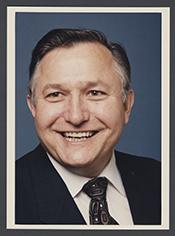 Rep. Nick Smith (R-MI)
Legislative Activity
Stay on top of the latest movement without scrolling through every action
Received in the Senate and Read twice and referred to the Committee on Health, Education, Labor, and Pensions.
April 22, 2004
View full timeline
Introduced in House
March 25, 2004
Referred to the House Committee on Science.
March 25, 2004
Referred to the Subcommittee on Research.
March 26, 2004
Subcommittee Hearings Held.
March 30, 2004
Subcommittee Consideration and Mark-up Session Held.
March 30, 2004
Forwarded by Subcommittee to Full Committee (Amended) by Voice Vote.
March 30, 2004
Committee Consideration and Mark-up Session Held.
March 31, 2004
Ordered to be Reported (Amended) by Voice Vote.
March 31, 2004
Mr. Boehlert asked unanimous consent that the Committee on Science, Space and Technology have until 5:00 p.m. on April 14 to file a report on H.R. 4030. Agreed to without objection.
April 1, 2004
Reported (Amended) by the Committee on Science. H. Rept. 108-465.
April 20, 2004
Placed on the Union Calendar, Calendar No. 269.
April 20, 2004
Mr. Smith (MI) moved to suspend the rules and pass the bill, as amended.
April 21, 2004 • 10:40 AM
Considered under suspension of the rules. (consideration: CR H2209-2211)
April 21, 2004 • 10:40 AM
DEBATE - The House proceeded with forty minutes of debate on H.R. 4030.
April 21, 2004 • 10:40 AM
At the conclusion of debate, the Yeas and Nays were demanded and ordered. Pursuant to the provisions of clause 8, rule XX, the Chair announced that further proceedings on the motion would be postponed.
April 21, 2004 • 10:55 AM
Considered as unfinished business. (consideration: CR H2224-2225)
April 21, 2004 • 12:48 PM
Passed/agreed to in House: On motion to suspend the rules and pass the bill, as amended Agreed to by the Yeas and Nays: (2/3 required): 411 - 7 (Roll no. 122).(text: CR H2209)
April 21, 2004 • 12:56 PM
On motion to suspend the rules and pass the bill, as amended Agreed to by the Yeas and Nays: (2/3 required): 411 - 7 (Roll no. 122). (text: CR H2209)
April 21, 2004 • 12:56 PM
Motion to reconsider laid on the table Agreed to without objection.
April 21, 2004 • 12:56 PM
Received in the Senate and Read twice and referred to the Committee on Health, Education, Labor, and Pensions.
April 22, 2004
Voting History
1 vote recorded • Roll call available
Floor Debate
14 membersWhat members said about H.R. 4030 on the floor

 +9
+9
Floor Debate
14 membersWhat members said about H.R. 4030 on the floor
Mr. Speaker, I move to suspend the rules and pass the bill (H.R. 4030) to establish the Congressional Medal for Outstanding Contributions in Math and Science Education program to recognize private…
Mr. Speaker, I move to suspend the rules and pass the bill (H.R. 4411) to amend title VII of the Higher Education Act of 1965 to ensure graduate opportunities in postsecondary education, and for…
Mr. Speaker, a highly educated workforce is critical to America's future competitiveness. And the quality of education in America's schools is directly related to the quality of the teachers…
Mr. Speaker, I thank the gentleman for yielding me this time and for his work on this legislation. Mr. Speaker, I rise today in support of H.R. 4411, Priorities For Graduate Studies Act. I am pleased…
Mr. Speaker, I yield myself such time as I may consume. Mr. Speaker, we have been here before. We have already voted on this legislation. As with the last bill, this legislation has already passed…
Show 8 more
Mr. Speaker, I rise today in support of H.R. 4411, the Priorities for Graduate Studies Act. I'm pleased to stand in support of this bill, which will both enhance graduate education and build on the…
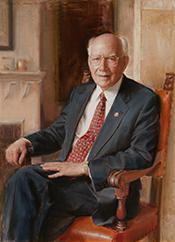
Mr. Speaker, I thank the gentleman for yielding me time. Mr. Speaker, I am pleased to rise in support of H.R. 4030, the Congressional Medal for Outstanding Contributions in Math and Science…
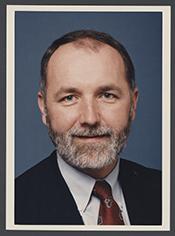
Mr. Speaker, I rise today in support of H.R. 4411, the Priorities for Graduate Studies Act, legislation which creates an informed and educated citizenry through strong and vibrant graduate education…
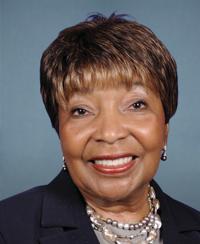
Mr. Speaker, I yield myself such time as I may consume. Mr. Speaker, as an original cosponsor of this legislation, I speak in support of its favorable consideration by the House today. The…
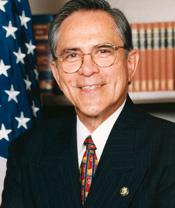
Mr. Speaker, I do not object to the three higher education bills under consideration today. In fact, this body passed these bills with broad bipartisan support last year, and I voted for all three of…

Mr. Speaker, I rise to support H.R. 4030, the Congressional Medal for Outstanding Contributions in Science and Math Education Act of 2004. I want to commend the gentleman from Michigan (Mr. Smith) of…
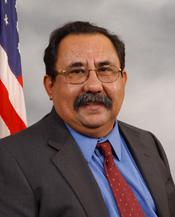
Mr. Speaker, we are standing here today to consider pieces of legislation that the House passed overwhelmingly just a year ago. These were not controversial bills at the time they were first…
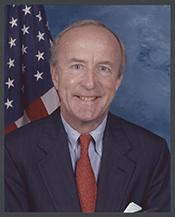
Mr. Speaker, Wednesday, April 21, I was in my district in New Jersey attending services associated with the funeral of LT John Wroblewski (United States Marines) of Jefferson Township. On rollcall…
Show 2 more

Mr. Speaker, today, during rollcall vote No. 121 on H.R. 3970, I was unavailable for the vote. Had I been present, I would have voted ``yea.'' During rollcall vote No. 122 on H.R. 4030, I was…
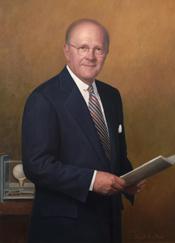
Mr. Speaker, I ask unanimous consent that the Committee on Science have until Wednesday, April 14, 2004, at 5 p.m. to file legislative reports on the following measures: H.R. 3970, Green Chemistry…
Bill Text
4 versions available
        [Congressional Bills 108th Congress]
[From the U.S. Government Publishing Office]
[H.R. 4030 Referred in Senate (RFS)]

2d Session
H. R. 4030

_______________________________________________________________________

IN THE SENATE OF THE UNITED STATES

April 22, 2004

Received; read twice and referred to the Committee on Health,
Education, Labor, and Pensions

_______________________________________________________________________

AN ACT

To establish the Congressional Medal for Outstanding Contributions in
Math and Science Education program to recognize private entities for
their outstanding contributions to elementary and secondary science,
technology, engineering, and mathematics education.

Be it enacted by the Senate and House of Representatives of the
United States of America in Congress assembled,

SECTION 1. SHORT TITLE.

This Act may be cited as the ``Congressional Medal for Outstanding
Contributions in Math and Science Education Act of 2004''.

SEC. 2. DEFINITIONS.

In this Act:
(1) Director.--The term ``Director'' means the Director of
the National Science Foundation.
(2) Elementary school and secondary school.--The terms
``elementary school'' and ``secondary school'' have the meaning
given those terms in section 9101 of the Elementary and
Secondary Education Act of 1965 (20 U.S.C. 7801).

SEC. 3. ESTABLISHMENT OF PROGRAM.

The Director shall establish a Congressional Medal for Outstanding
Contributions in Math and Science Education program, which shall be
designed to--
(1) recognize private entities for outstanding efforts
supporting elementary and secondary schools in improving
student achievement in science, technology, engineering, and
mathematics;
(2) encourage private entities to support elementary and
secondary schools to improve and underscore the importance of
science, technology, engineering, and mathematics education;
and
(3) make information about medal recipients available to
schools, institutions of higher education, educators, parents,
administrators, policymakers, researchers, public and private
entities, and the general public.

SEC. 4. MEDALS.

(a) Finalists.--Beginning not later than 2 years after the date of
enactment of this Act, the Director shall annually name as finalists
for medals under this Act--
(1) not more than 20 private entities with more than 500
employees; and
(2) not more than 20 private entities with 500 or fewer
employees.
Each finalist shall receive a citation describing the basis for the
entity achieving status as a finalist.
(b) Medal Winners.--Beginning not later than 2 years after the date
of enactment of this Act, from among finalists named under subsection
(a), the Director shall annually award medals under this Act to--
(1) not more than 5 private entities with more than 500
employees; and
(2) not more than 5 private entities with 500 or fewer
employees.
(c) Distribution of Information.--(1) The Director shall distribute
information about the Congressional Medal for Outstanding Contributions
in Math and Science Education recipients in a timely and efficient
manner (including through the use of a searchable online database) to
schools, institutions of higher education, educators, parents,
administrators, policymakers, researchers, public and private entities,
and the general public.
(2) Any entity that is a finalist or receives a medal under this
section may use such information for advertising and other publicity
purposes.

SEC. 5. ELIGIBILITY.

Eligibility to receive medals under section 4 of this Act shall be
limited to private entities that--
(1) have, whether working alone or in partnership with for-
profit or nonprofit entities, assisted students, teachers,
administrators, or other support staff to improve student
achievement in science, technology, engineering, and
mathematics in a school or community; and
(2) have been involved in such activities in a sustained
manner for at least 2 years with at least one elementary or
secondary school.

SEC. 6. APPLICATION.

The Director shall establish a system for accepting applications
from entities seeking to be considered for a medal under this Act.
Applications shall include at least two letters of support, which may
come from teachers, professional support staff, administrators,
professional or business organizations, local, county, or State
Departments of Education, or any other category of persons as
designated by the Director. Letters of support shall describe the
reasons the entity deserves the medal.

SEC. 7. SELECTION.

In selecting entities to receive medals under this Act, the
Director shall give priority consideration to evidence of improved
achievement in science, technology, engineering, or mathematics by
students, including improved achievement by individuals identified in
section 33 or 34 of the Science and Engineering Equal Opportunities Act
(42 U.S.C. 1885a or 1885b). In addition to any other criteria the
Director may establish, the Director shall also consider the following:
(1) Evidence of innovative approaches to increase interest
in science, technology, engineering, and mathematics by
students, including individuals identified in section 33 or 34
of the Science and Engineering Equal Opportunities Act (42
U.S.C. 1885a or 1885b). One measure of such evidence may be an
increase in the number of students enrolled in advanced courses
related to such fields.
(2) Evidence of employee interaction with students or
teachers to support and improve science, technology,
engineering, and mathematics learning.
(3) Evidence of success in positively influencing student
attitudes and promoting education and career opportunities in
science, technology, engineering, and mathematics.
(4) Evidence of successful outreach to students, parents,
and the community regarding the importance of science,
technology, engineering, and mathematics education to the
Nation's prosperity, job creation, and standard of living, as
well as future earning potential for the individual.
(5) Evidence of a strong and sustained commitment to the
students and schools.

SEC. 8. BIENNIAL REPORT.

Section 37(a) of the Science and Engineering Equal Opportunities
Act (42 U.S.C. 1885d(a)) is amended by striking ``By January 30, 1982,
and biennially thereafter'' and inserting ``By January 30 of each odd-
numbered year''.

SEC. 9. AUTHORIZATION OF APPROPRIATIONS.

For each of fiscal years 2005 through 2007, there are authorized to
be appropriated to the National Science Foundation such sums as may be
necessary for carrying out this Act, to be derived from amounts
authorized by the National Science Foundation Authorization Act of
2002.

Passed the House of Representatives April 21, 2004.

Attest:

JEFF TRANDAHL,

Clerk.