Department of Homeland Security Financial Accountability Act
Legislative Activity
Stay on top of the latest movement without scrolling through every action
Became Public Law No: 108-330.
October 16, 2004
View full timeline
Introduced in House
May 4, 2004
Referred to the Committee on Government Reform, and in addition to the Committee on Homeland Security (Select), for a period to be subsequently determined by the Speaker, in each case for consideration of such provisions as fall within the jurisdiction of the committee concerned.
May 4, 2004
Committee Consideration and Mark-up Session Held.
May 6, 2004
Ordered to be Reported by Voice Vote.
May 6, 2004
Reported by the Committee on Government Reform. H. Rept. 108-533, Part I.
June 9, 2004
House Committee on Homeland Security (Select) Granted an extension for further consideration ending not later than June 9, 2004.
June 9, 2004
Committee on Homeland Security (Select) discharged.
June 9, 2004
Placed on the Union Calendar, Calendar No. 307.
June 9, 2004
Mr. Platts moved to suspend the rules and pass the bill.
July 20, 2004 • 5:02 PM
Considered under suspension of the rules. (consideration: CR H6071-6074)
July 20, 2004 • 5:02 PM
DEBATE - The House proceeded with forty minutes of debate on H.R. 4259.
July 20, 2004 • 5:02 PM
Passed/agreed to in House: On motion to suspend the rules and pass the bill Agreed to by voice vote.(text: CR H6071-6073)
July 20, 2004 • 5:16 PM
On motion to suspend the rules and pass the bill Agreed to by voice vote. (text: CR H6071-6073)
July 20, 2004 • 5:16 PM
Motion to reconsider laid on the table Agreed to without objection.
July 20, 2004 • 5:16 PM
Received in the Senate.
July 21, 2004
Read twice and referred to the Committee on Governmental Affairs.
September 7, 2004
Senate Committee on Governmental Affairs discharged by Unanimous Consent.(consideration: CR S9987-9988)
September 29, 2004
Senate Committee on Governmental Affairs discharged by Unanimous Consent. (consideration: CR S9987-9988)
September 29, 2004
Passed Senate without amendment by Unanimous Consent.
September 29, 2004
Message on Senate action sent to the House.
September 30, 2004
Presented to President.
October 5, 2004
Signed by President.
October 16, 2004
Became Public Law No: 108-330.
October 16, 2004
Floor Debate
23 membersWhat members said about H.R. 4259 on the floor
 CJD
CJD AS
AS TAD
TAD PF
PF OGH+18
Floor Debate
23 membersWhat members said about H.R. 4259 on the floor
Mr. President, I rise today with my colleague, Senator Mike DeWine, to introduce legislation designed to prevent our nation's children and youth from succumbing to the dangers associated with…
Mr. President, I rise today with my colleague, Senator Mike DeWine, to introduce legislation designed to prevent our nation's children and youth from succumbing to the dangers associated with underage alcohol use. The legislation that we introduce today, the STOP (Sober Truth On Preventing) Underage Drinking Act, will greatly strengthen our Nation's ability to combat the too often deadly consequences associated with underage drinking.
An initial examination of the problems presented by underage drinking is truly alarming. Alcohol is the most commonly used drug among America's youth. More young people drink alcohol than smoke tobacco or use marijuana combined. In 2002, 20 percent of eighth graders had drunk alcohol in the previous 30 days. Forty-nine percent of high school seniors are drinkers, and 29 percent report having had five or more drinks in a row, or binged in the past 2 weeks.
Tragically, we know that this year underage drinking will directly lead to more than 3,500 deaths, more than two million injuries, 1,200 babies born with fetal alcohol syndrome and more than 50,000 youths treated for alcohol dependence. We also know that the social costs associated with underage drinking total close to $53 billion annually, including $19 billion from automobile accidents and $29 billion from associated violent crime.
And while no one can argue with the tragic loss of life and significant financial costs associated with underage drinking, too few of us think of the equally devastating loss of potential that occurs when our children begin to drink. Research indicates that children who begin drinking do so at only 12 years of age. We also know that children that begin drinking at such an early age develop a predisposition for alcohol dependence later in life. Such early experimentation can have devastating consequences and derail a child's potential just as she or he is starting out on the path to adulthood. The consumption of alcohol by our children can literally rob them of their future.
The truly alarming and devastating effects of underage alcohol use are what initially led Senator DeWine and I to begin work to address this important issue. Over the last few months we have worked extensively with Representatives Roybal-Allard, Wolf, DeLauro, Osbourne and Wamp to craft the broad legislative initiative that we introduce today.
The STOP Underage Drinking Act creates the framework for a multifaceted, comprehensive national campaign to prevent underage drinking. Specifically, the legislation includes four major areas of policy development. First, the STOP Underage Drinking Act authorizes $2 million to establish an Interagency Coordinating Committee to coordinate all Federal agency efforts and expertise designed to prevent underage drinking. Chaired by the Secretary of Health and Human Services, this committee will be required to report to the Congress on an annual basis the extent to which Federal efforts are addressing the urgent need to curb underage drinking.
I am particularly pleased that one of the many items in this annual report to Congress will provide for the public health monitoring of the amount of alcohol advertising reaching our children. I have become increasingly concerned about the degree to which alcohol advertisements appear to target our Nation's children. It is my hope that the monitoring called for by this legislation will expose any unethical advertising practices that reach children. We must do all that we can to ensure that our children are not exposed to harmful and deceptive alcohol promotions.
In addition to the Federal coordination of Federal underage drinking prevention efforts, the STOP Underage Drinking Act additionally authorizes $1 million to fund an adult-oriented National Media Campaign against Underage Drinking. Research indicates that most children who drink obtain the alcohol from their parents or from other adults. The National Media Campaign against underage drinking will specifically seek to educate those who provide our children with alcohol about the dangers inherent in underage alcohol use. This media campaign will build upon the valuable underage drinking prevention efforts begun last year by the Ad Council, whose campaigns average an estimated $28 million in donated media from media outlets nationwide.
The legislation additionally authorizes $10 million to provide States, not-for-profit groups and institutions of higher education the ability to create statewide coalitions to prevent underage drinking and alcohol abuse by college and university students. This section will also provide alcohol-specific enhancement grants through the Drug Free Communities Program.
Lastly, the STOP Underage Drinking Act authorizes $6 million to expand research to assess the health effects of underage drinking on adolescent development, including its effect on the brain. This effort will additionally increase Federal data collection on underage drinking, including reporting on the types and brands of alcohol that kids consume.
I want to convey my belief that this legislation truly offers a historical, first step toward addressing the national tragedy represented by underage drinking. I pledge to work strenuously toward passing the STOP Underage Drinking Act and building on its strong foundation and I ask for the support of my colleagues for this critically important initiative.
Mr. President, I rise today with Senators Cochran, Durbin and Feingold to introduce The International and Foreign Language Studies Act of 2004.
In recent years, foreign language needs have significantly increased throughout the Federal Government due to the presence of a wider range of security threats, the emergence of new nation states, and the globalization of the U.S. economy. Likewise, American business increasingly needs internationally experienced employees to compete in the global economy and to manage a culturally diverse workforce.
Currently, the U.S. government requires 34,000 employees with foreign language skills across 70 federal agencies. These agencies have stated over the last few years, that translator and interpreter shortfalls have adversely affected agency operations and hindered U.S. military, law enforcement, intelligence, counter-terrorism and diplomatic efforts.
Despite our growing needs, in the 2000-01 school year, the number of undergraduate foreign language degrees conferred was only one percent of all degrees. In 2003, only 41 percent of undergraduates reported taking foreign language courses while only 18 percent reported having studied abroad. And yet, 79 percent of Americans believe that students should study abroad sometime during college.
At a time when our security needs are more important than ever, at a time when our economy demands that we enter new markets, and at a time when the world requires us to engage in diplomacy in more thoughtful and considered ways, it is extremely important that we have at our disposal a multilingual, multi cultural, internationally experienced workforce. The Dodd-Cochran International and Foreign Language Studies Act attempts to provide us with this.
The Dodd-Cochran International and Foreign Language Studies Act will increase undergraduate study abroad opportunities as they relate to programs designed to enhance foreign language proficiency and deepen cultural knowledge. The Dodd-Cochran bill will reinstate undergraduate eligibility for Foreign Language and Area Studies Fellowships. The Dodd-Cochran bill will encourage the Department of Education to engage in the collection, analysis and dissemination of data on international education and foreign language needs so that we know and understand exactly what our needs in this area are. And, most importantly, the Dodd-Cochran bill will demonstrate our nation's commitment to increasing the foreign language proficiency and international experience of our electorate by increasing the amount appropriated to international education within the Higher Education Act to $120 million each year.
The Higher Education Act authorizes the Federal Government's major activities as they relate to financial assistance for students attending colleges and universities. It provides aid to institutions of higher education, services to help students complete high school and enter and succeed in postsecondary education, and mechanisms to improve the training of our emerging workforce. This bill will help fulfill that mission.
Foreign language skills and international study are vital to secure the future economic welfare of the United States in an increasingly international economy. Foreign language skills and international study are also vital for the nation to meet 21st century security challenges properly and effectively, especially in light of the terrorist attacks on September 11, 2001.
I hope our colleagues who are not cosponsoring this bill will give it serious consideration. By working together, I believe that the Senate as a body can act to ensure that we strengthen our Nation's security and economy by capitalizing on the talents and dreams of those who wish to enter the international arena.
Mr. President, I rise today with Senators Stabenow and Lautenberg to introduce the Getting Results for Advanced Degrees (GRAD) Act.
The percentage of individuals pursuing graduate education has increased dramatically in recent decades as individuals seek the education and skills needed to participate in a technologically complex and global economy. In the last 25 years alone, graduate enrollment in the United States has increased by 39 percent. In the fall of 2000, there were 1.85 million graduate students enrolled in American schools.
The economic benefits of graduate education are significant. The median earnings of workers who possess a graduate or professional degree are more than 3\1/2\ times those of high school dropouts.
Despite the impact of graduate education on individuals' economic well being, and on the economic strength of our national economy as a whole, graduate education is, for many, financially out of reach. In 2001-02 the average graduate school tuition at public institutions was $4,491 and $15,233 at private institutions. In a 2002 borrower's survey, the average debt reported by graduate students was $45,900. This is an astounding figure.
To respond to the need for a highly educated workforce, I have put together a series of proposals that will make graduate education more accessible and affordable to qualified applicants regardless of income level, the Getting Results for Advanced Degrees Act (GRAD). The purpose of the GRAD Act is to encourage students to pursue graduate education and to assist them in affording it.
Specifically, the GRAD Act increases the authorization level of the Graduate Assistance in Areas of National Need (GAANN) program to $50 million and the Jacob Javits Fellowship Program to $35 million. The GAANN fellowship program helps to support graduate study in areas of national need such as chemistry, computer and information science, engineering, mathematics and physics. The Jacob Javits Fellowship Program helps support graduate study in the arts, humanities and social sciences.
To encourage greater participation by minority students in graduate studies, the Act creates the Patsy T. Mink Fellowship Program to offer assistance to underrepresented minority students pursuing a doctoral degree. The Patsy T. Mink Fellowship Program will help address the important problem of underrepresentation of students from certain minority groups in graduate education.
To help students afford the costs of graduation education, the GRAD Act expands the tax-exempt status of scholarships to treat reasonable room and board allowances as part of permitted higher education expenses. The Act revises the cost of attendance calculations for financial aid for students with dependents to reflect the true cost of living expenses for themselves and their children. The Act increases the amount of earnings students can set aside without having to apply those earnings to the cost of attendance. The GRAD Act also increases the unsubsidized Stafford loan limit for graduate and professional students from $10,000 to $12,500 so they are less likely to have to turn to more expensive private loans.
The Getting Results for Advanced Degrees Act will help students meet the financial challenges faced in pursuing graduate studies. The Act strengthens programs that support graduate students in areas of vital importance to our Nation and makes assistance available to underrepresented minority students pursuing a doctoral degree. By helping students to pursue and afford graduate education, the GRAD Act will help individuals, families and the nation as a whole, realize the important benefits of graduate education.
I hope more of my colleagues will join me in support of graduate education by signing on this bill. By working together, I believe that the Senate as a body can act to ensure that more individuals are able to pursue graduate education and assist our Nation in meeting the challenges faced in a global economy.
Mr. President, it is often said that small things can make a very large difference in our society. That saying certainly fits the subject I have come to speak briefly about this afternoon. That little thing in question that I am talking about is 3\1/8\ inches wide, 2\1/8\ inches long, and no thicker than one's fingernail. But it has a monumental impact on how millions of Americans live their lives each and every day. The object to which I am referring, of course, is the credit card.
We have come a long way from the day in 1950 when the Diner's Club issued the first universal credit card that allowed its holders to use credit at certain very select restaurants in New York City. Today, the credit card has become an indispensable part of how we do business in the United States, and across the globe, for that matter.
For many Americans, the main appeal of the credit card is convenience and flexibility. They allow us to go out and eat, go to a shopping mall, to the movies, and stop off at the grocery store on the way home, without folding a single bill or fumbling for loose change in their pockets. Credit cards allow people to shop for products on the Internet in a matter of seconds.
But for more and more Americans, credit cards serve a very different purpose. As the name implies, these cards provide access to credit. We are living in a time when real wages are failing to keep up with price increases, when health care costs and college tuition are on the rise. Millions of Americans are having difficulty making ends meet. For Americans who are strapped for cash, credit cards are much more than a convenience. They have become the only way they can afford basic necessities, such as food, gas, clothing, and medical care.
These Americans are not paying by credit card because they want to; they are doing so because they have no other choice. It is this function of credit cards that make them so appealing to American consumers, but I must also say it is this function that presents the greatest danger to them as well.
Today, the level of credit card debt in the United States is at record heights. Total consumer debt in America is over $2 trillion. Out of that, $735 billion is credit card debt. The average American household has over $9,000 worth of credit card debt. Let me repeat that. The average family living in the United States has over $9,000 of credit card debt. In comparison, the average family household income is just above $40,000.
Due in large part to credit card debt, more Americans are filing for bankruptcy. Last year, over 1.6 million families declared they were bankrupt. For every one family that actually does file for bankruptcy, there are seven more whose debt suggests that they, in fact, should do the same.
Credit card debt does not affect all Americans equally. It is a growing burden that is disproportionately being borne by middle-income, low-income, and working-poor families. According to a recent report, during the 1990s, on average, the American family saw its credit card debt go up by 53 percent. The debt of middle-class families, those earning between $50,000 and $100,000 a year, went up 75 percent. For the older Americans, senior citizens, their average credit card debt went up 149 percent. Finally, for very low-income families, those making less than $10,000 a year, credit card debt grew by a shocking 184 percent.
Why is this happening? Why are millions of Americans drowning in credit card debt? There are some who would describe the numbers I just quoted as a matter of personal responsibility, that some Americans are spending way beyond their means and ultimately are paying the price.
I do believe personal responsibility is extremely important, but many of the victims of credit card debt today are not in that state because they bought a home entertainment system, an expensive vacation, or a plasma TV set.
Take Roberto Towler. Roberto was a professional accountant who was very careful to always pay his bills on time. In early 2000 he was forced to take 2 months off from work because of a back injury. The lost salary meant he had much less cash on hand than before. He had no alternative but to use his credit card for toiletries, clothes for his children, and groceries. He eventually was able to return to work and scale back the use of his credit card, but he found himself barely able to pay back his debt. Eventually Roberto was forced to file bankruptcy with $22,000 of credit card debt.
Many Americans have stories just like Mr. Towler. They work hard, they play by the rules, but after a few twists of fate suddenly find themselves in a tremendous debt. For those caught in the quicksand of debt, a credit card appears to be a lifeline. But, in reality, it only pulls them in deeper and deeper.
We often speak of the ill and infirm as living on borrowed time. These people are living on borrowed money.
In the middle of all this are credit card companies. If we demand responsibility from individuals, and we should, and we do demand it, then we also ought to demand it from corporations as well. Responsibility is not limited to those who are consumers alone.
The reason I am here today is because a good deal of the blame for the crisis in credit card debt we are seeing in America lies in the practices of credit card companies.
I am not someone who takes regulatory reform lightly. I am not a believer in regulation that stifles innovation or efficiency. But at the same time, when we see practices that are truly hurting working families around the country, I believe we have an obligation to act. Just what kind of practices are we talking about? Let me spell it out.
Let's start with interest rates. I am not naive about this. I certainly do not expect credit card companies to be terribly benevolent when it comes to interest rates. But what I expect, and what all Americans deserve, is honesty and fairness.
We have all seen print ads and commercials that advertise fantastically low interest rates, sometimes as low as zero percent. But what these commercials don't tell you is that these teaser rates, as they are called, often expire and rise considerably only after a few months.
If you slip up even once by failing to make a minimum monthly payment, your interest rate may go up even faster. Just one mistake can be enough to drive an interest rate up by nearly 30 percentage points. Of course that information is usually hidden in the fine print of a lengthy disclosure statement.
Most Americans would assume that their interest rates will stay low as long as they make their minimum monthly payments. Not so. Today, credit card companies don't just look at the bill that you pay them, they look at your entire financial picture in deciding how high your interest rate ought to be, how high a rate they ought to charge you.
I learned of a doctor in Illinois who had always paid his credit card bills on time and stayed within his credit card limits. Then one day he took a look at his bill and discovered that the interest rate on his credit card had jumped from 6 percent to nearly 17 percent. He asked the credit card issuer, why? The company said that he was now a higher risk.
What was the reason?
He had taken out a mortgage on his new home.
This is incredible to me. There are few things more rewarding to a family than buying their first home. We celebrate home ownership here in America. Apparently for credit card companies it's a reason to celebrate as well, because it's an excuse to charge higher interest rates.
Interest rates, of course, are not the only way credit card companies make money. In recent years, more and more companies have found another way to increase their bottom lines, by assessing exorbitant fees for the most minor of offenses. Miss a payment by a single day and you may be charged $30 or even $40 for that mistake. Gone are the grace periods that gave consumers some reasonable leeway.
Over the past 2 years, the amount of money generated by credit card fees has simply skyrocketed. In fact, the term ``skyrocketed'' may be something of an understatement. In 1996, the fees raised $1.7 billion for credit card companies. That's 1996. Last year the credit card companies raised $11 billion in fees alone, only 8 years later.
You might think that if credit card companies know that someone is a risk they would take some action to limit that person's spending, such as lowering their credit line. Or perhaps they might not issue a card to that person in the first place.
But there is a little secret the credit card companies don't want Americans to know. They are actively soliciting and signing up customers who are tremendous credit risks. They are soliciting these people not in spite of the risk, but because of it.
Contrary to what one might think, customers who cannot afford to pay their bills on time are the credit card companies' best customers--not their worst. Unbelievably, these customers who do pay on time are known within the credit card industry as ``deadbeats.''
Let me repeat that. Those who pay their credit card bills on time are known within the industry as ``deadbeats.'' Why is this? Because when people fail to pay their bills on time, that means more profits for the credit card industry, in the form of more interest charges and penalty fees.
How much more of a profit? Let's say you are the average American, with $9,000 in credit card debt, which is the case today. Let's say you stopped accumulating any more debt and decided you would pay it off by making the minimum monthly payment of 2 percent. Let's say further that your interest rate is 15 percent--which is just about the average today, I might add.
How long would it take you to pay off that debt? Five years? Ten years? Twenty years? It would take 39 years to pay off your debt. Over the course of those 39 years, you would pay $14,000 in interest payments alone, in addition to the $9,000 you owe. This is all assuming, of course, that your interest rate wouldn't rise over those years and that you wouldn't be hit with unexpected fees.
Credit card companies know this. They know their greatest chance of financial profit lies in those customers who have the least chance of paying their bills on time. That is why they continue to solicit these customers and that is why those who do pay on time are known within the industry as the deadbeats.
Last year, credit card companies mailed out 5 billion solicitations to about 200 million individuals in the United States. The average person received about one offer every other week. The average household received more than one per week. I guarantee that a great many of these people do not have sparkling credit ratings, yet these companies continue to send out offer after offer, hoping that yet another customer will take the bait.
Mr. President, I ask unanimous consent to have printed in the Record an article from the July 6, 2004 edition of the Wall Street Journal entitled ``Growing Profit Source for Banks: Fees from Riskiest Card Holders.''
This goes into the topic in greater detail.
What I find most troubling about this trend is that credit card companies have set their sights on the most vulnerable members of our society when it comes to debt--low-income individuals, the elderly, mentally retarded, and most recently, our children.
Go to any college campus in America and you are bound to come across a table where an enthusiastic sales person is offering free T-shirts, or sports bags, or Frisbees--almost anything in exchange for signing up as a credit card customer. According to a report on CBS News, the average college student is offered 8 cards in his or her first semester in college--8 credit cards. By the end of college, the average graduating senior has 6 credit cards in his or her name.
Why are credit card companies targeting college students so frequently? Because of their limited experience with financial matters, students tend to accumulate debt very quickly, and as a result, more and more of our young people are falling deeper and deeper into the financial hole from which they cannot escape.
In 1998, 67 percent of college students had a credit card. Today, 83 percent have credit cards. In 1998, the average college student graduated with $1,800 in credit card debt. Today the average college senior graduates with $3,000 in credit card debt.
I was shocked to learn that the fastest growing segment of our population that is forced to declare bankruptcy is people under the age of 25. Think of
that. The fastest growing group of people declaring bankruptcy are people under the age of 25.
When we think about bankruptcy, we generally envision middle-aged Americans with failed businesses, investments gone bad, perhaps medical bills that have spiraled out of control. The answer is not so. It's college kids, recent graduates.
Some time ago, a piece on ``60 Minutes II'' told a story of one student's circumstance, Sean Moyer. I have told the story on the floor before but I think it deserves being repeated.
Sean's life began to spin out of control as a result of huge debts racked up in 3 years of college. He could not get loans to go to law school, as he dreamed. His parents couldn't afford to pay his way.
Sean Moyer had 12 credit cards and more than $10,000 in debts. He had two jobs, one at the library, another as a security guard in a Holiday Inn, but he still could not pay the collectors who continually harassed him with letters and phone calls. In 1998, Sean Moyer took his own life.
Three years after his son's death, his mother still gets pre-approved credit card offers in Sean's name. According to his mother, one company preapproved Sean for a $100,000 credit card line.
How is the credit card industry doing as a result of these practices? These companies are thriving. Credit Card Management, an industry publication, reported that 2003 was the most profitable year for credit cards since the magazine began tracking the industry in 1992.
What makes matters even more astonishing is that this is happening when interest rates are at an all-time low. Yet, for millions of Americans, the interest rates they read about in the newspapers, those set by the Federal Reserve, bear absolutely no relationship whatsoever to interest rates that appear on their credit card bills.
Still, the industry wants more. In recent years, while they have been encouraging consumers to accumulate debt, credit card companies have simultaneously been lobbying Congress to change bankruptcy laws to make it harder and harder for people to have their debts forgiven. This amounts to a two pronged attack on working families in America--get people into as much debt as possible, and then change the rules of the game so they can't get rid of that debt.
It is time we stood up for consumers. It is time we restored a sense of responsibility to this industry.
I am here today to introduce the Credit Card Accountability, Responsibility, and Disclosure Act of 2004, also known as the Credit CARD Act. This bill takes aim at what I consider to be some of the more egregious abuses of consumers by credit card companies.
This bill takes some simple, common-sense steps to stop abusive practices, educate cardholders, and stiffen the penalties on corporations that violate the law.
First of all, I think we can all agree that it is reasonable for a consumer to be clearly notified if his or her interest rates are going up. That is not a radical idea, that is just common sense. My bill would require clear disclosure of any rate changes so there aren't any surprises for the average consumer.
I also don't believe a company should be able to retroactively change the interest rate on debt that already exists. If you want to raise interest rates, fine, but raise them on future debt, not existing debt. Our bill would prohibit any retroactive interest rate changes.
Second, I believe that companies should be rewarding people for responsible card use--not penalizing them. If you pay your bills on time, your interest rate shouldn't go up. If you pay off your balances in full, your company shouldn't be able to charge you any new fees. If you decide to cancel your card, your interest rate shouldn't go up. I am pointing out these facts because that is exactly what happens. My bill would codify all of these common-sense principles into law.
Third, my bill would protect some of the most vulnerable in our society--our Nation's youth--by implementing new requirements for issuing credit cards to people under the age of 21. We are not going to prohibit college students from getting cards, but we are going to make sure that companies can't simply give away cards to millions and millions of students who they know will rack up years and years worth of debt and potentially face bankruptcy and financial ruin before their working lives have barely begun.
If you apply for a credit card and you are under 21, under this bill you will need one of three things: A signature of a parent or guardian who is willing to take responsibility for your debt; information indicating that you have some other means of repaying any debt; or a certification that you have completed a credit counseling course. And if you are a credit card company that offers cards to students under 21, you will be required to comply with these requirements--or face serious penalties.
Finally, this bill requires companies to be honest with consumers by introducing some new disclosure requirements. The most important one is a box--prominently located on every single bill--containing four simple pieces of information: The total balance on your account; your minimum monthly payment; how long it will take to pay your bill if all you pay is the minimum monthly payment; and finally, how much you will have to pay over time--in both interest and principal--if you only make the minimum payments.
The reason for these disclosures is simple, and to many, probably obvious: To allow consumers to know exactly what it means to carry a debt, so they can decide whether or not to do so.
The Credit CARD Act also contains a number of additional disclosure requirements to bring more transparency to an industry that has clearly reaped benefits from the use of fine print and lengthy and confusing policy statements.
We are not asking for much here--only that companies be fair and straightforward with consumers. Let us see some real disclosures so Americans can understand what their bill means, how much they are being charged, and why.
No one wants credit cards to disappear. I certainly believe credit cards are tremendously valuable and worthwhile as long as they are handled responsibly. And no one wants people who need and deserve credit to have no way to get it. But we can't simply stand by as more and more Americans fall deeper and deeper into debt with no way out. We need to take some responsible action so that the credit card can still be a useful financial tool without being a ticket to financial ruin.
If we are going to pass bankruptcy bills in the Senate that demand more responsibility from consumers, shouldn't we demand more responsibility from creditors, as well? This bill, the Credit CARD Act, does just that, and I urge my colleagues in the Senate to adopt it.
I ask unanimous consent for the text of the bill to be printed in the Record.
Mr. President, I rise to introduce important legislation which I believe is vital to our economic security. I am proud to introduce this legislation, the Terrorism Risk Insurance Extension Act of 2004, with Senators Bennett, Schumer, Jack Reed, Hagel, Dole, Bunning, Crapo, Chafee, Harry Reid, and Ben Nelson.
As my colleagues know, the Senate hasn't been a model of legislative productivity this year. It has been a very difficult year--there has been partisan gridlock on a whole host of issues.
It is against this backdrop, the day that we adjourn for 6 weeks for the August recess which includes both conventions and campaigning, that I am proud to speak about an issue that has broad bipartisan support. That issue is an extension of the Terrorism Risk Insurance Act.
This critically important legislation has a history of bipartisan support and I am pleased to say that the robust support on both sides of the aisle still exists as we consider an extension of the program.
The original TRIA legislation was not an easy undertaking. But we persevered, negotiated, and had a frank exchange of views over numerous months and in the end, even though it was at times a laborious, difficult process, we produced a bipartisan bill that garnered 86 votes in this body on this critically important issue.
I worked closely with Democratic Senators Schumer, Sarbanes, Reed, and Corzine as well as Senators Bennett, Hagel, Phil Gramm, and many others on the Republican side to get this critical bill passed. That is the model that the Senate should follow more often and that is the model that we are following as we introduce a 2-year extension of the Terrorism Risk Insurance Act today which will provide continued economic security and stability and avoid potential chaos in the aftermath of a terrorist attack.
The September 11 tragedy resulted in disbelief, devastation, and economic dislocation. An attack on our country seemed unimaginable. Few believed any significant major terrorist attack would occur, no less the one as horrific and devastating as the one on 9/11.
September 11 changed everything, most visibly, of course, national and homeland security policy. But September 11 also fundamentally changed the way insurers looked at terrorism risks which suddenly started to resemble an act of war. As a result, after 9/11 the insurance market for terrorism nearly completely dried up. Coverage was unavailable. Many financial transactions weren't able to proceed. And construction workers and other hard-working Americans suddenly found themselves economic victims of terrorism.
In short, we wrote TRIA for a very simple reason: hundreds of thousands of American jobs and billions of dollars of business investment hung in the balance.
We worked together on a bipartisan basis to pass this bill including significant support from this administration which deserves its fair share of credit for enactment of the legislation in November 2002.
TRIA was created as a 3-year Federal program to help make sure the part of the commercial insurance marketplace, disrupted by 9/11, could work again. Most Americans don't even know that TRIA provides a crucial economic safety net for virtually every sector of our economy. Transportation, real estate, utilities, construction, travel and tourism, and financial institutions are just a few of the sectors that need TRIA to protect them against the economic devastation that would come because of a terrorist attack.
Under TRIA, the Government shoulders a share of the financial risk of future attacks. This makes sense--these attacks are against us as Americans, against our democracy, our way of life.
But TRIA also required insurers to offer terrorism coverage on commercial policies. In addition, insurance companies would have to bear an escalating financial burden in future years.
TRIA is working. This public-private ``shared loss'' mechanism is making terrorism insurance available to all businesses at a reasonable cost. Under TRIA, in the event of another terrorist attack, private insurers will still shoulder tens of billions of dollars of terrorism related risk.
What TRIA does is act as a backstop to the private commercial property-casualty insurance system. It gives the market some certainty by establishing, by law, a limit to insured terrorism losses for the insurance industry and the Federal Government.
The Mortgage Bankers Association recently surveyed its 40 largest commercial/multi-family mortgage banking firms. A substantial majority of them believe that TRIA has made terrorism insurance both more available and less expensive.
But the Mortgage Bankers also noted that failure to extend TRIA would probably hurt the commercial real estate market. If we let TRIA expire, we will see the same uncertain environment we saw before TRIA.
TRIA does not expire until the end of 2005. Now some may wonder why I am choosing today to join with Senator Bennett and others to introduce this legislation to extend the program.
The answer is that we cannot wait until next year.
The economic safety net that TRIA provides will begin to come apart as
early as this fall if Congress does not act.
In the next few months, commercial insurers and their policyholders will begin negotiating new policies. But any 12-month policy taken out after Jan 1 will include at least some time where TRIA doesn't exist if we let it expire.
If we let TRIA expire, business consumers are going to have a hard time getting the coverage they need. That can only hurt our economy, and I'm sure that all Senators share the goal of growing our economy.
If we don't act this year, insurers will have to evaluate every policy as if the backstop will not exist for part of the coverage period.
Senator Bennett and I and other colleagues propose a 2-year extension this year. That will help avoid destabilizing the insurance market, and, in turn, the national economy. It will give Congress, insurers, businesses, and Government officials time to gather all available, relevant data.
Collecting that data--without fear of market disruption--will help all of us develop a more permanent solution for managing our Nation's economic exposure to catastrophic terrorism.
I know there is plenty of partisan tension in the Senate this year. But keeping our country safe from the economic devastation of a terrorist attack is a critical priority. It is too important to be affected by partisan politics. We didn't let that happen last time, and I hope everyone can work on a bipartisan basis and follow the bipartisan model--rare in this body these days--to make sure it doesn't happen this time.
Mr. President, I have sought recognition today to introduce the Prescription Drug and Health Improvement Act of 2004, which is legislation designed to reduce the high prices of prescription drugs.…
Mr. President, I have sought recognition today to introduce the Prescription Drug and Health Improvement Act of 2004, which is legislation designed to reduce the high prices of prescription drugs. Americans, specifically senior citizens, pay the highest prices in the world for brand-name prescription drugs. With 43 million uninsured Americans and many more senior citizens without an adequate prescription drug benefit, filling a doctor's prescription is unaffordable for many people in this country. The United States has the greatest health care system in the world; however, too many seniors are forced to make difficult choices between life-sustaining prescription drugs and daily necessities.
The Centers for Medicare and Medicaid Services estimate that in 2003 per capita spending on prescription drugs rose approximately 12 percent, with a similar rate of growth expected for this year. Much of the increase in drug spending is due to higher utilization and the shift from older, lower cost drugs to newer, higher cost drugs. However, rapidly increasing drug prices are a critical component.
High drug prices, combined with the surging older population, are also taking a toll on State budgets and private sector health insurance benefits. Medicaid spending on prescription drugs increased at an average annual rate of nearly 20 percent between 1998 and 2001. Until lower priced drugs are available, pressures will continue to squeeze public programs at both the State and Federal level.
To address these problems, my legislation would reduce the high prices of prescription drugs to seniors by: one, allowing the Secretary of Health and Human Services, HHS, to negotiate prescription drug prices with manufacturers; and two, eliminate the coverage gap in the Medicare Prescription Drug Program. The bill's $400 billion price tag over the next 10 years would be offset by, three, reducing medical errors, increasing the use of medical technology, and, four, increasing the use of non-physician providers in primary and preventive health care.
Prescription Drug Negotiation: This legislation would repeal the prohibition against interference by the Secretary of HHS with negotiations between drug manufacturers, pharmacies, and prescription drug plan sponsors and instead authorize the Secretary to negotiate contracts with manufacturers of covered prescription drugs. It will allow the Secretary of HHS to use Medicare's large beneficiary population to leverage bargaining power to obtain lower prescription drug prices for Medicare beneficiaries.
Price negotiations between the Secretary of HHS and prescription drug manufacturers would be analogous to the ability of the Secretary of Veterans Affairs to negotiate prescription drug prices with manufacturers. This bargaining power enables veterans to receive prescription drugs at a significant cost savings.
In my capacity as chairman of the Veterans' Affairs Committee, I introduced the Veterans Prescription Drugs Assistance Act, S. 1153, which was reported out of committee on June 20, 2004.
This legislation would broaden the ability of veterans to access the Veterans Affairs Prescription Drug Program. All Medicare-eligible veterans will be able to purchase medications at a tremendous price reduction through the Veterans Affairs' Prescription Drug Program. In many cases this would save veterans who are Medicare beneficiaries up to 90 percent on the cost of commonly prescribed medications. Similar savings would be available to America's seniors from the savings achieved using the HHS bargaining power, like the Veterans Affairs bargaining power for the benefit of veterans.
Medicare Coverage Gap Elimination: The bill would eliminate the coverage gap, also known as the ``doughnut hole,'' for beneficiaries in the Medicare prescription drug program. Beginning in January 2006, Medicare beneficiaries with an individual income of over $13,470 and couples with an income over $18,180, 150 percent of the poverty level, will pay a monthly premium, approximately $35, a $250 deductible, and coinsurance of 25 percent up to an initial coverage limit of $2,250, but then do not receive coverage until they exceed $5,100 of total spending. Specifically, Medicare beneficiaries will have to make out- of-pocket payments for prescription drug purchases from $2,250 to
$5,100 in total spending. After $5,100 in total spending, the coinsurance payment for those beneficiaries is 5 percent. Medicare beneficiaries below 150 percent of the poverty level do not have a gap in drug coverage. My legislation would eliminate the gap in coverage for those over 150 percent of the poverty level in the Medicare prescription drug program, by extending the 25 percent beneficiary coinsurance payment from $2,250 to $5,100 in total spending.
This provision comes at an expected cost of $400 billion over 10 years, which will be paid for through savings from reducing medical errors, increasing the use of medical technology, and increasing the use of non-physician providers in primary and preventive health care.
Reducing Medical Errors and Increasing the Use of Medical Technology: The bill provides grants for demonstration programs to test best practices for reducing errors, testing the use of appropriate technologies to reduce medical errors, such as electronic medication systems, and research in geographically diverse locations to determine the causes of medical errors. The implementation of automated prescription drug dispensers will prevent adverse drug reactions, which in turn can cause further illness resulting in increased care needed to correct the error. The utilization of electronic records will reduce the incidence of repeat medical tests, which will result in significant cost savings.
On November 29, 1999, the Institute of Medicine, IOM, issued a report entitled ``To Err is Human: Building a Safer Health System.'' The IOM report estimated that anywhere between 44,000 and 98,000 hospitalized Americans die each year due to avoidable medical mistakes. However, only a fraction of these deaths and injuries are due to negligence. Most errors are caused by system failures. The IOM issued a comprehensive set of recommendations, including the establishment of a nationwide, mandatory reporting system; incorporation of patient safety standards in regulatory and accreditation programs; and the development of a non-punitive ``culture of safety'' in health care organizations. The report called for a 50-percent reduction in medical errors over 5 years.
After the report was issued, I held a series of three Labor, Health and Human Services Appropriations Subcommittee hearings on medical errors: Dec. 13, 1999--to discuss the findings of the Institute of Medicine's report on medical errors; Jan. 25, 2000--a joint hearing with the Committee on Veterans' Affairs to discuss a national error reporting system and the VA's national patient safety program; Feb. 22, 2000--a joint hearing with the Health, Education, Labor and Pensions Committee to discuss the administration's strategy to reduce medical errors.
After hearing from Government witnesses and experts in the field on medical errors, I included $50 million in the fiscal year 2001 Senate Labor, Health and Human Services and Education for a patient safety initiative. In the Senate report, I also directed the Agency for Healthcare Research and Quality, AHRQ, to: one, develop guidelines on the collection of uniform error data; two, establish a competitive demonstration program to test ``best practices''; and three, research ways to improve provider training.
The committee also directed AHRQ to prepare an interim report to Congress concerning the results of the demonstration program within 2 years of the beginning of the projects. The fiscal year 2002 Senate report directed AHRQ to submit a report detailing the results of its initiative to reduce medical errors. HHS combined both reports into one, which it submitted to me earlier this year.
Since fiscal year 2001, the Labor/HHS Subcommittee has included within the Agency for Healthcare Research and Quality funding for research into ways to reduce medical errors. The fiscal year 2002 appropriation was $55 million, in fiscal year 2003 another $55 million was provided, and in fiscal year 2004 the appropriation was increased to $79.5 million.
The bill seeks to assist development of private sector technology standards to reduce medical errors by examining information technology, providing grants, and coordinating implementation by private sector entities. This would help ensure that this Federal investment will help further the national health information infrastructure by sharing the information collected through these demonstration projects with other health facilities nationally. These efforts would help reduce medical errors and bring the Nation's health systems into the 21st century with a projected cost savings of $150 billion over 10 years.
Primary and Preventive Care Services: The bill includes provisions for the use of nonphysician providers such as nurse practitioners, physician assistants, and clinical nurse specialists by increasing direct reimbursement under Medicare and Medicaid without regard to the setting where services are provided. The services provided by non- physician providers would insure that patients would receive benefits and services to which they are entitled without compromising the high standards of medical care. The use of these health care professionals would provide a significant cost savings to health care systems.
The bill creates a medical student tutorial program providing grants to encourage students early on in their medical training to pursue a career in primary care and provides grant assistance to medical training programs to recruit such students. This program is advantageous for medical students by providing valuable primary care experience, while offering services at a lower cost to primary care facilities. The savings from this provision is estimated at $250 billion over a 10-year period.
I believe this bill can provide desperately needed access to inexpensive, effective prescription drugs for America's seniors. The time has come for concerted action in this arena. I urge my colleagues to move this legislation forward promptly.
Mr. President, I seek recognition today to introduce the Small Business Economic Stimulus Act of 2004. In recent months, there have been clear signs that America's economic downturn has ended and that we are entering a period of renewed growth and prosperity. Yet not all of the economic news has been good. As I travel through Pennsylvania, I still hear from too many companies that they cannot afford to make needed investments in equipment or research at this time. As they postpone such investments, they also push off into the future the economic growth and opportunity that would flow from them. As a result, I continue to meet far too many Pennsylvanians who are out of work. Thus while the economy is improving, it is still incumbent upon us in Congress to do everything in our power to aid this recovery and grow jobs. There is more we can do.
The bill I introduce today, the Small Business Economic Stimulus Act of 2004, will help American companies take the steps they need to grow and hire. Since small businesses create approximately 75 percent of new jobs in America, my bill focuses on the needs of small business in particular. My bill has three parts. Part one renews and extends three tax provisions which are crucial to encouraging new investments in R&D and equipment. Part two provides greater resources to trade offices and trade promotion with a particular emphasis on programs that will enable America's small businesses to better compete in foreign markets. Part three creates a structure for association health plans which will enable small businesses to negotiate less expensive health plans for their employees, thereby saving money while continuing to provide coverage. Together, these provisions amount to a targeted, measured, yet crucial shot in the arm for American small business and the American economy.
The bill I introduce today will permanently extend the research and development tax credit. The R&D tax credit, which expired on June 30, has proven to be of enormous value to American business. We all understand the importance of research and development to the American economy. Most leading American companies owe their market dominance to the innovations coming from R&D labs. Yet R&D is expensive, and it is often among the
first items to be cut when budgets get tight. The R&D tax credit serves America by providing an economic incentive to companies to continue to invest in the R&D that will provide the growth and opportunities of the future.
Studies have shown that the R&D tax credit significantly increases research and development expenditures. The marginal effect of $1 of the research credit creates approximately $1 of additional private research and development spending in the short-run, and as much as $2 of extra R&D spending in the long run. This is good for the American economy and the American taxpayer. In fact, one study estimates that a permanent research credit would result in our gross domestic product increasing by $10 billion after 5 years and by $31 billion after 20 years.
In addition, the extension of the R&D tax credit will have benefits beyond the purely economic. For example, the research and development tax credit has proven to be critical to the U.S. biomedical research arena. The tax credit has contributed to many successes in U.S. scientific research and innovation, such as rapid progress in finding cures for life threatening diseases such as AIDS, cancer and multiple sclerosis. Today's diseases--Alzheimer's, AIDS, heart, liver and kidney disease, prostate cancer and arthritis--are complex and are in the final stages for research breakthroughs. If we allow the incentives to invest in medical progress to lapse, the consequence may be irrevocable and society may rue that decision for years to come.
Given the importance of the R&D tax credit, it makes little sense for Congress to continue to renew it for short terms. The investment of funds in research and development is not a temporary fix but something that should be consistently encouraged. Towards this end, my bill permanently extends the R&D tax credit. Such a permanent extension will send a strong signal to American companies that the value of R&D is recognized here in Washington. The permanent extension will also provide greater certainty to companies seeking to make plans years in advance.
My legislation will also renew two less well known but important tax provisions which encourage capital investments. My bill extends for another year a provision that allows companies to take an immediate 50- percent depreciation on purchases of qualified equipment and machinery. This accelerated depreciation is currently set to expire in December, 2004; equipment purchased thereafter would be subject to standard depreciation tables. My bill provides that necessary equipment purchased between December 2004 and December 2005 will continue to qualify for the accelerated depreciation.
The availability of accelerated depreciation--especially at the high rate of 50 percent--makes an enormous difference to companies contemplating large capital investments. Companies which simply could not afford these investments under standard depreciation face a dramatically altered balance sheet once the accelerated depreciation is factored in. Investments that did not previously make economic sense will now be economically advantageous. As these investments are made, companies will grow and hire. This change in the balance sheet will reap a concrete benefit in jobs and growth.
In addition, my legislation extends the section 179 exclusion at the current level of $100,000 through December 2007. This is another esoteric sounding provision that will produce very real economic benefits. Under this provision, companies can immediately expense, that is, recognize as an expense to be deducted from revenues for tax purposes, up to $100,000 invested in equipment and machinery. The standard section 179 deduction is only $25,000. Once again, this provision will have the effect of making investments economically advantageous when they otherwise would not be. The greater capital investment thereby fostered will lead to greater growth and job opportunities.
Beyond these tax incentives, my bill also seeks to help American business through our trade policy. My legislation focuses on two programs in particular which help small businesses find markets for their products abroad. My bill includes an increase in funding of $27 million for the U.S. Trade and Development Agency, USTDA. The USTDA has proven to be critical to small businesses seeking to sell their products abroad. The USTDA helps American businesses study and identify opportunities in foreign markets so that they can determine which options will be profitable. To a small American business facing a very large global economy, the USTDA serves as an accessible and inexpensive international sales department.
USTDA's unique public-private partnership truly extends the effectiveness of taxpayers' dollars. Historically, $35 worth of exports are generated for every dollar invested by USTDA. As a result, $21 billion in U.S. exports have been shipped overseas in concert with USTDA's programs.
My legislation also includes $5 million in funding to promote the benefits available under the Export Trading Company Act of 1982. This legislation was enacted to stimulate U.S. exports by authorizing the Secretary of Commerce to issue export trade certificates of review to groups of small businesses. A certificate of review protects the holder and the members identified in the certificate from State and Federal Government antitrust actions and from private treble damage antitrust actions for the export conduct specified in the certificate and carried out in compliance with its terms and conditions.
Given the realities of international trade, these antitrust exemptions are crucial. In order to compete in a challenging foreign market such as China, for example, it is extremely advantageous to have a full-time sales representative on the ground there. Yet few small businesses can afford to hire full-time representatives and send them to China. The antitrust exemptions in the Export Trading Company Act of 1982 would enable a group of small businesses to band together to hire a sales representative, open an office, and pursue the other necessities of international trade.
The Export Trading Company Act is good legislation which solves a critical problem. Yet few American businesses exploring international trade are aware of the opportunities under this act, let alone take advantage of them. As a result, the enormous economic opportunities created by this law continue to go unrealized. I think that a minimal investment in marketing and promoting this act will pay for itself many times over in increased exports, growth and jobs.
Finally, my bill includes a provision that will enable small businesses to join together to negotiate more affordable health care plans for their employees. This provision will provide an enormous economic boost to America's businesses--with the saving they gain from better health insurance rates they can invest, grow and hire. Yet this provision also provides clear benefits beyond the purely economic. By making health insurance more affordable, this provision will help reverse the growth in the ranks of the uninsured.
According to a poll conducted by the Kaiser Family Foundation, Americans worry more about rising health care costs than they do about terrorist attacks. There is a reason for such concern. More than 43 million Americans under age 65 lack health insurance coverage. The ranks of the uninsured consist primarily of working families with low and moderate incomes--not just the unemployed. Nearly 26 million individuals are employed and still are without health care coverage.
My bill will give small businesses the same market-based advantages when negotiating health insurance for their employees that large companies and unions currently enjoy. As independent entities, small businesses have little leverage when they negotiate with health insurance providers, and the situation they face is often one of take it or leave it. Even when small businesses band together in local purchasing pools, the group is often not large enough to attract new insurance companies with less expensive plans.
My act will allow small businesses to join together in large national pools under the auspices of bona fide associations and either purchase insurance from a provider or self-insure the same way that large employers and unions do. For example, the American Restaurant Association could negotiate a plan on behalf of the hundreds of thousands of employees who work for its member businesses. Once the plan is in place, each individual restaurant could
choose to participate in this plan at much better rates than they could ever have negotiated on their own.
I thank Senator Snowe for her leadership and hard work on this issue of association health plans. On March 6, 2003, Senator Snowe introduced S. 545, the Small Business Health Fairness Act of 2003. This long and very detailed bill addresses all of the issues needed to make association health plans a reality. I signed on as a cosponsor of S. 545 on June 9, 2003, and I have included the text of S. 545 in my bill.
It is my sincere hope that the economic recovery will continue and will pick up steam in the months to come. There is great reason for optimism. But our optimism must not blind us to the continuing problems that Americans face. There are measures that Congress can take--today-- which will help our businesses to grow, hire new employees, and provide health insurance to these employees at a more affordable rate. These measures will, in the long run, more than pay for themselves. We must take these steps and do our part. I hope that my colleagues will join me in supporting the Economic Stimulus Act of 2004.
Mr. President, every year, I spend time driving across the State of South Dakota, and every year, I hear unbelievable stories from my constituents about the growing health care crisis in South Dakota…
Mr. President, every year, I spend time driving across the State of South Dakota, and every year, I hear unbelievable stories from my constituents about the growing health care crisis in South Dakota and across America. One issue that comes up repeatedly in my travels is South Dakota's dental shortage.
The statistics speak for themselves. Almost one-third of my State's 66 counties have been designated Dental Health Professional Shortage Areas. In total, over 97,000 South Dakotans live in a county that does not have enough dentists to meet the needs of the population. Nationally, 25 million Americans reside in such shortage areas.
South Dakota has only one dentist for every 250 square miles, which means that many South Dakotans must travel more than 100 miles to visit a dentist. To see a pediatric dentist, parents often have to travel up to 400 miles. I've heard stories of families driving clear across the State so that their children can receive urgent dental care. Comparatively, Minnesota's rate is 28 square miles per dentist. Massachusetts's rate is less than 2 square miles per dentist, and here in Washington, DC, the rate is 0.1 square miles per dentist.
In addition, the dentists my State does have are getting older. A study conducted in South Dakota found that roughly half of the dentists currently practicing there are over 50 years old, and that 30 percent plan to retire within 10 years. Nationally, more than 20 percent of dentists will retire in the next 10 years, and the number of dental graduates by 2015 may not be enough to replace them.
The problem in Indian country is even worse. Indian pre-school children have 5 times the rate of dental decay experienced by other children in their age group. Despite this great need, the Indian Health Services estimates that one-third of its dental positions are vacant.
A report by the Government Accounting Office in 2000 found that, while several factors contribute to the low use of dental services among low-income individuals, the most important factor was the inability to find a
dentist to treat them. That is simply unacceptable.
Another report by Oral Health America in 2003 found that the United States does poorly in several areas that measure access to dental care. In fact, in the report's assessment of dentist availability, the majority of States received a grade of C or lower. The report card also found that those with the greatest need have the hardest time finding care; 18 states received a failing grade for the availability of dentists who provide significant services under Medicaid, contributing to an alarming D grade for the entire nation.
In an effort to address this urgent problem, I have been working with representatives from the South Dakota Oral Health Coalition to develop a legislative remedy at the Federal level. The culmination of that effort is the bill I am introducing today, the Dental Health Provider Shortage Act. Together with Senator Collins--herself a longtime supporter of expanding access to dental care--I am proud to introduce this bill, which would help to expand the number of dentists and dental hygienists, both nationwide and in rural and underserved areas.
Specifically, the Dental Heath Provider Shortage Act would work to increase the overall number of dentists and dental hygienists by providing faculty loan repayment programs for dentists who agree to teach, especially in general and pediatric training programs. It would also provide incentives for dentists and dental hygienists to work in rural and underserved areas by expanding both the National Health Service Corps and the Indian Health Service; providing support to Community Health Centers, which play a critical role in the delivery of dental care; and helping these centers and other providers that work in underserved areas to expand their practices. Finally, to encourage participation in State Medicaid programs, the bill would provide funding for states to simplify the Medicaid enrollment and payment process.
In this day and age, people should not be forced to travel great distances--let alone more than 100 miles--just to see a dentist. We can and must do better. The Surgeon General's report, ``Oral Health in America,'' reinforced that oral health is essential to the general health and well-being of all Americans. In its ``Call to Action,'' the report challenged the Nation to build a health infrastructure that can effectively meet the oral health needs of all Americans. By passing the bipartisan Dental Health Provider Shortage Act, we can begin to do just that.
I ask unanimous consent that the text of the bill be printed in the Record.
Mr. President, I am pleased to introduce today the Advancing FASD Research, Prevention, and Services Act. For many years now, I have met and worked with people whose lives have been profoundly affected by the consumption of alcohol during pregnancy. Prenatal exposure to alcohol can cause a wide range of serious, life-long problems known as Fetal Alcohol Syndrome Disorders. Individuals with FASD can have a low IQ, behavioral impairments, growth retardation, facial abnormalities, and birth defects. About 40,000 children are born with FASD each year.
A great deal of progress has been made in raising awareness of the dangers of alcohol consumption during pregnancy, but much more needs to be done. The bill I am introducing today addresses the need for more research, better screening systems to identify children with FASD, effective prevention programs, and enhanced access to treatment and support services. It is my sincere hope that this bill--when combined with the tireless efforts of parents, health professionals, teachers, and countless others--will help prevent FASD and support the children and families who are living with its consequences. I ask unanimous consent that a fact sheet containing a description of the bill be printed in the Record.
I ask unanimous consent that the text of the bill be printed in the Record.
Mr. President, 8 months ago, the Republican leadership pushed through Congress a lemon of a Medicare prescription drug bill that has been breaking down part by part since the day it was passed.
First, we learned drug companies were raising the prices of many drugs, erasing what little discounts the administration's drug card program might have offered.
Next, we learned the administration concealed its cost estimates, misled Congress, and threatened the Medicare actuary with termination for trying to respond to Congressional requests for information.
Then, we heard that some seniors who enrolled in the program were going to see reductions in other benefits, such as food stamps.
Later, days after the Drug Card program began, seniors from across the country began to report that it was too confusing and studies revealed there were lower prices available from major online pharmacies.
Finally, we learned that the HHS website established to help seniors navigate their way through the labyrinth of the myriad cards was riddled with false information.
The most recent discovery, however, is the most troubling of all, because what we're talking about is not policy breakdown, but policy sabotage.
Let me explain: Every senior has his or her Medicare Part B premium withdrawn from their Social Security check. But when the increase in health care inflation began to outpace seniors' Social Security cost of living adjustments, Congress protected seniors by making it impossible for a senior's Medicare premiums to go up more than the value of his or her Social Security COLA. It's called the ``hold harmless'' protection, and it makes a simple promise to seniors: The cost of health care will not come at the expense of the cost of living.
We have now learned that behind closed doors and in the dark of night, Republican leaders undermined this promise. Like Part B premiums, the new prescription drug premiums will come out of a senior's Social Security check. But unlike in traditional Medicare, the new drug bill does not protect seniors with a ``hold harmless'' provision.
It was never mentioned in the debate and no one has stepped forward to take responsibility in the months since. But if we don't fix the problem, it will eventually result in the decimation of seniors' Social Security annual cost of living adjustment.
Never have these protections been more important. In the past several years, the consumer price index, on
which Social Security COLAs are pegged, has remained very low. At the same time, the cost of health care has been skyrocketing by double- digit percentages. In the 4 years of this administration, the cumulative increase in the Medicare monthly premiums will be at least $26, nearly twice as much as in the prior eight years under the Clinton administration. In addition, the Medicare Part B premium increase for 2005 is projected to be $114, the largest ever.
For seniors on a fixed income, every dollar counts. The hold harmless protection is the only thing standing in the way of lower and lower Social Security checks.
But the Republican leadership chose not to protect seniors in this drug bill, despite the fact that the cost of pharmaceuticals is increasing even faster than the cost of health care overall. Medicare Part D premiums are expected to rise 7.5 percent per year. The result will be a steady erosion of Social Security checks, and real damage to seniors' ability to pay their bills and keep up with inflation.
According to a new report by the Joint Economic Committee, one in four seniors will lose a quarter of their COLA just on Medicare premium increases by 2007. In 2014, nearly two in three seniors will see the same level of loss. And those most vulnerable will be the ones most severely harmed. For an elderly woman with a monthly benefit of $500, the increase in Medicare premiums will take an average of 60 percent of her COLA from 2007 to 2010, and an average of 66 percent from 2011 to 2014.
Let's not mince words. This is the worst kind of bait and switch. We cannot stand by and allow seniors to be cheated out of their cost of living increases in exchange for a confusing drug benefit that fails to bring down the cost of drugs.
Today, I am introducing the Social Security COLA Protection Act of 2004 to make sure that senior citizens continue to receive a COLA that helps them keep pace with inflation. This bill would restore seniors' protections and ensure that no more than 25 percent of their annual COLAs could be taken away by increases in Medicare premiums. The remaining 75 percent would be secure. For a senior citizen receiving a $600 monthly benefit, this bill would protect more than $2,200 over the next 10 years. That's money seniors will need to cover increases in clothing, food, housing and energy prices.
We're not talking about adding an extra benefit to Social Security. We're talking about protecting seniors' existing benefit from a drug plan that appears now to be little more than a wolf in sheep's clothing.
This wasn't the prescription drug bill seniors were promised. Upon the passage of this bill, President Bush said, ``Some older Americans spend much of their Social Security checks just on their medications. . . . Elderly Americans should not have to live with those kinds of fears and hard choices. This new law will ease the burden on seniors and will give them the extra help they need.''
As we have seen so often, there has been a gap between what this administration promised, and what it delivered. In the guise of easing one burden on seniors, the administration has added yet another.
I wish the White House and the Republican leadership in Congress had listened more closely to some of the voices of seniors during the debate last Fall. One man from Nashville, Tennessee looked at the details of this bill and asked, ``Do you think anybody in Washington has any idea what people on a limited income have to do to live?''
If the authors of the prescription drug bill truly understood what seniors on fixed incomes must go through, they never would have passed it.
Democrats are fighting to make things right again. We do understand the struggles of America's seniors and the burden drug costs put on their finances. Seniors were promised a real prescription drug benefit for Medicare. The Republicans' prescription drug bill has proven to be tragically inadequate. The COLA protection bill we are introducing today represents an important step in repairing the damage, and Democrats will keep fighting until seniors get the help they were promised and the benefit they deserve.
I want to thank the Joint Economic Committee Democrats for their efforts to identify and highlight this problem. Senator Jack Reed is the senior Democratic Senator on the Committee, and the lead cosponsor of the COLA protection bill. Senator Patty Murray joined us in highlighting the problem yesterday. She is also a cosponsor, along with five other Senate Democrats.
This is truly a bicameral effort. My South Dakota colleague, Stephanie Herseth, is sponsoring the House bill. This is the first bill she is introducing in Congress, and I am proud that she is helping lead this fight for seniors in South Dakota and across the country. Many other House Democrats are joining her in this effort.
Senator Reed will be inserting the JEC report into the Record. I encourage my colleagues to read it. I ask unanimous consent to print in the Record a fact sheet on the bill that was prepared by Representative Pelosi's office, as well as a document prepared by the House Ways and Means Committee staff that provides several illustrative examples of how the bill would work, how much retirees would save if it becomes law, and what percentage of Medicare enrollees will benefit. I also ask unanimous consent that the text of the bill be printed in the Record.
We will continue our effort to protect America's seniors and address the problems created by last year's prescription drug bill when Congress returns in the fall.
Mr. President, recent media reports indicate that at least two companies are actively considering plans to import Brazilian ethanol into the United States duty-free through the Caribbean Basin. These reports have generated understandable anxiety within the farm community.
Cargill, the Minnesota-based agri-business giant, has confirmed that it is considering importing 63 million gallons of Brazilian ethanol into the United States each year. And it has been reported that Chevron-Texaco, one of the largest oil companies in the United States, is planning construction of a plant that will enable it to import 50 million to 100 million gallons of ethanol.
Farmers in South Dakota and throughout the Midwest are concerned that such import schemes could threaten the growth of the domestic ethanol industry and undermine our effort to establish ethanol as a major domestic energy source. They should be concerned. These import plans would establish a dangerous precedent for other importers and dramatically undercut the ability of the pending Renewable Fuels Standard to enhance our national energy security and boost farm income.
The key to the next growth spurt in the domestic ethanol industry is bipartisan legislation I wrote with Senator Dick Lugar (R-IN) that would set mandatory annual production targets for ethanol for the next 10 years. Senator Lugar and I proposed the Renewable Fuels Standard, or RFS, 4 years ago as a means to grow the domestic ethanol industry in a way that both encourages investment in new community-sized ethanol facilities and expands markets for farmers. We remain hopeful that this proposal will clear Congress before adjournment this year.
Under our proposed RFS, domestic ethanol demand would grow from 3 billion gallons per year in 2004 to more than 5 billion gallons in 2012, providing ethanol plants and farmers with a steady growth schedule that encourages investment in this domestic industry. This RFS would create over 214,000 jobs, increase farm income by $1.3 billion annually, and save the U.S. $4 billion in imported oil each year.
Plans to import ethanol threaten these benefits by injecting an element of market uncertainty into the RFS discussion that could dampen investment in community-sized ethanol facilities. Ethanol importation would put the producers of Brazilian sugarcane in direct competition with American corn growers. That is why today Senators Lugar, Hagel, Nelson, and I are introducing legislation to clarify that ethanol imports will not count toward the RFS targets. This bill will ensure that farmers and domestic ethanol investors will get the full benefit of the RFS, and it tells Cargill and Chevron accountants not to count on the new demand created by the Renewable Fuels Standard to justify any scheme to import ethanol.
I understand that corporate executives feel an obligation to their shareholders. My obligation is to South Dakota farmers, ethanol producers, and motorists who view increased ethanol demand as a means to establish greater control over their economic and energy future.
I have fought my entire public career against outright opposition and indifference from the giant corporate interests whose balance sheets don't consider the value-added contribution of local economic development. This situation is no different. As a result of our efforts, Chevron won't get to import as much oil and refine and sell as much high-priced gasoline as they may like, and Cargill won't get to import ethanol and compete against South Dakota producers.
The RFS program is designed to stimulate domestic production and enhance U.S. energy security, not to create a market opportunity for foreign ethanol. The bill I am introducing today will help make sure that rural communities are able to attract investment capital to produce clean burning energy, create quality jobs for their kids, and expand local tax bases to accommodate better schools and community services.
Mr. President, I ask unanimous consent that the text of the bill and additional material be printed in the Record.
Mr President, I ask unanimous consent that additional material be printed in the Record.
Mr. President, as we all painfully know, the United States has broken its word to Indian people, disregarded its treaty obligations, and breached its fiduciary trust responsibility. Litigation has been filed, and administrations of both political parties say the right thing, but then do not follow through to redress legitimate grievances. The concepts of sovereignty and government-to- government dialog are acknowledged, only later all too frequently to be ignored.
This sad history was elevated to a new level of concern this spring by the resignation of Mr. Alan Balaran as Special Master in the Cobell class action against the Department of the Interior. On April 5, 2004, Mr. Balaran made some very serious charges against the Department of the Interior in his official letter of resignation. He alleged that energy companies, abetted by the Department of the Interior, routinely pay Indian people less than they pay others for oil and gas easements. He further alleged that Interior officials regularly put the interests of private companies ahead of the Department's fiduciary responsibility to Indian people.
These are disturbing charges leveled by an individual knowledgeable about the long history of trust mismanagement. Congress must get to the bottom of this situation to fully satisfy our own fiduciary responsibility to Indian people.
It is clear that neither the executive branch nor the Congress's hands are clean on the trust management issue. And this not a partisan failure. It is a governmentwide failure that requires independent review.
I am, therefore, today introducing legislation to create a National Commission on American Indian Trust Holdings. This Commission will be unique in several respects. First, it will be composed of 10 prominent U.S. citizens. Two individuals will each be appointed by the President, Senate majority leader, Senate minority leader, Speaker of the House, and House minority leader to place the Commission beyond politics. Second, it will have the resources to hire the technical expertise needed. Professionals with expertise in land and resources management, accounting, Federal Indian policy, and trust law, among other disciplines will be included.
The Commission will build upon past efforts without duplicating past efforts.
Finally, the Commission will be charged with the responsibility of reporting to the President and the Congress within 1 year on: One, how to recoup, if possible, any damages that have resulted from the breach of fiduciary responsibility; and, two, how to prevent any such breaches in the future. We are looking for specific recommendations on how to fairly account for past mistakes, how to find closure on the trust issue, and how to prevent those mistakes from again happening in the future.
The overall goal of the Commission is to fully and completely examine the very serious charges made by Mr. Balaran, as outlined in his letter to Judge Lamberth. The Commission would also be authorized to examine other breaches of trust and to report back to the Congress and such executive departments as may seem appropriate.
Many words have been spoken over many years about trust responsibility and the breach of trust and fiduciary obligations, but very little concrete action has resulted from these words. Mr. Balaran's charges should be a wake-up call to all civic-minded Americans to demand that fairness be restored to the administration of Indian trust accounts. I sincerely hope that, given the track record of the past 10 years, an independent panel of distinguished Americans will be given an opportunity to succeed where the executive and legislative branches have fallen short. Their review will at least get to the bottom of Mr. Balaran's charges. And perhaps we can use the results of this examination to generate momentum for exploring the larger trust issues.
I ask unanimous consent that Mr. Balaran's letter of resignation and the text of the bill be printed in the Record.
Mr. President, I rise today to introduce the Veterans Eye Treatment Safety Act of 2004, or VETS Act, which will protect the eye care of our veterans by providing that only licensed physicians may…
Mr. President, I rise today to introduce the Veterans Eye Treatment Safety Act of 2004, or VETS Act, which will protect the eye care of our veterans by providing that only licensed physicians may perform eye surgery at Department of Veterans Affairs (VA) facilities or under contract with the VA.
Presently, 49 out of 50 States prohibit optometrists from performing surgery. Oklahoma is the only State that allows optometrists to perform laser surgical procedures. Recently, Oklahoma enacted a law expanding existing law to allow optometrists to perform nonlaser surgical procedures such as cataract surgery.
Under the VA credentialing practice, optometrists have been granted laser surgery clinical privileges within the VA Medical Center. The VA's credentialing practice allows medical practitioners to be granted privileges to perform procedures within the VA system that they are authorized to perform in the State in which they are licensed. Thus, an optometrist licensed in Oklahoma can be granted clinical privileges to perform laser surgery at the VA. In 2003, the VA allowed at least three optometrists to perform laser eye surgery at multiple VA hospitals throughout the Nation.
This practice is inconsistent with the policies of the Army, Navy, and Air Force, which do not allow optometrists to perform eye surgery. The VA, which also treats TRICARE beneficiaries, is the outlier. If a military retiree, a TRICARE beneficiary, needs laser eye surgery, only a licensed medical doctor or doctor of osteopathy could perform it, as required by the Army, Navy, and Air Force. However, if that same TRICARE beneficiary seeks treatment at a VA facility--as is his or her right--it is possible that an optometrist could perform the surgery. In this case, such person would receive a lower standard of care than the Department of Defense would allow in a military treatment facility. This VA credentialing practice regarding eye surgery creates two standards of care: a high standard of care for active duty personnel, dependents, and TRICARE beneficiaries when seen in a military treatment facility, and a lower standard of care for TRICARE beneficiaries and veterans if treated in the VA system.
The VA's practice is questionable. Optometrists typically do not have the requisite training and experience to perform eye surgery. Only one school of optometry in the United States offers courses in laser eye surgery. To become certified, optometrists must complete two courses at this school, with less than 40 hours of training, and perform only four supervised surgeries. In contrast, ophthalmologists during medical school, internship, and residency complete between 9,000 to 12,000 hours of training and education before practicing without supervision.
The Veterans Eye Treatment Safety Act of 2004 provides that only licensed medical doctors, licensed doctors of osteopathy, or licensed dentists whose practice is limited to oral or maxillofacial surgery may perform eye surgery at Department of Veterans Affairs facilities or under contract with the department. This legislation is narrowly targeted and does not prevent optometrists from performing noninvasive, nonsurgical procedures--the procedures that optometrists are trained and qualified to perform. The bill simply ensures that only licensed physicians can perform invasive, surgical procedures on our veterans.
The VETS Act has been endorsed by the Vietnam Veterans of America, the National Gulf War Resource Center, the American Medical Association, the American Academy of Ophthalmology, the American Osteopathic Association, and the American College of Surgeons. Additionally, the Veterans of Foreign Wars and the Blinded Veterans Association have written letters to the Department of Veterans Affairs opposing allowing optometrists to perform surgery.
This bill is a patient safety measure that protects our veterans. It protects the law of 49 States, preventing the will of one from becoming the law of the land. We must send a clear message to the VA that veterans should receive the same quality eye care that ordinary citizens receive.
I would like to thank Senator Cantwell, Senator Hollings, Senator Feinstein, and Senator Sessions for cosponsoring this important legislation. I urge all of my colleagues to join me in supporting this bill that will protect the ocular safety of our veterans--ensuring that they receive the same high level of care that almost all Americans and members of the armed forces receive.
I ask unanimous consent that the text of bill be printed in the Record.
Mr. President, I rise today to introduce two bills that would ensure fiscal accountability throughout the Judicial and Legislative Branches of the Federal Government: the Judicial Branch Financial Accountability Act of 2004 and the Legislative Branch Financial Accountability Expansion Act of 2004. These bills would strengthen the financial management of both branches by requiring them to prepare annual financial statements and have them independently audited.
These bills also build on S. 2680, the Financial Accountability Expansion Act of 2004, that Senator Akaka and I introduced on July 16, 2004, to expand independent audit requirements to the remainder of the executive branch that currently is not covered under the Chief Financial Officers Act or the Accountability of Tax Dollars Act. Taken together, this legislative package would ensure--for the first time-- that all agencies and entities in the entire United States Government are subject to stringent financial audit requirements.
Congressional efforts to improve financial management and to reduce the waste, fraud and abuse of taxpayer dollars began almost 25 years ago with the enactment of the Federal Managers Financial Integrity Act of 1982, which intended to strengthen internal controls and accounting systems. Another important financial management reform initiative was the Chief Financial Officers Act (CFO) of 1990. Among other things, the CFO Act created 24 CFO and deputy CFO positions in cabinet departments and major executive branch agencies, and required the annual preparation and audit of financial statements.
I would briefly like to mention that the Department of Homeland Security, which has 180,000 employees and a budget of over $30 billion, is the only cabinet level department not now subject to the CFO Act. In order to address this problem, on August 1, 2003, I was joined by Senator Akaka in introducing S. 1567, the Department of Homeland Security Financial Accountability Act, which would subject the department to the same financial management practices currently required of all other major Federal agencies. The Senate passed S. 1567 in November 2003, and the House of Representatives passed its version, H.R. 4259, on July 20, 2004. It is my hope and expectation that final congressional action on this legislation will occur in the near future.
The CFO Act improved the financial management of cabinet departments and major Federal agencies; however, it did not address the fiscal policies and practices of the rest of the executive branch. Therefore, in 2002, I was the Senate sponsor of the Accountability of Tax Dollars Act (ATDA). This legislation, which became law on November 7, 2002, amended the CFO Act to require agencies with budget authority of over $25 million to prepare annual financial statements and have them independently audited. Due to the enactment of the ATDA, an additional 76 agencies are now subject to requirements for annual audited financial statements.
The ATDA also provided authority to the Director of the Office of Management and Budget (OMB) to waive or exempt certain agencies from the act's requirements. The OMB director may waive these requirements during the first 2 years of implementation if an agency lacks the budgeted resources or requires additional time to develop financial management practices and systems. The OMB director may exempt agencies with budget authority under $25 million if it is determined that there is an absence of risk associated with the agency's operations.
To improve upon the legislative changes Congress enacted in 2002, the Financial Accountability Expansion Act of 2004, which I introduced last week, would further expand the requirements of the CFO Act to every remaining entity in the executive branch. Each executive branch agency or entity, regardless of its size or budget authority, would be subject to the financial oversight and accountability that annual, independently audited financial statements provide. In order to assist small agencies that may not have adequate financial resources or personnel to comply with these requirements, this bill would authorize the Secretary of the Treasury to enter into one or more contracts on behalf of the agency, or multiple agencies through ``bundling,'' for the preparation and independent audit of the financial statement.
To begin the process of expanding audit requirements through the Executive Branch, on July 19, 2004, I was joined by Senator Akaka in introducing S. 2688, the Executive Branch Financial Accountability Reporting Act of 2004, which would require the Director of the Office of Management and Budget (OMB) to submit a report to the relevant congressional committees that lists all Federal entities not currently required to prepare annual, independently audited financial statements. We were pleased that the Governmental Affairs Committee favorably reported this bill on July 21, 2004, and we intend to work with our colleagues to expedite Senate passage of this important legislation.
Although significant progress has been made in strengthening financial accountability of the executive branch, similar audit requirements in the judicial and legislative branches are woefully inadequate or completely lacking. At a hearing held on July 8, 2004, by the Governmental Affairs Subcommittee on Financial Management, the Budget, and International Security, which I chair, we heard surprising testimony that the judicial branch does not conduct annual audits of its financial statements. Similarly, many entities in the legislative branch do not prepare annual financial statements, and many that do prepare financial statements do not have them independently audited.
As part of the Contract with America in the 104th Congress, the financial statements of the House of Representatives have been annually audited by an independent accounting firm. While several other legislative branch entities voluntarily comply with the requirements of the CFO Act--the Government Accountability Office and the Congressional Budget Office--these agencies of Congress are not statutorily required to do so. I find it disturbing that the United States Senate does not hold itself to the same standards of financial accountability that it imposes on the executive branch of government. The financial activities of all entities established by and within the legislative branch--such as the Senate Disbursing Office, the Capitol Police, the Library of Congress, the Government Accountability Office, the U.S. Botanic Garden, and the Architect of the Capitol--should be subject statutorily to the oversight provided by an independent financial statement audit.
In fiscal year 2004, the Congress appropriated over $3.5 billion for the legislative branch and approximately $5.2 billion for the judicial branch. To ensure that these two co-equal branches of government are subject to independent audit requirements similar to the executive branch, the legislative package I introduce today includes two bills to strengthen the financial management practices of the Federal courts and legislative entities.
The Judicial Branch Financial Accountability Act of 2004 that I introduce today would require the Federal judiciary to have independent audits of annual financial statements covering
all accounts and activities. In deference to a co-equal branch of government, the bill would require the Judicial Conference of the United States, the principal policy-making body for the administration of the U.S. Courts, to determine whether the U.S. Supreme Court, the U.S. Court of Appeals for the Federal Circuit, the U.S. Court of International Trade, and other judicial branch entities, should submit separate financial statements, or whether there should be a single consolidated statement that is independently audited.
To ensure that judicial branch entities have the procedures and resources in place to comply with the requirements of this act, this bill would require the submission of a report regarding the act's implementation to the appropriate committees in the Senate and House of Representatives. This report is to be submitted not later than 90 days after the date of the bill's enactment, and is to include any legislative recommendations that may be necessary to carry out the provisions of the act. Similar to the requirements imposed by OMB on executive branch entities, this bill would require the completion and public release of the audited financial statement not later than 45 days after the end of the fiscal year.
The second bill I introduce today--the Legislative Branch Financial Accountability Expansion Act of 2004--would require that each House of Congress and each legislative agency or other entity prepare financial statements that must be independently audited. In order to ensure that entities in the legislative branch have the procedures and resources in place that are necessary to fulfill this requirement, the bill requires each House of Congress and each legislative agency or other entity to submit a report to the appropriate committees in the Senate and House of Representatives regarding the implementation of the act. The report is to be submitted within 90 days of the date of enactment, and is to include whether the establishment of a special office is necessary to carry out the act's requirements, as well as any legislative recommendations that may be necessary.
Within 60 days after the submission of this report, each House of Congress is to establish an office to prepare the financial statement. Each legislative agency or other entity is also required to establish an office, or designate an individual if that is more appropriate, to prepare the financial statement. An independent audit of the financial statement is to be completed and made public within 45 days after the close of the applicable fiscal year.
I am sensitive to how other co-equal branches of the Federal Government conduct their fiscal affairs. Therefore, these bills defer to the leadership of these branches to determine the most appropriate means of implementing annual independent audits of financial statements. In light of these sensitivities, I recognize that these bills represent the first step toward improving the financial accountability of the entire Federal Government. I look forward to working with my colleagues to provide the best legislative solution to ensure full and equal accountability for the use of taxpayer dollars.
I ask unanimous consent that the text of the bill be printed in the Record.
Mr. President, the Federal courts propose legislation to improve their operational efficiency. Today, joined by Senator Leahy, I am introducing legislation requested by the Supreme Court of the…
Mr. President, the Federal courts propose legislation to improve their operational efficiency. Today, joined by Senator Leahy, I am introducing legislation requested by the Supreme Court of the United States. This bill is non-controversial and I hope the Senate can complete action on it in a timely manner after we return from our August recess.
There are three sections to this bill which I will describe for the benefit of my colleagues.
Section 1. Supreme Court Police Authority to Protect Court Officials Off of Court Grounds. This section would extend, for an additional four years, a ``sunset'' provision on authority of the Supreme Court Police to protect the Justices and other Court officials and official guests away from the Court building and grounds.
This authority was established by Public Law 97-390 (12/29/82) and was for a three-year period. Since 1985, the authority has been renewed regularly, generally with three or four year extensions and now expires at the end of 2004. The extension of the sunset provision would permit the Court Police to carry out this function until 2008. The Court Police regularly provide protection for the Justices away from the Court, and in light of the heightened security threats to symbols of our government, it is vital that the Police's authority to carry out this function continue without interruption.
Section 2. Venue for violations of Chapter 61 of Title 40. This section would add the United States District Court for the District of Columbia to the existing statute establishing venue for the prosecution of violations of statutes or regulations governing the Supreme Court building and grounds under 40 USCS Sec. Sec. 6131 et seq.
Section 6137(b) currently permits prosecutions only in Superior Court. The amendment would provide an additional alternative, in light of the fact that there are prosecutions under these statutes where distinctly Federal interests are at stake.
Prosecutions under this chapter include the following: Sale of articles, signs, and solicitation in Supreme Court Building and grounds; destruction of property in the Supreme Court
Building and grounds; possession of firearms, fireworks, unauthorized speeches, and objectionable language in the Supreme Court Building and grounds; and unauthorized parades, assemblages, and display of flags in the Supreme Court Building and grounds.
Section 3. Gifts to the Supreme Court. This section would authorize the Chief Justice or his designee to accept, hold, administer and use gifts of personal property for official Court purposes. Monetary bequests would be turned over to the treasury.
In 1978, Congress authorized the Director of the Administrative Office for United States Courts to receive gifts on behalf of the judiciary, recognizing at the time that the judiciary had already received gifts under its implied powers. [See 28 U.S.C. Sec. 604(a)(17)(B).] Generally, the Director does not have authority with respect to the Supreme Court, and this provision is intended to recognize that the Supreme Court has the authority to receive non- monetary gifts on its own behalf. The language of the provision closely tracks the 1978 legislation authorizing the Director to receive gifts for the judiciary.
Mr. President, I appreciate the cooperative effort that Senator Leahy and I have been able to undertake to bring this legislation to the Senate and am confident we can work together to ensure timely passage of this measure.
I ask unanimous consent that the text of the bill be printed in the Record.
Mr. President, I rise today to introduce the Family Budget Protection Act of 2004, legislation to help bring our Federal spending under control. The companion to this bill, H.R. 3800, was introduced in the House of Representatives earlier this year by Congressman Jeb Hensarling of Texas, who has been joined by 103 cosponsors.
As all of our colleagues know, our Federal budget situation has been under tremendous strain during the past several years. After enjoying several years of actual and projected surpluses in the later part of the last decade, we have unfortunately suffered a near perfect storm of events that has drastically turned the budget situation from one of sunny optimism to one of great concern. These events, of course, include the recession that followed the bursting of the high tech bubble and stock market adjustment, the corporate scandals, the tragic events of September 11, 2001, and the subsequent expenditures for the wars in Afghanistan and Iraq, and the need for increased spending for homeland security.
The result of these events, combined with the tax cuts that were necessary to get the economy back on a solid path of growth, have had a devastating effect on the Federal budget and its outlook. While I fully support President Bush's initiatives for pursuing the war on terror and protecting our homeland, along with his plan for helping the economy recover, which has obviously worked, I am very concerned about our Federal budget and in finding a way to get it back to balance.
Much of what has happened to our budget has been unavoidable, given the events of the past few years. In my view, we have simply had no choice but to spend the money necessary to fight the war on terror and improve our homeland security. Moreover, we will have to keep spending significant sums for these purposes. After all, providing for our national security has to be our first and highest priority.
I also believe that the tax cuts of 2001, 2002, and 2003 were all necessary to our future prosperity. In order to get our economy growing again and get our people back to work, we needed the economic stimulus that these tax cuts provided.
Not surprisingly, some of my colleagues point the finger solely at these tax cuts as the culprit for our Federal deficits. In fact, according to reports recently released by the Congressional Budget Office, the tax cuts accounted for only 24 percent of CBO's $2.9 billion deficit projection between 2002 and 2011. CBO also estimated that increased spending on entitlement programs and legislated spending increases, particularly homeland security measures, accounted for 76 percent of the deficit projection over this same period. The tax cuts did contribute to the deficit; however, they were crucial to the recent economic recovery we are experiencing.
However, there are other factors that have been and are continuing to contribute to growing deficits that are not vital to our national security or future prosperity. What I am talking about here is the growing tendency for Congress to spend money unnecessarily on various other projects that have far less merit. And, I am talking about the fraud and waste that continues to plague our government.
It seems that just about every time I return home to the State of Utah, I talk with Utah taxpayers who want to know why, given our deteriorating budget circumstances, Congress is not doing more to rein in excess spending. I find that Utahns, like other Americans, are generally willing to pay the high price of fighting the war on terror and of protecting our homeland. But no one wants to pay for wasteful spending or projects that are not necessary. Utahns are increasingly wondering why more cannot be done to ensure that their hard-earned dollars are not going to be wasted or misspent. I believe this bill goes a long ways toward addressing these concerns.
I recognize that it is always tempting to buy now and pay later, extend budget deficits, and increase the size and scope of our government. And, I realize that a government the size of ours is always going to have some fraud and waste associated with it. However, this irresponsible spending and this fraud and waste in government are mortgaging our children's future and shrinking our Nation's dynamic private sector. High deficits and the mountain of Federal debt represent real obligations that hurt our economic security and our ability to prosper, both now and in the future.
I believe that a large part of the problem with this unwarranted spending, and with this fraud and waste, is rooted in the Federal budget process itself. The current budget process is overly complicated, and in many respects, largely incomprehensible. More importantly, it encourages overspending. There is no doubt that its systemic problems contribute largely to our budget deficits.
The Family Budget Protection Act is an opportunity to overhaul a Federal budget process that desperately needs revision. It is an opportunity to tilt the process away from more spending and fraud and waste toward a more responsible way of determining where the taxpayers hard-earned tax dollars are to be spent.
I think Congressman Hensarling may have said it best when he noted that Washington clearly has a spending problem, not a taxing problem. It is irresponsible for us to continue to demand more money from taxpayers when we continue to flush much of that money straight down the drain by funding wasteful, useless, antiquated, or unnecessary government projects.
I recognize that it is very late in the second session of the 108th Congress and that in this very partisan election year, not much more legislation is likely to be approved. I also recognize that some of the provisions of this bill are controversial and that the House of Representatives recently defeated a bill that included some of these provisions. However, I believe it is important to lay before the Senate this year a comprehensive set of budget reform provisions, and to introduce in this body a budget reform concept bill that can be debated, discussed, examined over the next few months, and built upon in the 109th Congress.
Some of the major features of this legislation would accomplish the following:
Provide a Joint Budget Resolution. The Family Budget Protection Act would change the concurrent budget resolution into a joint budget resolution that is signed by the President and has the force of law. This provision would enable both the President and Congress to commit to the same budget before spending any money that year. Our current budget procedure does not bring Congress and the President to settle on even a basic budget framework until the very end of the process when the government is on the verge of shutting down.
Simplify the Budget. This bill would simplify the current budget into a one-page budget by replacing the current 20 budget functions with established spending levels for only four broad categories--mandatory spending, non-defense and defense discretionary spending, and a rainy day fund for emergencies.
Establish a Rainy Day Fund. This bill would abolish the practice of designating spending as ``emergency spending,'' which is a practice often used to avoid spending safeguards. Spending for true emergencies would be paid for through a ``rainy day'' fund. All spending that is incurred through the ``rainy day'' fund must be defined as sudden, urgent, unforeseen, and temporary. Emergencies that exhaust the rainy day fund would be permissible if they were able to overcome a supermajority point of order lying against them.
Set Up Government Shut-Down Protections. The Family Budget Protection Act would provide government shutdown protection through an automatic continuing resolution in the event that an agreement between Congress and the President on spending levels was not reached by the legal deadline. In order to avoid simple inaction by Congress, Federal agencies would receive one percent less funding each quarter the government operated under a continuing resolution.
Provide a Two-Thirds Supermajority Vote. New pay-go rules would be established setting up points of order against spending not included in the budget. This bill would raise the bar for points of order to require a two-thirds supermajority vote (rather than the current three- fifths), in both the House and the Senate, to sanction over-budget spending and spending in violation of the caps.
Set Up Spending Caps. The bill would limit growth in entitlement spending to the current inflationary adjustment for each program and growth in population. The bill would also set discretionary spending caps that would allow spending to grow for inflation, with a firewall separating defense, nondefense, and emergency spending. These spending caps would be protected by points of order and enforced with an across- the board sequester if breached.
Establish Family Budget Protection Accounts. Perhaps one of the most common-sense provisions of the Family Budget Protection Act would be the establishment of Family Budget Protection Accounts. These accounts would allow Congress to target spending during the appropriations process and redirect that spending for family tax relief or deficit reduction at the end of the fiscal year.
Combat Waste, Fraud, and Abuse. Under the Family Budget Protection Act, every voluntary entitlement program and all discretionary programs would be sunset in fiscal year 2008 and 2009 to allow for a thorough cost-benefit analysis to see whether they still merit Federal funding. Entitlement programs such as Social Security, Medicare Part A, and Federal retiree benefits would be exempt from this sunset. The bill would also set up a commission to submit recommendations on how to eliminate waste, fraud, and abuse. The commission's recommendation would either be approved or rejected by Congress as a package, eliminating votes on changes to individual programs. Unlike past proposals, this provision would include defense and entitlement spending in its assessment. The bill would also initiate enhanced rescission authority for the President to propose the elimination of wasteful spending identified in any appropriations bill. The President's proposal would be transmitted to Congress and provided expedited consideration through the legislative process.
The runaway freight train mentality of our Federal government spending simply cannot continue. It is imperative that we move to make these common-sense budget reforms while we are still in a position to do so--rather than continuing to let it control us.
I believe that strong economic growth, combined with tightly controlled spending, are the keys to reducing the deficit and getting the Federal budget in balance again. Although much more needs to be done, we have made great strides in restoring strong economic growth. Along with our continued focus on providing for our national security and fighting the war on terror, I suggest to my colleagues that now is the time to turn our attention to controlling spending. I have no doubt that the reforms included in the Family Budget Protection Act can make a significant contribution to this goal, and I recommend it to my fellow senators for their study and consideration.
Show 8 more
Mr. President, I rise today to proudly introduce the Space Commercial Human Ascent Serving Expeditions Act also known as the Space CHASE Act. Because Oklahoma has significant history in aviation, I…
Mr. President, I rise today to proudly introduce the Space Commercial Human Ascent Serving Expeditions Act also known as the Space CHASE Act.
Because Oklahoma has significant history in aviation, I believe it is well positioned to be a leading State in the up-and-coming commercial space industry.
Since 1910, beginning with Charles F. Willard who only flew a few hundred yards in a south Oklahoma City field, Oklahomans have been flying.
The following year, Clyde Cessna, an automobile dealer from Enid who later formed the Cessna Aircraft Company, flew his mono-wing airplane near Jet, OK.
Such early flights in Oklahoma continued and in 1929 perhaps one of the most notable aviation events occurred in Waynoka, OK, where Charles Lindbergh stopped on the first transcontinental passenger air and rail service.
By 1931, Wiley Post, from Maysville, OK, gained international recognition when he flew around the world in a little over 8 days. In July 1991, I had the honor of recreating Post's trip on its 60th anniversary.
Oklahoma's aviation history does not stop there. On November 2, 1929, 26 licensed women pilots founded what was known as the 99 Club, or the Ninety-Nines. It was called so at the suggestion of its first president, Amelia Earheart, because of the 117 licensed women pilots in America who were contacted about joining the club, only 99 actually joined. The South Central Section of the 99 Club comprising several States including Oklahoma, has through the years, issued several publications and in 1962, Mary Lester of the Oklahoma Chapter created a new version of the Club's publication, the Ninety-Nine News. Today, the 99 club is an international organization of licensed women pilots from 35 countries, with its international headquarters at Will Rogers World Airport in Oklahoma City.
In 1999, the Oklahoma State Legislature established the Oklahoma Space Industry Development Authority OSIDA to create a commercial spaceport that will ``expand and economically develop the space frontier with advanced spacecraft operating facilities.'' Furthermore, OSIDA's mission is to carry out this vision with ``. . . deliberate and forceful . . . planning and development of spaceport facilities, launch systems and projects, and to successfully promote and stimulate the creation of space commerce, education and space related industries in Oklahoma.''
In March of 2001, I appealed to NASA, on behalf of the Oklahoma Space Industry Development Authority, to receive nearly a quarter of a million dollars in grant money. Part of this grant is paid for the opening of the Oklahoma Spaceport. My efforts to build a space industry in Oklahoma are coming to fruition with that March 2002 launch of ``Dark Sky Station,'' from the Spaceport in Burns Flat. The rest of the money from the NASA grant went to nine other organizations around the State, dedicated to providing space-related education.
I applaud OSIDA for this aggressive economic plan and, as a result, know of 15 companies that have entered into Memoranda of Understanding with OSIDA: Armadillo Aerospace; Space Development; XCOR Aerospace; Zero Gravity; Pioneer Rocketplane; Vela Technology; Rocketplane, Ltd.; JP Aerospace; TGV Rockets; JP Skylaunch; Space Adventures; Jim Schouten Enterprises; Universal Spaceliners; Takeoff Technologies; and Space Assets.
Oklahoma is also home to business done by other such companies and entities as: Beyond-Earth Enterprises, which is helping to revitalize the passion of space travel by providing payload launch capabilities at affordable rates; the Global Space League, Inc., a 501(c)3 nonprofit institution which takes science experiments from students, kindergarten through university level, to remote places normally accessible only to professional scientists; and HighShips, which is in the business of developing innovative lighter-than-air flying vehicles.
Several communities in southwestern Oklahoma stand to either benefit from, take part in, or have synergies with commercial space development including: Burns Flat which boasts the third longest runway in North America, Sayre, Frederick, Elk City, Hobart and Altus Air Force Base. I look forward to working with these communities in the future, such as with Oklahoma House District 63 Representative Don Armes.
I encourage any and all companies and individuals who would like to become involved in the commercial space industry to come to southwestern Oklahoma. Oklahoma welcomes space industries with these features; Tax and Financial Incentives, Oklahoma Quality Job Program: Quarterly cash payments of 5% of new payroll for 10 years; Investment Tax Credit: Credit equal 1% of the investment in depreciable property for 5 years-doubles in this Enterprise zone; Sales/Use Tax Refund: Refunds tax paid on construction materials in new manufacturing facility; Property Tax Exemptions: 5-year abatement on 100 percent of property tax on new investment in manufacturing space; Sales/Use Tax Exemption: Available for machinery and equipment used in manufacturing, including property consumed; Accelerated Federal Property Depreciations: Provides approximately 40 percent shorter recovery period for depreciable property on Indian land.
Training Incentives: Vocational Technology School free to employees; customized assistance in employee screening; job training partnership program.
Financing: Oklahoma Finance Authority low cost loans; venture capital program facilitated by the agency; bonding by the agency; business financial assistance.
Site Specifics: existing available buildings: Hangars, office space, maintenance, warehouses; over 13,500 feet runway, ramp space; 3,000 acres of open space; utilities, infrastructure in place; rail spur, major Interstate Highway access; more than 340 days of clear skies; polar and ISS orbit launch windows available; no environmental issues; site geology supports any type of construction.
Please come to Oklahoma to advance commercial space exploration and avail yourself of Oklahoma's benefits.
Coming from Oklahoma's distinguished aviation heritage and innovative activity in the aerospace sector, as well as my experience as a commercially licensed pilot instructor, I rise today to introduce what I believe is a bill to benefit current and future aerospace companies in Oklahoma and throughout our entire Nation.
This legislation came to fruition after I facilitated many negotiations between the Federal Aviation Authority, the House Science Subcommittee
on Space and Aeronautics, the Senate Commerce Committee, aerospace companies and the Oklahoma Space Industrial Development Authority.
My language adds to H.R. 3752, the Commercial Space Launch Amendments Act of 2004, which updates the Commercial Space Launch Act of 1984, by accounting for a new class of sub-orbital launch vehicles that use hybrid technology--a combination of rocket and jet engines--to create a fair approach to future civilian suborbital flights.
In this legislation to advance the commercial space community, I have successfully covered hybrid aerospace vehicles.
By defining a sub-orbital vehicle as a rocket-propelled vehicle, ``in whole or in part, intended for flight on a sub-orbital trajectory, and whose thrust is greater than its lift for the majority of the rocket- powered portion of its ascent,'' aerospace companies will now face less regulation than with previous definitions for this type of vehicle.
Under my language, the FAA's Office of Commercial Space Transportation will now have sole regulation authority for sub-orbital hybrid vehicles, and will now be appropriately considered and licensed as launch vehicles. By this classification, aerospace companies such as Rocketplane, which utilizes hybrid technology, will now avoid being forced to go through a lengthy two-step licensing process formerly required for both launch vehicles and commercial aircraft and will have the opportunity to be licensed to carry civilian passengers much more quickly.
In addition to the definition of sub-orbital flight, I am also proud of the indemnification and insurance provisions of this legislation which make it possible for small companies to enter into this business field, and am happy to create the new ``experimental permit'' framework.
I know that my colleagues, House Science Space and Aeronautics Subcommittee Chairman Rohrabacher and Committee Chairman Boehlert, and their aide, Timothy Hughes, have worked diligently to update the Commercial Space Launch Act of 1984 by introducing and passing H.R. 3752.
I particularly want to thank my fellow Oklahoman and House Science Committee member Frank Lucas for requesting my involvement in this legislation, along with requests from Oklahoma State Senator Gilmer Capps, Oklahoma State Representative Jack Bonny, Oklahoma Lieutenant Governor Mary Fallon, and the Oklahoma Space Industry Development Authority, Congressman Lucas' colloquy with Chairman Boehlert on the floor the House of Representatives on March 4, 2004, speaks of his interest in ensuring that this very commercial space legislation include hybrid vehicles that fly a bit like rockets and a bit like airplanes:
Mr. Boehlert. Mr. Chairman, I yield such time as he may
consume to the gentleman from Oklahoma (Mr. Lucas) for the
purposes of a colloquy.
Mr. Lucas of Oklahoma. Mr. Chairman, I appreciate the
gentleman from New York (Mr. Boehlert) and the gentleman from
Tennessee (Mr. Gordon) bringing this important bill to the
floor, because the emerging commercial human space flight
industry presents tremendous opportunities for my State of
Oklahoma and our Nation as a whole. I am particularly
appreciative of this bill's intent to ease the regulatory
burdens for entrepreneurs who are developing new suborbital
reusable launch vehicles.
Mr. Boehlert. Mr. Chairman, will the gentleman yield?
Mr. Lucas of Oklahoma. I yield to the gentleman from New
York.
Mr. Boehlert. Mr. Chairman, I thank the gentleman for his
kind words. He is correct in stating that this legislation
seeks to put in place sufficient Federal regulation to
protect the general public while also promoting this
important new industry.
Mr. Lucas of Oklahoma. As you know, Mr. Chairman, some
suborbital reusable launch vehicles that will be used in
commercial human space flight activities may have some
attributes normally associated with airplanes as well as many
attributes of rockets. My hope is that such hybrid vehicles
would not have to be regulated under two separate regimes.
What are the chairman's views on this matter?
Mr. Boehlert. I thank the gentleman for that question.
This is a very important issue on which we have worked
extensively with industry and the executive branch in
developing this bill. As currently drafted, H.R. 3752
incorporates definitions promulgated by the Federal Aviation
Administration to distinguish between suborbital rockets,
which are under the jurisdiction of FAA's Associate
Administrator for Commercial Space Transport, and other
aerospace vehicles which are regulated by another part of the
FAA. That said, I would be happy to keep working with the
gentleman from Oklahoma (Mr. Lucas) and other interested
parties as the bill moves forward to revisit the important
issue of how best to regulate hybrid vehicles that are
engaged in commercial human space flight.
Mr. Lucas of Oklahoma. I thank the chairman and I look
forward to continuing to work with him and our colleagues in
the other body to see if we can create a single regime for
hybrid commercial space flight vehicles.
While I realize H.R. 3752 creates fairness in regulation for the newly emerging civilian space flight industry, I believe my language takes it a step further by ensuring all companies entering this field have a level licensing playing field including those using hybrid technologies.
These are exciting times for this field of human endeavor. We are currently in the middle of a competition for the ANSARI X PRIZE. This competition is a courageous effort to refocus society's attention on the last frontier--space. To win the $10 million ANSARI X PRIZE, the successful team will launch a craft carrying at least three people to an altitude of at least 100 km, 62.5 miles, return safely to Earth, then repeat it with the same craft within 2 weeks.
With pilot Mike Melvill, the Burt Rutan team made a flight on June 21, 2004, but control problems prevented the repeat flight within the 2 weeks.
This brilliant concept of the Ansari X Prize exemplifies the excellence that can be achieved through an incentivized approach rather than a governmental mandate or punitive approach. Incentivize and safely get government out of the way is the philosophy of my bill. Tempt not only the pocketbook but the vision of anyone who has the creativity and imagination to pursue it.

Mr. President, it's a privilege to join Senator Alexander in introducing the American History Achievement Act. This bill is part of a continuing effort to renew the national commitment to teaching in…
Mr. President, it's a privilege to join Senator Alexander in introducing the American History Achievement Act. This bill is part of a continuing effort to renew the national commitment to teaching in the Nation's public schools. It lays the foundation for more effective ways of teaching children about the Nation's past. The bill contains no new requirements for schools, but it does offer a more frequent and effective analysis of how America's schoolchildren are learning American history.
Our economy and our future security rely on good schools that help students develop specific skills, such as reading and math. But the strength of our democracy and our standing in the world also depend on ensuring that children have a basic understanding of the Nation's past.
Helping to instill appreciation of America's past should be an important mission of public schools. Thanks to the hard work of large numbers of history teachers in classrooms throughout
America, we're making progress. Results from the most recent assessment under the NAEP show that fourth and eighth graders are improving their knowledge of U.S. history. Research conducted in history classrooms shows that children are using primary sources and documents more often to explore history, and are being assigned historical and biographical readings by their teachers more frequently.
But much more remains to be done to advance the understanding of American history, and to see that the teaching of history is not left behind in classrooms.
A recent study by Dr. Sheldon Stern--the Chief Historian Emeritus at my brother's Presidential Library--suggests that state standards for teaching American history need improvement. His research reveals that 22 States have American history standards that are either weak or lack clear chronology, appropriate political and historical context, or sufficient information about real events and people. As many as 9 States still have no standards at all for American history.
Good standards matter. They're the foundation for teaching and learning in every school. With the right resources, time, and attention, it's possible to develop creative and effective history standards in every State. Massachusetts began to work on this effort in 2000, through a joint review of history standards that involved teachers, administrators, curriculum coordinators, and university professors. After monthly meetings and 3 years of development and revision, the State released a new framework for teaching history in 2003. Today, our standards in American history and World history receive the highest marks.
School budget problems at the local level are obviously a serious threat to these goals. Last week, 7,500 school districts received notice of an impending $237 million overall cut to their budgets, to take effect this fall. These cuts further exacerbate the current funding crisis under the No Child Left Behind Act. Unfortunately, courses in history or the humanities are often the first to go.
Other accounts report that schools are narrowing their curriculums away from the social sciences, arts, and humanities, in favor of a more concentrated approach to the teaching of reading and math in order to meet the strict standards of the No Child Left Behind Act.
Meeting high standards in reading and math is important, but it should not come at the expense of scaling back teaching in other core subjects such as history. Integrating reading and math with other subjects often gives children a better way to master literacy and number skills, even while learning in a history or geography lesson. That type of innovation deserves special attention in our schools. Making it happen requires added investments in teacher preparation and teacher mentoring, so that teachers are well prepared to use interdisciplinary methods in their lesson plans.
Our bill today takes several important steps to strengthen the teaching of American history, and raise the standing of history in school curriculums. Through changes to the National Assessment for Educational Progress, schools will be better able to achieve success on this important issue.
First, we propose a more frequent national assessment of children in American history under the NAEP. For years, NAEP has served as the gold standard for measuring the progress of students and reporting on that progress. Students last participated in the U.S. history NAEP in 2001, and that assessment generated encouraging results. But the preceding assessment--with which we can compare data--was administered in 1994-- too long before to be of real assistance.
It makes sense to measure the knowledge and skills of children more frequently. This bill would place priority on administering the national U.S. history NAEP assessment, to generate a more timely picture of student progress. We should have an idea of children's knowledge and skills in American history more often than every 6 or 7 years, in order to address gaps in learning.
The bill also proposes a leap forward to strengthen state standards in American history, through a new State-level assessment of U.S. history under NAEP. The assessment would be conducted on an experimental and pilot basis in 10 States, in grades 8 and 12. The National Assessment Governing Board would ensure that States with model history standards, as well as those that are still under development, participate in this assessment.
Moving NAEP to the state level does not carry any high stakes for schools. But it will provide an additional benchmark for States to develop and improve American history standards. It's our hope that States will also be encouraged to undertake improvements in their history curricula and ensure that American history is a beneficiary and not a victim of school reform.
America's past encompasses great leaders and great ideas that contributed to our heritage and to the principles of freedom, equality, justice, and opportunity for all. Today's students will be better citizens in the future if they learn more about that history. The American History Achievement Act is an important effort toward that goal, and I encourage my colleagues to support it.
Mr. President, I am pleased to introduce the Children's Health Improvement and Protection (CHIP) Act today, along with my fellow Senators Rockefeller, Chafee, and Snowe. This bill will ensure that children continue to receive health care coverage through the Children's Health Insurance Program, which is especially important as the Nation's economy struggles to recover and State budgets are stretched perilously thin.
The Children's Health Insurance Program, CHIP, has shown great success in reducing the number of children without health insurance. Last year, 5.8 million children were enrolled in CHIP, children who otherwise would have limited access to critical screening and diagnostic services and needed medical care. In 2003, 125,000 children in Massachusetts participated in CHIP and other Stats had similar success.
The need for CHIP has always been clear. We know that children without health insurance are more than three times less likely to have a regular source of health care than insured children. They are more than four times as likely to delay needed medical care because of cost. And they are more than twice as likely as insured children to forego needed prescription drugs and eyeglasses.
Despite the clear evidence that health insurance provides children with a healthier start, continued success of the CHIP program is in jeopardy. A number of States have budget shortfalls that will short- change CHIP programs over the next several years. Last year, the Congress acted to prevent $2.7 billion in Federal funding for CHIP from reverting to the Treasury. However, this funding was a short-term solution for long-term financing problems that will persist until CHIP is reauthorized in 2007. The Center on Budget and Policy Priorities has projected that over 200,000 children are still at risk for losing their health coverage if additional steps are not taken.
This bill will provide the needed steps to support and expand the CHIP program. The Children's Health Improvement and Protection Act of 2004 prevents $1.07 billion in Federal CHIP funds that are scheduled to expire from reverting to the Treasury. In addition, this bill reallocates some of these funds to States that most need them. Seventy percent of the expiring fiscal year 1998, 1999, and 2000 funds would be redistributed to needy States and the remaining 30 percent of the funds would be retained by the States that currently have them.
States that were unable to spend all of their fiscal year 2002, 2003, and 2004 CHIP allotments after 3 years would be able to keep half of the unspent funds. The other 50 percent would be redistributed to States that have fully spent their allotments during the 3-year period they were available. Any retained or redistributed funds would be available for 2 years. After that, our bill establishes a second redistribution for unspent funds, using the same 70-30 redistribution scheme I described previously.
Passage of CHIP was a great step forward in ensuring every child a healthy start in life. It would be a grave mistake and a misplaced set of priorities to weaken this program that so many of us worked to enact and that is helping so many children. It makes no sense to have funds expire and revert to the Treasury when we know that many States are still facing severe deficits that have led to waiting lists or ``freezes'' in their CHIP programs. This bill will allow States to maintain their CHIP programs and allow them to grow. The health of the Nation reflects the health of our children and I look forward to working with my colleagues in the Senate to get this very important legislation passed.
Mr. President, it is a privilege to join my colleague Senator Bill Frist in introducing this bipartisan legislation to improve the prevention and treatment of cancer. The Quality of Care for Individuals with Cancer Act is a result of the combined efforts of many in the cancer community, including patients, families, cancer survivors, and health providers. Its goal is to see that as many of our fellow citizens as possible are able to obtain state-of-the-art cancer care.
The Nation's continuing investment in medical research in the past decade has led to many new and innovative options in cancer treatment and prevention. We all want to believe that when a loved one or someone we know is diagnosed with cancer, they will benefit from the latest and most effective treatments. Unfortunately, that is often not the case.
Many cancer patients receive the wrong care, too little care, or even too much care. Colon cancer is 85 percent curable if it is detected early through screening. Yet today less than half of all Americans who should be screened for colon cancer are actually screened. If we do not act to correct these problems, over a quarter of a million parents, sons and daughters, will die from this curable cancer in the next 5 years.
Much more can be done to extend the reach of high-quality cancer care and
reduce this burden of unnecessary suffering and premature death. New discoveries of science can be brought much more quickly from the research laboratory to the bedside of the patient and to the practice of medicine in all communities.
Our bill will help assure that the care of cancer patients is coordinated from diagnosis through successful treatment. The quality of end of life care will be significantly improved. Needed programs will be established to meet the ongoing needs of cancer survivors and their families.
Health care provider training will make the latest in cancer care available through improved education and networking. Patients will have access to providers who know how to deliver the most effective cancer treatment at the right time and in the right way.
Today, the best in medical research is too often not available to treat and cure many different types of cancer, especially leukemia, breast cancer, and prostate cancer. The treatments will vary for each patient, but the standard of excellence in cancer care should be widely available to all. Enactment of this legislation will bring that day closer, and I look forward to its enactment, its implementation, and the benefits it will bring to so many of our fellow citizens in the years ahead.
Mr. President, I rise to introduce the Safety Advancement for Employees (SAFE) Act of 2004. Every worker in America deserves to return home safely at the end of the day. However, more than 5,500…
Mr. President, I rise to introduce the Safety Advancement for Employees (SAFE) Act of 2004. Every worker in America deserves to return home safely at the end of the day. However, more than 5,500 workers die while at work annually. This means that, on any given day, 15 workers will not return home to their families. The fact that these accidents are occurring is not because employers don't care about workplace safety. On the contrary, the Occupational Safety and Health Administration, or OSHA, estimated that 95 percent of employers are striving to create a safer workplace. The vast majority of employers want to comply with safety laws. Therefore, any effort to significantly improve workplace safety by focusing solely on the small percentage of bad actors who willfully break the law is doomed to failure.
We don't need political rhetoric, we need workable solutions. As Chairman of the Subcommittee on Employment, Safety and Training, I felt responsible for finding a solution that will succeed in protecting more workers from harm. I feel a responsibility to every worker and every worker's family to do all I can to prevent workplace accidents and deaths. The SAFE Act will provide the systematic safety improvements that American workers and their families deserve. This legislation helps the vast majority of good faith employers who want to achieve compliance with safety laws. They just need help doing so--more help than OSHA can currently give them. The SAFE Act also allows OSHA to effectively target the few bad actors who willfully place their employees at risk. It also includes provisions to improve hazard communication and reduce injuries and illnesses caused by the presence of hazardous chemicals in the workplace.
The SAFE Act of 2004 will increase the maximum jail sentence for a willful safety violation that results in a worker's death from 6 months, which is a misdemeanor, to 18 months, which is a felony. It would be naive to believe that increasing the criminal penalty by itself will significantly improve workplace safety. Increasing the maximum jail sentence for bad actors will do nothing to help improve the workplace safety records of the 95 percent of employers who want to do the right thing.
I want to prevent the accident in the first place, not just penalize the employer for an injury or death that could have been avoided. By then, it's too late for the victim and their family. We need a system that encourages the good faith employers to find out how to achieve safety voluntarily and without fear of retribution. We need a system that harnesses the resources of safety experts so employers can achieve compliance with safety laws. And, we need a system that can target and punish the few bad employers. This is the system promoted by the Safety Advancement for Employees, or SAFE, Act. The SAFE Act will save workers' lives.
The SAFE Act is a workable solution that will effectively add thousands of highly-trained safety and health professionals to the job of inspecting workplaces around the country. Why is enlisting third party safety experts so critical to the effort of getting employers to comply with safety laws? Because OSHA, the government agency responsible for regulating safety laws, can't do it alone. OSHA should be providing helpful assistance to the overwhelming number of employers who are pursuing safer workplaces. Simultaneously, OSHA should be targeting those employers who are willfully disregarding safety laws, inspecting them, penalizing them, and following up to make sure that bad practices are stopped before accidents occur.
It has been estimated that it would take OSHA over 167 years to inspect every work site in the country. Therefore, OSHA cannot effectively help those good faith employers or deter bad employers from breaking the law. This is why the SAFE Act is so important. It will allow highly-trained safety and health professionals to reach work sites all over the country, where OSHA hasn't even been able to make a dent, encouraging employers to get into compliance voluntarily.
These highly-trained consultants will work with employers to get them into compliance with safety laws. If the employer gets into compliance, the employer can receive a certificate of compliance which will exempt him from civil penalties only for one year. However, at all times and under all circumstances, OSHA remains free to inspect these work sites.
The third-party consultation program is particularly important for small businesses. Employers have to read through and implement over a thousand pages of highly technical safety regulations. Too often, employers are left on their own to try to understand and comply with all these regulations. It is hard enough for large employers who have an in-house staff of safety experts. For the small employer--whose safety ``expert'' is also the human resources manager, accountant, and systems administrator--the task is nearly impossible. We're talking about employers who want to do the right thing, who want to comply with the law and protect their workers. They just need help doing so--help that OSHA is not currently equipped to provide.
In a report published in March, 2004, the General Accounting Office cited the use of third party consultants among a list of recommendations by researchers, safety and health practitioners, and specialists, to achieve voluntary OSHA compliance. According to the GAO report: ``Using Consultants could leverage existing OSHA resources by helping workplaces that might never otherwise see an OSHA inspector, especially small employers, and possibly also by enabling employers to address additional safety and health issues that might not be covered under an OSHA inspection for compliance standards.''
We need to leverage the resources of OSHA and the private sector to improve occupational safety around the country--in large and small workplaces alike.
Nowhere is the safety and health challenge more daunting for small businesses than it is in the area of hazard communication. Hazardous chemicals pervade the 21st Century workplace. An estimated 650,000 hazardous chemical products are used in over 3 million workplaces across the country. Everyday, more than 30 million American workers will be exposed to hazardous chemicals on the job. Whether or not they return home safely at the end of the day depends on their awareness of these hazards and appropriate precautionary measures. Communication is the key to protecting the safety and health of these 30 million workers. However, the protection is only as effective as the communication.
Twenty years ago, OSHA adopted the Hazard Communication Standard. Material Safety Data Sheets are the cornerstone of hazard communication. The chemical manufacturer or importer evaluates the chemical and provides employers with information about its hazards and protective measures on the Material Safety Data Sheet, which employers must then provide to workers.
OSHA's rule provides a generic framework for hazard communication. With over 650,000 chemicals in use, and tens of thousands of chemical manufacturers, the clarity, format, and accuracy of Material Safety Data Sheets varies widely. If the Material Safety Data Sheet is stuffed in some thick binder gathering dust, the worker doesn't have time to shuffle through the pages of complex, technical jargon it includes. Workers shouldn't need a Ph.D. in biochemistry to know how to protect themselves against hazardous chemicals.
Twenty years after the Hazard Communication standard was published, it's time for review. It's time to heed the call of workers and employers alike for more clarity, consistency, accuracy, and guidance. Over the years, I've had the great fortune to work with Ron Hayes on improving the safety and health of American workers. Ron wrote me a letter. I ask unanimous consent that the letter be printed in the Record. He writes that: ``Other standards cover many issues for the workers, but the Material Safety Data Sheet, paperwork is used millions of times each workday, and the accuracy of these sheets [is] of paramount importance for the complete protection of our most important resource, our great American workers.''
To improve the protection of our great American workers from hazardous chemicals, the new SAFE Act requires OSHA to develop and post on its website model material safety data sheets for those highly hazardous chemicals listed on the Process Safety Management Standard. These models will be particularly helpful to small businesses that don't have the expertise to develop or decipher their own.
In the twenty years since the Hazard Communication Standard was adopted, the American workplace has changed dramatically. Electronic or internet-based systems not envisioned twenty years ago can significantly improve hazard communication. The new SAFE Act recognizes the promise of technology to improve hazard communication. The legislation creates grants to develop, implement, or evaluate strategies to improve hazard communication through the use of better technology.
In the past twenty years, our workforce has become increasingly diverse. Effective hazard communication should reflect the fact that numerous languages may be spoken at a single worksite. Our economy has also become increasingly global. The chemical industry is one of the United States' largest exporting sectors. The manner in which other countries regulate hazardous chemicals impacts an American manufacturer's ability to compete in the global marketplace.
In 2002, the United Nations adopted the Globally Harmonized System for Classification and Labeling of Chemicals. The Globally Harmonized System is designed to improve the quality of hazard communication by establishing standardized requirements for hazard evaluation, safety data sheets, and labels. The Globally Harmonized System has the potential to address significant concerns with current hazard communication. Whether the United States adopts it cannot be decided by OSHA alone. Other agencies involved in regulating hazardous chemicals must be involved. Key stakeholders in hazard communication--chemical manufacturers, employers, workers, and safety and health experts--must also be involved. For this reason, the new SAFE Act establishes a commission of relevant Federal agencies and stakeholders to study and make recommendations to Congress about the adoption of the Globally Harmonized System.
The SAFE Act sets us firmly on the path towards achieving the goal of the Occupational Safety and Health Act to ``assure so far as possible every working man and woman in the nation safe and healthful working conditions.'' Enforcement alone cannot ensure the safety and health of America's workforce. Government and the private sector can--and must-- work together to create a culture where safety and health is the number one priority.
I first introduced the SAFE Act in 1997. Today, the call for meaningful OSHA reform through cooperative and proactive efforts is even louder. The more time that passes without taking such action, the more injuries and deaths will occur that could otherwise be avoided. As I introduce the new SAFE Act today, I hope that we can again begin meaningful discussions about what is involved in achieving safer workplaces. I also hope that we can actually pass the SAFE Act and achieve greater safety and health for our most important resource--our great American worker.
I ask unanimous consent that the text of the bill be printed in the Record.

Mr. President, I rise today to introduce the Death Valley National Park Administrative and Visitor Facilities Act of 2004. This is a simple common sense bill. It allows the Death Valley National Park…
Mr. President, I rise today to introduce the Death Valley National Park Administrative and Visitor Facilities Act of 2004.
This is a simple common sense bill. It allows the Death Valley National Park to accept a donation of about 15 acres of land and buildings near Beatty, NV.
This small parcel of land and the buildings on it will be used by the park as a maintenance and administrative station. These facilities are needed to consolidate and improve maintenance operations and other administrative functions of the park.
The station would be donated by the Barrick Gold Corporation to the Park Service at no cost and is superior to the Park Service's current facilities in the area. This is an easy way for us to improve maintenance and administrative functions at Death Valley National park at absolutely no cost to the government. This legislation has long been advocated by Nye County and would benefit the nearby community of Beatty, NV.
The current owners have already completed a Phase One Environmental Assessment that concluded there were no ``hazardous substances'' or ``pollutant or contaminants'' associated with the land parcels or the structures. We should take advantage of this opportunity to improve park operations while we can.
I urge my colleagues to support this legislation as an easy, efficient way to improve one of America's great national parks.
I ask unanimous consent that the text of the bill be printed in the Record.
Mr. President, there are still small towns in America where the citizens wait for a doctor to make rounds, a mail truck to drop off the mail. These families have elected to stay in their communities despite all the obstacles, and they deserve an opportunity to enjoy a good quality of life.
But sometimes, the challenges of living in rural America can be overwhelming--especially as they relate to identifying and securing Federal education funding.
There are hundreds of Federal education grants that currently provide an array of support for local education agencies: literacy programs, English learner's programs, after school programs--just to name a few.
Most of the time these Federal dollars and grants end up going to larger urban school districts, not to the little rural ones. One reason is because rural school districts simply don't have the resources needed to write the grant applications or oversee the program.
Or perhaps rural educators don't even realize they are qualified to apply for a particular grant, or they don't have the infrastructure needed to support the initiative.
Many years ago when I attended school in Searchlight, we had one teacher who taught grades 1 through 8. There are still schools in Nevada where this is the case.
I walked to school, and when it was time for high school I hitched a ride into a town 40 miles away and had to stay with a family during the week. That was the transportation system in rural America back then: walk or hitchhike.
Now we have school buses. But many rural areas are operating outdated, unsafe school buses that are driven until they finally can't pass inspection any longer. The skyrocketing gas prices of the past seven months have only made the problem worse.
These local education agencies are strapped. They can't afford to buy newer, safer buses. I was astonished to learn that the school buses in some rural Nevada counties travel a combined 1 million miles in a school year.
The superintendents in my State asked me for help. They identified their need for school buses, and I want to help.
I am introducing legislation today that will help rural school districts transport children to school in a way that is safe, affordable and environmentally sound.
The ``Bus Utility and Safety in School Transportation Opportunity and Purchasing Act of 2004''--or BUS STOP--authorizes the Federal Government to provide $50,000,000 in grants on a competitive basis to rural local educational agencies seeking Federal share assistance to purchase school buses. The Federal share will be 75 percent.
Each applicant must provide documentation that at least 50 percent of their school buses are in need of repair or replacement; the total mileage each bus traveled in the most recent school year; documentation that the applicant is operating with a depleted fleet; and assurance that the school system will pay the local share for the purchase of new school buses.
In an effort to promote clean air, the Environmental Protection Agency has already established a cost-share grant program that will help local school systems replace old school buses, install pollution control devices, and eliminate unnecessary idling.
The EPA is seeking to improve air quality by encouraging large school districts to voluntarily cut emissions. The EPA awarded $5 million in grants to 20 school districts last month and $5 million to 17 school districts last year.
Unfortunately this is an example of a program that my rural counties didn't apply for because they don't have the infrastructure in place to support clean buses. However, working in the spirit of clean air and healthy children, rural school districts can buy newer buses that are better for our air, and safer for our children.
My office has already received phone calls from the education departments from other states. They want to know if the rumor is true: is there finally going to be legislation to help us purchase school buses?
The answer is yes.
I ask unanimous consent that the text of the bill be printed in the Record.
Mr. President, I rise today with my good friend Senator Sununu to cosponsor the Presidential One Dollar Coin Act of 2004. When enacted, this measure will provide a valuable educational tool to help children and adults alike learn about our presidents, will lead to substantial savings for consumers, and earn billions of dollars for the government.
Let me begin by describing in detail how the program established by this legislation will work. Beginning in 2006, four presidents would be honored each year on dollar coins in the order of service, with their name, dates of service, and a number indicating the order in which they served on the front of the coin.
The Statute of Liberty will appear on the reverse side of the coin, while the date and mintmark will appear on the edge of the coin, leaving room for dramatic images on the faces.
The bill also continues the tradition that no image of a living president appear on coins and also seeks to address the several barriers to circulation that have in the past hindered more widespread use of the dollar coin.
The educational benefits of this program are clear. We all know that Thomas Jefferson wrote the Declaration of Independence in 1776, but how many know the dates of his presidential service to our country? Those were momentous years for our young nation, and this program will put that kind of information in the pockets of every consumer and in the hands of every school child in the nation.
This bill also will provide financial benefits to consumers and the government. The cost of counting and handling change is much lower than that of counting and handling currency. The widespread availability and use of a dollar coin will help lower costs for consumers in sectors of the economy that rely on regular low-dollar-value transactions, such as vending machines and transit systems.
The Department of Treasury also estimates that the dollar coin, if in full circulation, would create as much as $500 million each year for the government. This money, which goes directly to the general fund, arises from the difference between the costs of making the coin and the amount of worth it carries in commerce. While this amount varies depending on a number of factors, for the Golden Dollar, it averages about $0.80 for each coin.
It should be noted that the Department of Treasury estimated that the 50 State Quarter Program would produce $2.6 billion to $5 billion in revenues for the government; halfway through, the program already has earned more than $4 billion.
The second part of this bill would establish a program to honor presidential First Spouses with a nearly pure gold coin. Each coin would bear the likeness of a presidential spouse on one side and an image symbolic of the spouse's works or interests on the other. In the five cases in which presidents had no spouse during their term of office, the measure provides for an image of ``Liberty'' as was used on a coin during the president's term, with the reverse having an image related to the period of the president's term. I believe the presidential spouse program will build on the benefits-- both educational and financial--of the presidential series.
Finally, my bill directs the U.S. Mint to produce a new, one-ounce, pure gold bullion coin with the famous image of the ``Indian Head'' or ``Buffalo'' nickel. This fine looking coin is so well known and popular that when it was struck as a silver dollar to help finance the National Museum of the American Indian, all 500,000 were snapped up by consumers and collectors in just two weeks.
While other countries have made coins like these, the Mint has never made a pure gold coin for investors and collectors, and I believe it is time to do so. Not only will these coins increase investment opportunities, they will produce earnings for the government. As my home state of Nevada is a principle gold producing state in the nation, it will also create jobs for my constituents.
I conclude my statement by addressing an important issue that relates to this proposal. I understand that there are those in this body and elsewhere who do not wish to see the image of Sacagawea, which is now on the dollar coin, removed for any reason. It is their view that to do so shows disrespect to her and to all Native Americans. I share their commitment to honoring the memory of Sacagawea, which is why my bill provides for the continued release of Sacagawea dollar coins throughout the Presidential coin program and beyond. Furthermore, I believe this program will actually honor Sacagawea by ensuring that the dollar coin with her image and the images of U.S. Presidents is widely circulated and used by all Americans.
Mr. President, I look forward to working with the Committee on Banking, Housing, and Urban Affairs and the rest of my colleagues to ensure this measure's review and passage.

Mr. President, 2004 is a momentous year for wilderness in Oregon. It marks the 40th anniversary of the 1964 Wilderness Act and the 20th anniversary of the Oregon Wilderness bill from 1984. But…
Mr. President, 2004 is a momentous year for wilderness in Oregon. It marks the 40th anniversary of the 1964 Wilderness Act and the 20th anniversary of the Oregon Wilderness bill from 1984.
But perhaps most importantly, 2004 marks the bicentennial of the single most important exploratory committee ever to be launched by this Federal government: the Lewis and Clark Expedition.
I can see no better way to mark this auspicious year than by enacting a new Oregon Wilderness bill, the ``Lewis and Clark Mount Hood Wilderness Act of 2004,'' which includes, in tribute to the great river-dependent journey of Lewis and Clark, the addition of five free- flowing stretches of rivers to the National Wild and Scenic River System.
In the last few years, some of Oregon's most important treasures have been Congressionally protected: Steens Mountain is now home to 170,000 acres of Wilderness; the Little Sandy watershed is now part of the Bull Run Management Unit and will help provide drinking water for over 700,000 Oregonians; Soda Mountain has been designated a National Monument; and the Ft. Clatsop National Memorial has been expanded and is the subject of legislation under consideration by this august body, as I speak, to make it Oregon's second National Park.
The wilderness bill I introduce today continues to encapsulate, as did the draft wilderness proposal that I floated on this subject in March of this year, the wish of the people in my State to protect but also actively relate to her treasures. Thousands of Oregonians responded to my draft proposal--far more than I ever could have expected. As a result, this is their bill more than it is my bill.
Mount Hood and the Columbia Gorge must be protected because the people of Oregon love these areas, they are proud of these areas, and they are demanding that we come together to protect Oregon's treasures for this and future generations. The people of Oregon helped write this bill, and I believe the people of Oregon on a bipartisan basis will be the ones who help get it passed and signed by the President.
This bill I introduce today protects the lower elevation forests surrounding Mount Hood and the Columbia River Gorge as Lewis and Clark saw them. These forests symbolize the natural beauty of Oregon. They provide the clean water necessary for the survival of threatened steelhead, Coho and Chinook salmon. These forests provide critical habitat and diverse ecosystems for elk, deer, lynx and the majestic bald eagle. And these are the forests that provide unparalleled recreational opportunities for Oregonians and our visitors.
But the bill I introduce today differs in many ways from the draft proposal because it responds to the many comments I heard in the ensuing 4 months. I received thousands of comments on the proposed legislation. Some comments came as a result of the general public meetings I held in Oregon, on
April 11 and 14 of this year in Southwest Portland and in Hood River. Each meeting lasted over 3 hours, and everyone who wanted to speak was given an opportunity to do so. Other comments came from the second Mount Hood Summit held at Timberline Lodge in June hosted by Representatives Walden and Blumenauer. I and my staff met with over 100 community groups and local governments, the members of the Oregon congressional delegation, the Governor, and the Bush administration. And still more comments came from letters and phone calls from Oregonians.
What I overwhelmingly heard was the need to protect and build on Oregon's Wilderness system is as important today as it was in 1804, 1964 or 1984--and is arguably more so--but it must be accompanied by tools that help us create a planned future on Mount Hood. Mount Hood is clearly going to be at risk otherwise.
The Mount Hood National Forest is the eighth most visited National Forest in the United States. It is one of fourteen Forest Service- designated ``urban'' national forests in the entire Nation. In the 20 years that has elapsed since any new wilderness has been designated in the Mount Hood area--wild and scenic rivers were last set aside 16 years ago, the population in local counties has increased significantly--20 percent in Multnomah County, 24 percent in Hood River County, and 41 percent in Clackamas County.
The predominant public use of this urban forest is non-mechanized activity like hiking, camping, and fishing. With increasing emphasis on wild scenery, unspoiled wildlife habitats, free flowing rivers, wilderness and the need for opportunities for diverse outdoor recreation sometimes it seems--I heard this repeatedly--we are in jeopardy of ``loving our wild places to death.''
A few years ago, the Forest Service made a proposal to limit the number of people that could hike the south side of Mount Hood and the public outcry was enormous. Seems to me, rather than tell people that they are going to be restricted from using our public lands, part of the solution for the future of the Mountain lies in providing more opportunities for them to enjoy the Mountain's great places.
As the Forest Service is well-aware, Mt. Hood's non-mechanized use will increase dramatically over time, but the Forest Service's own documents acknowledge that we are not today even close to ready for that eventuality.
The Forest Service's current Land and Resource Management Plan for Mount Hood, page III-36, which notes the following:
the present capability to supply recreational opportunities
such as hiking on trails in primitive and semi-primitive non-
motorized areas is predicted to fall short of satisfying
demand.
According to that Forest Service management plan, the Mount Hood National Forest already provides resources for nearly twice the current demand for developed recreation like skiing, power boating and sightseeing by car, but meets less than two-thirds of the demand for backcountry recreation. The future is even grimmer. The Management Plan goes on to project that by 2040, the Mount Hood National Forest will only meet 16 percent of the demand for wilderness recreation, while still meeting over 100 percent of the demand for mechanized recreation.
This Forest Service-projected shortfall means an ever-increasing number of Oregonians will be forced onto inadequate, existing wilderness, drastically impacting the mountain, its visitors, and its well-deserved reputation as one of this country's greatest natural wonders.
Of the more than 600 people who attended the two meetings I held in April in Oregon, 128 spoke--110 in favor of more wilderness and 18 spoke in opposition.
Additionally, I received more than 1,100 written comments about the proposal and over 1,000 of those expressed support for additional wilderness.
I know my colleague wishes to speak. I want to wrap up by highlighting the key areas I had Oregonians focus on in these meetings and how we responded.
First, we heard that Oregonians felt there was not enough wilderness. Second, we heard concern from some who enjoy mountain biking that their recreational opportunity would be unfairly curtailed. Third, we heard from people in the towns, mountains, and gorges about fire protection for their communities. Fourth, we heard about forest health and timber--again, a very important set of concerns for our region. Finally, we were told about developed recreation with many being worried about maintaining a role for skiing and other recreational pleasures on Mount Hood.
In each of these five areas we took steps to address these concerns.
First, the legislation I introduce today to respond to the call of the people of my State for more wilderness would increase the amount we had originally proposed by designating approximately 177,000 new acres of wilderness.
These include very important areas surrounding the oldest Mount Hood wilderness areas--spectacular ridges that frame the Columbia River Gorge that all will marvel at and essential other areas of beautiful fall colors and the best deer and elk hunting existing in the entire forest.
Second, and especially important, I thought the mountain bikers raised valid concerns. So we took two steps. I proposed and I am very interested in talking to my friend from Tennessee who has such an interest in the environment and recreation, generally, about an idea we proposed in this legislation to create a Mount Hood Pedaler's Demonstration Experiment. We call it Hood-PDX, which would in effect be the Nation's first mountain bike area that would join such a treasure as Mount Hood. In this demonstration project, Hood-PDX would be managed as wilderness though it wouldn't be wilderness. It would be a pilot project encompassing over 13,000 acres and over 50 miles of trail. The mountain bikers would have 10 years to establish that bikers can coexist peacefully with wild natural areas.
We also made boundary adjustments to keep them on over 120 miles of trail which they were concerned about losing.
Third, we took steps to protect our communities--particularly Cascade Locks, Government Camp, and Rowena--and so this bill creates fire safety zones for communities in this area.
This legislation also reiterates the Forest Service's mandate for thinning for forest health on the Mount Hood National Resources, and especially the resources to get the job done in the area.
Finally, we add a proposal for developed recreation that would reestablish a southside winter recreation area that encompasses those areas on the southside of Mount Hood that have exceptional potential for commercial recreation.
The protection of these important areas will depend on the hard work and dedication of all Oregonians. I want to particularly thank my friend and colleague Senator Smith who meets with me every Thursday over lunch. We talk repeatedly about this issue and he has been very gracious. We are going to work together to address the various issues raised by our constituents and raised by our colleagues in the other body, particularly Congressmen Walden, Blumenauer, and Hooley.
This is a special day for Oregon. This is the formal beginning of an important debate about how to protect special Oregon treasure.
Mr. President, I rise today to introduce the American History Achievement Act. I am pleased to be joined in this effort by the Senator from Massachusetts, Mr. Kennedy. This is part of my effort to…
Mr. President, I rise today to introduce the American History Achievement Act. I am pleased to be joined in this effort by the Senator from Massachusetts, Mr. Kennedy. This is part of my effort to put the teaching of American history and civics back in its rightful place in our school curriculum so our children can grow up learning what it means to be an American.
This is especially appropriate on a day when the September 11 report is being released. We tend to think of ourselves as Americans and wonder who we are and what we value and what we have to defend at times when we are threatened or even frightened. This should be a day when we should feel threatened. We are reminded of the challenges we face.
I am especially glad that Senator Kennedy has joined me in this. Senator Kennedy is especially appropriate to be a leading sponsor of this legislation. He and his family are, in fact, part of American history in a unique way. He, as well as Senator Reid, Senator Byrd, and a number of Senators on this side of the aisle have been working hard in a variety of ways to support efforts that are appropriate in the Federal Government to celebrate our own history.
This modest bill provides for improved testing of American history so we can determine where history is being taught well and where it is being taught poorly so that improvements can be made. We also know when testing is focused on a specific subject, States and school districts are more likely to step up to the challenge and improve performance.
For example, a number of professors and teachers of history have worried that because of the emphasis in No Child Left Behind on reading and mathematics, that history would be left behind. There are two answers to that. One is, if our citizens cannot read, they are not going to know much history, except from watching the History Channel, which is a pretty good way, and another answer is there is a specific provision in the No Child Left Behind Act, which we call the Byrd grants, after Senator Byrd, providing $100 million a year to school districts across the country for the teaching of traditional American history. Those programs are in full flourish in Tennessee, North Carolina, and many parts of this country. They are excellent programs.
When you combine those with the We the People Project of the National Endowment of the Humanities--I attended one of their workshops in Nashville on Friday. Forty teachers across the country met at Andrew Jackson's home, the Hermitage.
We are doing more to put this in the rightful place. The bill Senator Kennedy and I offer today is one more effort of putting the teaching of American history and civics back where it belongs.
We could certainly use improvement in the teaching of American history. According to the National Assessment of Education Progress, commonly referred to as the Nation's report card, fewer students have a basic understanding of American history than have a basic understanding of any other subject which we test, including math, science, and reading.
When we look at our national report card, American history is our children's worst subject. Yet, according to recent poll results, the exact opposite outcome is desired by the American people.
Hart-Teeter recently polled 1,300 adults for the educational testing service and asked what the principal goal of education should be. The top response: Producing literate, educated students who can participate in our democracy. Twenty-six percent of respondents believed that should be our principal goal. ``Teach basics: math, reading'' was selected by only 15 percent as the principal goal of education.
The late Albert Shanker of the American Federation of Teachers used to say our common schools were created for the purpose of teaching immigrant children reading, writing, and arithmetic, the three R's, and what it means to be an American, so they could go home and teach their parents.
They have forgotten that latter role, more and more. Our children don't know American history because they are not being taught. For example, the State of Florida just passed a bill permitting high school students to graduate without taking a course in U.S.
history. When our children are not being taught our history, they are not learning what is most important.
According to Harvard scholar Samuel Huntington, a 1987 study of high school students found more who knew who Harriet Tubman was than knew Washington commanded the American Army in the Revolution, or that Abraham Lincoln wrote the Emancipation Proclamation. I am all for teaching about Harriet Tubman and teaching about the history of the Underground Railroad. My ancestor, the Rev. John Rankin, like Harriet Tubman, was a conductor on the Underground Railroad. I would like for more children to know about them both. But surely children ought to learn first about the most critical leaders and events in the Revolution and in the Civil War.
Let me give a couple of examples of how bad things have gotten. The fourth grade NAEP test asked students to identify the following passage:
We hold these truths to be self-evident: That all men are
created equal; that they are endowed by their Creator with
certain unalienable rights; among these are life, liberty,
and the pursuit of happiness . . .
Students were given four choices for the source of that passage: the Constitution, the Mayflower Compact, the Declaration of Independence, the Articles of Confederation. Only 46 percent of students answered correctly, that it came from the Declaration of Independence.
The eighth grade test asked, Imagine you could use a time machine to visit the past. You have landed in Philadelphia in the summer of 1776. Describe an important event that is happening.
Nearly half the students, 46 percent, were not able to answer the question correctly, that the Declaration of Independence was being signed.
This legislation aims to help in the effort to do something about that. The American History Achievement Act gives the national assessment governing board the authority to administer a 10-State pilot study for the NAEP test in U.S. history in 2006. The board already has the authority for reading, math, science, and writing. The pilot program should collect enough data to attain a State-by-State comparison of 8th and 12th grade student knowledge and understanding of history. That will allow us to know which States are doing a better job of teaching American history and allow other States to model their programs on those that are working well. This legislation is part of a broader effort in the Senate.
Earlier this year, Senator Reid of Nevada, Senator Kennedy, and I and others joined with Senators to pass the American History and Civics Education Act, by unanimous vote, to create summer academies for teachers and students of American history. Senator Schumer and I have introduced a bill to codify the oath of allegiance which immigrants take when sworn in as new citizens of the United States. The oath should be protected in law just as the national anthem and Pledge of Allegiance are.
Today we are putting a new focus on the teaching of American history. Our children are growing up ignorant of our Nation's history. Yet a recent poll tells us that Americans believe the principal goal of education is ``producing literate, educated citizens who can participate in our democracy.'' It is time to put the teaching of American history and civics back in its rightful place in our schools so our children can grow up learning what it means to be an American.
Our diversity is a prized value in the United States. But more prized is that we have been able to turn all that diversity into one nation. Our motto is: ``e pluribus unum,'' not the other way around. It is: ``one from many.''
One thing we have in common is our history, and we should teach it. This bill takes us one step closer to achieving that noble goal. I urge my colleagues to support the legislation.
I ask unanimous consent that the text of the bill be printed in the Record.
Madam President, I would like to salute the Senator from Oregon. I am glad I was here to hear his discussion, especially about mountain bikers' great conservation majority in this country. We ought to do a better job of creating a bigger conservation majority in the Senate. We sometimes split up on the issues, it would appear. But I don't think that is necessary.
For example, I was in Idaho a couple of weeks ago and took a mountain bike ride on the Hiawatha Trail which is between Idaho and Montana where the Milwaukee Railroad used to run from Chicago to Takoma. At one point, they were going to dig up the tracks. But this is a place where they have long tunnels and the speculator high trestles where people used to go in the 1950s and 1960s. But now, because of the work by Members of this body, some on this side of the aisle, some on that side, that is a rails-to-trails project. On that Sunday morning, there were maybe 500 or 600 mountain bikers who had that experience.
It made me think of something I failed to do when I was Governor of our
home State. I still deeply regret it. I thought toward the end of my term about but couldn't quite get done the notion of whenever we build a new highway we should provide for a pedestrian or bike trail along the side of it--it is too expensive to do a lot of times on existing roads--that every time you build a new road or widen a road, acquire a little bit more right of way. If we had done that 20 years ago in Tennessee, we would all be grateful for that today.
Senator Landrieu, Democratic Senator from Louisiana, and I are working on legislation called the American Outdoors legislation, to try to assure a steady stream of revenue for the Land and Water Conservation Fund for urban parks, for the Game and Fish Commission, and other conservation purposes.
Senator Wyden, Senator Landrieu, and I are all in the same committee. I look forward to working with them on this legislation.
Mr. President, in the mid-1980's President Reagan joined with Democrats and Republicans to fashion an effective strategy to confront the challenges we then faced from the Japanese. It's time to…
Mr. President, in the mid-1980's President Reagan joined with Democrats and Republicans to fashion an effective strategy to confront the challenges we then faced from the Japanese. It's time to reconsider our competitiveness strategy, this time in response to the Chinese and many other emerging free enterprise economies. The Reagan approach--appointing a bipartisan commission on industrial competitiveness, chaired by John A. Young, president of Hewlett Packard Co., and supported by the Democratic Congress--remains the most effective way to proceed, and today I am introducing legislation to do just that.
Still known as the Young Commission, this distinguished group of leaders from large and small businesses, labor, and academia led the nation in a dialog on ways to strengthen the competitiveness of the U.S. industry in both domestic and foreign markets. Its recommendations and remedies were widely adopted in the late 1980's and 1990's and account for the unprecedented growth we experienced--much coming from America's high tech sector. But our competitive circumstances have changed and the Young Commission vision needs to be reconsidered and refreshed.
The 2.7 million jobs we've lost since 2000 is a bitter reminder of the economic crisis we faced in the early 1980's. Back then Japan had emerged as a major competitor invading our markets with advanced products at lower prices. Sony, Hitachi, Nikon, Toyota, Honda and other rising Japanese industrial giants had cast a shadow of anxiety over the American public. Plant closings and layoffs became widespread as our trade deficit with Japan ballooned and production shrank with rising imports. And the Paul Volcker interest rates imposed to break the back of inflation had crushed the weaker American firms. We had two choices: succumb or fight.
Fortunately, led by the kind of practical vision espoused by the Young Commission, the United States learned how to fight and rose to the challenge with objective analysis of our strengths and weaknesses, hard decisions about government's role, and investments in entrepreneurs and high technology fostering the longest expansionary period in our 200 year history. Wise decisions were made in the 1980s and we cashed in on them in the 1990's. The strategy that worked then is not sufficient now. World markets are now undergoing a momentous change that requires a re-assessment of our competitiveness strategy for this new century.
As the Japanese challenge developed in the early 1980s, the response of our two political parties became a polarized debate about ``industrial policy.'' Republicans favored deeper and deeper tax cuts to stimulate job growth which--together with massive defense spending-- sent the deficits through the roof. Some Democrats pushed for an Industrial Development Bank to rescue failing firms and protectionist policies. Neither side thought it could compromise without risking the support of its political base, and we faced a political deadlock on economic policy. Twenty years later, does all of this sound quite familiar?
The Young Commission brought all sides to the table and enabled each to acknowledge the hard facts that shaped the debate. It proposed the first generation of reforms that became a bipartisan competitiveness agenda. Public-private collaborations instead of industrial supports, and research and development investments in information technology became a foundation for the economic boom of the 1990's. Their recommendations provided the roadmap that led to the longest period of economic growth in our history.
Today, the challenges we face are exponentially larger and more complex. We've entered an information age where intangible assets such as innovation and knowledge are the new keys to competitive advantage. These intangibles--including worker skills and knowledge, informal relationships that feed creativity, new business methods, and intellectual property--are driving worldwide economic prosperity. According to a 1998 study by the Brookings Institution 85 percent of company assets are now considered intangible, a significant jump from 38 percent in 1982.
In an age where these knowledge-based assets are difficult to patent or copyright, intellectual property rights are difficult to enforce, and information crosses borders freely and instantaneously, the first Young Commission doesn't give us all the answers. We need a strategy where change is both inevitable and necessary, as companies leapfrog their own technology and continuously reap the rewards that go to innovators. This 21st century rat race--constant insecurity, constant competition, and constant change--presents an opportunity for all, yet it will be a nightmare for the unprepared.
This is our fate for a good reason--the United States won the cold war's battle of ideas. The outcome is what we wished for--free enterprise is on the march, socialist state planning is discredited, and new competitors (principally China and India, but also Canada, Mexico, Ireland, Malaysia, and Taiwan) can deploy world class talent not fearful of international competition. American economic supremacy-- our seeming birthright since the Second World War--has come to an end. Now we have to fight for every morsel on our economic table.
The competitors we now face have world class engineering and science talent as well as low wages. The challenge now extends beyond a concern over foreign competition on manufacturing to ominous trends in favor of global outsourcing of the services sector, including high end technology jobs. The drive for increased customization, speed, and responsiveness to customer needs has multiplied the pressures for productivity and quality. Our entire innovation ecosystem is under stress, including the ties between basic research and commercialization, competition for capital and technology, and adaptive business models. As we have done in building fighter aircraft that puts unheard of G force stress on pilots, we now need workers who can thrive on knowledge overload. Because our workforce no longer has the security of certainty and stability, we need to give it the confidence and tools to adapt continuously to innovation and change--in a global melee of shifting upstart competitors.
The American economy is the most adaptable in the world--with a well educated workforce, efficient capital markets, and the zeal of generations of entrepreneurial immigrants. But we seem not to have noticed that the rate of global change is accelerating. The warning signs are everywhere. We are not just losing some high wage jobs--we may be losing critical parts of our innovation infrastructure, and with them, our long-term competitive edge in the global marketplace. As long as emerging nations such as China and India continue to produce more and more science and engineering graduates, invest in their infrastructure, and implement targeted industrial and trade policies to strengthen their research and development and attract foreign investment, doing nothing will slowly and silently erode our economic and national security. As our own giants like GE, TI, Intel, HP, and Microsoft cast a shadow of anxiety over American workers by going offshore, we must proceed with a coordinated and sustainable vision to strengthen our innovation infrastructure. America's dependence on foreign capital to finance excessive government and consumer debt is an ominous trend which threatens our future innovation. The much higher savings rate of many of our competitors gives them ready access to capital necessary for investing in productivity-enhancing research and technologies.
To meet these challenges, we first need an injection of bipartisan political will and that's not easy to find in
Washington these days. It is time to unleash a new, bipartisan and updated Young Commission, charged with analyzing the impact of global economic changes on the American economy, including the offshore outsourcing problem, and offering nonpartisan proposals to preserve our innovation infrastructure and create more high-wage American jobs.
The legislation I am introducing today creates a 22-member bipartisan Commission on the Future of the U.S. Economy to make specific recommendations on a broad range of issues related to the development of our Nations' skill-base, innovation capacity and the other factors needed for the knowledge and information economy. The Commission is to report back to Congress within 18 months.
Numerous groups concerned about the future of the United States economy have begun to address the rising challenge of sustaining our competitive advantage in this new global economy. I first would like to thank Dr. Kenan Patrick Jarboe from Athena Alliance for helping to develop key ideas and providing invaluable advice as my office considered this legislation. I would also like to acknowledge the significant and thoughtful work the Electronic Industries Alliance has provided in formulating ideas for a new competitiveness agenda. I also trust that the major effort in progress under the National Innovation Initiative of the Council on Competitiveness will provide a creative groundwork for this important Commission.
I request unanimous consent that a section-by-section summary of the bill and the text of the bill itself appear in the Record following my remarks.
Mr. President, I rise today with the Senator from Nevada, Senator Reid, to introduce the Presidential $1 Coin Act of 2004. This legislation, which is modeled after the successful 50-State quarter…
Mr. President, I rise today with the Senator from Nevada, Senator Reid, to introduce the Presidential $1 Coin Act of 2004. This legislation, which is modeled after the successful 50-State quarter program, would add the image of U.S. Presidents to the circulating dollar coin. I believe this bill, when enacted, will prompt more widespread usage of the dollar coin, earn significant funds for the U.S. government and spark new interest in the history of the leaders of our Nation.
The United States Government currently issues a dollar coin. Unfortunately, many Americans don't know about the coin and most don't use them. In fact, the dollar coin has never lived up to its promise to become a primary component of the American economy. I believe as policy makers, it is our job to ask what this costs our economy and our government, why the dollar coin is not widely used, and what can be done to remedy it.
With a one-dollar coin in general circulation, our economy will be more efficient, and our government will reap the significant benefits that a fully circulating coin will generate. To illustrate, millions of low-dollar transactions occur in our country every day. Bringing even the smallest efficiency to each would result in significant savings to the economy. For example, the vending machine industry estimates that the effect of a widely circulated dollar coin in its sector alone could be as much as $1 billion in savings: $300 million in increased sales and $700 million in reduced maintenance costs. Add to that the savings that businesses would realize by experiencing lower handling costs-- it's simply much more expensive to sort and count bills than coins--and one begins to get a sense of the economies that could be achieved if our dollar coin program were more of a success.
In the public sector, the savings are hardly less dramatic. Informed estimates put the effect of a fully circulating dollar coin at as much as a $500 million annual infusion to the Treasury general fund. These funds are created by the difference between what it costs to make a coin or bill and what it's worth. For a dollar coin, the difference, which is called seigniorage, is about 80 cents. While there is no direct comparison for a dollar bill, as the accounting methods are different, the gain to the general fund is much less. Another savings comes from the fact that a coin can do its work for 30 years, while a dollar bill has a lifespan of only about 18 months before it wears out and needs to be replaced.
With such clear advantages on the side of the dollar coin why doesn't the American public use the coin? The answers are fairly well known and were documented by the GAO in a 2002 report to Congress. Let me address some of the problems outlined by the GAO.
First, there is the so-called ``network effect.'' This interdependency of demand is described by the GAO this way-- ``Increasing the use of the coin is especially difficult because retailers will not stock the dollar coin until they see the public using it, the public is unlikely to use the coin until they see retailers stocking it, and banks and armored carriers are reluctant to invest in new equipment to handle the coin until there is wide demand for it.'' Second, there is a lack of public information about the savings to the government from using the dollar coin. Third, business users found difficulty in getting the newer ``golden'' dollar coins in a useable form--they are not rolled like other coins and because they are generally commingled with the older Susan B. Anthony dollars. Fourth, design mistakes made with the Susan B. Anthony dollar led many to confuse the coin with the quarter and spend it at a 75-cent loss. Finally, the most difficult problem of all, Americans prefer the dollar bill to the dollar coin because they can get an adequate supply of them, and they are readily accepted everywhere.
The GAO summed it up with this conclusion in its 2002 report, ``. . . until individuals can see that the coin is widely used by others and that the government intends to replace the dollar bill with the dollar coin, they will be unlikely to use the coin in everyday transactions.''
The bill I am introducing today will address many of these problems. It will do so by getting the dollar coin in people's hands and pockets. It will provide the information that Americans need to make rational decisions and it takes steps to eliminate other barriers to circulation of the coin. Although this legislation does not take the dollar bill out of circulation, it is well known that continued circulation of the dollar bill is expensive to businesses and consumers alike. Therefore, I am today writing the GAO asking that it carefully examine this issue and update its findings from its last comprehensive review made in 1990.
Now, I turn to the specifics of my legislative proposal. Beginning in 2006, the bill would cause the images of four U.S. Presidents to appear on the dollar coin a year, each in the order of their service, until all are so honored. The reverse of the coin would feature the Statue of Liberty. The edge of the coin would hold important information, such as the date and the so-called mintmark. It is important to note that coins bearing the image of Sacagawea, who currently appears on the face of the dollar coin, will continue to be issued during the period of the Presidential Coin Program established by this bill. I draw my colleague's attention to the fact that her image will be joined by the images of U.S. Presidents, not displaced by them. This is only appropriate, especially as we celebrate the bicentennial of the Lewis and Clark Expedition of which she was such an important part.
To complement the Presidential Coin Program, my bill would also create a new puregold bullion coin to honor presidential spouses. At the same time each president's image appears on the circulating dollar coin, the spouse's image would appear on a one-half ounce pure gold coin. It is my hope that together the Presidential coin and the Spouse coin will spark excitement and interest in the dollar coin and get it into circulation. These coins will appeal both to collectors and to investors.
As I mentioned earlier, the Presidential Coin Program is modeled after the wildly successful 50-state quarter program. As all my colleagues know, that program has aroused new interest in coins, coin collecting and the history of our nation's states. Before it began, the U.S. Mint was producing about $400 million in quarters a year. Demand in the first year of the quarter program shot up to $1.2 billion in quarters that year. Seigniorage from the quarter halfway through the 50-state program has surpassed all expectations, amounting to more than $4 billion, close to the $5 billion that was predicted for the whole 10-year program. I believe that the Presidential Coin Program will have a similar effect on the dollar coin, creating interest and familiarity with the dollar coin and revenues for the U.S. government.
The bill I am introducing with Senator Reid would also take other important steps toward getting Americans used to the dollar coin and removing barriers to its circulation. For example, it would cause the Federal Government to use the dollar coin in all its retail operations. Incredibly, this is not the case now. Except for the U.S. Postal Service, few other Federal agencies make use of the coin. Also, the bill would take the Susan B. Anthony dollar coin out of circulation, ending the problem--identified by many business owners--of commingling of the new and
old dollar coins. There would be, however, no problem for the Sacagawea and Presidential dollars to circulate at the same time, as they both would be of the attractive ``golden'' color. The bill also would cause the dollar coins to be available in convenient forms, including rolls and small bags, so that businesses can use them easily. Now, it's hard to get dollar coins except in pillow-sized bags, from which they must be counted before they can go into cash registers.
Finally, this legislation will create a new, pure-gold bullion, one- ounce coin with the image of the so-called ``Indian Head'' or ``Buffalo'' nickel. Here, I must note that the design is so popular that when our colleague Senator Campbell, authored legislation to re- create that design as a limited-edition silver dollar to benefit the National Museum of the American Indian now under construction on the Mall, all half-million copies allowed sold out within two weeks. This will be an opportunity for collectors to get a pure-gold copy of the coin, but it will also be an opportunity for investors to buy an investment-grade coin. Other countries, including the People's Republic of China, make this kind of pure-gold investment vehicle available to their citizens, but to date the U.S. Mint gold investment-grade coins have only been about 90 percent pure. I'm certain that with the quality work of the Mint and the imprimatur of the United States Government, this coin will be well-accepted into the market.
Let me conclude, by saying that I believe the bill I am introducing today will put the dollar coin on the map and in the pockets of Americans. That's good for commerce and it's good government.
Show 11 more

Mr. President, I rise today to introduce legislation that expands treatment to millions of Americans suffering from a deadly addiction: tobacco. The Medicare, Medicaid and MCH Smoking Cessation…
Mr. President, I rise today to introduce legislation that expands treatment to millions of Americans suffering from a deadly addiction: tobacco. The Medicare, Medicaid and MCH Smoking Cessation Promotion Act of 2004 will help make smoking cessation therapy accessible to recipients of Medicare, Medicaid, and the Maternal and Child Health (MCH) Program.
We have long known that cigarette smoking is the largest preventable cause of death, accounting for 20 percent of all deaths in this country. It is well documented that smoking causes virtually all cases of lung cancer and contributes to coronary heart disease, peripheral vascular disease, chronic obstructive lung disease, and other deadly health ailments.
The harmful effects of smoking do not end with the smoker. A recent report issued by the American Legacy Foundation cites the effects of second-hand smoke on children of smokers. In addition to the cost of health complications of asthma and chronic ear infections in children, the report indicates that 43,000 children are orphaned every year because of tobacco-related deaths.
Still, despite enormous health risks, 45 million adults in the United States smoke cigarettes. Of those, low income and racial minorities make up a disproportionate share. While 22.5 percent of the general adult population in the U.S. are current smokers, the percentage is about 50 percent higher among Medicaid recipients. Thirty-six percent of adults covered by Medicaid smoke.
We are not only paying a heavy health toll, but an economic price as well. According to the Center for Tobacco Cessation, about 14 percent of all Medicaid expenditures on average are related to smoking. That's not surprising, given that smokers incur an average of $1,041 more in annual medical costs than non-smokers.
Today, however, we have identified clinically proven, effective strategies to help smokers quit. Advancements in treating tobacco use and nicotine addiction using pharmacotherapy and counseling have helped millions kick the habit. The Surgeon General's 2000 Report, Reducing Tobacco Use, concluded that ``pharmacologic treatment of nicotine addiction, combined with behavioral support, will enable 10 to 25 percent of users to remain abstinent at one year of post-treatment.
Studies have shown that reducing adult smoking through tobacco use treatment pays immediate dividends, both in terms of health improvements and cost savings. Creating a new nonsmoker reduces anticipated medical costs associated with acute myocardial infarction and stroke by $47 in the first year and by $853 during the next seven years in 1995 dollars. Within four to five years after tobacco cessation, quitters use fewer health care services than continued smokers.
New Jersey and Oregon have provided Medicaid coverage for counseling and drugs as recommended by the Public Health Service, and both states now have among the lowest smoking-related Medicaid costs.
The health benefits tobacco quitters enjoy are also undisputed. They live longer, and after 15 years, the risk of premature death for ex- smokers returns to nearly the level of persons who have never smoked. Male smokers who quit between just the ages of 35 and 39 add an average of five years to their lives; women can add three years. Even older Americans over age 65 can extend their life expectancy by giving up cigarettes.
Former smokers are also healthier. They are less likely to die of chronic lung diseases, and after ten smoke-free years, their risk of lung cancer drops to as much as one-half that of those who continue to smoke. After five to fifteen years the risk of stroke and heart disease for ex-smokers returns to the level of those who have never smoked. They have fewer days of illness, reduced rates of bronchitis and pneumonia, and fewer health complaints.
Public Health Service Guidelines released a few years ago conclude that tobacco dependence treatments are both clinically effective and cost-effective relative to other medical and disease prevention interventions. The guidelines urge health care insurers and purchasers to include counseling and FDA-approved pharmacologic treatments as a covered benefit.
Unfortunately, the Federal Government, a major purchaser of health care through Medicare and Medicaid, does not currently adhere to its own published guidelines. It is high time that government-sponsored health programs catch up with science. That is why I am introducing legislation to improve smoking cessation benefits in government- sponsored health programs.
The Medicare, Medicaid, and MCH Smoking Cessation Promotion Act of 2004 improves access to and coverage of smoking cessation treatment therapies in three meaningful ways.
First, this bill adds a smoking cessation counseling benefit and coverage of FDA-approved tobacco cessation drugs to Medicare. The bill requires all prescription drug sponsors to provide coverage for tobacco cessation drugs under Medicare's prescription drug coverage. It also defines over-the-counter agents as covered drugs, as long as those drugs are prescribed by a doctor or other authorized medical professional. By 2020, 17 percent of the U.S. population will be 65 years of age or older. It is estimated that Medicare will pay $800 billion to treat tobacco-related diseases over the next twenty years. In a study of adults 65 years of age or older who received advice to quit, behavioral counseling and pharmacologic therapy, 24.8 percent reported having stopped smoking six months following the intervention. The total economic benefits of quitting after age 65 are notable. Due to a reduction in the risk of lung cancer, coronary heart disease and emphysema, studies have found that heavy smokers over age 65 who quit can avoid up to $4,592 in lifelong illness-related costs.
Second, this bill provides coverage for counseling, prescription and non-prescription smoking cessation drugs in the Medicaid program. The bill eliminates the provision in current federal law that allows states to exclude FDA-approved smoking cessation therapies from coverage under Medicaid. Despite the fact that the states have received payments from their successful federal lawsuit against the tobacco industry, less than half the states provide coverage for smoking cessation in their Medicaid program.
Even if Medicaid covered cessation products and services exclusively to pregnant women, we would see significant cost savings and health improvements. Children whose mothers smoke during pregnancy are almost twice as likely to develop asthma as those whose mothers did not. Over seven years, reducing smoking prevalence by just one percentage point among pregnant women would prevent 57,200 low birth weight births and save $572 million in direct medical costs.
Third, this bill ensures that the Maternal and Child Health Program recognizes that medications used to promote smoking cessation and the inclusion of anti-tobacco messages in health promotion are considered part of quality maternal and child health services
I hope my colleagues will join me not only in cosponsoring this legislation but also in working with me to see that its provisions are adopted. As the Surgeon General has said, ``Although our knowledge about tobacco control remains imperfect, we know more than enough to act now.''
Mr. President, I rise to call attention to a critical piece of this legislation--the requirement in section 5 of H.R. 4259, the Department of Homeland Security Financial Accountability Act, for an…
Mr. President, I rise to call attention to a critical piece of this legislation--the requirement in section 5 of H.R. 4259, the Department of Homeland Security Financial Accountability Act, for an annual homeland security strategy.
Before 9/11, we did not truly perceive the threat of terrorism on our own soil, and what homeland security efforts we did have underway were badly divided. Dozens of agencies responsible for pieces of our homeland security were scattered across the Federal Government, and were largely unconnected to State and local officials and first responders on the front lines in our nation's cities and towns. There were overlaps and, more critically, treacherous gaps. And because everyone was responsible for parts of the effort, no one was ultimately in charge.
We took one large step to remedy these weaknesses by creating the Department of Homeland Security, DHS. The Department brings more than two dozen of the Federal Government's critical homeland security agencies and programs under one roof, allowing for unprecedented coordination and cooperation. It also created a Cabinet Secretary charged with managing the budget and personnel of these agencies, and capable of providing a focal point for homeland programs and issues in the Cabinet and beyond.
But we knew that in addition to creating a better organization we would need to lay out a clear roadmap to galvanize our homeland defenses--at all levels of Government and the private sector. That is what many of us called for and, regretfully, it is something this Nation still sorely lacks.
The administration did produce a ``National Strategy for Homeland Security'' in July 2002 that correctly identified many of the challenges we face in preparing to meet the threat of terrorism. But that document predates the creation of the Department of Homeland Security and is already badly out of date.
More significantly, as the highly regarded Gilmore Commission on terrorism noted in its final report last December:
Much is still required in order to achieve an effective,
comprehensive, unified national strategy and to translate
vision into action. Notably, absent is a clear prioritization
for the use of scarce resources against a diffuse, unclear
threat as part of the spectrum of threats--some significantly
more common than terrorism. The panel has serious concerns
about the current state of homeland security efforts along
the full spectrum from awareness to recovery and is worried
that efforts by the government may provide the perception of
enhanced security that causes the nation to become complacent
about the many critical actions still required.
It is true that the Department of Homeland Security is proceeding with some more targeted strategic regarding specific areas of concern, but these cannot replace a comprehensive strategy that sets the ultimate policies and priorities for our homeland effort.
That is why I am pleased that the legislation before us calls upon the administration to develop and update its homeland security strategy in connection with its budgeting process for the Department of Homeland Security. More specifically, the legislation requires that the Secretary for Homeland Security:
. . . set forth the homeland security strategy of the
department, which shall be developed and updated as
appropriate annually . . .
and explain how that strategy relates to the Department's planned budgeting.
As it does so, the administration should adhere to the guiding principles laid out in the February 3, 2004 report by the General Accounting Office, GAO, now referred to as the Government Accountability Office, regarding the Nation's various strategies related to terrorism and homeland security. In that report, the GAO surveyed 7 existing Federal strategies related to terrorism--including the National Strategy for Homeland Security--and laid out guiding principles to improve these strategies. These principles stress accountability and prioritization as requirements for a sound strategy. The new strategy must employ risk assessment and analysis to help prioritize strategic goals, then indicate the specific activities needed to achieve those goals, as well as the likely costs and how such funds should be generated. In other words, the strategy must make real choices about priorities and resources. The current strategy identifies many goals, but rarely provides real deadlines for action, standards or performance measures to assess progress, or details on the resources required for stated initiatives.
The strategy should clearly spell out organizational roles and responsibilities, including the proper roles of State, local, private and international actors and the coordinating mechanisms to bring these actors together. Almost 3 years after 9/11, we still too often must ask ``who is in charge?'' of key pieces of our homeland security agenda. And, critically, the homeland security strategy must address how it relates to other Federal strategies regarding terrorist threats, and how the strategies will be integrated.
Such a strategy must also provide more leadership on critical components of our homeland effort, such as a thoroughgoing strategy to maximize information sharing related to homeland security throughout the Federal Government and with state and local officials
and, where appropriate, the private sector. The strategy must look at preparing the public health sector to detect and respond to terrorist attacks, at integrating military capabilities into our homeland security planning, at building emergency preparedness throughout all levels of Government and the private sector, and securing our critical infrastructure, much of which is in private hands.
While the Department of Homeland Security is central to our effort to protect the homeland, many critical components of the homeland security effort nonetheless lie outside the Department. An effective strategy must address all key homeland security programs, and should involve the cooperation of the Homeland Security Council and the President's Special Assistant for Homeland Security to assist the Secretary in gathering appropriate input from throughout the Federal government.
The Department of Homeland Security has made important strides in improving our homeland defenses. But in the face of ongoing threats of terrorist attacks on our homeland, we cannot afford anything less than our best effort. Today, we still lack strong direction on critical aspects of our homeland security effort. A new and more forceful national strategy will energize and organize our resources--at all levels of Government and within the private sector--to better meet the threats ahead.
The Senator is correct.
Mr. Speaker, I move to suspend the rules and pass the bill (H.R. 4259) to amend title 31, United States Code, to improve the financial accountability requirements applicable to the Department of…
Mr. Speaker, I move to suspend the rules and pass the bill (H.R. 4259) to amend title 31, United States Code, to improve the financial accountability requirements applicable to the Department of Homeland Security, to establish requirements for the Future Years Homeland Security Program of the Department, and for other purposes.
Madam Speaker, I ask unanimous consent that all Members may have 5 legislative days within which to revise and extend their remarks and include extraneous material on H.R. 4259.
Madam Speaker, I yield myself such time as I may consume.
Madam Speaker, I rise today in strong support of H.R. 4259, the Department of Homeland Security Financial Accountability Act. This legislation, which I introduced in May 2004, along with the chairman of the Committee on Government Reform, the gentleman from Virginia (Mr. Tom Davis); the ranking member, the gentleman from California (Mr. Waxman); the chairman of the Select Committee on Homeland Security, the gentleman from New Jersey (Mr. Cox); the ranking member of the Select Committee on Homeland Security, the gentleman from Texas (Mr. Turner); the gentleman from New York (Mr. Towns); and the gentlewoman from Tennessee (Mrs. Blackburn), represents a compromise between the House Committee on Government Reform and the House Select Committee on Homeland Security.
Essentially, H.R. 4259 replaces H.R. 2886, which was reported by the House Committee on Government Reform in November of 2003. This latest version, H.R. 4259, was introduced to incorporate key changes requested by the minority and the Select Committee on Homeland Security.
Madam Speaker, let me provide a brief history of this important legislation. On July 24 of last year, I, along with the gentleman from Virginia (Chairman Tom Davis), the gentleman from California (Ranking Member Waxman), the gentleman from New York (Mr. Towns), and the gentlewoman from Tennessee (Mrs. Blackburn), introduced the original H.R. 2886 to ensure that the Department of Homeland Security is subject to the same financial accountability requirements as all other Cabinet- level Departments.
This bill, and the one before us today, codifies a structure for sound financial management that is mandatory, not optional, for future administrations. H.R. 4259, like its predecessor, achieves this goal by adding the Department of Homeland Security to the list of agencies that are covered by the CFO Act of 1990.
H.R. 4259 puts the Department of Homeland Security's Chief Financial Officer on the same footing as the CFOs at the rest of the Cabinet- level Departments by ensuring that the Department's CFO is a Presidential appointee subject to Senate confirmation, reports directly to the Secretary of the Department, and is part of the statutorily created Chief Financial Officer's Council.
In addition, the bill ensures that the Department will comply with the Federal Financial Management Improvement Act of 1996, which establishes important financial management systems requirements for the CFO Act agencies.
Additionally, this legislation requires an opinion-level audit of the Department's internal controls. Currently, OMB guidance requires a report on internal controls in conjunction with annual financial audits. Having an auditor issue an opinion on the internal controls report would help uncover inherent weaknesses and address problems as business practices are being established, before they become ingrained. Strong internal controls are essential to sound financial management.
H.R. 4259 incorporates a number of important changes requested by the gentleman from California (Ranking Member Waxman) as well as the Select Committee on Homeland Security. Most notably, H.R. 4259 alters the reporting structure for the Department of Homeland Security Chief Financial Officer to allow for dual reporting to both the Secretary and the Under Secretary for Management. It also provides for the establishment of an Office of Program Analysis and Evaluation. It requires a Future Years Homeland Security Program and Homeland Security Strategy. The new bill also delays a requirement for the Department's internal control audit until fiscal year 2006.
H.R. 4259 retains key provisions from the original bill, H.R. 2886, as introduced, including the requirement that the CFO at DHS be appointed by the President and confirmed by the Senate. The newness, size, and mission of the Department of Homeland Security calls for more accountability and oversight, not less.
At present, DHS is the only Cabinet-level Department whose CFO is not required to be Senate confirmed. This unique status demotes both the CFO position and the importance of financial management within the Department. Now is not the time to dilute the importance of the CFO position, and we should not require less financial accountability at DHS than we do at other Cabinet-level Departments.
This Department faces many daunting challenges, and these challenges will require strong leadership and a commitment from top-level management to overcome. Financial management at DHS must be of the highest priority. The legislation before the Congress today ensures that it is such a priority.
Madam Speaker, it is important to note that under the leadership of President George Bush and Department Secretary Tom Ridge, my fellow Pennsylvanian, the Department has shown a determination to be fiscally responsible, and they are to be applauded for this approach. I want to emphasize that, although they are not required to comply with the CFO Act, they have made a determined effort to do so and are setting a good example. What we are trying to do is make sure that is a permanent example followed by future administrations.
Future administrations are not bound by law, as I said, to follow this same path of fiscal responsibility. This bill rectifies that situation by codifying compliance with the provisions of the CFO Act. I urge my colleagues to support H.R. 4259.
Madam Speaker, I reserve the balance of my time.
Madam Speaker, I yield myself such time as I may consume to just thank our ranking member, the distinguished gentleman from New York (Mr. Towns), for his work and his staff's work with me and our subcommittee staff on the majority side. It has certainly been a bipartisan effort, and I am grateful for his assistance.
Madam Speaker, I urge all Members to support the passage of H.R. 4259, the Department of Homeland Security Financial Accountability Act, and I yield back the balance of my time.
Mr. President, I rise today to introduce legislation with my friend and colleague Senator Dodd to temporarily extend the Terrorism Risk Insurance Act. Senator Dodd was the author of the Terrorism…
Mr. President, I rise today to introduce legislation with my friend and colleague Senator Dodd to temporarily extend the Terrorism Risk Insurance Act. Senator Dodd was the author of the Terrorism Risk Insurance Act, or TRIA, which was enacted in 2002, and I am joining with him in a bipartisan effort to extend this critically important legislation this year.
As a result of the devastating attacks of 9/11 and a nonexistent terrorism reinsurance market in its wake, TRIA was enacted to provide a temporary economic safety net to our private insurance market. This temporary backstop helped economic growth get back on track after the shock of 9/11. Under current market conditions TRIA is essential to the continued growth of nearly every sector of our economy--transportation, energy, real estate, construction, travel and tourism, lodging, health care, financial institutions, public entities, manufacturing, and retail.
TRIA came into existence for a very simple reason: hundreds of thousands of American jobs--and billions of dollars in business transactions--hung in the balance due to uncertainty in the insurance markets. The September 11 attacks fundamentally altered the way insurers looked at terrorism risks. As a result, the insurance market for terrorism dried up; coverage was unavailable; many types of financial transactions were unable to proceed; hard-working Americans suddenly found themselves economic victims of terrorism.
With broad, bipartisan support, Congress enacted TRIA in November 2002. TRIA was designed to be a temporary, 3-year program to bring stability and functionality back to an essential sector of the commercial insurance marketplace which ceased to exist after 9/11.
Fortunately, TRIA is working as intended. Terrorism insurance is available to all businesses at a reasonable cost. Under TRIA, in the event of further terror attacks, private insurers will cover tens of billions of dollars of terrorism-related risk. TRIA acts as a backstop to the private commercial property-casualty insurance system and provides some market certainty by establishing statutory caps for insured terrorism losses.
TRIA has enabled billions of dollars of real estate and other business transactions previously stalled to go forward without threatening the solvency of the commercial enterprises involved or their insurers. A recent Mortgage Bankers Association, MBA, survey of its 40 largest commercial/multifamily mortgage banking firms revealed that a substantial majority of those survey respondents believe that TRIA has made terrorism insurance both more available and less expensive. Failure to extend TRIA with the uncertainties that still exist in the insurance marketplace would likely have an adverse impact on the commercial real estate market by recreating the pre-TRIA environment that had led to rating agency downgrades of commercial mortgage-backed securities due to lack of adequate terrorism insurance.
TRIA does not currently expire until year-end 2005--which may cause some to wonder why we are introducing legislation today to extend the program by 2 years now. In truth, the economic safety net that TRIA provides will begin to fray as early as this fall if Congress does not act. Because insurers are now required to make terrorism coverage available throughout the life of the program--a decision rendered by the Treasury Department earlier this summer--there is a very real mismatch between TRIA's hard end-date and the commercial insurance policies that will be written in the next few months.
TRIA currently has a ``hard'' end date, which means that the backstop expires December 31, 2005. However, insurance policies that rely on TRIA are written every day of the year, generally for a 12-month term, although some commercial property policies covered by TRIA are multiyear. Therefore, policies written after January 1, 2005, will have a coverage term that extends beyond the life of the TRIA Federal backstop. As a result, insurers will have no choice but to evaluate every policyholder considered for coverage during this period as if the backstop does not exist for part of the coverage period.
Because commercial insurers must make terrorism coverage available for policies written at any time during 2005, insurers and policyholders will be exposed to risk that they continue to be unable to carry during the part of the coverage term that runs beyond TRIA. Policyholders, state insurance regulators and insurers understand that this potential mismatch between policy periods and TRIA's expiration makes it absolutely critical that Congress acts this year to extend TRIA beyond December 31, 2005.
Failure to extend TRIA beyond its current sunset date of December 31, 2005, will create tremendous uncertainty and potential market upheaval for both commercial policyholders and insurers beginning as early as this fall, when annual policies for coverage starting after January 1, 2005, are considered and negotiated.
Insurers and their policyholders already are beginning to negotiate terms, prices and provisions for policy contracts that will renew beginning in January 2005 and extend into 2006. Unless TRIA is extended in 2004, policyholders whose coverage extends into 2006, and their insurers, will not know whether TRIA's financial backstop will exist for the full term of their coverage. This will make it difficult, if not impossible, to accurately price such coverage and is likely to dramatically reduce the availability of terrorism insurance to business consumers. Such an outcome can only harm the economic recovery underway.
A full 2-year extension this year will help avoid destabilizing the insurance market, and, in turn, the national economy, and will enable Congress, insurers, businesses and Government officials to gather all available relevant data--including market data from all three years of TRIA as insurer deductibles rise from 7 percent of prior year commercial premiums in 2003 to 15 percent of such premiums in 2005. Congressional action now will avoid a premature expiration of the Federal backstop in 2005 and help ensure the economic recovery maintains its pace.
Mr. President, I rise to introduce the Captive Exotic Animal Protection Act of 2004. This Act would prohibit the barbaric and unsporting practice of ``canned hunts.'' I am pleased to be joined by my…
Mr. President, I rise to introduce the Captive Exotic Animal Protection Act of 2004. This Act would prohibit the barbaric and unsporting practice of ``canned hunts.'' I am pleased to be joined by my cosponsors, Senators Biden, Kennedy, Levin, Corzine, Feinstein, Feingold, Kohl, Durbin and Schumer.
Canned hunts take place on private land under circumstances that virtually assure hunters of a kill. Although they advertise under a variety of names, such as hunting preserves or game ranches, canned hunts have two things in common: they charge a fee for killing an animal; and they violate the generally accepted practices of the hunting community, which are based on the concept of ``fair chase.'' Some canned hunts specialize in native species, such as white-tailed deer or elk, while others deal in exotic, non-native, animals that are either bred on-site or bought from dealers or breeders. Exotic animals may include surplus animals bought from wild animal parks, circuses, and petting zoos. Many canned hunts offer both native and exotic species to their customers. The Humane Society of the United States estimates that there are more than 1000 canned hunt operations in at least 25 different States.
Canned hunts cater to persons who lack the time, and sometimes the skill, for normal sports hunting, but who have the money to pay the hefty fees charged for trophy kills. They do not require skill in tracking or shooting. For a price, many canned hunts guarantee a ``hunter'' a kill of the animal of their choice. A wild boar ``kill'' may sell for up to $1000, a water buffalo for $3500, and a red deer for up to $6000.
The ``hunt'' of these tame animals occurs within a fenced enclosure, leaving the animal virtually no chance for escape. Fed and cared for by humans, these animals have often lost their instinctive impulse to flee from hunters who ``stalk'' them. In addition to fencing, canned hunts use other practices to assure their customers a kill. They employ guides who are intimately familiar with their preserve or ranch, including locations where animals like to eat, bed down, and hide, and may use food plots and feeding stations to attract animals and make them easy targets from nearby shooting blinds or stands--all practices which are prohibited by many State game commissions.
Canned hunts are strongly condemned by animal protection groups. The Fund for Animals has launched a national campaign against what it calls a ``cruel, unsporting, and egregious type of hunting.'' The Humane Society says that ``There is no more repugnant hunting practice than shooting tame, exotic mammals in fenced enclosures for a fee in order to obtain a trophy.'' The group believes that federal legislation is needed ``to halt the cruel and unsportsmanlike business of canned hunts.''
Canned hunts violate the principles of the sport of hunting. The Boone and Crockett Club, a hunting organization founded by Teddy Roosevelt, defines ``fair chase'' as the ``ethical, sportsmanlike, and lawful pursuit and taking of any free-ranging wild, native North American big game animal in a manner that does not give the hunter an improper advantage over such animals.'' Surely exotic animals held in canned hunt facilities can in no way be considered ``free-ranging,'' and the hunters at such facilities clearly have an enormous ``improper advantage'' over the animals.
In addition to being unethical, canned hunts may pose a serious health and safety threat to domestic livestock and native wildlife. Accidental escapes of exotic animals from game ranches are not uncommon, posing a danger to nearby livestock and indigenous wildlife. A dire threat to native deer and elk populations in this country is chronic wasting disease, the deer equivalent of mad cow disease. In some States, experts believe that canned hunts, with their fences and high concentrations of animals, are encouraging transmission of this disease.
In recognition of these threats, several states have banned canned hunting of mammals. Unfortunately, most states lack laws to outlaw this practice. Because interstate commerce in exotic animals is common, Federal legislation is essential to control these cruel practices.
My bill is essentially the same as legislation S. 1655, that was reported by the Judiciary Committee late in the 107th Congress and sponsored by Senator Biden. It is similar to legislation that I introduced in the 106th, S. 1345, 105th, S. 995, and 104th, S. 1493, Congresses. The legislation that I am introducing today will target only canned hunt facilities that allow the hunting of exotic, non- native, mammals. It is important to note what the bill does and does not do: (1) The bill does not regulate the hunting of native mammals, such as white-tail deer; (2) the bill does not regulate the hunting of birds, native or exotic, such as doves, pheasants, and mallard ducks; (3) the bill protects only exotic, non-native, mammals that have been confined for the greater part of the animal's life or a year, whichever is shorter; (4) the bill does not cover exotic mammals living as they would in the wild on large preserves where they have an opportunity to avoid hunters, 1000 acres or larger; and (5) the bill regulates the conduct of persons who operate canned hunts or traffic in exotic mammals used in such hunts, not the hunters who patronize canned hunt facilities. In summary, my bill would merely ban the transport and trade of non-native, exotic mammals for the purpose of staged trophy hunts.
The idea of a defenseless animal meeting a violent end as the target of a canned hunt is, at the very least, distasteful to many Americans. In an era when we are seeking to curb violence in our culture, canned hunts are certainly one form of gratuitous brutality that does not belong in our society. I urge my colleagues to join me in supporting this legislation, which will help end this needless practice.
I ask unanimous consent that the text of the bill be printed in the Record.
Mr. President, I am pleased to join with Senator Santorum in introducing the ASPIRE Act of 2004, which would expand opportunities for young adults, encourage savings, and promote financial literacy,…
Mr. President, I am pleased to join with Senator Santorum in introducing the ASPIRE Act of 2004, which would expand opportunities for young adults, encourage savings, and promote financial literacy, by establishing investment accounts, known as KIDS Accounts, for every child in America.
ASPIRE is based largely on a similar initiative in the United Kingdom developed by Prime Minister Tony Blair. Yet despite its British roots, the proposal is based on the most basic of American values. By giving every young person resources with which to get a start in life, ASPIRE will help realize the American ideal of equal opportunity. And by making every young person an investor, the proposal would encourage self reliance, promote savings, and give every family a personal stake in America's economy.
Under ASPIRE, an investment account would be established for every American child upon receiving a Social Security number. Each account would be funded initially with $500. Those with incomes less than the national median would receive an additional contribution of up to $500, and would receive a one-for-one government match for their first $500 of private contributions each year. Up to $1000 of after-tax private contributions would be allowed annually from any source.
Funds would accumulate tax-free and could not be withdrawn for purposes other than higher education until the child reaches the age of 18. At that point, funds could be withdrawn either for higher education or for the purchase of a home. Funds left unspent would be saved for retirement under rules similar to those that apply to Roth IRAs. Once the account holder reaches the age of 30, the initial $500 government contribution would have to be repaid, though exceptions could be made to avoid undue hardship.
Accounts initially would be held by a government entity that would be based on the successful Thrift Savings Plan, or TSP, which now manages retirement accounts for Federal employees with relatively low administrative costs. As with the TSP, investors would have a range of investment options, such as a government securities fund, a fixed income investment fund, and a common stock fund. However, once an account holder reaches the age of 18, funds could be rolled over to a KIDS Account held at a private institution.
It is difficult to understate the potential impact of giving every American child a fun investment account of their own. For the first time, every child will have a meaningful incentive to learn the basics of investing, because they will have real resources to invest. For the first time, even families with modest incomes will have a significant incentive to save, to earn the government match. And, perhaps most fundamentally, for the first time, every American child will grow up knowing that when they reach adulthood, they will have the ability to invest in themselves and in their own education. In short, every child will have hope for a real future.
Considering its potentially significant social and individual benefits, the ASPIRE Act requires an investment that is relatively modest. It has been estimated that, when it becomes effective, the bill's cost would represent only about one tenth of one percent of the Federal budget. Yet the proposal differs from other proposals for new spending or tax cuts because, for the first 18 years, it would not reduce overall national savings at all. In that period, virtually every dollar of outlays would be saved, and would be available to expand long-term economic growth. In fact, the proposal would lead to an increase in national savings because of its incentives for families to save more. This would help create the economic growth we need to handle the added burdens associated with the impending retirement of the baby boomers.
Senator Santorum and I have been working on this legislation for many months, along with sponsors of identical legislation in the House, Congressmen Harold Ford, Patrick Kennedy, Thomas Petri and Phil English. In that process, we have been assisted by a broad range of experts and other interested parties, for which I am very grateful. However, I want to especially thank Ray Boshara and Reid Cramer of the New America Foundation, who have been extraordinarily helpful in the development of the legislation, and who have taken the lead in efforts to promote this and other asset building initiatives.
I recognize that given the lateness of the session, it is unlikely that this legislation will see action in the 108th Congress. However, Senator Santorum and I are hopeful that those with an interest in the proposal will review the language of the bill and give us feedback in the coming months. We are open to suggestions for improvements and expect to introduce a revised version of the legislation in the next Congress.
The ASPIRE Act is a big new idea based on simple, old time American values. It already enjoys strong bipartisan support from conservatives and progressives, alike, in both houses of Congress. I look forward to working with colleagues on both sides of the aisle to secure its prompt enactment.
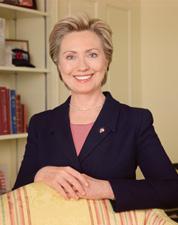
Mr. President, I rise today to introduce legislation that will create a national penalty for baby selling and help ensure that all families experience safe and legal adoptions. Although the majority…
Mr. President, I rise today to introduce legislation that will create a national penalty for baby selling and help ensure that all families experience safe and legal adoptions.
Although the majority of adoptions are handled by reputable and ethical agencies, each year around the world, hundreds of thousands of children are sold illegally. In these tragic instances, birth mothers and prospective adoptive families alike are victimized by individuals who treat children as commodities. Baby brokers exploit couples who are eager, if not desperate, to adopt a child, and vulnerable women who are unable or unwilling to raise their children. In too many States baby brokering constitutes only a misdemeanor offense. The Baby Selling Prohibition Act of 2004 will make this horrific crime a felony.
I am pleased to partner with Lifetime Television to help raise awareness about this issue and to change public policy. Lifetime's original movie, ``Baby for Sale,'' which is based on the troubling true story of a couple who
tried to adopt a child and got caught up in a baby selling ring, will go a long way toward raising the Nation's consciousness of this issue, and, I hope, generate support for my legislation.
The movie ``Baby for Sale'' highlights the story of a prospective adoptive couple, William and Lauren Schneider, who registered with an online agency called ``Adoption Online.'' Through this agency, they met a lawyer who introduced them to a baby, Nikolett, who they were told was available for adoption. The Schneiders fell in love with Nikolett at once and wanted to begin the adoption procedures so that they could begin their life as a family together. However, when the lawyer asked them for $60,000 under-the-table to process the adoption the couple alerted the authorities, and ultimately uncovered a bidding war between multiple couples for this little girl. The public outrage surrounding this case led to a change in New York law last year. Under New York's new law, baby selling is considered a felony instead of a misdemeanor.
The Baby Selling Prohibition Act of 2004 is modeled after New York's law. It makes profiting from the sale of a child, defined as charging fees beyond those that are reasonable and allowable, a felony, punishable by up to 10 years in prison.
This critical legislation will prevent families from enduring the same agony that the Schneider's went through and will ensure that every adoptive child's safety and best interest is strictly maintained in all adoption cases.
I ask unanimous consent that the text of the bill be printed in the Record.
Mr. President, I rise to introduce the Dirty Bomb Protections Acts along with Senators Gregg and Reid. This bill directs the Nuclear Regulatory Commission, NRC, to control key materials that could be used in a dirty bomb. Unfortunately, some of these materials are currently exempt from Federal control.
This bill follows a prior bill that I introduced with Senator Gregg in 2002, which was the first bipartisan legislation to propose improved domestic controls on materials that could be used in a ``dirty bomb.'' This legislation was supported and acclaimed by international dirty bomb experts. It provided for the safeguarding of radioactive material against use by terrorists. The bill required proper tracking, recovery, storage and export controls for radioactive material.
Since then, the IAEA Board of Governors accepted and its General Conference endorsed the revised ``IAEA Code of Conduct on the Safety and Security of Radioactive Sources,'' which reflects many of the elements in that bill. The heads of state and government of the eight major industrialized democracies, G8, and over 30 other countries have committed to implement the code. And at the Sea Island Summit earlier this year, G8 leaders urged all states to implement the code and recognize it as a global standard.
Passage of the Dirty Bomb Protections Act would allow the U.S. to fully implement the commitments of the code by providing the NRC with authority to control a set of substances for which they currently lack authority, including Radium-226 and other naturally occurring radioactive materials that for historical reasons have remained outside of Federal control. To control these materials, the bill instructs the NRC to: (1) promulgate final implementing regulations governing such byproduct material; and (2) prepare and give public notice of a transition plan for State assumption of regulatory responsibility for such material.
I believe this bill represents an important step forward in our war against terror and our efforts to control access to materials that could be used to produce a dirty bomb. The language is identical to language that passed the EPW Committee unanimously last year. I look forward to working with Senator Inhofe and other Members of the Senate, as well as the NRC, to advance this important legislation this year.

Mr. President, I rise today, along with my good friend and colleague Senator Dodd, to introduce the Sober Truth on Preventing Underage Drinking Act--also known as the STOP Underage Drinking Act. I…
Mr. President, I rise today, along with my good friend and colleague Senator Dodd, to introduce the Sober Truth on Preventing Underage Drinking Act--also known as the STOP Underage Drinking Act. I thank Senator Dodd for his commitment to this issue, as well as our colleagues on the House side--Representatives Roybal-Allard, Wolf, Osborne, DeLauro, and Wamp for working so diligently with us over the past few months on this bill. It is a good bill--a carefully crafted, bipartisan, bicameral piece of legislation.
As we discussed at the HELP Subcommittee hearing I chaired in September on underage drinking, it is well known that underage drinking is a significant problem for youth in this country. We've known that for a very long time.
We know that underage drinking often contributes to the four leading causes of deaths among 15 to 20 year olds--that 69 percent of youths who died in alcohol-related traffic fatalities in the year 2000 involved young drinking drivers--that in 1999, nearly 40 percent of people under the age of 21 who were victims of drownings, burns, and falls tested positive for alcohol.
We've known that alcohol has been reported to be involved in 36 percent of homicides, 12 percent of male suicides, and 8 percent of female suicides involving people under 21.
How did we get here, how did our Nation reach this point--a point where today, 12 percent of eighth graders--13 and 14 year olds--binge drink? Add to that, the 22 percent of tenth graders--15 and 16 year olds--who binge drink. The National Institute of Drug Abuse also reported that 95 percent of 12th graders perceive alcohol as readily available to them. Tragically, most children and young adults that drink underage obtain the alcohol from their parents or another adult.
These statistics are frightening. Too many American kids are drinking regularly, and they are drinking in quantities that can be of great, long-term harm to themselves. Again I ask--how did we get here? As a Nation, we clearly haven't done enough to address this problem. We haven't done enough to acknowledge how prevalent and widespread teenage drinking is in this country. We haven't done enough to let parents know that they, too, are a part of this problem and can be a part of the solution.
We talk about drugs and the dangers of drug use, as we should, but the reality is that we, as a society, have become complacent about the problem of underage drinking. This has to change. The culture has to change.
The Sober Truth on Preventing Underage Drinking Act, or STOP Underage Drinking Act, has four major areas of Policy development: First, there is a Federal coordination and reporting provision. This title would create an Interagency Coordinating Committee to coordinate the efforts and expertise of various Federal agencies to combat underage drinking. It would be chaired by the Secretary of Health and Human Services and would include other agencies and departments, such as the Department of Education, the Office of Juvenile Justice and Delinquency Prevention, and the Federal Trade Commission. This title also would mandate an annual report to Congress from the Interagency Committee on their efforts to combat underage drinking, as well as an annual report card on State efforts to combat the problem. Two million dollars, annually, would be appropriated under this section.
Second, the bill contains an authorization for the a national media campaign against underage drinking. This title would provide $1 million annually to authorize a national media campaign for which the Ad Council received $800,000 last year to begin implementation. It would continue funding for fiscal years 2005 and 2006.
Third, the bill would support new intervention programs to prevent underage drinking. This section of the bill would provide $5 million for enhancement grants to the Drug Free Communities program to be directed at the problem of underage drinking. This title also would create a new program which would provide competitive grants to States, non-profit entities, and institutions of higher education to create State-wide coalitions to prevent underage drinking. This program would be funded at $5 million.
Finally, our bill contains a section devoted to research. This title would provide $6 million for increased Federal research and data collection on underage drinking, including reporting on the types and brands of alcohol that kids use and the short-term and long-term impacts of underage drinking upon adolescent brain development.
Again, I thank Senator Dodd for working with me on this issue here in the Senate, and I look forward to continuing to work with my colleagues in the House and Senate to pass this very important bill.
I ask unanimous consent that the text of the bill be printed in the Record.
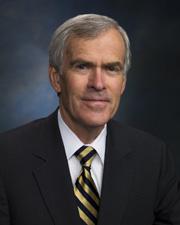
Health care continues to be among the fastest growing sectors of the U.S. economy. From 1970 to 2002, the health care consumption doubled from 7 to 14 percent of the U.S. Gross Domestic Product…
Health care continues to be among the fastest growing sectors of the U.S. economy. From 1970 to 2002, the health care consumption doubled from 7 to 14 percent of the U.S. Gross Domestic Product (GDP). Employment in health occupations is projected to increase from 11 million in 2000 to 14 million by 2010. In that same period, the growth rate for new job creation in health care occupations is expected to be 29 percent more than double the growth projected for non-health occupations. Over 5.3 million people will be needed to fill these health-related positions. However, as a nation, we are not educating and training sufficient numbers of healthcare workers and providers, and therefore failing the American people.
There are two ways in which we are failing our citizens. The first is an over-reliance on foreign healthcare workers. Instead of committing ourselves to training and educating Americans, we are importing large numbers of foreigners to meet our public health needs. For example, 25 percent of all physicians in the U.S. are immigrants, as are 16 percent of all laboratory technicians. Although these foreign workers are filling an important void, and are both qualified and competent, thousands of qualified Americans wishing to pursue an education in healthcare fields are turned down every year. It's time we stop importing our skilled workers and start investing in the expansion of a skilled workforce in our own country. In fact, given the recent economic downturn, and the high level of unemployment in our country, preparing Americans to work in an expanding job market such as healthcare is the right thing to do.
The second way in which we are failing the American people is by not educating and training sufficient numbers of racial and ethnic minorities to work in the healthcare system. The racial/ethnic composition of the U.S. healthcare workforce does not reflect that of the general population. For example, while Blacks, Hispanics, and Native Americans represented 26 percent of the general population in 2002, they only represented 6 percent of physicians.
A recent study of New Mexico healthcare professionals concluded that 88 percent of physicians are non-Hispanic Whites, while only 6.5 percent are Hispanic. Overall, ethnic/racial minorities are inadequately represented in all healthcare professions in New Mexico. Additionally, in my State, 21 percent of Internal Medicine Specialists are international medical school graduates, and so are 15 percent of primary care physicians.
A recent Institute of Medicine (IOM) study described compelling evidence for the need to increase diversity within the health workforce. Diversity ensures access to healthcare for underserved populations and greater patient satisfaction. Many segments of the U.S. population, particularly minority groups, reside in medically underserved areas. Black and Hispanic health workers are more likely to provide healthcare to Black and Hispanic patients, to serve poor, uninsured, or Medicaid-insured patients, and to locate their practices in underserved
areas. Furthermore, racial/ethnic minority patients are more satisfied with their providers when they are of the same racial/ethnic group.
It is time we invest in our healthcare workforce; in our people; in our future. That is why I am introducing the ``Investing in America's Future Act of 2004'' today. This bill has several components aimed at improving and expanding education and training for healthcare workers.
This bill will provide incentives for Americans to seek and complete high-quality allied health education and training. It will also expand the Health Career Opportunities Program, which is aimed at enhancing the academic skills of students from disadvantaged backgrounds and supporting them in successfully entering and graduating from health professions training programs. It creates programs of excellence in health professions education for underrepresented minorities, and a health professions student loan fund for low-income and racial/ethnic minority students. Finally, this bill also establishes a Health Work Advisory Commission, charged with creating a national vision to serve as a map for investing in the health workforce.
We must ensure that qualified Americans who wish to enter the health workforce are able to do so, and we must support the training and education of the generations of Americans to come. In doing so, not only will we help more Americans hold good jobs, but we will also provide better healthcare to underserved and disadvantaged groups.
Mr. President, I ask unanimous consent that the text of this bill be in the Record.
There being two objection, the bill was ordered to be printed in the Record, as follows:

Mr. President, I submit today a bill that will assist the States of Vermont and New York in commemorating the extraordinary cultural; historical, and recreational heritage of one of Vermont's…
Mr. President, I submit today a bill that will assist the States of Vermont and New York in commemorating the extraordinary cultural; historical, and recreational heritage of one of Vermont's greatest natural treasures, Lake Champlain.
Nearly 400 years ago, in 1609, Samuel de Champlain entered a green valley where he arrived at the lake that today carries his name. Lake Champlain stretches nearly 120 miles from Whitehall, NY, to the Richelieu River in Quebec and is nestled between the dramatic peaks of the New York's Adirondacks and Vermont's picturesque Green Mountains.
The Samuel de Champlain 400th Commemoration Commission Act of 2004 will authorize the National Park Service to fund a Commemoration Committee established with the Governors of Vermont and New York in order to plan national events for 2009 that celebrate the arrival of Samuel de Champlain and the rich heritage of the lake--which includes all people present when Champlain arrived in the valley and the communities that exist today.
We Vermonters sometimes affectionately refer to Lake Champlain as the ``Sixth Great Lake,'' and I have many fond memories of this wonderful lake. As a boy I spent time fishing and boating in its waters and over the years have taken my family on many enjoyable ferry rides across the lake. More recently I have become an avid scuba diver, and my own explorations of shipwreck sites in the lake have inspired me to educate others about its history and work to help preserve its unique heritage.
Just as in my own family's history, Lake Champlain's history links together Vermont and our Nation's storied histories.
Shortly after Champlain entered the region, what is now known as Lake Champlain was quickly recognized as the vital transportation route for the Northeast which had been used by Native peoples for centuries. Early settlers used the lake to explore unknown lands and create new settlements in the wilderness of Colonial North America.
Lake Champlain is awash in a rich maritime history. The chain of lakes that includes Lake Champlain has been called the ``The Great Warpath'' because of its use by early Colonial armies and flotillas. It played a critical role in the birth of the United States Navy through early military and naval struggles played out along its shores and in its bays.
The most famous naval battle on Lake Champlain occurred in 1776, during the American Revolutionary War, when Benedict Arnold managed to successfully delay a British invasion of the rebelling colonies at the Battle of Valcour Island.
Lake Champlain holds one of the largest and best preserved collections of historic naval and other shipwrecks. As an avid scuba diver, I have viewed many of the shipwrecks first hand and am always awed by how well they have been preserved.
The Lake Champlain Maritime Museum, Lake Champlain Basin Program, and many other Vermonters and New Yorkers have worked hard to preserve our fabulous maritime archaeological heritage so that other intrepid adventurers can dive in and explore a part of Vermont's past that helped shape the direction of our developing Nation.
Over the years as my family and I explored the lake's maritime history we also learned about its role in the growing economy of our young Nation. As the United States became more settled and stable, Lake Champlain became a center of flourishing commerce in the Northeast and a critical conduit for getting goods up and down the eastern seaboard.
In fact, historians call the 19th nineteenth century Lake Champlain's ``Golden Era'' of waterborne commerce. During that time the lake's peaceful waters were churning with the wakes of hundreds of steamboats, canal boats, ferries, merchant sloops and schooners--all plying their trade to markets in the Northeast and abroad.
Today, the storied waters of Lake Champlain are treasured by Vermonters and New Yorkers and millions more as an outstanding natural, cultural, and recreational resource. Activities such as boating, fishing, and tourism help Lake Champlain support a regional economy of more than $9 billion dollars. No other inland body of water has played such a decisive role in the history of the United States as has Lake Champlain.
The arrival of Samuel de Champlain had profound influence on our Nation's history that goes far beyond the simple naming of a lake--this event lead to a multitude of great historic, cultural, and economic achievements that to this day continue to influence life throughout the United States.
This legislation will help our country and the many small towns and groups around Lake Champlain properly celebrate our common heritage.
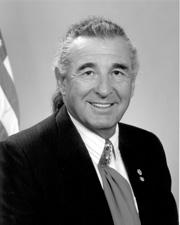
Mr. President, I am pleased to introduce The Indian Tribal Detention Facility Reform Act of 2004 which proposes sweeping reforms to operation of tribal detention systems in American Indian…
Mr. President, I am pleased to introduce The Indian Tribal Detention Facility Reform Act of 2004 which proposes sweeping reforms to operation of tribal detention systems in American Indian communities.
The bill will launch significant efforts to address the third world conditions plaguing this system, problems which were the subject of a series of articles in the USA Today and other national newspapers.
On June 23, 2004, the Committee on Indian Affairs held a hearing on the operation and condition of these detention facilities and the testimony we received was very disturbing.
At the hearing, the Inspector General of the Department of Interior reported that after reports from a variety of sources, including the U.S. Department of Justice, his office began an assessment of the physical condition of these facilities and how they are operated.
The Inspector General also testified about numerous examples of inmate suicides, escapes, neglect, overcrowding and other inhumane conditions, staffing shortages, inmate access to weapons and poor prisoner supervision, all occurring in facilities operated by the Bureau of Indian Affairs or by Indian tribes, pursuant to contract.
The Inspector General reported that the lack of prison monitoring sadly resulted in the death of a 16 year old Indian girl who was placed in a cell for underage drinking. She later died of alcohol poisoning and her family is now considering legal action charging negligence by the jail's managers.
The tragic part of the story is that the death might have been prevented. But what is even more frightening is that deaths and attempted suicides are not isolated events at these facilities.
This is but one example brought to the Committee's attention and in my mind these events and conditions are deplorable, inexcusable and have to end.
The bill I am introducing today establishes clear lines of authority for detention services by directing the Secretary of Interior to create a separate branch of detention services. This separate branch will give the proper attention to issues surrounding detention facilities.
In addition, the bill will require the creation of reporting protocols on serious incidents, particularly escapes, to proper law enforcement authorities. Because in some cases reporting may not be sufficient, the bill will also establish criteria for conducting preliminary inquiries into serious incidents to determine if there is a need for a full investigation.
Finally, the bill requires that the Department of Interior conduct a full report on the conditions and needs of the detention facilities in Indian communities, including staffing shortages and training, and a plan for addressing the needs.
I urge my colleagues to join me in supporting this important legislation.
I ask unanimous consent that the text of the bill be printed in the Record.
Mr. President, I am honored to rise and introduce legislation that would rename the Colorado Canyons National Conservation Area as the McInnis Canyons National Conservation Area.
I do this in recognition of my colleague in the House, Scott McInnis, who will join me this year in returning home to private life after years of dedicated public service to the people of Colorado. For the past two decades, Congressman McInnis has been a true champion in the fight to protect Colorado's public lands. In fact, no sitting Member of Congress has passed more legislation for the designation and protection of Wilderness areas.
As Congressman McInnis nears the end of his tenure in office, I thought it appropriate to create a lasting symbol of Colorado's appreciation for his many achievements on behalf of our great State. The Colorado Canyons National Conservation Area is located near Congressman McInnis' home in Grand Junction. The site is one of America's most beautiful natural treasures. These canyons are preserved today because of the work of Congressman McInnis, who began his quest to protect the Colorado Canyons by seeking the input of local citizens and landowners. He then took this input and sought the advice of land managers and non-profit conservation organizations. Upon completing the plan, Congressman McInnis drafted the legislation to create the area and shepherded it through Congress.
Simply put, the creation of the Colorado Canyons National Conservation
Area would not have been possible absent the tireless efforts of Scott McInnis. Recognizing the sizable McInnis legacy on behalf of all Coloradans, I think it only fitting and appropriate to introduce this lasting tribute to recognize Scott's hard work and abiding love of Colorado's public lands.
Bill Text
6 versions available
        [Congressional Bills 108th Congress]
[From the U.S. Government Publishing Office]
[H.R. 4259 Enrolled Bill (ENR)]

H.R.4259

One Hundred Eighth Congress

of the

United States of America

AT THE SECOND SESSION

Begun and held at the City of Washington on Tuesday,
the twentieth day of January, two thousand and four

An Act

To amend title 31, United States Code, to improve the financial
accountability requirements applicable to the Department of Homeland
Security, to establish requirements for the Future Years Homeland
Security Program of the Department, and for other purposes.

Be it enacted by the Senate and House of Representatives of the
United States of America in Congress assembled,

SECTION 1. SHORT TITLE.

This Act may be cited as ``Department of Homeland Security
Financial Accountability Act''.

SEC. 2. FINDINGS.

The Congress finds the following:
(1) Influential financial management leadership is of vital
importance to the mission success of the Department of Homeland
Security. For this reason, the Chief Financial Officer of the
Department must be a key figure in the Department's management.
(2) To provide a sound financial leadership structure, the
provisions of law enacted by the Chief Financial Officers Act of
1990 (Public Law 101-576) provide that the Chief Financial Officer
of each of the Federal executive departments is to be a
Presidential appointee who reports directly to the Secretary of
that department on financial management matters. Because the
Department of Homeland Security was only recently created, the
provisions enacted by that Act must be amended to include the
Department within these provisions.
(3) The Department of Homeland Security was created by
consolidation of 22 separate Federal agencies, each with its own
accounting and financial management system. None of these systems
was developed with a view to executing the mission of the
Department of Homeland Security to prevent terrorist attacks within
the United States, reduce the Nation's vulnerability to terrorism,
and minimize the damage and assist in the recovery from terrorist
attacks. For these reasons, a strong Chief Financial Officer is
needed within the Department both to consolidate financial
management operations, and to insure that management control
systems are comprehensively designed to achieve the mission and
execute the strategy of the Department.
(4) The provisions of law enacted by the Chief Financial
Officers Act of 1990 require agency Chief Financial Officers to
improve the financial information available to agency managers and
the Congress. Those provisions also specify that agency financial
management systems must provide for the systematic measurement of
performance. In the case of the Department of Homeland Security,
therefore, it is vitally important that management control systems
be designed with a clear view of a homeland security strategy,
including the priorities of the Department in addressing those
risks of terrorism deemed most significant based upon a
comprehensive assessment of potential threats, vulnerabilities,
criticality, and consequences. For this reason, Federal law should
be amended to clearly state the responsibilities of the Chief
Financial Officer of the Department of Homeland Security to provide
management control information, for the benefit of managers within
the Department and to help inform the Congress, that permits an
assessment of the Department's performance in executing a homeland
security strategy.

SEC. 3. CHIEF FINANCIAL OFFICER OF THE DEPARTMENT OF HOMELAND SECURITY.

(a) In General.--Section 901(b)(1) of title 31, United States Code,
is amended--
(1) by redesignating subparagraphs (G) through (P) as
subparagraphs (H) through (Q), respectively; and
(2) by inserting after subparagraph (F) the following:
``(G) The Department of Homeland Security.''.
(b) Appointment or Designation of CFO.--The President shall appoint
or designate a Chief Financial Officer of the Department of Homeland
Security under the amendment made by subsection (a) by not later than
180 days after the date of the enactment of this Act.
(c) Continued Service of Current Official.--An individual serving
as Chief Financial Officer of the Department of Homeland Security
immediately before the enactment of this Act, or another person who is
appointed to replace such an individual in an acting capacity after the
enactment of this Act, may continue to serve in that position until the
date of the confirmation or designation, as applicable (under section
901(a)(1)(B) of title 31, United States Code), of a successor under the
amendment made by subsection (a).
(d) Conforming Amendments.--
(1) Homeland security act of 2002.--The Homeland Security Act
of 2002 (Public Law 107-296) is amended--
(A) in section 103 (6 U.S.C. 113)--
(i) in subsection (d) by striking paragraph (4), and
redesignating paragraph (5) as paragraph (4);
(ii) by redesignating subsection (e) as subsection (f);
and
(iii) by inserting after subsection (d) the following:
``(e) Chief Financial Officer.--There shall be in the Department a
Chief Financial Officer, as provided in chapter 9 of title 31, United
States Code.''; and
(B) in section 702 (6 U.S.C. 342) by striking ``shall
report'' and all that follows through the period and inserting
``shall perform functions as specified in chapter 9 of title
31, United States Code, and, with respect to all such functions
and other responsibilities that may be assigned to the Chief
Financial Officer from time to time, shall also report to the
Under Secretary for Management.''.
(2) FEMA.--Section 901(b)(2) of title 31, United States Code,
is amended by striking subparagraph (B), and by redesignating
subparagraphs (C) through (H) in order as subparagraphs (B) through
(G).

SEC. 4. FUNCTIONS OF CHIEF FINANCIAL OFFICER OF THE DEPARTMENT OF
HOMELAND SECURITY.

(a) Performance and Accountability Reports.--Section 3516 of title
31, United States Code, is amended by adding at the end the following:
``(f) The Secretary of Homeland Security--
``(1) shall for each fiscal year submit a performance and
accountability report under subsection (a) that incorporates the
program performance report under section 1116 of this title for the
Department of Homeland Security;
``(2) shall include in each performance and accountability
report an audit opinion of the Department's internal controls over
its financial reporting; and
``(3) shall design and implement Department-wide management
controls that--
``(A) reflect the most recent homeland security strategy
developed pursuant to section 874(b)(2) of the Homeland
Security Act of 2002; and
``(B) permit assessment, by the Congress and by managers
within the Department, of the Department's performance in
executing such strategy.''.
(b) Implementation of Audit Opinion Requirement.--The Secretary of
Homeland Security shall include audit opinions in performance and
accountability reports under section 3516(f) of title 31, United States
Code, as amended by subsection (a), only for fiscal years after fiscal
year 2005.
(c) Assertion of Internal Controls.--The Secretary of Homeland
Security shall include in the performance and accountability report for
fiscal year 2005 submitted by the Secretary under section 3516(f) of
title 31, United States Code, an assertion of the internal controls
that apply to financial reporting by the Department of Homeland
Security.
(d) Audit Opinions of Internal Controls Over Financial Reporting by
Chief Financial Officer Agencies.--
(1) In general.--Not later than 180 days after the date of the
enactment of this Act, the Chief Financial Officers Council and the
President's Council on Integrity and Efficiency established by
Executive Order 12805 of May 11, 1992, shall jointly conduct a
study of the potential costs and benefits of requiring the agencies
listed in section 901(b) of title 31, United States Code, to obtain
audit opinions of their internal controls over their financial
reporting.
(2) Report.--Upon completion of the study under paragraph (1),
the Chief Financial Officers Council and the President's Council on
Integrity and Efficiency shall promptly submit a report on the
results of the study to the Committee on Government Reform of the
House of Representatives, the Committee on Governmental Affairs of
the Senate, and the Comptroller General of the United States.
(3) General accounting office analysis.--Not later than 90 days
after receiving the report under paragraph (2), the Comptroller
General shall perform an analysis of the information provided in
the report and report the findings of the analysis to the
committees referred to in paragraph (2).

SEC. 5. FUTURE YEARS HOMELAND SECURITY PROGRAM AND HOMELAND SECURITY
STRATEGY.

Section 874 of the Homeland Security Act of 2002 (6 U.S.C. 112) is
amended by striking subsection (b) and inserting the following:
``(b) Contents.--The Future Years Homeland Security Program under
subsection (a) shall--
``(1) include the same type of information, organizational
structure, and level of detail as the future years defense program
submitted to Congress by the Secretary of Defense under section 221
of title 10, United States Code;
``(2) set forth the homeland security strategy of the
Department, which shall be developed and updated as appropriate
annually by the Secretary, that was used to develop program
planning guidance for the Future Years Homeland Security Program;
and
``(3) include an explanation of how the resource allocations
included in the Future Years Homeland Security Program correlate to
the homeland security strategy set forth under paragraph (2).''.

SEC. 6. ESTABLISHMENT OF OFFICE OF PROGRAM ANALYSIS AND EVALUATION.

Section 702 of the Homeland Security Act of 2002 (6 U.S.C. 342) is
amended by--
(1) inserting ``(a) In General.--'' before the first sentence;
and
(2) adding at the end the following:
``(b) Program Analysis and Evaluation Function.--
``(1) Establishment of office of program analysis and
evaluation.--Not later than 90 days after the date of enactment of
this subsection, the Secretary shall establish an Office of Program
Analysis and Evaluation within the Department (in this section
referred to as the `Office').
``(2) Responsibilities.--The Office shall perform the following
functions:
``(A) Analyze and evaluate plans, programs, and budgets of
the Department in relation to United States homeland security
objectives, projected threats, vulnerability assessments,
estimated costs, resource constraints, and the most recent
homeland security strategy developed pursuant to section
874(b)(2).
``(B) Develop and perform analyses and evaluations of
alternative plans, programs, personnel levels, and budget
submissions for the Department in relation to United States
homeland security objectives, projected threats, vulnerability
assessments, estimated costs, resource constraints, and the
most recent homeland security strategy developed pursuant to
section 874(b)(2).
``(C) Establish policies for, and oversee the integration
of, the planning, programming, and budgeting system of the
Department.
``(D) Review and ensure that the Department meets
performance-based budget requirements established by the Office
of Management and Budget.
``(E) Provide guidance for, and oversee the development of,
the Future Years Homeland Security Program of the Department,
as specified under section 874.
``(F) Ensure that the costs of Department programs,
including classified programs, are presented accurately and
completely.
``(G) Oversee the preparation of the annual performance
plan for the Department and the program and performance section
of the annual report on program performance for the Department,
consistent with sections 1115 and 1116, respectively, of title
31, United States Code.
``(H) Provide leadership in developing and promoting
improved analytical tools and methods for analyzing homeland
security planning and the allocation of resources.
``(I) Any other responsibilities delegated by the Secretary
consistent with an effective program analysis and evaluation
function.
``(3) Director of program analysis and evaluation.--There shall
be a Director of Program Analysis and Evaluation, who--
``(A) shall be a principal staff assistant to the Chief
Financial Officer of the Department for program analysis and
evaluation; and
``(B) shall report to an official no lower than the Chief
Financial Officer.
``(4) Reorganization.--
``(A) In general.--The Secretary may allocate or reallocate
the functions of the Office, or discontinue the Office, in
accordance with section 872(a).
``(B) Exemption from limitations.--Section 872(b) shall not
apply to any action by the Secretary under this paragraph.''.

SEC. 7. NOTIFICATION REGARDING TRANSFER OR REPROGRAMMING OF FUNDS FOR
DEPARTMENT OF HOMELAND SECURITY.

Section 702 of the Homeland Security Act of 2002 (6 U.S.C. 342) is
further amended by adding at the end the following:
``(c) Notification Regarding Transfer or Reprogramming of Funds.--
In any case in which appropriations available to the Department or any
officer of the Department are transferred or reprogrammed and notice of
such transfer or reprogramming is submitted to the Congress (including
any officer, office, or Committee of the Congress), the Chief Financial
Officer of the Department shall simultaneously submit such notice to
the Select Committee on Homeland Security (or any successor to the
jurisdiction of that committee) and the Committee on Government Reform
of the House of Representatives, and to the Committee on Governmental
Affairs of the Senate.''.

Speaker of the House of Representatives.

Vice President of the United States and
President of the Senate.