To provide that in preparing an environmental assessment or environmental impact statement required under section 102 of the National Environmental Policy Act of 1969 with respect to any action authorizing a renewable energy project, no Federal agency is required to identify alternative project locations or actions other than the proposed action and the no action alternative, and for other purposes.

Legislative Activity
Stay on top of the latest movement without scrolling through every action
Received in the Senate and Read twice and referred to the Committee on Environment and Public Works.
June 17, 2004
View full timeline
Introduced in House
June 4, 2004
Referred to the House Committee on Resources.
June 4, 2004
Rules Committee Resolution H. Res. 672 Reported to House. Rule provides for consideration of H.R. 4513 and H.R. 4529 with 1 hour of general debate. Previous question shall be considered as ordered without intervening motions except motion to recommit with or without instructions. Measure will be considered read. A specified amendment is in order.
June 14, 2004 • 8:59 PM
Considered under the provisions of rule H. Res. 672. (consideration: CR H3981-3990; text of measure as introduced: CR H3981-3982)
June 15, 2004 • 1:03 PM
Rule provides for consideration of H.R. 4513 and H.R. 4529 with 1 hour of general debate. Previous question shall be considered as ordered without intervening motions except motion to recommit with or without instructions. Measure will be considered read. Specified amendments are in order.
June 15, 2004 • 1:03 PM
DEBATE - The House proceeded with one hour of debate on H.R. 4513.
June 15, 2004 • 1:04 PM
DEBATE - The House proceeded with ten minutes of debate on the Pombo amendment.
June 15, 2004 • 2:11 PM
Considered as unfinished business. (consideration: CR H4132-4133)
June 15, 2004 • 4:21 PM
Passed/agreed to in House: On passage Passed by the Yeas and Nays: 229 - 186 (Roll no. 242).
June 15, 2004 • 4:30 PM
On passage Passed by the Yeas and Nays: 229 - 186 (Roll no. 242).
June 15, 2004 • 4:30 PM
Motion to reconsider laid on the table Agreed to without objection.
June 15, 2004 • 4:30 PM
Received in the Senate and Read twice and referred to the Committee on Environment and Public Works.
June 17, 2004
Voting History
1 vote recorded • Roll call available
Floor Debate
22 membersWhat members said about H.R. 4513 on the floor
RWP JDD
JDD TMR
TMR NJR
NJR ALH+17
Floor Debate
22 membersWhat members said about H.R. 4513 on the floor
Mr. Speaker, pursuant to House Resolution 672, I call up the bill (H.R. 4513) to provide that in preparing an environmental assessment or environmental impact statement required under section 102 of…
Mr. Speaker, pursuant to House Resolution 672, I call up the bill (H.R. 4513) to provide that in preparing an environmental assessment or environmental impact statement required under section 102 of the National Environmental Policy Act of 1969 with respect to any action authorizing a renewable energy project, no Federal agency is required to identify alternative project locations or actions other than the proposed action and the no action alternative, and for other purposes.
Mr. Speaker, I yield myself as much time as I may consume.
Mr. Speaker, H.R. 4513 expedites the development of renewable energy projects such as wind, tidal, solar, and geothermal by streamlining, but not weakening, the environmental review process.
The bill instructs the responsible agency to review and take public comment only on the most feasible project. Simplifying the process is necessary to incentivize participation in renewable energy projects which are economically marginal to start.
The bottom line is that H.R. 4513 encourages developers to commit capital to renewable energy projects and puts the government in position to put that capital to work sooner.
NEPA requires review of reasonable alternatives, and H.R. 4513 takes the intelligent step of defining ``reasonable'' alternatives for renewable energy projects rather than having it defined through litigation, which those opposed to this bill may ultimately want to do.
Since renewable energy projects are largely place-based, which means that they can only make use of the site where the resources are found, the only reasonable alternatives are, one, the proposed project, and, two, no action.
This bill does nothing to change the requirement that a Federal agency follow the NEPA environmental review process, including mitigation. At the end of the NEPA process, if the agency is not satisfied that the project meets environmental requirements, then the agency official can deny the permit.
Despite what agenda-driven extremist groups might suggest, public comment is not limited. Anyone can make comments on the project. It does require that the comments be focused on the preferred action, which is consistent with the NEPA regulations request that comments be as specific as possible.
H.R. 4513 has no effect on any other environmental law or action. For example, while H.R. 4513 addresses alternatives during NEPA review of hydroelectric projects, it does nothing to affect any of the environmental safeguards otherwise found in the relicensing process.
The bill actually improves an agency's environmental review by focusing on the most viable project rather than having it distracted by misdirected and ineffective alternatives.
Renewable energy projects create jobs. Wind power creates 2.77 jobs for every megawatt produced. Solar panels create 7.24 jobs per megawatt, and geothermal energy projects create 5.6 jobs per megawatt. These projects use large amounts of highly skilled labor and can be an engine for local construction and manufacturing jobs that pay family wages.
At the end of the day, my colleagues either support renewable energy production or they do not. This bill is necessary because of the costly litigation and bureaucratic roadblocks created by the same groups that oppose this bill. This bill provides the framework for power supplies that are affordable, reliable, secure and sustainable while at the same time fully protecting the quality of our environment.
Mr. Speaker, I reserve the balance of my time.
Mr. Speaker, I yield 4 minutes to the gentlewoman from Wyoming (Mrs. Cubin).
(Mrs. CUBIN asked and was given permission to revise and extend her remarks.)
Mr. Speaker, I yield myself such time as I may consume.
Mr. Speaker, just in response to my colleagues' comments on the bill, I am not exactly sure where the gentleman from West Virginia (Mr. Rahall) is going with his opposition. We have spent so much time on energy legislation over the past several years in the committee in trying to work this out; and one of the things I hear repeatedly from the other side of the aisle is we need to do more on renewables, we need to have more effort put into having alternative energy and renewables and environmentally friendly energy production.
This bill does that. It streamlines the process. It in no way guts NEPA. It does not change a word of any of the environmental requirements under NEPA. It does not prevent the States from commenting or change the States' ability to comment on that, or the ability for our constituents, the citizens of this country, to comment on any of the proposals that are put before us. All of that stays in place. All it does is in reducing the number of alternatives that are required of someone to come forward with is it streamlines the process.
Now, if there is something that is being built next to a school or a national park, and I love hearing that, then the agency with oversight says no. It is that simple. If somebody is that ignorant that they are going to come forward with a project next to a school or in the middle of a national park, they say no. Then they go to a different project. All we are trying to do is speed up the process.
I love listening to the other side of the aisle talk about how we need to do more on alternative energy; and when we went through all the debate on the energy bill, we talked about how we need to do more on bringing alternative energy projects to the forefront. We are trying to do that in this bill, and the other side of the aisle is still opposed to it. I am coming to the conclusion that the other side of the aisle is opposed to doing anything that produces energy. If they do not support this, and they do not support the energy bill, what are they in favor of? What do they think is a good idea to produce more energy for this country?
If they come up with some ideas, I will work with them. We did the energy bill, which was a balanced approach. We did this bill, which is to put more emphasis on nonpolluting energy sources; and they are still opposed to it. At some point they have to come forward and say we are in favor of something because our country is running out of energy. Our country is in a terrible mess on natural gas prices, on gasoline prices, on electricity prices. Everything is going up. We have shortages all over the country in different parts for different reasons; and everything that we propose to try to take care of that, they are opposed to it.
Granted, the environmental groups have a long and storied history on opposing anything, and I can take that. But as Members of Congress, we need to step forward and be leaders and say this is how we are going to take care of our energy problems into the future.
Mr. Speaker, I reserve the balance of my time.
Mr. Speaker, I yield myself 1 minute to engage in a colloquy with the gentlewoman.
Mr. Speaker, would the gentlewoman support the bill if we went to a 45-day comment period?
I yield to the gentlewoman from California.
Mr. Speaker, it does not change that part. It only changes the 45 days to 20 days. If we went to a 45-day comment period, would the gentlewoman then support the bill?
And are there other things in the bill that change that local comment?
Mr. Speaker, I would be willing to change it to the 45 days if that is the gentlewoman's opposition to the bill.
Mr. Speaker, I yield such time as he may consume to the gentleman from Louisiana (Mr. Tauzin), the former chairman of the Committee on Energy and Commerce.
Mr. Speaker, will the gentleman yield?
Mr. Speaker, I thank the gentleman for yielding. By our standards, this is an extremely short bill. It is 2\1/2\ pages. I have read and reread and looked at this. I do not see in here where they say that we are eliminating the public comment. It says consider public comments that specifically address the preferred action that are filed within 20 days. If it is the time limit part, if that is where they have the major heartburn over this, I will go to current law and 45 days if their opposition to the bill is based upon that. Because there is nothing else in here that eliminates all of the public comment that is currently required and accepted under NEPA. I am not sure where they are getting that. They might have read it in somebody's memo, but it is not in the bill.
Mr. Speaker, where in the bill does it strike the need for environmental impact statements?
The gentleman's statement said, and I appreciate him correcting that, because there is nothing
in this bill that slashes the environmental impact statement requirements. There is nothing in this bill that slashes any of our environmental laws.
Where are we cutting out the public?
Mr. Speaker, I yield myself 4 minutes. Just in response to my colleague, there is nothing in here that eliminates the public comment period. There is nothing in here that reduces the public comment. As I have said repeatedly, if the big problem is 20 days or 45 days to respond, then I would be happy to go to 45 days for their support on this bill.
In regard to the gentleman's amendment that he offered on the big energy bill, he is perfectly comfortable mandating that a State adopt 15 percent of their energy coming from a renewable resource but he is unwilling to do anything to make that happen. What we are trying to do in this particular piece of legislation is make it easier for people to build renewable energy projects. That right now has proven to be extremely difficult. In flying from the State of New Mexico, which is mostly public lands, into the State of Texas, you cross a line. On one side of the line they have renewable energy projects. On the other side of the line, they do not. It is the same conditions, the same wind, yet it is that much more difficult to build on public lands in the State of New Mexico than it is on private lands in the State of Texas. In my area of the country, in California, in my particular district, we have thousands of windmills. None of those are built on public land. They are built on private land. But you have to build windmills where the wind blows. You cannot just do it where somebody thinks it is a good idea. What we are trying to do is make it easier for people to build where the conditions are. In some cases that happens to be on public lands. That is what we are trying to do.
I do not understand how they can keep talking about being in favor of renewable energy and then scramble around and try to find a reason to be opposed to this bill.
I yield to the gentleman from New Mexico.
And I never stop that.
Mr. Speaker, reclaiming my time, when one has a project, and I will take windmills, when one has a project and the wind blows on this hill and it is public land and they go to BLM and say we want to build a project of 200 windmills on this piece of land, the BLM looks at that. They go through all their environmental review, and they tell them yes or they tell them no. That is what we are trying to do. We do not want to spend 10 years in court deciding whether or not it meets all of the different alternatives that are put out there. If it does not meet all the environmental restrictions that are in place, if it does not have the environmental impact statement, if it does not meet the Endangered Species Act, all of the environmental restrictions, then BLM says no. It is not that complicated. You guys are just scrambling, looking for a reason to vote ``no.''
You are voting ``no'' on politics, and you know it.
I yield to the gentleman.
Mr. Speaker, reclaiming my time, that is not what NEPA is all about. But what we are trying to do is make the system less bureaucratic, more efficient, force whoever is applying for the permit in that project to actually go at it in a way that it could become a reality. Right now, as the gentleman knows and I know, these projects are not being built on public lands and a big part of the reason is the bureaucracy.
Mr. Speaker, I yield for the purpose of making a unanimous consent request to the gentleman from New York (Mr. Boehlert).
(Mr. BOEHLERT asked and was given permission to revise and extend his remarks.)
Mr. Speaker, I yield such time as she may consume to the gentlewoman from Wyoming (Mrs. Cubin).
Mr. Speaker, I have just myself as the closing speaker. Does the gentleman from West Virginia (Mr. Rahall) have additional speakers?
Mr. Speaker, I yield myself the balance of our time and will just say I appreciate the gentleman from West Virginia's (Mr. Rahall) statement, and we have had over the last year and a half a chance to work together on a lot of different issues. I will tell my colleagues, on this bill we are trying to streamline the process and move it along. The gentleman's example, the letter that he read from the gentleman from Massachusetts, I think is a valuable example of what is wrong with the current system. If you actually look at the letter that the gentleman just read, he does not say in there that the process has not been held up by the current system. He is saying that they are going along with the current NEPA process and the EIS process and everything else, and I agree with that.
I believe that NEPA is an extremely valuable tool for the Federal Government and for our bureaucrats out there to make sure that anything that is going forward on public lands has the minimal impact on the environment, and that is what we should do. But in the gentleman's example about someone wanting to build a windmill farm in a pristine site, if that is the case, if someone comes forward with a windmill farm in a pristine site that BLM or Park Service or Forest Service or anyone else says they do not want windmill farms there, they say no.
What we are trying to avoid is multiple years of going through the process of studying non-viable options to that specific project, and that is what is considered under current law.
If you want examples of where this is not working, all you have to do is look at the difference between New Mexico and Texas. Where in Texas they are developing alternative energy and they have windmill sites on the public lands, across the border in New Mexico they are not building them. It is not because anybody was told no, it is because the developers look at it and they say, I can build here and start within a year or two. If I try to do it on public lands, it is going to take me 4, 5 or 10 years to go through the process. So they do not even try.
If you are in favor of doing alternative energy projects, then you have to support this bill, because that is what we are doing. We are trying to streamline the process in order to bring those projects on.
The gentleman from Oregon earlier talked about the wind energy tax credit. I am a huge proponent of that. We have windmills in my district. If it was not for the tax credit, they never would have been built. But they were built on private land. None of the public land has windmills on it because of the process that they have to go through. If the gentleman is angry about the wind energy tax credit, that is simple: Just tell the Senate to pass the energy bill. It is in there. We have passed it out of here three times already.
So as we move forward with this legislation, I would encourage my colleagues on the left to take another look at it, because this truly is an intent to bring more alternative energy into the process and to make it a viable industry for all of the people that are out there trying to find different ways, other than fossil fuel, to power our country.
Finally, I would say to my friend from West Virginia, when you are talking about windmills, you have to build them where the wind is. You cannot go to the developer and say we want you to pick an alternative site. That is like going to your coal miners and saying we want you to pick an alternative site. They have to mine where the coal is. You cannot tell them go look in my district in California. We do not have coal. In your district you do. That is why they mine for coal there.
Well, we have wind. That is where the wind is, and that is where you have to build the windmills. That is the same thing on public lands, you have to build them where the wind blows. To try to tell them they have to pick an alternative site, really, you are not accomplishing anything if you truly want to bring alternative energy into the market.
Finally, I would just say as we move forward with this bill, if there are specific issues in here that the gentleman wants to work on, I will work with him on it, and he knows that. If it is 20 days
or 45 days, we can look at the difference between doing that. But we really do need to move forward with this bill.
Mr. Speaker, I offer an amendment.
Mr. Speaker, I yield myself such time as I may consume.
Mr. Speaker, this amendment would clarify that the environmental review process in H.R. 4513 would not apply to oil and gas leasing activities. This amendment would remove any confusion about what this bill does or does not do.
We have discussed this bill with the minority and they offered this change to the base text. After having gone back and forth, I believe this is a necessary change to the underlying bill to eliminate any confusion that there may be. By making this change, this amendment incorporates all of their proposed changes, short of rewriting the bill. Rewriting this bill would mean doing nothing to promote renewable energy development, which I find unacceptable.
I support this amendment, and I urge its adoption.
Mr. Speaker, I reserve the balance of my time.
Mr. Speaker, I yield myself such time as I may consume.
Mr. Speaker, in conclusion, I appreciate the gentleman working with me on this particular amendment, but again I would say that in regard to his final comments there is nothing in this bill that eviscerates, guts, dissects or any other thing our Nation's environmental laws. All it does is it makes the system more efficient by reducing the number of alternatives that have to be looked at on a renewable energy project.
If somebody wants to build a garbage burning incinerator in the middle of a national park, we both know that the answer is no before they even apply for a permit. But I guess trying to scare people on this tries to make things work.
Mr. Speaker, I yield back the balance my time.
Mr. Speaker, I yield myself 3 minutes. (Mr. DINGELL asked and was given permission to revise and extend his remarks.) Mr. Speaker, the House is again considering a bill that has already passed the…
Mr. Speaker, I yield myself 3 minutes.
(Mr. DINGELL asked and was given permission to revise and extend his remarks.)
Mr. Speaker, the House is again considering a bill that has already passed the body, but it has not been enacted into law. This might be called the ``summer reruns.'' It might also be called low comedy, or ancient history, because this is an unfortunate waste, not only of this body's time but, quite frankly, the taxpayers' money.
We are about to set about passing a bill that was unacceptable to the Senate before, surrounded itself with enormous controversy, and will serve no purpose in terms of addressing energy concerns of this country.
Meanwhile, I note we have neither passed any budget nor any single appropriations measure. If there is ever a bill that does not deserve to pass twice, this is it. It should not even have been passed the first time. Rarely has a bill been so criticized in all quarters. This so-called Energy Policy Act is a conglomeration of costly special interest subsidies and antienvironmental provisions that newspapers from coast to coast have denounced. It includes the denunciation of such conservative newspapers as the editorial pages of the Wall Street Journal.
One prominent Republican Senator refers to this bill as one which helps ``hooters and polluters,'' because it provides subsidies for a Louisiana mall that will feature a Hooter's Restaurant, and because it has dozens of other provisions that threaten clean air, safe drinking water, like easing the regulations on such good-hearted American corporations as Halliburton, which uses hydraulic fracturing.
Indeed, the only support for this bill comes from the special interests and industries that met in secret with the Cheney task force to hatch this outrageous piece of legislation.
The conference on this bill was also, as I noted, held in secret and kept from the light of day. As I said when the Congress considered this legislation last year, ``when you lift the lid, it's like lifting the lid on a garbage can, because you get a strong smell of special interest provisions.''
While I support the recycling of trash, this piece of legislation looks worse the second time around. It is more than three times more costly than even the President requested. The Energy Information Administration says it will have no short-term impact on gasoline prices and, in the long run, will actually raise gasoline prices.
If my colleagues on the Republican side were paying attention to all Americans and not just special interests, they would recognize that there have been three important matters to deal with which have occurred on this President's watch: 1, gasoline prices and natural gas prices have reached all-time highs; 2, an electricity blackout that affected better than 50 million Americans; 3, the gouging of electricity consumers on the west coast has been a noteworthy outrage.
Democrats have proposed commonsense steps that we should take to address these problems, and we will discuss these matters and measures during the debate on the motion to recommit.
I usually applaud the recycling of trash, but this trash is well passed recycling. It is too tart. It should be put in the legislative trash heap where it belongs.
Mr. Speaker, I reserve the balance of my time.
Mr. Speaker, I yield 3 minutes to the distinguished gentleman from Massachusetts (Mr. Markey).
Mr. Speaker, I yield 2 minutes to the distinguished gentleman from Minnesota (Mr. Oberstar).
(Mr. OBERSTAR asked and was given permission to revise and extend his remarks.)
Mr. Speaker, I yield 2 minutes to the distinguished gentlewoman from California (Mrs. Capps).
Mr. Speaker, I yield 2\1/2\ minutes to the distinguished gentleman from New York (Mr. Engel).
Mr. Speaker, parliamentary inquiry before I yield time. I note that the majority members on the Committee on Ways and Means and the Committee on Resources have time available which has not yet been used. I am happy to yield time to our Members, but I would simply note that that time is pending over there. I would like to see what policies the Chair might have with regard to the yielding of those times.
And I would note for the benefit of the Chair that the Committee on Energy and Commerce is the major committee of jurisdiction here.
Mr. Speaker, I will therefore yield 2 minutes to the distinguished gentleman from Texas (Mr. Green).
Mr. Speaker, I yield 2\1/2\ minutes to the gentleman from Texas (Mr. Doggett).
Mr. Speaker, I reserve the balance of my time to enable the Committee on Resources and the Committee on Ways and Means on the majority side to yield such time as they may consume.
Mr. Speaker, I yield 1 minute to the gentleman from New Jersey (Mr. Holt).
(Mr. HOLT asked and was given permission to revise and extend his remarks.)
Mr. Speaker, I yield 3 minutes to the distinguished gentleman from California (Mr. Waxman).
Mr. Speaker, I yield 2 minutes to the distinguished gentleman from Washington (Mr. Inslee).
(Mr. INSLEE asked and was given permission to revise and extend his remarks.)
Mr. Speaker, I can understand the frustrations of my good friends on the Republican side. They brought forward a piece of legislation that is redolent of special interests. Quite frankly, it smells bad. It is tired in that it has been before this body before. It has been rejected by the Senate because it was such a clear mishmash of special interest legislation, and I can understand the frustration because my good friends over there could not shoehorn something through in a closed conference after they had denied the right of the House to really fully amend and address these matters and after they had denied us the right to participate in the debates and the discussions which went on in the conference between the House and Senate.
We will shortly be offering legislation in a form of a motion to recommit which will do the three things that really need to be done to protect our consumers and our economy. First, we are going to address the problem which rose with regards to electricity prices in California and other west coast States spiraling out of control as Enron and other thieves and scoundrels exploited an inadequate and poorly implemented regulatory system. We will be inserting into the Record some of the wonderful comments of Enron executives describing how they had treated the consuming public of the United States.
Second, my own State of Michigan and six others suffered severe practical and economic consequences from a massive blackout caused partly by malfeasance and partly by inadequate emergency planning and communications. That will be addressed here.
Third, this spring and summer consumers throughout the Nation have been hit by high gasoline prices that show no sign of returning to normal levels at any time soon. We will try to deal with this question.
The bill, H.R. 4503, does not address the answers to these questions. While there are some good provisions in the bill, it has a plethora of other problems, not the least of which is a price tag to the consuming public and the taxpaying public of better than $31 billion.
It is a shame that our Republican colleagues have chosen to continue beating a dead horse. They sent a bad bill to the Senate. The Senate in a bipartisan fashion, and I am sure this is immensely frustrating to my Republican colleagues, has rejected that legislation. It has not been brought up. This is quite obviously an attempt, and has been so described by my Republican colleagues, as an effort to embarrass the Senate into moving that legislation.
But I think we need to address something here which we could do. The Senate in its wisdom has chosen to reject this historically bad piece of legislation, and I would urge us to address now the things which we can do: fraud and criminal misbehavior in the electricity markets, blackouts, and high gasoline prices. This would be a responsible step, and it should be for this body to stop playing games and having summer reruns which have as little merit, for example, as ``The Cabinet of Dr. Caligari'' or perhaps ``Night of the Living Dead.''
In any event, I will be offering a motion to recommit with the distinguished gentlewoman from California (Ms. Eshoo), and I will describe that at a time later. It will address these questions.
[From the Energy Daily, May 25, 2004]
Enron Traders Brag of Stealing Money From California
(By Tina Davis)
Newly unearthed transcripts of Enron Corp. traders reveal
employees unapologetically talking about California and its
consumers by driving up power prices and exporting power from
the state during the 2000-2001 energy crisis.
The transcripts were sent to the Federal Energy Regulatory
Commission last week by the Snohomish County Public Utility
District No. 1, a public power entity that is seeking refunds
for price manipulation that affected the West.
``This latest evidence provide the impetus for FERC to
finally bring meaningful rate relief to the West Coast
electric consumers who were the primary victims of Enron's
fraudulent schemes,'' said Mike Gianunzio, general counsel of
Snohomish PUD.
Two Democratic Congressmen from Washington, Reps. Jay
Inslee and Rick Larsen, last week called on FERC to strip
Enron of its market-based rate authority retroactively. The
congressmen argued that by revoking the company's market-
based rates on June 25, 2003, FERC failed to establish the
punishment from the moment Enron began gaming the market.
The transcripts largely provide yet more evidence that
Enron was engaged in several sophisticated trading strategies
aimed at driving up prices and congestion, in order to reap
millions from the California and western power markets.
In perhaps the most damning portion of the transcripts, a
person identifying himself as ``David up at Enron'' calls an
employee of El Paso Electric and asks if that company can
shut down a unit.
``. . . There's no much, ah, demand for power at all and
we're running kind of fat. Um, if you took down the steamer,
how long would it take to get it back up?'' David asks.
``Oh, it's not something you want to just be turning on and
off every hour, let's put it that way,'' the El Paso employee
responds.
After ascertaining that the unit could be brought up within
three to four hours, David says, ``Well, why don't you just
go ahead and shut her down, then, if that's OK.''
Later in the conversation, David says that ISO hasn't
``told us anything. We're just kind of assuming that some of
this stuff's going to get cut again and--we're running fat
enough to where he shut down the, ah, steamer when we take--
there'll be a net, ah, decrease of about 80 it will be all
right to, ah, still meet the load.''
That day, Dec. 4, 2000, the ISO declares a Stage 2
emergency, indicating that reserve levels have fallen below 5
percent for the day.
A spokesperson for El Paso confirmed the conversation took
place, but said it occurred at 1 a.m., when the state had an
``overabundance of power in the market.'' Tereza Sousa said
she did not know if the power was restored to the state in
the afternoon, when peak demands hit, but she said El Paso
had an agreement that called for Enron to market its
generation for off-peak hours in the West.
El Paso Electric later reached a settlement agreement with
staff of the Federal Energy Regulatory Commission as well as
California officials over its role in the state's power
crisis. That deal, opposed by Snohomish, included a $15.5
million payment from El Paso and the surrender of its ability
to charge market-based rates for two years.
At one point, the transcripts capture Bob Badeer, head of
Enron's California trading desk in Portland, saying the
``best thing'' for California would be an earthquake. ``. . .
Let that thing float out to the Pacific and [give] `em
candles. . . . They should just bring back horses and
carriages, lamps, kerosene lamps. . . .
Kevin McGowan, at one time the director of coal trading for
Enron, asks Badeer: ``So the rumor's true? They're takin' all
the money back from you guys? All those money [sic] you guys
stole from those poor grandmothers in California?''
Badeer responds: ``Yeah, grandma Millie, man. But she's the
one who couldn't figure out how to vote on the butterfly
ballot.''
``Yeah,'' says McGowan, ``now she wants her money back for
all the power you've charged right up--jammed right up her
for $250 a megawatt-hour.''
Another phone conversation includes talk of exporting power
from the state. Hearing of a Stage 2 emergency called by the
California Independent System Operator, a speaker identified
only as ``Matt'' says, ``They're on the ropes today. I
exported like a 400 [megawatts].
``Wow,'' the other voice, identified as Tom, says.
``I bought it all. I'll see you guys--I'm takin' mine to
the desert,'' Matt states.
``em, right?'' adds Tom.
``I think those gamblers in Las Vegas need the power more
than you,'' says Matt.
Later on Tom tells Matt, ``It's going good for you. Just
keep exporting the'' ``Yeah,'' says Matt. ``That's what we
do. Every day, we just export, export, export.''
In another conversation, Enron's Tim Belden, the former
head West Coast energy trader, is questioned by what seems to
be another Enron employee trying to figure out how to book
the revenues from western trades.
Explaining the sales, Belden tells the other person, that
Richter (believed to be Jeffrey Richter, head of Enron's
Western Power Division) ``makes between one and two [million
dollars] a day, um, which never shows up on any curve shift,
where he just buys it from the day-ahead. He just . . .
California. . . . He steals money from California to the tune
of about a million--''
The other person interrupts, ``Will you re-phrase that?''
Belden: ``OK, he um--he arbitrages that California market
to the tune of a million bucks or two a day.''
Mr. Speaker, will the gentleman yield?
I thank my good friend for yielding to me. Is that rejection or not?
Mr. Speaker, I offer a motion to recommit.
I am, Mr. Speaker.
Mr. Speaker, I yield 2\1/2\ minutes to the distinguished gentlewoman from California (Ms. Eshoo), who is cosponsor of the motion to recommit.
Mr. Speaker, I yield myself such time as I may consume.
I urge my colleagues to vote for the motion to recommit. It is very simple. It is passive. It is something which the Senate, I believe, would consider; and it is something which will be accepted by the American people and which will help with the energy problems.
First of all, it contains energy antifraud provisions to avoid a recurrence of the widespread unchecked fraud that rocked Western power markets in recent years. The motion requires FERC to refund overcharges, updates various provisions of the Federal Power Act, and gives the Federal Energy Regulatory Commission authority to deter and to punish market manipulation.
It has electric reliability provisions. The motion includes what is perhaps the most widely supported provision in the bill before us today, making the rules that govern the operation of the interstate electric grid mandatory and enforceable. The U.S.-Canada Task Force report called this the most important step that this Nation can take to prevent future blackouts.
It includes legislation which relates to the Strategic Petroleum Reserve; and regardless of how the Members feel about drawing down the Strategic Petroleum Reserve to address prices, an idea which, by the way, I oppose, no one can quarrel with the premise that the Department of Energy should manage additions of crude oil to the reserves in such a way as to minimize
costs and to avoid exerting upward pressure on oil prices when markets are awry.
The administration has been inexplicably reluctant to defer deliveries of crude to SPR during the current market run-up in oil prices, despite the fact that it has been done before. The motion directs the Secretary to pursue this option and to utilize futures and other devices which would enable him to address this.
All of us, I think, here in the House favor certain aspects of H.R. 4503, but the good provisions are being held hostage to other aspects that are controversial, provisions which are clearly special interests and, quite frankly, will not pass the sniff test. It is too late in the session to continue playing chicken with this issue. The time has come to enact carefully drawn provisions in addressing the Nation's most immediate needs. This motion addresses the three most important major energy problems, market manipulation, electric reliability, and high gasoline prices, in ways that Members should be able to agree upon.
We can pursue the goal of a broader energy bill later in a better fashion, hopefully a more bipartisan way, in which the Members of the Congress will have an opportunity to address it with proper amendments on the floor or to attend the meetings of the conferees, which were foreclosed to Members on the minority side in a most curious and, I would note, unparliamentary fashion.
I urge my colleagues to endorse and support and vote for the motion to recommit. It is a good piece of legislation. It converts a bad piece of legislation into something which will work, and it has a chance of being considered and passed in the Senate. I urge my colleagues to vote for the motion to recommit.
Mr. Speaker, by direction of the Committee on Rules, I call up House Resolution 672 and ask for its immediate consideration. Mr. Speaker, for the purpose of debate only, I yield the customary 30…
Mr. Speaker, by direction of the Committee on Rules, I call up House Resolution 672 and ask for its immediate consideration.
Mr. Speaker, for the purpose of debate only, I yield the customary 30 minutes to the gentleman from Florida (Mr. Hastings), pending which I yield myself such time as I may consume. During consideration of this resolution, all time yielded is for the purpose of debate only.
(Mr. REYNOLDS asked and was given permission to revise and extend his remarks.)
Mr. Speaker, House Resolution 672 is a modified, closed rule that provides for consideration of H.R. 4513, the Renewable Energy Project Siting Improvement Act of 2004; and H.R. 4529, the Arctic Coastal Plain and Surface Mining Improvement Act of 2004.
For consideration of H.R. 4513, the rule provides 1 hour of general debate and makes in order the manager's amendment printed in part A of the Committee on Rules report. The rule provides one motion to recommit with or without instructions.
For consideration of H.R. 4529, the rule provides 1 hour of general debate and makes in order the substitute amendment printed in part B of the Committee on Rules report. The rule also provides one motion to recommit with or without instructions.
Mr. Speaker, energy diversity is vital to our economy and our national security. We must continue to explore affordable and sustainable power supplies. Whether we look to wind, solar, biomass, or geothermal energy, we ought to have a straightforward method for granting project approval to future energy activities.
H.R. 4513 streamlines the process by which environmentally responsible renewable energy projects are considered and approved by Federal agencies holding jurisdiction over the project. The current system of environmental review does not allow for an expedited process in approving or disapproving a submitted project. By simplifying the review procedures, we can improve protection for the environment by directing our efforts to the most reasonable projects.
Since renewable energy projects are largely ``place-based,'' occurring in the area where the resources are found, the only decision needed is whether to authorize or not authorize the proposal. The agency should reply simply on the merits and the environmental effects of the proposal.
The provisions of H.R. 4513 also succeed in protecting capital investments by reducing the regulatory risk of doing business. The restructured system of approval will encourage the commitment to capital, to alternative energy sources without fear of extensive litigation, requiring commonsense analysis; modification through mitigation; and, if mitigation is not good enough, denial of the permit.
Mr. Speaker, just as important as meeting our energy needs with affordable, reliable, secure, and sustainable power supplies, the underlying bill also creates jobs for Americans, from highly skilled labor to a stimulation of local construction and manufacturing jobs. In general, wind power creates 2.77 jobs for every megawatt produced; solar panels create 7.24 jobs per megawatt; and geothermal energy projects create 5.67 jobs per megawatt.
The commonsense changes in the underlying bill are good for our economy, while being good for our environment.
Mr. Speaker, the second bill brought for consideration under this rule is H.R. 4529, the Arctic Coastal Plain and Surface Mining Improvement Act of 2004. The bill establishes a competitive oil and gas leasing program for exploration, development, and production of oil and natural gas resources on the Coastal Plain of the Arctic National Wildlife Refuge.
This area is the largest unexplored, potentially productive on-shore basin in the United States. And the development of the coastal plain could significantly reduce our Nation's dependency on foreign resources. In fact, it is estimated that we could produce between 1 million and 1.5 million barrels of oil a day, the equivalent of 1 million to 1.3 million barrels of oil we currently import daily from Saudi Arabia.
Under H.R. 4529, additional requirements are established to ensure that oil and natural gas activities do not have significant adverse effects on wildlife and the environment. It ensures that the best commercially available technology is utilized to achieve these environmental protections.
Furthermore, not only is there a limit of 2,000 acres surface disturbance, but the Secretary of the Interior may also designate up to 45,000 acres on the coastal plain as protected for unique or sensitive areas. These environmental controls would be the strongest ever adopted into Federal law and would not interfere with any existing State or Federal regulations.
Exploration and future development of the coastal plain also generates jobs. Based on potential sales by oil and gas producers and field surface companies, estimates show that the possible job creation is in the tens of thousands.
Mr. Speaker, in addition to conservation and development of alternative energies, any comprehensive and sensible energy plan must include increased domestic production to reduce our reliance on foreign oil. The House recognized that fact when we passed an energy conference report with strong bipartisan support of 246 to 180.
The case for increasing domestic production is compelling. In 2004, the United States relied on foreign imports for 62 percent of its crude oil needs; and according to the Energy Information Administration, that will increase to 70 percent by the year 2025. Even during the oil embargo and subsequent energy crisis in 1973, imports accounted for only 35 percent of the U.S. crude oil.
Since 2001, consumers have seen the average price of a gallon of gasoline increase by 52 percent and home heating oil by 33 percent. The price of a barrel of oil increased by 74 percent during that time, from just over $23 a barrel in 2001 to more than $40 a barrel today. To ease that dependency in just the past 3 years, we have twice approved legislation allowing for the development of the coastal plain. It is time to finally move forward to reduce our Nation's foreign dependency and explore our oil and gas production on the coastal plain.
H.R. 4529 also reauthorizes the Abandoned Mine Claims Program, the AML, for an additional 15 years. This bill continues the industry's commitment to the remediation of abandoned mines which protects communities all across this Nation. Unused mines can sometimes appear to be adventurous places, especially for children. Yet they are actually extremely dangerous and cause too many needless deaths each year. The reclamation of these mines is essential to keep the communities around unused sites as safe as possible.
H.R. 4529 additionally resolves the historic State share reclamation funding issue by providing for reimbursement of funds owed to States.
Another key component of the legislation provides for the permanent solvency of the Combined Benefits Fund, which provides health care benefits for retired miners and their dependents. This will be achieved with a Federal share of money received from future oil production on the coastal plain, providing long-term solvency for the Combined Benefits Fund and future health care premiums of those coal miners currently being funded by the so-called ``reachback'' companies.
Mr. Speaker, the Committee on Resources, in consultation with the Committee on Ways and Means, has worked on these commonsense and fair reforms for some time, and I would like to commend both the chairmen and the ranking members of these committees for their tireless support of so many issues surrounding our Nation's energy resources and ask my colleagues to support the underlying bills.
Mr. Speaker, I reserve the balance of my time.
Mr. Speaker, I yield myself such time as I may consume.
Mr. Speaker, my colleague the gentleman from Florida (Mr. Hastings) covered a lot of ground in his opening remarks, and I think with the basis of the four bills that we were considering we need to review a few things to set the record clearly straight.
First, the gentleman and I agree. There should be an energy policy. This House had ample debate on an energy policy. The other body had ample debate on an energy policy. And then we came together as we sent our conferees with the other body's conferees and we came together with a hammered agreement between the two bodies. The House passed that agreement and the House bills were met with the Democratic minority's obstructionism in the other body. And if we would have had a comprehensive energy policy in 2001, we would not have some of the problems we have here today.
The average price of a gallon of gasoline has increased by 52 percent, from $1.34 a gallon in 2001 to $2.05 today. U.S. imports of oil have increased by more than 10 percent. The price of a barrel of oil increased by 74 percent from just over $23 a barrel in 2001 to more than $40 a barrel today, all while the Senate obstructionism on the Democratic side held up an ample debate of the conference committee report.
The cost of home heating oil, which has a real impact to the Northeast where I come from, has increased by more than 33 percent since 2001. The cost of natural gas to heat America's homes has increased by 92 percent. The U.S. has sent more than $300 billion to foreign nations for oil. This amounts to a massive export in American jobs, national security and our economic growth and vitality.
The Federal Reserve Chairman Alan Greenspan has recently testified that energy prices are the single greatest threat to job creation and to the continued growth of an otherwise burgeoning economy. And so if the gentleman from Florida (Mr. Hastings) agrees with me that we should have an energy policy then it would have been nice to see a conference report just passed by the other body and we would have law today.
But now when we look at four pieces of legislation established under two rules, I will remind my colleagues that while the gentleman from Florida (Mr. Hastings) was discussing his amendments, it was for another rule that will come behind there. It was not on the rule that we are now considering in the debate before us. As a matter of fact, in addition to the two manager's amendments which the rule provides for, there was only one other amendment and it was offered by the gentleman from Pennsylvania (Mr. Kanjorski), and I wanted to find why in my view as a member of the Committee on Rules it was not made in order. And so again in the legislation before us there was only one other amendment that came before the Committee on Rules other than the two manager's amendments, the gentleman from Pennsylvania's (Mr. Kanjorski). And what it did in the amendment, instead of paying the combined benefits fund through the Federal share of money received from future oil production on the coastal plain, the Kanjorski amendment would provide tax credits to the States to bond the issue.
This approach would amount to an estimated $20 billion in bonds, which scores at about $7 billion. In contrast, the approach used in the underlying bill costs only an estimated $2 to $3 billion, which is not only a substantial decrease in the cost to the Federal Government but it is paid for.
As we look at the debate that this body has had on energy policy on the ANWR issue, the full Committee on Resources had a hearing in March of 2003. There was a full committee markup on the overall energy package, including ANWR. The House then approved the energy bill with ANWR in it in April of 2003 and the previous House vote on ANWR was in 2001.
When we look at the AML issue, which is included in the rule today, H.R. 313, the Coal Accountability and Retired Employee Act of the 21st Century, was introduced by the ranking member of the Committee on Resources and is a major component to this ANWR/AML bill.
On October 1, 2003 the full Committee on Resources considered that bill. No amendments were offered and the bill was favorably reported to the House by unanimous consent. H.R. 3796, the Abandoned Land Mines Reclamation Reform Act of 2004, and H.R. 3778, the Abandoned Mine Reclamation Program Extension and Reform Act of 2004, were both subject to a Subcommittee on Energy and Mineral Resources hearing on March 30, 2004. Portions of each of these bills are included in the text of this ANWR/AML bill.
Finally, on the renewable energy portion that is in this rule, not to be debated in the next rule, the H.R. 1904, the Healthy Forest Restoration Act, discusses the NEPA in that it reduces the number of alternatives that the decision maker has to choose from, and our program of renewables bill draws upon the very same concept.
Mr. Speaker, it is clear that in the two bills before us there has been an ample debate by this body on times before. There have been hearings. And in addition we had an ample Committee on Rules forum yesterday where hearings were held and rules were sent to the floor of these two pieces of legislation which are for consideration today as we have outlined, 4513 and 4529, of which there was only one amendment, which was a far more expensive plan than what is before us in the underlying legislation.
Mr. Speaker, I reserve the balance of my time.
Mr. Speaker, I yield myself such time as I may consume.
Mr. Speaker, I listen to my colleague talking about regular order and then I do not know, as he has quoted my chairman of the Committee on Rules on, it is either a closed rule or an open rule, but I know the chairman when I was a new member 6 years ago took great pains to guide me on the fact that there is open rules, there is modified rules, there is modified open rules, modified closed rules, structured rules, closed rules; and he began to teach how each one becomes effective and appropriate in doing its duties for the Committee on Rules. But as I listen to my colleague here talk about whether this is political or whether it is governmental, I look and say, great debate in 2003 on energy policy and most people saying that they agreed that there was not an energy policy in the Clinton administration or the Bush 41 administration, and that this President asked the Congress to move forward and establish an energy policy in America.
We had the hearings. We had the debate in the House and the other body had their debate, and as I said earlier in my remarks, we approved conferees to go work with the other body's conference, to have the conferees come together if they could, and they did. We negotiated. This body did not get all they wanted. The other body did not get all that they wanted, a true compromise; and we passed the conference report in this body in a bipartisan fashion.
The other body, they were in a situation where because of the unusual rules that might be foreign to us that exist in the other body, they have got to have 60 votes to stop the debate on an energy policy that was agreed to by a conference of this body and the other body, they could not come up with two extra votes. If my colleagues look, it was a pretty partisan decision.
The reality is as we come down to it is the other body has not done its work.
Announcement by the Speaker Pro Tempore
Mr. Speaker, point of order, I just would like to be able to explain in this debate to my colleagues how we might say that it has not been on the floor because they cannot get it there. I am looking for any direction there could be because it just plain has not been voted on by the Senate.
Mr. Speaker, I would yield.
I yield to the gentleman from Florida.
Were they what?
Mr. Speaker, to be quite frank, I know many in my district do not really understand this body and the other body. So I am trying to follow the spirit of the law. I do not know if I can answer the gentleman's question.
Mr. Speaker, I yield 2 minutes to the gentleman from Texas (Mr. Barton), the distinguished chairman of the Committee on Energy and Commerce.
Mr. Speaker, I yield myself such time as I may consume.
The one thing we should look at is, I am told that from time to time the minority Members of the other body have not gone to conferences. So I am not sure that other than watching that happen, there is anything we can do about it, whether they participate or they do not.
Mr. Speaker, I reserve the balance of my time.
Mr. Speaker, I yield myself such time as I may consume.
The two bills before us make sense on U.S. energy policy. They make sense for our economy, and they make sense for our environment.
Mr. Speaker, I yield back the balance of my time, and I move the previous question on the resolution.
Mr. Speaker, I yield myself such time as I may consume. Mr. Speaker, I rise in opposition to H.R. 4513. It is understandable that there is some confusion among Members about a bill listed on the…
Mr. Speaker, I yield myself such time as I may consume.
Mr. Speaker, I rise in opposition to H.R. 4513. It is understandable that there is some confusion among Members about a bill listed on the schedule as the Renewable Energy Siting Improvement Act. After all, H.R. 4513 was recently introduced on June 4 and has not had a single day of hearings or markup in the Committee on Resources. Surely such a noble sounding bill must have a reasonable approach to address real problems.
Sadly, that is not the case with H.R. 4513. If there were a truth-in- labeling requirement under the House rules, this bill should more accurately be called an Act to gut the National Environmental Policy Act of 1969.
Not only is it unwise to fundamentally rewrite NEPA, one of our most important environmental laws, it is unnecessary. It is unwise because this bill would turn NEPA on its head by allowing Federal agencies to avoid considering alternatives to any renewable energy project. Under H.R. 4513, it is up or down. Take it or leave it. It is my way or the highway. The Federal agency must put blinders on, even if a proposed energy project is next to a school or a park and there are more desirable alternative locations.
It is also unwise because the public is given only 20 days to comment on the up or down option being promoted by the Federal agency. As a practical matter, this means that States, local governments and ordinary citizens will be effectively out of the process of Federal agency decision-making on energy project siting.
It is unnecessary because there is no compelling evidence that complying with NEPA has thwarted responsible development of renewable energy in the United States.
Of course, some renewable energy projects are controversial, including wind farms on the mountaintops in my home State of West Virginia, but they are not going to become less controversial if we shut the door on the local citizens as would the pending measure.
In essence, this bill would make Federal agencies more powerful but less well-informed and less accountable to the States and the public than is currently the case under NEPA. In days gone by, such radical legislation would have been derided as big government by the conservatives in this body, but today I fear that H.R. 4513 is only part of a broader assault on NEPA and the public process.
So, to my colleagues from coastal areas, beware. I say beware. Today, it is wind energy. Tomorrow, it could very well be offshore oil and gas leasing.
Voting for this bill today sets a precedent. Pending before us is a feel good bill that does nothing but damage public support for responsible development of renewable energy. Let us not toss NEPA to the wind. Reject H.R. 4513.
Mr. Speaker, I reserve the balance of my time.
Mr. Speaker, I yield 2 minutes to the gentleman from Florida (Mr. Davis).
Mr. Speaker, I yield 2 minutes to the gentlewoman from California (Mrs. Capps).
Mr. Speaker, I yield myself such time as I may consume.
First I join with my colleagues in welcoming the gentleman from Louisiana back to the Congress. We know he has been through quite a battle and our prayers and thoughts were with him. I am glad to see that his full vim and vigor and rhetorical flourishes are back with us as well, the Billy Tauzin of old. It is good to have the gentleman back.
Let me say in response to some of his comments as well as my distinguished chairman of the full committee, the gentleman from California, as my good chairman knows and all Members of the body, I come from a coal-producing region of this country. Southern West Virginia has some of the best coal in the world. That is not just a parochial statement. I say to the gentleman that I certainly support the clean coal technology that is in the energy bill, even though it is peanuts compared to the tax credits and all the other goodies the oil industry gets, which is the main reason for my opposition to that bill. Nevertheless, clean coal technology is good, but we need more than lip service paid to clean coal technology if we want to develop alternative sources of energy in this country.
And in response to the gentleman's question of what am I for, I am for producing that coal. I am for the advanced technologies that would turn coal into gas and liquid fuel. That is what we need, are credits, incentives, other vehicles that will make it attractive for industry to produce that alternative fuel from coal. We are the Saudi Arabia of coal in this world. It makes no sense that we do not put in true incentives for developing that coal. I myself quite honestly would rather see a surface coal mining project than a windmill farm. That can be effectively reclaimed. It produces jobs both in the initial mining and in the reclamation process and in some cases can even clean up our environment better than previous to the mining. It certainly can provide better job-creating opportunities in the long run, such as industrial parks, the flatland is such a premium in the terrain from which I come, and other related industry that comes from such a project.
This current bill by eliminating the public input, by speeding it up so quickly that the public does not have an adequate say in the approval or disapproval process, in my opinion, does not add one iota to improving and increasing our domestic energy supplies. That is my problem with this bill, is that it does run roughshod over that process and I do not see where it is necessary to change that process, because that process, in this gentleman's opinion, has not hampered our energy production in this country. I want to see our domestic sources of energy explored further so we can indeed produce energy that this country needs without reliance upon foreign sources.
I yield to the gentleman from California.
Reclaiming my time, I would respond to the gentleman, the biggest problem I have is eliminating alternatives that are available to a project. It is either, as I understand the bill, the developer's alternative or no alternative to a project. That in my opinion is more devastating than limiting the public input time to 20 days which, the gentleman is correct, is the time limit in the bill. That is the problem that I have.
Mr. Speaker, I yield 4 minutes to the gentleman from New Mexico (Mr. Udall), a distinguished member of the Committee on Resources.
Mr. Speaker, I yield 3 minutes to the gentleman from Colorado (Mr. Udall), a valued member of our Committee on Resources.
Mr. Speaker, I yield 5 minutes to the distinguished gentleman from Oregon (Mr. Blumenauer).
Mr. Speaker, how much time do I have left?
Mr. Speaker, I yield myself such time as I may consume.
Mr. Speaker, in response to several comments made on the other side and in further response to what I said earlier, it is not the fact that the majority is trying to eliminate completely the public comment phase of NEPA.
As I noted in my opening comments, they would limit that to 20 days, and I understand through the debate there is going to be an offer to extend that to 45 days; but that is not the main issue that we have tried to make on this side of the aisle.
The main issue is the fact that in the pending legislation, alternatives to renewable energy development would be eliminated. Take one example from my home State of West Virginia. If a developer comes in and wants to develop a wind farm on a beautiful mountain site in Pocahontas County, then the way this bill is constructed, there are only two alternatives. Either the developer's initial proposal accepted or rejected; or a rejection, no project at all.
There would be no process whereby alternative sites would be considered, whether for environmental or whether for economic or whether for social or whatever other reasons may come into play. The developer could not consider an alternative site maybe over another mountain ridge, because this pending bill, by wiping out the Federal agency's alternative to look at alternatives, strikes that completely; and that is the main reason that I am opposing this bill.
We have asked for sites from the majority, for examples of sites that have been delayed because of unnecessary NEPA regulations. The gentlewoman from Wyoming (Mrs. Cubin) finally came up with one site. She mentioned a windmill farm in the Cape Cod area, and I would like to respond by reading from the developer himself. This is from Dennis Duffy, the vice president of regulatory affairs for the Cape Wind Associates, as quoted in the Cape Cod Times, when he said, ``The Cape Wind, the developer in this case, fully agrees with the Federal authority that offshore commercial activity should be based on a full and fair review of proposed developments, including consideration of human, economic, social, and environmental factors as well as other potential uses of the seas.''
He went on, ``The ongoing review of the Cape Wind project is proceeding in full compliance with the provisions of both NEPA and the Coastal Zone Management Act and specifically includes the preparation of comprehensive EIS and the consideration of alternative project locations.''
So the example cited by the gentlewoman from Wyoming (Mrs. Cubin), I submit, is not one that calls for the gutting of NEPA.
In conclusion, Mr. Speaker, this legislation is unnecessary. The proponents have failed to produce projects that have been held up that would call for the enactment of this legislation.
In addition, there have been charges from the other side that politics come into play on this legislation. Well, I am kind of shocked. The last I checked, they are in control of the agenda in this body. Our side is not in control of that agenda. The last time I checked, this is part of an energy message week, originally scheduled for last week but postponed until this week. And I dare say that a few of the bills on the agenda in this body this week, while no doubt will pass, will never see the light of day in the other body because more reasoned and judgmental Members will make decisions thereupon.
So I think that is a false charge and one that should never have been brought up in the first place.
Mr. Speaker, I reserve the balance of my time.
announcement by the speaker pro tempore
I guess the Speaker was calling into question my describing the other body as the reason?
No. Mr. Speaker, I have no further requests for time on this side. I yield back the balance of my time.
Mr. Speaker, although not in opposition to the amendment, I wish to claim the time in opposition.
Mr. Speaker, I yield myself such time as I may consume.
Mr. Speaker, we have no objection to the gentleman from California's amendment clarifying the obvious fact that oil and gas and coal are not renewable energy sources.
I do not think though that this is the end of the attempts to expand NEPA exemptions, and I urge those concerned about the integrity of coastal areas to remain vigilant. I would note, however, that even with this amendment, the pending legislation could be construed as providing NEPA exemptions to the construction of new hydropower dams on rivers and it could apply to incinerators using garbage or other waste products.
As I read the text, the exemptions in this bill include hydropower and incinerators which general power. As the gentleman from California is well aware, siting of dams and incinerators are very controversial matters and it is important, I believe, that the public knows what we are doing here on the floor today to their rights.
Mr. Speaker I yield back the balance of my time.
Mr. Speaker, on that I demand the yeas and nays.
Mr. Speaker, I thank the gentleman from New York (Mr. Reynolds), my friend, for yielding me this time, and I yield myself such time as I may consume. Mr. Speaker, I rise today in strong opposition to…
Mr. Speaker, I thank the gentleman from New York (Mr. Reynolds), my friend, for yielding me this time, and I yield myself such time as I may consume.
Mr. Speaker, I rise today in strong opposition to this closed rule and the two underlying resolutions. Let me say that one more time: the two underlying resolutions.
It is double-coupon day here in the House of Representatives. In two separate instances today, Republicans are forcing the House to consider two bills under one rule. Adding insult to injury, every rule we will consider today is closed, and none of the underlying bills have been considered in substantive part by the respective committees of jurisdiction.
With the exception of two manager's amendments, this rule allows for zero amendments to either bill. Zero amendments for the people's House to consider. Zero amendments to improve two bills that incorporate in the main only the ideas of their two sponsors without the input of anyone else.
The majority has skirted the legislative process, shut Members out, and stifled debate before it even begins. All this so it can pass a few politically driven bills that do nothing to address escalating gasoline costs and have zero chance of becoming law. Even the chairman of the Committee on Energy and Commerce, the gentleman from Texas (Mr. Barton), said last night in the Committee on Rules that he thought bringing these bills to the floor prior to committee consideration was shortsighted.
Just last week, Congress heard calls from the American public to set aside its differences and work in a bipartisan fashion. How short Republican memories are.
The rule we are considering at this moment is almost oxymoronic. On one hand, the rule provides for consideration of a bill addressing renewable resources. On the other hand, the same rule provides for consideration of another bill that authorizes drilling for nonrenewable resources in the Arctic National Wildlife Refuge, one of the country's most pristine areas. Republican policies just do not make any sense. While I certainly commend the majority for finally jumping on the renewable resource band wagon, their approach toward energy policy greatly misses the mark.
Each energy-related bill this body is considering today focuses on increasing production, while doing nothing to curb consumption. These bills abandon our responsibility to protect the environment, and they lay the groundwork for the construction of a new wave of refineries and energy plants in low-income and historically underserved areas, without protecting the health and well-being of the residents of these communities.
The Renewable Energy Project Siting Improvement Act and the U.S. Refinery Revitalization Act, which will be considered under the next rule, unjustly streamline the Federal authorization process for new refineries by targeting low-income and high unemployment areas for new sites.
I offered an amendment to the U.S. Refinery Act last night in the Committee on Rules that would have required the Secretary of Energy to just consider any adverse effect that the siting of a new refinery would have on the community in which the site would be located. It also required a 90-day public comment period to ensure that those living near a future refinery site be given an opportunity to voice their concerns.
Mr. Speaker, we all know the effects that Superfund sites have had on underserved communities. We have all heard the stories of cancer, birth defects, prolonged illnesses, and death caused by contamination at these sites.
Today, this body is laying the foundation for a new wave of Superfund sites and all of their downfalls. My amendment was fair and responsible to those who will be most affected by a new site. But as they so often do, the majority denied the House from considering a common sense amendment. In this case, Democrats are only secondary victims. The real victims are those who could soon find themselves living next to a new refinery which the Federal Government encouraged an energy corporation to build. Moreover, under this scenario, Congress is not taking the necessary steps to consider the health needs of those living in that community.
Mr. Speaker, Congress has a responsibility to the American people to develop and implement a responsible and long-term energy plan. Democrats agree with Republicans on this. However, Democrats also believe that all of us, from both sides of the aisle, need to be involved in the discussion. Our long-term energy plan must focus on reducing consumption instead of increasing production. America's energy woes will continue until we change America's mindset. Mass transit, hybrid automobiles, increasing CAFE standards, and significant involvement in renewable resources are the only way we will accomplish this.
I was saying to staff working with me that 40 years ago I ran for the State legislature in Florida, and what I was advocating at that time was not rocket science. Forty years ago I talked about us having mass transit and using solar energy and using wind and renewable resources. Forty years since I now am in the House of Representatives and what we were still doing is talking rather than acting on the consumption side trying to reduce same. None of the underlying pieces of legislation address any of these issues and the process in which they are being brought to the floor is downright reckless, and we continue this policy which began a few weeks back of bringing up separate bills under the same rule. Any bill, any bill that blocks Members of the House of Representatives, the people's House, from offering an amendment is closed. And Republicans have made it clear that debate on the House floor is not open for business. I think that that is a mistake on their behalf and I hearken back to my friends in the majority and how it was that they railed against Democrats in another era for closed rules. That is all you could hear on talk radio, closed rules.
Well, I can tell the American public that all you are getting from this Republican majority are closed rules, which shuts out debate not only of Democrats but Republicans. This is the people's House and closed rules do not give the people their voice.
I urge my colleagues to reject this rule and the underlying pieces of legislation.
Mr. Speaker, I reserve the balance of my time.
Mr. Speaker, I yield myself such time as I may consume.
Mr. Speaker, let me discuss in calm reflection my colleague from New York's comments.
Firstly, he and I were at the Committee on Rules hearing last night and my recollection of the two distinguished chairs, the gentleman from Texas (Mr. Barton) and the gentleman from California (Mr. Pombo), was that they said that these matters as they are brought up on the substantive agenda did not go through regular order insofar as the committees of jurisdiction.
They did in fact say that the issues in both of these measures had been discussed. As a matter of fact, in the gentleman from California's (Mr. Pombo) case, he said that they had been discussed numerous times, and I would imagine some of the issues that the gentleman from Texas (Mr. Barton) would agree as well. But regular order is what we are talking about here and the committee process was not observed as it pertains to these measures.
What I urge my friend who I serve proudly with on the Committee on Rules is to pay attention to the comments of the chair of the Committee on Rules in another era. What he said was if a rule is not open it is closed and it is just that simple. So I do not understand why we keep playing games of disingenuousness in trying to suggest to the American public that these measures that are coming up are giving every Member of the House of Representatives an opportunity to discuss them and that regular order proceeds.
Additionally, my friend spoke of the other body in terms that I probably could have pointed out to him that it is one thing to say that there is obstruction in the other body, but the last time I looked the majority leader was a Republican and the executive branch of government is in the hands of the Republicans and the House of Representatives is in the hands of the Republicans. So when we talk about obstructionism, I do not think Democrats can be faulted for Republicans not being able to get their measures past their bodies.
But now what are we doing here? Let me tell you what we are doing, and no lesser authority than our good friend, the gentleman from Alaska (Mr. Young) in speaking to reporters, he is quoted as saying, and the backdrop for this is the U.S. House of Representatives may vote today to send oil drills into the Arctic National Wildlife Refuge. But the gentleman from Alaska (Mr. Young) is not expecting any backup from the Senate. Young said he viewed the idea as serious but not likely to succeed. The Senate is not going to take it up, so what are we doing here? Are we doing something political or are we doing something to bring down oil prices? Are we doing something political or are we doing something to give the American public the impression that we are doing something about renewable energy? Are we doing something political or are we really going to go after solar and wind resources? Are we doing something political or are we really going to advance hybrid automobiles in this country?
It is funny to me how my former fiscal conservative friends are now decrying our state of this Nation as they run these deficits up and as gas prices go through the roof, and we were here talking about projections for additional instructions to give us an opportunity to produce more energy rather than to learn how to consume less and use modern technology in doing so.
This rule is closed and I urge Members to vote against it.
Mr. Speaker, I reserve the balance of my time.
Announcement By the Speaker Pro Tempore
Mr. Speaker, I have a parliamentary inquiry.
The way the Chair phrased it, I did bring it up, and we were talking about statements that were made by my friend from New York; am I correct?
Mr. Speaker, will the gentleman yield?
Mr. Speaker, in the body of that conference, were Democrats permitted in that conference?
Were Democrats permitted to attend the conference that the gentleman continues to say was reported out, House Democrats?
Mr. Speaker, I yield myself such time as I may consume merely for the purpose of pointing out to the chairman and my good friend, the gentleman from New York (Mr. Reynolds), that House Democrats were not permitted to be involved in the conference, House Democrats, not the other body.
Mr. Speaker, I reserve the balance of my time.
I yield myself such time as I may consume, and I do not want to belabor this. What part of House Democrats does my colleague not understand?
Mr. Speaker, I yield back the balance of my time.
Mr. Speaker, on that I demand the yeas and nays.
Show 8 more
Mr. Speaker, I thank the gentleman from California for the time. I rise in strong support of H.R. 4513, the Renewable Energy Project Siting Improvement Act of 2004. This bill will greatly aid in our…
Mr. Speaker, I thank the gentleman from California for the time.
I rise in strong support of H.R. 4513, the Renewable Energy Project Siting Improvement Act of 2004. This bill will greatly aid in our efforts to fill out our Nation's energy portfolio in a balanced way and in a complete manner.
We hear so often that we do not have enough renewable energy sources contributing to America's insatiable appetite for cheap and abundant energy. Here is an opportunity to increase the role that renewables play in our energy production, helping to create a safer and smarter national energy policy.
The problem that our Nation has with providing abundant and cheap energy to manufacturing plants, to agriculture users, to schools, to office buildings and to homes is not that we do not have enough energy. We have
plenty. In my home State of Wyoming, we have several hundred years of supply of low sulfur coal, clean burning natural gas and easily attainable uranium, and the wind, well, it never stops blowing in Wyoming. So if we have plenty of energy, both fossil fuels and renewables, then what is the problem?
It is simple. There are those who will stop at nothing to stop any development of any kind of our natural resources, no matter how responsibly it is done. There are those radical environmentalists that file so many lawsuits that it makes even an ambulance-chasing attorney blush.
Through the death of a thousand cuts, these same environmentalists will drag out and attempt to halt any effort to provide energy that helps our economy grow, whether it be updating transmission lines, producing natural gas or coal with the newest of technologies or even putting up an environmentally sensitive wind farm.
Just last year, I introduced H.R. 793, which was included in the conference report of H.R. 4 and in H.R. 4503, which the House will consider later today. This bill would address the need for statutory authority to permit future alternative energy projects on the outer continental shelf. Such projects would include energy projects such as wind, wave and solar power production. But that bill, too, was opposed by people all across the environmental community, and it was opposed particularly in Nantucket where a wind farm was already planned and financed several miles off the coast. These are the very same people who claim to be strongly supportive of alternative forms of energy, but refuse to allow even a single windmill many miles off their coast.
This hypocrisy is simply unacceptable. The bill before us is an opportunity to support the expedited, but thorough, environmental of renewable energy projects. H.R. 4513 merely requires the Federal agency focus on the actual proposed renewable energy project rather than conjure up a whole bunch of fantasy alternative projects in the name of jumping through the procedural hurdles of NEPA. The alternative energy project, if found to be environmentally unacceptable, will still be rejected by the Federal agency involved.
It is simple. Either Members are for renewable energy or they are not. It is time to move forward. The approach on alternatives in this bill was extensively debated during the consideration of the Healthy Forest legislation, and it is not a novel approach. It is consistent with NEPA. Reducing the number of alternatives in a NEPA study is a necessary step to reduce costly legislation that prevents capital investment in renewable energy projects.
I strongly urge Members' support of H.R. 4513 and ask that those who claim to be in support of renewable energy sources put their vote where their mouth is and support a bill that actually allows renewable energy projects to get off the ground and out of the courthouses.
Mr. Speaker, I would like to tell the gentleman from Oregon (Mr. Blumenauer), and I guess he has left the floor, one such wind project that has been held up by lawsuits is a project off Nantucket Sound. The investors are there; the money is there. But there has been a lot of opposition to that wind project.
I do have to agree with the gentleman from Colorado on one thing. Everything that has been said here today is about politics, but it is about politics on that side of the aisle. They want to have it both ways, Mr. Speaker. They want to say they support renewable energy production in the United States, but they do not because they look for anything they can find to vote against any proposal that is made going in the right direction to increase our renewable energy supply.
Let us talk about this just for a minute. I want to explain the process of a NEPA review. There is an investor that spends millions and millions of dollars in order to put together a proposal to bring it to the point that it asks for an environmental review. Beyond that, the government spends millions and millions and millions of dollars going through this analysis, compiling the information. So if one asks for a project, a renewable energy project, the actual effect that this bill will have by reducing the number of alternatives is that it will make the investor come with the best environmental deal he can possibly put together because he has only got one shot at it. All of those millions have to be spent before he makes one penny. He has got one shot at it. Either the project is approved or it is not. Not one environmental aspect is changed. There is no lowering of the public comment. The only difference is the time. And as the chairman said, he will increase the scoping period to 45 days.
But I ask you to quit trying to have it both ways. Think of America before you think of your own personal politics and the politics of the extreme environmental organizations of this country. They come right out and they say they do not want any production. Why do you not be honest and say the same. In your mind it is all about defeating George Bush. You are putting politics first.
We need to produce energy for this country because we are nationally in jeopardy; our safety is in jeopardy; and our future and the future of our children is in jeopardy. So I ask the Members to support this bill. Allow these projects to be heard and not held up in courts of law for 10 or 15 years.

Mr. Speaker, let me take a moment to thank all of the Members of the House on both sides of the aisle for so many expressions of love and support, and most importantly, their prayers in the last…
Mr. Speaker, let me take a moment to thank all of the Members of the House on both sides of the aisle for so many expressions of love and support, and most importantly, their prayers in the last several months. They have meant a great deal to me. I am so happy to be back working for the salary and doing my job for the people of Louisiana.
It is a particular pleasure to join Members in a week we are taking up energy, which has been so much of the subject of my congressional career in the past 24 years; and I am pleased to join the gentleman from California (Chairman Pombo) and the other Members who are rising in support of this very worthwhile bill.
This is about common sense. The one thing we have lacked in energy policy in America is common sense. We passed an amazingly complex energy bill, and we will vote on that conference report again this week, and ask our colleagues in the other body to please take it up for the sake of our country, at a time when we are experiencing outrageous gasoline prices and there are blackouts in Arizona and New Mexico which are having problems with their grids, and as we are experiencing large blackouts in the northeast which could be repeated because the energy bill we passed has not been signed into law and will do something to put in place standards for conduct on those electric grids that are going to keep them sound and stable in the future.
While we sit and play party politics and silly arguments about legal constraints of one kind or another, our country suffers from a dearth of energy, and yet we continue to consume it at alarming rates and become more and more dependent upon people we cannot depend upon to send us energy.
We have not built a refinery in this country in 25 years, and yet in the last 25 years we have built 751 million new automobiles and trucks to ply our highways. Where do Members think it comes from if we are not going to produce it at home? We had great debates about a bill that contained not only conservation provisions but new initiatives to produce new oil and gas and coal and other energy in this country, and great provisions for renewable energy. But what stands in the way to get renewable energy on board in this country is all of the laws which have been passed to stop the other energy projects.
What our chairman has brought to us is a bill of commons sense which says if renewable energy projects are a priority in America, if Members really believe that, if that is what really is behind their energy policy in all of the debates this House has had, and the Senate ought to have real soon if we are going to pass an energy bill for our country, if renewable energy is really our best option, then we need to make sure it does not get tied up in legal knots.
It says that when a renewable energy project is offered under NEPA, that you have got two choices: You either find out that the site chosen is a good site and it ought to be built here or you do not build it there. Public comments and local government involvement is still permitted, in fact encouraged in that process. Nobody says you have to build a renewable facility under this bill. It simply says you have got two choices: Build it or do not build it. But do not tie it up in legal knots.
What legal knots are we talking about? NEPA was constructed to make sure that if an oil and gas refinery was going to ever be built in this country, that before it was built the Environmental Protection Agency had to look at every other possible site it could be built at and rule them all out before you could build it here. If you take that view with every renewable facility, every energy project that was designed to produce energy from clean, green, renewable energy, then you are giving those people who do not want to see anything built the option of tying it up in legal knots.
What the chairman is offering you is a bill that says for this priority energy, good, clean, green energy for America, at least do not tie that up in legal knots. Either build it where it is proposed to be built or decide after public comments are published and listened to and digested that the site is wrong and you should not build it at all and then go look for another site. It does not cut off public comment. It does not cut off total environmental review for health and safety reasons. It does not cut out
total assessment of the site chosen. It simply says, do not tie it up in legal knots. At least move these energy projects forward so that we do not have to depend so much on foreign oil and on countries we cannot depend upon.
It comes down to this, folks. We either start doing some things like this in this country or we are still going to have to keep sending our sons and daughters to die in some other country protecting an oil field or refinery located in Saudi Arabia, Iraq, Iran or somewhere else. Think about it that way. Is it not time we in America value our own sons and daughters a little better than that? Would you not like to see the 35,000 people who are working in Saudi Arabia today who have been ordered home because there have been threats for their lives, would you not rather see them working in America building a wind farm or a renewable energy project? This bill says you can come home. You can work in America. We are going to start building some projects that are clean and green and good for this country.
Those who vote against it are saying, We don't want to build anything. We would rather keep sending our sons and our daughters into treacherous lands in the uniform of our country to die to defend somebody else's oil field, somebody else's refinery. This is commonsense stuff. Whatever we disagreed about before, we ought not disagree on this one. Let us build some good green energy facilities in America. If you do not like where they are sited, shut them down, go build them somewhere else, but let us speed this process along. That is all that Chairman Pombo wants. That is all this country ought to at least get out of this debate.
Mr. Speaker, I join today with a dozen national environmental organizations in opposing legislation rushed to the House floor to gut the National Environmental Policy Act, as well as three other…
Mr. Speaker, I join today with a dozen national environmental organizations in opposing legislation rushed to the House floor to gut the National Environmental Policy Act, as well as three other shopworn legislative assaults on conservation statutes.
In recent months, the Republican congressional leadership has packaged groups of bills--often proposals rejected in the past--for congressional votes to highlight a partisan rhetorical theme. This week's emphasis is on energy policy, bringing a battery of four measures before the House. These measures include provisions to open the Arctic National Refuge for energy exploration and to provide liability protection for groundwater contaminants. None of the bills will reach the Senate; none will become law.
While none of these proposals will become law, they reflect the congressional leadership's obsession with private energy speculators over the public interest. In recent years the Congress has rubber- stamped Bush Administration proposals to defer stewardship of public lands to mining, grazing and timber interests. Today, the Leadership is offering an even bigger prize, the gutting of the National Environmental Policy Act (NEPA).
The ``Renewable Energy Project Siting Improving Act'' is designed to weaken one of the bedrock federal environmental protection statutes, ostensibly to ``promote'' renewable energy. When enacted 30 years ago at the behest of President Nixon, NEPA was landmark legislation to create a coherent and predictable framework for responsible environmental decisions--among other things, guiding the scope and preparation of environmental impact statements (EIS). Many states, including Massachusetts, have used NEPA as models for their own statutes.
The NEPA-related bill brought before the Congress today would:
Effectively eliminate the EIS by forbidding public agencies from even considering alternatives to a project under review;
Broaden the definition of a ``renewable energy project, potentially to include coal mines, oil shale, or even oil and gas drilling; and,
Cut back the comment period on proposed projects to 20 days, making it virtually impossible for states or the public at large to participate.
Given the sweeping nature of these proposed changes, it is particularly galling that the legislation reached the House floor within days of its original introduction--and without a single hour of committee deliberation. As the Medicare discount cards were a gift to the pharmaceutical industry, the energy siting bill would grant substantial new leverage to the energy industry developers of a wide range of projects, from hydroelectric dams to wood-burning plants to offshore wind farms.
If this Congress has any real desire to promote renewable energy, a perfect place to start is with policies and standards to develop offshore wind power. Our oceans provide significant opportunities to develop renewable energy from the wind. Projects of all sizes are being considered up and down the east coast, as well as in Nantucket Sound-- nominated on several occasions by federal and state officials to be designated a national marine sanctuary, until Congress placed a national moratorium on that process.
Even though the Congress has yet to authorize the use of federal waters for this purpose, developers are floating trial balloon projects in many locations. In the wake of all this interest, the consensus in Congress and among a number of federal, state and local officials is that we need new and better policies--not less scrutiny--to guide the siting and licensing of these projects.
Even President Bush's Ocean Commission agrees. They were charged with developing practical recommendations to improve the management of our coast. They rightly condemn the current regulatory process led by the Army Corps of Engineers, but at the same time outline a number of constructive recommendations which could accelerate the development of responsible offshore wind farms. Yet not one of the commission's recommendations can be found in this proposal; and on occasion has the President's Ocean Commission cited NEPA as an issue of concern.
At the very least, the Congress could consider my own bipartisan proposal, the Offshore Renewable Energy Promotion Act, which authorizes the use of our oceans for renewable energy projects. It creates a siting process that brings together states, fishermen, mariners and other marine interests to first identify the best sites, uses and scale of projects. It embraces the concept of ocean zoning, an approach similar to that used on land where local officials guide development to the best locations, protecting important natural resources and minimizing conflicting uses.
The proposal I introduced with Republican Congressman Jim Saxton, builds on existing coastal zone planning efforts. It proposes a transparent bidding and licensing process that is open to all, even municipal or local utilities, similar to offshore oil and gas. Even the ocean task force established by Republican Governor Mitt Romney strongly criticizes the current first-come first-served approach, which rewards developers to exploit gaps in current law.
It's bad enough that the Leadership insists on taking valuable floor time to rehash bills that the Congress has already debated and voted on. It's inconceivable that, in the name of renewable energy, we're asked to turn one of our most effective environmental statutes into one of the biggest loopholes in the U.S. Code.
That's why this bill has earned the vigorous opposition of the Sierra Club, Friends of the Earth, the National Environmental Trust, National Wildlife Foundation, World Wildlife Fund, Defenders of Wildlife, Union of Concerned Scientists, National Resources Defense Council and countless others with genuine concern about environmental protection. On their behalf, I urge my colleagues to join with me in voting in opposition to H.R. 4513.

Mr. Speaker, this week we are going to be asked to vote--in some cases, for a second time--on a package of misguided and previously discarded energy initiatives we are alternately told will enhance…
Mr. Speaker, this week we are going to be asked to vote--in some cases, for a second time--on a package of misguided and previously discarded energy initiatives we are alternately told will enhance our Nation's energy independence, provide price relief at the pump and create good paying jobs for those still looking for work in the Bush economy. If only that were true.
From the shrouded memos of the Cheney Energy Task Force to the most recent audio revelations of rampant profiteering at the trading desks of Enron, we can now see clearly that the approach embraced by this Administration and embodied in these proposals is a policy process run completely amok. Unfortunately, one need not rely solely on history to reject this legislation. A straightforward evaluation of its merits leads inexorably to the same conclusion.
Take energy independence. We all have an interest in moving away from our current reliance on foreign oil. But according to the Bush Administration's own Energy Information Administration (EIA), the energy conference report before us today will have non appreciable impact on reducing demand for foreign petroleum--allowing oil imports to jump a staggering 82.9 percent by 2025, only slightly lower than the 84.8 percent rise expected under current projections.
And what about gasoline prices? The same EIA analysis concludes that gas prices will actually be higher with this legislation than without it--increasing 10.3 percent by 2025 under the bill, compared to an 8.2 percent rise with no action.
As for all those jobs purportedly waiting for out of work American if only Congress passes this bill, the nonpartisan Center for Economic and Policy Research reports: ``Republican claims that their energy bill will create one million jobs are not credible on their face . . . The number of jobs affected by the bill will certainly only be a small fraction (almost certainly less than one tenth) of the size claimed by Republicans.''
What's going on here? If we're not credibly enhancing our nation's energy independence, battling prices at the pump, or creating the next generation of high-tech, high-wage energy jobs, what in the world are we doing? Given the enormous size of our current budget deficit, along with the hefty $31 billion price tag on the energy bill alone, the taxpaying public has a right to know.
Notwithstanding my serious objections to the priorities reflected in the bills before us, I sincerely believe this nation needs a comprehensive energy policy. For that reason, I will be supporting the common sense provisions in the Democratic motion to recommit. But frankly, I would do more.
Rather than drilling in the Arctic National Wildlife Refuge (ANWR)-- an enormously environmentally destructive exercise expected to yield the equivalent of about 6 months of oil some 10 years from now--I believe we should increase the corporate average fuel economy (CAFE) standards for cars, SUVs and light trucks to 40 MPG. According to the national Academy of Sciences, a 40 MPG CAFE standard is feasible with existing technology, and conservative estimates place the energy savings at a multiple of the amount of recoverable oil in the ANWR. As an added benefit, consumers would save billions at the pump, and localities would be significantly aided in their efforts to comply with the Clean Air Act.
Additionally, I think it is foolhardy to talk about formulating a national energy policy without reference to that policy's potential implications for global climate change. So long as fossil fuels are part of our energy mix, we will be contributing to the ongoing carbon buildup in the earth's atmosphere. For that reason, Mr. Gilchrest, Mr. Olver and I offered an amendment at the Rule Committee directing the federal government to establish a comprehensive, principle-based, date- certain national climate change policy along with a national database for registering greenhouse gas emissions. The language we suggested
was far more modest than the Climate Stewardship Act legislation we have introduced this Congress and, in fact, passed the Senate by a non- controversial voice vote in 2002. Nevertheless, on a bipartisan basis, we went to the Rules Committee--because we believe that the day for denial on this issue is over, and because we felt it was important to get this particular conversation started. Unfortunately, our amendment was not made in order.
Finally, I think it is high time we stop paying lip service to energy conservation, energy efficiency and renewables--and start investing seriously in the green technologies of tomorrow. We should invite business, labor and the environmental movement to construct a new forward-looking energy policy for the 21st century--one that rewards innovation; propels American dominance in the global marketplace; moves us credibly in the direction of energy independence; safeguards our environment; creates hundreds of thousands of new, domestic, high- skill, high-wage jobs; and incentivizes the production and consumption of ever more efficient products and services.
Mr. Speaker, we as a nation have a choice to make. We can embrace the majority's vision of watered down environmental protections paired with hefty subsidies for the mature, highly profitable, and yes, polluting, industries of the 20th century. Or we can craft a new, more dynamic energy policy that meets both the serious challenges and the substantial opportunities of the 21st century. That is the vision I will be fighting for, and I invite my colleagues on both sides of the aisle to do the same.

Mr. Speaker, today, the House of Representatives will disprove the old saying ``the third time's a charm.'' Three times in the last three years, this House has brought an energy bill to the floor…
Mr. Speaker, today, the House of Representatives will disprove the old saying ``the third time's a charm.'' Three times in the last three years, this House has brought an energy bill to the floor with the charge of reducing our dependence on foreign oil and charting our nation's future energy course. And three times this House has failed miserably in drafting a bill that meets these goals.
My constituents in Wisconsin and the rest of America are starting to think Congress has not only lost its long-term memories, but its short- term memory as well. After all, rolling burnouts along the coast of California three years ago, a massive blackout that shadowed much of the northeast last summer, and skyrocketing prices at the pump right now, should be motivation enough to compel Congress to pass comprehensive energy legislation. Sadly, it has not.
The four energy bills on the House floor today are more for political show rather than good-faith efforts to meet America's current and future energy needs. Their sole intent is to put the blame for having a stalled energy bill on the shoulders of Democrats, and to provide evidence to big energy lobbyists that they have done what was asked of them. I believe the reason past energy bills have not been signed into law, and the reason this one will not either, is because our President and House Republicans have ignored the real energy problems facing our country and allowed special interests to come before the nation's best interests. This is government at its worst.
I think it may be helpful to do a quick recap of some of the reasons why Congress has been unable to get an energy bill to the President's desk. The first energy bill gave oil companies $50 billion in tax subsidies to give them more incentive to drill for oil and gas. Continuing their record profits from the year before obviously wasn't incentive enough.
The last energy bill (and the identical one on the floor today) included many of these same subsidies, but added millions more for ``pork'' projects to Members' congressional districts to help muster additional support for the bill. For example, the bill includes $180 million to build an ``energy efficient'' Hooters Restaurant in Louisiana.
Ultimately, the bill stalled because the Republican leadership insisted on giving liability protection to manufacturers that produce the fuel additive MTBE. MTBE helps vehicles burn fuel cleaner, but also causes widespread groundwater contamination. The provision would shield MTBE manufacturers from paying for the $29 billion worth of damage they knowingly caused in 36 states, and would even provide $750 million in taxpayer dollars to help them ``transition'' to another line of work. I do support a provision in the bill that would provide more incentives to use ethanol to replace MTBE.
High fuel prices are hurting consumers everywhere. However, there is nothing in this week's energy bill that would lower these prices anytime soon. Almost $8 of the increased price per barrel of crude--or about 30 cents per gallon of gasoline--is directly related to the market's fears about violence in the gulf region and our difficulties in Iraq. While OPEC's decision to boost oil output will help meet the demands of China's economic surge and the U.S.'s rebounding economy, consumers shouldn't expect prices to fall dramatically during the busy summer travel season.
Since gas prices wouldn't be affected anytime soon even if the current energy bill was signed into law today, the bill is primarily about what our energy policies will be tomorrow and will into the future. I believe there are two different courses we can take.
The first course continues our reliance on finite natural resources and mistakenly assumes that we can reduce our dependence on foreign oil even though the U.S. has only 3 percent of the world's oil reserves. This course calls for no political will to harness American ingenuity to develop technology that makes our fuel more efficient and healthier for our environment. This course is simply more drilling. It continues the way of our past energy policies and inspires no one except CEOs at Chevron, Exxon Mobile, and BP.
The second course is much different, and is the one I believe we must take. It requires our Nation to ``think big'' and make difficult choices. We can give electric utilities tax credits to increase the amount of energy they produce from wind and other alternative sources. Ask almost any electric utility executive--if you give them incentives to use coal and gas they will, if you give them incentives to use renewable they will. To me, it's an easy choice to make.
Some legislators have proposed a sort of ``Apollo-like project'' to reduce our dependence on foreign oil. This undertaking would call for much more investment into the development of alternative and renewable fuels, fuel-efficient technologies, and other measures to conserve energy. While this undertaking would be expensive, I believe it is something this Congress should consider. These energy sources would be entirely under our control: no terrorist could seize them; and no cartel or foreign government can play games with them.
It is my hope that Congress will come to its senses, ``think big'', and address our nation's current energy needs while confronting its future challenges head-on. The energy bill on the floor this week does none of these things despite being over 1,000 pages long and taking hundreds of hours to draft--possibly making it one of the biggest wastes of energy in recent memory.

Mr. Speaker, our friends on the other side of the aisle may not be writing much environmentally friendly legislation, but they certainly are good at recycling. What we have before us today is a bill…
Mr. Speaker, our friends on the other side of the aisle may not be writing much environmentally friendly legislation, but they certainly are good at recycling. What we have before us today is a bill identical to H.R. 6, a grab bag of special interest goodies, certainly not a real energy policy. And rather than coming up with a rational energy policy to meet our Nation's needs for the foreseeable future, the authors of this legislation are simply coming out with a bag of goodies.
It is a simple mathematical problem. America possesses less than 3 percent of the world's oil reserves and makes up 25 percent of the world's petroleum consumption. Members can do the math.
This bill does not provide what we need in this country which is a rational energy policy.
Mr. Speaker, I rise in opposition to this legislation and the entire ``energy week'' charade the House leadership has brought to us. Once again, rather than spending the time we have here on the House floor to honestly debate critical issues and solve problems, the House leadership has decided to simply bring back the same tired, unimaginative legislation. Our friends on the other side of the aisle may not write environmentally friendly legislation, but at least they are good at recycling.
Unfortunately, as this body is busy reshuffling papers and giving new titles to old bills, our Nation's dependence on foreign oil is growing worse. Rather than leading us into a secure energy future with a lower dependence on foreign oil, the bill before us merely subsidizes oil and gas companies to do more drilling--a short-term, ineffective solution.
It's a simple mathematical problem--America possesses less than 3% of the world's oil reserves but makes up 25 percent of the world's petroleum consumption. We can ravage our environment all we want and drill all over the country, but the simple truth is that we cannot use domestic sources of oil to satisfy our dangerous addiction.
The longer we continue to have such an unhealthy dependence on fossil fuels, the more we will have to rely on supplies from unstable countries like Nigeria and Venezuela--and of course, from the Middle East. Saudi Arabia has the largest remaining proven oil reserves--and recent attacks on America show the price we pay for drinking so deeply from there.
It is time that we create a real energy policy that reduces our overall dependence on oil so we can look forward to a sustainable energy future that underpins a healthy economy. Sadly, H.R. 4053 is identical to H.R. 6--a grab bag of special interest goodies, not a real energy policy. Rather than coming up with a rational energy plan to meet our Nation's needs for the foreseeable future, the authors of this legislation simply asked every energy industry what they want and turned it into legislative language.
This bill is notable for a few glaring omissions. First, it contains no renewable portfolio standard, a provision that would actually move our country toward a sustainable energy future by increasing our reliance on renewable energy. It contains pitiful levels of incentives for creating new renewable energy sources. It also fails to close the SUV loophole, a shameful part of our tax code that gives the wealthy tremendous incentives to continue buying the largest and most inefficient vehicles on the road.
What's worse, the bill does virtually nothing to save oil. At a time when it is clear that our dependence on foreign oil affects national security and it is apparent that we will never drill our way to independence domestically, we have an energy bill that refuses to mandate greater efficiency. Not only are there no provisions to increase automobile efficiency, this bill could actually undermine current fuel economy standards. In fact, the nonpartisan Energy Information Administration says that passage of this legislation will not reduce energy consumption and will actually lead to a three cent per gallon increase in average gasoline prices by the year 2015. So not only is this legislation doing nothing to reduce our dangerous dependence on foreign oil, it will actually increase gas prices.
I also want to express my displeasure at the cynical attempt by the House leadership to link drilling in the Arctic National Wildlife Refugee with the reauthorization of the Abandoned Mine Reclamation Fund. Drilling in ANWR makes no sense not only because it ravages a spectacular and sensitive environment, but also because it sets a senseless precedent of drilling for a tiny amount of oil rather than dealing with our problem of runaway oil consumption.
Mr. Speaker, I am voting against this conference agreement today because it is the wrong policy for America's future. Rather than leading us into a secure energy future with a lower dependence on foreign oil, this bill merely subsidizes oil and gas companies to do more drilling--a short-term, ineffective solution.
We need a responsible and sustainable approach to addressing our nation's energy needs. As an energy scientist who spent nearly a decade working at one the Nation's premiere alternative energy research labs, I have worked in Congress to help craft a strategy that will provide real energy security for central New Jersey residents and the United States. That's why Congress should focus on the development of renewable energy sources, including fuel cells, solar power, and fusion. We can fulfill the energy needs of a growing economy without compromising our national security interests or devastating our environment.
Mr. Speaker, I yield myself such time as I may consume. I try on the floor of the House when I speak to treat all Members of the House, Republican, Democrat, majority, minority with respect, both for…
Mr. Speaker, I yield myself such time as I may consume. I try on the floor of the House when I speak to treat all Members of the House, Republican, Democrat, majority, minority with respect, both for their views and for their integrity. Unfortunately today, I have heard from some members of the minority reckless and baseless charges, ranging from supporters of the legislation before us rewarding their fat cat friends in the energy industry, repaying contributions, charges which we could just as easily hurl at some Members of the minority for the votes they make in favor of legislation proposed and supported by their supporters and their contributors. But I choose not to do that. I do not think it is fitting for Members to question the motives of Members for supporting or opposing legislation.
It would also be easy for me to charge Members of the minority with not caring about the price of energy in this country, not caring what people pay at the gas pump for gasoline, because they have supported over the years tremendous increases in gas taxes. Up to 50 percent increase in gas taxes has been proposed by Members of the minority.
And a few years ago, there was a tax on BTUs, on energy, that the minority supported. They do not care, it would be easy for me to say, about what people in this country, taxpayers, pay for their energy use in this country, whether they are from the Northeast or from the South or the West.
But those things are not before us today. We have before us today a very serious, well-crafted, well-rounded approach to energy policy, comprehensive energy policy, in this country. That is what we should focus on, and that is what I will focus on in the remainder of my remarks.
Mr. Speaker, I reserve the balance of my time.
Mr. Speaker, I yield myself such time as I may consume.
My good friend from Michigan misspoke when he said that the Senate has rejected this legislation. He knows full well the Senate has not even voted on this legislation. They have used parliamentary procedures in the Senate to force a supermajority vote just to get the bill to a vote, and they have not overcome that 60 vote supermajority to get to the floor. So the Senate indeed has not rejected this legislation. They have yet to vote on it. We wish they would vote on it.
I yield to the gentleman from Michigan.
No, Mr. Speaker, it is not. They have not had an up-or- down vote on this bill, and that is a fact.
Reclaiming my time, Mr. Speaker, this legislation before us today would promote vital improvements in our energy infrastructure while diversifying our economy's sources of energy. The bill's provisions are indeed the same as the incentives the House approved in the conference report on H.R. 6 by a bipartisan vote of 246 to 180, and those measures still merit enactment today.
This bill addresses crucial needs in our infrastructure by promoting new electrical and gas transmission capabilities through accelerated depreciation, promoting production of new low sulfur diesel fuels, and by improvements in the tax rules governing electric utilities. Infrastructure is indeed not very exciting, but it is important. The ability to produce power will mean nothing if we cannot upgrade our ability to get energy to those who need it.
This bill also extends and expands incentives for the production of energy from alternative sources. This bill provides tax incentives for producing electricity from solar, wind, and biomass, for the production of clean fuels from farm waste, and the incentives we agreed upon last year to extend tax credits for ethanol and biodiesel production. These incentives are as important to promoting diversity of supply today as they were when we passed this bill earlier on. The incentives for alternate sources are coupled with the robust package of incentives for the production of coal, oil, and natural gas, which we still need for our energy in this country.
Finally, House Members can take pride in the incentives in this bill to conserve energy and to promote cleaner power, from incentives to create cleaner-burning coal products, produce more efficient cars, and to clean up the air from coal-burning power plants to the incentives the bill provides to make buildings far more efficient in their use of energy. This bill includes measures that encourage prudent use of our resources.
Mr. Speaker, once again this House ought to pass this bill, send it to our colleagues across the Capitol, and hope this time that those who would block this legislation indeed allow an up-or-down vote and let us see how it goes. I predict they would pass this bill. It is a good bill. We ought to pass it today again.

Mr. Speaker, pursuant to House Resolution 671, I call up the bill (H.R. 4503) to enhance energy conservation and research and development, to provide for security and diversity in the energy supply…
Mr. Speaker, pursuant to House Resolution 671, I call up the bill (H.R. 4503) to enhance energy conservation and research and development, to provide for security and diversity in the energy supply for the American people, and for other purposes.
Mr. Speaker, I yield myself such time as I may consume.
Mr. Speaker, I rise in support of H.R. 4503, which is the same as the H.R. 6 conference report. This bill is the most comprehensive energy bill we have debated in decades. We have debated energy legislation hard and fast for the past two Congresses, and we debated it for many Congresses prior to that.
Those who oppose a comprehensive energy bill seem to forget that they use the very resources that the energy bill seeks to produce, the very resources that are now in short supply.
People who oppose this bill will no doubt question why we are debating and voting on this bill today. They will claim that it is merely a political ploy to force passage of the conference report on H.R. 6. The real question is why opponents are willing to fiddle while Rome is burning by refusing to vote for this bill. I suppose their constituents walk to work or ride horses, burn candles instead of electricity, do not use furnaces or air conditioners, and do not use plastics. If we continue, Mr. Speaker, to do absolutely nothing, then that may be the scenario that will come to pass for all of us. I, for one, do not want to go back to those days.
One section of the bill that will do as much good as any other provision to alleviate supply shortages in the future is the Ultra Deepwater Research and Development Program. With public lands being increasingly more difficult to lease for oil and gas exploration and significant areas of the offshore still off limits, the ultra deepwater holds the key to our continued ability to supply most of our energy needs domestically. However, to tap resources that lie deep beneath the ocean floor in water depths greater than 1,500 meters will require a considerable amount of research and development.
The program this bill establishes through the Department of Energy provides the necessary funding to extract natural gas in an environmentally safe and secure manner, while providing much-needed natural gas to fuel our growing economy. Therefore, I urge the passage of H.R. 4503.
Mr. Speaker, I reserve the balance of my time.
Mr. Speaker, I yield 3 minutes to the gentleman from Georgia (Mr. Norwood).
Mr. Speaker, I yield 2 minutes to the gentleman from Oklahoma (Mr. Sullivan).
Mr. Speaker, I yield 3 minutes to the gentleman from Texas (Mr. Barton), the chairman of the Committee on Energy and Commerce.
Mr. Speaker, I yield 2 minutes to the gentleman from Louisiana (Mr. Tauzin), the chairman emeritus of the Committee on Commerce.
Mr. Speaker, I yield 2 minutes to the gentleman from Illinois (Mr. Shimkus).
(Mr. SHIMKUS asked and was given permission to revise and extend his remarks.)
Mr. Speaker, I am pleased to yield 1 minute to the gentleman from Texas (Mr. DeLay), the majority leader.
Mr. Speaker, I yield 2 minutes to the gentleman from Nebraska (Mr. Terry).
(Mr. TERRY asked and was given permission to revise and extend his remarks.)
Mr. Speaker, I yield 1 minute to the gentleman from Florida (Mr. Stearns).
(Mr. STEARNS asked and was given permission to revise and extend his remarks.)
Mr. Speaker, I yield myself 1 minute.
Mr. Speaker, when we look at this bill and read this bill and we debate the item called energy, I think we need to call upon ourselves and ask ourselves what probably is the major duty of a Member of Congress. It is probably to prevent a war. And how do you prevent wars? You prevent wars by removing the cause of wars.
Energy caused the war against Japan in 1941 when Cordell Hull and Henry Stimpson cut off their energy. They had 13 months' national existence, they were going to strike out somewhere. That brought on World War II.
George Bush's father sent 450,000 kids to a desert; that was a battle for energy. We did not love the Emir of Kuwait, that was to keep them from getting a bad man's, Saddam Hussein, foot, on half the known energy resources in the world.
Loss of energy and lack of energy will cause us to send our sons overseas. We do not get to drill on ANWR. We turn our backs on the next generation when we do that. We do not get to drill the ultra-deep. We are turning our backs on this next generation when we do not do that. Lack of energy causes wars.
Mr. Speaker, I yield the balance of my time to the gentleman from Texas (Mr. Barton), the chairman of the Committee on Energy and Commerce.
Show 11 more

Mr. Speaker, I strongly support a comprehensive national solution to our energy needs. In developing a national energy policy, it is imperative that we address cost, reliability, environmental…
Mr. Speaker, I strongly support a comprehensive national solution to our energy needs. In developing a national energy policy, it is imperative that we address cost, reliability, environmental impact, and consumer protection. We must consider ways to invest in alternative energy technologies to reduce dependence on foreign oil, provide stable prices for consumers and businesses, address global warming and bolster our nation's energy security. I supported the original Energy and Commerce Committee measure which accomplished these objectives. H.R. 4503 reinforces our dependency on foreign sources rather than providing the American people with a more secure system, H.R. 4503 exempts energy production companies from vital environmental regulations. Further, it repeals the Public Utility Holding Company Act, a law specifically designed to protect ratepayers from risky investments. Instead of preventing another California energy crisis or Enron scam, this legislation opens the door for more corporate fraud.
This legislation fails to offer any meaningful assistance in the effort to update and modernize our nation's transmission system. Although Missouri was not affected by the recent blackouts, much of our transmission system suffers from the same outdated equipment that left our neighbors to the north and east in the dark.
This legislation also fails to secure our nation's drinking water. Despite the fervent objections of communities who experienced the devastating effects of the dangerous fuel additive MTBE, this legislation includes a waiver of all liability for MTBE manufacturers. MTBE has contaminated the drinking water of hundreds of towns and cities across the national and this legislation forces taxpayers instead of polluters to pay the bill. The Senate has already voiced its displeasure with this provision and the Republican leadership knows that this bill could actually become law if they removed this harmful waiver.
Today, the House is also considering H.R. 4513, the Renewable Energy Project Siting Improvement Act. As a strong advocate of renewable power, I fully support efforts to expand our reliance on renewable energy sources. In addition to their numerous environmental benefits, renewable energies also decrease our reliance on foreign sources of energy. Unfortunately, today's bill is actually opposed by leading advocates of renewable energy because it shortchanges federal, state, and local policymakers who want to be involved in the careful and correct planning of renewable energy projects. Mr. Speaker, renewable projects in this bill, including incinerators and dams, often leave an enormous footprint on surrounding communities and ecosystems. Yet this legislation would limit the options available to policymakers when considering the approval of these projects. The bill would also severely limit the public comment period available to local communities and leaders concerned about the impact of these projects. I would hope all of my colleagues will join me in rejecting this ill conceived legislation.
This week, the House is also expected to consider H.R. 4517, the Refinery Revitalization Act. This bill, which was never considered by the Energy and Commerce Committee, creates procedures intended to expedite the process of restarting idle oil refineries or constructing new refineries. To accomplish this goal, this legislation would designate the Energy Department as the lead agency for all refinery permitting. Under this bill, local, state, and EPA permitting processes would be skipped. The Energy Department would be given the authority to impose strict deadlines for completion of permitting, and would have the ability to drastically limit public comment and appeals. I hope my colleagues reject this measure and work together for a solution that reduces cost to consumers without detriment to our environment.
Mr. Speaker, Americans deserve an energy policy that protects our consumers, our environment, and our national security. I support legislation that will provide a real, long-term, comprehensive energy policy. The Democratic motion to recommit will work to lower gas prices, stop price gouging, and prevent future blackouts. I urge all my colleagues to support this sensible, long term alternative.
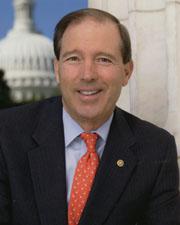
Mr. Speaker, I thank the ranking member, who has, I think, done an excellent job at raising the serious questions that need to be raised here, for yielding me this time. I also rise in opposition to…
Mr. Speaker, I thank the ranking member, who has, I think, done an excellent job at raising the serious questions that need to be raised here, for yielding me this time. I also rise in opposition to this bill. As a representative of the Third District in New Mexico, I am a strong supporter of renewable energy projects. New Mexico has become home to many renewable energy projects and in our State renewable energy policy is very progressive. Just last year, the State legislature enacted a renewable portfolio standard that would require utilities to generate 10 percent of power from renewable energy sources by 2011. Our Governor and members of our congressional delegation have worked to make New Mexico a showcase for renewable energy. This can be done.
I think most if not all of my colleagues on this side of the aisle are great proponents of renewable energy. In fact, many of them are cosponsors of my bill to create a Federal renewable portfolio standard. Last night I tried to offer that bill as an amendment to the larger energy bill, but it was rejected by the Committee on Rules in favor of a closed rule, denying the amendment. That amendment would require electric utilities, except co-ops, to obtain 15 percent of their power from renewable energy resources by 2020 and an additional 5 percent by 2025 so that by 2025, 20 percent of retail electricity suppliers' power production would be derived from a portfolio of renewable energy resources.
If the author of this bill being debated today is serious about renewable energy, why is he so hesitant to support real reform of our energy policy? Why will he gladly strike regulations requiring environmental impact statements while refusing to enact a Federal renewable portfolio standard or even to debate it?
If Members think that H.R. 4513 is going to encourage and increase renewable energy projects, they are sorely mistaken. This bill will only serve to undermine the National Environmental Policy Act and to slash the current safeguards we have in place to ensure that new projects do not seriously harm our environment. I urge my colleagues to vote against this flawed bill.
I yield to the gentleman from California.
It strikes the alternatives.
So the gentleman is saying that this does not impact NEPA at all? I do not think that is a correct reading. I believe that the NEPA requirements, the NEPA alternatives, are seriously impacted by this piece of legislation. And why are we cutting out the public when it comes to renewable energy?
Reclaiming my time, why are we cutting out the public when it comes to renewable energy? Why has this side of the aisle refused to debate the issues that are the real issues here, getting our power companies to participate and go forward with renewable energy? It seems to me that there is a lack of wanting an open debate. They want a closed system. They want a closed rule. They do not want any amendments. I do not understand it, but I guess they just do not want an open debate on these issues.
Mr. Speaker, will the gentleman yield?
Mr. Speaker, the gentleman from California knows we have lively debate in our committee.
The gentleman should be credited for that. But we are not being allowed alternatives on this bill. That is exactly what they have done in this bill on NEPA. They have an up-or-down NEPA process with no alternatives. That, I submit, is a sham process.
Mr. Speaker, we are voting ``no'' on a matter of principle.
Is the gentleman going to yield to me or not?
We are voting ``no'' because you have made a sham of the NEPA process by saying vote up or down. You know very well that what NEPA is all about is looking at alternatives. If you do not have any alternatives, you make it into a sham.
Mr. Speaker, I yield myself such time as I may consume under my time. Mr. Speaker, the latest edition of Business Week notes that ``$2 a gallon gasoline have given the oil companies a Mississippi…
Mr. Speaker, I yield myself such time as I may consume under my time.
Mr. Speaker, the latest edition of Business Week notes that ``$2 a gallon gasoline have given the oil companies a Mississippi River of cash flow.''
Big oil is reeling in profit, reaching deep into the pockets of Americans at the pump. What happens in response? Today, the Republican majority wants to reward them with billions of dollars of tax breaks and directed spending that will not improve our energy situation one iota.
Indeed, this past February the Energy Information Administration performed an assessment of the pending legislation. It examined the billions in offshore oil and gas royalty relief and various tax credits in this bill and concluded that ``the impact on total primary energy consumption is small.''
That is not me saying that. That is the administration's own Energy Information Administration. So what is the purpose here today? What is the purpose in resurrecting this bloated bill on the floor?
The fact of the matter is that there is little in the way of relief for Americans at the gas pump in this bill. Adding insult to injury, the legislation would gouge them even further through a whole host of taxpayer subsidies to energy producers. This is misguided relief. It is not for the consumers. It is not for the consumers, but it is for the multinational corporations drilling for oil and gas in Federal Gulf of Mexico waters by granting them a taxpayer subsidized royalty holiday. They get to drill and the taxpayers foot the bill by foregoing royalty payments.
An unwarranted drilling incentive at a time of high energy prices, a staggering budget deficit, and the yet unknown full cost of conducting the war in Iraq. In fact, this legislation contains so many royalty reductions and kickbacks that the Treasury stands to lose a mint. There are royalty holidays for deep water wells, shallow water/deep wells and marginal wells, none of which I might add will do anything to enhance our energy security as evidenced by the Energy Information Administration's own assessment.
There is no wonder that newspapers in my congressional district editorialize against this bill. The Bluefield Daily Telegraph, for example, noted, ``The bill was ill-conceived and would reach deep into the pockets of West Virginians without providing any benefits to the State.''
The Huntington Herald Dispatch took issue with the provision in this bill that would put Appalachian and Midwestern mined coal at a competitive disadvantage to Western coal. And the newspaper is right on target in that respect.
The pending legislation would hurt the majority of coal producing regions and in other respects pays lip service to our most abundant domestic source of energy. According to CBO, of the close to $26 billion in tax breaks in this bill only $2.5 billion of that is for coal;
and this $2.5 billion is for clean coal technology applications. Yet there is a nationwide cap of 6,000 megawatts. That is peanuts. It is comparable to the annual energy output of the Grand Coulee Dam.
In fact, on a per capita basis, Mr. Speaker, Home Depot does better in this bill than the entire coal industry when you consider the $48 million that it would receive for not having to pay tariffs on ceiling fans. This is an energy bill?
I urge a no vote on the pending measure and urge that this body get serious about devising a national energy policy that takes into account all of our energy sources and our consumers' complaints.
Mr. Speaker, I ask unanimous consent that the balance of my time be yielded to the gentleman from Michigan (Mr. Dingell) for purposes of control.

Mr. Speaker, how much time is remaining? Mr. Speaker, I yield myself such time as I may consume. Mr. Speaker, I want to respond to my good friend, the gentleman from Massachusetts (Mr. Markey) and…
Mr. Speaker, how much time is remaining?
Mr. Speaker, I yield myself such time as I may consume.
Mr. Speaker, I want to respond to my good friend, the gentleman from Massachusetts (Mr. Markey) and his eloquent remarks when he talked about the impact of this bill, and that it would not have an impact, or if it did it would have a negative impact. I would agree with him in the short term that that is probably correct, that if we pass this bill and the other body passes this bill and the President signed it tomorrow, I think it is fair to say that the energy prices would not go immediately down. But I would dispute the assertion that over the long term there is no positive impact.
I would offer the analogy of deciding whether to plant a field of corn. Obviously, the day you plant it you are not going to get an ear of corn to eat. But over time you are going to get bushels and bushels of corn to eat and to feed your family and to feed the world.
Well, the same thing could be said about this energy bill. We have already passed it once in this body, 246 to 180. The reason that we are bringing it up again is because the other body has not seen fit to even bring it to a vote, and we are hopeful that if we pass it yet once again that at some point this summer the other body may see fit to at least bring it up to a vote.
We need a comprehensive energy bill because gasoline prices are up, coal prices are up, natural gas prices are up, crude imports are up, refined product imports are up. We need to reform our electricity grid. This bill does that. We need to repeal PUHCA, the Public Utility Holding Company Act. This bill does that. We need to set up a program to go in and refit our existing old coal fired power plans. This bill does that. We need to determine if there is a better way to do automobile fuel efficiency in the program that is called CAFE. This bill does that. We need to increase our conservation efforts. This bill has provisions that it is estimated would eliminate the need for 130 additional power plants. We need to reform our hydroelectric relicensing process. This bill does that.
I could go on and on and on, Mr. Speaker, but I will simply conclude by saying this. There is not an alternative. If my friends in the other body or my friends on the other sides that are opposed to this bill have a better way to do it, let us see it. This bill has passed this House 246 to 180. It will pass the other body if it ever gets up to a vote. We need a comprehensive energy policy in my opinion in this country that is market based. This bill is that policy.
So I hope that as we did back in November we once again pass this bill, send it to the other body, and hopefully get the other body to bring it up.
Announcement by the Speaker Pro Tempore
Mr. Speaker, I thank the gentleman for yielding me this time.
Mr. Speaker, this bill which has been called a mishmash is the most comprehensive package of energy legislation that has been on the floor of the House of Representatives in almost 50 years.
It touches on all aspects of energy production. It has a comprehensive conservation title. It has an extensive electricity reform title. It got bipartisan support when it came out as H.R. 6. It got bipartisan support when it came out as the conference report after a majority of the House and Senate conferees voted to bring it back to the respective bodies. I hope this afternoon when it comes up for a vote that once again we will send it to the other body and I hope it gets unanimous support this time.

Mr. Speaker, I appreciate the gentleman's courtesy for yielding me this time and permitting me to speak on this. One would think that if our Republican colleagues were so concerned about renewable…
Mr. Speaker, I appreciate the gentleman's courtesy for yielding me this time and permitting me to speak on this.
One would think that if our Republican colleagues were so concerned about renewable energy, they would not have bottled up the wind energy tax credit that has been allowed to expire, languishing, stopping projects in my district that the business community, the environmental community, and farmers, frankly, who would like to harvest a little wind, would have benefited from. The months go by. It ticks off. We could have had a clean, precise, up-or-down vote on extending the wind energy tax credit if we were serious about renewables. It would have passed by 400 votes on this floor if the gentleman and the Republicans were serious about it and not bollix it up with a whole range of other items. Instead, we are given a proposal that would compromise the development of renewable energy by narrowing the scope of NEPA.
It is true that we have a shell of NEPA under this proposal, but it is basically an up-or-down vote. They seek to compromise the amount of time that is used. It is part of this notion of dodging the fundamental issues, a failure to pass a comprehensive energy bill that would really help renewables; that would help energy conservation; that would provide a vigorous debate on the floor of this House on things that would be able to help move the country forward. Instead, we are given this proposal.
Let us talk about this proposal for a moment. Certainly, hydroelectric energy is a renewable resource. We have got 400 or more dams that were licensed in the 1950s that were never under the NEPA process. If this proposal that has been advocated for us today is approved, these 400 dams will move forward without ever having the benefit of the complete environmental review. It is not about just an up-or-down. Anybody who has worked in areas where there has been significant environmental controversy knows that having the full range of alternatives being discussed, being debated, being analyzed results in having stronger proposals.
I have listened in vain to hear all of the proposals that have been sidetracked because renewables have been bollixed up in some sort of protracted environmental analysis. We are still listening. Where is the list of the projects? I am not aware of any. But let me say that there is a precise analogy to what happens sometimes on projects that have been hung up when we look at some that are in the infrastructure arena and what happens when people ignore the requirements of the law, when people do not engage the public, when they do not do a good job of studying the environmental impacts. Then we find that people push back. Then we find that we have inadequate proposals. Then the local politics intervene, and the people insist that the project be halted so it can be done right.
I would respectfully suggest that enabling hydroprojects to be built in virtually any waterway in the United States without a full range of environmental analysis is not good public policy and will engender more negative reaction. To have 400 dams that were never involved with a full range to begin with go through relicensing under this proposal would be a mistake.
I would hope the time will come that we can have an honest debate on a range of proposals that the American public deserves.
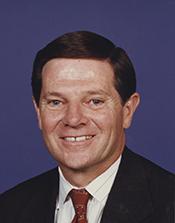
Mr. Speaker, will the gentleman yield? Mr. Speaker, I appreciate the gentleman for yielding to me and dreaming. Mr. Speaker, the House will convene on Monday at 12:30 p.m. for morning hour and 2 p.m.…
Mr. Speaker, will the gentleman yield?
Mr. Speaker, I appreciate the gentleman for yielding to me and dreaming.
Mr. Speaker, the House will convene on Monday at 12:30 p.m. for morning hour and 2 p.m. for legislative business. We will consider several measures under suspension of the rules. A final list of those bills will be sent to the Members' office by the end of this week. Any votes called on these measures will be postponed until 6:30 p.m.
On Tuesday and the balance of the week, we plan to consider several bills under a rule: H.R. 4513, the Renewable Energy Project Siting Improvement Act; H.R. 4503, the Energy Policy Act; H.R. 4517, the U.S. Refinery Revitalization Act; and H.R. 4529, the Arctic Coastal Plain Domestic Energy Security and Abandoned Mine Lands Reclamation Reform Act.
In addition, we expect to consider H.R. 4520, the American Jobs Creation Act, the fiscal year 2005 Department of Interior appropriations bill, and the fiscal year 2005 Department of Homeland Security appropriations bill as well.
And, finally, I would like to make all Members aware that we will have votes next Friday perhaps well into the afternoon.
I thank the gentleman for yielding to me and would be happy to answer any questions he may have.
Mr. Speaker, I appreciate the gentleman yielding. I can say that substitutes would certainly be allowed, I would assume. I do not want to preempt what the Committee on Rules might do. As far as amendments to these bills, I would have to refer to the Committee on Rules, as we do not know what they might rule.
Mr. Speaker, I appreciate the gentleman yielding. No decision has been made, but I think the gentleman can assume that these bills will be sent separately to the Senate.
Mr. Speaker, if the gentleman will yield, I cannot foresee that we could get to the Department of Defense appropriations bill next week with all of the bills that we are trying to get to the floor, but I do anticipate the Department of Defense appropriations bill being one of the first bills we would do the following week.
Mr. Speaker, if the gentleman will yield, I would assume, without preempting what the Committee on Rules might do, that both appropriation bills would come under the normal, traditional rules that we have had in the past on appropriations bills, which is pretty open rules.
If the gentleman will yield, yes, the Committee on Ways and Means will mark up the Americans Jobs Creation Act on Monday, which would give us time, if the markup went well, we could see that bill on the floor either Thursday or Friday.
Mr. Speaker, as the gentleman knows, the bill was introduced last Friday. Members should be aware of that for those who are interested to see what is in the bill.
It is very difficult to answer the gentleman's question, not having the bill marked up and looking at what the ultimate outcome of the bill might be. And again, I do not want to preempt what the Committee on Rules does. As the gentleman knows, a bill coming from the Committee on Ways and Means, particularly a bill like this which has so many issues in it, amendments are traditionally not allowed, but substitutes are considered. And we
will just have to work through that as we work through next week to decide one way or another whether a substitute or a number of substitutes would be offered, or allowed to be offered.
Mr. Speaker, I yield myself such time as I may consume. Mr. Speaker, the Energy Policy Act of 2004 protects and strengthens America's economy, our standard of living and our national security by…
Mr. Speaker, I yield myself such time as I may consume.
Mr. Speaker, the Energy Policy Act of 2004 protects and strengthens America's economy, our standard of living and our national security by reducing
dependence on imported oil and increasing domestic energy production. America is in danger. All credible projections indicate a growing gap between the amount of energy America uses and the amount that we produce, even after factoring in healthy increases in efficiency and conservation.
The Energy Security Act of 2003 will increase, diversify and facilitate delivery of energy supplies from Federal lands to regions of our Nation with energy shortages. This bill, among other things, encourages energy production from American Indian lands and increases Indian self-determination; provides better access to oil and gas reserves on federally controlled lands and facilitates better pipeline and transmission infrastructure through Federal lands; encourages the use of waste material produced from the Healthy Forests Initiative as a source of energy, turning a fire hazard into energy; maximizes the value of the hydroelectric power production of existing Bureau of Reclamation facilities; provides incentives for the development of geothermal energy on public lands; and encourages the maximum recovery of coal on our Federal lands.
This bill does not include opening 2,000 acres of ANWR, which could increase our domestic reserves of oil by 50 percent or more, but we will get to that later. America now depends on foreign governments, such as Saudi Arabia, Nigeria and Venezuela for our chief transportation fuel, oil. This dependence continues to increase. To make matters worse, experts forecast that over the next two decades there will be a huge gap between demand and production of natural gas, a gap that can be made up only by imports of liquified natural gas. What makes more sense? Buying most of our two most important fuels, oil and gas, from foreign governments in politically unstable countries? Or developing our resources and helping our people right here in America?
With our troops engaged in Iraq, does it not make sense for us to adopt some sensible policies here at home that will boost our energy security? The committee passed a similar bill in the last Congress prior to the September 11 attack against our Nation. Since then our energy situation has gotten worse. Last year we passed energy legislation twice, and it is caught up in politics. This winter the poor and elderly suffered while they worried how to pay their utility bills. Factories have closed because of the cost of natural gas, and chemical and fertilizer production has been stopped in some places. Truckers, motorists and airlines are suffering from vastly increased fuel prices and this hurts all Americans.
President Bush asked Congress over 3 years ago to put our Nation on a path that would supply clean and affordable energy that we would use in smarter ways for our Nation's future. We have not yet succeeded. It is time for us to do our part for our national energy security by passing a balanced but strong energy bill.
Mr. Speaker, I reserve the balance of my time.
Mr. Speaker, I yield 2 minutes to the gentleman from Oklahoma (Mr. Cole).

Mr. Speaker, our dependence on foreign energy leaves American consumers at the mercy of events occurring all over the world, from OPEC production decisions to increases in demand in China and India…
Mr. Speaker, our dependence on foreign energy leaves American consumers at the mercy of events occurring all over the world, from OPEC production decisions to increases in demand in China and India to terrorism in Saudi Arabia to incipient dictatorship in Venezuela. Reducing our dependence would ease the unpredictable swings in oil prices that now cause such havoc with both family budgets and the larger economy. As Director of Energy at USDA, I served on President Nixon's Oil Policy Commission during the 1970s Arab oil embargo, and I can tell you that this problem is greater today. There are no easy and simple answers.
We can make significant progress, but we have to go about it by making energy independence a national priority and by making investments in many key scientific areas. That's why I supported the energy bill the House passed last year and why I am supporting this legislation. This bill would increase conservation, encourage the use of domestic clean coal, permit greater domestic oil production, add to research into new energy sources, and expand the use of ethanol, biodiesel, biomass, and other renewable energy sources.
As Chairman of the Science Research Subcommittee, the bill includes amendments I offered that were put in the bill, including nitrogen fixation, nuclear power research, clean coal research, and school bus emission reductions. Section 962 of the bill supports research and development programs on biological nitrogen fixation, including plant genomics research. Today's nitrogen fertilizers are made from natural gas. We now have the technology to develop and enhance plants to put nitrogen in the soil. This section of the bill will reduce natural gas consumption and in turn will lower farmers' costs.
This bill contains important provisions to increase domestic fuel production, improve homeland security, and encourage the production of renewable fuels like hydrogen and ethanol. Currently, 2.5 billion gallons of ethanol are put into the American gasoline supply. With this new legislation, 5 billion gallons will be blended in by 2012. Ethanol is an oxygenate and is good for reducing pollution and lessening our dependence on imported fuels. We can grow it in abundance in our own fields every year. However, current ethanol technology production needs a continued tax break. Ethanol is only profitable with efficient production when you use the corn by-products. One bushel of corn makes 2.6 gallons, and 90 percent of ethanol is produced from corn. About 1.7 billion bushels of corn will go towards ethanol under this bill. By guaranteeing that 5 billion gallons of ethanol will be used, American farmers and ethanol producers can invest with confidence that, for at least the next 10 to 15 years, ethanol investments will pay off. By increasing ethanol usage, this bill bolsters corn prices.
Agreement on a modernized energy policy focusing on our nation's innovative strengths in science and technology and a reduction on our reliance on the hostile and politically unstable Middle East for fuel will help achieve energy self sufficiency and improve our country's economy and security for decades to come.
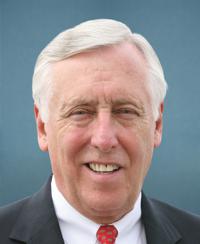
Mr. Speaker, I rise to inquire of the majority leader the schedule for the week to come. I will say at the beginning when the majority leader got up to ask unanimous consent, I thought maybe…
Mr. Speaker, I rise to inquire of the majority leader the schedule for the week to come.
I will say at the beginning when the majority leader got up to ask unanimous consent, I thought maybe something had happened and he was going to ask unanimous consent to have me give him the schedule. But hope springs eternal.
I yield to the gentleman from Texas.
Mr. Speaker, I thank the gentleman and tell him that we simply refer to it as the ANWR bill. It is so much easier.
Mr. Speaker, the majority leader has listed several pieces of energy legislation for consideration next week. Can he tell us the procedures that he anticipates these bills will be considered; specifically will amendments and/or substitutes be allowed, and will the rule bundle the bills to send them over to the other body, or will we pass them seriatim one at a time to the other body?
Mr. Speaker, reclaiming my time, I thank the gentleman. I would hope that perhaps we could, particularly in light of the fact that these bills, although they are component parts, as I understand, of the larger energy bill that passed the House, but because they are not going to be considered in committee, that there would be some more flexibility as to the possibility of amendments in that regard.
The gentleman did not answer, because perhaps he does not know at this point in time. Is it our expectation that the energy bills the gentleman referenced would be sent to the Senate separately as individual bills, or would the rule bundle them at the end? I yield to the gentleman from Texas.
Mr. Speaker, with respect to the appropriation bills, two are listed for next week, Interior and Homeland Security. Does the gentleman think it is possible that we will get to the Defense bill next week, or not?
Mr. Speaker, I thank the gentleman for that information.
With respect to the two appropriation bills that the gentleman has listed, the Homeland Security and the Interior, does the gentleman expect them to come on an open rule to the floor?
Mr. Speaker, I thank the gentleman. The FSC bill is also listed for the floor next week. Again, I think that bill will clearly not go to committee; but let me ask the gentleman first, is it the gentleman's expectation that the FSC bill will be marked up in committee?
And again, reclaiming my time, would it be the gentleman's expectation either that the substitute would be made in order, amendments may not be as a Committee on Ways and Means tax bill, but what we are reading, of course, is that there will be many extraneous or some extraneous provisions in the bill unrelated to direct tax consequences of FSC; can the gentleman tell us whether he is expecting at this point in time to provide for either amendments and/or a substitute?
I yield to my friend.
Mr. Speaker, I thank the gentleman.
Mr. Speaker, it is not our intention to go into further discussions at this time with reference to the schedule. The substance of the legislation, that will be left for weeks to come. But this week is set aside to honor our former President, Ronald Reagan, and certainly we intend to participate with the majority in doing just that.
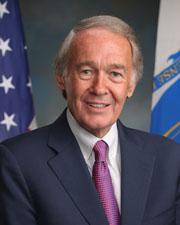
Mr. Speaker, I thank the gentleman for yielding me time. Does the Republican energy bill help the American consumer? Does it have any meaningful help whatsoever? Well, the answer is no. And who do we…
Mr. Speaker, I thank the gentleman for yielding me time.
Does the Republican energy bill help the American consumer? Does it have any meaningful help whatsoever? Well, the answer is no. And who do we get the answer from? We get the answer from the Department of Energy, the Bush administration. Here is what it says.
It says, ``The impact of this bill analyzed in this report on total primary energy consumption is small on a fuel specific basis; changes to production, consumption, imports and prices are negligible.''
What else does it say? It says, ``In 2015 the average gasoline prices relative to the reference case are 3 cents per gallon higher and average reformulated gasoline prices are 8 cents per gallon higher than in the reference case,'' meaning today.
So this bill, according to the Bush administration's own Department of Energy, is going to lead to gas prices that are 3 to 8 cents higher than today. The American people are thinking, I wonder what Congress is going to do about high gasoline prices?
Well, according to the Bush administrations's own Department of Energy, this bill will increase them by 3 to 8 cents per gallon. That is a travesty.
This bill will have a negligible impact on energy production, a negligible impact on energy consumption, a negligible impact on energy imports, will increase the price of gasoline by 3 cents a gallon for regular. It will increase gas prices by 8 cents a gallon for reformulated. It provides $23 billion worth of special interest tax breaks for the oil, gas, coal, nuclear, utility industry. It weakens the Clean Air Act. It weakens the Clean Water Act. It repeals the protections against cross-subsidies amongst these big energy giants.
But what is not in here? SUVs, automobiles, vehicles, where we put 70 percent of all oil in our country. Not a word. We will not be doing anything about that in this bill. We now import 60 percent of our oil and we have 135,000 young people over in the Middle East. This bill does not do anything about that. We are coming back in 15 more years importing 80 percent of our oil as the next generation of young men and women go over to the Middle East to protect the oil lines coming into our country.
This bill does not meet the challenge of those 135,000 young men and women over in the Middle East. It does not meet the challenge of the 24 million children and adults with asthma in our country from all of this pollution. It does not meet the challenge of 60, 70, 80 percent of our oil being imported into our country. It does not meet the challenge of the day. We have young men and women over in the Middle East. This bill does not reduce our dependence upon imported oil. It raises the price of gasoline at the pump, and it leaves the next generation wondering when they will have to go over to the Middle East.
This bill is a failure. It does not do the job for the American public. It must be rejected as historically inappropriate for the challenge this generation faces to meet the challenge of the times that we live in.
Mr. Speaker, I thank the gentleman for yielding time to me, and I would certainly agree that we are fiddling while Rome is burning. While our people in our districts are disgusted with the high…
Mr. Speaker, I thank the gentleman for yielding time to me, and I would certainly agree that we are fiddling while Rome is burning.
While our people in our districts are disgusted with the high gasoline prices, while our people in our districts understand that they need help from Congress to make ends meet, we are instead not passing an energy bill that would bring down gas prices, not passing an energy bill that would help the average person in all of our districts, but passing an energy bill that helps the big companies, the big industries, that says to polluters, we will take you off the hook, you do not even have to pay for the mess you have created; we are going to pay for it.
Some of my friends on the other side of the aisle say that we do not have enough money in government to pay for programs. Yet this bill contains obscene giveaways to those people that are doing the worst things when it comes to energy, the worst pollution. This is not a very good bill.
Many of my friends on the other side of the aisle say they oppose cloning when it comes to living organisms, but it is obvious that they fully support cloning legislative proposals, and as if fulfilling our greatest fears, the Energy Policy Act before us today is a clone of a monstrous bill that the House dealt with months ago.
Just like last time, the bill contains an ethanol mandate that hurts New Yorkers, my State, by forcing up gas prices, just to provide subsidies to multibillion dollar corporations like Archer Daniels Midland. Just like last time, it would open up our own public lands for huge corporations to drill and destroy. Just like last time, this act emphasizes drilling over conservation.
Whatever happened to conservation? It does nothing to reduce the United States' dependence on foreign oil or protect consumers from skyrocketing gas prices.
Just like last time, it ignores that there is great bipartisan support for the desperately needed electric reliability provision. We should be passing just that section and getting it to the President's desk. He would sign it, and we would be accomplishing something.
Just like last time, the House majority leadership is ignoring that there is bipartisan opposition to this bill in its present form. Mr. Speaker, let us drop the ethanol provision and the MTBE provision and the drilling provision. Let us concentrate on conservation and electric reliability. Let us have a bill that is a center, not a bill that is extreme, that cannot pass, that cannot be signed into law.
Let us start doing the work that needs to be done. Let us bring gas prices down. Let us get a bill that the American people can stand up and say, when the gas prices went up, Congress really did something to help us, not to help the big companies that pollute, not to continue our dependence on foreign oil, not to just pass a bill that was passed before, that we know has virtually no chance of being signed. Let us pass a commonsense bill. Defeat this bill.
Bill Text
3 versions available
        [Congressional Bills 108th Congress]
[From the U.S. Government Publishing Office]
[H.R. 4513 Referred in Senate (RFS)]

2d Session
H. R. 4513

_______________________________________________________________________

IN THE SENATE OF THE UNITED STATES

June 17, 2004

Received; read twice and referred to the Committee on Environment and
Public Works

_______________________________________________________________________

AN ACT

To provide that in preparing an environmental assessment or
environmental impact statement required under section 102 of the
National Environmental Policy Act of 1969 with respect to any action
authorizing a renewable energy project, no Federal agency is required
to identify alternative project locations or actions other than the
proposed action and the no action alternative, and for other purposes.

Be it enacted by the Senate and House of Representatives of the
United States of America in Congress assembled,

SECTION 1. ENVIRONMENTAL REVIEW FOR RENEWABLE ENERGY PROJECTS.

(a) Compliance With NEPA for Renewable Energy Projects.--
Notwithstanding any other law, in preparing an environmental assessment
or environmental impact statement required under section 102 of the
National Environmental Policy Act of 1969 (42 U.S.C. 4332) with respect
to any action authorizing a renewable energy project under the
jurisdiction of a Federal agency--
(1) no Federal agency is required to identify alternative
project locations or actions other than the proposed action and
the no action alternative; and
(2) no Federal agency is required to analyze the
environmental effects of alternative locations or actions other
than those submitted by the project proponent.
(b) Consideration of Alternatives.--In any environmental assessment
or environmental impact statement referred to in subsection (a), the
Federal agency shall only identify and analyze the environmental
effects and potential mitigation measures of--
(1) the proposed action; and
(2) the no action alternative.
(c) Public Comment.--In preparing an environmental assessment or
environmental impact statement referred to in subsection (a), the
Federal agency shall only consider public comments that specifically
address the preferred action and that are filed within 20 days after
publication of a draft environmental assessment or draft environmental
impact statement. Notwithstanding any other law, compliance with this
subsection is deemed to satisfy section 102(2) of the National
Environmental Policy Act of 1969 (42 U.S.C. 4332(2)) and the applicable
regulations and administrative guidelines with respect to proposed
renewable energy projects.
(d) Definition.--For purposes of this section, the term ``renewable
energy project''--
(1) means any proposal to utilize an energy source other
than nuclear power, coal, oil, or natural gas; and
(2) includes but is not be limited to the use of wind,
solar, geothermal, or tidal forces to generate energy.

Passed the House of Representatives June 15, 2004.

Attest:

JEFF TRANDAHL,

Clerk.