To amend the National Highway System Designation Act of 1995 concerning the applicability of hours of service requirements to drivers operating commercial motor vehicles transporting agricultural commodities and farm supplies.

Legislative Activity
Stay on top of the latest movement without scrolling through every action
Referred to the Subcommittee on Highways, Transit and Pipelines.
February 26, 2003
View full timeline
Introduced in House
February 25, 2003
Referred to the House Committee on Transportation and Infrastructure.
February 25, 2003
Referred to the Subcommittee on Highways, Transit and Pipelines.
February 26, 2003
Floor Debate
21 membersWhat members said about H.R. 871 on the floor
DB DY
DY JLO
JLO VJE
VJE WOL+16
Floor Debate
21 membersWhat members said about H.R. 871 on the floor
Mr. Chairman, this Member rises in strong support of H.R. 3550, the Transportation Equity Act: A Legacy for Users. This Member would like to begin by thanking the distinguished gentleman from Alaska…
Mr. Chairman, this Member rises in strong support of H.R. 3550, the Transportation Equity Act: A Legacy for Users.
This Member would like to begin by thanking the distinguished gentleman from Alaska (Mr. Young), the Chairman of the Transportation and Infrastructure Committee, and the distinguished gentleman from Minnesota (Mr. Oberstar) for their extraordinary efforts in bringing this bill to the Floor. This Member would also like to express sincere appreciation to the distinguished gentleman from Wisconsin (Mr. Petri) and the distinguished gentleman from Illinois (Mr. Lipinski) for their hard work on this important legislation, which is designed to enhance our nation's highways, bridges, and transit, while improving safety and creating jobs.
Clearly, a higher level than the nation currently spends on our highways and bridges is justified. Due to the dramatic deterioration of our nation's transportation infrastructure and the substantial growth of our population with attendant travel, our country must make a significant investment in our roads, bridges, and transit systems.
This Member believes that is important to recognize that transportation funding must be based on needs. It is clearly necessary to address the very real and pressing transportation requirements of this nation. Substandard roads contribute to increased congestion and greater danger for motorists. Better roads improve safety and efficiency.
It is important for the new surface transportation bill to not only maintain our current infrastructure of highways and bridges, but to improve it. Last year, the Federal Highway Administration released its 2002 version of the Conditions and Performance Report on the Status of the Nation's Highways, Bridges, and Transit. According to this document, the previous Highway Bill--TEA 21--has had a positive effect on improving road conditions generally. The report also noted that states and local governments have also increased their investment in transportation projects. Despite these improvements, the performance report stated, ``There is significant room for increases in highway capital investment that would result in positive net benefits to the American people, in terms of reductions in travel time, vehicle operating costs, crashes, emissions, and highway agency costs.''
Improving our transportation system is good for the economy and it benefits each American. In fact, accelerating the funding for transportation infrastructure is in itself one of the best economic stimulus actions.
This Member would like to take this opportunity to mention several issues of importance to Nebraska and the First Congressional District.
First, this Member is very pleased that TEA-LU authorizes funding to address the problem of railroad-highway crossings and the elimination of road hazards. This issue--which was the focus of the field hearing in Lincoln, Nebraska, last year--affects many states, but the problem is especially acute in Nebraska, which has 4,000 public and 2,700 private rail grade crossings.
Nebraska has the highest number of rail/highway grade crossings per mile in the U.S. and has the most heavily used rail corridor in the nation. Nebraska is taking action to ensure that the safety issues surrounding the rail crossings are addressed. However, the state clearly lacks the financial resources to finance the hugely expensive program to reduce the safety risk associated with the more important of these crossings.
Nebraska is served by both the Union Pacific and the Burlington Northern Santa Fe railroads. Combined, these railroads account for 70 to 140 trains per day using their two main lines across the whole west- east distance of Nebraska. The railroads continue to play an important economic role in the state, but additional, dramatically increased efforts must be made to improve the rail crossing issue.
According to Nebraska Governor Mike Johanns, a state rail study found that public crossings are blocked by moving trains over 2,300 hours a day and that even in a low population state like Nebraska, its drivers spend an estimated 6,350 hours a day waiting for trains to pass. This problem will not go away on its own. In fact, the average coal train length has also grown from 110 cars to 135 cars, while the number of trains has doubled in the past 20 years.
Governor Johanns has further noted that the State of Nebraska currently receives about $4.7 million of Federal and $3.3 million of state rail safety funds per year. However, the needs are much greater. The state's total rail/highway safety funding needs are more than $420 million which would cover just 85 possible rail/highway grade separations from a much larger total.
This Member would also like to emphasize support for including in the final surface transportation bill the provisions from two bills he has introduced in the 108th Congress.
This Member believes that it is important that the final version of the surface transportation legislation ensures that agricultural transporters would continue to be exempt from hours of service requirements when operating within a 100 mile radius of their point of origin during planting and harvesting season. This is a matter of great importance to the transporters of agricultural commodities and supplies as well as to consumers. Although the 1995 National Highway System Designation Act included my proposal which led to a rule creating the exemption, this relief has been threatened by proposed hours or services rule changes. This provision, based on a bill this Member introduced last year--H.R. 871--is needed to safeguard this necessary exemption and provide a clearer definition of ``agriculture commodities.'' The bill has been endorsed by the Agricultural Retailers Association and the Agricultural Transporters Conference of the American Trucking Associations.
This Member also supports inclusion in the final version of the legislation a provision based on the ``Safer Roads Everywhere Act'' introduced by this Member last year. This proposal--H.R. 1226--is designed to enhance global traffic safety and would benefit Americans who are traveling or living abroad. The legislation also is designed to provide the National Highway Traffic Safety Administration (NHTSA) with the authority it needs to conduct activities to improve worldwide traffic safety. Furthermore, it would provide the Department of Transportation with opportunities to gain knowledge about international traffic safety practices and programs which could be incorporated in the U.S. The bill is supported by the Association for Safe International Road Travel, the Advocates for Highway and Auto Safety, and the Institute of Transportation Engineers. My staff has worked with NHTSA and the World Health Organization in developing the legislation.
This Member is also supportive of a provision which is designed to improve public safety through improved enhanced emergency response and increased security of intermodal containers. This provision would also authorize a pilot project to demonstrate emergency communications systems that provide wideband, two-way information transfer capabilities.
This Member is pleased that H.R. 3550 includes provisions approved by the Ways and Means Committee designed to address the ethanol issue as it affects the Highway Trust Fund. Importantly, the Ways and Means Committee increased the funding available for transportation while protecting ethanol by shifting the cost of the Federal ethanol subsidy from the Highway Trust Fund to the general fund. The Committee did this by creating an equivalent tax credit in place of the ethanol tax exclusion of 5.2 cents per gallon. In addition, the Committee transfers an existing 2.5 cents per gallon ethanol tax from the general fund to the Highway Trust Fund. These actions are important not only for transportation, but also for Nebraska's agricultural community.
This Member is also very pleased that H.R. 3550 includes funding for several projects which would provide significant benefits to the 1st Congressional District, Nebraska, the region, and the nation.
Nebraska Highway 35--$13,000,000
The intent of the Nebraska Highway 35 project is to develop the most efficient route from Norfolk to South Sioux City. Currently, this route is comprised of several short segments of highway winding its way to the northeast. This project has significant regional and national importance. The 68-mile project will provide a more direct regional connection and greatly facilitate travel, for example, between the Twin Cities of Minnesota and Denver as well as regional north-south traffic. It is also a project of great importance to the area's local communities.
The new corridor will provide significant safety, congestion mitigation, and economic development benefits and reduce travel time. The Nebraska Department of Roads classified the Highway 35 project as a ``planned expressway'' in 2001.
Lincoln South Beltway--$14,566,300
The South Beltway is a vital component of Lincoln, Nebraska's long- range transportation plans and will be an important solution to the highway traffic congestion in a wide swath of central Lincoln with the substantial truck traffic resulting from the newly completed State Highway 2 Expressway connection to Interstate I-29 in western Iowa.
The South Beltway is a vital component of the City's long-range transportation plans and will be an important solution to the traffic congestion that is beginning to affect this growing community. This Member has been personally interested in advancing this project, which will be beneficial to the entire region. Funding is needed to build upon past congressional support for the South Beltway.
Antelope Valley (Lincoln)--$4,000,000
The Antelope Valley project is a comprehensive plan to protect and enhance highways and flood control in downtown Lincoln that has emerged from a partnership between the City of Lincoln, the State of Nebraska, the University of Nebraska-Lincoln (UN-L), the Lower Platte South Natural Resources District and the Army Corps of Engineers. The project involves transportation, flood control, and community revitalization, many portions of which must be developed concurrently for maximum efficiency. For Phase I of the transportation component of the Antelope Valley Project, funding is needed for a new north-south roadway and a new east-west roadway within the redevelopment corridor. Between $7-8 million in Federal highway funding has already been devoted to this large-scale project.
Fremont Railroad Grade Separation--$1,807,300
Funding is needed to create a grade separation structure across a railroad corridor in the western part of the City of Fremont. This location is at the top of the Nebraska Department of Roads' list of grade separation needs across the state. The project will create significant safety and economic benefits.
Louisville Bypass--$1,626,400
This project, which has the support of the Louisville mayor and city council as well as the Cass County Commissioners, to implement a Nebraska Department of Roads study, would relieve severe truck/traffic problems on Nebraska Highway 66 in the community and thus provide significant safety and economic development benefits for the area. This state highway is becoming more frequently used as a short-cut between I-29 and I-80 and that trend will accelerate when the two new Missouri River bridges in Sarpy and Cass counties are put in place.
U.S. 34 Iowa/Nebraska Missouri River Bridges--$12,000,000
The distinguished gentleman from Nebraska (Mr. Terry) and the distinguished gentleman from Iowa (Mr. King), whose districts are also part of the site for the two-bridge, bi-state project across the Missouri River in Cass and Sarpy counties for access to I-29 support its construction as does this Member. The total funding represents the separate but complementary requests of the distinguished gentleman from Nebraska (Mr. Terry), the distinguished gentleman from Iowa (Mr. King), and this Member. This important project is urgently needed to replace two obsolete and deteriorating bridges crossing the Missouri River. The construction of these replacement bridges will result in increased safety and improved economic development in the area.
The agreement leading to this request for funding was the result of intensive discussions and thus it continues to represent the consensus of city, county and state officials as well as the affected Members of Congress. We believe it is the best approach for Nebraska, Iowa and the entire region.
Pflug Road & I-80 Interchange--$3,000,000
A future interchange at Pflug Road would provide a major catalyst for the development of southern Sarpy County. The existing Pflug Road bridge over I-80 will be removed as a part of the I-80 widening project between Omaha and Lincoln. In order to accommodate the interchange, the new Pflug Road bridge will be constructed approximately \1/4\ mile to the south of the existing location. Currently, the nearest interchange south of Pflug Road is Nebraska Highway 66, which is about five miles southwest, while the closest interchange north of Pflug Road is Nebraska Highway 31, about two miles northeast. This Member is pleased to join the distinguished gentleman from Nebraska (Mr. Terry) in supporting this project. The total funding represents the separate but complementary requests of the distinguished gentleman from Nebraska (Mr. Terry) and this Member.
Cordova Road--$1,500,000
This project would involve paving 5.5 miles of road north of Cordova to I-80. Paving this road would provide an important long-missing transportation link in Seward County, Nebraska, (and for areas south of the county) which currently lacks the funds to complete the project. It would also provide economic development benefits in the area.
Nebraska Statewide Rural Transit Needs Assessment--$300,000
This project is needed to assess capital and operating financial needs of rural transportation in Nebraska.
This Member would also like to express strong support for designating the University of Nebraska--Lincoln as a participant in the University Transportation Center (UTC) program. The UTC provisions in H.R. 3550 currently provide for a competitive selection process among the universities. However, if this process is revised and universities are designated in the final version of the legislation, this Member strongly urges that the University of Nebraska--Lincoln be included.
UN-L is uniquely qualified to be included in the UTC program. UN-L has already developed a strong area of expertise in the area of transportation safety research; therefore, this Member believes that it would be an excellent addition to the UTC program.
In recent weeks it has come to this Member's attention that an important project--Antelope Valley in Lincoln--may require clarifying language to help ensure that work may continue in a timely manner. This Member urges the final version of the legislation to include the following provision or something similar:
(A) Antelope Valley Project.--The Secretary shall enter
into an agreement with the Corps of Engineers to allow for
the Federal flood control funds to be matched with Federal
surface transportation funds as the non-Federal match. The
Antelope Valley Project in Lincoln, NE, has successfully
demonstrated the cost savings that can be derived from a
coordinated effort between federal, state, and local agencies
to study, plan, and construct a major infrastructure project
that will mitigate flooding and transportation congestion
while revitalizing the heart of downtown.
This Member strongly supports H.R. 3550 and urges his colleagues to vote for it.
Ms. DeLauro. Mr. Chairman, I rise in support of this legislation. Few responsibilities of the Federal government touch the lives of American families like funding for our Nation's highways. Whether you are a business owner moving product or a parent getting the kids to school before going to work in the morning, we all recognize the importance of well-designed and maintained roadways.
And with almost 9 million Americans out of work and 47,500 jobs created for every billion dollars put toward federal highway and transit spending, we recognize that investing in our highways is an investment in our Nation's future, in our families and in our quality of life.
While all of our States have transportation needs, by no means are they equal. At the same time I-95 truck traffic is expected to double in 10 to 15 years, the Northeast has one of the oldest highway and transit infrastructure systems, as well as some of the oldest and most heavily used bridges in the United States. Last week's fuel tanker crash on 1-95 in Bridgeport only highlighted these shortcomings, pointing to Connecticut's dire need for a viable alternative to our congested highways.
I believe most members of the Transportation and Infrastructure Committee would agree we should provide at least as much funding nationally as the other body has.
I remain concerned about ongoing attempts to raise the minimum guarantee rate in this bill to 95 percent. Raising the minimum guarantee not only destroys the concept of needs-based aid, it does so at a time when assistance is most urgently needed.
Mr. Chairman, as this legislation moves to conference, it is critical that we remain committed to providing funding to the States that require improvements the most. That is how this body can serve the Nation best, and that is what this bill should aspire to.
Mr. Chairman, I yield myself such time as I may consume. Mr. Chairman, I feel somewhat like the sinner appearing before the bishop when Your Honorable is in the Chair; but with all due respect, I do…
Mr. Chairman, I yield myself such time as I may consume.
Mr. Chairman, I feel somewhat like the sinner appearing before the bishop when Your Honorable is in the Chair; but with all due respect, I do relish this moment. We are here today to support H.R. 3550, the Transportation Equity Act: A Legacy for Users, known as TEA LU.
This bill is a result of a great deal of hard work and cooperation by the Members of the Committee on Transportation and Infrastructure on a bipartisan basis.
I want to first thank the ranking minority member of our committee, my good friend, the gentleman from Minnesota (Mr. Oberstar). He has been a real champion of transportation, working with me to craft this legislation.
I also want to thank the chairman of the Subcommittee of Highways, Transit and Pipelines, the gentleman from Wisconsin (Mr. Petri). His leadership and dedication contributed greatly to bringing this bill to the floor today.
He has traveled many, many miles to try to bring the information and gather the information from the citizens of this great Nation.
In addition, I appreciate the support and cooperation of the gentleman from Illinois (Mr. Lipinski), ranking minority member of the subcommittee. This effort demonstrates that, through bipartisanship, working together in cooperation, we can achieve I believe great things and legislate great things in this body.
I particularly want to thank our Speaker, the gentleman from Illinois (Mr. Hastert), for his leadership in moving this important legislation along. He has ensured that this body will be able to work its will and proceed as an independent branch of our government under our Constitution, and I do deeply appreciate his support.
In addition, we could not have brought this bill to the floor today without the support and assistance of the gentleman from California (Mr. Thomas) from the Committee on Ways and Means. Chairman Thomas is proposing some changes to existing law that will provide additional revenues into the Highway Trust Fund. His proposal makes it possible to achieve a better bill, and I appreciate his advice and counsel.
Lastly, I want to thank the gentleman from Iowa (Chairman Nussle) of the Committee on the Budget. He and his staff have been invaluable in ensuring that we continue the principles contained in TEA 21 that guarantee that highway trust funds will be spent on transportation, as promised to the American people. We have worked closely together to reach an agreement that meets both our needs at this point in time.
We have worked with other committee chairmen on provisions contained in the bill; and, without their help, we would not have been able to bring this bill to the floor today. We will continue to work with other committees in a cooperative fashion as we proceed to conference.
Mr. Chairman, traffic congestion, poor roads and hazardous highways are not Republican or Democrat problems. These are problems shared by all Americans, from all walks of life or economic conditions and all political parties.
Today, congestion on our highways is greatly reducing the quality of life for American families. Congestion, congestion, congestion causes over $67 billion in lost productivity and wasted fuels, $67 billion lost that produces nothing. It costs the average driver $1,160 a year and more than a week and a half spent stuck in traffic. I want to stress that again. Average driver, $1,160 a year and more than a week and a half spent stuck in traffic.
H.R. 3550 provides a new emphasis and a new program to relieve congestion, maximize roadway capacity and remove bottlenecks. In addition, more than 42,000 Americans are killed and 3.3 million are seriously injured each year on our highways. Nearly a third of the fatal crashes are caused by poor roads and roadside hazards. These fatalities are totally preventable.
H.R. 3550 creates a new core program for highway safety infrastructure improvements, a new high-risk rural road safety program and supports a number of safety programs aimed at human factors that contribute to accidents.
Mr. Chairman, we live in a global economy. Moving freight quickly and on time is absolutely essential to remain competitive and to retaining our
economic well-being. Other countries, such as China, are investing first in their transportation infrastructure because they know that without roads they cannot grow their economies. The United States must be willing to make transportation a top priority if we are to retain our economic leadership.
H.R. 3550 funds five programs designed to improve movement of freight, including funding for border infrastructure, intermodal connectors, projects of regional and national significance and a new corridor infrastructure program.
The bill also provides funding for construction of dedicated truck lanes. This will mean not only faster moving of freight but a vast improvement in safety on increasingly crowded interstates.
Public mass transportation is a key component in our cities. Seniors, the disabled and low-income families rely heavily on public transportation. In addition, without transit our highways would be so congested that we would not be able to move at all.
Therefore, H.R. 3550 continues our commitment to provide for public transportation both to our cities and to many rural areas where the need is great.
America's transportation needs are obvious to anyone who spends time on our roads and highways. We are a Nation stuck in traffic. We based the funding level of H.R. 3550 on the administration's conditions and performance report which set forth the needs of our transportation system.
In addition, we received far more requests from Members for funding of projects than we could possibly accommodate. That proves to me that the needs are real and that they are growing.
Mr. Chairman, this has been never been a want bill. This is a needs bill for this great Nation. So I am disappointed we have had to reduce the funding for many of the very good programs that we proposed in H.R. 3550 as introduced.
Failure to address our transportation needs will leave our country behind in protecting our economy. Mr. Chairman, that is not acceptable to this chairman. It will reduce the quality of life of our citizens if we do not pass this bill.
H.R. 3550 is a bill which embodies our vision for a better transportation legacy for America's future. I urge everyone during this debate and discussion of the bill to be able to listen to the merits of the legislation and support what is right for America.
Mr. Chairman, I reserve the balance of my time.
Mr. Chairman, I yield 5 minutes to the gentleman from Wisconsin (Mr. Petri), the chairman of the Subcommittee on Highways, Transit and Pipelines.
Mr. Chairman, I yield such time as he may consume to the gentleman from Pennsylvania (Mr. Pitts) for the purpose of a colloquy with the chairman.
Mr. Chairman, I yield myself such time as I may consume.
I want to thank the gentleman from Pennsylvania very frankly for his hard work on this issue. It is a pleasure to work with him.
I understand the needs these small transit systems face. I certainly support the growth, as I told the gentleman personally, of transit throughout the United States, especially in the thriving smaller communities such as in the gentleman's congressional district.
I want to assure my colleague that, as we go forward with this bill, I welcome his continued assistance on this matter and the gentleman's knowledge. I look forward to working with my colleague on this issue as we go through the conference to finding a reasonable and responsible solution to this problem, and I can assure my colleague that probably will happen.
Mr. Chairman, I yield 3 minutes to the gentleman from Arkansas (Mr. Boozman).
Mr. Chairman, I yield 3 minutes to the gentleman from Kansas (Mr. Moran), my good friend.
Mr. Chairman, I yield 3 minutes to the gentleman from Texas (Mr. Burgess).
Mr. Chairman, I yield 3 minutes to the gentleman from North Carolina (Mr. Hayes).
(Mr. HAYES asked and was given permission to revise and extend his remarks.)
Mr. Chairman, I yield 3 minutes to the gentleman from California (Mr. Gary G. Miller).
(Mr. GARY G. MILLER of California asked and was given permission to revise and extend his remarks.)
Mr. Chairman, I yield myself such time as I may consume.
In closing, I would like to thank all the Members who have spoken in favor of this bill. There is no one who spoke against the bill. There will be approximately 11 more amendments offered. I believe this bill is properly structured.
And I have to say this. I again want to stress one thing. I came to this House 31 years ago. I came to this House to work to achieve legislation, and I believe we can only do that by working together. It is something I believe very strongly in. And I know there are those who do not agree with me, who do not want to achieve, but to bicker; and I do not think this is what this House is all about.
So I again congratulate the other side, the minority, at this time for their willingness to work with me and I to work with them to achieve a goal. And I think we have partially reached it in this legislation.
Because of certain media reports about the 375, I have to remind those that might be listening to this or are watching that the 375 that I chose 2\1/2\ years ago with the gentleman from Minnesota (Mr. Oberstar) was not an artificial number. It was not a ``wanna'' number. This is a number that came from this administration just to maintain and improve a little bit. There was only one way we could have gotten there, and that was by, in fact, increasing user fees. And of course that has run into tremendous opposition from different people, everybody knows who. But I hope they understand what we are really trying to do in this legislation; and what we should have been doing with the 375 is the future of this Nation because at this period of time before elections, we hear a lot of people talking about Social Security, Medicare, education, border patrol, homeland security, prescription drugs; and they are all good and they are all needed. But there is only one way we can have the financial revenue to get those achievements done, and that is to have a good infrastructure system in place for the future. Without a good infrastructure system, we do not have the economic capability of doing those things everybody wants us to do.
This is not a new idea. Eisenhower saw it and built the interstate system 50 years ago and made this the greatest Nation not just for security purposes, but to be able to move goods and products and people to and from and establish industries because of that infrastructure system put in place 50 years ago.
Now we have competition internationally. We have nations that recognize this. We did not win the Cold War because of our military might. In fact, we did not even win the Second World War because of our military might. We won it because we could deliver troops, products, food, and people across this Nation to the manufacturing points. China, as said in my opening statement, now recognizes that. And we hear a lot of China, about outsourcing. We hear a lot about China and their economic growth; but they recognize why we were great, and I stress that word ``were,'' because they are going to build in 15 years the same amount of highways that it took us 60 years to build in the United States to tie their provinces together, like we tied our States together, so there would be no more warlords. They will have a united China with 4.5 billion people to be able to produce and compete with anyone in this world and probably beat them on all forms of products, especially when Russia is right next door with all the natural resources that they use to do that production.
And the foresight, I believe, the gentleman from Minnesota (Mr. Oberstar) and I have had to see that challenge and try to rise to that occasion to make sure this Nation has the ability to compete internationally, that is what this bill is about and what it should be as more.
And that is why in this bill I have a reopener, and I have people objecting to that, because I believe our economy is coming back, but our needs to move people is also increasing at a dramatic
rate, and I want to have my grandkids and my great grandkids and my great, great grandkids to have the advantages and ability to compete globally because of the infrastructure system that we will put in place.
I have told my adversaries that are against my 375 that I will be back. I will continue this fight because I believe in it so strongly for this Nation. I believe this House has a responsibility to leave a proper legacy behind for the future generations of this great Nation. I hope everybody that listens to the debate as far as the amendments go understands that we are going to listen to them. We will vote some down; we will accept them, but when it is all said and done that we step forth with this bill tomorrow I hope in the near hours to start the process to leave a legacy behind for this great Nation.
Mr. Chairman, I submit the following two letters for the Record.
U.S. House of Representatives,
Committee on Energy and Commerce,
Washington, DC, March 26, 2004.
Hon. Don Young, Chairman,
Committee on Transportation and Infrastructure, U.S. House of
Representatives, Washington, DC.
Dear Chairman Young: I am writing with regard to H.R. 3550,
the Transportation Equity Act: A Legacy for Users, which was
ordered reported by the Committee on Transportation and
Infrastructure on March 24, 2004. As you know, the Energy and
Commerce Committee has jurisdiction over matters involving
air quality planning and the air quality impact of
transportation projects, the Congestion Mitigation Air
Quality Program, provisions involving energy production,
supply and storage and other matters contained within H.R.
3550 as reported.
I recognize your desire to bring this legislation before
the House in an expeditious manner. Accordingly, I will not
exercise my Committee's right to a referral. By agreeing to
waive its consideration of the bill, however, the Energy and
Commerce Committee does not waive its jurisdiction over H.R.
3550. In addition, the Energy and Commerce Committee reserves
its right to seek conferees on any provisions of the bill
that are within its jurisdiction during any House-Senate
conference that may be convened on this legislation. I ask
for your commitment to support any request by the Energy and
Commerce Committee for conferees on H.R. 3550 or similar
legislation.
I request that you include this letter as part of the
Committee's Report on H.R. 3550 and in the Record during
consideration of the legislation on the House floor. Thank
you for your attention to these matters.
Sincerely,
Joe Barton,
Chairman.
Mr. Chairman, I yield back the balance of my time.
Mr. Chairman, I yield myself 6 minutes. Mr. Chairman, I am very deeply touched by the words of the gentleman from Alaska (Mr. Young), our committee chairman. We have worked closely together on…
Mr. Chairman, I yield myself 6 minutes.
Mr. Chairman, I am very deeply touched by the words of the gentleman from Alaska (Mr. Young), our committee chairman. We have worked closely together on shaping this legislation.
In a time when the image of the U.S. Congress to the rest of America is one of divisiveness and partisanship, this committee may well have set a model for how a legislative body ought to work, an interplay of ideas coming at the same issue, toward the same objective, with different viewpoints, openly debated, intensively discussed, thoroughly explored and a resolution that is in the public interest. It has been inclusive. It has been partnership rather than partisanship on this committee.
That is a great tribute to the gentleman from Alaska (Chairman Young), the gentleman from Wisconsin (Mr. Petri), and the gentleman from Illinois (Mr. Lipinski), who have put their best efforts forth, and to our respective professional staff who have carried the burden of the day time and again on what to others might be an arcane aspect of very complex issues but which are vitally important.
So, as the Chairman said, we come to the floor with a bill that serves the best, broadest interests of transportation in America. It is a bipartisan product. It is one that should be $100 billion more, as the Chairman alluded to, without using that number, but we all know where we need to be, and to the gentleman from Alaska's (Chairman Young) great credit, Mr. Chairman, he has advocated openly, vigorously in every venue, in this body, with the executive branch and in the public, as I have, the gentleman from Wisconsin (Mr. Petri) and the gentleman from Illinois (Mr. Lipinski) have done for a more robust funding which we need, which we all know is necessary to address the transportation needs of America, keep our economy mobile, growing, productive and competitive in the world marketplace.
We do in the political arena what we can do, and what we can do here today under the circumstances is bring a bill at $275 billion that is good policy, sound policy for America, will move America forward.
Congestion is clogging the arteries of transportation in our urban areas, in our close-in suburban areas and is affecting rural America as well. Congestion is slowing the movement of people and goods, extending our daily commute, driving the cost of goods up in the marketplace, driving up the frustration of American drivers, making our roadways less safe, costing America more in the long run.
UPS, for example, estimates that for every 5-minute delay they lose $40 million nationwide. There are numerous other examples of costs of delay. The Texas Transportation Institute annually does a study of congestion in America. Their report in January of this year of 75 major metropolitan areas put the cost of congestion at $69.5 billion in just those 75 major metropolitan areas. That means that people are spending a week longer in their cars than they would if they could drive at posted highway speeds, buying four tanks of gasoline more than they would if they could drive at posted highway speeds, and using the name of the Lord more frequently in traffic on weekdays than they do in church on Sundays, I suspect.
We propose to address that problem by attacking bottlenecks in our transportation system, addressing with a megaprojects program huge conflagrations of people, goods, all modes of transportation, passenger rail, freight rail, trucks, passenger cars, maritime, aviation, and loosen the bonds of congestion in those areas with an initiative we call megaprojects, whose result will be net national benefits, net regional multistate benefits and net benefits to our national economy.
We are not just a continental economy. We are a global economy. China is investing, Japan is investing in its infrastructure, Europe is investing in its infrastructure to move goods and people faster, more efficiently, but America is not moving fast enough.
The study that in TEA 21 we commissioned the Department of Transportation to do, an assessment of pavement conditions, bridge conditions, congestion and safety, produced a report that recommended an investment of $375 billion on the grounds that we ought to be investing at all levels of government $125 billion a year in infrastructure improvement and we were only investing $75 billion. We are $50 billion a year short.
So, to keep our place in the competitiveness in the world marketplace, we need to do this. This is an investment that stays here in America. It stays home. The jobs created are American jobs. They are not created in Taiwan or Korea or Japan. They are created here in America, with American goods, American materials; and we ought to make that investment to make our economy move more efficiently, to put 1.7 million more construction workers back to work, generate an additional $80 billion a year in economic activity and keep America moving.
This bill will get us on the right track toward that objective.
Mr. Chairman, I reserve the balance of my time.
Mr. Chairman, I yield myself 25 seconds to express my deep gratitude to the gentleman from Illinois (Mr. Lipinski), ranking member of the Subcommittee on Highways, Transit and Pipelines. He has been a true partner in this enterprise with the chairman of the full committee, the gentleman from Alaska (Mr. Young), the chairman of his subcommittee, the gentleman from Wisconsin (Mr. Petri), and myself, contributing his time, days and nights and weekends, calling from home, calling from his district office, lending his consummate grasp of transportation issues from the transportation hub of America, Chicago, where all of America's complexities are joined.
Mr. Chairman, I yield 6 minutes to the gentleman from Illinois (Mr. Lipinski), who is a great friend and a great contributor to this product.
Mr. Chairman, I yield 2 minutes to the gentleman from Pennsylvania (Mr.Holden), a distinguished member of our committee.
Mr. Chairman, I yield 3 minutes to the distinguished gentlewoman from California (Ms. Millender-McDonald).
Mr. Chairman, I yield 3 minutes to the distinguished gentleman from Oregon (Mr. Blumenauer), our resident urban planner and thoughtful member of this committee.
Mr. Chairman, I yield 2 minutes to the distinguished gentleman from Utah (Mr. Matheson).
Mr. Chairman, I yield 2 minutes to the distinguished gentlewoman from Nevada (Ms. Berkley).
Mr. Chairman, I yield 2 minutes to the distinguished gentlewoman from the District of Columbia (Ms. Norton), our committee resident legal scholar.
(Ms. NORTON asked and was given permission to revise and extend her remarks.)
Mr. Chairman, may I have a compilation of the time remaining?
Mr. Chairman, I yield 2 minutes to the gentleman from California (Mr. Filner).
Mr. Chairman, I yield 2 minutes to the distinguished gentleman from New York (Mr. Bishop).
Mr. Chairman, I yield 2 minutes to the distinguished gentleman from Illinois (Mr. Davis).
(Mr. DAVIS of Illinois asked and was given permission to revise and extend his remarks.)
Mr. Chairman, I yield 1 minute to the distinguished gentleman from Massachusetts (Mr. Olver).
(Mr. OLVER asked and was given permission to revise and extend his remarks.)
Mr. Chairman, I yield 1 minute to the distinguished gentlewoman from California (Ms. Woolsey).
(Ms. WOOLSEY asked and was given permission to revise and extend her remarks.)
Mr. Chairman, I yield 1 minute to the distinguished gentlewoman from Texas (Ms. Jackson-Lee).
Mr. Chairman, I yield 1 minute to the distinguished gentleman from New York (Mr. Engel).
(Mr. ENGEL asked and was given permission to revise and extend his remarks.)
Mr. Chairman, I yield 1 minute to the distinguished gentleman from Colorado (Mr. Udall).
Mr. Chairman, will the gentleman yield?
Mr. Chairman, the gentleman from Colorado has identified an issue that has been highlighted by the National Transportation Safety Board. I am in full sympathy with the gentleman, and we will work to accomplish that objective.
Mr. Chairman, I yield 1 minute to the distinguished gentleman from Texas (Mr. Green).
Mr. Chairman, I yield myself the balance of my time.
We have heard a wide range of thoughtful views, some of them expressed in very hurried fashion due to the time limitations. But if we had 24 hours of debate, there would not have been enough time to hear all the views of all Members because transportation really undergirds our entire economy.
I leave one statistic with my colleagues. In 1987 the cost of logistics, moving people and goods, consumed 16 percent of our gross domestic product of this country. Last year logistics consumed just under 10 percent of our gross domestic product. That is a gain of $600 billion in our $10 trillion economy. That investment gain is due to the investments that we have made through this committee in cooperation with States and localities improving our infrastructure. That is the core of why we are on the floor today, to advance the Nation's economy, productivity, and competitiveness at home and abroad.
Mr. Chairman, I thank the gentleman for yielding me time. Our transportation system continues to face tremendous challenges. Tens of thousands of lives are lost each year on our highways. More…
Mr. Chairman, I thank the gentleman for yielding me time.
Our transportation system continues to face tremendous challenges. Tens of thousands of lives are lost each year on our highways. More drivers are driving more miles, causing severe congestion. An aging infrastructure is putting a strain on State and local transportation budgets. The public rightly demands safer, less congested roads and more transportation choices.
Fundamental improvements to the entire transportation system depend on solid research. Solid research will translate to saved lives, saved money and saved time by providing the tools and information needed to produce solutions. How many of us have used an EZ Pass to breeze past congestion at a toll booth? Or been gently reminded to stay on the road by a rumble strip?
Examples abound of these sorts of benefits gained by transportation research, such as research on pavements focuses on manipulating substances at the molecular level to create materials that are more durable and last significantly longer. This saves money, because more durable pavements need less maintenance and are replaced less frequently. It also saves time, reducing construction zones that are a major cause of congestion.
Furthermore, research on transit focuses on how to make transit systems more cost-effective and efficient. Better transit systems give people more choices and save time by reducing the number of cars on the road.
Research in the social sciences focuses on understanding how future changes in where people live and work will affect future transportation usage, so that planners can make early, smart investments to ensure that we meet future transportation needs.
As chairman of the Subcommittee on Environment, Technology, and Standards of the Committee on Science, I introduced H.R. 3551, the Surface Transportation Research and Development Act. This legislation, which was approved by the full Committee on Science on February 4, increases stakeholder input, expands competition and peer review of research proposals, and ensures greater accountability so that this research actually supports the goals of our transportation system.
I am pleased that the gentleman from Alaska (Chairman Young) and his staff have worked very closely with me and my staff to incorporate much of the Surface Transportation Research and Development Act and its intent into TEA LU. While I wish we could have provided more funding for research, I must especially thank the gentleman from Alaska (Mr. Young) for ensuring that, as funding for TEA LU was reduced from $375 billion to $275 billion, research was treated fairly. That was not the case 6 years ago during consideration of TEA 21.
I especially wanted to thank the gentleman from Alaska (Mr. Young) for his pledge to work with me to continue to improve the research title and its funding as we discuss this issue with the Senate.
Mr. Chairman, when most of us think about the highway bill, we ten to focus on funding levels for our States and projects. Few of us think about transportation research. But transportation research is fundamental to all aspects of our transportation system. How many of us have used an EZ Pass to breeze past congestion at a toll both? Or have been gently, or not so gently reminded to stay on he road by a rumble strip? How many of us have benefited from pavements that are quieter and last longer than they did 30 years ago? Every driver and passenger is better off today because of past investments in transportation research and technology development.
Our transportation system continues to face tremendous challenges. Tens of thousands of lives are lost each year on our highways. More drivers are driving more miles, causing severe congestion. An aging infrastructure is putting a strain on State and local transpiration budgets. Changing patterns of where people live and work demand innovative planning for our future needs. The public rightly demands safer, less congested roads, and more transportation choices realizing that we can't simply build more roads to address all of these challenges, especially in urban areas, we must look for new ways to improve the overall system.
Fundamental improvements to the entire transportation system depend on solid research, Solid research will translate to saved lives, saved money and saved time by providing the tools and information needed to produce solutions. For example:
Research on pavements focuses on manipulating substances at the molecular level to create materials that are more durable and last significantly longer. This saves money, because more durable pavements need less maintenance and are replaced less frequently. It also saves time, reducing construction zones that are a major cause of congestion;
Reseach on operations focuses on improving the design of dangerous merges and intersections. This research saves lives by providing planners the information to design safer roads. It also saves time by reducing accidents, which cause congestion;
Research on transit focuses on how to make transit systems more cost- effective and efficient. Better transit systems give people more choices, and save time by reducing the number of cars on the road; and
Research in the social sciences focuses on understanding how future changes in where people live and work will affect future transportation usage, so that planners can make early, smart investments to ensure that we meet future transportation needs at lower costs.
As chairman of the Environment, Technology and Standards Subcommittee of the Committee on Science, I introduced H.R. 3551, the Surface Transportation Research and Development Act. This legislation, which was approved by the full Science Committee on February 4:
Provides necessary but prudent increases to transportation research funding;
Increases stakeholder input to ensure that the people who must implement and use the research agree that it is worthwhile and applicable;
Creates the highest quality research through increased competition and peer review; and
Ensures greater accountability so that this research actually supports the goals of our transportation system.
I am pleased that Chairman Young and his staff have worked very closely with me, and my staff, to incorporate much of my legislation and its intent into TEA-LU. While I think we all agree that we wish we could have provided more funding for research, I must especially thank Mr. Young for ensuring that as funding for TEA-LU was reduced from $375 billion to $275 billion, research was treated fairly. That wasn't the case 6 years ago during consideration of TEA-21. And I want to thank Mr. Young for his pledge to work with me to continue to improve the research title and its funding in conference as we discuss these issues with the Senate.
Mr. Chairman, I want to thank the gentleman from Minnesota (Mr. Oberstar), my partner in this endeavor, very much for those extremely kind words and for yielding me this time. It is always a pleasure…
Mr. Chairman, I want to thank the gentleman from Minnesota (Mr. Oberstar), my partner in this endeavor, very much for those extremely kind words and for yielding me this time. It is always a pleasure working with him on any transportation issue, because no one, not only in this country but no one on this Earth, knows as much about transportation as the gentleman from Minnesota does.
I want to begin today by thanking all of my colleagues on the Committee on Transportation and Infrastructure from both sides of the aisle for all of their efforts and dedication. Many of my colleagues in this body have spent many, many hours meeting with countless numbers of individuals and organizations to hear their views.
In particular, I give special mention to three individuals, the chairman of our committee, the gentleman from Alaska (Mr. Young), who has been tireless in trying to develop a bill that will aid and assist us in this country in improving our transportation and infrastructure; the gentleman from Minnesota (Mr. Oberstar), who I mentioned earlier, and who, as I said, knows more about transportation than anyone that you will ever encounter, for the great help that he has been in formulating this bill; and the gentleman from Wisconsin, (Mr. Petri), who has gone around the country and seen firsthand so many, many of the needs we have here. He has really been the individual who has brought so much information back to us, telling us where the needs really existed in this country.
These three Members have provided tremendous leadership in getting this bill to where we are today. However, it should not be viewed that this bill was crafted only by members of our committee. Since our committee began to work on this bill, we have asked for and received input and comments from almost every single Member in this body. We have held dozens of hearings, with the active participation of many of my colleagues in this Chamber. And, most importantly, we have listened to what they had to say.
Because of this and the bipartisan history of this committee, I believe we have a very good piece of legislation that reflects many different priorities promoted by Members who represent diverse constituencies and interests. It truly is democracy at work.
As I have said, I believe we have a very solid piece of legislation. While I will be the first one to say that it is not entirely perfect, there is no doubt in my mind that at this particular time this bill is as perfect as we can make it. We have made some significant strides in improving this country's infrastructure, and these accomplishments will benefit Americans now and into the future.
In this bill we have increased funding from $218 billion to $275 billion. While this is not the original funding level proposed by the committee, this still represents a decent increase.
It is important to bear in mind that this legislation is not just about money. It is not just about funding. It is also about innovation and moving transportation policy in new directions. There are many, many things we can point to in this bill. This bill contains new initiatives that will improve our quality of life. We have strengthened current programs to meet our existing conditions, and we have expanded and created new programs to address the needs of today and prepare for the needs of the future.
This bill creates a number of such programs, such as a new and improved National Corridor Infrastructure Improvement program, Highway Safety Improvement program, Small Starts Transit program, and Safe Routes to Schools. This is certainly not the entire list of new programs, but these are examples of new programs that will represent the collected efforts of many individuals and many organizations that have contributed to this bill on the floor today.
Other important programs included are an improved clean fuels formula grant for nonattainment areas like northeastern Illinois, Southern California, New York City, and Washington, D.C. These funds will help transit agencies purchase clean fuel buses and help improve our air quality. Improving air quality is just one of the many important public policy needs that the TEA LU bill addresses.
In this bill, it is recognized that transit is not just for big cities; it is also a growing need in rural communities. To help meet the needs of rural America, we have increased funding to the section 5311 program.
Time after time, survey after survey, Americans point to traffic congestion as a growing and serious problem in
this country. In 2001 alone, congestion costs this country $69.5 billion. And, on average, Americans lose 27 hours a year due to delays. As congestion levels continue to rise in the United States, we must focus on modernizing our vital transportation infrastructure and improving the quality of life for all Americans. By targeting Federal resources for specific purposes, this bill would also help improve congestion in major urban areas across this country by creating a safer, more efficient infrastructure for the millions of Americans who use our roads, highways, railways, and bridges each day.
As we continue to move forward with TEA LU, it is easier to think about what may have been. Yes, it would have been nice to have a $375 billion bill; but because of this administration's opposition to raising the highway user fee, this is the hand that we have been dealt. Right here and right now, this is the most practical way to maintain highways, roadways, buses and subways, and protect the safety of the American public.
This bill is a significant step in the right direction. It is a step towards improving our communities, a step towards helping folks spends less time commuting and more time with their families and loved ones; it is a step towards safer travel; and it is a step towards cleaner air. I hope you will take this step with me and lend us your support.
I urge my colleagues to support H.R. 3550, the Transportation Equity Act: A Legacy for Users.
Mr. Chairman, I yield 1\1/2\ minutes to the gentleman from Oregon (Mr. DeFazio), the ranking member of the Subcommittee on Aviation.
Mr. Chairman, I yield 2 minutes to the gentleman from California (Mr. Honda).
Mr. Chairman, I yield 3\1/4\ minutes to the gentleman from New Jersey (Mr. Pascrell).
Mr. Chairman, I yield such time as she may consume to the gentlewoman from Texas (Ms. Eddie Bernice Johnson).
Mr. Chairman, will the gentlewoman yield?
Mr. Chairman, I would also ask that the committee give this issue more review and consideration as we consider future legislation, be it a technical correction amendments or the reopener legislation that the bill before us envisions.
Mr. Chairman, I yield 2 minutes to the gentleman from New York (Mr. Nadler).
Show 8 more
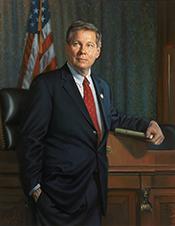
Mr. Chairman, I claim the time in opposition. Mr. Chairman, I yield myself such time as I may consume. Mr. Chairman, I rise in opposition to the LaTourette amendment. First, let me say to my friend…
Mr. Chairman, I claim the time in opposition.
Mr. Chairman, I yield myself such time as I may consume.
Mr. Chairman, I rise in opposition to the LaTourette amendment.
First, let me say to my friend from Ohio, the domestic steel industry has no stronger advocate in the Congress than the gentleman from Ohio. He has been a leader in this area, but on this particular amendment I take issue with it and disagree.
This amendment would require that more than 60 percent of the components and subcomponents of manufactured products used for construction projects be of United States origin. Of course, this means that, instead of going to the lowest bidder, the taxpayers getting their best bang for the buck, it could raise costs conceivably as much as 15 percent on a project with its components. That means that there is less money to build more roads with, to buy additional rail cars, to build intersections that are needed, and it means fewer people can become employed because we may be paying more money just to buy domestically. This would constitute a radical and in my judgment harmful expansion of the current law.
There is already in my judgment a very wrongheaded 50 percent ceiling on non-U.S. components. I have serious concerns about raising it another 10 percent. I think we ought to be going in the other direction, and I think that this amendment makes bad policy even worse.
We need to beware the law of unintended consequences. Domestic source restrictions such as this one may indeed be well intentioned, but they only serve to increase the cost of our critical transportation projects by reducing competition available for Federal contracts and raising the cost to the taxpayers. These restrictions are often self-defeating as they can well lead to reprisals from overseas trading partners. We often lose much more business than we gain.
Restrictions such as those proposed here could possibly provide some immediate short-term benefits to some American companies, but in the long run, in my judgment, they hurt the overall economy. We cannot maintain our global leadership in manufacturing by artificially propping up industries that are not able to compete in the global marketplace.
Mr. Chairman, we are here today touting the job creation potential of this reauthorization bill, so I have to ask this question: Have we considered the counterproductive, anticompetitive consequences of restrictionist amendments like this one? How many jobs could be created with the dollars firms will have to spend to comply with these government-unique restrictions? Our goal should be to ensure that we have access to open world markets so that we can get the best deal on the best goods available, regardless of their location. The American taxpayer deserves nothing less. This again allows us to spend more money from this transportation bill on transportation products, which means we can employ more people than these restrictions would otherwise give us.
I cannot overstate the potential harm posed by such economic isolationist restrictions, harm to our critical transportation infrastructure, because by paying more we end up being able to do less; harm to our Nation's
place in the global economy; and harm to our job creation agenda.
We have to remember a couple of things.
First of all, the details of the certification contained in this bill in my judgment means that if there is not availability of U.S. parts then we are going to need waivers. Waivers are going to have to be obtained. In these waivers, of course, it takes more time, which delays transportation projects.
Secondly, it could have the unintended consequences of allowing by these waivers more foreign products in the U.S. than you may get otherwise in some instances.
Thirdly, and most important, this can invite retaliation from foreign countries who, as we restrict the ability of their goods to get into markets, they retaliate against us.
What does this mean? It could be retaliation against agricultural products, information technology, even other manufactured products. It is anticompetitive, and it is antijobs, in my opinion, as it is currently constructed. I rise in opposition.
Mr. Chairman, I reserve the balance of my time.
Modification to Amendment No. 15 Offered by Mr. LaTourette
Mr. Chairman, reserving the right to object, could I just ask what the purpose of the modification is?
This makes a bad amendment better.
Mr. Chairman, I withdraw my reservation of objection.
Mr. Chairman, I yield myself the balance of my time.
Let me just say on this amendment, this may expand the Buy America for steel, but it shrinks Buy America in other areas, other manufactured areas, perhaps agriculture, perhaps information technology, because of this kind of action that basically invites retaliation from foreign countries.
America is only 5 percent of the world's consumers. If we want to succeed from a manufacturing standpoint and economically around the world, we need to expand those markets. This goes in the opposite way. We ought to be reducing the Buy America requirements, reducing the certification process that does nothing but invite waivers which delays transportation projects; and we ought to put our transportation dollars into getting as much road money, as much money to buy rail cars, to lay track and move America as we can. This raises the cost of doing that with this legislation. It is for that reason that I oppose this and urge opposition to this amendment.
Mr. Chairman, I yield back the balance of my time.
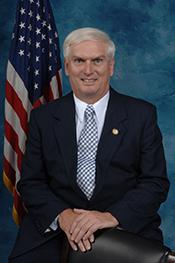
Mr. Chairman, I rise in strong support of this very important legislation, which will improve our transportation infrastructure and create millions of jobs, and I want to thank the gentleman from…
Mr. Chairman, I rise in strong support of this very important legislation, which will improve our transportation infrastructure and create millions of jobs, and I want to thank the gentleman from Wisconsin, (Mr. Petri) for yielding me this time.
I especially want to commend the chairman, the gentleman from Alaska (Mr. Young); chairman of the subcommittee, the gentleman from Wisconsin (Mr. Petri); and the ranking members, the gentleman from Minnesota (Mr. Oberstar) and the gentleman from Illinois (Mr. Lipinski), all very close friends of mine, who are to be commended for their great leadership on this bill.
Mr. Chairman, this is the biggest jobs bill that we will vote on in this Congress. I am sick and tired of seeing millions of American jobs go to other countries. All over this Nation there is tremendous concern about this. We are spending hundreds of billions in other countries. This bill is one that puts our own people first once again.
But it is more than just a jobs bill, Mr. Chairman. This is a safety bill. I chaired the Subcommittee on Aviation for 6 years. Unfortunately, there are more people killed on our Nation's highways in just a little over 4 months than in all U.S. aviation accidents combined since the Wright Brothers flight of 1903. This bill is one that will make our Nation's highways much safer and will save many thousands of lives.
We need to take terrorism very seriously, Mr. Chairman; but we are spending hundreds of billions on terrorism, when we count up all the military and Federal, State and local spending, and what all the private companies are doing on security. Yet, as the very respected National Journal magazine pointed out a few months ago, people are thousands of times more likely to be killed in a car wreck than by a terrorist. Surely we can spend $45 billion a year on our Nation's highways and our National Transportation System.
This is an efficiency bill. One leading national magazine said recently, ``Congestion costs the Nation about $67 billion a year. Americans waste 3.6 billion hours and 5.7 billion gallons of gas sitting in traffic, all at an average cost of $1,160 per commuter per year.''
This bill will save huge amounts of tax dollars by speeding up the time in which projects can be completed. Everything in our economy, Mr. Chairman, everything in our personal lives depends on, or is affected by, a good transportation system.
I am especially pleased that in this bill there is language promoting technology to decrease or cut down or eliminate the time that trucks have to idle at truck stops. I also want to work on the language, though, that is in the bill concerning parking areas for trucks along our Nation's interstate highway system so that those parking areas do not compete against companies in the private sector.
No one on our committee, Mr. Chairman, wants to pave over the entire country, but vehicle miles traveled keeps going up at three to five times the rate of our population growth. This means we have to improve and widen our highways.
Paul Craig Roberts, the nationally syndicated conservative columnist wrote recently: ``Before we can reconstruct the rest of the world, we need to stop deconstructing our own country.'' I have nothing against any other Nation, but this is one bill that is pro-American. It is not only pro-American, it is pro-jobs, pro-environment, pro-safety; and I urge its passage because this is one of the best things we will be able to do this year in this Congress.
Mr. Chairman, vicarious liability laws in 3 states (NY, ME, CT and DC) impose unlimited liability on car and truck renting and leasing companies for injury and property damage solely because they own the vehicles. Eight other states have some limited form of vicarious liability. Vicarious liability is ``liability without fault'' in that these companies have no involvement in or ability to prevent the accident. They cost consumers an average of $100 million annually. Companies nationwide are affected, not just in the few vicarious states, because the laws apply based on where the accident occurs, not where the car or truck is owned or registered. As a result, a car registered and rented in a non-vicarious state that gets into an accident in a vicarious state is subject to that state's vicarious laws. Companies have no way to protect themselves against these laws.
I propose adding to H.R. 3550 (TEA LU) a provision to eliminate vicarious liability nationwide. Under this provision, only a company that is at fault or negligent in an accident could be held liable for damages. T&I Chairman Young, Highways Subcommittee Chairman Petri, and Highways Subcommittee Ranking Member Lipinski all support this provision; Ranking Member Oberstar is non-committal at this point.
The amendment eliminates liability under state law for an owner of a motor vehicle who is engaged in the business of renting and leasing motor vehicles provided there is no negligence or criminal wrongdoing on the part of the motor vehicle owner; the owner must maintain the required state limits of financial responsibility for each vehicle in accordance to the state where the vehicle is registered; elimination of vicarious liability commences on the date of enactment; and defines ``motor vehicle'' and ``owner.''
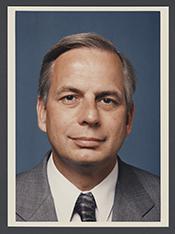
Mr. Chairman, I thank my colleague for yielding me this time. I rise in support of H.R. 3550, a bill that is bipartisanly crafted by both the gentleman from Alaska (Chairman Young) and the gentleman…
Mr. Chairman, I thank my colleague for yielding me this time.
I rise in support of H.R. 3550, a bill that is bipartisanly crafted by both the gentleman from Alaska (Chairman Young) and the gentleman from Minnesota (Mr. Oberstar), ranking member; and they have made the best out of what is a bad situation. The fact that the administration is threatening to veto this legislation at the level of $270 billion shows the irrational negotiating posture of the opponents of infrastructure improvement and investment.
I support the $375 billion transportation infrastructure bill. And where does that number come from? It comes from the level that the U.S. Department of Transportation says is necessary to improve the mobility in our country. Mr. Chairman, if we do not improve the mobility of our country, just in Houston we lose $2.1 billion every year in productivity in fuel and congestion, and it is getting worse. And these are not my figures. These are figures from the Texas Transportation Institute's 2003 Urban Mobility study. This highway bill is not pork barrel politics. It makes investment in mobility that the public desperately
wants and needs. Our gasoline user fees are for our public highways by tapping revenue from those who benefit from them, motorists and truckers.
Mr. Chairman, I rise in support of H.R. 3550, a bill where our bipartisan Transportation Committee leadership, Chairman Young and Ranking Member Oberstar have made the best out of a bad situation.
The fact that the administration is threatening to veto this legislation, at the level of $275 billion, shows the irrational negotiating posture of the opponents of infrastructure investment.
I support a $375 billion transportation infrastructure bill. Where does that number come from? That is the level that the U.S. Department of Transportation says is necessary to improve mobility in the country.
Frankly, I support indexing the gasoline user fee to inflation, a method that is far simpler than having to stop every few miles and dig around for change in the car seat to pay a toll. Under this bill, tolls will too often be the only option available to make infrastructure improvements.
The funding level the administration supports barely allows us to tread water, while China, India, Japan, Europe, and other competitors are investing heavily in infrastructure to strengthen their economies.
It is frustrating to be confined by inadequate transportation funding during tough economic times because infrastructure investment brings major employment and development benefits.
Each billion spent on infrastructure creates 47,500 American jobs. At least 3.5 million jobs would be generated and sustained through 2009 under the $375 billion level in the original H.R. 3550, including over 200,000 jobs in Texas.
Under this bill, we will get significantly less employment and economic activity than that.
The administration and self-proclaimed fiscal conservatives in Congress do not seem to understand that residents in my community are idling away an average of 37 hours and 60 gallons of gas this year in congested traffic.
Just in Houston, we lose $2.1 billion, every year, in productivity and fuel, and congestion has been getting worse. These figures are according to the Texas Transportation Institute's 2003 Urban Mobility Report.
This highway bill is not pork barrel politics; it makes investments in mobility that public desperately want and need. Our gasoline user fee funds our public highways by tapping revenue from those who benefit from them--motorists and truckers.
This bill has important projects for our area in Houston and across Texas, particularly U.S. 90, Clinton Drive, and a Harris County Freight Railroad Corridors and Urban Mobility Program.
This railroad project in particular needs more study and involvement by all stakeholders before we get to implementation, but the problem of grade crossings and mobility does need to be addressed urgently.
Some important policy provisions regarding transportation conformity are also included in this legislation, such as making the conformity process a four year cycle, voluntary limiting of conformity planning to 10 years, and allowing a 12-month grace period in the event of a conformity lapse.
I do not believe that these provisions solve all our problems, and I would hope that the cosponsors of our legislation in the conference will include further necessary improvements to the conformity process.
Our area of Houston is struggling to meet Clean Air Act requirements by statutory deadlines, and I think we will have success.
But to have our mobility crippled by losing transportation funding due to a confusing and contradictory process would be the worst public policy disaster in decades for our area.
Looking ahead to a conference with the other body, I want to congratulate the bipartisan Transportation Committee for its best work in a bad situation.
The closer we get our funding to the U.S. Department of Transportation recommended level of $375 billion, the better off our economy will be.
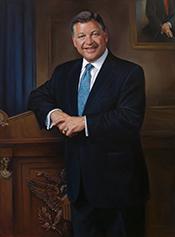
Mr. Chairman, I rise today in strong support of H.R. 3550, the Transportation Equity Act: A Legacy For Users, or affectionately known as TEA LU. I want to begin by extending my appreciation to the…
Mr. Chairman, I rise today in strong support of H.R. 3550, the Transportation Equity Act: A Legacy For Users, or affectionately known as TEA LU.
I want to begin by extending my appreciation to the chairman of the full committee as well as the ranking member for their work in this extremely important bipartisan piece of legislation. They have fought the good fight, and here we are today. We need to pass this important legislation to improve our transportation system.
I would like to remind my Republican colleagues who may have some questions about this bill, whether we should pass it or not, that the Founding Fathers charged the Federal Government, the United States Congress, to oversee interstate commerce, to encourage interstate commerce. That is what this bill is all about, interstate commerce, improving the efficiency of our economy.
In addition, as the gentleman from Ohio reminded us, this is a core principle, a core legacy of the Republican Party in this country, from Abraham Lincoln and the transcontinental railroad, to Teddy Roosevelt and the Panama Canal, Eisenhower and the interstate highway system. This is extremely important for us as Republicans. We can be proud to pass this and improve our country and improve this economy.
The modern highway and transit system maps this Nation's economic strength as it weaves through our cities and small towns. However, heavy traffic and increased congestion have taken a heavy toll on our highways, bridges and transit systems. As stewards of our highways, we cannot wait any longer to fix transportation systems that are listed as substandard or poor or bridges that are considered structurally deficient.
As a Pennsylvanian who represents a broad geographic region, I know the issue of transportation is critical to our constituents. I hear it each day and every day from small business owners, from large employers and from even average family members who sit on the front porch and watch the traffic back up over the horizon. Our roads, highways and transit systems link our cities, businesses and lives to one another. To let them deteriorate is unjust to any one person who uses them.
The need, Mr. Chairman, is clear. While I am disappointed that we were unable to pass a larger bill, I believe that the legislation before us today will go a long way in alleviating the troubles that plague our highway and transit systems. Over the 6-year life of TEA LU, it will provide $232 billion in funding for highways and highway safety, $52 billion for our transit system. These funding levels take critical steps to ensuring our Nation's infrastructure remains strong.
A key component of this bill is the fulfillment of a longstanding need to improve safety, and it takes steps to combat the 42,000 lives that are lost each year on our Nation's highways.
As a Member who represents a rural area of Pennsylvania, I am very pleased that we are including a new program to upgrade and make improvements to roads and rural areas where over 60 percent of auto fatalities take place. This legislation includes important measures to relieve congestion on our Nation's highways. The investment of our transit system not only strengthens transit, but also encourages the use of mass transit to relieve congestion. It also creates a program to help fund smaller transit programs, offering States more options in improving their transit systems.
To further relieve bottle necks on our roads, TEA LU contains innovative real-time and intelligent transportation initiatives that allow States to monitor and improve traffic flow and enhance safety. Building on these innovative programs, I also encourage support of an amendment that will be offered by the gentleman from Minnesota (Mr. Kennedy) to create voluntary toll lanes, or fast lanes, which pay for new lanes and highways to increase capacity. Drivers who choose these fast lanes will be charged electronically, eliminating the toll booths that add to the backups and congestion.
And finally, I was very pleased that TEA LU funds Maglev. Maglev is an exciting new transportation technology that is a vital next step in the future of
our Nation's transportation system. Additionally, funding for Maglev is an essential step in addressing some of the most pressing needs facing our domestic steel industry by creating the demand for steel. For instance, a typical Maglev project would require 4,000 tons of plate steel per mile for the tracks.
Mr. Chairman, this is a good bill and a solid step in the right direction, providing State DOTs with the long-term stability they need to plan for projects. I want to again thank the gentleman from Alaska (Chairman Young), the gentleman from Wisconsin (Chairman Petri), the gentleman from Minnesota (Mr. Oberstar), and the gentleman from Illinois (Mr. Lipinski) for their tireless efforts and leadership on behalf of American motorists, passengers, and transit systems. We need to pass this bill to increase the efficiency of our economy, to create jobs, and improve safety. I urge passage.
Mr. Chairman, how much time remains on both sides? Mr. Chairman, this language is not well-drafted, I must say to the gentleman. He has a very good purpose but very unclear and unsure language; and…
Mr. Chairman, how much time remains on both sides?
Mr. Chairman, this language is not well-drafted, I must say to the gentleman. He has a very good purpose but very unclear and unsure language; and as I read the language approved under unanimous consent, it makes the authority even broader.
It says trucks that are specifically allowed by Federal law to travel on the national network now can be disapproved by New Jersey. We cannot have one rule for local trucks and a different rule for through trucks.
Mr. Chairman, I thank the Chair for yielding me the time, and I reluctantly oppose the amendment of the gentlewoman from California with whom I am in accord on most issues, and I think she makes a very good point about this remote security facility.
I raised such concerns many years ago in Paris when Charles de Gaulle Airport said, for American check-in passengers, we are going to have a separate little place called the hutch. I went over to inspect it, and I said, my goodness, this is terrific, you collect all the Americans in one place so a terrorist can throw a bomb and kill them all at once. Of course, I said it in French; and they said, oh, we had not thought about that. They backed away and said, well, we will not make Americans do that.
So the gentlewoman makes a good point, but it is the point that is part of a larger process and that is to stop the expansion of the Los Angeles Airport. The Metropolitan Planning Organization is the agency in an urbanized area with the responsibility to determine the needs for projects to be advanced to meet transportation needs for the area. We really should not be inserting ourselves into that debate, certainly not at this time; and, reluctantly, I oppose the gentlewoman's well- intentioned
amendment and well-expressed amendment.
Mr. Chairman, I claim the time in opposition, and I yield myself such time as I may consume.
Mr. Chairman, I believe, with further discussion, we can find a way to come to a resolution.
Mr. Chairman, I yield 1\1/2\ minutes to the gentleman from Oregon (Mr. Blumenauer).
Mr. Chairman, I yield myself such time as I may consume, and I thank the gentleman for his very cogent statement.
Section 410 of existing law gives States eligibility to receive funds for alcohol-impaired driving countermeasures. It is a good program, a good provision. New Jersey is the first and only State to enact a law to impound a vehicle operated by a person who was arrested for drunk driving.
Now, section 410 requires that States meet six of nine criteria to qualify for a grant. If the gentleman's amendment is accepted, it would expand that number to seven. If the gentleman from New Jersey, as I understand from previous discussion on this amendment, would agree that as we move further into conference, that the number of criteria necessary to qualify for a grant should be reduced to six, so we not expand the number and make it easier to evade, then I would concur in this amendment.
I yield to the gentleman from New Jersey.
Mr. Chairman, reclaiming my time, I thank the gentleman.
I yield to the gentleman from Alaska.
Mr. Chairman, reclaiming my time, yes, we are; and I thank the chairman and the gentleman from New Jersey for a very thoughtful constructive matter that now has been resolved in, I think, a very positive way.
Mr. Chairman, I reserve the balance of my time.
Mr. Chairman, I yield back the balance of my time.
Mr. Chairman, will the gentleman yield?
Mr. Chairman, I thank the gentleman for yielding. The language of the amendment of the gentleman from Oregon as originally drawn was way beyond the scope of what he intended, and we greatly appreciate the cooperation of the majority giving the gentleman the opportunity to have unanimous consent to correct the language to reflect exactly what he wants to do, to limit this amendment to small starts, which it does; and I think that relieves the concerns on both sides of the aisle.
Mr. Chairman, I believe under the unanimous consent agreement, the gentleman has already made that correction in the language pending.
If the gentleman will continue to yield, I would just add that the principle remains.
Mr. Chairman, I thank the gentleman for yielding time and thank the gentleman and the gentlewoman for bringing this amendment forward.
In the 1980s, as the Chair of the Subcommittee on Investigations and Oversight, I held extensive hearings on the status of manufacturing in light rail, passenger vehicles and buses during which we demonstrated the loss of tens of thousands of jobs in America to underbid products coming in from overseas. We shipped overseas tens of thousands of jobs in the light rail, passenger rail and bus sector of our economy.
Now it is coming back. Now we are recapturing those jobs. We now are putting in the next 6 years $51.5 billion into transit systems in America. We ought to have those jobs in America as well and reclaim the technology and the jobs that go with them for America. That is what this amendment will do.
Mr. Chairman, I thank the gentleman from Alaska (Chairman Young), the gentleman from Wisconsin (Mr. Petri), the gentleman from Minnesota (Ranking Member Oberstar), and the gentleman from Illinois…
Mr. Chairman, I thank the gentleman from Alaska (Chairman Young), the gentleman from Wisconsin (Mr. Petri), the gentleman from Minnesota (Ranking Member Oberstar), and the gentleman from Illinois (Mr. Lipinski). I think they should be commended for the great job they have done given the absurdly arbitrary constraints they were forced to work under. They have done a terrific job. I mean that sincerely.
After decades of investments to meet an expanding Nation and a growing population, the gentleman from New Jersey, who 12 years ago, 13 years ago started the whole process of TEA 21, Congressman Bob Roe from the eighth district, is very happy with the work, I am sure, that we have done over the last several months.
I supported TEA LU because it was the right thing to do. This administration has threatened a veto. We shall see what we shall see.
In terms of family-wage job creation, in terms of reducing congestion, in terms of remaining competitive with other nations, I believe we are missing a great opportunity to make a difference in our economic future. As the process moves forward, we must band together and fight for a better bill. I believe we will.
I would like to bring to my colleagues' attention, the chairman's attention, one of what I consider the very important provisions that will be included in the manager's amendment: the Department of Transportation should give priority to those public transit projects which add to our system of national defense. Historically, we built our highway system for national defense. We made many needed changes to our aviation system to improve its ability to withstand threats to national security. 9/11 highlighted for those of us living with families in the tri-state area, for instance, how dependent we are on our Nation's transportation system, particularly in a time of crisis.
According to the report of the National Academies on ``Making the Nation Safer, the Role of Science and Technology in Countering Terrorism,'' the ability to quickly recover and reconstitute transportation systems and services is crucial for limiting the cascading effects of terrorist attacks.
We cannot overstate the importance of mass transportation and mass transit to moving people safely at critical times and places.
I want to thank the manager for addressing the essence of the national security amendment I offered in committee. We are authorizing a study in this bill to look at the value of public transportation systems, the value placed on national security in project planning. It will also examine the ability of such systems to accommodate the evacuation from critical locations and in times of emergency. The information we learn should assist metropolitan areas in the development of the regional emergency response plans that coordinate highway and public transportation systems.
I am hopeful the results will ensure that transit agencies and the TSA are looking at response plans in terms of a comprehensive vulnerability assessment.
Mr. Chairman, I rise in strong support of the amendment offered by my friend Mr. LoBiondo.
What Mr. LoBiondo has put forward is a common sense measure that is long overdue. Our home state of New Jersey has recently enacted John's Law, which allows police agencies to impound the vehicles of drunken drivers.
John's Law is named after Navy Ensign John Elliott. John was driving from Annapolis to his home in Atlantic County, New Jersey for his mother's birthday. En route, his car was struck by a drunken driver. Both Elliott and the other driver were killed.
Three hours earlier, the other driver had been arrested and charged with driving under the influence of alcohol. He was released into the custody of a friend, who drove him back to his car and allowed him to get behind the wheel. This tragedy brought attention to a loophole in State law which has since been corrected.
The LoBiondo amendment would not mandate any action by the states. Rather, we hope it will encourage them to impound vehicles of DWI drivers as another important tool in the arsenal of alcohol-impaired countermeasures.
If someone is arrested for drunk driving, it is logical that they not be allowed to get right back behind the wheel of their car, endangering other drivers. Police and public safety groups in New Jersey have praised this policy and I hope that other states will do the right thing by enacting similar laws that will save lives.
On a personal level, I want to recognize the efforts of Bill Elliott, John's father, who has not rested in his work to ensure that such a tragedy would never be repeated.
Passage of the LoBiondo amendment will help Bill in his quest for better public policy. We can all hope for a day when what happened to the Elliott family will never happen to other families.
I urge a ``yes'' vote on this amendment and I thank my friend for bringing this laudable policy before the House.
Mr. Chairman, I yield myself such time as I may consume. I will say, though, I am usually in favor of what occurs by State action, but what this amendment does, it allows the State of New Jersey to…
Mr. Chairman, I yield myself such time as I may consume.
I will say, though, I am usually in favor of what occurs by State action, but what this amendment does, it allows the State of New Jersey to limit large trucks and twin-trailer combination trucks to the interstate system, not intrastate, the New Jersey Turnpike and the Atlantic City Expressway, except when making local deliveries. It is amazing when you need your donors you allow a twin-trailer truck to arrive at the door but nobody else.
In 1999, the New Jersey DOT actually allowed New Jersey to ban, that is DOT of New Jersey, large trucks from certain roads. However, that was challenged in court by the trucking industry; and if I am correct, just recently, last week of this year, the U.S. District Court from New Jersey ruled that the New Jersey truck highway access regulatory system discriminated against interstate commerce and violated the commerce clause of the U.S. Constitution.
This amendment would reverse that decision; and, again, I would suggest that New Jersey use all the recourse through the law. Because to take now a case that has been won by one side of the argument in the court and now us, as a Congress, to reverse that----
I yield to the gentleman from New Jersey.
Mr. Chairman, reclaiming my time, but the industry or the plaintiff that filed the suit is now being precluded from going forth. If my colleague wants to do that, have the court or New Jersey file an injunction against the court's decision. Do not ask us to undo what a court has ruled.
Reclaiming my time, they can continue their suit, but they are not the ones now that have to pursue the suit. They are the ones that won the case, and they can drive their trucks on interstate commerce because of the clause in the interstate commerce clause under the Constitution. What the gentleman is asking us to do in the Congress is to undo what the court has ruled.
I am not a lawyer. Thank God for that. We have got enough of those around here. But I am a little concerned that what we are doing here is really not fair to the persons that filed the suit to begin with. We are saying you cannot do it. You can go back to court. As we go back to court, well, you cannot use the truck. Under the interstate clause, that is against the Constitution, as the court has ruled.
Mr. Chairman, I reserve the balance of my time.
Mr. Chairman, I yield 1 minute to the gentleman from Minnesota (Mr. Oberstar).
Mr. Chairman, I yield back the balance of my time.
I rise in opposition to the amendment.
Mr. Chairman, I yield such time as he may consume to the gentleman from Minnesota (Mr. Oberstar) who wishes to speak on the amendment.
Mr. Chairman, I reserve my time.
Mr. Chairman, will the gentleman yield?
Mr. Chairman, I simply wanted to compliment
the gentleman and the gentleman from Oregon for their presentations. As I told the gentleman from New Jersey, I did support the concept of this amendment.
I also agree with my ranking member that, as we go through it, we will do it the right way and do it correctly so we can actually solve a serious problem. His story is a very telling story.
So with that, I guess we will have a voice vote; is that correct?
Mr. Chairman, I rise in opposition to the amendment.
Mr. Chairman, I yield myself such time as I may consume.
I yield to the gentleman from Minnesota.
Mr. Chairman, reclaiming my time, we are going to support the amendment as intended. However, there is a slight, as I think the gentleman from Minnesota mentioned, drafting error, the section that applies to both the current new starts and the new small starts process. We will take the amendment at this time with the gentleman's understanding we want to correct the language in conference so that the exemption applies only to the new small starts process.
Does the gentleman understand that?
Reclaiming my time once again, Mr. Chairman, if he has done that, I apologize. I was talking to my staff and they did not advise me of that. If that has already been done, we do not have to worry about that.
Mr. Chairman, I yield myself such time as I may consume.
Although it is well merited, the Federal Public Transportation program does not provide programs for airport-based services. In addition, we understand that this amendment, according to our figures, adds $300 million to the cost of the bill, and that concerns me a great deal.
And, lastly, may I suggest respectfully, as important as natural gas is, we have some real problems getting natural gas to the United States, and we had better start looking at that problem very quickly; and under the energy bill we can do that. We have not passed the energy bill, but it is crucially important for this Nation to have a new supply of natural gas.
Mr. Chairman, I thank the gentleman for yielding me time. It is a pleasure to be on the floor this morning to talk about some of the advantages that are in the 6-year reauthorization of our…
Mr. Chairman, I thank the gentleman for yielding me time. It is a pleasure to be on the floor this morning to talk about some of the advantages that are in the 6-year reauthorization of our transportation funding.
One of the innovations that the committee came up with that I think is remarkably farsighted is setting aside some of the Highway Trust Fund money, in particular funds that will be available for grants to States to participate in building highways of national significance. These are highways that could be very important for trade in our hemisphere, they could be very important for easing congestion, they could be very important for moving
commerce from one region of the country to other. But in each case they will be highways that truly have national significance.
What is just as important is these highways, in the main interstate highways, probably would not be built were it not for the availability of funds in these particular categories that are set up by this bill. Because if the funding were not available through these categorical grants or these categorical funds, the States individually would not be able to build these highways out of their regular annual allocations.
So I think that is a very innovative, far-sighted approach to solving the problem of continuing to improve our highway infrastructure, particularly in terms of those highways which will add significant economic benefits to not just one particular region of the country but to the whole country.
So as we move forward in this age of increased global trade, of increased need to create jobs and grow our economy, these highways of national significance are going to be extremely important in moving us forward.
So I commend the committee for their far-sightedness in making it possible for these highways of national significance to be built in the next 6 years; and then, of course, I would expect this to be continued until we have quite a more extensive network of highways across our Nation, which will enable us to grow jobs and grow our economy.
Mr. Chairman, I yield myself such time as I may consume.
Mr. Chairman, today this transportation bill contains a number of tax-related provisions, and I am going to summarize those very quickly. But the thrust of what we are doing here with these tax provisions, and I think the most important thing to point out, is that with these changes we have added $18 billion over 6 years to pay for highway funding here in the United States, and that was a very important part of getting the number high enough so that we could do at least the basic necessities through the transportation bill that is on the floor today.
So I want to commend my chairman, the gentleman from California (Mr. Thomas), for working with the chairman of the full Committee on Transportation, the gentleman from Alaska (Mr. Young), in arriving at these approaches to increasing the revenues going into the Highway Trust Fund. I will just briefly summarize what those are.
The tax provisions of this bill extend the authority to spend money out of the Highway Trust Fund and updates the purposes for which that money can be spent.
It extends the gas tax through 2011 at current rates and maintains the current law deficit protection rule that requires a 2-year cushion of reserves in the Highway Trust Fund.
It increases Highway Trust Fund receipts by $18 billion over 6 years to pay for the highway spending authorized in this bill. Receipts are raised by, number one, reducing the fuel tax evasion that goes on around the country; number two, crediting the Highway Trust Fund with the full gas tax; and, number three, by restructuring the ethanol subsidy so that the trust fund is made whole, so the trust fund does not lose money to the general fund as a result of the ethanol subsidy.
The bill also extends the ethanol subsidy through 2010.
It simplifies and reforms the rules relating to certain highway excise taxes.
It provides alternative minimum tax relief, particularly for small businesses and farmers.
Finally, it extends the enhanced section 179 expensing for small businesses, allowing them for 2 more years to expense up to $100,000 of purchases for use in their small business.
So, Mr. Chairman, those are the essential provisions of the tax portion of this bill.
Mr. Chairman, I reserve the balance of my time.
Mr. Chairman, I yield such time as he may consume to the gentleman from Florida (Mr. Shaw), a distinguished member of the Committee on Ways and Means.
Mr. Chairman, I have no further speakers at this time, and I reserve the balance of my time.
Mr. Chairman, I have no further speakers. I yield back the balance of my time.
Show 11 more
Mr. Chairman, I would first like to salute the chairman of our committee for bringing us to this day and to the gentleman from Minnesota (Mr. Oberstar) and my colleague, the gentleman from Illinois…
Mr. Chairman, I would first like to salute the chairman of our committee for bringing us to this day and to the gentleman from Minnesota (Mr. Oberstar) and my colleague, the gentleman from Illinois (Mr. Lipinski), the staff on both the majority and minority of the committee. It has been a lot of work and a long road, and we still have far to go, but this is an important milestone in the passage of our Nation's transportation policy for the next 6 years.
This legislation will have an impact on each of our constituents literally every day as they go about their daily lives, whether it is driving kids to school, hopping on a train as part of a daily commute or picking up a gallon
of milk that has been brought over the road on a truck.
We on the committee had hoped to be discussing a somewhat different bill today. TEA LU, as introduced at $375 billion, is the right thing to do. It was fashioned to start to address the needs as identified by our own United States Department of Transportation. Anything less will not maintain and improve our transportation system. Nonetheless, this bill at $275 billion is a step toward meeting the needs we as a Nation have with a reduced amount of resources and is the best that we can achieve at the current time, given the situation that we find ourselves in.
This bill provides increases each year in funding for the core highway formula programs for the States so that every State will see an increase in its funding. It includes important programs for safety, infrastructure safety on the road, work safety, motor carrier safety and behavioral safety programs to address drunk driving, occupational protection programs and other hazards.
There are many provisions that facilitate the movement of freight, an important element to interstate commerce and a primary Federal interest in transportation. It will allow us to meet the needs of emerging trade corridors in this post-interstate construction era and other projects that have regional or national benefits that overwhelm the capabilities of any one State.
We retain funding for transit at the 80/20 split and include programs that will help States meet the mobility needs of both urban and rural communities and improve opportunities for the elderly and for the disabled.
It is forward looking in providing for a robust research program and innovative payments in bridges, recycled materials, freight movements and environmental programs. We prepare for the future in beginning to tackle the problem of identifying new financing mechanisms to replace the gas tax as a source of revenue for the Highway Trust Fund in the future and consider the future of the interstate system.
Are there concerns about funding formulas or other policy issues? Of course. In a bill of this size it is inevitable. We face the same questions literally every time that the House considers a reauthorization bill.
In order to make progress in providing what some are calling for in terms of equity and donor State issues, you need more funds. Unfortunately, we do not have that today. But as we move through conference and in the future, we want to try to address those needs, if given the resources to do so.
It is important to note, too, that the spending in this bill is paid for by the revenues coming into the Highway Trust Fund. We retain the guarantees that we fought so hard for in TEA 21 and maintain the trust with the traveling public that the gas taxes they pay will actually be spent on transportation improvements.
So, Mr. Chairman, I would ask support for the bill so we can provide jobs, protect our citizens' safety and maintain and improve our economic standing in a fast-changing world.
Mr. Chairman, I yield 3\1/2\ minutes to the gentleman from east Tennessee (Mr. Duncan).
Mr. Chairman, I yield 5 minutes to the gentleman from Ohio (Mr. LaTourette).
Mr. Chairman, I yield 3 minutes to the gentleman from New York (Mr. Quinn).
Mr. Chairman, I yield 4 minutes to the gentleman from Pennsylvania (Mr. Shuster).
Mr. Chairman, I yield 3 minutes to the gentleman from North Carolina (Mr. Coble).
Mr. Chairman, I yield 3 minutes to the gentleman from New York (Mr. Boehlert).
(Mr. BOEHLERT asked and was given permission to revise and extend his remarks.)
Mr. Chairman, I yield 2 minutes to the gentleman from Maryland (Mr. Gilchrest).
Mr. Chairman, I yield such time as he may consume to the gentleman from Louisiana (Mr. McCrery).
Mr. Chairman, I yield 3 minutes to the gentleman from Michigan (Mr. Ehlers).
(Mr. EHLERS asked and was given permission to revise and extend his remarks.)
Mr. Chairman, I reserve the balance of my time.
Mr. Chairman, I reserve my time.
Mr. Chairman, I yield myself such time as I may consume. Mr. Chairman, included in this bill is a provision drawn from H.R. 3119, the ``Renewable Fuels and Transportation Infrastructure Enhancement…
Mr. Chairman, I yield myself such time as I may consume.
Mr. Chairman, included in this bill is a provision drawn from H.R. 3119, the ``Renewable Fuels and Transportation Infrastructure Enhancement Act of 2003.'' This is a proposal which I introduced along with my friend and colleague on the Committee on Ways and Means, the gentleman from Missouri (Mr. Hulshof). I am very pleased that this provision has, through this action, been included in this legislation.
The bill restructures the ethanol tax incentive from an excise tax exemption to an excise tax credit, and it eliminates hundreds of millions of dollars of waste, fraud, and abuse by those blending gasoline with ethanol.
The provisions attributed to the ethanol tax incentive will add up to $14.2 billion in revenues to the Highway Trust Fund over the 6-year life of the transportation bill. As we wrestle with the size of the highway package, let us keep in mind this provision alone relating to ethanol is generating $14.2 billion in revenues.
Mr. Chairman, the provision is important for a number of reasons, but I want to especially mention the jobs that will flow from this highway bill. According to the U.S. Department of Transportation, each billion dollars spent on transportation and highway projects creates 47,500 jobs. Therefore, the ethanol proposal will create an additional 674,500 jobs, much-needed jobs, in this economy.
Separately, the ethanol industry itself is a significant generator of additional jobs for our economy. The industry has built 74 ethanol plants, created nearly 150,000 new jobs, 12,000 jobs in America's beleaguered manufacturing sector. In 2004 alone, the industry will add 22,000 new jobs and more than $1.3 billion to the gross output of the American economy.
The industry is going to continue to grow with this legislation. There are thirteen plants already under construction and dozens more in the final planning stage.
Further, as newly-drafted, this ethanol tax incentive will have no negative impact on the Highway Trust Fund. According to the U.S. Department of Agriculture, it will save the Federal Government more than $3.2 billion in lower farm program payments this year.
The ethanol tax incentive makes a particular difference with the creation of jobs in rural America. The one new 40 million gallon ethanol plant can expand the economic base of the local economy by $110 million, creating as many as 694 permanent new jobs throughout the entire economy and generating $1.2 million in new tax revenues for State and local governments. Beyond all of that, it increases the local average basis of corn by an estimated 5 cents to 10 cents per bushel.
Mr. Chairman, our Nation is suffering from a growing energy crisis, a stagnant economy where job development is scarce, particularly across rural America. That is why Congress's commitment to the increased production and use of ethanol is so important.
This brings me to my next point, the one issue where the gentleman from Missouri (Mr. Hulshof) and I will continue to work, because this provision was left out of the bill. Other domestically-produced renewable fuels can and should have a role in our total fuel strategies as a Nation. To this end, I specifically encourage the inclusion of a new tax incentive for biodiesel, consistent with the agreement reached during the energy bill conference last year.
Together, ethanol and biodiesel can enhance the country's energy independence, increase domestic fuel supplies, reduce crude oil imports, reduce the U.S. trade deficit, and improve air quality. Together, the transportation and ethanol sectors are creating jobs across America. This bill establishes that good transportation policy and good energy policy can go hand in hand.
Mr. Chairman, I reserve the balance of my time.
Mr. Chairman, I have learned that my cosponsor on the portion of ethanol tax that is included in this bill, the gentleman from Missouri (Mr. Hulshof), is not participating in debate this morning because he is attending, tragically, the funeral of his mother. We will all remember the gentleman from Missouri in our thoughts and prayers as he deals with this issue, even while the work of the Congress continues.
Mr. Chairman, I yield 4\1/2\ minutes to the gentlewoman from Ohio (Mrs. Jones).
(Mrs. JONES of Ohio asked and was given permission to revise and extend her remarks.)
Mr. Chairman, I yield 2\1/2\ minutes to the gentlewoman from California (Ms. Watson).
Mr. Chairman, I have no further speakers. I urge passage of this bill and yield back the balance of my time.
Mr. Chairman, I rise today to quote the words of President Dwight Eisenhower, the father of our, Highway Trust Fund, who rightly said ``A network of modern roads is as necessary to defense as it is…
Mr. Chairman, I rise today to quote the words of President Dwight Eisenhower, the father of our, Highway Trust Fund, who rightly said ``A network of modern roads is as necessary to defense as it is to our national economy and personal safety.'' President Eisenhower's words ring as true now as they did then.
Traditionally, the Transportation bill has been free from partisan differences. We have an old saying on the Transportation Committee, ``There are no Republican bridges, no Democratic bridges, just America's bridges.''
Unfortunately, Mr. Chairman, this year, the bill has fallen victim to political differences--within the divided Republican Party. Even though we've had enough support to pass the bill since last year, the divided Republican Party has held up passage of this bill for months. The President opposes Congressional Republicans from both the House and the Senate. House Republicans are divided against each other. The President has even gone against his own Department of Transportation.
House Republicans go along with the President on tax cuts, a Medicare bill with an uncertain price tag, and funding infrastructure in Iraq. And, then he publicly belittles their transportation spending efforts by calling the highway bill an ``entitlement.''
The division within the Republican Party also extends to their traditional allies in the business community. The President opposes the bill because he claims it spends too much. The U.S. Chamber of Commerce says it might oppose the bill because it doesn't spend enough.
I hope that when we get to conference with the Senate, we increase the level of funding--as the majority of Members from both parties want. When we get to conference we also need to maintain several key protections that are in this bill.
To ensure that adequate funding is available across our National network, this bill guarantees each State a minimum rate of return equaling 90.5 percent of each dollar invested in the Highway Trust Fund. Each State is also guaranteed a minimum apportionment in funds.
But now, some States want to turn back the clock to some sort of Articles of Confederation, and keep the gas tax money for themselves. Doing so would rip apart the very fabric that binds our Nation together: our surface transportation system.
Many of those same States also want to alter the proposed scope of the minimum guarantee program, which will penalize States whose needs are regional, or even national, in scope. An error in the Fiscal Year 2004 Appropriations is already costing my State $20 million in badly needed highway funds. Altering the proposed scope of the Minimum Guarantee program, now, would only worsen this situation.
I supported H.R. 3550 months ago, with its equitable minimum guarantee program. I don't support making dramatic changes in the bill, now, after supporting the underlying bill for months.
It is important to bear in mind what President Eisenhower understood: that our transportation system is an integrated, coordinated, national network. It seamlessly crosses State borders regardless of the differences within those States, as the business community clearly understands. To be truly national, it must address measurable needs nationwide--taking into account the greater difficulty some States have at roadbuilding, or the greater needs some States have for transit.
Mr. Chairman, I come from West Virginia--one of the most difficult States for constructing highways. Transportation in--and through--my State is critical not just to West Virginians, but also to trucks, tourists, and commuters from other States.
And, if you cut equitable funding for highways this time, what will prevent cuts next time to the mass transit funding that States such as Illinois, New Jersey and California depend upon?
Just like other national programs where West Virginians' tax dollars go to help other States--such as the location of defense bases, or the Farm program--some contribute more than they get back.
That is appropriate. You can't drive across Mickey Mouse roads when you're traveling crosscountry to see Mickey, himself.
Mr. Chairman, I want to thank my colleague, the gentleman from North Dakota (Mr. Pomeroy), for yielding me this time. I want to add my condolences also to our colleague, the gentleman from Missouri…
Mr. Chairman, I want to thank my colleague, the gentleman from North Dakota (Mr. Pomeroy), for yielding me this time.
I want to add my condolences also to our colleague, the gentleman from Missouri (Mr. Hulshof). I had an opportunity to speak with him yesterday, and as well as he can be he is doing okay, and for the Record, we did win the basketball game for the gentleman from Missouri (Mr. Hulshof) last night against the Georgetown faculty. He is a member of my team.
Mr. Chairman, I rise in support of H.R. 3550 as it currently stands but ask that we take into account the need to do some work in conference. Transportation is a crucial aspect of our economy. This bill is not only a transportation bill, but it is also a jobs bill. We must work together to put forth a comprehensive highway bill.
I want to give my colleagues some general economic facts. Maybe I will skip over a few.
According to the American Road and Transportation Builders Association, the transportation construction industry employs 2.5 million Americans and generates more than $200 billion in U.S. economic activity. A $100 million investment in highway and bridge improvements yields 4,750 jobs across the economy, with less than 25 percent of those in the actual construction field. This same level of investment also generates $200 million in family income, $54 million in Federal income tax and Social Security and more than $6 million in State and local tax revenues.
Assuming a similar effect in the great State of Ohio, the Ohio Department of Transportation's 2004 major new construction program totals $400 million, and that will support the employment of 19,000 people. The top 12 percent of Ohio's most congested freeway sections experience 45 percent of all freeway accidents in the State. The Ohio Department of Transportation's major new construction program is expected to total $400 million during the next several years, and it will help to improve many of these high-crash and congested locations and reduce accidents by between 30 and 50 percent.
There is one place right in my congressional district that is called Dead Man's Curve, and the reason it is called Dead Man's Curve is because the curve is so distinct that it has caused the death of so many truckers and regular passengers or drivers through my area.
The National Highway Traffic Safety Administration estimates that each critically injured survivor of an auto accident costs an average of $1.1 million in medical costs and lost productivity. Each fatality of a crash represents a loss of $977,000 in lifetime economic costs to society.
Ohio is only 35th in geographic size but has a disproportionately large transportation system. Ohio has the Nation's tenth largest highway network, the fifth highest volume of traffic, both car and truck traffic, the Nation's fourth largest interstate network, and the second largest inventory of bridges. Ohio has such a large transportation system because it is a populous State with a manufacturing economy, and it lies in the middle of America's population and economic centers.
Within a day's drive, Ohio is accessible to 50 percent of North America's population and 70 percent of North America's manufacturing capacity. Ohio's transportation supports the vast Ohio economy. If Ohio were a nation, it would be the world's 20th largest economy.
Ohio faces unprecedented transportation challenges. It must expand its 1960's transportation system to meet the 21st century demands. Ohio's vast interstate system was built from 1950 to 1960 to meet the demands of the 1980s. It is now 2004, and nearly all of our urban interstate routes are over capacity.
Mr. Chairman, I just want to close with this: This bill is so very important to the State of Ohio. We are a donor State. We want to see that this gets done. We need the jobs in Ohio, and I encourage all of my colleagues to work in support of this legislation.
Let us get to conference. Let us take care of the issues and get it done. Jobs are needed in Ohio.
Mr. Chairman, I want to thank the gentleman for yielding me this time. I rise in strong support of this legislation. First of all, I want to commend the gentleman from Alaska (Mr. Young), the…
Mr. Chairman, I want to thank the gentleman for yielding me this time. I rise in strong support of this legislation.
First of all, I want to commend the gentleman from Alaska (Mr. Young), the gentleman from Wisconsin (Mr. Petri), the gentleman from Minnesota (Mr. Oberstar) and the gentleman from Illinois (Mr. Lipinski).
This bill will obviously provide opportunities for the creation of jobs in all of the districts across the country and especially in mine. However, the bill comes up a bit short because I do not think that we paid enough attention to rail transportation. Amtrak runs 50 trains out of my district in Chicago each and every day. Yet there is no money for Amtrak, and there is no money for rail safety.
I do want to highlight the fact, though, that this bill does in fact increase funding for the Access to Jobs program, a program that will take individuals from the inner cities and rural communities to where 75 percent of the new jobs are being created in what we call suburban outlying districts.
Overall, it is a good bill. I wish there were more money. I wish we could have looked at Amtrak in a different way and rail safety. I strongly support it.
Mr. Chairman, I rise today in support of the reauthorization of the Transportation Equity Act for the 21st Century. I commend Chairman Young, Chairman Petri, Ranking Member Oberstar, and especially the senior Democrat from Illinois Republican Lipinski for all of your hard work on this bill.
Our transportation system is vital to democracy. It is through our transportation network that we are able to move commerce and people with reliability and consistency. Every day millions of people travel our highways, and transit systems. This bill helps to ensure that we modernize our ailing transportation system and protect workers.
The bill contains a number of projects that will directly improve the roads and infrastructure in my Congressional District. This bill comes at a time when our economy is in need of a significant boost. We have lost over 3 million jobs in the last 3 years. My Congressional District has lost over 140,000 jobs in the last 30 years. While this bill is a modest investment in our Nation's highways and transit systems, I am disappointed that we did not report out the original bill, which contained a $375 billion funding level. That kind of funding level would have given us an historic opportunity to put Americans back to work.
Also, I am disappointed that more was not done to stabilize Amtrak. In fact, the House Bill contains no funding for Amtrak. Amtrak is a vital part of the economy in Chicago, and the Nation. Amtrak operates more than 50 trains into and out of the City of Chicago each day. These include an extensive network of long-distance trains that provide service to the East and West coasts, the Gulf of Mexico and Canada. Last year, Amtrak transported more than 2 million passengers. The failure to include funding for Amtrak sends a negative signal. In addition, this bill provides no funding for rail security to adequately address concerns regarding terrorism. We must learn from the tragedy in Spain and other attacks on rail systems throughout the country.
I am pleased with the increase in funding for the Job Access and Reverse Commute Program. This program assists low-income individuals and welfare recipients get to where the jobs are being created. In other words, data suggests that three-fourths of new jobs are being created in the suburbs. Therefore, we must find ways to get people from the inner cities and rural areas to where the jobs are. The Job Access and Reverse Commute program will provide over $1 billion in funding over the next six years.
Therefore, I am pleased that this important bill is finally moving forward. While I wish that the Committee had done more in funding important priorities--failure to act could lead to terrible consequences as it relates to our transportation infrastructure. Thus, I am pleased to support this bill.
Mr. Chairman, I offer an amendment. Mr. Chairman, I yield myself such time as I may consume. I am proud to offer this amendment with the gentlewoman from Michigan (Ms. Kilpatrick). I offered a…
Mr. Chairman, I offer an amendment.
Mr. Chairman, I yield myself such time as I may consume.
I am proud to offer this amendment with the gentlewoman from Michigan (Ms. Kilpatrick). I offered a similar amendment in committee, and the chairman and the ranking member have been kind enough to work with us to incorporate as much as possible into the manager's amendment today.
Mr. Chairman, as Members know, we have a manufacturing crisis in this country. We have lost an estimated 3 million manufacturing jobs. While many of us may hold different views on how that came about, I think we can all agree that the Federal Government should be part of the solution to the crisis.
The problem here is that there is too much confusion currently as to what a manufactured good is. The gentleman from Washington (Mr. Baird) had a sense of Congress on the floor a little earlier that addressed this issue. Today, Buy America requires that a manufactured good must be made with components assembled in the United States. Subcomponents, however, do not have to be American made. This has caused a good deal of confusion.
This amendment that the gentlewoman from Michigan and I are offering will correct the problem. The amendment is a modified version of H.R. 3682, the Protecting American Manufacturing Jobs Act, which was introduced by the gentlewoman from Michigan. We were able to work this out with input from the Federal Transit Administration so they can implement it.
Under this amendment, we clarify that 60 percent of the components and subcomponents in a manufactured product must be American made. For construction projects and system acquisition, the amendment requires that 60 percent of the total cost of components and subcomponents in manufactured products must be American made. We also required that final assembly of any manufactured product must happen in the United States. By making these changes we will make sure that Federal dollars support American jobs.
This is, in my opinion, a good amendment. It helps take care of our own manufacturing jobs in this country. I urge support.
Mr. Chairman, I reserve the balance of my time.
Mr. Chairman, I ask unanimous consent to modify the amendment with the text which I have placed at the desk.
If the gentleman will yield, the committee, both minority and majority, have asked me to use this amendment as a vehicle to make technical corrections in the bill.
Mr. Chairman, it is my pleasure to yield 2 minutes to the distinguished gentlewoman from Michigan (Ms. Kilpatrick), who, as I indicated in my other remarks, is the sponsor of the original legislation and the coauthor of this amendment.
Mr. Chairman, it is my pleasure to yield such time as he may consume to the gentleman from Minnesota (Mr. Oberstar), the distinguished ranking member of the committee.
Mr. Chairman, I yield myself the balance of my time.
I want to make this observation. The Federal Government in the procurement process has no greater champion in this Congress than the gentleman from Virginia (Mr. Tom Davis), the chairman of the Committee on Government Reform. The hearings that he has conducted have literally saved the country and the taxpayers billions of dollars.
This issue, however, while I appreciate every argument that he has made, it is time, not by being protectionist but it is time in the manufacturing sector that we take care of our own in the United States. It is not unreasonable to require that 60 percent, we are not asking for 100 percent, but 60 percent of these goods and projects be manufactured in the United States and there not be some shell game where they simply have to be assembled in the United States. You could have a machine with 150 parts and today's requirement is they could all be made overseas as long as we had a shop that assembled them here in this country. It is wrong, and I ask for support of the amendment.

Mr. Chairman, the gentleman from Alaska has dedicated years to this bill. I applaud him for that. I know it is less dollars than he would like to see because he does understand the problems we face…
Mr. Chairman, the gentleman from Alaska has dedicated years to this bill. I applaud him for that. I know it is less dollars than he would like to see because he does understand the problems we face in this Nation. The gentleman from Wisconsin has done an excellent job on the subcommittee. The gentleman from Minnesota has done a wonderful job working his side of the aisle trying to bring together a good bill for this country.
I represent California. I have parts of Orange County, L.A. and San Bernardino Counties. We are right on what is called the Alameda Corridor. All the trucks and trains coming from the harbor at Long Beach and Los Angeles come through our districts. Unless you live there, it is almost unbelievable to realize the impact that we face and our commuters face trying to go to and from work not only with the truck traffic from the harbors and the airports on our freeways but with the trains when you are trying to cross railroad tracks and at- grade crossings. Nothing that I can think of is more important that what we are doing this year and we have done in recent years in this bill.
The Founding Fathers had an idea of what the Federal Government should do, and one is to protect and defend our borders which we are trying and I believe we are doing an excellent job through the budget on, and the other is to ensure interstate commerce. In this generation, ensuring interstate commerce is making sure that goods can flow on our freeway systems and our rails to provide the goods and services that we need in this Nation. Our roads are coming close to being in a gridlock level in the Los Angeles area and Orange County. We need to resolve the problems we face there today.
TEA LU does pay special attention to the infrastructure deficiencies facing our Nation's truck traffic and the freight and it is tremendous some of the issues we have to deal with.
In Orange County alone, in my district on the Alameda Corridor through our cities currently we have 50 trains a day. In the near future, those trains will go up to 135 trains per day. The people who have to cross those crossings realize that that is a tremendous burden placed upon them and a tremendous burden placed upon businesses who have to ship their goods and people have to get to and from work. It is just unbelievable.
In one city that I represent, Placentia, in a 5-mile-long stretch, there are 11 at-grade crossings plus the associated communities around them. When a train starts going through that town, the whistle blows from the beginning they reach that city limit till the
end because of the requirements placed upon them. The people are being overly burdened based on how long they are having to sit and wait to get across those tracks. That is one project that I believe we need to effectively deal with.
The chairman has been very gracious on, I believe, all our states, but I will speak to California, on allowing projects that need to be put in this budget up front to help resolve some of the immediate impact that has been placed upon our State. He has made countless trips to California, I met with him on several different functions, explaining his vision for the future. That is why he calls it a legacy for our future, because of his vision of what should happen in the future of this Nation and how people should benefit, from the minute they get up in the morning and get in their car till their car comes home at night.
We have a wonderful bill before us. There are going to be some amendments, some I am going to oppose, but I honor the gentleman from Alaska for this great bill.
Mr. Chairman, I stand in support of H.R. 3550, the Transportation Equity Act: A Legacy for Users (TEA-LU). In my congressional district, the rural highways that served our Nation for decades can no…
Mr. Chairman, I stand in support of H.R. 3550, the Transportation Equity Act: A Legacy for Users (TEA-LU).
In my congressional district, the rural highways that served our Nation for decades can no longer sustain the increasing numbers of cars, semis, and other vehicles that use them every day. Many of these roads cannot meet the expanding needs of the communities and growing economies that they serve. U.S. Route 30, the prime east-west truck route in my district, continues to exemplify this problem.
As the chief alternative to the Ohio Turnpike and Interstate 70, Route 30 has seen drastic increases in truck traffic over the years-- more than 63 percent in the last decade alone. This has led to a tragic number of fatal accidents on the narrow two-lane segments of this road. Obviously, the need for a four-lane upgrade has never been more crucial.
Six years ago, as part of TEA-21, I was able to secure more than $11 million for the purchase of right-of-ways for the Route 30 modernization throughout my congressional district. Since then, I have been honored to join my constituents at a groundbreaking ceremony in Crestline and a ribbon-cutting ceremony near Beaverdam to mark further progress on this lifesaving project, for which they have been waiting for more than four decades. Construction work continues between Upper Sandusky and Mansfield, with completion of the various upgraded segments slated for later this year. I'm grateful that TEA-LU will provide an additional $10 million in direct funding for continued Route 30 construction from State Route 235 in Hancock County to the west end of the Upper Sandusky bypass in Wyandot County, bringing much-needed relief to those who drive and live near this major highway.
I'm also pleased that the bill provides $2.3 million to continue U.S. Route 68 bypass construction efforts in Urbana. In 1958, the State of Ohio launched this project to connect Interstate 70 to U.S. Route 33 west of Columbus, purchasing significant parcels of land for the new road. Little progress has been made to date, though, hampering the ability of local officials to promote and develop the area west of the city. This bill will advance the second phase of the overall project by providing needed design and right-of-way funds.
In accord with TEA-LU's expansion of rail/highway crossing safety programs, I am grateful to the Committee for including important rail grade separation projects in the reauthorization. In the city of Lima, the construction of new grade separations will alleviate the potential dangers that arise when stopped trains cut off an entire sector of the populace from emergency services. A similar project in Urbana will allow for the rehabilitation of the rail bridge over U.S. Route 36.
Mr. Chairman, I applaud the stalwart leadership and commitment of Chairmen Don Young and Tom Petri in setting a course toward meeting our nation's growing transportation needs. I also salute the continuing hard work of Steve LaTourette and Bob Ney in securing the best possible rate of return for Ohio and other donor states to the Highway Trust Fund. As we move to conference, their efforts in support of highway funding equity and fixing the ethanol tax penalty will help our state to complete Route 30, Route 68, and many vital infrastructure projects that have been on the shelf for years due to lack of funding. I look forward to working with them and with our outstanding senators, Mike DeWine and George Voinovich, to ensure that our state and nation have the best and most modern transportation systems in the world.
Mr. Chairman, I offer an amendment. Mr. Chairman, I yield myself such time as I may consume. Mr. Chairman, my amendment would make States eligible to receive section 410, Alcohol-Impaired…
Mr. Chairman, I offer an amendment.
Mr. Chairman, I yield myself such time as I may consume.
Mr. Chairman, my amendment would make States eligible to receive section 410, Alcohol-Impaired Countermeasures grant funding to cover the cost of DWI vehicle impoundment programs.
The motivation for my amendment is the result of a very tragic death of one of my constituents. U.S. Navy Ensign John Elliott, who had just received his commission from the naval flight school in Pensacola, Florida, was struck and killed by a drunk driver on July 22 of the year 2000. The accident instantly killed Ensign Elliott and seriously injured his passenger, Kristen Hoinwarter.
Sadly, it was later discovered, and it was very sad, that the driver responsible for Ensign Elliott's death had been arrested for drunken driving earlier in the evening. He was released from custody, obviously while still being intoxicated, and returned to his car. Elliott was on his way home for his mother's birthday party when he crossed paths with the intoxicated driver.
Nearly 3 years after that tragic accident, his parents, Bill and Muriel Elliott, continue the fight to save other families from the grief they have endured. Lobbying the New Jersey State legislature, the Elliotts saw to fruition the drafting, passage, and ultimate enactment of John's Law. The law ensures that individuals who pick up an arrested driver sign a document accepting custody. Additionally, it gives State Police the authorization to impound the automobile of an arrested driver for up to 12 hours.
My amendment will encourage States to establish DWI impoundment programs for making them eligible for an existing grant program, helping them to defray costs. My amendment does not, I repeat, does not require States to enact impoundment programs, nor does it stipulate the terms of their programs, nor does it penalize States for not enacting such programs. And since funds come from an existing grant program, it will not cost the Federal Government a single penny.
We are making important strides to eliminate the senseless deaths caused by the lethal mix of alcohol and automobiles. Annual deaths from drinking and driving have decreased. However, much work remains to be done. Each death is a preventable one, and this amendment will go a long way to ensuring deaths like Elliott's are prevented, and families are saved from the pain that the Elliotts have experienced and other families have experienced across the Nation.
Mr. Chairman, I urge all Members to support my amendment.
Mr. Chairman, I reserve the balance of my time.
Mr. Chairman, will the gentleman yield?
Mr. Chairman, I thank the gentleman for yielding, and I would answer, absolutely yes, that is a commonsense approach, and I would agree to that.
Mr. Chairman, I yield myself such time as I may consume for a few closing remarks.
I would just again like to thank the gentleman from Alaska (Mr. Young), the chairman of the committee. And to the ranking member, the gentleman from Minnesota (Mr. Oberstar), I thank you. I know we have had extensive discussions over this issue.
I want to also thank the gentleman from Oregon (Mr. Blumenauer), who came to me when he first heard of my story, and he told me about situations that he had experienced and the work he had done on this. And I think he is absolutely correct, we have to find a common ground in these areas where we can avoid these senseless tragedies for families like that of Ensign Elliott. This is a commonsense measure that can move us forward.
Mr. Chairman, I yield back the balance of my time.
Mr. Chairman, I want to give a piece of praise this morning to the gentleman from Alaska (Mr. Young), the gentleman from Wisconsin (Mr. Petri), the gentleman from Minnesota (Mr. Oberstar) and the…
Mr. Chairman, I want to give a piece of praise this morning to the gentleman from Alaska (Mr. Young), the gentleman from Wisconsin (Mr. Petri), the gentleman from Minnesota (Mr. Oberstar) and the gentleman from Illinois (Mr. Lipinski) for the mighty work and just the first names of some people on the staff: Levon and Liz and Lloyd and Fraser and Graham and some other people that I will forget because they literally had to write this bill three, four, five different times from where it started at $375 billion.
So when the gentleman from Minnesota was talking rightly about the contributions that the gentleman from Illinois has made, the staff of both the majority and minority have done yeomen's work to produce this piece of legislation, a piece of legislation that is desperately needed in the United States.
But I do feel constrained this morning to say despite the need, despite the need that everybody on the committee recognizes, this bill has been bungled,
not bungled by the able leadership of the committee but it has been bungled. By not getting a signal to reauthorize this legislation when TEA 21 expired last September, AASHTO tells us that we have cost the economy over $2 billion, and 90,000 jobs that could have been created have not been created.
The failure to make this bill $375 billion, and the gentleman from Minnesota was right on the money. This is not a number that the committee made up. Those numbers came from the Department of Transportation as the need that exists in this country.
When I go home to Ohio, a lot of people say to me, I see that you're spending $18.4 billion this year alone to rebuild the infrastructure of Iraq. That is again something that a lot of people in this House think that we need to do after what we have done in Iraq. We are begging, trying to squeeze out $18 billion over 6 years to build roads in the United States. My constituents do not understand that and they have difficulty and, quite frankly, so do I.
There was a lot of talk yesterday in our Republican Conference and criticism of Chairman Young that this bill does not embrace Republican principles. I have said it on the floor before: Abraham Lincoln in 1865, I just saw the special on the History Channel, got the guy that ran the Ames Shovel Company in Massachusetts to build the transcontinental railroad. That is a Republican principle. Dwight David Eisenhower was the spearhead behind the national highway system that we enjoy and use today for national defense. Richard Nixon, Ronald Reagan, George H.W. Bush all recognized, and it is not to say anything about Democratic values, that Republican values in this country are based upon a strong defense and a strong infrastructure in this country.
We are told that 32 percent of our major roads are in poor condition and that 26 percent of our bridge infrastructure is totally deficient. Last year, 1,400 Ohioans died on the roads in Ohio. One-third of those deaths, Mr. Chairman, are directly attributable to poor roads and roadside hazards. So why some bean counters have determined that we can do this bill on the cheap when the infrastructure needs of this country are crying out for repair is beyond me.
But, having said that, again the gentleman from Alaska, the gentleman from Minnesota and the chair and ranking member of the subcommittee have done their level best. This is a good bill, it will help us, but we need about $100 billion more to get the job done.
Mr. Chairman, I want to join the others associating myself with the remarks of the gentleman from Ohio (Mr. LaTourette) in thanking the gentleman from Alaska (Mr. Young), the gentleman from Wisconsin…
Mr. Chairman, I want to join the others associating myself with the remarks of the gentleman from Ohio (Mr. LaTourette) in thanking the gentleman from Alaska (Mr. Young), the gentleman from Wisconsin (Mr. Petri), the gentleman from Minnesota (Mr. Oberstar) and the gentleman from Illinois (Mr. Lipinski) for actually trying to hit a moving target these last months. That is not an easy thing to do here in Washington.
But this bill, as important as it is, and those remarks and numbers that the gentleman from Ohio just offered could not be truer in Buffalo and western New York.
Mr. Chairman, when I came here I followed a great public works Member, Henry Nowak, who understood the importance not only in western New York but all across the country of public works projects. He taught me that a public works project and the things that we do or are trying to do in this bill is a double win. It is almost like chopping your own firewood. You chop the firewood, and you are warmed. You are also, when you use the firewood, warmed.
These public works kinds of projects are a double win. We as country, as a nation, get the projects; and we also get jobs that go with those projects. At a time when our country talks about losing jobs more and more, this is the jobs bill of this session of Congress. It is not the number that we wanted. It is not high enough. A little give and take in compromise here I believe will get us to where we want to be for this part of the Congress, and I am hopeful that we renew ourselves next year to get to this kind of planning that is necessary all across the country.
When we talk to our local and State representatives, they know they need 5 and 6 years to plan some of these important projects. It gets the money out.
I do want to say a word, if I might, Mr. Chairman, about the railroad situation. As the chairman of the Subcommittee on Railroads and my partner, the gentlewoman from Florida (Ms. Corrine Brown), we know that we are not going to have a discussion about the rail issues in this bill today.
We had some plans in the manager's amendment to talk about the R-RIF program, a renewed loan program to get loan money out to railroads to better put themselves in a position for the railroad business of the country. We also talked about the short lines and some infrastructure money for them. No word is going to be mentioned here today in the bill on the floor about Amtrak. These are all important projects for all of us in the House and across the country.
I am hopeful, as the gentlewoman from Florida and I continue our work on the Subcommittee on Railroads this year, to work with both sides of the aisle and our counterparts in the Senate to get a bill where we can talk about rail infrastructure and railroad needs.
Certainly we have spoken at all of our hearings about a backup to our airline industry. We have talked about the need for rail to take congestion off the roads and away from the airports. Whether it is passenger or freight, the railroad system in this country desperately needs some help. We, although silent on it here today and tomorrow in this discussion, fully expect to be engaged in every bit of the process.
Mr. Chairman, I want to thank both sides of the aisle for their help. We look forward to our continued work as probably the most bipartisan committee in the House of Representatives to get the job done.
Bill Text
Latest available legislative text
        [Congressional Bills 108th Congress]
[From the U.S. Government Publishing Office]
[H.R. 871 Introduced in House (IH)]

108th CONGRESS
1st Session
H. R. 871

To amend the National Highway System Designation Act of 1995 concerning
the applicability of hours of service requirements to drivers operating
commercial motor vehicles transporting agricultural commodities and
farm supplies.

_______________________________________________________________________

IN THE HOUSE OF REPRESENTATIVES

February 25, 2003

Mr. Bereuter (for himself and Mr. Moran of Kansas) introduced the
following bill; which was referred to the Committee on Transportation
and Infrastructure

_______________________________________________________________________

A BILL

To amend the National Highway System Designation Act of 1995 concerning
the applicability of hours of service requirements to drivers operating
commercial motor vehicles transporting agricultural commodities and
farm supplies.

Be it enacted by the Senate and House of Representatives of the
United States of America in Congress assembled,

SECTION 1. OPERATION OF COMMERCIAL MOTOR VEHICLES TRANSPORTING
AGRICULTURAL COMMODITIES AND FARM SUPPLIES.

(a) Exemptions From Hours of Service Requirements.--
(1) In general.--Section 345(c) of the National Highway
System Designation Act of 1995 (49 U.S.C. 31136 note; 109 Stat.
613) is amended by striking ``other than paragraph (2)'' and
inserting ``other than paragraph (1) or (2) of such
subsection''.
(2) Effect on previous actions.--The exemption provided by
section 345(a)(1) of the National Highway System Designation
Act (49 U.S.C. 31136 note; 109 Stat. 613) shall be effective
notwithstanding any action taken by the Secretary of
Transportation under section 345(c) of such Act before the date
of enactment of this Act.
(b) Agricultural Commodity Defined.--Section 345(e) of the National
Highway System Designation Act of 1995 (49 U.S.C. 31136 note; 109 Stat.
614) is amended--
(1) by redesignating paragraphs (3) through (6) as
paragraphs (4) through (7), respectively; and
(2) by inserting after paragraph (2) the following:
``(3) Agricultural commodity.--The term `agricultural
commodity' has the meaning given that term by section 102 of
the Agricultural Trade Act of 1978 (7 U.S.C. 5602).''.
<all>