Congratulating the Ohio State University football team for winning the 2002 NCAA Division I-A collegiate football national championship.
Legislative Activity
Stay on top of the latest movement without scrolling through every action
Motion to reconsider laid on the table Agreed to without objection.
January 8, 2003 • 9:17 PM
View full timeline
Introduced in House
January 7, 2003
Referred to the House Committee on Education and the Workforce.
January 7, 2003
Mr. Tiberi moved to suspend the rules and agree to the resolution.
January 8, 2003 • 3:22 PM
Considered under suspension of the rules. (consideration: CR H101-104, H120-121)
January 8, 2003 • 3:22 PM
DEBATE - The House proceeded with forty minutes of debate on H. Res. 10.
January 8, 2003 • 3:23 PM
At the conclusion of debate, the Yeas and Nays were demanded and ordered. Pursuant to the provisions of clause 8, rule XX, the Chair announced that further proceedings on the motion would be postponed.
January 8, 2003 • 3:36 PM
Passed/agreed to in House: On motion to suspend the rules and agree to the resolution Agreed to by the Yeas and Nays: (2/3 required): 404 - 1, 4 Present (Roll no. 12).(text: CR H101-102)
January 8, 2003 • 9:17 PM
On motion to suspend the rules and agree to the resolution Agreed to by the Yeas and Nays: (2/3 required): 404 - 1, 4 Present (Roll no. 12). (text: CR H101-102)
January 8, 2003 • 9:17 PM
Motion to reconsider laid on the table Agreed to without objection.
January 8, 2003 • 9:17 PM
Voting History
1 vote recorded • Roll call available
Floor Debate
24 membersWhat members said about H.Res. 10 on the floor
 DRO
DRO CWB
CWB BF
BF PJT
PJT SHH+19
Floor Debate
24 membersWhat members said about H.Res. 10 on the floor
Mr. Speaker, I yield myself 5 minutes. Mr. Speaker, what is happening here is that this is the first of two continuing resolutions which the House is going to endeavor to pass tonight. The first is…
Mr. Speaker, I yield myself 5 minutes.
Mr. Speaker, what is happening here is that this is the first of two continuing resolutions which the House is going to endeavor to pass tonight. The first is simply a vehicle by which we keep the government open for the next 30 days or so, while the Congress at long last gets about the business of finishing what it should have done last year; namely, virtually all of the domestic appropriation bills.
The second continuing resolution that will be voted on after this one will be an empty vehicle which is sent to the Senate, and the Senate will then use that as the carrying vehicle for the work that they do to put together all of the remaining appropriation bills.
As I was saying, the Senate will then proceed to work its will on the remaining domestic appropriation bills. They will then put them together in one package in the second CR, which we will send over, and they will come back to the House for an up or down vote as a conference report. That effectively means that the House will have been shielded from any responsibility to take visible positions on virtually all of the issues involved in education, in health care, in the Labor Department programs, in housing programs, in science programs, foreign aid, you name it. That, I believe, is the purpose of this process.
I do not happen to think that is a very healthy process but that is what the plan is. What that means is that tonight represented the only opportunity for Members of this body to speak to any of the issues that would be funded by this continuing resolution.
Now, the rules of the House provide that if the Committee on Appropriations has not passed a new 302(b) allocation, allocating the total resources of the committee that are available to us to the various subcommittees, then the House is precluded from considering an appropriation bill. So last night the Committee on Rules waived that provision for the majority so that the majority is able to proceed with this process today, but they refused to waive it for the minority, which means that we cannot offer any significant or meaningful amendments to the continuing resolution.
If we had not been denied that right, we wanted to offer a $5 billion package that essentially asked the House to, once again, approve matters which it approved in the supplemental last summer. Half of that would be the $2.5 billion that we provided for additional homeland security items, additional port protection, additional border protection, additional support to the FBI to modernize its computer system, additional translators and the like. All of that money has already been voted for by 90 percent of the Members of both parties in this House, but it has been effectively impounded by the President who declined to spend that $2.5 billion, thus leaving this country needlessly exposed on the homeland security front.
The other $2 billion or so that we wanted to add represented other items that the House had already voted for: The $274 million which was badly needed for veterans medical care to clean up the backlog at veterans facilities; the $401 million which was necessary to provide aid to first responders, our police and our firemen at the local level; and $200 million to assist with anti-terrorist actions on the part of the State of Israel, for instance, all of that has been denied us because the House Committee on Rules essentially said that there should be one set of rules for the majority and another set of rules for the minority.
Now, as I said earlier today on the floor, the purpose of rules in any venue is to see to it that all people are treated the same, and that is true whether you are talking about a San Francisco 49er and New York Giant football game or whether you are talking about actions on the floor of the House. We are supposed to have rules that apply equally to everybody, but thanks to the misguided and misbegotten action of the Committee on Rules that is not what we are going to have.
So what that means is that this House, which is supposed to be the greatest deliberative body in the world, has been turned into something that much more clearly represents a Soviet Congress than it represents the embodiment of democratic representation.
What this means is that a small group of insider Members in the Republican leadership have essentially decided ahead of time what the outcome should be on all of these appropriation bills, and now they have fixed the process so that there is no practical possibility whatsoever of changing in any way that desired outcome. That may be an effective use of power, but it is a fundamental corruption of the legislative process that goes to the heart of democratic government, and people who engage in that kind of conduct, in my view, should be ashamed of themselves.
So what we are faced with is the necessity to try to use extraordinary means in order to try to gain some ability to define what actions we on this side of the aisle believe are in the best interests of the country. Mr. Speaker, I detest the idea of having to go after House traditions and normal House procedures. I do not like, for instance, to have to try to appeal the ruling of the Chair on matters, but when we are denied the legitimate exercise of our rights to define differences, which is supposed to be the subject of legislative debate, then we are left with no choice but to engage in extraordinary measures as a matter of protest.
Now, we have not created this situation. The House Republican leadership and the House Committee on Rules has. I would urge them to reconsider.
Yesterday, we heard all kinds of nice words about bipartisanship. The Speaker said that we should respect each other. We do not feel that much respect has been shown this institution when the normal processes of this institution are cut short for the partisan convenience of the party that happens to control this House.
So I wanted to explain why it is that we on this side of the aisle are unhappy and why we will be doing what we are doing tonight.
Mr. Speaker, I reserve the balance of my time.
Mr. Speaker, I yield 4 minutes to the distinguished gentleman from Florida (Mr. Hastings), a member of the Committee on Rules.
Mr. Speaker, I yield myself 2 minutes.
Mr. Speaker, we are not objecting to this process tonight because we are unhappy we are in the minority. We are in the minority, and we expect to lose 99 percent of the votes around here. But we do not expect to have denied to us the opportunity to at least engage in the debate.
My question is, what is the majority party afraid of? Our colleagues in the majority have the votes, and if they think we are wrong, outvote us. But the Committee on Rules has taken us beyond that. What the Committee on Rules has done is that they have said, ``Sorry, we are not going to even allow an opportunity to raise any of these questions.''
Now, this issue came up in March of 1999 when the Republicans were also in control. The exact same situation arose. At that time the majority party did the right thing. The Republican Party waived the rule for the majority so that we could proceed, but they also waived the rule so that we could participate equally in the process. That is what the majority party should have done this time around. They should have followed their own earlier example.
I would also say that, in effect, what is happening is that the minority party is being prevented from doing its job because the majority party neglected to pass a 302 allocation. We did not make the determination on this side that that would not happen; the majority party did. So the minority party is being penalized for the inaction of the majority party. That is quaint in any legislative body.
Mr. Speaker, I yield 4 minutes to the gentleman from Texas (Mr. Edwards).
Mr. Speaker, I yield 4 minutes to the gentleman from Maryland (Mr. Hoyer), the distinguished minority whip.
Mr. Speaker, I yield 3 minutes to the gentleman from Massachusetts (Mr. Frank).
Mr. Speaker, I yield 1 minute to the gentleman from Massachusetts (Mr. Frank).
Mr. Speaker, I yield 1 additional minute to the gentleman from Massachusetts (Mr. Frank).
Mr. Speaker, will the gentleman yield for a point of clarification?
Mr. Speaker, let me make clear to the gentleman, if our amendment is passed, we are still substantially below the Republican budget resolution numbers. We do not exceed the amount dictated by the White House. We simply make sure that the money is used for homeland security, for the SEC, and for the other items that you have already voted for in the supplemental.
Mr. Speaker, I yield myself the balance of my time.
I take this time, Mr. Speaker, to explain to the House the amendment that I will shortly offer. That amendment will do essentially two things: it would provide an additional $308 million for the Securities and Exchange Commission to increase funding to the level agreed to in the Sarbanes-Oxley bill. Secondly, it would make available $5.1 billion in critical funding already agreed to by the House last year as contingent emergencies in the fiscal year 2002 supplemental. That money will pay for items such as helping to find, arrest and deport high-risk individuals who have disregarded the departure date on their visas. It would provide for increased security of U.S. nuclear weapons and nuclear materials at DOE weapons labs, money which the DOE has asked for. It would provide money for the Customs Container Security initiative suggested by the agency. It would provide $275 million for veterans health care, which this House has already approved on a contingent appropriation basis. It would provide $415 million for grants to State and local first responders, and a variety of other items which the House has already approved, but which the President has declined to release.
As I told the House earlier today, right after the election I was watching McNeil-Lehrer. In their panel discussion, Tom Oliphant, the columnist, was asked what the role of the Democratic Party was going to be now that the Republican Party had all of the marbles in every institution. He said, ``Well, their obligation as the minority is to offer alternatives to what the majority proposes.'' That is exactly what we are trying to do. The problem with the rule that was adopted earlier is that it attempts to preclude us from meeting those responsibilities as a minority to offer constructive alternatives. In the process, it also denies the ability to hold either the majority or the minority accountable for the decisions they make. That is why we are attempting to move forward with this amendment.
I would hope when the time comes that no point of order is lodged against the amendment so that we can, in fact, meet the obligations that we have in this House to be a real legislative body, not a Soviet- style Congress where a few unknown individuals make decisions and then subvert the process in order to predetermine the outcome.
Mr. Speaker, I yield back the balance of my time.
Mr. Speaker, I offer a motion to recommit.
I think the Speaker can safely assume that, yes.
Mr. Speaker, what the gentleman from Minnesota is asserting is that the minority should not be allowed to offer a legitimate amendment because the majority did not fulfill its responsibilities to abide by certain provisions of the Budget Act and by the timetable of that act. I find that highly objectionable especially since the Committee on Rules has already waived the requirement as far as the majority party is concerned. It seems to me that the House rules certainly ought to allow the minority the same privilege that the majority has arranged by rule.
Mr. Speaker, I object to the vote on the ground that a quorum is not present and make the point of order that a quorum is not present.
Mr. Speaker, I offer an alternative motion to recommit at the desk.
I certainly am, Mr. Speaker.
Mr. Speaker, this motion to recommit would do three things: It would modify the language in the Department of Homeland Security legislation to prevent existing corporations who moved offshore to avoid paying their fair share of taxes from getting government contracts from that agency. It would bring the bill back in line with the language this House voted to include by a vote of 318 to 110 on the motion to recommit offered by the gentlewoman from Connecticut (Ms. DeLauro) last July.
The Joint Committee on Taxation has estimated that over the next 10 years corporate expatriates would cost us more than $4 billion in funds that could help pay for our Nation's security.
The second point of this motion to recommit would be to suspend the operation of one of the most egregious provisions inserted into the Department of Homeland Security legislation at the last minute last year. That is a provision apparently designed to shield the giant drugmaker Eli Lilly & Company from lawsuits that have been brought by parents of autistic children claiming that their children's disease was caused by a vaccine preservative.
There may be good reason to ultimately require claims of this type to be brought under the Federal Vaccine Injury Compensation Program, but if that is done, it should be done openly in the sunshine after proper hearings and deliberation, not in a back room deal at the last moment.
Thirdly, this motion would restore the authority of the Committee on Transportation and Infrastructure to review the leasing of space for the new Department of Homeland Security, replacing the provision in the CR that simply approves the administration proposal without any congressional oversight or scrutiny whatsoever.
We do not stop them from going forward, we simply say that they must follow the procedure of having some review by the committee of jurisdiction before they proceed to spend a great deal of taxpayers' money on leasing property which at this point has been reviewed and overseen by no one whatsoever in the Congress.
I yield to the gentlewoman from Connecticut.
Mr. Speaker, I demand a recorded vote.
Mr. Speaker, pursuant to House Resolution 15, I call up the joint resolution (H.J. Res. 1) making further continuing appropriations for the fiscal year 2003, and for other purposes, and ask for its…
Mr. Speaker, pursuant to House Resolution 15, I call up the joint resolution (H.J. Res. 1) making further continuing appropriations for the fiscal year 2003, and for other purposes, and ask for its immediate consideration in the House.
Mr. Speaker, I yield myself such time as I may consume.
Mr. Speaker, the legislation before the House, H.J. Res. 1, will extend the current continuing resolution to allow the government to continue to operate through January 31 of 2003. All of the ongoing programs and activities will be continued at current rates under the same terms and conditions as fiscal year 2002, with the exception of funding for programs included in the Defense and Military Construction appropriations bills for fiscal year 2003, which have already been enacted into law.
In addition, all the provisions of the previous CRs remain in effect, with one exception: It deletes a provision relating to the rate of operations for the Federal-aid Highways Program that had been enacted as part of the third continuing resolution. Specifically, that CR established total obligations for the highway program while operating under continuing resolutions. Section 4 of this resolution deletes that provision, and Mr. Speaker, it does so with the concurrence of the transportation and infrastructure authorizing committee.
I want everyone to understand this action is going to affect the budget. We have been advised by the Congressional Budget Office that it will score an additional $1.1 billion in outlays on an
annualized basis against this continuing resolution as a result of that deletion. So we are upping the price, but this was an agreed arrangement. So that is what we are going to do.
The CR also includes five new provisions. I will briefly explain what they are.
Number 1, it will extend the authorities necessary to make entitlement payments to include the Child Nutrition Programs, the Food Stamps Program, Medicaid grants to States, payments to Medicare trust funds, Trade Adjustment Assistance Programs, veterans entitlements and supplemental security income payments through the month of February.
Number 2, it will maintain the annual blue collar worker pay adjustment to be consistent with other Federal pay increases.
Number 3, it will allow for funding for the Public Companies Accounting Oversight Board as established in the Sarbanes-Oxley Act of 2002, Public Law 107-204.
Number 4, it will allow the District of Columbia to spend local funds at the revised budget levels for fiscal year 2003.
Number 5, it will allow the Administrator of General Services to move forward on the GSA prospectus to lease space for the headquarters of the Department of Homeland Security.
Mr. Speaker, we are beginning a new year and a new Congress. We need to get the business of the old Congress behind us. We will explain at a later date how we plan to do this, but this CR gives us time to put that plan into effect.
I do not think this CR is controversial. I am not aware of any controversy. I urge the House to move this legislation to the Senate and then to the President so that there will be no question that the government will continue to operate smoothly and efficiently through January 31.
Mr. Speaker, I reserve the balance of my time.
Mr. Speaker, I yield myself 1 minute just to say that I am not going to try to respond to all the political comments that are going to be made here this evening. I understand the minority is upset. They are upset because they are the minority, and I know about that. I served in this House for 24 years under their rule.
And if my colleagues think what our party is doing tonight to manage the business of the House is something wrong, they should go back and look over the 40 years of their own rule. We had more closed rules, we had more autocratic management of this House, we had more weird crazy, creative schemes to get through the legislative process. And, yes, we complained, just like they are complaining tonight.
But we have to get this job done. Come on. We are already beginning to get ready for our 2004 business. We need to get the 2003 business finished. Like I have suggested on other occasions, let us do our politicking somewhere else. Let us do the people's business here tonight. Let us get this CR out of here.
Mr. Speaker, I reserve the balance of my time.
Mr. Speaker, I yield myself 2 minutes.
Mr. Speaker, the gentleman from Maryland (Mr. Hoyer) was speaking directly to the issue of the CR and to the issue of the necessary funding, and especially for homeland security. The gentleman is correct. In the supplemental that we presented, we covered most of those items that the gentleman mentioned. The President chose not to release some of those funds, and that was the authority that the President had.
What I would say to the gentleman is my support for those issues is no less today than when we did the supplemental. We are in a procedural situation today. We need to get the CR so we can extend past January 11, which is the present CR, and we have to get the second CR which the gentleman from Wisconsin (Mr. Obey) has mentioned so we can conclude our work of the 107th Congress.
A lot of Members are congratulating each other in starting out the 108th Congress. My comment to some of my colleagues is I am still trying to get out of the 107th Congress. That is what we need to do tonight. Let us finish the business of the 107th Congress, and then we will get on and take care of the issues that the gentleman from Maryland (Mr. Hoyer) has so properly identified.
Mr. Speaker, I yield 3 minutes to the gentleman from New York (Mr. Walsh), chairman of the Subcommittee on VA, HUD, and Independent Agencies, such as NASA.
Mr. Speaker, I yield 3 minutes to the gentleman from Oklahoma (Mr. Istook), chairman of the Subcommittee on Treasury, Postal and General Government.
Mr. Speaker, I yield 3 minutes to the distinguished gentleman from Virginia (Mr. Wolf), chairman of the Subcommittee on Commerce, Justice, State and Judiciary.
Mr. Speaker, I yield 3 minutes to the distinguished gentleman from Michigan (Mr. Knollenberg), who has just become chairman of the Subcommittee on Military Construction.
Mr. Speaker, I yield 3 minutes to the distinguished gentleman from Arizona (Mr. Kolbe), chairman of the Subcommittee on Foreign Operations, Export Financing and Related Programs.
Mr. Speaker, I yield myself the balance of the time.
I will be very brief just to say that it has been an interesting debate as usual. I appreciate the work that the gentleman from Wisconsin (Mr. Obey) and I are able to do together because we do agree a lot. My position is we should pass this CR and get on with completing the work of the 107th Congress. There are a lot of good issues raised here today by the gentleman from Wisconsin (Mr. Obey), by the gentleman from Maryland (Mr. Hoyer), by others, but those will be fixed, and I am as anxious as they are to get those fixes in place. I would like to pass this CR now. I would like to take up the second CR immediately, pass it now, and get on to finalizing the work of the 107th Congress by completing the appropriations process for that Congress because we are starting the process for the 108th Congress for fiscal year 2004.
We anticipate the budget from the administration shortly. We will begin our hearings in our subcommittees shortly. We will have a budget resolution this year that we will begin then to mark up our bills and bring them to the floor, but let us get this behind us, let us get this off the table, get it off the desk, get it out of contention. Pass the CR and let us get on to the business of the 108th Congress.
Mr. Speaker, I yield back the balance of my time.
Point of order, Mr. Speaker.
Mr. Speaker, the House is not in order.
Mr. Speaker, I definitely rise in opposition to the motion to recommit.
Mr. Speaker, as is so often the case, the motions of the gentleman from Wisconsin (Mr. Obey) are creative and appealing, and address subjects that should be addressed.
What I would ask the House to do is to reject the motion to recommit. Let us get on with the regular order of dealing with these issues in the regular order, which we expect to do in a very expeditious manner.
At this point, because we do not want to make too many major decisions in the dark of night, as we hear so often, let us simply vote against this motion to recommit, pass the continuing resolution, deal with House Joint Resolution 1, and get out of here for tonight.
Mr. Speaker, this continuing resolution which I think instead ought to be called this continuing saga of one budget's lonely effort to struggle into maturity is in part a continuing story of the…
Mr. Speaker, this continuing resolution which I think instead ought to be called this continuing saga of one budget's lonely effort to struggle into maturity is in part a continuing story of the majority's refusal to allow the corporate responsibility bill to go forward. There is some language in here finally that would allow the Public Company Accounting Board to get a couple million dollars in advance from the Treasury. That comes several months late after a couple of unsuccessful efforts that we made; finally the committee has done this.
But on the committee point of funding the corporate responsibility bill known as the Sarbanes-Oxley bill, this continuing resolution continues to refuse to do that. When the President signed the bill with great fanfare months ago, it called for an authorization of $776 million. This bill has in fact a lower figure than the original budget request as amended, and even if we throw in the pay parity, the appropriations level in this bill, as I last saw it, is more than $200 million less than Sarbanes-Oxley called for. That is $540 million instead of $776 million.
So the President signs the bill with great fanfare, and then refuses to fund it. The Securities and Exchange Commission was given a great number of new responsibilities, and none of them are effectively funded in this bill.
The bill also will continue a situation in which public housing authorities are in crisis. Public housing authorities were told by the Republican Party that when they lost the money for the drug elimination program that had been a specific amount, $300 million, not to worry. When the majority eliminated the drug elimination program, quite surprisingly to me, which made funds available to housing authorities to combat drug abuses in the housing projects by hiring police and other ways, they were told that is okay, they could fund this out of their regular, ongoing operation.
But this bill, this procedure, has shorted those housing authorities. So they, in the first place, lose the $300 million for the drug elimination program, and now they are given less money than they needed even without that $300 million, and already because of the stop and go and interruptions of the continuing resolution and some mistakes on the part of HUD, public housing authorities all over this country are going to be short of money. Elderly people are going to be looking for police protection and maintenance, and people are going to be looking for a whole range of basic protections and they will not be there because of the majority's handling of this matter.
So with regards to both Sarbanes-Oxley and public housing, this bill is sorrily deficient.
Mr. Speaker, I am sorry that the gentleman from Oklahoma (Mr. Istook) feels that we are unduly taxing his capacities by raising all of these complex issues. I did not think that the Sarbanes-Oxley corporate accountability bill came as entirely a shock to Members on the other side of the aisle.
We just heard that we are raising new issues. All we are asking for and all I mentioned was let us fund the Securities and Exchange Commission at the level this House and the rest of the government said was appropriate last August. It is not a complicated matter. I am not trying to raise new obstacles. The gentleman said this is just an ordinary bill.
I thought there was a decision by the Congress and the President last summer that ordinary was not good enough for the Securities and Exchange Commission, that we had to do some extraordinary things to combat abuses in the securities industry. So when I say that we should fund the level that we said we would fund, apparently for the gentleman from Oklahoma (Mr. Istook) that is too complicated.
Mr. Speaker, will the gentleman yield?
The gentleman says it has been introduced, but it is not in this version here. It has been introduced for later adoption. It is not a number that is in this bill.
Providing more money than this administration asked for for opposing corporate abuses is not a great thing. What the gentleman from Virginia has said is they have now introduced a bill to be acted on at some future date that will carry out the funding level of Sarbanes-Oxley. But the fact is that we are now in our sixth or seventh continuing resolution and we have not got it yet. I am pleased to know that a bill has been introduced, but it does not do anything for the SEC now. Why not simply in this version of the continuing resolution put that number in there? The bill passed in August. The President in August signed the bill and said, ``I'm improving corporate accountability.'' Several opportunities have gone by to actually fund it at that level, and the answer from the gentleman from Virginia is, ``Don't worry. Hope is on the way. The Lone Ranger is coming. We actually introduced the bill.'' I never heard of a bill being introduced that was immediately implemented.
If, in fact, that is the right number, why not have it in this bill?
Mr. Speaker, when we have points of order, they are important because they establish precedents, and for that reason I intend, if the Chair rules in favor of this point of order, to join in trying to overturn it because I cannot think of a more damaging precedent.
What this does is to take advantage of the fact that the House did not complete the fiscal 2003 appropriations when it should have in the last calendar year. Thus we are now dealing with fiscal 2003 appropriations in a Congress later than we should, not just a year later but in a Congress later than we should. Because it is a later Congress than it should be, the 302(b) allocations expired. Instead of routinely reenacting them, the majority waived the requirement for itself in a rule and did not waive it for any amendment; so the precedent being set will be as follows: Do not get the work done on time, let it go over until the next Congress months after it should have been done; then abstain from the routine act that the gentleman from Wisconsin mentioned, give yourself a waiver from your failure to act, and do not give it to anyone else. So the precedent is that if you delay the appropriations bills, you can bring them to the floor in an unamendable fashion, totally unamendable so that when we complain about the underfunding of the Securities Exchange Commission we are told do not despair, we have introduced a bill and one of these days we might even act on it. Nothing could be more damaging to the democratic fabric of this House.
And I will say that I often, when an appeal to the Chair is made, will vote to uphold the Chair even when I disagree with the legislative consequence, but in this case we are not talking about a standing rule of the House. We are not talking about interfering with those rules that try to govern our deliberations. We are talking about objecting to a deliberate scheme to bring the appropriations for the entire government to the floor of the House in an absolutely unamendable fashion.
The leadership on the other side used to boast, the chairman of the Committee on Rules, about we always get a motion to recommit. This is a motion to recommit, an entirely germane motion to recommit on the substance that is being ruled out of order on this ground, and for that reason I hope the Chair will not sustain this degradation of democracy.
Mr. Speaker, I thank the gentleman, and that is true. But it is also true that we could have in this House passed those appropriations bills without any action from any other body, and it is a fact in addition that we did not finish the work last year that put us in the situation which the majority takes advantage of by denying the House the chance to have even a germane recommit on the motion.
Mr. Speaker, I move to appeal the decision of the Chair.
Mr. Speaker, I move to suspend the rules and agree to the resolution (H. Res. 10) congratulating the Ohio State University football team for winning the 2002 NCAA Division I-A collegiate football…
Mr. Speaker, I move to suspend the rules and agree to the resolution (H. Res. 10) congratulating the Ohio State University football team for winning the 2002 NCAA Division I-A collegiate football national championship.
Mr. Speaker, I ask unanimous consent that all Members may have 5 legislative days within which to revise and extend their remarks on H. Res. 10.
Mr. Speaker, I yield myself as much time as I may consume.
As a member of the Committee on Education and the Workforce, it is a privilege to manage this resolution today on behalf of the committee and for my neighbor and colleague from Columbus, Ohio (Ms. Pryce), a graduate of the Ohio State University, on the new reigning NCAA national champions of college football, congratulating the Ohio State University on a great season and a great title game.
The gentlewoman from Ohio (Ms. Pryce), a huge Buckeye fan, represents the main campus of the Ohio State University and could not be with us today because of leadership obligations.
I, as the other Member of Congress from Columbus, Ohio, have a privilege to manage this resolution today honoring our great football team and a tremendous season, a true story of David versus Goliath, with 13 seniors and many young players on a team in an incredible season, unprecedented season, 14 and 0.
Ohio State brought home its fifth national championship, Mr. Speaker, a classic season and a classic final game for the ages.
Mr. Speaker, I reserve the balance of my time.
Mr. Speaker, I yield as much time as he may consume to the distinguished gentleman from Ohio (Mr. Boehner), the chairman of the Committee on Education and the Workforce.
Mr. Speaker, I yield 2 minutes to the distinguished gentleman from Ohio (Mr. Oxley), the chairman of the Committee on Financial Services, and a Ohio State University Law School graduate.
(Mr. OXLEY asked and was given permission to revise and extend his remarks.)
Mr. Speaker, I yield myself such time as I may consume.
Mr. Speaker, the chairman of the Committee on Financial Services mentioned that he represents three of the four branch campuses. I happen to represent the fourth, in Newark, Ohio. So I believe we have the State covered, Mr. Chairman.
The gentleman from Ohio (Mr. Boehner) mentioned that Coach Jim Tressel has truly reinvigorated the football program at Ohio State and the fans around the State of Ohio, but also his belief in college football and what it means to the student athlete, the importance of teamwork and sportsmanship, school spirit and heart; and he was recognized this week as coach of the year by the American Football Coaches Association, a truly well-deserved honor.
Mr. Speaker, I yield such time as he may consume to the gentleman from Springfield, Ohio (Mr. Hobson), who is a distinguished law school graduate from Ohio State University.
Mr. Speaker, I reserve the balance of my time to close.
Mr. Speaker, I yield myself the balance of my time.
As my colleague, the gentleman from Ohio (Mr. Hobson), mentioned, he also represents Franklin County. We also have the gentlewoman from Ohio (Ms. Pryce), who represents Franklin County, and as I said represents the main campus of Ohio State University, but could not be with us on the floor today because of leadership duties. But again, on behalf of the entire Ohio delegation, we want to again congratulate Ohio State University and all of the Buckeye nation for a fantastic season and a well-deserved honor.
As a native of Columbus and an Ohio State graduate and a 4-year member of the Ohio State Marching Band, I want to also congratulate the rest of the folks at Ohio State; not just the team, but the band, the cheerleaders, the entire athletic department, the student athletes who represent other sports, and the students as well of Ohio State University for such a fine honor, as well as to again salute Coach Tressel and the entire organization not only in winning the championship but doing it with class.
Mr. Speaker, I yield back the balance of my time.
Mr. Speaker, on that I demand the yeas and nays.
Mr. Speaker, I thank the distinguished ranking member for yielding me this time and congratulate my chairman, as always, for trying to do the best job he possibly can under the circumstances and the…
Mr. Speaker, I thank the distinguished ranking member for yielding me this time and congratulate my chairman, as always, for trying to do the best job he possibly can under the circumstances and the facts that he is dealing with.
I do not speak in my capacity as whip but as I guess still the ranking member of the Treasury, Postal committee, or whatever capacity I am in, because we have not reconstituted that committee. Mr. Speaker, in the Treasury, Postal committee we included a number of dollars in the supplemental, which would be the subject of the amendment that the gentleman from Wisconsin (Mr. Obey) speaks of and that we would like to offer and we think is critical.
First of all, there was $400 million in there for the emergency first responders. That is a critical figure. All of us are for that. I do not think anybody is opposed to that. As a matter of fact, all of us were for all the dollars that were in this bill. We voted on it, passed it, and it was sequestered by the President. We believe that it is underminding homeland security not to move ahead with these finances at this point in time.
And not only the $400 million for first responders, but I was at the White House today with the leadership and brought up the funding of the election reform bill. The election reform bill was the most significant bipartisan success that we had in the 107th Congress. The chairman was a very important part of passing that and committing ourselves to funding that election reform legislation to make sure that every American vote not only is cast but is counted accurately. There was $400 million in that bill for that objective.
The President agreed today that we ought to fund that. Mitchell Daniels agreed we ought to fund it. I do not say they were for this particular amendment, but they believe that funding is appropriate funding. As a matter of fact, I am hopeful and believe that we will get a higher figure.
In this amendment was $28.5 million for the Secret Service to support the increased cost to protective details and to implement provisions of the PATRIOT Act we passed to secure our homeland. But it needs funding. This $28.5 million would be in that request.
In addition, there were $39 million for the Customs Service Container Security initiative. We have heard recently the vulnerability of our ports and the infrastructure in our ports to boats, ships coming into our ports that may be laden with explosives. Customs needs to have additional resources in order to check this. I do not think anybody disagrees with that proposition. However, it has languished unfunded.
Mr. Speaker, because my time is short, let me mention also, and lastly, $16 million in the Federal Law Enforcement Training Center, FLETC, located in Glynco, Georgia. All of us know as a result of the tragedy of 9-11 of the outrage that was committed against this country, that we have made a determination that we are going to upgrade the security of our homeland. One of the ways we are doing that is adding Federal security officers. We are adding them at our airports, we are adding them at our Federal buildings, we are adding them in other places in our Federal infrastructure. We need to train them.
This was not anticipated. The demands for the Federal Law Enforcement Training Center have, therefore, been substantially increased. But we have not given them the resources to accomplish that training. In doing so, we undermine homeland security. What we are saying is we ought not to wait. We ought to act, and we ought to act now to protect the homeland security.
It is very nice for us to pass bills and say we want to do this. But if we do not fund it, we cannot do it. We are going to be talking about that at the end of this month. I would hope to find a way to allow this amendment to be offered and that we could pass this amendment overwhelmingly because I believe the objectives are supported.
Show 8 more
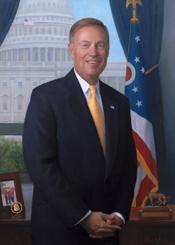
Mr. Speaker, I thank the gentleman for yielding me the time, and this is indeed a proud day for all Buckeyes. This has been quite a season to see in the ups and downs, and to see this talented group…
Mr. Speaker, I thank the gentleman for yielding me the time, and this is indeed a proud day for all Buckeyes. This has been quite a season to see in the ups and downs, and to see this talented group of athletes, student athletes, under the leadership of Coach Jim Tressel was a memorable time for all of us and to see an underdog team perform so well in the Fiesta Bowl for the national championship, with a crowd that was probably 80 to 85 percent made up of scarlet and gray was truly amazing, and as the coach said after the game, he felt that the crowd, very strong crowd, from Ohio State truly made a difference in the outcome, and for that, we are very, very pleased.
The gentleman from Columbus mentioned that I was an Ohio State law grad. That is correct. It is also true that of the four branch campuses of the Ohio State University, I represent three, in Mansfield and Lima and Marion. I have had a long-standing relationship with that great university, and we have seen perhaps the culmination of a season, like no other, where
we have won 14 games, including the national championship.
The last one we won was January 1 of 1969, when I was a senior at Ohio State Law School and got to see Ohio State defeat Southern California. If the gentlewoman from California is listening, we beat USC for the national championship. So Woody Hayes is smiling somewhere today because Ohio State is back on top, and for that we are very, very grateful.
I thank the gentleman from Columbus for his leadership in this area.
As an Ohio State football fan since I was boy, I never thought I'd say this, but there is something bigger than the Michigan game.
Ohio State has a great football history. Going into this year 4 consensus National Championships. 28 Big Ten Championships. 13 Rose Bowl appearances. 6 Heisman Trophy Winners.
But I doubt there will ever be a single game that matches what happened last Friday night at the Fiesta Bowl when the Buckeyes defeated the Miami Hurricanes, 31-24 in overtime, to win their first undisputed national championship since the 1968 team.
I was a student at the Ohio State's law school back then and never dreamed I'd have to wait this long to see the Buckeyes win another championship. But in exchange for a little patience and few frustrating years against our neighboring state to the north, Ohio State fans were able to watch our team play and win the greatest college football game in history.
Under legendary coach Woody Hayes, the Buckeyes usually went into games as the favorites. This time, the experts said Ohio State was overmatched. But Coach Jim Tressel knew that all any team needs to do to win, is make plays. The plays were unforgettable--and there were so many of them!
Maurice Clarett's strip after a crucial Miami interception. Michael Doss's pick-off. Matt Wilhelms's crushing sack. Craig Krenzel's miraculous 4th-and-14 completion in overtime and his quarterback sneak for the touchdown. And the final goal line stand by a valiant defense.
I salute Miami's effort, and you can see why they were the defending champions. But we in Ohio are proud that the Buckeyes won and ever prouder of the way they won: with determination, passion, and courage. This is a team that taught all of us a lesson, and the lesson is: it's only over when you stop trying.
I don't want to wait another 34 years to see Ohio State play for another national championship. But my heart may need that long to recover from this one!
Mr. Speaker, it is with tremendous pride that I offer this resolution, which congratulates the Ohio State Buckeyes on their historic win against the Miami Hurricanes in claiming the 2002 Division 1-A…
Mr. Speaker, it is with tremendous pride that I offer this resolution, which congratulates the Ohio State Buckeyes on their historic win against the Miami Hurricanes in claiming the 2002 Division 1-A national collegiate football championship.
Mr. Speaker, the Buckeyes steadily rose through the national rankings this year under
the unwavering leadership of their second year head coach, Jim Tressel. Starting the season ranked an unlucky 13th, the Buckeyes kept winning and winning, ending up the regular season by beating archrival Michigan 14-9, remaining undefeated and ranked 2nd in the country.
Their record earned Ohio State a trip to Tempe, Arizona to play in the Bowl Championship Series national championship game against the Miami Hurricanes, a game in which the Buckeyes entered as an 11 point underdog.
In that national championship game, ultimately decided in double overtime Ohio State emerged victorious with their offense scoring 31 points and their defense holding Miami for four downs on the two yard line as time expired to win the game. Critics and sportswriters have already called this game arguably the greatest college football game ever played.
The Buckeyes found a breathtaking way to end an equally dramatic season.
From their fourth-down play successes to their 8 come-from-behind victories, Ohio State showed their hearts on the field and won a record setting 14 victories.
Mr. Speaker, I would also like to take a moment to recognize Coach Tressel, who is in his second year as the Head Coach of the Ohio State Buckeyes. Coach Tressel's stoic, disciplinarian, and consistent style of leadership has restored the Buckeye team to its rightful place among the nation's elite college programs. And, in the process, Coach Tressel has instantly joined coaches Woody Hayes and Paul Brown in the annals of Ohio State's proud athletic history. In two short seasons, Coach Tressel has demonstrated that winning is innate--whether at Division 1- AA (Division 1 double A) Youngstown State or the Ohio State University.
However, the 2002 Buckeye team was perhaps best personified by junior quarterback Craig Krenzel. The consistently under-rated Krenzel, a molecular genetics major carrying a 3.7 GPA, displayed a grit and toughness equal to his intellect by scoring two dramatic touchdowns, leading both teams in rushing yards, and earning the Fiesta Bowl's MVP honor.
Ohio State football history and tradition are the bedrock of Columbus, Ohio--from The Best Damn Band in the Land, the Dotting of the I in Script Ohio to the Horseshoe, Skull Sessions and Hineygate, Ohio State fans are ever mindful of the University's storied past.
Both with and without tickets, some 60,000 adoring OSU faithful traveled to Tempe to cheer on their Buckeyes, coloring Sun Devil Stadium in a sea of scarlet and gray, and giving the Buckeyes a home field advantage some 2000 miles away from Columbus.
As a graduate of The Ohio State University, I take enormous pride in the Ohio State football team's sportsmanship and courage. The Buckeyes showed the world the definition of champions. Their preparation, fortitude, and desire will go down in the history of athletic competition as an example of triumph in the face of adversity. I could not be more pleased to be a fan, alumna, and Representative of The Ohio State University and their championship football team.
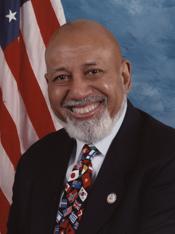
Mr. Speaker, I thank the gentleman for yielding me this time. The gentleman from Wisconsin has given us an explanation with reference to what is transpiring. When I came to this body, I had no idea…
Mr. Speaker, I thank the gentleman for yielding me this time. The gentleman
from Wisconsin has given us an explanation with reference to what is transpiring.
When I came to this body, I had no idea that I would have the privilege to serve on the Committee on Rules. When I was given that opportunity, it became the proudest moment in my limited congressional career. Last night, before we left here, I became rather distressed that the majority does not see fit to grant the minority privileges that the minority at another point in time argued that they should have, I remember very distinctly.
I have great respect for my colleagues on the other side of the aisle. Certainly, the chairman of the Committee on Appropriations is a friend of mine, and I have immense respect for him, his fairness and his ability. But the gentleman from Florida (Mr. Young) is not the person that is in control of the situation with reference to the rule. The chairman of the Committee on Rules also is a friend of mine, and I am not certain that he is in control of what is transpiring with reference to the rule.
What is happening here is we are giving back-room deals new meaning. In essence, what my colleagues have done, if we were to take 10 people, as one Member of Congress here said today, she described it as though we had 10 people and my colleagues put a gag on four and a half of them, so that nearly one-half of America is being denied an opportunity to go forward and put ideas on the table for this body to work its will. That is not fair.
Thus my colleagues will find that there are some of us who, different than the gentleman from Wisconsin (Mr. Obey) described when he said we are unhappy, some of us are outraged and plain mad about the circumstances we find ourselves in. In fact, what my colleagues are allowing with these two continuing resolutions is absolutely no debate of consequence with reference to matters of immense and enormous magnitude for the good of this country.
Among the things that we say all the time, and on yesterday proudly all of us admired, as we do admire the Speaker of the House, when he cited certain portions of the Constitution that all of us know so well, among those things was to promote the general welfare. Well, we cannot promote the general welfare with dynamic scoring when we are hiding the deficit with creative math. We cannot promote the general welfare when we find ourselves taking ``Jefferson's Manual on Parliamentary Procedure'' and pitching it into the Potomac River.
We did not have hearings last night. A train hit those of us in the minority in the Committee on Rules, and a train is hitting every member of the minority as well as the majority. My colleagues hurt themselves as much as they hurt us when they do not give us an opportunity to make an adequate presentation on matters of health, on matters of education, on matters of homeland security; and I could go on and on.
Everybody knows what my colleagues did when they took over the House of Representatives, and they did it by arguing against what the Democrats did that was so wrong then: closed rules. Yet every time we look up, all we see is no opportunity for amendments, no opportunity for supplementals. Nothing in the way of decency is coming forward. I am outraged.
Mr. Speaker, I thank the gentleman for yielding me this time. Mr. Speaker, I think it is always good in exchanges like this that every once in a while we try to come back to reality and discuss what…
Mr. Speaker, I thank the gentleman for yielding me this time.
Mr. Speaker, I think it is always good in exchanges like this that every once in a while we try to come back to reality and discuss what the topic for debate actually is.
What we have under consideration is a continuing resolution so that the Federal Government can stay open through the end of January, so that people who are expecting some sort of Federal benefit, whether it be a Social Security check, whether it is the continuation of Medicare, whether it is the processing of their Veterans Administration disability claim, whatever it may be, we are here to talk about a resolution to enable the Federal Government to keep going through the end of January.
We are in that situation because the kind of bickering that we are hearing from too many people on this floor was what predominated last year and kept us from adopting any permanent appropriations legislation.
Some Members are saying we do not want to talk about keeping things going, we do not want to talk anything until we can solve all of the problems and put a lot of new issues on the table. I guess they want to go ahead and let the government shut down. If that is Members' desire, and what they really want to do is mask that desire through other verbiage that they are throwing at us, I wish they would be open about it.
But the resolution under consideration is to allow continuing expenditures at predetermined, ordinary rates so until we can work out all these problems things do not come to a grinding halt. We are not going to be able to have time to work on the permanent solutions to the very funding problems that Members are complaining about unless we can get things like this through. When all of the time has to be devoted to temporary stopgap measures, that takes away from the time that we need to devote to permanent measures.
The American people spoke last fall in the elections. They said they want us to be solvers. They want us to be working towards solutions, not bogging down in bickering and petty parliamentary complaints.
Mr. Speaker, this is legislation that we need to adopt. It is responsible. I do not hear Members complaining about it, or the other side of the aisle saying we want to shut things down instead. But they do want to throw all sorts of barriers and roadblocks that will mean the current spending authority will expire, we will have a government shutdown.
We are trying to be responsible, Mr. Speaker. We should pass this resolution tonight so we can then work together on the permanent solutions and the permanent appropriations bills that need to be adopted.
Mr. Speaker, I commend the gentleman from Florida (Mr. Young), the chairman of the Committee on Appropriations. I thank the leadership for bringing this up, and I urge adoption of the resolution.
Mr. Speaker, I thank the chairman for his leadership and also the distinguished ranking member for the gentleman's hard work. Mr. Speaker, we had the opportunity to debate all of these issues at the…
Mr. Speaker, I thank the chairman for his leadership and also the distinguished ranking member for the gentleman's hard work.
Mr. Speaker, we had the opportunity to debate all of these issues at the subcommittee level, at the full committee level, and in many cases on the floor. But all of these items have been debated.
It has been stated that there has not been time for debate, but there has been. We have spent hours and hours and hours. We spent 2\1/2\ months in our subcommittee putting this very, very complex bill together, the VA-HUD bill. If we could move forward and pass this and then get to a point where we can pass all of the fiscal year 2003 appropriations bills, that would be a good thing.
There has been discussion about veterans. We have substantial increases in veterans' health care benefits in the 2003 bill. We cannot get to those until we pass this continuing resolution and send a bill to the Senate. We cannot make the increases in the housing accounts for the homeless, in housing for people with AIDS, in the section 8 program, in the senior housing programs. We cannot get those funding measures to the department heads and the money to the department heads to implement those policies if we do not pass this bill.
So there has been plenty of time to debate all of the policy issues. We are at a point where we need to bring closure to the 2003 year. I know I have and the other subcommittee chairmen have a lot of work to do. As soon as we complete on these 2003 bills, I will begin hearings for the Veterans Administration, for HUD, for NASA, for FEMA, for the EPA, for the National Science Foundation. There is a tremendous amount of work to be done, and every minute of every day, every hour that we delay here puts our decisions off for the future, and those are critical decisions.
Advocates are coming to us, veterans are coming to us, people from the science community are coming to us and saying please get these bills done so we can begin to plan for next year's bills. If we work very closely with OMB and the House and the Senate work closely together, we will have a budget resolution to work with. That is what happened this year. The House did its job. We passed our budget resolution. The Senate did not. Had they passed a budget resolution, we could have worked out the differences and had a road map to work with. But we did not have that road map. That is why we are at this juncture.
We need to get this work out of the way, get the bills passed, complete our work on 2003 and get a good solid budget resolution passed for 2004 and get these appropriations bills done. It is not that difficult. It is not rocket science, but we need to get last year's work out of the way first.
Mr. Speaker, I rise in support of this resolution to provide for continuing appropriations for the United States Government through January 31 of this year with the exception, of course, of the…
Mr. Speaker, I rise in support of this resolution to provide for continuing appropriations for the United States Government through January 31 of this year with the exception, of course, of the Defense and Military Construction bills that we have already passed and have had enacted into law.
Like a lot of my colleagues and certainly other members of the Committee on Appropriations, I have been frustrated that we were not able during the regular course of events last year and even into the beginning of the next fiscal year, but still during the course of the 107th Congress, that we have found ourselves unable to complete work on the appropriations legislation for fiscal year 2003. And so we find ourselves here in the 108th Congress, a new Congress, a new body, new committees, new personnel, faced with still doing almost all of the appropriation bills for 2003. I am not into the blame game of pointing the fingers as to where the responsibility for this lies. I think that one can look at the political facts that caused us all, neither side, to want to complete the work during the calendar year 2002.
And so we find ourselves here in 2003, at the beginning of a new Congress, a new calendar year, and in the second quarter of this fiscal year with the appropriation bills still unfinished. I have high hopes that the new Congress, the 108th Congress, can move speedily to complete this work. But it cannot be done unless we give authorization to the government to continue its work, all the agencies of the Federal Government that have appropriations to continue their work past this coming weekend and to the end of this month. While we are gone from Washington in the next couple of weeks, the Senate will be taking up these appropriation bills. The plan is that they will add them to our continuing resolution and we will have an opportunity to go to conference and discuss them there.
Whatever one thinks of the process, I think one has to look at the end result, which is to try to get the appropriation bills done for 2003 so that we can get into the regular appropriation bills for 2004, and I think all of us understand that there is going to be a supplemental appropriation bill as well coming up in the next couple of months to
deal with the military and political crisis that we find ourselves dealing with in the Middle East and South Asia.
And so, Mr. Speaker, I would hope that this body would support this continuing resolution, that we would adopt it, and that we would get on with the work of adopting the bills for 2003 before the end of this month and that we can do the regular work of fiscal year 2004 in the next year.
Mr. Speaker, I rise in support of this continuing resolution, and I really want to thank Chairman Young for all the hard work that he has put into this process. I want to thank also the gentleman…
Mr. Speaker, I rise in support of this continuing resolution, and I really want to thank Chairman Young for all the hard work that he has put into this process. I want to thank also the gentleman from Wisconsin (Mr. Obey) on the minority side. It is not easy. I know. This may be one of the hardest jobs in the House that the chairman has and the ranking member, too. The continuing resolution is an essential bill, and obviously I strongly urge all my colleagues to support it. I do not think the appropriations process has ever been easy, and I think this particular situation is maybe one of the most difficult that we have ever had, at least in my understanding. All we can do is take the situation that we have and do the very best that we can. I believe that is exactly what we are going to do.
The President has made it pretty clear, quite clear, that he will not sign any bills that push us over the discretionary level of $750.5 billion. I believe we have to pay attention to that. We have to respect that. And I believe we will. The gulf between the spending levels between the two bodies has now been closed. I understand that we are now close to agreeing to new allocations for the fiscal year 2003 bills that have not been completed.
As my colleagues will remember, this was one of the key problems last year as we attempted, as some attempted, rather, to throw fiscal discipline out the window. Not everybody may be happy, either, with the final allocations; but they are critical to move this process forward. Time is of the essence. We have to complete the fiscal year 2003 bills so we can properly focus on fiscal year 2004, which is why again we must pass this continuing resolution. Further delays run the risk of the Federal Government operating for an entire year under a continuing resolution. That is the alternative. What is it you want to do? If that is what you want as an alternative, that is the only thing that is out there. I do not think either side of the aisle will be satisfied with that outcome. The blame game is easy. By the way, if I were in the minority, I might be saying some of the same things that you are saying and doing some of the same things.
But the hard work, by the way, is being done by Chairman Young and, yes, Ranking Member Obey to bring the fiscal year 2003, I am talking about 2003, by the way, and we should be talking about 2004, bring the fiscal year 2003 appropriation bills to a successful resolution.
I just say, let us pass this CR and let us get back to work. I urge my colleagues to support this bill.
I yield to the gentleman from Wisconsin.
Mr. Speaker, as a parent of two small children, I have been told that children pay more attention to what their parents do than what we say. Tonight, I hope the American people will use that…
Mr. Speaker, as a parent of two small children, I have been told that children pay more attention to what their parents do than what we say. Tonight, I hope the American people will use that commonsense principle in judging Congress. It is not what we say in our speeches that counts so much, but far more important to the American people is what we do.
What has this Congress, what has this House done today? Basically, the Republican leadership has denied the minority an opportunity to present an amendment that would have added $275 million desperately needed in veterans health care. These particular dollars were focused to try to help those veterans who have such critical health care problems that they need specialist care. This $275 million was designed so that veterans who fought for our country so valiantly, so patriotically would not have to wait 6 months for a heart specialist or for some sort of very, very important care.
I would imagine Republicans and Democrats alike on Veterans Day back home go make that speech, that it is wrong for veterans to have to wait 6 months to get the care that they have earned and even fought for, even been wounded to earn. Yet when we have a chance to do something about it, the Committee on Rules, not through the leadership of either the chairmen or the subcommittee chairmen, who are valiant supporters of veterans health care, but through the actions of the Republican leadership in the House, despite all of our great words on Veterans Day and Memorial Day, all our respect for veterans, when we could do something about it tonight, when we could have helped veterans, what are our actions? We are prevented from even having a vote on helping to improve veterans health care in that desperately needed way.
The Republican leadership does not hurt the Democrats when they deny us the right to such a vote, denying Republicans and Democrats the right to that vote. They hurt veterans. These are men and women who fought for this country, men and women who have been willing to die for this country.
So I wish the Republican leadership would reconsider its ill-founded rule that denies not us but veterans the right to get better health care. Let the American people and let veterans know what we parents of small children
know: it is what we do that counts, not what we say that counts.
Show 11 more
Mr. Speaker, we wanted to bring some sort of information here because I was listening back in my office. In the CR under consideration today are two provisions providing the Securities and Exchange…
Mr. Speaker, we wanted to bring some sort of information here because I was listening back in my office. In the CR under consideration today are two provisions providing the Securities and Exchange Commission with additional authorities and resources to protect investors. That is already in the CR. The second provision allows the SEC to fund the start-up expenses of the Public Company Accounting Oversight Board to begin to provide the additional necessary scrutiny in corporate accounting.
There was also a bill put in earlier today, I believe it has been put in, which does the following: with regard to the fiscal year 2003 Commerce-State-Justice appropriations bill, and the gentleman from Massachusetts was referring to this, it includes $776 million for the Securities and Exchange Commission. That is the level that is authorized by the Sarbanes-Oxley bill. It is $209 million, I will tell the gentleman, above the President's request;
and it is higher than the amount that was in the Senate bill.
In addition to fully funding the SEC's pay parity cost, the funding will include an increase of $100 million for information technology initiatives such as enhanced automated analytical tools, an integrated document management system, a central data repository and various e- government projects.
It will also, I will tell the body so they feel very comfortable in voting for what the gentleman was talking about on the CR, the funding level will also provide for hundreds of additional accountants, attorneys and examiners to substantially increase oversight of auditors and audit services, enhance the commission's investigative and enforcement capability, improve disclosure of information to investors, and perform various other oversight duties. So that bill has been introduced and is in the hopper tonight.
I yield to the gentleman from Massachusetts.
But it is introduced to be the subject of, and we are committed to those figures, to be the subject of the 2003 conference. We are actually higher with regard to that than what the Senate had. That is the subject of us going to conference. It is higher than what the administration asked for and also higher than what the Senate has.

Mr. Speaker, I rise today to oppose H.J. Res. 1, the continuing resolution to fund the Federal Government through January 31. It is an abomination that only two appropriations bills have been passed…
Mr. Speaker, I rise today to oppose H.J. Res. 1, the continuing resolution to fund the Federal Government through January 31. It is an abomination that only two appropriations bills have been passed by this Congress--the Defense and Military Construction bills. We have essentially been operating without set spending levels for the Federal Government since the fiscal year began October 1.
My priorities include funding for education, protecting Medicaid, and providing funds for HIV/AIDS in Africa. I understand the fiscal constraints, but I also realize that Federal agencies and our constituents need funding provided from the various appropriations bills.
This resolution does extend entitlement payments including Food Stamps, Medicaid Grants to states and veterans' entitlements. The appropriations bills that fund these programs have not been passed. We simply cannot keep passing continuing resolutions with set spending levels. Congress is not living up to its responsibility as stated in the U.S. Constitution in Article 1.
Congress must do its work. We have eleven appropriations bills that have yet to be passed by Congress and enacted into law. The Labor-HHS appropriations bill funds the Department of Education, the Department of Labor, and the Department of Health and Human Services.
The Democratic priorities in education health care must be fully funded. Last year, we passed the No Child Left Behind Act, but have yet to fund the bill at levels to ensure the adequacy of the measures contained in the education bill.
I am concerned about the increasing spread of AIDS/HIV in Africa. I support funding for research in this area and getting the necessary medical supplies and medicine to combat this disease to Africa.
Congress adjourned last year with much unfinished business. Passing the appropriations bills must be on our list of priorities. We cannot continue this uncertainty in the budget process. This is the sixth continuing resolution.
The president will soon release his fiscal year 2004 budget and we have not yet passed eleven funding bills for fiscal year 2003.
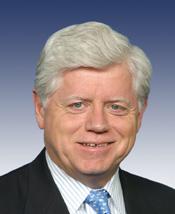
Mr. Speaker, reserving the right to object, I want to thank the chairman for his timely handling of this matter. I also wanted to ensure that the legislative purposes of this resolution are clear.…
Mr. Speaker, reserving the right to object, I want to thank the chairman for his timely handling of this matter.
I also wanted to ensure that the legislative purposes of this resolution are clear.
One purpose of this resolution is to continue the practice of allowing the House party leaders to call an early organizing caucus of their respective party members, and to do so before the statutorily established date of December 1st. Each party leader can schedule the caucus to begin on any date of his or her choosing after the date of the election. While it is customary to schedule the caucuses to begin at the same time, it is up to each party leader to make that decision for his or her party caucus. If the House has adjourned sine die, then each incumbent Members-elect, and a designated staff person, can be paid for their transportation expenses to attend the caucus. If the House has not adjourned sine die, then there are no travel expenses paid for incumbent Members-elect or their staff. New Members-elect, and a designated staff person from the district, can also attend with all attendance expenses paid by the House.
The resolution also has the purpose of continuing the practice of allowing the House Leadership's orientation program(s), hosted by the Committee on House Administration, to be conducted at any time, or at multiple times, after the date of the election, and allows each Member- elect, and a designated staff person, to be reimbursed for the expenses of attendance. The orientation program has usually been conducted as a part of, and during the same time period as the party caucuses. However if the caucuses are conducted at different times, then the orientation program could be conducted before, during, or after each caucus, with the Member-elect's, and designated staff person's expenses of attendance paid by the House.
Mr. Speaker, I withdraw my reservation of objection.
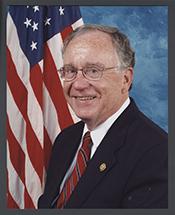
Mr. Speaker, I represent a large part of Franklin County. I would like to thank the gentleman from Columbus for his leadership on this bill. As a former band member, I guess he learned how to march…
Mr. Speaker, I represent a large part of Franklin County. I would like to thank the gentleman from Columbus for his leadership on this bill. As a former band member, I guess he learned how to march pretty well; and he has done a good job here in Congress.
It was a great game, and both teams need to be congratulated for playing an outstanding game, one of the best traditions in competition. There were no penalties, as I recall, for any unnecessary roughness or unsportsmanlike activities in that game. It was true champions going at each other.
In the final analysis, the champion was Ohio State University. Ohio State University is a champion in many ways, not just in football but in a lot of other endeavors as a university. It is an outstanding university in this country, and it has been my pleasure to work with them on a number of things.
I think there was a time when many people said to themselves, golly, I wonder if this new coach can coach at this level in the Big Ten. Well, I think that has all been put to rest. He is a national coach today. He has a national reputation. And he has shown what a true gentleman can do in recruiting and in coaching this young team to the success that they had this year. He has built a successful football team without sacrificing strong beliefs in the importance of academics for his players. His leadership has paid off with the Buckeyes' having a championship to show for it and memories of a game that people and sports writers are already calling one of the greatest college football games in history.
In conclusion, Mr. Speaker, I would like to quote something that Coach Tressel said. He said, I believe an accurate quote, ``We have always known we had the best damn band in the land. Now we know we have the best damned team in the land.'' With that, Go Bucks!
Mr. Speaker, it is with great pride that I rise today to pay special tribute to The Ohio State University football team. On January 3rd they finished their season by beating the then number 1 ranked…
Mr. Speaker, it is with great pride that I rise today to pay special tribute to The Ohio State University football team. On January 3rd they finished their season by beating the then number 1 ranked Miami Hurricanes in the Fiesta Bowl. This resulted in their winning the Division 1-A College Football National Championship. This is the university's first title since 1968. Furthermore, Mr. Speaker, the Buckeyes are the first Big 10 team to win the crown since the Bowl Championship Series was implemented in 1998.
The amount of time and effort Coach Tressel, his staff, and the team put into this feat is a tribute to the proud tradition boasted by The Ohio State University. They have proven that even the most difficult goals can be reached through hard work, sacrifice, and dedication.
Mr. Speaker, Jim Tressel is the only coach currently in his profession to win national titles in both Division 1-AA and now Division 1-A. He won four national titles while coaching at Youngstown State and now has his first at Ohio State. His steadfastness toward education and the discipline he demands off the field is a formula to which all coaches should aspire. His win last Friday validates so much more than what a strong defense can do for a team. It shows that character, planning, and responsible decision-making are what really matters in the end. Coach Tressel has built an organization that has taken The Ohio State University back to greatness both on and off the football field. On behalf of Ohio's Fifth Congressional District, I congratulate him, his coaches, and the team on a job well done.
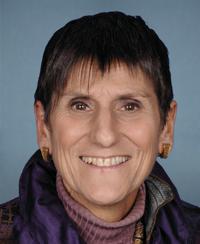
Mr. Speaker, will the gentleman yield? Mr. Speaker, I thank the gentleman from Wisconsin for yielding to me. I just wanted to remind my colleagues, Mr. Speaker, that in fact there were 318 people in…
Mr. Speaker, will the gentleman yield?
Mr. Speaker, I thank the gentleman from Wisconsin for yielding to me.
I just wanted to remind my colleagues, Mr. Speaker, that in fact there were 318 people in this body last year who came together and we voted to end the practice of rewarding those corporations who take their corporations overseas just for the ostensible purpose of not paying their taxes, of avoiding their most basic responsibility. We said no, they can no longer do that and get rewarded with government contracts.
Why? Why are we weakening the language that 318 or 319 people voted on? It is what we expect of American citizens, to pay their taxes every year. Why are we going to weaken this law with regard to these corporations? We have an opportunity tonight to right this wrong.
When push came to shove, this House weakened its language. We put good corporate citizens at a permanent disadvantage by protecting these companies who have moved overseas to avoid their most basic responsibility, and tonight we have the opportunity to right that wrong. We will not be acting responsibly this evening if we in fact vote to allow a small number of people who, quite frankly, put aside their American responsibilities, at a time when this Nation in fact is ostensibly on its way to war, and allow them to do what we would not allow anyone else to do.
We ought to right this wrong, we ought to vote for this motion to recommit, and live up to our responsibilities as the representatives of the good people of this country.
Mr. Speaker, only one day into the new Congress and the Republican Leadership's procedures for advancing legislation are an outrage that purposefully seeks to limit meaningful debate. By stifling…
Mr. Speaker, only one day into the new Congress and the Republican Leadership's procedures for advancing legislation are an outrage that purposefully seeks to limit meaningful debate. By stifling opportunities to present alternatives by either Democrats or Republicans, the House leadership is showing its unwillingness to legislate and its lack of fiscal responsibility.
This morning we passed legislation to extend unemployment benefits for millions of Americans out of work. Unfortunately, due to the Republican leadership procedures, provisions could not be added to provide benefits to 1 million whose benefits have already expired.
Now, with this Continuing Resolution, we are faced with a provision for the Department of Homeland Security that would allow the Administration to bypass a normal review by the Transportation and Infrastructure Committee and win blanket approval on the House floor for its plan to lease up to 575,000 square feet at a cost of up to $250 million. There are important security, infrastructure, and fiscal considerations left undiscussed by this approach.
The Republican leadership is not just afraid of the Democratic proposals, but they are afraid of their own moderate members and the American public. Decision-making that leaves out normal congressional and committee processes is an attempt to remove democratic debate and public opinion from the table. This is a horrible way to begin the new Congress. The American public deserves better.
Mr. Speaker, I wish to be heard on the point of order. Mr. Speaker, just to correct the record, the gentleman from Massachusetts is one of the experts when it comes to the rules of the House, and I…
Mr. Speaker, I wish to be heard on the point of order.
Mr. Speaker, just to correct the record, the gentleman from Massachusetts is one of the experts when it comes to the rules of the House, and I commend him for that, but just to be technically correct with regard to his statement, it is not because we failed to do appropriation bills that the 302(b) allocations did not carry forward. It is because the Senate failed to produce a budget that the 302(b) allocation did not carry forward. Had a budget resolution been completed, the 302(b) allocations would have carried forward even though it was a new Congress.
Mr. Speaker, I support the point of order. The gentleman from Massachusetts is correct that certainly appropriation bills could have moved forward. We deemed the budget in order for that process to continue. There are many reasons why appropriation bills did not move forward, but the only fact I wanted to make clear for the Record and for the purpose of precedent setting, if there will be precedent setting this evening, is that in fact it was the failure of a budget to be produced by the Senate and not failure of appropriation bills to be produced that causes this extraordinary procedure to occur this evening. I hope this is not precedent setting because it is very unfortunate that in fact for the first time since the 1974 Budget Act was passed that the other body failed to produce a budget.
Mr. Speaker, I support the point of order.

Mr. Speaker, I yield myself as much time as I may consume. I rise in support of H. Res. 10, congratulating Ohio State University for winning the NCAA Division I football championship. Last Friday,…
Mr. Speaker, I yield myself as much time as I may consume.
I rise in support of H. Res. 10, congratulating Ohio State University for winning the NCAA Division I football championship.
Last Friday, Ohio State captured its fifth national football championship, winning one of the most closely fought college football games in recent memory. College football fans, student athletes and the general public were treated to an exciting Fiesta Bowl and end to this college football season.
I want to extend my hearty congratulations to head coach Jim Tressel, Ohio State University president Karen Holbrook, and Ohio State's student athletes for a job very well done.
I also want to extend my congratulations to the University of Miami and their student athletes for a great season. The University of Miami won all of their games during the regular season and produced two leading Heisman trophy contenders in Ken Dorsey and William McGahee. I know that I speak for all of this Congress as we wish Mr. McGahee a speedy and thorough recovery from the knee injury he sustained during the game.
Winning a championship has brought national acclaim to Ohio State University, and I hope the fans at the university and the university community treasures this moment for many, many years to come.
Mr. Speaker, I reserve the balance of my time.
Mr. Speaker, I have no further requests for time, and I yield back the balance of my time.
Mr. Speaker, let me thank my colleague the gentleman from Ohio (Mr. Tiberi) from Columbus, Ohio, and an Ohio State grad and a former member of the Ohio State marching band for bringing this…
Mr. Speaker, let me thank my colleague the gentleman from Ohio (Mr. Tiberi) from Columbus, Ohio, and an Ohio State grad and a former member of the Ohio State marching band for bringing this resolution to the floor today, and let me say I support the underlying resolution, support and congratulate the Ohio State University on what really was an outstanding season, not only for the coach and the players, the fans, but for all who watched Ohio State go through a number of games where it was very close, games that they were certainly about to lose, including the national championship.
As an old football player myself, I can tell my colleagues the game on January 3, the national championship game, was one of the most exciting football games that I have ever watched or one that I ever played in.
The real credit here goes to Coach Jim Tressel and his players. They did not have the most talented team in the country, not even close, and to win all of the close games all year is a sign of very good coaching and players who come together to create a very good team, and so for myself and my colleagues, our delegation, we want to congratulate the Ohio State University, the coach Jim Tressel, the players and all the fans.
Way to go, Bucks.
Mr. Speaker, I am pleased to join my colleagues in sponsoring H. Res. 10 to congratulate the Ohio State Buckeyes and Coach Jim Tressel on their first National Championship since 1968. The hard work…
Mr. Speaker, I am pleased to join my colleagues in sponsoring H. Res. 10 to congratulate the Ohio State Buckeyes and Coach Jim Tressel on their first National Championship since 1968. The hard work and dedication that they exhibited this year has allowed them to achieve their goal in historic fashion. Coach Tressel and his team have set a standard of excellence that is unmatched.
Ohio State has proven that hard work and dedication will always persevere over doubt, and that people should always pursue their dreams against all odds. In the championship game, and throughout the entire season, the Buckeyes were able to work together and triumph in the face of adversity.
I also want to offer congratulations to both teams on an outstanding effort and for playing a game in which they both can be proud. Both teams demonstrated extraordinary sportsmanship and displayed the professionalism that a sporting event of this magnitude deserves.
I know that Coach Tressel will continue to field quality teams that compete at the highest possible level. Thanks for a great season. Go Bucks!
Bill Text
2 versions available
        [Congressional Bills 108th Congress]
[From the U.S. Government Publishing Office]
[H. Res. 10 Engrossed in House (EH)]

In the House of Representatives, U.S.,

January 8, 2003.
Whereas in 2002, the Ohio State University Buckeyes football team captured its
fifth undisputed collegiate national football championship;
Whereas The Ohio State University is a member of the Big Ten Conference of the
National Collegiate Athletic Association Division I-A and in 2002 was
the Conference's champion for the 29th time in school history;
Whereas The Ohio State University's 14-0 record in 2002 is the best for a season
for a Division I-A football team in national college football history;
Whereas on the way to the national championship Ohio State defeated five
nationally ranked opponents, which included a 14-9 triumph over the
University of Michigan;
Whereas The Ohio State University entered the Fiesta Bowl as an 11-point
underdog to a University of Miami team that was on a 34-game winning
streak, yet emerged victorious;
Whereas Head Coach Jim Tressel has won five national college football
championships, the 2002 championship being his first Division I-A title
and his first with The Ohio State University;
Whereas Coach Tressel and his father Lee Tressel are the only father-son
combination to each win National Coach of the Year honors and a national
championship in football;
Whereas each player, coach, trainer, and manager dedicated their time and effort
to ensuring that the Buckeyes reached the pinnacle of team achievement;
Whereas The Ohio State University Marching Band, and the cheerleaders, students,
alumni, faculty, and supporters of The Ohio State University are to be
congratulated for their commitment and pride in the Buckeyes' football
program; and
Whereas its five Division I-A football national championships makes the Ohio
State University football program among the most successful in college
football history: Now, therefore, be it
Resolved, That the House of Representatives--
(1) congratulates the Ohio State University football team for
winning the 2002 NCAA Division I-A collegiate football national
championship;
(2) recognizes the achievements of all the players, coaches, and
support staff who were instrumental in helping The Ohio State University
win the 2002 NCAA Division I-A collegiate football national championship
and invites them to the United States Capitol Building to be honored;
(3) requests that the President recognize the accomplishments and
achievements of the 2002 Ohio State University football team and invite
them to Washington, D.C., for a White House ceremony for national
championship teams; and
(4) directs the Clerk of the House of Representatives to make
available enrolled copies of this resolution to The Ohio State
University for appropriate display and to transmit an enrolled copy of
the resolution to each coach and member of the 2002 NCAA Division I-A
collegiate football national championship team.
Attest:

Clerk.