Congratulating Lutheran schools, students, parents, teachers, administrators, and congregations across the Nation for their ongoing contributions to education, and for other purposes.

Legislative Activity
Stay on top of the latest movement without scrolling through every action
Motion to reconsider laid on the table Agreed to without objection.
March 4, 2003 • 6:48 PM
View full timeline
Introduced in House
February 26, 2003
Referred to the House Committee on Education and the Workforce.
February 26, 2003
Mr. Castle moved to suspend the rules and agree to the resolution.
March 4, 2003 • 2:07 PM
Considered under suspension of the rules. (consideration: CR H1479-1481)
March 4, 2003 • 2:07 PM
DEBATE - The House proceeded with forty minutes of debate on H. Res. 106.
March 4, 2003 • 2:07 PM
At the conclusion of debate, the Yeas and Nays were demanded and ordered. Pursuant to the provisions of clause 8, rule XX, the Chair announced that further proceedings on the motion would be postponed.
March 4, 2003 • 2:22 PM
Considered as unfinished business. (consideration: CR H1488)
March 4, 2003 • 6:32 PM
Passed/agreed to in House: On motion to suspend the rules and agree to the resolution Agreed to by the Yeas and Nays: (2/3 required): 407 - 0 (Roll no. 40).(text: CR H1479)
March 4, 2003 • 6:48 PM
On motion to suspend the rules and agree to the resolution Agreed to by the Yeas and Nays: (2/3 required): 407 - 0 (Roll no. 40). (text: CR H1479)
March 4, 2003 • 6:48 PM
Motion to reconsider laid on the table Agreed to without objection.
March 4, 2003 • 6:48 PM
Voting History
1 vote recorded • Roll call available
Floor Debate
24 membersWhat members said about H.Res. 106 on the floor
 BF
BF TD
TD JN
JN NP
NP RP+19
RP+19
Floor Debate
24 membersWhat members said about H.Res. 106 on the floor
Mr. Speaker, will the gentleman yield? Mr. Speaker, I wanted to ask the previous speaker, who said he had presided over the dissolution of 20,000 marriages, I just wonder, in how many of those was…
Mr. Speaker, will the gentleman yield?
Mr. Speaker, I wanted to ask the previous speaker, who said he had presided over the dissolution of 20,000 marriages, I just wonder, in how many of those was the cause of the dissolution some gay relationship?
I mean, I am prepared to own up when I am at fault. Am I responsible, as a gay man, for any of those 20,000 dissolutions? The gentleman said there were 20,000 dissolutions. Would he tell us in how many of those 20,000 dissolutions was the existence of a gay marriage or gay civil union the cause?
A half a dozen out of 20,000.
I apologize. If the gentleman would continue to yield briefly.
I apologize for assuming that the gentleman was referring to gay marriage. This is a debate about gay marriage. So when the gentleman talked about the dissolution of 20,000 marriages, I made, apparently, the incorrect inference that there was some relationship between what the gentleman was saying and the subject under suggestion. I withdraw the inference.
Mr. Speaker, consistently proponents of this amendment have tried to hide what it does. Yes, there is a question about what one State could be compelled to do by the Federal courts to respect another. If that were the problem, an amendment could come forward aimed narrowly at that. I would not support it. But an amendment that said the full faith and credit clause does not apply could have come forward. This amendment goes far beyond that. But the proponents of it apparently understand how indefensible it is in the very democratic terms which they use, and therefore they conceal it from the people, speaker after speaker after speaker.
I hope the majority leader will tell us why he will not be straightforward about this element of it and here is what it is: this does not simply say that judges cannot decide the question. And it does not say that one State cannot compel another. It also says, and its major impact, if it were to pass, would be to say to the voters of Massachusetts, no matter what you say in a referendum, no matter how you, the democratic electorate of Massachusetts, choose to define marriage, we the Federal Government overrule you.
What justification have you for that? You say the people of Texas, the people
of Tennessee want to decide. Why not the people of Massachusetts? Why did you not draft an amendment that would have honored the right of a State's electorate to make a decision? Our legislature is now in charge of this issue. The legislature will decide and the referendum will decide; and this amendment undeniably, but silently, says that no matter what any State does, it will be overruled. Vermont's civil union law originally came from the courts, but it has since been accepted by the political electorate. There have been votes in Vermont over this. Elections. This would also be overturned.
But now let me turn to the merits. We heard one gentleman say that he was not talking about same-sex marriage. He just noted that he had presided over the dissolution of 20,000 marriages. I am a gay man and I have presided over the dissolution of none. So I guess I do not feel quite as guilty about assaulting marriage as some of you would like me to feel. I am sorry Rush Limbaugh has been divorced three times, but it ain't my fault; and it is not the fault of any of my friends. That is the issue.
We are not assaulting marriage. Since when is it an assault on something for people to say, you know what, we have been excluded from this institution. We are also human beings and we feel love. We feel it in a way different than you. We feel it for someone of the same sex, male or female. And we look at your institution of marriage, and we see the joy it brings. We see the stability it brings to society. How does it hurt you if we share in it? That is the core issue I have not heard understood. What is it about the fact that two women in love in Massachusetts want to be legally as well as morally responsible for each other and live together and keep their home? Why is that an assault on you?
What a case of blaming the victim. You are defending yourselves against two loving people whose failure is to love each other and to want not simply to be free floating but to be committed? What is it you are protecting yourselves against? How do we threaten you? What about the love of two men so disturbs you that it would dissolve marriages? There are apparently, what, men and women happily married all over the country and they will learn that in Massachusetts the legislature allowed same-sex marriage to continue and they will get a divorce, they will call the gentleman from Texas and he can make it 20,001.
The gentleman from Texas, the majority leader, says this is not about gay marriage. Yes. And God didn't make little green apples and it don't rain in Indianapolis in the summertime. This is a political effort and it comes up a month before the election when it has been an issue since May of this year at least and before, a month before the election, an amendment that has no chance to pass, demonizes same-sex couples.
I say demonize for this reason. You say, we do not have anything against these people. Then why do you change my love into a weapon? Why if I have the same feelings that you do towards another human being does that somehow become the only weapon of mass destruction you have ever been able to find?
I urge the House to turn this down, let the people of Massachusetts make their own choices, and let loving men and loving women live in peace.
Mr. Speaker, I insert into the Record answers I gave to the Committee on the Judiciary and some further material which rebut the preposterous conclusion of Stanley Krutz, which was quoted here, that somehow, same-sex marriage resulted in a decline in heterosexual marriages elsewhere.
Judiciary Committee, Constitution Subcommittee,
Rayburn House Office Building,
Washington, DC.
Answers to the questions from Jerrold Nadler:
When I was asked about Stanley Kurtz's research by
Congresswoman Hart at the hearing, I had not read any of his
work. I now have and I can say that I believe his
interpretation is entirely without intellectual merit.
As I recall Ms. Hart's question, she asked me to accept Mr.
Kurtz's factual assertion that a recognition of same-sex
marriage had been followed in various European countries by a
decline in heterosexual marriage, and asked if I could think
of any possible explanation other than that the former had
caused the latter.
I was reluctant to answer the question before reading the
data lest I be validating premises and assumptions which I
would later find to be invalid. This turns out to be the
case. In fact, Mr. Kurtz does not himself argue that same-sex
marriage recognition preceded a decline in heterosexual
marriage. In every country he discusses, and his selection is
surprisingly sparse, a point to which I'll return, a decline
in heterosexual marriage and childrearing in heterosexual
marriages preceded by a significant period of years any
recognition of same-sex marriages.
But even on the narrow--and inaccurate--statement of Mr.
Kurtz's position that Ms. Hart put forward, the alternative
explanation to the assertion that same-sex marriage causes a
deterioration in heterosexual marriage is a simple one: They
may both be effects of the same or similar social causes.
Indeed, as Ms. Hart put the question to me, it can serve as a
dictionary example of the logical fallacy known as ``post hoc
ergo propterhoc.'' That is, the fallacy that believes that if
something happened after something else, it must necessarily
have been caused by it.
The key point again to stress is that Mr. Kurtz himself
does not argue that same-sex marriage recognition preceded
the deterioration in opposite-sex marriage.
In fact, Mr. Kurtz himself argues essentially that the
primary relationship of same-sex marriage and a decline in
heterosexual marriage is that they are both cause by the same
set of social phenomena. A fundamental flaw in his reasoning
of course is that he does virtually no analysis of any of the
European countries in which there has not been some form of
recognition of same-sex relationships. In other words, there
is zero comparative analysis in his work. Have significant
deteriorations in the incidence of heterosexual marriages
happened in other European countries which have not in
fact recognized same-sex relationships. The answer is
almost certainly yes but we will never know that from
reading Mr. Kurtz, who carefully avoids even posing that
question, obviously lest his hypothesis be endangered. He
does refer to England as a country where there has been a
significant deterioration in the number of heterosexual
marriages, but fails to note that this undercuts his
argument about the relationship between this and
recognizing same-sex relationships since England had not
done that at the time of his analysis.
The second point to be stressed is that Mr. Kurtz is not
talking about same-sex marriage in most cases, but rather of
various forms of recognition of same-sex relationships, akin
to domestic partnerships or civil unions. This is relevant
because some of those who questioned me who are supporters of
a Constitutional amendment asserted that they were talking
only about the unique nature of marriage, and seemed to think
that Mr. Kurtz supported them. Of course he does not since he
conflates marriage and other forms of recognition throughout
his analysis. Thus, the distinction that one Constitutional
amendment draws between marriage and other forms of same-sex
relationships does not appear to be at all supported by Mr.
Kurtz's analysis.
I have read both his testimony and his article in the
Weekly Standard carefully and I am unable to find any
coherent argument that says that recognizing same-sex
relationships reinforced--he does not claim that they are the
primary cause--a decline in heterosexual marriage. His exact
statement is ``there is good reason to believe that same-sex
marriage and marriage-like same-sex registered partnerships
are both an effect and a reinforcing cause of the
Scandinavian trend towards unmarried parenthood.'' The
primary cause of the ``marital decline in Scandinavia''
according to Mr. Kurtz, incidentally, are ``contraception,
abortion, women in the workforce, cultural individualism,
secularism and the welfare state.'' That is, all of these
have by Mr. Kurtz's own analysis more of a responsibility for
the decline of heterosexual marriage and same-sex-marriage.
This of course reinforces my earlier point--namely that Mr.
Kurtz scrupulously in his analysis avoids looking at the
statistics in countries which have not recognized same-sex
marriage, since virtually all of them in Western Europe are
affected by these other factors. And it does appear that to
Mr. Kurtz, even if we abolish same-sex relationship
recognition, we would have to ban or severely restrict
contraception, abortion, women in the workforce, cultural
individualism, secularism and the welfare state if we were to
save marriage. I recognize that there are members of the
Judiciary Committee who are attracted by the notion of
restricting some or all of these, and I commend their
discretion in not being more explicit about this wish.
When it comes to causality, the only effort to establish a
causal relationship-between recognizing same-sex unions and
the decline in heterosexual marriage comes in his testimony
when Mr. Kurtz says that ``same-sex partnerships in
Scandinavia have furthered the cultural separation of
marriage and parenthood in at least two ways.'' He then says
that ``first, the debate over same-sex partnerships has split
the Norwegian Church,'' and he argues that this weakening of
the traditionals within the Norwegian Lutheran Church is a
cause of an increase in same-sex relationships. I have tried
very hard to find the second causal factor but a very close
reading of the text produces no second. So we are left with
one assertion of causality--namely that the fact that
``clergy who preach against homosexual behavior are banned''
from preaching in parts of Norway means that their advocacy
of heterosexual marriage is no longer heard. This
reinforces my view that whatever is or is not happening in
Scandinavia in this regard has virtually no relevance to
the United States.
I am aware of no religious denomination that has banned
clergy from the pulpit if they are against same-sex
marriages. There are some denominations that allow this to be
performed, but there should be no analogy between the United
States, where the great majority of religious groups do not
recognize same-sex marriages, and Mr. Kurtz's view of parts
of Norway where virtually all clergy who oppose same-sex
marriage are banned. To be explicit, if the causality that
links a recognition of same-sex relationships to a decline in
heterosexual marriage rests entirely on the fact that anti-
same-sex relationship clergy are being marginalized and in
some cases silenced, it has no relevance to the United States
where nothing of that sort has happened or is likely to
happen.
This leads me to my final point--namely that reading Mr.
Kurtz makes it even clearer than it was to me before that the
most relevant experience to draw on in predicting what impact
recognizing same-sex relationships will have on American
society comes from Vermont. Some have argued that the Vermont
experience is not relevant because it has only been in effect
for four years or so. But Mr. Kurtz himself has an important
section in his testimony on the Netherlands, where ``formal
same-sex marriage . . . took effect in 2001,'' and
``marriage-like registered partnerships'' dates from 1998. In
other words, the Vermont experience is roughly comparable in
time to that of the Netherlands, and if Mr. Kurtz is right in
judging an impact based on the Netherlands, Vermont should be
equally relevant from the chronological standpoint--and, as a
part of the United States, far more relevant culturally.
We have one set of experiences with legal recognition of
same-sex relationships in the United States--that of Vermont.
It shows none of the negative effects that opponents of same-
sex marriage have predicted. Mr. Kurtz advances a correlation
in the contin
ued decline of marriage in various European countries--where
that decline long predated any recognition of same-sex
relationships--and the recognition of same-sex relationships.
But he carefully confines his analysis only to those
countries where same-sex relationships have been recognized,
so we have no way of telling whether or not the decline in
marriage that he attributes to same-sex relationships has
been equally great in countries where there is no such
recognition. And the only specific causal point he advances
is that this silencing or intimidation of Norwegian Lutheran
clergy who oppose same-sex marriage has diminished their
ability to preach in favor of heterosexual marriage. I am
very certain in my view that the experience in Vermont is far
more relevant to gauging the impact of a recognition of same-
sex relationships in the United States than is the experience
in a couple of Norwegian counties where the clergy opposed to
same-sex relationships have been silenced.
Barney Frank.
Mr. Speaker, the previous remarks are drawn from the research of a man named Stanley Kurtz, research that is of a very low level of intellectual activity. It would make some of the debate here today seem scintillating.
In fact, I have submitted information that makes it very clear that as far as the Netherlands are concerned, the trends involved predate same-sex marriage. As a matter of fact, there were same-sex civil unions first, then same-sex marriage. What has happened in the Netherlands predates that. The main author himself states that these are probably effects of the same cause.
Now, let us look to the United States. Vermont has had full civil unions, which most of the Members over there disagree with, since 2001, with zero, no negative effects, the same period of time as the Netherlands has had.
Mr. Speaker, I would just ask the gentleman from Pennsylvania, before he leaves, because he is so certain about the Netherlands, and I will yield him my remaining time, when does he believe that same-sex marriages began in the Netherlands and what was the rate? What is the date?
Would the gentleman from Pennsylvania answer me? When did the same- sex marriages start in the Netherlands?
Well, you made the statement. You do not know?
No, they started in 2001.
The gentleman gets the date wrong. He said since 1989. Same-sex marriage started in the Netherlands in 2001.
When Members are giving statistics, they ought to know what they mean.
Mr. Speaker, I yield 5 minutes to the gentleman from Ohio (Mr. Chabot), the chairman of the Subcommittee on the Constitution of the Committee on the Judiciary. Mr. Speaker, I yield 2 minutes to the…
Mr. Speaker, I yield 5 minutes to the gentleman from Ohio (Mr. Chabot), the chairman of the Subcommittee on the Constitution of the Committee on the Judiciary.
Mr. Speaker, I yield 2 minutes to the gentleman from Florida (Mr. Feeney), a member of the Committee on the Judiciary.
Mr. Speaker, I yield myself such time as I may consume.
This is not about discrimination. It is about marriage and judicial activism, but the timing is really important. I would just quote, since we are doing a lot of quoting around here, Paul Kates, director of Public Education for the American Civil Liberties Union's Lesbian and Gay Rights project, who said, ``Once more States agree with Massachusetts. We think it is more likely that we will win in the Federal courts,'' in which case same-sex marriage policies can be imposed across multiple States and even nationwide. It is a concerted strategy to go this route.
Mr. Speaker, I yield 3 minutes to the gentleman from Arizona (Mr. Hayworth).
(Mr. HAYWORTH asked and was given permission to revise and extend his remarks.)
Mr. Speaker, I yield 3 minutes to the gentleman from New Mexico (Mr. Pearce).
Mr. Speaker, may I inquire as to the time on each side?
Mr. Speaker, I yield 2 minutes to the gentleman from Texas (Mr. Carter), a former judge.
Mr. Speaker, I yield myself such time as I may consume to just mention that we are talking about marriage. I know some think this is a debate or a constitutional amendment on gay marriage and same-sex marriage. No, we are talking about marriage and the definition of marriage. That is what this debate is about.
Mr. Speaker, I yield 1 minute to the gentleman from Texas (Mr. Brady).
Mr. Speaker, I yield 3 minutes to the gentleman from Georgia (Mr. Gingrey).
Mr. Speaker, I yield 2 minutes to the gentleman from Texas (Mr. Neugebauer).
Mr. Speaker, I yield 3 minutes to the gentlewoman from Tennessee (Mrs. Blackburn).
Mr. Speaker, I yield myself such time as I may consume.
I have the utmost respect for the gentleman from Massachusetts. I respect his feelings. No one is attacking his feelings or his relationships. There are many loving relationships between adults. But, Mr. Speaker, what we are saying and what this amendment is about is children, having children, raising children, and the ideal of marriage between one man and one woman raising those children.
Mr. Speaker, I yield 3 minutes to the gentleman from Virginia (Mr. Forbes).
Mr. Speaker, I yield myself such time as I may consume.
Mr. Speaker, we have been here before. Abortion was up to the States, and it was supposed to be up to the States. Unfortunately, those who wanted more abortions in the States and the States were not doing what they wanted had a concerted strategy to use the courts to get abortion. And they worked over the years, went to the Supreme Court, and they got their abortions. And we have abortions.
The same thing is happening now on marriage. They are trying to get marriage redefined in this country, so we know that we will end up in the Supreme Court.
Mr. Speaker, I yield 2 minutes to the gentleman from Georgia (Mr. Bishop).
Mr. Speaker, I yield 2 minutes to the gentleman from Iowa (Mr. King), a member of the Committee on the Judiciary.
Mr. Speaker, I yield 2 minutes to the gentleman from Texas (Mr. Smith), a member of the Committee on the Judiciary and subcommittee chairman.
Mr. Speaker, I yield 3 minutes to the gentleman from Missouri (Mr. Akin).
Mr. Speaker, I yield 2 minutes to the gentleman from Pennsylvania (Mr. Toomey).
Mr. Speaker, I yield 1 minute to the gentleman from Alabama (Mr. Aderholt).
Mr. Speaker, I yield 2 minutes to the gentleman from Pennsylvania (Mr. Pitts).
Mr. Speaker, I yield 2 minutes to the gentleman from Indiana (Mr. Pence).
(Mr. Pence asked and was given permission to revise and extend his remarks.)
Mr. Speaker, I yield 2 minutes to the gentlewoman from Virginia (Mrs. Jo Ann Davis).
Mr. Speaker, I yield 2 minutes to the gentleman from Oklahoma (Mr. Istook).
Mr. Speaker, I yield 2 minutes to the gentleman from New Jersey (Mr. Garrett).
Mr. Speaker, I yield 2 minutes to the gentleman from Texas (Mr. Sam Johnson).
(Mr. SAM JOHNSON of Texas asked and was given permission to revise and extend his remarks.)
Mr. Speaker, I yield myself such time as I may consume.
I would just point out that I have here hundreds of letters from Hispanic pastors, churches, leaders, civil rights leaders; African- Americans, civil rights leaders, pastors, from all over the country. They do not say that the marriage protection amendment is discrimination. In fact, they say just the opposite: It is discriminating to undermine the definition of marriage by judicial fiat.
Mr. Speaker, I yield 2 minutes to the gentleman from North Carolina (Mr. Hayes).
Mr. Speaker, I yield 2 minutes to the gentleman from New Mexico (Mr. Pearce).
Mr. Speaker, I yield myself such time as I may consume to say that there were people running around the halls screaming ``protect marriage.'' In fact, there were 50 African American pastors trying to meet with the Congressional Black Caucus, who refused to meet with them. So I am going to bring up one letter out of hundreds of thousands of letters that I have from particular pastors.
From this particular pastor, Dr. Creflo A. Dollar of the World Changes Ministries at College Park, Georgia, and I will not read the letter, but I will quote him, because he says that this is not a civil rights issue. This is an African American pastor from an African American church. Dr. Dollar says, ``This is not a civil rights issue, as many would have you believe, and attempts to frame it as such are an insult to the millions of Americans who have been the victims of actual discrimination in the past.''
Mr. Speaker, I submit for the Record Dr. Dollar's letter.
It is a privilege for me to voice my enthusiastic support
for the Federal Marriage Protection Amendment currently
pending before Congress. The institution of marriage is a
fundamental building block of the American way of life, and
we are here today to say that it must not be allowed to be
redefined or reconstituted. The American family is under
attack--we are in the middle of a character crisis that
threatens the very foundations of our society--and our
message this morning is clear. There is only one kind of
marriage, and that is between a man and a woman. Any attempt
to deviate from that standard by any means--be it
legislative, judicial or executive--is equivalent to
spiritual treason. The sacred covenant of marriage was
created by God Himself and is not subject to interpretation
by anyone.
Our support for this amendment should not be viewed as
homophobic, exclusionary or discriminatory. The ministries
represented here today extend the love of God to all people,
including those who exemplify lifestyles that we don't agree
with, and our doors are open to everyone. To attempt to
categorize our collective stance in any other way is both
irresponsible and inaccurate. This is not a Civil rights
issue, as many would have you believe, and attempts to frame
it as such are an insult to the millions of Americans who
have been the victims of actual discrimination in the past.
Part of what makes America the greatest country in the world
is the freedoms that our citizens enjoy to make whatever
religious, social, professional and lifestyle choices they
desire, within the reasonable boundaries of a civil society.
However, for America to redefine herself for every movement
that comes along would weaken who we are as a nation, not to
mention the profound negative impact such a change would have
on our children. We speak as one voice for the millions of
Americans in our congregations and all over the country who
can all be heard making the same plea today--please don't
begin a process of de-stabilizing the United States of
America by changing the rules for all of us in order to
accommodate a few of us. For mainstream Americans, this issue
is not negotiable.
We urge the members of Congress to approve this amendment
and to do it swiftly. Part of the responsibility of an
elected official is to represent the best interests of his or
her constituency, and we affirm today that the Federal
Marriage Protection Amendment is the right thing to do for
America. We wholeheartedly support President Bush and his
stance on this vital issue. We must seize this opportunity to
make a lasting statement to all who would alter the
fundamental institution on which our society is based. I
shudder to think about the America my grandchildren will
inherit tomorrow, if we don't take decisive action to protect
our heritage today. We are confident that the members of
Congress will stand up for what is right, and not allow
themselves to be bullied by a noisy minority. Our future as a
nation hangs in the balance. Thank you and God bless you . .
.
Mr. Speaker, I yield 1\1/2\ minutes to the gentlewoman from Wyoming (Mrs. Cubin).
Mr. Speaker, I yield 2 minutes to the gentleman from Indiana (Mr. Pence) to answer the gentleman from Connecticut's question about what is the harm, and his other question being why the harm of redefining marriage to include other lifestyles.
(Mr. PENCE asked and was given permission to revise and extend his remarks.)
Mr. Speaker, I yield 1 minute to the gentleman from Pennsylvania (Mr. Shuster).
Mr. Speaker, I yield myself such time as I may consume.
Mr. Speaker, the gentleman obviously has not been watching the debate because no one has said anything about hate or the quotes the gentleman stated in this body. This is about marriage.
Mr. Speaker, I yield 1 minute to the gentleman from Alabama (Mr. Bachus).
Mr. Speaker, I yield 2 minutes to the gentleman from Georgia (Mr. Burns).
Mr. Speaker, I yield 1 minute to the gentleman from Oklahoma (Mr. Sullivan).
Mr. Speaker, I yield 1 minute to the gentleman from Georgia (Mr. Kingston).
Mr. Speaker, I yield myself the balance of my time.
Mr. Speaker, I know some wanted to pick a fight here today, trying to get us to talk about same-sex marriage, about homosexuality and all those kinds of things. We did not talk about them because that is not what this is about. What this is about is the family and the definition of family, so I will define it for you: a family is a man and a woman that can create children. Peter and Paul cannot create children. Mary and Jane cannot create children. It is about regenerating and re- energizing our population by being able to create children.
But more than that, it is about responsibility. A family is a man and a woman that can create children and rear them. It is how we create communities. It is how we transfer our values to our children, because if you destroy marriage and people do not get married, several things happen: first of all, men are let off the hook. Men can have the sex but not the responsibility of raising the children. That has happened in our society and societies in Europe and others. If you take away the responsibility, why should a man get married? But if he has a commitment with the woman, the mother of his child, then he realizes the responsibility of trying to raise that child. He also provides something more than Mary and Jane can provide. Mary and Jane can be great mothers and there are many of them that are great mothers. Peter and Paul can be great fathers. But Peter and Paul cannot be a mother. And Mary and Jane cannot be a father. The reason that one man and one woman is necessary to rear children is so that they can receive the benefits that a man can give them and that a woman can give them. They can see the commitment between a man and a woman, the trust that is committed between the two, the love. But more important than that, it is how that man and that woman transfer their values to their children.
It is also how each family can transfer its values by families coming together as communities and transferring those values to those communities. So when you ask the question, what harm is it, the harm is if nobody gets married and they are having children out of wedlock, which has already been said, children born out of wedlock are more likely to have all the maladies of societal ills, whether it be quicker on drugs, dropouts. We know. Every social ill can come down on these children. If that happens, then we are not transferring our values to communities and from communities to States. Our values as a Nation start with one man, one woman having children. That is what is at stake here. That is what is harmful.
You say, well, I am married. I am married for 37 years. I am very proud to be married. I have a daughter and a grandson. The point is that these breakups of marriage, and it is showing in the Netherlands and in Scandinavia, it is showing right here with all the pressures against marriage over the last 40 or 50 years, whether it be welfare or divorce. Divorce is a pressure against marriage. And when we take the responsibility for a marriage and do no-fault divorces, you are undermining marriage and making it easy to undermine marriage.
All the results of that we have seen. The welfare system was a great experiment. What we saw was fathers not marrying the mothers of their children, just having many children by many mothers and not responsible for raising these children, leaving these children to mothers and grandmothers and aunts to raise. And then we see the deterioration of their lives because they are raising themselves because their mothers and aunts and grandmothers have to work in order to raise
them to pay for the family, so they are raising themselves, no values, nothing. Gangs form because of that. Gangs become the substitute for families. Everybody knows that. If you get busted by a gang or mugged by a gang, that is the result of undermining marriage.
That is the problem. It is nothing about same-sex marriage, or single moms or any other kind of marriage. Those are wonderful. There are wonderful families being raised by gay people. There are wonderful families by single moms. But they are not the ideal. The ideal is established in our Constitution and in our society. We want the ideal.
So when the Massachusetts Supreme Court redefines marriage based upon not law, based on thin air, because we have these activist judges coming in to impose their definition of marriage on our society, we get a little concerned, because we have seen it before.
We did not stand up before and there have been 45 million children killed, unborn children killed, because we did not stand up to activist judges responding to a strategy of using the courts to legislate. Every leader of the groups that are opposing this legislation has announced to the world that they are going to take this to the U.S. Supreme Court. They are already doing it. There are 11 court cases right now. Nebraska has been overturned, Washington State, Massachusetts. There is a huge, huge effort in every State in this Union, even though 44 States in this Union have protected the definition of marriage.
They are after those State constitutions; and when they get at those, or using the full faith and credit clause, they can go to the Federal courts and then it begins. Then DOMA comes down. Then the United States Supreme Court, who has already signaled that they are going to, through Lawrence v. Texas, redefine marriage in this country, will amend the Constitution and redefine marriage.
We are starting the effort today. Yes, it may not pass today. I wish it would. It may not pass today. This is only the beginning, I am telling you, because this Nation will protect marriage.
This Nation knows, this Nation knows, that, if you destroy marriage as the definition of one man and one woman creating children so that we can transfer our values to those children and they can be raised in an ideal home, this country will go down.
So, believe me, everybody in this country is going to know how you voted today. And they are going to know how you stood on the fundamental protection of marriage and the definition of marriage. And we will take it from here, and we will be back. And we will be back. And we will be back. We will never give up. We will protect marriage in this country.
Mr. Speaker, I thank the distinguished ranking member for yielding me this time, and I thank him for those kind words. Mr. Speaker, today the drumbeat of political demagoguery has reached its…
Mr. Speaker, I thank the distinguished ranking member for yielding me this time, and I thank him for those kind words.
Mr. Speaker, today the drumbeat of political demagoguery has reached its crescendo as the House prepared to consider an amendment to the U.S. Constitution banning marriage between persons of the same gender. This amendment does not belong in our Constitution. It is unworthy of this great Nation, and the Senate could not even muster a simple majority to consider it, much less the requisite two-thirds to adopt it.
We have amended the Constitution only 27 times in our history. Constitutional amendments have been used to enhance and expand the rights of citizens, not to take them away.
The Constitution was amended to add the Bill of Rights, protecting freedom of religion, freedom of speech, freedom of assembly, the right to be secure in our homes; 10 amendments for protection of individual rights and liberties. We amended the Constitution to wipe away permanently the stain of slavery, to expand the right to vote, to expand the right of citizenship, to allow for the direct election of Senators, and to allow for the income tax.
Now we are being asked to amend the Constitution again to single out a single unpopular group and say permanently, you cannot even attempt to convince the legislature of your State to give you the right to marry. We have certainly never amended the Constitution on the mere speculation that a court might rule a law unconstitutional. No court has struck down as unconstitutional the Defense of Marriage Act that we passed 8 years ago. There is not even a case pending before any appellate court in this country today. There has not been a single trial-level court decision holding the Defense of Marriage Act unconstitutional; and yet we are told this necessity is imposed upon us. We must protect marriage now. What an imaginary threat.
In fact, the amendment before us is a new version of the amendment. It was not introduced until the end of last week. Although this issue has been the subject of four hearings before the Committee on the Judiciary, this proposed amendment and its potential impact on State marriage laws, historically a right of the States, has not.
When the sponsor of the amendment appeared before the Subcommittee on the Constitution, she was not prepared to comment on a similar version or any version other than the one she had introduced, which is not the one today before us.
The Committee on the Judiciary has not marked up this amendment, either in subcommittee or full committee, although the designation of the oak tree as the national tree has merited such careful deliberation. That is a first. My Republican friends, as amendment- happy as they are, have never previously skipped over committee consideration to bring a just-introduced constitutional amendment to the floor. But I understand them. What is the Constitution between friends? Why should we consider it carefully?
As the ranking member of the Subcommittee on the Constitution, I am normally called upon to explain proposed constitutional amendments. Explaining this one requires some extra effort. From what, precisely, would the so-called marriage protection amendment protect marriage? From no-fault divorce? From legalized fornication? From the failure of States to incarcerate adulterers, perhaps? No. Evidently, the threat to marriage, so-called, is the fact that there are thousands of people in this country who very much believe in marriage, who very much want to marry, who may not marry under the laws of the various States of this country, but whose fellow citizens may conceivably one day permit them to do so; and that we must prevent.
I have been searching in vain for some indication of what might happen to my marriage or to the marriage of anyone in this room if loving couples,
including couples who have had children for years, are permitted to enjoy the blessings of matrimony. If there is a Member of this House who believes that his or her own marriage would be destabilized or destroyed by a same-sex marriage somewhere in America, I would welcome an explanation as to what you think would happen to your marriage and why. Any takers?
The overheated rhetoric we have been hearing is reminiscent of the bellicose fearmongering that followed the Supreme Court's 1967 Loving v. Virginia, which struck down State prohibitions against interracial marriage. The Supreme Court had overstepped its authority, we were told. The Supreme Court had overridden the democratic will of the majority. The Supreme Court had signed a death warrant for all that is good and pure in this Nation.
Fortunately, we have survived as a Nation; and we are the better for it.
In the not-too-distant future, people will look back on these debates with the same incredulity we now view the segregationist debates of years past.
This amendment does more than it purports to do. It would preempt any State law or legislature from passing a law allowing people of the same gender to marry, even if that law was approved by the legislature or, for that matter, by referendum of the people. This is not to protect the States; this is to protect a notion against the democratic will of the majority of the people in the States. Read the first sentence: any such marriage would be unconstitutional.
Proponents of this amendment have already tried to use a similar prohibition against same-sex marriage to attack domestic partner benefits in courts. So do not tell me this is only about marriage. I do not believe it. It says nothing in this amendment about recognition of marriages from one State to another. If you want to allow democratic majorities to have their way within their own borders, this amendment will do the exact opposite.
There are many loving families who deserve the benefits and protections of the law. They do not live just in New York or San Francisco or Boston. They live in every one of the 435 congressional districts in the United States. They are not from outer space, they are not a public menace, and they do not threaten anyone. They are our neighbors, our coworkers, our friends, our siblings, our parents, and our children. They deserve to be treated fairly. They deserve to have the rights of any other family.
I regret that this House is being so demeaned by this debate. It saddens me that this great institution would sink to these depths even on the eve of an election. We know this is not going anywhere. We know it is merely a political exercise. Shame on this House for playing politics with bigotry.
Mr. Speaker, will the gentleman yield?
I thank the gentleman for yielding.
Mr. Speaker, the distinguished majority leader said that this amendment is about protecting children. With all due respect, it has nothing to do with protecting children. Gay people, lesbian people raise children today. They have children. They raise them. The laws of many States permit them to adopt children and they do. What this amendment is aimed at doing is aimed at preventing any State from bringing some stability to the lives of those children by allowing their lesbian or gay couples who have legal custody of those children, who are raising those children, to be able to get married. And this amendment says never mind what the electorate says, never mind what the legislature says, we do no want those parents to be able to be married.
So do not tell us this is about protecting children. Whatever it is about, it is not about that.
Mr. Speaker, I thank the gentleman from Michigan (Mr. Conyers) for yielding me this time, our distinguished ranking member on the Committee on the Judiciary. I thank him for his leadership in…
Mr. Speaker, I thank the gentleman from Michigan (Mr. Conyers) for yielding me this time, our distinguished ranking member on the Committee on the Judiciary. I thank him for his leadership in promoting freedom in our country and protecting our civil liberties.
Mr. Speaker, I have been married for over 41 years. I want to hear some applause for that. I am glad to see my Republican colleagues appreciate that wonderful accomplishment. I certainly respect the institution of marriage. As the mother of five and the grandmother of five, I appreciate the value of family.
My husband and I value family in our community as a source of strength to our country and a source of comfort to the people. What constitutes that family is an individual and personal decision. But it is for all a place where people find love and support. As for me, I agree with Vice President Cheney when he said, ``With respect to the question of relationships, my general view is that freedom means freedom for everyone. People ought to be free to enter into any kind of relationship they want to.'' That would be Vice President Dick Cheney, August 24, 2004.
Mr. Speaker, in the closing days of this Congress, we should be addressing the urgent needs of the American people, to be secure against the clear and present danger of terrorism, to protect our men and women in uniform whose lives are in the battle in Iraq, and to bring economic prosperity and health care to the American people. Instead, we are meeting here today about tarnishing our cherished Constitution
with an amendment that purports to protect marriage but is one that benefits no one and actually limits the rights of millions of Americans.
Our Constitution, to which we all take an oath of office, is an enduring and living document that throughout our history expanded rights, not diminished them, to live up to the ideals of our Founding Fathers, that all are created equal and endowed by their Creator with inalienable rights to life, liberty and the pursuit of happiness. As that great defender of the Constitution, the late Congresswoman Barbara Jordan whose legacy graces this House, noted, ``We promised liberty, freedom and equality to everyone. No one was to be excluded from the blessings of liberty.''
As a result, this Nation abolished slavery, established equal protection under the law, extended the right to vote to women and ended the poll tax. Today, we consider an amendment that runs counter to that inclusiveness that underlies our history: one Nation under God, indivisible; and e pluribus unum, from many, one; and in the words of the Constitution, to form a more perfect Union.
This amendment has been brought with the full knowledge that it failed in the other body with no prospects of success, either now or in the foreseeable future, in this body. This is a partisan exercise to distract the American people from the Republicans' record of failure. And it is unworthy of a party that claims to be associated with President Lincoln, one of the greatest Presidents of the United States.
The consideration of this amendment does not call upon the better angels of our nature that President Lincoln spoke of in his first inaugural address. It calls upon the worst impulses of politics by attempting to enshrine discrimination into the Constitution and to single out a group of American citizens. And it is unworthy of a party that claims to be associated with President Lincoln once again who said in his second inaugural address, which I consider to be Lincoln's greatest speech, ``With malice toward none, with charity for all, with firmness in the right as God gives us to see the right, let us strive to finish the work we are in, to bind up the Nation's wounds.''
This amendment is malicious and is not charitable toward anyone. It is motivated by animus towards lesbians and gays. It is a sad moment that those clinging to power want to use to divide the American people for what they perceive to be an electoral advantage. I will vote against this amendment because it is counter to the noble ideals of our Nation.
On substance, the amendment is far reaching to deny all matters of rights, even beyond marriage. The proponents have disingenuously claimed that this amendment would not preclude civil unions or domestic partnerships. At the same time, organizations supporting this amendment are now using similarly worded State laws to challenge recognition of domestic partnerships in several States. And we know these organizations, which the Republican leadership is beholden to, will not stop there. Because this amendment is not limited to governmental action and would apply to all private contracts, existing rights enjoyed by same-sex couples, such as hospital visitation, inheritance rights and health care benefits would be at risk if this amendment were to pass. This amendment is dangerous, and it does not belong in our Constitution.
Throughout our careers, many of us in Congress on both sides of the aisle have fought against discrimination in every form and sought to bring people together. I will vote again against this amendment because again it is counter to the noble ideals of our Nation and of the principle of ending discrimination and unifying our country. Whatever one's view of same-sex marriage, and I know that that is a difficult issue for some, I understand that, amending the Constitution is not the place to address this issue. Let us not defile our Constitution with an amendment designed to demean a group of American citizens. Let us not use our Constitution as a political tool to divide us. We are a better country than that and that is why this amendment will fail today.
The American people will see through the motivations behind this amendment. It is to distract the American people from the record of failure of this Republican Congress, a record that has been, according to editorials today, marked by ``shambling to the end of one of the lightest workloads in decades without a hint of embarrassment'' and ``failing at the most demanding obligations of government.''
Mr. Speaker, let us strive to unite people, to seek the best in ourselves, and to attend to the grave and great issues now before us. Let us honor our Constitution, let us honor our children, let us honor all God's children. Let us follow our better angels and reject this amendment.
Mr. Speaker, while I oppose federal efforts to redefine marriage as something other than a union between one man and one woman, I do not believe a constitutional amendment is either a necessary or…
Mr. Speaker, while I oppose federal efforts to redefine marriage as something other than a union between one man and one woman, I do not believe a constitutional amendment is either a necessary or proper way to defend marriage.
While marriage is licensed and otherwise regulated by the states, government did not create the institution of marriage. In fact, the institution of marriage most likely pre-dates the institution of government! Government regulation of marriage is based on state recognition of the practices and customs formulated by private individuals interacting in civil society. Many people associate their wedding day with completing the rituals and other requirements of their faith, thus being joined in the eyes of their church and their creator, not with receiving their marriage license, thus being joined in the eyes of the state.
If I were in Congress in 1996, I would have voted for the Defense of Marriage Act, which used Congress's constitutional authority to define what official state documents other states have to recognize under the Full Faith and Credit Clause, to ensure that no state would be forced to recognize a ``same sex'' marriage license issued in another state. This Congress, I was an original cosponsor of the Marriage Protection Act. H.R. 3313, that removes challenges to the Defense of Marriage Act from federal courts' jurisdiction. If I were a member of the Texas legislature, I would do all I could to oppose any attempt by rogue judges to impose a new definition of marriage on the people of my state.
Having studied this issue and consulted with leading legal scholars, including an attorney who helped defend the Boy Scouts against attempts to force the organization to allow gay men to serve as scoutmasters, I am convinced that both the Defense or Marriage Act and the Marriage Protection Act can survive legal challenges and ensure that no state is forced by a federal court's or another state's actions to recognize same sex marriage. Therefore, while I am sympathetic to those who feel only a constitutional amendment will sufficiently address this issue, I respectfully disagree. I am also concerned that the proposed amendment, by telling the people of the individual states how their state constitutions are to be interpreted, is a major usurpation of the states' power. The division of power between the federal government and the states is one of the virtues of the American political system. Altering that balance endangers self-government and individual liberty. However, if federal judges wrongly interfere and attempt to compel a state to recognize the marriage licenses of another state, that would be proper time for me to consider new legislative or constitutional approaches.
Conservatives, in particular, should be leery of anything that increases federal power, since centralized government power is traditionally the enemy of conservative values. I agree with the assessment of former Congressman Bob Barr, who authored the Defense of Marriage Act:
``The very fact that the FMA [Federal Marriage Amendment] was introduced said that conservatives believed it was okay to amend the Constitution to take power from the states and give it to Washington. That is hardly a basic principle of conservatism as we used to know it. It is entirely likely the left will boomerang that assertion into a future proposed amendment that would weaken gun rights or mandate income redistribution.''
Passing a constitutional amendment is a long, drawn-out process. The fact that the marriage amendment already failed to gather the necessary two-thirds support in the Senate means that, even if two-thirds of House members support the amendment, it will not be sent to states for ratification this year. Even if the amendment gathers the necessary two-thirds support in both Houses of Congress, it still must go through the time-consuming process of state ratification. This process requires three-quarters of the states' legislatures to approve the amendment before it can become effective. Those who believe that immediate action to protect the traditional definition of marriage is necessary should consider that the Equal Rights Amendment easily passed both Houses of Congress and was quickly ratified by a number of states. Yet, that amendment remains unratified today. Proponents of this marriage amendment should also consider that efforts to amend the Constitution to address flag burning and require the federal government to balance the budget have been ongoing for years, without any success.
Ironically, social engineers who wish to use federal government power to redefine marriage will be able to point to the defense of traditional marriage through a constitutional amendment as proof that they have the legitimate authority to redefine marriage. I am unwilling either to cede to the federal courts the authority to redefine marriage or to deny a state's ability to preserve the traditional definition of marriage. Instead, I believe it is time for Congress and state legislatures to reassert their authority as a co-equal branch of government by refusing to enforce judicial usurpations of power.
In contrast to a constitutional amendment, the Marriage Protection Act requires only a majority vote of both Houses of Congress and the President's signature to become law. The bill has already passed the House of Representatives; at least 51 Senators would vote for it; and the President would sign this legislation given his commitment to protecting the traditional definition of marriage. Therefore, those who believe Congress needs to take immediate action to protect marriage this year should be focusing on passing the Marriage Protection Act.
Because of the dangers to liberty and traditional values posed by the unexpected consequences of amending the Constitution to strip power from the states and the people and further empower Washington, I cannot in good conscience support the marriage amendment to the United States Constitution. Instead, I plan to continue to work to enact the Marriage Protection Act and protect each state's right not to be forced to recognize a same sex marriage.
Show 8 more
Mr. Speaker, the Marriage Protection Amendment would not prevent any State from enacting civil union laws, but would protect marriage in all 50 States. Recently, I went to a friend, Mr. Sage Brown,…
Mr. Speaker, the Marriage Protection Amendment would not prevent any State from enacting civil union laws, but would protect marriage in all 50 States.
Recently, I went to a friend, Mr. Sage Brown, who is a distinguished attorney and civil rights leader in Savannah, Georgia. Indeed, he is featured at the Gilbert Civil Rights Museum as a man who was on the frontlines of integration and did so much for the African American community. I asked him, Is this a civil rights-type issue, to which he said no, the relationship of marriage is the most sacred building block of our society. Marriage is sacred and protected and has nothing to do with violating our civil rights.
If we change the definition of marriage to be more inclusive, then is it logical to argue that we should broaden the definition so we do not exclude anybody? If marriage violated the civil rights of two men or two women who wanted to be married to each other, then it would also violate the civil rights of a polygamist, somebody else who wants to have a different marriage than that between a man and a woman.
Mr. Brown raised a number of good points which I am going to submit for the Record. I wish there was more time to have debate on it, but I wanted to bring up something from his point of view.
Mr. Speaker, the Marriage Protection Amendment would not prevent States from enacting civil union laws but would protect marriage in all 50 States. It would state that ``marriage in the United States shall consist only of the union of a man and a woman.'' When I hear my distinguished colleagues from the other side say that marriage should be redefined because it is discriminatory, I respectfully disagree. Moreover, I believe that a great majority of Americans disagree.
I've spoken with many minority men and women in my district who have experienced civil rights abuses first hand. Recently, I spoke with Mr. Sage Brown, a distinguished African American civil rights leader from my district who said and I quote:
The relationship of marriage is a most sacred building
block of our society. Marriage is sacred and protected and
has nothing to do with violating our civil rights. It is not
a question of whether or not a person can enter into a
relationship such as a civil union. Our country was formed by
a group of people who were persecuted for believing certain
fundamental things. They looked at their creator in terms of
the defining foundation for our families . . . and this
foundation included the marriage of a man and a woman. The
installation of marriage was wholly designed for the
production, reproduction and propagation of the family.
Our marriage laws--defining marriage as the union of a man and a woman--were designed to be a blessing to children and society. There is a certain element of complementarity between men and women that is biological by nature.
If marriage violated the civil rights of two men and two women who want to be married, then it also violates the civil rights of polygamists, and of single adults who want to marry themselves. If our distinguished colleagues believe it is a civil rights issue, then do they also believe it discriminates against people who believe in polygamy. Does it also discriminate against three men who want to marry? What about four women? What about
single people who don't want to marry another person? Should they be excluded?
If we change the definition of marriage to be more inclusive, then it is logical to argue that we should broaden the definition so that won't exclude anyone.
Marriage is an institution fits in perfect harmony with the laws of nature; whereas systems of slavery and segregation were designed to brutally oppress people and thereby violated the laws of nature. By contrast, marriage is designed to help children by keeping their mothers and fathers together. Slavery and segregation were meant to exploit and degrade. There is a fundamental difference.
Skin color has nothing to do with marriage. That's why it's wrong to forbid interracial marriage and that's why overturning these laws was a legitimate civil rights issue. But whether a couple is a man and a woman has everything to do with the meaning of marriage. Marriage encourages the men and women who together create life to unite in a bond for the protection of children. That is not discrimination. It is the building block on which society is based.
Marriege was not created to place people in bondage. It was created for having children, and to propagate the human race from one generation to the next.
The union of a man and woman is the most enduring human institution-- which has been around since the origin of mankind. It is honored and encouraged in all cultures and by every religious faith.
Ages of experience have taught humanity that the commitment of a husband and wife to love and to serve one another promotes the welfare of children and the stability of society. Marriage cannot be severed from its cultural, religious and natural roots without weakening the good influence of society. Government, by recognizing and protecting marriage, serves the interests of all.
Moreover, it would prevent the judicial chaos we are beginning to see with recent rulings whereas gay couples are suing in States that do not recognize same sex marriage. Recently, Oregon conducted over 3,000 same sex marriages consisting of couples who live in over 30 States.
Lawless local officials have ignored the law and issued same-sex licenses in California, New Jersey, New York, New Mexico, Oregon and Washington. This issue is Federal, not State or local. The States' rights issue is meaningless if judges are the ultimate rulers.
We are headed for a proliferation of court cases in all 50 States if we do not act now.
So far, 44 States, or 88 percent of the States, have enacted laws providing that marriage shall consist of a union between a man and a woman. Only 75 percent of the States are required to approve a constitutional amendment.
Mr. Speaker, I want to thank the gentleman for yielding me this time and for his tireless efforts on behalf of civil liberties and civil rights for all Americans. This is a very mean-spirited and…
Mr. Speaker, I want to thank the gentleman for yielding me this time and for his tireless efforts on behalf of civil liberties and civil rights for all Americans.
This is a very mean-spirited and divisive constitutional amendment, and it is just plain wrong. It would take everything this Nation stands for, as a beacon of hope, as a land of opportunity and a tolerant Democratic society, and really just turn it all on its head. Government should not be in the business of passing constitutional
amendments to discriminate against anyone.
In an election year, with so much at stake, this amendment is clearly a ploy to divide the country's focus from the real issues, and I say, do not be fooled. There are far more important issues facing our Nation this year that this administration and Republican-controlled Congress refuse to debate and which have far greater impact on our country than this issue of a constitutional amendment.
In my district, the Ninth Congressional District of California, six members of the clergy, six members of the African-American clergy, led by a great religious leader, the Reverend J. Alfred Smith, Sr., Senior Pastor of the Allen Temple Baptist Church, addressed this very issue. In this open letter, published in the Oakland Tribune, they characterized the intent of this amendment to disrupt the peace and good will of many in both the secular and religious communities.
They continued, ``whatever your personal opinion is regarding same- sex marriages, ask yourself this litany of questions.'' They said: ``Can America survive if she continues unilateral war-making in a time that calls for international peace-seeking collaboration?'' ``Can the American common people, whom we serve as clergy, survive the diminishing resources for public education and health care?'' They ask the question: ``Can the American image survive the rejection of global treaties and environmental controls?'' They said: ``Is it liberty and justice for all Americans when preferential treatment is given to the wealthy and select corporations?''
Mr. Speaker, the answer to all of these questions is no. So I strongly urge my colleagues to vote ``no'' on this cynical and divisive attempt to legitimize discrimination in our most important secular, mind you, our most important secular, not religious, document, the Constitution.
Mr. Speaker, I submit for the Record the open letter published in the Oakland Tribune, which I earlier referred to:
Here We Stand
In a democracy each citizen is given freedom of speech. No
one is to be condemned for being Democratic or Republican,
conservative, moderate, or liberal. Most recently, twenty
African American Clergy exercised freedom of speech at a
press conference. These ministers stated that they were
working to elect President George W. Bush for a second term
of office as President. These Pastors spoke not for their
Churches but they as individuals exercised their American
privilege and democratic right as citizens.
As a result of their exercise of free speech, conflict and
controversy have disrupted the peace and goodwill of many in
both the secular and religious communities. There are those
who believe that there would have been no hatred and
hostility if those Ministers would have not stated that their
reasons for supporting electing Mr. Bush to a second term was
not tied to the divisive issue of same sex marriages. The
AIDS activists responded to the press conference by saying
the Ministers have harmed future funding for the fight
against the spread of AIDS.
We are calling all of us to relate to each other with
mutual respect for each other so as to allow us to differ
logically and humanely on the issues. A Caring and
compassionate number of African American clergy do not
support President George W. Bush for re-election, but they
support traditional family values while promoting ministries
to decrease and spread of AIDS. These Pastors teach and
preach against racism, sexism, ageism, classism, and
homophobia. No one can place all African American Ministers
into a single theological, ideological or political camp.
We encourage you to investigate the larger and more far
reaching implications of the upcoming presidential race. In
addition to whatever your personal opinion is regarding same
sex marriages, ask yourself this litany of questions. Can
America survive if she continues unilateral war making in a
time that calls for international peace-seeking
collaboration? Can the economic infrastructure of city,
county, state and the nation survive continuous lavish
investment in the military? Can the American common people
whom we serve as clergy persons survive the diminishing of
resources for public education and health care? Can the
American image survive our rejection of global treaties and
environmental controls? Is it liberty and justice for all
Americans when preferential treatment is given to the wealthy
and select corporations? Should not all Americans seek an
administration that will protect our freedoms against
punitive patriot legislation while defending America from our
enemies? Last, but not least, we do not give our souls to any
imperfect human made political system. When the Kingdom of
God comes, we do not believe it will arrive on the wings of
Air Force One. We are committed to the principles of
compassion, courage, and critical thinking in leading a
People whose purpose driven lives elevate principles of
ethics far above the perils of political expediency.
Bishop Bob Jackson, Acts Full Gospel; Bishop Ernestine
Reems, Center of Hope; Reverend Joseph Smith, Pastor, Good
Hope Baptist Church and President, Bay Cities; Baptist
Minister's Union; Reverend Lloyd Farr, Pastor, New Bethel
Missionary Baptist Church, and President, Baptist Minister's
Union; Dr. Frank Pinkard, Pastor, Evergreen Baptist Church;
Dr. J. Alfred Smith, Sr., Senior Pastor, Allen Temple Baptist
Church.
Mr. Speaker, amending the Constitution is a radical action which should only be undertaken when absolutely necessary. Preemptively amending the Constitution to prevent something that has yet to…
Mr. Speaker, amending the Constitution is a radical action which should only be undertaken when absolutely necessary. Preemptively amending the Constitution to prevent something that has yet to happen is a dangerous principle that this Congress should not endorse. We must always remember what President Calvin Coolidge once said, ``The Constitution is the sole source and guaranty of national freedom.''
Mr. Speaker, our Constitution has been amended only 17 times since the Bill of Rights, and with the exception of prohibition, which was promptly repealed, the amendments to our Constitution have always been used to secure greater rights and liberties for the American penal system. We have amended the Constitution to make our union more perfect, to ensure all Americans are free to secure the blessings of liberty, that all Americans may achieve the American dream of life, liberty and the pursuit of happiness. Never in our history have we used our most sacred governing document to deny the rights of any group of Americans, nor should we do so today.
This debate today is not simply a theoretical debate. It has a real impact on millions of Americans. I believe that the institution of marriage enhances our social fabric in many positive ways. I think we all agree that loving, supportive marriages provide strong environments for raising children.
Children with two-parent families who are actively engaged in their lives typically have greater financial and emotional stability during the time they grow up than those who are able to only rely on a single parent.
Marriage's role in protecting children is about providing sustenance. It is about teaching. It is about sharing cultures and beliefs. It is about transmitting a family's values. It is about providing love and emotional support. These are all important components of marriage, and none of them are exclusive to a couple consisting of a man and a woman.
Marriage laws in the United States provide important rights, responsibilities, privileges and obligations. In each State, literally thousands of rights, responsibilities, privileges and obligations are conferred upon the receipt of a State marriage license. Likewise, there are more than 1,000 Federal rights that benefit married persons, among them: the right to make decisions on a spouse's behalf in a medical emergency; the right to take the benefits of the Family Medical and Leave Act for an ill spouse or ill parent of a spouse; the right to petition for spouses to immigrate; the right to assume parenting rights for children who are brought in to a family through birth, adoption, surrogacy or other means; family-related Social Security benefits, income and estate tax benefits, disability benefits, family-related military and veterans benefits and other important benefits; the right to inherit property from a spouse in the absence of a will; the right to purchase continued health coverage for a spouse after the loss of a job.
When making this point, many times I have heard opponents say that these rights can be obtained in other ways besides marriage. Some of them can, at a cost, with enough legal help, but many cannot.
I want to return briefly to the role of marriage in protecting children because, contrary to the opponents of same-sex marriage and civil unions, I believe that this is a powerful argument in favor of marriage recognition for same-sex relationships. There are over 1 million children being raised in gay and lesbian families in the United States. These children do not have the same legal protections as children of opposite-sex married couples have, and their parents have significantly increased financial burdens in providing for them.
The rights of gay and lesbian and transgendered Americans have been at the center of a national debate for the past decade and more. Attitudes have changed dramatically, as more and more Americans have discovered that their friends, their neighbors, their coworkers, family members are gay or lesbian and that they are just like other Americans, with the same hopes, dreams, fears, the same challenges. I believe our country has taken major steps forward toward the American ideal that all people are created equal.
Mr. Speaker, change is never easy. Some people push for change with all their might, while others struggle to maintain the status quo. Most of the others are somewhere in between, trying to apply their competing values to assess the merits of change. Our political leaders can try to facilitate this debate and discussion and work towards consensus or they can exploit those tensions and fears to divide America.
I firmly believe that too many of our leaders have decided to use this issue to polarize Americans in order to win this election, and this is wrong. Today, we must reject this attempt to use the Constitution of the United States simply as a wedge issue to win an election.
Bringing this issue to the forefront now, five weeks before the election, with no chance to pass it in this House, accomplishes only one thing. It distracts the American people from the urgent issues and immediate policy decisions that are at the heart of this election.
Each hour this Congress spends on a constitutional amendment that will divide America, we are not working to help provide health care to the 45 million Americans who have no health insurance. Each hour this Congress spends on a constitutional amendment that will divide America, we are not working to help the millions of unemployed and underemployed Americans.
These must be our priorities, not writing discrimination into the Constitution of the United States.
I implore my colleagues to vote ``no.''

Mr. Speaker, I rise in opposition to this proposed Amendment to the Constitution of the United States. Marriage is designed to be between a man and a woman, period. It is not for two women, nor for…
Mr. Speaker, I rise in opposition to this proposed Amendment to the Constitution of the United States.
Marriage is designed to be between a man and a woman, period. It is not for two women, nor for two men. It was for this reason that I authored the Marriage Protection Act, which passed in the House in July.
Nevertheless, I cannot in good conscience support this amendment.
I have two primary concerns.
The first is the potential this amendment has to federalize domestic relations law, that is the law of families, parents, custody, etc., all of which are now handled in the States.
Let me say at the outset that I am not among those who believe that marriage cannot be defined in our Constitution under principles of federalism.
But I am deeply concerned that we may unintentionally be doing far more than simply defining marriage.
By setting forth marriage in the Constitution will we also set forth the basis upon which some future Federal court claims the ability to enter into all forms of domestic relations law now reserved to the States? I say it is very plausible.
In fact, I thought it so plausible that I offered an amendment in the Committee on Rules this week to address this issue. My amendment would have added the following new section to all text:
Nothing in this amendment grants any new legislative
authority to the Congress of the United States or any new
judicial power to the Supreme Court of the United States or
any court created by Congress.
This amendment was not made in order.
Without some limitation, I fear a future where the entire realm of domestic relations law, be it marriage, divorce, child custody, paternity determination, adoption--you name it--will become fair game for a future Supreme Court.
Without some limitation on Federal power to assume all family law, I simply cannot support the present text.
The second problem with the current amendment arises out of my concern over the nature of marriage and what we are truly trying to protect in this amendment.
The supporters of this amendment contend that they have three goals: prohibit same-sex marriage; stop courts from granting the benefits of marriage to same-sex couples; and, allow State legislatures to enact civil unions or domestic partnerships if they so desire.
Regarding the second goal, that is prohibiting the courts from granting the incidents of marriage to unmarried couples, presumably those in civil unions or domestic partnerships, I contend that here they have simply failed.
They have failed because in introducing H.J. Res. 106, they have only restricted the courts from improperly construing State or Federal constitutions.
Unlike the original H.J. Res. 56, they have dropped the requirement that courts refrain from construing State or Federal law in the granting of the incidents of marriage to same-sex couples.
Hence, under this amendment any court, for any reason short of a constitutional one, may simply grant the incidents of marriage to unmarried couples and this amendment will not stop them.
At this point, one might say, shouldn't we match our amendment to that voted upon in the Senate in July? I say why? That amendment did not even obtain a majority of votes for cloture. My friends, it is dead.
As I said, the authors of this Amendment had three goals concerning the incidents of marriage. The third goal was to allow, yes allow, the legislatures in the States to enact civil unions or domestic partnership laws.
I ask those of you from California or Vermont what this Amendment does for you? The answer is nothing. Your domestic partner law in California and your civil union law in Vermont are unaffected.
This Amendment may actually, by restricting the courts' ability to grant the incidents of marriage but remaining silent as to the legislatures, provide a constitutional basis for civil unions. I cannot support this result.
I offered amendments to the Committee on Rules to address both these issues. Again, my amendments were not made in order.
I have not yet addressed the first goal of this amendment, that is to protect marriage.
I suppose that to the extent that marriage is not a mere word, I will concede that the authors met their goal.
But is the goal sufficient?
Let me conclude.
Simply protecting the term ``marriage'' is not enough. Marriage by any name is marriage, whether we call it ``civil unions,'' ``domestic partnerships'' or any other label that may be conjured up.
Marriage is too important to be only about semantics.
We must also be cognizant that while we may today be talking about same-sex marriage, someday in the future we may be laying the groundwork for all marriage issues to become federal.
I submit that given the makeup of the House this Amendment cannot pass. I suggest that if we really care about marriage, that we focus on the other constitutional tools that our founders gave to Congress. Let us remove the federal courts' jurisdiction in this area. Let us cut off the funding of the enforcement of unconstitutional decisions.
All of these means are sufficient to control the judiciary. In fact, by specifically addressing the power of the courts to construe constitutions we are actually giving support to the myth that the courts are already the final arbiters of the constitutions.
We must now allow this to happen. I respectfully urge my colleagues to consider what they are doing here today, including all of the ramifications of this Amendment.
Mr. Speaker, I thank the gentleman for yielding me time, and I want to thank the gentlewoman from Colorado (Mrs. Musgrave) for having the courage to bring this forth. Our Constitution is one of our…
Mr. Speaker, I thank the gentleman for yielding me time, and I want to thank the gentlewoman from Colorado (Mrs. Musgrave) for having the courage to bring this forth.
Our Constitution is one of our country's most sacred documents. It is the fulfillment of the promises made in the Declaration of Independence, and it is the backbone of our system of government. It identifies our rights as citizens, the roles and responsibilities of each branch of government, and identifies the limits that prevent government overreaching. It also ensures that our system of government remains a democratic system, whereby the people, through their elected Representatives and officials, make laws. This means a form of government under which laws are passed by the duly elected Representatives of the people, not by judges.
Amending our Constitution is the most democratic process in our Federal system of government, requiring two-thirds of each House of Congress and three-quarters of the State legislatures in order to pass a constitutional amendment. But it has been done and should only be done when principles for governing and for existing in society need to be stated.
The best example of this is the Bill of Rights. The first ten amendments were added to the Constitution to ensure that principles that were so important, that were fundamental for governing and living, were explicitly referenced in the Constitution in advance of any adverse judicial ruling.
We find ourselves in a similar situation today. There should be no disagreement that traditional marriage, as defined throughout our history, is under attack by liberal activists and rogue judges. The only real question at hand is how to protect this important cornerstone of our society.
This issue was first raised with me when I became chairman of the Subcommittee on the Constitution in the 107th Congress. At that time I clearly stated my preference to consider all possible legislative options before pursuing a constitutional amendment. I also felt that we should wait to learn the results of ongoing litigation. My hope had been that the courts would not attempt to alter our social fabric and, instead, leave the issue where it belongs, before Congress and the State legislatures. Obviously, that has not been the case.
In response to judicial decisions and the attempt by elected officials in several communities to approve same-sex marriages in violation of their own State laws, I called for a series of hearings to consider different options for maintaining marriage as a union between a man and a woman. During those hearings, we heard from many experts that provided us with extensive information on legal and social issues. Perhaps most important to this debate we reviewed the status of DOMA, the Defense of Marriage Act, and the consequences that would result from a judge striking down that important legislation.
DOMA's status is at risk. Judge Robert Bork, for example, one of the witnesses, stated in testimony before the Subcommittee on the Constitution during the hearing on the amendment, ``I think DOMA is absolutely a dead letter constitutionally; not because it would be under the original Constitution, but because it is the way this Supreme Court is behaving.''
Professor Lawrence Tribe of Harvard Law School has stated, ``Same-sex marriage is bound to follow. It is only a question of time.''
As a result, our national definition of marriage and the important role that marriage plays in our society more than likely will be changed forever, and it will not be for the better. Once that change is made and forced on every State in our Union, it will be virtually impossible to reverse.
Mr. Speaker, marriage is an institution, not a right. The hearings confirm this. Congress is obligated to support the means that best protect this institution that has been a part of our history. The marriage protection amendment states as follows: ``Marriage in the United States shall consist solely of a union of a man and a woman. Neither this Constitution nor the Constitution of any State shall be construed to require that marriage or the legal incidents thereof be conferred upon any union other than the union of a man and a woman.'' That is what it states.
The first sentence of this amendment ensures that a common definition of marriage, that between a man and a woman, exists for the entire Nation. This will preclude attempts by the judiciary or State legislatures to determine otherwise.
The second sentence will prevent the courts from interpreting the Federal Constitution or State constitution to require a legislative body or an executive agency to enact or recognize marriage and its benefits on a civil union or domestic partnership. The second sentence also ensures that State legislatures are able to define for themselves the status of civil unions and domestic partnerships and the resulting benefits.
One way or another, we know that the Constitution will be amended. The question is, is it done the appropriate way, or is it done by unelected, activist judges?
Mr. Speaker, I am very pleased to yield 6 minutes to the gentleman from New York (Mr. Nadler), the ranking member of the Subcommittee on the Constitution, who has in this Congress found himself…
Mr. Speaker, I am very pleased to yield 6 minutes to the gentleman from New York (Mr. Nadler), the ranking member of the Subcommittee on the Constitution, who has in this Congress found himself busier than almost every other subcommittee that we have. We have a long history of court-stripping attempts, constitutional amendments that were of high dubious legal question, and he has worked tirelessly with a staff I think that is second to none on our committee.
Mr. Speaker, I am pleased to yield 1 minute to the gentleman from Ohio (Mr. Kucinich), a gentleman who has followed the civil rights struggle and the struggle for women in this country for many years.
Mr. Speaker, I am pleased to yield 7 minutes to the gentlewoman from Wisconsin (Ms. Baldwin), from the Committee on the Judiciary, a very distinguished lawyer in her third term who has served with us from the time she arrived here.
(Ms. BALDWIN asked and was given permission to revise and extend her remarks.)
Mr. Speaker, I yield 4 minutes to the gentlewoman from California (Ms. Lofgren) who has been of immeasurable assistance on constitutional questions in our committee.
Mr. Speaker, 4\1/2\ minutes to the gentleman from New York (Mr. Weiner), the honorable Member who serves on the Committee on the Judiciary with great skill and distinction.
Mr. Speaker, I am pleased to yield 2 minutes to the gentlewoman from Oakland, California (Ms. Lee), who replaced our good colleague Ron Dellums, an activist in domestic and international matters.
Mr. Speaker, I yield 5 minutes to the gentlewoman from Texas (Ms. Jackson-Lee) who has worked on civil rights and constitutional matters with great skill ever since she has come to this Congress
(Ms. JACKSON-LEE of Texas asked and was given permission to revise and extend her remarks.)
Mr. Speaker, I yield 5 minutes to the gentleman from Maryland (Mr. Hoyer), a longtime civil rights and human rights advocate.
Mr. Speaker, I am pleased to yield 4\1/2\ minutes to the gentleman from Massachusetts (Mr. Frank), a distinguished member of the Committee on the Judiciary now on leave.
Mr. Speaker, I am pleased now to reach across the aisle and yield 3\1/2\ minutes to the distinguished gentleman from Arizona (Mr. Kolbe).
Mr. Speaker, I yield 3 minutes to the gentlewoman from California (Ms. Woolsey), who has worked with us on civil rights, human rights and international issues throughout her career.
Mr. Speaker, I yield for the purpose of making a unanimous consent request to the gentleman from California (Mr. Berman).
(Mr. BERMAN asked and was given permission to revise and extend his remarks.)
Mr. Speaker, I am pleased to yield 2 minutes to the gentleman from New York (Mr. Engel).
Mr. Speaker, I am proud to yield 2 minutes to the gentlewoman from New York (Mrs. Maloney), the leader of the equal rights amendment.
Mr. Speaker, I yield 2 minutes to the gentlewoman from Colorado (Ms. DeGette), a distinguished lawyer in her own right.
Mr. Speaker, I yield to the gentleman from Massachusetts (Mr. Frank) for the purpose of making a unanimousconsent request.
(Mr. FRANK of Massachusetts asked and was given permission to revise and extend his remarks and include extraneous material.)
Mr. Speaker, I yield 1 minute to the gentleman from New Jersey (Mr. Pallone).
Mr. Speaker, I yield 1 minute to the distinguished gentleman from New York (Mr. Israel).
Mr. Speaker, I yield 2\1/2\ minutes to the gentleman from Washington (Mr. Inslee), a very distinguished supporter of civil rights and human rights.
(Mr. INSLEE asked and was given permission to revise and extend his remarks.)
Mr. Speaker, I yield 2 minutes to the gentlewoman from California (Mrs. Capps).
Mr. Speaker, I am pleased to yield 2 minutes to the distinguished gentleman from Massachusetts (Mr. Capuano).
Mr. Speaker, no one has been closer in this Congress to Dr. Martin Luther King than he has, and I proudly yield 2\1/2\ minutes to the gentleman from Georgia (Mr. Lewis).
Mr. Speaker, I yield 15 seconds to the gentleman from Georgia (Mr. Lewis).
Mr. Speaker, I yield 2\1/2\ minutes to the very courageous gentleman from Connecticut (Mr. Shays), a distinguished member of this body.
Mr. Speaker, I yield 30 seconds to the distinguished gentleman from Massachusetts (Mr. Frank).
Mr. Speaker, I am pleased to yield 1 minute to the gentlewoman from Minnesota (Ms. McCollum).
Mr. Speaker, I yield 10 seconds to the gentleman from Massachusetts (Mr. Frank).
Mr. Speaker, I yield 5 seconds to the gentleman from Massachusetts (Mr. Frank).
Mr. Speaker, I yield 1 minute to the gentleman from New York (Mr. Crowley).
Mr. Speaker, I yield 1 minute to the gentleman from Oregon (Mr. Blumenauer).
Mr. Speaker, I yield 1 minute to the gentleman from Virginia (Mr. Moran).
Mr. Speaker, I yield 45 seconds to the gentlewoman from New York (Ms. Velazquez).
Mr. Speaker, I yield 45 seconds to the gentlewoman from Ohio (Mrs. Jones).
Mr. Speaker, I yield the balance of my time to the gentlewoman from California (Ms. Pelosi) to close.

Mr. Speaker, 2\1/2\ hours for a debate on amending the Constitution. It is so important that we contemplate that ministers, rabbis, priests can marry anybody they choose to. They can deny marriage to…
Mr. Speaker, 2\1/2\ hours for a debate on amending the Constitution. It is so important that we contemplate that ministers, rabbis, priests can marry anybody they choose to. They can deny marriage to the opposite sex. But the reality is what about amending the Constitution to guarantee quality education to every child in this country; what about amending the Constitution to guarantee health care to every person in this country; what about amending the Constitution so that our colleagues around here could not spend this time talking about a moral issue instead of giving people jobs and giving them an opportunity to protect marriage? Marriages fall apart because people do not have work.
What about amending the Constitution so we can guarantee all kinds of rights to all people? Give me a break.
Mr. Speaker, I rise in strong opposition to H.J. Res. 106, the constitutional amendment on same sex marriage.
African-American voters are deeply divided on the issue of gay marriage and increasingly suspicious of Republican motives around the issue. Currently, 46 percent favor the amendment, while 46 percent oppose. Gay marriage should not be used as a wedge issue to divide any community, especially the African-American community. And guess what? In a June Gallup poll, issues related to the gay community were cited by 2 percent as the most important problem facing the U.S.--compared to other issues, such as the war in Iraq which was cited by 27 percent of the public.
The current administration's policies have devastated our communities. With unemployment in the African-American community double the national average, crime on the rise, and working families struggling to feed and keep their families together, we can't afford to lose focus and be bamboozled by Republicans who want to change the subject. Mr. Speaker, as of September 24 the gross Federal debt is $7.348 trillion. I submit to you that we cannot afford a whole host of things.
The American public wants Congress to focus on real issues facing our Nation--the economy, health care, protecting our homeland and education. To date, Congress has approved only 1 of 13 appropriations bills, despite the fact that a new fiscal year begins tomorrow.
We must focus our energy on good jobs--3 million lost in the last 3 years; better education; improved healthcare since 41 million don't have it; sound transportation funding; and turning around our communities--not about gay marriage.
Mr. Speaker, the administration has indeed captured the Nation's religious leaders on this issue because it does mirror concepts in various scriptures of their religious doctrines. Notwithstanding, it is precisely for that reason that we, in this august body, must resist the temptation to have the State engage in a religious battle. Separation of church and state is the basic principle of this Nation and it exempts us from this unnecessary action. Separation of church and state gives ministers, rabbis, imams, priests, reverends--you get my drift-- the freedom to practice their faith and choose to marry, or more importantly not marry, any two people before them.
In these times of spreading war and hate, people of faith must reject politicians who say they are acting out of faith: But are they really? When one wears the cloak of one's faith on your sleeve, it almost automatically calls in question your motives. People who talk about right, justice, compassion and religion are in fact using those sentiments to contradict or undo the very teachings of their faith.
Mr. Speaker, this is not compassionate; it is not tolerant; it is not charitable; it is not inclusive. This is nothing short of divisive and political. Instead of dividing us, our leaders should make redemption, understanding and love the foundation of their policies because we are all sinners.
I believe it's time to start bringing people together to work on the real issues of faith and moral commitment that confront our communities like poverty and homelessness instead of changing the Constitution to deny equal rights to the gay community.
With record high unemployment, crime on the rise, and working families struggling to keep their families together, it's time to bring people together to turn our communities around.
We need to focus on real policies.
Amending the Constitution is the most far-reaching step that legislators can take in governing the citizens of this country, and it is my belief that the Constitution should be the instrument that protects and guarantees the rights of individuals; it should not be used to limit the rights of individuals. The defeat of this legislation is tantamount to the preservation of human rights in this country.
Mr. Speaker, I vehemently oppose H.J. Res. 106 and I will continue to do so until it is defeated.
Mr. Speaker, I appreciate the opportunity to address this issue. Is it a blatant attempt by Republicans to score political points in a political season? I am sorry, but it was not the Republicans who…
Mr. Speaker, I appreciate the opportunity to address this issue.
Is it a blatant attempt by Republicans to score political points in a political season? I am sorry, but it was
not the Republicans who brought up the Massachusetts Supreme Court decision on May 17. We have very little influence in that particular matter.
From my friends on the other side of the aisle who declare to us that amending the Constitution is just the extension of rights, I would remind them that the Dred Scott decision that said that slavery is correct and proper for these United States was, in fact, turned around in a very similar situation that we are facing today.
A Supreme Court is positioning itself to declare a certain thing which is in opposition to the will of the majority of the people, and we are simply going to turn that around with a constitutional amendment, the same as the Thirteenth Amendment turned around the Dred Scott decision of the Supreme Court.
Now for the discussion about what this is really about. Once we leave the discussion of what is right for children as the heart of the discussion, we begin to get confused about what is right. When we talk about the fact that there are loving, gay couples who would like to raise their children, we seem to depart from the facts because only one out of three lesbians living in the same household are actually raising children, and among gay men, only one out of five.
This issue is not about the right to raise children. This issue is about their rights to redefine marriage for the entire Nation, and I will disagree with my friends on the other side of the aisle that it is worth fighting for right now. It is worth fighting for in this House, and it is worth fighting for on the streets of America so that we have this national public discussion to determine what is most effective for our children.
If we want examples, we can look to Scandinavia where more than 60 percent now of the children are born out of wedlock, just a few short years after they have taken the same step that we are taking here.
This discussion is about what is right for children. It has nothing to do with what is right for adults. How can we say that the rights of adults to choose their desire is more important than what is necessary to correctly and properly raise our children? What is right for our children is a discussion.
Mr. Speaker, I thank the gentleman for the time and rise in support of the Marriage Protection Amendment.
There, again, needs to be the general statement that gays and lesbians have a right to live as they choose, and I will work to support that right, but they do not have the right to define marriage for all of us.
As far as the question of bigotry and civil rights, 60 percent of African-Americans oppose same-sex marriage. Are they bigots? I do not think so.
Shelby Steele, an African-American scholar, said properly, ``Gay marriage is simply not a civil rights issue. It is not a struggle for freedom. It is a struggle of already free people for complete social acceptance. Black leaders . . . have distanced themselves from the gay marriage issue.''
We have had a little lecture on tolerance, and yet it is the side of the people who are arguing against this marriage act who have called death threats in to the original sponsor. It is those people who e-mail daily hateful comments. I wonder where the question of tolerance is at this point when someone dares to differ with them.
There is a question of, who gets harmed from same-sex marriage? When we approve same-sex marriage, we are going to be required to teach that it is okay. In fact, it is going to be wrong to teach against it. If we think that that is not going to happen, look at what has happened to the Boy Scouts of America who dared to take a stance. The all-out assault on the institution of the Boy Scouts of America has been unending, trying to get them to change their stance, simply saying, we want to teach our values.
Religious groups like Catholic Charities or Salvation Army may lose their non-profit status and other facilities unless they endorse gay marriage. Is that what we want? Do we want common, decent, God-fearing people to be declared as bigots, to be declared as speakers of hate speech?
That is where this discussion is going, Mr. Speaker. I urge my colleagues to support this amendment.
Show 11 more
Mr. Speaker, I thank the chairman for bringing this piece of legislation rapidly to the floor. As my kids went to school yesterday, I got a chance to drop them off and in front was a big banner…
Mr. Speaker, I thank the chairman for bringing this piece of legislation rapidly to the floor. As my kids went to school yesterday, I got a chance to drop them off and in front was a big banner saying ``Lutheran Schools Week.'' So I got to do it officially yesterday and I get to do it, I guess, officially now on the floor today; but I rise today in recognition of National Lutheran Schools Week, which began on March 2 of this week.
Mr. Speaker, I am a graduate of a Lutheran school, Holy Cross Lutheran School, in my hometown of Collinsville, Illinois. My father also attended this school. And a known fact is that my first grade teacher was my father's first grade teacher, a patriarch of education in Collinsville, Miss Bohland. It is a story I like to tell quite a lot. I also had a fifth grade teacher, Mrs. Richter, who taught me and who I tried to keep from retiring so that I could tell the same story for my sons, or so they could tell the same story. But she retired to an enjoyable life and is still very active in the church.
That is really something to be said, when you have that longevity in a teacher in a grade school. Two generations. And it is something that makes Lutheran schools a critical aspect of our society. My three sons now attend. David is 10, Joshua is 7, and Daniel will be attending next year in the preschool program, but who does get involved in the Sunday school program on Sunday and the weekends. My wife even teaches music at Holy Cross Lutheran School with the church programs and the choirs and all that stuff. So Lutheran schools have been a key component of my life for many, many years.
Before I became a Member of Congress, I returned to Illinois to teach government history at a Lutheran high school, Metro-East High School in Edwardsville, Illinois. As a teacher, I had the opportunity to instill the fundamental values and morals of the Christian faith, which is involved in the total educational aspect of the school. Parental involvement is key in Christian education; and Lutheran doctrine talks a lot about law and gospel, how we are condemned by the law but saved through God's saving grace, which is a critical aspect of the Christian faith, but it ties very neatly into the educational program.
In teaching kids to achieve all they can achieve, we know that you can never get 100 percent all the time, and there are failures along the way. That is where in the law and gospel aspect of education, the foundational principle of what makes Lutheran schools an exciting place to be, is that the constant love and compassion and actually the gospel aspect of forgiveness is involved in the educational setting.
Today, approximately 572,877 students attend Lutheran schools; and over 40,000 teachers provide an environment that encourages honesty, trust, respect, and responsibility. This also is a benefit to society because that are half a million kids that are not burdening, if we would call it a burden, to society. It is not an additional cost to the public school system. So the parents who choose Lutheran education, or perhaps Catholic education or other types of private schooling, take these kids out of the public school arena where more of the tax dollars can then work in public education, which I think is an additional benefit. Sometimes we forget that.
I am proud of the education that the students are able to receive from dedicated parents and teachers because of the efforts of Lutheran educators. Students throughout my district in central and southern Illinois receive spiritual guidance through an outstanding learning environment. I would like to congratulate the Lutheran schools, parents, teachers, administrators, and congregations across the Nation for their outstanding work in educating our youth.
One of the primary aspects of Martin Luther, when he changed the course of history, in essence the Protestant revolution, was education of the great masses, actually the education of children and youth. That is why the Lutheran faith education has a critical pillar in what we do on a day-to-day basis.
Mr. Speaker, I thank the gentleman for yielding me this time, and I also thank the sponsor for bringing this legislation forward.
Mr. Speaker, I thank the gentleman for yielding me time. More to the point, I thank the majority leader, the gentleman from Texas (Mr. DeLay), for his extraordinary moral courage in leading this…
Mr. Speaker, I thank the gentleman for yielding me time. More to the point, I thank the majority leader, the gentleman from Texas (Mr. DeLay), for his extraordinary moral courage in leading this critical issue to the floor of this Congress and leading the debate today.
I also congratulate the original author of this legislation (Mrs. Musgrave), who even as a freshman has left already an indelible imprint on the national debate in this legislation.
I rise today in support of the Marriage Protection Act because I believe, as the overwhelming majority of the American people have ever believed, that marriage matters; that it was ordained by God, established in the law; that it is the glue of the American family and the safest harbor to raise children.
We have heard again and again throughout this afternoon that marriage is under attack by judicial advocates. But I rise today to say that marriage matters to children. And we need not look to the theoretical. Marriage in Scandinavia and in Holland is dying since the advent of same-sex marriage over the last decade in those countries.
As a result, a majority of children in Sweden and Norway are now born out of wedlock. In some parts of Norway, as many as 80 percent of first-born children and two-thirds of subsequent children are now born out of wedlock. And we know ever since my colleague from Indiana, Dan Quayle, first said it, marriage matters to children. Children born out of wedlock have statistically been proven to be more than twice as likely to be poor, to give birth outside of marriage themselves, to have behavioral or psychological problems, and fall into every form of social malady that besets our children.
Marriage matters to children.
I rise today to say against this extraordinary phalanx of legal attacks in virtually every jurisdiction of the country that I commend the leadership of this Congress and, to no less extent, the President of the United States of America for saying that marriage matters enough to find space in the Supreme Court of our land to defend it.
Mr. Speaker, I thank the gentleman for yielding me this time, and I rise in the wake of, I think, a very important question by my friend and colleague, the gentleman from Connecticut (Mr. Shays): What are we afraid of? And the gentleman from Connecticut knows that I admire him and have great affection for him and the integrity with which he does his work, but I would like to answer that.
My colleague, we are afraid of the decline of marriage. We are afraid that what has happened in the last 15 years in the Netherlands since the advent of same-sex marriage is going to happen in America, and that our children and our society will be harmed as a result. As Dan Quayle first said on the national stage some 14 years ago, we know that marriage matters to children. Children born outside of wedlock are more than two times more likely to fall into every form of social malady that besets our kids.
The experience in the Netherlands is undeniable. Since the advent of same-sex marriage in the Netherlands and in Holland, the decline of marriage has been from 95,000 to 82,000. As Dutch academics wrote in their newspapers there recently: ``Over the past 15 years, the number of marriages has declined substantially. The same period also witnessed a spectacular rise in the number of out-of-wedlock births. In 1989, one in 10 children were born out of wedlock, roughly 11 percent; by 2003 that number had risen to almost one in three children.''
That is what we are afraid of, Mr. Speaker. We are afraid of the decline of marriage and the attendant harm to the American family that will undeniably follow. Marriage matters. And we come into this hallowed place today to stand by that institution knowing that we are informed by our core values that it matters and that it is central to our society, but also knowing the experience of our neighbors in Europe has been that when we change the definition of marriage, we begin the decline and ultimately the abolition of marriage as we know it.

Mr. Speaker, I cannot support changing the Constitution along the lines of this proposal--so I will not vote for this resolution. Under our federal system, there are many matters where the states…
Mr. Speaker, I cannot support changing the Constitution along the lines of this proposal--so I will not vote for this resolution.
Under our federal system, there are many matters where the states have broad latitude to shape their laws and policies in ways their residents think fit, subject to the constitution's provisions that protect the rights of individual citizens.
One of those areas has been family law, including the regulation of marriage and divorce--but this amendment would change that.
Adoption of this amendment would for the first time impose a constitutional restriction on the ability of a state to define marriage. And it would do so in a way that would restrict, not protect, individual rights that now are protected by at least some state constitutions.
In my opinion, this is neither necessary nor appropriate.
Some of the resolution's supporters say it is needed so a state whose laws ban same-sex marriages or civil unions will not be forced to recognize such marriages or unions established under another state's laws.
They say this could happen because Article IV of the Constitution requires each state to give ``full faith and credit'' to another state's ``public acts, records, and judicial proceedings.''
But my understanding is that this part of the constitution has not required states to recognize the validity of all marriages of people from other states. In fact, over the years various states have refused to recognize some out-of-state marriages--and the ``full faith and credit'' clause has not been used to validate marriages because marriages are not ``judgments'' but ``civil contracts'' that a state may choose to recognize as a matter of comity, not as a constitutional requirement.
As if this were not enough, in 1996 Congress passed and President Clinton signed into law the ``Defense of Marriage Act.'' That law says ``No State, territory, or possession of the United States, or Indian tribe, shall be required to give effect to any public act, record, or judicial proceeding of any State, territory, possession, or tribe respecting a relationship between persons of the same sex that is treated as a marriage under the laws of such other State, territory, possession, or tribe, or a right or claim arising from such relationship.''
Not everyone thinks this was a good thing for Congress to do--I myself am not sure that it was. But the fact is that this law is on the books and has not been successfully challenged.
Given this history, I am not convinced that this constitutional amendment is necessary to prevent the ``full faith and credit'' clause being used to compel a state to recognize a same-sex marriage.
Moreover, when you focus on the language of the proposed amendment it becomes clear that protecting states is not its real purpose.
That purpose could be achieved by an amendment to the ``full faith and credit'' clause--perhaps by putting language along the lines of the ``Defense of Marriage Act'' into the constitution itself. But that is not what is being proposed here.
Instead, this amendment would restrict states, by establishing a single definition of marriage--the only definition that any state could recognize.
And unlike other constitutional amendments, it would not protect individuals either. It would write into the constitution a new limit on what legal rights they could hope to have protected by a state or the federal government. If adopted, this amendment would restrict individual liberties instead of expanding them. I think it is clear the real purpose of this amendment is to lay a foundation for discrimination against some Americans on the basis of their sexual orientation. In good conscience, I cannot support this.
Mr. Speaker, no proposed constitutional amendment should be taken lightly. On the contrary, I think such proposals require very careful scrutiny and should not be adopted unless there we are convinced that a change in our fundamental law is essential. I do not think this resolution meets that test, and so I will vote against it.

Mr. Speaker, let me say that I support the traditional definition of marriage as a union between a man and a woman. I voted for the Defense of Marriage Act in 1996, but I believe, like Vice President…
Mr. Speaker, let me say that I support the traditional definition of marriage as a union between a man and a woman. I voted for the Defense of Marriage Act in 1996, but I believe, like Vice President Cheney, that this is an issue that should be regulated by the States, as it has been throughout the history of this great Nation.
In fact, Mr. Speaker, the chair of the House Republican Policy Committee, the gentleman from California (Mr. Cox) stated on Tuesday in the Wall Street Journal and I quote, ``The Federal marriage amendment would do more harm than good were it to be enshrined in our charter.'' That is the statement of the chairman of their policy committee.
Through their legislatures and courts, the States have proven quite capable of determining the legal definition of marriage. I believe the proper venue to consider decisions affecting this issue is in State courts and legislatures, and yes, with the people of the individual States. Thus, I oppose this constitutional amendment which is, at its core, based on intolerance and is a patently obvious effort to energize a part of the Republican Party's base and inflame the passions of others.
None of us should ignore the Republican majority's real intent here today. This constitutional amendment represents the perfect marriage of raw political cynicism and distraction. Everyone in this Chamber understands that this amendment is not going to pass. In fact, the gentleman from California (Mr. Cox) said again in the Wall Street Journal, ``The Federal marriage amendment is more symbol than substance given the near impossibility of a two-thirds vote.''
Even the majority leader himself acknowledged as much this week, telling Congress Daily, ``I think it is really important to put Members on the record, particularly before an election.'' Orval Faubus would have agreed with that; George Wallace would have agreed with that; Lester Maddox would have agreed with that.
The majority leader's decision to move this amendment to the floor just 7 months after stating that it was unlikely to be considered this year is more than ironic, it is patently political. The purpose in bringing this amendment to the floor today, just 4 weeks before the election, is to create the fodder for a demagogic political ad that appeals to voters' worst fears and prejudices rather than, as we should do, to their best instincts.
Finally, Mr. Speaker, given that this amendment is not going to pass, it is nothing short of amazing and irresponsible that we are spending time debating this issue on the floor today.
Again as our colleague from California (Mr. Cox) pointed out, there have been more than 130 amendments to the Constitution proposed in our history regarding marriage. The gentleman from California pointed out not one of those amendments has ever been voted on in either House because the leadership in those houses over those years thought those 130 amendments did not belong on the floor. How sad it is that we do not have that kind of leadership today.
At midnight tonight, my colleagues, the new fiscal year begins. How many of 13 must-pass appropriation bills have passed? One. Mr. Speaker, the Republican majority's legislative malfeasance is on full display today. The appropriations process is in meltdown. This Republican Congress has failed to enact a budget, failed to enact intelligence reform, failed to enact energy reform, failed to enact the reauthorization of the highway bill, failed to enact the reauthorization of the Higher Education Act. The list goes on and on. Yet with all that outstanding legislation, with all of America's business bottled up and pending, we consider a constitutional amendment that the chairman of the policy committee on the Republican side says will not pass. How patently political today is.
Mr. Speaker, this Republican majority has failed. The American people deserve better. I urge my colleagues to vote against this amendment.

Madam Speaker, the Republican leadership has put us on notice that Congress will probably adjourn next week until after the November elections. We should have done so much more this year. Yet, this…
Madam Speaker, the Republican leadership has put us on notice that Congress will probably adjourn next week until after the November elections. We should have done so much more this year. Yet, this week, Republican leaders have decided to bring to the floor a constitutional amendment banning gay marriage and a bill to repeal gun laws in the District of Columbia. Are these really the most important issues facing the Nation?
Earlier this month, the Republican leader, the gentleman from Texas (Mr. DeLay), said that he would not allow a vote to continue the assault weapons ban because it did not have the votes. When asked about scheduling a vote, he said the following, ``If the President asked me, it would still be no . . . because we don't have the votes to pass an assault weapons ban, and it will expire Monday and that's that.''
Despite the overwhelming support of Americans everywhere, he let the assault weapons ban expire.
Apparently, the gentleman from Texas (Mr. DeLay) only brings things to a vote when he has the votes. But wait, this week the gentleman from Texas (Mr. DeLay) has taken a different position on what he brings to the floor.
In Roll Call, he acknowledged he does not have the votes to pass the marriage amendment. This amendment will not pass the House, and it did not even a get a simple majority in the Senate earlier this year. This amendment is going nowhere.
Let us be clear. The only reason this bill is being considered today is to score political points a month before the election. I am not surprised in the least that the Republicans would put politics before solutions. What is shocking is that we would waste time on these political games when they have accomplished so very little this year.
Earlier this month, the CBO released its update and confirmed that the 2004 deficit will be the largest in history, $422 billion. This $818 billion deterioration from the $397 billion surplus that they inherited when President Bush took office is just a shame.
And what have the Republicans done to bring the deficit under control? Absolutely nothing. As a result of their policies, and for the third time in 3 years, Republicans need to increase the debt limit once again. What have Republicans done about this, the national debt? Nothing. The list goes on and on.
The Republicans never passed a 2004 budget. The fiscal year ends tomorrow, yet we have only done one of our 13 appropriation bills. The 9/11 Commission report was released in July. It has been 71 days, and the House and Senate have still not voted on its recommendations.
We have not passed a transportation reauthorization bill since January 2001. We have lost 1.7 million private-sector jobs. And for the third year in a row, the number of Americans without health insurance has gone up. Medicare premiums are as high as they have ever been. We have more people in poverty this year than we did when Bush assumed the Presidency.
The Republicans control the White House, they control the House of Representatives, and they control the Senate. They control everything in Washington. Despite all these advantages, all of this power, they have no accomplishments. All they can do is play political games to hide their truly abysmal record and hope that the American people do not notice.
The House Republicans have controlled Congress for a decade. On January 4, 1995, the day I was first sworn in, moments before being sworn in, then Speaker Newt Gingrich told the Members of the House that we were hired to do a job, and we have to start today to prove we will do it. Well, the Republicans have had 10 years, and just look at the dismal record. They have proven they just cannot do this job. It is time for a change. House Democrats are ready to get to work.

I yield to the gentleman from Massachusetts. I yield to the gentleman from Texas for a response. I continue to yield to the gentleman from Massachusetts, Mr. Speaker. Mr. Speaker, I am going to…
I yield to the gentleman from Massachusetts.
I yield to the gentleman from Texas for a response.
I continue to yield to the gentleman from Massachusetts, Mr. Speaker.
Mr. Speaker, I am going to reclaim my time, since the gentleman is not referring to gay marriage, and that is what this very important debate is about.
Mr. Speaker, I have heard a great deal on this floor about the message we send our children, and we have different interpretations about what this debate means to our children. One thing I would urge my colleagues on the other side not to do is not to tell your children you are being conservative by supporting this. Conservative values, as I understand them, means not taking government and sticking it into every relationship and into every corner of someone's personal life, like you seek to do with a woman's right to reproductive freedom and like you seek to do with the most intimate of relationships today.
Certainly, do not tell them that you are passing laws in this body to protect them. That you should not tell the children when you have passed laws to weaken water standards, weaken clean-air standards and to underfund education. So when you are talking to your children, do not tell them that.
Certainly, do not tell them that you are being consistent, because many of the folks on the floor here are the strongest supporters of the Defense of Marriage Act, yet in the Committee on the Judiciary and on this floor over and over, when challenged as to its constitutionality, say, oh, absolutely; absolutely, it is constitutional. It has not even been struck down and already you are running away from your interpretation of DOMA. So do not tell them you are being consistent.
And certainly, do not tell them that you are being honest, because if you were being honest, you would not lie to them and tell them that you are doing anything to amend the Constitution today. The Senate has already defeated this. If you are going to be honest with them, you are going to have to tell them what you are doing is simply posturing. So, certainly, do not tell them you are being honest.
What you are doing is teaching them to hate. You are teaching them that the Constitution is the place you remove rights, not protect them. That, I think, has been a consistent theme of this year's session. So, perhaps, in that case, you are being consistent in using the Constitution that way.
And I have to tell my colleagues, there are so many people who hang their heads today when talking about their grandparents who served in this august body. They hang their heads when they talk about their grandfather who stood up on the floor of the well and argued in favor of slavery. They are embarrassed by that.
There are so many who hang their head when they talk about their grandfather who served in this august body and fought for denying the rights of women. They are embarrassed by that.
Why is it that you think your grandchildren will not some day grow up and be telling their children about granddad or grandmom and have to be embarrassed about this debate; have to be embarrassed and ashamed by the idea that you, their grandparents, God willing, they are able to tell the story and how embarrassed they will be? Will they be embarrassed like those who have to talk about their grandparents who voted to support slavery or voted in support of rounding up Americans and putting them in internment camps?
I hope that that is not the case. If you are concerned about what you will tell your grandkids, be more concerned about what they will tell their grandkids about you.
Mr. Speaker, I rise in opposition to the so-called Marriage Protection Amendment. During the Civil Rights movement there was great public turmoil over whether or not white and black children should…
Mr. Speaker, I rise in opposition to the so-called Marriage Protection Amendment.
During the Civil Rights movement there was great public turmoil over whether or not white and black children should go to the same schools; whether people of different races should eat in the same areas of restaurants, drink from the same water fountains, sleep in the same hotels; even whether consenting adults of different races should be allowed to marry each other. After years of struggle and public discourse, the minority went to our country's highest court and to its elected representatives in Congress, and at long last, in their quest for equality, our government realized that Black Americans are Americans.
Today, only 40 years later, these questions seem preposterous. To children learning about
that time in school, it seem unreal. Listening to the debate today, I have to wonder if we will ever learn from the lessons of our history. Today we're talking about an amendment to the Constitution--the document that assures all Americans that they are equal. We're asked to amend the Constitution in a way that will say all Americans are equal, except for this one group. What we're really talking about today is one question. Are Gay and Lesbian Americans, Americans?
I hear those who support this amendment saying we have to amend the Constitution to protect us from activist judges who are not upholding the notions of family that existed when the country was founded. If the authors of this amendment had served in Congress during the Civil Rights movement, we could have heard them argue to defend segregation with an ``Education Protection Amendment'' after the Supreme Court's activist decision in the Brown v. Board decision. After the Loving v. Virginia decision they would have reacted to the judicial activism with a ``Racial Purity Protection Amendment.''
I don't believe that the proponents of this amendment, or for that matter the majority of the American people, truly believe that a gay couple living down the street in a committed relationship is a threat to their own marriages or to other marriages in their community. I don't think they really believe it because such a belief would be completely nonsensical.
The proponents of this amendment argue that two women who fall in love and want to marry will eventually be the downfall of all families in the United States. They say it will lead to the breakdown of the family. I want the people in favor of this amendment to look at the more than one million children of gay and lesbian parents in this country today one million children of gay and lesbian parents in this country today and tell them that you're here fighting to protect the rest of the country from their family.
The Members who support this amendment claim they want to protect marriage. Open your eyes and look around. There are plenty of threats to marriages today--adultery, divorce, just the challenge of two adults making it through life's struggle together. Two people falling in love is not a threat to marriage--it's the basis of marriage.
If the other side were sincere about wanting to protect marriage, we'd have an amendment on the floor today constitutionally banning divorce. If they really wanted to protect children from the dangers of being raised without a father and mother, we'd be banning single parenthood. But we aren't.
Each Member of this Congress took a vow to defend the Constitution when we took office. The Marriage Protection Act would defile our Constitution, and we should uphold our duty today by opposing it.
Mr. Speaker, I rise in strong opposition to H.J. Res. 106 before the House of Representatives today. The Constitution has never been amended to mandate discrimination. It is historically served to…
Mr. Speaker, I rise in strong opposition to H.J. Res. 106 before the House of Representatives today.
The Constitution has never been amended to mandate discrimination. It is historically served to expand liberty and equality. This proposed constitutional amendment, if passed, would set a precedent at odds with the values and freedoms upon which the nation was founded. Further, it is an attack on the United States Constitution and the system of government that has made this country so great and has served us so well. Supporters of this resolution complain loudly about the decisions of ``unelected judges,'' but it is important to remember that those very unelected judges are a key part of our system of government--it is how the authors of the Constitution saw fit to protect the rights of minorities.
By trying to amend the Constitution, conservatives are trying to cut off the emerging national debate on same-sex marriage. Amending the Constitution has only been done 27 times before in our history. It is something that is traditionally done only when there are no other options, but the country has only just begun to try to work through this issue.
Even for people who, like myself, believe that marriage is between a man and a woman, this measure does nothing to strengthen or protect those bonds. It seems to me that if a threat exists to marriage, it is that too many of them fail. For every two marriages that occurred in the 1990s, one ended in divorce.
The stresses on marriages today are great, but they don't have to do with the jurisdiction of the federal courts. This bill does nothing to deal with problems like affordable housing, quality education and training, daycare for young children, high costs of gasoline, electricity and food, high unemployment rates and underemployment, and the lack of health care coverage and other benefits that place severe strains on many families.
Today, the very nature of the typical American family is changing. Just as families headed by only one adult were rare only a few decades ago but are common today, non-traditional couples are now a widespread fact of American society. Nearly 200 Fortune-500 companies and numerous municipalities and organizations have already recognized this fact on their own and provide benefits to same sex couples. In addition, several municipalities have adopted local ordinances prohibiting discrimination based on sexual orientation in housing and employment.
This proposed constitutional amendment is heavy-handed and unnecessary. The companion amendment in the United States Senate not only failed to meet the required two-thirds vote for adoption, but it failed to even receive a simple majority of the membership, failing 48- 50. At best, it is bad policy that does not get to the core of the problems that face American families today. At worst, it is a ruinous attack at the very foundation of this great country--A Constitution that protects the rights of the individual over the tyranny of the majority.
No matter one's individual beliefs, there can be no excuse to putting limitations on one person's rights for another person's beliefs in a document under which we all live--the Constitution of the United States of America. I hope that my colleagues will join me in opposing this ill-advised, unnecessary, and bad precedent-setting amendment.

Mr. Speaker, I am pleased to rise today in support of the Marriage Protection Amendment. There have been references to the Constitution. Mine starts out ``we the people,'' not ``we the judges.'' We…
Mr. Speaker, I am pleased to rise today in support of the Marriage Protection Amendment.
There have been references to the Constitution. Mine starts out ``we the people,'' not ``we the judges.'' We did not ask for this debate. It has been brought on us by activist judges who have chosen to ignore the will of the people and instead redefine marriage for all Americans.
Sociologists, psychologists, and other experts can give us all sorts of technical explanations, but we all know from experience that kids are best off when they have a mom and a dad.
And kids is what this debate is all about. It is not about civil rights or the rights of same-sex couples. Same-sex couples are free to live as they choose. This amendment does not
change that. Instead, this amendment simply defines what marriage is, the union of one man and one woman.
Now, some have used the word ``discrimination'' or ``discriminating.'' You know, 342 Members of this House, along with the President, signed the Defense of Marriage Act. Does that mean they were discriminating? How about the 70 percent of the voters in of my State of Missouri or 80 percent in the State of Louisiana? Are they discriminating? I think not.
Activist judges are trying to institutionalize a lie that marriage is just about big people relationships, but they forget the little people, the whole generation of kids who will struggle with this terrible precedent.
We do not have to look very far to see the results of family deterioration. Whole cities have suffered terrible poverty and crime because the model of traditional families has been weakened. Should we now stand idly by while a mere handful of activist judges seek to institutionalize the lie that marriage is disconnected from child rearing?
It has been tried before. It has been tried in the Netherlands, and the result is a tremendous increase in the number of little children who are born without any families.
The other night I went to a dinner, there was a 16-year-old little girl, and she said that ever since she could remember being alive she had only one wish: She wished that she had a family.
Do you know what it is like to be lonely, to be really lonely, to have no mom and to have no dad? Do you realize what you miss when you do not have a family, about the love and the affection? When you wake up in a bed and dream at night and there is someone there to give you a hug? The self-sacrifice and self-discipline and grace, forgiveness, all these things that families teach us?
I remember when I was a little kid trying to learn to ride a bicycle. I finally got it going and ran it smack into a bush. I was all bruised and scratched and in tears; and my dad, my big strong dad, came over and he picked it up and he said to me, ``It is time to get back and try again.'' See, those are the kinds of things that moms and dads provide.
So this thing is about the little people. It is whether kids are going to have a mom and a dad. The real discrimination here is by activist judges who are trying to deny children the advantages of a simple family. If this Congress does not act, then it is a gross dereliction of duty if we do not protect our children and protect our marriages.
I yield to the gentleman from New York. Mr. Speaker, I thank the gentleman for his comments. I thank the gentleman from Michigan for yielding me this time. I wish I could seek time from my side of…
I yield to the gentleman from New York.
Mr. Speaker, I thank the gentleman for his comments. I thank the gentleman from Michigan for yielding me this time. I wish I could seek time from my side of the aisle to speak today for basic human rights.
Unfortunately, the misguided effort to enshrine family law into the Constitution of the United States comes from this side of the aisle. So I am grateful to the minority for yielding me this time.
Mr. Speaker, the very process by which this bill is brought before us today is an affront to this institution. It was not considered by any committee of the House. It is not brought to the floor by the chairman of that
committee. Rather, it is brought by the Republican leadership, who decided to take upon themselves to do the work of the committees and their chairmen. Moreover, this very same legislation was considered in the Senate and did not even achieve a majority vote, much less the required two-thirds for a constitutional amendment. Why then are we rushing to judgment here today? What is the compelling reason to consider this now?
Eleven States have proposed constitutional amendments on the ballot this November which would define marriage in their own States as being between a man and a woman. While I might disagree with the actions of the voters in my State or any State considering such an amendment to their constitution, that is their prerogative. For better than 200 years, family law has exclusively been the domain of the States. And that is where it should remain. Vice President Cheney said exactly this, and I agree with him. The chief crafter of the Defense of Marriage Act in 1996, former Representative Bob Barr, has said as much. And I agree with him. Marriage and divorce, inheritance and adoption, child custody, these are matters which correctly belong with our States. It certainly does not belong in the Constitution of the United States.
Many of the States considering amendments to their own constitutions would permit their legislatures to enact provisions for civil unions between two people of the same sex. This amendment would prohibit that. But that is the genius of our federal system. To allow States to find solutions to issues such as family law which work uniquely for them.
Amending the Constitution is, thankfully, a difficult task. That cumbersome process has saved us from making ill-advised changes during these past 215 years. It will save us from ourselves again this day.
Never in our history have we used the amending process to limit the rights of citizens. From the first amendment to the fourteenth, the framers and the Congresses which followed have sought to expand and protect the rights of citizens. This would be a unique amendment in that it takes away rights from one group while specifically conferring it upon another. Try to find another provision in the Constitution that does this. They will look in vain.
Mr. Speaker, this Congress and those before it should be about protecting rights and expanding rights. This proposed amendment to our Constitution is about discrimination. It is unnecessary. It is unwarranted. It should be soundly defeated.
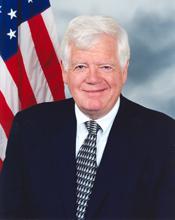
Mr. Speaker, today shame looms over this body. Today you place legislation before us to amend the Constitution to ensure that same sex marriages can never occur in any State in this country. This…
Mr. Speaker, today shame looms over this body. Today you place legislation before us to amend the Constitution to ensure that same sex marriages can never occur in any State in this country.
This legislation is all about politics. You know that you do not have the votes to pass this proposal. You have said so publicly. This proposal already failed in the Senate earlier this year. You know you do not have the time to spend on this proposal: the new fiscal year begins tomorrow and the Republican leadership has only managed to get 1 of 13 required appropriations bills passed. But you're going to make time for one reason: to get material for TV commercials.
You want TV commercials to run against Democrats. You think that they'll go nicely alongside the Republican National Committee's mailings saying Democrats want to ban the Bible and the ads that say that decorated war veterans are un-American traitors if they oppose the policies of the present occupant of the White House.
This vote is about hurting Democrats running for reelection. You want to hurt those of us opposed to amending the Constitution to deny gays and lesbians the rights that the rest of us enjoy, but the real hurt is unleashed on some of our nation's families: the millions of gay couples and lesbian couples, and their children.
People on both sides of this issue have sincere and deep feelings that deserve to be taken seriously. But today's vote mocks their concerns: they think you are out here on the floor to discuss who will be allowed to be a family in America, when you are really out here to work on who will be a Member of Congress after the election.
Today's vote is about Republicans toying with the emotions of a nation that genuinely
cares about commitment, about families, and about the institution of marriage. To the Republicans, our Nation's emotions--our fear and our worries--are to be employed and manipulated for their reelection campaigns.
The House of Representatives's rules are governed by the Jefferson Manual, and the majority has the right under our rules to bring this measure to the floor. But Jefferson's greatest manual was the Declaration of Independence, which reads in part, ``We hold these truths to be self-evident, that all men are created equal, that they are endowed by their Creator with certain unalienable rights, that among these are life, liberty and the pursuit of happiness.'' Exactly how that part of our Nation's creed will play out as our citizens grapple with notions of domestic partnerships, civil unions and same sex marriages is yet to be seen. It will certainly not be decided today.
Nowhere in the Declaration does it say that these rights are only for white, heterosexual men.
Jefferson opened the doors of liberty to all of us, Mr. Speaker. It's a disgrace that this body is using Jefferson rules to attempt to undo Jefferson's and the Western World's most profound achievement-- acknowledge that we are all equal.
Bill Text
2 versions available
        [Congressional Bills 108th Congress]
[From the U.S. Government Publishing Office]
[H. Res. 106 Engrossed in House (EH)]

In the House of Representatives, U.S.,

March 4, 2003.
Whereas the Nation's Lutheran schools deliver high-quality education and
challenge students to reach their potential;
Whereas there are 4,841 Lutheran early childhood centers, elementary schools,
and secondary schools in the United States served by 40,076 teachers;
Whereas the Nation's total Lutheran school student enrollment is 572,877;
Whereas Lutheran schools produce students strongly dedicated to their faith,
values, and morals by providing an environment that encourages honesty,
trust, respect, and responsibility; and
Whereas the week beginning on March 2, 2003, has been established as National
Lutheran Schools Week for the purpose of recognizing the vital
contributions of the Nation's Lutheran early childhood education
centers, elementary schools, and secondary schools: Now, therefore, be
it
Resolved, That the House of Representatives--
(1) supports the goals of National Lutheran Schools Week, which is
celebrated by several synods that have educational institutions, for the
purpose of recognizing their academic achievement; and
(2) congratulates Lutheran schools, students, parents, teachers,
administrators, and congregations across the Nation for their ongoing
contributions to education.
Attest:

Clerk.