Expressing support for a renewed effort to find a peaceful, just, and lasting settlement to the Cyprus problem.

Legislative Activity
Stay on top of the latest movement without scrolling through every action
On motion to suspend the rules and agree to the resolution, as amended Agreed to by the Yeas and Nays: (2/3 required): 422 - 0 (Roll no. 129). (text as passed House: CR 4/09/2003 H3009-3010)
April 10, 2003 • 12:47 PM
View full timeline
Introduced in House
March 27, 2003
Referred to the House Committee on International Relations.
March 27, 2003
Forwarded by Subcommittee to Full Committee by Voice Vote.
April 3, 2003
Mr. Bereuter moved to suspend the rules and agree to the resolution, as amended.
April 9, 2003 • 7:05 PM
Considered under suspension of the rules. (consideration: CR H3009-3014)
April 9, 2003 • 7:05 PM
DEBATE - The House proceeded with forty minutes of debate on H. Res. 165.
April 9, 2003 • 7:05 PM
At the conclusion of debate, the Yeas and Nays were demanded and ordered. Pursuant to the provisions of clause 8, rule XX, the Chair announced that further proceedings on the motion would be postponed.
April 9, 2003 • 7:37 PM
Considered as unfinished business. (consideration: CR H3077)
April 10, 2003 • 12:41 PM
Passed/agreed to in House: On motion to suspend the rules and agree to the resolution, as amended Agreed to by the Yeas and Nays: (2/3 required): 422 - 0 (Roll no. 129).(text as passed House: CR 4/09/2003 H3009-3010)
April 10, 2003 • 12:47 PM
Motion to reconsider laid on the table Agreed to without objection.
April 10, 2003 • 12:47 PM
On motion to suspend the rules and agree to the resolution, as amended Agreed to by the Yeas and Nays: (2/3 required): 422 - 0 (Roll no. 129). (text as passed House: CR 4/09/2003 H3009-3010)
April 10, 2003 • 12:47 PM
Voting History
1 vote recorded • Roll call available
Floor Debate
24 membersWhat members said about H.Res. 165 on the floor
 RC"
RC" FJSDB
FJSDB JCJ
JCJ MB+19
MB+19
Floor Debate
24 membersWhat members said about H.Res. 165 on the floor
Mr. Speaker, I yield myself such time as I may consume. (Mr. SCOTT of Virginia asked and was given permission to revise and extend his remarks, and include extraneous material.) Mr. Speaker, the…
Mr. Speaker, I yield myself such time as I may consume.
(Mr. SCOTT of Virginia asked and was given permission to revise and extend his remarks, and include extraneous material.)
Mr. Speaker, the conference report before us started out as an effort to quickly pass AMBER Alert, a bipartisan noncontroversial provision which had already passed the Senate. I am a cosponsor of the House version of the AMBER Alert so I am anxious to see that it be passed because it has been actually shown to help children. It will codify a program of grants and assistance to States and localities to establish a national communications system so that abducted children can be saved. As the gentleman from Wisconsin pointed out, that system works.
However, the bill now before us is loaded down with an array of crime sound-bite provisions that make the AMBER Alert bill just an afterthought in the legislation. The bill that has gone through the conference process, some provisions have been improved, some have been made worse; but I am unable to support the conference report at this time.
Mr. Speaker, the bill retains egregious provisions that expand the Federal criminal laws into areas traditionally left to State criminal laws. It expands the death penalty, despite the fact that almost 70 percent of death penalties imposed in the United States are found to be erroneous and the fact that over 100 people sentenced to death in the last 10 years have been subsequently shown to be innocent.
250 Members of the House, many supportive of the death penalty, have sponsored the Innocence Protection Act to provide reasonable assurances that fewer innocent people will be put to death. So we should certainly not be adding more death penalties before this act passes.
There are numerous provisions in the bill that create new mandatory minimum sentences, including the baseball-based sound byte, ``two strikes and you're out,'' which mandates life without parole for a second-offense requirement involving a minor. The offenses covered by that provision fortunately have been limited through the conference report process by eliminating some of the minor offenses involving a minor child, but it still includes as a child sex offense some consensual acts between teenagers.
The bill also adds a 5-year mandatory minimum for first offense crimes that are Federal crimes only because a person crosses State lines, such as when an 18-year-old and a 17-year-old conspire to cross State lines from Washington, D.C., to Virginia to have consensual sex. Just to show my colleagues how bizarre that provision is, if children are conspiring to cross from Virginia to Washington, D.C., to have sex, it would not be a child sex offense, and that is because consensual sex outside of marriage is not a crime in Washington, D.C., while it is in Virginia.
The bill also provides for a new wiretap authority in many of these cases including consensual sex and including some of the activities that do not even constitute a crime, and in some of those crime cases, bail may be denied during trial.
Of course, we are supposed to expect that prosecutors will ignore the law to carry mandatory minimum terms and not bring those cases. The reason we have mandatory minimums in the first place is because judges cannot be trusted to determine who should be sentenced to life and who should be sentenced to less, so we give everybody a life sentence. So our prisons are filled with people today who are serving time because they were convicted of just tangential involvement in somebody else's drug trade and end up serving more time than bank robbers.
We should let the sentencing commission and judges determine the appropriate sentences. Mandatory sentences have been criticized because they often require sentences which violate common sense in some cases, and that is why the Chief Justice of the Supreme Court is a frequent critic. Not only do we mandate numerous mandatory minimums without regard to what the individual circumstances of the case might be, but one amendment, the Feeney amendment, reduces the discretion of the sentencing commission and judges to robot-like conformity without regard to how the sentence compares to equally serious offenses, nor does it recognize that circumstances can vary from one case to another.
There was a dramatic effort to fix that amendment, representing a brand-new version at the conference committee meeting, but it was ineffectual, as well as rife with errors. In just a cursory reading of that amendment, which was first seen by some of us at the meeting itself, it became clear that it had several major unintended effects. For example, it removed consideration in sentencing for exemplary military service. Another bizarre exchange occurred in which we were told that the word ``and'' actually meant ``or'' and it did not matter whether you had ``and'' or ``or.'' I do not know when the change took place, but the version before us now has the word ``or'' instead of ``and.'' Nevertheless the amendment still reduces the judge's ability to make the punishment fit the crime.
Most cases are sentenced within the sentencing guidelines range; and according to the American Bar Association, 79 percent of the departures from the guidelines are agreed to by the prosecution. I would like to insert the letter from the ABA into the Record at this point.
American Bar Association,
Chicago, IL, April 9, 2003.
Dear Senator: I write on behalf of the American Bar
Association to express deep concern about the Feeney
amendment, which has been incorporated in the conference
report to accompany S. 151, legislation to ban ``virtual''
child pornography. Although we are pleased to see that some
of the more offensive provisions of this amendment were
modified in conference, we continue to believe that this
provision would fundamentally alter the carefully crafted and
balanced system established by the Sentencing Reform Act,
without any of the customary safeguards of the legislative
process. Indeed, to the extent the amendment would give
prosecutors a unique and absolute power to check the
discretion of sentencing judges, it would have an unsettling
effect on the constitutional balance of power.
The Feeney amendment would legislatively overrule a
decision of the United States Supreme Court, United States v.
Koon, 518 U.S. 81 (1996), and amend central provisions of the
Sentencing Reform Act of 1984. It would void numerous
sections of the Federal Sentencing Guidelines, and, for the
first time, amend the Guidelines by direct legislation. It
would preclude the exercise of judicial discretion in certain
cases, and make judicial departures in all cases subject to
de novo appellate review. It would impose very troublesome
reporting and oversight requirements on judges that will
certainly have a chilling effect on judicial independence,
and discourage the imposition of just sentences in many
cases.
Should Congress enact the Feeney amendment, all these
dramatic changes would be accomplished through a House floor
amendment to an unrelated bill, adopted without committee
hearings by either the House or the Senate, or the benefit of
consultation with the U.S. Sentencing Commission, the federal
judiciary, or the organized Bar.
The Feeney amendment is evidently a response to the
perception that judges have engaged in widespread abuses of
their departure power following the Supreme Court's Koon
decision in 1996. Based on the Sentencing Commission's
statistics, I believe there are reasons to doubt the accuracy
of this portrayal.
Although sentences below the guideline range are now more
common that in the early days of guidelines sentencing, the
primary responsibility for this result lies with the
Department of Justice. In FY 2001, of 19,416 downward
departures awarded federal defendants, approximately 15,318
came on government motion. Put another way, in 2001, 79
percent of downward departures in the United States were
requested by the Government.
Similarly, although the rate of non-substantial assistance
departures has increased since the Koon decision, the vast
majority of that increase is attributable to the fact that
the number of departures in the five `'fast-track'' border
districts more than tripled, from 1871 to 1996, to 5928 in
2001. In short, the increased rate of non-substantial
assistance departures since Koon is due primarily to requests
for such departures by the Department of Justice.
The foregoing figures do not, of course, present the whole
picture. The percentage of judicially initiated departures
has increased somewhat since Koon. It may well be that some
judicially initiated departures are inappropriate and that
some action to curb inappropriate judicial departures should
be considered. However, it would seem advisable to determine
the nature and extent of any problem with judicial departure
power before legislating a virtual end to that power. As
Senator Hatch wisely observed some years ago:
``[C]ongressional policy makers must take advantage of the
most current and complete information available when making
legislative decisions. Whenever possible, Congress should
call upon those with relevant empirical research, encouraging
those most knowledgeable of and most
involved with the guidelines--judges, prosecutors,
practitioners and the Commission--to express their views.''
I am informed that the U.S. Sentencing Commission is even
now in the midst of a study of judicial departures in white-
collar crime. Would it not be prudent to direct the
Commission to extend that study to departures generally and
report promptly to Congress on its results? (I understand
that the General Accounting Office has also undertaken a
study of departures, at the request of the House Judiciary
Committee.) Such a congressional directive could also
instruct the Commission to develop proposals to address any
deficiencies revealed by the study. Once armed with full
information, Congress could determine the true nature and
extent of any problem, and could, if necessary, craft an
appropriate, measured legislative response to any
deficiencies in departure practice left unaddressed by the
Commission.
The American Bar Association is confident that a period for
study of current departure practice would not only yield a
more accurate picture of any problems that may exist, but
could not fail to produce a better solution than the Feeney
Amendment.
The Sentencing Reform Act of 1984 created a system of
distributed authority that was designed to ensure fair,
predictable sentences for defendants convicted in
federal court. As contemplated by the Act itself, the
Guidelines drafted by the Sentencing Commission and
approved by Congress channel judicial sentencing
discretion, but they do not eliminate it. This system
reflects two truths about the process of making sentencing
rules. First, no set of rules can anticipate the
circumstances of every individual defendant. Accordingly,
if justice is to be done, judges must retain the
flexibility to determine that some defendants do not fit
the mold envisioned by the Commission. Second, the
departure power is a means of providing feedback from
judges to the Sentencing Commission and Congress. By
studying departure patterns, the Commission can identify
those guideline rules that judges are consistently finding
to be inappropriate for certain classes of defendants.
In the Sentencing Reform Act, Congress conferred upon
Federal judges the power to depart whenever ``there exists an
aggravating or mitigating circumstance of a kind, or to a
degree, not adequately taken into consideration by the
Sentencing Commission in formulating the guidelines'' in the
enabling legislation that created the U.S. Sentencing
Commission, 18 U.S.C. Sec. 3553(b). The Feeney Amendment is
inconsistent with the original judgment of Congress about the
necessity and value of a guided departure power and the
important role of judges in Federal sentencing. If passed,
the Amendment would severely compromise critical
institutional features of the Federal sentencing system.
By curtailing and burdening judicial departure authority,
the Feeney Amendment strikes a blow at judicial independence
and sends an unmistakable message that Congress does not
trust the judgment of the judges it has confirmed to office.
By overriding the Sentencing Commission and legislatively
rewriting the Guidelines, the Feeney Amendment threatens the
legitimacy of the Commission. The Commission was created by
Congress to ensure that important decisions about Federal
sentencing were made intelligently, dispassionately, and, so
far as possible, uninfluenced by transient political
considerations. Congress should accord the Commission and its
processes some deference unless and until the Commission has
demonstrably failed in its duties.
By bypassing the deliberative processes of Congress itself,
the Feeney Amendment reflects a profoundly troubling
disregard of the legislature's role in establishing Federal
sentencing policy. If passed, the Feeney Amendment would
alter core features of Federal criminal sentencing and
appellate practice. Yet the Amendment has never been the
subject of a hearing in either the House or Senate, and
neither house has had the benefit of meaningful consultation
with any of the institutions most affected by the Amendment.
The American Bar Association is firmly committed to the
maintenance of a just and effective Federal sentencing
system. I am confident that you and your colleagues will give
the Feeney Amendment the careful scrutiny it requires. I am
hopeful that such scrutiny will lead you to oppose the Feeney
Amendment and to support a careful study of judicial
departures by the Sentencing Commission. . . .
The bill before us defiantly enacts laws prohibiting such acts as what is called ``virtual child pornography.'' The United States Supreme Court gave us a bright-line test to determine whether or not computer- generated images can constitute illegal child pornography. The Court said that if the image is not otherwise obscene it must involve real children in the production to be illegal. Pornography which was produced without real children under the Ashcroft case is not illegal.
In a direct violation of that case, this bill prohibits such images, whether or not it was produced with real children, unless the defendant can prove his innocence.
The Court, of course, dealt with that issue and said that we could not require a defendant in an American judicial court to prove his innocence, so that provision is clearly unconstitutional.
Mr. Speaker, we have a number of problems with this case, including the mandatory minimums. I just want to point out that the Chief Justice of the United States Supreme Court, United States Judicial Conference, the Sentencing Commission, the American Bar Association, the Federal Bar Association, the Leadership Conference on Civil Rights, the Washington Legal Foundation, the CATO Institute, and a host of other sentencing and judicial system experts have pleaded with Congress not to impair the ability of courts to impose just and responsible sentences.
I would ask also that a letter from the NAACP also be inserted into the Record at this point.
National Association for the
Advancement of Colored People,
Washington, DC, April 10, 2003.
Re NAACP opposition to S. 151, the ``Child Abduction
Prevention Act of 2003.''
Members,
House of Representatives,
Washington, DC.
Dear Representative: On behalf of the National Association
for the Advancement of Colored People (NAACP), the nation's
oldest, largest and most widely-recognized grass roots civil
rights organization, I am writing to urge you to oppose the
conference report to S. 151, the ``Child Abduction Prevention
Act of 2003'' in its current form.
While the issue of child abduction is a serious, heart-
wrenching and too often tragic issue that deserves to be
dealt with aggressively at a federal level, Title IV of the
final bill would radically limit federal judicial discretion
to impose just sentences for almost all federal offenses; not
just those relating to child abduction. Because this
provision overrules a key Supreme Court decision and
constitutes a dramatic encroachment on the judiciary, it is
opposed not only by civil rights organizations across the
board, but also by Supreme Court Chief Justice Rehnquist, the
Federal Judicial Conference, the Federal Sentencing
Commission, the American Bar Association, the Federal Bar
Association as well as countless law professors, prosecutors
and public defenders.
The potential impact of this provision on the African
American community and on ethnic minority American
communities throughout the nation is almost incomprehensible.
Racial bias in our nation's criminal justice system is
widespread and well documented. For example, according to
reports from the US Department of Justice and the US
Department of Health and Human Services, people of color
commit drug offenses at a rate proportional to our percentage
of the US population, roughly 25% for African Americans and
Hispanic Americans combined. Yet almost 75% of the people
charged in this nation with a drug offense are either
Hispanic or African American.
The impact this racial bias has on our communities is
devastating. According to the US Department of Justice report
issued just last week, an alarming 12% of all African
American men between the ages of 20 and 34 are in jail or in
prison. One out of every three black men born in the United
States will spend time behind bars in their lifetime.
The federal prison system now holds over 160,000 inmates,
more than any single state prison system. Furthermore, the
federal prison population has more than quadrupled in the
last 20 years for mostly non-violent offenses even while the
rate of incarceration has actually slowed in many states.
Under Title IV, the growth rate is predicted to be
staggering.
I hope that you will consider the far-reaching impact this
legislation will have on individual lives as well as whole
communities and even our nation. I urge you again to oppose
the final conference report unless Title IV is eliminated or
at least amended to address only child abduction cases.
Thank you in advance for your attention to this matter. If
you have any questions, I hope that you will feel free to
contact me at (202) 638-2269.
Sincerely,
Hilary O. Shelton,
Director.
Mr. Speaker, for those reasons we should vote against this report and send the measure back to committee for serious consideration. Many of the problems can be fixed if we would seriously consider the bill in a regular deliberative legislative process.
So I urge my colleagues not to vote on the conference report, and I reserve the balance of my time.
Mr. Speaker, I yield 5 minutes to the gentlewoman from Texas (Ms. Jackson-Lee) a member of the Committee on the Judiciary.
(Ms. JACKSON-LEE of Texas asked and was given permission to revise and extend her remarks).
Mr. Speaker, I yield myself such time as I may consume to read just one paragraph of the letter the gentleman from Wisconsin just referred to.
``We are troubled that the sentence for the crime was reduced to 30 months upon the court's consideration of mitigating facts. Such a reduction for mitigating factors may be appropriate in other circumstances.''
In other words, Mr. Speaker, we did not ask for a change in the law, we just asked for a review consistent with the law. This bill changes the law, changes the standard for review. What the Congressional Black Caucus asked for was just a review under the current law.
Mr. Speaker, I submit for the Record the letter just referred to by the gentleman from Wisconsin from the Congressional Black Caucus.
Congress of the United States,
House of Representatives,
Washington, DC, August 6, 1993.
Hon. Janet Reno,
Attorney General, Department of Justice, Washington, DC.
Dear Attorney General Reno: As members of the Congressional
Black Caucus, we are writing to you because of our concern
about the sentencing of Officer Laurence Powell and Sergeant
Stacey Koon by Judge John Davies in the Rodney King civil
rights case.
We are troubled that the sentence for the crime was reduced
to 30 months upon the court's consideration of mitigating
facts. Such a reduction for mitigating factors may be
appropriate in other circumstances. However, we feel that the
defendants' special status as police officers, with special
duties owed to the public, should have militated against such
a significant reduction.
As you well know, the maximum possible penalty was ten
years and fines of up to $250,000. Your federal prosecutors
were asking for seven to nine years. Our federal sentencing
guidelines recommended minimum sentences in a range of four
to seven years in prison.
Instead, Judge John Davies made broad use of subjective
factors. He stated that he read only letters addressed to him
from the friends and families of Officer Powell and Sergeant
Koon. He argued that much of the violence visited on Rodney
King was justified by King's own actions. However, these
officers were convicted on charges of violating Rodney King's
civil rights. We believe these mitigating factors did not
justify so large a reduction given the defendants' special
responsibilities as police officers.
In addition, Judge Davies did not afford proper weight to
the racist comments made over police radio by those convicted
on the night of the beating in discounting race as a
motivation for the beating. He similarly failed to take into
account the remarkable lack of remorse shown by Officer
Powell and Sergeant Koon since their conviction.
People of good will all over this country and of all races
were heartened when Officer Powell and Sergeant Koon were
convicted by a jury of their peers, a verdict made possible
by the Justice Department's resolve to file civil rights
charges and by the phenomenal performance of federal
prosecutors. With these severely reduced sentences, however,
we are sending a mixed message. Are police officers going to
be held responsible for excessive use of force or not?
We think what has been lost, in all this, is that police
officers have an enhanced responsibility to uphold the law.
Notwithstanding Judge Davies' authority to modify the
sentencing guidelines, most experts agreed that the minimum
four to seven years sentence should have been followed in
this case.
We realize that the trial judge is afforded sufficient
latitude in sentencing, but we urge the Department of Justice
to appeal these sentences. We need to reexamine these
sentences so that justice can finally be done in this
difficult, painful case. Only then can we begin to put this
behind us.
Sincerely,
Maxine Waters; Sanford Bishop; Eddie Bernice Johnson;
Floyd H. Flake; Albert R. Wynn; Carrie P. Meek; Eva M.
Clayton; Major R. Owens; Walter Tucker; William Clay;
Charles B. Rangel; William J. Jefferson.
James E. Clyburn; Earl Hilliard; Bennie M. Thompson; Cleo
Fields; Cynthia McKinney; John Lewis; Corrine Brown;
Donald M. Payne; Alcee Hastings; Kweisi Mfume; Louis
Stokes; Melvin L. Watt; Ronald V. Dellums.
Mr. Speaker, could you advise how much time remains on both sides?
Mr. Speaker, I reserve the balance of my time.
Mr. Speaker, I yield myself such time as I may consume.
Mr. Speaker, I would like to point out that the Congressional Black Caucus did not complain about the Supreme Court reinstating the law as it was.
Mr. Speaker, I yield 3 minutes to the gentlewoman from California (Ms. Waters), a member of the Committee on the Judiciary.
Mr. Speaker, I yield 3 minutes to the gentleman from North Dakota (Mr. Pomeroy).
Mr. Speaker, I yield myself such time as I may consume.
Mr. Speaker, I am frequently asked what we can do to repeal some of the mandatory minimum sentences which frequently impose bizarre, Draconian, and unreasonable sentences. Sometimes these requests come from relatives or friends of people, women whose boyfriends deal drugs, and the young lady does not deal drugs, does not use drugs, but she is around the boyfriend enough so that there is no question, she probably broke the law, took a message, drove a car to a meeting, so prosecutors can show she was involved, but not involved to the point where she ought to serve 20-some years, more than bank robbers serve.
When they ask what they can do about these kinds of Draconian sentences, I tell them the first thing they have to do to repeal the existing mandatory minimums is to stop passing new ones. Today we are going to pass a new set of mandatory minimum sentence laws. If anybody asks in the future where these mandatory minimums come from, Members can point to bills like the one today.
Finally, Mr. Speaker, a lot has been said about the Ashcroft decision. The Ashcroft decision was clear. You cannot prohibit child pornography, illegal child pornography unless real children were involved. The provisions in this bill allow prosecution whether or not real children are involved. The Court goes to great lengths to say whatever problems there are in prosecution, it is a problem for the defense. And if nobody knows whether they are computer-generated or involving real children, in that case they cannot successfully prosecute. They require real children to be involved in the production; and without real children, it cannot be illegal. This statute plainly on its face violates that Supreme Court decision and is unconstitutional.
Mr. Speaker, I hope we can send this back to committee, improve some of the provisions, and pass the AMBER Alert bill like we should. But in its present condition, I hope we will reject the conference report with a ``no'' vote.
Mr. Speaker, I yield back the balance of my time.
Mr. Speaker, pursuant to House Resolution 188, I call up the conference report on the Senate bill (S. 151) to amend title 18, United States Code, with respect to the sexual exploitation of children,…
Mr. Speaker, pursuant to House Resolution 188, I call up the conference report on the Senate bill (S. 151) to amend title 18, United States Code, with respect to the sexual exploitation of children, and ask for its immediate consideration.
Mr. Speaker, I ask unanimous consent that all Members may have 5 legislative days within which to revise and extend their remarks and include extraneous material on the conference report for S. 151.
Mr. Speaker, I yield myself such time as I may consume.
Mr. Speaker, this conference report contains provisions of H.R. 1104, the Child Abduction Protection Act, which overwhelmingly passed the House 410 to 14 less than 2 weeks ago, and the provisions of S. 151, the PROTECT Act of 2003, which passed the other body 84 to nothing on February 24.
Over the last several days, during the course of lengthy staff meetings and an open, working meeting of conferees, we have worked diligently to resolve differences between the House and the Senate. I believe we were successful in crafting a bipartisan conference report that recognizes a comprehensive effort is needed to better protect children. In order to accomplish this, the legislation includes provisions to help prevent crimes against children, to assist in the safe recovery of abducted children, to enhance the investigations and prosecutions of these crimes, and to ensure that the offenders are held accountable and unable to repeat these crimes.
An abducted child is a parent's worst nightmare. We must assure that law enforcement in our communities have every possible tool to prevent abductions in the first place, and when an abduction occurs, to recover a missing child quickly and safely, and to ensure that the criminal receives sure and swift justice, including an appropriate sentence in prison.
The overarching goal of this comprehensive package is to stop those who prey on children before they can harm children. This is accomplished by destroying the illicit markets that encourage exploitation and abduction of children, strengthening penalties to reflect the seriousness of these crimes, halting repeat offenders, and enhancing law enforcement agencies to effectively prevent, investigate and prosecute crimes against children.
For instance, this legislation responds to the April 16, 2002, Supreme Court decision in Ashcroft v. The Free Speech Coalition that struck down a 1996 law written to combat computer-generated pornography. As the president for the National Center for Missing and Exploited Children stated, ``The Court's decision will result in the proliferation of child pornography in America unlike anything we have seen in more than 20 years.''
Congress has an obligation to prevent the resurgence of the child pornography market. This conference report will help do so by amending the definition of computer-generated child pornography so that it will withstand a constitutional challenge.
Additionally, the conference report provides strong support to recover abducted children quickly and safely through a prompt and effective public alert system. Such a system can be the difference between the life and death for that child.
To accomplish this, the conference report codifies the AMBER Alert program currently in place in the Departments of Justice and Transportation, and authorizes increased funding to help States deploy a child abduction communication warning network. While our goal must always be to prevent the abduction of the child before it occurs, our communities should also have an effective and responsive AMBER Alert system to assist in the quick and safe return of the kidnapped child.
I am happy to report that this compromise legislation doubles the authorized funding for the National Center for Missing and Exploited Children, the Nation's resource center for child protection, to $20 million a year through 2005. The center assists in the recovery of missing children and raises public awareness of ways to protect children from abduction, molestation, and sexual exploitation.
Another vital component in the effort to protect children are strong laws that hold the criminal accountable. Those who abduct children are often serial offenders who have already been convicted of similar offenses. Sex offenders and child molesters are four times more likely than any other violent criminal to repeat their offenses against children. This number demands attention, especially in light of the fact that a single child molester on average shatters the lives of over 100 children.
Under this legislation, sexual predators will no longer slip through the cracks of the system and harm other children. To this end, the legislation provides a 20-year mandatory minimum sentence of imprisonment for non-familial abductions of a child under the age of 18, lifetime supervision for sex offenders, and mandatory life imprisonment for second-time offenders. The compromise legislation restricts the opportunity for pretrial release for crimes of child abduction and sex offenses and extends the statutes of limitation.
Finally, this conference report contains provisions to address the long-standing and growing problem of downward departures from the Federal sentencing guidelines. Outrageously, between 1996 and 2001, U.S. courts have lowered the sentences of one out of every five of those convicted of sexually abusing a child or sexually exploiting a child through child pornography.
Strong sentencing is an essential component in any effort to fight crimes against children. All of our efforts in this bill and in previous anticrime measures are fruitless if, at the end of the day, judges are permitted to give offenders a slap on the wrist, which is exactly what is happening today with increased frequency.
I am proud of the efforts of the conferees to quickly send this legislation to the President. It was a fair and open process, and the exhaustive negotiations yielded extensive changes to the base text of the legislation that passed the House. Most of these changes were made to accommodate the concerns of my colleagues in the minority party, both in the Senate and in the House.
I am extremely proud of the extraordinary effort my now-weary staff expended to help craft this conference report and to get to it the floor today. I would like to extend special thanks to Sean McLaughlin, Will Moschella, Beth Sokul, Jay Apperson and Katy Crooks of the Committee on the Judiciary staff. Their dedication is greatly appreciated.
The bottom line is that this comprehensive legislative package will crack down on child abductors, build and expand on the work of the National Center for Missing and Exploited Children, give Federal authorities additional tools to prevent and solve these horrific crimes, and provide meaningful sentencing reform for all crimes. I urge my colleagues to protect America's children from the worst predators in our society by supporting this bipartisan child protection legislation.
Mr. Speaker, I reserve the balance of my time.
Mr. Speaker, I yield 4 minutes to my colleague, the gentleman from Wisconsin (Mr. Green).
Mr. Speaker, I yield myself such time as I may consume.
Mr. Speaker, the gentlewoman from Texas asked why we have to have restrictions on downward departures, and I will give her one example.
In the case of the United States v. Robert Parish, a defendant who was convicted of possession of child pornography. He was in possession of 1,300 images of child pornography, some of which depicted graphic violent sexual exploitation of very young children. He got a downward departure.
The majority of those 1,300 child pornography images which he possessed depicted adolescent girls, including one in which a very young girl, wearing a dog collar around her neck, is having sexual intercourse with an adult male. The defendant was also in the midst of communicating on line with a 15-year-old female high school student when, thankfully, he was arrested.
Now, what happened when he was convicted? The sentencing guidelines have a range of 33 to 41 months imprisonment for a conviction of those crimes. The trial court gave him 8 months. The trial court found that the defendant's conduct was outside the typical heartland of these types of cases, and that the defendant was susceptible to abuse in prison. The trial court felt that the combination of factors, including the defendant's ``stature,'' ``demeanor,'' ``naivete,'' and the nature of the offense justified the departure from the minimum of 33 months in the guidelines to just 8 months.
This is why we have the restriction on downward departures for sex crimes in this bill.
Now, I am a bit puzzled that the gentlewoman from Texas (Ms. Jackson- Lee) is complaining about the fact that we provide for a de novo review of downward departures for all crimes, not just crimes against children, but all crimes. When this legislation was originally debated on March 27, she voted in favor of it, and I introduced in the Congressional Record a letter signed by a majority of the members of the Congressional Black Caucus who were in office at the time asking the Clinton Justice Department, headed by Attorney General Janet Reno, to seek a de novo review of the downward departure that the trial judge gave to Stacey Koon, who is the police officer who was convicted of violating the civil rights of Rodney King.
Fortunately, that passed and that is included in this legislation. What we are doing in this legislation on de novo review is exactly what the next speaker, the gentlewoman from California (Ms. Waters), and those who cosigned this letter, asked the Clinton Justice Department to do.
Now, unfortunately, the Supreme Court of the United States, in the case of Koon v. United States, decided that there could only be a review on appeal of a departure from the sentencing guidelines based upon abuse of discretion by the trial judge. We overturn that part of the Koon v. U.S. ruling and allow for de novo review on appeal. Sometimes, maybe, if you ask for something too much, you might get it.
Mr. Speaker, I reserve the balance of my time.
Mr. Speaker, I yield myself such time as I may consume.
Mr. Speaker, I have the letter that the members of the Congressional Black Caucus sent to Attorney General Janet Reno on August 6, and while they did not ask for a change in the law, what they did ask was for the Justice Department to appeal the sentence.
Now, what happened in the Stacey Koon case is that the Court of Appeals agreed with the Justice Department and established de novo review. Mr. Koon's lawyer appealed to the Supreme Court, and the Supreme Court reversed the Court of Appeals and established the abuse of discretion standard.
Now, what this legislation does is to establish the de novo review standard for all crimes should there be a review of the sentence on appeal.
Mr. Speaker, I submit for the Record the letter dated August 6, 1993 from members of the Congressional Black Caucus.
Congress of the United States,
House of Representatives,
Washington, DC, August 6, 1993.
Hon. Janet Reno,
Attorney General, Department of Justice, Washington, DC.
Dear Attorney General Reno: As members of the Congressional
Black Caucus, we are writing to you because of our concern
about the sentencing of Officer Laurence Powell and Sergeant
Stacey Koon by Judge John Davies in the Rodney King civil
rights case.
We are troubled that the sentence for the crime was reduced
to 30 months upon the court's consideration of mitigating
facts. Such a reduction for mitigating factors may be
appropriate in other circumstances. However, we feel that the
defendants' special status as police officers, with special
duties owed to the public, should have militated against such
a significant reduction.
As you well know, the maximum possible penalty was ten
years and fines of up to $250,000. Your federal prosecutors
were asking for seven to nine years. Our federal sentencing
guidelines recommended minimum sentences in a range of four
to seven years in prison.
Instead, Judge John Davies made broad use of subjective
factors. He stated that he read only letters addressed to him
from the friends and families of Officer Powell and Sergeant
Koon. He argued that much of the violence visited on Rodney
King was justified by King's own actions. However, these
officers were convicted on charges of violating Rodney King's
civil rights. We believe these mitigating factors did not
justify so large a reduction given the defendants' special
responsibilities as police officers.
In addition, Judge Davies did not afford proper weight to
the racist comments made over police radio by those convicted
on the night of the beating in discounting race as a
motivation for the beating. He similarly failed to take into
account the remarkable lack of remorse shown by Officer
Powell and Sergeant Koon since their conviction.
People of good will all over this country and of all races
were heartened when Officer Powell and Sergeant Koon were
convicted by a jury of their peers, a verdict made possible
by the Justice Department's resolve to file civil rights
charges and by the phenomenal performance of federal
prosecutors. With these severely reduced sentences, however,
we are sending a mixed message. Are police officers going to
be held responsible for excessive use of force or not?
We think what has been lost, in all this, is that police
officers have an enhanced responsibility to uphold the law.
Notwithstanding Judge Davies' authority to modify the
sentencing guidelines, most experts agreed that the minimum
four to seven years sentence should have been followed in
this case.
We realize that the trial judge is afforded sufficient
latitude in sentencing, but we urge the Department of Justice
to appeal these sentences. We need to reexamine these
sentences so that justice can finally be done in this
difficult, painful case. Only then can we begin to put this
behind us.
Sincerely,
Maxine Waters; Sanford Bishop; Eddie Bernice Johnson;
Floyd H. Flake; Albert R. Wynn; Carrie P. Meek; Eva M.
Clayton; Major R. Owens; Walter Tucker; William Clay;
Charles B. Rangel; William J. Jefferson.
James E. Clyburn; Earl Hilliard; Bennie M. Thompson; Cleo
Fields; Cynthia McKinney; John Lewis; Corrine Brown;
Donald M. Payne; Alcee Hastings; Kweisi Mfume; Louis
Stokes; Melvin L. Watt; Ronald V. Dellums.
Mr. Speaker, I reserve the balance of my time.
Mr. Speaker, I yield 3 minutes to the gentleman from Indiana (Mr. Pence).
Mr. Speaker, I yield myself such time as I may consume.
Mr. Speaker, this vote is going to be the end of a long period where the provisions of this legislation were carefully considered in the Committee on the Judiciary in the House and in the other body. The compromise that was reached by the conferees is a good compromise. It will make a difference to protect children. It will give parents of abducted children the comfort of knowing that those who have harmed their children are going to be dealt with seriously, as well as setting up the machinery to alert the public and the news media as well as the police to try to find an abducted child and return that child home to his or her parents.
This is legislation that deserves all of our support. I ask for an ``aye'' vote on this conference report. I hope that the other body will act quickly and that the President of the United States can sign this legislation very promptly because our children will be better protected as a result.
Mr. Speaker, I object to the vote on the ground that a quorum is not present and make the point of order that a quorum is not present.
Mr. Speaker, I move to suspend the rules and agree to the resolution (H. Res. 165) expressing support for a renewed effort to find a peaceful, just, and lasting settlement to the Cyprus problem, as…
Mr. Speaker, I move to suspend the rules and agree to the resolution (H. Res. 165) expressing support for a renewed effort to find a peaceful, just, and lasting settlement to the Cyprus problem, as amended.
Mr. Speaker, I ask unanimous consent that all Members may have 5 legislative days within which to revise and extend their remarks and include extraneous material on the resolution under consideration.
Mr. Speaker, I yield myself such time as I may consume.
(Mr. BEREUTER asked and was given permission to revise and extend his remarks.)
Mr. Speaker, I rise in support of House Resolution 165, a resolution offered by this Member regarding the political situation in Cyprus. The Subcommittee on Europe adopted this measure unanimously last week, because an historic moment in the history of Cyprus was about to be lost if the momentum which had been building over the past 2 years to bring about a resolution of the Cyprus problem was allowed to slip away.
I want to express my appreciation to the ranking member on the Subcommittee on Europe, the gentleman from Florida (Mr. Wexler), for his support on this issue and his willingness to see this resolution move forward. I believe the resolution represents an important statement by the House on the need for a solution for the Cyprus problem.
I also want to express my appreciation to the chairman of the committee, the gentleman from Illinois (Mr. Hyde), and the ranking Democrat, the gentleman from California (Mr. Lantos), for their help in moving this legislation to the floor; and to the gentleman from California (Mr. Sherman) for managing the legislation tonight.
I also want to particularly acknowledge the work of our distinguished colleague, the gentleman from Florida (Mr. Bilirakis), who has long been a leader in keeping this House informed of the situation in Cyprus and the status of the peace process.
It is interesting and very salutary, I think, that we have as supporters of this resolution, indeed, as cosponsors of the resolution, some of the Members that are strongest in support of Greece and are strongest in support of Turkey.
House Resolution 165 commends the United Nations Secretary General, Kofi Annan, for his tireless efforts to seek a resolution to the Cyprus problem, a problem which has been on the agenda of the Security Council for almost 40 years. In fact, it is the oldest item continuously on the Secretary General's peacemaking agenda.
In addition, this resolution expresses the disappointment of the House that the recent United Nations plan for a comprehensive settlement of the Cyprus problem could not be agreed to by the two Cypriot sides, despite the effort of many and, in particular, the United Nations Secretary General.
Referenda put before both Greek Cypriots and Turkish Cypriots would be approved to create a confederation to bring peace and unity to Cyprus, if only they were given that opportunity.
In a report that the Security Council issued on Saturday on the Secretary General's effort to achieve a comprehensive settlement of the Cyprus problem, U.N. Secretary General Kofi Annan made it clear that ``a unique set of circumstances, including the membership of Cyprus in the European Union, offering a framework of incentives to reach a settlement, as well as deadlines within which to reach it'' was emerging and that the potential existed to make a true impact on peace.
Finally, the resolution urges both the Greek and Turkish Cypriots to quickly resume negotiations to resolve this problem. It expresses the view of the House of Representatives that we want and appreciate continued efforts by Greece and Turkey to maximize their influence to prevent this opportunity to bring peace and economic prosperity to the entire Cypriot community from being lost.
The resolution urges the United Nations and the Bush administration to redouble their efforts to encourage the talks to begin again in order to seek a solution.
Mr. Speaker, since 1974, the island of Cyprus has been politically divided in what has been often a bitter and violent dispute. Consequently and regrettably, the people of Cyprus have been culturally and socially isolated from each other by a heavily fortified green line in what today represents something akin to the Berlin Wall of the last century.
This Member has personally walked that green line through Nicosia on two occasions. The commander of one of the four national peacekeeping forces, the British commander, told this Member that in his capacity, he has men in his unit whose fathers have served in that unit at that location.
For the past 29 years, various attempts and numerous proposals have been put forward to bring Greek and Turkish Cypriots together to resolve what has become known as ``the Cyprus problem.''
None of these attempts to bring about reconciliation has been so close to achieving success than the effort which is before us now has had as an opportunity during this past 5 months. Last November, with the entry of a divided Cyprus into the European Union
looming, U.N. Secretary General Kofi Annan proposed a comprehensive framework for a just and lasting settlement of the Cyprus problem. His plan was hailed as a positive attempt to resolve the problem.
In presenting his framework, the Secretary General asked Greek and Turkish Cypriot leaders to accept the plan by February 28. When neither side resolved their differences with the proposal by the end of the February, the Secretary General asked the two leaders to meet him in The Hague on March 10 and to sign an agreement that would put the framework to simultaneous referenda on the island.
On March 10 both the Greek and Turkish Cypriot leaders did meet with Annan in The Hague. However, we learned with great disappointment that the Secretary General's framework was rejected when the Turkish Cypriot leader announced he could not accept the settlement plan, and would not agree to put the referenda to the Turkish Cypriots.
This decision was disappointing because informal polls indicated that a majority of Turkish Cypriots were prepared to support the plan and bring the longstanding division and suffering of the island to an end.
Despite our uncertainty over the future of the island, last week, as our subcommittee prepared to adopt this resolution, we were informed that several measures were being initiated by the various parties which seemed to us to be very positive.
The first was the announcement by Turkish Prime Minister Erdogan that he would bring a new effort to unite the Greek and Turkish Cypriot areas of Cyprus forward.
The second was the announcement that Turkish Foreign Minister Gul would travel to Northern Cypress to discuss the peace process with Turkish Cypriot leaders and then would travel to Belgrade to meet with Greek leaders to discuss how to resume the peace negotiations. Both of these announcements were very welcome, and this Member commends the Turkish leadership for their willingness to address the issue.
A third announcement was that the Turkish Cypriot leader, Denktash, had sent a letter to the Cypriot President, Mr. Papadopoulos, suggesting several measures which the Turkish leader was offering as a way to begin rebuilding confidence between the two sides in advance of resuming the negotiation.
Mr. Speaker, this Member felt that the gestures may have been positive because one of the biggest obstacles which had plagued the peace process for all these years has been the lack of confidence and trust on both sides. Unfortunately and very quickly, we saw just how much distrust actually does exist today on that island because some people thought there was a hidden agenda, and maybe there was, but I hope that was not the case.
Whatever the real motivation of the proposal, a little bit of trust and confidence is something both sides could use right now. This Member wonders what is wrong with lifting current restrictions on crossborder trade, tourism, education and culture exchanges, even if for only 1 day a week just as a way for both sides to see if they really are prepared to live as a united island. This Member also wonders why some of the measures could not be agreed to outside of a more comprehensive agreement based upon the U.N. peace plan.
Mr. Speaker, in just 12 days the Government of Cypress will sign the accession papers paving the way for the southern part of the island to enter the European Union. The economic benefits of this membership to the southern half of the island will be significant. On the other hand, it would be a terribly damaging blow to the potential economic prospects for the Turkish Cypriots. The current differences between the income levels of the two communities would continue to widen dramatically.
Now is the time for both sides to put aside their past differences and to make a serious commitment to resolve this problem of a divided Cypress. We are never going to have a better opportunity.
As Secretary General Kofi Annan has stated, his settlement proposal is still on the table; and I believe resumption of the negotiations should continue to use the Secretary General's plan as a basis for an agreement.
Mr. Speaker, the people of Cypress have endured 29 years of separation. They are ready, it is clear, to see and support referenda. Therefore, it is a sincere hope of this Member that the leaders of both sides will return to the negotiating table and resolve this important problem so that next year, in 2004, we will be celebrating the first anniversary of a united Cypress and not the 30th anniversary of a divided one.
Mr. Speaker, this Member urges Members of the House to speak with one strong voice in support of a resolution on the Cypress problem and thus urges support for the resolution.
Mr. Speaker, I reserve the balance of my time.
Mr. Speaker, I yield such time as he may consume to the distinguished gentleman from Florida (Mr. Bilirakis), who I would say is among the House's most outstanding experts on Cypress.
Mr. Speaker, I yield myself the remaining amount of time.
Mr. Speaker, I thank the gentleman for his concluding comments, and all of these speakers this evening have had a very positive outlook on the opportunity, a rare opportunity, for us to really bring peace and unity to the island of Cyprus.
This is an opportunity we cannot avoid trying our best on. This is an opportunity with a maximum amount of leverage. I urge, therefore, my colleagues to support the resolution.
Mr. Speaker, I yield back the balance of my time.
Mr. Speaker, I had hoped that we would have been able to come together to reach consensus on how best to deal with the difficult problem of child abduction in this country and to pass an AMBER alert…
Mr. Speaker, I had hoped that we would have been able to come together to reach consensus on how best to deal with the difficult problem of child abduction in this country and to pass an AMBER alert bill. The recent rash of child abductions clearly indicate that additional steps need to be taken to protect our children from sexual predators.
Unfortunately, the conference was delayed and hung up by provisions which have nothing to do with Amber alert and which should have been dealt with separately. First and foremost, is the highly controversial amendment offered by Rep. Tom Feeney, which would totally hamstring any remaining discretion federal judges have in making sentencing determinations. This provision was added on the floor two weeks ago without proper hearings or committee debate and clearly is not ready for prime time.
It is opposed by Chief Justice Rehnquist, by the Federal Judicial Conference, by the American Bar Association, by the Federal Bar Association, by the Leadership Conference on Civil Rights, by the NAACP and by countless law professors, prosecutors, and public defenders.
In a nutshell, the Freeney Amendment, as introduced, would make it next to impossible
for federal judges to reduce sentences below the guidelines, even where mitigating factors such a military service, community involvement and youth are present. Guess who is going to be harmed disproportionally by this harsh approach to sentencing--minorities in general and African Americans in particular.
Consider the fact that a full 12 percent of African American men aged 20-34 are in prison--more than 8 times the comparable rate of white males in the same age group. According to the Bureau of Justice Statistics, nearly one out of every three black men will spend time in prison during their lifetime.
So when you toughten sentencing, as the Feeney amendment would do, you should know that you are busting up African American families and decimating our inner cities. You are also creating massive problems concerning reentry when these individuals leave the prison system in another 10 or 15 years. The very least we should do is to leave these critical life decisions in the reasonable discretion of the Federal judge who is closest to the situation. To use the popular AMBER alert measure to alter this long standing principle, and without proper hearings or consideration is to me shameful.
Now my friends on the other side of the aisle will claim not to worry, that they fixed the Feeney amendment which they will say is limited to sex offenses. But the truth is that the revised Feeney language would radically alter the sentencing regime for every single criminal case in the legal system. It does this by adding a whole host of new procedural requirements for a judge to show any form of mercy in all federal cases. The bill also adds new requirements on the Justice Department and the Sentencing Commission with regard to downward departures in all Federal cases. At the end of the day, what we will have is something very close to the original purpose of the Feeney Amendment--mandatory minimums in all federal criminal cases.
There are other problems in the bill before us, including new death penalties, eliminating statutes of limitation, and criminalizing so- called ``RAVE'' parties. As a result of these provisions and the very broad based and dangerous Feeney amendment, I must reluctantly urge a NO vote on this short sighted measure.
[April 9, 2003]
Vote No on Child Abduction Prevention Act (S. 151), Which Deprives
Federal Judges of Discretion to Make the Punishment Fit the Crime
Dear Representative: On Thursday, April 10, the House will
consider the Child Abduction Prevention Act (S. 151), Title
IV of which would radically limit federal judicial discretion
to impose just sentences for federal offenses. This measure,
which was attached to the House child abduction bill without
committee considerations, goes far beyond any effort to crack
down on child abductors. It overrules a key Supreme Court
sentencing decision and constitutes a drastic encroachment on
the independence of the judiciary and the U.S. Sentencing
Commission. Such far-reaching changes in the laws and
procedures that govern our federal criminal justice system
should not be undertaken without hearings and meaningful
debate.
Title IV directs the Sentencing Commission to limit a
federal judge's power to depart from the Sentencing
Guidelines. Departures are in integral part of the Sentencing
Reform Act that Congress enacted in 1984. That bipartisan
reform struck as balance between uniformity and judicial
discretion and was enacted after years of study and
consideration of problems in the previous sentencing system.
Congress understood that a guidelines system that encompasses
every relevant sentencing factor is neither possible nor
desirable. Departures are a necessary and healthy part of the
guideline system.
Departures do not reflect an avoidance of the law by
federal judges but rather their conscientious compliance with
the Congressional mandate to impose a guideline sentence
unless the court finds a circumstance not adequately
considered by the Commission that warrants a departure.
The Sentencing Reform Act already contains substantial
limits on judicial discretion. The overwhelming majority of
federal sentences, other than those requested by the
government to reward defendants who have provided assistance
in prosecuting others or to manage the caseload in border
districts, are within the guidelines written by the
Sentencing Commission, which is appointed by the President
and confirmed by the Senate. Judges may only depart from the
guidelines if the case involves circumstances not adequately
considered by the Commission. The government may appeal any
downward departure.
Title IV overturns an important Supreme Court decision. In
the 1996 case of Koon v. United States, which was in relevant
part a unanimous decision, the Supreme Court interpreted the
departure standard in a way that limited departures but left
some room for judicial discretion. Title IV of S. 151
recklessly overturns that landmark decision, which recognized
that departures are an integral part of the guidelines system
that seeks ``to reduce unjustified disparities and so reach
toward the evenhandedness and neutrality that are the
distinguishing marks of any principled system of justice [but
that at the same time preserve the] uniform and constant * *
* Federal judicial tradition for the sentencing judge to
consider every convicted person as an individual and every
case as a unique study in the human failings that sometimes
mitigate, sometimes magnify, the crime and the punishment to
ensue.'' 518 U.S. 81, 113 (1996). The current bill overturns
the basic structure of the carefully crafted guidelines
system, without meaningful input from judges or practitioners
and based on numbers called into question by the statistics
maintained by the Sentencing Commission.
Departures preserve some measure of fairness in the
Sentencing Guidelines. Without the discretionary authority to
depart, all crimes regardless of the circumstances would have
to be sentenced exactly the same; one size must fit all,
predetermined by the body of experts sitting in Washington,
D.C. The Sentencing Guidelines will become a little more than
mandatory minimum sentencing laws, which cause rampant
injustice and unwarranted racial disparity.
The departure process is already under review. Departures
are the one area of the Guidelines were the Commission can
see if its sentencing policies are working or whether an
adjustment needs to be made. A high departure rate in certain
types of cases can indicate flaws in the guidelines that the
Commission needs to address. This is the careful system of
checks and balances that Congress crafted when it created the
guidelines. The Sentencing Commission has repeatedly
demonstrated its willingness to police the departure power
and recently announced that it will be conducting a study of
the issue. We urge Congress to let this process work.
Thank you for considering our views. Please contact Kyle
O'Dowd (202-872-8600, ext. 226) for the National Association
of Criminal Defense Lawyers or Ronald Weich for the
Leadership Conference on Civil Rights (202-788-1818) if we
can provide more information.
Leadership Conference on Civil Rights, National Association
of Criminal Defense Lawyers, National Legal Aid and Defender
Association, National Association of Federal Defenders,
Families Against Mandatory Minimums.
Mr.SENSENBRENNER. Mr. Speaker, I yield back the balance of my time, and I move the previous question on the conference report.
The previous question was ordered.
Mr. Speaker, as I have done every year, I rise again today to reiterate my fierce objection to the illegal occupation of the island of Cyprus by Turkish troops and declare my grave concern for the…
Mr. Speaker, as I have done every year, I rise again today to reiterate my fierce objection to the illegal occupation of the island of Cyprus by Turkish troops and declare my grave concern for the future of the area. The island's twenty nine years of internal division make the status quo absolutely unacceptable.
In July 1974, Turkish troops captured the northern part of Cyprus, seizing more than a third of the island. The Turkish troops expelled 200,000 Greek-Cypriots from their homes and killed 5,000 citizens of the once-peaceful island. The Turkish invasion was a conscious and deliberate attempt at ethnic cleansing. Turkey proceeded to install 40,000 military personnel on Cyprus. Today, these troops, in conjunction with United Nations peacekeeping forces, make the small island of Cyprus one of the most militarized areas in the world. Over a quarter of a century later, approximately 1,500 Greek-Cypriots remain missing, including four Americans.
The Green Line, a 113-mile barbed wire fence, separates the Greek- Cypriot community from its Turkish-Cypriot counterpart. The Turkish Northern Republic of Cyprus (TNRC), recognized by no nation in the world except for Turkey, prohibits Greek-Cypriots from freely crossing the Green Line to visit the towns and communities of their families. With control of about 37 percent of the island, Turkey's military occupation has had severe consequences, most notably the dislocation of the Greek-Cypriot population and the resulting refugees.
Twenty-nine years later, the forced separation of these two communities still exists despite efforts by the United Nations (U.N.) and G-8 leadership to mend this rift between north and south. The U.N., with the explicit support of the United States, has sponsored several rounds of proximity talks between the former President of the Republic of Cyprus, Mr. Glafcos Clerides, and Mr. Rauf Denktash, the self- proclaimed leader of the occupied northern part of the island.
In March 2003, the United Nations-sponsored Cyprus peace talks at the Hague between newly-elected President of Cyprus, Tassos Papadopoulos, and Mr. Denktash came to an abrupt halt. Responsibility for this unfortunate setback in the peace process rests largely with Mr. Denktash who rejected U.N. Secretary General Kofi Annan's Plan to end the 29-year division of Cyprus. It is a shame that the Secretary General's personal diplomacy was met by this kind of flat-out rejection. A large share of the blame also rests with the Turkish military and hard-line nationalists in Ankara, who have maintained the illegal Turkish military occupation of Cyprus since Turkish forces invaded the island in 1974. If the Government of Turkey were sincere about settling the Cyprus problem, they could have put the necessary pressure on Mr. Denktash to say ``yes'' to the U.N. Plan.
In sharp contrast to Mr. Denktash, Mr. Papadopoulos said ``yes'' to a public referendum on the Secretary General's plan. His response is consistent with years of efforts by the Government of Cyprus to try to negotiate in good faith to reunify the country--efforts that have been consistently rebuffed by the separatist Turkish-Cypriot regime. I praise President Papadopoulos for stressing that the Greek-Cypriot side will continue the efforts for reaching a solution to the Cyprus question both before and after Cyprus joins the European Union (EU).
In April 2003, the House of Representatives unanimously approved House Resolution 165, introduced by Mr. Bereuter and myself, which expresses support for a renewed effort to find a peaceful and lasting settlement to the Cyprus problem by declaring appreciation for the efforts of Kofi Annan. The bill also expresses strong disappointment that Mr. Denktash rejected the comprehensive settlement offered by Secretary General Annan, thereby denying the Turkish-Cypriot people the opportunity to determine their own future.
A few days later, Cyprus experienced a major historic event on April 16, 2003, with the signing of the Treaty of Accession to the European Union. For the first time, the people of Cyprus have the opportunity to seal their future when Cyprus becomes a member of the E.U. next year. Upon accession to the European Union, Cyprus will, in its capacity as a full member, be firmly anchored to the western political and security structures, enhancing both geographically and qualitatively the operational capabilities of the Western world.
Needless to say, it would be in the best interest of Turkey to cooperate with the United Nations and the rest of the international community on Cyprus in order to advance its own membership in the European Union. Northern Cyprus will perhaps be the greatest beneficiary of Cypriot membership and resolution of the entire affair. It is currently in a state of economic distress that is being exacerbated by Turkish intransigence. Sadly, the people living in the northern part of the island continue to be mired in poverty as a direct result of their leadership's and Turkey's separatist policies. By joining the rest of Cyprus, it would become part of an already progressive economy, eliminating its financial dependence on Turkey.
So far we have seen that both Turkey and Mr. Denktash have sought to create preconditions on Cyprus' accession by tying that process to the resolution of a comprehensive settlement in Cyprus. The United States should remind Turkey that any threat against the Republic of Cyprus will be met with strong opposition and that Turkey does not possess any veto power over European Union membership. Promotion of Cyprus' membership will remove what has been a stumbling block in comprehensive settlement negotiations, and it will allow Turkey to strive toward the laudable goal of its own accession.
Despite the continued Turkish intransigence, earlier this year the Cypriot Government announced a package of measures aimed at assisting those Turkish Cypriots residing under the control of the Turkish occupation army. This package includes a wide range of political, social, humanitarian, educational and economic measures that will enhance the ability of the Turkish Cypriots to enjoy many of the benefits that the Republic of Cyprus offers to its citizens--as well as to share in the benefits of European Union membership. Far beyond a merely symbolic gesture, the package is a substantive program to integrate the Turkish Cypriot community into the larger Cypriot society as the country prepares to join the EU.
At the same time, the Turkish occupation regime partially lifted restrictions on freedom across the artificial line of division created by Turkey's military occupation. Since then, hundreds of thousands of Greek Cypriots and Turkish Cypriots have crossed the line, to visit homes and areas of their own country that
were inaccessible to them for nearly 30 years. It isn't clear whether opening the border was just a tactic to ease the frustrations, or a sign of a fundamental change of heart. But it has produced rare displays of human kinship, exchanges of flowers and pastries, and emotional visits to homes abandoned in the mid-1970s.
Neither the Government's measures for the Turkish Cypriots, nor the partial lifting of restrictions by the occupation regime, should be seen as a substitute for a comprehensive resolution to end the division of Cyprus. We can only hope that the improved climate that has resulted from these steps will contribute to a negotiated settlement based on the U.N. framework in time for the accession of Cyprus to the European Union in May 2004.
We are all standing at the threshold of a historic opportunity that will shape the futures of generations of Cypriots, Greeks, and Turks. We have a responsibility to these ensuant generations to secure their futures by contributing to the efforts to create a peaceful world. We have a moral and ethical obligation to use our influence as Americans-- as defenders of democracy, and as defenders of human rights, to reunify Cyprus. There have been twenty-nine years of illegitimate occupation, violence, and strife; let's not make it three decades.
Lastly, I want to bid a fond farewell to Cyprus's Ambassador to the United States, Mrs. Erato Kozakou-Marcoullis, after nearly 5 years of service in our nation's capital. I want to praise the Ambassador for her tremendous efforts and contributions to accomplishing awareness among Members of Congress and Administration officials of Cyprus' desire to be reunified. She will be missed.
Show 8 more
Mr. Speaker, I thank the gentlewoman for yielding me this time. I rise in support of the rule. The rule was actually necessitated over a debate about what this bill should include. Some of the…
Mr. Speaker, I thank the gentlewoman for yielding me this time.
I rise in support of the rule. The rule was actually necessitated over a debate about what this bill should include.
Some of the opponents of the rule suggested it should include just the AMBER Alert system, and as they well know, actually the AMBER Alert system has already been instituted by Bush administration. It reminds me of an experience that Adlai Stevenson shared when he was running for President in 1956. At the end of what he thought was a great speech of about 40 or 45 minutes, a woman from the audience came up and said, Mr. Stevenson, I thought your speech was simply superfluous. To which he responded, to test whether she really had a full grasp of the English language, Thank you, Madam; I am thinking of having it published posthumously, to which she replied, Wonderful, the sooner, the better.
Mr. Speaker, I applaud the gentleman from Wisconsin (Chairman Sensenbrenner) in his effort to make sure that what we are doing today is not superfluous. The AMBER Alert system is wonderful at attempting to retrieve children that are kidnapped and transported over State borders, but it is already in effect.
What we have tried to do in the committee under the leadership of the chairman is to deter and punish people and put them behind bars for a long time, who are actually about to kidnap, abuse, or sexually offend against minors. That is what this bill ultimately did, thanks to the leadership of the gentleman from Wisconsin (Chairman Sensenbrenner).
One of the provisions that has been added, I have a particular interest in. It has been referred to as the Feeney amendment. This bill with the amendment in it, as it has been modified in conference, addresses a serious problem of downward departures from the Federal Sentencing Guidelines by judges across the country. Although the guidelines continue to state that departures should be rare occurrences, they have actually proven to have been anything but.
The Department of Justice testified before the Subcommittee on Crime, Terrorism and Homeland Security that the rate of downward departures on grounds other than substantial assistance to the government has climbed steadily every year for many years. In fact, the rate of such departures is up by an overwhelming 50 percent in just the last 5 years alone. And by the way, the rate of departures downwards is 33 times higher than the rate the Federal judges depart upwards from the sentencing guidelines.
The Department of Justice believes that much of the damage is traceable to the Supreme Court decision in King v. United States. Actually, that decision has led to an accelerated rate of downward departures by judges.
What this bill now does is to contain a number of provisions designed to ensure a more faithful adherence to the laws of the United States, as passed by this Congress. Specifically, the amendment, as it was adjusted in conference, would put strict limits on departures for child crimes and sex offenders by allowing sentences outside the guideline only upon grounds that are specifically enumerated by the judge. This is important because it limits the judge's discretion, forces the judge to explain what he has done, and provides an opportunity for the prosecutors to appeal if the judge has been completely unfaithful.
There are a number of other reported provisions that are contained in the Feeney amendment. It calls for the Sentencing Commission to review and revise the departures from guidelines for all other cases that do not involve offenses against children, provides for the Department of Justice to have access to existing judge-identifying database maintained by the Commission, and it does also provide there will be a report to Congress every year by the Department of Justice reflecting the reforms of internal appellate review practices for these downward departures.
Finally, it provides that no more than three of the commissioners to the Sentencing Guideline Commission can come from the ranks of the Federal judiciary.
This is a great victory today. It is a great victory for children. It is a great victory for those of us who do not want to just retake possession of children that have been kidnapped or abused, but those of us who want to prevent the abuse and the kidnapping to begin with.
Mr. Speaker, will the gentleman yield?
Mr. Speaker, I am going to say to my good friend in that, in the first place, the primary source rule probably ought to be in effect here. I was not part of the conference committee, and what I have is a review of that.
I do note that the gentleman from Wisconsin (Chairman Sensenbrenner) is on the floor, paying close attention; so at a minimum, I hope he will correct me for any deficiencies.
As I understand it, with respect to being more restrictive in terms of when Federal judges can depart downward from the guidelines, the original Feeney amendment actually applied to all Federal offenses. With respect to that downward departure restriction that we are doing now, it only applies to offenses against children, sex offenses, kidnapping, abuse, pornography. It does not apply to offenses outside that specific realm.
As I understand what the conference committee report did, it is actually Hatch-Sensenbrenner-Graham, referring to Senator Bob Graham, who is a colleague of ours from Florida. I am sorry, Lindsey Graham; it is tough when we have got too many Grahams running around.
In fairness to the gentleman, I should suggest that with respect to providing for de novo reviews of downward departures, that will apply to all Federal offenses, and the gentleman will remember the King v. United States case, the Rodney King incident where, for example, the Congressional Black Caucus was very concerned and issued a letter suggesting that we provide this de novo review; so I think we have got the best of both worlds.
Mr. Speaker, I thank the gentlewoman for yielding time to me. I am grateful to the gentlewoman.
In the first place, the honorable gentleman has me at a disadvantage because he has been a member of the other part of our government, and I am respectful of the fact that he has some wisdom and insights that I do not.
I would suggest, however, that what we are doing here is not eliminating the ability of judges to depart from the sentencing guidelines; we are preserving their right and asking them to explain why they did so.
Finally, I would make the point to the gentleman that if the departure ratio was 33 times higher than sentencing guidelines, for every time that there is one below the guidelines, I would suggest to him that we might be hearing from the American Civil Liberties Union, the Criminal Defense Association, and the American Bar Association with a sense of outrage that people with disparate treatment are being abused by having too much sentences imposed on them.
By the way, historically in America there have been suggestions, and I do not have any studies to back it up, that racial and ethnic minorities have been particularly abused along those lines.
I would suggest we have struck a balance here.
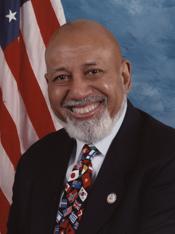
Mr. Speaker, I yield 4 minutes to the gentlewoman from Texas (Ms. Jackson-Lee), my good friend. (Ms. JACKSON-LEE of Texas asked and was given permission to revise and extend her remarks.) Mr.…
Mr. Speaker, I yield 4 minutes to the gentlewoman from Texas (Ms. Jackson-Lee), my good friend.
(Ms. JACKSON-LEE of Texas asked and was given permission to revise and extend her remarks.)
Mr. Speaker, I yield myself 3 minutes.
I would like to engage my colleague from Florida in a colloquy if he would be so inclined. I ask my colleague his understanding of the modifications that took place in conference, because Members have come to several of us
asking us our understanding; and quite frankly, I am not clear and perhaps he can help us to understand whether or not it, in fact, was modified as it pertains to all sex crimes or was it modified to include just sexually exploited situations as it pertains to children.
I yield to the gentleman from Florida.
Mr. Speaker, so the antiquated sexual offenses are not contemplated under the gentleman's amendment as he understands it?
Mr. Speaker, I would urge my good friend from Florida, and he is my good friend, to take into consideration when we decry downward departures that the people that are on the firing line, the Article III judges, make those departures after very careful consideration.
Having served in that branch of government at one point and being an opponent, as almost universally the Federal judges were, of mandatory sentencing and sentencing guidelines, it is not to be taken lightly.
I agree with the gentleman that the appellate review is more than necessary and reporting regarding same should be important. But please do not take the downward departures to mean that the judges did not see something that we do not have an opportunity, when we make these laws, to clearly understand what the judge in fact saw and heard in the sentencing provision, or even in the trial.
I could cite numerous examples where downward departures have saved families and lives. I would hope my friend would understand that.
Mr. Speaker, I yield myself such time as I may consume.
I would make the comment that the hope would be that we do not chill the Federal judiciary with departure restrictions. I think it would be a mistake on our behalf.
Mr. Speaker, I am pleased to yield 3 minutes to my good friend, the gentleman from Texas (Mr. Lampson), a gentleman who has been and continues to be a stalwart in the way of providing for the AMBER Alert, a leader in this regard.
Mr. Speaker, I am very pleased to yield 2 minutes to my good friend, the gentlewoman from Ohio (Mrs. Jones), who was formerly a member of the Ohio judiciary.
Mr. Speaker, I am very pleased to yield 2 minutes to the gentlewoman from Illinois (Ms. Schakowsky).
Mr. Speaker, I yield myself such time as I may consume.
Mr. Speaker, several measures are brought to the attention of the body, and specifically they are now known as the Feeney amendment. I may be able to add a little clarity by putting forward that the bill, the bill as it is presently before us, that this particular rule is contemplating, establishes de novo appellate review of departures, prohibits downward departure on remands based on new grounds, requires government motion for extra one-level
adjustment based on extraordinary acceptance of responsibility, and prohibits the Commission from ever altering this amendment.
It chills departure by imposing more burdensome reporting requirements on judges who depart, and gives the Department of Justice access to Commission data files that identify each judge's departure practices. And it requires the Department of Justice to report downward departures to Judiciary Committees, unless within 90 days the Attorney General reports to Congress on new regulations for opposing and appealing downward departures.
Our colleague, the ranking member of the Committee on Rules, the gentleman from Texas (Mr. Frost), as well as our colleague on the other side of the aisle, the gentlewoman from Washington (Ms. Dunn), and many Members of this body have worked very hard to ensure that we have the AMBER Alert, which has proved itself to be more than useful in our society for a very, very important and worthy cause.
That said, it is unfortunate that in this particular measure for AMBER Alert, some ill-conceived, maybe unconstitutional, very restrictive measures have been put forward in the substantive bill.
With that, I would urge Members to pay particular caution to the rule itself, and when they examine voting for AMBER Alert, to be mindful that there are a number of provisions that they are voting for that are not just covered by the headline, but are covered by the rights of individuals in our society and the rights of the members of the judiciary who have a firsthand opportunity to make a determination as to what should be done in the way of sentencing.
When I served in the judiciary, one of the things that I was proud of was exercising discretion in a meaningful manner, and I always tried to err on the side of reconstructing families. I think this legislation is prohibitive in many respects. And I think no less an authority than Associate Justice Antonin Scalia, in his remarks very recently, said to us that mandatory sentencing can and, in fact, has led to an increase in the significant number of persons in our society, 2 million now in America, that are in prison.
We make these laws and we talk all the time about unfunded mandates, and we make these laws without fully realizing the implications as to what may transpire once they are made. The Federal judiciary will be impacted by what we do in the name of something that is the right thing to do, AMBER Alert.
Mr. Speaker, I reserve the balance of my time.
Mr. Speaker, I yield myself such time as I may consume.
Mr. Speaker, most respectfully, the majority leader's comments are taken not lightly by any of us. But I would urge that we understand that this law that we are passing establishes new separate departure procedures and standards for child-related offenses and sex offenses. Permissible departures are those that the Commission specifically enumerates. It limits age and physical impairment departures in child and sex cases. It prohibits gambling dependence in child and sex cases. It prohibits aberrant behavior departures in child and sex cases. It prohibits family ties departures in child and sex cases. And one that is particularly troubling, because I saw this case in my past responsibilities, it prohibits diminished capacity departures in child and sex cases.
Everything is not as cut and dried as we would have it be, and I urge Members, while supporting AMBER Alert, to be mindful that we are supporting a number of provisions that would be addressed by the court system for some time to come.
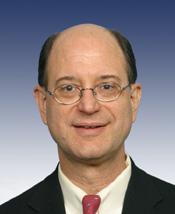
Mr. Speaker, I yield myself such time as I may consume. Mr. Speaker, I rise in strong support of House Resolution 165. Mr. Speaker, let me first provide some background. On July 20, 1974, thousands…
Mr. Speaker, I yield myself such time as I may consume.
Mr. Speaker, I rise in strong support of House Resolution 165.
Mr. Speaker, let me first provide some background. On July 20, 1974, thousands of Turkish troops invaded and occupied 37 percent of the island, which since that time has been separated by a green line, actually a line of barbwire, analogized by the gentleman from Nebraska (Mr. Bereuter) to the Berlin Wall. They created the Northern Republic of Cypress in 1975 and, indeed, recognized only by Ankara. Nicosia today is the only divided capital in the world.
Today Turkey maintains 35,000 troops in Northern Cypress and that area is one of the most highly militarized areas of the world, according to former U.N. Secretary General Boutros Boutros Ghali.
Eighty thousand Turkish settlers were installed after that invasion and occupy properties forcibly vacated by Greek Cypriot refugees, people who had lived there for generations. And now we have 200,000 refugees and over 1,600 people missing since that long-ago invasion, including five American citizens. In Northern Cypress there are a few Greek Cypriots. They are, in effect, locked into enclaves. They are denied basic human rights such as freedom of movement, access to education, religious freedom, or political rights.
The deterioration of the situation in northern Cypress must be contrasted to the prosperity of the southern part of that island ruled by the official government of the Republic of Cypress. That government has done so well that they have met the EU's strict standards for administration and will soon be admitted. Those standards include tough limits on the amounts of public debt, limits that, after this budget resolution comes to the floor tomorrow, the United States will not be able to meet. The economic hardship on the northern part of the island and the competition with settlers from Turkey has caused the exodus of the majority of the Turkish Cypriot population.
On September 30, 2002, the EU's enlargement commissioner stated that Cypress complies with all political and economic conditions for membership and that the government-controlled areas of Cypress enjoy an atmosphere of economic prosperity and political freedom, allowing its people to enjoy one of the highest standards of living in the world.
Cypress will become a member of the EU in a few weeks, and the Cypriot government will sign an accession agreement and formally join, I believe, on April 16 of this year.
The recent failure of the U.N.'s peace talks must be blamed on Turkish Cypriot leader Rauf Denktash. The U.N. plan offered a wide range of autonomy, a weak central government, a demilitarized Cypriot state, and a continuing, if greatly reduced, Turkish and Greek presence to guarantee the safety of the respective communities. But Denktash was not willing to put this plan to a referendum. Notwithstanding the fact that his own people, the Turkish Cypriots would have overwhelmingly supported this plan, a great opportunity was lost.
Mr. Speaker, I fully endorse this resolution and in later comments would want to detail its terms.
Mr. Speaker, I reserve the balance of my time.
Mr. Speaker, I yield 2 minutes to the gentleman from New Jersey (Mr. Pallone), a gentleman who has been a leader on issues of foreign policy and human rights.
Mr. Speaker, I yield 2 minutes to the gentlewoman from California (Ms. Watson), a distinguished former ambassador who is also a congressional Representative.
Mr. Speaker, it is my pleasure to yield 2\1/2\ minutes to the gentlewoman from New York (Mrs. Maloney) who has shown her dedication to human rights and impressed us all with her expertise on Hellenic issues.
Mr. Speaker, I yield 2 minutes to the gentleman from New Jersey (Mr. Holt), my favorite rocket scientist.
(Mr. HOLT asked and was given permission to revise and extend his remarks.)
Mr. Speaker, I yield myself so much time as I may consume.
Mr. Speaker, this is an important resolution. It expresses our support for a peaceful, just and lasting resolution of the Cyprus problem. I would like to take this opportunity to thank the gentleman from Nebraska (Mr. Bereuter), the chairman, for sponsoring this resolution and to commend the gentleman from Florida (Mr. Wexler), the ranking Democratic member, for his leadership on foreign policy issues. I am pleased to be an original cosponsor of the resolution.
I fully endorse the sentiment expressed in this resolution that Greek Cypriot and Turkish Cypriot parties should renew their efforts to find a settlement to the Cyprus problem on the basis of the U.N. Secretary General's framework for a comprehensive settlement, notwithstanding the lamentable failure of the most recent round of diplomacy.
It is also important that this body reaffirm its own commitment to giving any necessary assistance to help achieve a just and durable settlement of the Cyprus problem, and that is, again, called for by this resolution.
In particular, this resolution expresses the Congress' very strong regret that Turkish Cypriot leader Mr. Denktash rejected the comprehensive settlement offered by the Secretary General and denied the Turkish Cypriots the opportunity to determine their own future, because he refused to offer the settlement proposal as a referendum. I urge the parties to return to the table at the earliest possible time and to complete negotiations on the Secretary General's plan.
Mr. Speaker, the U.S. has a clear and direct interest in solving the Cyprus problem. Its resolution would offer peace and prosperity to all of the peoples of Cyprus and would bring lasting stability to Greek- Turkish relations on NATO's southern flank.
It is, therefore, vital, Mr. Speaker, that this body go on record uncompromisingly in support of this resolution.
Mr. Speaker, I see that I have no other requests for time, and I yield back the balance of my time.
Mr. Speaker, on that I demand the yeas and nays.
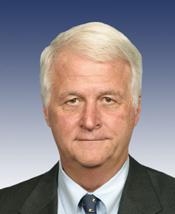
Mr. Speaker, I would like to be able to vote for this bill. It includes provisions that I strongly support--including the ``AMBER Alert'' system that would aid in finding missing children. But those…
Mr. Speaker, I would like to be able to vote for this bill. It includes provisions that I strongly support--including the ``AMBER Alert'' system that would aid in finding missing children. But those children have been taken hostage by a bill that also includes so- called ``sentencing reforms''--radical, sweeping changes to the Federal sentencing system that were never considered by any committee of either House. Provisions that would cause an explosion in the number of people behind bars--including many who simply do not belong there.
Just three days ago, the Justice Department reported that the number of people living behind bars in the United States had exceeded two million for the first time in our history. Two million. And included in that number is a staggering 12 percent of African-American men aged 20 to 34.
If this bill is the congressional response to that situation, the public may well conclude that we have finally taken leave of our senses.
The rate of incarceration in the U.S. is seven times higher than that of such advanced nations as Germany, Italy, and Denmark. A primary reason for this is that a large number of our prisoners are serving long
terms for minor nonviolent offenses. And if this bill becomes law, there will be a lot more of them.
Men in prison cannot raise families, cannot hold jobs, cannot pay taxes, and cannot support the economy. And when they get out, many who might have turned their lives around will have become hardened criminals, ready to return to the only life they know. Conservatives and liberals alike have recognized that this situation poses a threat to the future of our cities, our families, our economic well-being, and the health of our democracy itself. Growing numbers of prominent conservatives have joined in calls for an end to mandatory minimum sentences. Yet this bill takes a giant--and potentially catastrophic-- step in the wrong direction.
When Congress enacted the Sentencing Reform Act of 1984, it created a system of guidelines for judges to follow. But Congress also recognized that no system of guidelines can anticipate all of the facts and circumstances of a given case. And it wisely preserved sufficient flexibility to allow the judge to depart from the guidelines when necessary.
This bill would substantially eliminate that safety valve, barring judges from making ``downward departures'' in a large number of cases-- effectively transforming the federal guidelines into a system of mandatory minimum sentences.
When Chief Justice Rehnquist learned of this proposal, he wrote: ``this legislation, is enacted, would do serious harm to the basic structure of the sentencing guideline system and would seriously impair the ability of courts to impose just and responsible sentences.'' Justice Rehnquist is certainly no liberal. But even his concerns have been brushed aside.
Similar opposition was expressed by the Judicial Conference of the United States, the American Bar Association, the Leadership Conference on Civil Rights, the Washington Legal Foundation, the Cato Institute and many other groups and individuals. All to no avail.
It is true that during conference, a number of improvements were made to the original language. But the final version retains many features of the original, and barely begins to address the concerns raised by the Chief Justice.
Title IV of the bill prohibits all downward departures in connection with child-related offenses and sex offenses. In all other cases, it discourages judges from making downward departures by subjecting them to burdensome reporting requirements and Justice Department scrutiny if they do so. And it directs the Sentencing Commission to amend the guidelines to ensure that downward departures are ``substantially reduced.''
Since there has been virtually no debate on these radical proposals, we must guess at the reasons for them. Apparently, they are based on the belief that judges have been abusing their departure power by handing down overly lenient sentences.
No doubt errors and abuses occur. Judges are human, and some sentences will be too lenient while others are too harsh. But the system already provides a remedy for this: the government can and does appeal downward departures it considers inappropriate. And it wins approximately 80 percent of such appeals.
The truth is that the vast majority of the downward departures are sought, not by the judge, but by the government itself. Of the nearly 20,000 downward departures granted in 2001, 79 percent were requested by the prosecution--most in return for the cooperation of the defendant, and the rest in five Mexican border districts in which the government uses departures to clear cases more quickly.
If the sponsors of the bill have concerns about the rate of downward departures, the Justice department is where they should be making inquiries. As a former prosecutor, I can see plenty of reasons to question the overuse of departures as a law enforcement tool.
Inf act, the one thing that pleases me about the language as it came out of conference is that it instructs the Sentencing Commission to review not just those downward departures that are initiated by the sentencing judge but all downward departures--whether requested by the prosecution or the defense. I certainly hope that in fulfilling the congressional mandate to review these departures and ensure that their incidence is ``substantially reduced,'' the Commission will do so in a thorough and even-handed way.
Nevertheless, if there is a problem with departures, depriving judges of the ability to exercise discretion cannot be the answer. A rigid, mechanical system of sentences cannot do justice--either to the accused or to the society to which the millions we imprison today will one day return.
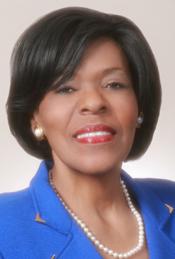
Mr. Speaker, It is vital that we implement AMBER Alert systems, not just in our local communities, but nationwide. Our efforts to crack down on child abductors and abusers will be fruitless if we…
Mr. Speaker, It is vital that we implement AMBER Alert systems, not just in our local communities, but nationwide. Our efforts to crack down on child abductors and abusers will be fruitless if we cannot transcend state borders quickly enough to catch these vicious criminals. I am in full support of a national system that will provide for such coordination. In the conference report, we have just that, a provision that provides for a nationwide alert system that is cost-effective and technologically savvy. That is, however, not the only provision in this bill, Mr. Speaker. There are many provisions in this bill that, while attempting to deter these criminals from committing such heinous acts, infringe upon the livelihoods of many innocent individuals and prohibit what would normally be harmless, legal acts.
I vote for the H.R. 1104, the House version of this conference report in hopes that conferees would come together and agree upon a bill that would attack the key issue at hand, protecting our children from molesters and pedophiles. After reviewing the conference report, I did not see any substantive alterations or any elimination of these bad provisions, but rather I noticed additional provisions that, again, hurt the livelihood of innocent individuals and legal acts. For those reasons, Mr. Speaker, I vote ``NO'' on final passage of the conference report and I will further expound on why I did so below.
The PROTECT Act would expand the type of homicide that can be punished by death. This will would provide for this expansion, despite the fact that more than half of death penalty cases are found to be erroneous. Cognizant of the disproportionate number of minorities being sentenced to death yearly, and the high number of erroneous rulings by the court system, I am very reluctant to support such a provision.
Furthermore, I am not a proponent of mandatory minimum sentencing guidelines because they undermine and eliminate judicial discretion in individual cases. Judges, under the provision, are unable to impose a lesser sentence after considering the circumstances surrounding a given case. There should not be a one-size-fits-all sentencing structure when judges are determining incarceration of a human being.
This bill would increase certain mandatory minimum sentences for many sexual abuse crimes. For example, for child abduction cases current law consists of a minimum of 51-63 months in jail. This bill increases the minimum to 121-151 months in jail. Judges engage in numerous cases regarding sexual abduction and have more experience and expertise in those cases than we do. Therefore, we should not second-guess their decisions on whether to impose a sentence that is more lenient. They see the defendant and victim, they hear the arguments and testimony, and hence, we should show deference to their rulings.
Similar to the mandatory minimum provisions, this bill also provides for a ``two strikes and you're out'' section that creates a mandatory life sentence for sexual offenders that have been convicted more than once. This provision negates a judges discretion and ability to impose just sentences. Currently, there is no such law that provides for mandatory imprisonment for life after being convicted of a sex crime.
Under this report, if an individual commits a sex crime and is jailed, subsequent to that person's release, he or she will be supervised for life. The statute of limitations regarding these crimes will be voided and an individual can be supervised for his entire life. Not only will it be difficult for these persons to find employment or social acceptance after such a conviction, but this bill will also allow them to be followed and observed day-to-day.
Another bad provision that was added in conference has been coined the ``crack-house statute amendments''. Essentially, this provision will make legitimate businesses the victim of felony charges if they cannot guarantee a drug free property or business. This provision was intended to eliminate the many detrimental effects of ``rave'' parties that allegedly expose drugs and drug usage to the minors that are present. This provision permits government to narrow its focus to particular parties and social gatherings where drug usage is allegedly prevalent and impose felony charges on the owners as a means to eradicating the drug problem. Quite to the contrary, what it
will do is deter innocent, law-abiding property owners and potentially lucrative sole proprietors from investing in the community because of their inability to ensure a drug-free environment. This provision is bad for community and economic development and does not guarantee that these ``raves'' will cease to exist, or that drugs will not be readily available to youth.
In conclusion, Mr. Speaker, I am vehemently opposed to the conference agreement. It is anti-civil liberty and overreaching. Any attempt to provide strong protection for children is trumped by the unreasonable persistence of the majority to increase penalties for these cases. As I stated earlier, the court is experienced enough to decipher individual sex crime cases and impose the appropriate sentence. We should focus on the issue at hand--a system that is technologically apt enough to produce the type of nationwide coordination that we need to catch criminals. Thereafter, the courts will proceed as needed, on a case-by- case basis. I support the need for an AMBER Alert system, but I do not support the conference agreement in its entirety.

Mr. Speaker, by direction of the Committee on Rules, I call up House Resolution 188 and ask for its immediate consideration. Mr. Speaker, for the purpose of debate only, I yield the customary 30…
Mr. Speaker, by direction of the Committee on Rules, I call up House Resolution 188 and ask for its immediate consideration.
Mr. Speaker, for the purpose of debate only, I yield the customary 30 minutes to the gentleman from Texas (Mr. Frost), pending which I yield myself such time as I may consume. During consideration of this resolution, all time yielded is for the purpose of debate only.
Yesterday the Committee on Rules met and granted a ``normal'' conference report rule for S. 151, the Prosecutorial Remedies and Other Tools to end the Exploitation of Children Today Act of 2003, or the PROTECT Act.
The rule waives all points of order against the conference report and against its consideration. Mr. Speaker, this should not be a controversial rule. It is the type of rule that we grant for every conference report that we consider in the House.
The PROTECT Act sends a clear message to those who prey upon children that if they commit these crimes, they will be punished. This legislation provides stronger penalties against kidnapping, ensures lifetime supervision of sexual offenders and kidnappers of children, gives law enforcement the tools it needs to effectively prosecute these crimes, and provides assistance to the community when a child is abducted.
To accomplish this, S. 151 establishes an AMBER Alert coordinator within the Department of Justice to assist States with their AMBER Alert plans. This coordination will eliminate gaps in the network, including gaps in interstate travel, work with States to encourage development of additional AMBER plans, and serve as a nationwide point of contact.
The AMBER program is a voluntary partnership between law enforcement agencies and broadcasters to activate an urgent alert bulletin in serious child abduction cases. The goal of the AMBER Alert is to instantly galvanize the entire community to assist in the search for, and the safe return of, that child.
I am pleased that this legislation also authorizes $20 million for fiscal year 2004 for the Secretary of Transportation to make grants to States for the development or enhancement of notification or communication systems along the highways. I am sure Members have seen those reader board signs. These signs are for alerts and other information for the recovery of abducted children. Doing this will enable all 50 States to implement this life-saving program, and we have seen several examples of it working lately to literally save children's lives.
For those individuals who would harm a child, we must ensure that punishment is severe and that sexual predators are not allowed to slip through the cracks of the system to harm other children. To this end, this legislation provides a 20-year mandatory minimum sentence of imprisonment for stranger abductions of a child under the age of 18, lifetime supervision for sex offenders and mandatory life imprisonment for second-time offenders; and we all know that is a very common occurrence.
This responds to the long-standing concerns of Federal judges and prosecutors regarding the inadequacy of the existing supervision period for sex offenders, particularly for the perpetrators of child sexual abuse crimes, whose criminal conduct may reflect deep-seated deviant sexual disorders, and they are not likely to disappear within a few years of release from prison.
Furthermore, S. 151 removes any statute of limitation and opportunity for pretrial release for crimes of child abduction and sex offenses. Oftentimes it is years later that sex offenses come to light because a child is afraid to speak out. That is why this conference report is so important. Not only does it come to the aid of the children after the abduction with the AMBER Alert, it aims to prevent the abduction with the provisions I just mentioned.
I also want to applaud the conferees for including legislation authored by the gentleman from Indiana (Mr. Pence) that would punish those who use misleading domain names to attract children to sexually explicit Internet sites. It accomplishes this goal by increasing the penalties and provides prosecutors with enhanced tools to prosecute those seeking to lure children to porn Web sites. As a mother and grandmother, it is hard for me to understand how anyone can prey on a defenseless child.
Therefore, I urge my colleagues to support the rule and support the underlying bill. It is imperative for our Nation to protect our most valuable resource, our children.
Mr. Speaker, I reserve the balance of my time.
Mr. Speaker, I yield 4 minutes to the gentleman from Florida (Mr. Foley).
Mr. Speaker, I yield 5 minutes to the gentleman from Florida (Mr. Feeney).
Mr. Speaker, I yield 1 minute to the gentleman from Florida (Mr. Feeney).
Mr. Speaker, I yield myself such time as I may consume.
Mr. Speaker, I include for the Record two letters, one from the National Mentoring Partnership and the other from the National Council of Youth Sports, in support of this bill.
The letters referred to are as follows:
Mr. Speaker, I yield 2 minutes to the gentleman from California (Mr. Royce).
Mr. Speaker, I yield 3 minutes to the gentleman from Texas (Mr. Smith).
Mr. Speaker, I yield such time as he may consume to the gentleman from Texas (Mr. DeLay), the majority leader.
Mr. Speaker, I yield back the balance of my time, and I move the previous question on the resolution.
The previous question was ordered.

Mr. Speaker, I rise today in strong support of House Resolution 165. This resolution is directed at renewed endeavors to find a peaceful, just, and durable solution to the Cyprus conflict. With the…
Mr. Speaker, I rise today in strong support of House Resolution 165. This resolution is directed at renewed endeavors to find a peaceful, just, and durable solution to the Cyprus conflict. With the failure of the recent UN-brokered peace negotiations and with Cyprus going to join the EU, a solution to the problem is more needed than ever.
The Eastern Mediterranean is a region of vital U.S. interests. Endeavors to promote greater stability in the area by bringing the two conflicting parties together, must thus remain high on our agenda. In fact, stability in this region serves to advance many key policy objectives.
I thus wish to applaud the tireless efforts of the Secretary General of the United Nations to have prudently worked out an acceptable peace plan for both the Greek Cypriots and the Turkish Cypriots. Kofi Annan crafted a compromise plan that sought to reunite Cyprus as a single bicommunal federation. The plan would have satisfied both communities. The plan also enjoyed broad bipartisan support in the U.S. and was strongly supported by the wider international community. I therefore commend the Cypriot President Tapas Papadopolous who was eager to finally solve this long-lasting dispute. He accepted the UN proposal and was willing to submit the plan to a separate referendum last month. Immediately after the failure of the negotiations, Papadopolous further stated that the Greek Cypriot side will continue its endeavors for reaching a solution to the Cypriot issue within the UN framework.
Parallel, I voice my disappointment at the Turkish Cypriot leader Rauf Denktash's decision not to accept the UN proposal and his ultimate rejection of the peace deal. This is an unacceptable situation and hurts everyone involved: the Turkish and Greek Cypriot communities, the United Nations, the U.S., the EU and Turkey's own desire to become a EU member, now is the time to act. Indeed, the Turkish intransigence hurts first and foremost Turkey and the Turkish Cypriots themselves. The failure of the unification endeavors complicates Ankara's own efforts to join the EU. The European Commission warned Turkey after the breakdown of the talks that the Greek Cypriot part of the island is going to join the EU in May 2004 with or without the Turkish Cypriots. But without an agreement on the Cyprus issue, Turkey will be in a position of not recognizing a member of the European Union.
Public demonstrations by the Turkish-Cypriot opposition in favor of the peace plan further explicitly show who will be the major losers of the failed negotiations: the Turkish Cypriots who will not enjoy the benefits of EU membership.
The United States will remain committed to finding a just and permanent solution to the Cyprus issue. This solution must be achieved within the UN framework. The Turkish Cypriot leader must thus clearly show his willingness to constructively work with the United Nations and to settle for a compromise, a fair compromise like the one that was just presented to him.
Yet, a permanent solution that involves compromise, tolerance, and understanding is not merely achieved via multilateral institutions or intergovernmental interactions, however crucial they are. More than ever, confidence-building measures to re-integrate the two communities on the island are crucial, and the U.S. must continue to support these biocommunal initiatives.
A constructive dialogue between the Greek and the Cypriot leader under the UN auspices as well as reintegration efforts between the two communities represent the best and the only way to settle the Cyprus conflict.

Mr. Speaker, I yield myself such time as I may consume. (Mr. FROST asked and was given permission to revise and extend his remarks.) Mr. Speaker, by passing this conference report today, Congress can…
Mr. Speaker, I yield myself such time as I may consume.
(Mr. FROST asked and was given permission to revise and extend his remarks.)
Mr. Speaker, by passing this conference report today, Congress can finally end the 6 months of political maneuvering that have delayed my legislation to help set up a nationwide network of AMBER Alerts. The AMBER plan was named for a young girl, Amber Hagerman, who was kidnapped and murdered in Arlington, Texas, in my congressional district.
Make no mistake, this conference report is not perfect. It contains some needlessly controversial provisions dealing with our criminal laws. For that reason, some Members will oppose it.
The AMBER Alert Network Act, which I first introduced in the House of Representatives with the gentlewoman from Washington (Ms. Dunn) last year, should have been law long, long ago. It passed the Senate unanimously twice. The President made clear his support for it, and 230 Democrats and Republicans cosponsored it in the House, a clear majority. But for more than 6 months now, House Republican leaders refused to allow the House to vote on this bipartisan bill to protect America's children. And 2 weeks ago, 218 House Republicans ignored a last minute letter from the family of Elizabeth Smart and voted to support their leadership and block consideration of the stand-alone AMBER bill.
Mr. Speaker, it should not have been this hard; but we can now see an end to this matter. We now are about to finally enact this very important legislation.
We know the AMBER Alert system works. Since it was created in north Texas in 1997, it has helped recover 53 abducted children, five of them in the month of March alone. But it does not work where it does not exist. That is why the AMBER Alert Network Act, which this conference report includes, is so important because it will help set up a nationwide network of AMBER Alerts.
Mr. Speaker, this has been a long road, and a lot of dedicated Americans have worked very hard to pass this bill. In the House, the gentleman from Texas (Mr. Lampson), the gentleman from New Jersey (Mr. Holt), the gentleman from Kansas (Mr. Moore), and the gentleman from Utah (Mr. Matheson), who represents the family of Elizabeth Smart, have worked very hard. I wanted to thank the Democratic members of the Committee on the Judiciary, especially the ranking member, the gentleman from Michigan (Mr. Conyers), and the Subcommittee on Crime ranking member, the gentleman from Virginia (Mr. Scott), who have been extraordinarily helpful throughout this process. I also thank my friend and colleague, the gentlewoman from Washington (Ms. Dunn), who joined with me to introduce the AMBER bill in the House, and of course Senators Kay Bailey Hutchison, Diane Feinstein, and Hillary Rodham Clinton have done a marvelous job leading the effort in the Senate.
Outside of the Congress, much credit goes to the National Center for Missing and Exploited Children, to the National Association of Police Organizations, to Marc Klaas and the Polly Klaas Foundation, and to all of the organizations and individuals who worked to expand AMBER Alerts nationwide.
Finally, I want to personally thank Ed Smart, who in an extraordinary statement on the eve of the safe recovery of his daughter, Elizabeth Smart, spoke directly to the American public and this Congress and urged the prompt enactment of the AMBER Alert bill.
Mr. Speaker, this is long overdue. This will save children throughout the United States. I commend this legislation to this House and to the President.
Mr. Speaker, I reserve the balance of my time.
Show 11 more

Mr. Speaker, I thank the gentleman for yielding me the time. I want to rise in support of this conference report, and certainly to thank all of the people who have worked on it: the gentleman from…
Mr. Speaker, I thank the gentleman for yielding me the time.
I want to rise in support of this conference report, and certainly to thank all of the people who have worked on it: the gentleman from Wisconsin (Chairman Sensenbrenner) and the gentleman from Texas (Mr. Frost), for bringing the legislation; the gentlewoman from Washington (Ms. Dunn) on the AMBER Alert itself; and looking into the overall larger bill, which I became a cosponsor of early on, the work that the gentleman from Florida (Mr. Foley) has done on the Congressional Caucus on Missing and Exploited Children, along with me and about 150 other Members of the House of Representatives, as we have worked diligently to try to make a difference in this issue that deals with child protection.
I have spoken for 2 years on this issue and am thrilled to see the kind of interest that this has brought right now and the support it has brought from across our House of Representatives and the Senate.
We all know about the AMBER Alert and what it is and why it is such a good thing. So right now I really do not want to talk so much about it, but to talk about the larger role of who is playing a role in this overall effort: the Members of the House, the Senate, their staffs. The work that has been done in the last several months, I think, is extremely impressive.
Certainly, I would mention the National Center for Missing and Exploited Children and what they have done since their involvement in this issue for the last more than 20 years. There is the FBI, the Customs Service, and local law enforcement officials, as well as the media who also are a big part of the AMBER Alert.
I want to thank the families and friends of Laura Kate Smither, the little girl who was abducted and murdered in 1997, who actually was the inspiration for the Congressional Caucus on Missing and Exploited Children. I stand here today in honor of Laura and with the hopes that this important piece of legislation will prevent the abduction and exploitation of children across America.
I also rise in support of this conference report, because it helps the Secret Service continue its work on behalf of missing children. Nearly a decade ago, Congress authorized the U.S. Secret Service to participate in a multi-agency task force with the purpose of providing resources, expertise, and other assistance to local law enforcement agencies and the National Center for Missing and Exploited Children in cases involving missing and exploited children.
This began a strong partnership between the Secret Service and the National Center for Missing and Exploited Children and resulted in the Secret Service providing critical forensic support, including polygraph examinations, handwriting examinations, fingerprint research and identification, age progressions and regressions, and audio and video enhancements to the National Center for Missing and Exploited Children and to local law enforcement in numerous missing children's cases. They have indeed made significant differences.
However, there is a clear need to provide explicit statutory jurisdiction to the Secret Service to continue this forensic and investigative support upon
request of local law enforcement or the National Center for Missing and Exploited Children. The Secret Service amendment, which was adopted and is part of the S. 151 conference report, will do just that.
I want to conclude and say, support the conference report. With the help of the Secret Service, these organizations will be able to continue their work.
Mr. Speaker, I thank the gentlewoman for her leadership on this rule, and I rise in support of the rule for S. 151, which is aimed at combating child exploitation and abuse. As co-chair of the…
Mr. Speaker, I thank the gentlewoman for her leadership on this rule, and I rise in support of the rule for S. 151, which is aimed at combating child exploitation and abuse. As co-chair of the Congressional Missing and Exploited Children's Caucus with the gentleman from Texas (Mr. Lampson), I know full well the need for new and increased penalties and the need to expend more resources to enforce current law.
I would like to commend the work of both the gentleman from Wisconsin (Mr. Sensenbrenner) and the conference committee for bringing this outstanding package to the floor today. With provisions like Two Strikes and You're Out for repeat child sex offenders, penalties for international sex tourism, the doubling of funding for the National Center for Missing and Exploited Children, expanding the relationship between the United States Secret Service and the National Center for Missing and Exploited Children, and of course the AMBER Alert Act, all make this legislation another nail in the coffin of those who prey on the most innocent in our society, our children.
Mr. Speaker, this bill will help bring pedophiles and others who intend to do children harm to justice. I would, however, like to take a moment to express some concern I have about one of the provisions that was put into the final package relating to the Volunteers for Children Act. This law, which the gentleman from Texas (Mr. Lampson) and I championed, was designed to provide further protection for our Nation's children by allowing youth-serving nonprofit organizations such as the Boys and Girls Club, the National Council for Youth Sports, and the National Mentoring Group to request national fingerprint background checks in the absence of State laws providing such access.
However, since the Volunteers for Children Act was enacted in 1998, only a very few States have complied with this law.
As a result, for the past year, I have been working towards a permanent solution with the Senate and the chairman to correct this problem once and for all.
Though I applaud both the chairman and the conference committee on recognizing the need to address this longstanding problem, the efforts to correct it leave much to be done. I hope that we can work with the chairman to provide the necessary protection to millions of children participating in both the local and nationwide after-school and volunteer-run programs by giving these groups the access they need to criminal background checks of their volunteers.
We have tried it in Florida. It has been immensely successful. It has been applauded by child advocate groups. It has been applauded by the FDLE, Florida Department of Law Enforcement's head, Tim Moore. We have used it extensively to provide protection for our children and volunteer organizations.
The fingerprint check is the only absolute way we can ensure that those working with our children are, in fact, clean of past histories that would cause them to come into difficult situations with our children.
Again, Mr. Speaker, I do offer my full support for the overall package and encourage my colleagues to vote for this rule and, of course, for the underlying bill.

Mr. Speaker, today I want to thank Mr. Bereuter for his leadership in introducing H. Con. Res. 165, expressing support for a renewed effort to find a peaceful, just, and lasting settlement to the…
Mr. Speaker, today I want to thank Mr. Bereuter for his leadership in introducing H. Con. Res. 165, expressing support for a renewed effort to find a peaceful, just, and lasting settlement to the Cyprus problem, and I want to take this opportunity to voice my strong support for this resolution.
In today's uncertain world, where conflict and instability abound, one such long-standing dispute was quietly moving toward a resolution.
However, while the world has been focused on Iraq and deadlines on the Hussein regime came and went, another deadline, one vitally important to a resolution to the conflict on Cyprus, passed with little fanfare.
The stakes in Cyprus are high, and while the United States is rightly focusing on more pressing foreign policy problems like the war on terrorism, the war in Iraq and other issues in the Middle East, we should also devote attention to bringing an end to this conflict.
The outcome of a peaceful resolution to the division of Cyprus will have a significant impact on Turkey and Greece, two key NATO players whose antagonistic relationship has too often roiled the alliance.
It would benefit U.S. interests in the eastern Mediterranean, would strengthen NATO by improving relations between our two key allies, and defuse an ongoing regional arms race.
Just as they are standing shoulder-to-shoulder with the United States in the war against terror, so too must they play a constructive role in resolving this longstanding dispute.
The European Commission clearly and unequivocally has linked Turkey's ambitions to join the EU to a solution to the conflict. Turkey is eager to join the EU, and the Turks of Cyprus, isolated and living in poverty, look forward to sharing the benefits of EU membership. One only has to look to the massive rallies recently held by Turkish Cypriots in support of a resolution.
Just today, the Greek and Turkish Prime Ministers met in Belgrade and agreed on the need to reach a solution to the political problem in Cyprus. The moment of truth is at hand, and time is running short. The two communities should play an important role in the efforts toward a solution and move their leadership to the negotiating table.
They must show genuine commitment to forge an agreement on the terms of reunification. As the President of the Republic of Cyprus recently stated: ``Non-solution is not a solution. It is not even the conclusion of the Cyprus problem. On the contrary, it will mean the beginning of new dangers and new problems. The eventual solution to the Cyprus problem will be a compromise. . . .''
However, ``If the solution is not functional it cannot be viable. If it is not viable it will not be permanent.'' A solution cannot include the possibility of the permanence of division. After nearly 30 years, it is time for the bitter division of Cyprus to come to an end. It is time for a peaceful, just, and lasting settlement to the Cyprus problem. I am confident my colleagues share this hope and I ask them to vote for this resolution.
Mr. Speaker, I thank the gentleman for yielding to me. The gentleman from Virginia and I must be looking at different legislation. In my view, this is a proud moment for the House. It is a proud…
Mr. Speaker, I thank the gentleman for yielding to me.
The gentleman from Virginia and I must be looking at different legislation. In my view, this is a proud moment for the House.
It is a proud moment for the Committee on the Judiciary. I know it is a
proud moment for me personally. I came to Congress with the hope of having moments like this.
There are so many great provisions and parts to this comprehensive legislation. I will focus on just three, the three that I was most involved with, number one, what is the so-called the ``two strikes and you're out'' for child molesters provision. With respect to Federal sex crimes against kids, it says very simply that if you have been arrested and convicted of a serious sex crime against kids, and when you get out, you do it yet again, you are going to go to prison for the rest of your life. No more chances, no more questions and, Lord willing, no more victims.
Secondly, it contains lifetime supervision for Federal sex offenders. We hear from judges again and again that there are criminals that go through their courts that they believe should have supervision for a long time. They are dangerous. They will do it again. Current law only allows them to order 5 years. This gives them the discretion, it does not mandate it, it givers them the discretion for lifetime monitoring.
And third, there are some provisions from the Debbie Smith Act, which I have authored, along with the gentlewoman from New York (Mrs. Maloney) and Senator Biden from the other body. This allows Federal prosecutors to issue indictments against sex criminals based upon DNA gathered at the crime scene.
Mr. Speaker, this is an institution which all too often uses superlatives and all too often overstates the value of legislation, but this bill, with its AMBER Alert provisions with respect to responding to crimes and bringing back victims safe and sound, is a wonderful thing.
With respect to the DNA-John Doe indictment provisions, which will allow us to prosecute crimes more efficiently, more quickly, to get these guys off the street, it is a better bill for that reason. For its ``two strikes and you're out'' provisions, which will allow us to lock up predators once and for all, so they cannot do it yet again and again, for those reasons, it is a wonderful, historic bill.
We are taking a bold step today. I agree. This is historic legislation. The majority leader referred to this as the most comprehensive child safety legislation that this body has ever taken up. I have not been around long enough; I will trust him on that. But what I can say from my experience, I can say that we can all say proudly today, to policymakers, to law enforcement, to victims, to everyday families, we can say proudly today, We fight back. And that is something that we can all be very proud of.
I urge ``yes'' votes. Let us send a strong signal. Let us pass this bill today.

Mr. Speaker, I would like to thank the gentleman for yielding time to me. It is not often that we have the opportunity to use our prior experience to discuss a piece of legislation. For those who are…
Mr. Speaker, I would like to thank the gentleman for yielding time to me.
It is not often that we have the opportunity to use our prior experience to discuss a piece of legislation. For those who are not aware, I was a judge for 10 years in Cuyahoga County, Ohio, handling cases not only dealing with civil matters but also cases where the death penalty could in fact be imposed.
I am the former district attorney for Cuyahoga County, Ohio, where I prosecuted cases with a staff of 180 lawyers for 8 years, and now I get to the third branch of government, the legislative.
I recognize that often in response to incidents or occurrences we want to
jump up and pass legislation that we think will have a deterrent impact. But I say to Members, as one who has not only enforced the law but has been required to impose sentences, that a response of placing another mandatory sentence on the books of these United States is not the appropriate response. Judges need discretion. Judges need the opportunity to assess the facts, look at the law, and impose the appropriate sentence.
I support AMBER Alert. I wish that in the many cases that I had and I prosecuted for 8 years that we had an AMBER Alert system; and I am confident that many more young people across the country would have in fact been returned to their families had we had the system. I am 100 percent in support. I speak out in favor of it.
Let me talk about something else: eliminating pretrial release. There is in our country a presumption of innocence. Most recently, we have seen so many people who as a result of DNA examination have been taken out of prisons across this country. To eliminate a pretrial release again takes away the discretion of a judge who has an opportunity to look at the facts and circumstances and ought to be able to determine whether or not a person should be released on pretrial release.
Finally, let me speak on the Three Strikes and You are Out. The fact is, in many instances across this country where we have imposed Three Strikes and You are Out, we have young men and women who are imprisoned on offenses, and the third strike may have been the least serious of the three, or two, and they are in jail for life.
I do not take lightly offenses that people commit, and I have imposed as a judge punishment on some of the most serious offenses. But we have to keep in mind the need to have judicial discretion, the need to look across the country at families whose lives have been destroyed forever because people are placed in jail.
Most recently, there was a study that was released that talks about the significant number of African Americans in prison across the country, and in addition, the significant number of Americans, regardless of their race or color, that are in jail. Let us think about mandatory sentences. Let us support AMBER Alert, but keep in mind, we all believe in rights.

Mr. Speaker, I rise in support of H.R. 165 and thank my friends and colleagues, the gentleman from Nebraska (Mr. Bereuter) and the gentleman from California (Mr. Sherman), for their work on this…
Mr. Speaker, I rise in support of H.R. 165 and thank my friends and colleagues, the gentleman from Nebraska (Mr. Bereuter) and the gentleman from California (Mr. Sherman), for their work on this important resolution.
However, I do have some reservations. As Democratic cochair of the Hellenic Caucus, along with my Republican colleague, the gentleman from Florida (Mr. Bilirakis), we have been working with the U.N. and the State Department on the reunification of Cyprus, which has been divided since 1974. The peaceful, lasting and just settlement of Cyprus has been a priority of the United Nations and the caucus.
The Republic of Cyprus will sign the EU treaty in Athens on April 16. We had all hoped a united Cyprus would enter the European Union. Unfortunately, the latest round of talks ended without an agreement. According to the report of the United Nations Secretary General, Kofi Annan, released on April 7, and I would like to put his testimony into the record, ``In the case
of the failure of this latest effort, I believe that Mr. Denktash, the Turkish Cypriot leader, bears prime responsibility.''
Despite my concerns and disappointment, I appreciate the comments of President Papadopoulos, who has stated that the Greek Cypriot side will ``continue the efforts for reaching a solution to the Cyprus question both before and after Cyprus joins the EU.''
I am pleased that this resolution addresses these issues and appreciate the work the subcommittee has done.
One area that concerns me about this amended resolution is that it has deleted references to the people of Cyprus and, instead, only refers to Greek and Turkish Cypriots. There are Armenians, Maronites and Latins in addition to Greek and Turkish Cypriots, living in Cyprus. I believe the new references that identify only Greek Cypriots and Turkish Cypriots is inaccurate and works to divide the people of Cyprus into two main groups. For this reason, the use of the term ``people of Cyprus'' is much more preferable and accurate, reflecting the unity of the country and the people.
Again, I thank the gentleman from California (Mr. Sherman) and the gentleman from Nebraska (Mr. Bereuter) for their work on this very important resolution. I am hopeful that there will be new initiatives and new opportunities to work toward solving the problem as all sides will benefit. I am hopeful that even between now and April 16 there is an opportunity for them to get back on board, and I am hopeful that Cyprus will go to the EU as a united country.
I appreciate very much the gentleman from Nebraska's (Mr. Bereuter) leadership. He has really worked to bring both sides together. It has been very helpful. I appreciate it very much.

Mr. Speaker, there are two aspects to this bill which I think have very strong merit, and I am very pleased that they have been included; and I enjoyed working with the gentleman from Wisconsin (Mr.…
Mr. Speaker, there are two aspects to this bill which I think have very strong merit, and I am very pleased that they have been included; and I enjoyed working with the gentleman from Wisconsin (Mr. Sensenbrenner) in getting them into the now-final conference report.
The first is the Victims of Child Abuse Act now amended into the bill and now part of this final conference agreement that would reauthorize this important legislation initially authorized in 1992. The thrust of this legislation is to authorize training and technical assistance to programs to improve the prosecution of child abuse cases. This funding flows to centers and programs that provide training for law enforcement agencies, for prosecutors and local jurisdictions to help them establish comprehensive, interdisciplinary approaches to the investigation and prosecution of child abuse cases.
As we move the AMBER Alert response forward, we have to also think about what happens following the joyous reunion of a recovered kidnap victim. There is a lot of healing that has
to take place, special counseling for the victims, and then a very special treatment required by prosecutors and law enforcement officials as they bring the crime to punish the perpetrator, but do not want to further punish the victim who has already been through so much.
This legislation was initially authored by the gentleman from Alabama (Mr. Cramer), who continues to play a leadership role in this area; and I am glad it is included.
I am also pleased the Child Obscenity and Pornography Prevention Act has been included in the legislation and is now part of the conference agreement. This puts back on our books legislation banning computer- generated child pornography. As Members may recall, there was a Supreme Court case that found an earlier statute to be overly broad. Well, we have looked very carefully at the ruling of the Supreme Court. We do not challenge it. We try and follow the direction that they lay out to craft a statute that they will find constitutional. We have tightened the definitions of inappropriate computer-generated child pornography, and we respond to the directions of prosecutors in trying to prosecute those who traffic in child pornography with other provisions as well. We make it illegal for an adult to use child pornography, sending child pornography over the Internet in order to lure children to inappropriate activity. We draw a per se prohibition on the depiction of explicit sex between young children.
Mr. Speaker, we think that this legislation is going to make a very important contribution to our efforts to stop those who want to traffic in child pornography. I urge its adoption.
Mr. Speaker, I rise today to voice my support of AMBER alert bill, the Child Abduction Prevention Act. One of the provisions in this comprehensive legislation is my own bill, H.R. 220--known as…
Mr. Speaker, I rise today to voice my support of AMBER alert bill, the Child Abduction Prevention Act. One of the provisions in this comprehensive legislation is my own bill, H.R. 220--known as Suzanne's law. The inclusion of Suzanne's Law will aid in the abduction investigations of college-aged children.
Mr. Speaker, this legislation was inspired by Suzanne Lyall--an ambitious young woman from the 20th Congressional District of New York. Suzanne abruptly vanished on March 2, 1998 from her life as a University of Albany college student. Although only 19 years old at the time of her disappearance, police did not immediately act after her parents reported her missing. The common practice of state and local law enforcement agencies is to impose a 24-hour waiting period before accepting missing persons reports for individuals over the age of 18. It is often assumed that college aged youth, as legal adults, disappear from their own free will. Although this assumption may have some anecdotal credibility, Suzanne's case proves it is not a responsible assumption. Time is of the essence when someone disappears.
Mr. Speaker, Suzanne's Law would amend the Crime Control Act of 1990 to require each Federal, State, and local law enforcement agency to immediately report missing children under the age of 21 to the Department of Justice's National Crime Information Center. The current requirement is only for those individuals under 18 years of age. Such a change would eliminate costly delays. It is certainly prudent to offer college-age youth, away from home and independent for the first time, the additional resources and protections that come with the designation of ``missing child.'' This designation will also help open doors with organizations that sponsor ``missing children'' lists, but do not include individuals over 17 years old.
Suzanne's parents, Doug and Mary Lyall, understand all too clearly the pain and confusion experienced by the families and friends of missing children. They have courageously used their own loss to help others struggling with the disappearance of a loved one.
As a result of their tireless activism, I first introduced Suzanne's Law during the 106th Congress. Mr. Chairman, I am pleased this legislation, along with the other valuable provisions of the AMBER alert bill, will be voted on today. I urge my colleagues to honor the Lyalls and support Suzanne's Law. Perhaps with its passage, potential breakdowns in investigations will be avoided and future college-age disappearances will be taken seriously.
Mr. Speaker, I speak in support of the conference report to S. 151, the PROTECT Act, which creates new and increases already existing penalties for crimes against children, as well as provides for…
Mr. Speaker, I speak in support of the conference report to S. 151, the PROTECT Act, which creates new and increases already existing penalties for crimes against children, as well as provides for the national coordination of the AMBER Alert communications network. An important provision in S. 151 doubles the authorization level for the National Center for Missing and Exploited Children (NCMEC), which serves as the national resource center and clearinghouse to aid missing and exploited children and their families.
The conference report also makes other changes to require Regional Children's Advocacy Centers grantees to provide information to the Attorney General on the use of funds for evaluation of community response to child abuse, and coordinates the operation of a Cyber- Tipline to provide online users an effective means of reporting Internet-related child sexual exploitation in the areas of distribution of child pornography, online enticement of children for sexual acts, and child prostitution.
The National Center for Missing and Exploited Children is a private non-profit organization, mandated by Congress, working in cooperation with the Office of Juvenile Justice and Delinquency Prevention within the U.S. Department of Justice. It is a critical resource for aiding over 18,000 law enforcement agencies throughout the nation in their search for missing children.
The Center is uniquely positioned to access vital information to aid in the search and recovery of missing kids. It is the only child protection non-profit organization with access to the FBI's National Crime Information Center (NCIC) Missing Person, Wanted Person, and Unidentified Person Files; the National Law Enforcement Telecommunications System (NLETS); and the Federal Parent Locator Service (FPLS). Additionally, it is the only organization operating a 24-hour toll-free Hotline for the recovery of missing children in cooperation with the U.S. Department of Justice. It is also the sole organization operating a 24-hour, toll-free child pornography tip-line in cooperation with the U.S. Customs Service and the U.S. Postal Inspection Service.
Mr. Speaker, it is clear that the National Center for Missing and Exploited Children does our country and our nation's families a great service in the fight to keep our nation's children safe. I want to congratulate my colleagues for quickly resolving the differences between the House and Senate bills and I urge their support for final passage.

Mr. Speaker, I rise in opposition to this legislation. I rise in opposition to the legislation because this is one of those bills that could have been a clean bill dealing with AMBER Alert. It could…
Mr. Speaker, I rise in opposition to this legislation. I rise in opposition to the legislation because this is one of those bills that could have been a clean bill dealing with AMBER Alert. It could have been a bill to deal with the problem of abduction of our children.
However, some Members of this body have taken this as an opportunity to load up the bill with everything that they think will create certain kinds of problems so that it can be used for political reasons. There will be a lot of Members who will be intimidated, and they will vote for this bill even though they are opposed to mandatory minimum sentencing because they do not want to be accused of being against a bill that will deal with the problems of abduction of our children.
Well, we must point out what is going on and we must focus in on this business of mandatory minimum sentencing. Every judge that I know of in the country and all of the Federal judges, whether they are on the left or the right, disagree with mandatory minimum sentencing. They do not like it. It takes away their discretion. It does not allow them to take into consideration all of the mitigating factors, and so we continue to overrule the judges that go through awesome processes to get where they are by inserting mandatory minimum sentencing into legislation. It has wreaked havoc on some communities.
As a matter of fact, when we take a look at the mandatory minimum sentencing done because of some of the drug laws that we have created right here on this floor, Members will see that whole communities have been devastated, and we are beginning to get a turnaround on some of that.
Mr. Speaker, we have young people 18 and 19 years old under mandatory minimum sentencing, drug laws, who are doing not just a minimum 5 years but even more, simply because the judge had no discretion. A child, first-time offense, with some of these drug laws, coming from good families who happen to makes a mistake, wrong place, wrong time, and we have something similar in this legislation between consenting young people, 18 and 17 years old who would cross a State line and have consensual sex, they would be at risk for mandatory minimum sentencing.
We do not want to do that. This is not honest. If we want a clean bill that deals with abductions and an AMBER Alert, do that. Take this other mess out of the bill and stop trying to use it as a political vehicle by which to judge some people in their elections.
Mr. Speaker, I thank the gentlewoman for yielding me time. Mr. Speaker, I rise in support of this rule and the conference report on the PROTECT Act of 2003. It contains the best ideas to prevent and…
Mr. Speaker, I thank the gentlewoman for yielding me time.
Mr. Speaker, I rise in support of this rule and the conference report on the PROTECT Act of 2003. It contains the best ideas to prevent and punish sexual predation against our American children.
First and foremost, it establishes that nationwide AMBER Alert system to help States deploy child abduction warning networks all across this country. But rather than simply helping local authorities rescue abducted children, this legislation will toughen the law to make abductions and abuse less common in the first place.
It establishes a two-strikes-and-you're-out policy for child sex offenders, ensuring habitual predators will not be tolerated in our communities. It allows judges to extend court-supervised release for sex offenders, so after they have finished their time in prison, authorities will be able to keep close tabs on these dangerous individuals. This bill will add child abuse and child torture to the legal predicate for first degree murder. It increases the penalty for sexual exploitation and trafficking of children for kidnapping and other related atrocities.
In addition to supporting this landmark legislation, Mr. Speaker, I also rise to commend my friend from Wisconsin (Mr. Sensenbrenner), for his determination to do this job right. This is the most comprehensive child protection legislation the House has ever considered, and we have one man to thank for it, and that is the gentleman from Wisconsin (Mr. Sensenbrenner).
Thanks to the gentleman, in the face of a sensational public debate that demanded immediate action, House Republicans stood up for America's kids, not the television cameras. He knew that this legislation must be based on good ideas and good law, not P.R. He knew that we needed to reform the criminal code and send a very clear message that the United States will not tolerate the abuse of our children.
His bill takes crimes against children very seriously. It will prevent crimes against children and punish those who commit them. So, Mr. Speaker, the gentleman has stood like a rock in the middle of a political and media storm. America's children will be safer when this bill becomes law and thousands of them whose names we will never know will owe their lives to the gentleman.
I thank the gentleman, and I urge our colleagues to support the conference report and this rule.
Bill Text
2 versions available
        [Congressional Bills 108th Congress]
[From the U.S. Government Publishing Office]
[H. Res. 165 Engrossed in House (EH)]

In the House of Representatives, U.S.,

April 10, 2003.
Whereas the United States believed there existed a historic opportunity to bring
a peaceful, just, and lasting settlement to the Cyprus problem, which
would have benefited all Greek and Turkish Cypriots, as well as the
wider region;
Whereas a resolution of the Cyprus problem remains consistent with American
values of promoting stability, freedom, and democracy in the world;
Whereas a resolution of the Cyprus problem is in the strategic interests of the
United States, given the important location of Cyprus at the crossroads
of Europe, Africa, and Asia;
Whereas the United States strongly supports the efforts of the United Nations
Secretary General, and his Special Advisor through his good offices
mission, to achieve a comprehensive settlement with respect to Cyprus in
full consideration with relevant United Nations Security Council
resolutions and international treaties;
Whereas a just and lasting resolution of the Cyprus problem, in full
consideration of United Nations Security Council resolutions and
international treaties, will safeguard the security and fundamental
rights of all Greek and Turkish Cypriots;
Whereas the United Nations Secretary General, Kofi Annan, on November 11, 2002,
submitted a proposal for the comprehensive settlement of the Cyprus
problem, referred to as the ``Basis for an Agreement on a Comprehensive
Settlement of the Cyprus problem'', which he revised on December 10,
2002, and again on February 26, 2003;
Whereas negotiations between the Greek and Turkish Cypriot leaders, which had
been ongoing, were encouraged to be intensified in order that full
agreement could be reached by February 28, 2003, in conformity with the
timetable proposed by the United Nations Secretary General in his
proposals;
Whereas United Nations Secretary General Kofi Annan again on February 26, 2003,
gave the Greek and Turkish Cypriot leaders, and the guarantor powers,
the United Kingdom, Greece and Turkey, a second revision of his plan in
order to accommodate input from both sides;
Whereas the revised plan was the result of exhaustive efforts by the United
Nations and would have lead to a peaceful, just and lasting settlement
of the longstanding division of Cyprus;
Whereas the Secretary General on February 28, 2003, at the conclusion of a visit
to Turkey, Greece, and Cyprus, invited the Greek and Turkish Cypriot
leaders to meet with him at The Hague on March 10, 2003, the purpose of
the meeting being to sign a commitment to submit the plan to approval in
separate, simultaneous referenda on March 30, 2003, in order to achieve
a comprehensive settlement of the Cyprus problem, and the guarantor
powers were also invited to attend the meeting and to sign the
commitment;
Whereas both the Greek and Turkish Cypriot leaders did attend the meeting at The
Hague with the Secretary General but the Secretary General's plan failed
when Turkish Cypriot Leader, Denktash, rejected both the comprehensive
settlement and the referendum proposal;
Whereas the United States Government expressed its deep disappointment that the
Secretary General's efforts to bring his plan for a comprehensive
settlement to referenda by Greek and Turkish Cypriots was rejected; and
Whereas despite this unfortunate setback, the United States remains committed to
seeking a just and durable settlement to the Cyprus problem: Now,
therefore, be it
Resolved, That the House of Representatives--
(1) expresses its appreciation for the efforts of the United Nations
Secretary General to seek a peaceful, just, and lasting settlement of
the Cyprus problem for the benefit of the Greek and Turkish Cypriots and
the region;
(2) expresses its strong disappointment that the Secretary General's
efforts to bring his plan for a comprehensive settlement to a referenda
by the Greek and Turkish Cypriots has been rejected;
(3) expresses its very strong regret that Turkish Cypriot leader,
Mr. Denktash, rejected the comprehensive settlement offered by the
Secretary General and, by refusing to offer the settlement proposal to
referenda, denied the Turkish Cypriot community the opportunity to
determine their own future;
(4) remains committed, despite the recent setback, to giving any
assistance necessary for finding a just and durable settlement for the
Cyprus problem and urges the maximum effort by the United States
Government and others to redouble their efforts to seek a just and
lasting settlement to the Cyprus problem;
(5) encourages both Greek and Turkish Cypriot leaders to renew their
efforts to find a settlement to the Cyprus problem on the basis of the
Secretary General's framework for a comprehensive settlement;
(6) urges the Governments of Turkey and Greece to do everything
possible to support the search for a settlement, including actions by
the Government of Turkey helping to persuade the Turkish Cypriot leader
to reach an agreement which would reunite the island and which would
serve the interests of both Greek and Turkish Cypriots; and
(7) encourages both sides, upon completion of a comprehensive
settlement, to consider putting such an agreement to referenda, if
necessary, in order that the will of the Greek and Turkish Cypriots can
be democratically expressed.
Attest:

Clerk.