Waiving points of order against the conference report to accompany the concurrent resolution (H. Con. Res. 95) establishing the congressional budget for the United States Government for fiscal year 2004 and setting forth appropriate budgetary levels for fiscal years 2003 and 2005 through 2013.

Legislative Activity
Stay on top of the latest movement without scrolling through every action
Motion to reconsider laid on the table Agreed to without objection.
April 11, 2003 • 1:04 AM
View full timeline
Introduced in House
April 10, 2003
The House Committee on Rules reported an original measure, H. Rept. 108-72, by Mr. Hastings (WA).
April 10, 2003
All points of order against the conference report and against its consideration are waived. The conference report shall be considered as read and shall be debatable for one hour.
April 10, 2003 • 11:05 PM
Placed on the House Calendar, Calendar No. 24.
April 10, 2003
Considered as privileged matter. (consideration: CR 4/10/2003 H3279, H3286-3291)
April 11, 2003 • 12:02 AM
DEBATE - The House proceeded with one hour of debate on H. Res. 191.
April 11, 2003 • 12:04 AM
The previous question was ordered without objection.
April 11, 2003 • 12:45 AM
Passed/agreed to in House: On agreeing to the resolution Agreed to by the Yeas and Nays: 221 - 202 (Roll no. 140).(text: CR 4/10/2003 H3286)
April 11, 2003 • 1:04 AM
On agreeing to the resolution Agreed to by the Yeas and Nays: 221 - 202 (Roll no. 140). (text: CR 4/10/2003 H3286)
April 11, 2003 • 1:04 AM
Motion to reconsider laid on the table Agreed to without objection.
April 11, 2003 • 1:04 AM
Voting History
1 vote recorded • Roll call available
Floor Debate
24 membersWhat members said about H.Res. 191 on the floor
 JMS
JMS JN
JN NP
NP SHH
SHH JPM+19
Floor Debate
24 membersWhat members said about H.Res. 191 on the floor
Mr. Speaker, let me put this budget in context. Two years ago we all hailed a projected $5.6 trillion surplus, and our colleagues on the other side of the aisle bet the budget on that surplus, that…
Mr. Speaker, let me put this budget in context. Two years ago we all hailed a projected $5.6 trillion surplus, and our colleagues on the other side of the aisle bet the budget on that surplus, that blue-sky forecast.
Two years later when the Office of Management and Budget sent us the budget for the next year, they acknowledged that was a vastly overstated estimate and that the surplus between 2002 and 2011 correctly estimated, accounting for the economy as we now see it, it is not $5.6 trillion, it is, according to the Office of Management and Budget, $2.4 trillion, and all of that has been committed.
Now, there is a serious consequence that flows from that finding. It is simply this: Everything that is done in the way of tax reduction or spending increases over and above current services goes straight to the bottom line. There is no surplus anymore to mitigate or cushion it. It goes straight to the bottom line and adds to the deficit.
Knowing this, knowing this, what do our Republican colleagues do? They call for $1.2 trillion in additional tax reduction, plus some big increases in defense and international affairs. What is the result? The result is that this year the deficit will be $347 billion. We will set a record. Back out Social Security, and the deficit is $512 billion.
Next year, in 2004, as a result of the policy choices about to be made in this budget resolution, the deficit will go to $385 billion. On-budget, excluding Social Security, it will be $558 billion.
Over the next 10 years, let me say it again, and, let me remind everybody, I am reading straight from your script, this is your budget, these are your numbers, over the next 10 years we will accumulate on- budget deficits of $4,006,130,000,000, your number.
The national debt, which today is $6.4 trillion, will increase over the next year by $984 billion. If you vote for this budget resolution, that is a direct consequence of it, using your arithmetic. Over the next 10 years, listen to this, the national debt ceiling will have to go to $12,040,000,000,000; from $6.4 trillion to 12,040,000,000,000 as a direct consequence of this budget resolution, according to your numbers.
You say we can grow out of it. We have to get this economy on its feet. Goodness knows, I agree, this wobbly economy needs help. But let me tell you, the underlying forecast upon which these numbers are based assumes that the economy will grow at 3.6 percent next year, real growth over and above inflation, and 3.2 percent over the next 10 years.
You have held out the prospect of dynamic scoring, saying these tax cuts could boost the economy and sort of replenish the revenues that they will be otherwise cutting out of the Treasury. CBO undertook to dynamically underscore the budget, and, guess what? Using nine economic models, in five out of nine, the deficit actually increases as a results of these tax cuts.
You say we have got to have spending cuts. Well, you have got them in this bill. This resolution would take domestic discretionary spending down by $168 billion below current services over the next 10 years. As for the other spending cuts, if that is what you say the prescription is and ought to be, where are they? Why not put them in your budget resolution?
What we have got here is a recipe for disaster, and I cannot overemphasize the results of this budget resolution using your own numbers. It takes us down a path of endless deficits and deeper and deeper into debt, so deep that this problem becomes almost intractable.
For those of us who were here in the 1980s and knew how long and hard and difficult it was to turn the budget around and put it into surplus again, we have an awfully forlorn, sinking feeling as we look at this budget, because we do not think, if you pass this budget resolution tonight, that we will be able to turn it around for a long time to come.
Mr. Speaker, I yield myself such time as I may consume.
Let me make it clear to the gentleman, my good friend, the chairman of the committee, in the budget resolution we presented to the House, at the end of the year 2013, which is the last year in the 10-year time frame, our budget produced $1.3 trillion less debt than theirs, $1.3 trillion less debt. We laid it before the House. We got to a balanced budget, a unified balance in 2010. You do not get to one in this budget until 2012, and then it is only $9 billion. Any kind of turbulence in the economy would undo that.
There is a drastic difference between the two, and that is one of the reasons we were proud to present our budget resolution, to show there is an alternative.
This is not a necessary course of action. This is self-inflicted pain by your insistence on doing $1.2 trillion in additional tax cuts when there is no more surplus and that automatically increases the debt by $1.2 trillion.
Mr. Speaker, I yield 1 minute to the gentleman from Wisconsin (Mr. Obey).
Mr. Speaker, I yield 1 minute to the gentleman from Wisconsin (Mr. Kind).
Mr. Speaker, I yield 1 minute to the gentleman from North Dakota (Mr. Pomeroy).
Mr. Speaker, I yield 1\1/2\ minutes to the gentleman from Minnesota (Mr. Oberstar).
Mr. Speaker, this is why legislation of this consequence should not be brought up at 1:30 in the morning with no prior notice.
I yield 2 minutes to the gentleman from New York (Mr. Rangel), the ranking member of the Committee on Ways and Means.
(Mr. RANGEL asked and was given permission to revise and extend his remarks.)
Mr. Speaker, I yield myself such time as I may consume to respond to the gentleman.
First of all, when the budget resolution before us now left the committee, it provided for $30 billion in Veterans Administration cuts, as the gentleman well knows.
Let me have the time.
Thirty billion dollars. It was reduced to $28 billion when it left the floor. When it comes out of conference and comes to us tonight, it is $6.2 billion less than current services over the next 10 years. And I say to the gentleman from New Jersey that this is $8.2 billion lower than the amount that our budget resolution provided when we had it on the floor and offered it as an alternative, $8.2 billion lower in this resolution today, and $6.2 billion below current services. This is a cut.
Mr. Speaker, I yield 3 minutes to the gentleman from Maryland (Mr. Hoyer).
(Mr. HOYER asked and was given permission to revise and extend his remarks.)
Mr. Speaker, I yield 1 minute to the gentleman from Georgia (Mr. Bishop).
Mr. Speaker, I yield myself such time as I may consume to respond that if my colleague will read closely, she will see that there is a function called function 920, and in it she will see $128 billion in undistributed cuts. So all of these adds, all of these gains she is talking about, could very well be wiped out, and probably will be, once those cuts are distributed.
Mr. Speaker, I yield 1\1/2\ minutes to the gentleman from Texas (Mr. Turner).
Mr. Speaker, I yield 2 minutes to the gentlewoman from Connecticut (Ms. DeLauro).
Mr. Speaker, I yield 30 seconds to the gentleman from Texas (Mr. Stenholm) so he can set the record straight with respect to the Blue Dog budget, and I do not have enough time to correct all of that economic fiction.
Mr. Speaker, I yield 30 seconds to the gentlewoman from Oregon (Ms. Hooley).
Mr. Speaker, I yield 45 seconds to the gentleman from California (Mr. Sherman).
(Mr. SHERMAN asked and was given permission to revise and extend his remarks.)
Mr. Speaker, I yield 1 minute to the gentleman from Virginia (Mr. Moran).
Mr. Speaker, I yield 1 minute to the gentleman from Massachusetts (Mr. Markey).
Mr. Speaker, I yield 1 minute to the gentleman from Texas (Mr. Stenholm) to straighten out the Blue Dog budget.
Mr. Speaker, I yield 1 minute to the gentleman from Washington (Mr. Inslee).
(Mr. INSLEE asked and was given permission to revise and extend his remarks.)
Mr. Speaker, I yield myself 3\1/2\ minutes.
Mr. Speaker, let me respond to my good friend the gentleman from Connecticut (Mr. Shays) by saying in 1990 when we did the budget summit with President Bush and passed it, do you recall who put the votes on the board to pass that? It was not your side. In the second vote, only 80 Republicans voted for President Bush's budget summit agreement. That laid the foundation for what happened in the 1990s.
In 1993 we put every vote on the board by one to pass the Clinton budget, and every year thereafter the budget deficit declined for 8 straight years, to the point where in 2000 the budget was in surplus by $236 billion.
We also came together in a bipartisan way on the balanced budget agreement of 1997, with President Clinton solidly supporting it. It never would have worked otherwise. So three times with tough votes we bellied up to this problem.
And we took the deficit of $290 billion the last full fiscal year of the Bush administration and turned it into a surplus of $236 billion. I would say to the gentleman from Connecticut (Mr. Shays), we put the votes on the board to make that happen. That is a fact, an undisputable fiscal fact.
Let me in closing say how far we have come in the wrong direction in the last 2 years. We have got a chance tonight to turn this ship around by voting down this budget resolution.
Two years ago we were talking about paying off all the debt held by the public by the year 2008. Now we have raised the debt ceiling, with the passage of this resolution, twice since then. Vote for this resolution and you will vote to raise the debt ceiling $984 billion, and, between now and 2013, to raise the debt ceiling to $12,040,000,000,000. That is a fact that comes from your numbers. That is how far we have come, and that is where we are headed, unless you make a decision tonight to take a different course.
I would plead with you. I will say it again and again and again, what we are seeing here are decisions about to be made that will be awfully difficult to undo. Your own numbers forewarn you. They tell the tale. Your on-budget deficit will not get below $300 billion. It is as high as $500 billion. You accumulate $5 trillion to $6 trillion in debt and add it to the national debt over the next 10 years.
These are not my concoctions or fabrications. These are your own numbers that tell the tale of what is about to happen.
Two years ago you took a blue sky estimate and bet the budget on it. It turned out wrong. Unfortunately, you are not chastened by that experience. But I am willing to say you made a mistake, an honest mistake. But now you cannot claim that this is an honest mistake, because OMB and CBO both told you there is no more surplus, so any tax cut you pass tonight, and you are going for another $1.2 trillion, will go straight to the bottom line. It will add to the deficit.
Two years ago it was possibly negligence. Tonight, if you pass this budget resolution, it is willful, wanton and intentional. You are adding to the deficit by direct policy choice. This is your fiscal policy that leads us to the disastrous consequences that are set forth on page two of your tables and charts.
$12 trillion in national debt is where we are headed if we adopt this resolution tonight. Your numbers.
Mr. Speaker, I yield the balance of my time to the gentlewoman from California (Ms. Pelosi), our minority leader.
Mr. Speaker, pursuant to House Resolution 191, I call up the conference report on the concurrent resolution (H. Con. Res. 95) establishing the congressional budget for the United States Government…
Mr. Speaker, pursuant to House Resolution 191, I call up the conference report on the concurrent resolution (H. Con. Res. 95) establishing the congressional budget for the United States Government for fiscal year 2004 and setting forth appropriate budgetary levels for fiscal years 2003 and 2005 through 2013.
Mr. Speaker, I ask unanimous consent that all Members may have 5 legislative days within which to revise and extend their remarks on H. Con. Res. 95, the conference report considered this evening.
Mr. Speaker, I yield myself such time as I may consume.
Mr. Speaker, the conference report maintains the three principles of the budget resolution that was passed by the House of Representatives a few weeks back. We set forth three important principles that we felt were important as we considered the priorities for our Nation.
Number one was protecting America. We felt that that was a nonnegotiable item both in terms of homeland security and national defense. We felt that, as we considered the budget for next year, we needed to ensure that the President's requests were met in order to not only protect our country at home, but also deal with challenges abroad.
At the time we wrote the budget, we were not even sure exactly how the war against terrorism might be proceeding, let alone, at that time, the potential war against Iraq.
Tonight, we stand at the possible threshold of a victory that we all celebrate and honor. We appreciate the service of our troops. But as we discuss the budget, we know that we need resources in order to fuel their force and their might around the world. This budget accomplishes that feat.
The second principle was to strengthen the economy and great jobs. And I know there will be differences of opinion on this issue. Mr. Speaker, on the second principle of strengthening the economy and creating jobs, there is a difference of opinion, and that is very clear, between the minority and the majority.
What we believe our budget accomplishes is an economic growth package, yes, smaller than the one that was originally written. We definitely get the entire growth package within this negotiation that the President requested. Probably nobody in this budget got everything they wanted, I can attest to that, but I can tell you that it sets up a debate and a process for us to consider some important legislation on growth, on tax simplification, on tax reform, to get the economy going and growing again.
Now, we know from hearings and testimony of some very important and learned economists, including Alan Greenspan, it is going to take a little bit of push and shove from a fiscal standpoint in order to get the economy growing again. We accommodate this in the budget with an instruction to write a tax bill at $550 billion over the next 10 years.
But do not kid anybody. Within the scope of the tax bills that have been passed for this country in the past, this is not a large tax bill. And we will discuss the specific policy at another time when the Committee on Ways and Means, following that instruction, brings the tax bill forward.
The third important principle that we sought to achieve was fiscal responsibility, and in this regard what we tried to do is do two things. One is limit spending. The original bill, as Members will remember, that passed the House had what I would call some pretty bold attempts to not just go after the Committee on Appropriations and the appropriations bills that are on the floor for the next, hopefully, 3 months, 4 months, both in terms of the initial consideration, as well as their conference reports that we will haggle over, an amendment here and an amendment there, for a million here and a million there; and, yes, all of that does add up, while two-thirds of the budget in entitlement spending goes unchecked, unreformed, undiscussed in many respects, and, in fact, in many respects just added onto.
We set up a process. That process has been rejected. That is fine. We live to fight another day. But within this budget that we say is for fiscal responsibility, we need to start that process. It is not just the duty of the Committee on Appropriations to look for savings within the budget.
Friends from all of the authorizing committees, it is all of our duties to look for savings; waste, fraud and abuse are certainly part of it, but reforms to ensure that these entitlement programs work in the most beneficial and efficient way for the people that they are intended for.
While no one can come to the floor tonight, although I heard during the rule debate quite a discussion about cuts here and cuts there, I do not know what you are discussing because there are no cuts in this budget when it comes to those mandatory programs; but we do set up a process to get the committees of jurisdiction to begin looking for that waste, fraud and abuse and to report back to the Committee on the Budget their findings.
We also within here limit the growth of spending overall. Spending over the last 5 years in particular since we reached balance has been explosive, and even with that explosive spending, which has been added into the baseline, there are people who come here tonight who are suggesting we are not spending enough, and in fact, we may never ever spend enough.
In fact, the letters to the Committee on Appropriations are already piling up for requests for additional spending. There were amendments in our committee, and there will be amendments in more committees for more and more and more spending. You may not do that and come to the floor here tonight and tell us that it is wrong for us to increase the debt ceiling.
Parliamentary Inquiry
Mr. Speaker, Member after Member has come to the floor, Mr. Speaker, and told us about the debt and explained to us how the debt is going to increase under just the Republican version of the budget. Let us take a look at the Democrat version of the budget.
Yes, it is true we increase the debt at a time when we are at war, at a time
when we are at an economic disadvantage, at a time when we have had a national emergency. Do we ask to increase the debt? Yes, we do. We ask to increase the debt a little over $880 billion. Shocking amount of money, is it not?
How much does the Democrats bill ask us, Mr. Speaker, to increase the debt? About the same amount of money. Oh, that is, of course, not going to be discussed here tonight because, of course, they only want to focus on the Republican plan.
Well, we have got a plan and it is a good plan, and it deals with the priorities of America, protecting America, being fiscally responsible and getting the economy going again in creating jobs. But do not come to the floor and tell us about our big debt increase when you ask for more money, when your letters pile up at the Committee on Appropriations, and when your alternative Democrat plan raised the debt ceiling as well.
Mr. Speaker, I reserve the balance of my time.
Mr. Speaker, I yield myself 15 seconds to just be able to respond and say we increase the transportation fund $30 billion. I cannot believe that the gentleman would suggest that that is a paltry sum, number one; and, number two, you better get with the other communicators, I would suggest, Mr. Speaker, because they are talking about not increasing the debt. Spending more money, seems to me we have got to increase that debt.
Mr. Speaker, I yield myself 10 seconds to just say the gentleman from New York has not referenced one provision within our budget.
Mr. Speaker, I yield 2 minutes to the gentleman from New Jersey (Mr. Smith), the chairman of the Committee on Veterans Affairs.
Mr. Speaker, I yield 2 minutes to the gentlewoman from Florida (Ms. Ginny Brown-Waite), a member of the committee.
Mr. Speaker, I yield myself 15 seconds just to say that if our budget is so irresponsible, why is it that the budget that the gentleman supported, the very distinguished gentleman who is a member of, I believe, the Blue Dog coalition, why did he support a budget that increased the national debt by almost a similar amount? I would suggest that he needs to look at his own budget before criticizing the budget in the conference report.
Mr. Speaker, I yield 2 minutes to the gentleman from Florida (Mr. Feeney).
Mr. Speaker, I yield myself 2 minutes.
Mr. Speaker, just to respond to the gentleman from Texas (Mr. Stenholm), 2013, that seems like a long way away. Let us talk about next year and what the Blue Dog budget does next year. It increases the debt limit. That is interesting. There are lots of complaints about raising the debt limit; but both of the alternatives provided by the other party raise the debt limit in 2004. Spend a lot of money, even had a tax cut. All of these complaints seem to be very curious when they come to the floor and are complaining about raising the debt today. The debt limit increase was almost identical to the conference report that we are providing here tonight.
So it is fine that you can come here and wax philosophical about what is going to happen in 2013, but what happens next year, let us focus on that is what I would suggest. The two budgets that were presented by a majority of caucus from the Democratic side increased the debt limit. In addition, to that we have heard time and time again here tonight how we are not spending enough. I will guarantee Members that as we get into the appropriation season, we will hear speech after speech after speech telling us how we are not spending money for this and how we are not spending enough money for that, and how we have not made it a priority here and how we have not made it a priority there. And I would say to the whip who came and quoted me and said I had a dirty little secret about the Republican Party and the fact that we like to spend, I will tell Members, it is not a secret that the Democrats like to spend.
Mr. Speaker, I yield 15 seconds to myself.
Mr. Speaker, the war supplemental is in the budget that we are presenting.
Mr. Speaker, I reserve the balance of my time.
Mr. Speaker, I yield 2 minutes to the gentleman from Arizona (Mr. Hayworth) and hope he can set the record straight.
Mr. Speaker, will the gentleman yield?
Mr. Speaker, how much do you increase the debt limit for next year?
Mr. Speaker, I yield 3 minutes to the gentleman from Connecticut (Mr. Shays), the distinguished vice chairman of the Committee on the Budget.
Mr. Speaker, I yield the balance of our time to our very distinguished Speaker of the House, the gentleman from Illinois (Mr. Hastert).
Mr. Speaker, I thank the gentleman for yielding me time, and I invite all of my colleagues to recognize the extraordinary leadership of the gentleman from South Carolina (Mr. Spratt) for presenting a…
Mr. Speaker, I thank the gentleman for yielding me time, and I invite all of my colleagues to recognize the extraordinary leadership of the gentleman from South Carolina (Mr. Spratt) for presenting a budget to this House that is a statement of our national values. I thank the gentleman.
Mr. Speaker, earlier today we gathered in Statuary Hall to honor our men and women in uniform and their families. In doing so, we were reminded of our own mission, to build a future for our country worthy of their sacrifice, to build a future for their children and all children worthy of those children.
To build a future worthy of them, we need a budget which is a statement of
our national values. Instead, tonight we have a budget before us which is a national disgrace.
We need a budget resolution which is a blueprint for investing in our children and for job creation. Instead, we have a road map to economic disaster. Instead of investing in our children, we are making them indebted. We are mortgaging their futures for a tax break which benefits those who need it least, the wealthiest in our country.
It is no wonder that the Republicans want to bring this budget to the floor in the dark of night. It is 2 o'clock in the morning, just 11 o'clock in California, so hopefully people there will hear about this budget, that the Republicans do not want the American people to know.
They do not want them to know, for example, that while we honor our men and women in uniform, we are also tonight cutting their benefits by $6.2 billion. They do not want the American people to see their charts, which will show, as the gentleman from South Carolina (Mr. Spratt) indicated, that by the year 2013 they will double the national debt to $12 trillion.
This is at a time where the Bush economic failed policies have taken us to consumer confidence being very low, retail sales moving at the lowest rate in a decade, and factory orders and manufacturing are down. The economic indicators are dismal. And the reaction of the Republicans? They offer more of their warmed-over stew: Tax cuts which benefit the wealthy.
Under President Bush, our country has lost 2.5 million jobs, the worst record of job creation since the depression. Under President Clinton, 22 million jobs were created, largely because of the sound fiscal policy that the gentleman from South Carolina (Mr. Spratt) referenced in the budget vote that only Democrats supported.
This Republican plan will cause more job loss. Job loss for American workers to give tax breaks to America's wealthiest. It simply is not fair.
Not only is the Republican budget not fair, it is fiscally irresponsible. I ask you, my colleagues, where have all the budget deficit hawks gone? I ask the gentleman from Florida (Mr. Young), are they an endangered species? It seems they are. The tax cuts in this budget, again, will double the national debt in the life of this budget to $12 trillion.
It bears repetition. How old will your children be in 10 years? Do you want to weigh their futures down with huge debt?
The interest on the debt alone in the life of this budget, the interest on the debt alone in the out years will exceed all discretionary domestic spending. We will pay more interest on the debt to pay for this reckless tax cut than we will spend on investing in education, than we will invest in protecting the environment, transportation, infrastructure, which grows our economy and protects our environment, and housing. The list goes on and on. Head Start, investments in our children, all of that investment will be exceeded by interest on the national debt. What a tragedy.
Those big deficits will raise interest rates and have a negative impact on our economy. The President's and the Republican's tax plan irresponsibly piles up debt and makes a bad economy worse. But do not take my word for it. Federal Reserve Chairman Alan Greenspan has said recently that there is no question that as deficits go up, contrary to what has been said, it does affect long-term interest rates. It does have a negative impact on the economy. The Congressional Budget Office just last week said the overall macroeconomic effect of the proposals in the President's budget is not obvious.
The office went on to say that the downturn in investment that will result from this plan will be a drag on the economy.
More than 400 economists, including 10 Nobel Laureates said, ``Passing these tax cuts will worsen the long term budget outlook, adding to the Nation's projected chronic deficits.''
Finally, the report by the Committee for Economic Development, a blue-ribbon organization of corporate CEOs stated, ``The budget deficits, the President's plan, would be akin to `arsenic poisoning' for the economy.'' A vote for this budget is a vote for arsenic poisoning for the economy.
If that would not be enough, just yesterday, the IMF sharply rebuked the Bush and Republican budget proposal. And they said, ``Suppose for a moment we were talking about a developing country with a gaping trade deficit year after year as far as the eye can see, a budget spinning from black into red, open-ended security costs, and an exchange rate that has been inflated by capital inflows. With all of that, the IMF said, I think it is fair to say we would be pretty concerned if it were a developing nation.''
``The United States,'' it went on to say, ``isn't a developing country but, nonetheless, for the global economy, the Bush tax cut is poor policy and ill-timed. Whether we are talking about job creation for America's families or lifting up the global economy, this is a very bad idea.''
Mr. Speaker, I urge my colleagues to reject the Republican's reckless, irresponsible budget, which explodes the deficit, does not create jobs, and dishonors our commitment to our children. Do the right thing. Vote no, no, no on the arsenic poisoning of our economy, the Republican budget.
Mr. Speaker, no poor Republican member of the Committee on Rules who was given this assignment has risen to defend this rule. Certainly the chairman of the Committee on the Budget has not. This…
Mr. Speaker, no poor Republican member of the Committee on Rules who was given this assignment has risen to defend this rule. Certainly the chairman of the Committee on the Budget has not.
This started out as a House joint concurrent resolution. ``Concurrent'' meant that it would be agreed upon by both sides. They have dropped the ``current'' and it is now just a ``con,'' a con on the American people, a con on this institution.
Tonight, they sound the death knell for the policy of fiscal discipline, and are poised to drive our Nation into spiralling and historic debt. They put us on the path to increased debt by more than $5.5 trillion, and then to $12 trillion.
Here is the real kicker: There will be no debate on this stealth action and there will be no vote; there will only be a swelling sea of debt that promises to drown our future prosperity.
Yes, it is a con job. Let us remember the unequivocal words of the majority leader, the gentleman from Texas (Mr. DeLay), which still reverberate throughout this Chamber. Ten years and 12 days ago, here is what he said: ``Here we are being asked to raise the debt ceiling so this government can go on borrowing money to take care of its spending habits. I think that is outrageous,'' said the gentleman from Texas (Mr. DeLay). ``I hope the Members of this House will vote against raising the debt ceiling,'' said the gentleman from Texas, ``and I hope the American people will contact the Members of this House, Mr. Speaker, and urge them to vote against raising the debt ceiling.''
Where is the gentleman from Texas (Mr. DeLay)? Where is he when we raise the debt by $860 billion this year and $5 trillion over the next 10? Where is the gentleman from Texas (Mr. DeLay)?
They claim this is an economic growth package. They claimed it in 2001. We lost 2.6 million private-sector jobs, 4 million more Americans without health care, real business investment has fallen by 5.7 percent, and 2 million Americans have moved from middle class to poverty. Where is the gentleman from Texas (Mr. DeLay)?
Have the integrity to stand up and vote for America's children and America's future. Vote down this rule. Vote down this budget.
Announcement by the Speaker Pro Tempore
Mr. Speaker, this is the dirty secret that Republicans do not want to admit. We did not control spending. That is Chairman Nussle, some 15 days ago. The Committee on the Budget says Republicans believe repaying the debt is the right thing to do. It says, in its report dated March 13, 2001, it is wrong for this generation to saddle future generations with debt.
It has taken them some less than 2 years to change that view and proceed to create gargantuan debt. And my colleagues, we considered this budget some days ago, and the sun did not set for six times until they came to this floor and for 40 minutes railed against the gentleman's motion to instruct, the motion of the gentleman from South Carolina (Mr. Spratt). For 40 minutes the Republicans railed against it, and then they voted for it.
They voted for it because they knew the cuts that were proposed in that budget were not sustainable, were not supportable. Yet they all voted for it and they flip-flopped 6 days later. How short a memory my colleagues have.
My Republican colleagues say they are against debt. The chairman of the Committee on the Budget has gotten up on this floor time after time and said, we need to eliminate waste, fraud and abuse. Let me just say that the waste is the time and the paper we have used to consider this resolution, which sadly simply reflects a deep division within the Republican Party reflected by this fiscal irresponsibility.
This budget will not be followed. Hear me. My colleagues will not follow it any more than they followed the budget that the gentleman from Iowa (Mr. Nussle) offered last year and for which my colleagues voted last year. It was never adopted. Eleven appropriation bills sat in our committee. Why? Because Republicans could not get the votes on their side of the floor to pass them, consistent with their budget, because they were not real.
The fraud is on the American people. The fraud is on the young people of America. The fraud is on the veterans, I say to my friend from New Jersey. The fraud is in the rhetoric that Republicans have used seeking support from their constituents seeking fiscal responsibility.
And the abuse, my friends, of the fraud, waste and abuse, the abuse is the abuse of process which the consideration tonight of this budget with just hours' notice reflects. Yes, there is fraud, waste and abuse, and it is within this budget. Reject it. We can do better. We should do better. We must do better.
Mr. Speaker, I yield myself 4 minutes. Mr. Speaker, since this mammoth budget was made available to Members of this House only a couple of hours ago, it is difficult to know exactly what goodies and…
Mr. Speaker, I yield myself 4 minutes.
Mr. Speaker, since this mammoth budget was made available to Members of this House only a couple of hours ago, it is difficult to know exactly what goodies and gimmicks are hidden inside of it.
We know enough, however, to know that this Republican budget is bad for the economy, bad for American working families, and bad for the future of our country. In other words, we know enough to vote ``no.'' I have to give the majority credit, though; they have brought the term ``creative accounting'' to new heights. Never before have I seen a ``unified'' budget conference report with two different budgets in it. I guess this is what they mean by ``new math.''
Under this model of budgetary mischief, the House tax cut costs $550 billion, while the Senate tax cut costs $350 billion. It is extraordinary, it is dishonest, and it is shameful.
Why is the Republican majority trying to get away with this trick? Because despite all of their rhetoric last year, they cannot get their own membership to agree to a single tax cut figure. They are stymied by a few Members of the other body who believe that maybe, just maybe, it is not such a great idea to spend over half a trillion dollars in tax cuts for the wealthy while the deficits explodes, while we are fighting a war overseas with unknown costs, while the baby boom generation nears retirement, while millions of seniors cannot afford their prescription drugs, and while our States are facing their worst fiscal agencies, their priorities are crystal clear. Instead of deficit reduction, economic stimulus, and adequate funding for things like homeland security, health care, veterans, education and environmental cleanup, the Republicans prefer tax cuts for millionaires. No wonder they do not want Members to read this budget.
Now tomorrow, Mr. Speaker, we are told that we will vote on the supplemental. That bill contains nearly $2 billion to help rebuild Iraq. What is striking to many people is that Congress seems to understand, rightly, in my view, that health care is important for the people of Iraq, that education is important for the people of Iraq, that rebuilding roads and bridges is important for the people of Iraq. But when we look at this budget, it is clear that the majority does not understand that health care or education or transportation is important for the people of the United States, the people who are actually paying for the war.
Those people, the American people, they deserve a budget that reflects their priorities, not the priorities of a wealthy few. They deserve a budget that actually pays for its tax cuts, not one that uses so-called dynamic scoring to claim that one minus one equals three. They deserve a budget that is fiscally responsible, that does not leave future generations crushed by even more debt. They deserve a budget that helps make college more affordable, that helps pay for prescription drugs, that strengthens homeland security, and keeps our promises to our veterans.
In short, Mr. Speaker, the American people deserve a lot better than this. Mr. Speaker, I urge my colleagues to vote ``no'' on this rule and to vote ``no'' on the Republican budget.
Mr. Speaker, I reserve the balance of my time.
Mr. Speaker, I yield 4 minutes to the gentleman from South Carolina (Mr. Spratt).
Mr. Speaker, I yield 2 minutes to the distinguished gentleman from New Jersey (Mr. Menendez).
Mr. Speaker, I yield 3 minutes to the gentleman from Virginia (Mr. Moran).
Mr. Speaker, I yield 2 minutes to the gentleman from Texas (Mr. Edwards).
Mr. Speaker, I yield 3 minutes to the gentleman from Massachusetts (Mr. Frank).
Mr. Speaker, I yield 2 minutes to the gentleman from Washington (Mr. Baird).
Mr. Speaker, I yield 2 minutes to the gentleman from Michigan (Mr. Levin).
(Mr. LEVIN asked and was given permission to revise and extend his remarks.)
Mr. Speaker, may I inquire of the gentleman from Washington how many speakers he has.
No. We have every second claimed.
Mr. Speaker, I yield 2 minutes to the gentlewoman from Florida (Ms. Corrine Brown).
Mr. Speaker, I yield 2 minutes to the distinguished gentleman from New York (Mr. Crowley).
Mr. Speaker, I yield 2 minutes to the distinguished gentleman from Mississippi (Mr. Taylor).
Mr. Speaker, I yield 1 minute to the gentleman from Arkansas (Mr. Berry).
Mr. Speaker, I yield the remaining 2 minutes of our time to the distinguished gentleman from Maryland (Mr. Hoyer), the minority whip.
Mr. Speaker, I object to the vote on the ground that a quorum is not present and make the point of order that a quorum is not present.
Show 8 more
Mr. Speaker, by direction of the Committee on Rules, I call up House Resolution 191 and ask for its immediate consideration. Mr. Speaker, for the purpose of debate only, I yield the customary 30…
Mr. Speaker, by direction of the Committee on Rules, I call up House Resolution 191 and ask for its immediate consideration.
Mr. Speaker, for the purpose of debate only, I yield the customary 30 minutes to the gentleman from Massachusetts (Mr. McGovern), pending which I yield myself such time as I may consume. During consideration of this resolution, all time yielded is for the purpose of debate only.
(Mr. HASTINGS of Washington asked and was given permission to revise and extend his remarks.)
Mr. Speaker, House Resolution 191 waives all points of order against the conference report to accompany H. Con. Res. 95 and against its consideration. The rule also provides that the conference report shall be considered as read. Finally, the rule provides 1 hour of debate in the House to be equally divided and controlled by the chairman and ranking minority member on the Committee on the Budget.
Mr. Speaker, the conference report we will shortly be asked to consider is absolutely essential to our efforts to stimulate economic growth and to simplify and reform our Federal tax system.
The agreement would produce steadily declining deficits, and would achieve a balanced budget by the year 2012. In addition, this agreement provides for the total supplemental appropriation necessary to fund the war in Iraq, and provides separate $400 billion reserve funds in the House and Senate for Medicare reform, including prescription drug coverage.
On taxes, the budget conference report provides for total tax relief of $1.226 trillion during the years 2003 to 2013. For fiscal year 2004, the conference agreement provides for discretionary spending of $400 billion for defense and nondefense discretionary spending of $384.4 billion. The budget also includes $26.7 billion for the Department of Homeland Security, a 35 percent increase over the current fiscal year, and provides additional homeland security-related funds for the Departments of Defense, Justice and Health and Human Services.
Of special note is a provision in the budget establishing a $5.6 billion reserve fund over a 10-year period for Bioshield, which will help protect the public from emerging threats of chemical, biological, or radiological agents. Finally, Mr. Speaker, I am pleased that the budget agreement directs all congressional committees to identify existing waste, fraud and abuse and report back to the Committee on the Budget, with an accompanying report by the nonpartisan General Accounting Office.
Mr. Speaker, we learned the hard way last year the consequences of proceeding with the appropriation process without a budget agreed upon by both Houses of Congress. It is a lesson that I believe once learned should never be repeated. We simply must complete our work in a responsible fashion. The American people expect and deserve no less. Accordingly, I urge my colleagues to adopt this rule and support the conference report on the budget for fiscal year 2004.
Mr. Speaker, I reserve the balance of my time.
Mr. Speaker, I reserve the balance of my time.
Mr. Speaker, I reserve my time.
Mr. Speaker, I am prepared to yield back if the gentleman from Massachusetts is.
Mr. Speaker, I yield myself such time as I may consume.
Mr. Speaker, I would remind my colleagues, this is a rule to consider a conference report on the budget. This is a very difficult budget because we are in a war.
I might add, Mr. Speaker, that this is the first budget conference report in 2 years, because last year we did not have a budget because the other body did not adopt a budget; and we had to go through this process and ended up with an omnibus, which I think made everybody unhappy.
But we have completed our work this year. We are supposed to have a budget this time of the year. We knew we were going to break around Easter. The Committee on the Budget chairman, the gentleman from Iowa (Mr. Nussle), has done a terrific job. I commend him for the job that he has done. I think we will have a debate on the content of the budget when we adopt this rule so we can take up the conference report.
Mr. Speaker, I yield back the balance of my time, and I move the previous question on the resolution.
The previous question was ordered.

Mr. Speaker, it has been an incredible debate. I sat and listened to the debate on both of the rules and then on the substance here, the substance of this budget debate tonight. I guess maybe the…
Mr. Speaker, it has been an incredible debate. I sat and listened to the debate on both of the rules and then on the substance here, the substance of this budget debate tonight. I guess maybe the same IMF to whom we provide the funds that they can go and provide capital throughout the world may be critical of us, I do not know. And possibly, the gloom and doom that we heard here tonight, if we set that as our philosophy and what this Congress can achieve and what this country would achieve, we probably would not be able to achieve very much.
But I taught economics for a number of years, 16 years; and we taught about projections and how the economists put formulas together and how you can look out into the future. But not many of those projections can really look out into the future. I would say if you try to say what is going to happen in this country 10 years from now with the economy, it probably would go up and down and right to left three or four times before we ever get to that future.
What is important is now. And I have heard a lot of rhetoric tonight. But I know what this budget does. It lays down the blueprint for the future of this country this year. This Congress, who is charged with doing the things that our people, the people who elect us, our constituents want us to do, they want us to stimulate this economy. They want us to see this economy getting going again. We lost $250 billion in revenue last year, just in losses in capital gains. Now, we want to say the markets are not important, but the markets are important. We need to have stimulus. We need to have it going.
But I will tell my colleagues, in my district, we do not have a lot of markets, we have a lot of small business people. They provide 80 percent of the jobs in my district. That is fairly representative. Unless you are in the cities, that is fairly representative of around this country. Small business people say that they want to make an investment. They want to have some expensing. They want to have a job creation package that gets something done. And we can only do that, and we will have that debate on how that is put together, but we can only do that if we pass a budget to get the key in the door and open it up so that this Congress can do something.
I have great respect for the gentleman from Minnesota. He talked about a road program. But I say to my colleagues, we can only get a highway bill and work on an infrastructure if we pass this budget.
Tonight we debated an energy policy. This country needs an energy policy and how it gets put together, we will have that debate on it. But we will not have an energy policy unless we pass this budget.
There are 13 appropriations bills. We passed a budget last year. Our friends
in the Senate did not pass it, and we were talking about oranges and apples and we could not get the appropriation process done until February. We need to pass a budget; the Senate needs to pass a budget; we need to get the appropriation process done. We need to talk about education. We need to talk about health care. We cannot do it unless we pass this budget.
So I say to my colleagues, it is late. We have had a lot of debate. It is time to get to work. I will make a prediction. We will have a lot of people vote against it, and we will have a few more vote for it. Let us get to it.
Mr. Speaker, this budget conference report is the most fiscally irresponsible budget ever proposed to this House. When the Bush administration came into office, there was a projected $5.6 trillion 10…
Mr. Speaker, this budget conference report is the most fiscally irresponsible budget ever proposed to this House. When the Bush administration came into office, there was a projected $5.6 trillion 10 year surplus. Under this budget conference report, the country will pile up $12 trillion in debt over the next decade.
We are doing it at the very time that we know that the next generation is going to be saddled with all of this mounting debt, because most of us are members of the baby-boom generation. We start retiring in 2008. We are going to double the number of people on the Social Security and Medicare trust funds, and yet we are going to borrow trillions of dollars from those trust funds to pay for these tax cuts.
This will be the third budget built on economic policies that have not worked since President Bush took office. All you have offered is tax cuts and promises of economic growth. But instead of growth, 2.6 million private sector jobs have been lost between President Bush's election and today, and, by your own estimate, this plan will generate over the next year only half the number of jobs that have been lost in just the last 2 months.
The market value of stocks has fallen by $5 trillion since President Bush took office and you started these budget plans. Consumer confidence has dropped to its lowest level in 9 years.
Now, in contrast, the House Democratic budget protected key services from cuts, we made focused investments in health care and other priorities and we boosted economic growth with an effective, fiscally responsible stimulus plan. We would have created six times the number of jobs that are contained in this plan, six times, when the country most needs those new jobs. We achieved budget balance within this decade. There was $1.3 trillion less accumulated debt.
In contrast, to pay for these oversized tax cuts, the Republican conference report runs deeper deficits, cuts key services to the people who are neediest, fails to make adequate investments in this Nation's priorities and omits any effective economic stimulus plan.
Vote against this embarrassment; if not for the sake of this body, do it for
the sake of your kids who are going to be stuck with the bill for it.
Mr. Speaker, we know that you know that this is not a budget you can be proud of because if you were proud of this budget, you would not be bringing it up between 1 and 2 a.m. in the morning when most of the American public is asleep.
I do not think that you are going to share with your children or grandchildren what you have done to them, creating $12 trillion of debt that they will have to pay back. You are not going to share with them the fact that you and your generation are going to be retiring, most Members over the next decade, doubling the number of people on the Social Security and Medicare rolls, at just the time when you are borrowing trillions of dollars from those trust funds in order to reward yourself and your supporters, your political supporters with deep tax cuts.
Here you tell us that there is a war on so we need to do this. There is not one dime in this budget for the war in Iraq, not one dime. Members know that is in the 2003 supplemental. That is not in this budget. This is a budget that needs to be defeated. Do it for our children.
Mr. Speaker, I am struck by the unwillingness on the Republican side to speak out on this. I will give them credit; they know indefensibility when they have promulgated it, and this is indefensible.…
Mr. Speaker, I am struck by the unwillingness on the Republican side to speak out on this. I will give them credit; they know indefensibility when they have promulgated it, and this is indefensible.
For a while they were complaining that last year the parties were unable to produce a budget, so they have overcompensated. They have produced 2 budgets. Because this is 2 budgets where it counts. This is a budget for the House and a budget for the Senate, all in one.
Why do we have it here? We have it here to accommodate a large number of Republican Members in both bodies who want to say one thing in public and vote another way.
This budget has to be explained. The key part of the budget, a lot of it is purely notional, but the key part is the reconciliation instructions. It has, bizarrely, for the first time in history, contradictory reconciliation instructions for the House and the Senate. The House is reconciled to $550 billion in tax cuts. Now, in the Senate they are only reconciled to $350 billion. That is a critical difference, because that means you do not need 60 votes when you reconcile it in the Senate; that means you can do it with 51 votes.
The problem is that there are Senators who have said loudly, passionately, we will not vote for a tax cut of more than $350 billion. But we had a problem here in the House. I am told we had 29 Members who said they would not vote for less than $750 billion, and 15 that said they would not vote for more than $350 billion. That is 44 Members taking an irreconcilable position. Well, how do you get there? Thirty- five of them did not mean it, and this budget allows them to back away.
In particular what it does is this: This budget, by that dual reconciliation, allows the Senators to claim that they are only voting for $350 billion.
But the Senate Parliamentarian has ruled that if a conference report goes back at more than $350 billion; namely, $550 billion, that will not be subject to the filibuster. In other words, the sole purpose of this dual reconciliation gimmick is to allow some Senators to pretend to be firmly committed to a $350 billion figure and vote for a bill that they know will allow them to facilitate $550 billion.
I am reminded here of one of the great figures from literature, Big Daddy, from ``Cat on a Hot Tin Roof,'' because he would have hated this budget. My colleagues will remember how much he hated mendacity. And this is a monument to mendacity. This enables mendacity. The sole purpose of this is to allow Senators to claim they are for $350 billion, but vote for something that they know will accommodate $550 billion.
Announcement By The Speaker Pro Tempore
Mr. Speaker, I have a parliamentary inquiry.
Is it appropriate for the Senators to lie by voting for this budget?

Mr. Speaker, in my 28 years experience being in politics, I do know that speaking at 2 in the morning is not wise, and I usually avoid doing that. It took me awhile to figure that out, because I…
Mr. Speaker, in my 28 years experience being in politics, I do know that speaking at 2 in the morning is not wise, and I usually avoid doing that. It took me awhile to figure that out, because I always made enemies when I spoke late at night.
As I was listening to the dialogue of my colleagues discussing the rule, I heard a lot of passion, I heard a lot of anger. The difference is we actually have to pass a budget and you do not.
The best example to me is you are talking about your budget, the Blue Dog budget, that did not even get close to a majority of votes and did not even get all the votes on your side of the aisle. We can only afford to lose 11 votes on our side of the aisle, because we know that there is not one, Mr. Speaker, on that side of the aisle that will help us pass a budget. And that is the challenge.
When we passed our budget out of the Committee on the Budget, which I was proud of, and balanced the budget in 7 years, the amendments to that budget in that committee debate added up to $983 billion over the next 10 years.
We never had a debate with President Clinton where he said we spent too much. The only way we could get out of town was we had to spend more. That is a fact.
The problem is, even tonight, my colleagues, seriously, think about this: You say we are cutting. Only in Washington when you spend 9 percent more, or $14.6 billion more, would people call it a cut. That is what we add in Medicaid. Only in Washington when you spend $17.8 billion more, or 7.2 percent, would people call it a cut. Only in Washington when you spend $5.4 billion more in transportation, or an 8.4 percent increase, would people call it a cut. Only in Washington when you spend $6.2 billion more for veterans, a 10.7 percent increase, would people call it a cut.
So, Mr. Speaker, I know that you all do not like this budget, but I also know if you were in the majority, you would not be able to pass a budget, sadly. On this side of the aisle we have come together, we have done our best, and I am proud of it. And we scored our tax package. We have a tax package that we would, if we could, pass a $627 billion tax cut. We put it under reconciliation at $550. So there is $77 billion that is not going to be under reconciliation.
This is a good budget. It is a budget we know we can pass, and we are going to do it.
Mr. Speaker, since you are on the floor, do you think it is a coincidence that no one is in the press gallery when you bring this bill up? Because I do not. Those of you of my Republican friends, and…
Mr. Speaker, since you are on the floor, do you think it is a coincidence that no one is in the press gallery when you bring this bill up? Because I do not.
Those of you of my Republican friends, and I do consider you my friends, who ran on the basis of a balanced budget, if you vote for this budget, you lied.
Two years ago you came to the floor and said there was a surplus. We owed the Social Security trust fund over $1 trillion at that time. We owed our own Federal Government employees' retirement system over $500 billion at that time. We owed the Medicare trust fund over $200 billion at that time. And with a perfectly straight face you looked the American people in the eye and you talked about surpluses as far as the eye could see, and it was all a lie. I regret that I did not say it sooner.
So tonight I am going to give you one last chance to do the right thing. The guy sitting over there, the gentleman from Illinois (Mr. Hastert), when he was just a Member he used to come to the floor and wax eloquently on the need for a balanced budget amendment. You have been Speaker now for 1,550 days, plus or minus; and yet you have never scheduled a vote on a balanced budget amendment, because you know it gets in the way of your tax cuts.
We are voting tonight to add another $800 billion, that is a thousand times a thousand times a thousand times a thousand times 800, in new debt in just 1 year, because you know your budget plan does not work.
So for just once, be honest with the American people. Quit lying to them, because you are lying to my kids; and I cannot tell you how mad that makes me. It is okay to lie to me, but do not lie to my kids. Do not lie to those kids in Bethesda tonight at Walter Reed; do not bring them cookies tomorrow and tell them how much you love them and you respect what they have done for our country, and then stick them with $800 billion worth of new debt in 1 year. Because you begged for the privilege of running this country, but you do not want to pay the bills of running this country. You ought to be ashamed. I want to tell you, I am ashamed of you.
Mr. Speaker, my Republican colleagues have to go back home now to their districts and pass the commonsense test. They have to explain to their constituents how it is that they passed a $2.2 trillion…
Mr. Speaker, my Republican colleagues have to go back home now to their districts and pass the commonsense test. They have to explain to their constituents how it is that they passed a $2.2 trillion budget that will increase the deficit in the next 10 years by $4 trillion; and they did it without sufficient time to even read it, they did it with inconsistent and dishonest manipulation of numbers, and they have to explain that to their constituents. The Democrats will not have to, because we will say we voted ``no.'' We will pass the commonsense test, and those who vote ``yes'' will fail the commonsense test.
My colleagues on the other side will also have to explain this: for the last several years they promised on television, in their mailers, in their speeches on this floor that they would put Social Security and Medicare in a lockbox. But when they talk about the deficit and they talk about their balanced budget, the fact is, you have raided the lockbox, you have broken your promises, you have broken your faith with the American people, and you will have to explain that. We will not, because we will vote ``no'' on this budget.
And those of you from States like Washington and Iowa and Wisconsin and Oregon who suffer from unequal and unfair imbalances in Medicare payments, you will have to explain to your constituents why this budget does nothing to correct the unjust and imbalanced Medicare payment structure.
In Washington State, 50 percent of physicians will not accept new Medicare patients. This week, I have had physicians in my office saying, I cannot afford to treat Medicare patients because the compensate rates in Washington are too low. We have an opportunity to fix that. This budget does not fix it, and you will have to explain that to your constituents over the next 2 weeks.
I would give one bit of counsel to those who vote ``yes'' on this budget resolution. Cancel all town halls. Those who vote ``no,'' I encourage you to have many town halls, and let the American people see just what this Congress is up to. It is not pretty.
Mr. Speaker, every Republican in this House who votes on this bill tonight will have voted for the largest deficit in American history. Every Republican voting for this will have supported the…
Mr. Speaker, every Republican in this House who votes on this bill tonight will have voted for the largest deficit in American history. Every Republican voting for this will have supported the largest single year deficit in American history, larger than every year during World War I, during World War II, the Great Depression and all other wars this country has fought.
I will be honest, if I had a budget proposal this fiscally irresponsible, this dangerous to America's future, I would want it to pass at 1 or 2 o'clock in the morning as well.
To be fair, I will admit with my Republican colleagues that I agree when they say this is a growth plan. It will grow the national debt ceiling by nearly $1 trillion in 1 year. Once the economy finally gets a little bit back on its feet, it will grow interest rates. Costs for buying a new home will go up, costs for buying new cars will go up and costs for our farmers and ranchers trying to save the family farm will go up because of their deficit spending. As we all know and as Alan Greenspan has confirmed, this will drive up interest rates.
And, yes, this is a growth plan. It will grow the debt tax on my two little children and their generation to a point where their future will be burdened severely by that level of taxation.
Now, where I disagree with their assertion that this is a growth plan is in terms of economic growth. The Congressional Budget Office, in a report organized by one of President Bush's former top economic advisers in the White House, recently said this growth plan will not have any appreciable economic growth, and actually it could slow down economic growth.
I hope, Mr. Speaker, that this is not the kind of democracy our country plans to implement in the Nation of Iraq. At 1 o'clock in the morning we will be voting on a plan that nobody knows about that will harm our children with the largest deficit in the history of America. Vote no.
Show 11 more
Mr. Speaker, I rise to congratulate the Committee on the Budget and the chairman for the fine work they have done during admittedly very difficult times, internationally and at home. I must admit, I…
Mr. Speaker, I rise to congratulate the Committee on the Budget and the chairman for the fine work they have done during admittedly very difficult times, internationally and at home.
I must admit, I have spent the last 3 hours listening to some great debates, but I do not know exactly where they are coming from. I feel like I am getting economics lessons from the same folks that taught geography to the Flat Earth Society.
What I am hearing from the same folks is the same philosophy that for 3 or 4 decades now has taken the position that we can spend, spend, spend our way out of trouble, is that we ought to somehow shrink a deficit that has been created largely over 30 or 40 years of spending.
The truth of the matter is that there are two approaches being taken here tonight. One side is advocating that we can spend our way out of trouble. The other side is advocating that we can grow our way out of trouble. The economic stimulus package that we are talking about, in the Kennedyesque style of the early sixties and the Reaganesque style of the 1980s is such that it will produce the same amount of growth that those great Presidents produced when they took the position that we can grow our way out of tough economic times.
I would remind Members from both sides of the aisle that in the aftermath of the victory in World War II, we had deficits that were much higher as a percentage of gross domestic product. We are now winning the war. As Prime Minister Thatcher said, Reagan won the Cold War without firing a shot. Yes, we had deficits, but after that, because of the low marginal tax rates, we had the highest period of sustained economic growth in history. Yes, we are winning the war on terror; we are winning the war on Iraq; and with Members' help, we can win the war to stimulate our economy by supporting this budget.

Mr. Speaker, I thank my friend for yielding time to me. First of all, I want to take a moment to thank the gentleman from Iowa (Mr. Nussle) and all those Members who supported our efforts to provide…
Mr. Speaker, I thank my friend for yielding time to me.
First of all, I want to take a moment to thank the gentleman from Iowa (Mr. Nussle) and all those Members who supported our efforts to provide higher funding for veterans benefits and services. It is important to note that the Nussle budget reflects an agreement on veterans spending that was reached before the House voted on the budget last March 21.
Chairman Nussle honored his commitment, and he delivered. The budget includes new budget authority for veterans in fiscal year 2004 of $63.8 billion, a $6.2 billion increase in budget authority over 2003. Of that, $3.4 billion, or 12.9 percent, will be devoted to discretionary spending, the bulk of which is for medical care.
It is important to note that every penny of that increase is justified by the compelling needs, the medical needs of our veterans.
I would point out to my friend that, in a hearing I chaired earlier this year, Dr. Robert Roswell, who is the Under Secretary for Health, testified that we needed about 13 percent to take care of our core veteran population. This budget hits that number right on the mark. My colleagues can laugh all they want. It hits it right on the mark.
I am also happy to point out that this budget, pursuant to the agreement before we voted on March 21, requires no cuts whatsoever in mandatory spending. Let me just remind my colleagues that the budget offered by my good friend and colleague, the gentleman from South Carolina (Mr. Spratt) was $1.6 billion less in budget authority than the budget being presented on this floor today.
So when I hear about veterans, I have been on that committee for 23 years, and this budget is good for veterans. And I would hope that Members would look at this and stop the rhetoric that is distortion and misrepresentation.
Mr. Speaker, is anybody watching this evening? Is anyone watching? Talk about pulling a fast one on the American people in the dead of night. The Republicans are railroading their budget through the…
Mr. Speaker, is anybody watching this evening? Is anyone watching? Talk about pulling a fast one on the American people in the dead of night. The Republicans are railroading their budget through the House late in the evening after denying Members a chance to closely review this budget.
What we know is that they lied to our veterans; they are cutting their health care and benefits. They lied to our constituents who are out of work due to no fault of their own. They will not be getting any additional assistance in this budget. They have lied to our children. This budget will saddle them with trillions of dollars in new debt for their future. And they do this in the dark of night, hoping that no one is watching.
They forget that 2.6 million new unemployed Americans know the true effects of this Republican economic plan, because they are watching this evening. They forget the 2 million Americans who are added to the rank of the newly poor were amongst the middle class just 2\1/2\ years ago. They know the true effects of this Republican economic plan because they are watching.
They forget the 800,000 veterans who were told that we could not afford their health care costs anymore and, all the while, this Congress can provide a massive dividend tax cut to the wealthiest and the richest in this country. They know the true effects of the Republican economic plan, because they are watching. They think the American people do not see this. But do not be fooled, they do, because they are watching. And they know the economic ruin the Republicans have caused this country in just 2\1/2\ short years.
Vote for our veterans, vote for our future, vote to keep our promises and be fiscally responsible. Vote against this Republican sham of a budget; and remember, the American people are watching.
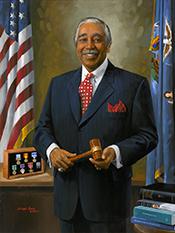
Mr. Speaker, no matter which way we voted on the war resolution, I think we all come together hoping that we have a package for those heroic people that fought the war in the Middle East, and that…
Mr. Speaker, no matter which way we voted on the war resolution, I think we all come together hoping that we have a package for those heroic people that fought the war in the Middle East, and that when they come home that we will be able to treat them as heroes and have a veterans package for them.
One would think, however, since we have not the slightest clue of how long
the occupation is going to take, where we will have to go next in the region, what the total price is going to be to have democracy installed in Iraq, that before we even think about borrowing money and having a tax cut, that we would wait and see in a rational way what would be the cost to the United States of America.
It is true we have no friends to go to to help pay for the cost of the war, and we do not even know how long this is going to continue, notwithstanding the fact that we call a victory; but I think that in the short run what we are talking about is that the majority in this House really does not want to see this great Republic provide any public service.
They have advocated eliminating corporate taxes altogether. They have advocated letting Medicare just turn softly, slowly in the wind. They have advocated privatizing Social Security; and at the end of the day, they will tell you that these would be the responsibilities of the State and local government. But ask the Governors and ask those in the States how they treated them in this budget. Ask the local community, the firemen and the policemen how are they treated.
They will do anything and say anything in order to say at the end of the day nobody pays taxes except the working people. They fight our wars, they pay our taxes; but the wealthy at the end of the day are the recipients. Is this what we call shared sacrifice? I think not.
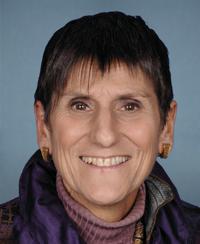
Mr. Speaker, this is the most irresponsible budget in our Nation's history. It adds almost $6 trillion to the public debt, with $1.2 trillion in tax cuts for the wealthiest Americans. It will do…
Mr. Speaker, this is the most irresponsible budget in our Nation's history. It adds almost $6 trillion to the public debt, with $1.2 trillion in tax cuts for the wealthiest Americans. It will do serious, long-term damage to our economy, compromising our ability to address the most serious challenges facing us.
For the third year running, the Republicans are proposing a budget that lays the groundwork for increasing the deficit while again failing to stimulate the economy. Time and again, Republican budgets offer tax cuts and promise economic growth, yet all we have to show for it is a net loss of 2.6 million jobs, a stock market that has fallen by $4.6 trillion, and consumer confidence that has dropped to its lowest level in nearly a decade.
A responsible budget provides hope, it lifts people up, it gives us a blueprint for our future, a view of our government's priorities. But this budget lets the people of this country down. The Republican leadership puts massive tax cuts ahead of the interests of the American people. This budget does not reflect our values, our priorities as a Nation, a Nation at war.
The Republicans pay for these tax cuts on the backs of disabled veterans, college students and children. It places massive unfunded mandates on our States at a time when our States are facing the worst fiscal crisis since World War II. This budget flies in the face of all that we believe, all that we ought to be dealing with as a Nation because budgets are about choices.
I believe that the current budget resolution does not deal with the issues that are a priority in this country. This Republican budget reflects the wrong values and the wrong priorities for America, and I urge my colleagues to vote against it.
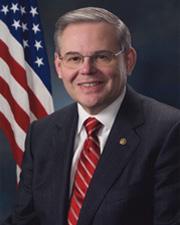
Mr. Speaker, as Thomas Jefferson notes in Jefferson's Manual, ``The minority in any legislative body looks to the rules of that body as its best and often only defense against the potential tyranny…
Mr. Speaker, as Thomas Jefferson notes in Jefferson's Manual, ``The minority in any legislative body looks to the rules of that body as its best and often only defense against the potential tyranny of the majority.''
Tonight, Republicans have corrupted this House with a process that in the darkness of night raises the national debt to nearly $12 trillion, ensures that every American family ends up with a debt tax of over $8,000, has a budget that bleeds red as far as the eye can see, and that budget that began bleeding red well before September 11, and ensures that their tax dollars go not to invest in our people and health care and education and taking care of our veterans, but, no, goes to pay interest on this debt that you continue to raise. That is the real waste, fraud and abuse that you should be talking about.
Imagine deciding on $2.2 trillion, when Members have been given only an hour before debate begins. Only in Washington would Republicans say to American families that this is prudent. What American family makes major financial decisions in their life in the middle of the night at midnight when their whole future is at stake?
This corrupt process that will cut $6.2 billion in veterans' health care over the next 10 years, is there no shame, as we have men and women halfway around the world fighting for us and for democracy, that in this hallowed hall of democracy a system is so corrupt that we are going to make major decisions about each and every American family for the rest of their lives.
Vote no against the rule. It is ultimately the opportunity to preserve America's future and the intergenerational responsibility that this Republican majority has forfeited for the next generation.
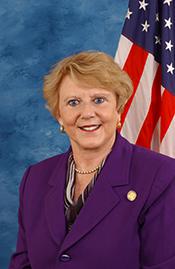
Mr. Speaker, the budget that we have before us today is one that we should all be proud of. What we are doing is, we are keeping our promise on education aid. Education aid is up, over 6 percent over…
Mr. Speaker, the budget that we have before us today is one that we should all be proud of. What we are doing is, we are keeping our promise on education aid. Education aid is up, over 6 percent over the 2003 level. Pell Grants are up 12 percent.
And, Mr. Speaker, particularly in my district, where I have a large number of veterans, it is very important that the veterans understand that we are $6.2 billion over the fiscal year 2003 figures. That is a 10.7 percent increase. And in discretionary spending, which is health care, where there is a long wait in my State on Priority 8, where veterans are having to wait up to 18 months for service; we are increasing that amount by 12.9 percent.
We are keeping our promise on education. We are able to provide the veterans benefits that are necessary, and we also are making sure that the uninsured at least have a start and a chance at having some insurance.
Children's health care, which is very important in every single State, whether it is called SCHIP in some States, or we called it KidCare, it is up by $14 billion, a 9 percent increase.
Sure, we had to postpone when we balanced the budget to 9 years, but we are at war, we have a downturn in the economy, and this budget answers what I believe the majority of the constituents in the State of Florida absolutely need. What it does is it also protects Medicare and puts additional funding into Medicare of 7.7 percent more.
That is a responsible budget, and that is one that I can go home very proudly and tell people that these are the figures that we have in our budget while still insisting that every agency go after fraud, waste and abuse. That is responsibility, my colleagues.
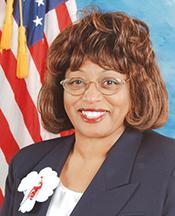
Mr. Speaker, I rise in strong opposition to this unfair rule. Once again, the Republican Party is slamming their agenda through this Congress with little debate late at night. Mr. Speaker, you can…
Mr. Speaker, I rise in strong opposition to this unfair rule. Once again, the Republican Party is slamming their agenda through this Congress with little debate late at night.
Mr. Speaker, you can tell something about a country's priorities by how they spend their budget. As we can see from the Republican Party's budget, they do not see children, the poor, the hard-working people of this country, minorities, health care, education, or veterans as important. To begin with, our Nation's veterans, on the same day that this House voted to commend our troops in Iraq, the Republican leadership pushed through a budget that cut the VA budget by $30 billion.
Who else is the victim of this Republican budget?
This administration's tax-cutting plans have ruined our economy and have helped push African American unemployment up by 10.5 percent, and our country's poverty rate has gone up while the median income has gone down.
This budget is also bad for public housing. HUD is slated for a huge cut, including plans to slash section 8 vouchers that help millions of low-income residents to pay their rent. They plan to zero out HOPE VI. This list goes on and on and on.
I want to conclude by adding that it should not be a surprise to anyone that this administration has not fully funded election reform. Their proposal falls nearly $1 billion short from the amount authorized in the Help America Vote Act. In the end, the Republican Party does not want election reform. They are just fine with the 2000 election results since they came out on top, even though they did it by stealing with the help of colleagues from Florida. Wake up, America. Wake up. It does matter who is in charge.
Mr. Speaker, I wish we could avoid speaking untruths on this floor. As the gentleman from Iowa (Mr. Nussle) knows, the Blue Dog budget balanced without using Social Security in 2013. The budget you…
Mr. Speaker, I wish we could avoid speaking untruths on this floor.
As the gentleman from Iowa (Mr. Nussle) knows, the Blue Dog budget balanced without using Social Security in 2013. The budget you have on the floor tonight will not balance without
using Social Security by 2013. You will not come within $300 billion.
And to the last speaker from Florida, you cannot borrow and spend your way to prosperity, either. That rhetoric, that dog, will not hunt. You are going to borrow $984 billion. Under your budget, you are going to borrow more money in the last year than we borrowed in the first 205 years of this country. We cannot borrow and spend our way to prosperity, either.
Announcement by the Speaker Pro Tempore
Mr. Speaker, I would appreciate if the gentleman from Iowa (Mr. Nussle) would listen, and if the gentleman disagrees, to disagree with me again. If the gentleman looks at the Blue Dog budget, we would have $1.8 trillion less deficit over 10 years and $120 billion less deficit next year.
I yield to the gentleman from Iowa.
The debt limit for next year, everybody increases the debt limit for next year. The reason we do it is because the budget you voted in place in 2001 and 2002 has dug us this hole. We are suggesting in the Blue Dog budget to stop digging the hole deeper. We have got to stop digging the hole deeper. You want to keep digging it deeper and deeper and deeper, but you misrepresent totally the Blue Dogs because we do not spend one dime more than you propose spending in your budget tonight. We also have $1.8 trillion less debt over the 10 years, and $120 billion next year. That is not small potatoes.

Mr. Speaker, I thank the gentleman for yielding time to me. Mr. Speaker, a close read of this conference report provides for transportation infrastructure programs, little more than the status quo,…
Mr. Speaker, I thank the gentleman for yielding time to me.
Mr. Speaker, a close read of this conference report provides for transportation infrastructure programs, little more than the status quo, $41.7 billion for the coming fiscal year. If that is what the majority is presenting to us, this report does nothing to begin to address the needs of highway and transit systems at a time when we have huge unmet safety and security needs, congestion is crippling our city, the economy has lost 2.5 million jobs.
On a closer reading, though, there is a curious anomaly in the budget resolution's contingency procedure for surface transportation. Section 411 of this conference report provides contract authority for TEA-21 reauthorization for each of fiscal years 2004 through 2009. For amounts above the levels specified for those years, Congress must pass legislation to increase receipts to the highway trust fund such as increasing the purchasing power of the user fee.
If we pass such a highway user fee increase, the Committee on the Budget chairman, according to the language I have read, may increase the budget allocation to our committee. However, under the conference report before us, the chairman can increase that allocation only for years 2004 through 2008. No increase for 2009, even if we increase the user fee to provide for that additional infrastructure investment. That means you get no benefit from the increase in funding that our committee might enact.
I do not think that that is what the Republican majority intended, Mr. Speaker; and I hope you are not going to vote for it.

Mr. Speaker, on the very day that our young men and women in uniform saw the fruits of their sacrifices in the faces of cheering Iraqis, the majority party in this Congress will vote to saddle their…
Mr. Speaker, on the very day that our young men and women in uniform saw the fruits of their sacrifices in the faces of cheering Iraqis, the majority party in this Congress will vote to saddle their generation with $4 trillion in debt. Tonight, my colleagues will charge these young patriots with the burden of paying for the war they so willingly and valiantly fought.
While America's finest risk their lives and sacrifice for our country, the Republican leadership tells the rest of America, your contribution to the call of duty will be to get $700 billion in tax cuts that will be paid for by the generation of young soldiers who fight in Iraq tonight.
Never in the history of this Nation have we been at war and refused to ask every American to join in the sacrifice. Instead, our Republican majority turns a blind eye to the $25 trillion unfunded liability in Social Security and Medicare, they turn a blind eye to future national and homeland security needs of this Nation, they weaken our ability to respond to future threats by disarming our fiscal strength, and they rush headlong down the path of higher interest rates, dwindling national savings, and burdensome debt.
Cast a vote tonight for the generation that has made us proud in Iraq today. Vote ``no'' on the Republican budget.
Bill Text
2 versions available
        [Congressional Bills 108th Congress]
[From the U.S. Government Publishing Office]
[H. Res. 191 Engrossed in House (EH)]

In the House of Representatives, U.S.,

April 11 (legislative day, April 10), 2003.
Resolved, That upon adoption of this resolution it shall be in order to
consider the conference report to accompany the concurrent resolution (H. Con.
Res. 95) establishing the congressional budget for the United States Government
for fiscal year 2004 and setting forth appropriate budgetary levels for fiscal
years 2003 and 2005 through 2013. All points of order against the conference
report and against its consideration are waived. The conference report shall be
considered as read. The conference report shall be debatable for one hour
equally divided and controlled by the chairman and ranking minority member of
the Committee on the Budget.
Attest:

Clerk.