To express the sense of the House of Representatives that the Federal Communications Commission should not revise its media ownership rules without more extensive review and comment by the public.
Legislative Activity
Stay on top of the latest movement without scrolling through every action
Referred to the Subcommittee on Telecommunications and the Internet.
May 9, 2003
View full timeline
Introduced in House
May 6, 2003
Referred to the House Committee on Energy and Commerce.
May 6, 2003
Referred to the Subcommittee on Telecommunications and the Internet.
May 9, 2003
Floor Debate
6 membersWhat members said about H.Res. 218 on the floor
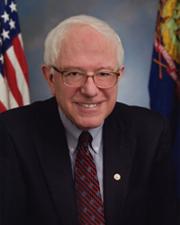 BS
BS JDS
JDS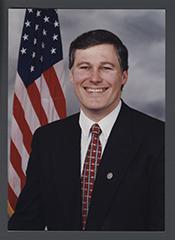 JI
JI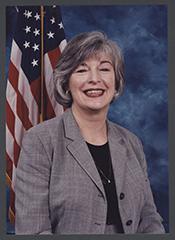 LCW
LCW DEW+1
DEW+1
Floor Debate
6 membersWhat members said about H.Res. 218 on the floor
Mr. Speaker, in my view the issue that I and some of my colleagues are about to discuss, which is concentration of ownership in the media and the implications of more media deregulation as proposed…
Mr. Speaker, in my view the issue that I and some of my colleagues are about to discuss, which is concentration of ownership in the media and the implications of more media deregulation as proposed by the Bush administration and FCC Chairman Michael Powell, is one of the very most important issues facing this country. One of the ways that we can know how important this issue is is precisely by how relatively little media attention has been paid to it. The growing concentration of corporate ownership of media in the United States is in fact one of the least discussed major issues in this country because the media itself is in a major conflict of interest and chooses not to discuss it.
As bad as the situation is today, and when we examine this chart we will find out how bad it is, how few major multinational conglomerates like Viacom, AOL Time Warner, Disney, Clear Channel, News Corporation and a few others, to what degree a few major corporations control what we see, hear and read, as bad as it is, it is likely to become much worse, much more dangerous for the future of democracy in this country if, as is proposed on June 2, the FCC votes for further media deregulation, regulations that have been on the books for years to protect localism, to protect diversity of opinion, to protect the clash of ideas.
Needless to say, there are many people and many organizations all across this country regardless of political orientation who are strongly opposed to changing these regulations and who do not want to see more media consolidation in this country. Millions of Americans do not want to see the handful of corporations who determine what we see, hear and read become three, become two, become one perhaps as a result of mergers and takeovers. These groups range across the political spectrum from progressive groups to conservative groups. According to the Associated Press yesterday, and I quote, ``The National Rifle Association joined the ranks of consumer groups, musicians, writers and academics who oppose easing the restrictions.
``The NRA asked its members to write Powell,'' that is the FCC Chairman, ``and lawmakers in support of the existing rules, said Wayne LaPierre, the NRA's executive vice president.'' Quote from Mr. LaPierre: ``These big media conglomerates are already pushing out diversity of political opinion.''
Further, we have heard recently from organizations representing black broadcasters and Latino broadcasters. We have heard from musicians. We have heard from a wide spectrum of people who say what America is about is freedom, and we cannot have freedom if we do not have a clash of ideas. And it will be very dangerous for this country when a tiny number of multi-multibillion-dollar international conglomerates own virtually all of our newspapers, all of our radio stations, all of our television stations, all of our book publishing companies, all of the companies that produce the films that we observe.
At issue now is the FCC's review of rules that seek to protect localism so that back home they will have local news, that there will be a local radio station telling them what is going on in their community, that will preserve competition and diversity. These rules, among other things, currently limit a single corporation from dominating local TV markets. Do people want to live in a community where all of the local television stations are owned by one company? These rules that we have in place right now will prevent the merging of local television stations, radio stations, and a newspaper. Do people want to live in a community where one company owns their local TV station, owns the newspaper and owns radio stations? Do they think they are going to hear different points of view when that happens?
These regulations deal with the merging of two major television networks so that we will have just a few networks controlling all of the TV stations facing our country. Honest people might have differences of opinion on this issue, but one would think that there would be massive amounts of public discussion all over America. I can tell the Members that in my small State, the State of Vermont, which is one of the smallest States in this country, we recently had a town meeting on this issue, and 600 people came out to hear FCC Commissioner Michael Copps talk about that issue. We should be having town meetings like that all over America, and in my view and in the view of many of us in Congress, the FCC should delay making any decisions on June 2 and let the American people get involved in the process.
Mr. Speaker, it is my privilege now to yield to the gentlewoman from California (Ms. Woolsey) who has been very active on this issue. I thank the gentlewoman for being with us.
Mr. Speaker, I thank the gentlewoman.
Before I yield to the gentlewoman of Illinois (Ms. Schakowsky), I want to just emphasize a point that the gentlewoman from California (Ms. Woolsey) just made. I think sometimes when people turn on a television or they pick up a newspaper, they say, well, a company owns this newspaper, and a lot of companies put out different newspapers, different types of television stations, and so forth and so on. What people are not aware of is the degree, the number of separate companies that one large corporation owns.
Let me start off with an example and go to Viacom. I suspect that most people have never even heard of Viacom. Who is Viacom? What is Viacom? So let me tell the Members a little bit about Viacom. Viacom is a huge multinational corporation that owns TV stations, radio stations, TV networks, and many other media outlets. For example, this is just Viacom, just Viacom. When we turn on CBS network, that is Viacom. We turn on the UPN network, Viacom. MTV, Nickelodeon, TV Land, CMT, TNN, VH1, Showtime, Movie Channel, Sundance Channel, Flick, Black Entertainment, Comedy Central. One would think they are watching different companies. They are not. That is Viacom.
They get off the TV now, drive into work, turn on the radio. There are 180 Infinity radio stations owned by Viacom.
What about local television stations? We have got the big CBS. What is about the local television stations? They must be locally owned. Wrong. We have 34 stations that Viacom owns in Philadelphia, in Boston, in Dallas, in Detroit, Miami, Pittsburgh, among other places.
They are in radio. They are in television. But at least when I go from the movies I am getting away from this corporation, right? Not quite. When we watch Paramount Pictures, it is Viacom. MTV Films, Viacom. Nickelodeon, Contentville, the Free Press, MTV books, Nickelodeon books, Simon & Schuster.
I am into music now. That is not Viacom. Wrong. Famous music publishers: Pocket Books, Viacom. Star Trek franchise; Scribner's Publishers, Viacom. Touchstone, Spelling Entertainment, Big Ticket TV, Viacom Productions, King World Productions, all one company. One company. And they say it is not enough. We do not own enough media. We need to own more media. Break down the regulations so we can own more television stations, we can own more book publishing companies, and so forth. A very dangerous trend.
Now it gives me a great pleasure to yield to the gentlewoman from Illinois (Ms. Schakowsky), clearly one of the outstanding Members of the U.S. House of Representatives.
I am assuming you were prepared to pay for that ad?
What we have now, and I think people should be aware of this, is it a bad situation when the media does not provide adequate coverage for different points of view, and that is what we are seeing. What the gentlewoman is saying is that when individuals want to buy time at the going rates, they are not even allowed to do that. That is an outrage, that is unacceptable, and we are seeing more and more of that.
If I like your point of view, you can buy an ad on my radio station; if I do not, sorry, we do not want your money.
If I could interrupt for a moment, we are a Nation which, as I think everybody knows, is pretty equally divided. The last election, Mr. Gore and Mr. Nader received somewhat more votes than Mr. Bush and Mr. Buchanan. Congress is almost equally divided. The Senate is almost equally divided. Polls show a certain number of people are Democrats, an equal number are Republicans, and you have a lot of independents out there. This is not an extreme right-wing country. It just is not.
I would ask people to think for a moment about the phenomenon of talk radio. In a Nation which is divided pretty equally politically, people on the left, people on the right, let me just mention the folks who are on talk radio: Rush Limbaugh, G. Gordon Liddy, Oliver North, Sean Hannity, Armstrong Williams, Blanquita Collum, Michael Savage, Neil Boorts, Bob Grant, Bob Dornan, Michael Medved, Michael Reagan, Matt Drudge, Laura Schlesinger, Don Imus, Michael Graham, Ken Hamblin, Laura Ingraham, and many, many others.
What do they have in common? They are all extreme right wing.
And now let me read you the names of the progressive voices.
That is it. There are not any. There are not any. Liberal voices, virtually none.
Now, how come in a Nation in which more people voted for Gore than for Bush, there are no national voices speaking for working families, speaking for the middle class, speaking for the environment, speaking for women's
rights? No voices. I am not talking about a minority; I am talking no voices.
Is that an accident? Well, as the gentlewoman from Illinois (Ms. Schakowsky) was saying, I do not think it is an accident. I think one has to be very naive not to see the connection between the large corporations who own the media, their desire for lower taxes for the rich, their desire to take American jobs to China, where people are paid 20 cents an hour, their anti-unionism, their lack of respect for the environment, and the fact that talk radio is dominated by these right wing forces.
Mr. Speaker, I thank the gentlewoman for all of her efforts on this issue. I think her appeal is exactly right. Why should the American people not be able to participate in this debate?
Mr. Speaker, it is my pleasure to yield to the gentleman from Washington (Mr. Inslee).
Mr. Speaker, after being begged to do that.
Mr. Speaker, if I might, I would mention to my friend that the FCC has a Web site that people can currently e-mail to, and the overwhelming majority of people who are contacting the FCC are saying, do not go forward with more deregulation, which I find interesting. And the gentleman's point is well taken. I think that there would be tens of thousands of people from California to Maine coming out to these hearings if they had the courage to meet the people rather than just talk to the big corporate bosses.
Mr. Speaker, before I yield to the gentlewoman from California (Ms. Watson), I want to touch on another aspect of this. People may say, well, this is outside the Beltway. Maybe Members of Congress are complaining, they did not get a good story, they are angry about their lack of courage. That is not the issue here.
The issue here is that in a democratic society, we do not know what goes on unless all issues of importance are discussed. It is not whether somebody gets a good story or whether they are on TV or not; it is whether whole segments of American life get the discussion that they need.
Now, we know, we know that we have seen everything that we ever wanted to see about Michael Jackson, about all the other scandals that we have heard about. But here is an issue that gets very little discussion.
We have been told that with all of the explosion of technology, with the global economy, with the use of computers and e-mails and faxes, what we are told, which is true, is that the productivity of the average American
worker has substantially increased. That is the good news. The bad news is that the tens of millions of Americans today, despite the increase in productivity, are working longer hours for lower wages. The reality is that in America we have lost several million jobs, decent-paying jobs in the last few years because of a disastrous trade policy where companies are throwing American workers out on the street and running to China. Have we seen much discussion about that on the TV? in the newspapers? I do not think so.
The reality is, the middle class in this country is shrinking. The rich are becoming richer. The richest 1 percent own more wealth than the bottom 95 percent. How does that touch into the media? What the media does, to a large degree, is deflect attention. Here is a scandal, we hope you get involved. Here is a ball game, maybe you are interested in that. But do not worry if your job goes to China; do not worry if the minimum wage has not been raised in years and you are making $5.15 an hour. You do not have to worry about that. Do not worry if a pharmaceutical company has contributed tens of millions of dollars to the Republican Party so you end up paying the highest prices in the world for prescription drugs. You are too dumb to worry about that. We have another scandal for you.
So the issue does relate to the lives and well-being of every American in our country. We have a right. We are not stupid people. We believe in democracy. We understand honest people have differences of opinion, but we want to be able to discuss the most important issues facing the middle class, facing working families. And we are not able to do that because of the enormous conflicts of interest that exist between these very, very large corporations.
And I thank the gentleman for his efforts.
Mr. Speaker, the gentlewoman from California (Ms. Watson) is courageous and active on this issue, and I thank her for being with us.
Mr. Speaker, I want to pick up on a point that the gentlewoman made. She mentioned Clear Channel; and some people say yes, well, Clear Channel is a radio network, but they are much more than a radio network. And the point that I am trying to make and that all of us have been trying to make today, getting back to this chart, is that a handful of giant media conglomerate corporations are owning more and more of what we see, hear, and read; and this is not what a democracy is about.
I would remind my colleagues in Congress and all Americans that in the last days of the Soviet Union, which was a totalitarian society, people thought, well, I guess they had one newspaper and one television network, and that was it. It was a totalitarian society. That is wrong. There were dozens and dozens and dozens of different newspapers, different magazines, different television stations, all over the totalitarian Soviet Union. The only problem was that all of those television stations, radio stations, newspapers, and magazines were only controlled by either the government of the Soviet Union or the Communist Party. Many, many different outlets, but limited ownership. What we are seeing here is many, many outlets and increasingly fewer owners.
Let me say a word about News Corporation; people probably do not know. What is News Corporation? Well, it is owned by a gentleman named Rupert Murdoch, who was born in Australia, part of a newspaper publishing family in Australia. News Corporation today owns much of the media in Australia. Big deal. Well, they also own much of the media in the United Kingdom. They own a lot of the media in Eastern Europe. They are increasingly owning more media in China. And guess what? They already own a whole lot of media
and other companies in the United States, and they want more.
So what you are looking at is one man who happens to be a right-wing billionaire controlling huge amounts of media all over the entire world, which makes him, in fact, one of the most powerful people in the world.
In the United States, news corporations owned by Mr. Murdoch, 22 television stations, including stations in New York, Los Angeles, Chicago, Dallas, Washington, Minnesota, Houston, Orlando and Phoenix. He owns the Fox Broadcasting Network. He owns Fox News. He owns Fox Kids, Fox Sports, the Health Network, the National Geographic. He owns TV Guide. He owns the TV Guide Channel. He owns Fox Sports, radio, the Golf Channel. He also is not content with broadcast media. He happens to own the New York Post. And this is really a small number of what he owns. He owns the Times in London, one of the leading papers in the United Kingdom. He owns the Sun in the United Kingdom, one of the large circulation tabloids there. He owns the News of the World. He owns the TV Guide Magazine in the United States. He owns a conservative magazine called the Weekly Standard.
But that is not all that he owns. He owns Harper Collins, one of our major publishing houses. He owns Regan books. He owns Amistad Books. He owns William Morrow and Company. That means if you want to get a book published, you have got to go through these guys.
Not only that, he has tremendous impact on sports in America. People say, I do not care about books, but I really am interested in sports. Well, he happens to own or at least be part owner of the Los Angeles Dodgers, the Los Angeles Kings, the Los Angeles Lakers, the New York Knickerbockers, the New York Rangers.
Well, I am not interested in sports, but I am interested in music. He owns Festival Records. He owns Mushroom Records, and he owns much, much more.
Now, the point here is it is not just Mr. Murdoch and news corporations. I have talked about Viacom before. It is not just AOL- Time Warner. It is not just Disney. It is not just Clear Channel. It is a handful of corporations that control more than you think they do, and the end result of that is that entire issues of great concern to the American people are not discussed at all because these guys really are not interested in discussing it.
I read recently that Mr. Bush's proposal for $720 billion in tax breaks is gaining support in America. Well, I can see why: Because there has been relatively little opportunity in the media for those of us who disagree, who think that it is a bad idea that the richest \1/10\ of 1 percent get as much in tax breaks as the bottom 89 percent. How many people know that? How many people know that as a result of that budget, there will likely be cutbacks in Medicaid, Medicare, veterans needs, education, environmental protection? Because if you give away all of that money, you will have less for the needs of working families and the middle class.
How many people know that if you do that huge tax break, you are going to end up with a $10 trillion national debt that we are leaving to our kids and our grandchildren? Not a whole lot of discussion about that because Mr. Murdoch and the guys who make tens of millions of dollars a year want tax breaks for the rich. They want the American taxpayer to subsidize them, to give them billions of dollars in corporate welfare.
Do you think General Electric, which owns NBC, is going to be talking about all the welfare that General Electric gets through its nuclear power efforts? Maybe, but I do not think so. Do you think that General Electric, which owns NBC, will be talking about all the jobs that GE destroyed in the United States, all the American workers they threw out on the street as they moved to Mexico and China? I do not think so.
So this issue is not some kind of inside-the-Beltway abstract issue. It gets to the heart and the soul and the core of what America is about, and that is if we are to remain a democracy where honest people have honest differences of opinion, we have got to get all of the information. We cannot have a handful of conglomerates who have their own special interests determining what we see, hear and read. And that is why, just to recapitulate what all of my colleagues who have been up here have said, it is enormously important that on June 2 the FCC does not go forward and further deregulate the media so you will end up with even an even smaller number controlling what we see, hear and read.
At the very least, Mr. Powell has got to stop the process. He has got to have public hearings all over America. We need studies to understand what this will mean, what more deregulation will mean to the quality of American democracy, what it will mean to the ability of communities to get local news, what it will mean to small businesses and the ability of small businesses to function within the media area.
This is an enormously important issue. I would hope that anyone who needs more information about this can go to my website at Bernie.House.gov.
I hope that more people will get involved in this extremely important issue. I want to thank all of the Members of Congress who have been here today.
Mr. Speaker, I thank the gentleman from Vermont (Mr. Sanders) for giving me this opportunity because it is not every day that we get to come down to the floor of the House and defend the essentials…
Mr. Speaker, I thank the gentleman from Vermont (Mr. Sanders) for giving me this opportunity because it is not every day that we get to come down to the floor of the House and defend the essentials of our democracy, to talk about defending the Constitution of the United States, the first amendment, freedom of speech, freedom of the press.
It is the very core values of this country that we are talking about today. This is definitely the most important telecommunications issue of our time and, more than that, whether or not ordinary people are going to have access to divergent views. This is a value that our country has embraced from its beginning that we should have the opportunity to hear different voices, to get different opinions and make up our own mind.
So I am here today to call on Federal Communications Commission, its Chairman Mr. Powell, and President Bush to listen to the American people,
to support media diversity and localism, and to not allow even more concentration of the media.
The Bush administration and the FCC have tuned out public voices and tuned in Rupert Murdoch. I suppose the gentleman will probably talk about him, and media barons, because people need to know who is controlling the messages that they hear when they want to get the news, when they want to know what is going on in the world and in our country.
People in my district and around the country are demanding that the FCC hear their voices. That is why just last week the Chicago City Council unanimously approved, by a vote of 50 to 0, a resolution that urges the FCC to strengthen existing media ownership rules, not to weaken them.
Today and yesterday I received 1,000 e-mails from my constituents. I am going to read one of them:
Dear Congresswoman Schakowsky, Congress shall pass no law
restricting the right to free speech. Letting one big
business control all available news organs for any locality
is a monopoly. Since when do corporations have a right to
control our free speech? Since when do their rights trump the
average citizen's? Is the Bush administration trying every
means conceivable to control our means of debate dissent?
I urge you and your colleagues in Congress to promote a
diverse balance and competitive media. Please stop the FCC
rule change on June 2nd.
We allow media companies to use the airwaves in exchange
for their assurance that they are serving the public
interest, and it is the FCC's job to make sure that is so.
Please hold the FCC to its mandate and oppose the rule
change.
This is from one woman in my district. But imagine now two full reams of paper from individuals in my district with the very same message. They are sounding the alarm.
A free and open media is essential to our democracy. It promotes civic discussion, encourages public participation and policy debates, ensures representation of ideological, cultural and geographic diversity. I cannot overstate the importance of the FCC's review of media ownership rules in deciding whether the principles of the first amendment will be embraced in everyday reality, or only in theory.
Media ownership concentration is already a major threat to our democracy. In the last 25 years, the number of TV station owners has declined from 540 to 460, and the number of TV newsrooms has dropped almost 15 percent. Three-quarters of cable channels are owned by only six corporate entities, four of which are major TV networks. Seventy percent of all markets have four or fewer sources of original TV news production. In 1965, there were 860 owners of daily newspapers. Today there are less than 300.
The Supreme Court has maintained that the first amendment is designed to achieve the widest possible dissemination of information from diverse and antagonistic sources. Media ownership diversity is critical to ensuring that we protect the first amendment. Over the years, the courts have supported the belief of Congress that independent ownership of media outlets results in more diverse media voices, greater competition, and more local content.
Over the last few years, we have seen considerable ownership consolidation in the media, while, at the same time, we have seen important public interest protections eliminated. For the first 50 years after the enactment of the 1934 Communications Act, people had a right to petition the FCC if they found coverage to be one-sided. We called that the Fairness Doctrine. It required broadcasters to cover issues of public importance and to do so fairly, until, in 1987, under immense pressure from the media, it was eliminated.
Eliminating the law of the Fairness Doctrine, a major blow to consumers, was supposed to be alleviated by a blossoming of independent local outlets that would expand diversity by increasing competition. In other words, consumers would no longer be able to use the Fairness Doctrine to ensure that their views were represented on a specific media outlet, but the thought was we would be able to present those views through competing media in the same market.
Unfortunately, the public is now faced with increased concentration, not increased competition, and no longer has the Fairness Doctrine to fall back on. The FCC should reinstate the Fairness Doctrine. At the very least they should not even allow more ownership concentration that makes the loss of the Fairness Doctrine more onerous. Greater media ownership concentration limits the public's access to diverse viewpoints.
Radio provides an example of what can happen when media ownership rules are abolished. In 1996, Congress eliminated the national ownership caps for radio. The result? Greater consolidation in the radio industry. In almost half of the largest markets, the three largest corporations control 80 percent of the radio audience. This has made it harder for diverse opinions to be heard.
Just last month, Clear Channel refused to air an advertisement in which I was inviting people to an event that was organized for people who opposed the war in Iraq. It was a gathering, and I wanted a commercial to air on the radio to see if people wanted to come. Clear Channel refused to put that advertisement on the air.
Absolutely. This was a paid-for ad.
That is exactly right. This was not a public service announcement. This was not asking a favor of the radio station. This was we want to buy an ad that invites people to a public gathering on the issue of most importance in the country at the time, and we were not able to buy that ad. They would not sell it to us, even as its affiliates were organizing pro-war rallies around the country on the air.
Yesterday, as has been pointed out, 11 Members of the United States House of Representatives, the Democratic whip, the Democratic leader of our caucus, the gentleman from Vermont (Mr. Sanders), who has been organizing around this issue of media concentration, an expert on the subject, held a press conference, and nobody came. There was not one TV camera, not one radio station. Two small print outlets came, we are grateful to them; but clearly, a decision was made not to cover this. And I want to challenge those media giants who did not come to explain how that blackout was not motivated by a conflict of interest.
If I could just add, here is the final request I have, and it is so simple, that the Federal Communications Commission, before it makes a decision on June 2 to allow even greater concentration, would travel around the country and hold more public forums, listen to the people, give an opportunity to the 1,000 people that wrote to me and the thousands and millions more who want to participate in this decisionmaking, let their voices be heard.
Finally, I want to say, let us consider, and I hope pass, House Resolution 218, offered by the gentleman from New York (Mr. Hinchey), which calls on the FCC not to weaken current ownership rules that protect media diversity, and also calls on the FCC to better examine and inform the public about the consequences of further media concentration and allow the public to comment on any proposed changes. This is the least we can do to protect freedom of speech.
Mr. Speaker, I thank the gentleman for letting me join him. I think this is perhaps one of the most important and least talked about issues in American democracy during this Congress, and it is…
Mr. Speaker, I thank the gentleman for letting me join him.
I think this is perhaps one of the most important and least talked about issues in American democracy during this Congress, and it is fascinating to me that an issue that has such large ramifications, has such a bearing on Americans' ability to know what is going on in their government and their world, is such a closely held secret from the American people. The reason it is a closely held secret is it is not reported in the media.
This is one of the most important, contentious issues. This should make great fodder for TV talk shows and radio talk shows and newspapers. It ought to sell a lot of newspapers because it is contentious. Yet there is a blackout on this subject for the American people, and that is why I want to thank the gentleman for doing this Special Order to talk about it.
The reason I came to the floor this afternoon is I think it strikes at the very heart of a basic American value. There are five values actually inscribed on the bar of the House right behind the gentleman from Vermont (Mr. Sanders). I can read them. They are Union, Justice, Tolerance, Liberty, and that is the one that is in question here, is the liberty interests of Americans, because you cannot have liberty or democracy if you do not have multiple sources of information.
Clearly, when the rules were amended years back to allow further consolidation in the industry, guess what you got? You got further consolidation in the industry. It is not exactly rocket science that will be required to predict the results if the FCC allows this further deregulation of the industry. If they do allow further consolidation in the industry, you will have further consolidation in the industry, and when you have further consolidation in the media industry, you have fewer real choices to get access to diverse opinions. Republican, Democrat, up or down, left or right, tall or short, you will have less real choice.
Let me say why that has been borne out in real practice. Some of the people who have advocated for this change, to allow further consolidation in the industry, to allow the bigger to get bigger and swallow the smaller stations, have suggested that because, for instance, there are a lot of radio stations out there, that in fact there is no damage to the value of liberty and diverse opinions.
But they forget one very central fact: when you want to know whether there is diverse opinion in the media, you have to follow a rule, and that rule is this: follow the money. You might have 10, 15, 100 radio stations; but if they are all owned by the same corporation or individual, you do not have 100 voices. You have the same person with 100 megaphones.
Does that help American democracy? Does that help diverse opinions? No. It centralizes it. It reduces the number of voices that America has, and that is exactly what the empirical evidence has shown.
Since the last effort to allow consolidation in the industry, we have 34 percent fewer owners of radio stations. Now, it is of academic interest how many stations we have; but we have fewer voices because we have fewer owners of radio stations, and we have fewer views on the spectrum of political thought and historic thought and spiritual thought than we should have, because we allowed more consolidation, and we got more consolidation; and we have less liberty interests as a result because there are fewer voices in the spectrum to be heard.
Now, I want to say just one more thing, and then I will yield to the gentleman from Vermont (Mr. Sanders).
To me, a taste of what is coming in the media we have in what we got from the FCC, which is a blackout. Because here we have this incredibly important rule to American democracy, and what did the FCC do? What did they do? They are supposed to be working for us. They held one hearing in Virginia.
After being begged by multiple people, they held one hearing 2,500 miles from my district.
Mr. Speaker, the Forest Service, by contrast, when they considered the roadless rule, which is another important rule, they held six hearings, multiple hearings in Washington. This is under the cover of darkness. This avoids sunlight, which is the best anecdote to any virus of political thought; and it is a rotten shame the FCC has to do this under the cover of darkness.
Mr. Speaker, if I may report from Seattle what happened, two courageous members of the FCC came out and were willing to listen to citizens on their own time a few months ago; and over 300 people, I think, turned out, once we got a little bit of the news out. We did not have much cooperation from the media, of course, who about 99.9 percent of them in the audience were very, very concerned about this further consolidation. And I think that voice is an overwhelming one across America.
Mr. Speaker, if the gentleman will yield, just one more quick point. This is an issue that ought to unite Republicans and Democrats. It really should. I know the gentleman from Vermont (Mr. Sanders) has talked about talk radio. But I just believe, no matter whether you are vanilla or chocolate or Neapolitan here, you ought to stand up and say that it is not healthy when America has 20 or 30 percent less TV stations and half as few newspapers. This should be an all-American, bipartisan statement that America deserves diverse opinions so that they can make decisions and do not have to trust just one.
Mr. Speaker, I thank the gentleman for his efforts.
Mr. Speaker, I thank the gentleman for yielding. Mr. Speaker, I am here today to join my colleagues and to thank the gentleman from Vermont (Mr. Sanders) for pulling this evening together so that we…
Mr. Speaker, I thank the gentleman for yielding.
Mr. Speaker, I am here today to join my colleagues and to thank the gentleman from Vermont (Mr. Sanders) for pulling this evening together so that we can speak out against a threat to America. It is not a threat to American lives, but a threat to American values. It is a threat to everything that this Nation stands for, every principle that this Nation was founded on, and every memory of every soldier that has fought and died or been harmed for the free exchange of ideas.
Today bureaucrats of the FCC and the overwhelming complacency of this Congress threaten that freedom. This past Monday I hosted a forum in my district, which is the two counties north of San Francisco across the Golden Gate Bridge. We had a forum with Federal Communications Commissioner Michael Copps about his agency's rules on media ownership. Nearly 400 of my constituents at 1 o'clock in afternoon, packed into an auditorium at Dominican University in San Rafael, were there to declare their opinions about what the FCC rules on media ownership will mean, and their opinion was that this is extremely important. This is an issue, however, that has been underreported by the very media that will be most affected.
In fact, as proof of that very underreporting, yesterday over a dozen concerned Democratic Members of Congress held a press conference right here on the Hill on the issue of media consolidation. I suppose no surprise, but not one member of the broadcast press showed up, and until a reporter from Roll Call, our newspaper here on the Hill, came to experience a press conference without press, we did not have anybody. So we disbanded and came back in honor of the person that was there from Roll Call.
It reminds me of the cliche about a tree falling in the forest. If Members of Congress speak out about media ownership, and the media does not cover the event, is democracy already dead?
No newspaper, radio station, or TV network is perfect. Allowing single corporations to monopolize the information that average Americans receive give big corporations like Rupert Murdoch and Ted Turner absolutely too much power.
On June 2 the Federal Communications Commission has scheduled a vote on new regulations that would break down the decades-long firewall between media ownership and single markets. Gone will be the prohibition against corporations owning newspapers and TV stations in the same town or cable TV networks and TV stations in the same town. Gone also will be the limits on number of TV stations and cable stations a corporation can own nationally.
The threat of a veto by President Clinton kept these rules from being changed in 1996, but now under the Bush Administration, FCC Chairman Michael Powell and a Republican majority on the Commission that is drunk on the ideology of the free market, these changes are very likely to be approved.
It is a sham and it is a shame that in a Nation of 280 million people, the FCC has held only one official hearing on this subject, just outside the Beltway in Virginia. If it was not for the FCC Commissioners, Commissioner Michael Copps and Commissioner Jonathan Adelstein, it is really doubtful that this discussion would have gone beyond a few lobbyists and public interest activists in the first place.
Since radio ownership regulations were relaxed under the Telecommunications Act in 1996, radio ownership diversity has decreased in our Nation by at least one-third. In the San Francisco market alone, seven stations are now owned by Clear Channel Communications, seven by Infinity Broadcasting, and three by ABC.
Across the Nation 10 companies broadcast to two-thirds of the Nation's radio audience and receive two-thirds of the broadcast revenues. Hear me: Ten companies broadcast to two-thirds of the Nation's audience and receive two-thirds of the broadcast revenues. That is not okay, and it is going to get worse.
Has the quality of radio broadcasting improved because of these changes? Is there more local programming, more local news, a greater variety of programming? Is there free flow of information? Or is there censorship? Just ask the Dixie Chicks. They know what censorship is.
Power over ideas should not be subject to individuals with only ideas of profit on their mind. In America ideas are not just another commodity like butter or steel or cloth. Ideas are the lifeblood of our Nation. The FCC should be defending the free exchange of ideas, not giving corporate executives, not always too different from Enron's Ken Lay, not giving them the power to shut off the flow of ideas to American citizens.
Mr. Speaker, my colleagues and I are cosponsoring House Resolution 218 that calls on the FCC to examine and inform the public of the consequences of the new round of deregulation. It asks that the FCC allow for extensive public review and comment on any proposed changes to media ownership rules before issuing a final rule.
The least the FCC and Michael Powell can do is allow the people of America the opportunity to speak their mind about the elimination of freely exchanging ideas.
I thank the gentleman from Vermont for doing this Special Order.
Madam Speaker, this past Monday I hosted a forum in my district with Federal Communications Commissioner Michael Copps about his agency's rules on media ownership. We had nearly 400 of my…
Madam Speaker, this past Monday I hosted a forum in my district with Federal Communications Commissioner Michael Copps about his agency's rules on media ownership. We had nearly 400 of my constituents packed into an auditorium at Dominican University in San Rafael. As their attendance testified, the FCC rules on media ownership is an extremely important issue and an issue that, unfortunately, has been underreported by the very media that will be most affected.
In fact, as proof of that, as proof of underreporting, today, just an hour or so ago, over a dozen concerned Democratic Members of Congress held a press conference on this very issue, the issue of media consolidation, and not one member of the press showed up, until, that is, a member of Roll Call, our newspaper here on the Hill, came to experience a press conference without press. We were glad that that individual showed, but that was as far as it went.
So, what is this all about? Well, on June 2, the Federal Communications Commission has scheduled a vote on new regulations that have the potential to drastically change the face of broadcasting and newspaper ownership, and, in so doing, the flow of free information.
First, the proposed changes to FCC rules would break down the decades-long firewall between media ownership in single markets. Gone will be the prohibitions against corporations owning newspapers and TV stations in the same town, or cable TV stations and TV stations in the same town. Gone also will be the limits on the number of TV stations and cable TV stations a corporation can own nationally. Also allowed would be cross-ownership of print media and broadcast media in the same media market.
In the 1996 Telecommunications Act, similar rules were proposed, but they were stopped by the threat of a veto by President Clinton. Now, under the Bush administration, the FCC Chairman, Michael Powell, who is an avowed free marketer, has said that these proposed rules should come back. Chairman Powell has scheduled a vote on the rule changes in less than a month, and, with a Republican majority on the Commission, these changes are pretty certain to pass.
It is a sham, and it is a shame, that the FCC has not scheduled official hearings across the Nation like the official one that Commissioner Copps and I hosted Monday in my district. The FCC has held only one, only one, official hearing on this subject, just outside the Beltway in Virginia.
If it was not for FCC Commissioners Copps and Jonathan Adelstein, it is doubtful that this discussion would have gone beyond a few lobbyists and public interest activists in the first place.
I am against the proposed deregulation, and I believe we should look back to the relaxation of radio ownership under the Telecommunications Act of 1996. We should use that for our guidance, because virtual elimination of radio ownership restrictions has resulted in a reduction of radio ownership by at least one-third across our Nation. In the San Francisco market alone, seven stations are now owned by Clear Channel Communications, seven by Infinity Broadcasting and three by ABC. Across the Nation, 10 companies broadcast to two-thirds of the Nation's radio audience and receive two-thirds of the broadcast revenues.
Let me say that again: Since the 1996 Telecommunications Act, 10 companies broadcast to two-thirds of the radio audience and receive two-thirds of the broadcast revenues nationwide.
Has the quality of radio broadcasting improved because of these changes? Is there more local programming, more local news, a greater variety of programming? Is there free flow of information, or is there censorship? Ask the Dixie Chicks.
Madam Speaker, my colleagues and I are cosponsoring House Resolution 218 that calls on the FCC to examine and inform the public of the consequences of the new round of deregulation. It asks that the FCC allow for extensive public review and comment on any proposed changes to media ownership rules before issuing a final rule.
Show 2 more
Mr. Speaker, on June 2, the FCC is scheduled to meet to discuss a proposal by Chairman Powell to relax regulations on media ownership. The proposal will allow large media companies to acquire a…
Mr. Speaker, on June 2, the FCC is scheduled to meet to discuss a proposal by Chairman Powell to relax regulations on media ownership. The proposal will allow large media companies to acquire a bigger share of the national market and more television stations in any given local media market. Other restrictions on cross-ownership, owning radio stations, TV stations, and newspapers in the same local market will also be lifted.
Many of us here in Congress are concerned that the rule changes proposed by Chairman Powell have not been properly vetted for public and congressional comment and that their impact on minority media ownership and content could be deleterious. Minority owners and their share of the radio and television market is at an all-time low due to media consolidation during the last 2 decades. Chairman Powell's proposed rule changes could provide the knock-out blow, not only to minority ownership, but to a diversity of opinions and viewpoints that are critical to the free flow of information in a democratic society.
I am very concerned during this period of time that there is a climate that says you cannot say this, you cannot say that, you cannot dissent. It is a threat to democracy.
Now, as a Member of the Congressional Black Caucus, we are getting to Chairman Powell our concerns, because the FCC, as a Federal regulatory agency for mass media communications, has long-established rules following the 1945 Supreme Court declaration that the widest possible dissemination of information from diverse and antagonistic sources is essential to the welfare of the public; that a free press is a condition of a free society.
Over the past 2 decades, however, many rules designed to enhance diversity, competition, and localism have been weakened, creating unprecedented consolidation of media sources. For example, since the passage of the 1996 Telecommunications Act, the number of radio station owners has decreased by at least 1,100, representing a 30 percent decline. Among the remaining radio station owners, only 175 minority broadcasters owned 426 stations in 2000, or about 4.0 percent of the Nation's 10,577 commercial AM and FM radio stations. Furthermore, most of these minority owners continue to own AM, rather than FM stations, thus facing limited listenership.
Minority owners' share of the commercial television market is even more distressing. As large conglomerates continued to consolidate ownership of television stations throughout the 1990s, only 23 full- power commercial television stations were owned by minorities at the end of the decade, representing only 1.9 percent of the country's 1,288 licensed stations. That level is the lowest since the tracking of such data. In addition, since most minority owners are primarily single- station operators, they face additional difficulty in competing against the larger group owners.
The consolidation of media ownership has also adversely impacted programming diversity. For example, Clear Channel Communications, which controls over a quarter of the Nation's commercial radio market, has instituted homogeneous play lists nationwide, eliminated play time for local musicians, and severely cut back most local news services. Black Entertainment Television, after its merger with media giant Viacom, canceled many of its popular public affairs programs, including ``BET Tonight with Ed Gordon,'' ``Lead Story,'' and ``Teen Summit.'' These examples are object lessons on how media consolidation can limit creative voices, dissenting views, and consumer choice. Our airways need to have the widest range of viewpoints that are representative of American society.
So, Mr. Speaker, it is an outrage that we would be considering even more consolidation. Where are our voices going to be heard? I am very troubled with the atmosphere in which we live in America today, because we are being muzzled, we are being gagged by the big boys, and that is troubling for a democratic system.
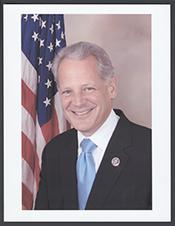
Mr. Speaker, I rise today to support H. Res. 218, a resolution that expresses the sense of the House of Representatives that the Federal Communications Commission (FCC) should not revise its media…
Mr. Speaker, I rise today to support H. Res. 218, a resolution that expresses the sense of the House of Representatives that the Federal Communications Commission (FCC) should not revise its media ownership rules without more extensive review and without a public comment period. The FCC is scheduled to announce their decision on June 2, 2003.
I am proud to be a cosponsor of this important resolution because the proposed media ownership rules will undoubtedly be a drastic rewrite that would place huge limits on what Americans hear on the radio, watch on television or read in the newspaper. We should invite more review and public comment on the consequences of these changes before the rule is implemented.
Among other things, these proposed rules would permit a television corporation to own a radio station and a newspaper in the same market. They would also increase the number of stations a television company can own from two to three. These rules will result in increased mergers activity and ultimately, in many markets, Americans will get all aspects of their news and information from one company.
The legislated goals of the FCC include fostering competition, local control and an array of voices. But these proposed rules go against the FCC's own objectives by allowing a massive concentration of power and putting local stations out of business. These rules would create homogenized programming.
The United States prides itself on diversity and freedom of the press. My constituents have expressed concern at the thought of one media outlet controlling all of the news and information they receive about their government, their fellow citizens and their culture.
I am hopeful that by June 2, 2003, FCC Chairman Michael Powell will hear the voices of Americans and postpone implementation of his rule so that he can hold public discussions and conduct a more extensive review.
Bill Text
Latest available legislative text
        [Congressional Bills 108th Congress]
[From the U.S. Government Publishing Office]
[H. Res. 218 Introduced in House (IH)]

108th CONGRESS
1st Session
H. RES. 218

To express the sense of the House of Representatives that the Federal
Communications Commission should not revise its media ownership rules
without more extensive review and comment by the public.

_______________________________________________________________________

IN THE HOUSE OF REPRESENTATIVES

May 6, 2003

Mr. Hinchey (for himself and Mr. Brown of Ohio) submitted the following
resolution; which was referred to the Committee on Energy and Commerce

_______________________________________________________________________

RESOLUTION

To express the sense of the House of Representatives that the Federal
Communications Commission should not revise its media ownership rules
without more extensive review and comment by the public.

Whereas Federal Communications Commission (hereinafter in this resolution
referred to as ``the FCC'') Chairman Michael Powell has announced that
on June 2, 2003, the FCC will vote to revise current media ownership
regulations as part of its Biennial Regulatory Review;
Whereas the changes to media ownership rules under consideration will affect
Newspaper-Broadcast Concentration, National TV Concentration, TV Duopoly
Protection, Multiple-Network Concentration, Radio-TV Concentration, and
Local Radio Concentration;
Whereas the FCC has held one official hearing on this matter in Richmond,
Virginia, on February 27, 2003;
Whereas FCC Chairman Powell has announced that the Commission will vote on a
final rule revising media ownership regulations without first allowing
for a public review and comment period on any proposed changes;
Whereas changes to these rules will impact every person's access to diverse
sources information; and
Whereas access to diverse sources of information is necessary to maintain the
informed citizenry needed for a functioning democracy: Now, therefore,
be it
Resolved, That it is the sense of the House of Representatives
that--
(1) the FCC should not weaken any current media ownership
rules that protect people's access to diverse sources of
information;
(2) the FCC should examine, and better inform the general
public regarding, the consequences of weakening current media
ownership rules, in particular the increased level of media
consolidation and concentration that will likely occur; and
(3) the FCC should allow for extensive public review and
comment on any proposed changes to current media ownership
rules before issuing a final rule.
<all>