Expressing support for the Head Start Program, which has had a positive impact on the lives of low income children and families since its inception and endorsing its administrative structure and program content.
Legislative Activity
Stay on top of the latest movement without scrolling through every action
Referred to the Subcommittee on Education Reform.
June 20, 2003
View full timeline
Introduced in House
May 15, 2003
Referred to the House Committee on Education and the Workforce.
May 15, 2003
Referred to the Subcommittee on Education Reform.
June 20, 2003
Floor Debate
7 membersWhat members said about H.Res. 238 on the floor
 MW
MW CB
CB EECDMP
 BL+2
BL+2
Floor Debate
7 membersWhat members said about H.Res. 238 on the floor
Mr. Speaker, I rise this evening to talk about a most important successful program that young children have been able to participate in from very needy communities for a long time now. But first I…
Mr. Speaker, I rise this evening to talk about a most important successful program that young children have been able to participate in from very needy communities for a long time now. But first I would like to thank the chairman of the Congressional Black Caucus for organizing this Special Order this evening.
Mr. Speaker, I rise in strong support of the Head Start programs, and I would urge all of my colleagues to oppose the radical changes that are being proposed by the Bush administration.
I have taken time out this evening to be here with whatever colleagues will join me to talk about this program because it is a program that I love. I love the Head Start program. I love this program because I got involved with the Head Start program early on. I got involved at the inception of the Head Start program under the war on poverty. The country was very excited about the fact that under the war on poverty there was going to be this program, an early childhood education program, for people in poor communities and working communities that had not been able to send their young children to preschool programs.
At one time in this country, preschool programs were only available to people with money, to the wealthy, to people who were earning good incomes, but Head Start was envisioned under the war on poverty as a program that could help children in poor communities and working communities get a jump, get a head start so that they would be prepared for kindergarten. They would be prepared for school and education.
The researchers and the educators that came up with this idea understood that for young people to be successful or more successful in school, if they had this preschool experience, it would not only prepare them for reading and learning, but it would also build other kinds of qualities. Building self-esteem was an important idea of the Head Start program.
I went to work for Head Start as an assistant teacher. I went into the Head Start program, and little did I know that Head Start was not simply to be a place of employment for me, it changed my life. In Head Start, not only did I learn how to work with young people, to build self-esteem, I later became the supervisor of parent involvement and volunteer services where I worked with families, with mothers and fathers and grandparents, bringing them into the Head Start program and helping them to understand that they certainly could be in control of their children's destiny.
Head Start was a program that not only dealt with early childhood education, a preschool experience for young people, but it was a program that helped to deal with parenting and helping parents to understand how they could, in fact, get more involved and give more support to their children.
Also, this program spread out into the community, and it helped parents to understand how not only they could be involved with their children's early childhood education, but they could be involved in the community and helping the community to understand how to be supportive of education, interacting with the school boards and with other educators, talking about their children's experiences and what was going on in the homes and helping educators to be more in tune with how they could better give young people a head start.
Head Start is very special because it takes into consideration the whole child. This program understood early on that if we are to be successful with our young people in education, we must give them every advantage and every opportunity to learn. Before Head Start, children were going to school. They could not hear well, could not see well, had learning disabilities, had never had a physical examination, had never had an examination to determine some of the problems that were so obvious when one interacted with these young people.
When we opened Head Start, we brought in the families and the children, and they had full physical examinations. They had an opportunity to talk with counselors. If psychiatrists were needed, they had that, also. So we discovered that there certainly were learning disabilities; dyslexia, and other kinds of problems were discovered and they were worked on.
Health care opportunities and preventive care was available to these parents for the first time. So we were able to attend to these health needs so that the children could certainly be prepared for learning, and that is what happened in the Head Start program.
The Head Start program not only dealt with the health care needs and preventive health care for families, it helped families to understand how they could build self-esteem. We learned a lot about self-esteem and how parents and families could be involved in building that self- esteem. We talked to parents how to place the work of their children on their walls at home, the paintings and the drawings and all of those things that children felt proud about, but oftentimes parents and families did not know how important it was. We taught them how to display the work of their children, but we also taught them how to take materials in
their homes and materials from in the environment, in the neighborhood, from the trees and from the shrubbery, and use them as art tools and how there could be art projects and children could learn to use the various skills that they had that they had not discovered.
Head Start not only took care of the health care needs, expanded the learning for parents to help them to build self-esteem with their children, Head Start went further than that. The Head Start program opened up opportunities in the classroom where children were introduced to books for the first time. Children in Head Start are taught to love books. They are taught that you never tear up a book; that you never throw a book around; that you take care of the books, that they are very important; and that one of the first steps in learning is to introduce kids to books and tell them how important it is, get them to respect the books and want to know what is in the books. Head Start opened up all of these opportunities to prepare children in that classroom for going into the public schools.
Mr. Speaker, Head Start has proven to be successful. When Head Start children first went to kindergarten, the teachers wanted to know who are these children and why are they so prepared. Head Start children went into the classrooms for the first time asking questions and participating. This program has worked. Someone has said, it was not me, if it is not broken, what are you doing trying to fix it?
Head Start does not need to be fixed. Head Start is a good, solid, sound program of early childhood education that brings in the parents and the community, and this idea of this administration to block grant the Head Start, throw it into the States, is an idea that we have to resist. We resisted the part of the first idea of this administration that wanted to take it out of Health and Human Services and place it into the Education Department.
We fought them back on that, but now they are intent on block granting the program to the States. I do not know about other States, but I know the State of California has a $38 billion deficit. We do not want to throw this program into a State that could easily take funds from Head Start to help make up for the lack of funds in other areas. We know what happens when we block grant programs. We give the States the opportunity to do what they want to do with the money, and so we are opposing that. We are strenuously opposing block granting this program.
For those of us who have had the experience of working in the Head Start program, of working with parents in the Head Start program, for visiting the Head Start programs, interacting with the children, the families and the teachers, we say no to the Bush administration, you cannot have Head Start. We will not let you undermine this program with these ideas that you have about throwing it into the States and giving it to the States under a block grant.
With that, I am going to yield to the gentleman from New Jersey (Mr. Payne) to share his thoughts on Head Start.
(Mr. PAYNE asked and was given permission to revise and extend his remarks.)
Mr. Speaker, I thank the gentleman from New Jersey for that brilliant presentation on Head Start, and I yield to the gentleman from Maryland (Mr. Cummings) for this important discussion on the floor, the esteemed chairman of the Congressional Black Caucus.
Mr. Speaker, I thank the gentleman from Maryland (Mr. Cummings) for his passionate plea to our colleagues not to allow this program to be dismantled, and I yield to the gentlewoman from California (Ms. Lee).
I thank the gentlewoman from California for her longtime concern and actions on behalf of children. I thank her for taking time out of her schedule to be here this evening.
Mr. Speaker, I yield to the gentlewoman from Florida (Ms. Corrine Brown).
I thank the gentlewoman for her presentation this evening, not only on Head Start but the discussion about the child tax credit and helping to unveil what is really going on in this administration. The question that you raise is one that I am sure many of our colleagues would like to respond to this evening, and if they were here, they would tell you that many folks worked very hard to get some assistance to the States because many of the States are in deficit positions. They are cutting programs. They are cutting health and education. They are cutting the school week in some States. In 2003 in the United States of America, the school week has been cut down from 5 days to 4 days.
Members of this Congress are shocked on both sides of the aisle about the kind of cutbacks and the deficits that we have in the States. That money is not meant to be banked. It is meant to offset the debt and the cuts that are being experienced by these States, and certainly though we did not support that tax bill for good reasons, that part of that bill that sends the money to the States is a part that many of us do support because we want to make sure that we do not have these hardships experienced by our constituents because of cutbacks.
I would certainly think so. Again, we talk a lot about education being our number one priority, about children being our number one priority. But there are some States that are not putting the money where their mouths are, and we are not giving the children of this Nation the kind of support that certainly a rich Nation such as ours should be giving.
I think this is a prime example of what we are talking about this evening, the Head Start Program. It is underfunded, children on waiting list, only a 2 percent increase; and it is a proven program of success that not only helps to prepare our kids for kindergarten and for school, but it also helps to make parents stronger in their support for their children. The gentlewoman is absolutely correct; that money could be used for educational purposes.
Mr. Speaker, I would now like to yield to the gentlewoman from California (Ms. Watson), an educator with a background in education, to make her presentation.
Mr. Speaker, I thank the gentlewoman from California.
In closing, Mr. Speaker, you have heard brilliant presentations, comprehensive presentations from the members of the Congressional Black Caucus here this evening who have identified the value of Head Start: the fact that Head Start provides nutrition, the fact that it provides physical examinations, the fact that it prepares young people for education, the fact that it involves parents and gets them involved in helping to determine the educational destiny of their children, the fact that Head Start gets communities involved.
Mr. Speaker, this cannot be taken lightly. Head Start is indeed a successful program that has been in this country now for 38 years. Many children and families have benefited from this program, children from all over America, from communities all over this country. We value Head Start, and we appreciate all of those who had the vision to bring this valuable program to this Nation.
Again, we think that this program should not be tampered with. There is no reason to want to block grant this program. We would like to think that it is just a misunderstanding, that this administration really does not understand the risk that they are creating by tampering with this program and block granting it to the States.
Let me just tell you, Mr. Speaker, in addition to not having the requirements to go along with block grants, the one thing that strikes me as extremely detrimental to this program is the fact that nowhere in this block granting does it require that the parental involvement component remain with Head Start.
Many of us wax eloquently about parent involvement and family values and what it means for parents to be involved with their children and their education, but yet we see an attempt to change a program that has a strong component of parental involvement, an attempt to dismantle a program that has worked.
Mr. Speaker, Head Start will be reauthorized this year. It will not have all of the money that it needs. It will only have a small increase. There will still be children waiting to get into Head Start. But one way or the other, I know that this program is going to be reauthorized. I hope that it is done in the traditional, bipartisan fashion in which our children are not left behind.
However, H.R. 2210 suggests that we are off to a very bad start. It would be a tragedy if the Republican leadership chooses to try and force this bad bill through for partisan political purposes. We can and must do better than H.R. 2210. I urge the Republican leadership to heed the will of the American people and produce a bipartisan bill that both sides of the aisle can support. Millions of lives depend on Head Start, and we cannot afford to let them down.
This Congress has been criticized, Members on the opposite side of the aisle, who somehow cut out the poorest and most vulnerable families from the tax bill. We cannot afford to continue to have the kind of criticism and distrust that is mounting of this Congress over what appears to be an assault on families and children.
We have the issue of the child tax credit before us. It is shameful what has been done. I do not think that all of the Republicans on the other side of the aisle support what has been done. I do not think that they believe in what some of the leadership is saying about poor people not deserving to have this tax break.
I believe that there are those on the other side of the aisle that will join with us on this side of the aisle and put an end to this attempt to undermine our Head Start program.
Mr. Speaker, I am so blessed, and I feel so blessed, to be able to be here tonight to speak on behalf of the children and to stand up for Head Start. I feel so blessed to have been a part of Head Start and to have learned what it means to invest in our children. I feel so blessed to have learned that we can indeed make our children successful in their education experience.
Many of those children who are being left behind are being left behind because they do not have the value of an early childhood education. I am delighted to have been a part of this evening.
I thank the gentlewoman for yielding and to the members of the Congressional Black Caucus, I thank them for hosting these educational hours to educate the American public as to what is going on in…
I thank the gentlewoman for yielding and to the members of the Congressional Black Caucus, I thank them for hosting these educational hours to educate the American public as to what is going on in the people's House.
To me, the cold-hearted attitude of the House Republicans can be summed up in a statement made last week by
the House majority leader. When asked about bringing up the child tax credit bill, he said, and I quote, ``There are a lot of other things that are more important than that.''
I humbly ask my colleague on the other side of the aisle, what exactly on your agenda is more important than the protection of the children in this Nation? In my State of Florida alone, the child tax credit package benefits over a million children. Once again, the Republican leadership is catering its agenda to the rich, after deciding just today that the only way they would agree to take up the child tax credit bill is by adding on an $80 billion tax credit for the rich in the bill. Even though their selected leader, George W. Bush, is urging them to take up a clean bill and even though they follow his leadership in everything from tax cuts for the rich to foreign policy, when it comes to funding children's programs, they ignore even the plea of the White House. In addition, the House Republican leadership is planning to dismantle Head Start, one of the best educational programs for children of working-class families, by block granting program funding.
There was $900 million sent down to Florida Governor Jeb Bush. Yet he put the money in the bank as opposed to helping the people of Florida. Block grant money is not the way to go. In the past, everyone was telling me, just send the money to the State. In the area of transportation, just send the money to the State. Education, just send the money to the State. They will know best what to do with it. I can tell you, they are singing a different tune now. When I talk to the mayors or the county commissioners, they tell me, Whatever you do, don't send that money to Tallahassee, because we will never see a dime of it. Whatever you do, don't block grant the money and send it to Tallahassee. It is a deep hole and they never see a dime of the dollars that come from the Federal Government down to the State.
The Republican Head Start block grant plan will end Head Start as we know it, one of the most successful programs in the history of this country. Even the new limited eight-State block grant is a risky deal. Why risk turning a successful program over to States with unproven expertise and without the Federal program quality standard requirements and oversight that are demonstrated to increase school readiness?
My colleagues, there is an old expression which really applies to this issue: If it ain't broke, don't fix it. Head Start kids are very prepared to do better in school than low-income children who do not receive Head Start. In addition, it has been proven that Head Start narrows the readiness gap between Head Start kids and kids from the more affluent side of the tracks. Head Start should help children arrive at school more ready to learn, and it does. But for the administration to expect Head Start to completely protect children against the effects of poverty is just plain stupid. Moreover, block grants do not work. Block grants gut the quality of comprehensive services. And this block grant plan is particularly bad and requires States to provide a bunch of services but does not require the same nature, extent or quality of them. None of the 13 areas of Head Start performance standards that lay out the comprehensive services and high level of quality that have made Head Start successful are even mentioned in the block grant. In fact, the block grant emphasizes comprehensive services being met through referrals of families to outside service for assistance, which would end up encouraging States to provide a much lower level of service.
In addition, the block grant does not specify any minimum requirements for teacher education levels, for child-staff ratios or for curriculum content. It simply calls on each State to come up with their own school standards and their own ways of measuring progress against those standards. I can go on and on and on as far as Head Start is concerned. I will submit my statement for the Record. But I do have a question for the gentlewoman from California.
When we passed, when the House passed--I did not vote for it--the $350 billion, $20 billion was earmarked to the States. Can you explain what was the purpose of the $20 billion that went to the States? Was it to put in the bank and use for a slush fund next year to, I guess, enhance the chances of the Republicans to continue to practice reverse Robin Hood, stealing from the working people to give tax breaks for the rich? What was the purpose of that $20 billion?
That is an example of what is wrong when you send a block grant to the State and you do not specify.
nderstanding in talking to the different committees, it was specified that this money would be used to help the States in their struggle.
I do not know whether the gentlewoman saw it, but last week on the national news, on ``Dateline,'' they discussed the number of students, hundreds of thousands of students that are failing the tests in Florida, third graders who were being held back, thousands of students not graduating, because we came up with additional educational standards. And I must quickly say that many of the schools, the ``F schools'' or the failing schools, have been the schools on the other side of the railroad tracks, the schools on the other side of the bridge, that have never gotten adequate funding.
So when we set standards, and the support was not there to work with the schools, many of the children do not do well. We look at the State of Florida as we speak. We do not have summer school programs in place. Could some of that money be used for summer schools, for some of the cuts that have occurred in the school system to augment the cuts in the programs for educational support for the school system?
I thank the gentlewoman once again for bringing this subject area to the American public.
Wake up, America.
To me, the cold hearted attitude of House Republicans can be summed up in a statement made just last week by the House majority leader. When asked about bringing up the Child Tax Credit bill, he said, and I quote: ``There are a lot of other things that are more important than that . . .''
Now, I humbly ask my colleagues on the other side of the aisle, ``what exactly, on your agenda, is more important than the protection
of the children of this nation?'' In my state of Florida alone, the Child Tax Credit package benefits over a million children.
And once again, the Republican leadership is catering its agenda to the rich. And after deciding just today that the only way they will agree to take up the Child Tax Credit bill is by adding on an $80 billion tax credit for the rich to the bill. And even though their selected leader, George W. Bush, is urging them to take up a clean bill, and even though they have followed his lead on everything from tax cuts for the rich to foreign policy, when it comes to funding children, they ignore even the plea of the White House.
In addition, the House Republican leadership is planning to dismantle Head Start, one of the best education programs for children of working class families, by block granting program funding.
You know, there was $900 million sent down to the Florida governor Jeb Bush, yet he put the money into the bank, as opposed to helping the people of Florida. Block grants is just not the way to go. In the past, everyone was telling me, send transportation dollars to the states, send the education dollars to the states, the states can best figure out how to use it. They're not telling me that now, when I talk to the Mayors in Florida, or to the County Commissioner, they tell me that, ``whatever you do, whatever you do, don't send the money to Tallahassee, because we will never see a dime of it.'' That is what they tell me, they say it gets lost in Tallahassee, and it never trickles down to the areas, to the first responders, to the Head Start programs, it is just an empty hole.
The Republican Head Start block grant plan will end Head Start as we know it. Even the new limited 8-state block grant is risky. Why risk turning a successful program over to states with unproven expertise and without the federal program quality standard requirements and oversight that are demonstrated to increase school readiness.
My colleagues, there is an old expression which really applies to this issue here: if it ain't broken, don't fix it. You know, Head Start kids are very prepared and do better in school than low-income children who don't receive Head Start. In addition, it's been proven that Head Start narrows the readiness gap between Head Start kids and children from the more affluent side of the tracks. Head Start should help children arrive at school more ready to learn--and it does; but for the administration to expect Head Start to completely protect children against the effects of poverty is just ridiculous.
Moreover, block grants don't work. Block grants gut the quality of comprehensive services. And this block grant plan is particularly bad, and requires States to provide a bunch of services, but doesn't require the same nature, extent or quality of them. None of the thirteen areas of Head Start performance standards that lay out the comperhensive services and high level of quality that have made Head Start successful are required or even mentioned in the block grant. In fact, the block grant emphasizes comprehensive services being met through referral of families to outside services for assistance, which would end up encouraging States to provide a much lower level of services.
In addition, the block grant does not specify any minimum requirements for teacher education levels, for child-staff ratios or for curriculum content. It simply calls on each State to come up with their own school standards and their own ways of measuring progress against those standards. But the problem is that those standards are not clearly defined in the block grant and vary greatly in content and quality among the States. As it is now, Head Start education standards are thorough and strongly based in standards of education, and having States come up with their own standards with no direction and no requirements will only serve to weaken education standards.
Lastly, block grants weaken oversight and evaluation. States that meet the eligibility criteria have their applications deemed approved by the Secretary by default--which means that there won't be any oversight or evaluation of the quality of the State plan. In addition, there is no minimum threshold required by States' internal evaluations of their programs--they can just go ahead and define it on their own. No States monitor their programs as closely as Head Start is monitored. And under the block grant, outside evaluations of the State programs will likely not happen very often. Under the Republican plan, there will be no more compliance reviews with regard to national performance standards. Gone will be meaningful Federal oversight and monitoring.
Why, why, why, the Republicans are changing something that works, just does not make sense. Once again I repeat: if something isn't broken, don't bother fixing it.
Mr. Speaker, I thank the gentlewoman from California (Ms. Waters) for her passion on this issue and so many other issues. Just the other day, the gentlewoman stood in the meeting of the Congressional…
Mr. Speaker, I thank the gentlewoman from California (Ms. Waters) for her passion on this issue and so many other issues.
Just the other day, the gentlewoman stood in the meeting of the Congressional Black Caucus and poured her heart out with regard to her concerns for our children. I think everybody in the room could feel that passion.
One of the things that I think hit us real hard was we all realize, and I know the gentlewoman from California (Ms. Waters), who has been standing up for these kinds of issues over and over again, time after time, we all realize that our children are the living messages we send to a future we will never see. So tonight the Congressional Black Caucus joins together, and I want to thank all members of the caucus. We come to stand up for our children. As the gentleman from New Jersey (Mr. Payne) said, they are not just children that may be found in South Baltimore or West Baltimore, but they are the children that will be found in Appalachia and poor regions throughout our country; and when I say poor, I mean economically poor.
Since 1964, Head Start has given nearly 19 million American children the educational, nutritional health, and related services that are essential to early childhood development. The ongoing Family and Child Experiences Survey has consistently documented the success of this national partnership for America's future. If Head Start did not exist, we would have to invent it. This year the survey again reported that teachers in Head Start centers are effectively preparing our children for school.
I note this fact because some critics would have us believe otherwise. Throughout this country, Head Start is a bridge to the future being constructed by local communities with help from their national government; and that is what we should be all about, communities coming to the aid of their children, those children that come from their womb and whose blood is running through those children's veins, trying to lift them up so they can be all that God meant for them to be. That is what the national Family and Child Experiences Survey tells us. I can validate the survey's conclusion because Head Start funding is making an important and positive difference in the lives of more than 10,000 Maryland children this year.
Many of these children live in my hometown of Baltimore. Some attend a wonderful Head Start program at Union Baptist Church just down the street from my home. Every time I pass that Head Start center, I feel a warmth and I see a beacon of light in a very, very depressed area. When I visit these children and their teachers and parents in Head Start programs throughout the Baltimore area, I am reminded of the fact that they are looking at our children and seeing all of the wonderful things that are within. And these teachers are just like a sculptor who looks into a piece of wood and sees a wonderful, wonderful piece of art and understands that he has to use his tools to carve and bring out that piece of art. It is the same thing with our wonderful and very dedicated Head Start teachers.
I am deeply gratified that this year more than $76 million in Head Start funding will give Maryland children a head start in life. It is a moral and practical investment in our future.
Nationally, we know that every dollar we spend on Head Start saves taxpayers between $4 and $7 down the road. For all the good that Head Start is doing, however, we must not lose sight of the fact that Head Start could be doing so much more if the program were adequately funded.
This is what the gentlewoman from California (Ms. Waters) has been talking about over and over again. Today Head Start only serves approximately 60 percent of the children who are eligible. Funding was raised to almost $6.7 billion for fiscal year 2003; and for fiscal year 2004, the administration has proposed another small increase to just under $6.8 billion.
These small increases in funding that we have achieved in recent years represent positive and important steps forward. Nevertheless, as we consider reauthorization this year, we should step up to the plate and finally give Head Start the funding that would allow every eligible child to participate. We should guarantee a head start in life to every American child who needs our help.
The Nation's teachers, through their National Education Association, stand full square behind this vision. I realize that extending a head start to every deserving child would be very expensive. But I say to Members that when I visit the jails in Baltimore and I see our children in shackles and handcuffs and I look at their reading levels and the average reading level is less than a fifth-grade reading level, that tells me something.
So we must ask the question is it better to pay later when our children are locked up and not achieving the things that they should be achieving, or is it better to invest in them when they are growing up in their formative years? The estimated cost would be an additional $29 billion over the next 5 years. Think about all this Nation would receive in return for additional investment in our future. We would be living in a country that made a meaningful commitment to truly leaving no child behind. We would be saving money in the long run because of reduced costs for special education, social services, teen pregnancy, juvenile crime, and other problems down the road, a true head start for every American child. This is a vision that all Americans can support.
We have been working hard during my years of service in the House to make Head Start even better. We have set strong national standards for Head Start that complement the power of Head Start's local Federal partnerships. We have maintained our traditional emphasis on substantial parent involvement. We are succeeding.
That is why we should resist Republican efforts to transfer management of Head Start to the States. The bill proposed by my Republican colleagues with the supposed purpose of enhancing the schools' readiness of low-income and disadvantaged students is grossly misleading. The supposed demonstration project being proposed will block grant funding of Head Start to certain States. I maintain this will not enhance the school readiness of students, but is instead a thinly veiled attempt to weaken and dismantle this very powerful and significant Federal program.
When I think of the Republican proposal, a certain quote by Reverend Joseph Lowery comes to mind. Reverend Lowery once asked, ``Will America lose her soul for political chicanery? Would you give a balanced budget on the backs of the poor? Would you have welfare reform for the poor while the rich corporations continue to enjoy tax exemptions and subsidies? America, what would you give in exchange for your soul? Would you reduce school lunches for poor children in exchange for your soul?''
Well, Mr. Speaker, I would ask one more question in addition to those posed by my friend, Reverend Lowery. Tonight I ask America if she would dismantle one of a few Federal programs that gives poor children a hand-up in exchange for her soul. Facing crippling budgetary crises, the States should be concentrating on their traditional K-12 education role. Let us help the States succeed in K-12 education first before we consider turning early childhood education, nutrition, and all of the other services Head Start provides over to State governments.
Local leadership has always been the foundation of Head Start's success. Local leadership, high standards, and increased Federal support can assure every American child a head start in life. Our children are indeed our living message that we send to a future we will never see, and it is our duty in this Congress to assure that the living messages this generation sends to America's future are filled with competence, confidence, and hope.
Mr. Speaker, I thank the gentlewoman for her leadership.
Mr. Speaker, let me thank the gentlewoman from California for framing the argument. I think she did an excellent job, the gentlewoman from California (Ms. Waters), a person who helped organize Head…
Mr. Speaker, let me thank the gentlewoman from California for framing the argument. I think she did an excellent job, the gentlewoman from California (Ms. Waters), a person who helped organize Head Start parents and who for many years has held the importance of children as our most valuable possessions and has seen the success of this program, as have all of us, and that is why we stand here this evening, the Congressional Black Caucus, with our chairman the gentleman from Maryland (Mr. Cummings), to discuss this question of Head Start.
I commend our chairman for organizing these Special Orders on issues that impact on the poorest of our people, the people with no voice, people in Appalachia and delta regions and in urban centers that are not represented by lobbyists, and so we are their voice. We are their spokesperson. We speak for those who have no voice, and so I am proud to say that Head Start should not be tampered with.
In 1964, President Lyndon Johnson gave his State of the Union address before Congress and our Nation with an announcement to declare war on poverty. This was a great declaration which caught the imagination of our Nation. In his declaration, he believed for the first time in history that poverty could be eradicated and offered his proposal, the Economic Opportunity Act, EOA, of 1964. Despite opposition that believed poverty was on the decline from the highs of the Great Depression, Johnson was undaunted.
He declared, ``The Act does not merely expand old programs or improve what is already being done. It charts a new course. It strikes at the causes, not just at the consequences of poverty,'' and that is where the Head Start program is so important. It strikes at the causes of poverty to deal with poverty elimination in this country. ``It can be a milestone in our 180-year search for a better life for our people,'' said Lyndon Baines Johnson.
After the bill was signed into law that very year, the Office of Economic Opportunity was created to fulfill its mission. At the same time, a pediatrician by the name of Dr. Robert Cooke was asked to head a new office to lead a steering committee of specialists in all fields to discuss what should be done for young people to bring them out of poverty and to assist them in their early lives. Their recommendations, known as the Cooke Memorandum, outlined what we now know today as the Head Start program.
Launched as an 8-week summer program, Head Start was designed to help break the cycle of poverty by providing preschool children of low- income families with a comprehensive program to meet their emotional, social, health, nutritional and psychological needs. That is why this program is so important. Head Start is to break the cycle of poverty because it deals with emotional, social, health, nutrition and psychological needs.
Since its inception, Head Start has served over 20 million children. Today, it is a full-day, full-year program providing preschool children of low-income families, working families, with a comprehensive program to meet their emotional, social, health, nutritional and parental support. Head Start focuses on the whole child, extends to recognizing the importance of strengthening the family, not necessarily the institution but the family.
Throughout its inception, Head Start has included parents. Parents sit on committees to select teachers. They help with the curriculum, this is the participation, and parents learn through this program. Head Start has included parents in both their child's education and in their membership to the Head Start Policy Council, which serves as a vital link between the community and public and private agencies.
Parental involvement is a critical and integral part of this program. Economically disadvantaged families are no longer seen as passive recipients of service but, rather, as active, respected participants and decision-makers, and many of them have moved on to complete their education, and they have become leaders, and they have become elected officials, and they have become stalwarts in their community. That is why Head Start is so good because it takes the total family.
Today we stand here to support our Head Start program, and oppose H.R. 2210, a bill which will dismantle the program as we know, hurting the very ones we should be helping, our Nation's children. If the bill were enacted today, it would mean changing the current Federal to local partnerships to a State optional plan. As indicated by the gentlewoman from California (Ms. Waters), a State optional plan is another way of saying block grants.
The Federal Government would give States the authority to create their own preschool programs without the same performance standards as Head Start and without additional funding. Nationwide, States' commitment to preschool is $2 billion. It is much less than the Federal contribution of over $6 billion. In light of the $38 billion shortfall in the State budget in California, $5 billion in New Jersey, in excess of $70 billion in shortfalls in State budgets across the Nation, we cannot leave the fate of our children in the hands of States struggling to meet their other needs.
The impetus of this bill, the administration's Head Start proposal, states a
need to better coordinate preschool programs in the States. But Head Start already coordinates with child care and prekindergarten programs. According to research done by the Center for Law and Social Policy, many Head Start agencies have formal agreements with school districts around the country to coordinate transitional services for children and families. Coordinating will not help the fact that Head Start is severely underfunded. You can coordinate all you want; you cannot get more with a limited amount of funds. So the problem is not coordination; it is the lack of funding.
There are a half million children in the country that are eligible to attend Head Start today. That is three out of five children, and they are not all being covered today.
In conclusion, I have offered a resolution, H. Res. 238, a resolution expressing support for the Head Start program which has had a positive impact on the lives of millions of children nationwide. The resolution not only recognizes the contribution of Head Start; it also supports maintaining its current designation at the Department of Health and Human Services. With the average child care cost in New Jersey at over $5,000 a year, thousands of children across my State and others would not have access to an exceptional program that has them ready to learn by the time they enter kindergarten if Head Start were not there to serve them. Terms of such State options and coordination will mean a shortfall and this 38-year program does not need to have this fate. We need to move towards full funding of Head Start, furthering the quality of this program, preserving the focus of comprehensive services to children and their families. We need to support Head Start as it is today.
Mr. Speaker, first, I want to thank the gentlewoman from California (Ms. Waters) for her leadership and really for her guidance based upon her remarkable experience with Head Start and for her…
Mr. Speaker, first, I want to thank the gentlewoman from California (Ms. Waters) for her leadership and really for her guidance based upon her remarkable experience with Head Start and for her passion and for her commitment to children who really otherwise would have very few opportunities to succeed.
I also want to thank the gentleman from Maryland, chairman of the Congressional Black Caucus, who once again is demonstrating his enormous leadership by sounding the alarm in terms of this administration's assault on children.
We have come together tonight to talk about an issue really that is about our future. It is about the future of our children. So what else could really be more important? Head Start has been an enormously successful program since its inception in 1965 because it continues to offer comprehensive programs for children and families. Head Start has enabled these children to enter kindergarten on an equal footing with students who were really born into wealthier socioeconomic circumstances. Over the last four decades, Head Start nationwide has reached an unbelievable number of students. Since 1965, over 20 million children across the country have participated in Head Start programs. Last year alone, Head Start and Early Head Start programs worked with more than 900,000 children in 2,590 local programs. In my own hometown of Oakland, California, over 1,600 children are part of our area Head Start programs. But we are still not really reaching enough kids. On any particular day, 300 to 400 children are on a waiting list for the Oakland Head Start centers. In fact, all 30 centers have children on a waiting list, meaning that all areas are being affected; 300 to 400 children, as I said, are far too many to have to begin school already behind. In fact, one child on a waiting list is really one too many, one too many in terms of a young person not afforded access to early participation in such an enormously successful program.
Yet again the Bush administration is dismantling another excellent domestic program by trying to reduce the effectiveness, and that is what this is going to do, reduce the effectiveness of Head Start. They are trying to radically change what has really been a radically effective program. President Bush's plan to reform Head Start would systematically, basically, and probably will really gut Head Start. For instance, the President has called for moving Head Start from the Department of Health and Human Services to the Department of Education. The administration wants to move Head Start from HHS because they believe preschoolers should be judged solely by academic standards. President Bush wants to begin a national reporting system of literacy testing, mind you, literacy testing for our 4-year-olds. How ridiculous and how sinister this is.
Administrators in the city of Oakland's Head Start program tell me that moving Head Start to the Department of Education will mean the end of all of the support services and the component services that make Head Start so successful. When parents and children in Oakland and throughout my own congressional district heard of this proposal a couple of months ago, several hundred people participated. These were men, women and children, families, participated in a rally, all of them saying in no uncertain terms, ``If it ain't broke, don't fix it.'' This will be, and I heard this over and over again, the end of health services; and in a country where our health care system is totally broken, to eliminate health services for young people which they receive through the Head Start program is really, really wrong. It is wrong because, again, the President and the administration's view is that it should be only a literacy program.
By turning Head Start into a block grant program, the President claims that Head Start will be more flexible while ignoring the fact that one of Head Start's virtues is that it already has a great deal of flexibility on a local level. Yet Head Start is, and should continue to be, a national program. We really do not need 50 different administrations in 50 different States. We do not need these bureaucracies that will take money from children to go to State budgets and overhead costs. Block granting Head Start funds is really a particularly bad idea this year because our States are experiencing such huge budget deficits. It will be especially tempting for Governors and State governments to really try to tap into this money. That is not to say that State governments will misappropriate money, it is just a real acknowledgment that State officials will be tempted to use this money to offset their deficits. How do we know that this money would be used for Head Start? This really puts our children's future at risk at the whim of State budgets. This is just downright wrong.
With these proposals, the Bush administration is demonstrating once again their disregard for our children and our families, those that do not have a lot of money. They are demonstrating their real contempt for working families struggling just to make it on wages that are not enough to raise them up above the poverty level. While the administration devastates Head Start, they simultaneously sign a tax cut primarily for the wealthiest in this country. They spend billions of dollars on war, at the same time not fully funding education, cutting child care, health care, job training programs and housing. We cannot let the President and this administration dilute what has been one of the most successful programs over the last four decades. We must stop the President's assault on Head Start. We must stop this Congress' assault on Head Start.
I encourage our colleagues to join all of us, the gentlewoman from California (Ms. Waters), the Congressional Black Caucus, all of us in this resistance. Our children deserve us to stand up for them at least this one time.
Show 3 more
Mr. Speaker, as we continue to discuss the importance of Head Start, the Head Start program to our communities, I want to draw attention to a resolution that I offered, H. Res. 238, expressing…
Mr. Speaker, as we continue to discuss the importance of Head Start, the Head Start program to our communities, I want to draw attention to a resolution that I offered, H. Res. 238, expressing support for the Head Start program, which has had such a positive impact on the lives of millions of children nationwide.
This resolution not only recognizes the contributions of Head Start; it also supports maintaining its current designation at the Department of Health and Human Services.
Earlier this week, I participated in a hearing convened by our chairman, the gentleman from Maryland (Mr. Cummings) of the Congressional Black Caucus, where we had an opportunity to hear from those who are directly involved in administering the program, including Maxim Thorne, executive director of the New Jersey Head Start Association. He expressed his concern about the effort to block grant the program, which he said would have a devastating impact on New Jersey's Head Start children.
The majority backed off of the block grant to all of the programs, but selected eight States, one of which is New Jersey. The eight States carry about one-third of the children, as was indicated by the gentleman from Illinois (Mr. Davis).
Most of the States selected are States that have financial problems, as we have in New Jersey. In New Jersey, we are already grappling with the Abbott decision, which was a decision where our Supreme Court of New Jersey said that every child in New Jersey is entitled to a thorough and efficient education.
The State administration is before the courts asking for relief from that decision, saying that the budget is tight, they have constraints, they cannot fully fund this court order; and they are asking to be allowed to delay and defer programs under the Abbott decision.
What will happen when the Head Start money comes? It will be very tempting to see if perhaps this money can go further and be used in trying to comply with the Abbott decision. I think it is wrong, and I definitely oppose it, as do all of the members of the Democratic Party on the Committee on Education and the Workforce.
Also echoed by our executive director of the Head Start program was the provision which would allow for open discrimination of Head Start workers based on religion. This goes against everything our Nation stands for.
Mr. Speaker, Head Start has a proud and successful history. In 1964, President Lyndon Johnson gave his State of the Union Address before Congress and our Nation with an announcement to declare war on poverty. In his declaration, he believed, for the first time in history, poverty could be eradicated, and offered his proposal, the Economic Opportunity Act of 1964.
Despite opposition that believed poverty was on the decline from the heights of the Great Depression, President Johnson was undaunted. He declared the act does not merely expand old programs or improve what is already being done, it takes a new course. It strikes at the causes, not just the consequences of poverty. It can be a milestone in our 180- year search for a better life for our people.
After the bill was signed into law, an Office of Economic Opportunity was created to fulfill its mission. At the same time, a pediatrician by the name of Dr. Robert Cooke was asked by the head of this new office to lead a steering committee to come up with specialists to find out what should be done.
The Cooke memorandum outlined what we know as the Head Start program. Launched as an 8-week summer program, Head Start was designed to help break the cycle of poverty by providing preschool children of low- income families with a comprehensive program to help meet their emotional, social, health, nutritional, and psychological needs.
Since its inception, Head Start has served over 20 million children. Today it is a full-day, full-year program providing pre-school children of low-income, working families with a comprehensive program to meet their emotional, social, health, nutrition, and parental support needs.
Head Start's focus on the whole child extends to recognizing the importance of the family, not the institution. Throughout its history, Head Start has included parents in both their child's education and membership in the Head Start Policy Council, which serves as a vital link between the community and the public and private agencies. Parental involvement is a critical and integral part of the program. Economically deprived families are no longer seen as passive recipients of service, but rather as active, respected participants and decision- makers.
So, as I conclude, with the average child care cost in my State of New Jersey over $5,000 a child, thousands of children across the State and others would not have had access to an exceptional program that has them ready to learn by the time they enter kindergarten if Head Start was not there to serve them. Terms such as ``State options'' and ``coordination'' will mean shortchanging and ending a 38-year program which has proven to be successful to millions of children.
We need to move towards full funding of Head Start. We need to support and preserve the Head Start program. I look forward to working with my colleagues to accomplish this goal.
Mr. Speaker, I want to thank the gentlewoman from California for allowing me time in this hour to raise my concerns about the current dismantling of Head Start. The plan to block grant Head Start…
Mr. Speaker, I want to thank the gentlewoman from California for allowing me time in this hour to raise my concerns about the current dismantling of Head Start.
The plan to block grant Head Start will damage the integrity and the efficiency of the program. This recent tax cut does little to safeguard our children's well-being. We must make better investments in our children and our future instead of stuffing the pockets of millionaires.
An investment in our children equals an investment in our Nation's strength, security, and future. The economic plans and focus of the administration must be balanced between future consequences and immediate gain. We must also continue to keep the facts at the forefront of the debate so that the administration and Congress can make policy decisions based on the facts, rather than on misguided interpretations and subjective judgments.
Head Start is one of the most successful anti-poverty programs ever created. It has helped millions of children prepare for school, become productive students, and improve their lives. However, drastic changes proposed by the Bush administration will erode the effectiveness of this program.
One proposal, to provide funding in block grants, will actually result in less money for Head Start. Changing the funding formula to block grants creates a daunting scenario for Head Start. Faced with the unceasing pressure of balancing their State budgets, some Governors already have indicated that they are willing to accept the administration's offer to opt in the block grant proposal. Governors may be able to use this money to cover budget deficits in their States; but overall, it will do serious damage to the program.
My home State of California receives over $800 million for Head Start. There is a $38 billion budget deficit. With the block grant proposal, California has the option to use that $800 million to close this gap.
There are other scenarios. Assume that six to eight States, representing 10 to 15 percent of Head Start dollars, elect to opt in and set up their own programs. That puts 148,931 current Head Start children at risk. If an additional eight to 10 States follow this lead, another 394,150 children will be placed at risk. It goes on and on, until all of the children are left behind without the Head Start program.
At present, only three States provide all the services needed to get at-risk children ready to learn. These States provide the same set of eight comprehensive services required of Head Start through state-run, prekindergarten programs.
Mr. Speaker, 30 States have such programs, yet only three are able to meet the standards that they created in order to prepare our children for school. Now it appears we want to give all 50 States this responsibility, knowing full well that these States have not proven that they are able to do so.
States will be able to lower teachers' standards; they will not be required to involve Head Start's 800,000 parent volunteers; and, above all, States will be forced to reduce the overall number of Head Start children served. States have already been forced to cut early childhood programs outside of Head Start due to the budget crunch. This will be a great disaster and disservice to our Nation's youth.
Another proposal, to remove Head Start from the jurisdiction of the Department of Health and Human Services and place it under the Department of Education, will undermine the core philosophy of Head Start. Since its inception, Head Start was designed to help the whole child. Current services offered through DHHS cannot be carried out as effectively as under the Department of Education.
There is no need to change a program that has proven to be so successful. In 1998, Head Start supporters sought to ensure that at least 50 percent of all Head Start teachers have an associate's degree or better by 2003. The program has met this goal. The Heads Up Reading Network was established to train Head Start and other early childhood teachers across the Nation. These are improvements that we hope to establish through the No Child Left Behind Act. We have not yet met these goals, but Head Start has met its goals internally.
Mr. Speaker, I encourage my colleagues to maintain Head Start as it is.
It is a success story. It is the duty of Congress to protect the current and future security of our Nation, and we must start with our children. And we must help the children of our migrant workers that are at risk, our youth and their parents. By supporting Head Start in its present form, we will be doing just that, securing our Nation by securing our children as they start their educational program.
I thank the gentlewoman from California (Ms. Waters).
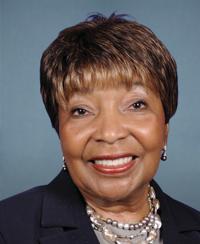
Mr. Speaker, I have come to the floor this evening to express my concern about the lack of funding by this administration's to our nation's education programs and I wanted to share with my colleagues…
Mr. Speaker, I have come to the floor this evening to express my concern about the lack of funding by this administration's to our nation's education programs and I wanted to share with my colleagues how this budget matches up with the priorities of the people I represent.
On yesterday, in a beautiful ceremony in the Rose Garden, President Bush hosted an event marking the progress, significant progress toward making sure every child in public schools gets a quality education.
Now, I am sure that made a great story on last evening's news, but Head Start is more than just news for the nearly 20 million families who have benefited from the program. It is real life. Head Start provides the most comprehensive program for children of low income, working families. In a recent study by the Family and Child Experiences Survey, the findings concluded that children are ready to learn. Another study concluded that Head Start narrowed the gap between disadvantaged children and their peers in vocabulary and writing skills during the program year.
I am here today because of this Administration's plans to dismantle this vital program by turning it over to struggling states. It baffles me why such a move would be necessary. Currently, the program provides federal grants directly to community organizations, allowing for local flexibility and strong federal oversight of Head Start's quality. If Head Start is turned over to states' during this time of economic uncertainty, it is very likely they will use Head Start funding to fill gaps in their own programs.
Mr. Speaker, the Head Start program not only involves the child but also recognizes the importance of the family. Head Start has included parents in both the child's education and their membership in the Head Start Policy Council. I have received numerous letters from teachers, parents, and other employees of the Sunnyview and Greater Head Start locations in my district of Dallas, Texas. Each one pleading for additional funding and urging the program to be kept in its current structure. One parent writes, ``they teach them how to write, count, their ABC's, to draw, to be responsible . . . . . Many families feel comfortable with this program because they can come in and volunteer in the classes and see what the children are learning.''
Mr. Speaker, in closing I would hope my colleagues on the other side of the aisle would consider listening to the countless voices of children that Head Start prepares for the foundation of their critical learning years. How can we deny them a chance at a decent future? I submit to you, that we cannot. It is our duty as federal lawmakers, that every child is prepared with a quality education so they can be productive citizens of this nation.
Bill Text
Latest available legislative text
        [Congressional Bills 108th Congress]
[From the U.S. Government Publishing Office]
[H. Res. 238 Introduced in House (IH)]

108th CONGRESS
1st Session
H. RES. 238

Expressing support for the Head Start Program, which has had a positive
impact on the lives of low income children and families since its
inception and endorsing its administrative structure and program
content.

_______________________________________________________________________

IN THE HOUSE OF REPRESENTATIVES

May 15, 2003

Mr. Payne (for himself and Mr. Holt) submitted the following
resolution; which was referred to the Committee on Education and the
Workforce

_______________________________________________________________________

RESOLUTION

Expressing support for the Head Start Program, which has had a positive
impact on the lives of low income children and families since its
inception and endorsing its administrative structure and program
content.

Whereas in 1964 the Federal Government asked a panel of child development
experts to draw up a program to help communities meet the needs of
disadvantaged preschool children;
Whereas Project Head Start, launched as an eight-week summer program by the
Office of Economic Opportunity in 1965, was designed to help break the
cycle of poverty by providing preschool children of low-income families
with a comprehensive program to meet their emotional, social, health,
nutritional, and psychological needs;
Whereas in 1969, Head Start was transferred from the Office of Economic
Opportunity to the Office of Child Development in the U.S. Department of
Health, Education and Welfare, and for more than 20 years has been a
part of the Administration on Children, Youth and Families in the
Department of Health and Human Services, in recognition of the
comprehensive service child and family development aspects of the
program;
Whereas Head Start has served 21,214,295 children since it began in 1965;
Whereas more than 133,000 Head Start fathers participated in organized regularly
scheduled activities designed to involve them in Head Start and Early
Head Start programs;
Whereas Head Start programs by law must collaborate and coordinate with Title I
schools;
Whereas Head Start programs collaborate with other agencies such as to provide a
cohesive network of services in order to ensure responsiveness to the
community which it serves;
Whereas 20 States have Head Start waiting lists, totaling a half a million
children who are eligible for enrollment yet unable to enter Head Start
programs;
Whereas a recent national study by the President's Management Council reported
that Head Start received the highest customer satisfaction rating of any
government agency or private business;
Whereas a recent study by the Family and Child Experiences Survey concluded Head
Start children are ``ready to learn'' and in kindergarten, Head Start
graduates made substantial gains in word knowledge, letter recognition,
math skills and writing skills relative to national norms; and
Whereas parental involvement in Head Start is mandatory and key to the success
of the program and half of the members of the Head Start Policy Council,
which serves as a vital link between the community and public and
private agencies, are made up of parents: Now, therefore, be it
Resolved, That the House of Representatives recognizes the major
contribution Head Start has made to America's children and families and
urges the program to continue to improve the quality of their
classrooms through attention to the facilities, equipment and supplies,
educational activities, schedule, and interaction with children.
Sec. 2. The House of Representatives recognizes Head Start as an
apolitical Federal-to-local partnership based on community needs and
supports maintaining the current administrative responsibilities of the
Department of Health and Human Services over the program and continuing
the Federal-to-local structure of the program.
<all>