Expressing the sense of the House of Representatives supporting the United States in its efforts within the World Trade Organization (WTO) to end the European Union's protectionist and discriminatory trade practices of the past five years regarding agriculture biotechnology.
Legislative Activity
Stay on top of the latest movement without scrolling through every action
Motion to reconsider laid on the table Agreed to without objection.
June 10, 2003 • 7:13 PM
View full timeline
Introduced in House
May 22, 2003
Referred to the House Committee on Ways and Means.
May 22, 2003
Mr. Camp moved to suspend the rules and agree to the resolution, as amended.
June 10, 2003 • 12:52 PM
Considered under suspension of the rules. (consideration: CR H5106-5116)
June 10, 2003 • 12:53 PM
DEBATE - The House proceeded with forty minutes of debate on H. Res. 252.
June 10, 2003 • 12:53 PM
At the conclusion of debate, the Yeas and Nays were demanded and ordered. Pursuant to the provisions of clause 8, rule XX, the Chair announced that further proceedings on the motion would be postponed.
June 10, 2003 • 1:41 PM
Considered as unfinished business. (consideration: CR H5107, H5153)
June 10, 2003 • 7:05 PM
Passed/agreed to in House: On motion to suspend the rules and agree to the resolution, as amended Agreed to by the Yeas and Nays: (2/3 required): 339 - 80 (Roll no. 256).(text: CR H5107)
June 10, 2003 • 7:13 PM
On motion to suspend the rules and agree to the resolution, as amended Agreed to by the Yeas and Nays: (2/3 required): 339 - 80 (Roll no. 256). (text: CR H5107)
June 10, 2003 • 7:13 PM
Motion to reconsider laid on the table Agreed to without objection.
June 10, 2003 • 7:13 PM
Voting History
1 vote recorded • Roll call available
Floor Debate
22 membersWhat members said about H.Res. 252 on the floor
 SB
SB NS
NS AS
AS FRW
FRW DH+17
DH+17
Floor Debate
22 membersWhat members said about H.Res. 252 on the floor
Mr. Chairman, I yield such time as he may consume to the gentleman from Virginia (Mr. Wolf). (Mr. WOLF asked and was given permission to revise and extend his remarks.) Mr. Chairman, I am happy to…
Mr. Chairman, I yield such time as he may consume to the gentleman from Virginia (Mr. Wolf).
(Mr. WOLF asked and was given permission to revise and extend his remarks.)
Mr. Chairman, I am happy to yield 1 minute to the gentleman from Ohio (Mr. Portman). I understand he has an inquiry about this legislation.
Mr. Chairman, will the gentleman yield?
Mr. Chairman, that is correct. It is intended to apply to gambling, which is primarily determined by chance, rather than the skill of one of the players over the other.
Mr. Chairman, if the gentleman will yield further, so long as it is legal within that State, that is correct.
Mr. Chairman, I both commend and yield 5 minutes to the gentleman from Ohio (Mr. Oxley), the chairman of the full committee, who has been instrumental in bringing this legislation to the floor.
(Mr. OXLEY asked and was given permission to revise and extend his remarks.)
Mr. Chairman, I yield 2 minutes to the gentleman from North Carolina (Mr. Coble).
Mr. Chairman, I yield myself such time as I may consume to respond to the gentleman from Massachusetts. I would say to the gentleman that this bill is not about opposing legal gambling. This bill is about opposing mob activity, criminal activity. The FBI says that organized crime is behind these Internet sites. This is about the unsupervised, illegal, untaxed Internet gambling. Illegal, offshore.
We talk about adults. These sites specifically target preteenaged children; and as the University of Connecticut has shown us, it is becoming a problem for many of our teenagers. They are becoming addicted to it, and they then turn to crime. This is about protecting Americans from crime that arises from these sites, specifically from these sites.
In the gentleman's own State, Dr. Schaffer, Harvard Medical School, likened illegal Internet gambling to crack cocaine, and he said, ``It is changing the gambling scene as crack cocaine changed the drug scene.'' We have all seen the scourge of crack cocaine. We have seen how it has ruined our country, ruined our youth. We have seen Adrian McPherson, a young man with a lot of promise, a star quarterback, a Mr. Basketball in the State of Florida, Mr. Football, we have seen him on trial, accused of Internet gambling.
Mr. Chairman, this is simply about enforcing the laws of this country and protecting our youth. We take the animals of the field, the one thing they do is they protect their youth. If dogs, cats, rabbits, any animal, if they protect their youth, at least we can rise to that level and above that level and protect the youth of our country.
Finally, as the NCAA said when they urged us to adopt this legislation for 5 straight years, ``Illegal Internet gambling is destroying the integrity of college sports and we have scandals in the making.'' Let us put an end to it; let us put an end to it now. Let us vote for this bill. Let us vote for the Kelly amendment. Let us vote against the Cannon amendment, which is a poison pill, as we all recognize, any of us who have studied the issue at all.
Mr. Chairman, I yield 3\1/2\ minutes to the gentlewoman from New York (Mrs. Kelly), who has conducted extensive hearings on this matter.
Mr. Chairman, will the gentlewoman yield?
The gentlewoman's assessment of the intent is accurate. I thank the gentlewoman for clarifying that point.
Mr. Chairman, I yield myself such time as I may consume.
Mr. Chairman, major league baseball, the National Football League, and the NCAA all endorse this legislation. We could have no better representative than the gentleman from Nebraska (Mr. Osborne), who many of us still think of as Coach Osborne of the Nebraska Cornhuskers.
Mr. Chairman, I yield 2 minutes to the gentleman from Nebraska (Mr. Osborne).
Mr. Chairman, I yield 2 minutes to the gentleman from Michigan (Mr. Ehlers).
Mr. Chairman, I yield myself such time as I may consume.
Mr. Chairman, the gentleman from Virginia (Mr. Goodlatte) and the gentleman from Iowa (Mr. Leach) have been fighting this issue and offering legislation for some time. This legislation actually appropriately would bear their names. I commend the gentleman from Virginia. I think no one has done more than he and the gentleman from Iowa (Mr. Leach) on this issue.
Mr. Chairman, I yield 3 minutes to the gentleman from Virginia (Mr. Goodlatte).
Mr. Chairman, I yield 3 minutes to the gentleman from Iowa (Mr. Leach). Many fine things have been said about the gentleman, that he and the gentleman from Virginia (Mr. Goodlatte) have been fighting this issue, this problem, and have really brought it to our attention, along with the gentleman from Virginia (Mr. Wolf), and I commend him.
Mr. Chairman, I yield back 1 minute to the gentlewoman from Oregon (Ms. Hooley).
Mr. Chairman, we have 2 more.
Mr. Chairman, I yield 2 minutes to the gentleman from Michigan (Mr. Rogers).
Mr. Chairman, I have the right to close. I do intend to close.
Mr. Chairman, we have no other speakers, but I do wish to close.
Mr. Chairman, I yield myself such time as I may consume.
Mr. Chairman, this Congress has tried mightily, Members of this Congress, to pass legislation to protect our children from this organized criminal activity. And it is a criminal activity. To equate this with the lawful supervised gambling in Las Vegas is simply to miss the point.
The fact is the gentlewoman from Oregon (Ms. Hooley) said, We do nothing in this bill to make unlawful what is lawful or make lawful what is unlawful.
What we do say is that where there is this criminal activity which is causing such heartbreak and such sorrow and such destruction and really a crime wave in this country, that it is time to put an end to it.
Now, the gentleman from Virginia (Mr. Goodlatte) has for years strived to bring the conscience of this Congress to this issue. The gentleman from Iowa (Mr. Leach) for years has brought this issue to our attention. They want stronger measures. I would like stronger measures, I will admit that, but we have to be practical.
We have to get what we can get. And what was the Cannon amendment killed this legislation in the past, and it will be brought up and they will attempt to kill this legislation. I hope that is not the case. I hope that we do not vote for the Cannon, now Sensenbrenner amendment, and again postpone facing this issue.
When it gets to the point that MasterCard, American Express, Visa, and Discover are all urging this Congress to take action to stop the illegal use of their networks, and they have written letters endorsing this legislation that every Member of this Congress has gotten, and they have said it will be an effective tool to stop the use of our credit cards to this illegal activity, when Citibank, when Morgan Stanley, when the largest banks in this country say give us the regulations, give us the framework to stop this, it is about time that we move.
We have talked about major league baseball, the NFL, and I think that the gentleman from Nebraska (Mr. Osborne), more skilled than any of us in college sports, he is the longtime football coach of the Nebraska Cornhuskers, when he says this is undermining the integrity of the sport, it is time for us to take action.
It is time for us to quit this turf fighting where someone tries to expand gambling and someone else tries to limit gambling, and to come forward with a bill to address this, what the FBI calls ``mob-drive, crime-controlled activity.''
When we started this debate, some 4 or 5 years ago, we had less than a half a dozen sites, less than $300,000 being used. Today, the number of addicted gamblers in this country has grown by 5 million, a great number of them starting in their preteen or early teenage years.
It is time this Congress acted. It is time this Congress rejected the Sensenbrenner amendment in a few minutes and voted for this legislation. If it does not, we are going to be dealing with a $20 billion industry or $30 billion industry, and it is bad enough today when we do not know who these people are. They are unregulated. We do not even know where the money that is earned, how much of that money is finding its way back to Washington; but it is a pretty strong indication when we have one so-called faith group that battled for this legislation until a few weeks ago and suddenly turned around 180 degrees and suddenly opposed this legislation; and we find from a California paper that a few years ago they, in fact, took gambling money to fight on behalf of the gambling industry.
The National Council of Churches has written us today, the National Governors Association. The Fraternal Order of Police has urged us to take action to accept no amendments other than the Kelly amendment. The Federal Law Enforcement Officers Association has written us. They have urged us to take action.
Mr. Chairman, the house is on fire and it is time for this body to wake up and to take action and to protect the youth of this country and the compulsive gamblers.
I close with one fact, and that is from the University of Connecticut Health Center, an extensive survey that said 74 percent of those who have used the Internet to gamble have serious problems with addiction, and many of those have resorted to criminal activities to pay for the habit. On the other hand, those that engage in legal gambling, they find only a third as many have become permanently addicted.
We have a wave in this country which Dr. Schaffer at Harvard Medical School compares to a cocaine epidemic in gambling, a crack cocaine epidemic; and in a few minutes, each one of us will decide to end this addiction and this heartbreak and this threat to not only our sports programs in this country but to our fabric as a Nation, or we will decide to vote for the Cannon amendment and, again, kill this legislation and put it off.
I urge all the Members to take a strong stand against the killer amendments that will be offered, a strong stand for this legislation. Join with the credit card companies, the financial institutions, the many church groups in this country, law enforcement officers, National Governors Association, Attorneys General Association. If there is ever a clear vote in this House, this should be the vote. If there was ever a unanimous vote in this House, this should be the vote.
Mr. Chairman, I yield back the balance of my time.
Mr. Chairman, I rise to claim the time in opposition to the amendment.
Mr. Chairman, I yield myself such time as I may consume.
Mr. Chairman, the gentlewoman from Oregon (Ms. Hooley), the gentleman from Ohio (Mr. Oxley), and I introduced this legislation, and I think the gentleman from Ohio (Mr. Oxley) probably said it best when he described the Jackson-Lee amendment as gutting the bill by removing from it the major source of financing for illegal Internet gambling, and that is credit cards.
What this entire legislation is about is about cutting off the money, because these illegal Internet gamblers are not
offering a public service, they are making money. They are, in fact, making a killing. It is all about money, and the way we address it is by cutting off the money. Removing credit cards from the financial instrument covered under the bill is tantamount to saying we are only going to pretend to address the problem of illegal Internet gambling.
No one should seriously contend that children are not now gambling over the Internet using credit cards in too many instances. How difficult is it to borrow, with or without permission, mom or dad's credit card and gamble over the Internet. College kids are doing it every day; teenagers are doing it every day. How difficult is it for a thief to obtain someone else's credit card number to gamble over the Internet? They steal blank checks, they cash worthless checks, and they steal credit cards, all to feed their addiction. A slew of identity theft cases have hit this country in recent months. Many of those may, in fact, have been driven by this very addiction.
This is a damaging amendment designed to turn a very strong enforcement bill into a weak shadow of itself. I strongly urge a no vote on it. I would like to close by reading a letter from MasterCard because we are told they already have everything they need to do in doing it, and this is a letter to the gentleman from Ohio (Mr. Oxley).
``I am now writing to communicate MasterCard's strong support for appropriate measures to combat illegal Internet gambling. In particular, we commend the efforts of you and your colleagues on H.R. 2143. This legislation will build on the rules developed by MasterCard and enable MasterCard to block branded payment card transactions in connection with Internet gambling. These rules have been extremely effective in impeding the use of U.S.-issued MasterCard branded payment cards for Internet gambling transactions. MasterCard believes that H.R. 2143, introduced by Congressman Spencer Bachus, would establish a workable framework for combating illegal Internet gambling. We are committed to working with you and your colleagues to further refine and pass this legislation as Congress seeks to provide a legislative solution to this important problem.''
MasterCard, Discover, American Express, Visa, the Nation's largest banks, Household Finance, Morgan Stanley, I could go on and on, have all endorsed this legislation because it will work. It will not cut off everything, but the bill as presently constituted covers money orders, it covers e-cash, it covers wire transfers, but it also covers credit cards and it must cover credit cards to be a comprehensive approach.
As the gentleman from Iowa (Mr. Leach) said and as the gentleman from Virginia (Mr. Goodlatte) has said, there are more effective things we could do, and hopefully we will to them, but both of them have strongly endorsed this legislation as a first step.
I urge this body to defeat this amendment, defeat the poison pill that will be offered next and vote on final passage of this bill without these killer amendments.
Mr. Chairman, I yield back the balance of my time.
Mr. Chairman, I rise to claim the time in opposition.
Mr. Chairman, I yield 3 minutes to the gentleman from Kentucky (Mr. Rogers) in opposition to the amendment.
Mr. Chairman, can I inquire as to the time left on each side?
Mr. Chairman, I yield 2 minutes to the gentleman from Florida (Mr. Wexler).
Mr. Chairman, I yield 2 minutes to the gentleman from Kentucky (Mr. Lucas), who rises in opposition to the amendment.
Mr. Chairman, I yield 1 minute to the gentleman from Virginia (Mr. Wolf) in opposition to the Cannon-Sensenbrenner amendment.
Mr. Chairman, I include for the Record a letter from the United Methodist Church, the National Council of Churches, and four other faith-based organizations and a letter from the National Governors Association in opposition to the Sensenbrenner amendment.
June 3, 2003.
House of Representatives,
Washington, DC.
Dear Representative: As a diverse bipartisan coalition of
family and faith-based organizations, we are very concerned
with the effects of gambling on our society and the well-
being of young people and families. We write to strongly
support the passage of H.R. 2143. To Prevent the Use of
Certain Bank Instruments for Unlawful Internet Gambling, and
for Other Purposes. Internet Gambling is already against the
law in all 50 states, yet offshore gambling interests
continue to operate without any accountability and are
available in every state by utilizing the Internet. We urge
you to support H.R. 2143 and reject any amendment or proposal
which would weaken the bill or hinder its enforcement
according to current federal law.
The National Gambling Impact Study Commission Report
presents a disturbing and devastating picture of the effect
of gambling on families. Some crucial points to consider in
this report as it relates to Internet gambling are:
Gambling costs society $5 billion a year in societal costs
including, job loss, unemployment benefits, welfare benefits,
poor physical and mental health, and problem or pathological
gambling treatment, bankruptcy,
arrests, imprisonment, legal fees for divorce, and so forth.
Because the Internet can be used anonymously, the danger
exists that access to Internet gambling will be abused by
underage gamblers, our children and youth.
The high-speed instant gratification of Internet games and
the high level of privacy they offer may exacerbate problem
and pathological gambling.
Lack of accountability also raises the potential for
criminal activities, which can occur in several ways. First,
there is the possibility of abuse by gambling operators. Most
Internet service providers hosting Internet gambling
operations are physically located offshore; as a result,
operators can alter, move, or entirely remove sites within
minutes. Furthermore, gambling on the Internet provides an
easy means for money laundering. Internet gambling provides
anonymity, remote access, and encrypted data. To launder
money, a person need only deposit money into an offshore
account, use those funds to gamble, lose a small percent of
the original funds, then cash out the remaining funds.
Through the dual protection of encryption and anonymity, much
of this activity can take place undetected.
Computer hackers or gambling operators may tamper with
gambling software to manipulate games to their benefit.
Unlike the physical world of highly regulated resort-
destination casinos, assessing the integrity of Internet
operators is quite difficult.
Please support H.R. 2143 and reject the spread of a
predatory industry, which is contrary to the well-being of
individuals and all of society.
Sincerely,
Christian Coalition of America, Concerned Women for
America, Family Research Council, General Board of
Church and Society of the United Methodist Church,
National Coalition Against Gambling Expansion (NCAGE),
National Council of Churches.
Mr. Chairman, I yield the balance of my time to the gentleman from Virginia (Mr. Goodlatte), who, second to none, has led the fight against this illegal Internet gambling.
(Mr. GOODLATTE asked and was given permission to revise and extend his remarks.)
Mr. Speaker, I thank the gentleman for yielding me time. This an important discussion. Maybe it would be reasonable, Mr. Speaker, to start out trying to explain what is biotechnology? Gregor Mendel…
Mr. Speaker, I thank the gentleman for yielding me time.
This an important discussion. Maybe it would be reasonable, Mr. Speaker, to start out trying to explain what is biotechnology?
Gregor Mendel discovered dominant and recessive traits in plants in the mid 19th century. He started taking two quality plants and crossing them to see if you could come out with an improved variety. So we have had cross-breeding, we have had hybrid breeding ever since. Now we have finished gene cataloguing of an agricultural plant called the Arabidopsis, a mustard plant.
But with 25,000 genes, you just took your chances when mixing two plants together. Sometimes the product turned out poisonous or allergenic. Sometimes it was very undesirable for a raft of other reasons.
Now we have the scientific technology to pick out one single gene and decide what characteristics are going to evolve from that gene, and instead of taking your chances by mixing 25,000 or 30,000 genes of two plants, you pick out one gene because you want a certain characteristic. You put it into that other plant and predetermine what is going to happen as a result.
Now, there is a lot of scare of what might happen generations from now. In the discussion of this resolution, it seems to me that we should not be debating whether this is a trade issue. This is now going to be in the hands of the WTO to decide whether or not it is unfair. But everybody, Mr. Speaker, needs to understand, other countries are trying to keep our products out of their country for one reason or another, restricting imports for bio sanitary reasons or anything else they can come up with. And in this case, it appears that they are trying to keep our agricultural products, that we produce more efficiently, out of Europe and Japan and some of these other countries, simply because they do not want it to disrupt the problems of their farmers and they want to protect their markets. We are going to let the WTO decide if it is restraint of trade. But as we evolve into greater assurance that we are going to have safety, both to human health, to animals, and to the environment, we need to move ahead with this technology.
Look, the possibilities in developing countries are so tremendous. That is why our whip mentioned that the day after tomorrow I am holding a hearing on biotechnology. The Speaker is going to lead off the testimony in that hearing on the potential and safety of biotechnology. We are going to have Rita Caldwell from NSF come to tell us about the implementation of what we put in my NSF bill in terms of working with African scientists, developing products that are going to help their particular country. And if we get into Africa, eventually, science and biotechnology are going to prevail. We are going to have Mr. Natsios, the administrator of AID, say how important it is that we do not restrict this technology for developing countries.
Vote for this resolution and vote to let science, not emotion, rule the future of agricultural biotechnology.
On May 12th, the Speaker of the House and members of Congress joined with the Bush Administration to challenge the European Union's import ban on genetically modified (GM) crops. WTO rules, while allowing countries to reject imports on the basis of health and environmental concerns, require that any such policy be supported by scientific evidence.
However, the EU has refused to process new applications for trade of transgenic food crops since 1998 without even attempting to demonstrate any compelling scientific reasons. It is estimated that over $300 million annually in U.S. corn exports alone are being lost. Even EU Enviroment Commissioner Margot Wallstrom has admitted that, ``We have already waited too long to act. The moratorium is illegal and not justified.''
While the EU stance on GM crops is an unfair economic burden on American farmers, it is also an unjust burden on the world's poorest continent. With approximately 180 million undernourished people, Africa stands to benefit tremendously from GM crops.
The EU is exploiting Africa's dependence on the EU market to stall acceptance of GM crops. For example, with its population literally starving last year, Zambia rejected 23,000 metric tons of U.S. food aid because Europe might reject future Zambian corn exports. EU pressure is even impeding research on new transgenic crop varieties important to bringing Africa closer to sustainability.
The Speaker of the House, USAID Administrator, and leading scientists will testify at my Research Subcommittee hearing this Thursday. We will examine barriers to plant biotechnology in Africa and new government programs supporting partnerships with African scientists in Africa.
The U.S. challenge moves us one step closer to removing unfair barriers that hurt American farmers and deny the people of Africa a tool for combating hunger. Please support H. Res. 252.
Mr. Speaker, I include for the Record a summary of a report we wrote on biotechnology in the Committee on Science called ``Seeds of Opportunity.'' The total report is available at: www.house.gov/nicksmith/opportunity.pdf.
The report referred to is as follows:
summary
The Subcommittee on Basic Research of the Committee on Science held a series of three hearings entitled, ``Plant Genome Research: From the Lab to the Field to the Market: Parts I-III,'' to examine plant genomics, its application to commercially important crop plants, and the benefits, safety, and oversight of plant varieties produced using biotechnology. The testimony and other information presented at these hearings and information gathered at various briefings provides the basis for the findings and recommendations in this report.
Almost without exception, the crop plants in use today have been genetically modified. The development of new plant varieties through selective breeding has been improving agriculture and food production for thousands of years. In the 19th century, the basic principles of heredity were discovered by Gregor Mendel, whose studies on inheritance in garden peas laid the foundation for the modern science of genetics. Subsequent investigations advanced our understanding of the location, composition, and function of genes, and a critical breakthrough revolutionized the field in 1953, when James Watson and Francis Crick described the double helix structure of deoxyribonucleic acid (DNA), the substance of heredity. This ground breaking research set the stage for deciphering the genetic code and led to the rapid advances in practical application of genetics in medicine, animal science, and agriculture.
The development of the science of genetics in the 20th century was a tremendously important factor in the plant breeding programs that have produced the remarkable diversity of fruits, vegetables, and grains that we enjoy today and that provide food security for the poor nations of the world. Traditional cross-breeding has been very useful in improving crop plants, but it is a time consuming process that results in the uncontrolled recombination of tens of thousands of genes, commonly producing unwanted traits that must be eliminated through successive rounds of backcrossing. Improving crops through traditional methods also is subject to severe limitations because of the constraints imposed by sexual compatibility, which limit the diversity of useful genetic material.
With the arrival of biotechnology, plant breeders are now able to develop novel varieties of plants with a level of precision and range unheard of just two decades ago. Using this technology, breeders can introduce selected, useful genes into a plant to express a specific, desirable trait in a significantly more controlled process than afforded by traditional breeding methods.
U.S. farmers have been quick to adopt plants modified using new biotechnology, including commercial crops that resist biologically insect and viral pests and tolerate broad-spectrum herbicides used to control weeds. As our knowledge of plant genetics expands, new varieties of plants with improved nutrition, taste, or other characteristics desired by consumers will become available. The federally-funded plant genome program provides much of the essential basic research on plant genetics required to develop new varieties of commercially important crops through advanced breeding programs.
For over two decades, the application of biotechnology has been assessed for safety. Oversight of agricultural biotechnology includes both regulatory and nonregulatory mechanisms that have been developed over the last five decades for all crop plants and conventional agricultural systems. Federal regulation of agricultural biotechnology is guided by the 1986 Coordinated Framework for Regulation of Biotechnology, which laid out the responsibilities for the different regulatory agencies, and the 1992 Statement on Scope, which established the principle that regulation should focus on the characteristics of the organism, not the method used to produce it. Three federal agencies are responsible for regulating agricultural biotechnology under existing statutes: the U.S. Department of Agriculture (USDA), which is responsible for ensuring that new varieties are safe to grow; the Environmental Protection Agency (EPA), which is responsible for ensuring that new pest-resistant varieties are safe to grow and consume; and the Food and Drug Administration (FDA), which is responsible for ensuring that new varieties are safe to consume.
Although biotechnology has had an uninterrupted record of safe use, political activists in Europe have waged well-funded campaigns to persuade the public that the products of high-tech agriculture may be harmful to human health and the environment. As a result of these efforts, public confidence in the safety of agricultural biotechnology has been seriously undermined in Europe. Many European countries have established new rules and procedures specifically designed to address ``genetically modified organisms,'' and these have
had a detrimental impact on international trade in agricultural products.
The controversy over agricultural biotechnology now has spread to the United States, the world's largest grower of plants and consumer of foods produced using this technology. At the core of the debate is food safety, particularly the possibility that unexpected genetic effects could introduce allergens or toxins into the food supply. The use of antibiotic resistance markers also has been criticized as dangerous to human health. As a result, there have been calls for both increased testing and labeling requirements for foods created using biotechnology.
Environmental concerns also have been raised. It has been suggested, for example, that widespread use of plants engineered with built-in protection against insect and viral pests could accelerate the development of pesticide-resistant insects or could have a negative impact on populations of beneficial insects, such as the Monarch butterfly. It also has been argued that the use of herbicide-tolerant plants could increase herbicide use and that ``superweeds'' could be developed through cross-pollination between these plants and nearby weedy relatives.
Extensive scientific evaluation worldwide has produced no evidence to support these claims. Far from causing environmental and health problems, agricultural biotechnology has tremendous potential to reduce the environmental impact of farming, provide better nutrition, and help feed a rapidly growing world population. Crops designed to resist pests and to tolerate herbicides and environmental stresses, such as freezing temperatures, drought, and high salinity, will make agricultural more efficient and sustainable by reducing synthetic chemical inputs and promoting no-tillage agricultural practices. Stress-tolerant crops also will reduce pressure on irreplaceable natural resources like rainforests by opening up presently nonarable lands to agriculture. Other plants are being developed that will produce renewable industrial products, such as lubricating oils and biodegradable plastics, and perform bioremediation of contaminated soils.
Biotechnology will be a key element in the fight against malnutrition worldwide. Deficiencies of vitamin A and iron, for example, are very serious health issues in many regions of the developing world, causing childhood blindness and maternal anemia in millions of people who rely on rice as a dietary staple. Biotechnology has been used to produce a new strain of rice--Golden Rice--that contains both vitamin A (by providing its precursor, beta-carotene) and iron. The Subcommittee heard about other research aimed at improving the nutrition of a wide variety of food staples, such as cassava, corn, rice, and other cereal grains, that can be a significant help in the fight for food security in many developing countries.
The merging of medical and agricultural biotechnology has opened up new ways to develop plant varieties with characteristics to enhance health. Advanced understanding of how natural plant substances, known as phytochemicals, confer protection against cancer and other diseases is being used to enhance the level of these substances in the food supply. Work is underway that will deliver medicines and edible vaccines through common foods that could be used to immunize individuals against a wide variety of enteric and other infectious diseases. These developments will have far-reaching implications for improving human health worldwide, potentially saving millions of lives in the poorest areas of the world by providing a simpler medicine production and distribution system.
Set against these benefits, however, is the idea that transferring a gene from one organism to an unrelated organism using recombinant DNA techniques inherently entails greater risks than traditional cross breeding. The weight of the scientific evidence leads to the conclusion that there is nothing to substantiate scientifically the view that the products of agricultural biotechnology are inherently different or more risky than similar products of conventional breeding.
The overwhelming view of the scientific community--including the National Academy of Sciences, the National Research Council, many professional scientific societies, the Organization for Economic Cooperation and Development, the World Health Organization, and the research scientists who appeared before the subcommittee--is that risk assessment should focus on the characteristics of the plant and the environment into which it is to be introduced, not on the method of genetic manipulation and the source of the genetic material transferred. These risk factors apply equally to traditionally-bred plants.
Years of research and experience demonstrate that plant varieties produced using biotechnology, and the foods derived from them, are just as safe as similar varieties produced using classical plant breeding, and they may even be safer. Because more is known about the changes being made and because common crop varieties with which we have a broad range of experience are being modified, plants breeders can answer questions about safety that cannot be answered for the products of classical breeding techniques.
FDA has adopted a risk-based regulatory approach consistent with these principles and with the long history of safe use of genetically- modified plants and the foods derived from them. Its policies on voluntary consultation and labeling are consistent with the scientific consensus and provide essential public health protection.
Unlike FDA regulations on food, USDA has instituted plant pest regulations, and EPA proposes to institute new plant pesticide regulations, that target selectively plants produced using biotechnology and apply substantive regulatory requirements to early stages of plant research and development. These regulations add greatly to the cost of developing new biotech plant varieties, harming both an emerging industry and the largely publicly-funded research base upon which it depends. Regulations and regulatory proposals that selectively capture the products of biotechnology should be modified to reflect the scientific consensus that the source of the gene and the methods used to transfer it are poor indicators of risk.
In the international area, the United States should work to ensure that access to existing markets for agricultural products are maintained. The United States should not accept any international agreements that endorse the precautionary principle--which asserts that governments may make political decisions to restrict a product even in the absence of scientific evidence that a risk exists--and that depart from the principle of substantial equivalence adopted by a number of international bodies.
Finally, the administration, industry, and scientific community have a responsibility to educate the public and improve the availability of information on the long record of safe use of agricultural biotechnology products. This is critically important to building consumer confidence and ensuring that sound science is used to make regulatory decisions.
Mr. Speaker, due to family reasons, I was unable to vote on rollcall No. 227: H. Res. 159. Had I been present, I would have voted ``yes.'' Mr. Speaker, due to family reasons, I was unable vote on…
Mr. Speaker, due to family reasons, I was unable to vote on rollcall No. 227: H. Res. 159. Had I been present, I would have voted ``yes.''
Mr. Speaker, due to family reasons, I was unable vote on rollcall No. 228: H. Res. 195. Had I been present, I would have voted ``yes.''
Mr. Speaker, due to family reasons, I was unable to vote on rollcall No. 229: H.R. 1465. Had I been present, I would have voted ``yes.''
Mr. Speaker, due to family reasons, I was unable to vote on rollcall No. 230: S. 222. Had I been present, I would have voted ``yes.''
Mr. Speaker, due to family reasons, I was unable to vote on rollcall No. 231: S. 273. Had I been present, I would have voted ``yes.''
Mr. Speaker, due to family reasons, I was unable to vote on rollcall No. 232: S. 763. Had I been present, I would have voted ``yes.''
Mr. Speaker, due to family reasons, I was unable to vote on rollcall No. 233: H. Amdt. to H. J. Res. 4. Had I been present, I would have voted ``no.''
Mr. Speaker, due to family reasons, I was unable to vote on rollcall No. 234: Final passage of H. J. Res. 4. Had I been present, I would have voted ``yes.''
Mr. Speaker, due to family reasons, I was unable to vote on rollcall No. 235: Motion to suspend the rules and pass H. Res. 231. Had I been present, I would have voted ``yes.''
Mr. Speaker, due to family reasons, I was unable to vote on rollcall No. 236: on agreeing to H. Res. 257. Had I been present, I would have voted ``no.''
Mr. Speaker, due to family reasons, I was unable to vote on rollcall No. 237: Motion to suspend the rules and pass H. Res. 177. Had I been present, I would have voted ``yes.''
Mr. Speaker, due to family reasons, I was unable to vote on rollcall No. 238: Motion to suspend the rules and pass H. Res. 201. Had I been present, I would have voted ``yes.''
Mr. Speaker, due to family reasons, I was unable to vote on rollcall No. 239: H.R. 1954. Had I been present, I would have voted ``yes.''
Mr. Speaker, due to family reasons, I was unable to vote on rollcall No. 240: H. Amdt. 154 to H.R. 760. Had I been present, I would have voted ``yes.''
Mr. Speaker, due to family reasons, I was unable to vote on rollcall No. 241: Motion to Recommit to H.R. 760. Had I been present, I would have voted ``yes.''
Mr. Speaker, due to family reasons, I was unable to vote on rollcall No. 242: final passage of H.R. 760. Had I been present, I would have voted ``no.''
Mr. Speaker, due to family reasons, I was unable to vote on rollcall No. 243: On Ordering the Previous Question for H. Res. 256. Had I been present, I would have voted ``yes.''
Mr. Speaker, due to family reasons, I was unable to vote on rollcall No. 244: H. Res. 258. Had I been present, I would have voted ``yes.''
Mr. Speaker, due to family reasons, I was unable to vote on rollcall No. 245: H. Res. 258. Had I been present, I would have voted ``yes.''
Mr. Speaker, due to family reasons, I was unable to vote on rollcall No. 246: on passage of H.R. 1474. Had I been present, I would have voted ``yes.''
Mr. Speaker, due to family reasons, I was unable to vote on rollcall No. 247: S. 222. Had I been present, I would have voted ``yes.''
Mr. Speaker, due to family reasons, I was unable to vote on rollcall No. 248: S. 273. Had I been present, I would have voted ``yes.''
Mr. Speaker, due to family reasons, I was unable to vote on rollcall No. 249: H.R. 1610. Had I been present, I would have voted ``yes.''
Mr. Speaker, due to family reasons, I was unable to vote on rollcall No. 250: H. Con Res. 162. Had I been present, I would have voted ``yes.''
Mr. Speaker, due to family reasons, I was unable to vote on rollcall No. 251: S. 763. Had I been present, I would have voted ``yes.''
Mr. Speaker, due to family reasons, I was unable to vote on rollcall No. 252: H. Res. 263 to H.R. 2143. Had I been present, I would have voted ``yes.''
Mr. Speaker, due to family reasons, I was unable to vote on rollcall No. 253: H. Res. 263 to H.R. 2143. Had I been present, I would have voted ``No.''
Mr. Speaker, due to family reasons, I was unable to vote on rollcall No. 254: H. Amdt. 159 to H.R. 2143. Had I been present, I would have voted ``No.''
Mr. Speaker, due to family reasons, I was unable to vote on rollcall No. 255: Passage of H.R 2143. Had I been present, I would have voted ``yes.''
Mr. Speaker, due to family reasons, I was unable to vote on rollcall No. 256: H. Res. 252: Had I been present, I would have voted ``yes.''
Mr. Speaker, due to family reasons, I was unable to vote on rollcall No. 257: On ordering the previous question for H.R. 2115. Had I been present, I would have voted ``yes.''
Mr. Speaker, due to family reasons, I was unable to vote on rollcall No. 258: On agreeing to the rule for H.R. 2115. Had I been present, I would have voted ``yes.''
Mr. Speaker, due to family reasons, I was unable to vote on rollcall No. 259: On passage of H. Con. Res. 110. Had I been present I would have voted ``yes.''
Mr. Speaker, due to family reasons, I was unable to vote on rollcall No. 260: On passage of H.R. 1320. Had I been present I would have voted ``yes.''
Mr. Speaker, due to family reasons, I was unable to vote on rollcall No. 261: H.R. 2350. Had I been present, I would have voted ``yes.''
Mr. Speaker, due to family reasons, I was unable to vote on rollcall No. 262: H. Amdt. 5 to H.R. 2115. Had I been present, I would have voted ``yes.''
Mr. Speaker, due to family reasons, I was unable to vote on rollcall No. 263: H. Amdt. 4 to H.R. 2115. Had I been present, I would have voted ``yes.''
Mr. Speaker, due to family reasons, I was unable to vote on rollcall No. 264: On passage of H.R. 2115. Had I been present, I would have voted ``yes.''
Mr. Speaker, due to family reasons, I was unable to vote on rollcall No. 265: H. Res. 269 to H.R. 1115. Had I been present, I would have voted ``yes.''
Mr. Speaker, due to family reasons, I was unable to vote on rollcall No. 266: H. Res. 269 to H.R. 1115. Had I been present, I would have voted ``no.''
Mr. Speaker, due to family reasons, I was unable to vote on rollcall No. 268: H. Amdt.
168 to H.R. 1115. Had I been present, I would have voted ``yes.''
Mr. Speaker, due to family reasons, I was unable to vote on rollcall No. 269: H. Amdt. 169 to H.R. 1115. Had I been present, I would have voted ``yes.''
Mr. Speaker, due to family reasons, I was unable to vote on rollcall No. 270: H. Amdt. 170 to H.R. 1115. Had I been present, I would have voted ``yes.''
Mr. Speaker, due to family reasons, I was unable to vote on rollcall No. 271: Motion to Recommit to H.R. 1115. Had I been present, I would have voted ``yes.''
Mr. Speaker, due to family reasons, I was unable to vote on rollcall No. 272: Passage of H.R. 1115. Had I been present, I would have voted ``yes.''
Mr. Speaker, due to family reasons, I was unable to vote on rollcall No. 273: H. Res. 270 to H.R 1308. Had I been present, I would have voted ``no.''
Mr. Speaker, due to family reasons, I was unable to vote on rollcall No. 274: Rule for H.R. 1308. Had I been present, I would have voted ``no.''
Mr. Speaker, due to family reasons, I was unable to vote on rollcall No. 275: Motion to Instruct Conferees H.R. 1308. Had I been present, I would have voted ``yes.''
Mr. Speaker, due to family reasons, I was unable to vote on rollcall No. 276: H.R. 2254. Had I been present, I would have voted ``yes.''
Mr. Speaker, due to family reasons, I was unable to vote on rollcall No. 277: H. Con. Res. 220. Had I been present, I would have voted ``yes.''
Mr. Speaker, due to family reasons, I was unable to vote on rollcall No. 278: S. 703. Had I been present, I would have voted ``yes.''
Mr. Speaker, due to family reasons, I was unable to vote on rollcall No. 279: H. Res. 276. Had I been present, I would have voted ``yes.''
Mr. Speaker, due to family reasons, I was unable to vote on rollcall No. 280: H. Res. 171. Had I been present, I would have voted ``yes.''
Mr. Speaker, due to family reasons, I was unable to vote on rollcall No. 281: Passage of H.R. 658. Had I been present, I would have voted ``yes.''
Mr. Speaker, due to family reasons, I was unable to vote on rollcall No. 282: S. 342. Had I been present, I would have voted ``yes.''
Mr. Speaker, due to family reasons, I was unable to vote on rollcall No. 283: Passage of S. Con. Res. 43. Had I been present, I would have voted ``yes.''
Mr. Speaker, due to family reasons, I was unable to vote on rollcall No. 284: Previous Question to H. Res. 281. Had I been present, I would have voted ``no.''
Mr. Speaker, due to family reasons, I was unable to vote on rollcall No. 285: H. Res. 281 to H.R 8. Had I been present, I would have voted ``no.''
Mr. Speaker, due to family reasons, I was unable to vote on Rollcall No. 286: Approving the Journal. Had I been present, I would have voted ``yes.''
Mr. Speaker, due to family reasons, I was unable to vote on Rollcall No. 287: H. Amdt. 171 to H.R. 8. Had I been present, I would have voted ``yes.''
Mr. Speaker, due to family reasons, I was unable to vote on Rollcall No. 288: Passage of H.R. 8. Had I been present, I would have voted ``no''.
Mr. Speaker, due to family reasons, I was unable to vote on Rollcall No. 289: H. Res. 283 to H.R. 660. Had I been present, I would have voted ``yes.''
Mr. Speaker, due to family reasons, I was unable to vote on Rollcall No. 290: H. Res. 283 to H.R. 660. Had I been present, I would have voted ``no''.
Mr. Speaker, due to family reasons, I was unable to vote on Rollcall No. 291: H. Amdt. 172 to H.R. 1528. Had I been present, I would have voted ``yes.''
Mr. Speaker, due to family reasons, I was unable to vote on Rollcall No. 292: Motion to Recommit H.R. 1528. Had I been present, I would have voted ``yes.''
Mr. Speaker, due to family reasons, I was unable to vote on Rollcall No. 293: Passage of H.R. 1528. Had I been present, I would have voted ``no''.
Mr. Speaker, due to family reasons, I was unable to vote on Rollcall No. 294: Kind amendment to H.R. 660. Had I been present, I would have voted ``yes.''
Mr. Speaker, due to family reasons, I was unable to vote on Rollcall No. 295: On motion to recommit with instructions to H.R. 660. Had I been present, I would have voted ``yes.''
Mr. Speaker, due to family reasons, I was unable to vote on Rollcall No. 296: On final passage to H.R. 660. Had I been present, I would have voted ``yes.''
Mr. Speaker, due to family reasons, I was unable to vote on Rollcall No. 297: H. Res. 264. Had I been present, I would have voted ``yes.''
Mr. Speaker, due to family reasons, I was unable to vote on Rollcall No. 298: H. Res. 177. Had I been present, I would have voted ``yes.''
Mr. Speaker, due to family reasons, I was unable to vote on Rollcall No. 299: H. Con. Res. 209. Had I been present, I would have voted ``yes.''
Mr. Speaker, due to family reasons, I was unable to vote on Rollcall No. 300: Passage of H.R. 2465. Had I been present, I would have voted ``yes.''
Mr. Speaker, due to family reasons, I was unable to vote on Rollcall No. 301: Previous Question to H. Res. 293. Had I been present, I would have voted ``no''.
Mr. Speaker, due to family reasons, I was unable to vote on Rollcall No. 302: Agreeing to H. Res. 293. Had I been present, I would have voted ``no''.
Mr. Speaker, due to family reasons, I was unable to vote on Rollcall No. 303: Passage of H.R. 923. Had I been present, I would have voted ``yes.''
Mr. Speaker, due to family reasons, I was unable to vote on Rollcall No. 304: H.R. 1460. Had I been present, I would have voted ``yes.''
Mr. Speaker, due to family reasons, I was unable to vote on Rollcall No. 305: On sustaining the ruling of the chair on H.R. 2555. Had I been present, I would have voted ``no''.
Mr. Speaker, due to family reasons, I was unable to vote on Rollcall No. 306: Sustain ruling of the chair on H.R. 2555. Had I been present, I would have voted ``yes.''
Mr. Speaker, due to family reasons, I was unable to vote on Rollcall No. 307: H. Amdt. 176 to H.R. 2555. Had I been present, I would have voted ``yes.''
Mr. Speaker, due to family reasons, I was unable to vote on Rollcall No. 308: H. Amdt. 183 to H.R. 2555. Had I been present, I would have voted ``yes.''
Mr. Speaker, due to family reasons, I was unable to vote on Rollcall No. 309: H. Amdt. 188 to H.R. 2555. Had I been present, I would have voted ``no''.
Mr. Speaker, due to family reasons, I was unable to vote on Rollcall No. 310: Passage of H.R. 2555. Had I been present, I would have voted ``yes.''
Mr. Speaker, due to family reasons, I was unable to vote on Rollcall No. 311: Passage to H.R. 1416. Had I been present, I would have voted ``yes.''
Mr. Speaker, due to family reasons, I was unable to vote on Rollcall No. 312: S. 858. Had I been present, I would have voted ``yes.''
Mr. Speaker, due to family reasons, I was unable to vote on Rollcall No. 313: H.R. 2474. Had I been present, I would have voted ``yes.''
Mr. Speaker, due to family reasons, I was unable to vote on Rollcall No. 314: H. J. Res. 49. Had I been present, I would have voted ``yes.''
Mr. Speaker, due to family reasons, I was unable to vote on Rollcall No. 315: H. Con. Res. 49. Had I been present, I would have voted ``yes.''
Mr. Speaker, due to family reasons, I was unable to vote on Rollcall No. 316: H. Res. 199. Had I been present, I would have voted ``yes.''
Mr. Speaker, due to family reasons, I was unable to vote on Rollcall No. 317: H. Res. 294. Had I been present, I would have voted ``yes.''
Mr. Speaker, due to family reasons, I was unable to vote on Rollcall No. 318: On the Hastings amendment to H.R. 2417. Had I been present, I would have voted ``yes.''
Mr. Speaker, due to family reasons, I was unable to vote on Rollcall No. 319: On the Kucinich amendment to H.R. 2417. Had I been present, I would have voted ``no''.
Mr. Speaker, due to family reasons, I was unable to vote on Rollcall No. 320: On the Lee amendment to H.R. 2417. Had I been present, I would have voted ``yes.''
Mr. Speaker, due to family reasons, I was unable to vote on Rollcall No. 321: H. Res. 299 to H.R. 1 and H.R. 2596. Had I been present, I would have voted ``no''.
Mr. Speaker, due to family reasons, I was unable to vote on Rollcall No. 322: H. Res. 299 to H.R. 1 and H.R. 2596. Had I been present, I would have voted ``no''.
Mr. Speaker, due to family reasons, I was unable to vote on Rollcall No. 323: H. Res. 297 to H.R. 1 and H.R. 2596. Had I been present, I would have voted ``no''.
Mr. Speaker, due to family reasons, I was unable to vote on Rollcall No. 324: Ordering the previous question on H. Res. 298. Had I been present, I would have voted ``yes.''
Mr. Speaker, due to family reasons, I was unable to vote on Rollcall No. 325: Passage of H.R. 2559. Had I been present, I would have voted ``yes.''
Mr. Speaker, due to family reasons, I was unable to vote on Rollcall No. 326: Passage of H. Res. 277. Had I been present, I would have voted ``yes.''
Mr. Speaker, due to family reasons, I was unable to vote on Rollcall No. 327: On approval of the Journal. Had I been present, I would have voted ``yes.''
Mr. Speaker, due to family reasons, I was unable to vote on Rollcall No. 328: H.R. 2596. Had I been present, I would have voted ``no''.
Mr. Speaker, due to family reasons, I was unable to vote on Rollcall No. 330: H. Amdt.
197 to H.R. 1. Had I been present, I would have voted ``no''.
Mr. Speaker, due to family reasons, I was unable to vote on Rollcall No. 331: Motion to recommit with instructions to H.R. 1. Had I been present, I would have voted ``yes.''
Mr. Speaker, due to family reasons, I was unable to vote on Rollcall No. 332: Final passage of H.R. 1. Had I been present, I would have voted ``no''.
Mr. Speaker, due to family reasons, I was unable to vote on Rollcall No. 333: On passage of H.R. 2417. Had I been present, I would have voted ``yes.''
Mr. Chairman, I rise in strong support of this bill today. There are going to be several amendments offered. One amendment will be offered as if it is an antigambling amendment. In essence, the…
Mr. Chairman, I rise in strong support of this bill today. There are going to be several amendments offered. One amendment will be offered as if it is an antigambling amendment. In essence, the amendment will actually bring this bill down. Fifteen years ago, there was gambling in two States, Nevada and New Jersey. Once we in this country moved to what we call convenience gambling, we have seen an increase in crime, corruption, domestic violence, physical abuse, and many other bad things that we Republicans and Democrats do not want to see. The ultimate in what is called ``convenience gambling,'' meaning that you do not have to go very far to gamble, is Internet gambling where you can sit in your own family room in your bathrobe on a rainy weekend and literally go broke in about 24 hours.
There will be an amendment offered that will be sort of viewed as maybe some of the pro-family groups are for it. Let me say I have a letter to the gentleman from Alabama signed by the Christian Coalition, Concerned Women for America, the Family Research Council, the General Board of Church and Society of the United Methodist Church, and the National Council of Churches, the National Council of Churches headed by former Democratic Congressman Bob Edgar who served here for many years.
I would ask you, do not support the amendments that will weaken this bill. Internet gambling is beginning to be very corrosive in our society. We have a chance to deal with Internet gambling in the Bachus bill that the gentleman from Ohio (Mr. Oxley) and other Members of the House have put forth. I rise in strong support of the bill. I think this is an opportunity to get control of Internet gambling and to do it in a way that is constructive and positive.
I ask my colleagues, one, support the bill on final passage; but, lastly, do not support any amendments that may appear on the surface to be good but what will in essence bring down this bill and thereby mean that Internet gambling will never be controlled. Five to 7 percent of the young people in our country are addicted to gambling.
As Internet gambling becomes easier and easier, that addiction rate goes up.
So I hope Members will oppose the amendments that will really bring the bill down, and on final passage do something to help this country, to help the young people, to get control of it, to get control and regulate Internet gambling.
Mr. Chairman, I rise in support of H.R. 2143, the Unlawful Internet Gambling Funding Prohibition Act, legislation needed to prevent the use of credit cards, checks, or electronic funds transfers for unlawful Internet gambling. It will be of vital assistance in curbing illegal Internet gambling.
This legislation states in the findings section that: ``the National Gambling Impact Study Commission in 1999 recommended the passage of legislation to prohibit wire transfers to Internet gambling sites or the banks which represent them.''
As the author of the legislation which established the commission, I am pleased to see that one of its most important recommendations may indeed become law. The spread of Internet gambling means that people can now gamble at the workplace and their homes, around the clock. The unchecked progress of Internet gambling must be curbed.
The National Gambling Impact Study Commission report went on to state that gambling can breed bankruptcy, divorce, domestic violence, and physical and emotional problems. Even suicide has been linked to gambling. Often times, even school-aged children--who have never gambled before--are lured into on-line gambling.
H.R. 2143 will establish an enforcement structure that will let federal regulators set up regulations which will limit the acceptance of bank instruments such as credit cards for use in illegal Internet gambling, reducing the chance for gambling to gain a further foothold in our society.
Before I close, let me share with you a story. Donna Kelly, a mother of a 12-year-old daughter and a 7-year-old son developed a gambling problem. At one time there were 13 warrants for her arrest for writing bad checks. Gambling had so wrecked her life that she saw only one option: suicide. Two days before Thanksgiving, she tried to kill herself. She failed, and was placed in a mental hospital. Mrs. Kelly spent Thanksgiving in a mental hospital because of her gambling problem.
Her daughter asked her afterwards, ``Momma, why did you try to kill yourself? Do you not love me anymore?'' This is the human dimension to gambling. This story illustrates why it is so important to vote for this bill. When you cast your vote today, remember the many lives ruined by gambling, and remember the family members left devastated by their loved ones gambling activities.
Internet gambling is a vast and growing enterprise which can serve as an avenue for money launders and terrorist funding. Gambling also involves great social costs. This bill will reduce access to the medium of the Internet as another forum for inducing people to
gamble. I urge Members to vote for this legislation.
Hon. Spencer Bachus,
House of Representatives, Financial Services Committee
Member, Washington, DC.
Dear Representative Bachus: As a diverse bipartisan
coalition of family and faith-based organizations, we are
very concerned with the effects of gambling on our society
and the well-being of young people and families. We write to
strongly support the passage of H.R. 2143, To Prevent the Use
of Certain Bank Instruments for Unlawful Internet Gambling,
and for Other Purposes. Internet Gambling is already against
the law in all 50 states, yet offshore gambling interests
continue to operate without any accountability and are
available in every state by utilizing the Internet. We urge
you to support H.R. 2143 and reject any amendment or proposal
which would weaken the bill or hinder its enforcement
according to current federal law.
The National Gambling Impact Study Commission Report
presents a disturbing and devastating picture of the effect
of gambling on families. Some critical points to consider in
the report as it relates to Internet gambling are:
Gambling costs society $5 billion a year in societal costs
including job loss, unemployment benefits, welfare benefits,
poor physical and mental health, and problem or pathological
gambling treatment, bankruptcy, arrests, imprisonment, legal
fees for divorce, and so forth.
Because the Internet can be used anonymously, the danger
exists that access to Internet gambling will be abused by
underage gamblers, our children and youth.
The high-speed instant gratification of Internet games and
the high level of privacy they offer may exacerbate problem
and pathological gambling.
Lack of accountability also raises the potential for
criminal activities, which can occur in several ways. First,
there is the possibility of abuse by gambling operators. Most
Internet service providers hosting Internet gambling
operations are physically located offshore; as a result,
operators can alter, move, or entirely remove sites within
minutes. Furthermore, gambling on the Internet provides an
easy means for money laundering. Internet gambling provides
anonymity, remote access, and encrypted data. To launder
money, a person need only deposit money into an offshore
account, use those funds to gamble, lose a small percent of
the original funds, then cash out the remaining funds.
Through the dual protection of encryption and anonymity, much
of this activity can take place undetected.
Computer hackers or gambling operators may tamper with
gambling software to manipulate games to their benefit.
Unlike the physical world of highly regulated resort-
destination casinos, assessing the integrity of Internet
operators is quite difficult.
Please support H.R. 2143 and reject the spread of a
predatory industry, which is contrary to the well-being of
individuals and all of society.
Sincerely,
Christian Coalition of America, Concerned Women for
America, Family Research Council, General Board of
Church and Society of the United Methodist Church,
National Council of Christians.
Mr. Chairman, I rise in strong opposition to the Sensenbrenner amendment. There has been a lot of talk on the floor and sometimes what appears to be is not to be. It is very, very confusing to somebody who is watching it. Simply, it is a poison pill. The Sensenbrenner amendment is a poison pill. If you want to kill the bill, vote for Sensenbrenner. It looks good. It looks good, but it will hurt the effort. Many people, particularly young people, will be hurt by the failure of this bill to pass.
If you want this bill to pass, if you are opposed to Internet gambling, if you care about the future of these young people, I ask you to vote against the Sensenbrenner amendment and vote in support of the base bill.
Mr. Chairman, I yield myself such time as I may consume. Mr. Chairman, I rise in support of H.R. 2143, the unlawful Internet Gambling Funding Prohibition Act. I thank the gentleman from Alabama (Mr.…
Mr. Chairman, I yield myself such time as I may consume.
Mr. Chairman, I rise in support of H.R. 2143, the unlawful Internet Gambling Funding Prohibition Act. I thank the gentleman from Alabama (Mr. Bachus) for all of the hard work he has done on this particular piece of legislation, for working with me and the rest of the subcommittee.
This bill is really about enforcing what is already illegal activity. I have had several people come up to me and say, well, what does this bill really do? What this bill really does, it takes what is already illegal, it makes nothing more illegal or nothing less illegal, it takes what is already illegal and tries to enforce that law.
Furthermore, I would like to thank the gentleman from Massachusetts (Mr. Frank), the ranking member of the Committee on Financial Services, for the opportunity to manage the debate for the Democratic Caucus. He and I do not see eye to eye on this legislation, but I appreciate and respect the fact that we agreed to disagree, and I welcome healthy debate on the topic of illegal Internet gambling.
I am an original cosponsor of H.R. 2143, which was reported favorably by the Committee on Financial Services in March. Actions taken recently by the Committee on the Judiciary served to weaken this bill in such a way as to throw into question whether the bill would still adequately preserve the Federal law and protect States rights when it comes to regulating Internet gambling. Today's legislation will reduce that uncertainty by moving forward with the financial services-related provisions of H.R. 2143, which would serve as a core purpose of the bill to shut off that financial spigot to the illegal offshore casino sites.
Mr. Chairman, I want to talk a minute about what that financial spigot looks like. It is currently around $6 billion a year. None of that contributes to the United States economy. There are between 1,500 and 2,000 offshore Internet gambling sites. Unlawful Internet gambling is a scourge of our society. It not only leads to crime, but in many cases it is run by criminal enterprises. By shutting off the funding flow, we will go a long ways toward shutting down these elicit enterprises.
The Committee on Financial Services and all of the members, the ranking member and the chair, have worked diligently over the last few years with industry groups and civic organizations to strengthen the measure and to build support for its enactment. We consulted with financial services companies to improve the bill, recognizing current industry practices and protecting firms from liability for refusing to honor restricted transactions.
The policy rationale for this legislation is very simple: Offshore Internet gambling is already deemed illegal. By continuing to allow the financing of illegal Internet gambling, we are stating that we are not serious about enforcing the law. Worse, the FBI, the Department of Justice, and the Department of State have all stated that Internet gambling can be exploited to launder money for such groups as drug dealers, organized crime and terrorist organizations.
Now is the time to close the loophole that allows illegal Internet gambling to still exist in the United States.
Mr. Chairman, I reserve the balance of my time.
Mr. Chairman, I yield 3 minutes to my good friend, the gentleman from Alabama (Mr. Davis), a member of the committee.
Mr. Chairman, I yield such time as he may consume to the gentleman from Massachusetts (Mr. Frank), our ranking member.
Mr. Chairman I yield 2\1/2\ minutes to my good friend, the gentlewoman from Nevada (Ms. Berkley).
Mr. Chairman, I yield myself such time as I may consume.
Mr. Chairman, I would respond to the comments of the gentlewoman from Nevada (Ms. Berkley). I think she gave a really good argument why we should pass this bill. It may not do everything that we want it to do, but right now offshore gambling is illegal.
What we are trying to do in this bill is very simple. It is to shut off the financial spigot. Will it stop it totally? Probably not. Will it make a dent? I certainly hope so. But unless we can shut off that financial spigot, nothing will happen, and it will just continue to grow and take that money out of our economy.
Mr. Chairman, I yield 2 minutes to my good friend, the gentlewoman from Texas, (Ms. Jackson-Lee).
Mr. Chairman, how many more speakers does the gentleman have?
Mr. Chairman, I yield 2 minutes to the gentlewoman from Nevada (Ms. Berkley).
Mr. Chairman, I reserve the balance of my time for closing.
Mr. Chairman, is the gentleman through with his speakers?
Mr. Chairman, I yield myself such time as I may consume.
Mr. Chairman, first of all, I want to remind people this is not about legal gambling. This is about illegal gambling. This is about offshore casinos. This is about illegal Internet gambling.
Again, I appreciate the opportunity to speak in favor of this Unlawful Internet Gambling Funding Prohibition Act. And I also want to thank the gentleman from Ohio (Mr. Oxley) and the gentleman from Alabama (Mr. Bachus) for all of the hard work, and it has taken more than 1 year that they have worked on this.
Mr. Chairman, I do not intend to turn this debate into an oversimplification, but I want to remind this entire Chamber that this bill does not in any way prohibit Internet gambling. The bill does not make Internet gambling illegal. This bill quite simply takes Internet gambling that is already illegal, such as offshore gambling, and prohibits financial institutions from funding those transactions. The best way to put it is that this bill will actually enforce existing law, which is something I believe that we all agree on is in this country's best interest.
Finally, I would like to share a couple of quick facts that sum up my support for this legislation. First, a study released by the American Psychiatric Association concluded that about 20 percent of children- oriented online game sites featured Internet gambling advertisements, 20 percent. Does that make any sense? Offshore illegal Internet gambling sites are advertising to our children and we are not shutting down these offshore illegal Internet gambling sites? That does not make sense to me.
Second, the FBI and the Department of Justice have linked, without question, offshore Internet gambling to organized crime, money laundering and identity theft. Offshore illegal Internet gambling has been linked to organized crime and terrorism and we are not going to shut it down? That does not make sense to me.
It is time to enact legislation that empowers our law enforcement officers to become tough on the existing laws and to put illegal Internet gambling sites out of business once and for all.
Please support H.R. 2143, the Unlawful Internet Gambling Funding Prohibition Act.
Mr. Chairman, I yield back the balance of my time.
Mr. Chairman, I ask unanimous consent to claim the time otherwise reserved for the opposition.
Mr. Chairman, I yield myself such time as I may consume.
I am supportive of the gentlewoman from New York's (Mrs. Kelly) amendment. I think it is a great idea that she came up with to make very clear what this bill does and does not do.
Mr. Chairman, I have no further speakers, and I yield back the balance of my time.
Show 8 more
Mr. Chairman, I would like to enter into a colloquy with the gentleman from Alabama. Mr. Chairman, I would like to clarify the intention of this legislation. Section 4, subsection 2(E)(ix), exempts…
Mr. Chairman, I would like to enter into a colloquy with the gentleman from Alabama.
Mr. Chairman, I would like to clarify the intention of this legislation. Section 4, subsection 2(E)(ix), exempts transactions with a business licensed or authorized by a State from the definition of ``bets or wagers'' under the bill.
Some parties have raised concerns that this could be read broadly to allow the transmission of casino or lottery games in interstate commerce, for example, over the Internet, simply because one State authorizes its businesses to do so. I want to make clear that this exemption will not expand the reach of gambling in any way. It is intended to recognize current law that allows States jurisdiction over wholly intrastate activity, where bets or wagers, or information assisting bets or wagers, do not cross State lines or enter into interstate commerce.
The exemption would leave intact the current interstate gambling prohibition such as the Wire Act, Federal prohibitions on lotteries, and the Gambling Ship Act, so that casino and lottery games could not be placed on the Internet. Is that correct?
I yield to the gentleman from Alabama.
Mr. Chairman, reclaiming my time, I thank the gentleman for that clarification.
I strongly support this legislation and urge my colleagues to join us in standing against illegal Internet gambling. These Web sites are extremely destructive, and it is time we put them out of business.
We all know that illegal money transfer has funded terrorism in this Nation. We need to dry up terrorism's money. Anyone who cares about their personal safety and the safety of the people in this Nation needs to vote for this bill.
This legislation will bar Internet gambling access to the U.S. financial services network by preventing the use of credit cards, wire transfers, or any other bank instrument to fund gaming associations.
Representatives of the offshore casino industry have tried to make the case that Internet gambling is a harmless activity that can easily be brought under control by Federal regulation; but, unfortunately, that is not true on many fronts. It is technologically impossible to create safeguards that will regulate Internet gambling. That means anyone with access to a credit card, including children, can access these sites. Anyone who is a terrorist with a credit card can transfer money this way.
As the FBI closes down on other money-laundering schemes, more illicit funds are expected to move through Internet gambling sites. To stop terrorism, we must dry up their access to funding.
This legislation will help that. The bottom line is, Internet gambling is illegal, and according to the Department of Justice and the FBI there is no effective way to regulate it. The only way to stop it is to cut off the financial flow to the illegal Internet casino industry, which is precisely what this legislation before us does.
Finally, there has been a lot of misinformation spread about this legislation in the past few weeks. Let me be very clear, this legislation does not change current law by defining what is legal or illegal; it simply ensures that we have a mechanism to enforce illegal activity under the Federal law.
Reasonable people can disagree on offering a separate amendment to the committee which makes it absolutely crystal clear that we are not changing anybody's law regarding Internet gambling. I believe that the base text speaks for itself. But if it needs to be clarified, my amendment makes it absolutely clear: The legislation does not change any law currently in place, Federal, State, or tribal, governing gambling in the United States.
I urge my colleagues to support the legislation that will give law enforcement an important new tool to fight crime and protect our families in the United States.
Mr. Chairman, I offer an amendment.
Mr. Chairman, I yield myself such time as I may consume.
I strongly support the Unlawful Internet Gambling Funding Prohibition Act, which seeks to cut off the lifeblood of illegal Internet gambling. As we consider this important legislation, I am offering an amendment to clarify the intent of the legislation and to specifically address concerns raised by those who oppose the bill.
Over the last few weeks, there has been a lot of inaccurate and misleading information spread about H.R. 2143. Let us be clear about that, though. This legislation does not change current law by defining what is legal or illegal. It simply ensures that we have a mechanism to enforce illegal activity under the Federal law; but because reasonable minds can disagree, I offer this amendment in an abundance of caution to put concerns to rest that this legislation changes existing law. It does not.
My amendment adds a straightforward section to the bill entitled ``Common Sense Rule of Construction'' to ensure that there are no carve-outs, no loopholes, no new powers created by any section of H.R. 2143. The amendment clearly states in one sentence that this legislation does not change any law, Federal law, State law or tribal law, governing gambling in the United States.
I urge my colleagues to support this amendment and the underlying legislation that will give law enforcement an important new tool to fight crime, stop terrorism, and to protect families across America.
Mr. Chairman, I reserve the balance of my time.
Mr. Chairman, I yield myself such time as I may consume.
In closing, this is one of the simplest amendments I have ever offered on the floor of this Chamber. In one sentence this amendment says the legislation does not change any law governing gambling in the United States of America. It makes clear that the legislation simply seeks to cut off the financial flow to the unlawful Internet casino industry. It guarantees there are no carve-outs in the bill, no loopholes, no new powers created by any section.
I cannot understand why anyone would oppose this amendment unless they want to change current law to open up loopholes for themselves.
Mr. Chairman, it is time we put the crooks out of business. We have got to stop the drain of the money-laundering system that terrorists can access. I ask for an emphatic ``yes'' vote on this amendment and an emphatic ``yes'' vote on the final passage of this bill.
Mr. Chairman, I yield back the balance of my time.
Mr. Chairman, where are the libertarians when we need them? What we have before us is the Inconsistency Act of 2003. Rarely has a bill come forward which is in conflict with as many principles as…
Mr. Chairman, where are the libertarians when we need them? What we have before us is the Inconsistency Act of 2003. Rarely has a bill come forward which is in conflict with as many principles as Members of this House have professed. In the first place, we have the question as to whether or not we should substitute the government's opinion for individuals' choices.
Now, there are ills in this world against which people should be protected. There are economic injustices, there are environmental problems, there are criminal elements who would prey on people. I spend all of my energy trying to protect people against things done by others, whether forces of nature or individuals, that would harm them. I envy my colleagues who have more energy than I. I do not have enough left to protect people against themselves. This is an example of our deciding that we cannot trust adults to decide what to do with their own money.
Now, if we were talking about someone who was being forced to gamble at gunpoint, I am with you. If there are people who are being coerced into putting down a bet, let us protect them. But if an individual has gone out and earned his or her money and decides he or she wants to gamble, why in the world is it anybody in this building's business?
So we, first of all, have this inconsistency with the principle of let us keep big government off our backs. I do not myself gamble. I do not like to see my money go when I do not have any control over it, and so I do not gamble. And other people who are opposed to gambling, I do not always hold myself out as an example, but I will in this case. Be like me: do not gamble. But if other people want to put a bet down, mind your own business.
Now, there are people for whom this is enjoyable. I do not understand why we should cast aspersions on them. And it is true, some people will abuse it. There are a minority of people who will abuse this. But the notion that we prevent adults from making their own choices with their own money, to do things which have no harmful effect on anyone else, because a minority of people will abuse them is, of course, a very dangerous principle. There are people who drink too much. There are people who go to too many movies. There are people who do a lot of things in excess that most of us do in moderation. Ban the excess, if you want to; deal with the consequences of the excess. This is a violation, though, what we are doing now, of the fundamental principle: leave people alone.
There is another principle that I have heard: the sanctity of the Internet. We are told that we should not interfere with the Internet. Indeed, this House has refused to cooperate with State governments; now, many of them are in terrible fiscal crises, cutting back on health care, laying off public safety officials, but we will not cooperate with them in collecting sales taxes from people who buy things over the Internet in competition with local communities, and they lose tax revenue. But we say, oh, no, we cannot touch the Internet, unless it is being used for something people here do not like. That is basically what is involved here.
We have, and there is an interesting conjunction here of liberals and conservatives. Conservatives do not like it, some of them because I read from some of the very conservative groups that it is immoral to gamble. I am often baffled by their morality, and I do not understand why it is immoral to gamble. I am struck by so many of my liberal friends who do not want people to gamble. Indeed, gambling is, to many liberals, what sex-oriented literature is to conservatives. They do not like it, so they do not want anyone else to do it. There are people who do not like gambling; then do not gamble. But why use the law to prevent other people from doing it?
Now, I know they say, well, but this is not just making it illegal; this is doing this, that, and the other. But let us cut right down to it. This is being put forward by people who do not like gambling and want to make it harder to gamble, and their principle of keeping government out of private choices, forget about it; their principle of being able to use the Internet without interference, forget about that; and their respect for financial institutions, forget about that.
Now, they say children will abuse it. I understand that. That is a serious effort. I am prepared to cooperate in efforts to try to protect children, although we should know that the major protection of children ought to be their own parents. This is protecting children, forgetting about any parental role; but that is another principle that is a problem. You cannot, in my judgment, sensibly, in a society like ours, make it illegal for adults to do things because there is a possibility that some young people will do them when they should not. Let us work on ways to prevent children from doing this sort of thing.
Gambling is a perfectly legitimate human activity. There are people who enjoy it. There are people who find that it engages them. I do not think they ought to be anesthetized on the floor of the House, but being anesthetized, I guess a lot of people do not pay a lot of attention to what we say. No real harm there. But when you take the law of the United States and you now put further criminal penalties here and further restrict people, I think we are making a very grave error.
So I hope Members who have talked about States' rights, who have talked about individual liberty being protected from an overreaching government, who have talked about not stifling the Internet and its creativity, will think about one of those things when you come to vote on this bill and vote it down.
I thank the gentlewoman for managing this time and yielding this time to me. I am the senior minority member, but since the majority of members of my committee, in a temporary lapse from their usual good judgment, supported this bill; I did not think it was appropriate for me to be the manager.
But I do hope that individual freedom, a distrust of overreaching government, a respect for the rights of State and local jurisdictions, and a respect for the Internet will count for something when we vote.
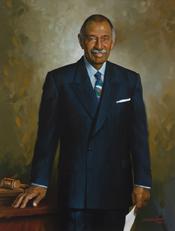
Mr. Chairman, you might remember a failed experiment the U.S. government tried in the 1920s called Prohibition. Today, Congress is rushing to pass a similar ill-conceived prohibition of Internet…
Mr. Chairman, you might remember a failed experiment the U.S. government tried in the 1920s called Prohibition. Today, Congress is rushing to pass a similar ill-conceived prohibition of Internet gambling. Gaming prohibitionists believe they can stop the millions of Americans who gamble online by prohibiting the use of credit cards to gamble on the Internet. Just as outlawing alcohol did not work in the 1920s, current attempts to prohibit online gaming will not work, either. Let me explain why.
In addition to the problems I addressed earlier, this bill lacks a number of important protections. It does not require that the businesses getting the special exception be licensed for Internet gambling, any kind of license will do. It does not require that these businesses keep minors from gambling as a condition of the license. It does not even require that these businesses limit the amount that can be gambled to protect problem gamblers.
And what about lotteries? Family values conservatives fight the lotteries in State after State. They say that there is no greater evil than State-sponsored gambling. The Justice Department said in their testimony that this bill would ``absolutely'' allow Internet gambling on lotteries.
This is not just my interpretation of this bill. The Free Congress Foundation, led by conservative activist Paul Weyrich, says this bill expands gambling. The Traditional Values Coalition, led by the Reverend Lou Sheldon, says this bill expands gambling. The United States Justice Department says this bill expands gambling.
And while many powerful gambling interests receive an exemption, less favored interests get the short end of the stick. Native Americans became more tightly regulated than the horse racing industries. It is unfair and unjustifiable public policy.
Instead of imposing an Internet gambling prohibition that will actually expand gambling for some and drive other types of Internet gambling offshore and into the hands of unscrupulous merchants, I believe Congress should examine the feasibility of strictly licensing and regulating the online gaming industry. A regulated gambling industry will ensure that gaming companies play fair and drive out dishonest operators. It also preserves State's rights.
The rules should be simple: if a State does not want to allow gambling in its borders, a licensed operator should exclude that State's residents from being able to gamble on its website.
That is why I introduced H.R. 1223, the ``Internet Gambling Licensing and Regulation Commission Act.'' The bill will create a national Internet Gambling Licensing and Regulation Study Commission to evaluate how best to regulate and control online gambling in America to protect consumers and prevent criminal elements from penetrating this industry. In addition, the Commission will study whether the problems identified by gambling prohibitionists--money laundering, underage gambling, and gambling addictions--are better addressed by an ineffective ban or by an online gaming industry that is tightly regulated by the States.
Until now, Republicans and Democrats have stood together against those who wanted to regulate the Internet, restrict its boundaries, or use it for some special purpose. Except in the narrow areas of child pornography and other obvious criminal activities, Congress has rejected attempts to make Internet Service Providers, credit card companies, and the technology industry policemen for the Internet. We should not head down this road now.
Attempts to prohibit Internet gambling in the name of fighting crime and protecting children and problem gamblers will have the opposite effect. Prohibition will simply drive the gaming industry offshore, thereby attracting the least desirable operators who will be out of the reach of law enforcement. A far better approach is to allow the States to strictly license
and regulate the Internet gambling industry, to foster honest merchants who are subject to U.S. consumer protection and criminal laws.
There are many different concerns with this bill, some of which I just mentioned. These concerns range from doubts about the desirability of having government regulate the personal behavior of competent adults to the fact that the bill, under the guise of banning Internet gambling, actually enables some favored gambling industries on-line. There are concerns about the bill's fundamental unfairness to native American tribal governments, and concerns about the precedent of deputizing financial institutions to regulate the Internet. For all of these concerns, I urge you to vote, ``no'' on H.R. 2143.
Mr. Chairman, I yield myself 2 minutes.
Mr. Chairman, what an exciting day on the floor of the House. The Unlawful Internet Gambling Funding Prohibition Act just happens to have one problem: It accepts horse racing. Now, can somebody explain to me why that is so? We are going to ban Internet gambling except horse racing. Why?
Well, it is because the horse racing lobbyists and the dog racing lobbyists have said that is what we ought to do. Why did they write a bill like this? This is a bill that expands gambling, expands gambling by accepting two industries.
Now I have been in touch with Reverend Lou Sheldon of the Traditional Values Coalition and Paul of the Free Congress Foundation, and they have told me this is a bad, bad bill, not to do it. We have a wire act from 1961 that has forbidden gambling, and now we are making the exception for horse racing. Can someone suggest why this bill was written this way? Anyone on the floor, I yield.
I did not think so.
Mr. Chairman, I yield such time as she may consume to the gentlewoman from Texas (Ms. Jackson-Lee).
Mr. Chairman, I am pleased to yield 1 minute to the gentleman from Michigan (Mr. Kildee).
Mr. Chairman, I yield 1 minute to the gentleman from New Jersey (Mr. Pallone).
Mr. Chairman, I yield the balance of my time to the gentleman from Washington (Mr. Inslee).
(Mr. INSLEE asked and was given permission to revise and extend his remarks.)

Mr. Speaker, I thank the gentleman from Michigan for yielding me this time. Mr. Speaker, this is an important resolution and I hope all of the Members of the House will support it. Earlier this year,…
Mr. Speaker, I thank the gentleman from Michigan for yielding me this time.
Mr. Speaker, this is an important resolution and I hope all of the Members of the House will support it. Earlier this year, as the chairman of the Committee on Agriculture, I had the opportunity to meet with Pascal Lamy, the European Union Commissioner for Trade, and to strongly make the case that this moratorium that Europe has imposed upon U.S. biotech products should be dropped and a reasonable system should be administered in its place; not what they are currently contemplating, which is a tracing and labeling requirement, which will make it in some instances even harder for us to sell our products into Europe.
I pointed out to them that people have been starving in Africa because of their policies. He took great umbrage at my suggestion that the Europeans were in fact promoting such a policy in Africa, but it turns out that that is exactly the case.
Through the organizations that they hire to distribute their own European food aid in African countries, they have spread the word that if they feed U.S. biotech grapes to their livestock, they will not be able to sell that livestock into Europe. It turns out that the Spanish, who agree with us on this position, by the way, grow thousands and thousands of acres of biotech crops in Spain, feed it to livestock, and sell it all over Europe anyway.
So the European policy on this issue is clearly nothing more than an artificial trade barrier. It is against the interests of their people, their consumers, to have the opportunity to have greater quality foods, foods that have greater vitamin retention, foods that are more environmentally sound, foods that can be grown in places like subSaharan African that are more drought-resistant. All of these things are important for us to promote, and that is what biotechnology does.
I commend the Bush administration for taking this case to the World Trade Organization, and I urge my colleagues to support this resolution.
Mr. Speaker, I rise today in strong support of H. Res. 252. America's farmers and ranchers deserve to have the best technologies available at their disposal and I am hopeful that an end to the EUs illegal and longstanding moratorium on agricultural biotechnology may be near.
Agricultural biotechnology is one of the most promising developments in modern science. This science should be embraced and not banned, for it can help to provide answers to the problems of hunger around the world. It would be a shame if developing countries in Africa continue to deny food aid containing biotechnology because of the antibiotechnology attitudes in Europe. The politicizing of agricultural biotechnology should end so that we can return to providing food aid to the hungry as soon as possible.
I commend the Bush administration for taking this case to the World Trade Organization. The EU moratorium on biotech approvals has been spreading beyond Europe. In the fall of 2002, some famine stricken African nations refused U.S. food aid because it contained biotech corn. These countries were ill informed on the health and environmental impact of biotechnology and were also concerned that their own agriculture exports to Europe would be denied if they accepted the product. Zambia, Mozambique, and Zimbabwe refused United States food aid made of the same wholesome food that Americans eat every day. Zimbabwe and Mozambique eventually accepted United States food aid after making costly arrangements to mill the corn so that African farmers could not grow it. Zambia continues to refuse United States corn.
As noted by the French Academy of Sciences, more than 300 million North Americans have been eating biotech corn and soybeans for years. No adverse health consequences have ever been reported. Many biotechnology products are being developed that will have unlimited benefits to vitamin deficient children. Research continues on a gene to add to rice which will contain more beta carotene, a precursor to vitamin A. Up to half of a million children per year go blind due to vitamin A deficiency. Another product being developed could also help reduce iron deficiencies, thus reducing anemia among millions of women and children worldwide.
The United States is not trying to force consumers to buy these biotechnology products. Consumer choice is the key and the moratorium is an example of the European government denying their consumes a choice. The moratorium is not based on science, but it is a blatant protectionist trade barrier. American farmers and ranchers are merely asking that their safe, sound and affordable product be allowed on the shelves in Europe.
America's farmers and ranchers produce the safest and most bountiful food supply in the world. Their goal is to share this bounty with those who need it most, while at the same time having access to markets around the world. While United States farmers have utilized many of the new technologies, some farmers are hesitant to use biotechnology because of the moratorium in Europe.
The European Union's (EU) illegal and unscientific moratorium should be lifted and a WTO case against the EU will send a message to the rest of the world that illegitimate, non-science based trade barriers will not be tolerated.
I urge my colleagues to support H. Res. 252.
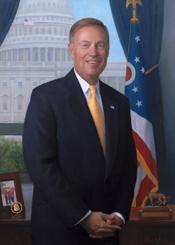
Mr. Chairman, the bill we are considering today, H.R. 2143, the Unlawful Internet Funding Prohibition Act, represents the culmination of many hours of deliberation and hard work on the part of…
Mr. Chairman, the bill we are considering today, H.R. 2143, the Unlawful Internet Funding Prohibition Act, represents the culmination of many hours of deliberation and hard work on the part of members and staff of the Committee on Financial Services.
The gentleman from Iowa (Mr. Leach), the former chairman of the
Committee on Banking and Financial Services, has led a determined battle to cut off the financial lifeblood of the unlawful Internet gambling industry, and the battle has been joined with vigor by the gentleman from Alabama (Mr. Bachus), the chairman of the Subcommittee on Financial Institutions and Consumer Credit, and the gentlewoman from Oregon (Ms. Hooley), who has been a staunch advocate in the committee's efforts to stop this illegal activity. I want to commend both of them for their strong leadership.
Support for our committee's efforts to stop the money flow to illegal gambling sites has been nearly universal, from family and religious groups, to anti-gambling groups, from professional sports to college athletics, from major players in the banking and credit card industries, to law enforcement and Internet service providers.
Mr. Chairman, it would be far easier and far quicker just to list who does not support such efforts. That would, of course, be the illegal Internet gambling industry itself and the ``wannabes'' waiting in the wing for some sign that the Federal Government will roll over and sanction Internet gambling. They have launched an all-out effort at obfuscation and mischaracterization in hopes of defeating this bill and perpetuating their obnoxious activities.
Six years ago Internet gambling was nearly nonexistent. Indeed, the Internet itself was just coming into its own. Sadly, just as nature abhors a vacuum, so do criminals, and it was just a matter of time before gambling sites began cropping up offshore, beyond the reach of U.S. regulators and law enforcement.
Seeing their opportunity, they multiplied unchecked, gobbling up victims in the United States who represented the most vulnerable in our society: children, college students, and problem gamblers. Enticed by pop-up ads that promised untold riches, these victims yielded up their credit card numbers and other valuable personal financial information to an unregulated criminal element that could use that information as it chose.
All of the privacy hawks in this Chamber need to listen to this plea. The Committee on Financial Services has heard testimony from the U.S. Department of Justice and the FBI that Internet gambling serves as a haven for money launderers, and unregulated offshore gambling sites can be exploited by terrorists to launder money. FBI Director Mueller, in testimony before our committee, cited Internet gambling as a substantial problem for law enforcement. That view has been reinforced by the Financial Action Task Force, an international body that seeks to combat money laundering, which stated in a 2001 report that some member countries had evidence that criminals were using Internet gambling to launder their illicit funds.
For the record, let us make clear what the bill does and what it does not do. It does require the Federal functional regulators to establish regulations to limit the acceptance of U.S. financial instruments, such as credit cards, for use in unlawful Internet gambling transactions. By so doing, it cuts off the financial lifeblood of the illegal Internet gambling industry.
It does not, and I point out, it does not expand gambling in any way, shape, or form. Why would we want to do that? Those who claim otherwise are either not telling the truth, or they simply do not get it.
The bill's provisions kick in only, and only, where a regulator determines that an illegal activity has taken place and relies on Federal and State law current at that time to guide in that determination.
Let me be crystal clear: H.R. 2143 protects the right of States to regulate gambling within their borders. It neither expands nor limits gambling beyond what is allowed under existing Federal, State and Tribal law.
Mr. Chairman, H.R. 2143 represents legislation at its best. It is a directed approach to a serious problem. It will give regulators an important new tool to fight unlawful Internet gambling, and will protect families throughout America. It deserves the support and vote of every Member of this House.
Mr. Chairman, in closing, I want to point out that this legislation is intended to address funding of illegal Internet gambling, not to regulate general purpose communications networks that may be used in isolated instances to transmit funds. The terms ``networks'' and ``participants in networks'', used in section 3(c) and in the definition of a ``Designated Payment System'' in section (4)(3), are intended to refer to payment networks, such as funds transfer networks, not to general purpose telecommunications or Internet networks. Thus, this bill would not regulate the provision of Internet connectivity or frame relay service to an electronic funds transfer network, but would regulate the operation of the funds transfer network itself.
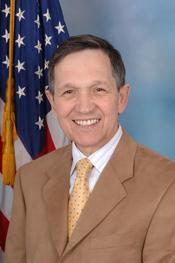
Mr. Speaker, I want to thank my colleague, the gentleman from Wisconsin (Mr. Kleczka), for his leadership on this matter to protect consumers in this country and also to protect the rights of…
Mr. Speaker, I want to thank my colleague, the gentleman from Wisconsin (Mr. Kleczka), for his leadership on this matter to protect consumers in this country and also to protect the rights of farmers.
The fact of the matter is that this action would harm U.S. farmers. EU consumers have clearly expressed their desire to buy non-genetically engineered foods. However, the weak U.S. biotech regulations prevent U.S. exports of non-genetically engineered foods because of fears they are contaminated. H. Res. 252 fails to address weak agriculture regulations that leave non-GE food vulnerable to contamination by genetically engineered foods.
EU consumers are clamoring for non-genetically engineered food. All we need to do is to sell them what they want and U.S. farmers will have a strong market again.
When you think about it, U.S. agriculture has been the pride of the world. We have been the breadbasket of the world. Our agriculture is second to none. But of course, when you have these corporate agribusinesses come in with a different agenda, then you see the interests of farmers undermined.
Now, several farm organizations oppose H. Res. 252 because it supports a complaint to the World Trade Organization challenging the EU's authorization system on approving genetically engineered food. H. Res. 252 is a gift to corporate agribusiness. That is why the National Family Farm Coalition, the American Corn Growers Association and the Soybean Producers of America all oppose H. Res. 252.
Family farmers have suffered a great deal of damage to their trade markets because agribusiness pushed a product on U.S. farmers that the people of the world rightfully refused to accept.
The recently completed national survey of corn producers by the American Corn Growers Foundation, conducted as farmers began planting corn in April, shows that farmers do not support this complaint to the WTO. Seventy-six percent of farmers stated that the U.S. should not file a WTO lawsuit against Europe regarding genetically engineered food. Seventy-eight percent of farmers believe in keeping your customers satisfied and in keeping world markets open to U.S. corn, and that means planting traditional non-GMO corn varieties instead of biotech GMO corn varieties. Eighty-two percent of farmers believe that the U.S. Government must respect the rights of Europeans, Japanese, and all consumers worldwide so they are able to make a choice as to whether they and their children consume foods containing genetically engineered commodities.
Only, and I say only, large agribusiness supports the bill and this bill will increase the profits of large agribusiness, and it will do it at the expense of farmers and at the expense of consumers.
This is a time for us to stand up for the American farmer who is having difficulty surviving. Family farmers are having trouble surviving because they cannot get their price and they cannot get access to markets. Both of these are occasioned by the problems brought about by agribusiness and by monopolies in agriculture.
We should stand up for the family farmers and oppose H. Res. 252. We should create policies which enable our family farmers to get those markets in Europe, that we know have belonged to them for so many years, but have been precluded because of the practices of agribusiness.
Mr. Speaker, there are a number of issues at stake here, including one that has been mentioned by my colleagues, the gentlemen from Ohio, Mr. Brown and Mr. Ryan, with respect to the WTO and the fact that it strips all nations of sovereignty. That is an issue that this House inevitably will have to deal with when, at once, legislation should come before us to in effect cancel our relationship with the WTO.
Now, House Resolution 252 falsely argues for a solution to world hunger, but its prime motive is to garner bigger profits for biotech companies looking to dump GE foods on poor countries. This is really about hungry biotech companies, because the basic cause of hunger is money, not food. The facts of world hunger lead to a much different conclusion.
Currently, 800 million go hungry every day. Malnutrition and related illnesses are the cause of death for 12 million children each year, but a lack of food is not the reason. Enough wheat, rice, and other grains are produced each year to provide 3,500 daily calories per person. So why do so many people go hungry each day? Much of this food goes to those who have the money and the ability to transport it. Food and other farm products flow from areas of hunger and need to areas where money is concentrated, in the northern hemisphere.
While at least 200 million Indians go hungry, in 1995 India exported $625 million worth of wheat and flour and $1.3 billion worth of rice, the two staples of the Indian diet. Only one-quarter of the food produced in Ethiopia reaches the market because of the high cost of marketing transactions.
There are hungry kids in this country, Mr. Speaker. What has biotech done for them?
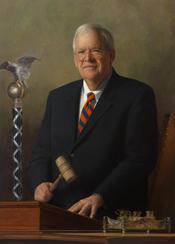
Mr. Speaker, I rise in strong support of this resolution supporting the Administration's efforts in challenging the European Union's five-year moratorium on biotech products. As an original…
Mr. Speaker, I rise in strong support of this resolution supporting the Administration's efforts in challenging the European Union's five-year moratorium on biotech products. As an original cosponsor, I congratulate President Bush and Ambassador Zoellick for putting American farmers and sound science first by challenging this illegal trade ban on genetically modified foods before the WTO.
Over the last few years, we have seen country after country implementing protectionist trade policies, like the EU moratorium, under the cloak of food safety--each one brought on by emotion, culture, or their own poor history with food safety regulation.
Simply put, non-tariff protectionism is detrimental to the free movement of goods and services across borders. We all know that free trade benefits all countries. However, free trade will be rendered meaningless if it is short-circuited by non-tariff barriers that are based on fear and conjecture--not science.
As the Representative of the 14th District in Illinois, my district currently covers portions of eight countries, including four of the top 25 corn-producing counties, and three of the top 50 soybean-producing counties in the nation. The State of Illinois is the second-largest producing state of both corn and soybeans in the country. Forty percent of this production currently goes to exports, valued at approximately $2.7 billion per year.
U.S. agriculture ranks among the top U.S. industries in export sales. In fact, the industry generated a $12 billion trade surplus in 2001, helping mitigate the growing merchandise trade deficit. It is important to realize that 34 percent of all corn acres and 75 percent of all soybean acres are genetically modified.
And what exactly are we talking about when we say ``genetically modified?'' The EU would have you believe this is a new and special type of food, questionable for human consumption. In fact, since the dawn of time, farmers have been modifying plants to improve yields and create new varieties resistant to pests and diseases. Why would we want to snuff out human ingenuity that benefits farmers and consumers alike?
The European Union has had an indefensible moratorium on genetically- modified products in place for five years with no end in sight. This is a non-tariff barrier based simply on prejudice and misinformation, not sound science. In fact, their own scientists agree that genetically modified foods are safe. Still, regardless of the overwhelming evidence to the contrary, bans on genetically modified products continue to persist and multiply--the worldwide impact has been staggering.
The current EU moratorium on genetically-modified products has translated into an annual loss of over $300 million in corn exports for U.S. farmers. More disturbing is the recent trend in Africa, where several nations have rejected U.S. food aid because the shipments contained biotech corn. This based solely on the fear that EU countries will not accept their food exports if genetically modified seeds spread to domestic crops.
These actions by our trading partners have consequences. U.S. farmers are already beginning to plant more non-biotech seeds. This trend will increase farmers' cost of production as well as increase the damage from harmful insects. In fact, the U.S. Environmental Protection Agency has recently approved a corn technology that will allow the commercialization of the first corn designed to control rootworm--a pest that costs U.S. farmers approximately $1 billion in lost revenue per year. It is absurd to think that farmers would not be able to take advantage of this technology.
Clearly, the long-term impact of these policies could be disastrous for U.S. farmers in terms of competitiveness and the ability to provide food for the world's population. Addressing world hunger is particularly critical when approximately 800 million people are malnourished in the developing world, and another 100 million go hungry each day. Biotechnology is the answer to this pressing problem. Farmers can produce better yields through drought-tolerant varieties, which are rich in nutrients and more resistant to insects and weeds, while those in need reap the benefits.
As you can see, halting or even slowing down the development of this technology could have dire consequences for countries where populations are growing rapidly and all arable land is already under cultivation. Official WTO action will send a clear and convincing message to the world that prohibitive policies on biotechnology which are not based on sound science are illegal.
Hopefully, the WTO will act quickly to resolve the Administration's case on behalf of American farmers. There's no doubt that the U.S. and American agriculture go into this battle with the facts on our side. We simply cannot allow the free trade of our agriculture products to be restricted by this unfair and unjust moratorium. After all, the price of inaction is one we can no longer afford to pay.
Mr. Chairman, I want to thank the gentleman from Alabama (Mr. Bachus) for his leadership on this issue. He has been fighting this for a long time, and I appreciate his efforts to bring forth this…
Mr. Chairman, I want to thank the gentleman from Alabama (Mr. Bachus) for his leadership
on this issue. He has been fighting this for a long time, and I appreciate his efforts to bring forth this legislation.
I am pleased to support it, the Unlawful Internet Gambling Funding Prohibition Act, because it is an important first step in the fight against Internet gambling. It hits illegal gambling institutions where it hurts the most: their pockets. By shutting off the financial lifeblood of this illegal industry, this bill will help to starve out unlawful Internet gambling sites and in the process close off opportunities for money launderers, terrorists, and organized crime.
Gambling on the Internet has become an extremely lucrative business. The Internet gambling industry revenues grew from $445 million in 1997 to an estimated $4.2 billion this year. Furthermore, industry analysts estimate that Internet gambling could soon easily become a $10 billion a year industry.
The problems with Internet gambling are many. The instant access to online gambling is particularly disturbing. This illegal activity is available to adults and children alike with the simple click of a mouse.
In addition, the social problems associated with traditional forms of gambling have increased with the proliferation of Internet gambling. Online gambling results in more addictions, more bankruptcies, more divorces, more crime, the cost of which must ultimately be borne by society.
I do believe that more needs to be done in the fight against Internet gambling, including creating stiffer criminal penalties for violators and updating the Federal Wire Act to make it clear that it covers new technologies such as the Internet.
However, H.R. 2143 is an important first step in this fight and I am pleased to support this bill.
I urge my colleagues to join me in this effort. I want to thank the gentleman from Iowa (Mr. Leach), the gentleman from Ohio (Mr. Oxley) and others, the gentleman from Virginia (Mr. Wolf), who have helped to lead this effort. This is a great opportunity for us today and I thank the gentleman from Alabama (Mr. Bachus) for it.
Mr. Chairman, I thank the chairman, the gentleman from Alabama, for his leadership on this legislation, which is a big step forward in the fight against Internet gambling. This amendment, as the gentleman from Virginia (Mr. Wolf) described, is indeed a poison pill. The reason is, it does not have any effect on the lawfulness or the unlawfulness of gambling, the provision that they want to pull out. That provision simply protects the rights of States to regulate gambling.
Historically, that is what we have always done in this country. Gambling has always been the province of the States. They regulate gambling, and this amendment would change that. This amendment would take away from the States the right to do that.
We are simply attempting to maintain the status quo with respect to underlying Federal and State substantive law on gambling. We are not tilting the playing field one way or another unfairly, we are simply trying to address the problem of unlawful gambling, as the title of the bill suggests. I would love to do more on these other issues, but this is not the bill, this is not the place to do it.
The term ``lawful'' is included in this provision of the bill to indicate that no transaction will be exempted from the effect of the bill unless that transaction complies with all other State and Federal laws. The amendment already adopted offered by the gentlewoman from New York (Mrs. Kelly) makes that even clearer, so the complaints of the gentleman from Utah, whose State I have great admiration for in terms of their efforts to combat gambling, need have no fear of this legislation. This does not open up Utah to any new forms of gambling. It will tighten it down.
There are plenty of people in Utah today who pull up a chair in front of their computer in their living room and go on and place a bet, using a credit card or wire transfer or some other form of financial transfer, that this legislation will stop. We should not allow a poison pill to prevent this legislation from moving forward to accomplish that.
In addition, States have traditionally had the power to decide whether to allow gambling within their borders. We should not put into question the authority of those States to decide these matters for themselves. Utah, Virginia, or any other State in the country, they ought to be able to make that decision, and we ought not interfere with it. Striking this provision of the bill would eliminate a provision that reinforces the rights of the States to decide whether or not to prohibit gambling, and I urge my colleagues to oppose this amendment.
Show 11 more
Mr. Chairman, I feel somewhat like a skunk at the church picnic, but I rise today to urge my colleagues to vote against this senseless and useless piece of legislation. I know something about gaming…
Mr. Chairman, I feel somewhat like a skunk at the church picnic, but I rise today to urge my colleagues to vote against this senseless and useless piece of legislation.
I know something about gaming and gaming law. I was a gaming attorney for many years before I came to the United States Congress, and I represent Las Vegas. This bill, in spite of what its sponsors say, will not stop illegal Internet gaming, and, if passed, it will have serious unintended consequences.
This legislation, let me reiterate, will not stop Internet gaming. It exists today. There are over 1,600 gaming Web sites offshore already. Americans are playing online now. But instead of playing on well- regulated sites, they are placing wages on the existing 1,600 offshore unregulated sites which have no requirement to verify the identity, the age, the background, or the location of the person placing the wager.
In most cases, there is no regulation of offshore sites. A child can place a wager on these offshore sites, a compulsive gambler can place a wager on these sites, and there is no guarantee that players will receive their winnings from these offshore sites.
My good friend, the gentleman from Alabama (Mr. Bachus), speaks of mob influence and speaks of protecting children from gambling. There is not one thing in this legislation that will remedy any of the problems that he speaks of.
Let us not be foolish enough to believe that this bill will stop people from gambling online. Despite efforts by every credit card company in the United States to prohibit the use of their financial instruments for Internet gaming, the General Accounting Office predicts that the offshore Internet gaming industry will continue to grow to a $4.2 billion industry in 2003 with a growth rate of 20 percent per year. Passing this bill will do nothing to impede that growth. Online gaming is here to stay.
If these unregulated and unscrupulous offshore sites continue to flourish, the integrity of the legal gaming industry is also at risk. Instead of prohibiting online gaming, we should be closely examining online wagering to see if it can and should be regulated and taxed as a legal business. No one knows the answer to this, but it might turn out that it may be the only effective way to stop illegal online wagering
and the problems it creates. H.R. 2143 would cut off this option, and we should not pass it.
For those people that are so worried about funding of terrorists, let us have our so-called Saudi allies and our moderate Arab allies, let them stop the money they are flowing into the terrorists, and not kid ourselves to think that stopping online Internet gaming is going to do the trick for us.
Mr. Chairman, I thank the gentlewoman for yielding me time.
Mr. Chairman, it has become very apparent to me after listening to this debate that the supporters of this bill not only oppose the Internet gaming, they are opposed to any form of gaming whatsoever. They speak of gaming and they speak of addiction and crime and drugs and suicide.
Well, I grew up in Las Vegas. Las Vegas has 1.5 million residents; 37 million visitors come to our community every year to enjoy our entertainment, and our wholesome family entertainment, I might add.
I grew up in Las Vegas. I represent the good people of Las Vegas who depend on the gaming industry for their livelihood. My father was a waiter when I was growing up. He worked in one of these casinos that you disparage so handily.
Let me state what Las Vegas means to me. On a waiter's salary my father was able to put a roof over our heads, food on the table, clothes on our backs, and two daughters through college and law school. That is not so bad on a waiter's salary. And the reason he was able to do it was because of the strong economy that the gaming industry created.
Las Vegas to me is churches and synagogues and families and Saturday soccer and proms at this time of year and graduations and hopes and dreams and aspirations to millions of people that come to Las Vegas and the 1.5 million people that live there.
And, quite candidly, the people in this Chamber ought to be ashamed of disparaging a community like Las Vegas that I daresay lays shame to all of your own. So please be careful when you speak of my community and the major industry that takes care of the people that live there and provides good educations, good economy, good living conditions, and a quality of life that is the envy of the rest of the United States of America.
Mr. Speaker, I want to share in the comments of the gentleman from North Dakota (Mr. Pomeroy) and agree with him. Also, I would ask the Members that are thinking of voting against this, this boils…
Mr. Speaker, I want to share in the comments of the gentleman from North Dakota (Mr. Pomeroy) and agree with him. Also, I would ask the Members that are thinking of voting against this, this boils down to be really kind of a moral issue of famine in Africa. I learned about this issue from our former Member, Congressman Tony Hall.
What is happening in Africa, there are 35 million to 40 million people that are basically almost starving to death. In Zambia and Zimbabwe, they have been using this argument, and the people are starving and the genetically modified or biotech foods are in the warehouses. What is taking place is some of our friends, and they are friends in Europe, are using this as a trade mechanism with regard to their economy and their jobs; and as a result of this, people are dying in Africa.
So this is an issue with regard to the economy, but I will not say more important; but I personally believe it is more important. It is an issue of people, particularly in Africa. People living in Ethiopia, there is a famine of biblical proportions. Now, fortunately, the Ethiopian Government is not foreclosing this; but in Zambia they are, in Zimbabwe, Mugabe has it in the warehouses and the people are starving outside, and they cannot eat. Some of the other countries, Uganda is going through the same thing. They have genetically modified banana plants. Their banana industry is falling off, and they are afraid to use it because they are afraid they will not be able to have their exports going in to France.
So this resolution is a good resolution. This also would help us feed the people of the world who are starving. So I would hope everyone would vote for this. And if any Members have any doubts before this vote, they may want to call Tony up in Rome at the Food and Agricultural Organization and get his thinking, because this is a major issue of famine and feeding hungry people, particularly in Africa.
Mr. Speaker, I rise today in support of H. Res. 252, but not because of the benefits to U.S. trade or our agricultural industry, but out of concern for the millions of hungry people around the globe. In a world as plentiful as ours, it is unconscionable that women and children still die of hunger.
I have traveled to Africa to witness the devastation of famines, first in 1984 and most recently, earlier this year. I saw women and children who were too weak to feed themselves. Thankfully, relief efforts for the 30 million Africans, whose lives are in peril, are not being complicated by refusals of certain food supplies, as was the case last year in Zambia.
Developing countries need biotechnology to improve crop viability and yield. However, as long as such agricultural products remain unacceptable to European markets, developing countries are likely to continue to reject the very thing they need to bring them to self- sufficiency and beyond.
American agricultural products are among the safest in the world-- even Europe's officials admit that. But making a convincing case on the safety of U.S. products is difficult.
Last year, Zambians turned down genetically modified maize from the U.S., fearing that when their agricultural industry recovers, they would no longer be able to sell their products to their main export market, Europe.
In an effort to alleviate this concern, and at considerably increased costs, the U.S. offered a milled version free from any seeds that farmers could plant, thereby protecting Zambia's agricultural sector. Tragically, the Zambian government never accepted the food.
Famine relief and building longer term self-sufficiency in Africa is a global issue that requires a response from all nations. The U.S. has provided leadership through its contribution in 2002 of 51 percent of the food provided by the UN World Food Programme. Europe's combined contribution totaled only 27 percent.
I don't know which saddens me more, knowing that European countries like France have the ability to contribute more to famine relief efforts, but haven't, or knowing the situation is being exacerbated by European opposition to importing biotech agricultural products.
This resolution is an important statement to encourage the Administration in its efforts to challenge the unwarranted moratorium by EU countries on genetically modified agricultural products.
I urge a unanimous vote of support.
I want to thank the chairman of the Committee on the Judiciary for his work on this matter. Mr. Chairman, I would like to begin by expressing my great esteem for the proponents of this bill. I…
I want to thank the chairman of the Committee on the Judiciary for his work on this matter.
Mr. Chairman, I would like to begin by expressing my great esteem for the proponents of this bill. I believe that they honestly think that this bill will limit or, to some degree, prohibit or slow the growth of the pernicious vice of gambling on the Internet. I am personally not convinced that that will happen; and if I might, I would like to just focus on comments by the last two gentlemen who have spoken.
The gentleman from Kentucky talks about 52,000 jobs in his State that depend upon horse racing, which is currently legal in his State and currently legal in many other States in the Union and around the world. The gentleman from Florida has just talked about 700,000 jobs in the country or more that relate to horse racing and 30,000 jobs that relate to dog racing; and, of course, the other two exceptions that are carved out in the underlying bill are jai alai, which is, of course, a big sport in Florida, and State-run lotteries.
The problem with this bill and the reason we have so much emotion and so much emotional support for the idea that this amendment is bad is that this amendment might make those activities illegal when in fact what this amendment does is eliminate carve-outs and eliminate gambling that is now illegal. The problem for me is that I represent the State of Utah, one of only two States that actually totally prohibits gambling. The other State is Hawaii. From the perspective of our States, and I say this with all due respect, this is not the Internet Gambling Prohibition Act, this is Internet Gambling Enabling Act. It actually allows gaming in Utah and will do so in Utah and Hawaii and other States where there are limitations on gambling unless the carve- outs are removed.
The underlying bill provides these major carve-outs, and I think we have broad consensus from those who have actually looked at the bill and understand it. The U.S. Department of Justice and the National Association of Attorneys General have expressed themselves on this issue. In testimony before the Senate Banking Committee, John Malcolm of the U.S. Department of Justice testified that the aforementioned section, the carve-out section, was one of the reasons DOJ could not endorse Senate 627, which is nearly identical to H.R. 21 and now H.R. 2143. Testifying on behalf of the National Association of Attorneys General, Richard Blumenthal, Attorney General of Connecticut, warned that under that bill the exceptions could swallow the rule. Certainly in those States where gambling is outlawed or some gambling is outlawed, the exceptions could swallow the rule. In testimony before the House Committee on the Judiciary, when asked if that action would allow lotteries to go online, Malcolm responded, ``Absolutely.'' You cannot do that in Utah today, but you will be able to if this law preempts local State law.
Thus, H.R. 21 is not really an Internet gambling prohibition bill. You might actually consider it an Internet gambling industrial policy bill because we are choosing a favored class of state-sponsored Internet gambling under this bill.
Last year during consideration of a similar bill, H.R. 3215 in the 107th Congress, the Committee on the Judiciary voted overwhelmingly against allowing carve-outs in Internet gaming legislation. Last year when the Committee on the Judiciary was considering the Goodlatte Internet gambling bill, which had similar carve-outs, I offered amendments to strike those carve-outs. The amendments were adopted by wide margins, and the bill as modified was reported overwhelmingly by the committee.
The argument that the provisions simply allow States to regulate intrastate wagers does not wash. The provision is an exception from the definition of ``bets or wagers.'' It is not confined to intrastate. It essentially says that state-licensed facilities can do anything their license allows them to do, be it pari-mutuel, casino-style, or any other kind of betting.
This bill is ill considered despite the great intentions of its proponents. I urge my colleagues to vote against it.
Mr. Speaker, I thank the gentleman for yielding me this time. Mr. Speaker, I rise today in support of the resolution and to state my support and urge House support for the administration and its…
Mr. Speaker, I thank the gentleman for yielding me this time.
Mr. Speaker, I rise today in support of the resolution and to state my support and urge House support for the administration and its decision to take on the European Union and its discriminatory practices against biotech projects.
Agriculture has changed greatly in recent years. When I was growing up on a farm in Johnston County, the most advanced technology we had was an old tractor. It was a big improvement, though, over the mule and plow that we had had previously.
These days, biotechnology has moved farming to the cutting edge of technology. I have always been and still remain a strong supporter of using biotechnology to benefit American agriculture and our society as a whole. In fact, when I was appropriations chairman in North Carolina's general assembly, I helped fund the establishment of the North Carolina Biotechnology Center, because I could see biotechnology was the science of the future. Consequently, North Carolina has become a leader in the field of biotechnology.
The gains that biotechnology brings to agriculture, efficiency, reduced use
of pesticides, higher crop yields, and healthier products, are well documented. That is why I find it ironic that the continent that gave birth to the Renaissance and the Enlightenment is turning its back on a proven science, despite the increasing amount of evidence as to the safety and effectiveness of this technology.
What is really a shame is that the Europeans' fear of biotechnology is having tragic consequences. The European Union is actually discouraging nations facing food shortages and famine from accepting food aid that may contain biotech products.
The Europeans' actions and attitude regarding biotechnology are, at best, indefensible, and maybe immoral regarding the European Union's rule. I strongly applaud Ambassador Zoellick's work in this area, and I urge the passage of this resolution.
I rise today in support of this resolution to state the House's support for the Administration in its decision to take on the European Union and its discriminatory practices against U.S. biotechnology products.
Agriculture has changed greatly in recent years. When I was growing up on a farm in Johnston County, NC, the most advanced technology we had was a tractor, a big improvement over a plow, a mule. These days, biotechnology has moved farming to the cutting edge of technology.
I have always been and still remain a strong supporter of using biotechnology to benefit American agriculture and our society as a whole.
In fact, when I was appropriations chairman in the North Carolina General Assembly, I helped fund the establishment of the North Carolina Biotechnology Center because I could see biotech was a science of the future. Consequently, my State of North Carolina has prospered as a leader in the field.
The gains that biotechnology brings to agriculture in efficiency, reduced use of pesticides, higher crop yields, and healthier products are well documented.
That's why I find it ironic that the continent that gave birth to The Renaissance and The Enlightenment is turning its back on a proven science, despite the increasing amount of evidence as to the safety and effectiveness of this technology.
And what's really a shame is that the Europeans' fear of biotechnology is having tragic consequences. The European Union is actually discouraging nations facing food shortages and famine from accepting U.S. food aid that may contain biotechnology products.
The Europeans' actions and attitudes regarding biotechnology are indefensible, and according to WTO rules, illegal.
I strongly applaud USTR Ambassador Zoellick for pressing forward with this case against the European Union in the WTO.
We must continue to show the world that biotechnology offers a new Renaissance in agriculture for those willing to reject fear.
I urge the House to pass this resolution, and show our support for a science that offers profound benefits for all of humanity.

Mr. Speaker, I move to suspend the rules and agree to the resolution (H. Res. 252) expressing the sense of the House of Representatives supporting the United States in its efforts within the World…
Mr. Speaker, I move to suspend the rules and agree to the resolution (H. Res. 252) expressing the sense of the House of Representatives supporting the United States in its efforts
within the World Trade Organization (WTO) to end the European Union's protectionist and discriminatory trade practices of the past five years regarding agricultural biotechnology, as amended.
Mr. Speaker, I yield myself such time as I may consume.
Mr. Speaker, I rise in strong support of H. Res. 252 introduced by my good friend from Missouri, Majority Whip Roy Blunt. This important resolution expresses support for the administration's World Trade Organization case against the European Union's unwarranted moratorium on agriculture and food biotech products.
On May 13, 2003, U.S. Trade Representative Robert Zoellick and Agriculture Secretary Ann Veneman announced that the United States, Argentina, Canada, and Egypt would file a WTO case against the European Union over its illegal 5-year moratorium on approving agricultural biotech products. Other countries expressing support for this case by joining it as third parties include Australia, Chile, Colombia, El Salvador, Honduras, Mexico, New Zealand, Peru, and Uruguay.
Since the late 1990s, the European Union has opposed the use of agriculture biotechnology and pursued policies opposing genetically engineered products around the world. The current 5-year moratorium on the approval of new agriculture biotechnology products entering the European market has no scientific basis, effectively prohibits most United States corn exports to Europe, violates European Union law, and clearly breaches World Trade Organization rules.
According to recent studies, biotechnology has made substantial contributions to the protection of the environment by reducing the application of pesticides, reducing soil erosion and creating an environment more hospitable to wildlife. Since its implementation in October 1998, the moratorium has blocked more than $300 million annually in United States corn exports to countries in the European Union. This is completely unacceptable.
I urge my colleagues to support this resolution and support the administration, sound science, and United States farmers at the WTO.
Mr. Speaker, I reserve the balance of my time.
Mr. Speaker, I yield 4 minutes to the gentleman from Nebraska (Mr. Bereuter).
(Mr. BEREUTER asked and was given permission to revise and extend his remarks.)
Mr. Speaker, I yield such time as he may consume to the gentleman from Missouri (Mr. Blunt).
Mr. Speaker, I yield 3 minutes to the gentleman from Michigan, a member of the Committee on Agriculture and a good colleague.
(Mr. SMITH of Michigan asked and was given permission to revise and extend his remarks.)
Mr. Speaker, I yield 2 minutes to the gentleman from Virginia (Mr. Wolf).
(Mr. WOLF asked and was given permission to revise and extend his remarks.)
Mr. Speaker, I yield 2 minutes to the gentleman from Nebraska (Mr. Osborne).
Mr. Speaker, I yield 2 minutes to the chairman of the Committee on Agriculture, the gentleman from Virginia (Mr. Goodlatte).
(Mr. GOODLATTE asked and was given permission to revise and extend his remarks.)
Mr. Speaker, I yield 2 minutes to the gentleman from Illinois (Mr. Shimkus).
(Mr. SHIMKUS asked and was given permission to revise and extend his remarks and include extraneous material.)
Mr. Speaker, I yield such time as he may consume to the gentleman from Michigan (Mr. Smith).
(Mr. SMITH of Michigan asked and was given permission to revise and extend his remarks and include extraneous material.)
Mr. Speaker, I yield the balance of my time to the gentleman from California (Mr. Thomas), chairman of the Committee on Ways and Means.
Mr. Speaker, on that I demand the yeas and nays.

Mr. Speaker, I thank the gentleman for yielding me this time. I rise in strong support of H. Res. 252. I commend the gentleman from Missouri for introducing this important resolution. It is clear…
Mr. Speaker, I thank the gentleman for yielding me this time. I rise in strong support of H. Res. 252. I commend the gentleman from Missouri for introducing this important resolution.
It is clear that the U.S. must send a strong and unmistakable message to the European Union that its discriminatory and protectionist trade practices regarding biotechnology will not be tolerated. As the chairman of the Subcommittee on Europe, this Member asserts that this is an important issue in trans-Atlantic relations. This resolution puts the House on record as supporting the U.S. in its efforts within the World Trade Organization to end these practices.
The EU's current moratorium on approving new agricultural biotech products has no scientific basis.
It harms U.S. agricultural producers and it exacerbates food shortages in Africa. This Member has been strongly
urging the administration to take action on this issue by bringing a case against the EU to the WTO, and is very pleased the announcement has been made that we have done so.
The current EU restrictions on the importation of food with genetically modified organisms, GMOs, have cost agricultural producers billions of dollars in recent years. The U.S. must be aggressive in knocking down such non-tariff trade restrictions.
The EU's delay on lifting the moratorium on biotech crops is unacceptable and the WTO action is certainly appropriate. The intransigence by the EU is having a very detrimental effect on American farmers. It has been reported that since the early 1990s, U.S. corn exports to Europe have plummeted 95 percent, and this issue is one of the causes. Incredibly, too, they have used their emotional arguments against GMOs to coerce African countries facing famine not to accept donated American food and agricultural products. So in contrast to what the gentleman from Wisconsin said, this is strictly not a European issue, this is coercion on their part against African countries who are compelled to leave that food donated to deal with famine and malnutrition setting on the docks.
Also troubling are the indications that the EU is planning to move forward with labeling and traceability requirements that will continue to act as a mechanism to block U.S. agriculture products. This clearly runs counter to the WTO principle that rules should be based on scientific evidence.
I think it is interesting to note that David Byrne, EU Commissioner for Health and Consumer Protection, has been quoted as saying, ``The EU's position on genetically modified food is that it is as safe as conventional food.'' However, the moratorium remains in place and American farmers continue to lose valuable markets, not just in Europe, but third world countries. This matters because it is more important to the farmers today facing difficult times due to the ongoing drought and lower revenue.
When filing the WTO case, U.S. Trade Representative Robert Zoellick stated clearly why it is so important for the U.S. to take action. He said, ``The EU's moratorium violates WTO rules. People around the world have been eating biotech food for years. Biotech food helps nourish the world's hungry population, offers tremendous opportunities for better health and nutrition and protects the environment by reducing soil erosion and pesticide use.'' This Member believes that the EU's GMO standards are transparently devoid of any relationship to sound science, and are either based strictly on emotion or are designed quite simply as trade barriers, or both.
The U.S. is correct in taking strong action to bring this back to reason. I strongly support H.R. 252 and urge my colleagues to support it.

Mr. Speaker, I rise in support of House Resolution 252. This important resolution expresses the House of Representatives' supports for American efforts within the World Trade Organization (WTO) to…
Mr. Speaker, I rise in support of House Resolution 252. This important resolution expresses the House of Representatives' supports for American efforts within the World Trade Organization (WTO) to end the European Union's unfair trade practices regarding agriculture biotechnology. These trade practices are protectionist and discriminatory, and have been in place the past five years.
In 2001, the United States and other industrialized countries produced almost 109 million acres of genetically modified foods. These foods are modified, safely, to reduce the application of pesticides, reduce soil erosion and
create an environment more hospitable to wildlife. These foods are resilient and can grow in areas often inhospitable to agriculture. Genetically modified foods hold great promise in alleviating hunger in developing areas of the world.
The European Union, acting without scientific basis, enacted a moratorium on genetically modified foods in October 1998. Since then, this moratorium has blocked more than $300 million annually in American corn exports to countries in the European Union. This action has had a damaging effect on agricultural exports from the United States, particularly from Iowa.
Allow me to describe the devastating effect this action has had on many developing countries in Africa. Earlier this year, I traveled to several nations in sub-Saharan Africa. I met people trying to help themselves with their own hard work, and through the humanitarian efforts of the United States and other nations. Far too many people in Africa depend on food from other countries, and far too many are starving. Genetically modified food could withstand the intolerant climate and harsh growing landscapes common in the area. But because of fear about future exports to Europe, these African nations have held back from a wonderful opportunity to promote agriculture in their own nations. Just last year, humanitarian food aid sent to Africa from the United States was rejected. Mr. Speaker, this is wrong.
Iowa is America's second-largest agriculture exporter, sending $3.2 billion worth of commodities and value-added products overseas. There is much promise in using biotechnology to change to the face of agriculture. Biotechnology is now being researched to create custom- made pharmaceuticals and renewable ingredients for industrial use. The cities of Waterloo and Davenport in my district are working to make value-added agriculture the driving force of their economic growth. They are making significant investments to reach this end. It is clear that continued research and production is needed to make these investments pay off for these communities and the rest of the Midwest.
Mr. Speaker, we took a tremendous step forward by granting the President trade promotion authority. As the U.S. begins to negotiate trade agreements with this authority, it is critical we demonstrate that protectionist and discriminatory practices, like those used by the EU, will not be tolerated. the U.S. must now take further action within the WTO. I applaud the President and the U.S. Trade Representative's interest in taking action on this critical issue now. Accordingly, I urge passage of this resolution supporting Administration efforts through the WTO.
Mr. Chairman, let me first of all compliment my good friend, the gentleman from the other half of Birmingham, Alabama (Mr. Bachus), for his leadership on this issue. I take up where the gentleman…
Mr. Chairman, let me first of all compliment my good friend, the gentleman from the other half of Birmingham, Alabama (Mr. Bachus), for his leadership on this issue.
I take up where the gentleman from Ohio (Mr. Oxley) left off. This is a very well-conceived piece of legislation. I speak from the perspective of someone who spent 5 years as a Federal prosecutor.
When I started out as a Federal prosecutor, we did not hear a whole lot of about gambling, frankly, from a lot of the people who crossed my desk. By the time I left, gambling had become the means of choice for disguising large sums of money being moved back and forth by drug dealers.
It goes without saying that in this age of Internet access, a lot of children are finding their way to a lot of things that parents do not know that they are finding, and one of them is Internet gambling.
This is a positive bill. I will note that some people have raised concerns about how financial institutions would go about enforcing it, how they would go about policing and enforcing the various mechanisms contained within it. And I will note for those who raised those concerns that this legislation only requires financial institutions to develop adequate policies and procedures for identifying and blocking gambling payments.
Most of the credit card industry and most of the financial services industry have said they can easily take on this burden. It is a burden that they regularly assume in policing all kinds of transactions.
I do want to address one line of amendments that I do expect will come before the House today, and it deals with the amendment offered by my colleague from Wisconsin that refers to one very specific section of the bill. Right now this bill would exclude from its coverage ``any lawful transaction with a business licensed or authorized from a State.''
That is an important provision, for a very simple reason. As many of my colleagues well know, a number of States in this country permit various forms of pari-mutuel betting. We may not like that, we may not engage in it, but there is not one of us in this institution who questions that it is the right of a State to determine what is gambling and what is not gambling. It is the right of the State of Alabama to decide and the right of our legislature to decide if we are going to recognize pari-mutuel betting or not.
If this amendment, which I believe is well-guided, were to be enacted, it would fundamentally change the purpose of this bill, because what it would do, very simply, is it would prevent a State from accepting pari-mutuel betting or any other forms of gambling that have been recognized, frankly, and declared as permissible by State law.
We talk a lot about States rights in this institution, and both parties now have picked up that mantra. It is in the interests of States rights if we decide that States can decide what is legal and what is not illegal. So I would urge my colleagues to reject the stream of amendments that would take away the States' ability to decide what is valid inside their own house.
So I close, Mr. Chairman, by saying this is well constructed, bipartisan legislation of the kind, frankly, that our committee regularly and routinely produces.
Mr. Speaker, I thank the gentleman for yielding me time. Mr. Speaker, I rise today to thank the Committee on Ways and Means, the gentleman from California (Chairman Thomas) and the gentleman from…
Mr. Speaker, I thank the gentleman for yielding me time.
Mr. Speaker, I rise today to thank the Committee on Ways and Means, the gentleman from California (Chairman Thomas) and the gentleman from Michigan (Mr. Camp) for bringing this important resolution to the floor in such a timely fashion. I introduced this resolution 2 weeks ago, and I want to thank the gentleman from Illinois (Speaker Hastert), our majority leader, the gentleman from Texas (Mr. DeLay), our conference chairman, the gentlewoman from Ohio (Ms. Pryce), the gentleman from Virginia (Mr. Goodlatte), the gentleman from Texas (Mr. Stenholm), and the gentleman from California (Mr. Cardoza) for joining me in this effort.
This is a timely effort. It is a discussion we need to have. It is a discussion that, frankly, in the European community has gone on for too long. In October 1998, the European Union did a tremendous disservice to American biotechnology by issuing a ban on the importing of agricultural biotech crops. Although this action was supposed to be a moratorium, it has lasted now for close to 5 years.
In my opinion, this is no longer a moratorium, but a ban which is clearly a violation of Europe's WTO obligations and needs to be reversed as soon as possible.
The damage that this moratorium has done is dramatic, to say the least. For example, since the moratorium went into effect, U.S. corn exports have diminished from a high of 1.56 million metric tons to approximately 23,000 metric tons last year. This has resulted in the loss of close to $1 billion in corn sales. The tragic thing is that there is no basis, scientific or otherwise, that can justify such an economic hardship on our corn farmers and on other farmers of other products that take advantage of new technology.
On May 13, the administration took the first steps toward rectifying this situation by filing a World Trade Organization case against the European Union over its illegal 5-year moratorium on approving agricultural biotech products. Despite repeated assurances from European officials that the moratorium would be lifted, there is no sign
of any change in policy. In fact, there is ample evidence that this policy will continue.
The position that the European Union and many of its member countries took regarding our efforts to provide food to Africa is also mentioned in this resolution. The idea that starving people would not be allowed to have access to the same kinds of products that American consumers use every day is an idea that is unacceptable.
The Subcommittee on Research of the Committee on Science, chaired by the gentleman from Michigan (Chairman Smith) will be looking carefully at this issue tomorrow, with the Speaker as the leadoff witness.
My colleagues and I introduced House Resolution 252 because we believe that the Bush administration is correct in this area and needs to take the appropriate action on behalf of our Nation's farmers and on behalf of sound science by challenging this moratorium on agriculture and food biotech products.
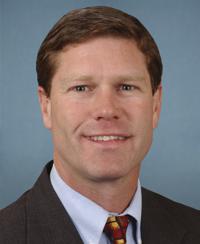
Mr. Speaker, I rise in qualified support of this measure. I am a proponent of genetically modified (GM) food, and firmly believe that its continued implementation and use provides a number of…
Mr. Speaker, I rise in qualified support of this measure.
I am a proponent of genetically modified (GM) food, and firmly believe that its continued implementation and use provides a number of important benefits for the American farmer and worldwide consumers. Furthermore, I believe we are legally correct and justified in asking the World Trade Organization (WTO) to impose penalties on the EU for maintaining a moratorium on import permits for genetically modified crops in violation of its rules.
However, I fear that our government's efforts will have the unintended consequence of wreaking havoc on the current WTO trade discussions. As we all know, the U.S. farmer would benefit much more if, in the current Doha Round of the WTO, the EU nations agreed to slash the generous agriculture subsidy assistance they provide their farmers.
According to a recent Organization for Economic Cooperation and Development (OECD), an international organization that seeks to help governments tackle the economic, social, and governance challenges of a globalized economy, in 2002, the EU provided $112.6 billion in agricultural subsidies to their farmers. This amount totals approximately 1.3 percent of the EU GDP. Compare this staggering number with that of the United States, which generously provided in 2002 $90.3 billion (0.9 percent of our GDP) to farmers in the form of agricultural subsidies, and you can easily see why reform of domestic agricultural policy and worldwide agricultural trade liberalization is much needed.
In addition to fighting this important fight on GM foods today, the Administration and Congress need to hold the Europeans' feet to the fire on reforming their domestic agriculture policy and making their country more open to imported goods. The Doha Round was devised to accomplish these two objectives.
Moreover, the U.S.'s policy on GM foods must not just single out Europe. In an article, which appeared in yesterday's The Wall Street Journal, many U.S. soybean traders are accusing the Chinese of impeding soybean imports due to the failure of various inspection permits. The article continues by stating, ``China last week announced it will extend to April 20, 2004, strict regulations on crops containing genetically modified organisms that had been set to expire September 20th.''
Thus, the question that needs to be asked--Is China moving toward closing its borders in perpetuity on import permits for genetically modified crops? Will the U.S. government file a similar petition against the Chinese government? If so, when? If not, why not? After all, under commitments China made when it became a member of the WTO in December 2001, it must open its market to agricultural products.
Mr. Speaker, I will support this resolution and encourage my colleagues to do likewise--but I suggest more substantive work be done to reform domestic agricultural policy and worldwide agricultural trade liberalization policies that currently stand in the way of sustainability and prosperity of our farmers.
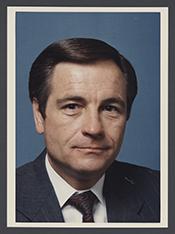
Mr. Speaker, I yield myself such time as I may consume. Earlier this year, the U.S. Trade Representative announced that the United States would file a World Trade Organization case against the…
Mr. Speaker, I yield myself such time as I may consume.
Earlier this year, the U.S. Trade Representative announced that the United States would file a World Trade Organization case against the European Union over its 5-year moratorium on approving genetically modified foods. The measure before us today supports the Bush administration's challenge to the EU's longstanding moratorium.
The European Union is made up of sovereign countries whose citizens have decided that they would rather not eat genetically modified food. Mr. Speaker, when did the United States acquire the right to tell Europeans what they should be eating? The issue before us is not trade discrimination as the proponents of this bill have argued. The individual EU countries are simply debating whether or not to implement a domestic policy related to genetically modified food which would also be applied to imports.
Due to the lack of hard data about the long-term health effects, in the United States there has also been public concern about consuming genetically modified products. According to a Rutgers University Food Policy Institute study, 90 percent of Americans said that foods created through genetic engineering should have labels on them. I am proud to join with the gentleman from Ohio (Mr. Kucinich) in his efforts to require the labeling of genetically engineered food.
Although there have been few studies devoted to health effects of genetically modified food, some scientists claim that there may be a link between the resurgence of infectious diseases and genetic modifications in the U.S. food supply. There have even been cases of lab animals suffering immune system damage and allergic reactions after eating biotech food.
I think that Members would agree that the WTO should not interfere with the creation of domestic law in this Chamber, so I ask Members to apply the same principle to our friends in Europe.
Mr. Speaker, I urge Members to oppose this heavy-handed measure.
Mr. Speaker, I reserve the balance of my time.
Mr. Speaker, I yield 5 minutes to the gentleman from Ohio (Mr. Kucinich).
Mr. Speaker, I yield 2 minutes to the gentleman from Ohio (Mr. Brown).
Mr. Speaker, I yield 1 minute to the gentleman from North Dakota (Mr. Pomeroy), a distinguished member of the Committee on Ways and Means.
Mr. Speaker, I yield 2 minutes to the gentleman from California (Mr. Cardoza).
Mr. Speaker, I yield 2 minutes to the gentleman from North Carolina (Mr. Etheridge).
(Mr. ETHERIDGE asked and was given permission to revise and extend his remarks.)
Mr. Speaker, I yield 2 minutes to the gentleman from Texas (Mr. Stenholm).
(Mr. STENHOLM asked and was given permission to revise and extend his remarks.)
Mr. Speaker, I yield 2 minutes to the gentleman from Ohio (Mr. Ryan).
(Mr. RYAN of Ohio asked and was given permission to revise and extend his remarks.)
Mr. Speaker, I yield 2 minutes to the gentleman from Oregon (Mr. DeFazio).
Mr. Speaker, I yield the balance of our time to the gentleman from Ohio (Mr. Kucinich).
Bill Text
2 versions available
        [Congressional Bills 108th Congress]
[From the U.S. Government Publishing Office]
[H. Res. 252 Engrossed in House (EH)]

In the House of Representatives, U.S.,

June 10, 2003.
Whereas agriculture biotechnology has been subject to the strictest testing,
based on sound science, by the United States Department of Agriculture,
the Food and Drug Administration and the Environmental Protection Agency
prior to commercialization or human consumption;
Whereas Americans have been consuming genetically-modified corn and soybean
products, which are subject to a rigorous Federal review process, for
years with no documentation of any adverse health consequences;
Whereas, according to recent studies, biotechnology has made substantial
contributions to the protection of the environment by reducing the
application of pesticides, reducing soil erosion and creating an
environment more hospitable to wildlife;
Whereas agriculture biotechnology holds tremendous promise for helping solve
food security and human health crises in the developing world;
Whereas there is objective and experience-based agreement in the scientific
community, including the National Academies of Science, the American
Medical Association, the Royal Society of the United Kingdom, the French
Academy of Medicine, the French Academy of Sciences, the joint report of
the national science academies of the United Kingdom, the United States,
Brazil, China, India and Mexico, twenty Nobel Prize winners, leading
plant science and biology organizations in the United States and
thousands of individual scientists, that biotech foods are safe and
valuable;
Whereas European Union decisions on agriculture and food biotechnology are being
driven by policies that have no scientific justification, do not take
into account its capacity for solving problems facing mankind, and are
critical of the leading role of the United States in scientific
advancement;
Whereas since the late 1990s, the European Union has opposed the use of
agriculture biotechnology and pursued policies which result in slowing
the development and support of genetically-engineered products around
the world;
Whereas the five-year moratorium on the approval of new agriculture
biotechnology products entering the European market has no scientific
basis, effectively prohibits most United States corn exports to Europe,
violates European Union law, and clearly breaches World Trade
Organization (WTO) rules;
Whereas since its implementation in October 1998, the moratorium has blocked
more than $300,000,000 annually in United States corn exports to
countries in the European Union;
Whereas the European Union's unjustified moratorium on agriculture biotech
approvals has ramifications far beyond the United States and Europe,
forcing a slowdown in the adoption and acceptance of beneficial
biotechnology to the detriment of starving people around the world; and
Whereas in the fall of 2002 it was reported that famine-stricken African
countries rejected humanitarian food aid from the United States because
of ill-informed health and environmental concerns and fear that future
exports to the European Union would be jeopardized: Now, therefore, be
it
Resolved, That the House of Representatives supports and applauds the
efforts of the Administration on behalf of the Nation's farmers and sound
science by challenging the long-standing, unwarranted moratorium imposed in the
European Union on agriculture and food biotech products and encourages the
President to continue to press this issue.
Attest:

Clerk.