Expressing support for freedom in Hong Kong.

Legislative Activity
Stay on top of the latest movement without scrolling through every action
Motion to reconsider laid on the table Agreed to without objection.
June 26, 2003 • 5:01 PM
View full timeline
Introduced in House
June 16, 2003
Referred to the House Committee on International Relations.
June 16, 2003
Committee Consideration and Mark-up Session Held.
June 17, 2003
Mr. Smith (NJ) moved to suspend the rules and agree to the resolution.
June 25, 2003 • 12:00 PM
Considered under suspension of the rules. (consideration: CR H5837-5841)
June 25, 2003 • 12:00 PM
DEBATE - The House proceeded with forty minutes of debate on H. Res. 277.
June 25, 2003 • 12:01 PM
At the conclusion of debate, the Yeas and Nays were demanded and ordered. Pursuant to the provisions of clause 8, rule XX, the Chair announced that further proceedings on the motion would be postponed.
June 25, 2003 • 12:31 PM
Considered as unfinished business. (consideration: CR H5990-5991)
June 26, 2003 • 4:52 PM
Passed/agreed to in House: On motion to suspend the rules and agree to the resolution Agreed to by the Yeas and Nays: (2/3 required): 426 - 1 (Roll no. 326).(text: CR 6/25/2003 H5837-5838)
June 26, 2003 • 5:01 PM
On motion to suspend the rules and agree to the resolution Agreed to by the Yeas and Nays: (2/3 required): 426 - 1 (Roll no. 326). (text: CR 6/25/2003 H5837-5838)
June 26, 2003 • 5:01 PM
Motion to reconsider laid on the table Agreed to without objection.
June 26, 2003 • 5:01 PM
Voting History
1 vote recorded • Roll call available
Floor Debate
19 membersWhat members said about H.Res. 277 on the floor
 AS
AS CECC
CECC DRO
DRO JK+14
JK+14
Floor Debate
19 membersWhat members said about H.Res. 277 on the floor
Mr. Speaker, due to family reasons, I was unable to vote on rollcall No. 227: H. Res. 159. Had I been present, I would have voted ``yes.'' Mr. Speaker, due to family reasons, I was unable vote on…
Mr. Speaker, due to family reasons, I was unable to vote on rollcall No. 227: H. Res. 159. Had I been present, I would have voted ``yes.''
Mr. Speaker, due to family reasons, I was unable vote on rollcall No. 228: H. Res. 195. Had I been present, I would have voted ``yes.''
Mr. Speaker, due to family reasons, I was unable to vote on rollcall No. 229: H.R. 1465. Had I been present, I would have voted ``yes.''
Mr. Speaker, due to family reasons, I was unable to vote on rollcall No. 230: S. 222. Had I been present, I would have voted ``yes.''
Mr. Speaker, due to family reasons, I was unable to vote on rollcall No. 231: S. 273. Had I been present, I would have voted ``yes.''
Mr. Speaker, due to family reasons, I was unable to vote on rollcall No. 232: S. 763. Had I been present, I would have voted ``yes.''
Mr. Speaker, due to family reasons, I was unable to vote on rollcall No. 233: H. Amdt. to H. J. Res. 4. Had I been present, I would have voted ``no.''
Mr. Speaker, due to family reasons, I was unable to vote on rollcall No. 234: Final passage of H. J. Res. 4. Had I been present, I would have voted ``yes.''
Mr. Speaker, due to family reasons, I was unable to vote on rollcall No. 235: Motion to suspend the rules and pass H. Res. 231. Had I been present, I would have voted ``yes.''
Mr. Speaker, due to family reasons, I was unable to vote on rollcall No. 236: on agreeing to H. Res. 257. Had I been present, I would have voted ``no.''
Mr. Speaker, due to family reasons, I was unable to vote on rollcall No. 237: Motion to suspend the rules and pass H. Res. 177. Had I been present, I would have voted ``yes.''
Mr. Speaker, due to family reasons, I was unable to vote on rollcall No. 238: Motion to suspend the rules and pass H. Res. 201. Had I been present, I would have voted ``yes.''
Mr. Speaker, due to family reasons, I was unable to vote on rollcall No. 239: H.R. 1954. Had I been present, I would have voted ``yes.''
Mr. Speaker, due to family reasons, I was unable to vote on rollcall No. 240: H. Amdt. 154 to H.R. 760. Had I been present, I would have voted ``yes.''
Mr. Speaker, due to family reasons, I was unable to vote on rollcall No. 241: Motion to Recommit to H.R. 760. Had I been present, I would have voted ``yes.''
Mr. Speaker, due to family reasons, I was unable to vote on rollcall No. 242: final passage of H.R. 760. Had I been present, I would have voted ``no.''
Mr. Speaker, due to family reasons, I was unable to vote on rollcall No. 243: On Ordering the Previous Question for H. Res. 256. Had I been present, I would have voted ``yes.''
Mr. Speaker, due to family reasons, I was unable to vote on rollcall No. 244: H. Res. 258. Had I been present, I would have voted ``yes.''
Mr. Speaker, due to family reasons, I was unable to vote on rollcall No. 245: H. Res. 258. Had I been present, I would have voted ``yes.''
Mr. Speaker, due to family reasons, I was unable to vote on rollcall No. 246: on passage of H.R. 1474. Had I been present, I would have voted ``yes.''
Mr. Speaker, due to family reasons, I was unable to vote on rollcall No. 247: S. 222. Had I been present, I would have voted ``yes.''
Mr. Speaker, due to family reasons, I was unable to vote on rollcall No. 248: S. 273. Had I been present, I would have voted ``yes.''
Mr. Speaker, due to family reasons, I was unable to vote on rollcall No. 249: H.R. 1610. Had I been present, I would have voted ``yes.''
Mr. Speaker, due to family reasons, I was unable to vote on rollcall No. 250: H. Con Res. 162. Had I been present, I would have voted ``yes.''
Mr. Speaker, due to family reasons, I was unable to vote on rollcall No. 251: S. 763. Had I been present, I would have voted ``yes.''
Mr. Speaker, due to family reasons, I was unable to vote on rollcall No. 252: H. Res. 263 to H.R. 2143. Had I been present, I would have voted ``yes.''
Mr. Speaker, due to family reasons, I was unable to vote on rollcall No. 253: H. Res. 263 to H.R. 2143. Had I been present, I would have voted ``No.''
Mr. Speaker, due to family reasons, I was unable to vote on rollcall No. 254: H. Amdt. 159 to H.R. 2143. Had I been present, I would have voted ``No.''
Mr. Speaker, due to family reasons, I was unable to vote on rollcall No. 255: Passage of H.R 2143. Had I been present, I would have voted ``yes.''
Mr. Speaker, due to family reasons, I was unable to vote on rollcall No. 256: H. Res. 252: Had I been present, I would have voted ``yes.''
Mr. Speaker, due to family reasons, I was unable to vote on rollcall No. 257: On ordering the previous question for H.R. 2115. Had I been present, I would have voted ``yes.''
Mr. Speaker, due to family reasons, I was unable to vote on rollcall No. 258: On agreeing to the rule for H.R. 2115. Had I been present, I would have voted ``yes.''
Mr. Speaker, due to family reasons, I was unable to vote on rollcall No. 259: On passage of H. Con. Res. 110. Had I been present I would have voted ``yes.''
Mr. Speaker, due to family reasons, I was unable to vote on rollcall No. 260: On passage of H.R. 1320. Had I been present I would have voted ``yes.''
Mr. Speaker, due to family reasons, I was unable to vote on rollcall No. 261: H.R. 2350. Had I been present, I would have voted ``yes.''
Mr. Speaker, due to family reasons, I was unable to vote on rollcall No. 262: H. Amdt. 5 to H.R. 2115. Had I been present, I would have voted ``yes.''
Mr. Speaker, due to family reasons, I was unable to vote on rollcall No. 263: H. Amdt. 4 to H.R. 2115. Had I been present, I would have voted ``yes.''
Mr. Speaker, due to family reasons, I was unable to vote on rollcall No. 264: On passage of H.R. 2115. Had I been present, I would have voted ``yes.''
Mr. Speaker, due to family reasons, I was unable to vote on rollcall No. 265: H. Res. 269 to H.R. 1115. Had I been present, I would have voted ``yes.''
Mr. Speaker, due to family reasons, I was unable to vote on rollcall No. 266: H. Res. 269 to H.R. 1115. Had I been present, I would have voted ``no.''
Mr. Speaker, due to family reasons, I was unable to vote on rollcall No. 268: H. Amdt.
168 to H.R. 1115. Had I been present, I would have voted ``yes.''
Mr. Speaker, due to family reasons, I was unable to vote on rollcall No. 269: H. Amdt. 169 to H.R. 1115. Had I been present, I would have voted ``yes.''
Mr. Speaker, due to family reasons, I was unable to vote on rollcall No. 270: H. Amdt. 170 to H.R. 1115. Had I been present, I would have voted ``yes.''
Mr. Speaker, due to family reasons, I was unable to vote on rollcall No. 271: Motion to Recommit to H.R. 1115. Had I been present, I would have voted ``yes.''
Mr. Speaker, due to family reasons, I was unable to vote on rollcall No. 272: Passage of H.R. 1115. Had I been present, I would have voted ``yes.''
Mr. Speaker, due to family reasons, I was unable to vote on rollcall No. 273: H. Res. 270 to H.R 1308. Had I been present, I would have voted ``no.''
Mr. Speaker, due to family reasons, I was unable to vote on rollcall No. 274: Rule for H.R. 1308. Had I been present, I would have voted ``no.''
Mr. Speaker, due to family reasons, I was unable to vote on rollcall No. 275: Motion to Instruct Conferees H.R. 1308. Had I been present, I would have voted ``yes.''
Mr. Speaker, due to family reasons, I was unable to vote on rollcall No. 276: H.R. 2254. Had I been present, I would have voted ``yes.''
Mr. Speaker, due to family reasons, I was unable to vote on rollcall No. 277: H. Con. Res. 220. Had I been present, I would have voted ``yes.''
Mr. Speaker, due to family reasons, I was unable to vote on rollcall No. 278: S. 703. Had I been present, I would have voted ``yes.''
Mr. Speaker, due to family reasons, I was unable to vote on rollcall No. 279: H. Res. 276. Had I been present, I would have voted ``yes.''
Mr. Speaker, due to family reasons, I was unable to vote on rollcall No. 280: H. Res. 171. Had I been present, I would have voted ``yes.''
Mr. Speaker, due to family reasons, I was unable to vote on rollcall No. 281: Passage of H.R. 658. Had I been present, I would have voted ``yes.''
Mr. Speaker, due to family reasons, I was unable to vote on rollcall No. 282: S. 342. Had I been present, I would have voted ``yes.''
Mr. Speaker, due to family reasons, I was unable to vote on rollcall No. 283: Passage of S. Con. Res. 43. Had I been present, I would have voted ``yes.''
Mr. Speaker, due to family reasons, I was unable to vote on rollcall No. 284: Previous Question to H. Res. 281. Had I been present, I would have voted ``no.''
Mr. Speaker, due to family reasons, I was unable to vote on rollcall No. 285: H. Res. 281 to H.R 8. Had I been present, I would have voted ``no.''
Mr. Speaker, due to family reasons, I was unable to vote on Rollcall No. 286: Approving the Journal. Had I been present, I would have voted ``yes.''
Mr. Speaker, due to family reasons, I was unable to vote on Rollcall No. 287: H. Amdt. 171 to H.R. 8. Had I been present, I would have voted ``yes.''
Mr. Speaker, due to family reasons, I was unable to vote on Rollcall No. 288: Passage of H.R. 8. Had I been present, I would have voted ``no''.
Mr. Speaker, due to family reasons, I was unable to vote on Rollcall No. 289: H. Res. 283 to H.R. 660. Had I been present, I would have voted ``yes.''
Mr. Speaker, due to family reasons, I was unable to vote on Rollcall No. 290: H. Res. 283 to H.R. 660. Had I been present, I would have voted ``no''.
Mr. Speaker, due to family reasons, I was unable to vote on Rollcall No. 291: H. Amdt. 172 to H.R. 1528. Had I been present, I would have voted ``yes.''
Mr. Speaker, due to family reasons, I was unable to vote on Rollcall No. 292: Motion to Recommit H.R. 1528. Had I been present, I would have voted ``yes.''
Mr. Speaker, due to family reasons, I was unable to vote on Rollcall No. 293: Passage of H.R. 1528. Had I been present, I would have voted ``no''.
Mr. Speaker, due to family reasons, I was unable to vote on Rollcall No. 294: Kind amendment to H.R. 660. Had I been present, I would have voted ``yes.''
Mr. Speaker, due to family reasons, I was unable to vote on Rollcall No. 295: On motion to recommit with instructions to H.R. 660. Had I been present, I would have voted ``yes.''
Mr. Speaker, due to family reasons, I was unable to vote on Rollcall No. 296: On final passage to H.R. 660. Had I been present, I would have voted ``yes.''
Mr. Speaker, due to family reasons, I was unable to vote on Rollcall No. 297: H. Res. 264. Had I been present, I would have voted ``yes.''
Mr. Speaker, due to family reasons, I was unable to vote on Rollcall No. 298: H. Res. 177. Had I been present, I would have voted ``yes.''
Mr. Speaker, due to family reasons, I was unable to vote on Rollcall No. 299: H. Con. Res. 209. Had I been present, I would have voted ``yes.''
Mr. Speaker, due to family reasons, I was unable to vote on Rollcall No. 300: Passage of H.R. 2465. Had I been present, I would have voted ``yes.''
Mr. Speaker, due to family reasons, I was unable to vote on Rollcall No. 301: Previous Question to H. Res. 293. Had I been present, I would have voted ``no''.
Mr. Speaker, due to family reasons, I was unable to vote on Rollcall No. 302: Agreeing to H. Res. 293. Had I been present, I would have voted ``no''.
Mr. Speaker, due to family reasons, I was unable to vote on Rollcall No. 303: Passage of H.R. 923. Had I been present, I would have voted ``yes.''
Mr. Speaker, due to family reasons, I was unable to vote on Rollcall No. 304: H.R. 1460. Had I been present, I would have voted ``yes.''
Mr. Speaker, due to family reasons, I was unable to vote on Rollcall No. 305: On sustaining the ruling of the chair on H.R. 2555. Had I been present, I would have voted ``no''.
Mr. Speaker, due to family reasons, I was unable to vote on Rollcall No. 306: Sustain ruling of the chair on H.R. 2555. Had I been present, I would have voted ``yes.''
Mr. Speaker, due to family reasons, I was unable to vote on Rollcall No. 307: H. Amdt. 176 to H.R. 2555. Had I been present, I would have voted ``yes.''
Mr. Speaker, due to family reasons, I was unable to vote on Rollcall No. 308: H. Amdt. 183 to H.R. 2555. Had I been present, I would have voted ``yes.''
Mr. Speaker, due to family reasons, I was unable to vote on Rollcall No. 309: H. Amdt. 188 to H.R. 2555. Had I been present, I would have voted ``no''.
Mr. Speaker, due to family reasons, I was unable to vote on Rollcall No. 310: Passage of H.R. 2555. Had I been present, I would have voted ``yes.''
Mr. Speaker, due to family reasons, I was unable to vote on Rollcall No. 311: Passage to H.R. 1416. Had I been present, I would have voted ``yes.''
Mr. Speaker, due to family reasons, I was unable to vote on Rollcall No. 312: S. 858. Had I been present, I would have voted ``yes.''
Mr. Speaker, due to family reasons, I was unable to vote on Rollcall No. 313: H.R. 2474. Had I been present, I would have voted ``yes.''
Mr. Speaker, due to family reasons, I was unable to vote on Rollcall No. 314: H. J. Res. 49. Had I been present, I would have voted ``yes.''
Mr. Speaker, due to family reasons, I was unable to vote on Rollcall No. 315: H. Con. Res. 49. Had I been present, I would have voted ``yes.''
Mr. Speaker, due to family reasons, I was unable to vote on Rollcall No. 316: H. Res. 199. Had I been present, I would have voted ``yes.''
Mr. Speaker, due to family reasons, I was unable to vote on Rollcall No. 317: H. Res. 294. Had I been present, I would have voted ``yes.''
Mr. Speaker, due to family reasons, I was unable to vote on Rollcall No. 318: On the Hastings amendment to H.R. 2417. Had I been present, I would have voted ``yes.''
Mr. Speaker, due to family reasons, I was unable to vote on Rollcall No. 319: On the Kucinich amendment to H.R. 2417. Had I been present, I would have voted ``no''.
Mr. Speaker, due to family reasons, I was unable to vote on Rollcall No. 320: On the Lee amendment to H.R. 2417. Had I been present, I would have voted ``yes.''
Mr. Speaker, due to family reasons, I was unable to vote on Rollcall No. 321: H. Res. 299 to H.R. 1 and H.R. 2596. Had I been present, I would have voted ``no''.
Mr. Speaker, due to family reasons, I was unable to vote on Rollcall No. 322: H. Res. 299 to H.R. 1 and H.R. 2596. Had I been present, I would have voted ``no''.
Mr. Speaker, due to family reasons, I was unable to vote on Rollcall No. 323: H. Res. 297 to H.R. 1 and H.R. 2596. Had I been present, I would have voted ``no''.
Mr. Speaker, due to family reasons, I was unable to vote on Rollcall No. 324: Ordering the previous question on H. Res. 298. Had I been present, I would have voted ``yes.''
Mr. Speaker, due to family reasons, I was unable to vote on Rollcall No. 325: Passage of H.R. 2559. Had I been present, I would have voted ``yes.''
Mr. Speaker, due to family reasons, I was unable to vote on Rollcall No. 326: Passage of H. Res. 277. Had I been present, I would have voted ``yes.''
Mr. Speaker, due to family reasons, I was unable to vote on Rollcall No. 327: On approval of the Journal. Had I been present, I would have voted ``yes.''
Mr. Speaker, due to family reasons, I was unable to vote on Rollcall No. 328: H.R. 2596. Had I been present, I would have voted ``no''.
Mr. Speaker, due to family reasons, I was unable to vote on Rollcall No. 330: H. Amdt.
197 to H.R. 1. Had I been present, I would have voted ``no''.
Mr. Speaker, due to family reasons, I was unable to vote on Rollcall No. 331: Motion to recommit with instructions to H.R. 1. Had I been present, I would have voted ``yes.''
Mr. Speaker, due to family reasons, I was unable to vote on Rollcall No. 332: Final passage of H.R. 1. Had I been present, I would have voted ``no''.
Mr. Speaker, due to family reasons, I was unable to vote on Rollcall No. 333: On passage of H.R. 2417. Had I been present, I would have voted ``yes.''
Mr. Chairman, I yield myself such time as I may consume. Mr. Chairman, I am going to vote for this military construction bill for one reason and for one reason alone. I believe the gentleman from…
Mr. Chairman, I yield myself such time as I may consume.
Mr. Chairman, I am going to vote for this military construction bill for one reason and for one reason alone. I believe the gentleman from Michigan, the chairman of our committee, has worked very hard and in a fair and bipartisan manner from day one on this bill. He and his capable staff have worked diligently and professionally to deal with a $1.5 billion military construction cut. This grossly inadequate funding level was not the decision of the gentleman from Michigan or myself. The gentleman from Michigan has a deep and genuine commitment to supporting a high quality of life for our servicemen and -women and their families. I know that firsthand. This decision was made above his pay grade and above mine. As the chairman and the ranking member of the Subcommittee on Military Construction, our responsibility is to take whatever funding level is given to us and invest those resources in a way that will fund the highest possible military construction priorities. I believe that is what the gentleman from Michigan, our subcommittee, and I have done; and that is why I will vote for this bill.
However, Mr. Chairman, I would be remiss and I believe it would be the height of irresponsibility for me not to speak honestly to our colleagues about what I consider to be the serious implications of cutting military construction funding by $1.5 billion. By the way, that is before the consideration of inflation. In my opinion, cutting military quality of life and military training investments during a time of war breaks faith with America's servicemen and -women and their families. I am deeply disappointed that the administration and the House leadership would say in effect that it is okay to salute our troops with our words while cutting critical military quality-of-life programs with our deeds. I believe it is wrong to salute our servicemen and -women with words while insulting them with our deeds. It is wrong in a time of war in Afghanistan for the administration in a separate bill to want to cut military education funds for military children by $173 million and to cut funds for military family housing, health care, day care and training in this bill by $1.5 billion.
Mr. Chairman, we are starting to see a pattern of respect to our servicemen and -women in time of war with our rhetoric and disrespect with our priorities and our actions. Frankly, in my opinion, we are reflecting the values of the majority leader of the House, the gentleman from Texas (Mr. DeLay), who said during the Iraqi war that in time of war, nothing is more important than cutting taxes. I would like to invite the majority leader to my district to explain that statement and that value to the 44,000 soldiers I represent at Fort Hood, 20,000 of whom are overseas in Iraq today.
I believe it adds insult to injury to make these cuts in military quality-of-life programs to help pay for an $88,000 tax cut for people in America living here safely, comfortably at home, not fighting in war, people making over $1 million a year. It is not just wrong; it is outrageous. As public officials, our spending priorities are a better reflection of our values than our speeches and our rhetoric. What does it say about our values in Congress when we ask Americans to go into combat in Iraq and then the administration is trying to cut those very servicemen's and -women's children's education funding by 14 percent? What does it say about our values when a person making $1 million in dividend income this year just received a $200,000 tax cut while a soldier in Iraq must read that the House has voted to cut military housing, quality-of-life and training facility projects by $1.5 billion? By the way, the House has voted to cut their future veterans benefits by $28 billion, a vote cast on March 21 just 8 minutes after we had overwhelmingly voted for a resolution saluting the service of our servicemen and -women in Iraq.
Mr. Chairman, in my opinion that type of priority makes a mockery of the American ideals of fairness and shared sacrifice during time of war. What do these cuts mean? It means that tens and tens of thousands of servicemen and -women living in inadequate housing will have to continue to do so. We have 83,000 new barracks that are needed to meet minimum DOD standards for our single servicemen and -women. We have a need for 128,860 new housing units for military families who sacrifice so much for our country. This bill does not meet those needs. Why? Not because of the values or priorities of the gentleman from Michigan, but because the top leadership of this House and the administration decided that we must cut military construction by $1.5 billion to help pay for that massive tax cut that we have already signed into law.
There is a lot of good in this bill, and the committee should be proud of its work. There are a lot of important priority programs funded. I salute the chairman and his very professional staff for, under very difficult circumstances, having to cut out important programs in order to adequately fund the highest-priority programs. I salute the gentleman from Michigan, his staff and the professional staff on both sides. This bill was put together without partisanship. It was put together under trying circumstances, with a last-minute decision by someone, I do not know and I do not know how, someone who said, we are going to have to cut our spending by $560 million below the amount authorized just a few weeks ago.
I support this bill for the many good things in it and the good work that was done to produce it; but I say to my colleagues, Mr. Chairman, we should be ashamed that we are asking our servicemen and -women to have their housing, their quality of life, their day care, their health clinics, their training facility programs cut by $1.5 billion in time of war. We should salute our servicemen and -women and their families with our deeds, not just with our words.
Mr. Chairman, I reserve the balance of my time.
Mr. Chairman, I yield myself 3 minutes.
Mr. Chairman, I want to thank the gentleman from Florida (Mr. Young) for his comments. There is no Member of this House, Democrat or Republican, over the years who has been more committed to our servicemen and -women. As critical as I am of the funding level in this bill, I know if anyone will work hard to see if we can find more money to more adequately show our respect to our servicemen and -women with our dollars in military construction, the gentleman from Florida will be the person to fight that fight and to lead that fight.
Mr. Chairman, I want to say to my colleagues that my comments, my critical comments about the funding level of this bill, not the way it was put together because the gentleman from Michigan did an excellent job and a fair job in doing that, but I want people to know this criticism does not just come from one Member of Congress. I would like to read an editorial dated June 30 of the ``Army Times.'' It says, ``Nothing But Lip Service.''
``In recent months, President Bush and the Republican-controlled Congress have missed no opportunity to heap richly deserved praise on the military. But talk is cheap and getting cheaper by the day, judging from the nickel-and-dime treatment the troops are getting lately.''
It goes on to say this:
``All of which brings us to the latest indignity, Bush's $9.2 billion military construction request for 2004, which was set a full $1.5 billion below this year's budget on the expectation that Congress, as has become tradition in recent years, would add funding as it drafted the construction appropriations bill.
``But Bush's tax cuts have left little elbow room in the 2004 Federal budget that is taking shape, and the squeeze is on across the board.
``The result: not only has the House appropriations military construction panel accepted Bush's proposed $1.5 billion cut, it voted to reduce construction spending by an additional $41 million next year.''
The editorial goes on after commending the gentleman from Wisconsin for his amendment to try to add nearly $1 billion to this bill to say this:
``Taken piecemeal, all these corner-cutting moves might be viewed as mere flesh wounds. But even flesh wounds are fatal if you suffer enough of them. It adds up to a troubling pattern that eventually will hurt morale, especially if the current breakneck operations tempo also rolls on unchecked and the tense situations in Iraq and Afghanistan do not ease.''
Mr. Chairman, that is a statement not from a Democrat or Republican in this House, but from the ``Army Times'' editorial. I think we should listen to the words and spirit of that editorial. I do not think our servicemen and -women are going to accept lip service. They give us dedicated service, including the risking of their lives. It is time for us to give them more than lip service when it comes to committing to making tough choices, committing to ensure that they can have a better quality of life, live in decent housing, have day care for their children and quality schools for their families.
Mr. Chairman, I yield 6 minutes to the distinguished gentleman from Wisconsin (Mr. Obey), the ranking Democrat on the full Committee on Appropriations who made an effort earlier this day to offer an amendment that was closed off by the Republican leadership to add nearly $1 billion of commitment to our servicemen and women's quality of life programs.
Mr. Chairman, I do not think there are any other speakers on this side. I yield myself 3 minutes.
Mr. Chairman, I never thought I in my 12 years in this House would come to the floor and speak out in favor of a military construction bill that cuts quality of life and training investments for servicemen and women even in time of war by $1.5 billion. I never thought I would ask my colleagues to vote for a bill that decreases Navy and Marine Corps family housing construction investment by $193 million compared to last year. I never thought I would ask my colleagues to vote for a bill that decreases family Air Force construction housing by $48 million compared to last year.
But I do ask my colleagues to vote for this bill because we had to do the best we could with the allocation given to us. Because of the needs, the important needs, military family needs that this bill meets, I will vote for it. Because of the needs that will remain unmet, I will not be proud that this House will go on record as saying in time of war to our servicemen and women thanks for risking their lives, thanks for fighting in Iraq, thanks for taking care of their children at home while they are wondering if their loved one will ever come home alive, while at the same time cutting their quality of life programs by $1.5 billion. I guess it is a testament to my respect for the gentleman from Michigan (Mr. Knollenberg), his fairness, his dedication to our servicemen and women, his commitment to working as hard as any human could to see that we make the best with an unfair, horrible situation in this funding level, that I will vote for this bill. And I do want to pay a special thanks to the gentleman from Michigan (Mr. Knollenberg) for standing up for people who often do not have someone speaking for them in this House, and that is our servicemen and women overseas, because I know there was an effort made to make additional cuts in some of those facilities. There is not much to be gained personally or politically by defending quality of life commitments overseas because those folks are not living in our districts at the time. The gentleman from Michigan (Mr. Knollenberg) said no to that kind of cut because he knew that would have been the wrong thing to do. I salute him and I hope with his dedication and the gentleman from Florida's (Mr. Young) and the gentleman from Wisconsin's (Mr. Obey) and other Members of this House's dedication, we will see before this year ends we can pass a military construction bill that we can look our servicemen and women in the eye and say we are proud of them and we do salute them with more than just words.
So I ask my colleagues, despite my reservations, to support the tremendous effort and work of the gentleman from Michigan (Mr. Knollenberg) and our subcommittee.
Chairman, I yield back the balance of my time.
Mr. Speaker, I thank the gentlewoman from Florida for yielding me this time. I thank the gentleman from California (Mr. Lantos) for his kind words but mostly for his strong efforts in behalf of not…
Mr. Speaker, I thank the gentlewoman from Florida for yielding me this time. I thank the gentleman from California (Mr. Lantos) for his kind words but mostly for his strong efforts in behalf of not only democracy in Hong Kong but around the world. I rise in support of H. Res. 667, which expresses the sense of this House in support of freedom and democracy and self-determination for the people of Hong Kong.
Nearly 2 million of Hong Kong's 7 million people voted yesterday and pro-democracy advocates won 25 out of the 30 seats that they were eligible to compete for. But the other half of the 60 seats in the LegCo were not elected through universal suffrage because those seats were decided by so-called functional constituencies, effectively controlled by Beijing. Many observers have compared the functional constituencies to Britain's ``rotten boroughs,'' where a handful of malleable voters held all the power.
Genuine democracy should be allowed under Beijing's oft repeated slogan of ``one country, two systems.'' It ought to be allowed because it is what the people of Hong Kong want. But at present neither Hong Kong's chief executive nor most of its lawmakers are democratically elected. Hong Kong Chief Executive Tung Chee Hwa, shortly after taking power in 1997, assured this Congressman and the United States Congress that, quote, further democratic evolution will depend on the wish of the Hong Kong people. Seven years later, the People's Republic of China has not made good on that promise.
We have been here before.
Last year, the House passed H. Res. 277, responding to a direct threat against freedom in Hong Kong, a Communist-backed law designed to restrict free speech and civil liberties in the guise of punishing subversion. Just days later, more than a half million people in Hong Kong demonstrated against the proposed law. In combination with American and international outrage, this courageous demonstration of people power resulted in a tactical victory for freedom. The law so far remains shelved.
But this year Beijing has returned with a new tactic. Since it is easier simply to prevent democratic elections than it is to completely crush free speech, the Communist regime simply ruled out any possibility of democratic elections for chief executive in 2007 and for the legislature in 2008. They did this on April 6 of this year without even consulting the people of Hong Kong as is required by the basic law. This new interpretation of the basic law bars the legislature of Hong Kong from any actions towards electoral reform until Beijing has granted its blessings. Beijing then sought to ensure that what little democracy the people of Hong Kong were allowed to exercise would be severely manipulated.
These intentions became clear on May 5 of this year. On that day, just a few months ago, the People's Republic of China sailed eight PLA warships down Victoria Harbor in Hong Kong. This overt show of military force, which was the first time that this has happened since the handover in 1997, included four frigates, two submarines, two destroyers, and all the sailors standing at attention atop their vessels. The display left little doubt as to how seriously the Communist regime viewed the question of fully democratic elections and their intention not to have them.
At the same time, the People's Republic of China began a campaign of harassment and intimidation against Hong Kong's pro-democracy activists. As my colleague from Florida (Ms. Ros-Lehtinen) has described, in early May of this year Albert Cheung, a well-known radio host and columnist, was forced to flee Hong Kong after receiving threats against his life from PRC officials. Mr. Cheung left behind an audio recording. It detailed threats of violence made against him and his family. Shortly thereafter, his replacement on the show, Allen Lee, was also forced to quit broadcasting, citing the need to protect his family. He received a late-night threat by telephone from a PRC official who referred pointedly to his wife and his daughter. Media outlets in Hong Kong have been silenced through commercial pressure for supporting or even just reporting on democratic views. Chinese property developers, for instance, boycotted advertising in the Chinese language Apple
Daily newspaper for daring to report on the July 1 pro-democracy demonstrations. This industry has always been the largest ad buyer for the paper. Pro-democracy legislative candidate Alex Ho was detained under suspicious circumstances on a business trip to the mainland in early August. He was accused of consorting with a prostitute and sentenced to 6 months without a trial. According to Asian media outlets, Hong Kong media moguls who steered their outlets towards Beijing's wishes in the run-up to yesterday's elections have been rewarded with political titles and easier mainland China market access.
In mid May, numerous Hong Kong voters called in to local radio shows to report that they were pressured to vote for Beijing's preferred candidates. Several callers reported being contacted by relatives on the mainland and told that if they did not vote for pro-Beijing candidates, their relatives on the mainland would face severe consequences. Human Rights Watch has recounted in a 42-page report on September 9 that one caller reported, quote, a senior staff member of my company asked me to vote for pro-Beijing candidates instead of pro- democracy candidates. To make sure I have done that, he told me to take pictures of my completed ballot with my mobile phone camera.
As the PRC learned to counter potential freedom through the Internet, so has it learned to twist the freedom of wireless communication into just another tool of oppression. On May 19, the office of legislator Leung Yiu-chung was defaced with excrement. This vandalism closely followed Leung's support in the legislature for a pro-democracy resolution. In June, vandals set fire to election posters in the office of pro-democracy legislator Emily Lau and wrote, quote, Chinese traitors must die on the wall outside.
In July, Hong Kong's Independent Commission Against Corruption, an anticorruption body admired worldwide, became just another blunt instrument of Communist rule, raiding the offices of local newspapers, including the South China Morning Post, Apple Daily, Oriental Daily News, the Sun, and Sing Tao. Even the ostensibly pro-Communist Ta Kung Pao newspaper was not spared. Some investigators remained on the scene for up to 10 hours. Journalists' homes were searched and many were not so cordially invited for further questioning. Since the commission is answerable to Hong Kong's unelected chief executive, C.H. Tung, it is unlikely that orders came anywhere but from the top.
All these examples constitute a strange melding of criminal elements. The director of the Hong Kong Human Rights Monitor, Law Yuk-kai, has said, quote, we believe the Ministry of State Security and Hong Kong triads are collaborating in this political violence and intimidation. Yet this campaign of intimidation and harassment had a goal more important than simply winning yesterday's elections. It was about the PRC making Hong Kong voters understand that supporting democratic forces carries a heavy price. Despite the very real threats from the Communist regime, the people of Hong Kong still went to the polls in record numbers and they returned a near totality of the democratically elected seats in the LegCo. The people of Hong Kong have shown that they will not be intimidated or silenced.
Stephen Vines wrote in the Hong Kong Standard on August 4, 2004, ``Those of us who work in the media have been accused of crying wolf far too often, but maybe we have not cried wolf often enough.'' According to Vines, the way to prevent such erosions of freedom is not to wait for dramatic events like editors being murdered in Russia or newspapers being forcibly closed in mainland China. ``If we need to wait for the worst before speaking out,'' he said, ``we will have waited too long.''
More than 400 academics declared in an advertisement in the Apple Daily newspaper on May 27 that, quote, in the face of autocratic and political pressure, we will not be silent. The people of Hong Kong know that they must defend their democracy and their way of life against Communist oppression. Now it is up to us to remind them that the American people stand with them.
This House demands that Beijing guarantee all revisions of Hong Kong law reflect the wishes of the people of Hong Kong as expressed through a fully democratically elected legislature and chief executive. A high degree of autonomy is what was promised to the people of Hong Kong in the 1984 Sino-British Joint Declaration. Hong Kong's Basic Law stipulates that Beijing has authority over defense and foreign affairs but that Hong Kong itself should have autonomy for most domestic affairs, driven by an independent electoral democracy. Beijing's attempts this year, as in the past, constitute a blatant violation of the rights of the people of Hong Kong, of the Basic Law and of the People's Republic of China's treaty obligations.
An act of this Congress, the U.S.-Hong Kong Policy Act, directly ties our commercial interests in Hong Kong to the freedom of Hong Kong's people. The President of the United States has the authority under the act to suspend many of the special treatments we extend to the territory in areas including export controls, customs, air service and cultural and educational exchange because Beijing's ham-fisted violation of the Hong Kong autonomy violates that act. The Communists were caught off guard by the massive popular demonstrations in July, both this year and last. For ages, Beijing has maintained the belief that any complaints about autonomy and democracy were really veiled economic frustrations, that the people of Hong Kong could be satisfied with some economic sweeteners. Now perhaps the Communist regime may begin to understand. Business interests can be purchased and bureaucratic machinery can be controlled, but the hearts and minds of the people of Hong Kong are not for sale.
Mr. Speaker, yesterday's elections were part of a broader fight for the soul of Hong Kong and ultimately the future of China. We believe that Communist China must follow Hong Kong's example of freedom, not the other way around. Hong Kong's 7 million people remain the best hope for freedom and democracy for billions of other people in China and throughout Asia.
Mr. Chairman, I thank the gentleman for yielding me this time. I want to express my agreement with the comments made by the gentleman from Florida (Mr. Young), the distinguished chairman of this…
Mr. Chairman, I thank the gentleman for yielding me this time.
I want to express my agreement with the comments made by the gentleman from Florida (Mr. Young), the distinguished chairman of this committee.
And then I want to say this: Budgets are not just presentations of numbers. Budgets really reflect and define and exhibit our priorities and our values. And that is why this bill is such a sad commentary on the nature of this House.
When President Bush came into office, thanks to the fiscal discipline demonstrated by the previous administration, we expected to see at least $6 trillion worth of surpluses over the next decade. We were in the best shape that we had been fiscally in more than a generation. So the President decided that we could afford to provide very large tax cuts, and he estimated we would still have billions left over for other purposes, and the House passed those tax cuts.
My point is that then something happened that was totally unexpected. We got hit by 9/11 and the economic downturn that followed that. Any person of prudence in my view, having seen such a shocking change, would have been careful about the next step that they took, but this Congress and this White House, alas, was not. So despite the fact that the bottom was falling out of the economy and the bottom was falling out of Government revenues, the White House and this Congress decided they were going to push on with even larger tax cuts. They said that we needed to do it in order to create jobs.
But, not a single job has been created during the tenure of the Bush administration. In fact, we have lost almost 3 million jobs since President Bush took office. Part of that is not his responsibility; part of it in my view is, and the Congress's as well. My point is that when conditions change one would think that their approach and their remedies change, but they have not. We have gotten only one answer out of the administration in terms of dealing with the economy: Tax cuts, tax cuts, tax cuts, no matter how badly they are skewed to the upper reaches of the income ladders and no matter what they cost to the other people in this society. And this bill is one of the examples of what it costs.
When this House passes these tax cuts, it pretends that there is no cost to anyone else. Let me just spell out what some of the costs are. Those tax cuts mean that we will be paying $23 billion more in interest payments next year than we would otherwise be paying. Before these tax cuts play out we will be spending more on interest payments in the Federal budget than we will be spending on all domestic appropriation items reported by this committee, and it will be a gargantuan share of the Federal budget. We ought to be able to make better judgments than that.
But there are other costs as well. We passed the ``No Child Left Behind Act'' for education, sent mandates out to the States and said we would send cash out to help pay for those mandates. I've news for you, the appropriations bill that is going to come out will short sheet those education programs by $8 billion. Nobody knows that, but that is what is going to happen. And this is happening at a time when budget crunches all over the country are going to be squeezing States and squeezing schools. We are also having to squeeze down on what we provide in health care. There are thousands and thousands of families being pushed off health care in many States in the Union. And this bill represents what is going to happen to military families, because we are cutting $1.5 billion below the deliverable amount in the previous year's budget for military families under military construction. And we wind up making only token progress in improving the housing for military families and for single enlisted people.
The cost of the estate tax elimination, which this House just passed: For the cost of that money it took to take millionaires off the tax roll when we passed that estate tax change--that is going to cost $800 billion--for that $800 billion, we could close one-third of the gap in financing that will be existing in the Social Security system. We should have done that first. But we did not. We passed another huge tax cut for the high rollers.
So there are consequences, and there are costs to those tax cuts. The gentleman from Florida (Mr. Young) is right. He cannot perform a miracle.
Neither can the gentleman from Michigan (Mr. Knollenberg). Appropriations are the table scraps that are left over after this House has decided to plunge ahead, promising all of these out-sized tax cuts to the American people with a huge share of those tax cuts going to the most well off, and then we see what happens to the rest.
So that is why I am not pleased with this bill, not because of the work of the gentleman from Michigan (Mr. Knollenberg) or the staff but because this House made a basic bad judgment to begin with and it is being compounded and illustrated and demonstrated with every other bill we bring to the floor.
That is the problem. There are consequences. The budget process is being handled in this House to try to hide those consequences. It is our responsibility to try to lay out what those consequences are, and that is why we have gone through this operation this afternoon.
Mr. Chairman, I offer an amendment.
Mr. Chairman, I have already explained to the House what the intention of this amendment is. This amendment would reinstate the $160 million in cuts from the President's budget for hangers, maintenance shops, office space, physical fitness facilities for the military that even the White House thought were crucial. It adds $480 million for family housing to help at least 2,500 military families. There are 134,000 inadequate units that service those families to date. It would add $318 million for new barracks. It would help get 5,300 single service personnel into decent housing. The Pentagon says there is a need for over 83,000 unit fix-ups. And it would pay for that by reducing the expected tax cut for those with adjusted gross incomes of more than $1 million dollars annually. We would adjust their tax cuts from $88,000 to $83,000, thus enabling them to keep 95 percent of their tax cut. That would free up enough money to meet these military needs, and I would urge the House, despite the action of the Committee on Rules, to allow this amendment to go forward.
Point of Order
Mr. Chairman, I would like to be heard on the point of order.
Mr. Chairman, what has been happening in this House is that the Committee on Rules has routinely been waiving points of orders for the majority but denying those same waivers to the minority. That puts us in an uneven position on the House floor. We are in that kind of position on this amendment. I want to simply say in conceding the point of order that I will continue to make this motion on this bill. I will have it in my motion to recommit. I will try at every stage of the process to get this matter before the House so we can make these priority judgments, and it is up to the majority whether it wants to knock them off the floor or not.
Mr. Speaker, I offer a motion to recommit.
Without the motion to recommit, yes.
Mr. Speaker, I will not take the 5 minutes. This is simply the same motion I offered before. If this House were operating on the basis of any degree of fairness today, it would be before the House, and I would simply ask that the majority refrain from offering the point of order against it. I know they have their marching orders. They have to do what they have to do, and I have to do what I have to do.
Point of Order
Yes, I do, Mr. Speaker.
As I said earlier, this is the same motion I made before. What is happening here is that because of a technical difference in the way the rules are being applied to the majority and the minority, we are being prevented from offering a motion which would strike a much better balance between the needs of our military and the needs of the most well-off people in this society.
With that, I concede the point of order.
Mr. Chairman, I offer a motion to recommit.
I am, Mr. Speaker.
Mr. Chairman, I yield myself such time as I may consume. (Mr. KNOLLENBERG asked and was given permission to revise and extend his remarks.) Mr. Chairman, it is my pleasure to present to the House…
Mr. Chairman, I yield myself such time as I may consume.
(Mr. KNOLLENBERG asked and was given permission to revise and extend his remarks.)
Mr. Chairman, it is my pleasure to present to the House H.R. 2559, the fiscal year 2004 military construction appropriations bill. This legislation provides funds for all types of construction projects on military installations here in the U.S. and abroad. Projects range from barracks and housing to training ranges and runways.
I would like to thank my ranking member, the gentleman from Texas (Mr. Edwards), for his advice and support and cooperation in producing this recommendation. He has been a good partner, and I appreciate having the gentleman there to work together on this bill.
I would also like to express my appreciation to all members of the subcommittee for their help in putting together this year's bill. I commend the good work done by the subcommittee staff, Tom Forhan, Brian Potts, Mary Arnold, Kim Reath, and Valerie Baldwin. This has made my transition to chairman an easy one. I want to thank my personal staff, Jeff Onizuk and Lieutenant Commander Scott Gray. I appreciate the long hours they have put in making this the best bill possible.
The bill presented today totals $9.196 billion, which complies with the 302(b) allocation for both budget authority and outlays. This recommendation is, however, $41 million below the President's request, a reduction of less than \1/2\ of 1 percent. Excluding funds provided in response to the global war on terrorism and Operation Iraqi Freedom, the bill is $605 million or 6 percent below fiscal year 2003 enacted levels.
For the first time in recent memory, this subcommittee has produced a recommendation that is below the President's request. This is the hand that we were dealt under current budgetary constraints, and we have tried to deal with it in as fair a manner as possible.
I assure Members the committee did due diligence to find as much savings as possible for the bill, and I believe we left no stone unturned in this process. This bill continues the subcommittee's bipartisan tradition of quality of life first for our service men and women. This is our paramount goal, and I believe we have reached it.
As many Members are aware, the Department of Defense is undertaking a privatization effort for military housing. For those of us who have seen the results thus far, this is an exciting development. What it means for the family housing account of this bill is that less money does not mean less housing. It means that we are getting more bang for our buck. For example, take the Residential Communities Initiative at the Presidio of Monterey. Using only the basic allowance for housing, the BAH, 2,168 new homes will be built and 41 historic units will be renovated. In addition, the private contractor will build wider roads, playgrounds, amenities such as community centers and swimming pools, and so on. What had been substandard housing will become an enviable community for our military families, and it will come at no cost, no cost to the family housing account in this bill.
The bottom line is that the funding in this bill does not slow down the effort to revitalize our military family housing. In fact, that effort is accelerating because of this privatization initiative.
I would like to take a moment to highlight some key areas in the bill. First, $1.24 billion is provided for troop barracks. This is a $62 million increase from last year's level. This sends a positive message to our unaccompanied personnel stationed all around the world that their quality of life is a priority.
The bill includes $194 million for hospital and medical facilities, an increase of $25 million above last year's level. This is another positive quality-of-life message, one intended for all service members as well as their families.
$274 million is provided for community facilities, an increase of $45 million above the President's request. These facilities include child development centers, fire stations, schools, and physical fitness centers.
$465 million is provided for the Guard and Reserve components, an increase of $95 million above the President's request.
The bill fully funds the President's request of $1.2 billion for new family housing units and improvements to existing units, and $2.7 billion is provided for the operation and maintenance of existing family housing units.
I would like to highlight the overseas military construction program for just one moment. In support of a global repositioning effort, the President's amended budget submission and the recommendation before Members today rescinds and/or reduces overseas construction requirements by $327 million. Of these reductions, $279 million has been applied to construction requirements in the United States. It is my opinion additional cuts will adversely impact the quality of life and mission readiness of our troops living overseas, including those who are fighting the war against terrorism and also in Operation Iraqi Freedom. Therefore, I cannot recommend additional cuts in this area to my colleagues.
We have worked closely with the authorization committee in producing this legislation. I would like to take this opportunity to thank the gentleman from Colorado (Mr. Hefley) and his staff for their assistance.
In conclusion, we have focused our efforts on programs that directly support the men and women in our Armed Forces. We would like to do more. We always have and always will. But in my opinion, the recommendations in this bill are solid and fully fund projects that are vital to the security of the United States. The bottom line is this: with this bill, we meet the military's mission critical infrastructure needs and enable its efforts to improve the quality of life for our men and women in the Armed Forces. This is a fair bill. I encourage all my colleagues to support it.
Mr. Chairman, I include the following tabular material for the Record:
[GRAPHIC] [TIFF OMITTED] TH26JN03.001
[GRAPHIC] [TIFF OMITTED] TH26JN03.002
Mr. Chairman, I reserve the balance of my time.
Mr. Chairman, it is a pleasure for me to yield 3 minutes to the gentleman from Florida (Mr. Young), the chairman of the Committee on Appropriations.
Mr. Chairman, I have no further requests for time, and I reserve the balance of my time.
Mr. Chairman, I continue to reserve the balance of my time.
Mr. Chairman, I yield back the balance of my time.
Mr. Chairman, I reserve a point of order.
Mr. Chairman, I do. I make a point of order against the amendment because it proposes to change existing law and constitutes legislation in an appropriations bill and therefore violates clause 2 of rule XXI, which states in part ``An amendment to a general appropriations bill shall not be in order if changing existing law.''
At this time I ask for a ruling from the Chair.
Mr. Chairman, I ask unanimous consent that the remainder of the bill, through page 19, line 19 be considered as read, printed in the Record and open to amendment at any point.
Mr. Speaker, I reserve a point of order against the motion to recommit.
Mr. Chairman, I make a point of order against the motion to recommit because it proposes to change existing law and constitutes legislation in an appropriations bill, and, therefore, violates clause 2 of rule XXI.
The rule states, in pertinent part, ``An amendment to a general appropriation bill shall not be in order if changing existing law.''
The amendment proposes to alter the application of existing law.
Show 8 more
Mr. Speaker, I thank the Chairman for yielding me the time. I rise in support of H. Res. 277, expressing the sense of this House in support of freedom in Hong Kong. Hong Kong is a jewel. We are all…
Mr. Speaker, I thank the Chairman for yielding me the time.
I rise in support of H. Res. 277, expressing the sense of this House in support of freedom in Hong Kong. Hong Kong is a jewel. We are all admirers of Hong Kong on both sides of the aisle, Democrats and Republicans.
Hong Kong has had for years what is probably the freest economy in the world, and along with that they have had civil rights and civil liberties of which Hong Kongers themselves have been jealously protective. Nothing has changed in that respect except that under the one country-two systems formula the government of the People's Republic of China is getting ahead of themselves by many decades.
They promised 50 years, and instead, they are now seeking to replace the traditional civil law of Hong Kong with a subversion law, with a national security law that will take away fundamental rights of speech, association, membership in labor unions, journalists doing their job. The scope, the breadth, the discretion given to the executive in this proposed law is absolutely breathtaking, and we feel compelled for this reason because these legal changes are imminent in Hong Kong to express ourselves in support of the people of Hong Kong.
An article in the South China Morning Post just this Saturday reported on a controversy ignited by two causes here in America: first, this resolution, the fact that it has been reported by the Committee on International Relations and has come to the floor; and second, a White House statement in support of freedom in Hong Kong. In response to these modest congressional and presidential expressions of support for freedom, noting that the Article 23 legislation being considered in Hong Kong ``could harm local freedoms and autonomy over time,'' a spokesman for
the foreign ministry in the People's Republic of China said that other nations should not interfere in the debate about free expression in Hong Kong because it is an ``internal affair.''
With all due respect to the PRC foreign ministry, the freedom of people to think, to express themselves, to belong to organizations, to associate with others is not an internal affair. It is a fundamental human right. The human dignity of the people of Hong Kong is of itself sufficient reason to approve this resolution, but if that were the sole justification for this resolution, then we would probably be considering thousands like it.
A second reason we act today is because it is in the interests of the United States to do so. In the Hong Kong Policy Act, approved unanimously by both Houses of Congress and signed by the President on October 5, 1992, the United States declared that, ``Hong Kong plays an important role in today's regional and world economy. This role is reflected in strong economic, cultural and other ties with the United States that give the United States a strong interest in the continued vitality, prosperity and stability of Hong Kong.''
Our law also declares that ``support for democratization is a fundamental principle of United States foreign policy. As such, it naturally applies to United States policy toward Hong Kong. This will remain equally true after June 30, 1997,'' that of course being the date of the handover from the British to the Chinese of the territory of Hong Kong.
Finally, the law says, ``The human rights of the people of Hong Kong are of great importance to the United States and are directly relevant to United States interests in Hong Kong. A fully successful transition in the exercise of sovereignty over Hong Kong must safeguard human rights in and of themselves.
``The United States should play an active role, before, on, and after July 1, 1997, in maintaining Hong Kong's confidence and prosperity, Hong Kong's role as an international financial center, and the mutually beneficial ties between the people of the United States and the people of Hong Kong.''
That is why we are here today. If we think back to the time prior to the handover, prior to 1997, we were assured that this could not happen, that it would not happen, and yet through an excretion of changes in the law, through inroads that are being made on the traditional freedoms that Hong Kongers have enjoyed, so slowly perhaps as to be imperceptible but now this one fell swoop suddenly very noticeable, the PRC is taking away the freedom of one country-two systems, that was guaranteed in 1997.
Our former colleague, Connie Mack, warned us in 1994, on the 10th anniversary of the Sino-British Declaration on the question of Hong Kong, of the failure of the Communist Government of China to respect the declaration, even as of that date: ``Immediately after signing the Joint Declaration, the PRC started working on the Basic Law, Hong Kong's post-1997 'mini-constitution.' The Basic Law was enacted not by Hong Kong's Legislative Council, the Legco, but by Beijing's rubber stamp National People's Congress that contravened the Joint Declaration. It subordinates the Legco to a Beijing- appointed executive; assigns a power of judicial interpretation to the Standing Committee of the National People's Congress, rather than to Hong Kong's courts; and it requires a law against `subversion,' a concept unknown in the common law.''
It is that illegitimate law against subversion that today the House revisits. This is what is about to take place in Hong Kong. If the world is silent, as this interruption, as this deprivation of freedom moves forward, then our liberties, too, will be at greater risk.
Hong Kong is a jewel for the entire planet. It is our hope that the freedom that Hong Kong has traditionally enjoyed will spread northward throughout the People's Republic of China, that that will be the ultimate result of one country, two systems, not the other way around. But what is happening now, as we meet here today, is that this island of freedom is being weighted down by the long-standing rule of the Communist Party in the People's Republic of China; that the law is simply a tool of the party itself and not independent.
Mr. Speaker, I appreciate the careful consideration that this Chamber is giving to this resolution. I want to thank the chairman and the ranking member of the Committee on International Relations for bringing this resolution to the floor in a timely fashion, and I expect that all of our colleagues will vote in support of freedom at this important time in both China's history and our own.
Mr. Speaker, I move to suspend the rules and agree to the resolution (H. Res. 277) expressing support for freedom in Hong Kong. Mr. Speaker, I ask unanimous consent that all Members have 5…
Mr. Speaker, I move to suspend the rules and agree to the resolution (H. Res. 277) expressing support for freedom in Hong Kong.
Mr. Speaker, I ask unanimous consent that all Members have 5 legislative days to revise and extend their remarks and include extraneous material on H. Res. 277, the resolution under consideration.
Mr. Speaker, I yield such time as he may consume to the gentleman from Florida (Mr. Lincoln Diaz-Balart).
Mr. Speaker, I yield myself such time as I may consume.
Mr. Speaker, today's resolution introduced by my good friend and colleague, the gentleman from California (Mr. Cox), and many, many co- sponsors on freedom in Hong Kong, raises a sober question for all of us to ponder. How does a state balance a need to protect itself from acts of sedition with the equally important need to protect the civil liberties of its citizens?
This very same issue arose in the early days of our own Republic, in the year 1798 to be exact. The Adams administration and the Federalist- controlled Congress used the excuse of the extreme revolutionary fervor coming across the Atlantic from France to pass a series of legislative measures known collectively as the Alien and Sedition Act. These measures were seen as effectively nullifying the First Amendment guarantees of freedom of speech and freedom of the press. Public uproar was such that Congress repealed one of the measures and allowed the rest to die a natural death through expiration.
The point here is that all governments, as we are acutely aware of after the tragic events of September 11, have the imperative to protect their institutions and citizens from sedition, treason, and terrorism.
The question raised, however, is does article 23 of the Basic Law of the Hong Kong Special Administrative Region, to be considered by the Hong Kong Legislative Council this coming July 9, go beyond legitimate security needs? Does it, like the Alien and Sedition Act, threaten the civil liberties of the body politic as a whole? There are disturbing indications that the answer to these questions is an affirmative ``yes.''
The American Congress expressed its clear concern for the preservation of human rights for the people of Hong Kong through adoption of the U.S.-Hong Kong Policy Act of 1992. When Hong Kong ended British rule on July 1 of 1997 and was returned to the sovereignty of the Chinese people, an important pledge was given. That pledge was that for the next 50 years under a ``one-country, two-systems'' formula, Hong Kong would continue to independently exercise those economic and political freedoms which had evolved there over time.
Those who feared the worst on that July day now almost 6 years ago, the sounds of jack boots in the street of Hong Kong found that their fears were largely unfounded. There was no immediate descent of the Bamboo Curtain. Instead, however, like drops of water falling upon a rock, there has been a slow erosion of those democratic qualities which made Hong Kong unique.
American citizens of certain political or philosophical persuasions have been denied entry. An internationally respected Hong Kong newspaper whose owners turn their eyes towards Beijing have fired its most effective and outspoken journalists.
An American citizen released from a Chinese prison found the attitude of the administration at the Hong Kong university where he taught so hostile that he relocated to the United States. Ever so slowly, the rock of freedom is being washed away by these slow, but steady, drips of tyranny.
Article 23 in its present form is a major step in that erosion. This view is held not only by the overwhelming majority of the American Congress. Internationally respected Hong Kong leaders, including political leaders like Martin Li, and religious leaders like Roman Catholic Bishop Joseph Zen have reached the same conclusion, that article 23, as it is presently constructed, will open the door to a slow, steady decline of liberty in Hong Kong. The Hong Kong men and women in the street have also voiced their concerns over the implementation of article 23 and its corrosive effect on the right to peaceful assembly, such as is annually done on the streets of Hong Kong on June 4, the anniversary of the Tiananmen Square massacre.
Mr. Speaker, as a symbol of hope for the future of China, Hong Kong has great significance beyond that of a small urban enclave of international trade and commerce.
What happens there is closely watched in Taiwan, in Beijing and in greater Asia beyond. A slow twilight, sunset of liberty in Hong Kong, therefore, will have repercussions and very negative ones far beyond its own borders.
Mr. Speaker, I reserve the balance of my time.
Mr. Speaker, I yield 3 minutes to the gentleman from Iowa (Mr. King), my good friend.
Mr. Speaker, I yield myself such time as I may consume.
While we are waiting for the gentleman from California (Mr. Cox), the prime author of this legislation, to arrive here let me just again reiterate a few things.
I like many others have followed the ongoing human rights abuses by the People's Republic of China, and many of us had hoped, and this hope is now at grave risk, that Hong Kong might avoid the same kind of repressive regime visited upon it that other people in the People's Republic of China live with and endure each and every day.
Our hope is that the Chinese Government, especially with its work in the WTO, with its attempt to join the world leaders as a major player, that it would respect the democratic rights of Hong Kong and learn from it. Hong Kong can be a beacon for them not only economically, but also in the area of human rights and fundamental freedoms. The dictatorship in Beijing really has nothing to fear but fear itself by giving in, it seems to me, to basic and fundamental human rights.
Over time, if the PRC were to do that, they certainly would be respected, but if they do the opposite, they will be held in contempt, and what this resolution says, it is a cautionary flag, do not do it, do not bring the repressive policies that you have foisted upon your own people to the people of Hong Kong. The PRC has already promised, as we all indicated earlier, that there would be at least a 50-year hiatus where at least a semblance of freedom would be experienced.
Mr. Speaker, I yield such time as he may consume to the gentleman from California (Mr. Cox), my friend and colleague.
Mr. Speaker, I thank the chairwoman for yielding me the time. I too rise in strong support of H. Res. 199 calling on the government of the People's Republic of China to immediately and…
Mr. Speaker, I thank the chairwoman for yielding me the time.
I too rise in strong support of H. Res. 199 calling on the government of the People's Republic of China to immediately and unconditionally release Dr. Yang Jianli.
Dr. Yang is being imprisoned for his love of democracy and his love of country. As a tireless fighter for human rights and democracy in China, Dr. Yang has remained faithful to his conscience and to his cause, even at the risk of imperiling his career and his life.
Nearly 15 years ago, after studying in the United States for 4 years, Dr. Yang suspended his graduate studies and returned to the land of his birth, to China, to support the students who were working for democracy in Beijing. On June 4, 1989, he watched as the tanks rolled in Tiananmen Square and narrowly escaped himself while his fellow students and activists were imprisoned and executed.
Throughout this ordeal his wife Christina Fu did not know if he was even alive. Today, Christina is being tortured in a living hell once more because once again she does not know whether the Chinese Communist Party will return her husband alive.
Her husband's imprisonment violates all of the procedures and rules that the PRC has set out in law, and it confirms our worst fears, that when it comes to the denial of human rights, nothing in the People's Republic of China has really changed since 1989.
Today's totalitarian regime continues to view freedom and liberty as dangerous threats to the existing order and acts accordingly, punishing democracy activists like Dr. Yang with ruthless impunity.
He is a permanent resident of the United States. His family lives here. His wife Christina is with us in the Chamber as are his children Aaron and Anita. I have met with Christina and with his family many times over the last several month, and we have tried in every way to send our concerns to the rulers in Beijing. This American family deserves to have their father back, and this man, whose human rights are being abridged by the PRC's violation of its own laws and every international covenant that it had signed, deserves basic fairness.
Dr. Yang has been held incommunicado in the People's Republic of China for over 13 months, incommunicado, meaning that nobody can talk to him. We cannot get the State Department to talk to him. We cannot see this American resident. We cannot report to his family in what condition he is. He has not been properly charged in violation of Beijing's own laws.
Earlier this month on June 4, which incidentally was the 14th anniversary of the Tiananmen massacre, the United Nations Working Group on Arbitrary Detention found that China violated Dr. Yang Jianli's rights as a citizen, as a citizen of China, and violated his rights as a resident of the United States by detaining him in a Chinese prison with no access to family or to a lawyer. As a consequence of these actions, the working group concluded that China is violating the Universal Declaration on Human Rights and the International Covenant on Civil and Political Rights.
It is fitting that a U.N.-sponsored organization, with its diverse membership and international credentials, would single out the PRC for its dreadful behavior. The Working Group consisted of representatives from Algeria, France, Hungary, Paraguay, and Iran. That is right, even Iran has condemned this abuse of human rights by China. The PRC ought to be very ashamed.
The day after the U.N. report, the Communist regime responded that it had complied with Chinese law by advising Dr. Yang's family of his detention via telephone. The PRC's statements conveniently avoid the discussion of any of the specific laws that govern the detention process. While claiming it provided a notice of detention, the regime in Beijing forgot to add its own procedural law requires that the family or employer of a detained person be notified within 24 hours of a detention. That formal notice of detention has been sorely absent for months.
Moreover, while PRC law also permits detention of 37 days without a warrant in emergency situations, Dr. Yang has been illegally detained in China for more than a year. This blatant disregard for the due process of law is further evidence of the PRC's collective disdain towards the established rule of law. Despite the unambiguous text of its own laws and the
weight of international condemnation, the communist regime continues to use deceit and manipulation to strengthen its totalitarian rule.
Just as it persecutes men and women like Dr. Yang, the PRC is attempting to extend its coercion beyond. The House is also considering today House Resolution 277, legislation that I authored to condemn the PRC's crackdown on freedom of speech in Hong Kong. As the city with the strongest tradition of freedom in China, Hong Kong is an island of liberty in a sea of oppression. Preserving free speech in Hong Kong will help ensure that liberty flourishes not just for the people of Hong Kong but throughout the PRC, so that in the future we will not be on the floor with resolutions for individual heroes and heroines such as Dr. Yang Jianli.
Mr. Speaker, securing liberty in the People's Republic of China and freedom for Dr. Yang are all part of the same struggle. The Chinese Communist Party must not be allowed to forget the sacrifices made at Tiananmen Square. They must not be allowed to extinguish the message of hope that Tiananmen survivors, like Dr. Yang, convey to the people of the People's Republic of China.
Mr. Speaker, I commend my colleague, the gentleman from Massachusetts (Mr. Frank), for authoring this legislation; and I commend the gentleman from Illinois (Mr. Hyde), as well as the ranking member, the gentleman from California (Mr. Lantos), for supporting freedom for Dr. Yang and freedom in China and around the world.
Mr. Speaker, we often congratulate and thank each other when we take these microphones, but I have to say that I do so here with the greatest sincerity of which I am capable. The gentleman from…
Mr. Speaker, we often congratulate and thank each other when we take these microphones, but I have to say that I do so here with the greatest sincerity of which I am capable. The gentleman from California, who has drawn on his own life experience to become an unabashed, unceasing opponent of oppression everywhere, is an inspiration to us.
I appreciate very much the chairman of the full committee, the gentleman from Illinois, for agreeing to bring this forward with great speed and allowing us to deal with it on a timetable that we hope will give it the maximum impact in freeing this brave man from a wholly unjustified imprisonment.
To the gentleman from New Jersey, who chairs the subcommittee, he has been staunch in his advocacy; and I express my great appreciation as well to the gentleman from California (Mr. Cox), whose own expertise in dealing with the People's Republic of China has been built up over the years. He and my colleague, the gentleman from Massachusetts (Mr. Capuano), have been indispensable allies and partners in this fight.
And, Mr. Speaker, it is a very simple fight. We are saying to the government of the People's Republic of China, we understand your aspiration to be treated with all the respect due a great power. We ask you to act like one. We ask you to understand that even though there are many among us who differ with your form of government, are critical of some aspects of your society, we are prepared to recognize the fact of not just your existence but of your strength, of your power, and of your economy as it grows.
We and the Chinese Government occupy the same Earth, and that requires us to cooperate even where there are areas of disagreement. But there are limits to the extent to which this Nation, with our commitment to our basic principles, can look the other way. There are limits to the extent to which we can say economic self-interest and geopolitical self-interest preempt concern for principle. And here we have an example.
Mr. Speaker, Dr. Yang's crime is that he loved too much both liberty and China. Born in China, he worked as a Chinese citizen to bring to his fellow citizens the freedom that he understands is so important. He was expelled not because he hurt anyone, not because he stole anything, not because he mistreated anyone, but because he would not bridle his love of liberty; and so he was sent away. But he could not stay away.
He has, of course, a great love for his wife and his children, and they for him. And their commitment to his cause and the dignity with which they bear the pain of their separation inspires all of us who have worked with him. Dr. Yang risked a great deal to go back to China, not to steal, not to undermine, not to cause problems, not to engage in terrorism; but to try to help people live their lives in some freedom. And he, unfortunately, had to enter illegally. We acknowledge that. Because he would not have been allowed in that society to do what he wanted to do legally.
Having apprehended him, though I wish the Chinese had a different set of rules and did not feel threatened by a man who loved liberty and wanted to preach it, they had a right to apprehend him and send him back. And maybe they would not send him back right away; they would hold him for a week, two, three, to try to discourage him. But there is no justification for having held this wholly decent man so long without allowing him to be in touch with his family, without even any formal charges, and in a way that violated the most basic human norms. As my friend from California said, even the government of Iran, not to be confused with anybody's civil liberties union, joined in the condemnation of this mistreatment.
Mr. Speaker, we say to the government of China that many of us are prepared to go forward in a cooperative set of arrangements dictated by the interests of the peoples of the world, despite profound differences. We can talk about them. But when you impose with all the might of this great government of China, when you impose this incredibly harsh punishment on this solitary man, take him and keep him from his family, punish him so harshly for nothing that is a crime by any civilized standard, you drive a wedge between us. And I urge the government of China in its own interest to remove this wedge; to show that in fact the pessimists are wrong and that as you grow economically you can evolve socially, you can outgrow the total lack of self- confidence that makes you appear to quake before one lone individual committed to freedom.
Mr. Speaker, I urge the People's Republic of China to listen to this House of Representatives, to the President of the United States and the State Department, to the people of America and discontinue insisting on mistreating this brave man, not simply because it is the wrong thing to do on principle but because it is a very wrong thing to do practically. I urge the government of China to reconsider whether the enormous damage you are doing to relationships that you believe are important is worth the continued persecution of Dr. Yang. And I believe that rational people will come to the conclusion that the answer is ``no.''
Mr. Speaker, I again thank my colleagues for giving us a chance as a Nation to make this important statement of principle.
Mr. Speaker, I move to suspend the rules and agree to the resolution (H. Res. 667) expressing support for freedom in Hong Kong. Mr. Speaker, I ask unanimous consent that all Members may have 5…
Mr. Speaker, I move to suspend the rules and agree to the resolution (H. Res. 667) expressing support for freedom in Hong Kong.
Mr. Speaker, I ask unanimous consent that all Members may have 5 legislative days within which to revise and extend their remarks and include extraneous material on the resolution under consideration.
Mr. Speaker, I yield myself such time as I may consume.
I rise today in strong support of House Resolution 667 expressing support for freedom in Hong Kong. This resolution comes to the floor at an important time. Yesterday, the people of Hong Kong went to the polls to elect the members of their Legislative Council, and for the first time in Hong Kong's history, half of the seats in the Legislative Council were directly elected through universal suffrage.
Unfortunately, the remaining seats are still distributed among a cadre of narrow constituencies that receive disproportionate power over Hong Kong's governance. The people of Hong Kong, along with all other human beings, deserve universal suffrage and full, complete democracy. There is no city in the world that is better equipped to make the transition to self-governance.
Renowned for its open economy, transparency, and excellent rule of law, Hong Kong is widely regarded as the freest economy in the world. Hong Kong is also celebrated for its tradition of respect for civil liberties, including freedom of speech, freedom of assembly, and freedom of religion.
However, despite a rich tradition of democratic values, the people of Hong Kong still lack the most basic of freedoms, the freedom to elect their own government. This year's massive pro-democracy march on July 1 attracted half a million of Hong Kong's residents. It was powerful evidence that the people of Hong Kong are interested in far more than just economic prosperity. The record voter turnout in yesterday's legislative elections was further proof that the people of Hong Kong want to participate in the political process.
The people of Hong Kong have already been promised universal suffrage in their mini-constitution, known as the ``Basic Law,'' but the document fails to outline a timetable for full democracy.
Last April, Hong Kong's legislature was robbed of its tremendous opportunity to implement complete democracy when the People's Republic of China abused its authority to reinterpret Hong Kong's ``Basic Law.'' The National People's Congress in Beijing made the decision that Hong Kong could not have universal suffrage in the election of the chief executive in 2007 and in the election of the legislature in the year 2008. This outrageous decision unacceptably interfered in Hong Kong's internal affairs, it halted the city's orderly progress toward universal suffrage and crushed the democratic aspirations of the people of Hong Kong. Beijing proved yet again that it cannot be trusted to keep its commitments.
Last summer, the Chinese Communist Party tried to exert more authority over Hong Kong by pushing through anti-sedition legislation that could be used to target groups such as the Falun Gong. Thankfully, a people's power movement in Hong Kong stopped this legislation from going forward.
Last winter, the Chinese news media launched vicious attacks against pro-democracy legislators in Hong Kong, using vitriolic rhetoric that harkened back to the days of China's cultural revolution. In the spring, freedom of the press in Hong Kong was compromised when three prominent radio talk show hosts resigned from their talk shows due to intimidation and threats relating to their participation in the democracy movement.
Over the past year, there have been numerous reports of vandalism against pro-democracy legislators. Even yesterday's election was marred by accounts of voter intimidation, as is documented in a recent report published by Human Rights Watch. Such tactics show that the Chinese Communist Party continues to distort the truth, relies on intimidation to control the people, and rules by coercion. While Beijing may not have directly precipitated all of these events, they have certainly fomented the sentiment behind them.
It is my hope that the people of Hong Kong will soon realize their hope for democracy. We congratulate them on the completion of yesterday's election and call on the PRC to respect the ``one country, two systems'' model and allow the people of Hong Kong to come up with a timetable for democratic reform.
Mr. Speaker, I hope that my colleagues will join me in supporting the people of Hong Kong as they work to realize their hope of real democracy.
Mr. Speaker, I reserve the balance of my time.
Mr. Speaker, I am proud to yield such time as he may consume to the gentleman from California (Mr. Cox), the principal sponsor and the author of this resolution.
Mr. Speaker, I congratulate the gentleman from California (Mr. Cox) for his resolution.
Mr. Speaker, I also have no further requests for time, and I yield back the balance of my time.
Mr. Speaker, I move to suspend the rules and agree to the resolution (H. Res. 199) calling on the Government of the People's Republic of China immediately and unconditionally to release Dr. Yang…
Mr. Speaker, I move to suspend the rules and agree to the resolution (H. Res. 199) calling on the Government of the People's Republic of China immediately and unconditionally to release Dr. Yang Jianli, calling on the President of the United States to continue working on behalf of Dr. Yang Jianli for his release, and for other purposes, as amended.
Mr. Speaker, I ask unanimous consent that all Members may have 5 legislative days within which to revise and extend their remarks and include extraneous material on the resolution under consideration.
Mr. Speaker, I yield myself such time as I may consume.
Mr. Speaker, I think as every Member of this body knows, the PRC and its leadership in Beijing would love to be regarded as a respected member of the international community. In pursuit of that goal, however, the PRC has sought and obtained membership in the World Trade Organization; and it has lobbied and received the Beijing Olympics of 2008. However, trade volume alone, and there has been a great deal of trade volume particularly between the U.S. and China, is not really a measure of success, I would say to my colleagues. What really determines the quality of a country is how it treats its own citizens, and how it respects fundamental human rights.
History shows that some very unsavory regimes held the Olympic games. We all remember the Nazi Olympic Games prior to the Second World War, but holding a game, having trade, having the air of respectability does not necessarily mean that it is a respectable regime.
The government of Beijing has an enormous way to go, I would respectfully submit, to earn the international respect that it craves. The Chinese government, and I consider it to be a dictatorship, but if they really hope to earn respectability in the eyes of the world, they need to make some very needed fundamental changes, and there is a case in point that we raise today, and I thank the gentleman from Massachusetts (Mr. Frank) for bringing this resolution before us today.
Dr. Yang Jianli is a compelling case. H. Res. 199, introduced by the gentleman from Massachusetts (Mr. Frank) highlights the case of this U.S. lawful permanent resident who has been unjustly detained incommunicado inside China since April 26, not of this year, but of last year, 14 months. Mr. Yang was arrested for reportedly entering China with false or incompletely identifying documents, has been denied access to counsel, contact with his wife Christina Fu and their two children, Anita and Aaron, and his right to a trial within a reasonable time.
Frankly, Beijing remains more concerned about the research, at least that is our belief, that the internationally respected scholar Dr. Yang, who was conducting studies regarding labor unrest in China, rather than how he got into the country. It is all about what he was studying.
Dr. Yang's research points to the dark side of the Chinese economic miracle, the so-called workers' paradise, where the working class remains the main victim of unemployment and forced early retirement due to the restructuring of State-owned enterprises. That then is Dr. Yang's major sin in Beijing's eyes. He was documenting the anger of workers directed at party bosses mired in personnel greed and corruption despite their official pledge to serve the people.
Beijing's loss of face in this case has only been compounded by the recent determination by the United States Working Group on Arbitrary Detention, which found that Mr. Yang's detention is arbitrary and in direct contravention of the Universal Declaration on Human Rights. As the U.N. working group has so clearly pointed out, the continued arbitrary detention of this man is not the action of a great nation which seeks the full respect of the international community.
The U.S. House of Representatives today is sending a clear, not ambiguous, message to the government of Beijing: Let Dr. Yang go, let him come home to his wife, his children. His wife is here with us and his children are on the floor of this House right now.
We care about this man. We care about it in a bipartisan way, Democrats and Republicans. A lot divides us in this Chamber. The case of Dr. Yang unites us.
Mr. Speaker, I reserve the balance of our time

Mr. Speaker, I thank the distinguished ranking member of the Committee on International Relations for yielding the time and for his tremendous leadership. What an honor it is to be on the floor today…
Mr. Speaker, I thank the distinguished ranking member of the Committee on International Relations for yielding the time and for his tremendous leadership.
What an honor it is to be on the floor today with my friend the gentleman from New Jersey (Mr. Smith), the vice chair, I understand, of the Committee on International Relations, and with the gentleman from California (Mr. Lantos), two champions of human rights every place in the world. By their leadership and their tireless energy, boundless I would say, on behalf of freedom, they have set an example, freed people, made the world a freer place, and we are all in their debt.
I am pleased to join my colleague the gentleman from Maryland (Mr. Cardin) as well as we speak to the issue of the preservation of freedom in Hong Kong. So it is with appreciation to all of my colleagues here present on the floor and to the gentleman from California (Mr. Cox), who is one of the authors of the resolution, that I join in calling for the preservation of freedom in Hong Kong, keeping promises made to the people of Hong Kong.
Mr. Speaker, when the Sino-British Joint Declaration was initiated in 1997, it guaranteed the preservation of freedoms basic to life in Hong Kong. Just 5 years later, those freedoms, freedom of press, freedom of religion, freedom of association, are under assault.
The House must act today to make clear to the Hong Kong government and to the People's Republic of China the seriousness with which the United States views any action that would subvert the promise of human rights contained in the joint resolution.
The draft provisions to implement Article 23 of Hong Kong's basic law would give Beijing the ability to determine what types of organizations could exist in Hong Kong and which views could be expressed. Many of us received a delegation led by Martin Lee, the very distinguished democracy advocate in Hong Kong, just a few weeks ago,
where they expressed their concern and the impact that this action would have on Hong Kong, as we have known it, as a dynamic society where business has flourished because information has been able to flow freely.
This action is a significant threat to Hong Kong's autonomy and to the freedoms that make it a center for the exchange of information and ideas. It is an even greater concern because the movement toward popular democracy, as required under the basic law, has not begun.
I commend President Bush on the administration's forceful opposition last Thursday to the Article 23 proposal. The administration statement emphasized that: ``Hong Kong's special status, endorsed by the United States under the Hong Kong Policy Act, depends on the local authorities' protection of human and civil rights and the preservation of the territory's autonomy. The United States opposes any law that threatens the territory's unique identity, including the current version of Article 23 legislation.'' That is from the President's statement.
Hopefully, after leaders in Hong Kong and Beijing reflect seriously on those words and the strong sentiments contained in the legislation we are considering today, they will move to amend the proposal to preserve the freedom of the people of Hong Kong that they were promised.
Mr. Speaker, I congratulate the leadership again of the Committee on International Relations, the gentleman from Illinois (Mr. Hyde), the gentleman from California (Mr. Lantos), the gentleman from New Jersey (Mr. Smith), and the leadership of the gentleman from California (Mr. Cox) in introducing this legislation. I was pleased to join him in doing so.
The Committee on International Relations has provided an opportunity for the House to go on record in favor of the preservation of human rights in Hong Kong in opposition to actions that threaten them. I urge overwhelming adoption of this measure to underscore our commitment to the cause of freedom in Hong Kong.
Mr. Speaker, I yield myself such time as I may consume. Mr. Speaker, I strongly support this important resolution and urge all of my colleagues to do so as well, and I would first like to commend the…
Mr. Speaker, I yield myself such time as I may consume.
Mr. Speaker, I strongly support this important resolution and urge all of my colleagues to do so as well, and I would first like to commend the gentleman from California (Mr. Cox) for introducing this important and timely resolution. The gentleman from California (Mr. Cox) is a fighter for human rights and democracy in Asia and throughout the world, and I am delighted to support this resolution.
Mr. Speaker, when Hong Kong reverted to Chinese control in 1997, some of us who cared deeply about the future of Hong Kong went to witness that event. We feared that the Chinese government would not be true to its word that the people of Hong Kong would be able to maintain their free and open way of life and that they would be free of interference from the Mainland government. My worst fears about China's intentions have now materialized.
On the surface, much about Hong Kong remains the same. The people of Hong Kong continue to play a role in the running of their economy. Just this past weekend, elections were held for half of the seats of the Legislative Council. Opposition is strong and growing in the Hong Kong legislature, and the local press often criticizes those who govern Hong Kong. But, Mr. Speaker, there are very troubling signs that the Chinese government has lost its patience with Hong Kong's independent way of life and is moving steadily to bring the people of Hong Kong under the firm grip of Beijing.
Last year, hundreds of thousands of Hong Kong citizens turned out on the streets after the Hong Kong government at the Mainland's demand attempted to erode civil liberties in the name of protecting national security. Three prominent members of the press who often criticize the Chinese government recently resigned their positions after threats were made to the safety of their families.
And, Mr. Speaker, the Chinese government recently declared that universal suffrage would not apply to the election of the chief executive in 2007 or to the election of members of the Legislative Council in 2008. Despite the solemn promise of the Sino-British Joint Declaration that democratic reform would continue in Hong Kong towards universal suffrage, the Chinese government has clearly had enough of Hong Kong's independent voices.
The Chinese leadership fights full democracy in Hong Kong for a very simple reason: they fully understand that Hong Kong would thrive and prosper under a fully democratic government. Such democratic success would make it impossible to tell the rapidly growing middle class in Shanghai, Beijing, and other cities throughout China that the Chinese people are not ready for open and free elections and that chaos would ensue should such elections occur.
Yesterday's election results from Hong Kong demonstrate clearly the need for fundamentally changing Hong Kong's electoral system. Even though Hong Kong democrats made gains in the elections, they can never win a majority in the Legislative Council because half the seats are chosen by pro-Beijing committees, not the people of Hong Kong. This situation is unacceptable.
Our resolution makes clear that the United States is deeply dissatisfied with these negative trends in Hong Kong, particularly the Chinese government's refusal to ensure that all elected officials in Hong Kong are elected by popular vote. It also calls upon the Chinese government to honor its treaty obligations under the Sino-British Joint Declaration.
Mr. Speaker, it remains my modest hope that the Chinese government will recognize the error of its current approach to Hong Kong and give the people of Hong Kong the full democracy they so richly deserve. I support this resolution.
Mr. Speaker, I reserve the balance of my time.
Mr. Speaker, I have no further requests for time, and I yield back the balance of my time.
Mr. Speaker, on that I demand the yeas and nays.
Show 11 more
Mr. Speaker, I yield myself such time as I may consume. I rise in strong support of this resolution. Mr. Speaker, first I would like to commend my friend, the gentleman from California (Mr. Cox), the…
Mr. Speaker, I yield myself such time as I may consume. I rise in strong support of this resolution.
Mr. Speaker, first I would like to commend my friend, the gentleman from California (Mr. Cox), the gentleman from New Jersey (Mr. Smith), the gentleman from Florida (Mr. Lincoln Diaz-Balart), and the Democratic leader, the gentlewoman from California (Ms. Pelosi), for their strong support of this resolution.
Mr. Speaker, one of the most moving moments of my life in a very sad sense was the 1st of July, 1997, when I was present in Hong Kong with our then-Secretary of State Madelyn Albright as the British flag came down and the flag of Communist China went up. It was a sad moment for all of us who believe in free and open and democratic government and in human rights across the globe.
The people of Hong Kong over the decades have made an enormous contribution to the economic and cultural life of the Asia-Pacific region, and they set the standards for efficiency and honesty and integrity in government. Hong Kong has been enormously helpful to us in the war on terrorism, particularly in cracking down on the use of banks in the Asia-Pacific region to launder funds for the benefit of terrorists.
But Hong Kong's hard-earned international reputation is being severely damaged by the government's pursuit of so-called article 23 antisedition legislation.
This resolution before us expresses our strong concerns and reservations
regarding these dangerous trends. And I hope that our passage of this legislation will influence consideration of article 23 by the legislature of Hong Kong.
This insidious bill proposed by the government in Hong Kong goes a long way towards giving the chief executive appointed by a Beijing- packed committee broad authority to ban organizations if they are prohibited to function in mainland China for ``national security'' reasons.
If this legislation in Hong Kong should pass, it is very likely that the government of Hong Kong will immediately face pressure from Beijing to ban the Falun Gong movement. Hong Kong representatives of evangelical Christian groups, labor unions, human rights organizations will find that they may also be banned in Hong Kong, as American labor activist Harry Wu was prohibited from entering Hong Kong just last year.
The ability of targeted organizations, perhaps I should say persecution organizations, to obtain a public hearing can be waived by the Hong Kong chief executive if he deems such public hearings as not practicable.
Mr. Speaker, Hong Kong's strength is its commitment to the rule of law. The legislation proposed by the Hong Kong Government calls that commitment into serious question. The democratic forces in Hong Kong, including my good friend Martin Lee, are fighting for Hong Kong's democratic future and its free and open way of life. We in this body must support their battle.
Our resolution has the strong support of both the Democratic and Republican leadership of our House, and I urge all of my colleagues to support its passage.
Mr. Speaker, I reserve the balance of my time.
Mr. Speaker, I am proud to yield as much time as she might consume to the gentlewoman from California (Ms. Pelosi), the Democratic leader who has spent her professional life fighting for human rights and specifically fighting for human rights for the people of Hong Kong.
Mr. Speaker, we reserve the balance of our time.
Mr. Speaker, I yield back the balance of my time.
Mr. Speaker, on that I demand the yeas and nays.
Mr. Speaker, I thank the gentleman from New Jersey (Mr. Smith) for yielding me time. Mr. Speaker, I know the hard work that the gentleman from California (Mr. Cox) has put into this, along with,…
Mr. Speaker, I thank the gentleman from New Jersey (Mr. Smith) for yielding me time.
Mr. Speaker, I know the hard work that the gentleman from California (Mr. Cox) has put into this, along with, obviously, the leadership of the Committee on International Relations that have made it possible, the gentleman from Illinois (Mr. Hyde) and the gentleman from California (Mr. Lantos), for this resolution to come forward in a timely basis.
Timeliness is critical here. Time is of the essence because of what the Chinese Communist regime is seeking to do precisely in these weeks in Hong Kong. It seems as though, Mr. Speaker, tyranny knows only one modus operandi, to repress the people by any means necessary to prevent dissent. We have seen this all too clearly with the dictator only 90 miles off our shores here, off the shores of the United States. And now a bastion of freedom in the face of one of the most tyrannical regimes in the world is facing a dire threat. Hong Kong may soon have its important freedoms destroyed by the so-called People's Republic of China, the PRC.
In an act of complete cowardice and desperation, the PRC has prepared new legislation called article 23 of the Basic Law which seeks to severely restrict the freedoms of the people of Hong Kong. The communist government in Beijing is pressuring the local government in Hong Kong to pass this legislation before July 9. Freedom of the press and freedom of expression are in great jeopardy because of this legislation. The actions of the Chinese regime fly in the face of promise made by Beijing of ``one country, two systems,'' a 50-year commitment that was made to the world to preserve Hong Kong's respect for human liberties. But a mere 6 years after the British handed Hong Kong to the Communist Chinese, we see that the totalitarianism has no patience. It cannot stand to see the failures of its regime in the very face of the shining example that Hong Kong has been of freedom and civil liberties.
The elimination of freedom of speech holds countless dangers. For example, the recent SARS outbreak in China and many parts of the world was hastened in fact by the PRC's inability to deal with the truths. The regime's lies and deception hamstrung the world from dealing effectively with the crisis. The truths about the epidemic's extent were unclear; totalitarianism simply could not face or did not know how to face reality. Now, this created a grave health threat in Hong Kong and really for the rest of the world.
Freedom of speech, Mr. Speaker, is important for every aspect of life. It protects individual citizens from the deception that we saw in the example of the SARS crisis by offering multiple important sources of information. The PRC claims that this law it is seeking to impose on the people of Hong Kong is a means to ensure its national security. The rest of the world rightly sees it for what it is, an attempts to roll back liberties that Hong Kong has to thwart any pressure for greater liberties throughout the rest of China.
Now, if the world does not stand up to the PRC now, this will only be the beginning of the tightening of its totalitarian grip on the people of Hong Kong. The United States Government has an obligation to stand with the people of Hong Kong. The State Department must not fail to show the outrage of the American people at the destruction of the most basic liberties which have survived up to now on the island of freedom that is Hong Kong.
Mr. Speaker, I yield myself such time as I might consume, and I rise in strong support of this resolution. First, Mr. Speaker, I want to commend my friend, the gentleman from New Jersey (Mr. Smith),…
Mr. Speaker, I yield myself such time as I might consume, and I rise in strong support of this resolution.
First, Mr. Speaker, I want to commend my friend, the gentleman from New Jersey (Mr. Smith), and the gentleman from Illinois (Mr. Hyde), the distinguished chairman of the Committee on International Relations, for moving this resolution forward so expeditiously, but I particularly want to commend my dear friend and distinguished colleague from Massachusetts (Mr. Frank) for his outstanding leadership on this resolution and indeed on all human rights issues.
Mr. Speaker, the resolution before the House addresses one human rights case that is unfortunately part of a much larger trend in modern day China. Over the past several years, the Chinese government has deliberately targeted naturalized Americans born in China and Chinese citizens permanently residing in the United States for harassment and imprisonment in the People's Republic of China.
Instead of, as one would expect, welcoming Chinese-American talent, the People's Republic of China is sending the message to the Chinese diaspora that it returns to China at its own considerable risk.
Mr. Speaker, in the case addressed in this resolution, Dr. Yang Jianli is a scholar and a leader of a prominent human rights organization. He is a permanent legal resident of the United States. He returned to the People's Republic of China in April of last year, and he has been detained incommunicado ever since that time. He has a wife and two children in the United States, all of whom are American citizens, and he has been unable to communicate with his family since the moment of his detention. He has been denied access to legal counsel.
Mr. Speaker, it is imperative that Dr. Yang be released and allowed to return to his family in the United States as soon as possible. I would also urge the executive branch of our government to make his release a priority. Until Dr. Yang is released, an ominous shadow will lie over U.S.-Chinese relations. It is absolutely incomprehensible and insane that this great nation of 1.2 billion people should keep an American citizen, the father of two small American children, incommunicado in a Communist prison in China.
I commend the gentleman from Massachusetts (Mr. Frank) for introducing this resolution, and I urge all of my colleagues to support it.
Mr. Speaker, I reserve the balance of my time.
Mr. Speaker, I am delighted to yield such time as he may consume to the gentleman from Massachusetts (Mr. Frank), the author of this resolution and one of the most indefatigable fighters for human rights in this body.
Mr. Speaker, I am delighted to yield 3 minutes to the gentleman from Massachusetts (Mr. Capuano), who has worked so hard on this resolution.
Mr. Speaker, I yield back the balance of my time.
Mr. Speaker, on that I demand the yeas and nays.
Mr. Speaker, I appreciate the opportunity to speak. Today, I rise in strong support of the Hong Kong resolution. I doubt many of us in this Chamber will forget the Cold War and the United States'…
Mr. Speaker, I appreciate the opportunity to speak.
Today, I rise in strong support of the Hong Kong resolution. I doubt many of us in this Chamber will forget the Cold War and the United States' dedication to protect any country threatened by a Communist regime.
Today, I ask, have we forgotten the image of that one Chinese student blocking a barrage of tanks or the hurriedly erected plaster Lady liberty proudly emulating our own Statue of Liberty displayed so prominently as a symbol of the Chinese people's desire to be free? How can we ever forget the hundreds of Chinese martyrs killed on that warm June night in Tiananmen Square 14 years ago?
Because we are a Nation that does not forget the human tragedy and sufferings committed by Communist regimes in the last century, we cannot watch silently today as the freedoms enjoyed by the people of Hong Kong are being stripped away.
Prior to 1997, Hong Kong was not only an economic powerhouse, it served as a beacon of hope that one day rule of law, transparency and a republican form of government would be a reality in the People's Republic of China. However, rather than adopting Hong Kong's free society, China now flexes its oppressive muscles over Hong Kong themselves, depriving them not only of the freedom of speech, religion and association agreed to by the British and Chinese Government in 1997, but these freedoms that are guaranteed because they are inalienable and endowed to all members of the human race. As our President has said, that freedom is a right of every person and the future of every Nation.
Today, I rise to join in solidarity with the often lonely voice of Hong Kong's Bishop Joseph Zen, who is a tireless advocate of the people of Hong Kong and a vocal fundamental critic of the Chinese government's disregard of the fundamental rights of the governed. Bishop Zen risks his own life by speaking with moral authority, and his commitment to protect the dignity of each human person should be supported.
Congress must send a clear message to the Chinese Government that we expect them to abide by the premise of Hong Kong's basic law which grants gradual progress towards the democratic election of the legislature and chief executive. Furthermore, the United States must continue the fight against communism, an oppressive regime that denies each individual his or her dignity and holds countries that violate human rights accountable.
I urge my colleagues to vote in favor of this resolution because it protects what America has, what America stands for and what Hong Kong does not want to lose, the gift of freedom.
I thank the gentleman from California (Mr. Cox) for his important resolution.
Mr. Chairman, I thank the gentleman for yielding me this time, and I rise for two purposes: one, to express strong support for the bill and to compliment Chairman Knollenberg and Ranking Member…
Mr. Chairman, I thank the gentleman for yielding me this time, and I rise for two purposes: one, to express strong support for the bill and to compliment Chairman Knollenberg and Ranking Member Edwards for producing as good a bill as they could with what they had to work with. We have heard today as we heard during the Homeland Security appropriations bill earlier and I predict, Mr. Chairman, we will hear it from the other 11 appropriations bills, that they need more money, that they did not get enough money; that, as in this particular case, the bill is below the President's budget request.
Mr. Chairman, the budget resolution that this committee is required to deal with was below the President's budget request. Somebody tell me how we can go above the President's budget request with a budget resolution that is below the President's budget request. That would take a little magic. The gentleman from Wisconsin and I have sat together many times trying to figure out that magic. We have not found the right magic wand yet. But the committees and the subcommittees are doing the best they can with what they have to work with, and they are producing good bills.
The second part of my interest today is to say to our colleagues that, although there was a substantial delay in getting past some budgetary issues that were above the jurisdiction of the Committee on Appropriations, that 2 weeks ago when those issues were finally settled, your Committee on Appropriations has responded well. The Homeland Security bill was marked up, sent to the House, and it has gone on to the Senate. The military construction bill has been marked up, sent to the House and will go to the Senate today. The defense appropriations bill has been marked up. The labor, health and human services bill has been marked up. The interior appropriations bill has been marked up. The agriculture appropriations bill has been marked up, and the legislative branch bill has been marked up. So in that 2-week period, your committee has produced seven of the 13 bills. That is in addition to having completed 11 of last year's bills during this calendar year and one major wartime supplemental.
I am very proud of the Committee on Appropriations on both sides. I am
proud of the subcommittees and their leadership. But you cannot have more money to spend than the budget resolution provides, whether it is with the President's number, above the President's number, or below the President's number. We are given that number, and that is what we have to deal with.
Mr. Speaker, I rise today to voice my support for H. Res. 277: Expressing Support for Freedom in Hong Kong. This former British colony has been known to many in recent years as one of the world's…
Mr. Speaker, I rise today to voice my support for H. Res. 277: Expressing Support for Freedom in Hong Kong. This former British colony has been known to many in recent years as one of the world's freest economies due to its low taxes, free trade, and strong rule of law. Mr. Speaker, Hong Kong has recently undergone a number of political changes, which are in opposition to long-held agreements and understandings, which it maintained with its western trading partners.
The government in Beijing is promoting changes in the internal security laws of Hong Kong that will change the basic freedoms in that territory. These laws will restrict distribution of publications and an appointee of the Chinese government, not an elected official, could waive basic fundamental rights of the people.
The Chinese agreed in 1984 through the Sino-British Joint Declaration to explicitly guarantee that all of Hong Kong's freedom, including press freedom, religious freedom and freedom of association will continue for at least 50 years. The Chinese government also has pledged to respect Hong Kong Basic Law of 1990, which explicitly protects freedom of speech, press, publication, association, assembly, procession, demonstration, conscience and religion.
Since July of 1977, Mr. Speaker, the Chinese authorities have gradually chipped away at the freedoms it promised to keep for 50 years. For example, the system of electing representatives to the Legislative Council is less democratic. Appointed members have been added to district councils, and the central government has reversed Hong Kong courts, and declined to admit entry of numerous American visitors and other foreign nationals.
The proposed Article 23 laws that deal with sedition, treason, and subversion against the Chinese Communist Party threaten the rights of the people of Hong Kong. We know China's record in the application of the law to its citizens. This record is one that brings grave concern that China will not administer the laws in Hong Kong in a fair, equitable, and honorable manner.
Mr. Speaker, for all the above reasons, among others, I condemn any restrictions of freedom of thought, freedom of expression, or association in Hong Kong. Furthermore, I strongly urge the People's Republic of China to withdraw the proposed implementation of Article 23 as it affects negatively the freedoms of the people of Hong Kong. I call on President Bush and his Administration, to express to the People's Republic of China the concerns as outlined in H. Res. 277.
Mr. Speaker, I rise to echo all the comments that have been made, but I want to make it clear. I want everyone to know what this gentleman has done. To me, this gentleman is clearly a hero. We have…
Mr. Speaker, I rise to echo all the comments that have been made, but I want to make it clear. I want everyone to know what this gentleman has done.
To me, this gentleman is clearly a hero. We have used the word, but understand what he did. Here is a gentleman who came from China, established a very successful, very comfortable life here in America: a wife and two children living in one of our best and most beautiful suburbs of Boston; well-respected in the community, well thought of, well loved. Very easy for him to live out the rest of his life in that comfort without any real concerns. He could speak any way he wanted to speak, feel any way he wanted to feel, do any work he wanted to do. But what did he do? He took himself voluntarily from that comfort on his own to go back to China to fight for democracy.
If anyone here thinks they have the courage to do that, you are a better person than I am. I do not know that I would have the courage to do that. I wish I would, and maybe if faced with that someday, I hope I might be able to live up to those incredible standards. But I am not so sure. I am not so sure.
This is a true modern hero, fighting for what we all talk about all day long. We are here, with all of our differences, with all of our agreements and disagreements, fighting for a better democracy. That is what we are all here for. He is fighting for a simple democracy. We cannot abandon him. The fact that this resolution is on the floor obviously shows the U.S. Congress stands with Dr. Yang, stands with the principles that I think he epitomizes.
China, as a great country, has chosen to hold him without charges. There have been no charges. There is no lawyer assigned to him. No judge has heard this case. No jury has heard this case. No administrator has heard this case. His family has not been allowed to visit him. I went on an official delegation to China in January, and I was not allowed to visit him. No American official has been allowed to visit him. No doctor of the family, no representative of the family has been allowed to visit him. How can a great country ask us to treat them as a great country when they act in such a manner?
Any crime he might have committed has already been paid back to China in the 14 months he has been held in the manner he has been held. This man should be released immediately and returned to the bosom of his family and to a welcoming and, hopefully, grateful Nation of the American people because of what he has done for us.
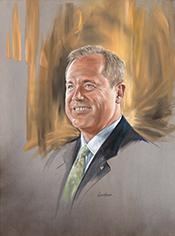
Mr. Chairman, I rise today in support of H.R. 2559, the Military Construction Appropriations Act for Fiscal Year 2004. It is the second bill we are considering pursuant to the 302(b) allocations…
Mr. Chairman, I rise today in support of H.R. 2559, the Military Construction
Appropriations Act for Fiscal Year 2004. It is the second bill we are considering pursuant to the 302(b) allocations adopted by the Appropriations Committee on June 17th. I am pleased to report that it is consistent with the levels established in H. Con. Res. 95, the House concurrent resolution on the budget for fiscal year 2004, which Congress adopted on April 10. The budget resolution provided $400.1 billion in discretionary budget authority for national defense. This bill funds the military construction and family housing portion of that commitment to our men and women in uniform.
H.R. 2559 provides $9.196 billion in new budget authority and $10.282 billion in outlays for fiscal year 2004. It is therefore identical to its 302(b) allocation to the House Subcommittee on Military Construction Appropriations. It does not contain emergency-designated new BA. It does include $340.5 million in rescissions of previously enacted BA. Although budget authority in the bill declines by 12.8 percent from the previous year, it is $81 million above the President's request. This mainly because H.R. 2559 contains a procurement appropriation of $120 million that, according to CBO, was part of the administration's request for the Defense appropriation bill rather than this bill.
The bill complies with section 302(f) of the Budget Act, which prohibits consideration of bills in excess of an appropriations subcommittee's 302(b) allocation of budget authority and outlays established in the budget resolution.
H.R. 2559 represents this House's solemn commitment to the quality of life of those who put their lives on the line for freedom. It not only addresses the long-term infrastructure problems at military bases, it sustains barracks, family housing, medical facilities, and child support centers across the country and overseas. It also provides infrastructure funding for National Guard and Reserve troops who now find themselves on the front lines of the war against terrorism. Finally, it incorporates the results of real-world national security policy changes: The redeployment south of U.S. military forces away from the North Korean border to better-protected bases, and the gradual drawdown of troops from some Central European bases.
In conclusion, I express my support for H.R. 2559.
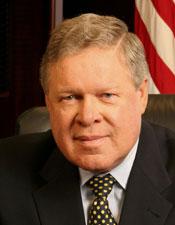
Mr. Chairman, I would like to commend Chairman Knollenberg and Ranking Member Edwards for their work on this bill. They have done their best with an unreasonable and unacceptable allocation. I know…
Mr. Chairman, I would like to commend Chairman Knollenberg and Ranking Member Edwards for their work on this bill. They have done their best with an unreasonable and unacceptable allocation. I know they share my deep disappointment over this level of funding, which is $1.5 billion less than was appropriated for Military Construction & Family Housing last year.
Unfortunately this cut makes a bad situation worse. When the Bush administration came into office, they found a Department of Defense where the recapitalization rates for facilities varied from 80 to over 100 years in the various services. They rightly condemned this situation. However, under this budget, the recapitalization rate for the active Air Force will increase to 183 years. The Navy recapitalization rate will increase to 140 years. The recapitalization rate for the Marines actually goes down, but is still an unacceptable 88 years. And the Army recapitalization rate in this budget increases to 144 years. The DOD goal is 67 years. I strongly support the effort by Mr. Obey to increase funding for Military Construction and Family Housing in this bill by $1 billion. This funding, and much more, is sorely needed.
I would like to thank the Chairman and Ranking Member for working with me on the vital installations in Washington state. We will make a start in this bill on fixing a Navy pier at Puget Sound Naval Shipyard which today is not up to Navy standards for performing its mission, which is mooring nuclear powered aircraft carriers. And the bill includes several important projects to build barracks at Ft. Lewis, refurbish the Mission Support Center at McChord Air Force Base, and rebuild the service pier at Subase Bangor. Also, this bill continues to support the privatization of family housing at Ft. Lewis, WA. Mr. Chairman, beautiful new houses have been built and are under construction there, and this Congress can be proud about the new houses being built for military families through this innovative program.
I hope as this bill proceeds through the Congressional process, that additional funds can be found to make this a truly responsible piece of legislation. Having voiced my deep concerns, I will vote today in support of this bill in order to ensure that those important projects which do receive funding here are allowed to move forward.
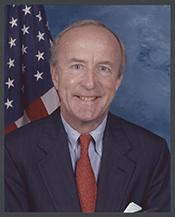
Mr. Chairman, I rise in strong support of H.R. 2559, making appropriations for military construction for fiscal 2004. This legislation is a strong product for tough times and I want to commend the…
Mr. Chairman, I rise in strong support of H.R. 2559, making appropriations for military construction for fiscal 2004. This legislation is a strong product for tough times and I want to commend the Subcommittee Chairman, the gentleman from Michigan, Mr. Knollenberg, and the Gentleman from Texas, Mr. Edwards.
This legislation provides $9.2 billion in funding for military construction and family housing projects across the country.
While no one is satisfied with the bottom line on this bill and we all wish that we could not do more, this is a solid product. It satisfies our obligation to ensure that our men and women in uniform live in, train at, and deploy from adequate facilities. This bill shows our commitment to our service members by constructing and upgrading military installations, and military family housing in the United States and overseas.
Improving the quality of life for our men and women in uniform throughout the world is critically important. If we are asking these brave men and women to protect our national security, then we must ensure that they have the tools and the facilities to protect themselves.
America's armed forces have been charged with developing the capabilities to fight jointly and with coalition partners to secure victory across the full spectrum of warfare while continuing the transition to a more flexible, more agile, lighter and more lethal force.
In this context, I am pleased the Committee has included funding for a state-of-the-art explosives loading facility at the Army's ``Home of Lethality''--Picatinny Arsenal in New Jersey.
In Afghanistan and Iraq, the achievements of our young men and women in uniform are due in part to the incredible technological advances employed by our military, much of which has been researched and developed by Picatinny Arsenal--the only Army-owned, Army-operated facilities for the research and development of energetics materials (mines, armor, warheads, artillery, etc.) in the nation. The new facility will mark a substantial upgrade in safety, environmental protection and process controls that will benefit the other branches of the military that rely on Army research and development expertise.
Mr. Chairman, once again I commend Mr. Knollenberg and Mr. Young and I urge support for this bill.
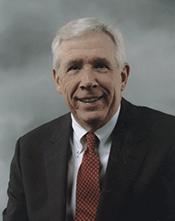
Mr. Speaker, I rise today in support of H. Res. 199, calling on the government of the People's Republic of China to immediately and unconditionally release Dr. Yang Jianli, and calling on the…
Mr. Speaker, I rise today in support of H. Res. 199, calling on the government of the People's Republic of China to immediately and unconditionally release Dr. Yang Jianli, and calling on the president of the United States to continue working on behalf of Dr. Yang Jianli's release.
Dr. Yang Jianli is an internationally renowned scholar, Harvard graduate, and the president of the Foundation for China in the 21st Century. Dr. Yang was actively involved in the Tiananmen Square protests in 1989 and was subsequently blacklisted by the Chinese government for his participation. Following Tiananmen Square, Dr. Yang fled to the United States and earned two doctorates. Dr. Yang is a permanent resident of the United States.
On April 26, 2002, Dr. Yang entered China using a friend's passport to investigate reports of labor unrest in northern China. Dr. Yang Jianli was detained eight days later and has not been heard from since. The Chinese government will not confirm where he is being held and he has been refused access to an attorney. He has been held for more than 13 months and no charges have been brought against him. The maximum fine for entering China illegally is a one-year prison sentence. Dr. Yang has already spent more than a year in detention. I call on the Chinese government for his immediate release.
The State Department's recent report on human rights states that the government of the People's Republic of China ``has continued to commit numerous and serious human rights abuses, including arbitrary arrest and detention.'' On June 4, a United Nations working group ruled that Yang Jianli has been illegally detained by the Chinese government and called for Dr. Yang's immediate release.
China lacks due process. Citizens continue to suffer at the hands of Chinese officials. It is time for the state-sponsored, state-led persecution in China to stop. I join the members of the House of Representatives and the international community in calling for Dr. Yang's immediate release. It is my hope that he will be released quickly and free to reunite with his wife and two children back in the United States.
Bill Text
Latest available legislative text
        [Congressional Bills 108th Congress]
[From the U.S. Government Publishing Office]
[H. Res. 277 Introduced in House (IH)]

108th CONGRESS
1st Session
H. RES. 277

Expressing support for freedom in Hong Kong.

_______________________________________________________________________

IN THE HOUSE OF REPRESENTATIVES

June 16, 2003

Mr. Cox (for himself, Mr. DeLay, Ms. Pelosi, Mr. Blunt, Mr. Lantos, Mr.
Goodlatte, Mr. Faleomavaega, Mr. Vitter, Mr. Wicker, Mr. Wilson of
South Carolina, Mr. Burgess, Mr. King of Iowa, Mr. Kennedy of
Minnesota, Mr. Markey, Mr. Frank of Massachusetts, Mr. Barton of Texas,
Mr. Stearns, Ms. Ros-Lehtinen, Mr. Royce, Mr. Smith of Michigan, Ms.
Harris, Mr. Weller, Mr. Burton of Indiana, Mr. Shadegg, Mr. Lincoln
Diaz-Balart of Florida, Mr. Mario Diaz-Balart of Florida, and Mr.
Sessions) submitted the following resolution; which was referred to the
Committee on International Relations

_______________________________________________________________________

RESOLUTION

Expressing support for freedom in Hong Kong.

Whereas Hong Kong has long been the world's freest economy, renowned for its
rule of law and its jealous protection of civil rights and civil
liberties;
Whereas the 1984 Sino-British Joint Declaration explicitly guarantees that all
of Hong Kong's freedoms, including press freedom, religious freedom, and
freedom of association, will continue for at least 50 years;
Whereas the Government of the People's Republic of China pledged to respect Hong
Kong's Basic Law of 1990, which explicitly protects freedom of speech,
of the press and of publication, of association, of assembly, of
procession, of demonstration, and of communication;
Whereas the Basic Law also explicitly protects freedom of conscience, religious
belief, and of religious expression;
Whereas Hong Kong's traditional rule of law, which has guaranteed all of these
civil rights and civil liberties, is essential to its continued freedom,
and the erosion of that rule of law bodes ill for the maintenance and
expansion of both economic freedom and individual civil rights;
Whereas in the United States-Hong Kong Policy Act of 1992 Congress declared:
``The human rights of the people of Hong Kong are of great importance to
the United States and are directly relevant to United States interests
in Hong Kong. A fully successful transition in the exercise of
sovereignty over Hong Kong must safeguard human rights in and of
themselves. Human rights also serve as a basis for Hong Kong's continued
economic prosperity.'';
Whereas since Hong Kong became a Special Administrative Region (SAR) of the
People's Republic of China on July 1, 1997, the Hong Kong authorities
have changed the system of electing representatives to the Legislative
Council, added appointed members to District Councils, invited the
central government to reverse Hong Kong courts, and declined to permit
the entry of some American visitors and other foreign nationals whose
views are opposed by the People's Republic of China;
Whereas, despite the provisions of the Basic Law which call for a gradual and
orderly process toward democratic election of the legislature and chief
executive, and which call for universal suffrage, the Government of the
Hong Kong SAR and the People's Republic of China have stymied this
process;
Whereas the traditional liberties of Hong Kong's 7,000,000 people are now
immediately threatened by Hong Kong's proposed ``Article 23'' laws,
which were drafted under strong pressure from the Government of the
People's Republic of China, dealing with sedition, treason, and
subversion against the Chinese Communist Party, and the theft of state
secrets;
Whereas the proposed legislation would give the Hong Kong Government discretion
to imprison individuals for ``attempting to commit'' the undefined crime
of ``subversion''; would criminalize not only membership in, but even
attendance at meetings of, organizations not approved by Beijing; and
would threaten freedom of religion, membership in authentic trade
unions, political activity of all kinds, and a wide range of public and
private expression;
Whereas the proposed legislation would give Hong Kong's Secretary for Security,
an appointee of the Government of the People's Republic of China, broad
authority to ban organizations it deemed in opposition to the national
interest, thereby threatening religious organizations such as the Falun
Gong and the Roman Catholic Church;
Whereas under the proposed legislation such basic and fundamental procedural
rights as notice and opportunity to be heard could be waived by the
appointee of the Government of the People's Republic of China in Hong
Kong if honoring these rights ``would not be practicable'';
Whereas the People's Republic of China's history of arbitrary application of its
own criminal law against dissenters, and its pattern of imprisoning and
exiling those with whom it disagrees, provide strong reasons to oppose
the expansion of Beijing's ability to use its discretion against Hong
Kong's freedoms;
Whereas similar subversion laws in the People's Republic of China are regularly
used to convict and imprison journalists, labor activists, Internet
entrepreneurs, and academics;
Whereas broad segments of the Hong Kong community have expressed strong concerns
about, and opposition to, the proposed new laws;
Whereas those members of Hong Kong's Legislative Council elected by universal
suffrage oppose the proposed new laws, but are powerless to stop them
against the majority of votes controlled directly and indirectly by the
Government of the People's Republic of China;
Whereas the scheduled consideration of these proposals to restrict Hong Kong's
freedoms in the Legislative Council on July 9, 2003, makes the threat to
its people clear and imminent; and
Whereas it is the duty of freedom loving people everywhere to stand with the
people of Hong Kong against this dangerous erosion of its long-held and
cherished rights: Now, therefore, be it
Resolved, That the House of Representatives--
(1) condemns any restriction of the freedom of thought,
expression, or association in Hong Kong, consistent with the
United States-Hong Kong Policy Act of 1992;
(2) recognizes that because Hong Kong exercises
considerable influence in international affairs, as a developed
economy, financial center, trading entrepot and shipping
center, reductions in the existing freedom of the Hong Kong
people would be of global significance;
(3) urges the Hong Kong Government and the People's
Republic of China to withdraw the proposed implementation of
Article 23 of the Basic Law insofar as it would reduce the
basic human freedoms of the people of Hong Kong;
(4) calls upon the People's Republic of China, the National
People's Congress, and any other groups appointed by the
Government of the People's Republic of China to leave all
revisions of Hong Kong law to a legislature elected by
universal suffrage;
(5) urges immediate elections for the Legislative Council
of Hong Kong according to rules approved by the Hong Kong
people through an election-law convention, referendum, or both;
(6) calls upon the Government of the People's Republic of
China to fully respect the autonomy and independence of the
chief executive, the civil service, the judiciary, the police
of Hong Kong, and the Independent Commission Against
Corruption; and
(7) calls upon the United States Government, other
governments, the people of the United States, and the people of
the world to support freedom in Hong Kong by--
(A) making clear statements against any limitations
on existing human freedoms in Hong Kong; and
(B) transmitting those statements to the people and
the Government of the People's Republic of China.
<all>