Honoring Maynard Holbrook Jackson, Jr., former Mayor of the City of Atlanta, and extending the condolences of the House of Representatives on his death.

Legislative Activity
Stay on top of the latest movement without scrolling through every action
Motion to reconsider laid on the table Agreed to without objection.
July 16, 2003 • 11:19 AM
View full timeline
Introduced in House
June 26, 2003
Referred to the House Committee on Government Reform.
June 26, 2003
Committee Consideration and Mark-up Session Held.
July 10, 2003
Ordered to be Reported by Unanimous Consent.
July 10, 2003
Mr. Ose moved to suspend the rules and agree to the resolution.
July 16, 2003 • 10:50 AM
Considered under suspension of the rules. (consideration: CR H6879-6883)
July 16, 2003 • 10:51 AM
DEBATE - The House proceeded with forty minutes of debate on H. Res. 303.
July 16, 2003 • 10:51 AM
Passed/agreed to in House: On motion to suspend the rules and agree to the resolution Agreed to by voice vote.(text: CR H6879)
July 16, 2003 • 11:19 AM
On motion to suspend the rules and agree to the resolution Agreed to by voice vote. (text: CR H6879)
July 16, 2003 • 11:19 AM
Motion to reconsider laid on the table Agreed to without objection.
July 16, 2003 • 11:19 AM
Floor Debate
24 membersWhat members said about H.Res. 303 on the floor
 DH
DH JMS
JMS MF
MF IS
IS NDD+19
Floor Debate
24 membersWhat members said about H.Res. 303 on the floor
Mr. Speaker, I thank the gentlewoman for yielding me time. Let me congratulate my colleague, the gentleman from Missouri (Mr. Skelton), my good partner on the Committee on Armed Services, and all the…
Mr. Speaker, I thank the gentlewoman for yielding me time.
Let me congratulate my colleague, the gentleman from Missouri (Mr. Skelton), my good partner on the Committee on Armed Services, and all the Members, Republican and Democrat, who helped to put this bill together. I want to thank the gentlewoman from North Carolina (Mrs. Myrick), the chairman on the committee, the gentleman from California (Mr. Dreier), who gave us a lot of time and attention, and all the members of the Committee on Rules.
Let me just say a word or two about what this bill does because this bill makes what I consider to be some sweeping reforms and it is a great bill. It covers a number of major areas, and along with what I call the ``people issues''; that is, the pay raise that has been mentioned, the additional monies for housing that brings down the amount that a service member has to pay out of their pocket, all of the things that go to quality of life for personnel. It also covers some major areas that have needed reform.
One aspect of that is what I call freedom to train, and today if you go to a place like Camp Pendleton, I have used that as an example, it has some 17 miles of shoreline. Only a very small area can actually be utilized for Marines who basically practice Iwo Jima. They practice assaulting a defended beach area. They can only do that practice in a very, very limited area of about one kilometer because of environmental considerations. And if you go to bases around the country, rifle ranges, air space for our Air Force and our other services to undertake integrated training with multiple aircraft, all of that is being hindered and obstructed because of a collision with our environmental laws.
Now, we have an answer to that, and the answer is a management plan called an inramp, and that is where the military gets together with State Fish and Wildlife and Federal Fish and Wildlife and they make an agreement. They make an agreement and they say, okay, the habitat for the gnatcatcher will be over here, we will set aside this 400 acres, and the Marines will have this area for rifle training or the Army will have this area for tank training or the Air Force will have this area for aircraft training.
Once you make that agreement and you put it in place, it is not open for groups to come in and sue under the Endangered Species Act to close down that rifle range, to close down that tank range, to close down that air space that is so vital so that our people can survive in theaters like Iraq and Afghanistan.
So this is offered under the proposition that the real endangered species here is a 19-year-old Marine rifleman who needs the very best training that he can get here at home before he projects American power overseas, and in this bill we put together this balance between conservation and military requirements.
Also, with respect to allowing our submariners to utilize the best of their sonar devices that will keep them alive when they are in the littorals, in shallow water areas around the world, where they will be faced with very quiet diesel submarines which are now being proliferated in certain adversaries' navies. We say that, whereas before the standard was that if a mammal, maybe a sea lion, was potentially disturbed that military training could not take place in his neighborhood. Now we say he has to actually be significantly disturbed. He has to actually be disturbed or that disturbance has to be significant enough to alter the way he migrates or feeds or the way he goes about his daily life.
So we are trying to give as much value to the sailors' survival as we have given to the sea lions' survival. I think that is a good balance. In this case we put the sailor ahead of the sea lion. I think the American people want that.
With respect to personnel, right now we are facing a war that is a new war. It is a war in which we see terrorists with high technology. We have to be flexible. We have to move quickly, and that involves people who not just wear the uniform of the United States, it also involves people who wear the civil service uniform.
So we are empowering Mr. Rumsfeld with the ability to reshape his civil service so that instead of taking 4 or 5 or 6 months to go through the bureaucracy to qualify a civil servant to work at a job so you get to the point where you just direct a sergeant to go do it and he salutes and goes and does it, we will now be able to quickly move civil servants into that job. We will be able to hire them quickly, and when people show an extraordinary ability to work and an enthusiasm and dedication that rises above the community, that they will be rewarded for that. And we have tested these ideas in pilot projects around the country, and the members who have participated in the pilot projects have voted that they like it.
So we are undertaking important reforms in this bill. We are giving the military the tools they need to fight this new type of war. I would urge everyone to support the rule and support the bill.
Mr. Speaker, will the gentleman yield?
Mr. Speaker, I thank my colleague, and we are going to describe during the general debate the great industrial base provisions, like the machine tool provision that we came out of this conference with, some excellent stuff.
But with respect to titanium, we know that we have three major makers of titanium left in this country. Otherwise, you have to rely on foreign sources. I want to thank the gentleman from North Carolina (Mr. Hayes) personally for putting together the working group between industry and the Air Force and Members who are interested, and putting together what we call the basket approach to titanium.
The basket approach says basically this: If you are going to take a domestic system, like the planes that are candidates for this tanker operation, and you convert them into a military system, right now the Berry Amendment says you have to use American-made titanium on American military systems.
We have agreed that since some of these civilian aircraft will have some foreign-made titanium, we got with the industry leaders and they agreed that they would take and require the same amount of American titanium, with in fact a 10 percent increase, and spread that across the rest of their lines to make up for the foreign titanium that was in those civilian aircraft. I have talked with industry leaders. They feel a strong commitment to that policy.
I want to thank the gentleman for putting that in place. I think it is going to accrue to the benefit of not only our tanker program, but also the health of the titanium industry.
Mr. Speaker, pursuant to House Resolution 437, I call up the conference report on the bill (H.R. 1588), to authorize appropriations for fiscal year 2004 for military activities of the Department of Defense, for military construction, and for defense activities of the Department of Energy, to prescribe personnel strengths for such fiscal year for the Armed Forces, and for other purposes.
Mr. Speaker, I yield myself such time as I may consume.
Mr. Speaker, first, I want to thank all of my colleagues who participated in putting this bill together from the earliest hearing that we had early in the year on the threat that America faces, on the status of our Armed Forces, and on what we need to do to give the President and our troops the tools to get the job done. My partner, the gentleman from Missouri (Mr. Skelton), is every bit a 50-50 partner in this operation, Mr. Speaker. When we really get down to what it takes to protect our freedom, there are no Republicans or Democrats, and we have a very bipartisan committee, and I am proud of that. I want to thank the gentleman from Missouri (Mr. Skelton) as not just a friend, but a real full partner in helping to shape America's defenses, along with all of the members on the Democrat side on the Committee on Armed Services and, of course, our great, great folks on the Republican side, along with the subcommittee chairmen and ranking members who have done such a great job.
Now, Mr. Speaker, we face a new era. This is an era of what I would call terrorists with high technology; and probably Jim Woolsey said it best when he said we have killed the big dragon, that is, we have disassembled the Soviet Union, but there are lots of poisonous snakes out there, and we are seeing those poisonous snakes and the effect of their bites every day around the world, not just in the theatres in Afghanistan and Iraq, but elsewhere. And I think probably the American people since 9-11 still have an acute understanding of the venom and the poison that is manifest in that capability of our adversaries in this new era of terrorists with high technology.
Our job is to meet that threat, and our job is further, in meeting that threat, to shape the U.S. military and our defense apparatus to meet the threat, to defeat it, and to equip it; to give it the tools that it needs to do its job most effectively, and this bill does that, Mr. Speaker.
I wanted to talk about a number of issues with respect to this bill. This is a sweeping bill; and it does a number of reforms, a number of changes, a number of things that I think are important to change our military as we move into this new era.
Let me talk about, first just talk about the last subject that came up during the rule, and that is the tankers. Because, yes, the tanker agreement is in this bill. Let me tell my colleagues a little bit about that.
First, anyone who does a security analysis or a briefing on potential threats around this world and present threats understands that tankers are extremely important. I just might add that I undertook a series of classified and unclassified briefings, as have most members of the Committee on Armed Services over the last many years, and paramount to our ability to project power is American air power.
Whether we are talking about B-2 bombers that can fly literally from Whiteman Air Base to strike a target in Kosovo with precision munitions, or talking about tactical aircraft flying off a carrier and hitting targets in Afghanistan or Iraq, we need tankers. Tankers, that big gas station in the sky that the gentleman from Kansas (Mr. Tiahrt) talked about, are necessary to project American air power. If we have American air power and, specifically, if we have stealth, and we couple that stealth with precision munitions, that is, instead of carpet- bombing a bridge, we send in that one precision munition, it hits one strut on that bridge and brings the whole bridge down, if we have that combination and we have the legs to get it there over the target in whatever remote part of the world we are operating in, we can project American power, we can protect our military forces, and we can drive them in a blitzkrieg attack against the enemy target, whether it is enemy forces surrounding Baghdad or some other area of the world; and Americans now understand that.
So we have to have tankers. If we do scenarios around the world, every single scenario requires lots of American tankers and, I might say, Mr. Speaker, more than we have now, newer than we have now, more capable than we have now. That is the reason we are putting the tanker deal together, and that is the reason that this is being carried in this bill.
Now, let me tell my colleagues, with respect to personnel, we have had some arm wrestling over this. But I think that the guy with whom we are trusting millions of young American lives, the Secretary of Defense, can be trusted with reshaping our personnel system in civil service in the Department of Defense to be more effective, and I think be more rewarding for those workers. I think they like the idea that we are going to be able to hire people right out of that job fair instead of telling them, in 3 months, maybe the Federal Government can hire you, while IBM and the private concerns are picking them up immediately. I like the idea that they are going to be able to be qualified for a job within a few days instead of after 3 or 4 months of bureaucracy, and that will allow them to take jobs that military people are doing now. When we have tested these things in places like China Lake, a majority of the workers, the workers have voted that they like this new system, this new flexible personnel system. This is an important new part of shaping the military.
So I think that is good.
Freedom to train, Mr. Speaker, we have talked about that. We have to give our young people the freedom to train, and once we make that agreement that the bird hatchery is going to be over here and the rifle range is going to be over here, we cannot let groups then go sue to close down the rifle range on the basis that they want to get that one too. We have to allow a balance to be maintained. One Marine said it best. He said to our members of the Committee on Armed Services, he said, for years we have done work-arounds. He said, we cannot work around it anymore, there is no land left to work around. So we need to have this. This is very, very important legislation, freedom-to-train legislation, Mr. Speaker.
Let me talk about the industrial base. We have got in this bill a great foundation for bringing back and maintaining the industrial base of this
country, and the centerpiece of this is what I think is the centerpiece of American production, the machine tool industry of this country, which used to be second to none. We have a provision in this bill, it is not a mandatory provision, so it is not going to make anybody have to go in and take out billions of dollars of machine tools, but it says that if you are an American contractor bidding on a DOD job, if you use an American machine tool instead of a foreign machine tool, you are going to get points in the competition. And I think that is going to incentivize some of our companies, big and small, to say instead of looking at another foreign-made machine tool, let us call up that American company and see what they have. Maybe we can use that machine tool. And that is going to, I believe, Mr. Speaker, start to bring back this base of machine tools upon which a lot of our defense manufacturing capability was founded. We do a lot of other great things in our industrial-based provisions, Mr. Speaker; but that is the centerpiece, and I think it is a very important foundation.
Now, we also reauthorize for 10 years the maritime security program. This is a program that brings in the strong right arm of America's maritime unions and makes sure that they are the ones that are moving men and materiel across the ocean into theaters of action instead of having to rely on rental operations where we are taking unions and working people from other countries and having to rely on foreign personnel to move the wherewithal for military victories around the world. That is what is going to bring our maritime unions, our ship- builders, and our maritime operators back into preeminence; and we have worked hard on that, Mr. Speaker, and that is a great aspect of this bill.
Concurrent receipt is very important, Mr. Speaker. We started out last year by saying people who are actually hit in combat, people who have won the Purple Heart, are going to get now two checks. They get the full check for everything that they have been disabled, for all of their disability, and they get the full check for their retirement for everything that they have done to serve the U.S. military. We now also say, and incidentally, I see the gentleman from New York (Mr. McHugh) here, our chairman of the Subcommittee on Total Force, who very much has been a leader in putting this thing together. We also now are going to give full concurrent receipt, that is that full disability check, to all of those people who are wounded in the combat area or who are disabled or hurt in the combat area, who are hurt or disabled while training for combat. Maybe that guy who is jumping out at the 82nd Airborne, with the 82nd Airborne at Fort Bragg hurt his back, he is going to get it; and also people who are hit by instrumentalities of combat, like people who are hit by agent orange, Mr. Speaker. Then we go to the entire population of veterans who were not hurt in combat, were not hit by enemy bullets, were not hurt while training for combat but, nonetheless, have disabilities. And all of those people who are over 50 percent, Mr. Speaker, are going to receive both checks.
Now, that is going to bring in about 250,000 people, new people into the system. It is a big, big victory for veterans. It is a wonderful thing.
Mr. Speaker, let me just say, too, along with the gentleman from New York (Mr. McHugh), the gentleman from Florida (Mr. Bilirakis), obviously, the guy that I call the father of concurrent receipt, it has been a big part of his career. And the gentleman from New Jersey (Mr. Smith), the gentleman from Missouri (Mr. Blunt), lots of great people; I might say that Senator Warner also, working on Purple Heart Plus last year, had a good hand in starting to put this thing together, lots and lots of people. Lots of our veterans and veteran supporters in this House have been involved in putting this program together. This is a great program.
Mr. Speaker, this is a great bill. It is a far-reaching bill. It gives the President and the troops the tools to get the job done. Let us pass this bill.
Mr. Speaker, I reserve the balance of my time.
Mr. Speaker, I yield 2 minutes to the gentleman from New Jersey (Mr. Saxton), who is chairman of the Subcommittee on Unconventional Warfare, Terrorism and Capabilities and oversees these very important special operations forces who are doing such a great job for our country.
(Mr. SAXTON asked and was given permission to revise and extend his remarks.)
Mr. Speaker, I yield 2 minutes to the gentleman from New York (Mr. McHugh), who has a high responsibility of overseeing the total force of the military, our Reserves, our Active, our Guard, with respect to all the personnel issues, pay, personnel issues, family benefits, the chairman of the Subcommittee on Total Force.
(Mr. McHUGH asked and was given permission to revise and extend his remarks.)
Mr. Speaker, I yield 2 minutes to the gentleman from Washington (Mr. Dicks.)
(Mr. DICKS asked and was given permission to revise and extend his remarks.)
Mr. Speaker, the gentleman is correct. Section 135 of the conference report does authorize a tanker acquisition program as did the Fiscal Year 2002 Defense Appropriations Act.
The gentleman is again correct. Section 131 codifies an agreement reached with the administration. The conferees relied upon a letter sent on November 5, 2003, to the chairman and ranking member of the Committee on Armed Services in the other body by the Deputy Secretary of Defense, Mr. Wolfowitz, in coming to agreement on the tanker acquisition program authorized by section 135.
The gentleman is correct. Section 135 authorizes the Air Force to enter into one contract for 100 aircraft, 20 by lease and 80 by purchase, or more than one contract for the same combination of aircraft.
The gentleman from Kansas (Mr. Tiahrt) is correct. The conferees in their joint report language agree that this section would ``authorize the Secretary to enter into a multi-year procurement program, using incremental funding.'' This language indicates that the multi-year procurement program authorized by section 135 would allow the Air Force to make payments as agreed to in the contract and that the Air Force would not be required to have the full budget authority required to purchase an aircraft in order to place an order for that aircraft under the contract.
Mr. Speaker, on that I demand the yeas and nays.
Mr. Speaker, I support this bill, and I am glad to see us put some quality-of-life provisions in it; and I commend the chairman, whom I have worked with for 20-odd years, for once again bringing a…
Mr. Speaker, I support this bill, and I am glad to see us put some quality-of-life provisions in it; and I commend the chairman, whom I have worked with for 20-odd years, for once again bringing a bill to closure.
I do have to call attention to the fact that this rule waives all points of order, which is typical; but in this case, as ranking member of the Budget Committee, I feel obliged to make my colleagues aware what it is we are waiving because it is not a good way to do business; it is not a good way to keep a budget.
This conference report contains two provisions that entail significant spending over and above the amounts allowed in the budget resolution. One allows concurrent receipt of military retirement benefits for retirees who also get VA disability benefits. The other commits the government to lease and purchase up to 20 or maybe even 100 new tanker aircraft.
No funds were added to this conference report to pay for either of these programs, and that is my problem. Between the two of them, they will entail new unfunded future commitments of approximately $40 billion, $22 billion for concurrent receipt, $18 billion for 100 new tanker aircraft.
As a member of the Committee on Armed Services, I support the compromise on concurrent receipt, and I understand the need for new tankers; but I am concerned, and have to be, about the way we are doing this. The rule before us would waive the point of order that would otherwise lie against the conference report for some clear and substantial departures from the budget resolution that is supposed to be prevailing in this House.
We just finished the fiscal year 2003, Mr. Speaker, with the largest deficit in our peacetime history, $374 billion. The deficit for next year, fiscal year 2004, is likely to break that by $100 billion, even without the additional cost of these programs which are not included in any of CBO's or OMB's projections.
All I am saying is if concurrent receipt is a worthy benefit, and I think it is, then let us pay for it or at least let us recognize fully in the budget the cost of it. If we need these tankers, and I accept the arguments that we do, then let us pay for them. Let us make the argument and pay for them and set the priority in the budget. This bill does not do that, and this rule would allow Congress to flout the budget resolution without facing up to these costs. If Congress feels that it is necessary to abandon the budget resolution that supposedly prevails in the House and further increases the deficit, then we ought to be accountable for that decision. But this rule would make sure that no Member of this body will have the opportunity to demand such accountability.
Let me tell the Members specifically the two problems in the conference report with respect to these items that give me trouble. The conference report phases in a compromised version of concurrent receipt. In 2004 this would increase direct spending by $800 million. By 2013 this would increase annual cost to as much as $3.5 billion. This provision would cost an estimated $22 billion in additional direct spending over the next 10 years, none of which is provided for in the mandatory spending provisions of the budget resolution. That is why I call it a substantial departure.
There is another anomaly in the way concurrent receipt is treated. Since the mid-1980s, we have recognized military retirement costs through an accrual system that sets aside funds to cover the cost of retirement benefits we owe in the future for today's military service. The concurrent receipt provisions in this bill eliminate a reduction or offset in military retirement and thus increase military retirement benefits. Under current procedures, we should increase our accrual payments to account for the fact that we have just increased future spending on retirement benefits. This bill does not do that. It departs from a convention we adopted 20 years ago for reporting military retirement programs.
The conference agreement also includes language that was not in either bill to lease 20 tankers and then buy 80 more. In effect, what it allows is incremental funding, something we have not done for big procurement programs for a long, long time. It entails at least a liability of $4 billion, maybe as much as $18 billion, and yet none of this money is in the Air Force budget. None of this authority has been recognized. What we have here is an effort to obscure the fact that we are increasing the defense budget but not adding BA commensurate to the amount of the increase.
There are committees right now and next week railing against corporate misaccounting in this country and should be. But we should keep our own books in proper order in order to make such criticisms. This is not a way to budget. I support the bill and hope it does not constitute a precedent for the future.
Mr. Speaker, with a defense budget of $400 billion and an enormous range of issues, it is not easy to bring a conference to closure, and I commend the gentleman from California (Mr. Hunter), as well as the gentleman from Missouri (Mr. Skelton), for what they have achieved.
I rise in support of H.R. 1588, the conference report thereon, but I have some real concerns. First of all, I have already spoken to the failure of the underlying bill to accrue properly the budget authority that will be necessary to implement the compromise on concurrent receipt or the provisions for lease purchase of 100 tankers. I am concerned about the radical reform of civil service laws in the Department of Defense and the dispensation this bill gives to the Department of Defense from environmental laws that apply to everybody else. Also, I am concerned about the new and cumbersome strictures on cooperative threat reduction.
I am particularly disappointed in the provisions of this report that deal with low-level nuclear weapons. I believe the conferees should have stuck with the bipartisan compromise reached by the Committee on Armed Services and set forth in the defense bill that we passed last May. That compromise was sound enough that in July of this year when I offered a motion to instruct, those provisions were accepted and upheld by the House without dissent.
The administration began this year by stepping up its push for repeal on a ban of low-level nuclear weapons research and development, a ban which has been in the law for 10 years. There was little opposition here to broadening research into low-yield nuclear weapons, but there was bipartisan concern about going so far as engineering development. And so both the House and Senate authorization bills proposed changes to allow research into
low-yield nuclear weapons, but restricted any move into engineering development.
The Senate, on the other hand, repealed the so-called Spratt-Furse amendment entirely, but then backfilled the cavity with caveats barring testing or deployment of low-yield nuclear weapons. They also added language requiring specific congressional authorization to move into development of any advanced nuclear concept project. These are the provisions included in the conference report.
By contrast, the House version amended existing law rather than repealing it. We explicitly authorized research, but we maintained a bar on development beyond detailed feasibility studies, the so-called 6.2a level of research and development.
Our compromise may have similar in consequences to the Senate approach, but I think it was superior in form because it makes clear that it is the policy of the United States not to develop low-yield tactical nuclear weapons. The House compromise, thus, gives stronger assurance that Congress will be an equal partner if that policy is reversed, if that decision is taken, and if there is a move to go beyond research.
When we adopted the Spratt-Furse amendment in the early 1990s, it came in the wake of an issue taken by the first President Bush whereby we withdrew a number of tactical nuclear weapons from Europe and the Soviets responded in kind. This was a step back and a step forward for nuclear security throughout the world. This initiative helped us later on to persuade Ukraine, Kazakhstan, and Belarus to forswear nuclear weapons.
If today the United States should move toward renewed development of nuclear weapons, especially weapons designed to be more usable due to their low-yield warheads, it sends the wrong signal.
Mr. Speaker, I support the conference report because it does many things I support, particularly for the quality of life for our troops, and also because I trust that the effect of the language in the report will be enough to forestall development of mini-nukes. I recommend support for the bill.
Mr. Speaker, I yield myself such time as I may consume. (Mr. FROST asked and was given permission to revise and extend his remarks.) Mr. Speaker, for all of my 25 years in this Congress, I have…
Mr. Speaker, I yield myself such time as I may consume.
(Mr. FROST asked and was given permission to revise and extend his remarks.)
Mr. Speaker, for all of my 25 years in this Congress, I have worked to strengthen America's military and to increase our national security. Like other defense proponents on both sides of the aisle, I have bent over backwards to put politics aside and work together to support America's men and women in uniform.
For instance, nearly 18 months ago, I introduced the Citizenship for America's Troops Act, a bill to help U.S. troops who are legal immigrants by easing the costly and burdensome obstacles that they face in the current citizenship process. Working with Democrats and Republicans in the House and the Senate, a good compromise was finally reached, one that is in this defense authorization conference report. It is not perfect, but it does provide much-needed relief to the more than 37,000 patriotic legal immigrants on active duty in the U.S. military, brave men and women who have been fighting and dying for a country in which they could not even vote.
This kind of cooperation and bipartisanship approach, Mr. Speaker, is fundamental to our efforts to keep America's military strong, especially at a time when so many Americans are losing faith in President Bush's ability to win the peace in Iraq.
While this conference report offers much to be proud of, Mr. Speaker, like the military pay raise and health care benefits for the National Guard and Reserves that Democrats have fought for, it also demonstrates how bipartisanship is becoming increasingly rare under this all- Republican government.
During the conference committee negotiations on this bill, Republican leaders shut out Democrats, including the distinguished ranking member of the Committee on Armed Services, the gentleman from Missouri (Mr. Skelton), on some key areas of the conference. And the gentleman from Missouri will speak about those in more length. This is part of a clear and dangerous pattern by Republican leaders. We have seen it on the energy bill, the
Medicare bill, and the FAA bill; but it is extraordinarily disappointing to see America's national defense policy treated in such a partisan manner.
Moreover, the conference report itself contains several provisions where Republican idealogy clearly trumped solid national defense policy. In the interest of time, I am going to just mention three examples.
First, why will President Bush and the Republicans not listen to the veterans and Democrats who are fighting to repeal the disabled veterans tax? Right now it penalizes nearly 560,000 disabled veterans, denying them $3 billion in military retirement benefits each year. As the American Legion has said, Mr. Speaker, the right thing to do is repeal the tax for all service-disabled military retirees. Democrats have proposed a plan to do that; but Republicans, led by President Bush, continue to block it. In fact, in this bill, Republicans refuse to help almost 70 percent of those disabled veterans, Mr. Speaker.
So when Republican Members are at home for Veterans' Day celebrations next week, I hope they will be honest with the people about the provisions in this bill which provide only partial relief to only a fraction of America's disabled veterans. I hope they will explain that they did not think they could afford to restore military retirement benefits to 390,000 disabled veterans because they spent so much of the U.S. Treasury on tax breaks for the wealthiest few.
Second, does anyone really believe that national security requires that we gut landmark environmental protections? Of course not. But rolling back America's environmental protections is a Republican priority. So Republicans stuck into this bill provisions that attack the Endangered Species Act and the Marine Mammal Protection Act.
And, third, is it really necessary to weaken the workplace protections of 746,000 patriotic Americans employed at the Pentagon, the same people who responded so courageously to the September 11 attack on that building? And is it really necessary to eliminate the rules prohibiting patronage at the Pentagon? Of course not. But gutting important worker rights is another key Republican priority, and they are shamefully using this national defense bill to do it.
Fortunately, Mr. Speaker, there are some areas of this conference report where bipartisanship and sound defense policy have prevailed. These include the substantial quality-of-life improvements that Democrats have fought for. Those include a 4.1 percent increase in basic pay for all members of the Armed Forces, plus targeted increases for mid-grade and senior noncommissioned officers and select warrant officers to enhance retention. And they also include an increase in imminent-danger pay and the family separation allowance for U.S. troops serving in harm's way.
The conference report also builds on our efforts to support the National Guard and Reserves, who bear more and more of the burden of defending America at home and abroad. For instance, it ensures that when the Ready Reserves serve in areas where those on active duty get hazardous duty pay, they will too. And if members of the Ready Reserve cannot get health insurance through their employer, it gives them access to the same TRICARE system that serves the military.
Additionally, Mr. Speaker, I am pleased that the conference report includes my own legislation to make life easier for the Guard and Reserves, both active duty and retirees, and their families, by allowing them unlimited access to commissaries. They and their families are making great sacrifices for this Nation and they deserve our support.
Finally, the bill continues to make important investments in the wide range of weapons that ensure America's military superiority throughout the world. It includes full funding of $4.4 billion for the F-35 Joint Strike Fighter, the next generation multirole fighter of the future for the Air Force and the Navy and the Marines. It fully funds the F/A-22 Raptor aircraft, the high-technology air dominance fighter for the Air Force, by providing $3.5 billion for 22 planes, and it includes the full $1.2 billion needed for the V-22 Osprey aircraft.
Mr. Speaker, all these important prodefense provisions have strong bipartisan support. They reflect the long-standing commitment of Democrats and Republicans to work together to ensure the U.S. military has the resources it needs. That is the type of bipartisanship and cooperation that our national security policy requires. It builds strong public support for a U.S. foreign policy here at home and ensures our troops have the resources they need to do the dangerous job we ask of them.
Unfortunately, Mr. Speaker, Republican leaders seem to have forgotten these lessons. And the President too often ignored them in the run-up to the war in Iraq, which is a big reason it will be so hard to restore President Bush's credibility and the public's confidence in his ability to win the peace in Iraq. The American people deserve better than that, and so do our troops in the field. I urge my Republican friends to remember that, especially as U.S. troops and U.S. taxpayers continue to shoulder almost the entire burden for rebuilding Iraq.
Mr. Speaker, I reserve the balance of my time.
Mr. Speaker, I yield 1 minute to the gentleman from Missouri (Mr. Skelton), the ranking member on the Committee on Armed Services.
Mr. Speaker, I yield 3 minutes to the gentlewoman from California (Ms. Harman).
Mr. Speaker, I yield 4 minutes to the gentleman from South Carolina (Mr. Spratt).
Mr. Speaker, I yield 2 minutes to the gentleman from Illinois (Mr. Evans).
Mr. Speaker, I yield 4 minutes to the gentleman from California (Mr. Waxman).
Mr. Speaker, I yield 3 minutes to the gentleman from Washington (Mr. Dicks).
(Mr. DICKS asked and was given permission to revise and extend his remarks.)
Mr. Speaker, I yield 1 minute to the gentleman from Washington (Mr. Inslee).
(Mr. INSLEE asked and was given permission to revise and extend his remarks.)
Mr. Speaker, I yield myself such time as I may consume.
I would only point out to the previous speaker and to speakers on the other side that if the Republicans in the House were willing to forego a little bit of the tax cuts for the wealthy, we could fully fund concurrent receipts, rather than just partially funding concurrent receipts.
Mr. Speaker, I urge adoption of this rule and adoption of this conference report.
Mr. Speaker, I yield back the balance of my time.
Mr. Speaker, I rise in support of the rule and thank the gentlewoman from North Carolina (Mrs. Myrick) and the gentleman from Texas (Mr. Frost) for presenting it this morning. This was a difficult…
Mr. Speaker, I rise in support of the rule and thank the gentlewoman from North Carolina (Mrs. Myrick) and the gentleman from Texas (Mr. Frost) for presenting it this morning.
This was a difficult bill, and shortly we will talk about some bumps along the way. But, Mr. Speaker, we are at war. We must do our very best, and I think we have done a good job as it relates to the troops of the United States of America. They are superb. They are doing a good job. We must pay respect to them legislatively as well as to their families legislatively, and I think we have done that by the various items. The family separation allowance, the combat pay, the pay raise and all of these personnel items that we touched upon is our way of saying thanks for a good job well done.
So I support this rule. In the process I want to express my deep appreciation to everyone in uniform and to those families who support those in uniform. And, sadly, we have lost some and I hope that this is some consolation that we continue to support the American men and women who are wearing the uniform of the United States of America.
Mr. Speaker, I yield myself such time as I may consume.
Mr. Speaker, I rise in support of this bill, the National Defense Authorization Act. I will explain the reasons why, but I first want to compliment my friend, the gentleman from California (Mr. Hunter). This was the gentleman's inaugural voyage as chairman of the Committee on Armed Services and the seas were far from smooth. Many of the issues we faced were particularly difficult. I applaud the gentleman's leadership in recognizing that the totality of the bill is more important, especially when our country is at war in Iraq.
I do want to raise several issues of caution about process, however. First, the conference process has not been totally inclusive. Many issues, three in particular, civil service reform, concurrent receipt, and Air Force tanker leasing have been decided without substantive Democratic consultation. Second, there were few conference meetings that involved all the conferees or even all the House conferees. Finally, it is highly undesirable to consider a conference report on a large and highly complex defense bill in just a few hours after the conference report has been filed. It is not possible for Members to make best judgments about voting on this bill when there has not been adequate time after it has been filed.
The fact that we are considering this bill today, however, reflects the commitment of the Committee on Armed Services members that we must provide for the men and women of our military when they are sacrificing in so many ways to defend our country and our issues. They are depending on us. We will not let them down. And we are at war.
I want to highlight just a few issues that cause me to support this bill. The bill includes a 4.1 percent pay raise for the troops. The bill provides an increase in imminent-danger pay. It provides for family separation allowance, which will directly benefit our servicemen and -women who are serving in Iraq and Afghanistan and other dangerous spots away from their homes. The conference report further authorizes TRICARE coverage in the military health care system for our National Guardsmen and for our Reservists who played such a vital role against terrorism.
Finally, very, very important, this bill includes increasing the Army's size 2,400 additional soldiers. That is so terribly important because the troops are so strained at this time, and the gentleman from New York (Mr. McHugh) knows that so well as chairman of the subcommittee.
We need the pay raise. We need the special pay to compensate and help retain those who have those special skills. Our bases need the military construction and family housing authorizations. We need to authorize the money for military operations, for flying hours and steaming days and tank miles, to allow our troops to be the best trained and prepared in the world.
I want to mention concurrent receipt. Overwhelming majorities of both Houses clearly support providing this benefit to all disabled retirees. Nevertheless, the conference agreement, which would provide this benefit to those at least 50 percent disabled, is a significant step in the right direction. There will, however, be a motion to recommit regarding this issue, and I hope people will support it.
I am pleased, Mr. Speaker, that we were able to reach agreements on many difficult issues, but I know many of my colleagues will not be happy with some of the substantive outcomes. The conference agreements concerning low yield nuclear weapons, civil service reform, and changing environmental laws are particularly problematic, and I point those out.
Now, perhaps more than any time in the last decade, however, Mr. Speaker, it is essential that the House take action to provide for our men and women in uniform. This vote will not only be seen in Kabul or Baghdad but also Diego Garcia, Fort Irwin, Norfolk, Fort Leonard Wood, Whiteman Air Force Base. We need to send a message to the American public, and to our adversaries and allies, that we as a Congress are prepared to give our men and women in uniform the support, the strong support and protection that they deserve.
So I urge my colleagues to vote for this conference report.
Mr. Speaker, I reserve the balance of my time.
Mr. Speaker, I yield 2 minutes to the gentleman from Arkansas (Mr. Snyder.)
Mr. Speaker, I yield 2\1/2\ minutes to the gentleman from Texas (Mr. Edwards).
Mr. Speaker, I yield 1 minute to the gentlewoman from California (Ms. Pelosi), the minority leader.
Mr. Speaker, I yield 3\1/2\ minutes to the gentleman from South Carolina (Mr. Spratt).
(Mr. SPRATT asked and was given permission to revise and extend his remarks.)
Mr. Speaker, I yield 2 minutes to the gentleman from Washington (Mr. Larsen).
Mr. Speaker, I yield 1 minute to the gentlewoman from Oregon (Ms. Hooley).
Mr. Speaker, I yield 2 minutes to the gentleman from Maryland (Mr. Hoyer).
Mr. Speaker, I yield 2 minutes to the gentleman from Maine (Mr. Michaud).
Mr. Speaker, I yield 1 minute to the gentlewoman from Texas (Ms. Jackson-Lee).
(Ms. JACKSON-LEE of Texas asked and was given permission to revise and extend her remarks.)
Mr. Speaker, I yield 30 seconds to the gentleman from Washington (Mr. Baird).
Mr. Speaker, I yield 2 minutes to the distinguished gentleman from Washington (Mr. Dicks).
Mr. Speaker, I have a parliamentary inquiry.
Who has the right to close?
Mr. Speaker, I yield myself such time as I may consume.
Let me take a moment, Mr. Speaker. This is deadly serious business that we are about. We are providing for the troops, those who wear the uniform of the United States of America as provided by the Constitution of the United States. This is of the highest calling of our Congress. No, all the provisions in this bill do not meet with my approval wholeheartedly or with others'. But on the other hand there is so much in this bill that takes care of the troops, their families, their needs, their capability of waging war, and we are at war, Mr. Speaker.
With that in mind, I hope that every person in this Chamber, despite the misgivings of some provisions, will support this bill with the understanding that in so doing, a vote for this bill is a vote of confidence and appreciation for those who are wearing the uniform and those families at home in whose prayers those young soldiers, sailors, airmen and Marines are.
Mr. Speaker, I reserve the balance of my time.
Mr. Speaker, I yield the balance of my time to the gentleman from Georgia (Mr. Marshall).
Mr. Speaker, I want to thank the gentleman from Texas for yielding me this time. Mr. Speaker, I rise in support of the conference report and this rule. I have concerns about this bill, too. I…
Mr. Speaker, I want to thank the gentleman from Texas for yielding me this time.
Mr. Speaker, I rise in support of the conference report and this rule. I have concerns about this bill, too. I represent the Puget Sound Naval Shipyard in Bremerton, Keyport, Bangor. Many of these work rules are very much deplored by the workers there, and I regret that they have been attached to this legislation, but we will continue to work to try and deal with them as we proceed in this session of Congress.
I want to rise in very strong support of the provision my friend the gentleman from Kansas (Mr. Tiahrt) talked about earlier, the question of tankers. I became interested in this issue several years ago with a visit to Tinker Air Force Base where we saw the condition of our KC- 135-Es. I believe that this is a crucial national priority, to get a new tanker replacement program started.
The Air Force has chosen the 767. We have had a lot of controversy about whether we should buy or lease. We have come up with a combination here. The Secretary of Defense's office, led by Mr. Wolfowitz, sent a letter on Thursday, which has brought us together. I want to commend the Speaker, the gentleman from Illinois (Mr. Hastert), for his dedicated leadership on this issue. Without his tremendous effort and tenacity, we would not have gotten this far.
I intend to have a colloquy later with the chairman of the committee when we get to the authorization bill on this matter, but I just want to say that I want to compliment everyone who has worked on this. For 2 years, we had to get an effort under way to get this replacement effort going.
Not to understate it, every single plane that flew into Afghanistan and into Iraq had to be refueled multiple times. Our whole effort to improve our bomber capability with the B-2 and smart weapons and all of the aircraft coming off of our carriers, Navy and Marine Corps aircraft, all of them had to be refueled multiple times. So you do not get anything done without tankers.
We have planes now, 544 of them, that were built between 1957 and 1963. These are very old aircraft. We have serious corrosion problems, and I am glad that this conference committee was able to come together and put together a package and that the administration has said they will make it work.
I believe this is one of the most important things we can do. If you think about it, tankers and the EA-6-Bs, which are also old and in terrible condition, are two weapons systems that have become absolutely fundamental to our U.S. ability to project power around the world. I am glad we can get this tanker thing moving forward and that it is in this bill.
I appreciate the gentleman from California (Mr. Hunter) and the gentleman from Missouri (Mr. Skelton) for their leadership on this issue.
Mr. Speaker, I would like to enter into a colloquy with the gentleman from California (Mr. Hunter), the chairman of the Committee on Armed Services.
Mr. Chairman, the conference report on H.R. 1588, the Fiscal Year 2004 Defense Authorization Act, contains a provision, section 135, which authorizes the Air Force to enter into a contract for 100 tanker aircraft under the terms and conditions of section 8159 of the Fiscal Year 2002 Defense Appropriations Act.
I yield to the gentleman from California.
Mr. Speaker, it is my further understanding that section 135 was written after extensive negotiation with the Department of Defense and the administration and that that section represents a common understanding between the conferees and the administration on the terms under which this tanker program will be executed.
I yield to the gentleman from Kansas.
We thank the chairman for his hard work on this issue.
Mr. Speaker, the letter sent to the Committee on Armed Services by Deputy Secretary of Defense Wolfowitz is as follows:
Deputy Secretary of Defense,
Washington, DC, Nov. 5, 2003.
The Hon. John Warner,
Chairman, Committee on Armed Services, U.S. Senate,
Washington, DC.
Dear Mr. Chairman: Thank you again for your consideration
of the Department of Defense's proposal to lease 100 KC-767A
aircraft. As you know, there has been a vigorous debate on
the best way to get this program started. Your most recent
amendment would allow the Air Force to lease no more than 20
of the 100 tankers. The Air Force has developed a proposal to
implement that arrangement, and I hope that you will find it
acceptable.
Our proposal strikes a necessary balance between the
critical need for new air-refueling tankers and the
constraints on our budget. As reflected in the enclosed
chart, we intend to lease the initial 20 aircraft and then
buy aircraft at a steady rate of 11 to 13 aircraft per year
until delivery of the 100th. We commit to add $2.4B, in
Fiscal Years (FYs) 2008 through 2010, to the funding profile
for the original proposal to lease 100 aircraft. We also will
add $1.4B in FY 2012 to 2013. The combination of these added
funds achieves an immediate start to the program and allows
us to purchase the last 80 aircraft at time of delivery.
I appreciate the support that you have provided in the past
and look forward to working with you in the future. If you
require further information, please do not hesitate to
contact me. A similar letter has been sent to the chairmen
and ranking minority members of each of the defense
committees.
Sincerely,
Paul Wolfowitz.
Mr. Speaker, I want to thank the distinguished gentleman from Missouri, who is a classmate, for yielding me this time. I want to compliment him and Chairman Hunter on this bill. We have worked for 2 years on the tanker provisions in this legislation. I am convinced that modernizing our tankers is absolutely crucial to national security. The gentleman from Missouri and I have worked for many years to implement and upgrade the B-2 bombers which fly out of Whiteman, Missouri. We have found that in all of these deployments that tankers are absolutely crucial.
I must tell the House that the condition of our tankers today is not good. The KC-135-Es have significant corrosion. They were all built between 1957 and 1963 in the Eisenhower and Kennedy administrations. I have been on them. I have talked to the pilots who fly them. I have talked to General Handy, General Jumper and they are convinced that replacing these tankers is one of the most important things we can do to preserve our military capability. When you think about it, every time we deploy, we have to have tankers. We have to have EA-6-Bs, those jammers. Both of them are very, very old and both of them need to be replaced and we need get on with it.
One of the things that I am concerned about that we still have not addressed since the Bush administration took office is the fact that we are short in procurement still 30 to $40 billion. The big argument in the tanker issue is lease versus buy. The only reason we had to do a lease is the Air Force did not have the money to buy these airplanes. That is why we have got to get the procurement account up, General Myers says somewhere between 100 and $110 billion. We are at $72 billion. We have got work yet to be done here.
I am also very concerned about the provisions in this bill that deal with worker rights. We are going to continue to work on that. I hope that down the road we can exempt shipyards from those new restrictions.
Parliamentary Inquiry
Show 8 more

Mr. Speaker, by direction of the Committee on Rules, I call up House Resolution 437 and ask for its immediate consideration. Mr. Speaker, for the purposes of debate only, I yield the customary 30…
Mr. Speaker, by direction of the Committee on Rules, I call up House Resolution 437 and ask for its immediate consideration.
Mr. Speaker, for the purposes of debate only, I yield the customary 30 minutes to the gentleman from Texas (Mr. Frost), pending which I yield myself such time as I may consume. During consideration of this resolution, all time yielded is for the purpose of debate only.
This morning, the Committee on Rules met and granted a normal conference report rule for H.R. 1588, the Defense Authorization Act for Fiscal Year 2004. The rule waives all points of order against the conference report and against its consideration.
In addition, the rule provides for 1 hour of debate equally divided and controlled between the chairman and ranking minority member of the House Committee on Armed Services.
Mr. Speaker, this should not be a controversial rule. It is the type of rule we grant for every conference report we consider in the House. And I want to especially give my thanks to the chairman and ranking member of this committee, because they have done a phenomenal job with this bill. It is a bill that sets an example for the rest of the committees in the House as far as working together and doing what is right for the country and what is right for our servicemen.
This legislation firmly shows our commitment to restoring the strength of our Nation's military. The conferees authorize $400.5 billion in budget authority for the Department of Defense and the national security programs of the Department of Energy, which matches the President's request.
The legislation authorizes the funding necessary to defend the Nation and our interests around the globe. It contains important provisions, such as concurrent receipt pay for the Nation's veterans, commonsense environmental reforms allowing our troops to properly train, and important new benefits for military personnel and their families.
The Iraqi conflict and our continuing war on terrorism have brought a renewed and proper focus on national defense. We owe much to our men and women in uniform; and their success in Iraq and Afghanistan is a testament to their bravery, training and equipment, and their commitment to defend our freedoms. It is the means by which we meet our commitment to provide them a decent quality of life with an across-the- board 4.15 percent increase for military personnel, so as to sustain the commitment and professionalism of America's all-volunteer armed services and the families that support them.
The pay raise will cut the pay gap between military and civilian jobs from 6.4 to 5.5 percent. This will be the fifth consecutive year that pay raises have exceeded that of the private sector.
For our active soldiers, the conferees increased the rates of special pay for those subject to hostile fire and imminent danger worldwide from $150 a month to $225 per month for the period beginning October 1 of 2003, through December 31 of 2004.
We also want to acknowledge where these active soldiers get the source of their strength. It is from their families here at home. And we are increasing the family separation allowance for servicemembers with dependents from $100 a month to $250 a month for the period October 1 this year through December 31 of 2004.
I also want to take a moment to personally thank the gentleman from California (Mr. Hunter) for tirelessly fighting for the solid ``Buy American Provisions'' that are included in this conference report. That is extremely important to my State of North Carolina.
The ongoing war on terrorism dictates the need to have reliable domestic sources of weapons and equipment. Unfortunately, fewer American companies are designing and manufacturing the components and materials used in our military systems, as the U.S. industrial base is becoming more dependent on foreign sources. And this is a disturbing factor to me, as I know it is to the gentleman from California (Chairman Hunter). We have got to be able to produce these equipment needs here in the United States so we are not at the mercy of some other country if they decide for some reason to cut us off.
However, I am very disappointed, and I know the chairman is too, that the conference report did not include a key provision that was passed by the House that would ensure that all the components of the Department of Defense uniforms come from American companies. The language specifically worked to more adequately cover domestic textiles and leather industries.
I would also like to congratulate my good friend and colleague on the Committee on Rules, the gentleman from Washington (Mr. Hastings), for authoring the 1-year citizenship provision for our valiant servicemen and women. It reduces the length of service requirement for naturalization to 1 year. And I would also like to note that the ranking member on the Committee on Rules, the gentleman from Texas (Mr. Frost), worked hard on this issue as well.
On a positive note, I am extremely pleased and proud that H.R. 1588 establishes a payment program to simultaneously compensate disabled military retirees who were injured in combat for their full retirement pay from DOD and disability compensation from the Veterans Administration beginning January 1, 2004. Over the next 10 years, this bill will provide concurrent receipt to more veterans than have ever been covered by current law. Our veterans have given deeply and heroically, and it is only fair we recognize their service.
So let us pass this rule and pass the underlying defense authorization conference report. At the end of the day, we will be making our homeland safer, and we will be supporting our sons and daughters serving in our military. We are also preparing for war, thereby ensuring victory. At this crucial time in our history, this bill is most important.
Mr. Speaker, I reserve the balance of my time.
Mr. Speaker, I am very pleased to yield such time as he may consume to the gentleman from California (Mr. Dreier), our distinguished chairman of the Committee on Rules.
(Mr. DREIER asked and was given permission to revise and extend his remarks.)
Mr. Speaker, I yield 6 minutes to the gentleman from California (Mr. Hunter), the distinguished chairman of the Committee on Armed Services.
Mr. Speaker, I yield 4 minutes to the gentleman from Kansas (Mr. Tiahrt).
Mr. Speaker, I yield 2 minutes to the gentleman from Indiana (Mr. Pence).
Mr. Speaker, I yield 2 minutes to the gentleman from Maryland (Mr. Gilchrest).
Mr. Speaker, I yield 3 minutes to the gentleman from North Carolina (Mr. Hayes).
Mr. Speaker, I reserve my time.
Mr. Speaker, I yield 1 minute to the gentleman from New Jersey (Mr. Smith).
Mr. Speaker, I yield myself such time as I may consume.
I want to again thank the chairman and ranking member of this committee for the good work they have done in bringing this bill forward. It is a good bill at the right time in history to help our men and women and to be sure that we are doing all we can in this war on terrorism.
Mr. Speaker, I yield back the balance of my time, and I move the previous question on the resolution.
The previous question was ordered.
Mr. Speaker, I rise in support of H.R. 1588, to authorize military spending for fiscal year 2004. This bill authorizes the funding necessary to defend our country and promote our interests throughout…
Mr. Speaker, I rise in support of H.R. 1588, to authorize military spending for fiscal year 2004. This bill authorizes the funding necessary to defend our country and promote our interests throughout the world. The bill makes significant enhancements to our combat capabilities, continues our efforts to transform the military to meet the terrorist threats of the 21st century, and provides a number of new benefits to American soldiers throughout the world.
Congress has a responsibility to work with the President to protect the national security of our nation. When our soldiers are sent in to war, it is the Congress's responsibility to make sure that all resources necessary are provided to carry out their missions.
I stand behind our brave men and women who have performed admirably in Iraq and Afghanistan. They have made tremendous sacrifices on behalf of their country and have served longer deployments than expected. Much of the funds in this bill will go directly to support our troops in Iraq and Afghanistan.
Under this bill our men and women in uniform will receive a 4.15 percent average increase in base pay. At the same time the bill reduces the average amount of housing expenses paid by service members from the current 7.5 percent to 3.5 percent, and eliminates out-of-pocket expenses completely by fiscal year 2005. The bill also extends special pay and bonuses for active duty personnel through the end of 2004. Family separation allowance for service members with dependents is increased, from $100 to $259 per month. The special pay rate for those subject to hostile fire and imminent danger is increased from $150 to $225 per month. The legislation also extends TRICARE health coverage to National Guard members and reservists and their families if such servicemembers have been called to active duty. The bill also authorizes nearly $10 billion for military construction, family housing, medical facilities, and child development centers.
This legislation also continues the transformation of our military to meet new challenges of the global war on terror. The bill funds research and procurement of countermeasures to protect troops and the homeland from chemical, biological, and nuclear attack. It increases weapons and equipment procurement for Special Operations Forces. It funds programs to dismantle, secure, and eliminate weapons of mass destruction and facilities in Russia and the former Soviet republics.
There are several significant shortcomings in this legislation, however, that I would like to discuss.
This conference report contains an inadequate proposal to address the Disabled Veterans Tax imposed on our military retirees. Under current law, military retirees are taxed one dollar of their retirement pay for every dollar they receive in veterans disability compensation. Denying service-disabled men and women the benefits they have earned breaks our promise to those who placed their lives on the line for America's freedom. Any veteran with a service-connected disability, regardless of the length of his or her military service, can retire from a federal civilian job and receive both retired pay and disability compensation without penalty.
America's troops are united as they serve in Iraq and Afghanistan and here at home. Our veterans were united as they fought for our country. They remain united today in their love for our nation. But the Disabled Veterans Tax compromise before the House today seeks to divide them. It leaves behind more than 390,000 disabled military retirees--more than two-thirds of those who would receive full compensation under HR 303. Those retirees with a Purple Heart or combat-related disability would be eligible this January. Others who have 50 percent or greater disability would have to wait for ten years to receive their full benefits. Those with less than 50% disability still will not receive one penny of compensation for their disabilities.
Because this compromise is phased in over a ten-year period, many of our older veterans, particularly those from World War II and the Korean War, may not live long enough to receive the full benefits to which they are entitled. In my district in Maryland, there are 1,519 veterans who are now subject to the Disabled Veterans Tax. This bill leaves 1,000 of them behind.
More than 85 percent of the members of this House have cosponsored HR 303, yet the compromise before us falls far short. Many of my colleagues also signed the discharge petition that would compel the House to consider this bill. For these reasons, I urged my colleagues to support the motion to recommit. It would have stripped from the bill the inadequate compromise language that only helps two-thirds of America's veterans, and replace it with full, immediate concurrent receipt. Our disabled military retirees deserve no less.
I am also disappointed that conferees chose to include in this bill a far-reaching plan to revamp the DOD civilian employee system.
Under this agreement, more than 700,000 civilian workers in the Defense Department will lose fundamental protections that have been in place since President Kennedy's administration. These protections were put in place to safeguard against the patronage, political favoritism, and nepotism that were rampant before the advent of the civil service system.
These DoD employees will lose many of their current due process rights. The conference report retains the right of employees to appeal to the Merit Systems Protection Board but only as an appellate body. As a result, DoD civilian employees would have far fewer rights to appeal personnel actions than other civilian employees have. They would lose guarantees on overtime pay, hazard pay, weekend pay, and holiday pay. Finally this provision empowers Secretary Rumsfeld and all future Secretaries of Defense to create an entirely new personnel system for DOD civilians. I am also very concerned that enactment of these provisions will set a dangerous precedent that will lead to erosion of protections in other federal department and agencies. In these times of uncertainty and turmoil, we are asking more of our civil servants than ever before in our history. To remove these important safeguards now is the wrong thing to do.
In sum, Mr. Speaker, I am disappointed that we have failed to provide the full concurrent receipt to our veterans that they deserve, and that we have eroded some of the civil service protections for Defense Department employees. However, I will support this legislation because it provides additional resources for our troops in Iraq, Afghanistan, and throughout the world as they prosecute the global war on terrorism. Our military must be given every available tool for its arsenal as it combats emerging threats to our soldiers and our homeland.

Mr. Speaker, I spoke against this bill when it was on the House Floor and, unbelievably, it's gotten worse in Conference. I am frustrated that on the week before Veterans Day, the conference report…
Mr. Speaker, I spoke against this bill when it was on the House Floor and, unbelievably, it's gotten worse in Conference. I am frustrated that on the week before Veterans Day, the conference report keeps moving further away from what the military, veterans, and Americans need. The most fundamental function of our national government is the defense of our nation. Today, this function is more important, and we are spending more on national defense than ever before. The conference report that we are debating this morning carries a $401.3 billion price tag, which means that the United States will be spending over a billion dollars a day, and more on our military than do the next 25 nations combined. This bill certainly spends enough to do the job, however it is full of provisions that not only waste tax dollars, but even threaten Americans' health and safety.
I am pleased that the Defense Authorization bill starts to reduce the tax on disabled Veterans, which is long overdue. However, I am disappointed that the bill would only partially end the tax--leaving out two-thirds of military retirees affected by the tax and forcing those covered to wait 10 years for full benefits.
I am also extremely disappointed that the conferees chose to eliminate the 1993 ban on low-yield nuclear weapons. The House bill allowed research but maintained the ban on development activities that could lead to the production of a destabilizing and unnecessary new low-yield nuclear weapon. However, conferees accepted the Senate language that also allowed research but eliminated the ban. Fortunately, Congressional approval is required before these dangerous weapons can be produced, and I hope that this never occurs. Producing a new generation of low-yield nuclear weapons increases the likelihood they will be used in conflict, breaking a taboo that has been in place since World War II. Developing new types of nuclear weapons sends the wrong message to other nations. America must lead by example if the threat of nuclear weapons is going to be eliminated.
This bill is missed opportunity to focus on real priorities. The anti-environmental provisions in this bill are especially frustrating. Instead of addressing real threats to readiness,
the administration and the Republicans in Congress are taking on an easier target, dolphins. Using defense as cover, they are proposing changes to environmental laws that have nothing to do with defense readiness.
As the largest owner of infrastructure in the world and also the biggest polluter, the Department of Defense should be setting the best example, not getting permission from Congress to cut corners on the protection of the environment and the health of our communities.
The Conference Report includes modified House language that would prohibit designation of critical habitat under the Endangered Species Act if the Secretary of the Interior determines that the Integrated Natural Resources Management Plan prepared by the Secretary of Defense will provide ``a benefit'' for endangered and threatened species on military lands. However, there is no definition of ``benefit.''
We have seen that critical habitat designation is not the problem on military lands. This conference report misses the real threat to military readiness: encroachment of development around bases. This is the same sprawl and unplanned growth that threatens our farms and forestlands, pollutes our air and water, and congests our roadways, and this is the real threat to our ability to train and maintain the world's mightiest fighting force.
Across the country, from Ft. Stewart, Georgia, to Camp Pendleton, California, development is threatening the armed forces' ability to fly planes, maneuver and conduct other readiness activities. This has led the State of California to pass their Senate bill 1468 which recognizes the long-term operations of military installations must involve a partnership between the State, local agencies and the Federal Government. It provides the military, environmental organizations and local planning agencies the tools to work together to fight common enemies of military readiness like suburban sprawl. But this proposal is completely absent from the legislation coming before us.
The Conference Report also retains controversial House language that would reduce protections for marine mammals. New language, added in conference, would also apply the weakened standards to any research activities by the Federal Government (or contractors), creating a double standard as current law would continue to apply to citizens and the private sector.
In addition, key conservation terms of the Marine Mammal Protection Act are altered in order to overturn a recent Federal court of appeals decision regarding the impacts of Navy sonar technology. The bill allows the Department to exempt itself from what's left of the Marine Mammal Protection Act for anything necessary for national defense. It excludes any meaningful involvement of the wildlife agencies, the States, Congress and the public in review of these exemptions. This contradicts language passed unanimously this week by the Resources Committee--the House committee with exclusive jurisdiction over the MMPA--which does not contain any special standards or exemptions for DOD. This has raised the ire of both Democratic and Republican Resources Committee Members participating in the Conference.
Not only are these provisions harmful, they are also unnecessary. Under current law the Department can already waive environmental laws when it's necessary for national security. There has never been a case where a waiver has not been granted for military necessity.
The defense authorization bill is also wrong on a very fundamental level. It is missing an opportunity to use the Department of Defense to set the highest standards. Given adequate resources and the right orders, our Department of Defense can achieve any mission. We are missing that opportunity. As the wealthiest and most powerful country in the world, we ought to be able to figure out how to better address this problem without compromising the environmental survival of what we are fighting to protect.
It is arrogant and hypocritical to let the Federal Government off the hook for environmental regulations. We will impose them on small business or local governments but not on us ourselves.
I oppose this conference report because we are spending too much on the wrong things and not enough on strategies that will make our Department of Defense more sustainable over time. The spending is too heavy on weapons research and too light on relieving the stress on our fighting forces. We can and must do a better job shaping our Nation's defense policy.
Mr. Speaker, I rise in strong support of H. Res. 303, a resolution honoring the life of Maynard Jackson, Jr. Mr. Speaker, Maynard Jackson was a shining example of strength, resilience and undeniable…
Mr. Speaker, I rise in strong support of H. Res. 303, a resolution honoring the life of Maynard Jackson, Jr. Mr. Speaker, Maynard Jackson was a shining example of strength, resilience and undeniable charisma. As classmates at Morehouse College in Atlanta, GA we had the opportunity to spend a lot of time together as part of an experimental program sponsored by the Ford Foundation. Even then Maynard exhibited an intellectual curiosity well beyond his years. Maynard's strong faith and ability to stand steadfast even during troubling times served him well after the sudden death of his father.
Many of the skills Maynard developed during his early years at Morehouse helped him become the first African-American mayor of Atlanta. Under this leadership Atlanta was well on its way to becoming the new symbol for the south. Atlanta became an international city known for it's southern hospitality as well as it's fine dining and tourist attractions. As the shining example of the new south, Maynard led the way by introducing new initiatives that helped increase the number of minority contractors. As a result of his hard work local businesses flourished and a new generation of African-American millionaires was born. As mayor, Maynard endured criticism from proponents of the ``old south'' to lead the city to unprecedented growth, and prosperity which culminated in the expansion of the Atlanta airport.
Mr. Speaker, even after Maynard Jackson left office he continued to fight for the under-served and bring vital financial resources to Atlanta. His involvement with the U.S. Olympic committee led to Atlanta's selection as the site of the 1996 Summer Olympics. The city of Atlanta, the state of Georgia and the nation owes Maynard Jackson a debt of gratitude. Maynard's foresight and wisdom opened the door for African-American politicians throughout the nation. Today we mourn the man, but we remember the contributions he made in the name of fairness and equality. We will miss Maynard Jackson.
Mr. Speaker, on June 25, 2003, I spoke in memory and praise of Maynard Holbrook Jackson.
The speech follows:
In Memory and Praise of Maynard Holbrook Jackson
(Speech of Hon. Major R. Owens of New York, in the House of
Representatives, Wednesday, June 25, 2003)
Mr. OWENS. Mr. Speaker, I join with all of my colleagues,
with the family and with all Americans in mourning the
passage of a great political leader and a personal friend,
Mayor Maynard Jackson. I rise to salute the outstanding
achievements of the former Mayor of Atlanta who was also a
national political leader and a major asset of the Democratic
Party. But before I sound the loud trumpets which are
appropriate for the highlighting of Mayor Jackson's public
life, I would like to pause and note my fond personal
memories of Maynard.
In the Morehouse College class of 1956 he was my classmate.
But even more intimate than that space were the roles we
shared as part of an experimental program sponsored by the
Ford Foundation. Maynard and I were two of 30 college
freshmen who had been admitted without completing the last 2
years of high school. Most of the so-called ``Ford Boys''
were 16 years old. Maynard was the youngest at age 14.
Maynard was a native of Atlanta, the location of Morehouse
College. He was a member of one of the oldest African
American leadership families. Maynard even at that early age
had a strong sense of mission and personal responsibility.
Despite his youth he became the host for our group of 30
special students. We were from very different worlds. My
father was a factory worker who had never earned more than
the minimum wage. But during that freshman year Maynard's
father who was the minister of one of Atlanta's most
prestigious churches, died suddenly. My mother also died in
the Spring of that year. Few understand better than I did the
sudden escalated maturation of the 14 year old Maynard. It
was probably the first great crisis of his life but he
rallied his personal resources and he overcame that great
emotional obstacle. It was a challenge which set a pattern
for the rest of his life and career.
My classmate, Mayor Maynard Jackson leaves a clear and
shining legacy for all to see and for African American
leaders to utilize as a guiding beacon. Mayor Maynard sought
power and through a very creative strategy and set of tactics
he won power. But the truly distinguishing achievement of
Mayor Maynard Jackson was his bold and uncompromising use of
his power to further empower the African American community
of Atlanta. In very concrete dollar and cents terms he
confronted the business elite of Atlanta and forced the
opening of new doors of significant business opportunities
for minorities.
Under Mayor Jackson's early leadership as Mayor, Atlanta
City contracts soared from less than 1 percent in 1973 to 39
percent within 5 years. Many of these contracts were related
to the construction of the expanded world class Atlanta
airport. It is believed that several dozen new black
millionaires were created via Maynard's mandated joint
venture models. It is important to note that the airport
expansion was still completed ahead of time and under budget.
For African Americans unprecedented new opportunities were
opened up as a result of the Mayor's confrontation with the
white business establishment. Maynard Jackson could never be
called an ``empty suit'' concerned only with the ceremony and
symbolism of being the first Black Mayor of Atlanta. The
legacy he leaves is a lesson for all African American
leaders: power is acquired for the purpose of empowering
those who lacked power before. Martin Luther King's movement
and the Voting Rights Act were constructed, not to install
peacocks with their limited agendas for personal wealth and
fame; instead the assumption of public office is a method of
extending the struggle.
Let it be noted and fully understood that Maynard Jackson
had to pay a price for his courage and his boldness on behalf
of the continuing struggle. When he left office as Mayor, the
white establishment attempted to lynch him economically by
denying him an appropriate berth in the private sector.
Fortunately, it was one more hurdle which Maynard overcame.
More of the story of the battle of Atlanta must be told in
order for the legacy to be understood clearly. Mayor Maynard
Jackson was more than just a successful politician. He was a
trailblazer, a
hero who set high standards that all African American public
officials must measure up to in performance.

Mr. Speaker, I rise in reluctant opposition to this Conference Report. While I have continuing problems with the process of how this bill was negotiated, excluding the participation of most…
Mr. Speaker, I rise in reluctant opposition to this Conference Report.
While I have continuing problems with the process of how this bill was negotiated, excluding the participation of most Democratic- appointed conferees, and how no time has been allowed for Members of this body to review the final version of the bill on which we are voting this morning, it is not for reasons of process that I oppose this bill.
I oppose this bill because it does not do right by our disabled veterans; it does not do right by the hard-working, faithful, and patriotic civilian workforce of the U.S. Department of Defense; and it does not do right by our commitment--including the declarations of our current president--to halt the global proliferation of nuclear weapons.
However, first I would like to summarize several of the items in this bill that I strongly support and for which I have fought for many years.
I support the extension of TRICARE for non-deployed National Guard and Reservists and their families. Under current law and Pentagon policy, reservists become eligible for TRICARE, the Defense Department's health care system, once they are on active duty. This conference report will ensure that TRICARE is provided to those Guard and Reservists who lack coverage or who are not eligible for coverage offered by an employer. Guard and Reservists will be required to pay 28 percent of TRICARE premium and can stay in the program for one month before and six months after mobilization. This program is authorized for one year, until September 30, 2004, but I will continue to fight to ensure these changes become permanent.
I also support the provision in this conference report to allow lawful permanent resident military members to achieve naturalized citizenship after serving honorably for one year in the regular components of the military and our Ready Reserves. It also allows non- citizen spouses, unmarried children, and parents of citizens and non- citizens serving in the U.S. military who are killed as a result of such service, to file or preserve their application for lawful permanent residence. This provision does not provide any benefits if family members are out of status or are illegal aliens.
I support the increases in Imminent Danger Pay and Family Separation Allowance. The higher rates authorized in this bill will be $225 per month for hazardous duty pay and $250 for family separation allowance. These higher rates will be provided to all eligible military members, not just those serving in Iraq and Afghanistan.
I strongly support the 4.1 percent pay increase for military personnel and the targeted increases for mid-grade and senior non- commissioned officers and mid-grade officers.
I also strongly support the increased authorizations for the equipment, supplies, logistical support so badly needed by our deployed military personnel and those in training, as well as the increases in research, development, testing and evaluation of new equipment and materials that will be required for an effective and modern fighting force. Our uniformed men and women deserve the very best equipment to carry out their duties and missions, and I believe this bill helps provide them with these materials.
Unfortunately, I cannot support a bill that will still leave two out of every three disabled veterans subject to the so-called Disabled Veterans Tax. This conference report includes a plan to provide concurrent receipt of military retirement and Veterans Affairs (VA) disability benefits to military retirees with disability ratings of 50 percent or high that would be phased in over the next ten years. According to a report released by Veterans Affairs Committee Ranking Member Lane Evans, a veteran himself of the Vietnam War, the plan authorized in this bill will help only 160,000 of the approximately 560,000 disabled military retirees that are subject to the tax. To be eligible for relief, retirees must have 20 years of service and disability ratings of 50 percent or above. As is already provided for in current law, veterans who meet the criteria for a combat-related disability, popularly known as ``Purple Hearts Plus,'' will receive full disability and retirement benefits, if they have twenty years or more of service.
I believe that the Conference Report should have included the provisions of H.R. 303, the Retired Pay Restoration Act of 2003, which I and the Democrats in the U.S. House of Representatives attempted to bring to the House floor for action earlier this year. It would cover all of our disabled veterans, not just one out of three. Three days from now we will remember our veterans and celebrate Veterans Day. I cannot do this in good conscience if I support legislation in which two-thirds of retired veterans who have service-related disabilities will be left behind and will be required to continue to pay tax on their disability.
Mr. Speaker, I cannot support this conference report that scraps existing civil service laws and protections for the more than 746,000 civilian employees whose daily work and sacrifices ensures the effective running of the U.S. Department of Defense. This Conference Report removes all collective bargaining protections contained in current law; it removes all basic due process protections for employees; it strips Defense Department employees of basic appeal rights; and it removes the requirement that Defense Department employees receive additional pay for working overtime, working on holidays or weekends, or working in jobs involving unusual physical hardship or hazards. Mr. Speaker, this is simply wrong.
Finally, Mr. Speaker, I oppose the Conference Report on H.R. 1588 because it lifts the ban on research and development of a new generation of so-called low-yield nuclear weapons that was first enacted in 1989 during
the Administration of President George H.W. Bush. This new program will allow the United States to pursue a new generation of nuclear weapons of a type most likely to be used in battle, which I fear may lead to a new nuclear arms race on a global scale.
I also have other grave concerns regarding this bill, such as the weakening of the Endangered Species Act and the Marine Mammal Protection Act, which I do not have time to go into this morning.
I regret that I must vote in opposition to this very important bill, but I simply cannot short-change our disabled veterans, the Defense Department workers, and the very security of our nation and the world from nuclear attack.

Mr. Speaker, I rise in support of the conference report for the Fiscal Year 2004 National Defense Authorization Act. I would first like to recognize our Committee leadership, Chairman Hunter and…
Mr. Speaker, I rise in support of the conference report for the Fiscal Year 2004 National Defense Authorization Act.
I would first like to recognize our Committee leadership, Chairman Hunter and Ranking Member Skelton, for the bill they have crafted to address the immediate needs of our Armed Forces. Our Committee has a long tradition of working across party lines to ensure the readiness and well-being of our Armed Forces, and I am pleased to have participated in yet another cooperative effort with my
Armed Services colleagues. Unfortunately, this bipartisan spirit did not extend to the more controversial aspects of the Defense Authorization Act, especially the reworking of the civil service system and yet another compromise on the Disabled Veterans Tax. On the balance, however, this bill establishes good policy for our troops when they need it the most.
H.R. 1588 offers the pay and benefit measures that our Armed Forces deserve. We put together another healthy across-the-board pay raise-- 4.15 percent--as well as targeted raises of up to 6.25 percent for mid- grade and senior noncommissioned officers and select warrant officers. We have also extended special pay provisions for the men and women deployed around the world. Hostile fire and imminent danger pay will be raised from $150 per month to $225 per month through December 1, 2004, while family separation allowance (FSAA) will increase from $100 to $250 per month.
In an effort to address the issue of military readiness, H.R. 1588 also includes TRICARE health benefits for deploying Reservists. We have been undermining our own system by relying on Reservists to be ready to go when called but failing to provide them the required medical coverage to ensure deployment-level readiness. Through this new authorization, the Department of Defense can provide immediate medical and dental screening and care for selected Reservists who are assigned to a unit alerted or notified of mobilization. Non-mobilized Reservists currently without health insurance will also be able to enroll in TRICARE on a cost-share basis. With the burden on our Reserves at an all-time high, providing basic coverage is the least we can do for those called to serve.
One of the worst aspects of this legislation is the wholesale dismantling of our Department of Defense civilian workforce. Under the conference report before us, some 700,000 federal employees will be stripped of their rights and protections in the current civil service system and placed at the mercy of political appointees in DoD. The Defense Authorization Act, as written, provides no guidelines for a new civilian personnel system; rather, it gives almost unchecked power to Secretary Rumsfeld to create a system of his own design. We have heard testimony about pay for performance and pay banding, but none of this is codified in the legislation. It opens the door to political patronage and cronyism--the very abuses which the civil service system was enacted to prevent in the first place. Our committee held exactly one hearing on the civil service portions of this bill, and that hearing was held only after Committee Democrats raised an outcry. The hearing was hastily organized with one day's notice and hardly allowed for the in-depth examination due such a sweeping proposal. Let me be clear--this process has been a farce and nothing less than a slap in the face to our DoD civilian workforce. We praise these men and women in one breath, and in the next, dismiss them as expendable. In passing this provision, Congress will abdicate its constitutional responsibility and cede our authority in this matter to the Executive Branch. I am deeply disappointed that the Administration felt it necessary to interfere in this conference and prevent us from adopting the much more moderate and sensible legislation crafted in the Senate under the leadership of Senator Collins.
Likewise, I am dissatisfied with the partial rollback of the Disabled Veterans Tax. For years I have cosponsored and supported legislative efforts to allow disabled veterans to receive their full retirement annuity in conjunction with VA disability pay, and year after year, we are only able to come up with half-hearted measures. The so-called solution before us will take ten years to rectify the unfair penalty. Our veterans cannot wait until 2014 to finally see the compensation they rightfully earned, in numerous cases many years ago. It is shameful that our Republican colleagues are unwilling to budget the funding for those who have already made so many sacrifices in behalf of our Nation but yet are all too willing to send more young men and women down the same path in harm's way. I truly hope that we can reexamine this phased-in approach next year and accommodate all disabled veterans equally and immediately.
As the Ranking Democrat on the Subcommittee on Tactical Air and Land Forces, I am happy to report that we have done well by the major Army and Air Force acquisition programs under our jurisdiction. The bill carefully balances current hardware needs with development and procurement of future systems. Modernization of our Bradley Fighting Vehicles and Abrams tanks will ensure the capability of our heavy armor divisions and our industrial base. I am particularly pleased that we have funded the Stryker Medium Armored Vehicles at the Administration's request for both procurement and research and development. Stryker represents the bridge between current Army legacy systems and the networked Future Combat System; through Stryker, our soldiers will hone the skills necessary for the transformation to the fast and lethal warfare of the 21st century.
I would like to thank the Committee staff for their tireless work over the past several months in putting together the best bill possible. I would especially like to thank the Tactical Air and Land Forces Subcommittee professional staff, J.J. Gertler, Bill Natter, and Doug Roach, for their dedication, professionalism, and invaluable expertise throughout the year's work.
We have a bill that we can largely be proud of. Again, I urge my colleagues to support this measure.
Mr. Speaker, I thank the gentlewoman from North Carolina (Mrs. Myrick) for yielding me time. Mr. Speaker, I also want to thank the chairman of the Committee on Armed Services, the gentleman from…
Mr. Speaker, I thank the gentlewoman from North Carolina (Mrs. Myrick) for yielding me time.
Mr. Speaker, I also want to thank the chairman of the Committee on Armed Services, the gentleman from California (Mr. Hunter), who has just gone through very difficult negotiations at a very difficult time. Some Members may not know that he lost his home to the California wildfires that swept through southern California. So I thank the gentleman from California (Mr. Hunter).
This is good news. This defense conference report is good news for our young men and women who serve in the Armed Services and are required to carry out the will of this Nation overseas. We want to give them the tools necessary so they can do their job and come home safely to their families, and this bill provides many of the tools necessary for that to happen. It is also good news for our veterans in addressing the issue of concurrent receipts.
It is also very good news for the KC-767 program. This is a critical part of our defense program and it completes the circuit for the start of a new program in fulfilling a great need by replacing our KC-135's, the tanker fleet that we currently have.
For those who are not familiar with the KC-135, this is basically a gas station in the sky. It refuels other aircraft, and it is a very necessary link in projecting power for this country. Afghanistan and Iraq once again confirmed the necessity that in today's war on terrorism, we must have tankers to fulfill the role of carrying out and projecting power. The problem has been that they are an aging fleet. The average age of the KC-135s is 43 years. Can the Members imagine, Mr. Speaker, coming back and forth to work in a 1960 automobile? This is basically what we have asked our young men and women to do. The average age of 43 years is the equivalent of driving a 1960 Dodge Dart. And just like an older automobile would suffer from rust and need repair, these aircraft are suffering from corrosion and have high maintenance costs. So the KC-135 must be replaced, and this is good news because this defense authorization conference report does that.
But, Mr. Speaker, I would like to place the House on notice that we will have to correct some of the problems that have been created by this agreement in the current legislation. The conference report changes the original plan for the KC-767. It changes the delivery rate and purchasing method that was supposed to save approximately $4 billion, an estimated $4 billion, but the short-term plan was shortsighted. It does create a long-term problem. I will submit for the Record the letter from Deputy Secretary of Defense Paul Wolfowitz outlining the plan to change the delivery schedule for the first 100 aircraft. It essentially changes it from a 20-per-year delivery rate to a 12-per-year delivery rate.
When we assume the total program of 400 aircraft, instead of ending this program in fiscal year 2025, it will now end in fiscal year 2039. That moves the mid-point of this entire program 7 years to the right. If we assume an average cost of $150 million per aircraft and a 5 percent inflation rate, that is for increased labor cost, increased material cost, increased cost of money, it raises the cost of the entire program by 40.7 percent. So instead of 60 billion over 21 years for the KC-767 program, the Federal Government will have to spend approximately $84.4 billion over 35 years.
What needs to be done? We are going to address the delivery schedule. It must be accelerated so that we can reach an optimum production rate and a lower cost per aircraft. We also need to provide adequate budget authority to serve the taxpayers with significant reduction in the cost of this program by accelerating the production rate. But over all, Mr. Speaker, this is a very good conference report, and it is going to be something that is going to help our young men and women as well as veterans. I support the rule, and I support the defense conference report.
Deputy Secretary of Defense,
Washington, DC, November 5, 2003.
Hon. John Warner,
Chairman, Committee on Armed Services,
U.S. Senate, Washington, DC.
Dear Mr. Chairman: Thank you again for your consideration
of the Department of Defense's proposal to lease 100 KC-767A
aircraft. As you know, there has been a vigorous debate on
the best way to get this program started. Your most recent
amendment would allow the Air Force to lease no more than 20
of the 100 tankers. The Air Force has developed a proposal to
implement that arrangement, and I hope that you will find it
acceptable.
Our proposal strikes a necessary balance between the
critical need for new air-refueling tankers and the
constraints on our budget. As reflected in the enclosed
chart, we intend to lease the initial 20 aircraft and then
buy aircraft at a steady rate of 11 to 13 aircraft per year
until delivery of the 100th. We commit to add $2.4B, in
Fiscal Years (FYs) 2008 through 2010, to the funding profile
for the original proposal to lease 100 aircraft. We also will
add $1.4B in FY 2012 to 2013. The
combination of these added funds achieves an immediate start
to the program and allows us to purchase the last 80 aircraft
at time of delivery.
I appreciate the support that you have provided in the past
and look forward to working with you in the future. If you
require further information, please do not hesitate to
contact me. A similar letter has been sent to the chairmen
and ranking minority members of each of the defense
committees.
Sincerely,
Paul Wolfowitz.
Mr. Speaker, will the gentleman yield?
Mr. Speaker, it is further my understanding that section 135 of the conference report will authorize the Air Force to enter into a single contract to acquire 100 767 tanker aircraft through a combination of lease and purchase.
Finally, it is my understanding that section 135 of the conference report authorizes the Air Force to enter into a multi-year contract for the purchase of 767 tanker aircraft, and that payment under this contract may be made at the time of aircraft delivery, a process sometimes referred to as incremental funding.
Mr. Speaker, I rise in strong support of this rule and the underlying conference report which we are going to consider this morning. I want to begin by thanking my friend, the former mayor of…
Mr. Speaker, I rise in strong support of this rule and the underlying conference report which we are going to consider this morning.
I want to begin by thanking my friend, the former mayor of Charlotte, the gentlewoman from North Carolina (Mrs. Myrick), for the fine work she has done not only in managing this rule but her important support of provisions in this measure dealing with concurrent receipt, making sure that those veterans who have been wounded and suffered will also receive their retirement pay. This I know was a very high priority for her. She also was very involved, Mr. Speaker, in addressing the Buy American Provision, which my very dear friend and classmate, the gentleman from California (Mr. Hunter), the chairman of the committee, has pursued. And I believe that we have come to a reasonable compromise on it.
I am not in total agreement with the gentleman on this provision, at least the way he had originally had it, because I believe we need to focus on ensuring we get the best quality product at the lowest possible price for our taxpayers. But at the same time, obviously, we do want, as a first choice, to focus on, in the area of machine tools and other areas, American workers and American job opportunities here.
I want to say that there is another provision that my friend, the gentleman from Washington State (Mr. Hastings), worked on, and I know the gentleman from Texas (Mr. Frost) worked on as well, which is very important, and that is to ensure that we provide citizenship to those who have risked their lives and fought on behalf of the interests of the United States of America. I am pleased that the conference has in fact chosen to follow the direction of this House in ensuring that we have brought about the Hastings language on this. We know that President Bush strongly supports this as well, and I would like to congratulate him on this.
Mr. Speaker, this legislation is very important. As we opened the Committee on Rules meeting at 7 o'clock this morning, I said that if you look at most of the things that we do here in Washington, D.C., most all of them can be handled by State and local governments. We are obviously involved in health care and education and a wide range of areas, but clearly those are things that can be handled at the local level. There is really one preeminent issue that cannot be handled by a city, a county or a State government, and that happens to be the overall security of the United States of America and our interests overseas. And that is why I feel as a Member of this body very fortunate to have both the gentleman from California (Mr. Hunter) and the gentleman from Missouri (Mr. Skelton) working hard to ensure that we have the very, very best defense for our Nation.
Now, I want to say that as I listened to my friend from Dallas go through his prepared statement on this he did end by talking about the fact that Democrats and Republicans alike stand together in support of a strong defense, but I have to disabuse my colleagues of the notion that was made that somehow Republicans are interested in gutting worker rights, murdering our environment. Nothing could be further from the truth, Mr. Speaker.
I will state that when it has come to the environmental issues, and I know the gentleman from California (Mr. Hunter) will get into this as he has in our meeting upstairs this morning and he has repeatedly here in the well, he has talked about the responsibility to ensure that our men and women in uniform are not playing second fiddle to some obscure environmental priorities that one has. This measure, in fact, pursues a very balanced approach to environmental issues.
Similarly, this notion that we somehow want to plunder workers rights, that we want to gut the rights of workers, again, nothing could be further from the truth. This measure pursues a very balanced approach which focuses on worker rights. And so I want to say that I believe this measure is going to pass with strong bipartisan support.
As the gentlewoman from North Carolina (Mrs. Myrick) pointed out, the issue of concurrent receipts is important for us to address, especially as Members prepare to go back to their States and districts and talk about the important sacrifice that has been made and, of course, as we think today, and the gentleman from Missouri (Mr. Skelton) was the first one to report this to us in the Committee on Rules this morning, we heard the tragic news overnight of a Black Hawk helicopter that was downed and the loss of six lives.
We continue to live in a very dangerous world. And the chairman of the Permanent Select Committee on Intelligence, the gentleman from Florida (Mr. Goss), I think made a point very clearly in our hearing this morning and that is that we need to take action now. We want to make sure that the conflict exists there and not here, and that is why this legislation is so important, so that we can in fact deal with those who want to do us in.
The training that continues to take place in the madrasas, which is virulently opposed to the United States and our Western values, the other kind of terrorist activity that we are seeing, we have to be prepared to deal with that.
Lives are being lost on a regular basis because of this battle against international terrorism, but with passage of this legislation we will be able to diminish the threat of loss of life and ensure that our men and women in uniform are equipped and compensated to deal with this very, very serious issue.
Mr. Speaker, I urge strong support of this rule and the conference report.
Show 11 more
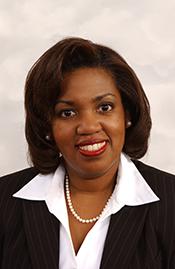
Mr. Speaker, the City of Atlanta, the State of Georgia, and the United States of America mourn the passing of an important civic and civil rights figure. Maynard Holbrook Jackson, Jr. lived as a…
Mr. Speaker, the City of Atlanta, the State of Georgia, and the United States of America mourn the passing of an important civic and civil rights figure. Maynard Holbrook Jackson, Jr. lived as a trailblazer, paving the way for future black politicians throughout the country. Furthermore, Maynard Jackson was not only a prominent political figure, but a man of character as well; strong, genuine, and always full of heart.
Former Mayor Jackson was born in Dallas, Texas in 1938 into a family of civil rights activists. This strong background influenced Jackson to become involved in public affairs at an early age. The assassination of Dr. Martin Luther King, Jr. and the birth of Jackson's first child, occurring within days of each other, proved a pivotal turning point in Jackson's life and inspired him to commit to serving the public interest.
Jackson demonstrated immense courage when he challenged a popular, long-sitting United States Senator during his first run for public office in 1968. By becoming the first African-American to run for the Senate from the State of Georgia, Jackson cleared hurdles and opened new opportunities for African-American political ambition. Five years later, Jackson once again raised the bar of public service and made history with his successful campaign for the office of Mayor of the City of Atlanta. This victory made Jackson both the first black mayor of a major southern city and, at age 35, the youngest mayor in the United States. His election marked a turning point for both the City of Atlanta and our entire nation, as Jackson came to embody a rising political tide of young and energetic African-American politicians, along with the likes of Coleman Young and Tom Bradley, who possessed a sincere ambition to reinvigorate urban politics. The three terms that Jackson would go on to serve during the next twenty years would make him the second longest serving mayor in Atlanta history, a milestone in and of itself.
While each of these accomplishments are impressive and significant, Jackson's record as Mayor of Atlanta is equally admirable. His record shows a deep commitment to equality and a bold desire to reform the traditional Atlanta business community to make it more inclusive. During his tenure in office, Jackson launched an aggressive program to increase the number of minority contractors employed by the city. He also succeeded at creating ``joint venture'' programs in which minority and white contracting firms worked together for the construction of the mid-field terminals at Hartsfield International Airport. Jackson's efforts in reshaping and marketing the city have been credited with supplying the Atlanta region with much of its growth over the past quarter century. Maynard Jackson turned what was a regional town into a national and international business center.
Finally, Jackson gained international prominence during his final term as Mayor in the early 1990's. Once again, he did his utmost to use his position to bolster the prestige and notoriety of his hometown. His most visible accomplishment in office was surely his intimate involvement in the effort to bring the 1996 Centennial Olympic Games to Atlanta. We fondly remember the televised images of Mayor Jackson hugging and congratulating other city officials immediately following the announcement that Atlanta had been successful in its bid for the Olympics. Two years later, Jackson went before an international audience during the closing ceremonies of the Barcelona Olympics and proudly waved the Olympic flag on behalf of the City of Atlanta and the United States of America.
In recent years, Jackson sought to extend his sincere commitments to equality and progress to the national level. Jackson led a national initiative within the Democratic National Committee (DNC) to encourage African-American voter participation by heading the DNC's Voting Rights Institute. In this he sought to empower those who lacked a significant political voice.
During Jackson's career in public service, his tireless efforts have transformed a city, empowered its citizens, and brought it international recognition. Time and again, Maynard Jackson was a strong advocate for economic equality and high levels of civic participation within the African-American community. While this is likely the most noticeable aspect of his legacy, he has always desired to be known for his accomplishments on behalf of all individuals.
Indeed, our entire nation experienced a great loss when Jackson passed away on June 23, 2003. He was 65 years old and left behind a tremendous political legacy. Maynard Jackson inspired an untold number of potential political leaders, so many of whom will benefit from the doors that he opened and the barriers that he shattered. He will be greatly missed by people of all races, Democrats, Republicans, Georgians and non-Georgians alike.
Public servants such as Maynard Holbrook Jackson, Jr., who have had a significant impact in local and national politics, leave not only action, but legacy. As was said upon the passing of John Adams and Thomas Jefferson, ``They are no more . . . but how little is there of the great and good which can die! To the country they yet live, and live forever.''
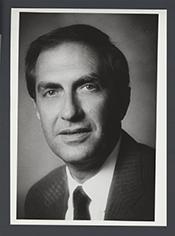
Mr. Speaker, I yield 2 minutes to the gentleman from Maryland (Mr. Bartlett), the chairman of the Subcommittee on Projection Forces. Mr. Speaker, I yield myself 3\1/2\ minutes. Let me just respond…
Mr. Speaker, I yield 2 minutes to the gentleman from Maryland (Mr. Bartlett), the chairman of the Subcommittee on Projection Forces.
Mr. Speaker, I yield myself 3\1/2\ minutes.
Let me just respond just a second to the gentlewoman who just spoke.
The Democrats controlled this House for 40 years, and I went to Sonny Montgomery, who was chairman of the Committee on Veterans Affairs, and I asked him years ago, why do we not do something about this concurrent receipt thing? And he said, we are not doing anything about that concurrent receipt and we are never doing anything about that concurrent receipt.
They had a Democrat President. They had a Democrat Senate. They had a Democrat House. They could have done something about it, but they did not, and now we get this phony posturing after a deal has been worked out to really try to deal with the problem. I think that is a cheap shot, Mr. Chairman. But that is not why I rise today.
I rise to support H.R. 1588, the National Defense Authorization Act for Fiscal Year 2004. We are a Nation engaged in an ongoing global war on terrorism. American soldiers, sailors, airmen and Marines are deployed all over the world in support of Operation Enduring Freedom and Operation Iraqi Freedom. The bill supports all of our service members who are fighting terrorism and defending our homeland.
H.R. 1588 strikes a careful balance between ensuring that our military is able to train in a realistic manner while remaining good stewards of the environment. The bill amends the Marine Mammal Protection Act so that it can be read and implemented in a common sense fashion. The Navy, for example, will now be able use new sonar technology vital to the protection of U.S. ships, submarines and global interests, without harming marine mammals.
The bill also changes the Endangered Species Act to ensure that military training lands are used for their primary purpose, to train America's troops in realistic environments. These changes will protect the environment and also enhance the readiness of our military personnel.
H.R. 1588 also recognizes that the military services will face significant challenges as personnel and equipment return home from war. The level of effort necessary to resurge this equipment at our maintenance depots will be extraordinary. This conference report recognizes these consequences and includes additional funding for key readiness accounts.
The bill includes $9.7 billion for military construction and family housing projects around the world. This is an increase in the President's budget of more than $420 million, with additional funds targeted at projects to improve the facilities in which America's service members live, work, train and operate. Such projects are extraordinarily important to the quality of life for our military personnel and their families, as well as U.S. military readiness.
The National Security Personnel System established in this bill will provide the Secretary of Defense flexibility to hire, fire and promote a more agile workforce; the authority to tie pay to performance; increased ability to classify positions and to administer pay and allowances; and a better basis on which to establish a labor relations system.
The new personnel system will also ensure that employee representatives are included in the planning, development, and implementing of new human resources management systems. There also will be a separate process to ensure that employee representatives participate in the development and implementation of a new management relations system.
There are some things that did not get in this that we were beat back on in the Senate. I think the BRAC provisions were one that I wish were changed. I think the firefighting provisions were very important to be changed; but, in balance, H.R. 1588 will make real improvements in U.S. military readiness and ensure the continued strength of U.S. Armed Forces for years to come, and I urge my colleagues to support this bill.
Mr. Speaker, I yield 2 minutes to the gentleman from Virginia (Mr. Tom Davis), who is chairman of the Committee on Government Reform.
(Mr. TOM DAVIS of Virginia asked and was given permission to revise and extend his remarks.)
Mr. Speaker, I yield for the purpose of making a unanimous consent request to the gentleman from Alabama (Mr. Everett).
(Mr. EVERETT asked and was given permission to revise and extend his remarks.)
Mr. Speaker, I yield 2\1/2\ minutes to the gentleman from Georgia (Mr. Gingrey), a member of the Committee on Armed Services.
Mr. Speaker, I reserve the balance of my time.
Mr. Speaker, I yield 1\1/2\ minutes to the gentleman from New Jersey (Mr. Smith), chairman of the Committee on Veterans' Affairs.
Mr. Speaker, I yield 30 seconds to the gentleman from Florida (Mr. Young), chairman of the Committee on Appropriations.
Mr. Speaker, I yield the balance of my time to the gentleman from Florida (Mr. Bilirakis), who is not a Johnny-come-lately on concurrent receipt. He has led this fight longer than I have been a Member of the United States Congress.
(Mr. BILIRAKIS asked and was given permission to revise and extend his remarks.)
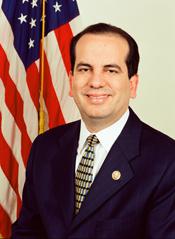
Mr. Speaker, the Defense Authorization Conferees should be commended for rejecting efforts to undermine the agreement signed by President Bush that provides important protections for how Naval…
Mr. Speaker, the Defense Authorization Conferees should be commended for rejecting efforts to undermine the agreement signed by President Bush that provides important protections for how Naval Station Roosevelt Roads is to be closed. It was particularly critical because this is a very sad week in Puerto Rico, as Puerto Rico has lost three of our young men and one woman who were serving on active duty in Iraq. It would have been a cruel irony for the Defense authorizers to remove fundamental BRAC protections for Puerto Rico at the same time Puerto Ricans were paying the ultimate sacrifice by serving our country.
Last spring the U.S. Navy announced downsizing plans for Roosevelt Roads. The Navy followed its announcement with the planned departure from the Vieques training range--a result that was the fruit of innumerable debate and struggle. In subsequent testimony to Congress, the Navy professed high operational costs and personnel requirements stemming from the continued operation of Roosevelt Roads and implied the base should close.
Of course, downsizing and the implications of closure have taken their toll and it has been a sordid year for Roosevelt Roads, those who work or worked there and Ceiba, Puerto Rico--the community the base has called home for the past 60 years. The Navy's own pronouncements estimated the base brought $300 million annually to the local economy. The region around base, with 14 percent unemployment, can ill afford a drawn out redevelopment process.
During negotiations with defense appropriators and the U.S. Navy, we reached a compromise that was enacted under which Roosevelt Roads would close in a 6-month timeframe in accordance with the BRAC (base realignment and closure) process. This compromise would afford the Navy a quick departure and cost savings, while keeping with the important protections and procedures required by BRAC. It would also provide Puerto Rico with the much-needed economic development opportunities provided through redeveloping the base. This proposal was agreed to and signed into law on September 30.
In the midst of the defense authorization conference, out of scope proposals surfaced to thwart such progress. The proposals ranged from requiring a report to Congress and subsequent 360-day waiting period for any and all Roosevelt Roads property disposals to mothballing, or leaving the base on inactive status, allowing the land to waste away without a clear plan for redevelopment and creating additional uncertainty among the community. While I appreciate that all out of scope items in conference have been dropped, I fear that punitive efforts may surface yet again as base closure and redevelopment continues.
The recent proposals are stalling tactics void of merit and driven by angry politics stemming from deep resentment held by those who strongly opposed closing the Vieques training range. Let the past become the past. Let's move forward with the best interest of the U.S. military and the American citizens in Puerto Rico in mind.
If enacted such tactics would have continued to cost the Navy money and drain personnel resources, while hindering meaningful economic opportunity for Puerto Rico. Under such a scenario, American citizens in Puerto Rico would remain without jobs while base redevelopment plans sat in limbo.
Puerto Ricans care deeply about their common citizenship and continue to serve valiantly in our military. What should soldiers think of such punitive, political squabbling about a base closure at home, while they fight overseas? As it was President Bush who authorized the Navy's departure from Vieques, he too has stated on many occasions that we all should avoid politicizing military affairs when our troops are abroad.
I have included for the Record a letter cosigned by fellow Members of the Congressional Hispanic Caucus. Such support is much appreciated. Further, I want to thank Ranking Member Ike Skelton and his Senate counterpart Carl Levin for their strong commitment and leadership on this issue.
I find it troubling that the bipartisan deal that took place on Defense Appropriations might someday be undermined by such resentful politics, especially given the difficult challenges we now face, and the sacrifices we ask of our troops. I will continue to fight against these punitive efforts while at the same time I will pursue dialogue with those colleagues who may still consider punishing action against my constituents.
It certainly would be in the best interest of the Navy, the people of the local community, and the future of Roosevelt Roads to set these new proposals aside, and continue working to redevelop the base and rejuvenate the local economy. We Members of Congress have more pressing matters to consume our time.
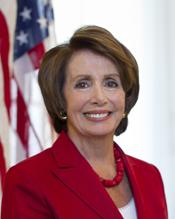
Mr. Speaker, I thank the distinguished member of the Committee on Armed Services for yielding me time and for his great services to our country throughout his whole life which continues here in…
Mr. Speaker, I thank the distinguished member of the Committee on Armed Services for yielding me time and for his great services to our country throughout his whole life which continues here in Congress. As a veteran himself, his service on the Committee on Armed Services is very informed and we thank him and recognize his leadership.
Mr. Speaker, I rise today to honor the commitment of our Nation's veterans. We will have a motion to recommit, as has been indicated, and it is to support our veterans.
No group of Americans has stood stronger and braver for our Nation than our troops and our veterans. From the bitter cold winter at Valley Forge to the boiling hot Iraqi terrain, our soldiers have courageously answered when called, gone where ordered, and defended our Nation with honor.
As a Nation we have a sacred pact with those who have served us in uniform. They have taken care of us and, in turn, we will always take care of them. That is our solemn pledge.
Today, just before Veterans Day, we stand on the floor of the House of Representatives prepared to vote on the Department of Defense authorization conference report. And on this day we have young men and women, the sons and daughters of America on the ground, engaged in war in Iraq. We salute them for their courage, their patriotism and the sacrifice they are willing to make for our country. But this bill in many respects does not honor their service.
Democrats are fighting to live up to our promise to our veterans by ending the unfair practice of the disabled veterans tax. The gentleman from Georgia (Mr. Marshall) will be offering the motion to recommit to this effect. He is leading our fight for a complete and total repeal of the disabled veterans tax for all of our veterans. We have made this long-standing issue too hot to handle for the Republicans and they have offered a proposal in today's conference report in response. Their proposal is a step, but it is not nearly good enough.
The Republicans have put forth a proposal that leaves far too many veterans behind. Under their Republican proposal, two-thirds of our veterans, two-third of our veterans still will not receive one penny of compensation for their disabilities.
The Republican deal will address the tax for some veterans but not for others. For the select few it does address, the tax may not fully end for them for 10 years. Many of these are veterans of World War II. Ten years is a long time to wait in any event, but especially if you are a World War II vet. That is not good enough.
America's veterans deserve better. On the battlefield of war our soldiers pledge to leave no one behind. As a Nation, it must be our pledge that after our soldiers come home we will leave no veteran behind. Our veterans served for all of us. We must be there for all of them.
In June, Democrats launched a discharge petition to give Members a chance to vote to end completely the disabled veterans tax for all military retirees. Two hundred and three Members, 201 Democrats, only 2 Republicans, signed the discharge petition, despite the fact that 160 Republicans have co-sponsored the legislation. So we know that our Republican colleagues believe that this is the right course of action. Democrats are giving you a way to honor our own commitment. The right thing to do was obvious then when this discharge petition was signed to completely end the disabled veterans tax.
The right thing to do today, just before Veterans Day, is also obvious. Vote to recommit this bill with instructions to strip out the failed Republican language on disabled veterans tax and add the Democratic language to completely and totally end the disabled veterans tax. Indeed, this language is the language of the gentleman from Florida (Mr. Bilirakis), a distinguished member of the Republican Caucus.
The current language again leaves two-thirds of our vets behind. The Democratic motion to recommit leaves no veteran behind. We have a moral obligation to those who have paid the high price for our freedom, those who have worn our Nation's uniform. Our words must be as bold as their deeds, and we must honor what they have done for our country.
So let us give a great gift to our veterans on this Veterans Day. I urge my colleagues to honor our veterans service and vote yes when the opportunity comes for the motion to recommit.
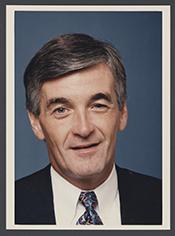
Mr. Speaker, I thank the chairman, the gentleman from California (Mr. Hunter), for his gracious comments and for his courageous leadership, certainly on this bill, but also day in and day out. I…
Mr. Speaker, I thank the chairman, the gentleman from California (Mr. Hunter), for his gracious comments and for his courageous leadership, certainly on this bill, but also day in and day out.
I think it is obvious there are a couple lessons we can learn from this bill. One is an old lesson, and that is happily this is one of, if not the most, bipartisan committees to operate in Congress, and that is so critical in times such as these. We have heard the gracious comments and enlightened comments of the ranking member, the gentleman from Missouri (Mr. Skelton), someone who I respect so much. I want to thank my ranking member, the gentleman from Arkansas (Mr. Snyder), for his partnership in our portion on this mark, and all of the members of the committee on both sides of the aisle. But I give a special tip of the hat to our chairman who, in a very difficult time was experiencing personal loss, the loss of his private home during the California fires, still kept a focus on this vital piece of legislation.
The second lesson is that important as all the military is, the troops are key. And you have heard my colleagues comment about the positive things in this bill, active industry, the increases for the Army in difficult times, similar end strength increases for the Guard and Reserve, for those good citizen soldiers the military pay raise average 4.1 percent, the imminent danger and family separation allowances at these difficult times. But I want to focus on concurrent receipt.
The third lesson of this bill is we always want to do better, but I would note to my colleagues who have concerns that this is a program that has been in place since the Civil War era. And until all of this work together over the last several years, there had never been a change in it.
With this bill today we will have started at 35,000 troops, veterans who are receiving full concurrent receipt, and we will have expanded that to over a quarter of a million. And that is progress, $22 billion. So we will continue to fight to do better, but this is amazing progress for more than 160
years when nothing had been done, and I urge all my colleagues to support this bill.
Mr. Speaker, I rise in strong support of the conference report on H.R. 1588, a wartime bill that directly addresses committee concerns about the inadequacy of military manpower and the damaging effects of excessive operations and personnel tempos.
H.R. 1588 also reflects the House Armed Services Committee's belief in the need to be proactive in military personnel policy and pay matters so as to sustain the commitment and professionalism of the men and women of America's magnificent all-voluntary armed services, and the families that support them.
Finally, H.R. 1588 contains legislative and funding initiatives to enhance the ability of the active, National Guard and reserves to operate as an integrated total force.
Among the more important provisions of H.R. 1588 are:
Active end strength increases of 2,400 for the Army, with an additional $68 million to support the increases;
Growth in selected reserve and fulltime National Guard and reserve strengths;
Military pay raises that average 4.1 percent;
Continuation of increases in imminent danger pay and family separation allowances.
A significant expansion of concurrent receipt that will when implemented wean that benefit more than 250,000 military retirees.
Commissaries and exchange provisions to better define and protect those important benefits.
DOD health care improvements, to include expanded health care coverage of the National Guard and reserves, and
Expanded and expedited naturalization procedures for active and reserve component personnel.
None of these great outcomes is achieved in a vacuum. The conference report before you is a bi-partisan measure, reflecting the active input and involvement of committee members, as well as the leadership and judgment of Chairman Duncan Hunter and Representative Ike Skelton, the committee's ranking Democrat.
H.R. 1588 is a very good bill that addresses a range of needs of our wartime military. I urge my colleagues to support it.
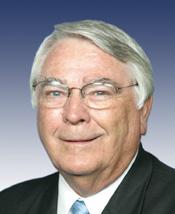
Mr. Speaker, I rise in support of this bill. It is very important that for the first time in well over 40 years we do something about concurrent receipt. Mr. Speaker, I rise in strong support of the…
Mr. Speaker, I rise in support of this bill. It is very important that for the first time in well over 40 years we do something about concurrent receipt.
Mr. Speaker, I rise in strong support of the conference agreement on the National Defense Authorization Act for fiscal year 2004.
This is a solid bill that broadly serves our national security interests and addresses the needs of our armed forces as we continue the fight against terrorism. I will get to some of its strengths in a minute. But first I want to thank you Chairman Hunter and Ranking Member Skelton for the leadership you have provided in putting this bill together. And I particularly want to recognize the ranking member of the Strategic Forces subcommittee, Mr. Reyes, for his efforts on this bill. Together we have tackled some very tough issues.
The first long range missiles and nuclear weapons were developed almost 60 years ago. Yet today, we have no means to defend the territory of the United States against even a single long range missile, and have only recently begun to deploy defenses against theater range missile threats. In December of last year, the President announced his intention to enhance the capabilities of our Pacific missile defense test bed to field a modest, initial defensive operational capability to defend the territory of the United States by the end of fiscal year 2004. The President requested $9.1 billion to support that--and other--missile defense efforts.
I am pleased to report that this bill fully funds the request, providing the resources required to meet this great and historic challenge. The conferees have also agreed to shift
funds from longer term, less mature efforts in order to accelerate nearer term fielding of systems like Patriot that are designed to protect our troops deployed worldwide who face increasing threats from theater range ballistic missile threat.
Some of the most difficult issues we addressed in this bill involve nuclear weapons. Since the end of the cold war, we no longer face a monolithic threat. The new national security environment in which we find ourselves requires that we adopt a more flexible and adaptive approach to planning for our strategic deterrent. It further requires that we examine the weapons in our aging stockpile to determine if they continue to meet the Nation's needs for a credible and robust deterrent. Provisions of this bill would allow our scientists and engineers the freedom to explore the full range of options for defeating existing and emerging threats. At the same time, the bill includes ``checks'' that reserve for Congress the authority to approve the development of certain classes of new nuclear weapons.
The bill would also authorize the budget request of $6.4 billion for the weapons activities of the National Nuclear Security Administration. The United States has observed a moratorium on nuclear testing for over a decade, and NNSA programs continue to maintain the safety, reliability and performance of the nuclear stockpile in the absence of testing.
However, recognizing that circumstances may require a return to testing at some point in the future, and that the current test readiness posture of almost 3 years does not provide a real option for any President, the conferees have included a provision that would require the Secretary of Energy to achieve and maintain a readiness posture of not more that 18 months.
The conference agreement provides strong support for the military space and intelligence activities that have proven so effective in Afghanistan, and more recently Iraq. Notably, the bill would promote development of the U.S. commercial space-based imagery industrial base, enhance space-based communications to support the warfighter, and robustly fund development of unmanned aerial vehicles for intelligence, surveillance and reconnaissance.
Mr. Speaker, the men and women of our armed forces are doing their part everyday in places far from home. Let us do our part, and pass this bill.

Mr. Speaker, I would have liked to offer my support to this conference report. The conference report includes a much needed pay raise and much needed support for our military families. In typical…
Mr. Speaker, I would have liked to offer my support to this conference report. The conference report includes a much needed pay raise and much needed support for our military families. In typical fashion, however, my Republican colleagues have taken a good bill and bogged it down with extraneous and extreme measures. The conference report does not include the stronger House language on Buy America and allows research on low-yield nuclear weapons--a practice prohibited by Republicans and Democrats over the last 20 years because it violates the non-proliferation treaty and makes it easier for questionable regimes to obtain nuclear weapons. The conference report also exempts the military from complying with two of our most important environmental laws, the Endangered Species Act and the Marine Mammal Protection Act.
When this authorization process began, Secretary Rumsfeld came to Congress and told us that in order to maintain readiness, they needed exemptions from the Clean Air Act, the Resources Conservation Recovery Act, Superfund, the Endangered Species Act, and the Marine Mammal Protection Act. Fortunately, the Congress saw fit to exclude most of what the DOD asked for with regard to environmental exemptions.
The conference report directs the Secretary of Interior to substitute the Department of Defense's land management plan, known as an Integrated Natural Resources Management Plan, for critical habitat designation under the Endangered Species Act, if the plan provides a ``benefit'' for threatened species. Further, the conference report does not require that the Integrated Natural Resources Management Plan benefit the species.
This is a much lower standard than the current law, not to mention the DOD has enough trouble coming up with a management plan for
things it is supposed to know about, let alone fish and wildlife. If the military is able to escape the critical habitat designation, private property owners will have to bear the burden of providing for the recovery of threatened and endangered species. This is simply not right.
Just this week, the Committee on Resources passed a bipartisan reauthorization of the Marine Mammal Protection Act. That legislation was the culmination of over 4 years worth of hearings and the testimony of dozens of witnesses. Contrary to what happened in the committee of jurisdiction, where they were able to successfully compromise to address the definition of harassment, the language in the conference report would overturn a recent court decision and construct a wall against any further litigation against the Navy.
Over the last 5 years our troops have toppled a dictator in Iraq, stopped a genocide in Kosovo, and defeated the Taliban in Afghanistan. Our troops prepared for those missions without exemptions from our cornerstone environmental laws--laws that administration officials and the General Accounting Office do not believe are hampering our military readiness.
Indeed, former NATO Supreme Allied Commander, General Wesley Clark recently stated, ``Additional exemptions aren't needed. I spent a lot of time in the Army and, in all my years of service, complying with the environmental laws never compromised the military readiness of troops under my command.'' Mr. Speaker, we need to ask ourselves why we are passing language that neither the Resources Committee nor a four-star general deem necessary.
In short, Mr. Speaker, I regret that I cannot support this conference report. I must draw a line in the sand. My Republican colleagues have got to stop looking for ways to put bad and extraneous language in good bills in an attempt to force the hands of those who disagree with them.

Mr. Speaker, today I am signing a discharge petition that I brought to the House floor to right a wrong that has been done to disabled American veterans for more than a century. In 1891, the United…
Mr. Speaker, today I am signing a discharge petition that I brought to the House floor to right a wrong that has been done to disabled American veterans for more than a century. In 1891, the United States of America imposed the Disabled Veterans Tax. We did not call it by this name. We did not even call it a tax. Instead we called it a prohibition upon concurrent receipt. We called it something few Americans would understand.
Mr. Speaker, our predecessors in Congress called their law a prohibition upon concurrent receipt because they did not want to call it what it is, a tax on disabled veterans. This bad law prohibits retired veterans from receiving both their retirement pay and any benefit for a service-related disability at the same time. In effect, it is a 100% tax on a retired veteran's disability benefits. As a veteran's disability increases, so does the tax imposed by our government.
Mr. Speaker, it is time to call the concurrent receipt prohibition what it really is: the Disabled Veterans Tax. It was wrong then. It is wrong now. It is time to end the Disabled Veterans Tax.
Mr. Speaker, I receive a disability benefit for wounds received in Vietnam. But my benefits are not taxed away. The Disabled Veterans Tax does not apply to me because I only served two years. Had I provided more service to my country--enough to be entitled to military retirement benefits--then the Disabled Veterans Tax would tax away my disability benefit completely.
Mr. Speaker, I cannot imagine how any member of this body can defend the Disabled Veterans Tax, a tax that not only punishes disabled veterans, but punishes most those who served our country most, those who made the military a career. Congress should be ashamed of itself.
Mr. Speaker, for years a large majority of the members of this House have cosponsored House Resolution 303, a bill that would end the Disabled Veterans Tax. And for years, House Resolution 303 has been bottled up in committee, just like campaign finance reform was bottled up. The discharge petition process forced a vote on campaign finance reform. I am using that same process to force a vote on ending the Disabled Veterans Tax.
At last count 322 members of this Congress are co-sponsors of House Resolution 303. Only 218 of these co-sponsors must sign the discharge petition for us to force a vote. This bill has broad bipartisan support. Both Democrats and Republicans have co-sponsored House Resolution 303. I am a Georgia Democrat, but by my discharge petition seeks to force a vote on a bill authored by a Florida Republican.
Mr. Speaker, some will ask whether we can afford this tax cut, whether we can afford to let these disabled veterans keep their benefit money. I believe many cosponsors of House Resolution 303 have already answered that question twice this year. These cosponsors already have voted for tax cuts 400 billion dollars and 200 billion dollars greater than what we eventually enacted. So Mr. Speaker, on the question whether we should finally eliminate the Disabled Veterans Tax, I trust we will not hear questions about affordability coming from those already on record in support of far, far larger tax cuts.
Mr. Speaker, the Disabled Veterans Tax is wrong. As of this morning, 322 cosponsors of House Resolution 303 agree with me. Let's bring it to a vote. No more half measures. No more evasions. No more hypocrisy. It's time for members who continually co-sponsor this bill to put up or shut up, once and for all.

Mr. Speaker, I thank the gentleman for yielding me time. I rise to express my opposition to the conference report on the Department of Defense authorization bill. I want to pick up with where the…
Mr. Speaker, I thank the gentleman for yielding me time.
I rise to express my opposition to the conference report on the Department of Defense authorization bill. I want to pick up with where the last speaker finished. He said he thought in this bill they went a little further than was necessary in the area of the Endangered Species Act and Marine Mammal Protection Act. I want to say what I believe to be the case, that the problem with this bill is that it has been hijacked by the Republican leadership and the White House, who insisted on provisions that weakened environmental laws relating to the Endangered Species Act and the Marine Mammal Protection Act.
I am also the ranking member of the Committee on Government Reform, and I want to address the civil service provisions in this bill. I am not opposed to reasonable reform that makes the Federal Government function more efficiently and still protects the basic rights of Federal employees, but this bill is not reasonable.
Senator Collins developed a bipartisan compromise that safeguarded the collective bargaining rights of 700,000 DOD employees, yet gave DOD much of the flexibility it requested, but this bill abandons that compromise. This bill makes a mockery of labor relations at the Defense Department. At the same time that the bill claims to protect collective bargaining, it allows DOD to waive these requirements for the next 6 years. During these 6 years, the Department can run rough-shod over its unions. The Department can decide what issues will be bargained, how labor and management impasses will be resolved and whether it will discriminate against union members.
This bill also makes it harder for DOD employees to gain redress for unfair treatment. Currently employees have the ability to file appeals with the independent Merit Systems Protection Board, but under this bill employees first would have to go through an internal DOD appeals process. An administration that says it is against bureaucracy and red tape wants to create so much bureaucracy for employee appeals that employees will simply give up trying to protect their rights.
The bill removes requirements for DOD employees to receive overtime pay or pay for working on holidays or weekends. This is ironic, since both the House and the Senate recently voted to protect overtime pay for private sector employees.
As the war efforts in Iraq have demonstrated, DOD employees do not work only Monday through Friday, 9 to 5. Frankly, it is shameful that Congress is going to give those employees who safeguard our national security less overtime protection than it gives private employees.
Finally, I have concerns about some of the provisions dealing with government-wide procurement policy. In particular, the bill extends to all civilian agencies something known as ``other transaction authority'' for research and development projects related to defense against terrorism. This would essentially waive all Federal procurement laws for these contracts. The bill also includes excessive waivers of procurement rules for contracts related to other anti-terrorism products and services.
It is wrong to take important must-pass legislation like the DOD authorization and load it up with right-wing policies that damage the environment and strip employees of basic rights, but that is what this bill is doing, and I am going to urge my colleagues to oppose it.
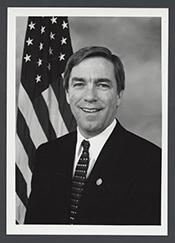
Mr. Speaker, I move to suspend the rules and agree to the resolution (H. Res. 303) honoring Maynard Holbrook Jackson, Jr., former mayor of the City of Atlanta, and extending the condolences of the…
Mr. Speaker, I move to suspend the rules and agree to the resolution (H. Res. 303) honoring Maynard Holbrook Jackson, Jr., former mayor of the City of Atlanta, and extending the condolences of the House of Representatives on his death.
Mr. Speaker, I ask unanimous consent that all Members may have 5 legislative days within which to revise and extend their remarks on the resolution under consideration.
Mr. Speaker, I yield myself such time as I may consume.
Mr. Speaker, H. Res. 303 introduced by my colleague from the State of Georgia (Mr. Lewis) honors Maynard Holbrook Jackson, Jr., former mayor of the city of Atlanta and extends the condolences of the House of Representatives on his death.
Mr. Speaker, today we do honor a great American leader. Maynard Jackson courageously guided the city of Atlanta for three terms as mayor. He was inspired to enter public service, catch this date, on April 4, 1968, when he was a 30-year-old hard-working lawyer in Atlanta. Why does that date register with us? On that terribly bittersweet day, Maynard Jackson welcomed his first child into the world and Reverend Dr. Martin Luther King, Jr., was tragically assassinated. The combination of these two events moved Mr. Jackson to enter politics.
Only 2 months later, he unhesitatingly launched a grassroots campaign that challenged, albeit unsuccessfully, a powerful incumbent senator. His campaign earned him 200,000 votes, but in 1973, he again challenged a well-known incumbent as he ran for mayor of Atlanta, and this time he won. He was elected the first black mayor in Atlanta's history.
Maynard Jackson went on to become one of the most influential civic officials in the history of Georgia, the South and our entire Nation.
Mr. Speaker, last month, on June 23, Maynard Jackson sadly collapsed and died from a heart attack right here in Washington at the age of 65. He once was quoted as saying, with perhaps too great an understanding of the way we tend to simplify history, that ``I could see my full name will be Maynard Jackson, first black mayor of Atlanta.'' Certainly his civic accomplishments are not to be overlooked.
Today, we seek to remember him more as the wonderful principled man that he was with a memorable booming voice and a giant, friendly handshake. His life was truly one worthy of commendation by this House, and I am proud that we are taking up this legislation.
I urge all Members to support the adoption of H. Res. 303 that honors the life and accomplishments of the honorable Maynard Holbrook Jackson, Jr. I thank my colleague from Georgia for introducing this worthwhile measure.
Mr. Speaker, I reserve the balance of my time.
Mr. Speaker, I continue to reserve the balance of my time.
Mr. Speaker, I yield 1 minute to the gentleman from Georgia (Mr. Marshall).
Mr. Speaker, I yield 1 minute to the gentlewoman from California (Ms. Lee).
Mr. Speaker, I yield 1 minute to the gentleman from Georgia (Mr. Scott).
Mr. Speaker, I yield myself such time as I may consume.
Mr. Speaker, I do want to add my condolences to those of my colleagues here. I cannot match their eloquence this morning. Their words are very well spoken. The majority side concurs in the extension of condolences to the family. I urge all Members to support the adoption of House Resolution 303.
Mr. Speaker, I yield back the balance of my time.
Mr. Speaker, I yield myself such time as I may consume. Mr. Speaker, I rise today to remember, to honor and celebrate a great citizen and a dear friend, Maynard Jackson. Maynard Jackson's untimely…
Mr. Speaker, I yield myself such time as I may consume.
Mr. Speaker, I rise today to remember, to honor and celebrate a great citizen and a dear friend, Maynard Jackson.
Maynard Jackson's untimely death was shocking and is still unbelievable. I have known Maynard Jackson for more than 35 years; and, Mr. Speaker, I must tell my colleagues Maynard Jackson was a man who thought the impossible was possible. In 1973, he was the first African American to be elected mayor of the city of Atlanta. He served 12 years as mayor of the city.
During his tenure as mayor of Atlanta, he began encouraging and fostering an interracial understanding, transforming the city into a new Atlanta, to the gateway to the South, the city that was too busy to hate. I truly believe that Maynard Jackson must be looked upon as one of the founding fathers of the new Atlanta, the new South and the new America.
Maynard Jackson was a strong supporter of affirmative action, civil rights and expansion of social and economic gain for minorities. As our current mayor Shirley Franklin stated a few days ago, Maynard Jackson was a lion of a man. He was a champion of inclusion for all people and never wavered in his commitment to Atlanta.
In fact, Mr. Speaker, Maynard Jackson helped create an Atlanta that we all could be proud of. He was not afraid or scared to do what was unpopular. He was not scared to take a chance. Maynard Jackson was not afraid to do the right thing.
Because of his leadership, vision and dedication, our city, State and Nation will never be the same. We will miss you, Maynard. Atlanta will miss you, the Nation will miss you, but we would never, ever forget you. You have left your mark on each and every one of us. Thank you for your service. Thank you for giving your heart and your soul. As you take your passion and energy to the great beyond, again a grateful Nation, a grateful people and a grateful city say thank you.
Mr. Speaker, I reserve the balance of my time.
Mr. Speaker, I yield 3 minutes to the gentleman from Baltimore, Maryland (Mr. Cummings)
Mr. Speaker, I yield 2 minutes to the gentleman from North Carolina (Mr. Ballance).
(Mr. BALLANCE asked and was given permission to revise and extend his remarks.)
Mr. Speaker, I yield 2 minutes to my colleague, the gentleman from Georgia (Mr. Marshall), the former mayor of the city of Macon.
Mr. Speaker, it is my pleasure to yield 2 minutes to the gentlewoman from California (Ms. Lee).
Mr. Speaker, I yield 3 minutes to the gentleman from Georgia (Mr. Scott).
Mr. Speaker, I yield myself such time as I may consume.
Mr. Speaker, I would like to thank all of the Members who participated this morning and thank the gentleman from California (Mr. Ose) for yielding so much time.
Mr. Speaker, I want to say to the family and friends of Maynard Jackson and to all of the citizens of Atlanta and the citizens of our Nation that we have lost a son of America, a citizen of the world. Maynard Jackson was a very proud graduate of Morehouse College. He loved the school, the glee club; he loved the citizens of our city. He will be deeply missed, but we take this as an opportunity to honor and pay tribute to him for all of the good things that he did to make our city, our State, our Nation, and our world a better place.
Mr. Speaker, I yield back the balance of my time.
Bill Text
2 versions available
        [Congressional Bills 108th Congress]
[From the U.S. Government Publishing Office]
[H. Res. 303 Engrossed in House (EH)]

In the House of Representatives, U.S.,

July 16, 2003.
Whereas the Honorable Maynard Holbrook Jackson, Jr. was born on March 23, 1938,
in Dallas, Texas, and at the age of 14 entered Morehouse College as a
Ford Foundation Early Admission Scholar;
Whereas the Honorable Maynard Holbrook Jackson, Jr. graduated cum laude from
North Carolina Central University School of Law;
Whereas the Honorable Maynard Holbrook Jackson, Jr. became the first African-
American Vice Mayor of the City of Atlanta;
Whereas the Honorable Maynard Holbrook Jackson, Jr. proved to be a gifted and
brilliant political leader, and he later became the first African-
American Mayor of the City of Atlanta;
Whereas, during his years in office, the Honorable Maynard Holbrook Jackson, Jr.
was the catalyst for the design of a $400 million terminal at Atlanta's
Hartsfield International Airport;
Whereas the Honorable Maynard Holbrook Jackson, Jr. helped to secure Atlanta's
selection as the site of the 1996 Summer Olympics;
Whereas the Honorable Maynard Holbrook Jackson, Jr. served as president of the
National Conference of Democratic Mayors and the National Black Caucus
of Local Elected Officials;
Whereas the Honorable Maynard Holbrook Jackson, Jr. became Chair of the National
Voting Rights Institute of the Democratic National Committee;
Whereas the Honorable Maynard Holbrook Jackson, Jr. established the American
Voters League, a nonpartisan organization committed to increasing voter
turnout;
Whereas upon being elected Mayor of Atlanta, the Honorable Maynard Holbrook
Jackson, Jr. began encouraging and fostering interracial understanding
in Atlanta;
Whereas the Honorable Maynard Holbrook Jackson, Jr. was a strong supporter of
affirmative action, civil rights, and the expansion of social and
economic gains for minorities;
Whereas the Honorable Maynard Holbrook Jackson, Jr. was a great champion for
diversity, inclusion, and fairness--not just in government and business,
but also in all areas of life;
Whereas the Honorable Maynard Holbrook Jackson, Jr. was a wonderful human being
who never wavered from the principles that guided his life and career;
Whereas the efforts of the Honorable Maynard Holbrook Jackson, Jr. on behalf on
the City of Atlanta and all Americans earned him the esteem and high
regard of his colleagues; and
Whereas the untimely death of the Honorable Maynard Holbrook Jackson, Jr. has
deprived his community, the City of Atlanta, the state of Georgia, and
the entire Nation of an outstanding leader: Now, therefore, be it
Resolved, That the House of Representatives--
(1) honors the life and accomplishments of the Honorable Maynard
Holbrook Jackson Jr.;
(2) recognizes the legendary compassion exhibited by the Honorable
Maynard Holbrook Jackson, Jr. as a civil rights leader; and
(3) extends its condolences to the Jackson family and the City of
Atlanta on the death of a remarkable man.
Attest:

Clerk.