Relating to a question of the privileges of the House.

Legislative Activity
Stay on top of the latest movement without scrolling through every action
On motion to table the measure Agreed to by recorded vote: 170 - 143 (Roll no. 397).
July 18, 2003 • 4:01 PM
View full timeline
Introduced in House
July 18, 2003
Considered as privileged matter. (consideration: CR H7148-7157; text of measure as introduced: CR H7148)
July 18, 2003 • 1:25 PM
DEBATE - The House proceeded with one hour of debate on H. Res. 324.
July 18, 2003 • 1:25 PM
DEMAND THAT WORDS BE TAKEN DOWN - During the course of debate on the resolution, objection was made to certain remarks to the extent that the words be taken down. Subsequently, the words in question were withdrawn by unanimous consent. The House resumed debate.
July 18, 2003 • 2:28 PM
Mr. McCrery moved to table the measure.
July 18, 2003 • 3:43 PM
On motion to table the measure Agreed to by recorded vote: 170 - 143 (Roll no. 397).
July 18, 2003 • 4:01 PM
Voting History
1 vote recorded • Roll call available
Floor Debate
24 membersWhat members said about H.Res. 324 on the floor
NP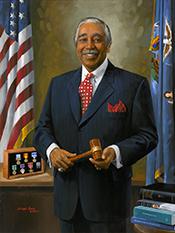 CBR
CBR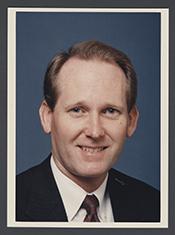 JM
JM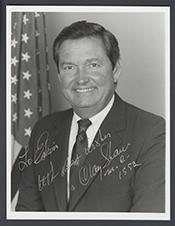 ECS
ECS KCH+19
Floor Debate
24 membersWhat members said about H.Res. 324 on the floor
Mr. Speaker, under rule IX, I rise to a question of the privileges of the House, and I offer a resolution (H. Res. 324) and ask for its immediate consideration. Mr. Speaker, I yield myself such time…
Mr. Speaker, under rule IX, I rise to a question of the privileges of the House, and I offer a resolution (H. Res. 324) and ask for its immediate consideration.
Mr. Speaker, I yield myself such time as I may consume.
Mr. Speaker, it is my duty as the House Democratic leader to offer this resolution. Earlier today the Committee on Ways and Means Democrats were subjected to an indignity, an indignity that no Member should have to endure.
I do not yield, Mr. Speaker. I do not yield, Mr. Speaker.
I do not yield. There is half an hour on the other side. They have plenty of time to make their point.
I will proceed, Mr. Speaker, but not before saying that I do not appreciate the gentleman trivializing a rare occasion of this House when a leader of a party stands up for a point of privilege on the House floor. If the gentleman wanted a copy of the resolution, he knew he could go right to the well and get it at the desk.
Now I would like to proceed. Earlier today, the Committee on Ways and Means Democrats were subjected to an indignity, an indignity that no Member should have to endure; but it appears that indignity is the order of the day on the majority side.
As the Democratic Members of the Ways and Means Committee were caucusing in a committee room while a bill was being read for amendment, the chairman of the Committee on Ways and Means summoned the Capitol Police to remove them from that room. Make no mistake about this: the police were summoned to remove these Democratic Members because the chairman
did not want them in the room, not for any other reason. The facts could not be clearer.
As the Democratic Members of the Committee on Ways and Means were leaving the rostrum to caucus prior to other events, the chairman told his staff to call the police. How outrageous.
I will not even go into how the markup was conducted; I will leave that to the members of the Committee on Ways and Means. I will not talk about the fashion in which the Chair rammed through the reporting of the legislation; the members of the Committee on Ways and Means will do that. I want to focus on how the chairman can call upon the Capitol Police to evict Members at his whim from the committee space. We cannot let this stand. We cannot let this go unchallenged. Mr. Speaker, this resolution recites the facts, and my colleagues have heard them.
Mr. Speaker, I am pleased to yield 6 minutes to the gentleman from New York (Mr. Rangel), the very distinguished ranking member of the Committee on Ways and Means.
Mr. Speaker, I yield 2 minutes to the gentleman from New York (Mr. Rangel).
Mr. Speaker, now to speak to this resolution, the objection of which is that the office of the chairman of the Committee on Ways and Means called the police on the Democratic Members who were assembling in a room, I am pleased to yield 3 minutes to the gentleman from Maryland (Mr. Cardin).
Mr. Speaker, I am pleased to yield 3 minutes to the distinguished gentleman from Michigan (Mr. Levin), a member of the Committee on Ways and Means, one of the people who was evicted from the room.
Mr. Speaker, I will make an inquiry about the remaining time.
Mr. Speaker, I yield myself such time as I may consume to just make note of the fact that the gentleman from Louisiana has just stipulated to the facts that the police were called to go to the library to evict the Democratic Members from that room.
Mr. Speaker, I am pleased to yield 1 minute to the gentleman from New York (Mr. Rangel).
Mr. Speaker, I yield myself such time as I may consume to note that, unfortunately, the gentleman did not hear the stipulation to the fact that the police were called before any conversations took place between those individuals, and they were called to evict the Democratic members from the hearing room.
Mr. Speaker, I yield 2 minutes to the gentleman from California (Mr. Matsui).
Mr. Speaker, I am pleased to yield 2 minutes to the gentleman from Georgia (Mr. Lewis).
Mr. Speaker, I am pleased to yield 1 minute to the gentleman from Wisconsin (Mr. Kleczka), a member of the Committee on Ways and Means.
Mr. Speaker, I yield 1 minute to the gentlewoman from Ohio (Mrs. Jones), the newest member of the Committee on Ways and Means.
Mr. Speaker, I yield 1 minute to the gentleman from Texas (Mr. Doggett), a former judge of the Supreme Court of Texas and a member of the Committee on Ways and Means.
Mr. Speaker, I yield 1 minute to the gentleman from Tennessee (Mr. Tanner), a member of the Committee on Ways and Means.
Mr. Speaker, I am very pleased to yield 2 minutes to the gentleman from New Jersey (Mr. Menendez), the very distinguished Chair of the Democratic Caucus.
Mr. Speaker, I reserve the balance of my time.
Mr. Speaker, I yield 2\1/2\ minutes to the gentleman from Maryland (Mr. Hoyer), the distinguished whip for the Democrats.
(Mr. HOYER asked and was given permission to revise and extend his remarks.)
Mr. Speaker, I yield myself the remaining time.
First, I want to congratulate the Chair on the dignified manner in which he has conducted the proceedings today.
It is clear from the debate today that the Republicans have a major problem with the democratic process. It is clear that the Republicans are in denial about their behavior, and it is clear that the Democrats must draw a line in the sand on the repression of our rights in this Congress.
My resolution does just that. It says to the Republican majority that our constituents have a right to be heard. Every day that right is abused; but today, the Republicans went over the edge.
The facts are these: the police came to the library behind the committee, while the bill was still being read. There is no confusion as to why the police went to the library, and the police did not go to the library once or twice. They went to the library three times to evict the Democratic Members. First came the policeman and then came their superior and then came a representative of the Sergeant at Arms office to clear the room, to evict the Members from that room.
That is why, and if there is any challenge to these facts, we can take up this discussion under oath under the auspices of the Committee of Standards of Official Conduct.
We must insist on this House supporting the resolve that it is wrong for the Chair to conduct his committee meetings and have part of that be by calling the police, and we must insist that the markup that took place is not validly ordered reported to the House.
There is no confusion. The question before the House is this: Is it right for the chairman of the Committee on Ways and Means to call the police to evict Democratic Members from their meeting place? Again, the police came not once, not twice, but three times.
A vote for my resolution is a vote to reject that kind of behavior. It is wrong for the committee Chair to call the police, and my Republican colleagues just do not know that; and the country should know that about them. Why is it not clear to you that it is not right to call the police to evict your colleagues from a room?
What should be a stunning fact to the American people is that the Republicans in the House of Representatives need to be convinced that it is wrong to call the police to evict their Democratic colleagues from their meeting. I say that over and over again.
We talk about the power of ideas. We heard the brilliant speech yesterday of the Prime Minister of Great Britain, talking about liberty and the pride we should take in our contribution to it throughout the world and about the power of ideas; but the power of our example speaks louder than all of that. And what is the example that we show to the rest of the world when we have a chairman of the committee calling the police to evict his colleagues from a room?
The Greeks had a word for it, ``hubris.'' It was about power, abuse of power, arrogance; and it is a tragic flaw. We cannot allow your tragic flaw to shut down the voices of the American people. We will fight you every step of the way, every day in this House of Representatives.
I want to thank my Democratic colleagues for staying, for their thoughtful presentations during this difficult debate, and for their love of this institution; and I urge my colleagues to support this very important resolution, important to the integrity of this House of Representatives.
Mr. Speaker, I demand a recorded vote.
Mr. Speaker, I would hope that this discussion at the end of the day would tend to bring more civility to the relationship between the minority and the majority Members. We can continue the…
Mr. Speaker, I would hope that this discussion at the end of the day would tend to bring more civility to the relationship between the minority and the majority Members. We can continue the animosity. We can continue the ill feelings. But this would not serve our Nation well, and it certainly should not make Democrats or Republicans more proud to be a Member of this august body. We should be proud when we differ when we debate; but once we start eroding and abusing the powers of the majority, we do not do it for this Congress, but we do it for the Congress that follows. We do not have that right. No one person has the right to take away the rights that have been given to us by the Constitution in this great Nation.
Last night, just before midnight, a substitute pension bill was filed. After midnight, its description was filed. The underlying bill was a $230 billion bill of 207 pages. The substitute was a $50 billion bill and 90 pages. Members of our committee, Democratic members and I would suspect Republicans as well, had no clue as to the fact that this was coming up on a Friday; and when it did come up, we did not have time to read to see what were the major differences between the substitute and the underlying bill.
When the chairman of the committee asked for unanimous consent to waive the reading of the substitute, I objected and there was some discussion, but I maintained the objection because the Chair really had made up his mind that he was going to move forward with that legislation.
After talking with some of the senior members of the minority, we decided that we had go to the library. This library has been used historically since I have been on that committee for discussions with majority, minority, collectively. It has been used by the Trade Caucus, Republicans and Democrats. It is a beautiful place right behind our beautiful hearing room.
We went back there just to discuss what was in the substitute and how we would handle it. We were not there, I want to emphasize that all of these things are recorded because the time factor is so essential. I was not in that room 2 minutes when I was approached by the chairman's chief of staff who asked me and the Democrats to leave the library. I asked why. She told me because the chairman wanted to use the library for the Republican members. I asked her to advise the Chair that we were not leaving.
It was less than 3 minutes that a House Capitol policeman came and said that a disturbance has been reported. All of the Democrats were in the library at this time with the exception of the gentleman from California (Mr. Stark) who was outside to make certain that if there was an attempt to waive the rules, the reading of the substitute, that he could object.
The police officer asked us to leave because he was reported that there was a disturbance. I asked what did he intend to do because we were not leaving. He said he would report to his superior.
In less than 3 minutes a lieutenant came of the Capitol policemen. I asked him why was he there, and he stated because the patrolman had received this message, and he had received notice that he was to remove us. I told him what I told the police officer, that we had decided collectively that we would not be moved, and I asked what they intended to do. He said that he had to get a better reading of this from the Sergeant of Arms.
The Sergeant of Arms came and said he was advised by the Capitol Police that the chairman of the Committee on Ways and Means asked that we be removed from the room. I said we would not be removed, and the Sergeant of Arms said that he thought that was an issue to be resolved by Members of Congress and members of the committee.
I suggest to you that once we start taking away the privacy of Members, the privacy of members of the committee the privilege to use space that is there for the sole purpose of us to deliberate, then it is a situation that effects not me, not the Democrats on the Committee on Ways and Means, not the Democrats and Republicans in this House of Representatives, but it effects this institution.
We should not allow the abuse of power or personalities to interfere with the responsibilities we have. We have a responsibility to pass this Congress, certainly, if not in better shape, than in no worse shape than the great institution that we inherit it.
Mr. Speaker, we are not going to have much of a dispute here. First of all, we were not saying that the majority violated any rules by giving us the substitute 2 minutes before midnight and the description right after midnight. That is your prerogative to do. We think it is wrong. We are not charging you with violating rules. And the time fact as to when we got up to leave, yes, we did. We had to decide what we were going to do, and we did get up and leave the gentleman from California (Mr. Stark) behind.
The question is, did the chief of staff come as soon as we got up and say that the Chair told us to leave the room? And even though you may not know who directed the sergeant, the police to take us out of the room, the record will show they received a call and they know who they received it from. It was from the chief of staff from the Committee on Ways and Means or someone saying they were speaking for the chief, and it was after that that the police came.
I do not know whether the chairman rescinded the direction to kick us out of the room, but what we are saying today is that that never should have happened. That room belongs to us just as much as it belongs to the Republicans. So we are not arguing with you about violating the rules, but when we objected, that is the only thing that we have. We used the tools that we have. We did not give you unanimous consent to have the substitute to be considered. You may call it a waste of time. We have call it our constitutional prerogative.
Mr. Speaker, will the gentleman yield?
Mr. Speaker, it is my sincere belief that at the end of the day we will all be reading from the same page.
In order for us to really resolve this issue, truth has to prevail. I suggest to the majority that we will be referring to the timing of the telephone calls, which is recorded. No one is going to dispute in this House that the police were called and they arrived in the library prior to the time that the gentleman from California (Mr. Stark) and members of the majority had any problem. I repeat, the police were called and arrived, and I am referring to the time clock and the record. So that is all I have to say about this. Whether they should have been called and they were not called to stop any disturbance, they were called to get us out of that room.
Mr. Speaker, we are getting closer to the truth. And if what the majority is saying is that somehow the chairman recognized that what he did was wrong and rescinded that, we in that room had no idea that it was rescinded. The police had us in that room. They sent for their superior, and they sent for the Sergeant of Arms. The same person who came to tell us that the chairman wanted us to leave could have very easily come into that room and said that the chairman had changed his mind. That did not happen.
Mr. Speaker, parliamentary inquiry. Point of order, Mr. Speaker. The majority has not been supplied with a copy of the resolution, Mr. Speaker; and it is hard for us to proceed without a copy of the…
Mr. Speaker, parliamentary inquiry.
Point of order, Mr. Speaker.
The majority has not been supplied with a copy of the resolution, Mr. Speaker; and it is hard for us to proceed without a copy of the resolution.
I thank the Speaker.
Mr. Speaker, I yield 4 minutes to the gentleman from Florida (Mr. Shaw), a member of the committee.
Mr. Speaker, I yield myself such time as I may consume.
Before I yield to the gentleman from Colorado, I would point out that the chairman of the Committee on Ways and Means, as the chairman of any standing committee, has the prerogative to call the Sergeant at Arms to maintain order in his committee, and that was the basis of the chairman's call for the Sergeant at Arms.
Mr. Speaker, I yield 3 minutes to the gentleman from Colorado (Mr. McInnis), a member of the committee.
Mr. Speaker, I yield myself so much time as I may consume.
Unfortunately, Mr. Speaker, none of us, at least who have spoken here on the floor, knows who told who what when; but I do know, I do know that I was told by a member of the staff, the majority staff of the Committee on Ways and Means, that that staff person went back to the library, which is the room in question, it is not the hearing room, that the Democrats were asked to move from. It was the library and prior to the Sergeant at Arms and the police getting there, the staff person went back and notified the minority that that room was to be used during the markup, it was reserved, and they would have to move to 1129, which is another Ways and Means room just down the hall.
So I want everyone to know that that transpired before the Sergeant at Arms and the police got to the library to ask the minority to move out of that room.
So I think what we have here, in total, to support this proposal, this resolution, is a very short period of time, minutes, during which the Sergeant at Arms, the Capitol police were told by someone to remove the Democrats from the library to another room, to another Ways and Means room; and very shortly after the Capitol police, Sergeant at Arms arrived in the library, the chairman of the committee, in my presence, directed the staff to go back and tell the police and the Sergeant at Arms that it was all right for the minority to use the library.
So even if it was the chairman who directed, ordered the police and the Sergeant at Arms to the library specifically to tell the Democrats to move out of that room, it would have been a
mistake that was corrected almost immediately by the chairman. And for that you bring a resolution to the floor of the House? I think that those who would do this might have a bad memory with respect to their own actions at times during their lives and wish that their actions would not be judged so harshly for so short a period of time.
So, insofar as any other basis for this resolution, as I have pointed out, there is no basis for determining that the committee was out of order or acted contrary to the rules of the House.
Mr. Speaker, I reserve the balance of my time.
Mr. Speaker, I yield 1 minute to the gentleman from Arizona (Mr. Hayworth), a member of the committee.
Mr. Speaker, I yield myself such time as I may consume, and I would tell my friend from California (Mr. Matsui) that he was not in the hearing room and, therefore, he cannot speak with any authority about the time line within which events transpired. I was in the hearing room. I know that the behavior of the minority prior to the completion of the reading of the bill warranted the Sergeant at Arms being called. So I would caution the gentleman not to make absolute statements which he cannot back up with any certainty.
Mr. Speaker, I yield 3 minutes to the gentlewoman from Washington (Ms. Dunn).
Mr. Speaker, may I request the time remaining on each side?
Mr. Speaker, I yield 3 minutes to the gentleman from Missouri (Mr. Hulshof), a member of the Committee on Ways and Means.
Mr. Speaker, I yield 30 seconds to the gentleman from Florida (Mr. Shaw).
Mr. Speaker, I yield 1\1/2\ minutes to the gentlewoman from Connecticut (Mrs. Johnson), a member of the Committee on Ways and Means.
Mr. Speaker, the previous speaker says that is the truth, but the fact is he was not there. He has no independent knowledge of who called the Sergeant at Arms or the reason for it. I resent the gentleman's tone. It is erroneous. His statement is erroneous.
Mr. Speaker, I yield 1 minute to the gentleman from Texas (Mr. Brady), a member of the Committee on Ways and Means.
Mr. Speaker, I yield myself such time as I may consume.
Hyperbole is something that is used often for effect, even in fictional writing. On the floor of the House debating something this serious, I think it has
no place. And to claim that the police were there to arrest Democrats is indeed hyperbole. No one ever suggested that anyone was to be arrested. There is no evidence to that. Not even any hearsay to that. The fact is they were being asked to move from that room to another Ways and Means hearing room.
Mr. Speaker, I yield 1\1/4\ minutes to the gentleman from Illinois (Mr. Weller).
Mr. Speaker, I yield 20 seconds to the gentleman from Wisconsin (Mr. Ryan), a member of the committee.
Mr. Speaker, I yield 20 seconds to the gentleman from Kentucky (Mr. Lewis), a member of the committee.
Mr. Speaker, I yield 20 seconds to the gentleman from Pennsylvania (Mr. English), a member of the committee.
Mr. Speaker, assuming that the gentlewoman from California has only one remaining speaker and that is to close, I yield 20 seconds to the gentleman from Missouri (Mr. Hulshof), a member of the committee.
Mr. Speaker, I yield 20 seconds to the gentleman from California (Mr. Herger), a member of the committee.
Mr. Speaker, I yield myself the remaining time.
It is time for the House to bring to a close this resolution. I would say that in no way has the minority, which brought this resolution to the floor, proved any facts which would substantiate a rationale for passage of this resolution, and I would urge all Members on both sides of the aisle to reject this resolution and vote ``no.''
Mr. Speaker, I yield back the balance of my time.
Mr. Speaker, I have a privileged motion at the desk.
Mr. Speaker, so what? I mean, so far, we have had a discussion of he said, who said, cops came, Sergeant of Arms was called, these types of things, but let us look at the resolution. The resolution…
Mr. Speaker, so what? I mean, so far, we have had a discussion of he said, who said, cops came, Sergeant of Arms was called, these types of things, but let us look at the resolution.
The resolution says that the House of Representatives disapproves the manner in which the gentleman from California (Mr. Thomas) conducted the mark-up of legislation in the Committee on Ways and Means on July 18, 2003, and find that the bill considered at that mark-up was not validly ordered reported to the House. Well, I think it is important that we talk about what happened.
The only thing that was in dispute is, and that I can see here is, to whether a timely objection was made to dispense with the reading of the bill itself, and the Democrats or the minority party were all back in the library with the exception of one; and he was engaged in a conversation with the staff when the motion was made, and at that time, the chairman said, Hearing no objection, it is considered as read and open for amendment at any time.
With that, the lone minority Member in the room got up and left. At that time, the chairman yielded the floor to the main sponsor of the bill, the gentleman from Ohio (Mr. Portman), on the majority side. The gentleman from Ohio (Mr. Portman) then proceeded to describe the bill and talk about the bill for a number of minutes, for a long period of time, at which time the minority party had plenty of time to come back into the room, but they had all left.
Now, if you were to say that this was an improperly crafted, improperly passed bill, then all the minority has to do at any time is to get up and leave the room. There was clearly a quorum in the room. The bill was called up and it was voted upon. That is what we are here to decide.
Now, if we are to decide personalities, then this is not the place for it. As a matter of fact, our rules of the House decorum says that we are not supposed to get involved in that, but we could get involved in it for a long time, for a lot of Members; and we cannot do that because of the decorum of this House of Representatives.
My friend, the gentleman from New York (Mr. Rangel), and he is my friend, he objected that the minority has the right to use any of the rooms, just as the majority does. I am sorry, that is not the way the rules of the House are written. The gentleman from California (Mr. Thomas) controls those rooms, but that is not what is complained about here.
What is complained about here and what we are here to debate today is whether or not there was a proper handling of the rules with regard to the legislation itself, the legislation itself. There is a lot of blame to go around.
I quite frankly, prior to the start of this hearing, I tried to get the Speaker or somebody to try to work this out so this thing could be defused over the weekend. It desperately needs defusing.
The Committee on Ways and Means is one of the premier, if not the premier, committees within this House of Representatives. We do need to work on some decorum within the committee; we know that. It is the premier committee in the House of Representatives.
I yield to the gentleman from Wisconsin.
Mr. Speaker, reclaiming my time, I would say to the gentleman, I was sitting there right next to the chairman. The minority Member that was sitting there alone, the only one in there, physically threatened a majority Member.
Mr. Speaker, I would say to the gentlewoman, a respected member of the Committee on Ways and Means who was a judge, I would say that I also was a judge, and if anyone had conducted themselves like that in my courtroom, they would have been held in contempt of court.
Mr. Speaker, hopefully to further clarify some of the questions that have been asked, and I see the gentleman from New York (Mr. Rangel) has been provided a transcript from this morning's Committee…
Mr. Speaker, hopefully to further clarify some of the questions that have been asked, and I see the gentleman from New York (Mr. Rangel) has been provided a transcript from this morning's Committee on Ways and Means markup, what I would like to do is read the relevant portions, I think, which then necessitated the calling of the Sergeant at Arms.
This would be at page 15, line 331, the chairman stated, ``If the gentleman will suspend. If the gentleman from California would understand he is reading the table of contents, which is at the beginning of the bill.''
The remaining minority Member said, ``Oh, that.''
Line 335, ``Chairman Thomas. He will then move to the body of the bill. That is how these things work.'' To which the sole Member of the minority party that was left in the room said this at line 337, ``Its eloquence overwhelms me, Mr. Chairman, just like your intellect does. It is--oh, you think you are big enough to make me, you little wimp? Come on. Come over here and make me. I dare you.''
The transcript indicates in brackets ``laughter,'' to which the minority member then said, ``You little fruitcake. You little fruitcake. I said you are a fruitcake.''
Now, what the transcript does not indicate, and I would have to stay with the transcript, and just as many of us who have had previous experience in criminal courtrooms or civil courtrooms, the transcript is, of course, the cold recitation of words that are spoken.
If Members will permit me to characterize just a bit, I was sitting next to the gentleman from Colorado, and I would tell the Speaker that the words specifically regarding, ``Are you big enough to make me, you little wimp? Come on. Come over here and make me. I dare you,'' I happened to turn around in my chair because I am on the lower dais and looked up, and it was the sole Democratic member who was remaining who was directing those words directly at the gentleman from Colorado.
If Members would permit me to characterize a little bit more, even though laughter erupted, as someone who was witnessing this event, Mr. Speaker, the words were uttered in a very serious tone, dare I say in a threatening tone. I do not think I am mischaracterizing the import of these words.
This, of course, was done during the reading of the bill. Ultimately, the chairman was able to get a unanimous consent request. That is later reflected. Then we were able to move and consider the bill, but this was done before the Capitol Police were called; and were I the chairman in the same situation, I, too, would have contacted the Sergeant at Arms to return decorum to our committee room.
Mr. Speaker, what I would say to the previous speaker is the transcript is in fact true. What was not included was that in the transcript at the conclusion, again on page 18, line 24, ``And, without objection, it is considered as read.'' At that point, the chairman struck the gavel.
Show 8 more
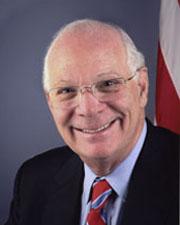
Mr. Speaker, let me, if I might, first correct, I think, a couple of the factual issues. I can assure you that the Democratic Members wanted to participate in the debate on the pension legislation.…
Mr. Speaker, let me, if I might, first correct, I think, a couple of the factual issues.
I can assure you that the Democratic Members wanted to participate in the debate on the pension legislation. In fact, when the gentleman from Ohio (Mr. Portman) was debating the issue, we were confronting the Capitol Police, and that was the reason why we are not back in the room. By the time we finished with the Capitol Police, the markup was over.
Let me also point out that the police were called before the gentleman from California's (Mr. Stark) episode began. We were confronted with the Capitol Police before the unanimous consent request was brought forward.
Mr. Speaker, I started this day looking forward to the committee markup on H.R. 1776. That is a bill that I have worked on with the gentleman from Ohio (Mr. Portman) for many months. We have worked with the chairman of the Committee on Ways and Means. We
have worked with Members on both sides of the aisle on that legislation. It is important legislation to working people of this country, and there are different views among Democrats on provisions in that legislation.
Mr. Speaker, I could defend that bill on its merit, and I look forward to doing just that, but I cannot defend the manner in which our committee acted this morning.
I have devoted much of my public career to process issues. I have served on the ethics committee for over 6 years, and I have served as a cochair of our ethics task force. I am a former speaker of the Maryland legislature. Process is important in what happened in the Committee on Ways and Means this morning. Mistakes were made, and it reflects badly on each one of us. We need to move forward, but to move forward we must acknowledge our mistakes.
H.R. 1776 desperately needs to be considered in a fair manner before the Committee on Ways and Means for its integrity and integrity of the process.
It is the committee's responsibility to guarantee to the public that a fair process is used, order is maintained, and each Member's right is protected. That is our collective responsibility.
Mr. Speaker, since this morning I have talked to Members on both sides of the aisle, and I am pleased that the Speaker's on the floor listening to this debate. I think it is absolutely essential, and I know I am supported by both Democrats and Republicans, that H.R. 1776 be returned to the Committee on Ways and Means for a full markup, with opportunity of all Members to participate. As one of the principal sponsors, I hope that will be accomplished and we will be able to have a full markup on that legislation.

The minority leader is speaking, Mr. Speaker. point of order Mr. Speaker, we are a Nation of laws. This House was established to make those laws. We have a manual. It is called Jefferson's Manual. It…
The minority leader is speaking, Mr. Speaker.
point of order
Mr. Speaker, we are a Nation of laws. This House was established to make those laws. We have a manual. It is called Jefferson's Manual. It has in it the Constitution of the United States of America. It has as well the rules that Jefferson put forward.
At page 123 it says, ``the weaker party can only be protected from those irregularities and abuses which these forms were intended to check, and which the wantonness of power is but too often apt to suggest to large and successful majorities.''
Mr. Speaker, I have great respect for you, and you run this House fairly. But this is another instance, not an isolated incidence, not a unique incidence of the arbitrary use of power. The Committee on Rules shuts us down. It does not give us amendments. It does not give us time to debate. It does not adequately give us substitutes. It shuts down the majority. It shuts down the minority. This is not what Jefferson had in mind nor, I suggest to you, our Founding Fathers.
This is indeed not an isolated incident. The police were called. There is a dispute of facts as to why the police were called. But there seems to be no dispute that they did not go to the committee room. They went to the library, presumably because that is where they were told to go. They know the difference, believe me, to the gentleman from Louisiana (Mr. McCrery), they know the difference.
This is not an isolated or unique incidence. The police were called by the Speaker of the Texas House to go arrest 55 members of the Texas House because they would not go along with the majority.
Let me read from page 18 of the transcript of the proceedings.
``Mr. Yin, as you go through, would you periodically indicate which page you are on.'' They are reading the bill. ``We are going to be going through the titles, and if it lengthens out, it gets more complicated.'' Mr. Thomas is speaking. ``I know you have just begun on page 3 in doing that.'' Under the rules, the reading of the bill, what is the next thing that is said? ``And, without objection, it is considered as read.
``Mr. Stark: I object.
``Mr. Thomas: The gentleman was too late.''
Absent was a request for objection. That, my friends, is the gravamen of this case. You are trampling on the rights of the minority. You are trampling on the rules of this institution. This is America. This is not American.
* * *
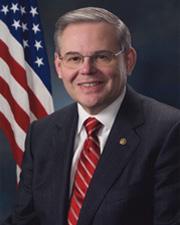
Mr. Speaker, we can hear all the spin and diversion that the majority wants to lay there, but this is the point: this morning in the People's House, the heart of our great American democracy, the…
Mr. Speaker, we can hear all the spin and diversion that the majority wants to lay there, but this is the point: this morning in the People's House, the heart of our great American democracy, the Republican chairman of the Committee on Ways and Means called the police, the police, in an attempt to break up a meeting of House Democrats.
Why did he call the police? Because he did not like what Democrats were meeting about and that Democrats as the minority availed themselves of what little protection they have under the rules. This is what Republicans have come to in the running of this House. If they do not like what we say, even in a private meeting, they will try to have us arrested. If we object, and they do not like it, they will try to have us arrested. Does that sound like America to you? Or does that sound like some sort of police state? Our distinguished Speaker should be in the chair and alarmed that this happened under your watch. Power corrupts and absolute power corrupts absolutely. An example of that is the gentleman from Texas (Mr. DeLay) calling the Department of Homeland Security to track down Texas legislators. Where does this end? This institution cannot and must not tolerate this sort of abusive and intimidating behavior. And this one will not be swept under the rug until justice is done.
Some of us come from families that fled this kind of persecution. I never thought that I would see that persecution take place right here in the people's House, the very place where people are sent to the greatest democracy in the world.
Some claim that the gentleman from California (Mr. Thomas) had the police called in response to a disturbance, but why was the majority chief of staff escorting the police back to the library where the Democrats were meeting? The answer is obvious. The chairman was annoyed and wanted to break up that meeting of Democrats, and he was willing to use the police to do it. As the chairman of the Democratic Caucus, I want you to know that our Members will not be silenced on behalf of the 136 million Americans we represent in this House.
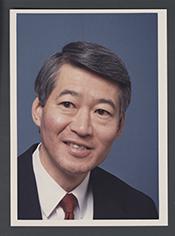
Mr. Speaker, I thank the Democratic leader for yielding me this time. It is really unfortunate what is going on here. My colleague on the Democratic side of the aisle, his reputation is being…
Mr. Speaker, I thank the Democratic leader for yielding me this time.
It is really unfortunate what is going on here. My colleague on the Democratic side of the aisle, his reputation is being besmirched in order to avoid the real issue, and I think it is really outrageous that the gentleman from Louisiana is doing this.
This is not about the gentleman from California (Mr. Stark), because the Capitol police came to visit us, and I was in that room in the library behind the Committee on Ways and Means hearing room, before the completion of the reading of the bill was going on. That was before the gentleman from California (Mr. Stark) and the gentleman from Colorado (Mr. McInnis) had even their discussion; and, as a result of that, the Capitol police were called before the gentleman from California (Mr. Stark) had even said anything.
As a result of that, what the gentleman is doing to the gentleman from California (Mr. Stark) is doing major damage to his credibility at the same time when the real fault is the chairman of the Committee on Ways and Means. He called the Capitol police. And, frankly, when later on the Sergeant of Arms came in himself, he said, he said to all of us, he said I was called, we were called because there was a disturbance. There was a disturbance back here in this room, and we were asked to remove all of you.
This was not about the gentleman from California (Mr. Stark). This was about removing Members on the Democratic side of the aisle on the Committee on Ways and Means from a room that was not being used because the chairman of the Committee on Ways and Means just decided to lose his temper on the situation. I think it is really outrageous. We ought to debate the issues. We ought not to try to point the finger at somebody who was innocent in this discussion.
I really think it is really outrageous. I think the gentleman from Louisiana owes the gentleman from California (Mr. Stark) an apology by trying to make the issue about him rather than about the chairman of the committee.
Mr. Speaker, I would like to begin by saying, with all due respect to my colleague, whose comments we have just heard, a lot of those comments I happen to agree with; but with due respect, you were…
Mr. Speaker, I would like to begin by saying, with all due respect to my colleague, whose comments we have just heard, a lot of those comments I happen to agree with; but with due respect, you were not in the room at the time that an incident occurred not dealing with process but dealing with order in the committee; and with all due respect to your fellow colleagues, with the exception of one, the rest of you were all out of the room in another room. That particular individual was not arguing process. In fact, that particular individual threatened me with physical harm.
Now, fellow colleagues of mine realize that I like engagement, but it was clear there was going to be fairly prompt disorder beyond the magnitude that was probably originally anticipated when a member of the minority committee made his first comments. I think it was entirely appropriate, entirely appropriate, with considering my own actions, I think it was entirely appropriate for the chairman of that committee to call the Sergeant at Arms and the Capitol Police so that order in the committee could be maintained.
I think this discussion about process at midnight or process of when the police were in the library is all, and I am not saying this in a derogatory fashion, but is all diversionary from the fact that we were within moments, frankly myself and another Member on your side of the aisle, were within moments of, I would guess, a physical engagement; and I considered that threat serious. I considered the bodily threat not just to the order of the committee but to me, and I fully intended to defend myself.
So to calm this down, I know that is the purpose of why the chairman had done that, and I think any one of you in the same exact position that that chairman was in would have done exactly the same thing.

Mr. Speaker, will the gentleman yield? Mr. Speaker, would the gentleman from Florida (Mr. Shaw) care to share with the House your view on a Member of the Committee on Ways and Means calling the…
Mr. Speaker, will the gentleman yield?
Mr. Speaker, would the gentleman from Florida (Mr. Shaw) care to share with the House your view on a Member of the Committee on Ways and Means calling the Capitol Police on other duly elected Members of Congress? That is one of the----
Mr. Speaker, the gentleman from Colorado (Mr. McInnis) took the floor to relate what happened. And although I was not in the room, I did speak to the Democrat that was in the room. The comments of the gentleman from California (Mr. Stark) were preceded by the words, ``shut up.'' And that was by the gentleman from Colorado (Mr. McInnis), inciting the gentleman from California (Mr. Stark) to respond. Now, that sort of slipped his memory when he talked to us before.
So, now, here is the scenario. Here is a man in excess of 70 years old threatening a man 30 years his junior, and the chairman was afraid that the 30-year-old junior was going to get beat up. Hello.
Mr. Speaker, since your election, you have conducted this House with total honor. You have made all of us proud to be Members of Congress. But it is one thing to defend one of your own, but it is surely another to do so less than honorably, in fact, dishonorably and dishonestly.
The fact of the matter is the police, who have a lot of things to do around here protecting the Americans, were called because of a disturbance against Democrats. I was in the room when the police came. Two officers came to clear us out because we were causing a disturbance.
So do not go lying about what happened. It is an embarrassment enough, and this could be resolved by the chairman in question apologizing to all of us, and the issue would be done with.

Mr. Speaker, I want to reiterate what the gentleman from Louisiana just stated. I think it is very important, since we are at the point of considering such a resolution on the floor of the House, for…
Mr. Speaker, I want to reiterate what the gentleman from Louisiana just stated. I think it is very important, since we are at the point of considering such a resolution on the floor of the House, for us to look at this situation as one in which there are two ships passing in the night.
My Democratic colleagues seem to be referring to activities that happened in the library, with which we are all familiar. We are talking about the reason that the Sergeant at Arms was called to the committee in the first place. It is a situation that is not unknown to my colleagues on the Committee on Ways and Means. The gentleman in question has created this sort of situation before, so it is not anything new. We all understand that. There have been letters written in the past, signed by members of the minority caucus, castigating the behavior of the gentleman in question. That is why the Sergeant at Arms was called to our committee. I just have to say that if I had been sitting in the Chair at that moment I would have felt constrained to call the Sergeant at Arms.
And I am sorry that the members of our wonderful committee that does most of its work with great dignity, who were missing all but one of its minority members because they were having a caucus in the library, but we who were sitting in the hearing room and all the people who were in the audience saw exactly what was going on; not the first time, not the second time, but it happened many, many times. This was a time when I believe it was entirely appropriate for the chairman to use his authority to regain order in the hearing room by calling the Sergeant at Arms.

Mr. Speaker, I rise to speak in support of the resolution. As many of you know, I am a man of peace. During the 1960s, many of us involved in the Civil Rights movement were threatened with arrest for…
Mr. Speaker, I rise to speak in support of the resolution. As many of you know, I am a man of peace. During the 1960s, many of us involved in the Civil Rights movement were threatened with arrest for sitting in at lunch counters, standing in at segregated theaters, or marching for the right to vote; and sometimes we were arrested and jailed. We were charged with disturbing the peace or disorderly conduct, and we were very peaceful and we were orderly.
I never thought that as a Member of Congress I would be threatened with arrest by sitting in the library of the Committee on Ways and Means. As a Member of Congress and as a member
of the Committee on Ways and Means, I thought, I really believed that it was a safe place to meet and to discuss the business of the committee.
It is unreal, it is unthinkable that another Member of Congress would threaten to have another arrested for carrying out his or her congressional duties. In another period of time, a few short years ago, some of us stood up to Bull Conner in Birmingham, Alabama, and we stood up to Sheriff Clark in Selma, Alabama. And I must say to the chairman of this committee, we will not be intimidated. We will not be immobilized. We live in a democracy and not a police state.
What happened today in the Committee on Ways and Means should cause a sense of righteous indignation among all of us. As Democrats, as Members of this House, the People's House, we will not get lost in a sea of despair. We will continue to stand up and fight for what is right and for what is fair.
Show 11 more

I yield to the gentleman from New York. Mr. Speaker, indeed, the gentleman from California's (Mr. Thomas) chief of staff stood nearby where we were meeting with a member of the Capitol Police and…
I yield to the gentleman from New York.
Mr. Speaker, indeed, the gentleman from California's (Mr. Thomas) chief of staff stood nearby where we were meeting with a member of the Capitol Police and said this to the police and at least one member of the staff, that the chairman has asked me to get the police to remove Democrats from this room.
This is the United States of America. This is not a police state. This is supposed to be the people's House, and you call members of the police to evict us from having a discussion. We were discussing that bill that we had only seen a few minutes before, because it was delivered at midnight, delivered at midnight and maybe the gentleman from California (Mr. Thomas) and the rest of you did not like our insisting that the bill be read; but the rules say that we have the right to have a bill read word for word, and you have no right to trample, once again, on the rights of the minority of the United States House of Representatives.
That is what is at stake here, and you can try to change the subject. You can try to gloss over it. You can try to make excuses. You can try to say the gentleman from California (Mr. Stark) said such and such to so and so. No, the issue, this is not a partisan squabble. This is not a matter of personality. This is a matter of our basic rights as representatives of the people of the United States; and darn it all, we are going to stand here and stand here to defend not only our rights but the rights of the people of the United States of America.

Mr. Speaker, I was present during this confrontation, not just present but the physically closest member to the incident. I saw it firsthand. I was not in the library or out of the room; I was there.…
Mr. Speaker, I was present during this confrontation, not just present but the physically closest member to the incident. I saw it firsthand. I was not in the library or out of the room; I was there.
First, I think the official transcript puts a lie to this resolution. Furthermore, being the person sitting in front of the lone minority member, who in my opinion, in fact, my knowledge, instigated this confrontation, what I witnessed was a profanity-laced, angry, degrading, physical confrontation that was growing in volume, not lessening. It was a tirade completely inappropriate to this Congress and to that committee.
What I did, my action was to turn to the audience, looking for young people, hoping that there was no young person in that committee room who would witness the behavior of the gentleman who instigated this incident. Had it been me, I, too, would have made a phone call * * *
Mr. Speaker, it has come to my attention, rightly so, that at the conclusion of my remarks, I need to clarify the words that I spoke in this House in order to also set an example for decorum and civility. At the end of my remarks, I made reference to an emotional state and bodily functions when, in fact, what I really was referencing was potential bodily conduct.
To clarify and also because I really do hold our colleagues in deference, I would ask unanimous consent to withdraw that portion of my remarks.
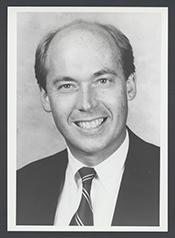
Mr. Speaker, I look around this room today and I see friends on both sides of the aisle. On my committee I have friends that are Democrats and friends that are Republicans, and I think no one wishes…
Mr. Speaker, I look around this room today and I see friends on both sides of the aisle. On my committee I have friends that are Democrats and friends that are Republicans, and I think no one wishes we were going through this exercise today. But as one of those who was in the room, and I think those who were in the room are the best witnesses to be speaking today, not those who were not at the room and heard what might have occurred, but those who actually witnessed it.
I often think, what would I have done if I was the chairman? I think all of us, Republicans and Democrats, a lot of us would like to be a chairman someday, what would we do if we were in the same situation? And going back to that room this morning, going to the official transcript of this morning's markup of H.R. 1776, again let me refer to the record, the official record, line 337, beginning with the sole remaining minority party Member in the committee room at that time:
``Its eloquence overwhelms me, Mr. Chairman, just like your intellect does.''
Clearly the question would be, what would you do if you were the chairman and you had a member there that was using invective, innuendo, name-calling, physically threatening another colleague? Would you have worked to restore order? I am one of those who stands and believes that if I was the chairman today, I would have summoned the Sergeant at Arms to ask for order as well.
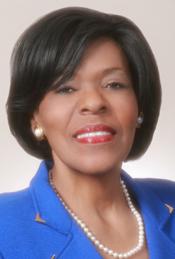
Mr. Speaker, I rise today to protest the outrageous display of discourtesy and disrespect shown to Democratic members of the House and Minority Leader Pelosi. In a brazen display of disregard for…
Mr. Speaker, I rise today to protest the outrageous display of discourtesy and disrespect shown to Democratic members of the House and Minority Leader Pelosi. In a brazen display of disregard for Democratic members of the House, the Capitol Police were dispatched on three occasions to disrupt the reading of legislative text by Democratic members who serve on the Ways and Means Committee. The Members were attempting to ascertain the text of the legislation that was drafted without their consultation and for which their dissent would not be heard or heeded.
The actions of the Republican Chairman and the Members of the committee was indeed egregious and beyond the pale of House decorum. Indeed, the actions and attitudes witnessed, and the rhetoric and rationale put forward by the majority dishonors the foundation of civility and respect of the House of Representatives. It is clear that a political fissure exists between the majority and the minority. I call upon my majority colleagues to embrace the age-old methodology and attitude of, ``. . . do unto others as you would have them do unto you.''
Today was a sad day in the annals of House deliberations. I hope that the American public does not have to ever witness this type of behavior again. I also hope that my esteemed colleagues will re-embrace the spirit and method of appropriate House decorum.
Motion to Table Offered by Mr. McCrery

Mr. Speaker, I was not in the room when the interaction occurred between the gentleman from California (Mr. Stark) and other Members of Congress, but I was in the library when the police came in and…
Mr. Speaker, I was not in the room when the interaction occurred between the gentleman from California (Mr. Stark) and other Members of Congress, but I was in the library when the police came in and said that Democrats were causing a disturbance, and the police were required to come.
This is the second time I have been on the floor of the House and been required to do something that is distasteful for me as a Member of Congress. The first was with the Committee on Standards of Conduct, and the second is with the chairman of my committee.
Members know I have been a judge. When a judge hosts a courtroom, he or she sets the standard. The chairman must set the standard in a committee room. We are talking about an interaction that went on this day, but I came from the Committee on Financial Services where I had a chairman who allowed members of the committee to speak and did not cause members to react to his response.
If Members check the transcript of our hearings, every time someone says something, the chairman has a response for whatever witness it is.
Mr. Speaker, I have respect for the chairman. I find it hard to stand here today, but the reality is that he called the police on his colleagues, and no one can take a thing away from that.
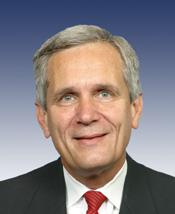
Mr. Speaker, there is no small amount of irony that the bill in question before the committee today was H.R. 1776. The democracy that our forebears brought to being in this land requires our…
Mr. Speaker, there is no small amount of irony that the bill in question before the committee today was H.R. 1776. The democracy that our forebears brought to being in this land requires our continual vigilance. We are reminded of the words of James Madison that there are more instances of abridgement by gradual encroachments of those in power than by violent and sudden usurpation.
Mr. Speaker, a committee chairman today ordered the police to evict Members of this Congress from a committee room on the edge of the markup. When Officer Spriggs arrived in that room,
the committee library, he was not looking for the gentleman from California (Mr. Stark). He was there, as he said, to clear the room on the instructions of the chief of staff of the committee chairman of the Committee on Ways and Means.
My friends, this is how tyranny begins. It is our responsibility to stand against a police state, to stand in favor of open dialogue rather than to permit a bill to pass with only the votes of one party and move toward a one-party state.
Mr. Speaker, I rise in opposition to the resolution and I do so understanding that people of goodwill can and often do disagree. I realize also that frustrations abound, indeed, as a private citizen…
Mr. Speaker, I rise in opposition to the resolution and I do so understanding that people of goodwill can and often do disagree. I realize also that frustrations abound, indeed, as a private citizen reading of certain machinations that went on in this House when roles were reversed.
But that is not the subject here today. The subject here today is, was the chairman within his rights when order was threatened in the committee to call the Sergeant at Arms? In other words, a test of what is reasonable.
Mr. Speaker, were I in the Chair at the time when order was disrupted, when a physical threat was issued by a member of the minority party, and parliamentary rules preclude me from naming that Member, although I can say it was a very stark picture of a confrontation, you better believe, Mr. Speaker, I would have called the Sergeant at Arms to restore order.
Reject the resolution. It is dead wrong and a disservice to the House.
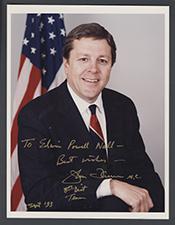
Mr. Speaker, I thank the gentlewoman. I yield to the gentleman from New York. Mr. Speaker, I was not going to speak, but I must say to the gentleman from Louisiana (Mr. McCrery), you know if you are…
Mr. Speaker, I thank the gentlewoman.
I yield to the gentleman from New York.
Mr. Speaker, I was not going to speak, but I must say to the gentleman from Louisiana (Mr. McCrery), you know if you are using whatever confrontation took place between the gentleman from California (Mr. Stark) and the gentleman from Louisiana (Mr. McCrery), that is absolutely not true. The policeman came to the library, one, before that happened; and, second, if the problem was in the hearing room between the gentleman from California (Mr. Stark) and the gentleman from Colorado (Mr. McInnis), why would the policemen come to the library to begin with? They came in there, and the gentleman may not know it, but we asked, Why are you here?
They said, we have been given orders to remove you from the library. It had nothing, nothing whatsoever to do with what went on in the hearing room. That is the truth.
Mr. Speaker, will the gentleman yield? Mr. Speaker, I have a question on behalf of all of those Members who were not in any of those rooms: If it was the gentleman from California (Mr. Stark) in the…
Mr. Speaker, will the gentleman yield?
Mr. Speaker, I have a question on behalf of all of those Members who were not in any of those rooms: If it was the gentleman from California (Mr. Stark) in the hearing room with the fruitcake, why did you sic the cops on the Democrats in the library?
Mr. Speaker, I demand that the gentleman's words be taken down.
Mr. Speaker, reserving the right to object, and I do not intend to object, I thank the gentleman very much for trying to bring civility back to the House which is very important. In consultation with the gentleman from California (Mr. Stark), who was the only Democrat on the committee who the police were not called to throw out of the library because he was not in the library, he was in the committee room, the gentleman from California (Mr. Stark) has accepted your apology.
Mr. Speaker, I withdraw my reservation of objection.
Mr. Speaker, on Friday, July 18, 2003, I was unable to vote on the amendments to and final passage of H.R. 2754, the FY04 Energy and Water Development Appropriations Act. Had I been present I would…
Mr. Speaker, on Friday, July 18, 2003, I was unable to vote on the amendments to and final passage of H.R. 2754, the FY04 Energy and Water Development Appropriations Act. Had I been present I would have voted ``no'' on the Andrews amendment (rollcall 391); ``no'' on the Udall amendment (rollcall 392); ``no'' on the Hefley amendment (rollcall 393); ``no'' on the motion to recommit (rollcall 394); ``yea'' on final passage of H.R. 2754, the FY04 Energy and Water Development Appropriations Act (rollcall 395). Additionally, I was unable to vote on the Bell motion to instruct conferees on H.R. 1308, the All-American Tax Relief Act of 2003 (rollcall 396); I would have voted ``nay''; and would have voted ``aye'' on the Motion to Table H. Res. 324, a Resolution Raising a Question of the Privileges of the House.

Mr. Speaker, this is simple, serious, and sad. Significant errors of utterance and judgment were made by members of the Committee on Ways and Means of both parties this morning. The chairman…
Mr. Speaker, this is simple, serious, and sad. Significant errors of utterance and judgment were made by members of the Committee on Ways and Means of both parties this morning. The chairman responded to what were fast-paced comments and actions. There were good reasons for the chairman's judgments and actions and good reasons why he altered those judgments and actions as circumstances changed. For that he is to be commended. To elevate an incident of which no Member on either side of the aisle is proud is destructive to this body.
I regret the minority party's decision to enshrine in a resolution some facts while omitting others crucial to the flow of events. That does this House no good, and I urge opposition to this resolution.
Bill Text
2 versions available
        [Congressional Bills 108th Congress]
[From the U.S. Government Publishing Office]
[H. Res. 324 Introduced in House (IH)]

108th CONGRESS
1st Session
H. RES. 324

Relating to a question of the privileges of the House.

_______________________________________________________________________

IN THE HOUSE OF REPRESENTATIVES

July 18, 2003

Ms. Pelosi submitted the following resolution

_______________________________________________________________________

RESOLUTION

Relating to a question of the privileges of the House.

Whereas during a meeting of the Committee on Ways and Means on July 18, 2003,
for the consideration of the bill H.R. 1776, the chairman of the
Committee on Ways and Means offered an amendment in the nature of a
substitute;
Whereas during the reading of that amendment the chairman of the Ways and Means
Committee directed majority staff of the committee to ask the United
States Capitol Police to remove minority-party members of the committee
from a room of the committee during the meeting, causing the United
States Capitol Police thereupon to confront the minority-party members
of the committee; and
Whereas pending a unanimous-consent request to dispense with the reading of that
amendment the chairman deliberately and improperly refused to recognize
a legitimate and timely objection by a member of the committee: Now,
therefore, be it
Resolved, That the House of Representatives disapproves of the
manner in which Representative Thomas conducted the markup of
legislation in the Committee on Ways and Means on July 18, 2003, and
finds that the bill considered at that markup was not validly ordered
reported to the House.
<all>