Expressing the sense of the House of Representatives regarding the courageous leadership of the Unified Buddhist Church of Vietnam and the urgent need for religious freedom and related human rights in the Socialist Republic of Vietnam.
Legislative Activity
Stay on top of the latest movement without scrolling through every action
Motion to reconsider laid on the table Agreed to without objection.
November 19, 2003 • 4:27 PM
View full timeline
Introduced in House
October 30, 2003
Referred to the House Committee on International Relations.
October 30, 2003
Mr. Leach moved to suspend the rules and agree to the resolution, as amended.
November 19, 2003 • 10:25 AM
Considered under suspension of the rules. (consideration: CR H11520-11524)
November 19, 2003 • 10:25 AM
DEBATE - The House proceeded with forty minutes of debate on H. Res. 427.
November 19, 2003 • 10:25 AM
At the conclusion of debate, the Yeas and Nays were demanded and ordered. Pursuant to the provisions of clause 8, rule XX, the Chair announced that further proceedings on the motion would be postponed.
November 19, 2003 • 10:50 AM
Considered as unfinished business. (consideration: CR H11573)
November 19, 2003 • 4:19 PM
Passed/agreed to in House: On motion to suspend the rules and agree to the resolution, as amended Agreed to by the Yeas and Nays: (2/3 required): 409 - 13 (Roll no. 639).(text: CR H11520-11521)
November 19, 2003 • 4:27 PM
On motion to suspend the rules and agree to the resolution, as amended Agreed to by the Yeas and Nays: (2/3 required): 409 - 13 (Roll no. 639). (text: CR H11520-11521)
November 19, 2003 • 4:27 PM
Motion to reconsider laid on the table Agreed to without objection.
November 19, 2003 • 4:27 PM
Voting History
1 vote recorded • Roll call available
Floor Debate
16 membersWhat members said about H.Res. 427 on the floor
 RS
 CHSLS
 JAL
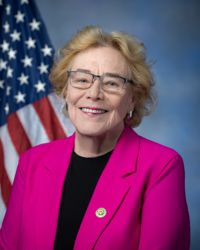 ZL+11
Floor Debate
16 membersWhat members said about H.Res. 427 on the floor
Mr. Speaker, I will place in the Record the text of U.S. Ambassador Raymond Burghardt's March 4 speech on U.S.-Vietnam relations, a letter from the American Chamber of Commerce Hanoi, and an article…
Mr. Speaker, I will place in the Record the text of U.S. Ambassador Raymond Burghardt's March 4 speech on U.S.-Vietnam relations, a letter from the American Chamber of Commerce Hanoi, and an article from the National Catholic Reporter following my remarks.
Mr. Speaker, I rise in opposition today to H.R. 1587, the Vietnam Human Rights Act of 2003, and I do so with the greatest amount of respect for my colleague, the gentleman from New Jersey (Mr. Smith), the chairman of the Committee on Veterans Affairs. I appreciate his tireless efforts on behalf of human rights and religious freedom around the world; and as a Vietnam veteran, I very much appreciate his courageous leadership on veterans issues.
My concern with taking up this legislation at this time regards several issues.
First, during this 108th Congress alone we have had already three House resolutions that address alleged human rights and religious freedom issues regarding Vietnam. I cannot think of any other country that has as much negative attention by this body as Vietnam. Surely, there are other countries around the world that deserve a little bit of attention from us. I do not think it is fair that we spend this amount of time and this number of resolutions on Vietnam.
Second, Mr. Speaker, I believe we are at an important crossroads in our relationship with Vietnam. As we approach the 10th anniversary of normal relations, I think it is time to examine some of the good things that have occurred between our two countries: tourism, trade, educational exchanges. I think it is time that we begin to send a positive, clear message to the Vietnamese people that we are serious about working together in a positive and constructive fashion on issues of mutual benefit.
I mentioned, Mr. Speaker, that I am a Vietnam veteran. I served there for 20 months. I spent almost 2 years there as a civilian, and I made a commitment as a Vietnam veteran to my fallen comrades and to their families to bring their remains home to their families.
I am holding in my hand a commemorative bracelet that commemorates Army Captain Arnold Edward Holm. Arnie Holm was born and raised in Waterford, Connecticut. He was an outstanding athlete in high school. He lost his life in June 1972 when his light observation helicopter was shot down in the central highlands. The family still lives in my district; and 2 years ago, they asked me to assist them in locating his remains.
A year ago, I traveled to Vietnam for the first time in 30 years in an effort to locate Arnie Holm's crash site. Working with both American and Vietnamese officials, we spent hundreds of man-hours in the sweltering jungle looking for Arnie. Although we failed at the time, the search goes on; and the only way we will ever be able to bring closure to the family of Arnie Holm is through the continued cooperation of the Vietnamese government.
I have seen firsthand their commitment to this important humanitarian recovery effort, and I thank them for it.
My colleagues may be surprised to learn that since the Joint POW-MIA Accounting Command, or JPAC, began recovering American remains in Vietnam, 16 U.S. and Vietnamese officers have died. Eight Americans and eight Vietnamese were killed when a helicopter crashed on April 7, 2001. That is right. Eight Vietnamese officials died while searching for the very men that were killing their own countrymen 30 years before.
Up to May of this year, the U.S. and Vietnam have conducted 93 joint missions, resulting in the recovery of 822 remains. They have identified and returned over 500 U.S. personnel remains to their loved ones. That is 500 American families in 43 States that have been provided closure thanks to the Vietnamese, and that includes the family of Major Peter M. Cleary who lives in Colchester, Connecticut, just a few miles from my home.
If this program, Mr. Speaker, does not reflect the humanitarian spirit of the Vietnamese people, I do not know what does; and given the long and bitter experience that they had with the American war in Vietnam, their willingness to cooperate in this program merits special attention.
Just this past month, Jerry Gennings, the Deputy Assistant Secretary for POW-MIA Affairs, returned and said that the outcome of his discussions in Vietnam is promising and the Vietnam government offers us the opportunity to achieve significant results.
Last November, the USS Vandergrift returned to Ho Chi Minh City, the first time in 30 years that a U.S. Navy ship has been to Vietnam, and another ship plans to visit Danang this year.
I would also remind my colleagues that President Bush announced just last month that Vietnam would be added as the 15th focus country of the emergency plan for HIV/AIDS. The President said, ``Now, after long analysis by our staff, we believe that Vietnam deserves this special help. We're putting a history of bitterness behind us.'' Then he continued, ``Together we'll fight the disease. You've got a friend in America.'' The President of the United States has said, ``You've got a friend in America.''
This resolution before us this evening conveys no such message. I realize, Mr. Speaker, that the intent of this legislation is to promote freedom and democracy in Vietnam; but the question is, does it do it in a useful manner?
The State Department has said this bill is a ``blunt instrument that risks inhibiting progress in bilateral trade, counterterrorism, POW-MIA accounting, counternarcotic and refugee processing/resettlement.'' They go on to say, ``Imposition of unilateral sanctions will not lead to an improved GVN human rights record.''
Mr. Speaker, I think we should be concerned that our own State Department does not support this legislation and is concerned that it will damage progress in our bilateral relations.
My friend, the gentleman from New Jersey (Mr. Smith), expresses his concern about the issue of human rights, and this is an important issue; but let us not forget the fact that for many years our country rained devastation upon the Vietnamese people and their country. Hundreds of thousands of Vietnamese lives were lost, many more wounded; and the countryside was devastated. Let us not forget that thousands of Vietnamese children are born today with birth defects, perhaps because of the millions of gallons of Agent Orange that we spread across their country, and let us not forget that the remains of tens of thousands of Vietnamese soldiers have not been recovered, even as the Vietnamese people help us to recover the remains of our own servicemen.
The issues of human rights cut in both directions. The United States itself must be held accountable for its own moral obligation to the Vietnamese people for our past policies and practices.
As the gospel of John says, ``He that is without sin among you, let him cast the first stone.'' I encourage my colleagues not to judge the Vietnamese too harshly in the realm of human rights lest they judge us harshly in return.
Mr. Speaker, I believe we are making progress in our relations with the Vietnamese people and with their government; and I believe this bill, in the words of our own State Department, is a blunt instrument that may do more harm than good. I urge my colleagues to vote ``no'' to show the people that the war is over. It is time to bind up the wounds of the war and to show them, in the words of our own President, that they have a friend in America.
Mr. Speaker, I submit for the Record the documentation I referred to earlier on this topic:
U.S. Embassy,
Hanoi, Vietnam, March 4, 2004.
U.S.-Vietnam Relations: 30 Years After the War, 10 Years After
Normalization
Yesterday afternoon I walked over to the Hong Kong Art
Museum and looked at the Asia Society's excellent exhibition
of ``Images from the War.'' The exhibition reminded me that
today in Vietnam, nearly 30 years after the war, the past
still permeates the present. The memory of the war certainly
remains among the half of the population that endured it.
But, I also was struck by how
much those pictures captured a past that most people in
Vietnam do not dwell on very much. The Vietnamese people and
leaders live in the present and look to the future. They
deserve a great deal of admiration for their ability to put
the past behind them.
I was in Vietnam during the war, not as a soldier, but as
a diplomat. I was in Saigon from 1970 to 1973. Now that I am
back in Vietnam 30 years later, I am conscious of that
history every day. But like the Vietnamese people and their
leaders, I keep my focus on the present and the future.
Talking about Vietnam while in Hong Kong also evokes
memories for me of the tough period in Vietnam's history that
immediately followed the war. In 1979, when war broke out
between China and Vietnam, I was working at our Consulate
here in Hong Kong. Afterwards, thousands of boat people
arrived from Vietnam and I spent the better part of a year
interviewing them to learn why they had come to Hong Kong or
Macau. I also worked with NGOs like Catholic Relief Service
to feed and clothe the refugees in the camps. During that
period, we came up with what became the Orderly Departure
Program as a way to stop the flow of refugees. The ODP was
modeled on and named after a program created by the Hong
Kong Government to bring ethnic Chinese from Haiphong and
Cholon, Saigon's Chinese quarter, to join family members
in this city.
In the last ten years, a new chapter has opened between the
United States and Vietnam. The U.S.-Vietnam relationship is
still young. President Clinton only lifted the embargo in
1994. We established a liaison office in January 1995, and we
normalized relations in July 1995. We opened our consulate in
Ho Chi Minh City in 1997. Our first Ambassador came in 1997
and I am only the second Ambassador to a unified Vietnam. Our
presence in Vietnam has grown rapidly, to a medium-sized
embassy in Hanoi and consulate in Ho Chi Minh City. And, we
will probably grow a little more in the future.
Our relationship began by building trust on issues left
over from the war, such as the accounting for MIAs, reuniting
families of refugees, and humanitarian programs. But then,
after normalization, we sought to widen the relationship with
strengthened commercial and economic ties that benefit both
countries. The fruits of that thinking, the Bilateral Trade
Agreement (BTA), took four years to negotiate and finally
took effect on December 10, 2001, five days before my
arrival.
During the past year, we have seen further remarkable
progress on a widening range of bilateral issues. A year ago,
the focus was almost exclusively on the commercial benefits
of our bilateral relations, while there was little progress
on other aspects of a normal relationship; In mid-year,
Vietnam's leadership decided to give greater priority and
attention to relations with the United States. The result has
been easier access to the leaders for Mission officers and
visitors from Washington and progress on many fronts.
Last year was a very good year for U.S.-Vietnam relations.
In the fall we had an important series of high-level
Vietnamese government visitors to the U.S. culminating with
Deputy Prime Minister Vu Khoan in December. These included
the Ministers of Foreign Affairs, Trade, and Planning and
Investment. The November visit to Washington by Defense
Minister Pham Van Tra represented the normalization of our
military ties and was followed a week later by the first U.S.
Navy ship visit to Vietnam in thirty years. My wife and I
traveled up the Saigon River on that ship and experienced the
excitement of the American sailors at what they knew was an
historic journey as well as the excitement of the crowds of
Vietnamese who greeted our arrival.
Breakthroughs in 2003 enabled us to conclude several
agreements that had been underway for years without apparent
progress. These were the civil aviation agreement that will
permit air service on U.S. or Vietnamese carriers between
Vietnam and the U.S. That could include between Hong Kong and
Ho Chi Minh City within the next year. Our new counter
narcotics agreement will enable the U.S. and Vietnam to work
together to stem the flow of illegal drugs through Vietnam,
as well as carry out other law enforcement and counter-
terrorism training. And our textile agreement established
parameters from the import of textiles to the U.S. We now
anticipate more dialogue and cooperation with Vietnam in
dealing with regional and transnational issues such as
fighting against narcotics, trafficking in persons, and
terrorism.
In the midst of this progress, we do still have differences
in our viewpoints on some important areas including human
rights and religious freedom. The Communist Party retains a
monopoly on political power in Vietnam. Advocacy of a multi-
party system is forbidden. Even basic freedoms of speech,
assembly, and religion guaranteed in Vietnam's own
Constitution are sometimes superseded in the interest of what
the Government calls ``national solidarity.'' We've seen
several cases over the past year in which people who did
nothing more than exchange critical e-mails received heavy
prison sentences. We also have raised with the Vietnamese
government our concerns about the harassment of ethnic
minority Protestants in the Central and Northwest Highlands.
This harassment includes cases of forced renunciation of
faith, the closing of house churches, and a very slow process
of allowing churches to legally register. The U.S. House of
Representatives has now twice passed versions of a Vietnam
Human Rights Act that would cap non-humanitarian assistance
from the USG at current levels. Although neither bill passed
the Senate, Congressional concerns remain strong. Senator
Brownback held Foreign Relation Committee Meetings just a
little over a week ago which focused on human rights. These
human rights issues certainly do affect the pace at which we
can develop bilateral relations. But I nonetheless remain
confident that we will be able to deal with those issues
while further developing our overall relationship. We speak
frankly about our disagreements while recognizing that the
longer-term trend since the beginning of Vietnam's economic
renovation policy in 1986 has in fact been a dramatic
expansion of personal freedoms.
The foreign community in Vietnam, both multilateral
agencies and bilateral donors like the U.S., are actively
involved in helping Vietnam carry out its economic reforms.
The U.S. assistance program in Vietnam predates our formal
diplomatic relations. The two largest parts of it today are
to counter the spread of HIV/AIDS--where we are the largest
bilateral donor--and to provide technical assistance in
helping Vietnam to implement the BTA and to prepare for
accession to the WTO. Our assistance programs promote civil
society development, rule of law, advocacy for persons with
disabilities and those living with HIV/AIDS, environmental
management, and trade reform.
In working with Vietnam to create a more genuine system of
rule by law, to train judges and lawyers, and to build new
standards of transparency and accountability, we are having a
major impact, not only on bringing Vietnam up to the level of
international trading norms, but also fundamentally changing,
for the better, the relations between the citizens and the
State.
As the scope of our relationship with Vietnam broadens,
mutual understanding becomes even more critical. Because of
the legacy of war and Vietnam's long period of isolation,
understanding can be particularly difficult for both
countries. Our cultural and educational exchanges have
grown dramatically. We have the largest U.S. Government-
funded Fulbright program in the world, training
economists, businessmen, public policy experts, English-
teachers, and professors in the Social Sciences and
Humanities. We now have a new program unique to Vietnam
called the Vietnam Educational Foundation, which is
focused on scientific training. The combined budgets of
the Fulbright Program and the Vietnam Education Foundation
total nearly $10 million per year--more than the U.S.
contributes towards higher education in any other country
in the world.
In our burgeoning economic relationship, the Bilateral
Trade Agreement--the (BTA)--is a key foundation and presents
enormous opportunities for expanded cooperation. This
agreement binds Vietnam to an unprecedented array of reform
commitments in its legal and regulatory structure and has
become an important catalyst for change. The BTA eliminates
non-tariff barriers, cuts tariffs on a number of U.S. exports
and gives Vietnam MFN access to the U.S. market. It also
provides for effective protection and enforcement of
intellectual property rights, opens Vietnam's market to U.S.
service providers, and creates fair and transparent rules and
regulations for U.S. investors.
Vietnam is lagging behind in some of its BTA commitments
and enforcement remains weak, but the country has made
progress in opening its markets to many U.S. products, such
as aircraft, machinery and cotton. Unfortunately, its market
still remains relatively closed to U.S. intellectual property
industry products despite some progress in revising
legislation related to intellectual property rights.
The BTA has had a significant impact on our bilateral
trade, which has grown sharply in the first two years. In
2003, two-way trade soared again by over 100%, reaching an
estimated $6 billion. As a result of our tariff reductions,
Vietnam's exports to the U.S. have risen by about 125% each
in the first two years, while our exports to Vietnam, boosted
by the sale of some Boeing aircraft, have also risen
markedly. Vietnam's official figures on U.S. investment in
Vietnam has also risen to a current total of just over $1
billion, but this seriously understates the true figure. This
data does not include investments by U.S. subsidiaries in
Singapore and elsewhere in the region, such as nearly over
$800 million by Conoco-Phillips alone.
Our deepening economic, commercial, and assistance
relationship with Vietnam promotes civil society, encourages
economic reform, draws the country further into the rules-
based international trading system, and promotes interests of
American workers, consumers, farmers, and business people.
We strongly support Vietnam's decision to adopt WTO
provisions as the basis for its trade regime. The Vietnamese
government must now demonstrate that it is prepared to
undertake the commitments that are necessary to become a WTO
member. Vietnam's implementation of a rules-based trading
system based on WTO principles of transparency and its
continued pursuit of structural economic reforms should
accelerate the development of the private sector, enhance the
rule of law, and improve the atmosphere for progress in
democracy and human rights.
So, let me conclude my comments on the past and the present
with a word about the future. Vietnam today is a dynamic,
rapidly developing economy, an increasingly popular tourist
destination, and an attractive site for foreign investment. I
expect that Vietnam will continue its journey towards a
more efficient economy with greater individual freedom and
that today's children will be better off than their parents.
And I hope--and fully expect--that U.S.-Vietnam relations
will continue to broaden and deepen mutual understanding to
the benefit of both of our nations.
Raymond F. Burghardt,
Ambassador, Asia Society,
Hong Kong Center.
Mr. Speaker, I move to suspend the rules and pass the bill (H.R. 1587) to promote freedom and democracy in Vietnam, as amended. Mr. Speaker, I yield myself such time as I may consume. Mr. Speaker, I…
Mr. Speaker, I move to suspend the rules and pass the bill (H.R. 1587) to promote freedom and democracy in Vietnam, as amended.
Mr. Speaker, I yield myself such time as I may consume.
Mr. Speaker, I am pleased to present to the House H.R. 1587, the Vietnam Human Rights Act, a bill designed to promote democracy and human rights in Vietnam and to give hope to those voices of freedom who today are systematically oppressed and silenced.
Mr. Speaker, the legislation we are considering today is almost identical to that which has cleared the House twice, one as a stand- alone bill which I sponsored a couple of years ago and a second time as an amendment to the State Department bill, the reauthorization bill.
The Vietnam Human Rights Act initially cleared the House by an overwhelming majority, 410 to 1, in September of 2001, coinciding with legislation to ratify the bilateral trade agreement with Vietnam. Despite the near unanimous vote, the Vietnam Human Rights Act was subsequently blocked and never voted on in the Senate.
The message then, Mr. Speaker, as it is today, is that human rights are central, are at the core of our relationship with governments and the people they purport to represent. The United States of America will not turn a blind eye to the oppression of a people, any people in any region of the world.
As the Vietnam Human Rights Act languished in the Senate a couple of years ago, many thought, and I would say naively but with good faith, that the bilateral trade agreement with Vietnam would lead to improved human rights conditions in Vietnam. Unfortunately, this has not been the case, and for many Vietnamese the situation is dramatically worse than it was just 3 years ago.
The government of Vietnam, Mr. Speaker, has scoffed at the Vietnam Human Rights Act and dismissed charges of human rights abuses, pleading the tired mantra of interference in the internal affairs of their government and that our struggle is some way related to the war in Vietnam. They say, Vietnam is a country, not a war. That is their protest, and I would say that is precisely the issue.
Today's debate is about the shameful human rights record of a country, more accurately, of a government, and it is not about the war. And, of course, Vietnam is a country with millions of wonderful people who yearn to breathe free and to enjoy the blessings of liberty. We say, behave like an honorable government, stop bringing dishonor and shame to your government by abusing your own people and start abiding by internationally recognized U.N. covenants that you have signed.
We know, Mr. Speaker, from the State Department Human Rights Reports and leading international human rights organizations that the government of Vietnam inflicts terrible suffering on countless people.
It is a regime that arrests and imprisons writers, scientists, academics, religious leaders and even veteran communists in their own homes and lately in Internet cafes for speaking out for freedom and against corruption.
It is a government that crushes thousands of Montagnard protestors, as they did in the Central Highlands during the Easter weekend, killing and beating many peaceful protestors.
They have, the government, forcibly closed over 400 Christian churches in the Central Highlands, and the government continues to force tens of thousands of Christians to renounce their faith. I am happy to say that many of these folks have resisted those pressures. One pastor put it at 90 percent
have refused to renounce their Christian faith, but the government is trying to compel them to renounce their faith.
This is a government that has detained the leadership of the Unified Buddhist Church of Vietnam and continues to attempt to control the leadership of the Catholic church.
This is a government that has imprisoned a Catholic priest by the name of Father Ly and meted out a 10-year prison sentence. Why? Because he submitted testimony to the International Religious Commission on Human Rights. For that, for writing a couple of pages of facts and his opinion, he got 10 years of prison.
My speech today, Mr. Speaker, on this floor would easily fetch me a 15-year prison sentence replete with torture if I were a Vietnamese national making these comments in Vietnam.
And in yet another Orwellian move, Vietnam on Monday, this past Monday, July 12, promulgated an Ordinance on Beliefs and Religions which goes into effect on November 15. This new anti-religious law will further worsen religious persecution in Vietnam.
Amazingly, it bans the so-called abuse of the right to religious freedom to undermine peace, independence, and national unity, whatever that is. This new law is the most capricious and arbitrary policy imaginable, designed to ensnare and incarcerate believers for undermining, again, peace, independence and national unity, whatever that means.
Moreover, Mr. Speaker, if a religious person ``disseminates information against the laws of the State,'' in other words, disagrees with anything that the Communist government enacts, such dissemination is a punishable crime.
When is enough, enough, Mr. Speaker? Vietnam needs to come out of the dark ages of repression, brutality and abuse and embrace freedom, the rule of law, and respect for fundamental human rights.
I respectfully submit that the legislation we are considering today offers a clear framework for improving human rights in Vietnam. It is a bipartisan piece of legislation, and I hope the membership will support it.
H.R. 1587 requires the President to certify each year on the progress or the lack of it of the regime towards respecting human rights based on an extensive report required by the law. Specifically, to avoid possible sanction against Vietnam, the President would have to certify substantial progress by Vietnam towards releasing all political prisoners and religious prisoners, respect for religious freedom in general, and return of confiscated property.
The bill requires substantial progress by the government towards allowing Vietnam nationals free and open access to U.S. refugee programs and calls for respect for the ethnic minority groups in the Central Highlands.
The bill seeks to ensure that the government is not complicit in human trafficking. Today Vietnam is on the State Department's Tier II Watch List due to the government's failure to provide evidence of efforts to combat severe forms of trafficking, particularly its inadequate control of two state-controlled labor companies that sent workers to American Samoa from 1999 to 2001.
Unless the regime shows improvement in human rights, they will be unable to receive an increase over 2004 levels in nonhumanitarian U.S. foreign assistance. This is a modest but not insignificant penalty to a government that is brutalizing its own people.
H.R. 1587 also authorizes funds for NGOs to promote democracy in Vietnam and to help to overcome the jamming of Radio Free Asia.
Mr. Speaker, I hope all Members will support this bill.
Mr. Speaker, I reserve the balance of my time.
Mr. Speaker, I yield 2 minutes to the gentleman from California (Mr. Rohrabacher).
Mr. Speaker, I yield 2 minutes to the distinguished gentlewoman from California (Ms. Lofgren).
(Ms. LOFGREN asked and was given permission to revise and extend her remarks.)
Mr. Speaker, I yield 4 minutes to the gentleman from California (Mr. Lantos), the distinguished ranking member on the Committee on International Relations, my good friend and colleague.
Mr. Speaker, I ask unanimous consent,
along with my friends on the other side of the aisle, because we have so many speakers, that we extend the debate 10 minutes equally divided on both sides.
Mr. Speaker, I yield myself 2 minutes to respond to my good friend from Connecticut that friends do not let friends commit human rights abuses.
Whatever present relationship we might have with Vietnam, when they are torturing and killing and maiming and forcing people to renounce their faith, these are egregious human rights abuses, and they should not be put under the rug and somehow brushed aside. We need to speak out against those abuses, and we need to do it forcefully.
Let me also say to my colleagues that the American Legion supports this bill wholeheartedly, and I will provide their letter for submission into the Record.
Mr. Speaker, the AID's funding announced by Ambassador Tobias and the President just a few days ago is totally exempt, as is all medicine, foodstuffs, and humanitarian aid. None of that can be used as a penalty in terms of its provision to the people of Vietnam. We are talking about nonhumanitarian aid. We are talking about capping it at the 2004 levels.
As I said in my opening, it is a very modest effort to say that we do not want this to go on anymore, to stop this abuse; and we have proven through the trafficking legislation and other legislation recently that modest smart penalties or sanctions do work. They do get the attention of offending governments.
Our solidarity is with the oppressed in Vietnam. It is not with the oppressor. We want to see progress. I want to stand on this floor, as does the gentleman from California (Mr. Lantos) and others, and sing the praises of the government, but we need to see progress. We are seeing significant deterioration with regard to human rights abuses.
Mr. Speaker, I reserve the balance of my time.
Mr. Speaker, I yield 2 minutes to my friend and colleague, the gentlewoman from California (Ms. Loretta Sanchez).
Mr. Speaker, I yield 3 minutes to the gentleman from California (Mr. Royce), the distinguished chairman of the Subcommittee on Africa of the Committee on International Relations.
Mr. Speaker, I yield 1 minute to the gentleman from Florida (Mr. Mario Diaz-Balart).
Mr. Speaker, I yield myself the balance of my time. Let me thank the gentleman from Florida (Mr. Mario Diaz- Balart) and all of the speakers, my good friend from California (Mr. Lantos) and all of those whom I think made very, very important points about why this bill ought to become law.
Let me just take a moment to speak on behalf of one of Vietnam's most courageous and renowned democracy activists, Dr. Que. Dr. Que has served two lengthy prison sentences and was arrested again for promoting democracy and human rights last year. He has been held incommunicado ever since, unable to see even his family. The Vietnamese government plans to put Dr. Que on trial next Monday. We do not know exactly what the charges are, and it appears that Dr. Que will be tried in secret without access to a lawyer. Unfortunately, this is par for the course for the government of Vietnam because they treat so many dissidents this way. The government of Vietnam should release Dr. Que, a peaceful man whose only crime is to speak out for freedom. Any adverse action against Dr. Que will only make our point as they have made our point regrettably over and over again.
Let me just say one brief point about the POW/MIA issue because I take a back seat to no one in my concerns for a full and thorough accounting about our POWs. As a matter of fact, my first human rights trip to Asia was to Vietnam in the early 1980s on behalf of POWs and MIAs trying to follow up on what we thought were live sightings and also to get a full and thorough accounting. But I would point out that Jerry Jennings, who was mentioned by my good friend from Connecticut, the Deputy Assistant Secretary of Defense for POW/MIA Affairs, has pointed out most recently that this is a mutual humanitarian effort between Vietnam and the United States; and, as he pointed out, the United States for its part has turned over hundreds of documents from U.S. national archives containing information about Vietnamese soldiers who died during the war.
It is to our mutual advantage to cooperate on that issue. I believe it is to the advantage of the people of Vietnam that this effort go forward with regards to the AIDS funding which is explicitly exempted by this legislation, as is other humanitarian aid as recounted in the bill.
This is all about human rights. This is about helping dissidents who are languishing in prisons. This is about religious believers who get that knock in the middle of the night and they are told, sorry, you are going to the gulag, where they are beaten, where they are repressed and where their families sometimes never hear from them again. These are modest, modest penalties; but we want to send a clear and unambiguous message to the government of Vietnam that human rights matter, they are important to us, they ought to be important to them.
I urge support. There are 35 cosponsors of this legislation equally divided between both sides of the aisle. It is truly a bipartisan piece of legislation. I urge support.
Mr. Speaker, I submit the following letter for the Record.
The American Legion,
Washington, DC, July 14, 2004.
Hon. Christopher H. Smith,
Rayburn House Office Building,
Washington, DC.
Dear Representative Smith: The American Legion applauds
your continuing leadership in fighting for the rights of the
abused
minorities in Vietnam. The United States must maintain
constant pressure on the Vietnamese government to honor the
rights of its citizens and our former allies. The Legion
stands in strong support of the Vietnam Human Rights Act of
2004.
The American Legion has grave concerns about the plight of
ethnic groups such as the Montagnards, as well as religious
minorities, including Buddhists and Catholics who are under
constant attack and persecution by Vietnamese authorities for
practicing their religion. The American Legion strongly
believes that successful passage of the Vietnam Human Rights
Act of 2004 will greatly benefit the future of minority
ethnic and religious populations in Vietnam. If the U.S. does
not have the tools that would be available through the
Vietnam Human Rights Act, we will lose the only remaining
leverage we have in persuading the Vietnamese to change their
egregious behavior.
As a nation at war, I think it is important that America's
allies know they serve beside a committed, loyal partner--one
that will not desert or betray them in their time of need.
Simply ignoring the current violations of human rights is not
an acceptable option for The American Legion's membership of
wartime veterans, many who served in Vietnam side-by-side
with these current victims of tyranny.
Sincerely,
John F. Sommer, Jr.,
Executive Director.
Mr. Speaker, I yield back the balance of my time.
The SPEAKER pro tempore (Mr. Mario Diaz-Balart of Florida.) The question is on the motion offered by the gentleman from New Jersey (Mr. Smith) that the House suspend the rules and pass the bill, H.R. 1587, as amended.
Mr. Speaker, I thank the gentleman from Iowa (Mr. Leach) for bringing this to the floor, and I thank the gentleman from Illinois (Chairman Hyde). Mr. Speaker, I represent the largest Vietnamese…
Mr. Speaker, I thank the gentleman from Iowa (Mr. Leach) for bringing this to the floor, and I thank the gentleman from Illinois (Chairman Hyde).
Mr. Speaker, I represent the largest Vietnamese population outside of Vietnam in the world, in Orange County, California, so I have been following the relationship of the United States and Vietnam for the last 7 years that I have been in the Congress. I rise today to speak on behalf of House Resolution 427, a bipartisan resolution which highlights the courageous leadership of the Unified Buddhist Church of Vietnam, which is currently undergoing one of the harshest crackdowns in history, and the urgent need for religious freedom, and for basic human rights in the Socialist Republic of Vietnam.
This resolution, which I introduced with my colleagues, the gentleman from New Jersey (Mr. Smith), the gentleman from Virginia (Mr. Tom Davis), the gentlewoman from California (Ms. Lofgren), and the gentleman from California (Mr. Royce) is timely, important, and will do a great deal to advance the cause of religious freedom in Vietnam.
Now, many of my colleagues will say, well, Loretta has opposed trade relations with Vietnam, or there has always been a difficult relationship with Vietnam, and the answer is yes, but that is in the past. This is about the current situation, and the current situation is about religious freedom, or the ability for the Vietnamese people to express their religious beliefs in the way that they want.
Let us remember that the United States was based in part on those people who came to this land to seek their way of respecting and praising their Lord. And, in the same way, that is a basic human right for all people of the world.
Despite the growing bilateral and economic relations that the United States has with Vietnam, the Vietnamese government has continued to blatantly disregard religious freedom in Vietnam. It is a basic right guaranteed by the Vietnamese constitution and enshrined in the United Nations Covenant on Civil and Political Rights, which Vietnam has both ratified and has pledged to uphold. According to the 2003 report of the United States Commission on International Religious Freedom, the Vietnamese government does not, does not fully support religious freedom. I would like to quote some of the statements from that report.
It says, ``The current approach of the U.S. Government to advance religious freedom in Vietnam has failed to yield concrete results. Key religious dissidents have been imprisoned. Others remain under house arrest. In addition, the government has intensified its crackdown on religious minorities in the western provinces and in the Central Highlands.''
The report goes on to state that ``Therefore, the Commission recommends that the United States Government intensify its leverage to hold the government of Vietnam to its international obligation to protect human rights, including that of religious freedom.''
This resolution does just that.
The latest incident, which occurred just this year, the one with the Unified Buddhist Church of Vietnam, the largest religious denomination in that country, was because they held a meeting to elect new leadership, discuss their future, and to verify that the Prime Minister of Vietnam had promised a new era of understanding and respect. In stark contrast to that promise of respect and understanding, the Vietnamese authorities disrupted that meeting, intimidated the people at that meeting, and ultimately arrested most of the leadership.
The Venerables Thich Huyen Quang and Thich Quang Do were taken into custody and remain in detainment. Now, one of them is 75 years old. I have met with him in Vietnam. He is not a menace to society. In fact, he was nominated by over 60 Members of Congress in the year 2000 for the Noble Peace Prize. He has about 2 decades worth of arrests from this current government.
These actions are unconscionable but, unfortunately, they are nothing new. The Vietnamese government has routinely used intimidation, harassment, and imprisonment to punish individuals who choose to practice their own faith.
I recently spoke with a high-ranking Vietnamese official regarding the crackdown on the church, and about religious freedom in Vietnam in general, and he said, of course Vietnam supports religious freedom, but he failed to deny that, in fact, they have imprisoned the leadership of the Unified Buddhist Church of Vietnam.
I was informed that if these leaders want to practice their faith, they are more than welcome to do so as members of the State-authorized Buddhist Church. Having the option of joining only one State-sponsored Buddhist
Church is a far cry, in my opinion, of religious freedom. And enduring decades of imprisonment for peacefully practicing one's faith is not religious freedom. Vietnam has a long way to go.
So, in closing, I urge my colleagues to support this resolution. Doing so will not only send a strong message to the Vietnamese government that its actions are not going unnoticed, but it will reinforce the human rights standards that we expect of Vietnam as we move forward in strengthening our bilateral relationship with them.
Mr. Speaker, I move to suspend the rules and agree to the resolution (H. Res. 427) expressing the sense of the House of Representatives regarding the courageous leadership of the Unified Buddhist…
Mr. Speaker, I move to suspend the rules and agree to the resolution (H. Res. 427) expressing the sense of the House of Representatives regarding the courageous leadership of the Unified Buddhist Church of Vietnam and the urgent need for religious freedom and related human rights in the Socialist Republic of Vietnam, as amended.
Mr. Speaker, I ask unanimous consent that all Members may have 5 legislative days within which to revise and extend their remarks and include extraneous material on the resolution under consideration.
Mr. Speaker, I yield myself such time as I may consume.
I rise in support of H. Res. 427 regarding the United Buddhist Church of Vietnam. This resolution congratulates the newly appointed leadership of this Buddhist Church and notes the persecutions faced by the church during the past 3 decades and urges the Government of the Socialist Republic of Vietnam to comply with its own constitutional and international pledges to protect rights of religious belief and practice.
According to the State Department, the Vietnamese government ``continues to maintain broad legal and policy restrictions on religious freedom and to ban and actively discourage participation in what it regards as illegal religious groups, including the Unified Buddhist Church of Vietnam.'' The most recent Country Reports on Human Rights Practices notes that religious and organizational activities by Buddhist monks associated with this church are illegal and that all of this Buddhist church's activities outside of private temple worship have been proscribed by the government.
The plight of the Unified Buddhist Church is perhaps most poignantly symbolized by the enforced isolation endured by some of its senior clerics over the past 2\1/2\ decades, notwithstanding their advanced age and sometimes frail health. Inspired by their examples of nonviolence and courage, we reaffirm our belief in the rights of all people to worship and to organize their religious communities according to the dictates of conscience, free from state coercion.
At the same time, it is important to note that H. Res. 427 is not merely critical of past transgressions. It is also aspirational. In addition to citing the Constitution of Vietnam, which formally protects religious freedom of belief, it notes certain extremely modest but welcome developments earlier this year.
This past spring the Vietnamese government allowed the Fourth Supreme Patriarch of the Buddhist Church to travel to Hanoi to seek urgent medical care and also ended the long-standing detention ordered against the Venerable Thich Quang Do. During that period the Vietnamese Prime Minister reportedly met with the Supreme Patriarch and made statements that some
hoped would presage an era of increased governmental openness towards the Unified Buddhist Church of Vietnam.
Unfortunately, those statements have not yet borne practical dividends, and just last month there were indications of a renewed crackdown in the Buddhist leadership, including the return of numerous senior clerics to effective detention. At a time when Vietnam is admittedly undergoing many transformations that are progressive, we urge the government of that nation to trust its citizens with the basic freedoms that they deserve.
I would like to thank the personnel of the United States Department of State and the U.S. Commission on International Religious Freedom who worked with our committee staff and with the gentlewoman from California (Ms. Loretta Sanchez), the sponsor, to update and refine the language of the original resolution. The text before us is a thoughtful, accurate product that deserves the support of this body.
Mr. Speaker I reserve the balance of my time.
Mr. Speaker, I reserve the balance of my time.
Mr. Speaker, first I would like to thank the gentlewoman from California for her wonderful leadership on this initiative and also that of her colleague, the gentleman from California (Mr. Lantos).
Mr. Speaker, I yield 2 minutes to the distinguished gentleman from Virginia (Mr. Tom Davis).
Mr. Speaker, I yield 3 minutes to our distinguished colleague, the gentleman from California (Mr. Royce).
Mr. Speaker, I yield 4 minutes to the gentleman from New Jersey (Mr. Smith).
Mr. Speaker, I yield myself such time as I may consume.
Mr. Speaker, I thank the gentleman for his profound statement and for his leadership on so many human rights issues as well as the gentleman from California (Mr. Lantos).
Mr. Speaker, I would only conclude with the observation that there are very important abstract principles at issue here but they are made concrete by references to individuals which the gentleman from New Jersey (Mr. Smith) has just done. Individuals matter because it is with the individual that the picture at large can be revealed. So we care about the individuals in this particular instance as well as the principle of the freedom of religion.
Mr. Speaker, I have no further requests for time, and I yield back the balance of my time.
Mr. Speaker, President Bush and his Administration have begun a new relationship with the communist regime in Vietnam. Recently, the Vietnamese Defense Minister and the Deputy Prime Minister traveled…
Mr. Speaker, President Bush and his Administration have begun a new relationship with the communist regime in Vietnam. Recently, the Vietnamese Defense Minister and the Deputy Prime Minister traveled to Washington for historic visits with Defense Secretary Donald Rumsfeld and Secretary of State Colin Powell. Shortly thereafter, the U.S.S. Vandegrift entered the port of Ho Chi Minh City, the first U.S. warship to visit Vietnam since the end of the Vietnam War nearly three decades ago.
This newly forged friendship between the Bush administration and the communist regime in Vietnam comes amidst continuous reports of human rights violations committed by the Vietnamese government.
The U.S. Commission on International Religious Freedom reports that almost forty Buddhist monks and lay leaders are in prison, under house arrest, or in re-education camps, as well as twenty Hmong Protestants and at least ten Catholic priests in detention.
Freedom of speech in Vietnam is just as bad. According to a report by the Campaign for Freedom of Expression and Information in Vietnam, Vietnam's 500-plus newspapers and magazines are state-owned and vigorously censored while 2,000 of Vietnam's 5,000 websites are currently blocked for disseminating messages the state has deemed ``subversive'' or ``reactionary.'' Worse yet is the case of a Vietnamese writer and journalist imprisoned just after he submitted written testimony to a Congressional Members' briefing that I sponsored.
Yet, every time I write the State Department, I get the same response, but no action, just as the letter I am submitting for the Record today. The State Department tells me, in their words, ``we share your serious concern'' and are ``deeply troubled by the restrictions that the Government of Vietnam places on its citizens' freedom of expression, as well as other human rights.'' They tell me that ``[p]romoting human rights is a priority in our bilateral relations with Vietnam.''
If promoting human rights in Vietnam really is a priority for the Bush Administration, why are they having friendly meetings with high- level Vietnamese officials without initially demanding protection of human rights?
Why is the Bush Administration not, instead, condemning the communist regime in Vietnam for issuing a statement that attacks a human rights resolution this body passed with an overwhelming vote of 409-13? That Vietnamese statement, which I submit for the Record today, alleges that our Congressional resolution contains ``false'' and ``inaccurate'' information. Yet, our resolution is backed by reports from various respected human rights organizations, the U.S. Commission on International Religious Freedom and the U.S. State Department. Instead of condemning the reckless statement from Vietnam, the Bush Administration is embracing a communist regime it admits is a human rights violator.
The Bush Administration's hypocrisy and apathetic attitude towards human rights is unacceptable. As long as the people of Vietnam are oppressed, abused, and imprisoned, our President should not get friendly with a communist regime without first demanding protection of human rights.
U.S. Department of State,
Washington, DC, January 13, 2004.
Hon. Zoe Lofgren,
House of Representatives.
Dear Ms. Lofgren: This is in response to your December 30,
2003 letter to Secretary Powell concerning detained dissident
Mr. Nguyen Vu Binh in Vietnam. We share your serious concern
over his recent sentence and ongoing detention.
The Department strongly condemned the harsh sentence given
to Binh on December 30, 2003. No individual should be
imprisoned for the peaceful expression of his views. The
sentencing of Binh clearly violates international standards
for the protection of human rights, including freedom of
expression. The U.S. Embassy sent an officer to the court,
but he was unable to gain access to the trial, despite
repeated oral and written requests to the Vietnamese
Government.
We are deeply troubled by the restrictions that the
Government of Vietnam places on its citizens' freedom of
expression, as well as other human rights. These restrictions
violate international human rights instruments, including the
International Covenant on Civil and Political Rights that
Vietnam has ratified. We consistently urge the Government of
Vietnam to adhere to its international obligations to protect
the human rights of its citizens. The Government of Vietnam
should release Mr. Binh and all others detained or imprisoned
for the peaceful expression of their views.
Promoting human rights is a priority in our bilateral
relations with Vietnam. We will continue to press the
Government of Vietnam to take steps to improve its human
rights record.
Let me assure you that our efforts to promote human rights
and freedom in Vietnam continue undiminished. Please do not
hesitate to contact us if we can be of further assistance.
Sincerely,
Michael C. Polt,
Acting Assistant Secretary,
Legislative Affairs.
Show 8 more
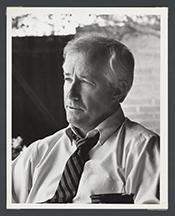
Mr. Speaker, I thank the gentleman for yielding me this time. I have been listening with interest to what I think is a very spirited and good debate that we have had, but I do rise in opposition to…
Mr. Speaker, I thank the gentleman for yielding me this time.
I have been listening with interest to what I think is a very spirited and good debate that we have had, but I do rise in opposition to H.R. 1587, the Viet Nam Human Rights Act of 2003.
At this point, I wish to congratulate my colleague, the gentleman from New Jersey, for the passion which he comes to the floor with and in which he expresses his views here. I know he holds these views very dearly and with great sincerity, and I do understand and respect the motivation for supporting human rights in Vietnam and other countries around the world. It is critically important we serve as a champion of human rights, just as we are in the case of Sudan, where tomorrow evening I and the gentleman from Illinois (Mr. Jackson) will go in an effort to try to take a look and to bring the attention of the world to the human rights violations which are taking place there today.
However, I would point out that, even as we act as a champion of human rights around the world, that does not provide us carte blanche to undertake bad policy. In 1995, we embarked on a new path with Vietnam. Many opposed that at the time. I supported it. I thought it was the right thing to do. We chose to take a direction towards better political, economic, and consular relations.
In making that decision, we recognized the need to encourage the development of Vietnam as a prosperous country and to encourage Vietnam to move on a path towards greater protection of human rights. We understood how important it was to integrate our former adversary into Asia's economic progress and ultimately into the global community.
Since we have started down that path, I think we have reaped important benefits. It secured Vietnam's cooperation on achieving the fullest possible accounting of the POW/MIAs from the Vietnam War era. It has helped to contribute to regional stability in Southeast Asia, and it has helped to open a new market for U.S. workers to the world's 13th most populous country.
Certainly the United States-Vietnam foreign policy relationship is one that still has many rocky moments to it. It is one that is still maturing. In some areas, we are certainly disappointed with the progress or lack of progress that the Vietnam government has made. I share the concerns about the human rights record, but I think this bill may actually retard our efforts in this regard, rather than accelerate them or help them.
While the House has passed this bill, or legislation similar to it, it has not passed the other body before; and just because it has passed the House before does not mean it is the right thing to do here today. The relationship has changed. It has changed in a way where passage and enactment of this bill could be harmful to the relationship of our two countries.
The bill's unprecedented definition of nonhumanitarian assistance is problematic in many ways, in ways that I am cognizant of as chairman of the Subcommittee on Foreign Operations, Export Financing and Related Programs. For example, it would purport to reach some aspects of assistance provided under the President's Emergency Plan for Aids Relief. Vietnam, as I think my colleagues know, was recently designated as the 15th focus country under the President's plan, the only one outside of the Caribbean and of Africa.
Generally, I think this human rights act is a blunt instrument. I believe it will risk inhibiting progress in bilateral trade and affect cooperation on issues of importance to the United States, issues that are vitally important to us right now, counterterrorism, the POW-MIA accounting, which is ongoing, and HIV/AIDS; and I do not mean just the actual process of providing drugs but the technical assistance that could be affected by this. Also counternarcotics, which is vitally important for us, and refugee processing and resettlement.
I know there is a waiver authority in this bill, but to use that as an argument is simply to say that the bill has no meaning, so I do not think the sponsors really intend that to be the case.
In short, I think the imposition of unilateral sanctions is not going to lead to an improved human rights record and might actually harm the United States' efforts in our fight against HIV/AIDS, which is accelerating very rapidly in Vietnam.
I urge my colleagues to vote ``no'' on this legislation.
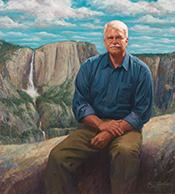
Mr. Speaker, I thank the gentleman for yielding me time. I rise in opposition to H.R. 1587 and urge a no vote by the House. There is no one in this House who does not wish to see improvements on…
Mr. Speaker, I thank the gentleman for yielding me time. I rise in opposition to H.R. 1587 and urge a no vote by the House.
There is no one in this House who does not wish to see improvements on Vietnam's policies on democracy and freedom. I have visited the nation on four occasions in the last 5 years, meeting with everyone from workers in shoe factories to high-level government ministers. There are many and I would say a growing number of Vietnamese who share the hope of a more open and democratic society and who are working to achieve these goals.
This legislation will not help them.
There are many in our own veterans' organizations who are working closely with the Vietnamese on the POW/MIA issue. I have gone to the excavation sites and seen the close cooperation that has resulted in the repatriation of over 500 remains of their loved ones here in the United States.
This legislation will not help in that effort.
Our government is working closely with the Vietnamese to address the issues of infectious disease control, including AIDS and SARS, which are real issues because of the heavy travel between our countries. We know that many Vietnamese acted quickly in the case of the SARS crisis and controlled what might have been a far more severe pandemic.
This legislation will not promote improved cooperation on health policy.
Throughout Vietnam, in the aftermath of the normalization of relationships, the passage of the Bilateral Trade Agreement, U.S. businesses are investing hundreds of millions of dollars to build a better trade, to provide jobs, and to improve the economic relations between our countries.
This legislation is not going to enhance those investments or those benefits.
I have been working with the international labor organizations and U.S. companies to improve Vietnam's compliance with basic labor rights and standards, and we have seen improvements in many areas, although much additional work remains to be done.
This bill is not going to provide or achieve those goals.
On these, and many other areas, we are working to improve our relationship and improve the nature of the society in Vietnam for the benefit of its residents, who include the family members of millions of U.S. residents and citizens.
This bill will set back those efforts. It provides the harshest elements in the Vietnamese government with the rationale for reacting to our pressure. Does anyone in this Chamber, after our long experience in Vietnam, seriously believe that the Congress ordering them to change an internal policy in the nation, however desirous we may be of seeing that change, is going to persuade the government in Hanoi to do it because we so order it?
We all share the hope that Vietnam will evolve into a freer and more open, democratic nation. We hold the same goals for other nations in the region and around the world where records of human, labor and religious rights are no better than in Vietnam and, in some cases, worse.
Just earlier today, prior to this legislation, we considered legislation criticizing China, whose record on religious freedom, political democracy, and labor rights is certainly as unacceptable as Vietnam's, but it would not withdraw the nonhumanitarian assistance as this bill does. It urges them to improve their record on intellectual property.
We know why this legislation periodically resurfaces. We understand that there are areas in this Nation with large concentrations of Vietnamese expatriates who remain embittered about the outcome of the war and the government in control in Hanoi. Many of those same expatriates send hundreds of millions of dollars back each year to Vietnam to assist their relatives who still live in that nation. I understand their viewpoint, and I was one of the Congressmen sent in the 1970s to inspect the refugee exodus from Vietnam.
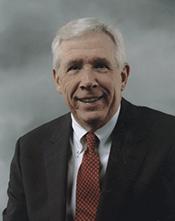
Mr. Speaker, I strongly support H.R. 1587, The Vietnam Human Rights Act of 2004 and commend Representative Chris Smith for his leadership on this issue. In 2001, the House of Representatives passed a…
Mr. Speaker, I strongly support H.R. 1587, The Vietnam Human Rights Act of 2004 and commend Representative Chris Smith for his leadership on this issue. In 2001, the House of Representatives passed a similar bill, but unfortunately the human rights situation in Vietnam continues to get worse.
The United States will soon ratify the U.S.-Vietnam bilateral trade agreement. We must send a strong message that trade with the United States should come with a responsibility to uphold basic human rights.
The Government of Vietnam continues to commit serious abuses in violation of the Universal Declaration of Human Rights. It continues to jail writers, scientists, journalists, and religious leaders.
This year's State Department human rights countries report on Vietnam is 24 pages long and cites numerous violations including:
The Government of Vietnam's human rights record remained
poor, and it continued to commit serious abuses. The
government continues to deny the right of citizens to change
their government . . . The government significantly
restricted freedom of speech, freedom of the press, freedom
of assembly, and freedom of association . . .
The government did not permit human rights organizations to
form or operate. Violence and societal discrimination against
women remained a problem. Child prostitution was a problem.
I am very concerned that religious activity is extremely restricted in Vietnam and reports that over 400 Christian churches in the Central Highlands have been forcibly closed. Imprisonment and harassment of Protestants and Catholics continue and many religious leaders are under house arrest. Many Christians have been forced to renounce their faith.
I also remain extremely concerned about the recent crackdown against Montagnard ethnic minorities in Vietnam, many of whom are Christians. Thousands of Montagnards who gathered to protest ongoing religious repression and confiscation of tribal lands last Easter were met with brutal force by Vietnamese agents and security forces.
Three years ago, Father Thaddeus Nguyen Ly, a Catholic priest, submitted testimony to the U.S. Commission on International Religious Freedom. On October 21, 2001, Father Ly was sentenced to 15 years in prison by the Vietnam government. Father Ly has done nothing more than call for religious freedom in Vietnam.
The U.S. House has repeatedly called for Father Ly's release and expressed growing concern about the poor human rights record of the Government of Vietnam. We have been met by silence from the Government of Vietnam.
I continue to ask the State Department to designate Vietnam as a ``country of particular concern'' (CPC) for its systematic and ongoing religious freedom abuses. The Commission on International and Religious Freedom recommended Vietnam be listed as a CPC last year. This latest incident in the Central Highlands, along with the Vietnamese government's relentless repression of ethnic minority religious groups, clearly supports the need for CPC this year. It is my hope that the State Department will act this year.
I support the Vietnam Human Rights Act. Hanoi must begin to make significant progress toward releasing political and religious prisoners and respecting human rights of all minorities. In closing, we in the United States must continue to speak out for the innocent wherever they are. This is our duty. Those suffering persecution are encouraged when the United States speaks out on their behalf.
Ridding the world of repressive dictators will take time, patience and persistence, and we must press on toward the goal of freedom for all people. We, as a country, and we, as individuals, must have the courage to take on tough issues. Human rights are God-given rights. We should not accept anything less.
Mr. Speaker, I thank the gentleman for yielding me time. Mr. Speaker, I rise in strong support of H. Res. 427, which recognizes the courageous leadership of the Unified Buddhist Church in Vietnam and…
Mr. Speaker, I thank the gentleman for yielding me time.
Mr. Speaker, I rise in strong support of H. Res. 427, which recognizes the courageous leadership of the Unified Buddhist Church in Vietnam and stresses the urgent need for the government of the Republic of Vietnam to respect religious freedom and basic human rights. I thank the gentlewoman from California (Ms. Loretta Sanchez) for offering it today.
Mr. Speaker, Vietnam's oppression of religious liberty, which is well documented in the State Department Reports on Human Rights and Religious Freedom, as well as by credible human rights organizations, continues to deteriorate. This is a regime with clear non-ambiguous policies designed to control and to repress religion. At its Seventh plenum in January 2003, the Communist Party's Central Committee stepped up its persecution of religious groups issuing a resolution which calls for the establishment of cells of Communist party members within each of Vietnam's six approved religions in order to foil ``hostile forces.''
Persecution of Buddhists highlighted in this resolution has been particularly harsh. Many leading clergy of the Unified Buddhist Church of Vietnam have been imprisoned including the church's Patriarch, the Most Venerable Thich Huyen Quang, who is now 85 years old and has been detained for the past 21 years.
The government has continually attempted to control the selection of new clergy for the Unified Buddhist Church, restricting the travel of and intimidating monks attending selection meetings. We know that other groups suffer severe religious persecution as well, including the Christian Montagnards in the Central Highlands, Catholics and members of indigenous Vietnamese religions.
One particular case, Mr. Speaker, that has been disturbing, one of many, is that of Father Ly, an outspoken critic of the regime who is currently serving a 10-year sentence for calling on the government for the return of confiscated church properties and respect for religious freedom. Amazingly, his nephews, Nguyen Vu Viet and Nguyen Truc Cuong, and his niece, Nguyen Thi Hoa, recently received prison sentences after a sham trial, after being found guilty of dubious charges of ``abusing democracy.''
Next week, Mr. Speaker, the Vietnamese government has the chance to set the record straight when their appeal will be heard. They should be released. They have to be released along with Father Ly. And I think this Congress, the House and the Senate, needs to be watching very carefully if our relationship is to progress. We have to see significant and sustained progress on these cases and, of course, those with regards to the Unified Buddhist Church.
Mr. Speaker, this Congress has not been lax in trying to raise these issues, as I know my good friend and colleague Mr. Leach knows because he has worked so strongly in this area. ``I offered The Vietnam Human Rights Act'' as an amendment to the State Department bill, which is now pending before the House and Senate. Similar legislation has already passed the House before and hopefully the session, the Vietnam Human Rights Act will become law. This legislation sets up a number of criteria that would seek to move the ball forward with regard to human rights, and in particular, the area of religious freedom.
Again, it is a good resolution that has been offered today and it deserves the honest support of this body.
Mr. Speaker, I rise today in support of H.R. 1587, which requires the administration to carefully monitor the status of human rights in Vietnam. Under this measure, if Vietnam fails to meet basic…
Mr. Speaker, I rise today in support of H.R. 1587, which requires the administration to carefully monitor the status of human rights in Vietnam.
Under this measure, if Vietnam fails to meet basic standards for universally recognized human rights, the President will have the authority to cap U.S. non-humanitarian aid to Vietnam.
The truth is that many of my colleagues may not be aware of the extensive struggle which the Vietnamese people have endured for many years in their ongoing fight for basic human rights and freedom.
Ten years ago, the United States ended its trade embargo with Vietnam and normalized relations with Hanoi. While the U.S. continues to open diplomatic relations with Vietnam, we must remember that many issues remain unresolved, including human rights violations, lack of religious freedom, and government corruption.
In 2001, the House passed a similar bill overwhelmingly by 410-1 to send a clear message to the communist leadership in Vietnam that U.S. trading with Vietnam does not mean approval of its repressive policies.
Unfortunately, this bill died in the Senate.
Since then, despite having the benefits of trade with the U.S., the Vietnamese government has escalated its abuses of human rights and crackdown on religious freedom.
I traveled to Vietnam in 1998 to learn about these issues first-hand, as well as to raise these concerns with high-level officials. In addition, the large Vietnamese-American community in the 11th district, which I represent, continues to update me on continuing concerns.
As a member of the Vietnam Caucus, I am dedicated to promoting awareness and policy debates among the U.S. Congress, the American public, and the international community about the greater need for fundamental human rights in the Socialist Republic of Vietnam.
While many have chosen to take part in a non-violent struggle for basic freedom and human rights, the Vietnamese communist government has chosen to arrest and imprison the vast majority of them.
The gratuitous arrests of these men and women demonstrate the ongoing human rights abuses and lack of religious freedom in Vietnam. We must continue to bring attention to these issues, generate pressure on Vietnamese officials, and hold the Vietnamese government accountable.
It is only through the hard work of these courageous individuals and the support of the international community in which we can work to bring an end to human rights abuses and religious persecution in Vietnam.
I am hopeful H.R. 1587 will serve as a small stepping stone towards the ultimate liberation and freedom of the Vietnamese people.
However, at the least, I believe it will bring much needed additional awareness to the atrocities committed by the Socialist Republic of Vietnam every day, on its own citizens.
I commend my good friend from New Jersey and the other sponsors for bringing this bill to the floor, and I urge my colleagues to join me in the passage of this important resolution.
Mr. Speaker, I rise in strong support of the Viet Nam Human Rights Act, of which I am pleased to have joined the gentleman from New Jersey (Mr. Smith) in introducing. I have had the opportunity in…
Mr. Speaker, I rise in strong support of the Viet Nam Human Rights Act, of which I am pleased to have joined the gentleman from New Jersey (Mr. Smith) in introducing.
I have had the opportunity in Vietnam to sit down with some of the religious dissidents, some of the religious leaders under house arrest for speaking out about religious freedom, and I wanted to share with this body that Freedom House has consistently done an analysis every year on Vietnam and ranked that country ``not free,'' because people there cannot practice religious liberty; and efforts by this House to promote human rights in Vietnam have been blocked.
Meanwhile, I will just give this assessment by Freedom House, the most recent. ``The regime jails or harasses most dissidents, controls all media, sharply restricts religious freedom, and prevents Vietnamese from setting up independent political or independent labor or independent religious groups.''
My colleagues today have pointed out some horrific abuses against those who are simply attempting to practice their religion as they choose, but I want to point out that this regime is also one of the world's worst violators of press and Internet freedom. Prominent nongovernmental organizations have condemned the government of Vietnam's attempt to silence cyberdissidents and stifle freedom of the Internet.
I think the severity of some of these jail terms handed down, last year, we had Dr. Nguyen Dan Que, one of Vietnam's best-known dissidents, who was arrested for sending an email entitled ``Communique on Freedom of Information in Vietnam.'' It was simply an analysis of the government's refusal to implement and lift controls on the media.
I will just take one line out of this analysis that he put forward. He said, ``The State hopes to cling to power by brainwashing the Vietnamese people through stringent censorship and through its absolutist control over what information the public can receive.''
Now, we have a way here, with this bill, with this legislation, to beef up Radio Free Asia and bring information, bring objective news and truth to the Vietnamese people in a more effective way. I think the spread of democratic values in Asia is critical to U.S. security interests, and I think Radio Free Asia is a large step forward in the right direction. We know these broadcasts are effective. How do we know? Because the Vietnamese government spends so much of their energy trying to block these broadcasts.
So I agree we have a growing relationship with Vietnam. I do not take issue with that. I supported the Bilateral Trade Agreement. But this does not mean the United States should stand moot while grievous human rights abuses occur. So I urge my colleagues to send this legislation to the other body with a strong vote.
Mr. Speaker, I yield myself such time as I may consume. I rise in strong support of this resolution. Mr. Speaker, I first would like to commend my good friend and colleague, the gentlewoman from…
Mr. Speaker, I yield myself such time as I may consume.
I rise in strong support of this resolution.
Mr. Speaker, I first would like to commend my good friend and colleague, the gentlewoman from California (Ms. Loretta Sanchez) for introducing this important and timely resolution. I would also like to thank the gentleman from Illinois (Chairman Hyde) for moving this legislation to the floor so expeditiously.
Mr. Speaker, the resolution before the House tackles a critically important human rights matter: the continued oppression of the United Buddhist Church of Vietnam and the lack of religious freedom in that country. For most of the last two millennia, Buddhism flourished in Vietnam. But in 1981, the United Buddhist Church of Vietnam was declared illegal, its temples were confiscated by the government, its clergy was persecuted because they refused to join State-sponsored Buddhist organizations.
Leading figures in the Buddhist Church have been jailed, detained in isolated areas, harassed, and kept under constant surveillance. The Vietnamese government has systematically prevented Buddhist monks from meeting and worshipping as they choose.
The Vietnamese government's campaign of repression against key religious figures and organizations has been strongly criticized by the United States Commission on International Religious Freedom, an organization which we will be soon commending this morning. Our President has designated Vietnam ``as a country of particular concern'' under the International Religious Freedom Act.
Mr. Speaker, this resolution urges the government of Vietnam to respect the right of all religious organizations to meet, to worship, to operate, and to practice their faith in accordance with Vietnam's own Constitution and international covenants to which Vietnam is a signatory. We cannot have truly normal relations with Vietnam until the Vietnamese government finally lives up to its obligations to protect religious freedom.
Mr. Speaker, I urge all of my colleagues to support this resolution.
Mr. Speaker, I reserve the balance of my time.
In that case, Mr. Speaker, I am delighted to yield such time as she may consume to the gentlewoman from California (Ms. Loretta Sanchez), the author of this resolution.
Mr. Speaker, I am delighted to yield 2 minutes to the gentlewoman from California (Ms. Lofgren), a distinguished member of the California delegation.
(Ms. LOFGREN asked and was given permission to revise and extend her remarks.)
Mr. Speaker, I have no further speakers, and I yield back the balance of my time.
Mr. Speaker, on that I demand the yeas and nays.
I look forward to the day, Mr. Speaker, when we no longer need to introduce resolutions condemning the Vietnamese government for human rights violations. Unfortunately, I see no sign of change in…
I look forward to the day, Mr. Speaker, when we no longer need to introduce resolutions condemning the Vietnamese government for human rights violations.
Unfortunately, I see no sign of change in Vietnam. The Vietnamese government continues to systematically violate the human rights of its citizens through political, cultural, and religious oppression. In fact, it seems that things have gotten worse in recent years, despite our attempts to build Normal Trade Relations with Vietnam.
Just last month, the Unified Buddhist Church of Vietnam held two peaceful assemblies to discuss church affairs and elect new leadership following promises of a new era of ``respect and understanding for religious freedom'' by the Vietnamese Prime Minister. In stark contrast to this promise of ``respect and understanding,'' the Vietnamese Security Police intercepted the church leadership. After a tense 10- hour standoff, 11 monks were arrested and placed under administrative detention. The Buddhist Church's Patriarch, Thich Huyen Quang, 86 years old, and his deputy, Noble Peace Prize nominee Thich Quang do, 75 years old, are currently being held in total isolation.
According to the U.S. Commission on International Religious Freedom, this is pretty much the norm in Vietnam. They say ``key religious dissidents have been imprisoned, and others remain in detention or under house arrest.'' They have reports of 18 Buddhists in prison or under house arrest, and 20 UBCV in detention or reeducation camps.
My colleagues and I have repeatedly sent letters to the Vietnamese government asking them to release prisoners of conscience and to refrain from various forms of political, religious, and cultural oppression. The vast majority of these requests seem to fall on deaf ears, like our recent letter regarding the arrest of the 86-year-old Buddhist leader and his 75-year-old deputy. This is unacceptable.
So today I rise with my colleagues in very strong support of this resolution. We cannot sit idly by as the Vietnamese government continues to oppress its people while hiding behind the veil of free trade. As long as the people of Vietnam are oppressed, our government cannot relax, even if there are strategic military interests and a strong relationship with Vietnam. Our interests must include human rights and now is the time to act.
The whole world is watching and we will not cease until we see improvements in Vietnam.
Show 11 more
Mr. Speaker, I rise in support as a cosponsor of this legislation. Of course, the focus here is to spotlight the Unified Buddhist Church of Vietnam and the treatment that it has been receiving at the…
Mr. Speaker, I rise in support as a cosponsor of this legislation. Of course, the focus here is to spotlight the Unified Buddhist Church of Vietnam and the treatment that it has been receiving at the hands of the government of North Vietnam, that Communist government that now, for over 20 years, for 20 years have been trying to suppress the Buddhist Church, and that church has simply been fighting to practice their religion peacefully.
The difficulties commenced in 1981 when the government declared the Buddhist Church, and this is the Unified Buddhist Church of Vietnam, they declared it illegal. They confiscated the temples of the Buddhist Church. They began persecuting the clergy if that clergy did not join up with Communist organizations, stated-sponsored Buddhist organizations.
When I visited Vietnam, I saw firsthand the Communist Party's harassment of those Vietnamese citizens who decided to peacefully set forth dissenting political views, dissenting religious views. I met with several of them who were under house arrest. In particular, the Venerable Thich Quang Do and the Venerable Le Quang Liem. The reason they were under house arrest was simply because they were protesting a rewrite of the holy books, of the Buddhist holy books, holy works. The Communist Party had attempted to slash 80 or 90 percent of those works, and instead resubstitute and rewrite a culture that goes back thousands and thousands of years. And, of course, the laity and the leadership of the church took great umbrage at this and simply asked that they be allowed to practice their religion.
Well, in June of this year when the Vietnamese government ended the detention order against Thich Quang Do, we were all quite hopeful. However, our hopes were quickly dashed when last month the Buddhist Church's meetings were disrupted and the travel of monks was restricted and, again, some were arrested.
Today we are here to say as the United States Congress that we are not satisfied with the state of human rights in Vietnam and that the United States has a strong interest in promoting respect for individual rights
around the world. The U.S. must be a strong advocate of human rights, particularly when basic freedoms are being wantonly abused as they are in Vietnam.
We must continue to shine a light on Vietnam. I urge the passage of this resolution. I thank the gentleman for yielding me time.
Mr. Speaker, I am opposed to the motion. Mr. Speaker, I yield myself such time as I may consume. Mr. Speaker, I have a great deal of respect for my long-time colleague and friend, the gentleman from…
Mr. Speaker, I am opposed to the motion.
Mr. Speaker, I yield myself such time as I may consume.
Mr. Speaker, I have a great deal of respect for my long-time colleague and friend, the gentleman from New Jersey (Mr. Smith). We have worked together for the veterans of America for many years. However, I do not see eye to eye with him on this issue as the best way to address human rights in Vietnam.
I am also afraid that this resolution and the sanctions enclosed will damage relations between our two countries. I also feel that this resolution will only embolden hardliners within Vietnam.
Mr. Speaker, yes, Vietnam can improve its human rights record, but I also believe it is a very complex relationship. It is a relationship built on dialogue and gradual steps, not sanctions. The country of Vietnam has provided unparalleled assistance to recover our soldiers' remains. The Vietnamese are working hard to protect intellectual property rights and improve the climate for foreign investment. Vietnam is also the 15th focus country of the President's HIV/AIDS initiative. These are three important steps that would be endangered by the shift in relations under this legislation.
Mr. Speaker, we can make progress with Vietnam, but this resolution is not the proper way. The Members supporting this legislation are good friends, and I respect their commitments. However, I hope that we work with each other to advance human rights in Vietnam. But I do not believe that this legislation is the proper vehicle. I urge my colleagues to vote against this legislation.
Mr. Speaker, I reserve the balance of my time.
Mr. Speaker, I yield 3 minutes to the gentleman from California (Mr. George Miller).
(Mr. GEORGE MILLER of California asked and was given permission to revise and extend his remarks.)
Mr. Speaker, I only have one more speaker, and I reserve the balance of my time.
Mr. Speaker, I have one last speaker, and I yield such time as
he may consume to the gentleman from Connecticut (Mr. Simmons).
(Mr. SIMMONS asked and was given permission to revise and extend his remarks, and include extraneous material.)
Mr. Speaker, I yield 4 minutes to the gentleman from Arizona (Mr. Kolbe), the chairman of the Subcommittee on Foreign Operations, Export Financing and Related Programs.
Mr. Speaker, I yield back the balance of my time.
Mr. Speaker, on that I demand the yeas and nays.
Mr. Speaker, let me just say it is a pleasure to follow my friend and colleague from California, and I have enjoyed working with her on these issues and the leadership she has given to the human…
Mr. Speaker, let me just say it is a pleasure to follow my friend and colleague from California, and I have enjoyed working with her on these issues and the leadership she has given to the human rights issues in Vietnam.
I rise in support of H. Res. 427, a resolution to that congratulates the Unified Buddhist Church of Vietnam for its courageous leadership and calls for religious freedom and related human rights in Vietnam.
Mr. Speaker, Vietnam's constitution protects the rights of religious belief, and the Vietnamese government has acceded to a number of international treaties to protect the right to faith and practice. Buddhism has a 2,000 year history in Vietnam, and the Unified Buddhist Church of Vietnam is an important part of this tradition. Yet, in 1981, the Vietnamese government outlawed the UBCV, the Unified Buddhist Church of Vietnam, and has since detained and harassed many of its clergy members and subjected them to other forms of persecution.
Earlier this year, the Vietnamese Prime Minister met with the Venerable Thich Huyen Quang, the Supreme Patriarch of the Unified Church of Vietnam, and assured him that previous arrests were mistakes and that the government would respect and honor religious freedom. But despite these promises, the Vietnamese government arrested members this past September after they held a meeting to discuss church matters and elect new leadership.
The punishment by Vietnamese authorities of individuals who practice their religious faith or exert other basic human rights are not uncommon in Vietnam. In addition to the arrests of the Most Venerable Thich Quang Do and other members of the UBCV, the Vietnamese government has imprisoned father Nguyen Huu Le, Dr. Nguyen Dan Que, Father Van Ly and three of his relatives, and many other individuals for practicing their faiths and for promoting human rights in Vietnam.
As the United States continues to establish diplomatic and economic relationships with Vietnam, we have to remember that many of the most basic issues remain unresolved, including the lack of religious freedom and related human rights violations. House Resolution 427 sends a clear signal that we will not tolerate these violations.
Mr. Speaker, I commend the new leadership of the Unified Buddhist Church of Vietnam, and I urge my colleagues to vote in support of this bipartisan resolution.
Mr. Speaker, I rise in strong support of H.R. 1587; and I would like to personally thank the gentleman from New Jersey (Mr. Smith) for the terrific job not only for Vietnam but for people who are…
Mr. Speaker, I rise in strong support of H.R. 1587; and I would like to personally thank the gentleman from New Jersey (Mr. Smith) for the terrific job not only for Vietnam but for people who are suffering under torture and under oppression throughout the world. He is truly the conscience of this body, and he makes sure that we never forget that people all over the world are looking to us. We are their only hope, just like in the past century when those people who suffered under Nazism and Communism knew that the only hope they had was the United States that was committed to its ideals.
Today, this bill, H.R. 1587, is consistent with that concept. It is consistent with the ideals of America, and it is telling the world we still believe in human rights and freedom and democracy, just like George Washington and our other Founding Fathers.
This bill, however, does not represent necessarily the opinion of every American. Let us note that just 3 years ago we made an agreement with this government of Vietnam, this monstrous abuser of human rights, we made a trade agreement and a business agreement with them. And we are always told, if we just do business with the Vietnamese or if we just do business with the Chinese, their dictatorial government will morph into a democratic society and people's liberties will be protected.
What have we seen? The situation in China is worse today than it has ever been. The situation in Vietnam is disintegrating when it comes to democracy and human rights. The latest victims have been the Montagnard people in the Central Highlands of Vietnam.
I have a personal attachment to the Montagnards. In 1967, I spent considerable time with them in the Highlands near Pleiku. They protected Americans. They gave their own lives so American soldiers would not die. And I will tell you that they are brave, wonderful people, just like the other people in Vietnam. They just simply want to believe in God and have the right to worship God and to speak and to have the right to gather together.
We should support the people of Vietnam, and that is what this does and the people everywhere who long for freedom. It puts us on their side.
Mr. Speaker, we need to pass the Vietnam Human Rights Act to send a message to Vietnam's Communist government. Vietnam cannot continue to violate human rights and expect further normalization of the…
Mr. Speaker, we need to pass the Vietnam Human Rights Act to send a message to Vietnam's Communist government. Vietnam cannot continue to violate human rights and expect further normalization of the relationship between Vietnam and the United States.
Just 2 months ago, on Easter week, Human Rights Watch reported that peaceful protests by indigenous minority Christian Montagnards turned violent when police used tear gas, electric truncheons, and water cannons on protestors. Reports indicate that police arrested several individuals, many of whose whereabouts are still unknown. Worse yet, there are reports of torture, police beatings, and deaths associated with this crackdown on the Montagnards.
In recent weeks, reports indicate that the Vietnamese government has taken the vice president and the secretary general of the Vietnam Mennonite Church into custody for simply conducting a peaceful criticism. We know that they have also harassed and detained leaders of the Unified Buddhist Church of Vietnam and the Catholic Church.
Religious leaders and followers are not alone. The Vietnamese Communists have come down on the press and have censored 2,000 of Vietnam's 5,000 Web sites; and worse yet, they arrested a Vietnamese writer and journalist just because he submitted written testimony to the United States Congress. How about that?
We have repeatedly passed resolutions addressing the violations on Vietnam Human Rights Day. We introduced a resolution recognizing those in Vietnam who have been tortured and imprisoned; and last November, we passed a resolution calling for religious freedom and protection of human rights. We have introduced a resolution objecting to the treatment of Father Ly. Now it is time to pass a bill, not just a resolution, that will give us the tools we need to not only send a message to Vietnam but to take action against Vietnam for their continuous human rights violations.
We need to pass this bill. Vietnam cannot expect a friendship with us until they finally respect the rights of their citizens.
I thank the gentleman for yielding me the time.
No, Mr. Speaker, I am in favor of the motion. Mr. Speaker, I rise in strong support of the Vietnam Human Rights Act, and I urge all of my colleagues to do so as well. I first would like to commend…
No, Mr. Speaker, I am in favor of the motion.
Mr. Speaker, I rise in strong support of the Vietnam Human Rights Act, and I urge all of my colleagues to do so as well.
I first would like to commend the gentleman from New Jersey (Mr. Smith), my good friend and most distinguished colleague, for introducing this important legislation and for doggedly pursuing the Vietnam human rights issue as he does, the human rights issues across the globe.
None of us here today should be under any illusions about the government of Vietnam. According to the Department of State's human rights report, the Vietnamese government is an unrepentant, authoritarian regime which does not allow political opposition. Freedom of expression does not exist in Vietnam. Vietnamese are locked in prison for simply expressing their political opinions.
The Vietnamese government also places severe restrictions on the expression of religious beliefs, particularly upon Buddhists who do not worship as part of the official church and upon Christians in the Vietnamese highlands.
With the approval of the U.S.-Vietnam bilateral trade agreement 3 years ago, the political security and economic relationship between the United States and Vietnam has become increasingly complex, but we must continue to send a strong signal to Hanoi that the United States continues to make it a top priority to promote internationally recognized human rights in Vietnam.
Passage of the Smith legislation will indicate to the administration and to the Vietnamese government that the Congress expects to see real progress on the human rights front in Vietnam and that we have not forgotten those Vietnamese who are being persecuted for their beliefs.
Our legislation will ensure that there is not a rollback in our trade and aid relationship with Vietnam, only a cap on the level of our nonhumanitarian aid to the Vietnamese, unless human rights conditions are met.
Mr. Speaker, I again commend my colleague from New Jersey, and I urge all of my colleagues to support the passage of this important bill.
Mr. Speaker, I rise to recognize the San Jose Vietnamese Bhikshu Buddhist Council's annual remembrance of Buddhist Master Minh Dang Quang. According to the Bhikshu Buddhist Council, Master Minh Dang…
Mr. Speaker, I rise to recognize the San Jose Vietnamese Bhikshu Buddhist Council's annual remembrance of Buddhist Master Minh Dang Quang.
According to the Bhikshu Buddhist Council, Master Minh Dang Quang founded the indigenous Vietnamese Buddhist Order ``Tang Gia
Khat Si'', normally referred to in English as the Mendicant Buddhist Order, in Southern Vietnam. This order represents a unique combination of Theravada and Mahayana Buddhism. On the Second day of the Second month in the Year of the Horse (1954) during a time of political turmoil, Master Minh Dang Quang went missing and the Monks and Nuns of this order observe his disappearance each year as a religious ceremony.
According to the Bhikshu Buddhist Council, this year marks the 50th anniversary to celebrate the long-lasting work of Buddhist Master Minh Dang Quang and his founding of the Vietnamese Sakya Muni Dharma School of Buddhism. Although, Master Minh Dang Quang is not with us today, his followers continue their Master's teachings in Vietnam and all over the world.
I am pleased to know that in my City of San Jose, California, the Vietnamese Bhikshu Buddhist Council can freely meet, worship, and practice their faith without fear of persecution.
But that is not enough. We must demand that all Buddhists around the world, and others attempting to practice and worship their faith, are able do so freely without fear of persecution.
We must continue passing legislation like the Vietnam Human Rights Act to promote freedom and democracy in Vietnam and House Resolution 427 that praises the courageous leadership of the Unified Buddhist Church of Vietnam and the urgent need for religious freedom and related human rights in Vietnam.
We cannot sit idly by as the Vietnamese government continues to oppress its people while hiding behind the veil of free trade. On this special day, I recognize the 50th Anniversary of the remembrance of Buddhist Master Minh Dang Quang and reassert my commitment to fighting for human rights in Vietnam.
Mr. Speaker, I thank my colleague, the gentleman from New Jersey, for yielding me this time and for putting forward H.R. 1587, of which I am in full support, the Viet Nam Human Rights Act. I know a…
Mr. Speaker, I thank my colleague, the gentleman from New Jersey, for yielding me this time and for putting forward H.R. 1587, of which I am in full support, the Viet Nam Human Rights Act.
I know a number of my colleagues oppose this bill, so I would like to reiterate why it is so important to pass this bill today.
First of all, we passed a very similar piece of legislation by a vote of 410 to 1 back in 2001. Unfortunately, the Senate did not take that up; and so the law was not enacted. But, since that time, one would think that our relationship would have gotten stronger with Vietnam; and in many ways it has.
The problem is that there are still very bad human rights abuses by the government of Vietnam against its own people. In fact, things have gotten worse.
Religious dissidents continue to be imprisoned, and crackdowns have been intensified on religious minorities. The leaders of the Unified Buddhist Church of Vietnam remain under house arrest 9 months after this House overwhelmingly passed House Resolution 427 commending the church's courageous leadership.
We have passed a resolution on Father Ly, a Catholic priest who has been arrested and convicted, all for following religious freedom, something that our own country is based on.
And freedom of the press? There is no freedom of the press in Vietnam. Everything is owned by the State.
When I talked to the cardinal of the Catholic church, he said he is not even allowed to pass out a newsletter in his church on Sunday because that is press, according to the government of Vietnam.
There is no religious freedom. There is no freedom of the press. People are arrested. I have gone twice now to Vietnam, and they are arrested and put in jail for no reason. I think it is about time that we support this bill and we pass it in this House.
Mr. Speaker, I rise in strong support of this bill. Having spent nearly seven years in Vietnam as a prisoner of war, I have more than a passing interest in our relations with this country. The simple…
Mr. Speaker, I rise in strong support of this bill. Having spent nearly seven years in Vietnam as a prisoner of war, I have more than a passing interest in our relations with this country. The simple fact is that we're dealing with a communist government whose human rights record is abhorrent at best.
As you know, during the Vietnam war the indigenous Montagnard people were strong allies of America. Now, in the central highlands of Vietnam, the Montagnards are facing arrest, beatings, torture and even murder at the hands of Vietnamese so called security forces.
Churches have been destroyed and over the past 2 years human rights watch has documented numerous incidents where authorities conduct mass ceremonies forcing Montagnards to renounce Christianity, sometimes while drinking sacrificed animal's blood.
Today in Vietnam the Montagnard's ancestral homelands are currently sealed off from international observers as secret police enforce a campaign to crush the spread of Christianity.
Amnesty International has documented hundreds of political prisoners and even killings of Montagnard refugees who have tried fleeing to Cambodia.
In fact, the Vietnamese/Cambodian border is patrolled by soldiers, where Cambodian authorities hunt down and ``sell'' refugees to Vietnamese police for bounties. This sounds like something we would read about in history books, not in the year 2004.
This Congress cannot idly stand by. Civilized nations do not deal with barbarians. We must ensure that our aid isn't going to the communist thugs in Hanoi. Support this bill.
Mr. Speaker, I am opposed to this ill-conceived and ill- timed bill. I would like to remind my colleagues that according to our own Constitution, Congress is prohibited from making any law…
Mr. Speaker, I am opposed to this ill-conceived and ill- timed bill. I would like to remind my colleagues that according to our own Constitution, Congress is prohibited from making any law ``respecting the establishment of religion or the free exercise thereof.'' Yet are we not doing that today--albeit in a country some 10,000 miles away? Why on earth are we commending one particular church in Vietnam in the name of ``religious freedom''? At the risk of being blunt, what business is the Unified Buddhist Church of Vietnam of the United States Congress? The answer, of course, is that this legislation is of a much more political than a religious nature: this bill tells the Vietnamese government how it should enforce its own constitution, commits the United States government to promoting religious freedom in Vietnam, and tells the U.S. embassy staff in Vietnam to ``closely monitor'' religious issues in Vietnam. It is an attempt to meddle in the affairs of Vietnam and force them to adopt the kinds of laws we think they should have. Mr. Speaker, as much as we value our own religious liberty, we must realize that setting the example of the benefits of a society that values such liberty is much more effective than demanding that other countries pass the kinds of laws we want them to pass. The unintended consequences of this otherwise well-meaning legislation is that relations with the Vietnamese government will likely suffer, making it less likely that Vietnam's leaders look favorably upon our own history of religious liberty.
Mr. Speaker, I submit an exchange of letters between Mr. Sensenbrenner, the chairman of the Committee on the Judiciary, and myself on the bill H.R. 1587 for printing in the Record. House of…
Mr. Speaker, I submit an exchange of letters between Mr. Sensenbrenner, the chairman of the Committee on
the Judiciary, and myself on the bill H.R. 1587 for printing in the Record.
House of Representatives,
Committee on International Relations,
Washington, DC, July 13, 2004.
Hon. F. James Sensenbrenner, Jr.,
Chairman, Committee on the Judiciary,
House of Representatives, Washington, DC.
Dear Mr. Chairman: Thank you for your letter on H.R. 1587,
the `Viet Nam Human Rights Act of 2003,'' which was referred
primarily to the Committee on International Relations and
additionally to the Committee on Financial Services. This
Committee ordered the bill reported favorably on June 24,
2004.
I concur that the Committee on the Judiciary has
jurisdiction over Sec. 401 of the bill pertaining to the
resettlement of refugees from Viet Nam. The manager's
amendment which the Committee will call up does not include
Sec. 401 or any other provision that fall within the Rule X
jurisdiction of the Committee on the Judiciary.
I appreciate your willingness to waive further
consideration of the bill in the Committee on the Judiciary
so that the bill may proceed expeditiously to the floor. I
concur, that in taking this action, your Committee's
jurisdiction over the bill is in no way diminished or
altered. I will, as you request, include this exchange of
letters in the Congressional Record during consideration of
the legislation on the House floor.
I appreciate your cooperation in this manner.
Sincerely,
Henry J. Hyde,
Chairman.
Bill Text
2 versions available
        [Congressional Bills 108th Congress]
[From the U.S. Government Publishing Office]
[H. Res. 427 Engrossed in House (EH)]

In the House of Representatives, U.S.,

November 19, 2003.
Whereas Buddhism has a 2,000-year tradition in Vietnam and the Unified Buddhist
Church of Vietnam (UBCV) is an heir to this tradition;
Whereas the Government of Vietnam in 1981 declared the UBCV, one of the largest
religious denominations in the country, illegal, confiscated its
temples, and persecuted its clergy for refusing to join the state-
sponsored Buddhist organizations;
Whereas the Government of Vietnam has often imprisoned UBCV clergy and subjected
them to other forms of persecution; the Patriarch of the UBCV, the 85-
year-old Most Venerable Thich Huyen Quang, has been detained and
restrained for more than 2 decades in isolated areas of Vietnam;
Whereas the Vietnamese Government has held the Most Venerable Thich Quang Do,
the Executive President of the UBCV and his deputy, the Venerable Thich
Tue Sy, in various forms of detention since 1977;
Whereas the Very Venerable Thich Thien Minh, Supreme Counselor of the UBCV, was
tortured to death in a reeducation camp in 1978;
Whereas many other leading UBCV figures, including Thich Thien Hanh, Thich Phuoc
An, Thich Dong Tho, Thich Vien Dinh, Thich Thai Hoa, Thich Nguyen Ly,
Thich Thanh Huyen, Thich Khong Tanh, Thich Phuoc Vien, Thich Hai Tang,
Thich Dong Tho, Thich Nguyen Vuong, Thich Chi Mau, Thich Chi Thang, and
Thich Thanh Quang have been detained, harassed, and under tight
surveillance;
Whereas several members of the UBCV have fled to Cambodia to escape religious
repression and harassment;
Whereas Pham Van Tuong, formerly known as Thich Tri Luc, disappeared from
Cambodia in July 2002 after being given refugee status by the United
Nations High Commissioner for Refugees (UNHCR), and has since been
discovered to be in custody in Vietnam, where he is reportedly charged
with the vague crime of ``fleeing abroad or defecting overseas with the
intent to oppose the people's administration,'' which carries a possible
sentence of life imprisonment;
Whereas Vietnam has acceded to international covenants and treaties that
prohibit the forced repatriation of UNHCR-recognized refugees;
Whereas Vietnam has acceded to international covenants and treaties that protect
the right to faith, belief, and practice;
Whereas Vietnam's constitution protects the right of religious belief;
Whereas in a show of religious tolerance, the Vietnamese Government in April
2003 allowed the Most Venerable Thich Huyen Quang, the Fourth Supreme
Patriarch of the UBCV, to receive urgent medical care in Hanoi;
Whereas at that time, Vietnamese Prime Minister Phan Van Khai met with Venerable
Thich Huyen Quang and assured him that his and Venerable Thich Quang
Do's detention were mistakes by local officials and that he hoped they
would extend Buddhist forgiveness toward past actions of the government;
Whereas in June 2003, the Vietnamese Government ended the detention order
against Venerable Thich Quang Do, the Executive President of the UBCV;
Whereas in September and October 2003, the UBCV held a meeting in Nguyen Thieu
Pagoda in Binh Dinh province to discuss church affairs, choose a new
leadership which had been vacant for a decade, and verify Vietnamese
Prime Minister Phan Van Khai's promise of a new era of understanding and
respect;
Whereas Vietnamese authorities attempted to disrupt these gatherings by
restricting the travel of monks from other provinces and then
intimidating those attending;
Whereas on October 8, 2003, Vietnamese authorities initiated a tense standoff
following the meeting, where police stopped a vehicle carrying the
UBCV's new leadership and subsequently detained the eleven passengers;
Whereas Venerables Thich Huyen Quang and Thich Quang Do were taken to their
respective pagodas where they have been effectively isolated and
detained; four senior monks, the Venerable Thich Tue Sy, Thich Thanh
Huyen, Thich Nguyen Ly, and the UBCV Supreme Patriarch's personal
assistant, Venerable Thich Dong Tho, were immediately sentenced to 24
months of administrative detainment by written orders of the Ho Chi Minh
City People's Committee, and three others, the Venerables Thich Thien
Hanh, Thich Thai Hoa, and Thich Nguyen Vuong to 24 months administrative
detainment by ``oral'' orders from various local authorities, in protest
of which the Venerable Thich Thien Hanh initiated a hunger strike on
October 19, 2003;
Whereas according to reports by the United States State Department, the United
States Commission on International Religious Freedom, and the European
Union, the Socialist Republic of Vietnam systematically limits the right
of religious organizations to choose their own clergy;
Whereas according to these same reports, the Socialist Republic of Vietnam uses
house arrest and long prison sentences to punish individuals for
practicing their faith, as evidenced also by the jail sentences handed
down to Father Nguyen Van Ly, his three relatives, Montagnard and Hmong
Protestants, Cao Dai, and Hoa Hao Buddhists;
Whereas during the 107th Congress the House of Representatives passed H.R. 2833,
the Vietnam Human Rights Act, on September 6, 2001, which noted the
persecutions faced by various members of the UBCV over the past 25
years; and
Whereas because of systematic, egregious, and ongoing abuses of religious
freedom, the United States Commission on International Religious Freedom
recommended that the President of the United States designate Vietnam as
a ``country of particular concern'' under the provisions of the
International Religious Freedom Act of 1998: Now, therefore, be it
Resolved, That the House of Representatives--
(1) congratulates the new leadership of the Unified Buddhist Church
of Vietnam;
(2) urges the Government of Vietnam to respect the right of all
independent religious organizations to meet, worship, operate, and
practice their faith in accordance with Vietnam's own constitution and
international covenants to which Vietnam is a signatory;
(3) urges the Government of Vietnam to restore freedom to all
Vietnamese citizens imprisoned or under house arrest for practicing
their faith or for advocating freedom of religion, especially the Most
Venerable Thich Huyen Quang and the Very Venerable Thich Quang Do;
(4) is committed to promoting religious freedom in Vietnam, and, in
furtherance of this goal, urges the implementation of the
recommendations of the United States Commission on International
Religious Freedom; and
(5) urges the United States Embassy in Vietnam to closely monitor
cases of abuse of religious belief and practice, routinely visit
detained clergy members, especially those in need of medical care, and
report to the Congress on specific measures taken to protect and promote
religious freedom in Vietnam.
Attest:

Clerk.