Providing for consideration of the Senate amendment to the bill (H.R. 743) to amend the Social Security Act and the Internal Revenue Code of 1986 to provide additional safeguards for Social Security and Supplemental Security Income beneficiaries with representative payees, to enhance program protections, and for other purposes.
Legislative Activity
Stay on top of the latest movement without scrolling through every action
Motion to reconsider laid on the table Agreed to without objection.
February 11, 2004 • 2:04 PM
View full timeline
Introduced in House
February 10, 2004
The House Committee on Rules reported an original measure, H. Rept. 108-417, by Mr. Linder.
February 10, 2004
It shall be in order to consider in the House, without intervention of any point of order, a motion offered by the Chairman of the Committee on Ways and Means or his designee that the House concur in the Senate amendment to H.R. 743.
February 10, 2004 • 6:40 PM
Placed on the House Calendar, Calendar No. 145.
February 10, 2004
Considered as privileged matter. (consideration: CR H438-443)
February 11, 2004 • 1:02 PM
DEBATE - The House proceeded with one hour of debate on H. Res. 520.
February 11, 2004 • 1:03 PM
On ordering the previous question Agreed to by the Yeas and Nays: 226 - 197 (Roll no. 22). (consideration: CR H442-443; text: CR H442)
February 11, 2004 • 2:04 PM
Passed/agreed to in House: On agreeing to the resolution Agreed to by voice vote.(text: CR H438)
February 11, 2004 • 2:04 PM
On agreeing to the resolution Agreed to by voice vote. (text: CR H438)
February 11, 2004 • 2:04 PM
Motion to reconsider laid on the table Agreed to without objection.
February 11, 2004 • 2:04 PM
Voting History
1 vote recorded • Roll call available
Floor Debate
22 membersWhat members said about H.Res. 520 on the floor
 ECS
ECS RTM
RTM BD
BD MF
MF KB+17
KB+17
Floor Debate
22 membersWhat members said about H.Res. 520 on the floor
Mr. Speaker, pursuant to House Resolution 520, I call up from the Speaker's table the bill (H.R. 743) to amend the Social Security Act and the Internal Revenue Code of 1986 to provide additional…
Mr. Speaker, pursuant to House Resolution 520, I call up from the Speaker's table the bill (H.R. 743) to amend the Social Security Act and the Internal Revenue Code of 1986 to provide additional safeguards for Social Security and Supplemental Security Income beneficiaries with representative payees, to enhance program protections, and for other purposes, with a Senate amendment thereto, and ask for its immediate consideration.
Mr. Speaker, I offer a motion.
Mr. Speaker, I yield myself such time as I may consume.
Mr. Speaker, I am pleased to present to the House the Social Security Protection Act of 2003, bipartisan legislation that fights fraud and abuse in the Social Security programs.
In April, the House overwhelmingly passed this bipartisan bill by a vote of 396 to 28. In December, the Senate passed an amended version of the Protection Act unanimously. They did this by unanimous consent. Today, we have an opportunity to pass this essential legislation so that it be sent to the President and made law.
Workers, retirees, individuals with disabilities, survivors and their families have paid for and deserve better protection under Social Security and the enhanced vigilance against waste, fraud and abuse this bill provides.
First, this bill protects nearly 7 million beneficiaries who cannot manage their own affairs and rely on representative payees appointed by the Social Security Administration. It does this by raising payee standards, increasing oversight, and imposing stricter penalties on those who would mismanage the benefits entrusted to their care.
Second, this bill denies Social Security benefits to fugitive felons and probation/parole violators.
Third, it provides tools to further safeguard Social Security programs, including new civil monetary penalties for those who withhold information to get benefits and improving collection of overpaid benefits.
Fourth, this legislation closes a loophole in the law that has allowed an isolated group of public employees to receive full Social Security spouse and widow benefits that no other identical working spouse in America receives even when both pay into the Social Security program.
Finally, the bill helps people with disabilities by giving greater access to qualified representatives when applying for benefits, by improving work incentive programs, and by expanding eligibility for the Work Opportunity Tax Credit to encourage more employers to hire individuals with disabilities.
And, accompanying all of this, the taxpayers will save $800 million over the next 10 years.
I thank Senators Grassley and Baucus of the Senate Finance Committee who offered to work with the Committee on Ways and Means and, of course, the gentleman from California (Mr. Matsui) as we have done this on a bipartisan basis as they developed their amendments to the House- passed bill.
This amendment made a number of enhancements to the bill.
First, it increased overpayment collection by authorized recovery across Social Security and Supplemental Social Security Income program lines.
It provides for a 5-year nationwide demonstration project providing direct fee withholding for qualified nonattorneys who help individuals through the complex disability application process.
It provides additional time for the Social Security Administration to test initiatives to help individuals with disabilities return to work as well as extended funding for services that help individuals with disabilities return to work and keep working.
It provides for the ability to restart disability benefits based on their parent's work if an individual disabled in childhood tries to work but must later stop.
Lastly, enhancement and simplification of the Supplemental Security Income program, especially for members of the military and their families.
This bipartisan legislation has support of many organizations because it does what is right for the Social Security program, the people who pay into it and the people who benefit. It was developed in cooperation with the Social Security Administration and the Social Security Inspector General. It is also supported by AARP, Citizens Against Government Waste, the National Conference of State Social Security Administrators, the Consortium for Citizens with Disabilities, the National Alliance for the Mentally Ill, the Association of Administrative Law Judges, and the National Organization of Social Security Claimants' Representatives.
This bill probably will not make the front page of your newspaper on kitchen tables tomorrow morning. That is unfortunate, as Social Security is one of our Nation's most important programs and constitutes our government's largest expense, consuming approximately one-quarter of our Federal budget and growing. It deserves our Nation's attention.
Protecting the most vulnerable beneficiaries and stopping Social Security from hemorrhaging precious dollars through fraud and benefit misuse is important and serves as a shining example of what Members of Congress can achieve for the American people when we work together.
I strongly urge my colleagues to vote ``yes'' and give workers and beneficiaries the protections that they deserve.
Mr. Speaker, I reserve the balance of my time.
Mr. Speaker, I yield 2 minutes to the gentleman from California (Mr. Herger), a member of the Committee on Ways and Means.
Mr. Speaker, I yield myself such time as I may consume.
I would like to point out at this time that even under this bill, the offset is only $2 for every $3 of pension received, whereas those of us who are going to depend on Social Security, those that depend on Social Security, the offset is a dollar for dollar. So the teachers that people are talking about and public employees that this might affect, they are still getting a much better deal than people who have paid into Social Security.
Mr. Speaker, I yield 1 minute to the gentleman from Texas (Mr. DeLay), the majority leader.
Mr. Speaker, I yield myself such time as I may consume.
I tell the gentleman from Texas that I know he feels passionate about this and I can agree with his motivation with regard to this, but the simple fact arises that there is an offset for those where we have a spouse and a worker both paying into Social Security. We simply bring them pretty close down to where some people who are paying into Social Security and work every single day and pay under the Social Security program, and still we give the people he is talking about a better deal than the people who have really labored under Social Security only.
Mr. Speaker, I yield 10 minutes to the gentleman from Texas (Mr. Brady).
Mr. Speaker, I yield myself such time as I may consume.
In just a brief response to the gentleman from Maryland, he correctly described my intentions, but the bill has not yet been prepared. As soon as we get some figures back, I intend to work closely with the gentleman from California (Mr. Matsui) and other members on our Committee on Ways and Means to make this a bipartisan effort on the Government Pension Offset, where it is still very much a work in progress, and we want to be sure that we can get it right. If it can be bipartisan, I think the gentleman from California (Mr. Matsui) and I have both learned that we can accomplish a lot more by working together than working separately.
Mr. Speaker, I reserve the balance of my time.
Mr. Speaker, I yield myself such time as I may consume.
Mr. Speaker, I would have to correct the previous speaker when she says they do not get any of their survivor benefits and advise her that, yes, under this bill, the teachers that she is referring to get one-third of the survivor benefits, even after the offset, whereas if you have a similar situation where a teacher teaching where there is not this loophole and pays into the Social Security system, generally in that same example they get zero. So I just want to be sure the record is correct on that.
Mr. Speaker, I reserve the balance of my time.
Mr. Speaker, I yield 1 minute to the gentleman from Texas (Mr. Brady) a member of the Committee on Ways and Means.
Mr. Speaker, I yield myself the balance of my time.
Mr. Speaker, in looking at what is right, it is right to protect beneficiaries from representative payees who would misuse these benefits. We all agree on that, whether you are from Texas, Georgia, California, or New York. It is right to deny Social Security benefits to fugitive felons and probation parole violators. We can all agree on that. It is right for this Congress to pass a bill that deters waste, fraud, and abuse. That is in this bill, and that is the right thing to do. It helps individuals with disabilities gain access to representation, and it encourages disabled beneficiaries to return to work. That is the right thing to do.
Now we get to the hard question: Is it right to close a loophole that enables some teachers in Georgia and Texas to contribute just a few dollars to Social Security to receive nearly $100,000 in additional lifetime spousal benefits? I strongly believe this loophole should be closed.
Let me give an example which I think would be very helpful to the Members in deciding how they are going to vote on this issue. Any worker, corporate, executive, otherwise, or school teacher who pays into both Social Security and a retirement plan will receive both benefits based upon their work. However, no worker will receive a full spouse or widower benefit; those benefits are reduced or eliminated dollar for dollar by the earned Social Security benefit. Public employees who contribute to a public employee pension plan instead of Social Security actually face a lower, a lower offset under this bill of their spouse or widow benefits than workers who paid into Social Security their whole career. And that is only $2 for every $3. So these people who did not pay into Social Security are getting a better deal than people who paid into Social Security their whole working lives.
Also, this bill has bipartisan support and the support of key stakeholders, and it does save us money. This same identical bill was passed, almost identical bill, was passed by the House by a vote of 396 to 28. It passed. And then it passed by unanimous consent in the Senate with some minor changes, which is the reason we are back here today.
If we were to look at the arguments that have been made today as to what is fair and what is not fair and apply those same arguments as to spousal benefits, surviving spouse benefits to people who have paid into Social Security all their working life, it would cost the Social Security Administration $1 trillion and would bankrupt the system. This is what we are facing: basic fairness. I say, apply the law as this bill outlines it. It is fair. It is the right thing to do. I urge passage of the bill.
Mr. Speaker, I yield back the balance of my time.
Mr. Speaker, I yield myself such time as I may consume. Today, we have before us the Social Security Protection Act. This legislation was developed over several years in conjunction with the Social…
Mr. Speaker, I yield myself such time as I may consume.
Today, we have before us the Social Security Protection Act. This legislation was developed over several years in conjunction with the Social Security Administration, its Inspector General, beneficiary representatives and others. The bill reflects a preconference agreement negotiated with the other body on a bipartisan basis and is supported by the Consortium for Seniors With Disabilities, the National Alliance for the Mentally Ill, the Association of Administrative Law Judges, the National Organization of Social Security Claimants' Representatives and others.
I would like to take a few moments to highlight several items in this bill. The first deals with representative payees. Nearly 8 million Social Security and SSI beneficiaries who are unable to manage their own benefits have representative payees, including children, the mentally impaired and the very frail elderly. Most payees work hard to ensure that the benefits are spent to meet the beneficiary's needs. However, in some instances SSA's screening process for determining who should serve as a payee has failed to prevent the misuse of these benefits. This legislation gives SSA the tools it needs to reissue benefits that are misused. It provides for penalties for those who would take advantage of some of our most vulnerable citizens. It also strengthens Social Security's oversight of these payees.
Second, the bill helps individuals with disabilities gain greater access to legal representation when filing for benefits. Social Security disability insurance beneficiaries already have this access, and the bill extends it to SSI claimants, as well, so they can get the needed help and ensure that their applications are fully considered.
Finally, and very importantly, the bill prohibits paying Social Security benefits to fugitive felons and to those who have violated probation or parole. It is my strong belief that we should not be supporting fugitives who are fleeing the law, and this bill will help bring them to justice.
Now, I would like to mention one provision in the bill that has generated some controversy. This is the provision that would modify an exemption to the government pension offset, or known as GPO, that is being used by some workers but is not available to all. My colleagues from Texas have discussed this specific provision in more detail during the debate on the rule and will discuss it further on this bill, but the larger issue here itself is the GPO. Across the country, people who have worked hard all their lives are unexpectedly faced with the loss of Social Security benefits that they had been counting on because of the GPO. The GPO, which was created in the 1970s and phased in during the 1980s, was designed to provide roughly equal treatment between people who work under Social Security and pay into the system and those who do not. It was designed to end a disparity between couples where in one couple, both members paid into the Social Security system and in another when one spouse paid into the system and the other spouse paid into a State retirement system. Unfortunately, we now know that the GPO often produces unfair results. It is a rough tool that clearly needs adjustments.
Let me illustrate my point. Research shows that a widow needs 80 percent of the income needed to support a couple. Because of the GPO, the couple's income from Social Security can drop to zero when the husband dies. On average, the reduction caused by the GPO is $421 per month, which cuts the average widow's benefit in half, jeopardizing her ability to keep up with fixed costs of housing, health care and others that still exist after the death of her spouse.
We tried to address some of these problems with the GPO during the committee markup last year, but we were rejected on party-line votes. We were also denied the opportunity to address the larger GPO problem in the Rules Committee when the bill came before the House last April. Finally today, my good friend from Texas (Mr. Frost) attempted to bring forward for debate a bill that would fully repeal the GPO, and he was denied that opportunity.
The will to solve the problem with the GPO is clearly an issue of priorities. My Democratic colleagues and I have been prevented from bringing this issue before the Congress over and over again, while my friends on the other side of the aisle have continued to push policies that benefit the wealthy at the expense of this important issue.
For example, the GPO affects 400,000 hardworking Americans every year and eliminating it would cost $31 billion over 10 years. Not $800 billion, not $1 trillion, but it would cost $31 billion over 10 years. In contrast, the 200,000 households that make more than $1 million each year will see $90 billion in tax cuts over that same period. That is half as many people being benefited at three times the cost. There are other examples of misplaced priorities. Congress could and should close corporate tax shelters and prevent companies from incorporating offshore. That would save $30 billion over a 10-year period and that amount would actually take care of dealing with the 10-year period of eliminating the GPO completely.
This is an issue that should not go unaddressed any longer, and I hope that the Congress will make it a priority for consideration this year. While I am disappointed that we are not addressing this important issue today, there are many other provisions in this bill that I mentioned that will strengthen the Social Security system, and I intend to support this bill; but it is my hope that we do address the issue of the government pension offset because it is creating a great deal of consternation and damage to many people who obviously lose their spouse. I support the legislation, but I just hope that we can take some action on the GPO in the future.
Mr. Speaker, I reserve the balance of my time.
Mr. Speaker, I yield 3 minutes to the gentleman from Texas (Mr. Hinojosa).
Mr. Speaker, I yield 2 minutes to the distinguished gentleman from the State of Texas (Mr. Green).
Mr. Speaker, I yield 1\1/2\ minutes to the distinguished gentleman from the State of Maryland (Mr. Cardin), member of the Committee on Ways and Means.
(Mr. CARDIN asked and was given permission to revise and extend his remarks.)
Mr. Speaker, I yield 2 minutes to the distinguished gentlewoman from Texas (Ms. Jackson-Lee).
Mr. Speaker, I yield 1 minute to the gentlewoman from Texas (Ms. Jackson-Lee).
Mr. Speaker, I yield myself such time as I may consume.
Mr. Speaker, I would just like to make an observation. I would not have so many problems with this were it not for the fact that there are many other loopholes that have actually been passed through this House over the last few years.
For example, if a corporation in the U.S. goes to Bermuda to avoid U.S. taxes, we tried time and time again to close that loophole. But the other side of the aisle, in fact the gentleman who just spoke, denies the ability for us to even bring such a bill to the floor.
I guess that is where the frustration lies, is when we close loopholes, we pick on the people that are firefighters and teachers; but we let large corporations who avoid U.S. taxes go from that.
Mr. Speaker, I yield 3 minutes to the distinguished gentleman from the State of Texas (Mr. Lampson).
Mr. Speaker, I yield such time as he may consume to the gentleman from Texas (Mr. Green).
Mr. Speaker, may I inquire as to how much time I have remaining.
Mr. Speaker, I yield the balance of my time to the gentleman from Texas (Mr. Turner), the ranking member of the Committee on Homeland Security.
Mr. Speaker, I yield back the balance of my time.
Mr. Speaker, I rise today to highlight the inexplicable failure of the U.S. Congress to address the inequities of the Government Pension Offset (GPO) and Windfall Elimination Provision (WEP). For…
Mr. Speaker, I rise today to highlight the inexplicable failure of the U.S. Congress to address the inequities of the Government Pension Offset (GPO) and Windfall Elimination Provision (WEP). For more than 20 years, the GPO and WEP have created enormous burdens for many public service retirees.
More than half of the Members of this House want change; no fewer than 285 of my colleagues have co-sponsored bipartisan legislation for outright repeal of the GPO and WEP. But the House leadership won't even allow debate on the question.
The legislation before this chamber today will help protect many vulnerable beneficiaries from fraud and contains many other important provisions. However, once again, the House missed a perfect opportunity to repeal both the GPO and WEP.
Both the GPO and WEP unfairly reduce Social Security benefits for retirees who otherwise qualify, simply because they at some point worked in jobs covered by another government pension. In particular, the GPO and WEP penalize those who had short or intermittent careers, or who blended private jobs with stints in public service.
Often, these are people already losing out in their overall earnings because they chose to make a meaningful contribution to society in roles that just don't pay well. Think of those in your community who teach your children, fight your fires and keep your streets safe. Chances are, you're thinking of people who are suffering the impact of the GPO or WEP.
Because most paid Social Security taxes somewhere along the way, these people planned for retirement fully anticipating both pension and Social Security benefits. But when these teachers, police officers, and firefighters retired, they discovered all or much of their expected Social Security benefits wiped out by the WEP or GPO. In the case of the WEP, the Social Security benefit is reduced by up to 60 percent. If the GPO is triggered, it reduces a retiree's spousal benefit by two- thirds.
A Barnstable teacher wrote to me about her circumstances:
I am a recently divorced woman, age 56, who has worked in
the school district for five years. Before taking this job I
was an at-home mother. Although I get very minimal alimony
(which I don't always receive) I face the grim reality of
what I will live on when--and if--I can retire. Having paid
the Social Security system for many years before having
children, the GPO and WEP would not permit me to collect on
what I paid into the system. I also understand that if my ex-
husband were to die, the amount I would be able to collect
from his Social Security would also be cut.
Countless heart-wrenching personal stories dramatically illustrate the impact of these unfair benefit reductions. In my home state of Massachusetts, over 18,000 retirees are being penalized by the WEP. When it comes to the GPO, almost 15,000 are affected--and over a third are widows or widowers.
Consider this letter I received from a widow in Hull, MA:
I am being punished because I worked for the Town for the
past 23 years. My husband passed away after only receiving
Social Security disability for six months. He worked 40 years
toward his Social Security. Many people do not know about
this penalty and find out when they go to collect their
Social Security that they cannot receive what they totally
deserve . . .
From a Marshfield, MA teacher:
If my husband should pre-decease me, I am not eligible for
his Social Security and would suffer a serious financial
burden. I stayed at home to raise four children, while my
husband worked six days a week and long hours and contributed
the maximum to Social Security. I reentered the workforce
late in life (to help pay for college tuitions) and made the
mistake of getting employment with our local municipality.
From a 10-year employee of the town of Duxbury, MA:
As I have been a part-time employee, my pension will be
quite small, about $300 a month. I worked many years under
Social Security with full and part-time jobs. As my Social
Security would be reduced from $600 to $400 it does not leave
much to live on, never mind paying for medical insurance.
From a Sagamore Beach widow:
I recently had two more friends die after waiting since
1983 to receive help on the Government Pension Offset issue.
If Congress waits much longer, they won't have many of us
left to help.
It is particularly heartbreaking that retired women comprise over 70 percent of those penalized by the GPO reduction of spousal benefits. Many sacrificed to stay home and raise children in the 1940s, 1950s and 1960s--then went to work later in life. In retirement, they are hit especially hard. Not only did they face the challenges of a workplace that paid them far less than their male counterparts; now they face similarly diminished opportunities to enjoy their senior years. Many are widows with meager pensions, who now face drastically reduced financial support with the death of a spouse--and must also contend with reduced spousal Social Security benefits.
During this 108th Congress, we had strong support for bills that would have modified or repealed the WEP and GPO. We had significant bipartisan endorsement and literally hundreds of senior organizations calling for action.
In May of last year, we heard compelling testimony about the impact of these provisions in the House Ways and Means Social Security Subcommittee hearing. Chuck Canterbury, National President of the Fraternal Order of Police described why police officers in particular are penalized by the WEP:
Owing to the physical demands of the job, a law enforcement
officer is likely to retire between the ages of 45 and 60.
After 20 or 25 years on the job, many law enforcement
officers are likely to begin second careers and hold jobs
that do pay into the Social Security system. Even more
officers are likely to ``moonlight,'' that is, hold second or
even third jobs throughout their law enforcement career in
order to augment their income. This creates an unjust
situation that too many of our members find themselves in:
they are entitled to a State or local retirement benefit
because they worked 20 or more years keeping their streets
and neighborhoods safe, and also working at a job or jobs in
which they paid into Social Security, entitling them to that
benefit as well. However, because of the WEP, if their second
career resulted in less than twenty (20) years of substantial
earnings, upon reaching the age they are eligible to collect
Social Security, they will discover that they lose sixty
percent (60%) of the benefit for which they were taxed!
Actuarially speaking, I doubt many officers will live long
enough to ``break even''--that is collect the money they paid
into the system, let alone receive any ``windfall.''
Even if the personal circumstances of today's public sector retirees fail to move you, consider the fact that it gets harder every day to recruit and retain people for public service jobs. Compared with the private sector, public services jobs offer significantly less pay and benefits. Personal satisfaction, while a powerful motivator, begins to fade when you realize you won't be able to put food on the table during retirement. We'll never attract the best possible candidates to public service unless we remove the stark disincentives characterized by the WEP and GPO.
Today this Congress failed to address the needs of almost one million former government employees who have already lost retirement dollars due to the GPO and WEP. Millions more face losses in the future. These are people we need, in every community, doing jobs that often keep us safe and secure in an era of unparalleled uncertainty.
Mr. Speaker, I yield myself such time as I may consume. (Mr. FROST asked and was given permission to revise and extend his remarks.) Mr. Speaker, my fellow Texas Democrats have joined me here today…
Mr. Speaker, I yield myself such time as I may consume.
(Mr. FROST asked and was given permission to revise and extend his remarks.)
Mr. Speaker, my fellow Texas Democrats have joined me here today on an issue of fairness. Will this House be fair to those who stand to lose a Social Security pension that has been fairly paid into and is fairly deserved, or will they vote to drive valuable public servants out of a system that desperately needs them?
Some Members believe that the Texas teachers and other public employees want some sort of special treatment. They do not. Their spouse correctly and completely paid into the Social Security system. And if they were just not teachers, policemen or firefighters, then they would receive their spousal benefit. Is this the message that we want to send, that the Social Security system will treat everyone honestly except those who are most valuable to our society?
Every Member here today supports the underlying bill, the Social Security Protection Act. Its main provisions would deny Supplemental Security Income, SSI, to fugitive felons, make it easier for seniors to get a lawyer for the complicated disability process, and reform the representative payee program so that seniors are not defrauded.
In fact, the House considered all of these reforms during the 107th Congress in a bill that passed the House unanimously. Unfortunately, that bill, H.R. 4070, was not conferenced before the end of the Congress, and it has returned in this much more controversial form.
I support all the reforms in this bill, Mr. Speaker; and if the bill consisted of just these provisions, we would again pass this bill unanimously. But the same bill that helps protect our seniors from Social Security fraud hurts our teachers, firefighters, police officers and other public servants around the country, including in my home State of Texas. Specifically, section 418 of this bill would prevent those hard-working public servants from protecting their retirement benefits from the harsh impact of the Government Pension Offset.
Mr. Speaker, this issue may appear complicated to some, but it is very clear to the thousands and thousands of dedicated teachers and other public servants who are affected by it. So clear, that both the National Education Association and the American Federation of Teachers are opposed to this bill.
Many teachers in this country have pension plans that are not covered under Social Security, but they have spouses who are working in jobs that do pay into Social Security. Under normal circumstances, a surviving spouse, such as a teacher, would be eligible for spousal or survivor's benefits if their spouse, who paid into Social Security, dies. But under current law, the Government Pension Offset reduces or eliminates the spousal or survivor's benefits for teachers and others who pay into pension plans that are not covered by Social Security.
Fortunately, there is a provision in the law right now that helps some people in this situation. It allows you to protect your retirement by switching jobs at the end of your career. This ``last day exemption,'' as it is called, has helped many teachers in Texas and other States protect the Social Security benefits they deserve and that they now need to retire. However, section 418 of the underlying bill would eliminate this exemption. Instead, it would force teachers, police officers, firefighters, and other public servants to work 5 additional years before receiving full spousal benefits.
Mr. Speaker, that is no way to treat hard-working people who have dedicated their entire lives to serving their communities and this Nation. It hurts real people, especially women and lower-income individuals. That is why I will ask Members to defeat the previous question on this bill today. If we do, then I will do something that 285 of our colleagues have asked this Congress to do, and that is to eliminate the Government Pension Offset.
Our colleague, the gentleman from California (Mr. McKeon), has a bill, H.R. 594, which 285 of us have cosponsored, which calls for the elimination of the GPO. If we defeat the previous question, then I will attach that bill to H.R. 743 without section 418 and then
bring the measure before the House for its immediate passage so that teachers and other public servants can continue to protect their retirement benefits.
Mr. Speaker, there should not be a Texas Member in this House who does not vote to defeat the previous question. I would hope others would join us. I urge my colleagues to support Social Security fairness for teachers, firefighters, and police officers by voting to defeat the previous question.
Mr. Speaker, I reserve the balance of my time.
Mr. Speaker, I yield 3 minutes to the gentleman from Texas (Mr. Green).
Mr. Speaker, I yield 4 minutes to the gentleman from Texas (Mr. Sandlin).
Mr. Speaker, I yield 3 minutes to the gentleman from Texas (Mr. Edwards).
Mr. Speaker, I yield 2 minutes to the gentleman from Texas (Mr. Green).
Mr. Speaker, I yield 3 minutes to the gentleman from Texas (Mr. Rodriquez).
Mr. Speaker, I yield 3 minutes to the gentleman from Texas (Mr. Ortiz).
(Mr. ORTIZ asked and was given permission to revise and extend his remarks.)
Mr. Speaker, I would ask the gentleman if he has any other speakers.
Mr. Speaker, I yield myself such time as I may consume.
Mr. Speaker, it makes no sense to me to reduce the Social Security of a retiree simply because the spouse of that person happens to be a teacher or firefighter or police officer. These jobs are not high- paying jobs. Those who chose this path have done so because they
want to make life better for all of us. And what do we do? We deprive them of a significant portion of their hard-earned retirement benefits just because one spouse works for a government entity instead of a private company. That is just wrong.
I urge a no vote on the previous question. If the previous question is defeated, I will offer an amendment to the rule that will do two things.
First, it will strike Section 418, the portion of the bill that prevents certain public employees from receiving the full amount of their deceased spouse's Social Security survivor benefits, benefits to which they are otherwise entitled.
It will also add to the base bill, H.R. 743, the text of H.R. 594, the Social Security Fairness Act which will once and for all eliminate the pension offsets that so unfairly diminish all the retirement benefits of our valued public employees.
I want to point out that H.R. 594 is a broadly bipartisan bill and has the support of 285 co-sponsors, nearly two-thirds of the membership on the House.
Vote no on the previous question so we can help all of those who were unfairly penalized in their pension benefits simply because their spouse is a government employee and one works for the private sector.
Let us support those who go into the public service. Let us support our teachers, our policemen and our firemen, not penalize them.
Mr. Speaker, I ask unanimous consent that the text of the amendment in the nature of a substitute be printed in the Record immediately before the vote on the previous question.
Mr. Speaker, I yield back the balance of my time.
Mr. Speaker, I object to the vote on the ground that a quorum is not present and make the point of order that a quorum is not present.
Mr. Speaker, I rise on behalf of the 99 percent of the seniors in America who do not have a special loophole. I rise on behalf of the 99 percent of the widows in America who do not have a special…
Mr. Speaker, I rise on behalf of the 99 percent of the seniors in America who do not have a special loophole. I rise on behalf of the 99 percent of the widows in America who do not have a special loophole.
What we are discussing today is a situation where a very select few in America, sort of a second class, a higher class of citizens in America, get to keep a lot of Social Security, where their next-door neighbor who has paid into Social Security all their life get to keep much less.
What we are talking about here is a special loophole. The way it works today is that most of us pay into Social Security. My wife pays into Social Security. The husband pays into Social Security. But there are some who work for local governments or who are teachers like in Texas where they do not contribute to Social Security at work. They have a substitute, in this case a teacher retirement system. That is where their payroll taxes go. And very few of them have found a loophole in the law from 25 years ago that allows them to escape the formula that everyone else in America is applied to and receive much more in benefits than we will ever dream of receiving.
Here is the way the loophole works. In Texas, a teacher works their whole life, but they do not contribute to Social Security. Under this loophole, if they will take their last day and go to another school district and pay that school district to work for them, think about it, they pay $500 so they can work one day at minimum wage for a school district. And, in return for working that one day at minimum wage, contributing about $3 into Social Security, they receive on average $93,000 of Social Security retirement that no one else in America gets, literally no one else in America gets, the teacher in New York does not get, the nurse in Iowa does not get. The cleaning lady in our offices up here does not get this.
Let us compare how it works in real life so we can all see how it affects us and just what this loophole means. Take a look at the average Social Security recipient in America. The husband is getting about $1,000 a month for Social Security; the wife's monthly retirement is $700. For most of us, almost everyone who pays into Social Security, when that husband dies and the widow has her benefits, for 99 percent of America her benefits are going to be $1,000 a month, using this example, which, by the way, is exactly the average for Americans. For those who are in government pensions, the ones who do not pay into Social Security, they receive more. Those widows receive $1,233 more. They keep more of Social Security, having not paid into it, than those who have paid their whole life into it. That is the way the formula works.
But under the loophole we are closing today, it is even more outrageous. If we leave this loophole open, the teacher who only worked one day in Social Security will receive $1,700 in monthly benefits, far greater than the widow who worked her whole life in Social Security. Amazingly, the loophole permits a spouse who only contributed to Social Security for one day to receive so much more than the widow who worked her whole life in Social Security, her whole life, and who receives a pittance of what this loophole provides for \1/100\ of 1 percent of all Americans.
We cannot have two classes of families in America, those who have loopholes for Social Security and those who do not. This loophole is unfair to working families. It drains hundreds of millions of dollars from the Social Security Trust Fund, which is why senior groups say close this loophole now. And it deserves to be closed.
Let me make a final point here. Under this loophole in Texas today, we have great teachers. We have wonderful teachers. My sister-in-law is one. We are here because of our teachers. But teachers are inherently fair, I think, like the rest of Americans; and if we look at loophole today, this college professor who worked one day in Social Security receives a ton of the money, but the cleaning lady in our offices receives a small fraction of it. If we leave the loophole open, the school superintendent who makes $200,000 a year keeps a ton of Social Security. The checkout lady at the grocery store who has worked her whole life and still working now, she gets a pittance of it. The teacher in Texas gets a ton of money. The teacher in Iowa and Ohio and New York and California gets a pittance.
Those who want to keep this loophole open want to create two classes in America. It is inherently unfair to do that. It is right to close this loophole. It is wrong to have two classes of families in America. It is time to make Social Security fair.
I yield to the gentleman from Texas.
The husband.
Yes.
No.
Mr. Speaker, because in America when both spouses pay into Social Security, the formula, the way it works, is that if their husband passes away, which normally happens first, she keeps all of her Social Security. Then she keeps all of his minus hers. That is the formula. For those in government pensions, like teachers, it is almost the exact same formula. They keep their retirement plus their husband's minus only \2/3\.
So I appreciate this is an issue dear to the gentleman from Texas's (Mr. Lampson) heart, but under the formula today, that teacher, that government worker already keeps more of their spouse's Social Security than the rest of America. And if we keep the loophole open, they gain nearly twice as much as the family that worked exactly the same hours, paid exactly the same money in, and whose husband died exactly at the same time. We are creating those two classes of families in America, and that is what we are trying to stop.
Mr. Speaker, the husband paid in in one; the husband and wife paid in in both; and the husband and wife, the widow who paid her whole life, she gets less. Two classes of citizens in America. And nowhere do I know in America can one work one day, contribute $3, and take home $93,000 in their pocketbook that the widow next door who worked her whole life will never, ever see. It is time to close this loophole.
Mr. Speaker, I would like to make two points. This bill does not address firefighters or police officers or teachers, and not even all the teachers in Texas. It applies to \1/100\ of 1 percent of all Americans who have a special loophole.
The point my good friend from Houston was making is absolutely wrong. They do not receive less money because they do not pay into Social Security; they actually get more money than the widows and the families who have spent their whole life paying into Social Security. They already get this. Under this loophole, they would get, for $3 of work, 1 day, they receive $93,000 on average in retirement; and our widows in hospitals and widows that clean our offices and widows, like my mom, will never see that money.
This is about not creating two classes of citizens in America, those with a special loophole and those without.
Show 8 more
Mr. Speaker, even though I hate to disagree with another Texan, particularly the majority leader, but let me tell the Members the real story. It is not the unions that are the problem. Congress made…
Mr. Speaker, even though I hate to disagree with another Texan, particularly the majority leader, but let me tell the Members the real story. It is not the unions that are the problem. Congress made in 1983 Social Security participation by some local governments voluntary, school districts. In Texas, very few school districts participate in Social Security because they have a teacher retirement system. Some do. But the problem we need to address in this legislation that we are not and it makes it worse is that we have a widow's benefit under Social Security.
I do not care if they have never paid into Social Security at all. They receive a widow's benefit if they were married to someone for more than 10 years. And we have cases in Texas that educators, not just teachers, custodial staff, lunchroom staff, administrators, maybe even superintendents, the highest paid, but it covers so many people that they may work under that system their whole life. They are career educators, and yet they are married to someone who pays into Social Security for over 10 years, maybe 30 or 40 years, and when their spouse passes away, that person may be receiving teacher retirement then.
All of a sudden, they say, I should get my spousal benefit because I am a widow. Tough luck. That spouse they may have been married with for 30 years, they receive very little, in fact, almost nothing under their Social Security benefits.
That is what is wrong with the current law. That is why Texans innovatively have found a way, okay, we will go work a day. That is a loophole. Let me tell my colleagues I have watched lots of loopholes pass through this House in my six terms, but I am glad for one time maybe teachers are benefiting from it.
But that is why we need to reform the Government Pension Offset, and
that is why I wish the committee would deal with it. But, in all honesty, this is making a bad situation worse, because we will have Texan teachers who have committed their lives to our public schoolchildren and they will be retiring before this bill is effective if they have their magic number of years plus age, and they will retire because they will not want to lose their spousal benefits.
Mr. Speaker, again I thank our ranking member on our Subcommittee on Social Security and also the chairman of the Subcommittee on Social Security. I know we have a difference of opinion on this issue; and I guess it is frustrating, because with what is happening with our general budget, this year, this Congress and this government will take $155 billion and borrow it from the Social Security trust fund, and what is it paying for? A lot of folks will say it is paying for the war in Iraq. No, it is also paying for tax cuts that this House passed on two different occasions. But by this bill today, we are going to take away these same Social Security trust funds that are for these widows and people who paid into Social Security.
Again, let me explain to my colleagues, these are people who may never have paid into Social Security. If they did, they are subject to government pension offset, like everyone. But these people never paid in. They were educators or firefighters or police officers in a system that was not part of Social Security, but they paid into their own pension fund; and if their spouses die and they have been married for less than 10 years, we will not pay them their spousal benefit.
I do not know how much harder this Congress can get. When we talk about giving tax cuts to everybody in the world, and we let companies move their headquarters overseas as a sham, and yet we are going to remove the Social Security benefits from a widowed educator, and typically 80 percent of them are women, and her only problem was that she taught school or worked in the cafeteria or helped clean up schools. Because their husband was a Social Security beneficiary, he paid into Social Security, maybe for their whole work life, and so you remove it.
It is just frustrating that this bill is going to make a bad system even worse. That is why I rise in opposition to H.R. 743 and urge my colleagues to join in voting against it.
In many ways, 743 is a good bill, and I know there are some good parts in it, and I heard my colleagues on both sides. It would help stem fraud and abuse in the Social Security system. Well, I support that. I agree that fugitive felons should not collect Social Security benefits. And I support a number of other provisions. But, in all honesty, if we have a fugitive felon getting Social Security benefits, why are they still a fugitive?
Unfortunately, this has been wrapped up in an explosive issue that has caused serious harm to educators who are widowed by someone who has paid into Social Security.
We are all familiar with the unfair government pension offset; 285 Members of this House have cosponsored legislation to reform the GPO. This provision of current law keeps public employees from collecting full spousal benefits if they receive a pension based on State, local, or Federal Government employment not covered by Social Security. This provision is unfair and targets government workers at the Federal, State, and local levels. Again, 285 of us think it ought to be reformed.
The GPO is a problem for many public servants, but it is especially bad for women. Eighty percent of the Texas school teachers and retirees are women, sixty percent of that group are married, and almost all of them are eligible for Medicare through their husbands; but none of them are eligible for their spousal benefit because of the GPO under this bill.
After a lifetime of being underpaid as teachers, they depend on their Social Security widow's benefit to make up for their retirement, but the GPO takes that benefit away. That is why, again, the repeal of H.R. 594 is so popular.
The bill by our colleagues, the gentleman from California (Mr. McKeon) and the gentleman from California (Mr. Berman), have, again, garnered 285 bipartisan cosponsors. We had an opportunity to address this in H.R. 743; but instead of fixing the GPO, this bill makes it harder for Texas teachers to collect the full spousal benefit. Again, 285 members agree the GPO is unfair and should be repealed. We should not penalize Texas teachers for figuring out a way to do what this Congress will not do.
I urge my colleagues to stand for public servants everywhere and vote against H.R. 743.
Mr. Speaker, on that I demand the yeas and nays.
Mr. Speaker, I want to thank my colleague from Texas for his hard work on this issue and urge my colleagues to oppose this rule and support his amendment. Mr. Speaker, if cosponsoring a bill is any…
Mr. Speaker, I want to thank my colleague from Texas for his hard work on this issue and urge my colleagues to oppose this rule and support his amendment.
Mr. Speaker, if cosponsoring a bill is any indication of support for an issue, then the Frost amendment should pass by a minimum of 285 votes to 150. That is because 285 Members of this House have cosponsored H.R. 594, which is the underlying bill that the Frost amendment would add to H.R. 743. But now it is time to put our money where our mouth is. I am afraid that the so-called supporters of the GPO repeal are going to turn their back on the hundreds of thousands of public servants who are affected by the Government Pension Offset.
As we have heard, the Government Pension Offset unfairly reduces an individual's Social Security spousal benefit if he or she receives a government pension from employment not covered by Social Security. This is unfair and arbitrary and affects individuals at the Federal, State, and local level. Most often it hurts teachers, anyone who works for a school district, firefighters, police officers and other public servants.
Our office hears more about the GPO than practically any other issue. Teachers, firefighters, police officers, and civil servants are finding out every day that their Social Security spousal benefits are being reduced by the Government Pension Offset.
These are people who have dedicated their lives to making America better. When it comes time to retire, they lose out. That is because the GPO unfairly reduces Social Security spousal benefits by two- thirds, regardless of how much your government pension is. This is particularly unfair to low-income folks and widows, the very people Social Security was designed to protect. The Frost amendment would give us a chance to correct this serious problem and make sure that public servants receive a fair spousal benefit.
Like I said earlier, this is clearly a good idea, because 285 Members of the House have cosponsored this legislation, and that is why I urge support of the Frost amendment.
It is interesting to note we have someone, for example, in my own district who is a teacher for 30 years and has been married for 30 years; and when she retires, when her husband passes away, she is penalized for her spousal benefit under Social Security because she worked at a public school system, not by her choice; but they decided not to pay into Social Security because in 1983 that was one of the groups left out.
They did not pay into it, rightfully so, but under Social Security, under our law, if they are married 10 years to an individual, they have a right to those benefits, a spousal benefit.
It is interesting that our law punishes a group of teachers, for example, in Texas and Georgia who have said, okay, the law says I have to work 1 day; I will go work 1 day somewhere that pays both the teacher retirement and the Social Security. Is that right? Sure, it is not, but neither is the GPO, and that is why the Frost amendment is so important.
We need to reform the Government Pension Offset, and the best time is today, not waiting until the end of this year. We have been waiting for 15 years to reform the Government Pension Offset. So by voting for this legislation today, we are making the Government Pension Offset even worse. That is why the Frost amendment is so important.
Mr. Speaker, I apologize for not being able to ask a question to the chairman of our Subcommittee on Social Security, but all of Texas educators, teachers, administrators, custodial, cafeteria workers, everyone is affected by this bill. It moves it to be qualified to 5 years.
But let me explain the reason. They are not paying into Social Security now. They do not receive anything for what they pay into Social Security. It is for them as being a widow of someone who paid into Social Security.
The best example is that someone in my district works at a machine shop for 40 years and they are married to someone who works in a public school system in Texas, that the vast majority of the Texas school districts are not
participants in Social Security by law from this Congress. That widow, that person dies, the person who paid in their whole work life into Social Security, their widow is penalized by this legislation. So Texas has found a way around it by letting them go to find a school district and work 1 day. Well, it is a loophole, but, in all honesty, it is a loophole that benefits widows.
It is interesting. I want to deal with the big issues in Social Security, but, in all honesty, we need to deal with it without punishing the widows of people who have paid into Social Security their whole work life and may have been married for 40 years and then they get penalized by the Government Pension Offset.
This legislation may have good parts in it, but the GPO part is wrong. We ought to deal with the Frost amendment so we can have reform of GPO on this House of Representatives floor without waiting for the Committee on Ways and Means to deal with it.
Mr. Speaker, I yield to the gentleman from Texas (Mr. Rodriguez).
Mr. Speaker, I have yielded my time to the gentleman from Texas (Mr. Rodriguez). I would have gladly asked a question, and we would not have had to have this debate if we could have asked the question earlier.

Mr. Speaker, I yield myself such time as I may consume. I thank the gentleman from Florida, Mr. Lincoln Diaz-Balart, for yielding me time. Mr. Speaker, I am pleased to rise in support of the NASA…
Mr. Speaker, I yield myself such time as I may consume. I thank the gentleman from Florida, Mr. Lincoln Diaz-Balart, for yielding me time.
Mr. Speaker, I am pleased to rise in support of the NASA Workforce Flexibility Act of 2003, as well as the rule providing for its consideration. As the majority member of the committee previously mentioned, the underlying legislation will provide NASA with greater personnel management flexibilities to provide bonuses, hiring and other management tools in order to enhance the agency's ability to recruit and retain qualified employees.
I have always been a friend and supporter of NASA and the U.S. program. I, like so many other Americans, have relished in the Earth- shaking rumbling of powerful shuttle engines launched from the Kennedy Space Center. The instant illumination of the night sky still sends a rush of excitement throughout the United States. Children and adults alike dream of the day when they will have an opportunity to see our Earth from beyond its atmosphere.
The U.S. space program has done so much for Americans, not just inspiring and educating us on space exploration, but constantly improving our quality of life. The returns on those investments are accrued all around us. Technologies of NASA's space program have had and continue to have a profound effect on the U.S. and its people. Many products utilized in our homes and workplaces and used for health, fitness and recreation are the direct result of space technology spin- offs.
It is important for Congress to be aware of the issues facing NASA when it comes to hiring and retaining the best and brightest minds of the scientific community. NASA's workforce differs significantly from other Federal agencies in that more than 60 percent of its makeup is scientists and engineers. These statistics place NASA in a difficult position as the number of graduates in the physical sciences, both under- and post-graduate, continues to decrease.
The NASA Workforce Flexibility Act allows NASA to suit up and engage in the fierce competition with the private sector for the most qualified candidates, thus allowing it to become more competitive in recruiting and retaining the kind of workforce NASA will need in the 21st century.
But while NASA suits up, so must Congress. We must provide guidance to this important Federal agency to ensure that it is recruiting and signing up the most qualified candidates from all colleges, universities and the private sector.
Our colleague, the gentlewoman from Texas (Ms. Jackson-Lee), offered an amendment to the underlying bill in committee that would have reinstated the Minority University and Research Programs as a division after NASA demoted it to program status. The amendment was, unfortunately, defeated. While I have been told that this program has not been stripped of any of its abilities to carry out its mission, I certainly hope that the defeat of this amendment is not the beginning of a striptease.
NASA scholarship opportunities should be equally distributed among institutions of higher education, including minority-serving institutions. Programs such as the one the gentlewoman from Texas (Ms. Jackson-Lee) sought to reinstate provide the necessary outreach needed to bring the most qualified and diverse candidates to the table.
Mr. Speaker, despite the progress that has been made, it is critical that we continue to move forward in diversifying the workplace. Lags have been particularly visible for minorities in the math and physical sciences. Democrats stand united and prepared to work with the majority to further ensure that Federal agencies, NASA included, are held accountable for their recruiting and hiring practices. Agencies must not only make good-faith efforts to recruit, employ, train, promote and retain members of underrepresented groups, but they must also show us results.
Mr. Speaker, I too want to thank the members of the Committee on Science, in particular the gentleman from New York (Chairman Boehlert) and the ranking member, the gentleman from Tennessee (Mr. Gordon), for their incredible work. I also want to thank the members of the Committee on Government Reform, particularly the gentleman from Virginia (Chairman Tom Davis) and the ranking member, the gentleman from California (Mr. Waxman), for all of their good work.
As I mentioned previously, I support the underlying legislation and I will not oppose the rule. I urge my colleagues to do the same.
Mr. Speaker, I have no further requests for time, and I yield back the balance of my time.
Mr. Speaker, by direction of the Committee on Rules, I call up House Resolution 502 and ask for its immediate consideration. Mr. Speaker, for the purpose of debate only, I yield the customary 30…
Mr. Speaker, by direction of the Committee on Rules, I call up House Resolution 502 and ask for its immediate consideration.
Mr. Speaker, for the purpose of debate only, I yield the customary 30 minutes to the gentleman from Massachusetts (Mr. McGovern), pending which I yield myself such time as I may consume. During consideration of this resolution, all time yielded is for the purpose of debate only.
Mr. Speaker, House Resolution 520 is an open rule that provides for the consideration of S. 610, the NASA Workforce Flexibility Act of 2003. The rule provides for 1 hour of debate, with 40 minutes equally divided and controlled by the chairman and ranking member of the Committee on Science, and 20 minutes equally divided between the chairman and ranking member of the Committee on Government Reform. The rule also provides one motion to recommit, with or without instructions.
Mr. Speaker, following the extraordinarily tragic Shuttle Columbia disaster, it was imperative that the United States take a deep look at its space program. The Columbia Accident Investigation Board and NASA continue to address needed safety concerns, but I think we must take steps to further innovation and scientific research, find new frontiers and unveil endless possibilities.
I believe NASA has undergone a positive transformation in recent weeks. With the stunning successes of the Mars rovers and President Bush announcing new long-term goals for manned space exploration, our national desire to comprehend the nature of our solar system and our universe has been reinvigorated. The underlying legislation provides NASA additional tools to recruit, train and keep the most talented scientists and engineers.
The legislation authorizes NASA to offer needed incentives to valued current and prospective employees, the same as most major corporations and research institutions would offer to compete. When the United States goes to space, Mr. Speaker, we need the brightest and the best in the industry to work to make our dreams of exploration a reality. As such, this legislation authorizes recruitment, relocation and retention bonuses as an incentive to NASA employees; term appointments to our most valued scientific minds; and the ability for Administrator O'Keefe to provide pay increases to those in critical positions and with superior qualifications. These are essential additions necessary for NASA to succeed in its newest missions.
Furthermore, the underlying legislation, Mr. Speaker, authorizes $10 million to begin a Science and Technology Scholarship Program. This funding is an important step for promoting the sciences in our high schools and colleges, while allowing less advantaged students a potential for higher studies.
Our superiority in science and the technologies, without any doubt, has declined since President Kennedy began our Nation on a path to the moon in 1961. It is our responsibility to ensure that when those highly trained NASA scientists retire, some of whom have participated in the entire history of our space program, that they know their replacements will be the best and the brightest from any background that this country has to offer.
I would like to quote Christa McAuliffe, a teacher, astronaut and American hero tragically lost in the explosion of the Challenger Space Shuttle. She said, ``Space is for everybody. It's not just for a few people in science or math, or for a select group of astronauts. That's our new frontier out there, and it is everybody's business to know about space.''
I believe that the underlying legislation, Mr. Speaker, will help NASA to continue our passionate exploration of the unknown. And we bring this legislation forward, Mr. Speaker, under an open rule. Any Member can bring forth to this House for the consideration of all of its membership any idea that Members may have. It is an open and a fair rule.
I would like to thank the gentleman from New York (Chairman Boehlert) and Senator Voinovich for their support on this issue. I urge Members to support both the rule and the underlying legislation.
Mr. Speaker, I reserve the balance of my time.
Mr. Speaker, I yield myself such time as I may consume.
Mr. Speaker, reiterating my support for the underlying legislation as well as the rule, I ask my colleagues to support both.
Mr. Speaker, I have no further requests for time, I yield back the balance of my time, and I move the previous question on the resolution.
The previous question was ordered.

Mr. Speaker, I thank my colleague for yielding me this time. Mr. Speaker, today the House stands to make a choice. We can choose to support our widowed teachers or we can choose to oppose them. The…
Mr. Speaker, I thank my colleague for yielding me this time.
Mr. Speaker, today the House stands to make a choice. We can choose to support our widowed teachers or we can choose to oppose them. The choice is ours. It is as simple as that.
I am appalled that our friends on the other side of the aisle would take a stand against our teachers and claim, as they have, that the teachers are engaged in a gimmick or a trick or a fraud. That is absolutely insulting to America's teachers. Obtaining spousal benefits is not a trick or a fraud. It is a payment for an entire lifetime of work by a spouse. It is a payment for an entire lifetime of a man and woman working together.
Saying that teachers receive Social Security for working 1 day is simply not true, and our friends on the other side of the aisle know it. It is embarrassing for them to say that. The real fraud is that the Republicans have failed to address the GPO.
Here is the way the Republican plan works. If someone works for an insurance company, there is no offset. If someone works for a pharmaceutical company, there is no offset. If someone works for an HMO, there is no offset. But if that person elects to be a teacher and educate our children, there is an offset and their spouse's lifetime of work is absolutely meaningless under the Republican plan.
At least our friends on the other side of the aisle are consistent. They believe that neither veterans nor teachers should receive benefits they have earned. Teachers work hard. They follow the rules. They deserve their earned benefits.
Section 418 was not included in the version of this legislation that the House passed with my support during the 107th Congress. I support other provisions of this legislation but cannot support H.R. 743 as introduced. Allowing section 418 to remain will strike at the very heart of public schoolteachers in Texas and at the very heart of our children.
The greater issue of this bill is the failure of Congress to address the Government Pension Offset. Our Republican leadership stood on this very floor during consideration of H.R. 743 last April and testified to their commitment towards ending the GPO. The gentleman from Texas (Mr. Doggett), a representative of Congress and a supporter and champion of Texas teachers, read an excerpt from a letter of the Majority Leader to a constituent stating, ``I strongly believe that the GPO is an unfair and misguided piece of legislation. It undercuts the people who have spent their entire working life paying into the Social Security system by denying them their fair share of the hard-earned money they contributed. Married couples should be able to share those benefits with their spouses.''
The chairman of the Committee on Ways and Means: ``Is there a problem with the offset? Of course there is. We just had a colloquy on the floor with the chairman of the Subcommittee on Social Security and the ranking member of the Subcommittee on Social Security, and there was an agreement we will seriously address the pension offset.''
The chairman of the Subcommittee on Social Security of the Committee on Ways and Means: ``We absolutely need a full discussion of all Social Security provisions affecting public employees, which is why the Subcommittee on Social Security will have a hearing on these issues and legislative opportunities.''
Well, enough is enough, Mr. Speaker. Talk is talk. Enough hearings. This is an example of actions speaking louder than words. Surely the leadership, who only scheduled four suspension bills and H.R. 743 for this entire week, can find the time to vote to repeal the GPO and the windfall elimination provision. All they have to do is call up a vote on H.R. 594, a piece of legislation that has 285 bipartisan cosponsors.
Here is the deal. Either we support the teachers, we support first responders, we support firefighters, we support police, we support public employees, or we do not. That is it. It is that simple. Put up or shut up. That is the deal.
Until we vote on H.R. 594 to repeal the GPO, we cannot allow H.R. 743 to pass. We cannot be involved in changing the rules of the game right in the
middle of the game. And truthfully, Mr. Speaker, this is no game. This is our retired teachers' livelihood. Our teachers should be rewarded, not punished. Let us stand up for teachers today. Let us vote for the Frost amendment and let us vote ``no'' on H.R. 743.
Mr. Speaker, by direction of the Committee on Rules, I call up House Resolution 520 ask for its immediate consideration. Mr. Speaker, for the purpose of debate only, I yield the customary 30 minutes…
Mr. Speaker, by direction of the Committee on Rules, I call up House Resolution 520 ask for its immediate consideration.
Mr. Speaker, for the purpose of debate only, I yield the customary 30 minutes to the gentleman from Texas (Mr. Frost), pending which I yield myself such time as I may consume. During consideration of this resolution, all time yielded is for the purpose of debate only.
Mr. Speaker, House Resolution 520 provides for the consideration of a motion offered by the chairman of the Committee on Ways and Means or his designee to concur in the Senate amendment to H.R. 743. The rule provides for 1 hour of debate in the House on the motion, equally divided and controlled by the chairman and the ranking minority member of the Committee on Ways and Means.
H. Res. 520 provides that the Senate amendment and the motion shall be considered as read. It waives all points of order against consideration of the motion to concur in the Senate amendment, and it provides that the previous question shall be considered as ordered on the motion to final adoption without intervening motion.
Mr. Speaker, the purpose of H. Res. 520 is to expedite the final consideration of H.R. 743, the Social Security Protection Act of 2003. Adopting this rule will allow the chairman of the Committee on Ways and Means to offer a motion to concur in the Senate amendment to the House- passed version of H.R. 743, which, if approved by the House today, will clear this bill for the President's signature. I urge my colleagues to join me in supporting this rule.
Last April, the full House of Representatives approved H.R. 743 with a 396 to 28 vote. The overwhelmingly bipartisan vote on House passage was preceded by the House rejecting the Green amendment. The Green amendment sought to maintain the so-called ``last day rule,'' which is a loophole that a small number of workers in certain States have exploited in the past. To its credit, the underlying legislation before us closes down that loophole. Last December, the U.S. Senate approved its amendment to H.R. 743 by unanimous consent.
Let us be clear: H.R. 743 is noncontroversial legislation that has wide bipartisan support in both the House and Senate, and promptly adopting the Senate amendment to H.R. 743 will enable the President to sign this legislation into law this month.
The Committee on Rules approved this rule by voice vote yesterday, and I urge my colleagues to support it so we may proceed with debate and consideration of the underlying, bipartisan bill.
Mr. Speaker, I reserve the balance of my time.
Mr. Speaker, I am pleased to yield 1 minute to the gentleman from Michigan (Mr. Smith).
Mr. Speaker, I am pleased to yield 5 minutes to the gentleman from Florida (Mr. Shaw), the chairman of the Subcommittee on Social Security of the Committee on Ways and Means.
Mr. Speaker, I yield 1 minute to the gentleman from Florida (Mr. Shaw) for more illumination on this exciting subject which will be covered at great length in the next hour.
Mr. Speaker, I have no further speakers.
Mr. Speaker, I yield myself such time as I may consume.
Mr. Speaker, I urge my colleagues to support this rule and to vote against the previous question.
This is a more complex bill than we have heard in the last 40 minutes. This bill protects beneficiaries from representative payees who misuse benefits. It denies Social Security benefits to fugitive felons and probation parole violators. It deters program waste, fraud, and abuse on a much broader scale than that dealing just with the Texas schoolteachers. It helps individuals with disabilities gain access to representation and encourages disabled beneficiaries to return to work.
It improves and simplifies the SSI program, especially for members of the military and their families. It has bipartisan support and the support of key stakeholders and actually saves money; and, yes, it does close the loophole that enables some teachers in Georgia and Texas to contribute just a few dollars to Social Security to receive nearly $100,000 in additional lifetime spousal benefits.
Mr. Speaker, I yield back the balance of my time, and I move the previous question on the resolution.

Mr. Speaker, will the gentleman yield? Mr. Speaker, one quick, simple question. Who earns the benefits that the teacher's spouse, who ultimately goes off and takes advantage of that loophole, who…
Mr. Speaker, will the gentleman yield?
Mr. Speaker, one quick, simple question. Who earns the benefits that the teacher's spouse, who ultimately goes off and takes advantage of that loophole, who earns the benefits he or she is trying to get?
The spouse earns them. Those are earned dollars; right or not?
They are earned dollars?
Mr. Speaker, so what we are going to say is we will dilute what was earned by that family. Yes or no?
Explain.
But all paid in by the husband and spouse?
Mr. Speaker, I thank the gentleman for yielding me time.
Mr. Speaker, this is a complex issue and one that touches an awful lot of us in different kinds of ways. While I certainly support the efforts that this committee has made in developing this bill, and I know how important the bill is, I am still going to vote against it and will oppose it and ask my colleagues to do so.
There are some 50,000 teachers across the State of Texas who will indeed be adversely affected by this legislation. The bill includes provisions which I consider to be catastrophic for Texas teachers. Provisions in the legislation would, in effect, reduce the amount of combined benefits that Texas teachers could depend upon after retirement.
There are many Texas teachers who have worked and paid into Social Security in other jobs. My wife and my daughter are two who have done just that. They have moved, and they have paid into the teacher retirement system now. Susan has paid into the Social Security system for many years in other jobs that she held before she decided to teach. Because of her involvement in the teacher retirement system and because she has paid into her pension fund, she will be adversely affected by the government pension offset. Those are benefits that I earned because of my payment into Social Security.
Teachers do not make a great deal of money in the State of Texas, and in most other places as well; and it is hard to entice them to stay in the classroom. This legislation is going to have broad implications for those teachers and will most likely force many of them to leave this profession early, most likely, from our public schools. What impetus does an experienced teacher have to stay in the classroom and continue teaching, if the government is in effect going to significantly reduce his or her retirement payment potential after this year?
This bill fails to address a larger issue for public servants in this country. The government pension offset unfairly penalizes teachers and many other government workers, the employees who mostly pay into a public pension plan. How can we sit by idly while our public service employees are being penalized for serving their communities? Where is our loyalty to the first responders that so many of my colleagues have praised on this floor? When push comes to shove, are we willing to allow the firefighters and police officers in our hometowns to suffer?
The government pension offset is a deterrent to public service across this Nation; and if we are to attract the best and the brightest into public service, such as our teachers, such as my wife, Susan, and my daughter Stephanie, fire fighters and police officers, we must repeal this unfair provision. This is money that hardworking American citizens have earned and are indeed entitled to.
I truly wish, and I intended to make the point the gentleman from California (Mr. Matsui) made a minute ago, I wish we would work as hard in repealing the loophole that has allowed corporations to avoid the payment of $40 billion in taxes each year by moving their corporations offshore.
I urge my colleagues to consider a ``no'' vote on this bill, as I am going to vote against H.R. 743. Our public servants deserve our support.
Mr. Speaker, it does not happen very often on the floor of this House where a bill comes forward that has many good provisions in it, but there is one provision that is so damaging and so harmful and…
Mr. Speaker, it does not happen very often on the floor of this House where a bill comes forward that has many good provisions in it, but there is one provision that is so damaging and so harmful and so unfair that it causes us to oppose an otherwise good bill. But as my colleagues have heard over and over again today in this debate, public school teachers in places like my State of Texas and other government employees feel very strongly that the government pension offset is wrong, that it must be corrected, the law must be changed; and this bill provided an opportunity to correct that injustice.
I know from personal experience how deeply this issue is felt by public school teachers. It was a couple of years ago in my office that I had a lady come to see me, and I really did not know why it was she really wanted to come see me, but my staff had said this lady really wants to talk to you, she needs to see you. So I said, well, let her come on, I would be glad to visit with her. I had no idea what it would be about.
She came and she began to tell me a story that quickly turned to tears in her eyes when she told me about how her husband had passed away just a few months before. After his death, she learned that she would not be able to collect any of the survivor benefits that she believed, rightfully, her husband had earned by a lifetime of contributions to the Social Security system. She explained to me that the law apparently said that because she was a public school teacher, an honorable profession, that somehow the law said that she could not qualify for survivor benefits that her husband had contributed for years to ensure that she would get. She told me, she said, if I had done anything else, if I had just worked in a private company, they tell me that I could get the survivor benefit; but because I am a teacher and receiving a benefit from the teacher retirement system, that I am disqualified. Her tears turned to anger as she said to me, this is wrong. And as I have learned over the years since, teachers all across my State of Texas feel very strongly about the unfairness of this provision of the Social Security law.
So I think with an overwhelming majority of this House having signed on to a bill to eliminate this offset, that we should have, in good conscience, taken the opportunity in this legislation to have corrected that unfair provision of the Social Security law.
I recognize that there are some who have logical arguments as to why this should not be changed, but I will tell my colleagues that after listening to this widow with tears in her eyes, I became convinced that she had the better side of the argument. Oh, I know it is going to have a cost to the Social Security trust fund to provide this benefit to all of these public school teachers who have had spouses who have passed away before them, but the reality is that getting it fixed is the right thing to do.
I would urge my colleagues today to take what will be perhaps somewhat of a difficult step and join with those of us who have stood on this floor arguing about this point for this entire hour of debate and vote against a bill that is otherwise a good bill, to give us the opportunity to correct what we believe, and many, many public employees believe, is a very unfair provision of the Social Security law.
I want to commend the gentleman from Florida for his leadership on Social Security. I know that he differs with us on this issue, but I hope that the Members who have joined on in supporting the McKeon bill to correct
this problem will also join with us today to vote against this bill so that once and for all we can do what is right for our teachers and for our public employees.
Show 11 more
Mr. Speaker, I take offense to the words that were used by the chairman when he talked about fraud and abuse when you talk about the widows of these individuals. Their husbands have worked 30, 40…
Mr. Speaker, I take offense to the words that were used by the chairman when he talked about fraud and abuse when you talk about the widows of these individuals. Their husbands have worked 30, 40 years of their life.
Mr. Speaker, I rise today to discuss my disappointment with the provisions of this bill that affect many of the public service employees in Texas. Although the legislation has a number of good provisions, and I agree there are some good provisions in it, it does not correct the injustice that is hurting many of the firefighters, the policemen, officers and our teachers.
This act fails to correct the unjust Government Pension Offset, the windfall elimination provisions in the Social Security Act. These two sections of the Federal law take billions of dollars in earned Social Security benefits away from public service employees that have dedicated their lives to our communities; and often it is not until retirement age that these employees find out that their Social Security benefits will be cut, in some cases even eliminated.
Currently, the Government Pension Offsets can completely wipe out the amount these public service employees expect to receive based on Social Security contributions made by their spouses. In addition, the windfall elimination provision can dock their retirement benefits and their Social Security by as much as $303 dollars a month.
The original intent, Mr. Speaker, of the GPO was not to hurt public service employees. Rather, its purpose was to prevent higher paid workers from reaping extra benefits, and it was not the intent to have such a drastic effect on low-paid workers. Health insurance premiums and other out-of-pocket health costs alone can easily eat up more than half of a retiree's State retirement annuity. In some circumstances, it is sufficient to throw the worker into poverty. So we have got to look at this issue. It is critical.
By targeting the pensions of teachers and other school employees, the offset discourages qualified individuals from serving in our public schools, precisely at a time when our Nation faces a severe shortage in teachers. This is going to discourage someone who has worked out there for 20, 30 years in one job and chooses to go into education on the offset because they know that they are going to lose money because they have earned that Social Security. This is not the way to go about it.
Mr. Speaker, I am not alone in expressing my opposition to the Government Pension Offset; and my Republican friends know this. In fact, 285 House Members on both sides of the aisle have added their support to the legislation which would repeal their unjust provisions. So they know that if it is allowed most people will support it and vote for it. The thing is that they are not allowing this to occur, which is unfortunate.
If you agree that this provision is unfair, which 285 people have indicated that it is, then I would strongly urge you to vote in favor of the amendment that will be brought forth.
In addition, let me say we have an opportunity to take care of this. Let us take care of it. We are only working with the Republican leadership two days out of the week. My God, we can at least take care of this issue.
Mr. Speaker, there is something ironic when we have 17,000 soldiers from my district in Fort Hood, Texas, fighting for democracy in Iraq, yet right here on the floor of the House with this bill the…
Mr. Speaker, there is something ironic when we have 17,000 soldiers from my district in Fort Hood, Texas, fighting for democracy in Iraq, yet right here on the floor of the House with this bill the House leadership is denying democracy in the people's House of Representatives in America.
Basically, what is happening is that we are being denied, 435 Members are being denied the right to even vote on an amendment to this bill. Regardless of the substance of amendments, that is wrong. We cannot be preaching democracy in Iraq and fighting for it there while denying democracy here in America.
Secondly, for this bill to be called the Social Security Protection Act, I think it needs a large asterisk, Mr. Speaker, because the same people pushing this legislation are the ones who are the architects of the largest fiscal deficit disaster in American history. The greatest threat to the solvency of Social Security, its trust fund and benefits for seniors is the massive $7 trillion national debt that is stealing money away from the Social Security Trust Fund, money that should be saved to provide benefits for Social Security recipients.
So let us point out that, despite some of the good things in this bill, the fact is that this is not going to truly protect Social Security unless the leadership and the administration are willing to change their fiscal policies and stop the largest deficits in American history that are stealing $200 billion in just the last years from the Social Security Trust Fund.
Thirdly, while I support most of the specific reforms in this bill, I take great exception to the provisions that I think will harm not just firefighters and police officers, those who are protecting our homeland from burglars and problems here at home, as well as threats from abroad, but this is going to hurt soldiers. And let me tell my colleagues how.
The 17,000 soldiers from Fort Hood, Texas, who are in Iraq right now are paying Social Security taxes. When they get home, if they finish 20 years of service in the military and then they decide to continue that public service as a public schoolteacher in Texas, they are basically, under this bill, going to be punished in their retirement benefits, simply because they served our country for 20 years in the military, paid Social Security taxes, and they are going to have those Social Security benefits reduced.
It is wrong to be saluting them with our words, our soldiers in Iraq, while passing legislation today that is going to hurt thousands of Texas soldiers fighting in Iraq from being able to become a public schoolteacher and still receive the Social Security benefits that they have already paid into for 20 years.
The ultimate victim of this bill is going to be the children of States like Texas. Because, right now, teachers are planning on retiring in Texas, experienced teachers in communities that desperately need them to stay in the classroom. But this bill is going to deny those teachers an opportunity to receive their full Social Security benefits within the public school classroom.
Mr. Speaker, this bill should be defeated. This rule should be defeated. It is wrong.
Mr. Speaker, I thank the gentleman from Georgia for yielding me this time. Anyone watching this debate today must wonder, what in the world is the Congress doing to the schoolteachers? What in the…
Mr. Speaker, I thank the gentleman from Georgia for yielding me this time.
Anyone watching this debate today must wonder, what in the world is the Congress doing to the schoolteachers? What in the world is going on here? I think a few things need a little bit of explaining.
We have two people, a man and a woman, working and receiving and paying into the Social Security Trust Fund. When one dies, the surviving spouse gets either surviving benefits or their own Social Security, whichever is higher. If we take a situation now and say, well, let us look at people who are not covered under Social Security. If they work 1 day under Social Security, they get both their survivor benefits and their pension plan. This is not fair.
If we were to allow this to happen for all American workers under Social Security where they could receive both their pension and the survivor's benefits, within 10 years we will have a $1 trillion deficit in the Social Security Trust Fund and we will be bankrupt.
This bill passed this House with only 28 people in the whole House voting against it. It passed the Senate under unanimous consent. There are some wonderful parts of this bill that we need to address. The problem with the noncovered workers, we are simply putting them on a level playing field with those that are covered. It is the right thing to do. It is the fair thing to do.
This House has already been through this. We have had a vote. The Senate has passed it by unanimous consent, and we should have a similar vote.
So when my colleagues come down to vote, look also at other provisions within the bill which are tremendously important to all of us. Waste, fraud, and abuse, paying in to fraudulent caregivers, all of these things are covered throughout this bill.
The amount that we are talking about, it affects some, and only a few and I might say a minority of the schoolteachers in Texas, but it does affect some of them, there is no question about that, but it in no way discriminates against them. They still are at an advantage, because they can work 5 years under Social Security, pay into for 5 years, and then they will receive the higher of their benefits or survivor benefits. But those people who give up their job and work 1 year in the cafeteria or something of this nature under a job that is not covered under Social Security, then they will collect, for paying 1 year into this, they will collect approximately $100,000 in Social Security dollars. It is wrong. It is not fair.
Mr. Speaker, let us pass this rule. Let us pass this bill and send it to the President for signature.
Mr. Speaker, will the gentleman yield?
Mr. Speaker, I would just speak to the gentleman who just spoke when he referred to what I talked about in taking offense of fraud and abuse. If the gentleman would read the bill, he would see what I am talking about is a completely different section.
This is the area where caregivers are receiving checks and misappropriating them. It has nothing to do with spouses.
This is a very large bill, and I would suggest that the gentleman read it and understand it, and then he would not misinterpret what I have just said.

Mr. Speaker, I intend to vote for H.R. 743, the Social Security Protection Act, because it contains an important provision that was not included in previous versions of this bill. This provision…
Mr. Speaker, I intend to vote for H.R. 743, the Social Security Protection Act, because it contains an important provision that was not included in previous versions of this bill. This provision takes a first step toward ensuring that non-citizens who are unauthorized to work in the United States do not receive Social Security benefits. Giving Social Security benefits to illegal immigrants is a slap in the faces of Americans who pay their entire working lives into the Social Security system and now face the possibility that there will be nothing left when it is their turn to retire. This is why, at the beginning of the 108th Congress, I introduced legislation, the Social Security for American Citizens Only Act (H.R. 489), which ensures no non-citizen can receive Social Security benefits. Therefore, I am pleased to see Congress beginning at last to address this issue.
However, I wish to make clear my continued opposition to a provision in the bill that removes the only means by which many widowed Texas public school teachers can receive the same personal Social Security benefits, as does every other American. As I am sure my colleagues are aware, widowed public school employees in Texas, like public employees throughout the nation, have their spousal Social Security benefits reduced if they receive a government pension. The Government Pension Offset even applies if the public employee in question worked all the quarters necessary to qualify for full Social Security benefits either before or after working in the public school system.
The Government Pension Offset punishes people for teaching in public schools. However, current law provides widowed Texas public school teachers a means of collecting a full Social Security spousal benefits. Unfortunately, this bill takes that option away from Texas teachers. I have twice voted against H.R. 743 because of my strong opposition to the provision removing the only way Texas teachers can avoid the Government Pension Offset.
Instead of repealing the only means Texas teachers have of avoiding the Government Pension Offset, Congress should pass H.R. 594, the Social Security Fairness Act that repeals both the Government Pension Offset and the Windfall Elimination Provision, another provision that denies public employees full Social Security benefits.
Congress should also be encouraging good people to enter the education profession by passing my Teacher Tax Cut Act (H.R. 613) that provides every teacher with a $1,000 tax credit, as well as my Professional Educators Tax Credit Act (H.R. 614), which provides a $1,000 tax credit to counselors, librarians, and all school personnel.
In conclusion, Mr. Speaker, I will support H.R. 743 because it restricts the ability of illegal immigrants to raid the Social Security Trust Fund. However, I remain opposed to the provision that punishes teachers by denying them Social Security benefits for which they would be eligible if they were not teachers. Instead of punishing teachers, Congress should be enacting pro-teacher legislation, such as the Social Security Fairness Act and the Teacher Tax Cut Act.
Mr. Speaker, this is a very important bill, and I rise in strong support of its passage; but I want to take just a few minutes to speak to a particular provision in this bill and the unfortunately…
Mr. Speaker, this is a very important bill, and I rise in strong support of its passage; but I want to take just a few minutes to speak to a particular provision in this bill and the unfortunately contentious debate that surrounds it.
There is a lot of misinformation out there about the government pension offset provision, and I want to make sure everyone understands what we are talking about today. Under Social Security, spouses of covered workers who do not work outside the home themselves are entitled to spousal benefits. But if both spouses work, their spousal benefits are reduced, or offset, one dollar for every dollar of Social Security benefits that they themselves earn. This is true for every single couple in America that is covered by Social Security.
In Texas, many of our school districts have opted out of the Social Security system, instead using the Texas teachers retirement system, so that those district teachers and staff pay into the TRS, not Social Security. As a matter of fairness, the law says that if you pay into a different retirement system, like TRS, then your Social Security spousal benefits are offset by the benefits that you accrue in the other system. This is only fair, and it has been the law for a generation.
Unfortunately, a loophole exists in that law that says even if you work your entire career in the teacher retirement system and then work for just one day in another school district that uses Social Security, you are suddenly entitled to full spousal benefits under Social Security, as if you only worked one day in your entire life.
That is simply unfair, Mr. Speaker.
The offset law is in place to protect the spirit of Social Security, and the loophole violates that spirit.
Opponents of this provision are correct, though, when they say Texas teachers have been targeted for unfair treatment. They have been targeted by their unions, Mr. Speaker, who have spread misinformation about the spousal benefit loophole. Not only has that misinformation been spread about this debate, but it is poisoning the retirement planning of deliberately misinformed Texas teachers.
In recent months some of our offices have gotten calls from single teachers who have been led to believe by their unions that they could qualify for the spousal benefit loophole when they have never even been married. That is the outrage, Mr. Speaker. Not this bipartisan effort to protect the Social Security system from waste, fraud, and abuse. Teachers in Texas and around the country will be just as protected by this bill as everyone else, which is the whole point of the Social Security system in the first place.
We are doing the right thing, and I urge my colleagues to vote yes.
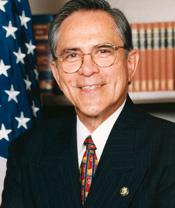
Mr. Speaker, I rise today on behalf of the teachers in the State of Texas in strong opposition to this legislation. H.R. 743 turns a 1-day loophole, which was a minor inconvenience, into a 5-year…
Mr. Speaker, I rise today on behalf of the teachers in the State of Texas in strong opposition to this legislation.
H.R. 743 turns a 1-day loophole, which was a minor inconvenience, into a 5-year career deterrent. My office is flooded with letters from justifiably concerned teachers that do not want to be forced out of the classroom even one day earlier than when they are ready.
Mr. Speaker, I would like to know if the supporters of this bill are aware of the teaching shortage crippling our education system. Clearly they are not or they would not support the legislation before us today. They would not force teachers in Texas and Georgia to choose between retirement benefits and a career educating our children. If my colleagues were aware of these critical shortages, they would have surely stripped this provision from the legislation when they had an opportunity to do so almost a year ago. If they were aware of the growing teacher-student ratios in public schools, they would definitely honor our teachers with the retirement benefits they deserve by repealing the WEP and GPO. It could easily be done by passing H.R. 594. This bill, with 285 bipartisan cosponsors, would end this inequity not only for Texas teachers but for government employees throughout the country.
In 2002, 376,000 public servants had their Social Security spousal benefits affected by the GPO. Forty percent of these were widows and widowers, and 73 percent were women. These are hardworking people who are relying on full spousal benefits to live comfortably in their retirement. Many learn of the GPO when it is too late to change their retirement plans.
Yesterday, my office had the pleasure of speaking with Mrs. Carolyn Martin, a school librarian at Gregory-Portland High School in the coastal bend of Texas. Mrs. Martin was understandably concerned about her own future, but much more focused on the future of a teacher at her school who recently lost her husband over the holidays. This teacher has two children in college and, if H.R. 743 passes, will not be able to collect her widow's benefits under Social Security if she wants to stay in the classroom.
Mrs. Martin characterized the issue best. She said, ``Social Security is the difference between a minimal standard of living and a dog-food diet in retirement.'' She was outraged, as am I, and again I quote, that ``millionaires can collect Social Security in this country but not Texas teachers.''
Mr. Speaker, I implore my colleagues to consider the consequences of this vote today. Vote against H.R. 743.
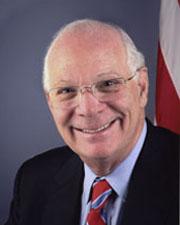
Mr. Speaker, I thank the gentleman from California (Mr. Matsui) for yielding me this time. Let me concur in the comments that the gentleman from California (Mr. Matsui) made earlier where I think he…
Mr. Speaker, I thank the gentleman from California (Mr. Matsui) for yielding me this time.
Let me concur in the comments that the gentleman from California (Mr. Matsui) made earlier where I think he gave a very good explanation, the Government Pension Offset and the issues concerning it and then what is in this bill generally, which have very good things to help shore up a system that is very important to millions of Americans, our Social Security system.
I listened to debate about the Government Pension Offset and the problems in Texas, and I think the point that many of us are trying to raise is that there may be a problem in what is happening in Texas, but why are we not reforming the Government Pension Offset? The distinguished gentleman from Florida (Mr. Shaw) has a bill in to reform that. The gentleman from Louisiana (Mr. Jefferson) has a bill in to deal with it.
It is an issue that cries out for reform because we are not treating particularly our lower-wage workers appropriately with the Government Pension Offset. I think we have all acknowledged that this is an issue that we need to take up. This was an excellent opportunity for us to correct it, and we will lose that opportunity.
In regards to the underlying bill itself, I compliment the gentleman from Florida (Mr. Shaw) and the gentleman from California (Mr. Matsui) and Commissioner Barnhart and our colleagues on the other side of the Capitol for working together to develop a bipartisan bill to strengthen Social Security, particularly as it relates to individuals who have disabilities who are collecting Social Security, ``representative payees.''
We know, we have reports, of people who are not able to manage their own money. We know that in 2,400 cases over $12 million dollars has been lost, and this bill will help clean that up, and that is important for us to deal with that.
We also know, in regards to the Ticket to Work law and the Work Incentives program that helped disabled individuals, that we are strengthening those programs. We are helping claimants who are applying for SSI to get the funds that they need.
So there are important provisions in this bill that have been worked out by Democrats and Republicans working together. That is the way we should work. It is a good bill. But we should have taken care of the Government Pension Offset, and we have not done that in this bill.

Mr. Speaker, I rise in support of H.R. 743, the Social Security Protection Act. This bill will protect the integrity of the Social Security program for the nearly eight million Social Security and…
Mr. Speaker, I rise in support of H.R. 743, the Social Security Protection Act. This bill will protect the integrity of the Social Security program for the nearly eight million Social Security and Supplemental Security Income (SSI) beneficiaries who are unable to manage their own financial affairs and must have a ``representative payee'' designated to receive and manage their benefits on their behalf.
I would, however, like to take this opportunity to discuss an important Social Security issue that this bill fails to address, the Government Pension Offset (GPO). This unjust, arcane law prevents government retirees from collecting a government pension and the Social Security benefits entitled to them through their spouse's history of employment.
The GPO current affects 335,000 people, a number that is growing by 15,000 each year. The people hit hardest by the GPO are State and municipal workers. Public employees like educators, police officers, and firefighters should not suffer a penalty for dedicating their lives to public service.
Take, for example, a teacher who has worked for 30 years and with her husband has managed to raise a family. After her husband passes away, the law prevents her from receiving most, if not all, of the Social Security benefits that her husband earned and rightfully belong to her. She would lose the benefits simply because she worked for the government making a modest salary.
Mr. Speaker, Congressman Buck McKeon has introduced H.R. 594, which would address the Government Pension Offset issue. Even though the bill currently has 285 cosponsors,
the House leadership has failed to bring it up for a vote.
Mr. Speaker, I have heard countless people say that teachers, police officers and firefighters deserve to be paid better for their public service. Fixing the GPO is our chance to say thanks to these selfless individuals whose work has helped make this country what it is today. I ask my colleagues on both sides of the aisle to urge the leadership to bring this issue to the floor during this session of Congress.
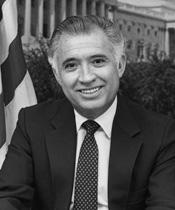
Mr. Speaker, as we take up H.R. 743, the Social Security Protection Act, for a third time in the 108th Congress, I cannot help but feel we still find ourselves with a flawed piece of legislation. Mr.…
Mr. Speaker, as we take up H.R. 743, the Social Security Protection Act, for a third time in the 108th Congress, I cannot help but feel we still find ourselves with a flawed piece of legislation.
Mr. Speaker, the original intent of this bill was a worthy one, to reimburse Social Security benefits if people representing the recipient misuse them. That is not controversial. But the provision reducing the spousal Social Security benefits for countless teachers, school support personnel, police officers, firefighters and other public servants is most certainly controversial; and I intend to oppose the entire bill since it contains this provision and will adversely affect teachers and others across our State.
Let me say one thing, when teachers work one day, that does not mean that they are going to qualify to get a Social Security benefit for 30 years. What it means is that their spouses who have paid in 30 or 40 or 50 years into the Social Security system and then they die, that is money that they have earned, the family has put into Social Security. That is the money that you will get.
Now we need to understand that targeting pensions of teachers and other school employees will discourage qualified individuals from entering the classroom at exactly the same time the Nation is experiencing a shortage of teachers.
We say we are committed to education, yet in this bill we are profoundly uncommitted to educators.
I am also a co-sponsor of H.R. 594, a bill introduced in the 108th Congress that will eliminate the Government Pension Offset and windfall elimination provisions that target our teachers and other public servants by denying them the opportunity to retain their full Social Security benefits.
Mr. Speaker, I am deeply disappointed that this provision was included in an otherwise good bill because the rest of the bill is a good bill, and I compliment my friends.
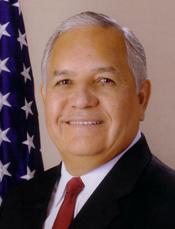
Mr. Speaker, I rise in strong opposition to H.R. 743, the Social Security Protection Act. I support provisions in the bill to better protect Social Security beneficiaries from fraud. However, I…
Mr. Speaker, I rise in strong opposition to H.R. 743, the Social Security Protection Act. I support provisions in the bill to better protect Social Security beneficiaries from fraud. However, I cannot support the legislation because it would also seriously harm the retirement of teachers, firefighters, police officers, and other State and local government workers in my congressional district of El Paso, Texas by subjecting them to the government pension offset.
Some public employees in my State have found a way to protect their retirement benefits from the unfair government pension offset, which targets public servants by refusing them their full spousal benefits under Social Security. The bill before us today would block these employees from protecting their benefits, subjecting them to the government pension offset and denying them the spousal benefits they rightfully deserve.
Among those hardest hit by this legislation will be women, and particularly widows, who very often rely on spousal benefits to make ends meet in their retirement. Many are not aware of the government pension offset, and will only learn of it as they prepare for retirement, when it is too late to make alternative plans.
We need to do more to support those who have dedicated their working lives to serving the public, rather than undermining their opportunity for a secure retirement with this bill. Therefore, I have cosponsored H.R. 594, the Social Security Fairness Act, which would allow all public employees to collect full spousal benefits.
Mr. Speaker, I urge my colleagues to show their support for teachers, and all of our hard-working public servants, by opposing this terribly unfair bill.
Mr. Speaker, today I rise in support of the Social Security Program Protection Act. This legislation makes a strong Social Security program even stronger for the millions of Americans who rely on its…
Mr. Speaker, today I rise in support of the Social Security Program Protection Act.
This legislation makes a strong Social Security program even stronger for the millions of Americans who rely on its benefits for stability through old age, disability or loss of a loved one. And this bill will help to protect the promise of economic security for future generations--a promise we must keep.
I strongly support the protections this legislation provides for some of the most vulnerable recipients of Social Security. Today, many beneficiaries are unable to manage their own benefits so a representative payee is often appointed to do so on their behalf. While this is undoubtedly necessary, too many seniors and people with disabilities have fallen victim to fraud and abuse.
This bill makes dramatic improvements to the representative payee system to help protect beneficiaries. It does so by initiating strict oversight of representative payees and expanding the ability of the Social Security Administration to repay benefits that have been misused or stolen. For many, this puts real financial security back in Social Security.
Despite the strengths of this bill, I am disappointed, however, that Republicans refused to accept an amendment I offered to this bill in the Ways and Means Committee to reduce the Government Pension Offset penalty. This penalty unfairly reduces or even eliminates Social Security benefits for millions of teachers, firefighters, police officers and others who serve the public.
I urge my colleagues to vote for the Social Security Program Protection Act to extend the promise of retirement security for every American, today and tomorrow.
Bill Text
Latest available legislative text
        [Congressional Bills 108th Congress]
[From the U.S. Government Publishing Office]
[H. Res. 520 Reported in House (RH)]

House Calendar No. 145
108th CONGRESS
2d Session
H. RES. 520

[Report No. 108-417]

Providing for consideration of the Senate amendment to the bill (H.R.
743) to amend the Social Security Act and the Internal Revenue Code of
1986 to provide additional safeguards for Social Security and
Supplemental Security Income beneficiaries with representative payees,
to enhance program protections, and for other purposes.

_______________________________________________________________________

IN THE HOUSE OF REPRESENTATIVES

February 10, 2004

Mr. Linder, from the Committee on Rules, reported the following
resolution; which was referred to the House Calendar and ordered to be
printed

_______________________________________________________________________

RESOLUTION

Providing for consideration of the Senate amendment to the bill (H.R.
743) to amend the Social Security Act and the Internal Revenue Code of
1986 to provide additional safeguards for Social Security and
Supplemental Security Income beneficiaries with representative payees,
to enhance program protections, and for other purposes.

Resolved, That upon adoption of this resolution it shall be in
order to take from the Speaker's table the bill (H.R. 743) to amend the
Social Security Act and the Internal Revenue Code of 1986 to provide
additional safeguards for Social Security and Supplemental Security
Income beneficiaries with representative payees, to enhance program
protections, and for other purposes, with the Senate amendment thereto,
and to consider in the House, without intervention of any point of
order, a motion offered by the chairman of the Committee on Ways and
Means or his designee that the House concur in the Senate amendment.
The Senate amendment and the motion shall be considered as read. The
motion shall be debatable for one hour equally divided and controlled
by the chairman and ranking minority member of the Committee on Ways
and Means. The previous question shall be considered as ordered on the
motion to final adoption without intervening motion.

House Calendar No. 145

108th CONGRESS

2d Session

H. RES. 520

[Report No. 108-417]

_______________________________________________________________________

RESOLUTION

Providing for consideration of the Senate amendment to the bill (H.R.
743) to amend the Social Security Act and the Internal Revenue Code of
1986 to provide additional safeguards for Social Security and
Supplemental Security Income beneficiaries with representative payees,
to enhance program protections, and for other purposes.

_______________________________________________________________________

February 10, 2004

Referred to the House Calendar and ordered to be printed